

万佳社区
91 Posts

万佳社区
Report
Block User
Open Trade

FIL Holder
Frequent Trader
5.9 Years
10 Following
233 Followers
272 Liked
Posts
Portfolio
All
Quotes
Videos
·
--
Article
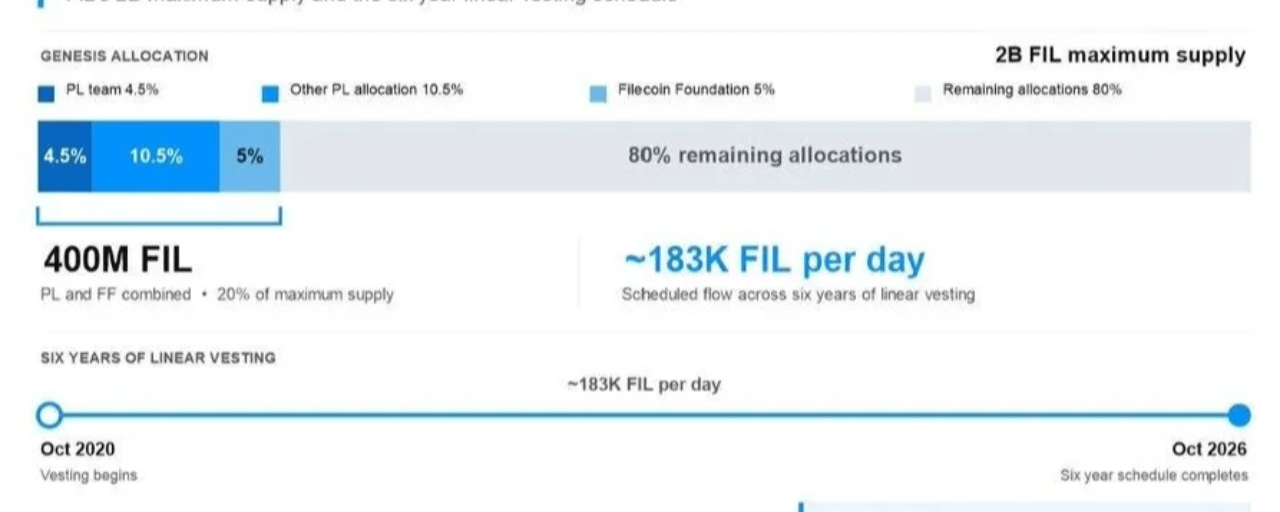
A Major Supply Shift in October: Filecoin Set for a 75% Supply Contraction—Scenario Projections for Three PathsOn October 15, 2026, Filecoin will reach a key milestone in its tokenomics: the full 6-year linear unlock period by Protocol Labs and the Filecoin Foundation will come to an end. The fixed daily inflow of approximately 183,000 FIL will drop to zero, and the network’s total issued supply will decrease by roughly 75% directly.
After that, the circulating supply of Filecoin will no longer be driven primarily by early-institution unlocks; instead, it will be determined by real business needs from the network.
This article doesn’t talk about mysterious concepts—it only covers three things: how much the six-year unlock actually releases, what changes occur to the supply formula, and whether it will trend toward contraction or continued growth under three different scenarios.
A Major Supply Shift in October: Filecoin Set for a 75% Supply Contraction—Scenario Projections for Three Paths
On October 15, 2026, Filecoin will reach a key milestone in its tokenomics: the full 6-year linear unlock period by Protocol Labs and the Filecoin Foundation will come to an end. The fixed daily inflow of approximately 183,000 FIL will drop to zero, and the network’s total issued supply will decrease by roughly 75% directly.
After that, the circulating supply of Filecoin will no longer be driven primarily by early-institution unlocks; instead, it will be determined by real business needs from the network.
This article doesn’t talk about mysterious concepts—it only covers three things: how much the six-year unlock actually releases, what changes occur to the supply formula, and whether it will trend toward contraction or continued growth under three different scenarios.
After that, the circulating supply of Filecoin will no longer be driven primarily by early-institution unlocks; instead, it will be determined by real business needs from the network.
This article doesn’t talk about mysterious concepts—it only covers three things: how much the six-year unlock actually releases, what changes occur to the supply formula, and whether it will trend toward contraction or continued growth under three different scenarios.
1
2.6k
·
--
Partly True
Price and value move in sync: FIL rebounds as real on-chain paid scale continues to climbImage
On September 14, 2026, the Filecoin ecosystem saw a moment worth watching: FIL’s single-day gain reached 21.55%, and on-chain paid metrics also rose in tandem. This isn’t an isolated market fluctuation, but a snapshot of Filecoin’s transition from a “storage network” to a “services economy.”
📈 Market performance: FIL rose 21% in a single day
According to Binance market data, on September 14, 2026, the FIL/USDT pair was quoted at $0.9780. The 24-hour increase reached 21.55%, with a 24-hour trading volume exceeding 45.41 million FIL and a total trading value of about $42.82 million.
What’s more worth paying attention to is that this round of gains isn’t “water from nowhere.” Over the past 30 days, FIL has accumulated a rise of 45.46%, and over the past 7 days it has gained 23.98%, showing a steady increase with gradually expanding volume rather than a single-day spike.
Price and value move in sync: FIL rebounds as real on-chain paid scale continues to climb
Image
On September 14, 2026, the Filecoin ecosystem saw a moment worth watching: FIL’s single-day gain reached 21.55%, and on-chain paid metrics also rose in tandem. This isn’t an isolated market fluctuation, but a snapshot of Filecoin’s transition from a “storage network” to a “services economy.”
📈 Market performance: FIL rose 21% in a single day
According to Binance market data, on September 14, 2026, the FIL/USDT pair was quoted at $0.9780. The 24-hour increase reached 21.55%, with a 24-hour trading volume exceeding 45.41 million FIL and a total trading value of about $42.82 million.
What’s more worth paying attention to is that this round of gains isn’t “water from nowhere.” Over the past 30 days, FIL has accumulated a rise of 45.46%, and over the past 7 days it has gained 23.98%, showing a steady increase with gradually expanding volume rather than a single-day spike.
On September 14, 2026, the Filecoin ecosystem saw a moment worth watching: FIL’s single-day gain reached 21.55%, and on-chain paid metrics also rose in tandem. This isn’t an isolated market fluctuation, but a snapshot of Filecoin’s transition from a “storage network” to a “services economy.”
📈 Market performance: FIL rose 21% in a single day
According to Binance market data, on September 14, 2026, the FIL/USDT pair was quoted at $0.9780. The 24-hour increase reached 21.55%, with a 24-hour trading volume exceeding 45.41 million FIL and a total trading value of about $42.82 million.
What’s more worth paying attention to is that this round of gains isn’t “water from nowhere.” Over the past 30 days, FIL has accumulated a rise of 45.46%, and over the past 7 days it has gained 23.98%, showing a steady increase with gradually expanding volume rather than a single-day spike.
2
1.6k
·
--

Article
One-click IPFS data migration to Filecoin—decentralized storage enters a commercial alternative solutionAgainst the backdrop of continuous advancement of the on-chain cloud ecosystem on Filecoin Onchain Cloud (NeoCloud), the official has launched an IPFS-to-Filecoin migration tool and the Warm Storage service. Developers can seamlessly migrate pinned data hosted by IPFS hosting providers such as Pinata and Filebase to the Filecoin network while keeping the original CID unchanged, thereby obtaining on-chain verifiable storage proofs, lower overall costs, and data wallet ownership. This provides new storage options for Web3 projects, NFT metadata, and AI datasets.
What is the Filecoin Warm Storage migration service
One-click IPFS data migration to Filecoin—decentralized storage enters a commercial alternative solution
Against the backdrop of continuous advancement of the on-chain cloud ecosystem on Filecoin Onchain Cloud (NeoCloud), the official has launched an IPFS-to-Filecoin migration tool and the Warm Storage service. Developers can seamlessly migrate pinned data hosted by IPFS hosting providers such as Pinata and Filebase to the Filecoin network while keeping the original CID unchanged, thereby obtaining on-chain verifiable storage proofs, lower overall costs, and data wallet ownership. This provides new storage options for Web3 projects, NFT metadata, and AI datasets.
What is the Filecoin Warm Storage migration service
What is the Filecoin Warm Storage migration service
6
2.7k
·
--
Partly True

Article
Filecoin Q4 Opportunity: Key Turning Point—Supply Contraction, FIP‑0118 Deployment; Decentralized Storage Moves Toward Practical UseImage
Looking across the second half of 2026, Filecoin has entered the most dense and hardcore upgrade-and-deployment cycle since the mainnet went live. Major breakthroughs in the economic model, a significant contraction in token supply, government-level real-world deployment, and continuous iteration of AI ecosystem applications—all of these major events were clustered heavily in 9–10月, completely rewriting the underlying narrative of FIL.
What used to be simply a “compute-power mining” race has officially turned into decentralized cloud infrastructure driven by real demand, validated by commercial deployment, and strengthened by a deflationary mechanism. Filecoin’s Q4 breakout logic is now fully formed.
Core Mechanism Shifts Dramatically: FIP-0118 Solstice Officially Approved (Largest Reform Across the Entire Network)
Filecoin Q4 Opportunity: Key Turning Point—Supply Contraction, FIP‑0118 Deployment; Decentralized Storage Moves Toward Practical Use
Image
Looking across the second half of 2026, Filecoin has entered the most dense and hardcore upgrade-and-deployment cycle since the mainnet went live. Major breakthroughs in the economic model, a significant contraction in token supply, government-level real-world deployment, and continuous iteration of AI ecosystem applications—all of these major events were clustered heavily in 9–10月, completely rewriting the underlying narrative of FIL.
What used to be simply a “compute-power mining” race has officially turned into decentralized cloud infrastructure driven by real demand, validated by commercial deployment, and strengthened by a deflationary mechanism. Filecoin’s Q4 breakout logic is now fully formed.
Core Mechanism Shifts Dramatically: FIP-0118 Solstice Officially Approved (Largest Reform Across the Entire Network)
Looking across the second half of 2026, Filecoin has entered the most dense and hardcore upgrade-and-deployment cycle since the mainnet went live. Major breakthroughs in the economic model, a significant contraction in token supply, government-level real-world deployment, and continuous iteration of AI ecosystem applications—all of these major events were clustered heavily in 9–10月, completely rewriting the underlying narrative of FIL.
What used to be simply a “compute-power mining” race has officially turned into decentralized cloud infrastructure driven by real demand, validated by commercial deployment, and strengthened by a deflationary mechanism. Filecoin’s Q4 breakout logic is now fully formed.
Core Mechanism Shifts Dramatically: FIP-0118 Solstice Officially Approved (Largest Reform Across the Entire Network)
6
5
4.1k
·
--
Verified

Article
Can Filecoin become an AI Agent native on-chain memory infrastructure?Image
I. Overall stage positioning: it has established the core foundation, but is not yet fully mature
Currently, Filecoin has completed the core underlying capabilities for AI Agent data and memory infrastructure, but it has not yet reached the level of an industry-standard “default data and memory infrastructure” that is general-purpose, plug-and-play, and mature at scale.
The project is in a critical acceleration phase of transformation: moving rapidly from the traditional “decentralized hard drive” to a verifiable, programmable cloud service + an AI Agent native memory layer upgrade.
Using Filecoin Onchain Cloud (FOC), which goes live on the mainnet in March 2026, as the core carrier: Filecoin has already achieved four major native on-chain capabilities—storage, verification, payment, and traceability—supporting the deployment of AI Agents.
Can Filecoin become an AI Agent native on-chain memory infrastructure?
Image
I. Overall stage positioning: it has established the core foundation, but is not yet fully mature
Currently, Filecoin has completed the core underlying capabilities for AI Agent data and memory infrastructure, but it has not yet reached the level of an industry-standard “default data and memory infrastructure” that is general-purpose, plug-and-play, and mature at scale.
The project is in a critical acceleration phase of transformation: moving rapidly from the traditional “decentralized hard drive” to a verifiable, programmable cloud service + an AI Agent native memory layer upgrade.
Using Filecoin Onchain Cloud (FOC), which goes live on the mainnet in March 2026, as the core carrier: Filecoin has already achieved four major native on-chain capabilities—storage, verification, payment, and traceability—supporting the deployment of AI Agents.
I. Overall stage positioning: it has established the core foundation, but is not yet fully mature
Currently, Filecoin has completed the core underlying capabilities for AI Agent data and memory infrastructure, but it has not yet reached the level of an industry-standard “default data and memory infrastructure” that is general-purpose, plug-and-play, and mature at scale.
The project is in a critical acceleration phase of transformation: moving rapidly from the traditional “decentralized hard drive” to a verifiable, programmable cloud service + an AI Agent native memory layer upgrade.
Using Filecoin Onchain Cloud (FOC), which goes live on the mainnet in March 2026, as the core carrier: Filecoin has already achieved four major native on-chain capabilities—storage, verification, payment, and traceability—supporting the deployment of AI Agents.
3
1.4k
·
--
Article
[Official] Filecoin Network 2026 Overview and Updates!Introduction
Since the autonomous mainnet launch, Filecoin has gone through three phases: building storage capacity (2020–2022), improving usability (2022–2024), and generating paid demand since 2025 — a shift formally reflected in the 2026 Filecoin Network Strategy. That strategy sets three priorities: increasing the number of paid onchain transactions; strengthening network profitability and crypto-economics; and achieving scaled adoption among paid onchain flagship customers.
This year's building blocks are Filecoin Onchain Cloud (FOC), which adds onchain payments and programmable storage on top of the Synapse SDK, and Fil One, a Filecoin path for S3 workloads. As we move into Q4 2026 and 2027, both ends of the market are converging: demand is becoming measurable and growing, while FIL supply is approaching the largest planned change since launch.
[Official] Filecoin Network 2026 Overview and Updates!
Introduction
Since the autonomous mainnet launch, Filecoin has gone through three phases: building storage capacity (2020–2022), improving usability (2022–2024), and generating paid demand since 2025 — a shift formally reflected in the 2026 Filecoin Network Strategy. That strategy sets three priorities: increasing the number of paid onchain transactions; strengthening network profitability and crypto-economics; and achieving scaled adoption among paid onchain flagship customers.
This year's building blocks are Filecoin Onchain Cloud (FOC), which adds onchain payments and programmable storage on top of the Synapse SDK, and Fil One, a Filecoin path for S3 workloads. As we move into Q4 2026 and 2027, both ends of the market are converging: demand is becoming measurable and growing, while FIL supply is approaching the largest planned change since launch.
Since the autonomous mainnet launch, Filecoin has gone through three phases: building storage capacity (2020–2022), improving usability (2022–2024), and generating paid demand since 2025 — a shift formally reflected in the 2026 Filecoin Network Strategy. That strategy sets three priorities: increasing the number of paid onchain transactions; strengthening network profitability and crypto-economics; and achieving scaled adoption among paid onchain flagship customers.
This year's building blocks are Filecoin Onchain Cloud (FOC), which adds onchain payments and programmable storage on top of the Synapse SDK, and Fil One, a Filecoin path for S3 workloads. As we move into Q4 2026 and 2027, both ends of the market are converging: demand is becoming measurable and growing, while FIL supply is approaching the largest planned change since launch.
3
742
·
--
Partly True
Filecoin's total payment volume annualized run rate surges: an early signal of transformation from a subsidy network to real paid cloud servicesFor a long time, in the public mind, Filecoin was labeled simply as “decentralized hard drive,” with attention mostly focused on computing power, mining, and token issuance. But as infrastructure such as on-chain cloud and Filecoin Pay gradually goes live, a new set of ecosystem KPIs is beginning to emerge: Filecoin Pay GPV Run Rate. These data are telling us about a fundamental shift taking place in the Filecoin ecosystem: moving from block-subsidy-driven to real user payment-driven.
What is Filecoin Pay GPV Run Rate
First, let’s clarify the metric definition: Filecoin Pay GPV Run Rate, that is, the annualized stablecoin payment run rate of Filecoin Pay. The official explanation is: at the end-of-period snapshot, the annualized total stablecoin payment volume from active compliant periodic FilecoinPay payment rails, with the assets counted including USDFC and USDC.
Filecoin's total payment volume annualized run rate surges: an early signal of transformation from a subsidy network to real paid cloud services
For a long time, in the public mind, Filecoin was labeled simply as “decentralized hard drive,” with attention mostly focused on computing power, mining, and token issuance. But as infrastructure such as on-chain cloud and Filecoin Pay gradually goes live, a new set of ecosystem KPIs is beginning to emerge: Filecoin Pay GPV Run Rate. These data are telling us about a fundamental shift taking place in the Filecoin ecosystem: moving from block-subsidy-driven to real user payment-driven.
What is Filecoin Pay GPV Run Rate
First, let’s clarify the metric definition: Filecoin Pay GPV Run Rate, that is, the annualized stablecoin payment run rate of Filecoin Pay. The official explanation is: at the end-of-period snapshot, the annualized total stablecoin payment volume from active compliant periodic FilecoinPay payment rails, with the assets counted including USDFC and USDC.
What is Filecoin Pay GPV Run Rate
First, let’s clarify the metric definition: Filecoin Pay GPV Run Rate, that is, the annualized stablecoin payment run rate of Filecoin Pay. The official explanation is: at the end-of-period snapshot, the annualized total stablecoin payment volume from active compliant periodic FilecoinPay payment rails, with the assets counted including USDFC and USDC.
1
5
952
·
--
Partly True

Article
Launching IPFS and Filecoin; the deep strategic intent and core purpose behind Filecoin’s official restructuring of the Web3 storage landscape.In the Web3 storage ecosystem, IPFS and Filecoin are often discussed together. IPFS handles data distribution and content addressing, while Filecoin provides incentive-backed persistent storage. But for a long time, there has been a clear ecosystem split between the two.
A large number of developers and project teams build their businesses on IPFS, yet their data can only be hosted with centralized disk-pinning service providers (commercial companies offering “IPFS pinning services (Pinning Service)”). As a result, they can’t truly connect to a decentralized storage network.
The Filecoin official launch of an IPFS → Filecoin migration tool is not a simple feature iteration; it’s an important ecosystem fill-in and a strategic upgrade. The core message the official team wants to convey is to break down the barriers between IPFS and Filecoin, changing the awkward industry reality of Web3—“protocols are decentralized, while storage is centralized”—and rebuilding new industry standards for storage.
Launching IPFS and Filecoin; the deep strategic intent and core purpose behind Filecoin’s official restructuring of the Web3 storage landscape.
In the Web3 storage ecosystem, IPFS and Filecoin are often discussed together. IPFS handles data distribution and content addressing, while Filecoin provides incentive-backed persistent storage. But for a long time, there has been a clear ecosystem split between the two.
A large number of developers and project teams build their businesses on IPFS, yet their data can only be hosted with centralized disk-pinning service providers (commercial companies offering “IPFS pinning services (Pinning Service)”). As a result, they can’t truly connect to a decentralized storage network.
The Filecoin official launch of an IPFS → Filecoin migration tool is not a simple feature iteration; it’s an important ecosystem fill-in and a strategic upgrade. The core message the official team wants to convey is to break down the barriers between IPFS and Filecoin, changing the awkward industry reality of Web3—“protocols are decentralized, while storage is centralized”—and rebuilding new industry standards for storage.
A large number of developers and project teams build their businesses on IPFS, yet their data can only be hosted with centralized disk-pinning service providers (commercial companies offering “IPFS pinning services (Pinning Service)”). As a result, they can’t truly connect to a decentralized storage network.
The Filecoin official launch of an IPFS → Filecoin migration tool is not a simple feature iteration; it’s an important ecosystem fill-in and a strategic upgrade. The core message the official team wants to convey is to break down the barriers between IPFS and Filecoin, changing the awkward industry reality of Web3—“protocols are decentralized, while storage is centralized”—and rebuilding new industry standards for storage.
1
1
1.3k
·
--
Partly True
Article
Is Filecoin going its own way in the market? Is it because FIP-0118 ‘Solstice’ has officially been approved and the mainnet upgrade is coming in October?Fil is aggressively sprinting today despite everyone being weak. What happened?
Recently, the official Filecoin FIP repository has been updated. FIP-0118 (Solstice) has been formally marked as Accepted, indicating that the community review process for the network economic model reform—after multiple rounds of discussion—has been completed and the proposal has entered the implementation phase. This proposal will completely retire the long-running Filecoin Plus (Fil+ / DataCap) data quota system, and it will also reshape the logic for block reward distribution. It will have far-reaching impacts on storage providers, ecosystem service parties, and public-institution customers.
Is Filecoin going its own way in the market? Is it because FIP-0118 ‘Solstice’ has officially been approved and the mainnet upgrade is coming in October?
Fil is aggressively sprinting today despite everyone being weak. What happened?
Recently, the official Filecoin FIP repository has been updated. FIP-0118 (Solstice) has been formally marked as Accepted, indicating that the community review process for the network economic model reform—after multiple rounds of discussion—has been completed and the proposal has entered the implementation phase. This proposal will completely retire the long-running Filecoin Plus (Fil+ / DataCap) data quota system, and it will also reshape the logic for block reward distribution. It will have far-reaching impacts on storage providers, ecosystem service parties, and public-institution customers.
Recently, the official Filecoin FIP repository has been updated. FIP-0118 (Solstice) has been formally marked as Accepted, indicating that the community review process for the network economic model reform—after multiple rounds of discussion—has been completed and the proposal has entered the implementation phase. This proposal will completely retire the long-running Filecoin Plus (Fil+ / DataCap) data quota system, and it will also reshape the logic for block reward distribution. It will have far-reaching impacts on storage providers, ecosystem service parties, and public-institution customers.
2
1
1.6k
·
--
Fil One: What it can do after launch, future plans, and whether it can bring real business dataImage
Fil One is an S3-compatible object storage gateway service. At the top, it is aimed at enterprises and developers; at the bottom, it runs on top of the Filecoin network. It is an entry product for everyday commercial customers within the Filecoin Onchain Cloud ecosystem.
Is Fil One most suitable for cold archiving at this stage?
This judgment can be viewed from two angles: official positioning on the website and the performance of the underlying network:
The official positioning clearly targets “archival” use cases: on the Fil One website, it is positioned as “long-term archives with no cloud storage tax,” offering a flat rate of $4.99 per TB per month, with no retrieval fees and no storage duration limits. It mainly highlights a more flexible “no-penalty” approach to reads/writes than cold storage.
Fil One: What it can do after launch, future plans, and whether it can bring real business data
Image
Fil One is an S3-compatible object storage gateway service. At the top, it is aimed at enterprises and developers; at the bottom, it runs on top of the Filecoin network. It is an entry product for everyday commercial customers within the Filecoin Onchain Cloud ecosystem.
Is Fil One most suitable for cold archiving at this stage?
This judgment can be viewed from two angles: official positioning on the website and the performance of the underlying network:
The official positioning clearly targets “archival” use cases: on the Fil One website, it is positioned as “long-term archives with no cloud storage tax,” offering a flat rate of $4.99 per TB per month, with no retrieval fees and no storage duration limits. It mainly highlights a more flexible “no-penalty” approach to reads/writes than cold storage.
Fil One is an S3-compatible object storage gateway service. At the top, it is aimed at enterprises and developers; at the bottom, it runs on top of the Filecoin network. It is an entry product for everyday commercial customers within the Filecoin Onchain Cloud ecosystem.
Is Fil One most suitable for cold archiving at this stage?
This judgment can be viewed from two angles: official positioning on the website and the performance of the underlying network:
The official positioning clearly targets “archival” use cases: on the Fil One website, it is positioned as “long-term archives with no cloud storage tax,” offering a flat rate of $4.99 per TB per month, with no retrieval fees and no storage duration limits. It mainly highlights a more flexible “no-penalty” approach to reads/writes than cold storage.
1
461
·
--
Verified

Article
What is Fil One and what is its relationship with Filecoin Onchain Cloud (FOC)?Image
Recently, Filecoin officially launched Fil One, an object storage service that supports the S3 API you already know. So what is Fil One? What is it for? And how does it relate to the well-known Filecoin Onchain Cloud (FOC)?
Filecoin Onchain Cloud (on-chain cloud) and Fil One are two concepts that many people easily confuse with each other. In fact, they are not the same product. Rather, they represent the relationship between underlying infrastructure and an upper-layer commercial product: one is the ecosystem’s strategic foundation, and the other is a user entry point for market deployment. Together, they form the complete layout for Filecoin to move into the AI cloud sector.
What is Fil One and what is its relationship with Filecoin Onchain Cloud (FOC)?
Image
Recently, Filecoin officially launched Fil One, an object storage service that supports the S3 API you already know. So what is Fil One? What is it for? And how does it relate to the well-known Filecoin Onchain Cloud (FOC)?
Filecoin Onchain Cloud (on-chain cloud) and Fil One are two concepts that many people easily confuse with each other. In fact, they are not the same product. Rather, they represent the relationship between underlying infrastructure and an upper-layer commercial product: one is the ecosystem’s strategic foundation, and the other is a user entry point for market deployment. Together, they form the complete layout for Filecoin to move into the AI cloud sector.
Recently, Filecoin officially launched Fil One, an object storage service that supports the S3 API you already know. So what is Fil One? What is it for? And how does it relate to the well-known Filecoin Onchain Cloud (FOC)?
Filecoin Onchain Cloud (on-chain cloud) and Fil One are two concepts that many people easily confuse with each other. In fact, they are not the same product. Rather, they represent the relationship between underlying infrastructure and an upper-layer commercial product: one is the ecosystem’s strategic foundation, and the other is a user entry point for market deployment. Together, they form the complete layout for Filecoin to move into the AI cloud sector.
2
1.2k
·
--
Verified

Article
Fil One Launched on the Filecoin Cloud: S3-Compatible Storage Built for the AI EraImage
We officially launch Fil One (https://www.fil.one/): This is an object storage service that supports the S3 API you already know well. Its pricing model lets you confidently predict your bills, and it is built on an underlying architecture specifically designed for “verifiable persistence.” If you’ve ever looked at cloud storage invoices and wondered why moving your own data costs more than storing it, then Fil One is your solution.
Why did we develop this product?
In modern infrastructure, storage has quietly become one of the most punishing expense items. Egress fees turn “your data” into an asset that you have to pay to access. As usage grows, pricing tiers change accordingly. Moreover, service providers often intentionally set migration thresholds so high that most teams can only compromise—even when they’re not satisfied.
Fil One Launched on the Filecoin Cloud: S3-Compatible Storage Built for the AI Era
Image
We officially launch Fil One (https://www.fil.one/): This is an object storage service that supports the S3 API you already know well. Its pricing model lets you confidently predict your bills, and it is built on an underlying architecture specifically designed for “verifiable persistence.” If you’ve ever looked at cloud storage invoices and wondered why moving your own data costs more than storing it, then Fil One is your solution.
Why did we develop this product?
In modern infrastructure, storage has quietly become one of the most punishing expense items. Egress fees turn “your data” into an asset that you have to pay to access. As usage grows, pricing tiers change accordingly. Moreover, service providers often intentionally set migration thresholds so high that most teams can only compromise—even when they’re not satisfied.
We officially launch Fil One (https://www.fil.one/): This is an object storage service that supports the S3 API you already know well. Its pricing model lets you confidently predict your bills, and it is built on an underlying architecture specifically designed for “verifiable persistence.” If you’ve ever looked at cloud storage invoices and wondered why moving your own data costs more than storing it, then Fil One is your solution.
Why did we develop this product?
In modern infrastructure, storage has quietly become one of the most punishing expense items. Egress fees turn “your data” into an asset that you have to pay to access. As usage grows, pricing tiers change accordingly. Moreover, service providers often intentionally set migration thresholds so high that most teams can only compromise—even when they’re not satisfied.
1
1
755
·
--
Verified

Article
Filecoin Proposal FIP-0118 Solstice is currently in the final call phase; the three design principles point to a single core goal!1. Proposal Background: FIL+’s predicament and the pivot
Since Filecoin’s launch, it has faced a core challenge: how to distinguish “real and useful data” from empty data that is filled solely to mine rewards. Filecoin Plus (FIL+) introduced five years ago sought to address this problem through manual verification—Allocator issues DataCap to certified customers. Storage deals with DataCap receive 10x quality-adjusted power (QAP), enabling higher block rewards.
In its early days, FIL+ indeed played a role: it helped Filecoin quickly scale up its storage supply, encouraging storage providers (SPs) to onboard hardware and invest capital. But after a few years, the problem gradually came to light:
Filecoin Proposal FIP-0118 Solstice is currently in the final call phase; the three design principles point to a single core goal!
1. Proposal Background: FIL+’s predicament and the pivot
Since Filecoin’s launch, it has faced a core challenge: how to distinguish “real and useful data” from empty data that is filled solely to mine rewards. Filecoin Plus (FIL+) introduced five years ago sought to address this problem through manual verification—Allocator issues DataCap to certified customers. Storage deals with DataCap receive 10x quality-adjusted power (QAP), enabling higher block rewards.
In its early days, FIL+ indeed played a role: it helped Filecoin quickly scale up its storage supply, encouraging storage providers (SPs) to onboard hardware and invest capital. But after a few years, the problem gradually came to light:
Since Filecoin’s launch, it has faced a core challenge: how to distinguish “real and useful data” from empty data that is filled solely to mine rewards. Filecoin Plus (FIL+) introduced five years ago sought to address this problem through manual verification—Allocator issues DataCap to certified customers. Storage deals with DataCap receive 10x quality-adjusted power (QAP), enabling higher block rewards.
In its early days, FIL+ indeed played a role: it helped Filecoin quickly scale up its storage supply, encouraging storage providers (SPs) to onboard hardware and invest capital. But after a few years, the problem gradually came to light:
3
968
·
--
Verified

Article
After the Solstice (FIP-0118) proposal is implemented, its core impact on Filecoin network development and ecosystem, and opportunities & risks for different roles.Solstice (FIP-0118) proposal—core positioning: shifting from a “capacity-mining economy” to a “storage services economy.” This is the largest incentive-model reform since Filecoin launched. The proposal fundamentally replaces the original Fil + manual-review mechanism and redesigns the block reward allocation rules.
The role in building underlying network infrastructure
1. Put an end to capacity race-to-the-bottom, guiding Storage Providers (SPs) to shift toward real businesses
Under the old mechanism, many SPs chased CC empty/uncounted compute power and engaged in arbitrage to capture manually issued DataCap quotas; the proposal removes the Fil + manual approval channel and no longer relies on manual judgment of “effective data.” Instead, it uses on-chain real storage-paid orders as the value benchmark. SPs’ competitive focus shifts from “buying hard drives and抢 quotas” to serving paying customers and providing stable storage services—reducing the expansion of valueless empty compute power and lowering overall network resource waste.
After the Solstice (FIP-0118) proposal is implemented, its core impact on Filecoin network development and ecosystem, and opportunities & risks for different roles.
Solstice (FIP-0118) proposal—core positioning: shifting from a “capacity-mining economy” to a “storage services economy.” This is the largest incentive-model reform since Filecoin launched. The proposal fundamentally replaces the original Fil + manual-review mechanism and redesigns the block reward allocation rules.
The role in building underlying network infrastructure
1. Put an end to capacity race-to-the-bottom, guiding Storage Providers (SPs) to shift toward real businesses
Under the old mechanism, many SPs chased CC empty/uncounted compute power and engaged in arbitrage to capture manually issued DataCap quotas; the proposal removes the Fil + manual approval channel and no longer relies on manual judgment of “effective data.” Instead, it uses on-chain real storage-paid orders as the value benchmark. SPs’ competitive focus shifts from “buying hard drives and抢 quotas” to serving paying customers and providing stable storage services—reducing the expansion of valueless empty compute power and lowering overall network resource waste.
The role in building underlying network infrastructure
1. Put an end to capacity race-to-the-bottom, guiding Storage Providers (SPs) to shift toward real businesses
Under the old mechanism, many SPs chased CC empty/uncounted compute power and engaged in arbitrage to capture manually issued DataCap quotas; the proposal removes the Fil + manual approval channel and no longer relies on manual judgment of “effective data.” Instead, it uses on-chain real storage-paid orders as the value benchmark. SPs’ competitive focus shifts from “buying hard drives and抢 quotas” to serving paying customers and providing stable storage services—reducing the expansion of valueless empty compute power and lowering overall network resource waste.
2
620
·
--
How to choose? 😄 Winning 10,000 feels even more frustrating. Getting nothing means the other side will be unhappy. If they’re unhappy—does that mean you’ll be happy?
How to choose? 😄 Winning 10,000 feels even more frustrating. Getting nothing means the other side will be unhappy. If they’re unhappy—does that mean you’ll be happy?

218
·
--
Partly True

Article
Toward a Filecoin Service Economy — New FIP0118: SolsticeA new proposal called Solstice aims to make one of the most significant changes to Filecoin’s reward mechanism since the network went live. It will reshape how storage providers (SPs) earn rewards, and how the network supports services that bring paying customers and data to Filecoin.
The core idea is very straightforward: rather than requiring storage providers to obtain higher rewards through specific approval processes, the network’s consensus providers would automatically receive all rewards. At the same time, a portion of block rewards would be distributed programmatically to services that attract customers, onboard data, and work directly with storage providers.
Toward a Filecoin Service Economy — New FIP0118: Solstice
A new proposal called Solstice aims to make one of the most significant changes to Filecoin’s reward mechanism since the network went live. It will reshape how storage providers (SPs) earn rewards, and how the network supports services that bring paying customers and data to Filecoin.
The core idea is very straightforward: rather than requiring storage providers to obtain higher rewards through specific approval processes, the network’s consensus providers would automatically receive all rewards. At the same time, a portion of block rewards would be distributed programmatically to services that attract customers, onboard data, and work directly with storage providers.
The core idea is very straightforward: rather than requiring storage providers to obtain higher rewards through specific approval processes, the network’s consensus providers would automatically receive all rewards. At the same time, a portion of block rewards would be distributed programmatically to services that attract customers, onboard data, and work directly with storage providers.
1
1
1
625
·
--
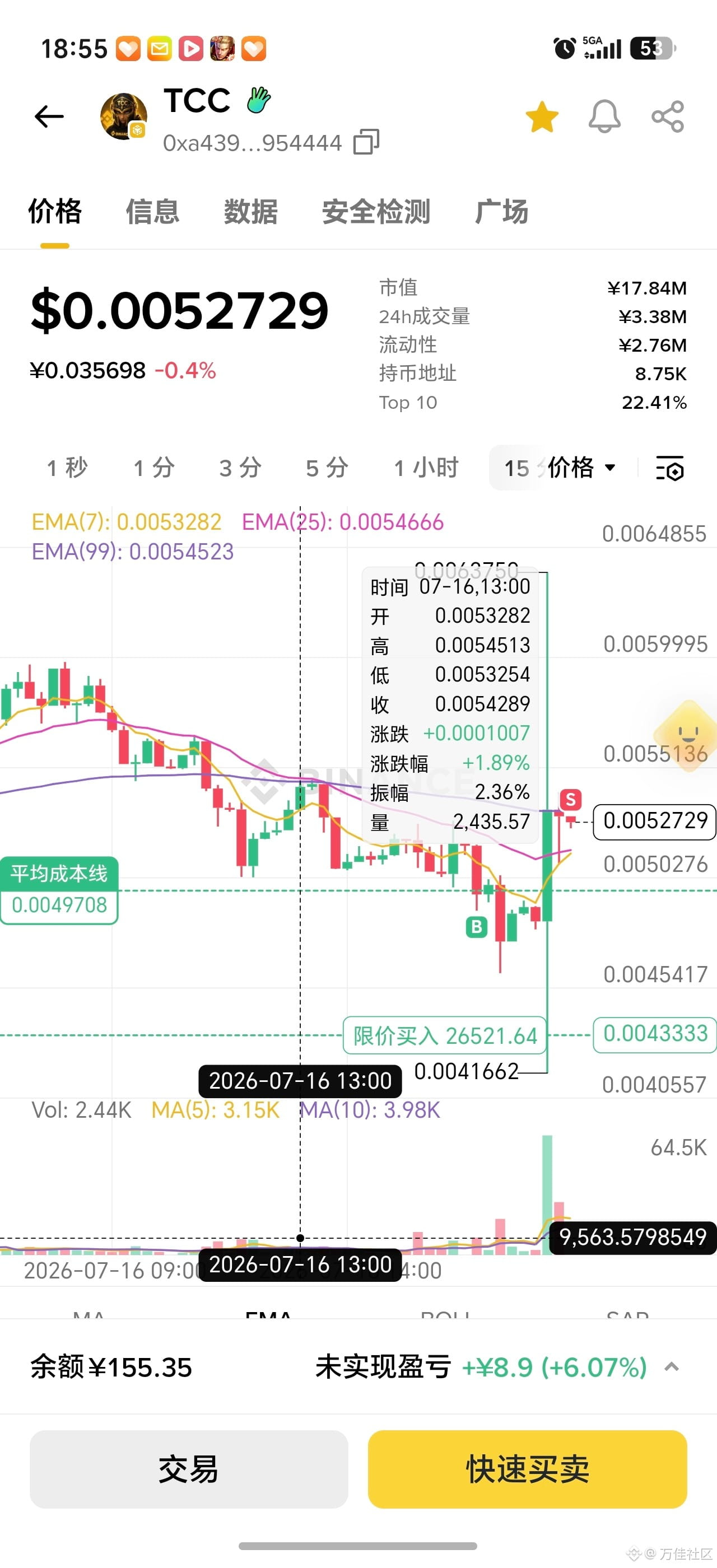
Set the premium mode bid price,,, the price reached but the trade didn't go through. It's happened several times,,, have you encountered something like this before? What's going on?
Set the premium mode bid price,,, the price reached but the trade didn't go through. It's happened several times,,, have you encountered something like this before? What's going on?
1
166
·
--
Partly True

Article
Core Deployment and Development Trends of the Filecoin Team—Focusing on Commercialization and Real-World RolloutAfter years of rapid scaling, the total storage capacity of the Filecoin network remains at the top globally among decentralized storage networks. Entering 2026, the ecosystem has officially moved beyond the early phase of simply piling up computational power capacity. The two major official teams—Protocol Labs (Protocol Labs) and the Filecoin Foundation—have clear, distinct responsibilities, and the strategic focus has fully shifted to real-world commercial deployment, expanding on-chain paid orders, and iterating and optimizing the underlying protocol. They are working in full force to roll out distributed cloud services, setting the stage for the halving of block rewards in the second half of the year. At this stage, both teams are carrying out their respective duties and methodically advancing their key work.
Core Deployment and Development Trends of the Filecoin Team—Focusing on Commercialization and Real-World Rollout
After years of rapid scaling, the total storage capacity of the Filecoin network remains at the top globally among decentralized storage networks. Entering 2026, the ecosystem has officially moved beyond the early phase of simply piling up computational power capacity. The two major official teams—Protocol Labs (Protocol Labs) and the Filecoin Foundation—have clear, distinct responsibilities, and the strategic focus has fully shifted to real-world commercial deployment, expanding on-chain paid orders, and iterating and optimizing the underlying protocol. They are working in full force to roll out distributed cloud services, setting the stage for the halving of block rewards in the second half of the year. At this stage, both teams are carrying out their respective duties and methodically advancing their key work.
4
1.4k
·
--
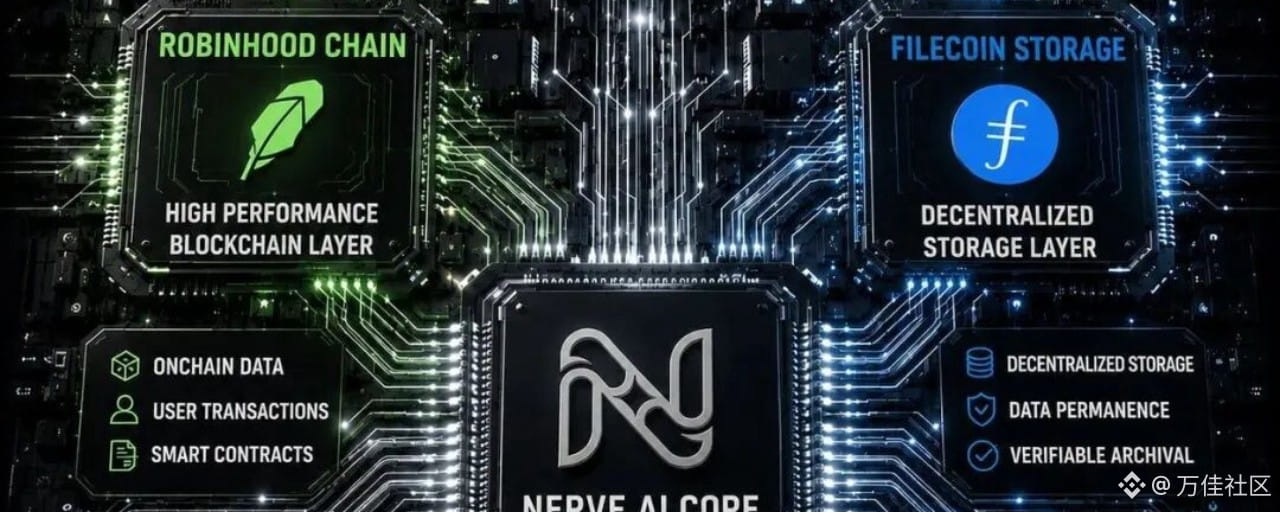
Article
Robinhood Sovereign AI Goes Live: Filecoin Officially Connects the Finance + AI Storage Incremental TrackWhen AI becomes the core narrative in the crypto industry, most projects focus only on computing power and the model layer, overlooking the most fundamental underlying need of the AI system—data storage. Recently, Nerve Protocol announced that Robinhood Chain, the blockchain of U.S. financial giant Robinhood, has officially launched the industry’s first Sovereign AI. The storage foundation of the entire privacy AI infrastructure is exclusively provided by Filecoin. With this collaboration now in place, it has become a landmark milestone for Filecoin’s entry into the Web3 financial AI track via distributed storage, and it fully confirms the long-term strategy that Protocol Labs has been building for years: AI data infrastructure.
Robinhood Sovereign AI Goes Live: Filecoin Officially Connects the Finance + AI Storage Incremental Track
When AI becomes the core narrative in the crypto industry, most projects focus only on computing power and the model layer, overlooking the most fundamental underlying need of the AI system—data storage. Recently, Nerve Protocol announced that Robinhood Chain, the blockchain of U.S. financial giant Robinhood, has officially launched the industry’s first Sovereign AI. The storage foundation of the entire privacy AI infrastructure is exclusively provided by Filecoin. With this collaboration now in place, it has become a landmark milestone for Filecoin’s entry into the Web3 financial AI track via distributed storage, and it fully confirms the long-term strategy that Protocol Labs has been building for years: AI data infrastructure.
1
1
596
·
--
Verified

Article
Filecoin NV28 'Fire Horse' Upgrade Completed: The Era of Programmable Storage Officially BeginsOn May 27, 2026, at 22:00 Beijing time, the Filecoin mainnet successfully completed the upgrade for epoch 6052800, officially activating network version 28, codenamed 'Fire Horse'. This upgrade is not just a routine technical iteration; it's a crucial step for Filecoin's evolution from a basic storage network to a programmable storage infrastructure, laying the groundwork for true on-chain closed-loop storage capabilities for Web3 applications.
On-chain verifiable storage status (key innovation)
• Pre-upgrade:
The renewal and troubleshooting of storage orders mostly rely on off-chain service monitoring and manual intervention, making it impossible to directly verify storage status on-chain.
Filecoin NV28 'Fire Horse' Upgrade Completed: The Era of Programmable Storage Officially Begins
On May 27, 2026, at 22:00 Beijing time, the Filecoin mainnet successfully completed the upgrade for epoch 6052800, officially activating network version 28, codenamed 'Fire Horse'. This upgrade is not just a routine technical iteration; it's a crucial step for Filecoin's evolution from a basic storage network to a programmable storage infrastructure, laying the groundwork for true on-chain closed-loop storage capabilities for Web3 applications.
On-chain verifiable storage status (key innovation)
• Pre-upgrade:
The renewal and troubleshooting of storage orders mostly rely on off-chain service monitoring and manual intervention, making it impossible to directly verify storage status on-chain.
On-chain verifiable storage status (key innovation)
• Pre-upgrade:
The renewal and troubleshooting of storage orders mostly rely on off-chain service monitoring and manual intervention, making it impossible to directly verify storage status on-chain.
1
1.2k
Log in to explore more content
Join global crypto users on Binance Square
⚡️ Get latest and useful information about crypto.
💬 Trusted by the world’s largest crypto exchange.
👍 Discover real insights from verified creators.
Email / Phone number
Trending Topics
BitcoinSpotETFsNetInflow$191M
346 views
54 Discussing
#BitcoinSpotETFsNetInflow$191M
🚨 Institutional Money is Back! $191M Flows into Bitcoin Spot ETFs 📈🔥
U.S. Spot Bitcoin ETFs recorded $191 Million in total net inflows, extending their consecutive positive inflow streak to 6 straight trading days!
Despite short-term price fluctuations around the $83,000–$84,000 range, institutional conviction remains strong, with heavy buying led by top asset managers.
📌 Breakdown of Key Inflows & Data
$BTC
👑 Top gainer: BlackRock (IBIT) dominated the day with a massive $163 Million single-day net inflow, bringing its historical total to $65.18 Billion.
🥈 Second Place: Fidelity (FBTC) added $12.86 Million, raising its cumulative net total to $11.01 Billion.
🔻 Notable Outflows: WisdomTree (BTCW) experienced minor net outflows of $4.02 Million.
📊 Total Market Position: Combined total net assets for Spot BTC ETFs reached $108.91 Billion (representing 6.43% of total Bitcoin market cap). Cumulative historical net inflows now sit at $57.41 Billion.
🐋 What This Means for the Market
Whale Accumulation: Institutional players are treating current price consolidation as a buying opportunity rather than taking profits.
Sustained Demand: A 6-day positive streak signals long-term structural demand on Wall Street.
Macro Divergence: Despite headwinds from rising Treasury yields, ETF allocations show continuous capital commitment into digital assets.
Are you accumulating alongside institutions, or waiting for lower entries? Drop your thoughts below! 💬👇
#BitcoinFallsBelow$83,000 #bitcoin #CryptoNews
Lily星星
·0 Likes
·5 views
CFTCUpdatesGuidanceOnTokenizedAssets
7,496 views
410 Discussing
BitgetSays$352MAffectedInHack
1,398 views
28 Discussing