

A Y G U L
3.1k Beiträge

A Y G U L
Melden
Nutzer blockieren
64 Following
8.5K+ Follower
2.9K+ Like gegeben
Beiträge
Alle
Zitierungen
Live
·
--
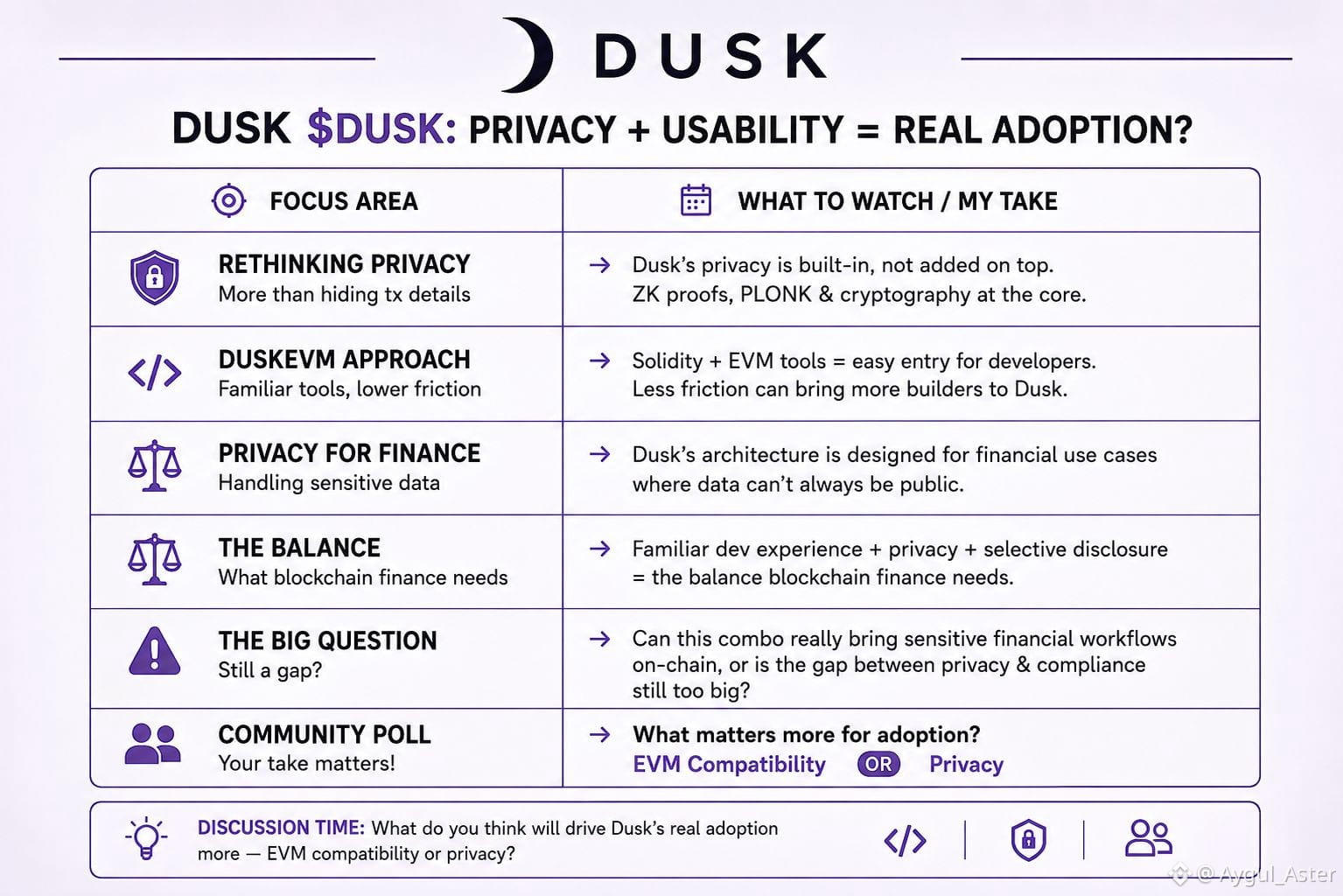
Dusk $DUSK @Dusk hat mich beim Recherchieren über eine Sache nachdenken lassen: Können Privatsphäre und Benutzerfreundlichkeit wirklich zusammen auf einer Blockchain funktionieren? 👀
Anfangs dachte ich bei Blockchain-Privatsphäre vor allem daran, Transaktionsdetails zu verbergen. Aber je tiefer ich mir Dusk’s Architektur angesehen habe, desto mehr habe ich es anders verstanden. Privatsphäre wirkt hier nicht wie etwas, das einfach nur „oben drauf“ gesetzt wurde. Kryptografie ist direkt in das System eingebaut – mit ZK-Proofs, PLONK und anderen Bausteinen, die eine wichtige Rolle spielen.
Aber ehrlich gesagt ist der Teil, der mich noch mehr interessiert, nicht nur die Privatsphäre. Wenn wir über Finanzmärkte und Institutionen sprechen, könnte die Aufforderung an Entwickler, ein völlig neues Ökosystem zu lernen, eine Menge Reibung erzeugen. Deshalb hat mich der DuskEVM-Ansatz besonders angesprochen.
Die Möglichkeit, Solidity und vertraute EVM-Tools zu nutzen, könnte die Einstiegshürde für Entwickler deutlich senken, während Dusk’s auf Privatsphäre ausgelegter Infrastruktur ein anderer Weg bietet, sensible Finanzdaten zu handhaben.
Für mich braucht die Blockchain-Finanzwelt genau diese Balance: vertraute Entwickler-Erfahrung + Privatsphäre + selektive Offenlegung.
Aber ich bin noch an einer Sache interessiert. Kann diese Kombination Blockchain tatsächlich für sensible Finanz-Workflows praktikabel machen – oder klafft immer noch eine größere Lücke zwischen Privatsphäre und Compliance?
Aus diesem Blickwinkel schaue ich mir Dusk gerade an. Was ist für die Akzeptanz wichtiger: EVM-Kompatibilität oder Privatsphäre? 💭
#dusk $DUSK @Dusk_Foundation
Dusk $DUSK @Dusk hat mich beim Recherchieren über eine Sache nachdenken lassen: Können Privatsphäre und Benutzerfreundlichkeit wirklich zusammen auf einer Blockchain funktionieren? 👀
Anfangs dachte ich bei Blockchain-Privatsphäre vor allem daran, Transaktionsdetails zu verbergen. Aber je tiefer ich mir Dusk’s Architektur angesehen habe, desto mehr habe ich es anders verstanden. Privatsphäre wirkt hier nicht wie etwas, das einfach nur „oben drauf“ gesetzt wurde. Kryptografie ist direkt in das System eingebaut – mit ZK-Proofs, PLONK und anderen Bausteinen, die eine wichtige Rolle spielen.
Aber ehrlich gesagt ist der Teil, der mich noch mehr interessiert, nicht nur die Privatsphäre. Wenn wir über Finanzmärkte und Institutionen sprechen, könnte die Aufforderung an Entwickler, ein völlig neues Ökosystem zu lernen, eine Menge Reibung erzeugen. Deshalb hat mich der DuskEVM-Ansatz besonders angesprochen.
Die Möglichkeit, Solidity und vertraute EVM-Tools zu nutzen, könnte die Einstiegshürde für Entwickler deutlich senken, während Dusk’s auf Privatsphäre ausgelegter Infrastruktur ein anderer Weg bietet, sensible Finanzdaten zu handhaben.
Für mich braucht die Blockchain-Finanzwelt genau diese Balance: vertraute Entwickler-Erfahrung + Privatsphäre + selektive Offenlegung.
Aber ich bin noch an einer Sache interessiert. Kann diese Kombination Blockchain tatsächlich für sensible Finanz-Workflows praktikabel machen – oder klafft immer noch eine größere Lücke zwischen Privatsphäre und Compliance?
Aus diesem Blickwinkel schaue ich mir Dusk gerade an. Was ist für die Akzeptanz wichtiger: EVM-Kompatibilität oder Privatsphäre? 💭
#dusk $DUSK @Dusk
Anfangs dachte ich bei Blockchain-Privatsphäre vor allem daran, Transaktionsdetails zu verbergen. Aber je tiefer ich mir Dusk’s Architektur angesehen habe, desto mehr habe ich es anders verstanden. Privatsphäre wirkt hier nicht wie etwas, das einfach nur „oben drauf“ gesetzt wurde. Kryptografie ist direkt in das System eingebaut – mit ZK-Proofs, PLONK und anderen Bausteinen, die eine wichtige Rolle spielen.
Aber ehrlich gesagt ist der Teil, der mich noch mehr interessiert, nicht nur die Privatsphäre. Wenn wir über Finanzmärkte und Institutionen sprechen, könnte die Aufforderung an Entwickler, ein völlig neues Ökosystem zu lernen, eine Menge Reibung erzeugen. Deshalb hat mich der DuskEVM-Ansatz besonders angesprochen.
Die Möglichkeit, Solidity und vertraute EVM-Tools zu nutzen, könnte die Einstiegshürde für Entwickler deutlich senken, während Dusk’s auf Privatsphäre ausgelegter Infrastruktur ein anderer Weg bietet, sensible Finanzdaten zu handhaben.
Für mich braucht die Blockchain-Finanzwelt genau diese Balance: vertraute Entwickler-Erfahrung + Privatsphäre + selektive Offenlegung.
Aber ich bin noch an einer Sache interessiert. Kann diese Kombination Blockchain tatsächlich für sensible Finanz-Workflows praktikabel machen – oder klafft immer noch eine größere Lücke zwischen Privatsphäre und Compliance?
Aus diesem Blickwinkel schaue ich mir Dusk gerade an. Was ist für die Akzeptanz wichtiger: EVM-Kompatibilität oder Privatsphäre? 💭
#dusk $DUSK @Dusk
94
·
--
#dusk $DUSK @Dusk_Foundation
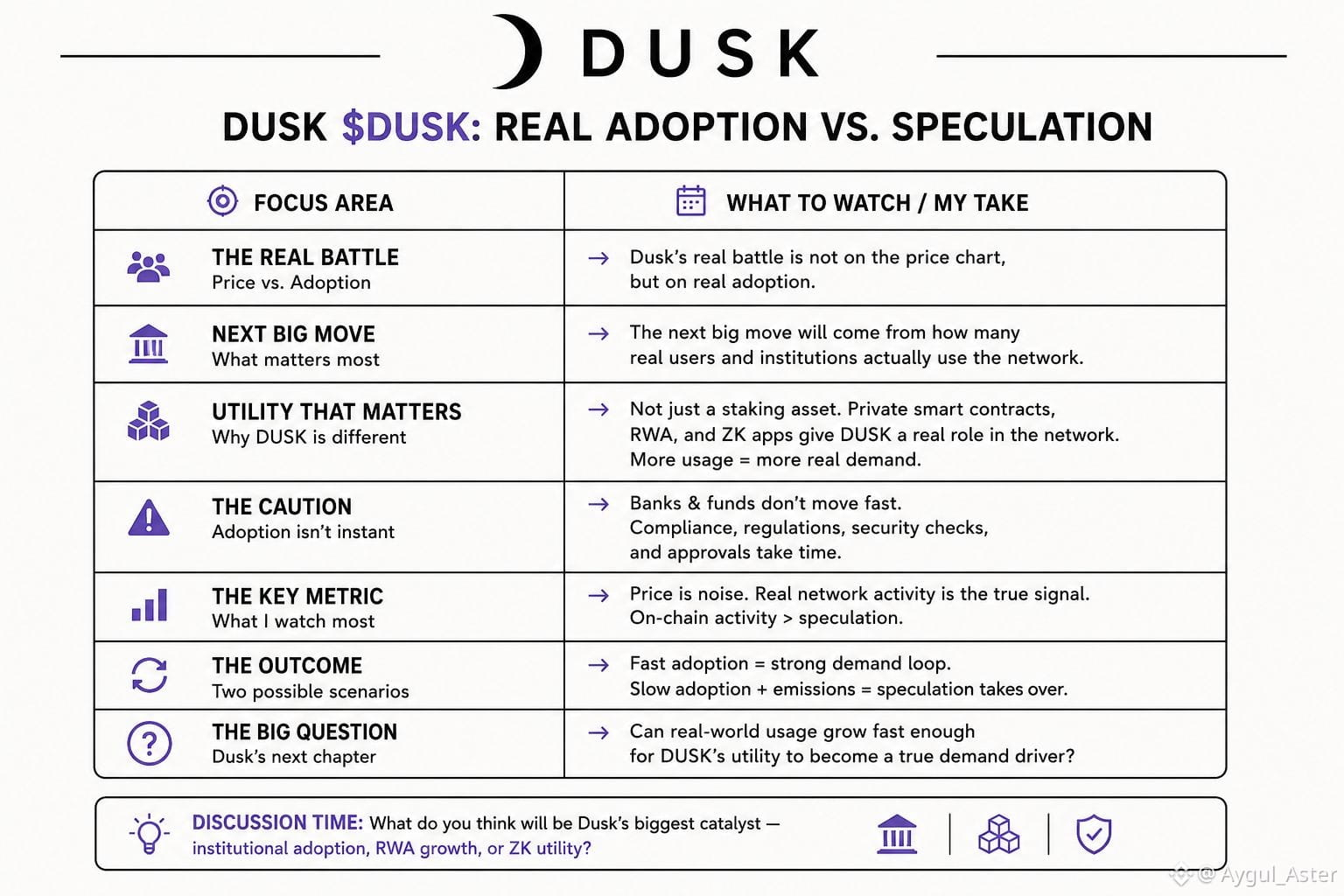
Ehrlich gesagt glaube ich, dass Dusk $DUSK’s „echter“ Kampf nicht im Kurschart stattfindet, sondern bei echter Akzeptanz. 👀
Je mehr ich das Mainnet-Modell von Dusk untersuche, desto klarer wird mir eine Sache: Der nächste große Schritt sollte nicht nur aus Spekulation kommen. Er sollte daraus entstehen, wie viele echte Nutzer und Institutionen das Netzwerk tatsächlich zu nutzen beginnen.
Ein Aspekt an DUSK, der mir besonders interessant vorkommt, ist, dass es nicht nur ein Staking-Asset ist. Mit privaten Smart Contracts, RWAs und ZK-basierten Anwendungen hat es eine praktische Rolle innerhalb des Netzwerks. Wenn die institutionelle Aktivität wirklich beginnt stark zu wachsen, könnte die Nachfrage nicht nur von Tradern und Spekulation kommen, sondern auch von der tatsächlichen Nutzung des Netzwerks.
Aber ehrlich gesagt bin ich hier auch ein wenig vorsichtig.
Im Krypto-Bereich sehen wir oft gute Technologie und gehen dann schnell davon aus, dass die Akzeptanz folgen wird. In der Realität ist die Integration für Banken und Fonds jedoch nicht so einfach. Compliance, Regulierungen, Security-Checks und interne Freigaben brauchen Zeit.
Deshalb ist für mich das wichtigste Signal für Dusk im Moment nicht der Preis. Es ist die echte Netzwerkaktivität.
Wenn institutionelle Transaktionen schnell wachsen, könnte das token-gestützte Modell von DUSK einen wirklich interessanten Nachfrage-Loop erzeugen. Aber wenn die Akzeptanz langsam bleibt, während die Emissionen weiterlaufen, könnte die Spekulation die Story sehr leicht wieder übernehmen.
Also komme ich immer wieder zu einer Frage:
Kann die Nutzung in der echten Welt schnell genug wachsen, damit DUSK’s Utility zu einem echten Treiber der Nachfrage wird?
Das ist ehrlich gesagt auch das, worauf ich am genauesten schauen werde. 👀
Was denkst du, wird Dusk’s größter Katalysator sein — institutionelle Akzeptanz, RWA-Wachstum oder ZK-Utility?
#dusk $DUSK @Dusk
Ehrlich gesagt glaube ich, dass Dusk $DUSK ’s „echter“ Kampf nicht im Kurschart stattfindet, sondern bei echter Akzeptanz. 👀
Je mehr ich das Mainnet-Modell von Dusk untersuche, desto klarer wird mir eine Sache: Der nächste große Schritt sollte nicht nur aus Spekulation kommen. Er sollte daraus entstehen, wie viele echte Nutzer und Institutionen das Netzwerk tatsächlich zu nutzen beginnen.
Ein Aspekt an DUSK, der mir besonders interessant vorkommt, ist, dass es nicht nur ein Staking-Asset ist. Mit privaten Smart Contracts, RWAs und ZK-basierten Anwendungen hat es eine praktische Rolle innerhalb des Netzwerks. Wenn die institutionelle Aktivität wirklich beginnt stark zu wachsen, könnte die Nachfrage nicht nur von Tradern und Spekulation kommen, sondern auch von der tatsächlichen Nutzung des Netzwerks.
Aber ehrlich gesagt bin ich hier auch ein wenig vorsichtig.
Im Krypto-Bereich sehen wir oft gute Technologie und gehen dann schnell davon aus, dass die Akzeptanz folgen wird. In der Realität ist die Integration für Banken und Fonds jedoch nicht so einfach. Compliance, Regulierungen, Security-Checks und interne Freigaben brauchen Zeit.
Deshalb ist für mich das wichtigste Signal für Dusk im Moment nicht der Preis. Es ist die echte Netzwerkaktivität.
Wenn institutionelle Transaktionen schnell wachsen, könnte das token-gestützte Modell von DUSK einen wirklich interessanten Nachfrage-Loop erzeugen. Aber wenn die Akzeptanz langsam bleibt, während die Emissionen weiterlaufen, könnte die Spekulation die Story sehr leicht wieder übernehmen.
Also komme ich immer wieder zu einer Frage:
Kann die Nutzung in der echten Welt schnell genug wachsen, damit DUSK’s Utility zu einem echten Treiber der Nachfrage wird?
Das ist ehrlich gesagt auch das, worauf ich am genauesten schauen werde. 👀
Was denkst du, wird Dusk’s größter Katalysator sein — institutionelle Akzeptanz, RWA-Wachstum oder ZK-Utility?
Ehrlich gesagt glaube ich, dass Dusk $DUSK ’s „echter“ Kampf nicht im Kurschart stattfindet, sondern bei echter Akzeptanz. 👀
Je mehr ich das Mainnet-Modell von Dusk untersuche, desto klarer wird mir eine Sache: Der nächste große Schritt sollte nicht nur aus Spekulation kommen. Er sollte daraus entstehen, wie viele echte Nutzer und Institutionen das Netzwerk tatsächlich zu nutzen beginnen.
Ein Aspekt an DUSK, der mir besonders interessant vorkommt, ist, dass es nicht nur ein Staking-Asset ist. Mit privaten Smart Contracts, RWAs und ZK-basierten Anwendungen hat es eine praktische Rolle innerhalb des Netzwerks. Wenn die institutionelle Aktivität wirklich beginnt stark zu wachsen, könnte die Nachfrage nicht nur von Tradern und Spekulation kommen, sondern auch von der tatsächlichen Nutzung des Netzwerks.
Aber ehrlich gesagt bin ich hier auch ein wenig vorsichtig.
Im Krypto-Bereich sehen wir oft gute Technologie und gehen dann schnell davon aus, dass die Akzeptanz folgen wird. In der Realität ist die Integration für Banken und Fonds jedoch nicht so einfach. Compliance, Regulierungen, Security-Checks und interne Freigaben brauchen Zeit.
Deshalb ist für mich das wichtigste Signal für Dusk im Moment nicht der Preis. Es ist die echte Netzwerkaktivität.
Wenn institutionelle Transaktionen schnell wachsen, könnte das token-gestützte Modell von DUSK einen wirklich interessanten Nachfrage-Loop erzeugen. Aber wenn die Akzeptanz langsam bleibt, während die Emissionen weiterlaufen, könnte die Spekulation die Story sehr leicht wieder übernehmen.
Also komme ich immer wieder zu einer Frage:
Kann die Nutzung in der echten Welt schnell genug wachsen, damit DUSK’s Utility zu einem echten Treiber der Nachfrage wird?
Das ist ehrlich gesagt auch das, worauf ich am genauesten schauen werde. 👀
Was denkst du, wird Dusk’s größter Katalysator sein — institutionelle Akzeptanz, RWA-Wachstum oder ZK-Utility?
1
112
·
--
#dusk $DUSK @Dusk_Foundation
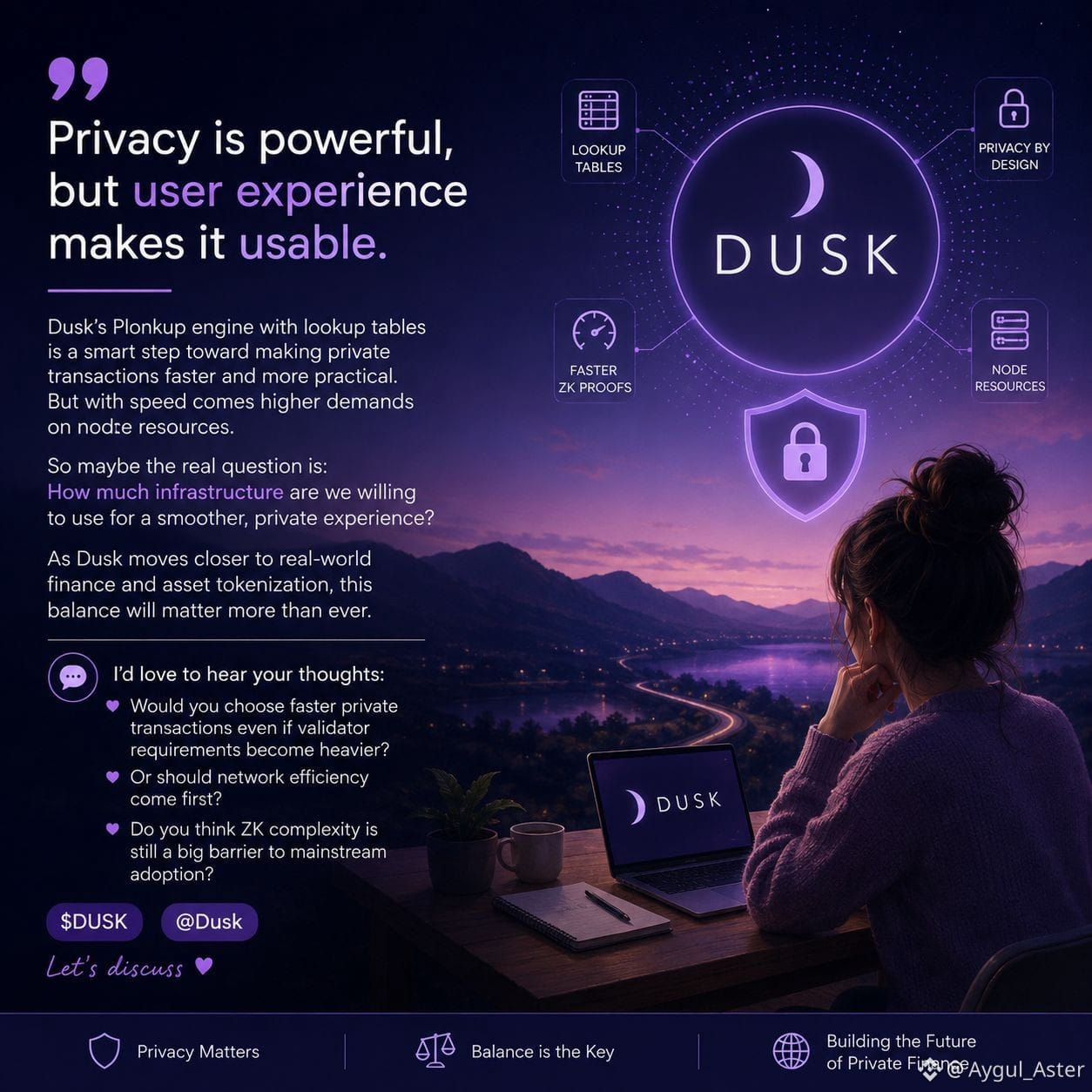
Ich habe mir etwas Zeit genommen, um mir Dusk und seine Plonkup-kryptografische Engine anzusehen, und ehrlich gesagt fand ich die Privatsphäre-Seite spannender, als ich erwartet hatte. Eine Sache, die mir besonders aufgefallen ist, ist, wie Dusk Look-up-Tabellen nutzt, um einen Teil der aufwendigeren ZK-Berechnungen effizienter zu machen. Ich bin kein Kryptoexperte, daher versuche ich, das eher aus einer praktischen Perspektive zu verstehen. Kann das tatsächlich dazu beitragen, dass sich private Transaktionen schnell und unkompliziert anfühlen – genug für den Alltag von Nutzern und echte finanzielle Anwendungen?
Denn für mich ist Privatsphäre großartig, aber auch die Nutzererfahrung zählt. Wenn jemand mehrere Minuten warten muss, um eine private Überweisung abzuschließen, kann ich mir gut vorstellen, dass das zu einem echten Problem für die Einführung wird. Gleichzeitig gibt es eine andere Seite, an die ich immer wieder denke: Wenn die Generierung der Beweise schneller wird, aber mehr Speicher oder Ressourcen von Netzwerk-Knoten erfordert, dann muss irgendwo ein Gleichgewicht gefunden werden.
Genau das macht es für mich interessant. Vielleicht ist die größere Frage nicht nur, ob Dusk Privatsphäre schneller machen kann, sondern auch, wie viel Infrastruktur wir bereit sind zu nutzen, damit dieses Erlebnis reibungslos ist.
Da Dusk sich hin zu realen Finanzanwendungsfällen und Asset-Tokenisierung bewegt, glaube ich, dass dieses Gleichgewicht sehr wichtig werden könnte.
Ich würde wirklich gern hören, was ihr davon haltet: Würdet ihr schnellere private Transaktionen wählen, auch wenn die Anforderungen an Validatoren schwerer werden, oder sollte zuerst die Netzwerkeffizienz im Vordergrund stehen? Und glaubt ihr, dass die Komplexität von ZK immer noch eine der größten Hürden für eine breitere Akzeptanz ist?
#dusk $DUSK @Dusk
Ich habe mir etwas Zeit genommen, um mir Dusk und seine Plonkup-kryptografische Engine anzusehen, und ehrlich gesagt fand ich die Privatsphäre-Seite spannender, als ich erwartet hatte. Eine Sache, die mir besonders aufgefallen ist, ist, wie Dusk Look-up-Tabellen nutzt, um einen Teil der aufwendigeren ZK-Berechnungen effizienter zu machen. Ich bin kein Kryptoexperte, daher versuche ich, das eher aus einer praktischen Perspektive zu verstehen. Kann das tatsächlich dazu beitragen, dass sich private Transaktionen schnell und unkompliziert anfühlen – genug für den Alltag von Nutzern und echte finanzielle Anwendungen?
Denn für mich ist Privatsphäre großartig, aber auch die Nutzererfahrung zählt. Wenn jemand mehrere Minuten warten muss, um eine private Überweisung abzuschließen, kann ich mir gut vorstellen, dass das zu einem echten Problem für die Einführung wird. Gleichzeitig gibt es eine andere Seite, an die ich immer wieder denke: Wenn die Generierung der Beweise schneller wird, aber mehr Speicher oder Ressourcen von Netzwerk-Knoten erfordert, dann muss irgendwo ein Gleichgewicht gefunden werden.
Genau das macht es für mich interessant. Vielleicht ist die größere Frage nicht nur, ob Dusk Privatsphäre schneller machen kann, sondern auch, wie viel Infrastruktur wir bereit sind zu nutzen, damit dieses Erlebnis reibungslos ist.
Da Dusk sich hin zu realen Finanzanwendungsfällen und Asset-Tokenisierung bewegt, glaube ich, dass dieses Gleichgewicht sehr wichtig werden könnte.
Ich würde wirklich gern hören, was ihr davon haltet: Würdet ihr schnellere private Transaktionen wählen, auch wenn die Anforderungen an Validatoren schwerer werden, oder sollte zuerst die Netzwerkeffizienz im Vordergrund stehen? Und glaubt ihr, dass die Komplexität von ZK immer noch eine der größten Hürden für eine breitere Akzeptanz ist?
Ich habe mir etwas Zeit genommen, um mir Dusk und seine Plonkup-kryptografische Engine anzusehen, und ehrlich gesagt fand ich die Privatsphäre-Seite spannender, als ich erwartet hatte. Eine Sache, die mir besonders aufgefallen ist, ist, wie Dusk Look-up-Tabellen nutzt, um einen Teil der aufwendigeren ZK-Berechnungen effizienter zu machen. Ich bin kein Kryptoexperte, daher versuche ich, das eher aus einer praktischen Perspektive zu verstehen. Kann das tatsächlich dazu beitragen, dass sich private Transaktionen schnell und unkompliziert anfühlen – genug für den Alltag von Nutzern und echte finanzielle Anwendungen?
Denn für mich ist Privatsphäre großartig, aber auch die Nutzererfahrung zählt. Wenn jemand mehrere Minuten warten muss, um eine private Überweisung abzuschließen, kann ich mir gut vorstellen, dass das zu einem echten Problem für die Einführung wird. Gleichzeitig gibt es eine andere Seite, an die ich immer wieder denke: Wenn die Generierung der Beweise schneller wird, aber mehr Speicher oder Ressourcen von Netzwerk-Knoten erfordert, dann muss irgendwo ein Gleichgewicht gefunden werden.
Genau das macht es für mich interessant. Vielleicht ist die größere Frage nicht nur, ob Dusk Privatsphäre schneller machen kann, sondern auch, wie viel Infrastruktur wir bereit sind zu nutzen, damit dieses Erlebnis reibungslos ist.
Da Dusk sich hin zu realen Finanzanwendungsfällen und Asset-Tokenisierung bewegt, glaube ich, dass dieses Gleichgewicht sehr wichtig werden könnte.
Ich würde wirklich gern hören, was ihr davon haltet: Würdet ihr schnellere private Transaktionen wählen, auch wenn die Anforderungen an Validatoren schwerer werden, oder sollte zuerst die Netzwerkeffizienz im Vordergrund stehen? Und glaubt ihr, dass die Komplexität von ZK immer noch eine der größten Hürden für eine breitere Akzeptanz ist?
110
·
--
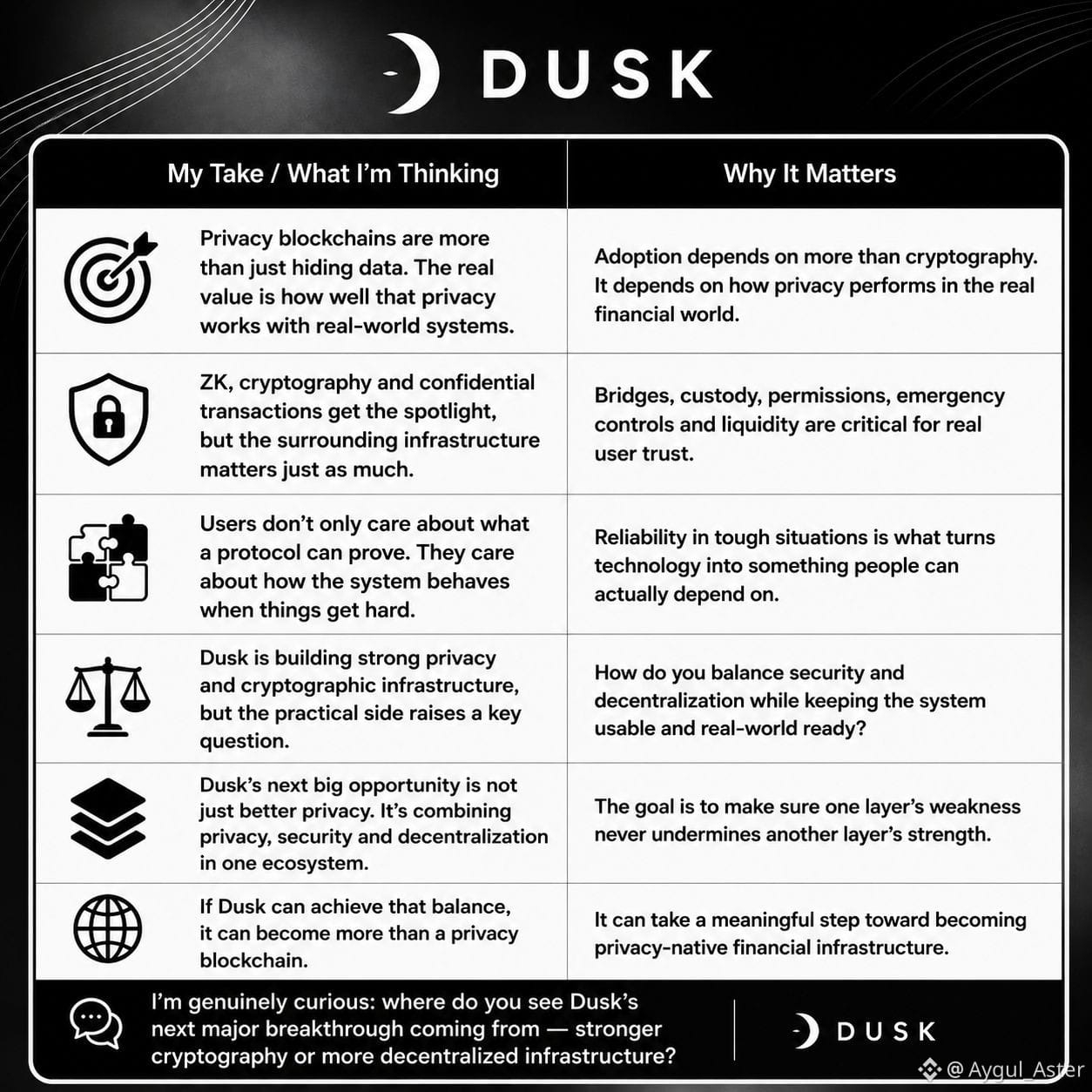
#dusk $DUSK @Dusk_Foundation Nachdem ich ein wenig tiefergehende Recherchen zu Dusk $DUSK angestellt habe, ist mir eine Sache besonders aufgefallen. Ich glaube nicht, dass der Wert einer Privacy-Blockchain nur darin besteht, Transaktionen vertraulich zu machen. Die größere Frage ist, wie gut diese Privatsphäre mit realer Infrastruktur tatsächlich funktioniert.
Wir sprechen oft über ZK, Kryptografie und vertrauliche Transaktionen, aber für mich ist der spannendste Teil alles rund um das Protokoll. Brücken, Verwahrung, Berechtigungen, Notfallkontrollen und Liquidität sind genauso wichtig. Am Ende kümmern sich Nutzer nicht nur darum, was ein Protokoll mathematisch beweisen kann. Sie interessieren sich auch dafür, wie das gesamte System reagiert, wenn es schwierig wird.
Das macht Dusk für mich interessant. Auf der einen Seite nimmt das Projekt Privatsphäre und kryptografische Infrastruktur ernst. Auf der anderen Seite wirft die praktische Seite eine größere Frage auf: Wie balanciert man tatsächlich Sicherheit und Dezentralisierung?
Persönlich glaube ich nicht, dass Dusk’ nächste große Chance einfach „bessere Privatsphäre“ ist. Was mir wichtiger erscheint, ist die Kombination von Privatsphäre, Sicherheit und Dezentralisierung in einem einzigen Ökosystem – ohne zuzulassen, dass die Schwäche einer Ebene die Stärke einer anderen untergräbt.
Wenn Dusk diese Balance erreichen kann, denke ich, dass es mehr werden könnte als nur eine privacy-fokussierte Blockchain. Es könnte einen bedeutenden Schritt in Richtung einer privatsphären-nativen Finanzinfrastruktur gehen.
Jetzt bin ich wirklich neugierig: Woher sehen Sie Dusk’ nächsten großen Durchbruch kommen – aus stärkerer Kryptografie oder aus stärker dezentraler Infrastruktur?
#dusk $DUSK @Dusk Nachdem ich ein wenig tiefergehende Recherchen zu Dusk $DUSK angestellt habe, ist mir eine Sache besonders aufgefallen. Ich glaube nicht, dass der Wert einer Privacy-Blockchain nur darin besteht, Transaktionen vertraulich zu machen. Die größere Frage ist, wie gut diese Privatsphäre mit realer Infrastruktur tatsächlich funktioniert.
Wir sprechen oft über ZK, Kryptografie und vertrauliche Transaktionen, aber für mich ist der spannendste Teil alles rund um das Protokoll. Brücken, Verwahrung, Berechtigungen, Notfallkontrollen und Liquidität sind genauso wichtig. Am Ende kümmern sich Nutzer nicht nur darum, was ein Protokoll mathematisch beweisen kann. Sie interessieren sich auch dafür, wie das gesamte System reagiert, wenn es schwierig wird.
Das macht Dusk für mich interessant. Auf der einen Seite nimmt das Projekt Privatsphäre und kryptografische Infrastruktur ernst. Auf der anderen Seite wirft die praktische Seite eine größere Frage auf: Wie balanciert man tatsächlich Sicherheit und Dezentralisierung?
Persönlich glaube ich nicht, dass Dusk’ nächste große Chance einfach „bessere Privatsphäre“ ist. Was mir wichtiger erscheint, ist die Kombination von Privatsphäre, Sicherheit und Dezentralisierung in einem einzigen Ökosystem – ohne zuzulassen, dass die Schwäche einer Ebene die Stärke einer anderen untergräbt.
Wenn Dusk diese Balance erreichen kann, denke ich, dass es mehr werden könnte als nur eine privacy-fokussierte Blockchain. Es könnte einen bedeutenden Schritt in Richtung einer privatsphären-nativen Finanzinfrastruktur gehen.
Jetzt bin ich wirklich neugierig: Woher sehen Sie Dusk’ nächsten großen Durchbruch kommen – aus stärkerer Kryptografie oder aus stärker dezentraler Infrastruktur?
Wir sprechen oft über ZK, Kryptografie und vertrauliche Transaktionen, aber für mich ist der spannendste Teil alles rund um das Protokoll. Brücken, Verwahrung, Berechtigungen, Notfallkontrollen und Liquidität sind genauso wichtig. Am Ende kümmern sich Nutzer nicht nur darum, was ein Protokoll mathematisch beweisen kann. Sie interessieren sich auch dafür, wie das gesamte System reagiert, wenn es schwierig wird.
Das macht Dusk für mich interessant. Auf der einen Seite nimmt das Projekt Privatsphäre und kryptografische Infrastruktur ernst. Auf der anderen Seite wirft die praktische Seite eine größere Frage auf: Wie balanciert man tatsächlich Sicherheit und Dezentralisierung?
Persönlich glaube ich nicht, dass Dusk’ nächste große Chance einfach „bessere Privatsphäre“ ist. Was mir wichtiger erscheint, ist die Kombination von Privatsphäre, Sicherheit und Dezentralisierung in einem einzigen Ökosystem – ohne zuzulassen, dass die Schwäche einer Ebene die Stärke einer anderen untergräbt.
Wenn Dusk diese Balance erreichen kann, denke ich, dass es mehr werden könnte als nur eine privacy-fokussierte Blockchain. Es könnte einen bedeutenden Schritt in Richtung einer privatsphären-nativen Finanzinfrastruktur gehen.
Jetzt bin ich wirklich neugierig: Woher sehen Sie Dusk’ nächsten großen Durchbruch kommen – aus stärkerer Kryptografie oder aus stärker dezentraler Infrastruktur?
79
·
--
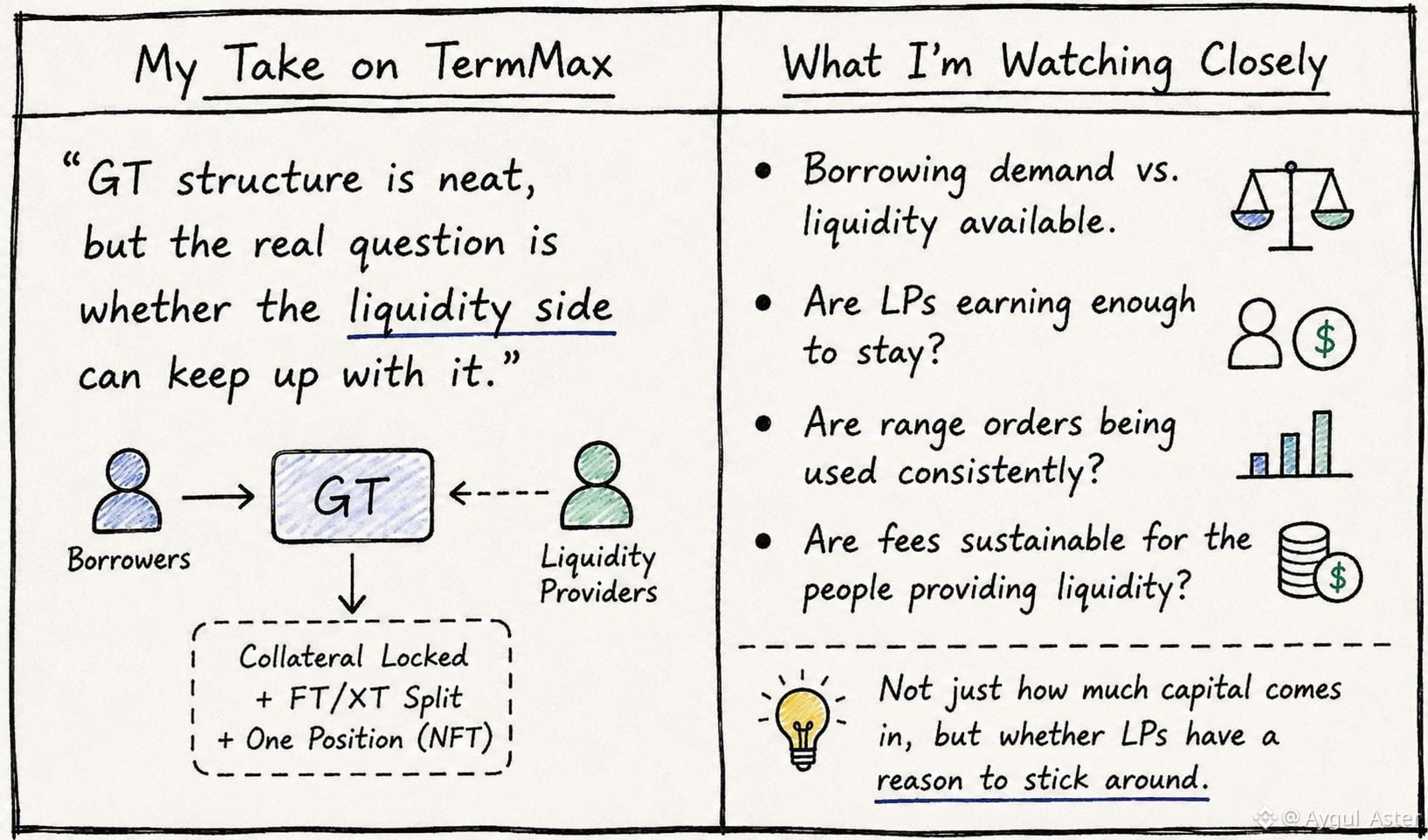
#termmax @termmax Je tiefer ich mich mit TermMax beschäftige, desto mehr habe ich das Gefühl, dass die spannende Frage gar nicht wirklich ist, ob die GT-Struktur funktioniert. Die ist nämlich ziemlich ausgeklügelt. Was mich im Moment vielmehr interessiert, ist die Frage, ob die Liquiditätsseite damit Schritt halten kann.
Ich achte inzwischen stärker auf das Verhältnis zwischen der Kreditaufnahme-Aktivität und der Liquidität, die das Ganze unterstützt. Wenn mehr Nutzer für Leverage hereinkommen, während Liquiditätsanbieter nach und nach weniger aktiv werden, kann das eine ziemlich andere Dynamik erzeugen. Aus Sicht der Kreditnehmer kann sich alles weiterhin glatt und unkompliziert anfühlen, aber darunter könnte die verfügbare Liquidität allmählich dünner werden.
Und ehrlich gesagt ist genau das der Teil von TermMax, der mich am meisten interessiert.
Ich glaube nicht, dass uns TVL allein genug sagt. Ich würde gern wissen, ob LPs genug verdienen, um tatsächlich dabeizubleiben, ob diese Range-Orders konsistent genutzt werden, und ob die Nachfrage nach Krediten genügend Gebühren erzeugt, damit die Bereitstellung von Liquidität lohnenswert bleibt.
Denn wenn die Nachfrage nach Leverage weiter wächst, während die Beteiligung der LPs weiter schwächer wird, könnte es irgendwann eine Lücke geben zwischen dem, wie viel die Nutzer ausleihen wollen, und dem, wie viel Liquidität tatsächlich verfügbar ist.
Ich sage nicht, dass das gerade schon passiert. Es könnte einfach sein, dass es sich um ein Protokoll in einer frühen Phase handelt, das noch sein Gleichgewicht findet.
Aber wenn ich TermMax genau im Blick hätte, dann wäre das der nächste Punkt, auf den ich achten würde: nicht nur, wie viel Kapital hereinkommt, sondern ob die Leute, die dieses Kapital bereitstellen, auch wirklich einen Grund haben, zu bleiben.
Was denkt ihr? Ist LP-Nachhaltigkeit das Maß, das wir am engsten im Blick haben sollten?
#termmax @TermMax Je tiefer ich mich mit TermMax beschäftige, desto mehr habe ich das Gefühl, dass die spannende Frage gar nicht wirklich ist, ob die GT-Struktur funktioniert. Die ist nämlich ziemlich ausgeklügelt. Was mich im Moment vielmehr interessiert, ist die Frage, ob die Liquiditätsseite damit Schritt halten kann.
Ich achte inzwischen stärker auf das Verhältnis zwischen der Kreditaufnahme-Aktivität und der Liquidität, die das Ganze unterstützt. Wenn mehr Nutzer für Leverage hereinkommen, während Liquiditätsanbieter nach und nach weniger aktiv werden, kann das eine ziemlich andere Dynamik erzeugen. Aus Sicht der Kreditnehmer kann sich alles weiterhin glatt und unkompliziert anfühlen, aber darunter könnte die verfügbare Liquidität allmählich dünner werden.
Und ehrlich gesagt ist genau das der Teil von TermMax, der mich am meisten interessiert.
Ich glaube nicht, dass uns TVL allein genug sagt. Ich würde gern wissen, ob LPs genug verdienen, um tatsächlich dabeizubleiben, ob diese Range-Orders konsistent genutzt werden, und ob die Nachfrage nach Krediten genügend Gebühren erzeugt, damit die Bereitstellung von Liquidität lohnenswert bleibt.
Denn wenn die Nachfrage nach Leverage weiter wächst, während die Beteiligung der LPs weiter schwächer wird, könnte es irgendwann eine Lücke geben zwischen dem, wie viel die Nutzer ausleihen wollen, und dem, wie viel Liquidität tatsächlich verfügbar ist.
Ich sage nicht, dass das gerade schon passiert. Es könnte einfach sein, dass es sich um ein Protokoll in einer frühen Phase handelt, das noch sein Gleichgewicht findet.
Aber wenn ich TermMax genau im Blick hätte, dann wäre das der nächste Punkt, auf den ich achten würde: nicht nur, wie viel Kapital hereinkommt, sondern ob die Leute, die dieses Kapital bereitstellen, auch wirklich einen Grund haben, zu bleiben.
Was denkt ihr? Ist LP-Nachhaltigkeit das Maß, das wir am engsten im Blick haben sollten?
Ich achte inzwischen stärker auf das Verhältnis zwischen der Kreditaufnahme-Aktivität und der Liquidität, die das Ganze unterstützt. Wenn mehr Nutzer für Leverage hereinkommen, während Liquiditätsanbieter nach und nach weniger aktiv werden, kann das eine ziemlich andere Dynamik erzeugen. Aus Sicht der Kreditnehmer kann sich alles weiterhin glatt und unkompliziert anfühlen, aber darunter könnte die verfügbare Liquidität allmählich dünner werden.
Und ehrlich gesagt ist genau das der Teil von TermMax, der mich am meisten interessiert.
Ich glaube nicht, dass uns TVL allein genug sagt. Ich würde gern wissen, ob LPs genug verdienen, um tatsächlich dabeizubleiben, ob diese Range-Orders konsistent genutzt werden, und ob die Nachfrage nach Krediten genügend Gebühren erzeugt, damit die Bereitstellung von Liquidität lohnenswert bleibt.
Denn wenn die Nachfrage nach Leverage weiter wächst, während die Beteiligung der LPs weiter schwächer wird, könnte es irgendwann eine Lücke geben zwischen dem, wie viel die Nutzer ausleihen wollen, und dem, wie viel Liquidität tatsächlich verfügbar ist.
Ich sage nicht, dass das gerade schon passiert. Es könnte einfach sein, dass es sich um ein Protokoll in einer frühen Phase handelt, das noch sein Gleichgewicht findet.
Aber wenn ich TermMax genau im Blick hätte, dann wäre das der nächste Punkt, auf den ich achten würde: nicht nur, wie viel Kapital hereinkommt, sondern ob die Leute, die dieses Kapital bereitstellen, auch wirklich einen Grund haben, zu bleiben.
Was denkt ihr? Ist LP-Nachhaltigkeit das Maß, das wir am engsten im Blick haben sollten?
1
112
·
--
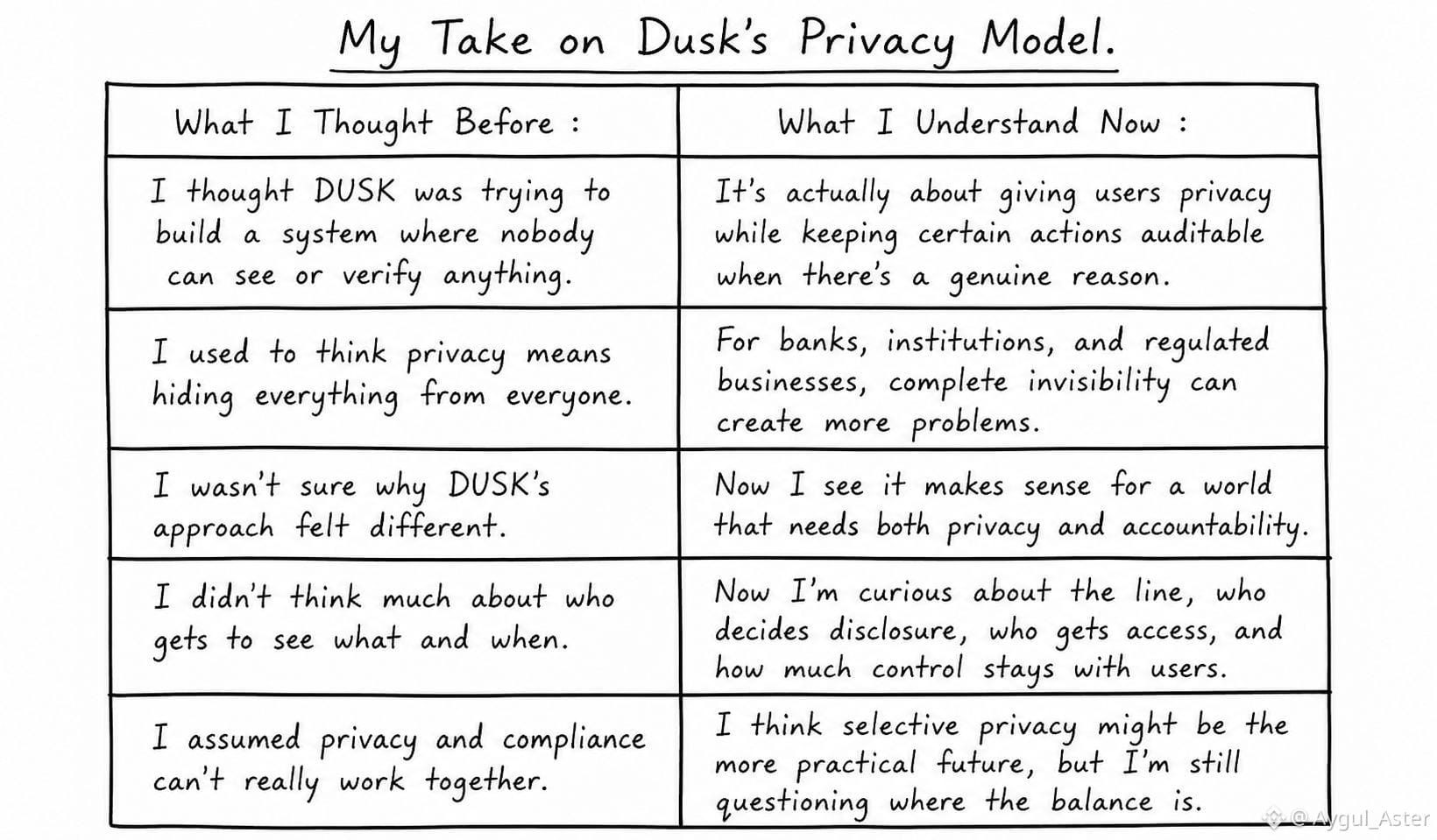
#dusk $DUSK @Dusk_Foundation Je tiefer ich in @Dusk eintauche, desto mehr habe ich das Gefühl, als würde ich dessen Datenschutzmodell aus einem falschen Blickwinkel betrachten.
Ich habe inzwischen mehr über Hedger gelesen und darüber, wie DUSK Datenschutz angeht. Und ganz ehrlich: Meine wichtigste Erkenntnis ist, dass nicht wirklich versucht wird, ein System aufzubauen, in dem niemals irgendjemand etwas sehen oder verifizieren kann. Es wirkt eher so, als wäre das Ziel, Nutzern Privatsphäre zu geben – dabei aber bestimmte Dinge nachvollziehbar zu halten, wenn es einen echten Grund gibt, nach ihnen zu sehen.
Und das finde ich eigentlich ziemlich interessant.
Ich glaube, im Krypto-Bereich gehen wir manchmal davon aus, dass Privatsphäre bedeutet, alles vor allen zu verbergen. Aber wenn Blockchain von Banken, Institutionen und regulierten Unternehmen genutzt werden soll, könnte totale Unsichtbarkeit ganz andere Probleme verursachen. Es braucht immer noch einen Weg, um zu verifizieren, was passiert ist, Regeln einzuhalten und etwas zu untersuchen, wenn es nötig ist.
Genau da fängt DUSKs Ansatz an, für mich mehr Sinn zu ergeben.
Aber bei einem Punkt bin ich noch immer hängen geblieben: Wo verläuft die Grenze genau? Wer entscheidet, wann eine Offenlegung notwendig ist? Wer erhält Zugriff auf diese Informationen? Und wie viel Kontrolle hat der Nutzer tatsächlich im Vergleich zum Protokoll oder zu den autorisierten Parteien?
Ich glaube nicht, dass das Stellen dieser Fragen das Modell schwächer macht. Wenn überhaupt, denke ich, dass das die Fragen sind, die wir stellen sollten, bevor wir entscheiden, ob diese Art von Privatsphäre wirklich außerhalb von krypto-nativen Nutzern funktionieren kann.
Ich bin gespannt, was ihr denkt: Ist selektive Privatsphäre die praktischere Zukunft für Blockchain – oder gibt sie zu viel von dem auf, was Privatsphäre eigentlich bedeuten soll?
#dusk $DUSK @Dusk Je tiefer ich in @Dusk eintauche, desto mehr habe ich das Gefühl, als würde ich dessen Datenschutzmodell aus einem falschen Blickwinkel betrachten.
Ich habe inzwischen mehr über Hedger gelesen und darüber, wie DUSK Datenschutz angeht. Und ganz ehrlich: Meine wichtigste Erkenntnis ist, dass nicht wirklich versucht wird, ein System aufzubauen, in dem niemals irgendjemand etwas sehen oder verifizieren kann. Es wirkt eher so, als wäre das Ziel, Nutzern Privatsphäre zu geben – dabei aber bestimmte Dinge nachvollziehbar zu halten, wenn es einen echten Grund gibt, nach ihnen zu sehen.
Und das finde ich eigentlich ziemlich interessant.
Ich glaube, im Krypto-Bereich gehen wir manchmal davon aus, dass Privatsphäre bedeutet, alles vor allen zu verbergen. Aber wenn Blockchain von Banken, Institutionen und regulierten Unternehmen genutzt werden soll, könnte totale Unsichtbarkeit ganz andere Probleme verursachen. Es braucht immer noch einen Weg, um zu verifizieren, was passiert ist, Regeln einzuhalten und etwas zu untersuchen, wenn es nötig ist.
Genau da fängt DUSKs Ansatz an, für mich mehr Sinn zu ergeben.
Aber bei einem Punkt bin ich noch immer hängen geblieben: Wo verläuft die Grenze genau? Wer entscheidet, wann eine Offenlegung notwendig ist? Wer erhält Zugriff auf diese Informationen? Und wie viel Kontrolle hat der Nutzer tatsächlich im Vergleich zum Protokoll oder zu den autorisierten Parteien?
Ich glaube nicht, dass das Stellen dieser Fragen das Modell schwächer macht. Wenn überhaupt, denke ich, dass das die Fragen sind, die wir stellen sollten, bevor wir entscheiden, ob diese Art von Privatsphäre wirklich außerhalb von krypto-nativen Nutzern funktionieren kann.
Ich bin gespannt, was ihr denkt: Ist selektive Privatsphäre die praktischere Zukunft für Blockchain – oder gibt sie zu viel von dem auf, was Privatsphäre eigentlich bedeuten soll?
Ich habe inzwischen mehr über Hedger gelesen und darüber, wie DUSK Datenschutz angeht. Und ganz ehrlich: Meine wichtigste Erkenntnis ist, dass nicht wirklich versucht wird, ein System aufzubauen, in dem niemals irgendjemand etwas sehen oder verifizieren kann. Es wirkt eher so, als wäre das Ziel, Nutzern Privatsphäre zu geben – dabei aber bestimmte Dinge nachvollziehbar zu halten, wenn es einen echten Grund gibt, nach ihnen zu sehen.
Und das finde ich eigentlich ziemlich interessant.
Ich glaube, im Krypto-Bereich gehen wir manchmal davon aus, dass Privatsphäre bedeutet, alles vor allen zu verbergen. Aber wenn Blockchain von Banken, Institutionen und regulierten Unternehmen genutzt werden soll, könnte totale Unsichtbarkeit ganz andere Probleme verursachen. Es braucht immer noch einen Weg, um zu verifizieren, was passiert ist, Regeln einzuhalten und etwas zu untersuchen, wenn es nötig ist.
Genau da fängt DUSKs Ansatz an, für mich mehr Sinn zu ergeben.
Aber bei einem Punkt bin ich noch immer hängen geblieben: Wo verläuft die Grenze genau? Wer entscheidet, wann eine Offenlegung notwendig ist? Wer erhält Zugriff auf diese Informationen? Und wie viel Kontrolle hat der Nutzer tatsächlich im Vergleich zum Protokoll oder zu den autorisierten Parteien?
Ich glaube nicht, dass das Stellen dieser Fragen das Modell schwächer macht. Wenn überhaupt, denke ich, dass das die Fragen sind, die wir stellen sollten, bevor wir entscheiden, ob diese Art von Privatsphäre wirklich außerhalb von krypto-nativen Nutzern funktionieren kann.
Ich bin gespannt, was ihr denkt: Ist selektive Privatsphäre die praktischere Zukunft für Blockchain – oder gibt sie zu viel von dem auf, was Privatsphäre eigentlich bedeuten soll?
2
2
127
·
--
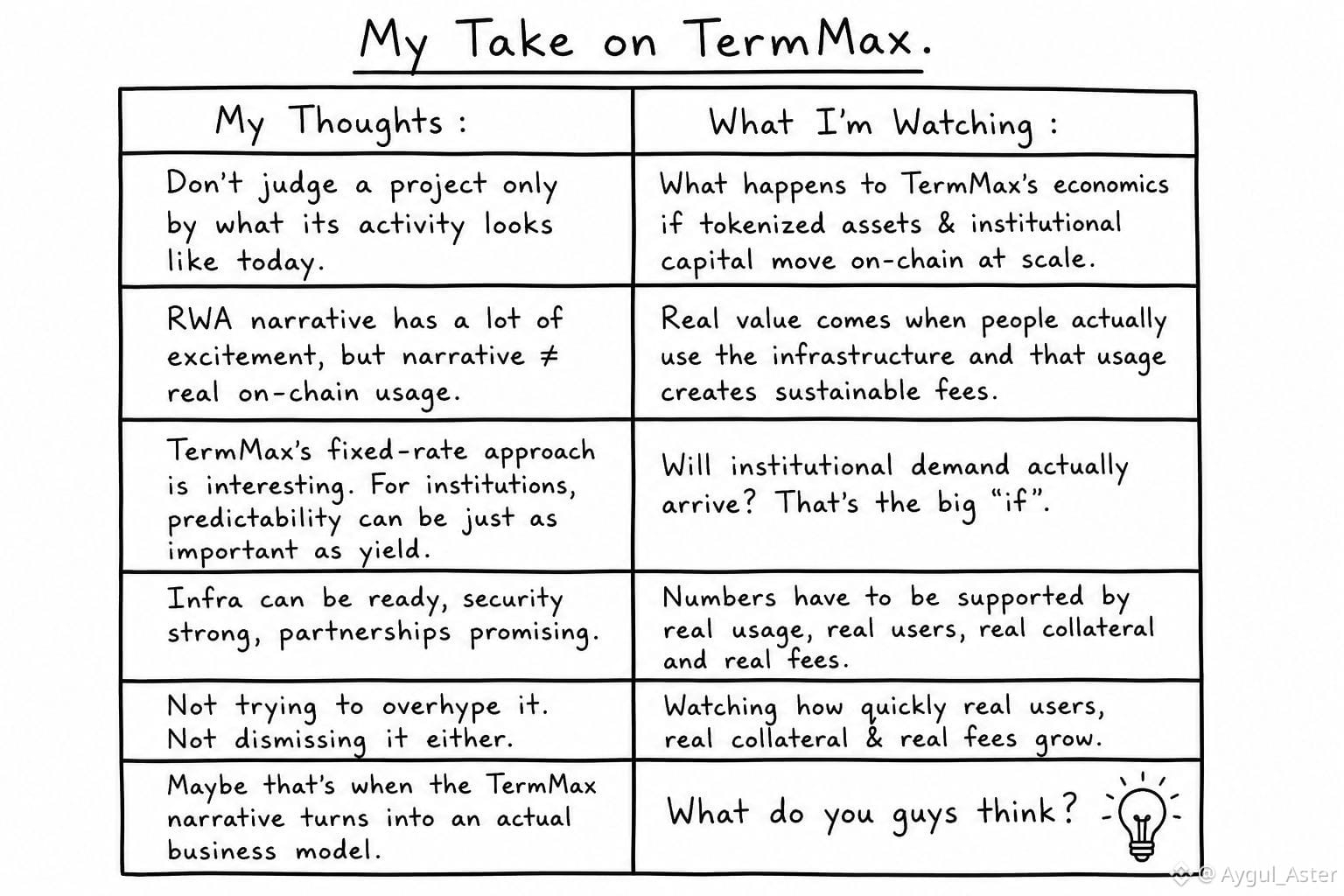
Eines, worüber ich nachdenke, wenn ich in TermMax hineinschaue, ist, dass wir ein Projekt vielleicht nicht nur danach beurteilen sollten, wie seine Aktivität heute aussieht. Für mich ist die entscheidende Frage: Was passiert mit den Economics von TermMax, wenn tokenisierte Vermögenswerte und institutionelles Kapital tatsächlich in großem Maßstab auf der Kette zu fließen beginnen?
Im Moment gibt es viel Aufregung rund um die RWA-Story, aber ich denke, es gibt einen großen Unterschied zwischen einer starken Erzählung und echter On-Chain-Nutzung. Einem Protokoll Aufmerksamkeit zu verschaffen ist leicht, weil die Story darum herum spannend ist. Der eigentliche Wert zeigt sich jedoch erst, wenn die Infrastruktur wirklich genutzt wird – und diese Nutzung nachhaltige Gebühren erzeugt.
Deshalb finde ich auch den Fixed-Rate-Ansatz von TermMax interessant. Für Institutionen geht es meiner Meinung nach nicht immer darum, der höchsten Rendite hinterherzujagen. Vorhersehbarkeit kann genauso wichtig sein. Wenn eine Institution im Voraus weiß, wie die Bedingungen für ihre Kreditaufnahme oder ihr Verleihen aussehen, wird das Planen von Kapital deutlich einfacher.
Aber da ist noch ein großes „Wenn“: Wird die institutionelle Nachfrage tatsächlich ankommen?
Für mich ist das wahrscheinlich der spannendste Test für TermMax. Die Infrastruktur kann bereit sein, die Security-Schicht kann stark sein, und Partnerschaften können vielversprechend wirken. Aber irgendwann müssen die Zahlen durch echte Nutzung getragen werden.
Ich will das Ganze nicht übermäßig bewerben, aber ich will es auch nicht einfach abtun, nur weil die aktuelle Aktivität noch nicht groß ist. Worauf ich achten werde, ist, wie schnell echte Nutzer, echtes Sicherheiten-Backing und echte Gebühren zu wachsen beginnen.
Vielleicht ist dann der Moment, in dem die TermMax-Story anfängt, sich in ein echtes Geschäftsmodell zu verwandeln. Was denkt ihr darüber?
#termmax @termmax
Eines, worüber ich nachdenke, wenn ich in TermMax hineinschaue, ist, dass wir ein Projekt vielleicht nicht nur danach beurteilen sollten, wie seine Aktivität heute aussieht. Für mich ist die entscheidende Frage: Was passiert mit den Economics von TermMax, wenn tokenisierte Vermögenswerte und institutionelles Kapital tatsächlich in großem Maßstab auf der Kette zu fließen beginnen?
Im Moment gibt es viel Aufregung rund um die RWA-Story, aber ich denke, es gibt einen großen Unterschied zwischen einer starken Erzählung und echter On-Chain-Nutzung. Einem Protokoll Aufmerksamkeit zu verschaffen ist leicht, weil die Story darum herum spannend ist. Der eigentliche Wert zeigt sich jedoch erst, wenn die Infrastruktur wirklich genutzt wird – und diese Nutzung nachhaltige Gebühren erzeugt.
Deshalb finde ich auch den Fixed-Rate-Ansatz von TermMax interessant. Für Institutionen geht es meiner Meinung nach nicht immer darum, der höchsten Rendite hinterherzujagen. Vorhersehbarkeit kann genauso wichtig sein. Wenn eine Institution im Voraus weiß, wie die Bedingungen für ihre Kreditaufnahme oder ihr Verleihen aussehen, wird das Planen von Kapital deutlich einfacher.
Aber da ist noch ein großes „Wenn“: Wird die institutionelle Nachfrage tatsächlich ankommen?
Für mich ist das wahrscheinlich der spannendste Test für TermMax. Die Infrastruktur kann bereit sein, die Security-Schicht kann stark sein, und Partnerschaften können vielversprechend wirken. Aber irgendwann müssen die Zahlen durch echte Nutzung getragen werden.
Ich will das Ganze nicht übermäßig bewerben, aber ich will es auch nicht einfach abtun, nur weil die aktuelle Aktivität noch nicht groß ist. Worauf ich achten werde, ist, wie schnell echte Nutzer, echtes Sicherheiten-Backing und echte Gebühren zu wachsen beginnen.
Vielleicht ist dann der Moment, in dem die TermMax-Story anfängt, sich in ein echtes Geschäftsmodell zu verwandeln. Was denkt ihr darüber?
#termmax @TermMax
Im Moment gibt es viel Aufregung rund um die RWA-Story, aber ich denke, es gibt einen großen Unterschied zwischen einer starken Erzählung und echter On-Chain-Nutzung. Einem Protokoll Aufmerksamkeit zu verschaffen ist leicht, weil die Story darum herum spannend ist. Der eigentliche Wert zeigt sich jedoch erst, wenn die Infrastruktur wirklich genutzt wird – und diese Nutzung nachhaltige Gebühren erzeugt.
Deshalb finde ich auch den Fixed-Rate-Ansatz von TermMax interessant. Für Institutionen geht es meiner Meinung nach nicht immer darum, der höchsten Rendite hinterherzujagen. Vorhersehbarkeit kann genauso wichtig sein. Wenn eine Institution im Voraus weiß, wie die Bedingungen für ihre Kreditaufnahme oder ihr Verleihen aussehen, wird das Planen von Kapital deutlich einfacher.
Aber da ist noch ein großes „Wenn“: Wird die institutionelle Nachfrage tatsächlich ankommen?
Für mich ist das wahrscheinlich der spannendste Test für TermMax. Die Infrastruktur kann bereit sein, die Security-Schicht kann stark sein, und Partnerschaften können vielversprechend wirken. Aber irgendwann müssen die Zahlen durch echte Nutzung getragen werden.
Ich will das Ganze nicht übermäßig bewerben, aber ich will es auch nicht einfach abtun, nur weil die aktuelle Aktivität noch nicht groß ist. Worauf ich achten werde, ist, wie schnell echte Nutzer, echtes Sicherheiten-Backing und echte Gebühren zu wachsen beginnen.
Vielleicht ist dann der Moment, in dem die TermMax-Story anfängt, sich in ein echtes Geschäftsmodell zu verwandeln. Was denkt ihr darüber?
#termmax @TermMax
2
1
87
·
--
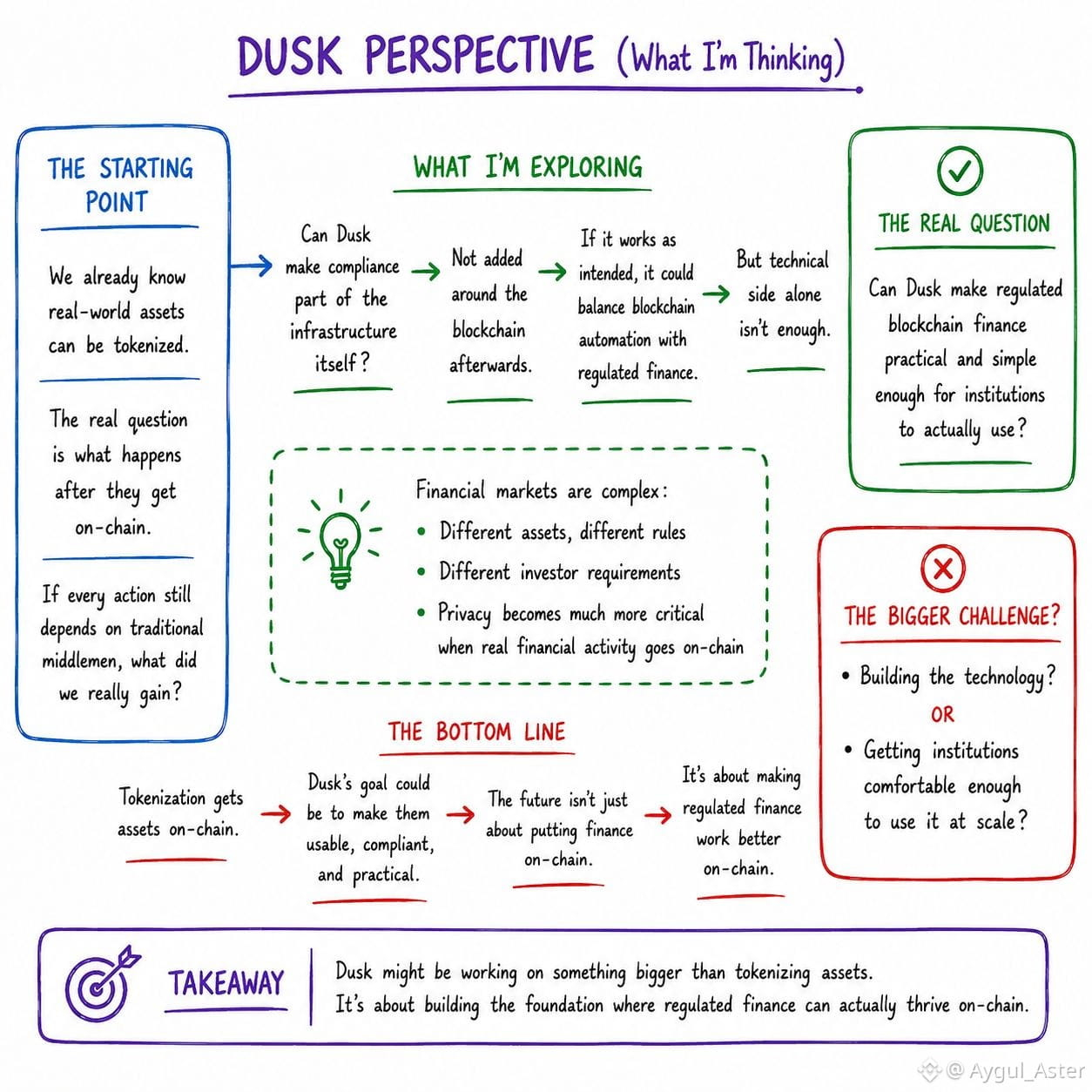
#dusk $DUSK @Dusk_Foundation Je mehr ich in Dusk eintauche, desto mehr habe ich das Gefühl, dass der spannende Teil eigentlich nicht die Frage ist, ob reale Vermögenswerte überhaupt auf die Blockchain gebracht werden können. Das wissen wir bereits. Was mich stattdessen beschäftigt, ist: Was passiert eigentlich, nachdem sie dort angekommen sind?
Nehmen wir an, wir haben einen tokenisierten finanziellen Vermögenswert, der weiterhin reale Regeln einhalten muss. Er kann nicht einfach wie ein normaler permissionless Token funktionieren, mit dem jeder frei interagieren kann. Aber wenn jeder Schritt weiterhin von traditionellen Vermittlern abhängt, frage ich mich ehrlich gesagt, was wir dadurch wirklich gewonnen haben, es überhaupt erst auf die Blockchain zu setzen.
Und genau hier wurde Dusk für mich wirklich interessant.
Ich versuche zu verstehen, ob Dusk Compliance als Teil der Infrastruktur selbst integrieren kann – statt sie als etwas zu behandeln, das erst später als Zusatz um die Blockchain herumgefügt wird. Wenn das so funktioniert, wie es beabsichtigt ist, sehe ich hier ein ziemlich spannendes Gleichgewicht zwischen Blockchain-Automatisierung und reguliertem Finanzwesen.
Aber ich glaube auch nicht, dass die technische Seite allein ausreicht.
Finanzmärkte sind komplex. Unterschiedliche Assets haben unterschiedliche Regeln, Anleger haben unterschiedliche Anforderungen, und Datenschutz wird zu einem viel größeren Thema, sobald echte finanzielle Aktivitäten auf die Blockchain verlagert werden.
Für mich ist die größere Frage daher nicht nur: „Kann Dusk Assets tokenisieren?“
Sondern: Kann Dusk regulierte Blockchain-Finanzierung so praktikabel und so einfach machen, dass Institutionen sie tatsächlich nutzen können?
Das ist ehrlich gesagt der Teil, der mich im Moment am meisten interessiert. Glaubst du, die größere Herausforderung liegt eher darin, die Technologie zu bauen – oder Institutionen so weit zu bringen, dass sie sich genug damit wohlfühlen, sie auch in großem Maßstab wirklich einzusetzen?
#dusk $DUSK @Dusk Je mehr ich in Dusk eintauche, desto mehr habe ich das Gefühl, dass der spannende Teil eigentlich nicht die Frage ist, ob reale Vermögenswerte überhaupt auf die Blockchain gebracht werden können. Das wissen wir bereits. Was mich stattdessen beschäftigt, ist: Was passiert eigentlich, nachdem sie dort angekommen sind?
Nehmen wir an, wir haben einen tokenisierten finanziellen Vermögenswert, der weiterhin reale Regeln einhalten muss. Er kann nicht einfach wie ein normaler permissionless Token funktionieren, mit dem jeder frei interagieren kann. Aber wenn jeder Schritt weiterhin von traditionellen Vermittlern abhängt, frage ich mich ehrlich gesagt, was wir dadurch wirklich gewonnen haben, es überhaupt erst auf die Blockchain zu setzen.
Und genau hier wurde Dusk für mich wirklich interessant.
Ich versuche zu verstehen, ob Dusk Compliance als Teil der Infrastruktur selbst integrieren kann – statt sie als etwas zu behandeln, das erst später als Zusatz um die Blockchain herumgefügt wird. Wenn das so funktioniert, wie es beabsichtigt ist, sehe ich hier ein ziemlich spannendes Gleichgewicht zwischen Blockchain-Automatisierung und reguliertem Finanzwesen.
Aber ich glaube auch nicht, dass die technische Seite allein ausreicht.
Finanzmärkte sind komplex. Unterschiedliche Assets haben unterschiedliche Regeln, Anleger haben unterschiedliche Anforderungen, und Datenschutz wird zu einem viel größeren Thema, sobald echte finanzielle Aktivitäten auf die Blockchain verlagert werden.
Für mich ist die größere Frage daher nicht nur: „Kann Dusk Assets tokenisieren?“
Sondern: Kann Dusk regulierte Blockchain-Finanzierung so praktikabel und so einfach machen, dass Institutionen sie tatsächlich nutzen können?
Das ist ehrlich gesagt der Teil, der mich im Moment am meisten interessiert. Glaubst du, die größere Herausforderung liegt eher darin, die Technologie zu bauen – oder Institutionen so weit zu bringen, dass sie sich genug damit wohlfühlen, sie auch in großem Maßstab wirklich einzusetzen?
Nehmen wir an, wir haben einen tokenisierten finanziellen Vermögenswert, der weiterhin reale Regeln einhalten muss. Er kann nicht einfach wie ein normaler permissionless Token funktionieren, mit dem jeder frei interagieren kann. Aber wenn jeder Schritt weiterhin von traditionellen Vermittlern abhängt, frage ich mich ehrlich gesagt, was wir dadurch wirklich gewonnen haben, es überhaupt erst auf die Blockchain zu setzen.
Und genau hier wurde Dusk für mich wirklich interessant.
Ich versuche zu verstehen, ob Dusk Compliance als Teil der Infrastruktur selbst integrieren kann – statt sie als etwas zu behandeln, das erst später als Zusatz um die Blockchain herumgefügt wird. Wenn das so funktioniert, wie es beabsichtigt ist, sehe ich hier ein ziemlich spannendes Gleichgewicht zwischen Blockchain-Automatisierung und reguliertem Finanzwesen.
Aber ich glaube auch nicht, dass die technische Seite allein ausreicht.
Finanzmärkte sind komplex. Unterschiedliche Assets haben unterschiedliche Regeln, Anleger haben unterschiedliche Anforderungen, und Datenschutz wird zu einem viel größeren Thema, sobald echte finanzielle Aktivitäten auf die Blockchain verlagert werden.
Für mich ist die größere Frage daher nicht nur: „Kann Dusk Assets tokenisieren?“
Sondern: Kann Dusk regulierte Blockchain-Finanzierung so praktikabel und so einfach machen, dass Institutionen sie tatsächlich nutzen können?
Das ist ehrlich gesagt der Teil, der mich im Moment am meisten interessiert. Glaubst du, die größere Herausforderung liegt eher darin, die Technologie zu bauen – oder Institutionen so weit zu bringen, dass sie sich genug damit wohlfühlen, sie auch in großem Maßstab wirklich einzusetzen?
17
2
84
·
--
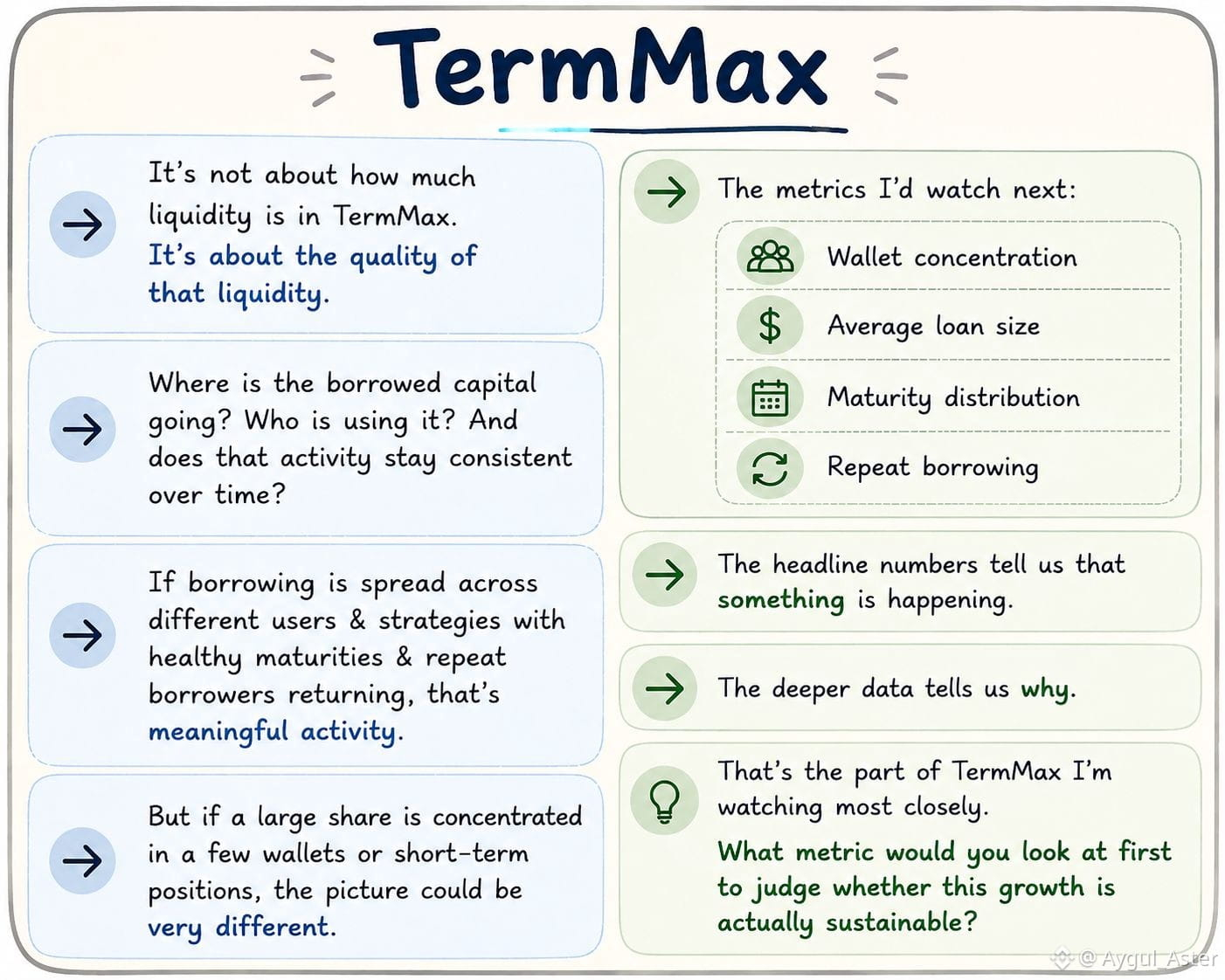
#termmax @termmax Je tiefer ich mir TermMax anschaue, desto mehr denke ich, dass die spannende Frage nicht ist, wie viel Liquidität im Protokoll steckt.
Es ist die Qualität dieser Liquidität.
Wohin fließt das geliehene Kapital tatsächlich? Wer nutzt es? Und bleibt diese Aktivität über die Zeit hinweg konstant?
Wenn das Ausleihen über verschiedene Nutzer und Strategien verteilt ist, mit gesunden Laufzeiten und wiederkehrenden Kreditnehmern, wird die Aktivität viel aussagekräftiger.
Aber wenn ein großer Anteil in wenigen Wallets oder kurzfristigen Positionen konzentriert ist, könnte das Bild sehr unterschiedlich ausfallen.
Deshalb bin ich noch nicht bereit, die jüngste Aktivität als eindeutigen Beleg für Product-Market-Fit zu bezeichnen.
Die Kennzahlen, die ich als Nächstes im Blick behalten würde:
• Wallet-Konzentration
• Durchschnittliche Kredithöhe
• Verteilung der Laufzeiten
• Wiederholtes Ausleihen
Die Schlagzeilenwerte sagen uns, dass sich etwas bewegt.
Die tieferen Daten sagen uns, warum.
Das ist der Teil von TermMax, den ich am genauesten beobachte.
Welche Kennzahl würdest du als Erstes ansehen, um zu beurteilen, ob dieses Wachstum tatsächlich nachhaltig ist?
#termmax @TermMax Je tiefer ich mir TermMax anschaue, desto mehr denke ich, dass die spannende Frage nicht ist, wie viel Liquidität im Protokoll steckt.
Es ist die Qualität dieser Liquidität.
Wohin fließt das geliehene Kapital tatsächlich? Wer nutzt es? Und bleibt diese Aktivität über die Zeit hinweg konstant?
Wenn das Ausleihen über verschiedene Nutzer und Strategien verteilt ist, mit gesunden Laufzeiten und wiederkehrenden Kreditnehmern, wird die Aktivität viel aussagekräftiger.
Aber wenn ein großer Anteil in wenigen Wallets oder kurzfristigen Positionen konzentriert ist, könnte das Bild sehr unterschiedlich ausfallen.
Deshalb bin ich noch nicht bereit, die jüngste Aktivität als eindeutigen Beleg für Product-Market-Fit zu bezeichnen.
Die Kennzahlen, die ich als Nächstes im Blick behalten würde:
• Wallet-Konzentration
• Durchschnittliche Kredithöhe
• Verteilung der Laufzeiten
• Wiederholtes Ausleihen
Die Schlagzeilenwerte sagen uns, dass sich etwas bewegt.
Die tieferen Daten sagen uns, warum.
Das ist der Teil von TermMax, den ich am genauesten beobachte.
Welche Kennzahl würdest du als Erstes ansehen, um zu beurteilen, ob dieses Wachstum tatsächlich nachhaltig ist?
Es ist die Qualität dieser Liquidität.
Wohin fließt das geliehene Kapital tatsächlich? Wer nutzt es? Und bleibt diese Aktivität über die Zeit hinweg konstant?
Wenn das Ausleihen über verschiedene Nutzer und Strategien verteilt ist, mit gesunden Laufzeiten und wiederkehrenden Kreditnehmern, wird die Aktivität viel aussagekräftiger.
Aber wenn ein großer Anteil in wenigen Wallets oder kurzfristigen Positionen konzentriert ist, könnte das Bild sehr unterschiedlich ausfallen.
Deshalb bin ich noch nicht bereit, die jüngste Aktivität als eindeutigen Beleg für Product-Market-Fit zu bezeichnen.
Die Kennzahlen, die ich als Nächstes im Blick behalten würde:
• Wallet-Konzentration
• Durchschnittliche Kredithöhe
• Verteilung der Laufzeiten
• Wiederholtes Ausleihen
Die Schlagzeilenwerte sagen uns, dass sich etwas bewegt.
Die tieferen Daten sagen uns, warum.
Das ist der Teil von TermMax, den ich am genauesten beobachte.
Welche Kennzahl würdest du als Erstes ansehen, um zu beurteilen, ob dieses Wachstum tatsächlich nachhaltig ist?
4
81
·
--
#dusk $DUSK @Dusk_Foundation
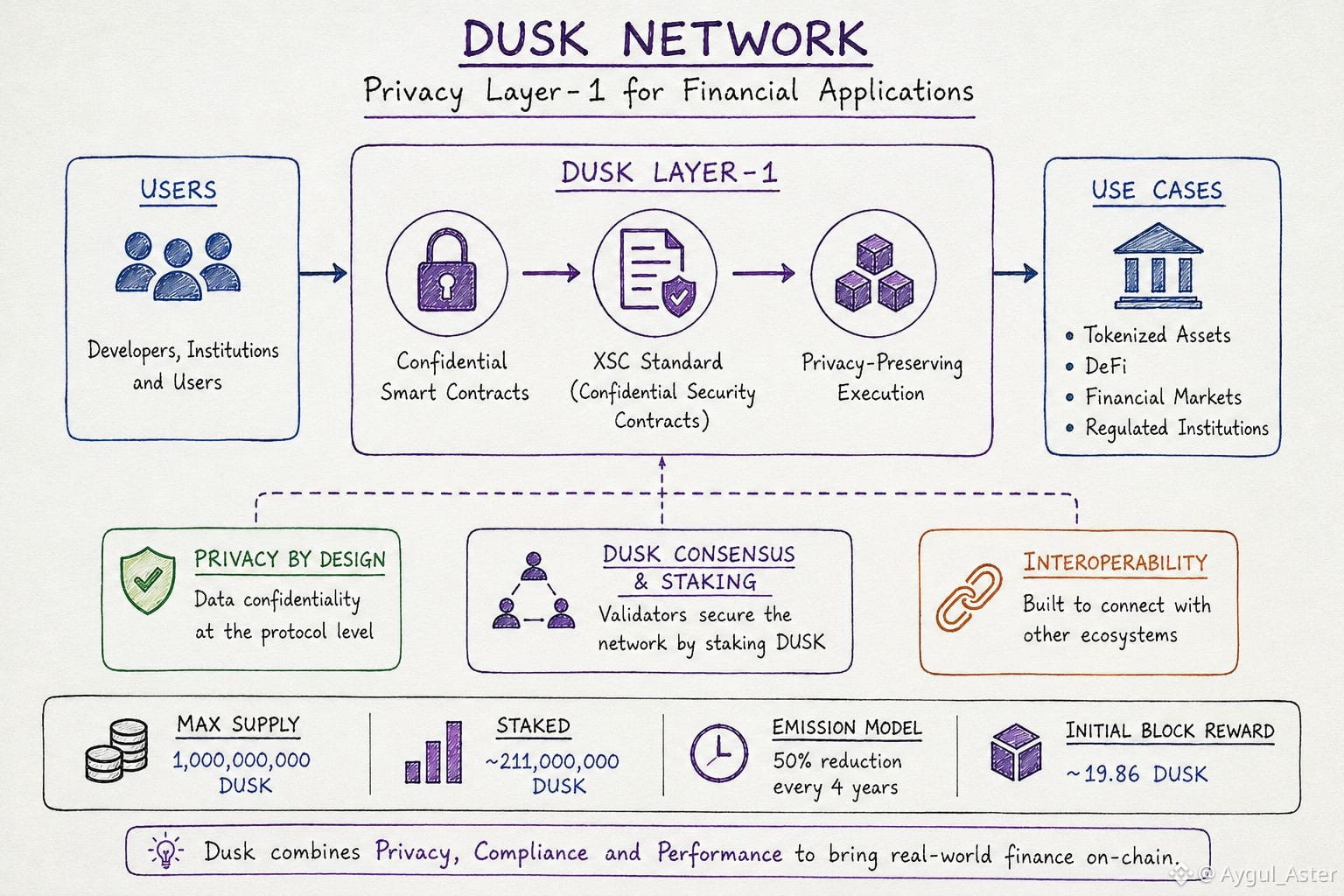
Ich habe mir Dusk Trade in letzter Zeit etwas genauer angesehen, und ehrlich gesagt kommt immer wieder ein Gedanke zurück: Vielleicht schauen wir auf die RWA-Tokenisierung aus dem falschen Blickwinkel.
Zuerst habe ich hauptsächlich über den naheliegenden Teil nachgedacht: dass man Aktien, Anleihen, Fonds und andere Finanzanlagen auf die Kette bringt. Aber je mehr ich darüber lese, desto mehr habe ich das Gefühl, dass das eigentlich der einfachere Teil ist.
Was passiert, nachdem die Anlage on-chain ist, ist der Bereich, in dem es wirklich spannend wird.
Wer kann sie kaufen? Wie wird die Berechtigung geprüft? Wie stellt man sicher, dass sensible Informationen privat bleiben? Wie funktioniert der Handel, während man trotzdem die Vorschriften einhält? Und was passiert, wenn der Handel abgewickelt werden muss?
Genau das hat mich dazu gebracht, Dusk ein bisschen anders zu betrachten.
Ich finde die Idee wirklich gut, Privatsphäre und Compliance in demselben System zusammenzubringen. In der traditionellen Finanzwelt sind diese Dinge bereits wichtig, aber sie zusammen mit Blockchain-Infrastruktur unter einen Hut zu bringen, ist eine wesentlich größere Herausforderung, als nur einen Token zu erstellen.
Natürlich sage ich nicht, dass Dusk schon alles gelöst hat. Die echte Akzeptanz hängt immer noch von Liquidität, Regulierung, Nutzererlebnis und davon ab, ob die Menschen das Produkt tatsächlich nutzen wollen.
Aber wenn Dusk den gesamten Prozess für Nutzer einfach wirken lassen kann, während es all diese Komplexität im Hintergrund handhabt, dann könnte das ziemlich bedeutungsvoll sein.
Vielleicht liegt die größere Chance nicht nur darin, reale Vermögenswerte zu tokenisieren.
Vielleicht geht es darum, den gesamten Finanzprozess rund um diese Vermögenswerte on-chain zum Laufen zu bringen.
Genau das beobachte ich jetzt besonders genau.
Was denkt ihr? Sehe ich das auf die richtige Weise?
#dusk $DUSK @Dusk
Ich habe mir Dusk Trade in letzter Zeit etwas genauer angesehen, und ehrlich gesagt kommt immer wieder ein Gedanke zurück: Vielleicht schauen wir auf die RWA-Tokenisierung aus dem falschen Blickwinkel.
Zuerst habe ich hauptsächlich über den naheliegenden Teil nachgedacht: dass man Aktien, Anleihen, Fonds und andere Finanzanlagen auf die Kette bringt. Aber je mehr ich darüber lese, desto mehr habe ich das Gefühl, dass das eigentlich der einfachere Teil ist.
Was passiert, nachdem die Anlage on-chain ist, ist der Bereich, in dem es wirklich spannend wird.
Wer kann sie kaufen? Wie wird die Berechtigung geprüft? Wie stellt man sicher, dass sensible Informationen privat bleiben? Wie funktioniert der Handel, während man trotzdem die Vorschriften einhält? Und was passiert, wenn der Handel abgewickelt werden muss?
Genau das hat mich dazu gebracht, Dusk ein bisschen anders zu betrachten.
Ich finde die Idee wirklich gut, Privatsphäre und Compliance in demselben System zusammenzubringen. In der traditionellen Finanzwelt sind diese Dinge bereits wichtig, aber sie zusammen mit Blockchain-Infrastruktur unter einen Hut zu bringen, ist eine wesentlich größere Herausforderung, als nur einen Token zu erstellen.
Natürlich sage ich nicht, dass Dusk schon alles gelöst hat. Die echte Akzeptanz hängt immer noch von Liquidität, Regulierung, Nutzererlebnis und davon ab, ob die Menschen das Produkt tatsächlich nutzen wollen.
Aber wenn Dusk den gesamten Prozess für Nutzer einfach wirken lassen kann, während es all diese Komplexität im Hintergrund handhabt, dann könnte das ziemlich bedeutungsvoll sein.
Vielleicht liegt die größere Chance nicht nur darin, reale Vermögenswerte zu tokenisieren.
Vielleicht geht es darum, den gesamten Finanzprozess rund um diese Vermögenswerte on-chain zum Laufen zu bringen.
Genau das beobachte ich jetzt besonders genau.
Was denkt ihr? Sehe ich das auf die richtige Weise?
Ich habe mir Dusk Trade in letzter Zeit etwas genauer angesehen, und ehrlich gesagt kommt immer wieder ein Gedanke zurück: Vielleicht schauen wir auf die RWA-Tokenisierung aus dem falschen Blickwinkel.
Zuerst habe ich hauptsächlich über den naheliegenden Teil nachgedacht: dass man Aktien, Anleihen, Fonds und andere Finanzanlagen auf die Kette bringt. Aber je mehr ich darüber lese, desto mehr habe ich das Gefühl, dass das eigentlich der einfachere Teil ist.
Was passiert, nachdem die Anlage on-chain ist, ist der Bereich, in dem es wirklich spannend wird.
Wer kann sie kaufen? Wie wird die Berechtigung geprüft? Wie stellt man sicher, dass sensible Informationen privat bleiben? Wie funktioniert der Handel, während man trotzdem die Vorschriften einhält? Und was passiert, wenn der Handel abgewickelt werden muss?
Genau das hat mich dazu gebracht, Dusk ein bisschen anders zu betrachten.
Ich finde die Idee wirklich gut, Privatsphäre und Compliance in demselben System zusammenzubringen. In der traditionellen Finanzwelt sind diese Dinge bereits wichtig, aber sie zusammen mit Blockchain-Infrastruktur unter einen Hut zu bringen, ist eine wesentlich größere Herausforderung, als nur einen Token zu erstellen.
Natürlich sage ich nicht, dass Dusk schon alles gelöst hat. Die echte Akzeptanz hängt immer noch von Liquidität, Regulierung, Nutzererlebnis und davon ab, ob die Menschen das Produkt tatsächlich nutzen wollen.
Aber wenn Dusk den gesamten Prozess für Nutzer einfach wirken lassen kann, während es all diese Komplexität im Hintergrund handhabt, dann könnte das ziemlich bedeutungsvoll sein.
Vielleicht liegt die größere Chance nicht nur darin, reale Vermögenswerte zu tokenisieren.
Vielleicht geht es darum, den gesamten Finanzprozess rund um diese Vermögenswerte on-chain zum Laufen zu bringen.
Genau das beobachte ich jetzt besonders genau.
Was denkt ihr? Sehe ich das auf die richtige Weise?
14
4
109
·
--
#dusk $DUSK @Dusk_Foundation
Je tiefer ich im Zuge meiner Recherchen zu Dusk gehe, desto mehr habe ich das Gefühl, dass der spannende Teil nicht nur darin besteht, reale Vermögenswerte einfach auf die Kette zu setzen.
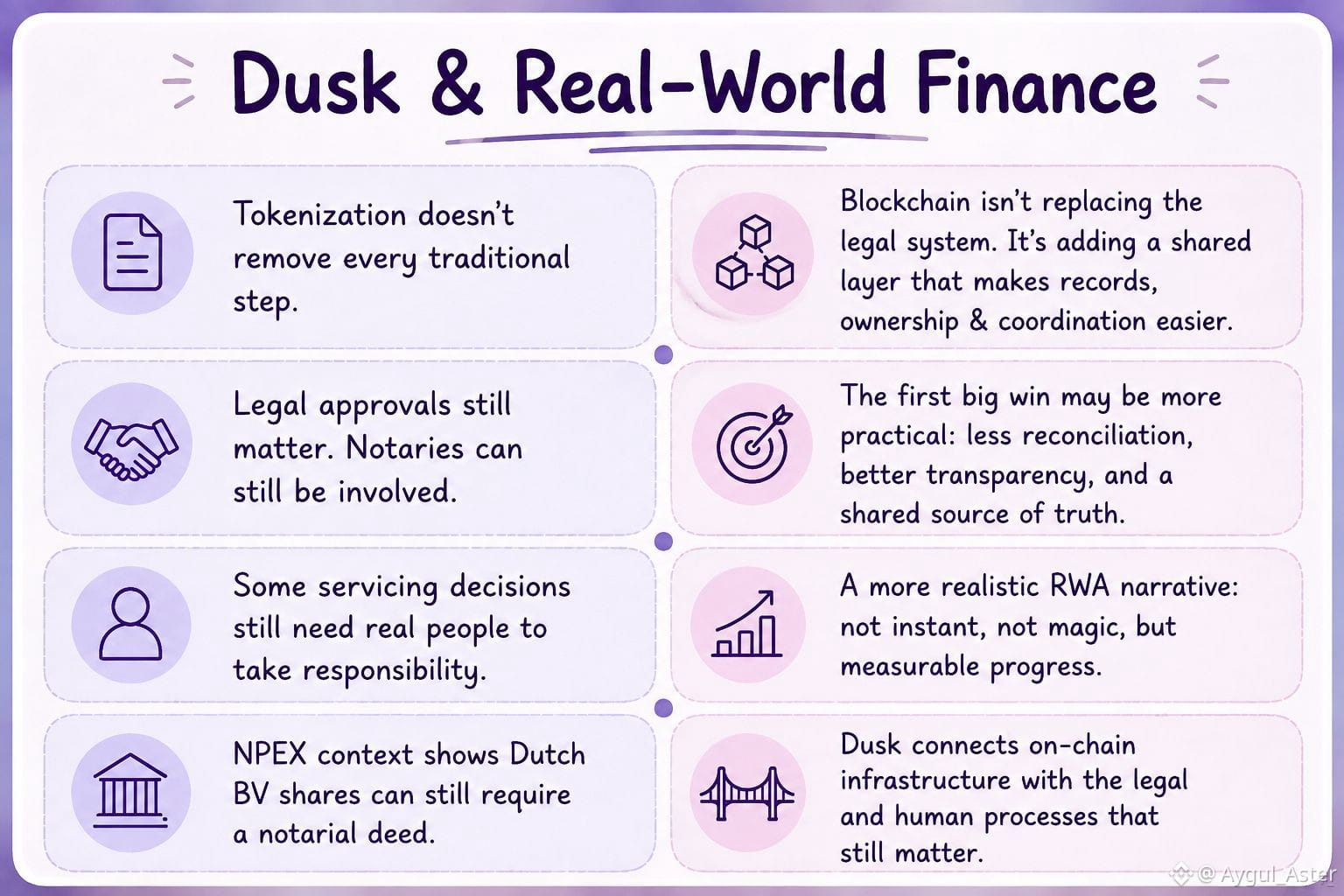
Beim Durcharbeiten des Materials zur Tokenisierung im SME-Kontext ist mir eine Sache besonders aufgefallen. Dusk scheint nicht davon auszugehen, dass Tokenisierung automatisch jeden traditionellen Schritt überflüssig macht.
Rechtliche Genehmigungen sind weiterhin wichtig. Notare können weiterhin beteiligt sein. Und einige Service-Entscheidungen müssen nach wie vor von echten Menschen getroffen werden, die Verantwortung übernehmen.
Ganz ehrlich: Ich finde diesen Ansatz deutlich spannender, nicht weniger.
Der NPEX-Kontext macht das noch klarer. Niederländische BV-Anteile können auch dann noch einen notariellen Akt erfordern, wenn das Eigentum digital abgebildet wird. Die Blockchain ersetzt also nicht einfach das Rechtssystem. Sie ergänzt eine gemeinsame Ebene, die dabei helfen kann, Aufzeichnungen, Eigentum und Koordination viel einfacher zu verwalten.
Und das hat mich tatsächlich dazu gebracht, den gesamten RWA-„Narrativ“ noch einmal anders zu betrachten.
Oft hört man, dass Tokenisierung alle Intermediäre entfernt und alles sofort macht. Aber die Realität der Finanzwelt dürfte viel komplexer sein.
Vielleicht besteht der erste große Gewinn eher in etwas Praktischem: weniger Abstimmung, bessere Transparenz und Institutionen, die mit derselben Quelle der Wahrheit arbeiten können.
Ganz genau da wird Dusk für mich interessant.
Nicht weil es versucht, das traditionelle Finanzwesen auszulöschen, sondern weil es sich darauf zu konzentrieren scheint, On-Chain-Infrastruktur mit den rechtlichen und menschlichen Prozessen zu verbinden, die nach wie vor wichtig sind.
Ich bin gespannt, was ihr dazu denkt: Ist das tatsächlich ein realistischeres Modell, damit die RWA-Adoption wachsen kann?
#dusk $DUSK @Dusk
Je tiefer ich im Zuge meiner Recherchen zu Dusk gehe, desto mehr habe ich das Gefühl, dass der spannende Teil nicht nur darin besteht, reale Vermögenswerte einfach auf die Kette zu setzen.
Beim Durcharbeiten des Materials zur Tokenisierung im SME-Kontext ist mir eine Sache besonders aufgefallen. Dusk scheint nicht davon auszugehen, dass Tokenisierung automatisch jeden traditionellen Schritt überflüssig macht.
Rechtliche Genehmigungen sind weiterhin wichtig. Notare können weiterhin beteiligt sein. Und einige Service-Entscheidungen müssen nach wie vor von echten Menschen getroffen werden, die Verantwortung übernehmen.
Ganz ehrlich: Ich finde diesen Ansatz deutlich spannender, nicht weniger.
Der NPEX-Kontext macht das noch klarer. Niederländische BV-Anteile können auch dann noch einen notariellen Akt erfordern, wenn das Eigentum digital abgebildet wird. Die Blockchain ersetzt also nicht einfach das Rechtssystem. Sie ergänzt eine gemeinsame Ebene, die dabei helfen kann, Aufzeichnungen, Eigentum und Koordination viel einfacher zu verwalten.
Und das hat mich tatsächlich dazu gebracht, den gesamten RWA-„Narrativ“ noch einmal anders zu betrachten.
Oft hört man, dass Tokenisierung alle Intermediäre entfernt und alles sofort macht. Aber die Realität der Finanzwelt dürfte viel komplexer sein.
Vielleicht besteht der erste große Gewinn eher in etwas Praktischem: weniger Abstimmung, bessere Transparenz und Institutionen, die mit derselben Quelle der Wahrheit arbeiten können.
Ganz genau da wird Dusk für mich interessant.
Nicht weil es versucht, das traditionelle Finanzwesen auszulöschen, sondern weil es sich darauf zu konzentrieren scheint, On-Chain-Infrastruktur mit den rechtlichen und menschlichen Prozessen zu verbinden, die nach wie vor wichtig sind.
Ich bin gespannt, was ihr dazu denkt: Ist das tatsächlich ein realistischeres Modell, damit die RWA-Adoption wachsen kann?
Je tiefer ich im Zuge meiner Recherchen zu Dusk gehe, desto mehr habe ich das Gefühl, dass der spannende Teil nicht nur darin besteht, reale Vermögenswerte einfach auf die Kette zu setzen.
Beim Durcharbeiten des Materials zur Tokenisierung im SME-Kontext ist mir eine Sache besonders aufgefallen. Dusk scheint nicht davon auszugehen, dass Tokenisierung automatisch jeden traditionellen Schritt überflüssig macht.
Rechtliche Genehmigungen sind weiterhin wichtig. Notare können weiterhin beteiligt sein. Und einige Service-Entscheidungen müssen nach wie vor von echten Menschen getroffen werden, die Verantwortung übernehmen.
Ganz ehrlich: Ich finde diesen Ansatz deutlich spannender, nicht weniger.
Der NPEX-Kontext macht das noch klarer. Niederländische BV-Anteile können auch dann noch einen notariellen Akt erfordern, wenn das Eigentum digital abgebildet wird. Die Blockchain ersetzt also nicht einfach das Rechtssystem. Sie ergänzt eine gemeinsame Ebene, die dabei helfen kann, Aufzeichnungen, Eigentum und Koordination viel einfacher zu verwalten.
Und das hat mich tatsächlich dazu gebracht, den gesamten RWA-„Narrativ“ noch einmal anders zu betrachten.
Oft hört man, dass Tokenisierung alle Intermediäre entfernt und alles sofort macht. Aber die Realität der Finanzwelt dürfte viel komplexer sein.
Vielleicht besteht der erste große Gewinn eher in etwas Praktischem: weniger Abstimmung, bessere Transparenz und Institutionen, die mit derselben Quelle der Wahrheit arbeiten können.
Ganz genau da wird Dusk für mich interessant.
Nicht weil es versucht, das traditionelle Finanzwesen auszulöschen, sondern weil es sich darauf zu konzentrieren scheint, On-Chain-Infrastruktur mit den rechtlichen und menschlichen Prozessen zu verbinden, die nach wie vor wichtig sind.
Ich bin gespannt, was ihr dazu denkt: Ist das tatsächlich ein realistischeres Modell, damit die RWA-Adoption wachsen kann?
11
3
91
·
--
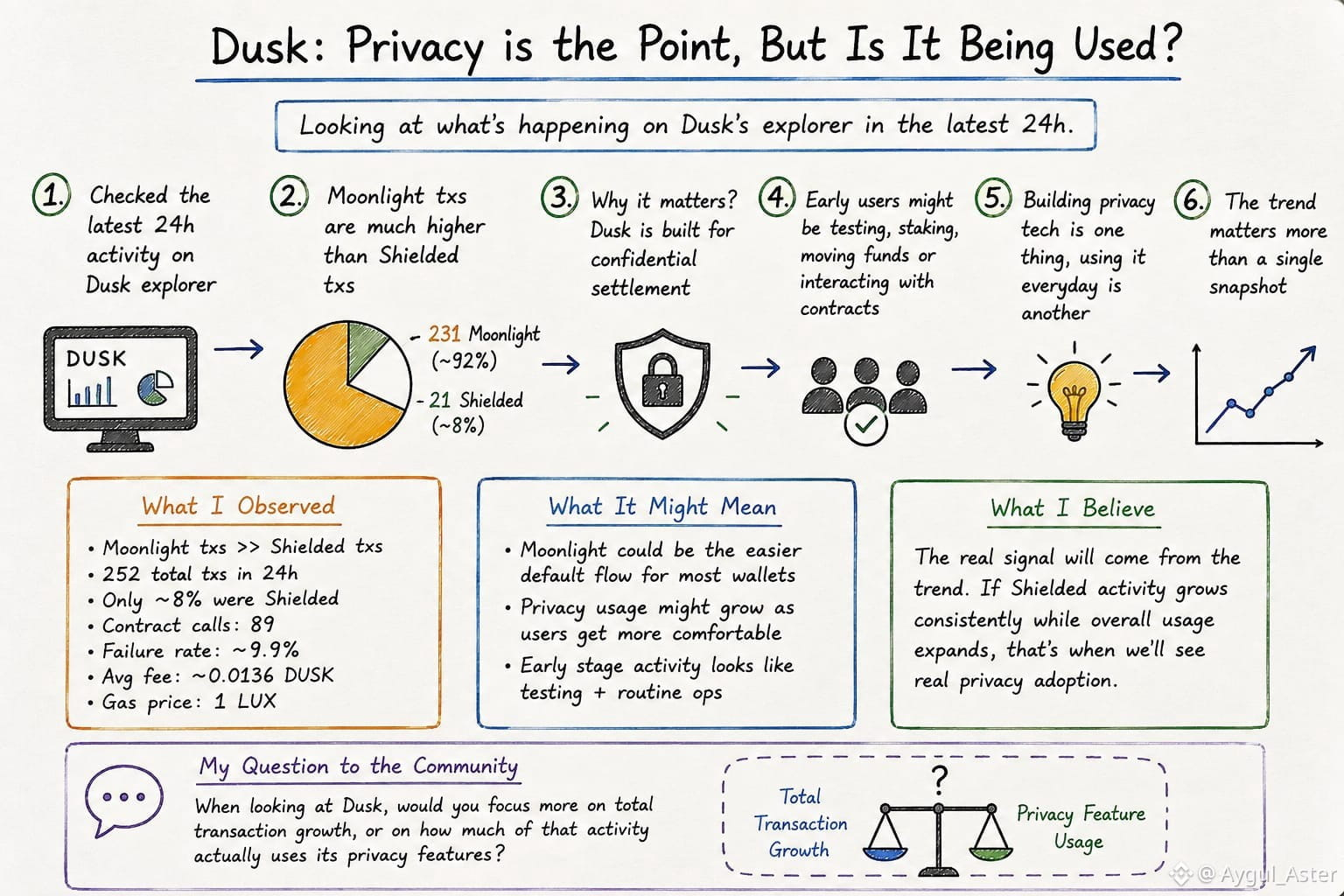
Ich habe Dusk in letzter Zeit ein wenig anders betrachtet, und ehrlich gesagt, eine Sache beschäftigt mich dabei. Statt nur zu fragen, ob das Netzwerk aktiv ist, interessiert mich mehr, wofür die Leute es tatsächlich nutzen. Eine Kette kann eine Menge Aktivität haben, aber das bedeutet nicht immer, dass Nutzer die Funktion verwenden, die das Netzwerk von anderen unterscheidet.
Als ich den Explorer von Dusk überprüft habe, ist mir aufgefallen, dass Moonlight-Transaktionen in der neuesten 24-Stunden-Aktivität viel häufiger waren als Shielded-Transfers. Anfangs habe ich mir nicht allzu viel dabei gedacht. Dann begann ich jedoch nachzudenken: Wenn vertrauliche Abrechnung ein so wichtiger Teil von Dusk ist, müsste die Nutzung der Privatsphäre dann nicht mit der Zeit einen größeren Anteil an der Aktivität ausmachen?
Natürlich glaube ich nicht, dass ein niedriger Shielded-Anteil automatisch bedeutet, dass etwas nicht stimmt. Frühe Nutzer könnten das Netzwerk einfach testen, staken, Gelder verschieben oder mit Verträgen interagieren. Menschen fangen normalerweise mit den einfachsten Dingen an, bevor sie sich mit neueren Funktionen vertraut machen.
Aber genau dieser Teil ist für mich besonders interessant. Privatsphäre-Technologie aufzubauen ist eine Herausforderung. Die Menschen dazu zu bringen, diese Privatsphäre tatsächlich in ihren alltäglichen Transaktionen zu nutzen, ist eine andere.
Meiner Meinung nach ist der Trend wichtiger als ein einzelner Momentaufnahme. Wenn die Shielded-Aktivität in den nächsten Wochen weiter wächst, während auch das gesamte Netzwerk wächst, würde uns das viel mehr über die echte Übernahme von Privatsphäre sagen.
Mich würde also interessieren, was ihr denkt. Wenn ihr euch Dusk anschaut: Würdet ihr eher auf das gesamte Transaktionswachstum achten, oder darauf, wie viel von dieser Aktivität wirklich seine Privatsphäre-Funktionen nutzt?
@Dusk_Foundation #dusk $DUSK
Ich habe Dusk in letzter Zeit ein wenig anders betrachtet, und ehrlich gesagt, eine Sache beschäftigt mich dabei. Statt nur zu fragen, ob das Netzwerk aktiv ist, interessiert mich mehr, wofür die Leute es tatsächlich nutzen. Eine Kette kann eine Menge Aktivität haben, aber das bedeutet nicht immer, dass Nutzer die Funktion verwenden, die das Netzwerk von anderen unterscheidet.
Als ich den Explorer von Dusk überprüft habe, ist mir aufgefallen, dass Moonlight-Transaktionen in der neuesten 24-Stunden-Aktivität viel häufiger waren als Shielded-Transfers. Anfangs habe ich mir nicht allzu viel dabei gedacht. Dann begann ich jedoch nachzudenken: Wenn vertrauliche Abrechnung ein so wichtiger Teil von Dusk ist, müsste die Nutzung der Privatsphäre dann nicht mit der Zeit einen größeren Anteil an der Aktivität ausmachen?
Natürlich glaube ich nicht, dass ein niedriger Shielded-Anteil automatisch bedeutet, dass etwas nicht stimmt. Frühe Nutzer könnten das Netzwerk einfach testen, staken, Gelder verschieben oder mit Verträgen interagieren. Menschen fangen normalerweise mit den einfachsten Dingen an, bevor sie sich mit neueren Funktionen vertraut machen.
Aber genau dieser Teil ist für mich besonders interessant. Privatsphäre-Technologie aufzubauen ist eine Herausforderung. Die Menschen dazu zu bringen, diese Privatsphäre tatsächlich in ihren alltäglichen Transaktionen zu nutzen, ist eine andere.
Meiner Meinung nach ist der Trend wichtiger als ein einzelner Momentaufnahme. Wenn die Shielded-Aktivität in den nächsten Wochen weiter wächst, während auch das gesamte Netzwerk wächst, würde uns das viel mehr über die echte Übernahme von Privatsphäre sagen.
Mich würde also interessieren, was ihr denkt. Wenn ihr euch Dusk anschaut: Würdet ihr eher auf das gesamte Transaktionswachstum achten, oder darauf, wie viel von dieser Aktivität wirklich seine Privatsphäre-Funktionen nutzt?
@Dusk #dusk $DUSK
Als ich den Explorer von Dusk überprüft habe, ist mir aufgefallen, dass Moonlight-Transaktionen in der neuesten 24-Stunden-Aktivität viel häufiger waren als Shielded-Transfers. Anfangs habe ich mir nicht allzu viel dabei gedacht. Dann begann ich jedoch nachzudenken: Wenn vertrauliche Abrechnung ein so wichtiger Teil von Dusk ist, müsste die Nutzung der Privatsphäre dann nicht mit der Zeit einen größeren Anteil an der Aktivität ausmachen?
Natürlich glaube ich nicht, dass ein niedriger Shielded-Anteil automatisch bedeutet, dass etwas nicht stimmt. Frühe Nutzer könnten das Netzwerk einfach testen, staken, Gelder verschieben oder mit Verträgen interagieren. Menschen fangen normalerweise mit den einfachsten Dingen an, bevor sie sich mit neueren Funktionen vertraut machen.
Aber genau dieser Teil ist für mich besonders interessant. Privatsphäre-Technologie aufzubauen ist eine Herausforderung. Die Menschen dazu zu bringen, diese Privatsphäre tatsächlich in ihren alltäglichen Transaktionen zu nutzen, ist eine andere.
Meiner Meinung nach ist der Trend wichtiger als ein einzelner Momentaufnahme. Wenn die Shielded-Aktivität in den nächsten Wochen weiter wächst, während auch das gesamte Netzwerk wächst, würde uns das viel mehr über die echte Übernahme von Privatsphäre sagen.
Mich würde also interessieren, was ihr denkt. Wenn ihr euch Dusk anschaut: Würdet ihr eher auf das gesamte Transaktionswachstum achten, oder darauf, wie viel von dieser Aktivität wirklich seine Privatsphäre-Funktionen nutzt?
@Dusk #dusk $DUSK
4
108
·
--
In letzter Zeit habe ich so viele Leute gesehen, die $BABY entweder als inflationär oder deflationär bezeichnen, und ehrlich gesagt hatte ich das Gefühl, dass in dem Gespräch ein größeres Gesamtbild fehlte. Also habe ich mir etwas Zeit genommen, die Tokenomics selbst zu lesen, statt mich auf irgendwelche zufälligen Meinungen zu verlassen. Je mehr ich gelesen habe, desto mehr wurde mir klar, dass wir vielleicht die falsche Frage stellen. Ja, neue $BABY gelangen durch geplante Emissionen in den Umlauf, und ja, es gibt auch einen Burn-Mechanismus über BSN-Auktionen. Aber diese beiden Dinge funktionieren nicht wirklich auf die gleiche Weise. Inflation ist bereits im Protokoll eingebaut, während Burns erst dann wirklich Bedeutung bekommen, wenn das Netzwerk tatsächlich genutzt wird. Dieser kleine Unterschied hat komplett verändert, wie ich darüber denke. Jetzt interessiere ich mich weniger dafür, ob das Angebot steigt oder fällt, sondern viel mehr dafür, was tatsächlich genug Nachfrage erzeugen wird, damit diese Burns auch wirklich etwas bewirken.
Persönlich finde ich, dass $BABY eher eine Story über die Adoption ist als eine Story über Tokenomics. Wenn Babylon weiterhin mehr Chains anzieht und echte Aktivität hinzukommt, dann könnte der Burn-Mechanismus mit der Zeit ganz natürlich deutlich stärker werden. Aber wenn die Adoption nur langsam vorankommt, werden geplante Emissionen wahrscheinlich einen viel größeren Einfluss auf das Angebot haben. Ich möchte damit nicht sagen, dass das bullisch oder bärisch ist – ich denke nur, dass es noch zu früh ist, das zu beurteilen, ohne zu beobachten, was tatsächlich On-Chain passiert. Genau darauf plane ich ab jetzt zu achten. Ich würde wirklich gerne wissen, was alle anderen denken. Verfolgt hier jemand die BSN-Auktionsaktivität zusammen mit Unlocks und Emissionen, oder schauen wir alle immer noch nur auf eine Seite der Gleichung?
@babylonlabs_io #baby
In letzter Zeit habe ich so viele Leute gesehen, die $BABY entweder als inflationär oder deflationär bezeichnen, und ehrlich gesagt hatte ich das Gefühl, dass in dem Gespräch ein größeres Gesamtbild fehlte. Also habe ich mir etwas Zeit genommen, die Tokenomics selbst zu lesen, statt mich auf irgendwelche zufälligen Meinungen zu verlassen. Je mehr ich gelesen habe, desto mehr wurde mir klar, dass wir vielleicht die falsche Frage stellen. Ja, neue $BABY gelangen durch geplante Emissionen in den Umlauf, und ja, es gibt auch einen Burn-Mechanismus über BSN-Auktionen. Aber diese beiden Dinge funktionieren nicht wirklich auf die gleiche Weise. Inflation ist bereits im Protokoll eingebaut, während Burns erst dann wirklich Bedeutung bekommen, wenn das Netzwerk tatsächlich genutzt wird. Dieser kleine Unterschied hat komplett verändert, wie ich darüber denke. Jetzt interessiere ich mich weniger dafür, ob das Angebot steigt oder fällt, sondern viel mehr dafür, was tatsächlich genug Nachfrage erzeugen wird, damit diese Burns auch wirklich etwas bewirken.
Persönlich finde ich, dass $BABY eher eine Story über die Adoption ist als eine Story über Tokenomics. Wenn Babylon weiterhin mehr Chains anzieht und echte Aktivität hinzukommt, dann könnte der Burn-Mechanismus mit der Zeit ganz natürlich deutlich stärker werden. Aber wenn die Adoption nur langsam vorankommt, werden geplante Emissionen wahrscheinlich einen viel größeren Einfluss auf das Angebot haben. Ich möchte damit nicht sagen, dass das bullisch oder bärisch ist – ich denke nur, dass es noch zu früh ist, das zu beurteilen, ohne zu beobachten, was tatsächlich On-Chain passiert. Genau darauf plane ich ab jetzt zu achten. Ich würde wirklich gerne wissen, was alle anderen denken. Verfolgt hier jemand die BSN-Auktionsaktivität zusammen mit Unlocks und Emissionen, oder schauen wir alle immer noch nur auf eine Seite der Gleichung?
@BabylonLabs_io #baby
Persönlich finde ich, dass $BABY eher eine Story über die Adoption ist als eine Story über Tokenomics. Wenn Babylon weiterhin mehr Chains anzieht und echte Aktivität hinzukommt, dann könnte der Burn-Mechanismus mit der Zeit ganz natürlich deutlich stärker werden. Aber wenn die Adoption nur langsam vorankommt, werden geplante Emissionen wahrscheinlich einen viel größeren Einfluss auf das Angebot haben. Ich möchte damit nicht sagen, dass das bullisch oder bärisch ist – ich denke nur, dass es noch zu früh ist, das zu beurteilen, ohne zu beobachten, was tatsächlich On-Chain passiert. Genau darauf plane ich ab jetzt zu achten. Ich würde wirklich gerne wissen, was alle anderen denken. Verfolgt hier jemand die BSN-Auktionsaktivität zusammen mit Unlocks und Emissionen, oder schauen wir alle immer noch nur auf eine Seite der Gleichung?
@BabylonLabs_io #baby
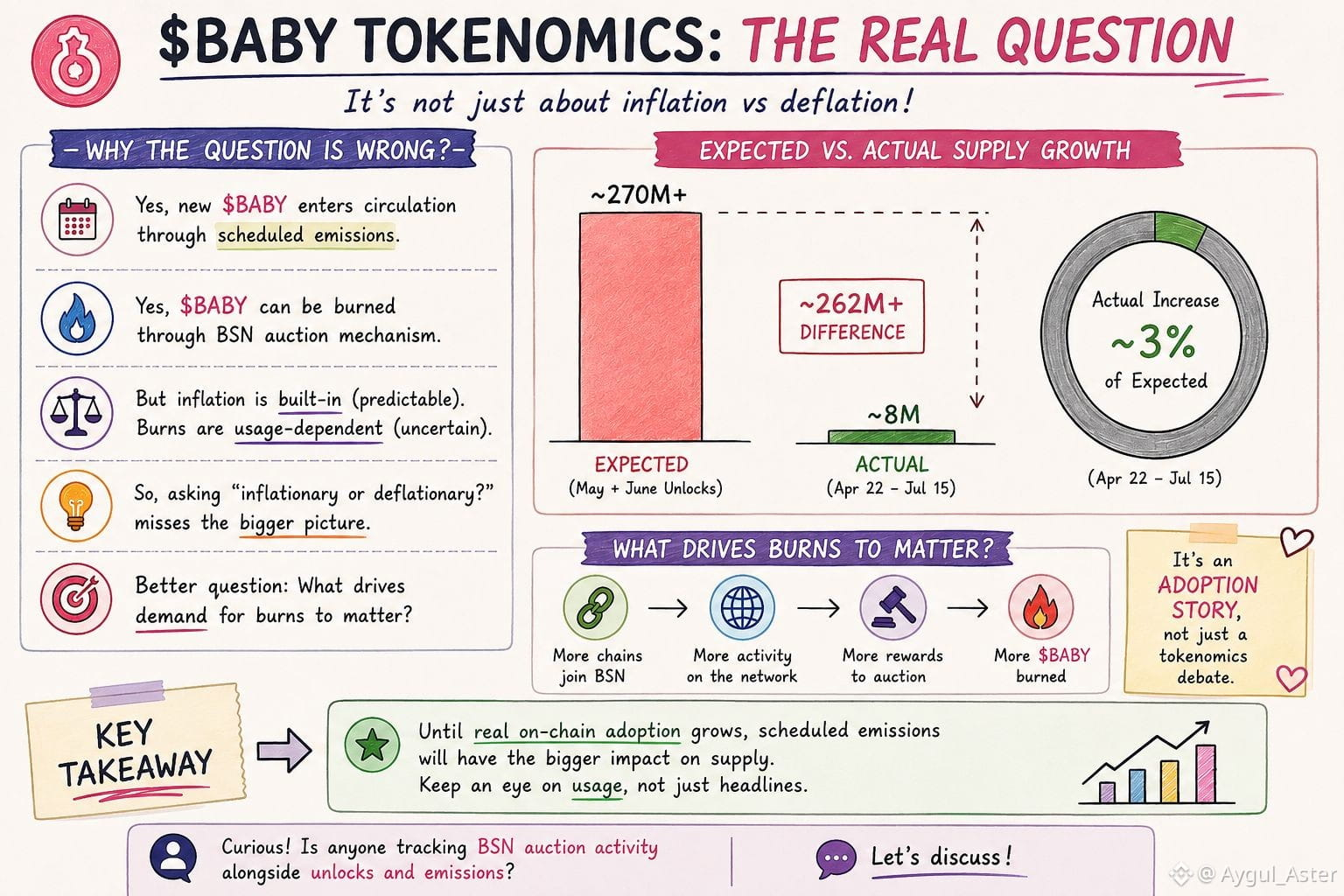
5
3
115
·
--
Neulich habe ich darüber nachgedacht, während ich Babylon gefolgt bin, und ehrlich gesagt habe ich meine Meinung dazu geändert. Als ich BABY das erste Mal habe nach unten gehen sehen, habe ich automatisch angenommen, dass mit dem Protokoll etwas nicht stimmt. So denken wahrscheinlich die meisten von uns, weil der Preis meist das Erste ist, was wir bemerken. Aber nachdem ich einige Zeit damit verbracht habe, darüber zu lesen, wie die Sicherheit von Babylon tatsächlich funktioniert, habe ich erkannt, dass ich zwei komplett unterschiedliche Dinge miteinander vermischt habe.
Am meisten hat mich überrascht, dass Babylons Sicherheit nicht wirklich davon abhängt, ob BABY gerade eine gute oder eine schlechte Woche hat. Der EOTS-Mechanismus funktioniert unabhängig von der Marktlage auf die gleiche Weise. Wenn ein Finality Provider doppelt signiert, machen die kryptografischen Regeln immer noch genau das, wofür sie entworfen wurden. Das hat mich fragen lassen, wie oft wir die Gesundheit eines Projekts nur danach beurteilen, was wir im Chart sehen. Natürlich spielt der Preis eine Rolle, aber vielleicht erzählt er nicht immer die ganze Geschichte. Ich lerne noch, aber das war einer dieser Momente, die wirklich verändert haben, wie ich auf Projekte schaue. Jetzt bin ich neugierig… wenn du ein Protokoll recherchierst, trennst du die Technologie vom Token-Preis, oder verbindest du beides ganz natürlich miteinander, so wie ich es früher getan habe?
@babylonlabs_io #baby $BABY
Neulich habe ich darüber nachgedacht, während ich Babylon gefolgt bin, und ehrlich gesagt habe ich meine Meinung dazu geändert. Als ich BABY das erste Mal habe nach unten gehen sehen, habe ich automatisch angenommen, dass mit dem Protokoll etwas nicht stimmt. So denken wahrscheinlich die meisten von uns, weil der Preis meist das Erste ist, was wir bemerken. Aber nachdem ich einige Zeit damit verbracht habe, darüber zu lesen, wie die Sicherheit von Babylon tatsächlich funktioniert, habe ich erkannt, dass ich zwei komplett unterschiedliche Dinge miteinander vermischt habe.
Am meisten hat mich überrascht, dass Babylons Sicherheit nicht wirklich davon abhängt, ob BABY gerade eine gute oder eine schlechte Woche hat. Der EOTS-Mechanismus funktioniert unabhängig von der Marktlage auf die gleiche Weise. Wenn ein Finality Provider doppelt signiert, machen die kryptografischen Regeln immer noch genau das, wofür sie entworfen wurden. Das hat mich fragen lassen, wie oft wir die Gesundheit eines Projekts nur danach beurteilen, was wir im Chart sehen. Natürlich spielt der Preis eine Rolle, aber vielleicht erzählt er nicht immer die ganze Geschichte. Ich lerne noch, aber das war einer dieser Momente, die wirklich verändert haben, wie ich auf Projekte schaue. Jetzt bin ich neugierig… wenn du ein Protokoll recherchierst, trennst du die Technologie vom Token-Preis, oder verbindest du beides ganz natürlich miteinander, so wie ich es früher getan habe?
@BabylonLabs_io #baby $BABY
Am meisten hat mich überrascht, dass Babylons Sicherheit nicht wirklich davon abhängt, ob BABY gerade eine gute oder eine schlechte Woche hat. Der EOTS-Mechanismus funktioniert unabhängig von der Marktlage auf die gleiche Weise. Wenn ein Finality Provider doppelt signiert, machen die kryptografischen Regeln immer noch genau das, wofür sie entworfen wurden. Das hat mich fragen lassen, wie oft wir die Gesundheit eines Projekts nur danach beurteilen, was wir im Chart sehen. Natürlich spielt der Preis eine Rolle, aber vielleicht erzählt er nicht immer die ganze Geschichte. Ich lerne noch, aber das war einer dieser Momente, die wirklich verändert haben, wie ich auf Projekte schaue. Jetzt bin ich neugierig… wenn du ein Protokoll recherchierst, trennst du die Technologie vom Token-Preis, oder verbindest du beides ganz natürlich miteinander, so wie ich es früher getan habe?
@BabylonLabs_io #baby $BABY
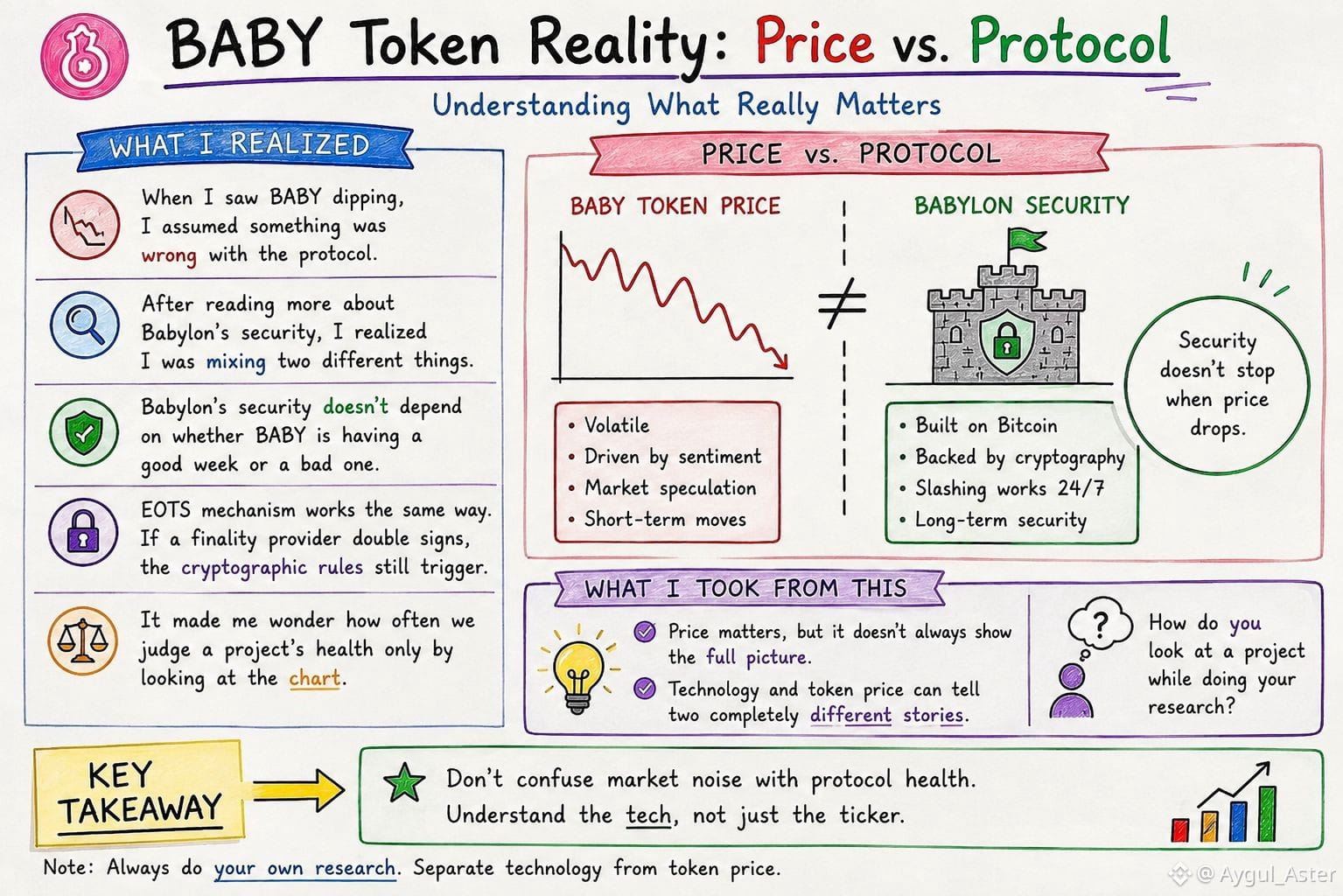
49
·
--
Ich habe BABYs Tokenomics geöffnet in der Hoffnung, ich würde nur fünf Minuten brauchen, um die Zahlen zu prüfen, aber am Ende bin ich viel länger geblieben als erwartet. Je mehr ich den Unlock-Plan angeschaut habe, desto öfter kam mir ein Gedanke immer wieder: Jeden Monat erhalten das Team und frühe Investoren ihre bereits freigegebenen Tokens genau so, wie geplant. Das ist kein verstecktes Detail und auch nichts Negatives – es ist eine öffentliche Information und Teil des Designs des Projekts. Gleichzeitig drehen sich die meisten Gespräche in der Community um Bitcoin Staking, Co-Staking und die langfristige Vision von Babylon. Beides kann gleichzeitig wahr sein, aber sie müssen nicht auf derselben Zeitleiste passieren. Das eine folgt einem festen Kalender, während das andere von echter Akzeptanz, Nutzeraktivität und davon abhängt, dass Builder weiter wachsen und das Ökosystem ausbauen. Dieser einfache Unterschied hat mich ausgebremst, bevor ich zu einer Schlussfolgerung über den Token gekommen bin.
Ich interessiere mich immer noch wirklich dafür, was Babylon aufbaut, weil ich es eine spannende Richtung finde, die Nützlichkeit von Bitcoin zu erweitern. Aber diese kleine Recherche hat mir gezeigt, dass ein großartiges Produkt und der kurzfristige Kurs eines Tokens nicht immer dieselbe Geschichte erzählen. Unlocks können die umlaufende Angebotsmenge erhöhen, während die Akzeptanz noch dabei ist, ihren Rhythmus zu finden – und beides kann den Markt auf unterschiedliche Weise beeinflussen. Deshalb achte ich inzwischen viel genauer auf Tokenomics, statt nur die Schlagzeilen-Features eines Projekts zu lesen. Ich bin neugierig, wie ihr alle das angeht. Wenn ihr ein Projekt wie BABY recherchiert: Verbringt ihr mehr Zeit damit, zuerst die Technologie zu verstehen, oder schaut ihr immer zuerst auf den Unlock-Plan und die zirkulierende Angebotsmenge, bevor ihr entscheidet, wie ihr über den Token denkt? Ich würde gern hören, wie die Community darüber denkt.
@babylonlabs_io #baby $BABY
Ich habe BABYs Tokenomics geöffnet in der Hoffnung, ich würde nur fünf Minuten brauchen, um die Zahlen zu prüfen, aber am Ende bin ich viel länger geblieben als erwartet. Je mehr ich den Unlock-Plan angeschaut habe, desto öfter kam mir ein Gedanke immer wieder: Jeden Monat erhalten das Team und frühe Investoren ihre bereits freigegebenen Tokens genau so, wie geplant. Das ist kein verstecktes Detail und auch nichts Negatives – es ist eine öffentliche Information und Teil des Designs des Projekts. Gleichzeitig drehen sich die meisten Gespräche in der Community um Bitcoin Staking, Co-Staking und die langfristige Vision von Babylon. Beides kann gleichzeitig wahr sein, aber sie müssen nicht auf derselben Zeitleiste passieren. Das eine folgt einem festen Kalender, während das andere von echter Akzeptanz, Nutzeraktivität und davon abhängt, dass Builder weiter wachsen und das Ökosystem ausbauen. Dieser einfache Unterschied hat mich ausgebremst, bevor ich zu einer Schlussfolgerung über den Token gekommen bin.
Ich interessiere mich immer noch wirklich dafür, was Babylon aufbaut, weil ich es eine spannende Richtung finde, die Nützlichkeit von Bitcoin zu erweitern. Aber diese kleine Recherche hat mir gezeigt, dass ein großartiges Produkt und der kurzfristige Kurs eines Tokens nicht immer dieselbe Geschichte erzählen. Unlocks können die umlaufende Angebotsmenge erhöhen, während die Akzeptanz noch dabei ist, ihren Rhythmus zu finden – und beides kann den Markt auf unterschiedliche Weise beeinflussen. Deshalb achte ich inzwischen viel genauer auf Tokenomics, statt nur die Schlagzeilen-Features eines Projekts zu lesen. Ich bin neugierig, wie ihr alle das angeht. Wenn ihr ein Projekt wie BABY recherchiert: Verbringt ihr mehr Zeit damit, zuerst die Technologie zu verstehen, oder schaut ihr immer zuerst auf den Unlock-Plan und die zirkulierende Angebotsmenge, bevor ihr entscheidet, wie ihr über den Token denkt? Ich würde gern hören, wie die Community darüber denkt.
@BabylonLabs_io #baby $BABY
Ich interessiere mich immer noch wirklich dafür, was Babylon aufbaut, weil ich es eine spannende Richtung finde, die Nützlichkeit von Bitcoin zu erweitern. Aber diese kleine Recherche hat mir gezeigt, dass ein großartiges Produkt und der kurzfristige Kurs eines Tokens nicht immer dieselbe Geschichte erzählen. Unlocks können die umlaufende Angebotsmenge erhöhen, während die Akzeptanz noch dabei ist, ihren Rhythmus zu finden – und beides kann den Markt auf unterschiedliche Weise beeinflussen. Deshalb achte ich inzwischen viel genauer auf Tokenomics, statt nur die Schlagzeilen-Features eines Projekts zu lesen. Ich bin neugierig, wie ihr alle das angeht. Wenn ihr ein Projekt wie BABY recherchiert: Verbringt ihr mehr Zeit damit, zuerst die Technologie zu verstehen, oder schaut ihr immer zuerst auf den Unlock-Plan und die zirkulierende Angebotsmenge, bevor ihr entscheidet, wie ihr über den Token denkt? Ich würde gern hören, wie die Community darüber denkt.
@BabylonLabs_io #baby $BABY

8
2
86
·
--
Vor ein paar Tagen habe ich den BABY-Explorer geöffnet, um etwas zu bestätigen, von dem ich bereits überzeugt war. Ich ging davon aus, dass, wenn ein Governance-Token im Zentrum eines Ökosystems sitzt, der Großteil seines Angebots ganz natürlich gebunden wäre. Stattdessen fand ich mich dabei, diese Annahme infrage zu stellen. Je mehr ich las, desto klarer wurde mir, dass ich auf den falschen Kennwert geschaut hatte. Das Token-Angebot sagt uns, wie viel es gibt. Das gebundene Angebot sagt uns, wie viele Menschen aktiv an der Zukunft des Netzwerks teilnehmen wollen. Das sind nicht dieselben Dinge, und ich glaube, dieser Unterschied wird leicht übersehen. Ein Token zu halten kann einfach bedeuten, dass man auf die nächste Gelegenheit wartet. Ihn zu binden ist die Entscheidung, Teil der Zukunft des Netzwerks zu werden. Diese kleine Verschiebung hat komplett verändert, wie ich On-Chain-Daten lese, und ehrlich gesagt war es einer dieser Momente, in denen ein einziges Statistikfeld mich dazu gebracht hat, meine Perspektive neu zu überdenken.
Was ich noch interessanter finde, ist, dass ein Bonding-Verhältnis nicht isoliert beurteilt werden sollte. Ein junges Ökosystem durchläuft Vesting-Phasen, Anreize entwickeln sich weiter, und das Verhalten der Community verändert sich, wenn das Netzwerk reift. Deshalb frage ich mich nicht nur, ob der heutige Prozentsatz hoch oder niedrig ist, sondern vielmehr, wohin sich das Ganze entwickelt. Wenn die Beteiligung im Laufe der Zeit weiter wächst, sagt mir das auch, dass das Vertrauen wächst. Für mich sind die stärksten Communities nicht unbedingt die, die das größte Token-Angebot haben oder die lautesten Diskussionen führen. Es sind eher diejenigen, in denen nach und nach mehr Menschen sich für Verbindlichkeit statt Bequemlichkeit entscheiden. Dieser Trend wird mich von nun an interessieren. Ich lerne noch, daher würde ich mich wirklich freuen, unterschiedliche Perspektiven zu hören. Wenn du eine Blockchain bewertest: Welcher Kennwert sagt dir am meisten über die Stärke ihrer Community aus – und warum?
@babylonlabs_io #baby $BABY
Vor ein paar Tagen habe ich den BABY-Explorer geöffnet, um etwas zu bestätigen, von dem ich bereits überzeugt war. Ich ging davon aus, dass, wenn ein Governance-Token im Zentrum eines Ökosystems sitzt, der Großteil seines Angebots ganz natürlich gebunden wäre. Stattdessen fand ich mich dabei, diese Annahme infrage zu stellen. Je mehr ich las, desto klarer wurde mir, dass ich auf den falschen Kennwert geschaut hatte. Das Token-Angebot sagt uns, wie viel es gibt. Das gebundene Angebot sagt uns, wie viele Menschen aktiv an der Zukunft des Netzwerks teilnehmen wollen. Das sind nicht dieselben Dinge, und ich glaube, dieser Unterschied wird leicht übersehen. Ein Token zu halten kann einfach bedeuten, dass man auf die nächste Gelegenheit wartet. Ihn zu binden ist die Entscheidung, Teil der Zukunft des Netzwerks zu werden. Diese kleine Verschiebung hat komplett verändert, wie ich On-Chain-Daten lese, und ehrlich gesagt war es einer dieser Momente, in denen ein einziges Statistikfeld mich dazu gebracht hat, meine Perspektive neu zu überdenken.
Was ich noch interessanter finde, ist, dass ein Bonding-Verhältnis nicht isoliert beurteilt werden sollte. Ein junges Ökosystem durchläuft Vesting-Phasen, Anreize entwickeln sich weiter, und das Verhalten der Community verändert sich, wenn das Netzwerk reift. Deshalb frage ich mich nicht nur, ob der heutige Prozentsatz hoch oder niedrig ist, sondern vielmehr, wohin sich das Ganze entwickelt. Wenn die Beteiligung im Laufe der Zeit weiter wächst, sagt mir das auch, dass das Vertrauen wächst. Für mich sind die stärksten Communities nicht unbedingt die, die das größte Token-Angebot haben oder die lautesten Diskussionen führen. Es sind eher diejenigen, in denen nach und nach mehr Menschen sich für Verbindlichkeit statt Bequemlichkeit entscheiden. Dieser Trend wird mich von nun an interessieren. Ich lerne noch, daher würde ich mich wirklich freuen, unterschiedliche Perspektiven zu hören. Wenn du eine Blockchain bewertest: Welcher Kennwert sagt dir am meisten über die Stärke ihrer Community aus – und warum?
@BabylonLabs_io #baby $BABY
Was ich noch interessanter finde, ist, dass ein Bonding-Verhältnis nicht isoliert beurteilt werden sollte. Ein junges Ökosystem durchläuft Vesting-Phasen, Anreize entwickeln sich weiter, und das Verhalten der Community verändert sich, wenn das Netzwerk reift. Deshalb frage ich mich nicht nur, ob der heutige Prozentsatz hoch oder niedrig ist, sondern vielmehr, wohin sich das Ganze entwickelt. Wenn die Beteiligung im Laufe der Zeit weiter wächst, sagt mir das auch, dass das Vertrauen wächst. Für mich sind die stärksten Communities nicht unbedingt die, die das größte Token-Angebot haben oder die lautesten Diskussionen führen. Es sind eher diejenigen, in denen nach und nach mehr Menschen sich für Verbindlichkeit statt Bequemlichkeit entscheiden. Dieser Trend wird mich von nun an interessieren. Ich lerne noch, daher würde ich mich wirklich freuen, unterschiedliche Perspektiven zu hören. Wenn du eine Blockchain bewertest: Welcher Kennwert sagt dir am meisten über die Stärke ihrer Community aus – und warum?
@BabylonLabs_io #baby $BABY
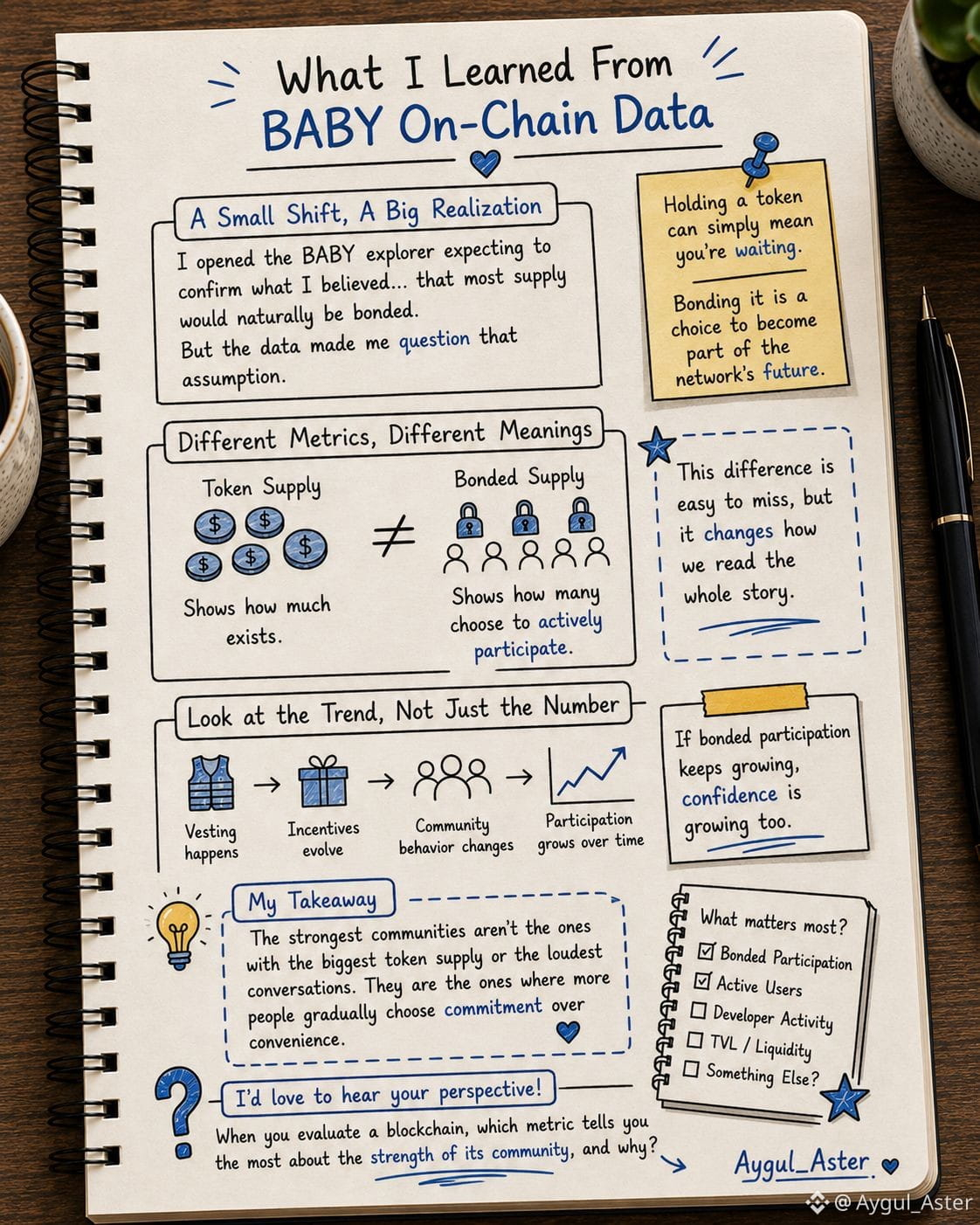
4
107
·
--
Ich habe mir eigentlich Babylons Bitcoin-Staking-Modell angesehen, aber ein kleines Detail in der Dokumentation hat völlig verändert, was ich am Ende darüber gedacht habe.
Ich hatte erwartet, meine Zeit damit zu verbringen, mehr über Bitcoin-Staking zu lernen, aber am Ende habe ich stattdessen viel mehr über Governance gelesen. Beim Durchgehen von Babylons Dokumentation ist mir etwas aufgefallen, das mich wirklich innehalten ließ. Wenn ein $BABY Inhaber über einen Vorschlag nicht abstimmt, kann der von ihm delegierte Validator im Rahmen des Governance-Modells an seiner Stelle abstimmen. Ich weiß, dass Babylon das nicht eigenständig eingeführt hat, aber ehrlich gesagt hatte ich mir in der Praxis nie groß Gedanken darüber gemacht, was das bedeutet. Mir wurde dadurch klar, wie leicht es ist, unsere Tokens zu delegieren, das Gefühl zu haben, dass alles erledigt ist, und sich danach nie wieder mit Governance zu beschäftigen. Wir sprechen oft über Dezentralisierung, als ginge es nur um Technologie, aber vielleicht hängt sie auch davon ab, wie bereit wir sind, nach dem Staking engagiert zu bleiben. Das war wahrscheinlich die wichtigste Erkenntnis für mich nach dem Lesen der Dokumentation.
Je mehr ich Projektdokumentationen lese, desto mehr wird mir klar, dass die interessantesten Einsichten meist nicht auf der Startseite stehen. Je mehr ich darüber nachdachte, desto interessanter wurde Babylon für mich. Auf der einen Seite legt das Protokoll großen Wert darauf, Bitcoin-Inhabern durch Self-Custody und ein durchdachtes Staking-Design Kontrolle zu geben. Auf der anderen Seite beruht Governance weiterhin auf etwas, zu dem kein Protokoll uns zwingen kann: Teilnahme. Eine Blockchain kann uns die Möglichkeit geben, abzustimmen, aber sie kann uns nicht dazu bringen, uns genug darum zu kümmern, diese Möglichkeit auch zu nutzen. Ich sehe das nicht als Problem von Babylon. Wenn überhaupt, ist es für mich eine Erinnerung daran, dass starke Communities von aktiven Teilnehmern aufgebaut werden, nicht nur von starker Technologie. Jetzt bin ich neugierig auf die Erfahrungen aller anderen. Verfolgt ihr nach dem Staking eurer Tokens normalerweise die Governance-Vorschläge weiter, oder vertraut ihr meist dem Validator, den ihr ausgewählt habt?
@babylonlabs_io #baby $BABY
Ich habe mir eigentlich Babylons Bitcoin-Staking-Modell angesehen, aber ein kleines Detail in der Dokumentation hat völlig verändert, was ich am Ende darüber gedacht habe.
Ich hatte erwartet, meine Zeit damit zu verbringen, mehr über Bitcoin-Staking zu lernen, aber am Ende habe ich stattdessen viel mehr über Governance gelesen. Beim Durchgehen von Babylons Dokumentation ist mir etwas aufgefallen, das mich wirklich innehalten ließ. Wenn ein $BABY Inhaber über einen Vorschlag nicht abstimmt, kann der von ihm delegierte Validator im Rahmen des Governance-Modells an seiner Stelle abstimmen. Ich weiß, dass Babylon das nicht eigenständig eingeführt hat, aber ehrlich gesagt hatte ich mir in der Praxis nie groß Gedanken darüber gemacht, was das bedeutet. Mir wurde dadurch klar, wie leicht es ist, unsere Tokens zu delegieren, das Gefühl zu haben, dass alles erledigt ist, und sich danach nie wieder mit Governance zu beschäftigen. Wir sprechen oft über Dezentralisierung, als ginge es nur um Technologie, aber vielleicht hängt sie auch davon ab, wie bereit wir sind, nach dem Staking engagiert zu bleiben. Das war wahrscheinlich die wichtigste Erkenntnis für mich nach dem Lesen der Dokumentation.
Je mehr ich Projektdokumentationen lese, desto mehr wird mir klar, dass die interessantesten Einsichten meist nicht auf der Startseite stehen. Je mehr ich darüber nachdachte, desto interessanter wurde Babylon für mich. Auf der einen Seite legt das Protokoll großen Wert darauf, Bitcoin-Inhabern durch Self-Custody und ein durchdachtes Staking-Design Kontrolle zu geben. Auf der anderen Seite beruht Governance weiterhin auf etwas, zu dem kein Protokoll uns zwingen kann: Teilnahme. Eine Blockchain kann uns die Möglichkeit geben, abzustimmen, aber sie kann uns nicht dazu bringen, uns genug darum zu kümmern, diese Möglichkeit auch zu nutzen. Ich sehe das nicht als Problem von Babylon. Wenn überhaupt, ist es für mich eine Erinnerung daran, dass starke Communities von aktiven Teilnehmern aufgebaut werden, nicht nur von starker Technologie. Jetzt bin ich neugierig auf die Erfahrungen aller anderen. Verfolgt ihr nach dem Staking eurer Tokens normalerweise die Governance-Vorschläge weiter, oder vertraut ihr meist dem Validator, den ihr ausgewählt habt?
@BabylonLabs_io #baby $BABY
Ich hatte erwartet, meine Zeit damit zu verbringen, mehr über Bitcoin-Staking zu lernen, aber am Ende habe ich stattdessen viel mehr über Governance gelesen. Beim Durchgehen von Babylons Dokumentation ist mir etwas aufgefallen, das mich wirklich innehalten ließ. Wenn ein $BABY Inhaber über einen Vorschlag nicht abstimmt, kann der von ihm delegierte Validator im Rahmen des Governance-Modells an seiner Stelle abstimmen. Ich weiß, dass Babylon das nicht eigenständig eingeführt hat, aber ehrlich gesagt hatte ich mir in der Praxis nie groß Gedanken darüber gemacht, was das bedeutet. Mir wurde dadurch klar, wie leicht es ist, unsere Tokens zu delegieren, das Gefühl zu haben, dass alles erledigt ist, und sich danach nie wieder mit Governance zu beschäftigen. Wir sprechen oft über Dezentralisierung, als ginge es nur um Technologie, aber vielleicht hängt sie auch davon ab, wie bereit wir sind, nach dem Staking engagiert zu bleiben. Das war wahrscheinlich die wichtigste Erkenntnis für mich nach dem Lesen der Dokumentation.
Je mehr ich Projektdokumentationen lese, desto mehr wird mir klar, dass die interessantesten Einsichten meist nicht auf der Startseite stehen. Je mehr ich darüber nachdachte, desto interessanter wurde Babylon für mich. Auf der einen Seite legt das Protokoll großen Wert darauf, Bitcoin-Inhabern durch Self-Custody und ein durchdachtes Staking-Design Kontrolle zu geben. Auf der anderen Seite beruht Governance weiterhin auf etwas, zu dem kein Protokoll uns zwingen kann: Teilnahme. Eine Blockchain kann uns die Möglichkeit geben, abzustimmen, aber sie kann uns nicht dazu bringen, uns genug darum zu kümmern, diese Möglichkeit auch zu nutzen. Ich sehe das nicht als Problem von Babylon. Wenn überhaupt, ist es für mich eine Erinnerung daran, dass starke Communities von aktiven Teilnehmern aufgebaut werden, nicht nur von starker Technologie. Jetzt bin ich neugierig auf die Erfahrungen aller anderen. Verfolgt ihr nach dem Staking eurer Tokens normalerweise die Governance-Vorschläge weiter, oder vertraut ihr meist dem Validator, den ihr ausgewählt habt?
@BabylonLabs_io #baby $BABY
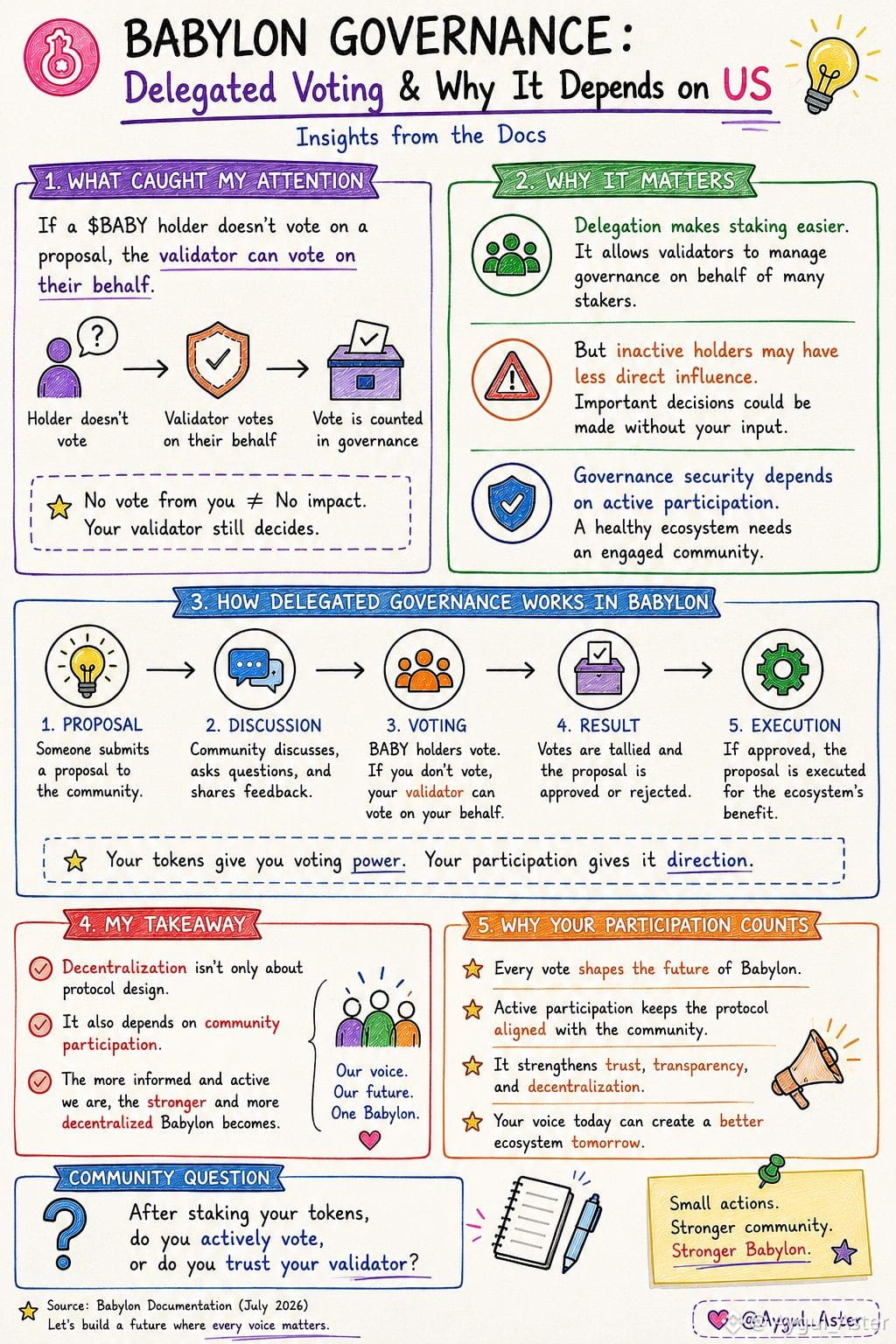
4
2
100
·
--
In den letzten paar Tagen habe ich versucht zu verstehen, was Babylon wirklich anders macht – statt nur die übliche „Fast Unstaking“-Erzählung zu wiederholen. Je mehr ich gelesen habe, desto klarer wurde mir: Die eigentliche Geschichte handelt nicht davon, dass Bitcoin schneller bewegt wird. Bitcoin folgt weiterhin seiner eigenen nativen Entsperrfrist, und Babylon verändert das nicht. Was sich ändert, ist alles, was um diesen Prozess herum passiert. In vielen BTC-Staking-Modellen gibt es nach Ablauf der Wartezeit noch einen weiteren Schritt, bevor du deine Coins wirklich zurückbekommst. Manchmal ist es eine Claim-Transaktion, manchmal ein Custodian (Treuhänder), und manchmal ist es einfach noch eine zusätzliche Schicht, der du vertrauen musst. Babylon nimmt diese zusätzliche Reibung heraus. Wenn die Entsperrfrist endet, ist dein BTC einfach wieder deins – und kann erneut ausgegeben werden. Diese kleine Designentscheidung hat mich zum Nachdenken gebracht, weil sie ein anderes Problem löst, als ich ursprünglich angenommen hatte. Es geht nicht darum, Bitcoins Sicherheitsmodell zu schlagen. Es geht darum, sich so weit wie möglich aus dem Weg zu halten.
Das hat mich auch darüber nachdenken lassen, wie wir Krypto-Produkte im Allgemeinen bewerten. Meist vergleichen wir sie, indem wir fragen: „Ist es schneller?“ oder „Ist die APY höher?“ Aber vielleicht sollten wir auch fragen: „Wie viele zusätzliche Vertrauensannahmen fügt dieses System hinzu?“ Je weniger Parteien zwischen dir und deinen Vermögenswerten stehen, desto näher bleibt das Erlebnis an der ursprünglichen Philosophie von Bitcoin. Persönlich finde ich das viel interessanter als eine Marketing-Überschrift. Gleichzeitig kann ich nachvollziehen, warum manche Nutzer das Wort „fast“ missverstehen und sofortige Liquidität erwarten. Deshalb glaube ich, dass sich die Diskussion um Babylon stärker auf Einfachheit und die Minimierung von Vertrauen konzentrieren sollte – nicht nur auf Geschwindigkeit. Ich lerne noch, und ich würde mich wirklich freuen, unterschiedliche Perspektiven zu hören. Wenn du dir Babylon auch angesehen hast: Was ist dir am meisten aufgefallen? War es die Staking-Rendite, das Sicherheitsmodell oder dieser Ansatz, die Verwahrung so nah wie möglich an nativen Bitcoin-Standards zu halten?
@babylonlabs_io #baby $BABY
In den letzten paar Tagen habe ich versucht zu verstehen, was Babylon wirklich anders macht – statt nur die übliche „Fast Unstaking“-Erzählung zu wiederholen. Je mehr ich gelesen habe, desto klarer wurde mir: Die eigentliche Geschichte handelt nicht davon, dass Bitcoin schneller bewegt wird. Bitcoin folgt weiterhin seiner eigenen nativen Entsperrfrist, und Babylon verändert das nicht. Was sich ändert, ist alles, was um diesen Prozess herum passiert. In vielen BTC-Staking-Modellen gibt es nach Ablauf der Wartezeit noch einen weiteren Schritt, bevor du deine Coins wirklich zurückbekommst. Manchmal ist es eine Claim-Transaktion, manchmal ein Custodian (Treuhänder), und manchmal ist es einfach noch eine zusätzliche Schicht, der du vertrauen musst. Babylon nimmt diese zusätzliche Reibung heraus. Wenn die Entsperrfrist endet, ist dein BTC einfach wieder deins – und kann erneut ausgegeben werden. Diese kleine Designentscheidung hat mich zum Nachdenken gebracht, weil sie ein anderes Problem löst, als ich ursprünglich angenommen hatte. Es geht nicht darum, Bitcoins Sicherheitsmodell zu schlagen. Es geht darum, sich so weit wie möglich aus dem Weg zu halten.
Das hat mich auch darüber nachdenken lassen, wie wir Krypto-Produkte im Allgemeinen bewerten. Meist vergleichen wir sie, indem wir fragen: „Ist es schneller?“ oder „Ist die APY höher?“ Aber vielleicht sollten wir auch fragen: „Wie viele zusätzliche Vertrauensannahmen fügt dieses System hinzu?“ Je weniger Parteien zwischen dir und deinen Vermögenswerten stehen, desto näher bleibt das Erlebnis an der ursprünglichen Philosophie von Bitcoin. Persönlich finde ich das viel interessanter als eine Marketing-Überschrift. Gleichzeitig kann ich nachvollziehen, warum manche Nutzer das Wort „fast“ missverstehen und sofortige Liquidität erwarten. Deshalb glaube ich, dass sich die Diskussion um Babylon stärker auf Einfachheit und die Minimierung von Vertrauen konzentrieren sollte – nicht nur auf Geschwindigkeit. Ich lerne noch, und ich würde mich wirklich freuen, unterschiedliche Perspektiven zu hören. Wenn du dir Babylon auch angesehen hast: Was ist dir am meisten aufgefallen? War es die Staking-Rendite, das Sicherheitsmodell oder dieser Ansatz, die Verwahrung so nah wie möglich an nativen Bitcoin-Standards zu halten?
@BabylonLabs_io #baby $BABY
Das hat mich auch darüber nachdenken lassen, wie wir Krypto-Produkte im Allgemeinen bewerten. Meist vergleichen wir sie, indem wir fragen: „Ist es schneller?“ oder „Ist die APY höher?“ Aber vielleicht sollten wir auch fragen: „Wie viele zusätzliche Vertrauensannahmen fügt dieses System hinzu?“ Je weniger Parteien zwischen dir und deinen Vermögenswerten stehen, desto näher bleibt das Erlebnis an der ursprünglichen Philosophie von Bitcoin. Persönlich finde ich das viel interessanter als eine Marketing-Überschrift. Gleichzeitig kann ich nachvollziehen, warum manche Nutzer das Wort „fast“ missverstehen und sofortige Liquidität erwarten. Deshalb glaube ich, dass sich die Diskussion um Babylon stärker auf Einfachheit und die Minimierung von Vertrauen konzentrieren sollte – nicht nur auf Geschwindigkeit. Ich lerne noch, und ich würde mich wirklich freuen, unterschiedliche Perspektiven zu hören. Wenn du dir Babylon auch angesehen hast: Was ist dir am meisten aufgefallen? War es die Staking-Rendite, das Sicherheitsmodell oder dieser Ansatz, die Verwahrung so nah wie möglich an nativen Bitcoin-Standards zu halten?
@BabylonLabs_io #baby $BABY
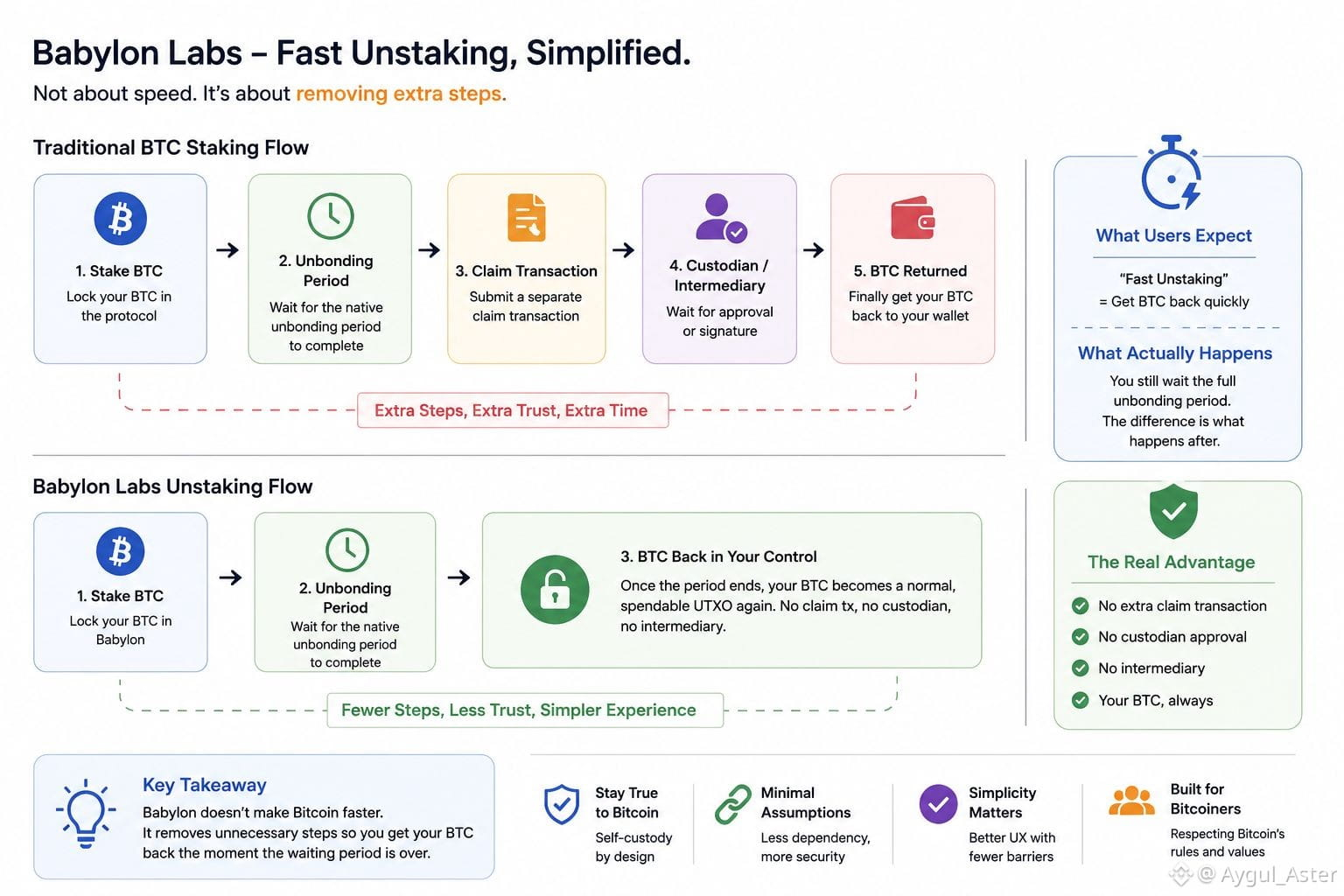
2
87
·
--
Ich habe über etwas nachgedacht, das in Bitcoin DeFi nicht oft genug zur Sprache kommt. Wir verbringen so viel Zeit damit, TVL, Handelsvolumen und Partnerschaftsankündigungen zu beobachten, dass es leicht ist anzunehmen, dies seien die wichtigsten Gründe, warum Menschen einem Protokoll vertrauen. Doch je mehr Projekte ich verfolge, desto mehr erkenne ich, dass diese Zahlen nur einen Teil der Geschichte erzählen. Was wirklich zählt, ist, ob Nutzer das, was im Hintergrund geschieht, verifizieren können.
Das ist einer der Gründe, warum mich Babylon besonders interessiert. Native Bitcoin als Sicherheit zu verwenden, ohne es zu wrappen oder an eine andere Ebene weiterzugeben, fühlt sich wie ein bedeutender Schritt hin zu mehr Transparenz beim Vertrauen an. Das Vertrauen wächst deutlich schneller, wenn Menschen unabhängig nachvollziehen können, wie ein System funktioniert, statt Versprechen zu glauben.
Natürlich sieht jedes Protokoll in seinen frühen Tagen spannend aus. Der echte Test kommt erst, nachdem der Hype verflogen ist. Werden Kreditnehmer weiterhin native BTC wählen? Werden Validatoren weiterhin ehrlich handeln? Werden Entwickler weiterhin daran arbeiten, weil das Protokoll ein echtes Problem löst – statt einfach nur die Teilnahme zu belohnen?
Ich glaube, langfristiger Wert entsteht durch kontinuierliche Nutzung, nicht durch kurzfristige Schlagzeilen. Wenn Menschen immer wieder zurückkommen, weil sie dem System vertrauen, dann beginnt dort die echte Stärke.
Was denkst du: Könnte verifizierbare Sicherheit zum größten Vorteil von Bitcoin DeFi werden, oder ist Liquidität immer der entscheidende Faktor?
@babylonlabs_io #baby $BABY
Ich habe über etwas nachgedacht, das in Bitcoin DeFi nicht oft genug zur Sprache kommt. Wir verbringen so viel Zeit damit, TVL, Handelsvolumen und Partnerschaftsankündigungen zu beobachten, dass es leicht ist anzunehmen, dies seien die wichtigsten Gründe, warum Menschen einem Protokoll vertrauen. Doch je mehr Projekte ich verfolge, desto mehr erkenne ich, dass diese Zahlen nur einen Teil der Geschichte erzählen. Was wirklich zählt, ist, ob Nutzer das, was im Hintergrund geschieht, verifizieren können.
Das ist einer der Gründe, warum mich Babylon besonders interessiert. Native Bitcoin als Sicherheit zu verwenden, ohne es zu wrappen oder an eine andere Ebene weiterzugeben, fühlt sich wie ein bedeutender Schritt hin zu mehr Transparenz beim Vertrauen an. Das Vertrauen wächst deutlich schneller, wenn Menschen unabhängig nachvollziehen können, wie ein System funktioniert, statt Versprechen zu glauben.
Natürlich sieht jedes Protokoll in seinen frühen Tagen spannend aus. Der echte Test kommt erst, nachdem der Hype verflogen ist. Werden Kreditnehmer weiterhin native BTC wählen? Werden Validatoren weiterhin ehrlich handeln? Werden Entwickler weiterhin daran arbeiten, weil das Protokoll ein echtes Problem löst – statt einfach nur die Teilnahme zu belohnen?
Ich glaube, langfristiger Wert entsteht durch kontinuierliche Nutzung, nicht durch kurzfristige Schlagzeilen. Wenn Menschen immer wieder zurückkommen, weil sie dem System vertrauen, dann beginnt dort die echte Stärke.
Was denkst du: Könnte verifizierbare Sicherheit zum größten Vorteil von Bitcoin DeFi werden, oder ist Liquidität immer der entscheidende Faktor?
@BabylonLabs_io #baby $BABY
Das ist einer der Gründe, warum mich Babylon besonders interessiert. Native Bitcoin als Sicherheit zu verwenden, ohne es zu wrappen oder an eine andere Ebene weiterzugeben, fühlt sich wie ein bedeutender Schritt hin zu mehr Transparenz beim Vertrauen an. Das Vertrauen wächst deutlich schneller, wenn Menschen unabhängig nachvollziehen können, wie ein System funktioniert, statt Versprechen zu glauben.
Natürlich sieht jedes Protokoll in seinen frühen Tagen spannend aus. Der echte Test kommt erst, nachdem der Hype verflogen ist. Werden Kreditnehmer weiterhin native BTC wählen? Werden Validatoren weiterhin ehrlich handeln? Werden Entwickler weiterhin daran arbeiten, weil das Protokoll ein echtes Problem löst – statt einfach nur die Teilnahme zu belohnen?
Ich glaube, langfristiger Wert entsteht durch kontinuierliche Nutzung, nicht durch kurzfristige Schlagzeilen. Wenn Menschen immer wieder zurückkommen, weil sie dem System vertrauen, dann beginnt dort die echte Stärke.
Was denkst du: Könnte verifizierbare Sicherheit zum größten Vorteil von Bitcoin DeFi werden, oder ist Liquidität immer der entscheidende Faktor?
@BabylonLabs_io #baby $BABY
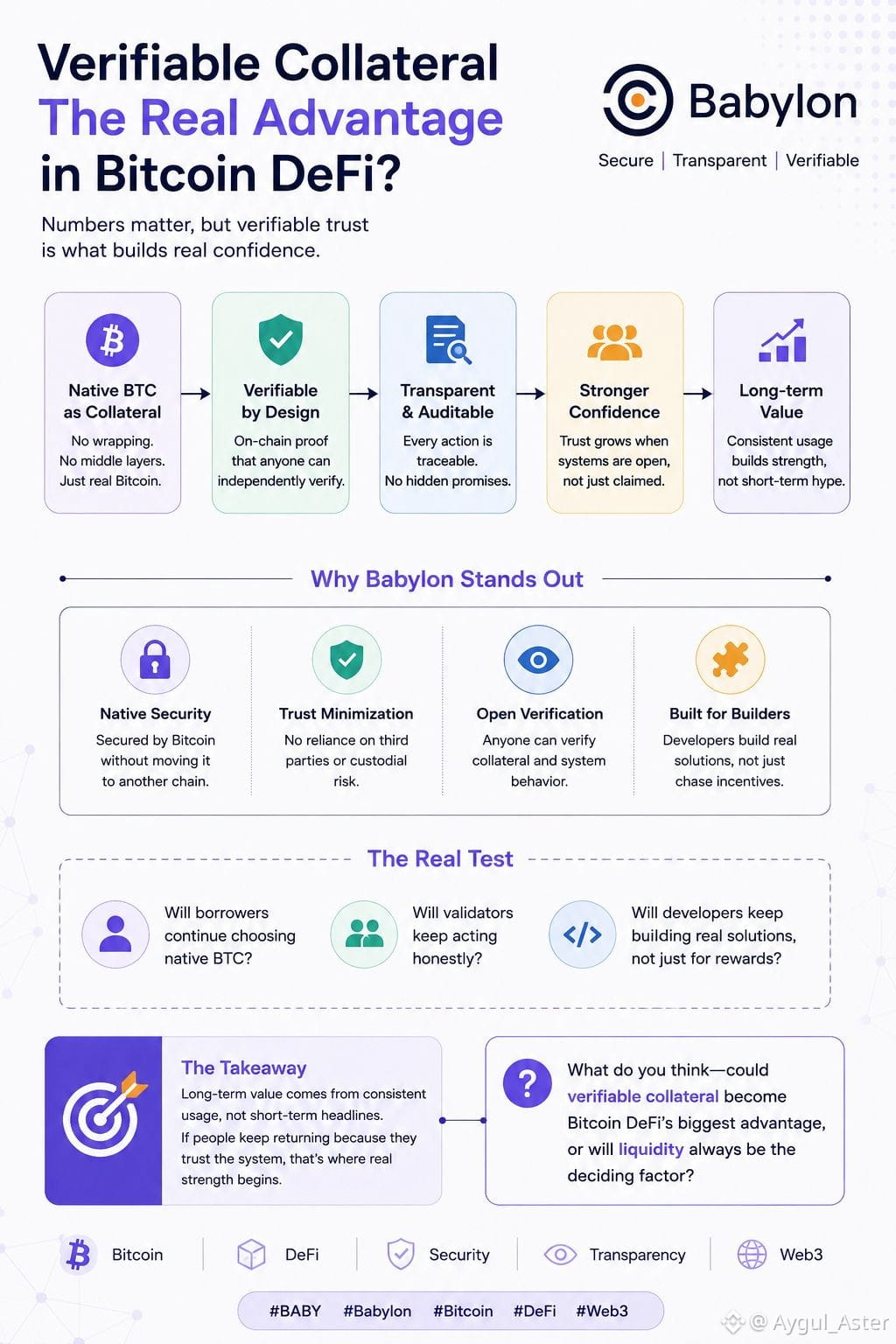
1
2
81
·
--
Ich habe in letzter Zeit viel darüber nachgedacht, und ehrlich gesagt habe ich das Gefühl, dass wir bei Bitcoin-unterlegtem DeFi vielleicht auf das falsche Maß fokussieren. Alle feiern TVL, aber TVL sagt uns nur, wie viel Kapital ankommt. Es erklärt nicht, warum dieses Kapital dann auch bleibt. Anreize können eine Zeit lang Liquidität anziehen, aber sobald sie nachlassen: Was passiert dann? Für mich ist die spannendere Frage, ob Nutzer weiterhin zurückkommen, weil das Produkt wirklich nützlich ist. Diese Art von Retention ist viel wertvoller als ein vorübergehender Peak bei gesperrtem Kapital.
Deshalb hat Babylons bei mir Aufmerksamkeit erregt. Ich mag die Idee von trustlosen Bitcoin-Vaults, weil sie natives BTC produktiv machen, ohne es zu wrappen oder jemand anderem die Verwahrung zu geben. Die Integration von Aave v4 macht das noch interessanter, aber ich schaue nicht nur auf die Ankündigungen. Mich beschäftigt viel mehr, was in den nächsten Monaten passiert. Nutzen die Leute weiterhin dieselben Vaults? Bleibt die Kreditaufnahme gesund, auch nachdem die Anreize langsamer werden? Werden die Gebühren echte Nachfrage widerspiegeln, statt nur kurzfristigem Hype zu folgen? Wenn das eintritt, könnte $BABY am Ende mehr für das Verhalten bewertet werden, das es fördert, als für die Erzählung darum. Vielleicht werden die stärksten DeFi-Ökosysteme nicht die sein, die den größten TVL haben, sondern die, zu denen die Leute wirklich von selbst zurückkehren. Oder denke ich zu viel darüber nach? Ich würde wirklich gern hören, wie alle anderen das sehen.@babylonlabs_io #baby
Ich habe in letzter Zeit viel darüber nachgedacht, und ehrlich gesagt habe ich das Gefühl, dass wir bei Bitcoin-unterlegtem DeFi vielleicht auf das falsche Maß fokussieren. Alle feiern TVL, aber TVL sagt uns nur, wie viel Kapital ankommt. Es erklärt nicht, warum dieses Kapital dann auch bleibt. Anreize können eine Zeit lang Liquidität anziehen, aber sobald sie nachlassen: Was passiert dann? Für mich ist die spannendere Frage, ob Nutzer weiterhin zurückkommen, weil das Produkt wirklich nützlich ist. Diese Art von Retention ist viel wertvoller als ein vorübergehender Peak bei gesperrtem Kapital.
Deshalb hat Babylons bei mir Aufmerksamkeit erregt. Ich mag die Idee von trustlosen Bitcoin-Vaults, weil sie natives BTC produktiv machen, ohne es zu wrappen oder jemand anderem die Verwahrung zu geben. Die Integration von Aave v4 macht das noch interessanter, aber ich schaue nicht nur auf die Ankündigungen. Mich beschäftigt viel mehr, was in den nächsten Monaten passiert. Nutzen die Leute weiterhin dieselben Vaults? Bleibt die Kreditaufnahme gesund, auch nachdem die Anreize langsamer werden? Werden die Gebühren echte Nachfrage widerspiegeln, statt nur kurzfristigem Hype zu folgen? Wenn das eintritt, könnte $BABY am Ende mehr für das Verhalten bewertet werden, das es fördert, als für die Erzählung darum. Vielleicht werden die stärksten DeFi-Ökosysteme nicht die sein, die den größten TVL haben, sondern die, zu denen die Leute wirklich von selbst zurückkehren. Oder denke ich zu viel darüber nach? Ich würde wirklich gern hören, wie alle anderen das sehen.@BabylonLabs_io #baby
Deshalb hat Babylons bei mir Aufmerksamkeit erregt. Ich mag die Idee von trustlosen Bitcoin-Vaults, weil sie natives BTC produktiv machen, ohne es zu wrappen oder jemand anderem die Verwahrung zu geben. Die Integration von Aave v4 macht das noch interessanter, aber ich schaue nicht nur auf die Ankündigungen. Mich beschäftigt viel mehr, was in den nächsten Monaten passiert. Nutzen die Leute weiterhin dieselben Vaults? Bleibt die Kreditaufnahme gesund, auch nachdem die Anreize langsamer werden? Werden die Gebühren echte Nachfrage widerspiegeln, statt nur kurzfristigem Hype zu folgen? Wenn das eintritt, könnte $BABY am Ende mehr für das Verhalten bewertet werden, das es fördert, als für die Erzählung darum. Vielleicht werden die stärksten DeFi-Ökosysteme nicht die sein, die den größten TVL haben, sondern die, zu denen die Leute wirklich von selbst zurückkehren. Oder denke ich zu viel darüber nach? Ich würde wirklich gern hören, wie alle anderen das sehen.@BabylonLabs_io #baby
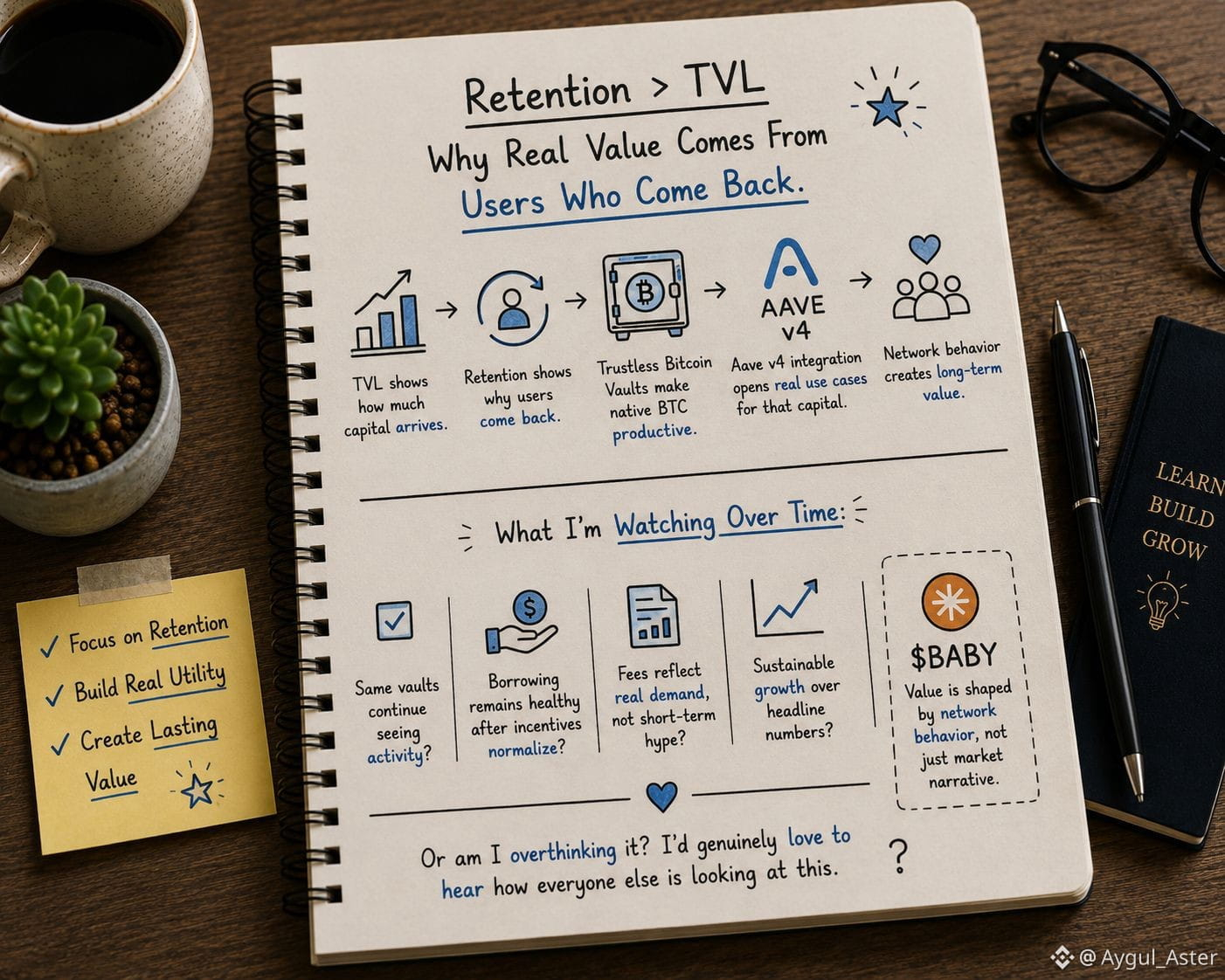
4
4
113
Anmelden und weiter Inhalte entdecken
Krypto-Nutzer weltweit auf Binance Square kennenlernen
⚡️ Bleib in Sachen Krypto stets am Puls.
💬 Die weltgrößte Kryptobörse vertraut darauf.
👍 Erhalte verlässliche Einblicke von verifizierten Creators.
E-Mail-Adresse/Telefonnummer
Trendthemen
BinanceLaunchesBinanceIntelligence
671,809 Aufrufe
4,167 Kommentare
🧠 Traden wie ein erfahrener Investmentfonds? Jetzt übernimmt die KI das kostenlos für dich! 🤖📈
Wilsontrader97
·10 Likes
·11.6k Aufrufe
BTCFallsBelow$84K
15,971 Aufrufe
72 Kommentare
DubaiVARAIssuesReserveAssetAuditCircular
1,053 Aufrufe
140 Kommentare