

Asif The Trader
441 投稿

Asif The Trader
報告
ユーザーをブロック
The Ultimate Trader
取引を発注
超高頻度トレーダー
1.3年
538 フォロー
152 フォロワー
449 いいね
投稿
ポートフォリオ
すべて
引用
本人確認中
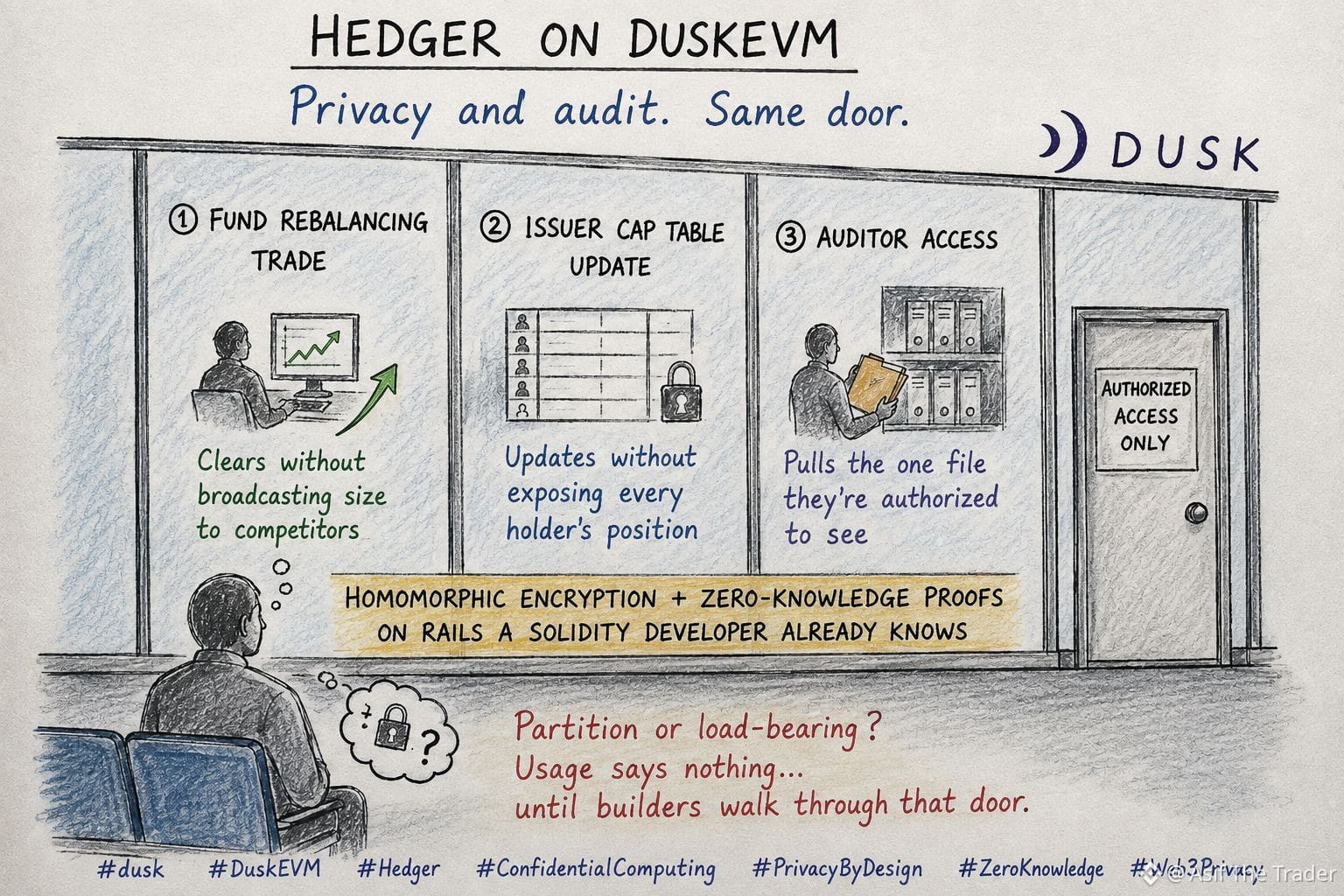
会計事務所には曇りガラスの仕切りがあります。待合室からは人影が動くのが見え、壁越しに小声のやり取りの気配は聞こえるのに、読めるものは何もありません。机の向こうで正しいファイルを持っている人だけが、実際の数字を見ることができます。
私はHedgerが@Dusk_Foundation DuskEVMで動く仕組みを読む間、その仕切りのことを考え続けていました。多くの人は「機密スマートコントラクト」という言葉を聞くと、完全に封じられた何か――入れない金庫、必要としているはずの人さえも入れない金庫――を想像します。
それが、思った以上に私の中に残りました。Hedgerは「ひとつの壁」ではなく、仕切りが同時に三つの役割を果たすものです。つまり、ファンドのリバランス取引は、その規模を競合に通知せずにクリアされる。発行体のキャップテーブルは、すべての保有者のポジションを晒さずに更新される。監査人は許可された“唯一のファイル”だけを覗き、それ以外には触れない。
同型暗号化とゼロ知識証明、それをSolidity開発者が既に知っているレールの上で走らせる。ここでは、プライバシーと監査が互いにぶつかってはいません。同じドアを通っています。
見落としやすいのは、まだその段階が早いということです。DuskEVMメインネットが到来し、Hedgerは提案される――でも、提案は“実際の取引量”とは同じではありません。まだ、どれくらいのコントラクトが実際にライブで動いているのか、規制のあるデスクが機密ルートで本当のフローを流したのか、それともサンドボックスで試しているだけなのか、誰も公表していません。誰かが何かをレビューする前に、「レビュー可能なプライバシー」という強い主張をするのは、たしかに大胆です。
では、その仕切りは実際に荷重を支える構造なのか。それとも、ただのフレームに吊られたガラスで、向こう側の誰かが現れて初めて機能が分かるだけなのでしょうか?$DUSK usageは、ビルダーたちが実際にそのドアをくぐって歩いてみるまでは何も語りません。まだ。
#dusk
{spot}(AAVEUSDT)
{spot}(BTCUSDT)
会計事務所には曇りガラスの仕切りがあります。待合室からは人影が動くのが見え、壁越しに小声のやり取りの気配は聞こえるのに、読めるものは何もありません。机の向こうで正しいファイルを持っている人だけが、実際の数字を見ることができます。
私はHedgerが@Dusk DuskEVMで動く仕組みを読む間、その仕切りのことを考え続けていました。多くの人は「機密スマートコントラクト」という言葉を聞くと、完全に封じられた何か――入れない金庫、必要としているはずの人さえも入れない金庫――を想像します。
それが、思った以上に私の中に残りました。Hedgerは「ひとつの壁」ではなく、仕切りが同時に三つの役割を果たすものです。つまり、ファンドのリバランス取引は、その規模を競合に通知せずにクリアされる。発行体のキャップテーブルは、すべての保有者のポジションを晒さずに更新される。監査人は許可された“唯一のファイル”だけを覗き、それ以外には触れない。
同型暗号化とゼロ知識証明、それをSolidity開発者が既に知っているレールの上で走らせる。ここでは、プライバシーと監査が互いにぶつかってはいません。同じドアを通っています。
見落としやすいのは、まだその段階が早いということです。DuskEVMメインネットが到来し、Hedgerは提案される――でも、提案は“実際の取引量”とは同じではありません。まだ、どれくらいのコントラクトが実際にライブで動いているのか、規制のあるデスクが機密ルートで本当のフローを流したのか、それともサンドボックスで試しているだけなのか、誰も公表していません。誰かが何かをレビューする前に、「レビュー可能なプライバシー」という強い主張をするのは、たしかに大胆です。
では、その仕切りは実際に荷重を支える構造なのか。それとも、ただのフレームに吊られたガラスで、向こう側の誰かが現れて初めて機能が分かるだけなのでしょうか?$DUSK usageは、ビルダーたちが実際にそのドアをくぐって歩いてみるまでは何も語りません。まだ。
#dusk
私はHedgerが@Dusk DuskEVMで動く仕組みを読む間、その仕切りのことを考え続けていました。多くの人は「機密スマートコントラクト」という言葉を聞くと、完全に封じられた何か――入れない金庫、必要としているはずの人さえも入れない金庫――を想像します。
それが、思った以上に私の中に残りました。Hedgerは「ひとつの壁」ではなく、仕切りが同時に三つの役割を果たすものです。つまり、ファンドのリバランス取引は、その規模を競合に通知せずにクリアされる。発行体のキャップテーブルは、すべての保有者のポジションを晒さずに更新される。監査人は許可された“唯一のファイル”だけを覗き、それ以外には触れない。
同型暗号化とゼロ知識証明、それをSolidity開発者が既に知っているレールの上で走らせる。ここでは、プライバシーと監査が互いにぶつかってはいません。同じドアを通っています。
見落としやすいのは、まだその段階が早いということです。DuskEVMメインネットが到来し、Hedgerは提案される――でも、提案は“実際の取引量”とは同じではありません。まだ、どれくらいのコントラクトが実際にライブで動いているのか、規制のあるデスクが機密ルートで本当のフローを流したのか、それともサンドボックスで試しているだけなのか、誰も公表していません。誰かが何かをレビューする前に、「レビュー可能なプライバシー」という強い主張をするのは、たしかに大胆です。
では、その仕切りは実際に荷重を支える構造なのか。それとも、ただのフレームに吊られたガラスで、向こう側の誰かが現れて初めて機能が分かるだけなのでしょうか?$DUSK usageは、ビルダーたちが実際にそのドアをくぐって歩いてみるまでは何も語りません。まだ。
#dusk
116
一部該当
#dusk $DUSK @Dusk_Foundation
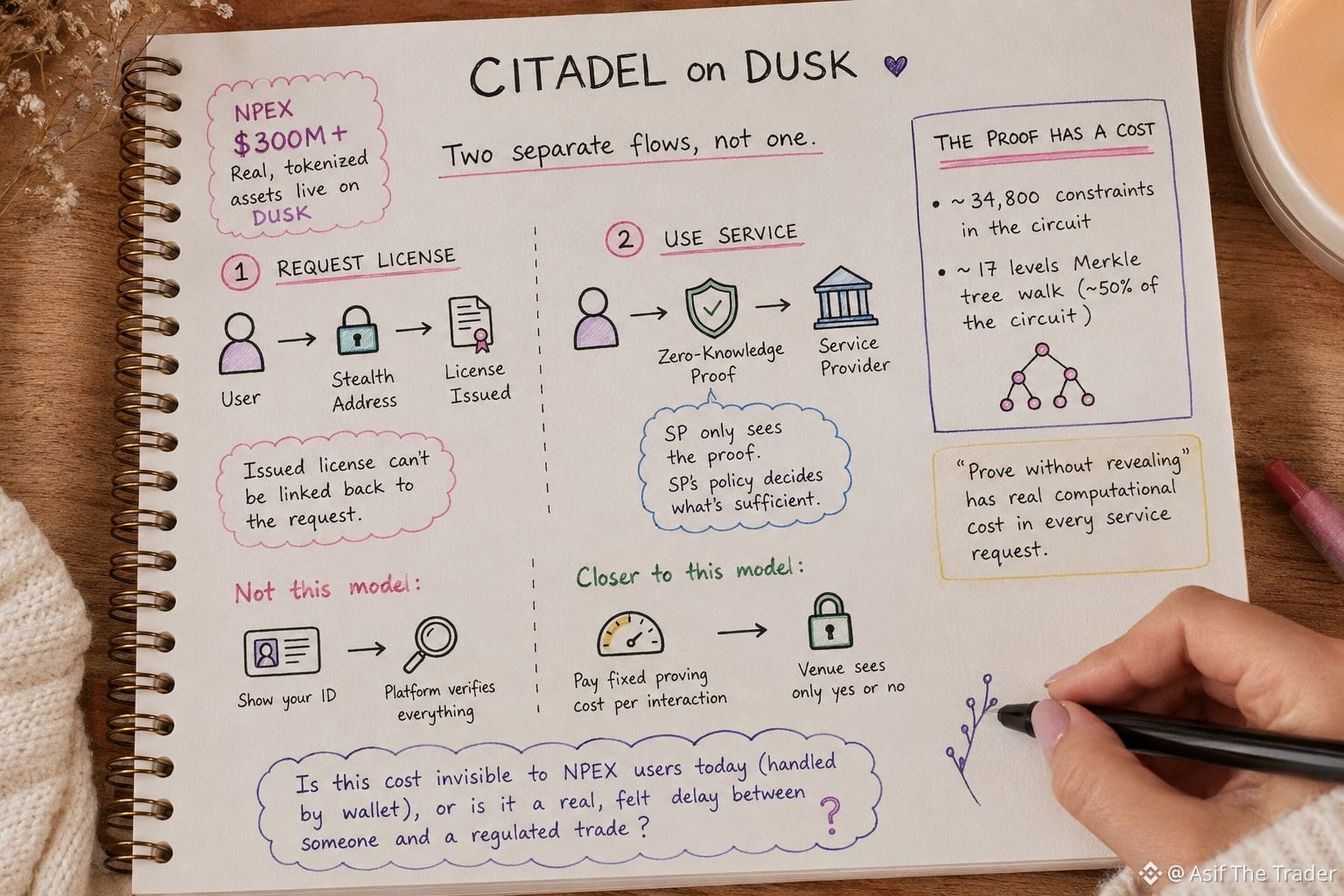
NPEXがDusk上で実際に$300M以上の実在・トークン化された資産を稼働させているのを見て、Citadelのドキュメントに戻って確認しました。これはもうテストネットの例ではありません。だからこそ、「プライバシーの主張」が、ホワイトペーパーの図解だけでなく、実際の規制のある場で本当に成り立つのかを確かめたくなったんです。
結論、プロトコルは「1つ」ではなく、実際には「別々の2つのフロー」から成っています。
まず、ユーザーはステルスアドレスを使ってLicense Providerにライセンスの発行を依頼します。これにより、発行されたライセンスが依頼側に紐づけられないようになります。
次に、ユーザーがサービスを使いたいとき、ライセンスを再送するわけではありません。代わりに、その有効なライセンスを所持していることを示すゼロ知識証明を送ります。サービスプロバイダー(SP)が見るのは、その証明だけです。そして、十分とみなす基準を決めるのはSP自身のポリシーです。
ここで私が足を止めたポイントがあります。その証明はただではありません。ライセンス保有を証明するためのCitadelの回路は、だいたい34,800 constraints程度で、その半分ほどは、ライセンスが実際に登録されていることを確認するために、深さ17のメルカリツリーを辿る処理だけに費やされています。
つまり「明かさずに証明する」には、スライド上の設計思想に留まらない、すべてのサービスリクエストに組み込まれた現実の計算コストがあるんです。
「IDを見せて、プラットフォームにすべて検証させる」とは別のモデルです。
より近いのは:やり取りごとに、一定の証明コストを一度支払う代わりに、その場(会場)には「はい/いいえ」以外は何も見せない、という考え方です。
ただ、まだ分からないのは、そのコストが今日のNPEXユーザーにとって実際に“見えない”のか、ウォレットが裏で処理してしまうのか。それとも、規制のある取引の当事者と誰かが実際に取引をするまでの間に、感じられる遅延として存在するのか、という点です。
{spot}(MORPHOUSDT)
{spot}(BNBUSDT)
{spot}(AAVEUSDT)
#dusk $DUSK @Dusk
NPEXがDusk上で実際に$300M以上の実在・トークン化された資産を稼働させているのを見て、Citadelのドキュメントに戻って確認しました。これはもうテストネットの例ではありません。だからこそ、「プライバシーの主張」が、ホワイトペーパーの図解だけでなく、実際の規制のある場で本当に成り立つのかを確かめたくなったんです。
結論、プロトコルは「1つ」ではなく、実際には「別々の2つのフロー」から成っています。
まず、ユーザーはステルスアドレスを使ってLicense Providerにライセンスの発行を依頼します。これにより、発行されたライセンスが依頼側に紐づけられないようになります。
次に、ユーザーがサービスを使いたいとき、ライセンスを再送するわけではありません。代わりに、その有効なライセンスを所持していることを示すゼロ知識証明を送ります。サービスプロバイダー(SP)が見るのは、その証明だけです。そして、十分とみなす基準を決めるのはSP自身のポリシーです。
ここで私が足を止めたポイントがあります。その証明はただではありません。ライセンス保有を証明するためのCitadelの回路は、だいたい34,800 constraints程度で、その半分ほどは、ライセンスが実際に登録されていることを確認するために、深さ17のメルカリツリーを辿る処理だけに費やされています。
つまり「明かさずに証明する」には、スライド上の設計思想に留まらない、すべてのサービスリクエストに組み込まれた現実の計算コストがあるんです。
「IDを見せて、プラットフォームにすべて検証させる」とは別のモデルです。
より近いのは:やり取りごとに、一定の証明コストを一度支払う代わりに、その場(会場)には「はい/いいえ」以外は何も見せない、という考え方です。
ただ、まだ分からないのは、そのコストが今日のNPEXユーザーにとって実際に“見えない”のか、ウォレットが裏で処理してしまうのか。それとも、規制のある取引の当事者と誰かが実際に取引をするまでの間に、感じられる遅延として存在するのか、という点です。
NPEXがDusk上で実際に$300M以上の実在・トークン化された資産を稼働させているのを見て、Citadelのドキュメントに戻って確認しました。これはもうテストネットの例ではありません。だからこそ、「プライバシーの主張」が、ホワイトペーパーの図解だけでなく、実際の規制のある場で本当に成り立つのかを確かめたくなったんです。
結論、プロトコルは「1つ」ではなく、実際には「別々の2つのフロー」から成っています。
まず、ユーザーはステルスアドレスを使ってLicense Providerにライセンスの発行を依頼します。これにより、発行されたライセンスが依頼側に紐づけられないようになります。
次に、ユーザーがサービスを使いたいとき、ライセンスを再送するわけではありません。代わりに、その有効なライセンスを所持していることを示すゼロ知識証明を送ります。サービスプロバイダー(SP)が見るのは、その証明だけです。そして、十分とみなす基準を決めるのはSP自身のポリシーです。
ここで私が足を止めたポイントがあります。その証明はただではありません。ライセンス保有を証明するためのCitadelの回路は、だいたい34,800 constraints程度で、その半分ほどは、ライセンスが実際に登録されていることを確認するために、深さ17のメルカリツリーを辿る処理だけに費やされています。
つまり「明かさずに証明する」には、スライド上の設計思想に留まらない、すべてのサービスリクエストに組み込まれた現実の計算コストがあるんです。
「IDを見せて、プラットフォームにすべて検証させる」とは別のモデルです。
より近いのは:やり取りごとに、一定の証明コストを一度支払う代わりに、その場(会場)には「はい/いいえ」以外は何も見せない、という考え方です。
ただ、まだ分からないのは、そのコストが今日のNPEXユーザーにとって実際に“見えない”のか、ウォレットが裏で処理してしまうのか。それとも、規制のある取引の当事者と誰かが実際に取引をするまでの間に、感じられる遅延として存在するのか、という点です。
2
2
188
@Dusk_Foundation #dusk $DUSK
2024年8月16日の橋(ブリッジ)事件をきっかけに、私はDuskの見方が変わりました。
ブロックリストのせいではありません。
むしろこう考えるようになったのです:
オンチェーンのアクションが承認されたあと、実際にデータの中身を見届ける必要があるのは誰なのか?
規制対象の金融では、次を証明する必要があるかもしれません。
適格性(eligibility)。
所有権(ownership)。
譲渡条件(transfer conditions)。
私の最初の仮定はシンプルでした。
何かが検証される必要があるなら、基になっているデータの多くは見える必要があるのではないか、と。
しかしDuskのドキュメントと、実際のシタデル(Citadel)の論文に立ち返ってみました。
シタデルの「所有権の証明」は、個人データをオンチェーンに載せません。ユーザーは回路の中で、有効に署名された資格情報(クレデンシャル)を保持していることを証明します。検証者が学ぶのは、その主張が真であるという事実だけです。
私に強く残った数字はこれです。証明の検証には0.007秒かかります。証明の生成には、ノートPC級のチップで約16秒かかります。高コストな「証明」の部分は、1回だけで、オフラインで行われ、ユーザー側で完結します。逆に、検証者が実際に行う部分――誰かがアクセスを必要とする瞬間に求められる作業――はほぼ瞬時で、"valid(有効)" 以上の情報は明らかにしません。
この切り分けが、規制対象の資産では重要になります。
機関は適格性を確認する必要があります。そこに、申請者の完全なKYCファイルが必要なわけではなく、trueかfalseに解決する証明があれば十分です。さらにCitadelでは、サービス提供者が「その証明がカバーすべき属性をどれにするか」を正確に定義できます。
だから、興味深い問いは「ブロックチェーンはプライベートなのか?」ではありません。
むしろ、典型的なKYCペイロードに収まっているもののうち、証明が“データ”ではなく“証明内容(それが真であること)”によってチェックされるために、検証者に実際に触れる必要があるのはどれくらいなのか?
{spot}(AAVEUSDT)
{spot}(MORPHOUSDT)
規制対象のオンチェーン・ファイナンスで重要なのは、次の点です。
@Dusk #dusk $DUSK
2024年8月16日の橋(ブリッジ)事件をきっかけに、私はDuskの見方が変わりました。
ブロックリストのせいではありません。
むしろこう考えるようになったのです:
オンチェーンのアクションが承認されたあと、実際にデータの中身を見届ける必要があるのは誰なのか?
規制対象の金融では、次を証明する必要があるかもしれません。
適格性(eligibility)。
所有権(ownership)。
譲渡条件(transfer conditions)。
私の最初の仮定はシンプルでした。
何かが検証される必要があるなら、基になっているデータの多くは見える必要があるのではないか、と。
しかしDuskのドキュメントと、実際のシタデル(Citadel)の論文に立ち返ってみました。
シタデルの「所有権の証明」は、個人データをオンチェーンに載せません。ユーザーは回路の中で、有効に署名された資格情報(クレデンシャル)を保持していることを証明します。検証者が学ぶのは、その主張が真であるという事実だけです。
私に強く残った数字はこれです。証明の検証には0.007秒かかります。証明の生成には、ノートPC級のチップで約16秒かかります。高コストな「証明」の部分は、1回だけで、オフラインで行われ、ユーザー側で完結します。逆に、検証者が実際に行う部分――誰かがアクセスを必要とする瞬間に求められる作業――はほぼ瞬時で、"valid(有効)" 以上の情報は明らかにしません。
この切り分けが、規制対象の資産では重要になります。
機関は適格性を確認する必要があります。そこに、申請者の完全なKYCファイルが必要なわけではなく、trueかfalseに解決する証明があれば十分です。さらにCitadelでは、サービス提供者が「その証明がカバーすべき属性をどれにするか」を正確に定義できます。
だから、興味深い問いは「ブロックチェーンはプライベートなのか?」ではありません。
むしろ、典型的なKYCペイロードに収まっているもののうち、証明が“データ”ではなく“証明内容(それが真であること)”によってチェックされるために、検証者に実際に触れる必要があるのはどれくらいなのか?
規制対象のオンチェーン・ファイナンスで重要なのは、次の点です。
2024年8月16日の橋(ブリッジ)事件をきっかけに、私はDuskの見方が変わりました。
ブロックリストのせいではありません。
むしろこう考えるようになったのです:
オンチェーンのアクションが承認されたあと、実際にデータの中身を見届ける必要があるのは誰なのか?
規制対象の金融では、次を証明する必要があるかもしれません。
適格性(eligibility)。
所有権(ownership)。
譲渡条件(transfer conditions)。
私の最初の仮定はシンプルでした。
何かが検証される必要があるなら、基になっているデータの多くは見える必要があるのではないか、と。
しかしDuskのドキュメントと、実際のシタデル(Citadel)の論文に立ち返ってみました。
シタデルの「所有権の証明」は、個人データをオンチェーンに載せません。ユーザーは回路の中で、有効に署名された資格情報(クレデンシャル)を保持していることを証明します。検証者が学ぶのは、その主張が真であるという事実だけです。
私に強く残った数字はこれです。証明の検証には0.007秒かかります。証明の生成には、ノートPC級のチップで約16秒かかります。高コストな「証明」の部分は、1回だけで、オフラインで行われ、ユーザー側で完結します。逆に、検証者が実際に行う部分――誰かがアクセスを必要とする瞬間に求められる作業――はほぼ瞬時で、"valid(有効)" 以上の情報は明らかにしません。
この切り分けが、規制対象の資産では重要になります。
機関は適格性を確認する必要があります。そこに、申請者の完全なKYCファイルが必要なわけではなく、trueかfalseに解決する証明があれば十分です。さらにCitadelでは、サービス提供者が「その証明がカバーすべき属性をどれにするか」を正確に定義できます。
だから、興味深い問いは「ブロックチェーンはプライベートなのか?」ではありません。
むしろ、典型的なKYCペイロードに収まっているもののうち、証明が“データ”ではなく“証明内容(それが真であること)”によってチェックされるために、検証者に実際に触れる必要があるのはどれくらいなのか?
規制対象のオンチェーン・ファイナンスで重要なのは、次の点です。
Prove without revealing data
0%
Verify it by seeing the data
100%
1 投票 • 投票は終了しました
2
1
78
·
--
弱気相場
#dusk $DUSK @Dusk_Foundation
かつて私は、金融資産をオンチェーンに載せるだけで、金融プロセス全体が自動的に良くなるのだと思っていました。
しかし、銀行や投資ファンドの観点から見てみるとどうでしょう。
債券やファンドをオンチェーンに載せると想像してください。
問題は解決したように聞こえます。
でも、私はふと考え始めました。
トークンはオンチェーンにあるのに、その周りの金融プロセスがまだ整っていないとしたら?
その機関は、誰がそれを保有できるのか、どのように取引されるのか、支払いがどう動くのか、そして決済がどのようにコンプライアンスを維持するのかを、依然として判断しなければなりません。
それで私は、「トークン化」とは実際には何を意味するのかを考え直しました。
資産をトークン化すれば十分なのか、それとも金融ライフサイクル自体も一緒に移すべきなのか。
その問いこそが、私をDuskへ引き寄せました。
私がDusk Tradeで惹かれたのは、トークン側だけでなく、ワークフロー側から問題にアプローチしている点です。
Duskは、MMF、ETF、債券、そしてその他のRWAといった資産をオンチェーン環境へ取り込むことに取り組んでいます。
今の私の考えるトークン化とは、次の流れです。
所有 → 適格性 → 取引 → 支払い → 決済
もしかすると本当の問いは、
「どれだけの資産をオンチェーンに載せられるか?」
ではないのかもしれません。
「金融プロセスのどれくらいが、実際にそこ(オンチェーン)で機能できるのか?」
表現だけがオンチェーンに移っても、果たしてそれで市場が一緒に動いたと言えるでしょうか。
この違いこそが、私にとってDuskを面白くしている点です。
{spot}(DUSKUSDT)
実世界の資産をオンチェーンにする際に、最も重要なのは何か?
#dusk $DUSK @Dusk
かつて私は、金融資産をオンチェーンに載せるだけで、金融プロセス全体が自動的に良くなるのだと思っていました。
しかし、銀行や投資ファンドの観点から見てみるとどうでしょう。
債券やファンドをオンチェーンに載せると想像してください。
問題は解決したように聞こえます。
でも、私はふと考え始めました。
トークンはオンチェーンにあるのに、その周りの金融プロセスがまだ整っていないとしたら?
その機関は、誰がそれを保有できるのか、どのように取引されるのか、支払いがどう動くのか、そして決済がどのようにコンプライアンスを維持するのかを、依然として判断しなければなりません。
それで私は、「トークン化」とは実際には何を意味するのかを考え直しました。
資産をトークン化すれば十分なのか、それとも金融ライフサイクル自体も一緒に移すべきなのか。
その問いこそが、私をDuskへ引き寄せました。
私がDusk Tradeで惹かれたのは、トークン側だけでなく、ワークフロー側から問題にアプローチしている点です。
Duskは、MMF、ETF、債券、そしてその他のRWAといった資産をオンチェーン環境へ取り込むことに取り組んでいます。
今の私の考えるトークン化とは、次の流れです。
所有 → 適格性 → 取引 → 支払い → 決済
もしかすると本当の問いは、
「どれだけの資産をオンチェーンに載せられるか?」
ではないのかもしれません。
「金融プロセスのどれくらいが、実際にそこ(オンチェーン)で機能できるのか?」
表現だけがオンチェーンに移っても、果たしてそれで市場が一緒に動いたと言えるでしょうか。
この違いこそが、私にとってDuskを面白くしている点です。
実世界の資産をオンチェーンにする際に、最も重要なのは何か?
かつて私は、金融資産をオンチェーンに載せるだけで、金融プロセス全体が自動的に良くなるのだと思っていました。
しかし、銀行や投資ファンドの観点から見てみるとどうでしょう。
債券やファンドをオンチェーンに載せると想像してください。
問題は解決したように聞こえます。
でも、私はふと考え始めました。
トークンはオンチェーンにあるのに、その周りの金融プロセスがまだ整っていないとしたら?
その機関は、誰がそれを保有できるのか、どのように取引されるのか、支払いがどう動くのか、そして決済がどのようにコンプライアンスを維持するのかを、依然として判断しなければなりません。
それで私は、「トークン化」とは実際には何を意味するのかを考え直しました。
資産をトークン化すれば十分なのか、それとも金融ライフサイクル自体も一緒に移すべきなのか。
その問いこそが、私をDuskへ引き寄せました。
私がDusk Tradeで惹かれたのは、トークン側だけでなく、ワークフロー側から問題にアプローチしている点です。
Duskは、MMF、ETF、債券、そしてその他のRWAといった資産をオンチェーン環境へ取り込むことに取り組んでいます。
今の私の考えるトークン化とは、次の流れです。
所有 → 適格性 → 取引 → 支払い → 決済
もしかすると本当の問いは、
「どれだけの資産をオンチェーンに載せられるか?」
ではないのかもしれません。
「金融プロセスのどれくらいが、実際にそこ(オンチェーン)で機能できるのか?」
表現だけがオンチェーンに移っても、果たしてそれで市場が一緒に動いたと言えるでしょうか。
この違いこそが、私にとってDuskを面白くしている点です。
実世界の資産をオンチェーンにする際に、最も重要なのは何か?
Tokenizing the asset
0%
Ownership & eligibility
25%
Trading + settlement
0%
The full financial lifecycle
75%
4 投票 • 投票は終了しました
9
5
77
·
--
ブリッシュ
本人確認中
Duskを通じてオンチェーンに乗せる予定の資産は300M+ EUR。
その数字を見て、「トークン化」が実際に何を意味するのかを考え直しました。
以前は、債券やファンドをオンチェーンに載せる面白さは「トークン」にあると思っていました。
でも、トークンこそが最も面白くない部分かもしれないと気づきました。
オンチェーン・トークンであることが、必ずしもオンチェーンの金融ライフサイクルを意味するわけではありません。
資産はオンチェーンに存在していても、適格性(エリジビリティ)、コンプライアンス、譲渡制限、開示、さらには決済でさえ、他のシステムに依存することがあります。
では、トークン化は実際にオンチェーン上で何を動かしたのでしょう?
だからこそ、@Dusk_Foundation のネイティブ発行ディレクションが私の関心を引きました。単にトークンを作ることを超えて、より広いライフサイクル――発行、適格性、譲渡、開示、決済――に目を向けているように見えるからです。
そして、プライバシーはそのライフサイクルをより難しくします。
規制のある市場では、すべてを公開する必要も、すべてを隠す必要もありません。必要なのは、制御された可視性です。
情報の一部は非公開のまま。
一部は証明可能。
一部は、許可された場合に開示できる。
そこで問いはこうなります:
プライバシー、検証、開示を、金融アプリケーションのルールそのものの一部にできるのでしょうか?
ライフサイクルのより多くを実際にオンチェーンに置けるのなら、より厳しいボトルネックはもはやブロックチェーンではないのかもしれません。
あるいは、その資産を取り巻く法的・制度的インフラなのかもしれません。
そのとき、ネイティブ発行はトークン化というより、金融ライフサイクルの一部を作り直すことのように見えてきます。
@Dusk_Foundation $DUSK #dusk
{spot}(BTCUSDT)
{spot}(BNBUSDT)
{spot}(DUSKUSDT)
現実世界の資産トークン化において最も重要なのは何でしょう?
Duskを通じてオンチェーンに乗せる予定の資産は300M+ EUR。
その数字を見て、「トークン化」が実際に何を意味するのかを考え直しました。
以前は、債券やファンドをオンチェーンに載せる面白さは「トークン」にあると思っていました。
でも、トークンこそが最も面白くない部分かもしれないと気づきました。
オンチェーン・トークンであることが、必ずしもオンチェーンの金融ライフサイクルを意味するわけではありません。
資産はオンチェーンに存在していても、適格性(エリジビリティ)、コンプライアンス、譲渡制限、開示、さらには決済でさえ、他のシステムに依存することがあります。
では、トークン化は実際にオンチェーン上で何を動かしたのでしょう?
だからこそ、@Dusk のネイティブ発行ディレクションが私の関心を引きました。単にトークンを作ることを超えて、より広いライフサイクル――発行、適格性、譲渡、開示、決済――に目を向けているように見えるからです。
そして、プライバシーはそのライフサイクルをより難しくします。
規制のある市場では、すべてを公開する必要も、すべてを隠す必要もありません。必要なのは、制御された可視性です。
情報の一部は非公開のまま。
一部は証明可能。
一部は、許可された場合に開示できる。
そこで問いはこうなります:
プライバシー、検証、開示を、金融アプリケーションのルールそのものの一部にできるのでしょうか?
ライフサイクルのより多くを実際にオンチェーンに置けるのなら、より厳しいボトルネックはもはやブロックチェーンではないのかもしれません。
あるいは、その資産を取り巻く法的・制度的インフラなのかもしれません。
そのとき、ネイティブ発行はトークン化というより、金融ライフサイクルの一部を作り直すことのように見えてきます。
@Dusk $DUSK #dusk
現実世界の資産トークン化において最も重要なのは何でしょう?
その数字を見て、「トークン化」が実際に何を意味するのかを考え直しました。
以前は、債券やファンドをオンチェーンに載せる面白さは「トークン」にあると思っていました。
でも、トークンこそが最も面白くない部分かもしれないと気づきました。
オンチェーン・トークンであることが、必ずしもオンチェーンの金融ライフサイクルを意味するわけではありません。
資産はオンチェーンに存在していても、適格性(エリジビリティ)、コンプライアンス、譲渡制限、開示、さらには決済でさえ、他のシステムに依存することがあります。
では、トークン化は実際にオンチェーン上で何を動かしたのでしょう?
だからこそ、@Dusk のネイティブ発行ディレクションが私の関心を引きました。単にトークンを作ることを超えて、より広いライフサイクル――発行、適格性、譲渡、開示、決済――に目を向けているように見えるからです。
そして、プライバシーはそのライフサイクルをより難しくします。
規制のある市場では、すべてを公開する必要も、すべてを隠す必要もありません。必要なのは、制御された可視性です。
情報の一部は非公開のまま。
一部は証明可能。
一部は、許可された場合に開示できる。
そこで問いはこうなります:
プライバシー、検証、開示を、金融アプリケーションのルールそのものの一部にできるのでしょうか?
ライフサイクルのより多くを実際にオンチェーンに置けるのなら、より厳しいボトルネックはもはやブロックチェーンではないのかもしれません。
あるいは、その資産を取り巻く法的・制度的インフラなのかもしれません。
そのとき、ネイティブ発行はトークン化というより、金融ライフサイクルの一部を作り直すことのように見えてきます。
@Dusk $DUSK #dusk
現実世界の資産トークン化において最も重要なのは何でしょう?
🔹 Token issuance
29%
🔹 Onchain compliance
43%
🔹 Privacy + verification
14%
🔹 Full lifecycle onchain
14%
7 投票 • 投票は終了しました
14
8
577
素晴らしい
素晴らしい

Tasifch786
·
--
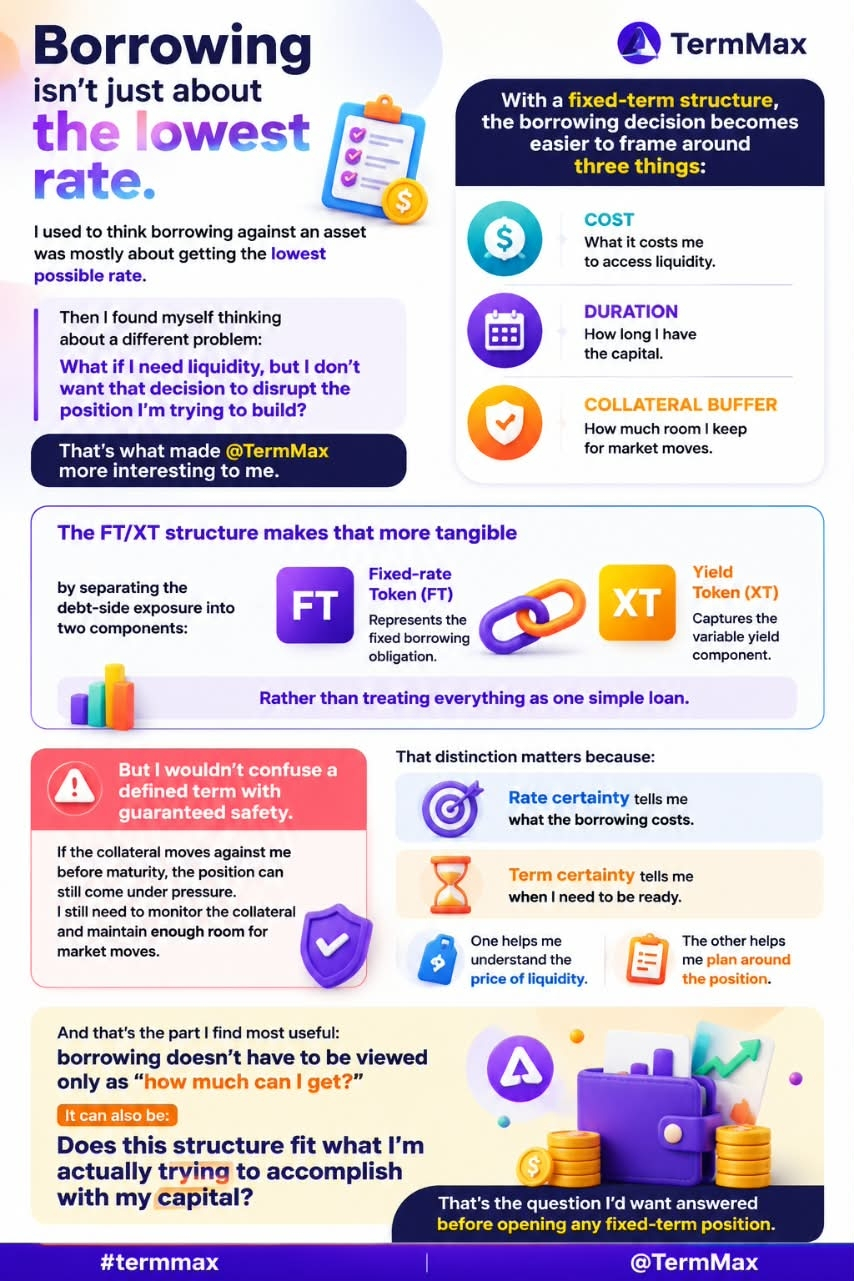
ブリッシュ以前は、資産を担保に借り入れることは、基本的に可能な限り低い金利を得ることが主だと思っていました。
しかし、別の問題を考えることになりました。
流動性が必要だけれど、その判断が、私が築こうとしているポジションの邪魔にならないとしたら?
それが私にとって@TermMax をより興味深いものにしてくれました。
固定の期間構造があると、借り入れの意思決定は次の3つの要素に沿って組み立てやすくなります。
コスト+期間+担保バッファ
FT/XT構造は、すべてを単なる1つのローンとして扱うのではなく、債務側のエクスポージャーを固定金利トークン(FT)とイールドトークン(XT)に分けることで、それをより具体的にします。
ただし、定められた期間があるからといって、保証された安全性だと混同してはいけません。
満期までの間に担保が不利に動けば、ポジションは依然として圧力を受ける可能性があります。担保を監視し、市場の変動に耐えられる十分な余裕を維持する必要があります。
この違いが重要なのは、次のとおりです。
金利の確実性が、借り入れコストを教えてくれる。
期間の確実性が、いつ備える必要があるかを教えてくれる。
前者は、流動性の価格を理解するのに役立つ。
後者は、ポジションを見据えた計画を立てるのに役立つ。
そして私が最も有用だと感じるのはここです。借り入れは「いくら借りられるか?」だけで考える必要はありません。
それはまた、
この構造が、自分が実際に資本で成し遂げようとしていることに合っているか?
という問いでもあります。
固定期間のポジションを開く前に、答えを得たいのはまさにその点です。
#termmax @TermMax $BTC #defi #Crypto
しかし、別の問題を考えることになりました。
流動性が必要だけれど、その判断が、私が築こうとしているポジションの邪魔にならないとしたら?
それが私にとって@TermMax をより興味深いものにしてくれました。
固定の期間構造があると、借り入れの意思決定は次の3つの要素に沿って組み立てやすくなります。
コスト+期間+担保バッファ
FT/XT構造は、すべてを単なる1つのローンとして扱うのではなく、債務側のエクスポージャーを固定金利トークン(FT)とイールドトークン(XT)に分けることで、それをより具体的にします。
ただし、定められた期間があるからといって、保証された安全性だと混同してはいけません。
満期までの間に担保が不利に動けば、ポジションは依然として圧力を受ける可能性があります。担保を監視し、市場の変動に耐えられる十分な余裕を維持する必要があります。
この違いが重要なのは、次のとおりです。
金利の確実性が、借り入れコストを教えてくれる。
期間の確実性が、いつ備える必要があるかを教えてくれる。
前者は、流動性の価格を理解するのに役立つ。
後者は、ポジションを見据えた計画を立てるのに役立つ。
そして私が最も有用だと感じるのはここです。借り入れは「いくら借りられるか?」だけで考える必要はありません。
それはまた、
この構造が、自分が実際に資本で成し遂げようとしていることに合っているか?
という問いでもあります。
固定期間のポジションを開く前に、答えを得たいのはまさにその点です。
#termmax @TermMax $BTC #defi #Crypto
2
2
本人確認中
私の見た目の捉え方を変えたひとつが、@termmax について重要なのは「固定金利を得ること」だけではない、という点です。
ポジションが始まる前に、資金調達のあり方を決められることがポイントです。
一見すると些細に聞こえるかもしれませんが、これは取引そのものの中で、資金調達が果たせる役割を変えてしまいます。
典型的な変動金利の市場では、まずどれくらい借りたいかを決めて、その後は市場が提示する資金調達条件を受け入れることになります。
TermMax では、そうした条件が取引そのものの一部になり得ます。
借り手は、支払ってもよい最大金利と希望する満期を指定できます。一方で貸し手は、受け入れてよい最低金利を設定できます。
そのため、問いは次のように変わります。
「今すぐいくらの金利を得られるか?」
から、
「このポジションを取る価値があるのは、どんな条件か?」
ということです。
これは大きな転換です。
もはや、使う流動性の量を選ぶだけではありません。ポジションをコミットする前に、資本のコストと期間を固定してしまうのです。
そして、それはトレーダーだけの話ではありません。
トレジャリーは、定義された期間と借入コストに基づいて予算を組めます。
配分担当者は、今日の資金調達金利が明日もそのままあると前提せずに、機会を比較できます。
見落としやすいと思うのはここです。
予測可能な資金調達は、不確実性を減らすだけでなく、資本を管理しやすくします。
だから私は、TermMax を「別の固定金利の貸付プロトコル」以上のものだと捉えています。
それは、借り入れを、ポジションが開いた後に常に反応しながら決めるものではなく、最初に設計できる領域へと近づけるものです。
そして、より本格的な資本がオンチェーンで動くほど、この違いは無視しにくくなるはずです。
@termmax #TermMax #BTC #crypto
{spot}(BTCUSDT)
{spot}(BNBUSDT)
オンチェーンの資金調達を選ぶとき、最も重要なのは何ですか?
私の見た目の捉え方を変えたひとつが、@TermMax について重要なのは「固定金利を得ること」だけではない、という点です。
ポジションが始まる前に、資金調達のあり方を決められることがポイントです。
一見すると些細に聞こえるかもしれませんが、これは取引そのものの中で、資金調達が果たせる役割を変えてしまいます。
典型的な変動金利の市場では、まずどれくらい借りたいかを決めて、その後は市場が提示する資金調達条件を受け入れることになります。
TermMax では、そうした条件が取引そのものの一部になり得ます。
借り手は、支払ってもよい最大金利と希望する満期を指定できます。一方で貸し手は、受け入れてよい最低金利を設定できます。
そのため、問いは次のように変わります。
「今すぐいくらの金利を得られるか?」
から、
「このポジションを取る価値があるのは、どんな条件か?」
ということです。
これは大きな転換です。
もはや、使う流動性の量を選ぶだけではありません。ポジションをコミットする前に、資本のコストと期間を固定してしまうのです。
そして、それはトレーダーだけの話ではありません。
トレジャリーは、定義された期間と借入コストに基づいて予算を組めます。
配分担当者は、今日の資金調達金利が明日もそのままあると前提せずに、機会を比較できます。
見落としやすいと思うのはここです。
予測可能な資金調達は、不確実性を減らすだけでなく、資本を管理しやすくします。
だから私は、TermMax を「別の固定金利の貸付プロトコル」以上のものだと捉えています。
それは、借り入れを、ポジションが開いた後に常に反応しながら決めるものではなく、最初に設計できる領域へと近づけるものです。
そして、より本格的な資本がオンチェーンで動くほど、この違いは無視しにくくなるはずです。
@TermMax #TermMax #BTC #crypto
オンチェーンの資金調達を選ぶとき、最も重要なのは何ですか?
ポジションが始まる前に、資金調達のあり方を決められることがポイントです。
一見すると些細に聞こえるかもしれませんが、これは取引そのものの中で、資金調達が果たせる役割を変えてしまいます。
典型的な変動金利の市場では、まずどれくらい借りたいかを決めて、その後は市場が提示する資金調達条件を受け入れることになります。
TermMax では、そうした条件が取引そのものの一部になり得ます。
借り手は、支払ってもよい最大金利と希望する満期を指定できます。一方で貸し手は、受け入れてよい最低金利を設定できます。
そのため、問いは次のように変わります。
「今すぐいくらの金利を得られるか?」
から、
「このポジションを取る価値があるのは、どんな条件か?」
ということです。
これは大きな転換です。
もはや、使う流動性の量を選ぶだけではありません。ポジションをコミットする前に、資本のコストと期間を固定してしまうのです。
そして、それはトレーダーだけの話ではありません。
トレジャリーは、定義された期間と借入コストに基づいて予算を組めます。
配分担当者は、今日の資金調達金利が明日もそのままあると前提せずに、機会を比較できます。
見落としやすいと思うのはここです。
予測可能な資金調達は、不確実性を減らすだけでなく、資本を管理しやすくします。
だから私は、TermMax を「別の固定金利の貸付プロトコル」以上のものだと捉えています。
それは、借り入れを、ポジションが開いた後に常に反応しながら決めるものではなく、最初に設計できる領域へと近づけるものです。
そして、より本格的な資本がオンチェーンで動くほど、この違いは無視しにくくなるはずです。
@TermMax #TermMax #BTC #crypto
オンチェーンの資金調達を選ぶとき、最も重要なのは何ですか?
Fixed borrowing cost
43%
Defined maturity
14%
Variable rates
43%
Flexible liquidity
0%
7 投票 • 投票は終了しました
7
6
563
·
--
ブリッシュ
#Dusk
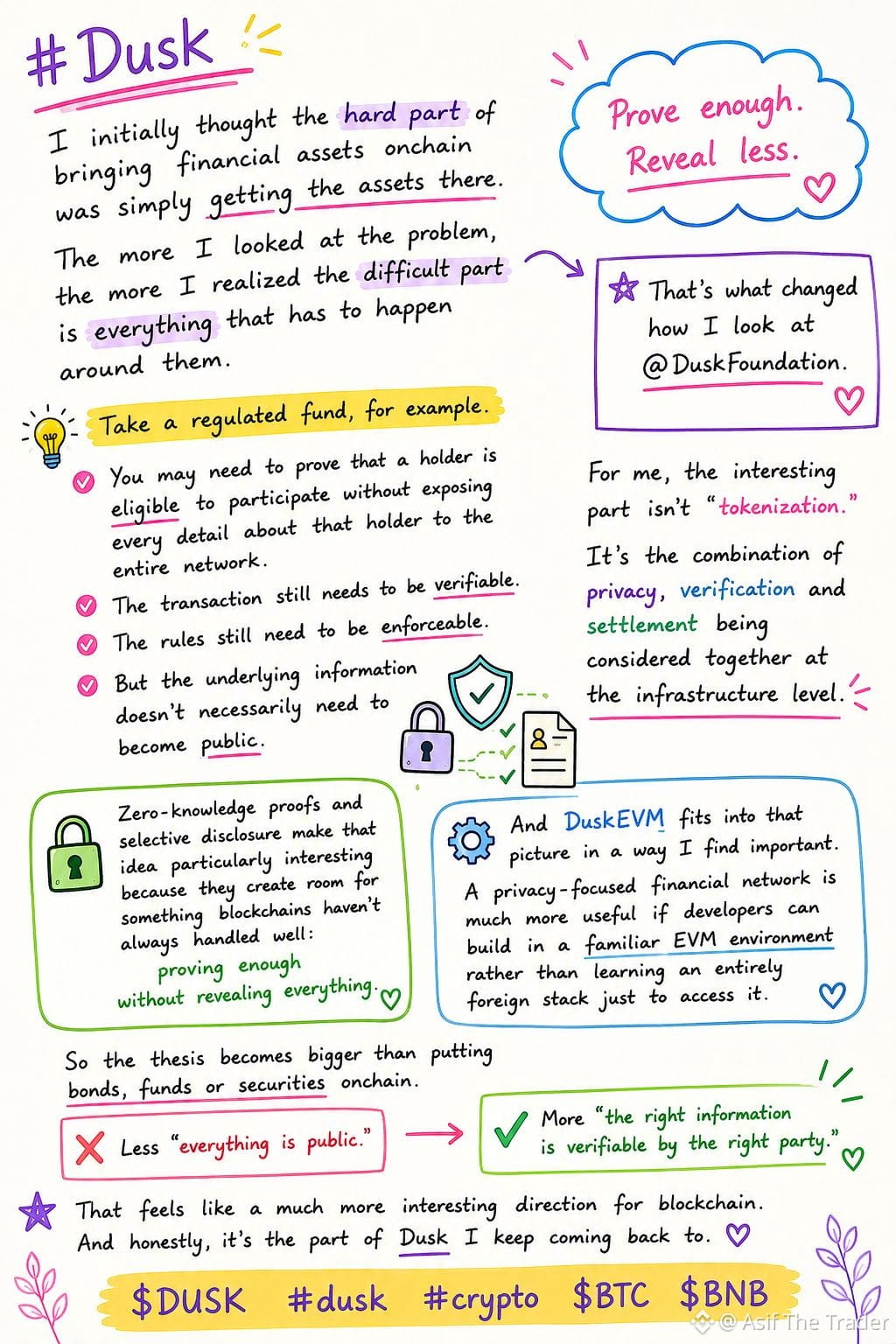
私は、オンチェーンに金融資産を持ち込む際の難しい部分は、単にそこに資産を用意することだと最初は考えていました。
問題を深く見れば見るほど、難しいのはその周りで起きなければならないあらゆることだと気づきました。
たとえば規制を受けたファンドを考えてみてください。
保有者が参加資格を持つことを証明する必要があるかもしれませんが、その保有者のあらゆる詳細をネットワーク全体にさらさずに済むようにしなければなりません。
それでも取引は検証可能である必要があります。
ルールはなおも執行可能である必要があります。
しかし、基盤となる情報が必ずしも公開される必要はありません。
その視点の転換こそが
@Dusk_Foundation を私にとってより興味深いものにしました。
私にとって本当の機会は、単なる「トークン化」ではありません。
それは、プライバシー、検証、決済をインフラ層で一つに結びつけることです。
ここで特に注目すべきなのは、ゼロ知識証明と選択的開示です。これは、証明の背後にあるすべてを明かさずに、重要なことを証明できるモデルを示唆しているからです。
十分に証明する。明かすのはより少なく。
そして DuskEVM は、その主張をさらに現実的にします。
開発者が、プライバシー重視の金融インフラを作りながらも、なじみのある EVM 環境で作業できるなら、こうしたアイデアを試すためのハードルは大きく下がります。
だから私は、大きな物語が単に債券やファンド、証券をオンチェーンに載せることだとは思いません。
それは、基盤となる金融インフラが、最初からより選択的な透明性という考え方に基づいて設計されているときに起こることです。
つまり:
「すべてを公開する。」
ではなく:
「正しい情報を、正しい当事者により検証可能にする。」
この違いは、トークン化という物語そのものよりも、ずっと重要になってくるかもしれません。
$DUSK #dusk #crypto $BTC $BNB
{spot}(BTCUSDT)
{spot}(DUSKUSDT)
#Dusk
私は、オンチェーンに金融資産を持ち込む際の難しい部分は、単にそこに資産を用意することだと最初は考えていました。
問題を深く見れば見るほど、難しいのはその周りで起きなければならないあらゆることだと気づきました。
たとえば規制を受けたファンドを考えてみてください。
保有者が参加資格を持つことを証明する必要があるかもしれませんが、その保有者のあらゆる詳細をネットワーク全体にさらさずに済むようにしなければなりません。
それでも取引は検証可能である必要があります。
ルールはなおも執行可能である必要があります。
しかし、基盤となる情報が必ずしも公開される必要はありません。
その視点の転換こそが
@Dusk を私にとってより興味深いものにしました。
私にとって本当の機会は、単なる「トークン化」ではありません。
それは、プライバシー、検証、決済をインフラ層で一つに結びつけることです。
ここで特に注目すべきなのは、ゼロ知識証明と選択的開示です。これは、証明の背後にあるすべてを明かさずに、重要なことを証明できるモデルを示唆しているからです。
十分に証明する。明かすのはより少なく。
そして DuskEVM は、その主張をさらに現実的にします。
開発者が、プライバシー重視の金融インフラを作りながらも、なじみのある EVM 環境で作業できるなら、こうしたアイデアを試すためのハードルは大きく下がります。
だから私は、大きな物語が単に債券やファンド、証券をオンチェーンに載せることだとは思いません。
それは、基盤となる金融インフラが、最初からより選択的な透明性という考え方に基づいて設計されているときに起こることです。
つまり:
「すべてを公開する。」
ではなく:
「正しい情報を、正しい当事者により検証可能にする。」
この違いは、トークン化という物語そのものよりも、ずっと重要になってくるかもしれません。
$DUSK #dusk #crypto $BTC $BNB
私は、オンチェーンに金融資産を持ち込む際の難しい部分は、単にそこに資産を用意することだと最初は考えていました。
問題を深く見れば見るほど、難しいのはその周りで起きなければならないあらゆることだと気づきました。
たとえば規制を受けたファンドを考えてみてください。
保有者が参加資格を持つことを証明する必要があるかもしれませんが、その保有者のあらゆる詳細をネットワーク全体にさらさずに済むようにしなければなりません。
それでも取引は検証可能である必要があります。
ルールはなおも執行可能である必要があります。
しかし、基盤となる情報が必ずしも公開される必要はありません。
その視点の転換こそが
@Dusk を私にとってより興味深いものにしました。
私にとって本当の機会は、単なる「トークン化」ではありません。
それは、プライバシー、検証、決済をインフラ層で一つに結びつけることです。
ここで特に注目すべきなのは、ゼロ知識証明と選択的開示です。これは、証明の背後にあるすべてを明かさずに、重要なことを証明できるモデルを示唆しているからです。
十分に証明する。明かすのはより少なく。
そして DuskEVM は、その主張をさらに現実的にします。
開発者が、プライバシー重視の金融インフラを作りながらも、なじみのある EVM 環境で作業できるなら、こうしたアイデアを試すためのハードルは大きく下がります。
だから私は、大きな物語が単に債券やファンド、証券をオンチェーンに載せることだとは思いません。
それは、基盤となる金融インフラが、最初からより選択的な透明性という考え方に基づいて設計されているときに起こることです。
つまり:
「すべてを公開する。」
ではなく:
「正しい情報を、正しい当事者により検証可能にする。」
この違いは、トークン化という物語そのものよりも、ずっと重要になってくるかもしれません。
$DUSK #dusk #crypto $BTC $BNB
16
9
908
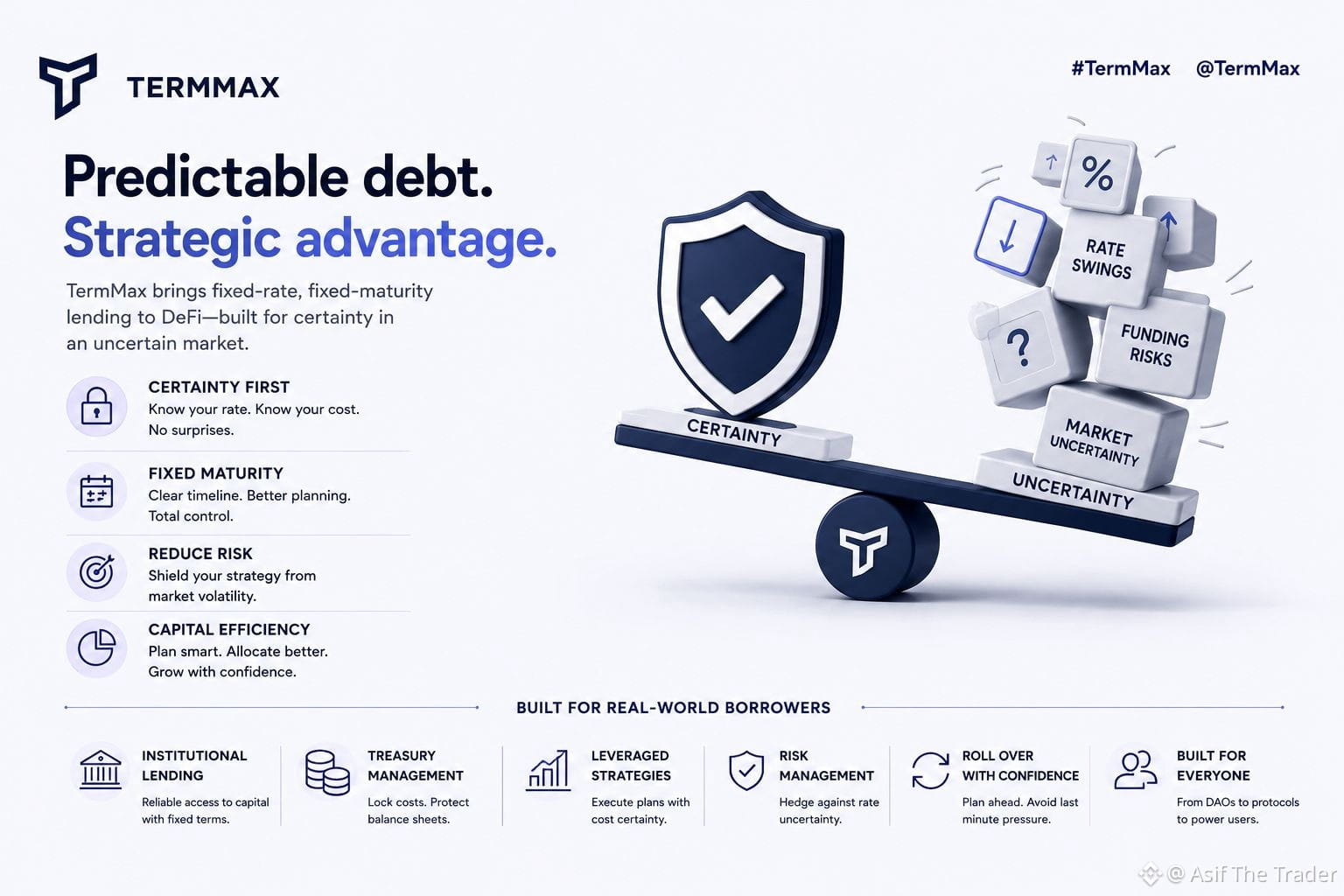
@termmax は、貸出市場の別の側面について考えさせられました。つまり「確実性」の価値です。
固定された借入の構造は、最初は制約があるように見えるかもしれません。特に市場環境が素早く変わるときはなおさらです。
しかし、柔軟性にもコストがあります。
変動金利の債務では、借り手は常に金利や資金調達環境の変化にさらされます。固定の満期ポジションは、その柔軟性を一部手放す代わりに、借入がその存続期間を通じてどのような資金調達になるのかをより明確に把握できるようにします。
だからこそTermMaxが私にとって興味深いのです。問題は単に、固定金利の借入が安いのか、より柔軟なのかということだけではありません。事前に自分の資金調達条件が分かることが、一定のオプション性を手放すことを正当化するほど価値があるのか、という点です。
市場が落ち着いているときは、柔軟性が優先されるかもしれません。しかし金利の見通しが難しくなると、確実性の価値は大きく高まります。
私がTermMaxで最も興味を持っているのは、まさにそこです。確実性は単なる価格の特徴ではありません。それ自体が商品になり得る、つまり市場があなたに代わって決める前に、自分の債務がどのように見えるのかを把握できる能力のことです。
#TermMax
{spot}(BTCUSDT)
{spot}(BNBUSDT)
@TermMax は、貸出市場の別の側面について考えさせられました。つまり「確実性」の価値です。
固定された借入の構造は、最初は制約があるように見えるかもしれません。特に市場環境が素早く変わるときはなおさらです。
しかし、柔軟性にもコストがあります。
変動金利の債務では、借り手は常に金利や資金調達環境の変化にさらされます。固定の満期ポジションは、その柔軟性を一部手放す代わりに、借入がその存続期間を通じてどのような資金調達になるのかをより明確に把握できるようにします。
だからこそTermMaxが私にとって興味深いのです。問題は単に、固定金利の借入が安いのか、より柔軟なのかということだけではありません。事前に自分の資金調達条件が分かることが、一定のオプション性を手放すことを正当化するほど価値があるのか、という点です。
市場が落ち着いているときは、柔軟性が優先されるかもしれません。しかし金利の見通しが難しくなると、確実性の価値は大きく高まります。
私がTermMaxで最も興味を持っているのは、まさにそこです。確実性は単なる価格の特徴ではありません。それ自体が商品になり得る、つまり市場があなたに代わって決める前に、自分の債務がどのように見えるのかを把握できる能力のことです。
#TermMax
固定された借入の構造は、最初は制約があるように見えるかもしれません。特に市場環境が素早く変わるときはなおさらです。
しかし、柔軟性にもコストがあります。
変動金利の債務では、借り手は常に金利や資金調達環境の変化にさらされます。固定の満期ポジションは、その柔軟性を一部手放す代わりに、借入がその存続期間を通じてどのような資金調達になるのかをより明確に把握できるようにします。
だからこそTermMaxが私にとって興味深いのです。問題は単に、固定金利の借入が安いのか、より柔軟なのかということだけではありません。事前に自分の資金調達条件が分かることが、一定のオプション性を手放すことを正当化するほど価値があるのか、という点です。
市場が落ち着いているときは、柔軟性が優先されるかもしれません。しかし金利の見通しが難しくなると、確実性の価値は大きく高まります。
私がTermMaxで最も興味を持っているのは、まさにそこです。確実性は単なる価格の特徴ではありません。それ自体が商品になり得る、つまり市場があなたに代わって決める前に、自分の債務がどのように見えるのかを把握できる能力のことです。
#TermMax
10
5
83
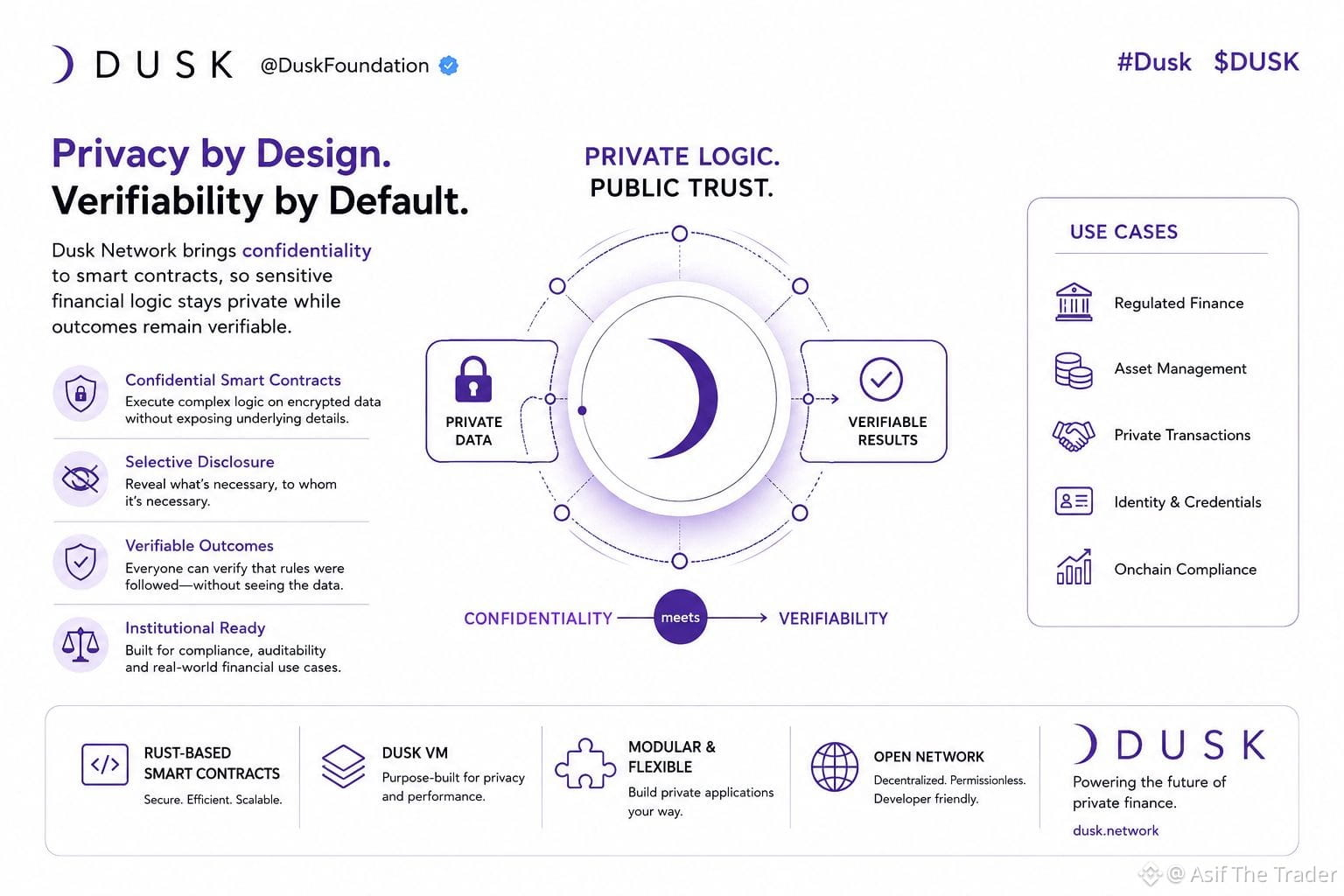
ブロックチェーン上のプライバシーは、「何が起きたのかを検証できなくなる」ことを意味するべきではありません。
その緊張関係こそが、私にとってDuskが興味深い理由です。
従来のパブリック・台帳は活動を監査可能にするのに優れていますが、金融アプリケーションでは、そもそも誰にでも公開してはならない情報を扱うことがよくあります。
@Dusk_Foundation は、機密性をスマート
コントラクトの層そのものに取り込むことで、別のアプローチを取っています。
それにより、より現実的な可能性が開けます。つまり、機密性の高い金融オペレーションは保護したまま、ネットワークはルールを強制し、結果を検証できるというアプリケーションです。
これは、ウォレット残高を隠すことよりもずっと大きな発想です。
プライバシーと検証可能性が対立する必要のない、金融インフラを構築することです。
私が特に注目しているのは、そのDuskの部分です。
@Dusk_Foundation $DUSK #dusk
{spot}(DUSKUSDT)
{spot}(BTCUSDT)
ブロックチェーン上のプライバシーは、「何が起きたのかを検証できなくなる」ことを意味するべきではありません。
その緊張関係こそが、私にとってDuskが興味深い理由です。
従来のパブリック・台帳は活動を監査可能にするのに優れていますが、金融アプリケーションでは、そもそも誰にでも公開してはならない情報を扱うことがよくあります。
@Dusk は、機密性をスマート
コントラクトの層そのものに取り込むことで、別のアプローチを取っています。
それにより、より現実的な可能性が開けます。つまり、機密性の高い金融オペレーションは保護したまま、ネットワークはルールを強制し、結果を検証できるというアプリケーションです。
これは、ウォレット残高を隠すことよりもずっと大きな発想です。
プライバシーと検証可能性が対立する必要のない、金融インフラを構築することです。
私が特に注目しているのは、そのDuskの部分です。
@Dusk $DUSK #dusk
その緊張関係こそが、私にとってDuskが興味深い理由です。
従来のパブリック・台帳は活動を監査可能にするのに優れていますが、金融アプリケーションでは、そもそも誰にでも公開してはならない情報を扱うことがよくあります。
@Dusk は、機密性をスマート
コントラクトの層そのものに取り込むことで、別のアプローチを取っています。
それにより、より現実的な可能性が開けます。つまり、機密性の高い金融オペレーションは保護したまま、ネットワークはルールを強制し、結果を検証できるというアプリケーションです。
これは、ウォレット残高を隠すことよりもずっと大きな発想です。
プライバシーと検証可能性が対立する必要のない、金融インフラを構築することです。
私が特に注目しているのは、そのDuskの部分です。
@Dusk $DUSK #dusk
17
6
1.8k
#termmax @termmax
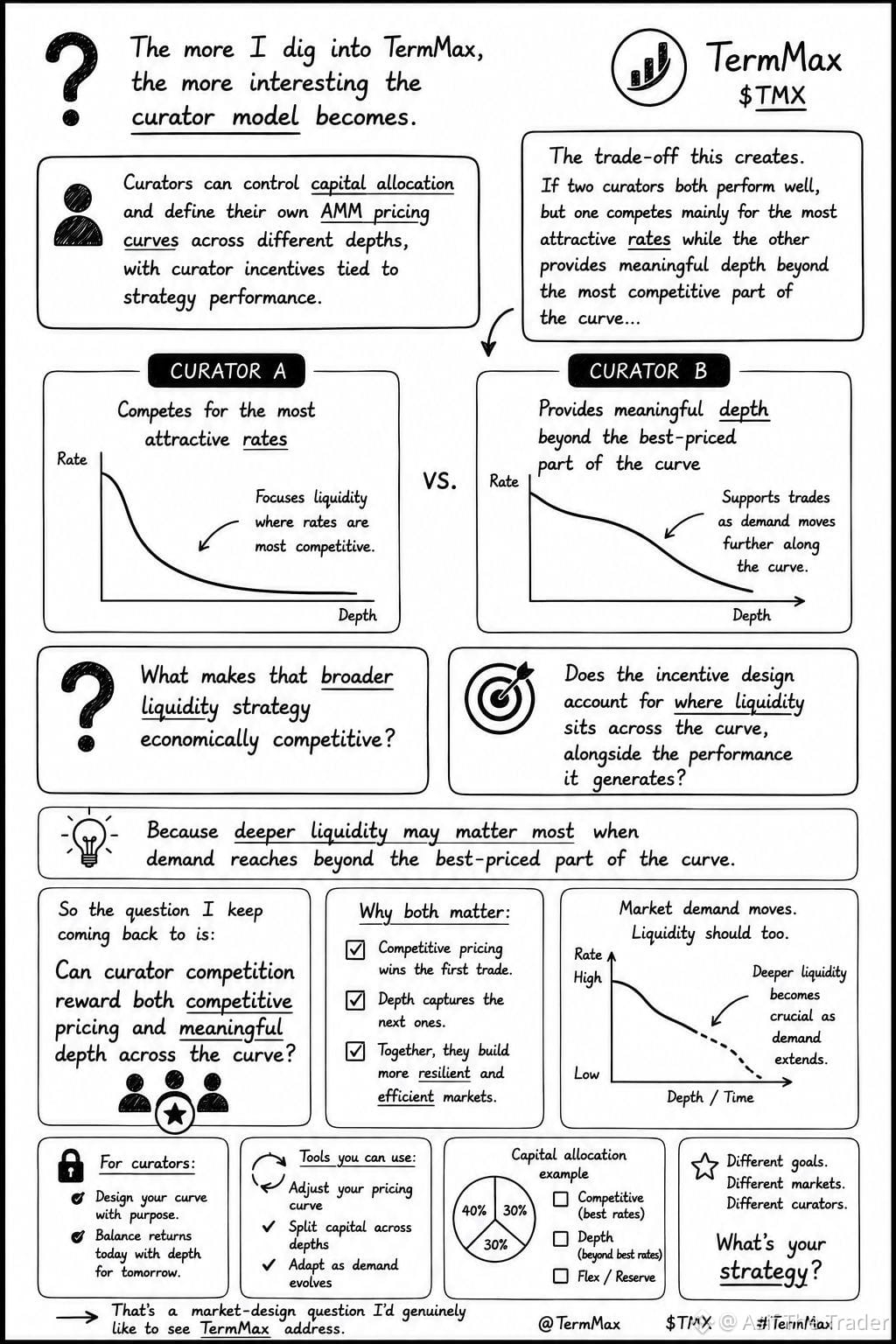
TermMaxを掘り下げるほど、キュレーター・モデルがますます面白く感じられます。
キュレーターは資本配分を制御し、異なる深さ(デプス)にわたる独自のAMM価格曲線を定義できます。そして、キュレーターのインセンティブは戦略のパフォーマンスに紐づきます。
私が特に注目するのは、この仕組みが生み出すトレードオフです。
仮に2人のキュレーターがいずれも良い成績を収めているとして、一方は最も魅力的なレートを狙って主にそこに競争するのに対し、もう一方は曲線の最も競争力のある部分を超えて、意味のある深さを提供しているとしたら、より広い流動性戦略が経済的に競争力を持つのは何によるのでしょうか?
そしてもっと重要なのは、インセンティブ設計が、曲線上のどこに流動性が置かれているか(それに伴う位置)と、その流動性が生み出すパフォーマンスの両方を考慮できているのか、という点です。
なぜなら、需要が曲線の中でも最良の価格部分を超えて到達するとき、より深い流動性が最も重要になる可能性が高いからです。
そこで私がずっと立ち返って考えているのは、次の問いです。
キュレーター同士の競争は、曲線全体にわたる競争力のある価格と、意味のある深さの両方に対して報酬を与えられるのでしょうか?
これは、ぜひTermMaxが取り組んでほしいと思っている、市場設計の問題です。
#termmax @TermMax
TermMaxを掘り下げるほど、キュレーター・モデルがますます面白く感じられます。
キュレーターは資本配分を制御し、異なる深さ(デプス)にわたる独自のAMM価格曲線を定義できます。そして、キュレーターのインセンティブは戦略のパフォーマンスに紐づきます。
私が特に注目するのは、この仕組みが生み出すトレードオフです。
仮に2人のキュレーターがいずれも良い成績を収めているとして、一方は最も魅力的なレートを狙って主にそこに競争するのに対し、もう一方は曲線の最も競争力のある部分を超えて、意味のある深さを提供しているとしたら、より広い流動性戦略が経済的に競争力を持つのは何によるのでしょうか?
そしてもっと重要なのは、インセンティブ設計が、曲線上のどこに流動性が置かれているか(それに伴う位置)と、その流動性が生み出すパフォーマンスの両方を考慮できているのか、という点です。
なぜなら、需要が曲線の中でも最良の価格部分を超えて到達するとき、より深い流動性が最も重要になる可能性が高いからです。
そこで私がずっと立ち返って考えているのは、次の問いです。
キュレーター同士の競争は、曲線全体にわたる競争力のある価格と、意味のある深さの両方に対して報酬を与えられるのでしょうか?
これは、ぜひTermMaxが取り組んでほしいと思っている、市場設計の問題です。
TermMaxを掘り下げるほど、キュレーター・モデルがますます面白く感じられます。
キュレーターは資本配分を制御し、異なる深さ(デプス)にわたる独自のAMM価格曲線を定義できます。そして、キュレーターのインセンティブは戦略のパフォーマンスに紐づきます。
私が特に注目するのは、この仕組みが生み出すトレードオフです。
仮に2人のキュレーターがいずれも良い成績を収めているとして、一方は最も魅力的なレートを狙って主にそこに競争するのに対し、もう一方は曲線の最も競争力のある部分を超えて、意味のある深さを提供しているとしたら、より広い流動性戦略が経済的に競争力を持つのは何によるのでしょうか?
そしてもっと重要なのは、インセンティブ設計が、曲線上のどこに流動性が置かれているか(それに伴う位置)と、その流動性が生み出すパフォーマンスの両方を考慮できているのか、という点です。
なぜなら、需要が曲線の中でも最良の価格部分を超えて到達するとき、より深い流動性が最も重要になる可能性が高いからです。
そこで私がずっと立ち返って考えているのは、次の問いです。
キュレーター同士の競争は、曲線全体にわたる競争力のある価格と、意味のある深さの両方に対して報酬を与えられるのでしょうか?
これは、ぜひTermMaxが取り組んでほしいと思っている、市場設計の問題です。
7
5
83
·
--
弱気相場
#dusk $DUSK
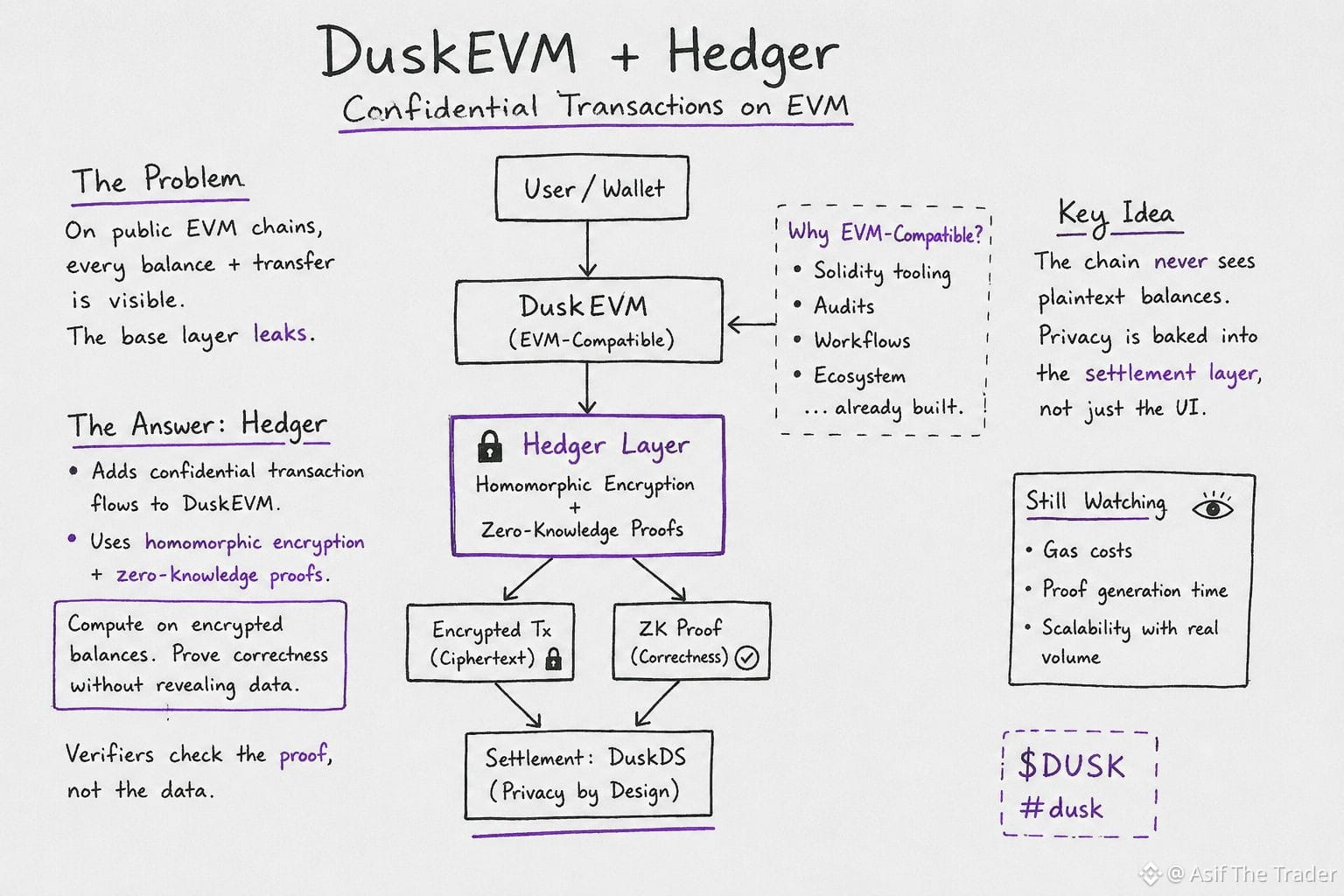
今週少し時間を使って、なぜ @Dusk_Foundation は通常のEVMチェーンに“後付け”する形でプライバシーをそのまま出荷しなかったのかを理解しようとしていました。結局のところ、多くの人が見落としがちな問題がありました。公開されたEVMでは、誰かが見ようとすれば、すべての残高や送金が見えてしまうのです。たとえ、その上に「プライベート」なアプリを載せたとしても同じ。つまり基盤レイヤーが情報を漏らしています。
Duskの答えが Hedger です。ホモモルフィック暗号化とゼロ知識証明を組み合わせて、DuskEVM に機密なトランザクションの流れを直接追加します。考え方としては、コントラクトが暗号化された残高に対して計算を行っても、基礎となる数値を一切復号しないまま、その計算が正しく行われたことの証明を生成できるというものです。検証者はデータではなく、証明を検査します。これは「フロントエンドが残高を隠してくれる」というのとはまったく別の保証で、そもそもチェーンが平文を保持していないため、漏らしようがないという意味です。
完全に独自のVMではなく、EVM互換レイヤーにこれを載せるのはなぜでしょう? 機関側には、すでに10年以上かけてSolidityのツール、監査、ワークフローが整備されているからです。DuskEVM(OP Stack、DuskDSへと決済が戻る)は、そのツール群を維持しつつ、Hedgerが“基盤レイヤーが見てよいもの”を変えることで、プライバシーをUIの小技ではなく、決済の特性として実現します。
また、実際の取引量が入ってきたときに、ガスコストと証明生成のスケールがどうなるかも追っています。ただ、今のところ価格チャートよりも、アーキテクチャそのものの話のほうが面白いです。
$DUSK #dusk
{spot}(DUSKUSDT)
#dusk $DUSK
今週少し時間を使って、なぜ @Dusk は通常のEVMチェーンに“後付け”する形でプライバシーをそのまま出荷しなかったのかを理解しようとしていました。結局のところ、多くの人が見落としがちな問題がありました。公開されたEVMでは、誰かが見ようとすれば、すべての残高や送金が見えてしまうのです。たとえ、その上に「プライベート」なアプリを載せたとしても同じ。つまり基盤レイヤーが情報を漏らしています。
Duskの答えが Hedger です。ホモモルフィック暗号化とゼロ知識証明を組み合わせて、DuskEVM に機密なトランザクションの流れを直接追加します。考え方としては、コントラクトが暗号化された残高に対して計算を行っても、基礎となる数値を一切復号しないまま、その計算が正しく行われたことの証明を生成できるというものです。検証者はデータではなく、証明を検査します。これは「フロントエンドが残高を隠してくれる」というのとはまったく別の保証で、そもそもチェーンが平文を保持していないため、漏らしようがないという意味です。
完全に独自のVMではなく、EVM互換レイヤーにこれを載せるのはなぜでしょう? 機関側には、すでに10年以上かけてSolidityのツール、監査、ワークフローが整備されているからです。DuskEVM(OP Stack、DuskDSへと決済が戻る)は、そのツール群を維持しつつ、Hedgerが“基盤レイヤーが見てよいもの”を変えることで、プライバシーをUIの小技ではなく、決済の特性として実現します。
また、実際の取引量が入ってきたときに、ガスコストと証明生成のスケールがどうなるかも追っています。ただ、今のところ価格チャートよりも、アーキテクチャそのものの話のほうが面白いです。
$DUSK #dusk
今週少し時間を使って、なぜ @Dusk は通常のEVMチェーンに“後付け”する形でプライバシーをそのまま出荷しなかったのかを理解しようとしていました。結局のところ、多くの人が見落としがちな問題がありました。公開されたEVMでは、誰かが見ようとすれば、すべての残高や送金が見えてしまうのです。たとえ、その上に「プライベート」なアプリを載せたとしても同じ。つまり基盤レイヤーが情報を漏らしています。
Duskの答えが Hedger です。ホモモルフィック暗号化とゼロ知識証明を組み合わせて、DuskEVM に機密なトランザクションの流れを直接追加します。考え方としては、コントラクトが暗号化された残高に対して計算を行っても、基礎となる数値を一切復号しないまま、その計算が正しく行われたことの証明を生成できるというものです。検証者はデータではなく、証明を検査します。これは「フロントエンドが残高を隠してくれる」というのとはまったく別の保証で、そもそもチェーンが平文を保持していないため、漏らしようがないという意味です。
完全に独自のVMではなく、EVM互換レイヤーにこれを載せるのはなぜでしょう? 機関側には、すでに10年以上かけてSolidityのツール、監査、ワークフローが整備されているからです。DuskEVM(OP Stack、DuskDSへと決済が戻る)は、そのツール群を維持しつつ、Hedgerが“基盤レイヤーが見てよいもの”を変えることで、プライバシーをUIの小技ではなく、決済の特性として実現します。
また、実際の取引量が入ってきたときに、ガスコストと証明生成のスケールがどうなるかも追っています。ただ、今のところ価格チャートよりも、アーキテクチャそのものの話のほうが面白いです。
$DUSK #dusk
9
5
60
·
--
ブリッシュ
#termmax @termmax
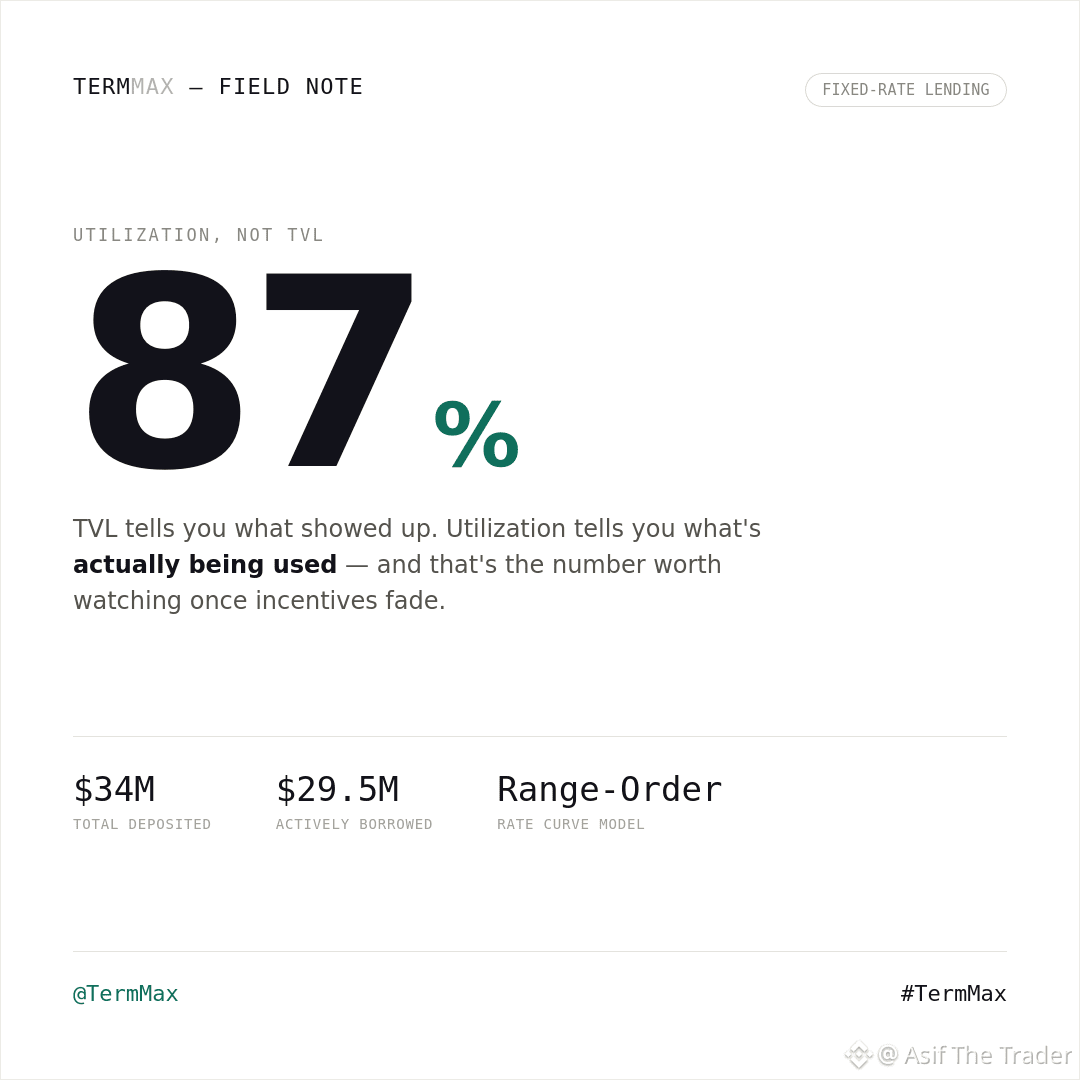
TVLは「何が登場したか」を教えてくれます。利用率は「実際に何が使われているか」を示します。—そして今日のTermMaxの数字は、その差が見逃せないことを気づかせてくれます。
$3400万が預け入れられ、約$2950万が借り入れられており、利用率は87%近辺です。これは、単に置かれている流動性ではなく、実際に活用されているプールです。
注目すべきは、その下にある構造です。1つの共通プールのレートではなく、レンダーはレンジオーダーによって自分たちのレートカーブを選択できます。そのため、この87%は1つの一様な数値ではなく、多数の個別カーブの選択に基づいて集計された結果です。
まだ始まったばかりで、1日分のデータはトレンドとは言えません。次に見ているのは、インセンティブプログラムの縮小が始まった後も、この利用率が維持されるかどうかです。
#TermMax @termmax
#termmax @TermMax
TVLは「何が登場したか」を教えてくれます。利用率は「実際に何が使われているか」を示します。—そして今日のTermMaxの数字は、その差が見逃せないことを気づかせてくれます。
$3400万が預け入れられ、約$2950万が借り入れられており、利用率は87%近辺です。これは、単に置かれている流動性ではなく、実際に活用されているプールです。
注目すべきは、その下にある構造です。1つの共通プールのレートではなく、レンダーはレンジオーダーによって自分たちのレートカーブを選択できます。そのため、この87%は1つの一様な数値ではなく、多数の個別カーブの選択に基づいて集計された結果です。
まだ始まったばかりで、1日分のデータはトレンドとは言えません。次に見ているのは、インセンティブプログラムの縮小が始まった後も、この利用率が維持されるかどうかです。
#TermMax @TermMax
TVLは「何が登場したか」を教えてくれます。利用率は「実際に何が使われているか」を示します。—そして今日のTermMaxの数字は、その差が見逃せないことを気づかせてくれます。
$3400万が預け入れられ、約$2950万が借り入れられており、利用率は87%近辺です。これは、単に置かれている流動性ではなく、実際に活用されているプールです。
注目すべきは、その下にある構造です。1つの共通プールのレートではなく、レンダーはレンジオーダーによって自分たちのレートカーブを選択できます。そのため、この87%は1つの一様な数値ではなく、多数の個別カーブの選択に基づいて集計された結果です。
まだ始まったばかりで、1日分のデータはトレンドとは言えません。次に見ているのは、インセンティブプログラムの縮小が始まった後も、この利用率が維持されるかどうかです。
#TermMax @TermMax
9
5
88
本人確認中
@Dusk_Foundation $DUSK #dusk
以前は、ブロックチェーンを機関投資家向けに「導入可能な状態」にすることは、主にEVMへの互換性の問題だと思っていました。
開発者にSolidityのツールを提供し、UXは馴染みのある形を保てば、導入は後からついてくるはずだと。
しかしDuskEVMを見ていくほど、難しい課題は実は「プライバシー」だと感じるようになりました。
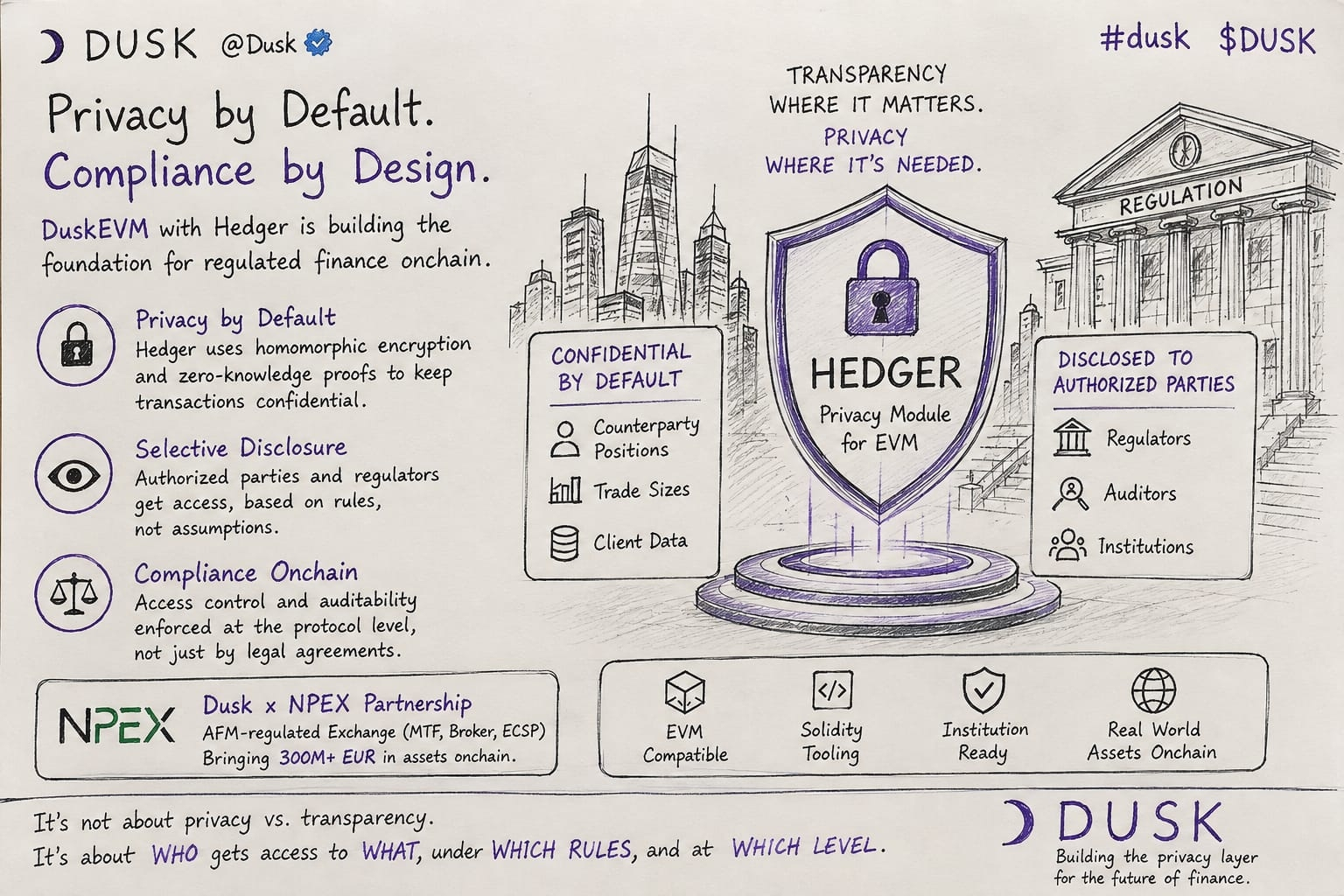
規制のある金融には、バランス(中間地点)が必要です。すべての取引サイズやポジション、あるいは顧客データを完全に透明な台帳に載せることはできません。ですが、すべてを見えなくしてしまうこともできない。
規制当局、監査人、そして権限のある参加者は、それぞれが必要とする情報を、必要なタイミングで得られることが求められます。
そこでHedgerが面白くなります。
Duskは、アクセスが必要になったときに選択的に開示できる一方で、トランザクションは機密のまま保つよう設計された、EVM向けのプライバシーモジュールとしてHedgerを提示しています。
そして、それは私のプライバシーの捉え方を変えます:
プライバシーとは、すべてを隠すことではありません。
それは「誰が」「何を」「いつ見られるのか」「なぜ見られるのか」を制御することです。
この最後の部分が、規制市場では特に重要です。
NPEXとのつながりが、このアイデアをさらに興味深いものにしています。現実世界の資産をオンチェーンに載せていく流れと組み合わさることで、典型的なクリプトネイティブ層だけを対象にしたユースケースを超えていくことを示唆しています。
とはいえ、私はこの問題が解決されたとまでは言いません。
本当の試金石は、このアーキテクチャが、深刻な開示要件、監査要件、そしてコンプライアンス要件を満たしながら、機関レベルの規模での活動を扱えるかどうかです。
それが私の注目ポイントです。
なぜなら、もしかすると本当の問いはこうではないかもしれません:
プライバシーか、それとも透明性か?
おそらくはこうです:
どの情報に対して、誰がアクセスできるのか。どんなルールのもとで、そしてどのレベルまで?
@Dusk_Foundation $DUSK #dusk
@Dusk $DUSK #dusk
以前は、ブロックチェーンを機関投資家向けに「導入可能な状態」にすることは、主にEVMへの互換性の問題だと思っていました。
開発者にSolidityのツールを提供し、UXは馴染みのある形を保てば、導入は後からついてくるはずだと。
しかしDuskEVMを見ていくほど、難しい課題は実は「プライバシー」だと感じるようになりました。
規制のある金融には、バランス(中間地点)が必要です。すべての取引サイズやポジション、あるいは顧客データを完全に透明な台帳に載せることはできません。ですが、すべてを見えなくしてしまうこともできない。
規制当局、監査人、そして権限のある参加者は、それぞれが必要とする情報を、必要なタイミングで得られることが求められます。
そこでHedgerが面白くなります。
Duskは、アクセスが必要になったときに選択的に開示できる一方で、トランザクションは機密のまま保つよう設計された、EVM向けのプライバシーモジュールとしてHedgerを提示しています。
そして、それは私のプライバシーの捉え方を変えます:
プライバシーとは、すべてを隠すことではありません。
それは「誰が」「何を」「いつ見られるのか」「なぜ見られるのか」を制御することです。
この最後の部分が、規制市場では特に重要です。
NPEXとのつながりが、このアイデアをさらに興味深いものにしています。現実世界の資産をオンチェーンに載せていく流れと組み合わさることで、典型的なクリプトネイティブ層だけを対象にしたユースケースを超えていくことを示唆しています。
とはいえ、私はこの問題が解決されたとまでは言いません。
本当の試金石は、このアーキテクチャが、深刻な開示要件、監査要件、そしてコンプライアンス要件を満たしながら、機関レベルの規模での活動を扱えるかどうかです。
それが私の注目ポイントです。
なぜなら、もしかすると本当の問いはこうではないかもしれません:
プライバシーか、それとも透明性か?
おそらくはこうです:
どの情報に対して、誰がアクセスできるのか。どんなルールのもとで、そしてどのレベルまで?
@Dusk $DUSK #dusk
以前は、ブロックチェーンを機関投資家向けに「導入可能な状態」にすることは、主にEVMへの互換性の問題だと思っていました。
開発者にSolidityのツールを提供し、UXは馴染みのある形を保てば、導入は後からついてくるはずだと。
しかしDuskEVMを見ていくほど、難しい課題は実は「プライバシー」だと感じるようになりました。
規制のある金融には、バランス(中間地点)が必要です。すべての取引サイズやポジション、あるいは顧客データを完全に透明な台帳に載せることはできません。ですが、すべてを見えなくしてしまうこともできない。
規制当局、監査人、そして権限のある参加者は、それぞれが必要とする情報を、必要なタイミングで得られることが求められます。
そこでHedgerが面白くなります。
Duskは、アクセスが必要になったときに選択的に開示できる一方で、トランザクションは機密のまま保つよう設計された、EVM向けのプライバシーモジュールとしてHedgerを提示しています。
そして、それは私のプライバシーの捉え方を変えます:
プライバシーとは、すべてを隠すことではありません。
それは「誰が」「何を」「いつ見られるのか」「なぜ見られるのか」を制御することです。
この最後の部分が、規制市場では特に重要です。
NPEXとのつながりが、このアイデアをさらに興味深いものにしています。現実世界の資産をオンチェーンに載せていく流れと組み合わさることで、典型的なクリプトネイティブ層だけを対象にしたユースケースを超えていくことを示唆しています。
とはいえ、私はこの問題が解決されたとまでは言いません。
本当の試金石は、このアーキテクチャが、深刻な開示要件、監査要件、そしてコンプライアンス要件を満たしながら、機関レベルの規模での活動を扱えるかどうかです。
それが私の注目ポイントです。
なぜなら、もしかすると本当の問いはこうではないかもしれません:
プライバシーか、それとも透明性か?
おそらくはこうです:
どの情報に対して、誰がアクセスできるのか。どんなルールのもとで、そしてどのレベルまで?
@Dusk $DUSK #dusk
8
5
89
@Dusk_Foundation #dusk $DUSK
私は、オンチェーンに金融資産を載せるうえで最も難しいのは、単にその資産をそこに送り込むことだと思いがちでした。
しかしDuskを見れば見るほど、発行の後に出てくる難問がより複雑に思えてきます:
誰が何を見られるべきで、誰が何を証明できるべきなのでしょう?
規制された債券を例に取れば、譲渡には検証が必要になるかもしれませんが、それは誰もが保有者の残高やポジション、相手方(カウンターパーティ)を見てよいという意味ではありません。
このジレンマがあるのです:
プライバシーを損なわずに、証明を失わないこと。
Duskは、シールドトランザクション、ゼロ知識証明、選択的開示によってそれに取り組みます。さらにDuskEVMとHedgerは、Solidityベースのアプリケーションに機密性のあるワークフローをもたらします。
ですが、もう一つ疑う価値のある前提があります。資産をオンチェーンに置いたからといって、そのライフサイクルが自動的にそこに移るわけではない、という点です。
発行、保有、譲渡、決済、サービシングは、切り離された複数のシステムにまたがって配置され続けることもあります。
だからこそ、Duskのネイティブ発行アプローチに私は惹かれています。単にトークンを作るだけでなく、資産のライフサイクルのより多くをオンチェーンにつなぎ続けることです。
本当の試金石は、規制された市場が、必要なところではそのライフサイクルをプライベートにし、必須のところでは証明可能にし、発行から決済、サービシングに至るまでを連結できるかどうかです。
そのバランスが大規模に機能するなら、トークン化の本当の価値は、そのトークンそのものから、トークンの周りのすべてを調整するインフラへと移っていくのでしょうか?
オンチェーン・ファイナンスで最も重要なのは何でしょう?
@Dusk #dusk $DUSK
私は、オンチェーンに金融資産を載せるうえで最も難しいのは、単にその資産をそこに送り込むことだと思いがちでした。
しかしDuskを見れば見るほど、発行の後に出てくる難問がより複雑に思えてきます:
誰が何を見られるべきで、誰が何を証明できるべきなのでしょう?
規制された債券を例に取れば、譲渡には検証が必要になるかもしれませんが、それは誰もが保有者の残高やポジション、相手方(カウンターパーティ)を見てよいという意味ではありません。
このジレンマがあるのです:
プライバシーを損なわずに、証明を失わないこと。
Duskは、シールドトランザクション、ゼロ知識証明、選択的開示によってそれに取り組みます。さらにDuskEVMとHedgerは、Solidityベースのアプリケーションに機密性のあるワークフローをもたらします。
ですが、もう一つ疑う価値のある前提があります。資産をオンチェーンに置いたからといって、そのライフサイクルが自動的にそこに移るわけではない、という点です。
発行、保有、譲渡、決済、サービシングは、切り離された複数のシステムにまたがって配置され続けることもあります。
だからこそ、Duskのネイティブ発行アプローチに私は惹かれています。単にトークンを作るだけでなく、資産のライフサイクルのより多くをオンチェーンにつなぎ続けることです。
本当の試金石は、規制された市場が、必要なところではそのライフサイクルをプライベートにし、必須のところでは証明可能にし、発行から決済、サービシングに至るまでを連結できるかどうかです。
そのバランスが大規模に機能するなら、トークン化の本当の価値は、そのトークンそのものから、トークンの周りのすべてを調整するインフラへと移っていくのでしょうか?
オンチェーン・ファイナンスで最も重要なのは何でしょう?
私は、オンチェーンに金融資産を載せるうえで最も難しいのは、単にその資産をそこに送り込むことだと思いがちでした。
しかしDuskを見れば見るほど、発行の後に出てくる難問がより複雑に思えてきます:
誰が何を見られるべきで、誰が何を証明できるべきなのでしょう?
規制された債券を例に取れば、譲渡には検証が必要になるかもしれませんが、それは誰もが保有者の残高やポジション、相手方(カウンターパーティ)を見てよいという意味ではありません。
このジレンマがあるのです:
プライバシーを損なわずに、証明を失わないこと。
Duskは、シールドトランザクション、ゼロ知識証明、選択的開示によってそれに取り組みます。さらにDuskEVMとHedgerは、Solidityベースのアプリケーションに機密性のあるワークフローをもたらします。
ですが、もう一つ疑う価値のある前提があります。資産をオンチェーンに置いたからといって、そのライフサイクルが自動的にそこに移るわけではない、という点です。
発行、保有、譲渡、決済、サービシングは、切り離された複数のシステムにまたがって配置され続けることもあります。
だからこそ、Duskのネイティブ発行アプローチに私は惹かれています。単にトークンを作るだけでなく、資産のライフサイクルのより多くをオンチェーンにつなぎ続けることです。
本当の試金石は、規制された市場が、必要なところではそのライフサイクルをプライベートにし、必須のところでは証明可能にし、発行から決済、サービシングに至るまでを連結できるかどうかです。
そのバランスが大規模に機能するなら、トークン化の本当の価値は、そのトークンそのものから、トークンの周りのすべてを調整するインフラへと移っていくのでしょうか?
オンチェーン・ファイナンスで最も重要なのは何でしょう?
🔘 Privacy + proof
83%
🔘 Asset lifecycle
17%
🔘 Transparency
0%
🔘 Settlement
0%
6 投票 • 投票は終了しました
7
5
86
本人確認中
Dusk Tradeについて、トークン化が実際に解決しようとしていることを見直すきっかけになる何かに気づきました。
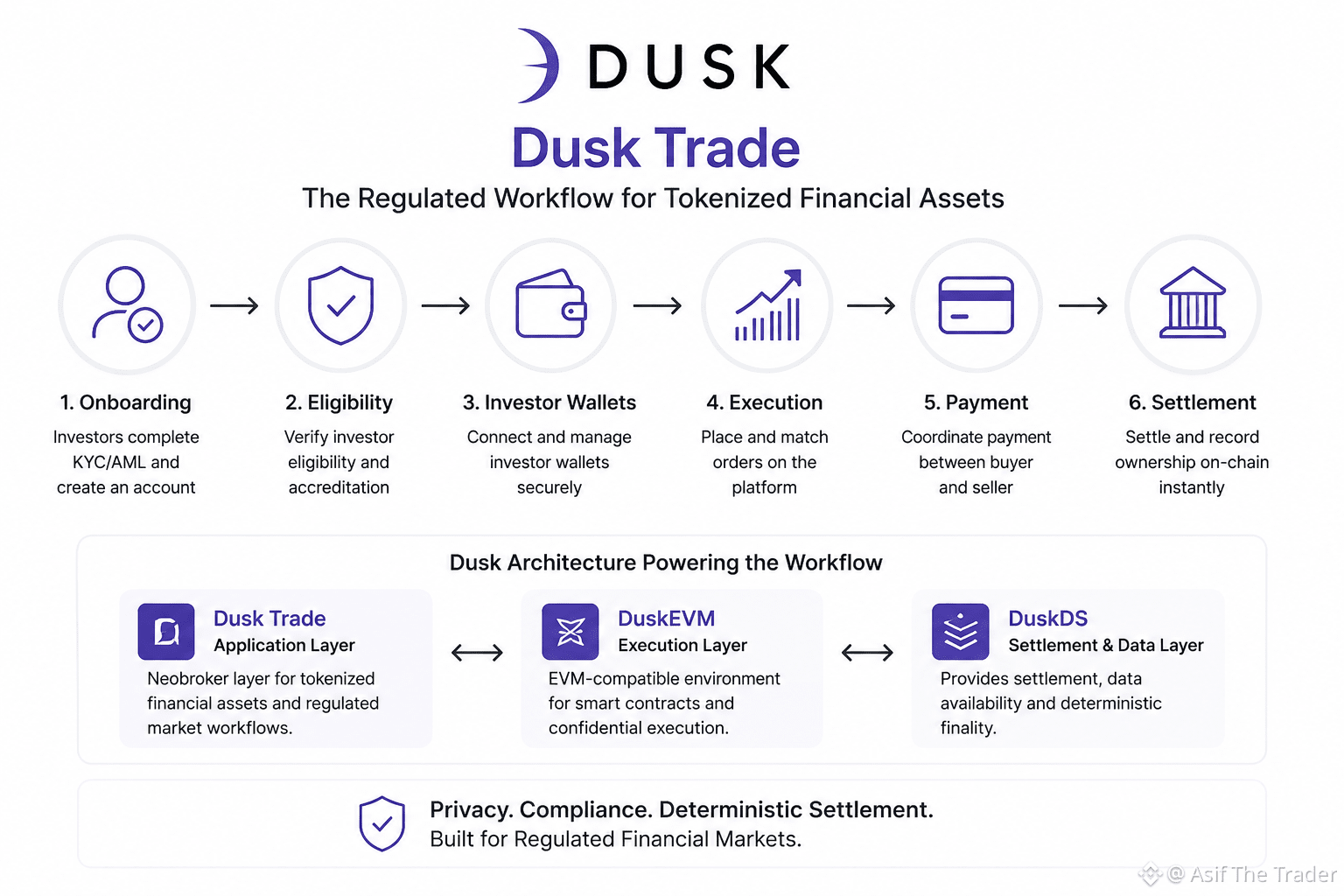
最初は、トークン化された資産のためのネオブローカーは、デジタル証券を売買するための別のインターフェースに聞こえました。しかし深く調べるほど、難しいのは資産そのものではないかもしれない、と気づいたのです。規制のある市場では、難しいのはその周辺のすべて——投資家のオンボーディング、適格性の確認、投資家ウォレットの接続、取引の実行、支払いの調整、そして最終的に所有権を決済すること——です。
それが、興味深い緊張関係を生みます。
債券、ETF、またはその他の金融資産をオンチェーンに置くことで、それはプログラム可能になります。しかしプログラム可能であることだけでは、誰がアクセスできるのか、どの情報を非公開にすべきか、認可された当事者が活動をどのように検証できるのか、あるいは実行された取引が最終的にどのように所有権の決済につながるのか、には答えられません。
ここで私にとってDusk Tradeがより興味深くなります。Dusk Tradeはトークン化された金融資産のアプリケーション層として位置づけられており、DuskEVMはEVM互換の実行を担い、DuskDSは決済とデータ可用性を支えます。重要なのは、それらの構成要素が存在するかどうかではなく、同じ金融ワークフローの中で一緒に機能できるかどうかです。
そしてそれこそ、私はまだ見守っています。
というのも、資産をトークン化することは始まりにすぎないかもしれないからです。より厳しい試験は、それを取り巻くインフラが、単に別の形でおなじような複雑さを再現するのではなく、規制市場を実際により効率的にできるかどうかです。
Dusk Tradeは、より多くをオンチェーンに持ち込むことで、規制された金融のワークフローを本当に簡素化できるのでしょうか。それとも同じ複雑さが、ただ別の形になって現れるだけなのでしょうか?
@Dusk_Foundation $DUSK #dusk
Dusk Tradeについて、トークン化が実際に解決しようとしていることを見直すきっかけになる何かに気づきました。
最初は、トークン化された資産のためのネオブローカーは、デジタル証券を売買するための別のインターフェースに聞こえました。しかし深く調べるほど、難しいのは資産そのものではないかもしれない、と気づいたのです。規制のある市場では、難しいのはその周辺のすべて——投資家のオンボーディング、適格性の確認、投資家ウォレットの接続、取引の実行、支払いの調整、そして最終的に所有権を決済すること——です。
それが、興味深い緊張関係を生みます。
債券、ETF、またはその他の金融資産をオンチェーンに置くことで、それはプログラム可能になります。しかしプログラム可能であることだけでは、誰がアクセスできるのか、どの情報を非公開にすべきか、認可された当事者が活動をどのように検証できるのか、あるいは実行された取引が最終的にどのように所有権の決済につながるのか、には答えられません。
ここで私にとってDusk Tradeがより興味深くなります。Dusk Tradeはトークン化された金融資産のアプリケーション層として位置づけられており、DuskEVMはEVM互換の実行を担い、DuskDSは決済とデータ可用性を支えます。重要なのは、それらの構成要素が存在するかどうかではなく、同じ金融ワークフローの中で一緒に機能できるかどうかです。
そしてそれこそ、私はまだ見守っています。
というのも、資産をトークン化することは始まりにすぎないかもしれないからです。より厳しい試験は、それを取り巻くインフラが、単に別の形でおなじような複雑さを再現するのではなく、規制市場を実際により効率的にできるかどうかです。
Dusk Tradeは、より多くをオンチェーンに持ち込むことで、規制された金融のワークフローを本当に簡素化できるのでしょうか。それとも同じ複雑さが、ただ別の形になって現れるだけなのでしょうか?
@Dusk $DUSK #dusk
最初は、トークン化された資産のためのネオブローカーは、デジタル証券を売買するための別のインターフェースに聞こえました。しかし深く調べるほど、難しいのは資産そのものではないかもしれない、と気づいたのです。規制のある市場では、難しいのはその周辺のすべて——投資家のオンボーディング、適格性の確認、投資家ウォレットの接続、取引の実行、支払いの調整、そして最終的に所有権を決済すること——です。
それが、興味深い緊張関係を生みます。
債券、ETF、またはその他の金融資産をオンチェーンに置くことで、それはプログラム可能になります。しかしプログラム可能であることだけでは、誰がアクセスできるのか、どの情報を非公開にすべきか、認可された当事者が活動をどのように検証できるのか、あるいは実行された取引が最終的にどのように所有権の決済につながるのか、には答えられません。
ここで私にとってDusk Tradeがより興味深くなります。Dusk Tradeはトークン化された金融資産のアプリケーション層として位置づけられており、DuskEVMはEVM互換の実行を担い、DuskDSは決済とデータ可用性を支えます。重要なのは、それらの構成要素が存在するかどうかではなく、同じ金融ワークフローの中で一緒に機能できるかどうかです。
そしてそれこそ、私はまだ見守っています。
というのも、資産をトークン化することは始まりにすぎないかもしれないからです。より厳しい試験は、それを取り巻くインフラが、単に別の形でおなじような複雑さを再現するのではなく、規制市場を実際により効率的にできるかどうかです。
Dusk Tradeは、より多くをオンチェーンに持ち込むことで、規制された金融のワークフローを本当に簡素化できるのでしょうか。それとも同じ複雑さが、ただ別の形になって現れるだけなのでしょうか?
@Dusk $DUSK #dusk
14
7
71
私はまだ、DuskEVMが問題の「簡単な部分」を解決しているにすぎないと思っています。
Solidity開発者が新しいチェーンに慣れることは一つのことです。しかし、規制された金融市場が実際にその上で機能するようにするのは、はるかに難しい。
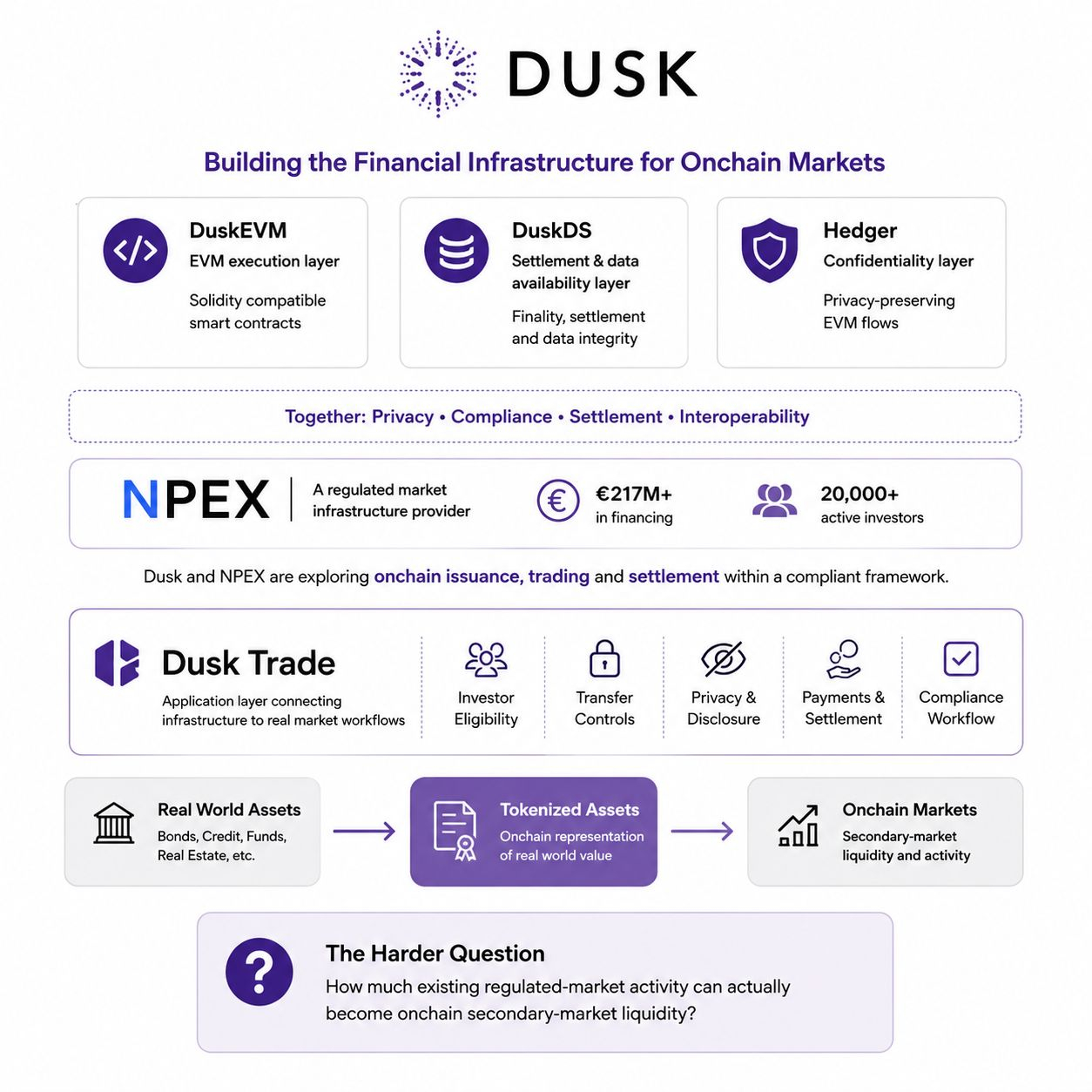
私の関心を引いたのはEVMの互換性ではありませんでした。むしろ、その下にあるものです。DuskEVMはEVMの実行を担い、DuskDSは決済とデータ可用性を提供し、Hedgerは機密性のあるEVMフローへの道筋を提供します。
そしてNPEXを見ました。
NPEXは現在、資金調達で€217M+、アクティブな投資家が20,000+を報告しています。Duskとの提携は、既存の規制市場と、オンチェーンの金融ワークフローのために構築されているインフラが出会う場所です。
しかし、それは次の難しい問いを生みます。
その既存の活動のうち、どれだけが実際にオンチェーンのセカンダリー・マーケットの流動性へと転換できるのでしょうか?
なぜなら、資産をトークン化すること自体は難しいことではないからです。
本当の試練は、その周辺すべてにあります。誰がアクセスできるのか、誰が保有または譲渡できるのか、何が非公開のままでいられるのか、何を開示しなければならないのか、支払いと決済がどう連携されるのか、そして一連のプロセスが、完全にコンプライアンスされたワークフローとして機能するかどうかです。
だからこそ、私はDusk Tradeに惹かれています。Dusk Tradeは、トークンそのものを完成品として扱うのではなく、そうした市場プロセス同士をつなげようとしているのです。
そのため私は、Duskが別の資産をオンチェーンに載せられるかどうかには、あまり関心がありません。
むしろ、規制市場におけるその関係性が、オンチェーンでの実際の取引と決済活動に変換できるかどうかに関心があります。
アーキテクチャは一つのことです。流動性を証明するのは別のこと。
Duskはそのギャップを埋められるでしょうか?
@Dusk_Foundation $DUSK #dusk
私はまだ、DuskEVMが問題の「簡単な部分」を解決しているにすぎないと思っています。
Solidity開発者が新しいチェーンに慣れることは一つのことです。しかし、規制された金融市場が実際にその上で機能するようにするのは、はるかに難しい。
私の関心を引いたのはEVMの互換性ではありませんでした。むしろ、その下にあるものです。DuskEVMはEVMの実行を担い、DuskDSは決済とデータ可用性を提供し、Hedgerは機密性のあるEVMフローへの道筋を提供します。
そしてNPEXを見ました。
NPEXは現在、資金調達で€217M+、アクティブな投資家が20,000+を報告しています。Duskとの提携は、既存の規制市場と、オンチェーンの金融ワークフローのために構築されているインフラが出会う場所です。
しかし、それは次の難しい問いを生みます。
その既存の活動のうち、どれだけが実際にオンチェーンのセカンダリー・マーケットの流動性へと転換できるのでしょうか?
なぜなら、資産をトークン化すること自体は難しいことではないからです。
本当の試練は、その周辺すべてにあります。誰がアクセスできるのか、誰が保有または譲渡できるのか、何が非公開のままでいられるのか、何を開示しなければならないのか、支払いと決済がどう連携されるのか、そして一連のプロセスが、完全にコンプライアンスされたワークフローとして機能するかどうかです。
だからこそ、私はDusk Tradeに惹かれています。Dusk Tradeは、トークンそのものを完成品として扱うのではなく、そうした市場プロセス同士をつなげようとしているのです。
そのため私は、Duskが別の資産をオンチェーンに載せられるかどうかには、あまり関心がありません。
むしろ、規制市場におけるその関係性が、オンチェーンでの実際の取引と決済活動に変換できるかどうかに関心があります。
アーキテクチャは一つのことです。流動性を証明するのは別のこと。
Duskはそのギャップを埋められるでしょうか?
@Dusk $DUSK #dusk
Solidity開発者が新しいチェーンに慣れることは一つのことです。しかし、規制された金融市場が実際にその上で機能するようにするのは、はるかに難しい。
私の関心を引いたのはEVMの互換性ではありませんでした。むしろ、その下にあるものです。DuskEVMはEVMの実行を担い、DuskDSは決済とデータ可用性を提供し、Hedgerは機密性のあるEVMフローへの道筋を提供します。
そしてNPEXを見ました。
NPEXは現在、資金調達で€217M+、アクティブな投資家が20,000+を報告しています。Duskとの提携は、既存の規制市場と、オンチェーンの金融ワークフローのために構築されているインフラが出会う場所です。
しかし、それは次の難しい問いを生みます。
その既存の活動のうち、どれだけが実際にオンチェーンのセカンダリー・マーケットの流動性へと転換できるのでしょうか?
なぜなら、資産をトークン化すること自体は難しいことではないからです。
本当の試練は、その周辺すべてにあります。誰がアクセスできるのか、誰が保有または譲渡できるのか、何が非公開のままでいられるのか、何を開示しなければならないのか、支払いと決済がどう連携されるのか、そして一連のプロセスが、完全にコンプライアンスされたワークフローとして機能するかどうかです。
だからこそ、私はDusk Tradeに惹かれています。Dusk Tradeは、トークンそのものを完成品として扱うのではなく、そうした市場プロセス同士をつなげようとしているのです。
そのため私は、Duskが別の資産をオンチェーンに載せられるかどうかには、あまり関心がありません。
むしろ、規制市場におけるその関係性が、オンチェーンでの実際の取引と決済活動に変換できるかどうかに関心があります。
アーキテクチャは一つのことです。流動性を証明するのは別のこと。
Duskはそのギャップを埋められるでしょうか?
@Dusk $DUSK #dusk
9
8
104
DuskEVMは問題の「簡単な部分」を解決できている、という考えは今でも変わりません。もっと難しいのは、私がなぜ居続けるのか、という点です。
開発者向けの入口が見覚えのあるものだと気づきました。SolidityはHardhatやFoundryで動きますが、DuskEVMはメインネットでChain ID 744、テストネットで745を使います。
しかし、EVM互換性だけでは十分ではありません。
より興味深いのはHedgerです。これは同型暗号とゼロ知識証明によって、機密性のあるEVMワークフローを実現します。金融アプリケーションが、規制要件を満たす能力を失うことなくプライバシーを必要とするときに、重要になり得ます。
そしてDusk Tradeがあります。投資家のオンボーディング、管理された資産の移転、トークン化された金融資産における支払いの連携と決済など、そうした領域に焦点を当てています。
そこで私が感じる「本当の緊張感」が生まれます:
EVMの互換性なら開発者を呼び込むことはできます。ですが、プライバシー、コンプライアンス、そして金融インフラは、開発者が留まる理由にならなければなりません。
Duskは、単に「もう一つのEVMチェーン」になるのではなく、馴染みのあるEVM環境を規制下の金融にとっての本当の優位性に変えられるのでしょうか?
@Dusk_Foundation $DUSK #dusk
規制下の金融でDuskEVMが際立つためには、何が必要でしょうか?
DuskEVMは問題の「簡単な部分」を解決できている、という考えは今でも変わりません。もっと難しいのは、私がなぜ居続けるのか、という点です。
開発者向けの入口が見覚えのあるものだと気づきました。SolidityはHardhatやFoundryで動きますが、DuskEVMはメインネットでChain ID 744、テストネットで745を使います。
しかし、EVM互換性だけでは十分ではありません。
より興味深いのはHedgerです。これは同型暗号とゼロ知識証明によって、機密性のあるEVMワークフローを実現します。金融アプリケーションが、規制要件を満たす能力を失うことなくプライバシーを必要とするときに、重要になり得ます。
そしてDusk Tradeがあります。投資家のオンボーディング、管理された資産の移転、トークン化された金融資産における支払いの連携と決済など、そうした領域に焦点を当てています。
そこで私が感じる「本当の緊張感」が生まれます:
EVMの互換性なら開発者を呼び込むことはできます。ですが、プライバシー、コンプライアンス、そして金融インフラは、開発者が留まる理由にならなければなりません。
Duskは、単に「もう一つのEVMチェーン」になるのではなく、馴染みのあるEVM環境を規制下の金融にとっての本当の優位性に変えられるのでしょうか?
@Dusk $DUSK #dusk
規制下の金融でDuskEVMが際立つためには、何が必要でしょうか?
開発者向けの入口が見覚えのあるものだと気づきました。SolidityはHardhatやFoundryで動きますが、DuskEVMはメインネットでChain ID 744、テストネットで745を使います。
しかし、EVM互換性だけでは十分ではありません。
より興味深いのはHedgerです。これは同型暗号とゼロ知識証明によって、機密性のあるEVMワークフローを実現します。金融アプリケーションが、規制要件を満たす能力を失うことなくプライバシーを必要とするときに、重要になり得ます。
そしてDusk Tradeがあります。投資家のオンボーディング、管理された資産の移転、トークン化された金融資産における支払いの連携と決済など、そうした領域に焦点を当てています。
そこで私が感じる「本当の緊張感」が生まれます:
EVMの互換性なら開発者を呼び込むことはできます。ですが、プライバシー、コンプライアンス、そして金融インフラは、開発者が留まる理由にならなければなりません。
Duskは、単に「もう一つのEVMチェーン」になるのではなく、馴染みのあるEVM環境を規制下の金融にとっての本当の優位性に変えられるのでしょうか?
@Dusk $DUSK #dusk
規制下の金融でDuskEVMが際立つためには、何が必要でしょうか?
EVM compatibility
40%
Privacy + compliance
60%
5 投票 • 投票は終了しました
4
5
79
ガイドのためにフォローしてください。
ガイドのためにフォローしてください。
Asif The Trader
·
--
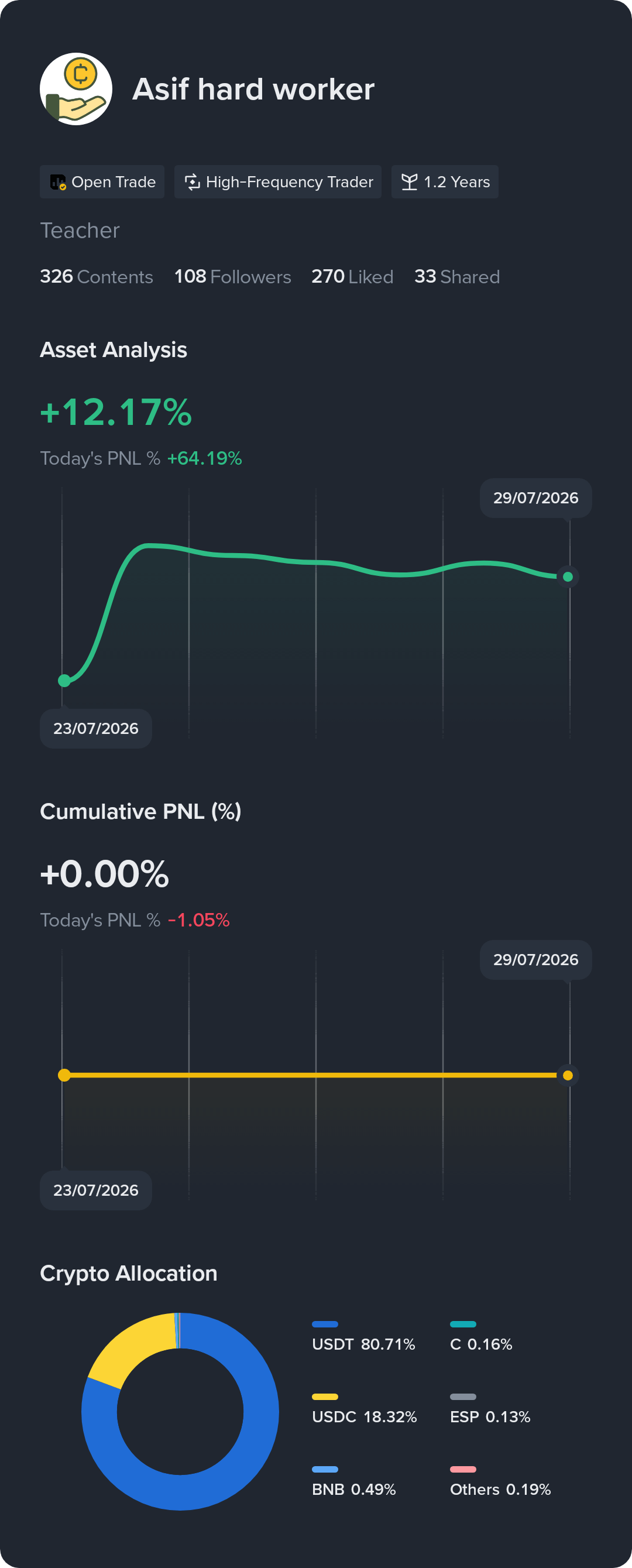
私のリターンとポートフォリオの内訳を見てください。投資のヒントをフォロー
3
ログインして、さらにコンテンツを読む
厳選トピックで世界の暗号資産トレーダーの仲間入り
⚡️ 暗号資産に関する最新かつ有益な情報が見つかります。
💬 世界最大の暗号資産取引所から信頼されています。
👍 認証を受けたクリエイターから、有益なインサイトを得られます。
メール / 電話番号
トレンドトピック
QNTRises287%
閲覧回数 404
57人が討論中
#qntrises287%
🚨 $QNT が爆発 +287%! 🚀🔥
Quant は大規模な動きを見せており、トレーダーを完全な FOMO(取り残され不安)モードに突入させています。👀
📈 +287% 急騰
🔥 モメンタムが加速
🐂 強気派(ブル)が主導権を握る
🎯 ここで最大の疑問:次は何?
このレベルの爆発的な値動きの後、トレーダーは $QNT が強気トレンドを維持するのか、それともクールダウンに入るのかを注視しています。
新記録(NEW ATH)まで? 👀🚀
👇 あなたの次の $QNT 目標は?
#QNT #Quant #crypto
Faizan Crypto Learner
·いいね:0件
·閲覧回数 147
TrumpRejectsAIRulesForVoluntaryAudits
閲覧回数 3,736
217人が討論中
BitgetHotWalletBreachTiedToThirdPartySecurityFlaw
閲覧回数 1,894
158人が討論中