

Asif The Trader
441 Beiträge

Asif The Trader
Melden
Nutzer blockieren
The Ultimate Trader
Trade eröffnen
Hochfrequenz-Trader
1.3 Jahre
538 Following
152 Follower
449 Like gegeben
Beiträge
Portfolio
Alle
Zitierungen
Verifiziert
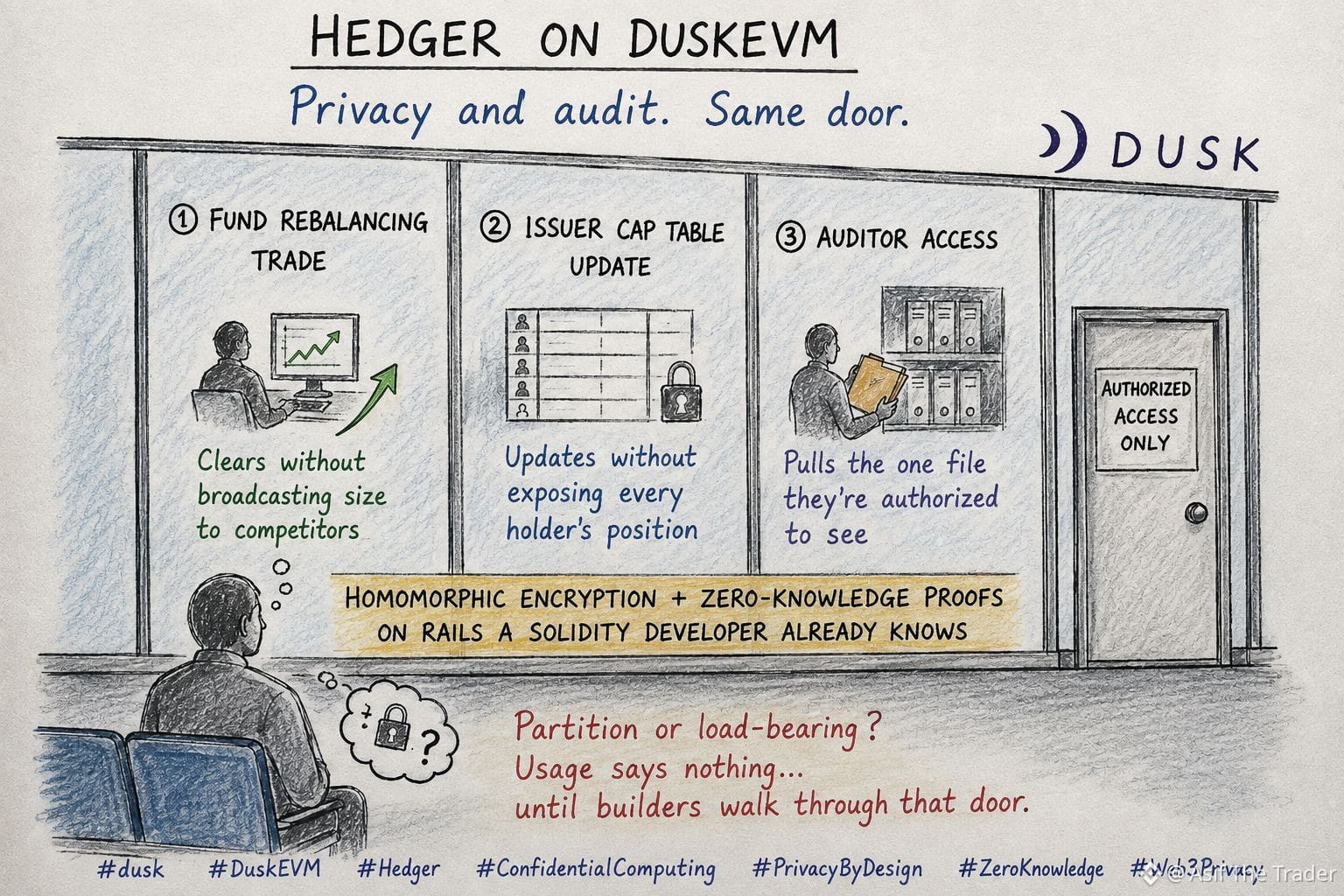
In meinem Büro beim Steuerberater gibt es eine Trennwand aus beschichtetem Glas. Vom Warteraum aus kann man Formen in Bewegung sehen, man hört Flüstern durch die Wand – aber nichts ist lesbar. Nur die Person hinter dem Schreibtisch, die die richtige Akte in der Hand hält, bekommt jemals die tatsächlichen Zahlen zu sehen.
Während ich las, wie Hedger auf @Dusk_Foundation DuskEVM funktioniert, dachte ich immer wieder an diese Trennwand. Die meisten hören „vertrauliche Smart Contracts“ und stellen sich etwas vor, das komplett verschlossen ist – ein Tresor, in den niemand reinkommt, nicht einmal die Leute, die ihn eigentlich bräuchten.
Dieser Gedanke hat länger bei mir gesessen, als ich erwartet hatte. Hedger ist keine einzelne Wand – es ist die Trennwand, die gleich drei Aufgaben gleichzeitig erfüllt: Ein Rebalancing-Trade eines Fonds wird abgewickelt, ohne seine Größe den Wettbewerbern mitzuteilen, eine Cap-Table eines Emittenten wird aktualisiert, ohne jede Position jedes Halters offenzulegen, und ein Auditor zieht sich die eine Akte, die er sehen darf, ohne mit dem Rest in Berührung zu kommen. Homomorphe Verschlüsselung plus Zero-Knowledge-Proofs, ausgeführt auf Schienen, die ein Solidity-Entwickler bereits kennt. Datenschutz und Audit stehen hier nicht im Konflikt miteinander. Sie werden über dieselbe Tür geleitet.
Was man leicht überspringt, ist, wie früh das Ganze noch ist. Das DuskEVM-Mainnet steht vor der Ankunft, Hedger wird angepriesen – aber ein Pitch ist nicht dasselbe wie ein Volumen. Bisher hat niemand veröffentlicht, wie viele Verträge tatsächlich darüber live sind, oder ob irgendein regulierter Schreibtisch bereits echten Durchsatz über den vertraulichen Pfad geleitet hat, statt ihn nur in einer Sandbox zu testen. „Überprüfbarer Datenschutz“ ist eine starke Behauptung, bevor irgendjemand irgendetwas geprüft hat.
Also: Ist die Trennwand wirklich tragend, oder ist sie nur Glas, das an einem Rahmen hängt – und wartet darauf, dass auf der anderen Seite endlich jemand auftaucht? $DUSK usage sagt nichts, bis Bauleute tatsächlich durch diese Tür gehen. Noch nicht.
#dusk
{spot}(AAVEUSDT)
{spot}(BTCUSDT)
In meinem Büro beim Steuerberater gibt es eine Trennwand aus beschichtetem Glas. Vom Warteraum aus kann man Formen in Bewegung sehen, man hört Flüstern durch die Wand – aber nichts ist lesbar. Nur die Person hinter dem Schreibtisch, die die richtige Akte in der Hand hält, bekommt jemals die tatsächlichen Zahlen zu sehen.
Während ich las, wie Hedger auf @Dusk DuskEVM funktioniert, dachte ich immer wieder an diese Trennwand. Die meisten hören „vertrauliche Smart Contracts“ und stellen sich etwas vor, das komplett verschlossen ist – ein Tresor, in den niemand reinkommt, nicht einmal die Leute, die ihn eigentlich bräuchten.
Dieser Gedanke hat länger bei mir gesessen, als ich erwartet hatte. Hedger ist keine einzelne Wand – es ist die Trennwand, die gleich drei Aufgaben gleichzeitig erfüllt: Ein Rebalancing-Trade eines Fonds wird abgewickelt, ohne seine Größe den Wettbewerbern mitzuteilen, eine Cap-Table eines Emittenten wird aktualisiert, ohne jede Position jedes Halters offenzulegen, und ein Auditor zieht sich die eine Akte, die er sehen darf, ohne mit dem Rest in Berührung zu kommen. Homomorphe Verschlüsselung plus Zero-Knowledge-Proofs, ausgeführt auf Schienen, die ein Solidity-Entwickler bereits kennt. Datenschutz und Audit stehen hier nicht im Konflikt miteinander. Sie werden über dieselbe Tür geleitet.
Was man leicht überspringt, ist, wie früh das Ganze noch ist. Das DuskEVM-Mainnet steht vor der Ankunft, Hedger wird angepriesen – aber ein Pitch ist nicht dasselbe wie ein Volumen. Bisher hat niemand veröffentlicht, wie viele Verträge tatsächlich darüber live sind, oder ob irgendein regulierter Schreibtisch bereits echten Durchsatz über den vertraulichen Pfad geleitet hat, statt ihn nur in einer Sandbox zu testen. „Überprüfbarer Datenschutz“ ist eine starke Behauptung, bevor irgendjemand irgendetwas geprüft hat.
Also: Ist die Trennwand wirklich tragend, oder ist sie nur Glas, das an einem Rahmen hängt – und wartet darauf, dass auf der anderen Seite endlich jemand auftaucht? $DUSK usage sagt nichts, bis Bauleute tatsächlich durch diese Tür gehen. Noch nicht.
#dusk
Während ich las, wie Hedger auf @Dusk DuskEVM funktioniert, dachte ich immer wieder an diese Trennwand. Die meisten hören „vertrauliche Smart Contracts“ und stellen sich etwas vor, das komplett verschlossen ist – ein Tresor, in den niemand reinkommt, nicht einmal die Leute, die ihn eigentlich bräuchten.
Dieser Gedanke hat länger bei mir gesessen, als ich erwartet hatte. Hedger ist keine einzelne Wand – es ist die Trennwand, die gleich drei Aufgaben gleichzeitig erfüllt: Ein Rebalancing-Trade eines Fonds wird abgewickelt, ohne seine Größe den Wettbewerbern mitzuteilen, eine Cap-Table eines Emittenten wird aktualisiert, ohne jede Position jedes Halters offenzulegen, und ein Auditor zieht sich die eine Akte, die er sehen darf, ohne mit dem Rest in Berührung zu kommen. Homomorphe Verschlüsselung plus Zero-Knowledge-Proofs, ausgeführt auf Schienen, die ein Solidity-Entwickler bereits kennt. Datenschutz und Audit stehen hier nicht im Konflikt miteinander. Sie werden über dieselbe Tür geleitet.
Was man leicht überspringt, ist, wie früh das Ganze noch ist. Das DuskEVM-Mainnet steht vor der Ankunft, Hedger wird angepriesen – aber ein Pitch ist nicht dasselbe wie ein Volumen. Bisher hat niemand veröffentlicht, wie viele Verträge tatsächlich darüber live sind, oder ob irgendein regulierter Schreibtisch bereits echten Durchsatz über den vertraulichen Pfad geleitet hat, statt ihn nur in einer Sandbox zu testen. „Überprüfbarer Datenschutz“ ist eine starke Behauptung, bevor irgendjemand irgendetwas geprüft hat.
Also: Ist die Trennwand wirklich tragend, oder ist sie nur Glas, das an einem Rahmen hängt – und wartet darauf, dass auf der anderen Seite endlich jemand auftaucht? $DUSK usage sagt nichts, bis Bauleute tatsächlich durch diese Tür gehen. Noch nicht.
#dusk
116
Teilweise korrekt
#dusk $DUSK @Dusk_Foundation
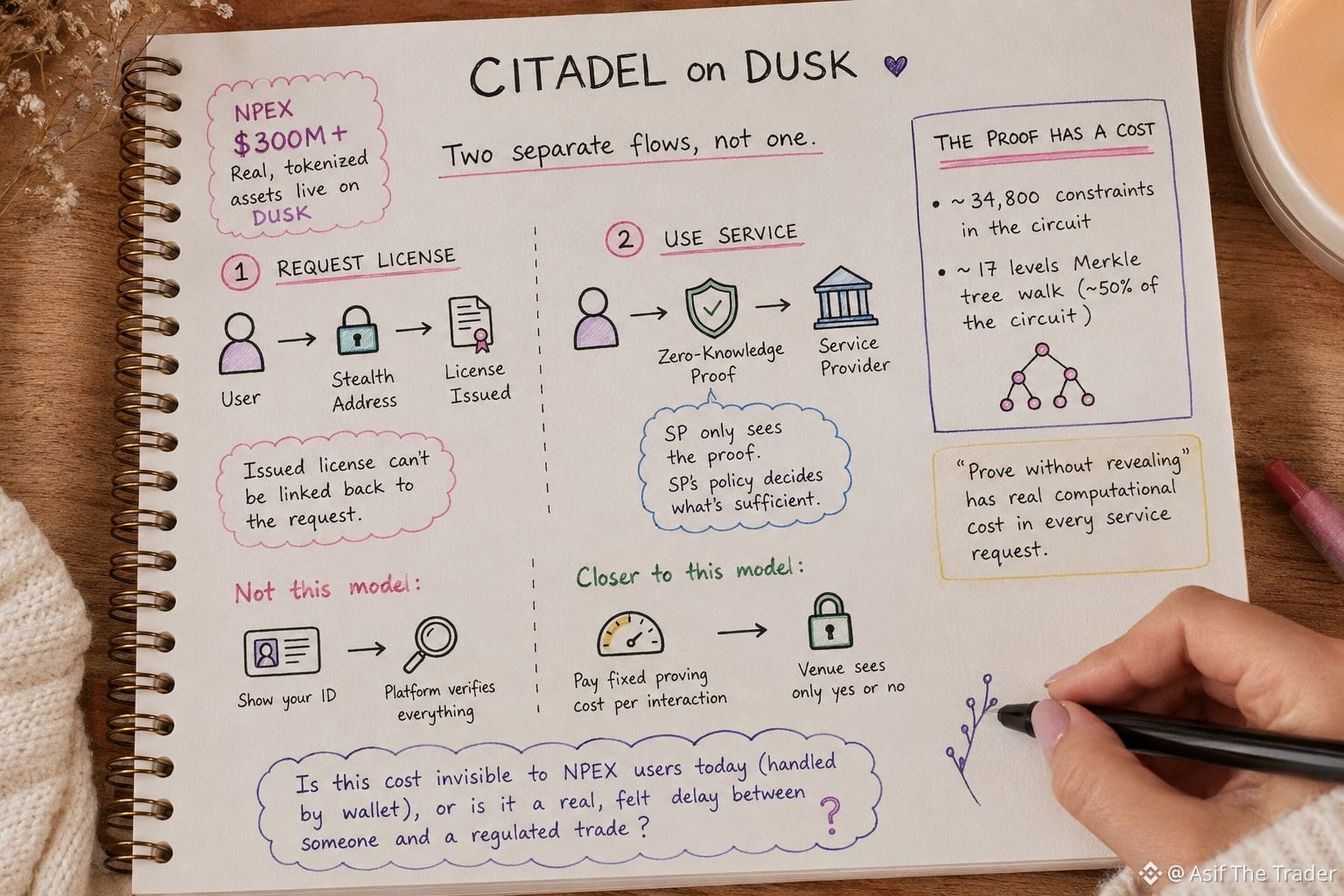
Ich bin zurück in die Citadel-Dokumentation gegangen, nachdem ich bemerkt hatte, dass NPEX bereits über $300 Mio. an echten, tokenisierten Assets auf Dusk live hat. Das ist kein Testnet-Beispiel mehr – also hat mich das dazu gebracht zu prüfen, ob die Datenschutzbehauptung wirklich unter einem realen, regulierten Rahmen standhält, nicht nur in einem Whitepaper-Diagramm.
Dabei stellte sich heraus: Das Protokoll besteht wirklich aus zwei getrennten Abläufen, nicht aus einem.
Erstens: Ein Nutzer fordert eine Lizenz von einem License Provider an – mithilfe einer Stealth-Adresse, sodass die ausgestellte Lizenz nicht mit der Anfrage verknüpft werden kann.
Zweitens: Wenn der Nutzer einen Service nutzen möchte, sendet er die Lizenz nicht erneut. Er sendet einen Zero-Knowledge-Beweis darüber, dass er eine gültige besitzt. Der Service Provider sieht nur diesen Beweis – und es ist die eigene Policy des SP, die festlegt, was als ausreichend gilt.
Der Teil, der mich innehalten ließ: Dieser Beweis ist nicht kostenlos. Cidadels eigener Circuit zum Nachweis des Lizenzbesitzes liegt bei ungefähr 34.800 Constraints, und etwa die Hälfte davon besteht allein darin, einen Merkle-Baum 17 Ebenen tief zu durchlaufen, um zu bestätigen, dass die Lizenz tatsächlich registriert ist.
„Beweisen, ohne etwas offenzulegen“ hat also eine echte, rechnerische Kostenkomponente, die in jede einzelne Service-Anfrage eingepreist ist – nicht nur ein Gestaltungsprinzip auf einer Folie.
Das ist ein anderes Modell als „Zeig deinen Ausweis, lass die Plattform alles verifizieren“.
Es ist eher: Einmal pro Interaktion einen festen Nachweiskosten zahlen, im Gegenzug dafür, dass der Rahmen niemals etwas anderes sieht als ein Ja oder Nein.
Was ich immer noch nicht sagen kann: Ob diese Kosten heute für einen echten NPEX-Nutzer unsichtbar sind, ob Wallets das im Hintergrund abwickeln, oder ob es eine spürbare Verzögerung gibt, die zwischen jemandem und einem regulierten Handel steht.
{spot}(MORPHOUSDT)
{spot}(BNBUSDT)
{spot}(AAVEUSDT)
#dusk $DUSK @Dusk
Ich bin zurück in die Citadel-Dokumentation gegangen, nachdem ich bemerkt hatte, dass NPEX bereits über $300 Mio. an echten, tokenisierten Assets auf Dusk live hat. Das ist kein Testnet-Beispiel mehr – also hat mich das dazu gebracht zu prüfen, ob die Datenschutzbehauptung wirklich unter einem realen, regulierten Rahmen standhält, nicht nur in einem Whitepaper-Diagramm.
Dabei stellte sich heraus: Das Protokoll besteht wirklich aus zwei getrennten Abläufen, nicht aus einem.
Erstens: Ein Nutzer fordert eine Lizenz von einem License Provider an – mithilfe einer Stealth-Adresse, sodass die ausgestellte Lizenz nicht mit der Anfrage verknüpft werden kann.
Zweitens: Wenn der Nutzer einen Service nutzen möchte, sendet er die Lizenz nicht erneut. Er sendet einen Zero-Knowledge-Beweis darüber, dass er eine gültige besitzt. Der Service Provider sieht nur diesen Beweis – und es ist die eigene Policy des SP, die festlegt, was als ausreichend gilt.
Der Teil, der mich innehalten ließ: Dieser Beweis ist nicht kostenlos. Cidadels eigener Circuit zum Nachweis des Lizenzbesitzes liegt bei ungefähr 34.800 Constraints, und etwa die Hälfte davon besteht allein darin, einen Merkle-Baum 17 Ebenen tief zu durchlaufen, um zu bestätigen, dass die Lizenz tatsächlich registriert ist.
„Beweisen, ohne etwas offenzulegen“ hat also eine echte, rechnerische Kostenkomponente, die in jede einzelne Service-Anfrage eingepreist ist – nicht nur ein Gestaltungsprinzip auf einer Folie.
Das ist ein anderes Modell als „Zeig deinen Ausweis, lass die Plattform alles verifizieren“.
Es ist eher: Einmal pro Interaktion einen festen Nachweiskosten zahlen, im Gegenzug dafür, dass der Rahmen niemals etwas anderes sieht als ein Ja oder Nein.
Was ich immer noch nicht sagen kann: Ob diese Kosten heute für einen echten NPEX-Nutzer unsichtbar sind, ob Wallets das im Hintergrund abwickeln, oder ob es eine spürbare Verzögerung gibt, die zwischen jemandem und einem regulierten Handel steht.
Ich bin zurück in die Citadel-Dokumentation gegangen, nachdem ich bemerkt hatte, dass NPEX bereits über $300 Mio. an echten, tokenisierten Assets auf Dusk live hat. Das ist kein Testnet-Beispiel mehr – also hat mich das dazu gebracht zu prüfen, ob die Datenschutzbehauptung wirklich unter einem realen, regulierten Rahmen standhält, nicht nur in einem Whitepaper-Diagramm.
Dabei stellte sich heraus: Das Protokoll besteht wirklich aus zwei getrennten Abläufen, nicht aus einem.
Erstens: Ein Nutzer fordert eine Lizenz von einem License Provider an – mithilfe einer Stealth-Adresse, sodass die ausgestellte Lizenz nicht mit der Anfrage verknüpft werden kann.
Zweitens: Wenn der Nutzer einen Service nutzen möchte, sendet er die Lizenz nicht erneut. Er sendet einen Zero-Knowledge-Beweis darüber, dass er eine gültige besitzt. Der Service Provider sieht nur diesen Beweis – und es ist die eigene Policy des SP, die festlegt, was als ausreichend gilt.
Der Teil, der mich innehalten ließ: Dieser Beweis ist nicht kostenlos. Cidadels eigener Circuit zum Nachweis des Lizenzbesitzes liegt bei ungefähr 34.800 Constraints, und etwa die Hälfte davon besteht allein darin, einen Merkle-Baum 17 Ebenen tief zu durchlaufen, um zu bestätigen, dass die Lizenz tatsächlich registriert ist.
„Beweisen, ohne etwas offenzulegen“ hat also eine echte, rechnerische Kostenkomponente, die in jede einzelne Service-Anfrage eingepreist ist – nicht nur ein Gestaltungsprinzip auf einer Folie.
Das ist ein anderes Modell als „Zeig deinen Ausweis, lass die Plattform alles verifizieren“.
Es ist eher: Einmal pro Interaktion einen festen Nachweiskosten zahlen, im Gegenzug dafür, dass der Rahmen niemals etwas anderes sieht als ein Ja oder Nein.
Was ich immer noch nicht sagen kann: Ob diese Kosten heute für einen echten NPEX-Nutzer unsichtbar sind, ob Wallets das im Hintergrund abwickeln, oder ob es eine spürbare Verzögerung gibt, die zwischen jemandem und einem regulierten Handel steht.
2
2
188
Übersetzung ansehen
@Dusk_Foundation #dusk $DUSK
The Aug 16 bridge incident made me look at Dusk differently.
Not because of the blocklist.
Because it made me wonder:
After an onchain action is approved, who actually needs to see the data behind it?
For regulated finance, you may need to prove:
eligibility.
ownership.
transfer conditions.
My first assumption was simple:
if something has to be verified, more of the underlying data probably has to be visible.
Then I went back into the Dusk docs and the actual citadel paper.
Citadel's proof of ownership does not put personal data onchain. The user proves inside a circuit that they hold a validly signed credential; the verifier only learns that the statement is true.
The number that stuck with me: verifying that proof takes 0.007 seconds. Generating it takes around 16 seconds on a laptop-grade chip. The expensive part proving happens once, offline, on the user's side. The part a verifier actually does, at the moment someone needs access, is near-instant and reveals nothing beyond "valid."
That split matters for regulated assets.
An institution needs to confirm eligibility. It doesn't need the applicant's full KYC file to do that it needs a proof that resolves to true or false, and Citadel lets the service provider define exactly which attributes that proof has to cover.
So the interesting question isn't " is the blockchain private? "
It's: of everything sitting in a typical KYC payload, how much of it actually needs to touch a verifier once the proof not the data is the thing being checked ?
{spot}(AAVEUSDT)
{spot}(MORPHOUSDT)
For regulated onchain finance, what matters more?
@Dusk #dusk $DUSK
The Aug 16 bridge incident made me look at Dusk differently.
Not because of the blocklist.
Because it made me wonder:
After an onchain action is approved, who actually needs to see the data behind it?
For regulated finance, you may need to prove:
eligibility.
ownership.
transfer conditions.
My first assumption was simple:
if something has to be verified, more of the underlying data probably has to be visible.
Then I went back into the Dusk docs and the actual citadel paper.
Citadel's proof of ownership does not put personal data onchain. The user proves inside a circuit that they hold a validly signed credential; the verifier only learns that the statement is true.
The number that stuck with me: verifying that proof takes 0.007 seconds. Generating it takes around 16 seconds on a laptop-grade chip. The expensive part proving happens once, offline, on the user's side. The part a verifier actually does, at the moment someone needs access, is near-instant and reveals nothing beyond "valid."
That split matters for regulated assets.
An institution needs to confirm eligibility. It doesn't need the applicant's full KYC file to do that it needs a proof that resolves to true or false, and Citadel lets the service provider define exactly which attributes that proof has to cover.
So the interesting question isn't " is the blockchain private? "
It's: of everything sitting in a typical KYC payload, how much of it actually needs to touch a verifier once the proof not the data is the thing being checked ?
For regulated onchain finance, what matters more?
The Aug 16 bridge incident made me look at Dusk differently.
Not because of the blocklist.
Because it made me wonder:
After an onchain action is approved, who actually needs to see the data behind it?
For regulated finance, you may need to prove:
eligibility.
ownership.
transfer conditions.
My first assumption was simple:
if something has to be verified, more of the underlying data probably has to be visible.
Then I went back into the Dusk docs and the actual citadel paper.
Citadel's proof of ownership does not put personal data onchain. The user proves inside a circuit that they hold a validly signed credential; the verifier only learns that the statement is true.
The number that stuck with me: verifying that proof takes 0.007 seconds. Generating it takes around 16 seconds on a laptop-grade chip. The expensive part proving happens once, offline, on the user's side. The part a verifier actually does, at the moment someone needs access, is near-instant and reveals nothing beyond "valid."
That split matters for regulated assets.
An institution needs to confirm eligibility. It doesn't need the applicant's full KYC file to do that it needs a proof that resolves to true or false, and Citadel lets the service provider define exactly which attributes that proof has to cover.
So the interesting question isn't " is the blockchain private? "
It's: of everything sitting in a typical KYC payload, how much of it actually needs to touch a verifier once the proof not the data is the thing being checked ?
For regulated onchain finance, what matters more?
Prove without revealing data
0%
Verify it by seeing the data
100%
1 Stimmen • Abstimmung beendet
2
1
78
·
--
Bärisch
Übersetzung ansehen
#dusk $DUSK @Dusk_Foundation
I used to think that putting a financial asset onchain automatically meant making the whole financial process better.
Then I tried looking at it from the perspective of a bank or investment fund.
Imagine putting a bond or fund onchain.
It sounds like the problem is solved.
But then I started wondering:
What if the token is onchain, but the financial process around it still isn't?
The institution still has to decide who can own it, how it can be traded, how payments move, and how settlement remains compliant.
That made me rethink what “tokenization” actually means.
Is tokenizing the asset enough, or should the financial lifecycle move with it too?
That question is what drew me toward Dusk.
What interested me about Dusk Trade was seeing the problem approached from the workflow side, not just the token side.
Dusk is working toward bringing assets such as MMFs, ETFs, bonds and other RWAs into an onchain environment.
The way I now think about tokenization is:
ownership → eligibility → trading → payment → settlement
Maybe the real question isn't:
“How many assets can we put onchain?”
Maybe it's:
“How much of the financial process can actually work there?”
Because if only the representation moves onchain, can we really say the market moved with it?
That distinction is what makes Dusk interesting to me.
{spot}(DUSKUSDT)
What matters most when bringing real-world assets onchain?
#dusk $DUSK @Dusk
I used to think that putting a financial asset onchain automatically meant making the whole financial process better.
Then I tried looking at it from the perspective of a bank or investment fund.
Imagine putting a bond or fund onchain.
It sounds like the problem is solved.
But then I started wondering:
What if the token is onchain, but the financial process around it still isn't?
The institution still has to decide who can own it, how it can be traded, how payments move, and how settlement remains compliant.
That made me rethink what “tokenization” actually means.
Is tokenizing the asset enough, or should the financial lifecycle move with it too?
That question is what drew me toward Dusk.
What interested me about Dusk Trade was seeing the problem approached from the workflow side, not just the token side.
Dusk is working toward bringing assets such as MMFs, ETFs, bonds and other RWAs into an onchain environment.
The way I now think about tokenization is:
ownership → eligibility → trading → payment → settlement
Maybe the real question isn't:
“How many assets can we put onchain?”
Maybe it's:
“How much of the financial process can actually work there?”
Because if only the representation moves onchain, can we really say the market moved with it?
That distinction is what makes Dusk interesting to me.
What matters most when bringing real-world assets onchain?
I used to think that putting a financial asset onchain automatically meant making the whole financial process better.
Then I tried looking at it from the perspective of a bank or investment fund.
Imagine putting a bond or fund onchain.
It sounds like the problem is solved.
But then I started wondering:
What if the token is onchain, but the financial process around it still isn't?
The institution still has to decide who can own it, how it can be traded, how payments move, and how settlement remains compliant.
That made me rethink what “tokenization” actually means.
Is tokenizing the asset enough, or should the financial lifecycle move with it too?
That question is what drew me toward Dusk.
What interested me about Dusk Trade was seeing the problem approached from the workflow side, not just the token side.
Dusk is working toward bringing assets such as MMFs, ETFs, bonds and other RWAs into an onchain environment.
The way I now think about tokenization is:
ownership → eligibility → trading → payment → settlement
Maybe the real question isn't:
“How many assets can we put onchain?”
Maybe it's:
“How much of the financial process can actually work there?”
Because if only the representation moves onchain, can we really say the market moved with it?
That distinction is what makes Dusk interesting to me.
What matters most when bringing real-world assets onchain?
Tokenizing the asset
0%
Ownership & eligibility
25%
Trading + settlement
0%
The full financial lifecycle
75%
4 Stimmen • Abstimmung beendet
9
5
77
·
--
Bullisch
Verifiziert
300M+ EUR an Vermögenswerten sollen durch Dusk onchain kommen.
Diese Zahl hat mich darüber nachdenken lassen, was „Tokenisierung“ eigentlich bedeutet.
Früher dachte ich, der spannende Teil daran, eine Anleihe oder einen Fonds onchain zu bringen, sei das Token.
Dann habe ich erkannt: Das Token könnte der am wenigsten interessante Teil sein.
Ein Onchain-Token bedeutet nicht zwangsläufig, dass auch der gesamte finanzielle Lebenszyklus onchain abgebildet wird.
Der Vermögenswert kann zwar onchain sein, aber Eignung, Compliance, Übertragungsbeschränkungen, Offenlegung oder sogar die Abwicklung hängen weiterhin von Systemen an anderer Stelle ab.
Also: Was hat Tokenisierung tatsächlich onchain verlagert?
Darum hat mich die Richtung „Native Issuance“ <c-1/> @Dusk_Foundation angesprochen: Sie geht über das Erzeugen eines Tokens hinaus und hin zum umfassenderen Lebenszyklus – Emission, Eignung, Transfers, Offenlegung und Abwicklung.
Und Datenschutz macht diesen Lebenszyklus schwieriger.
Regulierte Märkte brauchen nicht alles öffentlich und auch nicht alles verborgen. Sie brauchen kontrollierte Sichtbarkeit.
Einige Informationen bleiben privat.
Einige können nachgewiesen werden.
Einige können offengelegt werden, wenn es autorisiert ist.
Damit stellt sich die Frage:
Können Datenschutz, Verifikation und Offenlegung zu festen Bestandteilen der Regeln der Finanzanwendung selbst werden?
Wenn ein größerer Teil des Lebenszyklus tatsächlich onchain leben kann, ist vielleicht nicht mehr die Blockchain der schwierigere Engpass.
Vielleicht ist es die rechtliche und institutionelle Infrastruktur rund um den Vermögenswert.
Dann beginnt „Native Issuance“ weniger wie Tokenisierung auszusehen und eher wie der Wiederaufbau eines Teils des finanziellen Lebenszyklus selbst.
@Dusk_Foundation $DUSK #dusk
{spot}(BTCUSDT)
{spot}(BNBUSDT)
{spot}(DUSKUSDT)
Was ist am wichtigsten für die Tokenisierung realer Vermögenswerte?
300M+ EUR an Vermögenswerten sollen durch Dusk onchain kommen.
Diese Zahl hat mich darüber nachdenken lassen, was „Tokenisierung“ eigentlich bedeutet.
Früher dachte ich, der spannende Teil daran, eine Anleihe oder einen Fonds onchain zu bringen, sei das Token.
Dann habe ich erkannt: Das Token könnte der am wenigsten interessante Teil sein.
Ein Onchain-Token bedeutet nicht zwangsläufig, dass auch der gesamte finanzielle Lebenszyklus onchain abgebildet wird.
Der Vermögenswert kann zwar onchain sein, aber Eignung, Compliance, Übertragungsbeschränkungen, Offenlegung oder sogar die Abwicklung hängen weiterhin von Systemen an anderer Stelle ab.
Also: Was hat Tokenisierung tatsächlich onchain verlagert?
Darum hat mich die Richtung „Native Issuance“ <c-1/> @Dusk angesprochen: Sie geht über das Erzeugen eines Tokens hinaus und hin zum umfassenderen Lebenszyklus – Emission, Eignung, Transfers, Offenlegung und Abwicklung.
Und Datenschutz macht diesen Lebenszyklus schwieriger.
Regulierte Märkte brauchen nicht alles öffentlich und auch nicht alles verborgen. Sie brauchen kontrollierte Sichtbarkeit.
Einige Informationen bleiben privat.
Einige können nachgewiesen werden.
Einige können offengelegt werden, wenn es autorisiert ist.
Damit stellt sich die Frage:
Können Datenschutz, Verifikation und Offenlegung zu festen Bestandteilen der Regeln der Finanzanwendung selbst werden?
Wenn ein größerer Teil des Lebenszyklus tatsächlich onchain leben kann, ist vielleicht nicht mehr die Blockchain der schwierigere Engpass.
Vielleicht ist es die rechtliche und institutionelle Infrastruktur rund um den Vermögenswert.
Dann beginnt „Native Issuance“ weniger wie Tokenisierung auszusehen und eher wie der Wiederaufbau eines Teils des finanziellen Lebenszyklus selbst.
@Dusk $DUSK #dusk
Was ist am wichtigsten für die Tokenisierung realer Vermögenswerte?
Diese Zahl hat mich darüber nachdenken lassen, was „Tokenisierung“ eigentlich bedeutet.
Früher dachte ich, der spannende Teil daran, eine Anleihe oder einen Fonds onchain zu bringen, sei das Token.
Dann habe ich erkannt: Das Token könnte der am wenigsten interessante Teil sein.
Ein Onchain-Token bedeutet nicht zwangsläufig, dass auch der gesamte finanzielle Lebenszyklus onchain abgebildet wird.
Der Vermögenswert kann zwar onchain sein, aber Eignung, Compliance, Übertragungsbeschränkungen, Offenlegung oder sogar die Abwicklung hängen weiterhin von Systemen an anderer Stelle ab.
Also: Was hat Tokenisierung tatsächlich onchain verlagert?
Darum hat mich die Richtung „Native Issuance“ <c-1/> @Dusk angesprochen: Sie geht über das Erzeugen eines Tokens hinaus und hin zum umfassenderen Lebenszyklus – Emission, Eignung, Transfers, Offenlegung und Abwicklung.
Und Datenschutz macht diesen Lebenszyklus schwieriger.
Regulierte Märkte brauchen nicht alles öffentlich und auch nicht alles verborgen. Sie brauchen kontrollierte Sichtbarkeit.
Einige Informationen bleiben privat.
Einige können nachgewiesen werden.
Einige können offengelegt werden, wenn es autorisiert ist.
Damit stellt sich die Frage:
Können Datenschutz, Verifikation und Offenlegung zu festen Bestandteilen der Regeln der Finanzanwendung selbst werden?
Wenn ein größerer Teil des Lebenszyklus tatsächlich onchain leben kann, ist vielleicht nicht mehr die Blockchain der schwierigere Engpass.
Vielleicht ist es die rechtliche und institutionelle Infrastruktur rund um den Vermögenswert.
Dann beginnt „Native Issuance“ weniger wie Tokenisierung auszusehen und eher wie der Wiederaufbau eines Teils des finanziellen Lebenszyklus selbst.
@Dusk $DUSK #dusk
Was ist am wichtigsten für die Tokenisierung realer Vermögenswerte?
🔹 Token issuance
29%
🔹 Onchain compliance
43%
🔹 Privacy + verification
14%
🔹 Full lifecycle onchain
14%
7 Stimmen • Abstimmung beendet
14
8
577
ausgezeichnet
ausgezeichnet

Tasifch786
·
--
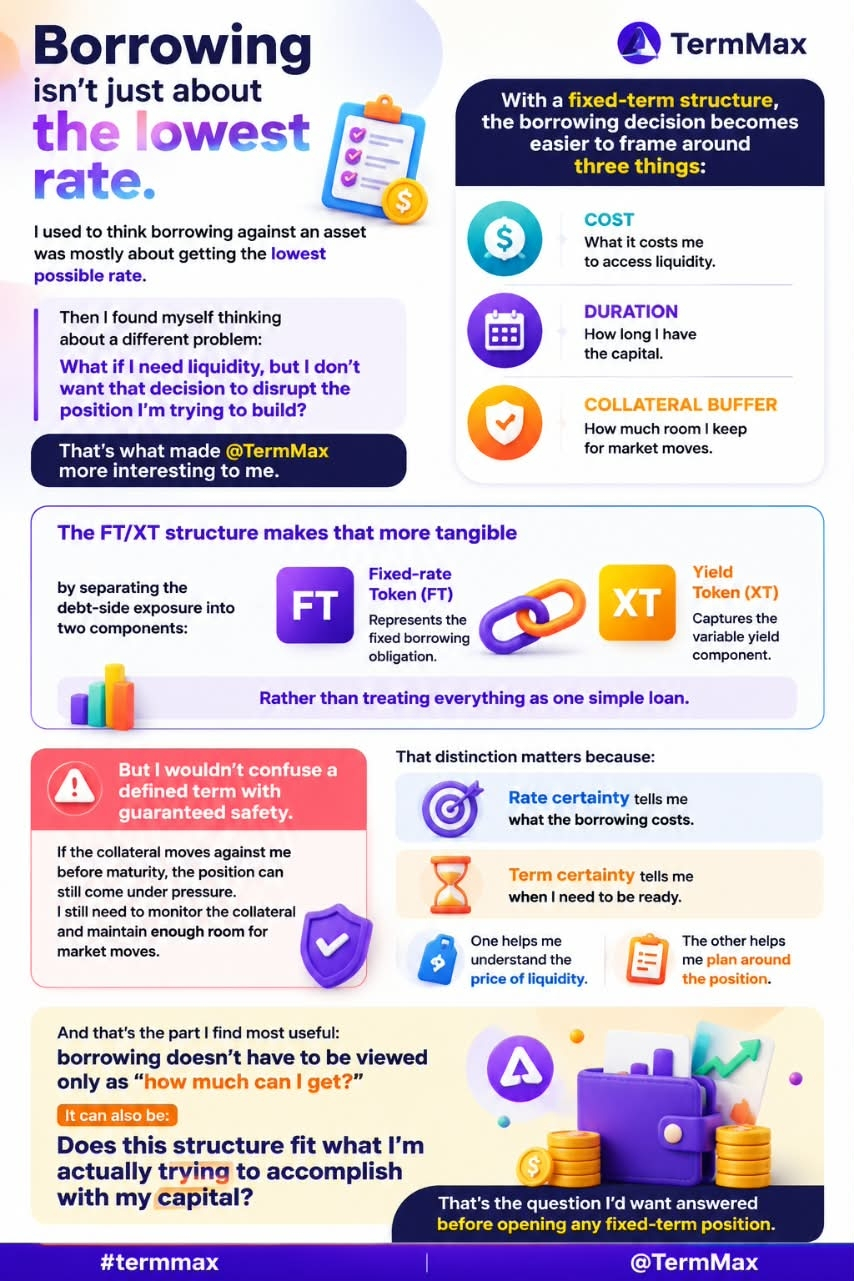
BullischIch dachte früher, dass es beim Beleihen eines Vermögenswerts vor allem darum geht, den niedrigstmöglichen Zinssatz zu bekommen.
Dann stellte sich bei mir ein anderes Problem in den Vordergrund:
Was, wenn ich Liquidität brauche, aber nicht möchte, dass diese Entscheidung die Position stört, die ich gerade aufbauen will?
Das hat @TermMax für mich besonders interessant gemacht.
Mit einer festen Laufzeitstruktur wird die Kreditentscheidung leichter, auf drei Punkte zu beziehen:
Kosten + Laufzeit + Sicherheitenpuffer
Die FT/XT-Struktur macht das greifbarer, indem sie die Exposure auf der Schuldenseite in ein Fixed-rate Token (FT) und ein Yield Token (XT) trennt, statt alles als einen einzigen einfachen Kredit zu behandeln.
Aber ich würde eine fest definierte Laufzeit nicht mit garantiertem Schutz verwechseln.
Wenn sich die Sicherheit vor Fälligkeit gegen mich bewegt, kann die Position weiterhin unter Druck geraten. Ich muss die Sicherheiten trotzdem überwachen und genug Spielraum für Marktbewegungen einhalten.
Dieser Unterschied ist wichtig, weil:
Zinssicherheit mir sagt, welche Kreditkosten anfallen.
Laufzeitsicherheit mir sagt, wann ich bereit sein muss.
Das eine hilft mir, den Preis der Liquidität zu verstehen.
Das andere hilft mir, die Position einzuplanen.
Und genau das finde ich am nützlichsten: Die Aufnahme von Krediten muss nicht nur als Frage betrachtet werden, „wie viel ich bekommen kann“.
Sie kann auch sein:
Passt diese Struktur zu dem, was ich mit meinem Kapital tatsächlich erreichen möchte?
Das wäre die Frage, die ich beantwortet haben möchte, bevor ich irgendeine Position mit fester Laufzeit eröffne.
#termmax @TermMax $BTC #defi #Crypto
Dann stellte sich bei mir ein anderes Problem in den Vordergrund:
Was, wenn ich Liquidität brauche, aber nicht möchte, dass diese Entscheidung die Position stört, die ich gerade aufbauen will?
Das hat @TermMax für mich besonders interessant gemacht.
Mit einer festen Laufzeitstruktur wird die Kreditentscheidung leichter, auf drei Punkte zu beziehen:
Kosten + Laufzeit + Sicherheitenpuffer
Die FT/XT-Struktur macht das greifbarer, indem sie die Exposure auf der Schuldenseite in ein Fixed-rate Token (FT) und ein Yield Token (XT) trennt, statt alles als einen einzigen einfachen Kredit zu behandeln.
Aber ich würde eine fest definierte Laufzeit nicht mit garantiertem Schutz verwechseln.
Wenn sich die Sicherheit vor Fälligkeit gegen mich bewegt, kann die Position weiterhin unter Druck geraten. Ich muss die Sicherheiten trotzdem überwachen und genug Spielraum für Marktbewegungen einhalten.
Dieser Unterschied ist wichtig, weil:
Zinssicherheit mir sagt, welche Kreditkosten anfallen.
Laufzeitsicherheit mir sagt, wann ich bereit sein muss.
Das eine hilft mir, den Preis der Liquidität zu verstehen.
Das andere hilft mir, die Position einzuplanen.
Und genau das finde ich am nützlichsten: Die Aufnahme von Krediten muss nicht nur als Frage betrachtet werden, „wie viel ich bekommen kann“.
Sie kann auch sein:
Passt diese Struktur zu dem, was ich mit meinem Kapital tatsächlich erreichen möchte?
Das wäre die Frage, die ich beantwortet haben möchte, bevor ich irgendeine Position mit fester Laufzeit eröffne.
#termmax @TermMax $BTC #defi #Crypto
2
2
Verifiziert
Eine Sache, die meine Sicht auf @termmax verändert hat, ist, dass der wichtige Punkt nicht nur darin besteht, einen festen Zinssatz zu bekommen.
Es geht darum, entscheiden zu können, wie die Finanzierung aussehen soll, bevor die Position überhaupt beginnt.
Das klingt subtil, aber es verändert die Rolle, die die Finanzierung im eigentlichen Handel spielen kann.
In einem typischen Markt mit variablem Zinssatz entscheidest du, wie viel du leihen möchtest, und akzeptierst dann die Finanzierungsbedingungen, die der Markt dir gibt.
Mit TermMax können diese Konditionen zu einem Bestandteil des Trades selbst werden.
Ein Kreditnehmer kann den maximalen Zinssatz festlegen, den er zu zahlen bereit ist, sowie die Laufzeit, die er möchte, während Kreditgeber den Mindestzinssatz bestimmen können, den sie zu akzeptieren bereit sind.
So verschiebt sich die Frage von:
„ Welchen Zinssatz bekomme ich gerade? “
auf:
„ Welche Konditionen machen diese Position es wert, sie einzugehen?“
Das ist eine bedeutende Veränderung.
Du wählst nicht mehr nur, wie viel Liquidität du einsetzen willst. Du fixierst die Kosten und die Dauer des Kapitals, bevor du dich für die Position entscheidest.
Und das ist relevant – nicht nur für Trader.
Ein Treasury kann rund um eine definierte Laufzeit und die Kosten der Kreditaufnahme planen.
Ein Allokator kann Chancen vergleichen, ohne davon auszugehen, dass der heutige Finanzierungszinssatz morgen noch verfügbar sein wird.
Der Teil, den ich für leicht zu übersehen halte, ist dieser:
Planbare Finanzierung senkt nicht nur die Unsicherheit. Sie macht Kapital auch einfacher zu verwalten.
Darum sehe ich TermMax als mehr als nur ein weiteres Protokoll für Festzins-Kredite.
Es bringt die Kreditaufnahme näher an etwas, das du von Anfang an strukturieren kannst – statt dass du ständig darauf reagieren musst, nachdem die Position bereits eröffnet ist.
Und wenn immer mehr ernsthaftes Kapital onchain bewegt wird, könnte dieser Unterschied deutlich schwerer zu ignorieren werden.
@termmax #TermMax #BTC #crypto
{spot}(BTCUSDT)
{spot}(BNBUSDT)
Was ist bei der Auswahl von Onchain-Finanzierung am wichtigsten?
Eine Sache, die meine Sicht auf @TermMax verändert hat, ist, dass der wichtige Punkt nicht nur darin besteht, einen festen Zinssatz zu bekommen.
Es geht darum, entscheiden zu können, wie die Finanzierung aussehen soll, bevor die Position überhaupt beginnt.
Das klingt subtil, aber es verändert die Rolle, die die Finanzierung im eigentlichen Handel spielen kann.
In einem typischen Markt mit variablem Zinssatz entscheidest du, wie viel du leihen möchtest, und akzeptierst dann die Finanzierungsbedingungen, die der Markt dir gibt.
Mit TermMax können diese Konditionen zu einem Bestandteil des Trades selbst werden.
Ein Kreditnehmer kann den maximalen Zinssatz festlegen, den er zu zahlen bereit ist, sowie die Laufzeit, die er möchte, während Kreditgeber den Mindestzinssatz bestimmen können, den sie zu akzeptieren bereit sind.
So verschiebt sich die Frage von:
„ Welchen Zinssatz bekomme ich gerade? “
auf:
„ Welche Konditionen machen diese Position es wert, sie einzugehen?“
Das ist eine bedeutende Veränderung.
Du wählst nicht mehr nur, wie viel Liquidität du einsetzen willst. Du fixierst die Kosten und die Dauer des Kapitals, bevor du dich für die Position entscheidest.
Und das ist relevant – nicht nur für Trader.
Ein Treasury kann rund um eine definierte Laufzeit und die Kosten der Kreditaufnahme planen.
Ein Allokator kann Chancen vergleichen, ohne davon auszugehen, dass der heutige Finanzierungszinssatz morgen noch verfügbar sein wird.
Der Teil, den ich für leicht zu übersehen halte, ist dieser:
Planbare Finanzierung senkt nicht nur die Unsicherheit. Sie macht Kapital auch einfacher zu verwalten.
Darum sehe ich TermMax als mehr als nur ein weiteres Protokoll für Festzins-Kredite.
Es bringt die Kreditaufnahme näher an etwas, das du von Anfang an strukturieren kannst – statt dass du ständig darauf reagieren musst, nachdem die Position bereits eröffnet ist.
Und wenn immer mehr ernsthaftes Kapital onchain bewegt wird, könnte dieser Unterschied deutlich schwerer zu ignorieren werden.
@TermMax #TermMax #BTC #crypto
Was ist bei der Auswahl von Onchain-Finanzierung am wichtigsten?
Es geht darum, entscheiden zu können, wie die Finanzierung aussehen soll, bevor die Position überhaupt beginnt.
Das klingt subtil, aber es verändert die Rolle, die die Finanzierung im eigentlichen Handel spielen kann.
In einem typischen Markt mit variablem Zinssatz entscheidest du, wie viel du leihen möchtest, und akzeptierst dann die Finanzierungsbedingungen, die der Markt dir gibt.
Mit TermMax können diese Konditionen zu einem Bestandteil des Trades selbst werden.
Ein Kreditnehmer kann den maximalen Zinssatz festlegen, den er zu zahlen bereit ist, sowie die Laufzeit, die er möchte, während Kreditgeber den Mindestzinssatz bestimmen können, den sie zu akzeptieren bereit sind.
So verschiebt sich die Frage von:
„ Welchen Zinssatz bekomme ich gerade? “
auf:
„ Welche Konditionen machen diese Position es wert, sie einzugehen?“
Das ist eine bedeutende Veränderung.
Du wählst nicht mehr nur, wie viel Liquidität du einsetzen willst. Du fixierst die Kosten und die Dauer des Kapitals, bevor du dich für die Position entscheidest.
Und das ist relevant – nicht nur für Trader.
Ein Treasury kann rund um eine definierte Laufzeit und die Kosten der Kreditaufnahme planen.
Ein Allokator kann Chancen vergleichen, ohne davon auszugehen, dass der heutige Finanzierungszinssatz morgen noch verfügbar sein wird.
Der Teil, den ich für leicht zu übersehen halte, ist dieser:
Planbare Finanzierung senkt nicht nur die Unsicherheit. Sie macht Kapital auch einfacher zu verwalten.
Darum sehe ich TermMax als mehr als nur ein weiteres Protokoll für Festzins-Kredite.
Es bringt die Kreditaufnahme näher an etwas, das du von Anfang an strukturieren kannst – statt dass du ständig darauf reagieren musst, nachdem die Position bereits eröffnet ist.
Und wenn immer mehr ernsthaftes Kapital onchain bewegt wird, könnte dieser Unterschied deutlich schwerer zu ignorieren werden.
@TermMax #TermMax #BTC #crypto
Was ist bei der Auswahl von Onchain-Finanzierung am wichtigsten?
Fixed borrowing cost
43%
Defined maturity
14%
Variable rates
43%
Flexible liquidity
0%
7 Stimmen • Abstimmung beendet
7
6
563
·
--
Bullisch
#Dusk
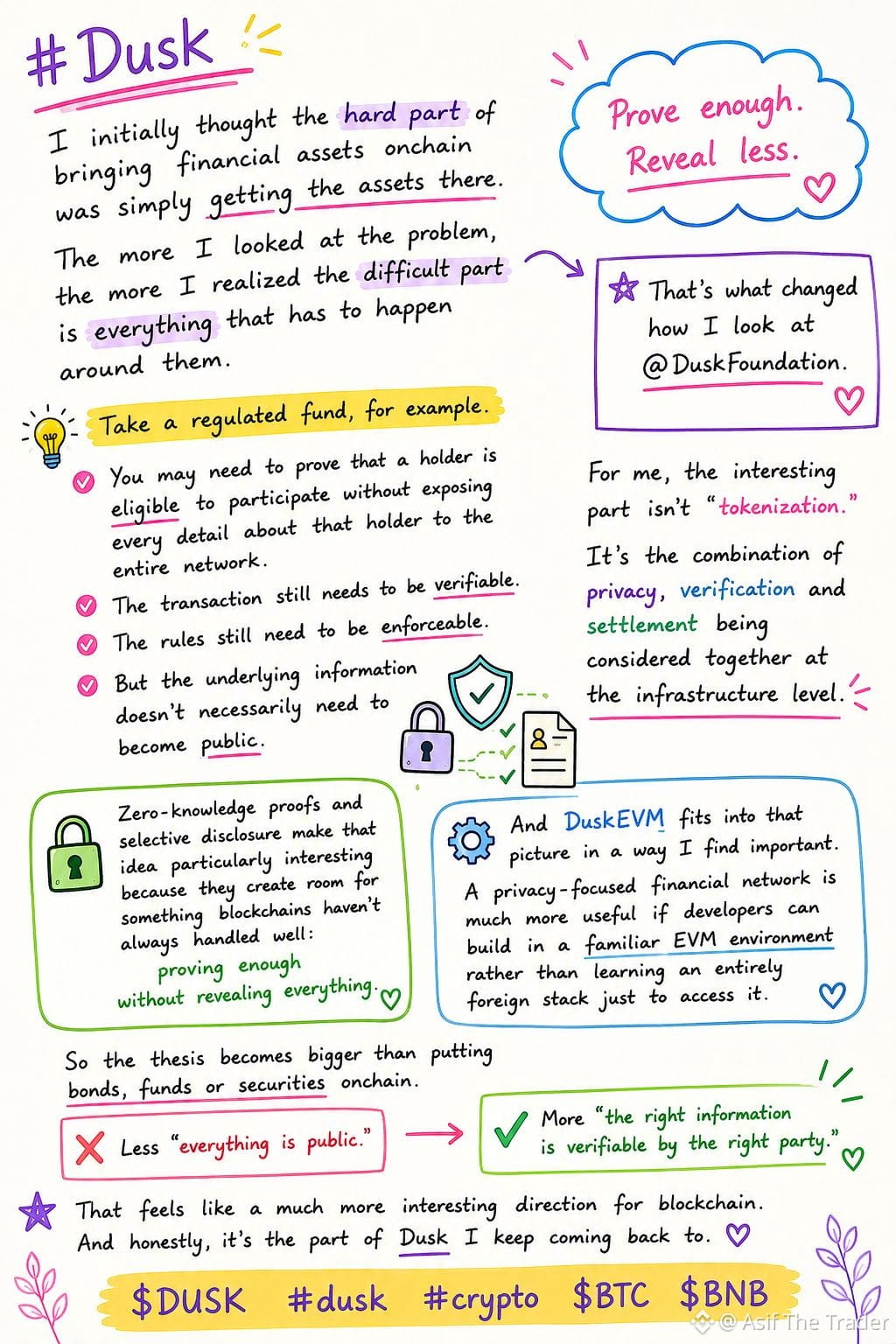
Zunächst dachte ich, der schwierigste Teil beim Onboarding von Finanzwerten auf die Blockchain sei einfach, die Assets dort hinzubekommen.
Je mehr ich mir das Problem ansah, desto klarer wurde mir: Der schwierige Teil ist alles, was rund um diese Assets passieren muss.
Nehmen wir zum Beispiel einen regulierten Fonds.
Vielleicht müssen Sie nachweisen, dass ein Inhaber teilnahmeberechtigt ist, ohne dabei jede einzelne Information über diesen Inhaber dem gesamten Netzwerk offenzulegen.
Die Transaktion muss dennoch nachprüfbar sein.
Die Regeln müssen weiterhin durchsetzbar sein.
Aber die zugrunde liegenden Informationen müssen nicht zwangsläufig öffentlich werden.
Dieser Perspektivwechsel war es, der
@Dusk_Foundation für mich noch interessanter gemacht hat.
Für mich liegt die eigentliche Chance nicht nur in „Tokenisierung“.
Sondern darin, Datenschutz, Verifikation und Abwicklung auf der Infrastrukturebene gemeinsam zu ermöglichen.
Zero-Knowledge-Proofs und selektive Offenlegung sind hier besonders spannend, weil sie auf ein Modell hindeuten, bei dem man beweisen kann, was wirklich zählt, ohne alles hinter dem Beweis preiszugeben.
Genug beweisen. Weniger offenlegen.
Und DuskEVM macht diese These noch praxisnäher.
Wenn Entwickler in einer vertrauten EVM-Umgebung arbeiten können, während sie für datenschutzorientierte Finanzinfrastruktur entwickeln, wird die Hürde, mit diesen Ideen zu experimentieren, deutlich geringer.
Deshalb glaube ich nicht, dass die größere Geschichte einfach darin besteht, Anleihen, Fonds oder Wertpapiere onchain zu bringen.
Es geht darum, was passiert, wenn die zugrunde liegende Finanzinfrastruktur von Anfang an um eine selektive Idee von Transparenz herum entworfen ist.
Nicht:
„Machen Sie alles öffentlich.“
Sondern:
„Machen Sie die richtige Information für die richtige Partei verifizierbar.“
Dieser Unterschied könnte am Ende viel stärker ins Gewicht fallen als die Tokenisierungs-Erzählung selbst.
$DUSK #dusk #crypto $BTC $BNB
{spot}(BTCUSDT)
{spot}(DUSKUSDT)
#Dusk
Zunächst dachte ich, der schwierigste Teil beim Onboarding von Finanzwerten auf die Blockchain sei einfach, die Assets dort hinzubekommen.
Je mehr ich mir das Problem ansah, desto klarer wurde mir: Der schwierige Teil ist alles, was rund um diese Assets passieren muss.
Nehmen wir zum Beispiel einen regulierten Fonds.
Vielleicht müssen Sie nachweisen, dass ein Inhaber teilnahmeberechtigt ist, ohne dabei jede einzelne Information über diesen Inhaber dem gesamten Netzwerk offenzulegen.
Die Transaktion muss dennoch nachprüfbar sein.
Die Regeln müssen weiterhin durchsetzbar sein.
Aber die zugrunde liegenden Informationen müssen nicht zwangsläufig öffentlich werden.
Dieser Perspektivwechsel war es, der
@Dusk für mich noch interessanter gemacht hat.
Für mich liegt die eigentliche Chance nicht nur in „Tokenisierung“.
Sondern darin, Datenschutz, Verifikation und Abwicklung auf der Infrastrukturebene gemeinsam zu ermöglichen.
Zero-Knowledge-Proofs und selektive Offenlegung sind hier besonders spannend, weil sie auf ein Modell hindeuten, bei dem man beweisen kann, was wirklich zählt, ohne alles hinter dem Beweis preiszugeben.
Genug beweisen. Weniger offenlegen.
Und DuskEVM macht diese These noch praxisnäher.
Wenn Entwickler in einer vertrauten EVM-Umgebung arbeiten können, während sie für datenschutzorientierte Finanzinfrastruktur entwickeln, wird die Hürde, mit diesen Ideen zu experimentieren, deutlich geringer.
Deshalb glaube ich nicht, dass die größere Geschichte einfach darin besteht, Anleihen, Fonds oder Wertpapiere onchain zu bringen.
Es geht darum, was passiert, wenn die zugrunde liegende Finanzinfrastruktur von Anfang an um eine selektive Idee von Transparenz herum entworfen ist.
Nicht:
„Machen Sie alles öffentlich.“
Sondern:
„Machen Sie die richtige Information für die richtige Partei verifizierbar.“
Dieser Unterschied könnte am Ende viel stärker ins Gewicht fallen als die Tokenisierungs-Erzählung selbst.
$DUSK #dusk #crypto $BTC $BNB
Zunächst dachte ich, der schwierigste Teil beim Onboarding von Finanzwerten auf die Blockchain sei einfach, die Assets dort hinzubekommen.
Je mehr ich mir das Problem ansah, desto klarer wurde mir: Der schwierige Teil ist alles, was rund um diese Assets passieren muss.
Nehmen wir zum Beispiel einen regulierten Fonds.
Vielleicht müssen Sie nachweisen, dass ein Inhaber teilnahmeberechtigt ist, ohne dabei jede einzelne Information über diesen Inhaber dem gesamten Netzwerk offenzulegen.
Die Transaktion muss dennoch nachprüfbar sein.
Die Regeln müssen weiterhin durchsetzbar sein.
Aber die zugrunde liegenden Informationen müssen nicht zwangsläufig öffentlich werden.
Dieser Perspektivwechsel war es, der
@Dusk für mich noch interessanter gemacht hat.
Für mich liegt die eigentliche Chance nicht nur in „Tokenisierung“.
Sondern darin, Datenschutz, Verifikation und Abwicklung auf der Infrastrukturebene gemeinsam zu ermöglichen.
Zero-Knowledge-Proofs und selektive Offenlegung sind hier besonders spannend, weil sie auf ein Modell hindeuten, bei dem man beweisen kann, was wirklich zählt, ohne alles hinter dem Beweis preiszugeben.
Genug beweisen. Weniger offenlegen.
Und DuskEVM macht diese These noch praxisnäher.
Wenn Entwickler in einer vertrauten EVM-Umgebung arbeiten können, während sie für datenschutzorientierte Finanzinfrastruktur entwickeln, wird die Hürde, mit diesen Ideen zu experimentieren, deutlich geringer.
Deshalb glaube ich nicht, dass die größere Geschichte einfach darin besteht, Anleihen, Fonds oder Wertpapiere onchain zu bringen.
Es geht darum, was passiert, wenn die zugrunde liegende Finanzinfrastruktur von Anfang an um eine selektive Idee von Transparenz herum entworfen ist.
Nicht:
„Machen Sie alles öffentlich.“
Sondern:
„Machen Sie die richtige Information für die richtige Partei verifizierbar.“
Dieser Unterschied könnte am Ende viel stärker ins Gewicht fallen als die Tokenisierungs-Erzählung selbst.
$DUSK #dusk #crypto $BTC $BNB
16
9
908
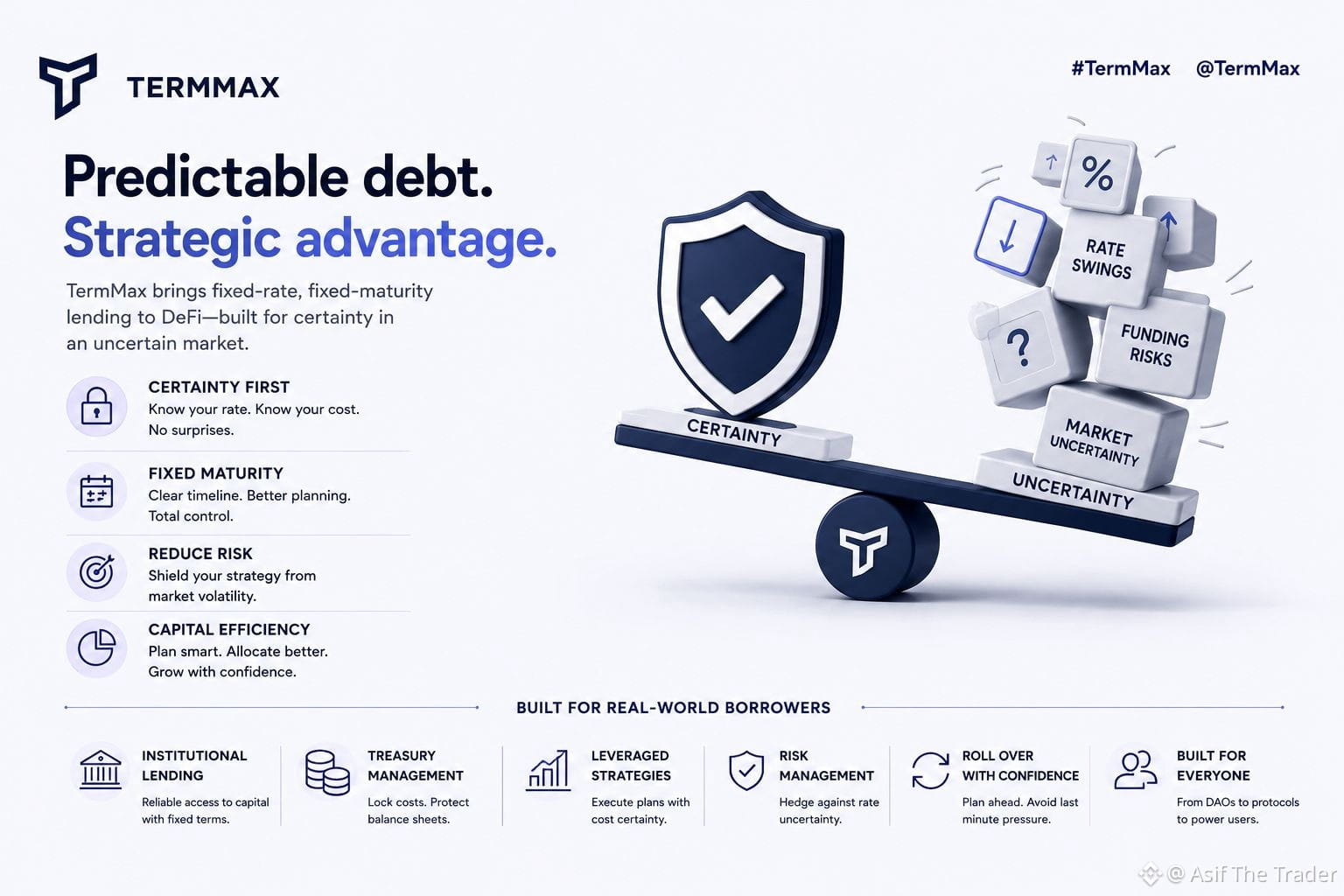
@termmax hat mich über einen anderen Aspekt der Kreditmärkte nachdenken lassen: den Wert von Sicherheit.
Eine feste Kreditstruktur kann auf den ersten Blick einschränkend wirken, insbesondere wenn sich die Marktbedingungen schnell ändern.
Aber Flexibilität hat auch ihren Preis.
Bei variabel verzinstem Fremdkapital sind Kreditnehmer ständig den wechselnden Zinssätzen und Finanzierungsbedingungen ausgesetzt. Eine Position mit festem Laufzeitprofil gibt einen Teil dieser Flexibilität auf, um im Gegenzug ein klareres Bild davon zu erhalten, wie die Finanzierung über ihre gesamte Laufzeit aussehen wird.
Das macht TermMax für mich interessant. Die Frage lautet nicht nur, ob festverzinsliches Leihen günstiger oder flexibler ist. Entscheidend ist, ob es den Verzicht auf ein gewisses Maß an Optionen wert ist, die Finanzierungskonditionen im Voraus zu kennen.
In ruhigen Märkten kann Flexibilität Priorität haben. Wenn sich die Zinssätze schwerer vorhersagen lassen, kann Sicherheit deutlich an Wert gewinnen.
Das ist der Teil, der mich an TermMax am meisten fasziniert: Sicherheit ist nicht nur ein Preissignal. Sie kann das eigentliche Produkt sein – die Möglichkeit, zu wissen, wie sich Ihre Schulden darstellen, bevor der Markt für Sie entscheidet.
#TermMax
{spot}(BTCUSDT)
{spot}(BNBUSDT)
@TermMax hat mich über einen anderen Aspekt der Kreditmärkte nachdenken lassen: den Wert von Sicherheit.
Eine feste Kreditstruktur kann auf den ersten Blick einschränkend wirken, insbesondere wenn sich die Marktbedingungen schnell ändern.
Aber Flexibilität hat auch ihren Preis.
Bei variabel verzinstem Fremdkapital sind Kreditnehmer ständig den wechselnden Zinssätzen und Finanzierungsbedingungen ausgesetzt. Eine Position mit festem Laufzeitprofil gibt einen Teil dieser Flexibilität auf, um im Gegenzug ein klareres Bild davon zu erhalten, wie die Finanzierung über ihre gesamte Laufzeit aussehen wird.
Das macht TermMax für mich interessant. Die Frage lautet nicht nur, ob festverzinsliches Leihen günstiger oder flexibler ist. Entscheidend ist, ob es den Verzicht auf ein gewisses Maß an Optionen wert ist, die Finanzierungskonditionen im Voraus zu kennen.
In ruhigen Märkten kann Flexibilität Priorität haben. Wenn sich die Zinssätze schwerer vorhersagen lassen, kann Sicherheit deutlich an Wert gewinnen.
Das ist der Teil, der mich an TermMax am meisten fasziniert: Sicherheit ist nicht nur ein Preissignal. Sie kann das eigentliche Produkt sein – die Möglichkeit, zu wissen, wie sich Ihre Schulden darstellen, bevor der Markt für Sie entscheidet.
#TermMax
Eine feste Kreditstruktur kann auf den ersten Blick einschränkend wirken, insbesondere wenn sich die Marktbedingungen schnell ändern.
Aber Flexibilität hat auch ihren Preis.
Bei variabel verzinstem Fremdkapital sind Kreditnehmer ständig den wechselnden Zinssätzen und Finanzierungsbedingungen ausgesetzt. Eine Position mit festem Laufzeitprofil gibt einen Teil dieser Flexibilität auf, um im Gegenzug ein klareres Bild davon zu erhalten, wie die Finanzierung über ihre gesamte Laufzeit aussehen wird.
Das macht TermMax für mich interessant. Die Frage lautet nicht nur, ob festverzinsliches Leihen günstiger oder flexibler ist. Entscheidend ist, ob es den Verzicht auf ein gewisses Maß an Optionen wert ist, die Finanzierungskonditionen im Voraus zu kennen.
In ruhigen Märkten kann Flexibilität Priorität haben. Wenn sich die Zinssätze schwerer vorhersagen lassen, kann Sicherheit deutlich an Wert gewinnen.
Das ist der Teil, der mich an TermMax am meisten fasziniert: Sicherheit ist nicht nur ein Preissignal. Sie kann das eigentliche Produkt sein – die Möglichkeit, zu wissen, wie sich Ihre Schulden darstellen, bevor der Markt für Sie entscheidet.
#TermMax
10
5
83
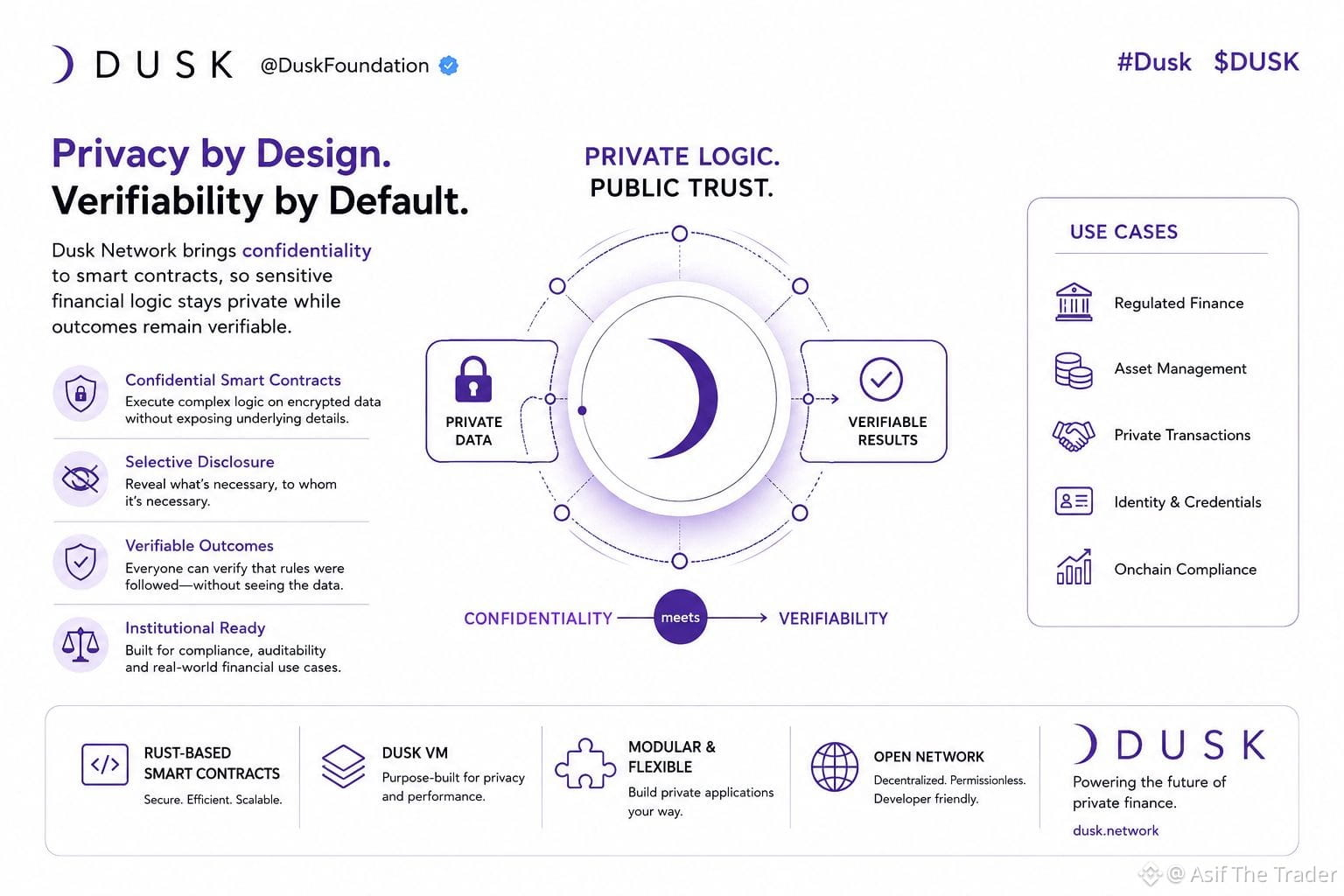
Privatsphäre auf einer Blockchain sollte nicht bedeuten, dass man auf die Möglichkeit verzichtet, zu überprüfen, was passiert ist.
Diese Spannung macht Dusk für mich so interessant.
Traditionelle öffentliche Ledger sind großartig darin, Aktivität nachvollziehbar zu machen, aber Finanzanwendungen beschäftigen sich oft mit Informationen, die einfach nicht für alle sichtbar sein sollten.
@Dusk_Foundation geht einen anderen Weg, indem es Vertraulichkeit direkt in die Smart-Contract-Ebene bringt.
Das eröffnet eine weitaus praktischere Möglichkeit: Anwendungen, bei denen sensible finanzielle Vorgänge geschützt bleiben können, während das Netzwerk trotzdem die Regeln durchsetzen und das Ergebnis validieren kann.
Das ist eine viel größere Idee als nur das Verstecken von Wallet-Guthaben.
Es geht darum, finanzielle Infrastruktur aufzubauen, bei der Privatsphäre und Nachvollziehbarkeit keine Gegensätze sein müssen.
Das ist der Teil von Dusk, den ich am genauesten beobachte.
@Dusk_Foundation $DUSK #dusk
{spot}(DUSKUSDT)
{spot}(BTCUSDT)
Privatsphäre auf einer Blockchain sollte nicht bedeuten, dass man auf die Möglichkeit verzichtet, zu überprüfen, was passiert ist.
Diese Spannung macht Dusk für mich so interessant.
Traditionelle öffentliche Ledger sind großartig darin, Aktivität nachvollziehbar zu machen, aber Finanzanwendungen beschäftigen sich oft mit Informationen, die einfach nicht für alle sichtbar sein sollten.
@Dusk geht einen anderen Weg, indem es Vertraulichkeit direkt in die Smart-Contract-Ebene bringt.
Das eröffnet eine weitaus praktischere Möglichkeit: Anwendungen, bei denen sensible finanzielle Vorgänge geschützt bleiben können, während das Netzwerk trotzdem die Regeln durchsetzen und das Ergebnis validieren kann.
Das ist eine viel größere Idee als nur das Verstecken von Wallet-Guthaben.
Es geht darum, finanzielle Infrastruktur aufzubauen, bei der Privatsphäre und Nachvollziehbarkeit keine Gegensätze sein müssen.
Das ist der Teil von Dusk, den ich am genauesten beobachte.
@Dusk $DUSK #dusk
Diese Spannung macht Dusk für mich so interessant.
Traditionelle öffentliche Ledger sind großartig darin, Aktivität nachvollziehbar zu machen, aber Finanzanwendungen beschäftigen sich oft mit Informationen, die einfach nicht für alle sichtbar sein sollten.
@Dusk geht einen anderen Weg, indem es Vertraulichkeit direkt in die Smart-Contract-Ebene bringt.
Das eröffnet eine weitaus praktischere Möglichkeit: Anwendungen, bei denen sensible finanzielle Vorgänge geschützt bleiben können, während das Netzwerk trotzdem die Regeln durchsetzen und das Ergebnis validieren kann.
Das ist eine viel größere Idee als nur das Verstecken von Wallet-Guthaben.
Es geht darum, finanzielle Infrastruktur aufzubauen, bei der Privatsphäre und Nachvollziehbarkeit keine Gegensätze sein müssen.
Das ist der Teil von Dusk, den ich am genauesten beobachte.
@Dusk $DUSK #dusk
17
6
1.8k
#termmax @termmax
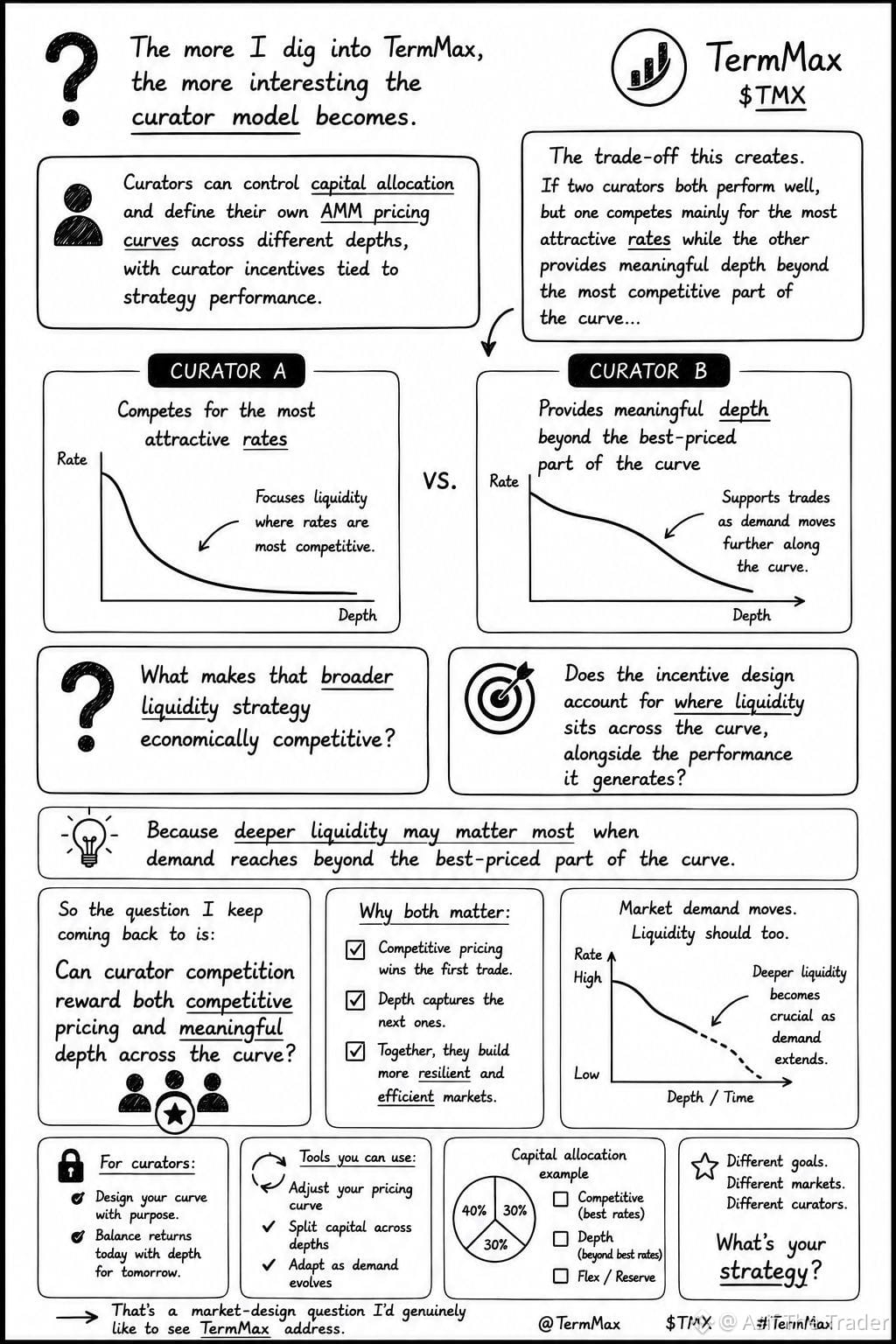
Je tiefer ich in TermMax eintauche, desto interessanter wird das Curator-Modell.
Curatoren können die Kapitalallokation steuern und ihre eigenen AMM-Preis-Kurven über unterschiedliche Tiefen hinweg definieren, wobei die Anreize der Curatoren an die Performance der Strategie gebunden sind.
Was mir dabei besonders auffällt, ist der Trade-off, den das erzeugt.
Wenn zwei Curatoren beide gut abschneiden, aber einer konkurriert hauptsächlich um die attraktivsten Konditionen, während der andere eine bedeutsame Tiefe über den kompetitivsten Teil der Kurve hinaus bereitstellt: Was macht diese breitere Liquiditätsstrategie wirtschaftlich wettbewerbsfähig?
Und noch wichtiger: Berücksichtigt das Anreizdesign, wo sich die Liquidität entlang der Kurve befindet – zusammen mit der Performance, die sie erzeugt?
Denn tiefere Liquidität kann am wichtigsten sein, wenn die Nachfrage über den am besten bepreisten Teil der Kurve hinausgeht.
Daher ist die Frage, zu der ich immer wieder zurückkomme:
Kann der Wettbewerb zwischen Curatoren sowohl wettbewerbsfähige Preisgestaltung als auch eine sinnvolle Tiefe über die gesamte Kurve hinweg belohnen?
Das ist eine Frage zum Marktdesign, die ich wirklich gerne sehen würde, dass TermMax adressiert.
#termmax @TermMax
Je tiefer ich in TermMax eintauche, desto interessanter wird das Curator-Modell.
Curatoren können die Kapitalallokation steuern und ihre eigenen AMM-Preis-Kurven über unterschiedliche Tiefen hinweg definieren, wobei die Anreize der Curatoren an die Performance der Strategie gebunden sind.
Was mir dabei besonders auffällt, ist der Trade-off, den das erzeugt.
Wenn zwei Curatoren beide gut abschneiden, aber einer konkurriert hauptsächlich um die attraktivsten Konditionen, während der andere eine bedeutsame Tiefe über den kompetitivsten Teil der Kurve hinaus bereitstellt: Was macht diese breitere Liquiditätsstrategie wirtschaftlich wettbewerbsfähig?
Und noch wichtiger: Berücksichtigt das Anreizdesign, wo sich die Liquidität entlang der Kurve befindet – zusammen mit der Performance, die sie erzeugt?
Denn tiefere Liquidität kann am wichtigsten sein, wenn die Nachfrage über den am besten bepreisten Teil der Kurve hinausgeht.
Daher ist die Frage, zu der ich immer wieder zurückkomme:
Kann der Wettbewerb zwischen Curatoren sowohl wettbewerbsfähige Preisgestaltung als auch eine sinnvolle Tiefe über die gesamte Kurve hinweg belohnen?
Das ist eine Frage zum Marktdesign, die ich wirklich gerne sehen würde, dass TermMax adressiert.
Je tiefer ich in TermMax eintauche, desto interessanter wird das Curator-Modell.
Curatoren können die Kapitalallokation steuern und ihre eigenen AMM-Preis-Kurven über unterschiedliche Tiefen hinweg definieren, wobei die Anreize der Curatoren an die Performance der Strategie gebunden sind.
Was mir dabei besonders auffällt, ist der Trade-off, den das erzeugt.
Wenn zwei Curatoren beide gut abschneiden, aber einer konkurriert hauptsächlich um die attraktivsten Konditionen, während der andere eine bedeutsame Tiefe über den kompetitivsten Teil der Kurve hinaus bereitstellt: Was macht diese breitere Liquiditätsstrategie wirtschaftlich wettbewerbsfähig?
Und noch wichtiger: Berücksichtigt das Anreizdesign, wo sich die Liquidität entlang der Kurve befindet – zusammen mit der Performance, die sie erzeugt?
Denn tiefere Liquidität kann am wichtigsten sein, wenn die Nachfrage über den am besten bepreisten Teil der Kurve hinausgeht.
Daher ist die Frage, zu der ich immer wieder zurückkomme:
Kann der Wettbewerb zwischen Curatoren sowohl wettbewerbsfähige Preisgestaltung als auch eine sinnvolle Tiefe über die gesamte Kurve hinweg belohnen?
Das ist eine Frage zum Marktdesign, die ich wirklich gerne sehen würde, dass TermMax adressiert.
7
5
83
·
--
Bärisch
#dusk $DUSK
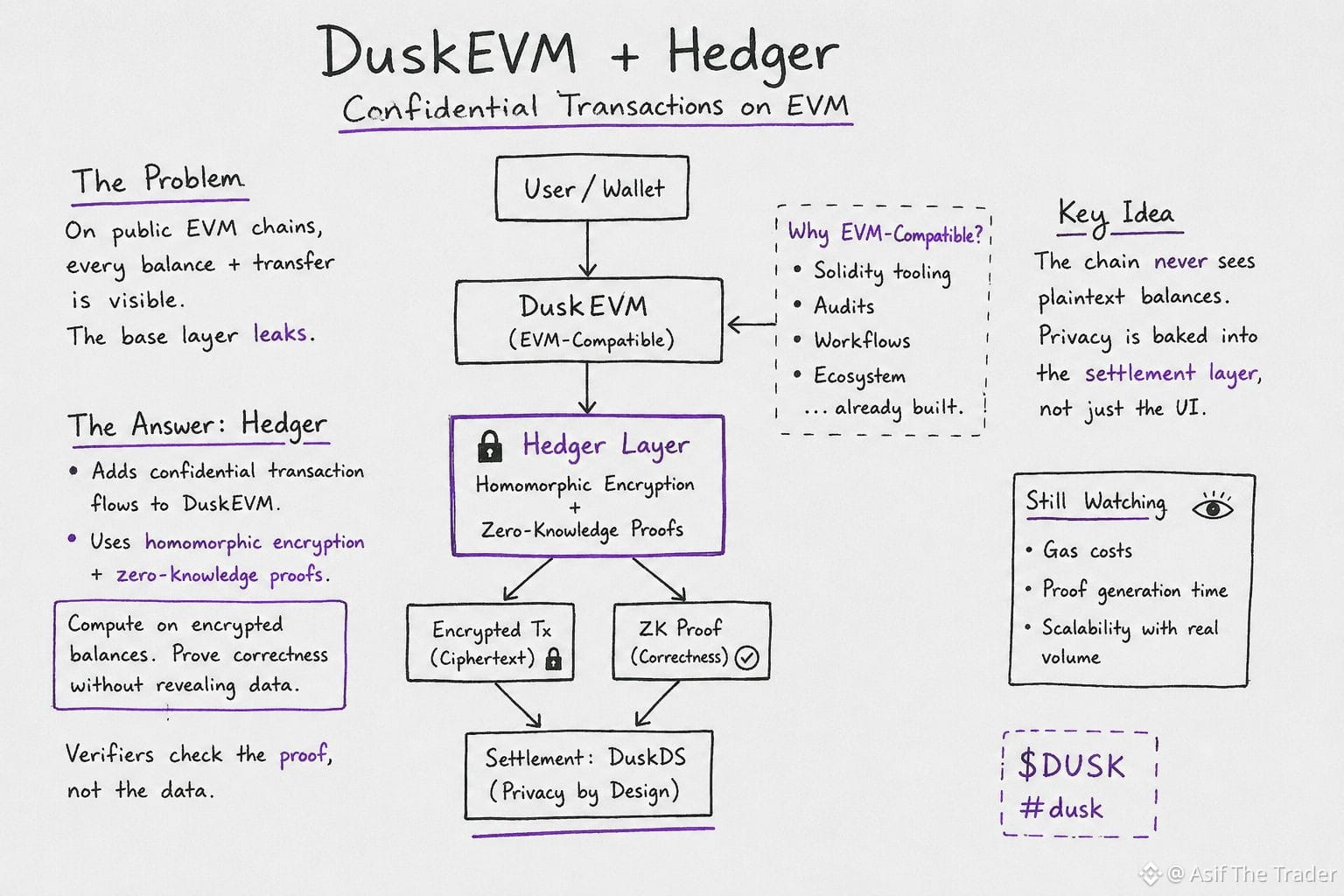
Ich habe diese Woche etwas Zeit damit verbracht zu verstehen, warum @Dusk_Foundation nicht einfach Datenschutz als Aufsatz an eine normale EVM-Kette „drangehängt“ hat. Und es läuft auf ein Problem hinaus, das die meisten übersehen: In einer öffentlichen EVM sind jeder Kontostand und jede Überweisung für alle sichtbar, die hinschauen – selbst wenn man es in eine „private“ App darüber einbettet. Die Basisschicht gibt die Daten preis.
Dusk hat darauf die Antwort Hedger – es fügt vertrauliche Transaktionsabläufe direkt zu DuskEVM hinzu, mithilfe homomorpher Verschlüsselung in Kombination mit Zero-Knowledge-Proofs. Die Idee: Ein Vertrag kann über verschlüsselte Guthaben rechnen und dabei dennoch einen Beweis liefern, dass die Berechnung korrekt durchgeführt wurde, ohne jemals die zugrunde liegenden Zahlen zu entschlüsseln. Prüfer prüfen den Beweis – nicht die Daten. Das ist eine ganz andere Garantie als „das Frontend versteckt deinen Kontostand“: Es bedeutet, dass der Chain selbst die Klartextwerte gar nicht erst vorliegen, die sie jemals leaken könnte.
Warum das auf einer EVM-kompatiblen Schicht einsetzen statt auf einer komplett eigenen VM? Weil Institutionen bereits seit einem Jahrzehnt Solidity-Tools, Audits und Workflows aufgebaut haben. DuskEVM (OP Stack, Rückkehr zu DuskDS) ermöglicht, dass dieses Ökosystem bestehen bleibt – während Hedger verändert, was die Basisschicht überhaupt sehen darf. Datenschutz wird damit zu einer Eigenschaft des Settlements, nicht zu einem UI-Trick.
Ich beobachte weiterhin, wie sich die Gas-Kosten und die Proof-Generierung skalieren, sobald echter Transaktionsdurchsatz einsetzt – aber die Architektur selbst ist die spannendere Story als die Preisgrafik im Moment.
$DUSK #dusk
{spot}(DUSKUSDT)
#dusk $DUSK
Ich habe diese Woche etwas Zeit damit verbracht zu verstehen, warum @Dusk nicht einfach Datenschutz als Aufsatz an eine normale EVM-Kette „drangehängt“ hat. Und es läuft auf ein Problem hinaus, das die meisten übersehen: In einer öffentlichen EVM sind jeder Kontostand und jede Überweisung für alle sichtbar, die hinschauen – selbst wenn man es in eine „private“ App darüber einbettet. Die Basisschicht gibt die Daten preis.
Dusk hat darauf die Antwort Hedger – es fügt vertrauliche Transaktionsabläufe direkt zu DuskEVM hinzu, mithilfe homomorpher Verschlüsselung in Kombination mit Zero-Knowledge-Proofs. Die Idee: Ein Vertrag kann über verschlüsselte Guthaben rechnen und dabei dennoch einen Beweis liefern, dass die Berechnung korrekt durchgeführt wurde, ohne jemals die zugrunde liegenden Zahlen zu entschlüsseln. Prüfer prüfen den Beweis – nicht die Daten. Das ist eine ganz andere Garantie als „das Frontend versteckt deinen Kontostand“: Es bedeutet, dass der Chain selbst die Klartextwerte gar nicht erst vorliegen, die sie jemals leaken könnte.
Warum das auf einer EVM-kompatiblen Schicht einsetzen statt auf einer komplett eigenen VM? Weil Institutionen bereits seit einem Jahrzehnt Solidity-Tools, Audits und Workflows aufgebaut haben. DuskEVM (OP Stack, Rückkehr zu DuskDS) ermöglicht, dass dieses Ökosystem bestehen bleibt – während Hedger verändert, was die Basisschicht überhaupt sehen darf. Datenschutz wird damit zu einer Eigenschaft des Settlements, nicht zu einem UI-Trick.
Ich beobachte weiterhin, wie sich die Gas-Kosten und die Proof-Generierung skalieren, sobald echter Transaktionsdurchsatz einsetzt – aber die Architektur selbst ist die spannendere Story als die Preisgrafik im Moment.
$DUSK #dusk
Ich habe diese Woche etwas Zeit damit verbracht zu verstehen, warum @Dusk nicht einfach Datenschutz als Aufsatz an eine normale EVM-Kette „drangehängt“ hat. Und es läuft auf ein Problem hinaus, das die meisten übersehen: In einer öffentlichen EVM sind jeder Kontostand und jede Überweisung für alle sichtbar, die hinschauen – selbst wenn man es in eine „private“ App darüber einbettet. Die Basisschicht gibt die Daten preis.
Dusk hat darauf die Antwort Hedger – es fügt vertrauliche Transaktionsabläufe direkt zu DuskEVM hinzu, mithilfe homomorpher Verschlüsselung in Kombination mit Zero-Knowledge-Proofs. Die Idee: Ein Vertrag kann über verschlüsselte Guthaben rechnen und dabei dennoch einen Beweis liefern, dass die Berechnung korrekt durchgeführt wurde, ohne jemals die zugrunde liegenden Zahlen zu entschlüsseln. Prüfer prüfen den Beweis – nicht die Daten. Das ist eine ganz andere Garantie als „das Frontend versteckt deinen Kontostand“: Es bedeutet, dass der Chain selbst die Klartextwerte gar nicht erst vorliegen, die sie jemals leaken könnte.
Warum das auf einer EVM-kompatiblen Schicht einsetzen statt auf einer komplett eigenen VM? Weil Institutionen bereits seit einem Jahrzehnt Solidity-Tools, Audits und Workflows aufgebaut haben. DuskEVM (OP Stack, Rückkehr zu DuskDS) ermöglicht, dass dieses Ökosystem bestehen bleibt – während Hedger verändert, was die Basisschicht überhaupt sehen darf. Datenschutz wird damit zu einer Eigenschaft des Settlements, nicht zu einem UI-Trick.
Ich beobachte weiterhin, wie sich die Gas-Kosten und die Proof-Generierung skalieren, sobald echter Transaktionsdurchsatz einsetzt – aber die Architektur selbst ist die spannendere Story als die Preisgrafik im Moment.
$DUSK #dusk
9
5
60
·
--
Bullisch
#termmax @termmax
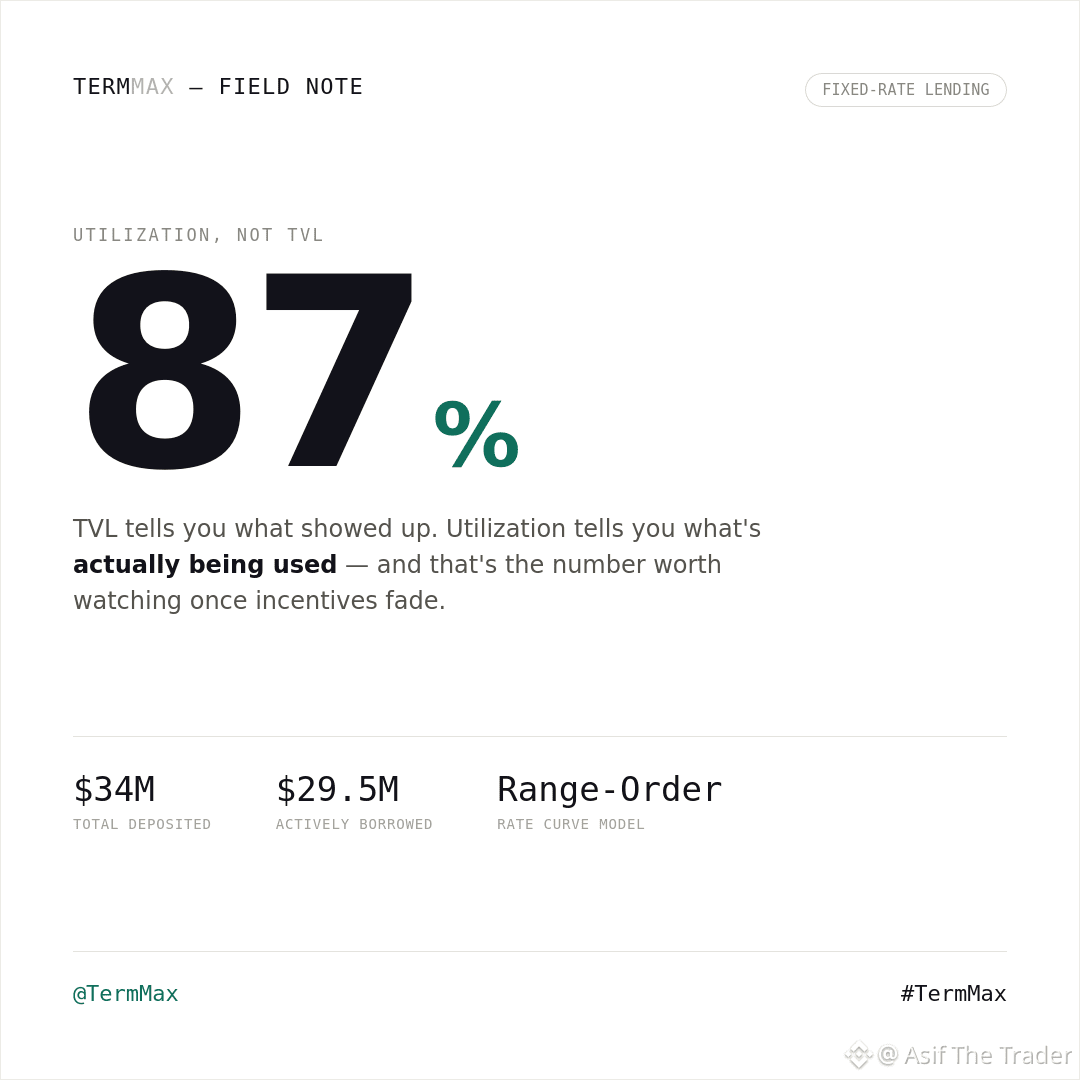
TVL zeigt dir, was aufgetaucht ist. Utilization zeigt dir, was tatsächlich genutzt wird — und heute machen TermMax's Zahlen diese Lücke bemerkenswert.
34 Mio. $ eingezahlt, ~29,5 Mio. $ ausgeliehen, nahe bei 87% Auslastung. Das ist ein aktiv genutzter Pool, nicht nur geparktes Liquidität.
Auffällig ist dabei die Struktur darunter. Anstatt einen gemeinsamen Pool-Zinssatz zu haben, wählen Kreditgeber ihre eigene Zinskurve über Range-Orders. So sind diese 87% nicht eine einheitliche Zahl — sie sind ein Aggregat aus vielen einzelnen Entscheidungen für Kurven.
Frühe Tage: Eine Tagesdatenlage ist noch kein Trend. Was ich als Nächstes beobachte, ist, ob diese Auslastung bestehen bleibt, wenn Anreizprogramme langsam auslaufen.
#TermMax @termmax
#termmax @TermMax
TVL zeigt dir, was aufgetaucht ist. Utilization zeigt dir, was tatsächlich genutzt wird — und heute machen TermMax's Zahlen diese Lücke bemerkenswert.
34 Mio. $ eingezahlt, ~29,5 Mio. $ ausgeliehen, nahe bei 87% Auslastung. Das ist ein aktiv genutzter Pool, nicht nur geparktes Liquidität.
Auffällig ist dabei die Struktur darunter. Anstatt einen gemeinsamen Pool-Zinssatz zu haben, wählen Kreditgeber ihre eigene Zinskurve über Range-Orders. So sind diese 87% nicht eine einheitliche Zahl — sie sind ein Aggregat aus vielen einzelnen Entscheidungen für Kurven.
Frühe Tage: Eine Tagesdatenlage ist noch kein Trend. Was ich als Nächstes beobachte, ist, ob diese Auslastung bestehen bleibt, wenn Anreizprogramme langsam auslaufen.
#TermMax @TermMax
TVL zeigt dir, was aufgetaucht ist. Utilization zeigt dir, was tatsächlich genutzt wird — und heute machen TermMax's Zahlen diese Lücke bemerkenswert.
34 Mio. $ eingezahlt, ~29,5 Mio. $ ausgeliehen, nahe bei 87% Auslastung. Das ist ein aktiv genutzter Pool, nicht nur geparktes Liquidität.
Auffällig ist dabei die Struktur darunter. Anstatt einen gemeinsamen Pool-Zinssatz zu haben, wählen Kreditgeber ihre eigene Zinskurve über Range-Orders. So sind diese 87% nicht eine einheitliche Zahl — sie sind ein Aggregat aus vielen einzelnen Entscheidungen für Kurven.
Frühe Tage: Eine Tagesdatenlage ist noch kein Trend. Was ich als Nächstes beobachte, ist, ob diese Auslastung bestehen bleibt, wenn Anreizprogramme langsam auslaufen.
#TermMax @TermMax
9
5
88
@termmax #TermMax
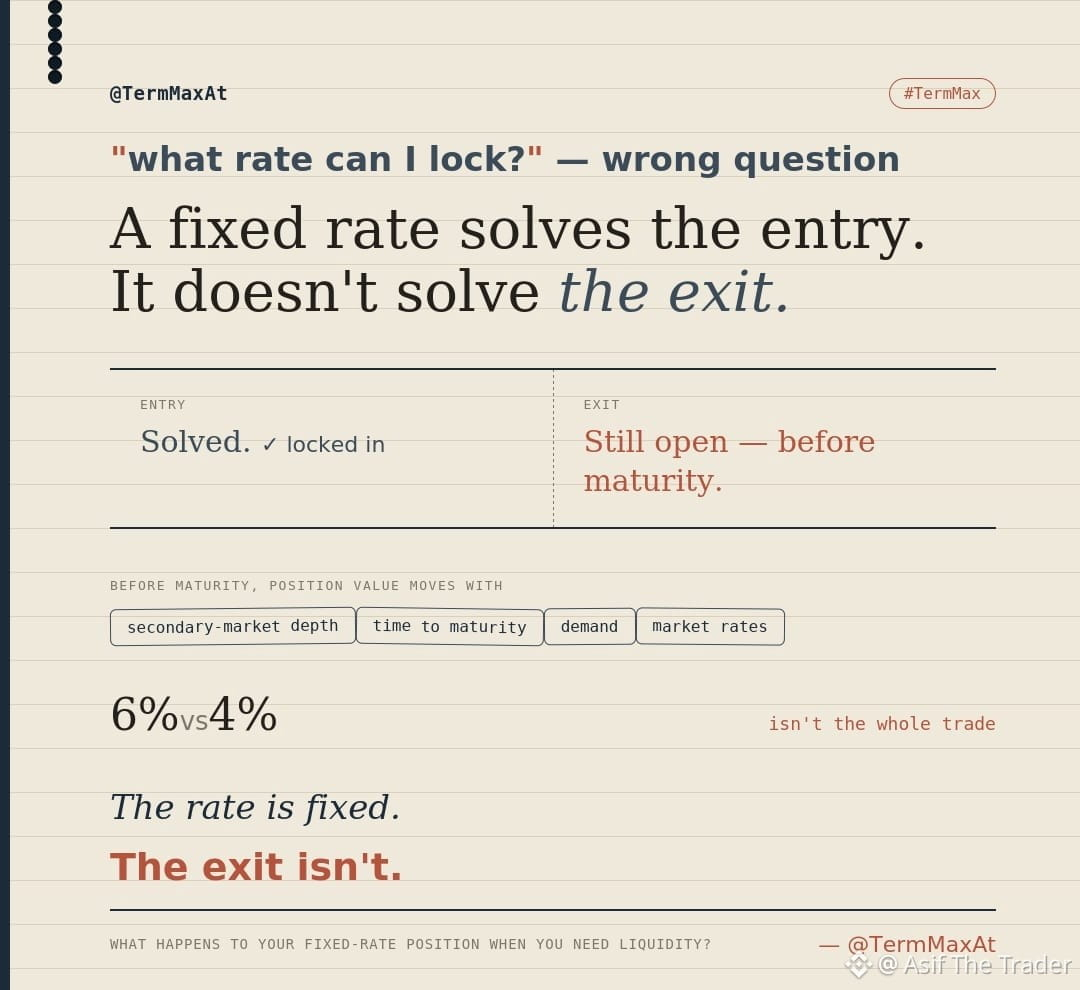
Jeder fragt: „Welchen Zinssatz kann ich bei TermMax festschreiben?“
Aber ich habe darüber nachgedacht, was nach dem Handel kommt:
Was passiert, wenn ich aussteigen will?
Ein fester Zinssatz löst das Einstiegsproblem.
Er löst nicht automatisch die Frage nach dem Ausstieg.
Vor Fälligkeit kann sich der Wert der Position ändern – abhängig von der Tiefe im Sekundärmarkt, der Restlaufzeit, der Nachfrage und den Marktzinsen.
Daher ist 6 % vs. 4 % nicht die ganze Geschichte.
Die spannendere Frage lautet:
Was passiert mit dieser Position mit festem Zinssatz, wenn Sie Liquidität brauchen?
Der Zinssatz kann fest sein.
Der Ausstieg nicht.
@TermMax #TermMax
Jeder fragt: „Welchen Zinssatz kann ich bei TermMax festschreiben?“
Aber ich habe darüber nachgedacht, was nach dem Handel kommt:
Was passiert, wenn ich aussteigen will?
Ein fester Zinssatz löst das Einstiegsproblem.
Er löst nicht automatisch die Frage nach dem Ausstieg.
Vor Fälligkeit kann sich der Wert der Position ändern – abhängig von der Tiefe im Sekundärmarkt, der Restlaufzeit, der Nachfrage und den Marktzinsen.
Daher ist 6 % vs. 4 % nicht die ganze Geschichte.
Die spannendere Frage lautet:
Was passiert mit dieser Position mit festem Zinssatz, wenn Sie Liquidität brauchen?
Der Zinssatz kann fest sein.
Der Ausstieg nicht.
Jeder fragt: „Welchen Zinssatz kann ich bei TermMax festschreiben?“
Aber ich habe darüber nachgedacht, was nach dem Handel kommt:
Was passiert, wenn ich aussteigen will?
Ein fester Zinssatz löst das Einstiegsproblem.
Er löst nicht automatisch die Frage nach dem Ausstieg.
Vor Fälligkeit kann sich der Wert der Position ändern – abhängig von der Tiefe im Sekundärmarkt, der Restlaufzeit, der Nachfrage und den Marktzinsen.
Daher ist 6 % vs. 4 % nicht die ganze Geschichte.
Die spannendere Frage lautet:
Was passiert mit dieser Position mit festem Zinssatz, wenn Sie Liquidität brauchen?
Der Zinssatz kann fest sein.
Der Ausstieg nicht.
5
5
57
Verifiziert
@Dusk_Foundation $DUSK #dusk
Früher dachte ich, ein Blockchain-System institutionstauglich zu machen, ginge vor allem um EVM-Kompatibilität.
Gib Entwicklern Solidity-Tools, halte die UX vertraut – und die Akzeptanz würde folgen.
Je mehr ich mir DuskEVM anschaue, desto mehr glaube ich, dass das eigentliche Problem tatsächlich Privatsphäre ist.
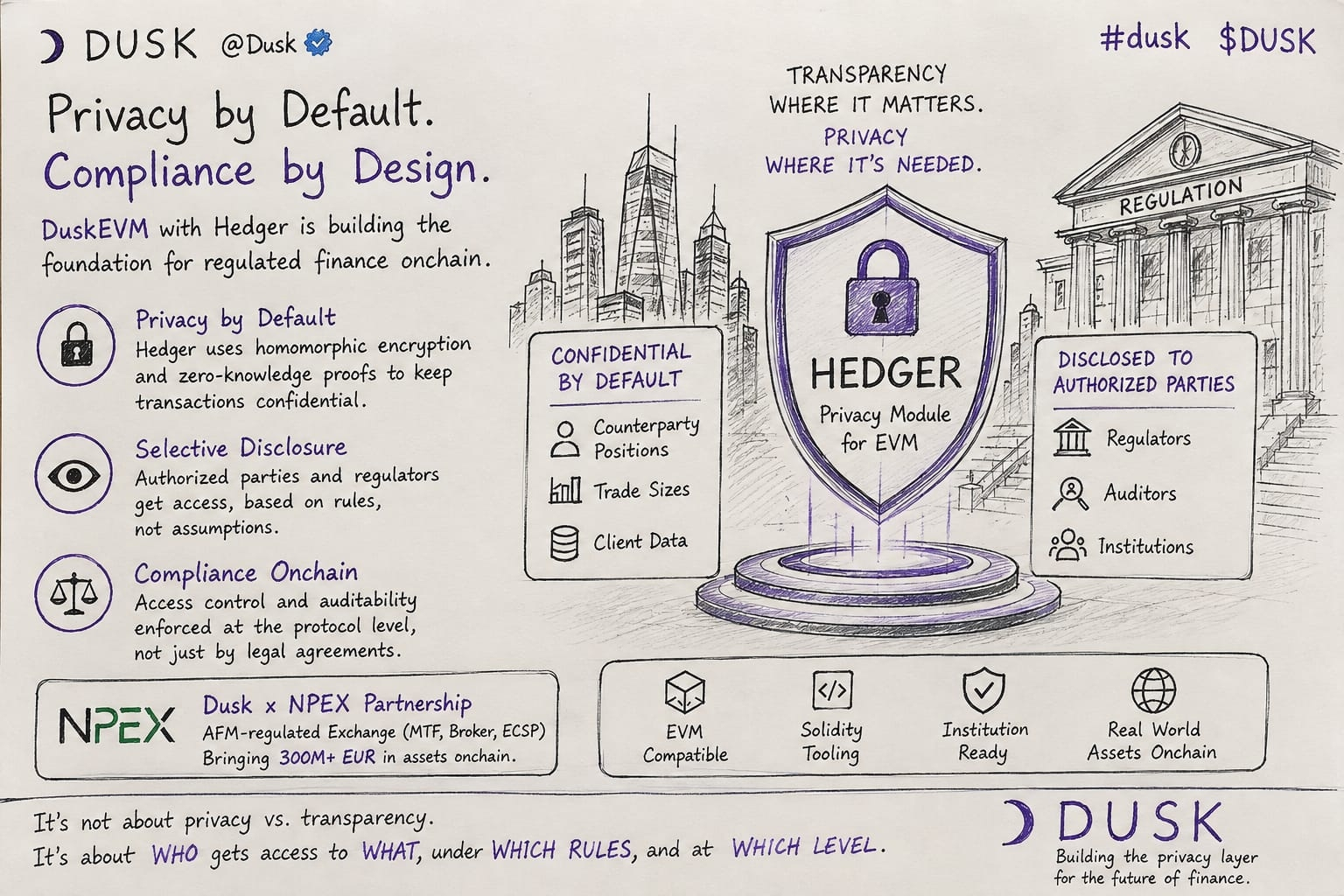
Regulierte Finanzen brauchen einen Mittelweg. Man kann nicht jede Transaktionsgröße, jede Position oder jedes Stück Kundendaten auf ein vollständig transparentes Ledger schreiben. Aber man kann auch nicht alles unsichtbar machen.
Aufsichtsbehörden, Prüfer und autorisierte Teilnehmer brauchen weiterhin die richtigen Informationen zur richtigen Zeit.
Genau da wird Hedger interessant.
Dusk stellt Hedger als ein Privacy-Modul für EVM vor, das Transaktionen vertraulich hält und gleichzeitig selektive Offenlegung ermöglicht, wenn Zugriff erforderlich ist.
Und das verändert, wie ich über Privatsphäre nachdenke:
Privatsphäre bedeutet nicht, alles zu verstecken.
Es bedeutet, zu kontrollieren, wer was sehen kann, wann er es sehen kann und warum.
Dieser letzte Punkt ist für regulierte Märkte besonders wichtig.
Die Verbindung zu NPEX macht die Idee noch spannender. In Kombination mit dem Vorstoß, reale Vermögenswerte onchain zu bringen, deutet das auf einen Use Case hin, der über die typische krypto-native Zielgruppe hinausgeht.
Trotzdem würde ich nicht sagen, das Problem sei gelöst.
Der echte Test ist, ob diese Architektur Aktivität im institutionellen Maßstab bewältigen kann – und dabei ernsthafte Anforderungen an Offenlegung, Audit und Compliance erfüllt.
Darauf werde ich achten.
Denn vielleicht lautet die eigentliche Frage nicht:
Privatsphäre oder Transparenz?
Vielleicht lautet sie:
Wer bekommt Zugriff auf was – nach welchen Regeln und auf welcher Ebene?
@Dusk_Foundation $DUSK #dusk
@Dusk $DUSK #dusk
Früher dachte ich, ein Blockchain-System institutionstauglich zu machen, ginge vor allem um EVM-Kompatibilität.
Gib Entwicklern Solidity-Tools, halte die UX vertraut – und die Akzeptanz würde folgen.
Je mehr ich mir DuskEVM anschaue, desto mehr glaube ich, dass das eigentliche Problem tatsächlich Privatsphäre ist.
Regulierte Finanzen brauchen einen Mittelweg. Man kann nicht jede Transaktionsgröße, jede Position oder jedes Stück Kundendaten auf ein vollständig transparentes Ledger schreiben. Aber man kann auch nicht alles unsichtbar machen.
Aufsichtsbehörden, Prüfer und autorisierte Teilnehmer brauchen weiterhin die richtigen Informationen zur richtigen Zeit.
Genau da wird Hedger interessant.
Dusk stellt Hedger als ein Privacy-Modul für EVM vor, das Transaktionen vertraulich hält und gleichzeitig selektive Offenlegung ermöglicht, wenn Zugriff erforderlich ist.
Und das verändert, wie ich über Privatsphäre nachdenke:
Privatsphäre bedeutet nicht, alles zu verstecken.
Es bedeutet, zu kontrollieren, wer was sehen kann, wann er es sehen kann und warum.
Dieser letzte Punkt ist für regulierte Märkte besonders wichtig.
Die Verbindung zu NPEX macht die Idee noch spannender. In Kombination mit dem Vorstoß, reale Vermögenswerte onchain zu bringen, deutet das auf einen Use Case hin, der über die typische krypto-native Zielgruppe hinausgeht.
Trotzdem würde ich nicht sagen, das Problem sei gelöst.
Der echte Test ist, ob diese Architektur Aktivität im institutionellen Maßstab bewältigen kann – und dabei ernsthafte Anforderungen an Offenlegung, Audit und Compliance erfüllt.
Darauf werde ich achten.
Denn vielleicht lautet die eigentliche Frage nicht:
Privatsphäre oder Transparenz?
Vielleicht lautet sie:
Wer bekommt Zugriff auf was – nach welchen Regeln und auf welcher Ebene?
@Dusk $DUSK #dusk
Früher dachte ich, ein Blockchain-System institutionstauglich zu machen, ginge vor allem um EVM-Kompatibilität.
Gib Entwicklern Solidity-Tools, halte die UX vertraut – und die Akzeptanz würde folgen.
Je mehr ich mir DuskEVM anschaue, desto mehr glaube ich, dass das eigentliche Problem tatsächlich Privatsphäre ist.
Regulierte Finanzen brauchen einen Mittelweg. Man kann nicht jede Transaktionsgröße, jede Position oder jedes Stück Kundendaten auf ein vollständig transparentes Ledger schreiben. Aber man kann auch nicht alles unsichtbar machen.
Aufsichtsbehörden, Prüfer und autorisierte Teilnehmer brauchen weiterhin die richtigen Informationen zur richtigen Zeit.
Genau da wird Hedger interessant.
Dusk stellt Hedger als ein Privacy-Modul für EVM vor, das Transaktionen vertraulich hält und gleichzeitig selektive Offenlegung ermöglicht, wenn Zugriff erforderlich ist.
Und das verändert, wie ich über Privatsphäre nachdenke:
Privatsphäre bedeutet nicht, alles zu verstecken.
Es bedeutet, zu kontrollieren, wer was sehen kann, wann er es sehen kann und warum.
Dieser letzte Punkt ist für regulierte Märkte besonders wichtig.
Die Verbindung zu NPEX macht die Idee noch spannender. In Kombination mit dem Vorstoß, reale Vermögenswerte onchain zu bringen, deutet das auf einen Use Case hin, der über die typische krypto-native Zielgruppe hinausgeht.
Trotzdem würde ich nicht sagen, das Problem sei gelöst.
Der echte Test ist, ob diese Architektur Aktivität im institutionellen Maßstab bewältigen kann – und dabei ernsthafte Anforderungen an Offenlegung, Audit und Compliance erfüllt.
Darauf werde ich achten.
Denn vielleicht lautet die eigentliche Frage nicht:
Privatsphäre oder Transparenz?
Vielleicht lautet sie:
Wer bekommt Zugriff auf was – nach welchen Regeln und auf welcher Ebene?
@Dusk $DUSK #dusk
8
5
89
@Dusk_Foundation #dusk $DUSK
Ich habe oft gedacht, dass der schwierigste Teil darin besteht, finanzielle Vermögenswerte überhaupt erst auf die Chain zu bringen.
Je mehr ich mir Dusk ansehe, desto schwieriger scheint die Frage zu werden, die nach der Emission kommt:
Wer soll sehen können, was, und wer soll nachweisen können, was?
Nehmen wir eine regulierte Anleihe. Eine Übertragung muss möglicherweise verifiziert werden, aber das bedeutet nicht, dass alle den Kontostand, die Position oder die Gegenparteien des Inhabers sehen sollten.
Das ist die Spannung:
Privatsphäre, ohne den Nachweis zu verlieren.
Dusk geht das mit verschlüsselten Transaktionen, Zero-Knowledge-Proofs und selektiver Offenlegung an, während DuskEVM und Hedger vertrauliche Workflows für Solidity-basierte Anwendungen bereitstellen.
Aber da ist noch eine weitere Annahme, die man hinterfragen sollte: Ein Vermögenswert auf die Chain zu setzen bedeutet nicht automatisch, dass auch sein gesamter Lebenszyklus dort landet.
Emission, Besitz, Übertragungen, Abwicklung und Betreuung können weiterhin über getrennte Systeme hinweg bestehen.
Deshalb interessiert mich der nativen-Emissions-Ansatz von Dusk: nicht nur ein Token zu erstellen, sondern mehr vom Lebenszyklus des Vermögenswerts mit der Chain verbunden zu halten.
Der eigentliche Test ist, ob regulierte Märkte diesen Lebenszyklus dort privat halten können, wo es nötig ist, ihn dort beweisbar machen können, wo es sein muss, und ihn von der Emission bis zur Abwicklung und Betreuung miteinander verbinden können.
Wenn diese Balance in großem Maßstab funktioniert: Verschiebt sich dann der eigentliche Wert der Tokenisierung vom Token selbst hin zu der Infrastruktur, die alles rund um ihn koordiniert?
Was ist für Onchain-Finanzwesen am wichtigsten?
@Dusk #dusk $DUSK
Ich habe oft gedacht, dass der schwierigste Teil darin besteht, finanzielle Vermögenswerte überhaupt erst auf die Chain zu bringen.
Je mehr ich mir Dusk ansehe, desto schwieriger scheint die Frage zu werden, die nach der Emission kommt:
Wer soll sehen können, was, und wer soll nachweisen können, was?
Nehmen wir eine regulierte Anleihe. Eine Übertragung muss möglicherweise verifiziert werden, aber das bedeutet nicht, dass alle den Kontostand, die Position oder die Gegenparteien des Inhabers sehen sollten.
Das ist die Spannung:
Privatsphäre, ohne den Nachweis zu verlieren.
Dusk geht das mit verschlüsselten Transaktionen, Zero-Knowledge-Proofs und selektiver Offenlegung an, während DuskEVM und Hedger vertrauliche Workflows für Solidity-basierte Anwendungen bereitstellen.
Aber da ist noch eine weitere Annahme, die man hinterfragen sollte: Ein Vermögenswert auf die Chain zu setzen bedeutet nicht automatisch, dass auch sein gesamter Lebenszyklus dort landet.
Emission, Besitz, Übertragungen, Abwicklung und Betreuung können weiterhin über getrennte Systeme hinweg bestehen.
Deshalb interessiert mich der nativen-Emissions-Ansatz von Dusk: nicht nur ein Token zu erstellen, sondern mehr vom Lebenszyklus des Vermögenswerts mit der Chain verbunden zu halten.
Der eigentliche Test ist, ob regulierte Märkte diesen Lebenszyklus dort privat halten können, wo es nötig ist, ihn dort beweisbar machen können, wo es sein muss, und ihn von der Emission bis zur Abwicklung und Betreuung miteinander verbinden können.
Wenn diese Balance in großem Maßstab funktioniert: Verschiebt sich dann der eigentliche Wert der Tokenisierung vom Token selbst hin zu der Infrastruktur, die alles rund um ihn koordiniert?
Was ist für Onchain-Finanzwesen am wichtigsten?
Ich habe oft gedacht, dass der schwierigste Teil darin besteht, finanzielle Vermögenswerte überhaupt erst auf die Chain zu bringen.
Je mehr ich mir Dusk ansehe, desto schwieriger scheint die Frage zu werden, die nach der Emission kommt:
Wer soll sehen können, was, und wer soll nachweisen können, was?
Nehmen wir eine regulierte Anleihe. Eine Übertragung muss möglicherweise verifiziert werden, aber das bedeutet nicht, dass alle den Kontostand, die Position oder die Gegenparteien des Inhabers sehen sollten.
Das ist die Spannung:
Privatsphäre, ohne den Nachweis zu verlieren.
Dusk geht das mit verschlüsselten Transaktionen, Zero-Knowledge-Proofs und selektiver Offenlegung an, während DuskEVM und Hedger vertrauliche Workflows für Solidity-basierte Anwendungen bereitstellen.
Aber da ist noch eine weitere Annahme, die man hinterfragen sollte: Ein Vermögenswert auf die Chain zu setzen bedeutet nicht automatisch, dass auch sein gesamter Lebenszyklus dort landet.
Emission, Besitz, Übertragungen, Abwicklung und Betreuung können weiterhin über getrennte Systeme hinweg bestehen.
Deshalb interessiert mich der nativen-Emissions-Ansatz von Dusk: nicht nur ein Token zu erstellen, sondern mehr vom Lebenszyklus des Vermögenswerts mit der Chain verbunden zu halten.
Der eigentliche Test ist, ob regulierte Märkte diesen Lebenszyklus dort privat halten können, wo es nötig ist, ihn dort beweisbar machen können, wo es sein muss, und ihn von der Emission bis zur Abwicklung und Betreuung miteinander verbinden können.
Wenn diese Balance in großem Maßstab funktioniert: Verschiebt sich dann der eigentliche Wert der Tokenisierung vom Token selbst hin zu der Infrastruktur, die alles rund um ihn koordiniert?
Was ist für Onchain-Finanzwesen am wichtigsten?
🔘 Privacy + proof
83%
🔘 Asset lifecycle
17%
🔘 Transparency
0%
🔘 Settlement
0%
6 Stimmen • Abstimmung beendet
7
5
86
Verifiziert
Ich habe etwas über Dusk Trade bemerkt, das mich dazu gebracht hat, darüber nachzudenken, was Tokenisierung eigentlich lösen soll.
Zunächst klang ein Neo-Broker für tokenisierte Assets wie eine weitere Oberfläche zum Kaufen und Verkaufen digitaler Wertpapiere. Aber je tiefer ich hinsah, desto mehr wurde mir klar, dass nicht das Asset selbst das Schwierigste sein muss. In regulierten Märkten ist der schwierige Teil alles darum herum – das Onboarding von Anlegern, die Prüfung der Berechtigung, das Verbinden von Anleger-Wallets, das Ausführen von Trades, die Koordination der Zahlung und letztlich das Settlements der Eigentumsverhältnisse.
Das schafft eine interessante Spannung.
Einen Bond, einen ETF oder ein anderes Finanz-Asset on-chain zu bringen, kann es programmierbar machen. Doch reine Programmierbarkeit beantwortet nicht, wer Zugriff haben darf, welche Informationen privat bleiben sollten, wie autorisierte Parteien die Aktivität verifizieren können oder wie ein ausgeführter Trade letztlich zu eingetragenem Eigentum wird.
An dieser Stelle wird Dusk Trade für mich interessanter. Es ist als Anwendungsebene für tokenisierte Finanz-Assets positioniert, während DuskEVM die EVM-kompatible Ausführung bereitstellt und DuskDS Settlement sowie Datenverfügbarkeit unterstützt. Die eigentliche Frage ist nicht, ob diese Komponenten existieren, sondern ob sie zusammen in demselben finanziellen Workflow übergreifend funktionieren können.
Und das ist der Teil, den ich nach wie vor beobachte.
Denn die Tokenisierung des Assets mag nur der Anfang sein. Der schwierigere Test ist, ob die Infrastruktur darum herum regulierte Märkte tatsächlich effizienter machen kann – statt lediglich die vertraute Komplexität in anderer Form nachzubilden.
Kann Dusk Trade den regulierten Finanz-Workflow wirklich vereinfachen, indem mehr davon on-chain gebracht wird, oder wird dieselbe Komplexität einfach nur eine andere Form annehmen?
@Dusk_Foundation $DUSK #dusk
Ich habe etwas über Dusk Trade bemerkt, das mich dazu gebracht hat, darüber nachzudenken, was Tokenisierung eigentlich lösen soll.
Zunächst klang ein Neo-Broker für tokenisierte Assets wie eine weitere Oberfläche zum Kaufen und Verkaufen digitaler Wertpapiere. Aber je tiefer ich hinsah, desto mehr wurde mir klar, dass nicht das Asset selbst das Schwierigste sein muss. In regulierten Märkten ist der schwierige Teil alles darum herum – das Onboarding von Anlegern, die Prüfung der Berechtigung, das Verbinden von Anleger-Wallets, das Ausführen von Trades, die Koordination der Zahlung und letztlich das Settlements der Eigentumsverhältnisse.
Das schafft eine interessante Spannung.
Einen Bond, einen ETF oder ein anderes Finanz-Asset on-chain zu bringen, kann es programmierbar machen. Doch reine Programmierbarkeit beantwortet nicht, wer Zugriff haben darf, welche Informationen privat bleiben sollten, wie autorisierte Parteien die Aktivität verifizieren können oder wie ein ausgeführter Trade letztlich zu eingetragenem Eigentum wird.
An dieser Stelle wird Dusk Trade für mich interessanter. Es ist als Anwendungsebene für tokenisierte Finanz-Assets positioniert, während DuskEVM die EVM-kompatible Ausführung bereitstellt und DuskDS Settlement sowie Datenverfügbarkeit unterstützt. Die eigentliche Frage ist nicht, ob diese Komponenten existieren, sondern ob sie zusammen in demselben finanziellen Workflow übergreifend funktionieren können.
Und das ist der Teil, den ich nach wie vor beobachte.
Denn die Tokenisierung des Assets mag nur der Anfang sein. Der schwierigere Test ist, ob die Infrastruktur darum herum regulierte Märkte tatsächlich effizienter machen kann – statt lediglich die vertraute Komplexität in anderer Form nachzubilden.
Kann Dusk Trade den regulierten Finanz-Workflow wirklich vereinfachen, indem mehr davon on-chain gebracht wird, oder wird dieselbe Komplexität einfach nur eine andere Form annehmen?
@Dusk $DUSK #dusk
Zunächst klang ein Neo-Broker für tokenisierte Assets wie eine weitere Oberfläche zum Kaufen und Verkaufen digitaler Wertpapiere. Aber je tiefer ich hinsah, desto mehr wurde mir klar, dass nicht das Asset selbst das Schwierigste sein muss. In regulierten Märkten ist der schwierige Teil alles darum herum – das Onboarding von Anlegern, die Prüfung der Berechtigung, das Verbinden von Anleger-Wallets, das Ausführen von Trades, die Koordination der Zahlung und letztlich das Settlements der Eigentumsverhältnisse.
Das schafft eine interessante Spannung.
Einen Bond, einen ETF oder ein anderes Finanz-Asset on-chain zu bringen, kann es programmierbar machen. Doch reine Programmierbarkeit beantwortet nicht, wer Zugriff haben darf, welche Informationen privat bleiben sollten, wie autorisierte Parteien die Aktivität verifizieren können oder wie ein ausgeführter Trade letztlich zu eingetragenem Eigentum wird.
An dieser Stelle wird Dusk Trade für mich interessanter. Es ist als Anwendungsebene für tokenisierte Finanz-Assets positioniert, während DuskEVM die EVM-kompatible Ausführung bereitstellt und DuskDS Settlement sowie Datenverfügbarkeit unterstützt. Die eigentliche Frage ist nicht, ob diese Komponenten existieren, sondern ob sie zusammen in demselben finanziellen Workflow übergreifend funktionieren können.
Und das ist der Teil, den ich nach wie vor beobachte.
Denn die Tokenisierung des Assets mag nur der Anfang sein. Der schwierigere Test ist, ob die Infrastruktur darum herum regulierte Märkte tatsächlich effizienter machen kann – statt lediglich die vertraute Komplexität in anderer Form nachzubilden.
Kann Dusk Trade den regulierten Finanz-Workflow wirklich vereinfachen, indem mehr davon on-chain gebracht wird, oder wird dieselbe Komplexität einfach nur eine andere Form annehmen?
@Dusk $DUSK #dusk
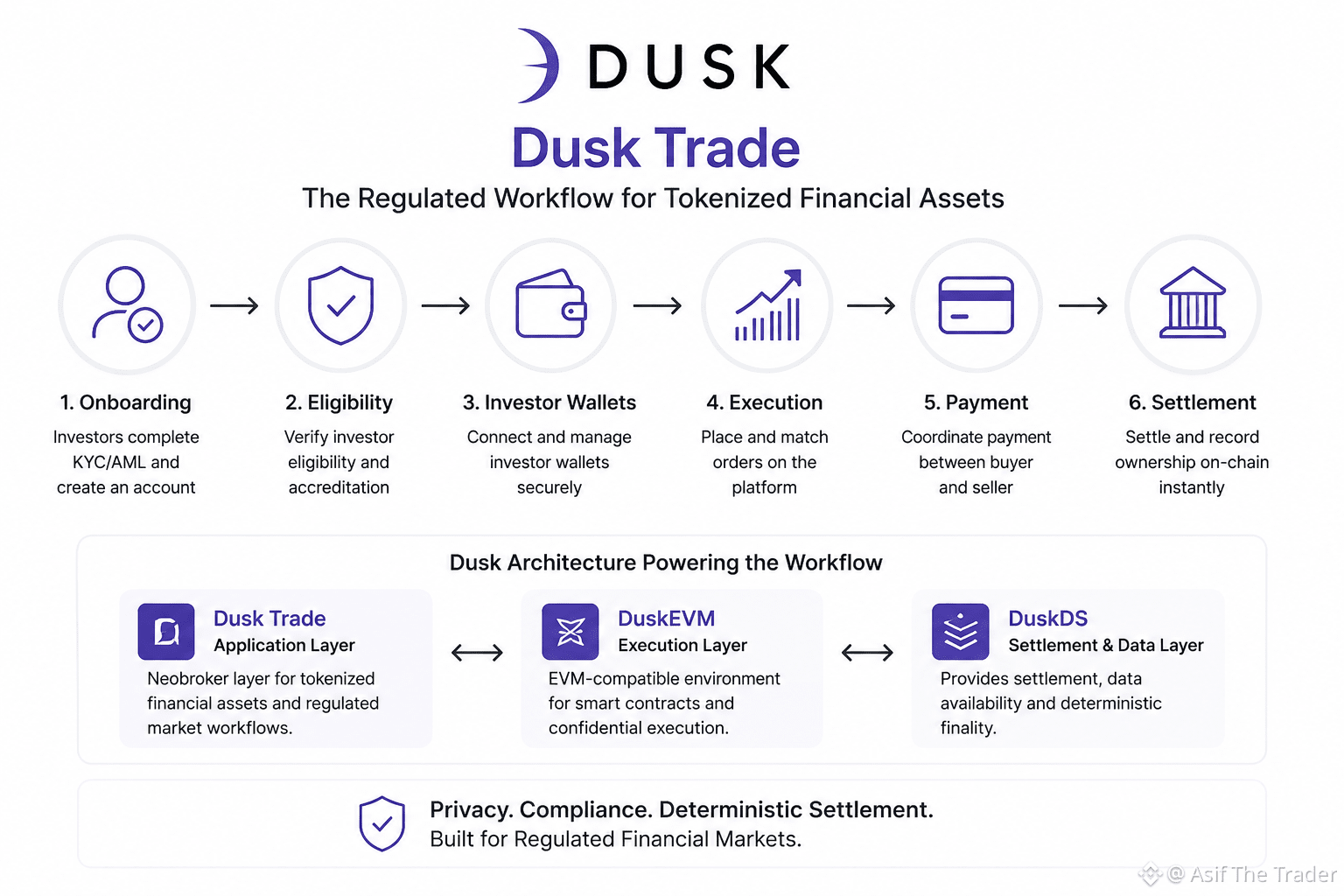
14
7
71
Ich denke immer noch, dass DuskEVM den einfachen Teil des Problems löst.
Solidity-Entwickler mit einer neuen Kette vertraut zu machen, ist eine Sache. Tatsächlich funktionierende, regulierte Finanzmärkte darum herum zum Laufen zu bringen, ist viel schwieriger.
Was meine Aufmerksamkeit nicht auf die EVM-Kompatibilität gelenkt hat, war das, was darunter liegt: DuskEVM übernimmt die EVM-Ausführung, DuskDS bietet Abwicklung und Datenverfügbarkeit, während Hedger einen Weg zu vertraulichen EVM-Flows eröffnet.
Dann habe ich mir NPEX angesehen.
NPEX meldet derzeit 217 Mio. €+ an Finanzierung und 20.000+ aktive Investoren. Die Partnerschaft mit Dusk ist der Punkt, an dem ein bestehender regulierter Markt auf eine Infrastruktur trifft, die für Onchain-Finanz-Workflows aufgebaut wird.
Aber das wirft die schwierigere Frage auf:
Wie viel von dieser bestehenden Aktivität kann tatsächlich in Onchain-Liquidität auf dem Sekundärmarkt übergehen?
Denn die Tokenisierung eines Assets ist nicht die schwierige Aufgabe.
Der eigentliche Test liegt bei allem darum herum: Wer kann darauf zugreifen, wer kann es halten oder übertragen, was bleibt privat, was muss offengelegt werden, wie werden Zahlungen und Abwicklung koordiniert, und funktioniert der gesamte Prozess als ein einziger, konformer Workflow.
Deshalb interessiert mich Dusk Trade. Es versucht, diese Marktprozesse zu verbinden – statt das Token selbst als fertiges Produkt zu betrachten.
Also bin ich weniger daran interessiert, ob Dusk ein weiteres Asset onchain bringen kann.
Mich interessiert vielmehr, ob die Beziehungen zu regulierten Märkten in echte Handels- und Abwicklungsaktivität onchain übersetzen können.
Die Architektur ist das eine. Die Liquidität nachzuweisen, ist das andere.
Kann Dusk diese Lücke überbrücken?
@Dusk_Foundation $DUSK #dusk
Ich denke immer noch, dass DuskEVM den einfachen Teil des Problems löst.
Solidity-Entwickler mit einer neuen Kette vertraut zu machen, ist eine Sache. Tatsächlich funktionierende, regulierte Finanzmärkte darum herum zum Laufen zu bringen, ist viel schwieriger.
Was meine Aufmerksamkeit nicht auf die EVM-Kompatibilität gelenkt hat, war das, was darunter liegt: DuskEVM übernimmt die EVM-Ausführung, DuskDS bietet Abwicklung und Datenverfügbarkeit, während Hedger einen Weg zu vertraulichen EVM-Flows eröffnet.
Dann habe ich mir NPEX angesehen.
NPEX meldet derzeit 217 Mio. €+ an Finanzierung und 20.000+ aktive Investoren. Die Partnerschaft mit Dusk ist der Punkt, an dem ein bestehender regulierter Markt auf eine Infrastruktur trifft, die für Onchain-Finanz-Workflows aufgebaut wird.
Aber das wirft die schwierigere Frage auf:
Wie viel von dieser bestehenden Aktivität kann tatsächlich in Onchain-Liquidität auf dem Sekundärmarkt übergehen?
Denn die Tokenisierung eines Assets ist nicht die schwierige Aufgabe.
Der eigentliche Test liegt bei allem darum herum: Wer kann darauf zugreifen, wer kann es halten oder übertragen, was bleibt privat, was muss offengelegt werden, wie werden Zahlungen und Abwicklung koordiniert, und funktioniert der gesamte Prozess als ein einziger, konformer Workflow.
Deshalb interessiert mich Dusk Trade. Es versucht, diese Marktprozesse zu verbinden – statt das Token selbst als fertiges Produkt zu betrachten.
Also bin ich weniger daran interessiert, ob Dusk ein weiteres Asset onchain bringen kann.
Mich interessiert vielmehr, ob die Beziehungen zu regulierten Märkten in echte Handels- und Abwicklungsaktivität onchain übersetzen können.
Die Architektur ist das eine. Die Liquidität nachzuweisen, ist das andere.
Kann Dusk diese Lücke überbrücken?
@Dusk $DUSK #dusk
Solidity-Entwickler mit einer neuen Kette vertraut zu machen, ist eine Sache. Tatsächlich funktionierende, regulierte Finanzmärkte darum herum zum Laufen zu bringen, ist viel schwieriger.
Was meine Aufmerksamkeit nicht auf die EVM-Kompatibilität gelenkt hat, war das, was darunter liegt: DuskEVM übernimmt die EVM-Ausführung, DuskDS bietet Abwicklung und Datenverfügbarkeit, während Hedger einen Weg zu vertraulichen EVM-Flows eröffnet.
Dann habe ich mir NPEX angesehen.
NPEX meldet derzeit 217 Mio. €+ an Finanzierung und 20.000+ aktive Investoren. Die Partnerschaft mit Dusk ist der Punkt, an dem ein bestehender regulierter Markt auf eine Infrastruktur trifft, die für Onchain-Finanz-Workflows aufgebaut wird.
Aber das wirft die schwierigere Frage auf:
Wie viel von dieser bestehenden Aktivität kann tatsächlich in Onchain-Liquidität auf dem Sekundärmarkt übergehen?
Denn die Tokenisierung eines Assets ist nicht die schwierige Aufgabe.
Der eigentliche Test liegt bei allem darum herum: Wer kann darauf zugreifen, wer kann es halten oder übertragen, was bleibt privat, was muss offengelegt werden, wie werden Zahlungen und Abwicklung koordiniert, und funktioniert der gesamte Prozess als ein einziger, konformer Workflow.
Deshalb interessiert mich Dusk Trade. Es versucht, diese Marktprozesse zu verbinden – statt das Token selbst als fertiges Produkt zu betrachten.
Also bin ich weniger daran interessiert, ob Dusk ein weiteres Asset onchain bringen kann.
Mich interessiert vielmehr, ob die Beziehungen zu regulierten Märkten in echte Handels- und Abwicklungsaktivität onchain übersetzen können.
Die Architektur ist das eine. Die Liquidität nachzuweisen, ist das andere.
Kann Dusk diese Lücke überbrücken?
@Dusk $DUSK #dusk
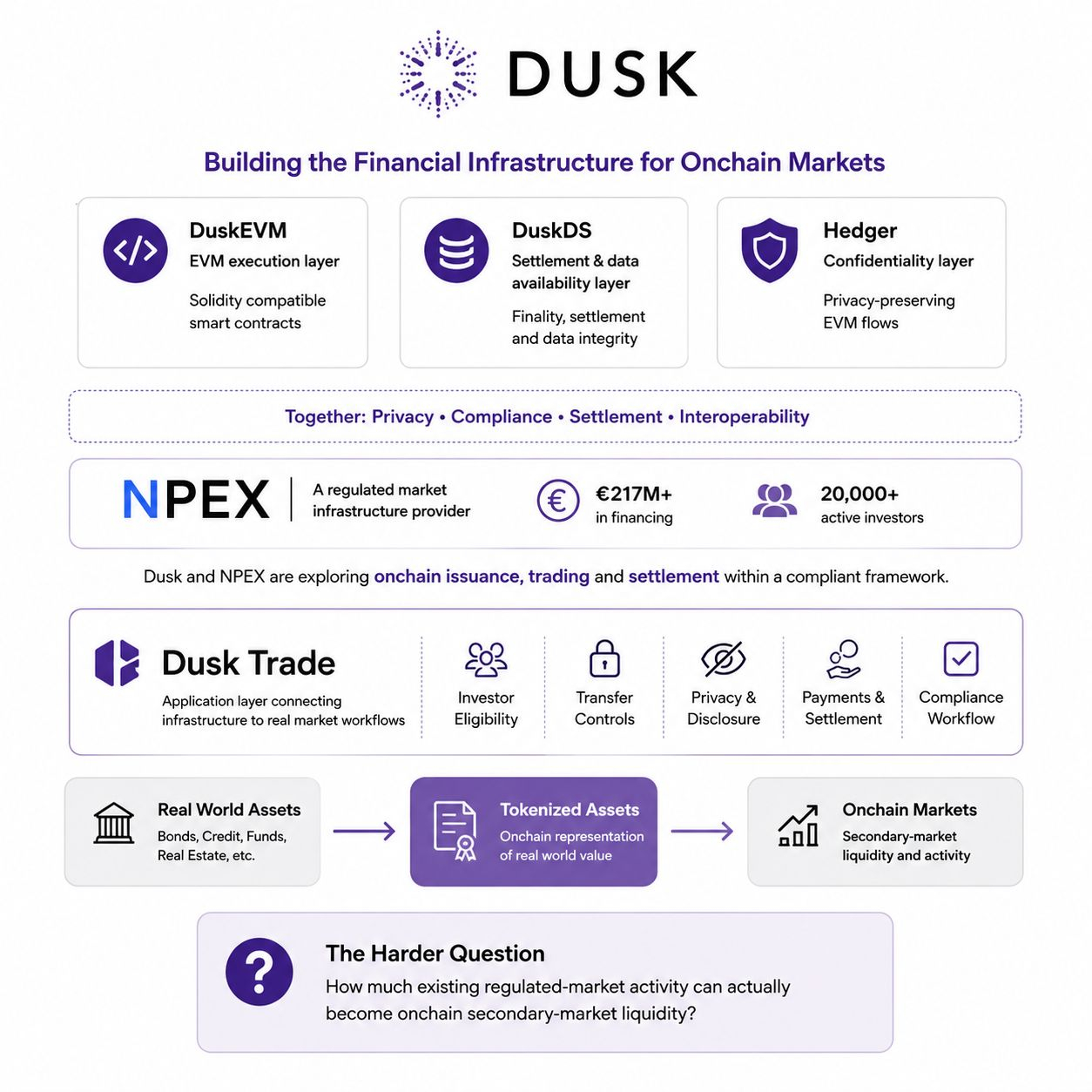
9
8
104
Ich denke immer noch, dass DuskEVM den einfachen Teil des Problems löst. Die schwierigere Frage ist jedoch, warum ich bleiben würde.
Mir ist der Entwickler-Einstieg vertraut vorgekommen: Solidity funktioniert mit Hardhat und Foundry, während DuskEVM die Chain ID 744 im Mainnet und 745 im Testnet nutzt.
Doch allein die EVM-Kompatibilität reicht nicht.
Die spannendere Ebene ist Hedger: Es ermöglicht vertrauliche EVM-Workflows mithilfe homomorpher Verschlüsselung und Zero-Knowledge-Beweisen. Das könnte vor allem dann eine Rolle spielen, wenn Finanzanwendungen Privatsphäre benötigen, ohne die Fähigkeit zu verlieren, regulatorische Anforderungen zu erfüllen.
Außerdem gibt es Dusk Trade, mit Fokus auf Themen wie Investor-Onboarding, kontrollierte Asset-Transfers, Zahlungskoordination und Abwicklung für tokenisierte Finanz-Assets.
Das erzeugt die eigentliche Spannung für mich:
EVM-Kompatibilität kann Entwickler durch die Tür holen. Aber Privatsphäre, Compliance und Finanzinfrastruktur müssen ihnen einen Grund geben, zu bleiben.
Kann Dusk seine vertraute EVM-Umgebung in einen echten Vorteil für reguliertes Finance verwandeln – statt einfach zu einer weiteren EVM-Chain zu werden?
@Dusk_Foundation $DUSK #dusk
Was wird dazu führen, dass DuskEVM sich im regulierten Finanzbereich abhebt?
Ich denke immer noch, dass DuskEVM den einfachen Teil des Problems löst. Die schwierigere Frage ist jedoch, warum ich bleiben würde.
Mir ist der Entwickler-Einstieg vertraut vorgekommen: Solidity funktioniert mit Hardhat und Foundry, während DuskEVM die Chain ID 744 im Mainnet und 745 im Testnet nutzt.
Doch allein die EVM-Kompatibilität reicht nicht.
Die spannendere Ebene ist Hedger: Es ermöglicht vertrauliche EVM-Workflows mithilfe homomorpher Verschlüsselung und Zero-Knowledge-Beweisen. Das könnte vor allem dann eine Rolle spielen, wenn Finanzanwendungen Privatsphäre benötigen, ohne die Fähigkeit zu verlieren, regulatorische Anforderungen zu erfüllen.
Außerdem gibt es Dusk Trade, mit Fokus auf Themen wie Investor-Onboarding, kontrollierte Asset-Transfers, Zahlungskoordination und Abwicklung für tokenisierte Finanz-Assets.
Das erzeugt die eigentliche Spannung für mich:
EVM-Kompatibilität kann Entwickler durch die Tür holen. Aber Privatsphäre, Compliance und Finanzinfrastruktur müssen ihnen einen Grund geben, zu bleiben.
Kann Dusk seine vertraute EVM-Umgebung in einen echten Vorteil für reguliertes Finance verwandeln – statt einfach zu einer weiteren EVM-Chain zu werden?
@Dusk $DUSK #dusk
Was wird dazu führen, dass DuskEVM sich im regulierten Finanzbereich abhebt?
Mir ist der Entwickler-Einstieg vertraut vorgekommen: Solidity funktioniert mit Hardhat und Foundry, während DuskEVM die Chain ID 744 im Mainnet und 745 im Testnet nutzt.
Doch allein die EVM-Kompatibilität reicht nicht.
Die spannendere Ebene ist Hedger: Es ermöglicht vertrauliche EVM-Workflows mithilfe homomorpher Verschlüsselung und Zero-Knowledge-Beweisen. Das könnte vor allem dann eine Rolle spielen, wenn Finanzanwendungen Privatsphäre benötigen, ohne die Fähigkeit zu verlieren, regulatorische Anforderungen zu erfüllen.
Außerdem gibt es Dusk Trade, mit Fokus auf Themen wie Investor-Onboarding, kontrollierte Asset-Transfers, Zahlungskoordination und Abwicklung für tokenisierte Finanz-Assets.
Das erzeugt die eigentliche Spannung für mich:
EVM-Kompatibilität kann Entwickler durch die Tür holen. Aber Privatsphäre, Compliance und Finanzinfrastruktur müssen ihnen einen Grund geben, zu bleiben.
Kann Dusk seine vertraute EVM-Umgebung in einen echten Vorteil für reguliertes Finance verwandeln – statt einfach zu einer weiteren EVM-Chain zu werden?
@Dusk $DUSK #dusk
Was wird dazu führen, dass DuskEVM sich im regulierten Finanzbereich abhebt?
EVM compatibility
40%
Privacy + compliance
60%
5 Stimmen • Abstimmung beendet
4
5
79
Anmelden und weiter Inhalte entdecken
Krypto-Nutzer weltweit auf Binance Square kennenlernen
⚡️ Bleib in Sachen Krypto stets am Puls.
💬 Die weltgrößte Kryptobörse vertraut darauf.
👍 Erhalte verlässliche Einblicke von verifizierten Creators.
E-Mail-Adresse/Telefonnummer
Trendthemen
QNTRises287%
9,609 Aufrufe
259 Kommentare
🚨 QNT JUST EXPLODED +287%! 🔥
+287% ist KEINE normale Bewegung. 👀
QNT ist plötzlich parabolisch geworden, wodurch Trader in höchste Alarmbereitschaft geraten, da Momentum und Volumen stark anziehen.
⚠️ Nach so einer extremen Bewegung kann FOMO gefährlich sein — die Volatilität
kann in beide Richtungen gehen.
📈 Beobachten: anhaltendes Volumen + Breakout-Bestätigung
📉 Risiko: scharfe Gewinnmitnahmen / Rücksetzer
🔥 Ist QNT gerade erst gestartet… oder ist diese Bewegung bereit für eine größere Korrektur?
Was ist dein QNT-Ziel? 👇
#qntrises287% #QNT #Quant #crypto #BinanceSquare
$QNT
ASHFAQ NAEEM
·8 Likes
·5.8k Aufrufe
HSBCNamesStablecoinRedCoinForPhasedLaunch
1,397 Aufrufe
62 Kommentare
TrumpRejectsAIRulesForVoluntaryAudits
12,218 Aufrufe
353 Kommentare