

Ruoxi BNB
10.3k Beiträge

Ruoxi BNB
Melden
Nutzer blockieren
Trade eröffnen
Regelmäßiger Trader
11.5 Monate
1.4K+ Following
21.3K+ Follower
6.5K+ Like gegeben
Beiträge
Portfolio
Alle
Zitierungen
Live
·
--
Bullisch
@Dusk_Foundation
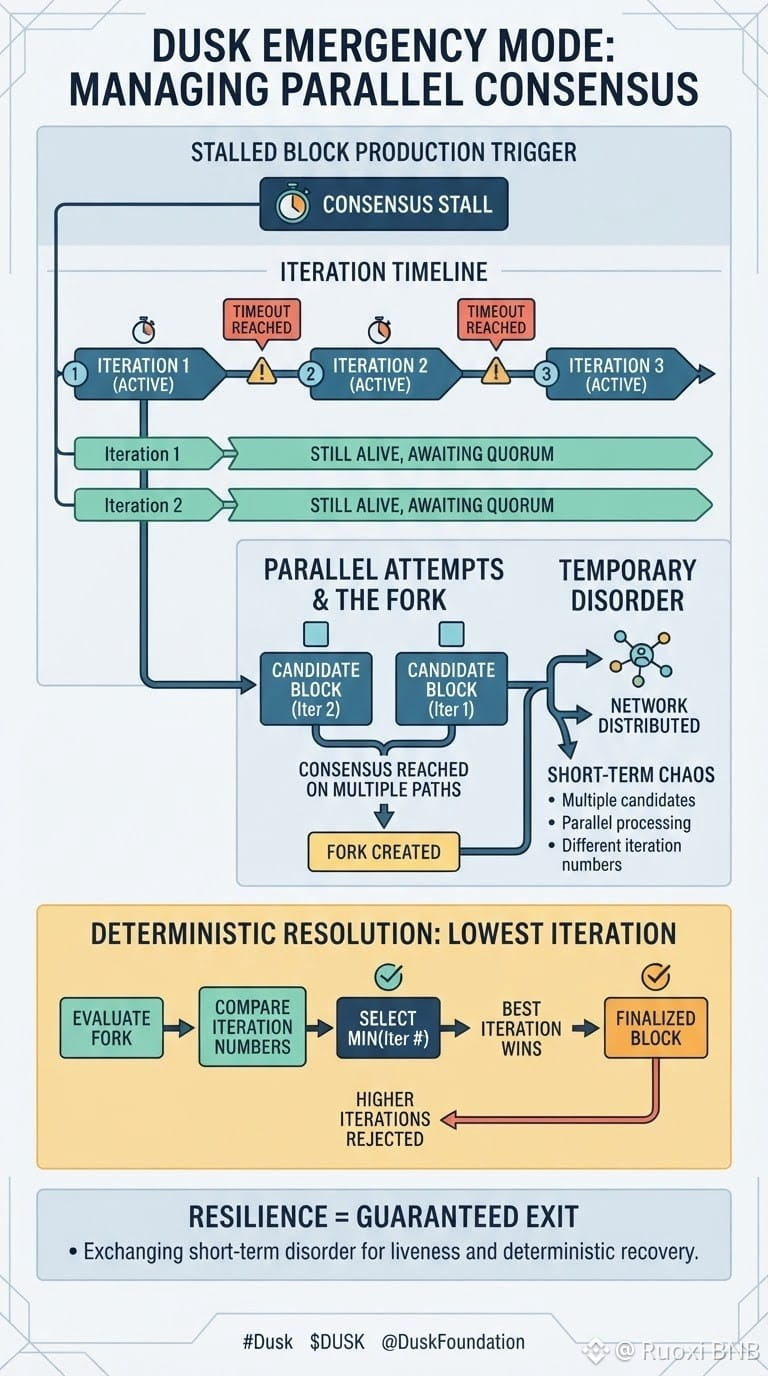
Zuerst nahm ich an, dass Dusk’ Notfallmodus hauptsächlich ein Backup für blockierte Blockproduktion ist. Doch je genauer ich hinsah, desto mehr fiel ein kleines Detail auf: Offene Iterationen können gleichzeitig weiterlaufen. Eine neue Iteration startet nach dem maximalen Step-Timeout, während frühere Iterationen am Leben bleiben, bis sie tatsächlich Quorum erreichen. Das bedeutet, dass das Protokoll temporäre parallele Versuche akzeptiert, statt das Netzwerk zu zwingen, auf einen festgefahrenen Pfad zu warten. Die offensichtliche Kostenfolge ist, dass mehrere Kandidaten irgendwann Konsens erreichen können und dadurch eine Gabelung entsteht, die dann durch Auswahl der niedrigsten Iteration aufgelöst werden muss. Ich finde diesen Interessenausgleich spannender als das Notfall-Label selbst. Dusk tauscht im Grunde ein wenig kurzfristige Unordnung gegen eine bessere Chance ein, dass zumindest ein Pfad vorankommt, wenn Bereitsteller fehlen oder isoliert sind. Vielleicht ist das eine vernünftige Ausfallmöglichkeit, aber es verlagert Komplexität vom Warten in die Auflösung von Forks.
Bringt mich zu der Frage, ob Robustheit manchmal weniger damit zu tun hat, chaotische Zustände zu vermeiden, und mehr damit, sicherzustellen, dass das Chaos einen deterministischen Ausweg hat?
@Dusk_Foundation #dusk $DUSK
{spot}(DUSKUSDT)
@Dusk
Zuerst nahm ich an, dass Dusk’ Notfallmodus hauptsächlich ein Backup für blockierte Blockproduktion ist. Doch je genauer ich hinsah, desto mehr fiel ein kleines Detail auf: Offene Iterationen können gleichzeitig weiterlaufen. Eine neue Iteration startet nach dem maximalen Step-Timeout, während frühere Iterationen am Leben bleiben, bis sie tatsächlich Quorum erreichen. Das bedeutet, dass das Protokoll temporäre parallele Versuche akzeptiert, statt das Netzwerk zu zwingen, auf einen festgefahrenen Pfad zu warten. Die offensichtliche Kostenfolge ist, dass mehrere Kandidaten irgendwann Konsens erreichen können und dadurch eine Gabelung entsteht, die dann durch Auswahl der niedrigsten Iteration aufgelöst werden muss. Ich finde diesen Interessenausgleich spannender als das Notfall-Label selbst. Dusk tauscht im Grunde ein wenig kurzfristige Unordnung gegen eine bessere Chance ein, dass zumindest ein Pfad vorankommt, wenn Bereitsteller fehlen oder isoliert sind. Vielleicht ist das eine vernünftige Ausfallmöglichkeit, aber es verlagert Komplexität vom Warten in die Auflösung von Forks.
Bringt mich zu der Frage, ob Robustheit manchmal weniger damit zu tun hat, chaotische Zustände zu vermeiden, und mehr damit, sicherzustellen, dass das Chaos einen deterministischen Ausweg hat?
@Dusk #dusk $DUSK
Zuerst nahm ich an, dass Dusk’ Notfallmodus hauptsächlich ein Backup für blockierte Blockproduktion ist. Doch je genauer ich hinsah, desto mehr fiel ein kleines Detail auf: Offene Iterationen können gleichzeitig weiterlaufen. Eine neue Iteration startet nach dem maximalen Step-Timeout, während frühere Iterationen am Leben bleiben, bis sie tatsächlich Quorum erreichen. Das bedeutet, dass das Protokoll temporäre parallele Versuche akzeptiert, statt das Netzwerk zu zwingen, auf einen festgefahrenen Pfad zu warten. Die offensichtliche Kostenfolge ist, dass mehrere Kandidaten irgendwann Konsens erreichen können und dadurch eine Gabelung entsteht, die dann durch Auswahl der niedrigsten Iteration aufgelöst werden muss. Ich finde diesen Interessenausgleich spannender als das Notfall-Label selbst. Dusk tauscht im Grunde ein wenig kurzfristige Unordnung gegen eine bessere Chance ein, dass zumindest ein Pfad vorankommt, wenn Bereitsteller fehlen oder isoliert sind. Vielleicht ist das eine vernünftige Ausfallmöglichkeit, aber es verlagert Komplexität vom Warten in die Auflösung von Forks.
Bringt mich zu der Frage, ob Robustheit manchmal weniger damit zu tun hat, chaotische Zustände zu vermeiden, und mehr damit, sicherzustellen, dass das Chaos einen deterministischen Ausweg hat?
@Dusk #dusk $DUSK
3
5
151
·
--
Bullisch
@Dusk_Foundation
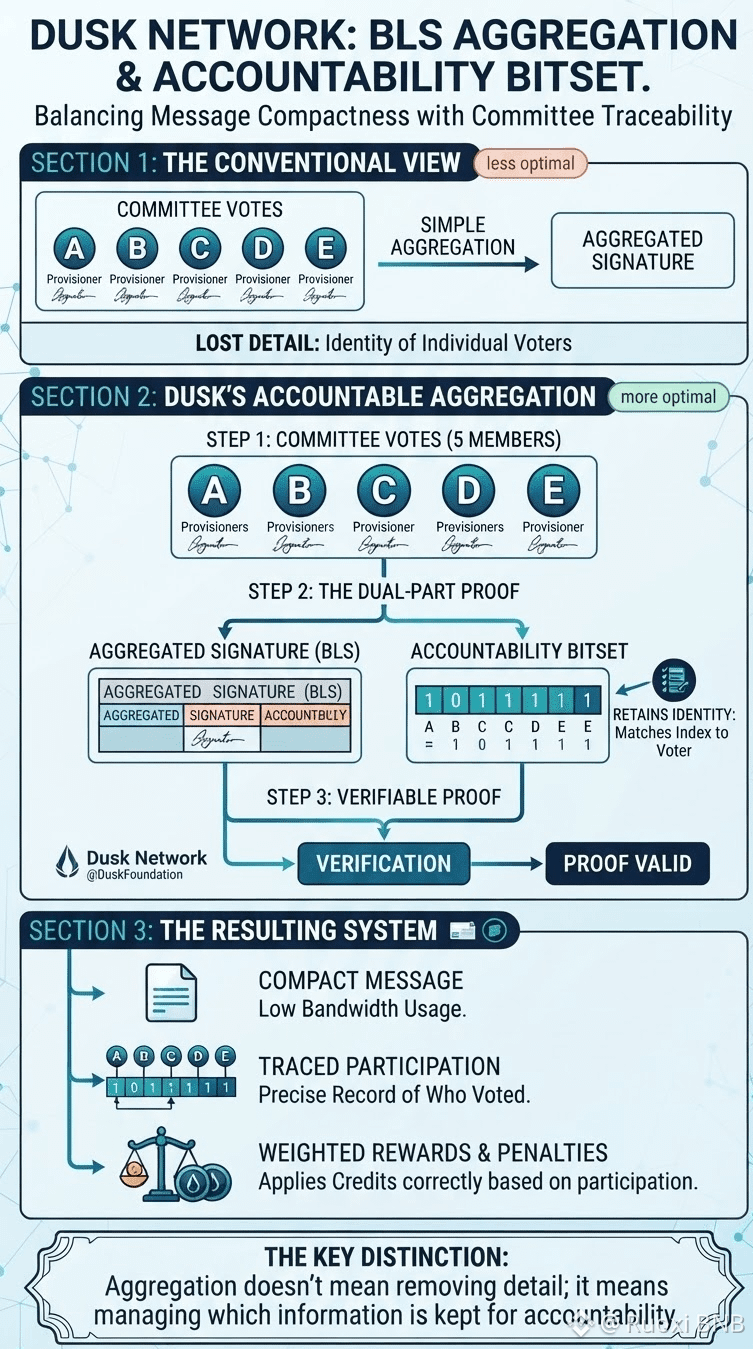
Zunächst nahm ich an, dass Dusk’s BLS-Aggregation hauptsächlich ein Bandbreiten-Trick ist. Aber je genauer ich hinsah, desto wichtiger schien das Bitset, das an die aggregierte Signatur angehängt ist, als die Kompression selbst. Jedes Komiteemitglied hat einen Index, und das Bitset zeichnet genau auf, welche Mitglieder ihre Signaturen beigetragen haben. Das bedeutet, dass das Netzwerk eine kompakte Signatur übertragen kann, während die Identität der Wähler dahinter trotzdem erhalten bleibt. Das fand ich interessant, weil Aggregation mich normalerweise daran denken lässt, Details zu entfernen. Hier werden zwar einige Details aus dem Nachrichtenformat herausgenommen, aber das Protokoll behält genug Struktur, um rekonstruieren zu können, wer tatsächlich teilgenommen hat. Das ist wichtig, weil Komiteestimmen nach Credits gewichtet werden und spätere Belohnungen und Strafen davon abhängen, welche Wähler relevant sind. Daher braucht der kompakte Beweis weiterhin eine exakte Mitgliedschaftsaufzeichnung neben sich. Vielleicht liegt der nützliche Teil der Aggregation nicht einfach darin, Konsensnachrichten kleiner zu machen, sondern darin, zu entscheiden, welche Informationen gefahrlos komprimiert werden können und welche nicht.
Mich lässt das darüber nachdenken, wie viel „Kompaktheit“ ein Konsensbeweis sich leisten kann, bevor die Verantwortlichkeit verloren geht?
@Dusk_Foundation #dusk $DUSK
{spot}(DUSKUSDT)
@Dusk
Zunächst nahm ich an, dass Dusk’s BLS-Aggregation hauptsächlich ein Bandbreiten-Trick ist. Aber je genauer ich hinsah, desto wichtiger schien das Bitset, das an die aggregierte Signatur angehängt ist, als die Kompression selbst. Jedes Komiteemitglied hat einen Index, und das Bitset zeichnet genau auf, welche Mitglieder ihre Signaturen beigetragen haben. Das bedeutet, dass das Netzwerk eine kompakte Signatur übertragen kann, während die Identität der Wähler dahinter trotzdem erhalten bleibt. Das fand ich interessant, weil Aggregation mich normalerweise daran denken lässt, Details zu entfernen. Hier werden zwar einige Details aus dem Nachrichtenformat herausgenommen, aber das Protokoll behält genug Struktur, um rekonstruieren zu können, wer tatsächlich teilgenommen hat. Das ist wichtig, weil Komiteestimmen nach Credits gewichtet werden und spätere Belohnungen und Strafen davon abhängen, welche Wähler relevant sind. Daher braucht der kompakte Beweis weiterhin eine exakte Mitgliedschaftsaufzeichnung neben sich. Vielleicht liegt der nützliche Teil der Aggregation nicht einfach darin, Konsensnachrichten kleiner zu machen, sondern darin, zu entscheiden, welche Informationen gefahrlos komprimiert werden können und welche nicht.
Mich lässt das darüber nachdenken, wie viel „Kompaktheit“ ein Konsensbeweis sich leisten kann, bevor die Verantwortlichkeit verloren geht?
@Dusk #dusk $DUSK
Zunächst nahm ich an, dass Dusk’s BLS-Aggregation hauptsächlich ein Bandbreiten-Trick ist. Aber je genauer ich hinsah, desto wichtiger schien das Bitset, das an die aggregierte Signatur angehängt ist, als die Kompression selbst. Jedes Komiteemitglied hat einen Index, und das Bitset zeichnet genau auf, welche Mitglieder ihre Signaturen beigetragen haben. Das bedeutet, dass das Netzwerk eine kompakte Signatur übertragen kann, während die Identität der Wähler dahinter trotzdem erhalten bleibt. Das fand ich interessant, weil Aggregation mich normalerweise daran denken lässt, Details zu entfernen. Hier werden zwar einige Details aus dem Nachrichtenformat herausgenommen, aber das Protokoll behält genug Struktur, um rekonstruieren zu können, wer tatsächlich teilgenommen hat. Das ist wichtig, weil Komiteestimmen nach Credits gewichtet werden und spätere Belohnungen und Strafen davon abhängen, welche Wähler relevant sind. Daher braucht der kompakte Beweis weiterhin eine exakte Mitgliedschaftsaufzeichnung neben sich. Vielleicht liegt der nützliche Teil der Aggregation nicht einfach darin, Konsensnachrichten kleiner zu machen, sondern darin, zu entscheiden, welche Informationen gefahrlos komprimiert werden können und welche nicht.
Mich lässt das darüber nachdenken, wie viel „Kompaktheit“ ein Konsensbeweis sich leisten kann, bevor die Verantwortlichkeit verloren geht?
@Dusk #dusk $DUSK
20
12
214
·
--
Bullisch
@Dusk_Foundation
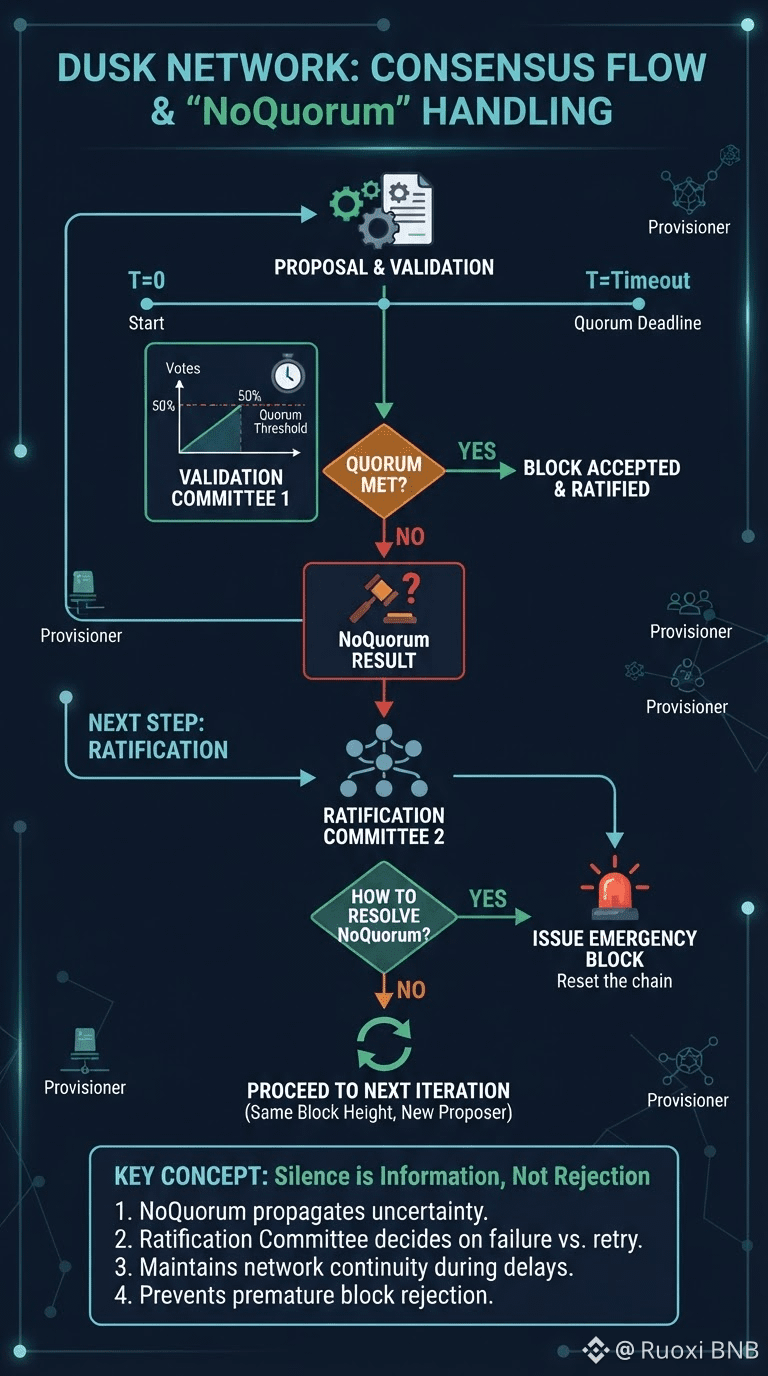
Zunächst ging ich davon aus, dass Dusk’s Wahlverfahren hauptsächlich darin besteht, vor Ablauf einer Frist ein Quorum zu erreichen. Doch je genauer ich hinsah, desto mehr zog die Behandlung eines fehlenden Quorums meine Aufmerksamkeit auf sich. Wenn der Validierungsschritt nicht rechtzeitig genug Stimmen sammeln kann, erklärt er den Block nicht einfach für ungültig. Stattdessen ergibt sich ein NoQuorum-Ergebnis, das dann in die Ratifizierung übernommen wird. Das nächste Komitee darf über dieses Ergebnis abstimmen, statt den gesamten Prozess sofort von vorn zu starten. Das schafft eine kleine Unterscheidung zwischen „dem Block ist fehlgeschlagen“ und „das Netzwerk konnte keine Entscheidung treffen“. Das sind sehr unterschiedliche Situationen, insbesondere wenn Bereitsteller (Provisioner) möglicherweise offline sind oder Nachrichten verzögert eintreffen. Das Protokoll hält diese Ungewissheit für einen weiteren Schritt sichtbar, bevor es entscheidet, ob die Iteration fehlschlagen soll. Ich finde das interessanter als die Timeout-Frist selbst. Es legt nahe, dass Schweigen als Information behandelt wird, aber nicht zwingend als Ablehnung.
Vielleicht ist die ruhigere Frage also, wie viel Unsicherheit ein Konsenssystem bewahren sollte, bevor es schließlich das Ausbleiben einer Einigung in einen Fehler verwandelt?
@Dusk_Foundation #dusk $DUSK
{spot}(DUSKUSDT)
@Dusk
Zunächst ging ich davon aus, dass Dusk’s Wahlverfahren hauptsächlich darin besteht, vor Ablauf einer Frist ein Quorum zu erreichen. Doch je genauer ich hinsah, desto mehr zog die Behandlung eines fehlenden Quorums meine Aufmerksamkeit auf sich. Wenn der Validierungsschritt nicht rechtzeitig genug Stimmen sammeln kann, erklärt er den Block nicht einfach für ungültig. Stattdessen ergibt sich ein NoQuorum-Ergebnis, das dann in die Ratifizierung übernommen wird. Das nächste Komitee darf über dieses Ergebnis abstimmen, statt den gesamten Prozess sofort von vorn zu starten. Das schafft eine kleine Unterscheidung zwischen „dem Block ist fehlgeschlagen“ und „das Netzwerk konnte keine Entscheidung treffen“. Das sind sehr unterschiedliche Situationen, insbesondere wenn Bereitsteller (Provisioner) möglicherweise offline sind oder Nachrichten verzögert eintreffen. Das Protokoll hält diese Ungewissheit für einen weiteren Schritt sichtbar, bevor es entscheidet, ob die Iteration fehlschlagen soll. Ich finde das interessanter als die Timeout-Frist selbst. Es legt nahe, dass Schweigen als Information behandelt wird, aber nicht zwingend als Ablehnung.
Vielleicht ist die ruhigere Frage also, wie viel Unsicherheit ein Konsenssystem bewahren sollte, bevor es schließlich das Ausbleiben einer Einigung in einen Fehler verwandelt?
@Dusk #dusk $DUSK
Zunächst ging ich davon aus, dass Dusk’s Wahlverfahren hauptsächlich darin besteht, vor Ablauf einer Frist ein Quorum zu erreichen. Doch je genauer ich hinsah, desto mehr zog die Behandlung eines fehlenden Quorums meine Aufmerksamkeit auf sich. Wenn der Validierungsschritt nicht rechtzeitig genug Stimmen sammeln kann, erklärt er den Block nicht einfach für ungültig. Stattdessen ergibt sich ein NoQuorum-Ergebnis, das dann in die Ratifizierung übernommen wird. Das nächste Komitee darf über dieses Ergebnis abstimmen, statt den gesamten Prozess sofort von vorn zu starten. Das schafft eine kleine Unterscheidung zwischen „dem Block ist fehlgeschlagen“ und „das Netzwerk konnte keine Entscheidung treffen“. Das sind sehr unterschiedliche Situationen, insbesondere wenn Bereitsteller (Provisioner) möglicherweise offline sind oder Nachrichten verzögert eintreffen. Das Protokoll hält diese Ungewissheit für einen weiteren Schritt sichtbar, bevor es entscheidet, ob die Iteration fehlschlagen soll. Ich finde das interessanter als die Timeout-Frist selbst. Es legt nahe, dass Schweigen als Information behandelt wird, aber nicht zwingend als Ablehnung.
Vielleicht ist die ruhigere Frage also, wie viel Unsicherheit ein Konsenssystem bewahren sollte, bevor es schließlich das Ausbleiben einer Einigung in einen Fehler verwandelt?
@Dusk #dusk $DUSK
20
14
156
·
--
Bullisch
@Dusk_Foundation
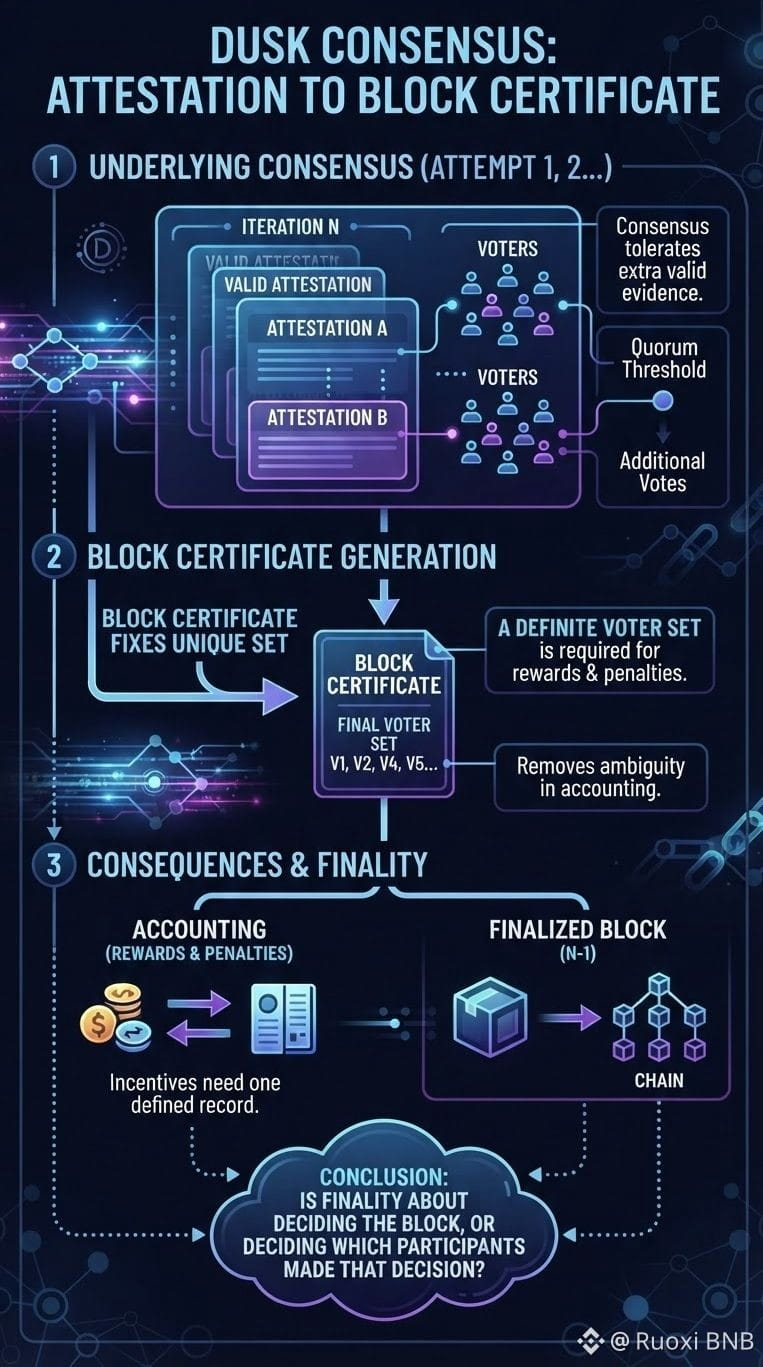
Zunächst nahm ich an, dass die Bestätigungen von Dusk vor allem eine kompakte Methode sind, um zu belegen, dass genug Bereitsteller zugestimmt haben. Aber je genauer ich hinsah, desto mehr stach ein Detail hervor: Für dieselbe Iteration können mehr als eine gültige Bestätigung existieren, wenn Stimmen über das Quorum hinaus empfangen werden. Dusk ergänzt daher ein Blockzertifikat, das eine eindeutige Menge von Wählern aus der Bestätigung des vorherigen Blocks festlegt. Das wirkt weniger wie ein Komprimierungsdetail und mehr wie eine Methode, um spätere Abrechnung eindeutig zu halten. Belohnungen und Strafen benötigen eine feste Wählermenge, auch wenn der zugrunde liegende Konsensschritt mehrere mögliche Quorum-Nachweise hervorgebracht haben könnte. Das Protokoll trennt „es sind genug Stimmen passiert“ von „welche Stimmen für spätere Konsequenzen zählen“. Diese Unterscheidung lässt sich beim Lesen des Konsensablaufs leicht übersehen, aber sie setzt eine kleine Vertrauensgrenze rund um den Nachgang der Einigung. Der Konsens kann zusätzliche gültige Evidenz tolerieren, während Anreize dennoch einen klar definierten Datensatz brauchen.
Lässt mich fragen, ob Finalität nur darüber geht, den Block zu entscheiden, oder auch darüber, welche Teilnehmer das System sich als diejenigen merkt, die diese Entscheidung getroffen haben?
@Dusk_Foundation #dusk $DUSK
{spot}(DUSKUSDT)
@Dusk
Zunächst nahm ich an, dass die Bestätigungen von Dusk vor allem eine kompakte Methode sind, um zu belegen, dass genug Bereitsteller zugestimmt haben. Aber je genauer ich hinsah, desto mehr stach ein Detail hervor: Für dieselbe Iteration können mehr als eine gültige Bestätigung existieren, wenn Stimmen über das Quorum hinaus empfangen werden. Dusk ergänzt daher ein Blockzertifikat, das eine eindeutige Menge von Wählern aus der Bestätigung des vorherigen Blocks festlegt. Das wirkt weniger wie ein Komprimierungsdetail und mehr wie eine Methode, um spätere Abrechnung eindeutig zu halten. Belohnungen und Strafen benötigen eine feste Wählermenge, auch wenn der zugrunde liegende Konsensschritt mehrere mögliche Quorum-Nachweise hervorgebracht haben könnte. Das Protokoll trennt „es sind genug Stimmen passiert“ von „welche Stimmen für spätere Konsequenzen zählen“. Diese Unterscheidung lässt sich beim Lesen des Konsensablaufs leicht übersehen, aber sie setzt eine kleine Vertrauensgrenze rund um den Nachgang der Einigung. Der Konsens kann zusätzliche gültige Evidenz tolerieren, während Anreize dennoch einen klar definierten Datensatz brauchen.
Lässt mich fragen, ob Finalität nur darüber geht, den Block zu entscheiden, oder auch darüber, welche Teilnehmer das System sich als diejenigen merkt, die diese Entscheidung getroffen haben?
@Dusk #dusk $DUSK
Zunächst nahm ich an, dass die Bestätigungen von Dusk vor allem eine kompakte Methode sind, um zu belegen, dass genug Bereitsteller zugestimmt haben. Aber je genauer ich hinsah, desto mehr stach ein Detail hervor: Für dieselbe Iteration können mehr als eine gültige Bestätigung existieren, wenn Stimmen über das Quorum hinaus empfangen werden. Dusk ergänzt daher ein Blockzertifikat, das eine eindeutige Menge von Wählern aus der Bestätigung des vorherigen Blocks festlegt. Das wirkt weniger wie ein Komprimierungsdetail und mehr wie eine Methode, um spätere Abrechnung eindeutig zu halten. Belohnungen und Strafen benötigen eine feste Wählermenge, auch wenn der zugrunde liegende Konsensschritt mehrere mögliche Quorum-Nachweise hervorgebracht haben könnte. Das Protokoll trennt „es sind genug Stimmen passiert“ von „welche Stimmen für spätere Konsequenzen zählen“. Diese Unterscheidung lässt sich beim Lesen des Konsensablaufs leicht übersehen, aber sie setzt eine kleine Vertrauensgrenze rund um den Nachgang der Einigung. Der Konsens kann zusätzliche gültige Evidenz tolerieren, während Anreize dennoch einen klar definierten Datensatz brauchen.
Lässt mich fragen, ob Finalität nur darüber geht, den Block zu entscheiden, oder auch darüber, welche Teilnehmer das System sich als diejenigen merkt, die diese Entscheidung getroffen haben?
@Dusk #dusk $DUSK
35
19
248
·
--
Bullisch
@Dusk_Foundation
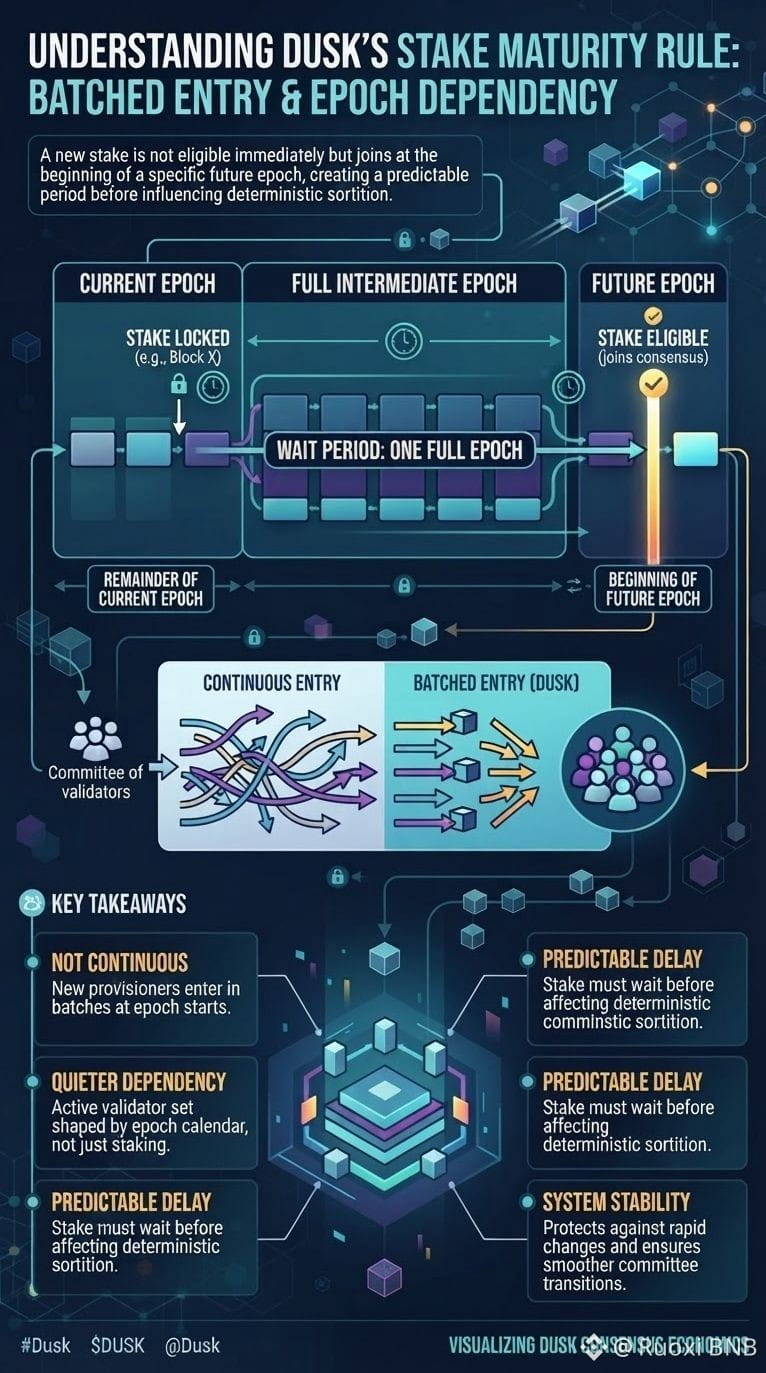
Zunächst nahm ich an, dass Dusks Staking-Reifegradregel im Wesentlichen eine Wartezeit sei, um zu verhindern, dass jemand zu schnell dem Konsens beitritt. Je genauer ich hinsah, desto deutlicher wirkte die zeitliche Komponente jedoch gezielt. Ein neues Stake ist nicht sofort berechtigt und wird auch nicht bei einem beliebigen Block berechtigt. Das Whitepaper legt die Berechtigung fest, sobald eine Epoche beginnt – nachdem der Rest der aktuellen Epoche plus noch eine vollständige weitere Epoche vergangen ist. Was dabei meine Aufmerksamkeit erregte: Die Regel sorgt effektiv dafür, dass neue Provisioner den Konsens in Paketen betreten, statt kontinuierlich. Das schafft eine ruhigere Abhängigkeit: Die aktive Validator-Menge wird teilweise durch den Kalender der Epochen geprägt, nicht nur dadurch, wer gestaked hat. Außerdem bedeutet das, dass ein neu gesperrtes Stake eine vorhersehbare Zeit warten muss, bevor es deterministische Sortition beeinflussen kann. Vielleicht macht das Komiteeänderungen leichter nachzuvollziehen, aber es verzögert auch, wie schnell neue Teilnehmende das System beeinflussen können.
Vielleicht lautet die Frage also nicht, warum Staking eine Verzögerung hat, sondern wovor diese Verzögerung eigentlich schützt?
@Dusk_Foundation #dusk $DUSK
{spot}(DUSKUSDT)
@Dusk
Zunächst nahm ich an, dass Dusks Staking-Reifegradregel im Wesentlichen eine Wartezeit sei, um zu verhindern, dass jemand zu schnell dem Konsens beitritt. Je genauer ich hinsah, desto deutlicher wirkte die zeitliche Komponente jedoch gezielt. Ein neues Stake ist nicht sofort berechtigt und wird auch nicht bei einem beliebigen Block berechtigt. Das Whitepaper legt die Berechtigung fest, sobald eine Epoche beginnt – nachdem der Rest der aktuellen Epoche plus noch eine vollständige weitere Epoche vergangen ist. Was dabei meine Aufmerksamkeit erregte: Die Regel sorgt effektiv dafür, dass neue Provisioner den Konsens in Paketen betreten, statt kontinuierlich. Das schafft eine ruhigere Abhängigkeit: Die aktive Validator-Menge wird teilweise durch den Kalender der Epochen geprägt, nicht nur dadurch, wer gestaked hat. Außerdem bedeutet das, dass ein neu gesperrtes Stake eine vorhersehbare Zeit warten muss, bevor es deterministische Sortition beeinflussen kann. Vielleicht macht das Komiteeänderungen leichter nachzuvollziehen, aber es verzögert auch, wie schnell neue Teilnehmende das System beeinflussen können.
Vielleicht lautet die Frage also nicht, warum Staking eine Verzögerung hat, sondern wovor diese Verzögerung eigentlich schützt?
@Dusk #dusk $DUSK
Zunächst nahm ich an, dass Dusks Staking-Reifegradregel im Wesentlichen eine Wartezeit sei, um zu verhindern, dass jemand zu schnell dem Konsens beitritt. Je genauer ich hinsah, desto deutlicher wirkte die zeitliche Komponente jedoch gezielt. Ein neues Stake ist nicht sofort berechtigt und wird auch nicht bei einem beliebigen Block berechtigt. Das Whitepaper legt die Berechtigung fest, sobald eine Epoche beginnt – nachdem der Rest der aktuellen Epoche plus noch eine vollständige weitere Epoche vergangen ist. Was dabei meine Aufmerksamkeit erregte: Die Regel sorgt effektiv dafür, dass neue Provisioner den Konsens in Paketen betreten, statt kontinuierlich. Das schafft eine ruhigere Abhängigkeit: Die aktive Validator-Menge wird teilweise durch den Kalender der Epochen geprägt, nicht nur dadurch, wer gestaked hat. Außerdem bedeutet das, dass ein neu gesperrtes Stake eine vorhersehbare Zeit warten muss, bevor es deterministische Sortition beeinflussen kann. Vielleicht macht das Komiteeänderungen leichter nachzuvollziehen, aber es verzögert auch, wie schnell neue Teilnehmende das System beeinflussen können.
Vielleicht lautet die Frage also nicht, warum Staking eine Verzögerung hat, sondern wovor diese Verzögerung eigentlich schützt?
@Dusk #dusk $DUSK
22
10
175
·
--
Mein Freund, bitte folge mir
Mein Freund, bitte folge mir
Ruoxi BNB
·
--
[Beendet] 🎙️ Guten Morgen 🎙️ 🥰🥰🥰🌞
8 Zuhörer
2
75
·
--
Bullisch
@Dusk_Foundation
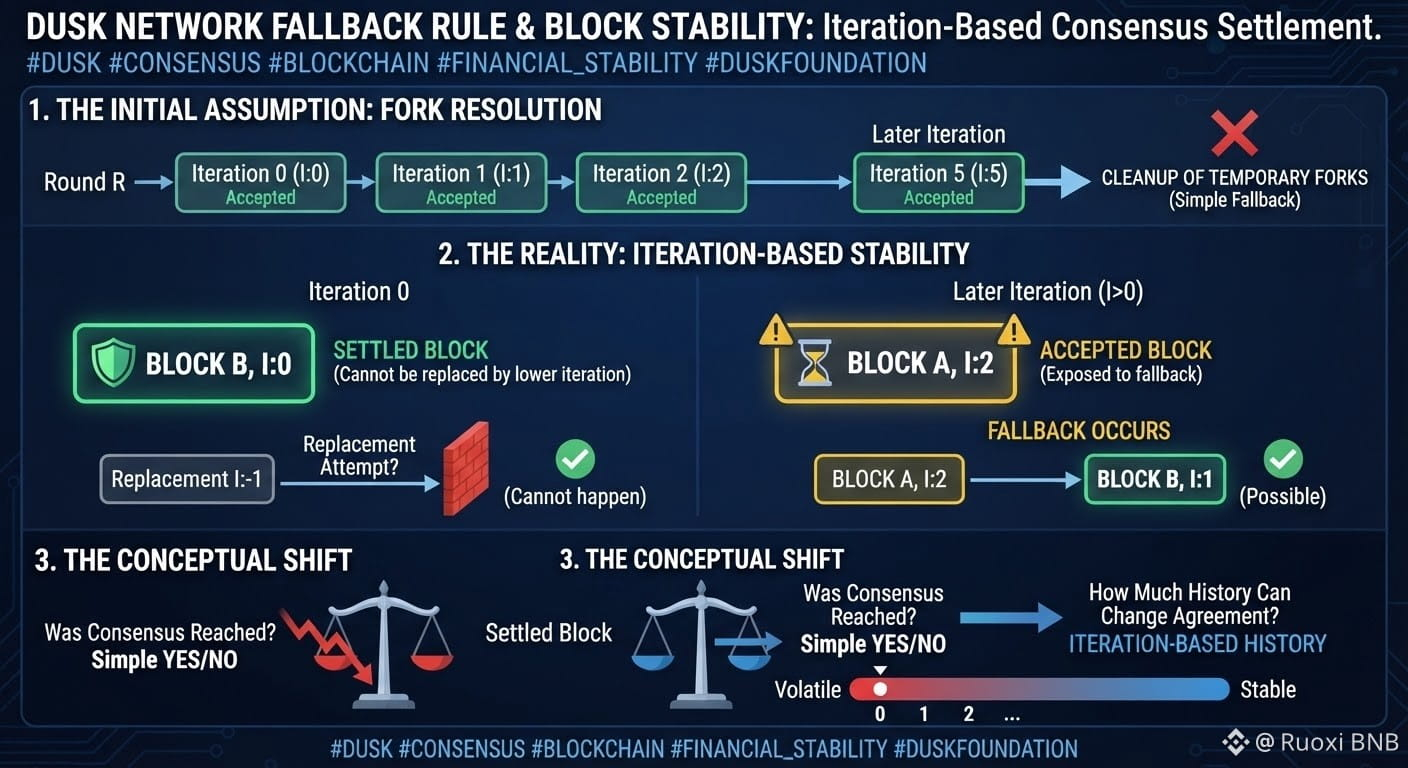
Zunächst ging ich davon aus, dass die Fallback-Regel von Dusk vor allem dazu dient, durch Netzwerkverzögerungen verursachte Forks aufzuräumen. Doch je genauer ich hinsah, desto seltsamer wirkte die Regel. Wenn zwei Blöcke in derselben Runde zum Konsens gelangen, kann Dusk einen Block aus einer höheren Iteration durch einen aus einer niedrigeren Iteration ersetzen – sogar nachdem der Block aus der höheren Iteration bereits lokal akzeptiert wurde. Ein akzeptierter Block ist also nicht zwangsläufig ein endgültig festgelegter Block. Das Spannende ist, dass das Protokoll nicht jedes erfolgreiche Konsensergebnis als gleich stark behandelt. Die Iterationsnummer behält Bedeutung, nachdem die Abstimmung abgeschlossen ist. Ein Block aus Iteration null kann nicht durch einen anderen Block aus einer niedrigeren Iteration ersetzt werden, während spätere Iterationen weiterhin dem Fallback ausgesetzt bleiben. Das bedeutet, dass die Historie, wie der Konsens zustande kam, ein Teil der Stabilität des Blocks ist. Das ist eine kleine Einzelheit, aber sie verändert, wie ich über „Übereinstimmung“ in diesem Design nachdenke. Vielleicht ist die Frage also nicht, ob ein Konsens zustande gekommen ist. Sondern: Wie viel Geschichte noch in der Lage ist, zu verändern, was diese Übereinstimmung bedeutet?
@Dusk_Foundation #dusk $DUSK
{spot}(DUSKUSDT)
@Dusk
Zunächst ging ich davon aus, dass die Fallback-Regel von Dusk vor allem dazu dient, durch Netzwerkverzögerungen verursachte Forks aufzuräumen. Doch je genauer ich hinsah, desto seltsamer wirkte die Regel. Wenn zwei Blöcke in derselben Runde zum Konsens gelangen, kann Dusk einen Block aus einer höheren Iteration durch einen aus einer niedrigeren Iteration ersetzen – sogar nachdem der Block aus der höheren Iteration bereits lokal akzeptiert wurde. Ein akzeptierter Block ist also nicht zwangsläufig ein endgültig festgelegter Block. Das Spannende ist, dass das Protokoll nicht jedes erfolgreiche Konsensergebnis als gleich stark behandelt. Die Iterationsnummer behält Bedeutung, nachdem die Abstimmung abgeschlossen ist. Ein Block aus Iteration null kann nicht durch einen anderen Block aus einer niedrigeren Iteration ersetzt werden, während spätere Iterationen weiterhin dem Fallback ausgesetzt bleiben. Das bedeutet, dass die Historie, wie der Konsens zustande kam, ein Teil der Stabilität des Blocks ist. Das ist eine kleine Einzelheit, aber sie verändert, wie ich über „Übereinstimmung“ in diesem Design nachdenke. Vielleicht ist die Frage also nicht, ob ein Konsens zustande gekommen ist. Sondern: Wie viel Geschichte noch in der Lage ist, zu verändern, was diese Übereinstimmung bedeutet?
@Dusk #dusk $DUSK
Zunächst ging ich davon aus, dass die Fallback-Regel von Dusk vor allem dazu dient, durch Netzwerkverzögerungen verursachte Forks aufzuräumen. Doch je genauer ich hinsah, desto seltsamer wirkte die Regel. Wenn zwei Blöcke in derselben Runde zum Konsens gelangen, kann Dusk einen Block aus einer höheren Iteration durch einen aus einer niedrigeren Iteration ersetzen – sogar nachdem der Block aus der höheren Iteration bereits lokal akzeptiert wurde. Ein akzeptierter Block ist also nicht zwangsläufig ein endgültig festgelegter Block. Das Spannende ist, dass das Protokoll nicht jedes erfolgreiche Konsensergebnis als gleich stark behandelt. Die Iterationsnummer behält Bedeutung, nachdem die Abstimmung abgeschlossen ist. Ein Block aus Iteration null kann nicht durch einen anderen Block aus einer niedrigeren Iteration ersetzt werden, während spätere Iterationen weiterhin dem Fallback ausgesetzt bleiben. Das bedeutet, dass die Historie, wie der Konsens zustande kam, ein Teil der Stabilität des Blocks ist. Das ist eine kleine Einzelheit, aber sie verändert, wie ich über „Übereinstimmung“ in diesem Design nachdenke. Vielleicht ist die Frage also nicht, ob ein Konsens zustande gekommen ist. Sondern: Wie viel Geschichte noch in der Lage ist, zu verändern, was diese Übereinstimmung bedeutet?
@Dusk #dusk $DUSK
25
11
164
·
--
Bullisch
@Dusk_Foundation
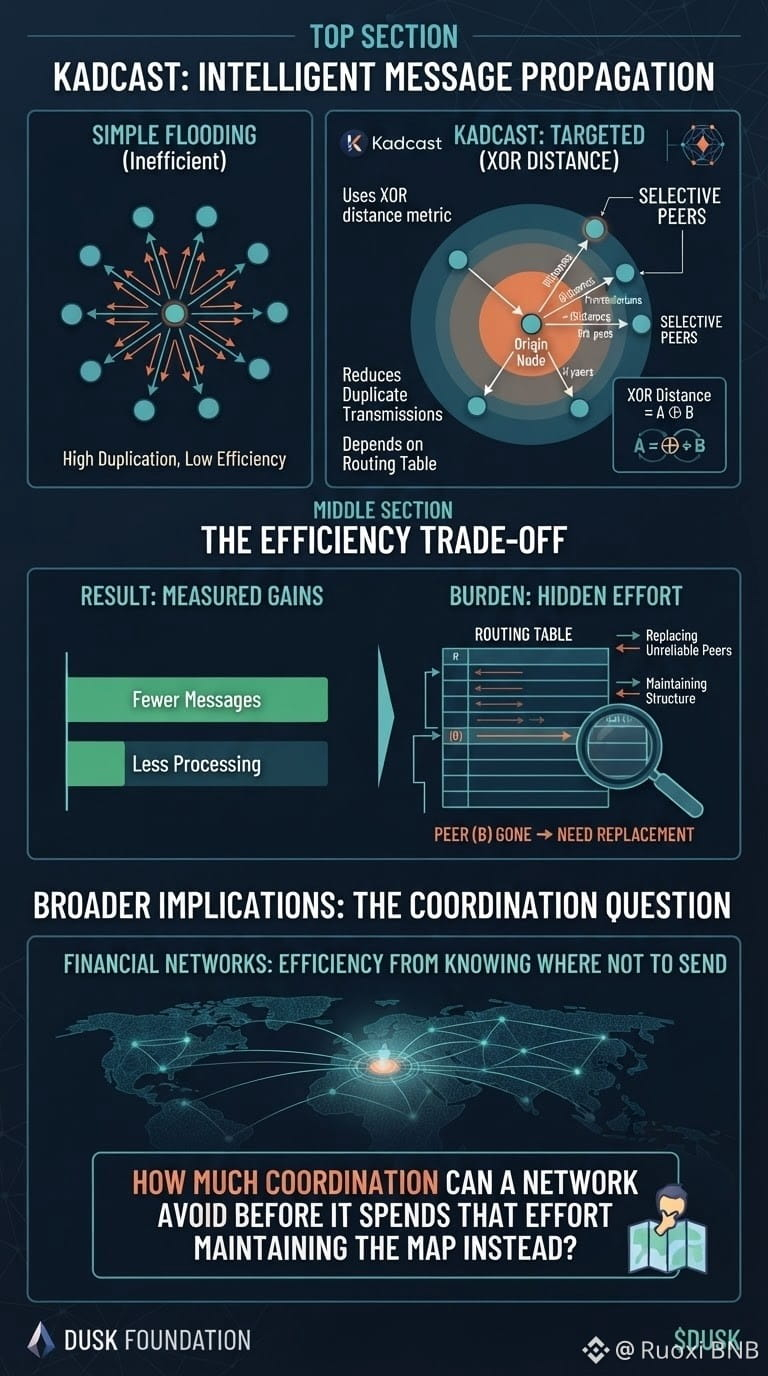
Zunächst nahm ich an, dass die Netzwerkeffizienz von Dusk vor allem daher rührt, dass die Datenknoten weniger verarbeiten müssen. Doch je mehr ich mir Kadcast ansah, desto stärker blieb mir eine kleine Einzelheit im Gedächtnis: der Einsatz von XOR-Distanzen, um zu entscheiden, wohin Nachrichten gesendet werden sollen. Ein Knoten leitet nicht einfach einen Block an jeden nahen Peer weiter. Er sendet ihn stattdessen an ausgewählte Peers in wachsenden Entfernungen innerhalb der Routing-Struktur. Das verringert zwar doppelte Übertragungen, bedeutet aber auch, dass die Ausbreitung davon abhängt, dass die Routing-Tabellen nützlich sind und einigermaßen aktuell bleiben. Wenn Peers verschwinden oder unzuverlässig werden, muss das Netzwerk sie ersetzen, bevor diese strukturierten Pfade weiterhin effektiv bleiben. Dieses Abwägen fiel mir leicht zu übersehen, weil das Ergebnis als weniger Nachrichten messbar ist, während die Last teilweise in die Pflege der Struktur verlagert wird, die entscheidet, wohin Nachrichten gehen. Das brachte mich dazu, allgemeiner über Finanznetzwerke nachzudenken. Effizienz entsteht oft dadurch, zu wissen, wohin man etwas nicht senden sollte. Und damit bleibt die leisere Frage: Wie viel Koordination kann ein Netzwerk vermeiden, bevor es diese Aufgabe aufwenden muss, um die Karte aktuell zu halten?
@Dusk_Foundation #dusk $DUSK
{spot}(DUSKUSDT)
@Dusk
Zunächst nahm ich an, dass die Netzwerkeffizienz von Dusk vor allem daher rührt, dass die Datenknoten weniger verarbeiten müssen. Doch je mehr ich mir Kadcast ansah, desto stärker blieb mir eine kleine Einzelheit im Gedächtnis: der Einsatz von XOR-Distanzen, um zu entscheiden, wohin Nachrichten gesendet werden sollen. Ein Knoten leitet nicht einfach einen Block an jeden nahen Peer weiter. Er sendet ihn stattdessen an ausgewählte Peers in wachsenden Entfernungen innerhalb der Routing-Struktur. Das verringert zwar doppelte Übertragungen, bedeutet aber auch, dass die Ausbreitung davon abhängt, dass die Routing-Tabellen nützlich sind und einigermaßen aktuell bleiben. Wenn Peers verschwinden oder unzuverlässig werden, muss das Netzwerk sie ersetzen, bevor diese strukturierten Pfade weiterhin effektiv bleiben. Dieses Abwägen fiel mir leicht zu übersehen, weil das Ergebnis als weniger Nachrichten messbar ist, während die Last teilweise in die Pflege der Struktur verlagert wird, die entscheidet, wohin Nachrichten gehen. Das brachte mich dazu, allgemeiner über Finanznetzwerke nachzudenken. Effizienz entsteht oft dadurch, zu wissen, wohin man etwas nicht senden sollte. Und damit bleibt die leisere Frage: Wie viel Koordination kann ein Netzwerk vermeiden, bevor es diese Aufgabe aufwenden muss, um die Karte aktuell zu halten?
@Dusk #dusk $DUSK
Zunächst nahm ich an, dass die Netzwerkeffizienz von Dusk vor allem daher rührt, dass die Datenknoten weniger verarbeiten müssen. Doch je mehr ich mir Kadcast ansah, desto stärker blieb mir eine kleine Einzelheit im Gedächtnis: der Einsatz von XOR-Distanzen, um zu entscheiden, wohin Nachrichten gesendet werden sollen. Ein Knoten leitet nicht einfach einen Block an jeden nahen Peer weiter. Er sendet ihn stattdessen an ausgewählte Peers in wachsenden Entfernungen innerhalb der Routing-Struktur. Das verringert zwar doppelte Übertragungen, bedeutet aber auch, dass die Ausbreitung davon abhängt, dass die Routing-Tabellen nützlich sind und einigermaßen aktuell bleiben. Wenn Peers verschwinden oder unzuverlässig werden, muss das Netzwerk sie ersetzen, bevor diese strukturierten Pfade weiterhin effektiv bleiben. Dieses Abwägen fiel mir leicht zu übersehen, weil das Ergebnis als weniger Nachrichten messbar ist, während die Last teilweise in die Pflege der Struktur verlagert wird, die entscheidet, wohin Nachrichten gehen. Das brachte mich dazu, allgemeiner über Finanznetzwerke nachzudenken. Effizienz entsteht oft dadurch, zu wissen, wohin man etwas nicht senden sollte. Und damit bleibt die leisere Frage: Wie viel Koordination kann ein Netzwerk vermeiden, bevor es diese Aufgabe aufwenden muss, um die Karte aktuell zu halten?
@Dusk #dusk $DUSK
43
19
168
·
--
Bullisch
Verifiziert
@Dusk_Foundation
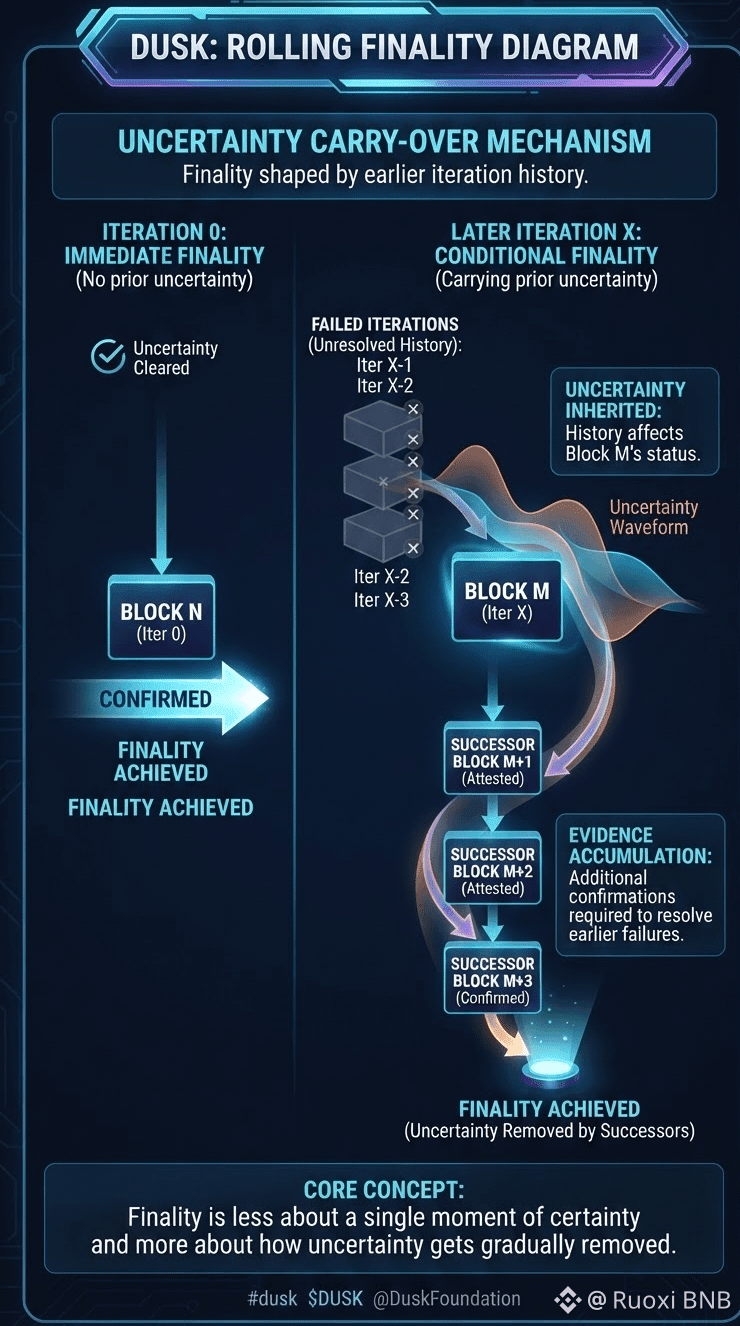
Zunächst nahm ich an, dass eine schnellere Finalität vor allem daher kommt, dass der Konsens effizienter gestaltet wird. Doch je genauer ich mir die rollenbasierte Finalitätsregeln von Dusk ansah, desto interessanter fand ich die Einzelheit, dass der Status eines Blocks davon abhängen kann, wie viele frühere Iterationen es nicht geschafft haben, zu einem eindeutigen Ergebnis zu gelangen. Ein Block, der in einer späteren Iteration akzeptiert wird, wird nicht genauso behandelt wie einer aus Iteration null. Wenn es ungelöste frühere Versuche gibt, wartet das Protokoll auf zusätzliche bezeugte oder bestätigte Nachfolger, bevor dieser Block als bestätigt gilt.
Was meine Aufmerksamkeit erregte, ist die Art, wie Unsicherheit zu etwas wird, das die Kette weiterträgt. Es heißt nicht einfach: „Dieser Block ist durchgegangen, weiter.“ Die Geschichte früherer Unsicherheit beeinflusst weiterhin, wie viel Beweismaterial danach noch benötigt wird. Das wirkt wie ein vernünftiger Ausgleich, aber es bedeutet auch, dass die Finalität teilweise durch das geformt wird, was vor dem Block selbst passiert ist.
In finanziellen Systemen funktioniert Vertrauen oft ähnlich: Ein Ergebnis kann akzeptiert werden, während weiterhin ein Teil eines ungelösten Kontexts mitgeschleppt wird.
Das bringt mich zu der Frage, ob Finalität weniger mit einem einzelnen Moment der Gewissheit zu tun hat und mehr damit, wie Unsicherheit nach und nach entfernt wird.
@Dusk_Foundation #dusk $DUSK
{spot}(DUSKUSDT)
@Dusk
Zunächst nahm ich an, dass eine schnellere Finalität vor allem daher kommt, dass der Konsens effizienter gestaltet wird. Doch je genauer ich mir die rollenbasierte Finalitätsregeln von Dusk ansah, desto interessanter fand ich die Einzelheit, dass der Status eines Blocks davon abhängen kann, wie viele frühere Iterationen es nicht geschafft haben, zu einem eindeutigen Ergebnis zu gelangen. Ein Block, der in einer späteren Iteration akzeptiert wird, wird nicht genauso behandelt wie einer aus Iteration null. Wenn es ungelöste frühere Versuche gibt, wartet das Protokoll auf zusätzliche bezeugte oder bestätigte Nachfolger, bevor dieser Block als bestätigt gilt.
Was meine Aufmerksamkeit erregte, ist die Art, wie Unsicherheit zu etwas wird, das die Kette weiterträgt. Es heißt nicht einfach: „Dieser Block ist durchgegangen, weiter.“ Die Geschichte früherer Unsicherheit beeinflusst weiterhin, wie viel Beweismaterial danach noch benötigt wird. Das wirkt wie ein vernünftiger Ausgleich, aber es bedeutet auch, dass die Finalität teilweise durch das geformt wird, was vor dem Block selbst passiert ist.
In finanziellen Systemen funktioniert Vertrauen oft ähnlich: Ein Ergebnis kann akzeptiert werden, während weiterhin ein Teil eines ungelösten Kontexts mitgeschleppt wird.
Das bringt mich zu der Frage, ob Finalität weniger mit einem einzelnen Moment der Gewissheit zu tun hat und mehr damit, wie Unsicherheit nach und nach entfernt wird.
@Dusk #dusk $DUSK
Zunächst nahm ich an, dass eine schnellere Finalität vor allem daher kommt, dass der Konsens effizienter gestaltet wird. Doch je genauer ich mir die rollenbasierte Finalitätsregeln von Dusk ansah, desto interessanter fand ich die Einzelheit, dass der Status eines Blocks davon abhängen kann, wie viele frühere Iterationen es nicht geschafft haben, zu einem eindeutigen Ergebnis zu gelangen. Ein Block, der in einer späteren Iteration akzeptiert wird, wird nicht genauso behandelt wie einer aus Iteration null. Wenn es ungelöste frühere Versuche gibt, wartet das Protokoll auf zusätzliche bezeugte oder bestätigte Nachfolger, bevor dieser Block als bestätigt gilt.
Was meine Aufmerksamkeit erregte, ist die Art, wie Unsicherheit zu etwas wird, das die Kette weiterträgt. Es heißt nicht einfach: „Dieser Block ist durchgegangen, weiter.“ Die Geschichte früherer Unsicherheit beeinflusst weiterhin, wie viel Beweismaterial danach noch benötigt wird. Das wirkt wie ein vernünftiger Ausgleich, aber es bedeutet auch, dass die Finalität teilweise durch das geformt wird, was vor dem Block selbst passiert ist.
In finanziellen Systemen funktioniert Vertrauen oft ähnlich: Ein Ergebnis kann akzeptiert werden, während weiterhin ein Teil eines ungelösten Kontexts mitgeschleppt wird.
Das bringt mich zu der Frage, ob Finalität weniger mit einem einzelnen Moment der Gewissheit zu tun hat und mehr damit, wie Unsicherheit nach und nach entfernt wird.
@Dusk #dusk $DUSK
70
20
376
·
--
Bullisch
@Dusk_Foundation
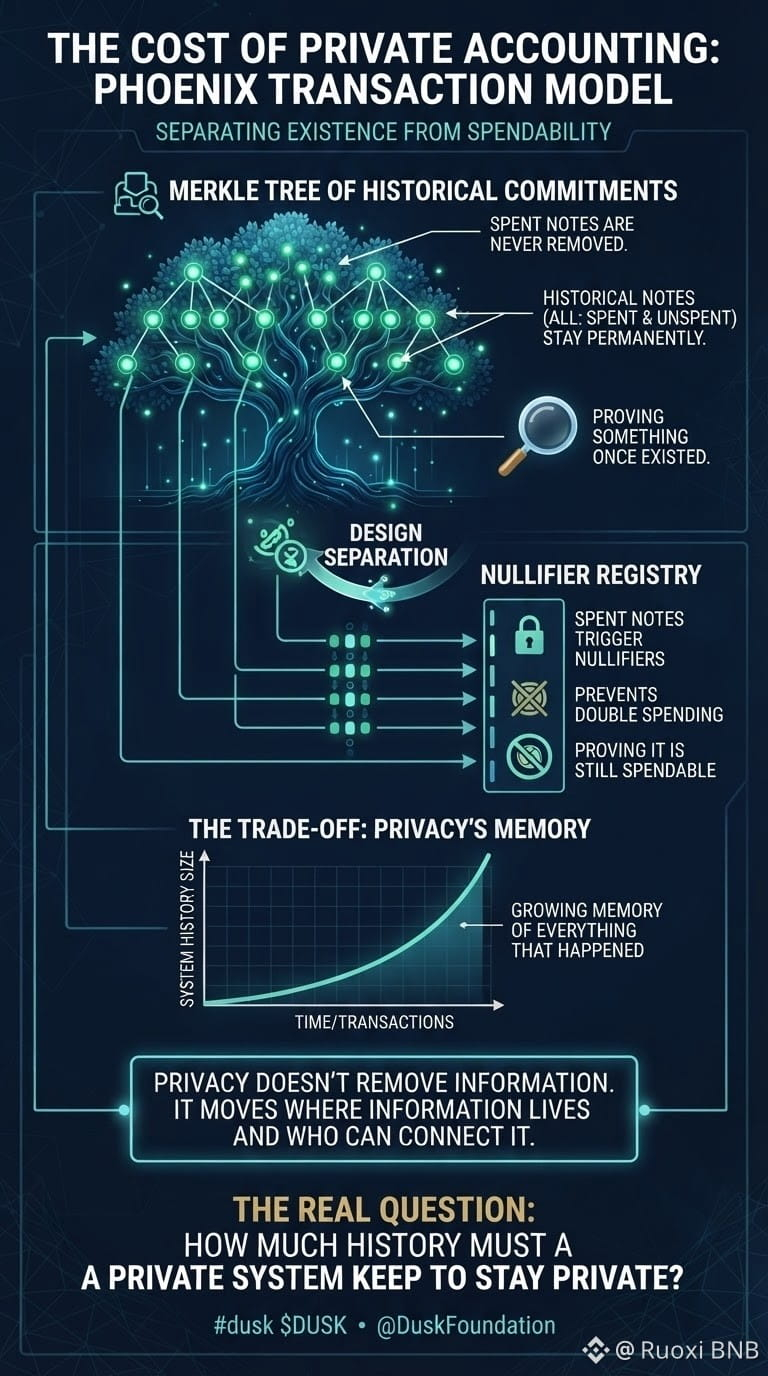
Zunächst ging ich davon aus, dass Privatsphäre-Systeme vor allem versuchen, Spuren früherer Aktivitäten zu löschen.
Doch je genauer ich Phoenix betrachtete, desto mehr fiel mir auf, dass verbrauchte Notizen niemals aus dem Merkle-Baum entfernt werden. Sie bleiben dort dauerhaft, selbst nachdem ihr Wert andernorts bereits verwendet wurde. Doppelausgaben werden durch Nullifier verhindert, nicht dadurch, dass alte Datensätze gelöscht werden.
Was meine Aufmerksamkeit erregte, ist, dass dieses Design zwei Ideen voneinander trennt, die normalerweise miteinander verbunden sind: den Nachweis, dass etwas einmal existiert hat, und den Nachweis, ob es noch ausgebbar ist. Das Netzwerk hält den ersten Teil für immer vor und verfolgt den zweiten Teil irgendwo anders.
Vielleicht sind das einfach die Kosten des privaten Rechnungswesens. Ein System, das Beziehungen zwischen Transaktionen verbirgt, benötigt möglicherweise trotzdem ein wachsendes Gedächtnis für alles, was jemals passiert ist, selbst wenn ein Großteil davon nicht mehr wirtschaftlich aktiv ist.
Das brachte mich zu dem Gedanken, dass Privatsphäre oft keine Informationen entfernt. Sie verlagert sie nur dorthin, wo sie gespeichert sind – und wer sie miteinander verknüpfen kann.
Also vielleicht ist die Frage nicht, wie viel Daten ein privates System preisgibt. Sondern wie viel Geschichte es behalten muss, um privat zu bleiben.
@Dusk_Foundation #dusk $DUSK
{spot}(DUSKUSDT)
@Dusk
Zunächst ging ich davon aus, dass Privatsphäre-Systeme vor allem versuchen, Spuren früherer Aktivitäten zu löschen.
Doch je genauer ich Phoenix betrachtete, desto mehr fiel mir auf, dass verbrauchte Notizen niemals aus dem Merkle-Baum entfernt werden. Sie bleiben dort dauerhaft, selbst nachdem ihr Wert andernorts bereits verwendet wurde. Doppelausgaben werden durch Nullifier verhindert, nicht dadurch, dass alte Datensätze gelöscht werden.
Was meine Aufmerksamkeit erregte, ist, dass dieses Design zwei Ideen voneinander trennt, die normalerweise miteinander verbunden sind: den Nachweis, dass etwas einmal existiert hat, und den Nachweis, ob es noch ausgebbar ist. Das Netzwerk hält den ersten Teil für immer vor und verfolgt den zweiten Teil irgendwo anders.
Vielleicht sind das einfach die Kosten des privaten Rechnungswesens. Ein System, das Beziehungen zwischen Transaktionen verbirgt, benötigt möglicherweise trotzdem ein wachsendes Gedächtnis für alles, was jemals passiert ist, selbst wenn ein Großteil davon nicht mehr wirtschaftlich aktiv ist.
Das brachte mich zu dem Gedanken, dass Privatsphäre oft keine Informationen entfernt. Sie verlagert sie nur dorthin, wo sie gespeichert sind – und wer sie miteinander verknüpfen kann.
Also vielleicht ist die Frage nicht, wie viel Daten ein privates System preisgibt. Sondern wie viel Geschichte es behalten muss, um privat zu bleiben.
@Dusk #dusk $DUSK
Zunächst ging ich davon aus, dass Privatsphäre-Systeme vor allem versuchen, Spuren früherer Aktivitäten zu löschen.
Doch je genauer ich Phoenix betrachtete, desto mehr fiel mir auf, dass verbrauchte Notizen niemals aus dem Merkle-Baum entfernt werden. Sie bleiben dort dauerhaft, selbst nachdem ihr Wert andernorts bereits verwendet wurde. Doppelausgaben werden durch Nullifier verhindert, nicht dadurch, dass alte Datensätze gelöscht werden.
Was meine Aufmerksamkeit erregte, ist, dass dieses Design zwei Ideen voneinander trennt, die normalerweise miteinander verbunden sind: den Nachweis, dass etwas einmal existiert hat, und den Nachweis, ob es noch ausgebbar ist. Das Netzwerk hält den ersten Teil für immer vor und verfolgt den zweiten Teil irgendwo anders.
Vielleicht sind das einfach die Kosten des privaten Rechnungswesens. Ein System, das Beziehungen zwischen Transaktionen verbirgt, benötigt möglicherweise trotzdem ein wachsendes Gedächtnis für alles, was jemals passiert ist, selbst wenn ein Großteil davon nicht mehr wirtschaftlich aktiv ist.
Das brachte mich zu dem Gedanken, dass Privatsphäre oft keine Informationen entfernt. Sie verlagert sie nur dorthin, wo sie gespeichert sind – und wer sie miteinander verknüpfen kann.
Also vielleicht ist die Frage nicht, wie viel Daten ein privates System preisgibt. Sondern wie viel Geschichte es behalten muss, um privat zu bleiben.
@Dusk #dusk $DUSK
43
23
174
·
--
Bullisch
@Dusk_Foundation
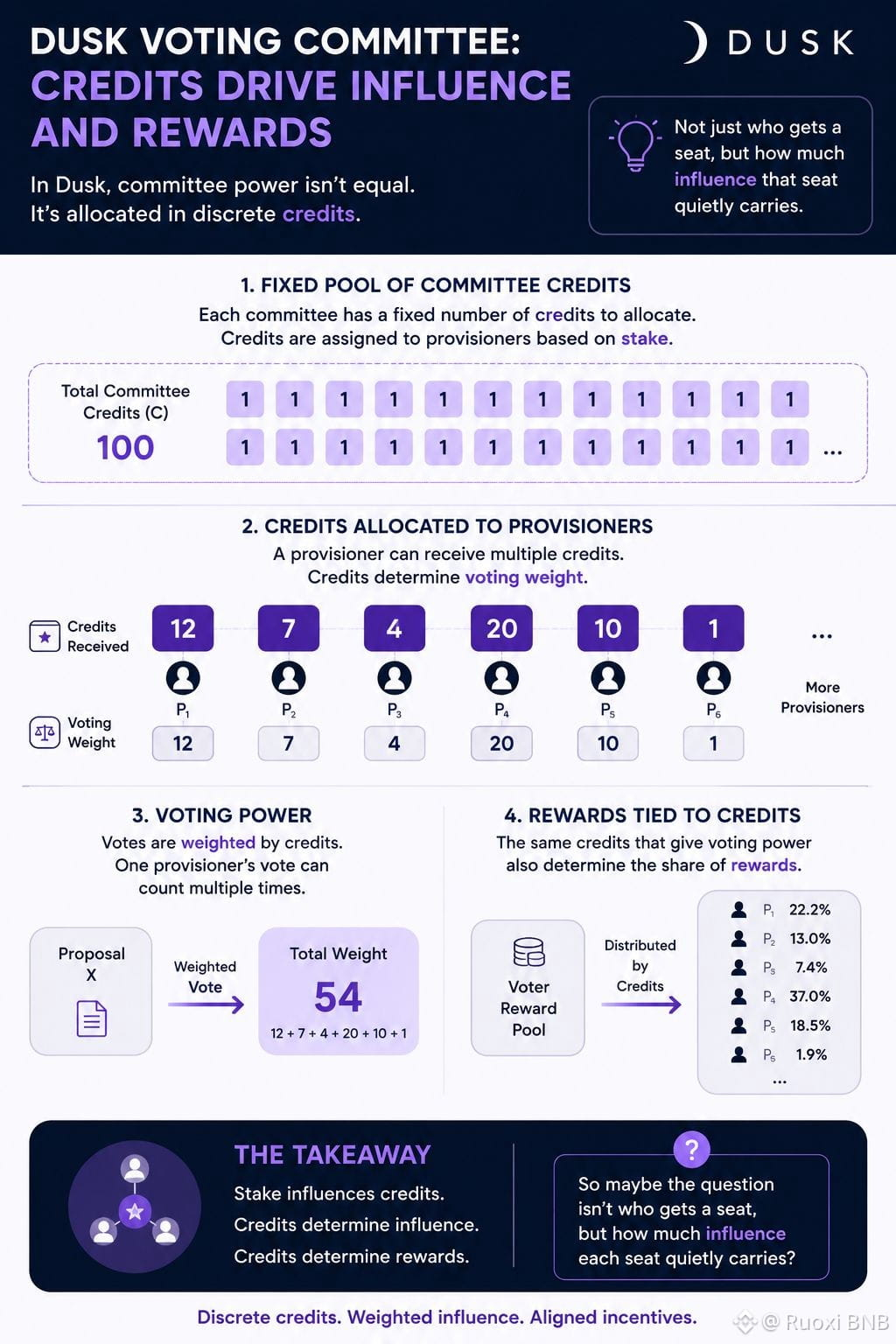
Zunächst nahm ich an, dass ein Abstimmungskomitee vor allem darüber entscheidet, wer ausgewählt wird. Was mich an Dusk’s Design fesselte, war jedoch, was nach der Auswahl passiert. Jedes Komitee hat einen festen Pool an Credits, und ein Provisioner kann mehr als einen erhalten. Diese Credits werden zu Stimmgewicht, sodass die Stimme eines Provisioners effektiv mehrmals gezählt werden kann. Gleichzeitig fließen dieselben Credit-Zuweisungen auch in Belohnungen ein, was bedeutet, dass der Einfluss des Komitees und die Vergütung an dieselbe kleine Einheit gekoppelt sind. Das erzeugt eine interessante Abhängigkeit. Ein größeres Engagement kann zu mehr Credits, mehr Stimmgewicht und einem größeren Anteil an der Belohnung des Wählers führen. Doch das System wiederholt nicht einfach die ursprüngliche Verteilung des Engagements, weil die Auswahl selbst über diese diskreten Credits funktioniert. Ich fand diese Detailtiefe spannender als die Schlagzeile der stake-gewichteten Komitees. Dadurch wirkt das Komitee weniger wie eine Liste gleichberechtigter Wähler und mehr wie eine vorübergehende Zuweisung von Einfluss. Vielleicht lautet die Frage also nicht, wer einen Sitz bekommt, sondern wie viel Einfluss jeder Sitz stillschweigend mit sich bringt?
@Dusk_Foundation #dusk $DUSK
{spot}(DUSKUSDT)
@Dusk
Zunächst nahm ich an, dass ein Abstimmungskomitee vor allem darüber entscheidet, wer ausgewählt wird. Was mich an Dusk’s Design fesselte, war jedoch, was nach der Auswahl passiert. Jedes Komitee hat einen festen Pool an Credits, und ein Provisioner kann mehr als einen erhalten. Diese Credits werden zu Stimmgewicht, sodass die Stimme eines Provisioners effektiv mehrmals gezählt werden kann. Gleichzeitig fließen dieselben Credit-Zuweisungen auch in Belohnungen ein, was bedeutet, dass der Einfluss des Komitees und die Vergütung an dieselbe kleine Einheit gekoppelt sind. Das erzeugt eine interessante Abhängigkeit. Ein größeres Engagement kann zu mehr Credits, mehr Stimmgewicht und einem größeren Anteil an der Belohnung des Wählers führen. Doch das System wiederholt nicht einfach die ursprüngliche Verteilung des Engagements, weil die Auswahl selbst über diese diskreten Credits funktioniert. Ich fand diese Detailtiefe spannender als die Schlagzeile der stake-gewichteten Komitees. Dadurch wirkt das Komitee weniger wie eine Liste gleichberechtigter Wähler und mehr wie eine vorübergehende Zuweisung von Einfluss. Vielleicht lautet die Frage also nicht, wer einen Sitz bekommt, sondern wie viel Einfluss jeder Sitz stillschweigend mit sich bringt?
@Dusk #dusk $DUSK
Zunächst nahm ich an, dass ein Abstimmungskomitee vor allem darüber entscheidet, wer ausgewählt wird. Was mich an Dusk’s Design fesselte, war jedoch, was nach der Auswahl passiert. Jedes Komitee hat einen festen Pool an Credits, und ein Provisioner kann mehr als einen erhalten. Diese Credits werden zu Stimmgewicht, sodass die Stimme eines Provisioners effektiv mehrmals gezählt werden kann. Gleichzeitig fließen dieselben Credit-Zuweisungen auch in Belohnungen ein, was bedeutet, dass der Einfluss des Komitees und die Vergütung an dieselbe kleine Einheit gekoppelt sind. Das erzeugt eine interessante Abhängigkeit. Ein größeres Engagement kann zu mehr Credits, mehr Stimmgewicht und einem größeren Anteil an der Belohnung des Wählers führen. Doch das System wiederholt nicht einfach die ursprüngliche Verteilung des Engagements, weil die Auswahl selbst über diese diskreten Credits funktioniert. Ich fand diese Detailtiefe spannender als die Schlagzeile der stake-gewichteten Komitees. Dadurch wirkt das Komitee weniger wie eine Liste gleichberechtigter Wähler und mehr wie eine vorübergehende Zuweisung von Einfluss. Vielleicht lautet die Frage also nicht, wer einen Sitz bekommt, sondern wie viel Einfluss jeder Sitz stillschweigend mit sich bringt?
@Dusk #dusk $DUSK
60
20
170
·
--
Bullisch
@Dusk_Foundation
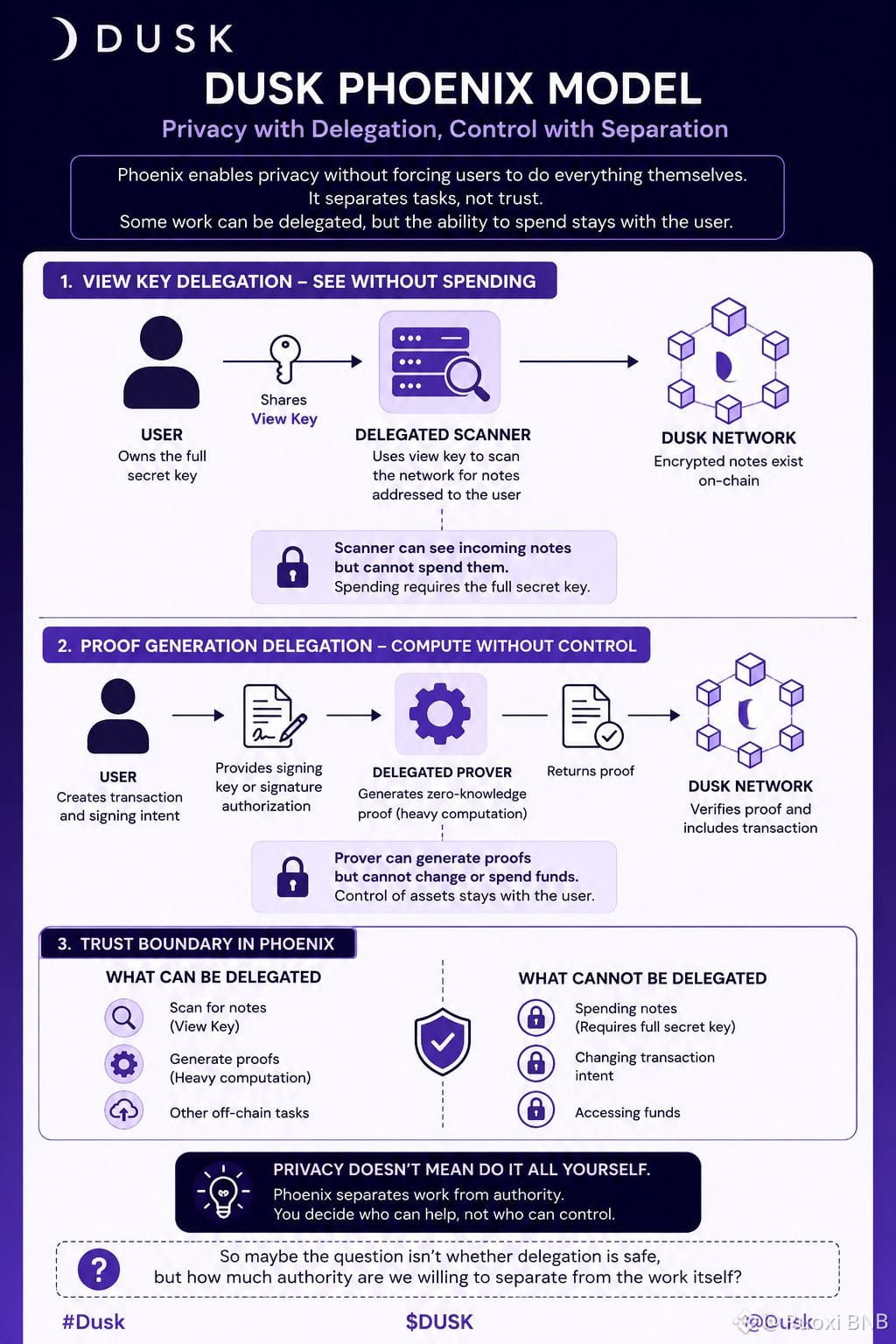
Zunächst ging ich davon aus, dass das Phoenix-Modell von Dusk vor allem Transaktionsdetails verbirgt. Doch je mehr ich hinsah, desto spannender wurde das Delegationsmodell. Ein Nutzer kann einem Dritten einen View-Key geben, damit dieser das Netzwerk nach Notizen durchsuchen kann, die an ihn adressiert sind—während der Dritte diese Notizen trotzdem nicht ausgeben kann, weil ihm der vollständige geheime Schlüssel fehlt. Die gleiche Trennung zeigt sich bei der Proof-Erstellung: Signaturen können es jemand anderem ermöglichen, die aufwendige ZK-Berechnung zu übernehmen, ohne ihm die Autorität über die Transaktion selbst zu geben. Was meine Aufmerksamkeit besonders geweckt hat, ist die Vertrauensgrenze, die dadurch entsteht. Privatsphäre bedeutet nicht, dass jede Aufgabe zwingend beim Nutzer bleiben muss. Ein Teil der Arbeit kann ausgelagert werden, aber die Fähigkeit, auszugeben, bleibt getrennt. Das wirkt wie ein praktischer Kompromiss zwischen privaten Systemen und der Realität, dass Berechnungen oft delegiert werden. Außerdem wirft das eine eher leise Frage auf, nämlich: Wo fühlen sich Nutzer wohl dabei, einem Teilvertrauen Raum zu geben? Vielleicht lautet die Frage also nicht, ob Delegation sicher ist, sondern wie viel Autorität Menschen bereit sind, vom eigentlichen Arbeitsaufwand zu trennen?
@Dusk_Foundation #dusk $DUSK
{spot}(DUSKUSDT)
@Dusk
Zunächst ging ich davon aus, dass das Phoenix-Modell von Dusk vor allem Transaktionsdetails verbirgt. Doch je mehr ich hinsah, desto spannender wurde das Delegationsmodell. Ein Nutzer kann einem Dritten einen View-Key geben, damit dieser das Netzwerk nach Notizen durchsuchen kann, die an ihn adressiert sind—während der Dritte diese Notizen trotzdem nicht ausgeben kann, weil ihm der vollständige geheime Schlüssel fehlt. Die gleiche Trennung zeigt sich bei der Proof-Erstellung: Signaturen können es jemand anderem ermöglichen, die aufwendige ZK-Berechnung zu übernehmen, ohne ihm die Autorität über die Transaktion selbst zu geben. Was meine Aufmerksamkeit besonders geweckt hat, ist die Vertrauensgrenze, die dadurch entsteht. Privatsphäre bedeutet nicht, dass jede Aufgabe zwingend beim Nutzer bleiben muss. Ein Teil der Arbeit kann ausgelagert werden, aber die Fähigkeit, auszugeben, bleibt getrennt. Das wirkt wie ein praktischer Kompromiss zwischen privaten Systemen und der Realität, dass Berechnungen oft delegiert werden. Außerdem wirft das eine eher leise Frage auf, nämlich: Wo fühlen sich Nutzer wohl dabei, einem Teilvertrauen Raum zu geben? Vielleicht lautet die Frage also nicht, ob Delegation sicher ist, sondern wie viel Autorität Menschen bereit sind, vom eigentlichen Arbeitsaufwand zu trennen?
@Dusk #dusk $DUSK
Zunächst ging ich davon aus, dass das Phoenix-Modell von Dusk vor allem Transaktionsdetails verbirgt. Doch je mehr ich hinsah, desto spannender wurde das Delegationsmodell. Ein Nutzer kann einem Dritten einen View-Key geben, damit dieser das Netzwerk nach Notizen durchsuchen kann, die an ihn adressiert sind—während der Dritte diese Notizen trotzdem nicht ausgeben kann, weil ihm der vollständige geheime Schlüssel fehlt. Die gleiche Trennung zeigt sich bei der Proof-Erstellung: Signaturen können es jemand anderem ermöglichen, die aufwendige ZK-Berechnung zu übernehmen, ohne ihm die Autorität über die Transaktion selbst zu geben. Was meine Aufmerksamkeit besonders geweckt hat, ist die Vertrauensgrenze, die dadurch entsteht. Privatsphäre bedeutet nicht, dass jede Aufgabe zwingend beim Nutzer bleiben muss. Ein Teil der Arbeit kann ausgelagert werden, aber die Fähigkeit, auszugeben, bleibt getrennt. Das wirkt wie ein praktischer Kompromiss zwischen privaten Systemen und der Realität, dass Berechnungen oft delegiert werden. Außerdem wirft das eine eher leise Frage auf, nämlich: Wo fühlen sich Nutzer wohl dabei, einem Teilvertrauen Raum zu geben? Vielleicht lautet die Frage also nicht, ob Delegation sicher ist, sondern wie viel Autorität Menschen bereit sind, vom eigentlichen Arbeitsaufwand zu trennen?
@Dusk #dusk $DUSK
85
28
384
·
--
Bullisch
Teilweise korrekt
@Dusk_Foundation
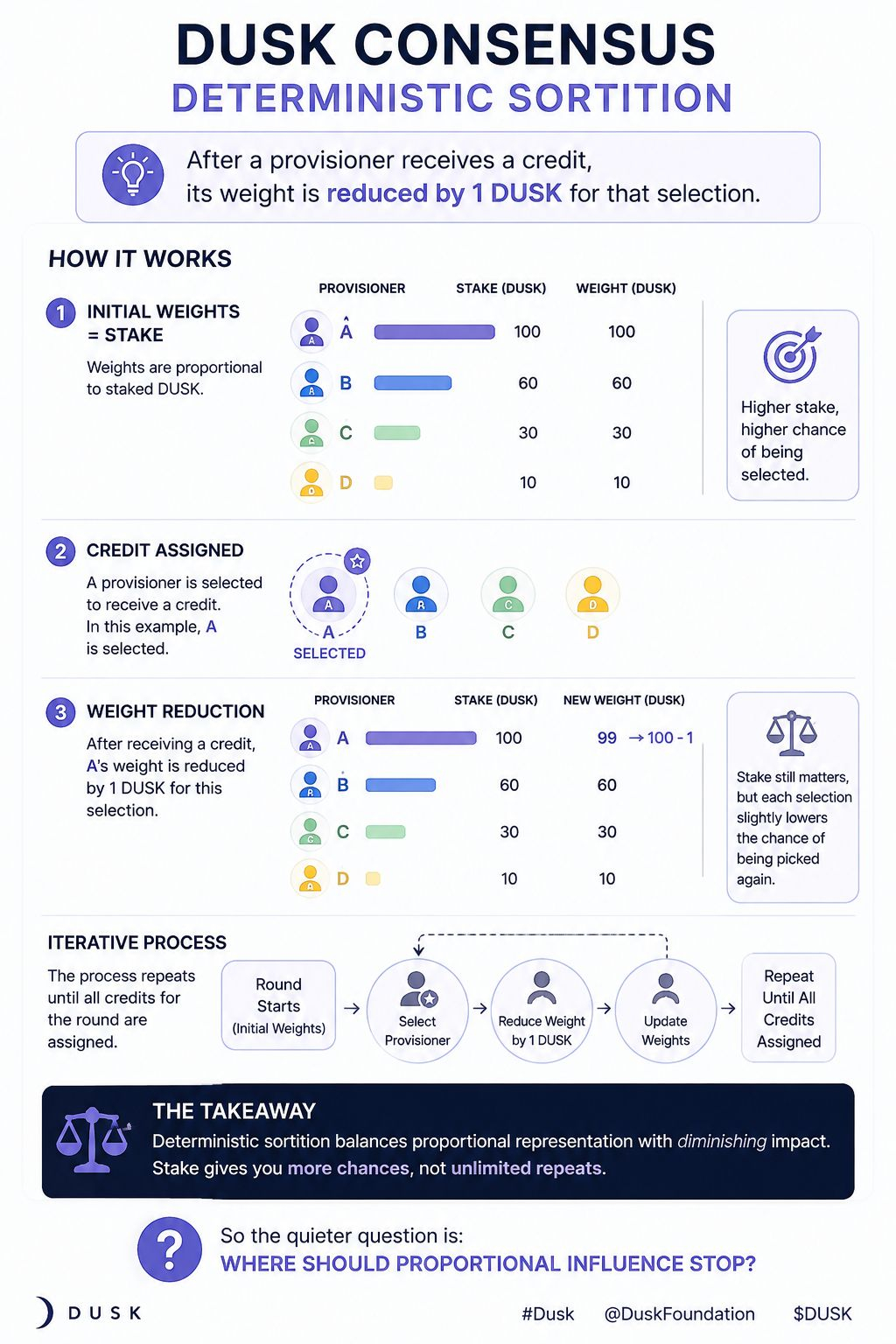
Zunächst nahm ich an, dass Dusk’ deterministische Sortierung vor allem darauf abzielt, die Auswahl von Ausschussmitgliedern proportional zum Einsatz zu gestalten. Aber je genauer ich hinsah, desto kleiner, aber auffälliger war ein Detail: Was passiert, nachdem ein Provisioner einen Kredit erhält? Dann wird sein Gewicht für diese Auswahl um 1 DUSK verringert. Die Idee ist einfach, aber sie bedeutet, dass der Auswahlprozess nicht nur darin besteht, wiederholt aus derselben Einsatzverteilung zu ziehen. Ein Provisioner mit mehr Einsatz bekommt zwar weiterhin mehr Chancen, doch jede erfolgreiche Auswahl senkt seine Wahrscheinlichkeit, einen weiteren Kredit zu erhalten, geringfügig. Das wirkt wie ein praktikabler Kompromiss zwischen einflussgewichteter Wirkung und dem wiederholten Bevorzugen derselben Teilnehmer innerhalb eines Ausschusses. Außerdem heißt das, dass der Einsatz hier zwei Aufgaben übernimmt: Er bestimmt zunächst die anfängliche Eignung für die Auswahl und verliert dann nach und nach an Gewicht, sobald Kredite zugewiesen werden. Ich fand das interessanter als die grundlegende Behauptung einer proportionalen Auswahl. Vielleicht geht es dabei weniger um Fairness im isolierten Sinne und mehr darum, wie viel wiederholter Einfluss eine einzelne Einsatzposition bekommen sollte. Also die leise, aber entscheidende Frage lautet: Wo sollte der proportionale Einfluss aufhören?
@Dusk_Foundation #dusk $DUSK
{spot}(DUSKUSDT)
@Dusk
Zunächst nahm ich an, dass Dusk’ deterministische Sortierung vor allem darauf abzielt, die Auswahl von Ausschussmitgliedern proportional zum Einsatz zu gestalten. Aber je genauer ich hinsah, desto kleiner, aber auffälliger war ein Detail: Was passiert, nachdem ein Provisioner einen Kredit erhält? Dann wird sein Gewicht für diese Auswahl um 1 DUSK verringert. Die Idee ist einfach, aber sie bedeutet, dass der Auswahlprozess nicht nur darin besteht, wiederholt aus derselben Einsatzverteilung zu ziehen. Ein Provisioner mit mehr Einsatz bekommt zwar weiterhin mehr Chancen, doch jede erfolgreiche Auswahl senkt seine Wahrscheinlichkeit, einen weiteren Kredit zu erhalten, geringfügig. Das wirkt wie ein praktikabler Kompromiss zwischen einflussgewichteter Wirkung und dem wiederholten Bevorzugen derselben Teilnehmer innerhalb eines Ausschusses. Außerdem heißt das, dass der Einsatz hier zwei Aufgaben übernimmt: Er bestimmt zunächst die anfängliche Eignung für die Auswahl und verliert dann nach und nach an Gewicht, sobald Kredite zugewiesen werden. Ich fand das interessanter als die grundlegende Behauptung einer proportionalen Auswahl. Vielleicht geht es dabei weniger um Fairness im isolierten Sinne und mehr darum, wie viel wiederholter Einfluss eine einzelne Einsatzposition bekommen sollte. Also die leise, aber entscheidende Frage lautet: Wo sollte der proportionale Einfluss aufhören?
@Dusk #dusk $DUSK
Zunächst nahm ich an, dass Dusk’ deterministische Sortierung vor allem darauf abzielt, die Auswahl von Ausschussmitgliedern proportional zum Einsatz zu gestalten. Aber je genauer ich hinsah, desto kleiner, aber auffälliger war ein Detail: Was passiert, nachdem ein Provisioner einen Kredit erhält? Dann wird sein Gewicht für diese Auswahl um 1 DUSK verringert. Die Idee ist einfach, aber sie bedeutet, dass der Auswahlprozess nicht nur darin besteht, wiederholt aus derselben Einsatzverteilung zu ziehen. Ein Provisioner mit mehr Einsatz bekommt zwar weiterhin mehr Chancen, doch jede erfolgreiche Auswahl senkt seine Wahrscheinlichkeit, einen weiteren Kredit zu erhalten, geringfügig. Das wirkt wie ein praktikabler Kompromiss zwischen einflussgewichteter Wirkung und dem wiederholten Bevorzugen derselben Teilnehmer innerhalb eines Ausschusses. Außerdem heißt das, dass der Einsatz hier zwei Aufgaben übernimmt: Er bestimmt zunächst die anfängliche Eignung für die Auswahl und verliert dann nach und nach an Gewicht, sobald Kredite zugewiesen werden. Ich fand das interessanter als die grundlegende Behauptung einer proportionalen Auswahl. Vielleicht geht es dabei weniger um Fairness im isolierten Sinne und mehr darum, wie viel wiederholter Einfluss eine einzelne Einsatzposition bekommen sollte. Also die leise, aber entscheidende Frage lautet: Wo sollte der proportionale Einfluss aufhören?
@Dusk #dusk $DUSK
51
13
355
·
--
@Dusk_Foundation
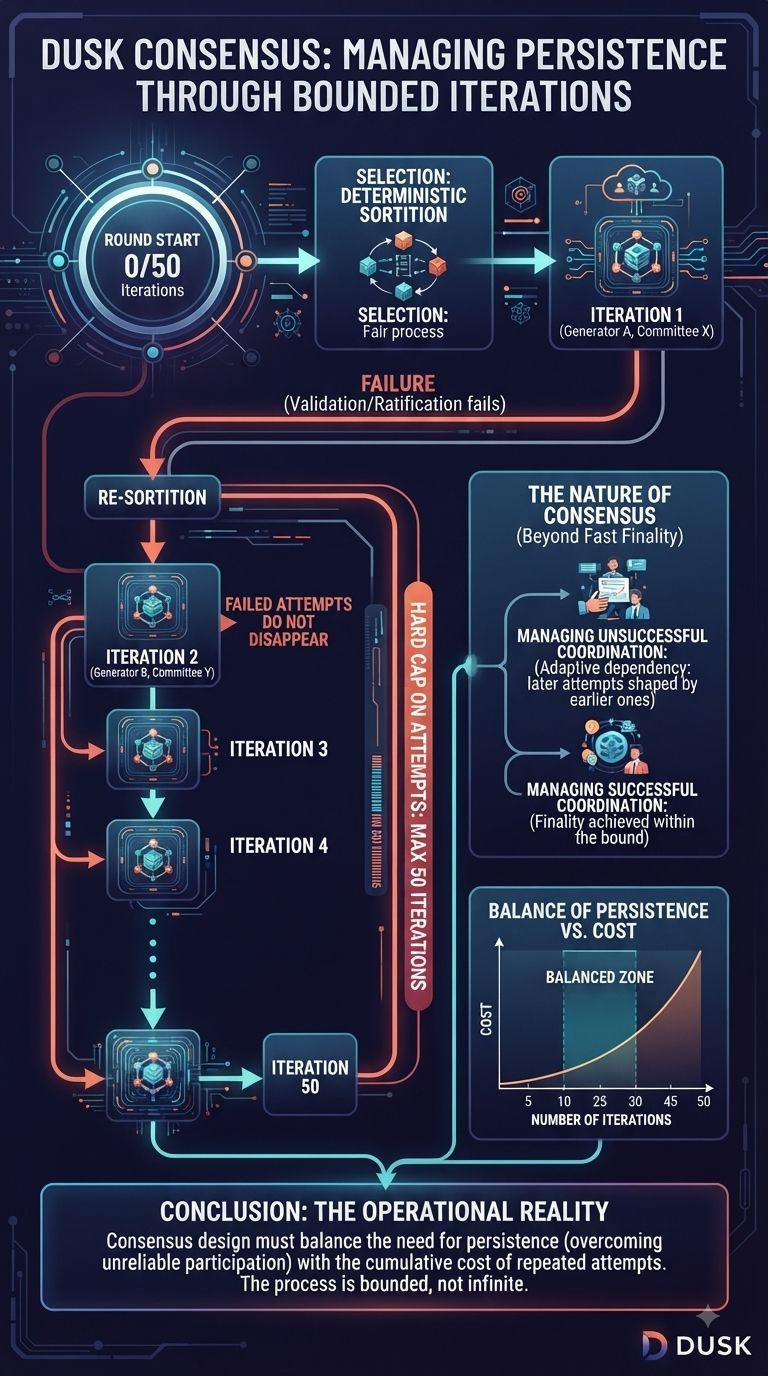
Zunächst ging ich davon aus, dass Dusks Konsensrunden größtenteils eine Frage des Abwartens genügend vieler Stimmen seien. Doch je genauer ich mir die Iterationsstruktur ansah, desto mehr blieb mir die Tatsache im Gedächtnis, wie ein fehlgeschlagener Versuch nicht einfach verschwindet. Wenn Validierung oder Ratifizierung fehlschlagen, wechselt das Protokoll zu einer weiteren Iteration, wobei ein neuer Generator kommt und Komitees durch deterministische Sortition ausgewählt werden. Das erzeugt eine kleine, aber interessante Abhängigkeit: Ein späterer Versuch wird teilweise durch das geformt, was in den früheren passiert ist. Das Whitepaper begrenzt sogar eine Runde auf 50 Iterationen, was darauf hindeutet, dass ein Scheitern nicht als außergewöhnlicher Fall behandelt wird, den man ignorieren könnte. Es muss in einen begrenzten Prozess passen. Ich finde das spannender als die übliche Beschreibung von „schneller Finalität“. Der Konsens hier scheint sich genauso auf das Management erfolgloser Koordination zu beziehen wie auf erfolgreiche Koordination. Vielleicht ist das unvermeidlich, wenn die Teilnahme am Netzwerk nicht perfekt zuverlässig ist. Das führt zu der eher stillen Frage: Wie sollte ein Konsenssystem Persistenz ausbalancieren mit den Kosten, wiederholt zu versuchen, sich zu einigen? #dusk $DUSK @Dusk_Foundation $DUSK
{spot}(DUSKUSDT)
@Dusk
Zunächst ging ich davon aus, dass Dusks Konsensrunden größtenteils eine Frage des Abwartens genügend vieler Stimmen seien. Doch je genauer ich mir die Iterationsstruktur ansah, desto mehr blieb mir die Tatsache im Gedächtnis, wie ein fehlgeschlagener Versuch nicht einfach verschwindet. Wenn Validierung oder Ratifizierung fehlschlagen, wechselt das Protokoll zu einer weiteren Iteration, wobei ein neuer Generator kommt und Komitees durch deterministische Sortition ausgewählt werden. Das erzeugt eine kleine, aber interessante Abhängigkeit: Ein späterer Versuch wird teilweise durch das geformt, was in den früheren passiert ist. Das Whitepaper begrenzt sogar eine Runde auf 50 Iterationen, was darauf hindeutet, dass ein Scheitern nicht als außergewöhnlicher Fall behandelt wird, den man ignorieren könnte. Es muss in einen begrenzten Prozess passen. Ich finde das spannender als die übliche Beschreibung von „schneller Finalität“. Der Konsens hier scheint sich genauso auf das Management erfolgloser Koordination zu beziehen wie auf erfolgreiche Koordination. Vielleicht ist das unvermeidlich, wenn die Teilnahme am Netzwerk nicht perfekt zuverlässig ist. Das führt zu der eher stillen Frage: Wie sollte ein Konsenssystem Persistenz ausbalancieren mit den Kosten, wiederholt zu versuchen, sich zu einigen? #dusk $DUSK @Dusk $DUSK
Zunächst ging ich davon aus, dass Dusks Konsensrunden größtenteils eine Frage des Abwartens genügend vieler Stimmen seien. Doch je genauer ich mir die Iterationsstruktur ansah, desto mehr blieb mir die Tatsache im Gedächtnis, wie ein fehlgeschlagener Versuch nicht einfach verschwindet. Wenn Validierung oder Ratifizierung fehlschlagen, wechselt das Protokoll zu einer weiteren Iteration, wobei ein neuer Generator kommt und Komitees durch deterministische Sortition ausgewählt werden. Das erzeugt eine kleine, aber interessante Abhängigkeit: Ein späterer Versuch wird teilweise durch das geformt, was in den früheren passiert ist. Das Whitepaper begrenzt sogar eine Runde auf 50 Iterationen, was darauf hindeutet, dass ein Scheitern nicht als außergewöhnlicher Fall behandelt wird, den man ignorieren könnte. Es muss in einen begrenzten Prozess passen. Ich finde das spannender als die übliche Beschreibung von „schneller Finalität“. Der Konsens hier scheint sich genauso auf das Management erfolgloser Koordination zu beziehen wie auf erfolgreiche Koordination. Vielleicht ist das unvermeidlich, wenn die Teilnahme am Netzwerk nicht perfekt zuverlässig ist. Das führt zu der eher stillen Frage: Wie sollte ein Konsenssystem Persistenz ausbalancieren mit den Kosten, wiederholt zu versuchen, sich zu einigen? #dusk $DUSK @Dusk $DUSK
41
16
169
·
--
Bullisch
Verifiziert
@Dusk_Foundation
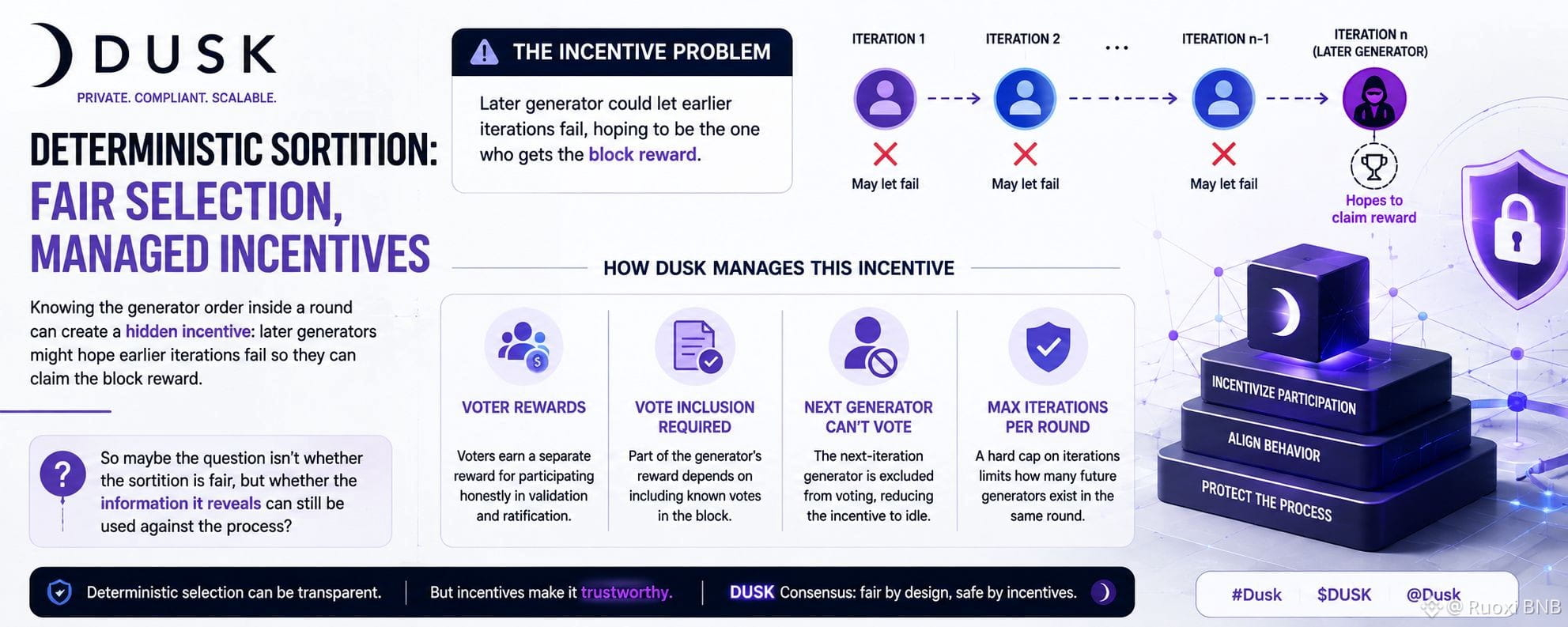
Zunächst nahm ich an, dass Dusk’s deterministische Sortition vor allem darauf abzielt, die Auswahl von Komitees fair zu gestalten. Doch je mehr ich hinsah, desto mehr fiel mir das Problem auf, das dadurch entsteht, dass man die Generatorreihenfolge innerhalb einer Runde kennt. Ein späterer Generator könnte einen Grund haben, frühere Iterationen scheitern zu lassen, in der Hoffnung, die Blockbelohnung einzusammeln. Das Whitepaper behandelt dies als Anreizproblem, statt von aufrichtigem Mitwirken auszugehen. Wähler erhalten eine separate Belohnung, ein Teil der Belohnung des Generators hängt vom Einbeziehen bekannter Stimmen ab, und der Generator der nächsten Iteration wird von der Abstimmung ausgeschlossen. Außerdem gibt es eine harte Obergrenze für die Iterationen, die begrenzt, wie viele zukünftige Generatoren in derselben Runde existieren können. Was ich interessant fand, ist, wie viel beim Konsensdesign letztlich darum geht, zu verhindern, dass jemand von Informationen profitiert, die das Protokoll selbst ihm zugibt. Die Auswahl kann deterministisch sein, aber das Verhalten rund um diese Auswahl muss dennoch gesteuert werden. Vielleicht ist also nicht die Frage, ob die Sortition fair ist, sondern ob die Informationen, die sie offenbart, weiterhin gegen den Prozess verwendet werden können?
@Dusk_Foundation #dusk $DUSK
{spot}(DUSKUSDT)
@Dusk
Zunächst nahm ich an, dass Dusk’s deterministische Sortition vor allem darauf abzielt, die Auswahl von Komitees fair zu gestalten. Doch je mehr ich hinsah, desto mehr fiel mir das Problem auf, das dadurch entsteht, dass man die Generatorreihenfolge innerhalb einer Runde kennt. Ein späterer Generator könnte einen Grund haben, frühere Iterationen scheitern zu lassen, in der Hoffnung, die Blockbelohnung einzusammeln. Das Whitepaper behandelt dies als Anreizproblem, statt von aufrichtigem Mitwirken auszugehen. Wähler erhalten eine separate Belohnung, ein Teil der Belohnung des Generators hängt vom Einbeziehen bekannter Stimmen ab, und der Generator der nächsten Iteration wird von der Abstimmung ausgeschlossen. Außerdem gibt es eine harte Obergrenze für die Iterationen, die begrenzt, wie viele zukünftige Generatoren in derselben Runde existieren können. Was ich interessant fand, ist, wie viel beim Konsensdesign letztlich darum geht, zu verhindern, dass jemand von Informationen profitiert, die das Protokoll selbst ihm zugibt. Die Auswahl kann deterministisch sein, aber das Verhalten rund um diese Auswahl muss dennoch gesteuert werden. Vielleicht ist also nicht die Frage, ob die Sortition fair ist, sondern ob die Informationen, die sie offenbart, weiterhin gegen den Prozess verwendet werden können?
@Dusk #dusk $DUSK
Zunächst nahm ich an, dass Dusk’s deterministische Sortition vor allem darauf abzielt, die Auswahl von Komitees fair zu gestalten. Doch je mehr ich hinsah, desto mehr fiel mir das Problem auf, das dadurch entsteht, dass man die Generatorreihenfolge innerhalb einer Runde kennt. Ein späterer Generator könnte einen Grund haben, frühere Iterationen scheitern zu lassen, in der Hoffnung, die Blockbelohnung einzusammeln. Das Whitepaper behandelt dies als Anreizproblem, statt von aufrichtigem Mitwirken auszugehen. Wähler erhalten eine separate Belohnung, ein Teil der Belohnung des Generators hängt vom Einbeziehen bekannter Stimmen ab, und der Generator der nächsten Iteration wird von der Abstimmung ausgeschlossen. Außerdem gibt es eine harte Obergrenze für die Iterationen, die begrenzt, wie viele zukünftige Generatoren in derselben Runde existieren können. Was ich interessant fand, ist, wie viel beim Konsensdesign letztlich darum geht, zu verhindern, dass jemand von Informationen profitiert, die das Protokoll selbst ihm zugibt. Die Auswahl kann deterministisch sein, aber das Verhalten rund um diese Auswahl muss dennoch gesteuert werden. Vielleicht ist also nicht die Frage, ob die Sortition fair ist, sondern ob die Informationen, die sie offenbart, weiterhin gegen den Prozess verwendet werden können?
@Dusk #dusk $DUSK
44
14
317
·
--
Bullisch
$EDGE
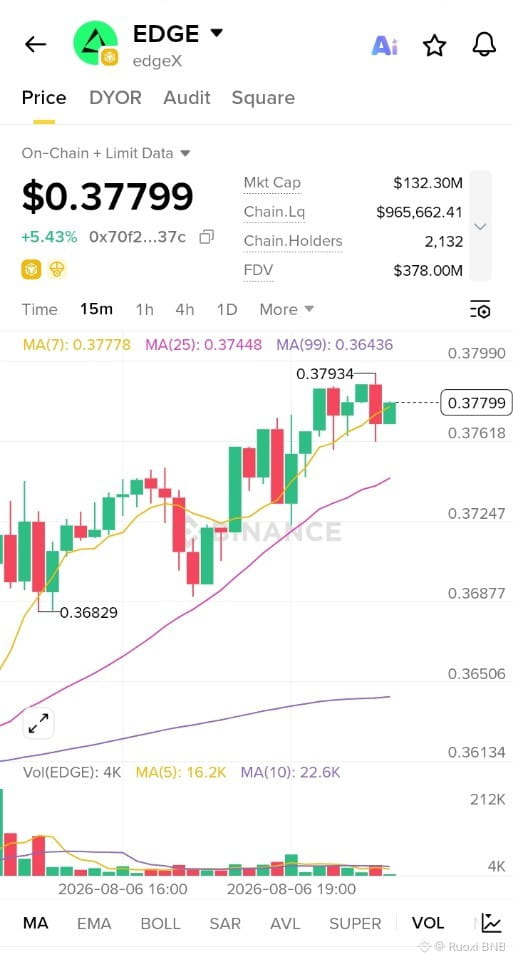
Der Kurs handelt bei 0,37799 $ und liegt über kurzfristigen gleitenden Durchschnitten, was auf einen stetigen bullischen Aufwärtstrend hindeutet. Der Preis drängt nahe an einen möglichen Widerstand, während höhere Durchschnitte den übergeordneten Trend weiterhin stützen. Anhaltendes Handelsvolumen könnte das Vertrauen stärken, obwohl eine Zurückweisung in der Nähe der jüngsten Hochs weiterhin möglich bleibt. Achte auf eine Bestätigung über dem Widerstand, bevor du dich engagierst. #EDGE #DeFi #Crypto #Trading $EDGE
{alpha}(560x70f2eadf1ca1969ff42b0c78e9da519e8937cbaf)
$EDGE
Der Kurs handelt bei 0,37799 $ und liegt über kurzfristigen gleitenden Durchschnitten, was auf einen stetigen bullischen Aufwärtstrend hindeutet. Der Preis drängt nahe an einen möglichen Widerstand, während höhere Durchschnitte den übergeordneten Trend weiterhin stützen. Anhaltendes Handelsvolumen könnte das Vertrauen stärken, obwohl eine Zurückweisung in der Nähe der jüngsten Hochs weiterhin möglich bleibt. Achte auf eine Bestätigung über dem Widerstand, bevor du dich engagierst. #EDGE #DeFi #Crypto #Trading $EDGE
Der Kurs handelt bei 0,37799 $ und liegt über kurzfristigen gleitenden Durchschnitten, was auf einen stetigen bullischen Aufwärtstrend hindeutet. Der Preis drängt nahe an einen möglichen Widerstand, während höhere Durchschnitte den übergeordneten Trend weiterhin stützen. Anhaltendes Handelsvolumen könnte das Vertrauen stärken, obwohl eine Zurückweisung in der Nähe der jüngsten Hochs weiterhin möglich bleibt. Achte auf eine Bestätigung über dem Widerstand, bevor du dich engagierst. #EDGE #DeFi #Crypto #Trading $EDGE
2
140
·
--
Bullisch
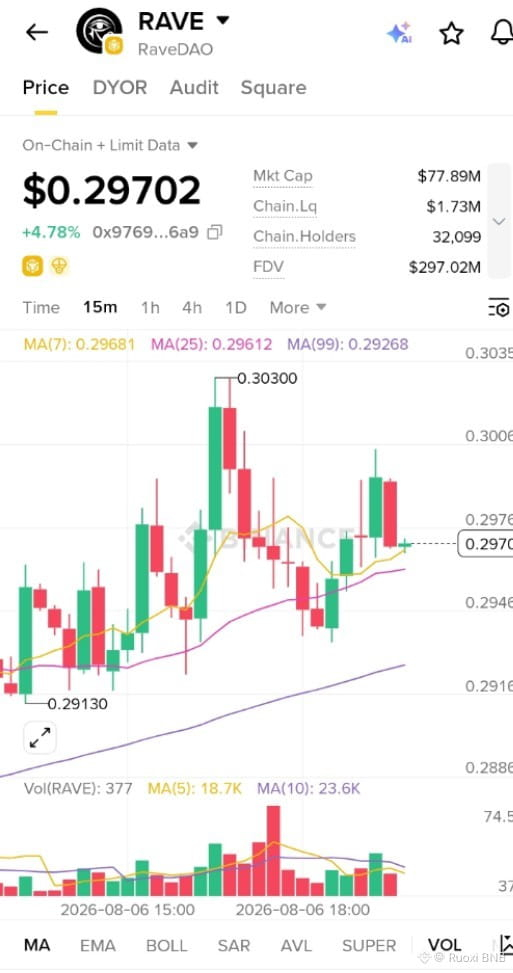
$RAVE Trades bei 0,29702 $, schwebt über wichtigen gleitenden Durchschnitten und spiegelt eine stabile zugrunde liegende Stärke wider. Der Momentum bleibt konstruktiv, obwohl der Widerstand nahe den jüngsten Hochs unmittelbare Fortschritte begrenzen könnte. Das Halten des aktuellen Supports könnte die bullische Struktur bewahren, während das Volumen genau überwacht werden sollte, um eine stärkere Bestätigung zu erhalten. #RAVE #RaveDAO #Crypto #DeFi $RAVE
{alpha}(560x97693439ea2f0ecdeb9135881e49f354656a911c)
$RAVE Trades bei 0,29702 $, schwebt über wichtigen gleitenden Durchschnitten und spiegelt eine stabile zugrunde liegende Stärke wider. Der Momentum bleibt konstruktiv, obwohl der Widerstand nahe den jüngsten Hochs unmittelbare Fortschritte begrenzen könnte. Das Halten des aktuellen Supports könnte die bullische Struktur bewahren, während das Volumen genau überwacht werden sollte, um eine stärkere Bestätigung zu erhalten. #RAVE #RaveDAO #Crypto #DeFi $RAVE
3
225
·
--
Bullisch
$AKE Trades bei 0,0042275 $, hält sich über wichtigen gleitenden Durchschnitten und signalisiert eine robuste kurzfristige Dynamik. Käufer verteidigen weiterhin die Unterstützung, während ein nahegelegenes Widerstandsniveau die nächste Richtungsbewegung bestimmen könnte. Steigende Beteiligung könnte das Vertrauen stärken, doch ein diszipliniertes Risikomanagement bleibt in sich verändernden Marktbedingungen unerlässlich. #AKE #Crypto #Altcoins #DeFi $AKE
{future}(AKEUSDT)
$AKE Trades bei 0,0042275 $, hält sich über wichtigen gleitenden Durchschnitten und signalisiert eine robuste kurzfristige Dynamik. Käufer verteidigen weiterhin die Unterstützung, während ein nahegelegenes Widerstandsniveau die nächste Richtungsbewegung bestimmen könnte. Steigende Beteiligung könnte das Vertrauen stärken, doch ein diszipliniertes Risikomanagement bleibt in sich verändernden Marktbedingungen unerlässlich. #AKE #Crypto #Altcoins #DeFi $AKE
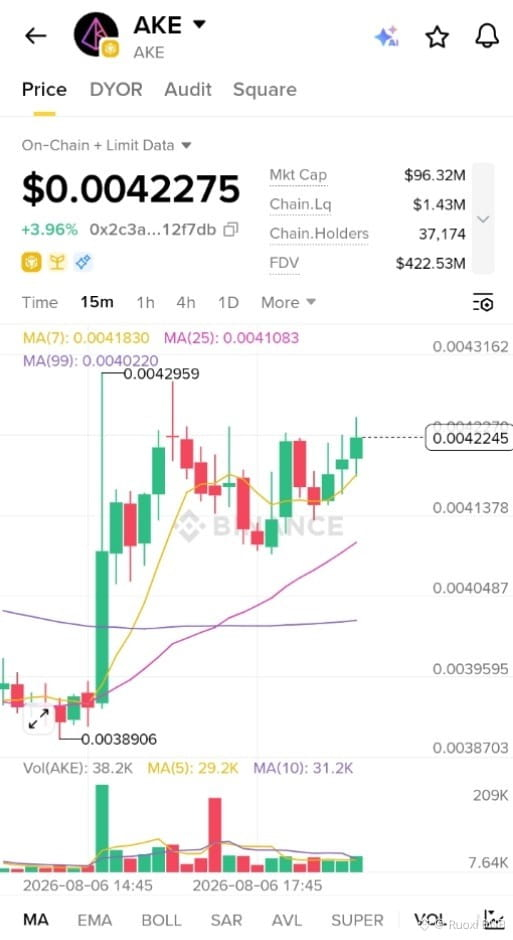
1
278
·
--
Bullisch
$BTW handelt zu 0,18063 $, hält oberhalb wichtiger gleitender Durchschnitte mit stetigem bullischem Momentum. Käufer verteidigen weiterhin die Unterstützung, während der nahe Widerstand möglicherweise weiteres Upside begrenzen wird. Beobachte das Volumen zur Bestätigung, bevor du von einer nachhaltigen Fortsetzung ausgehst. Bleib diszipliniert, steuere das Risiko und beobachte die Kursentwicklung sorgfältig bei sich täglich verändernden Marktbedingungen. #BTW #Bitway #Crypto #Altcoins $BTW
{future}(BTWUSDT)
$BTW handelt zu 0,18063 $, hält oberhalb wichtiger gleitender Durchschnitte mit stetigem bullischem Momentum. Käufer verteidigen weiterhin die Unterstützung, während der nahe Widerstand möglicherweise weiteres Upside begrenzen wird. Beobachte das Volumen zur Bestätigung, bevor du von einer nachhaltigen Fortsetzung ausgehst. Bleib diszipliniert, steuere das Risiko und beobachte die Kursentwicklung sorgfältig bei sich täglich verändernden Marktbedingungen. #BTW #Bitway #Crypto #Altcoins $BTW
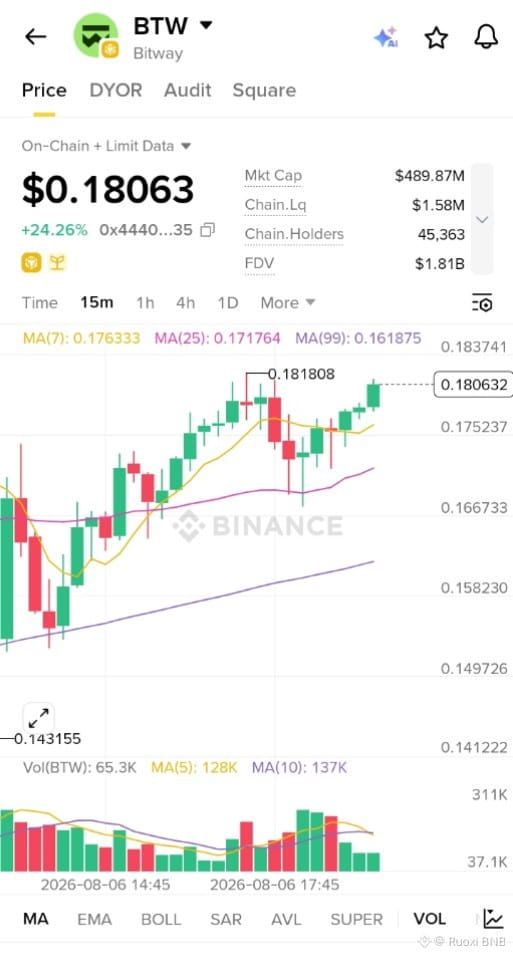
1
308
Anmelden und weiter Inhalte entdecken
Krypto-Nutzer weltweit auf Binance Square kennenlernen
⚡️ Bleib in Sachen Krypto stets am Puls.
💬 Die weltgrößte Kryptobörse vertraut darauf.
👍 Erhalte verlässliche Einblicke von verifizierten Creators.
E-Mail-Adresse/Telefonnummer