

#defi
defi
56.6M views
295,572 Discussing
Hot
Latest

·
--
🚨 XRP’s journey into DeFi accelerates: one year after FXRP launch, over 130M FXRP now powers vaults, lending, and Ethereum-based apps. This programmability unlocks real utility beyond payments, signaling growing institutional and developer interest. As XRP gains DeFi access, its role in broader crypto finance may expand—could this shift redefine its long-term value proposition? #DeFi
$XRP #TradingSignal #CryptoAnalysis
🚨 XRP’s journey into DeFi accelerates: one year after FXRP launch, over 130M FXRP now powers vaults, lending, and Ethereum-based apps. This programmability unlocks real utility beyond payments, signaling growing institutional and developer interest. As XRP gains DeFi access, its role in broader crypto finance may expand—could this shift redefine its long-term value proposition? #DeFi
$XRP #TradingSignal #CryptoAnalysis
$XRP #TradingSignal #CryptoAnalysis

75

·
--
Bullish
🚨 $ONDO JUST TOOK TOKENIZED ASSETS TO ANOTHER LEVEL. 🏦⚡️
Ondo is launching onchain portfolio tokens based on strategies developed by BlackRock.
Three strategies are coming for eligible investors outside the U.S.:
💰 Income
📊 Diversified Growth
🚀 High Growth
Traditional investment strategies.
Onchain rails.
BlackRock-developed strategies + Ondo’s tokenization infrastructure = 👀🔥
The line between Wall Street and crypto keeps getting thinner.
#ONDO #RWA #Crypto #defi #Ethereum
{spot}(ONDOUSDT)
🚨 $ONDO JUST TOOK TOKENIZED ASSETS TO ANOTHER LEVEL. 🏦⚡️
Ondo is launching onchain portfolio tokens based on strategies developed by BlackRock.
Three strategies are coming for eligible investors outside the U.S.:
💰 Income
📊 Diversified Growth
🚀 High Growth
Traditional investment strategies.
Onchain rails.
BlackRock-developed strategies + Ondo’s tokenization infrastructure = 👀🔥
The line between Wall Street and crypto keeps getting thinner.
#ONDO #RWA #Crypto #defi #Ethereum
Ondo is launching onchain portfolio tokens based on strategies developed by BlackRock.
Three strategies are coming for eligible investors outside the U.S.:
💰 Income
📊 Diversified Growth
🚀 High Growth
Traditional investment strategies.
Onchain rails.
BlackRock-developed strategies + Ondo’s tokenization infrastructure = 👀🔥
The line between Wall Street and crypto keeps getting thinner.
#ONDO #RWA #Crypto #defi #Ethereum

150

·
--
Bullish
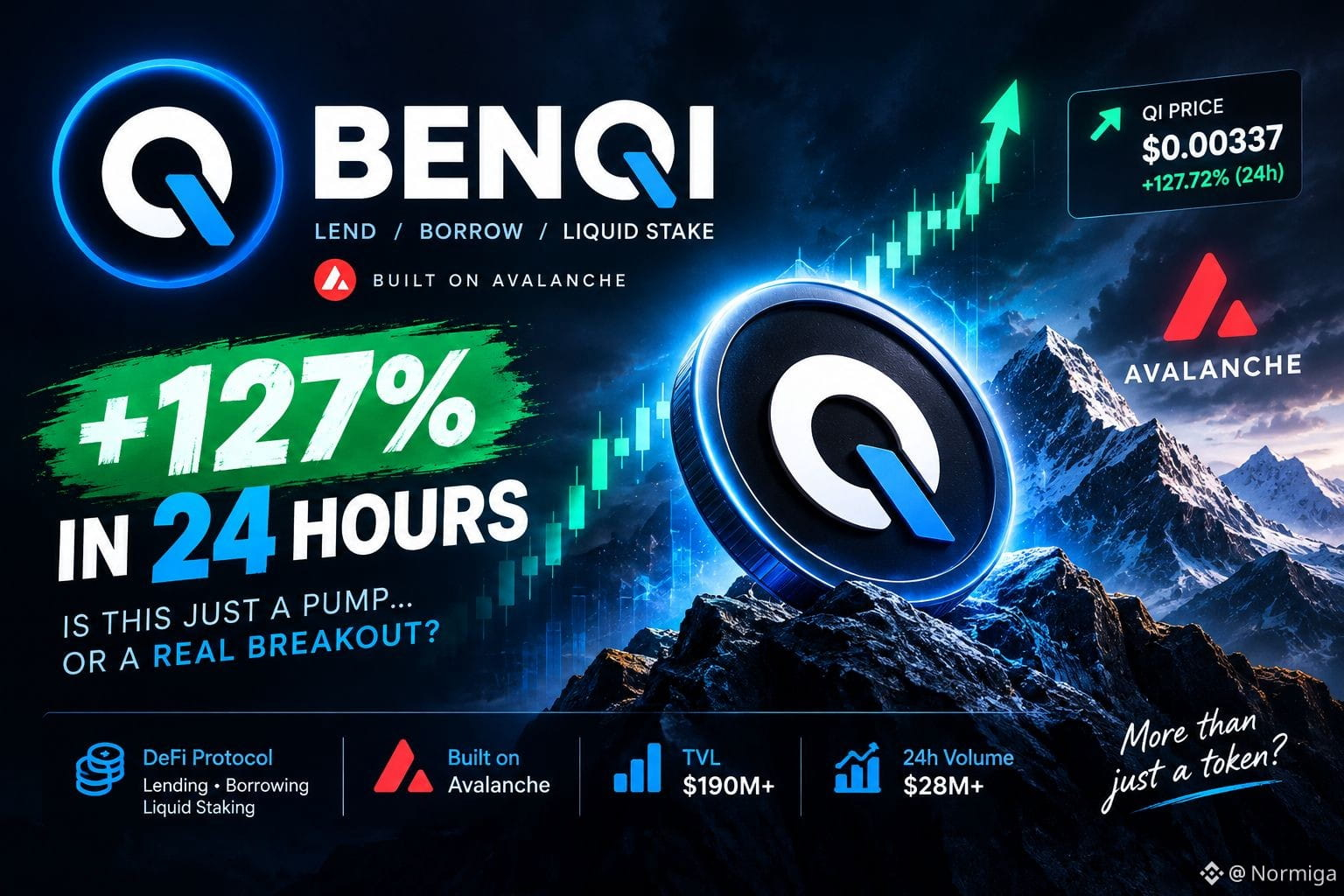
🚨 $QI (BENQI) JUST EXPLODED +127% — WHAT IS HAPPENING?
After months of almost no excitement, BENQI ($QI) is finally moving.
According to Binance data, QI is currently up around 127% in 24 hours, with the price reaching roughly $0.00337.
Binance
But here's the interesting part:
This isn't just a random token.
BENQI is a DeFi protocol built on Avalanche, focused on lending, borrowing and liquid staking.
Binance
📊 What changed in the market?
QI was trading around $0.0015 before today's explosive move. It reached approximately $0.00356 during the session.
That's more than a 2x move in a single day.
Investing.com Español
And trading volume exploded alongside the price.
But here's the important question:
Is this the beginning of a larger trend — or simply a liquidity-driven pump?
I'm watching 3 things:
🟢 #Volume : Can the high volume continue?
🟡 #Price_structure : Can QI hold the levels it just broke above?
🔴 #Fundamentals : Does renewed attention translate into real growth for BENQI?
BENQI currently has around $200M+ in TVL, showing that there is still substantial capital deployed in the protocol.
DefiLlama
The move is impressive.
But the next few days may be more important than the pump itself.
Will $QI turn this breakout into a sustained trend?
I'm watching. 👀
.
.
.
.
.
$QI $AVAX #BENQI #Avalanche #DeFi #Crypto
🚨 $QI (BENQI) JUST EXPLODED +127% — WHAT IS HAPPENING?
After months of almost no excitement, BENQI ($QI ) is finally moving.
According to Binance data, QI is currently up around 127% in 24 hours, with the price reaching roughly $0.00337.
Binance
But here's the interesting part:
This isn't just a random token.
BENQI is a DeFi protocol built on Avalanche, focused on lending, borrowing and liquid staking.
Binance
📊 What changed in the market?
QI was trading around $0.0015 before today's explosive move. It reached approximately $0.00356 during the session.
That's more than a 2x move in a single day.
Investing.com Español
And trading volume exploded alongside the price.
But here's the important question:
Is this the beginning of a larger trend — or simply a liquidity-driven pump?
I'm watching 3 things:
🟢 #Volume : Can the high volume continue?
🟡 #Price_structure : Can QI hold the levels it just broke above?
🔴 #Fundamentals : Does renewed attention translate into real growth for BENQI?
BENQI currently has around $200M+ in TVL, showing that there is still substantial capital deployed in the protocol.
DefiLlama
The move is impressive.
But the next few days may be more important than the pump itself.
Will $QI turn this breakout into a sustained trend?
I'm watching. 👀
.
.
.
.
.
$QI $AVAX #BENQI #Avalanche #DeFi #Crypto
After months of almost no excitement, BENQI ($QI ) is finally moving.
According to Binance data, QI is currently up around 127% in 24 hours, with the price reaching roughly $0.00337.
Binance
But here's the interesting part:
This isn't just a random token.
BENQI is a DeFi protocol built on Avalanche, focused on lending, borrowing and liquid staking.
Binance
📊 What changed in the market?
QI was trading around $0.0015 before today's explosive move. It reached approximately $0.00356 during the session.
That's more than a 2x move in a single day.
Investing.com Español
And trading volume exploded alongside the price.
But here's the important question:
Is this the beginning of a larger trend — or simply a liquidity-driven pump?
I'm watching 3 things:
🟢 #Volume : Can the high volume continue?
🟡 #Price_structure : Can QI hold the levels it just broke above?
🔴 #Fundamentals : Does renewed attention translate into real growth for BENQI?
BENQI currently has around $200M+ in TVL, showing that there is still substantial capital deployed in the protocol.
DefiLlama
The move is impressive.
But the next few days may be more important than the pump itself.
Will $QI turn this breakout into a sustained trend?
I'm watching. 👀
.
.
.
.
.
$QI $AVAX #BENQI #Avalanche #DeFi #Crypto
55
·
--
🚨 Solana DEX volume spikes may be inflated by circular trades driven by bots, per Bitquery’s indexed-pool screen. Real liquidity for independent traders remains unmeasured.
This suggests activity could be misleading—volume ≠ genuine demand.
Watch for divergence between on-chain metrics and actual trader depth.
Is the rally built on real interest or automated loops?
#DeFi
$SOL #TradingSignal #CryptoAnalysis
🚨 Solana DEX volume spikes may be inflated by circular trades driven by bots, per Bitquery’s indexed-pool screen. Real liquidity for independent traders remains unmeasured.
This suggests activity could be misleading—volume ≠ genuine demand.
Watch for divergence between on-chain metrics and actual trader depth.
Is the rally built on real interest or automated loops?
#DeFi
$SOL #TradingSignal #CryptoAnalysis
This suggests activity could be misleading—volume ≠ genuine demand.
Watch for divergence between on-chain metrics and actual trader depth.
Is the rally built on real interest or automated loops?
#DeFi
$SOL #TradingSignal #CryptoAnalysis

10

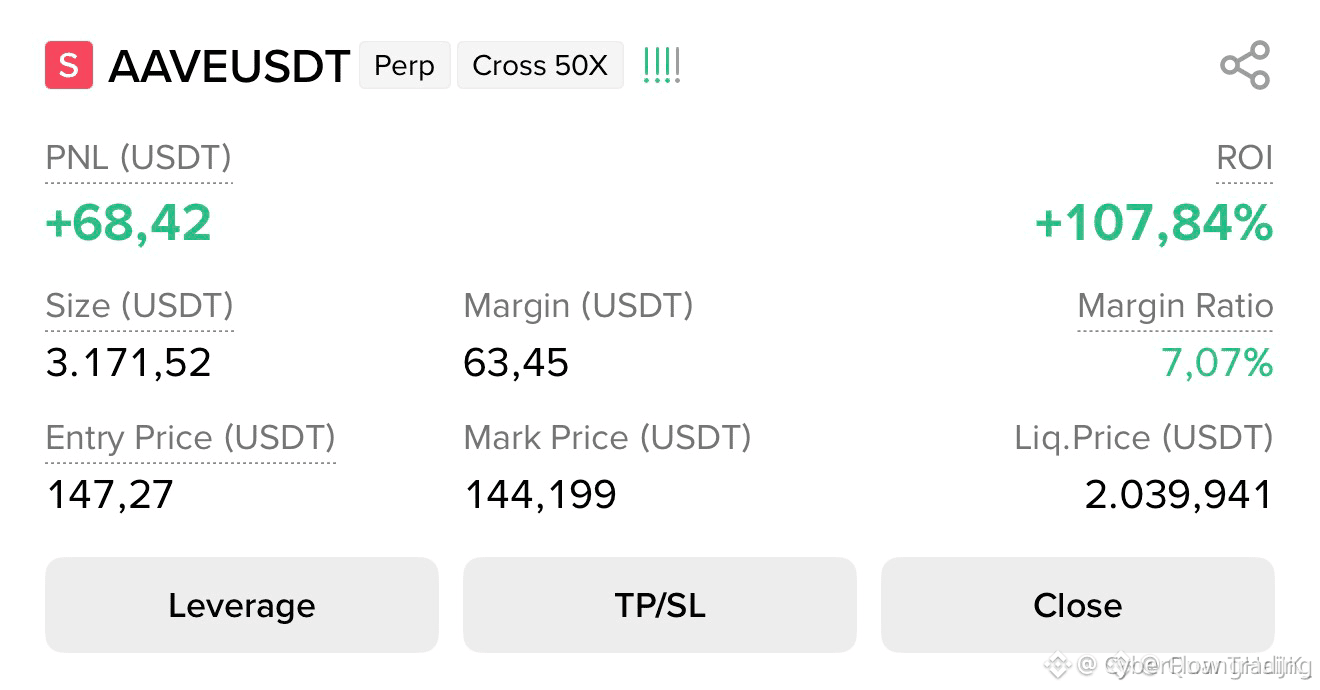
🚨 $AAVE REJECTING KEY RESISTANCE WITH SELLERS EYEING A LIQUIDITY DROP BELOW 145! 📉
Entry: 145 - 149 🔻
Target: 142 - 105 📉
Stop Loss: 151 🛑
📌 Supply overhang at 145-149 is capping upside momentum, showing distinct signs of institutional distribution into late buyers. 📊 Order flow reveals heavy sell walls stacking up near resistance, creating optimal conditions for a quick downside flush.
⚡ If bids at 145 cave under sell pressure, expecting price to slice through local support toward lower liquidity pools at 105. 💬 Are you leaning into the short side here or waiting for a breakdown confirmation? 👇
⚠️ Not financial advice. Always manage your risk. 🛡️
🏷️ #AAVE #ShortSetup #CryptoTrading #DeFi
🐻 📉
🚨 $AAVE REJECTING KEY RESISTANCE WITH SELLERS EYEING A LIQUIDITY DROP BELOW 145! 📉
Entry: 145 - 149 🔻
Target: 142 - 105 📉
Stop Loss: 151 🛑
📌 Supply overhang at 145-149 is capping upside momentum, showing distinct signs of institutional distribution into late buyers. 📊 Order flow reveals heavy sell walls stacking up near resistance, creating optimal conditions for a quick downside flush.
⚡ If bids at 145 cave under sell pressure, expecting price to slice through local support toward lower liquidity pools at 105. 💬 Are you leaning into the short side here or waiting for a breakdown confirmation? 👇
⚠️ Not financial advice. Always manage your risk. 🛡️
🏷️ #AAVE #ShortSetup #CryptoTrading #DeFi
🐻 📉
Entry: 145 - 149 🔻
Target: 142 - 105 📉
Stop Loss: 151 🛑
📌 Supply overhang at 145-149 is capping upside momentum, showing distinct signs of institutional distribution into late buyers. 📊 Order flow reveals heavy sell walls stacking up near resistance, creating optimal conditions for a quick downside flush.
⚡ If bids at 145 cave under sell pressure, expecting price to slice through local support toward lower liquidity pools at 105. 💬 Are you leaning into the short side here or waiting for a breakdown confirmation? 👇
⚠️ Not financial advice. Always manage your risk. 🛡️
🏷️ #AAVE #ShortSetup #CryptoTrading #DeFi
🐻 📉
17

Order blocks on SushiSwap (SUSHI) show bullish pressure as liquidity pools swell, signaling strong investor sentiment. Velodrome (VELODROME) continues to innovate with high frequency AMM, its trading activity spiking and momentum building, making it a top pick for yield seekers. LiteB (LITEB) faces consolidation; volume dips and order book depth weakens, caution advised until ecosystem growth accelerates. 🚀📈 #DeFi #YieldFarming #Crypto
Order blocks on SushiSwap (SUSHI) show bullish pressure as liquidity pools swell, signaling strong investor sentiment. Velodrome (VELODROME) continues to innovate with high frequency AMM, its trading activity spiking and momentum building, making it a top pick for yield seekers. LiteB (LITEB) faces consolidation; volume dips and order book depth weakens, caution advised until ecosystem growth accelerates. 🚀📈 #DeFi #YieldFarming #Crypto
70

Market Leaders at Prime Levels — Act Before Acceleration
$UNI | $AAVE | $CRV
UNI, AAVE, and CRV continue to represent major DeFi protocols across different liquidity and financial-use cases. Their price action remains important as the DeFi sector looks for renewed momentum.
The focus remains on structure before expansion.
Key Takeaway: DeFi momentum can strengthen when established assets reclaim volume and defend support.
#UNI #AAVE #CRV #DeFi #HighConviction
{future}(UNIUSDT)
{future}(AAVEUSDT)
{future}(CRVUSDT)
Market Leaders at Prime Levels — Act Before Acceleration
$UNI | $AAVE | $CRV
UNI, AAVE, and CRV continue to represent major DeFi protocols across different liquidity and financial-use cases. Their price action remains important as the DeFi sector looks for renewed momentum.
The focus remains on structure before expansion.
Key Takeaway: DeFi momentum can strengthen when established assets reclaim volume and defend support.
#UNI #AAVE #CRV #DeFi #HighConviction
$UNI | $AAVE | $CRV
UNI, AAVE, and CRV continue to represent major DeFi protocols across different liquidity and financial-use cases. Their price action remains important as the DeFi sector looks for renewed momentum.
The focus remains on structure before expansion.
Key Takeaway: DeFi momentum can strengthen when established assets reclaim volume and defend support.
#UNI #AAVE #CRV #DeFi #HighConviction
1
24
Market Leaders at Prime Levels — Act Before Acceleration
$ENA | $DYDX | $AEVO
ENA, DYDX, and AEVO remain active across DeFi and decentralized trading narratives. Their performance can respond quickly to changes in liquidity and market participation.
The focus remains on support and volume.
Key Takeaway: Trading-focused assets can accelerate when liquidity returns to the broader DeFi sector.
#ENA #DYDX #AEVO #DeFi #HighConviction
{future}(ENAUSDT)
{future}(DYDXUSDT)
{future}(AEVOUSDT)
Market Leaders at Prime Levels — Act Before Acceleration
$ENA | $DYDX | $AEVO
ENA, DYDX, and AEVO remain active across DeFi and decentralized trading narratives. Their performance can respond quickly to changes in liquidity and market participation.
The focus remains on support and volume.
Key Takeaway: Trading-focused assets can accelerate when liquidity returns to the broader DeFi sector.
#ENA #DYDX #AEVO #DeFi #HighConviction
$ENA | $DYDX | $AEVO
ENA, DYDX, and AEVO remain active across DeFi and decentralized trading narratives. Their performance can respond quickly to changes in liquidity and market participation.
The focus remains on support and volume.
Key Takeaway: Trading-focused assets can accelerate when liquidity returns to the broader DeFi sector.
#ENA #DYDX #AEVO #DeFi #HighConviction
1
34

·
--
Bullish
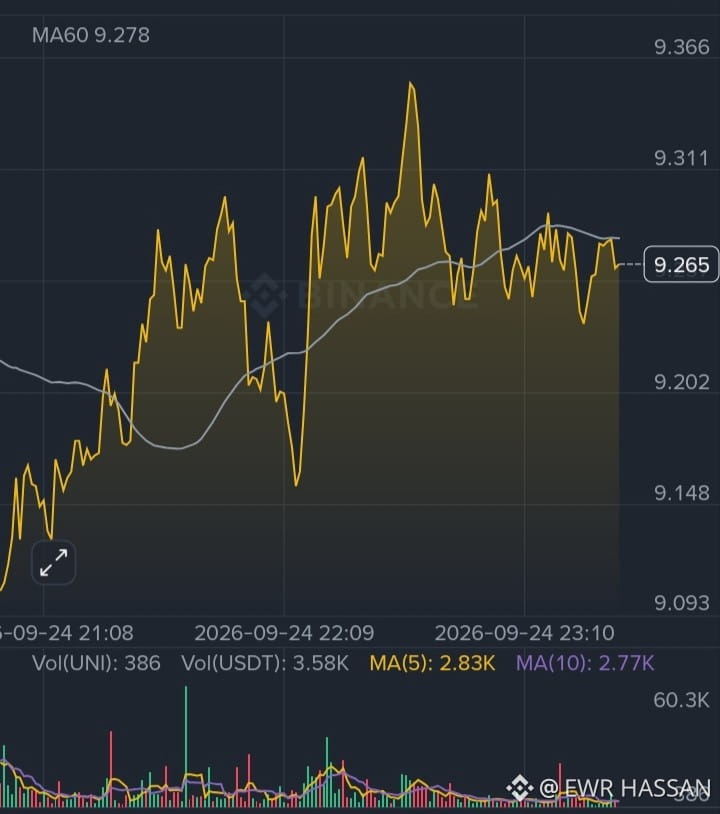
Why Binance is Accumulating $UNI Like Crazy! Is a Massive Breakout Imminent? 🚀📊
The crypto market is heating up, and institutional whales are making serious moves! According to recent on-chain data, Binance’s $UNI reserves have just skyrocketed to 71.5 Million tokens—the highest level we've seen in the last 6 months! 📈🔥 [1]
Whenever the world's largest exchange heavily accumulates a governance token, it sends a clear signal to the market. Let's break down the technicals and fundamentals behind this $UNI surge.
🔍 Key Analysis & Insights:
Whale Accumulation: Binance's massive inflow of Uniswap ($UNI) indicates strong strategic positioning by major market players ahead of the upcoming market cycles. [1]
Macro Catalyst: Following the recent Federal Reserve interest rate cuts, liquidity is aggressively flowing back into top-tier DeFi assets, with UNI leading the charge. [1]
On-Chain Activity: Trading volumes and active wallet addresses on Uniswap are surging, proving that decentralized finance (DeFi) utility is stronger than ever. [1]
💡 Technical Outlook:
After hitting a massive multi-month high recently, UNI is showing solid price consolidation. If the bulls can hold the current support levels, we could see a powerful continuation toward higher targets. Keep a close eye on the volume indicators! 📈 [1]
What’s your move on $UNI? Are you accumulating or waiting for a deeper retest? Let me know in the comments below! 👇
#UNI #Uniswap #DeFi #BinanceSquare #CryptoAnalysis
Why Binance is Accumulating $UNI Like Crazy! Is a Massive Breakout Imminent? 🚀📊
The crypto market is heating up, and institutional whales are making serious moves! According to recent on-chain data, Binance’s $UNI reserves have just skyrocketed to 71.5 Million tokens—the highest level we've seen in the last 6 months! 📈🔥 [1]
Whenever the world's largest exchange heavily accumulates a governance token, it sends a clear signal to the market. Let's break down the technicals and fundamentals behind this $UNI surge.
🔍 Key Analysis & Insights:
Whale Accumulation: Binance's massive inflow of Uniswap ($UNI ) indicates strong strategic positioning by major market players ahead of the upcoming market cycles. [1]
Macro Catalyst: Following the recent Federal Reserve interest rate cuts, liquidity is aggressively flowing back into top-tier DeFi assets, with UNI leading the charge. [1]
On-Chain Activity: Trading volumes and active wallet addresses on Uniswap are surging, proving that decentralized finance (DeFi) utility is stronger than ever. [1]
💡 Technical Outlook:
After hitting a massive multi-month high recently, UNI is showing solid price consolidation. If the bulls can hold the current support levels, we could see a powerful continuation toward higher targets. Keep a close eye on the volume indicators! 📈 [1]
What’s your move on $UNI ? Are you accumulating or waiting for a deeper retest? Let me know in the comments below! 👇
#UNI #Uniswap #DeFi #BinanceSquare #CryptoAnalysis
The crypto market is heating up, and institutional whales are making serious moves! According to recent on-chain data, Binance’s $UNI reserves have just skyrocketed to 71.5 Million tokens—the highest level we've seen in the last 6 months! 📈🔥 [1]
Whenever the world's largest exchange heavily accumulates a governance token, it sends a clear signal to the market. Let's break down the technicals and fundamentals behind this $UNI surge.
🔍 Key Analysis & Insights:
Whale Accumulation: Binance's massive inflow of Uniswap ($UNI ) indicates strong strategic positioning by major market players ahead of the upcoming market cycles. [1]
Macro Catalyst: Following the recent Federal Reserve interest rate cuts, liquidity is aggressively flowing back into top-tier DeFi assets, with UNI leading the charge. [1]
On-Chain Activity: Trading volumes and active wallet addresses on Uniswap are surging, proving that decentralized finance (DeFi) utility is stronger than ever. [1]
💡 Technical Outlook:
After hitting a massive multi-month high recently, UNI is showing solid price consolidation. If the bulls can hold the current support levels, we could see a powerful continuation toward higher targets. Keep a close eye on the volume indicators! 📈 [1]
What’s your move on $UNI ? Are you accumulating or waiting for a deeper retest? Let me know in the comments below! 👇
#UNI #Uniswap #DeFi #BinanceSquare #CryptoAnalysis
131

·
--
Bullish
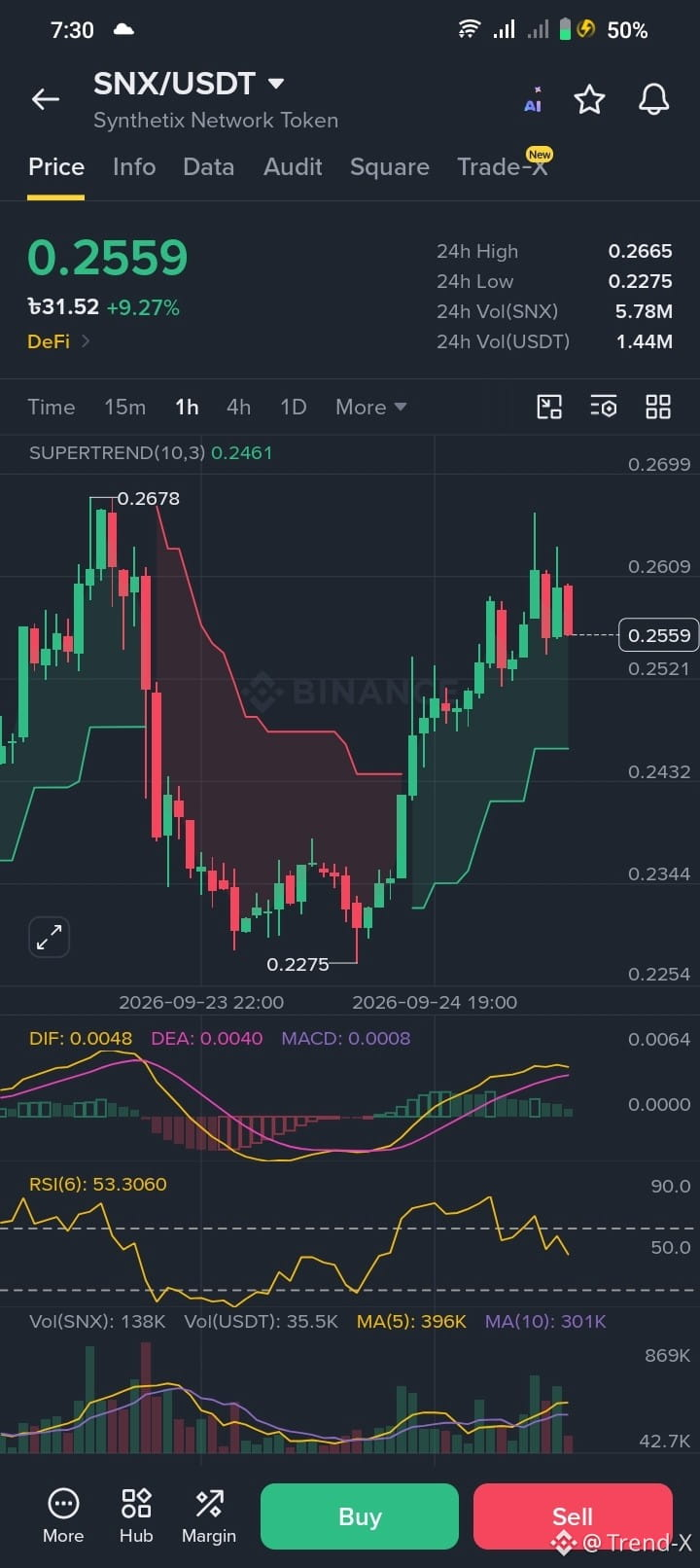
🚀 $SNX — A DeFi Token to Watch
$SNX is the native token of Synthetix, a DeFi protocol focused on synthetic assets and on-chain financial markets. Its ecosystem has long been connected with decentralized derivatives and liquidity.
$SNX
{spot}(SNXUSDT)
📈 If DeFi activity grows and Synthetix adoption expands, SNX could attract renewed market attention. Traders should still watch volume, market structure, BTC direction, and key support/resistance levels before making any move.
#SNX #Synthetix #DeFi #Crypto #BinanceSquare
🚀 $SNX — A DeFi Token to Watch
$SNX is the native token of Synthetix, a DeFi protocol focused on synthetic assets and on-chain financial markets. Its ecosystem has long been connected with decentralized derivatives and liquidity.
$SNX
📈 If DeFi activity grows and Synthetix adoption expands, SNX could attract renewed market attention. Traders should still watch volume, market structure, BTC direction, and key support/resistance levels before making any move.
#SNX #Synthetix #DeFi #Crypto #BinanceSquare
$SNX is the native token of Synthetix, a DeFi protocol focused on synthetic assets and on-chain financial markets. Its ecosystem has long been connected with decentralized derivatives and liquidity.
$SNX
📈 If DeFi activity grows and Synthetix adoption expands, SNX could attract renewed market attention. Traders should still watch volume, market structure, BTC direction, and key support/resistance levels before making any move.
#SNX #Synthetix #DeFi #Crypto #BinanceSquare
38

$BCH
Bitcoin Cash can move quickly when large-cap liquidity rotates into older proof-of-work assets. The key clue is whether volume confirms the price action.
{spot}(BCHUSDT)
$UNI
Uniswap remains one of DeFi’s most recognizable names. UNI becomes particularly interesting when decentralized-exchange activity and altcoin liquidity start accelerating.
{spot}(UNIUSDT)
$AAVE
AAVE sits directly inside the DeFi lending narrative. Traders watching the sector should keep an eye on whether volume returns alongside broader altcoin strength.
{spot}(AAVEUSDT)
#BCH #UNI #AAVE #DeFi #CryptoTrading
$BCH
Bitcoin Cash can move quickly when large-cap liquidity rotates into older proof-of-work assets. The key clue is whether volume confirms the price action.
$UNI
Uniswap remains one of DeFi’s most recognizable names. UNI becomes particularly interesting when decentralized-exchange activity and altcoin liquidity start accelerating.
$AAVE
AAVE sits directly inside the DeFi lending narrative. Traders watching the sector should keep an eye on whether volume returns alongside broader altcoin strength.
#BCH #UNI #AAVE #DeFi #CryptoTrading
Bitcoin Cash can move quickly when large-cap liquidity rotates into older proof-of-work assets. The key clue is whether volume confirms the price action.
$UNI
Uniswap remains one of DeFi’s most recognizable names. UNI becomes particularly interesting when decentralized-exchange activity and altcoin liquidity start accelerating.
$AAVE
AAVE sits directly inside the DeFi lending narrative. Traders watching the sector should keep an eye on whether volume returns alongside broader altcoin strength.
#BCH #UNI #AAVE #DeFi #CryptoTrading

31

·
--
While $BTC consolidates near key resistance, the real capital battlefield isn't on centralized order books—it's quietly shifting across Layer-2 DEXs. As mainnet gas fees fluctuate, liquidity is migrating at an unprecedented pace toward low-cost execution layers. Yield farmers are no longer chasing unsustainable token emissions; they are demanding real yield generated by actual trading volume and deep liquidity pools. With $BNB chain and top Ethereum L2s like Base or Arbitrum capturing record market share, DEX trading volume is fragmenting rapidly. This shift creates short-term slippage challenges for whales, but unlocks massive capital-efficiency gains for active on-chain yield strategies.
Are you rotating your capital into L2 liquidity pools right now, or holding steady until mainnet activity surges again?
#DeFi #Web3
While $BTC consolidates near key resistance, the real capital battlefield isn't on centralized order books—it's quietly shifting across Layer-2 DEXs. As mainnet gas fees fluctuate, liquidity is migrating at an unprecedented pace toward low-cost execution layers. Yield farmers are no longer chasing unsustainable token emissions; they are demanding real yield generated by actual trading volume and deep liquidity pools. With $BNB chain and top Ethereum L2s like Base or Arbitrum capturing record market share, DEX trading volume is fragmenting rapidly. This shift creates short-term slippage challenges for whales, but unlocks massive capital-efficiency gains for active on-chain yield strategies.
Are you rotating your capital into L2 liquidity pools right now, or holding steady until mainnet activity surges again?
#DeFi #Web3
Are you rotating your capital into L2 liquidity pools right now, or holding steady until mainnet activity surges again?
#DeFi #Web3
84
·
--
Bullish
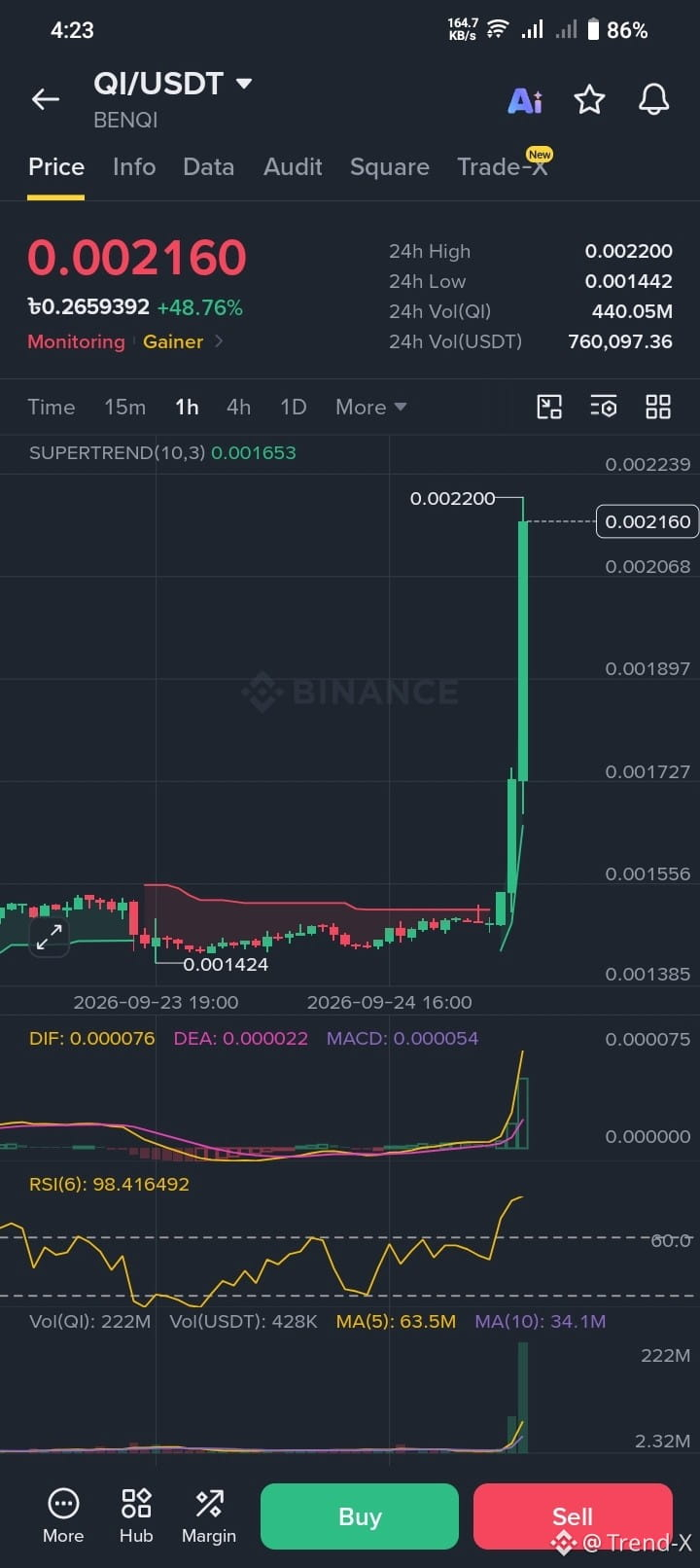
🔥 $QI (BENQI) — A DeFi Project to Watch
QI is the native token of BENQI, a DeFi protocol built on Avalanche. With lending, borrowing and liquid staking at the core of its ecosystem, QI remains a token worth keeping on the watchlist. 📈
$QI
{spot}(QIUSDT)
If DeFi activity picks up, QI could attract renewed attention. Always do your own research and manage risk carefully. ⚡
#QI #BENQI #DeFi #Crypto #BinanceSquare
🔥 $QI (BENQI) — A DeFi Project to Watch
QI is the native token of BENQI, a DeFi protocol built on Avalanche. With lending, borrowing and liquid staking at the core of its ecosystem, QI remains a token worth keeping on the watchlist. 📈
$QI
If DeFi activity picks up, QI could attract renewed attention. Always do your own research and manage risk carefully. ⚡
#QI #BENQI #DeFi #Crypto #BinanceSquare
QI is the native token of BENQI, a DeFi protocol built on Avalanche. With lending, borrowing and liquid staking at the core of its ecosystem, QI remains a token worth keeping on the watchlist. 📈
$QI
If DeFi activity picks up, QI could attract renewed attention. Always do your own research and manage risk carefully. ⚡
#QI #BENQI #DeFi #Crypto #BinanceSquare
1
368


·
--
Before swapping a token on DeFi, check what you’re actually interacting with.
One thing I appreciate about STON.fi is that its open ecosystem doesn't mean every token is treated as if it has the same risk profile.
STON.fi uses interface labels to give users additional context around certain tokens, including Fake, Honeypot, Taxable, Suspicious, and DMCA Notice categories.
Why does this matter?
Because on a permissionless blockchain, anyone can create a token.
A familiar name or logo doesn't automatically mean you're holding the official asset.
For example:
🔹 Fake — designed to imitate a known asset or brand.
🔹 Honeypot — may allow buying while preventing normal selling.
🔹 Taxable — the token contract includes additional transfer/swap fees.
🔹 Suspicious — raises specific concerns that deserve extra attention.
🔹 DMCA Notice — associated with an intellectual-property complaint.
STON.fi also applies different restrictions depending on the category. Some flagged tokens cannot be swapped through the dApp, while others remain accessible with additional warnings or conditions.
The lesson isn't “trust the label.”
It's use the label as a reason to investigate.
Before interacting with an unfamiliar token:
Verify the contract address → check the official project → understand the token mechanics → look for unusual fees or restrictions → then make your own decision.
A token's name, logo, or ticker is not enough.
In DeFi, knowing exactly what contract you're interacting with is part of DYOR.
And sometimes the most useful feature isn't another trading tool.
It's a small warning that makes you stop and look twice.
#STONfi #TON #DeFi #CryptoEducation #Web3 @stonfi $TON
Before swapping a token on DeFi, check what you’re actually interacting with.
One thing I appreciate about STON.fi is that its open ecosystem doesn't mean every token is treated as if it has the same risk profile.
STON.fi uses interface labels to give users additional context around certain tokens, including Fake, Honeypot, Taxable, Suspicious, and DMCA Notice categories.
Why does this matter?
Because on a permissionless blockchain, anyone can create a token.
A familiar name or logo doesn't automatically mean you're holding the official asset.
For example:
🔹 Fake — designed to imitate a known asset or brand.
🔹 Honeypot — may allow buying while preventing normal selling.
🔹 Taxable — the token contract includes additional transfer/swap fees.
🔹 Suspicious — raises specific concerns that deserve extra attention.
🔹 DMCA Notice — associated with an intellectual-property complaint.
STON.fi also applies different restrictions depending on the category. Some flagged tokens cannot be swapped through the dApp, while others remain accessible with additional warnings or conditions.
The lesson isn't “trust the label.”
It's use the label as a reason to investigate.
Before interacting with an unfamiliar token:
Verify the contract address → check the official project → understand the token mechanics → look for unusual fees or restrictions → then make your own decision.
A token's name, logo, or ticker is not enough.
In DeFi, knowing exactly what contract you're interacting with is part of DYOR.
And sometimes the most useful feature isn't another trading tool.
It's a small warning that makes you stop and look twice.
#STONfi #TON #DeFi #CryptoEducation #Web3 @STONfi DEX $TON
One thing I appreciate about STON.fi is that its open ecosystem doesn't mean every token is treated as if it has the same risk profile.
STON.fi uses interface labels to give users additional context around certain tokens, including Fake, Honeypot, Taxable, Suspicious, and DMCA Notice categories.
Why does this matter?
Because on a permissionless blockchain, anyone can create a token.
A familiar name or logo doesn't automatically mean you're holding the official asset.
For example:
🔹 Fake — designed to imitate a known asset or brand.
🔹 Honeypot — may allow buying while preventing normal selling.
🔹 Taxable — the token contract includes additional transfer/swap fees.
🔹 Suspicious — raises specific concerns that deserve extra attention.
🔹 DMCA Notice — associated with an intellectual-property complaint.
STON.fi also applies different restrictions depending on the category. Some flagged tokens cannot be swapped through the dApp, while others remain accessible with additional warnings or conditions.
The lesson isn't “trust the label.”
It's use the label as a reason to investigate.
Before interacting with an unfamiliar token:
Verify the contract address → check the official project → understand the token mechanics → look for unusual fees or restrictions → then make your own decision.
A token's name, logo, or ticker is not enough.
In DeFi, knowing exactly what contract you're interacting with is part of DYOR.
And sometimes the most useful feature isn't another trading tool.
It's a small warning that makes you stop and look twice.
#STONfi #TON #DeFi #CryptoEducation #Web3 @STONfi DEX $TON
17

·
--
Crypto has a credit cycle. Most participants never look at it.
The money market is the heartbeat of this ecosystem. Borrow against $BTC, $ETH, or $SOL instead of selling, and you keep your exposure but add leverage — and leverage has a habit of demanding itself back at the worst possible time.
Three signals worth watching:
1. Utilization rates. When lending markets run at 90%+ utilization, borrow rates spike and every leveraged position gets more expensive to hold. High utilization means the system is running hot.
2. Liquidation cascades. Falling prices shrink collateral value, protocols force-sell, and that selling pushes prices down further. It's mechanical, not emotional — which is exactly why it overshoots.
3. Stablecoin borrow demand. Borrowing stables against volatile assets to buy more is aggression. Borrowing stables just to avoid selling is distress. Same instrument, opposite signal.
The asymmetry is the point: forced selling is capped by collateral levels, and liquidation events transfer coins from the leveraged to the liquid. Credit cycles don't just cause drawdowns — they redistribute supply.
You don't need to predict the rate. You need to respect what the cost of leverage is telling you.
#DeFi #Crypto #MarketStructure #OnChain #Bitcoin
Crypto has a credit cycle. Most participants never look at it.
The money market is the heartbeat of this ecosystem. Borrow against $BTC , $ETH , or $SOL instead of selling, and you keep your exposure but add leverage — and leverage has a habit of demanding itself back at the worst possible time.
Three signals worth watching:
1. Utilization rates. When lending markets run at 90%+ utilization, borrow rates spike and every leveraged position gets more expensive to hold. High utilization means the system is running hot.
2. Liquidation cascades. Falling prices shrink collateral value, protocols force-sell, and that selling pushes prices down further. It's mechanical, not emotional — which is exactly why it overshoots.
3. Stablecoin borrow demand. Borrowing stables against volatile assets to buy more is aggression. Borrowing stables just to avoid selling is distress. Same instrument, opposite signal.
The asymmetry is the point: forced selling is capped by collateral levels, and liquidation events transfer coins from the leveraged to the liquid. Credit cycles don't just cause drawdowns — they redistribute supply.
You don't need to predict the rate. You need to respect what the cost of leverage is telling you.
#DeFi #Crypto #MarketStructure #OnChain #Bitcoin
The money market is the heartbeat of this ecosystem. Borrow against $BTC , $ETH , or $SOL instead of selling, and you keep your exposure but add leverage — and leverage has a habit of demanding itself back at the worst possible time.
Three signals worth watching:
1. Utilization rates. When lending markets run at 90%+ utilization, borrow rates spike and every leveraged position gets more expensive to hold. High utilization means the system is running hot.
2. Liquidation cascades. Falling prices shrink collateral value, protocols force-sell, and that selling pushes prices down further. It's mechanical, not emotional — which is exactly why it overshoots.
3. Stablecoin borrow demand. Borrowing stables against volatile assets to buy more is aggression. Borrowing stables just to avoid selling is distress. Same instrument, opposite signal.
The asymmetry is the point: forced selling is capped by collateral levels, and liquidation events transfer coins from the leveraged to the liquid. Credit cycles don't just cause drawdowns — they redistribute supply.
You don't need to predict the rate. You need to respect what the cost of leverage is telling you.
#DeFi #Crypto #MarketStructure #OnChain #Bitcoin
86

If you are still ignoring real-world assets onchain, stop now.
Most traders keep losing money chasing volatile meme coins while missing where structural institutional liquidity is actually flowing. Getting trapped in endless speculative chop is exhausting when legitimate yield and actual corporate ownership are quietly migrating to the blockchain.
The SEC just approved a temporary Innovation Exemption allowing qualifying venues to trade tokenized versions of U.S.-listed stocks through permissioned AMMs and public liquidity pools for up to 5 years. Crypto purists are already pushing back, arguing that permissioned compliance ruins the permissionless nature of ecosystems like $ETH. They believe bringing traditional finance rules onto public ledgers defeats the entire purpose of DeFi.
They are missing the bigger picture. Under this framework, these assets must carry genuine stockholder rights, including real voting power and cash dividends, rather than synthetic tracking tokens. Integrating authentic corporate equity into AMM infrastructure supported by protocols like $UNI and verified by $LINK finally bridges trillions of dollars in traditional capital with blockchain efficiency.
Do permissioned stock pools compromise decentralization too much, or is this the only realistic path to institutional adoption?
#RWA #Tokenization #DeFi
If you are still ignoring real-world assets onchain, stop now.
Most traders keep losing money chasing volatile meme coins while missing where structural institutional liquidity is actually flowing. Getting trapped in endless speculative chop is exhausting when legitimate yield and actual corporate ownership are quietly migrating to the blockchain.
The SEC just approved a temporary Innovation Exemption allowing qualifying venues to trade tokenized versions of U.S.-listed stocks through permissioned AMMs and public liquidity pools for up to 5 years. Crypto purists are already pushing back, arguing that permissioned compliance ruins the permissionless nature of ecosystems like $ETH . They believe bringing traditional finance rules onto public ledgers defeats the entire purpose of DeFi.
They are missing the bigger picture. Under this framework, these assets must carry genuine stockholder rights, including real voting power and cash dividends, rather than synthetic tracking tokens. Integrating authentic corporate equity into AMM infrastructure supported by protocols like $UNI and verified by $LINK finally bridges trillions of dollars in traditional capital with blockchain efficiency.
Do permissioned stock pools compromise decentralization too much, or is this the only realistic path to institutional adoption?
#RWA #Tokenization #DeFi
Most traders keep losing money chasing volatile meme coins while missing where structural institutional liquidity is actually flowing. Getting trapped in endless speculative chop is exhausting when legitimate yield and actual corporate ownership are quietly migrating to the blockchain.
The SEC just approved a temporary Innovation Exemption allowing qualifying venues to trade tokenized versions of U.S.-listed stocks through permissioned AMMs and public liquidity pools for up to 5 years. Crypto purists are already pushing back, arguing that permissioned compliance ruins the permissionless nature of ecosystems like $ETH . They believe bringing traditional finance rules onto public ledgers defeats the entire purpose of DeFi.
They are missing the bigger picture. Under this framework, these assets must carry genuine stockholder rights, including real voting power and cash dividends, rather than synthetic tracking tokens. Integrating authentic corporate equity into AMM infrastructure supported by protocols like $UNI and verified by $LINK finally bridges trillions of dollars in traditional capital with blockchain efficiency.
Do permissioned stock pools compromise decentralization too much, or is this the only realistic path to institutional adoption?
#RWA #Tokenization #DeFi

75

·
--
Bullish
MOST TRADERS NOTICE DEFI AFTER IT MOVES — WATCH THESE LEVELS FIRST 👀
$LDO | $NEAR | $PENDLE
LDO remains a key Ethereum DeFi asset while NEAR continues to hold attention around its broader market structure. PENDLE adds another layer of DeFi momentum as traders monitor liquidity and volume.
The setup becomes interesting when price keeps defending support while resistance is tested again and again.
Key Takeaway: Repeated level tests can reveal where the market is building pressure.
#LDO #NEAR #PENDLE #DeFi #CryptoTrading
{future}(LDOUSDT)
{future}(PENDLEUSDT)
{future}(NEARUSDT)
MOST TRADERS NOTICE DEFI AFTER IT MOVES — WATCH THESE LEVELS FIRST 👀
$LDO | $NEAR | $PENDLE
LDO remains a key Ethereum DeFi asset while NEAR continues to hold attention around its broader market structure. PENDLE adds another layer of DeFi momentum as traders monitor liquidity and volume.
The setup becomes interesting when price keeps defending support while resistance is tested again and again.
Key Takeaway: Repeated level tests can reveal where the market is building pressure.
#LDO #NEAR #PENDLE #DeFi #CryptoTrading
$LDO | $NEAR | $PENDLE
LDO remains a key Ethereum DeFi asset while NEAR continues to hold attention around its broader market structure. PENDLE adds another layer of DeFi momentum as traders monitor liquidity and volume.
The setup becomes interesting when price keeps defending support while resistance is tested again and again.
Key Takeaway: Repeated level tests can reveal where the market is building pressure.
#LDO #NEAR #PENDLE #DeFi #CryptoTrading

37

·
--
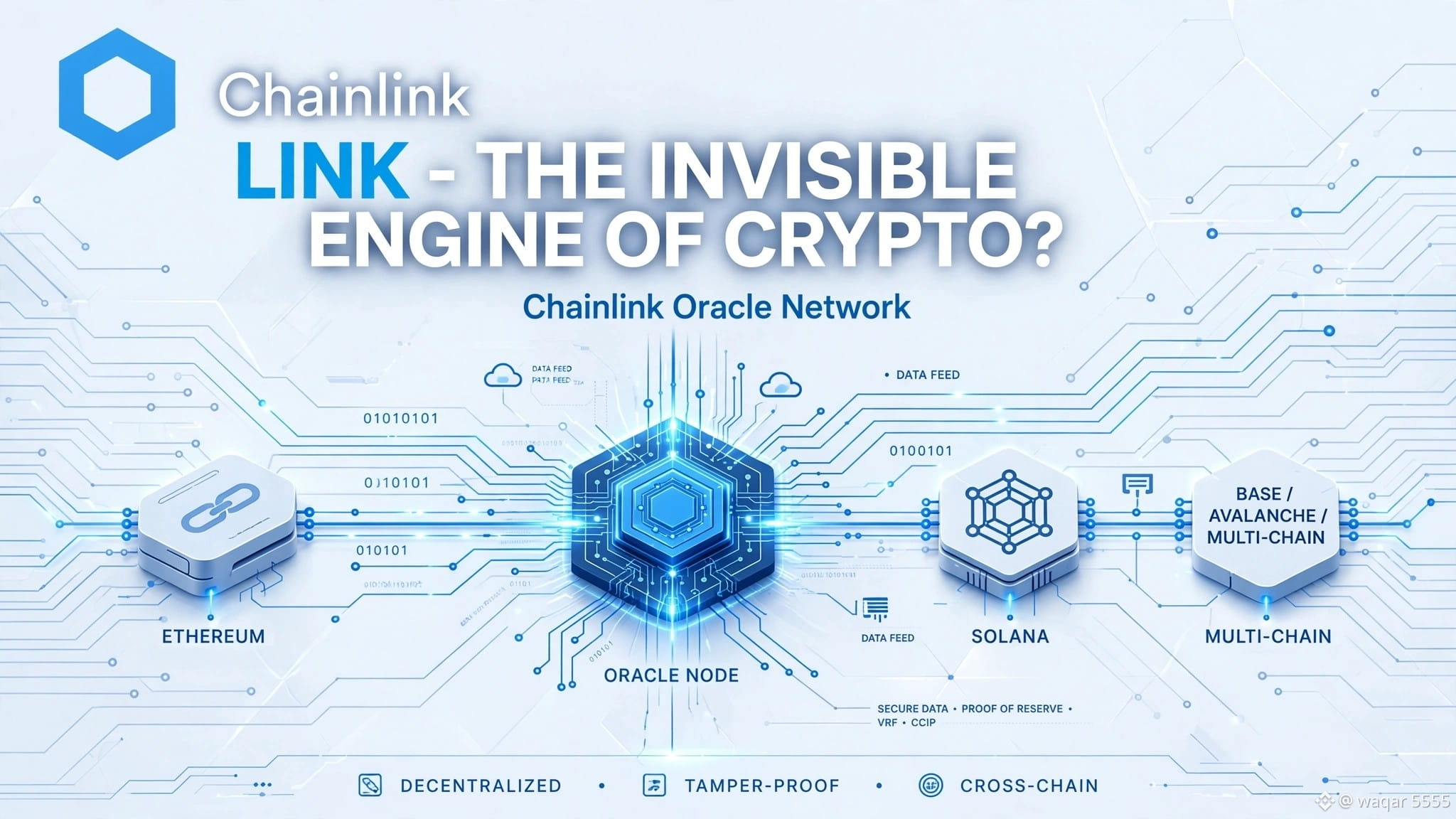
🔗 *$LINK - THE INVISIBLE ENGINE OF CRYPTO?* 🧠
You use DeFi daily, but do you know what powers it? Chainlink!
Without LINK, NO DeFi would work!
*Why $LINK is Essential?*
✅ Oracle Network - Connects Blockchain to Real World Data
✅ Powers $75B+ in DeFi - Aave, Compound, Synthetix all use LINK
✅ Ethereum, Solana, Base, Avalanche - All Need Chainlink
✅ Secure Data, Proof of Reserve, VRF, CCIP
✅ Decentralized, Tamper-Proof, Cross-Chain
LINK doesn't hype, LINK BUILDS! It's the backbone no one sees but everyone needs!
Do you think LINK will hit $100 this bull run? Is it underrated? 👇
#LINK #Chainlink #Oracle #DeFi #Ethereum #Solana #CCIP #Blockchain #Binance #CryptoEngine
🔗 *$LINK - THE INVISIBLE ENGINE OF CRYPTO?* 🧠
You use DeFi daily, but do you know what powers it? Chainlink!
Without LINK, NO DeFi would work!
*Why $LINK is Essential?*
✅ Oracle Network - Connects Blockchain to Real World Data
✅ Powers $75B+ in DeFi - Aave, Compound, Synthetix all use LINK
✅ Ethereum, Solana, Base, Avalanche - All Need Chainlink
✅ Secure Data, Proof of Reserve, VRF, CCIP
✅ Decentralized, Tamper-Proof, Cross-Chain
LINK doesn't hype, LINK BUILDS! It's the backbone no one sees but everyone needs!
Do you think LINK will hit $100 this bull run? Is it underrated? 👇
#LINK #Chainlink #Oracle #DeFi #Ethereum #Solana #CCIP #Blockchain #Binance #CryptoEngine
You use DeFi daily, but do you know what powers it? Chainlink!
Without LINK, NO DeFi would work!
*Why $LINK is Essential?*
✅ Oracle Network - Connects Blockchain to Real World Data
✅ Powers $75B+ in DeFi - Aave, Compound, Synthetix all use LINK
✅ Ethereum, Solana, Base, Avalanche - All Need Chainlink
✅ Secure Data, Proof of Reserve, VRF, CCIP
✅ Decentralized, Tamper-Proof, Cross-Chain
LINK doesn't hype, LINK BUILDS! It's the backbone no one sees but everyone needs!
Do you think LINK will hit $100 this bull run? Is it underrated? 👇
#LINK #Chainlink #Oracle #DeFi #Ethereum #Solana #CCIP #Blockchain #Binance #CryptoEngine
1
171

·
--
DEFI 2.0 PARADIGM SHIFT: HOW $BTC AND $ETH INFRASTRUCTURE IS EVOLVING FOR INSTITUTIONAL RWAS 🦈 ⚡
Institutional capital is outgrowing legacy AMMs designed for volatile assets like $BTC and $ETH . 🏦 The next structural evolution demands specialized primitives—order books, RFQ engines, fixed-rate lending, and portfolio margin designed specifically for low-volatility real-world assets.
🔍 Value is set to migrate away from simple tokenization toward core blockspace, fee-generating primitives, and institutional order flow aggregation layers. 💡 As cash-flow generating assets scale on-chain, smart money is positioning around the infrastructure built to capture institutional liquidity execution.
💬 Which sector do you expect to capture the highest fee volume first in this next market cycle? 👇
⚠️ Not financial advice. Always manage your risk. 🛡️
🏷️ #BTC #DeFi #RWA #Crypto #MarketStructure
🎯 🦈
DEFI 2.0 PARADIGM SHIFT: HOW $BTC AND $ETH INFRASTRUCTURE IS EVOLVING FOR INSTITUTIONAL RWAS 🦈 ⚡
Institutional capital is outgrowing legacy AMMs designed for volatile assets like $BTC and $ETH . 🏦 The next structural evolution demands specialized primitives—order books, RFQ engines, fixed-rate lending, and portfolio margin designed specifically for low-volatility real-world assets.
🔍 Value is set to migrate away from simple tokenization toward core blockspace, fee-generating primitives, and institutional order flow aggregation layers. 💡 As cash-flow generating assets scale on-chain, smart money is positioning around the infrastructure built to capture institutional liquidity execution.
💬 Which sector do you expect to capture the highest fee volume first in this next market cycle? 👇
⚠️ Not financial advice. Always manage your risk. 🛡️
🏷️ #BTC #DeFi #RWA #Crypto #MarketStructure
🎯 🦈
Institutional capital is outgrowing legacy AMMs designed for volatile assets like $BTC and $ETH . 🏦 The next structural evolution demands specialized primitives—order books, RFQ engines, fixed-rate lending, and portfolio margin designed specifically for low-volatility real-world assets.
🔍 Value is set to migrate away from simple tokenization toward core blockspace, fee-generating primitives, and institutional order flow aggregation layers. 💡 As cash-flow generating assets scale on-chain, smart money is positioning around the infrastructure built to capture institutional liquidity execution.
💬 Which sector do you expect to capture the highest fee volume first in this next market cycle? 👇
⚠️ Not financial advice. Always manage your risk. 🛡️
🏷️ #BTC #DeFi #RWA #Crypto #MarketStructure
🎯 🦈
29

·
--
⚡ MULTICOIN CAPITAL UNVEILS THE DEFI 2.0 PLAYBOOK BEYOND $ETH AND $BTC ! 🦈
Early DeFi primitives served volatile assets like $BTC and $ETH , but tokenized RWAs demand institutional-grade architecture. 🏦 Multicoin Capital highlights that the real value wave is pivoting toward order books, fixed-rate lending, and yield splitting as Wall Street capital seeks execution quality.
💡 Tokenization was merely the prelude; value accrual is shifting directly to public chain blockspace, primitive fee streams, and brokerage aggregation layers. 📊 As institutional RWAs scale, the protocols providing dark pools, portfolio margin, and structured products will capture the lion's share of market liquidity. 💬 Is your portfolio positioned for the DeFi 2.0 pivot, or are you still holding legacy primitive tokens? 👇
⚠️ Not financial advice. Always manage your risk. 🛡️
🏷️ #ETH #BTC #DeFi #RWA #Crypto
🔥 💎
⚡ MULTICOIN CAPITAL UNVEILS THE DEFI 2.0 PLAYBOOK BEYOND $ETH AND $BTC ! 🦈
Early DeFi primitives served volatile assets like $BTC and $ETH , but tokenized RWAs demand institutional-grade architecture. 🏦 Multicoin Capital highlights that the real value wave is pivoting toward order books, fixed-rate lending, and yield splitting as Wall Street capital seeks execution quality.
💡 Tokenization was merely the prelude; value accrual is shifting directly to public chain blockspace, primitive fee streams, and brokerage aggregation layers. 📊 As institutional RWAs scale, the protocols providing dark pools, portfolio margin, and structured products will capture the lion's share of market liquidity. 💬 Is your portfolio positioned for the DeFi 2.0 pivot, or are you still holding legacy primitive tokens? 👇
⚠️ Not financial advice. Always manage your risk. 🛡️
🏷️ #ETH #BTC #DeFi #RWA #Crypto
🔥 💎
Early DeFi primitives served volatile assets like $BTC and $ETH , but tokenized RWAs demand institutional-grade architecture. 🏦 Multicoin Capital highlights that the real value wave is pivoting toward order books, fixed-rate lending, and yield splitting as Wall Street capital seeks execution quality.
💡 Tokenization was merely the prelude; value accrual is shifting directly to public chain blockspace, primitive fee streams, and brokerage aggregation layers. 📊 As institutional RWAs scale, the protocols providing dark pools, portfolio margin, and structured products will capture the lion's share of market liquidity. 💬 Is your portfolio positioned for the DeFi 2.0 pivot, or are you still holding legacy primitive tokens? 👇
⚠️ Not financial advice. Always manage your risk. 🛡️
🏷️ #ETH #BTC #DeFi #RWA #Crypto
🔥 💎
38
Log in to explore more content
Join global crypto users on Binance Square
⚡️ Get latest and useful information about crypto.
💬 Trusted by the world’s largest crypto exchange.
👍 Discover real insights from verified creators.
Email / Phone number
Trending Topics
1
#BitcoinSpotETFsNetInflow$191M
775 views
74 Discussing
2
#CFTCUpdatesGuidanceOnTokenizedAssets
11,442 views
559 Discussing
3
#BitgetSays$352MAffectedInHack
2,585 views
39 Discussing
4
#BinanceWillListHyperliquid(HYPE)
196,761 views
3,148 Discussing
5
#BrazilOrdersReportingOf$10KSelfCustodyTransfers
952 views
41 Discussing
6
#FedProposesRulesForBankIssuedStablecoins
11,547 views
405 Discussing
7
#OndoFinanceSoughtSaleAfterFoundersDeath
7,900 views
261 Discussing
8
#FedOctoberRateHikeOddsRiseTo69.7%
77,644 views
1,370 Discussing
9
#BitcoinFallsBelow$83,000
5,131 views
19 Discussing
10
#BitcoinFallsToAround$84,600ThisWeek
0 views
0 Discussing