utxo

33,598 views
96 Discussing
eelciberseguridad
·
--
Article
WHAT IS A UTXO AND HOW IS A BITCOIN BALANCE FORMED?Imagine you have 5 BTC. The logical thing to think would be that somewhere on the network, there's an account that says: You have 5 BTC. But Bitcoin doesn't actually work like that... To understand how that amount is really represented, we need to know a fundamental concept: UTXO. WHAT DOES UTXO MEAN? It's short for Unspent Transaction Output. Let's understand it step by step.... Each Bitcoin transaction can generate one or more outputs, known as outputs.

WHAT IS A UTXO AND HOW IS A BITCOIN BALANCE FORMED?

Imagine you have 5 BTC.
The logical thing to think would be that somewhere on the network, there's an account that says: You have 5 BTC.
But Bitcoin doesn't actually work like that...
To understand how that amount is really represented, we need to know a fundamental concept: UTXO.
WHAT DOES UTXO MEAN?
It's short for Unspent Transaction Output.
Let's understand it step by step....
Each Bitcoin transaction can generate one or more outputs, known as outputs.
Article
UTXO: why your bitcoin balance is a pile of coinsBitcoin does not store balances. It stores unspent transaction outputs - UTXOs - which work like individual banknotes of different sizes sitting at your address. Your wallet adds them up and shows you a total. When you pay, your wallet picks some of those "notes", spends them whole, and sends the excess back to you as change. That is why a transaction can have several inputs and an output back to yourself that you never typed. It also explains fees: they depend on the data size of the transaction, so a wallet full of tiny UTXOs can cost more to spend than one holding a few large ones. 💬 Had you noticed the "change" output in your own transactions? Binance Academy covers this in more depth: https://www.binance.com/en/academy/glossary/unspent-transaction-output-utxo Next lesson: Lightning: paying without waiting for a block Trading crypto from Dubai since 2019. $BTC $BNB #UTXO #Bitcoin #CryptoEducation

UTXO: why your bitcoin balance is a pile of coins

Bitcoin does not store balances. It stores unspent transaction outputs - UTXOs - which work like individual banknotes of different sizes sitting at your address. Your wallet adds them up and shows you a total.
When you pay, your wallet picks some of those "notes", spends them whole, and sends the excess back to you as change. That is why a transaction can have several inputs and an output back to yourself that you never typed. It also explains fees: they depend on the data size of the transaction, so a wallet full of tiny UTXOs can cost more to spend than one holding a few large ones.
💬 Had you noticed the "change" output in your own transactions?
Binance Academy covers this in more depth: https://www.binance.com/en/academy/glossary/unspent-transaction-output-utxo
Next lesson: Lightning: paying without waiting for a block
Trading crypto from Dubai since 2019.
$BTC $BNB
#UTXO #Bitcoin #CryptoEducation
Vitalik latest statement: Ethereum should achieve a “win-win of fish and bear’s paw.” He said he hopes Ethereum can simultaneously have UTXO-style state, dynamic state, and all kinds of states in between. In simple terms, it means bringing the Bitcoin community’s exploration spirit behind ideas like Utreexo and transplanting it into Ethereum’s scaling roadmap. Its core goal is also very clear: enable ultra-large-scale expansion for most on-chain activity on Ethereum without sacrificing decentralization, without raising the threshold for running nodes, and without weakening censorship resistance. At a time when L2s and modular execution layers are evolving rapidly, this stance is worth paying attention to. The UTXO model naturally supports parallel processing and state compression, while dynamic state is the foundation for the complex composability of smart contracts. If the two really can coexist on Ethereum’s mainnet or within the execution layer, in theory they can both alleviate the “node burden anxiety” caused by state bloat and open space for high-throughput applications. Of course, ideal conditions are one thing—the real test is engineering implementation. State transitions, cross-state proofs, client compatibility—each step is a tough challenge. But at least in terms of direction, Vitalik has provided key words for Ethereum’s next phase of scaling: it’s not either/or, it’s “both—everything.” #Vitalik#Ethereum scaling#UTXO
Vitalik latest statement: Ethereum should achieve a “win-win of fish and bear’s paw.”

He said he hopes Ethereum can simultaneously have UTXO-style state, dynamic state, and all kinds of states in between. In simple terms, it means bringing the Bitcoin community’s exploration spirit behind ideas like Utreexo and transplanting it into Ethereum’s scaling roadmap.

Its core goal is also very clear: enable ultra-large-scale expansion for most on-chain activity on Ethereum without sacrificing decentralization, without raising the threshold for running nodes, and without weakening censorship resistance.

At a time when L2s and modular execution layers are evolving rapidly, this stance is worth paying attention to. The UTXO model naturally supports parallel processing and state compression, while dynamic state is the foundation for the complex composability of smart contracts. If the two really can coexist on Ethereum’s mainnet or within the execution layer, in theory they can both alleviate the “node burden anxiety” caused by state bloat and open space for high-throughput applications.

Of course, ideal conditions are one thing—the real test is engineering implementation. State transitions, cross-state proofs, client compatibility—each step is a tough challenge. But at least in terms of direction, Vitalik has provided key words for Ethereum’s next phase of scaling: it’s not either/or, it’s “both—everything.”

#Vitalik#Ethereum scaling#UTXO
📚 Bitcoin UTXOs Explained: The On-Chain Signal Everyone's Discussing On June 28, 2026, analysts point to Bitcoin UTXOs as a capitulation signal. UTXO stands for Unspent Transaction Output — digital change from a Bitcoin transaction. When UTXOs are spent at a loss, it signals the original buyer is selling in capitulation. Many UTXOs created near $60K-$70K are now moving at a loss. 📌 Key Takeaway: UTXO analysis tracks holder behavior — long-term UTXOs moving at a loss historically signals seller exhaustion. #Bitcoin #UTXO #OnChain #Education #BinanceAlphaAlert
📚 Bitcoin UTXOs Explained: The On-Chain Signal Everyone's Discussing

On June 28, 2026, analysts point to Bitcoin UTXOs as a capitulation signal. UTXO stands for Unspent Transaction Output — digital change from a Bitcoin transaction.

When UTXOs are spent at a loss, it signals the original buyer is selling in capitulation. Many UTXOs created near $60K-$70K are now moving at a loss.

📌 Key Takeaway:
UTXO analysis tracks holder behavior — long-term UTXOs moving at a loss historically signals seller exhaustion.

#Bitcoin #UTXO #OnChain #Education
#BinanceAlphaAlert
Bitcoin UTXO model: how Bitcoin tracks value. Unlike account-based blockchains (such as Ethereum), Bitcoin uses the UTXO (Unspent Transaction Output) model. How it works: • Think of UTXOs like physical cash. If you have a $10 bill and want to buy a $3 item, you hand over the $10 bill and receive $7 in change. • In Bitcoin, every transaction consumes existing unspent transaction outputs (inputs) and creates new unspent outputs (outputs). Why the UTXO model matters: 1. Privacy: Users can generate new addresses for every transaction change output, making chain analysis more complex than simple account balances. 2. Parallel Processing: Nodes can verify transactions independently because each UTXO state transition is self-contained. 3. State Size & Pruning: Wallets and nodes can track unspent outputs and prune spent history to save storage. Understanding UTXOs is fundamental for on-chain analysis—helping analysts track coin age, long-term holder behavior, and realized capitalization. Learn the fundamentals on Binance Academy and check out on-chain metrics on major analytical tools. Educational content only. Not financial advice. #Bitcoin #UTXO #CryptoEducation #BinanceAngels
Bitcoin UTXO model: how Bitcoin tracks value.

Unlike account-based blockchains (such as Ethereum), Bitcoin uses the UTXO (Unspent Transaction Output) model.

How it works:
• Think of UTXOs like physical cash. If you have a $10 bill and want to buy a $3 item, you hand over the $10 bill and receive $7 in change.
• In Bitcoin, every transaction consumes existing unspent transaction outputs (inputs) and creates new unspent outputs (outputs).

Why the UTXO model matters:
1. Privacy: Users can generate new addresses for every transaction change output, making chain analysis more complex than simple account balances.
2. Parallel Processing: Nodes can verify transactions independently because each UTXO state transition is self-contained.
3. State Size & Pruning: Wallets and nodes can track unspent outputs and prune spent history to save storage.

Understanding UTXOs is fundamental for on-chain analysis—helping analysts track coin age, long-term holder behavior, and realized capitalization.

Learn the fundamentals on Binance Academy and check out on-chain metrics on major analytical tools.

Educational content only. Not financial advice.

#Bitcoin #UTXO #CryptoEducation #BinanceAngels
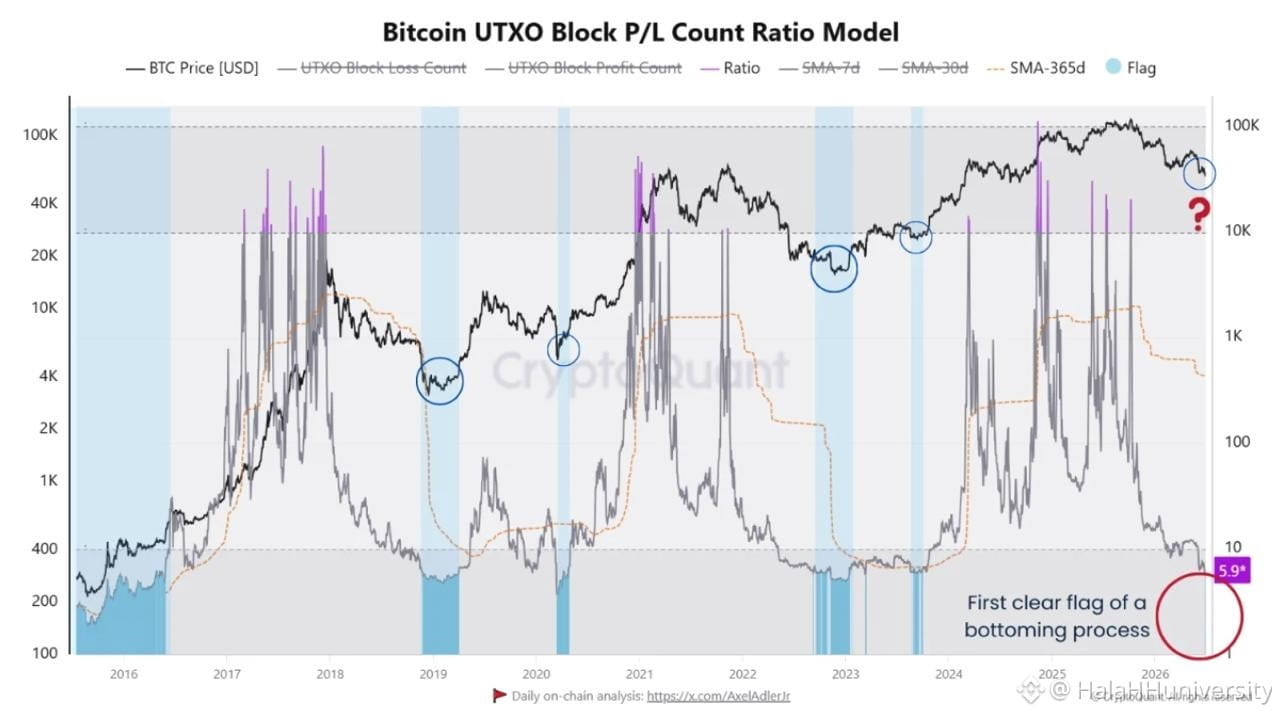
⚡ Developments in the #بيتكوين $BTC market: the ratio of profits and losses in blocks #UTXO for this digital asset has fallen to an area that has historically appeared during bottom-forming processes. However, to obtain a stronger signal for a bottom formation, the average movement over the past 365 days should fall even more. 📈 Current indicators suggest a significant cleansing, but historically, the market may need to drop further before the crucial phase is fully exhausted.
⚡ Developments in the #بيتكوين $BTC market: the ratio of profits and losses in blocks #UTXO for this digital asset has fallen to an area that has historically appeared during bottom-forming processes. However, to obtain a stronger signal for a bottom formation, the average movement over the past 365 days should fall even more.
📈 Current indicators suggest a significant cleansing, but historically, the market may need to drop further before the crucial phase is fully exhausted.
$XEC — is a cryptocurrency focused on fast and low-cost payments. The project emerged in 2021 as a rebranding of Bitcoin Cash ABC (BCHA) — one of the Bitcoin Cash forks. Its main goal is to become “digital cash” for everyday transactions and micropayments. Key features: · Technology: hybrid consensus PoW + Avalanche for fast confirmations. · Architecture: UTXO model, enabling transactions to be processed in parallel. · Ecosystem: support for creating tokens (eTokens) and NFTs. · Scalability: aimed at high throughput for mass adoption. Currently, the price of XEC is $0.00000691, and over the past day the price has fallen by 3.89%. RSI(14) is at 38.36 — the coin is close to the oversold zone, but has not reached it yet. #UTXO #NFTComeback #power {spot}(XECUSDT) {spot}(BCHUSDT) {spot}(LTCUSDT)
$XEC — is a cryptocurrency focused on fast and low-cost payments. The project emerged in 2021 as a rebranding of Bitcoin Cash ABC (BCHA) — one of the Bitcoin Cash forks. Its main goal is to become “digital cash” for everyday transactions and micropayments.

Key features:
· Technology: hybrid consensus PoW + Avalanche for fast confirmations.
· Architecture: UTXO model, enabling transactions to be processed in parallel.
· Ecosystem: support for creating tokens (eTokens) and NFTs.
· Scalability: aimed at high throughput for mass adoption.

Currently, the price of XEC is $0.00000691, and over the past day the price has fallen by 3.89%. RSI(14) is at 38.36 — the coin is close to the oversold zone, but has not reached it yet.

#UTXO #NFTComeback #power
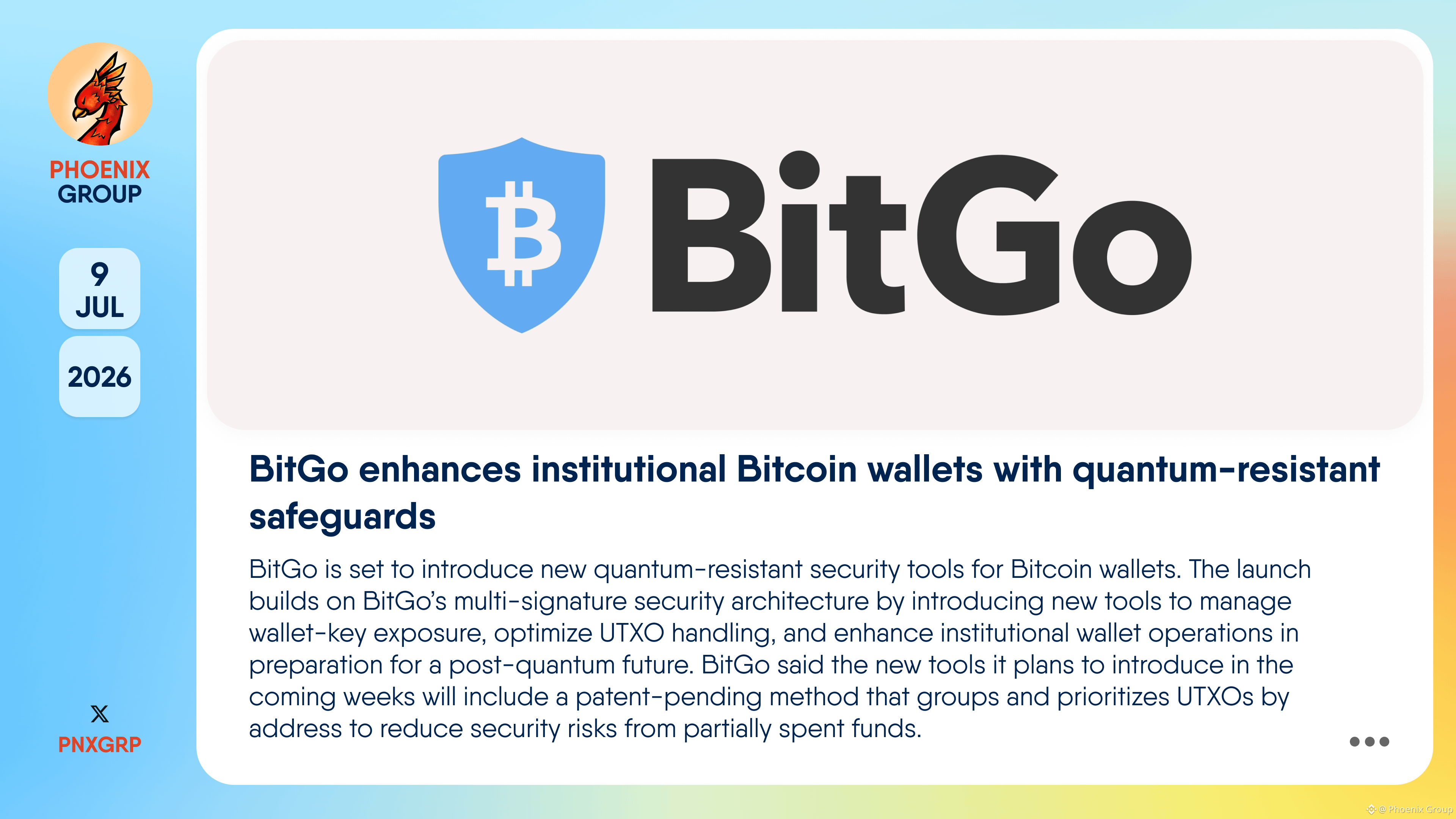
BitGo enhances institutional Bitcoin wallets with quantum-resistant safeguards #BitGo is set to introduce new quantum-resistant security tools for #Bitcoin wallets. The launch builds on BitGo’s multi-signature security architecture by introducing new tools to manage wallet-key exposure, optimize #UTXO handling, and enhance institutional wallet operations in preparation for a post-quantum future. BitGo said the new tools it plans to introduce in the coming weeks will include a patent-pending method that groups and prioritizes UTXOs by address to reduce security risks from partially spent funds. The patent-pending solution does not cover address types that reveal public keys, such as Taproot and Pay-to-Public-Key, which require separate security measures. 👉 theblock.co/post/407661/bitgo-quantum-protection-institutional-bitcoin-wallets
BitGo enhances institutional Bitcoin wallets with quantum-resistant safeguards

#BitGo is set to introduce new quantum-resistant security tools for #Bitcoin wallets. The launch builds on BitGo’s multi-signature security architecture by introducing new tools to manage wallet-key exposure, optimize #UTXO handling, and enhance institutional wallet operations in preparation for a post-quantum future.

BitGo said the new tools it plans to introduce in the coming weeks will include a patent-pending method that groups and prioritizes UTXOs by address to reduce security risks from partially spent funds. The patent-pending solution does not cover address types that reveal public keys, such as Taproot and Pay-to-Public-Key, which require separate security measures.

👉 theblock.co/post/407661/bitgo-quantum-protection-institutional-bitcoin-wallets
·
--
Bullish
P2A was designed for Layer-2 fee management. Miners are now repurposing it for Layer-1 Rune minting. This shows how Bitcoin's existing script and #UTXO features can support unexpected applications without protocol changes.
kaymyg
·
--
Uncommon Goods: The Evolution of Bitcoin Minting Efficiency
Uncommon Goods is Rune #0, the genesis rune hardcoded by Casey Rodarmor, creator of both #ordinals and #runes . It is a pure fair-launch #memecoin with no premine or team allocation. Minting opened at the 2024 halving (block 840,000) and runs until the 2028 halving, under a strict rule of one mint per transaction. Its market price is structurally capped by the cost of a single mint transaction for the entire open-mint period.
The case from mononautical’s posts
Mononautical has documented an advanced and ongoing optimization campaign specifically targeting Uncommon Goods mints. The developments reveal how miners are engineering increasingly efficient ways to process high volumes of mint transactions.

1. Extreme transaction size reduction
Miners, initially AntPool, followed by ViaBTC and F2Pool, began packing thousands of mints using P2A (Pay-to-Anchor, BIP 433) outputs.
P2A is a minimal, keyless, anyone-can-spend output (OP_1 <0x4e73>, address bc1pfeessrawgf), originally designed for efficient CPFP fee bumping in Layer-2 systems. Its use in this context reduces individual mint transactions to approximately 80 virtual bytes.

2. Fee-chain engineering
The optimization goes beyond transaction size. These operations use chains of transactions that pay only 1 satoshi each, followed by a final high-fee child transaction that pays for the entire package through Child Pays for Parent (CPFP).
These transaction chains are not normally relayed by standard nodes. Instead, they are submitted out-of-band directly to miners.

3. Resulting block metrics
The results are particularly interesting.
Block 974557, mined by AntPool, contained 10,573 transactions, making it the second-highest transaction count in Bitcoin history, while using only approximately 1.2 MB / 3.99 MWU.
Earlier analysis by mononautical showed that Rune mints could account for approximately 81% of transaction count while consuming considerably less block space than inscriptions.

There are also potential side effects. These include possible dust-limit violations associated with the tiny P2A outputs and the risk that anyone can spend the keyless anchors, including any Runes attached to them, through a competing transaction.
What this says about Ordinals and Runes through successive improvements
The developments represent a clear evolutionary step in Bitcoin meta-protocol efficiency.
1. From inscriptions to Runes to P2A-optimized Runes
Early Ordinals inscriptions, particularly large media files, were space-intensive. Runes improved fungible-token design by attaching balances to UTXOs through compact OP_RETURN messages.
P2A takes this further by optimizing the highest-volume use case: repeated open mints. The result is denser transaction packing and lower costs per mint.
The same activity that once clogged blocks with large inscriptions can now generate extreme transaction counts while consuming relatively modest block space.
2. Protocol flexibility and repurposing
Features originally built for Layer-2 fee management, such as P2A, are being productively repurposed for Layer-1 token minting.
This demonstrates how Bitcoin's script and UTXO model continue to support unexpected optimizations without requiring changes to the underlying protocol.
3. Economic and systemic effects
The open mint creates a persistent low-fee demand floor. When fees fall below the effective cost of a mint, optimized Uncommon Goods activity can flood the mempool and blocks.
This increases UTXO set growth through numerous small outputs, highlights differences in miner policy (including out-of-band acceptance and possible dust flexibility) and demonstrates that high transaction throughput is achievable for certain workloads without necessarily filling the full block weight limit.
Rodarmor's reaction
Casey Rodarmor's own reaction to the P2A chains was characteristically dry:
"Well at least it'll all be over in a year and a half."

In conclusion Uncommon Goods has become a live laboratory for Bitcoin meta-protocol optimization.
Successive improvements, from Runes design to P2A size reduction and out-of-band fee-chain packaging, have made high-volume minting cheaper and denser.
What was once relatively inefficient "spam" has evolved into a highly engineered and economically rational activity that still generates fees while revealing both the flexibility and the frictions of Bitcoin's current design.
$UncommonGoods $ORDI $BTC


Who is Mononautical?
Mononautical (@mononautical) is a Bitcoin developer who builds tools at mempool.space and BitfeedLive, with a particular focus on observing, analysing and visualising Bitcoin's on-chain activity.
Describing themselves as a “developer, spacefaring primate, international treasure hunter,” mononautical brings a distinctly technical and investigative approach to Bitcoin commentary.
Their posts function almost like real-time blockchain forensics. Rather than discussing Bitcoin primarily through market sentiment or high-level narratives, they examine what is actually happening on the network. This includes dissecting individual blocks, tracking transaction volumes and fee rates, identifying unusual spending patterns, examining mining pool behaviour and documenting historical on-chain movements.
Their analysis is particularly valuable because it makes complex blockchain activity observable. Through custom charts, block visualisations and transaction graphs, they illustrate how block space is consumed, how transaction fees are structured and how emerging meta-protocols such as Ordinals and Runes interact with Bitcoin's underlying infrastructure.
They also pay close attention to the economic and technical incentives shaping network behaviour, including miner policies, non-standard transactions, fee optimisation and the evolving debate around what constitutes spam.
The tone is characteristically technical, data-heavy and occasionally dry, combining precise explanations with wry commentary on broader Bitcoin debates.
In essence, mononautical is less a Bitcoin commentator and more an on-chain investigator. Their work offers a close-up view of Bitcoin's day-to-day mechanics, revealing developments that might otherwise remain buried in transaction data and individual block records.
The UTXO Age Distribution: The On-Chain Metric Most Traders Ignore Most traders watch price. Smart money watches coins. Bitcoin UTXO age distribution — the breakdown of how long each coin has been dormant — is one of the cleanest on-chain signals for identifying where we are in a market cycle. When a large cohort of long-dormant UTXOs (held 1–2+ years) begins moving, it marks a structural shift: long-term holders are distributing into strength. Historically, the transition from accumulation to distribution phases becomes visible in this data weeks before price peaks confirm it. When the 1Y–2Y age band starts shrinking as a percentage of supply, it tells you that hands that survived the bear market are now satisfied with current prices — and beginning to exit. The inverse is equally powerful. After a capitulation event, watch for the 3-month UTXO band to contract sharply (coins moving in distress) and then flatten. That flattening is the base of accumulation. $BTC is the clearest laboratory for this analysis. On-chain transparency is a structural edge that traditional finance simply cannot offer. Use it. #Bitcoin #OnChainAnalysis #CryptoMarketCycle #UTXO #CryptoInsights
The UTXO Age Distribution: The On-Chain Metric Most Traders Ignore

Most traders watch price. Smart money watches coins.

Bitcoin UTXO age distribution — the breakdown of how long each coin has been dormant — is one of the cleanest on-chain signals for identifying where we are in a market cycle. When a large cohort of long-dormant UTXOs (held 1–2+ years) begins moving, it marks a structural shift: long-term holders are distributing into strength.

Historically, the transition from accumulation to distribution phases becomes visible in this data weeks before price peaks confirm it. When the 1Y–2Y age band starts shrinking as a percentage of supply, it tells you that hands that survived the bear market are now satisfied with current prices — and beginning to exit.

The inverse is equally powerful. After a capitulation event, watch for the 3-month UTXO band to contract sharply (coins moving in distress) and then flatten. That flattening is the base of accumulation.

$BTC is the clearest laboratory for this analysis. On-chain transparency is a structural edge that traditional finance simply cannot offer. Use it.

#Bitcoin #OnChainAnalysis #CryptoMarketCycle #UTXO #CryptoInsights
Most developers default to Ethereum's account model when thinking about smart contracts. But Cardano took a radically different path — and it matters more than most realize. Cardano uses the Extended UTxO (eUTxO) model. Instead of a global mutable state where contracts update balances in place, every transaction consumes specific UTxOs and creates new ones. This means: • Transactions are fully deterministic — you know the exact outcome before broadcasting • No surprise fee spikes from state collisions • Parallelism is trivial — independent UTxOs process simultaneously • Formal verification is far more tractable The tradeoff? Composability is harder. Protocols that interact across UTxOs require careful batching and off-chain orchestration. This is why $ADA DeFi evolved differently from $ETH — the architecture forces a different design philosophy. But as $BTC's UTXO model gains renewed interest via Ordinals and BitVM, the underlying theme is consistent: blockchains are rediscovering the value of stateless, predictable computation. EUTxO wasn't a limitation — it was a design choice for correctness over convenience. In a world where on-chain bugs cost billions, that trade-off deserves a serious second look. The chains that get formal correctness right will anchor the highest-value use cases long term. #Cardano #UTxO #SmartContracts #CryptoInfrastructure #Layer1
Most developers default to Ethereum's account model when thinking about smart contracts. But Cardano took a radically different path — and it matters more than most realize.

Cardano uses the Extended UTxO (eUTxO) model. Instead of a global mutable state where contracts update balances in place, every transaction consumes specific UTxOs and creates new ones. This means:

• Transactions are fully deterministic — you know the exact outcome before broadcasting
• No surprise fee spikes from state collisions
• Parallelism is trivial — independent UTxOs process simultaneously
• Formal verification is far more tractable

The tradeoff? Composability is harder. Protocols that interact across UTxOs require careful batching and off-chain orchestration. This is why $ADA DeFi evolved differently from $ETH — the architecture forces a different design philosophy.

But as $BTC 's UTXO model gains renewed interest via Ordinals and BitVM, the underlying theme is consistent: blockchains are rediscovering the value of stateless, predictable computation.

EUTxO wasn't a limitation — it was a design choice for correctness over convenience. In a world where on-chain bugs cost billions, that trade-off deserves a serious second look.

The chains that get formal correctness right will anchor the highest-value use cases long term.

#Cardano #UTxO #SmartContracts #CryptoInfrastructure #Layer1
The UTXO Model Deserves More Respect Than It Gets Most crypto developers live and breathe the account-based model. State lives in accounts, contracts mutate it, and everything is relatively intuitive. Cardano extended the UTXO model differently. Instead of shared mutable state, every transaction consumes unspent outputs and creates new ones. Logic lives in validators that run deterministically at the spending site. Why does this matter? 1. Predictable fees. Because execution is local to the UTXO being spent, you can calculate the exact fee before submitting. No gas estimate surprises. 2. Parallel processing. UTXOs with no shared state can be processed simultaneously. Contention is a design problem, not a runtime problem. 3. Formal verification. The deterministic, local execution model maps cleanly to formal proof systems — critical for high-stakes financial logic. The tradeoff is real: building multi-user protocols on eUTXO requires rethinking state design from scratch. Concurrency patterns that are trivial in account models become architectural puzzles. But as $ADA matures and Layer 2s bring programmability to $BTC, the conversation around UTXO-native smart contracts is just beginning. Account-based chains dominate developer mindshare today. But the design space is wider than most realize. Different models make different tradeoffs. Understanding them is edge. #Cardano #UTXO #SmartContracts #CryptoInfrastructure #BlockchainDev
The UTXO Model Deserves More Respect Than It Gets

Most crypto developers live and breathe the account-based model. State lives in accounts, contracts mutate it, and everything is relatively intuitive.

Cardano extended the UTXO model differently. Instead of shared mutable state, every transaction consumes unspent outputs and creates new ones. Logic lives in validators that run deterministically at the spending site.

Why does this matter?

1. Predictable fees. Because execution is local to the UTXO being spent, you can calculate the exact fee before submitting. No gas estimate surprises.

2. Parallel processing. UTXOs with no shared state can be processed simultaneously. Contention is a design problem, not a runtime problem.

3. Formal verification. The deterministic, local execution model maps cleanly to formal proof systems — critical for high-stakes financial logic.

The tradeoff is real: building multi-user protocols on eUTXO requires rethinking state design from scratch. Concurrency patterns that are trivial in account models become architectural puzzles.

But as $ADA matures and Layer 2s bring programmability to $BTC , the conversation around UTXO-native smart contracts is just beginning.

Account-based chains dominate developer mindshare today. But the design space is wider than most realize. Different models make different tradeoffs. Understanding them is edge.

#Cardano #UTXO #SmartContracts #CryptoInfrastructure #BlockchainDev
$ADA FOUNDER CALLS OUT $ETH FOR 'SILENT COPYING' 🚨 Ethereum researchers proposed a UTXO-style payment design that could reduce state growth by 99.8%. Charles Hoskinson didn’t wait long—he accused them of quietly adopting Cardano’s EUTXO model without credit. ADA just logged a 12.5% weekly gain, sitting near $0.17. ETH is holding $1,754 with $211B market cap. The real move might come if this debate turns into actual competition on the tech front. Are you eyeing a position in either one now? Not financial advice. Always manage your risk. #ADA #CryptoNews #UTXO #Ethereum #Altcoins 🔥
$ADA FOUNDER CALLS OUT $ETH FOR 'SILENT COPYING' 🚨

Ethereum researchers proposed a UTXO-style payment design that could reduce state growth by 99.8%. Charles Hoskinson didn’t wait long—he accused them of quietly adopting Cardano’s EUTXO model without credit.

ADA just logged a 12.5% weekly gain, sitting near $0.17. ETH is holding $1,754 with $211B market cap. The real move might come if this debate turns into actual competition on the tech front.

Are you eyeing a position in either one now?

Not financial advice. Always manage your risk.

#ADA #CryptoNews #UTXO #Ethereum #Altcoins

🔥
UTXO Age Bands: The On-Chain Signal Most Traders Ignore Bitcoin's UTXO age distribution is one of the most underrated signals in crypto. When a large proportion of coins haven't moved in 12+ months, it tells you something money-flow charts cannot: long-term holders are not selling. Here's why it matters right now: - Coins aged 1–2 years are near cycle highs in their share of total supply. This cohort typically begins distributing only when price enters late-stage euphoria — we are not there yet. - Short-term holder (STH) supply has been contracting, meaning recent buyers are either holding or have already exited at a loss. Less STH supply = less near-term sell pressure. - Every time the 6-month+ UTXO band expanded during a consolidation phase, the subsequent 6–12 months rewarded patient capital. This dynamic matters for $ETH and $SOL too — both networks have growing long-term cohorts as staking locks up supply and reduces liquid float. The macro noise is loud. The on-chain structure is quiet — and quietly constructive. Conviction is built in the silence between volatility spikes, not during them. $BTC $ETH $SOL #Bitcoin #OnChainAnalysis #UTXO #CryptoInsights #LongTermConviction
UTXO Age Bands: The On-Chain Signal Most Traders Ignore

Bitcoin's UTXO age distribution is one of the most underrated signals in crypto. When a large proportion of coins haven't moved in 12+ months, it tells you something money-flow charts cannot: long-term holders are not selling.

Here's why it matters right now:

- Coins aged 1–2 years are near cycle highs in their share of total supply. This cohort typically begins distributing only when price enters late-stage euphoria — we are not there yet.
- Short-term holder (STH) supply has been contracting, meaning recent buyers are either holding or have already exited at a loss. Less STH supply = less near-term sell pressure.
- Every time the 6-month+ UTXO band expanded during a consolidation phase, the subsequent 6–12 months rewarded patient capital.

This dynamic matters for $ETH and $SOL too — both networks have growing long-term cohorts as staking locks up supply and reduces liquid float.

The macro noise is loud. The on-chain structure is quiet — and quietly constructive.

Conviction is built in the silence between volatility spikes, not during them.

$BTC $ETH $SOL

#Bitcoin #OnChainAnalysis #UTXO #CryptoInsights #LongTermConviction
Article
Nakamoto acquires BTC Inc and UTXO Management: 107 million dollars for a Bitcoin galaxyNakamoto's all-stock bet The company #Nakamoto , listed on Nasdaq under the ticker #NAKA , has just announced a definitive agreement to acquire two pillars of the ecosystem #bitcoin : $BTC Inc and #UTXO Management. This operation, revealed this Wednesday, will be carried out exclusively in Nakamoto common stock, with no cash disbursement. The holders of the two companies will receive 363 589 816 NAKA shares, representing a total valuation of approximately 107.3 million dollars based on the last closing price of 0.2951 dollars.

Nakamoto acquires BTC Inc and UTXO Management: 107 million dollars for a Bitcoin galaxy

Nakamoto's all-stock bet
The company #Nakamoto , listed on Nasdaq under the ticker #NAKA , has just announced a definitive agreement to acquire two pillars of the ecosystem #bitcoin : $BTC Inc and #UTXO Management. This operation, revealed this Wednesday, will be carried out exclusively in Nakamoto common stock, with no cash disbursement. The holders of the two companies will receive 363 589 816 NAKA shares, representing a total valuation of approximately 107.3 million dollars based on the last closing price of 0.2951 dollars.
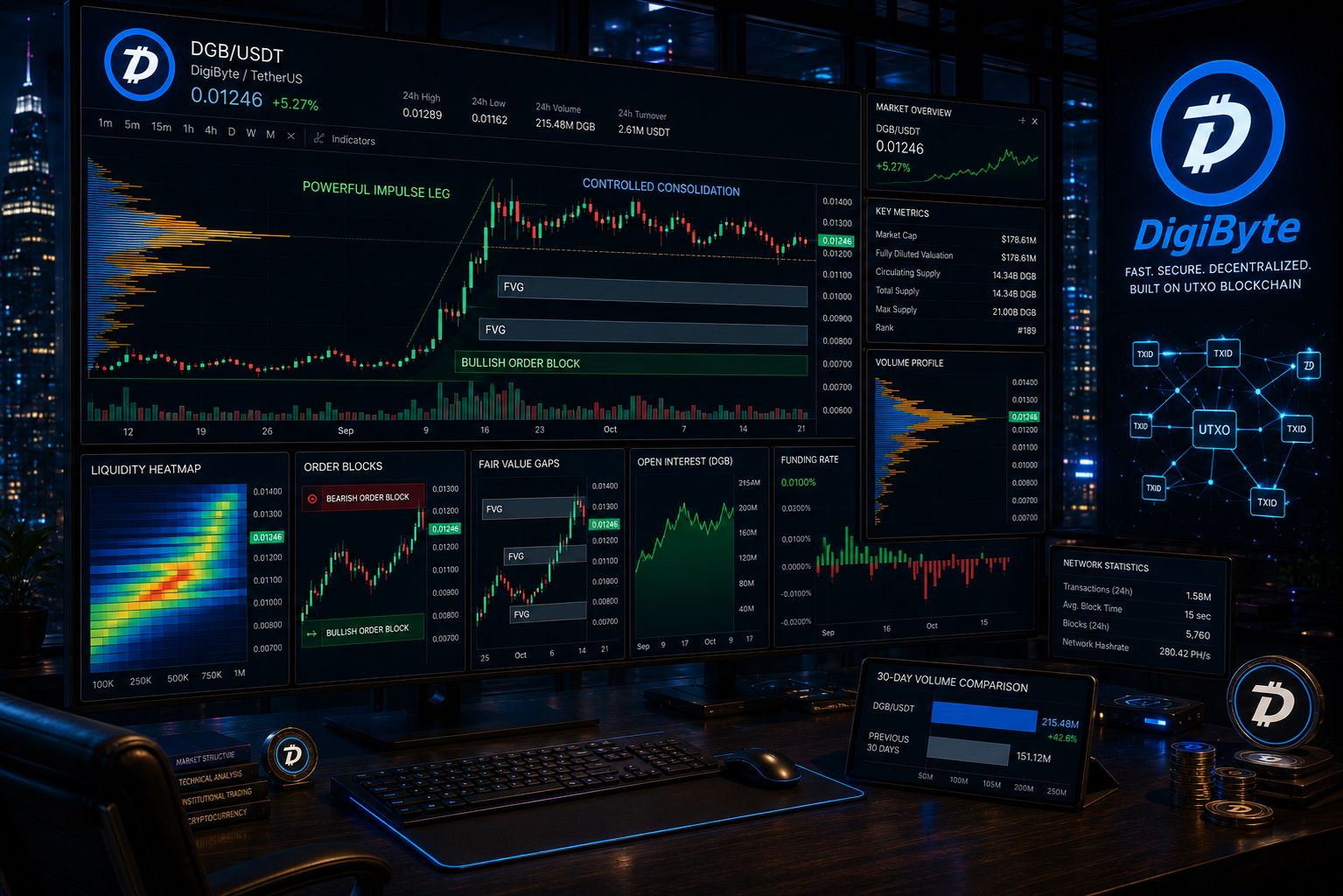
$DGB has delivered a sharp impulse move followed by mid-range consolidation, with spot volume tracking significantly above its 30-day average. The current structure suggests active market participation, but continuation will require acceptance above the $0.0125 resistance zone. 📈 Bias: Momentum Shift 🎯 Entry: $0.0095–$0.0112 🛡 Support: $0.0088 🚧 Resistance: $0.0125 🎯 Targets: $0.0140 ❌ Invalidation: Break below $0.0079 👀 Watching whether consolidation develops into a continuation structure or distribution phase. #DGB #DigiByte #UTXO #Blockchain #CryptoTrading {spot}(DGBUSDT)
$DGB has delivered a sharp impulse move followed by mid-range consolidation, with spot volume tracking significantly above its 30-day average. The current structure suggests active market participation, but continuation will require acceptance above the $0.0125 resistance zone.
📈 Bias: Momentum Shift
🎯 Entry: $0.0095–$0.0112
🛡 Support: $0.0088
🚧 Resistance: $0.0125
🎯 Targets: $0.0140
❌ Invalidation: Break below $0.0079
👀 Watching whether consolidation develops into a continuation structure or distribution phase.
#DGB #DigiByte #UTXO #Blockchain #CryptoTrading
I almost added a little more $BABY yesterday, but ended up leaving my order unfilled. My position is still tiny, and instead of watching the chart, I spent the evening trying to understand how Babylon actually proves Bitcoin collateral on Ethereum. The part I had wrong was assuming the BTC itself had to move. It doesn't. The Bitcoin stays where it is. Ethereum only receives a cryptographic proof that a specific UTXO exists, remains locked, and hasn't been spent. That completely changed how I think about Babylon's design. What stood out even more wasn't the cryptography—it was the timing. Every proof reflects reality with a delay because both chains need confirmation before the information becomes reliable. Most of the time that lag feels insignificant, but during volatile moments it quietly changes how quickly capital can react. That delay creates an interesting filter. Traders chasing instant liquidity may prefer wrapped assets, while investors comfortable waiting for stronger verification are playing a different game entirely. It's less about convenience and more about what type of participant the system naturally attracts. That's why I've kept my @babylonlabs_io position small for now. I'm not questioning whether the proofs work. I'm watching to see if this verification model can build lasting demand once the technology stops being the main attraction. Adoption, not cryptography, feels like the bigger test. #BabylonLabs_io #Babylon #UTXO $MMT $GIGGLE #BABY #DeFi What's the biggest challenge for Babylon's BTC verification model?
I almost added a little more $BABY yesterday, but ended up leaving my order unfilled. My position is still tiny, and instead of watching the chart, I spent the evening trying to understand how Babylon actually proves Bitcoin collateral on Ethereum.

The part I had wrong was assuming the BTC itself had to move. It doesn't. The Bitcoin stays where it is. Ethereum only receives a cryptographic proof that a specific UTXO exists, remains locked, and hasn't been spent. That completely changed how I think about Babylon's design.

What stood out even more wasn't the cryptography—it was the timing. Every proof reflects reality with a delay because both chains need confirmation before the information becomes reliable. Most of the time that lag feels insignificant, but during volatile moments it quietly changes how quickly capital can react.

That delay creates an interesting filter. Traders chasing instant liquidity may prefer wrapped assets, while investors comfortable waiting for stronger verification are playing a different game entirely. It's less about convenience and more about what type of participant the system naturally attracts.

That's why I've kept my @BabylonLabs_io position small for now. I'm not questioning whether the proofs work. I'm watching to see if this verification model can build lasting demand once the technology stops being the main attraction. Adoption, not cryptography, feels like the bigger test.

#BabylonLabs_io #Babylon #UTXO $MMT $GIGGLE #BABY #DeFi

What's the biggest challenge for Babylon's BTC verification model?
⏳ Verification Speed
50%
🔒 User Adoption
30%
📈 Sustained Demand
20%
10 votes • Voting closed

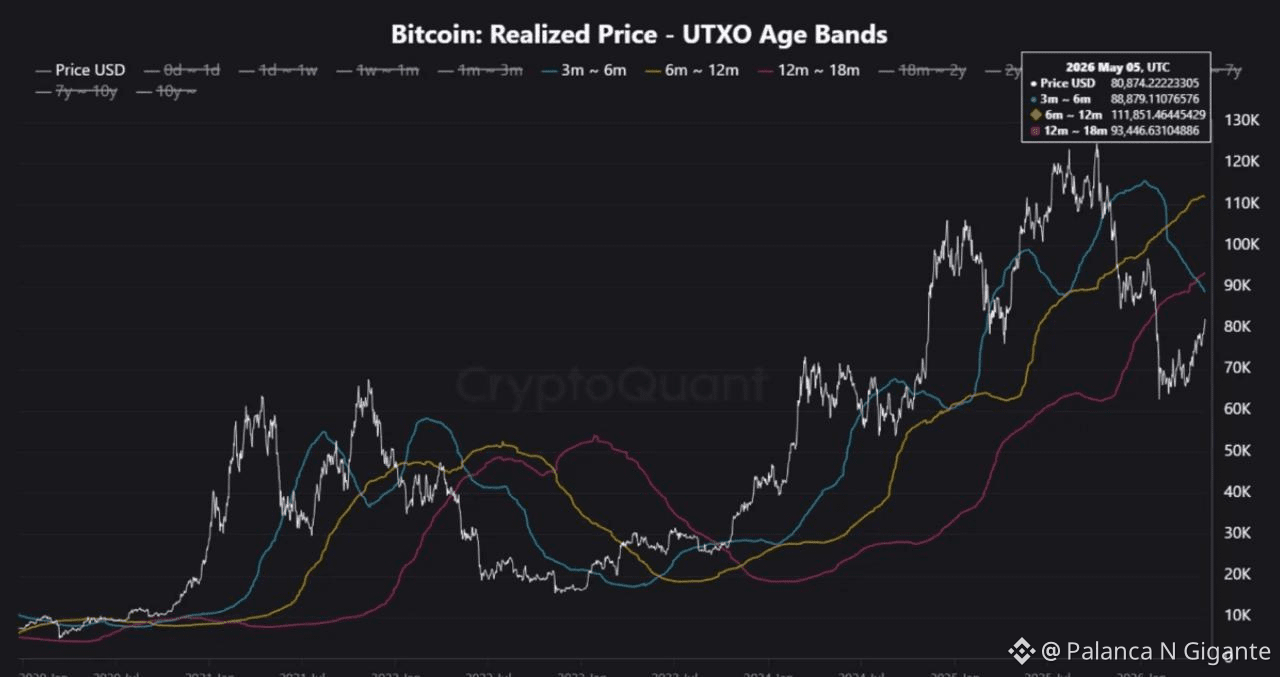
🚨BITCOIN IS SET TO SOAR TO 88.88K AND STAY THERE The narrative of "the bottom is in" is gaining traction, but confirmation might take a bit longer. Analyst from #CryptoQuant states that $BTC needs to reclaim and hold above $88,880, not just spike through it. A sustained move above this level could get recent buyers back in the green and ease selling pressure. $NIL is pumping, $DOGS has hours left before the next dip. 👀👀👀 {spot}(DOGSUSDT) {spot}(NILUSDT) {spot}(BTCUSDT) #bullish #UTXO #bitcoin #analysis
🚨BITCOIN IS SET TO SOAR TO 88.88K AND STAY THERE

The narrative of "the bottom is in" is gaining traction, but confirmation might take a bit longer.

Analyst from #CryptoQuant states that $BTC needs to reclaim and hold above $88,880, not just spike through it.

A sustained move above this level could get recent buyers back in the green and ease selling pressure.

$NIL is pumping, $DOGS has hours left before the next dip. 👀👀👀


#bullish #UTXO #bitcoin #analysis
Article
Network Upgrades: The Overflow Crisis, UTXO Lineage, and Fee Acceleration🚀 The absolute code security of @Bitcoinworld is fundamentally driven by its ability to resolve extreme unexpected vulnerabilities, famously demonstrated during the history of the 2010 value overflow incident. An early code oversight allowed a malicious transaction to exploit an integer overflow, bypassing internal validation checks to instantly fabricate over 184 billion fake coins out of thin air. Within a mere five hours of discovery, Satoshi Nakamoto and early network engineers successfully deployed a patch and executed a soft fork to wipe the corrupt block from the main ledger, proving the community's swift capability to protect the network's strict 21 million maximum supply. $BTC {spot}(BTCUSDT) This resilient history paved the way for advanced structure, explicitly tracked through the mechanics of transaction tree inheritance. Unlike traditional accounting balances, the ledger map functions as a highly secure directed acyclic graph where every single spending input must explicitly trace its parentage back to a previous valid unspent transaction output (UTXO). This unique linear lineage ensures that every coin possesses a verifiable, mathematically pristine family tree extending all the way back to its original generation block. To manage this complex lineage during times of high congestion, the concepts of fee-bumping via child-pays-for-parent (CPFP) provide crucial control over settlement times. If a vital parent transaction gets completely stuck in the mempool due to a low fee rate, the receiver can purposefully spend that unconfirmed output to create a secondary "child" transaction with a highly attractive premium fee. Because miners cannot claim the lucrative reward without first processing the parent block, this game-theory framework forces them to validate both transactions together, instantly speeding up processing times. #XRPETF42MWeeklyInflows #BlockchainSecurity #CryptoHistory #FeeBumping #UTXO

Network Upgrades: The Overflow Crisis, UTXO Lineage, and Fee Acceleration

🚀
The absolute code security of @Bitcoinworld is fundamentally driven by its ability to resolve extreme unexpected vulnerabilities, famously demonstrated during the history of the 2010 value overflow incident. An early code oversight allowed a malicious transaction to exploit an integer overflow, bypassing internal validation checks to instantly fabricate over 184 billion fake coins out of thin air. Within a mere five hours of discovery, Satoshi Nakamoto and early network engineers successfully deployed a patch and executed a soft fork to wipe the corrupt block from the main ledger, proving the community's swift capability to protect the network's strict 21 million maximum supply. $BTC
This resilient history paved the way for advanced structure, explicitly tracked through the mechanics of transaction tree inheritance. Unlike traditional accounting balances, the ledger map functions as a highly secure directed acyclic graph where every single spending input must explicitly trace its parentage back to a previous valid unspent transaction output (UTXO). This unique linear lineage ensures that every coin possesses a verifiable, mathematically pristine family tree extending all the way back to its original generation block.
To manage this complex lineage during times of high congestion, the concepts of fee-bumping via child-pays-for-parent (CPFP) provide crucial control over settlement times. If a vital parent transaction gets completely stuck in the mempool due to a low fee rate, the receiver can purposefully spend that unconfirmed output to create a secondary "child" transaction with a highly attractive premium fee. Because miners cannot claim the lucrative reward without first processing the parent block, this game-theory framework forces them to validate both transactions together, instantly speeding up processing times.
#XRPETF42MWeeklyInflows #BlockchainSecurity #CryptoHistory #FeeBumping #UTXO
CARDANO'S UTXO MODEL VINDICATED AS ETHEREUM COPIES IT – $ADA NEXT 🔥 Ethereum's latest research proposal to integrate a native UTXO model confirms what structure traders have known—account-based models suffer from state bloat, reentrancy risks, and limited parallelism. The 99.8% storage reduction figure exposes the weakness, and Charles Hoskinson's response suggests Cardano's eUTXO paradigm is being validated in real time. With the Leios upgrade promising 60x throughput on the horizon, ADA sits at a rare structural inflection point. Is this the moment ADA finally breaks its consolidation range? Not financial advice. Always manage your risk. #ADA #Cardano #UTXO #CryptoResearch #LeiosUpgrade 🔥
CARDANO'S UTXO MODEL VINDICATED AS ETHEREUM COPIES IT – $ADA NEXT 🔥

Ethereum's latest research proposal to integrate a native UTXO model confirms what structure traders have known—account-based models suffer from state bloat, reentrancy risks, and limited parallelism. The 99.8% storage reduction figure exposes the weakness, and Charles Hoskinson's response suggests Cardano's eUTXO paradigm is being validated in real time. With the Leios upgrade promising 60x throughput on the horizon, ADA sits at a rare structural inflection point.

Is this the moment ADA finally breaks its consolidation range?

Not financial advice. Always manage your risk.

#ADA #Cardano #UTXO #CryptoResearch #LeiosUpgrade

🔥
Log in to explore more content
Join global crypto users on Binance Square
⚡️ Get latest and useful information about crypto.
💬 Trusted by the world’s largest crypto exchange.
👍 Discover real insights from verified creators.
Email / Phone number