

#blockchain
blockchain
34.6M views
161,749 Discussing
Hot
Latest

·
--
Bearish
🌐 Tokenized Stocks Are Expanding in Crypto
Several digital-asset and financial technology companies are working together to promote issuer-backed tokenized stocks.
The development is part of a broader trend bringing traditional financial assets onto blockchain networks.
Tokenization could allow certain financial assets to be represented and transferred using blockchain infrastructure, potentially connecting traditional markets with the digital-asset ecosystem.
This is one of the major areas to watch as crypto infrastructure develops beyond traditional cryptocurrencies.
#blockchain #Crypto #Web3 #DigitalAssets #RWA #CryptoNews
🌐 Tokenized Stocks Are Expanding in Crypto
Several digital-asset and financial technology companies are working together to promote issuer-backed tokenized stocks.
The development is part of a broader trend bringing traditional financial assets onto blockchain networks.
Tokenization could allow certain financial assets to be represented and transferred using blockchain infrastructure, potentially connecting traditional markets with the digital-asset ecosystem.
This is one of the major areas to watch as crypto infrastructure develops beyond traditional cryptocurrencies.
#blockchain #Crypto #Web3 #DigitalAssets #RWA #CryptoNews
Several digital-asset and financial technology companies are working together to promote issuer-backed tokenized stocks.
The development is part of a broader trend bringing traditional financial assets onto blockchain networks.
Tokenization could allow certain financial assets to be represented and transferred using blockchain infrastructure, potentially connecting traditional markets with the digital-asset ecosystem.
This is one of the major areas to watch as crypto infrastructure develops beyond traditional cryptocurrencies.
#blockchain #Crypto #Web3 #DigitalAssets #RWA #CryptoNews
1
1

·
--
Bearish
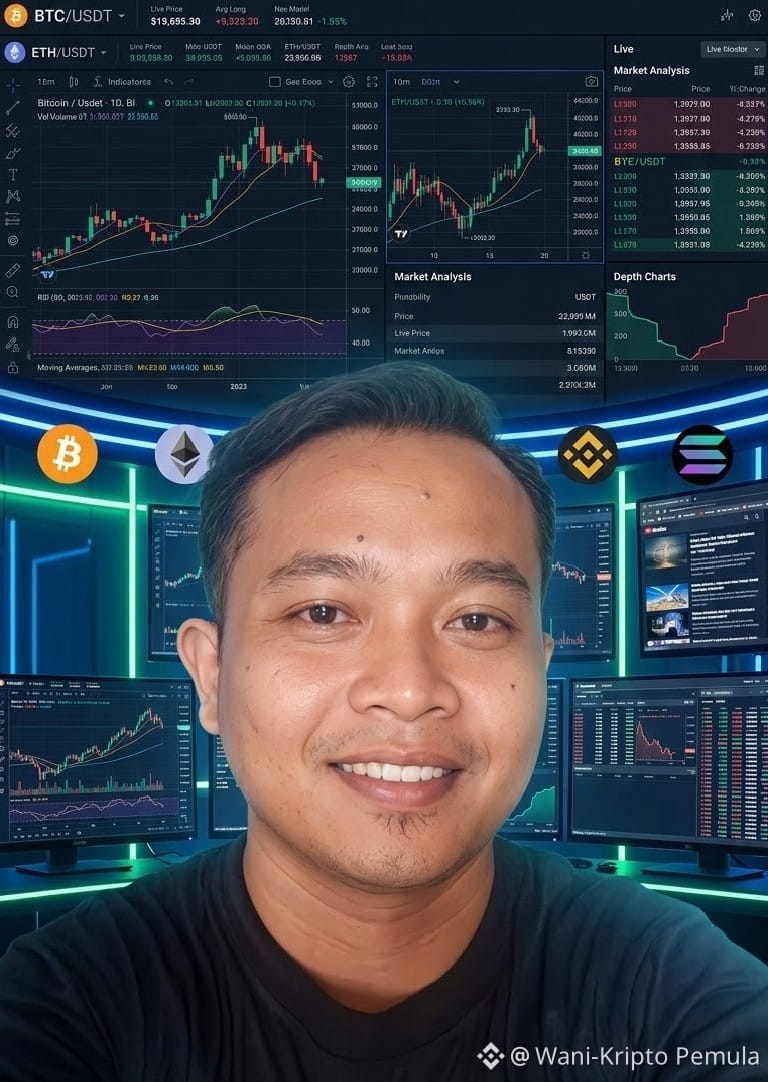
What Is Crypto? 🤔
Imagine having digital money you can send to anyone, anytime—without relying on a traditional bank.
That’s the simple idea behind crypto: digital assets powered by blockchain, a shared online record that is transparent and difficult to alter.
But remember: crypto is not a get-rich-quick button. Prices can move up and down fast, so learn before you invest. ✅
What crypto term confuses you the most?
#CryptoForBeginners #CryptoEducation #Blockchain #bitcoin #pemula $BTC
{spot}(BTCUSDT)
What Is Crypto? 🤔
Imagine having digital money you can send to anyone, anytime—without relying on a traditional bank.
That’s the simple idea behind crypto: digital assets powered by blockchain, a shared online record that is transparent and difficult to alter.
But remember: crypto is not a get-rich-quick button. Prices can move up and down fast, so learn before you invest. ✅
What crypto term confuses you the most?
#CryptoForBeginners #CryptoEducation #Blockchain #bitcoin #pemula $BTC
Imagine having digital money you can send to anyone, anytime—without relying on a traditional bank.
That’s the simple idea behind crypto: digital assets powered by blockchain, a shared online record that is transparent and difficult to alter.
But remember: crypto is not a get-rich-quick button. Prices can move up and down fast, so learn before you invest. ✅
What crypto term confuses you the most?
#CryptoForBeginners #CryptoEducation #Blockchain #bitcoin #pemula $BTC
44

·
--
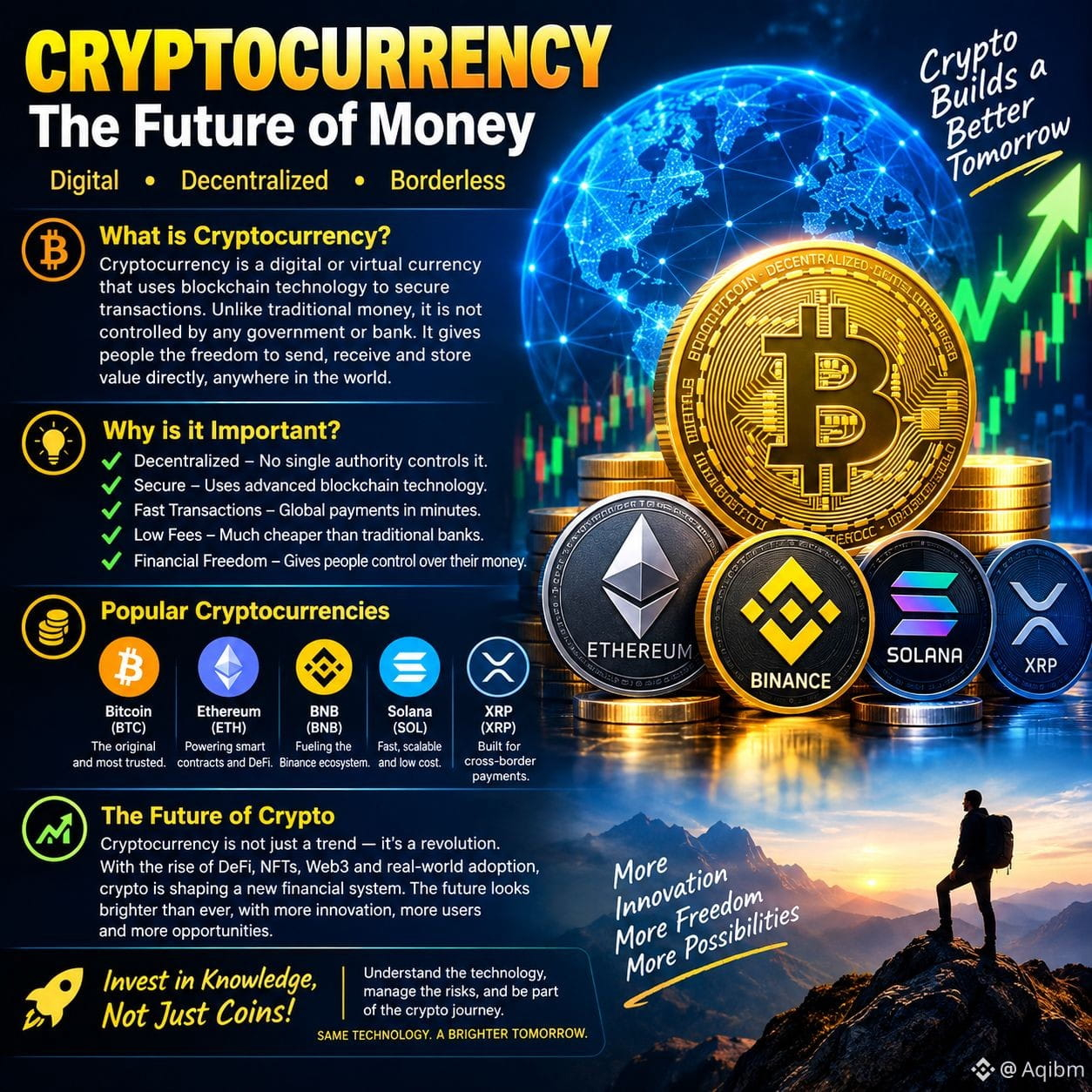
🔥 **THE CRYPTO REVOLUTION HAS ALREADY BEGUN! 🚀**
While the world is watching, blockchain technology is quietly changing how we think about **money, ownership, payments, and the digital economy.** 🌍
₿ **Bitcoin** — digital scarcity
♦️ **Ethereum** — smart contracts & innovation
🟡 **BNB** — a growing blockchain ecosystem
⚡ **Solana** — speed & scalability
But crypto is not only about price charts. 📈
It’s about **technology, adoption, innovation, and new possibilities.**
💡 **Don’t chase the hype. Chase knowledge.**
Research. Learn. Understand the risks. Then make your own informed decisions.
🚀 **The future of finance is being built today.**
#Binance #Crypto #Bitcoin #BNB #Ethereum #Blockchain #Web3 #DeFi #CryptoCommunity #BinanceFeed
🔥 **THE CRYPTO REVOLUTION HAS ALREADY BEGUN! 🚀**
While the world is watching, blockchain technology is quietly changing how we think about **money, ownership, payments, and the digital economy.** 🌍
₿ **Bitcoin** — digital scarcity
♦️ **Ethereum** — smart contracts & innovation
🟡 **BNB** — a growing blockchain ecosystem
⚡ **Solana** — speed & scalability
But crypto is not only about price charts. 📈
It’s about **technology, adoption, innovation, and new possibilities.**
💡 **Don’t chase the hype. Chase knowledge.**
Research. Learn. Understand the risks. Then make your own informed decisions.
🚀 **The future of finance is being built today.**
#Binance #Crypto #Bitcoin #BNB #Ethereum #Blockchain #Web3 #DeFi #CryptoCommunity #BinanceFeed
While the world is watching, blockchain technology is quietly changing how we think about **money, ownership, payments, and the digital economy.** 🌍
₿ **Bitcoin** — digital scarcity
♦️ **Ethereum** — smart contracts & innovation
🟡 **BNB** — a growing blockchain ecosystem
⚡ **Solana** — speed & scalability
But crypto is not only about price charts. 📈
It’s about **technology, adoption, innovation, and new possibilities.**
💡 **Don’t chase the hype. Chase knowledge.**
Research. Learn. Understand the risks. Then make your own informed decisions.
🚀 **The future of finance is being built today.**
#Binance #Crypto #Bitcoin #BNB #Ethereum #Blockchain #Web3 #DeFi #CryptoCommunity #BinanceFeed
1
144
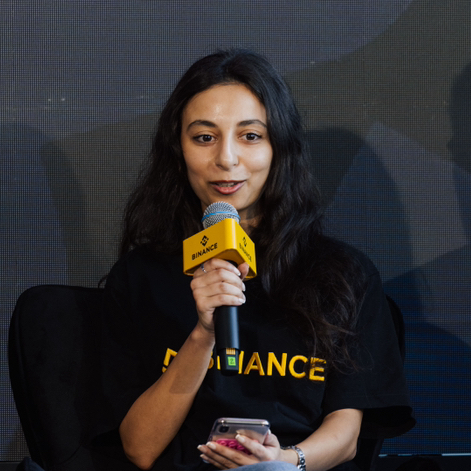
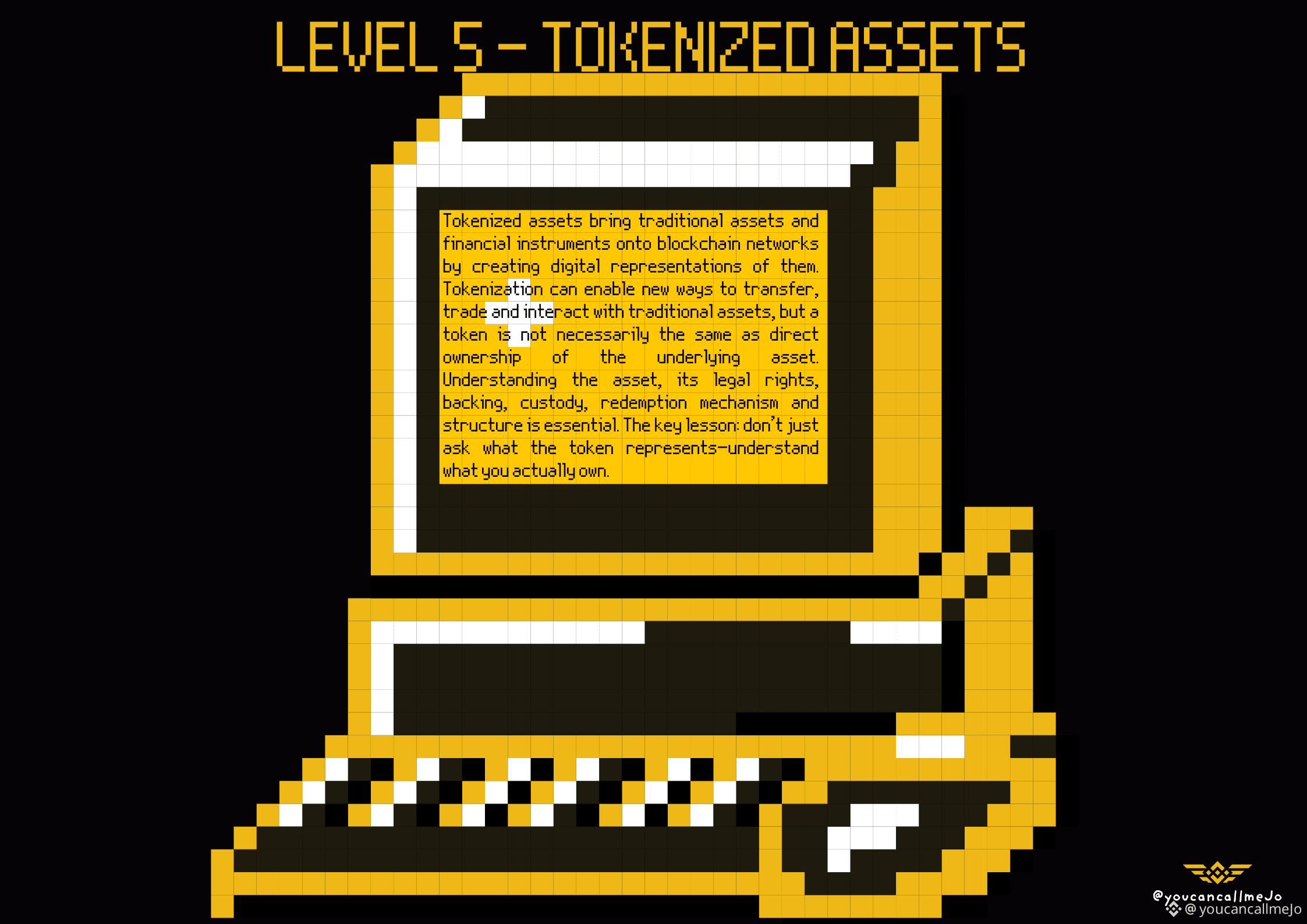
🎮 LEVEL 5 — TOKENIZED ASSETS: When Traditional Assets Meet Blockchain
You cleared Level 4. You learned that owning or getting exposure to a commodity depends on the product you use. Now the game changes again.
WHAT IS TOKENIZATION?
Tokenization is the process of creating a blockchain-based representation of an asset or financial instrument.
The idea is simple:
Traditional asset → blockchain-based representation → digital transfer and trading
But there is an important distinction:
A tokenized asset is not automatically the same thing as directly owning the underlying asset.
🏢 TAKE STOCKS AS AN EXAMPLE
A traditional share represents an ownership interest in a company.
A tokenized security can instead represent a financial interest linked to an underlying security, while operating through a blockchain-based structure.
That means you need to understand the legal structure, rights, backing, custody and redemption mechanism — not just the ticker.
🔗 WHY TOKENIZE ASSETS?
Tokenization can bring traditional financial instruments into blockchain-based environments, potentially enabling different ways to transfer, trade or interact with assets.
But putting something on a blockchain does not automatically change its underlying economic or legal rights.
TOKEN ≠ UNDERLYING ASSET
For example, Binance bStocks are classified as tokenized securities and are not direct ownership of the underlying shares. Binance states that bStocks represent an interest in underlying securities held by the issuer, with availability limited to eligible users in approved jurisdictions.
So if you see a token representing a stock, don't stop at:
“It's Tesla on the blockchain.”
Ask:
What exactly does this token represent?
Who holds the underlying asset?
What rights do I have?
Can it be redeemed, and under what conditions?
Where is it available?
🎮 LEVEL 5 LESSON
Tokenization connects traditional assets with blockchain technology.
But the blockchain is only part of the story.
You completed Level 5.
🔓 NEXT LEVEL → DEFI 🔑
#Binance #Tokenization #RWA #blockchain
🎮 LEVEL 5 — TOKENIZED ASSETS: When Traditional Assets Meet Blockchain
You cleared Level 4. You learned that owning or getting exposure to a commodity depends on the product you use. Now the game changes again.
WHAT IS TOKENIZATION?
Tokenization is the process of creating a blockchain-based representation of an asset or financial instrument.
The idea is simple:
Traditional asset → blockchain-based representation → digital transfer and trading
But there is an important distinction:
A tokenized asset is not automatically the same thing as directly owning the underlying asset.
🏢 TAKE STOCKS AS AN EXAMPLE
A traditional share represents an ownership interest in a company.
A tokenized security can instead represent a financial interest linked to an underlying security, while operating through a blockchain-based structure.
That means you need to understand the legal structure, rights, backing, custody and redemption mechanism — not just the ticker.
🔗 WHY TOKENIZE ASSETS?
Tokenization can bring traditional financial instruments into blockchain-based environments, potentially enabling different ways to transfer, trade or interact with assets.
But putting something on a blockchain does not automatically change its underlying economic or legal rights.
TOKEN ≠ UNDERLYING ASSET
For example, Binance bStocks are classified as tokenized securities and are not direct ownership of the underlying shares. Binance states that bStocks represent an interest in underlying securities held by the issuer, with availability limited to eligible users in approved jurisdictions.
So if you see a token representing a stock, don't stop at:
“It's Tesla on the blockchain.”
Ask:
What exactly does this token represent?
Who holds the underlying asset?
What rights do I have?
Can it be redeemed, and under what conditions?
Where is it available?
🎮 LEVEL 5 LESSON
Tokenization connects traditional assets with blockchain technology.
But the blockchain is only part of the story.
You completed Level 5.
🔓 NEXT LEVEL → DEFI 🔑
#Binance #Tokenization #RWA #blockchain
You cleared Level 4. You learned that owning or getting exposure to a commodity depends on the product you use. Now the game changes again.
WHAT IS TOKENIZATION?
Tokenization is the process of creating a blockchain-based representation of an asset or financial instrument.
The idea is simple:
Traditional asset → blockchain-based representation → digital transfer and trading
But there is an important distinction:
A tokenized asset is not automatically the same thing as directly owning the underlying asset.
🏢 TAKE STOCKS AS AN EXAMPLE
A traditional share represents an ownership interest in a company.
A tokenized security can instead represent a financial interest linked to an underlying security, while operating through a blockchain-based structure.
That means you need to understand the legal structure, rights, backing, custody and redemption mechanism — not just the ticker.
🔗 WHY TOKENIZE ASSETS?
Tokenization can bring traditional financial instruments into blockchain-based environments, potentially enabling different ways to transfer, trade or interact with assets.
But putting something on a blockchain does not automatically change its underlying economic or legal rights.
TOKEN ≠ UNDERLYING ASSET
For example, Binance bStocks are classified as tokenized securities and are not direct ownership of the underlying shares. Binance states that bStocks represent an interest in underlying securities held by the issuer, with availability limited to eligible users in approved jurisdictions.
So if you see a token representing a stock, don't stop at:
“It's Tesla on the blockchain.”
Ask:
What exactly does this token represent?
Who holds the underlying asset?
What rights do I have?
Can it be redeemed, and under what conditions?
Where is it available?
🎮 LEVEL 5 LESSON
Tokenization connects traditional assets with blockchain technology.
But the blockchain is only part of the story.
You completed Level 5.
🔓 NEXT LEVEL → DEFI 🔑
#Binance #Tokenization #RWA #blockchain
3
63

·
--
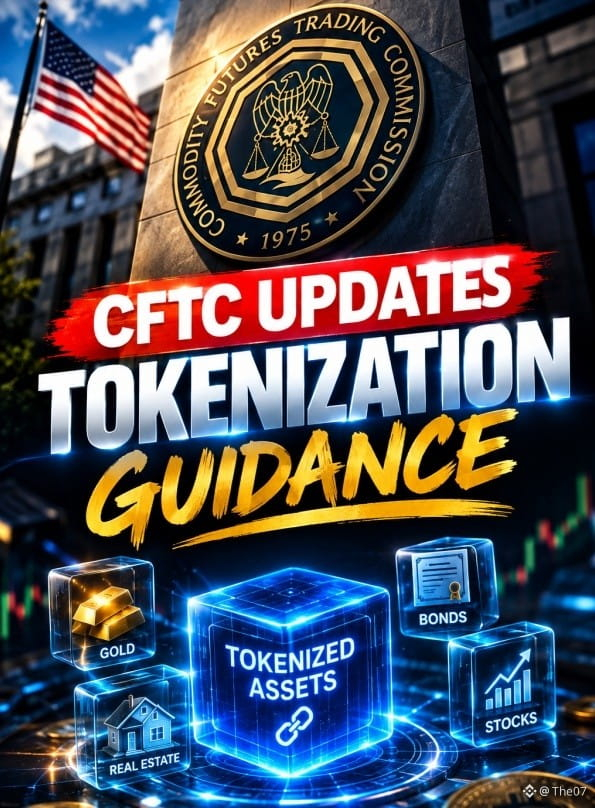
🚨 BREAKING: CFTC UPDATES TOKENIZATION GUIDANCE
The CFTC just updated its crypto guidance, clarifying that regulated firms may use tokenized versions of permitted assets under certain conditions. 🏦⛓️
The agency also confirmed that qualifying blockchain-based records can satisfy certain regulatory recordkeeping requirements.
This is another major step toward bringing tokenization and blockchain infrastructure deeper into traditional financial markets. 🌎
Tokenized assets are moving closer to the mainstream.
The real question: How big could the tokenization market become by 2029? 👀
#CFTC #blockchain #bitcoin
#cftcupdatesguidanceontokenizedassets
🚨 BREAKING: CFTC UPDATES TOKENIZATION GUIDANCE
The CFTC just updated its crypto guidance, clarifying that regulated firms may use tokenized versions of permitted assets under certain conditions. 🏦⛓️
The agency also confirmed that qualifying blockchain-based records can satisfy certain regulatory recordkeeping requirements.
This is another major step toward bringing tokenization and blockchain infrastructure deeper into traditional financial markets. 🌎
Tokenized assets are moving closer to the mainstream.
The real question: How big could the tokenization market become by 2029? 👀
#CFTC #blockchain #bitcoin
#cftcupdatesguidanceontokenizedassets
The CFTC just updated its crypto guidance, clarifying that regulated firms may use tokenized versions of permitted assets under certain conditions. 🏦⛓️
The agency also confirmed that qualifying blockchain-based records can satisfy certain regulatory recordkeeping requirements.
This is another major step toward bringing tokenization and blockchain infrastructure deeper into traditional financial markets. 🌎
Tokenized assets are moving closer to the mainstream.
The real question: How big could the tokenization market become by 2029? 👀
#CFTC #blockchain #bitcoin
#cftcupdatesguidanceontokenizedassets
206 Atlas:
Regulatory clarity is good, but it doesn't change BTC's technical structure. Don't confuse institutional compliance with price action.
1
4
1.8k

·
--
Bullish
Partly True
$INJ simply jumped into a whole new conversation.
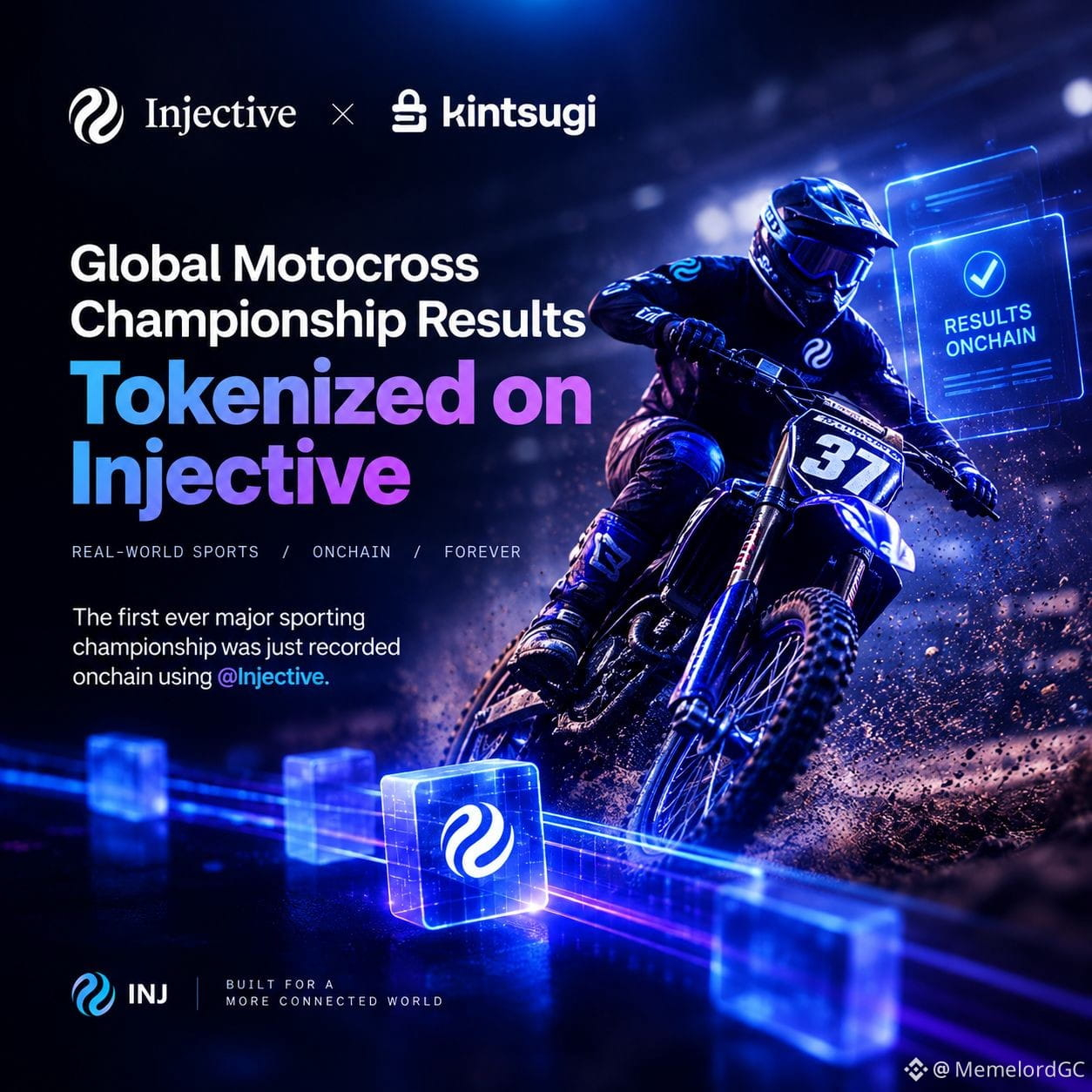
A major sports event outcome has been captured onchain directly for the first time with @Injective .
Kintsugi is running a pilot in which results from a big international motocross event were recorded on the Injective ledger.
Consider what this really implies, firstly a real life sporting event occurs, and secondly the output is generated and captured directly onchain on injective.
The advantage of this is that the information is not stored in a database, website or document that is controlled by one organization, but can be stored and recorded on a public blockchain.
This presents some intriguing scenarios.
The data from sports can turn into verifiable infrastructure that different applications can develop on. Consider fan experiences, prediction markets, collectibles, betting platforms, analytics and other applications that require accurate event data.
But here's the key: This isn't solely limited to motocross.
More of a demonstration of how @Injective can link real world information with programmable financial infrastructure.
This race took place in the real world.
This result now appears onchain.
That's the bridge from the real world to the blockchain infrastructure and that is something I'll be watching closely.
$INJ continues to explore innovative solutions to bring real world activity onchain.
And this is just the start. 🥷
#InjectiveCoin #RWA板块涨势强劲 #blockchain #Layer1
$INJ simply jumped into a whole new conversation.
A major sports event outcome has been captured onchain directly for the first time with @Injective .
Kintsugi is running a pilot in which results from a big international motocross event were recorded on the Injective ledger.
Consider what this really implies, firstly a real life sporting event occurs, and secondly the output is generated and captured directly onchain on injective.
The advantage of this is that the information is not stored in a database, website or document that is controlled by one organization, but can be stored and recorded on a public blockchain.
This presents some intriguing scenarios.
The data from sports can turn into verifiable infrastructure that different applications can develop on. Consider fan experiences, prediction markets, collectibles, betting platforms, analytics and other applications that require accurate event data.
But here's the key: This isn't solely limited to motocross.
More of a demonstration of how @Injective can link real world information with programmable financial infrastructure.
This race took place in the real world.
This result now appears onchain.
That's the bridge from the real world to the blockchain infrastructure and that is something I'll be watching closely.
$INJ continues to explore innovative solutions to bring real world activity onchain.
And this is just the start. 🥷
#InjectiveCoin #RWA板块涨势强劲 #blockchain #Layer1
A major sports event outcome has been captured onchain directly for the first time with @Injective .
Kintsugi is running a pilot in which results from a big international motocross event were recorded on the Injective ledger.
Consider what this really implies, firstly a real life sporting event occurs, and secondly the output is generated and captured directly onchain on injective.
The advantage of this is that the information is not stored in a database, website or document that is controlled by one organization, but can be stored and recorded on a public blockchain.
This presents some intriguing scenarios.
The data from sports can turn into verifiable infrastructure that different applications can develop on. Consider fan experiences, prediction markets, collectibles, betting platforms, analytics and other applications that require accurate event data.
But here's the key: This isn't solely limited to motocross.
More of a demonstration of how @Injective can link real world information with programmable financial infrastructure.
This race took place in the real world.
This result now appears onchain.
That's the bridge from the real world to the blockchain infrastructure and that is something I'll be watching closely.
$INJ continues to explore innovative solutions to bring real world activity onchain.
And this is just the start. 🥷
#InjectiveCoin #RWA板块涨势强劲 #blockchain #Layer1
3
454
🌐 #blockchain IS GOING MAINSTREAM
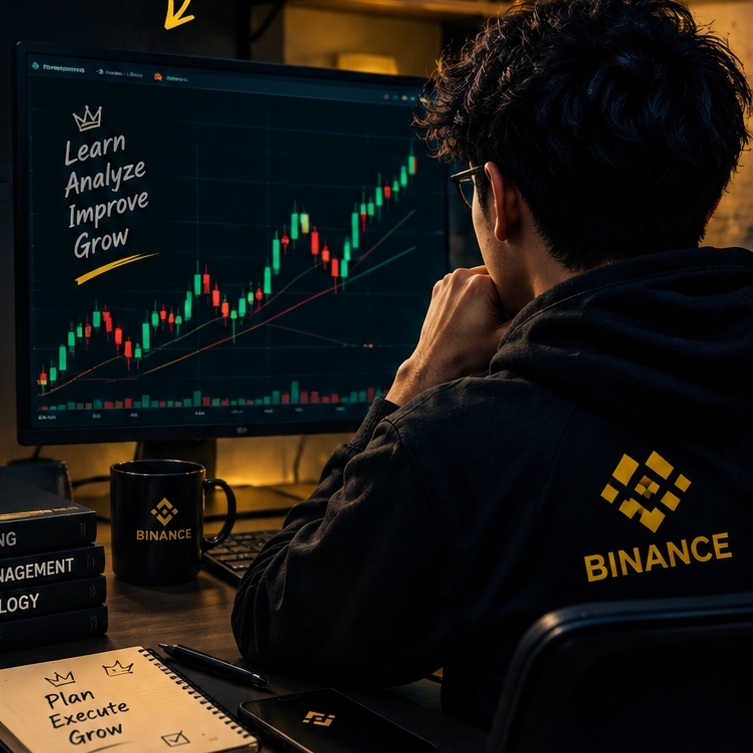
The ECB has launched Pontes, a system that connects blockchain-based financial markets with central-bank money for settling tokenised assets.
This shows how blockchain is expanding beyond crypto into traditional financial infrastructure.
#blockchain #Tokenization #Crypto #RWA #Web3 #BinanceSquare
🌐 #blockchain IS GOING MAINSTREAM
The ECB has launched Pontes, a system that connects blockchain-based financial markets with central-bank money for settling tokenised assets.
This shows how blockchain is expanding beyond crypto into traditional financial infrastructure.
#blockchain #Tokenization #Crypto #RWA #Web3 #BinanceSquare
The ECB has launched Pontes, a system that connects blockchain-based financial markets with central-bank money for settling tokenised assets.
This shows how blockchain is expanding beyond crypto into traditional financial infrastructure.
#blockchain #Tokenization #Crypto #RWA #Web3 #BinanceSquare
Cyrpto-AchiveTargets:
https://app.binance.com/uni-qr/cvid/370468267099709?r=H3HKB117&l=en&uco=WgwumFY_C3VQycpjSQfuMQ&uc=app_square_share_link&us=copylink
1
1
126
·
--
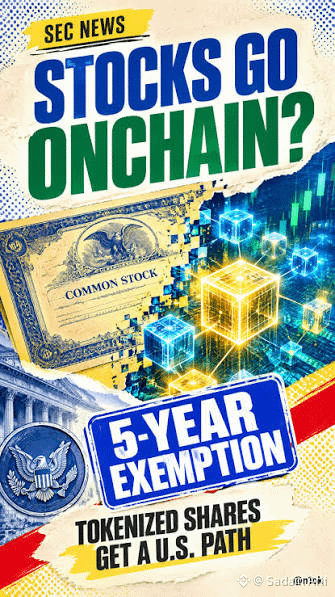
🚨 Are stocks going on-chain?
The NYSE and Blockchain.com have signed an agreement to look into making tokenized U.S. Stocks and ETFs available.
The platform they’re planning could offer:
• Trading anytime, 24 hours a day seven days a week
• Buying shares
• Funding with stablecoins
• Settlement that happens directly on the blockchain
This service isn’t live yet. It still needs approval, from regulators.
Would you trade stocks through a crypto platform?
#crypto #blockchain #Tokenization #NYSE
🚨 Are stocks going on-chain?
The NYSE and Blockchain.com have signed an agreement to look into making tokenized U.S. Stocks and ETFs available.
The platform they’re planning could offer:
• Trading anytime, 24 hours a day seven days a week
• Buying shares
• Funding with stablecoins
• Settlement that happens directly on the blockchain
This service isn’t live yet. It still needs approval, from regulators.
Would you trade stocks through a crypto platform?
#crypto #blockchain #Tokenization #NYSE
The NYSE and Blockchain.com have signed an agreement to look into making tokenized U.S. Stocks and ETFs available.
The platform they’re planning could offer:
• Trading anytime, 24 hours a day seven days a week
• Buying shares
• Funding with stablecoins
• Settlement that happens directly on the blockchain
This service isn’t live yet. It still needs approval, from regulators.
Would you trade stocks through a crypto platform?
#crypto #blockchain #Tokenization #NYSE
35

·
--
🚨 STOCKS ARE MOVING ON-CHAIN! 🏦⛓️
Blockchain.com and the NYSE have announced plans that could give users access to tokenized U.S. stocks and ETFs through NYSE's planned digital platform.
⚡ Potential 24/7 trading
🪙 Stablecoin funding
📊 Fractional ownership
⛓️ On-chain settlement
The service isn't live yet and still depends on regulatory approvals.
🔥 Traditional finance + blockchain = a major trend to watch.
#Tokenization #NYSE #blockchain #CryptoNewss #Web3 #RWA #DeFi #BinanceSquare #Stocks #Crypto
🚨 STOCKS ARE MOVING ON-CHAIN! 🏦⛓️
Blockchain.com and the NYSE have announced plans that could give users access to tokenized U.S. stocks and ETFs through NYSE's planned digital platform.
⚡ Potential 24/7 trading
🪙 Stablecoin funding
📊 Fractional ownership
⛓️ On-chain settlement
The service isn't live yet and still depends on regulatory approvals.
🔥 Traditional finance + blockchain = a major trend to watch.
#Tokenization #NYSE #blockchain #CryptoNewss #Web3 #RWA #DeFi #BinanceSquare #Stocks #Crypto
Blockchain.com and the NYSE have announced plans that could give users access to tokenized U.S. stocks and ETFs through NYSE's planned digital platform.
⚡ Potential 24/7 trading
🪙 Stablecoin funding
📊 Fractional ownership
⛓️ On-chain settlement
The service isn't live yet and still depends on regulatory approvals.
🔥 Traditional finance + blockchain = a major trend to watch.
#Tokenization #NYSE #blockchain #CryptoNewss #Web3 #RWA #DeFi #BinanceSquare #Stocks #Crypto
11

🚨 JUST IN: BLACKROCK PARTNERS WITH $ONDO DO TO LAUNCH TOKENIZED INVESTMENT PORTFOLIOS.
One of the world’s largest asset managers is pushing deeper into tokenized finance.
BlackRock + Ondo means traditional investment products are increasingly being brought onto blockchain rails.
The bigger story isn’t just $ONDO.
It’s what this could mean for the entire financial system.
Imagine investment portfolios represented as blockchain-based tokens — designed to make ownership, transfer and settlement more digital and potentially more efficient.
Wall Street isn’t waiting for crypto to replace traditional finance.
It’s building traditional finance onchain.
And if major asset managers continue moving real-world assets onto blockchain networks, tokenization could become one of crypto’s biggest long-term use cases.
The financial system is slowly moving onchain.
#Crypto #BlackRock #ONDO #Tokenization #Blockchain
🚨 JUST IN: BLACKROCK PARTNERS WITH $ONDO DO TO LAUNCH TOKENIZED INVESTMENT PORTFOLIOS.
One of the world’s largest asset managers is pushing deeper into tokenized finance.
BlackRock + Ondo means traditional investment products are increasingly being brought onto blockchain rails.
The bigger story isn’t just $ONDO .
It’s what this could mean for the entire financial system.
Imagine investment portfolios represented as blockchain-based tokens — designed to make ownership, transfer and settlement more digital and potentially more efficient.
Wall Street isn’t waiting for crypto to replace traditional finance.
It’s building traditional finance onchain.
And if major asset managers continue moving real-world assets onto blockchain networks, tokenization could become one of crypto’s biggest long-term use cases.
The financial system is slowly moving onchain.
#Crypto #BlackRock #ONDO #Tokenization #Blockchain
One of the world’s largest asset managers is pushing deeper into tokenized finance.
BlackRock + Ondo means traditional investment products are increasingly being brought onto blockchain rails.
The bigger story isn’t just $ONDO .
It’s what this could mean for the entire financial system.
Imagine investment portfolios represented as blockchain-based tokens — designed to make ownership, transfer and settlement more digital and potentially more efficient.
Wall Street isn’t waiting for crypto to replace traditional finance.
It’s building traditional finance onchain.
And if major asset managers continue moving real-world assets onto blockchain networks, tokenization could become one of crypto’s biggest long-term use cases.
The financial system is slowly moving onchain.
#Crypto #BlackRock #ONDO #Tokenization #Blockchain


1
180

·
--
How are cartels using crypto? Uruguay’s alleged drug lord Sebastián Marset is in the spotlight.
While his empire wasn't crypto-centric, blockchain evidence provided the ultimate paper trail for investigators tracing illicit funds.
On-chain forensic tools are proving that the ledger always remembers, making crypto a powerful weapon *against* money laundering rather than a safe haven. 🔍
#CryptoNews #Blockchain #AML
How are cartels using crypto? Uruguay’s alleged drug lord Sebastián Marset is in the spotlight.
While his empire wasn't crypto-centric, blockchain evidence provided the ultimate paper trail for investigators tracing illicit funds.
On-chain forensic tools are proving that the ledger always remembers, making crypto a powerful weapon *against* money laundering rather than a safe haven. 🔍
#CryptoNews #Blockchain #AML
While his empire wasn't crypto-centric, blockchain evidence provided the ultimate paper trail for investigators tracing illicit funds.
On-chain forensic tools are proving that the ledger always remembers, making crypto a powerful weapon *against* money laundering rather than a safe haven. 🔍
#CryptoNews #Blockchain #AML
8
·
--
Bullish
🚨 CANADA’S BIG SIX ARE GOING ON-CHAIN. 🏦⚡️
Canada’s six largest banks are exploring a tokenized deposit system to modernize payments.
Phase one?
💰 Moving tokenized deposits between financial institutions efficiently.
No, this isn’t some random DeFi project.
Traditional banks are literally experimenting with tokenized money. 👀
The financial system isn’t ignoring crypto anymore.
It’s starting to build with it. 🔥
#crypto #RWA #Stablecoins #blockchain #DeFi
{spot}(BTCUSDT)
🚨 CANADA’S BIG SIX ARE GOING ON-CHAIN. 🏦⚡️
Canada’s six largest banks are exploring a tokenized deposit system to modernize payments.
Phase one?
💰 Moving tokenized deposits between financial institutions efficiently.
No, this isn’t some random DeFi project.
Traditional banks are literally experimenting with tokenized money. 👀
The financial system isn’t ignoring crypto anymore.
It’s starting to build with it. 🔥
#crypto #RWA #Stablecoins #blockchain #DeFi
Canada’s six largest banks are exploring a tokenized deposit system to modernize payments.
Phase one?
💰 Moving tokenized deposits between financial institutions efficiently.
No, this isn’t some random DeFi project.
Traditional banks are literally experimenting with tokenized money. 👀
The financial system isn’t ignoring crypto anymore.
It’s starting to build with it. 🔥
#crypto #RWA #Stablecoins #blockchain #DeFi
90
·
--
What is Blockchain? Explained simply.
Imagine a giant ledger book, like a notebook where you write down the expenses of a group of friends. But this notebook has three superpowers:
1️⃣ It doesn’t have just one owner: All the friends in the group have an identical copy of the notebook at home.
2️⃣ It’s impossible to hack: If someone tries to erase a debt or make up that they paid, their notebook won’t match the others and the group will automatically reject it.
3️⃣ It’s permanent: What’s written there stays there forever. You can’t use white-out.
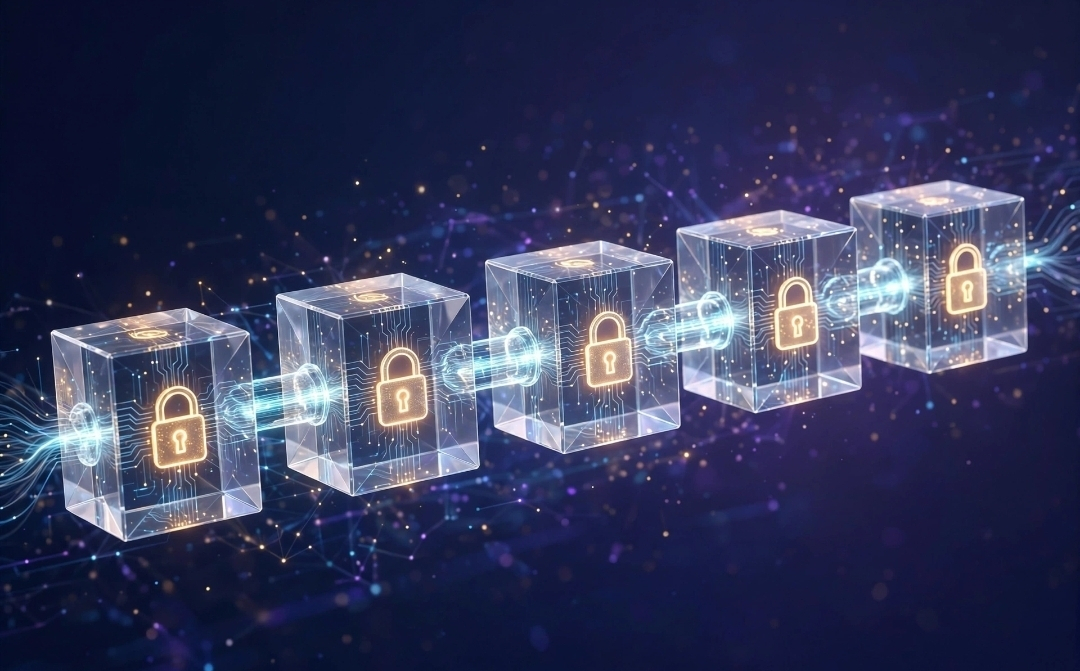
That’s exactly what Blockchain (or chain of blocks) is: a network of thousands of computers around the world that agree on recording transactions in a 100% secure, transparent way without needing a bank in the middle.
Thanks to this technology, Bitcoin, smart contracts, and all the ecosystem we know today were born.
That’s blockchain! A secure, transparent, and decentralized technology.
💬 How would you explain it to a beginner? I’d love to hear from you below! 👇
#Blockchain #EducacionCripto #Principiantes $BTC $BNB
{spot}(BNBUSDT)
{spot}(BTCUSDT)
What is Blockchain? Explained simply.
Imagine a giant ledger book, like a notebook where you write down the expenses of a group of friends. But this notebook has three superpowers:
1️⃣ It doesn’t have just one owner: All the friends in the group have an identical copy of the notebook at home.
2️⃣ It’s impossible to hack: If someone tries to erase a debt or make up that they paid, their notebook won’t match the others and the group will automatically reject it.
3️⃣ It’s permanent: What’s written there stays there forever. You can’t use white-out.
That’s exactly what Blockchain (or chain of blocks) is: a network of thousands of computers around the world that agree on recording transactions in a 100% secure, transparent way without needing a bank in the middle.
Thanks to this technology, Bitcoin, smart contracts, and all the ecosystem we know today were born.
That’s blockchain! A secure, transparent, and decentralized technology.
💬 How would you explain it to a beginner? I’d love to hear from you below! 👇
#Blockchain #EducacionCripto #Principiantes $BTC $BNB
Imagine a giant ledger book, like a notebook where you write down the expenses of a group of friends. But this notebook has three superpowers:
1️⃣ It doesn’t have just one owner: All the friends in the group have an identical copy of the notebook at home.
2️⃣ It’s impossible to hack: If someone tries to erase a debt or make up that they paid, their notebook won’t match the others and the group will automatically reject it.
3️⃣ It’s permanent: What’s written there stays there forever. You can’t use white-out.
That’s exactly what Blockchain (or chain of blocks) is: a network of thousands of computers around the world that agree on recording transactions in a 100% secure, transparent way without needing a bank in the middle.
Thanks to this technology, Bitcoin, smart contracts, and all the ecosystem we know today were born.
That’s blockchain! A secure, transparent, and decentralized technology.
💬 How would you explain it to a beginner? I’d love to hear from you below! 👇
#Blockchain #EducacionCripto #Principiantes $BTC $BNB
126

·
--
Bullish
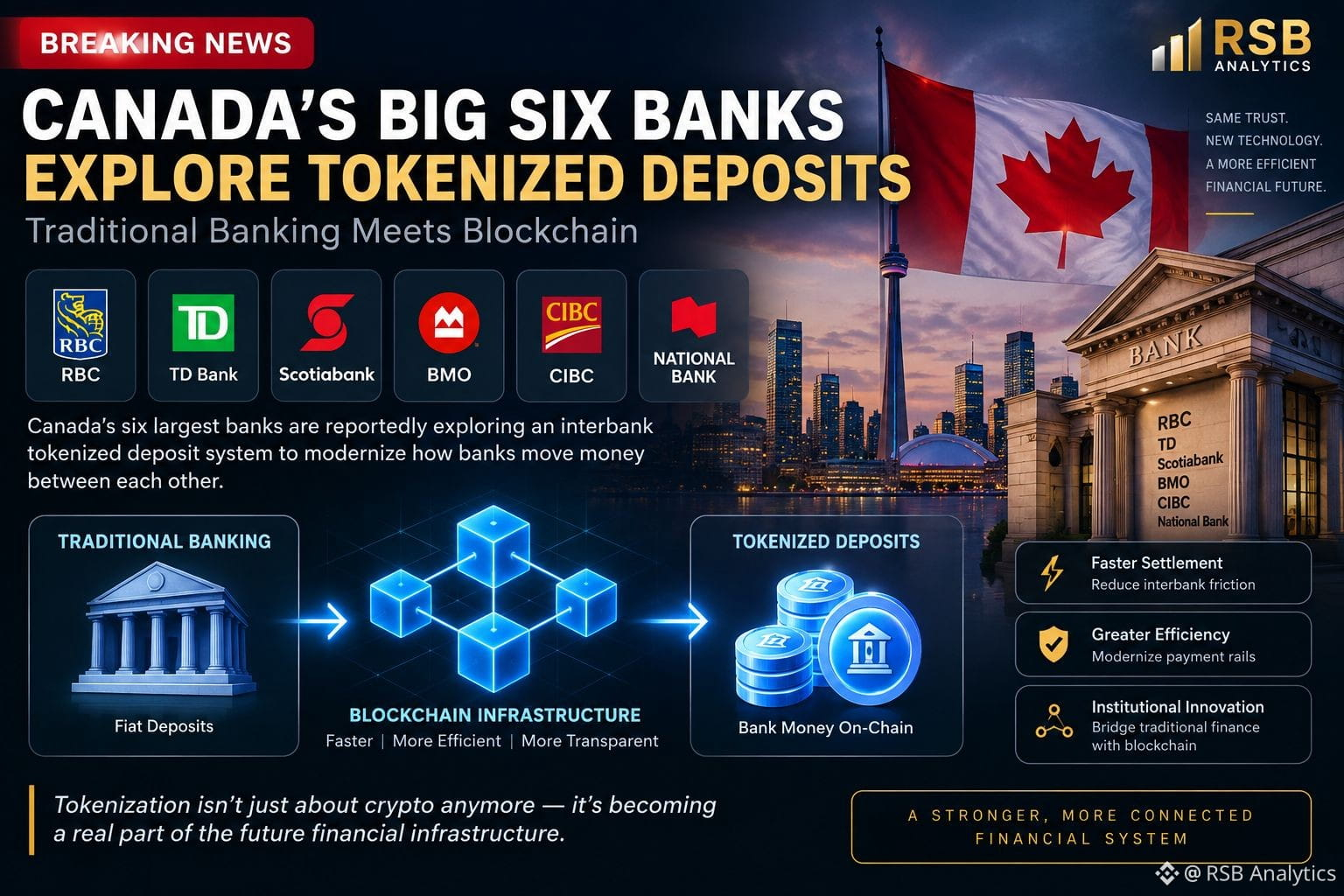
Canada's Big Six Banks Are Moving Toward Tokenized Deposits
Canada's six largest banks are reportedly exploring an interbank tokenized deposit system designed to modernize how banks move money between each other.
This is interesting because tokenization isn't just about cryptocurrencies anymore. Traditional financial institutions are increasingly experimenting with blockchain-based infrastructure for settlement and payments.
Tokenized deposits could potentially allow banks to represent traditional commercial-bank money on blockchain networks while maintaining the connection to the existing banking system.
The bigger question is how this technology develops alongside stablecoins and other forms of digital money. If banks can use blockchain rails for institutional settlement, we could see more traditional financial activity gradually moving on-chain.
This is one of the areas I'll be watching closely: not just crypto prices, but how traditional finance is adopting blockchain infrastructure.
Are tokenized bank deposits the next major step for institutional blockchain adoption?
#CryptoNews #Blockchain #Tokenization #Banking #DigitalAssets
Canada's Big Six Banks Are Moving Toward Tokenized Deposits
Canada's six largest banks are reportedly exploring an interbank tokenized deposit system designed to modernize how banks move money between each other.
This is interesting because tokenization isn't just about cryptocurrencies anymore. Traditional financial institutions are increasingly experimenting with blockchain-based infrastructure for settlement and payments.
Tokenized deposits could potentially allow banks to represent traditional commercial-bank money on blockchain networks while maintaining the connection to the existing banking system.
The bigger question is how this technology develops alongside stablecoins and other forms of digital money. If banks can use blockchain rails for institutional settlement, we could see more traditional financial activity gradually moving on-chain.
This is one of the areas I'll be watching closely: not just crypto prices, but how traditional finance is adopting blockchain infrastructure.
Are tokenized bank deposits the next major step for institutional blockchain adoption?
#CryptoNews #Blockchain #Tokenization #Banking #DigitalAssets
Canada's six largest banks are reportedly exploring an interbank tokenized deposit system designed to modernize how banks move money between each other.
This is interesting because tokenization isn't just about cryptocurrencies anymore. Traditional financial institutions are increasingly experimenting with blockchain-based infrastructure for settlement and payments.
Tokenized deposits could potentially allow banks to represent traditional commercial-bank money on blockchain networks while maintaining the connection to the existing banking system.
The bigger question is how this technology develops alongside stablecoins and other forms of digital money. If banks can use blockchain rails for institutional settlement, we could see more traditional financial activity gradually moving on-chain.
This is one of the areas I'll be watching closely: not just crypto prices, but how traditional finance is adopting blockchain infrastructure.
Are tokenized bank deposits the next major step for institutional blockchain adoption?
#CryptoNews #Blockchain #Tokenization #Banking #DigitalAssets
1
62

·
--
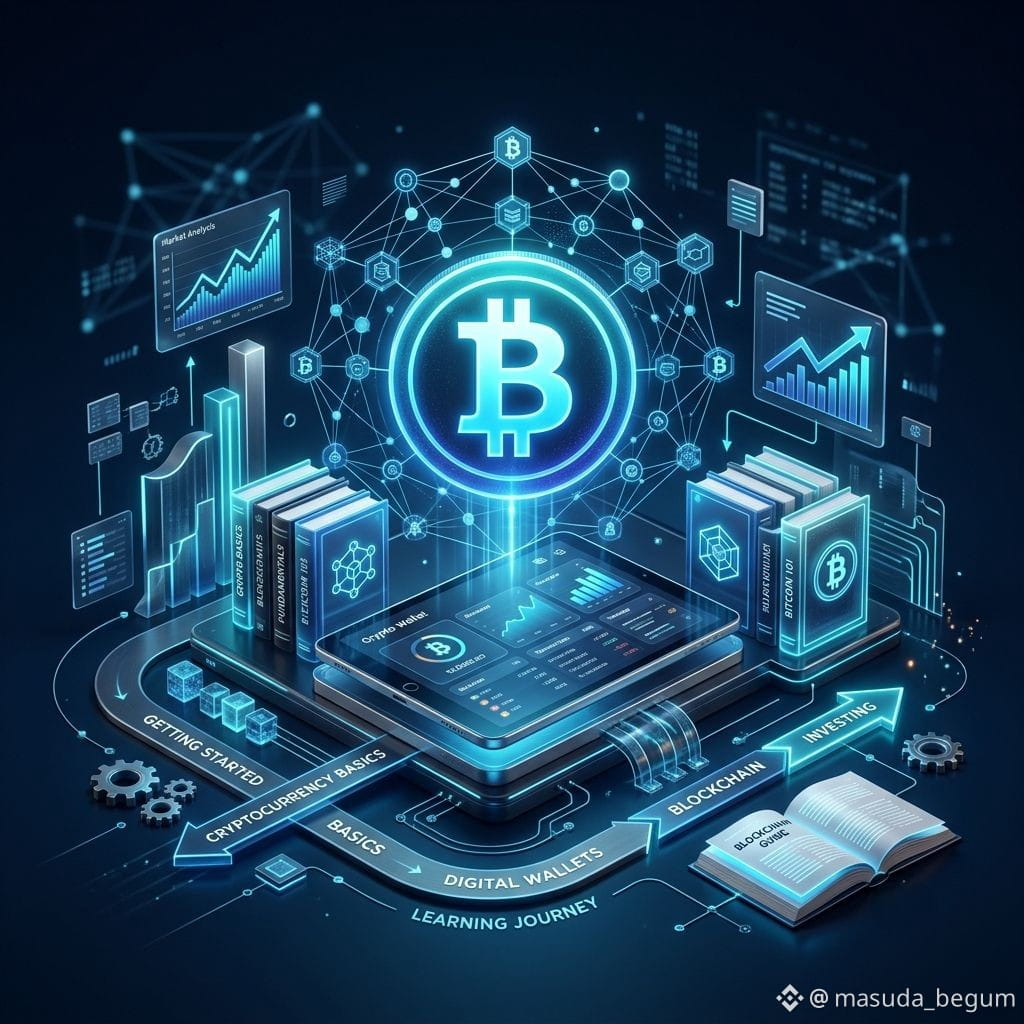
New to crypto? Don’t rush into trading. 🚀
Start with the basics:
• What is #Bitcoin ?
• How does blockchain work?
• What is a crypto wallet?
• What is spot trading?
• Why is risk management important?
The crypto market can move quickly, so knowledge should come before money.
Learn first. Trade later.
What was the first crypto topic you learned?
#Binance #Crypto #Blockchain
New to crypto? Don’t rush into trading. 🚀
Start with the basics:
• What is #Bitcoin ?
• How does blockchain work?
• What is a crypto wallet?
• What is spot trading?
• Why is risk management important?
The crypto market can move quickly, so knowledge should come before money.
Learn first. Trade later.
What was the first crypto topic you learned?
#Binance #Crypto #Blockchain
Start with the basics:
• What is #Bitcoin ?
• How does blockchain work?
• What is a crypto wallet?
• What is spot trading?
• Why is risk management important?
The crypto market can move quickly, so knowledge should come before money.
Learn first. Trade later.
What was the first crypto topic you learned?
#Binance #Crypto #Blockchain
97
·
--
Bullish
The biggest banks in Canada are quietly changing how money moves.
Not Bitcoin.
Not stablecoins.
Bank deposits.
Canada’s six largest banks are exploring tokenized Canadian-dollar deposits, with the first phase focused on moving them between financial institutions.
The interesting part isn’t the word “crypto.”
It’s that traditional bank money is starting to get a digital layer that can move on tokenized infrastructure.
The financial system may not need to become crypto.
It may simply start using some of the technology underneath it.
$BTC $ETH #Crypto #blockchain #Tokenization
The biggest banks in Canada are quietly changing how money moves.
Not Bitcoin.
Not stablecoins.
Bank deposits.
Canada’s six largest banks are exploring tokenized Canadian-dollar deposits, with the first phase focused on moving them between financial institutions.
The interesting part isn’t the word “crypto.”
It’s that traditional bank money is starting to get a digital layer that can move on tokenized infrastructure.
The financial system may not need to become crypto.
It may simply start using some of the technology underneath it.
$BTC $ETH #Crypto #blockchain #Tokenization
Not Bitcoin.
Not stablecoins.
Bank deposits.
Canada’s six largest banks are exploring tokenized Canadian-dollar deposits, with the first phase focused on moving them between financial institutions.
The interesting part isn’t the word “crypto.”
It’s that traditional bank money is starting to get a digital layer that can move on tokenized infrastructure.
The financial system may not need to become crypto.
It may simply start using some of the technology underneath it.
$BTC $ETH #Crypto #blockchain #Tokenization
108

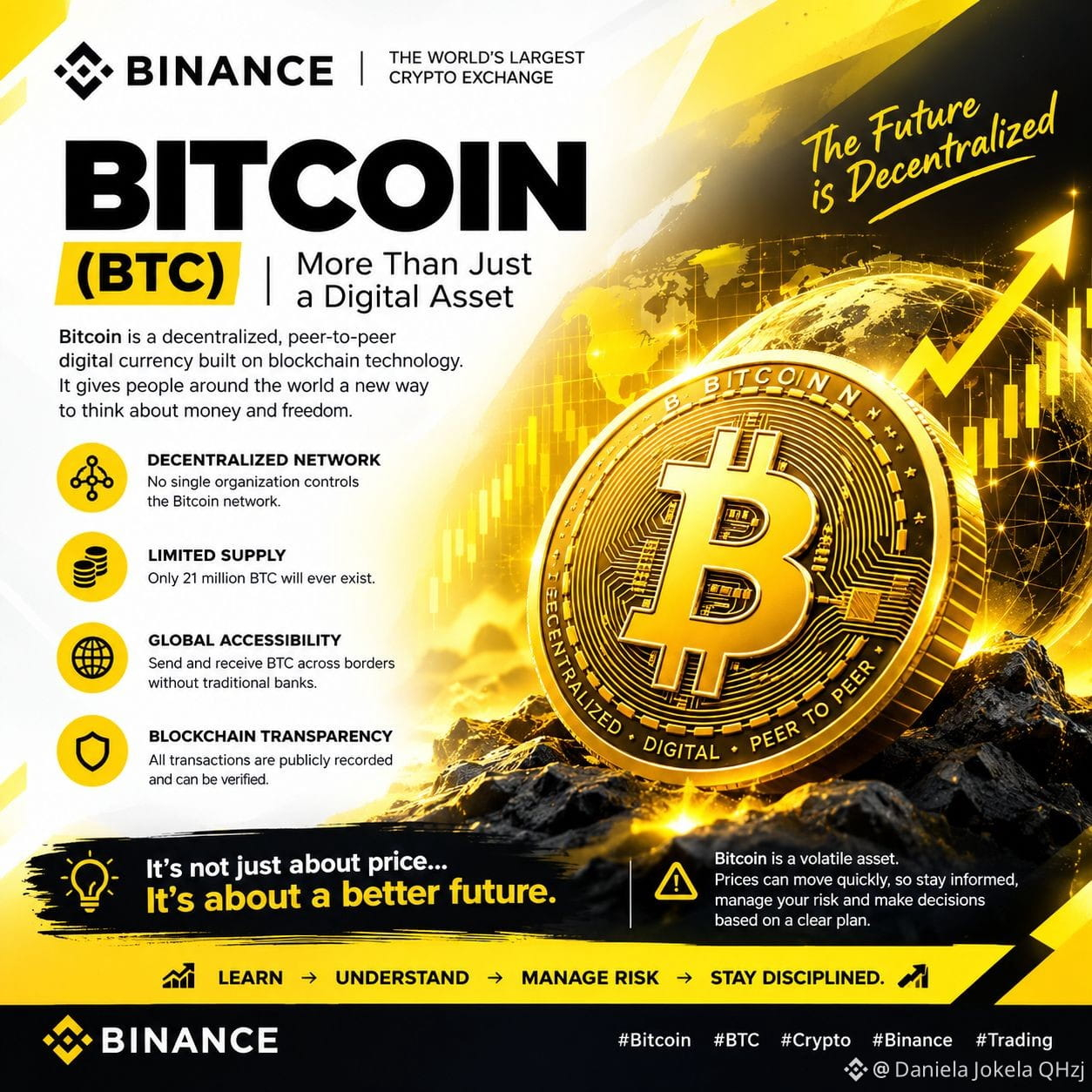
Bitcoin (BTC) — More Than Just a Digital Asset ₿
Bitcoin is more than a digital currency. It represents a different approach to money—one built on decentralized, peer-to-peer technology rather than a central authority. Transactions are recorded on a public blockchain, allowing the network to operate transparently.
What makes Bitcoin unique?
🔹 Decentralized Network — No single organization controls the Bitcoin network.
🔹 Limited Supply — Bitcoin is designed with a maximum supply of 21 million BTC.
🔹 Global Accessibility — Bitcoin can be transferred across borders without relying on traditional banking rails.
🔹 Blockchain Transparency — Transactions are publicly recorded and can be independently verified.
But Bitcoin is also a highly volatile asset. Its price can move significantly in a short period, so understanding the market and managing risk are important.
Learn → Understand → Manage Risk → Stay Disciplined. 📈
#Bitcoin❗ #BTC #Crypto #Blockchain #TradingSignals
$BTC
Bitcoin (BTC) — More Than Just a Digital Asset ₿
Bitcoin is more than a digital currency. It represents a different approach to money—one built on decentralized, peer-to-peer technology rather than a central authority. Transactions are recorded on a public blockchain, allowing the network to operate transparently.
What makes Bitcoin unique?
🔹 Decentralized Network — No single organization controls the Bitcoin network.
🔹 Limited Supply — Bitcoin is designed with a maximum supply of 21 million BTC.
🔹 Global Accessibility — Bitcoin can be transferred across borders without relying on traditional banking rails.
🔹 Blockchain Transparency — Transactions are publicly recorded and can be independently verified.
But Bitcoin is also a highly volatile asset. Its price can move significantly in a short period, so understanding the market and managing risk are important.
Learn → Understand → Manage Risk → Stay Disciplined. 📈
#Bitcoin❗ #BTC #Crypto #Blockchain #TradingSignals
$BTC
Bitcoin is more than a digital currency. It represents a different approach to money—one built on decentralized, peer-to-peer technology rather than a central authority. Transactions are recorded on a public blockchain, allowing the network to operate transparently.
What makes Bitcoin unique?
🔹 Decentralized Network — No single organization controls the Bitcoin network.
🔹 Limited Supply — Bitcoin is designed with a maximum supply of 21 million BTC.
🔹 Global Accessibility — Bitcoin can be transferred across borders without relying on traditional banking rails.
🔹 Blockchain Transparency — Transactions are publicly recorded and can be independently verified.
But Bitcoin is also a highly volatile asset. Its price can move significantly in a short period, so understanding the market and managing risk are important.
Learn → Understand → Manage Risk → Stay Disciplined. 📈
#Bitcoin❗ #BTC #Crypto #Blockchain #TradingSignals
$BTC
64

·
--
What is Blockchain?
Blockchain is a decentralized digital ledger that records transactions in a secure and transparent way. Transactions are grouped into blocks, and each block is connected to the previous one, creating a chain.
In simple words:
Blockchain is like a shared digital record book that many computers maintain together, making the stored information difficult to change or manipulate.#AIStocksWhatNext #DogecoinRises15% #BNBMarketCapPassesBNYMellon #blockchain
What is Blockchain?
Blockchain is a decentralized digital ledger that records transactions in a secure and transparent way. Transactions are grouped into blocks, and each block is connected to the previous one, creating a chain.
In simple words:
Blockchain is like a shared digital record book that many computers maintain together, making the stored information difficult to change or manipulate.#AIStocksWhatNext #DogecoinRises15% #BNBMarketCapPassesBNYMellon #blockchain
Blockchain is a decentralized digital ledger that records transactions in a secure and transparent way. Transactions are grouped into blocks, and each block is connected to the previous one, creating a chain.
In simple words:
Blockchain is like a shared digital record book that many computers maintain together, making the stored information difficult to change or manipulate.#AIStocksWhatNext #DogecoinRises15% #BNBMarketCapPassesBNYMellon #blockchain
22

🚨 IBM launches SWIFT token deposit BETA link 🧠
📊 | $BTC | $ETH | $BNB |
- Please follow, like, and share your thoughts in the comments—let’s discuss together 📈
- IBM has released a Beta link for tokenized deposits on the Swift ledger, supporting 24/7 transfers.
- The link allows banks to issue tokenized deposit instructions using existing payment information and compliance processes.
- This feature is built on Swift’s distributed ledger technology, aiming to improve cross-border payment efficiency. 🔥
- The market expects this move may weaken demand for traditional deposits and put downward pressure on related bank stocks in the short term.
- If whale institutions begin allocating or accumulating at low points, it could intensify price volatility and trigger panic selling.
- In the near term, bearish sentiment may persist unless there is regulatory support or strong large-scale buying.
- How do you think IBM’s innovation will affect mainstream adoption of crypto assets?
- Welcome to follow us and leave a comment with your views—let’s gain insights into market trends together.
#Crypto #Blockchain #Whales #Banking #Swift
🚨 IBM launches SWIFT token deposit BETA link 🧠
📊 | $BTC | $ETH | $BNB |
- Please follow, like, and share your thoughts in the comments—let’s discuss together 📈
- IBM has released a Beta link for tokenized deposits on the Swift ledger, supporting 24/7 transfers.
- The link allows banks to issue tokenized deposit instructions using existing payment information and compliance processes.
- This feature is built on Swift’s distributed ledger technology, aiming to improve cross-border payment efficiency. 🔥
- The market expects this move may weaken demand for traditional deposits and put downward pressure on related bank stocks in the short term.
- If whale institutions begin allocating or accumulating at low points, it could intensify price volatility and trigger panic selling.
- In the near term, bearish sentiment may persist unless there is regulatory support or strong large-scale buying.
- How do you think IBM’s innovation will affect mainstream adoption of crypto assets?
- Welcome to follow us and leave a comment with your views—let’s gain insights into market trends together.
#Crypto #Blockchain #Whales #Banking #Swift
📊 | $BTC | $ETH | $BNB |
- Please follow, like, and share your thoughts in the comments—let’s discuss together 📈
- IBM has released a Beta link for tokenized deposits on the Swift ledger, supporting 24/7 transfers.
- The link allows banks to issue tokenized deposit instructions using existing payment information and compliance processes.
- This feature is built on Swift’s distributed ledger technology, aiming to improve cross-border payment efficiency. 🔥
- The market expects this move may weaken demand for traditional deposits and put downward pressure on related bank stocks in the short term.
- If whale institutions begin allocating or accumulating at low points, it could intensify price volatility and trigger panic selling.
- In the near term, bearish sentiment may persist unless there is regulatory support or strong large-scale buying.
- How do you think IBM’s innovation will affect mainstream adoption of crypto assets?
- Welcome to follow us and leave a comment with your views—let’s gain insights into market trends together.
#Crypto #Blockchain #Whales #Banking #Swift
315

·
--
Bullish
🚨 BREAKING: Canada's six biggest banks are testing tokenized deposits for 24/7 blockchain-based payments.
The trial is exploring blockchain-based systems that would let payments run around the clock, any day of the week.
#Canada #blockchain #CanadaCrypto
🚨 BREAKING: Canada's six biggest banks are testing tokenized deposits for 24/7 blockchain-based payments.
The trial is exploring blockchain-based systems that would let payments run around the clock, any day of the week.
#Canada #blockchain #CanadaCrypto
The trial is exploring blockchain-based systems that would let payments run around the clock, any day of the week.
#Canada #blockchain #CanadaCrypto

24
Log in to explore more content
Join global crypto users on Binance Square
⚡️ Get latest and useful information about crypto.
💬 Trusted by the world’s largest crypto exchange.
👍 Discover real insights from verified creators.
Email / Phone number
Trending Topics
1
#CircleMints500MUSDCOnSolana
138,989 views
2,572 Discussing
2
#PolymarketBankFailureBetsDrawFDICConcern
124,500 views
2,107 Discussing
3
#BlackRockBuildsTokenizedPortfoliosForOndo
120,396 views
1,513 Discussing
4
#BitwiseFilesToListNEARETFOnNYSEArca
83,698 views
1,192 Discussing
5
#SECCommissionerPeirceToLeaveOct2
90,744 views
977 Discussing
6
#SECSaysBuybacksUpgradesDontMakeTokenSecurity
69,060 views
688 Discussing
7
#StrategyProposesDailyDividendsForPreferreds
18,557 views
259 Discussing
8
#CircleTetherFreezeBitgetHackerWallet
16,653 views
157 Discussing
9
#CoinMarketCapCompletesCoinglassAcquisition
19,107 views
215 Discussing
10
#QNTRises39%
134,186 views
1,765 Discussing