
Hitmans Lounge
6.2k Posts

Hitmans Lounge
Report
Block User
X: @hitmans_lounge | 5.5 Yrs Experience in Trading Financial Markets | Technical Analysis | Digital Marketing | Community Management | Crypto Native
Open Trade
Frequent Trader
5.6 Years
441 Following
26.0K+ Followers
19.4K+ Liked
Posts
Portfolio
All
Quotes
Live
The CLARITY Act is closer to becoming law than ever — and the momentum is REAL 🇺🇸🚀
This isn't a new proposal anymore. The House already passed it 294-134 back in July 2025 — the most bipartisan crypto vote in US history.
Senate Banking Committee voted 15-9 to advance it in May 2026. Galaxy Research currently puts passage odds at 75% this year 👀
Here's why this WILL cross the finish line 👇
✅ The White House itself set a July 4, 2026 target for the President to sign it into law — political pressure from the top is real
✅ White House crypto advisor Patrick Witt confirmed CLARITY Act passage would give the crypto industry roughly 90% of what it needs — this isn't half-measures
✅ More than 70 Democrats crossed over in the House vote — this is bipartisan in action, not just in theory
✅ The bill formally ends regulation by enforcement — drawing a clean line between SEC jurisdiction and CFTC jurisdiction — no more legal grey zones killing innovation
Yes, there are hurdles — stablecoin yield disputes and ethics concerns are real. But the fundamentals are too strong to ignore. Clarity is coming. ⚡
#CLARITYAct #CryptoRegulation #Senate #ClarityActFacesProceduralVoteSept15 #RevolutConfirmsFakeGovEmailDataBreach
$LSK $REZ $KOMA
{future}(KOMAUSDT)
{future}(REZUSDT)
{future}(LSKUSDT)
Where do you think the CLARITY Act ends up?
The CLARITY Act is closer to becoming law than ever — and the momentum is REAL 🇺🇸🚀
This isn't a new proposal anymore. The House already passed it 294-134 back in July 2025 — the most bipartisan crypto vote in US history.
Senate Banking Committee voted 15-9 to advance it in May 2026. Galaxy Research currently puts passage odds at 75% this year 👀
Here's why this WILL cross the finish line 👇
✅ The White House itself set a July 4, 2026 target for the President to sign it into law — political pressure from the top is real
✅ White House crypto advisor Patrick Witt confirmed CLARITY Act passage would give the crypto industry roughly 90% of what it needs — this isn't half-measures
✅ More than 70 Democrats crossed over in the House vote — this is bipartisan in action, not just in theory
✅ The bill formally ends regulation by enforcement — drawing a clean line between SEC jurisdiction and CFTC jurisdiction — no more legal grey zones killing innovation
Yes, there are hurdles — stablecoin yield disputes and ethics concerns are real. But the fundamentals are too strong to ignore. Clarity is coming. ⚡
#CLARITYAct #CryptoRegulation #Senate #ClarityActFacesProceduralVoteSept15 #RevolutConfirmsFakeGovEmailDataBreach
$LSK $REZ $KOMA
Where do you think the CLARITY Act ends up?
This isn't a new proposal anymore. The House already passed it 294-134 back in July 2025 — the most bipartisan crypto vote in US history.
Senate Banking Committee voted 15-9 to advance it in May 2026. Galaxy Research currently puts passage odds at 75% this year 👀
Here's why this WILL cross the finish line 👇
✅ The White House itself set a July 4, 2026 target for the President to sign it into law — political pressure from the top is real
✅ White House crypto advisor Patrick Witt confirmed CLARITY Act passage would give the crypto industry roughly 90% of what it needs — this isn't half-measures
✅ More than 70 Democrats crossed over in the House vote — this is bipartisan in action, not just in theory
✅ The bill formally ends regulation by enforcement — drawing a clean line between SEC jurisdiction and CFTC jurisdiction — no more legal grey zones killing innovation
Yes, there are hurdles — stablecoin yield disputes and ethics concerns are real. But the fundamentals are too strong to ignore. Clarity is coming. ⚡
#CLARITYAct #CryptoRegulation #Senate #ClarityActFacesProceduralVoteSept15 #RevolutConfirmsFakeGovEmailDataBreach
$LSK $REZ $KOMA
Where do you think the CLARITY Act ends up?
🟢 Passes in 2026
🟡 Delayed into 2027
🔴 Blocked
21 hr(s) left
1
3.3k
·
--
Bearish
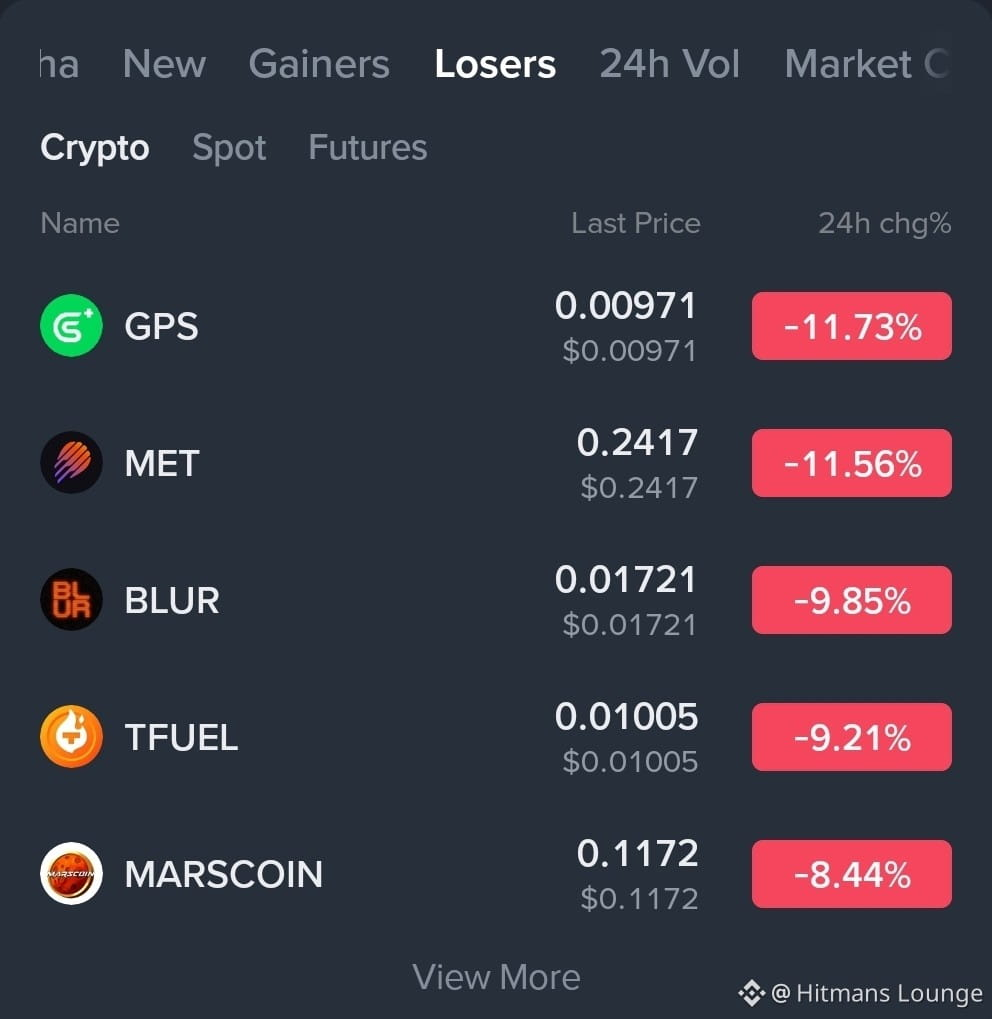
Top Losers for 12th Sep, 2026
🛰️ $GPS — GoPlus Security, a Web3 security infrastructure project providing real-time risk detection and transaction security.
🎵 $MET — Meteora is a Solana-based DeFi liquidity protocol focused on dynamic liquidity, market making, and capital-efficient trading.
🎨 $BLUR — Blur, a professional-focused NFT marketplace and aggregator built for fast trading and liquidity.
#GPS #MET #BLUR #GoPlusSecurity #Meteora
{future}(GPSUSDT)
{future}(METUSDT)
{future}(BLURUSDT)
Top Losers for 12th Sep, 2026
🛰️ $GPS — GoPlus Security, a Web3 security infrastructure project providing real-time risk detection and transaction security.
🎵 $MET — Meteora is a Solana-based DeFi liquidity protocol focused on dynamic liquidity, market making, and capital-efficient trading.
🎨 $BLUR — Blur, a professional-focused NFT marketplace and aggregator built for fast trading and liquidity.
#GPS #MET #BLUR #GoPlusSecurity #Meteora
🛰️ $GPS — GoPlus Security, a Web3 security infrastructure project providing real-time risk detection and transaction security.
🎵 $MET — Meteora is a Solana-based DeFi liquidity protocol focused on dynamic liquidity, market making, and capital-efficient trading.
🎨 $BLUR — Blur, a professional-focused NFT marketplace and aggregator built for fast trading and liquidity.
#GPS #MET #BLUR #GoPlusSecurity #Meteora
419
20
494
·
--
Bullish
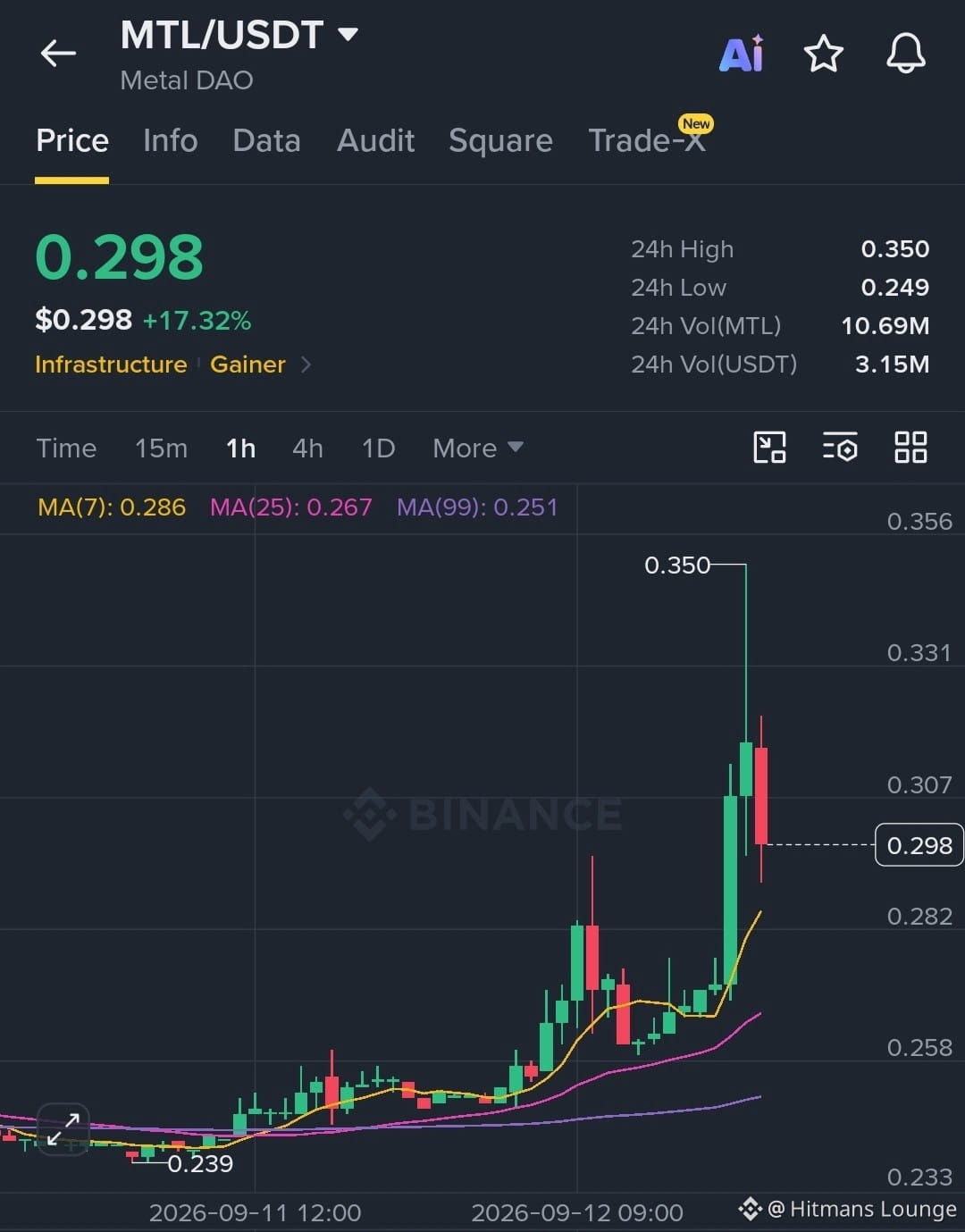
$MTL /USDT — 🟢 LONG · Conf 72%
📍 Entry: 0.2971 – 0.2989
🛑 SL: 0.2385
🎯 TP1: 0.3129
✅ TP2: 0.3238
🏆 TP3: 0.3427
All three MAs are stacked bullishly below price (MA7: 0.286, MA25: 0.267, MA99: 0.251), but the long upper wick from the 0.350 rejection is a clear sign that sellers are active — entry here is a pullback continuation bet, not a fresh breakout.
$MTL : Metal DAO is a blockchain-based payment infrastructure targeting real-world fintech use cases with its ProPay compliance layer — $3.15M 24H USDT volume on a +17.32% move signals thin liquidity, and the wick from 0.350 to current price in a single candle is a classic low-float pump signature.
With Metal DAO positioned in the regulated payments space, does its compliance-first approach give it a structural edge over competitors, or does the lack of consistent on-chain volume suggest the narrative isn't resonating with real users?
#MTL #MetalDao #web3 #compliance #EtherRalliesAsBearishBetsLiquidate
{future}(MTLUSDT)
$MTL /USDT — 🟢 LONG · Conf 72%
📍 Entry: 0.2971 – 0.2989
🛑 SL: 0.2385
🎯 TP1: 0.3129
✅ TP2: 0.3238
🏆 TP3: 0.3427
All three MAs are stacked bullishly below price (MA7: 0.286, MA25: 0.267, MA99: 0.251), but the long upper wick from the 0.350 rejection is a clear sign that sellers are active — entry here is a pullback continuation bet, not a fresh breakout.
$MTL : Metal DAO is a blockchain-based payment infrastructure targeting real-world fintech use cases with its ProPay compliance layer — $3.15M 24H USDT volume on a +17.32% move signals thin liquidity, and the wick from 0.350 to current price in a single candle is a classic low-float pump signature.
With Metal DAO positioned in the regulated payments space, does its compliance-first approach give it a structural edge over competitors, or does the lack of consistent on-chain volume suggest the narrative isn't resonating with real users?
#MTL #MetalDao #web3 #compliance #EtherRalliesAsBearishBetsLiquidate
📍 Entry: 0.2971 – 0.2989
🛑 SL: 0.2385
🎯 TP1: 0.3129
✅ TP2: 0.3238
🏆 TP3: 0.3427
All three MAs are stacked bullishly below price (MA7: 0.286, MA25: 0.267, MA99: 0.251), but the long upper wick from the 0.350 rejection is a clear sign that sellers are active — entry here is a pullback continuation bet, not a fresh breakout.
$MTL : Metal DAO is a blockchain-based payment infrastructure targeting real-world fintech use cases with its ProPay compliance layer — $3.15M 24H USDT volume on a +17.32% move signals thin liquidity, and the wick from 0.350 to current price in a single candle is a classic low-float pump signature.
With Metal DAO positioned in the regulated payments space, does its compliance-first approach give it a structural edge over competitors, or does the lack of consistent on-chain volume suggest the narrative isn't resonating with real users?
#MTL #MetalDao #web3 #compliance #EtherRalliesAsBearishBetsLiquidate

2
88
·
--
Bullish
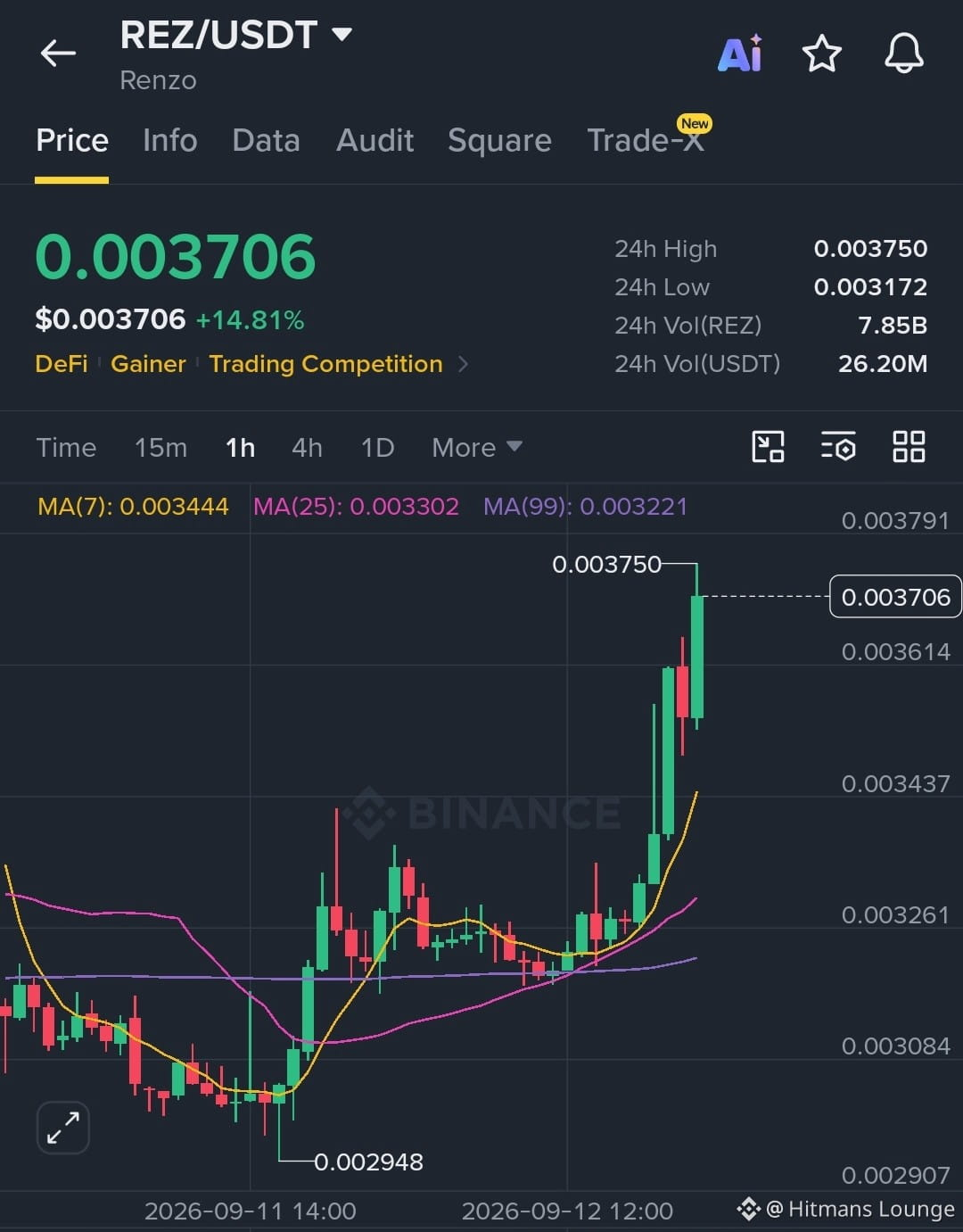
$REZ /USDT — 🟢 LONG · Conf 82%
📍 Entry: 0.0036949 – 0.0037171
🛑 SL: 0.0031900
🎯 TP1: 0.0038913
✅ TP2: 0.0040395
🏆 TP3: 0.0042619
Price is well above all three MAs (MA7: 0.003444, MA25: 0.003302, MA99: 0.003221) in a clean bullish stack after bouncing from the 0.002948 base — momentum structure is intact with no overhead resistance until 0.003750 retest.
$REZ : Renzo Protocol is a liquid restaking layer built on EigenLayer, letting users earn both staking and restaking yields simultaneously — actively running a Trading Competition on Binance which is artificially inflating short-term volume; real organic demand vs competition-driven volume is the key risk here.
Is the EigenLayer restaking narrative still strong enough to sustain REZ's price structure post-competition, or will volume collapse once the trading rewards dry up?
#REZ #Renzo #RenzoProtocol #Eigenlayer #web3
{future}(REZUSDT)
$REZ /USDT — 🟢 LONG · Conf 82%
📍 Entry: 0.0036949 – 0.0037171
🛑 SL: 0.0031900
🎯 TP1: 0.0038913
✅ TP2: 0.0040395
🏆 TP3: 0.0042619
Price is well above all three MAs (MA7: 0.003444, MA25: 0.003302, MA99: 0.003221) in a clean bullish stack after bouncing from the 0.002948 base — momentum structure is intact with no overhead resistance until 0.003750 retest.
$REZ : Renzo Protocol is a liquid restaking layer built on EigenLayer, letting users earn both staking and restaking yields simultaneously — actively running a Trading Competition on Binance which is artificially inflating short-term volume; real organic demand vs competition-driven volume is the key risk here.
Is the EigenLayer restaking narrative still strong enough to sustain REZ's price structure post-competition, or will volume collapse once the trading rewards dry up?
#REZ #Renzo #RenzoProtocol #Eigenlayer #web3
📍 Entry: 0.0036949 – 0.0037171
🛑 SL: 0.0031900
🎯 TP1: 0.0038913
✅ TP2: 0.0040395
🏆 TP3: 0.0042619
Price is well above all three MAs (MA7: 0.003444, MA25: 0.003302, MA99: 0.003221) in a clean bullish stack after bouncing from the 0.002948 base — momentum structure is intact with no overhead resistance until 0.003750 retest.
$REZ : Renzo Protocol is a liquid restaking layer built on EigenLayer, letting users earn both staking and restaking yields simultaneously — actively running a Trading Competition on Binance which is artificially inflating short-term volume; real organic demand vs competition-driven volume is the key risk here.
Is the EigenLayer restaking narrative still strong enough to sustain REZ's price structure post-competition, or will volume collapse once the trading rewards dry up?
#REZ #Renzo #RenzoProtocol #Eigenlayer #web3

1
148
·
--
Bullish
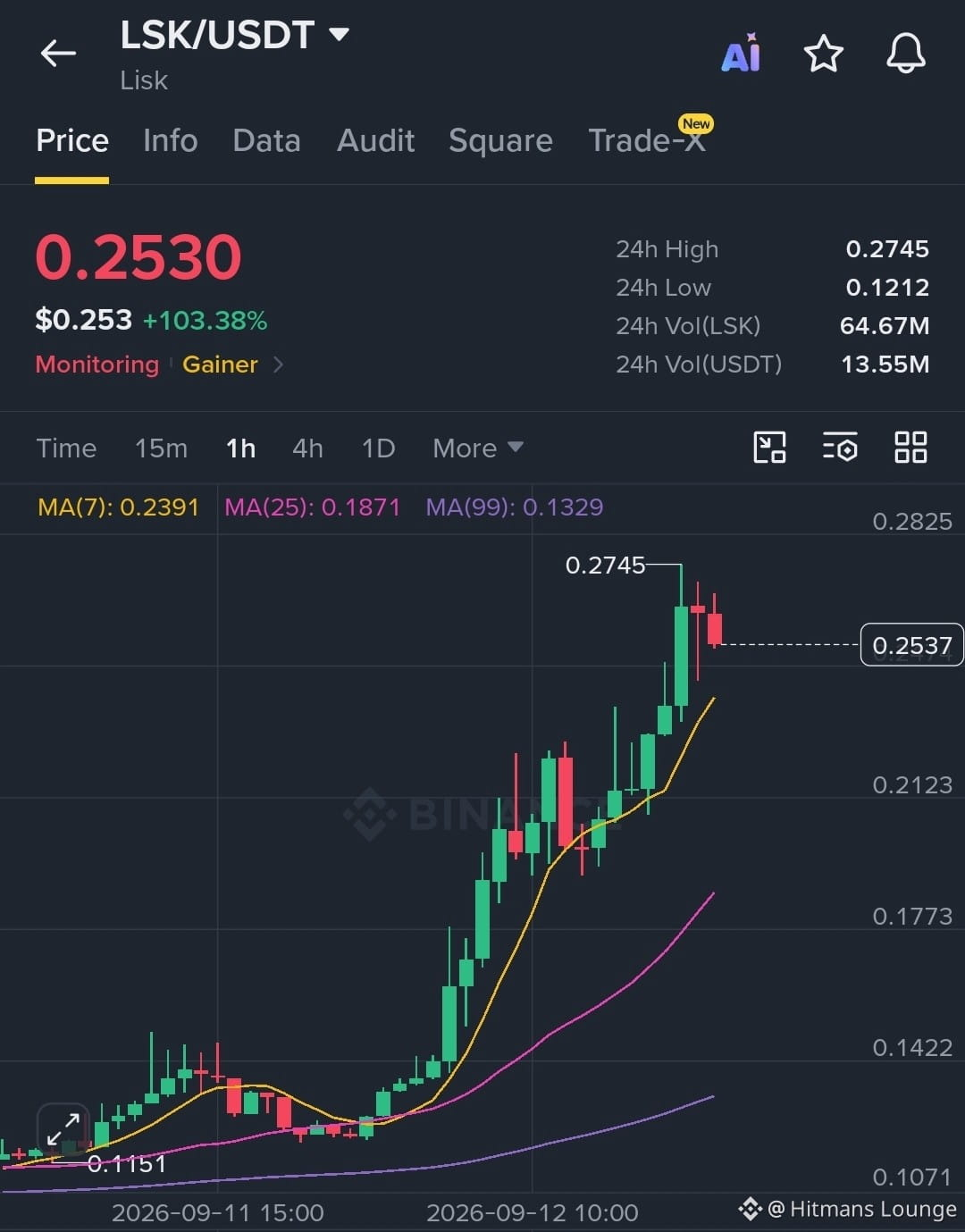
$LSK hit all the 3 TPs . Congrats guys ❤️🔥❤️🔥
{future}(LSKUSDT)
$LSK hit all the 3 TPs . Congrats guys ❤️🔥❤️🔥
Hitmans Lounge
·
--
$LSK /USDT — 🟢 LONG · Conf 75%
📍 Entry: 0.2153 – 0.2165
🛑 SL: 0.1680
🎯 TP1: 0.2267
✅ TP2: 0.2353
🏆 TP3: 0.2483
Price exploded above all MAs with MA7 (0.2008) now well below — but the rejection candle from 0.2273 on the 1H signals profit-taking is active at the highs; entry on this range is a momentum continuation bet, not a breakout entry.
$LSK : Lisk repositioned from its original sidechain model toward an Ethereum L2 using the OP Stack — +53.99% in 24H on $6.76M volume likely reflects a catalyst or listing effect rather than organic adoption growth; the migration narrative is still unproven at scale.
Lisk's pivot to an OP Stack L2 puts it in direct competition with dozens of established rollups — does rebranding an old-guard chain actually create a viable competitive moat, or is the L2 space already too saturated for a late entrant?
#LSK #Lisk #OP #EthereumL2 #CPIWatch
📍 Entry: 0.2153 – 0.2165
🛑 SL: 0.1680
🎯 TP1: 0.2267
✅ TP2: 0.2353
🏆 TP3: 0.2483
Price exploded above all MAs with MA7 (0.2008) now well below — but the rejection candle from 0.2273 on the 1H signals profit-taking is active at the highs; entry on this range is a momentum continuation bet, not a breakout entry.
$LSK : Lisk repositioned from its original sidechain model toward an Ethereum L2 using the OP Stack — +53.99% in 24H on $6.76M volume likely reflects a catalyst or listing effect rather than organic adoption growth; the migration narrative is still unproven at scale.
Lisk's pivot to an OP Stack L2 puts it in direct competition with dozens of established rollups — does rebranding an old-guard chain actually create a viable competitive moat, or is the L2 space already too saturated for a late entrant?
#LSK #Lisk #OP #EthereumL2 #CPIWatch
1
618
$MUBARAK /USDT — 🟢 LONG · Conf 80%
📍 Entry: 0.0327 – 0.0329
🛑 SL: 0.0270
🎯 TP1: 0.0345
✅ TP2: 0.0358
🏆 TP3: 0.0378
Price is cleanly above all three MAs (7/25/99) on the 1H after a strong impulse from 0.0261, with the MA7 at 0.0312 acting as dynamic support — momentum structure intact.
$MUBARAK : A meme-narrative token on Binance Seed tier tied to cultural/political branding — liquidity is thin at $2.41M 24H USDT volume, meaning spreads can widen fast on any reversal; the "Seed | Gainer" tag signals early-stage listing risk.
Is a +12.56% single-day move on $2.4M USDT volume enough to confirm genuine demand accumulation, or does this look more like thin-book price manipulation to you?
#MUBARAK #CZ #web3 #Crypto #memecoin
{future}(MUBARAKUSDT)
$MUBARAK /USDT — 🟢 LONG · Conf 80%
📍 Entry: 0.0327 – 0.0329
🛑 SL: 0.0270
🎯 TP1: 0.0345
✅ TP2: 0.0358
🏆 TP3: 0.0378
Price is cleanly above all three MAs (7/25/99) on the 1H after a strong impulse from 0.0261, with the MA7 at 0.0312 acting as dynamic support — momentum structure intact.
$MUBARAK : A meme-narrative token on Binance Seed tier tied to cultural/political branding — liquidity is thin at $2.41M 24H USDT volume, meaning spreads can widen fast on any reversal; the "Seed | Gainer" tag signals early-stage listing risk.
Is a +12.56% single-day move on $2.4M USDT volume enough to confirm genuine demand accumulation, or does this look more like thin-book price manipulation to you?
#MUBARAK #CZ #web3 #Crypto #memecoin
📍 Entry: 0.0327 – 0.0329
🛑 SL: 0.0270
🎯 TP1: 0.0345
✅ TP2: 0.0358
🏆 TP3: 0.0378
Price is cleanly above all three MAs (7/25/99) on the 1H after a strong impulse from 0.0261, with the MA7 at 0.0312 acting as dynamic support — momentum structure intact.
$MUBARAK : A meme-narrative token on Binance Seed tier tied to cultural/political branding — liquidity is thin at $2.41M 24H USDT volume, meaning spreads can widen fast on any reversal; the "Seed | Gainer" tag signals early-stage listing risk.
Is a +12.56% single-day move on $2.4M USDT volume enough to confirm genuine demand accumulation, or does this look more like thin-book price manipulation to you?
#MUBARAK #CZ #web3 #Crypto #memecoin


1
274
$SOPH /USDT — 🟢 LONG · Conf 70%
📍 Entry: 0.00468 – 0.00470
🛑 SL: 0.00390
🎯 TP1: 0.00492
✅ TP2: 0.00511
🏆 TP3: 0.00539
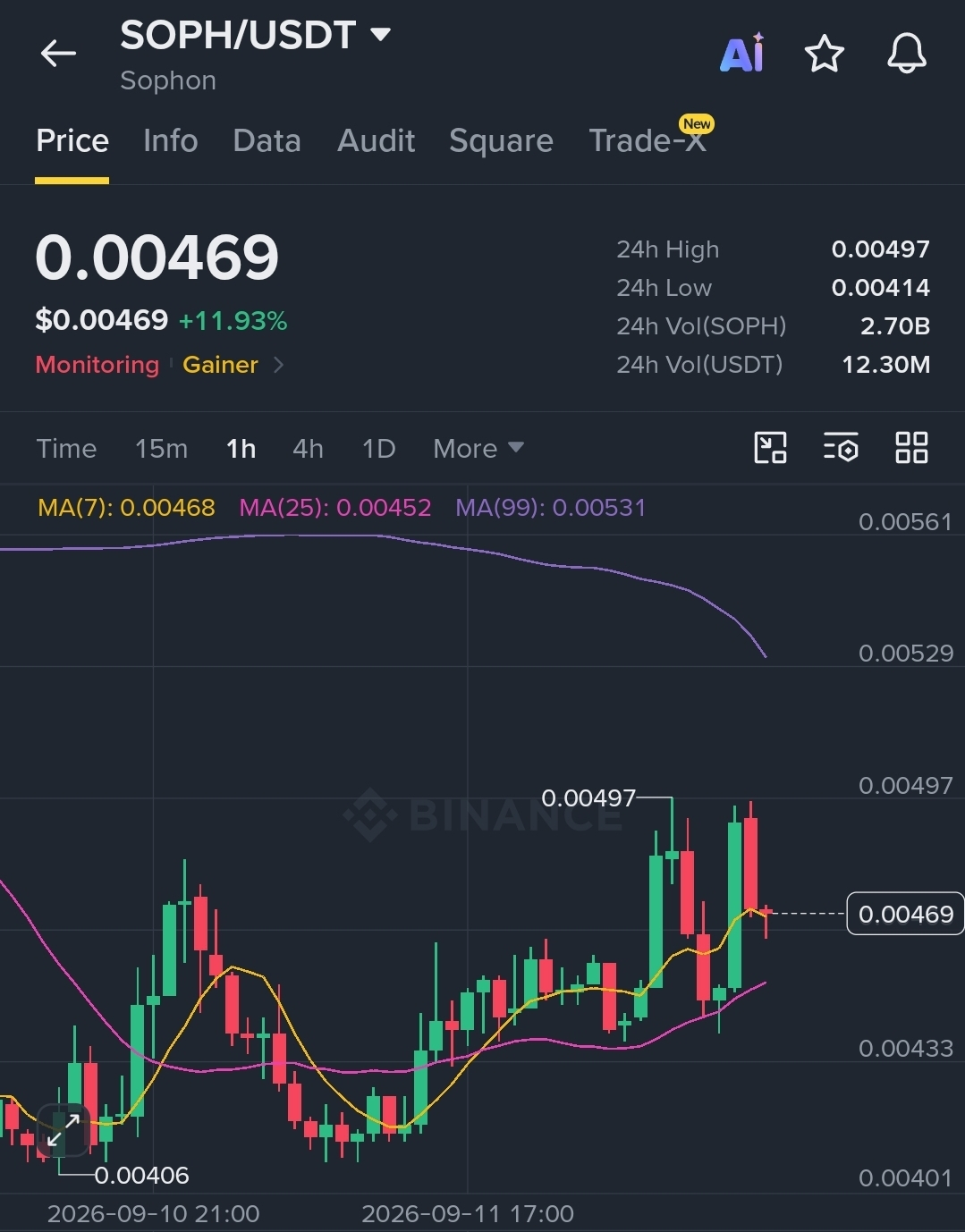
Price is hugging the MA7 (0.00468) after reclaiming the MA25 (0.00452), but the MA99 at 0.00531 sits overhead as a ceiling — bulls need a clean break or this stalls.
$SOPH : Sophon is a ZK-powered AI compute layer targeting on-chain inference workloads — $12.3M 24H volume at 2.70B tokens traded suggests active speculative interest, but the AI+ZK narrative crowding means differentiation risk is high.
With MA99 at 0.00531 acting as overhead resistance and only 11.93% daily momentum behind it, does SOPH have the volume profile to sustain a breakout or will it fade into the MA gap?
#SOPH #sophon #Crypto #TradingSignal #BinanceSquare
{future}(SOPHUSDT)
$SOPH /USDT — 🟢 LONG · Conf 70%
📍 Entry: 0.00468 – 0.00470
🛑 SL: 0.00390
🎯 TP1: 0.00492
✅ TP2: 0.00511
🏆 TP3: 0.00539
Price is hugging the MA7 (0.00468) after reclaiming the MA25 (0.00452), but the MA99 at 0.00531 sits overhead as a ceiling — bulls need a clean break or this stalls.
$SOPH : Sophon is a ZK-powered AI compute layer targeting on-chain inference workloads — $12.3M 24H volume at 2.70B tokens traded suggests active speculative interest, but the AI+ZK narrative crowding means differentiation risk is high.
With MA99 at 0.00531 acting as overhead resistance and only 11.93% daily momentum behind it, does SOPH have the volume profile to sustain a breakout or will it fade into the MA gap?
#SOPH #sophon #Crypto #TradingSignal #BinanceSquare
📍 Entry: 0.00468 – 0.00470
🛑 SL: 0.00390
🎯 TP1: 0.00492
✅ TP2: 0.00511
🏆 TP3: 0.00539
Price is hugging the MA7 (0.00468) after reclaiming the MA25 (0.00452), but the MA99 at 0.00531 sits overhead as a ceiling — bulls need a clean break or this stalls.
$SOPH : Sophon is a ZK-powered AI compute layer targeting on-chain inference workloads — $12.3M 24H volume at 2.70B tokens traded suggests active speculative interest, but the AI+ZK narrative crowding means differentiation risk is high.
With MA99 at 0.00531 acting as overhead resistance and only 11.93% daily momentum behind it, does SOPH have the volume profile to sustain a breakout or will it fade into the MA gap?
#SOPH #sophon #Crypto #TradingSignal #BinanceSquare

1
361
$MINA /USDT — 🟢 LONG · Conf 85%
📍 Entry: 0.1084 – 0.1090
🛑 SL: 0.0940
🎯 TP1: 0.1141
✅ TP2: 0.1185
🏆 TP3: 0.1250
All three MAs stacked bullishly (MA7 > MA25 > MA99) with price riding above MA7 on the 1H — textbook momentum continuation structure after the 0.0874 base.
$MINA : Mina Protocol uses recursive ZK-SNARKs to keep the blockchain permanently ~22KB regardless of transaction history — a genuine technical differentiator — but its real-world zkApp adoption metrics remain thin relative to its market cap multiple.
If Mina's core value prop is a constant-size blockchain, does a +18% price move driven by broader altcoin momentum actually validate the ZK thesis, or is it just correlation with the market cycle?
#MINA #MinaProtocol #web3 #zkSNARKs #zkproofs
{future}(MINAUSDT)
$MINA /USDT — 🟢 LONG · Conf 85%
📍 Entry: 0.1084 – 0.1090
🛑 SL: 0.0940
🎯 TP1: 0.1141
✅ TP2: 0.1185
🏆 TP3: 0.1250
All three MAs stacked bullishly (MA7 > MA25 > MA99) with price riding above MA7 on the 1H — textbook momentum continuation structure after the 0.0874 base.
$MINA : Mina Protocol uses recursive ZK-SNARKs to keep the blockchain permanently ~22KB regardless of transaction history — a genuine technical differentiator — but its real-world zkApp adoption metrics remain thin relative to its market cap multiple.
If Mina's core value prop is a constant-size blockchain, does a +18% price move driven by broader altcoin momentum actually validate the ZK thesis, or is it just correlation with the market cycle?
#MINA #MinaProtocol #web3 #zkSNARKs #zkproofs
📍 Entry: 0.1084 – 0.1090
🛑 SL: 0.0940
🎯 TP1: 0.1141
✅ TP2: 0.1185
🏆 TP3: 0.1250
All three MAs stacked bullishly (MA7 > MA25 > MA99) with price riding above MA7 on the 1H — textbook momentum continuation structure after the 0.0874 base.
$MINA : Mina Protocol uses recursive ZK-SNARKs to keep the blockchain permanently ~22KB regardless of transaction history — a genuine technical differentiator — but its real-world zkApp adoption metrics remain thin relative to its market cap multiple.
If Mina's core value prop is a constant-size blockchain, does a +18% price move driven by broader altcoin momentum actually validate the ZK thesis, or is it just correlation with the market cycle?
#MINA #MinaProtocol #web3 #zkSNARKs #zkproofs


1
317
$LSK /USDT — 🟢 LONG · Conf 75%
📍 Entry: 0.2153 – 0.2165
🛑 SL: 0.1680
🎯 TP1: 0.2267
✅ TP2: 0.2353
🏆 TP3: 0.2483
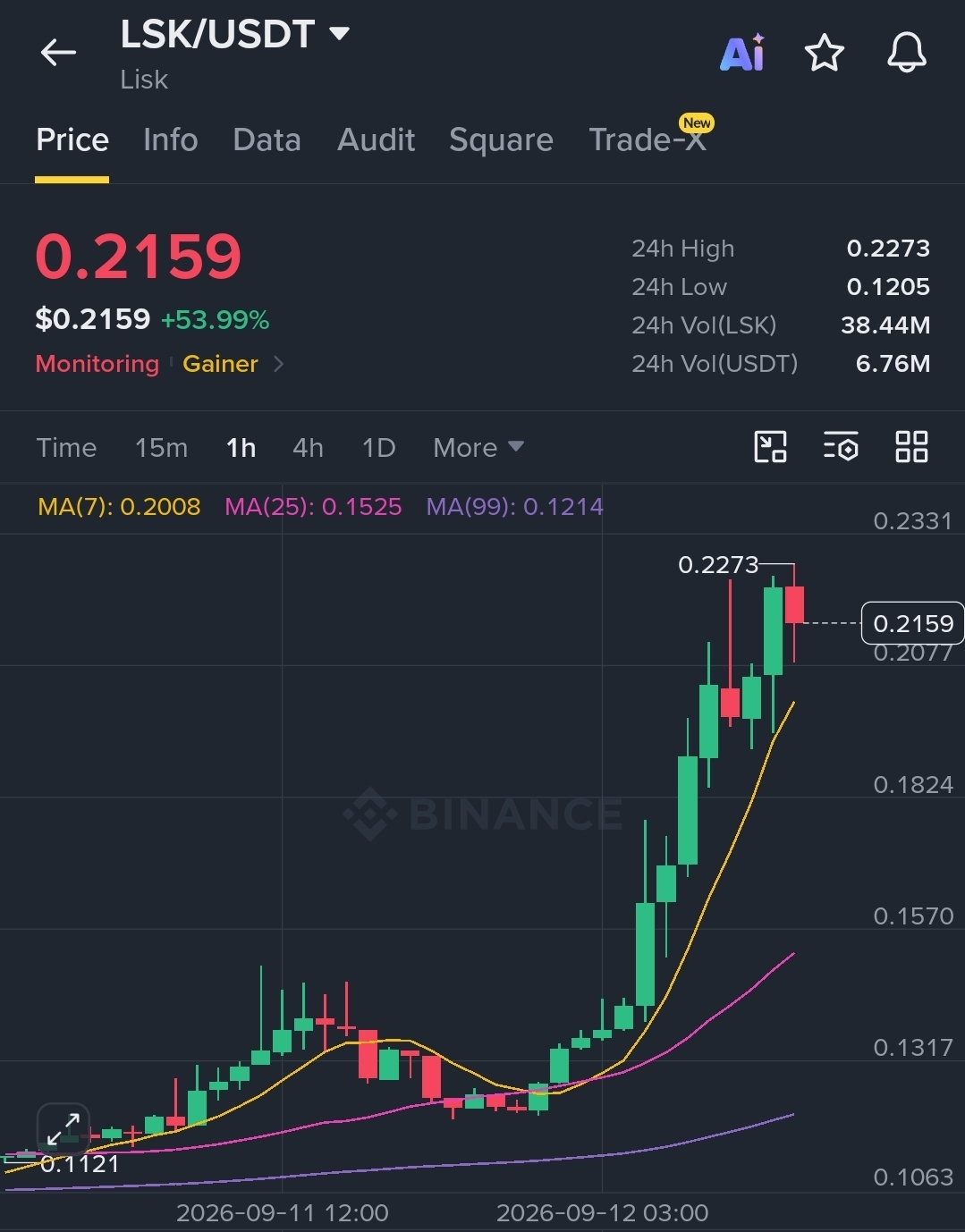
Price exploded above all MAs with MA7 (0.2008) now well below — but the rejection candle from 0.2273 on the 1H signals profit-taking is active at the highs; entry on this range is a momentum continuation bet, not a breakout entry.
$LSK : Lisk repositioned from its original sidechain model toward an Ethereum L2 using the OP Stack — +53.99% in 24H on $6.76M volume likely reflects a catalyst or listing effect rather than organic adoption growth; the migration narrative is still unproven at scale.
Lisk's pivot to an OP Stack L2 puts it in direct competition with dozens of established rollups — does rebranding an old-guard chain actually create a viable competitive moat, or is the L2 space already too saturated for a late entrant?
#LSK #Lisk #OP #EthereumL2 #CPIWatch
{future}(LSKUSDT)
$LSK /USDT — 🟢 LONG · Conf 75%
📍 Entry: 0.2153 – 0.2165
🛑 SL: 0.1680
🎯 TP1: 0.2267
✅ TP2: 0.2353
🏆 TP3: 0.2483
Price exploded above all MAs with MA7 (0.2008) now well below — but the rejection candle from 0.2273 on the 1H signals profit-taking is active at the highs; entry on this range is a momentum continuation bet, not a breakout entry.
$LSK : Lisk repositioned from its original sidechain model toward an Ethereum L2 using the OP Stack — +53.99% in 24H on $6.76M volume likely reflects a catalyst or listing effect rather than organic adoption growth; the migration narrative is still unproven at scale.
Lisk's pivot to an OP Stack L2 puts it in direct competition with dozens of established rollups — does rebranding an old-guard chain actually create a viable competitive moat, or is the L2 space already too saturated for a late entrant?
#LSK #Lisk #OP #EthereumL2 #CPIWatch
📍 Entry: 0.2153 – 0.2165
🛑 SL: 0.1680
🎯 TP1: 0.2267
✅ TP2: 0.2353
🏆 TP3: 0.2483
Price exploded above all MAs with MA7 (0.2008) now well below — but the rejection candle from 0.2273 on the 1H signals profit-taking is active at the highs; entry on this range is a momentum continuation bet, not a breakout entry.
$LSK : Lisk repositioned from its original sidechain model toward an Ethereum L2 using the OP Stack — +53.99% in 24H on $6.76M volume likely reflects a catalyst or listing effect rather than organic adoption growth; the migration narrative is still unproven at scale.
Lisk's pivot to an OP Stack L2 puts it in direct competition with dozens of established rollups — does rebranding an old-guard chain actually create a viable competitive moat, or is the L2 space already too saturated for a late entrant?
#LSK #Lisk #OP #EthereumL2 #CPIWatch

1
1
227
·
--
Bullish
$VTHO /USDT — 🟢 LONG · Conf 72%
📍 Entry: 0.0007458 – 0.0007524
🛑 SL: 0.0005650
🎯 TP1: 0.0007848
✅ TP2: 0.0008153
🏆 TP3: 0.0008602
The vertical spike from 0.000487 to 0.000805 in a single 1H candle is a high-momentum event — price is now above all MAs with MA7 at 0.000653, but the wick extension makes this a high-risk continuation vs. mean-reversion scenario.
$VTHO : VeThor Token is the gas/energy token of VeChain — generated passively by holding VET — meaning its price is directly tied to on-chain transaction demand on the VeChain enterprise supply chain network; a +44% move without a clear VeChain ecosystem catalyst is structurally suspicious.
Given that VTHO's supply is algorithmically generated by VET holders rather than mined or staked, does a speculative price spike in VTHO actually signal increased VeChain network usage, or is it purely a thin-float momentum trade?
#VTHO #veThor #Web3 #Crypto #VET
{future}(VTHOUSDT)
$VTHO /USDT — 🟢 LONG · Conf 72%
📍 Entry: 0.0007458 – 0.0007524
🛑 SL: 0.0005650
🎯 TP1: 0.0007848
✅ TP2: 0.0008153
🏆 TP3: 0.0008602
The vertical spike from 0.000487 to 0.000805 in a single 1H candle is a high-momentum event — price is now above all MAs with MA7 at 0.000653, but the wick extension makes this a high-risk continuation vs. mean-reversion scenario.
$VTHO : VeThor Token is the gas/energy token of VeChain — generated passively by holding VET — meaning its price is directly tied to on-chain transaction demand on the VeChain enterprise supply chain network; a +44% move without a clear VeChain ecosystem catalyst is structurally suspicious.
Given that VTHO's supply is algorithmically generated by VET holders rather than mined or staked, does a speculative price spike in VTHO actually signal increased VeChain network usage, or is it purely a thin-float momentum trade?
#VTHO #veThor #Web3 #Crypto #VET
📍 Entry: 0.0007458 – 0.0007524
🛑 SL: 0.0005650
🎯 TP1: 0.0007848
✅ TP2: 0.0008153
🏆 TP3: 0.0008602
The vertical spike from 0.000487 to 0.000805 in a single 1H candle is a high-momentum event — price is now above all MAs with MA7 at 0.000653, but the wick extension makes this a high-risk continuation vs. mean-reversion scenario.
$VTHO : VeThor Token is the gas/energy token of VeChain — generated passively by holding VET — meaning its price is directly tied to on-chain transaction demand on the VeChain enterprise supply chain network; a +44% move without a clear VeChain ecosystem catalyst is structurally suspicious.
Given that VTHO's supply is algorithmically generated by VET holders rather than mined or staked, does a speculative price spike in VTHO actually signal increased VeChain network usage, or is it purely a thin-float momentum trade?
#VTHO #veThor #Web3 #Crypto #VET


1
239
·
--
Bearish
Partly True
🚨 $LAPTOP : THE TIMELINE GETS WEIRDER
It started like a political meme launch.
Then the chart went vertical.
LAPTOP reportedly exploded toward ~$318 before collapsing roughly 99% within the first hour. The team blamed thin liquidity and sniper bots.
But here's where the story gets interesting. 👀
On-chain analysis shows $2.08M entered the pools in the first 60 seconds, while the token had extremely shallow initial liquidity. That setup was basically rocket fuel for automated traders.
Then came another plot twist:
The foundation's X account was suspended, forcing the team to communicate through Medium.
Is this simply a catastrophic launch?
Or did the structure create an opportunity where insiders, bots and early wallets had an advantage that ordinary traders never had?
That's the conspiracy angle — but the on-chain evidence still needs to answer it.
You can't rug a blockchain.
You can make the timeline look very strange. 💀
$LAB $MET $DOGS
{future}(DOGSUSDT)
{future}(METUSDT)
{future}(LABUSDT)
What’s your read?
🚨 $LAPTOP : THE TIMELINE GETS WEIRDER
It started like a political meme launch.
Then the chart went vertical.
LAPTOP reportedly exploded toward ~$318 before collapsing roughly 99% within the first hour. The team blamed thin liquidity and sniper bots.
But here's where the story gets interesting. 👀
On-chain analysis shows $2.08M entered the pools in the first 60 seconds, while the token had extremely shallow initial liquidity. That setup was basically rocket fuel for automated traders.
Then came another plot twist:
The foundation's X account was suspended, forcing the team to communicate through Medium.
Is this simply a catastrophic launch?
Or did the structure create an opportunity where insiders, bots and early wallets had an advantage that ordinary traders never had?
That's the conspiracy angle — but the on-chain evidence still needs to answer it.
You can't rug a blockchain.
You can make the timeline look very strange. 💀
$LAB $MET $DOGS
What’s your read?
It started like a political meme launch.
Then the chart went vertical.
LAPTOP reportedly exploded toward ~$318 before collapsing roughly 99% within the first hour. The team blamed thin liquidity and sniper bots.
But here's where the story gets interesting. 👀
On-chain analysis shows $2.08M entered the pools in the first 60 seconds, while the token had extremely shallow initial liquidity. That setup was basically rocket fuel for automated traders.
Then came another plot twist:
The foundation's X account was suspended, forcing the team to communicate through Medium.
Is this simply a catastrophic launch?
Or did the structure create an opportunity where insiders, bots and early wallets had an advantage that ordinary traders never had?
That's the conspiracy angle — but the on-chain evidence still needs to answer it.
You can't rug a blockchain.
You can make the timeline look very strange. 💀
$LAB $MET $DOGS
What’s your read?
🕵️ Planned insider exit
50%
🤖 Pure bot chaos
25%
🎭 Something feels off
25%
8 votes • Voting closed
1
1.2k
Top Gainers for 11th Sep, 2026
🔥 $TFUEL — Theta's native fuel token powering decentralized video streaming & edge compute rewards.
⚡ $MET — Meteora is a Solana-based dynamic liquidity protocol featuring DLMM (Dynamic Liquidity Market Maker) pools that auto-concentrate liquidity around the active price bin.
🌊 $RAY — Solana's leading AMM & order book DEX routing liquidity across the ecosystem.
#TFUEL #Theta #MET #Meteora #Raydium
{spot}(TFUELUSDT)
{future}(METUSDT)
{spot}(RAYUSDT)
Top Gainers for 11th Sep, 2026
🔥 $TFUEL — Theta's native fuel token powering decentralized video streaming & edge compute rewards.
⚡ $MET — Meteora is a Solana-based dynamic liquidity protocol featuring DLMM (Dynamic Liquidity Market Maker) pools that auto-concentrate liquidity around the active price bin.
🌊 $RAY — Solana's leading AMM & order book DEX routing liquidity across the ecosystem.
#TFUEL #Theta #MET #Meteora #Raydium
🔥 $TFUEL — Theta's native fuel token powering decentralized video streaming & edge compute rewards.
⚡ $MET — Meteora is a Solana-based dynamic liquidity protocol featuring DLMM (Dynamic Liquidity Market Maker) pools that auto-concentrate liquidity around the active price bin.
🌊 $RAY — Solana's leading AMM & order book DEX routing liquidity across the ecosystem.
#TFUEL #Theta #MET #Meteora #Raydium

2.1k
7
86
2.1k
·
--
Bearish
Top Losers for 11th Sep, 2026
💀 $IOST — Scalable L1 blockchain targeting dApp developers with a Proof-of-Believability consensus model.
🌐 $EGLD — MultiversX's native token powering a sharded, high-throughput smart contract platform.
🎯 $PROM — Modular ZK-rollup solution enabling privacy-first smart contracts on public blockchains.
#IOST #EGLD #Multiverse #PROM #Zkproofs
{future}(IOSTUSDT)
{future}(EGLDUSDT)
{future}(PROMUSDT)
Top Losers for 11th Sep, 2026
💀 $IOST — Scalable L1 blockchain targeting dApp developers with a Proof-of-Believability consensus model.
🌐 $EGLD — MultiversX's native token powering a sharded, high-throughput smart contract platform.
🎯 $PROM — Modular ZK-rollup solution enabling privacy-first smart contracts on public blockchains.
#IOST #EGLD #Multiverse #PROM #Zkproofs
💀 $IOST — Scalable L1 blockchain targeting dApp developers with a Proof-of-Believability consensus model.
🌐 $EGLD — MultiversX's native token powering a sharded, high-throughput smart contract platform.
🎯 $PROM — Modular ZK-rollup solution enabling privacy-first smart contracts on public blockchains.
#IOST #EGLD #Multiverse #PROM #Zkproofs

1.1k
4
47
1.1k
🚨 THE MARKET IS HOLDING ITS BREATH 🚨
Nonfarm payrolls just SMASHED expectations — and CPI is dropping this week.
The economy is running HOT. 🔥
The Fed holds. But not because they want to.
Because they're trapped.
Hike now and they crack the labor market they've been bragging about. Cut now and they admit inflation won. So they sit on their hands, talk tough, and hope CPI gives them cover.
But here's what the data is actually screaming:
✅ Strong jobs = consumers still spending
✅ Consumers still spending = inflation doesn't die quietly
✅ Inflation doesn't die quietly = risk assets stay nervous
My read? Choppy sideways market until the number hits. Then volatility EXPLODES in one direction.
Crypto doesn't wait for confirmation. It front-runs everything.
The smart money is already positioned. The question is which side of the trade they're on. 👀
#CPIWatch #Fed #SPCXB #BTC $BTC $SPCXB
🚨 THE MARKET IS HOLDING ITS BREATH 🚨
Nonfarm payrolls just SMASHED expectations — and CPI is dropping this week.
The economy is running HOT. 🔥
The Fed holds. But not because they want to.
Because they're trapped.
Hike now and they crack the labor market they've been bragging about. Cut now and they admit inflation won. So they sit on their hands, talk tough, and hope CPI gives them cover.
But here's what the data is actually screaming:
✅ Strong jobs = consumers still spending
✅ Consumers still spending = inflation doesn't die quietly
✅ Inflation doesn't die quietly = risk assets stay nervous
My read? Choppy sideways market until the number hits. Then volatility EXPLODES in one direction.
Crypto doesn't wait for confirmation. It front-runs everything.
The smart money is already positioned. The question is which side of the trade they're on. 👀
#CPIWatch #Fed #SPCXB #BTC $BTC $SPCXB
Nonfarm payrolls just SMASHED expectations — and CPI is dropping this week.
The economy is running HOT. 🔥
The Fed holds. But not because they want to.
Because they're trapped.
Hike now and they crack the labor market they've been bragging about. Cut now and they admit inflation won. So they sit on their hands, talk tough, and hope CPI gives them cover.
But here's what the data is actually screaming:
✅ Strong jobs = consumers still spending
✅ Consumers still spending = inflation doesn't die quietly
✅ Inflation doesn't die quietly = risk assets stay nervous
My read? Choppy sideways market until the number hits. Then volatility EXPLODES in one direction.
Crypto doesn't wait for confirmation. It front-runs everything.
The smart money is already positioned. The question is which side of the trade they're on. 👀
#CPIWatch #Fed #SPCXB #BTC $BTC $SPCXB

1
382
$DOGE /USDT — 🔴 SHORT · Conf 95%
📍 Entry: 0.0861 – 0.0866
🛑 SL: 0.0919
🎯 TP1: 0.0820
✅ TP2: 0.0786
🏆 TP3: 0.0734
Price is bouncing into the 1H MA99 (0.0877) from below — that's resistance, not reclaim — with the broader 1H structure still printing lower highs from the 0.0916 peak.
$DOGE : Dogecoin is the original meme coin running on a Scrypt PoW chain with no hard supply cap and ~5B new DOGE minted annually — its main narrative driver remains Elon Musk association and potential DOGE payment integrations at X/xAI; honest risk is that without a supply cap or protocol utility, DOGE's value is entirely reflexive and sentiment-driven, making it one of the most structurally fragile top-20 assets.
DOGE has survived multiple "this time it's dead" cycles purely on community inertia — at what point does uncapped inflation mathematically overwhelm the demand side, or has the market already priced in the fact that it never will?
#DOGE #Dogecoin #Memecoin #ElonMusk #CLARITYActRevisionToRuleNonDeFiControllers
{future}(DOGEUSDT)
$DOGE /USDT — 🔴 SHORT · Conf 95%
📍 Entry: 0.0861 – 0.0866
🛑 SL: 0.0919
🎯 TP1: 0.0820
✅ TP2: 0.0786
🏆 TP3: 0.0734
Price is bouncing into the 1H MA99 (0.0877) from below — that's resistance, not reclaim — with the broader 1H structure still printing lower highs from the 0.0916 peak.
$DOGE : Dogecoin is the original meme coin running on a Scrypt PoW chain with no hard supply cap and ~5B new DOGE minted annually — its main narrative driver remains Elon Musk association and potential DOGE payment integrations at X/xAI; honest risk is that without a supply cap or protocol utility, DOGE's value is entirely reflexive and sentiment-driven, making it one of the most structurally fragile top-20 assets.
DOGE has survived multiple "this time it's dead" cycles purely on community inertia — at what point does uncapped inflation mathematically overwhelm the demand side, or has the market already priced in the fact that it never will?
#DOGE #Dogecoin #Memecoin #ElonMusk #CLARITYActRevisionToRuleNonDeFiControllers
📍 Entry: 0.0861 – 0.0866
🛑 SL: 0.0919
🎯 TP1: 0.0820
✅ TP2: 0.0786
🏆 TP3: 0.0734
Price is bouncing into the 1H MA99 (0.0877) from below — that's resistance, not reclaim — with the broader 1H structure still printing lower highs from the 0.0916 peak.
$DOGE : Dogecoin is the original meme coin running on a Scrypt PoW chain with no hard supply cap and ~5B new DOGE minted annually — its main narrative driver remains Elon Musk association and potential DOGE payment integrations at X/xAI; honest risk is that without a supply cap or protocol utility, DOGE's value is entirely reflexive and sentiment-driven, making it one of the most structurally fragile top-20 assets.
DOGE has survived multiple "this time it's dead" cycles purely on community inertia — at what point does uncapped inflation mathematically overwhelm the demand side, or has the market already priced in the fact that it never will?
#DOGE #Dogecoin #Memecoin #ElonMusk #CLARITYActRevisionToRuleNonDeFiControllers


1
642
$DOGS /USDT — 🟢 LONG · Conf 93%
📍 Entry: 0.0000530 – 0.0000533
🛑 SL: 0.0000432
🎯 TP1: 0.0000558
✅ TP2: 0.0000580
🏆 TP3: 0.0000611
Price is printing a clean second leg up above all three 1H MAs with MA7 leading the stack — this is a higher low reclaim pattern after the post-spike consolidation, not a first-touch chase.
$DOGS : DOGS is a Telegram-native meme token that distributed supply via airdrop to TON ecosystem users based on Telegram account age and activity — the mechanic ties token distribution to real user tenure rather than wallet farming; honest risk is that with 48.76B tokens traded in 24H and $2.42M USDT volume, the market cap per token is negligible and single large wallets can move price dramatically with small USDT sizes.
DOGS used Telegram account age as a distribution filter to reduce bot farming — but given Telegram's history of account age manipulation, how much of the initial supply do you think ended up in coordinated bot wallets anyway, and does it matter at this stage?
#DOGS #Telegram #Play2Earn #web3 #WOOF
{future}(DOGSUSDT)
$DOGS /USDT — 🟢 LONG · Conf 93%
📍 Entry: 0.0000530 – 0.0000533
🛑 SL: 0.0000432
🎯 TP1: 0.0000558
✅ TP2: 0.0000580
🏆 TP3: 0.0000611
Price is printing a clean second leg up above all three 1H MAs with MA7 leading the stack — this is a higher low reclaim pattern after the post-spike consolidation, not a first-touch chase.
$DOGS : DOGS is a Telegram-native meme token that distributed supply via airdrop to TON ecosystem users based on Telegram account age and activity — the mechanic ties token distribution to real user tenure rather than wallet farming; honest risk is that with 48.76B tokens traded in 24H and $2.42M USDT volume, the market cap per token is negligible and single large wallets can move price dramatically with small USDT sizes.
DOGS used Telegram account age as a distribution filter to reduce bot farming — but given Telegram's history of account age manipulation, how much of the initial supply do you think ended up in coordinated bot wallets anyway, and does it matter at this stage?
#DOGS #Telegram #Play2Earn #web3 #WOOF
📍 Entry: 0.0000530 – 0.0000533
🛑 SL: 0.0000432
🎯 TP1: 0.0000558
✅ TP2: 0.0000580
🏆 TP3: 0.0000611
Price is printing a clean second leg up above all three 1H MAs with MA7 leading the stack — this is a higher low reclaim pattern after the post-spike consolidation, not a first-touch chase.
$DOGS : DOGS is a Telegram-native meme token that distributed supply via airdrop to TON ecosystem users based on Telegram account age and activity — the mechanic ties token distribution to real user tenure rather than wallet farming; honest risk is that with 48.76B tokens traded in 24H and $2.42M USDT volume, the market cap per token is negligible and single large wallets can move price dramatically with small USDT sizes.
DOGS used Telegram account age as a distribution filter to reduce bot farming — but given Telegram's history of account age manipulation, how much of the initial supply do you think ended up in coordinated bot wallets anyway, and does it matter at this stage?
#DOGS #Telegram #Play2Earn #web3 #WOOF


1
303
·
--
Bullish
$SOLV /USDT — 🟢 LONG · Conf 85%
📍 Entry: 0.0044466 – 0.0044734
🛑 SL: 0.0044000
🎯 TP1: 0.0046830
✅ TP2: 0.0048614
🏆 TP3: 0.0051290
All three 1H MAs (MA7/MA25/MA99) have compressed into a tight band between 0.00433–0.00448 — this is textbook pre-breakout coiling after a +56% rally, and the 1D higher low structure is still intact.
$SOLV : Solv Protocol is a Bitcoin yield infrastructure layer that issues SolvBTC — a liquid BTC wrapper deployable across DeFi — letting holders earn native Bitcoin yield without selling spot; the protocol recently expanded SolvBTC integration to multiple EVM chains and Solana; key risk is that BTC yield strategies ultimately rely on counterparty DeFi protocols, reintroducing smart contract risk to what users perceive as a "BTC-safe" position.
If SolvBTC abstracts BTC yield generation across multiple chains, is the protocol creating genuine new Bitcoin demand or simply redistributing existing BTC DeFi liquidity into a new wrapper — and does that distinction matter for SOLV token value?
#SOLV #SolvProtocol #EVM #BTC #USToSanctionBigBankMonday
{future}(SOLVUSDT)
$SOLV /USDT — 🟢 LONG · Conf 85%
📍 Entry: 0.0044466 – 0.0044734
🛑 SL: 0.0044000
🎯 TP1: 0.0046830
✅ TP2: 0.0048614
🏆 TP3: 0.0051290
All three 1H MAs (MA7/MA25/MA99) have compressed into a tight band between 0.00433–0.00448 — this is textbook pre-breakout coiling after a +56% rally, and the 1D higher low structure is still intact.
$SOLV : Solv Protocol is a Bitcoin yield infrastructure layer that issues SolvBTC — a liquid BTC wrapper deployable across DeFi — letting holders earn native Bitcoin yield without selling spot; the protocol recently expanded SolvBTC integration to multiple EVM chains and Solana; key risk is that BTC yield strategies ultimately rely on counterparty DeFi protocols, reintroducing smart contract risk to what users perceive as a "BTC-safe" position.
If SolvBTC abstracts BTC yield generation across multiple chains, is the protocol creating genuine new Bitcoin demand or simply redistributing existing BTC DeFi liquidity into a new wrapper — and does that distinction matter for SOLV token value?
#SOLV #SolvProtocol #EVM #BTC #USToSanctionBigBankMonday
📍 Entry: 0.0044466 – 0.0044734
🛑 SL: 0.0044000
🎯 TP1: 0.0046830
✅ TP2: 0.0048614
🏆 TP3: 0.0051290
All three 1H MAs (MA7/MA25/MA99) have compressed into a tight band between 0.00433–0.00448 — this is textbook pre-breakout coiling after a +56% rally, and the 1D higher low structure is still intact.
$SOLV : Solv Protocol is a Bitcoin yield infrastructure layer that issues SolvBTC — a liquid BTC wrapper deployable across DeFi — letting holders earn native Bitcoin yield without selling spot; the protocol recently expanded SolvBTC integration to multiple EVM chains and Solana; key risk is that BTC yield strategies ultimately rely on counterparty DeFi protocols, reintroducing smart contract risk to what users perceive as a "BTC-safe" position.
If SolvBTC abstracts BTC yield generation across multiple chains, is the protocol creating genuine new Bitcoin demand or simply redistributing existing BTC DeFi liquidity into a new wrapper — and does that distinction matter for SOLV token value?
#SOLV #SolvProtocol #EVM #BTC #USToSanctionBigBankMonday


1
153
All the 3 TPs hit for $牛来 , we are killing it 🥳🥳
{future}(牛来USDT)
All the 3 TPs hit for $牛来 , we are killing it 🥳🥳

Hitmans Lounge
·
--
$牛来 /USDT — 🟢 LONG · Conf 80%
📍 Entry: 0.1315 – 0.1323
🛑 SL: 0.1094
🎯 TP1: 0.1385
✅ TP2: 0.1438
🏆 TP3: 0.1517
Price is holding above MA7 (0.1277) after a +70% 24H move driven by $84.36M volume — the structure is a near-vertical V-recovery with no MA99 history yet, so confidence is capped until the chart matures.
$牛来 : 牛来 (Niulai) is a Chinese-culture MEME token on Binance, tagged under the MEME category with no on-chain utility — its primary driver is narrative momentum and community speculation; the core risk is total absence of fundamental floor, meaning a 50%+ drawdown in a single session is structurally possible.
With $84.36M USDT in 24H volume and zero utility, at what point does the market treat a token like 牛来 as a pure market-maker play rather than an organic community trade — and does that distinction change how you size the position?
#牛来 #MEME #niulai #chinese #BitcoinGoldenCrossConfirms
📍 Entry: 0.1315 – 0.1323
🛑 SL: 0.1094
🎯 TP1: 0.1385
✅ TP2: 0.1438
🏆 TP3: 0.1517
Price is holding above MA7 (0.1277) after a +70% 24H move driven by $84.36M volume — the structure is a near-vertical V-recovery with no MA99 history yet, so confidence is capped until the chart matures.
$牛来 : 牛来 (Niulai) is a Chinese-culture MEME token on Binance, tagged under the MEME category with no on-chain utility — its primary driver is narrative momentum and community speculation; the core risk is total absence of fundamental floor, meaning a 50%+ drawdown in a single session is structurally possible.
With $84.36M USDT in 24H volume and zero utility, at what point does the market treat a token like 牛来 as a pure market-maker play rather than an organic community trade — and does that distinction change how you size the position?
#牛来 #MEME #niulai #chinese #BitcoinGoldenCrossConfirms
2
266
·
--
Bearish
Congrats, TP1 hit for $ZEC
{future}(ZECUSDT)
Congrats, TP1 hit for $ZEC

Hitmans Lounge
·
--
$ZEC /USDT — 🔴 SHORT · Conf 90%
📍 Entry: 1110.77 – 1117.47
🛑 SL: 1209.12
🎯 TP1: 1058.41
✅ TP2: 1013.85
🏆 TP3: 946.00
Price is caught below both MA25 (1,135.79) and MA99 (1,179.76) on the 1H with MA7 rolling over — the bounce from 1,054.48 looks like a dead-cat retest of the breakdown zone, not a reversal.
$ZEC : Zcash is a privacy-focused cryptocurrency using zk-SNARKs to enable shielded transactions — the Electric Coin Company has been transitioning its development model and the upcoming Zcash Sustainability Fund aims to extend protocol runway beyond the original halving schedule; honest risk is that regulatory pressure on privacy coins continues to shrink exchange listings and reduce accessible liquidity globally.
Given Zcash has had shielded transaction technology longer than most privacy coins, why does shielded transaction adoption remain under 20% of ZEC activity — is this a UX problem, a regulatory self-censorship problem, or evidence that the market doesn't actually want on-chain privacy at scale?
#ZEC #Zcash #zkSNARKs #zkProofs #CryptoSectorsFallSecondDay
📍 Entry: 1110.77 – 1117.47
🛑 SL: 1209.12
🎯 TP1: 1058.41
✅ TP2: 1013.85
🏆 TP3: 946.00
Price is caught below both MA25 (1,135.79) and MA99 (1,179.76) on the 1H with MA7 rolling over — the bounce from 1,054.48 looks like a dead-cat retest of the breakdown zone, not a reversal.
$ZEC : Zcash is a privacy-focused cryptocurrency using zk-SNARKs to enable shielded transactions — the Electric Coin Company has been transitioning its development model and the upcoming Zcash Sustainability Fund aims to extend protocol runway beyond the original halving schedule; honest risk is that regulatory pressure on privacy coins continues to shrink exchange listings and reduce accessible liquidity globally.
Given Zcash has had shielded transaction technology longer than most privacy coins, why does shielded transaction adoption remain under 20% of ZEC activity — is this a UX problem, a regulatory self-censorship problem, or evidence that the market doesn't actually want on-chain privacy at scale?
#ZEC #Zcash #zkSNARKs #zkProofs #CryptoSectorsFallSecondDay
1
172
$MET /USDT — 🟢 LONG · Conf 97%
📍 Entry: 0.2451 – 0.2465
🛑 SL: 0.2353
🎯 TP1: 0.2581
✅ TP2: 0.2679
🏆 TP3: 0.2827
Price is holding above MA7 (0.2299) after a clean breakout candle that swept the 24H high at 0.2495 — 1H structure remains intact and the pullback is orderly relative to ATR.
$MET : Meteora is a Solana-based dynamic liquidity protocol featuring DLMM (Dynamic Liquidity Market Maker) pools that auto-concentrate liquidity around the active price bin — it recently expanded its M3M3 stake-for-fee mechanism to boost LP yields; key risk is that thin USDT volume ($3.81M) means liquidity is fragile and spreads widen fast on exits.
If Meteora's DLMM model genuinely outperforms Raydium CLMM in capital efficiency, why is its 24H USDT volume still a fraction of Raydium's — is this a distribution/awareness gap or a sign that LPs don't actually trust the model yet?
#MET #Meteora #DLMM #Solana #staking
{future}(METUSDT)
$MET /USDT — 🟢 LONG · Conf 97%
📍 Entry: 0.2451 – 0.2465
🛑 SL: 0.2353
🎯 TP1: 0.2581
✅ TP2: 0.2679
🏆 TP3: 0.2827
Price is holding above MA7 (0.2299) after a clean breakout candle that swept the 24H high at 0.2495 — 1H structure remains intact and the pullback is orderly relative to ATR.
$MET : Meteora is a Solana-based dynamic liquidity protocol featuring DLMM (Dynamic Liquidity Market Maker) pools that auto-concentrate liquidity around the active price bin — it recently expanded its M3M3 stake-for-fee mechanism to boost LP yields; key risk is that thin USDT volume ($3.81M) means liquidity is fragile and spreads widen fast on exits.
If Meteora's DLMM model genuinely outperforms Raydium CLMM in capital efficiency, why is its 24H USDT volume still a fraction of Raydium's — is this a distribution/awareness gap or a sign that LPs don't actually trust the model yet?
#MET #Meteora #DLMM #Solana #staking
📍 Entry: 0.2451 – 0.2465
🛑 SL: 0.2353
🎯 TP1: 0.2581
✅ TP2: 0.2679
🏆 TP3: 0.2827
Price is holding above MA7 (0.2299) after a clean breakout candle that swept the 24H high at 0.2495 — 1H structure remains intact and the pullback is orderly relative to ATR.
$MET : Meteora is a Solana-based dynamic liquidity protocol featuring DLMM (Dynamic Liquidity Market Maker) pools that auto-concentrate liquidity around the active price bin — it recently expanded its M3M3 stake-for-fee mechanism to boost LP yields; key risk is that thin USDT volume ($3.81M) means liquidity is fragile and spreads widen fast on exits.
If Meteora's DLMM model genuinely outperforms Raydium CLMM in capital efficiency, why is its 24H USDT volume still a fraction of Raydium's — is this a distribution/awareness gap or a sign that LPs don't actually trust the model yet?
#MET #Meteora #DLMM #Solana #staking


1
204
Log in to explore more content
Join global crypto users on Binance Square
⚡️ Get latest and useful information about crypto.
💬 Trusted by the world’s largest crypto exchange.
👍 Discover real insights from verified creators.
Email / Phone number
Trending Topics
ClarityActFacesProceduralVoteSept15
70,240 views
907 Discussing
Guys, here’s the next-week update for $BTC and the majors, the trading zones, and the data that will make the move!
I’m going to explain each level, why we could get there, why I’m still calling for a bottom pending under $50,000 for BTC, and why I’m still not bullish on BTC after such an explosive move!
For BTC, as you can see on my chart, I’m using Fibonacci to find the retracement levels. And don’t worry, I’ve been using Fib for quite a long time, tested it, and I believe in these levels.So, the bullish scenario is that the market gets to the 0.5 or 0.618 Fib levels. These two levels are around $72,500 and $70,100 for BTC. This zone must get retraced if BTC wants an explosive move and wants to validate this bullish surge.
While we’re looking through the technicals, the fundamentals come in!
Here comes the CLARITY Act. The September 15 odds are currently high, over 80%. But let’s suppose it gets approved. The maximum level I’m looking for in case the Act gets passed is $84,000–$86,000 in a quick candle.
But, there is FOMC the next day, September 16, which I personally believe could bring a hike. There ain’t no way this time they go for easing. They have to go for monetary tightening. 25 bps must get hiked. Note this!
Wondering what the impact will be?
An absolute 7–10% crash on that single day, September 16!
And it’s not going to stop there. On September 18, we have the BOJ rate decision, which could also bring a 25 bps hike.
These two events could easily take us under $60,000.
Reason? Yen carry trade.
They could sweep liquidity from stocks, which will have a direct impact on risky assets.
Both will get a free fall…
So, conclusion: I don’t want to make this more lengthy
CLARITY ACT REJECTED → $70K–$72.5K RANGE
CLARITY ACT PASSED → $84K–$86K MAXIMUM
Those are the specific reasons I’m still bearish on the majors, and plus, the structure still isn’t shifted bullish on the higher time frames.
Drop a LIKE!
#ClarityActFacesProceduralVoteSept15
$ETH etfs inflow! Note this avoid shorts in eth!
Crypto_LUX
·10 Likes
·3.6k views
US2YearYieldRisesTo4.61%
43,273 views
758 Discussing
US10YearTreasuryYieldNears5%
26,616 views
460 Discussing