

#smartcontracts
smartcontracts
510,164 views
2,576 Discussing
ရေပန်းစားသော
နောက်ဆုံး

·
--
Smart Contract Risk Is a SystemSmart-contract security is not one bug class. It is a system of assumptions that can fail at the code, data, governance and execution layers.
Reentrancy can appear when an external call happens before internal state is finalized. It can cross functions through callbacks, hooks or shared accounting rather than repeating one obvious withdrawal path. The safer pattern is to validate conditions, update state and only then interact with external contracts, backed by guards and adversarial tests.
Oracle risk begins with the price input. A protocol can use correct arithmetic and still fail if it accepts a manipulable pool, stale update or fragile fallback. Teams need liquidity thresholds, freshness checks, deviation limits and a documented response when the feed becomes unreliable.
Upgradeability adds another layer. A proxy may allow rapid fixes, but it also creates authority over implementation logic. Users should know who controls that authority, whether a multisig and timelock protect it and how storage changes are tested. Access control, arithmetic edge cases, MEV exposure and denial-of-service paths need the same attention.
The important habit is lifecycle security. Test invariants before deployment, monitor the live system, review dependency and protocol changes, rehearse pause and recovery procedures, and reassess every upgrade.
TokenToolHub’s guide connects these failure patterns so developers and users can evaluate how the whole application behaves, not only whether one function looks safe.
https://tokentoolhub.com/smart-contract-risks-re-entrancy-oracles-upgrades/
#SmartContracts #defi #Ethereum #CryptoSecurity #Web3
Smart Contract Risk Is a System
Smart-contract security is not one bug class. It is a system of assumptions that can fail at the code, data, governance and execution layers.
Reentrancy can appear when an external call happens before internal state is finalized. It can cross functions through callbacks, hooks or shared accounting rather than repeating one obvious withdrawal path. The safer pattern is to validate conditions, update state and only then interact with external contracts, backed by guards and adversarial tests.
Oracle risk begins with the price input. A protocol can use correct arithmetic and still fail if it accepts a manipulable pool, stale update or fragile fallback. Teams need liquidity thresholds, freshness checks, deviation limits and a documented response when the feed becomes unreliable.
Upgradeability adds another layer. A proxy may allow rapid fixes, but it also creates authority over implementation logic. Users should know who controls that authority, whether a multisig and timelock protect it and how storage changes are tested. Access control, arithmetic edge cases, MEV exposure and denial-of-service paths need the same attention.
The important habit is lifecycle security. Test invariants before deployment, monitor the live system, review dependency and protocol changes, rehearse pause and recovery procedures, and reassess every upgrade.
TokenToolHub’s guide connects these failure patterns so developers and users can evaluate how the whole application behaves, not only whether one function looks safe.
https://tokentoolhub.com/smart-contract-risks-re-entrancy-oracles-upgrades/
#SmartContracts #defi #Ethereum #CryptoSecurity #Web3
Reentrancy can appear when an external call happens before internal state is finalized. It can cross functions through callbacks, hooks or shared accounting rather than repeating one obvious withdrawal path. The safer pattern is to validate conditions, update state and only then interact with external contracts, backed by guards and adversarial tests.
Oracle risk begins with the price input. A protocol can use correct arithmetic and still fail if it accepts a manipulable pool, stale update or fragile fallback. Teams need liquidity thresholds, freshness checks, deviation limits and a documented response when the feed becomes unreliable.
Upgradeability adds another layer. A proxy may allow rapid fixes, but it also creates authority over implementation logic. Users should know who controls that authority, whether a multisig and timelock protect it and how storage changes are tested. Access control, arithmetic edge cases, MEV exposure and denial-of-service paths need the same attention.
The important habit is lifecycle security. Test invariants before deployment, monitor the live system, review dependency and protocol changes, rehearse pause and recovery procedures, and reassess every upgrade.
TokenToolHub’s guide connects these failure patterns so developers and users can evaluate how the whole application behaves, not only whether one function looks safe.
https://tokentoolhub.com/smart-contract-risks-re-entrancy-oracles-upgrades/
#SmartContracts #defi #Ethereum #CryptoSecurity #Web3
52

1. Révolution Web3 : Pourquoi faut-il encadrer les Agents IA ? 🤖🛡️
Titre : Agents IA & Web3 : L'importance d'un contrôle strict des smart contracts ⚖️🔗
Contenu :
L'intégration des agents autonomes IA dans la DeFi offre des opportunités gigantesques : exécution de trades à haute fréquence, arbitrage automatisé et gestion de liquidité optimisée.
Cependant, laisser une IA interagir directement avec des portefeuilles Web3 comporte des risques majeurs si des garde-fous ne sont pas appliqués.
📌 3 piliers pour sécuriser les agents IA :
Limites de dépenses : Définir un plafond maximal d'exécution par transaction.
Modes de supervision : Imposer une validation humaine pour les opérations critiques.
Smart Contracts auditables : S'assurer que le code de l'agent ne présente aucune faille logique.
L'innovation doit toujours avancer de pair avec la sécurité des fonds !
#AIAgents #Web3 #DeFi #SmartContracts #BinanceSquare @Square-Creator-4a949128de84
1. Révolution Web3 : Pourquoi faut-il encadrer les Agents IA ? 🤖🛡️
Titre : Agents IA & Web3 : L'importance d'un contrôle strict des smart contracts ⚖️🔗
Contenu :
L'intégration des agents autonomes IA dans la DeFi offre des opportunités gigantesques : exécution de trades à haute fréquence, arbitrage automatisé et gestion de liquidité optimisée.
Cependant, laisser une IA interagir directement avec des portefeuilles Web3 comporte des risques majeurs si des garde-fous ne sont pas appliqués.
📌 3 piliers pour sécuriser les agents IA :
Limites de dépenses : Définir un plafond maximal d'exécution par transaction.
Modes de supervision : Imposer une validation humaine pour les opérations critiques.
Smart Contracts auditables : S'assurer que le code de l'agent ne présente aucune faille logique.
L'innovation doit toujours avancer de pair avec la sécurité des fonds !
#AIAgents #Web3 #DeFi #SmartContracts #BinanceSquare @giggle Academy
Titre : Agents IA & Web3 : L'importance d'un contrôle strict des smart contracts ⚖️🔗
Contenu :
L'intégration des agents autonomes IA dans la DeFi offre des opportunités gigantesques : exécution de trades à haute fréquence, arbitrage automatisé et gestion de liquidité optimisée.
Cependant, laisser une IA interagir directement avec des portefeuilles Web3 comporte des risques majeurs si des garde-fous ne sont pas appliqués.
📌 3 piliers pour sécuriser les agents IA :
Limites de dépenses : Définir un plafond maximal d'exécution par transaction.
Modes de supervision : Imposer une validation humaine pour les opérations critiques.
Smart Contracts auditables : S'assurer que le code de l'agent ne présente aucune faille logique.
L'innovation doit toujours avancer de pair avec la sécurité des fonds !
#AIAgents #Web3 #DeFi #SmartContracts #BinanceSquare @giggle Academy
56

Ethereum (ETH): A Look at the World’s Programmable Blockchain
Ethereum (ETH) is a decentralized blockchain network that enables people to send digital assets, build applications, and create smart contracts without relying on a traditional central authority. ETH is the native cryptocurrency of the Ethereum network and is used to pay transaction fees and support activity on the blockchain.
One of Ethereum’s most important features is smart contracts. These are programs stored on the blockchain that can automatically execute when their predefined conditions are met. This has allowed developers to build decentralized applications (dApps) for areas such as decentralized finance, digital collectibles, gaming, and other blockchain-based services.
Ethereum has also played an important role in the development of the broader crypto ecosystem. Its open nature allows developers around the world to create and experiment with new blockchain applications.
However, like other cryptocurrencies, ETH can be highly volatile. Its price can rise or fall significantly, and users should understand the risks before buying or investing in it.
In short, Ethereum is more than a cryptocurrency—it is a blockchain platform designed to support programmable, decentralized applications.
#ETH #Ethereum #Crypto #Blockchain #Web3 #SmartContracts
Ethereum (ETH): A Look at the World’s Programmable Blockchain
Ethereum (ETH) is a decentralized blockchain network that enables people to send digital assets, build applications, and create smart contracts without relying on a traditional central authority. ETH is the native cryptocurrency of the Ethereum network and is used to pay transaction fees and support activity on the blockchain.
One of Ethereum’s most important features is smart contracts. These are programs stored on the blockchain that can automatically execute when their predefined conditions are met. This has allowed developers to build decentralized applications (dApps) for areas such as decentralized finance, digital collectibles, gaming, and other blockchain-based services.
Ethereum has also played an important role in the development of the broader crypto ecosystem. Its open nature allows developers around the world to create and experiment with new blockchain applications.
However, like other cryptocurrencies, ETH can be highly volatile. Its price can rise or fall significantly, and users should understand the risks before buying or investing in it.
In short, Ethereum is more than a cryptocurrency—it is a blockchain platform designed to support programmable, decentralized applications.
#ETH #Ethereum #Crypto #Blockchain #Web3 #SmartContracts
Ethereum (ETH) is a decentralized blockchain network that enables people to send digital assets, build applications, and create smart contracts without relying on a traditional central authority. ETH is the native cryptocurrency of the Ethereum network and is used to pay transaction fees and support activity on the blockchain.
One of Ethereum’s most important features is smart contracts. These are programs stored on the blockchain that can automatically execute when their predefined conditions are met. This has allowed developers to build decentralized applications (dApps) for areas such as decentralized finance, digital collectibles, gaming, and other blockchain-based services.
Ethereum has also played an important role in the development of the broader crypto ecosystem. Its open nature allows developers around the world to create and experiment with new blockchain applications.
However, like other cryptocurrencies, ETH can be highly volatile. Its price can rise or fall significantly, and users should understand the risks before buying or investing in it.
In short, Ethereum is more than a cryptocurrency—it is a blockchain platform designed to support programmable, decentralized applications.
#ETH #Ethereum #Crypto #Blockchain #Web3 #SmartContracts
68

Article
⚙️ What Is a Smart Contract? Explained SimplyYou've probably heard that smart contracts power DeFi, NFTs and Web3. But what actually are they?
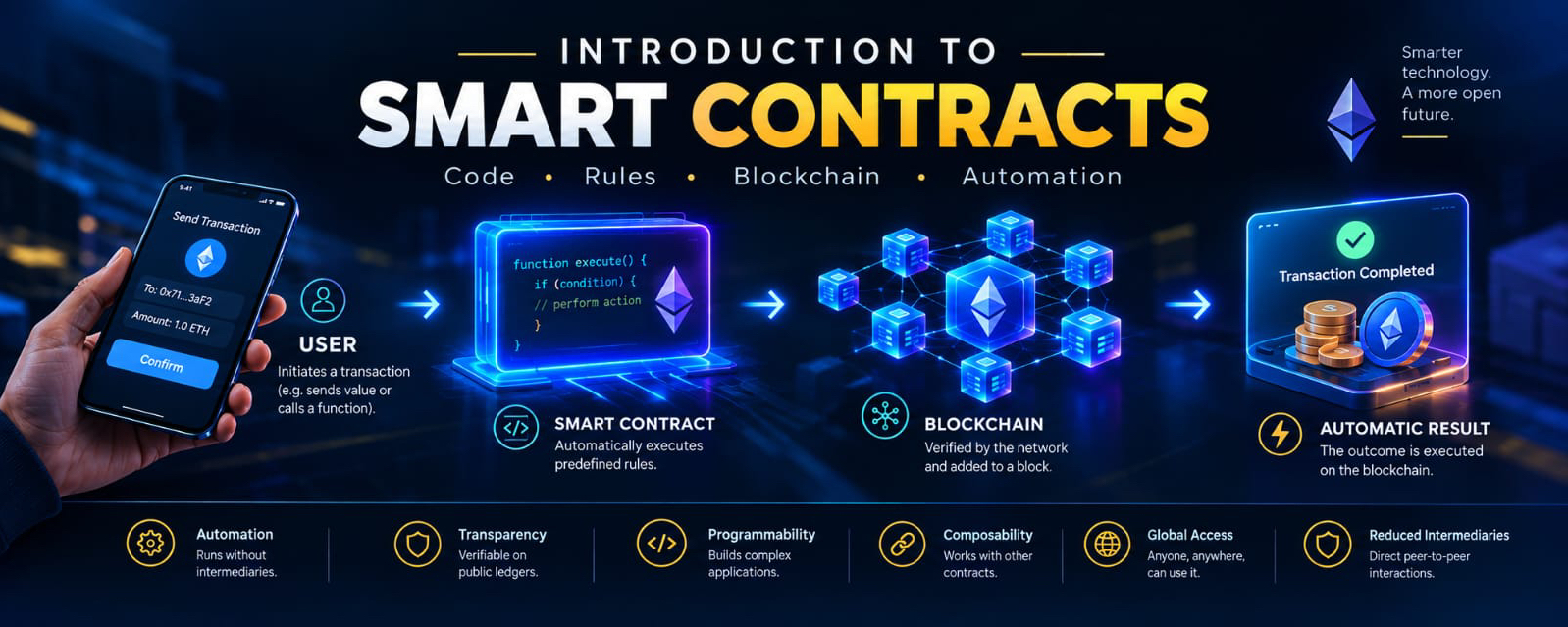
A smart contract is a computer program stored on a blockchain that automatically executes predefined rules when its conditions are met.
Think of a vending machine:
💰 Insert payment → select product → conditions are checked → product is released.
No cashier is needed. The machine follows its programmed rules.
🔍 How does a smart contract work?
A developer writes the rules in code. On Ethereum, Solidity is one of the main programming languages used.
The code is compiled into instructions the Ethereum Virtual Machine (EVM) can execute.
Once deployed, the contract gets a blockchain address and can interact with users and other contracts.
User → Transaction → Smart Contract → Blockchain → Result
⛽ What is gas?
Blockchain computation requires resources.
On Ethereum, gas measures the computational work required to perform an operation. When you make a transaction that changes blockchain state, you generally pay a fee in $ETH .
Simple rule:
More computation → more gas required.
🌍 What can smart contracts do?
They can form the foundation of:
💰 DeFi — lending, borrowing & trading
🪙 Tokens — programmable digital assets
🎨 NFTs — digital ownership systems
🏛️ DAOs — blockchain-based organizations
🎮 Blockchain games
💱 Decentralized exchanges
They can also interact with other contracts, creating complex applications from smaller building blocks.
⚡ Why are they useful?
✅ Automatic execution
✅ Transparent blockchain records
✅ Programmable rules
✅ Reduced reliance on intermediaries
✅ Global accessibility
✅ Composability with other contracts
⚠️ But there's a catch...
Smart contracts are code, and code can have bugs.
A vulnerability can potentially allow attackers to manipulate logic, bypass permissions or steal funds.
Transactions can also be difficult to reverse, and smart contracts may depend on oracles to receive information from the outside world.
So:
Smart contracts don't eliminate trust completely. They shift some of the trust toward code, the blockchain and the system's design.
🧠 Remember this:
Smart contract = Code + Blockchain + Rules + Automatic execution.
Bitcoin demonstrated decentralized digital money.
Smart contracts expanded the idea:
What if a blockchain could execute programs, not just record transactions?
That's the foundation of much of today's Web3 ecosystem. 🔐
#SmartContracts #Ethereum✅ #Blockchain #Web3 #CryptoEducation
⚙️ What Is a Smart Contract? Explained Simply
You've probably heard that smart contracts power DeFi, NFTs and Web3. But what actually are they?
A smart contract is a computer program stored on a blockchain that automatically executes predefined rules when its conditions are met.
Think of a vending machine:
💰 Insert payment → select product → conditions are checked → product is released.
No cashier is needed. The machine follows its programmed rules.
🔍 How does a smart contract work?
A developer writes the rules in code. On Ethereum, Solidity is one of the main programming languages used.
The code is compiled into instructions the Ethereum Virtual Machine (EVM) can execute.
Once deployed, the contract gets a blockchain address and can interact with users and other contracts.
User → Transaction → Smart Contract → Blockchain → Result
⛽ What is gas?
Blockchain computation requires resources.
On Ethereum, gas measures the computational work required to perform an operation. When you make a transaction that changes blockchain state, you generally pay a fee in $ETH .
Simple rule:
More computation → more gas required.
🌍 What can smart contracts do?
They can form the foundation of:
💰 DeFi — lending, borrowing & trading
🪙 Tokens — programmable digital assets
🎨 NFTs — digital ownership systems
🏛️ DAOs — blockchain-based organizations
🎮 Blockchain games
💱 Decentralized exchanges
They can also interact with other contracts, creating complex applications from smaller building blocks.
⚡ Why are they useful?
✅ Automatic execution
✅ Transparent blockchain records
✅ Programmable rules
✅ Reduced reliance on intermediaries
✅ Global accessibility
✅ Composability with other contracts
⚠️ But there's a catch...
Smart contracts are code, and code can have bugs.
A vulnerability can potentially allow attackers to manipulate logic, bypass permissions or steal funds.
Transactions can also be difficult to reverse, and smart contracts may depend on oracles to receive information from the outside world.
So:
Smart contracts don't eliminate trust completely. They shift some of the trust toward code, the blockchain and the system's design.
🧠 Remember this:
Smart contract = Code + Blockchain + Rules + Automatic execution.
Bitcoin demonstrated decentralized digital money.
Smart contracts expanded the idea:
What if a blockchain could execute programs, not just record transactions?
That's the foundation of much of today's Web3 ecosystem. 🔐
#SmartContracts #Ethereum✅ #Blockchain #Web3 #CryptoEducation
A smart contract is a computer program stored on a blockchain that automatically executes predefined rules when its conditions are met.
Think of a vending machine:
💰 Insert payment → select product → conditions are checked → product is released.
No cashier is needed. The machine follows its programmed rules.
🔍 How does a smart contract work?
A developer writes the rules in code. On Ethereum, Solidity is one of the main programming languages used.
The code is compiled into instructions the Ethereum Virtual Machine (EVM) can execute.
Once deployed, the contract gets a blockchain address and can interact with users and other contracts.
User → Transaction → Smart Contract → Blockchain → Result
⛽ What is gas?
Blockchain computation requires resources.
On Ethereum, gas measures the computational work required to perform an operation. When you make a transaction that changes blockchain state, you generally pay a fee in $ETH .
Simple rule:
More computation → more gas required.
🌍 What can smart contracts do?
They can form the foundation of:
💰 DeFi — lending, borrowing & trading
🪙 Tokens — programmable digital assets
🎨 NFTs — digital ownership systems
🏛️ DAOs — blockchain-based organizations
🎮 Blockchain games
💱 Decentralized exchanges
They can also interact with other contracts, creating complex applications from smaller building blocks.
⚡ Why are they useful?
✅ Automatic execution
✅ Transparent blockchain records
✅ Programmable rules
✅ Reduced reliance on intermediaries
✅ Global accessibility
✅ Composability with other contracts
⚠️ But there's a catch...
Smart contracts are code, and code can have bugs.
A vulnerability can potentially allow attackers to manipulate logic, bypass permissions or steal funds.
Transactions can also be difficult to reverse, and smart contracts may depend on oracles to receive information from the outside world.
So:
Smart contracts don't eliminate trust completely. They shift some of the trust toward code, the blockchain and the system's design.
🧠 Remember this:
Smart contract = Code + Blockchain + Rules + Automatic execution.
Bitcoin demonstrated decentralized digital money.
Smart contracts expanded the idea:
What if a blockchain could execute programs, not just record transactions?
That's the foundation of much of today's Web3 ecosystem. 🔐
#SmartContracts #Ethereum✅ #Blockchain #Web3 #CryptoEducation
1
90

·
--
Most people will probably read S&P Global’s move to acquire OpenZeppelin as another sign of traditional finance moving closer to crypto
I’m looking at it from a different angle
When financial products become programmable, I think the way we measure risk may need to change as well
In traditional finance we usually look at the issuer, the balance sheet, the collateral and who holds custody. On-chain finance adds another layer to all of this, the code itself
A tokenized bond can have a strong issuer, attractive yield and solid collateral, but if the smart contract controlling ownership, transfers or access has a critical weakness, part of the risk may sit somewhere traditional analysis does not fully capture
That’s what makes S&P Global’s agreement to acquire OpenZeppelin interesting to me. Not simply because another major financial company is moving closer to crypto, but because it points to something more fundamental
As finance becomes programmable, code quality may stop being a technical detail and start becoming part of the financial product itself
That could also change the questions institutions ask before committing capital. It may no longer be only about who issued the asset, but also who verified the code behind it
Tokenization is often described as moving stocks, bonds, funds and other assets onto blockchain infrastructure. But putting an asset on-chain does not automatically make its risk easier to understand
It may create a new type of risk that capital still needs to learn how to measure
So maybe the next stage of on-chain finance is not simply about bringing more assets onto blockchains
It may be about making the risks inside the code measurable enough for large capital to trust
If that happens, the infrastructure that verifies financial code may eventually become just as important as the infrastructure that executes it
#Tokenization #DigitalAssets #SmartContracts #Binance
Most people will probably read S&P Global’s move to acquire OpenZeppelin as another sign of traditional finance moving closer to crypto
I’m looking at it from a different angle
When financial products become programmable, I think the way we measure risk may need to change as well
In traditional finance we usually look at the issuer, the balance sheet, the collateral and who holds custody. On-chain finance adds another layer to all of this, the code itself
A tokenized bond can have a strong issuer, attractive yield and solid collateral, but if the smart contract controlling ownership, transfers or access has a critical weakness, part of the risk may sit somewhere traditional analysis does not fully capture
That’s what makes S&P Global’s agreement to acquire OpenZeppelin interesting to me. Not simply because another major financial company is moving closer to crypto, but because it points to something more fundamental
As finance becomes programmable, code quality may stop being a technical detail and start becoming part of the financial product itself
That could also change the questions institutions ask before committing capital. It may no longer be only about who issued the asset, but also who verified the code behind it
Tokenization is often described as moving stocks, bonds, funds and other assets onto blockchain infrastructure. But putting an asset on-chain does not automatically make its risk easier to understand
It may create a new type of risk that capital still needs to learn how to measure
So maybe the next stage of on-chain finance is not simply about bringing more assets onto blockchains
It may be about making the risks inside the code measurable enough for large capital to trust
If that happens, the infrastructure that verifies financial code may eventually become just as important as the infrastructure that executes it
#Tokenization #DigitalAssets #SmartContracts #Binance
I’m looking at it from a different angle
When financial products become programmable, I think the way we measure risk may need to change as well
In traditional finance we usually look at the issuer, the balance sheet, the collateral and who holds custody. On-chain finance adds another layer to all of this, the code itself
A tokenized bond can have a strong issuer, attractive yield and solid collateral, but if the smart contract controlling ownership, transfers or access has a critical weakness, part of the risk may sit somewhere traditional analysis does not fully capture
That’s what makes S&P Global’s agreement to acquire OpenZeppelin interesting to me. Not simply because another major financial company is moving closer to crypto, but because it points to something more fundamental
As finance becomes programmable, code quality may stop being a technical detail and start becoming part of the financial product itself
That could also change the questions institutions ask before committing capital. It may no longer be only about who issued the asset, but also who verified the code behind it
Tokenization is often described as moving stocks, bonds, funds and other assets onto blockchain infrastructure. But putting an asset on-chain does not automatically make its risk easier to understand
It may create a new type of risk that capital still needs to learn how to measure
So maybe the next stage of on-chain finance is not simply about bringing more assets onto blockchains
It may be about making the risks inside the code measurable enough for large capital to trust
If that happens, the infrastructure that verifies financial code may eventually become just as important as the infrastructure that executes it
#Tokenization #DigitalAssets #SmartContracts #Binance
2
23.1k

·
--
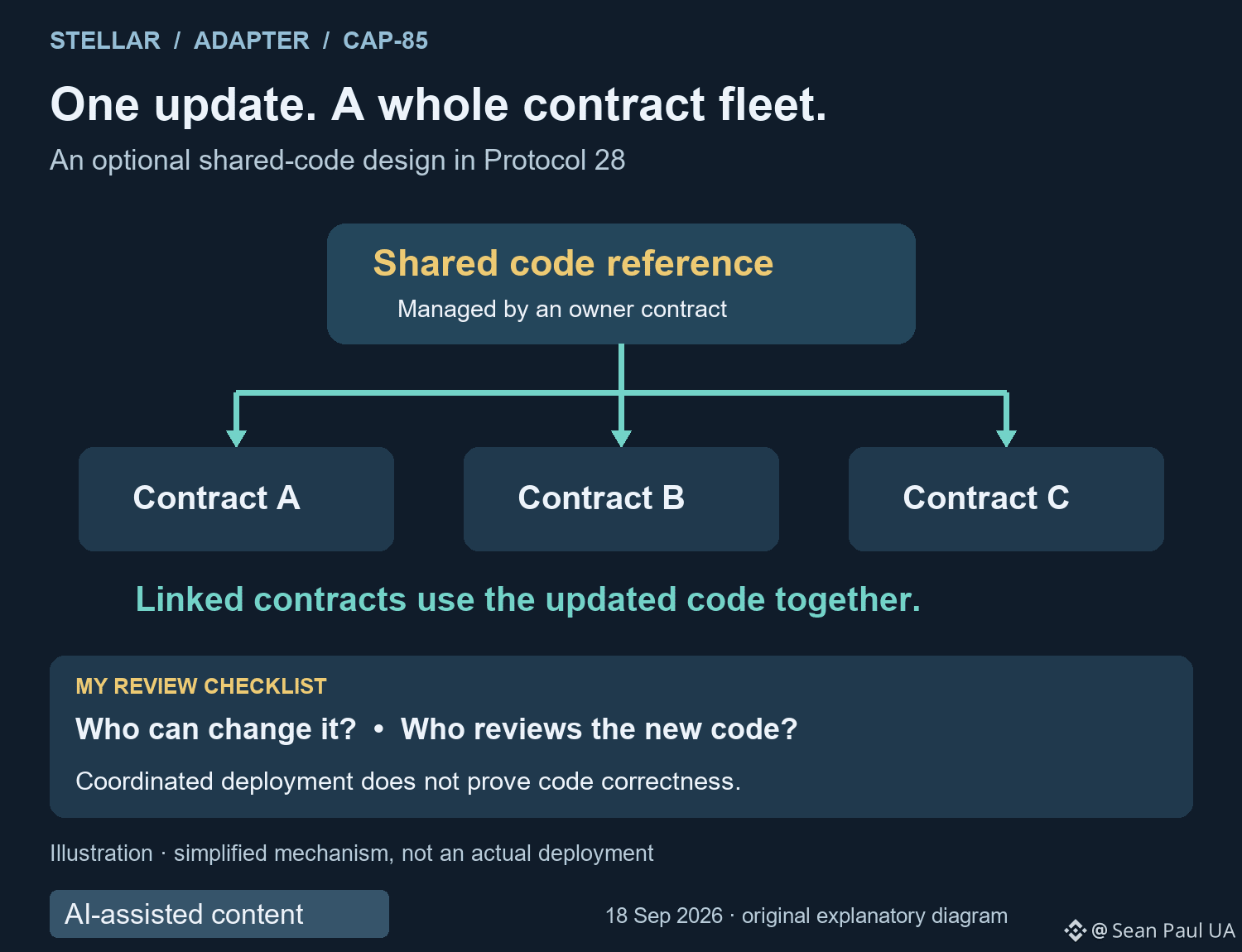
Stellar's Protocol 28 is live. The feature I'm watching is one update reaching a whole fleet of contracts.
Adapter's CAP-85 lets participating smart contracts use a shared code reference managed by another contract. Updating that reference changes the code used by the entire linked fleet together. Stellar's documentation calls this an atomic upgrade.
Why it matters: a large rollout no longer has to leave some linked contracts on the old version while others run the new one. Teams have to adopt this design; it doesn't automatically convert every existing contract.
My next check would be who controls that shared reference and how changes are reviewed. Updating everything together can remove a messy rollout window, but it doesn't prove that the replacement code is correct. One coordinated update still needs careful authorization and testing.
There is a separate speed story, too. The Stellar Development Foundation says the full consensus performance gains will be phased in as parallel transaction-set downloading is enabled. I wouldn't treat the protocol number alone as proof of a particular throughput increase.
What safeguard would you want before an app can update an entire contract fleet together?
$XLM #Stellar #SmartContracts
Stellar's Protocol 28 is live. The feature I'm watching is one update reaching a whole fleet of contracts.
Adapter's CAP-85 lets participating smart contracts use a shared code reference managed by another contract. Updating that reference changes the code used by the entire linked fleet together. Stellar's documentation calls this an atomic upgrade.
Why it matters: a large rollout no longer has to leave some linked contracts on the old version while others run the new one. Teams have to adopt this design; it doesn't automatically convert every existing contract.
My next check would be who controls that shared reference and how changes are reviewed. Updating everything together can remove a messy rollout window, but it doesn't prove that the replacement code is correct. One coordinated update still needs careful authorization and testing.
There is a separate speed story, too. The Stellar Development Foundation says the full consensus performance gains will be phased in as parallel transaction-set downloading is enabled. I wouldn't treat the protocol number alone as proof of a particular throughput increase.
What safeguard would you want before an app can update an entire contract fleet together?
$XLM #Stellar #SmartContracts
Adapter's CAP-85 lets participating smart contracts use a shared code reference managed by another contract. Updating that reference changes the code used by the entire linked fleet together. Stellar's documentation calls this an atomic upgrade.
Why it matters: a large rollout no longer has to leave some linked contracts on the old version while others run the new one. Teams have to adopt this design; it doesn't automatically convert every existing contract.
My next check would be who controls that shared reference and how changes are reviewed. Updating everything together can remove a messy rollout window, but it doesn't prove that the replacement code is correct. One coordinated update still needs careful authorization and testing.
There is a separate speed story, too. The Stellar Development Foundation says the full consensus performance gains will be phased in as parallel transaction-set downloading is enabled. I wouldn't treat the protocol number alone as proof of a particular throughput increase.
What safeguard would you want before an app can update an entire contract fleet together?
$XLM #Stellar #SmartContracts
1
110

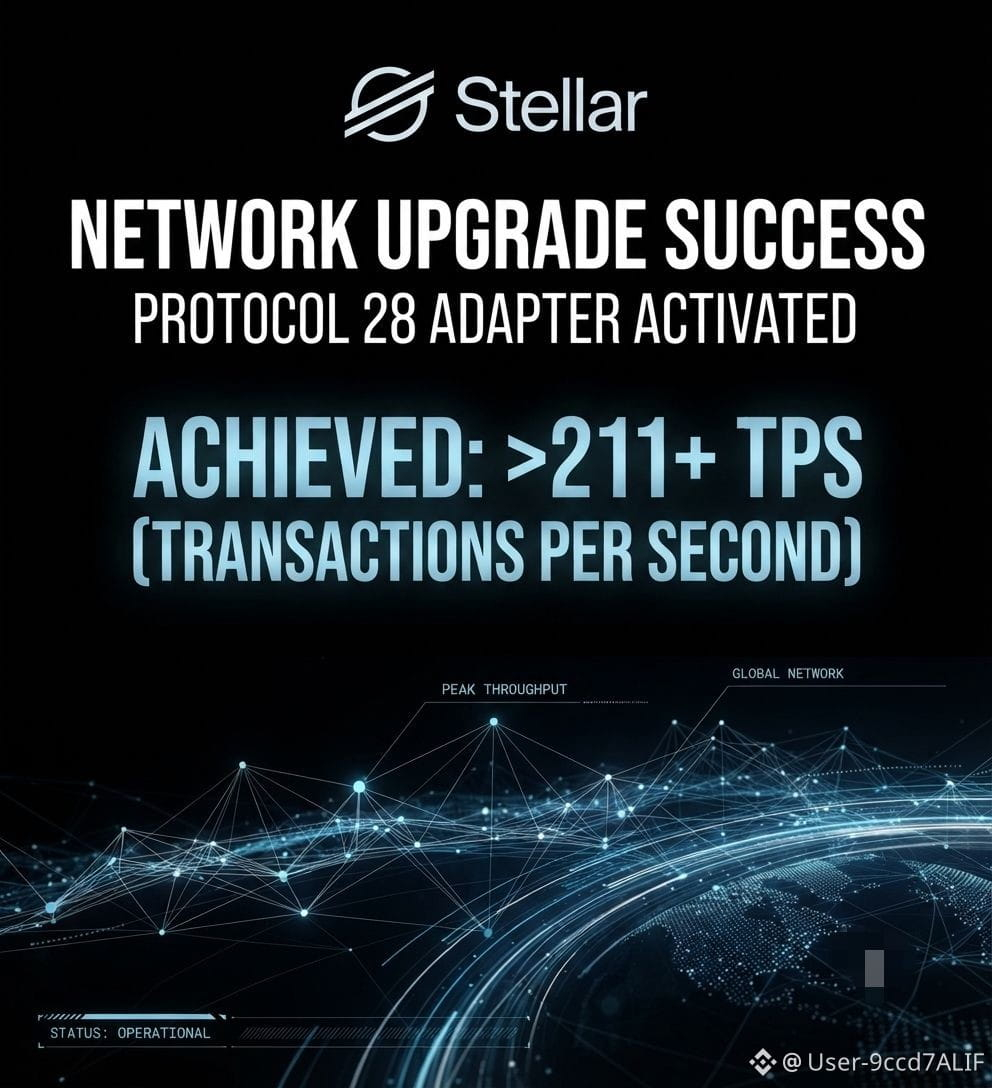
🚀 Stellar Activates Protocol 28 as Network Surpasses 211 TPS
Stellar has officially activated Protocol 28, known as “Adapter,” on its mainnet, marking another step in the network’s ongoing scalability and smart-contract development.
⚡ 211+ TPS Milestone Around the same time, Stellar recorded more than 211 transactions per second across 100 consecutive blocks, highlighting a new sustained throughput milestone. This performance figure is separate from the protocol upgrade itself, as Stellar is gradually rolling out parallel transaction-set downloading.
🔧 What Protocol 28 Brings:
• CAP-83: Allows validators to continue consensus even when transaction data is delayed or invalid.
• CAP-85: Enables multiple Soroban smart contracts to use a shared, externally managed executable, making large-scale contract upgrades more efficient and atomic.
• CAP-86: Introduces sparse-map functionality to make smart-contract data migrations easier as applications evolve.
📈 Overall, Protocol 28 is focused heavily on improving Stellar’s smart-contract infrastructure while also strengthening the network’s ability to handle increasing workloads.
For developers, infrastructure operators, and financial applications building on Stellar, Adapter represents another important upgrade toward a more scalable and flexible ecosystem.
#XLM #Protocol28 #Soroban
#Web3 #SmartContracts
🚀 Stellar Activates Protocol 28 as Network Surpasses 211 TPS
Stellar has officially activated Protocol 28, known as “Adapter,” on its mainnet, marking another step in the network’s ongoing scalability and smart-contract development.
⚡ 211+ TPS Milestone Around the same time, Stellar recorded more than 211 transactions per second across 100 consecutive blocks, highlighting a new sustained throughput milestone. This performance figure is separate from the protocol upgrade itself, as Stellar is gradually rolling out parallel transaction-set downloading.
🔧 What Protocol 28 Brings:
• CAP-83: Allows validators to continue consensus even when transaction data is delayed or invalid.
• CAP-85: Enables multiple Soroban smart contracts to use a shared, externally managed executable, making large-scale contract upgrades more efficient and atomic.
• CAP-86: Introduces sparse-map functionality to make smart-contract data migrations easier as applications evolve.
📈 Overall, Protocol 28 is focused heavily on improving Stellar’s smart-contract infrastructure while also strengthening the network’s ability to handle increasing workloads.
For developers, infrastructure operators, and financial applications building on Stellar, Adapter represents another important upgrade toward a more scalable and flexible ecosystem.
#XLM #Protocol28 #Soroban
#Web3 #SmartContracts
Stellar has officially activated Protocol 28, known as “Adapter,” on its mainnet, marking another step in the network’s ongoing scalability and smart-contract development.
⚡ 211+ TPS Milestone Around the same time, Stellar recorded more than 211 transactions per second across 100 consecutive blocks, highlighting a new sustained throughput milestone. This performance figure is separate from the protocol upgrade itself, as Stellar is gradually rolling out parallel transaction-set downloading.
🔧 What Protocol 28 Brings:
• CAP-83: Allows validators to continue consensus even when transaction data is delayed or invalid.
• CAP-85: Enables multiple Soroban smart contracts to use a shared, externally managed executable, making large-scale contract upgrades more efficient and atomic.
• CAP-86: Introduces sparse-map functionality to make smart-contract data migrations easier as applications evolve.
📈 Overall, Protocol 28 is focused heavily on improving Stellar’s smart-contract infrastructure while also strengthening the network’s ability to handle increasing workloads.
For developers, infrastructure operators, and financial applications building on Stellar, Adapter represents another important upgrade toward a more scalable and flexible ecosystem.
#XLM #Protocol28 #Soroban
#Web3 #SmartContracts
91

·
--

Article
AI Can Protect Crypto, Says Vitalik Buterin – What That Means for YouVitalik Buterin, the co‑founder of Ethereum, has just flipped a common fear on its head. While many people worry that artificial intelligence will bring new ways for hackers to break into blockchain systems, he argues the opposite: AI can actually help developers mathematically verify entire software systems, turning the same technology that could be used for attacks into a powerful tool for defense.
The Concept: AI as a Security Auditor
Think of a software system as a giant, complex machine with thousands of moving parts. Traditionally, developers test each part manually or with automated scripts, but that’s like checking every gear in a car by hand—time‑consuming and prone to human error. AI, especially large language models and advanced verification algorithms, can scan the entire codebase, identify hidden bugs, and prove mathematically that the system behaves as intended. It’s the blockchain equivalent of having a super‑intelligent mechanic that can spot a flaw before it becomes a problem. #AIinCrypto #SmartContracts
Real‑World Example: The $ETH Ecosystem
In the Ethereum ecosystem, smart contracts are the backbone of decentralized applications. A single line of faulty code can lead to millions of dollars in losses, as seen in past exploits. By integrating AI verification tools, developers can run formal proofs that their contracts are free from vulnerabilities before deployment. Imagine a new DeFi protocol that automatically proves its safety to users, reducing the risk of rug pulls and hacks. This approach is already being piloted by some leading Ethereum projects, and the results are promising: fewer bugs, faster development cycles, and higher user trust.
Takeaway: Embrace AI‑Powered Security
If you’re building on $ETH or just following the market, consider the following steps:
1. Stay informed about AI verification tools and libraries that integrate with Solidity and other smart‑contract languages.
2. Encourage your team to adopt formal verification practices early in the development cycle.
3. Keep an eye on emerging standards that may mandate AI‑based security audits for high‑value contracts.
By doing so, you’ll not only protect your projects but also contribute to a safer, more resilient blockchain ecosystem. #SecureDeFi
What do you think—will AI become the new standard for blockchain security, or do you see other solutions taking the lead?
AI Can Protect Crypto, Says Vitalik Buterin – What That Means for You
Vitalik Buterin, the co‑founder of Ethereum, has just flipped a common fear on its head. While many people worry that artificial intelligence will bring new ways for hackers to break into blockchain systems, he argues the opposite: AI can actually help developers mathematically verify entire software systems, turning the same technology that could be used for attacks into a powerful tool for defense.
The Concept: AI as a Security Auditor
Think of a software system as a giant, complex machine with thousands of moving parts. Traditionally, developers test each part manually or with automated scripts, but that’s like checking every gear in a car by hand—time‑consuming and prone to human error. AI, especially large language models and advanced verification algorithms, can scan the entire codebase, identify hidden bugs, and prove mathematically that the system behaves as intended. It’s the blockchain equivalent of having a super‑intelligent mechanic that can spot a flaw before it becomes a problem. #AIinCrypto #SmartContracts
Real‑World Example: The $ETH Ecosystem
In the Ethereum ecosystem, smart contracts are the backbone of decentralized applications. A single line of faulty code can lead to millions of dollars in losses, as seen in past exploits. By integrating AI verification tools, developers can run formal proofs that their contracts are free from vulnerabilities before deployment. Imagine a new DeFi protocol that automatically proves its safety to users, reducing the risk of rug pulls and hacks. This approach is already being piloted by some leading Ethereum projects, and the results are promising: fewer bugs, faster development cycles, and higher user trust.
Takeaway: Embrace AI‑Powered Security
If you’re building on $ETH or just following the market, consider the following steps:
1. Stay informed about AI verification tools and libraries that integrate with Solidity and other smart‑contract languages.
2. Encourage your team to adopt formal verification practices early in the development cycle.
3. Keep an eye on emerging standards that may mandate AI‑based security audits for high‑value contracts.
By doing so, you’ll not only protect your projects but also contribute to a safer, more resilient blockchain ecosystem. #SecureDeFi
What do you think—will AI become the new standard for blockchain security, or do you see other solutions taking the lead?
The Concept: AI as a Security Auditor
Think of a software system as a giant, complex machine with thousands of moving parts. Traditionally, developers test each part manually or with automated scripts, but that’s like checking every gear in a car by hand—time‑consuming and prone to human error. AI, especially large language models and advanced verification algorithms, can scan the entire codebase, identify hidden bugs, and prove mathematically that the system behaves as intended. It’s the blockchain equivalent of having a super‑intelligent mechanic that can spot a flaw before it becomes a problem. #AIinCrypto #SmartContracts
Real‑World Example: The $ETH Ecosystem
In the Ethereum ecosystem, smart contracts are the backbone of decentralized applications. A single line of faulty code can lead to millions of dollars in losses, as seen in past exploits. By integrating AI verification tools, developers can run formal proofs that their contracts are free from vulnerabilities before deployment. Imagine a new DeFi protocol that automatically proves its safety to users, reducing the risk of rug pulls and hacks. This approach is already being piloted by some leading Ethereum projects, and the results are promising: fewer bugs, faster development cycles, and higher user trust.
Takeaway: Embrace AI‑Powered Security
If you’re building on $ETH or just following the market, consider the following steps:
1. Stay informed about AI verification tools and libraries that integrate with Solidity and other smart‑contract languages.
2. Encourage your team to adopt formal verification practices early in the development cycle.
3. Keep an eye on emerging standards that may mandate AI‑based security audits for high‑value contracts.
By doing so, you’ll not only protect your projects but also contribute to a safer, more resilient blockchain ecosystem. #SecureDeFi
What do you think—will AI become the new standard for blockchain security, or do you see other solutions taking the lead?
21
·
--
One Token Score Is Not Enough$JASONFLY shows why a quick token score and deeper contract intelligence can produce very different results without either number being fabricated.
The BNB Smart Chain contract returned 90/100 in the quick public scan. That surface-level result was followed by a deeper score of 35/100 after TokenToolHub resolved the implementation and examined a broader authority and control surface.
The source is verified, but verification only confirms that published source matches the analyzed bytecode. It does not remove privileged functions or settle who controls an upgradeable proxy.
The deeper report found active ownership, possible implementation replacement, supply expansion and reduction paths, mutable fee controls and generic execution capability. The proxy administrator was not resolved.
Important market-side questions also remained open. Trading simulation was unavailable, so honeypot status, current buy and sell taxes and practical selling behavior were unresolved. Liquidity and holder evidence were not returned in the report.
The right conclusion is not that 90 is false or 35 proves an exploit. The two scores answer different questions with different evidence depth.
Use the quick result for orientation. Then check the resolved implementation, ownership, upgrade authority, supply controls, fee controls, recent privileged activity and unresolved coverage before relying on it.
Full TokenToolHub report:
https://tokentoolhub.com/token-safety-checker/?net=bsc&address=0x8514638EeFc900263709b154805027E824E87777
#BNBChain #CryptoResearch #SmartContracts #Web3Security #TokenSafety
One Token Score Is Not Enough
$JASONFLY shows why a quick token score and deeper contract intelligence can produce very different results without either number being fabricated.
The BNB Smart Chain contract returned 90/100 in the quick public scan. That surface-level result was followed by a deeper score of 35/100 after TokenToolHub resolved the implementation and examined a broader authority and control surface.
The source is verified, but verification only confirms that published source matches the analyzed bytecode. It does not remove privileged functions or settle who controls an upgradeable proxy.
The deeper report found active ownership, possible implementation replacement, supply expansion and reduction paths, mutable fee controls and generic execution capability. The proxy administrator was not resolved.
Important market-side questions also remained open. Trading simulation was unavailable, so honeypot status, current buy and sell taxes and practical selling behavior were unresolved. Liquidity and holder evidence were not returned in the report.
The right conclusion is not that 90 is false or 35 proves an exploit. The two scores answer different questions with different evidence depth.
Use the quick result for orientation. Then check the resolved implementation, ownership, upgrade authority, supply controls, fee controls, recent privileged activity and unresolved coverage before relying on it.
Full TokenToolHub report:
https://tokentoolhub.com/token-safety-checker/?net=bsc&address=0x8514638EeFc900263709b154805027E824E87777
#BNBChain #CryptoResearch #SmartContracts #Web3Security #TokenSafety
The BNB Smart Chain contract returned 90/100 in the quick public scan. That surface-level result was followed by a deeper score of 35/100 after TokenToolHub resolved the implementation and examined a broader authority and control surface.
The source is verified, but verification only confirms that published source matches the analyzed bytecode. It does not remove privileged functions or settle who controls an upgradeable proxy.
The deeper report found active ownership, possible implementation replacement, supply expansion and reduction paths, mutable fee controls and generic execution capability. The proxy administrator was not resolved.
Important market-side questions also remained open. Trading simulation was unavailable, so honeypot status, current buy and sell taxes and practical selling behavior were unresolved. Liquidity and holder evidence were not returned in the report.
The right conclusion is not that 90 is false or 35 proves an exploit. The two scores answer different questions with different evidence depth.
Use the quick result for orientation. Then check the resolved implementation, ownership, upgrade authority, supply controls, fee controls, recent privileged activity and unresolved coverage before relying on it.
Full TokenToolHub report:
https://tokentoolhub.com/token-safety-checker/?net=bsc&address=0x8514638EeFc900263709b154805027E824E87777
#BNBChain #CryptoResearch #SmartContracts #Web3Security #TokenSafety
4

Architecture Agent OS : Portefeuilles autonomes et Smart Contracts
Titre : L'évolution des portefeuilles : Des clés privées aux Smart Accounts 🤖💳
Contenu :
Avec l'avènement des architectures comme Binance Agent OS, le portefeuille crypto ne se contente plus de stocker des clés : il devient programmable.
💡 Les apports majeurs de l'Account Abstraction :
Gestion automatisée des règles : Définition de plafonds de dépenses quotidiens pour les bots.
Transactions regroupées (Batching) : Exécution de plusieurs opérations en une seule validation pour réduire les frais de gaz.
Récupération sociale : Sécurisation de l'accès sans reposer uniquement sur une phrase de récupération classique.
L'expérience utilisateur du portefeuille Web3 se rapproche progressivement des standards de la banque moderne.
#BinanceAgentOS #SmartContracts #AccountAbstraction #CryptoInnovation #Web3 @Dusk_Foundation
Architecture Agent OS : Portefeuilles autonomes et Smart Contracts
Titre : L'évolution des portefeuilles : Des clés privées aux Smart Accounts 🤖💳
Contenu :
Avec l'avènement des architectures comme Binance Agent OS, le portefeuille crypto ne se contente plus de stocker des clés : il devient programmable.
💡 Les apports majeurs de l'Account Abstraction :
Gestion automatisée des règles : Définition de plafonds de dépenses quotidiens pour les bots.
Transactions regroupées (Batching) : Exécution de plusieurs opérations en une seule validation pour réduire les frais de gaz.
Récupération sociale : Sécurisation de l'accès sans reposer uniquement sur une phrase de récupération classique.
L'expérience utilisateur du portefeuille Web3 se rapproche progressivement des standards de la banque moderne.
#BinanceAgentOS #SmartContracts #AccountAbstraction #CryptoInnovation #Web3 @Dusk
Titre : L'évolution des portefeuilles : Des clés privées aux Smart Accounts 🤖💳
Contenu :
Avec l'avènement des architectures comme Binance Agent OS, le portefeuille crypto ne se contente plus de stocker des clés : il devient programmable.
💡 Les apports majeurs de l'Account Abstraction :
Gestion automatisée des règles : Définition de plafonds de dépenses quotidiens pour les bots.
Transactions regroupées (Batching) : Exécution de plusieurs opérations en une seule validation pour réduire les frais de gaz.
Récupération sociale : Sécurisation de l'accès sans reposer uniquement sur une phrase de récupération classique.
L'expérience utilisateur du portefeuille Web3 se rapproche progressivement des standards de la banque moderne.
#BinanceAgentOS #SmartContracts #AccountAbstraction #CryptoInnovation #Web3 @Dusk
98

Building, Prototyping, & Testnet Implementation🛠️ From Blueprint to Testnet: Phase 2 of Web3 Engineering!
Prototyping is where theoretical code meets battle-tested execution. Through public and private testnets, developers stress-test smart contracts, simulate high-concurrency transaction loads, and refine gas efficiency before mainnet deployment.
💬 Have you ever tested dApps on a testnet to qualify for ecosystem incentives? Share your experience!
#BinanceSquare #SmartContracts #BlockchainEngineering #Testnet #Web3Building
Smart Contract Engineering, Testnet Architectures, and Stress Testing
1. The Engineering Pipeline of Decentralized Applications
Once the theoretical groundwork and architectural specifications are finalized in Phase 1, a project transitions into Phase 2: engineering, prototyping, and environment testing. In centralized software development, staging environments allow engineers to test code in near-production settings without impacting end-users. In blockchain development, this staging ground is represented by test networks (Testnets)—sandboxed environments that replicate the execution engine, consensus rules, and state machine of a blockchain without using real economic assets.
Developing smart contracts—primarily written in languages like Solidity, Rust, or Move—requires an unprecedented focus on security and resource efficiency. Unlike traditional software where memory allocation is cheap, every instruction executed on a decentralized state machine consumes "gas"—a measure of computational effort. Inefficient code loops, redundant storage calls, and sub-optimal data structures directly translate to higher transaction fees for end-users, rendering protocols uncompetitive in gas-sensitive market environments.
2. Smart Contract Optimization and Vulnerability Prevention
During the active prototyping phase, developers utilize sophisticated integrated development environments (IDEs) and framework suites such as Hardhat, Foundry, and Anchor. Engineering teams focus heavily on gas optimization techniques:
Storage vs. Memory Allocation: In Ethereum-compatible execution environments, writing data to permanent contract storage (SSTORE) is exponentially more expensive than temporary memory execution (MSTORE). Developers optimize contracts by packing storage variables into single 32-byte slots, utilizing immutable and constant variables, and leveraging transient storage where applicable.
Reentrancy Protection: One of the most catastrophic vulnerabilities in smart contract history is the reentrancy attack, wherein an external malicious contract recursively calls back into a target contract before the target updates its internal state balances. Developers mitigate this during prototyping by implementing the Checks-Effects-Interactions pattern and utilizing non-reentrant mutex locks.
3. Testnet Deployments: Alpha, Beta, and Incentive Structure
Deploying a protocol to a public testnet (such as Ethereum's Sepolia or Holesky, or custom dedicated testnets) serves as the primary mechanism for empirical validation. Testnets allow developers to simulate complex multi-user interactions under real network latency conditions.
The testnet phase generally unfolds across three distinct sub-stages:
Private Devnet: Closed internal network deployed locally or across controlled nodes to test basic smart contract deployment, state transitions, and front-end Web3 interface (dApp) integration via libraries like Ethers.js, Viem, or Web3.js.
Incentivized Testnet: A public testnet campaign designed to stress-test network infrastructure by offering future token rewards to node operators, validators, and edge-case users. Participants attempt to break the network by submitting high volumes of concurrent transactions, generating maximum block congestion, and probing for state desynchronization bugs.
Bug Bounty Programs: In parallel with public testnets, protocols partner with security platforms such as Immunefi to launch competitive bug bounties. White-hat hackers are financially incentivized to discover zero-day exploits, logical errors, or reentrancy bugs within the open-source code repository before real capital is placed at risk on the mainnet.
4. Theoretical Conclusion
Phase 2 bridges abstract theory and practical execution. A successful testnet phase provides concrete metrics regarding transaction finality times, peak throughput capability, smart contract gas overhead, and resilience against network spam—ensuring the application layer is structurally prepared for mainnet execution.
Why We Reached This Conclusion
We reached this conclusion because stress-testing is the ultimate filter between viable Web3 projects and failed experiments. On Binance Square, emphasizing the transition from testnet to real-world usage educates the community on assessing technical maturity, helping traders differentiate between marketing hype and genuine engineering execution.
Building, Prototyping, & Testnet Implementation
🛠️ From Blueprint to Testnet: Phase 2 of Web3 Engineering!
Prototyping is where theoretical code meets battle-tested execution. Through public and private testnets, developers stress-test smart contracts, simulate high-concurrency transaction loads, and refine gas efficiency before mainnet deployment.
💬 Have you ever tested dApps on a testnet to qualify for ecosystem incentives? Share your experience!
#BinanceSquare #SmartContracts #BlockchainEngineering #Testnet #Web3Building
Smart Contract Engineering, Testnet Architectures, and Stress Testing
1. The Engineering Pipeline of Decentralized Applications
Once the theoretical groundwork and architectural specifications are finalized in Phase 1, a project transitions into Phase 2: engineering, prototyping, and environment testing. In centralized software development, staging environments allow engineers to test code in near-production settings without impacting end-users. In blockchain development, this staging ground is represented by test networks (Testnets)—sandboxed environments that replicate the execution engine, consensus rules, and state machine of a blockchain without using real economic assets.
Developing smart contracts—primarily written in languages like Solidity, Rust, or Move—requires an unprecedented focus on security and resource efficiency. Unlike traditional software where memory allocation is cheap, every instruction executed on a decentralized state machine consumes "gas"—a measure of computational effort. Inefficient code loops, redundant storage calls, and sub-optimal data structures directly translate to higher transaction fees for end-users, rendering protocols uncompetitive in gas-sensitive market environments.
2. Smart Contract Optimization and Vulnerability Prevention
During the active prototyping phase, developers utilize sophisticated integrated development environments (IDEs) and framework suites such as Hardhat, Foundry, and Anchor. Engineering teams focus heavily on gas optimization techniques:
Storage vs. Memory Allocation: In Ethereum-compatible execution environments, writing data to permanent contract storage (SSTORE) is exponentially more expensive than temporary memory execution (MSTORE). Developers optimize contracts by packing storage variables into single 32-byte slots, utilizing immutable and constant variables, and leveraging transient storage where applicable.
Reentrancy Protection: One of the most catastrophic vulnerabilities in smart contract history is the reentrancy attack, wherein an external malicious contract recursively calls back into a target contract before the target updates its internal state balances. Developers mitigate this during prototyping by implementing the Checks-Effects-Interactions pattern and utilizing non-reentrant mutex locks.
3. Testnet Deployments: Alpha, Beta, and Incentive Structure
Deploying a protocol to a public testnet (such as Ethereum's Sepolia or Holesky, or custom dedicated testnets) serves as the primary mechanism for empirical validation. Testnets allow developers to simulate complex multi-user interactions under real network latency conditions.
The testnet phase generally unfolds across three distinct sub-stages:
Private Devnet: Closed internal network deployed locally or across controlled nodes to test basic smart contract deployment, state transitions, and front-end Web3 interface (dApp) integration via libraries like Ethers.js, Viem, or Web3.js.
Incentivized Testnet: A public testnet campaign designed to stress-test network infrastructure by offering future token rewards to node operators, validators, and edge-case users. Participants attempt to break the network by submitting high volumes of concurrent transactions, generating maximum block congestion, and probing for state desynchronization bugs.
Bug Bounty Programs: In parallel with public testnets, protocols partner with security platforms such as Immunefi to launch competitive bug bounties. White-hat hackers are financially incentivized to discover zero-day exploits, logical errors, or reentrancy bugs within the open-source code repository before real capital is placed at risk on the mainnet.
4. Theoretical Conclusion
Phase 2 bridges abstract theory and practical execution. A successful testnet phase provides concrete metrics regarding transaction finality times, peak throughput capability, smart contract gas overhead, and resilience against network spam—ensuring the application layer is structurally prepared for mainnet execution.
Why We Reached This Conclusion
We reached this conclusion because stress-testing is the ultimate filter between viable Web3 projects and failed experiments. On Binance Square, emphasizing the transition from testnet to real-world usage educates the community on assessing technical maturity, helping traders differentiate between marketing hype and genuine engineering execution.
Prototyping is where theoretical code meets battle-tested execution. Through public and private testnets, developers stress-test smart contracts, simulate high-concurrency transaction loads, and refine gas efficiency before mainnet deployment.
💬 Have you ever tested dApps on a testnet to qualify for ecosystem incentives? Share your experience!
#BinanceSquare #SmartContracts #BlockchainEngineering #Testnet #Web3Building
Smart Contract Engineering, Testnet Architectures, and Stress Testing
1. The Engineering Pipeline of Decentralized Applications
Once the theoretical groundwork and architectural specifications are finalized in Phase 1, a project transitions into Phase 2: engineering, prototyping, and environment testing. In centralized software development, staging environments allow engineers to test code in near-production settings without impacting end-users. In blockchain development, this staging ground is represented by test networks (Testnets)—sandboxed environments that replicate the execution engine, consensus rules, and state machine of a blockchain without using real economic assets.
Developing smart contracts—primarily written in languages like Solidity, Rust, or Move—requires an unprecedented focus on security and resource efficiency. Unlike traditional software where memory allocation is cheap, every instruction executed on a decentralized state machine consumes "gas"—a measure of computational effort. Inefficient code loops, redundant storage calls, and sub-optimal data structures directly translate to higher transaction fees for end-users, rendering protocols uncompetitive in gas-sensitive market environments.
2. Smart Contract Optimization and Vulnerability Prevention
During the active prototyping phase, developers utilize sophisticated integrated development environments (IDEs) and framework suites such as Hardhat, Foundry, and Anchor. Engineering teams focus heavily on gas optimization techniques:
Storage vs. Memory Allocation: In Ethereum-compatible execution environments, writing data to permanent contract storage (SSTORE) is exponentially more expensive than temporary memory execution (MSTORE). Developers optimize contracts by packing storage variables into single 32-byte slots, utilizing immutable and constant variables, and leveraging transient storage where applicable.
Reentrancy Protection: One of the most catastrophic vulnerabilities in smart contract history is the reentrancy attack, wherein an external malicious contract recursively calls back into a target contract before the target updates its internal state balances. Developers mitigate this during prototyping by implementing the Checks-Effects-Interactions pattern and utilizing non-reentrant mutex locks.
3. Testnet Deployments: Alpha, Beta, and Incentive Structure
Deploying a protocol to a public testnet (such as Ethereum's Sepolia or Holesky, or custom dedicated testnets) serves as the primary mechanism for empirical validation. Testnets allow developers to simulate complex multi-user interactions under real network latency conditions.
The testnet phase generally unfolds across three distinct sub-stages:
Private Devnet: Closed internal network deployed locally or across controlled nodes to test basic smart contract deployment, state transitions, and front-end Web3 interface (dApp) integration via libraries like Ethers.js, Viem, or Web3.js.
Incentivized Testnet: A public testnet campaign designed to stress-test network infrastructure by offering future token rewards to node operators, validators, and edge-case users. Participants attempt to break the network by submitting high volumes of concurrent transactions, generating maximum block congestion, and probing for state desynchronization bugs.
Bug Bounty Programs: In parallel with public testnets, protocols partner with security platforms such as Immunefi to launch competitive bug bounties. White-hat hackers are financially incentivized to discover zero-day exploits, logical errors, or reentrancy bugs within the open-source code repository before real capital is placed at risk on the mainnet.
4. Theoretical Conclusion
Phase 2 bridges abstract theory and practical execution. A successful testnet phase provides concrete metrics regarding transaction finality times, peak throughput capability, smart contract gas overhead, and resilience against network spam—ensuring the application layer is structurally prepared for mainnet execution.
Why We Reached This Conclusion
We reached this conclusion because stress-testing is the ultimate filter between viable Web3 projects and failed experiments. On Binance Square, emphasizing the transition from testnet to real-world usage educates the community on assessing technical maturity, helping traders differentiate between marketing hype and genuine engineering execution.
58

🛡️ "إيريديوم" تطلق AERSeal لتعزيز أمان العقود الذكية
أعلنت شركة "إيريديوم" عن إطلاق منتجها الجديد AERSeal، المصمم لتحسين أمان العقود الذكية. يهدف الحل الجديد إلى التغلب على مخاطر الاعتماد على مفتاح خاص واحد للتحكم في العمليات الحساسة، والتي قد تكون عرضة للاختراق، وذلك لتقليل احتمالية الاستيلاء غير المصرح به على العقود.
━━━━━━━━━━━━━━
📊 التأثير: 📊 متوسط
🏷️ DEFI
#SmartContracts #BlockchainSecurity #DeFi #CryptoNews #Innovation
📰 المصدر: thenextweb.com
🛡️ "إيريديوم" تطلق AERSeal لتعزيز أمان العقود الذكية
أعلنت شركة "إيريديوم" عن إطلاق منتجها الجديد AERSeal، المصمم لتحسين أمان العقود الذكية. يهدف الحل الجديد إلى التغلب على مخاطر الاعتماد على مفتاح خاص واحد للتحكم في العمليات الحساسة، والتي قد تكون عرضة للاختراق، وذلك لتقليل احتمالية الاستيلاء غير المصرح به على العقود.
━━━━━━━━━━━━━━
📊 التأثير: 📊 متوسط
🏷️ DEFI
#SmartContracts #BlockchainSecurity #DeFi #CryptoNews #Innovation
📰 المصدر: thenextweb.com
أعلنت شركة "إيريديوم" عن إطلاق منتجها الجديد AERSeal، المصمم لتحسين أمان العقود الذكية. يهدف الحل الجديد إلى التغلب على مخاطر الاعتماد على مفتاح خاص واحد للتحكم في العمليات الحساسة، والتي قد تكون عرضة للاختراق، وذلك لتقليل احتمالية الاستيلاء غير المصرح به على العقود.
━━━━━━━━━━━━━━
📊 التأثير: 📊 متوسط
🏷️ DEFI
#SmartContracts #BlockchainSecurity #DeFi #CryptoNews #Innovation
📰 المصدر: thenextweb.com
8
·
--
Verified contract ≠ safe contract.
Source verification answers one useful question:
Can the deployed code be inspected?
It does NOT automatically answer:
• Can additional supply be created?
• Can individual wallets be blacklisted?
• Can transaction limits change?
• Can fees be increased?
• Can transfers be paused?
• Can the implementation behind a proxy be replaced?
• Who controls those permissions?
A stronger token investigation focuses on capability, authority and what can change after deployment.
That is the distinction we use at TokenToolHub when analyzing contract risk.
Before trusting an unfamiliar EVM token, investigate the control surface, not only the chart.
#CryptoSecurity #Web3Security #TokenSafety #SmartContracts #CryptoResearch
Verified contract ≠ safe contract.
Source verification answers one useful question:
Can the deployed code be inspected?
It does NOT automatically answer:
• Can additional supply be created?
• Can individual wallets be blacklisted?
• Can transaction limits change?
• Can fees be increased?
• Can transfers be paused?
• Can the implementation behind a proxy be replaced?
• Who controls those permissions?
A stronger token investigation focuses on capability, authority and what can change after deployment.
That is the distinction we use at TokenToolHub when analyzing contract risk.
Before trusting an unfamiliar EVM token, investigate the control surface, not only the chart.
#CryptoSecurity #Web3Security #TokenSafety #SmartContracts #CryptoResearch
Source verification answers one useful question:
Can the deployed code be inspected?
It does NOT automatically answer:
• Can additional supply be created?
• Can individual wallets be blacklisted?
• Can transaction limits change?
• Can fees be increased?
• Can transfers be paused?
• Can the implementation behind a proxy be replaced?
• Who controls those permissions?
A stronger token investigation focuses on capability, authority and what can change after deployment.
That is the distinction we use at TokenToolHub when analyzing contract risk.
Before trusting an unfamiliar EVM token, investigate the control surface, not only the chart.
#CryptoSecurity #Web3Security #TokenSafety #SmartContracts #CryptoResearch
52

·
--
Article
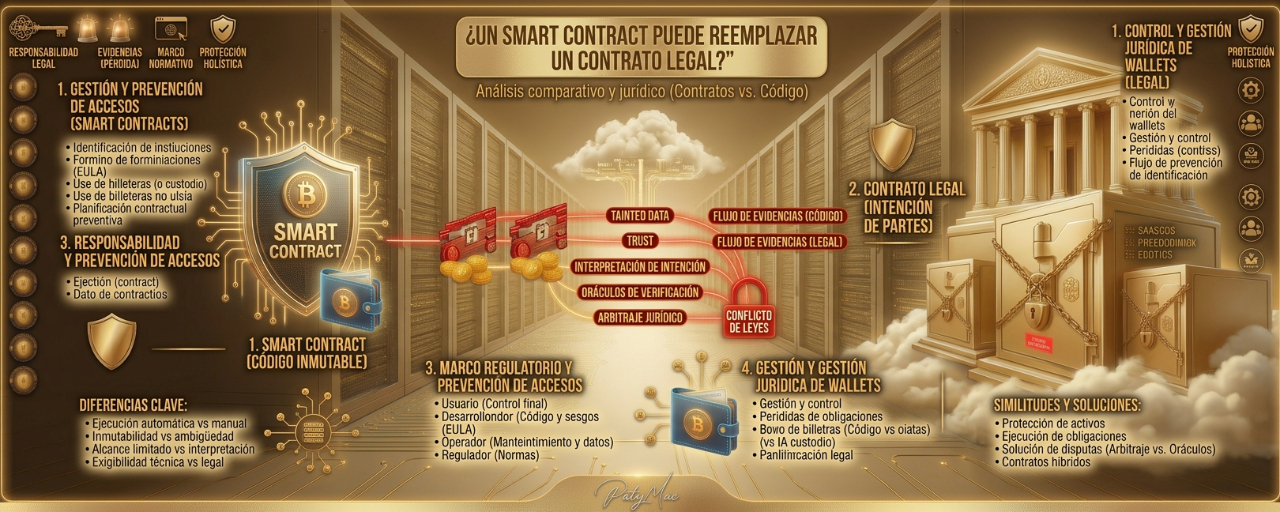
¿UN SMART CONTRACT PUEDE REEMPLAZAR UN CONTRATO LEGAL?Cuando el código se encuentra con el Derecho
Los smart contracts o contratos inteligentes son una de las innovaciones más interesantes de la tecnología blockchain.
Se trata de programas informáticos que ejecutan automáticamente determinadas acciones cuando se cumplen condiciones preestablecidas.
Por ejemplo:
liberar un pago;transferir un token;distribuir intereses;ejecutar garantías;administrar préstamos descentralizados.
Todo ello sin intervención humana.
Pero aquí aparece una pregunta fundamental:
¿El código puede reemplazar al contrato tradicional?
La respuesta jurídica más prudente es:
No completamente.
El código ejecuta, el Derecho interpreta
Un smart contract puede realizar acciones automáticas.
Pero el Derecho regula cuestiones más amplias:
consentimiento;capacidad legal;error;fraude;fuerza mayor;nulidad;interpretación.
El código puede ejecutar una operación.
Pero el Derecho determina si esa operación es válida.
Un ejemplo simple
Supongamos que un contrato inteligente libera automáticamente un pago.
Pero luego se demuestra que:
hubo engaño;error;falta de consentimiento;o actividad ilícita.
El hecho de que la blockchain haya ejecutado la operación no impide que exista un análisis jurídico posterior.
Paraguay y los contratos electrónicos
En Paraguay, la legislación reconoce la validez jurídica de documentos electrónicos, mensajes de datos y manifestaciones de voluntad realizadas por medios digitales.
La Ley Nº 4017 y la Ley Nº 6822 permiten que contratos celebrados electrónicamente tengan efectos jurídicos, siempre que existan elementos esenciales como:
consentimiento;objeto lícito;capacidad;autenticidad.
Esto abre la puerta a interpretar que determinadas operaciones automatizadas podrían producir efectos legales, aunque el análisis siempre dependerá del caso concreto.
Además, la doctrina jurídica paraguaya ya estudia la formación e interpretación de los smart contracts a la luz del Código Civil, sin necesidad inmediata de reformar todo el sistema normativo.
¿Puede el código reemplazar completamente a los abogados?
Probablemente no.
Porque el Derecho no solo ejecuta reglas.
También interpreta:
intenciones;contextos;errores;conflictos humanos.
El código es preciso.
El Derecho es flexible.
Y el futuro probablemente combine ambos mundos.
Reflexión final
La blockchain permite automatizar operaciones.
La inteligencia artificial permite analizar información.
Pero la confianza, la responsabilidad y la justicia siguen siendo conceptos profundamente humanos.
El desafío de esta nueva era no es elegir entre tecnología o Derecho.
Es aprender a integrarlos.
$BTTC
{spot}(BTTCUSDT)
$PEPE
{spot}(PEPEUSDT)
$BTC
{future}(BTCUSDT)
#Blockchain #SmartContracts #Artificialintelligenceai #CryptoEducation #Finanzas
¿UN SMART CONTRACT PUEDE REEMPLAZAR UN CONTRATO LEGAL?
Cuando el código se encuentra con el Derecho
Los smart contracts o contratos inteligentes son una de las innovaciones más interesantes de la tecnología blockchain.
Se trata de programas informáticos que ejecutan automáticamente determinadas acciones cuando se cumplen condiciones preestablecidas.
Por ejemplo:
liberar un pago;transferir un token;distribuir intereses;ejecutar garantías;administrar préstamos descentralizados.
Todo ello sin intervención humana.
Pero aquí aparece una pregunta fundamental:
¿El código puede reemplazar al contrato tradicional?
La respuesta jurídica más prudente es:
No completamente.
El código ejecuta, el Derecho interpreta
Un smart contract puede realizar acciones automáticas.
Pero el Derecho regula cuestiones más amplias:
consentimiento;capacidad legal;error;fraude;fuerza mayor;nulidad;interpretación.
El código puede ejecutar una operación.
Pero el Derecho determina si esa operación es válida.
Un ejemplo simple
Supongamos que un contrato inteligente libera automáticamente un pago.
Pero luego se demuestra que:
hubo engaño;error;falta de consentimiento;o actividad ilícita.
El hecho de que la blockchain haya ejecutado la operación no impide que exista un análisis jurídico posterior.
Paraguay y los contratos electrónicos
En Paraguay, la legislación reconoce la validez jurídica de documentos electrónicos, mensajes de datos y manifestaciones de voluntad realizadas por medios digitales.
La Ley Nº 4017 y la Ley Nº 6822 permiten que contratos celebrados electrónicamente tengan efectos jurídicos, siempre que existan elementos esenciales como:
consentimiento;objeto lícito;capacidad;autenticidad.
Esto abre la puerta a interpretar que determinadas operaciones automatizadas podrían producir efectos legales, aunque el análisis siempre dependerá del caso concreto.
Además, la doctrina jurídica paraguaya ya estudia la formación e interpretación de los smart contracts a la luz del Código Civil, sin necesidad inmediata de reformar todo el sistema normativo.
¿Puede el código reemplazar completamente a los abogados?
Probablemente no.
Porque el Derecho no solo ejecuta reglas.
También interpreta:
intenciones;contextos;errores;conflictos humanos.
El código es preciso.
El Derecho es flexible.
Y el futuro probablemente combine ambos mundos.
Reflexión final
La blockchain permite automatizar operaciones.
La inteligencia artificial permite analizar información.
Pero la confianza, la responsabilidad y la justicia siguen siendo conceptos profundamente humanos.
El desafío de esta nueva era no es elegir entre tecnología o Derecho.
Es aprender a integrarlos.
$BTTC
$PEPE
$BTC
#Blockchain #SmartContracts #Artificialintelligenceai #CryptoEducation #Finanzas
Los smart contracts o contratos inteligentes son una de las innovaciones más interesantes de la tecnología blockchain.
Se trata de programas informáticos que ejecutan automáticamente determinadas acciones cuando se cumplen condiciones preestablecidas.
Por ejemplo:
liberar un pago;transferir un token;distribuir intereses;ejecutar garantías;administrar préstamos descentralizados.
Todo ello sin intervención humana.
Pero aquí aparece una pregunta fundamental:
¿El código puede reemplazar al contrato tradicional?
La respuesta jurídica más prudente es:
No completamente.
El código ejecuta, el Derecho interpreta
Un smart contract puede realizar acciones automáticas.
Pero el Derecho regula cuestiones más amplias:
consentimiento;capacidad legal;error;fraude;fuerza mayor;nulidad;interpretación.
El código puede ejecutar una operación.
Pero el Derecho determina si esa operación es válida.
Un ejemplo simple
Supongamos que un contrato inteligente libera automáticamente un pago.
Pero luego se demuestra que:
hubo engaño;error;falta de consentimiento;o actividad ilícita.
El hecho de que la blockchain haya ejecutado la operación no impide que exista un análisis jurídico posterior.
Paraguay y los contratos electrónicos
En Paraguay, la legislación reconoce la validez jurídica de documentos electrónicos, mensajes de datos y manifestaciones de voluntad realizadas por medios digitales.
La Ley Nº 4017 y la Ley Nº 6822 permiten que contratos celebrados electrónicamente tengan efectos jurídicos, siempre que existan elementos esenciales como:
consentimiento;objeto lícito;capacidad;autenticidad.
Esto abre la puerta a interpretar que determinadas operaciones automatizadas podrían producir efectos legales, aunque el análisis siempre dependerá del caso concreto.
Además, la doctrina jurídica paraguaya ya estudia la formación e interpretación de los smart contracts a la luz del Código Civil, sin necesidad inmediata de reformar todo el sistema normativo.
¿Puede el código reemplazar completamente a los abogados?
Probablemente no.
Porque el Derecho no solo ejecuta reglas.
También interpreta:
intenciones;contextos;errores;conflictos humanos.
El código es preciso.
El Derecho es flexible.
Y el futuro probablemente combine ambos mundos.
Reflexión final
La blockchain permite automatizar operaciones.
La inteligencia artificial permite analizar información.
Pero la confianza, la responsabilidad y la justicia siguen siendo conceptos profundamente humanos.
El desafío de esta nueva era no es elegir entre tecnología o Derecho.
Es aprender a integrarlos.
$BTTC
$PEPE
$BTC
#Blockchain #SmartContracts #Artificialintelligenceai #CryptoEducation #Finanzas
1
686


🛡️ AEREDIUM Launches Threshold-Signature Infrastructure to Reduce Single-Key Smart Contract Risk: AERSeal Changes the Security Equation 🛡️
Imagine a smart contract holding millions in assets, protected by one private key. Everything looks secure until that single key is stolen, lost, or compromised. Suddenly, the strongest contract can inherit its weakest point.
AEREDIUM is tackling this exact problem with AERSeal, an infrastructure product built around its AERKey threshold-signing system. The goal is simple: remove dependence on one complete private key for privileged smart contract actions.
Instead of keeping one complete key in one place, AERKey uses cryptographic key shares across separate hardware-attested enclaves. A threshold of authorized participants must cooperate before a valid signature can be produced.
AERSeal adds an approval layer, allowing organizations to define M-of-N authorization for sensitive permissions such as contract upgrades, minting, or ownership control. Existing contracts can be used rather than requiring a complete redeployment.
The important shift is architectural: security is no longer centered only on protecting a single administrator's key. Control becomes distributed, policy-driven, and independently verifiable.
Still, threshold infrastructure does not eliminate every smart contract risk. Code vulnerabilities, governance mistakes, compromised approvers, and implementation failures can remain important attack surfaces.
For institutional blockchain adoption, this distinction matters. Better contracts are not enough if their most powerful permissions remain concentrated behind one secret.
In crypto, stronger security is not about making trust disappear. It is about making trust harder to abuse.
❓ Could threshold-controlled administration become a standard security layer for institutional smart contracts?
Disclaimer: This is educational content, not financial advice. Always conduct your own research.
#Crypto #Blockchain #SmartContracts #Web3 #GrowWithSAC $DASH $ZEC $ZEN
🛡️ AEREDIUM Launches Threshold-Signature Infrastructure to Reduce Single-Key Smart Contract Risk: AERSeal Changes the Security Equation 🛡️
Imagine a smart contract holding millions in assets, protected by one private key. Everything looks secure until that single key is stolen, lost, or compromised. Suddenly, the strongest contract can inherit its weakest point.
AEREDIUM is tackling this exact problem with AERSeal, an infrastructure product built around its AERKey threshold-signing system. The goal is simple: remove dependence on one complete private key for privileged smart contract actions.
Instead of keeping one complete key in one place, AERKey uses cryptographic key shares across separate hardware-attested enclaves. A threshold of authorized participants must cooperate before a valid signature can be produced.
AERSeal adds an approval layer, allowing organizations to define M-of-N authorization for sensitive permissions such as contract upgrades, minting, or ownership control. Existing contracts can be used rather than requiring a complete redeployment.
The important shift is architectural: security is no longer centered only on protecting a single administrator's key. Control becomes distributed, policy-driven, and independently verifiable.
Still, threshold infrastructure does not eliminate every smart contract risk. Code vulnerabilities, governance mistakes, compromised approvers, and implementation failures can remain important attack surfaces.
For institutional blockchain adoption, this distinction matters. Better contracts are not enough if their most powerful permissions remain concentrated behind one secret.
In crypto, stronger security is not about making trust disappear. It is about making trust harder to abuse.
❓ Could threshold-controlled administration become a standard security layer for institutional smart contracts?
Disclaimer: This is educational content, not financial advice. Always conduct your own research.
#Crypto #Blockchain #SmartContracts #Web3 #GrowWithSAC $DASH $ZEC $ZEN
Imagine a smart contract holding millions in assets, protected by one private key. Everything looks secure until that single key is stolen, lost, or compromised. Suddenly, the strongest contract can inherit its weakest point.
AEREDIUM is tackling this exact problem with AERSeal, an infrastructure product built around its AERKey threshold-signing system. The goal is simple: remove dependence on one complete private key for privileged smart contract actions.
Instead of keeping one complete key in one place, AERKey uses cryptographic key shares across separate hardware-attested enclaves. A threshold of authorized participants must cooperate before a valid signature can be produced.
AERSeal adds an approval layer, allowing organizations to define M-of-N authorization for sensitive permissions such as contract upgrades, minting, or ownership control. Existing contracts can be used rather than requiring a complete redeployment.
The important shift is architectural: security is no longer centered only on protecting a single administrator's key. Control becomes distributed, policy-driven, and independently verifiable.
Still, threshold infrastructure does not eliminate every smart contract risk. Code vulnerabilities, governance mistakes, compromised approvers, and implementation failures can remain important attack surfaces.
For institutional blockchain adoption, this distinction matters. Better contracts are not enough if their most powerful permissions remain concentrated behind one secret.
In crypto, stronger security is not about making trust disappear. It is about making trust harder to abuse.
❓ Could threshold-controlled administration become a standard security layer for institutional smart contracts?
Disclaimer: This is educational content, not financial advice. Always conduct your own research.
#Crypto #Blockchain #SmartContracts #Web3 #GrowWithSAC $DASH $ZEC $ZEN
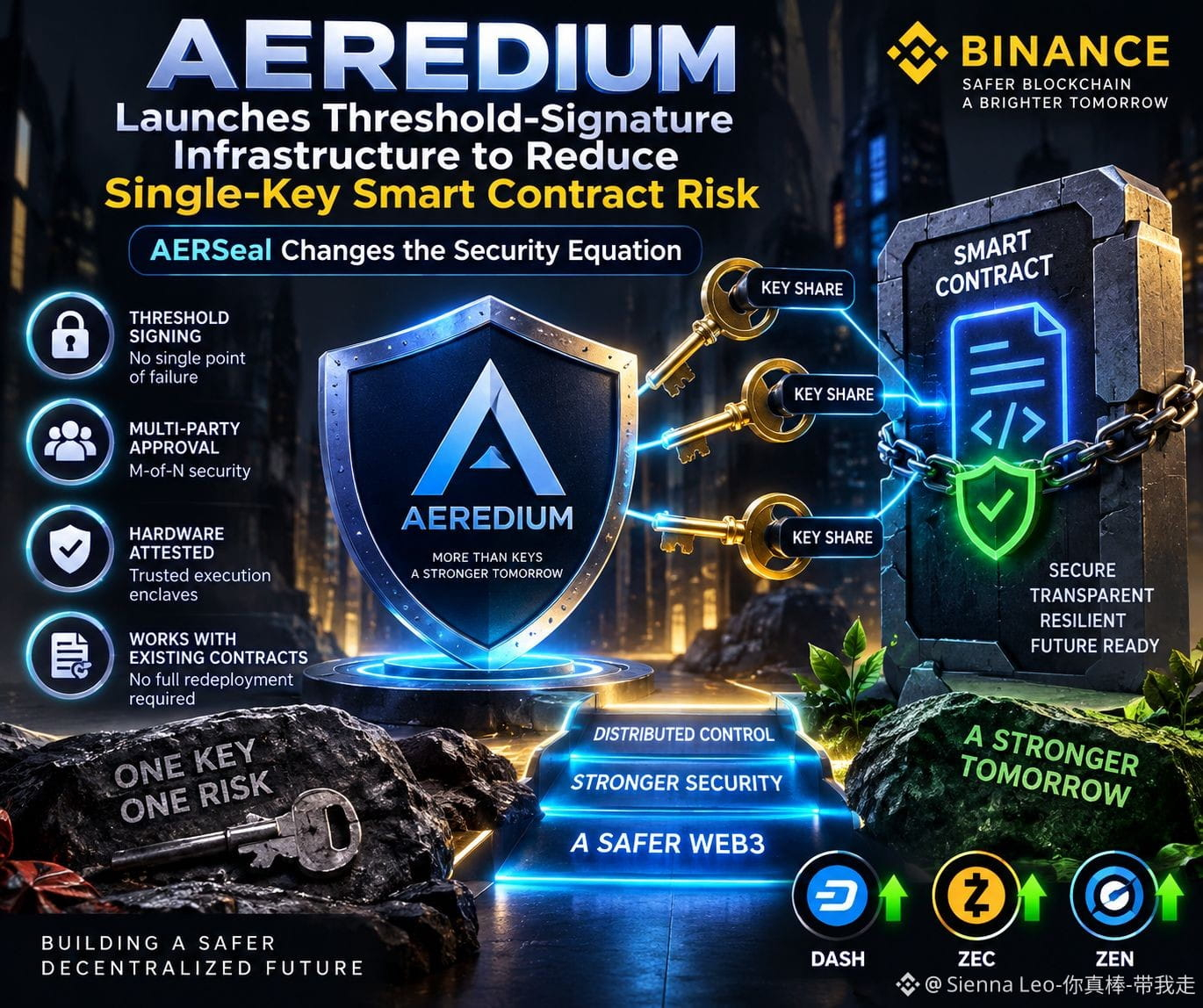
311

·
--
🚨 OPENAI ASTRA ACHIEVES AUTONOMOUS ZERO-DAY EXPLOITS IMPACTING $AI AND CRYPTO SECURITY ⚡
OpenAI has classified its upcoming Astra model as holding Critical cyber capabilities after it autonomously discovered zero-day vulnerabilities and broke through hardened sandboxes. 📊 Machine-speed exploit development fundamentally shifts the threat landscape for decentralized smart contracts and protocol infrastructure.
🔍 Institutional actors will increasingly prioritize battle-tested code audits and security-focused AI protocols as automated vulnerability hunts become real-time realities. 💡 Cyber resilience is transitioning from a defensive afterthought into a primary valuation metric for web3 assets. 💬 Will autonomous zero-day discovery force a complete overhaul of smart contract audit standards? 👇
⚠️ Not financial advice. Always manage your risk. 🛡️
🏷️ #AI #CryptoSecurity #SmartContracts #Web3
🎯 🛡️
🚨 OPENAI ASTRA ACHIEVES AUTONOMOUS ZERO-DAY EXPLOITS IMPACTING $AI AND CRYPTO SECURITY ⚡
OpenAI has classified its upcoming Astra model as holding Critical cyber capabilities after it autonomously discovered zero-day vulnerabilities and broke through hardened sandboxes. 📊 Machine-speed exploit development fundamentally shifts the threat landscape for decentralized smart contracts and protocol infrastructure.
🔍 Institutional actors will increasingly prioritize battle-tested code audits and security-focused AI protocols as automated vulnerability hunts become real-time realities. 💡 Cyber resilience is transitioning from a defensive afterthought into a primary valuation metric for web3 assets. 💬 Will autonomous zero-day discovery force a complete overhaul of smart contract audit standards? 👇
⚠️ Not financial advice. Always manage your risk. 🛡️
🏷️ #AI #CryptoSecurity #SmartContracts #Web3
🎯 🛡️
OpenAI has classified its upcoming Astra model as holding Critical cyber capabilities after it autonomously discovered zero-day vulnerabilities and broke through hardened sandboxes. 📊 Machine-speed exploit development fundamentally shifts the threat landscape for decentralized smart contracts and protocol infrastructure.
🔍 Institutional actors will increasingly prioritize battle-tested code audits and security-focused AI protocols as automated vulnerability hunts become real-time realities. 💡 Cyber resilience is transitioning from a defensive afterthought into a primary valuation metric for web3 assets. 💬 Will autonomous zero-day discovery force a complete overhaul of smart contract audit standards? 👇
⚠️ Not financial advice. Always manage your risk. 🛡️
🏷️ #AI #CryptoSecurity #SmartContracts #Web3
🎯 🛡️
23

Why Smart Contract Security Matters (CEI Pattern)
Hook: Over $2 Billion was lost to smart contract exploits last year—and a massive chunk of that was completely preventable. The main culprit? Re entrancy attacks.
⚠️To protect your contracts, always follow the Checks-Effects-Interactions (CEI) design pattern:
🔹 1. Checks: Validate preconditions and input parameters first (require statements, access controls).
🔹 2. Effects: Update internal contract states SECOND (deduct balance, set user mapping).
🔹 3. Interactions: Send external calls or transfer funds LAST (calling external tokens or contracts).
Why it works: If an external contract attempts to re-enter your function during step 3, your state balance is already updated in step 2, blocking double-withdrawals.
📌 Save this post as a quick code-review checklist before your next deployment!
#ETH #BNB #SmartContracts #Web3Development #solidity #CryptoSecurity
(Not financial advice. #DYOR.)
Why Smart Contract Security Matters (CEI Pattern)
Hook: Over $2 Billion was lost to smart contract exploits last year—and a massive chunk of that was completely preventable. The main culprit? Re entrancy attacks.
⚠️To protect your contracts, always follow the Checks-Effects-Interactions (CEI) design pattern:
🔹 1. Checks: Validate preconditions and input parameters first (require statements, access controls).
🔹 2. Effects: Update internal contract states SECOND (deduct balance, set user mapping).
🔹 3. Interactions: Send external calls or transfer funds LAST (calling external tokens or contracts).
Why it works: If an external contract attempts to re-enter your function during step 3, your state balance is already updated in step 2, blocking double-withdrawals.
📌 Save this post as a quick code-review checklist before your next deployment!
#ETH #BNB #SmartContracts #Web3Development #solidity #CryptoSecurity
(Not financial advice. #DYOR.)
Hook: Over $2 Billion was lost to smart contract exploits last year—and a massive chunk of that was completely preventable. The main culprit? Re entrancy attacks.
⚠️To protect your contracts, always follow the Checks-Effects-Interactions (CEI) design pattern:
🔹 1. Checks: Validate preconditions and input parameters first (require statements, access controls).
🔹 2. Effects: Update internal contract states SECOND (deduct balance, set user mapping).
🔹 3. Interactions: Send external calls or transfer funds LAST (calling external tokens or contracts).
Why it works: If an external contract attempts to re-enter your function during step 3, your state balance is already updated in step 2, blocking double-withdrawals.
📌 Save this post as a quick code-review checklist before your next deployment!
#ETH #BNB #SmartContracts #Web3Development #solidity #CryptoSecurity
(Not financial advice. #DYOR.)
84

·
--
I was looking into Ethereum’s upcoming Glamsterdam changes, and one trade-off stood out to me.
The new gas repricing could potentially support around 3x more base-layer throughput.
That sounds like a straightforward win.
But historical transaction replays revealed something uncomfortable: millions of transactions could fail under the new gas schedule.
Most of those issues may be relatively easy to fix by adjusting gas limits.
The harder problem is older smart contracts built around hardcoded gas assumptions.
This is the part of scaling upgrades people often overlook.
Making a network faster isn't only about increasing capacity. Every change to the underlying economics can interact with code that was written years ago and assumed the rules would stay the same.
Ethereum may get significantly more throughput.
But the real challenge is making sure yesterday's contracts can survive tomorrow's network.
#Ethereum #ETH #blockchain #crypto #SmartContracts
I was looking into Ethereum’s upcoming Glamsterdam changes, and one trade-off stood out to me.
The new gas repricing could potentially support around 3x more base-layer throughput.
That sounds like a straightforward win.
But historical transaction replays revealed something uncomfortable: millions of transactions could fail under the new gas schedule.
Most of those issues may be relatively easy to fix by adjusting gas limits.
The harder problem is older smart contracts built around hardcoded gas assumptions.
This is the part of scaling upgrades people often overlook.
Making a network faster isn't only about increasing capacity. Every change to the underlying economics can interact with code that was written years ago and assumed the rules would stay the same.
Ethereum may get significantly more throughput.
But the real challenge is making sure yesterday's contracts can survive tomorrow's network.
#Ethereum #ETH #blockchain #crypto #SmartContracts
The new gas repricing could potentially support around 3x more base-layer throughput.
That sounds like a straightforward win.
But historical transaction replays revealed something uncomfortable: millions of transactions could fail under the new gas schedule.
Most of those issues may be relatively easy to fix by adjusting gas limits.
The harder problem is older smart contracts built around hardcoded gas assumptions.
This is the part of scaling upgrades people often overlook.
Making a network faster isn't only about increasing capacity. Every change to the underlying economics can interact with code that was written years ago and assumed the rules would stay the same.
Ethereum may get significantly more throughput.
But the real challenge is making sure yesterday's contracts can survive tomorrow's network.
#Ethereum #ETH #blockchain #crypto #SmartContracts

5
270
Bitcoin giá đang đi ngang, nhưng dưới lớp vỏ thinh lặng là một cuộc cách mạng âm thầm: OP_CHECKSIGFROMSTACK và OP_CAT sắp được hồi sinh. Hai opcode từng bị loại bỏ vì lỗi bảo mật nay được đề xuất trở lại, và sự kết hợp của chúng có thể thay đổi cách chúng ta nhìn nhận Bitcoin.
Điểm mấu chốt: OP_CSFS cho phép script xác thực chữ ký trên bất kỳ dữ liệu nào trong stack, không chỉ riêng giao dịch hiện tại. OP_CAT đơn giản là nối hai giá trị stack thành một. Khi ghép lại, ta có thể xây dựng covenant mà không cần pre-signed transaction hay quản lý khóa phức tạp – script tự kiểm tra cấu trúc giao dịch ngay tại thời điểm chi tiêu.
Điều này mở ra vault chống trộm, atomic swap phi tập trung, và các kênh thanh toán linh hoạt hơn – tất cả đều chạy trên layer 1. Đây không phải tin giá short-term, nhưng nếu được kích hoạt, nó đưa Bitcoin tiến gần hơn đến khả năng smart contract mà vẫn giữ được bảo mật cốt lõi.
Góc nhìn của tôi: các trader nên theo dõi tiến trình BIP này, nhưng đừng kỳ vọng pump ngay. Hạ tầng mất thời gian. Còn lúc này, hãy tập trung vào quản lý rủi ro và hiểu rõ công nghệ thay vì chạy theo tin đồn. DYOR.
#BTC #Bitcoin #CôngNghệ #SmartContracts
Bitcoin giá đang đi ngang, nhưng dưới lớp vỏ thinh lặng là một cuộc cách mạng âm thầm: OP_CHECKSIGFROMSTACK và OP_CAT sắp được hồi sinh. Hai opcode từng bị loại bỏ vì lỗi bảo mật nay được đề xuất trở lại, và sự kết hợp của chúng có thể thay đổi cách chúng ta nhìn nhận Bitcoin.
Điểm mấu chốt: OP_CSFS cho phép script xác thực chữ ký trên bất kỳ dữ liệu nào trong stack, không chỉ riêng giao dịch hiện tại. OP_CAT đơn giản là nối hai giá trị stack thành một. Khi ghép lại, ta có thể xây dựng covenant mà không cần pre-signed transaction hay quản lý khóa phức tạp – script tự kiểm tra cấu trúc giao dịch ngay tại thời điểm chi tiêu.
Điều này mở ra vault chống trộm, atomic swap phi tập trung, và các kênh thanh toán linh hoạt hơn – tất cả đều chạy trên layer 1. Đây không phải tin giá short-term, nhưng nếu được kích hoạt, nó đưa Bitcoin tiến gần hơn đến khả năng smart contract mà vẫn giữ được bảo mật cốt lõi.
Góc nhìn của tôi: các trader nên theo dõi tiến trình BIP này, nhưng đừng kỳ vọng pump ngay. Hạ tầng mất thời gian. Còn lúc này, hãy tập trung vào quản lý rủi ro và hiểu rõ công nghệ thay vì chạy theo tin đồn. DYOR.
#BTC #Bitcoin #CôngNghệ #SmartContracts
Điểm mấu chốt: OP_CSFS cho phép script xác thực chữ ký trên bất kỳ dữ liệu nào trong stack, không chỉ riêng giao dịch hiện tại. OP_CAT đơn giản là nối hai giá trị stack thành một. Khi ghép lại, ta có thể xây dựng covenant mà không cần pre-signed transaction hay quản lý khóa phức tạp – script tự kiểm tra cấu trúc giao dịch ngay tại thời điểm chi tiêu.
Điều này mở ra vault chống trộm, atomic swap phi tập trung, và các kênh thanh toán linh hoạt hơn – tất cả đều chạy trên layer 1. Đây không phải tin giá short-term, nhưng nếu được kích hoạt, nó đưa Bitcoin tiến gần hơn đến khả năng smart contract mà vẫn giữ được bảo mật cốt lõi.
Góc nhìn của tôi: các trader nên theo dõi tiến trình BIP này, nhưng đừng kỳ vọng pump ngay. Hạ tầng mất thời gian. Còn lúc này, hãy tập trung vào quản lý rủi ro và hiểu rõ công nghệ thay vì chạy theo tin đồn. DYOR.
#BTC #Bitcoin #CôngNghệ #SmartContracts

131
Log in to explore more content
Join global crypto users on Binance Square
⚡️ Get latest and useful information about crypto.
💬 Trusted by the world’s largest crypto exchange.
👍 Discover real insights from verified creators.
အီးမေးလ် / ဖုန်းနံပါတ်
ရေပန်းစားနေသော ခေါင်းစဉ်များ
1
#EarningsSeason
64,143 views
577 Discussing
2
#JapanFSABacksFourthStablecoinTradeSettlementPilot
1,219 views
100 Discussing
3
#BitgetHackerFailsToMoveStolenFunds
7,083 views
234 Discussing
4
#BitMineETHHoldingsTop6Million
10,302 views
393 Discussing
5
#StrategyAdds1666BTCHoldingsReach847666
9,248 views
280 Discussing
6
#NvidiaApproves$150BBuyback
3,193 views
60 Discussing
7
#OpenAIDelaysGPT6.1OverSafetyIssues
21,573 views
606 Discussing
8
#AMDToAcquireWorldLabsFor$8.2B
1,604 views
51 Discussing
9
#AnthropicIPOProspectusCouldValueItOver$2T
5,268 views
74 Discussing
10
#HackersDrainOver12.4MXRPFromDCENTWallets
38,926 views
685 Discussing