
#web3
web3
51M views
302,262 Discussing
Hot
Latest


·
--
Bullish
@Avalanche 🔥 $AVAX is worth watching!
Avalanche continues to build and improve its technology while expanding its ecosystem. 🚀
With ongoing network upgrades, growing activity, and continued development across the Avalanche ecosystem, AVAX could be entering an interesting phase. 👀❄️
Strong technology + active ecosystem + long-term development = plenty of reasons to keep $AVAX on the radar.
Always DYOR before making any investment decision.
#AVAX #AvalancheAVAX #crypto #Web3
@Avalanche 🔥 $AVAX is worth watching!
Avalanche continues to build and improve its technology while expanding its ecosystem. 🚀
With ongoing network upgrades, growing activity, and continued development across the Avalanche ecosystem, AVAX could be entering an interesting phase. 👀❄️
Strong technology + active ecosystem + long-term development = plenty of reasons to keep $AVAX on the radar.
Always DYOR before making any investment decision.
#AVAX #AvalancheAVAX #crypto #Web3
Avalanche continues to build and improve its technology while expanding its ecosystem. 🚀
With ongoing network upgrades, growing activity, and continued development across the Avalanche ecosystem, AVAX could be entering an interesting phase. 👀❄️
Strong technology + active ecosystem + long-term development = plenty of reasons to keep $AVAX on the radar.
Always DYOR before making any investment decision.
#AVAX #AvalancheAVAX #crypto #Web3
61

·
--
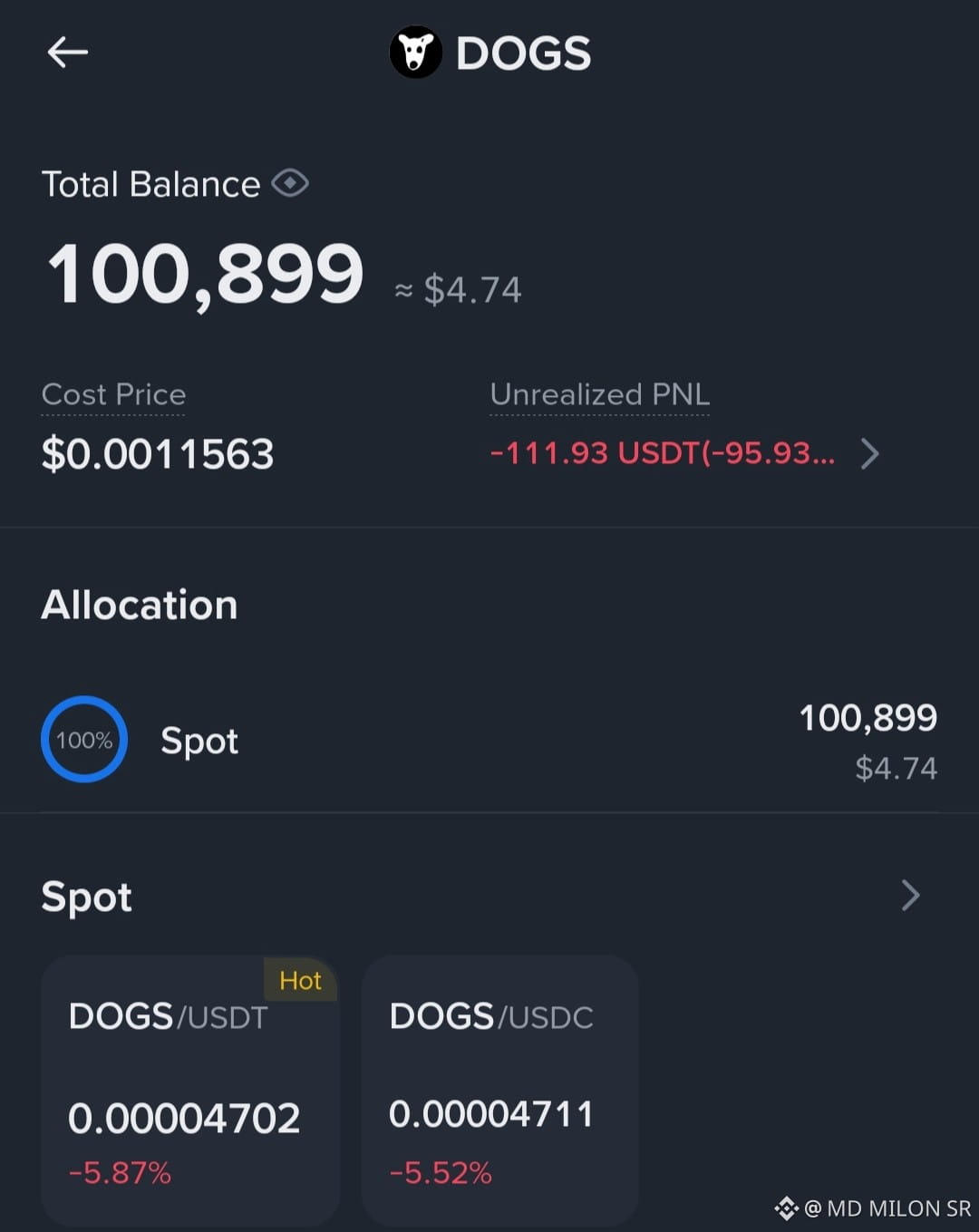
DOGS has built a strong community around simplicity, fun, and the power of internet culture. What started as a meme-driven project has grown into a token with a passionate community behind it.
In crypto, narratives can change quickly, but strong communities can keep a project alive. 🚀
I’m watching DOGS closely and staying patient. The journey may be full of ups and downs, but every strong community starts with belief, consistency, and time.
Let’s see where DOGS goes next. 🐶🚀
#DOGS #DOGSUSDT #Binance #Crypto_Jobs🎯 pto #Memecoin #Web3
DOGS has built a strong community around simplicity, fun, and the power of internet culture. What started as a meme-driven project has grown into a token with a passionate community behind it.
In crypto, narratives can change quickly, but strong communities can keep a project alive. 🚀
I’m watching DOGS closely and staying patient. The journey may be full of ups and downs, but every strong community starts with belief, consistency, and time.
Let’s see where DOGS goes next. 🐶🚀
#DOGS #DOGSUSDT #Binance #Crypto_Jobs🎯 pto #Memecoin #Web3
In crypto, narratives can change quickly, but strong communities can keep a project alive. 🚀
I’m watching DOGS closely and staying patient. The journey may be full of ups and downs, but every strong community starts with belief, consistency, and time.
Let’s see where DOGS goes next. 🐶🚀
#DOGS #DOGSUSDT #Binance #Crypto_Jobs🎯 pto #Memecoin #Web3
1
59


🧠 LINK — The Connector
Blockchain can be powerful.
But blockchains still need reliable information from the outside world.
That’s where Chainlink becomes interesting.
Think of LINK as:
Blockchain 🤝 Real World Data
Infrastructure doesn’t always go viral.
But when it becomes important…
people start paying attention.
#LINK #Chainlink #Web3
🧠 LINK — The Connector
Blockchain can be powerful.
But blockchains still need reliable information from the outside world.
That’s where Chainlink becomes interesting.
Think of LINK as:
Blockchain 🤝 Real World Data
Infrastructure doesn’t always go viral.
But when it becomes important…
people start paying attention.
#LINK #Chainlink #Web3
Blockchain can be powerful.
But blockchains still need reliable information from the outside world.
That’s where Chainlink becomes interesting.
Think of LINK as:
Blockchain 🤝 Real World Data
Infrastructure doesn’t always go viral.
But when it becomes important…
people start paying attention.
#LINK #Chainlink #Web3
1
42

·
--
Bullish
IAM TOKEN — MORE THAN A TOKEN, A REAL ECOSYSTEM
IAM Token is a Solana-based project developed as part of the IAM Holding ecosystem, connecting technology, digital services and new Web3 initiatives. #Web3 #solana
⚡ Built on Solana
🌐 Growing ecosystem
🪙 IAM Token
🤝 Community-driven development
Contract Address:
8dvSpyYs7TwSUAwxZy2nqvyXWCWUUYxB4DS1zkefCCy2
Official Website:
https://iamholdingcorporation.tech/
IAM Token Information:
https://iamholdingcorporation.tech/iam_tokenomics/
View on Solscan:
https://solscan.io/token/8dvSpyYs7TwSUAwxZy2nqvyXWCWUUYxB4DS1zkefCCy2
Innovate. Connect. Grow.
IAM TOKEN — MORE THAN A TOKEN, A REAL ECOSYSTEM
IAM Token is a Solana-based project developed as part of the IAM Holding ecosystem, connecting technology, digital services and new Web3 initiatives. #Web3 #solana
⚡ Built on Solana
🌐 Growing ecosystem
🪙 IAM Token
🤝 Community-driven development
Contract Address:
8dvSpyYs7TwSUAwxZy2nqvyXWCWUUYxB4DS1zkefCCy2
Official Website:
https://iamholdingcorporation.tech/
IAM Token Information:
https://iamholdingcorporation.tech/iam_tokenomics/
View on Solscan:
https://solscan.io/token/8dvSpyYs7TwSUAwxZy2nqvyXWCWUUYxB4DS1zkefCCy2
Innovate. Connect. Grow.
IAM Token is a Solana-based project developed as part of the IAM Holding ecosystem, connecting technology, digital services and new Web3 initiatives. #Web3 #solana
⚡ Built on Solana
🌐 Growing ecosystem
🪙 IAM Token
🤝 Community-driven development
Contract Address:
8dvSpyYs7TwSUAwxZy2nqvyXWCWUUYxB4DS1zkefCCy2
Official Website:
https://iamholdingcorporation.tech/
IAM Token Information:
https://iamholdingcorporation.tech/iam_tokenomics/
View on Solscan:
https://solscan.io/token/8dvSpyYs7TwSUAwxZy2nqvyXWCWUUYxB4DS1zkefCCy2
Innovate. Connect. Grow.

1
107



·
--
$MEME 33%pump today.🔥 $MEME is delivering high trading momentum today!
Surging trading volume and strong buying activity make $MEME a prime candidate for momentum traders. With key technical indicators pointing to a potential breakout, keep MEME on your immediate watchlist! 📈🚀Sell and trade.
#MEME #Crypto #Trading #Web3
$MEME 33%pump today.🔥 $MEME is delivering high trading momentum today!
Surging trading volume and strong buying activity make $MEME a prime candidate for momentum traders. With key technical indicators pointing to a potential breakout, keep MEME on your immediate watchlist! 📈🚀Sell and trade.
#MEME #Crypto #Trading #Web3
Surging trading volume and strong buying activity make $MEME a prime candidate for momentum traders. With key technical indicators pointing to a potential breakout, keep MEME on your immediate watchlist! 📈🚀Sell and trade.
#MEME #Crypto #Trading #Web3
81

Article
The biggest problem with the internet might not be the apps.It might be what happens when the company behind them disappears.
Think about it.
You use an app every day. You send messages, share memories, build communities and create years of digital history.
Then one day, the company changes its rules.
Or the service shuts down.
And suddenly, you realize how much of your online life depended on a single platform.
That’s where decentralized communication becomes interesting.
Instead of putting everything in the hands of one company, the network can be designed so that communication doesn’t depend entirely on a single entity.
That’s one of the ideas I find interesting about #Liberdus
It’s not simply about creating another messaging app.
It’s about exploring a different model for digital communication, where the network itself can become more resilient and less dependent on one central company.
And honestly, this is where I think Web3 becomes interesting.
Not when it makes technology more complicated.
But when it makes us question how the internet should work in the first place.
The interface can stay simple.
The technology can stay in the background.
But the foundation can be different.
That’s what I’m watching with Liberdus.
#Privacy #Web3 #crypto
The biggest problem with the internet might not be the apps.
It might be what happens when the company behind them disappears.
Think about it.
You use an app every day. You send messages, share memories, build communities and create years of digital history.
Then one day, the company changes its rules.
Or the service shuts down.
And suddenly, you realize how much of your online life depended on a single platform.
That’s where decentralized communication becomes interesting.
Instead of putting everything in the hands of one company, the network can be designed so that communication doesn’t depend entirely on a single entity.
That’s one of the ideas I find interesting about #Liberdus
It’s not simply about creating another messaging app.
It’s about exploring a different model for digital communication, where the network itself can become more resilient and less dependent on one central company.
And honestly, this is where I think Web3 becomes interesting.
Not when it makes technology more complicated.
But when it makes us question how the internet should work in the first place.
The interface can stay simple.
The technology can stay in the background.
But the foundation can be different.
That’s what I’m watching with Liberdus.
#Privacy #Web3 #crypto
Think about it.
You use an app every day. You send messages, share memories, build communities and create years of digital history.
Then one day, the company changes its rules.
Or the service shuts down.
And suddenly, you realize how much of your online life depended on a single platform.
That’s where decentralized communication becomes interesting.
Instead of putting everything in the hands of one company, the network can be designed so that communication doesn’t depend entirely on a single entity.
That’s one of the ideas I find interesting about #Liberdus
It’s not simply about creating another messaging app.
It’s about exploring a different model for digital communication, where the network itself can become more resilient and less dependent on one central company.
And honestly, this is where I think Web3 becomes interesting.
Not when it makes technology more complicated.
But when it makes us question how the internet should work in the first place.
The interface can stay simple.
The technology can stay in the background.
But the foundation can be different.
That’s what I’m watching with Liberdus.
#Privacy #Web3 #crypto
1
130

AFRICA HAS A STORY TO TELL. 🌍
$GRIOT × $CHALE — two names, one African spirit.
$GRIOT carries our stories, knowledge, culture and heritage into Web3.
$CHALE represents the energy, identity and voice of the streets.
Together, they represent something bigger than a token — African culture meeting Web3.
Builders. Creators. Communities. Investors.
The movement is growing. 🚀
$GRIOT × CHALE
🇬🇭 Made with African spirit. 🌍 Built for the world.
#GRIOT CHALE #Web3 Ghana #Crypto
AFRICA HAS A STORY TO TELL. 🌍
$GRIOT × $CHALE — two names, one African spirit.
$GRIOT carries our stories, knowledge, culture and heritage into Web3.
$CHALE represents the energy, identity and voice of the streets.
Together, they represent something bigger than a token — African culture meeting Web3.
Builders. Creators. Communities. Investors.
The movement is growing. 🚀
$GRIOT × CHALE
🇬🇭 Made with African spirit. 🌍 Built for the world.
#GRIOT CHALE #Web3 Ghana #Crypto
$GRIOT × $CHALE — two names, one African spirit.
$GRIOT carries our stories, knowledge, culture and heritage into Web3.
$CHALE represents the energy, identity and voice of the streets.
Together, they represent something bigger than a token — African culture meeting Web3.
Builders. Creators. Communities. Investors.
The movement is growing. 🚀
$GRIOT × CHALE
🇬🇭 Made with African spirit. 🌍 Built for the world.
#GRIOT CHALE #Web3 Ghana #Crypto
63

·
--
⚡ $MEET48 DISRUPTS ENTERTAINMENT INDUSTRY AS GLOBAL WEB3 FAN ECONOMY EXPLODES IN INCHEON! 🚀
📌 Smart money is quietly positioning behind real-world Web3 adoption as $MEET48 takes center stage at the NEXUS 2140 Expo in South Korea. Following aggressive global pushes across Tokyo, Hong Kong, and Singapore, their decentralized idol ecosystem is shifting traditional fan consumption into massive value co-creation.
💡 By merging top-tier idol culture with open digital governance, this narrative is building serious fundamental momentum outside the noise. 📊 Order flow favors projects delivering active user engagement over purely speculative hype. 💬 Will Web3 idol ecosystems redefine how mass retail enters crypto this cycle? 👇
⚠️ Not financial advice. Always manage your risk. 🛡️
🏷️ #MEET48 #Web3 #FanEconomy #Crypto
🔥 💎
⚡ $MEET48 DISRUPTS ENTERTAINMENT INDUSTRY AS GLOBAL WEB3 FAN ECONOMY EXPLODES IN INCHEON! 🚀
📌 Smart money is quietly positioning behind real-world Web3 adoption as $MEET48 takes center stage at the NEXUS 2140 Expo in South Korea. Following aggressive global pushes across Tokyo, Hong Kong, and Singapore, their decentralized idol ecosystem is shifting traditional fan consumption into massive value co-creation.
💡 By merging top-tier idol culture with open digital governance, this narrative is building serious fundamental momentum outside the noise. 📊 Order flow favors projects delivering active user engagement over purely speculative hype. 💬 Will Web3 idol ecosystems redefine how mass retail enters crypto this cycle? 👇
⚠️ Not financial advice. Always manage your risk. 🛡️
🏷️ #MEET48 #Web3 #FanEconomy #Crypto
🔥 💎
📌 Smart money is quietly positioning behind real-world Web3 adoption as $MEET48 takes center stage at the NEXUS 2140 Expo in South Korea. Following aggressive global pushes across Tokyo, Hong Kong, and Singapore, their decentralized idol ecosystem is shifting traditional fan consumption into massive value co-creation.
💡 By merging top-tier idol culture with open digital governance, this narrative is building serious fundamental momentum outside the noise. 📊 Order flow favors projects delivering active user engagement over purely speculative hype. 💬 Will Web3 idol ecosystems redefine how mass retail enters crypto this cycle? 👇
⚠️ Not financial advice. Always manage your risk. 🛡️
🏷️ #MEET48 #Web3 #FanEconomy #Crypto
🔥 💎
20
·
--
🚨 NORTH KOREAN HACKERS UNLEASH NEW TERRAFORM PHISHING VECTOR TARGETING $BTC DEVELOPERS! 💣
📌 Sophisticated threat actor TraderTraitor is actively weaponizing malicious GitHub interview code to infiltrate Web3 infrastructure and hijack AWS credentials. 🔍 Devs downloading unverified repos are triggering stealthy macOS backdoors capable of draining cloud environments and compromised codebases.
⚠️ Institutional security is the real foundation of every $BTC bull run, and these attacks prove threat groups are hunting upstream developer access. 💬 Are you verifying your Terraform dependencies before running init scripts, or leaving your cloud infrastructure exposed? 👇
⚠️ Not financial advice. Always manage your risk. 🛡️
🏷️ #BTC #CryptoSecurity #DevOps #Web3
🛡️ 🔍
🚨 NORTH KOREAN HACKERS UNLEASH NEW TERRAFORM PHISHING VECTOR TARGETING $BTC DEVELOPERS! 💣
📌 Sophisticated threat actor TraderTraitor is actively weaponizing malicious GitHub interview code to infiltrate Web3 infrastructure and hijack AWS credentials. 🔍 Devs downloading unverified repos are triggering stealthy macOS backdoors capable of draining cloud environments and compromised codebases.
⚠️ Institutional security is the real foundation of every $BTC bull run, and these attacks prove threat groups are hunting upstream developer access. 💬 Are you verifying your Terraform dependencies before running init scripts, or leaving your cloud infrastructure exposed? 👇
⚠️ Not financial advice. Always manage your risk. 🛡️
🏷️ #BTC #CryptoSecurity #DevOps #Web3
🛡️ 🔍
📌 Sophisticated threat actor TraderTraitor is actively weaponizing malicious GitHub interview code to infiltrate Web3 infrastructure and hijack AWS credentials. 🔍 Devs downloading unverified repos are triggering stealthy macOS backdoors capable of draining cloud environments and compromised codebases.
⚠️ Institutional security is the real foundation of every $BTC bull run, and these attacks prove threat groups are hunting upstream developer access. 💬 Are you verifying your Terraform dependencies before running init scripts, or leaving your cloud infrastructure exposed? 👇
⚠️ Not financial advice. Always manage your risk. 🛡️
🏷️ #BTC #CryptoSecurity #DevOps #Web3
🛡️ 🔍
15

·
--
Bullish
🚀 Crypto isn’t just about trading — it’s also about sharing ideas.
Every day we learn something new in crypto. So why keep those thoughts to yourself? 🧠💡
Share your market views, your lessons, your favorite projects, and your crypto journey on Binance Square. Maybe your next post could be more valuable than you expect. 👀✨
Write something. Start a conversation. Keep building. 💛
What’s one crypto lesson you learned the hard way? 👇
$BTC $ETH $BNB #WriteToEarn #Web3 #crypto #BinanceSquareFamily
🚀 Crypto isn’t just about trading — it’s also about sharing ideas.
Every day we learn something new in crypto. So why keep those thoughts to yourself? 🧠💡
Share your market views, your lessons, your favorite projects, and your crypto journey on Binance Square. Maybe your next post could be more valuable than you expect. 👀✨
Write something. Start a conversation. Keep building. 💛
What’s one crypto lesson you learned the hard way? 👇
$BTC $ETH $BNB #WriteToEarn #Web3 #crypto #BinanceSquareFamily
Every day we learn something new in crypto. So why keep those thoughts to yourself? 🧠💡
Share your market views, your lessons, your favorite projects, and your crypto journey on Binance Square. Maybe your next post could be more valuable than you expect. 👀✨
Write something. Start a conversation. Keep building. 💛
What’s one crypto lesson you learned the hard way? 👇
$BTC $ETH $BNB #WriteToEarn #Web3 #crypto #BinanceSquareFamily

ياربي_أغنني:
💎💎💎هدية ❤️
6
11
767

🖤 $RBB.US — A different kind of crypto narrative.
RBB is associated with a tokenized-stock concept connected to BlackBerry, putting it closer to the growing tokenization and RWA narrative than a traditional meme coin.
The broader tokenization sector is attracting increasing attention as blockchain technology expands beyond purely crypto-native assets.
For $RBB.US , the interesting part is the combination of a recognizable traditional-company narrative with blockchain-based tokenization.
As always with smaller and more speculative tokens, liquidity, market structure and the actual token mechanism are important to understand before making any decisions.
RWA and tokenization are narratives worth watching, and RBB is an interesting project to follow within that space. 👀
$RBB.US 🖤
#RWA #Tokenization #crypto #Web3
🖤 $RBB.US — A different kind of crypto narrative.
RBB is associated with a tokenized-stock concept connected to BlackBerry, putting it closer to the growing tokenization and RWA narrative than a traditional meme coin.
The broader tokenization sector is attracting increasing attention as blockchain technology expands beyond purely crypto-native assets.
For $RBB.US , the interesting part is the combination of a recognizable traditional-company narrative with blockchain-based tokenization.
As always with smaller and more speculative tokens, liquidity, market structure and the actual token mechanism are important to understand before making any decisions.
RWA and tokenization are narratives worth watching, and RBB is an interesting project to follow within that space. 👀
$RBB.US 🖤
#RWA #Tokenization #crypto #Web3
RBB is associated with a tokenized-stock concept connected to BlackBerry, putting it closer to the growing tokenization and RWA narrative than a traditional meme coin.
The broader tokenization sector is attracting increasing attention as blockchain technology expands beyond purely crypto-native assets.
For $RBB.US , the interesting part is the combination of a recognizable traditional-company narrative with blockchain-based tokenization.
As always with smaller and more speculative tokens, liquidity, market structure and the actual token mechanism are important to understand before making any decisions.
RWA and tokenization are narratives worth watching, and RBB is an interesting project to follow within that space. 👀
$RBB.US 🖤
#RWA #Tokenization #crypto #Web3


RBBUS-1.34%
1
6
·
--
Bullish
Sometimes a simple idea can be worth more than you think. 👀
I’m enjoying the Binance Square Write to Earn journey — sharing crypto thoughts, market insights, and interesting ideas while collecting rewards along the way. 🚀
If you’re already active on Binance Square, why not turn your thoughts into something rewarding? 📝✨
Keep writing. Keep learning. Keep earning. 💛
What’s the one crypto you’re most bullish on right now? 👇
$BTC $ETH $BNB #WriteToEarn #Web3 #crypto #BinanceSquareFamily
Sometimes a simple idea can be worth more than you think. 👀
I’m enjoying the Binance Square Write to Earn journey — sharing crypto thoughts, market insights, and interesting ideas while collecting rewards along the way. 🚀
If you’re already active on Binance Square, why not turn your thoughts into something rewarding? 📝✨
Keep writing. Keep learning. Keep earning. 💛
What’s the one crypto you’re most bullish on right now? 👇
$BTC $ETH $BNB #WriteToEarn #Web3 #crypto #BinanceSquareFamily
I’m enjoying the Binance Square Write to Earn journey — sharing crypto thoughts, market insights, and interesting ideas while collecting rewards along the way. 🚀
If you’re already active on Binance Square, why not turn your thoughts into something rewarding? 📝✨
Keep writing. Keep learning. Keep earning. 💛
What’s the one crypto you’re most bullish on right now? 👇
$BTC $ETH $BNB #WriteToEarn #Web3 #crypto #BinanceSquareFamily
2
169

·
--
💛 To Everyone in the Binance Community
Whether you are a beginner, a trader, an investor, or someone simply learning about crypto, keep going. Every small step you take toward understanding money, technology, and financial markets is part of your journey.
Crypto is not only about making profits. It is also about learning, being patient, managing risk, and making informed decisions.
I’m sharing simple crypto knowledge and useful insights here with one goal: to learn and grow together. 🌍
If you find my content useful, your support, feedback, or even a small tip/reward is always appreciated. 🙏
Let’s build knowledge before chasing profits.
Learn. Stay patient. Stay responsible. 🚀
#Binance #Crypto #Bitcoin #CryptoCommunity #LearnCrypto #Web3
💛 To Everyone in the Binance Community
Whether you are a beginner, a trader, an investor, or someone simply learning about crypto, keep going. Every small step you take toward understanding money, technology, and financial markets is part of your journey.
Crypto is not only about making profits. It is also about learning, being patient, managing risk, and making informed decisions.
I’m sharing simple crypto knowledge and useful insights here with one goal: to learn and grow together. 🌍
If you find my content useful, your support, feedback, or even a small tip/reward is always appreciated. 🙏
Let’s build knowledge before chasing profits.
Learn. Stay patient. Stay responsible. 🚀
#Binance #Crypto #Bitcoin #CryptoCommunity #LearnCrypto #Web3
Whether you are a beginner, a trader, an investor, or someone simply learning about crypto, keep going. Every small step you take toward understanding money, technology, and financial markets is part of your journey.
Crypto is not only about making profits. It is also about learning, being patient, managing risk, and making informed decisions.
I’m sharing simple crypto knowledge and useful insights here with one goal: to learn and grow together. 🌍
If you find my content useful, your support, feedback, or even a small tip/reward is always appreciated. 🙏
Let’s build knowledge before chasing profits.
Learn. Stay patient. Stay responsible. 🚀
#Binance #Crypto #Bitcoin #CryptoCommunity #LearnCrypto #Web3
49

Meme Coins vs. Utility Tokens: High Risk, High Reward? 🐕⚡
Meme coins bring viral hype, while utility tokens build the infrastructure of Web3. Both have a place in crypto, but require completely different strategies.
How to Balance Your Portfolio:
Utility Assets (70-80%): Core holdings like L1s, DeFi, and infrastructure for steady long-term growth.
Speculative Plays (20-30%): High-volatility meme coins for short-term narrative momentum.
Pro Tip: Always take profits into stablecoins or BTC/ETH when meme rallies hit extreme hype!
Which meme coin or utility token is on your radar this week? 💬
#MemeCoins #Web3 #Write2Earn
Meme Coins vs. Utility Tokens: High Risk, High Reward? 🐕⚡
Meme coins bring viral hype, while utility tokens build the infrastructure of Web3. Both have a place in crypto, but require completely different strategies.
How to Balance Your Portfolio:
Utility Assets (70-80%): Core holdings like L1s, DeFi, and infrastructure for steady long-term growth.
Speculative Plays (20-30%): High-volatility meme coins for short-term narrative momentum.
Pro Tip: Always take profits into stablecoins or BTC/ETH when meme rallies hit extreme hype!
Which meme coin or utility token is on your radar this week? 💬
#MemeCoins #Web3 #Write2Earn
Meme coins bring viral hype, while utility tokens build the infrastructure of Web3. Both have a place in crypto, but require completely different strategies.
How to Balance Your Portfolio:
Utility Assets (70-80%): Core holdings like L1s, DeFi, and infrastructure for steady long-term growth.
Speculative Plays (20-30%): High-volatility meme coins for short-term narrative momentum.
Pro Tip: Always take profits into stablecoins or BTC/ETH when meme rallies hit extreme hype!
Which meme coin or utility token is on your radar this week? 💬
#MemeCoins #Web3 #Write2Earn
1
22

Everyone thinks privacy in crypto is just about hiding wallet balances, but actually, it is becoming the foundational security layer for the entire digital economy.
Most investors ignore privacy infrastructure until their entire transaction history gets tracked by MEV bots, leading to front-run trades and drained capital on public chains.
Think of early crypto privacy like simple tinted car windows, mainly used to keep prying eyes away from basic transfers with tokens like $ZEC. Today, that concept has evolved into building secure, locked offices with soundproof walls where complex work happens safely.
Modern zero-knowledge networks like $ROSE and $SCRT allow decentralized applications to process sensitive data without ever revealing the underlying user information to the public. Over 90 percent of real-world financial contracts require strict data confidentiality before institutions can even consider deploying capital on-chain. That shift is turning privacy from a niche speculative feature into indispensable core infrastructure.
Where do you think privacy technology will make the biggest impact across the ecosystem over the next few years?
#Crypto #Web3 #PrivacyTech
Everyone thinks privacy in crypto is just about hiding wallet balances, but actually, it is becoming the foundational security layer for the entire digital economy.
Most investors ignore privacy infrastructure until their entire transaction history gets tracked by MEV bots, leading to front-run trades and drained capital on public chains.
Think of early crypto privacy like simple tinted car windows, mainly used to keep prying eyes away from basic transfers with tokens like $ZEC . Today, that concept has evolved into building secure, locked offices with soundproof walls where complex work happens safely.
Modern zero-knowledge networks like $ROSE and $SCRT allow decentralized applications to process sensitive data without ever revealing the underlying user information to the public. Over 90 percent of real-world financial contracts require strict data confidentiality before institutions can even consider deploying capital on-chain. That shift is turning privacy from a niche speculative feature into indispensable core infrastructure.
Where do you think privacy technology will make the biggest impact across the ecosystem over the next few years?
#Crypto #Web3 #PrivacyTech
Most investors ignore privacy infrastructure until their entire transaction history gets tracked by MEV bots, leading to front-run trades and drained capital on public chains.
Think of early crypto privacy like simple tinted car windows, mainly used to keep prying eyes away from basic transfers with tokens like $ZEC . Today, that concept has evolved into building secure, locked offices with soundproof walls where complex work happens safely.
Modern zero-knowledge networks like $ROSE and $SCRT allow decentralized applications to process sensitive data without ever revealing the underlying user information to the public. Over 90 percent of real-world financial contracts require strict data confidentiality before institutions can even consider deploying capital on-chain. That shift is turning privacy from a niche speculative feature into indispensable core infrastructure.
Where do you think privacy technology will make the biggest impact across the ecosystem over the next few years?
#Crypto #Web3 #PrivacyTech
1
285
Log in to explore more content
Join global crypto users on Binance Square
⚡️ Get latest and useful information about crypto.
💬 Trusted by the world’s largest crypto exchange.
👍 Discover real insights from verified creators.
Email / Phone number
Trending Topics
1
#AIStocksWhatNext
779,391 views
5,995 Discussing
2
#BitcoinRejectedAt$87,300Twice
0 views
0 Discussing
3
#BCHJumps28%OnCMEFuturesListing
2,036 views
237 Discussing
4
#WallStreetEarningsRevisionsTurnBearish
1,380 views
149 Discussing
5
#DollarIndexReclaims101
1,043 views
128 Discussing
6
#21SharesLaunchesEuropesFirstZcashETP
28,372 views
910 Discussing
7
#CardanoJoinsX402PaymentStandard
18,800 views
680 Discussing
8
#BitcoinTops$87KAtEightMonthHigh
10,749 views
124 Discussing
9
#ZECBreaksAbove$1600AtRecordHigh
7,193 views
101 Discussing
10
#BitwiseNEARStakingETPAssetsTop$100M
35,473 views
102 Discussing