
#cryptoeducation
cryptoeducation
3.6M ຄັ້ງທີ່ເບິ່ງ
23,297 ກຳລັງສົນທະນາ
ມາແຮງ
ຫຼ້າສຸດ

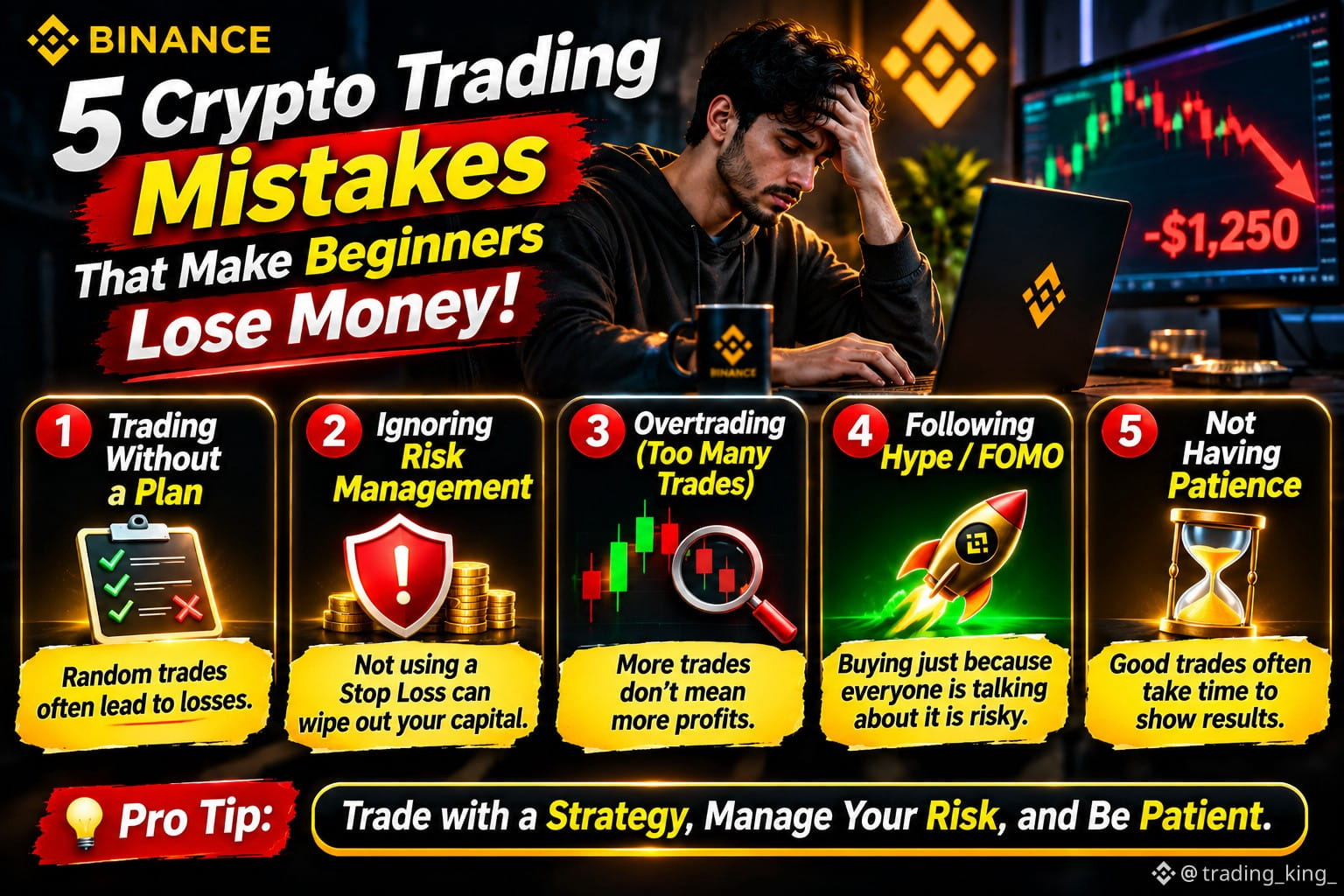
🚨 5 CRYPTO TRADING MISTAKES EVERY BEGINNER MUST AVOID!
Many beginners enter crypto hoping to make quick money, but small mistakes can lead to big losses.
Here are 5 mistakes you should avoid:
❌ 1. Trading Without a Plan
❌ 2. Ignoring Risk Management
❌ 3. Overtrading
❌ 4. Following Hype & FOMO
❌ 5. Having No Patience
💡 Remember:
Successful trading is not about making money every day. It's about protecting your capital, learning from mistakes, and staying disciplined.
🔥 QUESTION FOR TRADERS:
Which mistake do you think is the MOST dangerous?
A) No Stop Loss
B) Overtrading
C) FOMO
D) No Trading Plan
👇 Comment A, B, C, or D!
#Binance #cryptotrading #Bitcoin #TradingTips #cryptoeducation #TraderMindset #RiskManagement #CryptoCommunity
23

·
--
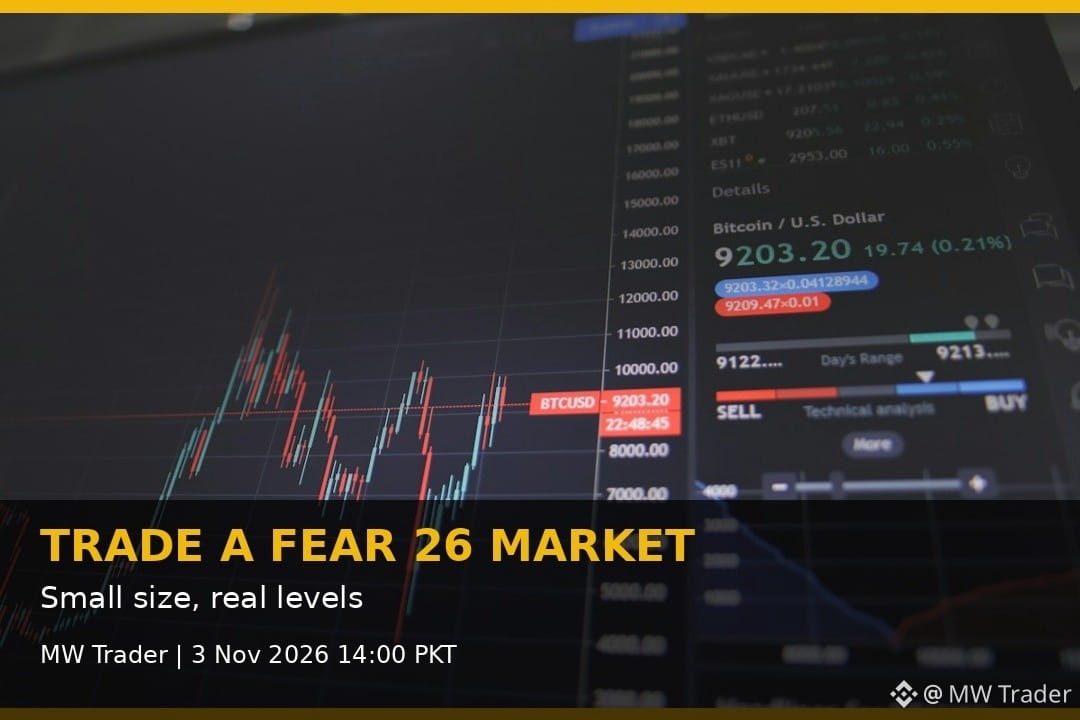
How to trade a fear 26 market without letting fear trade for you. 📚
Fear and Greed is still at 26, which is Fear, unchanged from the morning, and that number alone should change your size, not your direction. 💡 My method in a fear market is simple. First, trade only levels you wrote down before the trade, like 76,303 below Bitcoin and 78,287 above it, so a red candle cannot invent a new plan mid trade. Second, cut size in half compared to a calm market, because fear markets move further and faster than the chart suggests. Third, take partial profit at the first target instead of waiting for the perfect move, because fear markets rarely give you the full move cleanly.
In a fear 26 market, do you cut your size, or do you keep normal size and just widen the stop? 🤔
Follow for more trades.
#Crypto #Bitcoin #FuturesTrading #TradingSignals #CryptoEducation
1

·
--
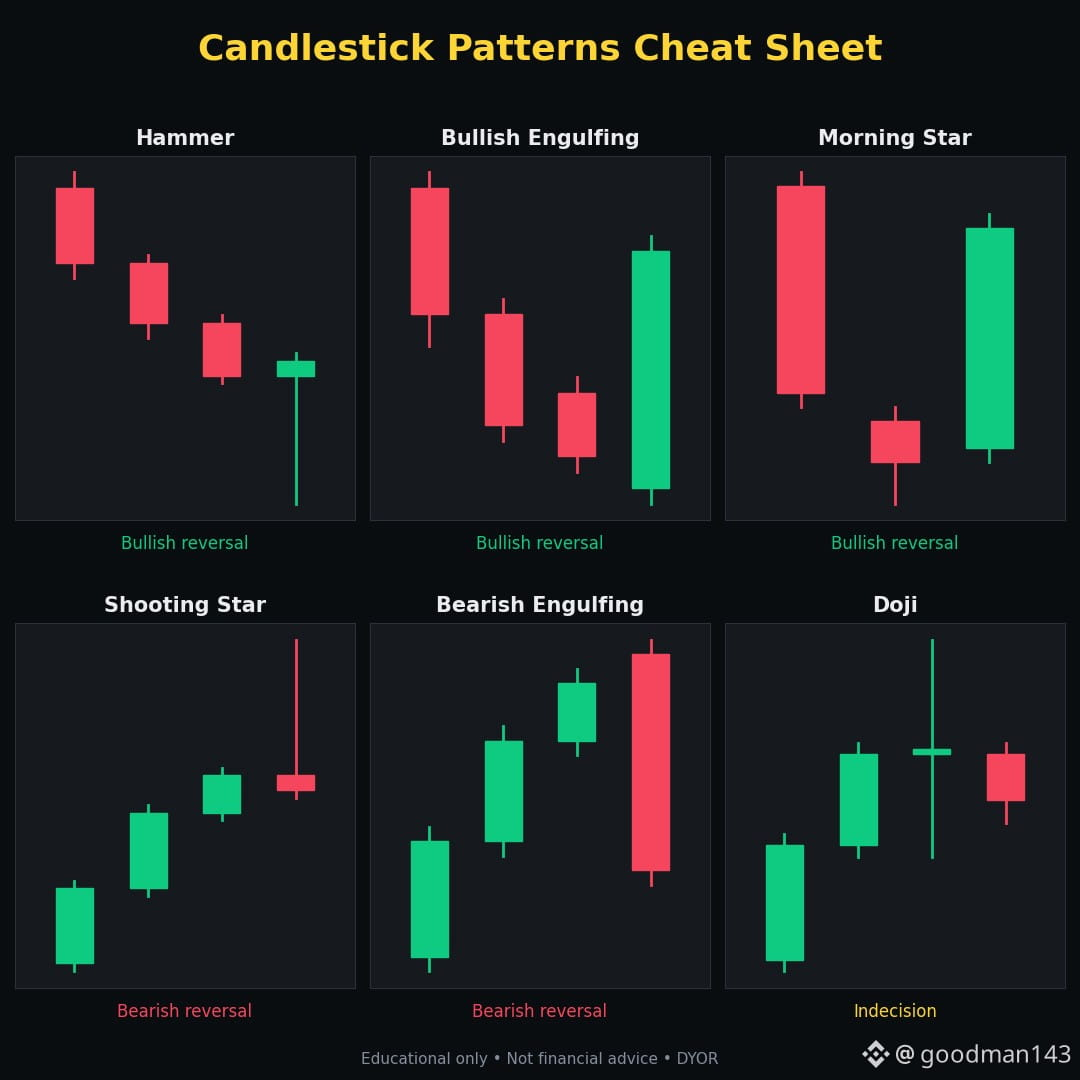
📊 Candlestick Patterns: The Must-Know Cheat Sheet for Traders 🔥
If you trade crypto, you need to read candles. Learning these 6 patterns and market sentiment gets much easier to spot:
🟢 Hammer: Appears after a downtrend. A long lower wick shows buyers stepping in, a possible reversal sign.
🟢 Bullish Engulfing: A big green candle fully covers the previous red one. Buyers are taking control.
🟢 Morning Star: A 3-candle pattern that can signal a downtrend ending and an uptrend starting.
🔴 Shooting Star: Shows up after a rally. A long upper wick means sellers are pushing price back down.
🔴 Bearish Engulfing: A big red candle swallows the previous green one. Sellers are taking over.
⚪ Doji: Open and close are almost equal. Buyers and sellers are in a tug of war, so the market is undecided.
💡 Pro tip: Never trade on one pattern alone. Confirm with volume, support/resistance levels, and the overall trend.
👇 Which candlestick pattern do you use the most? Let me know in the comments!
$BTC $ETH
#Binance #BinanceSquare #Bitcoin #crypto #Trading #CandlestickPatterns #TechnicalAnalysis #cryptoeducation
For educational purposes only. Not financial advice. Always DYOR.$BTC
92

ບົດຄວາມ
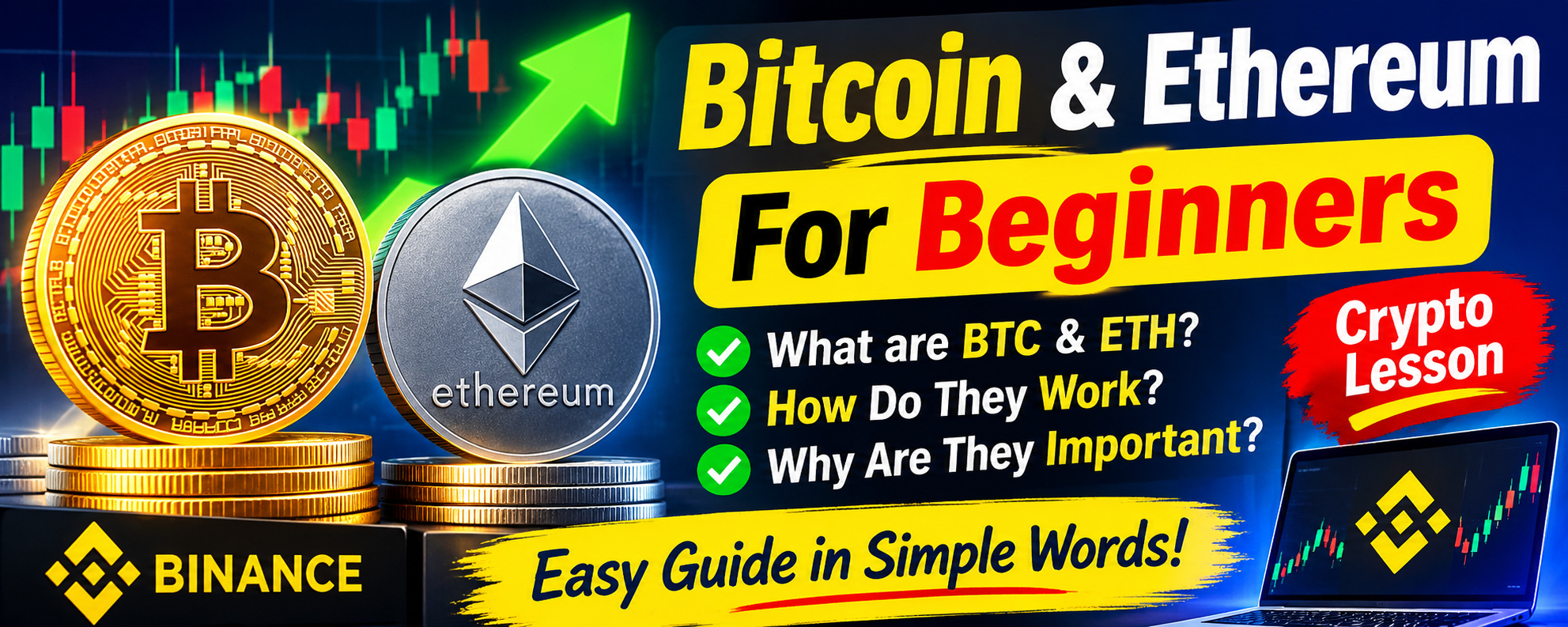
Are you new to cryptocurrency? Don't worry! Everyone starts as a beginner. Before entering the cryptAre you new to cryptocurrency? Don't worry! Everyone starts as a beginner. Before entering the crypto market, it's important to understand a few basic things.
1. What Is Cryptocurrency? Cryptocurrency is digital money that works using blockchain technology.
2. Learn About Bitcoin Bitcoin $BTC (BTC) is the first and most well-known cryptocurrency.
3. Understand Ethereum Ethereum $ETH (ETH) is a blockchain network that supports smart contracts and decentralized applications.
4. Never Ignore Risk Crypto prices can go up and down quickly. Always learn before making financial decisions.
5. Keep Learning Start with basic knowledge, follow market updates, and understand how crypto works.
Final Thoughts 💡#BinanceReopensWithdrawalsForMoreAssets
You don't need to become an expert in one day. Start with small lessons, stay informed, and improve your knowledge step by step.
Question for Beginners: Which cryptocurrency would you like to learn about first: Bitcoin or Ethereum?
#CryptoForBeginners #Bitcoin #Ethereum #Blockchain #CryptoEducation
Are you new to cryptocurrency? Don't worry! Everyone starts as a beginner. Before entering the crypt
Are you new to cryptocurrency? Don't worry! Everyone starts as a beginner. Before entering the crypto market, it's important to understand a few basic things.
1. What Is Cryptocurrency? Cryptocurrency is digital money that works using blockchain technology.
2. Learn About Bitcoin Bitcoin $BTC (BTC) is the first and most well-known cryptocurrency.
3. Understand Ethereum Ethereum $ETH (ETH) is a blockchain network that supports smart contracts and decentralized applications.
4. Never Ignore Risk Crypto prices can go up and down quickly. Always learn before making financial decisions.
5. Keep Learning Start with basic knowledge, follow market updates, and understand how crypto works.
Final Thoughts 💡#BinanceReopensWithdrawalsForMoreAssets
You don't need to become an expert in one day. Start with small lessons, stay informed, and improve your knowledge step by step.
Question for Beginners: Which cryptocurrency would you like to learn about first: Bitcoin or Ethereum?
#CryptoForBeginners #Bitcoin #Ethereum #Blockchain #CryptoEducation
86

·
--
Your First $100 Is Tuition, Not a Wealth Engine
Your first $100 in the market is not for getting rich. It is for buying your market discipline.
Most beginners ask, “How much profit can $80 make?” Because of this, they chase big moves, overleverage, and treat a small account like a lottery ticket. The better question is, “What can $80 teach me?” Small capital is the cheapest tuition you will ever pay, and it buys lessons that no course can fully give you: how risk really behaves, how a stop loss differs from a limit order, and how market structure shapes every entry and exit.
Instead of obsessing over returns, use that money to practise. Learn position sizing, test different order types, and watch how liquidity and volatility affect your fills. As a result, every small win and every small loss becomes data, and none of it carries the anxiety that comes with risking money you cannot afford to lose. That calm is what allows you to think clearly and build habits that last.
On the other hand, skipping this stage is expensive. Traders who start with no discipline often learn the same lessons later with far larger sums. That is why education and skill equity are the real first investment: the skill you build now compounds long after the first $100 has done its job.
So here is my question for you. What was the most valuable lesson your first small trades taught you? Share it in the comments.
If you would rather learn alongside an experienced trader, you are welcome to join my copy trading account here: [https://www.binance.com/en/copy-trading/lead-details/5293024773212277505?timeRange=365D](https://www.binance.com/en/copy-trading/lead-details/5293024773212277505?timeRange=365D)
Cashtags: $BTC $ETH $BNB
Hashtags: #cryptoeducation #RiskManagement #TradingDiscipline #BinanceSquare #BeginnerTrading
Your First $100 Is Tuition, Not a Wealth Engine
Your first $100 in the market is not for getting rich. It is for buying your market discipline.
Most beginners ask, “How much profit can $80 make?” Because of this, they chase big moves, overleverage, and treat a small account like a lottery ticket. The better question is, “What can $80 teach me?” Small capital is the cheapest tuition you will ever pay, and it buys lessons that no course can fully give you: how risk really behaves, how a stop loss differs from a limit order, and how market structure shapes every entry and exit.
Instead of obsessing over returns, use that money to practise. Learn position sizing, test different order types, and watch how liquidity and volatility affect your fills. As a result, every small win and every small loss becomes data, and none of it carries the anxiety that comes with risking money you cannot afford to lose. That calm is what allows you to think clearly and build habits that last.
On the other hand, skipping this stage is expensive. Traders who start with no discipline often learn the same lessons later with far larger sums. That is why education and skill equity are the real first investment: the skill you build now compounds long after the first $100 has done its job.
So here is my question for you. What was the most valuable lesson your first small trades taught you? Share it in the comments.
If you would rather learn alongside an experienced trader, you are welcome to join my copy trading account here: https://www.binance.com/en/copy-trading/lead-details/5293024773212277505?timeRange=365D
Cashtags: $BTC $ETH $BNB
Hashtags: #cryptoeducation #RiskManagement #TradingDiscipline #BinanceSquare #BeginnerTrading
Spot Portfolio ຂອງຂ້ອຍ
0 / 300
ຂັ້ນຕ່ຳ 10USDT
ສາທາລະນະ
PNL 7 ວັນ
(USDT)
0.08
7D ROI
+0.01%
ຊັບສິນພາຍໃຕ້ການຄຸ້ມຄອງ
$563.39
ອັດຕາການຊະນະ
66.67%
96
·
--
TITLE:*
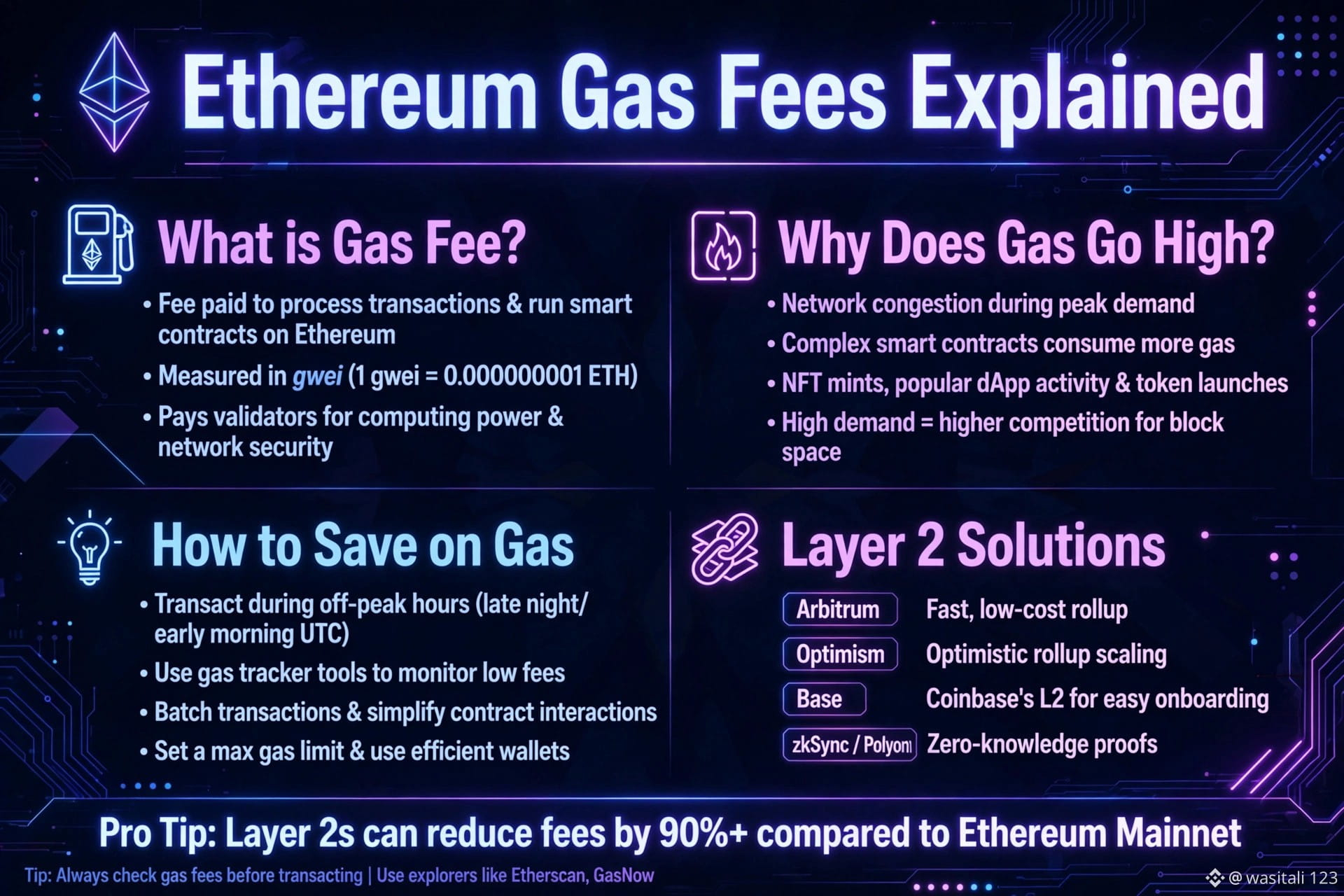
Ethereum Gas Fees Explained: Why They Go Up and How to Save Money
*ARTICLE:*
If you have used Ethereum, you have seen high gas fees. Sometimes $2, sometimes $50 for same transaction. Why?
*What is Gas Fee?*
Ethereum is like a highway. When many cars (transactions) want to use it at same time, traffic jam happens. To get your transaction fast, you pay more fee to miners/validators. This fee is called Gas.
*Why Gas Goes High?*
1. *Network Congestion:* When a big NFT mint or meme coin launch happens, thousands of people transact at once. Fees skyrocket.
2. *Complex Transactions:* Simple ETH transfer needs less gas. But swapping on Uniswap or interacting with a smart contract needs more gas because it uses more computation.
3. *Market Volatility:* During big dumps or pumps, everyone rushes to buy/sell. Gas goes 5x normal.
*How to Save on Gas? (My 3 Tips)*
1. Check gas tracker: Use Etherscan Gas Tracker. Post transactions when gas is low (usually weekend nights UTC).
2. Use Layer 2: Use Arbitrum, Optimism, Base. They are 90% cheaper than mainnet and just as secure.
3. Avoid Peak Hours: Don't transact during US market open hours. Early morning UTC is usually cheapest.
I personally shifted most of my small trades to Layer 2 and saved over $300 in fees last month alone.
Gas is part of Ethereum's design. Understanding it saves you real money.
This is educational content, not financial advice.
*Word Count: ∼225 words*
*Tags:* #ETH #Ethereum #GasFees #Layer2 #WriteAndEarn #CryptoEducation
1
21

ບົດຄວາມ
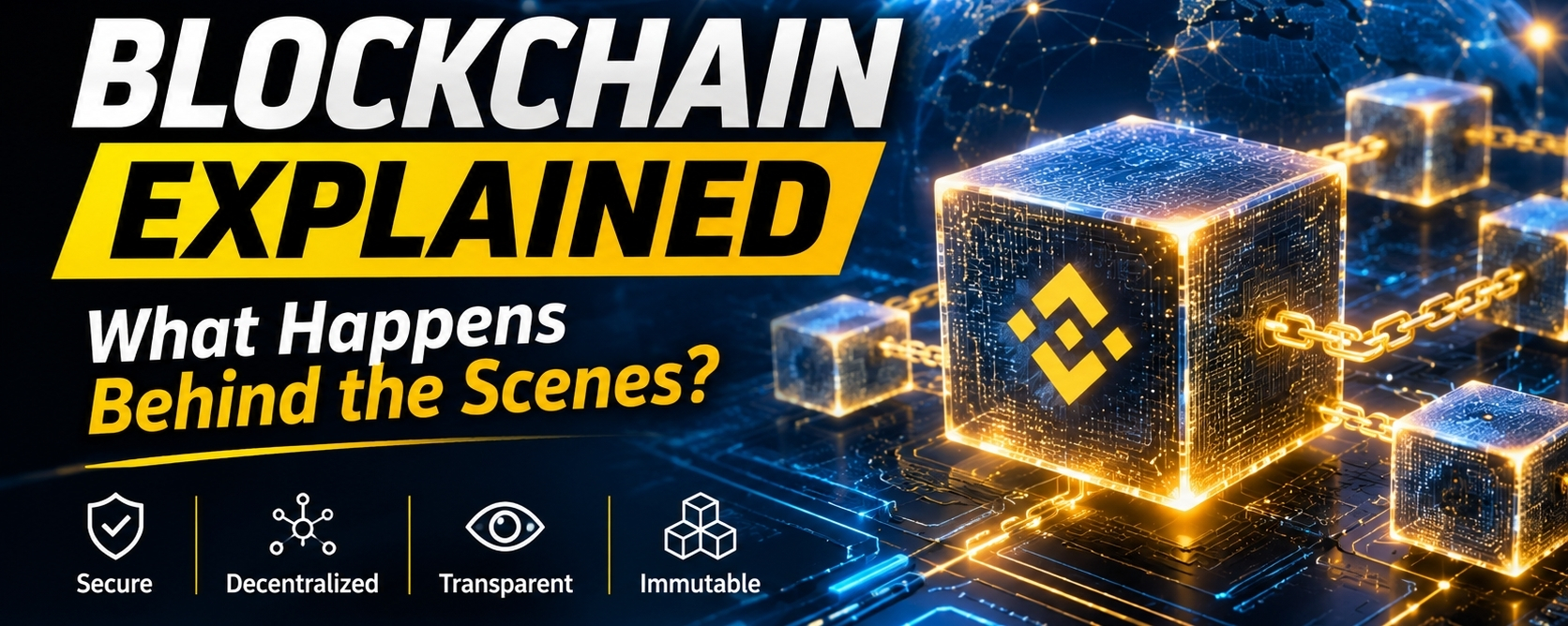
Blockchain Explained: What Actually Happens Behind the Scenes?We hear the word "blockchain" almost everywhere in crypto.
But have you ever wondered what actually happens when someone sends cryptocurrency or when a new transaction gets recorded?
Let's break down the technology behind it in simple terms.
1. What Exactly Is Blockchain?
A blockchain is a type of digital ledger that records information in groups called blocks.
These blocks are connected using cryptographic techniques, creating a chain of records.
Unlike a traditional database controlled by one organization, many public blockchain networks distribute copies of their ledger across independent computers called nodes.
This allows network participants to maintain and verify a shared record.
2. How Does a Blockchain Transaction Work?
Imagine sending cryptocurrency to another wallet.
Here is a simplified explanation of what happens:
Step 1: Transaction Creation
The sender creates a transaction using their wallet.
Step 2: Transaction Verification
The network checks whether the transaction follows its rules, including whether the sender is authorized to make it.
Step 3: Network Agreement
The network uses a consensus mechanism to determine which transactions can be included in the next block.
Step 4: Block Creation
Valid transactions are grouped into a block.
Step 5: Blockchain Update
The new block is linked to the existing chain, and participating nodes update their records.
The exact process differs between blockchain networks.
3. Why Are Blocks Connected?
Each block contains information that cryptographically links it to the previous block.
This creates a chain of records.
If someone attempts to modify historical information, the cryptographic links no longer match.
That makes unauthorized changes detectable and, depending on the network's consensus design, extremely difficult to carry out successfully.
4. What Makes Blockchain Interesting?
There are several important characteristics:
Transparency: Public blockchain transactions can generally be inspected by anyone.
Decentralization: Many networks distribute recordkeeping across independent participants.
Security: Cryptographic mechanisms help verify transactions and protect records.
Traceability: Historical transactions can be followed through the ledger.
However, these properties vary depending on the network's design.
5. Where Is Blockchain Used?
Blockchain technology is being explored in several areas:
- Cryptocurrency and digital payments.
- Decentralized finance.
- Supply chain tracking.
- Digital identity systems.
- Tokenization of assets.
- Decentralized applications.
It is not limited to cryptocurrency.
6. Does Blockchain Have Limitations?
Yes.
Blockchain networks can face challenges involving:
- Transaction speed.
- Network fees.
- Scalability.
- Privacy.
- Energy consumption.
- Technical complexity.
Not every application needs a blockchain. Sometimes a traditional database is more efficient.
Final Thoughts
Blockchain is more than a technology behind cryptocurrencies.
It introduces a different way of maintaining shared digital records and coordinating participants without necessarily relying on one central authority.
Understanding the technology is an important step toward understanding the broader Web3 ecosystem.
Let's discuss:
What do you think is the most promising real-world use of blockchain technology outside cryptocurrency?
#blockchain #cryptoeducation #Web3 #Technology
Blockchain Explained: What Actually Happens Behind the Scenes?
We hear the word "blockchain" almost everywhere in crypto.
But have you ever wondered what actually happens when someone sends cryptocurrency or when a new transaction gets recorded?
Let's break down the technology behind it in simple terms.
1. What Exactly Is Blockchain?
A blockchain is a type of digital ledger that records information in groups called blocks.
These blocks are connected using cryptographic techniques, creating a chain of records.
Unlike a traditional database controlled by one organization, many public blockchain networks distribute copies of their ledger across independent computers called nodes.
This allows network participants to maintain and verify a shared record.
2. How Does a Blockchain Transaction Work?
Imagine sending cryptocurrency to another wallet.
Here is a simplified explanation of what happens:
Step 1: Transaction Creation
The sender creates a transaction using their wallet.
Step 2: Transaction Verification
The network checks whether the transaction follows its rules, including whether the sender is authorized to make it.
Step 3: Network Agreement
The network uses a consensus mechanism to determine which transactions can be included in the next block.
Step 4: Block Creation
Valid transactions are grouped into a block.
Step 5: Blockchain Update
The new block is linked to the existing chain, and participating nodes update their records.
The exact process differs between blockchain networks.
3. Why Are Blocks Connected?
Each block contains information that cryptographically links it to the previous block.
This creates a chain of records.
If someone attempts to modify historical information, the cryptographic links no longer match.
That makes unauthorized changes detectable and, depending on the network's consensus design, extremely difficult to carry out successfully.
4. What Makes Blockchain Interesting?
There are several important characteristics:
Transparency: Public blockchain transactions can generally be inspected by anyone.
Decentralization: Many networks distribute recordkeeping across independent participants.
Security: Cryptographic mechanisms help verify transactions and protect records.
Traceability: Historical transactions can be followed through the ledger.
However, these properties vary depending on the network's design.
5. Where Is Blockchain Used?
Blockchain technology is being explored in several areas:
- Cryptocurrency and digital payments.
- Decentralized finance.
- Supply chain tracking.
- Digital identity systems.
- Tokenization of assets.
- Decentralized applications.
It is not limited to cryptocurrency.
6. Does Blockchain Have Limitations?
Yes.
Blockchain networks can face challenges involving:
- Transaction speed.
- Network fees.
- Scalability.
- Privacy.
- Energy consumption.
- Technical complexity.
Not every application needs a blockchain. Sometimes a traditional database is more efficient.
Final Thoughts
Blockchain is more than a technology behind cryptocurrencies.
It introduces a different way of maintaining shared digital records and coordinating participants without necessarily relying on one central authority.
Understanding the technology is an important step toward understanding the broader Web3 ecosystem.
Let's discuss:
What do you think is the most promising real-world use of blockchain technology outside cryptocurrency?
#blockchain #cryptoeducation #Web3 #Technology
66

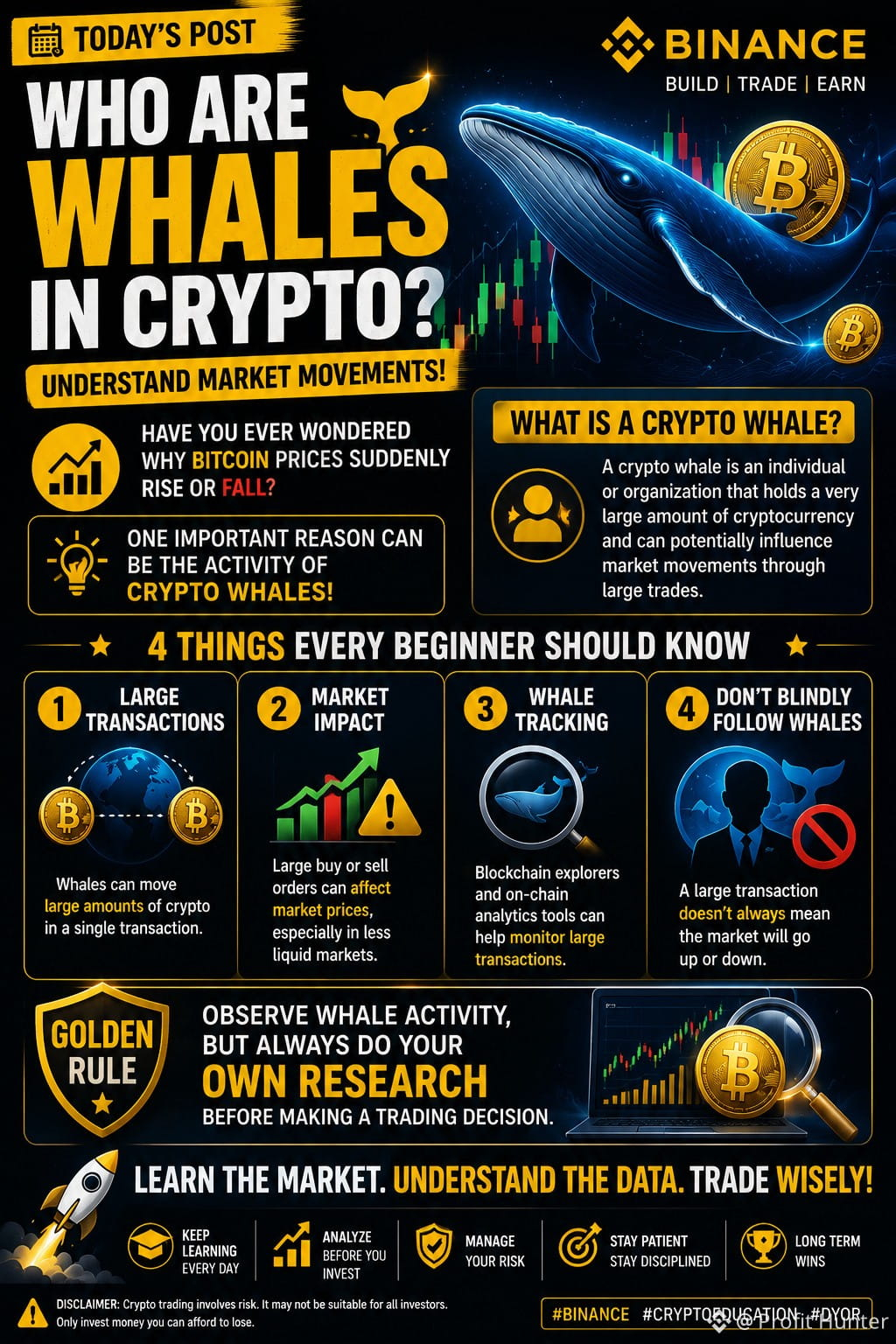
🐋 WHO ARE WHALES IN CRYPTO? UNDERSTAND MARKET MOVEMENTS!
Have you ever wondered why $BTC prices suddenly rise or fall?
One important reason can be the activity of Crypto Whales!
🐳 What Is a Crypto Whale?
A crypto whale is an individual or organization that holds a very large amount of cryptocurrency and can potentially influence market movements through large trades.
📌 4 Things Every Beginner Should Know:
🔹 1. Large Transactions
Whales can move large amounts of crypto in a single transaction.
🔹 2. Market Impact
Large buy or sell orders can affect market prices, especially in less liquid markets.
🔹 3. Whale Tracking
Blockchain explorers and on-chain analytics tools can help monitor large transactions.
🔹 4. Don't Blindly Follow Whales
A large transaction doesn't always mean the market will go up or down.
💡 Golden Rule:
Observe whale activity, but always do your own research before making a trading decision.
🔥 Learn the market. Understand the data. Trade wisely!
#bitcoin #cryptoeducation #blockchain #BinanceSquare #cryptotrading
89
·
--
ບົດຄວາມ
A Beginner's Step-by-Step Guide to Securing Your Crypto WalletWhen I first bought a few dollars of $BTC at $77,078, I felt a mix of excitement and nerves. Seeing the price dip 1.37% in a single day reminded me that the market can move fast, but my wallet's safety should be even steadier. Below is a simple checklist that anyone can follow to keep their crypto safe.
Why Security Matters
Even when the Fear & Greed Index reads 26 (Fear), the risk of losing funds to a simple mistake stays high. A lost seed phrase or a compromised device can turn a modest $2,257 $ETH holding into a zero-balance account in minutes. Treat security like a habit, not a one-time setup.
Step 1, Pick a Reputable Wallet
Start with a wallet that has a solid reputation and open-source code. Hardware wallets, such as Ledger or Trezor, keep your private keys offline, which means they can't be hacked through a website. If you prefer a software wallet, choose one that offers non-custodial control and has regular audits.
Step 2, Back Up Your Seed Phrase
When the wallet generates a 12- or 24-word seed phrase, write it down on paper, not on a phone note or cloud service. Store the paper in a safe place, ideally in two separate locations. This phrase is the master key; without it, even the most secure wallet can't be recovered.
Step 3, Enable Two-Factor Authentication (2FA)
Add an extra layer of protection by linking your wallet's app or exchange account to a 2FA app like Google Authenticator. Avoid SMS codes, which can be intercepted. A simple code from your phone makes it much harder for a thief to log in, even if they somehow obtain your password.
Step 4, Keep Software Updated
Software bugs are a common entry point for attackers. Regularly update your wallet app, operating system, and any related plugins. The same way $SOL moved from $90.87 to $95.95 in a week, your security posture should improve over time with each update.
Step 5, Test with a Small Amount
Before moving a large balance, send a tiny amount, say a fraction of a dollar of XRP at $1.25, to confirm everything works as expected. This practice saves you from costly mistakes and builds confidence in your security setup.
What security habit has worked best for you?
Not financial advice
#CryptoSafety #BeginnerGuide #WalletSecurity #CryptoEducation
A Beginner's Step-by-Step Guide to Securing Your Crypto Wallet
When I first bought a few dollars of $BTC at $77,078, I felt a mix of excitement and nerves. Seeing the price dip 1.37% in a single day reminded me that the market can move fast, but my wallet's safety should be even steadier. Below is a simple checklist that anyone can follow to keep their crypto safe.
Why Security Matters
Even when the Fear & Greed Index reads 26 (Fear), the risk of losing funds to a simple mistake stays high. A lost seed phrase or a compromised device can turn a modest $2,257 $ETH holding into a zero-balance account in minutes. Treat security like a habit, not a one-time setup.
Step 1, Pick a Reputable Wallet
Start with a wallet that has a solid reputation and open-source code. Hardware wallets, such as Ledger or Trezor, keep your private keys offline, which means they can't be hacked through a website. If you prefer a software wallet, choose one that offers non-custodial control and has regular audits.
Step 2, Back Up Your Seed Phrase
When the wallet generates a 12- or 24-word seed phrase, write it down on paper, not on a phone note or cloud service. Store the paper in a safe place, ideally in two separate locations. This phrase is the master key; without it, even the most secure wallet can't be recovered.
Step 3, Enable Two-Factor Authentication (2FA)
Add an extra layer of protection by linking your wallet's app or exchange account to a 2FA app like Google Authenticator. Avoid SMS codes, which can be intercepted. A simple code from your phone makes it much harder for a thief to log in, even if they somehow obtain your password.
Step 4, Keep Software Updated
Software bugs are a common entry point for attackers. Regularly update your wallet app, operating system, and any related plugins. The same way $SOL moved from $90.87 to $95.95 in a week, your security posture should improve over time with each update.
Step 5, Test with a Small Amount
Before moving a large balance, send a tiny amount, say a fraction of a dollar of XRP at $1.25, to confirm everything works as expected. This practice saves you from costly mistakes and builds confidence in your security setup.
What security habit has worked best for you?
Not financial advice
#CryptoSafety #BeginnerGuide #WalletSecurity #CryptoEducation
123

·
--
📖 Crypto glossary: the spread
Open any order book and look at the two prices in the middle.
🟢 Bid = the highest price someone is willing to pay right now
🔴 Ask = the lowest price someone is willing to sell at right now
The gap between them is the spread.
Why you should care:
1️⃣ A market buy fills at the ask, a market sell at the bid. Buy and sell instantly and you lose the spread, even if the price never moved.
2️⃣ BTC/USDT usually has a tiny spread because so many people trade it. A small coin at 4am can have a gap of 1% or more.
3️⃣ A limit order lets you sit on your own price instead of paying the gap.
Quick check before a trade: if the bid and ask look far apart, slow down and use a limit order.
Do you check the order book before you buy, or just tap Market? 👇
#cryptoeducation #tradingtips #crypto #Binance
54
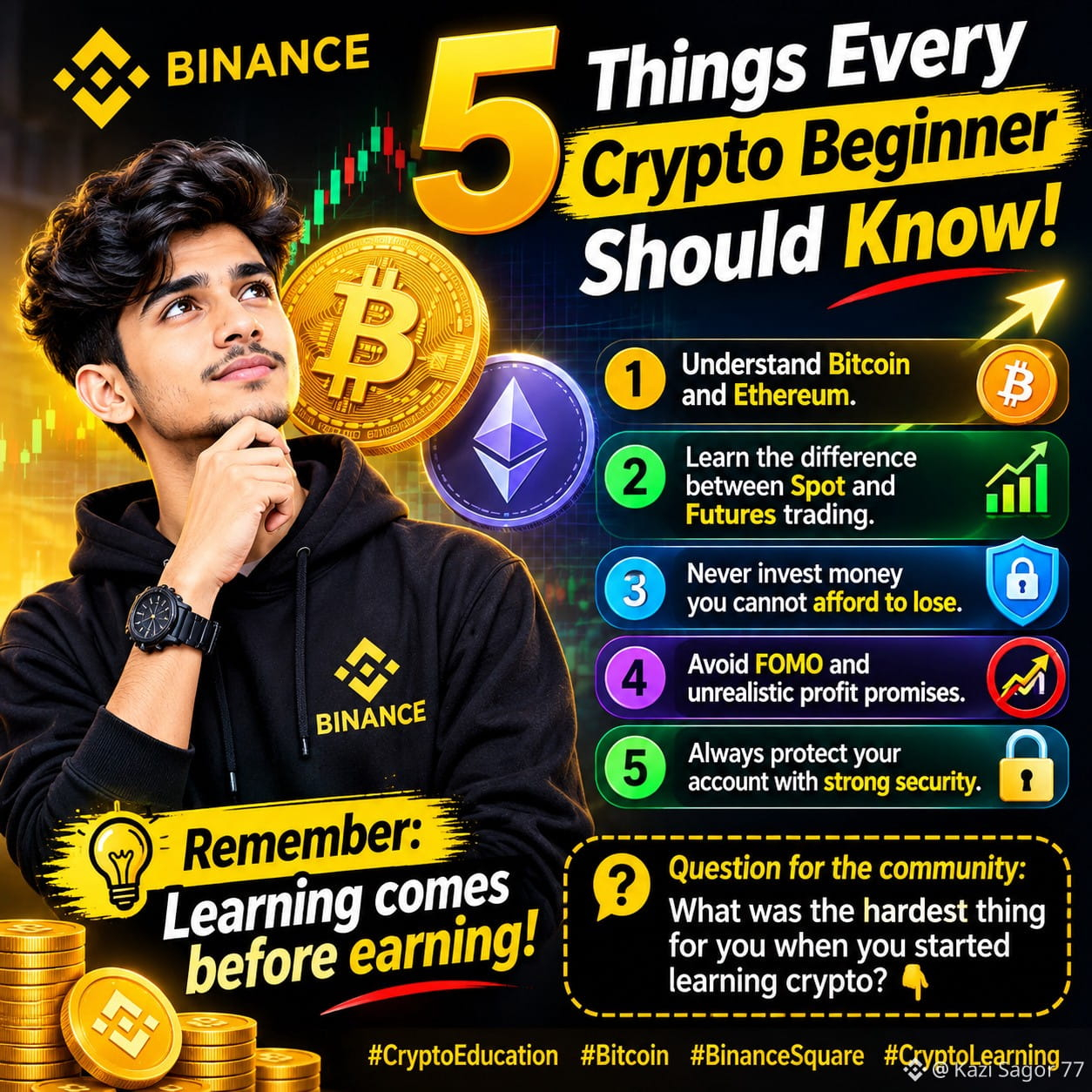
🚀 5 Things Every Crypto Beginner Should Know!
Are you new to cryptocurrency? Here are 5 important things to learn before getting started:
1️⃣ Understand Bitcoin and Ethereum. 2️⃣ Learn the difference between Spot and Futures trading. 3️⃣ Never invest money you cannot afford to lose. 4️⃣ Avoid FOMO and unrealistic profit promises. 5️⃣ Always protect your account with strong security.
💡 Remember: Learning comes before earning!
Question for the community: What was the hardest thing for you when you started learning crypto? 👇
#CryptoEducation #bitcoin #BinanceSquare #CryptoLearning
80

·
--
ບົດຄວາມ
Comment simuler et calculer vos gains en crypto ?Quand on débute en crypto, on fait souvent l'erreur de calculer ses gains à la louche. Pourtant, maîtriser ses chiffres est la base d'un bon trader.
Prenons un exemple simple avec une simulation pour comprendre les mécanismes de base.
💰 Le Scénario :
Vous investissez 500 $ sur un jeton.Le prix de ce jeton augmente et votre capital est multiplié par 1,7 (soit une hausse de +70 %).
🔥 Étape 1 : Le calcul rapide des gains
Pour savoir combien vous avez gagné sans vous perdre dans le nombre de jetons, utilisez la méthode du multiplicateur :
Capital final : Investissement initial × Multiplicateur
👉 \(500 \times 1,7 = \mathbf{850 \$}\)Bénéfice net (votre gain) : Capital final − Investissement initial
👉 \(850 \$ - 500 \$ = \mathbf{350 \$}\)
Dans ce monde fictif, vous avez empoché 350 $ de bénéfice net. Facile, non ? 🚀
⚠️ Les 3 réalités du marché à ne JAMAIS oublier !
Dans la vraie vie, une simulation ne suffit pas. Pour éviter les mauvaises surprises sur votre portefeuille, vous devez ajouter 3 paramètres essentiels :
1. Les frais de plateforme (Trading Fees) : Chaque fois que vous achetez ou vendez sur un exchange (comme Binance), la plateforme prend une petite commission (souvent entre 0,1 % et 0,5 %). Sur un aller-retour, cela grignote un peu votre gain final.2. La liquidité du marché : Si vous achetez une crypto très peu connue (une "micro-cap"), il se peut qu'au moment de vendre au prix fort, il n'y ait pas assez d'acheteurs en face. Le prix réel de vente peut alors être inférieur à vos prévisions.3. Les taxes (La fiscalité) : Selon votre pays de résidence, dès que vous repassez votre profit en monnaie fiat (Dollar, Euro...), l'État peut vous réclamer un pourcentage sur vos plus-values. Pensez-y avant de tout dépenser !
Un bon trader est un trader qui calcule TOUT, du profit jusqu'aux frais.
👇 Dites-moi en commentaire : quelle est la prochaine simulation que vous aimeriez faire ?
#Binance #CryptoEducation #tradingtips #learnAndEarn #CryptoMarket #SquareCreators #CryptoForBeginners
Comment simuler et calculer vos gains en crypto ?
Quand on débute en crypto, on fait souvent l'erreur de calculer ses gains à la louche. Pourtant, maîtriser ses chiffres est la base d'un bon trader.
Prenons un exemple simple avec une simulation pour comprendre les mécanismes de base.
💰 Le Scénario :
Vous investissez 500 $ sur un jeton.Le prix de ce jeton augmente et votre capital est multiplié par 1,7 (soit une hausse de +70 %).
🔥 Étape 1 : Le calcul rapide des gains
Pour savoir combien vous avez gagné sans vous perdre dans le nombre de jetons, utilisez la méthode du multiplicateur :
Capital final : Investissement initial × Multiplicateur
👉 \(500 \times 1,7 = \mathbf{850 \$}\)Bénéfice net (votre gain) : Capital final − Investissement initial
👉 \(850 \$ - 500 \$ = \mathbf{350 \$}\)
Dans ce monde fictif, vous avez empoché 350 $ de bénéfice net. Facile, non ? 🚀
⚠️ Les 3 réalités du marché à ne JAMAIS oublier !
Dans la vraie vie, une simulation ne suffit pas. Pour éviter les mauvaises surprises sur votre portefeuille, vous devez ajouter 3 paramètres essentiels :
1. Les frais de plateforme (Trading Fees) : Chaque fois que vous achetez ou vendez sur un exchange (comme Binance), la plateforme prend une petite commission (souvent entre 0,1 % et 0,5 %). Sur un aller-retour, cela grignote un peu votre gain final.2. La liquidité du marché : Si vous achetez une crypto très peu connue (une "micro-cap"), il se peut qu'au moment de vendre au prix fort, il n'y ait pas assez d'acheteurs en face. Le prix réel de vente peut alors être inférieur à vos prévisions.3. Les taxes (La fiscalité) : Selon votre pays de résidence, dès que vous repassez votre profit en monnaie fiat (Dollar, Euro...), l'État peut vous réclamer un pourcentage sur vos plus-values. Pensez-y avant de tout dépenser !
Un bon trader est un trader qui calcule TOUT, du profit jusqu'aux frais.
👇 Dites-moi en commentaire : quelle est la prochaine simulation que vous aimeriez faire ?
#Binance #CryptoEducation #tradingtips #learnAndEarn #CryptoMarket #SquareCreators #CryptoForBeginners
1
396
·
--
Myth: your hardware wallet holds your crypto 🔐
Fact: your coins never leave the blockchain. The device only holds the private keys that let you move them.
What that means in practice:
• Device lost or broken? Get a new one, enter your 24-word recovery phrase, and everything is back.
• Recovery phrase lost? The device is now your only copy. If it dies, your access dies with it.
• Someone photographs your phrase? They don't need your device at all.
So that sheet of 24 words matters more than the gadget. Keep it offline, and never type it into a website or a "support" chat.
Did you know this before your first wallet? 👇
#CryptoSecurity #crypto #cryptoeducation #Binance
3

·
--
{spot}(BTCUSDT)
🚀 Bitcoin ($BTC) – Learning the Crypto Market
Bitcoin is one of the most popular cryptocurrencies in the world. Understanding its price movements, market trends and risks is important before making any investment decision.
What do you think about Bitcoin's future? Are you bullish or bearish? 📊
Let's learn and grow together!$
#Bitcoin #Crypto #BTC #BinanceSquare #CryptoEducation $BTC
🚀 Bitcoin ($BTC ) – Learning the Crypto Market
Bitcoin is one of the most popular cryptocurrencies in the world. Understanding its price movements, market trends and risks is important before making any investment decision.
What do you think about Bitcoin's future? Are you bullish or bearish? 📊
Let's learn and grow together!$
#Bitcoin #Crypto #BTC #BinanceSquare #CryptoEducation $BTC
76

·
--
🚀 5 Years on Binance, 0 Trades — My Journey Starts Now!
Hey Binance community! 👋
I recently discovered that my Binance account is around 5.1 years old, but I’ve never actually traded crypto. 😅
Now, I’m ready to change that!
I’m starting my journey to learn about Bitcoin, Ethereum, blockchain, and crypto trading.
My rule is simple:
Learn first. Trade later.
I’ll be sharing my learning, thoughts, and crypto discoveries along the way.
💬 For experienced crypto users:
What’s ONE thing you wish you knew before your first trade?
Let’s learn and grow together! 🌱
#CryptoJourney #BinanceSquare #Bitcoin #CryptoEducation
110
·
--
ສັນຍານກະທິງ
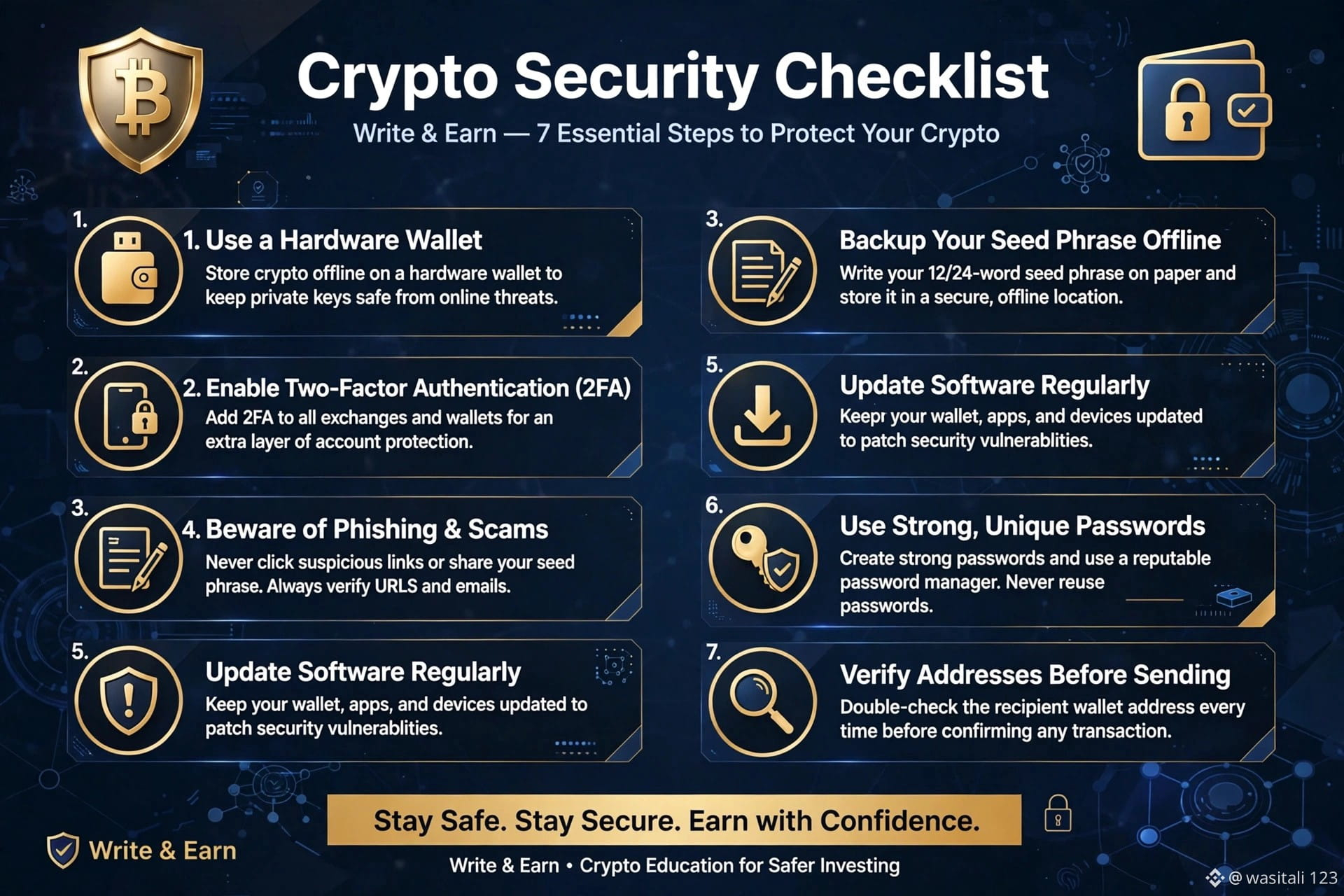
*TITLE: Crypto Security After the $6.3B Binance Hack: 7 Steps Every User Must Take in 2026*
*Introduction:*
The $6.3 billion Binance hack on Oct 29, 2026 is the largest exploit in crypto history. FBI has linked it to North Korea. While Binance covered 95% of funds via SAFU, this incident is a wake-up call for every crypto user. Your security is in YOUR hands, not just the exchange.
Here are 7 steps I personally follow, and you should too:
*1. Enable Withdrawal Whitelist*
Go to Binance > Security > Withdrawal Whitelist. Turn it ON. Only your personal wallet addresses can withdraw. Even if hacker gets your password, he can't withdraw to his wallet.
*2. Use Passkey + Authenticator, Not Just SMS*
SMS can be SIM-swapped. Use Binance Authenticator App + Passkey + Email code. 3 layers = almost impossible to hack.
*3. Anti-Phishing Code*
Set your anti-phishing code in Binance security. Every real Binance email will show YOUR code. If email doesn't have it, it's fake. Hackers are sending fake Binance emails right now.
*4. 80/20 Rule: Exchange vs Cold Wallet*
Never keep all funds on any exchange. I keep 20% on Binance for trading, 80% in cold wallet (Ledger/Trezor). Not your keys, not your coins.
*5. Don't Click Links from Twitter/Telegram*
After the hack, thousands of fake "Binance refund" links are circulating. Binance will NEVER DM you for refund. Check official Binance Square account only.
*6. Check API Keys & Third-Party Apps*
If you connected any bot, trading app to Binance via API, delete unused APIs now. Many hacks happen via leaked API keys.
*7. Learn On-Chain Hygiene*
Use a separate wallet for airdrops/meme coins. Don't connect your main wallet to every random website. One bad approval can drain your wallet.
*Conclusion:*
Exchanges can be hacked, that's reality of technology. But if you follow these 7 steps, even in worst case, you will be safe. This $6.3B hack taught us one lesson: In crypto, security is profit.
Stay safe. Stay SAFU.
Share this with a
#WriteAndEarn #BinanceSecurity #CryptoSafety #BinanceHack #SAFU #Write2Earn #BTC #CryptoEducation
-
33
·
--
Fun fact: Bitcoin's 21 million cap is really counted in sats, not coins 🧮
1 BTC = 100,000,000 satoshis.
So the full supply is 2.1 quadrillion sats.
Block rewards halve roughly every 4 years, and the last new sat should be mined around the year 2140.
So you don't need a whole coin to own Bitcoin. Most people never will 😄
How many sats are you stacking? 👇
$BTC #bitcoin #crypto #cryptoeducation #Binance
44

·
--
🚨 ARE YOU LOSING MONEY IN CRYPTO BECAUSE YOU DON'T KNOW THESE 3 MISTAKES?
Many people enter the crypto world hoping to make money, but they make 3 dangerous mistakes:
❌ Buying coins just because their prices are going up.
❌ Investing without researching the project.
❌ Following random trading signals without understanding the risks.
💡 THE TRUTH IS SIMPLE:
In crypto, knowledge is just as important as capital.
Before investing, learn. Before buying, research. Never invest money you cannot afford to lose.
🔥 Let's build a community of people who learn, grow, and succeed together in the crypto world!
❤️ If you believe financial education is the first step, leave a LIKE!
👇 LET'S TALK!
What was the first cryptocurrency you ever learned about: BTC, ETH, or BNB?
Drop your answer in the comments and FOLLOW my profile for more crypto knowledge!
#Binance #BinanceSquare #BNB走势 #CryptoEducation #CryptoCommunity
1
18
·
--
💡 NEW TO CRYPTO? LET'S LEARN TOGETHER!
Cryptocurrency can seem complicated when you're just starting out. But learning it doesn't have to be difficult.
Which topic would you like us to explain next?
₿ 1. Bitcoin – What is it and how does it work?
🔗 2. Blockchain – The technology behind crypto.
🔐 3. Crypto Wallets – How to store digital assets safely.
💵 4. Stablecoins – Why are they different?
👇 Share your choice in the comments!
At Crypto Made Clear, we're learning one concept at a time.
#CryptoMadeClear #CryptoEducation #Bitcoin #Blockchain
65

·
--
ສັນຍານໝີ
💵 WHY DO CRYPTO INVESTORS USE STABLECOINS?
Imagine the crypto market suddenly drops 10%.
Some investors want to move into an asset designed to maintain a more stable value without immediately leaving the crypto ecosystem.
That's where stablecoins come in.
🧠 3 things beginners should know:
🔹 USDT is designed to track the US dollar.
🔹 Stablecoins can make moving between crypto assets easier.
🔹 They still carry risks, including issuer, reserve, and platform risks.
⚠️ A stablecoin is not the same as a bank deposit, and its value is not guaranteed under every circumstance.
👇 LET'S DISCUSS:
If you had to choose, would you rather hold Bitcoin ($BTC ) or USDT during a market crash?
Tell us why!
#cryptoeducation #bitcoin #BTC #USDT #Stablecoins $
83
ເຂົ້າສູ່ລະບົບເພື່ອສຳຫຼວດເນື້ອຫາເພີ່ມເຕີມ
ເຂົ້າຮ່ວມກຸ່ມຜູ້ໃຊ້ຄຣິບໂຕທົ່ວໂລກໃນ Binance Square.
⚡️ ໄດ້ຮັບຂໍ້ມູນຫຼ້າສຸດ ແລະ ທີ່ມີປະໂຫຍດກ່ຽວກັບຄຣິບໂຕ.
💬 ໄດ້ຮັບຄວາມໄວ້ວາງໃຈຈາກຕະຫຼາດແລກປ່ຽນຄຣິບໂຕທີ່ໃຫຍ່ທີ່ສຸດໃນໂລກ.
👍 ຄົ້ນຫາຂໍ້ມູນເຊີງເລິກທີ່ແທ້ຈາກນັກສ້າງທີ່ໄດ້ຮັບການຢືນຢັນ.
ອີເມວ / ເບີໂທລະສັບ
ຫົວຂໍ້ທີ່ກໍາລັງນິຍົມ
1
#BinanceReopensWithdrawalsForMoreAssets
32,328 ຄັ້ງທີ່ເບິ່ງ
780 ກຳລັງສົນທະນາ
2
#AppleReportsMixedResults
20,531 ຄັ້ງທີ່ເບິ່ງ
566 ກຳລັງສົນທະນາ
3
#BinanceHourlyDepositsExceedWithdrawals
7,309 ຄັ້ງທີ່ເບິ່ງ
236 ກຳລັງສົນທະນາ
4
#PalantirSlides3PercentOn$2BRevenue
550 ຄັ້ງທີ່ເບິ່ງ
11 ກຳລັງສົນທະນາ
5
#USMidtermElections
730,722 ຄັ້ງທີ່ເບິ່ງ
3,982 ກຳລັງສົນທະນາ
6
#ThailandSECProposesDerivativesLicensesForDigitalAssetOperators
2 ຄັ້ງທີ່ເບິ່ງ
1 ກຳລັງສົນທະນາ
7
#Nasdaq100EntersCorrection
131 ຄັ້ງທີ່ເບິ່ງ
16 ກຳລັງສົນທະນາ
8
#USOctoberNFP-AreRateCutsStillPossible
119,266 ຄັ້ງທີ່ເບິ່ງ
1,000 ກຳລັງສົນທະນາ
9
#Verify1to1BinanceReserves
108,395 ຄັ້ງທີ່ເບິ່ງ
740 ກຳລັງສົນທະນາ
10
#YuanbiTechnologyAnnouncesUSDollarRDUSDPlan
12 ຄັ້ງທີ່ເບິ່ງ
4 ກຳລັງສົນທະນາ