
#blockchain
blockchain
35.5M ຄັ້ງທີ່ເບິ່ງ
169,362 ກຳລັງສົນທະນາ
ມາແຮງ
ຫຼ້າສຸດ

·
--
ສັນຍານໝີ
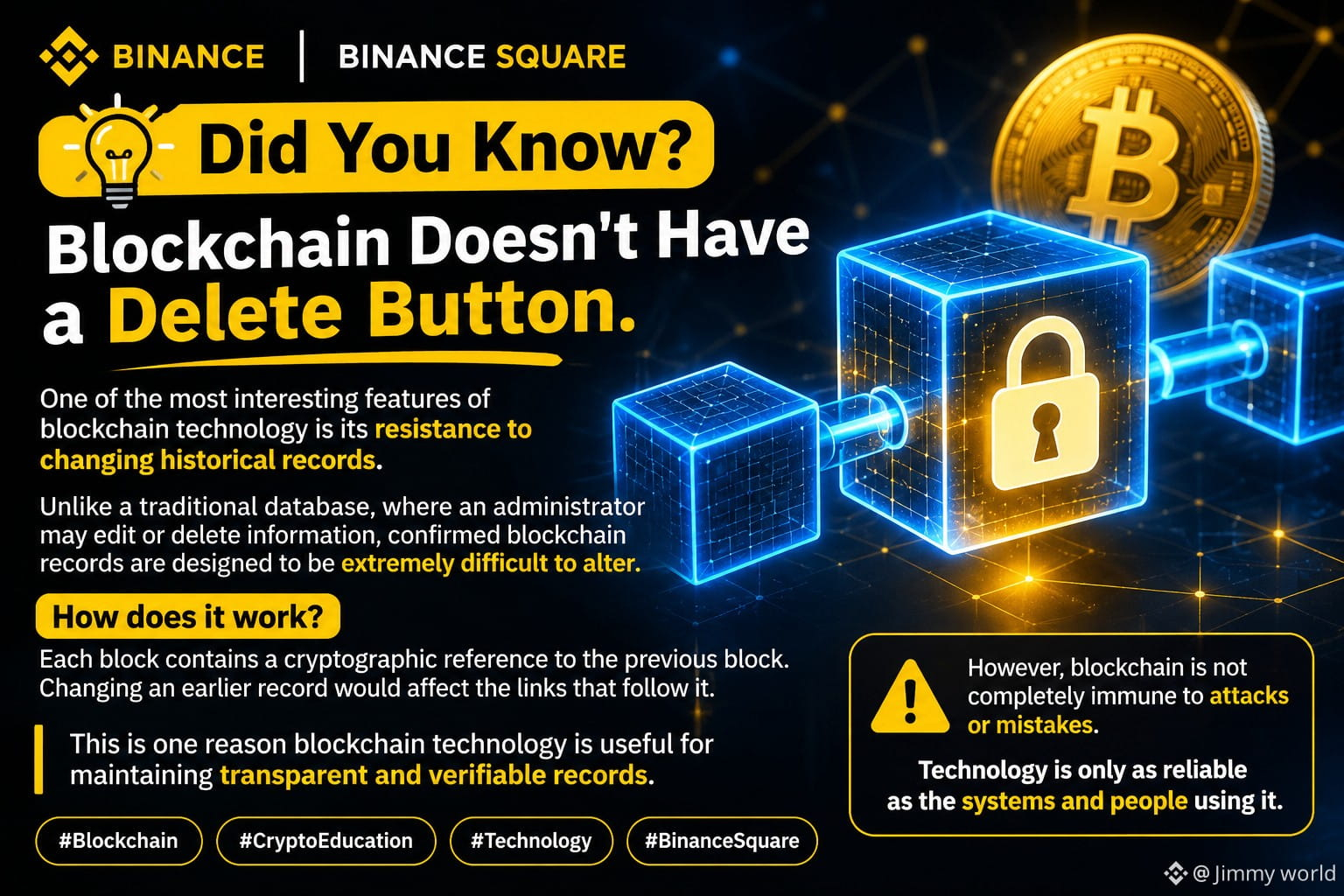
Did You Know? Blockchain Doesn't Have a Delete Button.
One of the most interesting features of blockchain technology is its resistance to changing historical records.
Unlike a traditional database, where an administrator may edit or delete information, confirmed blockchain records are designed to be extremely difficult to alter.
How does it work?
Each block contains a cryptographic reference to the previous block. Changing an earlier record would affect the links that follow it.
This is one reason blockchain technology is useful for maintaining transparent and verifiable records.
However, blockchain is not completely immune to attacks or mistakes.
Technology is only as reliable as the systems and people using it.
$BNB
{spot}(BNBUSDT)
#Blockchain #CryptoEducation #Technology #BinanceSquare
Did You Know? Blockchain Doesn't Have a Delete Button.
One of the most interesting features of blockchain technology is its resistance to changing historical records.
Unlike a traditional database, where an administrator may edit or delete information, confirmed blockchain records are designed to be extremely difficult to alter.
How does it work?
Each block contains a cryptographic reference to the previous block. Changing an earlier record would affect the links that follow it.
This is one reason blockchain technology is useful for maintaining transparent and verifiable records.
However, blockchain is not completely immune to attacks or mistakes.
Technology is only as reliable as the systems and people using it.
$BNB
#Blockchain #CryptoEducation #Technology #BinanceSquare
1
33

🚨 GLOBAL BLOCKCHAIN CLEANUP FLAGS 7,700 SUSPECT ACCOUNTS AS $BTC FORENSICS DEEPEN! 🔍
🔍 Blockchain transparency is turning into the ultimate hammer against bad actors. Operation Lighthouse just tracked 29,000 crypto addresses across 125 countries, generating over 14,000 criminal leads alongside international law enforcement and top-tier exchanges.
🛡️ When on-chain intelligence joins forces with global regulators, illicit volume gets squeezed out of the order books fast. Real institutional adoption requires clean ledger liquidity, and watching illicit actors get purged strengthens the entire ecosystem's long-term structure.
💬 Does aggressive on-chain tracking speed up institutional approval or spark privacy concerns for retail? 👇
⚠️ Not financial advice. Always manage your risk. 🛡️
🏷️ #BTC #CryptoNews #Blockchain #Crypto
🛡️ 🔍
9

·
--
JAPAN GOES ALL-IN ON BLOCKCHAIN SETTLEMENT FOR STOCKS AND BONDS BY 2027 🚨 $BMT
Institutional infrastructure is shifting faster than the market realizes. Japan is officially moving to transition its traditional stock and bond clearing onto blockchain ledgers by 2027, slicing settlement friction down to instant execution. ⚡
Eliminating counterparty risk and unlocking trapped capital is a massive magnet for global smart money. While legacy regulatory red tape might create short-term friction, this structural migration sets a major bullish precedent for infrastructure protocols like $UTK and tokenized assets. 📊
Do you expect traditional markets to seamlessly migrate to instant on-chain settlement by 2027, or will bureaucratic friction stall the rollout? 👇
⚠️ Not financial advice. Always manage your risk. 🛡️
🏷️ #BMT #UTK #Blockchain #Institutional #Crypto
⚡ 💎
27

·
--
ຢືນຢັນແລ້ວ
🚨 ¡WALL STREET ESTÁ DANDO UN PASO HACIA BLOCKCHAIN: LAS ACCIONES Y LOS BONOS COMIENZAN A ENTRAR EN UNA NUEVA ERA!
La tokenización está dejando de ser una simple promesa tecnológica.
Morgan Stanley se suma a las iniciativas para llevar activos financieros tradicionales al entorno blockchain, dentro del nuevo sistema impulsado por DTCC, que busca representar digitalmente acciones estadounidenses y bonos del Tesoro.
Grandes instituciones financieras como JPMorgan, Citi, Bank of America y Fidelity también participan en esta iniciativa.
¿Por qué importa? Porque blockchain podría transformar la forma en que se registran, transfieren y liquidan activos financieros, conectando las finanzas tradicionales con la infraestructura digital.
LA REVOLUCIÓN NO CONSISTE SOLAMENTE EN CREAR NUEVAS CRIPTOMONEDAS, SINO EN TRANSFORMAR TODO EL SISTEMA FINANCIERO.
🦈 El futuro del dinero también se está construyendo en blockchain.
#Crypto #blockchain #Tokenización #WallStreetNews #shark593
MSUS+1,02%
BAC+2,77%
210

·
--
ສັນຍານກະທິງ
🚨 JUST IN: WALL STREET IS TAKING ANOTHER MAJOR STEP TOWARD TOKENIZATION.
🇺🇸 Morgan Stanley, a financial giant managing approximately $10 trillion in client assets, is moving into the tokenization of U.S. stocks and bonds on the blockchain.
This is BIGGER than it looks.
Traditional financial assets are moving on-chain, potentially transforming how global markets operate.
Think about what this could unlock:
→ Stocks and bonds traded on blockchain infrastructure. → Faster settlement and greater market efficiency. → 24/7 access to financial markets. → Lower friction in transferring and managing assets. → Greater institutional adoption of tokenized assets.
And here's the bigger picture.
When one of Wall Street's biggest financial institutions embraces blockchain infrastructure, it sends a powerful signal to the entire financial industry.
Bitcoin introduced a new financial system.
Now traditional finance is increasingly exploring the infrastructure behind it.
The next major financial revolution may not be about replacing Wall Street. It could be about moving Wall Street ON-CHAIN.
The tokenization race is heating up. 🚀
#Bitcoin #RWA #Tokenization #Crypto #Blockchain

BTC+1,34%
MSUS+1,02%
1
95
🚀 $MS LEADS THE TOKENIZATION REVOLUTION ON DTCC'S BLOCKCHAIN PIPELINE! 🟢
🦈 Morgan Stanley’s early dive into DTCC’s token service signals that Wall Street’s heavyweights are finally surfacing the smart‑money tide. By minting digital twins of US equities and Treasuries, the bank aims to stitch traditional settlement rails into a blockchain‑first workflow. 📊 The move could shave hours off settlement cycles and inject razor‑sharp transparency into asset transfers.
⚡ Yet the runway isn’t fully cleared—regulators, custodians, and market infrastructure must sync up before retail doors swing wide open. If the tokenized flow sticks, we could see a new liquidity wave reshaping how desks hedge and allocate capital. 🌊 💬 Will tokenized securities become the next engine driving your portfolio’s edge? 👇
⚠️ Not financial advice. Always manage your risk. 🛡️
🏷️ #MS #Tokenization #Blockchain #Finance
🦈 🔥
MSUS+1,02%
12

·
--
🚀 $XAG SKYROCKETS AS $10T MORGAN STANLEY BLOCKCHAIN PLAY UNFOLDS! 💥
🦈 Morgan Stanley’s $10 trillion push to tokenise US equities and bonds is a seismic smart‑money wave, and the ripple is already hitting silver‑backed $XAG . 📊 Liquidity pools are swelling as institutions line up to claim a slice of the new on‑chain asset class, turning the usual thin order book into a deep ocean of demand.
⚡ The blockchain bridge is a catalyst that could flip $XAG ’s price dynamics overnight, with buying pressure likely to surge as whales lock in exposure. 🌊 Expect tighter spreads and a potential breakout if the on‑chain volume keeps ticking up.
💬 Are you loading up on $XAG ahead of the institutional flood or waiting for the next liquidity sweep? 👇
⚠️ Not financial advice. Always manage your risk. 🛡️
🏷️ #XAG #SmartMoney #Blockchain #Crypto
🔥 💎
13

ບົດຄວາມ
Bitcoin Explained: How Does It Actually Work?Bitcoin is probably the most recognized name in the cryptocurrency world.
But beyond its price movements and headlines, there's an interesting technology that makes it work.
Bitcoin introduced a way for people to transfer digital value over a network without depending on a central financial institution to maintain the transaction ledger.
So how does it actually work?
Let's break it down.
1. What Is Bitcoin?
Bitcoin is a decentralized digital currency introduced in 2009 under the name Satoshi Nakamoto.
It operates on a public blockchain where transactions are recorded and verified by a distributed network of participants.
Unlike traditional currencies issued by central banks, Bitcoin has no single organization controlling its monetary issuance.
Its protocol defines how new bitcoins are created and how transactions are processed.
2. How Does a Bitcoin Transaction Work?
Imagine you want to send Bitcoin to another person.
Here's a simplified explanation:
Step 1: Create a transaction
You use your Bitcoin wallet to create a transaction specifying the recipient and amount.
Step 2: Sign the transaction
Your wallet uses your private key to create a digital signature that proves authorization.
Step 3: Broadcast to the network
The transaction is shared with Bitcoin nodes.
Step 4: Verification
Nodes check whether the transaction follows Bitcoin's consensus rules.
Step 5: Mining and block confirmation
Miners compete through Proof of Work to create valid blocks containing transactions.
Once a block is accepted by the network, the included transactions receive confirmation.
Additional blocks increase the confidence that a transaction will remain part of the accepted history.
3. What Is Bitcoin Mining?
Bitcoin uses a consensus mechanism called Proof of Work.
Miners use computing power to compete in solving a cryptographic puzzle.
The successful miner gets the opportunity to add a new block to the blockchain and receive the protocol-defined block reward and transaction fees.
Mining serves two important purposes:
- It helps secure the Bitcoin network.
- It helps establish agreement about the order of transactions.
Mining is not simply about creating new bitcoins. It is also an important part of the network's security model.
4. Why Does Bitcoin Have a Limited Supply?
One of Bitcoin's most discussed features is its maximum supply of 21 million BTC.
New bitcoins enter circulation through block rewards.
Approximately every 210,000 blocks, Bitcoin undergoes an event called the halving, which reduces the block subsidy by half.
This creates a predictable issuance schedule.
However, limited supply alone does not guarantee market value. Demand, adoption, regulation, and market conditions also matter.
5. What Makes Bitcoin Different?
Bitcoin has several distinctive characteristics:
Decentralization: It operates without a central authority controlling the network.
Limited supply: Its protocol sets a maximum supply of 21 million BTC.
Transparency: Transactions are publicly recorded on the blockchain.
Security: Proof of Work and cryptography help protect the network.
Permissionless access: Anyone can participate in the network, subject to its technical requirements.
6. Is Bitcoin Only Digital Gold?
Not necessarily.
Bitcoin was originally introduced as a peer-to-peer electronic cash system.
Today, it is also widely discussed as a store-of-value asset and a decentralized monetary network.
Different people have different views about its primary purpose.
Its usefulness as a payment method also depends on factors such as fees, confirmation times, and payment infrastructure.
Final Thoughts
Bitcoin changed how people think about digital money and decentralized networks.
Its importance isn't limited to being the first widely adopted cryptocurrency.
It introduced a system where transactions can be verified through a distributed network without depending on a traditional central authority.
Understanding how Bitcoin works is an important foundation for exploring the wider blockchain ecosystem.
Let's discuss:
What do you think is Bitcoin's greatest innovation: its limited supply, Proof of Work, decentralization, or its peer-to-peer payment system?
#bitcoin #BTC #blockchain #cryptoeducation
Bitcoin Explained: How Does It Actually Work?
Bitcoin is probably the most recognized name in the cryptocurrency world.
But beyond its price movements and headlines, there's an interesting technology that makes it work.
Bitcoin introduced a way for people to transfer digital value over a network without depending on a central financial institution to maintain the transaction ledger.
So how does it actually work?
Let's break it down.
1. What Is Bitcoin?
Bitcoin is a decentralized digital currency introduced in 2009 under the name Satoshi Nakamoto.
It operates on a public blockchain where transactions are recorded and verified by a distributed network of participants.
Unlike traditional currencies issued by central banks, Bitcoin has no single organization controlling its monetary issuance.
Its protocol defines how new bitcoins are created and how transactions are processed.
2. How Does a Bitcoin Transaction Work?
Imagine you want to send Bitcoin to another person.
Here's a simplified explanation:
Step 1: Create a transaction
You use your Bitcoin wallet to create a transaction specifying the recipient and amount.
Step 2: Sign the transaction
Your wallet uses your private key to create a digital signature that proves authorization.
Step 3: Broadcast to the network
The transaction is shared with Bitcoin nodes.
Step 4: Verification
Nodes check whether the transaction follows Bitcoin's consensus rules.
Step 5: Mining and block confirmation
Miners compete through Proof of Work to create valid blocks containing transactions.
Once a block is accepted by the network, the included transactions receive confirmation.
Additional blocks increase the confidence that a transaction will remain part of the accepted history.
3. What Is Bitcoin Mining?
Bitcoin uses a consensus mechanism called Proof of Work.
Miners use computing power to compete in solving a cryptographic puzzle.
The successful miner gets the opportunity to add a new block to the blockchain and receive the protocol-defined block reward and transaction fees.
Mining serves two important purposes:
- It helps secure the Bitcoin network.
- It helps establish agreement about the order of transactions.
Mining is not simply about creating new bitcoins. It is also an important part of the network's security model.
4. Why Does Bitcoin Have a Limited Supply?
One of Bitcoin's most discussed features is its maximum supply of 21 million BTC.
New bitcoins enter circulation through block rewards.
Approximately every 210,000 blocks, Bitcoin undergoes an event called the halving, which reduces the block subsidy by half.
This creates a predictable issuance schedule.
However, limited supply alone does not guarantee market value. Demand, adoption, regulation, and market conditions also matter.
5. What Makes Bitcoin Different?
Bitcoin has several distinctive characteristics:
Decentralization: It operates without a central authority controlling the network.
Limited supply: Its protocol sets a maximum supply of 21 million BTC.
Transparency: Transactions are publicly recorded on the blockchain.
Security: Proof of Work and cryptography help protect the network.
Permissionless access: Anyone can participate in the network, subject to its technical requirements.
6. Is Bitcoin Only Digital Gold?
Not necessarily.
Bitcoin was originally introduced as a peer-to-peer electronic cash system.
Today, it is also widely discussed as a store-of-value asset and a decentralized monetary network.
Different people have different views about its primary purpose.
Its usefulness as a payment method also depends on factors such as fees, confirmation times, and payment infrastructure.
Final Thoughts
Bitcoin changed how people think about digital money and decentralized networks.
Its importance isn't limited to being the first widely adopted cryptocurrency.
It introduced a system where transactions can be verified through a distributed network without depending on a traditional central authority.
Understanding how Bitcoin works is an important foundation for exploring the wider blockchain ecosystem.
Let's discuss:
What do you think is Bitcoin's greatest innovation: its limited supply, Proof of Work, decentralization, or its peer-to-peer payment system?
#bitcoin #BTC #blockchain #cryptoeducation
94
·
--

ບົດຄວາມ
Connected FinanceWEB3 IS MOVING BEYOND BLOCKCHAIN BORDERS.
Consensys introduces Sovereign Network Interoperability
November 2, 2026 — At Devcon in Mumbai, Consensys unveiled a new infrastructure designed to connect independently operated financial networks.
The key innovation: institutions can transact across different blockchains without moving assets away from their native networks.
What does it enable?
▪️ Cross-chain securities settlement
▪️ Cross-currency payments
▪️ Institutional collateral transfers
▪️ Tokenized fund operations
▪️ Cryptographic verification without traditional bridges
At the core is CLIP (Cross Ledger Interoperability Protocol), designed to coordinate transactions across independent ledgers.
MARKET ANALYSIS
This is bigger than another interoperability solution.
Financial institutions have invested in their own blockchain infrastructure. But isolated networks create a new problem: liquidity, assets and counterparties remain fragmented.
Consensys is addressing precisely this challenge.
The next stage of Web3 will not necessarily be about building more blockchains.
It will be about making existing financial networks work together.
THE BIGGER PICTURE
As financial infrastructure becomes interconnected, three things become increasingly important:
• Intelligence — understanding transactions and their relationships.
• Security — identifying risks across multiple networks.
• Trust — verifying participants, assets and financial activity.
Technology can connect financial systems.
But intelligence and trust will determine whether those systems can scale.
The future of finance is not just interconnected. It must be intelligent.
#Web3 #blockchain #defi #Tokenization #DigitalAssets
Connected Finance
WEB3 IS MOVING BEYOND BLOCKCHAIN BORDERS.
Consensys introduces Sovereign Network Interoperability
November 2, 2026 — At Devcon in Mumbai, Consensys unveiled a new infrastructure designed to connect independently operated financial networks.
The key innovation: institutions can transact across different blockchains without moving assets away from their native networks.
What does it enable?
▪️ Cross-chain securities settlement
▪️ Cross-currency payments
▪️ Institutional collateral transfers
▪️ Tokenized fund operations
▪️ Cryptographic verification without traditional bridges
At the core is CLIP (Cross Ledger Interoperability Protocol), designed to coordinate transactions across independent ledgers.
MARKET ANALYSIS
This is bigger than another interoperability solution.
Financial institutions have invested in their own blockchain infrastructure. But isolated networks create a new problem: liquidity, assets and counterparties remain fragmented.
Consensys is addressing precisely this challenge.
The next stage of Web3 will not necessarily be about building more blockchains.
It will be about making existing financial networks work together.
THE BIGGER PICTURE
As financial infrastructure becomes interconnected, three things become increasingly important:
• Intelligence — understanding transactions and their relationships.
• Security — identifying risks across multiple networks.
• Trust — verifying participants, assets and financial activity.
Technology can connect financial systems.
But intelligence and trust will determine whether those systems can scale.
The future of finance is not just interconnected. It must be intelligent.
#Web3 #blockchain #defi #Tokenization #DigitalAssets
56

$BTC
{future}(BTCUSDT)
$BNB
{future}(BNBUSDT)
$ETH
{future}(ETHUSDT)
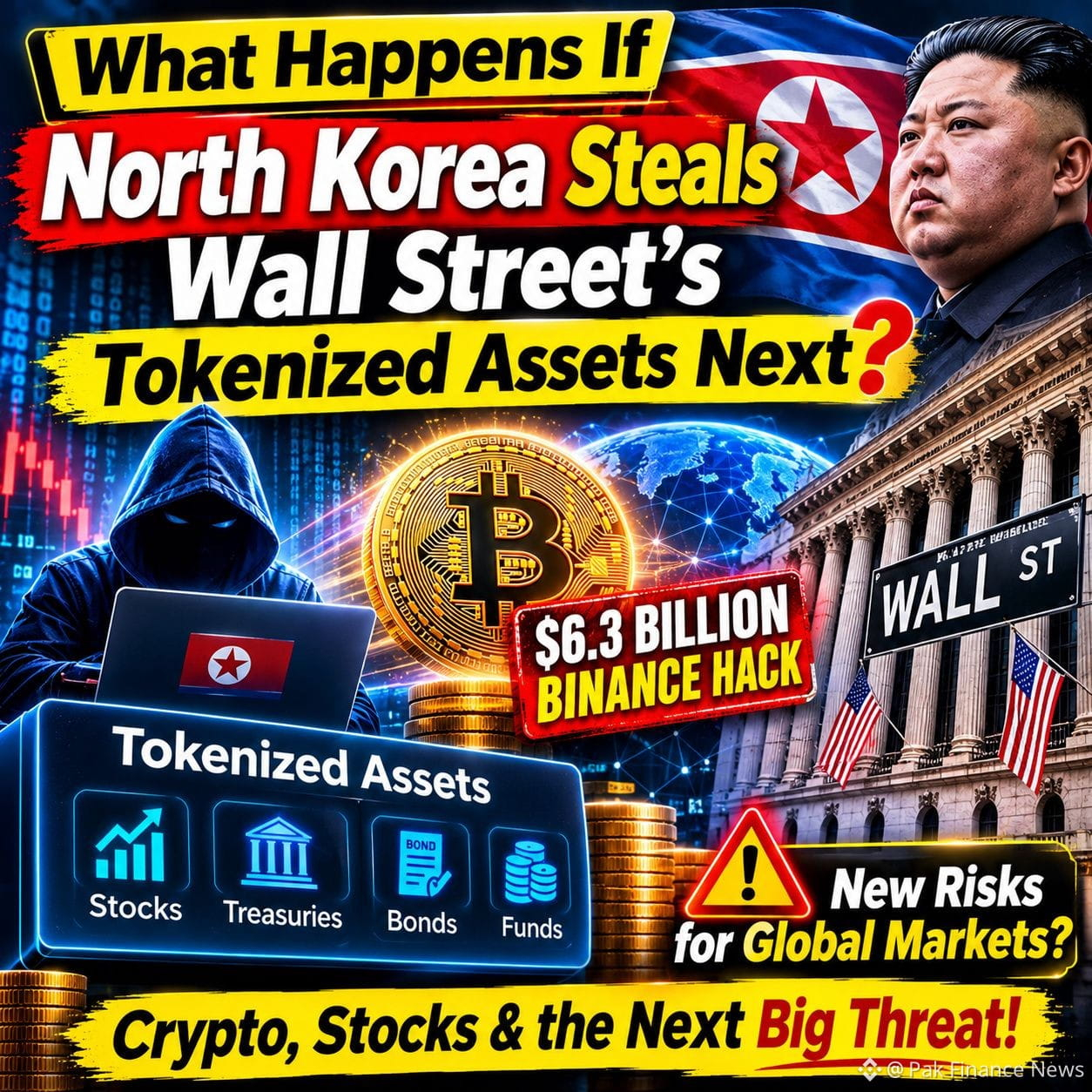
🚨 Could Tokenized Stocks Become the Next Target of Major Cyberattacks?
The reported $6.3 billion Binance hack has raised an important question for the future of tokenized finance.
What if hackers target tokenized U.S. stocks, Treasury funds, bonds, or private-credit assets?
There may be one important difference between tokenized securities and ordinary cryptocurrencies.
Some tokenized securities are connected to official ownership records. Depending on their legal structure, issuers may be able to freeze transfers, invalidate stolen tokens, and restore ownership to verified holders.
However, tokenization does not eliminate cybersecurity risks.
Compromised private keys, smart-contract bugs, and bridge exploits can still threaten these assets. Recovery is not automatic and depends on the issuer's legal authority and the asset's structure.
My key takeaway: Tokenization could bring traditional finance onto blockchain infrastructure, but security and legal accountability must develop alongside it.
What do you think: Will tokenized assets be easier to recover after a hack than ordinary cryptocurrencies?
Source: CoinDesk | November 3, 2026
Educational discussion only. Not financial advice.
#Tokenization #CryptoSecurity #blockchain #DigitalAssets #CryptoNews
$BTC
$BNB
$ETH
🚨 Could Tokenized Stocks Become the Next Target of Major Cyberattacks?
The reported $6.3 billion Binance hack has raised an important question for the future of tokenized finance.
What if hackers target tokenized U.S. stocks, Treasury funds, bonds, or private-credit assets?
There may be one important difference between tokenized securities and ordinary cryptocurrencies.
Some tokenized securities are connected to official ownership records. Depending on their legal structure, issuers may be able to freeze transfers, invalidate stolen tokens, and restore ownership to verified holders.
However, tokenization does not eliminate cybersecurity risks.
Compromised private keys, smart-contract bugs, and bridge exploits can still threaten these assets. Recovery is not automatic and depends on the issuer's legal authority and the asset's structure.
My key takeaway: Tokenization could bring traditional finance onto blockchain infrastructure, but security and legal accountability must develop alongside it.
What do you think: Will tokenized assets be easier to recover after a hack than ordinary cryptocurrencies?
Source: CoinDesk | November 3, 2026
Educational discussion only. Not financial advice.
#Tokenization #CryptoSecurity #blockchain #DigitalAssets #CryptoNews
110

·
--
I'm#ETH
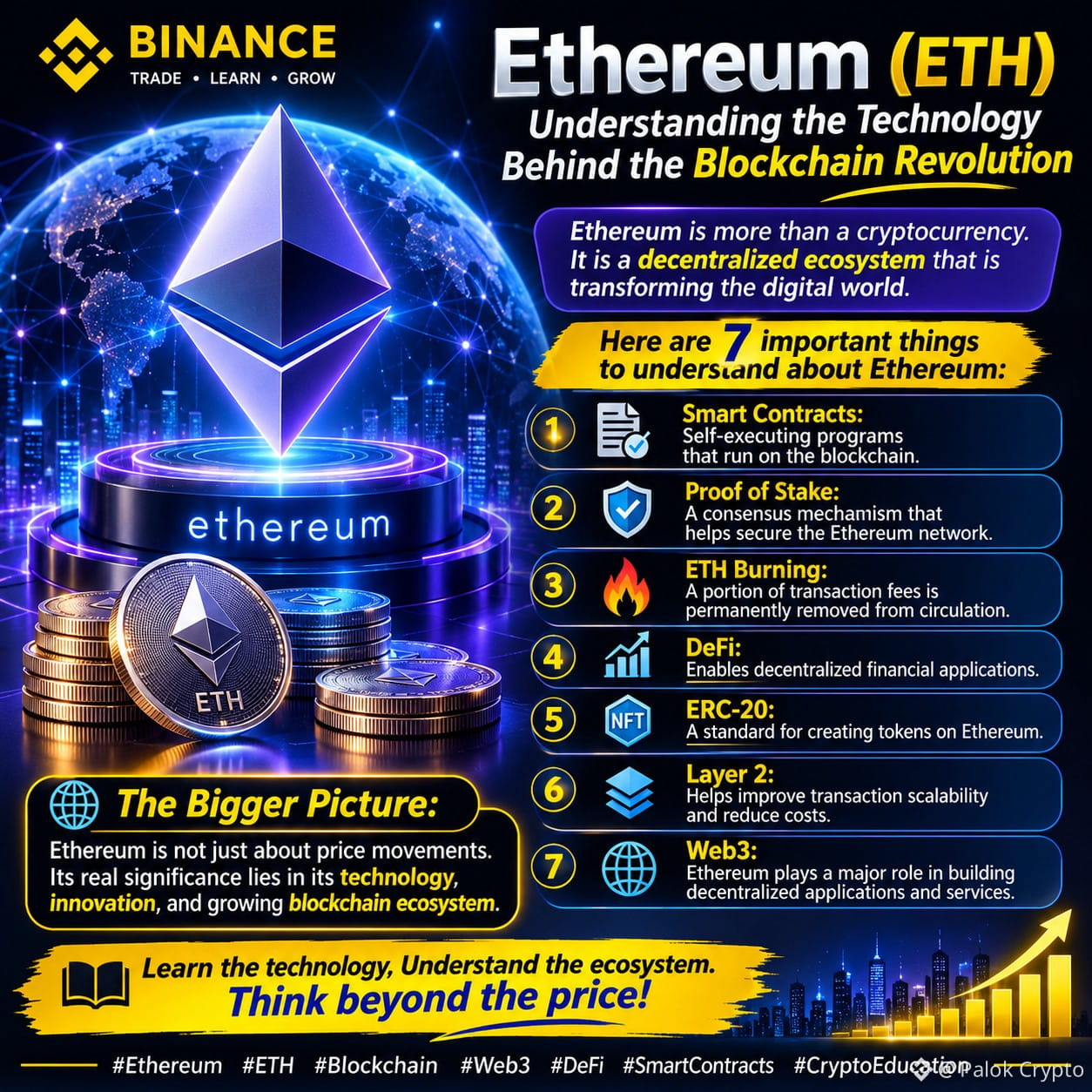
💎 Ethereum (ETH): Understanding the Technology Behind the Blockchain Revolution
Ethereum is more than a cryptocurrency. It is a decentralized ecosystem that is transforming the digital world.
Here are 7 important things to understand about Ethereum:
🔹 1. Smart Contracts: Self-executing programs that run on the blockchain.
🔹 2. Proof of Stake: A consensus mechanism that helps secure the Ethereum network.
🔹 3. ETH Burning: A portion of transaction fees is permanently removed from circulation.
🔹 4. DeFi: Enables decentralized financial applications.
🔹 5. ERC-20: A standard for creating tokens on Ethereum.
🔹 6. Layer 2: Helps improve transaction scalability and reduce costs.
🔹 7. Web3: Ethereum plays a major role in building decentralized applications and services.
🌐 The Bigger Picture:
Ethereum is not just about price movements. Its real significance lies in its technology, innovation, and growing blockchain ecosystem.
📚 Learn the technology. Understand the ecosystem. Think beyond the price!
#Ethereum✅ #ETH #Blockchain #Web3
77

·
--
BBChain supera 5 mil transações por segundo em testes com IBMBBChain, startup brasileira de blockchain voltada ao mercado financeiro, superou a marca de 5 mil transações por segundo (TPS) em testes de desempenho realizados com infraestrutura da IBM Cloud, após partir de 1.700 TPS nas primeiras rodadas do laboratório do Banco Central.
Os testes foram conduzidos no LiftLab, ambiente de experimentação do ecossistema LIFT, criado em parceria entre o Banco Central do Brasil e a Fenasbac. A solução partiu de cerca de 1.700 TPS nas avaliações iniciais e, depois de otimizações de arquitetura, chegou a operar na faixa de 4 mil a mais de 5 mil TPS.
As otimizações envolveram o uso de Kubernetes e compatibilidade com Red Hat OpenShift, tecnologias de orquestração de contêineres que permitem distribuir a carga de processamento de forma mais eficiente. O resultado foi obtido em ambiente de testes, não em produção.
A solução já conta com validação do Consórcio ABBC, grupo formado por 16 bancos. A BBChain também registra casos de uso implementados e fechou acordo com a Evertec para atuação em tokenização. Um dos casos de uso testados foi a Cédula de Crédito Bancário (CCB) tokenizada.
#Brasil #Negocios #Blockchain
BBChain supera 5 mil transações por segundo em testes com IBM
BBChain, startup brasileira de blockchain voltada ao mercado financeiro, superou a marca de 5 mil transações por segundo (TPS) em testes de desempenho realizados com infraestrutura da IBM Cloud, após partir de 1.700 TPS nas primeiras rodadas do laboratório do Banco Central.
Os testes foram conduzidos no LiftLab, ambiente de experimentação do ecossistema LIFT, criado em parceria entre o Banco Central do Brasil e a Fenasbac. A solução partiu de cerca de 1.700 TPS nas avaliações iniciais e, depois de otimizações de arquitetura, chegou a operar na faixa de 4 mil a mais de 5 mil TPS.
As otimizações envolveram o uso de Kubernetes e compatibilidade com Red Hat OpenShift, tecnologias de orquestração de contêineres que permitem distribuir a carga de processamento de forma mais eficiente. O resultado foi obtido em ambiente de testes, não em produção.
A solução já conta com validação do Consórcio ABBC, grupo formado por 16 bancos. A BBChain também registra casos de uso implementados e fechou acordo com a Evertec para atuação em tokenização. Um dos casos de uso testados foi a Cédula de Crédito Bancário (CCB) tokenizada.
#Brasil #Negocios #Blockchain
1
369

·
--
ສັນຍານໝີ
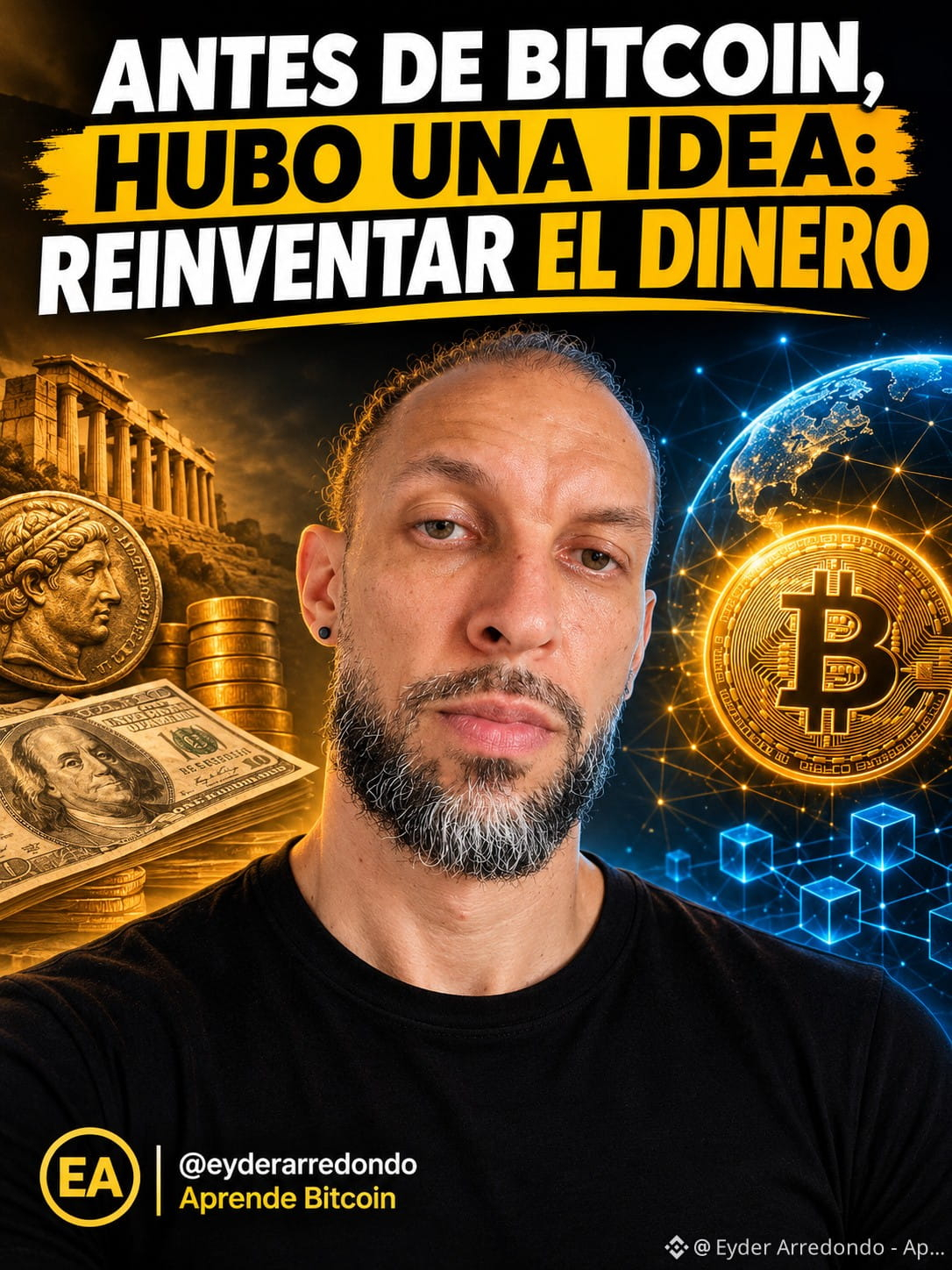
🪙 Aunque hoy escuchamos hablar de $BTC $ETH y miles de criptomonedas, esta historia comenzó mucho antes de que existieran.
Los primeros intentos:
Durante las décadas de 1980 y 1990 surgieron ideas para crear dinero digital utilizando criptografía. Uno de los pioneros fue David Chaum, quien desarrolló propuestas de dinero electrónico privado.
2008: nace una nueva propuesta
En octubre de 2008, una persona o grupo bajo el seudónimo de Satoshi Nakamoto publicó el documento técnico de Bitcoin.
La propuesta era revolucionaria: permitir transferencias de dinero digital entre personas sin depender de un banco o intermediario central.
2009: comienza Bitcoin
El 3 de enero de 2009 se creó el primer bloque de Bitcoin, conocido como bloque Génesis. Así comenzó a funcionar su red blockchain.
🌐 2015: llega Ethereum
Con Ethereum aparece una nueva etapa. Ya no se trataba solamente de transferir valor: su tecnología permitió desarrollar contratos inteligentes y aplicaciones descentralizadas.
Después llegaron miles de proyectos:
Surgieron nuevas redes, tokens, stablecoins, plataformas DeFi y otras aplicaciones que ampliaron las posibilidades de la tecnología blockchain.
¿Qué podemos aprender de esta historia?
Las criptomonedas no nacieron simplemente para crear activos cuyo precio pudiera subir. Surgieron de una búsqueda tecnológica: transferir valor digital, utilizar criptografía y explorar nuevas formas de organización financiera.
Bitcoin abrió una puerta, pero la tecnología blockchain continúa evolucionando.
Entender su origen nos ayuda a comprender mejor hacia dónde podría avanzar esta industria.
#bitcoin #Blockchain #Criptomonedas
145

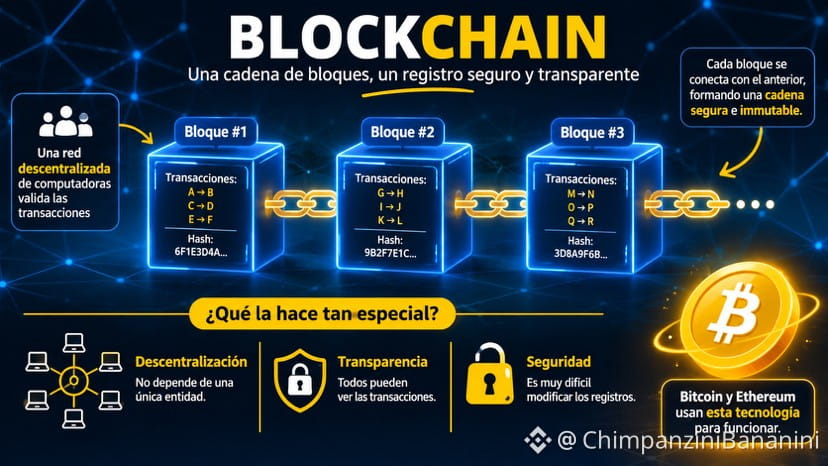
🧠 ¿QUÉ ES BLOCKCHAIN Y POR QUÉ ESTÁ CAMBIANDO EL MUNDO?
Seguramente escuchaste hablar de blockchain, pero ¿sabés realmente qué significa?
Vamos a explicarlo de la manera más sencilla posible.
🔹 ¿QUÉ ES BLOCKCHAIN?
Imaginá un libro de contabilidad digital en el que se registran todas las transacciones.
La diferencia es que ese libro no pertenece a un banco ni a una empresa. Está distribuido entre miles de computadoras que participan en la red.
Cada grupo de transacciones forma un bloque y estos bloques se conectan entre sí, creando una cadena.
De ahí viene su nombre: BLOCKCHAIN (cadena de bloques).
🔹 ¿QUÉ LA HACE TAN INTERESANTE?
1️⃣ Descentralización: no depende de una única institución que controle toda la información.
2️⃣ Transparencia: las transacciones de una blockchain pública pueden ser consultadas por cualquier persona.
3️⃣ Seguridad: modificar registros históricos resulta extremadamente difícil porque los bloques están conectados criptográficamente y la red debe validar los cambios.
🔹 ¿Y QUÉ TIENE QUE VER CON LAS CRIPTOMONEDAS?
Bitcoin utiliza blockchain para registrar sus transacciones sin necesitar un banco como intermediario.
Ethereum, por su parte, utiliza su propia blockchain para permitir algo más: ejecutar contratos inteligentes y aplicaciones descentralizadas.
💡 UNA IDEA PARA RECORDAR:
Las criptomonedas son una de las aplicaciones de la tecnología blockchain, pero no son lo mismo.
Blockchain es la tecnología. Bitcoin y Ethereum son dos proyectos que la utilizan de maneras diferentes.
❓ PREGUNTA PARA LA COMUNIDAD:
¿Creen que blockchain terminará siendo tan importante para nuestra vida cotidiana como lo es actualmente Internet?
¡Los leo en comentarios! 👇
#blockchain #bitcoin #Ethereum #EducacionCrypto
122

$TGB 🚨 HONG KONG ADVANCES 24/7 TOKENISED MONEY SETTLEMENT!
On 2 November 2026, the Hong Kong Monetary Authority announced an expansion of Project Ensemble.
Its pilot now supports round-the-clock interbank settlement of tokenised deposit transactions using tokenised central bank money.
🏦 12 participating banks
🤝 20 industry participants
As a Chartered Accountant, I believe this is meaningful progress toward practical blockchain-based financial infrastructure.
But remember:
Tokenisation does not automatically make an asset safe or valuable.
Before investing, evaluate:
✅ Underlying assets and issuer quality
✅ Legal ownership rights
✅ Financial transparency
✅ Liquidity and redemption arrangements
✅ Governance and custody risks
This remains a controlled institutional initiative, not a guarantee of investment returns.
I’m David Khoo, Chartered Accountant (Malaysia).
💬 What matters most to you in RWA?
A. Asset backing
B. Legal protection
C. Liquidity
D. Transparency
#BinanceSquare #RWA #BinanceIncidentReport
#Blockchain #FinancialEducation

1
71
·
--
ບົດຄວາມ
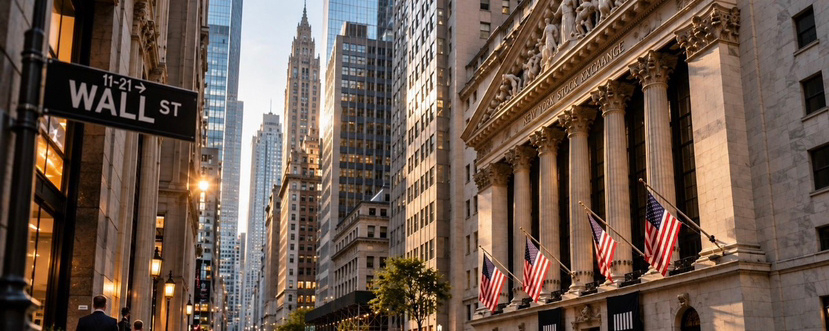
Wall Street Is Moving On-Chain.Wall Street Is Moving On-Chain. And This Is Bigger Than Crypto.
For years, blockchain was associated primarily with cryptocurrencies.
That perception is changing.
In July 2026, DTCC — the infrastructure provider responsible for settling the vast majority of U.S. securities transactions — successfully processed real production transactions using tokenized securities.
Its tokenization service is expected to launch in Q4 2026.
Meanwhile, major financial institutions are exploring how tokenization can transform payments, securities settlement and asset management.
Why does this matter?
🔹 Markets could become more efficient. Tokenization can enable faster settlement and more flexible movement of financial assets.
🔹 Financial infrastructure is evolving. Blockchain is increasingly being explored as a complement to existing financial systems, rather than an alternative operating outside them.
🔹 New opportunities come with new responsibilities. As digital assets move deeper into mainstream finance, transparency, transaction monitoring, regulatory compliance and risk management become increasingly important.
But here is the bigger picture.
The question is no longer simply whether traditional finance will adopt blockchain.
The real question is how financial institutions will integrate this technology while preserving trust, liquidity, investor protection and regulatory oversight.
Technology can transform how assets move.
Trust will determine how far that transformation goes.
Do you believe tokenization will fundamentally reshape traditional financial markets over the next five years — or will its impact remain concentrated in specific use cases?
#blockchain #Tokenization #DigitalAssets #fintech #FinancialMarkets
Wall Street Is Moving On-Chain.
Wall Street Is Moving On-Chain. And This Is Bigger Than Crypto.
For years, blockchain was associated primarily with cryptocurrencies.
That perception is changing.
In July 2026, DTCC — the infrastructure provider responsible for settling the vast majority of U.S. securities transactions — successfully processed real production transactions using tokenized securities.
Its tokenization service is expected to launch in Q4 2026.
Meanwhile, major financial institutions are exploring how tokenization can transform payments, securities settlement and asset management.
Why does this matter?
🔹 Markets could become more efficient. Tokenization can enable faster settlement and more flexible movement of financial assets.
🔹 Financial infrastructure is evolving. Blockchain is increasingly being explored as a complement to existing financial systems, rather than an alternative operating outside them.
🔹 New opportunities come with new responsibilities. As digital assets move deeper into mainstream finance, transparency, transaction monitoring, regulatory compliance and risk management become increasingly important.
But here is the bigger picture.
The question is no longer simply whether traditional finance will adopt blockchain.
The real question is how financial institutions will integrate this technology while preserving trust, liquidity, investor protection and regulatory oversight.
Technology can transform how assets move.
Trust will determine how far that transformation goes.
Do you believe tokenization will fundamentally reshape traditional financial markets over the next five years — or will its impact remain concentrated in specific use cases?
#blockchain #Tokenization #DigitalAssets #fintech #FinancialMarkets
109

·
--
ບົດຄວາມ
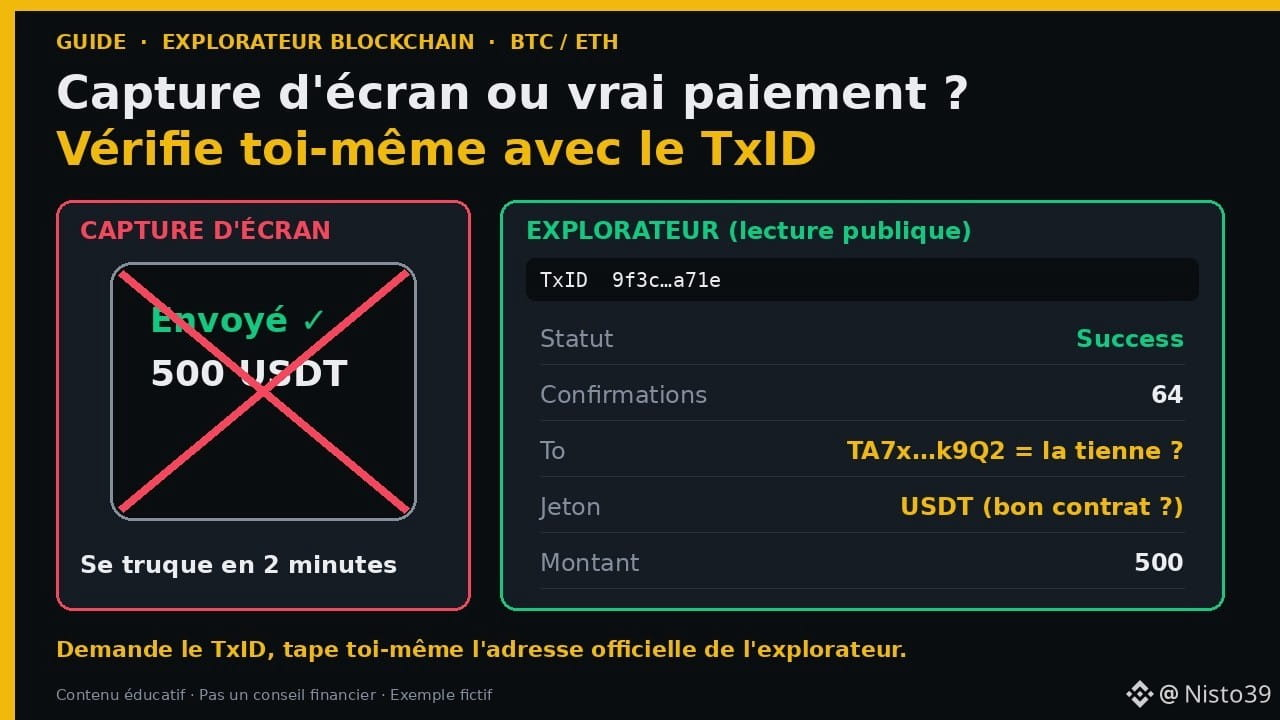
Capture d'écran ou vrai paiement ? Apprends à vérifier une transaction crypto toi-mêmeKoffi vend des pièces de moto à Lomé. Un client lui dit : « Je t'ai envoyé les USDT, regarde, voici la capture d'écran. » Mais sur le compte de Koffi, rien n'est arrivé. Qui dit vrai ? La réponse ne se trouve ni dans la capture, ni dans la parole du client : elle se trouve sur la blockchain, et n'importe qui peut la lire gratuitement grâce à un « explorateur ». Voici comment, pas à pas.
🔎 C'est quoi un explorateur de blockchain ?
• Une blockchain est un grand registre public. Un explorateur est simplement un site qui affiche ce registre de façon lisible, comme un relevé bancaire ouvert à tous.
• Chaque réseau a le sien : mempool.space ou blockchain.com pour $BTC, Etherscan pour $ETH, BscScan pour BNB Smart Chain, Tronscan pour Tron, Solscan pour Solana.
• Pas besoin de compte ni de mot de passe : tu colles un identifiant, tu lis.
🧾 La clé de tout : le TxID (ou « hash »)
• Chaque transaction a un identifiant unique, une longue suite de lettres et de chiffres appelée TxID ou hash de transaction.
• Sur Binance, tu le trouves dans l'historique de tes dépôts et retraits, en ouvrant le détail de l'opération.
• Si quelqu'un affirme t'avoir payé, demande-lui le TxID, pas une capture d'écran. Une capture se truque en deux minutes, un TxID se vérifie.
📋 Les cases à lire, une par une
• Statut : « Success » (réussie), « Pending » (en attente) ou « Failed » (échouée).
• Bloc et confirmations : le numéro du bloc qui contient la transaction, et combien de blocs ont été ajoutés après. Plus il y a de confirmations, plus la transaction est définitive.
• From / To : l'adresse qui envoie et celle qui reçoit. Compare l'adresse de réception avec la tienne, caractère par caractère au début ET à la fin.
• Montant et jeton : vérifie le bon jeton (USDT n'est pas USDC) et le bon montant.
• Frais : ce qui a été payé au réseau pour traiter l'opération.
• Date et heure : souvent affichées en temps universel (UTC), donc décalées par rapport à ton heure locale.
⏳ Pourquoi « envoyé » ne veut pas dire « arrivé »
• En attente : la transaction attend sa place dans un bloc, souvent parce que le réseau est encombré ou que les frais choisis sont trop bas.
• Confirmations : une plateforme comme Binance crédite un dépôt seulement après un certain nombre de confirmations, qui varie selon le réseau. Sur Bitcoin, un bloc arrive en moyenne toutes les 10 minutes, donc l'attente peut durer.
• Échouée : sur Ethereum, une transaction peut échouer et coûter quand même des frais, car les validateurs ont fait le travail de calcul.
• Transfert interne entre deux comptes Binance : il ne passe pas par la blockchain, donc il n'y a pas de TxID à chercher sur un explorateur.
🚩 Les arnaques que l'explorateur démasque
• La fausse capture d'écran de paiement : très courante dans les ventes entre particuliers. Seul le TxID compte.
• Le faux lien d'explorateur : un escroc t'envoie un lien vers un site qui imite Etherscan ou Tronscan. Tape toi-même l'adresse officielle au lieu de cliquer.
• Le mauvais réseau ou le mauvais jeton : un jeton sans valeur peut porter le même nom qu'un vrai. Vérifie l'adresse du contrat du jeton, pas seulement son nom.
• Le « dépôt bloqué, paie des frais pour le débloquer » : si l'explorateur montre que rien n'a été envoyé vers ton adresse, il n'y a rien à débloquer.
🧑🏾🔧 Ce que fait Koffi maintenant
• Il demande le TxID à son client, le colle sur Tronscan (le réseau annoncé) et lit : aucune transaction avec ce hash.
• Le client avoue s'être « trompé ». Koffi ne livre pas les pièces tant que le dépôt n'est pas crédité sur son compte.
• Pour les gros montants, il attend le crédit réel sur Binance, pas seulement le statut « Success ».
✅ À retenir
• Un explorateur, c'est le relevé public et gratuit de la blockchain.
• TxID plutôt que capture d'écran, toujours.
• Bon réseau, bon jeton, bonne adresse, et assez de confirmations avant de considérer l'argent comme reçu.
Et toi, t'es-tu déjà fait envoyer une « preuve de paiement » douteuse ? Comment l'as-tu vérifiée ? Raconte en commentaire 👇
Contenu éducatif, pas un conseil financier.
#Blockchain #SecuriteCrypto #CryptoAfrique #Bitcoin #Ethereum
Capture d'écran ou vrai paiement ? Apprends à vérifier une transaction crypto toi-même
Koffi vend des pièces de moto à Lomé. Un client lui dit : « Je t'ai envoyé les USDT, regarde, voici la capture d'écran. » Mais sur le compte de Koffi, rien n'est arrivé. Qui dit vrai ? La réponse ne se trouve ni dans la capture, ni dans la parole du client : elle se trouve sur la blockchain, et n'importe qui peut la lire gratuitement grâce à un « explorateur ». Voici comment, pas à pas.
🔎 C'est quoi un explorateur de blockchain ?
• Une blockchain est un grand registre public. Un explorateur est simplement un site qui affiche ce registre de façon lisible, comme un relevé bancaire ouvert à tous.
• Chaque réseau a le sien : mempool.space ou blockchain.com pour $BTC , Etherscan pour $ETH , BscScan pour BNB Smart Chain, Tronscan pour Tron, Solscan pour Solana.
• Pas besoin de compte ni de mot de passe : tu colles un identifiant, tu lis.
🧾 La clé de tout : le TxID (ou « hash »)
• Chaque transaction a un identifiant unique, une longue suite de lettres et de chiffres appelée TxID ou hash de transaction.
• Sur Binance, tu le trouves dans l'historique de tes dépôts et retraits, en ouvrant le détail de l'opération.
• Si quelqu'un affirme t'avoir payé, demande-lui le TxID, pas une capture d'écran. Une capture se truque en deux minutes, un TxID se vérifie.
📋 Les cases à lire, une par une
• Statut : « Success » (réussie), « Pending » (en attente) ou « Failed » (échouée).
• Bloc et confirmations : le numéro du bloc qui contient la transaction, et combien de blocs ont été ajoutés après. Plus il y a de confirmations, plus la transaction est définitive.
• From / To : l'adresse qui envoie et celle qui reçoit. Compare l'adresse de réception avec la tienne, caractère par caractère au début ET à la fin.
• Montant et jeton : vérifie le bon jeton (USDT n'est pas USDC) et le bon montant.
• Frais : ce qui a été payé au réseau pour traiter l'opération.
• Date et heure : souvent affichées en temps universel (UTC), donc décalées par rapport à ton heure locale.
⏳ Pourquoi « envoyé » ne veut pas dire « arrivé »
• En attente : la transaction attend sa place dans un bloc, souvent parce que le réseau est encombré ou que les frais choisis sont trop bas.
• Confirmations : une plateforme comme Binance crédite un dépôt seulement après un certain nombre de confirmations, qui varie selon le réseau. Sur Bitcoin, un bloc arrive en moyenne toutes les 10 minutes, donc l'attente peut durer.
• Échouée : sur Ethereum, une transaction peut échouer et coûter quand même des frais, car les validateurs ont fait le travail de calcul.
• Transfert interne entre deux comptes Binance : il ne passe pas par la blockchain, donc il n'y a pas de TxID à chercher sur un explorateur.
🚩 Les arnaques que l'explorateur démasque
• La fausse capture d'écran de paiement : très courante dans les ventes entre particuliers. Seul le TxID compte.
• Le faux lien d'explorateur : un escroc t'envoie un lien vers un site qui imite Etherscan ou Tronscan. Tape toi-même l'adresse officielle au lieu de cliquer.
• Le mauvais réseau ou le mauvais jeton : un jeton sans valeur peut porter le même nom qu'un vrai. Vérifie l'adresse du contrat du jeton, pas seulement son nom.
• Le « dépôt bloqué, paie des frais pour le débloquer » : si l'explorateur montre que rien n'a été envoyé vers ton adresse, il n'y a rien à débloquer.
🧑🏾🔧 Ce que fait Koffi maintenant
• Il demande le TxID à son client, le colle sur Tronscan (le réseau annoncé) et lit : aucune transaction avec ce hash.
• Le client avoue s'être « trompé ». Koffi ne livre pas les pièces tant que le dépôt n'est pas crédité sur son compte.
• Pour les gros montants, il attend le crédit réel sur Binance, pas seulement le statut « Success ».
✅ À retenir
• Un explorateur, c'est le relevé public et gratuit de la blockchain.
• TxID plutôt que capture d'écran, toujours.
• Bon réseau, bon jeton, bonne adresse, et assez de confirmations avant de considérer l'argent comme reçu.
Et toi, t'es-tu déjà fait envoyer une « preuve de paiement » douteuse ? Comment l'as-tu vérifiée ? Raconte en commentaire 👇
Contenu éducatif, pas un conseil financier.
#Blockchain #SecuriteCrypto #CryptoAfrique #Bitcoin #Ethereum
2
231
ບົດຄວາມ
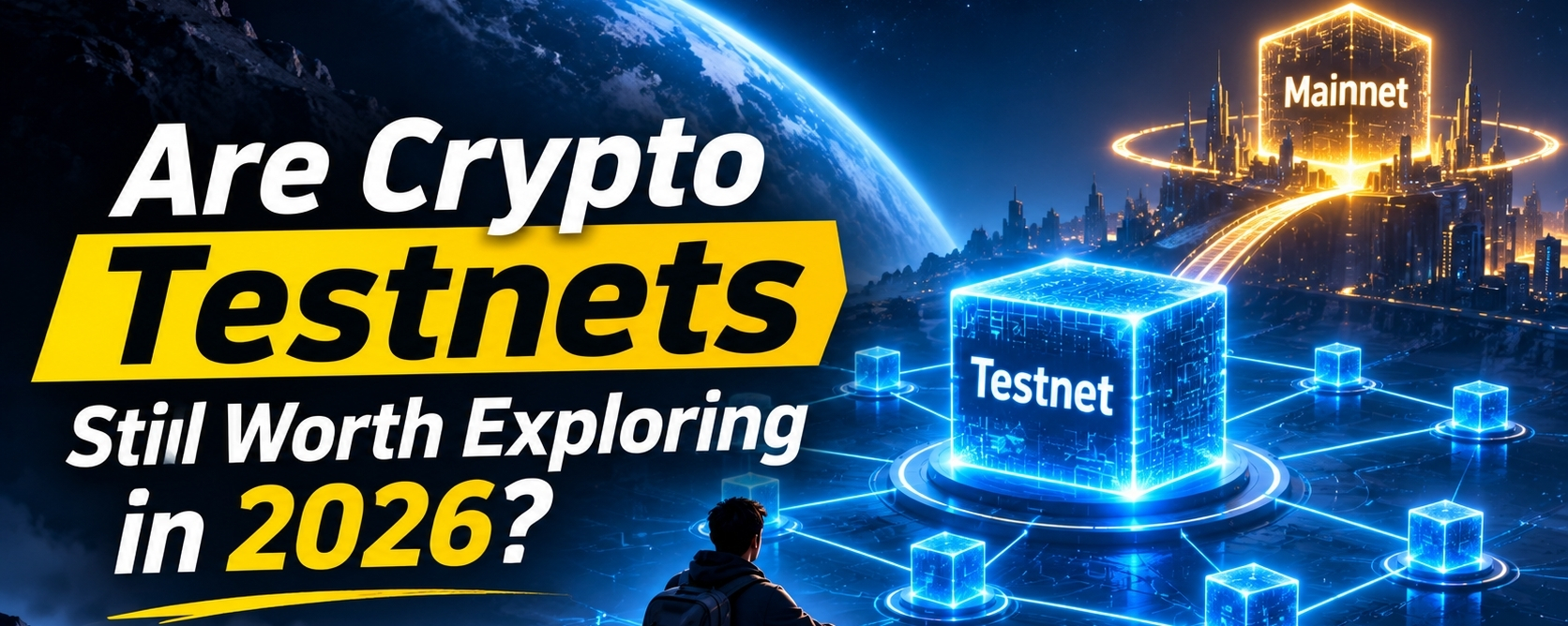
Are Crypto Testnets Still Worth Exploring in 2026? Here's What You Should KnowThe Web3 ecosystem continues to evolve, with new blockchain networks and decentralized applications being developed.
One activity that attracts considerable attention from crypto enthusiasts is exploring testnets.
Some people participate to learn about new technology, while others are interested in contributing feedback or discovering potential community rewards.
But what exactly makes testnets important?
Let's take a closer look.
1. What Is a Blockchain Testnet?
A testnet is a testing environment designed to help developers experiment with blockchain functionality before or alongside mainnet development.
It allows participants to test transactions, smart contracts, applications, and network features without using actual mainnet assets.
Think of it as a testing environment where developers can identify problems and improve their technology.
2. Why Do Blockchain Projects Need Testnets?
Testnets serve several important purposes.
Testing network functionality
Developers can check whether transactions and network features behave as expected.
Identifying bugs
Testing helps uncover technical problems before they affect real users.
Testing decentralized applications
Wallet integrations, smart contracts, bridges, and other applications can be evaluated.
Collecting community feedback
Participants can share their experiences and report issues that developers might otherwise overlook.
3. Why Do People Participate in Testnets?
Different participants have different motivations.
Some want to:
- Explore new blockchain ecosystems.
- Learn how decentralized applications work.
- Understand emerging technologies.
- Provide useful feedback.
- Gain practical experience with Web3 applications.
- Participate in community activities.
Some projects also introduce points, badges, or reward campaigns.
However, participating in a testnet does not guarantee an airdrop or financial reward.
4. How Can You Evaluate a Testnet Project?
Before spending time exploring a project, consider these questions:
Is the project solving a real problem?
Look for a clear explanation of what the technology is designed to accomplish.
Does it have technical documentation?
Good documentation helps users understand the network and its functionality.
Are the testnet activities meaningful?
Testing actual features can be more valuable than repeatedly completing meaningless tasks.
Is the team communicating development progress?
Look for verifiable announcements, documentation, and development updates.
Does the project explain its risks?
Understand what you are interacting with and never share your private keys or recovery phrase.
5. Are All Testnets Worth Your Time?
Not necessarily.
Some projects offer meaningful opportunities to explore technology and contribute feedback.
Others may have limited functionality or unclear development goals.
Instead of joining every available testnet, it makes sense to evaluate projects based on their technology, documentation, development activity, and transparency.
6. My Perspective
I think the most interesting part of testnet participation is the opportunity to explore blockchain technology before it reaches a wider audience.
You can discover how different networks work, experiment with decentralized applications, and understand the challenges developers face.
Potential rewards might attract attention, but they should never be the only reason to explore a project.
Learning and contributing meaningful feedback can be valuable in their own right.
Final Thoughts
Testnets play an important role in blockchain development.
They create an environment where developers and communities can experiment, identify problems, and improve applications.
As Web3 continues to evolve, understanding how testnets work can help us become more informed participants in the ecosystem.
Question for the community:
Are you currently exploring any blockchain testnets?
What interests you most: learning new technology, testing applications, contributing feedback, or community rewards?
Share your thoughts below!
#Web3 #testnet #blockchain #CryptoEducation
Are Crypto Testnets Still Worth Exploring in 2026? Here's What You Should Know
The Web3 ecosystem continues to evolve, with new blockchain networks and decentralized applications being developed.
One activity that attracts considerable attention from crypto enthusiasts is exploring testnets.
Some people participate to learn about new technology, while others are interested in contributing feedback or discovering potential community rewards.
But what exactly makes testnets important?
Let's take a closer look.
1. What Is a Blockchain Testnet?
A testnet is a testing environment designed to help developers experiment with blockchain functionality before or alongside mainnet development.
It allows participants to test transactions, smart contracts, applications, and network features without using actual mainnet assets.
Think of it as a testing environment where developers can identify problems and improve their technology.
2. Why Do Blockchain Projects Need Testnets?
Testnets serve several important purposes.
Testing network functionality
Developers can check whether transactions and network features behave as expected.
Identifying bugs
Testing helps uncover technical problems before they affect real users.
Testing decentralized applications
Wallet integrations, smart contracts, bridges, and other applications can be evaluated.
Collecting community feedback
Participants can share their experiences and report issues that developers might otherwise overlook.
3. Why Do People Participate in Testnets?
Different participants have different motivations.
Some want to:
- Explore new blockchain ecosystems.
- Learn how decentralized applications work.
- Understand emerging technologies.
- Provide useful feedback.
- Gain practical experience with Web3 applications.
- Participate in community activities.
Some projects also introduce points, badges, or reward campaigns.
However, participating in a testnet does not guarantee an airdrop or financial reward.
4. How Can You Evaluate a Testnet Project?
Before spending time exploring a project, consider these questions:
Is the project solving a real problem?
Look for a clear explanation of what the technology is designed to accomplish.
Does it have technical documentation?
Good documentation helps users understand the network and its functionality.
Are the testnet activities meaningful?
Testing actual features can be more valuable than repeatedly completing meaningless tasks.
Is the team communicating development progress?
Look for verifiable announcements, documentation, and development updates.
Does the project explain its risks?
Understand what you are interacting with and never share your private keys or recovery phrase.
5. Are All Testnets Worth Your Time?
Not necessarily.
Some projects offer meaningful opportunities to explore technology and contribute feedback.
Others may have limited functionality or unclear development goals.
Instead of joining every available testnet, it makes sense to evaluate projects based on their technology, documentation, development activity, and transparency.
6. My Perspective
I think the most interesting part of testnet participation is the opportunity to explore blockchain technology before it reaches a wider audience.
You can discover how different networks work, experiment with decentralized applications, and understand the challenges developers face.
Potential rewards might attract attention, but they should never be the only reason to explore a project.
Learning and contributing meaningful feedback can be valuable in their own right.
Final Thoughts
Testnets play an important role in blockchain development.
They create an environment where developers and communities can experiment, identify problems, and improve applications.
As Web3 continues to evolve, understanding how testnets work can help us become more informed participants in the ecosystem.
Question for the community:
Are you currently exploring any blockchain testnets?
What interests you most: learning new technology, testing applications, contributing feedback, or community rewards?
Share your thoughts below!
#Web3 #testnet #blockchain #CryptoEducation
42

·
--
Blockchain Basics
The concept of blockchain can be broken down into two main categories: permissionless and permissioned blockchains. Permissionless blockchains are like a public library, where anyone can access and add information. The Crypto Catalyst
In a permissionless blockchain, a consensus mechanism is used to verify transactions, this can be either Proof of Work or Proof of Stake. Proof of Work is like a puzzle competition, where the first one to solve the puzzle gets to add a new block to the chain. The Dynamic Outlook
If a blockchain uses Proof of Stake, then the validators are chosen based on the amount of coins they hold, it's like a voting system where the ones with the most coins have the most power. This can be more energy efficient than Proof of Work, which requires a lot of computational power. In simple terms, a blockchain is like a digital ledger, where all the transactions are recorded and verified by a network of computers. This ledger is secure and transparent, and once something is written on it, it can't be erased. The difference between DeFi and CeFi is like the difference between a public park and a private club. DeFi is open to anyone, and it's based on blockchain technology, while CeFi is more like a traditional financial institution, where you need to meet certain requirements to participate. Disclaimer
The information provided is for educational purposes only, and it's not intended to be taken as investment advice. CryptoEducation #Blockchain #Learn
3

·
--
Infrastructure Worth Researching
Strong infrastructure is essential for the next generation of blockchain applications. 🚀
🔥 $CORE — A Bitcoin-aligned smart contract ecosystem.
💎 $CKB — Nervos focuses on a flexible blockchain infrastructure.
🌹 $ROSE — Oasis explores privacy-enabled blockchain applications.
Which project would you research first?
#CoreDAO #Nervos #OasisNetwork #Blockchain #CryptoProjects
1
9
ເຂົ້າສູ່ລະບົບເພື່ອສຳຫຼວດເນື້ອຫາເພີ່ມເຕີມ
ເຂົ້າຮ່ວມກຸ່ມຜູ້ໃຊ້ຄຣິບໂຕທົ່ວໂລກໃນ Binance Square.
⚡️ ໄດ້ຮັບຂໍ້ມູນຫຼ້າສຸດ ແລະ ທີ່ມີປະໂຫຍດກ່ຽວກັບຄຣິບໂຕ.
💬 ໄດ້ຮັບຄວາມໄວ້ວາງໃຈຈາກຕະຫຼາດແລກປ່ຽນຄຣິບໂຕທີ່ໃຫຍ່ທີ່ສຸດໃນໂລກ.
👍 ຄົ້ນຫາຂໍ້ມູນເຊີງເລິກທີ່ແທ້ຈາກນັກສ້າງທີ່ໄດ້ຮັບການຢືນຢັນ.
ອີເມວ / ເບີໂທລະສັບ
ຫົວຂໍ້ທີ່ກໍາລັງນິຍົມ
1
#BinanceReopensWithdrawalsForMoreAssets
725,523 ຄັ້ງທີ່ເບິ່ງ
3,767 ກຳລັງສົນທະນາ
2
#BTCRebounds80K
220,849 ຄັ້ງທີ່ເບິ່ງ
1,943 ກຳລັງສົນທະນາ
3
#Binance98PercentReplenished
115,254 ຄັ້ງທີ່ເບິ່ງ
1,288 ກຳລັງສົນທະນາ
4
#KazakhstanReportedlyInvests$100MInCryptoFunds
397 ຄັ້ງທີ່ເບິ່ງ
20 ກຳລັງສົນທະນາ
5
#StrategySTRCResumesIssuanceAfterOver170Days
5,668 ຄັ້ງທີ່ເບິ່ງ
143 ກຳລັງສົນທະນາ
6
#ADPUSPrivateEmployersAdd86000JobsInOctober
19,513 ຄັ້ງທີ່ເບິ່ງ
326 ກຳລັງສົນທະນາ
7
#HongKongPilotGrantSchemeFacilitatesHK$230MTokenization
281 ຄັ້ງທີ່ເບິ່ງ
4 ກຳລັງສົນທະນາ
8
#SouthKoreaSeeksCryptoTaxDelayUntil2029
11,357 ຄັ້ງທີ່ເບິ່ງ
113 ກຳລັງສົນທະນາ
9
#USMidterms-WhatAreMarketsExpecting?
532,385 ຄັ້ງທີ່ເບິ່ງ
2,636 ກຳລັງສົນທະນາ
10
#US10YearTreasuryYieldFallsTo4.845%
11,416 ຄັ້ງທີ່ເບິ່ງ
100 ກຳລັງສົນທະນາ