

#fedproposespaymentstablecoinrules
fedproposespaymentstablecoinrules
US Federal Reserve has released two proposed rules for payment stablecoins to implement the regulatory authority granted under the GENIUS Act. The proposals would move stablecoin issuance and bank-related crypto activities under formal rulemaking rather than prior enforcement guidance.
Populaire
Récents

·
--
BREAKING: Federal Reserve Proposes Payment Stablecoin Rules! 🏦💵
On Sep 24, 2026, the Fed proposed 2 new rules to implement the GENIUS Act.
Key Highlights:
✅ 1:1 Backing Mandatory: Issuers must hold $1 in permitted reserves for every $1 stablecoin. Allowed reserves: cash, Fed balances, short-term T-Bills (≤93 days).
✅ 2-Day Redemption: Issuers must redeem tokens within two business days.
✅ Capital Rules: 2% on first $20B, 1% on amounts over $50B. If shortfall persists, forced liquidation & redemption.
✅ Bank Approval: 120-day Fed decision window, auto-approved if Fed is silent.
60-day public comment period is now open. This is the first concrete prudential framework for stablecoins in the US! Regulation = Mass Adoption?
What do you think, bullish for $USDT & $USDC?
#Stablecoin #Fed #GENIUSAct #CryptoRegulation #BinanceSquare #fedproposespaymentstablecoinrules
BREAKING: Federal Reserve Proposes Payment Stablecoin Rules! 🏦💵
On Sep 24, 2026, the Fed proposed 2 new rules to implement the GENIUS Act.
Key Highlights:
✅ 1:1 Backing Mandatory: Issuers must hold $1 in permitted reserves for every $1 stablecoin. Allowed reserves: cash, Fed balances, short-term T-Bills (≤93 days).
✅ 2-Day Redemption: Issuers must redeem tokens within two business days.
✅ Capital Rules: 2% on first $20B, 1% on amounts over $50B. If shortfall persists, forced liquidation & redemption.
✅ Bank Approval: 120-day Fed decision window, auto-approved if Fed is silent.
60-day public comment period is now open. This is the first concrete prudential framework for stablecoins in the US! Regulation = Mass Adoption?
What do you think, bullish for $USDT & $USDC?
#Stablecoin #Fed #GENIUSAct #CryptoRegulation #BinanceSquare #fedproposespaymentstablecoinrules
On Sep 24, 2026, the Fed proposed 2 new rules to implement the GENIUS Act.
Key Highlights:
✅ 1:1 Backing Mandatory: Issuers must hold $1 in permitted reserves for every $1 stablecoin. Allowed reserves: cash, Fed balances, short-term T-Bills (≤93 days).
✅ 2-Day Redemption: Issuers must redeem tokens within two business days.
✅ Capital Rules: 2% on first $20B, 1% on amounts over $50B. If shortfall persists, forced liquidation & redemption.
✅ Bank Approval: 120-day Fed decision window, auto-approved if Fed is silent.
60-day public comment period is now open. This is the first concrete prudential framework for stablecoins in the US! Regulation = Mass Adoption?
What do you think, bullish for $USDT & $USDC?
#Stablecoin #Fed #GENIUSAct #CryptoRegulation #BinanceSquare #fedproposespaymentstablecoinrules
1
7
5.1k

·
--
Haussier
🚨 THE FED AND SEC ARE QUIETLY BUILDING THE RULEBOOK CRYPTO HAS BEEN WAITING FOR.
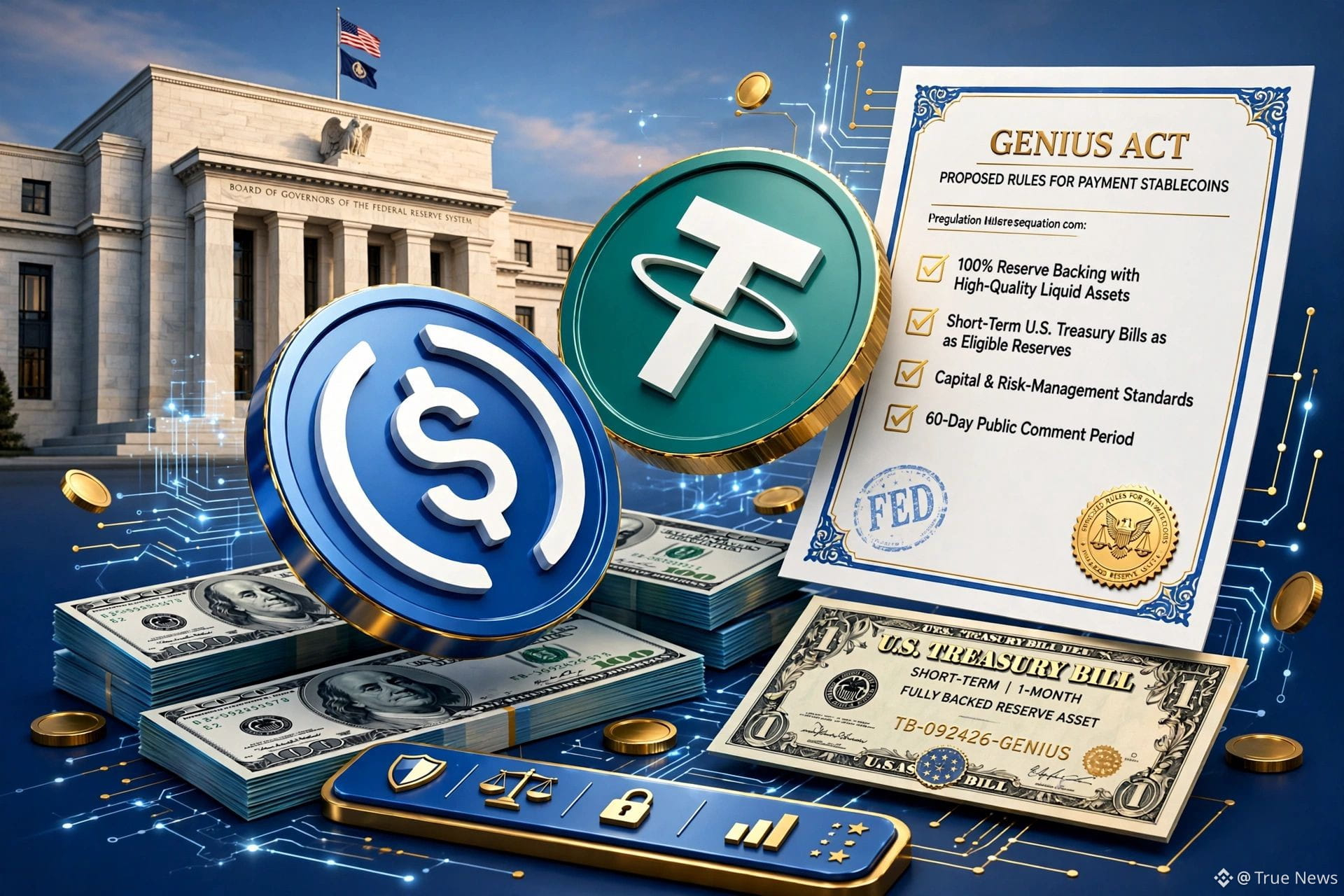
The Fed just proposed a formal framework for payment stablecoin issuers under the GENIUS Act, including 1:1 backing with high-quality liquid reserves such as short-term Treasuries, capital requirements, risk-management standards, custody rules, and a dedicated approval process for banks that want to issue stablecoins.
At almost the same time, SEC staff clarified that for functional crypto networks, things like token buybacks do not automatically create a securities contract by themselves. The SEC also stressed that this is staff guidance, not a binding new rule.
That combination matters.
Fed → clearer rules for digital dollars.
SEC → more clarity for functional crypto assets.
This is not deregulation.
It is something potentially more important:
Crypto is being pulled deeper into the regulated financial system instead of being pushed outside it.
For stablecoins, the direction is obvious: more reserves, more oversight, more bank participation.
And if that framework survives the comment process, the next phase of adoption may look less like “crypto vs banks”…
and more like banks issuing crypto-native money themselves. 👀
$USDC $CRCL $COIN $ETH
{future}(USDCUSDT)
{future}(CRCLUSDT)
{future}(COINUSDT)
#fedproposespaymentstablecoinrules #ChinaMayLetAlibabaByteDanceBuyNvidiaChips #USChinaRelease$30BTariffCutProductLists #SKoreaFSCConsidersVirtualAssetMarketMaker #ChinaIndustrialProfitGrowthSlowsFourthMonth
🚨 THE FED AND SEC ARE QUIETLY BUILDING THE RULEBOOK CRYPTO HAS BEEN WAITING FOR.
The Fed just proposed a formal framework for payment stablecoin issuers under the GENIUS Act, including 1:1 backing with high-quality liquid reserves such as short-term Treasuries, capital requirements, risk-management standards, custody rules, and a dedicated approval process for banks that want to issue stablecoins.
At almost the same time, SEC staff clarified that for functional crypto networks, things like token buybacks do not automatically create a securities contract by themselves. The SEC also stressed that this is staff guidance, not a binding new rule.
That combination matters.
Fed → clearer rules for digital dollars.
SEC → more clarity for functional crypto assets.
This is not deregulation.
It is something potentially more important:
Crypto is being pulled deeper into the regulated financial system instead of being pushed outside it.
For stablecoins, the direction is obvious: more reserves, more oversight, more bank participation.
And if that framework survives the comment process, the next phase of adoption may look less like “crypto vs banks”…
and more like banks issuing crypto-native money themselves. 👀
$USDC $CRCL $COIN $ETH
#fedproposespaymentstablecoinrules #ChinaMayLetAlibabaByteDanceBuyNvidiaChips #USChinaRelease$30BTariffCutProductLists #SKoreaFSCConsidersVirtualAssetMarketMaker #ChinaIndustrialProfitGrowthSlowsFourthMonth
The Fed just proposed a formal framework for payment stablecoin issuers under the GENIUS Act, including 1:1 backing with high-quality liquid reserves such as short-term Treasuries, capital requirements, risk-management standards, custody rules, and a dedicated approval process for banks that want to issue stablecoins.
At almost the same time, SEC staff clarified that for functional crypto networks, things like token buybacks do not automatically create a securities contract by themselves. The SEC also stressed that this is staff guidance, not a binding new rule.
That combination matters.
Fed → clearer rules for digital dollars.
SEC → more clarity for functional crypto assets.
This is not deregulation.
It is something potentially more important:
Crypto is being pulled deeper into the regulated financial system instead of being pushed outside it.
For stablecoins, the direction is obvious: more reserves, more oversight, more bank participation.
And if that framework survives the comment process, the next phase of adoption may look less like “crypto vs banks”…
and more like banks issuing crypto-native money themselves. 👀
$USDC $CRCL $COIN $ETH
#fedproposespaymentstablecoinrules #ChinaMayLetAlibabaByteDanceBuyNvidiaChips #USChinaRelease$30BTariffCutProductLists #SKoreaFSCConsidersVirtualAssetMarketMaker #ChinaIndustrialProfitGrowthSlowsFourthMonth
Bega1911:
https://app.binance.com/uni-qr/request-to-pay?billOrderId=456225039178694656&billType=request_a_payment
2
3
4.1k

🚨 BREAKING: FED PROPOSES 2% CAPITAL REQUIREMENT FOR STABLECOIN ISSUERS! 🇺🇸💵
🏦 The proposed framework would require a 2% capital buffer on the first $20 BILLION of token issuance for covered payment stablecoin issuers.
🚫 NO DIRECT YIELD: Payment stablecoin issuers would also be prohibited from paying interest or yield directly to token holders.
📋 The proposal is part of the Federal Reserve’s implementation of the GENIUS Act and includes additional capital and risk-management requirements.
🌐 Stablecoin regulation is entering a more defined phase in the U.S.
👀 Could tighter capital rules reshape the stablecoin market?
Follow for daily updates ⚡
$QNT $ONE $BTW
#FedProposesPaymentStablecoinRules
🚨 BREAKING: FED PROPOSES 2% CAPITAL REQUIREMENT FOR STABLECOIN ISSUERS! 🇺🇸💵
🏦 The proposed framework would require a 2% capital buffer on the first $20 BILLION of token issuance for covered payment stablecoin issuers.
🚫 NO DIRECT YIELD: Payment stablecoin issuers would also be prohibited from paying interest or yield directly to token holders.
📋 The proposal is part of the Federal Reserve’s implementation of the GENIUS Act and includes additional capital and risk-management requirements.
🌐 Stablecoin regulation is entering a more defined phase in the U.S.
👀 Could tighter capital rules reshape the stablecoin market?
Follow for daily updates ⚡
$QNT $ONE $BTW
#FedProposesPaymentStablecoinRules
🏦 The proposed framework would require a 2% capital buffer on the first $20 BILLION of token issuance for covered payment stablecoin issuers.
🚫 NO DIRECT YIELD: Payment stablecoin issuers would also be prohibited from paying interest or yield directly to token holders.
📋 The proposal is part of the Federal Reserve’s implementation of the GENIUS Act and includes additional capital and risk-management requirements.
🌐 Stablecoin regulation is entering a more defined phase in the U.S.
👀 Could tighter capital rules reshape the stablecoin market?
Follow for daily updates ⚡
$QNT $ONE $BTW
#FedProposesPaymentStablecoinRules
371

·
--
Haussier
#fedproposespaymentstablecoinrules 🏛️ Fed Unveils New Regulatory Framework for Payment Stablecoins
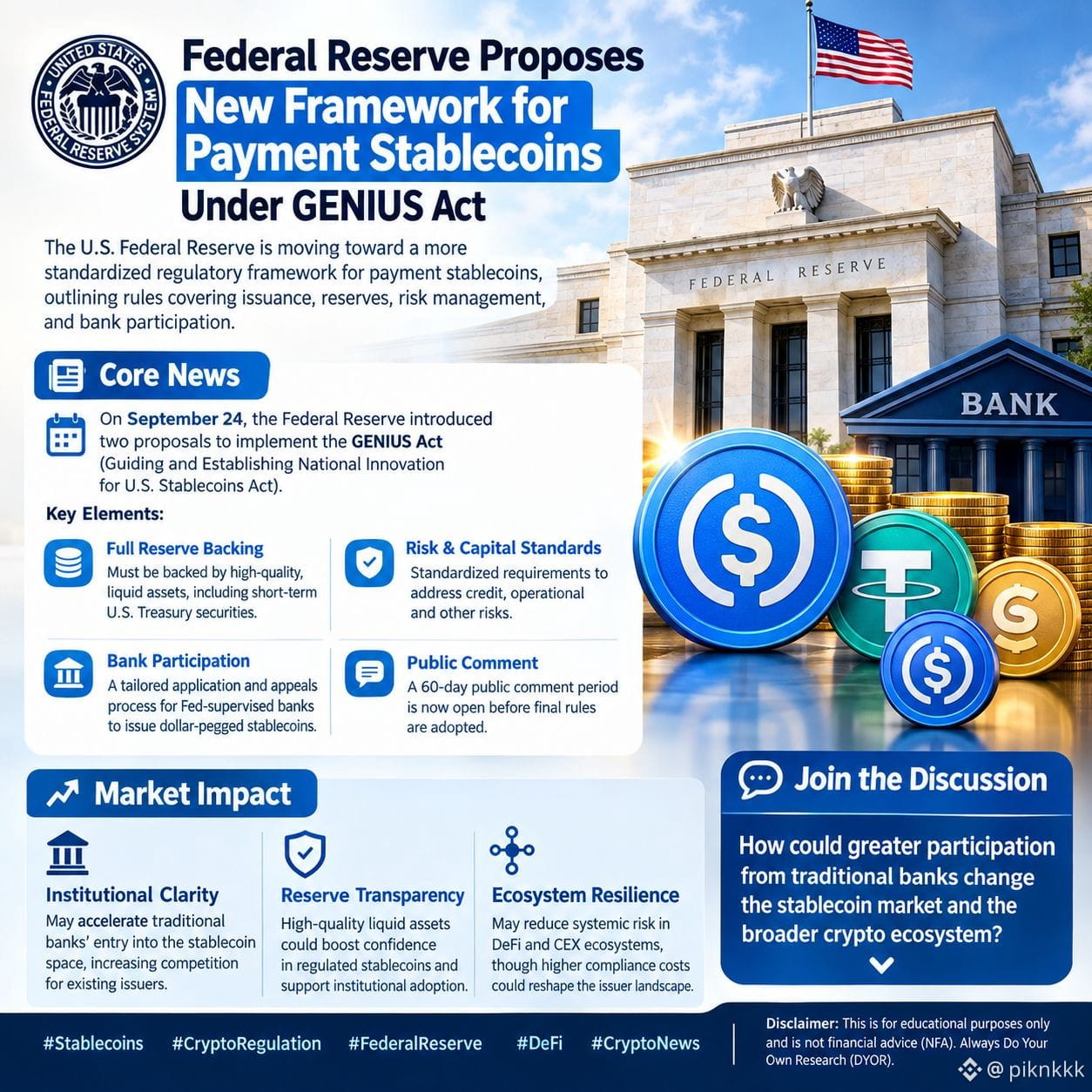
The regulatory landscape for digital assets is taking a major step forward. The U.S. Federal Reserve has introduced proposals to standardize how payment stablecoins are issued and managed.
📰 Core News Breakdown
On Sept 24, the Fed released rules to implement the GENIUS Act. Key pillars include:
• Full Reserve Backing: Issuers must maintain 1:1 backing of tokens with high-quality, liquid assets like short-term U.S. Treasury bills.
• Strict Capital Standards: Issuers face standardized capital requirements and robust risk-management frameworks to mitigate operational risks.
• Bank Integration: A tailored application process is established for Fed-supervised banks to legally issue dollar-pegged stablecoins.
• A 60-day public comment period is now open before finalization.
📊 Market Impact Analysis
• Institutional Clarity: Clear pathways will accelerate traditional bank entry into the stablecoin sector, fostering healthy competition.
• Enhanced Trust: Mandating high-quality liquid assets strengthens the safety of regulated stablecoins, boosting institutional confidence.
• Ecosystem Resilience: Standardized frameworks reduce systemic risk in DeFi and CEX ecosystems, though compliance costs may reshape issuers.
💬 Join the Discussion
How will traditional banks entering the stablecoin space impact current market leaders and the broader DeFi ecosystem? Share your insights below! 👇
#Stablecoins #CryptoRegulation #FederalReserve #DeFi #CryptoNews
This content is for educational purposes only. Not Financial Advice (NFA). Always Do Your Own Research (DYOR).
$GRT $SEI $PUMP
{future}(PUMPUSDT)
{future}(SEIUSDT)
{future}(GRTUSDT)
#fedproposespaymentstablecoinrules 🏛️ Fed Unveils New Regulatory Framework for Payment Stablecoins
The regulatory landscape for digital assets is taking a major step forward. The U.S. Federal Reserve has introduced proposals to standardize how payment stablecoins are issued and managed.
📰 Core News Breakdown
On Sept 24, the Fed released rules to implement the GENIUS Act. Key pillars include:
• Full Reserve Backing: Issuers must maintain 1:1 backing of tokens with high-quality, liquid assets like short-term U.S. Treasury bills.
• Strict Capital Standards: Issuers face standardized capital requirements and robust risk-management frameworks to mitigate operational risks.
• Bank Integration: A tailored application process is established for Fed-supervised banks to legally issue dollar-pegged stablecoins.
• A 60-day public comment period is now open before finalization.
📊 Market Impact Analysis
• Institutional Clarity: Clear pathways will accelerate traditional bank entry into the stablecoin sector, fostering healthy competition.
• Enhanced Trust: Mandating high-quality liquid assets strengthens the safety of regulated stablecoins, boosting institutional confidence.
• Ecosystem Resilience: Standardized frameworks reduce systemic risk in DeFi and CEX ecosystems, though compliance costs may reshape issuers.
💬 Join the Discussion
How will traditional banks entering the stablecoin space impact current market leaders and the broader DeFi ecosystem? Share your insights below! 👇
#Stablecoins #CryptoRegulation #FederalReserve #DeFi #CryptoNews
This content is for educational purposes only. Not Financial Advice (NFA). Always Do Your Own Research (DYOR).
$GRT $SEI $PUMP
The regulatory landscape for digital assets is taking a major step forward. The U.S. Federal Reserve has introduced proposals to standardize how payment stablecoins are issued and managed.
📰 Core News Breakdown
On Sept 24, the Fed released rules to implement the GENIUS Act. Key pillars include:
• Full Reserve Backing: Issuers must maintain 1:1 backing of tokens with high-quality, liquid assets like short-term U.S. Treasury bills.
• Strict Capital Standards: Issuers face standardized capital requirements and robust risk-management frameworks to mitigate operational risks.
• Bank Integration: A tailored application process is established for Fed-supervised banks to legally issue dollar-pegged stablecoins.
• A 60-day public comment period is now open before finalization.
📊 Market Impact Analysis
• Institutional Clarity: Clear pathways will accelerate traditional bank entry into the stablecoin sector, fostering healthy competition.
• Enhanced Trust: Mandating high-quality liquid assets strengthens the safety of regulated stablecoins, boosting institutional confidence.
• Ecosystem Resilience: Standardized frameworks reduce systemic risk in DeFi and CEX ecosystems, though compliance costs may reshape issuers.
💬 Join the Discussion
How will traditional banks entering the stablecoin space impact current market leaders and the broader DeFi ecosystem? Share your insights below! 👇
#Stablecoins #CryptoRegulation #FederalReserve #DeFi #CryptoNews
This content is for educational purposes only. Not Financial Advice (NFA). Always Do Your Own Research (DYOR).
$GRT $SEI $PUMP
201

·
--
#fedproposespaymentstablecoinrules FED’S STABLECOIN RULES: A BIG CRYPTO SIGNAL
The Federal Reserve has announced two rulemaking packages to carry out the GENIUS Act placing payment stablecoins under rules.
Key points:
• 100 percent reserve backing with assets, such as short‑term Treasuries.
• Capital and risk controls.
• Redemption and reporting requirements.
• A dedicated approval process, for banks supervised by the Federal Reserve that want to issue stablecoins.
• Public comments will stay open for sixty days.
For traders this could be important because stablecoins link banking, dollar liquidity, exchanges and on‑chain payments.
Could stablecoin adoption speed up? What effect could this have on BTC. Altcoins? Share your view!..#stablecoin #crypto #cryptotrading #TradingSignals
$BTC $ETH $BNB
{future}(BTCUSDT)
{future}(ETHUSDT)
{future}(BNBUSDT)
#fedproposespaymentstablecoinrules FED’S STABLECOIN RULES: A BIG CRYPTO SIGNAL
The Federal Reserve has announced two rulemaking packages to carry out the GENIUS Act placing payment stablecoins under rules.
Key points:
• 100 percent reserve backing with assets, such as short‑term Treasuries.
• Capital and risk controls.
• Redemption and reporting requirements.
• A dedicated approval process, for banks supervised by the Federal Reserve that want to issue stablecoins.
• Public comments will stay open for sixty days.
For traders this could be important because stablecoins link banking, dollar liquidity, exchanges and on‑chain payments.
Could stablecoin adoption speed up? What effect could this have on BTC. Altcoins? Share your view!..#stablecoin #crypto #cryptotrading #TradingSignals
$BTC $ETH $BNB
The Federal Reserve has announced two rulemaking packages to carry out the GENIUS Act placing payment stablecoins under rules.
Key points:
• 100 percent reserve backing with assets, such as short‑term Treasuries.
• Capital and risk controls.
• Redemption and reporting requirements.
• A dedicated approval process, for banks supervised by the Federal Reserve that want to issue stablecoins.
• Public comments will stay open for sixty days.
For traders this could be important because stablecoins link banking, dollar liquidity, exchanges and on‑chain payments.
Could stablecoin adoption speed up? What effect could this have on BTC. Altcoins? Share your view!..#stablecoin #crypto #cryptotrading #TradingSignals
$BTC $ETH $BNB
434

·
--
#fedproposespaymentstablecoinrules
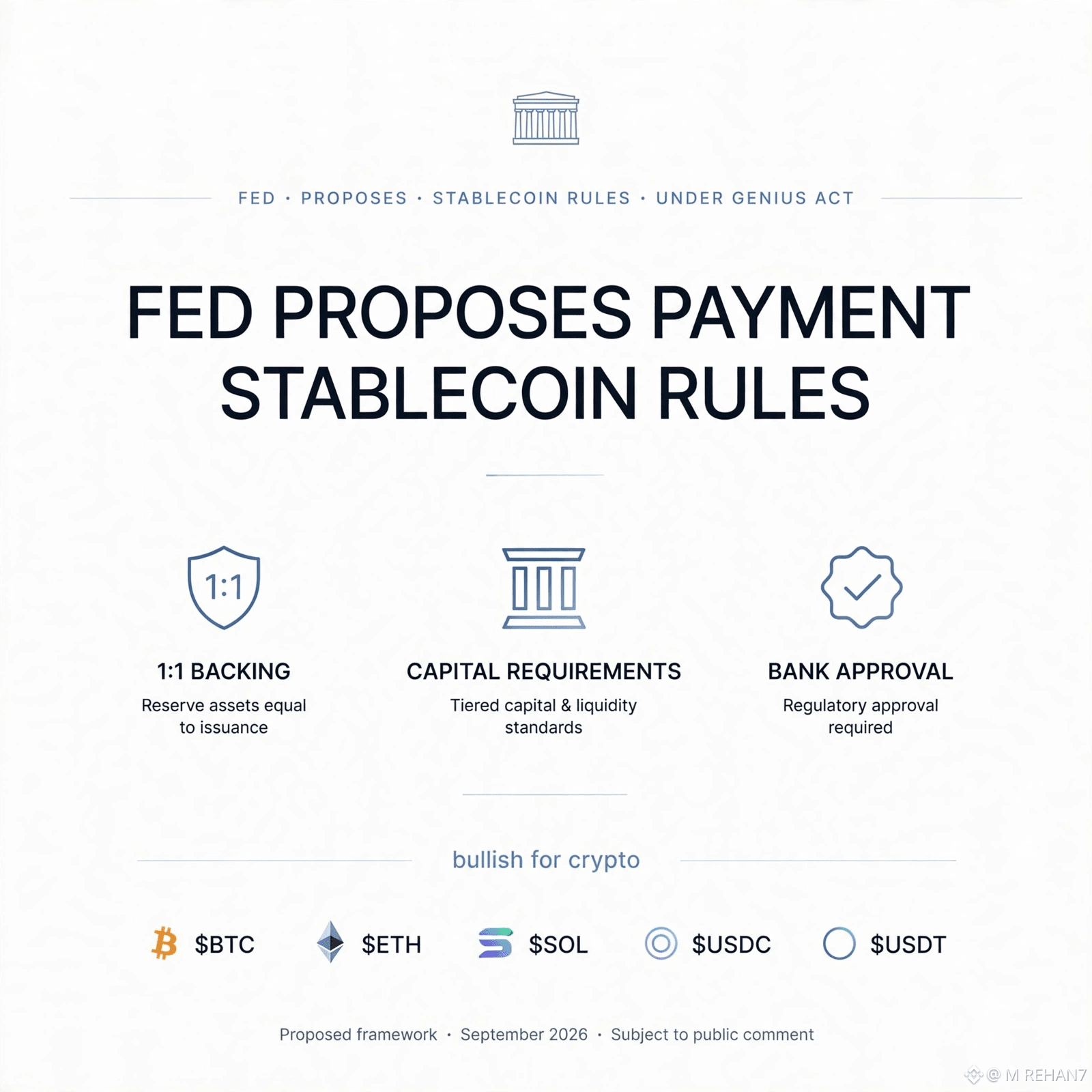
FED PROPOSES PAYMENT STABLECOIN RULES
The wait is over.
Fed Board — Sept 24, 2026 — proposed GENIUS Act framework:
• 1:1 BACKING: USDT USDC must be backed 100% by short-term Treasuries + Cash
• CAPITAL REQUIREMENTS: Tiered capital & liquidity standards mandatory
• BANK APPROVAL: Licensed pathway for banks to issue stablecoins by 2027
SEC also clarified: Token buybacks on functional networks ≠ securities.
This is not deregulation.
This is institutionalization.
Fed is pulling stablecoins INTO banking, not pushing them out.
Why it matters for us:
Trusted $USDC $USDT = Deeper $BTC $ETH $SOL liquidity
Bank-issued stablecoins = $170B market -> $300B+
Less FUD, more adoption
Biggest bullish signal for BTC $ETH $SOL since ETF approval.
Are you bullish or bearish on this?
I am BULLISH BTC $ETH $SOL USDC USDT
#fedproposespaymentstablecoinrules #BTC #ETH #SOL
#fedproposespaymentstablecoinrules
FED PROPOSES PAYMENT STABLECOIN RULES
The wait is over.
Fed Board — Sept 24, 2026 — proposed GENIUS Act framework:
• 1:1 BACKING: USDT USDC must be backed 100% by short-term Treasuries + Cash
• CAPITAL REQUIREMENTS: Tiered capital & liquidity standards mandatory
• BANK APPROVAL: Licensed pathway for banks to issue stablecoins by 2027
SEC also clarified: Token buybacks on functional networks ≠ securities.
This is not deregulation.
This is institutionalization.
Fed is pulling stablecoins INTO banking, not pushing them out.
Why it matters for us:
Trusted $USDC $USDT = Deeper $BTC $ETH $SOL liquidity
Bank-issued stablecoins = $170B market -> $300B+
Less FUD, more adoption
Biggest bullish signal for BTC $ETH $SOL since ETF approval.
Are you bullish or bearish on this?
I am BULLISH BTC $ETH $SOL USDC USDT
#fedproposespaymentstablecoinrules #BTC #ETH #SOL
FED PROPOSES PAYMENT STABLECOIN RULES
The wait is over.
Fed Board — Sept 24, 2026 — proposed GENIUS Act framework:
• 1:1 BACKING: USDT USDC must be backed 100% by short-term Treasuries + Cash
• CAPITAL REQUIREMENTS: Tiered capital & liquidity standards mandatory
• BANK APPROVAL: Licensed pathway for banks to issue stablecoins by 2027
SEC also clarified: Token buybacks on functional networks ≠ securities.
This is not deregulation.
This is institutionalization.
Fed is pulling stablecoins INTO banking, not pushing them out.
Why it matters for us:
Trusted $USDC $USDT = Deeper $BTC $ETH $SOL liquidity
Bank-issued stablecoins = $170B market -> $300B+
Less FUD, more adoption
Biggest bullish signal for BTC $ETH $SOL since ETF approval.
Are you bullish or bearish on this?
I am BULLISH BTC $ETH $SOL USDC USDT
#fedproposespaymentstablecoinrules #BTC #ETH #SOL
3
326


·
--
Haussier
#fedproposespaymentstablecoinrules
Fed Proposes Payment Stablecoin Rules: What Would Change for Issuers?
Stablecoin adoption depends partly on confidence in the assets and systems behind each token.
On September 24, 2026, the Federal Reserve requested public feedback on two proposals under the GENIUS Act, addressing payment stablecoin issuers under its supervision and related banking activities.
The first would require full backing with eligible reserve assets, including short-term Treasury bills. It also addresses capital requirements, risk management and the safekeeping of assets backing stablecoins.
The second would establish an application process for Fed-supervised banks seeking approval for stablecoin issuance, requiring business plans, financial information and supporting documents.
These remain proposals. The comment period closes 60 days after publication in the Federal Register, and the final requirements may change.
My take: Clearer reserve and operating requirements could help banks and businesses assess stablecoin issuers more consistently. Compliance also costs money, so the final design could influence which firms can compete and how services are priced.
For users, the practical questions remain straightforward: how accessible is redemption, who safeguards the reserves, and how reliably do operations function during stress?
I would watch whether the final framework combines stronger protections with workable entry requirements. That balance could shape competition and the usefulness of payment stablecoins.
Which matters most to you: reserve transparency, reliable redemption or greater issuer competition?
#FedProposesPaymentStablecoinRules #Stablecoins #GENIUSAct
$QNT $BTW $ONE
{future}(ONEUSDT)
{future}(BTWUSDT)
{future}(QNTUSDT)
#fedproposespaymentstablecoinrules
Fed Proposes Payment Stablecoin Rules: What Would Change for Issuers?
Stablecoin adoption depends partly on confidence in the assets and systems behind each token.
On September 24, 2026, the Federal Reserve requested public feedback on two proposals under the GENIUS Act, addressing payment stablecoin issuers under its supervision and related banking activities.
The first would require full backing with eligible reserve assets, including short-term Treasury bills. It also addresses capital requirements, risk management and the safekeeping of assets backing stablecoins.
The second would establish an application process for Fed-supervised banks seeking approval for stablecoin issuance, requiring business plans, financial information and supporting documents.
These remain proposals. The comment period closes 60 days after publication in the Federal Register, and the final requirements may change.
My take: Clearer reserve and operating requirements could help banks and businesses assess stablecoin issuers more consistently. Compliance also costs money, so the final design could influence which firms can compete and how services are priced.
For users, the practical questions remain straightforward: how accessible is redemption, who safeguards the reserves, and how reliably do operations function during stress?
I would watch whether the final framework combines stronger protections with workable entry requirements. That balance could shape competition and the usefulness of payment stablecoins.
Which matters most to you: reserve transparency, reliable redemption or greater issuer competition?
#FedProposesPaymentStablecoinRules #Stablecoins #GENIUSAct
$QNT $BTW $ONE
Fed Proposes Payment Stablecoin Rules: What Would Change for Issuers?
Stablecoin adoption depends partly on confidence in the assets and systems behind each token.
On September 24, 2026, the Federal Reserve requested public feedback on two proposals under the GENIUS Act, addressing payment stablecoin issuers under its supervision and related banking activities.
The first would require full backing with eligible reserve assets, including short-term Treasury bills. It also addresses capital requirements, risk management and the safekeeping of assets backing stablecoins.
The second would establish an application process for Fed-supervised banks seeking approval for stablecoin issuance, requiring business plans, financial information and supporting documents.
These remain proposals. The comment period closes 60 days after publication in the Federal Register, and the final requirements may change.
My take: Clearer reserve and operating requirements could help banks and businesses assess stablecoin issuers more consistently. Compliance also costs money, so the final design could influence which firms can compete and how services are priced.
For users, the practical questions remain straightforward: how accessible is redemption, who safeguards the reserves, and how reliably do operations function during stress?
I would watch whether the final framework combines stronger protections with workable entry requirements. That balance could shape competition and the usefulness of payment stablecoins.
Which matters most to you: reserve transparency, reliable redemption or greater issuer competition?
#FedProposesPaymentStablecoinRules #Stablecoins #GENIUSAct
$QNT $BTW $ONE
992

#FedProposesPaymentStablecoinRules
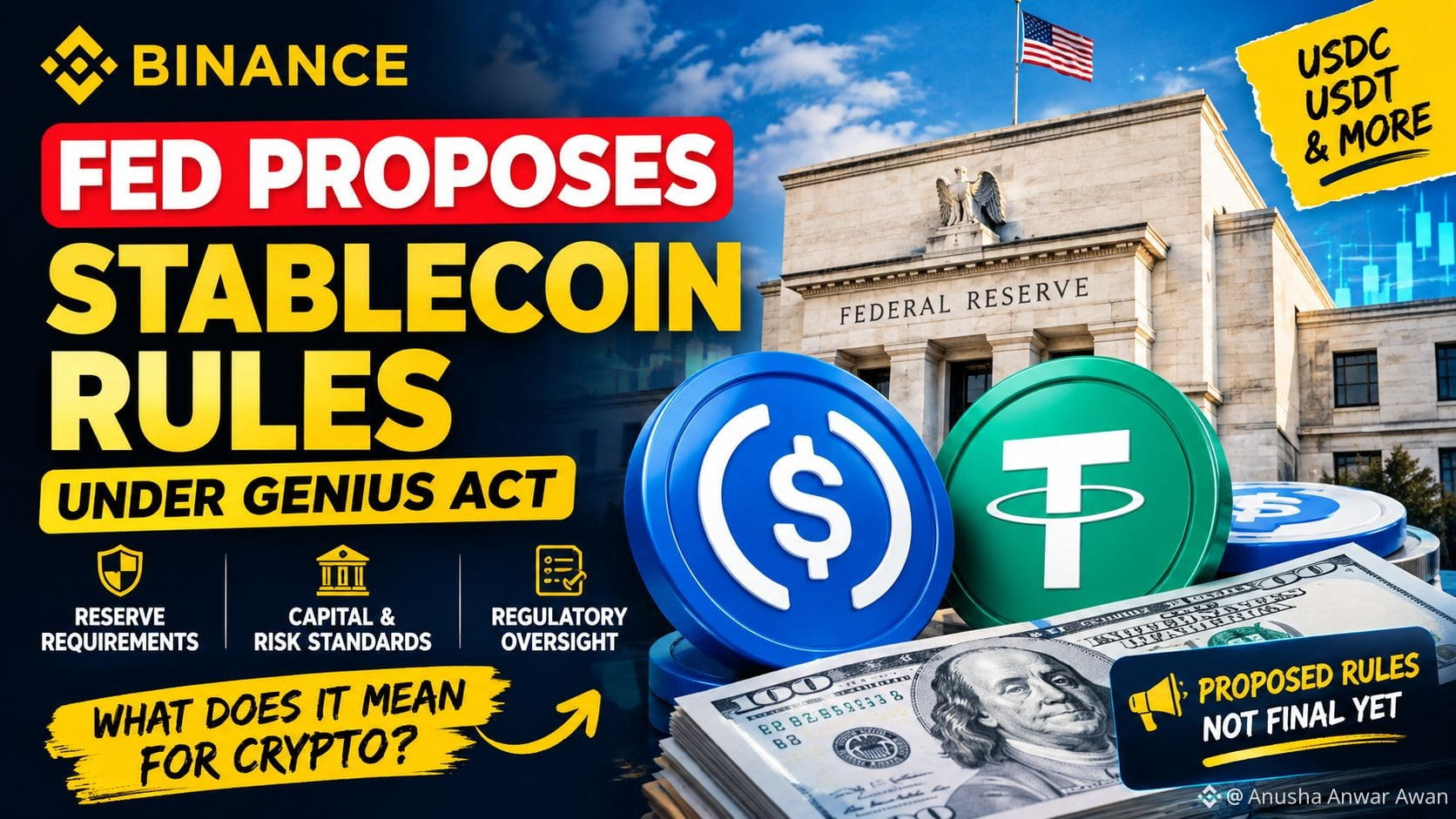
🚨 FED PROPOSES NEW STABLECOIN RULES
The U.S. Federal Reserve has proposed two new rules for payment stablecoins as part of implementing the GENIUS Act. The proposals focus on reserve requirements, capital and risk-management standards for stablecoin issuers under the Fed’s supervision. �
Reuters +1
💵 Why This Matters for Crypto
Stablecoins such as USDC and other dollar-linked tokens are an important part of the crypto market.
Under the proposed framework, supervised stablecoin issuers would need to back their payment stablecoins with permitted reserve assets, including assets such as short-term U.S. Treasury bills. �
Reuters
The Fed is also proposing standards around capital, risk management and the regulatory process for bank-related stablecoin activities. �
VitalLaw
📌 The important point: These are proposed rules, not final rules yet. The Federal Reserve has opened a public-comment process.
🔥 Market Question
Could clearer stablecoin regulation increase confidence and adoption in crypto payments?
USDC, USDT or another stablecoin — which one do you think will benefit most from clearer regulation? 👇
#Binance #Stablecoin #USDC #USDT #CryptoNews #Crypto #GENIUSAct #FederalReserve #Bitcoin #Ethereum #BNB #BinanceSquare #CryptoMarket #Blockchain
#FedProposesPaymentStablecoinRules
🚨 FED PROPOSES NEW STABLECOIN RULES
The U.S. Federal Reserve has proposed two new rules for payment stablecoins as part of implementing the GENIUS Act. The proposals focus on reserve requirements, capital and risk-management standards for stablecoin issuers under the Fed’s supervision. �
Reuters +1
💵 Why This Matters for Crypto
Stablecoins such as USDC and other dollar-linked tokens are an important part of the crypto market.
Under the proposed framework, supervised stablecoin issuers would need to back their payment stablecoins with permitted reserve assets, including assets such as short-term U.S. Treasury bills. �
Reuters
The Fed is also proposing standards around capital, risk management and the regulatory process for bank-related stablecoin activities. �
VitalLaw
📌 The important point: These are proposed rules, not final rules yet. The Federal Reserve has opened a public-comment process.
🔥 Market Question
Could clearer stablecoin regulation increase confidence and adoption in crypto payments?
USDC, USDT or another stablecoin — which one do you think will benefit most from clearer regulation? 👇
#Binance #Stablecoin #USDC #USDT #CryptoNews #Crypto #GENIUSAct #FederalReserve #Bitcoin #Ethereum #BNB #BinanceSquare #CryptoMarket #Blockchain
🚨 FED PROPOSES NEW STABLECOIN RULES
The U.S. Federal Reserve has proposed two new rules for payment stablecoins as part of implementing the GENIUS Act. The proposals focus on reserve requirements, capital and risk-management standards for stablecoin issuers under the Fed’s supervision. �
Reuters +1
💵 Why This Matters for Crypto
Stablecoins such as USDC and other dollar-linked tokens are an important part of the crypto market.
Under the proposed framework, supervised stablecoin issuers would need to back their payment stablecoins with permitted reserve assets, including assets such as short-term U.S. Treasury bills. �
Reuters
The Fed is also proposing standards around capital, risk management and the regulatory process for bank-related stablecoin activities. �
VitalLaw
📌 The important point: These are proposed rules, not final rules yet. The Federal Reserve has opened a public-comment process.
🔥 Market Question
Could clearer stablecoin regulation increase confidence and adoption in crypto payments?
USDC, USDT or another stablecoin — which one do you think will benefit most from clearer regulation? 👇
#Binance #Stablecoin #USDC #USDT #CryptoNews #Crypto #GENIUSAct #FederalReserve #Bitcoin #Ethereum #BNB #BinanceSquare #CryptoMarket #Blockchain
7
·
--
🚨 THE FED ISN’T JUST REGULATING STABLECOINS — IT’S TRYING TO PREVENT THE NEXT DIGITAL BANK RUN.
The Fed’s new GENIUS Act proposals would force supervised stablecoin issuers to hold fully backed, highly liquid reserves, meet standardized capital requirements, and maintain systems that can support reliable redemptions even during market stress.
That’s the underrated part.
The real risk in stablecoins was never just whether $1 = $1 on a normal day.
It’s whether everyone can get their dollar back at the same time when markets panic.
Fed Governor Michael Barr explicitly highlighted that stablecoins need to remain redeemable at par even during periods of stress, when both issuers and reserve assets can come under pressure.
So this framework is effectively trying to turn stablecoins from:
“crypto cash” → regulated digital cash infrastructure.
If finalized, the biggest advantage may go to issuers that can already handle liquidity, custody, reserves and compliance at institutional scale.
That’s why this may matter more for $CRCL than for the stablecoin tokens themselves.
The next stablecoin race may not be about who grows fastest.
It may be about who survives a run. 👀
{stock_us}(COIN.US)
{stock_us}(CRCL.US)
{spot}(USDCUSDT)
$CRCL.US $COIN.US $USDC #BTCFallsBelow$83000 #FedProposesPaymentStablecoinRules #ChinaMayLetAlibabaByteDanceBuyNvidiaChips #USChinaRelease$30BTariffCutProductLists #SKoreaFSCConsidersVirtualAssetMarketMaker
🚨 THE FED ISN’T JUST REGULATING STABLECOINS — IT’S TRYING TO PREVENT THE NEXT DIGITAL BANK RUN.
The Fed’s new GENIUS Act proposals would force supervised stablecoin issuers to hold fully backed, highly liquid reserves, meet standardized capital requirements, and maintain systems that can support reliable redemptions even during market stress.
That’s the underrated part.
The real risk in stablecoins was never just whether $1 = $1 on a normal day.
It’s whether everyone can get their dollar back at the same time when markets panic.
Fed Governor Michael Barr explicitly highlighted that stablecoins need to remain redeemable at par even during periods of stress, when both issuers and reserve assets can come under pressure.
So this framework is effectively trying to turn stablecoins from:
“crypto cash” → regulated digital cash infrastructure.
If finalized, the biggest advantage may go to issuers that can already handle liquidity, custody, reserves and compliance at institutional scale.
That’s why this may matter more for $CRCL than for the stablecoin tokens themselves.
The next stablecoin race may not be about who grows fastest.
It may be about who survives a run. 👀
$CRCL.US $COIN.US $USDC #BTCFallsBelow$83000 #FedProposesPaymentStablecoinRules #ChinaMayLetAlibabaByteDanceBuyNvidiaChips #USChinaRelease$30BTariffCutProductLists #SKoreaFSCConsidersVirtualAssetMarketMaker
The Fed’s new GENIUS Act proposals would force supervised stablecoin issuers to hold fully backed, highly liquid reserves, meet standardized capital requirements, and maintain systems that can support reliable redemptions even during market stress.
That’s the underrated part.
The real risk in stablecoins was never just whether $1 = $1 on a normal day.
It’s whether everyone can get their dollar back at the same time when markets panic.
Fed Governor Michael Barr explicitly highlighted that stablecoins need to remain redeemable at par even during periods of stress, when both issuers and reserve assets can come under pressure.
So this framework is effectively trying to turn stablecoins from:
“crypto cash” → regulated digital cash infrastructure.
If finalized, the biggest advantage may go to issuers that can already handle liquidity, custody, reserves and compliance at institutional scale.
That’s why this may matter more for $CRCL than for the stablecoin tokens themselves.
The next stablecoin race may not be about who grows fastest.
It may be about who survives a run. 👀
$CRCL.US $COIN.US $USDC #BTCFallsBelow$83000 #FedProposesPaymentStablecoinRules #ChinaMayLetAlibabaByteDanceBuyNvidiaChips #USChinaRelease$30BTariffCutProductLists #SKoreaFSCConsidersVirtualAssetMarketMaker

20

#FedProposesPaymentStablecoinRules
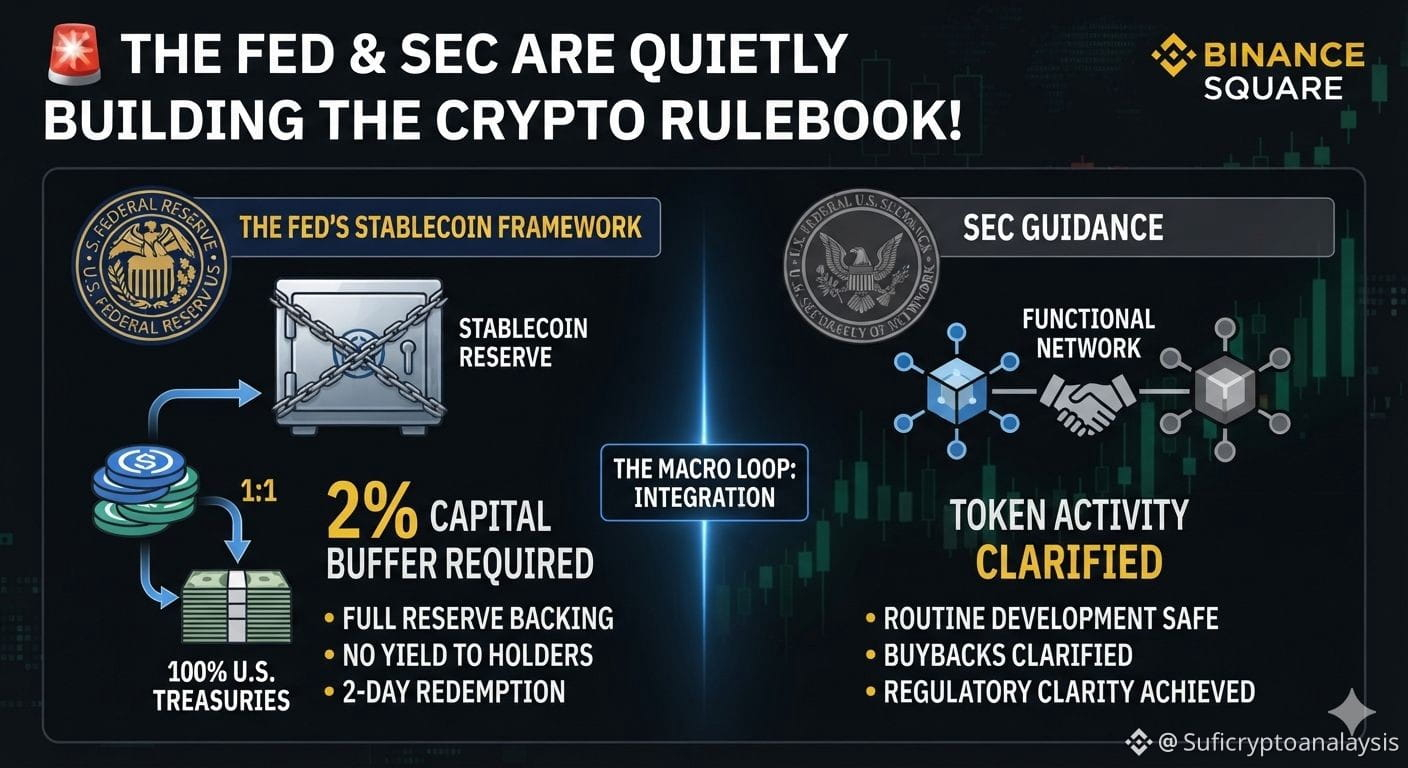
🚨 THE FED & SEC ARE QUIETLY BUILDING THE CRYPTO RULEBOOK! 🇺🇸💵The U.S. regulatory landscape just shifted dramatically, pulling digital assets deeper into the traditional financial system rather than pushing them out. If you are trading or holding right now, these two parallel moves change the macro landscape entirely.🏛️ 1. The Fed's Strict Payment Stablecoin FrameworkUnder the GENIUS Act, the Federal Reserve proposed twin packages establishing comprehensive reserve, operational, and capital requirements:100% High-Quality Reserves: Tokens must be backed 1:1 by liquid assets like short-term U.S. Treasuries (93 days or less maturity).The 2% Capital Buffer: Issuers face a mandatory 2% capital requirement on the first $20 billion of token issuance to address operational and credit risks.Strict Yield Prohibition: Issuers are completely prohibited from paying interest or yield directly to token holders.Redemption Rules: Fulfilling cash/deposit redemptions must happen within two business days.⚖️ 2. The SEC & Coreen's Regulatory TakeSEC staff clarified that activities like token buybacks and active network development do not automatically trigger securities contracts on functional networks, offering builders more breathing room. Meanwhile, incorporating Coreen's market perspective highlights that these evolving frameworks demand tighter risk management across both decentralized and centralized portfolios.📊 Token Impact Analysis: What This Means For Your Bags$USDC & Stablecoins: Margin compression will favor fully compliant, bank-backed entities.$ETH & Layer 1s: Regulatory clarity serves as a long-term institutional catalyst as ETH eyes levels toward $3,050–$3,450.$SOL : Watching support at $113–$118 amid whale exchange transfers and ETF inflows.💡 The Macro Loop: The Real Winner?Integration over deregulation means stablecoins drive Treasury demand, cementing the digital dollar's reach.What is your take? Let me know below! 👇#FedProposesPaymentStablecoinRules #CryptoRegulation #Ethereum #Solana
#FedProposesPaymentStablecoinRules
🚨 THE FED & SEC ARE QUIETLY BUILDING THE CRYPTO RULEBOOK! 🇺🇸💵The U.S. regulatory landscape just shifted dramatically, pulling digital assets deeper into the traditional financial system rather than pushing them out. If you are trading or holding right now, these two parallel moves change the macro landscape entirely.🏛️ 1. The Fed's Strict Payment Stablecoin FrameworkUnder the GENIUS Act, the Federal Reserve proposed twin packages establishing comprehensive reserve, operational, and capital requirements:100% High-Quality Reserves: Tokens must be backed 1:1 by liquid assets like short-term U.S. Treasuries (93 days or less maturity).The 2% Capital Buffer: Issuers face a mandatory 2% capital requirement on the first $20 billion of token issuance to address operational and credit risks.Strict Yield Prohibition: Issuers are completely prohibited from paying interest or yield directly to token holders.Redemption Rules: Fulfilling cash/deposit redemptions must happen within two business days.⚖️ 2. The SEC & Coreen's Regulatory TakeSEC staff clarified that activities like token buybacks and active network development do not automatically trigger securities contracts on functional networks, offering builders more breathing room. Meanwhile, incorporating Coreen's market perspective highlights that these evolving frameworks demand tighter risk management across both decentralized and centralized portfolios.📊 Token Impact Analysis: What This Means For Your Bags$USDC & Stablecoins: Margin compression will favor fully compliant, bank-backed entities.$ETH & Layer 1s: Regulatory clarity serves as a long-term institutional catalyst as ETH eyes levels toward $3,050–$3,450.$SOL : Watching support at $113–$118 amid whale exchange transfers and ETF inflows.💡 The Macro Loop: The Real Winner?Integration over deregulation means stablecoins drive Treasury demand, cementing the digital dollar's reach.What is your take? Let me know below! 👇#FedProposesPaymentStablecoinRules #CryptoRegulation #Ethereum #Solana
🚨 THE FED & SEC ARE QUIETLY BUILDING THE CRYPTO RULEBOOK! 🇺🇸💵The U.S. regulatory landscape just shifted dramatically, pulling digital assets deeper into the traditional financial system rather than pushing them out. If you are trading or holding right now, these two parallel moves change the macro landscape entirely.🏛️ 1. The Fed's Strict Payment Stablecoin FrameworkUnder the GENIUS Act, the Federal Reserve proposed twin packages establishing comprehensive reserve, operational, and capital requirements:100% High-Quality Reserves: Tokens must be backed 1:1 by liquid assets like short-term U.S. Treasuries (93 days or less maturity).The 2% Capital Buffer: Issuers face a mandatory 2% capital requirement on the first $20 billion of token issuance to address operational and credit risks.Strict Yield Prohibition: Issuers are completely prohibited from paying interest or yield directly to token holders.Redemption Rules: Fulfilling cash/deposit redemptions must happen within two business days.⚖️ 2. The SEC & Coreen's Regulatory TakeSEC staff clarified that activities like token buybacks and active network development do not automatically trigger securities contracts on functional networks, offering builders more breathing room. Meanwhile, incorporating Coreen's market perspective highlights that these evolving frameworks demand tighter risk management across both decentralized and centralized portfolios.📊 Token Impact Analysis: What This Means For Your Bags$USDC & Stablecoins: Margin compression will favor fully compliant, bank-backed entities.$ETH & Layer 1s: Regulatory clarity serves as a long-term institutional catalyst as ETH eyes levels toward $3,050–$3,450.$SOL : Watching support at $113–$118 amid whale exchange transfers and ETF inflows.💡 The Macro Loop: The Real Winner?Integration over deregulation means stablecoins drive Treasury demand, cementing the digital dollar's reach.What is your take? Let me know below! 👇#FedProposesPaymentStablecoinRules #CryptoRegulation #Ethereum #Solana
47

·
--
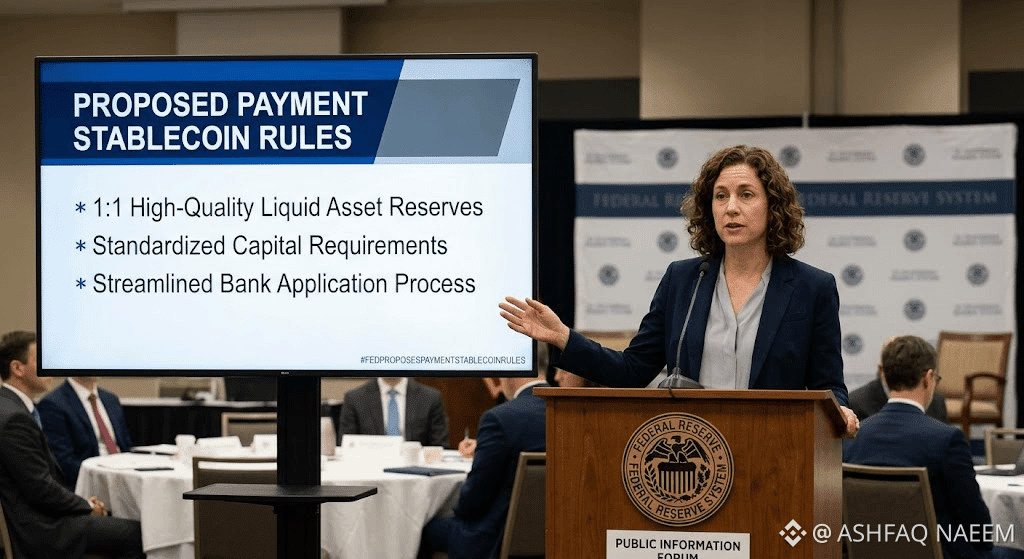
The Federal Reserve's proposed stablecoin rules under the GENIUS Act (issued September 24, 2026) focus on two main areas:
1:1 Reserve & Capital Standards: Supervised payment stablecoin issuers must fully back tokens with high-quality liquid assets (like short-term U.S. Treasuries) and maintain standardized capital buffers for operational and credit risk.
Bank Application Framework: Establishes a formal application, review, and appeals process for Fed-supervised banks seeking to create stablecoin-issuing subsidiaries.
The draft rules are open for a 60-day public comment period.
#fedproposespaymentstablecoinrules
#BTC $BTC #USDC✅ $USDC
{spot}(USDCUSDT)
{future}(BTCUSDT)
The Federal Reserve's proposed stablecoin rules under the GENIUS Act (issued September 24, 2026) focus on two main areas:
1:1 Reserve & Capital Standards: Supervised payment stablecoin issuers must fully back tokens with high-quality liquid assets (like short-term U.S. Treasuries) and maintain standardized capital buffers for operational and credit risk.
Bank Application Framework: Establishes a formal application, review, and appeals process for Fed-supervised banks seeking to create stablecoin-issuing subsidiaries.
The draft rules are open for a 60-day public comment period.
#fedproposespaymentstablecoinrules
#BTC $BTC #USDC✅ $USDC
1:1 Reserve & Capital Standards: Supervised payment stablecoin issuers must fully back tokens with high-quality liquid assets (like short-term U.S. Treasuries) and maintain standardized capital buffers for operational and credit risk.
Bank Application Framework: Establishes a formal application, review, and appeals process for Fed-supervised banks seeking to create stablecoin-issuing subsidiaries.
The draft rules are open for a 60-day public comment period.
#fedproposespaymentstablecoinrules
#BTC $BTC #USDC✅ $USDC
1
37
·
--
🚨 THE UNDERRATED STABLECOIN TRADE ISN’T CRYPTO — IT’S U.S. TREASURIES.
The Fed’s proposed stablecoin framework would require regulated issuers to back payment stablecoins with high-quality liquid reserves, including short-term U.S. Treasury bills, while also setting capital and custody standards.
That creates a less obvious macro loop:
More stablecoin adoption → more reserve demand → more Treasury demand.
At the same time, SEC staff is giving functional crypto networks more room to operate, clarifying that activities like token buybacks or continued network development do not automatically create a securities contract.
Put those two together and the bigger story is not simply “crypto regulation.”
It’s this:
Washington may be turning stablecoins into a new distribution rail for dollar-denominated government debt — while simultaneously making the crypto layer easier to build on.
That could strengthen the dollar’s digital reach, increase demand for tokenized cash products, and make stablecoin issuers much more strategically important.
The hidden winner of the stablecoin boom may be the U.S. Treasury market itself. 👀
{stock_us}(COIN.US)
{future}(CRCLUSDT)
{future}(ETHUSDT)
$CRCL $COIN $USDC $ETH
#FedProposesPaymentStablecoinRules #ChinaMayLetAlibabaByteDanceBuyNvidiaChips #USChinaRelease$30BTariffCutProductLists #SKoreaFSCConsidersVirtualAssetMarketMaker #Fed
🚨 THE UNDERRATED STABLECOIN TRADE ISN’T CRYPTO — IT’S U.S. TREASURIES.
The Fed’s proposed stablecoin framework would require regulated issuers to back payment stablecoins with high-quality liquid reserves, including short-term U.S. Treasury bills, while also setting capital and custody standards.
That creates a less obvious macro loop:
More stablecoin adoption → more reserve demand → more Treasury demand.
At the same time, SEC staff is giving functional crypto networks more room to operate, clarifying that activities like token buybacks or continued network development do not automatically create a securities contract.
Put those two together and the bigger story is not simply “crypto regulation.”
It’s this:
Washington may be turning stablecoins into a new distribution rail for dollar-denominated government debt — while simultaneously making the crypto layer easier to build on.
That could strengthen the dollar’s digital reach, increase demand for tokenized cash products, and make stablecoin issuers much more strategically important.
The hidden winner of the stablecoin boom may be the U.S. Treasury market itself. 👀
$CRCL $COIN $USDC $ETH
#FedProposesPaymentStablecoinRules #ChinaMayLetAlibabaByteDanceBuyNvidiaChips #USChinaRelease$30BTariffCutProductLists #SKoreaFSCConsidersVirtualAssetMarketMaker #Fed
The Fed’s proposed stablecoin framework would require regulated issuers to back payment stablecoins with high-quality liquid reserves, including short-term U.S. Treasury bills, while also setting capital and custody standards.
That creates a less obvious macro loop:
More stablecoin adoption → more reserve demand → more Treasury demand.
At the same time, SEC staff is giving functional crypto networks more room to operate, clarifying that activities like token buybacks or continued network development do not automatically create a securities contract.
Put those two together and the bigger story is not simply “crypto regulation.”
It’s this:
Washington may be turning stablecoins into a new distribution rail for dollar-denominated government debt — while simultaneously making the crypto layer easier to build on.
That could strengthen the dollar’s digital reach, increase demand for tokenized cash products, and make stablecoin issuers much more strategically important.
The hidden winner of the stablecoin boom may be the U.S. Treasury market itself. 👀
$CRCL $COIN $USDC $ETH
#FedProposesPaymentStablecoinRules #ChinaMayLetAlibabaByteDanceBuyNvidiaChips #USChinaRelease$30BTariffCutProductLists #SKoreaFSCConsidersVirtualAssetMarketMaker #Fed

1
22

·
--
#FedProposesPaymentStablecoinRules
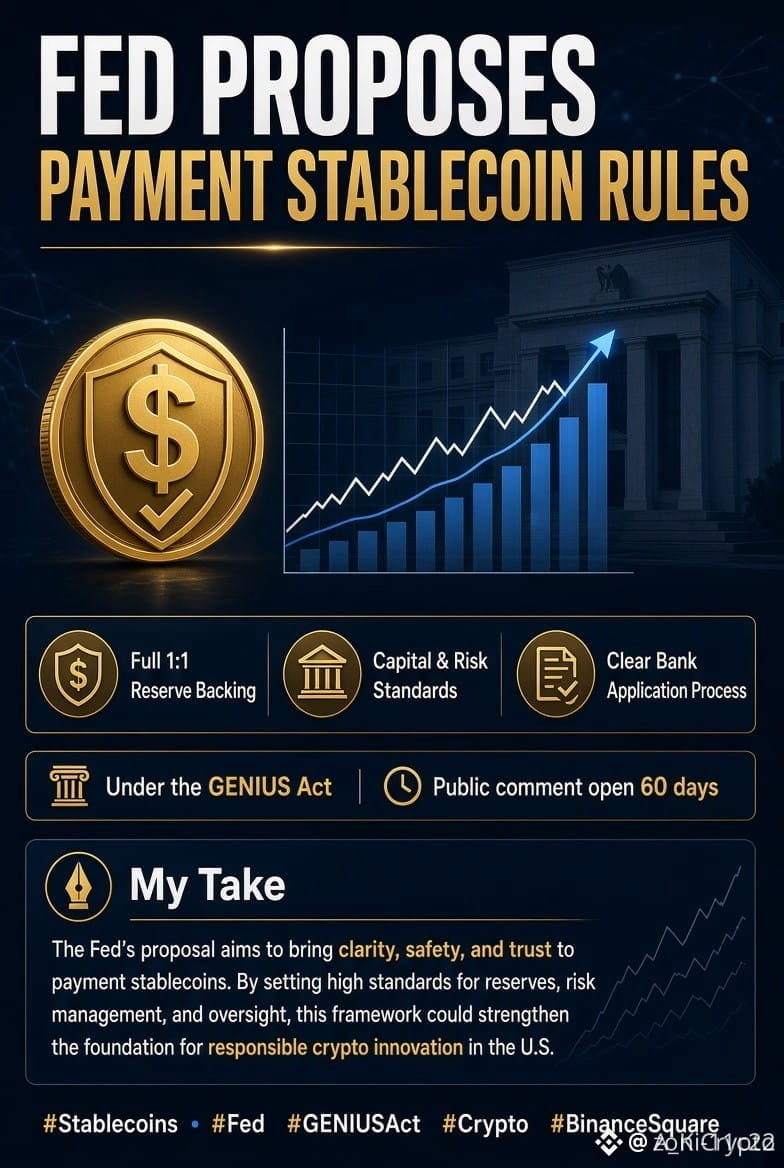
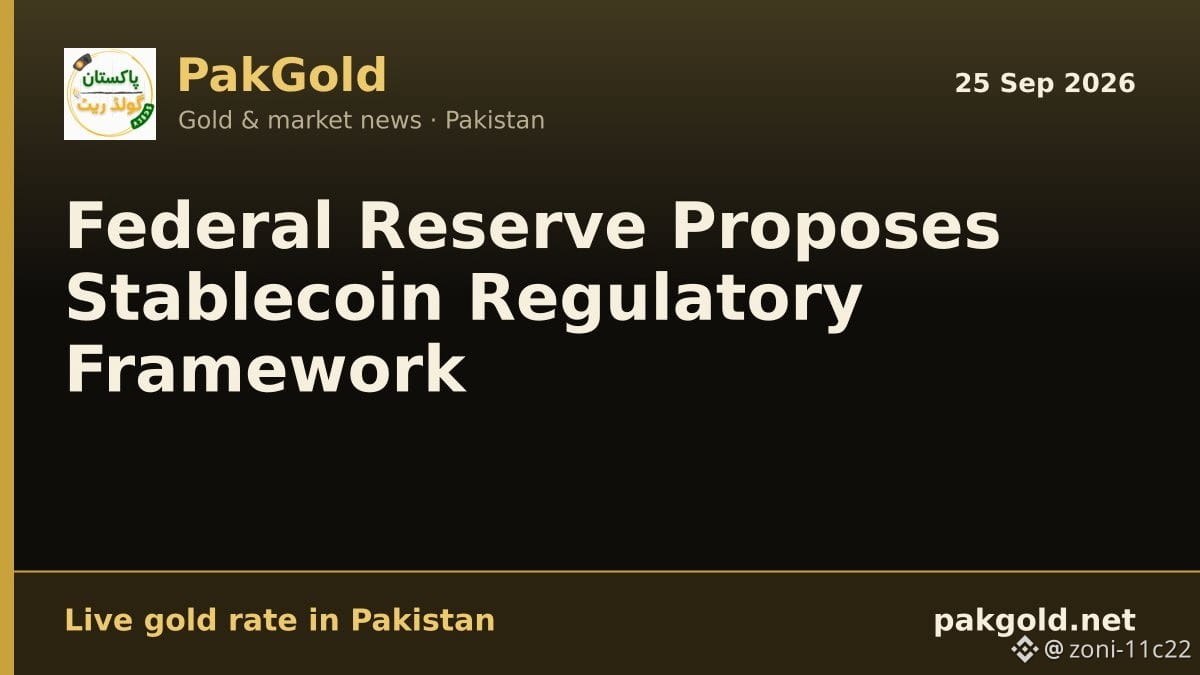
The Federal Reserve has proposed a landmark regulatory framework for payment stablecoin under the GENIUS Act, moving crypto assets deeper into the traditional $US
{alpha}(CT_7840xee962a61432231c2ede6946515beb02290cb516ad087bb06a731e922b2a5f57a::us::US)
financial system. Published on September 24, 2026, the twin proposals establish comprehensive reserve, operational, and capital requirements for stablecoin issuers. [1]
$BNB
{future}(BNBUSDT)
#FedProposesPaymentStablecoinRules
The Federal Reserve has proposed a landmark regulatory framework for payment stablecoin under the GENIUS Act, moving crypto assets deeper into the traditional $US
financial system. Published on September 24, 2026, the twin proposals establish comprehensive reserve, operational, and capital requirements for stablecoin issuers. [1]
$BNB
The Federal Reserve has proposed a landmark regulatory framework for payment stablecoin under the GENIUS Act, moving crypto assets deeper into the traditional $US
financial system. Published on September 24, 2026, the twin proposals establish comprehensive reserve, operational, and capital requirements for stablecoin issuers. [1]
$BNB
1
81

·
--
#FedProposesPaymentStablecoinRules
🚨 FED PROPOSES PAYMENT STABLECOIN RULES
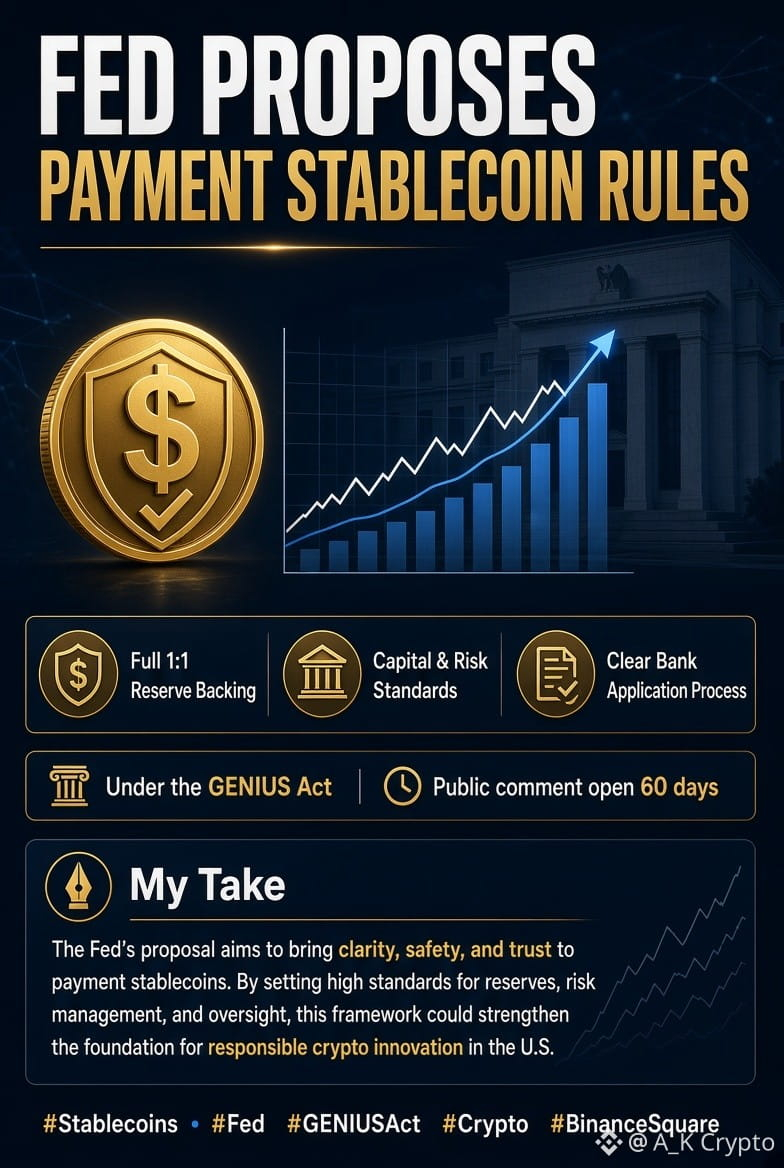
The Federal Reserve just dropped two key proposals under the GENIUS Act for Board-supervised payment stablecoin issuers.
One requires full 1:1 backing with high-quality reserves like short-term Treasuries, plus standardized capital and risk management rules. The other sets out a clearer application process for banks wanting to issue stablecoins.
Public comment period is open for 60 days.
This is a solid step toward making dollar stablecoins safer and more reliable for everyday payments. Clear reserve rules and capital standards should build real confidence, but the final details on redemptions and risk will decide how useful these coins become. Watching closely as the framework takes shape.
#Stablecoins #Fed #GENIUSAct #Crypto #CryptoNews #BinanceSquare
#FedProposesPaymentStablecoinRules
🚨 FED PROPOSES PAYMENT STABLECOIN RULES
The Federal Reserve just dropped two key proposals under the GENIUS Act for Board-supervised payment stablecoin issuers.
One requires full 1:1 backing with high-quality reserves like short-term Treasuries, plus standardized capital and risk management rules. The other sets out a clearer application process for banks wanting to issue stablecoins.
Public comment period is open for 60 days.
This is a solid step toward making dollar stablecoins safer and more reliable for everyday payments. Clear reserve rules and capital standards should build real confidence, but the final details on redemptions and risk will decide how useful these coins become. Watching closely as the framework takes shape.
#Stablecoins #Fed #GENIUSAct #Crypto #CryptoNews #BinanceSquare
🚨 FED PROPOSES PAYMENT STABLECOIN RULES
The Federal Reserve just dropped two key proposals under the GENIUS Act for Board-supervised payment stablecoin issuers.
One requires full 1:1 backing with high-quality reserves like short-term Treasuries, plus standardized capital and risk management rules. The other sets out a clearer application process for banks wanting to issue stablecoins.
Public comment period is open for 60 days.
This is a solid step toward making dollar stablecoins safer and more reliable for everyday payments. Clear reserve rules and capital standards should build real confidence, but the final details on redemptions and risk will decide how useful these coins become. Watching closely as the framework takes shape.
#Stablecoins #Fed #GENIUSAct #Crypto #CryptoNews #BinanceSquare
1
35

·
--
#FedProposesPaymentStablecoinRules
🚨 Fed proposes new payment stablecoin rules
The U.S. Federal Reserve has proposed rules under the GENIUS Act that would require Fed-supervised payment stablecoin issuers to fully back tokens with eligible reserves, including short-term U.S. Treasury bills. The proposal also includes capital and risk-management requirements and a dedicated process for supervised banks seeking to issue payment stablecoins. Public comments will be open for 60 days after Federal Register publication.
💬 What do you think?$BTC $BNB $ETH
Will clearer stablecoin rules accelerate institutional adoption?
#Stablecoin #BNB_Market_Update #CryptoRegulation #Fed
#FedProposesPaymentStablecoinRules
🚨 Fed proposes new payment stablecoin rules
The U.S. Federal Reserve has proposed rules under the GENIUS Act that would require Fed-supervised payment stablecoin issuers to fully back tokens with eligible reserves, including short-term U.S. Treasury bills. The proposal also includes capital and risk-management requirements and a dedicated process for supervised banks seeking to issue payment stablecoins. Public comments will be open for 60 days after Federal Register publication.
💬 What do you think?$BTC $BNB $ETH
Will clearer stablecoin rules accelerate institutional adoption?
#Stablecoin #BNB_Market_Update #CryptoRegulation #Fed
🚨 Fed proposes new payment stablecoin rules
The U.S. Federal Reserve has proposed rules under the GENIUS Act that would require Fed-supervised payment stablecoin issuers to fully back tokens with eligible reserves, including short-term U.S. Treasury bills. The proposal also includes capital and risk-management requirements and a dedicated process for supervised banks seeking to issue payment stablecoins. Public comments will be open for 60 days after Federal Register publication.
💬 What do you think?$BTC $BNB $ETH
Will clearer stablecoin rules accelerate institutional adoption?
#Stablecoin #BNB_Market_Update #CryptoRegulation #Fed
1
72

·
--
Article
The Federal Reserve Board proposed two draft rules#fedproposespaymentstablecoinrules
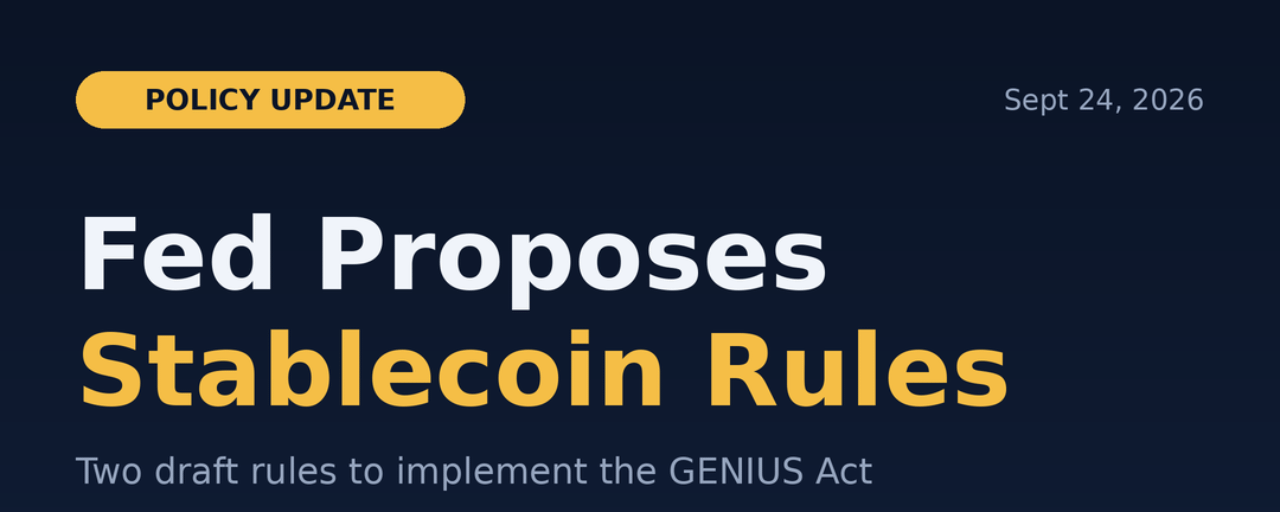
The Federal Reserve Board proposed two draft rules on September 24, 2026 to implement its part of the GENIUS Act, the federal stable coin law signed in July 2025. Public comment is open for 60 days after the proposals are published in the Federal Register.
Who it covers
The Fed proposed a rule setting requirements for authorized stable coin issuers under its purview, including state member banks and other state-chartered issuers. Under the act, the Fed oversees stable coin issuers that are subsidiaries of state member banks. It also oversees state-chartered institutions without federal deposit insurance that have $10 billion or more of stable coins.
Proposal 1: reserves, capital and risk management
Full backing: Every $1 of stable coins would need at least $1 of permissible reserve assets behind it. Reserves could include U.S. dollars, Fed balances, certain bank deposits, Treasuries with 93 days or less to maturity, qualifying repos, and eligible investment funds.Redemption: Issuers must fulfill redemption requests within two business days. If backing falls below 1:1, they must immediately notify the Fed. Capital: Standardized capital requirements would address credit and operational risks, alongside risk-management standards. An issuer that stays short of required capital long enough could be forced to liquidate all reserves and redeem every coin. Custody: The proposal adds rules for Fed-supervised firms that safekeep the assets backing stable coins. It also clarifies which stable coin activities are permissible for Fed-supervised banks.
Proposal 2: bank applications
Fed-supervised banks that want to issue stable coins would follow a tailored application process rather than the standard one. Applicants would submit a business plan and financial information. The draft also sets up a process for appeals, hearings and final determinations. The GENIUS Act gives the Fed 120 days to decide complete applications.
Reaction and context
Fed Governor Michael Barr called the proposal an important step but said more work is needed. He said stable coins "will only be stable if they can be reliably and promptly redeemed at par" in a range of conditions, including market stressThe OCC and NCUA proposed their rules in February, the FDIC in April, and Treasury in August. No agency has finalized rules yet. The agencies also missed the statutory July 18 implementation deadline.The OCC's chief has said its final rule will come out by November.
These are proposals, so details could change after comments. Only banks and issuers under the Fed's supervision are covered, so issuers regulated by the OCC, FDIC or states would follow their own rules.
The Federal Reserve Board proposed two draft rules
#fedproposespaymentstablecoinrules
The Federal Reserve Board proposed two draft rules on September 24, 2026 to implement its part of the GENIUS Act, the federal stable coin law signed in July 2025. Public comment is open for 60 days after the proposals are published in the Federal Register.
Who it covers
The Fed proposed a rule setting requirements for authorized stable coin issuers under its purview, including state member banks and other state-chartered issuers. Under the act, the Fed oversees stable coin issuers that are subsidiaries of state member banks. It also oversees state-chartered institutions without federal deposit insurance that have $10 billion or more of stable coins.
Proposal 1: reserves, capital and risk management
Full backing: Every $1 of stable coins would need at least $1 of permissible reserve assets behind it. Reserves could include U.S. dollars, Fed balances, certain bank deposits, Treasuries with 93 days or less to maturity, qualifying repos, and eligible investment funds.Redemption: Issuers must fulfill redemption requests within two business days. If backing falls below 1:1, they must immediately notify the Fed. Capital: Standardized capital requirements would address credit and operational risks, alongside risk-management standards. An issuer that stays short of required capital long enough could be forced to liquidate all reserves and redeem every coin. Custody: The proposal adds rules for Fed-supervised firms that safekeep the assets backing stable coins. It also clarifies which stable coin activities are permissible for Fed-supervised banks.
Proposal 2: bank applications
Fed-supervised banks that want to issue stable coins would follow a tailored application process rather than the standard one. Applicants would submit a business plan and financial information. The draft also sets up a process for appeals, hearings and final determinations. The GENIUS Act gives the Fed 120 days to decide complete applications.
Reaction and context
Fed Governor Michael Barr called the proposal an important step but said more work is needed. He said stable coins "will only be stable if they can be reliably and promptly redeemed at par" in a range of conditions, including market stressThe OCC and NCUA proposed their rules in February, the FDIC in April, and Treasury in August. No agency has finalized rules yet. The agencies also missed the statutory July 18 implementation deadline.The OCC's chief has said its final rule will come out by November.
These are proposals, so details could change after comments. Only banks and issuers under the Fed's supervision are covered, so issuers regulated by the OCC, FDIC or states would follow their own rules.
The Federal Reserve Board proposed two draft rules on September 24, 2026 to implement its part of the GENIUS Act, the federal stable coin law signed in July 2025. Public comment is open for 60 days after the proposals are published in the Federal Register.
Who it covers
The Fed proposed a rule setting requirements for authorized stable coin issuers under its purview, including state member banks and other state-chartered issuers. Under the act, the Fed oversees stable coin issuers that are subsidiaries of state member banks. It also oversees state-chartered institutions without federal deposit insurance that have $10 billion or more of stable coins.
Proposal 1: reserves, capital and risk management
Full backing: Every $1 of stable coins would need at least $1 of permissible reserve assets behind it. Reserves could include U.S. dollars, Fed balances, certain bank deposits, Treasuries with 93 days or less to maturity, qualifying repos, and eligible investment funds.Redemption: Issuers must fulfill redemption requests within two business days. If backing falls below 1:1, they must immediately notify the Fed. Capital: Standardized capital requirements would address credit and operational risks, alongside risk-management standards. An issuer that stays short of required capital long enough could be forced to liquidate all reserves and redeem every coin. Custody: The proposal adds rules for Fed-supervised firms that safekeep the assets backing stable coins. It also clarifies which stable coin activities are permissible for Fed-supervised banks.
Proposal 2: bank applications
Fed-supervised banks that want to issue stable coins would follow a tailored application process rather than the standard one. Applicants would submit a business plan and financial information. The draft also sets up a process for appeals, hearings and final determinations. The GENIUS Act gives the Fed 120 days to decide complete applications.
Reaction and context
Fed Governor Michael Barr called the proposal an important step but said more work is needed. He said stable coins "will only be stable if they can be reliably and promptly redeemed at par" in a range of conditions, including market stressThe OCC and NCUA proposed their rules in February, the FDIC in April, and Treasury in August. No agency has finalized rules yet. The agencies also missed the statutory July 18 implementation deadline.The OCC's chief has said its final rule will come out by November.
These are proposals, so details could change after comments. Only banks and issuers under the Fed's supervision are covered, so issuers regulated by the OCC, FDIC or states would follow their own rules.
74

The Federal Reserve has proposed new rules for payment stablecoins, signaling a significant step towards regulating this burgeoning sector of the crypto market. This move reflects growing concerns about the stability and systemic risk associated with stablecoins, especially those used for payments. The proposed regulations are likely to focus on reserve requirements, transparency, and oversight, aiming to ensure these digital assets are as safe and reliable as traditional money. While the specifics are still under review, this initiative could lead to greater institutional adoption by providing a clearer regulatory framework, but it might also introduce compliance burdens for issuers. The market will be closely watching how these proposals evolve and impact the stablecoin landscape and the broader crypto ecosystem.
Disclaimer: This content is for informational purposes only and does not constitute financial advice.
#FedProposesPaymentStablecoinRules
The Federal Reserve has proposed new rules for payment stablecoins, signaling a significant step towards regulating this burgeoning sector of the crypto market. This move reflects growing concerns about the stability and systemic risk associated with stablecoins, especially those used for payments. The proposed regulations are likely to focus on reserve requirements, transparency, and oversight, aiming to ensure these digital assets are as safe and reliable as traditional money. While the specifics are still under review, this initiative could lead to greater institutional adoption by providing a clearer regulatory framework, but it might also introduce compliance burdens for issuers. The market will be closely watching how these proposals evolve and impact the stablecoin landscape and the broader crypto ecosystem.
Disclaimer: This content is for informational purposes only and does not constitute financial advice.
#FedProposesPaymentStablecoinRules
Disclaimer: This content is for informational purposes only and does not constitute financial advice.
#FedProposesPaymentStablecoinRules
2
66

·
--
Haussier
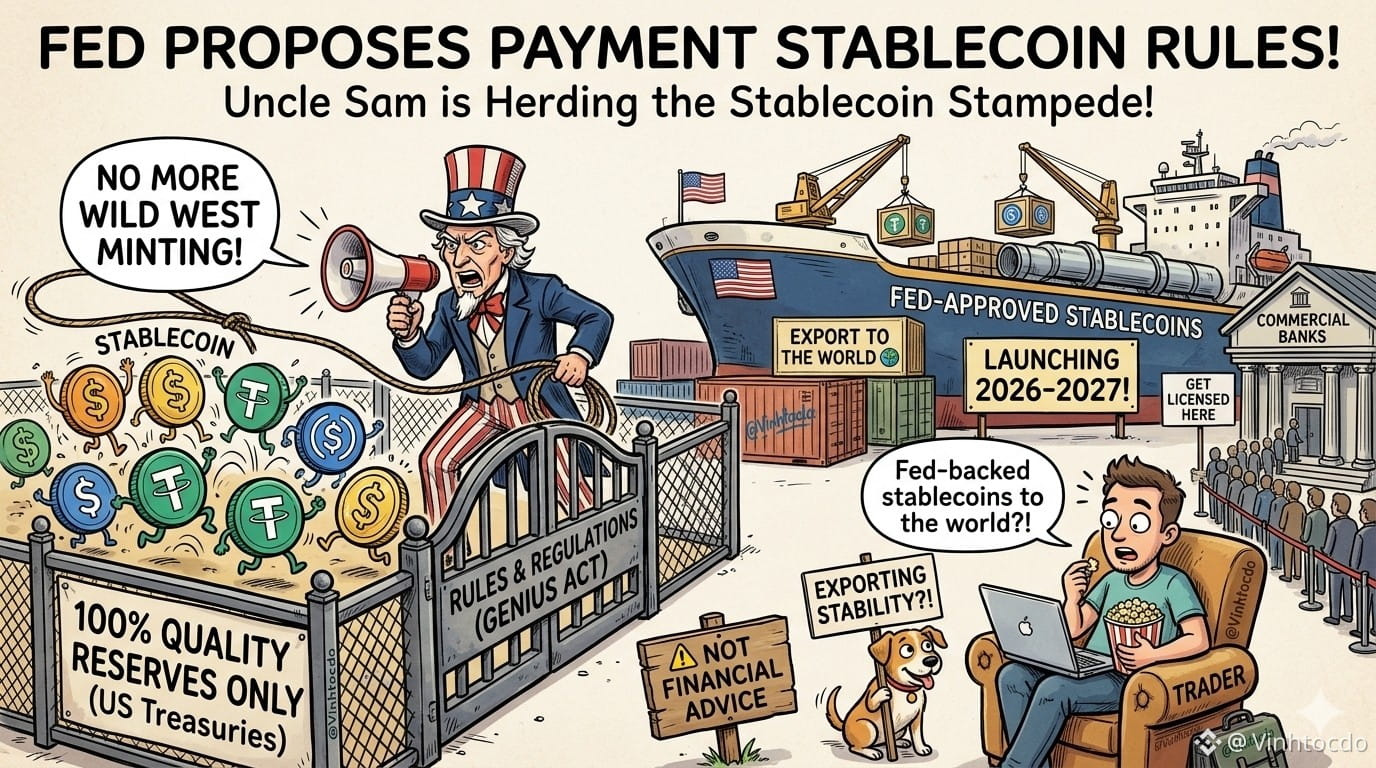
Uncle Sam wants to control the stablecoins! 🇺🇸 #fedproposespaymentstablecoinrules is officially live! The Federal Reserve just dropped new drafts to strictly regulate payment stablecoins under the GENIUS Act.
Are they preparing to export US-regulated stablecoins to the entire world? 🌍 Absolutely! They want 100% high-quality liquid reserves (hello, US Treasuries) and formal licenses for commercial banks by 2026-2027. No more Wild West minting!
What should traders do? Keep your eyes on top stablecoin projects, expect more institutional compliance, and manage your bags wisely!
⚠️ Not financial advice! New here? Use code VINHTOCDO or register via: [https://www.binance.com/register?ref=VINHTOCDO](https://www.binance.com/register?ref=VINHTOCDO)
👇 Click trade below to support me:
$BTC
{future}(BTCUSDT)
$BNB
{future}(BNBUSDT)
$ETH
{future}(ETHUSDT)
#Fed #stablecoin #CryptoNews #DeFi #USDC #VINHTOCDO
Uncle Sam wants to control the stablecoins! 🇺🇸 #fedproposespaymentstablecoinrules is officially live! The Federal Reserve just dropped new drafts to strictly regulate payment stablecoins under the GENIUS Act.
Are they preparing to export US-regulated stablecoins to the entire world? 🌍 Absolutely! They want 100% high-quality liquid reserves (hello, US Treasuries) and formal licenses for commercial banks by 2026-2027. No more Wild West minting!
What should traders do? Keep your eyes on top stablecoin projects, expect more institutional compliance, and manage your bags wisely!
⚠️ Not financial advice! New here? Use code VINHTOCDO or register via: https://www.binance.com/register?ref=VINHTOCDO
👇 Click trade below to support me:
$BTC
$BNB
$ETH
#Fed #stablecoin #CryptoNews #DeFi #USDC #VINHTOCDO
Are they preparing to export US-regulated stablecoins to the entire world? 🌍 Absolutely! They want 100% high-quality liquid reserves (hello, US Treasuries) and formal licenses for commercial banks by 2026-2027. No more Wild West minting!
What should traders do? Keep your eyes on top stablecoin projects, expect more institutional compliance, and manage your bags wisely!
⚠️ Not financial advice! New here? Use code VINHTOCDO or register via: https://www.binance.com/register?ref=VINHTOCDO
👇 Click trade below to support me:
$BTC
$BNB
$ETH
#Fed #stablecoin #CryptoNews #DeFi #USDC #VINHTOCDO
2
66

·
--
Haussier
#fedproposespaymentstablecoinrules
🚨 THE FED IS BRINGING STABLECOINS CLOSER TO TRADITIONAL FINANCE.
The Federal Reserve has proposed new rules for payment stablecoin issuers under the GENIUS Act.
💵 Full backing with permitted reserve assets
🏦 Short-term U.S. Treasury bills could qualify as reserves
🛡️ New capital & risk-management requirements
🏛️ Fed-supervised banks could apply to issue payment stablecoins
⏳ Public comments open for 60 days
This could be another major step toward regulated stablecoins becoming part of the U.S. payments system.
👀 Stablecoins are getting serious attention from Wall Street.
#Fed #stablecoin #crypto
#fedproposespaymentstablecoinrules
🚨 THE FED IS BRINGING STABLECOINS CLOSER TO TRADITIONAL FINANCE.
The Federal Reserve has proposed new rules for payment stablecoin issuers under the GENIUS Act.
💵 Full backing with permitted reserve assets
🏦 Short-term U.S. Treasury bills could qualify as reserves
🛡️ New capital & risk-management requirements
🏛️ Fed-supervised banks could apply to issue payment stablecoins
⏳ Public comments open for 60 days
This could be another major step toward regulated stablecoins becoming part of the U.S. payments system.
👀 Stablecoins are getting serious attention from Wall Street.
#Fed #stablecoin #crypto
🚨 THE FED IS BRINGING STABLECOINS CLOSER TO TRADITIONAL FINANCE.
The Federal Reserve has proposed new rules for payment stablecoin issuers under the GENIUS Act.
💵 Full backing with permitted reserve assets
🏦 Short-term U.S. Treasury bills could qualify as reserves
🛡️ New capital & risk-management requirements
🏛️ Fed-supervised banks could apply to issue payment stablecoins
⏳ Public comments open for 60 days
This could be another major step toward regulated stablecoins becoming part of the U.S. payments system.
👀 Stablecoins are getting serious attention from Wall Street.
#Fed #stablecoin #crypto
1
142

·
--
稳定币提案热度再升|代币化储备要保留同等法律权利|ETH在2650美元我先等
我的态度是重视规则清晰化,但不因“储备可以上链”就追买ETH。广场#FedProposesPaymentStablecoinRules本轮有258人讨论,上一轮为206,关注正在增加;我的独立判断是,资产的法律权利、链上执行路径与原生币需求,需要逐项核对,不能省略中间环节。
一手事实来自美联储九月二十四日征求意见文件。拟议247.11条允许部分合格储备以代币化形式存在,但要求其法律权利与同一资产的非代币化形式相同,并遵守适用法律法规。我交叉核对GENIUS正式法案,其第四条也列出部分储备可采用代币化形式。法案与本次实施细则提案不能混称:这不是今天新出台的最终规则,也不是批准所有RWA代币作稳定币储备。
这个细节为什么影响加密市场?我的机制判断是,单有链上余额不足以回答资产属于谁、谁可以兑付、如何主张权利。发行人若用代币化工具管理储备,仍要核对底层资产资格与法律安排。一个名字里带“国债”的代币,不会只因有合约地址就自动符合要求;需要看持有人真正获得的权利,不能把市场营销标签当监管认可。
对ETH而言,储备代币化可能增加基础设施需求,但这是潜在路径,不是已经发生的买盘。运行在何种账本、是否需要以太坊主网执行、实际交易频次与费用,都会改变结果。持有代表国债的代币,买的是相应资产权利;为链上操作准备手续费,是另一笔资金用途。两者规模不能直接相加,更不能把储备总额全部算成ETH需求。
我会先看合格资产和法律文件,再看上线架构及真实使用。若权利不清、实际执行不经过以太坊,或者仅有试点没有持续交易,就需要下调对ETH的直接价值捕获预期。这不是否定代币化,而是不把金融产品规模与原生币价格混为一谈。
市场已经如何反应?本轮Kraken美元现货ETH约2650.36,过去二十四小时2635.57至2718.36,仍处于窗口偏低位置。价格没有给我追消息的确认,也没有证据证明这段变化由储备条款造成。美国ETH基金表最新完成日仍是九月二十五日,不把它写成今天的新申购。
如果是我自己交易,现在不参与、仓位为零,不做空、不加杠杆。只考虑现货条件式试多:小时收盘站上2665,再回踩2655至2665守住,且报价与充提正常,才用总资金最多0.3%参与。2685先减半,2700平掉剩余;2640硬止损,或连续两根小时收盘低于2655全部退出。入场前跌破2630取消计划;突破没有承接或通道出现异常,也撤回参与判断,不补亏仓。
事实负责划清边界,价格负责验证承接。没有触发就没有成交,不把等待写成赚钱。
来源:美联储9月24日提案247.11(b)(8);GENIUS正式法案第4条;Kraken行情。#FedProposesPaymentStablecoinRules #ETH
以上仅为个人市场观察,不构成投资建议。
稳定币提案热度再升|代币化储备要保留同等法律权利|ETH在2650美元我先等
我的态度是重视规则清晰化,但不因“储备可以上链”就追买ETH。广场#FedProposesPaymentStablecoinRules本轮有258人讨论,上一轮为206,关注正在增加;我的独立判断是,资产的法律权利、链上执行路径与原生币需求,需要逐项核对,不能省略中间环节。
一手事实来自美联储九月二十四日征求意见文件。拟议247.11条允许部分合格储备以代币化形式存在,但要求其法律权利与同一资产的非代币化形式相同,并遵守适用法律法规。我交叉核对GENIUS正式法案,其第四条也列出部分储备可采用代币化形式。法案与本次实施细则提案不能混称:这不是今天新出台的最终规则,也不是批准所有RWA代币作稳定币储备。
这个细节为什么影响加密市场?我的机制判断是,单有链上余额不足以回答资产属于谁、谁可以兑付、如何主张权利。发行人若用代币化工具管理储备,仍要核对底层资产资格与法律安排。一个名字里带“国债”的代币,不会只因有合约地址就自动符合要求;需要看持有人真正获得的权利,不能把市场营销标签当监管认可。
对ETH而言,储备代币化可能增加基础设施需求,但这是潜在路径,不是已经发生的买盘。运行在何种账本、是否需要以太坊主网执行、实际交易频次与费用,都会改变结果。持有代表国债的代币,买的是相应资产权利;为链上操作准备手续费,是另一笔资金用途。两者规模不能直接相加,更不能把储备总额全部算成ETH需求。
我会先看合格资产和法律文件,再看上线架构及真实使用。若权利不清、实际执行不经过以太坊,或者仅有试点没有持续交易,就需要下调对ETH的直接价值捕获预期。这不是否定代币化,而是不把金融产品规模与原生币价格混为一谈。
市场已经如何反应?本轮Kraken美元现货ETH约2650.36,过去二十四小时2635.57至2718.36,仍处于窗口偏低位置。价格没有给我追消息的确认,也没有证据证明这段变化由储备条款造成。美国ETH基金表最新完成日仍是九月二十五日,不把它写成今天的新申购。
如果是我自己交易,现在不参与、仓位为零,不做空、不加杠杆。只考虑现货条件式试多:小时收盘站上2665,再回踩2655至2665守住,且报价与充提正常,才用总资金最多0.3%参与。2685先减半,2700平掉剩余;2640硬止损,或连续两根小时收盘低于2655全部退出。入场前跌破2630取消计划;突破没有承接或通道出现异常,也撤回参与判断,不补亏仓。
事实负责划清边界,价格负责验证承接。没有触发就没有成交,不把等待写成赚钱。
来源:美联储9月24日提案247.11(b)(8);GENIUS正式法案第4条;Kraken行情。#FedProposesPaymentStablecoinRules #ETH
以上仅为个人市场观察,不构成投资建议。
我的态度是重视规则清晰化,但不因“储备可以上链”就追买ETH。广场#FedProposesPaymentStablecoinRules本轮有258人讨论,上一轮为206,关注正在增加;我的独立判断是,资产的法律权利、链上执行路径与原生币需求,需要逐项核对,不能省略中间环节。
一手事实来自美联储九月二十四日征求意见文件。拟议247.11条允许部分合格储备以代币化形式存在,但要求其法律权利与同一资产的非代币化形式相同,并遵守适用法律法规。我交叉核对GENIUS正式法案,其第四条也列出部分储备可采用代币化形式。法案与本次实施细则提案不能混称:这不是今天新出台的最终规则,也不是批准所有RWA代币作稳定币储备。
这个细节为什么影响加密市场?我的机制判断是,单有链上余额不足以回答资产属于谁、谁可以兑付、如何主张权利。发行人若用代币化工具管理储备,仍要核对底层资产资格与法律安排。一个名字里带“国债”的代币,不会只因有合约地址就自动符合要求;需要看持有人真正获得的权利,不能把市场营销标签当监管认可。
对ETH而言,储备代币化可能增加基础设施需求,但这是潜在路径,不是已经发生的买盘。运行在何种账本、是否需要以太坊主网执行、实际交易频次与费用,都会改变结果。持有代表国债的代币,买的是相应资产权利;为链上操作准备手续费,是另一笔资金用途。两者规模不能直接相加,更不能把储备总额全部算成ETH需求。
我会先看合格资产和法律文件,再看上线架构及真实使用。若权利不清、实际执行不经过以太坊,或者仅有试点没有持续交易,就需要下调对ETH的直接价值捕获预期。这不是否定代币化,而是不把金融产品规模与原生币价格混为一谈。
市场已经如何反应?本轮Kraken美元现货ETH约2650.36,过去二十四小时2635.57至2718.36,仍处于窗口偏低位置。价格没有给我追消息的确认,也没有证据证明这段变化由储备条款造成。美国ETH基金表最新完成日仍是九月二十五日,不把它写成今天的新申购。
如果是我自己交易,现在不参与、仓位为零,不做空、不加杠杆。只考虑现货条件式试多:小时收盘站上2665,再回踩2655至2665守住,且报价与充提正常,才用总资金最多0.3%参与。2685先减半,2700平掉剩余;2640硬止损,或连续两根小时收盘低于2655全部退出。入场前跌破2630取消计划;突破没有承接或通道出现异常,也撤回参与判断,不补亏仓。
事实负责划清边界,价格负责验证承接。没有触发就没有成交,不把等待写成赚钱。
来源:美联储9月24日提案247.11(b)(8);GENIUS正式法案第4条;Kraken行情。#FedProposesPaymentStablecoinRules #ETH
以上仅为个人市场观察,不构成投资建议。

58
Connectez-vous pour découvrir plus de contenu
Rejoignez la communauté mondiale des adeptes de cryptomonnaies sur Binance Square
⚡️ Suviez les dernières informations importantes sur les cryptomonnaies.
💬 Jugé digne de confiance par la plus grande plateforme d’échange de cryptomonnaies au monde.
👍 Découvrez les connaissances que partagent les créateurs vérifiés.
Adresse e-mail/Nº de téléphone
Sujets d’actualité
1
#BTCFallsBelow$83000
2,952 vues
56 mentions
2
#BitcoinSpotETFs$2.39BWeeklyNetInflow
45 vues
6 mentions
3
#FedProposesPaymentStablecoinRules
14,534 vues
328 mentions
4
#ChinaMayLetAlibabaByteDanceBuyNvidiaChips
16,730 vues
373 mentions
5
#USChinaRelease$30BTariffCutProductLists
2,596 vues
42 mentions
6
#SKoreaFSCConsidersVirtualAssetMarketMaker
12,159 vues
299 mentions
7
#ChinaIndustrialProfitGrowthSlowsFourthMonth
11,681 vues
290 mentions
8
#BitwiseFilesFinalNEARSpotETFProspectus
128,545 vues
1,869 mentions
9
#BitgetHackerMoves$83MStolenXRP
41,599 vues
184 mentions
10
#SOLSpotETFWeeklyInflow$188M
25,963 vues
144 mentions