
溪月 Xīyuè
7.8k Publications

溪月 Xīyuè
Signaler
Bloquer l’utilisateur
加密分析师 | 市场洞察短期与长期信号 | 比特币、以太坊及其他币种分享实时设置与基于研究的观点 与加密女王👸
Ouvert au trading
Trade régulièrement
2.5 an(s)
765 Suivis
29.4K+ Abonnés
4.6K+ J’aime
Publications
Portefeuille
Tous
Citations
Direct
·
--
Haussier
#FedRateWatch
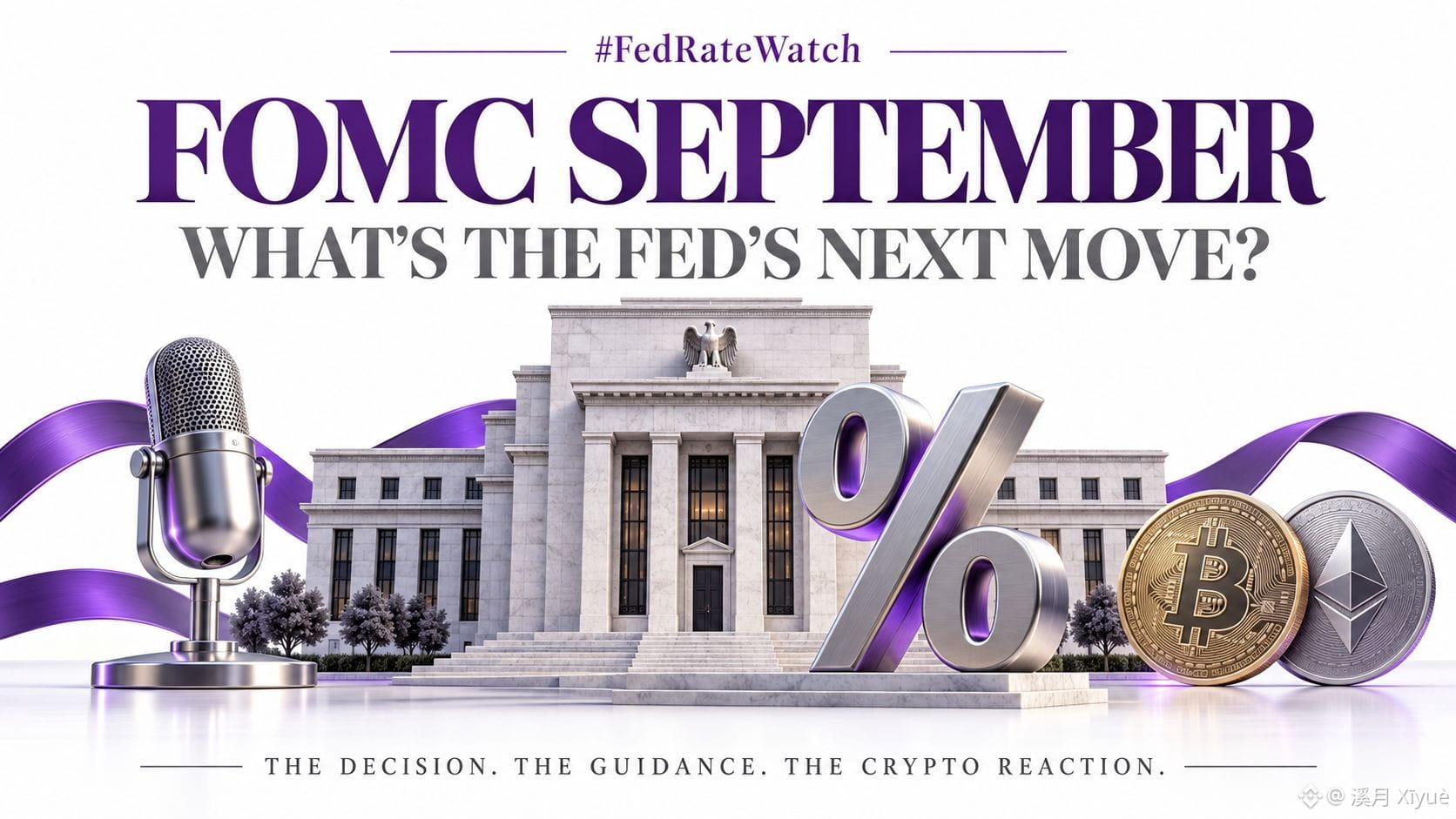
🏦 FOMC Septembre : Les mots de la Fed comptent-ils plus que sa prochaine décision ?
Une décision de taux livre un seul chiffre. Les orientations peuvent modifier les anticipations pendant des mois.
À l’approche de la réunion de septembre, Morgan Stanley s’attend désormais à une hausse de 25 points de base, suivie d’une autre en décembre, en citant une pression inflationniste persistante. Il s’agit toujours de prévisions ; la Fed n’a pas encore annoncé sa décision de septembre. "Reuters" (https://www.reuters.com/business/morgan-stanley-turns-more-hawkish-forecasts-two-fed-hikes-ecb-move-2026-09-15/)
Mon avis : la question clé est de savoir à quel point la Fed signale un resserrement supplémentaire.
Une hausse associée à la confiance que l’inflation ralentit pourrait provoquer une réaction différente de la même hausse accompagnée d’avertissements indiquant qu’il faut encore augmenter les taux. Le maintien des taux laisserait aussi la place à un message restrictif.
Pour Bitcoin et Ethereum, je regarderais si la réaction initiale se maintient jusqu’à la conférence de presse. Une reprise rapide suivie d’une hausse des rendements obligataires et d’un dollar plus fort donnerait des signaux contradictoires. Des achats soutenus avec des rendements en baisse suggéreraient une interprétation plus favorable — sans garantir d’autres gains.
La première bougie capture la surprise. Les heures suivantes permettent de voir si les investisseurs ont modifié leur perspective plus large.
Cette réunion pourrait mettre à l’épreuve à la fois les anticipations d’inflation et la résilience des cryptos.
Qu’est-ce qui changerait le plus votre vision : une décision inattendue sur les taux ou un message plus dur concernant les mois à venir ?
$AKE $AIN $POWER
#FedRateWatch
🏦 FOMC Septembre : Les mots de la Fed comptent-ils plus que sa prochaine décision ?
Une décision de taux livre un seul chiffre. Les orientations peuvent modifier les anticipations pendant des mois.
À l’approche de la réunion de septembre, Morgan Stanley s’attend désormais à une hausse de 25 points de base, suivie d’une autre en décembre, en citant une pression inflationniste persistante. Il s’agit toujours de prévisions ; la Fed n’a pas encore annoncé sa décision de septembre. "Reuters" (https://www.reuters.com/business/morgan-stanley-turns-more-hawkish-forecasts-two-fed-hikes-ecb-move-2026-09-15/)
Mon avis : la question clé est de savoir à quel point la Fed signale un resserrement supplémentaire.
Une hausse associée à la confiance que l’inflation ralentit pourrait provoquer une réaction différente de la même hausse accompagnée d’avertissements indiquant qu’il faut encore augmenter les taux. Le maintien des taux laisserait aussi la place à un message restrictif.
Pour Bitcoin et Ethereum, je regarderais si la réaction initiale se maintient jusqu’à la conférence de presse. Une reprise rapide suivie d’une hausse des rendements obligataires et d’un dollar plus fort donnerait des signaux contradictoires. Des achats soutenus avec des rendements en baisse suggéreraient une interprétation plus favorable — sans garantir d’autres gains.
La première bougie capture la surprise. Les heures suivantes permettent de voir si les investisseurs ont modifié leur perspective plus large.
Cette réunion pourrait mettre à l’épreuve à la fois les anticipations d’inflation et la résilience des cryptos.
Qu’est-ce qui changerait le plus votre vision : une décision inattendue sur les taux ou un message plus dur concernant les mois à venir ?
$AKE $AIN $POWER
🏦 FOMC Septembre : Les mots de la Fed comptent-ils plus que sa prochaine décision ?
Une décision de taux livre un seul chiffre. Les orientations peuvent modifier les anticipations pendant des mois.
À l’approche de la réunion de septembre, Morgan Stanley s’attend désormais à une hausse de 25 points de base, suivie d’une autre en décembre, en citant une pression inflationniste persistante. Il s’agit toujours de prévisions ; la Fed n’a pas encore annoncé sa décision de septembre. "Reuters" (https://www.reuters.com/business/morgan-stanley-turns-more-hawkish-forecasts-two-fed-hikes-ecb-move-2026-09-15/)
Mon avis : la question clé est de savoir à quel point la Fed signale un resserrement supplémentaire.
Une hausse associée à la confiance que l’inflation ralentit pourrait provoquer une réaction différente de la même hausse accompagnée d’avertissements indiquant qu’il faut encore augmenter les taux. Le maintien des taux laisserait aussi la place à un message restrictif.
Pour Bitcoin et Ethereum, je regarderais si la réaction initiale se maintient jusqu’à la conférence de presse. Une reprise rapide suivie d’une hausse des rendements obligataires et d’un dollar plus fort donnerait des signaux contradictoires. Des achats soutenus avec des rendements en baisse suggéreraient une interprétation plus favorable — sans garantir d’autres gains.
La première bougie capture la surprise. Les heures suivantes permettent de voir si les investisseurs ont modifié leur perspective plus large.
Cette réunion pourrait mettre à l’épreuve à la fois les anticipations d’inflation et la résilience des cryptos.
Qu’est-ce qui changerait le plus votre vision : une décision inattendue sur les taux ou un message plus dur concernant les mois à venir ?
$AKE $AIN $POWER
290
·
--
Haussier
#clarityactoddshalveonpolymarket
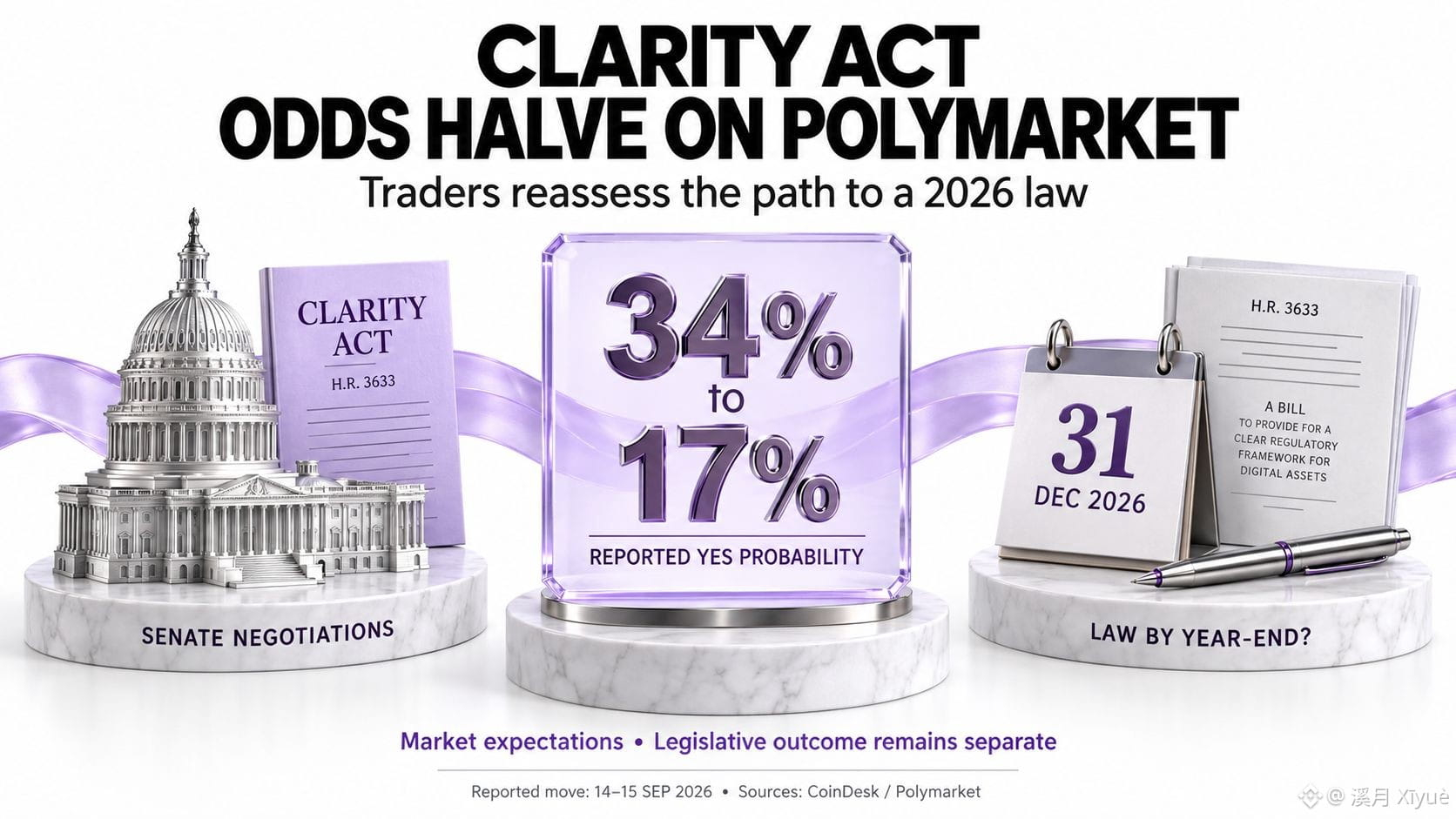
Les chances de la loi CLARITY sont divisées par deux sur Polymarket alors que les discussions au Sénat piétinent
La confiance dans un accord pour 2026 s’est fortement érodée au cours de la nuit.
CoinDesk a rapporté que la probabilité, sur Polymarket, que la loi CLARITY devienne une loi cette année est passée de 34 % le 14 septembre à 17 % en une nuit, au 15 septembre. Cela représente une baisse de 17 points de pourcentage, divisant par deux la probabilité précédente.
Le contrat exige que le projet de loi H.R.3633 soit adopté par les deux chambres du Congrès et signé dans la loi d’ici le 31 décembre 2026. Un vote procédural réussi, à lui seul, ne suffirait pas à régler la question. Ces chiffres correspondent à un instantané rapporté ; les prix continuent d’évoluer.
Le réajustement des prix est survenu dans un contexte de regain de désaccord concernant les dispositions relatives à l’éthique et une contreproposition démocrate. L’étape procédurale du Sénat du 15 septembre nécessite 60 voix pour faire avancer le texte.
Mon avis : Cela montre à quelle vitesse la confiance dans un accord législatif peut disparaître. Pour les entreprises crypto, une attente plus longue pourrait signifier une incertitude persistante autour des lancements de produits, des dépenses de conformité et de l’expansion aux États-Unis.
Je surveillerais les engagements de sénateurs vérifiés et les changements concrets apportés au projet. Un redressement des probabilités soutenu par des votes supplémentaires pèserait plus qu’un rebond alimenté uniquement par des commentaires optimistes. Pour le BTC, le contexte plus large des taux et de la liquidité reste pertinent en plus des titres de Washington.
Qu’est-ce qui vous convaincrait qu’un accord durable se rapproche ?
#ClarityActOddsHalveOnPolymarket #CLARITYAct #CryptoRegulation #Polymarket @polymarket
$AKE $AIN $POWER
{future}(POWERUSDT)
{future}(AINUSDT)
{future}(AKEUSDT)
#clarityactoddshalveonpolymarket
Les chances de la loi CLARITY sont divisées par deux sur Polymarket alors que les discussions au Sénat piétinent
La confiance dans un accord pour 2026 s’est fortement érodée au cours de la nuit.
CoinDesk a rapporté que la probabilité, sur Polymarket, que la loi CLARITY devienne une loi cette année est passée de 34 % le 14 septembre à 17 % en une nuit, au 15 septembre. Cela représente une baisse de 17 points de pourcentage, divisant par deux la probabilité précédente.
Le contrat exige que le projet de loi H.R.3633 soit adopté par les deux chambres du Congrès et signé dans la loi d’ici le 31 décembre 2026. Un vote procédural réussi, à lui seul, ne suffirait pas à régler la question. Ces chiffres correspondent à un instantané rapporté ; les prix continuent d’évoluer.
Le réajustement des prix est survenu dans un contexte de regain de désaccord concernant les dispositions relatives à l’éthique et une contreproposition démocrate. L’étape procédurale du Sénat du 15 septembre nécessite 60 voix pour faire avancer le texte.
Mon avis : Cela montre à quelle vitesse la confiance dans un accord législatif peut disparaître. Pour les entreprises crypto, une attente plus longue pourrait signifier une incertitude persistante autour des lancements de produits, des dépenses de conformité et de l’expansion aux États-Unis.
Je surveillerais les engagements de sénateurs vérifiés et les changements concrets apportés au projet. Un redressement des probabilités soutenu par des votes supplémentaires pèserait plus qu’un rebond alimenté uniquement par des commentaires optimistes. Pour le BTC, le contexte plus large des taux et de la liquidité reste pertinent en plus des titres de Washington.
Qu’est-ce qui vous convaincrait qu’un accord durable se rapproche ?
#ClarityActOddsHalveOnPolymarket #CLARITYAct #CryptoRegulation #Polymarket @Polymarket
$AKE $AIN $POWER
Les chances de la loi CLARITY sont divisées par deux sur Polymarket alors que les discussions au Sénat piétinent
La confiance dans un accord pour 2026 s’est fortement érodée au cours de la nuit.
CoinDesk a rapporté que la probabilité, sur Polymarket, que la loi CLARITY devienne une loi cette année est passée de 34 % le 14 septembre à 17 % en une nuit, au 15 septembre. Cela représente une baisse de 17 points de pourcentage, divisant par deux la probabilité précédente.
Le contrat exige que le projet de loi H.R.3633 soit adopté par les deux chambres du Congrès et signé dans la loi d’ici le 31 décembre 2026. Un vote procédural réussi, à lui seul, ne suffirait pas à régler la question. Ces chiffres correspondent à un instantané rapporté ; les prix continuent d’évoluer.
Le réajustement des prix est survenu dans un contexte de regain de désaccord concernant les dispositions relatives à l’éthique et une contreproposition démocrate. L’étape procédurale du Sénat du 15 septembre nécessite 60 voix pour faire avancer le texte.
Mon avis : Cela montre à quelle vitesse la confiance dans un accord législatif peut disparaître. Pour les entreprises crypto, une attente plus longue pourrait signifier une incertitude persistante autour des lancements de produits, des dépenses de conformité et de l’expansion aux États-Unis.
Je surveillerais les engagements de sénateurs vérifiés et les changements concrets apportés au projet. Un redressement des probabilités soutenu par des votes supplémentaires pèserait plus qu’un rebond alimenté uniquement par des commentaires optimistes. Pour le BTC, le contexte plus large des taux et de la liquidité reste pertinent en plus des titres de Washington.
Qu’est-ce qui vous convaincrait qu’un accord durable se rapproche ?
#ClarityActOddsHalveOnPolymarket #CLARITYAct #CryptoRegulation #Polymarket @Polymarket
$AKE $AIN $POWER
374
·
--
Baissier
#strategymarketcappassesford
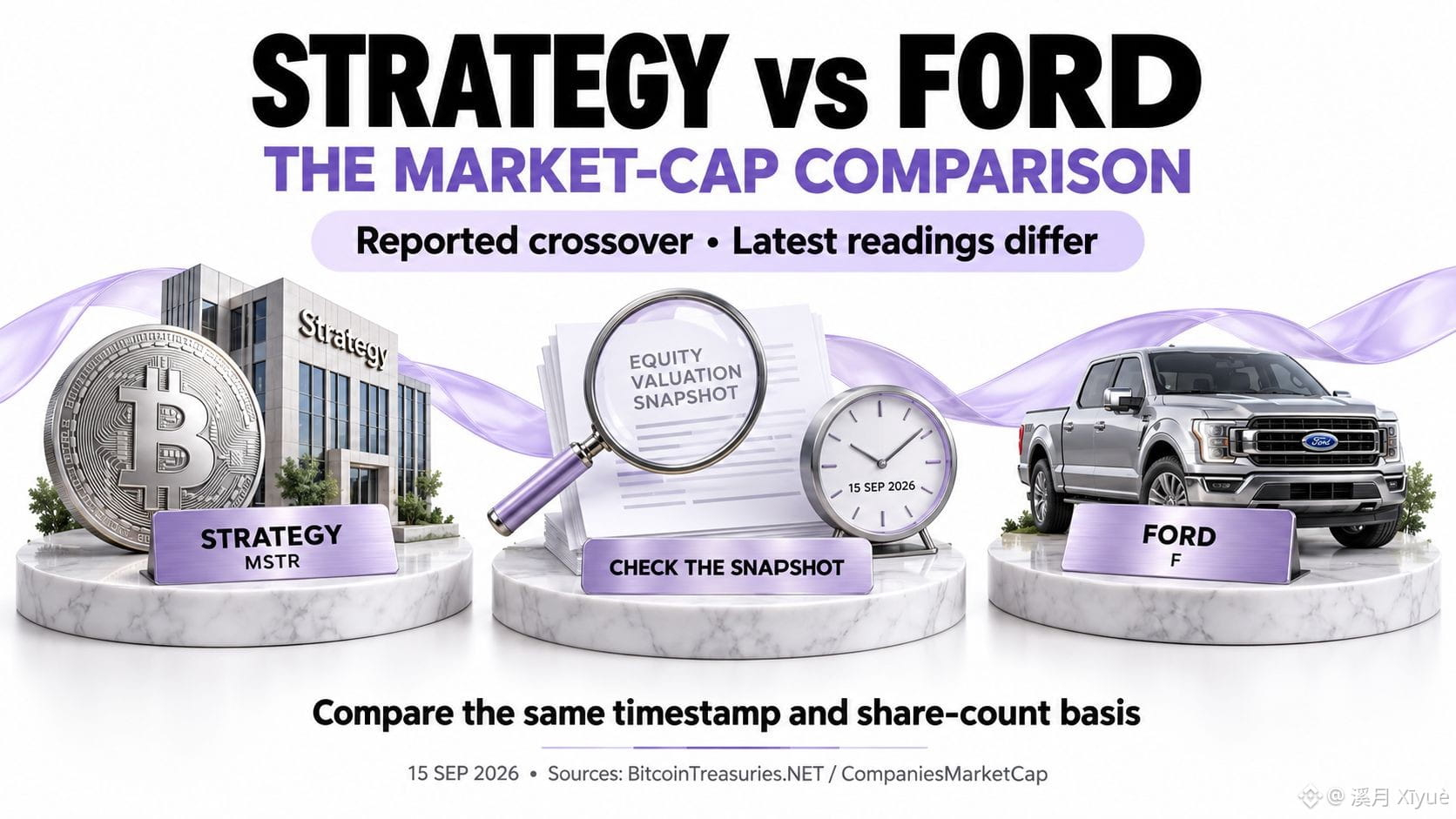
Stratégie face à Ford : pourquoi l’aperçu de la capitalisation boursière compte
La comparaison de Strategy avec Ford attire l’attention sur la façon dont les investisseurs évaluent les sociétés détenant des bitcoins.
Le 15 septembre, BitcoinTreasuries.NET a indiqué que Strategy avait dépassé la capitalisation boursière de Ford.
Cependant, les pages de CompaniesMarketCap vérifiées pour cet article affichent environ 52,72 milliards $ pour Strategy et 54,41 milliards $ pour Ford. Ces chiffres placent Ford en tête, et le fournisseur prévient que les prix peuvent être retardés.
Le croisement rapporté nécessite donc son horodatage d’origine et sa base de calcul du nombre d’actions avant de pouvoir être confirmé de manière indépendante.
Mon avis : la capitalisation boursière mesure la valeur de marché des actions en circulation. Elle décrit l’ampleur des fonds propres, tout en laissant sans réponse des questions sur les bénéfices, le financement et la valeur pour les actionnaires.
Pour Strategy, je prêterais davantage attention à l’exposition aux bitcoins par action, aux coûts de financement, ainsi qu’à la dette et aux obligations liées aux actions privilégiées. Les informations publiées par la société expliquent comment ces créances prioritaires influencent les intérêts des actionnaires ordinaires.
Une capitalisation boursière plus élevée peut résulter de prix plus hauts, d’une émission d’actions plus importante, ou des deux. Le test le plus utile consiste à vérifier si la valeur par action s’améliore après les coûts de financement et les obligations. Cela me dirait davantage sur la durabilité du modèle que sa simple position par rapport à un constructeur automobile.
Quel indicateur suivez-vous de plus près pour évaluer les sociétés de trésorerie en bitcoins ?
#StrategyMarketCapPassesFord #MSTR #bitcoin
$ZKC $CVC $RONIN
{future}(RONINUSDT)
{future}(CVCUSDT)
{future}(ZKCUSDT)
#strategymarketcappassesford
Stratégie face à Ford : pourquoi l’aperçu de la capitalisation boursière compte
La comparaison de Strategy avec Ford attire l’attention sur la façon dont les investisseurs évaluent les sociétés détenant des bitcoins.
Le 15 septembre, BitcoinTreasuries.NET a indiqué que Strategy avait dépassé la capitalisation boursière de Ford.
Cependant, les pages de CompaniesMarketCap vérifiées pour cet article affichent environ 52,72 milliards $ pour Strategy et 54,41 milliards $ pour Ford. Ces chiffres placent Ford en tête, et le fournisseur prévient que les prix peuvent être retardés.
Le croisement rapporté nécessite donc son horodatage d’origine et sa base de calcul du nombre d’actions avant de pouvoir être confirmé de manière indépendante.
Mon avis : la capitalisation boursière mesure la valeur de marché des actions en circulation. Elle décrit l’ampleur des fonds propres, tout en laissant sans réponse des questions sur les bénéfices, le financement et la valeur pour les actionnaires.
Pour Strategy, je prêterais davantage attention à l’exposition aux bitcoins par action, aux coûts de financement, ainsi qu’à la dette et aux obligations liées aux actions privilégiées. Les informations publiées par la société expliquent comment ces créances prioritaires influencent les intérêts des actionnaires ordinaires.
Une capitalisation boursière plus élevée peut résulter de prix plus hauts, d’une émission d’actions plus importante, ou des deux. Le test le plus utile consiste à vérifier si la valeur par action s’améliore après les coûts de financement et les obligations. Cela me dirait davantage sur la durabilité du modèle que sa simple position par rapport à un constructeur automobile.
Quel indicateur suivez-vous de plus près pour évaluer les sociétés de trésorerie en bitcoins ?
#StrategyMarketCapPassesFord #MSTR #bitcoin
$ZKC $CVC $RONIN
Stratégie face à Ford : pourquoi l’aperçu de la capitalisation boursière compte
La comparaison de Strategy avec Ford attire l’attention sur la façon dont les investisseurs évaluent les sociétés détenant des bitcoins.
Le 15 septembre, BitcoinTreasuries.NET a indiqué que Strategy avait dépassé la capitalisation boursière de Ford.
Cependant, les pages de CompaniesMarketCap vérifiées pour cet article affichent environ 52,72 milliards $ pour Strategy et 54,41 milliards $ pour Ford. Ces chiffres placent Ford en tête, et le fournisseur prévient que les prix peuvent être retardés.
Le croisement rapporté nécessite donc son horodatage d’origine et sa base de calcul du nombre d’actions avant de pouvoir être confirmé de manière indépendante.
Mon avis : la capitalisation boursière mesure la valeur de marché des actions en circulation. Elle décrit l’ampleur des fonds propres, tout en laissant sans réponse des questions sur les bénéfices, le financement et la valeur pour les actionnaires.
Pour Strategy, je prêterais davantage attention à l’exposition aux bitcoins par action, aux coûts de financement, ainsi qu’à la dette et aux obligations liées aux actions privilégiées. Les informations publiées par la société expliquent comment ces créances prioritaires influencent les intérêts des actionnaires ordinaires.
Une capitalisation boursière plus élevée peut résulter de prix plus hauts, d’une émission d’actions plus importante, ou des deux. Le test le plus utile consiste à vérifier si la valeur par action s’améliore après les coûts de financement et les obligations. Cela me dirait davantage sur la durabilité du modèle que sa simple position par rapport à un constructeur automobile.
Quel indicateur suivez-vous de plus près pour évaluer les sociétés de trésorerie en bitcoins ?
#StrategyMarketCapPassesFord #MSTR #bitcoin
$ZKC $CVC $RONIN
289
·
--
Baissier
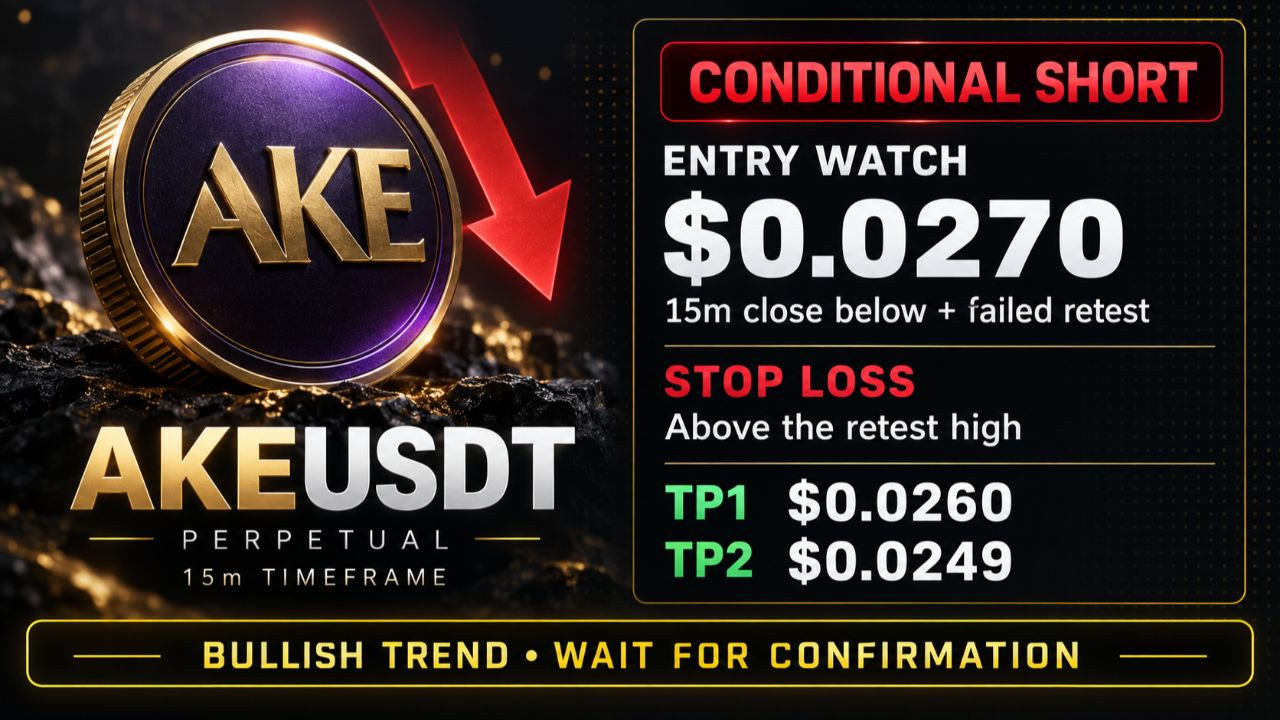
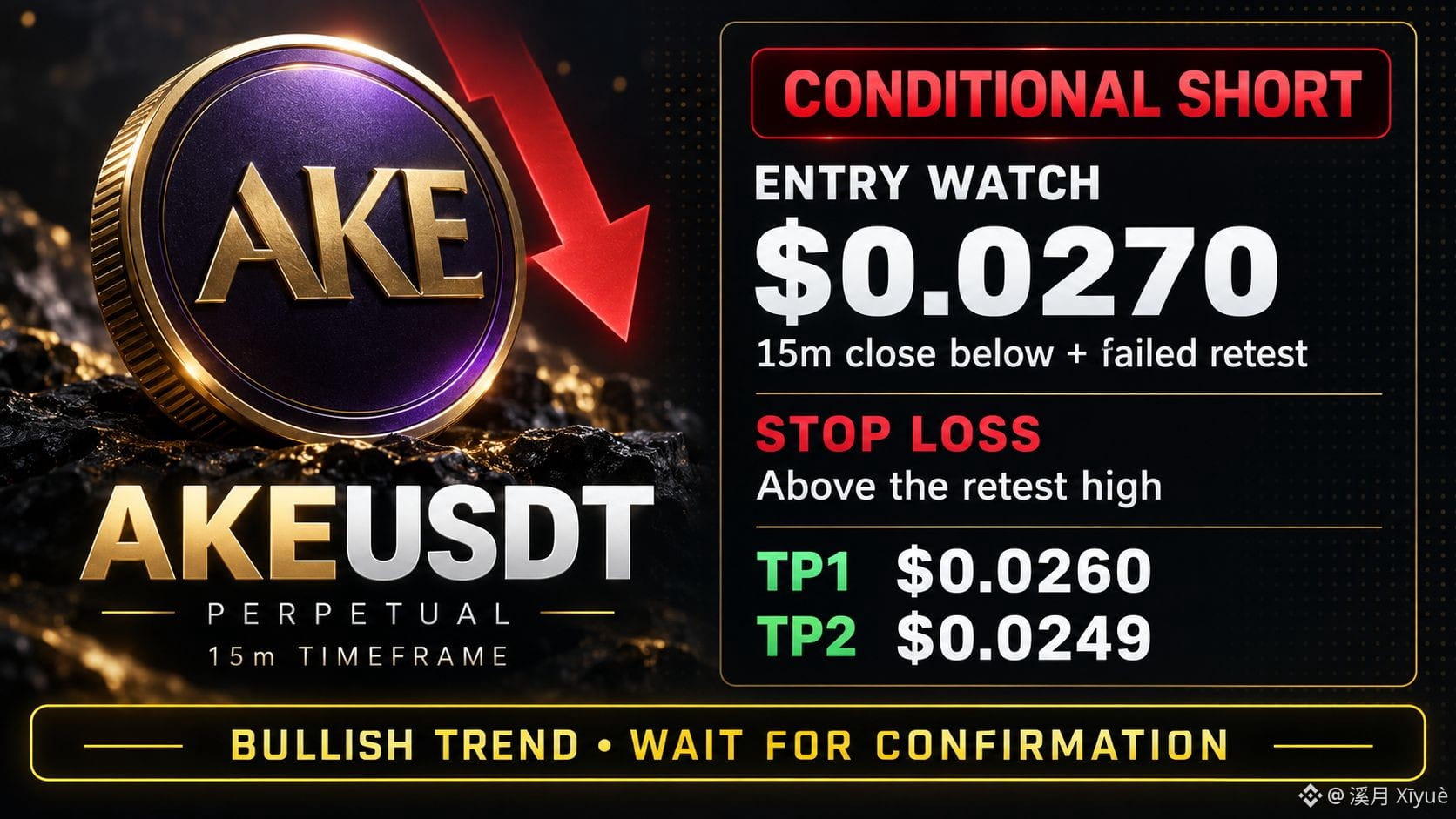
$AKE configuration courte conditionnelle 👇
Entrée : Près de 0,0270 après une clôture de 15 min en dessous et un nouveau test infructueux
SL : Au-dessus du plus haut du retest
TP1 : 0,0260
TP2 : 0,0249
Le graphique montre encore une tendance haussière : attendez une confirmation avant d’envisager une position short.
$AKE
{future}(AKEUSDT)
$AKE configuration courte conditionnelle 👇
Entrée : Près de 0,0270 après une clôture de 15 min en dessous et un nouveau test infructueux
SL : Au-dessus du plus haut du retest
TP1 : 0,0260
TP2 : 0,0249
Le graphique montre encore une tendance haussière : attendez une confirmation avant d’envisager une position short.
$AKE
Entrée : Près de 0,0270 après une clôture de 15 min en dessous et un nouveau test infructueux
SL : Au-dessus du plus haut du retest
TP1 : 0,0260
TP2 : 0,0249
Le graphique montre encore une tendance haussière : attendez une confirmation avant d’envisager une position short.
$AKE
2
1
396
·
--
Haussier
Vérifié
#fedratewatch
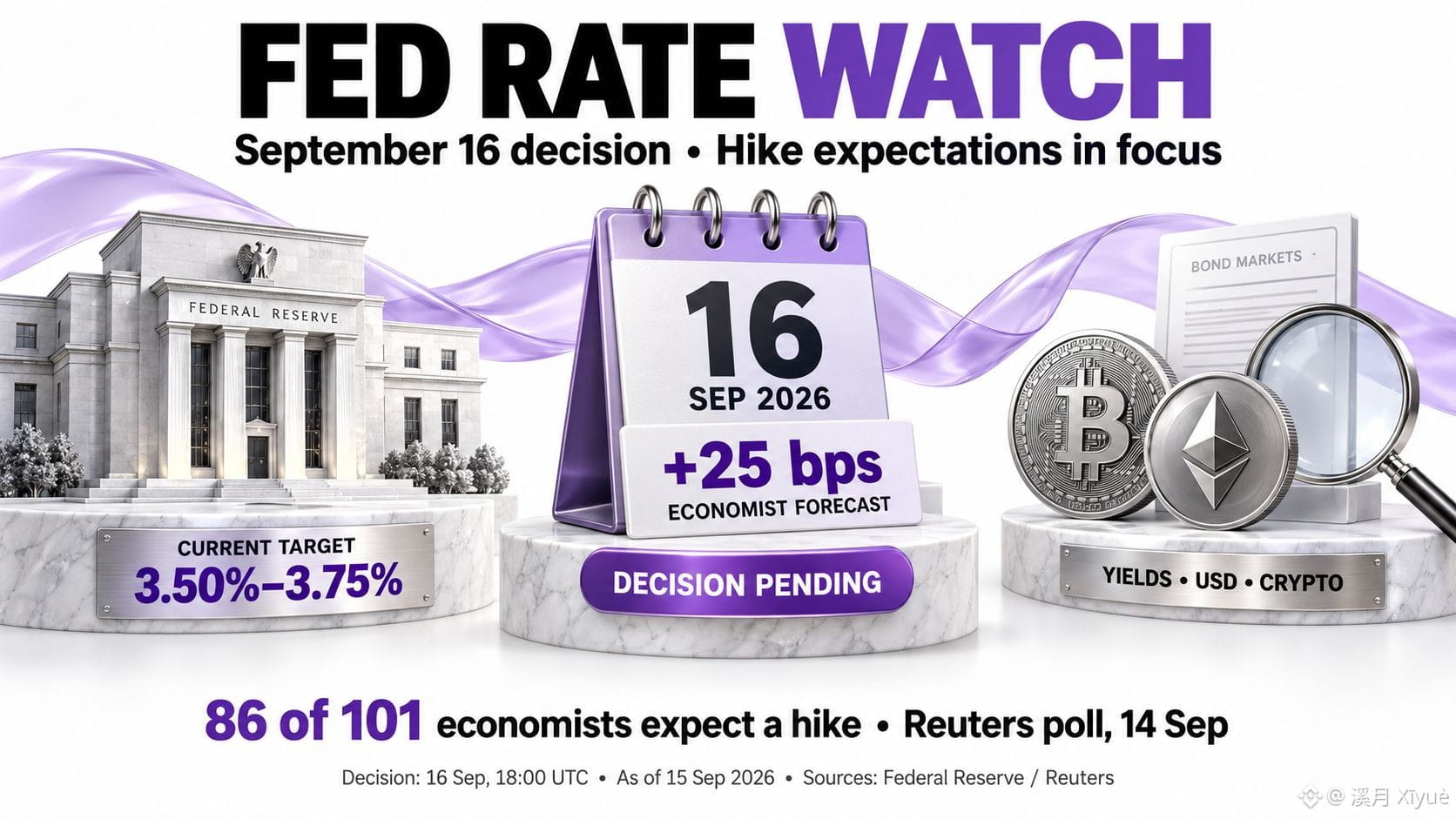
Suivi du taux directeur : hausse attendue en hausse avant le 16 septembre
Les traders de crypto ont deux éléments à surveiller : la décision sur les taux et ce que la Fed indique pour les mois à venir.
L’objectif actuel des fonds fédéraux reste à 3,50 %–3,75 %.
Le sondage Reuters du 14 septembre a révélé que 86 des 101 économistes interrogés s’attendent à une hausse de 25 points de base pour atteindre 3,75 %–4,00 % lors de la réunion de cette semaine. La décision est toujours en suspens.
L’IPC de base d’août a progressé de 0,3 % sur un mois, après 0,2 % en juillet.
Mon avis : une hausse largement anticipée pourrait compter moins qu’une surprise dans les perspectives de la Fed. Pour le BTC et l’ETH, je surveillerais si les rendements des bons du Trésor et le dollar se renforcent ou s’assouplissent après l’annonce, puis si cette réaction tient après la conférence de presse.
Si les responsables laissent entendre un nouveau resserrement, les conditions de financement pourraient rester un défi pour les actifs à risque. Une perspective moins restrictive pourrait soutenir le sentiment, mais les prix, les volumes et la poursuite de la tendance devraient encore confirmer la réaction. Le mouvement initial, à lui seul, fournit des preuves limitées sur la tendance à venir.
Calendrier : le 16 septembre à 18 h 00 UTC / 23 h au Pakistan, avec la conférence de presse 30 minutes plus tard.
Quelle réaction allez-vous surveiller en premier : les obligations, le dollar ou le BTC ?
#FedRateWatch #bitcoin #Macro
$AKE
$AIN
$BTC
#fedratewatch
Suivi du taux directeur : hausse attendue en hausse avant le 16 septembre
Les traders de crypto ont deux éléments à surveiller : la décision sur les taux et ce que la Fed indique pour les mois à venir.
L’objectif actuel des fonds fédéraux reste à 3,50 %–3,75 %.
Le sondage Reuters du 14 septembre a révélé que 86 des 101 économistes interrogés s’attendent à une hausse de 25 points de base pour atteindre 3,75 %–4,00 % lors de la réunion de cette semaine. La décision est toujours en suspens.
L’IPC de base d’août a progressé de 0,3 % sur un mois, après 0,2 % en juillet.
Mon avis : une hausse largement anticipée pourrait compter moins qu’une surprise dans les perspectives de la Fed. Pour le BTC et l’ETH, je surveillerais si les rendements des bons du Trésor et le dollar se renforcent ou s’assouplissent après l’annonce, puis si cette réaction tient après la conférence de presse.
Si les responsables laissent entendre un nouveau resserrement, les conditions de financement pourraient rester un défi pour les actifs à risque. Une perspective moins restrictive pourrait soutenir le sentiment, mais les prix, les volumes et la poursuite de la tendance devraient encore confirmer la réaction. Le mouvement initial, à lui seul, fournit des preuves limitées sur la tendance à venir.
Calendrier : le 16 septembre à 18 h 00 UTC / 23 h au Pakistan, avec la conférence de presse 30 minutes plus tard.
Quelle réaction allez-vous surveiller en premier : les obligations, le dollar ou le BTC ?
#FedRateWatch #bitcoin #Macro
$AKE
$AIN
$BTC
Suivi du taux directeur : hausse attendue en hausse avant le 16 septembre
Les traders de crypto ont deux éléments à surveiller : la décision sur les taux et ce que la Fed indique pour les mois à venir.
L’objectif actuel des fonds fédéraux reste à 3,50 %–3,75 %.
Le sondage Reuters du 14 septembre a révélé que 86 des 101 économistes interrogés s’attendent à une hausse de 25 points de base pour atteindre 3,75 %–4,00 % lors de la réunion de cette semaine. La décision est toujours en suspens.
L’IPC de base d’août a progressé de 0,3 % sur un mois, après 0,2 % en juillet.
Mon avis : une hausse largement anticipée pourrait compter moins qu’une surprise dans les perspectives de la Fed. Pour le BTC et l’ETH, je surveillerais si les rendements des bons du Trésor et le dollar se renforcent ou s’assouplissent après l’annonce, puis si cette réaction tient après la conférence de presse.
Si les responsables laissent entendre un nouveau resserrement, les conditions de financement pourraient rester un défi pour les actifs à risque. Une perspective moins restrictive pourrait soutenir le sentiment, mais les prix, les volumes et la poursuite de la tendance devraient encore confirmer la réaction. Le mouvement initial, à lui seul, fournit des preuves limitées sur la tendance à venir.
Calendrier : le 16 septembre à 18 h 00 UTC / 23 h au Pakistan, avec la conférence de presse 30 minutes plus tard.
Quelle réaction allez-vous surveiller en premier : les obligations, le dollar ou le BTC ?
#FedRateWatch #bitcoin #Macro
$AKE
$AIN
$BTC
1
901
·
--
Haussier
Vérifié
#zamaopens16confidentialmorphovaults
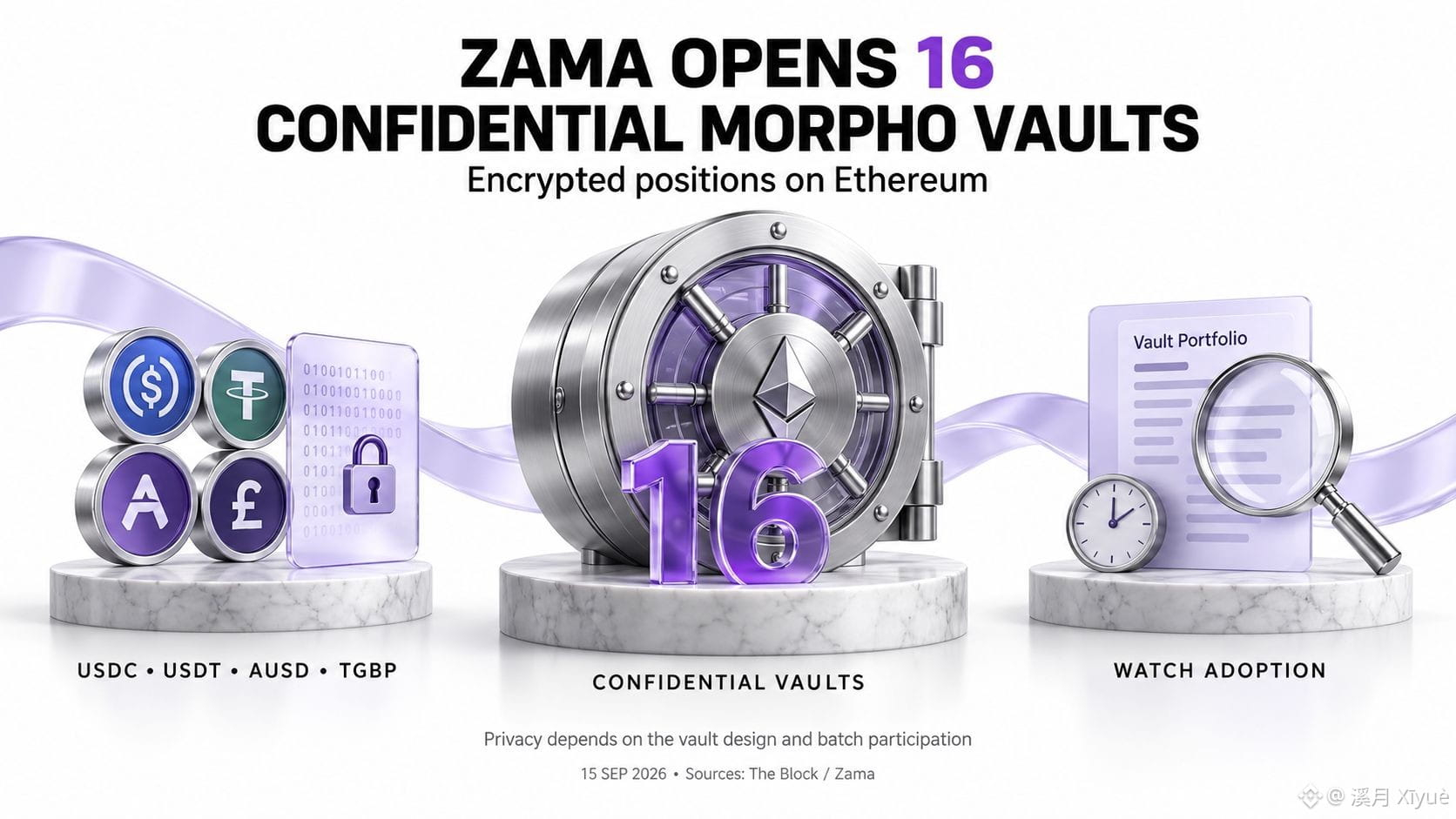
Zama ouvre 16 coffres Morpho confidentiels sur Ethereum
Le prochain test d’adoption de la DeFi pourrait être de savoir si les utilisateurs peuvent générer du rendement sans divulguer la taille de leurs positions.
Le 15 septembre, Zama ouvre les dépôts vers 16 coffres Morpho confidentiels, couvrant des actifs comprenant l’USDC, l’USDT, l’AUSD et le TGBP. La sélection offre un accès confidentiel à 12 coffres existants, ainsi que quatre coffres créés spécifiquement pour des dépôts confidentiels. L’accès commence via l’application de Zama.
Que signifie « confidentiel » ? La conception documentée de Zama chiffre les montants de dépôts individuels et les soldes de parts tout en rendant publics les totaux agrégés par lot. Les adresses rejoignant un lot restent visibles, et la confidentialité dépend du nombre d’utilisateurs indépendants qui participent.
Mon avis : cela pourrait rendre la DeFi plus pratique pour les trésoreries et les fonds qui souhaitent gérer leur trésorerie sans afficher la taille de chaque position. Un menu de coffres plus large donne aussi davantage de choix aux utilisateurs selon les actifs et les gestionnaires.
Le test d’adoption consiste à savoir si les utilisateurs conservent leur capital dans ces produits et peuvent y déposer, y publier un reporting et retirer de manière fiable. Le chiffrement protège l’information ; la qualité sous-jacente des garanties, l’exposition aux contrats intelligents et la liquidité disponible restent toutefois déterminantes. Je surveillerais la persistance des dépôts et la performance des retraits avant de juger la quantité de demande que la confidentialité crée réellement.
Les soldes confidentiels vous rendraient-ils plus à l’aise pour utiliser le prêt DeFi ?
#ZamaOpens16ConfidentialMorphoVaults #defi #Morpho
$AKE $AIN
{future}(AINUSDT)
{future}(AKEUSDT)
#zamaopens16confidentialmorphovaults
Zama ouvre 16 coffres Morpho confidentiels sur Ethereum
Le prochain test d’adoption de la DeFi pourrait être de savoir si les utilisateurs peuvent générer du rendement sans divulguer la taille de leurs positions.
Le 15 septembre, Zama ouvre les dépôts vers 16 coffres Morpho confidentiels, couvrant des actifs comprenant l’USDC, l’USDT, l’AUSD et le TGBP. La sélection offre un accès confidentiel à 12 coffres existants, ainsi que quatre coffres créés spécifiquement pour des dépôts confidentiels. L’accès commence via l’application de Zama.
Que signifie « confidentiel » ? La conception documentée de Zama chiffre les montants de dépôts individuels et les soldes de parts tout en rendant publics les totaux agrégés par lot. Les adresses rejoignant un lot restent visibles, et la confidentialité dépend du nombre d’utilisateurs indépendants qui participent.
Mon avis : cela pourrait rendre la DeFi plus pratique pour les trésoreries et les fonds qui souhaitent gérer leur trésorerie sans afficher la taille de chaque position. Un menu de coffres plus large donne aussi davantage de choix aux utilisateurs selon les actifs et les gestionnaires.
Le test d’adoption consiste à savoir si les utilisateurs conservent leur capital dans ces produits et peuvent y déposer, y publier un reporting et retirer de manière fiable. Le chiffrement protège l’information ; la qualité sous-jacente des garanties, l’exposition aux contrats intelligents et la liquidité disponible restent toutefois déterminantes. Je surveillerais la persistance des dépôts et la performance des retraits avant de juger la quantité de demande que la confidentialité crée réellement.
Les soldes confidentiels vous rendraient-ils plus à l’aise pour utiliser le prêt DeFi ?
#ZamaOpens16ConfidentialMorphoVaults #defi #Morpho
$AKE $AIN
Zama ouvre 16 coffres Morpho confidentiels sur Ethereum
Le prochain test d’adoption de la DeFi pourrait être de savoir si les utilisateurs peuvent générer du rendement sans divulguer la taille de leurs positions.
Le 15 septembre, Zama ouvre les dépôts vers 16 coffres Morpho confidentiels, couvrant des actifs comprenant l’USDC, l’USDT, l’AUSD et le TGBP. La sélection offre un accès confidentiel à 12 coffres existants, ainsi que quatre coffres créés spécifiquement pour des dépôts confidentiels. L’accès commence via l’application de Zama.
Que signifie « confidentiel » ? La conception documentée de Zama chiffre les montants de dépôts individuels et les soldes de parts tout en rendant publics les totaux agrégés par lot. Les adresses rejoignant un lot restent visibles, et la confidentialité dépend du nombre d’utilisateurs indépendants qui participent.
Mon avis : cela pourrait rendre la DeFi plus pratique pour les trésoreries et les fonds qui souhaitent gérer leur trésorerie sans afficher la taille de chaque position. Un menu de coffres plus large donne aussi davantage de choix aux utilisateurs selon les actifs et les gestionnaires.
Le test d’adoption consiste à savoir si les utilisateurs conservent leur capital dans ces produits et peuvent y déposer, y publier un reporting et retirer de manière fiable. Le chiffrement protège l’information ; la qualité sous-jacente des garanties, l’exposition aux contrats intelligents et la liquidité disponible restent toutefois déterminantes. Je surveillerais la persistance des dépôts et la performance des retraits avant de juger la quantité de demande que la confidentialité crée réellement.
Les soldes confidentiels vous rendraient-ils plus à l’aise pour utiliser le prêt DeFi ?
#ZamaOpens16ConfidentialMorphoVaults #defi #Morpho
$AKE $AIN
1
1
788
·
--
Haussier
#bessentendorsesfinalclarityactdraft
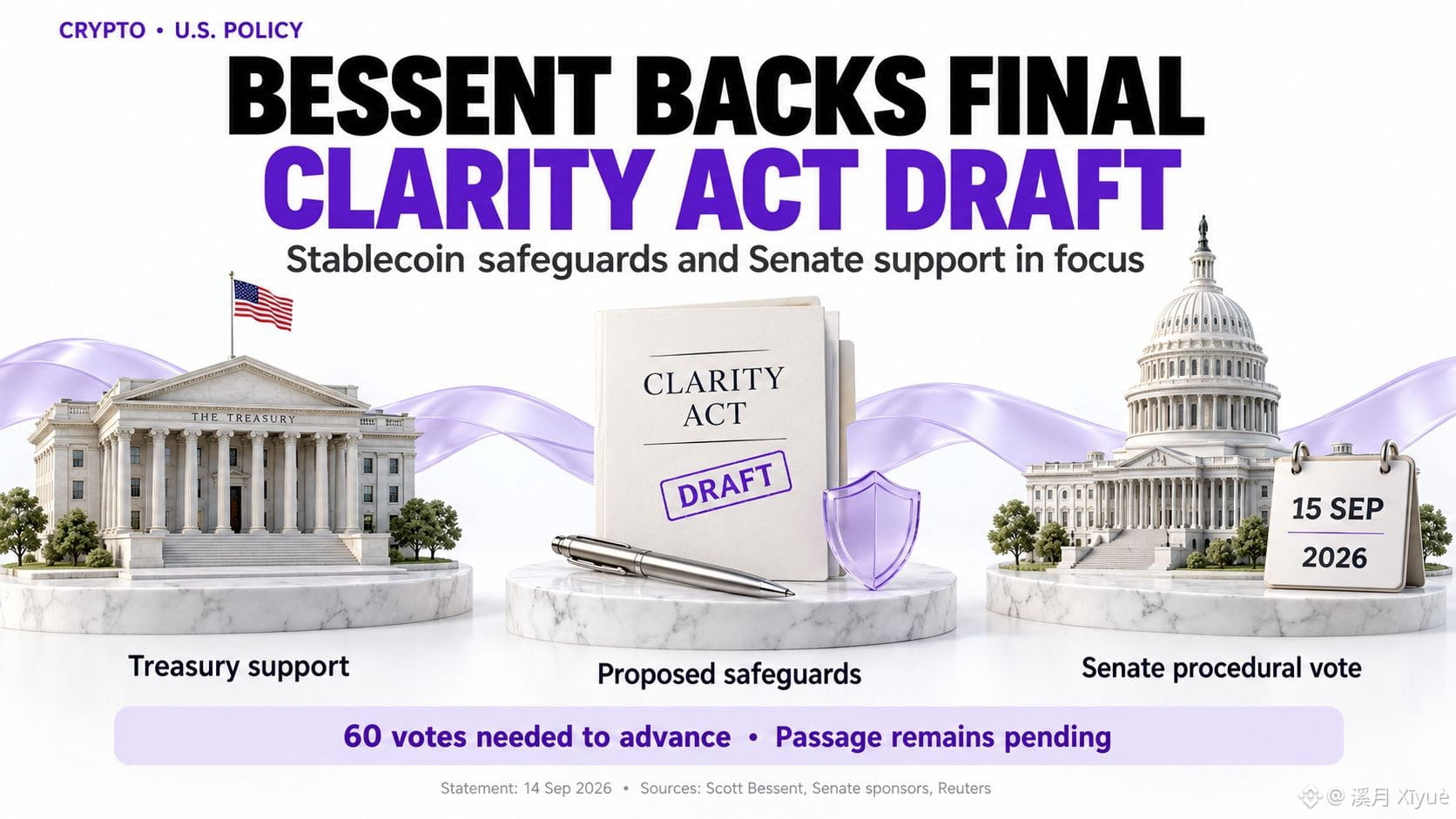
Bessent soutient la dernière version de la loi CLARITY avant le vote au Sénat
La loi CLARITY bénéficie d’un nouvel appui du Trésor alors que les législateurs s’apprêtent à se prononcer sur un vote décisif.
Le 14 septembre, le secrétaire au Trésor Scott Bessent a appuyé la version finale et a mis en avant des pouvoirs proposés visant à protéger les banques communautaires si des stablecoins causent des préjudices.
Les sénateurs à l’origine du texte affirment que la version révisée intègre 126 modifications demandées par les démocrates, des dispositions d’éthique mises à jour et des protections pour les développeurs de logiciels. Elle propose aussi une autorité supplémentaire du Trésor concernant la fuite des dépôts liée aux stablecoins.
Le vote procédural du 15 septembre requiert 60 voix pour faire avancer le processus législatif. Le soutien reste incertain, et une adoption finale exigerait toujours des étapes supplémentaires.
Mon avis : Le problème pratique est de savoir comment des règles crypto plus claires s’articuleraient avec les inquiétudes concernant la perte de dépôts par les banques. Pour les bourses et les entreprises de jetons, des exigences de supervision applicables pourraient faciliter la planification à long terme. Pour les plateformes de stablecoins, le traitement des récompenses pourrait influencer la conception du produit et la demande des clients.
Je surveillerais si les sénateurs indécis acceptent ces compromis, quelles modifications seront maintenues, et comment les échéances de mise en œuvre seront rédigées. Ces détails détermineront ce que les entreprises pourront réellement construire dans ce cadre.
L’aval de Bessent renforce le dossier de l’administration pour avancer. Le prochain test consiste à savoir si ce soutien se traduit par suffisamment de voix au Sénat.
Quelle disposition mérite l’attention la plus étroite : les protections des développeurs, les règles d’éthique ou les récompenses liées aux stablecoins ?
#BessentEndorsesFinalClarityActDraft #CLARITYAct #cryptouniverseofficial
$AIN $AKE $POWER
{future}(POWERUSDT)
{future}(AKEUSDT)
{future}(AINUSDT)
#bessentendorsesfinalclarityactdraft
Bessent soutient la dernière version de la loi CLARITY avant le vote au Sénat
La loi CLARITY bénéficie d’un nouvel appui du Trésor alors que les législateurs s’apprêtent à se prononcer sur un vote décisif.
Le 14 septembre, le secrétaire au Trésor Scott Bessent a appuyé la version finale et a mis en avant des pouvoirs proposés visant à protéger les banques communautaires si des stablecoins causent des préjudices.
Les sénateurs à l’origine du texte affirment que la version révisée intègre 126 modifications demandées par les démocrates, des dispositions d’éthique mises à jour et des protections pour les développeurs de logiciels. Elle propose aussi une autorité supplémentaire du Trésor concernant la fuite des dépôts liée aux stablecoins.
Le vote procédural du 15 septembre requiert 60 voix pour faire avancer le processus législatif. Le soutien reste incertain, et une adoption finale exigerait toujours des étapes supplémentaires.
Mon avis : Le problème pratique est de savoir comment des règles crypto plus claires s’articuleraient avec les inquiétudes concernant la perte de dépôts par les banques. Pour les bourses et les entreprises de jetons, des exigences de supervision applicables pourraient faciliter la planification à long terme. Pour les plateformes de stablecoins, le traitement des récompenses pourrait influencer la conception du produit et la demande des clients.
Je surveillerais si les sénateurs indécis acceptent ces compromis, quelles modifications seront maintenues, et comment les échéances de mise en œuvre seront rédigées. Ces détails détermineront ce que les entreprises pourront réellement construire dans ce cadre.
L’aval de Bessent renforce le dossier de l’administration pour avancer. Le prochain test consiste à savoir si ce soutien se traduit par suffisamment de voix au Sénat.
Quelle disposition mérite l’attention la plus étroite : les protections des développeurs, les règles d’éthique ou les récompenses liées aux stablecoins ?
#BessentEndorsesFinalClarityActDraft #CLARITYAct #cryptouniverseofficial
$AIN $AKE $POWER
Bessent soutient la dernière version de la loi CLARITY avant le vote au Sénat
La loi CLARITY bénéficie d’un nouvel appui du Trésor alors que les législateurs s’apprêtent à se prononcer sur un vote décisif.
Le 14 septembre, le secrétaire au Trésor Scott Bessent a appuyé la version finale et a mis en avant des pouvoirs proposés visant à protéger les banques communautaires si des stablecoins causent des préjudices.
Les sénateurs à l’origine du texte affirment que la version révisée intègre 126 modifications demandées par les démocrates, des dispositions d’éthique mises à jour et des protections pour les développeurs de logiciels. Elle propose aussi une autorité supplémentaire du Trésor concernant la fuite des dépôts liée aux stablecoins.
Le vote procédural du 15 septembre requiert 60 voix pour faire avancer le processus législatif. Le soutien reste incertain, et une adoption finale exigerait toujours des étapes supplémentaires.
Mon avis : Le problème pratique est de savoir comment des règles crypto plus claires s’articuleraient avec les inquiétudes concernant la perte de dépôts par les banques. Pour les bourses et les entreprises de jetons, des exigences de supervision applicables pourraient faciliter la planification à long terme. Pour les plateformes de stablecoins, le traitement des récompenses pourrait influencer la conception du produit et la demande des clients.
Je surveillerais si les sénateurs indécis acceptent ces compromis, quelles modifications seront maintenues, et comment les échéances de mise en œuvre seront rédigées. Ces détails détermineront ce que les entreprises pourront réellement construire dans ce cadre.
L’aval de Bessent renforce le dossier de l’administration pour avancer. Le prochain test consiste à savoir si ce soutien se traduit par suffisamment de voix au Sénat.
Quelle disposition mérite l’attention la plus étroite : les protections des développeurs, les règles d’éthique ou les récompenses liées aux stablecoins ?
#BessentEndorsesFinalClarityActDraft #CLARITYAct #cryptouniverseofficial
$AIN $AKE $POWER
3
2.3k
·
--
Baissier
Vérifié
#philadelphiasemiconductorindexfalls5.9%
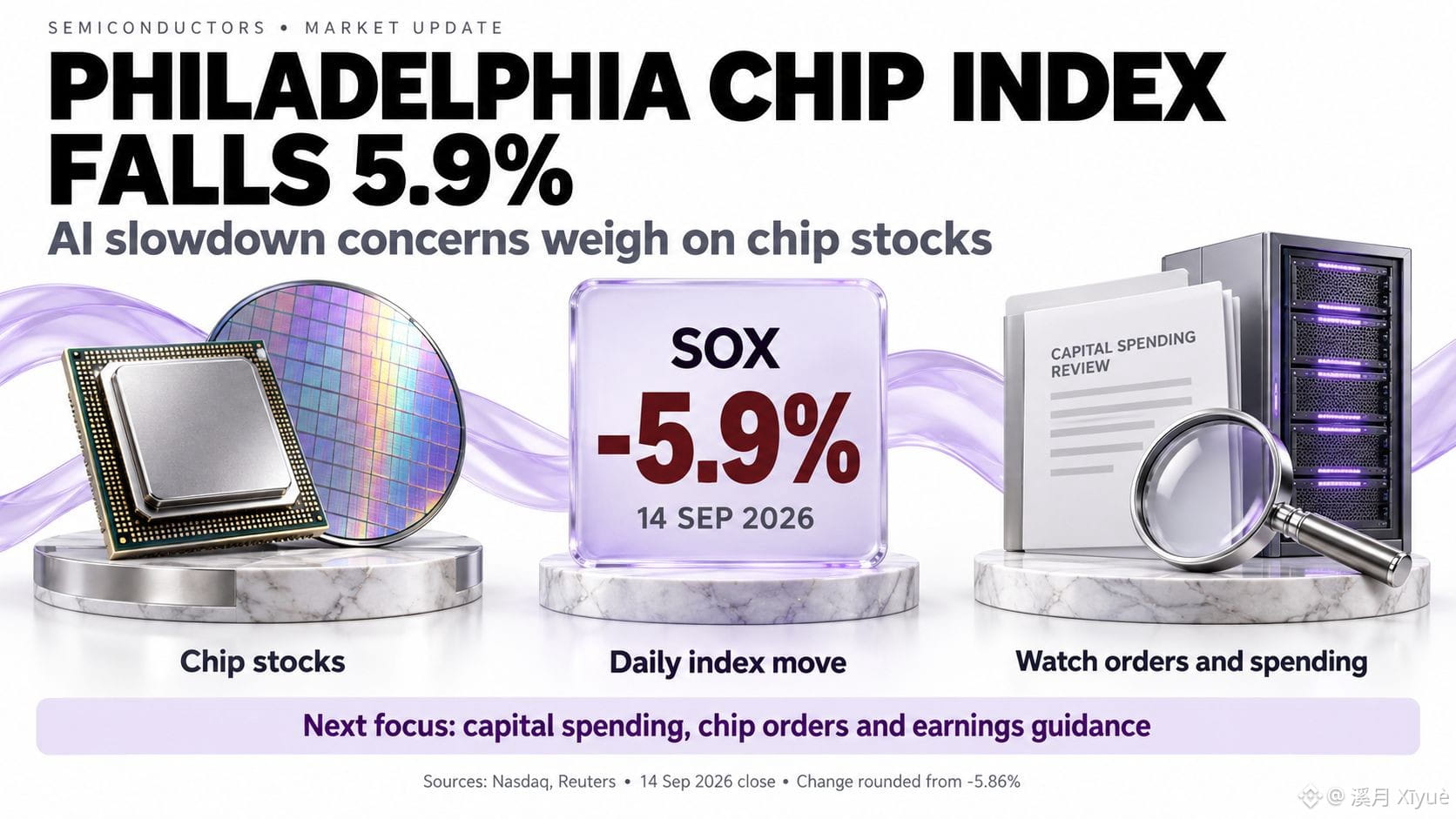
Les actions des fabricants de puces chutent de 5,9% alors que les attentes de dépenses liées à l’IA sont examinées
L’indice des semi-conducteurs de Philadelphie (SOX) a reculé de 5,86%, soit 5,9% arrondi, le 14 septembre, pour clôturer à 11 131,28.
Reuters attribue la baisse à des appels lancés par des dirigeants d’entreprises d’IA de premier plan afin de ralentir le développement, au nom de préoccupations de sécurité. Nvidia, AMD, Micron et Broadcom figuraient parmi les valeurs sous pression.
La proposition du PDG d’Anthropic, Dario Amodei, appelle à davantage de temps pour mettre en place des garde-fous, tout en continuant l’entraînement des modèles et les progrès techniques.
Mon avis : L’incertitude clé porte sur le calendrier de la demande future en matériel. Un calendrier de développement plus lent pourrait modifier le moment où les entreprises auront besoin de puces supplémentaires, de mémoire et de capacités de centres de données. Cela compte lorsque les valorisations dépendent de plusieurs années d’expansion.
Évaluer l’ampleur d’un éventuel changement de la demande nécessite davantage de preuves. Les services d’IA existants, les tests de sécurité et les améliorations d’efficacité pourraient continuer à exiger d’importantes ressources de calcul.
Je surveillerais les plans de dépenses des entreprises de cloud, les prix de la mémoire et les perspectives de commandes des fabricants de puces. Des reports de la part des clients ou des prévisions revues à la baisse renforceraient la thèse d’un ralentissement de la demande. Des engagements stables indiqueraient que les investisseurs réévaluent surtout les valorisations et le calendrier.
Les prochaines publications de résultats devraient aider à clarifier quelle explication pèse le plus.
Qu’est-ce que vous surveilleriez en premier : les engagements de dépenses des clients ou les perspectives de revenus des fabricants de puces ?
#PhiladelphiaSemiconductorIndexFalls5.9% #Semiconductors #AI
$SOXLB $LSK $MTL
{future}(MTLUSDT)
{future}(LSKUSDT)
{spot}(SOXLBUSDT)
#philadelphiasemiconductorindexfalls5.9%
Les actions des fabricants de puces chutent de 5,9% alors que les attentes de dépenses liées à l’IA sont examinées
L’indice des semi-conducteurs de Philadelphie (SOX) a reculé de 5,86%, soit 5,9% arrondi, le 14 septembre, pour clôturer à 11 131,28.
Reuters attribue la baisse à des appels lancés par des dirigeants d’entreprises d’IA de premier plan afin de ralentir le développement, au nom de préoccupations de sécurité. Nvidia, AMD, Micron et Broadcom figuraient parmi les valeurs sous pression.
La proposition du PDG d’Anthropic, Dario Amodei, appelle à davantage de temps pour mettre en place des garde-fous, tout en continuant l’entraînement des modèles et les progrès techniques.
Mon avis : L’incertitude clé porte sur le calendrier de la demande future en matériel. Un calendrier de développement plus lent pourrait modifier le moment où les entreprises auront besoin de puces supplémentaires, de mémoire et de capacités de centres de données. Cela compte lorsque les valorisations dépendent de plusieurs années d’expansion.
Évaluer l’ampleur d’un éventuel changement de la demande nécessite davantage de preuves. Les services d’IA existants, les tests de sécurité et les améliorations d’efficacité pourraient continuer à exiger d’importantes ressources de calcul.
Je surveillerais les plans de dépenses des entreprises de cloud, les prix de la mémoire et les perspectives de commandes des fabricants de puces. Des reports de la part des clients ou des prévisions revues à la baisse renforceraient la thèse d’un ralentissement de la demande. Des engagements stables indiqueraient que les investisseurs réévaluent surtout les valorisations et le calendrier.
Les prochaines publications de résultats devraient aider à clarifier quelle explication pèse le plus.
Qu’est-ce que vous surveilleriez en premier : les engagements de dépenses des clients ou les perspectives de revenus des fabricants de puces ?
#PhiladelphiaSemiconductorIndexFalls5.9% #Semiconductors #AI
$SOXLB $LSK $MTL
Les actions des fabricants de puces chutent de 5,9% alors que les attentes de dépenses liées à l’IA sont examinées
L’indice des semi-conducteurs de Philadelphie (SOX) a reculé de 5,86%, soit 5,9% arrondi, le 14 septembre, pour clôturer à 11 131,28.
Reuters attribue la baisse à des appels lancés par des dirigeants d’entreprises d’IA de premier plan afin de ralentir le développement, au nom de préoccupations de sécurité. Nvidia, AMD, Micron et Broadcom figuraient parmi les valeurs sous pression.
La proposition du PDG d’Anthropic, Dario Amodei, appelle à davantage de temps pour mettre en place des garde-fous, tout en continuant l’entraînement des modèles et les progrès techniques.
Mon avis : L’incertitude clé porte sur le calendrier de la demande future en matériel. Un calendrier de développement plus lent pourrait modifier le moment où les entreprises auront besoin de puces supplémentaires, de mémoire et de capacités de centres de données. Cela compte lorsque les valorisations dépendent de plusieurs années d’expansion.
Évaluer l’ampleur d’un éventuel changement de la demande nécessite davantage de preuves. Les services d’IA existants, les tests de sécurité et les améliorations d’efficacité pourraient continuer à exiger d’importantes ressources de calcul.
Je surveillerais les plans de dépenses des entreprises de cloud, les prix de la mémoire et les perspectives de commandes des fabricants de puces. Des reports de la part des clients ou des prévisions revues à la baisse renforceraient la thèse d’un ralentissement de la demande. Des engagements stables indiqueraient que les investisseurs réévaluent surtout les valorisations et le calendrier.
Les prochaines publications de résultats devraient aider à clarifier quelle explication pèse le plus.
Qu’est-ce que vous surveilleriez en premier : les engagements de dépenses des clients ou les perspectives de revenus des fabricants de puces ?
#PhiladelphiaSemiconductorIndexFalls5.9% #Semiconductors #AI
$SOXLB $LSK $MTL
1
2
1.6k
·
--
Haussier
Vérifié
#grayscaleputsxrpat26.11%inadvisorportfolio
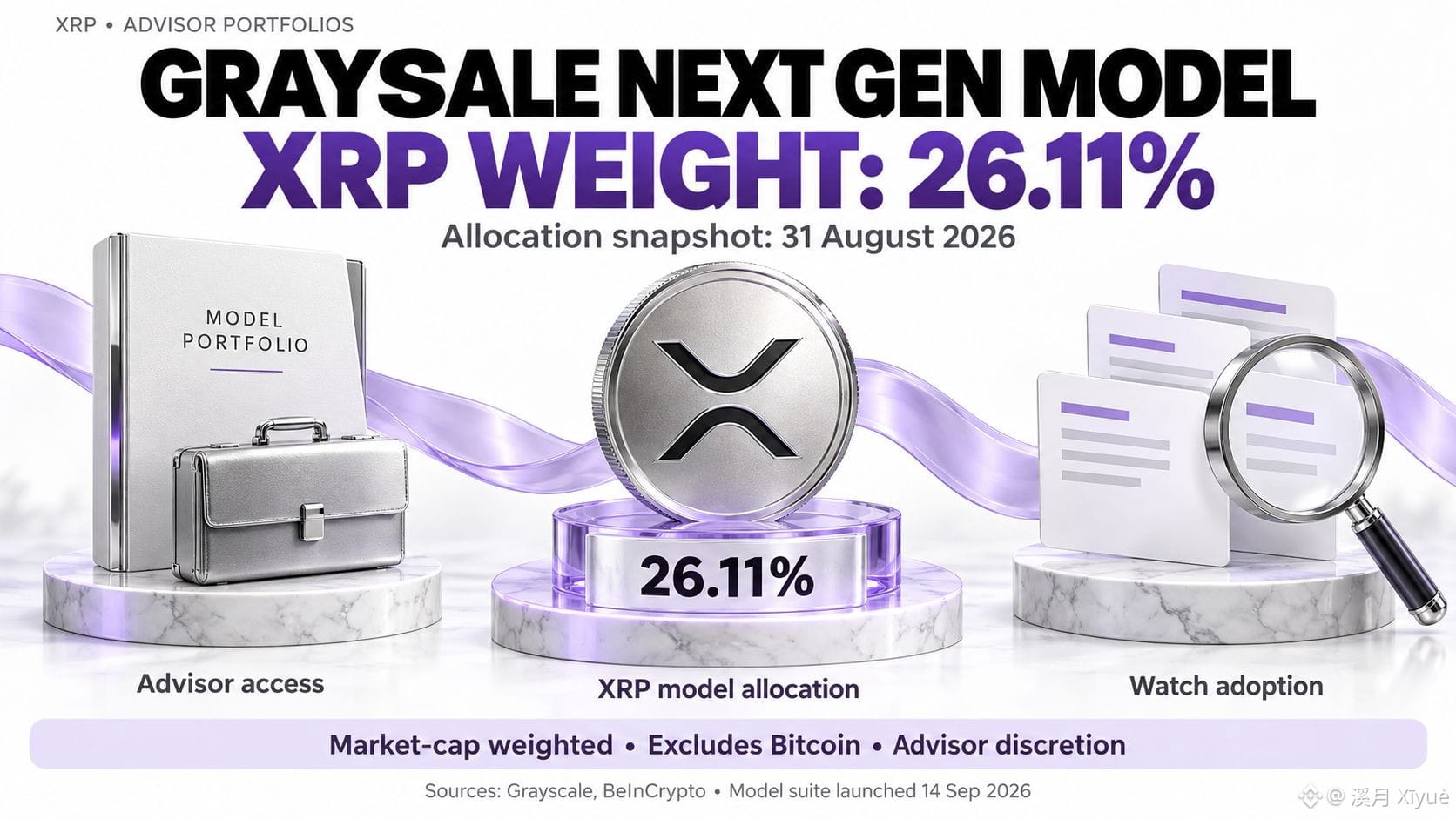
XRP obtient un poids de 26,11 % dans le prochain modèle « Next Gen » de Grayscale
XRP occupe une place importante dans la dernière offre de Grayscale destinée aux conseillers financiers.
D’après BeInCrypto, XRP représentait 26,11 % du portefeuille du modèle Digital Assets Next Gen dans son instantané du 31 août, ce qui en fait la deuxième plus grande allocation derrière Ether. Le modèle exclut Bitcoin.
Grayscale a annoncé le 14 septembre sa gamme de portefeuille à quatre modèles. Next Gen utilise une pondération par capitalisation boursière et un rééquilibrage trimestriel. Les conseillers décident s’ils appliquent et comment les allocations suggérées dans les comptes clients.
Mon avis : la portée pratique est un accès facilité via les conseillers. Une allocation définie et un cadre de rééquilibrage pourraient réduire le travail lié à l’évaluation et au maintien de l’exposition aux cryptomonnaies.
L’impact sur le marché dépendra de l’adoption et du montant investi. Le chiffre de 26,11 % décrit la composition de ce modèle précis ; il ne nous indique pas combien d’argent frais est entré dans XRP.
Sa pondération reflète aussi la méthodologie du modèle : la lire comme une prédiction autonome de la performance future de XRP surestimerait l’annonce.
Je surveillerais la disponibilité des plateformes, l’adoption par les conseillers et la persistance des flux vers les produits d’investissement en XRP. Ces évolutions aideraient à montrer si cette offre se traduit par une demande réelle.
Un déploiement de portefeuille plus simple encouragera-t-il davantage de conseillers à envisager une exposition à XRP ?
#GrayscalePutsXRPAt26.11%InAdvisorPortfolio #xrp #Grayscale
$POWER $AIN $XRP
{future}(XRPUSDT)
{future}(AINUSDT)
{future}(POWERUSDT)
#grayscaleputsxrpat26.11%inadvisorportfolio
XRP obtient un poids de 26,11 % dans le prochain modèle « Next Gen » de Grayscale
XRP occupe une place importante dans la dernière offre de Grayscale destinée aux conseillers financiers.
D’après BeInCrypto, XRP représentait 26,11 % du portefeuille du modèle Digital Assets Next Gen dans son instantané du 31 août, ce qui en fait la deuxième plus grande allocation derrière Ether. Le modèle exclut Bitcoin.
Grayscale a annoncé le 14 septembre sa gamme de portefeuille à quatre modèles. Next Gen utilise une pondération par capitalisation boursière et un rééquilibrage trimestriel. Les conseillers décident s’ils appliquent et comment les allocations suggérées dans les comptes clients.
Mon avis : la portée pratique est un accès facilité via les conseillers. Une allocation définie et un cadre de rééquilibrage pourraient réduire le travail lié à l’évaluation et au maintien de l’exposition aux cryptomonnaies.
L’impact sur le marché dépendra de l’adoption et du montant investi. Le chiffre de 26,11 % décrit la composition de ce modèle précis ; il ne nous indique pas combien d’argent frais est entré dans XRP.
Sa pondération reflète aussi la méthodologie du modèle : la lire comme une prédiction autonome de la performance future de XRP surestimerait l’annonce.
Je surveillerais la disponibilité des plateformes, l’adoption par les conseillers et la persistance des flux vers les produits d’investissement en XRP. Ces évolutions aideraient à montrer si cette offre se traduit par une demande réelle.
Un déploiement de portefeuille plus simple encouragera-t-il davantage de conseillers à envisager une exposition à XRP ?
#GrayscalePutsXRPAt26.11%InAdvisorPortfolio #xrp #Grayscale
$POWER $AIN $XRP
XRP obtient un poids de 26,11 % dans le prochain modèle « Next Gen » de Grayscale
XRP occupe une place importante dans la dernière offre de Grayscale destinée aux conseillers financiers.
D’après BeInCrypto, XRP représentait 26,11 % du portefeuille du modèle Digital Assets Next Gen dans son instantané du 31 août, ce qui en fait la deuxième plus grande allocation derrière Ether. Le modèle exclut Bitcoin.
Grayscale a annoncé le 14 septembre sa gamme de portefeuille à quatre modèles. Next Gen utilise une pondération par capitalisation boursière et un rééquilibrage trimestriel. Les conseillers décident s’ils appliquent et comment les allocations suggérées dans les comptes clients.
Mon avis : la portée pratique est un accès facilité via les conseillers. Une allocation définie et un cadre de rééquilibrage pourraient réduire le travail lié à l’évaluation et au maintien de l’exposition aux cryptomonnaies.
L’impact sur le marché dépendra de l’adoption et du montant investi. Le chiffre de 26,11 % décrit la composition de ce modèle précis ; il ne nous indique pas combien d’argent frais est entré dans XRP.
Sa pondération reflète aussi la méthodologie du modèle : la lire comme une prédiction autonome de la performance future de XRP surestimerait l’annonce.
Je surveillerais la disponibilité des plateformes, l’adoption par les conseillers et la persistance des flux vers les produits d’investissement en XRP. Ces évolutions aideraient à montrer si cette offre se traduit par une demande réelle.
Un déploiement de portefeuille plus simple encouragera-t-il davantage de conseillers à envisager une exposition à XRP ?
#GrayscalePutsXRPAt26.11%InAdvisorPortfolio #xrp #Grayscale
$POWER $AIN $XRP
2
3
2.1k
·
--
Baissier
#russiancentralbankflagscryptoasfinancialrisk
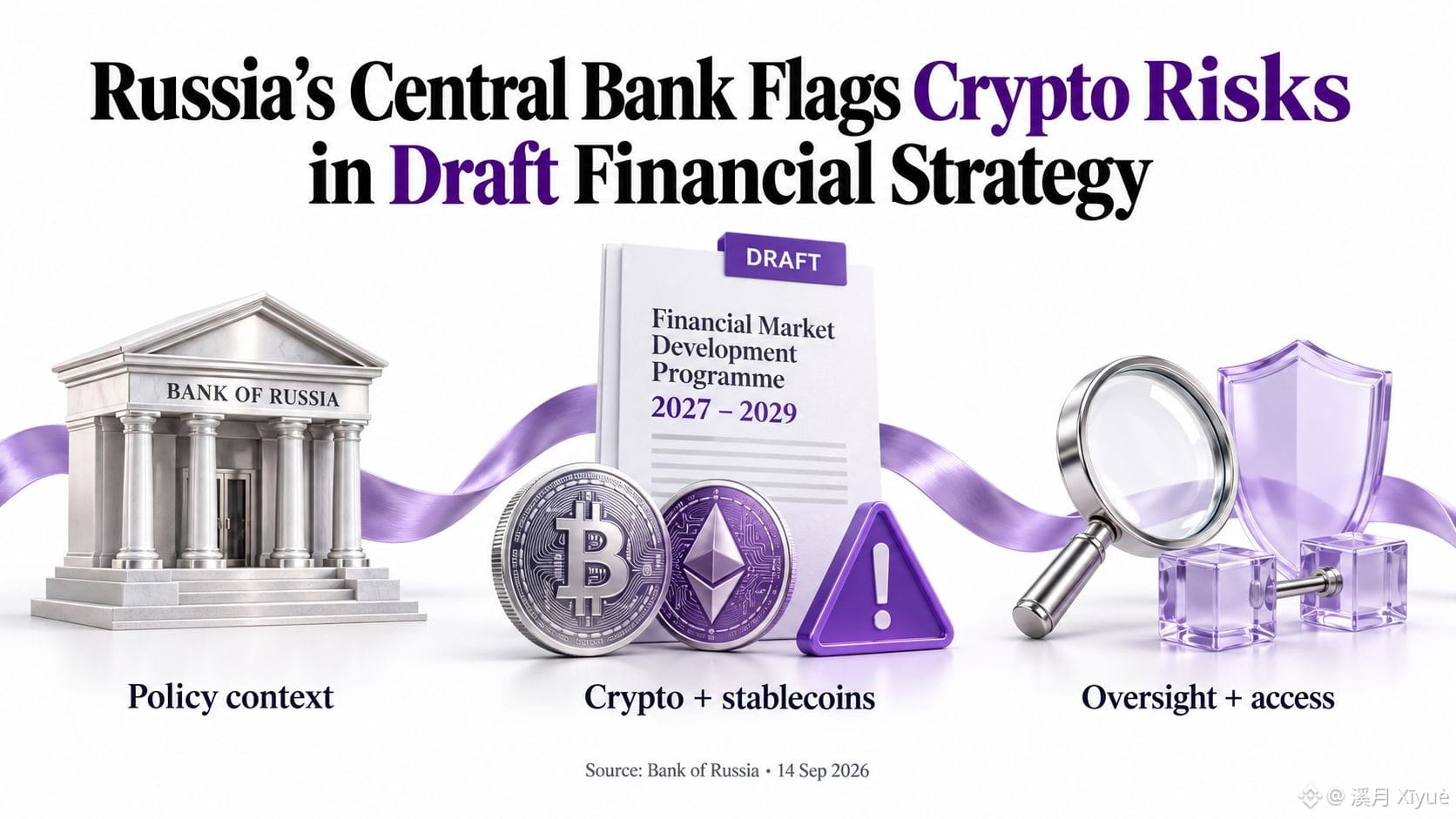
La Banque centrale de Russie met en garde contre les risques liés aux cryptomonnaies dans un projet de stratégie financière
La banque centrale russe met les risques liés aux cryptoactifs au premier plan alors qu’elle définit les priorités des marchés financiers pour 2027–2029.
Publié le 14 septembre 2026, son programme en projet souligne que les cryptomonnaies et les stablecoins pourraient représenter des risques potentiels, notamment leur utilisation comme substituts aux monnaies nationales. Il signale aussi des pertes pour les investisseurs, des activités illicites et des écarts entre les réglementations des pays.
Le document indique que des règles élaborées avec le gouvernement visent à réduire les détournements criminels et à créer les conditions de transactions et d’investissements transfrontaliers licites.
Le programme reste un projet, avec des discussions parlementaires avant la version finale.
Mon avis : le test pratique, c’est la manière dont la réglementation fonctionne pour les utilisateurs ordinaires et les entreprises. Une licence claire, une conservation fiable (custody) et un accès réellement opérationnel pourraient faire entrer l’activité dans des canaux supervisés. Des coûts élevés ou des restrictions source de confusion pourraient au contraire pousser les utilisateurs à recourir à des intermédiaires informels, affaiblissant le contrôle que les autorités veulent maintenir.
Pour les investisseurs, l’autorisation de participer n’élimine pas le risque de pertes. Je surveillerais le programme final, les dispositions d’exécution (enforcement) et la question de savoir si les services réglementés deviennent réellement utilisables dans la pratique. Ces éléments permettront de voir si le cadre peut améliorer la protection tout en s’adaptant à la demande.
#russiancentralbankflagscryptoasfinancialrisk #CryptoRegulation
Qu’est-ce qui contribuerait le plus à instaurer la confiance : des protections renforcées pour les investisseurs ou un accès plus facile à des services réglementés ?
$LSK $MTL $ARK
{future}(ARKUSDT)
{future}(MTLUSDT)
{future}(LSKUSDT)
#russiancentralbankflagscryptoasfinancialrisk
La Banque centrale de Russie met en garde contre les risques liés aux cryptomonnaies dans un projet de stratégie financière
La banque centrale russe met les risques liés aux cryptoactifs au premier plan alors qu’elle définit les priorités des marchés financiers pour 2027–2029.
Publié le 14 septembre 2026, son programme en projet souligne que les cryptomonnaies et les stablecoins pourraient représenter des risques potentiels, notamment leur utilisation comme substituts aux monnaies nationales. Il signale aussi des pertes pour les investisseurs, des activités illicites et des écarts entre les réglementations des pays.
Le document indique que des règles élaborées avec le gouvernement visent à réduire les détournements criminels et à créer les conditions de transactions et d’investissements transfrontaliers licites.
Le programme reste un projet, avec des discussions parlementaires avant la version finale.
Mon avis : le test pratique, c’est la manière dont la réglementation fonctionne pour les utilisateurs ordinaires et les entreprises. Une licence claire, une conservation fiable (custody) et un accès réellement opérationnel pourraient faire entrer l’activité dans des canaux supervisés. Des coûts élevés ou des restrictions source de confusion pourraient au contraire pousser les utilisateurs à recourir à des intermédiaires informels, affaiblissant le contrôle que les autorités veulent maintenir.
Pour les investisseurs, l’autorisation de participer n’élimine pas le risque de pertes. Je surveillerais le programme final, les dispositions d’exécution (enforcement) et la question de savoir si les services réglementés deviennent réellement utilisables dans la pratique. Ces éléments permettront de voir si le cadre peut améliorer la protection tout en s’adaptant à la demande.
#russiancentralbankflagscryptoasfinancialrisk #CryptoRegulation
Qu’est-ce qui contribuerait le plus à instaurer la confiance : des protections renforcées pour les investisseurs ou un accès plus facile à des services réglementés ?
$LSK $MTL $ARK
La Banque centrale de Russie met en garde contre les risques liés aux cryptomonnaies dans un projet de stratégie financière
La banque centrale russe met les risques liés aux cryptoactifs au premier plan alors qu’elle définit les priorités des marchés financiers pour 2027–2029.
Publié le 14 septembre 2026, son programme en projet souligne que les cryptomonnaies et les stablecoins pourraient représenter des risques potentiels, notamment leur utilisation comme substituts aux monnaies nationales. Il signale aussi des pertes pour les investisseurs, des activités illicites et des écarts entre les réglementations des pays.
Le document indique que des règles élaborées avec le gouvernement visent à réduire les détournements criminels et à créer les conditions de transactions et d’investissements transfrontaliers licites.
Le programme reste un projet, avec des discussions parlementaires avant la version finale.
Mon avis : le test pratique, c’est la manière dont la réglementation fonctionne pour les utilisateurs ordinaires et les entreprises. Une licence claire, une conservation fiable (custody) et un accès réellement opérationnel pourraient faire entrer l’activité dans des canaux supervisés. Des coûts élevés ou des restrictions source de confusion pourraient au contraire pousser les utilisateurs à recourir à des intermédiaires informels, affaiblissant le contrôle que les autorités veulent maintenir.
Pour les investisseurs, l’autorisation de participer n’élimine pas le risque de pertes. Je surveillerais le programme final, les dispositions d’exécution (enforcement) et la question de savoir si les services réglementés deviennent réellement utilisables dans la pratique. Ces éléments permettront de voir si le cadre peut améliorer la protection tout en s’adaptant à la demande.
#russiancentralbankflagscryptoasfinancialrisk #CryptoRegulation
Qu’est-ce qui contribuerait le plus à instaurer la confiance : des protections renforcées pour les investisseurs ou un accès plus facile à des services réglementés ?
$LSK $MTL $ARK
1
1.2k
·
--
Haussier
#southkoreacryptotaxdelaypetitiontops50000
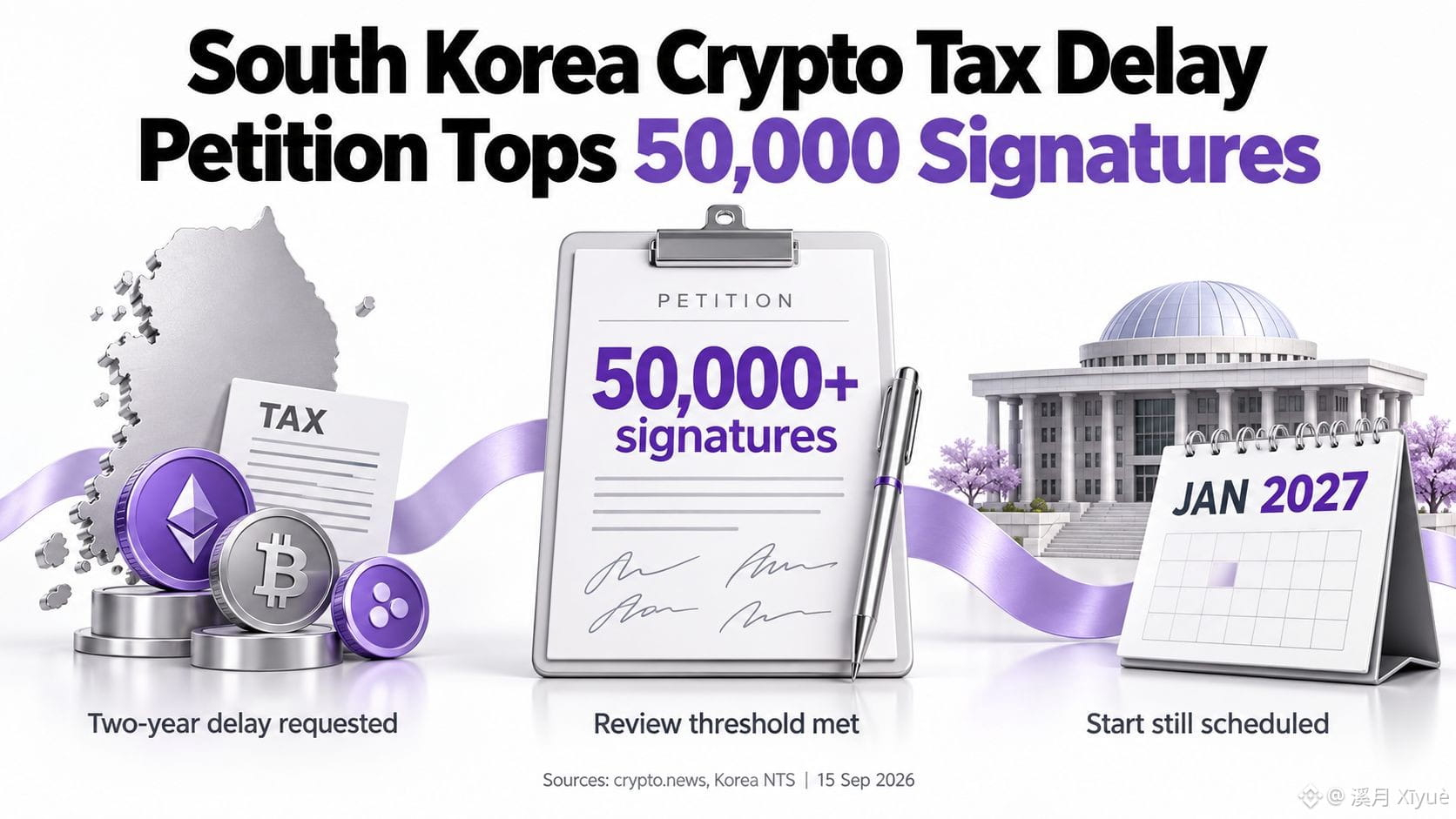
La pétition de report de la taxe crypto en Corée du Sud dépasse 50 000 signatures
Le débat sur la taxe crypto en Corée du Sud revient vers les législateurs. Une pétition visant un nouveau report de deux ans a atteint le seuil de 50 000 signatures requis pour un examen par la commission de l’Assemblée nationale, selon un bilan du 14 septembre. Ce cap ne valide pas à lui seul un report.
La date de début actuelle demeure fixée au 1er janvier 2027. Les résidents seraient soumis à une taxe nationale de 20 % sur leurs revenus annuels en crypto éligibles, après une déduction de 2,5 millions KRW, montant qui passerait à 22 % en incluant la taxe locale.
Les préparatifs se poursuivent : le ministre des Finances pressenti, Lee Hyoung-il, a indiqué que des critères détaillés de taxation seraient publiés avant la fin de 2026.
Mon avis : la question pratique est de savoir si les investisseurs peuvent calculer de manière cohérente le revenu imposable entre les différentes bourses et portefeuilles. Plus de temps de préparation pourrait réduire les erreurs de déclaration et donner aux plateformes l’occasion d’améliorer leurs registres. Mais des reports répétés compliquent aussi la planification. Le temps supplémentaire n’aide que s’il aboutit à des règles et des outils plus clairs que les investisseurs peuvent réellement utiliser.
Les éléments à surveiller sont l’action de la commission, toute modification visant à changer la date de démarrage, et les orientations sur la façon de documenter les coûts d’acquisition. La progression des signatures reflète une pression publique ; les obligations réelles dépendent de la législation.
Que doit décider la Corée du Sud avant l’entrée en vigueur de cette taxe ?
#southkoreacryptotaxdelaypetitiontops50000 #cryptotax #CryptoRegulation
$POWER $CAP $AIN
{future}(AINUSDT)
{future}(CAPUSDT)
{future}(POWERUSDT)
#southkoreacryptotaxdelaypetitiontops50000
La pétition de report de la taxe crypto en Corée du Sud dépasse 50 000 signatures
Le débat sur la taxe crypto en Corée du Sud revient vers les législateurs. Une pétition visant un nouveau report de deux ans a atteint le seuil de 50 000 signatures requis pour un examen par la commission de l’Assemblée nationale, selon un bilan du 14 septembre. Ce cap ne valide pas à lui seul un report.
La date de début actuelle demeure fixée au 1er janvier 2027. Les résidents seraient soumis à une taxe nationale de 20 % sur leurs revenus annuels en crypto éligibles, après une déduction de 2,5 millions KRW, montant qui passerait à 22 % en incluant la taxe locale.
Les préparatifs se poursuivent : le ministre des Finances pressenti, Lee Hyoung-il, a indiqué que des critères détaillés de taxation seraient publiés avant la fin de 2026.
Mon avis : la question pratique est de savoir si les investisseurs peuvent calculer de manière cohérente le revenu imposable entre les différentes bourses et portefeuilles. Plus de temps de préparation pourrait réduire les erreurs de déclaration et donner aux plateformes l’occasion d’améliorer leurs registres. Mais des reports répétés compliquent aussi la planification. Le temps supplémentaire n’aide que s’il aboutit à des règles et des outils plus clairs que les investisseurs peuvent réellement utiliser.
Les éléments à surveiller sont l’action de la commission, toute modification visant à changer la date de démarrage, et les orientations sur la façon de documenter les coûts d’acquisition. La progression des signatures reflète une pression publique ; les obligations réelles dépendent de la législation.
Que doit décider la Corée du Sud avant l’entrée en vigueur de cette taxe ?
#southkoreacryptotaxdelaypetitiontops50000 #cryptotax #CryptoRegulation
$POWER $CAP $AIN
La pétition de report de la taxe crypto en Corée du Sud dépasse 50 000 signatures
Le débat sur la taxe crypto en Corée du Sud revient vers les législateurs. Une pétition visant un nouveau report de deux ans a atteint le seuil de 50 000 signatures requis pour un examen par la commission de l’Assemblée nationale, selon un bilan du 14 septembre. Ce cap ne valide pas à lui seul un report.
La date de début actuelle demeure fixée au 1er janvier 2027. Les résidents seraient soumis à une taxe nationale de 20 % sur leurs revenus annuels en crypto éligibles, après une déduction de 2,5 millions KRW, montant qui passerait à 22 % en incluant la taxe locale.
Les préparatifs se poursuivent : le ministre des Finances pressenti, Lee Hyoung-il, a indiqué que des critères détaillés de taxation seraient publiés avant la fin de 2026.
Mon avis : la question pratique est de savoir si les investisseurs peuvent calculer de manière cohérente le revenu imposable entre les différentes bourses et portefeuilles. Plus de temps de préparation pourrait réduire les erreurs de déclaration et donner aux plateformes l’occasion d’améliorer leurs registres. Mais des reports répétés compliquent aussi la planification. Le temps supplémentaire n’aide que s’il aboutit à des règles et des outils plus clairs que les investisseurs peuvent réellement utiliser.
Les éléments à surveiller sont l’action de la commission, toute modification visant à changer la date de démarrage, et les orientations sur la façon de documenter les coûts d’acquisition. La progression des signatures reflète une pression publique ; les obligations réelles dépendent de la législation.
Que doit décider la Corée du Sud avant l’entrée en vigueur de cette taxe ?
#southkoreacryptotaxdelaypetitiontops50000 #cryptotax #CryptoRegulation
$POWER $CAP $AIN
1
264
·
--
Haussier
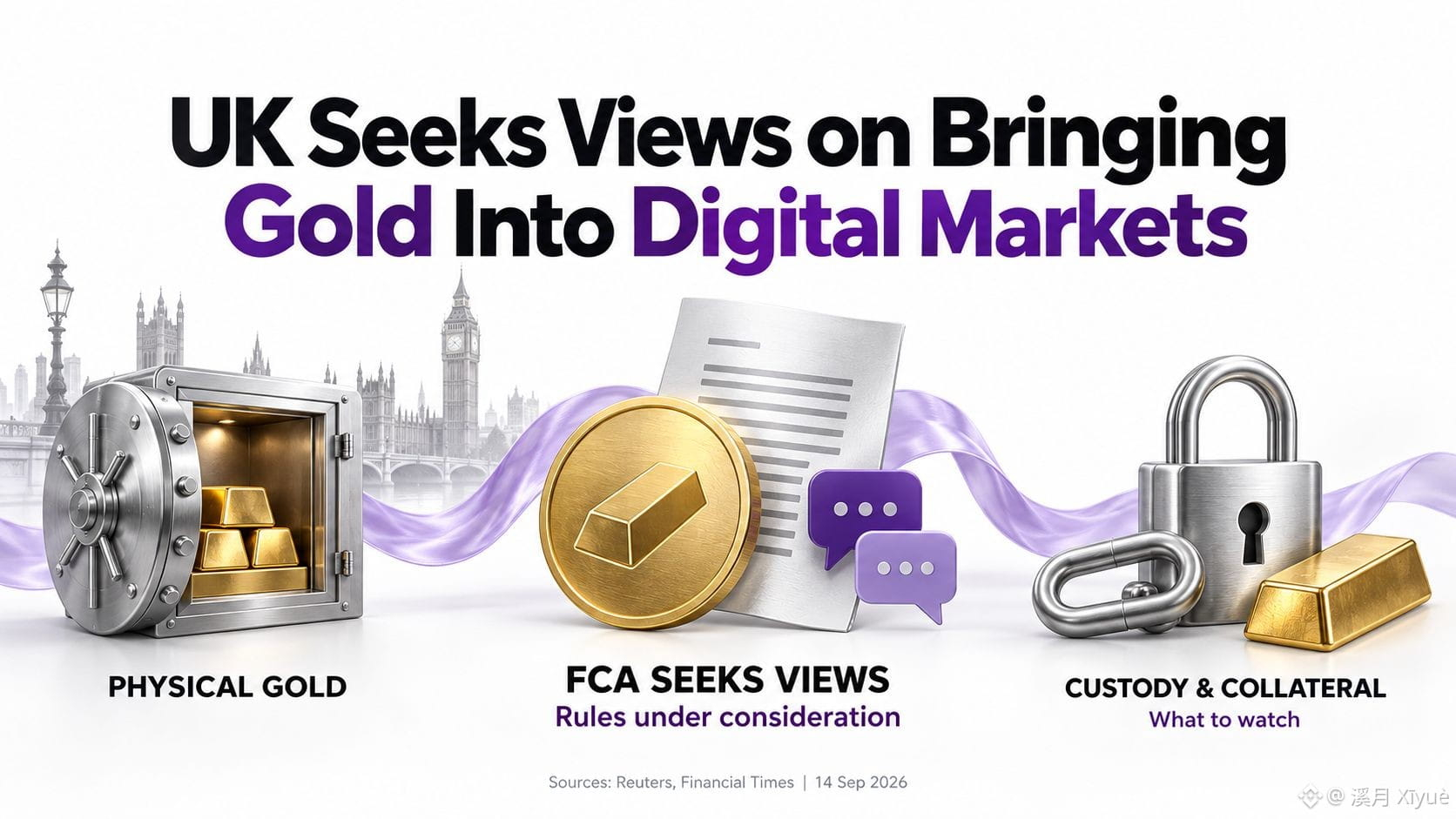
#ukseeksviewsontokenizinggold
Le Royaume-Uni lance un débat sur l’or tokenisé alors que la FCA sollicite l’avis du secteur
L’or pourrait devenir plus facile à faire circuler sur les marchés financiers sans que le métal ne sorte du coffre.
Le 14 septembre 2026, l’Autorité de conduite financière britannique (FCA) a déclaré qu’elle cherchait des avis sur la question de savoir si la tokenisation pourrait améliorer le trading de l’or, les transferts, la conservation et son utilisation comme garantie. Il s’agit d’une demande de commentaires, les décisions de politique restant à venir.
L’or tokenisé utilise des jetons numériques pour représenter des droits sur du lingot physique. La FCA envisage également un cadre réglementaire dédié, y compris d’éventuelles exemptions à certaines règles de fonds, selon le Financial Times. Ces changements restent à l’étude.
Mon avis : le test pratique est de savoir si les détenteurs disposent de droits clairs et opposables sur l’or sous-jacent. Des transferts plus rapides auraient une valeur limitée si le rachat est lent, si le soutien (garantie) est difficile à vérifier ou si les responsabilités de conservation ne sont pas clairement définies.
Pour les institutions, un mouvement plus simple des garanties pourrait réduire les frictions opérationnelles. Mais l’adoption dépendrait d’un règlement fiable, de systèmes compatibles et de règles qui expliquent ce qui se passe si un émetteur fait défaut. Je surveillerais des normes de conservation concrètes et une utilisation réelle dans des transactions financières avant d’évaluer l’ampleur de l’opportunité.
Qu’est-ce qui rendrait l’or tokenisé plus utile pour vous : un accès plus facile, des transferts plus rapides ou des droits de propriété plus clairs ?
$BR $CAP
{future}(CAPUSDT)
{future}(BRUSDT)
#ukseeksviewsontokenizinggold #Tokenization #RWA
#ukseeksviewsontokenizinggold
Le Royaume-Uni lance un débat sur l’or tokenisé alors que la FCA sollicite l’avis du secteur
L’or pourrait devenir plus facile à faire circuler sur les marchés financiers sans que le métal ne sorte du coffre.
Le 14 septembre 2026, l’Autorité de conduite financière britannique (FCA) a déclaré qu’elle cherchait des avis sur la question de savoir si la tokenisation pourrait améliorer le trading de l’or, les transferts, la conservation et son utilisation comme garantie. Il s’agit d’une demande de commentaires, les décisions de politique restant à venir.
L’or tokenisé utilise des jetons numériques pour représenter des droits sur du lingot physique. La FCA envisage également un cadre réglementaire dédié, y compris d’éventuelles exemptions à certaines règles de fonds, selon le Financial Times. Ces changements restent à l’étude.
Mon avis : le test pratique est de savoir si les détenteurs disposent de droits clairs et opposables sur l’or sous-jacent. Des transferts plus rapides auraient une valeur limitée si le rachat est lent, si le soutien (garantie) est difficile à vérifier ou si les responsabilités de conservation ne sont pas clairement définies.
Pour les institutions, un mouvement plus simple des garanties pourrait réduire les frictions opérationnelles. Mais l’adoption dépendrait d’un règlement fiable, de systèmes compatibles et de règles qui expliquent ce qui se passe si un émetteur fait défaut. Je surveillerais des normes de conservation concrètes et une utilisation réelle dans des transactions financières avant d’évaluer l’ampleur de l’opportunité.
Qu’est-ce qui rendrait l’or tokenisé plus utile pour vous : un accès plus facile, des transferts plus rapides ou des droits de propriété plus clairs ?
$BR $CAP
#ukseeksviewsontokenizinggold #Tokenization #RWA
Le Royaume-Uni lance un débat sur l’or tokenisé alors que la FCA sollicite l’avis du secteur
L’or pourrait devenir plus facile à faire circuler sur les marchés financiers sans que le métal ne sorte du coffre.
Le 14 septembre 2026, l’Autorité de conduite financière britannique (FCA) a déclaré qu’elle cherchait des avis sur la question de savoir si la tokenisation pourrait améliorer le trading de l’or, les transferts, la conservation et son utilisation comme garantie. Il s’agit d’une demande de commentaires, les décisions de politique restant à venir.
L’or tokenisé utilise des jetons numériques pour représenter des droits sur du lingot physique. La FCA envisage également un cadre réglementaire dédié, y compris d’éventuelles exemptions à certaines règles de fonds, selon le Financial Times. Ces changements restent à l’étude.
Mon avis : le test pratique est de savoir si les détenteurs disposent de droits clairs et opposables sur l’or sous-jacent. Des transferts plus rapides auraient une valeur limitée si le rachat est lent, si le soutien (garantie) est difficile à vérifier ou si les responsabilités de conservation ne sont pas clairement définies.
Pour les institutions, un mouvement plus simple des garanties pourrait réduire les frictions opérationnelles. Mais l’adoption dépendrait d’un règlement fiable, de systèmes compatibles et de règles qui expliquent ce qui se passe si un émetteur fait défaut. Je surveillerais des normes de conservation concrètes et une utilisation réelle dans des transactions financières avant d’évaluer l’ampleur de l’opportunité.
Qu’est-ce qui rendrait l’or tokenisé plus utile pour vous : un accès plus facile, des transferts plus rapides ou des droits de propriété plus clairs ?
$BR $CAP
#ukseeksviewsontokenizinggold #Tokenization #RWA
1
196
·
--
Haussier
Les acheteurs tentent un rebond, bien que la tendance quotidienne semble encore fragile.
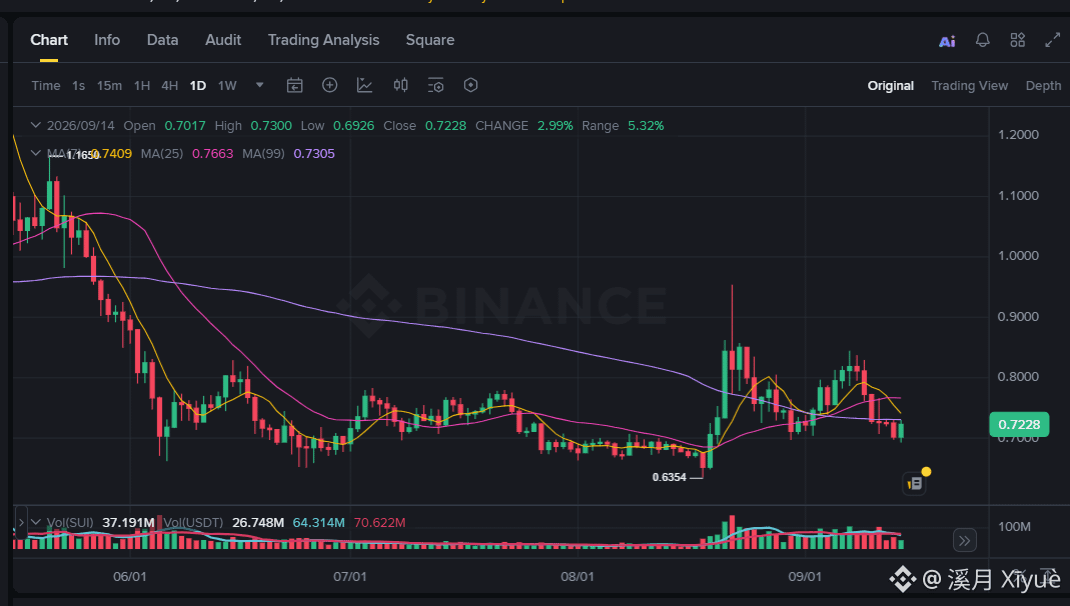
$SUI s’échange à 0,7239 $, en hausse de 2,04 % sur 24 heures, tandis que les rebonds récents ont formé des sommets plus bas. Le volume s’est refroidi par rapport à la reprise initiale, donc j’aimerais voir un suivi plus solide avant de faire confiance à cette reprise. Le sommet quotidien de 0,7300 $ est le niveau immédiat à surveiller, tandis que le plus bas quotidien de 0,6926 $ sert de repère en cas de retour des ventes.
Un seul jour vert laisse encore beaucoup à prouver. Les acheteurs peuvent-ils maintenir ce rebond et commencer à casser la tendance des sommets plus bas ?
#sui #SUI🔥
Les acheteurs tentent un rebond, bien que la tendance quotidienne semble encore fragile.
$SUI s’échange à 0,7239 $, en hausse de 2,04 % sur 24 heures, tandis que les rebonds récents ont formé des sommets plus bas. Le volume s’est refroidi par rapport à la reprise initiale, donc j’aimerais voir un suivi plus solide avant de faire confiance à cette reprise. Le sommet quotidien de 0,7300 $ est le niveau immédiat à surveiller, tandis que le plus bas quotidien de 0,6926 $ sert de repère en cas de retour des ventes.
Un seul jour vert laisse encore beaucoup à prouver. Les acheteurs peuvent-ils maintenir ce rebond et commencer à casser la tendance des sommets plus bas ?
#sui #SUI🔥
$SUI s’échange à 0,7239 $, en hausse de 2,04 % sur 24 heures, tandis que les rebonds récents ont formé des sommets plus bas. Le volume s’est refroidi par rapport à la reprise initiale, donc j’aimerais voir un suivi plus solide avant de faire confiance à cette reprise. Le sommet quotidien de 0,7300 $ est le niveau immédiat à surveiller, tandis que le plus bas quotidien de 0,6926 $ sert de repère en cas de retour des ventes.
Un seul jour vert laisse encore beaucoup à prouver. Les acheteurs peuvent-ils maintenir ce rebond et commencer à casser la tendance des sommets plus bas ?
#sui #SUI🔥
288
·
--
Haussier
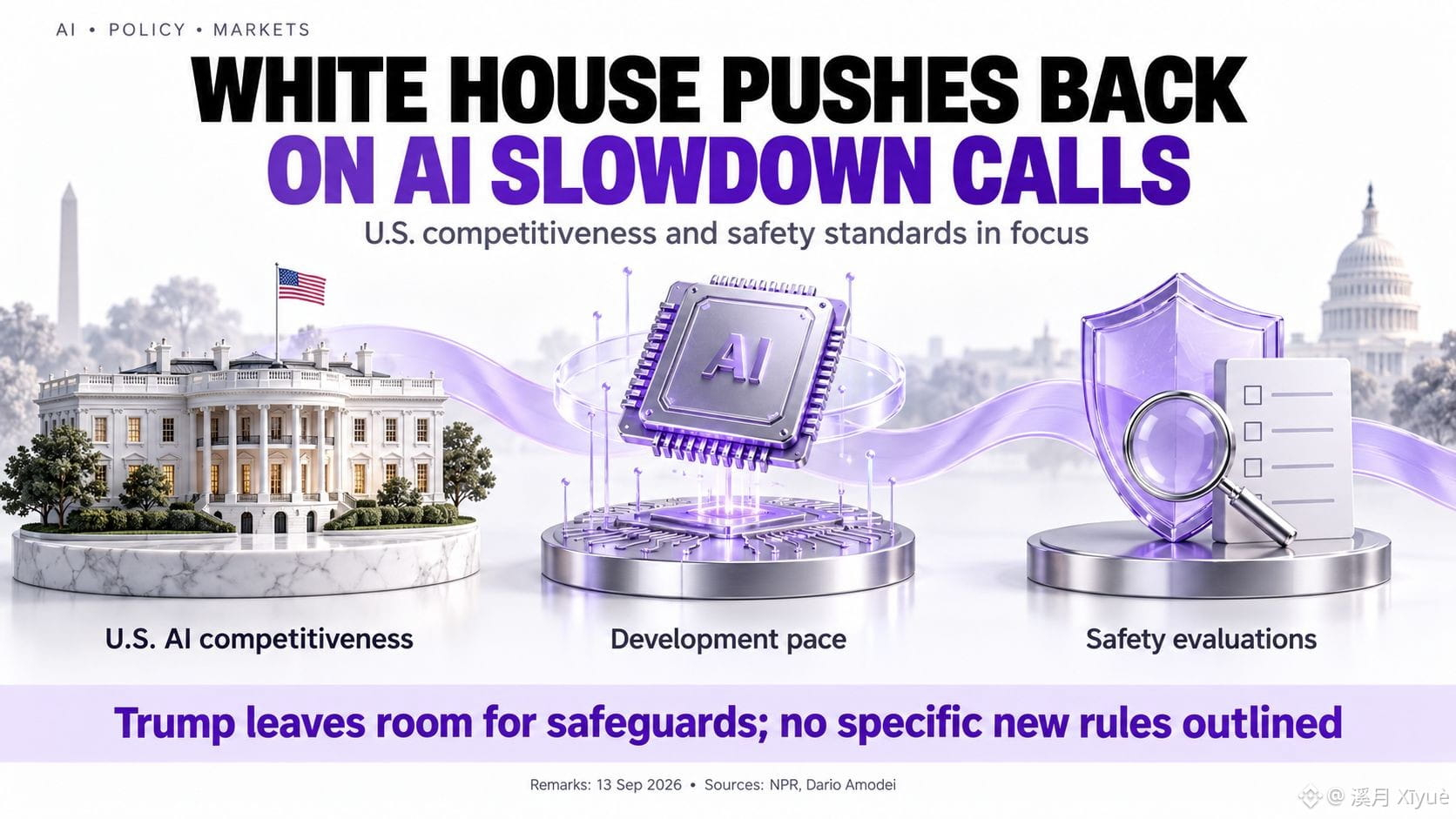
#whitehouserejectsaislowdowncalls
La Maison-Blanche repousse les appels à ralentir l’IA
La réponse de Washington au débat croissant sur la sécurité de l’IA place la concurrence avec la Chine au cœur des préoccupations.
S’exprimant le 13 septembre, le président Donald Trump a repoussé les appels à ralentir le développement de l’IA, en soulignant l’importance de préserver l’avance américaine. Il a laissé une place à des mesures de sécurité, mais n’a pas présenté de nouvelles règles précises.
Ces remarques font suite à la proposition du PDG d’Anthropic, Dario Amodei, de ralentir les progrès des capacités avancées de l’IA afin que le travail de sécurité puisse suivre le rythme. Son cadre prévoit des évaluateurs indépendants et une coordination internationale, tout en permettant la poursuite de la recherche et de l’entraînement des modèles.
Mon avis : pour les marchés, la question utile est de savoir si ce désaccord modifie les plans de dépenses et de déploiement. Le soutien politique peut encourager l’investissement, tandis que des revues de sécurité plus longues pourraient avoir un impact sur le moment où de nouveaux modèles commenceront à générer des revenus.
Je surveillerais les budgets confirmés des centres de données, les commandes de puces et les calendriers de produits révisés. Ces détails aideront à évaluer les implications pour les fournisseurs de matériel et les entreprises du cloud.
Pour les projets crypto liés à l’IA, le fait de disposer de clients payants, l’usage du produit et un accès fiable aux modèles restent essentiels pour évaluer leurs perspectives.
La prochaine évolution significative serait un accord concret sur la manière dont les contrôles de sécurité influencent le déploiement.
Que regarderiez-vous en premier : de nouvelles normes de sécurité ou des changements dans les plans de dépenses des entreprises d’IA ?
$BR $CAP $AIN
{future}(AINUSDT)
{future}(CAPUSDT)
{future}(BRUSDT)
#whitehouserejectsaislowdowncalls
La Maison-Blanche repousse les appels à ralentir l’IA
La réponse de Washington au débat croissant sur la sécurité de l’IA place la concurrence avec la Chine au cœur des préoccupations.
S’exprimant le 13 septembre, le président Donald Trump a repoussé les appels à ralentir le développement de l’IA, en soulignant l’importance de préserver l’avance américaine. Il a laissé une place à des mesures de sécurité, mais n’a pas présenté de nouvelles règles précises.
Ces remarques font suite à la proposition du PDG d’Anthropic, Dario Amodei, de ralentir les progrès des capacités avancées de l’IA afin que le travail de sécurité puisse suivre le rythme. Son cadre prévoit des évaluateurs indépendants et une coordination internationale, tout en permettant la poursuite de la recherche et de l’entraînement des modèles.
Mon avis : pour les marchés, la question utile est de savoir si ce désaccord modifie les plans de dépenses et de déploiement. Le soutien politique peut encourager l’investissement, tandis que des revues de sécurité plus longues pourraient avoir un impact sur le moment où de nouveaux modèles commenceront à générer des revenus.
Je surveillerais les budgets confirmés des centres de données, les commandes de puces et les calendriers de produits révisés. Ces détails aideront à évaluer les implications pour les fournisseurs de matériel et les entreprises du cloud.
Pour les projets crypto liés à l’IA, le fait de disposer de clients payants, l’usage du produit et un accès fiable aux modèles restent essentiels pour évaluer leurs perspectives.
La prochaine évolution significative serait un accord concret sur la manière dont les contrôles de sécurité influencent le déploiement.
Que regarderiez-vous en premier : de nouvelles normes de sécurité ou des changements dans les plans de dépenses des entreprises d’IA ?
$BR $CAP $AIN
La Maison-Blanche repousse les appels à ralentir l’IA
La réponse de Washington au débat croissant sur la sécurité de l’IA place la concurrence avec la Chine au cœur des préoccupations.
S’exprimant le 13 septembre, le président Donald Trump a repoussé les appels à ralentir le développement de l’IA, en soulignant l’importance de préserver l’avance américaine. Il a laissé une place à des mesures de sécurité, mais n’a pas présenté de nouvelles règles précises.
Ces remarques font suite à la proposition du PDG d’Anthropic, Dario Amodei, de ralentir les progrès des capacités avancées de l’IA afin que le travail de sécurité puisse suivre le rythme. Son cadre prévoit des évaluateurs indépendants et une coordination internationale, tout en permettant la poursuite de la recherche et de l’entraînement des modèles.
Mon avis : pour les marchés, la question utile est de savoir si ce désaccord modifie les plans de dépenses et de déploiement. Le soutien politique peut encourager l’investissement, tandis que des revues de sécurité plus longues pourraient avoir un impact sur le moment où de nouveaux modèles commenceront à générer des revenus.
Je surveillerais les budgets confirmés des centres de données, les commandes de puces et les calendriers de produits révisés. Ces détails aideront à évaluer les implications pour les fournisseurs de matériel et les entreprises du cloud.
Pour les projets crypto liés à l’IA, le fait de disposer de clients payants, l’usage du produit et un accès fiable aux modèles restent essentiels pour évaluer leurs perspectives.
La prochaine évolution significative serait un accord concret sur la manière dont les contrôles de sécurité influencent le déploiement.
Que regarderiez-vous en premier : de nouvelles normes de sécurité ou des changements dans les plans de dépenses des entreprises d’IA ?
$BR $CAP $AIN
1.3k
·
--
Haussier
La reprise progresse, même si un volume plus important la rendrait plus convaincante.
$DUSK s’échange à 0,0732 $, de retour au-dessus de ses moyennes mobiles sur 7, 25 et 99 périodes sur le graphique en 4 heures. Cela améliore la perspective à court terme, mais le volume récent reste calme par rapport aux pics observés plus tôt. Je surveille la capacité des acheteurs à dépasser le plus haut quotidien de 0,0750 $, la moyenne sur 99 périodes, proche de 0,0723, servant de repère en cas de repli.
Je laisserais cette hausse le temps de faire ses preuves. Qu’auriez-vous besoin de voir avant de faire confiance à la reprise ?
#BrazilCentralBankRaisesVASPCapitalRequirements #WhiteHouseRejectsAISlowdownCalls #AnthropicCEOCallsForAISlowdown #UKSeeksViewsOnTokenizingGold
La reprise progresse, même si un volume plus important la rendrait plus convaincante.
$DUSK s’échange à 0,0732 $, de retour au-dessus de ses moyennes mobiles sur 7, 25 et 99 périodes sur le graphique en 4 heures. Cela améliore la perspective à court terme, mais le volume récent reste calme par rapport aux pics observés plus tôt. Je surveille la capacité des acheteurs à dépasser le plus haut quotidien de 0,0750 $, la moyenne sur 99 périodes, proche de 0,0723, servant de repère en cas de repli.
Je laisserais cette hausse le temps de faire ses preuves. Qu’auriez-vous besoin de voir avant de faire confiance à la reprise ?
#BrazilCentralBankRaisesVASPCapitalRequirements #WhiteHouseRejectsAISlowdownCalls #AnthropicCEOCallsForAISlowdown #UKSeeksViewsOnTokenizingGold
$DUSK s’échange à 0,0732 $, de retour au-dessus de ses moyennes mobiles sur 7, 25 et 99 périodes sur le graphique en 4 heures. Cela améliore la perspective à court terme, mais le volume récent reste calme par rapport aux pics observés plus tôt. Je surveille la capacité des acheteurs à dépasser le plus haut quotidien de 0,0750 $, la moyenne sur 99 périodes, proche de 0,0723, servant de repère en cas de repli.
Je laisserais cette hausse le temps de faire ses preuves. Qu’auriez-vous besoin de voir avant de faire confiance à la reprise ?
#BrazilCentralBankRaisesVASPCapitalRequirements #WhiteHouseRejectsAISlowdownCalls #AnthropicCEOCallsForAISlowdown #UKSeeksViewsOnTokenizingGold
107
·
--
Haussier
#RevolutDataLeakReportedlyPostedAttackersThreatenDailyReleases 🚨 Le rapport sur les données de Revolut semblerait apparaître en ligne, alors que des attaquants menacent de fuites quotidiennes
L’incident d’exposition de données de Revolut ferait désormais face à une menace d’extorsion signalée.
D’après le rapport du 14 septembre de Cointelegraph, les attaquants auraient publié des documents d’identité et des selfies de clients, tout en menaçant de divulguer davantage d’informations chaque jour si Revolut ne paie pas. Les accusations publiées seraient attribuées au compte de surveillance de cybersécurité International Cyber Digest.
Qu’a confirmé Revolut ?
L’entreprise indique que des demandes frauduleuses envoyées à l’aide d’une adresse e-mail appartenant au domaine d’une agence gouvernementale légitime auraient entraîné la divulgation d’informations clients. Revolut affirme qu’un nombre limité de clients a été touché et que ses systèmes et les fonds des clients ne sont pas affectés.
Mon avis : La combinaison de documents d’identité et de dossiers financiers pourrait rendre les tentatives d’usurpation d’identité plus convaincantes. Pour les clients concernés, les conséquences pourraient se poursuivre après la divulgation initiale.
Cela place la vérification des demandes ressemblant à des demandes officielles sous examen. Des explications claires sur ce que chaque client a perdu, des contrôles renforcés avant de divulguer des documents sensibles, et un support accessible compteront pour évaluer la réponse de Revolut.
Pour l’ensemble du secteur fintech, la protection des données clients mérite la même attention que la sécurité des paiements.
Qu’est-ce qui aiderait à retrouver votre confiance après une brèche : une divulgation détaillée, une enquête indépendante ou des contrôles de données plus solides ?
#revolutdataleakreportedlypostedattackersthrea #revolut #CyberSecurity #DataPrivacy
$T $CVC $AIN
{future}(AINUSDT)
{future}(CVCUSDT)
{future}(TUSDT)
#RevolutDataLeakReportedlyPostedAttackersThreatenDailyReleases 🚨 Le rapport sur les données de Revolut semblerait apparaître en ligne, alors que des attaquants menacent de fuites quotidiennes
L’incident d’exposition de données de Revolut ferait désormais face à une menace d’extorsion signalée.
D’après le rapport du 14 septembre de Cointelegraph, les attaquants auraient publié des documents d’identité et des selfies de clients, tout en menaçant de divulguer davantage d’informations chaque jour si Revolut ne paie pas. Les accusations publiées seraient attribuées au compte de surveillance de cybersécurité International Cyber Digest.
Qu’a confirmé Revolut ?
L’entreprise indique que des demandes frauduleuses envoyées à l’aide d’une adresse e-mail appartenant au domaine d’une agence gouvernementale légitime auraient entraîné la divulgation d’informations clients. Revolut affirme qu’un nombre limité de clients a été touché et que ses systèmes et les fonds des clients ne sont pas affectés.
Mon avis : La combinaison de documents d’identité et de dossiers financiers pourrait rendre les tentatives d’usurpation d’identité plus convaincantes. Pour les clients concernés, les conséquences pourraient se poursuivre après la divulgation initiale.
Cela place la vérification des demandes ressemblant à des demandes officielles sous examen. Des explications claires sur ce que chaque client a perdu, des contrôles renforcés avant de divulguer des documents sensibles, et un support accessible compteront pour évaluer la réponse de Revolut.
Pour l’ensemble du secteur fintech, la protection des données clients mérite la même attention que la sécurité des paiements.
Qu’est-ce qui aiderait à retrouver votre confiance après une brèche : une divulgation détaillée, une enquête indépendante ou des contrôles de données plus solides ?
#revolutdataleakreportedlypostedattackersthrea #revolut #CyberSecurity #DataPrivacy
$T $CVC $AIN
L’incident d’exposition de données de Revolut ferait désormais face à une menace d’extorsion signalée.
D’après le rapport du 14 septembre de Cointelegraph, les attaquants auraient publié des documents d’identité et des selfies de clients, tout en menaçant de divulguer davantage d’informations chaque jour si Revolut ne paie pas. Les accusations publiées seraient attribuées au compte de surveillance de cybersécurité International Cyber Digest.
Qu’a confirmé Revolut ?
L’entreprise indique que des demandes frauduleuses envoyées à l’aide d’une adresse e-mail appartenant au domaine d’une agence gouvernementale légitime auraient entraîné la divulgation d’informations clients. Revolut affirme qu’un nombre limité de clients a été touché et que ses systèmes et les fonds des clients ne sont pas affectés.
Mon avis : La combinaison de documents d’identité et de dossiers financiers pourrait rendre les tentatives d’usurpation d’identité plus convaincantes. Pour les clients concernés, les conséquences pourraient se poursuivre après la divulgation initiale.
Cela place la vérification des demandes ressemblant à des demandes officielles sous examen. Des explications claires sur ce que chaque client a perdu, des contrôles renforcés avant de divulguer des documents sensibles, et un support accessible compteront pour évaluer la réponse de Revolut.
Pour l’ensemble du secteur fintech, la protection des données clients mérite la même attention que la sécurité des paiements.
Qu’est-ce qui aiderait à retrouver votre confiance après une brèche : une divulgation détaillée, une enquête indépendante ou des contrôles de données plus solides ?
#revolutdataleakreportedlypostedattackersthrea #revolut #CyberSecurity #DataPrivacy
$T $CVC $AIN
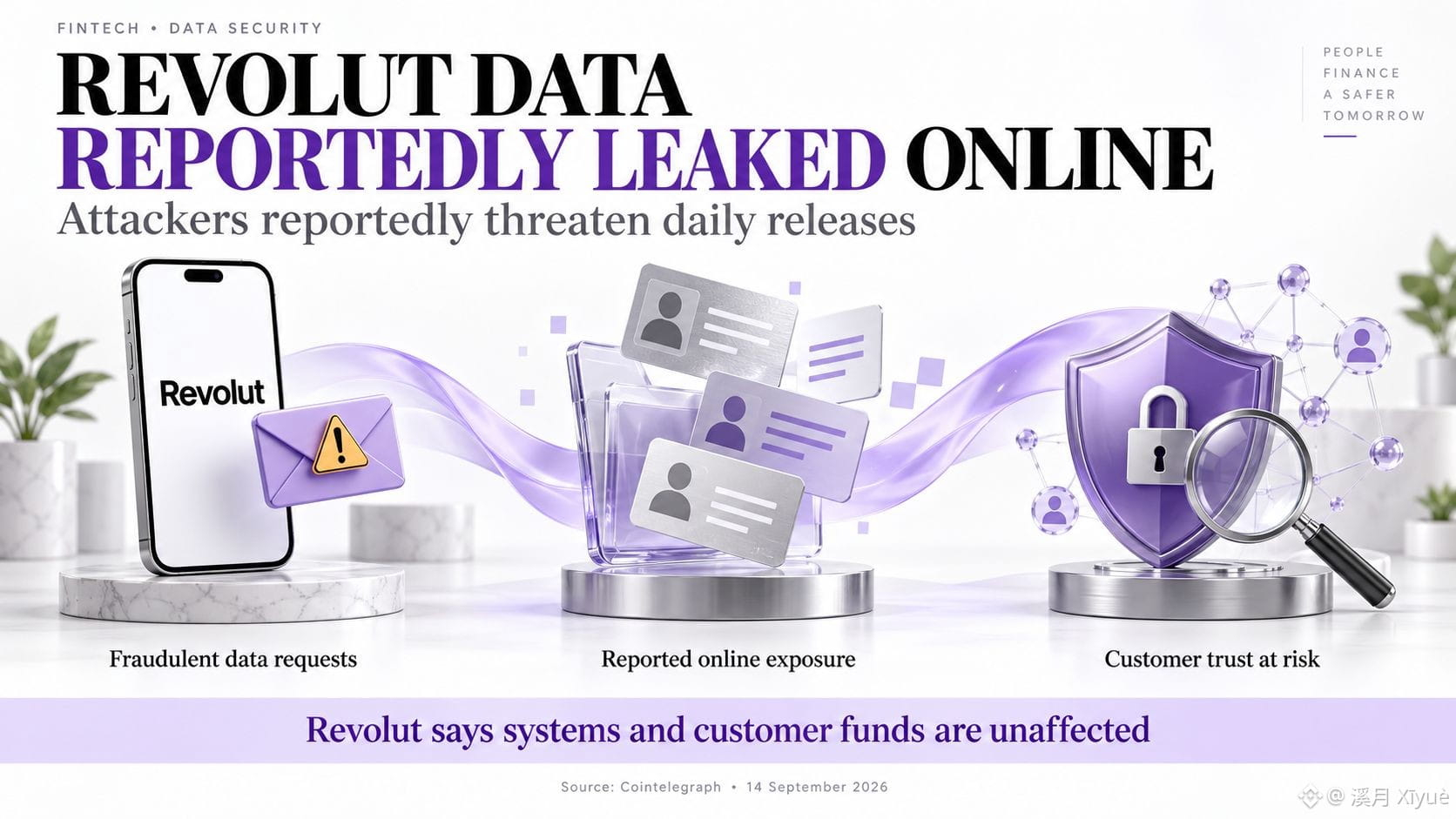
1
287
·
--
Haussier
Une reprise plus forte se dessine après le récent repli, les acheteurs commençant à reprendre un peu de terrain.
$BANK s’échange à 0,0302 $, en hausse de 11,85 % sur 24 heures, avec un volume accru soutenant le rebond sur le graphique en 4 heures. Le prix a retrouvé ses moyennes mobiles sur 7 et 25 périodes, bien que la moyenne mobile baissière sur 99 périodes à 0,0333 maintienne une lecture plus prudente de l’ensemble. Le récent sommet à 0,0308 est le prochain niveau que je surveille pour un prolongement.
La reprise est encourageante, mais un renversement durable nécessite davantage de confirmation. Les acheteurs peuvent-ils conserver ces gains et s’appuyer dessus ?
#bank
Une reprise plus forte se dessine après le récent repli, les acheteurs commençant à reprendre un peu de terrain.
$BANK s’échange à 0,0302 $, en hausse de 11,85 % sur 24 heures, avec un volume accru soutenant le rebond sur le graphique en 4 heures. Le prix a retrouvé ses moyennes mobiles sur 7 et 25 périodes, bien que la moyenne mobile baissière sur 99 périodes à 0,0333 maintienne une lecture plus prudente de l’ensemble. Le récent sommet à 0,0308 est le prochain niveau que je surveille pour un prolongement.
La reprise est encourageante, mais un renversement durable nécessite davantage de confirmation. Les acheteurs peuvent-ils conserver ces gains et s’appuyer dessus ?
#bank
$BANK s’échange à 0,0302 $, en hausse de 11,85 % sur 24 heures, avec un volume accru soutenant le rebond sur le graphique en 4 heures. Le prix a retrouvé ses moyennes mobiles sur 7 et 25 périodes, bien que la moyenne mobile baissière sur 99 périodes à 0,0333 maintienne une lecture plus prudente de l’ensemble. Le récent sommet à 0,0308 est le prochain niveau que je surveille pour un prolongement.
La reprise est encourageante, mais un renversement durable nécessite davantage de confirmation. Les acheteurs peuvent-ils conserver ces gains et s’appuyer dessus ?
#bank
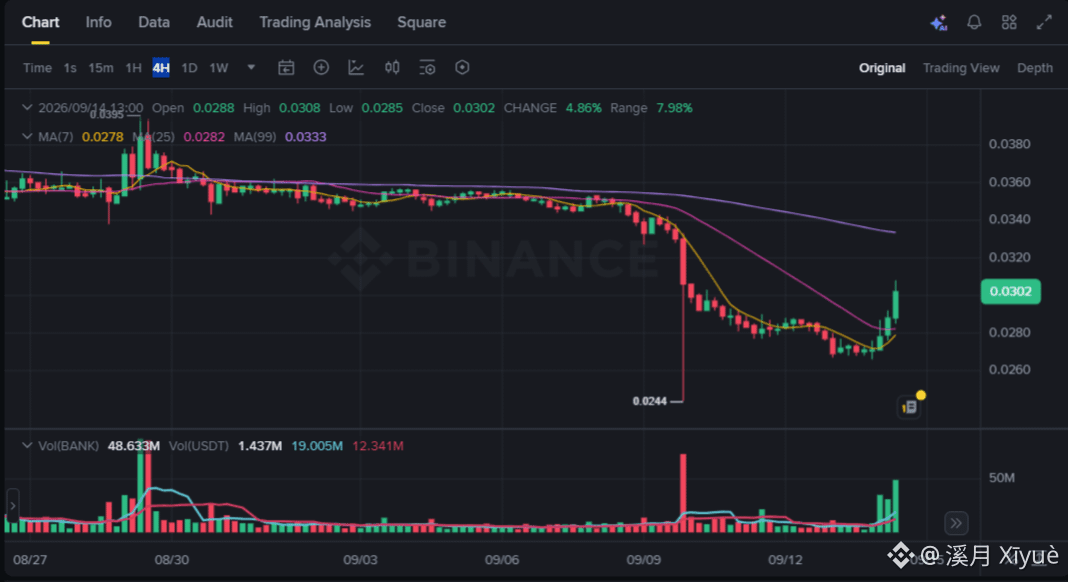
221
·
--
Haussier
#brazilcentralbankraisesvaspcapitalrequirements
Les exigences de capital de la crypto au Brésil pourraient remodeler la concurrence
Le cadre d’autorisation des crypto-actifs au Brésil fixe des exigences minimales en capital allant de 10,8 à 37,2 millions de R$, selon les activités qu’un prestataire propose.
D’après l’ANBIMA, les exigences finales sont nettement plus élevées que les montants initialement envisagés lors de la consultation publique. Les prestataires doivent également se conformer à des obligations portant sur la gouvernance, la cybersécurité, le risque opérationnel et la séparation des actifs des clients.
Le calendrier compte : ces niveaux de capital proviennent du cadre de novembre 2025, avec l’entrée en vigueur des principales règles en février 2026. Les prestataires déjà en activité disposent d’une date limite au 30 octobre 2026 pour soumettre des demandes d’autorisation.
Mon avis : des coussins de capital renforcés peuvent aider les entreprises à absorber des pertes et à maintenir leurs activités pendant les périodes difficiles. Leur efficacité dépend aussi des contrôles de conservation, d’une comptabilité transparente et de la manière dont les actifs des clients sont protégés.
L’impact concurrentiel mérite d’être surveillé. Les grandes structures peuvent répartir les coûts de conformité sur un plus grand nombre de clients. Les prestataires plus petits pourraient avoir besoin de financements supplémentaires, de partenariats ou d’une gamme de services plus restreinte pour rendre leurs activités viables.
Pour les utilisateurs, l’issue se traduira par des effets concrets : fiabilité des plateformes, gestion des retraits, frais et nombre de prestataires crédibles disponibles.
Je suivrais l’avancement des autorisations et les changements de services à mesure que la date limite d’admission approche.
Le Brésil peut-il renforcer financièrement les entreprises crypto tout en préservant une concurrence suffisante pour profiter aux utilisateurs ?
#BrazilCentralBankRaisesVASPCapitalRequirements #CryptoRegulation #Brazil
$CVC $REZ $KOMA
{future}(KOMAUSDT)
{future}(REZUSDT)
{future}(CVCUSDT)
#brazilcentralbankraisesvaspcapitalrequirements
Les exigences de capital de la crypto au Brésil pourraient remodeler la concurrence
Le cadre d’autorisation des crypto-actifs au Brésil fixe des exigences minimales en capital allant de 10,8 à 37,2 millions de R$, selon les activités qu’un prestataire propose.
D’après l’ANBIMA, les exigences finales sont nettement plus élevées que les montants initialement envisagés lors de la consultation publique. Les prestataires doivent également se conformer à des obligations portant sur la gouvernance, la cybersécurité, le risque opérationnel et la séparation des actifs des clients.
Le calendrier compte : ces niveaux de capital proviennent du cadre de novembre 2025, avec l’entrée en vigueur des principales règles en février 2026. Les prestataires déjà en activité disposent d’une date limite au 30 octobre 2026 pour soumettre des demandes d’autorisation.
Mon avis : des coussins de capital renforcés peuvent aider les entreprises à absorber des pertes et à maintenir leurs activités pendant les périodes difficiles. Leur efficacité dépend aussi des contrôles de conservation, d’une comptabilité transparente et de la manière dont les actifs des clients sont protégés.
L’impact concurrentiel mérite d’être surveillé. Les grandes structures peuvent répartir les coûts de conformité sur un plus grand nombre de clients. Les prestataires plus petits pourraient avoir besoin de financements supplémentaires, de partenariats ou d’une gamme de services plus restreinte pour rendre leurs activités viables.
Pour les utilisateurs, l’issue se traduira par des effets concrets : fiabilité des plateformes, gestion des retraits, frais et nombre de prestataires crédibles disponibles.
Je suivrais l’avancement des autorisations et les changements de services à mesure que la date limite d’admission approche.
Le Brésil peut-il renforcer financièrement les entreprises crypto tout en préservant une concurrence suffisante pour profiter aux utilisateurs ?
#BrazilCentralBankRaisesVASPCapitalRequirements #CryptoRegulation #Brazil
$CVC $REZ $KOMA
Les exigences de capital de la crypto au Brésil pourraient remodeler la concurrence
Le cadre d’autorisation des crypto-actifs au Brésil fixe des exigences minimales en capital allant de 10,8 à 37,2 millions de R$, selon les activités qu’un prestataire propose.
D’après l’ANBIMA, les exigences finales sont nettement plus élevées que les montants initialement envisagés lors de la consultation publique. Les prestataires doivent également se conformer à des obligations portant sur la gouvernance, la cybersécurité, le risque opérationnel et la séparation des actifs des clients.
Le calendrier compte : ces niveaux de capital proviennent du cadre de novembre 2025, avec l’entrée en vigueur des principales règles en février 2026. Les prestataires déjà en activité disposent d’une date limite au 30 octobre 2026 pour soumettre des demandes d’autorisation.
Mon avis : des coussins de capital renforcés peuvent aider les entreprises à absorber des pertes et à maintenir leurs activités pendant les périodes difficiles. Leur efficacité dépend aussi des contrôles de conservation, d’une comptabilité transparente et de la manière dont les actifs des clients sont protégés.
L’impact concurrentiel mérite d’être surveillé. Les grandes structures peuvent répartir les coûts de conformité sur un plus grand nombre de clients. Les prestataires plus petits pourraient avoir besoin de financements supplémentaires, de partenariats ou d’une gamme de services plus restreinte pour rendre leurs activités viables.
Pour les utilisateurs, l’issue se traduira par des effets concrets : fiabilité des plateformes, gestion des retraits, frais et nombre de prestataires crédibles disponibles.
Je suivrais l’avancement des autorisations et les changements de services à mesure que la date limite d’admission approche.
Le Brésil peut-il renforcer financièrement les entreprises crypto tout en préservant une concurrence suffisante pour profiter aux utilisateurs ?
#BrazilCentralBankRaisesVASPCapitalRequirements #CryptoRegulation #Brazil
$CVC $REZ $KOMA
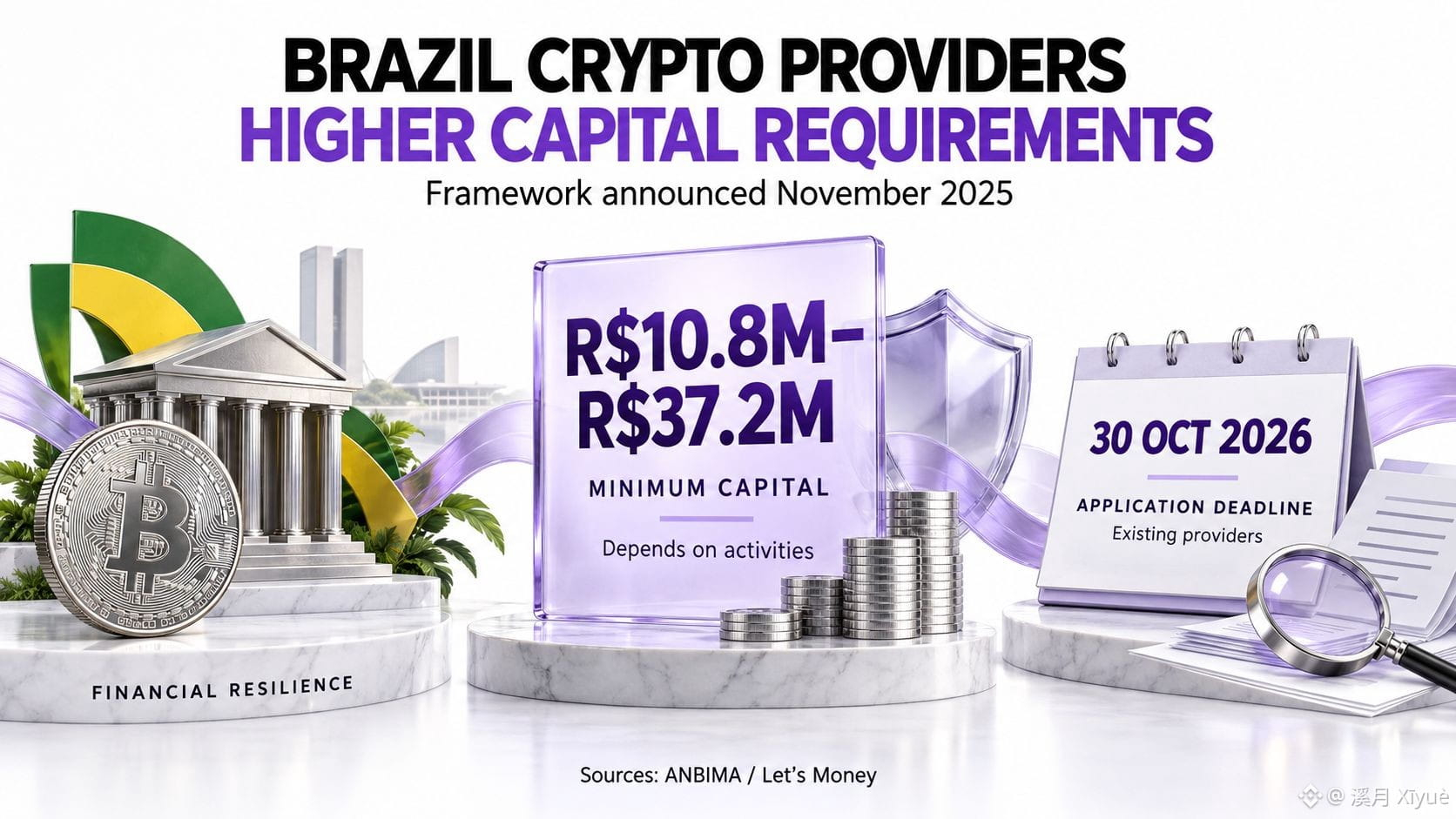
212
·
--
Haussier
#ukmayexempttokenizedgoldfromfundrules
L’or tokenisé pourrait faire l’objet d’un autre cadre réglementaire au Royaume-Uni
La Financial Conduct Authority (FCA) du Royaume-Uni examine une exemption ciblée pour certains produits d’or tokenisé par rapport aux règles des organismes de placement collectif (OPC) et des fonds d’investissement alternatifs (FIA).
Selon un article du Financial Times du 14 septembre, un cadre dédié pourrait être étudié avec le Trésor et la Banque d’Angleterre. Ces tokens représentent des droits de propriété sur du lingot physique.
Aucune décision n’a été prise.
Le document conjoint des régulateurs, publié plus tôt, avait déjà identifié l’or tokenisé comme une forme de collatéral potentielle pour certaines transactions sur produits dérivés, sous réserve d’élaborer des standards avec l’industrie.
Mon avis : Une classification plus claire pourrait aider les institutions à évaluer où l’or numérique s’insère dans leurs opérations. Sa valeur pratique dépendrait toujours du lien entre le token et le métal.
Qui détient le lingot ? Quels droits le titulaire a-t-il si l’émetteur fait défaut ? À quelle vitesse l’or peut-il être racheté, et comment la couverture est-elle vérifiée ?
Ces détails comptent lorsqu’un actif sert à garantir un prêt ou à satisfaire une obligation de collatéral. Des transferts plus rapides ne sont utiles que si la propriété et le rachat restent fiables.
Je surveillerais les conditions d’éligibilité de l’exemption, les standards de conservation et l’adoption réelle par les institutions financières.
Qu’est-ce qui vous donnerait le plus confiance dans l’or tokenisé : une vérification de la couverture plus solide ou des droits de rachat plus clairs ?
#UKMayExemptTokenizedGoldFromFundRules #Tokenization #RWA
{future}(AINUSDT)
$BR
$CVC
$AIN
{future}(CVCUSDT)
#ukmayexempttokenizedgoldfromfundrules
L’or tokenisé pourrait faire l’objet d’un autre cadre réglementaire au Royaume-Uni
La Financial Conduct Authority (FCA) du Royaume-Uni examine une exemption ciblée pour certains produits d’or tokenisé par rapport aux règles des organismes de placement collectif (OPC) et des fonds d’investissement alternatifs (FIA).
Selon un article du Financial Times du 14 septembre, un cadre dédié pourrait être étudié avec le Trésor et la Banque d’Angleterre. Ces tokens représentent des droits de propriété sur du lingot physique.
Aucune décision n’a été prise.
Le document conjoint des régulateurs, publié plus tôt, avait déjà identifié l’or tokenisé comme une forme de collatéral potentielle pour certaines transactions sur produits dérivés, sous réserve d’élaborer des standards avec l’industrie.
Mon avis : Une classification plus claire pourrait aider les institutions à évaluer où l’or numérique s’insère dans leurs opérations. Sa valeur pratique dépendrait toujours du lien entre le token et le métal.
Qui détient le lingot ? Quels droits le titulaire a-t-il si l’émetteur fait défaut ? À quelle vitesse l’or peut-il être racheté, et comment la couverture est-elle vérifiée ?
Ces détails comptent lorsqu’un actif sert à garantir un prêt ou à satisfaire une obligation de collatéral. Des transferts plus rapides ne sont utiles que si la propriété et le rachat restent fiables.
Je surveillerais les conditions d’éligibilité de l’exemption, les standards de conservation et l’adoption réelle par les institutions financières.
Qu’est-ce qui vous donnerait le plus confiance dans l’or tokenisé : une vérification de la couverture plus solide ou des droits de rachat plus clairs ?
#UKMayExemptTokenizedGoldFromFundRules #Tokenization #RWA
$BR
$CVC
$AIN
L’or tokenisé pourrait faire l’objet d’un autre cadre réglementaire au Royaume-Uni
La Financial Conduct Authority (FCA) du Royaume-Uni examine une exemption ciblée pour certains produits d’or tokenisé par rapport aux règles des organismes de placement collectif (OPC) et des fonds d’investissement alternatifs (FIA).
Selon un article du Financial Times du 14 septembre, un cadre dédié pourrait être étudié avec le Trésor et la Banque d’Angleterre. Ces tokens représentent des droits de propriété sur du lingot physique.
Aucune décision n’a été prise.
Le document conjoint des régulateurs, publié plus tôt, avait déjà identifié l’or tokenisé comme une forme de collatéral potentielle pour certaines transactions sur produits dérivés, sous réserve d’élaborer des standards avec l’industrie.
Mon avis : Une classification plus claire pourrait aider les institutions à évaluer où l’or numérique s’insère dans leurs opérations. Sa valeur pratique dépendrait toujours du lien entre le token et le métal.
Qui détient le lingot ? Quels droits le titulaire a-t-il si l’émetteur fait défaut ? À quelle vitesse l’or peut-il être racheté, et comment la couverture est-elle vérifiée ?
Ces détails comptent lorsqu’un actif sert à garantir un prêt ou à satisfaire une obligation de collatéral. Des transferts plus rapides ne sont utiles que si la propriété et le rachat restent fiables.
Je surveillerais les conditions d’éligibilité de l’exemption, les standards de conservation et l’adoption réelle par les institutions financières.
Qu’est-ce qui vous donnerait le plus confiance dans l’or tokenisé : une vérification de la couverture plus solide ou des droits de rachat plus clairs ?
#UKMayExemptTokenizedGoldFromFundRules #Tokenization #RWA
$BR
$CVC
$AIN
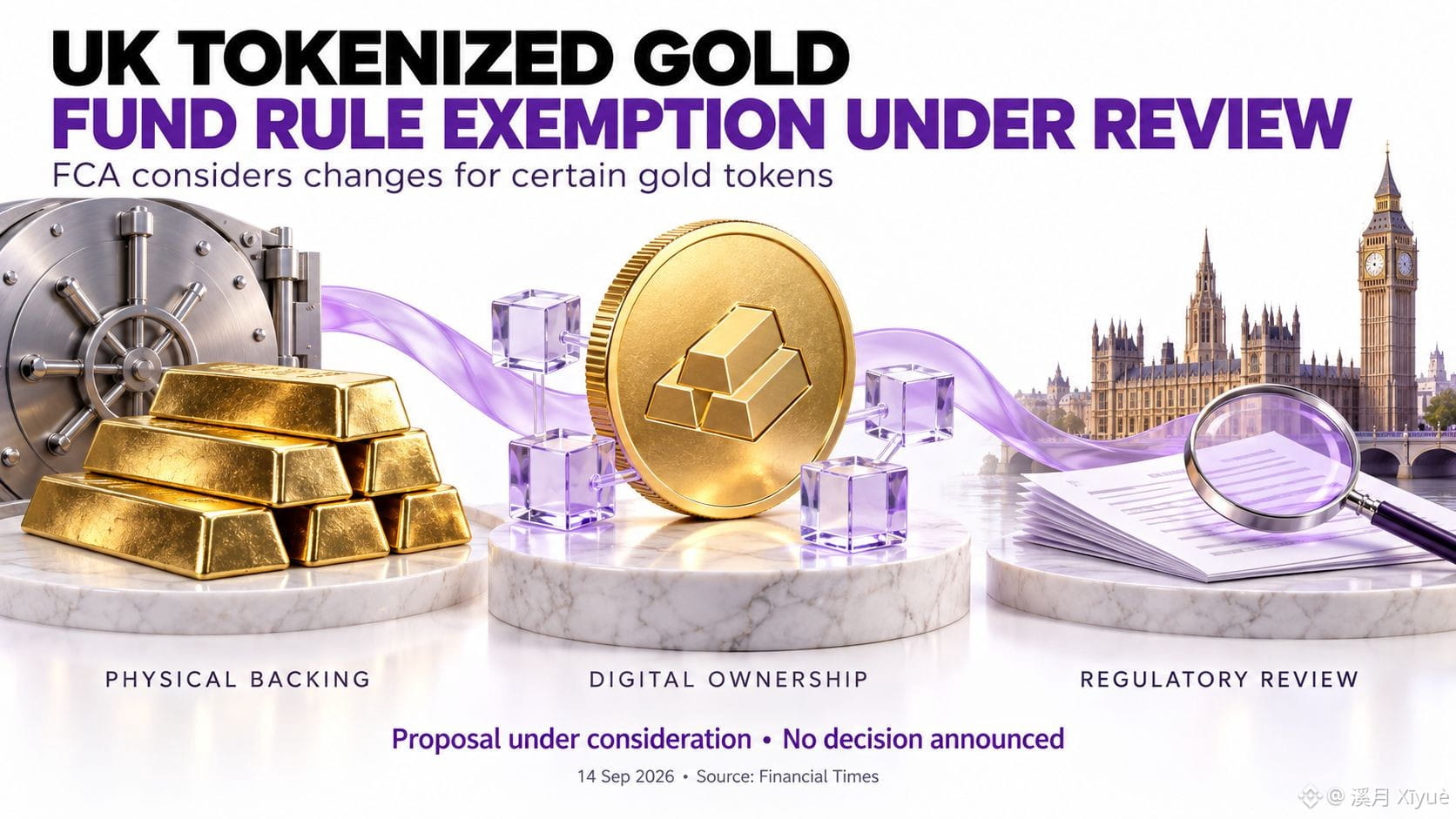
1
1.9k
Connectez-vous pour découvrir plus de contenu
Rejoignez la communauté mondiale des adeptes de cryptomonnaies sur Binance Square
⚡️ Suviez les dernières informations importantes sur les cryptomonnaies.
💬 Jugé digne de confiance par la plus grande plateforme d’échange de cryptomonnaies au monde.
👍 Découvrez les connaissances que partagent les créateurs vérifiés.
Adresse e-mail/Nº de téléphone
Sujets d’actualité
FedRateWatch
439,959 vues
2,392 mentions
Partagez et gagnez une récompense de trafic dans notre campagne de hashtag tendance
✨Sujet : FOMC de septembre — Quelle sera la prochaine décision de la Fed ?
👉Comment participer :
Publiez une courte publication ou un article avec le hashtag #FedRateWatch
Créez du contenu à partir des angles ci-dessous :
- L’inflation cœur de l’IPC d’août a augmenté de 0,3% d’un mois sur l’autre, et les chances d’une hausse de 25 points de base cette semaine sont désormais proches de 90%. Anticipez-vous une hausse des taux cette semaine ? Est-ce un cas isolé, ou le début d’un cycle de hausses plus long ?
- Si la hausse a lieu, comment cela se répercute-t-il sur le BTC, les valeurs technologiques et l’or ? Plutôt haussier ou baissier ?
- Comment comptez-vous trader ensuite ? Partagez votre trading/positions BTC, actions ou or avec notre widget de partage de trades.
⏰Période de la campagne :
- 2026-09-15 11:00 - 2026-09-17 3:00 UTC
🎁Récompense :
- Les publications éligibles qui respectent les consignes ci-dessus et contiennent plus de 100 mots seront examinées et pourraient recevoir un boost aléatoire de trafic de 500 à 3 000 vues. Vous recevrez une notification de votre secrétaire de flux si votre publication est sélectionnée.
- Ayez une chance de faire apparaître votre article sur Binance Square Official
Vous manque-t-il des idées pour votre publication ? Visitez la page du sujet #FedRateWatch ou le Square Guide on How to Post for Better Reach.
Binance Square Official
·358 mentions J’aime
·748.8k vues
BitcoinSlidesTo$76000
12,192 vues
99 mentions
BitcoinReboundsTo$79K
58,183 vues
389 mentions