
#stablecoins
stablecoins
7.5M views
27,227 Discussing
Hot
Latest

·
--
🤔🙏🤷♂️💵💵💵💵Binance × Circle: A Bigger Stablecoin Story?
Binance has invested $100 million in Circle, strengthening its partnership with the issuer of USDC.
The move puts more attention on the growing role of stablecoins in the crypto ecosystem.
💡 Why it matters:
• USDC is one of the major dollar-pegged stablecoins
• Binance and Circle are expanding their collaboration
• Stablecoin adoption continues to be an important crypto-market theme
The bigger question: Could stablecoins become an even bigger part of crypto’s next phase?
#Binance 🤪#Circle #USDC" #crypto #Stablecoins
🤔🙏🤷♂️💵💵💵💵Binance × Circle: A Bigger Stablecoin Story?
Binance has invested $100 million in Circle, strengthening its partnership with the issuer of USDC.
The move puts more attention on the growing role of stablecoins in the crypto ecosystem.
💡 Why it matters:
• USDC is one of the major dollar-pegged stablecoins
• Binance and Circle are expanding their collaboration
• Stablecoin adoption continues to be an important crypto-market theme
The bigger question: Could stablecoins become an even bigger part of crypto’s next phase?
#Binance 🤪#Circle #USDC" #crypto #Stablecoins
Binance has invested $100 million in Circle, strengthening its partnership with the issuer of USDC.
The move puts more attention on the growing role of stablecoins in the crypto ecosystem.
💡 Why it matters:
• USDC is one of the major dollar-pegged stablecoins
• Binance and Circle are expanding their collaboration
• Stablecoin adoption continues to be an important crypto-market theme
The bigger question: Could stablecoins become an even bigger part of crypto’s next phase?
#Binance 🤪#Circle #USDC" #crypto #Stablecoins


32

·
--
If you're still treating $USDC as just another stablecoin, stop now.
Traders keep getting blindsided by these big institutional plays and lose out on better liquidity and yields. You hold the wrong stable and watch opportunities slip away while others adapt.
Binance dropped $100 million into Circle with a 5-year deal to roll out $USDC across every product they have. That's not pocket change.
Skeptics will say $USDT still crushes it in volume and this is just noise. They have a point on current dominance. But this kind of capital and long-term integration on the biggest exchange makes me think $USDC is positioned to take real share, and $BNB users stand to gain from more options in the ecosystem.
What's your take on whether this actually shifts the stablecoin balance?
#USDC #Binance #Stablecoins
If you're still treating $USDC as just another stablecoin, stop now.
Traders keep getting blindsided by these big institutional plays and lose out on better liquidity and yields. You hold the wrong stable and watch opportunities slip away while others adapt.
Binance dropped $100 million into Circle with a 5-year deal to roll out $USDC across every product they have. That's not pocket change.
Skeptics will say $USDT still crushes it in volume and this is just noise. They have a point on current dominance. But this kind of capital and long-term integration on the biggest exchange makes me think $USDC is positioned to take real share, and $BNB users stand to gain from more options in the ecosystem.
What's your take on whether this actually shifts the stablecoin balance?
#USDC #Binance #Stablecoins
Traders keep getting blindsided by these big institutional plays and lose out on better liquidity and yields. You hold the wrong stable and watch opportunities slip away while others adapt.
Binance dropped $100 million into Circle with a 5-year deal to roll out $USDC across every product they have. That's not pocket change.
Skeptics will say $USDT still crushes it in volume and this is just noise. They have a point on current dominance. But this kind of capital and long-term integration on the biggest exchange makes me think $USDC is positioned to take real share, and $BNB users stand to gain from more options in the ecosystem.
What's your take on whether this actually shifts the stablecoin balance?
#USDC #Binance #Stablecoins

128

·
--
Why is nobody talking about the massive split happening inside stablecoins right now?
Most traders look only at green or red charts while completely missing where the real liquidity is moving, often getting caught on the wrong side of sudden market moves.
While aggregate stablecoin reserves barely moved at $43.59B, up just 0.33% WoW, the underlying flows tell a completely different story. Binance saw $USDT on Ethereum hit a daily netflow average of +$80.8M, pushing its monthly inflows up 17.7% and its Exchange Supply Ratio to a six-month high of 0.4349. At the exact same time, $USDC went the opposite way with daily net outflows averaging -$70.0M, jumping 27.9%.
This is not new capital entering the ecosystem, but an aggressive internal rotation into $USDT that smart money is using to prep their trading ammunition. If you want to stay ahead of the next volatility spike, stop tracking total reserves and start monitoring specific asset divergence.
What is your take on this rotation?
#CryptoTrading #Stablecoins #OnChainData
Why is nobody talking about the massive split happening inside stablecoins right now?
Most traders look only at green or red charts while completely missing where the real liquidity is moving, often getting caught on the wrong side of sudden market moves.
While aggregate stablecoin reserves barely moved at $43.59B, up just 0.33% WoW, the underlying flows tell a completely different story. Binance saw $USDT on Ethereum hit a daily netflow average of +$80.8M, pushing its monthly inflows up 17.7% and its Exchange Supply Ratio to a six-month high of 0.4349. At the exact same time, $USDC went the opposite way with daily net outflows averaging -$70.0M, jumping 27.9%.
This is not new capital entering the ecosystem, but an aggressive internal rotation into $USDT that smart money is using to prep their trading ammunition. If you want to stay ahead of the next volatility spike, stop tracking total reserves and start monitoring specific asset divergence.
What is your take on this rotation?
#CryptoTrading #Stablecoins #OnChainData
Most traders look only at green or red charts while completely missing where the real liquidity is moving, often getting caught on the wrong side of sudden market moves.
While aggregate stablecoin reserves barely moved at $43.59B, up just 0.33% WoW, the underlying flows tell a completely different story. Binance saw $USDT on Ethereum hit a daily netflow average of +$80.8M, pushing its monthly inflows up 17.7% and its Exchange Supply Ratio to a six-month high of 0.4349. At the exact same time, $USDC went the opposite way with daily net outflows averaging -$70.0M, jumping 27.9%.
This is not new capital entering the ecosystem, but an aggressive internal rotation into $USDT that smart money is using to prep their trading ammunition. If you want to stay ahead of the next volatility spike, stop tracking total reserves and start monitoring specific asset divergence.
What is your take on this rotation?
#CryptoTrading #Stablecoins #OnChainData


everyone thinks fat $USDT inflows on binance means dry powder stacking for a rip but actually this week's numbers tell a different story ngl.
been watching traders get wrecked chasing that stables flooding in equals pump incoming narrative. you see the green netflow, ape in, then get caught holding bags while capital quietly rotates out the other door.
look at the week ending sep 21. $USDT on $ETH averaged +$80.8m netflow a day, highest in six months. exchange supply ratio hit 0.4349, also a six-month high. sounds bullish until you clock $USDC bleeding -$70.0m a day on the same books. usdt inflows rose 17.7% mom while usdc outflows jumped 27.9%. aggregate reserves only ticked up 0.33% wow to $43.59b.
that's not new money coming in. that's rotation between stables. one unverified take is capital just moving between them. if you only watch $USDT you miss the bleed and get the whole tape wrong.
where do you think this rotation goes from here?
#stablecoins #crypto #onchain
everyone thinks fat $USDT inflows on binance means dry powder stacking for a rip but actually this week's numbers tell a different story ngl.
been watching traders get wrecked chasing that stables flooding in equals pump incoming narrative. you see the green netflow, ape in, then get caught holding bags while capital quietly rotates out the other door.
look at the week ending sep 21. $USDT on $ETH averaged +$80.8m netflow a day, highest in six months. exchange supply ratio hit 0.4349, also a six-month high. sounds bullish until you clock $USDC bleeding -$70.0m a day on the same books. usdt inflows rose 17.7% mom while usdc outflows jumped 27.9%. aggregate reserves only ticked up 0.33% wow to $43.59b.
that's not new money coming in. that's rotation between stables. one unverified take is capital just moving between them. if you only watch $USDT you miss the bleed and get the whole tape wrong.
where do you think this rotation goes from here?
#stablecoins #crypto #onchain
been watching traders get wrecked chasing that stables flooding in equals pump incoming narrative. you see the green netflow, ape in, then get caught holding bags while capital quietly rotates out the other door.
look at the week ending sep 21. $USDT on $ETH averaged +$80.8m netflow a day, highest in six months. exchange supply ratio hit 0.4349, also a six-month high. sounds bullish until you clock $USDC bleeding -$70.0m a day on the same books. usdt inflows rose 17.7% mom while usdc outflows jumped 27.9%. aggregate reserves only ticked up 0.33% wow to $43.59b.
that's not new money coming in. that's rotation between stables. one unverified take is capital just moving between them. if you only watch $USDT you miss the bleed and get the whole tape wrong.
where do you think this rotation goes from here?
#stablecoins #crypto #onchain

3
·
--
Picture this: while the broader market seemed quiet last week, smart money was quietly orchestrating a massive rotation right under our noses.
Most traders miss major trend shifts or get chopped up because they only look at candlestick charts, completely missing where liquidity is actually moving. Trading without tracking stablecoin migration is like flying blind into a storm.
In the week ending September 21, Binance saw daily net inflows for $USDT on Ethereum average +$80.8M, marking the highest level across a six-month window. At the exact same time, $USDC netflows averaged -$70.0M per day. Inflow for $USDT jumped 17.7% month-over-month, while $USDC outflows surged 27.9%, driving the $USDT exchange supply ratio to a six-month high of 0.4349 even as aggregate stablecoin reserves barely budged, up just 0.33% week-over-week to $43.59B.
This sharp divergence looks a lot like previous pre-rally cycles where capital consolidated into high-velocity base pairs right before volatility kicked off. Rather than fresh fiat entering the ecosystem, existing capital appears to be rotating out of conservative storage and directly into active trading inventory. When market participants aggressively swap into $USDT on exchange rails, they are usually preparing to take positions rather than sit on the sidelines.
Are you seeing this rotation as positioning for a bigger market move, or just routine liquidity management?
#CryptoTrading #Stablecoins #OnChainData
Picture this: while the broader market seemed quiet last week, smart money was quietly orchestrating a massive rotation right under our noses.
Most traders miss major trend shifts or get chopped up because they only look at candlestick charts, completely missing where liquidity is actually moving. Trading without tracking stablecoin migration is like flying blind into a storm.
In the week ending September 21, Binance saw daily net inflows for $USDT on Ethereum average +$80.8M, marking the highest level across a six-month window. At the exact same time, $USDC netflows averaged -$70.0M per day. Inflow for $USDT jumped 17.7% month-over-month, while $USDC outflows surged 27.9%, driving the $USDT exchange supply ratio to a six-month high of 0.4349 even as aggregate stablecoin reserves barely budged, up just 0.33% week-over-week to $43.59B.
This sharp divergence looks a lot like previous pre-rally cycles where capital consolidated into high-velocity base pairs right before volatility kicked off. Rather than fresh fiat entering the ecosystem, existing capital appears to be rotating out of conservative storage and directly into active trading inventory. When market participants aggressively swap into $USDT on exchange rails, they are usually preparing to take positions rather than sit on the sidelines.
Are you seeing this rotation as positioning for a bigger market move, or just routine liquidity management?
#CryptoTrading #Stablecoins #OnChainData
Most traders miss major trend shifts or get chopped up because they only look at candlestick charts, completely missing where liquidity is actually moving. Trading without tracking stablecoin migration is like flying blind into a storm.
In the week ending September 21, Binance saw daily net inflows for $USDT on Ethereum average +$80.8M, marking the highest level across a six-month window. At the exact same time, $USDC netflows averaged -$70.0M per day. Inflow for $USDT jumped 17.7% month-over-month, while $USDC outflows surged 27.9%, driving the $USDT exchange supply ratio to a six-month high of 0.4349 even as aggregate stablecoin reserves barely budged, up just 0.33% week-over-week to $43.59B.
This sharp divergence looks a lot like previous pre-rally cycles where capital consolidated into high-velocity base pairs right before volatility kicked off. Rather than fresh fiat entering the ecosystem, existing capital appears to be rotating out of conservative storage and directly into active trading inventory. When market participants aggressively swap into $USDT on exchange rails, they are usually preparing to take positions rather than sit on the sidelines.
Are you seeing this rotation as positioning for a bigger market move, or just routine liquidity management?
#CryptoTrading #Stablecoins #OnChainData

2
If you're still treating $USDT and $USDC as the same, stop now.
Most traders miss these flow splits and end up on the wrong side of the next move, watching buying power build while they sit idle or get shaken out.
Last week $USDT net inflows averaged $80.8 million a day, the highest in six months, while $USDC flowed out at $70 million daily. That gap is not noise. Inflows for $USDT rose 17.7 percent month over month as $USDC outflows jumped 27.9 percent. Total stablecoin reserves barely moved, up 0.33 percent to $43.59 billion, and the $USDT exchange supply ratio hit a six-month high of 0.4349.
Some will call this simple rotation between stables with no price impact. I see it as traders consolidating dry powder into $USDT, possibly rotating off $USDC, which has often preceded actual market action.
Where do you think this capital is heading next?
#Stablecoins #Crypto #USDT
If you're still treating $USDT and $USDC as the same, stop now.
Most traders miss these flow splits and end up on the wrong side of the next move, watching buying power build while they sit idle or get shaken out.
Last week $USDT net inflows averaged $80.8 million a day, the highest in six months, while $USDC flowed out at $70 million daily. That gap is not noise. Inflows for $USDT rose 17.7 percent month over month as $USDC outflows jumped 27.9 percent. Total stablecoin reserves barely moved, up 0.33 percent to $43.59 billion, and the $USDT exchange supply ratio hit a six-month high of 0.4349.
Some will call this simple rotation between stables with no price impact. I see it as traders consolidating dry powder into $USDT, possibly rotating off $USDC , which has often preceded actual market action.
Where do you think this capital is heading next?
#Stablecoins #Crypto #USDT
Most traders miss these flow splits and end up on the wrong side of the next move, watching buying power build while they sit idle or get shaken out.
Last week $USDT net inflows averaged $80.8 million a day, the highest in six months, while $USDC flowed out at $70 million daily. That gap is not noise. Inflows for $USDT rose 17.7 percent month over month as $USDC outflows jumped 27.9 percent. Total stablecoin reserves barely moved, up 0.33 percent to $43.59 billion, and the $USDT exchange supply ratio hit a six-month high of 0.4349.
Some will call this simple rotation between stables with no price impact. I see it as traders consolidating dry powder into $USDT, possibly rotating off $USDC , which has often preceded actual market action.
Where do you think this capital is heading next?
#Stablecoins #Crypto #USDT

3
·
--
More stablecoins hitting exchanges usually signals incoming buying power, but the latest on-chain numbers paint a much riskier picture.
Most traders get trapped buying fake breakouts because they track total liquidity blindly without checking how that money is actually behaving. It is one of the easiest ways to end up holding the bag when market momentum abruptly stalls.
Looking at the flow data for the week ending Sep. 21, Binance saw $USDT on $ETH surge with an average netflow of +$80.8M daily, marking a six-month peak alongside a 17.7% monthly inflow jump. At first glance, that looks like massive bullish dry powder waiting to pump the market.
Here is the catch. At the exact same time, $USDC experienced heavy outflows averaging -$70.0M per day, up 27.9% over the month. When you zoom out, total stablecoin reserves barely budged at $43.59B, creeping up just 0.33% week-over-week. Instead of fresh capital entering the ecosystem, we are mostly witnessing an internal rotation and collateral reshuffle, even with the exchange supply ratio climbing to a six-month high of 0.4349. Mistaking simple rebalancing for genuine market demand can leave your positions completely unprotected if the order book suddenly empties out.
Are you treating this shift as real buying pressure, or are you bracing for a liquidity trap?
#CryptoAnalysis #Stablecoins #OnChainData
More stablecoins hitting exchanges usually signals incoming buying power, but the latest on-chain numbers paint a much riskier picture.
Most traders get trapped buying fake breakouts because they track total liquidity blindly without checking how that money is actually behaving. It is one of the easiest ways to end up holding the bag when market momentum abruptly stalls.
Looking at the flow data for the week ending Sep. 21, Binance saw $USDT on $ETH surge with an average netflow of +$80.8M daily, marking a six-month peak alongside a 17.7% monthly inflow jump. At first glance, that looks like massive bullish dry powder waiting to pump the market.
Here is the catch. At the exact same time, $USDC experienced heavy outflows averaging -$70.0M per day, up 27.9% over the month. When you zoom out, total stablecoin reserves barely budged at $43.59B, creeping up just 0.33% week-over-week. Instead of fresh capital entering the ecosystem, we are mostly witnessing an internal rotation and collateral reshuffle, even with the exchange supply ratio climbing to a six-month high of 0.4349. Mistaking simple rebalancing for genuine market demand can leave your positions completely unprotected if the order book suddenly empties out.
Are you treating this shift as real buying pressure, or are you bracing for a liquidity trap?
#CryptoAnalysis #Stablecoins #OnChainData
Most traders get trapped buying fake breakouts because they track total liquidity blindly without checking how that money is actually behaving. It is one of the easiest ways to end up holding the bag when market momentum abruptly stalls.
Looking at the flow data for the week ending Sep. 21, Binance saw $USDT on $ETH surge with an average netflow of +$80.8M daily, marking a six-month peak alongside a 17.7% monthly inflow jump. At first glance, that looks like massive bullish dry powder waiting to pump the market.
Here is the catch. At the exact same time, $USDC experienced heavy outflows averaging -$70.0M per day, up 27.9% over the month. When you zoom out, total stablecoin reserves barely budged at $43.59B, creeping up just 0.33% week-over-week. Instead of fresh capital entering the ecosystem, we are mostly witnessing an internal rotation and collateral reshuffle, even with the exchange supply ratio climbing to a six-month high of 0.4349. Mistaking simple rebalancing for genuine market demand can leave your positions completely unprotected if the order book suddenly empties out.
Are you treating this shift as real buying pressure, or are you bracing for a liquidity trap?
#CryptoAnalysis #Stablecoins #OnChainData

5
A massive hundred-million-dollar institutional deal might look like a win for adoption on paper, but it actually signals a major shift in how liquidity risk is concentrated. Most traders assume stablecoins are completely bulletproof until a depeg or regulatory freeze suddenly traps their capital mid-trade.
When massive capital flows into strategic partnerships like this hundred-million-dollar expansion, the underlying liquidity dynamics change fast. Integrating $USDC deeper into core trading pairs and yield products over a five-year horizon means your everyday exposure is quietly shifting away from fragmented liquidity pools into centralized reserve pipelines.
If history has shown us anything with assets like $USDT or algorithmic pairs, heavy dependence on a single issuer framework creates invisible single points of failure. The moment redemption bottlenecks hit or regulatory audits tighten, the contagion spreads directly into spot order books and derivatives collateral before retail can even react. Having all your dry powder tied up under one compliance umbrella might save on slippage today, but it completely removes your fallback options when things get volatile.
How are you splitting your stablecoin exposure across your portfolio right now?
#CryptoRisk #Stablecoins #Liquidity
A massive hundred-million-dollar institutional deal might look like a win for adoption on paper, but it actually signals a major shift in how liquidity risk is concentrated. Most traders assume stablecoins are completely bulletproof until a depeg or regulatory freeze suddenly traps their capital mid-trade.
When massive capital flows into strategic partnerships like this hundred-million-dollar expansion, the underlying liquidity dynamics change fast. Integrating $USDC deeper into core trading pairs and yield products over a five-year horizon means your everyday exposure is quietly shifting away from fragmented liquidity pools into centralized reserve pipelines.
If history has shown us anything with assets like $USDT or algorithmic pairs, heavy dependence on a single issuer framework creates invisible single points of failure. The moment redemption bottlenecks hit or regulatory audits tighten, the contagion spreads directly into spot order books and derivatives collateral before retail can even react. Having all your dry powder tied up under one compliance umbrella might save on slippage today, but it completely removes your fallback options when things get volatile.
How are you splitting your stablecoin exposure across your portfolio right now?
#CryptoRisk #Stablecoins #Liquidity
When massive capital flows into strategic partnerships like this hundred-million-dollar expansion, the underlying liquidity dynamics change fast. Integrating $USDC deeper into core trading pairs and yield products over a five-year horizon means your everyday exposure is quietly shifting away from fragmented liquidity pools into centralized reserve pipelines.
If history has shown us anything with assets like $USDT or algorithmic pairs, heavy dependence on a single issuer framework creates invisible single points of failure. The moment redemption bottlenecks hit or regulatory audits tighten, the contagion spreads directly into spot order books and derivatives collateral before retail can even react. Having all your dry powder tied up under one compliance umbrella might save on slippage today, but it completely removes your fallback options when things get volatile.
How are you splitting your stablecoin exposure across your portfolio right now?
#CryptoRisk #Stablecoins #Liquidity

93

🚨 Holding $USDP on Binance? Don’t ignore September 24.
Binance will completely stop USDP Spot trading tomorrow at 03:00 UTC and remove its Spot pairs.
Important deadlines:
• Binance Convert: USDP removed Sept. 24 at 02:00 UTC
• Spot trading: ends Sept. 24 at 03:00 UTC
• Open Spot orders: automatically cancelled
• Deposits: no longer credited after Sept. 25 at 03:00 UTC
• Withdrawals: supported until Nov. 24 at 03:00 UTC
• Binance says remaining delisted tokens may later be converted into stablecoins, but this is not guaranteed.
One detail is important:
A Binance delisting does not by itself prove that an asset is fraudulent, insolvent, halal or haram.
Binance says its delisting reviews consider numerous factors including liquidity, development activity, transparency, security, regulatory requirements, tokenomics and project/team changes. It does not identify one specific factor as the reason for USDP’s removal.
🕌 For Muslim investors, there is a useful lesson here:
Stablecoins should not automatically be treated as interchangeable simply because each targets $1.
Research the issuer, reserve structure, redemption mechanism and the contracts through which you hold or earn returns on them.
I’m not declaring USDP halal or haram.
📌 “Stable” describes a price objective—not everything about the asset’s structure or risk.
Do you research the reserves behind a stablecoin before holding it?
#Stablecoins #CryptoEducation #HalalCryptoGuide
Educational only — not financial advice or a fatwa.
{spot}(USDPUSDT)
🚨 Holding $USDP on Binance? Don’t ignore September 24.
Binance will completely stop USDP Spot trading tomorrow at 03:00 UTC and remove its Spot pairs.
Important deadlines:
• Binance Convert: USDP removed Sept. 24 at 02:00 UTC
• Spot trading: ends Sept. 24 at 03:00 UTC
• Open Spot orders: automatically cancelled
• Deposits: no longer credited after Sept. 25 at 03:00 UTC
• Withdrawals: supported until Nov. 24 at 03:00 UTC
• Binance says remaining delisted tokens may later be converted into stablecoins, but this is not guaranteed.
One detail is important:
A Binance delisting does not by itself prove that an asset is fraudulent, insolvent, halal or haram.
Binance says its delisting reviews consider numerous factors including liquidity, development activity, transparency, security, regulatory requirements, tokenomics and project/team changes. It does not identify one specific factor as the reason for USDP’s removal.
🕌 For Muslim investors, there is a useful lesson here:
Stablecoins should not automatically be treated as interchangeable simply because each targets $1.
Research the issuer, reserve structure, redemption mechanism and the contracts through which you hold or earn returns on them.
I’m not declaring USDP halal or haram.
📌 “Stable” describes a price objective—not everything about the asset’s structure or risk.
Do you research the reserves behind a stablecoin before holding it?
#Stablecoins #CryptoEducation #HalalCryptoGuide
Educational only — not financial advice or a fatwa.
Binance will completely stop USDP Spot trading tomorrow at 03:00 UTC and remove its Spot pairs.
Important deadlines:
• Binance Convert: USDP removed Sept. 24 at 02:00 UTC
• Spot trading: ends Sept. 24 at 03:00 UTC
• Open Spot orders: automatically cancelled
• Deposits: no longer credited after Sept. 25 at 03:00 UTC
• Withdrawals: supported until Nov. 24 at 03:00 UTC
• Binance says remaining delisted tokens may later be converted into stablecoins, but this is not guaranteed.
One detail is important:
A Binance delisting does not by itself prove that an asset is fraudulent, insolvent, halal or haram.
Binance says its delisting reviews consider numerous factors including liquidity, development activity, transparency, security, regulatory requirements, tokenomics and project/team changes. It does not identify one specific factor as the reason for USDP’s removal.
🕌 For Muslim investors, there is a useful lesson here:
Stablecoins should not automatically be treated as interchangeable simply because each targets $1.
Research the issuer, reserve structure, redemption mechanism and the contracts through which you hold or earn returns on them.
I’m not declaring USDP halal or haram.
📌 “Stable” describes a price objective—not everything about the asset’s structure or risk.
Do you research the reserves behind a stablecoin before holding it?
#Stablecoins #CryptoEducation #HalalCryptoGuide
Educational only — not financial advice or a fatwa.

7

Stablecoin Liquidity & Market Support
💵 Stablecoin Inflows Keep Market Grounded! 🛡️
Even during consolidation, cross-border stablecoin transactions and exchange reserves remain exceptionally high.
🔍 Why It Matters:
• High stablecoin volume signals strong buying power waiting on the sidelines.
• Protects market structure from deep macro crashes.
• Great environment for executing tight 1%–2% scalps on major pairs.
Always keep cash/USDC ready for sudden dip-buying opportunities! 💸
#BinanceSquare #USDC #Stablecoins #MarketAnalysis #Binance
Stablecoin Liquidity & Market Support
💵 Stablecoin Inflows Keep Market Grounded! 🛡️
Even during consolidation, cross-border stablecoin transactions and exchange reserves remain exceptionally high.
🔍 Why It Matters:
• High stablecoin volume signals strong buying power waiting on the sidelines.
• Protects market structure from deep macro crashes.
• Great environment for executing tight 1%–2% scalps on major pairs.
Always keep cash/USDC ready for sudden dip-buying opportunities! 💸
#BinanceSquare #USDC #Stablecoins #MarketAnalysis #Binance
💵 Stablecoin Inflows Keep Market Grounded! 🛡️
Even during consolidation, cross-border stablecoin transactions and exchange reserves remain exceptionally high.
🔍 Why It Matters:
• High stablecoin volume signals strong buying power waiting on the sidelines.
• Protects market structure from deep macro crashes.
• Great environment for executing tight 1%–2% scalps on major pairs.
Always keep cash/USDC ready for sudden dip-buying opportunities! 💸
#BinanceSquare #USDC #Stablecoins #MarketAnalysis #Binance
4

·
--
🚨 Visa survey shows US stablecoin adoption could rise with bank-like protections, as firms prepare for the GENIUS Act. This regulatory clarity may boost confidence in compliant digital assets like GENIUSUSDT. Watch for increased institutional interest if protections materialize.
What impact will the GENIUS Act have on stablecoin demand?
#Stablecoins
$GENIUS #TradingSignal #CryptoAnalysis
🚨 Visa survey shows US stablecoin adoption could rise with bank-like protections, as firms prepare for the GENIUS Act. This regulatory clarity may boost confidence in compliant digital assets like GENIUSUSDT. Watch for increased institutional interest if protections materialize.
What impact will the GENIUS Act have on stablecoin demand?
#Stablecoins
$GENIUS #TradingSignal #CryptoAnalysis
What impact will the GENIUS Act have on stablecoin demand?
#Stablecoins
$GENIUS #TradingSignal #CryptoAnalysis

7
Binance Wallet now offers up to 4.75% APR just for HOLDING stablecoins.
But there is one sentence in Binance’s announcement I think Muslim investors should read before judging the product:
The rewards are funded by promotional contributions from partners — Binance says they are NOT yield returns on the eligible stablecoin itself.
The new Hold to Earn supports:
• U — ~1.5% APR
• USDe — ~4.75% APR
• USDS — ~3.6% APR
There is no staking or lock-up. Assets remain self-custodied in Binance Keyless Wallet and can still be transferred, swapped or traded. Rewards are calculated from the lowest hourly balance each day and can be claimed weekly.
🕌 Why does this distinction matter for Muslim investors?
Seeing the word “APR” does not by itself explain the contractual source of a return.
Before reaching a Shariah conclusion, investigate:
• Who funds the reward?
• Why are they paying it?
• Is it promotional, lending income, staking income or something else?
• Does holding the underlying stablecoin itself involve additional structures that require review?
• What contractual conditions apply?
I am not declaring Hold to Earn, U, USDe or USDS halal or haram.
The useful lesson is simpler:
📌 Don’t judge a crypto product from the APR label alone. Trace where the money actually comes from.
Would you like me to break down USDe vs USDS vs ordinary fiat-backed stablecoins next?
#IslamicFinance #Stablecoins #HalalCryptoGuide
Educational only — not financial advice or a fatwa.
Binance Wallet now offers up to 4.75% APR just for HOLDING stablecoins.
But there is one sentence in Binance’s announcement I think Muslim investors should read before judging the product:
The rewards are funded by promotional contributions from partners — Binance says they are NOT yield returns on the eligible stablecoin itself.
The new Hold to Earn supports:
• U — ~1.5% APR
• USDe — ~4.75% APR
• USDS — ~3.6% APR
There is no staking or lock-up. Assets remain self-custodied in Binance Keyless Wallet and can still be transferred, swapped or traded. Rewards are calculated from the lowest hourly balance each day and can be claimed weekly.
🕌 Why does this distinction matter for Muslim investors?
Seeing the word “APR” does not by itself explain the contractual source of a return.
Before reaching a Shariah conclusion, investigate:
• Who funds the reward?
• Why are they paying it?
• Is it promotional, lending income, staking income or something else?
• Does holding the underlying stablecoin itself involve additional structures that require review?
• What contractual conditions apply?
I am not declaring Hold to Earn, U, USDe or USDS halal or haram.
The useful lesson is simpler:
📌 Don’t judge a crypto product from the APR label alone. Trace where the money actually comes from.
Would you like me to break down USDe vs USDS vs ordinary fiat-backed stablecoins next?
#IslamicFinance #Stablecoins #HalalCryptoGuide
Educational only — not financial advice or a fatwa.
But there is one sentence in Binance’s announcement I think Muslim investors should read before judging the product:
The rewards are funded by promotional contributions from partners — Binance says they are NOT yield returns on the eligible stablecoin itself.
The new Hold to Earn supports:
• U — ~1.5% APR
• USDe — ~4.75% APR
• USDS — ~3.6% APR
There is no staking or lock-up. Assets remain self-custodied in Binance Keyless Wallet and can still be transferred, swapped or traded. Rewards are calculated from the lowest hourly balance each day and can be claimed weekly.
🕌 Why does this distinction matter for Muslim investors?
Seeing the word “APR” does not by itself explain the contractual source of a return.
Before reaching a Shariah conclusion, investigate:
• Who funds the reward?
• Why are they paying it?
• Is it promotional, lending income, staking income or something else?
• Does holding the underlying stablecoin itself involve additional structures that require review?
• What contractual conditions apply?
I am not declaring Hold to Earn, U, USDe or USDS halal or haram.
The useful lesson is simpler:
📌 Don’t judge a crypto product from the APR label alone. Trace where the money actually comes from.
Would you like me to break down USDe vs USDS vs ordinary fiat-backed stablecoins next?
#IslamicFinance #Stablecoins #HalalCryptoGuide
Educational only — not financial advice or a fatwa.
24


·
--
BINANCE WALLET LAUNCHES HOLD TO EARN WITH UP TO 4.75% APR
Binance Wallet just introduced Hold to Earn, letting users earn rewards simply by holding eligible stablecoins.
No staking.
No lockup.
No extra smart contract interactions.
At launch:
$U → 1.5% APR on BSC
$USDE → 4.75% APR on Ethereum
$USDS → 3.6% APR on Ethereum
The setup is straightforward: activate Hold to Earn in Binance Wallet, hold at least 10 U, USDe, or USDS, and rewards start calculating after the required 24-hour holding period.
Rewards are calculated daily based on the lowest hourly snapshot balance and can be claimed every Tuesday after 00:00 UTC. Network gas fees apply.
One important detail: Binance says these rewards come from promotional contributions by partners, and are not yield generated by the underlying stablecoins. Rates can also change.
And Binance Wallet says a $150,000 U Swap & Earn leaderboard campaign is coming next.
Would you park stablecoins in Hold to Earn for rewards? 👀
#BinanceWallet #Stablecoins
BINANCE WALLET LAUNCHES HOLD TO EARN WITH UP TO 4.75% APR
Binance Wallet just introduced Hold to Earn, letting users earn rewards simply by holding eligible stablecoins.
No staking.
No lockup.
No extra smart contract interactions.
At launch:
$U → 1.5% APR on BSC
$USDE → 4.75% APR on Ethereum
$USDS → 3.6% APR on Ethereum
The setup is straightforward: activate Hold to Earn in Binance Wallet, hold at least 10 U, USDe, or USDS, and rewards start calculating after the required 24-hour holding period.
Rewards are calculated daily based on the lowest hourly snapshot balance and can be claimed every Tuesday after 00:00 UTC. Network gas fees apply.
One important detail: Binance says these rewards come from promotional contributions by partners, and are not yield generated by the underlying stablecoins. Rates can also change.
And Binance Wallet says a $150,000 U Swap & Earn leaderboard campaign is coming next.
Would you park stablecoins in Hold to Earn for rewards? 👀
#BinanceWallet #Stablecoins
Binance Wallet just introduced Hold to Earn, letting users earn rewards simply by holding eligible stablecoins.
No staking.
No lockup.
No extra smart contract interactions.
At launch:
$U → 1.5% APR on BSC
$USDE → 4.75% APR on Ethereum
$USDS → 3.6% APR on Ethereum
The setup is straightforward: activate Hold to Earn in Binance Wallet, hold at least 10 U, USDe, or USDS, and rewards start calculating after the required 24-hour holding period.
Rewards are calculated daily based on the lowest hourly snapshot balance and can be claimed every Tuesday after 00:00 UTC. Network gas fees apply.
One important detail: Binance says these rewards come from promotional contributions by partners, and are not yield generated by the underlying stablecoins. Rates can also change.
And Binance Wallet says a $150,000 U Swap & Earn leaderboard campaign is coming next.
Would you park stablecoins in Hold to Earn for rewards? 👀
#BinanceWallet #Stablecoins

1
335

Stablecoins: Why They Matter Beyond Crypto Trading
Stablecoins are often introduced as “crypto dollars,” but their role can go beyond trading.
A stablecoin is a digital asset designed to maintain a relatively stable value, commonly by referencing a fiat currency such as the U.S. dollar.
Why does that matter?
💵 Payments: Stablecoins can support digital transfers without requiring every transaction to use a volatile crypto asset.
🌍 Global transfers: They can provide another way to move digital value across borders, depending on local rules, access, and infrastructure.
🔄 Crypto infrastructure: Stablecoins can act as a bridge between traditional money and blockchain-based applications.
📱 Digital finance: They can be used within wallets, exchanges, and decentralized applications where supported.
But “stable” does not mean “risk-free.” Different stablecoins use different reserve, collateral, and stabilization mechanisms, and users should understand how each one works.
The bigger idea is simple:
Stablecoins are not only about trading. They are part of the infrastructure connecting traditional money with digital assets.
What do you think is the most important use case for stablecoins:
payments, transfers, or crypto markets?
Educational content only. Not financial advice.
Follow for mindset, market mood & clean insights
#Stablecoins #CryptoEducation #Blockchain #Web3 #DigitalFinance
Stablecoins: Why They Matter Beyond Crypto Trading
Stablecoins are often introduced as “crypto dollars,” but their role can go beyond trading.
A stablecoin is a digital asset designed to maintain a relatively stable value, commonly by referencing a fiat currency such as the U.S. dollar.
Why does that matter?
💵 Payments: Stablecoins can support digital transfers without requiring every transaction to use a volatile crypto asset.
🌍 Global transfers: They can provide another way to move digital value across borders, depending on local rules, access, and infrastructure.
🔄 Crypto infrastructure: Stablecoins can act as a bridge between traditional money and blockchain-based applications.
📱 Digital finance: They can be used within wallets, exchanges, and decentralized applications where supported.
But “stable” does not mean “risk-free.” Different stablecoins use different reserve, collateral, and stabilization mechanisms, and users should understand how each one works.
The bigger idea is simple:
Stablecoins are not only about trading. They are part of the infrastructure connecting traditional money with digital assets.
What do you think is the most important use case for stablecoins:
payments, transfers, or crypto markets?
Educational content only. Not financial advice.
Follow for mindset, market mood & clean insights
#Stablecoins #CryptoEducation #Blockchain #Web3 #DigitalFinance
Stablecoins are often introduced as “crypto dollars,” but their role can go beyond trading.
A stablecoin is a digital asset designed to maintain a relatively stable value, commonly by referencing a fiat currency such as the U.S. dollar.
Why does that matter?
💵 Payments: Stablecoins can support digital transfers without requiring every transaction to use a volatile crypto asset.
🌍 Global transfers: They can provide another way to move digital value across borders, depending on local rules, access, and infrastructure.
🔄 Crypto infrastructure: Stablecoins can act as a bridge between traditional money and blockchain-based applications.
📱 Digital finance: They can be used within wallets, exchanges, and decentralized applications where supported.
But “stable” does not mean “risk-free.” Different stablecoins use different reserve, collateral, and stabilization mechanisms, and users should understand how each one works.
The bigger idea is simple:
Stablecoins are not only about trading. They are part of the infrastructure connecting traditional money with digital assets.
What do you think is the most important use case for stablecoins:
payments, transfers, or crypto markets?
Educational content only. Not financial advice.
Follow for mindset, market mood & clean insights
#Stablecoins #CryptoEducation #Blockchain #Web3 #DigitalFinance

70
·
--
🚨 Tron’s role as a stablecoin settlement hub is expanding, processing $150B–$190B in USDT weekly. This infrastructure strength positions TRX beyond content, anchoring real-world utility. Regulatory shifts could reshape demand, but current volume signals deep network adoption. Watch for how compliance impacts stablecoin flows and TRX’s long-term value proposition.
What happens if stablecoin regulation targets settlement layers like Tron?
#Stablecoins
$TRX #TradingSignal #CryptoAnalysis
🚨 Tron’s role as a stablecoin settlement hub is expanding, processing $150B–$190B in USDT weekly. This infrastructure strength positions TRX beyond content, anchoring real-world utility. Regulatory shifts could reshape demand, but current volume signals deep network adoption. Watch for how compliance impacts stablecoin flows and TRX’s long-term value proposition.
What happens if stablecoin regulation targets settlement layers like Tron?
#Stablecoins
$TRX #TradingSignal #CryptoAnalysis
What happens if stablecoin regulation targets settlement layers like Tron?
#Stablecoins
$TRX #TradingSignal #CryptoAnalysis

10

·
--
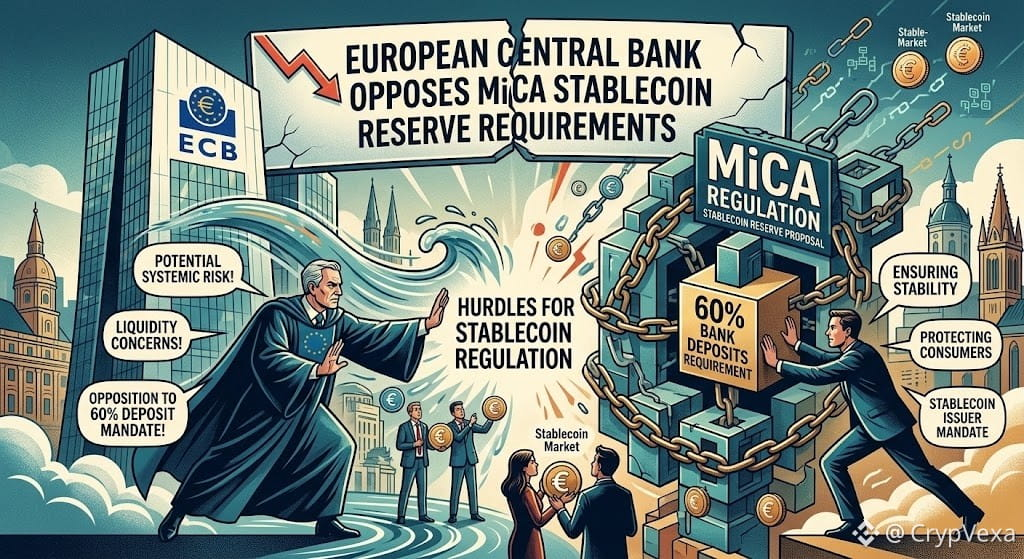
📉 ECB Challenges MiCA Stablecoin Reserve Rule
🏦 The European Central Bank (ECB) and EU national central banks have called for changes to a MiCA requirement that major stablecoin issuers keep 60% of reserves in bank deposits.
⚠️ The central banks argue the rule could create risks for the banking system, particularly if stablecoin reserves move in and out of bank deposits quickly.
🔄 They have proposed using short-maturity assets that can be converted into cash within 1–5 working days instead.
🌐 The debate highlights the challenge of balancing stablecoin liquidity, financial stability, and crypto-market innovation in the EU.
👀 Could changes to MiCA’s reserve rules reshape how stablecoins operate in Europe?
#MiCA #Stablecoins #ECB #CryptoRegulation
📉 ECB Challenges MiCA Stablecoin Reserve Rule
🏦 The European Central Bank (ECB) and EU national central banks have called for changes to a MiCA requirement that major stablecoin issuers keep 60% of reserves in bank deposits.
⚠️ The central banks argue the rule could create risks for the banking system, particularly if stablecoin reserves move in and out of bank deposits quickly.
🔄 They have proposed using short-maturity assets that can be converted into cash within 1–5 working days instead.
🌐 The debate highlights the challenge of balancing stablecoin liquidity, financial stability, and crypto-market innovation in the EU.
👀 Could changes to MiCA’s reserve rules reshape how stablecoins operate in Europe?
#MiCA #Stablecoins #ECB #CryptoRegulation
🏦 The European Central Bank (ECB) and EU national central banks have called for changes to a MiCA requirement that major stablecoin issuers keep 60% of reserves in bank deposits.
⚠️ The central banks argue the rule could create risks for the banking system, particularly if stablecoin reserves move in and out of bank deposits quickly.
🔄 They have proposed using short-maturity assets that can be converted into cash within 1–5 working days instead.
🌐 The debate highlights the challenge of balancing stablecoin liquidity, financial stability, and crypto-market innovation in the EU.
👀 Could changes to MiCA’s reserve rules reshape how stablecoins operate in Europe?
#MiCA #Stablecoins #ECB #CryptoRegulation
1
46

Verified
STABLECOIN PAYMENTS ARE GAINING SERIOUS INSTITUTIONAL BACKING AGAIN.
Singapore-based payments provider dtcpay just secured $25 million in its Series A funding round, with major support from Japanese financial giant SBI Group. This capital boost will be used to expand its product offerings and upgrade enterprise client infrastructure for seamless crypto transactions.
⚡ SBI Group leads the $25M round to accelerate global crypto payment solutions
⚡ The expansion focuses on scaling merchant networks and enterprise portals
⚡ Focus remains heavily on fiat to stablecoin rails like $USDT and USDC for real-world usage
Traditional finance giants backing stablecoin infrastructure is the clearest bullish sign for adoption we could ask for.
#Stablecoins #CryptoAdoption #Write2Earn #Fintech
STABLECOIN PAYMENTS ARE GAINING SERIOUS INSTITUTIONAL BACKING AGAIN.
Singapore-based payments provider dtcpay just secured $25 million in its Series A funding round, with major support from Japanese financial giant SBI Group. This capital boost will be used to expand its product offerings and upgrade enterprise client infrastructure for seamless crypto transactions.
⚡ SBI Group leads the $25M round to accelerate global crypto payment solutions
⚡ The expansion focuses on scaling merchant networks and enterprise portals
⚡ Focus remains heavily on fiat to stablecoin rails like $USDT and USDC for real-world usage
Traditional finance giants backing stablecoin infrastructure is the clearest bullish sign for adoption we could ask for.
#Stablecoins #CryptoAdoption #Write2Earn #Fintech
Singapore-based payments provider dtcpay just secured $25 million in its Series A funding round, with major support from Japanese financial giant SBI Group. This capital boost will be used to expand its product offerings and upgrade enterprise client infrastructure for seamless crypto transactions.
⚡ SBI Group leads the $25M round to accelerate global crypto payment solutions
⚡ The expansion focuses on scaling merchant networks and enterprise portals
⚡ Focus remains heavily on fiat to stablecoin rails like $USDT and USDC for real-world usage
Traditional finance giants backing stablecoin infrastructure is the clearest bullish sign for adoption we could ask for.
#Stablecoins #CryptoAdoption #Write2Earn #Fintech

2
1.2k

🚨 EU WANTS TO CHANGE STABLECOIN RULES
A new crypto-regulation debate is growing in Europe. 🇪🇺
The European Central Bank (ECB) and other EU central banks want to change part of the current stablecoin rules.
🔹 Current rules require major stablecoin issuers to keep a large part of their reserves in bank deposits.
🔹 The central banks say this could create risks for banks and financial stability.
🔹 They are suggesting more reserves should be kept in assets that can be converted to cash quickly.
Why does this matter? 👀
Stablecoins are becoming a bigger part of the crypto market. Changes in their reserve rules could affect stablecoin issuers, banks and the wider crypto industry.
At the same time, Bitcoin is trading near $87K, with ETF flows helping support the market.
Could Europe’s stablecoin rules become a bigger crypto story?
#Stablecoins #bitcoin #Ethereum #ECB #Eu
🚨 EU WANTS TO CHANGE STABLECOIN RULES
A new crypto-regulation debate is growing in Europe. 🇪🇺
The European Central Bank (ECB) and other EU central banks want to change part of the current stablecoin rules.
🔹 Current rules require major stablecoin issuers to keep a large part of their reserves in bank deposits.
🔹 The central banks say this could create risks for banks and financial stability.
🔹 They are suggesting more reserves should be kept in assets that can be converted to cash quickly.
Why does this matter? 👀
Stablecoins are becoming a bigger part of the crypto market. Changes in their reserve rules could affect stablecoin issuers, banks and the wider crypto industry.
At the same time, Bitcoin is trading near $87K, with ETF flows helping support the market.
Could Europe’s stablecoin rules become a bigger crypto story?
#Stablecoins #bitcoin #Ethereum #ECB #Eu
A new crypto-regulation debate is growing in Europe. 🇪🇺
The European Central Bank (ECB) and other EU central banks want to change part of the current stablecoin rules.
🔹 Current rules require major stablecoin issuers to keep a large part of their reserves in bank deposits.
🔹 The central banks say this could create risks for banks and financial stability.
🔹 They are suggesting more reserves should be kept in assets that can be converted to cash quickly.
Why does this matter? 👀
Stablecoins are becoming a bigger part of the crypto market. Changes in their reserve rules could affect stablecoin issuers, banks and the wider crypto industry.
At the same time, Bitcoin is trading near $87K, with ETF flows helping support the market.
Could Europe’s stablecoin rules become a bigger crypto story?
#Stablecoins #bitcoin #Ethereum #ECB #Eu

1
1
85

·
--
At 10:00 UTC on Wednesday, September 23, 2026
$USDC 1 (-0.02% 24h) · day range 0.9996-1 · 20.63B 24h vol
At 10:00 UTC on Wednesday, September 23, 2026, Coinbase users gained access to a new liquidity channel, enabling them to borrow USDC stablecoin against their Bitcoin holdings at a fixed interest rate.
$USDC #Stablecoins #CryptoNews #CoinBatmi
At 10:00 UTC on Wednesday, September 23, 2026
$USDC 1 (-0.02% 24h) · day range 0.9996-1 · 20.63B 24h vol
At 10:00 UTC on Wednesday, September 23, 2026, Coinbase users gained access to a new liquidity channel, enabling them to borrow USDC stablecoin against their Bitcoin holdings at a fixed interest rate.
$USDC #Stablecoins #CryptoNews #CoinBatmi
$USDC 1 (-0.02% 24h) · day range 0.9996-1 · 20.63B 24h vol
At 10:00 UTC on Wednesday, September 23, 2026, Coinbase users gained access to a new liquidity channel, enabling them to borrow USDC stablecoin against their Bitcoin holdings at a fixed interest rate.
$USDC #Stablecoins #CryptoNews #CoinBatmi
4

·
--
Stablecoin payments keep getting framed as a consumer story, but the real adoption is happening in the least glamorous place possible: business-to-business settlement.
A supplier in Southeast Asia getting paid by a distributor in Latin America does not care about wallets, memes, or charts. They care that settlement used to take 3-5 business days through correspondent banking, cost 3-6% in fees, and arrive as a surprise on Tuesday. Stablecoin rails compress that to minutes at a fraction of the cost, 24/7.
That asymmetry - boring, repetitive, high-volume - is why stablecoin volumes keep climbing even when trading activity cools. Trading volume is attention. Payment volume is infrastructure. Infrastructure volume does not spike; it compounds.
What has changed recently is the issuer layer becoming competitive infrastructure rather than a crypto product. Multiple settlement currencies, deep off-ramps into local banking systems, and corporate treasury teams treating on-chain balances as working capital instead of speculative inventory.
The consumer angle will eventually arrive - but through payroll, remittances, and checkout buttons, not through people buying crypto on purpose. Most users of these rails will never think of themselves as crypto users at all. That is the signal worth watching: adoption that does not require ideology.
When the rails become invisible, the network is winning. Invisibility is the strongest adoption metric in fintech - and it does not show up on any chart.
$BTC $ETH $SOL
#Stablecoins #Payments #CryptoAdoption #Fintech #Binance
Stablecoin payments keep getting framed as a consumer story, but the real adoption is happening in the least glamorous place possible: business-to-business settlement.
A supplier in Southeast Asia getting paid by a distributor in Latin America does not care about wallets, memes, or charts. They care that settlement used to take 3-5 business days through correspondent banking, cost 3-6% in fees, and arrive as a surprise on Tuesday. Stablecoin rails compress that to minutes at a fraction of the cost, 24/7.
That asymmetry - boring, repetitive, high-volume - is why stablecoin volumes keep climbing even when trading activity cools. Trading volume is attention. Payment volume is infrastructure. Infrastructure volume does not spike; it compounds.
What has changed recently is the issuer layer becoming competitive infrastructure rather than a crypto product. Multiple settlement currencies, deep off-ramps into local banking systems, and corporate treasury teams treating on-chain balances as working capital instead of speculative inventory.
The consumer angle will eventually arrive - but through payroll, remittances, and checkout buttons, not through people buying crypto on purpose. Most users of these rails will never think of themselves as crypto users at all. That is the signal worth watching: adoption that does not require ideology.
When the rails become invisible, the network is winning. Invisibility is the strongest adoption metric in fintech - and it does not show up on any chart.
$BTC $ETH $SOL
#Stablecoins #Payments #CryptoAdoption #Fintech #Binance
A supplier in Southeast Asia getting paid by a distributor in Latin America does not care about wallets, memes, or charts. They care that settlement used to take 3-5 business days through correspondent banking, cost 3-6% in fees, and arrive as a surprise on Tuesday. Stablecoin rails compress that to minutes at a fraction of the cost, 24/7.
That asymmetry - boring, repetitive, high-volume - is why stablecoin volumes keep climbing even when trading activity cools. Trading volume is attention. Payment volume is infrastructure. Infrastructure volume does not spike; it compounds.
What has changed recently is the issuer layer becoming competitive infrastructure rather than a crypto product. Multiple settlement currencies, deep off-ramps into local banking systems, and corporate treasury teams treating on-chain balances as working capital instead of speculative inventory.
The consumer angle will eventually arrive - but through payroll, remittances, and checkout buttons, not through people buying crypto on purpose. Most users of these rails will never think of themselves as crypto users at all. That is the signal worth watching: adoption that does not require ideology.
When the rails become invisible, the network is winning. Invisibility is the strongest adoption metric in fintech - and it does not show up on any chart.
$BTC $ETH $SOL
#Stablecoins #Payments #CryptoAdoption #Fintech #Binance
75
Log in to explore more content
Join global crypto users on Binance Square
⚡️ Get latest and useful information about crypto.
💬 Trusted by the world’s largest crypto exchange.
👍 Discover real insights from verified creators.
Email / Phone number
Trending Topics
1
#AIStocksWhatNext
1.1M views
7,417 Discussing
2
#USWeighsPromotingDollarStablecoinsAbroad
188 views
23 Discussing
3
#US10YTreasuryYieldHits19YearHigh
637 views
49 Discussing
4
#SpotBitcoinETFsInflow$2.31BInFourDays
164 views
17 Discussing
5
#BitcoinRejectedAt$87,300Twice
0 views
0 Discussing
6
#BCHJumps28%OnCMEFuturesListing
37,804 views
822 Discussing
7
#WallStreetEarningsRevisionsTurnBearish
27,047 views
596 Discussing
8
#DollarIndexReclaims101
22,867 views
517 Discussing
9
#21SharesLaunchesEuropesFirstZcashETP
65,828 views
1,288 Discussing
10
#CardanoJoinsX402PaymentStandard
40,995 views
907 Discussing