

#defi
defi
56.8M views
297,673 Discussing
Hot
Latest

See translation
$CAP IS NEXT ROCKET? 🚀
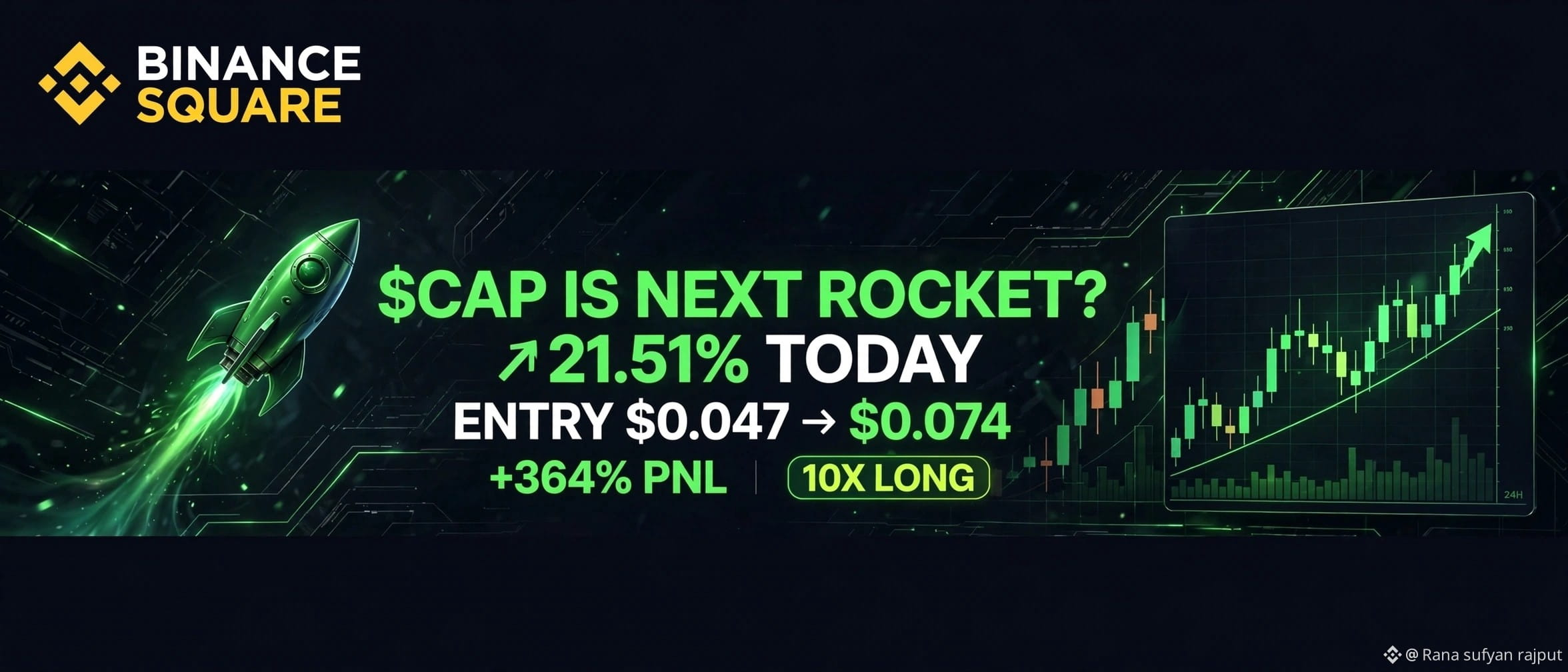
CAP just pumped +21.51% today! From $0.047 to $0.074 - this trader made +$2,074 with +364% PNL on 10X LONG!
What is $CAP?
Cap is a DeFi credit platform backed by financial guarantees. It issues cUSD stablecoin and stcUSD yield token. CAP is its governance token. Every loan is secured by underwriter collateral, not just trust.
Why pumping?
Strong volume across 17 exchanges + DeFi lending narrative is hot. Low cap $89M mcap - easy to move.
But careful: 10X leverage is high risk. Don't chase green candle blindly.
Are you holding CAP or waiting for dip?
$CAP $BTC
#CAP #DeFi #Altcoin #Trading
⚠️ Disclaimer: This is not financial advice. For education only. Crypto is volatile, DYOR.
$CAP IS NEXT ROCKET? 🚀
CAP just pumped +21.51% today! From $0.047 to $0.074 - this trader made +$2,074 with +364% PNL on 10X LONG!
What is $CAP ?
Cap is a DeFi credit platform backed by financial guarantees. It issues cUSD stablecoin and stcUSD yield token. CAP is its governance token. Every loan is secured by underwriter collateral, not just trust.
Why pumping?
Strong volume across 17 exchanges + DeFi lending narrative is hot. Low cap $89M mcap - easy to move.
But careful: 10X leverage is high risk. Don't chase green candle blindly.
Are you holding CAP or waiting for dip?
$CAP $BTC
#CAP #DeFi #Altcoin #Trading
⚠️ Disclaimer: This is not financial advice. For education only. Crypto is volatile, DYOR.
CAP just pumped +21.51% today! From $0.047 to $0.074 - this trader made +$2,074 with +364% PNL on 10X LONG!
What is $CAP ?
Cap is a DeFi credit platform backed by financial guarantees. It issues cUSD stablecoin and stcUSD yield token. CAP is its governance token. Every loan is secured by underwriter collateral, not just trust.
Why pumping?
Strong volume across 17 exchanges + DeFi lending narrative is hot. Low cap $89M mcap - easy to move.
But careful: 10X leverage is high risk. Don't chase green candle blindly.
Are you holding CAP or waiting for dip?
$CAP $BTC
#CAP #DeFi #Altcoin #Trading
⚠️ Disclaimer: This is not financial advice. For education only. Crypto is volatile, DYOR.
178

·
--
See translation
🚀 $DOGE EVM TESTNET GOES LIVE AS DOGEOS OPENS DEFI ECOSYSTEM! 💥
The MyDoge team just unlocked the public testnet for DogeOS, bringing an EVM-compatible layer directly into the $DOGE pipeline. 📊 We are watching the ultimate meme asset evolve into a full-scale smart contract engine powered by native gas fees.
With lending protocols, perpetual DEXs, and stablecoins actively building on testnet, capital is eyeing the long-term utility shift. ⚡ Moving beyond simple payments into a fee-generating application hub fundamentally alters the structural demand dynamics.
💬 Does this EVM expansion give $DOGE the fundamental muscle to lead the next major altcoin rotation? 👇
⚠️ Not financial advice. Always manage your risk. 🛡️
🏷️ #DOGE #DeFi #Altcoins #Crypto
🔥 💎
🚀 $DOGE EVM TESTNET GOES LIVE AS DOGEOS OPENS DEFI ECOSYSTEM! 💥
The MyDoge team just unlocked the public testnet for DogeOS, bringing an EVM-compatible layer directly into the $DOGE pipeline. 📊 We are watching the ultimate meme asset evolve into a full-scale smart contract engine powered by native gas fees.
With lending protocols, perpetual DEXs, and stablecoins actively building on testnet, capital is eyeing the long-term utility shift. ⚡ Moving beyond simple payments into a fee-generating application hub fundamentally alters the structural demand dynamics.
💬 Does this EVM expansion give $DOGE the fundamental muscle to lead the next major altcoin rotation? 👇
⚠️ Not financial advice. Always manage your risk. 🛡️
🏷️ #DOGE #DeFi #Altcoins #Crypto
🔥 💎
The MyDoge team just unlocked the public testnet for DogeOS, bringing an EVM-compatible layer directly into the $DOGE pipeline. 📊 We are watching the ultimate meme asset evolve into a full-scale smart contract engine powered by native gas fees.
With lending protocols, perpetual DEXs, and stablecoins actively building on testnet, capital is eyeing the long-term utility shift. ⚡ Moving beyond simple payments into a fee-generating application hub fundamentally alters the structural demand dynamics.
💬 Does this EVM expansion give $DOGE the fundamental muscle to lead the next major altcoin rotation? 👇
⚠️ Not financial advice. Always manage your risk. 🛡️
🏷️ #DOGE #DeFi #Altcoins #Crypto
🔥 💎
78

·
--
See translation
An AI agent prepares a $WETH → $USDC swap. Which “price” is it looking at?
At least three values need separate checks:
1. Oracle reference price: what independent market sources indicate.
2. Simulated route quote: the output for this exact call at a specific block.
3. Actual fill: what the transaction ultimately delivered.
A favorable oracle assessment still leaves the route quote to examine. A reasonable simulation cannot guarantee the later fill.
For its supported single-pool Uniswap V3 ERC-20 route, Insight reviews the exact call’s simulated quote alongside oracle evidence, minimum output, and slippage limits. That simulation describes one checked block.
If a team also needs to review who approved the call and whether observed execution matched it, PriorSeal supplies separate authorization and execution evidence.
Does your agent record these three values separately?
https://www.oracleinsight.xyz/
#AIAgents #defi #oracles
An AI agent prepares a $WETH → $USDC swap. Which “price” is it looking at?
At least three values need separate checks:
1. Oracle reference price: what independent market sources indicate.
2. Simulated route quote: the output for this exact call at a specific block.
3. Actual fill: what the transaction ultimately delivered.
A favorable oracle assessment still leaves the route quote to examine. A reasonable simulation cannot guarantee the later fill.
For its supported single-pool Uniswap V3 ERC-20 route, Insight reviews the exact call’s simulated quote alongside oracle evidence, minimum output, and slippage limits. That simulation describes one checked block.
If a team also needs to review who approved the call and whether observed execution matched it, PriorSeal supplies separate authorization and execution evidence.
Does your agent record these three values separately?
https://www.oracleinsight.xyz/
#AIAgents #defi #oracles
At least three values need separate checks:
1. Oracle reference price: what independent market sources indicate.
2. Simulated route quote: the output for this exact call at a specific block.
3. Actual fill: what the transaction ultimately delivered.
A favorable oracle assessment still leaves the route quote to examine. A reasonable simulation cannot guarantee the later fill.
For its supported single-pool Uniswap V3 ERC-20 route, Insight reviews the exact call’s simulated quote alongside oracle evidence, minimum output, and slippage limits. That simulation describes one checked block.
If a team also needs to review who approved the call and whether observed execution matched it, PriorSeal supplies separate authorization and execution evidence.
Does your agent record these three values separately?
https://www.oracleinsight.xyz/
#AIAgents #defi #oracles
1

·
--
See translation
🚨 CRITICAL ETH STAKING ALERT: Is your ETH safe?
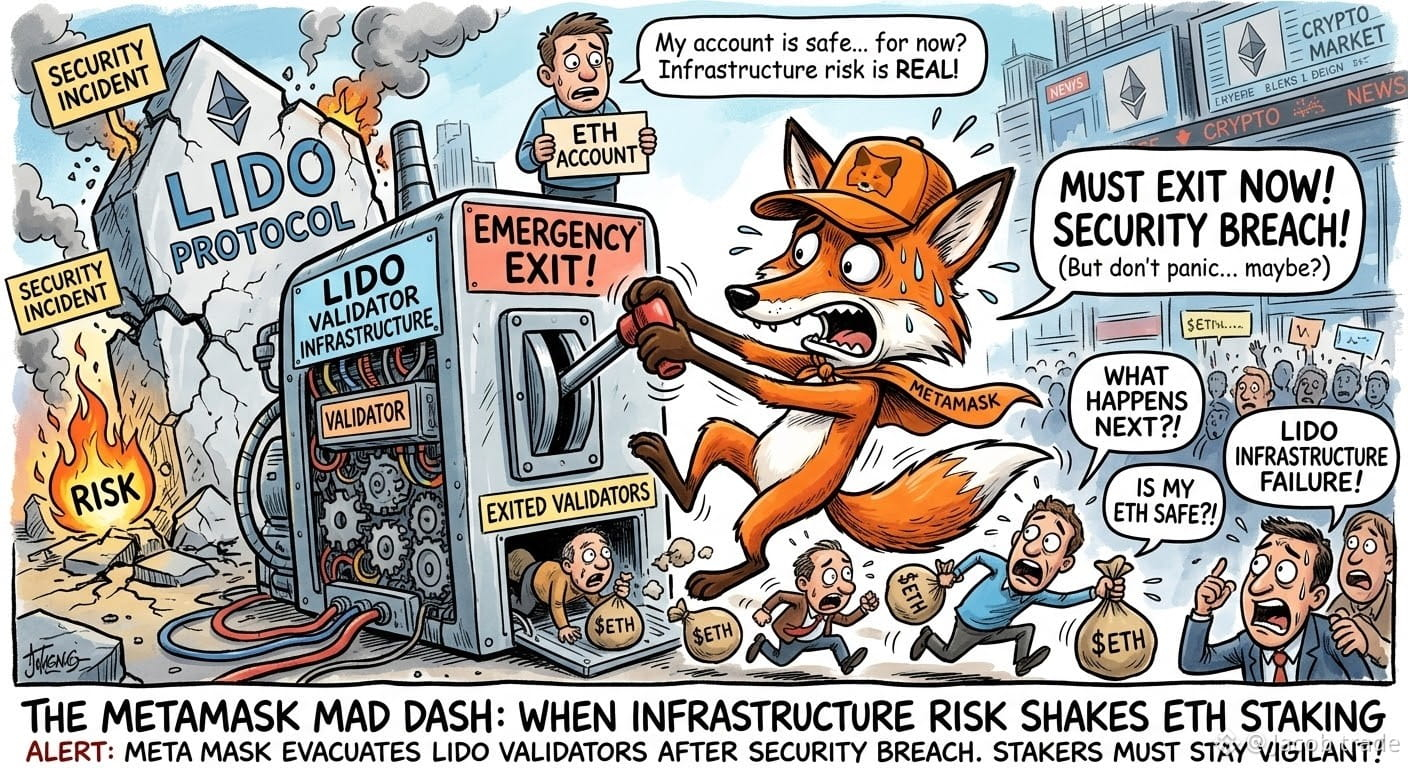
MetaMask just initiated an emergency exit for validators operated via Lido following a security incident! 🛡️⚡
Here is what you need to know right now:
• Your Account: This action doesn't automatically mean funds are compromised, but it exposes a massive blind spot.
• The Real Danger: Infrastructure & Smart Contract Risk in LSDs (Liquid Staking Derivatives). When the underlying validators face issues, thousands of stakers get caught in the crossfire.
This is a huge wake-up call for anyone holding or staking $ETH. Single points of failure in DeFi are real.
👇 What’s your take?
1️⃣ Are you unstaking your ETH until things settle?
2️⃣ Sticking with liquid staking regardless?
3️⃣ Moving back to solo staking / CEX staking?
Drop your thoughts below & stay safe out there! 📉💬
#Ethereum #CryptoAlert #DeFi #MetaMaskExitsLidoValidatorsAfterSecurityIncident
$ETH
{future}(ETHUSDT)
$MOVR
{future}(MOVRUSDT)
$AGT
{future}(AGTUSDT)
🚨 CRITICAL ETH STAKING ALERT: Is your ETH safe?
MetaMask just initiated an emergency exit for validators operated via Lido following a security incident! 🛡️⚡
Here is what you need to know right now:
• Your Account: This action doesn't automatically mean funds are compromised, but it exposes a massive blind spot.
• The Real Danger: Infrastructure & Smart Contract Risk in LSDs (Liquid Staking Derivatives). When the underlying validators face issues, thousands of stakers get caught in the crossfire.
This is a huge wake-up call for anyone holding or staking $ETH . Single points of failure in DeFi are real.
👇 What’s your take?
1️⃣ Are you unstaking your ETH until things settle?
2️⃣ Sticking with liquid staking regardless?
3️⃣ Moving back to solo staking / CEX staking?
Drop your thoughts below & stay safe out there! 📉💬
#Ethereum #CryptoAlert #DeFi #MetaMaskExitsLidoValidatorsAfterSecurityIncident
$ETH
$MOVR
$AGT
MetaMask just initiated an emergency exit for validators operated via Lido following a security incident! 🛡️⚡
Here is what you need to know right now:
• Your Account: This action doesn't automatically mean funds are compromised, but it exposes a massive blind spot.
• The Real Danger: Infrastructure & Smart Contract Risk in LSDs (Liquid Staking Derivatives). When the underlying validators face issues, thousands of stakers get caught in the crossfire.
This is a huge wake-up call for anyone holding or staking $ETH . Single points of failure in DeFi are real.
👇 What’s your take?
1️⃣ Are you unstaking your ETH until things settle?
2️⃣ Sticking with liquid staking regardless?
3️⃣ Moving back to solo staking / CEX staking?
Drop your thoughts below & stay safe out there! 📉💬
#Ethereum #CryptoAlert #DeFi #MetaMaskExitsLidoValidatorsAfterSecurityIncident
$ETH
$MOVR
$AGT
238


See translation
🚨 ARCUS ENGINE REVOLUTIONIZES ONCHAIN LEVERAGE STRUCTURES FOR $BTC AND $SOL INTEGRATION! ⚡
Smart money is watching structural efficiency evolve as Arcus deploys wrapped perpetual positions directly onchain. By tokenizing leverage into transferable ERC-20 assets across $BTC and $SOL exposure, institutional order flow eliminates manual margin overhead while unlocking deeper collateral velocity within secondary lending pools. 🌊
With over $2 billion in volume processed and daily turnover clearing $100 million, liquidity distribution is shifting toward frictionless L2 environments. 📊 This architecture allows sophisticated traders to isolate directional exposure while preserving capital efficiency across high-velocity market cycles. 🔍
💬 Will tokenized perps redefine institutional yield strategies, or do you prefer holding traditional margin contracts? 👇
⚠️ Not financial advice. Always manage your risk. 🛡️
🏷️ #BTC #SOL #DeFi #Perpetuals #MarketStructure
🦈 💡
🚨 ARCUS ENGINE REVOLUTIONIZES ONCHAIN LEVERAGE STRUCTURES FOR $BTC AND $SOL INTEGRATION! ⚡
Smart money is watching structural efficiency evolve as Arcus deploys wrapped perpetual positions directly onchain. By tokenizing leverage into transferable ERC-20 assets across $BTC and $SOL exposure, institutional order flow eliminates manual margin overhead while unlocking deeper collateral velocity within secondary lending pools. 🌊
With over $2 billion in volume processed and daily turnover clearing $100 million, liquidity distribution is shifting toward frictionless L2 environments. 📊 This architecture allows sophisticated traders to isolate directional exposure while preserving capital efficiency across high-velocity market cycles. 🔍
💬 Will tokenized perps redefine institutional yield strategies, or do you prefer holding traditional margin contracts? 👇
⚠️ Not financial advice. Always manage your risk. 🛡️
🏷️ #BTC #SOL #DeFi #Perpetuals #MarketStructure
🦈 💡
Smart money is watching structural efficiency evolve as Arcus deploys wrapped perpetual positions directly onchain. By tokenizing leverage into transferable ERC-20 assets across $BTC and $SOL exposure, institutional order flow eliminates manual margin overhead while unlocking deeper collateral velocity within secondary lending pools. 🌊
With over $2 billion in volume processed and daily turnover clearing $100 million, liquidity distribution is shifting toward frictionless L2 environments. 📊 This architecture allows sophisticated traders to isolate directional exposure while preserving capital efficiency across high-velocity market cycles. 🔍
💬 Will tokenized perps redefine institutional yield strategies, or do you prefer holding traditional margin contracts? 👇
⚠️ Not financial advice. Always manage your risk. 🛡️
🏷️ #BTC #SOL #DeFi #Perpetuals #MarketStructure
🦈 💡
6

·
--
See translation
The bridge between traditional finance (TradFi) and decentralized finance (DeFi) is no longer a futuristic concept—it is happening right now, and Ondo Finance is leading the charge. As institutional giants like BlackRock double down on tokenized assets, Ondo has positioned itself as the premier liquidity channel for institutional-grade yield on-chain.
Ondo's primary strength lies in its product suite, particularly USDY (a yield-bearing token backed by US Treasuries) and OUSG (which offers direct, liquid exposure to BlackRock’s BUIDL fund). By scaling these products across multiple major blockchains, including Ethereum, Solana, Sui, and Arbitrum, Ondo is effectively democratizing access to low-risk, high-quality yield that was previously gatekept by traditional institutions.
From a market analysis perspective, ONDO has established itself as the high-beta index token for the entire Real World Asset (RWA) sector. Whenever institutional interest in crypto peaks, ONDO is often the first asset to react, reflecting its status as the market leader in mindshare. Recent integrations with major DeFi protocols have also positioned USDY as a dominant collateral asset, creating a flywheel effect where deeper utility drives further adoption.
While the broader crypto market experiences its typical volatility, the fundamental demand for tokenized Treasuries has remained remarkably robust. Ondo Finance boasts hundreds of millions of dollars in Total Value Locked (TVL), demonstrating a strong product-market fit that transcends speculative retail cycles.
As regulatory frameworks become clearer and more institutional capital prepares to enter the on-chain ecosystem, the RWA narrative is poised for long-term expansion. Ondo remains uniquely positioned to capture this inflow. Keep a close eye on its volume and ecosystem partnerships as we head into the next phase of market maturity.
#Ondo #RWA #DeFi
The bridge between traditional finance (TradFi) and decentralized finance (DeFi) is no longer a futuristic concept—it is happening right now, and Ondo Finance is leading the charge. As institutional giants like BlackRock double down on tokenized assets, Ondo has positioned itself as the premier liquidity channel for institutional-grade yield on-chain.
Ondo's primary strength lies in its product suite, particularly USDY (a yield-bearing token backed by US Treasuries) and OUSG (which offers direct, liquid exposure to BlackRock’s BUIDL fund). By scaling these products across multiple major blockchains, including Ethereum, Solana, Sui, and Arbitrum, Ondo is effectively democratizing access to low-risk, high-quality yield that was previously gatekept by traditional institutions.
From a market analysis perspective, ONDO has established itself as the high-beta index token for the entire Real World Asset (RWA) sector. Whenever institutional interest in crypto peaks, ONDO is often the first asset to react, reflecting its status as the market leader in mindshare. Recent integrations with major DeFi protocols have also positioned USDY as a dominant collateral asset, creating a flywheel effect where deeper utility drives further adoption.
While the broader crypto market experiences its typical volatility, the fundamental demand for tokenized Treasuries has remained remarkably robust. Ondo Finance boasts hundreds of millions of dollars in Total Value Locked (TVL), demonstrating a strong product-market fit that transcends speculative retail cycles.
As regulatory frameworks become clearer and more institutional capital prepares to enter the on-chain ecosystem, the RWA narrative is poised for long-term expansion. Ondo remains uniquely positioned to capture this inflow. Keep a close eye on its volume and ecosystem partnerships as we head into the next phase of market maturity.
#Ondo #RWA #DeFi
Ondo's primary strength lies in its product suite, particularly USDY (a yield-bearing token backed by US Treasuries) and OUSG (which offers direct, liquid exposure to BlackRock’s BUIDL fund). By scaling these products across multiple major blockchains, including Ethereum, Solana, Sui, and Arbitrum, Ondo is effectively democratizing access to low-risk, high-quality yield that was previously gatekept by traditional institutions.
From a market analysis perspective, ONDO has established itself as the high-beta index token for the entire Real World Asset (RWA) sector. Whenever institutional interest in crypto peaks, ONDO is often the first asset to react, reflecting its status as the market leader in mindshare. Recent integrations with major DeFi protocols have also positioned USDY as a dominant collateral asset, creating a flywheel effect where deeper utility drives further adoption.
While the broader crypto market experiences its typical volatility, the fundamental demand for tokenized Treasuries has remained remarkably robust. Ondo Finance boasts hundreds of millions of dollars in Total Value Locked (TVL), demonstrating a strong product-market fit that transcends speculative retail cycles.
As regulatory frameworks become clearer and more institutional capital prepares to enter the on-chain ecosystem, the RWA narrative is poised for long-term expansion. Ondo remains uniquely positioned to capture this inflow. Keep a close eye on its volume and ecosystem partnerships as we head into the next phase of market maturity.
#Ondo #RWA #DeFi
162

See translation
Setup Before Acceleration
$POL | $UNI | $CRV
POL, UNI, and CRV sit within important parts of the broader DeFi and blockchain ecosystem. Their performance can become increasingly sensitive to liquidity, protocol activity, and overall market sentiment.
A strong setup is built through confirmation rather than emotion.
Key Takeaway: Watch liquidity and structure before chasing acceleration.
#POL #UNI #CRV #DeFi #StrategicEntry
{future}(POLUSDT)
{future}(UNIUSDT)
{future}(CRVUSDT)
Setup Before Acceleration
$POL | $UNI | $CRV
POL, UNI, and CRV sit within important parts of the broader DeFi and blockchain ecosystem. Their performance can become increasingly sensitive to liquidity, protocol activity, and overall market sentiment.
A strong setup is built through confirmation rather than emotion.
Key Takeaway: Watch liquidity and structure before chasing acceleration.
#POL #UNI #CRV #DeFi #StrategicEntry
$POL | $UNI | $CRV
POL, UNI, and CRV sit within important parts of the broader DeFi and blockchain ecosystem. Their performance can become increasingly sensitive to liquidity, protocol activity, and overall market sentiment.
A strong setup is built through confirmation rather than emotion.
Key Takeaway: Watch liquidity and structure before chasing acceleration.
#POL #UNI #CRV #DeFi #StrategicEntry
1
22

·
--
See translation
🚨 Dogecoin’s DeFi testnet launches via DogeOS, aiming to expand DOGE beyond payments and speculation. Apps currently rely on selected operators, not miners—hinting at centralization risks. If miners eventually secure the network, it could strengthen DOGE’s utility and long-term value proposition. Watch for shifts in miner participation as a signal of real DeFi adoption.
Will Dogecoin’s miners step up to secure its DeFi future?
#DeFi
$DOGE #TradingSignal #CryptoAnalysis
🚨 Dogecoin’s DeFi testnet launches via DogeOS, aiming to expand DOGE beyond payments and speculation. Apps currently rely on selected operators, not miners—hinting at centralization risks. If miners eventually secure the network, it could strengthen DOGE’s utility and long-term value proposition. Watch for shifts in miner participation as a signal of real DeFi adoption.
Will Dogecoin’s miners step up to secure its DeFi future?
#DeFi
$DOGE #TradingSignal #CryptoAnalysis
Will Dogecoin’s miners step up to secure its DeFi future?
#DeFi
$DOGE #TradingSignal #CryptoAnalysis

6
See translation
DeFi Momentum — Watch the Liquidity
$PYTH | $ENA | $ETHFI
PYTH, ENA, and ETHFI remain connected to important DeFi and infrastructure narratives. As decentralized finance activity evolves, liquidity and protocol-related narratives can influence market attention.
Key Takeaway: Liquidity remains one of the most important drivers behind DeFi momentum.
#PYTH #ENA #ETHFI #DeFi #StrategicEntry
{future}(PYTHUSDT)
{future}(ENAUSDT)
{future}(ETHFIUSDT)
DeFi Momentum — Watch the Liquidity
$PYTH | $ENA | $ETHFI
PYTH, ENA, and ETHFI remain connected to important DeFi and infrastructure narratives. As decentralized finance activity evolves, liquidity and protocol-related narratives can influence market attention.
Key Takeaway: Liquidity remains one of the most important drivers behind DeFi momentum.
#PYTH #ENA #ETHFI #DeFi #StrategicEntry
$PYTH | $ENA | $ETHFI
PYTH, ENA, and ETHFI remain connected to important DeFi and infrastructure narratives. As decentralized finance activity evolves, liquidity and protocol-related narratives can influence market attention.
Key Takeaway: Liquidity remains one of the most important drivers behind DeFi momentum.
#PYTH #ENA #ETHFI #DeFi #StrategicEntry
1
151


·
--
Verified
See translation
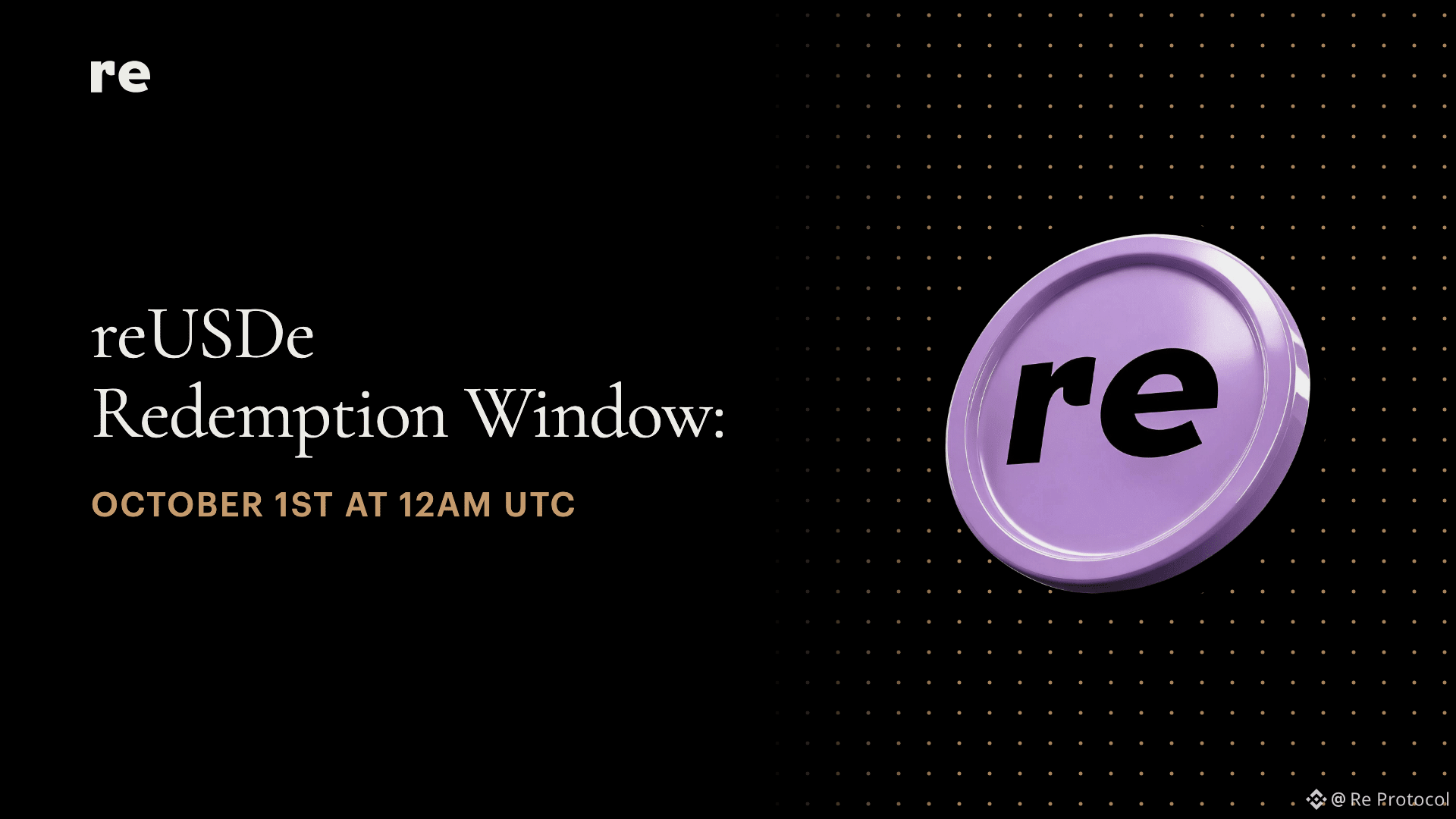
reUSDe redemptions are back. The next window opens October 1st at 12AM UTC.
How redemption works:
1. Submit between October 1 and October 14
2. Claim between October 15 and November 14
3. $1.5M pool, filled pro-rata if oversubscribed
4. Payout settles in sUSDe
↓
Note: If a redemption goes unclaimed within the 30-day claim period, the sUSDe payout is forfeited from this window and the original reUSDe is returned to the holder.
Learn more:
app.re.xyz/reusde
#reinsurance #RWA #DeFi
reUSDe redemptions are back. The next window opens October 1st at 12AM UTC.
How redemption works:
1. Submit between October 1 and October 14
2. Claim between October 15 and November 14
3. $1.5M pool, filled pro-rata if oversubscribed
4. Payout settles in sUSDe
↓
Note: If a redemption goes unclaimed within the 30-day claim period, the sUSDe payout is forfeited from this window and the original reUSDe is returned to the holder.
Learn more:
app.re.xyz/reusde
#reinsurance #RWA #DeFi
How redemption works:
1. Submit between October 1 and October 14
2. Claim between October 15 and November 14
3. $1.5M pool, filled pro-rata if oversubscribed
4. Payout settles in sUSDe
↓
Note: If a redemption goes unclaimed within the 30-day claim period, the sUSDe payout is forfeited from this window and the original reUSDe is returned to the holder.
Learn more:
app.re.xyz/reusde
#reinsurance #RWA #DeFi
2
2
626

·
--
See translation
#micronbeatsearningsliftsguidance 🚨 METAMASK EXIT EXPOSES A STAKING RISK
MetaMask Staking is pulling Ethereum validators out of Lido after an infrastructure breach. This incident shows a lesson: staking yield brings both infrastructure dangers and liquidity threats.
🔹 User wallets were not affected.
🔹 Lido says stETH holders do not need to take action.
🔹 Validator exits can take weeks because Ethereum uses entry and exit queues.
🔹 The affected cycle may last, up to 45 days.
🔹 Operator diversification and reserve funds can limit disruption.
Traders should keep an eye on stETH liquidity, validator concentration, exit queues and reward changes.
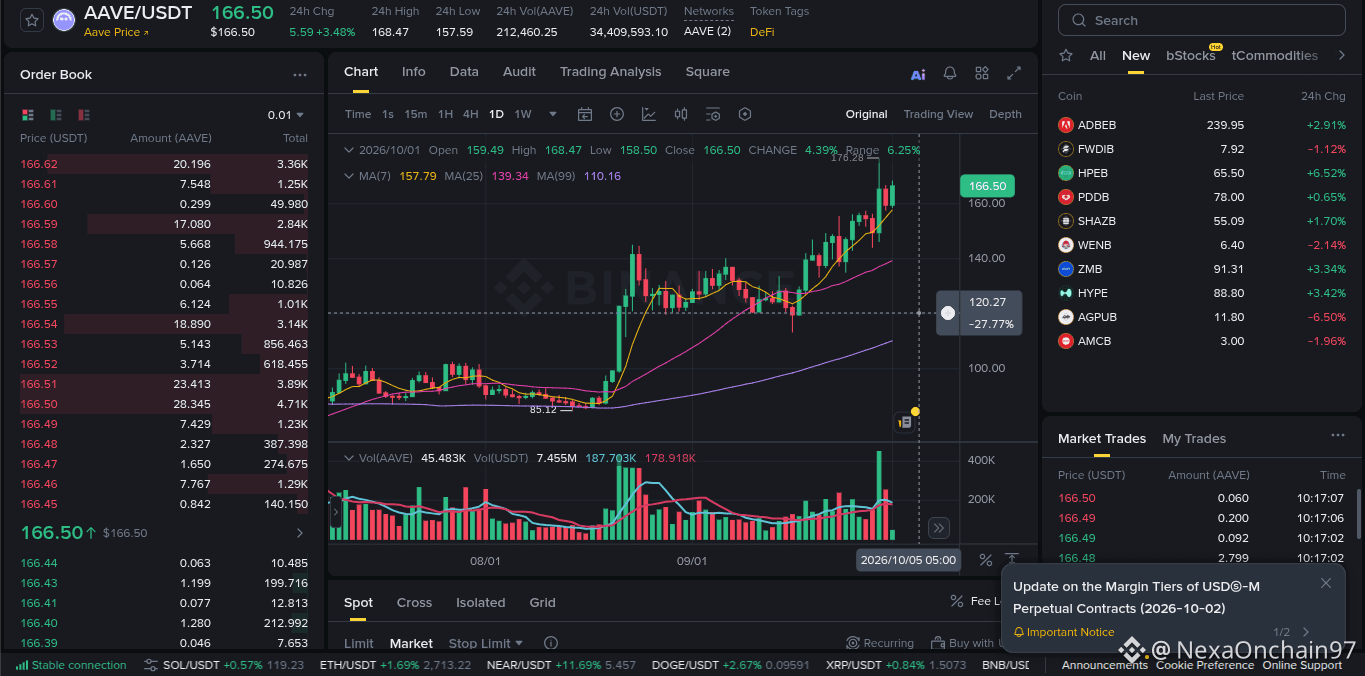
Would this incident change how you evaluate staking? What are your thoughts now? #defi #crypto #Khan62 #Web3 $LDO $AAVE $ETH
{future}(AAVEUSDT)
{future}(LDOUSDT)
{future}(ETHUSDT)
#micronbeatsearningsliftsguidance 🚨 METAMASK EXIT EXPOSES A STAKING RISK
MetaMask Staking is pulling Ethereum validators out of Lido after an infrastructure breach. This incident shows a lesson: staking yield brings both infrastructure dangers and liquidity threats.
🔹 User wallets were not affected.
🔹 Lido says stETH holders do not need to take action.
🔹 Validator exits can take weeks because Ethereum uses entry and exit queues.
🔹 The affected cycle may last, up to 45 days.
🔹 Operator diversification and reserve funds can limit disruption.
Traders should keep an eye on stETH liquidity, validator concentration, exit queues and reward changes.
Would this incident change how you evaluate staking? What are your thoughts now? #defi #crypto #Khan62 #Web3 $LDO $AAVE $ETH
MetaMask Staking is pulling Ethereum validators out of Lido after an infrastructure breach. This incident shows a lesson: staking yield brings both infrastructure dangers and liquidity threats.
🔹 User wallets were not affected.
🔹 Lido says stETH holders do not need to take action.
🔹 Validator exits can take weeks because Ethereum uses entry and exit queues.
🔹 The affected cycle may last, up to 45 days.
🔹 Operator diversification and reserve funds can limit disruption.
Traders should keep an eye on stETH liquidity, validator concentration, exit queues and reward changes.
Would this incident change how you evaluate staking? What are your thoughts now? #defi #crypto #Khan62 #Web3 $LDO $AAVE $ETH
129

·
--
See translation
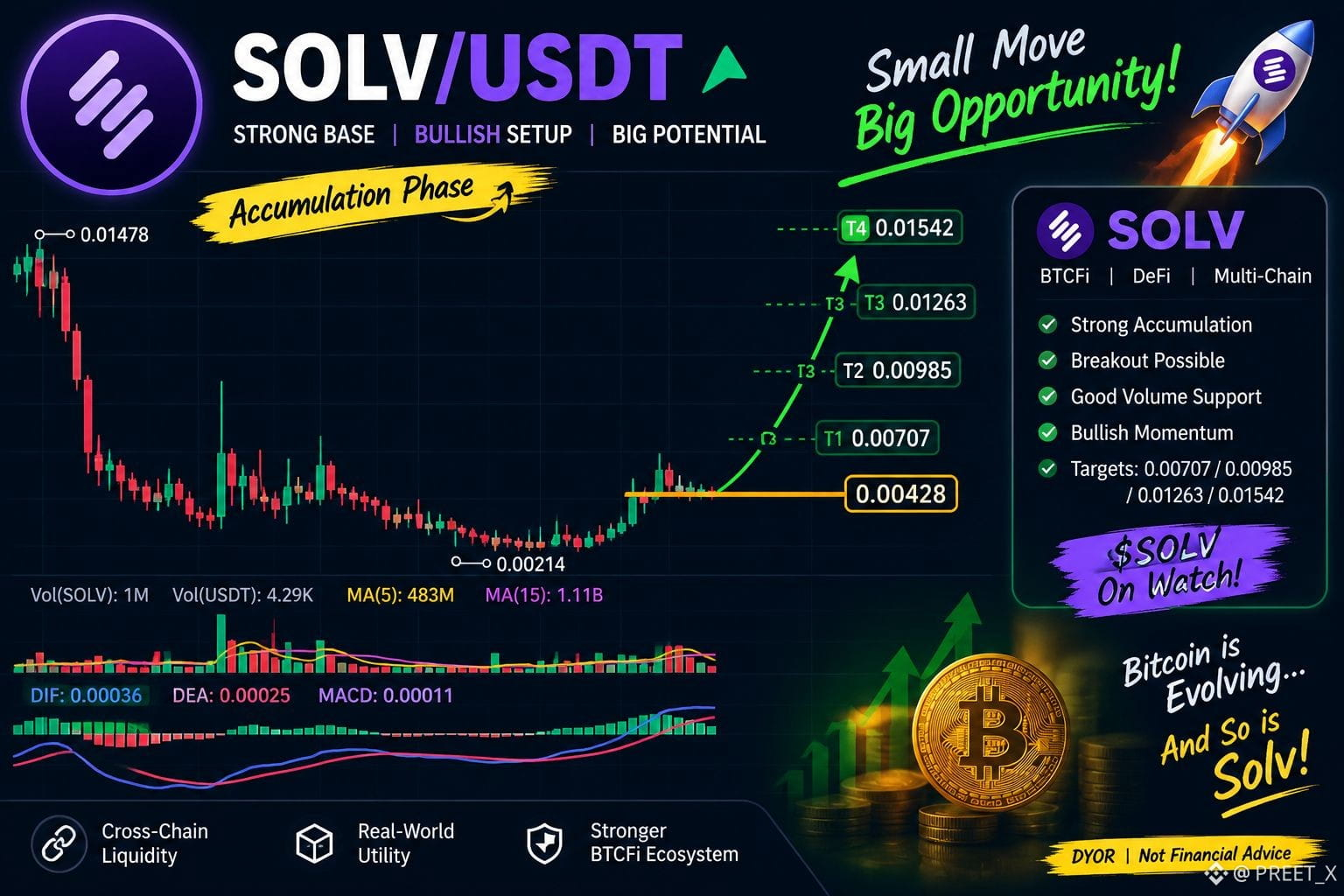
🚀 $SOLV Protocol – A Very Interesting Project!
$SOLV
{spot}(SOLVUSDT)
is building the future of BTCFi, making Bitcoin more productive through DeFi.
🔥 SolvBTC ecosystem
🔗 Cross-chain Bitcoin liquidity
💎 Bitcoin utility beyond HODLing
🌐 Bridging BTC with DeFi opportunities
Bitcoin is evolving from a store of value into productive capital.
$SOLV deserves attention! 👀
#solv #BTCFi #Bitcoin #defi
🚀 $SOLV Protocol – A Very Interesting Project!
$SOLV
is building the future of BTCFi, making Bitcoin more productive through DeFi.
🔥 SolvBTC ecosystem
🔗 Cross-chain Bitcoin liquidity
💎 Bitcoin utility beyond HODLing
🌐 Bridging BTC with DeFi opportunities
Bitcoin is evolving from a store of value into productive capital.
$SOLV deserves attention! 👀
#solv #BTCFi #Bitcoin #defi
$SOLV
is building the future of BTCFi, making Bitcoin more productive through DeFi.
🔥 SolvBTC ecosystem
🔗 Cross-chain Bitcoin liquidity
💎 Bitcoin utility beyond HODLing
🌐 Bridging BTC with DeFi opportunities
Bitcoin is evolving from a store of value into productive capital.
$SOLV deserves attention! 👀
#solv #BTCFi #Bitcoin #defi
128

·
--
See translation
The biggest fee in DeFi is the one that never shows up on an invoice.
When you swap on a public chain, your transaction sits in a queue everyone can read before it executes. Bots see your trade coming and trade ahead of it, so your real fill is worse than your quote. That extracted value — sandwiching, priority auctions, backruns — is called MEV, and across major chains it can quietly exceed the protocol fees users think they're paying.
The visible fee is the invoice. MEV is the tip nobody agreed to.
The defense became an arms race: private order flow that hides transactions from the public queue, batch auctions that neutralize ordering games, intent-based routing where users state only the outcome and solvers compete to fill it. Every fix is a move from leaking intent to protecting or auctioning it.
This is now shaping chain competition itself. $ETH is rethinking block production around it, $SOL has built a live market for priority execution, and $BNB treats validator policy as product design. Whoever routes the order flow collects the tax.
If you trade size on-chain, the spread is not a price — it's a defense budget. Watch where execution actually happens, not just where tokens are listed.
Markets that leak intent get taxed. Infrastructure that hides it gets paid.
#DeFi #MEV #CryptoMarkets #OnChainTrading #TradingInsight
The biggest fee in DeFi is the one that never shows up on an invoice.
When you swap on a public chain, your transaction sits in a queue everyone can read before it executes. Bots see your trade coming and trade ahead of it, so your real fill is worse than your quote. That extracted value — sandwiching, priority auctions, backruns — is called MEV, and across major chains it can quietly exceed the protocol fees users think they're paying.
The visible fee is the invoice. MEV is the tip nobody agreed to.
The defense became an arms race: private order flow that hides transactions from the public queue, batch auctions that neutralize ordering games, intent-based routing where users state only the outcome and solvers compete to fill it. Every fix is a move from leaking intent to protecting or auctioning it.
This is now shaping chain competition itself. $ETH is rethinking block production around it, $SOL has built a live market for priority execution, and $BNB treats validator policy as product design. Whoever routes the order flow collects the tax.
If you trade size on-chain, the spread is not a price — it's a defense budget. Watch where execution actually happens, not just where tokens are listed.
Markets that leak intent get taxed. Infrastructure that hides it gets paid.
#DeFi #MEV #CryptoMarkets #OnChainTrading #TradingInsight
When you swap on a public chain, your transaction sits in a queue everyone can read before it executes. Bots see your trade coming and trade ahead of it, so your real fill is worse than your quote. That extracted value — sandwiching, priority auctions, backruns — is called MEV, and across major chains it can quietly exceed the protocol fees users think they're paying.
The visible fee is the invoice. MEV is the tip nobody agreed to.
The defense became an arms race: private order flow that hides transactions from the public queue, batch auctions that neutralize ordering games, intent-based routing where users state only the outcome and solvers compete to fill it. Every fix is a move from leaking intent to protecting or auctioning it.
This is now shaping chain competition itself. $ETH is rethinking block production around it, $SOL has built a live market for priority execution, and $BNB treats validator policy as product design. Whoever routes the order flow collects the tax.
If you trade size on-chain, the spread is not a price — it's a defense budget. Watch where execution actually happens, not just where tokens are listed.
Markets that leak intent get taxed. Infrastructure that hides it gets paid.
#DeFi #MEV #CryptoMarkets #OnChainTrading #TradingInsight
89

·
--
Bullish
See translation
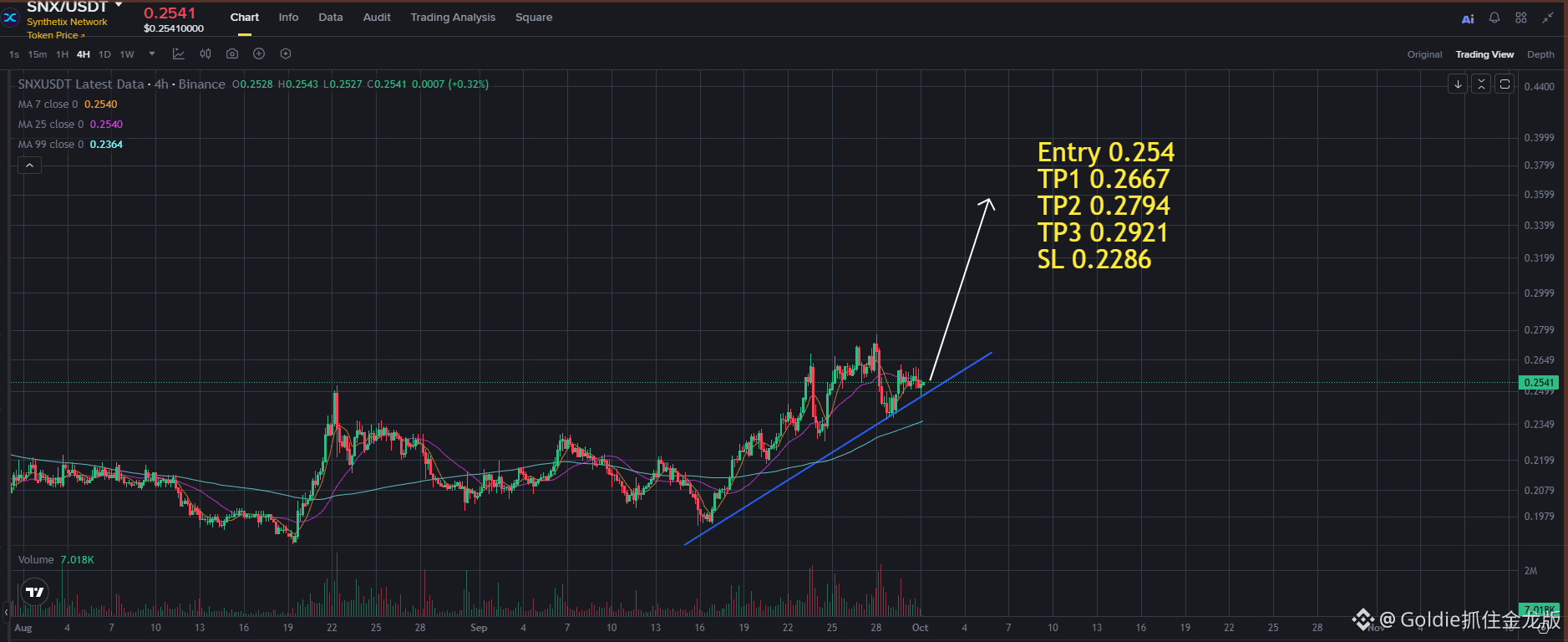
$SNX is Synthetix, one of the original DeFi protocols on Ethereum, built around synthetic assets and perp trading, now focused on V3 and its perps exchange. It sits in the legacy DeFi blue chip basket and tends to move with AAVE, CRV and UNI when money rotates back into DeFi. Watch volume and TVL here.
Entry 0.254
TP1 0.2667
TP2 0.2794
TP3 0.2921
SL 0.2286
NFA. DYOR.
$SNX #defi
{future}(SNXUSDT)
#BinanceSquare
$SNX is Synthetix, one of the original DeFi protocols on Ethereum, built around synthetic assets and perp trading, now focused on V3 and its perps exchange. It sits in the legacy DeFi blue chip basket and tends to move with AAVE, CRV and UNI when money rotates back into DeFi. Watch volume and TVL here.
Entry 0.254
TP1 0.2667
TP2 0.2794
TP3 0.2921
SL 0.2286
NFA. DYOR.
$SNX #defi
#BinanceSquare
Entry 0.254
TP1 0.2667
TP2 0.2794
TP3 0.2921
SL 0.2286
NFA. DYOR.
$SNX #defi
#BinanceSquare
303
See translation
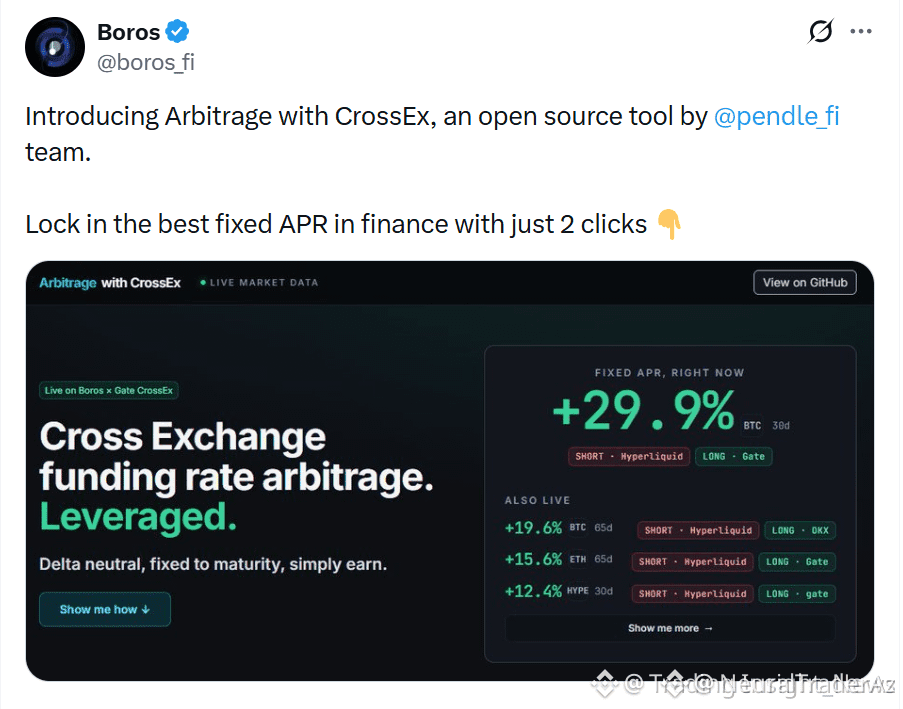
🚨 $PENDLE UNLOCKS INSTITUTIONAL-GRADE FUNDING ARBITRAGE TOOLS TO DEMOCRATIZE HIGH YIELD CAPTURE ⚡
Pendle and Boros just deployed CrossEx, an open-source execution layer bridging cross-exchange funding rate discrepancies. 🔍 This institutional framework automates delta-neutral yield strategies that previously peaked above 40% APY without exposing capital to directional price volatility.
💡 By lowering technical friction, yield mechanics once monopolized by quantitative funds are shifting directly to retail liquidity providers. 📊 As capital efficiency expands across DeFi protocols, structural demand for $PENDLE ecosystem products continues to strengthen. 💬 Will you be deploying capital into delta-neutral arbitrage strategies, or do you prefer holding spot directional exposure? 👇
⚠️ Not financial advice. Always manage your risk. 🛡️
🏷️ #PENDLE #DeFi #Arbitrage #Yield
🎯 🦈
🚨 $PENDLE UNLOCKS INSTITUTIONAL-GRADE FUNDING ARBITRAGE TOOLS TO DEMOCRATIZE HIGH YIELD CAPTURE ⚡
Pendle and Boros just deployed CrossEx, an open-source execution layer bridging cross-exchange funding rate discrepancies. 🔍 This institutional framework automates delta-neutral yield strategies that previously peaked above 40% APY without exposing capital to directional price volatility.
💡 By lowering technical friction, yield mechanics once monopolized by quantitative funds are shifting directly to retail liquidity providers. 📊 As capital efficiency expands across DeFi protocols, structural demand for $PENDLE ecosystem products continues to strengthen. 💬 Will you be deploying capital into delta-neutral arbitrage strategies, or do you prefer holding spot directional exposure? 👇
⚠️ Not financial advice. Always manage your risk. 🛡️
🏷️ #PENDLE #DeFi #Arbitrage #Yield
🎯 🦈
Pendle and Boros just deployed CrossEx, an open-source execution layer bridging cross-exchange funding rate discrepancies. 🔍 This institutional framework automates delta-neutral yield strategies that previously peaked above 40% APY without exposing capital to directional price volatility.
💡 By lowering technical friction, yield mechanics once monopolized by quantitative funds are shifting directly to retail liquidity providers. 📊 As capital efficiency expands across DeFi protocols, structural demand for $PENDLE ecosystem products continues to strengthen. 💬 Will you be deploying capital into delta-neutral arbitrage strategies, or do you prefer holding spot directional exposure? 👇
⚠️ Not financial advice. Always manage your risk. 🛡️
🏷️ #PENDLE #DeFi #Arbitrage #Yield
🎯 🦈
49

·
--
See translation
The Future of DeFi on TON: Why STON.fi’s Evolution Is Worth WatchingDeFi has changed a lot in a relatively short period of time.
What started with simple token swaps and liquidity pools has gradually developed into a much broader ecosystem. Today, users expect more than just the ability to exchange one token for another. They want better liquidity, simpler interfaces, more connected ecosystems, and tools that make blockchain applications easier to use.
This is where the development of the TON ecosystem becomes interesting.
And within that ecosystem, STON.fi is one of the projects worth keeping an eye on.
DeFi Is Moving Beyond a Single Blockchain
One of the biggest challenges in crypto is fragmentation.
Different blockchains have their own tokens, applications, communities, and liquidity. Moving between these ecosystems can sometimes require several steps, different wallets, bridges, and additional transactions.
For ordinary users, this can make DeFi feel unnecessarily complicated.
The broader direction of cross-chain technology is aimed at reducing some of these barriers by allowing assets and liquidity to interact across different blockchain ecosystems.
For a platform operating within TON, developments in this area could have important implications for how users interact with decentralized markets.
Why Liquidity Matters
A decentralized exchange is only as useful as the trading experience it can provide.
Liquidity plays a major role in that experience.
When there is sufficient liquidity available for a trading pair, users can generally execute trades with less price impact than they might experience in a shallow pool.
This also creates opportunities for liquidity providers, who supply assets to pools and can potentially earn fees depending on the pool and protocol mechanics.
But liquidity isn't simply about chasing the highest numbers.
Users need to understand the risks involved, including market volatility and impermanent loss when providing liquidity.
Understanding these basics is becoming increasingly important as DeFi grows.
Cross-Chain Connectivity Could Expand the Conversation
One of the more interesting areas to watch around STON.fi is its cross-chain direction.
The idea is relatively straightforward: make it easier for users and liquidity to interact across different blockchain ecosystems rather than keeping everything isolated.
In practice, however, cross-chain systems involve significant technical and security considerations.
Users still need to think about the networks involved, transaction costs, supported assets, and the risks associated with the technology connecting different ecosystems.
So the important question isn't simply “Can assets move across chains?”
It's also:
“Can this be done in a way that is understandable, secure, and practical for ordinary users?”
That is where continued development will matter.
The User Experience Will Be Just as Important
Technology alone doesn't guarantee adoption.
If using a DeFi application requires users to understand ten different technical concepts before making a simple transaction, many beginners will simply walk away.
A smoother experience could make a significant difference.
Clear transaction information, understandable interfaces, reliable liquidity, straightforward wallet connections, and good educational resources all contribute to that experience.
For DeFi to reach more people, the technology needs to become easier to interact with without hiding the risks.
Education Will Become More Important Too
As the ecosystem grows, there will be more information for users to process.
New tokens.
New protocols.
New networks.
New liquidity opportunities.
New security risks.
That creates an important role for community members who can explain these developments in simple language.
This is also where Stonbassadors can contribute.
A good ambassador doesn't necessarily need to promote every new feature. They can help people understand what a feature does, how it works, what questions to ask, and what risks they should consider.
That type of content can be valuable even to someone who isn't ready to use the product yet.
What Could the Next Stage of TON DeFi Look Like?
It's difficult to predict exactly how DeFi on TON will develop.
But some areas are clearly worth watching: deeper liquidity, easier user experiences, greater interoperability, new financial applications, and stronger connections between different blockchain ecosystems.
The important thing is to separate development from speculation.
A new feature doesn't automatically guarantee adoption. A larger ecosystem doesn't automatically eliminate risk.
What matters is whether these technologies solve real problems for users.
Why STON.fi Is Worth Watching
For me, the interesting part isn't simply another DEX launching another feature.
It's the broader question of how decentralized trading can become easier, more connected, and more accessible while maintaining the transparency and user control that make DeFi attractive in the first place.
STON.fi's development within the TON ecosystem, together with its work toward broader interoperability, makes it an interesting project to follow.
But the future will ultimately depend on execution, adoption, liquidity, security, and how well these technologies solve real user problems.
For anyone interested in TON and DeFi, those are the developments worth paying attention to.
The future of decentralized finance won't be defined by one feature or one project.
It will be shaped by how well the ecosystem connects technology, liquidity, security, and ordinary users.
And that's why the evolution of STON.fi is worth watching.
STON.fi https://ston.fi/
STON.fi Stonbassadors https://ston.fi/stonbassadors $GRAM #STONfi #defi
The Future of DeFi on TON: Why STON.fi’s Evolution Is Worth Watching
DeFi has changed a lot in a relatively short period of time.
What started with simple token swaps and liquidity pools has gradually developed into a much broader ecosystem. Today, users expect more than just the ability to exchange one token for another. They want better liquidity, simpler interfaces, more connected ecosystems, and tools that make blockchain applications easier to use.
This is where the development of the TON ecosystem becomes interesting.
And within that ecosystem, STON.fi is one of the projects worth keeping an eye on.
DeFi Is Moving Beyond a Single Blockchain
One of the biggest challenges in crypto is fragmentation.
Different blockchains have their own tokens, applications, communities, and liquidity. Moving between these ecosystems can sometimes require several steps, different wallets, bridges, and additional transactions.
For ordinary users, this can make DeFi feel unnecessarily complicated.
The broader direction of cross-chain technology is aimed at reducing some of these barriers by allowing assets and liquidity to interact across different blockchain ecosystems.
For a platform operating within TON, developments in this area could have important implications for how users interact with decentralized markets.
Why Liquidity Matters
A decentralized exchange is only as useful as the trading experience it can provide.
Liquidity plays a major role in that experience.
When there is sufficient liquidity available for a trading pair, users can generally execute trades with less price impact than they might experience in a shallow pool.
This also creates opportunities for liquidity providers, who supply assets to pools and can potentially earn fees depending on the pool and protocol mechanics.
But liquidity isn't simply about chasing the highest numbers.
Users need to understand the risks involved, including market volatility and impermanent loss when providing liquidity.
Understanding these basics is becoming increasingly important as DeFi grows.
Cross-Chain Connectivity Could Expand the Conversation
One of the more interesting areas to watch around STON.fi is its cross-chain direction.
The idea is relatively straightforward: make it easier for users and liquidity to interact across different blockchain ecosystems rather than keeping everything isolated.
In practice, however, cross-chain systems involve significant technical and security considerations.
Users still need to think about the networks involved, transaction costs, supported assets, and the risks associated with the technology connecting different ecosystems.
So the important question isn't simply “Can assets move across chains?”
It's also:
“Can this be done in a way that is understandable, secure, and practical for ordinary users?”
That is where continued development will matter.
The User Experience Will Be Just as Important
Technology alone doesn't guarantee adoption.
If using a DeFi application requires users to understand ten different technical concepts before making a simple transaction, many beginners will simply walk away.
A smoother experience could make a significant difference.
Clear transaction information, understandable interfaces, reliable liquidity, straightforward wallet connections, and good educational resources all contribute to that experience.
For DeFi to reach more people, the technology needs to become easier to interact with without hiding the risks.
Education Will Become More Important Too
As the ecosystem grows, there will be more information for users to process.
New tokens.
New protocols.
New networks.
New liquidity opportunities.
New security risks.
That creates an important role for community members who can explain these developments in simple language.
This is also where Stonbassadors can contribute.
A good ambassador doesn't necessarily need to promote every new feature. They can help people understand what a feature does, how it works, what questions to ask, and what risks they should consider.
That type of content can be valuable even to someone who isn't ready to use the product yet.
What Could the Next Stage of TON DeFi Look Like?
It's difficult to predict exactly how DeFi on TON will develop.
But some areas are clearly worth watching: deeper liquidity, easier user experiences, greater interoperability, new financial applications, and stronger connections between different blockchain ecosystems.
The important thing is to separate development from speculation.
A new feature doesn't automatically guarantee adoption. A larger ecosystem doesn't automatically eliminate risk.
What matters is whether these technologies solve real problems for users.
Why STON.fi Is Worth Watching
For me, the interesting part isn't simply another DEX launching another feature.
It's the broader question of how decentralized trading can become easier, more connected, and more accessible while maintaining the transparency and user control that make DeFi attractive in the first place.
STON.fi's development within the TON ecosystem, together with its work toward broader interoperability, makes it an interesting project to follow.
But the future will ultimately depend on execution, adoption, liquidity, security, and how well these technologies solve real user problems.
For anyone interested in TON and DeFi, those are the developments worth paying attention to.
The future of decentralized finance won't be defined by one feature or one project.
It will be shaped by how well the ecosystem connects technology, liquidity, security, and ordinary users.
And that's why the evolution of STON.fi is worth watching.
STON.fi https://ston.fi/
STON.fi Stonbassadors https://ston.fi/stonbassadors $GRAM #STONfi #defi
What started with simple token swaps and liquidity pools has gradually developed into a much broader ecosystem. Today, users expect more than just the ability to exchange one token for another. They want better liquidity, simpler interfaces, more connected ecosystems, and tools that make blockchain applications easier to use.
This is where the development of the TON ecosystem becomes interesting.
And within that ecosystem, STON.fi is one of the projects worth keeping an eye on.
DeFi Is Moving Beyond a Single Blockchain
One of the biggest challenges in crypto is fragmentation.
Different blockchains have their own tokens, applications, communities, and liquidity. Moving between these ecosystems can sometimes require several steps, different wallets, bridges, and additional transactions.
For ordinary users, this can make DeFi feel unnecessarily complicated.
The broader direction of cross-chain technology is aimed at reducing some of these barriers by allowing assets and liquidity to interact across different blockchain ecosystems.
For a platform operating within TON, developments in this area could have important implications for how users interact with decentralized markets.
Why Liquidity Matters
A decentralized exchange is only as useful as the trading experience it can provide.
Liquidity plays a major role in that experience.
When there is sufficient liquidity available for a trading pair, users can generally execute trades with less price impact than they might experience in a shallow pool.
This also creates opportunities for liquidity providers, who supply assets to pools and can potentially earn fees depending on the pool and protocol mechanics.
But liquidity isn't simply about chasing the highest numbers.
Users need to understand the risks involved, including market volatility and impermanent loss when providing liquidity.
Understanding these basics is becoming increasingly important as DeFi grows.
Cross-Chain Connectivity Could Expand the Conversation
One of the more interesting areas to watch around STON.fi is its cross-chain direction.
The idea is relatively straightforward: make it easier for users and liquidity to interact across different blockchain ecosystems rather than keeping everything isolated.
In practice, however, cross-chain systems involve significant technical and security considerations.
Users still need to think about the networks involved, transaction costs, supported assets, and the risks associated with the technology connecting different ecosystems.
So the important question isn't simply “Can assets move across chains?”
It's also:
“Can this be done in a way that is understandable, secure, and practical for ordinary users?”
That is where continued development will matter.
The User Experience Will Be Just as Important
Technology alone doesn't guarantee adoption.
If using a DeFi application requires users to understand ten different technical concepts before making a simple transaction, many beginners will simply walk away.
A smoother experience could make a significant difference.
Clear transaction information, understandable interfaces, reliable liquidity, straightforward wallet connections, and good educational resources all contribute to that experience.
For DeFi to reach more people, the technology needs to become easier to interact with without hiding the risks.
Education Will Become More Important Too
As the ecosystem grows, there will be more information for users to process.
New tokens.
New protocols.
New networks.
New liquidity opportunities.
New security risks.
That creates an important role for community members who can explain these developments in simple language.
This is also where Stonbassadors can contribute.
A good ambassador doesn't necessarily need to promote every new feature. They can help people understand what a feature does, how it works, what questions to ask, and what risks they should consider.
That type of content can be valuable even to someone who isn't ready to use the product yet.
What Could the Next Stage of TON DeFi Look Like?
It's difficult to predict exactly how DeFi on TON will develop.
But some areas are clearly worth watching: deeper liquidity, easier user experiences, greater interoperability, new financial applications, and stronger connections between different blockchain ecosystems.
The important thing is to separate development from speculation.
A new feature doesn't automatically guarantee adoption. A larger ecosystem doesn't automatically eliminate risk.
What matters is whether these technologies solve real problems for users.
Why STON.fi Is Worth Watching
For me, the interesting part isn't simply another DEX launching another feature.
It's the broader question of how decentralized trading can become easier, more connected, and more accessible while maintaining the transparency and user control that make DeFi attractive in the first place.
STON.fi's development within the TON ecosystem, together with its work toward broader interoperability, makes it an interesting project to follow.
But the future will ultimately depend on execution, adoption, liquidity, security, and how well these technologies solve real user problems.
For anyone interested in TON and DeFi, those are the developments worth paying attention to.
The future of decentralized finance won't be defined by one feature or one project.
It will be shaped by how well the ecosystem connects technology, liquidity, security, and ordinary users.
And that's why the evolution of STON.fi is worth watching.
STON.fi https://ston.fi/
STON.fi Stonbassadors https://ston.fi/stonbassadors $GRAM #STONfi #defi
163
·
--
See translation
How to Create Better STON.fi Ambassador Content Without Sounding Like an AdvertisementThere is a big difference between talking about a crypto project and actually creating content that people find useful.
If every post sounds like an advertisement, people eventually stop paying attention.
This is especially important when creating content for a community or ambassador program. You can mention the project, explain its features, and share updates without making every sentence sound promotional.
For anyone creating content around STON.fi, I think the simplest approach is to teach first and promote second.
Start With a Real Question
Good educational content usually starts with a question that someone actually wants answered.
For example:
What is price impact?
How does a token swap work?
What is liquidity?
Why can a transaction fail?
What should I check before connecting my wallet?
What does cross-chain trading actually mean?
These questions give you something specific to explain.
Instead of writing:
> “STON.fi is an amazing platform for DeFi.”
You could write:
> “Ever wondered why the amount you receive from a swap can change before you confirm the transaction?”
The second approach creates curiosity without immediately sounding like an advertisement.
Explain Things Like You're Talking to Another User
You don't need complicated language to demonstrate that you understand DeFi.
In fact, complicated terminology can sometimes make useful information harder to understand.
If you're explaining liquidity, for example, don't just throw definitions at the reader.
Use a simple example.
Explain what happens when there is plenty of liquidity compared with a pool that has limited liquidity. Then introduce concepts such as price impact and liquidity providers.
The goal should be that someone who has never used a DEX can finish your article and understand something they didn't understand before.
Don't Hide the Risks
One thing that can make crypto content feel like an advertisement is when it talks only about benefits.
DeFi has opportunities, but it also has risks.
Smart-contract vulnerabilities, phishing scams, token volatility, transaction errors, impermanent loss, and liquidity risks are all things users should understand.
Including these topics doesn't make your content less supportive of a project.
It makes the content more useful.
If you're explaining liquidity provision on STON.fi, for example, don't focus only on potential fees. Explain that liquidity providers also need to understand how price movements can affect their position.
Balanced information builds credibility.
Don't Pretend You Tested Something
This is particularly important for ambassador content.
If you haven't personally used a feature, don't write:
“I used this feature and it worked perfectly for me.”
Instead, say what you actually know.
You could explain how the feature works based on official documentation, or clearly state that you're sharing an educational overview.
Authenticity is more valuable than pretending to have experience you don't have.
Add Your Own Perspective
Originality doesn't mean you need to invent something completely new.
Sometimes it's simply about explaining a familiar topic in your own way.
For example, hundreds of people may have written about token swaps.
You could approach the subject from a beginner's perspective:
“Five things I would check before making my first DEX swap.”
Or you could create a short visual showing the steps from connecting a wallet to confirming a transaction.
The information may be familiar, but your presentation can make it easier to understand.
Make Your Content Practical
A useful post should ideally leave the reader with something they can do.
Instead of writing several paragraphs about wallet security, finish with a simple checklist:
Before connecting your wallet:
1. Check the website address.
2. Confirm you're using an official source.
3. Never share your seed phrase.
4. Read what you're being asked to approve.
5. Start with a small amount when testing something unfamiliar.
That's the kind of information people can save and return to later.
Visuals Can Help
Not every article needs a complicated graphic.
A simple screenshot, diagram, short video, or infographic can make technical concepts much easier to understand.
For example, an infographic could explain:
Wallet → Connect → Select tokens → Check price impact → Review transaction → Confirm
This is much easier for a beginner to follow than a wall of technical text.
Avoid Excessive Hype
Words like revolutionary, unstoppable, guaranteed, or the future of everything may grab attention, but they can also make your content look promotional.
Let the information speak for itself.
Explain what the platform does, show people how it works, discuss relevant risks, and allow readers to make their own conclusions.
That's a stronger foundation for long-term community content.
A Simple Test Before You Publish
Before posting your next STON.fi article or thread, ask yourself:
“If I removed the project name, would this still be useful to someone learning DeFi?”
If the answer is yes, you're probably creating educational content rather than simply advertising.
And that's the approach I would take with Stonbassador content: learn something, explain it clearly, add your own perspective, and give the reader a reason to come back.
Useful content doesn't need to shout.
Sometimes, simply helping someone understand DeFi a little better is enough.
STON.fi https://ston.fi
STON.fi Stonbassadors https://ston.fi/stonbassadors #DEFİ #defi #STONfi $GRAM
How to Create Better STON.fi Ambassador Content Without Sounding Like an Advertisement
There is a big difference between talking about a crypto project and actually creating content that people find useful.
If every post sounds like an advertisement, people eventually stop paying attention.
This is especially important when creating content for a community or ambassador program. You can mention the project, explain its features, and share updates without making every sentence sound promotional.
For anyone creating content around STON.fi, I think the simplest approach is to teach first and promote second.
Start With a Real Question
Good educational content usually starts with a question that someone actually wants answered.
For example:
What is price impact?
How does a token swap work?
What is liquidity?
Why can a transaction fail?
What should I check before connecting my wallet?
What does cross-chain trading actually mean?
These questions give you something specific to explain.
Instead of writing:
> “STON.fi is an amazing platform for DeFi.”
You could write:
> “Ever wondered why the amount you receive from a swap can change before you confirm the transaction?”
The second approach creates curiosity without immediately sounding like an advertisement.
Explain Things Like You're Talking to Another User
You don't need complicated language to demonstrate that you understand DeFi.
In fact, complicated terminology can sometimes make useful information harder to understand.
If you're explaining liquidity, for example, don't just throw definitions at the reader.
Use a simple example.
Explain what happens when there is plenty of liquidity compared with a pool that has limited liquidity. Then introduce concepts such as price impact and liquidity providers.
The goal should be that someone who has never used a DEX can finish your article and understand something they didn't understand before.
Don't Hide the Risks
One thing that can make crypto content feel like an advertisement is when it talks only about benefits.
DeFi has opportunities, but it also has risks.
Smart-contract vulnerabilities, phishing scams, token volatility, transaction errors, impermanent loss, and liquidity risks are all things users should understand.
Including these topics doesn't make your content less supportive of a project.
It makes the content more useful.
If you're explaining liquidity provision on STON.fi, for example, don't focus only on potential fees. Explain that liquidity providers also need to understand how price movements can affect their position.
Balanced information builds credibility.
Don't Pretend You Tested Something
This is particularly important for ambassador content.
If you haven't personally used a feature, don't write:
“I used this feature and it worked perfectly for me.”
Instead, say what you actually know.
You could explain how the feature works based on official documentation, or clearly state that you're sharing an educational overview.
Authenticity is more valuable than pretending to have experience you don't have.
Add Your Own Perspective
Originality doesn't mean you need to invent something completely new.
Sometimes it's simply about explaining a familiar topic in your own way.
For example, hundreds of people may have written about token swaps.
You could approach the subject from a beginner's perspective:
“Five things I would check before making my first DEX swap.”
Or you could create a short visual showing the steps from connecting a wallet to confirming a transaction.
The information may be familiar, but your presentation can make it easier to understand.
Make Your Content Practical
A useful post should ideally leave the reader with something they can do.
Instead of writing several paragraphs about wallet security, finish with a simple checklist:
Before connecting your wallet:
1. Check the website address.
2. Confirm you're using an official source.
3. Never share your seed phrase.
4. Read what you're being asked to approve.
5. Start with a small amount when testing something unfamiliar.
That's the kind of information people can save and return to later.
Visuals Can Help
Not every article needs a complicated graphic.
A simple screenshot, diagram, short video, or infographic can make technical concepts much easier to understand.
For example, an infographic could explain:
Wallet → Connect → Select tokens → Check price impact → Review transaction → Confirm
This is much easier for a beginner to follow than a wall of technical text.
Avoid Excessive Hype
Words like revolutionary, unstoppable, guaranteed, or the future of everything may grab attention, but they can also make your content look promotional.
Let the information speak for itself.
Explain what the platform does, show people how it works, discuss relevant risks, and allow readers to make their own conclusions.
That's a stronger foundation for long-term community content.
A Simple Test Before You Publish
Before posting your next STON.fi article or thread, ask yourself:
“If I removed the project name, would this still be useful to someone learning DeFi?”
If the answer is yes, you're probably creating educational content rather than simply advertising.
And that's the approach I would take with Stonbassador content: learn something, explain it clearly, add your own perspective, and give the reader a reason to come back.
Useful content doesn't need to shout.
Sometimes, simply helping someone understand DeFi a little better is enough.
STON.fi https://ston.fi
STON.fi Stonbassadors https://ston.fi/stonbassadors #DEFİ #defi #STONfi $GRAM
If every post sounds like an advertisement, people eventually stop paying attention.
This is especially important when creating content for a community or ambassador program. You can mention the project, explain its features, and share updates without making every sentence sound promotional.
For anyone creating content around STON.fi, I think the simplest approach is to teach first and promote second.
Start With a Real Question
Good educational content usually starts with a question that someone actually wants answered.
For example:
What is price impact?
How does a token swap work?
What is liquidity?
Why can a transaction fail?
What should I check before connecting my wallet?
What does cross-chain trading actually mean?
These questions give you something specific to explain.
Instead of writing:
> “STON.fi is an amazing platform for DeFi.”
You could write:
> “Ever wondered why the amount you receive from a swap can change before you confirm the transaction?”
The second approach creates curiosity without immediately sounding like an advertisement.
Explain Things Like You're Talking to Another User
You don't need complicated language to demonstrate that you understand DeFi.
In fact, complicated terminology can sometimes make useful information harder to understand.
If you're explaining liquidity, for example, don't just throw definitions at the reader.
Use a simple example.
Explain what happens when there is plenty of liquidity compared with a pool that has limited liquidity. Then introduce concepts such as price impact and liquidity providers.
The goal should be that someone who has never used a DEX can finish your article and understand something they didn't understand before.
Don't Hide the Risks
One thing that can make crypto content feel like an advertisement is when it talks only about benefits.
DeFi has opportunities, but it also has risks.
Smart-contract vulnerabilities, phishing scams, token volatility, transaction errors, impermanent loss, and liquidity risks are all things users should understand.
Including these topics doesn't make your content less supportive of a project.
It makes the content more useful.
If you're explaining liquidity provision on STON.fi, for example, don't focus only on potential fees. Explain that liquidity providers also need to understand how price movements can affect their position.
Balanced information builds credibility.
Don't Pretend You Tested Something
This is particularly important for ambassador content.
If you haven't personally used a feature, don't write:
“I used this feature and it worked perfectly for me.”
Instead, say what you actually know.
You could explain how the feature works based on official documentation, or clearly state that you're sharing an educational overview.
Authenticity is more valuable than pretending to have experience you don't have.
Add Your Own Perspective
Originality doesn't mean you need to invent something completely new.
Sometimes it's simply about explaining a familiar topic in your own way.
For example, hundreds of people may have written about token swaps.
You could approach the subject from a beginner's perspective:
“Five things I would check before making my first DEX swap.”
Or you could create a short visual showing the steps from connecting a wallet to confirming a transaction.
The information may be familiar, but your presentation can make it easier to understand.
Make Your Content Practical
A useful post should ideally leave the reader with something they can do.
Instead of writing several paragraphs about wallet security, finish with a simple checklist:
Before connecting your wallet:
1. Check the website address.
2. Confirm you're using an official source.
3. Never share your seed phrase.
4. Read what you're being asked to approve.
5. Start with a small amount when testing something unfamiliar.
That's the kind of information people can save and return to later.
Visuals Can Help
Not every article needs a complicated graphic.
A simple screenshot, diagram, short video, or infographic can make technical concepts much easier to understand.
For example, an infographic could explain:
Wallet → Connect → Select tokens → Check price impact → Review transaction → Confirm
This is much easier for a beginner to follow than a wall of technical text.
Avoid Excessive Hype
Words like revolutionary, unstoppable, guaranteed, or the future of everything may grab attention, but they can also make your content look promotional.
Let the information speak for itself.
Explain what the platform does, show people how it works, discuss relevant risks, and allow readers to make their own conclusions.
That's a stronger foundation for long-term community content.
A Simple Test Before You Publish
Before posting your next STON.fi article or thread, ask yourself:
“If I removed the project name, would this still be useful to someone learning DeFi?”
If the answer is yes, you're probably creating educational content rather than simply advertising.
And that's the approach I would take with Stonbassador content: learn something, explain it clearly, add your own perspective, and give the reader a reason to come back.
Useful content doesn't need to shout.
Sometimes, simply helping someone understand DeFi a little better is enough.
STON.fi https://ston.fi
STON.fi Stonbassadors https://ston.fi/stonbassadors #DEFİ #defi #STONfi $GRAM
57

·
--
Bullish
See translation
$WLFI | Gold Paper 🟡
$WLFI is built around DeFi and USD-based stablecoins.
The project aims to strengthen the role of the US Dollar in DeFi.
$WLFI gives holders voting power on certain protocol decisions.
DeFi, governance and stablecoins — all in one ecosystem.
#WIF #DeFi #Stablecoins
{future}(WLFIUSDT)
$WLFI | Gold Paper 🟡
$WLFI is built around DeFi and USD-based stablecoins.
The project aims to strengthen the role of the US Dollar in DeFi.
$WLFI gives holders voting power on certain protocol decisions.
DeFi, governance and stablecoins — all in one ecosystem.
#WIF #DeFi #Stablecoins
$WLFI is built around DeFi and USD-based stablecoins.
The project aims to strengthen the role of the US Dollar in DeFi.
$WLFI gives holders voting power on certain protocol decisions.
DeFi, governance and stablecoins — all in one ecosystem.
#WIF #DeFi #Stablecoins

1
310
·
--
See translation
Liquidity Explained Simply: Why It Matters When You Trade on STON.fiWhen people first enter DeFi, they usually focus on one thing: swapping tokens.
You choose the token you have, select the token you want, check the amount, and confirm the transaction.
But behind that simple swap is something extremely important: liquidity.
Without enough liquidity, decentralized trading becomes difficult. Prices can move significantly when someone makes a trade, and users may receive a less favorable amount than expected.
So what exactly is liquidity, and why should an ordinary STON.fi user care about it?
What Does Liquidity Actually Mean?
In simple terms, liquidity refers to how easily an asset can be bought or sold without causing a large change in its price.
Think about a market where a shop has hundreds of bags of rice available. If you buy five bags, the price probably won't change much.
Now imagine another shop has only ten bags left. If you suddenly buy five, you've taken half of its available stock. The seller may need to adjust the price.
DeFi liquidity works differently from a traditional shop, but the basic idea is similar.
Liquidity is what helps decentralized exchanges facilitate trades between different tokens.
Where Does the Liquidity Come From?
In many decentralized exchanges, liquidity comes from liquidity providers.
Instead of relying on a traditional company or centralized order book to match every buyer and seller, users can deposit assets into liquidity pools.
Those pools then provide the assets needed for other users to trade.
For example, a liquidity pool might contain two different tokens. Traders interact with the pool when swapping between those assets, while liquidity providers supply the underlying tokens.
This creates an important relationship:
Traders need liquidity to swap efficiently, while liquidity providers supply the liquidity that makes those swaps possible.
Why Does Liquidity Matter to STON.fi Users?
Imagine you want to swap a relatively large amount of one token for another.
If the relevant pool has strong liquidity, your trade may have a smaller effect on the pool's price.
If liquidity is limited, however, the same trade can have a much larger effect.
This is where price impact becomes important.
Price impact is essentially the effect your own trade has on the price you receive.
It is different from normal market price movement because your transaction itself can influence the available exchange rate.
That's why checking the expected output and price impact before confirming a transaction is a useful habit.
Liquidity Providers Also Take Risks
Providing liquidity isn't simply a way to deposit tokens and forget about them.
There are risks involved.
One of the best-known is impermanent loss.
This can happen when the prices of the assets in a liquidity pool change significantly compared with when you deposited them.
The value of the assets you withdraw may therefore differ from what you might have had by simply holding the tokens separately.
The exact outcome depends on several factors, including the price movement of the assets, pool mechanics, fees earned, and the time involved.
So liquidity provision should not be viewed as guaranteed passive income.
What About Trading Fees?
Liquidity providers can potentially receive a share of trading fees generated by the pool, depending on the specific pool and protocol mechanics.
This is one reason people provide liquidity in the first place.
But fees should always be considered alongside the risks.
A pool generating trading fees doesn't automatically mean providing liquidity will be profitable. Changes in token prices, impermanent loss, smart-contract risks, and other factors can affect the final result.
What Should a Beginner Check First?
Before providing liquidity or making a swap, it helps to slow down and ask a few basic questions:
For a swap:
How much am I sending?
How much am I expected to receive?
What is the price impact?
What fees will I pay?
Am I using the correct token?
For liquidity provision:
What assets am I depositing?
How does the pool work?
What fees could I potentially earn?
What are the risks if token prices change?
Do I understand impermanent loss?
These questions may take only a few minutes, but they can prevent careless decisions.
Liquidity Is More Than Just a Technical Term
One thing I like about learning DeFi concepts is realizing how interconnected everything is.
A trader may only see a simple swap interface, but underneath that transaction are liquidity pools, liquidity providers, pricing mechanisms, fees, and smart contracts.
Understanding liquidity makes it easier to understand why a trade sometimes produces a different result from what you initially expected.
For anyone exploring STON.fi, learning the basics of liquidity is therefore worth the time.
You don't have to become a DeFi expert overnight.
Start with the fundamentals, understand what you're interacting with, and never deposit money into something you don't understand.
That is a much better starting point than simply chasing the highest numbers displayed on a screen.
STON.fi https://ston.fi
STON.fi documentation https://docs.ston.fi $GRAM #stonfi #defi
Liquidity Explained Simply: Why It Matters When You Trade on STON.fi
When people first enter DeFi, they usually focus on one thing: swapping tokens.
You choose the token you have, select the token you want, check the amount, and confirm the transaction.
But behind that simple swap is something extremely important: liquidity.
Without enough liquidity, decentralized trading becomes difficult. Prices can move significantly when someone makes a trade, and users may receive a less favorable amount than expected.
So what exactly is liquidity, and why should an ordinary STON.fi user care about it?
What Does Liquidity Actually Mean?
In simple terms, liquidity refers to how easily an asset can be bought or sold without causing a large change in its price.
Think about a market where a shop has hundreds of bags of rice available. If you buy five bags, the price probably won't change much.
Now imagine another shop has only ten bags left. If you suddenly buy five, you've taken half of its available stock. The seller may need to adjust the price.
DeFi liquidity works differently from a traditional shop, but the basic idea is similar.
Liquidity is what helps decentralized exchanges facilitate trades between different tokens.
Where Does the Liquidity Come From?
In many decentralized exchanges, liquidity comes from liquidity providers.
Instead of relying on a traditional company or centralized order book to match every buyer and seller, users can deposit assets into liquidity pools.
Those pools then provide the assets needed for other users to trade.
For example, a liquidity pool might contain two different tokens. Traders interact with the pool when swapping between those assets, while liquidity providers supply the underlying tokens.
This creates an important relationship:
Traders need liquidity to swap efficiently, while liquidity providers supply the liquidity that makes those swaps possible.
Why Does Liquidity Matter to STON.fi Users?
Imagine you want to swap a relatively large amount of one token for another.
If the relevant pool has strong liquidity, your trade may have a smaller effect on the pool's price.
If liquidity is limited, however, the same trade can have a much larger effect.
This is where price impact becomes important.
Price impact is essentially the effect your own trade has on the price you receive.
It is different from normal market price movement because your transaction itself can influence the available exchange rate.
That's why checking the expected output and price impact before confirming a transaction is a useful habit.
Liquidity Providers Also Take Risks
Providing liquidity isn't simply a way to deposit tokens and forget about them.
There are risks involved.
One of the best-known is impermanent loss.
This can happen when the prices of the assets in a liquidity pool change significantly compared with when you deposited them.
The value of the assets you withdraw may therefore differ from what you might have had by simply holding the tokens separately.
The exact outcome depends on several factors, including the price movement of the assets, pool mechanics, fees earned, and the time involved.
So liquidity provision should not be viewed as guaranteed passive income.
What About Trading Fees?
Liquidity providers can potentially receive a share of trading fees generated by the pool, depending on the specific pool and protocol mechanics.
This is one reason people provide liquidity in the first place.
But fees should always be considered alongside the risks.
A pool generating trading fees doesn't automatically mean providing liquidity will be profitable. Changes in token prices, impermanent loss, smart-contract risks, and other factors can affect the final result.
What Should a Beginner Check First?
Before providing liquidity or making a swap, it helps to slow down and ask a few basic questions:
For a swap:
How much am I sending?
How much am I expected to receive?
What is the price impact?
What fees will I pay?
Am I using the correct token?
For liquidity provision:
What assets am I depositing?
How does the pool work?
What fees could I potentially earn?
What are the risks if token prices change?
Do I understand impermanent loss?
These questions may take only a few minutes, but they can prevent careless decisions.
Liquidity Is More Than Just a Technical Term
One thing I like about learning DeFi concepts is realizing how interconnected everything is.
A trader may only see a simple swap interface, but underneath that transaction are liquidity pools, liquidity providers, pricing mechanisms, fees, and smart contracts.
Understanding liquidity makes it easier to understand why a trade sometimes produces a different result from what you initially expected.
For anyone exploring STON.fi, learning the basics of liquidity is therefore worth the time.
You don't have to become a DeFi expert overnight.
Start with the fundamentals, understand what you're interacting with, and never deposit money into something you don't understand.
That is a much better starting point than simply chasing the highest numbers displayed on a screen.
STON.fi https://ston.fi
STON.fi documentation https://docs.ston.fi $GRAM #stonfi #defi
You choose the token you have, select the token you want, check the amount, and confirm the transaction.
But behind that simple swap is something extremely important: liquidity.
Without enough liquidity, decentralized trading becomes difficult. Prices can move significantly when someone makes a trade, and users may receive a less favorable amount than expected.
So what exactly is liquidity, and why should an ordinary STON.fi user care about it?
What Does Liquidity Actually Mean?
In simple terms, liquidity refers to how easily an asset can be bought or sold without causing a large change in its price.
Think about a market where a shop has hundreds of bags of rice available. If you buy five bags, the price probably won't change much.
Now imagine another shop has only ten bags left. If you suddenly buy five, you've taken half of its available stock. The seller may need to adjust the price.
DeFi liquidity works differently from a traditional shop, but the basic idea is similar.
Liquidity is what helps decentralized exchanges facilitate trades between different tokens.
Where Does the Liquidity Come From?
In many decentralized exchanges, liquidity comes from liquidity providers.
Instead of relying on a traditional company or centralized order book to match every buyer and seller, users can deposit assets into liquidity pools.
Those pools then provide the assets needed for other users to trade.
For example, a liquidity pool might contain two different tokens. Traders interact with the pool when swapping between those assets, while liquidity providers supply the underlying tokens.
This creates an important relationship:
Traders need liquidity to swap efficiently, while liquidity providers supply the liquidity that makes those swaps possible.
Why Does Liquidity Matter to STON.fi Users?
Imagine you want to swap a relatively large amount of one token for another.
If the relevant pool has strong liquidity, your trade may have a smaller effect on the pool's price.
If liquidity is limited, however, the same trade can have a much larger effect.
This is where price impact becomes important.
Price impact is essentially the effect your own trade has on the price you receive.
It is different from normal market price movement because your transaction itself can influence the available exchange rate.
That's why checking the expected output and price impact before confirming a transaction is a useful habit.
Liquidity Providers Also Take Risks
Providing liquidity isn't simply a way to deposit tokens and forget about them.
There are risks involved.
One of the best-known is impermanent loss.
This can happen when the prices of the assets in a liquidity pool change significantly compared with when you deposited them.
The value of the assets you withdraw may therefore differ from what you might have had by simply holding the tokens separately.
The exact outcome depends on several factors, including the price movement of the assets, pool mechanics, fees earned, and the time involved.
So liquidity provision should not be viewed as guaranteed passive income.
What About Trading Fees?
Liquidity providers can potentially receive a share of trading fees generated by the pool, depending on the specific pool and protocol mechanics.
This is one reason people provide liquidity in the first place.
But fees should always be considered alongside the risks.
A pool generating trading fees doesn't automatically mean providing liquidity will be profitable. Changes in token prices, impermanent loss, smart-contract risks, and other factors can affect the final result.
What Should a Beginner Check First?
Before providing liquidity or making a swap, it helps to slow down and ask a few basic questions:
For a swap:
How much am I sending?
How much am I expected to receive?
What is the price impact?
What fees will I pay?
Am I using the correct token?
For liquidity provision:
What assets am I depositing?
How does the pool work?
What fees could I potentially earn?
What are the risks if token prices change?
Do I understand impermanent loss?
These questions may take only a few minutes, but they can prevent careless decisions.
Liquidity Is More Than Just a Technical Term
One thing I like about learning DeFi concepts is realizing how interconnected everything is.
A trader may only see a simple swap interface, but underneath that transaction are liquidity pools, liquidity providers, pricing mechanisms, fees, and smart contracts.
Understanding liquidity makes it easier to understand why a trade sometimes produces a different result from what you initially expected.
For anyone exploring STON.fi, learning the basics of liquidity is therefore worth the time.
You don't have to become a DeFi expert overnight.
Start with the fundamentals, understand what you're interacting with, and never deposit money into something you don't understand.
That is a much better starting point than simply chasing the highest numbers displayed on a screen.
STON.fi https://ston.fi
STON.fi documentation https://docs.ston.fi $GRAM #stonfi #defi
57
Log in to explore more content
Join global crypto users on Binance Square
⚡️ Get latest and useful information about crypto.
💬 Trusted by the world’s largest crypto exchange.
👍 Discover real insights from verified creators.
Email / Phone number
Trending Topics
1
#KoreaProposesTokenizingStocksAndBonds
7,531 views
176 Discussing
2
#MetaMaskExitsLidoValidatorsAfterSecurityIncident
71,374 views
921 Discussing
3
#MicronBeatsEarningsLiftsGuidance
42,588 views
707 Discussing
4
#CFTCSubmitsTwoEventContractRulesToWhiteHouse
29,576 views
585 Discussing
5
#BitcoinClears$85200
36,667 views
355 Discussing
6
#AltcoinSeasonIndexHoldsAbove60For5Days
175,968 views
2,170 Discussing
7
#USADPAdds90000JobsInSeptember
82,978 views
1,234 Discussing
8
#USCorePCEEasesTo3%InAugust
58,525 views
806 Discussing
9
#KospiPostsWorstQuarterSince2020
30,703 views
631 Discussing
10
#SECToClarifyOnChainFundraisingRules
74,556 views
866 Discussing