
#cryptoeducation
cryptoeducation
3.7M views
25,116 Discussing
Hot
Latest

·
--
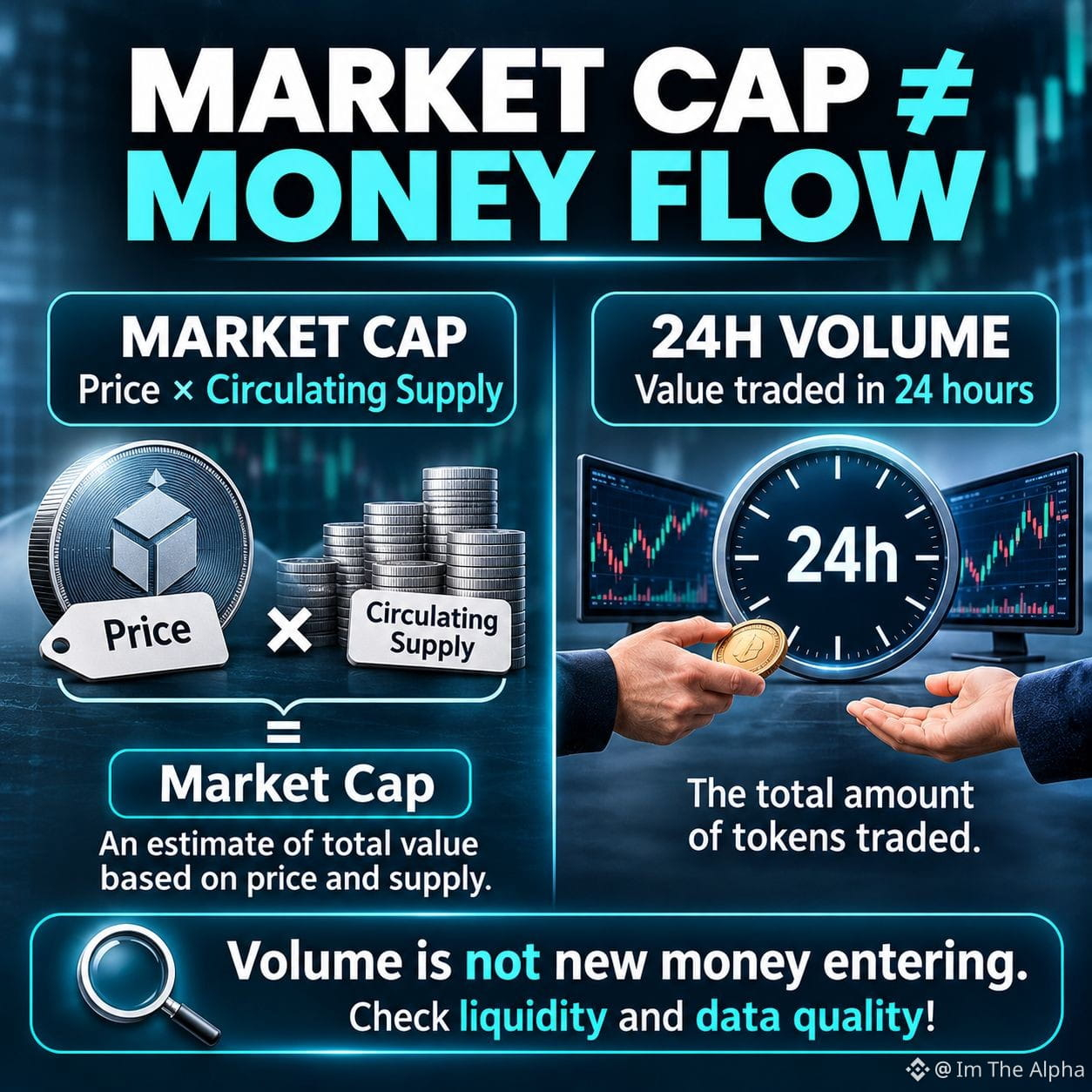
📊 MARKET CAP ≠ MONEY FLOW!
Many crypto users see a rising market cap and assume millions of dollars have entered a coin.
But that's not how it works!
🔹 WHAT IS MARKET CAP?
Market Cap = Current Price × Circulating Supply
Example:
A token has:
• Price: $2
• Circulating Supply: 50 million tokens
Its market cap is $100 million.
If the price rises to $2.20, its market cap becomes $110 million.
⚠️ Does this mean $10 million entered the market?
NO!
A change in market price can increase market cap without an equal amount of new money entering.
🔹 WHAT IS 24H VOLUME???
Trading volume measures the value of trades completed during a 24 hour period.
It shows trading activity, NOT how much new money has entered.
🚨 WHY SHOULD YOU CARE?
A token may show:
• High market cap but weak trading activity.
• High reported volume but poor real liquidity.
• Sudden volume spikes caused by artificial trading.
💡 3 THINGS TO CHECK:
1️⃣ Compare market cap with circulating supply.
2️⃣ Check 24H volume across reliable data sources.
3️⃣ Look at order book depth and liquidity before trading.
📊 KNOWLEDGE POLL
A token's reported 24H trading volume is $12 million. What does this mean?
It means $12 million worth of trades occurred.
Volume measures trading activity over a period.
It does not automatically represent new investment, available liquidity, or a change in market cap.
Learn the numbers before trusting the hype! 🧠
#CryptoEducation #MarketAnalysis #TradingBasics #CanBTCReboundAfterFallingBelow60K? #GlobalStocksFaceLongestLosingStreakSince2023 $BTC $ETH $BNB
{alpha}(560xa3cfb853339b77f385b994799b015cb04b208fe6)
{alpha}(560x0a8d6c86e1bce73fe4d0bd531e1a567306836ea5)
{alpha}(560x299ad4299da5b2b93fba4c96967b040c7f611099)
📊 MARKET CAP ≠ MONEY FLOW!
Many crypto users see a rising market cap and assume millions of dollars have entered a coin.
But that's not how it works!
🔹 WHAT IS MARKET CAP?
Market Cap = Current Price × Circulating Supply
Example:
A token has:
• Price: $2
• Circulating Supply: 50 million tokens
Its market cap is $100 million.
If the price rises to $2.20, its market cap becomes $110 million.
⚠️ Does this mean $10 million entered the market?
NO!
A change in market price can increase market cap without an equal amount of new money entering.
🔹 WHAT IS 24H VOLUME???
Trading volume measures the value of trades completed during a 24 hour period.
It shows trading activity, NOT how much new money has entered.
🚨 WHY SHOULD YOU CARE?
A token may show:
• High market cap but weak trading activity.
• High reported volume but poor real liquidity.
• Sudden volume spikes caused by artificial trading.
💡 3 THINGS TO CHECK:
1️⃣ Compare market cap with circulating supply.
2️⃣ Check 24H volume across reliable data sources.
3️⃣ Look at order book depth and liquidity before trading.
📊 KNOWLEDGE POLL
A token's reported 24H trading volume is $12 million. What does this mean?
It means $12 million worth of trades occurred.
Volume measures trading activity over a period.
It does not automatically represent new investment, available liquidity, or a change in market cap.
Learn the numbers before trusting the hype! 🧠
#CryptoEducation #MarketAnalysis #TradingBasics #CanBTCReboundAfterFallingBelow60K? #GlobalStocksFaceLongestLosingStreakSince2023 $BTC $ETH $BNB
1
120

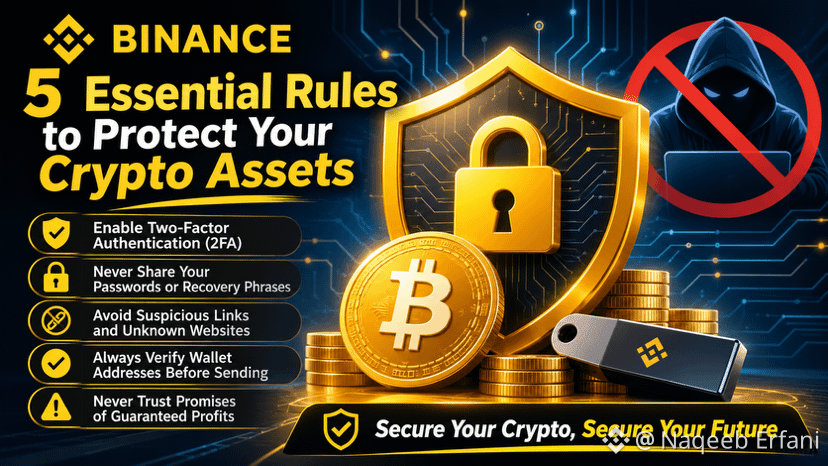
🔐 5 Essential Rules to Protect Your Crypto Assets
Cryptocurrency security is just as important as investing.
Here are five important rules every crypto user should follow:
1️⃣ Enable Two-Factor Authentication (2FA).
2️⃣ Never share your passwords or recovery phrases.
3️⃣ Avoid suspicious links and unknown websites.
4️⃣ Always verify wallet addresses before sending crypto.
5️⃣ Never trust anyone promising guaranteed profits.
Remember: Protecting your digital assets starts with your own security awareness.
💬 What is the biggest security risk you have experienced in the crypto world?
#CryptoSecurity #BinanceSquare #blockchain #CryptoEducation
89
Many people enter crypto without a plan. Start with a simple rule: only invest what you can afford to lose, and never use money you need for daily life.
My simple rule:
Learn first, invest small, and never chase quick profits.
Poll:
🟢 I have a crypto budget
🟡 I invest without a plan
🔴 I’m still learning
Question: What is your first crypto rule—risk management, learning, or patience? Comment below 👇
#cryptoeducation #FinancialFreedom #CryptoTips #BinanceSquare Educational only. Not financial advice.
29

·
--
💡 CRYPTO TRADING LESSON: What Are Funding Rates, and Why Should You Care?
Ever wondered why some crypto traders pay money just to keep a futures position open?
Meet Funding Rates! 👇
Funding rates are periodic payments exchanged between traders holding long and short positions in perpetual futures contracts.
Here's how they work:
🟢 Positive funding rate: Long-position holders generally pay short-position holders.
🔴 Negative funding rate: Short-position holders generally pay long-position holders.
📊 Example:
Imagine you hold a $1,000 perpetual futures position and the funding rate is +0.01%.
Your funding payment would be $0.10 for that settlement interval.
Why does this matter?
Extremely positive funding can indicate crowded bullish positioning.
Extremely negative funding can indicate crowded bearish positioning.
Funding rates can change quickly as market conditions change.
⚠️ Remember: Funding rates alone cannot predict whether Bitcoin will rise or fall. They are just one piece of market information.
Question: When you analyze Bitcoin, do you pay attention to funding rates or focus mainly on price action?
$BTC $ETH $BNB
#cryptoeducation #bitcoin #fundingratesdecline #cryptotrading #BİNANCESQUARE
92

·
--
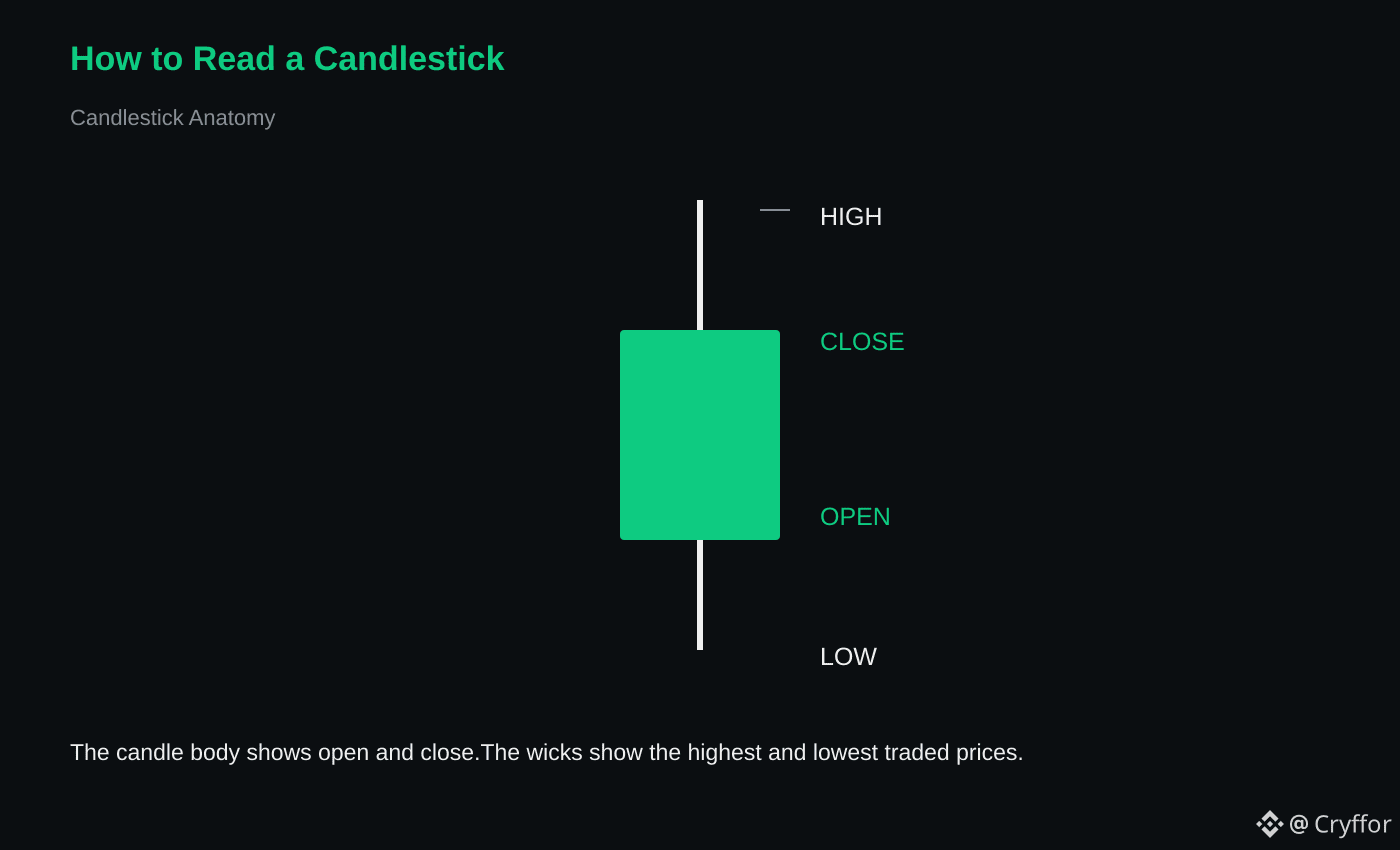
📚 Crypto Education — Candlesticks
🟢 Bullish candle: buyers controlled the period.
🔴 Bearish candle: sellers controlled the period.
📍 The wick shows where price traded but failed to hold.
📊 Candles become more useful with:
🔎 Support/resistance
📈 Trend
⚡ Volume
👀 Higher-timeframe structure
🤔 Which candle pattern do you watch most?
#CryptoEducation #Binance #Candlesticks #Trading
3

·
--
🚀 BITCOIN: A DIGITAL REVOLUTION OR JUST THE BEGINNING?
Bitcoin has changed the way the world thinks about digital money.
But there is still so much to learn about this technology!
Here are 3 interesting facts:
🔹 Bitcoin was introduced in 2009.
🔹 Its maximum supply is limited to 21 million BTC.
🔹 Bitcoin transactions are recorded on a decentralized blockchain.
💡 The future of blockchain technology is worth understanding, even if you never invest in cryptocurrency.
🔥 LET'S START A DISCUSSION!
What do you think is Bitcoin's greatest achievement?
A) Digital payments
B) Blockchain innovation
C) Financial independence
D) Something else
Share your opinion in the comments! 👇
#Bitcoin #BTC #CryptoEducation #Blockchain #BinanceSquare
1
98
·
--

Article
Spot Trading vs Futures Trading: What's the Difference? A Beginner's GuideIf you're new to cryptocurrency, you've probably seen two popular terms: Spot Trading and Futures Trading.
Both allow people to participate in crypto markets, but they work very differently.
Understanding these differences is important because one involves owning cryptocurrency, while the other involves trading contracts based on cryptocurrency prices.
Let's break it down simply. 👇
1. What Is Spot Trading?
Spot trading is the direct buying and selling of cryptocurrencies.
When you purchase Bitcoin through the spot market, you actually receive Bitcoin in your exchange account or wallet.
For example:
Imagine you purchase $100 worth of Bitcoin.
You pay $100.You receive the equivalent amount of BTC, minus applicable fees.If Bitcoin's price increases, your holdings become more valuable.If Bitcoin's price decreases, your holdings lose value.
There is no leverage in ordinary spot trading.
You own the cryptocurrency you purchased, although you should also understand the custody risks involved when keeping assets on an exchange.
2. What Is Futures Trading?
Futures trading is different.
Instead of directly purchasing a cryptocurrency, you trade a contract whose value is linked to the cryptocurrency's price.
For example:
Imagine you open a Bitcoin futures position using $100 as margin with 10x leverage.
Your position has approximately $1,000 in exposure.
This means:
A 1% favourable price movement could produce approximately 10% profit relative to your initial margin.A 1% unfavourable price movement could produce approximately 10% loss relative to your initial margin.
These are simplified examples before trading fees, funding payments and other costs.
Futures trading also allows traders to take long or short positions.
However, leverage magnifies losses just as much as potential gains. If the market moves against a position sufficiently, liquidation can occur.
3. Spot vs Futures: Key Differences
FeatureSpot TradingFutures TradingOwnershipOwn the crypto asset Hold a contract Leverage No leverage in ordinary spotLeverage availableLiquidationNo margin liquidationLiquidation possibleMarket directionBenefits from price increases when holdingLong and short exposureComplexityGenerally simplerMore complexRiskMarket and custody risks Market, leverage and liquidation risks
4. Which Is More Suitable for Beginners?
Spot trading is generally easier to understand because you purchase an actual cryptocurrency without borrowing funds or using leverage.
Futures trading requires a deeper understanding of:
Leverage and marginLiquidation pricesFunding ratesPosition sizingRisk management
A common mistake beginners make is focusing on potential profits without understanding how quickly leveraged positions can lose value.
Remember: A small market movement can have a much larger impact on a leveraged position.
5. An Important Lesson About Leverage
Let's use a simple example.
You have $100.
With 1x exposure, a 5% price movement against your position represents approximately a $5 loss.
With 10x exposure and $100 initial margin, a 5% adverse price movement represents approximately a $50 loss, before fees and funding.
At higher leverage, liquidation can occur before the full adverse price movement is reached.
This is why understanding leverage matters before even considering futures trading.
6. Final Thoughts
Spot and futures trading serve different purposes in cryptocurrency markets.
Spot trading provides direct ownership of digital assets, while futures provide exposure through derivative contracts.
Neither guarantees profits.
Before participating in either market, take time to understand the mechanics, costs and risks.
Education should always come before trading.
💬 Let's discuss!
If you're new to cryptocurrency, which concept would you like explained next?
Spot TradingFutures TradingUnderstanding LeverageReading Bitcoin Charts
Share your thoughts below!
#cryptoeducation #SpotTrading. #futurestradingtips #CryptoForBeginners #BinanceSquare
Spot Trading vs Futures Trading: What's the Difference? A Beginner's Guide
If you're new to cryptocurrency, you've probably seen two popular terms: Spot Trading and Futures Trading.
Both allow people to participate in crypto markets, but they work very differently.
Understanding these differences is important because one involves owning cryptocurrency, while the other involves trading contracts based on cryptocurrency prices.
Let's break it down simply. 👇
1. What Is Spot Trading?
Spot trading is the direct buying and selling of cryptocurrencies.
When you purchase Bitcoin through the spot market, you actually receive Bitcoin in your exchange account or wallet.
For example:
Imagine you purchase $100 worth of Bitcoin.
You pay $100.You receive the equivalent amount of BTC, minus applicable fees.If Bitcoin's price increases, your holdings become more valuable.If Bitcoin's price decreases, your holdings lose value.
There is no leverage in ordinary spot trading.
You own the cryptocurrency you purchased, although you should also understand the custody risks involved when keeping assets on an exchange.
2. What Is Futures Trading?
Futures trading is different.
Instead of directly purchasing a cryptocurrency, you trade a contract whose value is linked to the cryptocurrency's price.
For example:
Imagine you open a Bitcoin futures position using $100 as margin with 10x leverage.
Your position has approximately $1,000 in exposure.
This means:
A 1% favourable price movement could produce approximately 10% profit relative to your initial margin.A 1% unfavourable price movement could produce approximately 10% loss relative to your initial margin.
These are simplified examples before trading fees, funding payments and other costs.
Futures trading also allows traders to take long or short positions.
However, leverage magnifies losses just as much as potential gains. If the market moves against a position sufficiently, liquidation can occur.
3. Spot vs Futures: Key Differences
FeatureSpot TradingFutures TradingOwnershipOwn the crypto asset Hold a contract Leverage No leverage in ordinary spotLeverage availableLiquidationNo margin liquidationLiquidation possibleMarket directionBenefits from price increases when holdingLong and short exposureComplexityGenerally simplerMore complexRiskMarket and custody risks Market, leverage and liquidation risks
4. Which Is More Suitable for Beginners?
Spot trading is generally easier to understand because you purchase an actual cryptocurrency without borrowing funds or using leverage.
Futures trading requires a deeper understanding of:
Leverage and marginLiquidation pricesFunding ratesPosition sizingRisk management
A common mistake beginners make is focusing on potential profits without understanding how quickly leveraged positions can lose value.
Remember: A small market movement can have a much larger impact on a leveraged position.
5. An Important Lesson About Leverage
Let's use a simple example.
You have $100.
With 1x exposure, a 5% price movement against your position represents approximately a $5 loss.
With 10x exposure and $100 initial margin, a 5% adverse price movement represents approximately a $50 loss, before fees and funding.
At higher leverage, liquidation can occur before the full adverse price movement is reached.
This is why understanding leverage matters before even considering futures trading.
6. Final Thoughts
Spot and futures trading serve different purposes in cryptocurrency markets.
Spot trading provides direct ownership of digital assets, while futures provide exposure through derivative contracts.
Neither guarantees profits.
Before participating in either market, take time to understand the mechanics, costs and risks.
Education should always come before trading.
💬 Let's discuss!
If you're new to cryptocurrency, which concept would you like explained next?
Spot TradingFutures TradingUnderstanding LeverageReading Bitcoin Charts
Share your thoughts below!
#cryptoeducation #SpotTrading. #futurestradingtips #CryptoForBeginners #BinanceSquare
60

📚 5 MISTAKES TO AVOID DURING A CRYPTO MARKET CRASH
When Bitcoin falls sharply, emotions can take control.
Here are five mistakes beginners should avoid:
❌ 1. Using excessive leverage
❌ 2. Buying every dip without research
❌ 3. Panic selling without a plan
❌ 4. Following random social media predictions
❌ 5. Risking money you cannot afford to lose
What should you do instead?
✅ Understand your risk tolerance.
✅ Research projects before investing.
✅ Keep position sizes under control.
✅ Have a clear entry and exit strategy.
✅ Protect your capital.
Remember:
You don't have to trade every market condition.
Sometimes staying patient is also a strategy.
💬 What's the biggest mistake you've made in crypto, and what did it teach you?
#BinanceAcademy #CryptoEducation #Bitcoin #RiskManagement $BTC $ETH $BNB
122
🔶 How to read a token: market cap, FDV, and unlocks
A low price per coin means nothing until you know how many coins are actually trading.
✅ Market cap is the value of the coins in circulation. FDV is the value if every allocated coin were already out.
✅ If only 10–15% of supply is circulating, a cliff unlock can put real sell pressure on the chart.
✅ Then ask what the token is for: gas, staking, burns, or a share of protocol fees.
💡 Practical takeaway: On Binance, the asset Info tab is the fastest place to check allocation and unlock timing.
📊 Market now: $BTC: $55,789 (-9.9%) | $ETH: $1,562 (-10.2%) | $BNB: $510.09 (-10.7%)
💬 What market-cap to FDV ratio do you treat as comfortable?
#Tokenomics #BinanceAcademy #CryptoEducation $ETH
🔶 How to read a token: market cap, FDV, and unlocks
A low price per coin means nothing until you know how many coins are actually trading.
✅ Market cap is the value of the coins in circulation. FDV is the value if every allocated coin were already out.
✅ If only 10–15% of supply is circulating, a cliff unlock can put real sell pressure on the chart.
✅ Then ask what the token is for: gas, staking, burns, or a share of protocol fees.
💡 Practical takeaway: On Binance, the asset Info tab is the fastest place to check allocation and unlock timing.
📊 Market now: $BTC : $55,789 (-9.9%) | $ETH : $1,562 (-10.2%) | $BNB : $510.09 (-10.7%)
💬 What market-cap to FDV ratio do you treat as comfortable?
#Tokenomics #BinanceAcademy #CryptoEducation $ETH
137

·
--
🚀 Your Crypto Education Journey Starts Here!
Are you new to cryptocurrency?
Let's learn crypto together, one day at a time.
📚 What you'll learn here:
- Bitcoin & Ethereum basics
- Blockchain technology
- Crypto wallet security
- Web3 fundamentals
- Important crypto updates
My goal is to make crypto easier to understand for everyone.
💬 Question: What do you want to learn first?
1. Bitcoin
2. Ethereum
3. Blockchain
4. Crypto Security
Follow Crypto Education Hub for daily crypto learning!
#cryptoeducation #bitcoin #Ethereum #Web3
95
·
--
🚀 DAY 2: What Is Ethereum?
Ethereum is more than just a cryptocurrency!
It is a decentralized blockchain platform that allows developers to build smart contracts and decentralized applications (dApps).
📚 5 Things Beginners Should Know:
1️⃣ ETH is the native cryptocurrency of Ethereum.
2️⃣ Ethereum supports smart contracts.
3️⃣ Developers can build decentralized apps (dApps).
4️⃣ Ethereum uses Proof of Stake.
5️⃣ ETH is used to pay transaction fees called Gas.
💡 Bitcoin introduced decentralized digital money. Ethereum expanded blockchain possibilities through programmable applications.
💬 QUESTION:
What interests you most about Ethereum?
A) Smart Contracts
B) DeFi
C) NFTs
D) Ethereum Security
Follow Crypto Education Hub for daily crypto learning!
#Ethereum #ETH #blockchain #cryptoeducation
70

·
--
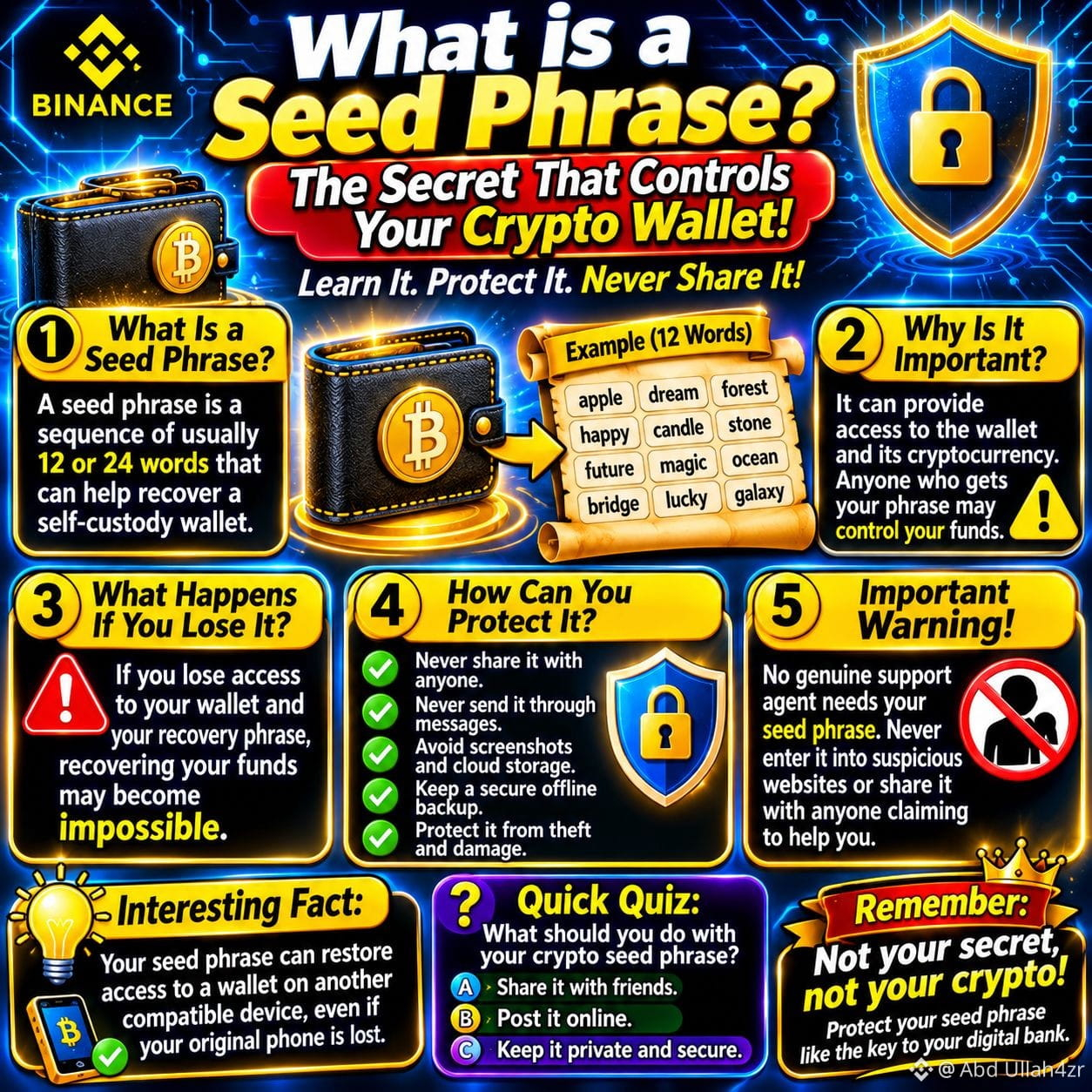
🔑 WHAT IS A CRYPTO SEED PHRASE? WHY MUST YOU NEVER SHARE IT?
Imagine losing your phone but still being able to recover your entire crypto wallet! 🤔
That's one of the reasons a Seed Phrase is so important.
Let's understand it in simple words!
📌 1. What Is a Seed Phrase?
A seed phrase is a sequence of usually 12 or 24 words that can help recover a self-custody crypto wallet.
📌 2. Why Is It Important?
It can provide access to the wallet and its cryptocurrency. Anyone who gets your phrase may be able to control your funds.
📌 3. What Happens If You Lose It?
If you lose access to your wallet and your recovery phrase, recovering your funds may become impossible.
📌 4. How Can You Protect It?
🔐 Never share it with anyone.
🔐 Never send it through messages.
🔐 Avoid screenshots and cloud storage.
🔐 Keep a secure offline backup.
🔐 Protect it from theft and damage.
📌 5. Important Warning!
No genuine support agent needs your seed phrase. Never enter it into suspicious websites or share it with anyone claiming to help you.
💡 INTERESTING FACT:
Your seed phrase can restore access to a wallet on another compatible device, even if your original phone is lost.
🎯 QUICK QUIZ:
What should you do with your crypto seed phrase?
A) Share it with friends.
B) Post it online.
C) Keep it private and secure.
👇 Comment your answer!
Remember: Not your secret, not your crypto! Protect your seed phrase like the key to your digital bank.
#CryptoEducation #SeedPhrase #CryptoSecurity #Bitcoin #CryptoWallet
92


Article
Future of Cryptocurrency
Cryptocurrency is changing the way people think about digital currency. The Future of Cryptocurrency 🌍
Cryptocurrency is changing the way people think about digital money.
Bitcoin (BTC), Ethereum (ETH), and blockchain technology are becoming important parts of the digital world.
💡 3 Things Everyone Should Know:
1️⃣ Blockchain helps record digital transactions.
2️⃣ Bitcoin is a decentralized digital currency.
3️⃣ Learning about crypto is important before making financial decisions.
📚 Knowledge is the first step toward understanding the crypto world!
⚠️ Always do your own research. Crypto investments involve risk.
#BinanceSquare #Bitcoin #BTC #Ethereum #Crypto #Blockchain #cryptoeducation $BTC
Future of Cryptocurrency Cryptocurrency is changing the way people think about digital currency.
The Future of Cryptocurrency 🌍
Cryptocurrency is changing the way people think about digital money.
Bitcoin (BTC), Ethereum (ETH), and blockchain technology are becoming important parts of the digital world.
💡 3 Things Everyone Should Know:
1️⃣ Blockchain helps record digital transactions.
2️⃣ Bitcoin is a decentralized digital currency.
3️⃣ Learning about crypto is important before making financial decisions.
📚 Knowledge is the first step toward understanding the crypto world!
⚠️ Always do your own research. Crypto investments involve risk.
#BinanceSquare #Bitcoin #BTC #Ethereum #Crypto #Blockchain #cryptoeducation $BTC
1
254

·
--
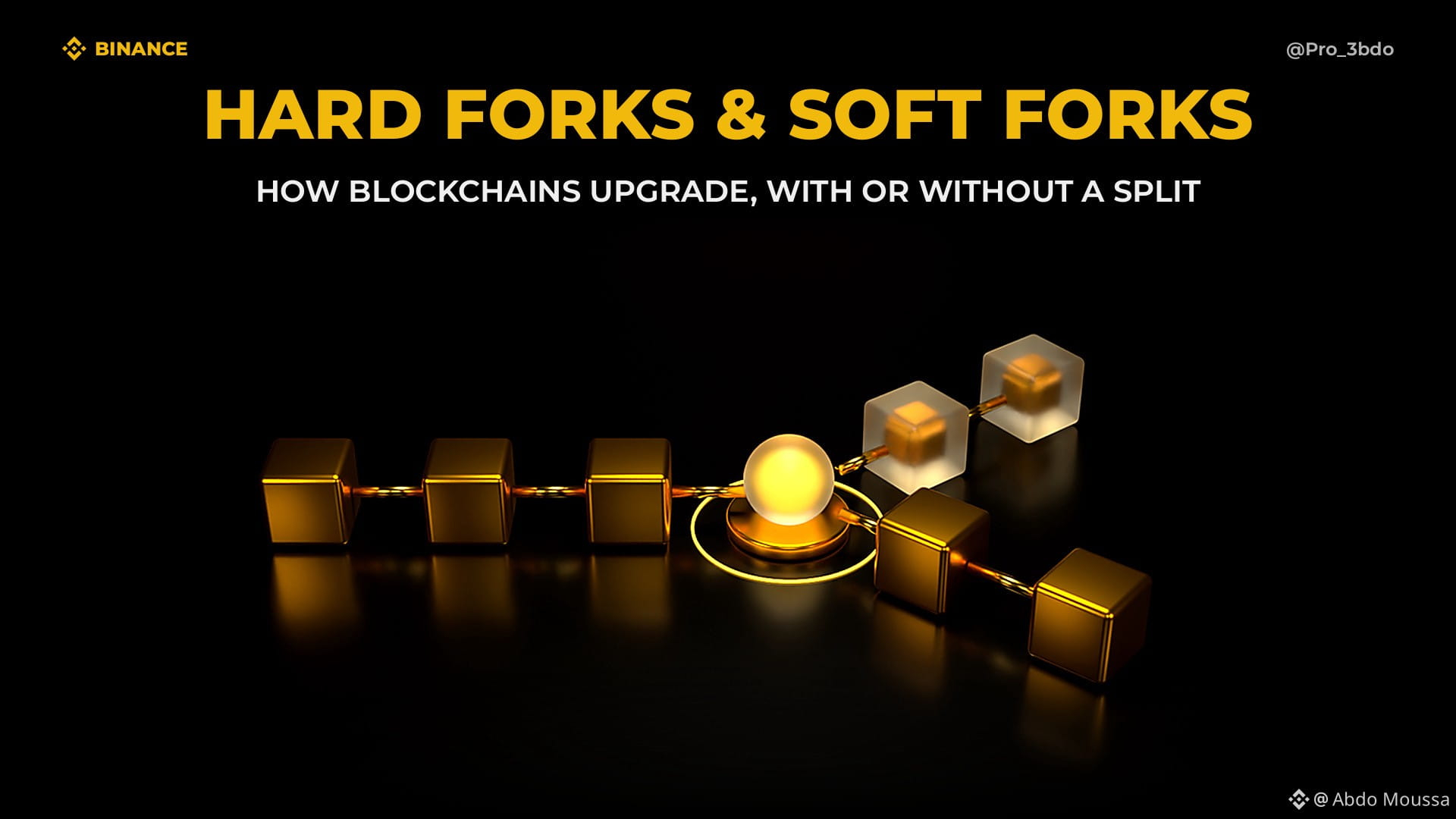
𝐖𝐡𝐚𝐭 𝐡𝐚𝐩𝐩𝐞𝐧𝐬 𝐰𝐡𝐞𝐧 𝐚 𝐛𝐥𝐨𝐜𝐤𝐜𝐡𝐚𝐢𝐧 𝐧𝐞𝐞𝐝𝐬 𝐧𝐞𝐰 𝐫𝐮𝐥𝐞𝐬 𝐛𝐮𝐭 𝐧𝐨𝐛𝐨𝐝𝐲 𝐢𝐬 𝐢𝐧 𝐜𝐡𝐚𝐫𝐠𝐞? 𝐄𝐧𝐭𝐞𝐫 𝐇𝐚𝐫𝐝 𝐅𝐨𝐫𝐤𝐬 𝐚𝐧𝐝 𝐒𝐨𝐟𝐭 𝐅𝐨𝐫𝐤𝐬 🔀⛓️
𝐷𝑟𝑎𝑤𝑖𝑛𝑔 𝑓𝑟𝑜𝑚 𝑓𝑜𝑢𝑛𝑑𝑎𝑡𝑖𝑜𝑛𝑎𝑙 𝑙𝑒𝑠𝑠𝑜𝑛𝑠 𝑜𝑛 #BinanceAcademy, ℎ𝑒𝑟𝑒 𝑖𝑠 𝑦𝑜𝑢𝑟 𝑞𝑢𝑖𝑐𝑘 𝐻𝑎𝑟𝑑 𝐹𝑜𝑟𝑘𝑠 𝑎𝑛𝑑 𝑆𝑜𝑓𝑡 𝐹𝑜𝑟𝑘𝑠 𝑏𝑟𝑒𝑎𝑘𝑑𝑜𝑤𝑛:
1️⃣ 𝐖𝐡𝐚𝐭 𝐚 𝐅𝐨𝐫𝐤 𝐑𝐞𝐚𝐥𝐥𝐲 𝐈𝐬:
• With no central authority, networks upgrade through forks, the protocol is copied and changed, sharing history up to the fork point, then taking its own path.
2️⃣ 𝐇𝐚𝐫𝐝 𝐅𝐨𝐫𝐤, 𝐀 𝐂𝐥𝐞𝐚𝐧 𝐁𝐫𝐞𝐚𝐤:
• New rules aren't backward-compatible, so old and upgraded nodes reject each other's blocks and the chain can split in two, like Bitcoin Cash in 2017 over block size.
3️⃣ 𝐒𝐨𝐟𝐭 𝐅𝐨𝐫𝐤, 𝐀 𝐆𝐞𝐧𝐭𝐥𝐞 𝐔𝐩𝐠𝐫𝐚𝐝𝐞:
• Rules get stricter but stay backward-compatible, so old nodes keep validating and no split is needed, like Bitcoin's SegWit fixing transaction malleability.
⚠️ 𝐑𝐢𝐬𝐤 𝐍𝐨𝐭𝐞:
After a split you may hold coins on both chains, but the new coin's value or support isn't guaranteed, and "claim your forked coins" links can be scams, so stick to official announcements.
For me, forks are a reminder that decentralized networks evolve through consensus, not a boss 💛
📖 Learn more on Binance Academy: https://www.binance.com/en/academy/articles/hard-forks-and-soft-forks
Crypto involves risk, this is not financial advice, always DYOR 💡
#HardFork #BlockchainBasics #CryptoEducation
Follow me for more 💛
2
58

🚀CRYPTOFINANCE: THE FUTURE OF DIGITAL MONEY! 💰
The world of finance is changing, and cryptocurrency is becoming an important part of the digital economy.
₿ #Bitcoin: The pioneer of cryptocurrency.
💎 Ethereum: Powering smart contracts and blockchain technology.
📈 Altcoins: Exploring new digital investment opportunities.
🛡️ Risk Management: Protect your capital before chasing profits.
🌍 Blockchain: Building the future of digital transactions.
🔥 5 Golden Rules for Crypto Investors:
1. Always do your own research (DYOR).
2. Never invest money you can not afford to lose.
3. Avoid emotional buying and selling.
4. Understand market volatility.
5. Think long-term, not overnight riches.
💡 Remember: Smart investing starts with knowledge, patience, and discipline.
Learn Smart. Invest Wisely. Manage Risk.
⚠️ Disclaimer: This post is for educational purposes only, not financial advice. Cryptocurrency investments carry significant risks.
#CryptoFinance #bitcoin #Ethereum✅ #CryptoNews #Blockchain #InvestSmart
#DigitalFinance #CryptoEducation

91

$BTC
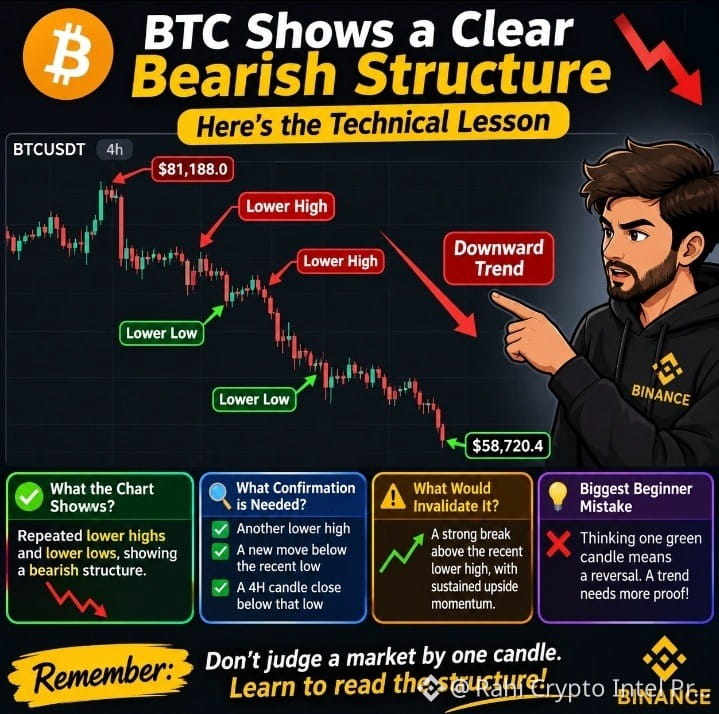
📉 BTC Shows a Clear Bearish Structure — Here's the Technical Lesson
One of the most important lessons in technical analysis is learning to recognize a trend before reacting to individual candles.
Look at this BTCUSDT 4H chart.
Bitcoin has fallen from the marked high of $81,188 to a recent low of $58,720.4.
Notice the price structure:
- Repeated lower highs.
- Successive lower lows.
- Downward price movement with only temporary pauses and recoveries.
This is a clear example of a bearish market structure.
🔍 What confirmation is needed?
Before treating the bearish structure as continuing, watch for:
- Another lower high forming.
- A fresh move below the recent swing low.
- A confirmed 4H candle close below that low.
⚠️ What would invalidate this interpretation?
A meaningful break above the most recent lower high, followed by a sustained move higher, would weaken the bearish structure.
🎯 The biggest beginner mistake
Beginners often see one green candle after a major decline and immediately assume a reversal has started.
But one green candle does not change a trend.
A reversal needs evidence: a break in the lower-high structure and stronger follow-through.
Remember: Don't judge a market by one candle. Learn to read the structure behind the candles.
Technical analysis is about waiting for confirmation, not predicting every move. 📊
#Bitcoin #BTC #TechnicalAnalysis #CryptoEducation #BinanceSquare
$BTC
{future}(BTCUSDT)
$BTC
📉 BTC Shows a Clear Bearish Structure — Here's the Technical Lesson
One of the most important lessons in technical analysis is learning to recognize a trend before reacting to individual candles.
Look at this BTCUSDT 4H chart.
Bitcoin has fallen from the marked high of $81,188 to a recent low of $58,720.4.
Notice the price structure:
- Repeated lower highs.
- Successive lower lows.
- Downward price movement with only temporary pauses and recoveries.
This is a clear example of a bearish market structure.
🔍 What confirmation is needed?
Before treating the bearish structure as continuing, watch for:
- Another lower high forming.
- A fresh move below the recent swing low.
- A confirmed 4H candle close below that low.
⚠️ What would invalidate this interpretation?
A meaningful break above the most recent lower high, followed by a sustained move higher, would weaken the bearish structure.
🎯 The biggest beginner mistake
Beginners often see one green candle after a major decline and immediately assume a reversal has started.
But one green candle does not change a trend.
A reversal needs evidence: a break in the lower-high structure and stronger follow-through.
Remember: Don't judge a market by one candle. Learn to read the structure behind the candles.
Technical analysis is about waiting for confirmation, not predicting every move. 📊
#Bitcoin #BTC #TechnicalAnalysis #CryptoEducation #BinanceSquare
$BTC
1
156
·
--
🌉 BRIDGES MOVE CRYPTO. RISKS TOO.
A blockchain bridge helps transfer tokens or data between different blockchains.
But bridging is not simply changing the network in your wallet.
HOW DOES IT WORK?
Depending on the bridge design, tokens may be:
• Locked on the source chain and represented on the destination chain.
• Burned on one chain and released or minted on another.
• Transferred through a liquidity network.
⚠️ WHY DOES IT MATTER?
A bridge introduces additional security risks beyond the blockchains themselves.
A smart contract bug, compromised validators, or a failure in the bridge system can put your funds at risk.
Even an audited bridge is not guaranteed to be risk-free.
BEFORE YOU BRIDGE:
1️⃣ Open the bridge through the project's official website or documentation.
2️⃣ Check both networks and the exact token you will receive.
3️⃣ Review fees, estimated output and the bridge's security model.
4️⃣ Try a small transfer first before moving a large amount.
💡 Remember:
A successful transaction on the source chain does not automatically mean your funds have arrived on the destination chain.
Different bridges use different designs, including smart contracts, external validators and liquidity networks. Each design has its own risks and trust assumptions.
Learn the route before moving your funds.
#CryptoEducation #BlockchainSecurity #DeFi #Web3 #LearnCrypto $BTC $ETH $BNB

1
156
·
--
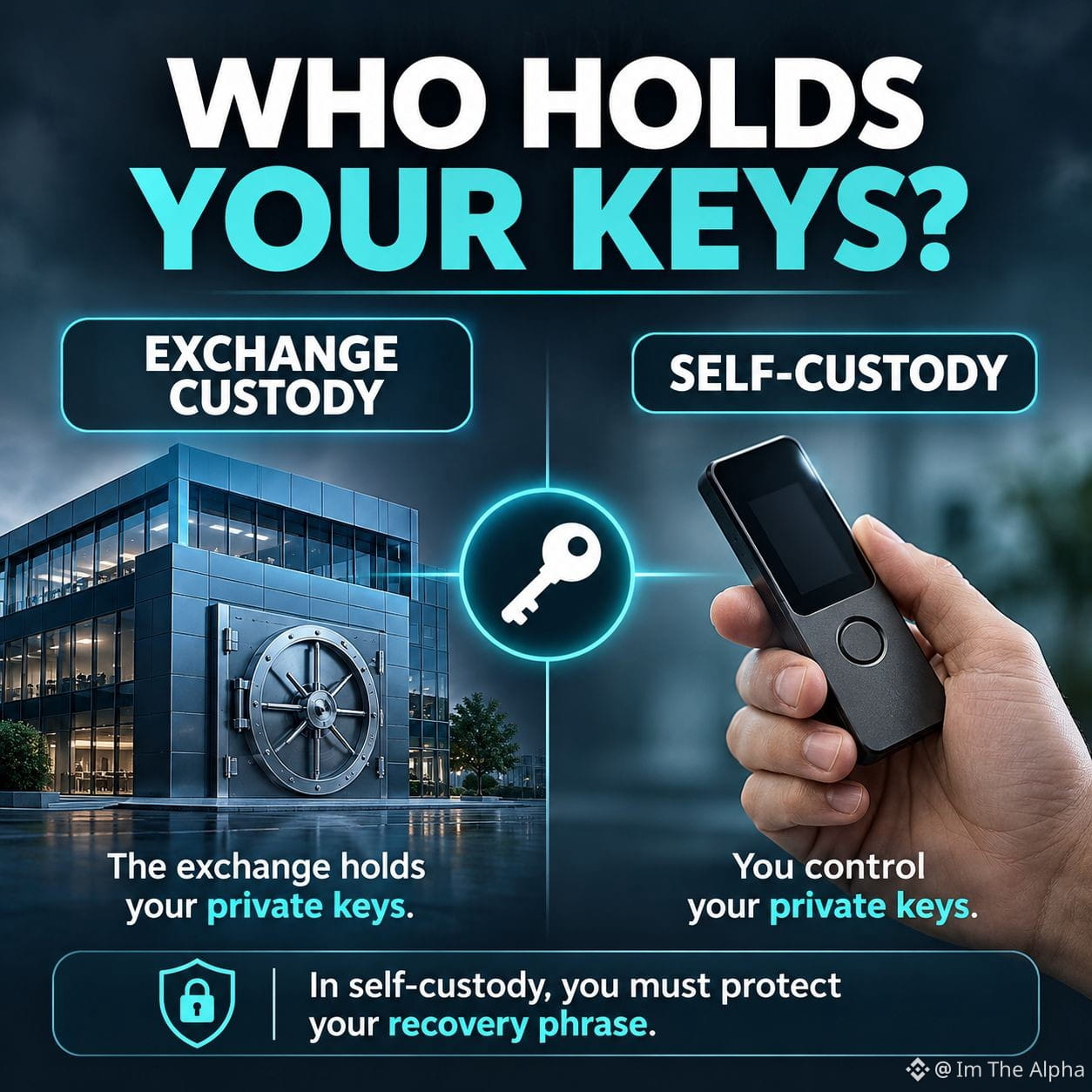
🔐 WHO REALLY CONTROLS YOUR CRYPTO?
There are two common ways to hold crypto:
1️⃣ Exchange Custody
The exchange controls the private keys on your behalf.
It's convenient for trading and account recovery, but you depend on the platform.
2️⃣ Self-Custody
You control your own private keys through a wallet. You get more direct control, but losing your recovery phrase can mean permanently losing access.
💡 Remember:
• Exchange account = convenience.
• Self-custody = personal responsibility.
• Never share your seed phrase with anyone.
• Keep your recovery phrase offline and secure.
Smart crypto users understand both options before choosing.
📊 Where do you prefer to keep your long-term crypto?
A) Exchange
B) Self-custody wallet
C) Both
D) Still learning
#CryptoEducation #CryptoSecurity #Web3 $BTC $ETH $BNB
1
85

WHAT IS ETHEREUM?
Ethereum is more than a cryptocurrency.
Its network supports smart contracts and decentralized applications.
Its native cryptocurrency is called Ether (ETH).
Understanding the difference between a blockchain network and its cryptocurrency is an important step for every beginner.
Keep learning!
#Ethereum #ETH #CryptoEducation
33
WHAT IS BLOCKCHAIN?
Imagine a digital record book that stores transactions across a network of computers.
That is a simple way to understand blockchain.
Information is recorded in blocks connected together, creating a chain of records.
Blockchain technology is one of the foundations behind cryptocurrencies.
Never stop learning!
#Blockchain #CryptoEducation #LearnCrypto
Log in to explore more content
Join global crypto users on Binance Square
⚡️ Get latest and useful information about crypto.
💬 Trusted by the world’s largest crypto exchange.
👍 Discover real insights from verified creators.
Email / Phone number
Trending Topics
1
#NvidiaLoses$2.7TrillionInMonthAndAHalf
12,751 views
103 Discussing
2
#CanBTCReboundAfterFallingBelow60K?
696,869 views
2,851 Discussing
3
#GlobalStocksFaceLongestLosingStreakSince2023
250,239 views
1,925 Discussing
4
#BlackRockIBITPostsRecord$541MSingleDayOutflow
27,354 views
81 Discussing
5
#AnthropicPlungesTowardIPOPriceonDay2
125,970 views
1,165 Discussing
6
#TwentyOneCapitalAdds172.25BTC
56,557 views
632 Discussing
7
#HKBillWouldExcludeTokenizedDepositsFromVirtualAssets
6,762 views
49 Discussing
8
#BNBDropsBelow540USDTWith8.46%DailyDecline
69,900 views
615 Discussing
9
#HKBillProposesHK$100KFineForUnauthorizedCryptoTitles
2,356 views
22 Discussing
10
#BitMineFaces$10.1BUnrealizedETHLoss
4,704 views
26 Discussing