

BoxCodesFeed
96 Posts

BoxCodesFeed
Report
Block User
Get the latest news, analysis, and insights on cryptocurrencies, blockchain technology, and decentralized finance.
5 Following
20.0K+ Followers
165 Liked
Posts
·
--

Article
How to Stay Chill in a Bearish MarketBearish markets can be stressful for crypto investors. Prices can fall quickly and social media can become full of fear. It is easy to make emotional decisions when you see your portfolio losing value.
The best way to handle a bearish market is to stay calm and focus on what you can control. A market downturn does not always mean the end of crypto. Markets move through different cycles and periods of falling prices are part of that process.
Understand What a Bearish Market Means
A bearish market is a period when prices continue to fall or remain weak for a long time. Bitcoin and other cryptocurrencies can lose a large part of their value during these periods.
The important thing is to understand that price drops are normal in markets. Crypto is known for large price movements so short term changes can look more dramatic than they really are.
Understanding this can help you avoid reacting to every price movement.
Do Not Check Your Portfolio Every Minute
Constantly checking prices can increase stress. Seeing red numbers throughout the day can make you feel like you need to take action immediately.
Instead of watching the market all day you can set specific times to check your portfolio. This gives you more time to focus on work study and everyday life.
A long term plan becomes difficult to follow when you react to every small movement.
Avoid Making Decisions From Fear
Fear can make people sell assets at the worst possible moment. The same can happen when excitement makes people buy after a sudden price increase.
Before making a decision ask yourself why you are doing it. If the answer is simply because everyone else is doing it then taking a step back may be useful.
Having a plan before the market becomes stressful can make it easier to stay disciplined.
Focus on Your Original Plan
Think about why you entered the crypto market in the first place.
If your goal was long term investing then short term price movements may not change that goal. If you were trading then your strategy may be different.
Your plan should match your financial situation and risk level. Do not copy someone else's strategy just because they appear confident online.
Keep Some Cash Available
It can be useful to keep part of your money outside the crypto market. This can give you flexibility during periods of high volatility.
You should never put money into crypto that you may need for rent bills education or other important expenses.
Having financial space outside the market can also make it easier to stay calm when prices fall.
Stop Listening to Every Market Prediction
During a bearish market you may see people predicting that Bitcoin will either completely recover or completely collapse.
Most short term predictions are uncertain. Nobody can know exactly when a market will reach its bottom or when the next major move will happen.
Instead of following every prediction focus on reliable information and understand the risks before making decisions.
Use the Bear Market to Learn
A bearish market can also be a learning period.
You can use the time to understand Bitcoin blockchain technology wallets security market cycles and risk management.
You can also review your previous decisions and identify what worked and what did not.
Learning during difficult periods can help you become more prepared for future market conditions.
Protect Your Crypto
Bear markets can create more opportunities for scams because people are looking for ways to recover losses quickly.
Be careful with unknown links fake investment opportunities and promises of guaranteed returns.
Use strong passwords and protect your wallet information. Never share your private keys or recovery phrase with anyone.
Security is important in every market condition.
Take a Break When You Need It
You do not have to follow crypto news every hour.
Taking a break from charts and social media can help reduce stress. Spend time with family friends hobbies work or studies.
The market will continue moving whether you are watching it or not.
Think Long Term
A bearish market can feel much bigger when you are focused only on today's price.
Long term thinking can help you look beyond short term volatility. Bitcoin and the wider crypto industry have gone through multiple periods of strong growth and major declines.
That does not mean prices will always recover or that every cryptocurrency will succeed. It simply means that market cycles are part of the history of crypto.
Final Thoughts
Staying calm during a bearish market is not about ignoring risk. It is about understanding the market and controlling your reactions.
Avoid emotional decisions. Protect your money. Follow a clear plan and give yourself time away from the charts.
Crypto markets can change quickly but your financial decisions do not need to change every time the price moves.
#BTC
Disclaimer: This article is for educational purposes only. It is not financial or investment advice. Always do your own research and consider your personal financial situation before making any investment decision.
How to Stay Chill in a Bearish Market
Bearish markets can be stressful for crypto investors. Prices can fall quickly and social media can become full of fear. It is easy to make emotional decisions when you see your portfolio losing value.
The best way to handle a bearish market is to stay calm and focus on what you can control. A market downturn does not always mean the end of crypto. Markets move through different cycles and periods of falling prices are part of that process.
Understand What a Bearish Market Means
A bearish market is a period when prices continue to fall or remain weak for a long time. Bitcoin and other cryptocurrencies can lose a large part of their value during these periods.
The important thing is to understand that price drops are normal in markets. Crypto is known for large price movements so short term changes can look more dramatic than they really are.
Understanding this can help you avoid reacting to every price movement.
Do Not Check Your Portfolio Every Minute
Constantly checking prices can increase stress. Seeing red numbers throughout the day can make you feel like you need to take action immediately.
Instead of watching the market all day you can set specific times to check your portfolio. This gives you more time to focus on work study and everyday life.
A long term plan becomes difficult to follow when you react to every small movement.
Avoid Making Decisions From Fear
Fear can make people sell assets at the worst possible moment. The same can happen when excitement makes people buy after a sudden price increase.
Before making a decision ask yourself why you are doing it. If the answer is simply because everyone else is doing it then taking a step back may be useful.
Having a plan before the market becomes stressful can make it easier to stay disciplined.
Focus on Your Original Plan
Think about why you entered the crypto market in the first place.
If your goal was long term investing then short term price movements may not change that goal. If you were trading then your strategy may be different.
Your plan should match your financial situation and risk level. Do not copy someone else's strategy just because they appear confident online.
Keep Some Cash Available
It can be useful to keep part of your money outside the crypto market. This can give you flexibility during periods of high volatility.
You should never put money into crypto that you may need for rent bills education or other important expenses.
Having financial space outside the market can also make it easier to stay calm when prices fall.
Stop Listening to Every Market Prediction
During a bearish market you may see people predicting that Bitcoin will either completely recover or completely collapse.
Most short term predictions are uncertain. Nobody can know exactly when a market will reach its bottom or when the next major move will happen.
Instead of following every prediction focus on reliable information and understand the risks before making decisions.
Use the Bear Market to Learn
A bearish market can also be a learning period.
You can use the time to understand Bitcoin blockchain technology wallets security market cycles and risk management.
You can also review your previous decisions and identify what worked and what did not.
Learning during difficult periods can help you become more prepared for future market conditions.
Protect Your Crypto
Bear markets can create more opportunities for scams because people are looking for ways to recover losses quickly.
Be careful with unknown links fake investment opportunities and promises of guaranteed returns.
Use strong passwords and protect your wallet information. Never share your private keys or recovery phrase with anyone.
Security is important in every market condition.
Take a Break When You Need It
You do not have to follow crypto news every hour.
Taking a break from charts and social media can help reduce stress. Spend time with family friends hobbies work or studies.
The market will continue moving whether you are watching it or not.
Think Long Term
A bearish market can feel much bigger when you are focused only on today's price.
Long term thinking can help you look beyond short term volatility. Bitcoin and the wider crypto industry have gone through multiple periods of strong growth and major declines.
That does not mean prices will always recover or that every cryptocurrency will succeed. It simply means that market cycles are part of the history of crypto.
Final Thoughts
Staying calm during a bearish market is not about ignoring risk. It is about understanding the market and controlling your reactions.
Avoid emotional decisions. Protect your money. Follow a clear plan and give yourself time away from the charts.
Crypto markets can change quickly but your financial decisions do not need to change every time the price moves.
#BTC
Disclaimer: This article is for educational purposes only. It is not financial or investment advice. Always do your own research and consider your personal financial situation before making any investment decision.
The best way to handle a bearish market is to stay calm and focus on what you can control. A market downturn does not always mean the end of crypto. Markets move through different cycles and periods of falling prices are part of that process.
Understand What a Bearish Market Means
A bearish market is a period when prices continue to fall or remain weak for a long time. Bitcoin and other cryptocurrencies can lose a large part of their value during these periods.
The important thing is to understand that price drops are normal in markets. Crypto is known for large price movements so short term changes can look more dramatic than they really are.
Understanding this can help you avoid reacting to every price movement.
Do Not Check Your Portfolio Every Minute
Constantly checking prices can increase stress. Seeing red numbers throughout the day can make you feel like you need to take action immediately.
Instead of watching the market all day you can set specific times to check your portfolio. This gives you more time to focus on work study and everyday life.
A long term plan becomes difficult to follow when you react to every small movement.
Avoid Making Decisions From Fear
Fear can make people sell assets at the worst possible moment. The same can happen when excitement makes people buy after a sudden price increase.
Before making a decision ask yourself why you are doing it. If the answer is simply because everyone else is doing it then taking a step back may be useful.
Having a plan before the market becomes stressful can make it easier to stay disciplined.
Focus on Your Original Plan
Think about why you entered the crypto market in the first place.
If your goal was long term investing then short term price movements may not change that goal. If you were trading then your strategy may be different.
Your plan should match your financial situation and risk level. Do not copy someone else's strategy just because they appear confident online.
Keep Some Cash Available
It can be useful to keep part of your money outside the crypto market. This can give you flexibility during periods of high volatility.
You should never put money into crypto that you may need for rent bills education or other important expenses.
Having financial space outside the market can also make it easier to stay calm when prices fall.
Stop Listening to Every Market Prediction
During a bearish market you may see people predicting that Bitcoin will either completely recover or completely collapse.
Most short term predictions are uncertain. Nobody can know exactly when a market will reach its bottom or when the next major move will happen.
Instead of following every prediction focus on reliable information and understand the risks before making decisions.
Use the Bear Market to Learn
A bearish market can also be a learning period.
You can use the time to understand Bitcoin blockchain technology wallets security market cycles and risk management.
You can also review your previous decisions and identify what worked and what did not.
Learning during difficult periods can help you become more prepared for future market conditions.
Protect Your Crypto
Bear markets can create more opportunities for scams because people are looking for ways to recover losses quickly.
Be careful with unknown links fake investment opportunities and promises of guaranteed returns.
Use strong passwords and protect your wallet information. Never share your private keys or recovery phrase with anyone.
Security is important in every market condition.
Take a Break When You Need It
You do not have to follow crypto news every hour.
Taking a break from charts and social media can help reduce stress. Spend time with family friends hobbies work or studies.
The market will continue moving whether you are watching it or not.
Think Long Term
A bearish market can feel much bigger when you are focused only on today's price.
Long term thinking can help you look beyond short term volatility. Bitcoin and the wider crypto industry have gone through multiple periods of strong growth and major declines.
That does not mean prices will always recover or that every cryptocurrency will succeed. It simply means that market cycles are part of the history of crypto.
Final Thoughts
Staying calm during a bearish market is not about ignoring risk. It is about understanding the market and controlling your reactions.
Avoid emotional decisions. Protect your money. Follow a clear plan and give yourself time away from the charts.
Crypto markets can change quickly but your financial decisions do not need to change every time the price moves.
#BTC
Disclaimer: This article is for educational purposes only. It is not financial or investment advice. Always do your own research and consider your personal financial situation before making any investment decision.
9
2
4
272
·
--
Bullish
Could Bitcoin replace gold?
Bitcoin and gold are both often viewed as scarce assets that can serve as stores of value.
Bitcoin is easier to transfer globally while gold has a much longer history as money.
Whether Bitcoin can replace gold depends on adoption, regulation, and long-term trust. $BTC
{spot}(BTCUSDT)
#bitcoin #GOLD #crypto #StoreOfValue
Could Bitcoin replace gold?
Bitcoin and gold are both often viewed as scarce assets that can serve as stores of value.
Bitcoin is easier to transfer globally while gold has a much longer history as money.
Whether Bitcoin can replace gold depends on adoption, regulation, and long-term trust. $BTC
#bitcoin #GOLD #crypto #StoreOfValue
Bitcoin and gold are both often viewed as scarce assets that can serve as stores of value.
Bitcoin is easier to transfer globally while gold has a much longer history as money.
Whether Bitcoin can replace gold depends on adoption, regulation, and long-term trust. $BTC
#bitcoin #GOLD #crypto #StoreOfValue

281
·
--
Bullish
What happens when all 21 million Bitcoin are mined?
Bitcoin’s new supply will eventually stop because its maximum supply is capped at 21 million coins.
Miners would then rely primarily on transaction fees rather than newly created Bitcoin.
The network can continue operating as long as transactions are processed and secured. $BTC
{spot}(BTCUSDT)
#bitcoin #BTC #Mining #crypto
What happens when all 21 million Bitcoin are mined?
Bitcoin’s new supply will eventually stop because its maximum supply is capped at 21 million coins.
Miners would then rely primarily on transaction fees rather than newly created Bitcoin.
The network can continue operating as long as transactions are processed and secured. $BTC
#bitcoin #BTC #Mining #crypto
Bitcoin’s new supply will eventually stop because its maximum supply is capped at 21 million coins.
Miners would then rely primarily on transaction fees rather than newly created Bitcoin.
The network can continue operating as long as transactions are processed and secured. $BTC
#bitcoin #BTC #Mining #crypto

209
·
--
Bullish
What happens if Bitcoin disappears tomorrow?
If Bitcoin suddenly disappeared, billions of dollars in value and a huge financial ecosystem could vanish.
Exchanges, miners, investors, and businesses built around Bitcoin would be heavily affected.
It would also raise major questions about trust in decentralized digital assets. $BTC
#bitcoin #crypto #Blockchain #BTC
What happens if Bitcoin disappears tomorrow?
If Bitcoin suddenly disappeared, billions of dollars in value and a huge financial ecosystem could vanish.
Exchanges, miners, investors, and businesses built around Bitcoin would be heavily affected.
It would also raise major questions about trust in decentralized digital assets. $BTC
#bitcoin #crypto #Blockchain #BTC
If Bitcoin suddenly disappeared, billions of dollars in value and a huge financial ecosystem could vanish.
Exchanges, miners, investors, and businesses built around Bitcoin would be heavily affected.
It would also raise major questions about trust in decentralized digital assets. $BTC
#bitcoin #crypto #Blockchain #BTC

1
228
·
--
Bullish
What happens if everyone stops selling Bitcoin?
If almost nobody is willing to sell Bitcoin, available supply on exchanges could become extremely limited.
Buyers would have to compete for the Bitcoin that is actually available.
This could create significant upward pressure on the price. $btc
#Bitcoin #BTC #CryptoMarket #supply
What happens if everyone stops selling Bitcoin?
If almost nobody is willing to sell Bitcoin, available supply on exchanges could become extremely limited.
Buyers would have to compete for the Bitcoin that is actually available.
This could create significant upward pressure on the price. $btc
#Bitcoin #BTC #CryptoMarket #supply
If almost nobody is willing to sell Bitcoin, available supply on exchanges could become extremely limited.
Buyers would have to compete for the Bitcoin that is actually available.
This could create significant upward pressure on the price. $btc
#Bitcoin #BTC #CryptoMarket #supply

230
·
--
What happens if Bitcoin reaches $1 million?
A $1 million Bitcoin price would push Bitcoin’s total market value dramatically higher.
It could attract more institutional investors while making each Bitcoin extremely valuable.
But higher prices could also bring greater volatility and speculation.
#bitcoin #Crypto #BTC #Bitcoinprice
What happens if Bitcoin reaches $1 million?
A $1 million Bitcoin price would push Bitcoin’s total market value dramatically higher.
It could attract more institutional investors while making each Bitcoin extremely valuable.
But higher prices could also bring greater volatility and speculation.
#bitcoin #Crypto #BTC #Bitcoinprice
A $1 million Bitcoin price would push Bitcoin’s total market value dramatically higher.
It could attract more institutional investors while making each Bitcoin extremely valuable.
But higher prices could also bring greater volatility and speculation.
#bitcoin #Crypto #BTC #Bitcoinprice

1
197
·
--
Bullish
What is a Rebase Token?
A rebase token automatically adjusts its circulating supply according to predefined rules.
The supply can expand or contract without users manually buying or selling tokens.
The goal is often to maintain a particular price or economic mechanism.
#RebaseToken #Tokenomics #Crypto #defi
What is a Rebase Token?
A rebase token automatically adjusts its circulating supply according to predefined rules.
The supply can expand or contract without users manually buying or selling tokens.
The goal is often to maintain a particular price or economic mechanism.
#RebaseToken #Tokenomics #Crypto #defi
A rebase token automatically adjusts its circulating supply according to predefined rules.
The supply can expand or contract without users manually buying or selling tokens.
The goal is often to maintain a particular price or economic mechanism.
#RebaseToken #Tokenomics #Crypto #defi

177
·
--
Bullish
What is a Crypto Oracle?
A blockchain oracle provides external information to smart contracts.
This can include asset prices, exchange rates, weather data, or real-world events.
Oracles help blockchains interact with information outside their own networks.
#CryptoOracle #SmartContracts #DeFi #blockchain
What is a Crypto Oracle?
A blockchain oracle provides external information to smart contracts.
This can include asset prices, exchange rates, weather data, or real-world events.
Oracles help blockchains interact with information outside their own networks.
#CryptoOracle #SmartContracts #DeFi #blockchain
A blockchain oracle provides external information to smart contracts.
This can include asset prices, exchange rates, weather data, or real-world events.
Oracles help blockchains interact with information outside their own networks.
#CryptoOracle #SmartContracts #DeFi #blockchain

142
·
--
Bullish
What is Oracle Manipulation?
Oracle manipulation occurs when attackers exploit inaccurate or manipulated external data.
DeFi protocols that rely on incorrect prices can become vulnerable to major losses.
Reliable oracle systems are therefore critical to decentralized finance.
#OracleManipulation #defi #CryptoSecurity #blockchain
What is Oracle Manipulation?
Oracle manipulation occurs when attackers exploit inaccurate or manipulated external data.
DeFi protocols that rely on incorrect prices can become vulnerable to major losses.
Reliable oracle systems are therefore critical to decentralized finance.
#OracleManipulation #defi #CryptoSecurity #blockchain
Oracle manipulation occurs when attackers exploit inaccurate or manipulated external data.
DeFi protocols that rely on incorrect prices can become vulnerable to major losses.
Reliable oracle systems are therefore critical to decentralized finance.
#OracleManipulation #defi #CryptoSecurity #blockchain

152
·
--

Article
Can AI Agents Really Use Crypto Without Humans?Artificial intelligence is becoming more capable every year. AI systems can already write content. Analyze information. Create software and help businesses make decisions.
The next step could be even more interesting.
AI agents may be able to perform tasks on their own. This could include buying digital services. Managing online resources and making payments.
This raises an important question. Can AI agents really use crypto without humans?
The short answer is yes. But there are still important limits and challenges.
What Is an AI Agent?
An AI agent is a software system that can understand a goal and take actions to achieve it.
A normal AI chatbot mainly responds to questions. An AI agent can go further.
It could search for information. Choose between different options. Use online services and complete tasks based on instructions.
For example an AI agent could be given a simple goal such as finding the cheapest cloud computing service.
The agent could compare different services. Select one and potentially pay for it without asking a person to complete every step.
This is where crypto becomes interesting.
Why Would an AI Agent Need Crypto?
AI agents operate inside the digital world.
They may need access to online services. They may need computing power. They may need data or other digital resources.
Many of these services cost money.
Traditional financial systems are mainly designed for people and businesses. They often require accounts. Identity checks. Banking systems and human approval.
Crypto can provide a different approach.
A crypto wallet can hold digital assets and send payments directly to another wallet.
This could allow an AI agent to control a wallet and make certain payments automatically.
How Could It Work?
Imagine an AI agent running a small online business.
The agent needs cloud computing to operate. It checks several providers and finds a service that meets its requirements.
The agent sends a crypto payment to the provider.
The service becomes available and the AI continues its work.
No person needs to manually approve every small payment.
This could create a new type of digital economy where software systems can interact and exchange value directly.
AI Agents Could Become Digital Customers
Today most online services are designed for human customers.
A person creates an account. A person enters payment details. A person approves a transaction.
AI agents could change this model.
An AI agent could become a digital customer that searches for services and pays for them automatically.
This could be useful for software services. Cloud computing. Data services. Digital content and other online resources.
The number of AI agents could also grow significantly.
If millions of agents start interacting with online services then automated payments could become much more important.
Why Crypto Could Be Useful
Crypto can operate without requiring a traditional bank account for every transaction.
A wallet can send and receive digital assets at any time.
This could make crypto useful for machine to machine payments.
An AI agent could potentially send a small payment to another system. That system could provide a service in return.
This creates a simple cycle.
AI makes the decision. Crypto moves the value.
What About Bitcoin?
Bitcoin could potentially be part of this future.
Bitcoin is designed to allow digital value to move across a decentralized network.
However Bitcoin is not the only option.
Stablecoins may also be useful for AI payments because their value is designed to remain closer to traditional currencies.
Different digital assets could have different roles depending on the type of payment and the requirements of the AI system.
Can AI Agents Control Their Own Wallets?
Technically an AI system can be connected to a crypto wallet.
The bigger question is how much control the AI should have.
Giving an AI agent unrestricted access to a wallet could create serious risks.
An AI system could make a wrong decision. It could be manipulated by malicious instructions. It could send money to the wrong address.
There is also the possibility of software bugs.
For this reason AI wallets would need strong security controls.
Human Control May Still Matter
Even if AI agents can make payments without humans they may not operate completely independently.
People could still set rules for the agent.
For example a user could limit how much money an AI agent can spend each day.
The user could also approve larger transactions.
This would create a balance between automation and human control.
Small payments could happen automatically while important decisions could still require human approval.
What Could Go Wrong?
There are several risks.
An AI agent could be tricked into sending money to a scammer.
A hacker could gain control of the agent.
The agent could misunderstand an instruction.
A software error could cause repeated payments.
Crypto transactions can also be difficult to reverse once they have been confirmed.
These risks make security extremely important.
Could AI Agents Trade Crypto?
AI agents could also potentially interact with crypto markets.
An agent could analyze market information and follow a trading strategy.
It could monitor prices and execute transactions according to predefined rules.
However this does not mean an AI agent will automatically make profitable trades.
Markets are unpredictable. AI systems can make mistakes and trading involves significant financial risk.
Automation can make transactions faster but it does not remove the risk of losing money.
The Rise of the Machine Economy
The most interesting possibility is the development of a machine economy.
In this type of economy software systems could interact with each other and exchange value.
An AI agent could buy computing power from another service.
A robot could pay for charging.
A software system could purchase data.
A digital service could automatically pay another system for access to a resource.
Humans would still create and manage these systems. But many individual transactions could happen automatically.
What Does the Future Look Like?
AI agents using crypto are still an emerging idea.
The technology needs better security. Better payment infrastructure and clearer rules.
AI systems also need to become more reliable before they can safely control valuable assets.
If these challenges are solved the combination of AI and crypto could create new types of digital businesses.
The internet could move from being a place where humans use services to an environment where humans and AI agents both interact and exchange value.
Final Thoughts
AI agents may eventually become capable of managing crypto wallets and making payments without direct human involvement.
The technology already makes some forms of automated digital payments possible. The bigger challenge is making these systems safe and reliable.
Crypto could give AI agents a way to control and transfer digital value.
AI could give those payments intelligence and purpose.
The result could be a new digital economy where software systems can make decisions and exchange value on their own.
The future question may not be whether AI agents can use crypto.
It may be how much financial freedom we are willing to give them.
#bitcoin #altcoins #AI $BTC #dyor #NFA✅
Disclaimer: This article is for educational and informational purposes only. It is not financial or investment advice. AI and crypto technologies carry significant technical and financial risks.
Can AI Agents Really Use Crypto Without Humans?
Artificial intelligence is becoming more capable every year. AI systems can already write content. Analyze information. Create software and help businesses make decisions.
The next step could be even more interesting.
AI agents may be able to perform tasks on their own. This could include buying digital services. Managing online resources and making payments.
This raises an important question. Can AI agents really use crypto without humans?
The short answer is yes. But there are still important limits and challenges.
What Is an AI Agent?
An AI agent is a software system that can understand a goal and take actions to achieve it.
A normal AI chatbot mainly responds to questions. An AI agent can go further.
It could search for information. Choose between different options. Use online services and complete tasks based on instructions.
For example an AI agent could be given a simple goal such as finding the cheapest cloud computing service.
The agent could compare different services. Select one and potentially pay for it without asking a person to complete every step.
This is where crypto becomes interesting.
Why Would an AI Agent Need Crypto?
AI agents operate inside the digital world.
They may need access to online services. They may need computing power. They may need data or other digital resources.
Many of these services cost money.
Traditional financial systems are mainly designed for people and businesses. They often require accounts. Identity checks. Banking systems and human approval.
Crypto can provide a different approach.
A crypto wallet can hold digital assets and send payments directly to another wallet.
This could allow an AI agent to control a wallet and make certain payments automatically.
How Could It Work?
Imagine an AI agent running a small online business.
The agent needs cloud computing to operate. It checks several providers and finds a service that meets its requirements.
The agent sends a crypto payment to the provider.
The service becomes available and the AI continues its work.
No person needs to manually approve every small payment.
This could create a new type of digital economy where software systems can interact and exchange value directly.
AI Agents Could Become Digital Customers
Today most online services are designed for human customers.
A person creates an account. A person enters payment details. A person approves a transaction.
AI agents could change this model.
An AI agent could become a digital customer that searches for services and pays for them automatically.
This could be useful for software services. Cloud computing. Data services. Digital content and other online resources.
The number of AI agents could also grow significantly.
If millions of agents start interacting with online services then automated payments could become much more important.
Why Crypto Could Be Useful
Crypto can operate without requiring a traditional bank account for every transaction.
A wallet can send and receive digital assets at any time.
This could make crypto useful for machine to machine payments.
An AI agent could potentially send a small payment to another system. That system could provide a service in return.
This creates a simple cycle.
AI makes the decision. Crypto moves the value.
What About Bitcoin?
Bitcoin could potentially be part of this future.
Bitcoin is designed to allow digital value to move across a decentralized network.
However Bitcoin is not the only option.
Stablecoins may also be useful for AI payments because their value is designed to remain closer to traditional currencies.
Different digital assets could have different roles depending on the type of payment and the requirements of the AI system.
Can AI Agents Control Their Own Wallets?
Technically an AI system can be connected to a crypto wallet.
The bigger question is how much control the AI should have.
Giving an AI agent unrestricted access to a wallet could create serious risks.
An AI system could make a wrong decision. It could be manipulated by malicious instructions. It could send money to the wrong address.
There is also the possibility of software bugs.
For this reason AI wallets would need strong security controls.
Human Control May Still Matter
Even if AI agents can make payments without humans they may not operate completely independently.
People could still set rules for the agent.
For example a user could limit how much money an AI agent can spend each day.
The user could also approve larger transactions.
This would create a balance between automation and human control.
Small payments could happen automatically while important decisions could still require human approval.
What Could Go Wrong?
There are several risks.
An AI agent could be tricked into sending money to a scammer.
A hacker could gain control of the agent.
The agent could misunderstand an instruction.
A software error could cause repeated payments.
Crypto transactions can also be difficult to reverse once they have been confirmed.
These risks make security extremely important.
Could AI Agents Trade Crypto?
AI agents could also potentially interact with crypto markets.
An agent could analyze market information and follow a trading strategy.
It could monitor prices and execute transactions according to predefined rules.
However this does not mean an AI agent will automatically make profitable trades.
Markets are unpredictable. AI systems can make mistakes and trading involves significant financial risk.
Automation can make transactions faster but it does not remove the risk of losing money.
The Rise of the Machine Economy
The most interesting possibility is the development of a machine economy.
In this type of economy software systems could interact with each other and exchange value.
An AI agent could buy computing power from another service.
A robot could pay for charging.
A software system could purchase data.
A digital service could automatically pay another system for access to a resource.
Humans would still create and manage these systems. But many individual transactions could happen automatically.
What Does the Future Look Like?
AI agents using crypto are still an emerging idea.
The technology needs better security. Better payment infrastructure and clearer rules.
AI systems also need to become more reliable before they can safely control valuable assets.
If these challenges are solved the combination of AI and crypto could create new types of digital businesses.
The internet could move from being a place where humans use services to an environment where humans and AI agents both interact and exchange value.
Final Thoughts
AI agents may eventually become capable of managing crypto wallets and making payments without direct human involvement.
The technology already makes some forms of automated digital payments possible. The bigger challenge is making these systems safe and reliable.
Crypto could give AI agents a way to control and transfer digital value.
AI could give those payments intelligence and purpose.
The result could be a new digital economy where software systems can make decisions and exchange value on their own.
The future question may not be whether AI agents can use crypto.
It may be how much financial freedom we are willing to give them.
#bitcoin #altcoins #AI $BTC #dyor #NFA✅
Disclaimer: This article is for educational and informational purposes only. It is not financial or investment advice. AI and crypto technologies carry significant technical and financial risks.
The next step could be even more interesting.
AI agents may be able to perform tasks on their own. This could include buying digital services. Managing online resources and making payments.
This raises an important question. Can AI agents really use crypto without humans?
The short answer is yes. But there are still important limits and challenges.
What Is an AI Agent?
An AI agent is a software system that can understand a goal and take actions to achieve it.
A normal AI chatbot mainly responds to questions. An AI agent can go further.
It could search for information. Choose between different options. Use online services and complete tasks based on instructions.
For example an AI agent could be given a simple goal such as finding the cheapest cloud computing service.
The agent could compare different services. Select one and potentially pay for it without asking a person to complete every step.
This is where crypto becomes interesting.
Why Would an AI Agent Need Crypto?
AI agents operate inside the digital world.
They may need access to online services. They may need computing power. They may need data or other digital resources.
Many of these services cost money.
Traditional financial systems are mainly designed for people and businesses. They often require accounts. Identity checks. Banking systems and human approval.
Crypto can provide a different approach.
A crypto wallet can hold digital assets and send payments directly to another wallet.
This could allow an AI agent to control a wallet and make certain payments automatically.
How Could It Work?
Imagine an AI agent running a small online business.
The agent needs cloud computing to operate. It checks several providers and finds a service that meets its requirements.
The agent sends a crypto payment to the provider.
The service becomes available and the AI continues its work.
No person needs to manually approve every small payment.
This could create a new type of digital economy where software systems can interact and exchange value directly.
AI Agents Could Become Digital Customers
Today most online services are designed for human customers.
A person creates an account. A person enters payment details. A person approves a transaction.
AI agents could change this model.
An AI agent could become a digital customer that searches for services and pays for them automatically.
This could be useful for software services. Cloud computing. Data services. Digital content and other online resources.
The number of AI agents could also grow significantly.
If millions of agents start interacting with online services then automated payments could become much more important.
Why Crypto Could Be Useful
Crypto can operate without requiring a traditional bank account for every transaction.
A wallet can send and receive digital assets at any time.
This could make crypto useful for machine to machine payments.
An AI agent could potentially send a small payment to another system. That system could provide a service in return.
This creates a simple cycle.
AI makes the decision. Crypto moves the value.
What About Bitcoin?
Bitcoin could potentially be part of this future.
Bitcoin is designed to allow digital value to move across a decentralized network.
However Bitcoin is not the only option.
Stablecoins may also be useful for AI payments because their value is designed to remain closer to traditional currencies.
Different digital assets could have different roles depending on the type of payment and the requirements of the AI system.
Can AI Agents Control Their Own Wallets?
Technically an AI system can be connected to a crypto wallet.
The bigger question is how much control the AI should have.
Giving an AI agent unrestricted access to a wallet could create serious risks.
An AI system could make a wrong decision. It could be manipulated by malicious instructions. It could send money to the wrong address.
There is also the possibility of software bugs.
For this reason AI wallets would need strong security controls.
Human Control May Still Matter
Even if AI agents can make payments without humans they may not operate completely independently.
People could still set rules for the agent.
For example a user could limit how much money an AI agent can spend each day.
The user could also approve larger transactions.
This would create a balance between automation and human control.
Small payments could happen automatically while important decisions could still require human approval.
What Could Go Wrong?
There are several risks.
An AI agent could be tricked into sending money to a scammer.
A hacker could gain control of the agent.
The agent could misunderstand an instruction.
A software error could cause repeated payments.
Crypto transactions can also be difficult to reverse once they have been confirmed.
These risks make security extremely important.
Could AI Agents Trade Crypto?
AI agents could also potentially interact with crypto markets.
An agent could analyze market information and follow a trading strategy.
It could monitor prices and execute transactions according to predefined rules.
However this does not mean an AI agent will automatically make profitable trades.
Markets are unpredictable. AI systems can make mistakes and trading involves significant financial risk.
Automation can make transactions faster but it does not remove the risk of losing money.
The Rise of the Machine Economy
The most interesting possibility is the development of a machine economy.
In this type of economy software systems could interact with each other and exchange value.
An AI agent could buy computing power from another service.
A robot could pay for charging.
A software system could purchase data.
A digital service could automatically pay another system for access to a resource.
Humans would still create and manage these systems. But many individual transactions could happen automatically.
What Does the Future Look Like?
AI agents using crypto are still an emerging idea.
The technology needs better security. Better payment infrastructure and clearer rules.
AI systems also need to become more reliable before they can safely control valuable assets.
If these challenges are solved the combination of AI and crypto could create new types of digital businesses.
The internet could move from being a place where humans use services to an environment where humans and AI agents both interact and exchange value.
Final Thoughts
AI agents may eventually become capable of managing crypto wallets and making payments without direct human involvement.
The technology already makes some forms of automated digital payments possible. The bigger challenge is making these systems safe and reliable.
Crypto could give AI agents a way to control and transfer digital value.
AI could give those payments intelligence and purpose.
The result could be a new digital economy where software systems can make decisions and exchange value on their own.
The future question may not be whether AI agents can use crypto.
It may be how much financial freedom we are willing to give them.
#bitcoin #altcoins #AI $BTC #dyor #NFA✅
Disclaimer: This article is for educational and informational purposes only. It is not financial or investment advice. AI and crypto technologies carry significant technical and financial risks.
9
9
248
·
--
Bullish
What is Front-Running in Crypto?
Front-running happens when someone sees a pending transaction and attempts to trade before it is confirmed.
The goal is usually to profit from the price movement that the original transaction may create.
It is closely connected to MEV and transaction ordering.
#FrontRunning #MEV #crypto #defi
What is Front-Running in Crypto?
Front-running happens when someone sees a pending transaction and attempts to trade before it is confirmed.
The goal is usually to profit from the price movement that the original transaction may create.
It is closely connected to MEV and transaction ordering.
#FrontRunning #MEV #crypto #defi
Front-running happens when someone sees a pending transaction and attempts to trade before it is confirmed.
The goal is usually to profit from the price movement that the original transaction may create.
It is closely connected to MEV and transaction ordering.
#FrontRunning #MEV #crypto #defi

147
·
--
Bullish
What is a Mempool?
A mempool is where pending blockchain transactions wait before being included in a block.
Different nodes can have slightly different mempools depending on what they have received.
Traders and bots often monitor mempool activity for opportunities.
#Mempool #Blockchain #cryptotrading #defi
What is a Mempool?
A mempool is where pending blockchain transactions wait before being included in a block.
Different nodes can have slightly different mempools depending on what they have received.
Traders and bots often monitor mempool activity for opportunities.
#Mempool #Blockchain #cryptotrading #defi
A mempool is where pending blockchain transactions wait before being included in a block.
Different nodes can have slightly different mempools depending on what they have received.
Traders and bots often monitor mempool activity for opportunities.
#Mempool #Blockchain #cryptotrading #defi

147
·
--
Bullish
What is a Blockchain Reorg?
A blockchain reorganization happens when part of the recent chain is replaced by another valid chain.
It can occur when competing blocks are produced around the same time.
Reorgs show why transaction confirmations matter.
#BlockchainReorg #blockchain #crypto #bitcoin
What is a Blockchain Reorg?
A blockchain reorganization happens when part of the recent chain is replaced by another valid chain.
It can occur when competing blocks are produced around the same time.
Reorgs show why transaction confirmations matter.
#BlockchainReorg #blockchain #crypto #bitcoin
A blockchain reorganization happens when part of the recent chain is replaced by another valid chain.
It can occur when competing blocks are produced around the same time.
Reorgs show why transaction confirmations matter.
#BlockchainReorg #blockchain #crypto #bitcoin

124
·
--
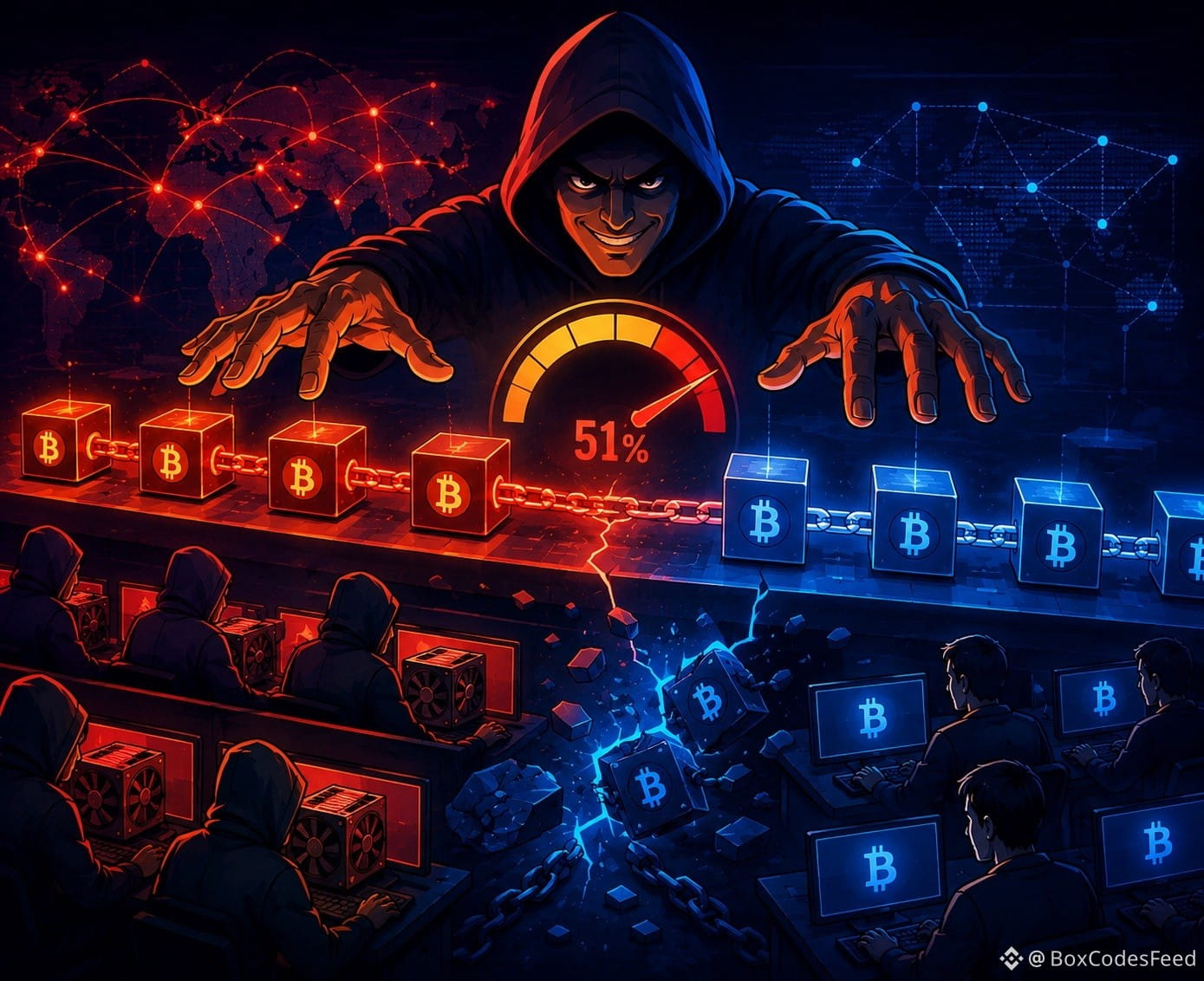
What is a 51% Attack?
A 51% attack occurs when one entity controls more than half of a Proof of Work network's computing power.
This can allow them to reorganize recent transactions or attempt double spending.
It threatens the security and trust of a blockchain.
#51PercentAttack #bitcoin #blockchain #crypto
What is a 51% Attack?
A 51% attack occurs when one entity controls more than half of a Proof of Work network's computing power.
This can allow them to reorganize recent transactions or attempt double spending.
It threatens the security and trust of a blockchain.
#51PercentAttack #bitcoin #blockchain #crypto
A 51% attack occurs when one entity controls more than half of a Proof of Work network's computing power.
This can allow them to reorganize recent transactions or attempt double spending.
It threatens the security and trust of a blockchain.
#51PercentAttack #bitcoin #blockchain #crypto
226
·
--
Bullish
What is a Sybil Attack?
A Sybil attack happens when one entity creates many fake identities on a network.
The goal is to gain disproportionate influence over a system or manipulate participation.
It is a major challenge for decentralized networks and applications.
#sybilattack #blockchain #Web3 #crypto
What is a Sybil Attack?
A Sybil attack happens when one entity creates many fake identities on a network.
The goal is to gain disproportionate influence over a system or manipulate participation.
It is a major challenge for decentralized networks and applications.
#sybilattack #blockchain #Web3 #crypto
A Sybil attack happens when one entity creates many fake identities on a network.
The goal is to gain disproportionate influence over a system or manipulate participation.
It is a major challenge for decentralized networks and applications.
#sybilattack #blockchain #Web3 #crypto

185
·
--
Bullish
What is a Crypto Dust Attack?
A dust attack involves sending tiny amounts of cryptocurrency to a wallet.
Attackers may use the transaction history to track or analyze wallet activity.
Even a very small transaction can reveal information about how funds move.
#DustAttack #CryptoSecurity #blockchain #crypto
What is a Crypto Dust Attack?
A dust attack involves sending tiny amounts of cryptocurrency to a wallet.
Attackers may use the transaction history to track or analyze wallet activity.
Even a very small transaction can reveal information about how funds move.
#DustAttack #CryptoSecurity #blockchain #crypto
A dust attack involves sending tiny amounts of cryptocurrency to a wallet.
Attackers may use the transaction history to track or analyze wallet activity.
Even a very small transaction can reveal information about how funds move.
#DustAttack #CryptoSecurity #blockchain #crypto

161
·
--
Bullish
What is a Sandwich Attack?
A sandwich attack happens when a bot places transactions before and after your trade.
The bot takes advantage of the price movement caused by your transaction.
This can result in you receiving a worse price than expected.
#SandwichAttack #MEVProtection #DeFi: #crypto
What is a Sandwich Attack?
A sandwich attack happens when a bot places transactions before and after your trade.
The bot takes advantage of the price movement caused by your transaction.
This can result in you receiving a worse price than expected.
#SandwichAttack #MEVProtection #DeFi: #crypto
A sandwich attack happens when a bot places transactions before and after your trade.
The bot takes advantage of the price movement caused by your transaction.
This can result in you receiving a worse price than expected.
#SandwichAttack #MEVProtection #DeFi: #crypto

1
172
·
--
Bullish
🔥 NEWS ALERT
Republicans are growing increasingly concerned that their chances of holding onto Congress are slipping as political headwinds build ahead of the next election. Rising voter dissatisfaction and growing competition in key districts are putting pressure on the party to change its strategy.
Inside the Trump campaign advisers are working on a broader political plan aimed at strengthening Republican support and protecting vulnerable seats. The effort focuses on energizing the party’s base while reaching voters who could determine control of Congress.
With the balance of power expected to be closely contested both parties are preparing for an intense campaign where small shifts in voter sentiment could have major consequences.
#USPolitics #RepublicansVsDemocrats #TRUMP #Congress #news
Source: CNN (Trump midterm campaign strategy)
🔥 NEWS ALERT
Republicans are growing increasingly concerned that their chances of holding onto Congress are slipping as political headwinds build ahead of the next election. Rising voter dissatisfaction and growing competition in key districts are putting pressure on the party to change its strategy.
Inside the Trump campaign advisers are working on a broader political plan aimed at strengthening Republican support and protecting vulnerable seats. The effort focuses on energizing the party’s base while reaching voters who could determine control of Congress.
With the balance of power expected to be closely contested both parties are preparing for an intense campaign where small shifts in voter sentiment could have major consequences.
#USPolitics #RepublicansVsDemocrats #TRUMP #Congress #news
Source: CNN (Trump midterm campaign strategy)
Republicans are growing increasingly concerned that their chances of holding onto Congress are slipping as political headwinds build ahead of the next election. Rising voter dissatisfaction and growing competition in key districts are putting pressure on the party to change its strategy.
Inside the Trump campaign advisers are working on a broader political plan aimed at strengthening Republican support and protecting vulnerable seats. The effort focuses on energizing the party’s base while reaching voters who could determine control of Congress.
With the balance of power expected to be closely contested both parties are preparing for an intense campaign where small shifts in voter sentiment could have major consequences.
#USPolitics #RepublicansVsDemocrats #TRUMP #Congress #news
Source: CNN (Trump midterm campaign strategy)

3
119
·
--
Bullish
What is MEV (Maximal Extractable Value)?
MEV is the profit that can be made by controlling the order of transactions on a blockchain.
Bots and validators can sometimes reorder, insert or exclude transactions to capture extra value.
It can significantly affect how trades are executed in DeFi.
#MEV #DeFi #Crypto #blockchain $SOL
{future}(SOLUSDT)
What is MEV (Maximal Extractable Value)?
MEV is the profit that can be made by controlling the order of transactions on a blockchain.
Bots and validators can sometimes reorder, insert or exclude transactions to capture extra value.
It can significantly affect how trades are executed in DeFi.
#MEV #DeFi #Crypto #blockchain $SOL
MEV is the profit that can be made by controlling the order of transactions on a blockchain.
Bots and validators can sometimes reorder, insert or exclude transactions to capture extra value.
It can significantly affect how trades are executed in DeFi.
#MEV #DeFi #Crypto #blockchain $SOL

183
·
--
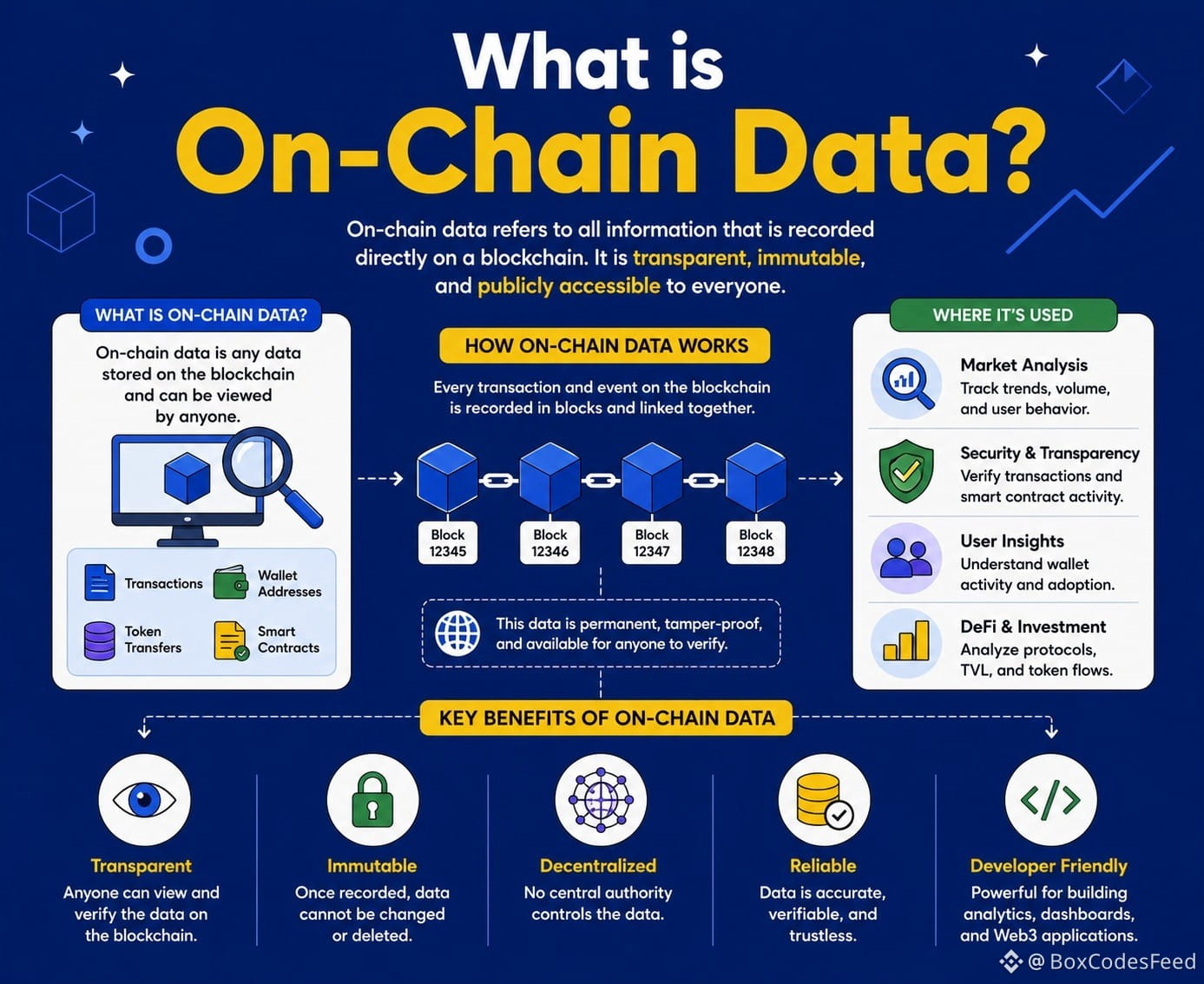
What is On-Chain Data?
On-chain data includes all information permanently recorded on a blockchain.
Investors often analyze wallet activity, transactions, and exchange flows using this data.
#Onchain #crypto #blockchain $TRX
{future}(TRXUSDT)
What is On-Chain Data?
On-chain data includes all information permanently recorded on a blockchain.
Investors often analyze wallet activity, transactions, and exchange flows using this data.
#Onchain #crypto #blockchain $TRX
On-chain data includes all information permanently recorded on a blockchain.
Investors often analyze wallet activity, transactions, and exchange flows using this data.
#Onchain #crypto #blockchain $TRX
166
Log in to explore more content
Join global crypto users on Binance Square
⚡️ Get latest and useful information about crypto.
💬 Trusted by the world’s largest crypto exchange.
👍 Discover real insights from verified creators.
Email / Phone number