

#stablecoins
stablecoins
7.5M views
27,792 සාකච්ඡා කරමින්
උණුසුම්
නවතම

·
--
ලිපිය
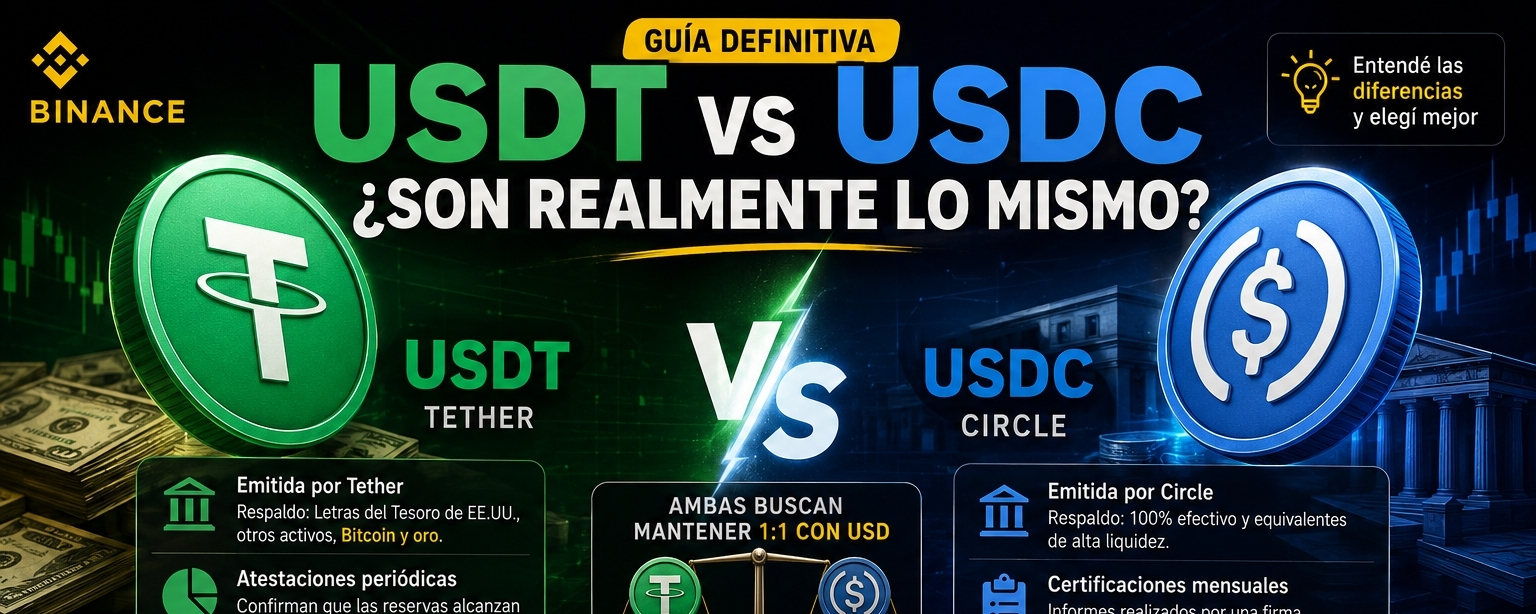
💵 USDT vs USDC: ¿SON REALMENTE LO MISMO?Si alguna vez usaste Binance, probablemente viste estas dos:
🟢 USDT
🔵 USDC
Las dos buscan mantener un valor cercano a US$1.
Entonces aparece la pregunta:
Si las dos representan dólares dentro del mundo crypto… ¿para qué existen dos?
Y acá empiezan las diferencias. 👇
1️⃣ No las emite la misma empresa
USDT es emitido por Tether.
USDC es emitido por Circle.
Ambas son stablecoins diseñadas para mantener una paridad 1:1 con el dólar, pero tienen estructuras diferentes. �
Binance +1
2️⃣ ¿Qué respalda a cada una?
Acá hay una diferencia interesante.
Tether informa que las reservas de USDT están compuestas principalmente por Letras del Tesoro de EE. UU., además de otros activos, entre ellos Bitcoin y oro. Binance Academy señala que las atestaciones de Tether confirman que las reservas alcanzan o superan el suministro de USDT, aunque una atestación puntual no equivale a una auditoría financiera completa.
Circle, por su parte, informa que USDC está respaldado 100% por efectivo y activos equivalentes de alta liquidez, y publica certificaciones mensuales de sus reservas realizadas por una firma contable.
3️⃣ Entonces… ¿cuál es más “estable”?
Las dos están diseñadas para mantenerse alrededor de US$1.
Pero hay algo importante:
“Stablecoin” no significa “sin riesgo”.
Existe riesgo relacionado con el emisor, las reservas, la regulación, la infraestructura utilizada y posibles desviaciones temporales del precio.
Binance también advierte que ninguna stablecoin está completamente libre de riesgos.
Por eso, mirar solamente el precio de USDT o USDC no cuenta toda la historia.
4️⃣ ¿Y por qué alguien elegiría una sobre la otra?
Depende de para qué la vas a utilizar.
Por ejemplo:
💱 Trading
🌎 Transferencias
💰 Mantener exposición al dólar dentro de crypto
📈 Utilizar productos de Earn
🔄 Mover fondos entre plataformas o redes
También importa la blockchain que vas a utilizar, porque USDT y USDC existen en distintas redes y los costos/condiciones pueden variar.
5️⃣ Y acá viene algo que muchos principiantes pasan por alto
Supongamos que tenés:
US$100
y decidís mantenerlos en una stablecoin.
No alcanza con preguntar:
“¿USDT o USDC?”
También deberías preguntarte:
¿Para qué quiero esos US$100?
Si los vas a usar para trading, transferirlos o mantenerlos temporalmente, la respuesta puede ser diferente que si querés utilizarlos en un producto de rendimiento.
El objetivo cambia la herramienta.
🧠 Mi conclusión
USDT y USDC no son exactamente lo mismo, aunque ambas buscan representar aproximadamente un dólar digital.
La diferencia está en quién las emite, cómo están estructuradas sus reservas, el marco regulatorio, las redes disponibles y el uso que les quieras dar.
Y esto es justamente lo que quiero transmitir con esta cuenta:
No se trata de encontrar “la crypto que va a subir”.
Se trata de entender qué estás comprando y para qué lo estás usando.
👇 Ahora te toca a vos
Si hoy tuvieras US$100 dentro de Binance y quisieras mantenerlos en una stablecoin:
🟢 USDT
🔵 USDC
¿Cuál elegirías y qué factor mirarías antes de decidir?
Y si ya usás alguna de las dos, contame para qué la usás. 👇
#Binance #BinanceSquare #BNB走势 #Stablecoins #BinanceEarn $USDT $USDC
{spot}(USDCUSDT)
{future}(NEARUSDT)
💵 USDT vs USDC: ¿SON REALMENTE LO MISMO?
Si alguna vez usaste Binance, probablemente viste estas dos:
🟢 USDT
🔵 USDC
Las dos buscan mantener un valor cercano a US$1.
Entonces aparece la pregunta:
Si las dos representan dólares dentro del mundo crypto… ¿para qué existen dos?
Y acá empiezan las diferencias. 👇
1️⃣ No las emite la misma empresa
USDT es emitido por Tether.
USDC es emitido por Circle.
Ambas son stablecoins diseñadas para mantener una paridad 1:1 con el dólar, pero tienen estructuras diferentes. �
Binance +1
2️⃣ ¿Qué respalda a cada una?
Acá hay una diferencia interesante.
Tether informa que las reservas de USDT están compuestas principalmente por Letras del Tesoro de EE. UU., además de otros activos, entre ellos Bitcoin y oro. Binance Academy señala que las atestaciones de Tether confirman que las reservas alcanzan o superan el suministro de USDT, aunque una atestación puntual no equivale a una auditoría financiera completa.
Circle, por su parte, informa que USDC está respaldado 100% por efectivo y activos equivalentes de alta liquidez, y publica certificaciones mensuales de sus reservas realizadas por una firma contable.
3️⃣ Entonces… ¿cuál es más “estable”?
Las dos están diseñadas para mantenerse alrededor de US$1.
Pero hay algo importante:
“Stablecoin” no significa “sin riesgo”.
Existe riesgo relacionado con el emisor, las reservas, la regulación, la infraestructura utilizada y posibles desviaciones temporales del precio.
Binance también advierte que ninguna stablecoin está completamente libre de riesgos.
Por eso, mirar solamente el precio de USDT o USDC no cuenta toda la historia.
4️⃣ ¿Y por qué alguien elegiría una sobre la otra?
Depende de para qué la vas a utilizar.
Por ejemplo:
💱 Trading
🌎 Transferencias
💰 Mantener exposición al dólar dentro de crypto
📈 Utilizar productos de Earn
🔄 Mover fondos entre plataformas o redes
También importa la blockchain que vas a utilizar, porque USDT y USDC existen en distintas redes y los costos/condiciones pueden variar.
5️⃣ Y acá viene algo que muchos principiantes pasan por alto
Supongamos que tenés:
US$100
y decidís mantenerlos en una stablecoin.
No alcanza con preguntar:
“¿USDT o USDC?”
También deberías preguntarte:
¿Para qué quiero esos US$100?
Si los vas a usar para trading, transferirlos o mantenerlos temporalmente, la respuesta puede ser diferente que si querés utilizarlos en un producto de rendimiento.
El objetivo cambia la herramienta.
🧠 Mi conclusión
USDT y USDC no son exactamente lo mismo, aunque ambas buscan representar aproximadamente un dólar digital.
La diferencia está en quién las emite, cómo están estructuradas sus reservas, el marco regulatorio, las redes disponibles y el uso que les quieras dar.
Y esto es justamente lo que quiero transmitir con esta cuenta:
No se trata de encontrar “la crypto que va a subir”.
Se trata de entender qué estás comprando y para qué lo estás usando.
👇 Ahora te toca a vos
Si hoy tuvieras US$100 dentro de Binance y quisieras mantenerlos en una stablecoin:
🟢 USDT
🔵 USDC
¿Cuál elegirías y qué factor mirarías antes de decidir?
Y si ya usás alguna de las dos, contame para qué la usás. 👇
#Binance #BinanceSquare #BNB走势 #Stablecoins #BinanceEarn $USDT $USDC
🟢 USDT
🔵 USDC
Las dos buscan mantener un valor cercano a US$1.
Entonces aparece la pregunta:
Si las dos representan dólares dentro del mundo crypto… ¿para qué existen dos?
Y acá empiezan las diferencias. 👇
1️⃣ No las emite la misma empresa
USDT es emitido por Tether.
USDC es emitido por Circle.
Ambas son stablecoins diseñadas para mantener una paridad 1:1 con el dólar, pero tienen estructuras diferentes. �
Binance +1
2️⃣ ¿Qué respalda a cada una?
Acá hay una diferencia interesante.
Tether informa que las reservas de USDT están compuestas principalmente por Letras del Tesoro de EE. UU., además de otros activos, entre ellos Bitcoin y oro. Binance Academy señala que las atestaciones de Tether confirman que las reservas alcanzan o superan el suministro de USDT, aunque una atestación puntual no equivale a una auditoría financiera completa.
Circle, por su parte, informa que USDC está respaldado 100% por efectivo y activos equivalentes de alta liquidez, y publica certificaciones mensuales de sus reservas realizadas por una firma contable.
3️⃣ Entonces… ¿cuál es más “estable”?
Las dos están diseñadas para mantenerse alrededor de US$1.
Pero hay algo importante:
“Stablecoin” no significa “sin riesgo”.
Existe riesgo relacionado con el emisor, las reservas, la regulación, la infraestructura utilizada y posibles desviaciones temporales del precio.
Binance también advierte que ninguna stablecoin está completamente libre de riesgos.
Por eso, mirar solamente el precio de USDT o USDC no cuenta toda la historia.
4️⃣ ¿Y por qué alguien elegiría una sobre la otra?
Depende de para qué la vas a utilizar.
Por ejemplo:
💱 Trading
🌎 Transferencias
💰 Mantener exposición al dólar dentro de crypto
📈 Utilizar productos de Earn
🔄 Mover fondos entre plataformas o redes
También importa la blockchain que vas a utilizar, porque USDT y USDC existen en distintas redes y los costos/condiciones pueden variar.
5️⃣ Y acá viene algo que muchos principiantes pasan por alto
Supongamos que tenés:
US$100
y decidís mantenerlos en una stablecoin.
No alcanza con preguntar:
“¿USDT o USDC?”
También deberías preguntarte:
¿Para qué quiero esos US$100?
Si los vas a usar para trading, transferirlos o mantenerlos temporalmente, la respuesta puede ser diferente que si querés utilizarlos en un producto de rendimiento.
El objetivo cambia la herramienta.
🧠 Mi conclusión
USDT y USDC no son exactamente lo mismo, aunque ambas buscan representar aproximadamente un dólar digital.
La diferencia está en quién las emite, cómo están estructuradas sus reservas, el marco regulatorio, las redes disponibles y el uso que les quieras dar.
Y esto es justamente lo que quiero transmitir con esta cuenta:
No se trata de encontrar “la crypto que va a subir”.
Se trata de entender qué estás comprando y para qué lo estás usando.
👇 Ahora te toca a vos
Si hoy tuvieras US$100 dentro de Binance y quisieras mantenerlos en una stablecoin:
🟢 USDT
🔵 USDC
¿Cuál elegirías y qué factor mirarías antes de decidir?
Y si ya usás alguna de las dos, contame para qué la usás. 👇
#Binance #BinanceSquare #BNB走势 #Stablecoins #BinanceEarn $USDT $USDC
1
817

·
--
🚨 APTOS JUST HIT A BIG STABLECOIN MILESTONE
Aptos is pushing deeper into the stablecoin race.
The latest Aptos update says the network has now passed $1 billion in stablecoin supply, with USDT, USDC, USDe and PYUSD0 represented across the ecosystem. Aptos also reports stablecoin supply is up 500% year over year.
And there’s fresh activity underneath that headline.
Aptos reported another $62.3 million of stablecoin inflows in 24 hours, while Aptos-native USDT has also recently expanded to Bitkub in Thailand.
On the protocol side, the v1.49.0 testnet upgrade proposal is currently in governance voting, with voting scheduled to end October 2.
Stablecoins + payments + protocol upgrades — Aptos is giving the ecosystem plenty to watch.
Click the $APT widget below and check the latest Aptos developments.
$APT
{future}(APTUSDT)
.
.
.
#Aptos #Stablecoins #Write2Earn
Not financial advice. DYOR.
🚨 APTOS JUST HIT A BIG STABLECOIN MILESTONE
Aptos is pushing deeper into the stablecoin race.
The latest Aptos update says the network has now passed $1 billion in stablecoin supply, with USDT, USDC, USDe and PYUSD0 represented across the ecosystem. Aptos also reports stablecoin supply is up 500% year over year.
And there’s fresh activity underneath that headline.
Aptos reported another $62.3 million of stablecoin inflows in 24 hours, while Aptos-native USDT has also recently expanded to Bitkub in Thailand.
On the protocol side, the v1.49.0 testnet upgrade proposal is currently in governance voting, with voting scheduled to end October 2.
Stablecoins + payments + protocol upgrades — Aptos is giving the ecosystem plenty to watch.
Click the $APT widget below and check the latest Aptos developments.
$APT
.
.
.
#Aptos #Stablecoins #Write2Earn
Not financial advice. DYOR.
Aptos is pushing deeper into the stablecoin race.
The latest Aptos update says the network has now passed $1 billion in stablecoin supply, with USDT, USDC, USDe and PYUSD0 represented across the ecosystem. Aptos also reports stablecoin supply is up 500% year over year.
And there’s fresh activity underneath that headline.
Aptos reported another $62.3 million of stablecoin inflows in 24 hours, while Aptos-native USDT has also recently expanded to Bitkub in Thailand.
On the protocol side, the v1.49.0 testnet upgrade proposal is currently in governance voting, with voting scheduled to end October 2.
Stablecoins + payments + protocol upgrades — Aptos is giving the ecosystem plenty to watch.
Click the $APT widget below and check the latest Aptos developments.
$APT
.
.
.
#Aptos #Stablecoins #Write2Earn
Not financial advice. DYOR.

88

Picture this: years ago, we watched stablecoin volume abandon the original network because moving dollars on smart contract chains was simply faster and cheaper.
For most traders, that migration meant dealing with risky bridges, wrapped tokens, and fragmented liquidity. You had to leave the most secure network just to manage risk or take out a simple dollar loan.
Tether is now shifting that balance by backing Utexo to bring native $USDT settlement back to Bitcoin this month. Armed with over $184B in market supply, the project introduces licensed direct swaps, private transfers, and dollar lending collateralized directly by native $BTC.
Historically, networks like Tron absorbed daily transaction volume while Ethereum captured complex trading pairs, leaving Bitcoin primarily as a passive reserve asset. Integrating native dollar rails allows the network to compete directly with smart contract platforms without relying on custodial wrappers.
Where do you think liquidity flows once native Bitcoin dollars go live?
#Bitcoin #Tether #Stablecoins
Picture this: years ago, we watched stablecoin volume abandon the original network because moving dollars on smart contract chains was simply faster and cheaper.
For most traders, that migration meant dealing with risky bridges, wrapped tokens, and fragmented liquidity. You had to leave the most secure network just to manage risk or take out a simple dollar loan.
Tether is now shifting that balance by backing Utexo to bring native $USDT settlement back to Bitcoin this month. Armed with over $184B in market supply, the project introduces licensed direct swaps, private transfers, and dollar lending collateralized directly by native $BTC .
Historically, networks like Tron absorbed daily transaction volume while Ethereum captured complex trading pairs, leaving Bitcoin primarily as a passive reserve asset. Integrating native dollar rails allows the network to compete directly with smart contract platforms without relying on custodial wrappers.
Where do you think liquidity flows once native Bitcoin dollars go live?
#Bitcoin #Tether #Stablecoins
For most traders, that migration meant dealing with risky bridges, wrapped tokens, and fragmented liquidity. You had to leave the most secure network just to manage risk or take out a simple dollar loan.
Tether is now shifting that balance by backing Utexo to bring native $USDT settlement back to Bitcoin this month. Armed with over $184B in market supply, the project introduces licensed direct swaps, private transfers, and dollar lending collateralized directly by native $BTC .
Historically, networks like Tron absorbed daily transaction volume while Ethereum captured complex trading pairs, leaving Bitcoin primarily as a passive reserve asset. Integrating native dollar rails allows the network to compete directly with smart contract platforms without relying on custodial wrappers.
Where do you think liquidity flows once native Bitcoin dollars go live?
#Bitcoin #Tether #Stablecoins

6
If you're still ignoring Bitcoin as a settlement rail while parking everything on cheaper chains, stop now.
You've watched $USDT liquidity chase low fees to Tron and Ethereum, then gotten wrecked by congestion or missed native collateral plays because Bitcoin's rails were too clunky. That FOMO into the next easier chain has cost people real money in fees and opportunity.
Tether's $184 billion $USDT is coming back to Bitcoin this month. Utexo, backed by Tether, secured a license and plans Bitcoin-native USDT with private transfers, direct $BTC/USDT swaps, and loans using native Bitcoin as collateral. This is the same migration pattern we saw when stables flooded Tron to escape Ethereum gas, except now the original chain is trying to reclaim the throne.
For years the path of least resistance won and $ETH plus Tron ate the lunch. Bitcoin stayed digital gold while dollars settled elsewhere. Tether putting weight behind this feels different from past Bitcoin DeFi experiments that fizzled without the actual stablecoin issuer involved.
Where do you think this goes if native dollar rails actually land on Bitcoin?
#Bitcoin #USDT #Stablecoins
If you're still ignoring Bitcoin as a settlement rail while parking everything on cheaper chains, stop now.
You've watched $USDT liquidity chase low fees to Tron and Ethereum, then gotten wrecked by congestion or missed native collateral plays because Bitcoin's rails were too clunky. That FOMO into the next easier chain has cost people real money in fees and opportunity.
Tether's $184 billion $USDT is coming back to Bitcoin this month. Utexo, backed by Tether, secured a license and plans Bitcoin-native USDT with private transfers, direct $BTC /USDT swaps, and loans using native Bitcoin as collateral. This is the same migration pattern we saw when stables flooded Tron to escape Ethereum gas, except now the original chain is trying to reclaim the throne.
For years the path of least resistance won and $ETH plus Tron ate the lunch. Bitcoin stayed digital gold while dollars settled elsewhere. Tether putting weight behind this feels different from past Bitcoin DeFi experiments that fizzled without the actual stablecoin issuer involved.
Where do you think this goes if native dollar rails actually land on Bitcoin?
#Bitcoin #USDT #Stablecoins
You've watched $USDT liquidity chase low fees to Tron and Ethereum, then gotten wrecked by congestion or missed native collateral plays because Bitcoin's rails were too clunky. That FOMO into the next easier chain has cost people real money in fees and opportunity.
Tether's $184 billion $USDT is coming back to Bitcoin this month. Utexo, backed by Tether, secured a license and plans Bitcoin-native USDT with private transfers, direct $BTC /USDT swaps, and loans using native Bitcoin as collateral. This is the same migration pattern we saw when stables flooded Tron to escape Ethereum gas, except now the original chain is trying to reclaim the throne.
For years the path of least resistance won and $ETH plus Tron ate the lunch. Bitcoin stayed digital gold while dollars settled elsewhere. Tether putting weight behind this feels different from past Bitcoin DeFi experiments that fizzled without the actual stablecoin issuer involved.
Where do you think this goes if native dollar rails actually land on Bitcoin?
#Bitcoin #USDT #Stablecoins
16

·
--
Une entreprise peut-elle accepter des stablecoins sans les conserver ?
Citi et Coinbase ont élargi leur collaboration : certains clients institutionnels de Citi peuvent accepter des paiements en stablecoins, tandis que Coinbase les convertit en monnaie traditionnelle et que Citi assure le règlement.
C’est un modèle intéressant : le client paie en actif numérique, mais l’entreprise reçoit des fonds en monnaie classique.
La blockchain peut donc s’intégrer aux paiements sans que chaque commerçant ait à gérer lui-même des cryptos.
#Stablecoins #Blockchain #BinanceSquare
$BTC $USDT
Une entreprise peut-elle accepter des stablecoins sans les conserver ?
Citi et Coinbase ont élargi leur collaboration : certains clients institutionnels de Citi peuvent accepter des paiements en stablecoins, tandis que Coinbase les convertit en monnaie traditionnelle et que Citi assure le règlement.
C’est un modèle intéressant : le client paie en actif numérique, mais l’entreprise reçoit des fonds en monnaie classique.
La blockchain peut donc s’intégrer aux paiements sans que chaque commerçant ait à gérer lui-même des cryptos.
#Stablecoins #Blockchain #BinanceSquare
$BTC $USDT
Citi et Coinbase ont élargi leur collaboration : certains clients institutionnels de Citi peuvent accepter des paiements en stablecoins, tandis que Coinbase les convertit en monnaie traditionnelle et que Citi assure le règlement.
C’est un modèle intéressant : le client paie en actif numérique, mais l’entreprise reçoit des fonds en monnaie classique.
La blockchain peut donc s’intégrer aux paiements sans que chaque commerçant ait à gérer lui-même des cryptos.
#Stablecoins #Blockchain #BinanceSquare
$BTC $USDT

1
17

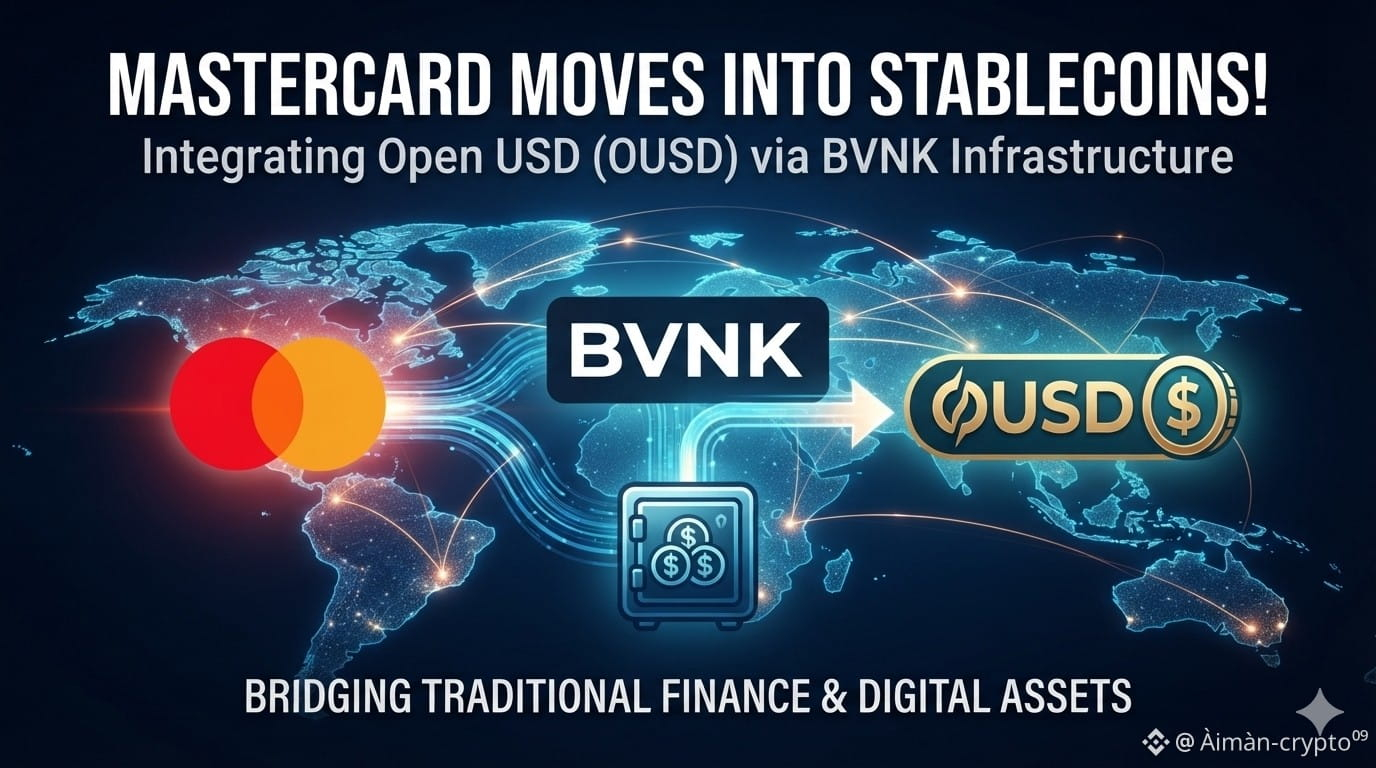
⚡ Mastercard Moves Into Stablecoins!
Mastercard plans to integrate Open USD (OUSD) through BVNK, its stablecoin infrastructure business.
🏦 The move could help financial institutions and partners access OUSD more easily, bringing stablecoins closer to traditional finance.
🌍 Another step toward wider stablecoin adoption and real-world payment use cases.
#Mastercard #OUSD #Stablecoins #Crypto #Web3
⚡ Mastercard Moves Into Stablecoins!
Mastercard plans to integrate Open USD (OUSD) through BVNK, its stablecoin infrastructure business.
🏦 The move could help financial institutions and partners access OUSD more easily, bringing stablecoins closer to traditional finance.
🌍 Another step toward wider stablecoin adoption and real-world payment use cases.
#Mastercard #OUSD #Stablecoins #Crypto #Web3
Mastercard plans to integrate Open USD (OUSD) through BVNK, its stablecoin infrastructure business.
🏦 The move could help financial institutions and partners access OUSD more easily, bringing stablecoins closer to traditional finance.
🌍 Another step toward wider stablecoin adoption and real-world payment use cases.
#Mastercard #OUSD #Stablecoins #Crypto #Web3
167

📈 خبراء يتوقعون تنامي دور العملات المستقرة في المشهد المالي
أفاد تقرير حديث بأن مدير الاستثمار في Bitwise، مات هوغان، يتوقع نموًا كبيرًا في استخدام العملات المستقرة. وأشار التقرير إلى أن هذا التطور قد يؤثر على أسواق المال العالمية، بما في ذلك الطلب على سندات الخزانة الأمريكية، وقد يستدعي تعديلات في استراتيجيات أسواق رأس المال.
━━━━━━━━━━━━━━
📊 التأثير: 📈 مرتفع
🏷️ DEFI
#Stablecoins #CryptoEconomy #FinancialMarkets #DigitalAssets
📰 المصدر: cryptobriefing.com
📈 خبراء يتوقعون تنامي دور العملات المستقرة في المشهد المالي
أفاد تقرير حديث بأن مدير الاستثمار في Bitwise، مات هوغان، يتوقع نموًا كبيرًا في استخدام العملات المستقرة. وأشار التقرير إلى أن هذا التطور قد يؤثر على أسواق المال العالمية، بما في ذلك الطلب على سندات الخزانة الأمريكية، وقد يستدعي تعديلات في استراتيجيات أسواق رأس المال.
━━━━━━━━━━━━━━
📊 التأثير: 📈 مرتفع
🏷️ DEFI
#Stablecoins #CryptoEconomy #FinancialMarkets #DigitalAssets
📰 المصدر: cryptobriefing.com
أفاد تقرير حديث بأن مدير الاستثمار في Bitwise، مات هوغان، يتوقع نموًا كبيرًا في استخدام العملات المستقرة. وأشار التقرير إلى أن هذا التطور قد يؤثر على أسواق المال العالمية، بما في ذلك الطلب على سندات الخزانة الأمريكية، وقد يستدعي تعديلات في استراتيجيات أسواق رأس المال.
━━━━━━━━━━━━━━
📊 التأثير: 📈 مرتفع
🏷️ DEFI
#Stablecoins #CryptoEconomy #FinancialMarkets #DigitalAssets
📰 المصدر: cryptobriefing.com
6

·
--
Stablecoins are quietly becoming the most important financial infrastructure crypto has ever built.
The narrative used to be about trading and speculation. The reality in 2026 is different: stablecoins are being used to pay suppliers across borders, settle invoices between businesses, and move payroll across jurisdictions — all without touching a correspondent bank.
The numbers reflect this shift. Stablecoin transaction volume now rivals major card networks on an annualized basis. But unlike card payments, settlement is final in seconds, fees are fractions of a cent, and no counterparty can reverse the transaction or freeze funds mid-transfer.
This matters for $ETH and $BNB because stablecoin payment growth validates the underlying blockchains as settlement layers. Every dollar moved over Ethereum or BNB Chain is another data point proving the infrastructure works at scale.
For $XRP, the stablecoin payment thesis reinforces the broader fast-finality-for-cross-border-value-transfer argument that has driven its institutional adoption story.
The real unlock comes when merchants accept stablecoins natively — not as a curiosity but as the default. At that point, the on-ramp/off-ramp friction disappears and crypto becomes the invisible layer underneath everyday commerce.
Payment rails are where the next wave of durable adoption gets built.
#Stablecoins #CryptoPayments #BNBChain #DeFi #CryptoAdoption
Stablecoins are quietly becoming the most important financial infrastructure crypto has ever built.
The narrative used to be about trading and speculation. The reality in 2026 is different: stablecoins are being used to pay suppliers across borders, settle invoices between businesses, and move payroll across jurisdictions — all without touching a correspondent bank.
The numbers reflect this shift. Stablecoin transaction volume now rivals major card networks on an annualized basis. But unlike card payments, settlement is final in seconds, fees are fractions of a cent, and no counterparty can reverse the transaction or freeze funds mid-transfer.
This matters for $ETH and $BNB because stablecoin payment growth validates the underlying blockchains as settlement layers. Every dollar moved over Ethereum or BNB Chain is another data point proving the infrastructure works at scale.
For $XRP , the stablecoin payment thesis reinforces the broader fast-finality-for-cross-border-value-transfer argument that has driven its institutional adoption story.
The real unlock comes when merchants accept stablecoins natively — not as a curiosity but as the default. At that point, the on-ramp/off-ramp friction disappears and crypto becomes the invisible layer underneath everyday commerce.
Payment rails are where the next wave of durable adoption gets built.
#Stablecoins #CryptoPayments #BNBChain #DeFi #CryptoAdoption
The narrative used to be about trading and speculation. The reality in 2026 is different: stablecoins are being used to pay suppliers across borders, settle invoices between businesses, and move payroll across jurisdictions — all without touching a correspondent bank.
The numbers reflect this shift. Stablecoin transaction volume now rivals major card networks on an annualized basis. But unlike card payments, settlement is final in seconds, fees are fractions of a cent, and no counterparty can reverse the transaction or freeze funds mid-transfer.
This matters for $ETH and $BNB because stablecoin payment growth validates the underlying blockchains as settlement layers. Every dollar moved over Ethereum or BNB Chain is another data point proving the infrastructure works at scale.
For $XRP , the stablecoin payment thesis reinforces the broader fast-finality-for-cross-border-value-transfer argument that has driven its institutional adoption story.
The real unlock comes when merchants accept stablecoins natively — not as a curiosity but as the default. At that point, the on-ramp/off-ramp friction disappears and crypto becomes the invisible layer underneath everyday commerce.
Payment rails are where the next wave of durable adoption gets built.
#Stablecoins #CryptoPayments #BNBChain #DeFi #CryptoAdoption
68


Stablecoins are the most used product in crypto and the least understood.
What they are: digital dollars. 1 USDT or 1 USDC is meant to equal 1 US dollar, backed by cash and short term treasuries held by the issuer.
Why they matter: Chainalysis says stablecoins now make up 96% of person to person crypto transfers within countries. Cross border stablecoin payments grew 77% in a year. This is real money movement, not speculation.
What changed this month: the Fed proposed rules for payment stablecoins. Regulation sounds boring, but it is exactly what lets banks and businesses use these rails at scale.
Risk to remember: a stablecoin is only as good as its reserves. Stick to the large, audited ones. A 20% yield offer on a "stablecoin" is the oldest trap in the book.
Do you use stablecoins for savings, trading, or payments?
#FedProposesPaymentStablecoinRules #Stablecoins #CryptoEducation $USDC $BTC
Stablecoins are the most used product in crypto and the least understood.
What they are: digital dollars. 1 USDT or 1 USDC is meant to equal 1 US dollar, backed by cash and short term treasuries held by the issuer.
Why they matter: Chainalysis says stablecoins now make up 96% of person to person crypto transfers within countries. Cross border stablecoin payments grew 77% in a year. This is real money movement, not speculation.
What changed this month: the Fed proposed rules for payment stablecoins. Regulation sounds boring, but it is exactly what lets banks and businesses use these rails at scale.
Risk to remember: a stablecoin is only as good as its reserves. Stick to the large, audited ones. A 20% yield offer on a "stablecoin" is the oldest trap in the book.
Do you use stablecoins for savings, trading, or payments?
#FedProposesPaymentStablecoinRules #Stablecoins #CryptoEducation $USDC $BTC
What they are: digital dollars. 1 USDT or 1 USDC is meant to equal 1 US dollar, backed by cash and short term treasuries held by the issuer.
Why they matter: Chainalysis says stablecoins now make up 96% of person to person crypto transfers within countries. Cross border stablecoin payments grew 77% in a year. This is real money movement, not speculation.
What changed this month: the Fed proposed rules for payment stablecoins. Regulation sounds boring, but it is exactly what lets banks and businesses use these rails at scale.
Risk to remember: a stablecoin is only as good as its reserves. Stick to the large, audited ones. A 20% yield offer on a "stablecoin" is the oldest trap in the book.
Do you use stablecoins for savings, trading, or payments?
#FedProposesPaymentStablecoinRules #Stablecoins #CryptoEducation $USDC $BTC
120

In the subtle refinement of stablecoin infrastructure, dollar-backed tokens continue embedding themselves into global settlement and treasury operations. As regulatory frameworks mature and on-chain volumes persist, these instruments demonstrate resilience as practical financial rails. Echoing the 2021 payments expansion that normalized digital dollars, this maturation carries a 68% probability of deeper integration through the season if institutional use cases and cross-border accessibility keep advancing.
$USDC $USD1 $RLUSD #RadaRI121 #CoinVahini #Stablecoins #USDC
In the subtle refinement of stablecoin infrastructure, dollar-backed tokens continue embedding themselves into global settlement and treasury operations. As regulatory frameworks mature and on-chain volumes persist, these instruments demonstrate resilience as practical financial rails. Echoing the 2021 payments expansion that normalized digital dollars, this maturation carries a 68% probability of deeper integration through the season if institutional use cases and cross-border accessibility keep advancing.
$USDC $USD1 $RLUSD #RadaRI121 #CoinVahini #Stablecoins #USDC
$USDC $USD1 $RLUSD #RadaRI121 #CoinVahini #Stablecoins #USDC
97

🚨 BIG NEWS FOR EVERY CRYPTO TRADER
Stablecoins ab sirf trading pair nahi rahe—yeh global payments infrastructure ka serious hissa bante ja rahe hain. 🌐
$BTC
{spot}(BTCUSDT)
Visa aur Lloyds Banking Group ne USDC ke zariye cross-border settlement ka live pilot complete kiya. 7 din ke pilot mein $750,000 payment obligations settle ki gayin, aur funds weekend ke dauran bhi under one hour mein transfer hue.
$ETH
{spot}(ETHUSDT)
Traditional cross-border settlement banking hours ke bahar ek din ya us se zyada le sakta hai. Isi gap ko stablecoin infrastructure address karne ki koshish kar raha hai. (lloydsbankinggroup.com)
📈 Is narrative ko traders ko kyun watch karna chahiye?
$SOL
{spot}(SOLUSDT)
• Real-world utility: Stablecoins ka use payments, settlement aur treasury operations mein explore ho raha hai—not just trading.
• Institutional validation: Major financial firms blockchain-based settlement ko real transaction flows mein test kar rahi hain.
• Infrastructure narrative: Agar adoption scale hoti hai, to compliant stablecoin issuers, settlement rails, custody aur interoperable blockchain infrastructure ki relevance barh sakti hai.
• Risk bhi hai: Regulation, counterparty risk, chain fragmentation aur adoption speed abhi bhi major uncertainties hain.
💡 Smart Trader Rule:
Price moves ke peechay sirf chart nahi hota—kabhi kabhi adoption, regulation aur infrastructure ka narrative pehle shift hota hai.
📊 QUICK POLL:
Aap ke hisaab se agla major crypto macro narrative kya ho sakta hai?
1️⃣ Stablecoins / Global Payments 💳
2️⃣ RWA — Real World Assets 🏠
3️⃣ AI 🤖
4️⃣ Memes & High-Beta Alts 🚀
👇 Comment mein apna vote aur reason zaroor dein.
Educational content only. Crypto assets volatile hain; apni research aur risk management zaroor karein.
#Stablecoins #Binance #BTC走势分析 #ETH #solana
🚨 BIG NEWS FOR EVERY CRYPTO TRADER
Stablecoins ab sirf trading pair nahi rahe—yeh global payments infrastructure ka serious hissa bante ja rahe hain. 🌐
$BTC
Visa aur Lloyds Banking Group ne USDC ke zariye cross-border settlement ka live pilot complete kiya. 7 din ke pilot mein $750,000 payment obligations settle ki gayin, aur funds weekend ke dauran bhi under one hour mein transfer hue.
$ETH
Traditional cross-border settlement banking hours ke bahar ek din ya us se zyada le sakta hai. Isi gap ko stablecoin infrastructure address karne ki koshish kar raha hai. (lloydsbankinggroup.com)
📈 Is narrative ko traders ko kyun watch karna chahiye?
$SOL
• Real-world utility: Stablecoins ka use payments, settlement aur treasury operations mein explore ho raha hai—not just trading.
• Institutional validation: Major financial firms blockchain-based settlement ko real transaction flows mein test kar rahi hain.
• Infrastructure narrative: Agar adoption scale hoti hai, to compliant stablecoin issuers, settlement rails, custody aur interoperable blockchain infrastructure ki relevance barh sakti hai.
• Risk bhi hai: Regulation, counterparty risk, chain fragmentation aur adoption speed abhi bhi major uncertainties hain.
💡 Smart Trader Rule:
Price moves ke peechay sirf chart nahi hota—kabhi kabhi adoption, regulation aur infrastructure ka narrative pehle shift hota hai.
📊 QUICK POLL:
Aap ke hisaab se agla major crypto macro narrative kya ho sakta hai?
1️⃣ Stablecoins / Global Payments 💳
2️⃣ RWA — Real World Assets 🏠
3️⃣ AI 🤖
4️⃣ Memes & High-Beta Alts 🚀
👇 Comment mein apna vote aur reason zaroor dein.
Educational content only. Crypto assets volatile hain; apni research aur risk management zaroor karein.
#Stablecoins #Binance #BTC走势分析 #ETH #solana
Stablecoins ab sirf trading pair nahi rahe—yeh global payments infrastructure ka serious hissa bante ja rahe hain. 🌐
$BTC
Visa aur Lloyds Banking Group ne USDC ke zariye cross-border settlement ka live pilot complete kiya. 7 din ke pilot mein $750,000 payment obligations settle ki gayin, aur funds weekend ke dauran bhi under one hour mein transfer hue.
$ETH
Traditional cross-border settlement banking hours ke bahar ek din ya us se zyada le sakta hai. Isi gap ko stablecoin infrastructure address karne ki koshish kar raha hai. (lloydsbankinggroup.com)
📈 Is narrative ko traders ko kyun watch karna chahiye?
$SOL
• Real-world utility: Stablecoins ka use payments, settlement aur treasury operations mein explore ho raha hai—not just trading.
• Institutional validation: Major financial firms blockchain-based settlement ko real transaction flows mein test kar rahi hain.
• Infrastructure narrative: Agar adoption scale hoti hai, to compliant stablecoin issuers, settlement rails, custody aur interoperable blockchain infrastructure ki relevance barh sakti hai.
• Risk bhi hai: Regulation, counterparty risk, chain fragmentation aur adoption speed abhi bhi major uncertainties hain.
💡 Smart Trader Rule:
Price moves ke peechay sirf chart nahi hota—kabhi kabhi adoption, regulation aur infrastructure ka narrative pehle shift hota hai.
📊 QUICK POLL:
Aap ke hisaab se agla major crypto macro narrative kya ho sakta hai?
1️⃣ Stablecoins / Global Payments 💳
2️⃣ RWA — Real World Assets 🏠
3️⃣ AI 🤖
4️⃣ Memes & High-Beta Alts 🚀
👇 Comment mein apna vote aur reason zaroor dein.
Educational content only. Crypto assets volatile hain; apni research aur risk management zaroor karein.
#Stablecoins #Binance #BTC走势分析 #ETH #solana

2
1
69

·
--
بلومبرغ تضيف بيانات العملات المستقرة إلى منصتها
أفادت Cointelegraph بأن بلومبرغ أتاحت لمستخدمي Terminal لوحة لبيانات العملات المستقرة على شبكات البلوكشين، مدعومة من Allium. وتعرض اللوحة بيانات تُحدّث كل ساعة عن المعروض والإصدار والتحويلات والنشاط عبر الشبكات.
• متابعة معروض العملات المستقرة وإصدارها.
• رصد التحويلات والنشاط عبر شبكات البلوكشين.
• إتاحة البيانات لمستخدمي Terminal بتحديثات كل ساعة.
💧 الأثر على السوق والسيولة: قد تساعد هذه البيانات المتداولين على متابعة تغيرات معروض العملات المستقرة وحركتها عبر الشبكات، لكنها لا تثبت وحدها دخول سيولة جديدة إلى السوق أو خروجها منه.
🎯 الأكثر تأثرًا: قطاع العملات المستقرة
المصدر: Cointelegraph
#Crypto #Stablecoins
بلومبرغ تضيف بيانات العملات المستقرة إلى منصتها
أفادت Cointelegraph بأن بلومبرغ أتاحت لمستخدمي Terminal لوحة لبيانات العملات المستقرة على شبكات البلوكشين، مدعومة من Allium. وتعرض اللوحة بيانات تُحدّث كل ساعة عن المعروض والإصدار والتحويلات والنشاط عبر الشبكات.
• متابعة معروض العملات المستقرة وإصدارها.
• رصد التحويلات والنشاط عبر شبكات البلوكشين.
• إتاحة البيانات لمستخدمي Terminal بتحديثات كل ساعة.
💧 الأثر على السوق والسيولة: قد تساعد هذه البيانات المتداولين على متابعة تغيرات معروض العملات المستقرة وحركتها عبر الشبكات، لكنها لا تثبت وحدها دخول سيولة جديدة إلى السوق أو خروجها منه.
🎯 الأكثر تأثرًا: قطاع العملات المستقرة
المصدر: Cointelegraph
#Crypto #Stablecoins
أفادت Cointelegraph بأن بلومبرغ أتاحت لمستخدمي Terminal لوحة لبيانات العملات المستقرة على شبكات البلوكشين، مدعومة من Allium. وتعرض اللوحة بيانات تُحدّث كل ساعة عن المعروض والإصدار والتحويلات والنشاط عبر الشبكات.
• متابعة معروض العملات المستقرة وإصدارها.
• رصد التحويلات والنشاط عبر شبكات البلوكشين.
• إتاحة البيانات لمستخدمي Terminal بتحديثات كل ساعة.
💧 الأثر على السوق والسيولة: قد تساعد هذه البيانات المتداولين على متابعة تغيرات معروض العملات المستقرة وحركتها عبر الشبكات، لكنها لا تثبت وحدها دخول سيولة جديدة إلى السوق أو خروجها منه.
🎯 الأكثر تأثرًا: قطاع العملات المستقرة
المصدر: Cointelegraph
#Crypto #Stablecoins
115

·
--
Los emisores de stablecoins se consolidan como un pilar inesperado de la deuda soberana estadounidense. En los últimos cinco años, entidades como Tether y Circle han incrementado sus tenencias en bonos del Tesoro y acuerdos de recompra en aproximadamente $200,000 millones.
Esta cifra equivale a más del 40% de la caída registrada en las tenencias de deuda estadounidense por parte de China en el mismo periodo. Este fenómeno subraya cómo la adopción de activos digitales se entrelaza de forma directa con los mercados financieros tradicionales y la macroeconomía global.
¿Estamos ante la consolidación definitiva de las stablecoins como un actor institucional indispensable en la liquidez del dólar? Vigila de cerca las métricas de colateralización y la regulación de reservas.
📊 #Crypto #Stablecoins #Macro $USDT $ETH $BTC
Los emisores de stablecoins se consolidan como un pilar inesperado de la deuda soberana estadounidense. En los últimos cinco años, entidades como Tether y Circle han incrementado sus tenencias en bonos del Tesoro y acuerdos de recompra en aproximadamente $200,000 millones.
Esta cifra equivale a más del 40% de la caída registrada en las tenencias de deuda estadounidense por parte de China en el mismo periodo. Este fenómeno subraya cómo la adopción de activos digitales se entrelaza de forma directa con los mercados financieros tradicionales y la macroeconomía global.
¿Estamos ante la consolidación definitiva de las stablecoins como un actor institucional indispensable en la liquidez del dólar? Vigila de cerca las métricas de colateralización y la regulación de reservas.
📊 #Crypto #Stablecoins #Macro $USDT $ETH $BTC
Esta cifra equivale a más del 40% de la caída registrada en las tenencias de deuda estadounidense por parte de China en el mismo periodo. Este fenómeno subraya cómo la adopción de activos digitales se entrelaza de forma directa con los mercados financieros tradicionales y la macroeconomía global.
¿Estamos ante la consolidación definitiva de las stablecoins como un actor institucional indispensable en la liquidez del dólar? Vigila de cerca las métricas de colateralización y la regulación de reservas.
📊 #Crypto #Stablecoins #Macro $USDT $ETH $BTC
81

·
--
Central banks aligning directly with a private crypto issuer on liquidity is almost unheard of, yet that's exactly what reports say the ECB is considering.
Traders lose sleep over sudden liquidity crunches that wipe out positions overnight, especially when regulators get involved and nobody saw it coming.
The ECB and some national central banks are reportedly open to treating this more like traditional liquidity support. Unusual because it puts them in alignment with the issuer rather than just watching from the sidelines.
That sounds helpful on paper but the warning signs are there. If they get skin in the game they will want more say over how reserves work and when redemptions happen. $USDT has survived plenty of tests already, yet adding official backing could still backfire if the terms change overnight.
Same goes for $USDC flows in Europe. A misstep here might even pressure $BTC if traders start questioning the whole stablecoin layer.
What's your take on whether this helps or just adds another layer of risk?
#CryptoRegulation #Stablecoins #ECB
Central banks aligning directly with a private crypto issuer on liquidity is almost unheard of, yet that's exactly what reports say the ECB is considering.
Traders lose sleep over sudden liquidity crunches that wipe out positions overnight, especially when regulators get involved and nobody saw it coming.
The ECB and some national central banks are reportedly open to treating this more like traditional liquidity support. Unusual because it puts them in alignment with the issuer rather than just watching from the sidelines.
That sounds helpful on paper but the warning signs are there. If they get skin in the game they will want more say over how reserves work and when redemptions happen. $USDT has survived plenty of tests already, yet adding official backing could still backfire if the terms change overnight.
Same goes for $USDC flows in Europe. A misstep here might even pressure $BTC if traders start questioning the whole stablecoin layer.
What's your take on whether this helps or just adds another layer of risk?
#CryptoRegulation #Stablecoins #ECB
Traders lose sleep over sudden liquidity crunches that wipe out positions overnight, especially when regulators get involved and nobody saw it coming.
The ECB and some national central banks are reportedly open to treating this more like traditional liquidity support. Unusual because it puts them in alignment with the issuer rather than just watching from the sidelines.
That sounds helpful on paper but the warning signs are there. If they get skin in the game they will want more say over how reserves work and when redemptions happen. $USDT has survived plenty of tests already, yet adding official backing could still backfire if the terms change overnight.
Same goes for $USDC flows in Europe. A misstep here might even pressure $BTC if traders start questioning the whole stablecoin layer.
What's your take on whether this helps or just adds another layer of risk?
#CryptoRegulation #Stablecoins #ECB

14
everyone thinks $USDC is basically just t-bills you can spend, but actually the current rules make circle hold 30-60% in bank deposits that can go to zero like they did last time.
that's the real pain. you sit in stables waiting for a better entry on alts and then some bank fails, $USDC depegs hard and you're left holding the bag or panic selling at the worst time.
circle is trying to scrap those 30% / 60% bank deposit floors and swap them for a 1-5 day liquidity test. they also want the 35% cap on one country's government bonds lifted so a dollar coin like $USDC can hold mostly u.s. treasuries instead of being forced into banks.
ngl if this goes through it changes the risk profile completely. right now some of us keep a split with $USDT and $DAI just to not get wrecked by the next svb style event.
anyone else seeing this ser?
#USDC #stablecoins #crypto
everyone thinks $USDC is basically just t-bills you can spend, but actually the current rules make circle hold 30-60% in bank deposits that can go to zero like they did last time.
that's the real pain. you sit in stables waiting for a better entry on alts and then some bank fails, $USDC depegs hard and you're left holding the bag or panic selling at the worst time.
circle is trying to scrap those 30% / 60% bank deposit floors and swap them for a 1-5 day liquidity test. they also want the 35% cap on one country's government bonds lifted so a dollar coin like $USDC can hold mostly u.s. treasuries instead of being forced into banks.
ngl if this goes through it changes the risk profile completely. right now some of us keep a split with $USDT and $DAI just to not get wrecked by the next svb style event.
anyone else seeing this ser?
#USDC #stablecoins #crypto
that's the real pain. you sit in stables waiting for a better entry on alts and then some bank fails, $USDC depegs hard and you're left holding the bag or panic selling at the worst time.
circle is trying to scrap those 30% / 60% bank deposit floors and swap them for a 1-5 day liquidity test. they also want the 35% cap on one country's government bonds lifted so a dollar coin like $USDC can hold mostly u.s. treasuries instead of being forced into banks.
ngl if this goes through it changes the risk profile completely. right now some of us keep a split with $USDT and $DAI just to not get wrecked by the next svb style event.
anyone else seeing this ser?
#USDC #stablecoins #crypto

3
·
--
Picture this: a major stablecoin depegs overnight not because of a protocol exploit, but because the traditional banks holding its reserves suddenly froze their doors over the weekend.
Most traders treat stablecoins as risk-free cash equivalents, only realizing too late that regulatory guardrails and reserve structures can quietly trap their capital during market panics.
Circle is quietly pushing to overhaul how $USDC manages its backing, proposing to scrap the rigid 30% and 60% bank deposit floors in favor of a flexible 1 to 5 day liquidity stress test. At the same time, they want to lift the 35% concentration cap on single-country sovereign debt, effectively clearing the path to back the asset almost entirely with short-term U.S. Treasuries rather than split reserves across private commercial banks.
While reducing exposure to fragile banking partners makes operational sense after past liquidity scares, concentrating nearly all collateral into direct government paper brings its own hidden systemic trade-offs. If liquidity models fail during an aggressive market exit where redemptions cascade across DeFi and major pairs like $BTC and $ETH, relying on rapid secondary Treasury liquidations might introduce friction most retail holders are completely unprepared for.
Where do you think stablecoin reserve models should draw the line between banking counterparty risk and sovereign debt concentration?
#Stablecoins #USDC #CryptoRegulation
Picture this: a major stablecoin depegs overnight not because of a protocol exploit, but because the traditional banks holding its reserves suddenly froze their doors over the weekend.
Most traders treat stablecoins as risk-free cash equivalents, only realizing too late that regulatory guardrails and reserve structures can quietly trap their capital during market panics.
Circle is quietly pushing to overhaul how $USDC manages its backing, proposing to scrap the rigid 30% and 60% bank deposit floors in favor of a flexible 1 to 5 day liquidity stress test. At the same time, they want to lift the 35% concentration cap on single-country sovereign debt, effectively clearing the path to back the asset almost entirely with short-term U.S. Treasuries rather than split reserves across private commercial banks.
While reducing exposure to fragile banking partners makes operational sense after past liquidity scares, concentrating nearly all collateral into direct government paper brings its own hidden systemic trade-offs. If liquidity models fail during an aggressive market exit where redemptions cascade across DeFi and major pairs like $BTC and $ETH , relying on rapid secondary Treasury liquidations might introduce friction most retail holders are completely unprepared for.
Where do you think stablecoin reserve models should draw the line between banking counterparty risk and sovereign debt concentration?
#Stablecoins #USDC #CryptoRegulation
Most traders treat stablecoins as risk-free cash equivalents, only realizing too late that regulatory guardrails and reserve structures can quietly trap their capital during market panics.
Circle is quietly pushing to overhaul how $USDC manages its backing, proposing to scrap the rigid 30% and 60% bank deposit floors in favor of a flexible 1 to 5 day liquidity stress test. At the same time, they want to lift the 35% concentration cap on single-country sovereign debt, effectively clearing the path to back the asset almost entirely with short-term U.S. Treasuries rather than split reserves across private commercial banks.
While reducing exposure to fragile banking partners makes operational sense after past liquidity scares, concentrating nearly all collateral into direct government paper brings its own hidden systemic trade-offs. If liquidity models fail during an aggressive market exit where redemptions cascade across DeFi and major pairs like $BTC and $ETH , relying on rapid secondary Treasury liquidations might introduce friction most retail holders are completely unprepared for.
Where do you think stablecoin reserve models should draw the line between banking counterparty risk and sovereign debt concentration?
#Stablecoins #USDC #CryptoRegulation
41
Most traders believe market crashes come from sudden liquidations, but history proves the quietest regulatory shifts always trigger the deepest liquidity shocks.
There is nothing worse than watching your dry powder freeze or realizing your go-to trading pair has gone illiquid right when you need to de-risk. I lived through the banking crackdowns of past cycles, and that sinking feeling of being stuck in the wrong asset never gets easier.
Europe is now reviewing its landmark MiCA framework, and the regulatory chessboard is shifting much faster than most portfolios are prepared for. The European Banking Authority is reassessing reserve mandates and strict transaction limits, creating an immediate split in liquidity depth. While compliant tokens like $USDC navigate the new standards smoothly, offshore heavyweights like $USDT face renewed structural hurdles across European order books.
In earlier market phases, everyone assumed any dollar token was safe until exchanges were forced to adjust trading pairs overnight. As institutions slowly test the waters with localized assets like $EURC, smart capital is already repositioning to avoid liquidity traps before the market catches on.
How are you managing your stablecoin exposure as these European rules evolve?
#MiCA #Stablecoins #CryptoTrading
Most traders believe market crashes come from sudden liquidations, but history proves the quietest regulatory shifts always trigger the deepest liquidity shocks.
There is nothing worse than watching your dry powder freeze or realizing your go-to trading pair has gone illiquid right when you need to de-risk. I lived through the banking crackdowns of past cycles, and that sinking feeling of being stuck in the wrong asset never gets easier.
Europe is now reviewing its landmark MiCA framework, and the regulatory chessboard is shifting much faster than most portfolios are prepared for. The European Banking Authority is reassessing reserve mandates and strict transaction limits, creating an immediate split in liquidity depth. While compliant tokens like $USDC navigate the new standards smoothly, offshore heavyweights like $USDT face renewed structural hurdles across European order books.
In earlier market phases, everyone assumed any dollar token was safe until exchanges were forced to adjust trading pairs overnight. As institutions slowly test the waters with localized assets like $EURC, smart capital is already repositioning to avoid liquidity traps before the market catches on.
How are you managing your stablecoin exposure as these European rules evolve?
#MiCA #Stablecoins #CryptoTrading
There is nothing worse than watching your dry powder freeze or realizing your go-to trading pair has gone illiquid right when you need to de-risk. I lived through the banking crackdowns of past cycles, and that sinking feeling of being stuck in the wrong asset never gets easier.
Europe is now reviewing its landmark MiCA framework, and the regulatory chessboard is shifting much faster than most portfolios are prepared for. The European Banking Authority is reassessing reserve mandates and strict transaction limits, creating an immediate split in liquidity depth. While compliant tokens like $USDC navigate the new standards smoothly, offshore heavyweights like $USDT face renewed structural hurdles across European order books.
In earlier market phases, everyone assumed any dollar token was safe until exchanges were forced to adjust trading pairs overnight. As institutions slowly test the waters with localized assets like $EURC, smart capital is already repositioning to avoid liquidity traps before the market catches on.
How are you managing your stablecoin exposure as these European rules evolve?
#MiCA #Stablecoins #CryptoTrading
3
·
--
everyone thinks europe's stablecoin rules are already settled and done with, but actually the entire board is up for review and the goalposts are about to move again.
most traders just park their dry powder and assume liquidity is safe forever, only to wake up and find their favorite pairs delisted overnight. ngl getting trapped holding restricted stables while order books dry up is the easiest way to bleed capital without even making a bad trade.
look at how the market reacted during the first round of mica implementation. exchanges had to aggressively reshuffle listings, pushing massive volume into compliant assets like $USDC and euro-pegged tokens like $EURC while putting massive pressure on $USDT trading pairs across the region. now regulators are reviewing caps, reserve audits, and foreign currency transaction limits, which could trigger another wave of liquidity fragmentation.
the risk isn't just compliance paperwork, ser. if these updated thresholds squeeze daily transaction limits even tighter, localized liquidity pools will thin out fast, widening spreads and catching passive holders off guard before the market fully prices it in.
where do you think stablecoin liquidity moves next if europe tightens the screws even further?
#CryptoRegulation #MiCA #Stablecoins
everyone thinks europe's stablecoin rules are already settled and done with, but actually the entire board is up for review and the goalposts are about to move again.
most traders just park their dry powder and assume liquidity is safe forever, only to wake up and find their favorite pairs delisted overnight. ngl getting trapped holding restricted stables while order books dry up is the easiest way to bleed capital without even making a bad trade.
look at how the market reacted during the first round of mica implementation. exchanges had to aggressively reshuffle listings, pushing massive volume into compliant assets like $USDC and euro-pegged tokens like $EURC while putting massive pressure on $USDT trading pairs across the region. now regulators are reviewing caps, reserve audits, and foreign currency transaction limits, which could trigger another wave of liquidity fragmentation.
the risk isn't just compliance paperwork, ser. if these updated thresholds squeeze daily transaction limits even tighter, localized liquidity pools will thin out fast, widening spreads and catching passive holders off guard before the market fully prices it in.
where do you think stablecoin liquidity moves next if europe tightens the screws even further?
#CryptoRegulation #MiCA #Stablecoins
most traders just park their dry powder and assume liquidity is safe forever, only to wake up and find their favorite pairs delisted overnight. ngl getting trapped holding restricted stables while order books dry up is the easiest way to bleed capital without even making a bad trade.
look at how the market reacted during the first round of mica implementation. exchanges had to aggressively reshuffle listings, pushing massive volume into compliant assets like $USDC and euro-pegged tokens like $EURC while putting massive pressure on $USDT trading pairs across the region. now regulators are reviewing caps, reserve audits, and foreign currency transaction limits, which could trigger another wave of liquidity fragmentation.
the risk isn't just compliance paperwork, ser. if these updated thresholds squeeze daily transaction limits even tighter, localized liquidity pools will thin out fast, widening spreads and catching passive holders off guard before the market fully prices it in.
where do you think stablecoin liquidity moves next if europe tightens the screws even further?
#CryptoRegulation #MiCA #Stablecoins
3
·
--
Stablecoins are quietly becoming the settlement backbone for tokenized real-world assets — and most traders are sleeping on it.
Here's the mechanism: as institutions tokenize government bonds, trade receivables, and real estate on-chain, they need a settlement currency that is always available, always liquid, and doesn't introduce FX volatility mid-settlement. That currency is a stablecoin.
This is fundamentally different from stablecoins-as-trading-pairs. It's stablecoins-as-infrastructure for a multi-trillion-dollar asset class just beginning to migrate on-chain.
The implications are significant:
• $ETH and $BNB are already processing institutional stablecoin settlement volume — not just retail swaps
• Stablecoin velocity metrics (transfer volume / total supply) are rising, signaling real utility beyond speculation
• Regulatory clarity (MiCA, Singapore MAS frameworks) is actively de-risking institutional stablecoin adoption
• The tokenized asset market is projected to exceed $10 trillion this decade — stablecoins settle every single trade
The market often prices stablecoins as zero-yield cash equivalents. The smarter lens: they're the liquidity rails that make every other tokenized asset tradeable.
$BTC holders benefit too — as RWA adoption drives on-chain activity, fee revenue and demand for blockspace compound across the ecosystem.
Follow stablecoin settlement volume. It's the leading edge of TradFi migration on-chain.
#Stablecoins #RWA #Crypto #DeFi #BinanceSquare
Stablecoins are quietly becoming the settlement backbone for tokenized real-world assets — and most traders are sleeping on it.
Here's the mechanism: as institutions tokenize government bonds, trade receivables, and real estate on-chain, they need a settlement currency that is always available, always liquid, and doesn't introduce FX volatility mid-settlement. That currency is a stablecoin.
This is fundamentally different from stablecoins-as-trading-pairs. It's stablecoins-as-infrastructure for a multi-trillion-dollar asset class just beginning to migrate on-chain.
The implications are significant:
• $ETH and $BNB are already processing institutional stablecoin settlement volume — not just retail swaps
• Stablecoin velocity metrics (transfer volume / total supply) are rising, signaling real utility beyond speculation
• Regulatory clarity (MiCA, Singapore MAS frameworks) is actively de-risking institutional stablecoin adoption
• The tokenized asset market is projected to exceed $10 trillion this decade — stablecoins settle every single trade
The market often prices stablecoins as zero-yield cash equivalents. The smarter lens: they're the liquidity rails that make every other tokenized asset tradeable.
$BTC holders benefit too — as RWA adoption drives on-chain activity, fee revenue and demand for blockspace compound across the ecosystem.
Follow stablecoin settlement volume. It's the leading edge of TradFi migration on-chain.
#Stablecoins #RWA #Crypto #DeFi #BinanceSquare
Here's the mechanism: as institutions tokenize government bonds, trade receivables, and real estate on-chain, they need a settlement currency that is always available, always liquid, and doesn't introduce FX volatility mid-settlement. That currency is a stablecoin.
This is fundamentally different from stablecoins-as-trading-pairs. It's stablecoins-as-infrastructure for a multi-trillion-dollar asset class just beginning to migrate on-chain.
The implications are significant:
• $ETH and $BNB are already processing institutional stablecoin settlement volume — not just retail swaps
• Stablecoin velocity metrics (transfer volume / total supply) are rising, signaling real utility beyond speculation
• Regulatory clarity (MiCA, Singapore MAS frameworks) is actively de-risking institutional stablecoin adoption
• The tokenized asset market is projected to exceed $10 trillion this decade — stablecoins settle every single trade
The market often prices stablecoins as zero-yield cash equivalents. The smarter lens: they're the liquidity rails that make every other tokenized asset tradeable.
$BTC holders benefit too — as RWA adoption drives on-chain activity, fee revenue and demand for blockspace compound across the ecosystem.
Follow stablecoin settlement volume. It's the leading edge of TradFi migration on-chain.
#Stablecoins #RWA #Crypto #DeFi #BinanceSquare
40
·
--
Open Standard تربط حصص الشركاء بنمو العملة المستقرة
أفادت CoinDesk بأن Open Standard ستوزّع «الغالبية العظمى» من حصص ملكيتها على الشركاء بمرور الوقت، وفقًا للرئيس التنفيذي Zach Abrams. وستُحدَّد حصة الشركاء بناءً على مدى مساهمتهم في تنمية العملة المستقرة.
• التوزيع المخطط يتعلق بحصص ملكية Open Standard.
• معيار التوزيع هو مساهمة الشركاء في النمو، ويجري على امتداد الوقت.
💧 الأثر على السوق والسيولة: قد يحفّز ربط الملكية بالنمو الشركاء على توسيع استخدام العملة المستقرة، لكن المعلومات المتاحة لا تثبت أثرًا على السيولة أو أحجام التداول.
🎯 الأكثر تأثرًا: قطاع العملات المستقرة
المصدر: CoinDesk
$USDT #Tether $USDC #USDC #Crypto #Stablecoins
Open Standard تربط حصص الشركاء بنمو العملة المستقرة
أفادت CoinDesk بأن Open Standard ستوزّع «الغالبية العظمى» من حصص ملكيتها على الشركاء بمرور الوقت، وفقًا للرئيس التنفيذي Zach Abrams. وستُحدَّد حصة الشركاء بناءً على مدى مساهمتهم في تنمية العملة المستقرة.
• التوزيع المخطط يتعلق بحصص ملكية Open Standard.
• معيار التوزيع هو مساهمة الشركاء في النمو، ويجري على امتداد الوقت.
💧 الأثر على السوق والسيولة: قد يحفّز ربط الملكية بالنمو الشركاء على توسيع استخدام العملة المستقرة، لكن المعلومات المتاحة لا تثبت أثرًا على السيولة أو أحجام التداول.
🎯 الأكثر تأثرًا: قطاع العملات المستقرة
المصدر: CoinDesk
$USDT #Tether $USDC #USDC #Crypto #Stablecoins
أفادت CoinDesk بأن Open Standard ستوزّع «الغالبية العظمى» من حصص ملكيتها على الشركاء بمرور الوقت، وفقًا للرئيس التنفيذي Zach Abrams. وستُحدَّد حصة الشركاء بناءً على مدى مساهمتهم في تنمية العملة المستقرة.
• التوزيع المخطط يتعلق بحصص ملكية Open Standard.
• معيار التوزيع هو مساهمة الشركاء في النمو، ويجري على امتداد الوقت.
💧 الأثر على السوق والسيولة: قد يحفّز ربط الملكية بالنمو الشركاء على توسيع استخدام العملة المستقرة، لكن المعلومات المتاحة لا تثبت أثرًا على السيولة أو أحجام التداول.
🎯 الأكثر تأثرًا: قطاع العملات المستقرة
المصدر: CoinDesk
$USDT #Tether $USDC #USDC #Crypto #Stablecoins
15
තවත් අන්තර්ගතයන් ගවේෂණය කිරීමට ඇතුල් වන්න
Binance චතුරශ්රය හි ගෝලීය ක්රිප්ටෝ පරිශීලකයින් හා එක්වන්න
⚡️ ක්රිප්ටෝ පිළිබඳ නවතම සහ ප්රයෝජනවත් තොරතුරු ලබා ගන්න.
💬 ලොව විශාලතම ක්රිප්ටෝ හුවමාරුව මගින් විශ්වාස කෙරේ.
👍 සත්යායනය කරන ලද නිර්මාණකරුවන්ගෙන් සැබෑ විදසුන් සොයා ගන්න.
විද්යුත් තැපෑල / දුරකථන අංකය
නැගී එන මාතෘකා
1
#BitcoinParesGainsAfterRallyTo$86.5K
18,836 views
75 සාකච්ඡා කරමින්
2
#CerebrasSinksNearly20%OnReportNvidiaToPowerOpenAI
32,686 views
393 සාකච්ඡා කරමින්
3
#SECProposesCryptoCustodyRules
62,113 views
568 සාකච්ඡා කරමින්
4
#SECApproves3xLongCryptoCommodityETPs
45,087 views
438 සාකච්ඡා කරමින්
5
#MASKHitsRecordMarketCapAbove$35M
1,331 views
27 සාකච්ඡා කරමින්
6
#G7PlansToReleaseUpTo100MBarrelsOilDiesel
37,284 views
426 සාකච්ඡා කරමින්
7
#ICBASuesOCCOverCryptoBankCharters
28,666 views
301 සාකච්ඡා කරමින්
8
#USStocksCloseHigherOnWeakJobsData
28,886 views
238 සාකච්ඡා කරමින්
9
#AnchorageReportedlyCuts17%Workforce
7,071 views
97 සාකච්ඡා කරමින්
10
#NFPWatch
11M views
19,779 සාකච්ඡා කරමින්