

#blockchain
blockchain
35.2M නැරඹීම්
167,008 සාකච්ඡා කරමින්
උණුසුම්
නවතම
·
--
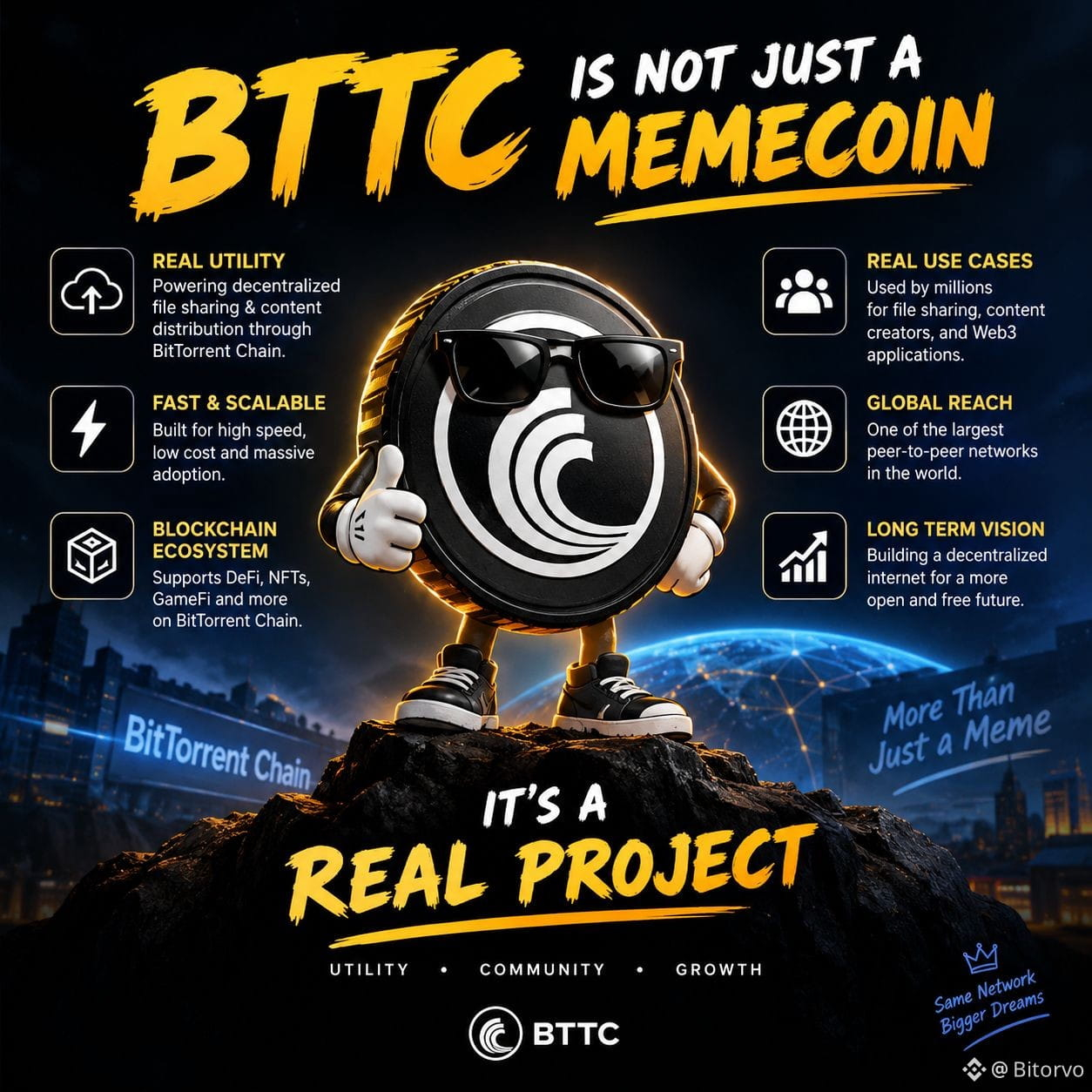
I Think $BTTC is Just a MemeCoin but It can't 😧
🚀 BTTC is helping make Web3 more connected! 🔗🌐
it's Uses👀👀👀....
✨ Cross-Chain Connectivity: Move beyond single-chain limitations.
🔄 Better Flexibility: Explore multiple blockchain ecosystems more easily.
🌍 Less Fragmentation: Help networks and users interact across chains.
⚡ More Utility: Assets and apps can gain broader use across Web3.
🤝 Stronger Ecosystem: A connected future can create smoother experiences for everyone.
BTTC reflects the vision of a more interoperable blockchain world. 🌉
💬 What matters most to you in cross-chain tech—speed, accessibility, or liquidity?
#BTTC #BTT #Web3 #Blockchain #Crypto
I Think $BTTC is Just a MemeCoin but It can't 😧
🚀 BTTC is helping make Web3 more connected! 🔗🌐
it's Uses👀👀👀....
✨ Cross-Chain Connectivity: Move beyond single-chain limitations.
🔄 Better Flexibility: Explore multiple blockchain ecosystems more easily.
🌍 Less Fragmentation: Help networks and users interact across chains.
⚡ More Utility: Assets and apps can gain broader use across Web3.
🤝 Stronger Ecosystem: A connected future can create smoother experiences for everyone.
BTTC reflects the vision of a more interoperable blockchain world. 🌉
💬 What matters most to you in cross-chain tech—speed, accessibility, or liquidity?
#BTTC #BTT #Web3 #Blockchain #Crypto
🚀 BTTC is helping make Web3 more connected! 🔗🌐
it's Uses👀👀👀....
✨ Cross-Chain Connectivity: Move beyond single-chain limitations.
🔄 Better Flexibility: Explore multiple blockchain ecosystems more easily.
🌍 Less Fragmentation: Help networks and users interact across chains.
⚡ More Utility: Assets and apps can gain broader use across Web3.
🤝 Stronger Ecosystem: A connected future can create smoother experiences for everyone.
BTTC reflects the vision of a more interoperable blockchain world. 🌉
💬 What matters most to you in cross-chain tech—speed, accessibility, or liquidity?
#BTTC #BTT #Web3 #Blockchain #Crypto
Quality Pic:
Bttc is a dead coin
3
7
921

🚨 🇯🇵 WALL STREET’S TOKENIZATION PUSH JUST GOT BIGGER: BLACKROCK IS EXPLORING A LINK BETWEEN TOKENIZED FUNDS AND A YEN STABLECOIN.
The $15.5 trillion asset manager is working with Japan’s SBI Holdings and Startale Group on exploring connections between tokenized money market funds and JPYSC, a stablecoin pegged to the Japanese yen.
Tokenized money market funds bring traditional financial assets onto blockchain infrastructure.
A yen stablecoin could provide a digital payment and settlement layer.
Connecting the two could help explore how tokenized financial assets and digital money interact onchain.
And the bigger picture is even more significant.
BlackRock is already a major player in traditional finance and tokenized investment products. SBI brings financial infrastructure, while Startale focuses on blockchain technology.
If this initiative progresses, it could help advance Japan’s tokenized finance ecosystem.
But remember: this is an exploration, not proof that a fully integrated product is already live.
The real question is whether traditional financial assets and blockchain-based money can eventually operate together at institutional scale.
#BlackRock #Tokenization #Stablecoins #Crypto #Blockchain
🚨 🇯🇵 WALL STREET’S TOKENIZATION PUSH JUST GOT BIGGER: BLACKROCK IS EXPLORING A LINK BETWEEN TOKENIZED FUNDS AND A YEN STABLECOIN.
The $15.5 trillion asset manager is working with Japan’s SBI Holdings and Startale Group on exploring connections between tokenized money market funds and JPYSC, a stablecoin pegged to the Japanese yen.
Tokenized money market funds bring traditional financial assets onto blockchain infrastructure.
A yen stablecoin could provide a digital payment and settlement layer.
Connecting the two could help explore how tokenized financial assets and digital money interact onchain.
And the bigger picture is even more significant.
BlackRock is already a major player in traditional finance and tokenized investment products. SBI brings financial infrastructure, while Startale focuses on blockchain technology.
If this initiative progresses, it could help advance Japan’s tokenized finance ecosystem.
But remember: this is an exploration, not proof that a fully integrated product is already live.
The real question is whether traditional financial assets and blockchain-based money can eventually operate together at institutional scale.
#BlackRock #Tokenization #Stablecoins #Crypto #Blockchain
The $15.5 trillion asset manager is working with Japan’s SBI Holdings and Startale Group on exploring connections between tokenized money market funds and JPYSC, a stablecoin pegged to the Japanese yen.
Tokenized money market funds bring traditional financial assets onto blockchain infrastructure.
A yen stablecoin could provide a digital payment and settlement layer.
Connecting the two could help explore how tokenized financial assets and digital money interact onchain.
And the bigger picture is even more significant.
BlackRock is already a major player in traditional finance and tokenized investment products. SBI brings financial infrastructure, while Startale focuses on blockchain technology.
If this initiative progresses, it could help advance Japan’s tokenized finance ecosystem.
But remember: this is an exploration, not proof that a fully integrated product is already live.
The real question is whether traditional financial assets and blockchain-based money can eventually operate together at institutional scale.
#BlackRock #Tokenization #Stablecoins #Crypto #Blockchain
2
151
·
--
国家队进场区块链!国家数据集团300亿注册资本落地雄安,经营范围明确包含区块链技术服务。国资委+三大运营商+两大电网联合持股,这波国家队的区块链布局不容小觑!#区块链 #数据经济 $BTC $ETH
China's national data group officially enters blockchain space! With $30B registered capital in Xiong'an, their business scope explicitly includes blockchain tech services. Backed by State-owned assets regulator + 3 major telecom operators + 2 power grids, this national-level blockchain move is huge! #blockchain #dataeconomy $BTC $ETH
国家队进场区块链!国家数据集团300亿注册资本落地雄安,经营范围明确包含区块链技术服务。国资委+三大运营商+两大电网联合持股,这波国家队的区块链布局不容小觑!#区块链 #数据经济 $BTC $ETH
China's national data group officially enters blockchain space! With $30B registered capital in Xiong'an, their business scope explicitly includes blockchain tech services. Backed by State-owned assets regulator + 3 major telecom operators + 2 power grids, this national-level blockchain move is huge! #blockchain #dataeconomy $BTC $ETH
China's national data group officially enters blockchain space! With $30B registered capital in Xiong'an, their business scope explicitly includes blockchain tech services. Backed by State-owned assets regulator + 3 major telecom operators + 2 power grids, this national-level blockchain move is huge! #blockchain #dataeconomy $BTC $ETH
1
112

·
--
🔷 ETHEREUM: MORE THAN JUST A COIN?
Ethereum is one of the most important projects in crypto because it supports smart contracts, decentralized applications, and a huge ecosystem of blockchain projects.
Here’s why ETH deserves attention 👇
⚙️ Smart contracts: They allow applications to run on the blockchain without relying on a traditional central authority.
🌐 DeFi ecosystem: Ethereum supports many decentralized finance applications.
🔥 Network activity matters: Adoption, competition, fees, and network usage can all influence Ethereum’s long-term outlook.
📉 But remember: A great technology doesn’t automatically mean its token price will rise. Crypto markets remain volatile.
💬 Let’s discuss!
Do you think Ethereum will remain one of the leading blockchain networks over the next five years?
👇 Tell us why in the comments.
#Ethereum #ETH #CryptoNews #Blockchain #BinanceSquare
🔷 ETHEREUM: MORE THAN JUST A COIN?
Ethereum is one of the most important projects in crypto because it supports smart contracts, decentralized applications, and a huge ecosystem of blockchain projects.
Here’s why ETH deserves attention 👇
⚙️ Smart contracts: They allow applications to run on the blockchain without relying on a traditional central authority.
🌐 DeFi ecosystem: Ethereum supports many decentralized finance applications.
🔥 Network activity matters: Adoption, competition, fees, and network usage can all influence Ethereum’s long-term outlook.
📉 But remember: A great technology doesn’t automatically mean its token price will rise. Crypto markets remain volatile.
💬 Let’s discuss!
Do you think Ethereum will remain one of the leading blockchain networks over the next five years?
👇 Tell us why in the comments.
#Ethereum #ETH #CryptoNews #Blockchain #BinanceSquare
Ethereum is one of the most important projects in crypto because it supports smart contracts, decentralized applications, and a huge ecosystem of blockchain projects.
Here’s why ETH deserves attention 👇
⚙️ Smart contracts: They allow applications to run on the blockchain without relying on a traditional central authority.
🌐 DeFi ecosystem: Ethereum supports many decentralized finance applications.
🔥 Network activity matters: Adoption, competition, fees, and network usage can all influence Ethereum’s long-term outlook.
📉 But remember: A great technology doesn’t automatically mean its token price will rise. Crypto markets remain volatile.
💬 Let’s discuss!
Do you think Ethereum will remain one of the leading blockchain networks over the next five years?
👇 Tell us why in the comments.
#Ethereum #ETH #CryptoNews #Blockchain #BinanceSquare
1
103

·
--
ලිපිය
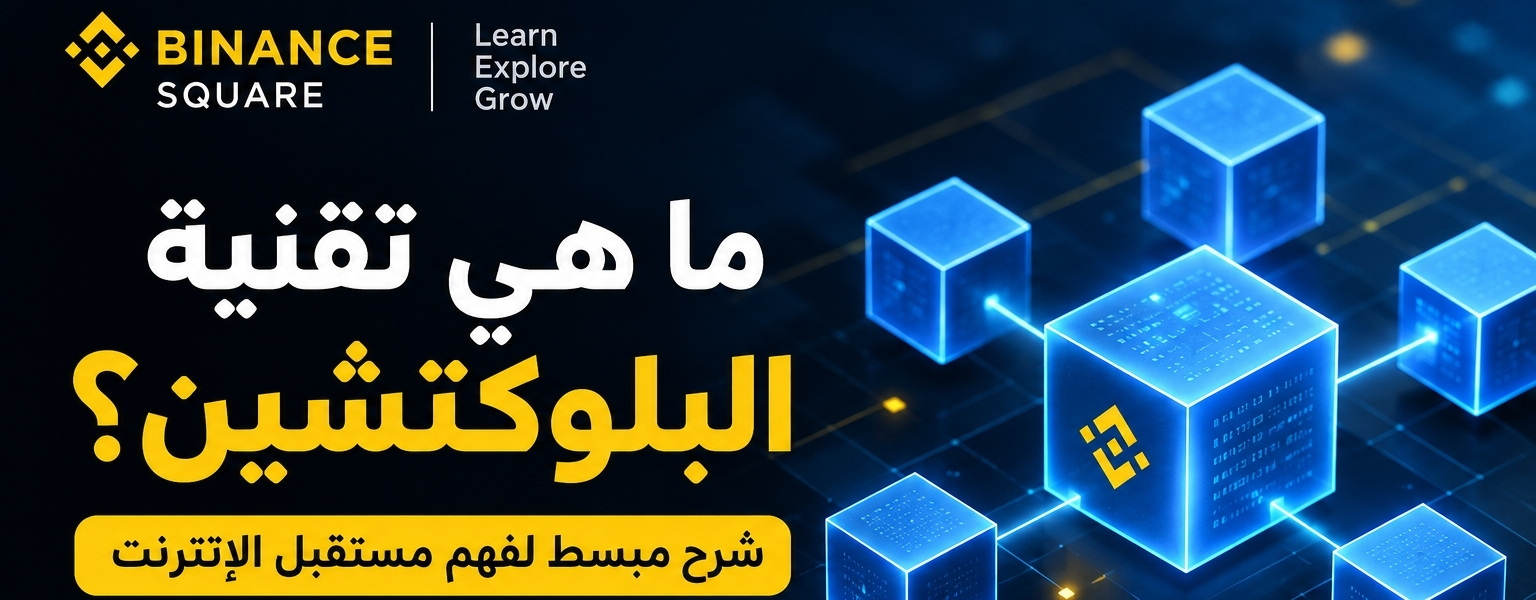
ما هي تقنية البلوكتشين؟ شرح مبسط لفهم مستقبل الإنترنت🔗 هل تساءلت يومًا كيف يمكن تسجيل المعاملات الرقمية والتحقق منها دون الاعتماد على جهة مركزية واحدة؟ هنا تأتي أهمية تقنية Blockchain (البلوكتشين)
📌 ما هي البلوكتشين؟
البلوكتشين هي قاعدة بيانات رقمية مشتركة، تُسجَّل فيها المعلومات داخل كتل مترابطة تشفيريًا، وتحتفظ أجهزة متعددة في الشبكة بنسخ من السجل وفقًا لقواعد محددة.
تخيّل دفترًا رقميًا مشتركًا، تُضاف إليه المعاملات باستمرار، ويمكن للمشاركين التحقق من سجلاته دون الاعتماد بالضرورة على وسيط مركزي.
⚙️ كيف تعمل؟
تعمل التقنية من خلال أربع خطوات أساسية:
🔹 1 إنشاء المعاملة: يرسل المستخدم معاملة عبر الشبكة.
🔹 2 التحقق: تفحص أجهزة الشبكة المعاملة وفقًا لقواعد البروتوكول.
🔹 3 تسجيل البيانات: تُجمع المعاملات المقبولة داخل كتلة جديدة
🔹 4. ربط الكتل: ترتبط الكتلة الجديدة بالسابقة باستخدام وسائل تشفيرية، ما يجعل تعديل السجلات القديمة قابلًا للكشف وصعبًا عمليًا، بحسب تصميم الشبكة وآلية توافقها.
🌐 أين تُستخدم البلوكتشين؟
لا تقتصر التقنية على العملات الرقمية، بل تشمل تطبيقات مثل:
- المدفوعات الرقمية: نقل القيمة بين المستخدمين.
- العقود الذكية: تنفيذ تعليمات برمجية وفق شروط محددة.
- التمويل اللامركزي (DeFi): تقديم خدمات مالية عبر تطبيقات بلوكتشين.
- الأصول الرقمية: إنشاء الرموز الرقمية وإدارتها
⚠️ هل البلوكتشين آمنة تمامًا؟
لا توجد تقنية خالية من المخاطر فرغم أن التشفير وآليات التوافق يمكن أن يوفرا حماية قوية للسجلات فإن التطبيقات والعقود الذكية والمحافظ قد تتعرض للثغرات أو الاحتيال
كذلك لا يعني استخدام البلوكتشين أن العملة المرتبطة بها ذات قيمة اقتصادية أو أن سعرها سيرتفع
🎯 الخلاصة
البلوكتشين ليست مجرد عملات رقمية بل تقنية لتسجيل البيانات والتحقق منها ومشاركتها بطريقة مختلفة عن قواعد البيانات التقليدية
وفهم آلية عملها هو الخطوة الأولى لتقييم أي مشروع رقمي بناءً على تقنيته واستخداماته الفعلية، وليس الضجة المحيطة به
المعرفة التقنية تسبق أي قرار مالي
#blockchain #CryptoEducation #Web3 #BinanceSquare #BNB
ما هي تقنية البلوكتشين؟ شرح مبسط لفهم مستقبل الإنترنت
🔗 هل تساءلت يومًا كيف يمكن تسجيل المعاملات الرقمية والتحقق منها دون الاعتماد على جهة مركزية واحدة؟ هنا تأتي أهمية تقنية Blockchain (البلوكتشين)
📌 ما هي البلوكتشين؟
البلوكتشين هي قاعدة بيانات رقمية مشتركة، تُسجَّل فيها المعلومات داخل كتل مترابطة تشفيريًا، وتحتفظ أجهزة متعددة في الشبكة بنسخ من السجل وفقًا لقواعد محددة.
تخيّل دفترًا رقميًا مشتركًا، تُضاف إليه المعاملات باستمرار، ويمكن للمشاركين التحقق من سجلاته دون الاعتماد بالضرورة على وسيط مركزي.
⚙️ كيف تعمل؟
تعمل التقنية من خلال أربع خطوات أساسية:
🔹 1 إنشاء المعاملة: يرسل المستخدم معاملة عبر الشبكة.
🔹 2 التحقق: تفحص أجهزة الشبكة المعاملة وفقًا لقواعد البروتوكول.
🔹 3 تسجيل البيانات: تُجمع المعاملات المقبولة داخل كتلة جديدة
🔹 4. ربط الكتل: ترتبط الكتلة الجديدة بالسابقة باستخدام وسائل تشفيرية، ما يجعل تعديل السجلات القديمة قابلًا للكشف وصعبًا عمليًا، بحسب تصميم الشبكة وآلية توافقها.
🌐 أين تُستخدم البلوكتشين؟
لا تقتصر التقنية على العملات الرقمية، بل تشمل تطبيقات مثل:
- المدفوعات الرقمية: نقل القيمة بين المستخدمين.
- العقود الذكية: تنفيذ تعليمات برمجية وفق شروط محددة.
- التمويل اللامركزي (DeFi): تقديم خدمات مالية عبر تطبيقات بلوكتشين.
- الأصول الرقمية: إنشاء الرموز الرقمية وإدارتها
⚠️ هل البلوكتشين آمنة تمامًا؟
لا توجد تقنية خالية من المخاطر فرغم أن التشفير وآليات التوافق يمكن أن يوفرا حماية قوية للسجلات فإن التطبيقات والعقود الذكية والمحافظ قد تتعرض للثغرات أو الاحتيال
كذلك لا يعني استخدام البلوكتشين أن العملة المرتبطة بها ذات قيمة اقتصادية أو أن سعرها سيرتفع
🎯 الخلاصة
البلوكتشين ليست مجرد عملات رقمية بل تقنية لتسجيل البيانات والتحقق منها ومشاركتها بطريقة مختلفة عن قواعد البيانات التقليدية
وفهم آلية عملها هو الخطوة الأولى لتقييم أي مشروع رقمي بناءً على تقنيته واستخداماته الفعلية، وليس الضجة المحيطة به
المعرفة التقنية تسبق أي قرار مالي
#blockchain #CryptoEducation #Web3 #BinanceSquare #BNB
📌 ما هي البلوكتشين؟
البلوكتشين هي قاعدة بيانات رقمية مشتركة، تُسجَّل فيها المعلومات داخل كتل مترابطة تشفيريًا، وتحتفظ أجهزة متعددة في الشبكة بنسخ من السجل وفقًا لقواعد محددة.
تخيّل دفترًا رقميًا مشتركًا، تُضاف إليه المعاملات باستمرار، ويمكن للمشاركين التحقق من سجلاته دون الاعتماد بالضرورة على وسيط مركزي.
⚙️ كيف تعمل؟
تعمل التقنية من خلال أربع خطوات أساسية:
🔹 1 إنشاء المعاملة: يرسل المستخدم معاملة عبر الشبكة.
🔹 2 التحقق: تفحص أجهزة الشبكة المعاملة وفقًا لقواعد البروتوكول.
🔹 3 تسجيل البيانات: تُجمع المعاملات المقبولة داخل كتلة جديدة
🔹 4. ربط الكتل: ترتبط الكتلة الجديدة بالسابقة باستخدام وسائل تشفيرية، ما يجعل تعديل السجلات القديمة قابلًا للكشف وصعبًا عمليًا، بحسب تصميم الشبكة وآلية توافقها.
🌐 أين تُستخدم البلوكتشين؟
لا تقتصر التقنية على العملات الرقمية، بل تشمل تطبيقات مثل:
- المدفوعات الرقمية: نقل القيمة بين المستخدمين.
- العقود الذكية: تنفيذ تعليمات برمجية وفق شروط محددة.
- التمويل اللامركزي (DeFi): تقديم خدمات مالية عبر تطبيقات بلوكتشين.
- الأصول الرقمية: إنشاء الرموز الرقمية وإدارتها
⚠️ هل البلوكتشين آمنة تمامًا؟
لا توجد تقنية خالية من المخاطر فرغم أن التشفير وآليات التوافق يمكن أن يوفرا حماية قوية للسجلات فإن التطبيقات والعقود الذكية والمحافظ قد تتعرض للثغرات أو الاحتيال
كذلك لا يعني استخدام البلوكتشين أن العملة المرتبطة بها ذات قيمة اقتصادية أو أن سعرها سيرتفع
🎯 الخلاصة
البلوكتشين ليست مجرد عملات رقمية بل تقنية لتسجيل البيانات والتحقق منها ومشاركتها بطريقة مختلفة عن قواعد البيانات التقليدية
وفهم آلية عملها هو الخطوة الأولى لتقييم أي مشروع رقمي بناءً على تقنيته واستخداماته الفعلية، وليس الضجة المحيطة به
المعرفة التقنية تسبق أي قرار مالي
#blockchain #CryptoEducation #Web3 #BinanceSquare #BNB
42

·
--
🌐 Blockchain Is Changing More Than We Think! 🚀
Technology is moving fast, and blockchain is becoming more than just a way to transfer digital assets. It has the potential to transform how we manage data, protect digital identities, and build trust online.
💡 Imagine a future where digital ownership is easier to verify, online transactions are more transparent, and creators have greater control over their work.
The real value of innovation isn't just in the technology itself, but in how it solves real problems and makes people's lives better.
I believe the next big step for blockchain will come from practical solutions that people can actually use in their everyday lives. 🔥
💬 What real-world problem would you like blockchain technology to solve first?
Let's discuss! 👇
#BinanceSquare #blockchain #Web3 #INNOVATION #Technology
🌐 Blockchain Is Changing More Than We Think! 🚀
Technology is moving fast, and blockchain is becoming more than just a way to transfer digital assets. It has the potential to transform how we manage data, protect digital identities, and build trust online.
💡 Imagine a future where digital ownership is easier to verify, online transactions are more transparent, and creators have greater control over their work.
The real value of innovation isn't just in the technology itself, but in how it solves real problems and makes people's lives better.
I believe the next big step for blockchain will come from practical solutions that people can actually use in their everyday lives. 🔥
💬 What real-world problem would you like blockchain technology to solve first?
Let's discuss! 👇
#BinanceSquare #blockchain #Web3 #INNOVATION #Technology
Technology is moving fast, and blockchain is becoming more than just a way to transfer digital assets. It has the potential to transform how we manage data, protect digital identities, and build trust online.
💡 Imagine a future where digital ownership is easier to verify, online transactions are more transparent, and creators have greater control over their work.
The real value of innovation isn't just in the technology itself, but in how it solves real problems and makes people's lives better.
I believe the next big step for blockchain will come from practical solutions that people can actually use in their everyday lives. 🔥
💬 What real-world problem would you like blockchain technology to solve first?
Let's discuss! 👇
#BinanceSquare #blockchain #Web3 #INNOVATION #Technology
40

·
--
ලිපිය
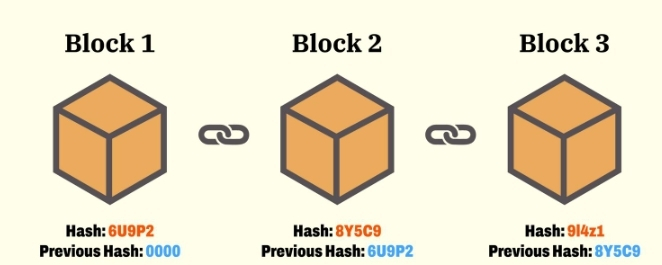
How Does Blockchain Work ?Have you ever wondered how Bitcoin transactions are recorded without a central bank controlling the network? 🤔
Let's understand blockchain with a simple example!
📒 Imagine a shared digital notebook.
You send 100 taka to your friend. The transaction is recorded in a digital system that multiple network participants can verify.
Here's how blockchain works:
1️⃣ Transaction: A user initiates a transaction.
2️⃣ Verification: Network participants verify it according to the system's rules.
3️⃣ Block: Verified transactions are grouped into a block.
4️⃣ Connection: Each block contains a cryptographic link to the previous block, helping connect the chain.
5️⃣ Shared Record: Once accepted by the network, the new block becomes part of the blockchain's transaction history.
💡 Why is this important?
Blockchain makes records easier to verify and unauthorized changes easier to detect. However, no system is completely risk--free.
🎯 Quick Question:
Which blockchain concept would you like to learn next?
A) Bitcoin Mining
B) Crypto Wallets
C) Smart Contracts
Comment A, B, or C below! 👇
#Blockchain #CryptoEducation #Bitcoin #BTC #BinanceSquar
How Does Blockchain Work ?
Have you ever wondered how Bitcoin transactions are recorded without a central bank controlling the network? 🤔
Let's understand blockchain with a simple example!
📒 Imagine a shared digital notebook.
You send 100 taka to your friend. The transaction is recorded in a digital system that multiple network participants can verify.
Here's how blockchain works:
1️⃣ Transaction: A user initiates a transaction.
2️⃣ Verification: Network participants verify it according to the system's rules.
3️⃣ Block: Verified transactions are grouped into a block.
4️⃣ Connection: Each block contains a cryptographic link to the previous block, helping connect the chain.
5️⃣ Shared Record: Once accepted by the network, the new block becomes part of the blockchain's transaction history.
💡 Why is this important?
Blockchain makes records easier to verify and unauthorized changes easier to detect. However, no system is completely risk--free.
🎯 Quick Question:
Which blockchain concept would you like to learn next?
A) Bitcoin Mining
B) Crypto Wallets
C) Smart Contracts
Comment A, B, or C below! 👇
#Blockchain #CryptoEducation #Bitcoin #BTC #BinanceSquar
Let's understand blockchain with a simple example!
📒 Imagine a shared digital notebook.
You send 100 taka to your friend. The transaction is recorded in a digital system that multiple network participants can verify.
Here's how blockchain works:
1️⃣ Transaction: A user initiates a transaction.
2️⃣ Verification: Network participants verify it according to the system's rules.
3️⃣ Block: Verified transactions are grouped into a block.
4️⃣ Connection: Each block contains a cryptographic link to the previous block, helping connect the chain.
5️⃣ Shared Record: Once accepted by the network, the new block becomes part of the blockchain's transaction history.
💡 Why is this important?
Blockchain makes records easier to verify and unauthorized changes easier to detect. However, no system is completely risk--free.
🎯 Quick Question:
Which blockchain concept would you like to learn next?
A) Bitcoin Mining
B) Crypto Wallets
C) Smart Contracts
Comment A, B, or C below! 👇
#Blockchain #CryptoEducation #Bitcoin #BTC #BinanceSquar
70

·
--
🤖 WHAT HAPPENS WHEN AI AGENTS START USING CRYPTO? 🔥
Imagine an AI assistant that can:
✅ Pay for digital services automatically
✅ Purchase computing resources
✅ Verify transactions on blockchain
✅ Interact with decentralized applications
This is one of the fascinating possibilities emerging at the intersection of AI and blockchain.
But security, permissions, and accountability remain major challenges.
🌍 The next chapter of Web3 may involve machines interacting economically, not just humans trading tokens.
💬 Would you trust an AI agent to manage small crypto payments on your behalf?
#AI #Web3 #blockchain #BinanceSquar
🤖 WHAT HAPPENS WHEN AI AGENTS START USING CRYPTO? 🔥
Imagine an AI assistant that can:
✅ Pay for digital services automatically
✅ Purchase computing resources
✅ Verify transactions on blockchain
✅ Interact with decentralized applications
This is one of the fascinating possibilities emerging at the intersection of AI and blockchain.
But security, permissions, and accountability remain major challenges.
🌍 The next chapter of Web3 may involve machines interacting economically, not just humans trading tokens.
💬 Would you trust an AI agent to manage small crypto payments on your behalf?
#AI #Web3 #blockchain #BinanceSquar
Imagine an AI assistant that can:
✅ Pay for digital services automatically
✅ Purchase computing resources
✅ Verify transactions on blockchain
✅ Interact with decentralized applications
This is one of the fascinating possibilities emerging at the intersection of AI and blockchain.
But security, permissions, and accountability remain major challenges.
🌍 The next chapter of Web3 may involve machines interacting economically, not just humans trading tokens.
💬 Would you trust an AI agent to manage small crypto payments on your behalf?
#AI #Web3 #blockchain #BinanceSquar
30

·
--
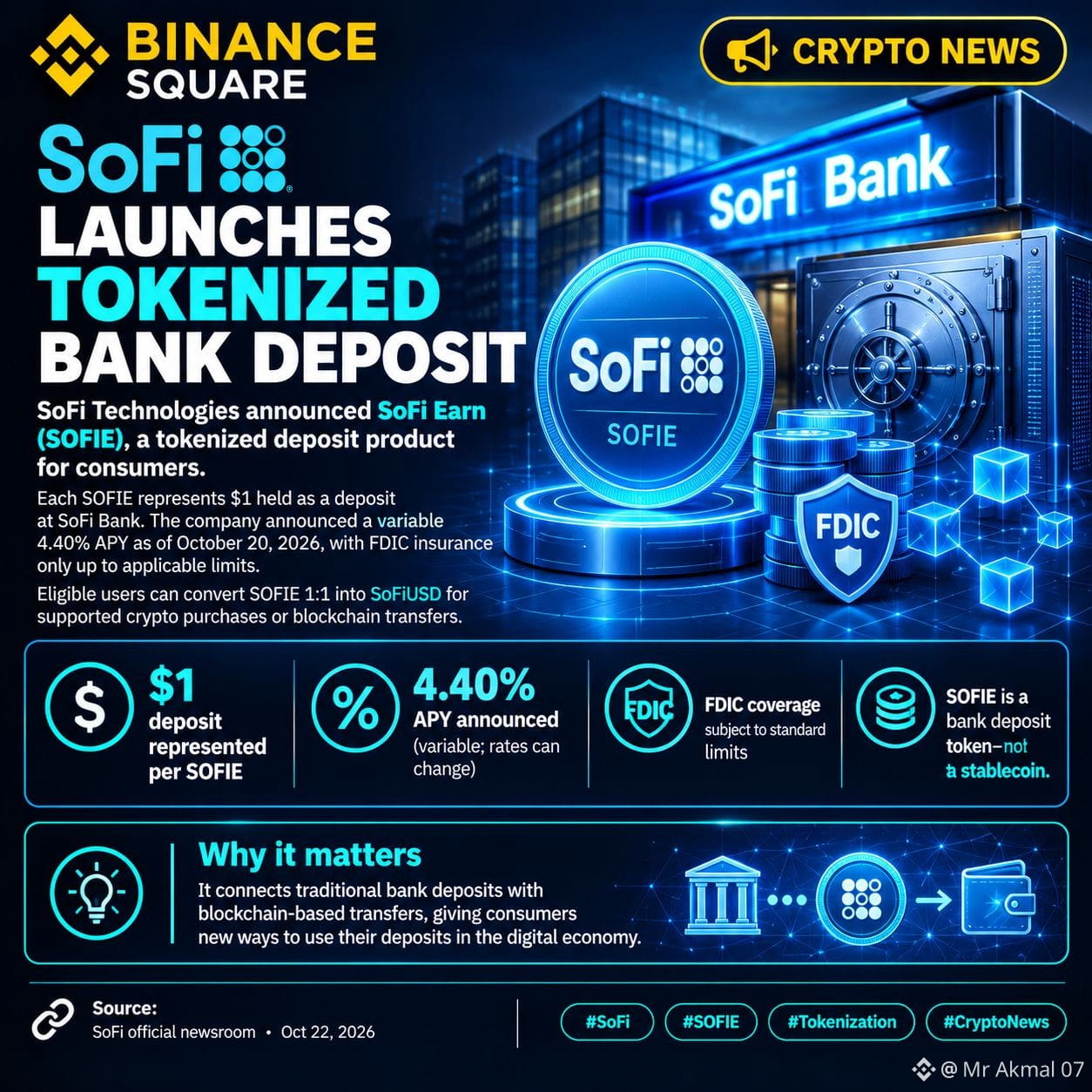
$SOFI 🚨 SoFi LAUNCHES SOFIE: A TOKENIZED BANK DEPOSIT
SoFi Technologies announced SoFi Earn (SOFIE) on October 22, introducing a tokenized bank deposit designed to connect traditional banking with blockchain-based digital payments.
🔍 Key highlights:
🔹 Each SOFIE represents $1 held on deposit at SoFi Bank.
🔹 The announced annual percentage yield (APY) was 4.40%, variable and subject to change.
🔹 Eligible members can convert SOFIE 1:1 into SoFiUSD.
🔹 The deposit is eligible for FDIC insurance up to applicable limits.
🔹 SOFIE is a bank deposit token, not a stablecoin.
🌐 Why it matters: Tokenized deposits could help bridge traditional banking and digital asset infrastructure while retaining the legal structure of a bank deposit.
📌 Important: The product is rolling out to eligible SoFi members. FDIC protection applies to qualifying deposits under standard rules and limits; it does not cover SoFiUSD or other crypto assets.
🔗 Official source: https://www.sofi.com/newsroom/sofi-launches-sofi-earn-sofie-the-first-and-only-national-bank-issued-tokenized-deposit-for-consumers/
What do you think—will tokenized bank deposits become an important part of digital payments? 👇
#SoFi #blockchain #CryptoNews #BinanceSquare
{future}(SOFIUSDT)
$SOFI 🚨 SoFi LAUNCHES SOFIE: A TOKENIZED BANK DEPOSIT
SoFi Technologies announced SoFi Earn (SOFIE) on October 22, introducing a tokenized bank deposit designed to connect traditional banking with blockchain-based digital payments.
🔍 Key highlights:
🔹 Each SOFIE represents $1 held on deposit at SoFi Bank.
🔹 The announced annual percentage yield (APY) was 4.40%, variable and subject to change.
🔹 Eligible members can convert SOFIE 1:1 into SoFiUSD.
🔹 The deposit is eligible for FDIC insurance up to applicable limits.
🔹 SOFIE is a bank deposit token, not a stablecoin.
🌐 Why it matters: Tokenized deposits could help bridge traditional banking and digital asset infrastructure while retaining the legal structure of a bank deposit.
📌 Important: The product is rolling out to eligible SoFi members. FDIC protection applies to qualifying deposits under standard rules and limits; it does not cover SoFiUSD or other crypto assets.
🔗 Official source: https://www.sofi.com/newsroom/sofi-launches-sofi-earn-sofie-the-first-and-only-national-bank-issued-tokenized-deposit-for-consumers/
What do you think—will tokenized bank deposits become an important part of digital payments? 👇
#SoFi #blockchain #CryptoNews #BinanceSquare
SoFi Technologies announced SoFi Earn (SOFIE) on October 22, introducing a tokenized bank deposit designed to connect traditional banking with blockchain-based digital payments.
🔍 Key highlights:
🔹 Each SOFIE represents $1 held on deposit at SoFi Bank.
🔹 The announced annual percentage yield (APY) was 4.40%, variable and subject to change.
🔹 Eligible members can convert SOFIE 1:1 into SoFiUSD.
🔹 The deposit is eligible for FDIC insurance up to applicable limits.
🔹 SOFIE is a bank deposit token, not a stablecoin.
🌐 Why it matters: Tokenized deposits could help bridge traditional banking and digital asset infrastructure while retaining the legal structure of a bank deposit.
📌 Important: The product is rolling out to eligible SoFi members. FDIC protection applies to qualifying deposits under standard rules and limits; it does not cover SoFiUSD or other crypto assets.
🔗 Official source: https://www.sofi.com/newsroom/sofi-launches-sofi-earn-sofie-the-first-and-only-national-bank-issued-tokenized-deposit-for-consumers/
What do you think—will tokenized bank deposits become an important part of digital payments? 👇
#SoFi #blockchain #CryptoNews #BinanceSquare
18

·
--
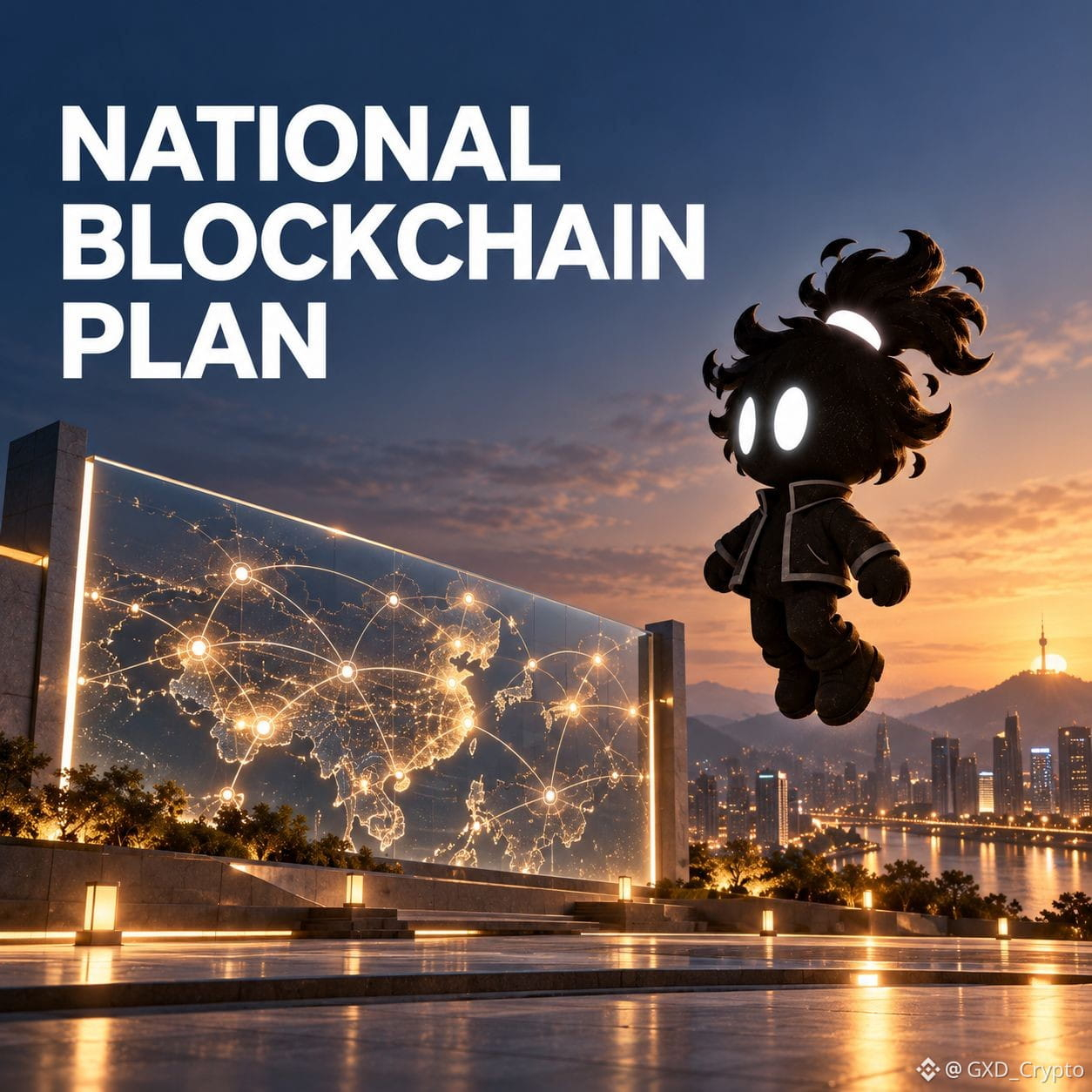
الصين أدرجت «بناء شبكة بلوكشين وطنية» ضمن خطة المعلوماتية حتى 2030، والجهة الرسمية تستهدف اكتمالها بحلول ذلك العام. هذا توجّه بنية تحتية حكومي، مو إعلان عن عملة أو شبكة تداول بعينها. أي تطبيقات تتوقعونها؟ 🌐🧱📄
الأكثر تداولًا على Binance وقت الرصد (17:05 إسطنبول، أزواج Spot USDT): $USDC، $BTC، $ETH. هذه متابعة عامة للسوق ولا علاقة سببية لها بالخبر. المصدر: Binance Spot 24h Ticker API.
#Blockchain #Crypto
الصين أدرجت «بناء شبكة بلوكشين وطنية» ضمن خطة المعلوماتية حتى 2030، والجهة الرسمية تستهدف اكتمالها بحلول ذلك العام. هذا توجّه بنية تحتية حكومي، مو إعلان عن عملة أو شبكة تداول بعينها. أي تطبيقات تتوقعونها؟ 🌐🧱📄
الأكثر تداولًا على Binance وقت الرصد (17:05 إسطنبول، أزواج Spot USDT): $USDC ، $BTC ، $ETH . هذه متابعة عامة للسوق ولا علاقة سببية لها بالخبر. المصدر: Binance Spot 24h Ticker API.
#Blockchain #Crypto
الأكثر تداولًا على Binance وقت الرصد (17:05 إسطنبول، أزواج Spot USDT): $USDC ، $BTC ، $ETH . هذه متابعة عامة للسوق ولا علاقة سببية لها بالخبر. المصدر: Binance Spot 24h Ticker API.
#Blockchain #Crypto
81

·
--
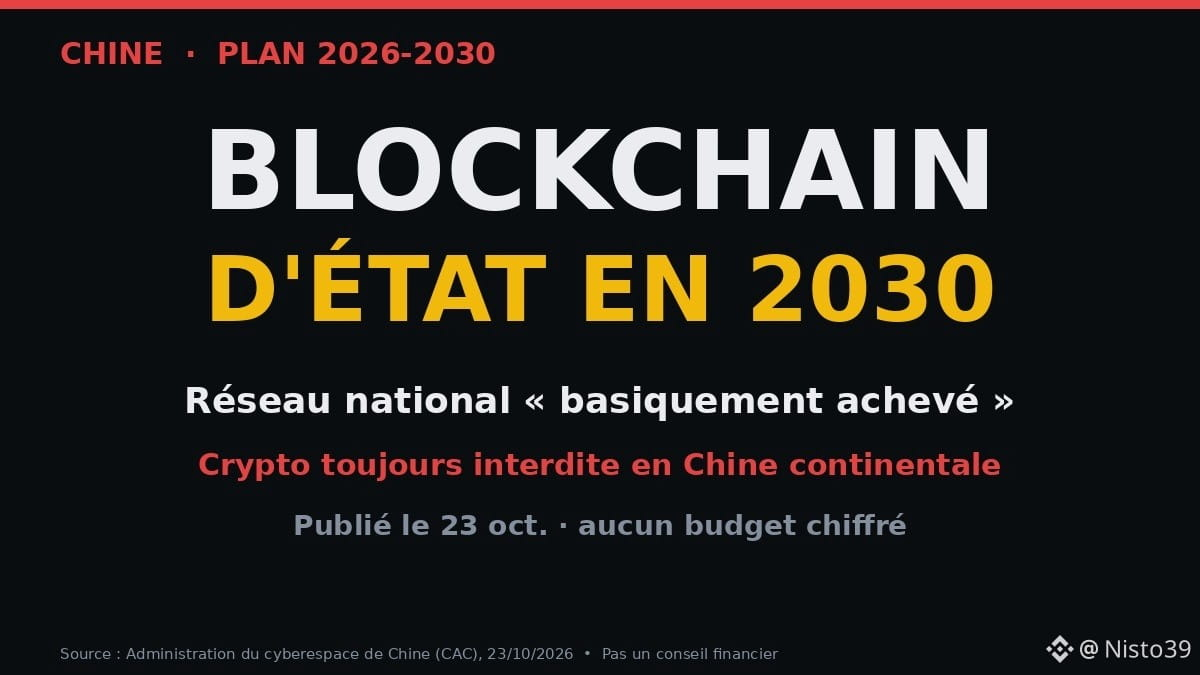
🇨🇳 La Chine veut sa propre « autoroute blockchain » d'ici 2030… tout en gardant la crypto interdite. Paradoxe ? Pas vraiment.
📌 Les faits (23 octobre 2026)
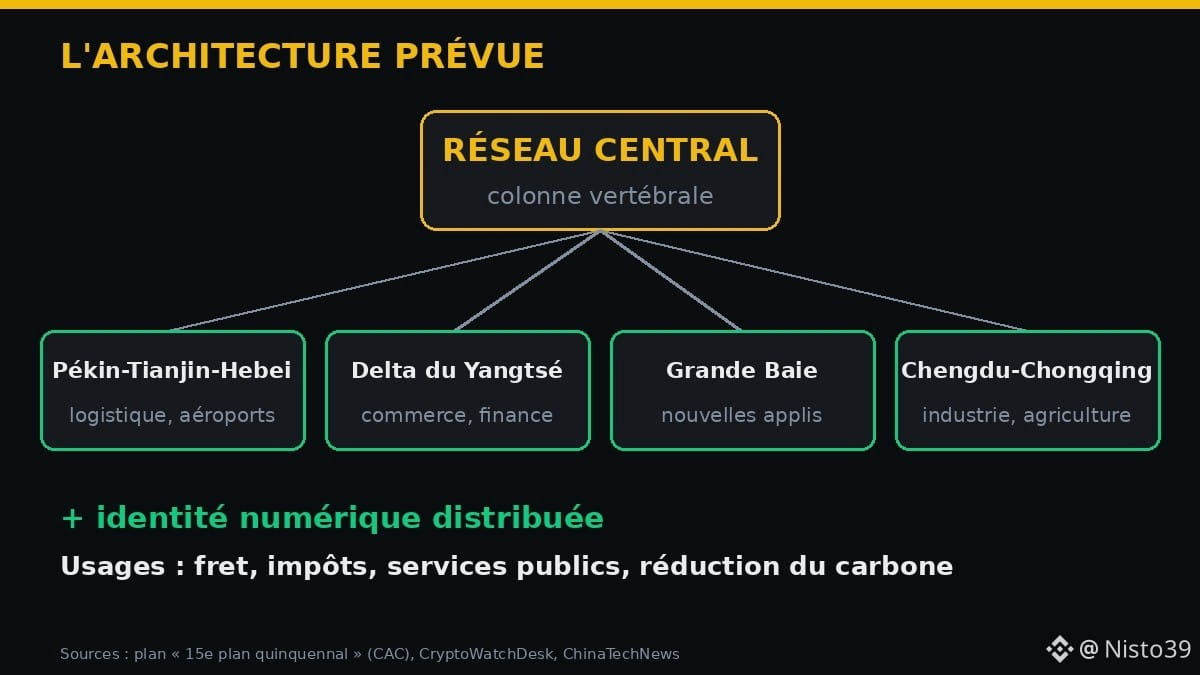
• Le plan national d'informatisation 2026-2030 (15e plan quinquennal), publié par l'administration chinoise du cyberespace, fixe un objectif : un réseau blockchain national « basiquement achevé » en 2030
• Au programme : un réseau central (la « colonne vertébrale »), des pôles régionaux connectés, et une identité numérique distribuée
• Usages visés : fret et transport maritime, commerce, finance, impôts, services publics, agriculture, réduction du carbone
• Aucun budget chiffré, aucune cryptomonnaie, aucun stablecoin dans le texte
• Le yuan numérique (monnaie de la banque centrale) reste au programme
🔍 Pourquoi ça compte ?
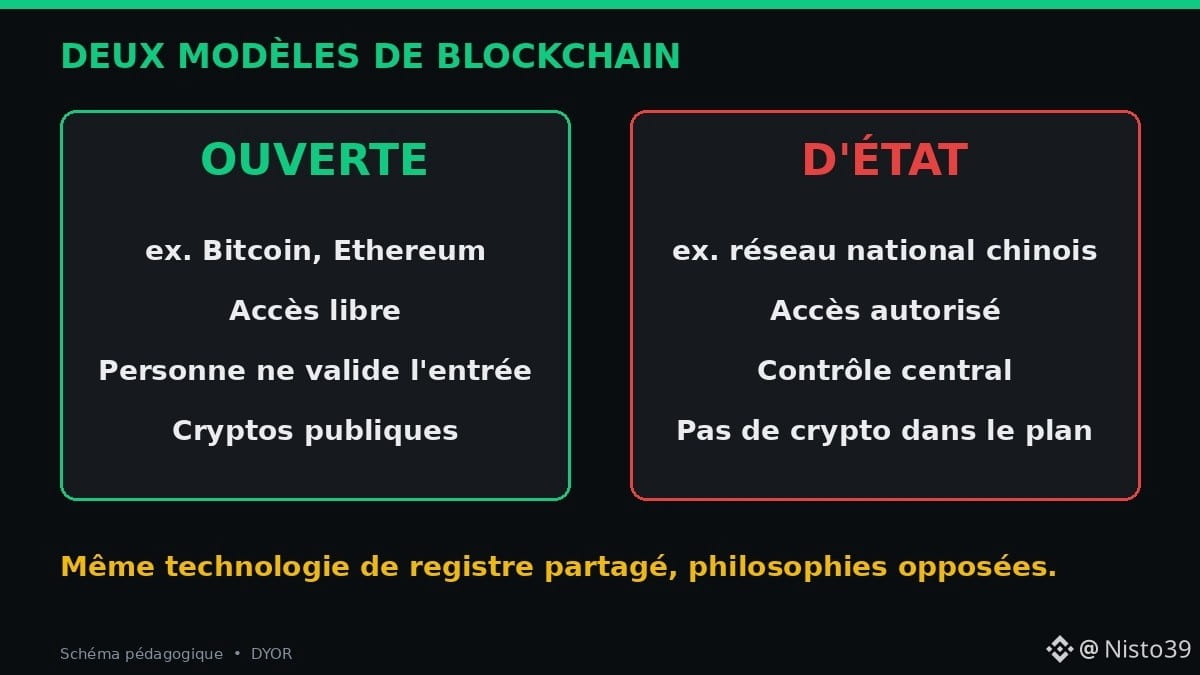
La blockchain, c'est d'abord un registre partagé que personne ne peut modifier seul. Pékin garde l'outil (traçabilité des documents, des paiements, des marchandises) sans la liberté des cryptos publiques comme le Bitcoin, que n'importe qui peut utiliser sans autorisation.
⚖️ Nuance
• Ce n'est pas nouveau : le réseau figurait déjà dans le plan national de mars
• C'est un objectif, pas un réseau déjà en service
• L'interdiction des activités crypto en Chine continentale ne change pas
👤 Koffi (personnage fictif) est transitaire à Lomé et reçoit des conteneurs de Chine. Si les connaissements (documents de transport) passent un jour sur ce réseau, ses partenaires chinois pourraient vérifier plus vite l'origine des marchandises. Pour lui, rien ne change demain.
💡 Deux modèles s'affrontent : blockchain ouverte vs blockchain d'État. La Chine étant le 1er partenaire commercial de l'Afrique, ça nous concerne.
💬 Blockchain d'État : progrès 👍 ou contrôle 👀 ? 👇
Pas un conseil financier. DYOR.
Sources : CAC (23/10), Xinhua (23/10), CryptoWatchDesk, ChinaTechNews (24/10).
#CryptoNews #Chine #Blockchain #Afrique
🇨🇳 La Chine veut sa propre « autoroute blockchain » d'ici 2030… tout en gardant la crypto interdite. Paradoxe ? Pas vraiment.
📌 Les faits (23 octobre 2026)
• Le plan national d'informatisation 2026-2030 (15e plan quinquennal), publié par l'administration chinoise du cyberespace, fixe un objectif : un réseau blockchain national « basiquement achevé » en 2030
• Au programme : un réseau central (la « colonne vertébrale »), des pôles régionaux connectés, et une identité numérique distribuée
• Usages visés : fret et transport maritime, commerce, finance, impôts, services publics, agriculture, réduction du carbone
• Aucun budget chiffré, aucune cryptomonnaie, aucun stablecoin dans le texte
• Le yuan numérique (monnaie de la banque centrale) reste au programme
🔍 Pourquoi ça compte ?
La blockchain, c'est d'abord un registre partagé que personne ne peut modifier seul. Pékin garde l'outil (traçabilité des documents, des paiements, des marchandises) sans la liberté des cryptos publiques comme le Bitcoin, que n'importe qui peut utiliser sans autorisation.
⚖️ Nuance
• Ce n'est pas nouveau : le réseau figurait déjà dans le plan national de mars
• C'est un objectif, pas un réseau déjà en service
• L'interdiction des activités crypto en Chine continentale ne change pas
👤 Koffi (personnage fictif) est transitaire à Lomé et reçoit des conteneurs de Chine. Si les connaissements (documents de transport) passent un jour sur ce réseau, ses partenaires chinois pourraient vérifier plus vite l'origine des marchandises. Pour lui, rien ne change demain.
💡 Deux modèles s'affrontent : blockchain ouverte vs blockchain d'État. La Chine étant le 1er partenaire commercial de l'Afrique, ça nous concerne.
💬 Blockchain d'État : progrès 👍 ou contrôle 👀 ? 👇
Pas un conseil financier. DYOR.
Sources : CAC (23/10), Xinhua (23/10), CryptoWatchDesk, ChinaTechNews (24/10).
#CryptoNews #Chine #Blockchain #Afrique
📌 Les faits (23 octobre 2026)
• Le plan national d'informatisation 2026-2030 (15e plan quinquennal), publié par l'administration chinoise du cyberespace, fixe un objectif : un réseau blockchain national « basiquement achevé » en 2030
• Au programme : un réseau central (la « colonne vertébrale »), des pôles régionaux connectés, et une identité numérique distribuée
• Usages visés : fret et transport maritime, commerce, finance, impôts, services publics, agriculture, réduction du carbone
• Aucun budget chiffré, aucune cryptomonnaie, aucun stablecoin dans le texte
• Le yuan numérique (monnaie de la banque centrale) reste au programme
🔍 Pourquoi ça compte ?
La blockchain, c'est d'abord un registre partagé que personne ne peut modifier seul. Pékin garde l'outil (traçabilité des documents, des paiements, des marchandises) sans la liberté des cryptos publiques comme le Bitcoin, que n'importe qui peut utiliser sans autorisation.
⚖️ Nuance
• Ce n'est pas nouveau : le réseau figurait déjà dans le plan national de mars
• C'est un objectif, pas un réseau déjà en service
• L'interdiction des activités crypto en Chine continentale ne change pas
👤 Koffi (personnage fictif) est transitaire à Lomé et reçoit des conteneurs de Chine. Si les connaissements (documents de transport) passent un jour sur ce réseau, ses partenaires chinois pourraient vérifier plus vite l'origine des marchandises. Pour lui, rien ne change demain.
💡 Deux modèles s'affrontent : blockchain ouverte vs blockchain d'État. La Chine étant le 1er partenaire commercial de l'Afrique, ça nous concerne.
💬 Blockchain d'État : progrès 👍 ou contrôle 👀 ? 👇
Pas un conseil financier. DYOR.
Sources : CAC (23/10), Xinhua (23/10), CryptoWatchDesk, ChinaTechNews (24/10).
#CryptoNews #Chine #Blockchain #Afrique
15

·
--
$ZAMA
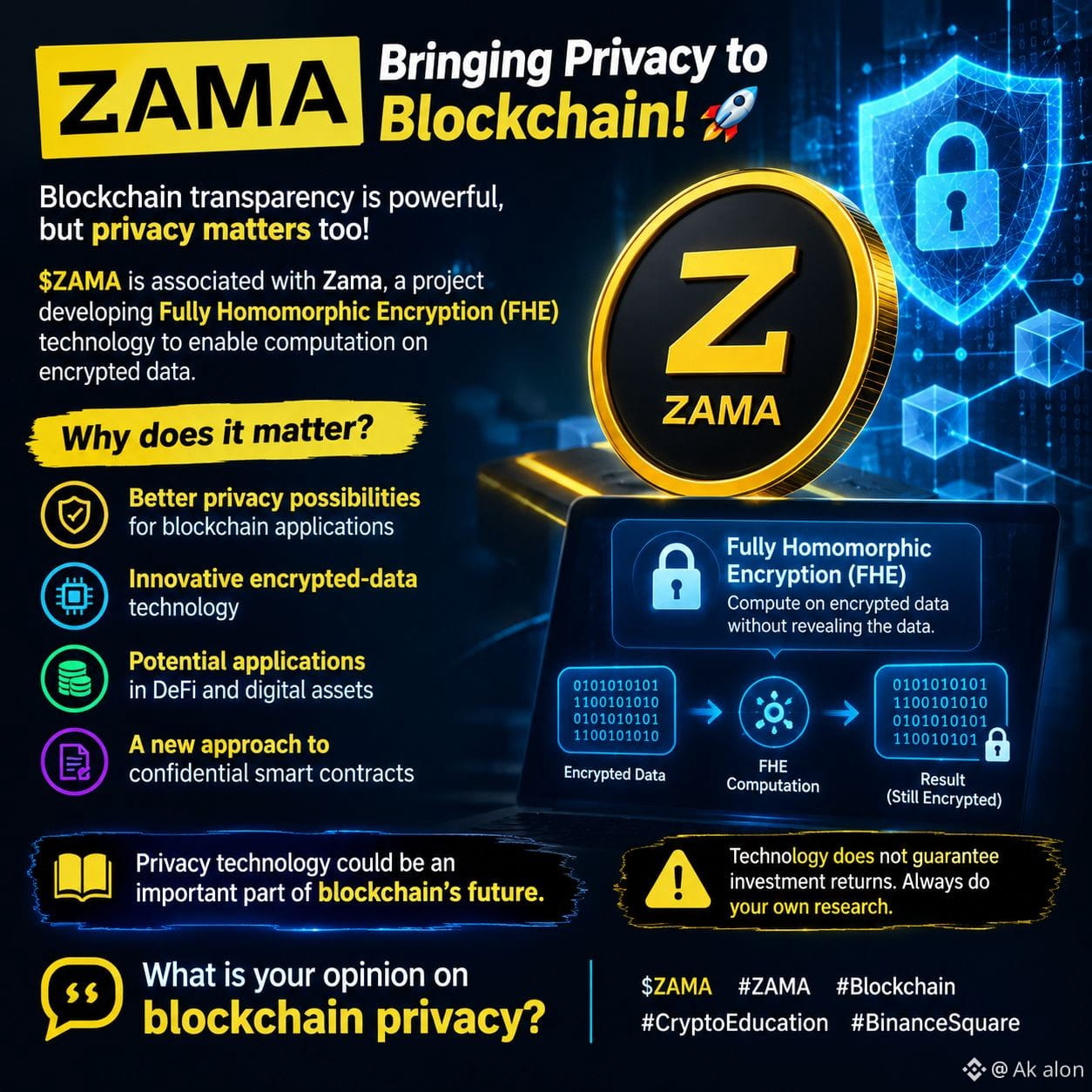
🔐 ZAMA: Bringing Privacy to Blockchain! 🚀
Blockchain transparency is powerful, but privacy matters too!
$ZAMA is associated with Zama, a project developing Fully Homomorphic Encryption (FHE) technology to enable computation on encrypted data.
🌟 Why does it matter?
🔹 Better privacy possibilities for blockchain applications
🔹 Innovative encrypted-data technology
🔹 Potential applications in DeFi and digital assets
🔹 A new approach to confidential smart contracts
📚 Privacy technology could be an important part of blockchain's future.
⚠️ Technology does not guarantee investment returns. Always do your own research.
What is your opinion on blockchain privacy?
$ZAMA #blockchain #cryptoeducation #BinanceSquare
$ZAMA
🔐 ZAMA: Bringing Privacy to Blockchain! 🚀
Blockchain transparency is powerful, but privacy matters too!
$ZAMA is associated with Zama, a project developing Fully Homomorphic Encryption (FHE) technology to enable computation on encrypted data.
🌟 Why does it matter?
🔹 Better privacy possibilities for blockchain applications
🔹 Innovative encrypted-data technology
🔹 Potential applications in DeFi and digital assets
🔹 A new approach to confidential smart contracts
📚 Privacy technology could be an important part of blockchain's future.
⚠️ Technology does not guarantee investment returns. Always do your own research.
What is your opinion on blockchain privacy?
$ZAMA #blockchain #cryptoeducation #BinanceSquare
🔐 ZAMA: Bringing Privacy to Blockchain! 🚀
Blockchain transparency is powerful, but privacy matters too!
$ZAMA is associated with Zama, a project developing Fully Homomorphic Encryption (FHE) technology to enable computation on encrypted data.
🌟 Why does it matter?
🔹 Better privacy possibilities for blockchain applications
🔹 Innovative encrypted-data technology
🔹 Potential applications in DeFi and digital assets
🔹 A new approach to confidential smart contracts
📚 Privacy technology could be an important part of blockchain's future.
⚠️ Technology does not guarantee investment returns. Always do your own research.
What is your opinion on blockchain privacy?
$ZAMA #blockchain #cryptoeducation #BinanceSquare
163
·
--
$NEAR
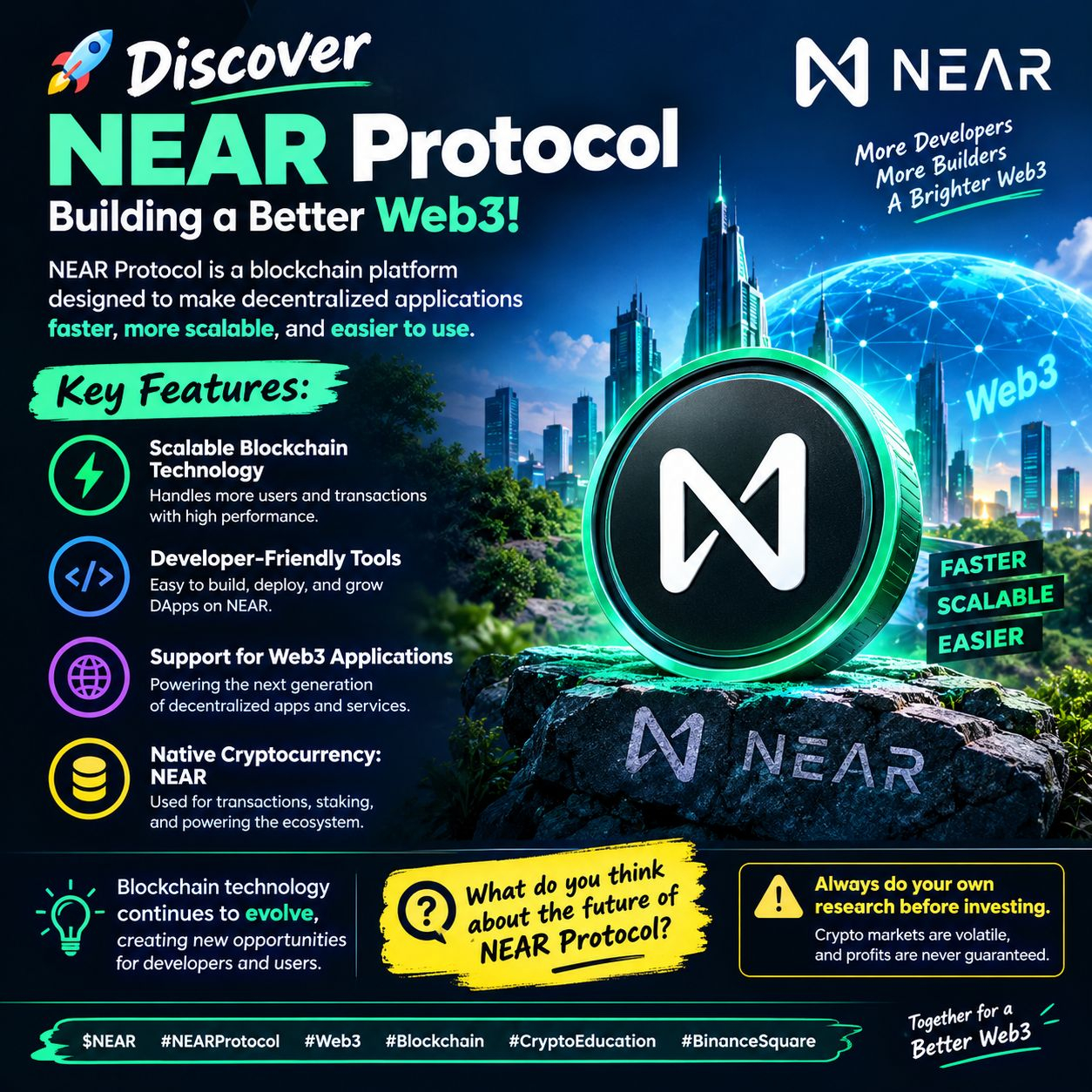
🚀 Discover NEAR Protocol: Building a Better Web3!
NEAR Protocol is a blockchain platform designed to make decentralized applications faster, more scalable, and easier to use.
🌐 Key Features:
🔹 Scalable blockchain technology
🔹 Developer-friendly tools
🔹 Support for Web3 applications
🔹 Native cryptocurrency: NEAR
💡 Blockchain technology continues to evolve, creating new opportunities for developers and users.
⚠️ Always do your own research before investing. Crypto markets are volatile, and profits are never guaranteed.
What do you think about the future of NEAR Protocol?
$NEAR #NEARProtocol #Web3 #blockchain #cryptoeducation #BinanceSquare
$NEAR
🚀 Discover NEAR Protocol: Building a Better Web3!
NEAR Protocol is a blockchain platform designed to make decentralized applications faster, more scalable, and easier to use.
🌐 Key Features:
🔹 Scalable blockchain technology
🔹 Developer-friendly tools
🔹 Support for Web3 applications
🔹 Native cryptocurrency: NEAR
💡 Blockchain technology continues to evolve, creating new opportunities for developers and users.
⚠️ Always do your own research before investing. Crypto markets are volatile, and profits are never guaranteed.
What do you think about the future of NEAR Protocol?
$NEAR #NEARProtocol #Web3 #blockchain #cryptoeducation #BinanceSquare
🚀 Discover NEAR Protocol: Building a Better Web3!
NEAR Protocol is a blockchain platform designed to make decentralized applications faster, more scalable, and easier to use.
🌐 Key Features:
🔹 Scalable blockchain technology
🔹 Developer-friendly tools
🔹 Support for Web3 applications
🔹 Native cryptocurrency: NEAR
💡 Blockchain technology continues to evolve, creating new opportunities for developers and users.
⚠️ Always do your own research before investing. Crypto markets are volatile, and profits are never guaranteed.
What do you think about the future of NEAR Protocol?
$NEAR #NEARProtocol #Web3 #blockchain #cryptoeducation #BinanceSquare
92

·
--
$XAUT 🪙 Tether Gold ($XAU₮): Real Gold Meets Blockchain! 🥇
Tether Gold bridges traditional gold ownership with blockchain technology. Each XAU₮ token represents ownership of one fine troy ounce of physical gold, combining gold-backed value with digital portability. 🌍
✨ Physical gold backing
🔗 Blockchain-powered transfers
💛 A modern approach to gold ownership
Discover the future of digital gold! 🚀
🔗 https://gold.tether.to/
#TetherGold #XAUt #Gold #Crypto #blockchain
$XAUT 🪙 Tether Gold ($XAU₮): Real Gold Meets Blockchain! 🥇
Tether Gold bridges traditional gold ownership with blockchain technology. Each XAU₮ token represents ownership of one fine troy ounce of physical gold, combining gold-backed value with digital portability. 🌍
✨ Physical gold backing
🔗 Blockchain-powered transfers
💛 A modern approach to gold ownership
Discover the future of digital gold! 🚀
🔗 https://gold.tether.to/
#TetherGold #XAUt #Gold #Crypto #blockchain
Tether Gold bridges traditional gold ownership with blockchain technology. Each XAU₮ token represents ownership of one fine troy ounce of physical gold, combining gold-backed value with digital portability. 🌍
✨ Physical gold backing
🔗 Blockchain-powered transfers
💛 A modern approach to gold ownership
Discover the future of digital gold! 🚀
🔗 https://gold.tether.to/
#TetherGold #XAUt #Gold #Crypto #blockchain
211

UNDP và Blockchain for Good ra mắt chương trình an ninh mạng 2 năm cho dịch vụ công
- UNDP và Liên minh Blockchain for Good công bố chương trình an ninh mạng kéo dài 2 năm vào ngày 19/10.
- Chương trình tập trung vào bảo mật dịch vụ công và các hệ thống thanh toán mới.
- Mục tiêu là giải đáp liệu các nhân viên vận hành có thể ngăn chặn sự cố, phản ứng và khôi phục truy cập khi áp dụng blockchain hay không.
#BinanceSquare #CryptoNews #Blockchain
$btc $eth
#vlikevn #Titanbot
Nguồn: NewsBTC
UNDP và Blockchain for Good ra mắt chương trình an ninh mạng 2 năm cho dịch vụ công
- UNDP và Liên minh Blockchain for Good công bố chương trình an ninh mạng kéo dài 2 năm vào ngày 19/10.
- Chương trình tập trung vào bảo mật dịch vụ công và các hệ thống thanh toán mới.
- Mục tiêu là giải đáp liệu các nhân viên vận hành có thể ngăn chặn sự cố, phản ứng và khôi phục truy cập khi áp dụng blockchain hay không.
#BinanceSquare #CryptoNews #Blockchain
$btc $eth
#vlikevn #Titanbot
Nguồn: NewsBTC
- UNDP và Liên minh Blockchain for Good công bố chương trình an ninh mạng kéo dài 2 năm vào ngày 19/10.
- Chương trình tập trung vào bảo mật dịch vụ công và các hệ thống thanh toán mới.
- Mục tiêu là giải đáp liệu các nhân viên vận hành có thể ngăn chặn sự cố, phản ứng và khôi phục truy cập khi áp dụng blockchain hay không.
#BinanceSquare #CryptoNews #Blockchain
$btc $eth
#vlikevn #Titanbot
Nguồn: NewsBTC
276

El primer ministro del estado sionista de Israel, Benjamin Netanyahu, aseguró que su país podría recurrir a la tecnología blockchain y las criptomonedas para eludir posibles sanciones internacionales, para consternación de sus oponentes y del gobernador del banco central del país. Varios de los candidatos que buscan reemplazar a Netanyahu en las elecciones del 27 de octubre, así como el jefe del Banco de Israel, se apresuraron a cuestionar la declaración del primer ministro.
Una docena de países occidentales han anunciado sanciones dirigidas contra productos procedentes de asentamientos israelíes en Cisjordania, en respuesta a los ataques de colonos judíos contra palestinos y al aumento de la construcción en los asentamientos aprobado Netanyahu. Esas sanciones podrían extenderse al propio Israel, dijeron economistas y figuras del sector el mes pasado.
El ciudadano de nacionalidad chino, Zheng Zhao, se enfrenta a un cargo de blanqueo de capitales en EEUU tras su extradición desde Holanda por una presunta estafa con criptomonedas que asciende a más de US$36 millones. Los investigadores han identificado a 174 víctimas estadounidenses cuyos fondos habrían pasado por cuentas bancarias en paraísos fiscales y monederos digitales. La red utilizaba plataformas de inversión y sitios web falsos para engañar a las víctimas.
Los fondos ilícitos pasaban inicialmente por empresas fantasma o pantalla en EEUU, desde donde eran transferidos a cuentas bancarias en jurisdicciones offshore. Posteriormente, el dinero era convertido en stablecoin y distribuido hacia monederos digitales situados en el extranjero, específicamente en Camboya. Zhao se enfrenta a una pena máxima de hasta 20 años de cárcel de ser hallado culpable del cargo de conspiración para cometer blanqueo de capitales.
#EEUU #blockchain #Israel #benjamin_netanyahu #BTC $BTC
El primer ministro del estado sionista de Israel, Benjamin Netanyahu, aseguró que su país podría recurrir a la tecnología blockchain y las criptomonedas para eludir posibles sanciones internacionales, para consternación de sus oponentes y del gobernador del banco central del país. Varios de los candidatos que buscan reemplazar a Netanyahu en las elecciones del 27 de octubre, así como el jefe del Banco de Israel, se apresuraron a cuestionar la declaración del primer ministro.
Una docena de países occidentales han anunciado sanciones dirigidas contra productos procedentes de asentamientos israelíes en Cisjordania, en respuesta a los ataques de colonos judíos contra palestinos y al aumento de la construcción en los asentamientos aprobado Netanyahu. Esas sanciones podrían extenderse al propio Israel, dijeron economistas y figuras del sector el mes pasado.
El ciudadano de nacionalidad chino, Zheng Zhao, se enfrenta a un cargo de blanqueo de capitales en EEUU tras su extradición desde Holanda por una presunta estafa con criptomonedas que asciende a más de US$36 millones. Los investigadores han identificado a 174 víctimas estadounidenses cuyos fondos habrían pasado por cuentas bancarias en paraísos fiscales y monederos digitales. La red utilizaba plataformas de inversión y sitios web falsos para engañar a las víctimas.
Los fondos ilícitos pasaban inicialmente por empresas fantasma o pantalla en EEUU, desde donde eran transferidos a cuentas bancarias en jurisdicciones offshore. Posteriormente, el dinero era convertido en stablecoin y distribuido hacia monederos digitales situados en el extranjero, específicamente en Camboya. Zhao se enfrenta a una pena máxima de hasta 20 años de cárcel de ser hallado culpable del cargo de conspiración para cometer blanqueo de capitales.
#EEUU #blockchain #Israel #benjamin_netanyahu #BTC $BTC
Una docena de países occidentales han anunciado sanciones dirigidas contra productos procedentes de asentamientos israelíes en Cisjordania, en respuesta a los ataques de colonos judíos contra palestinos y al aumento de la construcción en los asentamientos aprobado Netanyahu. Esas sanciones podrían extenderse al propio Israel, dijeron economistas y figuras del sector el mes pasado.
El ciudadano de nacionalidad chino, Zheng Zhao, se enfrenta a un cargo de blanqueo de capitales en EEUU tras su extradición desde Holanda por una presunta estafa con criptomonedas que asciende a más de US$36 millones. Los investigadores han identificado a 174 víctimas estadounidenses cuyos fondos habrían pasado por cuentas bancarias en paraísos fiscales y monederos digitales. La red utilizaba plataformas de inversión y sitios web falsos para engañar a las víctimas.
Los fondos ilícitos pasaban inicialmente por empresas fantasma o pantalla en EEUU, desde donde eran transferidos a cuentas bancarias en jurisdicciones offshore. Posteriormente, el dinero era convertido en stablecoin y distribuido hacia monederos digitales situados en el extranjero, específicamente en Camboya. Zhao se enfrenta a una pena máxima de hasta 20 años de cárcel de ser hallado culpable del cargo de conspiración para cometer blanqueo de capitales.
#EEUU #blockchain #Israel #benjamin_netanyahu #BTC $BTC

148

·
--
උසබ තත්ත්වය
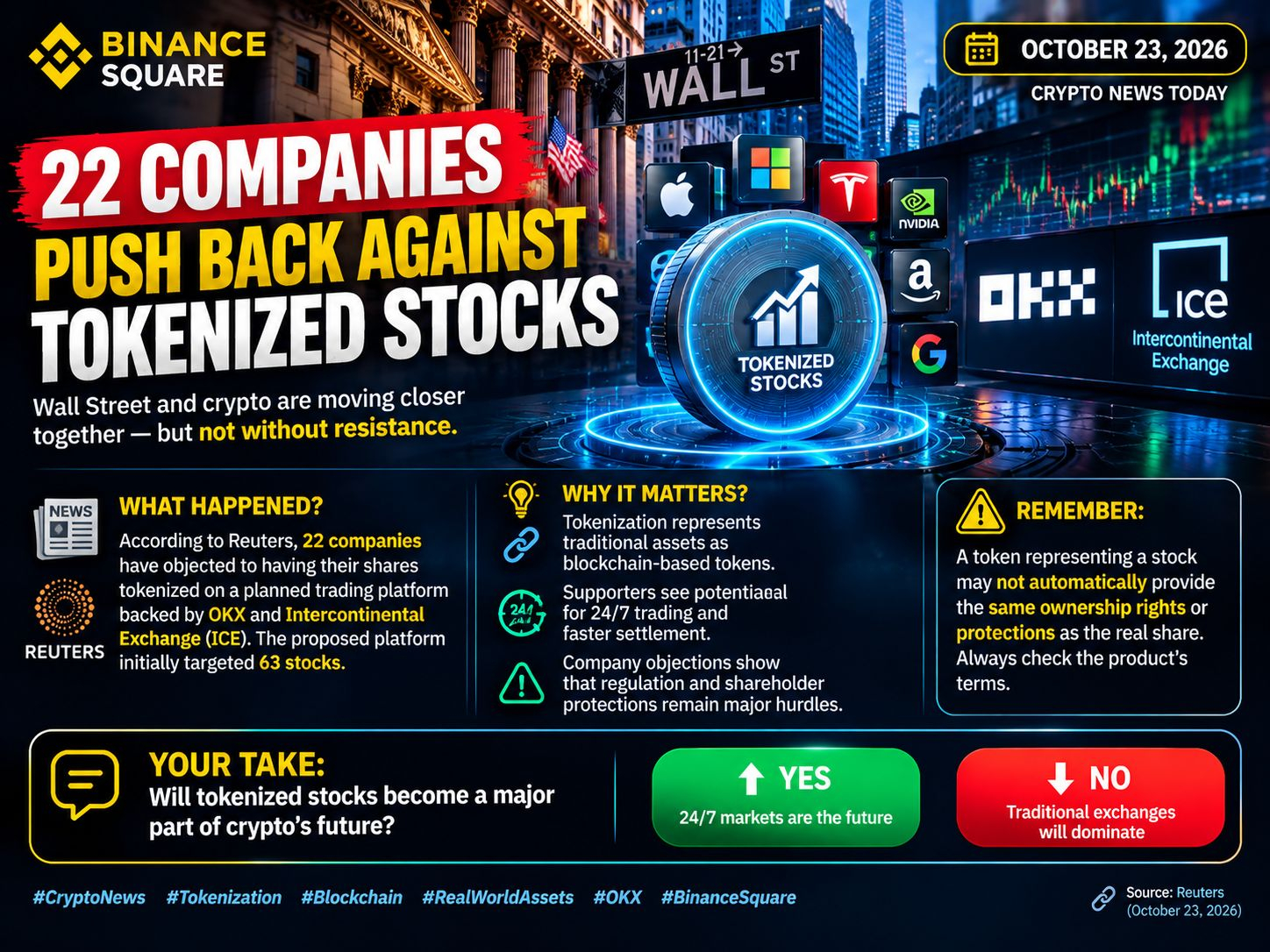
🚨 CRYPTO NEWS — THE STOCK MARKET IS MOVING ON-CHAIN! 📈⛓️
Wall Street and crypto are moving closer together — but not without resistance.
📰 What happened?
According to Reuters, 22 companies have objected to having their shares tokenized on a planned trading platform backed by OKX and Intercontinental Exchange (ICE). The proposed platform initially targeted 63 stocks. citeturn288564news7
💡 Why it matters:
🔹 Tokenization represents traditional assets as blockchain-based tokens.
🔹 Supporters see potential for 24/7 trading and faster settlement.
🔹 Company objections show that regulation and shareholder protections remain major hurdles.
⚠️ Remember: A token representing a stock may not automatically provide the same ownership rights or protections as the real share. Always check the product's terms.
🔥 YOUR TAKE: Will tokenized stocks become a major part of crypto's future?
🟢 YES — 24/7 markets are the future
🔴 NO — traditional exchanges will do minate
#CryptoNewson #Blockchain #RealWorldAssets #OKX #BinanceSquare
{spot}(SPCXBUSDT)
🚨 CRYPTO NEWS — THE STOCK MARKET IS MOVING ON-CHAIN! 📈⛓️
Wall Street and crypto are moving closer together — but not without resistance.
📰 What happened?
According to Reuters, 22 companies have objected to having their shares tokenized on a planned trading platform backed by OKX and Intercontinental Exchange (ICE). The proposed platform initially targeted 63 stocks. citeturn288564news7
💡 Why it matters:
🔹 Tokenization represents traditional assets as blockchain-based tokens.
🔹 Supporters see potential for 24/7 trading and faster settlement.
🔹 Company objections show that regulation and shareholder protections remain major hurdles.
⚠️ Remember: A token representing a stock may not automatically provide the same ownership rights or protections as the real share. Always check the product's terms.
🔥 YOUR TAKE: Will tokenized stocks become a major part of crypto's future?
🟢 YES — 24/7 markets are the future
🔴 NO — traditional exchanges will do minate
#CryptoNewson #Blockchain #RealWorldAssets #OKX #BinanceSquare
Wall Street and crypto are moving closer together — but not without resistance.
📰 What happened?
According to Reuters, 22 companies have objected to having their shares tokenized on a planned trading platform backed by OKX and Intercontinental Exchange (ICE). The proposed platform initially targeted 63 stocks. citeturn288564news7
💡 Why it matters:
🔹 Tokenization represents traditional assets as blockchain-based tokens.
🔹 Supporters see potential for 24/7 trading and faster settlement.
🔹 Company objections show that regulation and shareholder protections remain major hurdles.
⚠️ Remember: A token representing a stock may not automatically provide the same ownership rights or protections as the real share. Always check the product's terms.
🔥 YOUR TAKE: Will tokenized stocks become a major part of crypto's future?
🟢 YES — 24/7 markets are the future
🔴 NO — traditional exchanges will do minate
#CryptoNewson #Blockchain #RealWorldAssets #OKX #BinanceSquare
91


ලිපිය
₿ BITCOIN DESDE CERO: LA TECNOLOGÍA DETRÁS DE CADA TRANSACCIÓN...Millones de personas compran, venden y transfieren Bitcoin o simplemente otra criptomonedas... Pero ..
¿cuántas saben realmente qué sucede cuando presionan el botón ENVIAR?
Vamos a conocer juntos el mundo del bitcoin...
¿Dónde están realmente los bitcoins?
¿Qué guarda una wallet?
¿Cómo puede una red verificar una transferencia sin depender de un banco?
¿Quién crea los bloques, qué hacen los mineros y cómo se protege una historia de transacciones que comenzó hace más de una decada?
Porque detrás de esas preguntas existe una arquitectura tecnológica extraordinaria que merece ser comprendida....
Por eso voy a comenzar una serie de publicaciones en la que vamos a DESARMAR BITCOIN PIEZA POR PIEZA, desde el problema que dio origen a su creación hasta los mecanismos criptográficos que permiten su funcionamiento.
Vamos a recorrer las claves privadas, las firmas digitales, los UTXO, las transacciones, los nodos, la minería, el Proof of Work, el halving y muchos otros componentes fundamentales.
No como conceptos aislados, sino descubriendo cómo se relacionan y qué función cumple cada uno dentro del sistema.
La propuesta es sencilla: cada historia responderá una pregunta y abrirá el camino hacia la siguiente. Como los bloques de una cadena, cada explicación estará conectada con la anterior.
Utilizaré ejemplos prácticos, explicaciones accesibles y documentación técnica verificable. También pondré a prueba algunas de las afirmaciones más repetidas sobre Bitcoin para distinguir lo que realmente hace su tecnología de lo que muchas veces se cree que hace.
NO... no necesitás tener criptomonedas, gastar un solo peso ni saber programación. Solamente curiosidad por comprender cómo funciona una tecnología que permite transferir valor mediante una red distribuida.
MÁS DE 70 HISTORIAS. UNA SOLA INVESTIGACIÓN. UN UNICO OBJETIVO: ENTENDER BITCOIN DESDE CERO.
🧠 ESTO... ES SIMPLE Y GRATIS.
ACÁ NO VAS A APRENDER A INVERTIR... VAS A APRENDER A ENTENDER LA TECNOLOGÍA QUE LO HACE POSIBLE...
PORQUE NO SE TRATA DE SABER CUÁNTO VALE UN BITCOIN, SINO DE COMPRENDER CÓMO FUNCIONA, POR QUÉ EXISTE Y QUÉ LO MANTIENE EN PIE...
💎 TE INVITO A SUSCRIBIRTE.. A ESTE NUEVO DESAFIO...
⚠️ PERO CUIDADO... Esto es solo...
👽 PARA CURIOSOS DIGITALES...
Siguiente: https://app.binance.com/uni-qr/cart/381216131783190?r=MMBMSTEK&l=es-LA&uco=BCkZoR_UN7fRAF9WbZ56aQ
$BTC
#bitcoin #CRİPTO #ciberseguridad #blockchain
₿ BITCOIN DESDE CERO: LA TECNOLOGÍA DETRÁS DE CADA TRANSACCIÓN...
Millones de personas compran, venden y transfieren Bitcoin o simplemente otra criptomonedas... Pero ..
¿cuántas saben realmente qué sucede cuando presionan el botón ENVIAR?
Vamos a conocer juntos el mundo del bitcoin...
¿Dónde están realmente los bitcoins?
¿Qué guarda una wallet?
¿Cómo puede una red verificar una transferencia sin depender de un banco?
¿Quién crea los bloques, qué hacen los mineros y cómo se protege una historia de transacciones que comenzó hace más de una decada?
Porque detrás de esas preguntas existe una arquitectura tecnológica extraordinaria que merece ser comprendida....
Por eso voy a comenzar una serie de publicaciones en la que vamos a DESARMAR BITCOIN PIEZA POR PIEZA, desde el problema que dio origen a su creación hasta los mecanismos criptográficos que permiten su funcionamiento.
Vamos a recorrer las claves privadas, las firmas digitales, los UTXO, las transacciones, los nodos, la minería, el Proof of Work, el halving y muchos otros componentes fundamentales.
No como conceptos aislados, sino descubriendo cómo se relacionan y qué función cumple cada uno dentro del sistema.
La propuesta es sencilla: cada historia responderá una pregunta y abrirá el camino hacia la siguiente. Como los bloques de una cadena, cada explicación estará conectada con la anterior.
Utilizaré ejemplos prácticos, explicaciones accesibles y documentación técnica verificable. También pondré a prueba algunas de las afirmaciones más repetidas sobre Bitcoin para distinguir lo que realmente hace su tecnología de lo que muchas veces se cree que hace.
NO... no necesitás tener criptomonedas, gastar un solo peso ni saber programación. Solamente curiosidad por comprender cómo funciona una tecnología que permite transferir valor mediante una red distribuida.
MÁS DE 70 HISTORIAS. UNA SOLA INVESTIGACIÓN. UN UNICO OBJETIVO: ENTENDER BITCOIN DESDE CERO.
🧠 ESTO... ES SIMPLE Y GRATIS.
ACÁ NO VAS A APRENDER A INVERTIR... VAS A APRENDER A ENTENDER LA TECNOLOGÍA QUE LO HACE POSIBLE...
PORQUE NO SE TRATA DE SABER CUÁNTO VALE UN BITCOIN, SINO DE COMPRENDER CÓMO FUNCIONA, POR QUÉ EXISTE Y QUÉ LO MANTIENE EN PIE...
💎 TE INVITO A SUSCRIBIRTE.. A ESTE NUEVO DESAFIO...
⚠️ PERO CUIDADO... Esto es solo...
👽 PARA CURIOSOS DIGITALES...
Siguiente: https://app.binance.com/uni-qr/cart/381216131783190?r=MMBMSTEK&l=es-LA&uco=BCkZoR_UN7fRAF9WbZ56aQ
$BTC
#bitcoin #CRİPTO #ciberseguridad #blockchain
¿cuántas saben realmente qué sucede cuando presionan el botón ENVIAR?
Vamos a conocer juntos el mundo del bitcoin...
¿Dónde están realmente los bitcoins?
¿Qué guarda una wallet?
¿Cómo puede una red verificar una transferencia sin depender de un banco?
¿Quién crea los bloques, qué hacen los mineros y cómo se protege una historia de transacciones que comenzó hace más de una decada?
Porque detrás de esas preguntas existe una arquitectura tecnológica extraordinaria que merece ser comprendida....
Por eso voy a comenzar una serie de publicaciones en la que vamos a DESARMAR BITCOIN PIEZA POR PIEZA, desde el problema que dio origen a su creación hasta los mecanismos criptográficos que permiten su funcionamiento.
Vamos a recorrer las claves privadas, las firmas digitales, los UTXO, las transacciones, los nodos, la minería, el Proof of Work, el halving y muchos otros componentes fundamentales.
No como conceptos aislados, sino descubriendo cómo se relacionan y qué función cumple cada uno dentro del sistema.
La propuesta es sencilla: cada historia responderá una pregunta y abrirá el camino hacia la siguiente. Como los bloques de una cadena, cada explicación estará conectada con la anterior.
Utilizaré ejemplos prácticos, explicaciones accesibles y documentación técnica verificable. También pondré a prueba algunas de las afirmaciones más repetidas sobre Bitcoin para distinguir lo que realmente hace su tecnología de lo que muchas veces se cree que hace.
NO... no necesitás tener criptomonedas, gastar un solo peso ni saber programación. Solamente curiosidad por comprender cómo funciona una tecnología que permite transferir valor mediante una red distribuida.
MÁS DE 70 HISTORIAS. UNA SOLA INVESTIGACIÓN. UN UNICO OBJETIVO: ENTENDER BITCOIN DESDE CERO.
🧠 ESTO... ES SIMPLE Y GRATIS.
ACÁ NO VAS A APRENDER A INVERTIR... VAS A APRENDER A ENTENDER LA TECNOLOGÍA QUE LO HACE POSIBLE...
PORQUE NO SE TRATA DE SABER CUÁNTO VALE UN BITCOIN, SINO DE COMPRENDER CÓMO FUNCIONA, POR QUÉ EXISTE Y QUÉ LO MANTIENE EN PIE...
💎 TE INVITO A SUSCRIBIRTE.. A ESTE NUEVO DESAFIO...
⚠️ PERO CUIDADO... Esto es solo...
👽 PARA CURIOSOS DIGITALES...
Siguiente: https://app.binance.com/uni-qr/cart/381216131783190?r=MMBMSTEK&l=es-LA&uco=BCkZoR_UN7fRAF9WbZ56aQ
$BTC
#bitcoin #CRİPTO #ciberseguridad #blockchain
1
314

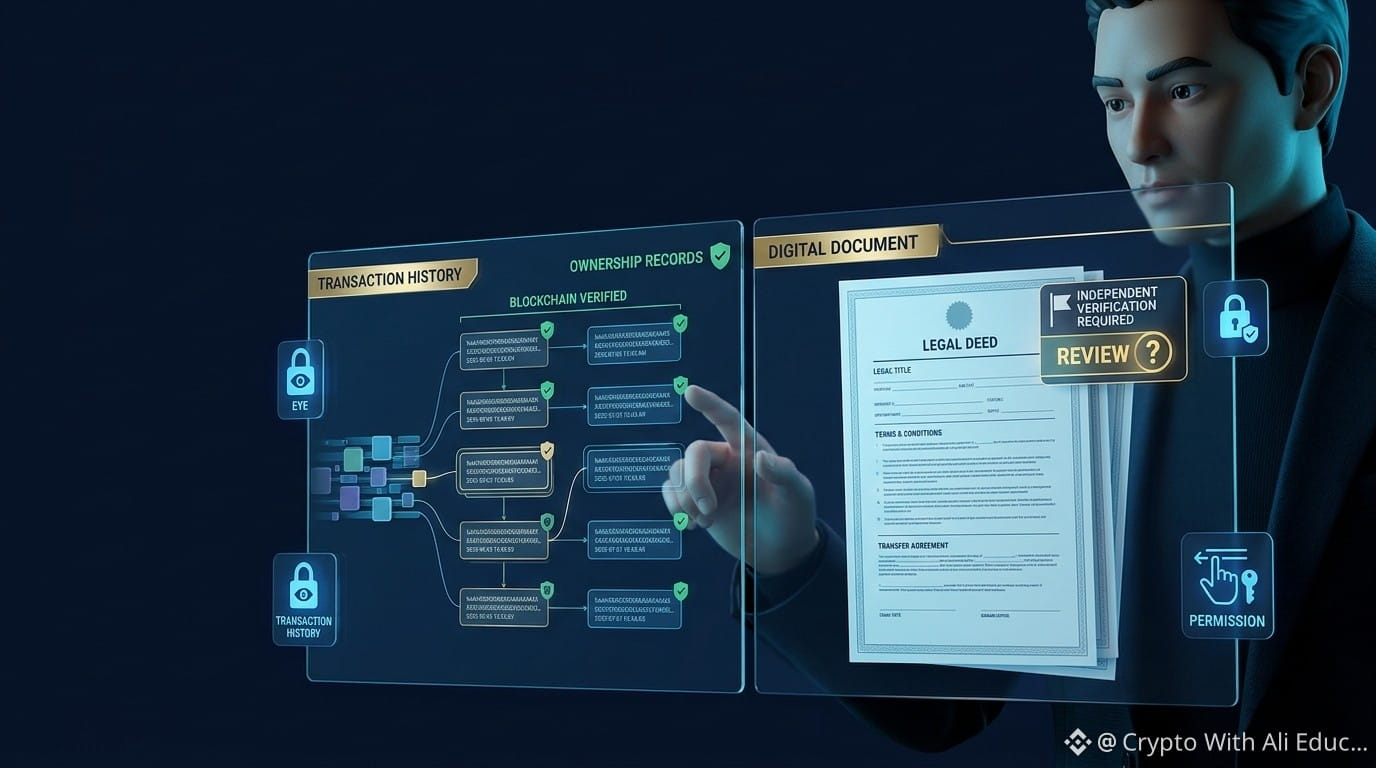
🌐 A Blockchain Record Doesn't Automatically Prove Ownership
Blockchain can help trace certain digital asset transactions, but a recorded token does not automatically prove legal ownership,
copyright, or the accuracy of information linked to it.
Digital ownership also depends on permissions, privacy, applicable rights, and the ability to exercise meaningful control.
That is why understanding what you own—and what you've actually authorized—matters.
📖 Read Part 4 of our AI + Web3 series on Binance Square.
#blockchain #Web3 #DataPrivacy #DigitalIdentity #transparency
🌐 A Blockchain Record Doesn't Automatically Prove Ownership
Blockchain can help trace certain digital asset transactions, but a recorded token does not automatically prove legal ownership,
copyright, or the accuracy of information linked to it.
Digital ownership also depends on permissions, privacy, applicable rights, and the ability to exercise meaningful control.
That is why understanding what you own—and what you've actually authorized—matters.
📖 Read Part 4 of our AI + Web3 series on Binance Square.
#blockchain #Web3 #DataPrivacy #DigitalIdentity #transparency
Blockchain can help trace certain digital asset transactions, but a recorded token does not automatically prove legal ownership,
copyright, or the accuracy of information linked to it.
Digital ownership also depends on permissions, privacy, applicable rights, and the ability to exercise meaningful control.
That is why understanding what you own—and what you've actually authorized—matters.
📖 Read Part 4 of our AI + Web3 series on Binance Square.
#blockchain #Web3 #DataPrivacy #DigitalIdentity #transparency
71

ලිපිය
AI, Web3 and Digital Ownership: Who Controls Your Assets and Data?Part 4 of the AI + Web3 Series | Digital Identity, User Permissions, Ownership, and Blockchain Provenance
Every day, people create digital information, use online services, and interact with applications that store personal data or manage digital assets. As artificial intelligence becomes more capable and Web3 applications evolve, an important question deserves attention:
Who really controls your digital identity, assets, and data?
AI agents may help users organize information and interact with digital services. Blockchain technology may help record transactions and trace the history of certain digital assets. But neither technology automatically guarantees ownership, privacy, or control.
Understanding the differences is essential to the future of digital trust.
1. What Does Digital Ownership Mean?
Digital ownership can refer to different rights, depending on the asset and the system involved.
For example, it may involve:
Control over a crypto asset held in a wallet.Rights to use or transfer a digital item.Access to personal information.Permission to publish, modify, or distribute digital content.Legal rights associated with a digital document or tokenized asset.
These rights are not interchangeable.
Holding a token may provide control over that token, but it does not automatically grant copyright to the artwork it represents. Controlling a wallet does not necessarily mean owning every asset or legal right associated with an address.
Digital ownership depends on the technology, applicable agreements, and relevant laws.
2. Digital Identity: Who Controls Your Information?
Digital identity includes information and credentials used to identify or authenticate a person, account, or organization.
Traditional online services often manage identity information through centralized databases. This can make access convenient, but users may have limited visibility into how their information is stored, shared, or reused.
Some digital identity systems aim to give users more control over their credentials and the information they disclose. For example, a system may allow a person to prove a specific attribute without revealing unnecessary information.
However, not every Web3 identity system offers these capabilities, and using a blockchain does not automatically make an identity private or secure.
A useful design principle is data minimization: disclose only the information necessary for a particular purpose.
3. How Can Blockchain Support Digital Ownership?
Blockchains can record transactions and changes in ownership or control according to the rules of a particular network or application.
Depending on the system, these records may help people:
Trace the transfer history of a token.Inspect transactions involving a digital asset.Verify that a particular on-chain event was recorded.Review the history of a tokenized item.Interact with applications that enforce predefined rules through smart contracts.
This can improve traceability and make selected records independently inspectable.
But an on-chain record is not a universal legal certificate. It cannot automatically prove that the original creator had the rights they claimed, that an external document is authentic, or that a real-world asset was properly transferred.
Recording a claim is not the same as proving that the claim is true.
4. What Is Provenance, and Why Does It Matter?
Provenance means the documented history or origin of an item, record, or piece of content.
For a digital asset, provenance might include when a token was created, which addresses transferred it, and which smart contract recorded relevant activity.
For AI-generated content, a provenance system might record information about its creation, modification, or publication. Such records can help people investigate where an item came from.
However, provenance has limits.
If inaccurate information enters a system, recording it on a blockchain does not automatically make it accurate. Records may also be incomplete, and the connection between a token and a physical object may require separate verification.
Reliable provenance therefore depends on both the integrity of the recorded history and the quality of the information entered into the system.
5. What Happens When AI Agents Access Your Data?
AI agents may help users search documents, summarize information, manage digital workflows, or interact with authorized applications.
These capabilities can be useful, but they introduce important permission questions.
Before giving an AI agent access to personal information or digital assets, consider:
What can it read? Access to a document or account may expose information beyond what the task requires.
What can it change? Permission to view information is different from permission to edit, share, or delete it.
What can it authorize? An agent with transaction authority may have the ability to initiate actions with financial or other consequences.
What is recorded? Users should understand what information the application stores and whether actions can be audited.
Can access be revoked? A well-designed system should make it clear how permissions can be changed or withdrawn, where supported.
Giving an AI agent access to a task should not automatically give it unrestricted control over the user's digital life.
6. Practical Ways to Protect Digital Ownership
Several principles can help users make more informed decisions.
Use minimum necessary permissions. Grant only the access required for the intended task.
Separate identity from public activity where possible. Avoid linking personal information to public addresses unnecessarily.
Protect wallet credentials. Never disclose recovery phrases or private keys to an AI assistant or untrusted application.
Review smart-contract approvals. Understand which assets or actions a permission covers, and remove unnecessary permissions where the system supports revocation.
Check provenance claims. Look for reliable evidence beyond the existence of an on-chain record.
Understand the terms. A token, digital certificate, or account may not provide the legal rights a user assumes it does.
Choose privacy-conscious systems. Consider what information is collected, how long it is retained, and who can access it.
No technology removes every risk. Good security practices, transparent policies, and informed users remain important.
7. Can Web3 Give Users More Control?
Web3 applications can support new ways to manage digital assets, interact with smart contracts, and verify selected transaction histories. Some identity systems also aim to give users more control over credentials and disclosure.
Yet greater control is not automatic.
Users may still depend on centralized interfaces, external storage providers, wallet software, legal agreements, and organizations that control important parts of a service.
The real question is not simply whether an application uses blockchain. It is whether users can understand their rights, manage permissions, protect their information, and exercise meaningful control.
Final Thoughts
AI and Web3 may help reshape how people manage digital identity, assets, and information.
AI agents can make digital tasks easier to perform. Blockchain records may improve the traceability of certain transactions and asset histories. But privacy, legal ownership, and the accuracy of provenance claims require more than technology alone.
Digital ownership is meaningful when people understand what they own, what they have authorized, and what control they can actually exercise.
As digital systems become more automated, informed consent, limited permissions, privacy, and accountability will remain essential.
This is Part 4 of the AI + Web3 Series. In Part 5, we will explore why human oversight and accountability still matter when AI and Web3 systems work together.
🔎 Continue the AI + Web3 Series
Who should control your digital assets and personal data in an increasingly automated world?
Follow Crypto With Ali for educational insights into AI agents, blockchain infrastructure, digital ownership, and the future of Web3.
📖 Coming in Part 5: AI + Web3 — Why Human Oversight Still Matters.
Educational content only. Not financial advice.
#BinanceSquare #Web3 #blockchain #DigitalIdentity #DataPrivacy
AI, Web3 and Digital Ownership: Who Controls Your Assets and Data?
Part 4 of the AI + Web3 Series | Digital Identity, User Permissions, Ownership, and Blockchain Provenance
Every day, people create digital information, use online services, and interact with applications that store personal data or manage digital assets. As artificial intelligence becomes more capable and Web3 applications evolve, an important question deserves attention:
Who really controls your digital identity, assets, and data?
AI agents may help users organize information and interact with digital services. Blockchain technology may help record transactions and trace the history of certain digital assets. But neither technology automatically guarantees ownership, privacy, or control.
Understanding the differences is essential to the future of digital trust.
1. What Does Digital Ownership Mean?
Digital ownership can refer to different rights, depending on the asset and the system involved.
For example, it may involve:
Control over a crypto asset held in a wallet.Rights to use or transfer a digital item.Access to personal information.Permission to publish, modify, or distribute digital content.Legal rights associated with a digital document or tokenized asset.
These rights are not interchangeable.
Holding a token may provide control over that token, but it does not automatically grant copyright to the artwork it represents. Controlling a wallet does not necessarily mean owning every asset or legal right associated with an address.
Digital ownership depends on the technology, applicable agreements, and relevant laws.
2. Digital Identity: Who Controls Your Information?
Digital identity includes information and credentials used to identify or authenticate a person, account, or organization.
Traditional online services often manage identity information through centralized databases. This can make access convenient, but users may have limited visibility into how their information is stored, shared, or reused.
Some digital identity systems aim to give users more control over their credentials and the information they disclose. For example, a system may allow a person to prove a specific attribute without revealing unnecessary information.
However, not every Web3 identity system offers these capabilities, and using a blockchain does not automatically make an identity private or secure.
A useful design principle is data minimization: disclose only the information necessary for a particular purpose.
3. How Can Blockchain Support Digital Ownership?
Blockchains can record transactions and changes in ownership or control according to the rules of a particular network or application.
Depending on the system, these records may help people:
Trace the transfer history of a token.Inspect transactions involving a digital asset.Verify that a particular on-chain event was recorded.Review the history of a tokenized item.Interact with applications that enforce predefined rules through smart contracts.
This can improve traceability and make selected records independently inspectable.
But an on-chain record is not a universal legal certificate. It cannot automatically prove that the original creator had the rights they claimed, that an external document is authentic, or that a real-world asset was properly transferred.
Recording a claim is not the same as proving that the claim is true.
4. What Is Provenance, and Why Does It Matter?
Provenance means the documented history or origin of an item, record, or piece of content.
For a digital asset, provenance might include when a token was created, which addresses transferred it, and which smart contract recorded relevant activity.
For AI-generated content, a provenance system might record information about its creation, modification, or publication. Such records can help people investigate where an item came from.
However, provenance has limits.
If inaccurate information enters a system, recording it on a blockchain does not automatically make it accurate. Records may also be incomplete, and the connection between a token and a physical object may require separate verification.
Reliable provenance therefore depends on both the integrity of the recorded history and the quality of the information entered into the system.
5. What Happens When AI Agents Access Your Data?
AI agents may help users search documents, summarize information, manage digital workflows, or interact with authorized applications.
These capabilities can be useful, but they introduce important permission questions.
Before giving an AI agent access to personal information or digital assets, consider:
What can it read? Access to a document or account may expose information beyond what the task requires.
What can it change? Permission to view information is different from permission to edit, share, or delete it.
What can it authorize? An agent with transaction authority may have the ability to initiate actions with financial or other consequences.
What is recorded? Users should understand what information the application stores and whether actions can be audited.
Can access be revoked? A well-designed system should make it clear how permissions can be changed or withdrawn, where supported.
Giving an AI agent access to a task should not automatically give it unrestricted control over the user's digital life.
6. Practical Ways to Protect Digital Ownership
Several principles can help users make more informed decisions.
Use minimum necessary permissions. Grant only the access required for the intended task.
Separate identity from public activity where possible. Avoid linking personal information to public addresses unnecessarily.
Protect wallet credentials. Never disclose recovery phrases or private keys to an AI assistant or untrusted application.
Review smart-contract approvals. Understand which assets or actions a permission covers, and remove unnecessary permissions where the system supports revocation.
Check provenance claims. Look for reliable evidence beyond the existence of an on-chain record.
Understand the terms. A token, digital certificate, or account may not provide the legal rights a user assumes it does.
Choose privacy-conscious systems. Consider what information is collected, how long it is retained, and who can access it.
No technology removes every risk. Good security practices, transparent policies, and informed users remain important.
7. Can Web3 Give Users More Control?
Web3 applications can support new ways to manage digital assets, interact with smart contracts, and verify selected transaction histories. Some identity systems also aim to give users more control over credentials and disclosure.
Yet greater control is not automatic.
Users may still depend on centralized interfaces, external storage providers, wallet software, legal agreements, and organizations that control important parts of a service.
The real question is not simply whether an application uses blockchain. It is whether users can understand their rights, manage permissions, protect their information, and exercise meaningful control.
Final Thoughts
AI and Web3 may help reshape how people manage digital identity, assets, and information.
AI agents can make digital tasks easier to perform. Blockchain records may improve the traceability of certain transactions and asset histories. But privacy, legal ownership, and the accuracy of provenance claims require more than technology alone.
Digital ownership is meaningful when people understand what they own, what they have authorized, and what control they can actually exercise.
As digital systems become more automated, informed consent, limited permissions, privacy, and accountability will remain essential.
This is Part 4 of the AI + Web3 Series. In Part 5, we will explore why human oversight and accountability still matter when AI and Web3 systems work together.
🔎 Continue the AI + Web3 Series
Who should control your digital assets and personal data in an increasingly automated world?
Follow Crypto With Ali for educational insights into AI agents, blockchain infrastructure, digital ownership, and the future of Web3.
📖 Coming in Part 5: AI + Web3 — Why Human Oversight Still Matters.
Educational content only. Not financial advice.
#BinanceSquare #Web3 #blockchain #DigitalIdentity #DataPrivacy
Every day, people create digital information, use online services, and interact with applications that store personal data or manage digital assets. As artificial intelligence becomes more capable and Web3 applications evolve, an important question deserves attention:
Who really controls your digital identity, assets, and data?
AI agents may help users organize information and interact with digital services. Blockchain technology may help record transactions and trace the history of certain digital assets. But neither technology automatically guarantees ownership, privacy, or control.
Understanding the differences is essential to the future of digital trust.
1. What Does Digital Ownership Mean?
Digital ownership can refer to different rights, depending on the asset and the system involved.
For example, it may involve:
Control over a crypto asset held in a wallet.Rights to use or transfer a digital item.Access to personal information.Permission to publish, modify, or distribute digital content.Legal rights associated with a digital document or tokenized asset.
These rights are not interchangeable.
Holding a token may provide control over that token, but it does not automatically grant copyright to the artwork it represents. Controlling a wallet does not necessarily mean owning every asset or legal right associated with an address.
Digital ownership depends on the technology, applicable agreements, and relevant laws.
2. Digital Identity: Who Controls Your Information?
Digital identity includes information and credentials used to identify or authenticate a person, account, or organization.
Traditional online services often manage identity information through centralized databases. This can make access convenient, but users may have limited visibility into how their information is stored, shared, or reused.
Some digital identity systems aim to give users more control over their credentials and the information they disclose. For example, a system may allow a person to prove a specific attribute without revealing unnecessary information.
However, not every Web3 identity system offers these capabilities, and using a blockchain does not automatically make an identity private or secure.
A useful design principle is data minimization: disclose only the information necessary for a particular purpose.
3. How Can Blockchain Support Digital Ownership?
Blockchains can record transactions and changes in ownership or control according to the rules of a particular network or application.
Depending on the system, these records may help people:
Trace the transfer history of a token.Inspect transactions involving a digital asset.Verify that a particular on-chain event was recorded.Review the history of a tokenized item.Interact with applications that enforce predefined rules through smart contracts.
This can improve traceability and make selected records independently inspectable.
But an on-chain record is not a universal legal certificate. It cannot automatically prove that the original creator had the rights they claimed, that an external document is authentic, or that a real-world asset was properly transferred.
Recording a claim is not the same as proving that the claim is true.
4. What Is Provenance, and Why Does It Matter?
Provenance means the documented history or origin of an item, record, or piece of content.
For a digital asset, provenance might include when a token was created, which addresses transferred it, and which smart contract recorded relevant activity.
For AI-generated content, a provenance system might record information about its creation, modification, or publication. Such records can help people investigate where an item came from.
However, provenance has limits.
If inaccurate information enters a system, recording it on a blockchain does not automatically make it accurate. Records may also be incomplete, and the connection between a token and a physical object may require separate verification.
Reliable provenance therefore depends on both the integrity of the recorded history and the quality of the information entered into the system.
5. What Happens When AI Agents Access Your Data?
AI agents may help users search documents, summarize information, manage digital workflows, or interact with authorized applications.
These capabilities can be useful, but they introduce important permission questions.
Before giving an AI agent access to personal information or digital assets, consider:
What can it read? Access to a document or account may expose information beyond what the task requires.
What can it change? Permission to view information is different from permission to edit, share, or delete it.
What can it authorize? An agent with transaction authority may have the ability to initiate actions with financial or other consequences.
What is recorded? Users should understand what information the application stores and whether actions can be audited.
Can access be revoked? A well-designed system should make it clear how permissions can be changed or withdrawn, where supported.
Giving an AI agent access to a task should not automatically give it unrestricted control over the user's digital life.
6. Practical Ways to Protect Digital Ownership
Several principles can help users make more informed decisions.
Use minimum necessary permissions. Grant only the access required for the intended task.
Separate identity from public activity where possible. Avoid linking personal information to public addresses unnecessarily.
Protect wallet credentials. Never disclose recovery phrases or private keys to an AI assistant or untrusted application.
Review smart-contract approvals. Understand which assets or actions a permission covers, and remove unnecessary permissions where the system supports revocation.
Check provenance claims. Look for reliable evidence beyond the existence of an on-chain record.
Understand the terms. A token, digital certificate, or account may not provide the legal rights a user assumes it does.
Choose privacy-conscious systems. Consider what information is collected, how long it is retained, and who can access it.
No technology removes every risk. Good security practices, transparent policies, and informed users remain important.
7. Can Web3 Give Users More Control?
Web3 applications can support new ways to manage digital assets, interact with smart contracts, and verify selected transaction histories. Some identity systems also aim to give users more control over credentials and disclosure.
Yet greater control is not automatic.
Users may still depend on centralized interfaces, external storage providers, wallet software, legal agreements, and organizations that control important parts of a service.
The real question is not simply whether an application uses blockchain. It is whether users can understand their rights, manage permissions, protect their information, and exercise meaningful control.
Final Thoughts
AI and Web3 may help reshape how people manage digital identity, assets, and information.
AI agents can make digital tasks easier to perform. Blockchain records may improve the traceability of certain transactions and asset histories. But privacy, legal ownership, and the accuracy of provenance claims require more than technology alone.
Digital ownership is meaningful when people understand what they own, what they have authorized, and what control they can actually exercise.
As digital systems become more automated, informed consent, limited permissions, privacy, and accountability will remain essential.
This is Part 4 of the AI + Web3 Series. In Part 5, we will explore why human oversight and accountability still matter when AI and Web3 systems work together.
🔎 Continue the AI + Web3 Series
Who should control your digital assets and personal data in an increasingly automated world?
Follow Crypto With Ali for educational insights into AI agents, blockchain infrastructure, digital ownership, and the future of Web3.
📖 Coming in Part 5: AI + Web3 — Why Human Oversight Still Matters.
Educational content only. Not financial advice.
#BinanceSquare #Web3 #blockchain #DigitalIdentity #DataPrivacy
1
83
තවත් අන්තර්ගතයන් ගවේෂණය කිරීමට ඇතුල් වන්න
Binance චතුරශ්රය හි ගෝලීය ක්රිප්ටෝ පරිශීලකයින් හා එක්වන්න
⚡️ ක්රිප්ටෝ පිළිබඳ නවතම සහ ප්රයෝජනවත් තොරතුරු ලබා ගන්න.
💬 ලොව විශාලතම ක්රිප්ටෝ හුවමාරුව මගින් විශ්වාස කෙරේ.
👍 සත්යායනය කරන ලද නිර්මාණකරුවන්ගෙන් සැබෑ විදසුන් සොයා ගන්න.
විද්යුත් තැපෑල / දුරකථන අංකය
නැගී එන මාතෘකා
1
#BinancePick
3.4M නැරඹීම්
165,811 සාකච්ඡා කරමින්
2
#EarningsSeason
5.5M නැරඹීම්
27,011 සාකච්ඡා කරමින්
3
#StrategySkipsBitcoinPurchasesSpends$205MOnSTRCBuybacks
1,130 නැරඹීම්
38 සාකච්ඡා කරමින්
4
#BitmineAdds10452ETH
13,174 නැරඹීම්
299 සාකච්ඡා කරමින්
5
#SouthKoreaConsidersEducationTaxOnCryptoExchanges
10,670 නැරඹීම්
263 සාකච්ඡා කරමින්
6
#OCCUrgesCommunityBanksToEnterStablecoinPayments
9,700 නැරඹීම්
163 සාකච්ඡා කරමින්
7
#RippleWinsFullApprovalAsNationalTrustBank
8,456 නැරඹීම්
168 සාකච්ඡා කරමින්
8
#AkashSelectsSolanaAsMigrationTarget
6,476 නැරඹීම්
89 සාකච්ඡා කරමින්
9
#OndoToOpenSubscriptionsForOpenAIPreIPOTokenizedNotes
399 නැරඹීම්
19 සාකච්ඡා කරමින්
10
#AnthropicTTMRevenueGrewAbout1200%
62,326 නැරඹීම්
611 සාකච්ඡා කරමින්