Binance Square
#cryptosecurity

cryptosecurity

8.4M views
9,584 සාකච්ඡා කරමින්
GAMER XERO
·
--
OpenAI just rolled out Daybreak Blue and Daybreak Red, two AI‑driven cybersecurity frameworks that push threat detection from reactive alerts to proactive code‑level safeguards. For traders and developers on Binance, the shift matters because more smart‑contract auditors can now embed these models into their tooling, flagging vulnerable patterns before a contract is even deployed. Imagine a DeFi launch on Binance Smart Chain where the audit pipeline runs Daybreak Blue scans on every pull request. The model learns from known exploits—re‑entrancy, flash‑loan abuse, price‑oracle manipulation—and suggests fixes automatically. That reduces the window for attackers to weaponize a newly minted token, which historically has driven short‑term sell pressure on assets like $BTC and $ETH when a high‑profile hack surfaces. The broader implication is a tighter security feedback loop that could lower the frequency of headline‑grabbing breaches, helping the market stay more stable during volatile periods. As infrastructure improves, do you think we’ll see a measurable dip in sudden price swings that follow major hacks? #CryptoSecurity #AI #DeFi #GAMERXERO
OpenAI just rolled out Daybreak Blue and Daybreak Red, two AI‑driven cybersecurity frameworks that push threat detection from reactive alerts to proactive code‑level safeguards. For traders and developers on Binance, the shift matters because more smart‑contract auditors can now embed these models into their tooling, flagging vulnerable patterns before a contract is even deployed.

Imagine a DeFi launch on Binance Smart Chain where the audit pipeline runs Daybreak Blue scans on every pull request. The model learns from known exploits—re‑entrancy, flash‑loan abuse, price‑oracle manipulation—and suggests fixes automatically. That reduces the window for attackers to weaponize a newly minted token, which historically has driven short‑term sell pressure on assets like $BTC and $ETH when a high‑profile hack surfaces.

The broader implication is a tighter security feedback loop that could lower the frequency of headline‑grabbing breaches, helping the market stay more stable during volatile periods. As infrastructure improves, do you think we’ll see a measurable dip in sudden price swings that follow major hacks?

#CryptoSecurity #AI #DeFi #GAMERXERO
- No markdown (so plain text, no formatting like **, _, etc.) - 150-200 words (inclusive) - Warning-style tone (serious but not panic-inducing) - Give 3 clear actionable steps - End with: "Share this with someone new to crypto — it could save them!" - Final line: #BTC #Ethereum #CryptoSecurity #StaySafe We must output only the final post text, no extra commentary, no markdown. Must be plain text. We need to count words. Let's aim for around 170 words. We need to include 3 actionable steps. Probably bullet points but no markdown; we can just number them or separate lines. We must ensure no markdown characters like #? Actually hashtags are allowed as they are part of final line. But no markdown formatting like **, *, etc. So plain text lines. We need to end with the exact phrase "Share this with someone new to crypto — it could save them!" then newline then the hashtags line. We must ensure word count 150-200. Let's draft and count. Draft: "Warning: using your main wallet for every DeFi protocol exposes all your assets to smart‑contract bugs, phishing links, and malicious upgrades. A single compromised interaction can drain everything you hold. Keep a dedicated wallet that only touches DeFi apps, and never store long‑term savings there. Action steps: 1. Create a new wallet (hardware or reputable software) solely for DeFi activity. 2. Fund it with only the amount you are willing to risk for each session. 3. Revoke approvals and disconnect the wallet after every transaction using a token‑approval manager. Regularly audit the contracts you interact with and avoid unknown or unaudited
- No markdown (so plain text, no formatting like **, _, etc.)
- 150-200 words (inclusive)
- Warning-style tone (serious but not panic-inducing)
- Give 3 clear actionable steps
- End with: "Share this with someone new to crypto — it could save them!"
- Final line: #BTC #Ethereum #CryptoSecurity #StaySafe

We must output only the final post text, no extra commentary, no markdown. Must be plain text.

We need to count words. Let's aim for around 170 words.

We need to include 3 actionable steps. Probably bullet points but no markdown; we can just number them or separate lines.

We must ensure no markdown characters like #? Actually hashtags are allowed as they are part of final line. But no markdown formatting like **, *, etc. So plain text lines.

We need to end with the exact phrase "Share this with someone new to crypto — it could save them!" then newline then the hashtags line.

We must ensure word count 150-200. Let's draft and count.

Draft:

"Warning: using your main wallet for every DeFi protocol exposes all your assets to smart‑contract bugs, phishing links, and malicious upgrades. A single compromised interaction can drain everything you hold. Keep a dedicated wallet that only touches DeFi apps, and never store long‑term savings there.

Action steps:
1. Create a new wallet (hardware or reputable software) solely for DeFi activity.
2. Fund it with only the amount you are willing to risk for each session.
3. Revoke approvals and disconnect the wallet after every transaction using a token‑approval manager.

Regularly audit the contracts you interact with and avoid unknown or unaudited
ලිපිය
5 Attack Vectors Every Crypto Holder Should Recognize 5 Attack Vectors Every Crypto Holder Should Recognize Scams in crypto rarely rely on new technology. They rely on the same psychological triggers, repeated: urgency, greed, and misplaced trust. Understanding the pattern is more valuable than memorizing individual cases — once you recognize the mechanism, you can identify variations you've never seen before. 1. Advance-fee giveaways The structure: send a small amount, receive a larger amount in return, often with a countdown or "limited slots remaining." No legitimate entity — platform, exchange, or public figure — asks for funds upfront to multiply a return. The transaction only ever flows one direction. 2. Credential phishing A message signals urgency around account security — a lockout, a verification requirement — and directs the user to a login page that mirrors a legitimate platform. The objective is credential capture, not communication. The correct response is to never authenticate through a link; navigate to the platform directly instead. 3. Identity impersonation An account replicates the name, photo, and posting style of a known creator or figure, then initiates contact offering personalized financial guidance or investment management. Verified individuals and institutions do not solicit funds through direct outreach. Unsolicited financial offers are the disqualifying signal, regardless of how credible the account appears. 4. Fixed-yield guarantees An offer promises a consistent return — for example, a fixed daily percentage — independent of market conditions. No legitimate market-based instrument can guarantee returns; volatility is inherent to the asset class. Fixed guaranteed yield is a structural indicator of a Ponzi-style mechanism, sustained only by continuous new capital inflow. 5. Liquidity extraction ("rug pulls") A new token generates rapid price appreciation through coordinated hype and time pressure, followed by a sudden, complete withdrawal of liquidity by the founding wallet(s). Before allocating capital to any new token, verify three factors: public team identity, independent contract audit, and liquidity lock status. The underlying principle Each of these mechanisms depends on compressing your decision-making window. The single most effective countermeasure isn't technical — it's procedural: introduce deliberate delay before any financial action. Legitimate opportunities do not require immediate response. #CryptoSecurity #RiskManagementMastery #DigitalAssets $BNB {future}(BNBUSDT) $BTC {future}(BTCUSDT)

5 Attack Vectors Every Crypto Holder Should Recognize

5 Attack Vectors Every Crypto Holder Should Recognize
Scams in crypto rarely rely on new technology. They rely on the same psychological triggers, repeated: urgency, greed, and misplaced trust. Understanding the pattern is more valuable than memorizing individual cases — once you recognize the mechanism, you can identify variations you've never seen before.
1. Advance-fee giveaways
The structure: send a small amount, receive a larger amount in return, often with a countdown or "limited slots remaining." No legitimate entity — platform, exchange, or public figure — asks for funds upfront to multiply a return. The transaction only ever flows one direction.
2. Credential phishing
A message signals urgency around account security — a lockout, a verification requirement — and directs the user to a login page that mirrors a legitimate platform. The objective is credential capture, not communication. The correct response is to never authenticate through a link; navigate to the platform directly instead.
3. Identity impersonation
An account replicates the name, photo, and posting style of a known creator or figure, then initiates contact offering personalized financial guidance or investment management. Verified individuals and institutions do not solicit funds through direct outreach. Unsolicited financial offers are the disqualifying signal, regardless of how credible the account appears.
4. Fixed-yield guarantees
An offer promises a consistent return — for example, a fixed daily percentage — independent of market conditions. No legitimate market-based instrument can guarantee returns; volatility is inherent to the asset class. Fixed guaranteed yield is a structural indicator of a Ponzi-style mechanism, sustained only by continuous new capital inflow.
5. Liquidity extraction ("rug pulls")
A new token generates rapid price appreciation through coordinated hype and time pressure, followed by a sudden, complete withdrawal of liquidity by the founding wallet(s). Before allocating capital to any new token, verify three factors: public team identity, independent contract audit, and liquidity lock status.
The underlying principle
Each of these mechanisms depends on compressing your decision-making window. The single most effective countermeasure isn't technical — it's procedural: introduce deliberate delay before any financial action. Legitimate opportunities do not require immediate response.
#CryptoSecurity #RiskManagementMastery #DigitalAssets
$BNB
$BTC
🚨 $100K USDT DRAINED – ADDRESS POISONING IS THE SILENT KILLER 💥 📌 A trader lost $100K USDT after copying a poisoned address from transaction history — the trap was set 66 days earlier. The attacker swapped the funds into ~52.8 ETH within minutes, likely to dodge freezing. This isn't a hack; it's a precision strike on human habit. 🔍 💡 Institutional desks verify every character of a wallet address — twice. Retail traders often skim the first and last four digits. That gap is exactly where smart money exploits carelessness. 🛡️ The scammer waited, let the victim's own transactions build false trust, then struck when the copy-paste was routine. 🦈 This is the real risk management lesson: your private keys are safe, but your attention is the weakest link. 💬 Before you hit send on any transfer, do you check the full address character-by-character, or just trust the first few letters? 👇 ⚠️ Not financial advice. Always manage your risk. 🛡️ 🏷️ #CryptoSecurity #USDT #Ethereum #ScamAlert #CryptoRisk 🛡️ 🔍
🚨 $100K USDT DRAINED – ADDRESS POISONING IS THE SILENT KILLER 💥

📌 A trader lost $100K USDT after copying a poisoned address from transaction history — the trap was set 66 days earlier. The attacker swapped the funds into ~52.8 ETH within minutes, likely to dodge freezing. This isn't a hack; it's a precision strike on human habit. 🔍

💡 Institutional desks verify every character of a wallet address — twice. Retail traders often skim the first and last four digits. That gap is exactly where smart money exploits carelessness. 🛡️ The scammer waited, let the victim's own transactions build false trust, then struck when the copy-paste was routine.

🦈 This is the real risk management lesson: your private keys are safe, but your attention is the weakest link. 💬 Before you hit send on any transfer, do you check the full address character-by-character, or just trust the first few letters? 👇

⚠️ Not financial advice. Always manage your risk. 🛡️

🏷️ #CryptoSecurity #USDT #Ethereum #ScamAlert #CryptoRisk

🛡️ 🔍
Your Wallet Might Already Be Compromised — The Thief Just Can't Open the Safe YetSomewhere right now, someone could be quietly copying encrypted blockchain traffic, filing it away, and waiting. Not because they can break it today — because they're betting they'll be able to in a few years. That's not a hypothetical. It's already happening, and it has a name: Harvest Now, Decrypt Later. Here's the mechanic. Every time you spend from a Bitcoin or Ethereum address, your raw public key gets exposed on the network to verify the transaction. A powerful enough quantum computer running Shor's Algorithm can take that exposed public key and derive your private key directly — not by guessing, but by solving the underlying math in a way classical computers simply can't. Researchers estimate that takes roughly 1,200 logical qubits against standard 256-bit elliptic curve encryption. Nobody has built that machine yet. But an adversary doesn't need it today — they just need your public key recorded now, so they can run the math the moment the hardware exists. That puts an estimated $470 billion in digital assets at risk, concentrated in wallets and legacy address formats where public keys are already sitting exposed on-chain. Worth knowing: not every part of blockchain crypto is equally fragile. Quantum computers attack hash functions like SHA-256 differently, through Grover's Algorithm, which only delivers a quadratic speedup — it effectively cuts SHA-256's security in half, from 2²⁵⁶ down to 2¹²⁸ operations. That's still an astronomically large number. Hashing gets fixed by just using longer hashes. The real emergency is entirely on the public-key side. That's also why address hashing has quietly been buying the industry time — Bitcoin doesn't display your raw public key until you actually spend from an address, so a dormant, never-spent wallet is currently shielded. The exposure moment is the spend itself, or a transaction sitting in the mempool waiting to confirm. $ETH and $BTC are handling the fix on completely different clocks. Ethereum's roadmap includes a proposed fork targeting native post-quantum signatures directly at the protocol level, alongside an account-abstraction upgrade designed to let wallets switch to quantum-safe contracts without changing addresses. Bitcoin's path is messier — an estimated 6.9 to 7 million BTC sit in old, exposed-public-key addresses, much of it presumed lost. Migrating means either leaving that Bitcoin permanently vulnerable or the community agreeing to freeze coins nobody can prove they still control — a governance fight, not just an engineering one. Regulators aren't waiting for the debate to resolve. NIST has already finalized its post-quantum standards, and federal migration deadlines land in 2030-2031 — which means any chain wanting continued institutional money has a clock running whether its community has agreed on a plan or not. So here's the actual dilemma sitting under all of this: if the choice eventually comes down to freezing billions in dormant, exposed coins to protect the network, or leaving them as an open invitation — which one do you think a decentralized community actually agrees to first? #quantumcomputing #CryptoSecurity

Your Wallet Might Already Be Compromised — The Thief Just Can't Open the Safe Yet

Somewhere right now, someone could be quietly copying encrypted blockchain traffic, filing it away, and waiting. Not because they can break it today — because they're betting they'll be able to in a few years. That's not a hypothetical. It's already happening, and it has a name: Harvest Now, Decrypt Later.
Here's the mechanic. Every time you spend from a Bitcoin or Ethereum address, your raw public key gets exposed on the network to verify the transaction. A powerful enough quantum computer running Shor's Algorithm can take that exposed public key and derive your private key directly — not by guessing, but by solving the underlying math in a way classical computers simply can't. Researchers estimate that takes roughly 1,200 logical qubits against standard 256-bit elliptic curve encryption. Nobody has built that machine yet. But an adversary doesn't need it today — they just need your public key recorded now, so they can run the math the moment the hardware exists. That puts an estimated $470 billion in digital assets at risk, concentrated in wallets and legacy address formats where public keys are already sitting exposed on-chain.
Worth knowing: not every part of blockchain crypto is equally fragile. Quantum computers attack hash functions like SHA-256 differently, through Grover's Algorithm, which only delivers a quadratic speedup — it effectively cuts SHA-256's security in half, from 2²⁵⁶ down to 2¹²⁸ operations. That's still an astronomically large number. Hashing gets fixed by just using longer hashes. The real emergency is entirely on the public-key side.
That's also why address hashing has quietly been buying the industry time — Bitcoin doesn't display your raw public key until you actually spend from an address, so a dormant, never-spent wallet is currently shielded. The exposure moment is the spend itself, or a transaction sitting in the mempool waiting to confirm.
$ETH and $BTC are handling the fix on completely different clocks. Ethereum's roadmap includes a proposed fork targeting native post-quantum signatures directly at the protocol level, alongside an account-abstraction upgrade designed to let wallets switch to quantum-safe contracts without changing addresses. Bitcoin's path is messier — an estimated 6.9 to 7 million BTC sit in old, exposed-public-key addresses, much of it presumed lost. Migrating means either leaving that Bitcoin permanently vulnerable or the community agreeing to freeze coins nobody can prove they still control — a governance fight, not just an engineering one.
Regulators aren't waiting for the debate to resolve. NIST has already finalized its post-quantum standards, and federal migration deadlines land in 2030-2031 — which means any chain wanting continued institutional money has a clock running whether its community has agreed on a plan or not.
So here's the actual dilemma sitting under all of this: if the choice eventually comes down to freezing billions in dormant, exposed coins to protect the network, or leaving them as an open invitation — which one do you think a decentralized community actually agrees to first?
#quantumcomputing #CryptoSecurity
🚨 $RVN Faces Major Blockchain Reorganization Risk: Ravencoin ($RVN ) is dealing with a serious consensus flaw that allowed invalid blocks to enter its blockchain starting August 7. Two major mining pools, 2Miners and RavenMiner, are now working on a replacement chain from before the first affected block. If the recovery chain becomes dominant, up to four days of transactions could be reversed, putting recent deposits, withdrawals and payments at risk. Some exchanges have reportedly paused RVN transfers while the situation develops. 📉 Why This Matters? This is more than a temporary network slowdown—it raises questions about blockchain finality, consensus security and mining-pool concentration. For RVN users, transactions made during the affected period may require extra caution until the network reaches a stable resolution. ⚠️ RVN holders and traders should closely monitor official network and exchange updates before moving funds. #Ravencoin #blockchain #CryptoSecurity
🚨 $RVN Faces Major Blockchain Reorganization Risk:
Ravencoin ($RVN ) is dealing with a serious consensus flaw that allowed invalid blocks to enter its blockchain starting August 7. Two major mining pools, 2Miners and RavenMiner, are now working on a replacement chain from before the first affected block.
If the recovery chain becomes dominant, up to four days of transactions could be reversed, putting recent deposits, withdrawals and payments at risk. Some exchanges have reportedly paused RVN transfers while the situation develops.
📉 Why This Matters?
This is more than a temporary network slowdown—it raises questions about blockchain finality, consensus security and mining-pool concentration. For RVN users, transactions made during the affected period may require extra caution until the network reaches a stable resolution.
⚠️ RVN holders and traders should closely monitor official network and exchange updates before moving funds.
#Ravencoin #blockchain #CryptoSecurity
🛡️ $BNB P2P SELLING: THE 3-STEP CHECK THAT SAVES YOUR CRYPTO FROM SCAMMERS ⚡ 📌 Selling crypto peer-to-peer is simple — until one careless release button turns your trade into a nightmare. The market's fastest click isn't the winner; the one who follows the cleanest process is. Here's the survival playbook: 💡 Rule one: never release those funds based on a screenshot, an email, or an SMS. Those are forged every single day. Open your banking app directly and verify three things — the money actually landed, the amount matches your order to the last digit, and the sender's name matches the counterparty's verified identity 100%. 🔍 ⚖️ Money not showing up, or details slightly off? Do not unlock. Keep the order frozen, message inside the P2P chat, and hit that Appeal button the moment something feels wrong. Binance never sends staff to meet you, never asks for private transfers, and never rushes your unlock. No money in your account = no release. Period. 💬 How many of you actually verify the sender's name before hitting release, or do you trust the green "paid" button too easily? 👇 ⚠️ Not financial advice. Always manage your risk. 🛡️ 🏷️ #BNB #P2PSafety #CryptoSecurity #BinanceP2P 🛡️ 🔒
🛡️ $BNB P2P SELLING: THE 3-STEP CHECK THAT SAVES YOUR CRYPTO FROM SCAMMERS ⚡

📌 Selling crypto peer-to-peer is simple — until one careless release button turns your trade into a nightmare. The market's fastest click isn't the winner; the one who follows the cleanest process is. Here's the survival playbook:

💡 Rule one: never release those funds based on a screenshot, an email, or an SMS. Those are forged every single day. Open your banking app directly and verify three things — the money actually landed, the amount matches your order to the last digit, and the sender's name matches the counterparty's verified identity 100%. 🔍

⚖️ Money not showing up, or details slightly off? Do not unlock. Keep the order frozen, message inside the P2P chat, and hit that Appeal button the moment something feels wrong. Binance never sends staff to meet you, never asks for private transfers, and never rushes your unlock. No money in your account = no release. Period. 💬 How many of you actually verify the sender's name before hitting release, or do you trust the green "paid" button too easily? 👇

⚠️ Not financial advice. Always manage your risk. 🛡️

🏷️ #BNB #P2PSafety #CryptoSecurity #BinanceP2P

🛡️ 🔒
🚨 Crypto Risk Alert: MSX Under Community Scrutiny Withdrawal complaints, account restrictions, and compliance questions are raising concerns among users. Before depositing: ✅ Verify licenses ✅ Check withdrawal history ✅ Never trust promises without proof Stay alert. Protect your assets. DYOR! #CryptoSecurity #Cryptoscam #WikiBit
🚨 Crypto Risk Alert: MSX Under Community Scrutiny
Withdrawal complaints, account restrictions, and compliance questions are raising concerns among users.
Before depositing:
✅ Verify licenses
✅ Check withdrawal history
✅ Never trust promises without proof
Stay alert. Protect your assets. DYOR!

#CryptoSecurity #Cryptoscam #WikiBit
⚠️ Heads up guys— someone just lost 6 BTC (roughly $385k) because of a fake Wasabi Wallet app that got onto the Apple App Store. And this isn't rare. 27 fake wallet apps have shown up on the App Store this year alone, all pretending to be legit wallets just to steal your funds the second you enter your seed phrase. A few things that actually protect you: Only download wallet apps from the official website's direct link — don't just search the app store and tap the first result Check who the developer actually is, not just the app name or logo Never type your seed phrase into an app you're not 100% sure about New app, barely any reviews, but claims to be a "trusted" wallet? Red flag, walk away People worry about picking the right coin, but sometimes the real risk is just your wallet getting cloned. Stay careful out there. 🔒 #CryptoSecurity #ScamAwareness #StaySafeOnline
⚠️ Heads up guys— someone just lost 6 BTC (roughly $385k) because of a fake Wasabi Wallet app that got onto the Apple App Store.
And this isn't rare. 27 fake wallet apps have shown up on the App Store this year alone, all pretending to be legit wallets just to steal your funds the second you enter your seed phrase.
A few things that actually protect you:
Only download wallet apps from the official website's direct link — don't just search the app store and tap the first result
Check who the developer actually is, not just the app name or logo
Never type your seed phrase into an app you're not 100% sure about
New app, barely any reviews, but claims to be a "trusted" wallet? Red flag, walk away
People worry about picking the right coin, but sometimes the real risk is just your wallet getting cloned. Stay careful out there. 🔒
#CryptoSecurity #ScamAwareness #StaySafeOnline
Hey Crypto users don’t trust every wallet link 🚨 More than $7.9 million in crypto was reportedly stolen from Coinsbuy, with funds taken on Ethereum and TRON before attackers allegedly moved some of the money through exchanges and Monero. The incident is still developing, so the exact cause and final loss may change. For beginners, the lesson is simple: never connect your wallet through a link sent by DM, Telegram, or a random comment. Check the website address carefully, avoid signing transactions you don’t understand, and remember that a wallet connection does not mean a website is trustworthy. Have you ever received a suspicious crypto link? #CryptoNews #CryptoSecurity #Ethereum #Tron #Altcoins
Hey Crypto users don’t trust every wallet link 🚨
More than $7.9 million in crypto was reportedly stolen from Coinsbuy, with funds taken on Ethereum and TRON before attackers allegedly moved some of the money through exchanges and Monero. The incident is still developing, so the exact cause and final loss may change.
For beginners, the lesson is simple: never connect your wallet through a link sent by DM, Telegram, or a random comment. Check the website address carefully, avoid signing transactions you don’t understand, and remember that a wallet connection does not mean a website is trustworthy.
Have you ever received a suspicious crypto link?
#CryptoNews #CryptoSecurity #Ethereum #Tron #Altcoins
BTCPay's Critical Exploit: A Wake-Up Call for Crypto SecurityImagine you've been working tirelessly to build a highly-secure digital fortress, only to discover that a single vulnerability could compromise the entire structure. This devastating scenario recently unfolded for BTCPay, a widely-used open-source Bitcoin ($BTC) payment processor. The crypto community rallied around it, offering a massive bounty to secure its platform from an AI-powered exploit that has left many in the space questioning the effectiveness of current security measures. As crypto continues to grow in adoption and value, it's critical that we grasp the intricacies of security practices. In simple terms, **Security is a multi-layered puzzle** (#CryptoSecurity #BlockchainSecurity). A good defense system typically involves combining multiple layers of protection, such as encryption, access controls, and intrusion detection. The issue with BTCPay highlights the need for constant vigilance and monitoring of even the most seemingly secure platforms. The real-world example of BTCPay's exploit serves as a stark reminder of the importance of staying one step ahead of potential threats. The AI-powered attack in question is particularly concerning due to its ability to adapt and evolve at an incredible pace, rendering traditional security solutions less effective. This vulnerability was brought to light by the Bitcoin Red Team, a group of highly-skilled security researchers who have helped identify a plethora of vulnerabilities and weaknesses in various blockchain systems. So, what can we learn from this unfortunate episode? The takeaway is clear: it's crucial to prioritize security protocols and collaborate with the broader community to bolster our defenses. If you're a developer or business owner in the crypto space, take this opportunity to conduct a thorough review of your own security measures and reach out to industry experts for guidance. Remember, a secure system is only as strong as its weakest link. What do you think is the single most effective measure that BTCPay could have taken to prevent this exploit?

BTCPay's Critical Exploit: A Wake-Up Call for Crypto Security

Imagine you've been working tirelessly to build a highly-secure digital fortress, only to discover that a single vulnerability could compromise the entire structure. This devastating scenario recently unfolded for BTCPay, a widely-used open-source Bitcoin ($BTC ) payment processor. The crypto community rallied around it, offering a massive bounty to secure its platform from an AI-powered exploit that has left many in the space questioning the effectiveness of current security measures.
As crypto continues to grow in adoption and value, it's critical that we grasp the intricacies of security practices. In simple terms, **Security is a multi-layered puzzle** (#CryptoSecurity #BlockchainSecurity). A good defense system typically involves combining multiple layers of protection, such as encryption, access controls, and intrusion detection. The issue with BTCPay highlights the need for constant vigilance and monitoring of even the most seemingly secure platforms.
The real-world example of BTCPay's exploit serves as a stark reminder of the importance of staying one step ahead of potential threats. The AI-powered attack in question is particularly concerning due to its ability to adapt and evolve at an incredible pace, rendering traditional security solutions less effective. This vulnerability was brought to light by the Bitcoin Red Team, a group of highly-skilled security researchers who have helped identify a plethora of vulnerabilities and weaknesses in various blockchain systems.
So, what can we learn from this unfortunate episode? The takeaway is clear: it's crucial to prioritize security protocols and collaborate with the broader community to bolster our defenses. If you're a developer or business owner in the crypto space, take this opportunity to conduct a thorough review of your own security measures and reach out to industry experts for guidance. Remember, a secure system is only as strong as its weakest link.
What do you think is the single most effective measure that BTCPay could have taken to prevent this exploit?
ලිපිය
BTCPay Server Offers $3 Million Bounty for Stolen FundsA stunning revelation from the world of cryptocurrency has emerged: open-source payment processor BTCPay Server has offered a $3 million bounty - equivalent to 3 Bitcoin at today's prices - for the recovery of stolen funds after a wallet exploit was discovered. This development has sent shockwaves throughout the crypto community, with many experts hailing it as a bold move to prioritize security above all else. CONTEXT: The incident marks a stark reminder of the risks associated with cryptocurrency wallets, and the importance of secure protocols to mitigate these risks. With the growing use of cryptocurrency, the need for secure payment processors has become increasingly critical. BTCPay Server's decision to put a price on the recovery of stolen funds reflects a renewed focus on security, and serves as a warning to the broader community about the importance of prioritizing security above feature sets and user experience. IMPLICATION: Smart money is taking notice of this development, as indicated by the sudden surge in Bitcoin derivatives - the BTCPay Server exploit has triggered a buying frenzy in the $BTC markets, with many traders betting on the asset's resilience in the face of adversity. As one trader noted, "the fact that BTCPay Server is willing to put its money where its mouth is and pay out $3 million is a testament to the asset's strength." #BTCPayServer #cryptosecurity FORWARD SIGNAL: The impact of this development on the broader cryptocurrency market remains to be seen, but one thing is clear: investors will be watching the $BTC price closely in the coming weeks as the impact of the exploit becomes clearer. If history is any indication, a bounce-back in the asset's price is likely to occur, driven by the buying frenzy in the derivatives market and the increasing adoption of cryptocurrencies. ENGAGEMENT CLOSER: As a community, will we see a repeat of the $3 million payout in the future, or is BTCPay Server's bold move a one-off?

BTCPay Server Offers $3 Million Bounty for Stolen Funds

A stunning revelation from the world of cryptocurrency has emerged: open-source payment processor BTCPay Server has offered a $3 million bounty - equivalent to 3 Bitcoin at today's prices - for the recovery of stolen funds after a wallet exploit was discovered. This development has sent shockwaves throughout the crypto community, with many experts hailing it as a bold move to prioritize security above all else.
CONTEXT:
The incident marks a stark reminder of the risks associated with cryptocurrency wallets, and the importance of secure protocols to mitigate these risks. With the growing use of cryptocurrency, the need for secure payment processors has become increasingly critical. BTCPay Server's decision to put a price on the recovery of stolen funds reflects a renewed focus on security, and serves as a warning to the broader community about the importance of prioritizing security above feature sets and user experience.
IMPLICATION:
Smart money is taking notice of this development, as indicated by the sudden surge in Bitcoin derivatives - the BTCPay Server exploit has triggered a buying frenzy in the $BTC markets, with many traders betting on the asset's resilience in the face of adversity. As one trader noted, "the fact that BTCPay Server is willing to put its money where its mouth is and pay out $3 million is a testament to the asset's strength." #BTCPayServer #cryptosecurity
FORWARD SIGNAL:
The impact of this development on the broader cryptocurrency market remains to be seen, but one thing is clear: investors will be watching the $BTC price closely in the coming weeks as the impact of the exploit becomes clearer. If history is any indication, a bounce-back in the asset's price is likely to occur, driven by the buying frenzy in the derivatives market and the increasing adoption of cryptocurrencies.
ENGAGEMENT CLOSER:
As a community, will we see a repeat of the $3 million payout in the future, or is BTCPay Server's bold move a one-off?
BTCPay Server Offers $3 Million Bounty for Stolen FundsA stunning revelation from the world of cryptocurrency has emerged: open-source payment processor BTCPay Server has offered a $3 million bounty - equivalent to 3 Bitcoin at today's prices - for the recovery of stolen funds after a wallet exploit was discovered. This development has sent shockwaves throughout the crypto community, with many experts hailing it as a bold move to prioritize security above all else. CONTEXT: The incident marks a stark reminder of the risks associated with cryptocurrency wallets, and the importance of secure protocols to mitigate these risks. With the growing use of cryptocurrency, the need for secure payment processors has become increasingly critical. BTCPay Server's decision to put a price on the recovery of stolen funds reflects a renewed focus on security, and serves as a warning to the broader community about the importance of prioritizing security above feature sets and user experience. IMPLICATION: Smart money is taking notice of this development, as indicated by the sudden surge in Bitcoin derivatives - the BTCPay Server exploit has triggered a buying frenzy in the $BTC markets, with many traders betting on the asset's resilience in the face of adversity. As one trader noted, "the fact that BTCPay Server is willing to put its money where its mouth is and pay out $3 million is a testament to the asset's strength." #BTCPayServer #cryptosecurity FORWARD SIGNAL: The impact of this development on the broader cryptocurrency market remains to be seen, but one thing is clear: investors will be watching the $BTC price closely in the coming weeks as the impact of the exploit becomes clearer. If history is any indication, a bounce-back in the asset's price is likely to occur, driven by the buying frenzy in the derivatives market and the increasing adoption of cryptocurrencies. ENGAGEMENT CLOSER: As a community, will we see a repeat of the $3 million payout in the future, or is BTCPay Server's bold move a one-off?

BTCPay Server Offers $3 Million Bounty for Stolen Funds

A stunning revelation from the world of cryptocurrency has emerged: open-source payment processor BTCPay Server has offered a $3 million bounty - equivalent to 3 Bitcoin at today's prices - for the recovery of stolen funds after a wallet exploit was discovered. This development has sent shockwaves throughout the crypto community, with many experts hailing it as a bold move to prioritize security above all else.
CONTEXT:
The incident marks a stark reminder of the risks associated with cryptocurrency wallets, and the importance of secure protocols to mitigate these risks. With the growing use of cryptocurrency, the need for secure payment processors has become increasingly critical. BTCPay Server's decision to put a price on the recovery of stolen funds reflects a renewed focus on security, and serves as a warning to the broader community about the importance of prioritizing security above feature sets and user experience.
IMPLICATION:
Smart money is taking notice of this development, as indicated by the sudden surge in Bitcoin derivatives - the BTCPay Server exploit has triggered a buying frenzy in the $BTC markets, with many traders betting on the asset's resilience in the face of adversity. As one trader noted, "the fact that BTCPay Server is willing to put its money where its mouth is and pay out $3 million is a testament to the asset's strength." #BTCPayServer #cryptosecurity
FORWARD SIGNAL:
The impact of this development on the broader cryptocurrency market remains to be seen, but one thing is clear: investors will be watching the $BTC price closely in the coming weeks as the impact of the exploit becomes clearer. If history is any indication, a bounce-back in the asset's price is likely to occur, driven by the buying frenzy in the derivatives market and the increasing adoption of cryptocurrencies.
ENGAGEMENT CLOSER:
As a community, will we see a repeat of the $3 million payout in the future, or is BTCPay Server's bold move a one-off?
Constraints: - No markdown (so plain text, no formatting like **, # headings, etc. But final line includes hashtags, that's okay as plain text). - 150-200 words. - Warning-style tone serious but not panic-inducing. - Give 3 clear actionable steps. - End with: "Share this with someone new to crypto — it could save them!" - Final line: "#TokenomicsExplained #BearMarket #CryptoSecurity #StaySafe" - Must be only final post text, no extra commentary. We need to count words. Let's aim for around 170 words. We need to include 3 actionable steps, likely numbered or bullet points but no markdown; we can just write "1. ..." etc. We need to end with the exact phrase "Share this with someone new to crypto — it could save them!" then newline then the hashtags line. Make sure total word count 150-200. Let's draft. First, write content: "Warning: many DeFi projects promise guaranteed returns but operate as Ponzi schemes. Protect yourself by following these steps. 1. Verify the source of yield. Legitimate protocols generate revenue from fees, lending interest, or staking rewards. If the project cannot explain where profits come from, treat it as a red flag. 2. Check tokenomics and audit reports. Look for transparent supply mechanics, vesting schedules, and independent security audits. Absence of a reputable audit or hidden token allocations often signals a scheme. 3. Monitor community and on‑chain activity. Real projects show consistent developer commits, active governance proposals, and organic user growth. Sudden spikes in token price with no on‑chain usage are typical of fraudulent pumps. Stay skeptical, do your own research, and never invest more than you can afford to lose. Share
Constraints:
- No markdown (so plain text, no formatting like **, # headings, etc. But final line includes hashtags, that's okay as plain text).
- 150-200 words.
- Warning-style tone serious but not panic-inducing.
- Give 3 clear actionable steps.
- End with: "Share this with someone new to crypto — it could save them!"
- Final line: "#TokenomicsExplained #BearMarket #CryptoSecurity #StaySafe"
- Must be only final post text, no extra commentary.

We need to count words. Let's aim for around 170 words.

We need to include 3 actionable steps, likely numbered or bullet points but no markdown; we can just write "1. ..." etc.

We need to end with the exact phrase "Share this with someone new to crypto — it could save them!" then newline then the hashtags line.

Make sure total word count 150-200.

Let's draft.

First, write content:

"Warning: many DeFi projects promise guaranteed returns but operate as Ponzi schemes. Protect yourself by following these steps.

1. Verify the source of yield. Legitimate protocols generate revenue from fees, lending interest, or staking rewards. If the project cannot explain where profits come from, treat it as a red flag.

2. Check tokenomics and audit reports. Look for transparent supply mechanics, vesting schedules, and independent security audits. Absence of a reputable audit or hidden token allocations often signals a scheme.

3. Monitor community and on‑chain activity. Real projects show consistent developer commits, active governance proposals, and organic user growth. Sudden spikes in token price with no on‑chain usage are typical of fraudulent pumps.

Stay skeptical, do your own research, and never invest more than you can afford to lose.

Share
Crypto Hacks Surpass $100M in July Amid Soaring Bug ReportsThe crypto market is witnessing a concerning trend, with a staggering $110 million lost to hacks in July alone, according to Immunefi's latest report. This alarming figure highlights the increasing vulnerability of projects, especially those opting for private audits over public ones. What's even more eye-opening is that bug bounty reports skyrocketed in the same period, indicating a significant jump in confirmed vulnerabilities. Immunefi's data reveals that private audits, often touted as more secure, actually uncovered fewer critical issues compared to public audit competitions. This discrepancy underscores the importance of transparency in identifying potential security threats early on. As a result, smart money is taking notice – the influx of new, innovative security-focused solutions is witnessing a surge in adoption, indicating that investors are increasingly prioritizing secure infrastructure #CryptoSecurity #BugBounty. The $110 million lost in July puts 2026 on track for a record-breaking year in crypto hacks. This disturbing pattern should serve as a wake-up call for projects to reassess their security protocols and consider implementing more comprehensive audit measures. With hackers becoming increasingly sophisticated and a growing number of bug bounty reports, it's imperative for projects to stay vigilant. As we move forward, look out for $SOL as a major cryptocurrency that has been actively investing in improving its security infrastructure. The Solana Network has already taken steps to enhance its security and prevent such hacks in the future. This move is a step in the right direction and could potentially safeguard users' assets, ultimately driving more confidence in the market. What does this trend say about the state of crypto security, and how should investors respond?

Crypto Hacks Surpass $100M in July Amid Soaring Bug Reports

The crypto market is witnessing a concerning trend, with a staggering $110 million lost to hacks in July alone, according to Immunefi's latest report. This alarming figure highlights the increasing vulnerability of projects, especially those opting for private audits over public ones. What's even more eye-opening is that bug bounty reports skyrocketed in the same period, indicating a significant jump in confirmed vulnerabilities.
Immunefi's data reveals that private audits, often touted as more secure, actually uncovered fewer critical issues compared to public audit competitions. This discrepancy underscores the importance of transparency in identifying potential security threats early on. As a result, smart money is taking notice – the influx of new, innovative security-focused solutions is witnessing a surge in adoption, indicating that investors are increasingly prioritizing secure infrastructure #CryptoSecurity #BugBounty.
The $110 million lost in July puts 2026 on track for a record-breaking year in crypto hacks. This disturbing pattern should serve as a wake-up call for projects to reassess their security protocols and consider implementing more comprehensive audit measures. With hackers becoming increasingly sophisticated and a growing number of bug bounty reports, it's imperative for projects to stay vigilant.
As we move forward, look out for $SOL as a major cryptocurrency that has been actively investing in improving its security infrastructure. The Solana Network has already taken steps to enhance its security and prevent such hacks in the future. This move is a step in the right direction and could potentially safeguard users' assets, ultimately driving more confidence in the market.
What does this trend say about the state of crypto security, and how should investors respond?
🔐💥 Major Crypto Hack Adds to 2026's Security Concerns 🚨 A coordinated attack across the TRON and Ethereum networks has reportedly targeted Coinsbuy, making it the latest incident in a growing wave of crypto thefts. The attack is part of an estimated $972 million in crypto stolen in 2026 so far. 🌐 What This Means for Digital Assets 🚀 ⚠️ The incident highlights the continuing importance of crypto security, wallet protection, and exchange safeguards as the digital-asset industry grows. 🔐💎 Investors are being reminded to use strong security practices and carefully verify transactions. #Ethereum 💎 #CryptoSecurity 🔐 #CyberSecurity 🛡️ #DigitalAssets 💰 #TRON ⚡
🔐💥 Major Crypto Hack Adds to 2026's Security Concerns
🚨 A coordinated attack across the TRON and Ethereum networks has reportedly targeted Coinsbuy, making it the latest incident in a growing wave of crypto thefts. The attack is part of an estimated $972 million in crypto stolen in 2026 so far.
🌐 What This Means for Digital Assets 🚀
⚠️ The incident highlights the continuing importance of crypto security, wallet protection, and exchange safeguards as the digital-asset industry grows. 🔐💎 Investors are being reminded to use strong security practices and carefully verify transactions.
#Ethereum 💎 #CryptoSecurity 🔐 #CyberSecurity 🛡️ #DigitalAssets 💰 #TRON
ලිපිය
The Quiet Differentiator: How Binance Security Has Been Working in the Background All YearThe biggest security stories in crypto aren't always the loudest ones. Sometimes, there is no dramatic headline, no frozen platform, and no viral warning. There is simply an attack that never reaches users, funds that are recovered before they disappear, or a vulnerability that gets fixed before most people even know it existed. That is the quieter side of crypto security — and throughout 2026, Binance has been putting significant resources behind it. From recovering $145.9 million through its Ledger zero-dollar vulnerability program to intercepting DPRK-linked money laundering attempts, disrupting a governance attack through Brain Trust, and building security guardrails for AI Agent Wallets before new threats fully emerge, the pattern is consistent: defense is increasingly happening before the damage. $145.9M Recovered Before It Became Someone Else's Problem One of the most striking examples is Binance's work around the Ledger zero-dollar vulnerability. Rather than waiting for stolen assets to become an irreversible loss, Binance's security infrastructure and response mechanisms helped recover $145.9 million associated with the vulnerability. The headline number matters. But the bigger lesson is what it represents. Crypto transactions are designed to move quickly. Once funds leave an address, reversing the transaction can be extremely difficult. That makes detection, coordination, and response speed critical. The best security system isn't necessarily the one that prevents every attack from being attempted. It is the one that can recognize something abnormal, mobilize quickly, trace the movement of assets, and work toward recovery before the situation becomes permanent. Following the Money: Disrupting DPRK-Linked Laundering Attempts Crypto security is no longer simply about protecting an account from someone trying to steal a password. It has become a global financial intelligence challenge. Throughout 2026, Binance has continued working to identify and disrupt attempts linked to DPRK-associated money laundering activity. This matters because sophisticated actors don't necessarily attack exchanges head-on. They can move assets through multiple wallets, chains, services, and intermediaries in an attempt to make the original source harder to identify. That creates a different kind of security battlefield: transaction intelligence. The ability to detect suspicious patterns, connect seemingly unrelated transactions, and coordinate with relevant parties can become just as important as traditional account security. For ordinary users, much of this activity is invisible. And that's exactly the point. When Governance Becomes the Attack Surface Another reminder that crypto security is broader than wallets and private keys came from the governance side. Binance's Brain Trust helped disrupt a governance attack — showing how attackers can potentially target decision-making mechanisms and community infrastructure rather than simply attempting to drain an address. This is an important evolution. As crypto infrastructure becomes more sophisticated, the attack surface expands. It can include: Smart contracts. Wallets. APIs. Credentials. Governance systems. Human operators. Third-party infrastructure. Security therefore cannot be treated as a single product feature. It has to become a system that continuously watches the entire ecosystem. Preparing for AI Agent Wallets Before the Threat Arrives Perhaps the most forward-looking development is happening around AI. AI agents are moving from simply answering questions to performing actions. An AI agent with access to a wallet could potentially execute transactions, interact with protocols, manage assets, or perform tasks automatically. That creates enormous possibilities — and a completely new security model. Instead of asking only: “Is this transaction legitimate?” security systems may increasingly need to ask: “Should this AI agent be allowed to perform this action?” “Does this transaction match the agent's intended behavior?” “Is the destination trustworthy?” “Has the agent's behavior suddenly changed?” Binance has been working proactively on security guardrails for AI Agent Wallets, addressing these risks before the technology becomes fully mainstream. That's an important distinction. Reactive security waits for the first major exploit. Proactive security tries to understand what could go wrong before the exploit exists. The Security You Don't Notice Is Often the Security Working This is where the story becomes bigger than individual numbers. Crypto users tend to notice security when something goes wrong. A hack happens. A wallet gets drained. A protocol gets exploited. A suspicious transaction goes viral. But successful security often produces the opposite result: Nothing happens. A suspicious transaction gets stopped. A compromised asset gets traced. A laundering route gets identified. A governance attack gets disrupted. A new technology gets security controls before attackers figure out how to exploit it. There is no dramatic user experience for any of these events. And that is precisely why security can be one of the most difficult areas to measure from the outside. The New Security Standard Is Defense in Depth The crypto industry has spent years talking about security as if there were one ultimate solution. Cold storage. Proof of reserves. Multi-factor authentication. Hardware wallets. Smart-contract audits. All of these matter. But modern crypto security increasingly looks less like a single wall and more like a layered defense system. One layer watches transactions. Another monitors wallets. Another analyzes behavioral patterns. Another tracks illicit flows. Another responds to emerging vulnerabilities. And another prepares for technologies that haven't yet become mainstream attack vectors. The objective isn't to claim that no attack will ever happen. That's unrealistic in an industry where adversaries constantly adapt. The objective is to make the cost of attacking the ecosystem higher, detect threats earlier, limit damage faster, and recover whenever possible. Security Doesn't Have to Be Loud The most important security milestone might not be the one that generates the most attention. It could be the $145.9 million recovered. The suspicious flow intercepted. The governance attack disrupted. The AI wallet threat addressed before it becomes a headline. These are the stories happening behind the scenes. And perhaps that's the real differentiator. Because when security works properly, users don't necessarily see it. They simply log in. Trade. Move assets. Use new products. And keep going. The goal isn't to make security the headline. The goal is to make security the baseline. #CryptoSecurity #Aİ #Hack #CryptoWallet $BTC {spot}(BNBUSDT) {spot}(NVDABUSDT) {spot}(BTCUSDT)

The Quiet Differentiator: How Binance Security Has Been Working in the Background All Year

The biggest security stories in crypto aren't always the loudest ones.
Sometimes, there is no dramatic headline, no frozen platform, and no viral warning. There is simply an attack that never reaches users, funds that are recovered before they disappear, or a vulnerability that gets fixed before most people even know it existed.
That is the quieter side of crypto security — and throughout 2026, Binance has been putting significant resources behind it.
From recovering $145.9 million through its Ledger zero-dollar vulnerability program to intercepting DPRK-linked money laundering attempts, disrupting a governance attack through Brain Trust, and building security guardrails for AI Agent Wallets before new threats fully emerge, the pattern is consistent: defense is increasingly happening before the damage.
$145.9M Recovered Before It Became Someone Else's Problem
One of the most striking examples is Binance's work around the Ledger zero-dollar vulnerability.
Rather than waiting for stolen assets to become an irreversible loss, Binance's security infrastructure and response mechanisms helped recover $145.9 million associated with the vulnerability.
The headline number matters. But the bigger lesson is what it represents.
Crypto transactions are designed to move quickly. Once funds leave an address, reversing the transaction can be extremely difficult.
That makes detection, coordination, and response speed critical.
The best security system isn't necessarily the one that prevents every attack from being attempted.
It is the one that can recognize something abnormal, mobilize quickly, trace the movement of assets, and work toward recovery before the situation becomes permanent.
Following the Money: Disrupting DPRK-Linked Laundering Attempts
Crypto security is no longer simply about protecting an account from someone trying to steal a password.
It has become a global financial intelligence challenge.
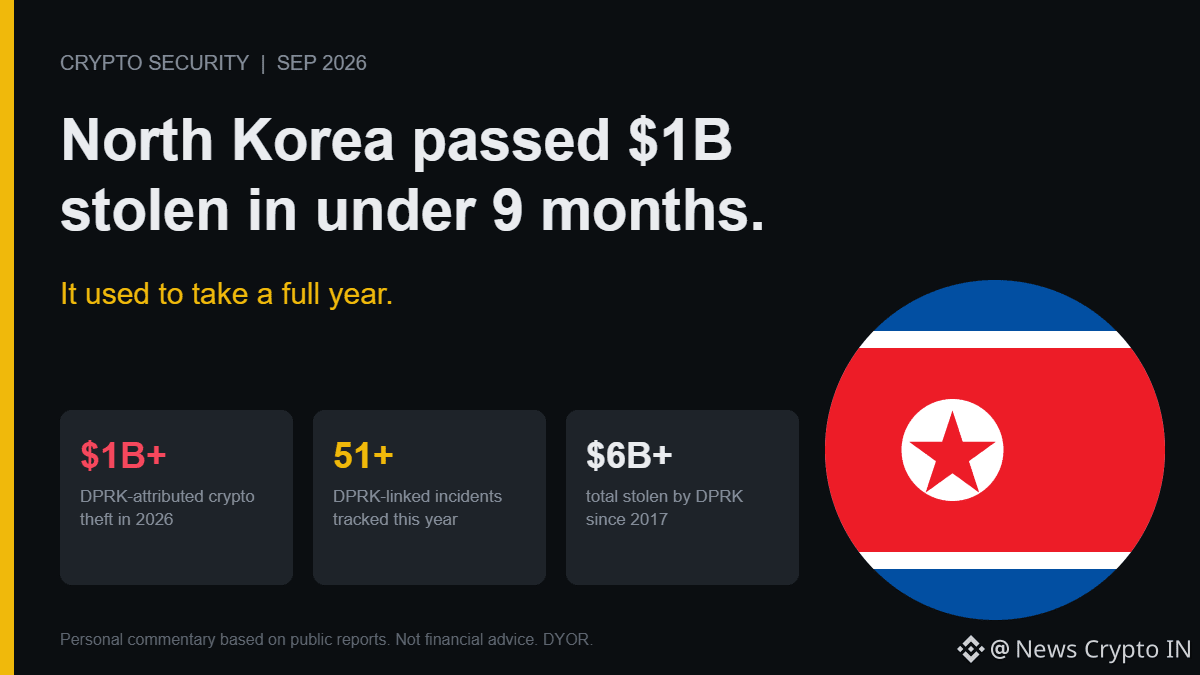
Throughout 2026, Binance has continued working to identify and disrupt attempts linked to DPRK-associated money laundering activity.
This matters because sophisticated actors don't necessarily attack exchanges head-on.
They can move assets through multiple wallets, chains, services, and intermediaries in an attempt to make the original source harder to identify.
That creates a different kind of security battlefield: transaction intelligence.
The ability to detect suspicious patterns, connect seemingly unrelated transactions, and coordinate with relevant parties can become just as important as traditional account security.
For ordinary users, much of this activity is invisible.
And that's exactly the point.
When Governance Becomes the Attack Surface
Another reminder that crypto security is broader than wallets and private keys came from the governance side.
Binance's Brain Trust helped disrupt a governance attack — showing how attackers can potentially target decision-making mechanisms and community infrastructure rather than simply attempting to drain an address.
This is an important evolution.
As crypto infrastructure becomes more sophisticated, the attack surface expands.
It can include:
Smart contracts.
Wallets.
APIs.
Credentials.
Governance systems.
Human operators.
Third-party infrastructure.
Security therefore cannot be treated as a single product feature.
It has to become a system that continuously watches the entire ecosystem.
Preparing for AI Agent Wallets Before the Threat Arrives
Perhaps the most forward-looking development is happening around AI.
AI agents are moving from simply answering questions to performing actions.
An AI agent with access to a wallet could potentially execute transactions, interact with protocols, manage assets, or perform tasks automatically.
That creates enormous possibilities — and a completely new security model.
Instead of asking only:
“Is this transaction legitimate?”
security systems may increasingly need to ask:
“Should this AI agent be allowed to perform this action?”
“Does this transaction match the agent's intended behavior?”
“Is the destination trustworthy?”
“Has the agent's behavior suddenly changed?”
Binance has been working proactively on security guardrails for AI Agent Wallets, addressing these risks before the technology becomes fully mainstream.
That's an important distinction.
Reactive security waits for the first major exploit.
Proactive security tries to understand what could go wrong before the exploit exists.
The Security You Don't Notice Is Often the Security Working
This is where the story becomes bigger than individual numbers.
Crypto users tend to notice security when something goes wrong.
A hack happens.
A wallet gets drained.
A protocol gets exploited.
A suspicious transaction goes viral.
But successful security often produces the opposite result:
Nothing happens.
A suspicious transaction gets stopped.
A compromised asset gets traced.
A laundering route gets identified.
A governance attack gets disrupted.
A new technology gets security controls before attackers figure out how to exploit it.
There is no dramatic user experience for any of these events.
And that is precisely why security can be one of the most difficult areas to measure from the outside.
The New Security Standard Is Defense in Depth
The crypto industry has spent years talking about security as if there were one ultimate solution.
Cold storage.
Proof of reserves.
Multi-factor authentication.
Hardware wallets.
Smart-contract audits.
All of these matter.
But modern crypto security increasingly looks less like a single wall and more like a layered defense system.
One layer watches transactions.
Another monitors wallets.
Another analyzes behavioral patterns.
Another tracks illicit flows.
Another responds to emerging vulnerabilities.
And another prepares for technologies that haven't yet become mainstream attack vectors.
The objective isn't to claim that no attack will ever happen.
That's unrealistic in an industry where adversaries constantly adapt.
The objective is to make the cost of attacking the ecosystem higher, detect threats earlier, limit damage faster, and recover whenever possible.
Security Doesn't Have to Be Loud
The most important security milestone might not be the one that generates the most attention.
It could be the $145.9 million recovered.
The suspicious flow intercepted.
The governance attack disrupted.
The AI wallet threat addressed before it becomes a headline.
These are the stories happening behind the scenes.
And perhaps that's the real differentiator.
Because when security works properly, users don't necessarily see it.
They simply log in.
Trade.
Move assets.
Use new products.
And keep going.
The goal isn't to make security the headline.
The goal is to make security the baseline.
#CryptoSecurity #Aİ #Hack #CryptoWallet
$BTC
🚨 Ledger Phishing Campaign Steals Over $3M A phishing campaign targeting Ledger users has reportedly stolen more than $3 million, with an on-chain investigator linking the activity to the same attacker. ⚠️ Crypto users should stay alert and avoid suspicious links, messages, and requests for wallet or recovery information. 🔐 Never share your recovery phrase or private keys, even if a message appears to come from a trusted source. #Ledger #CryptoSecurity #Bitcoin #CryptoNews
🚨 Ledger Phishing Campaign Steals Over $3M

A phishing campaign targeting Ledger users has reportedly stolen more than $3 million, with an on-chain investigator linking the activity to the same attacker.

⚠️ Crypto users should stay alert and avoid suspicious links, messages, and requests for wallet or recovery information.

🔐 Never share your recovery phrase or private keys, even if a message appears to come from a trusted source.

#Ledger #CryptoSecurity #Bitcoin #CryptoNews
AI-Driven Cyber Threats on the Rise! Is Your Crypto Wallet Truly Safe? 🔒 Recent cybersecurity reports reveal an increase in sophisticated AI-driven phishing scams and malicious smart contract approvals targeting crypto traders. Protecting your digital assets is paramount in today's landscape. Always double-check contract addresses, revoke old wallet permissions periodically using trusted tools, and never share your seed phrase or sign unverified transactions. Security is your first line of defense! How often do you audit and revoke smart contract approvals on your primary wallet? 👇 $BTC $ETH $USDT #CryptoSecurity #Web3 #blockchain #SafetyFirst #BinanceSquare {future}(USDCUSDT) {spot}(ETHUSDT) {spot}(BTCUSDT)
AI-Driven Cyber Threats on the Rise! Is Your Crypto Wallet Truly Safe? 🔒

Recent cybersecurity reports reveal an increase in sophisticated AI-driven phishing scams and malicious smart contract approvals targeting crypto traders. Protecting your digital assets is paramount in today's landscape. Always double-check contract addresses, revoke old wallet permissions periodically using trusted tools, and never share your seed phrase or sign unverified transactions. Security is your first line of defense!
How often do you audit and revoke smart contract approvals on your primary wallet? 👇
$BTC $ETH $USDT #CryptoSecurity #Web3 #blockchain #SafetyFirst #BinanceSquare
Security is still a massive gap. July was a bloodbath, with $110M lost to hacks. Interestingly, bug bounty competitions are outperforming tier-1 audits. If you aren't watching how protocols are tested, you're asking to get rekt. #CryptoSecurity #Hacks ‎
Security is still a massive gap.

July was a bloodbath, with $110M lost to hacks. Interestingly, bug bounty competitions are outperforming tier-1 audits. If you aren't watching how protocols are tested, you're asking to get rekt.

#CryptoSecurity #Hacks
තවත් අන්තර්ගතයන් ගවේෂණය කිරීමට ඇතුල් වන්න
Binance චතුරශ්‍රය හි ගෝලීය ක්‍රිප්ටෝ පරිශීලකයින් හා එක්වන්න
⚡️ ක්‍රිප්ටෝ පිළිබඳ නවතම සහ ප්‍රයෝජනවත් තොරතුරු ලබා ගන්න.
💬 ලොව විශාලතම ක්‍රිප්ටෝ හුවමාරුව මගින් විශ්වාස කෙරේ.
👍 සත්‍යායනය කරන ලද නිර්මාණකරුවන්ගෙන් සැබෑ විදසුන් සොයා ගන්න.
විද්‍යුත් තැපෑල / දුරකථන අංකය