

Crypto With Ali Education
1k ပို့စ်များ

Crypto With Ali Education
တိုင်ကြားမည်
သုံးစွဲသူကို ဘလော့မည်
Crypto Education | BTC • ETH • Web3
Market structure, liquidity & crypto concepts.
Educational content only. Not financial advice
1.0K+ ဖော်လိုလုပ်ထားသည်
376 ဖော်လိုလုပ်သူများ
454 လိုက်ခ်လုပ်ထားသည်
ပို့စ်များ
အားလုံး
Quotes
ဗီဒီယိုများ
ပုံသေထားသည်

Article
AI + Web3: Who Will Control the Next Digital Economy?AI Agents, Blockchain Infrastructure, Digital Ownership & the Future of Online Systems
Artificial intelligence is becoming more capable of creating, analyzing, and acting on information. At the same time, Web3 is developing new ways to verify ownership, coordinate digital systems, and record activity without relying entirely on a single central authority.
Individually, AI and blockchain are powerful technologies. Together, they could reshape how the digital economy operates.
But one question is becoming increasingly important:
Who will control the systems that connect AI, digital assets, data, and online ownership?
AI Is Moving From Tools to Agents
Traditional AI mainly responds to human instructions.
The next generation of AI is increasingly designed to operate as AI agents—systems that can plan tasks, use tools, interact with applications, and make decisions within defined objectives.
This could change the way people interact with digital services.
Instead of manually navigating several platforms, a person could eventually instruct an AI agent to complete a complex digital task.
But greater autonomy creates a new question:
Who controls the agent?
The company providing the model?
The person using it?
The infrastructure running it?
Or a combination of all three?
Where Web3 Could Matter
Blockchain technology introduces a different approach to digital coordination.
A blockchain can provide a shared record of transactions, ownership changes, permissions, and other verifiable events.
This does not make every piece of information automatically true or decentralized. However, it can provide an auditable layer for specific digital interactions.
For AI agents, that could become useful.
An agent might need to prove:
Which wallet authorized an actionWhich digital asset was transferredWhen an event occurredWhether a specific permission was grantedWhich rules were followed
Blockchain could potentially provide verifiable records for these activities.
Digital Ownership Becomes More Important
AI is already changing how digital content is produced.
Text, images, music, software and other forms of digital content can increasingly involve AI systems during creation.
That makes ownership more complicated.
Who owns an AI-assisted creation?
The person who provided the idea?
The person who edited the result?
The AI platform?
The organization that commissioned the work?
The answer can depend on the legal system, platform rules, licensing terms, and the level of human contribution.
Web3 technologies could help establish provenance—a record showing where a digital item came from and how it changed over time.
But provenance is not the same as legal ownership.
A blockchain record can show that something was registered or associated with an address. It does not automatically decide who owns the underlying copyright or intellectual property.
That distinction will become increasingly important.
The Infrastructure Layer May Decide the Future
When people think about the future digital economy, they often focus on applications.
But infrastructure may be even more important.
AI models require computing power, data, storage, networks, and software infrastructure.
Web3 applications require blockchain networks, wallets, smart contracts, decentralized infrastructure, and interfaces.
The companies and protocols controlling these layers could have significant influence over how digital systems operate.
This creates a broader question:
Will the next digital economy be controlled mainly by platforms, protocols, users—or some combination of them?
Centralization vs. Coordination
AI development is currently concentrated around powerful companies and infrastructure providers.
Web3, meanwhile, explores more distributed models of ownership and coordination.
Neither model is automatically perfect.
Centralized systems can provide efficiency, performance, and easier user experiences.
Decentralized systems can provide transparency, shared verification, and reduced dependence on a single authority in certain applications.
The future may not be a simple choice between the two.
Instead, we may see hybrid systems where centralized AI interacts with decentralized infrastructure.
What Could the Next Digital Economy Look Like?
Imagine an online environment where:
AI agents perform tasks.
Blockchain networks record important actions.
Digital identities manage permissions.
Smart contracts coordinate predefined rules.
Creators retain clearer records of their digital work.
Users control more of their digital permissions and assets.
This would not eliminate the need for companies, governments, or legal systems.
Instead, it could change how responsibility and control are distributed between humans, organizations, AI systems, and protocols.
The Real Question Is Control
The biggest question surrounding AI + Web3 may not be whether the technologies can work together.
It may be:
Who gets to control the rules?
If AI agents become more autonomous, control over their permissions and decision-making becomes important.
If digital ownership becomes increasingly programmable, control over identity and assets becomes important.
If blockchain becomes infrastructure for AI-powered systems, control over protocols and access becomes important.
Technology can provide new capabilities.
But governance determines how those capabilities are used.
A Human Role Still Matters
Even in an increasingly automated digital economy, humans remain responsible for defining goals, setting boundaries, creating laws, establishing standards, and deciding what systems should be allowed to do.
AI can automate decisions.
Blockchain can help verify records.
But neither technology automatically determines what is fair, legal, ethical, or desirable.
That remains a human question.
The Future May Be a Hybrid Digital Economy
AI and Web3 are often presented as competing visions of the future.
They may instead become complementary layers.
AI could provide intelligence and automation.
Blockchain could provide verification and coordination.
Digital identity could provide permission management.
Smart contracts could provide programmable rules.
And humans could remain responsible for governance and accountability.
The result could be a digital economy where intelligence, ownership, verification, and coordination work together.
The technology is still developing, and many of these systems remain experimental.
But one thing is already becoming clear:
The future of the digital economy may depend not only on what AI can do, but on who controls the infrastructure, data, identity, ownership, and rules behind it.
This article is part of a series exploring the future of digital systems, AI, blockchain infrastructure, ownership, and Web3.
Educational content only. Not financial advice.
Follow for weekly educational insights on AI, Web3, blockchain infrastructure, digital ownership and the future of online systems.
#AI #Web3 #blockchain #BinanceSquare #FutureOfTechnology
AI + Web3: Who Will Control the Next Digital Economy?
AI Agents, Blockchain Infrastructure, Digital Ownership & the Future of Online Systems
Artificial intelligence is becoming more capable of creating, analyzing, and acting on information. At the same time, Web3 is developing new ways to verify ownership, coordinate digital systems, and record activity without relying entirely on a single central authority.
Individually, AI and blockchain are powerful technologies. Together, they could reshape how the digital economy operates.
But one question is becoming increasingly important:
Who will control the systems that connect AI, digital assets, data, and online ownership?
AI Is Moving From Tools to Agents
Traditional AI mainly responds to human instructions.
The next generation of AI is increasingly designed to operate as AI agents—systems that can plan tasks, use tools, interact with applications, and make decisions within defined objectives.
This could change the way people interact with digital services.
Instead of manually navigating several platforms, a person could eventually instruct an AI agent to complete a complex digital task.
But greater autonomy creates a new question:
Who controls the agent?
The company providing the model?
The person using it?
The infrastructure running it?
Or a combination of all three?
Where Web3 Could Matter
Blockchain technology introduces a different approach to digital coordination.
A blockchain can provide a shared record of transactions, ownership changes, permissions, and other verifiable events.
This does not make every piece of information automatically true or decentralized. However, it can provide an auditable layer for specific digital interactions.
For AI agents, that could become useful.
An agent might need to prove:
Which wallet authorized an actionWhich digital asset was transferredWhen an event occurredWhether a specific permission was grantedWhich rules were followed
Blockchain could potentially provide verifiable records for these activities.
Digital Ownership Becomes More Important
AI is already changing how digital content is produced.
Text, images, music, software and other forms of digital content can increasingly involve AI systems during creation.
That makes ownership more complicated.
Who owns an AI-assisted creation?
The person who provided the idea?
The person who edited the result?
The AI platform?
The organization that commissioned the work?
The answer can depend on the legal system, platform rules, licensing terms, and the level of human contribution.
Web3 technologies could help establish provenance—a record showing where a digital item came from and how it changed over time.
But provenance is not the same as legal ownership.
A blockchain record can show that something was registered or associated with an address. It does not automatically decide who owns the underlying copyright or intellectual property.
That distinction will become increasingly important.
The Infrastructure Layer May Decide the Future
When people think about the future digital economy, they often focus on applications.
But infrastructure may be even more important.
AI models require computing power, data, storage, networks, and software infrastructure.
Web3 applications require blockchain networks, wallets, smart contracts, decentralized infrastructure, and interfaces.
The companies and protocols controlling these layers could have significant influence over how digital systems operate.
This creates a broader question:
Will the next digital economy be controlled mainly by platforms, protocols, users—or some combination of them?
Centralization vs. Coordination
AI development is currently concentrated around powerful companies and infrastructure providers.
Web3, meanwhile, explores more distributed models of ownership and coordination.
Neither model is automatically perfect.
Centralized systems can provide efficiency, performance, and easier user experiences.
Decentralized systems can provide transparency, shared verification, and reduced dependence on a single authority in certain applications.
The future may not be a simple choice between the two.
Instead, we may see hybrid systems where centralized AI interacts with decentralized infrastructure.
What Could the Next Digital Economy Look Like?
Imagine an online environment where:
AI agents perform tasks.
Blockchain networks record important actions.
Digital identities manage permissions.
Smart contracts coordinate predefined rules.
Creators retain clearer records of their digital work.
Users control more of their digital permissions and assets.
This would not eliminate the need for companies, governments, or legal systems.
Instead, it could change how responsibility and control are distributed between humans, organizations, AI systems, and protocols.
The Real Question Is Control
The biggest question surrounding AI + Web3 may not be whether the technologies can work together.
It may be:
Who gets to control the rules?
If AI agents become more autonomous, control over their permissions and decision-making becomes important.
If digital ownership becomes increasingly programmable, control over identity and assets becomes important.
If blockchain becomes infrastructure for AI-powered systems, control over protocols and access becomes important.
Technology can provide new capabilities.
But governance determines how those capabilities are used.
A Human Role Still Matters
Even in an increasingly automated digital economy, humans remain responsible for defining goals, setting boundaries, creating laws, establishing standards, and deciding what systems should be allowed to do.
AI can automate decisions.
Blockchain can help verify records.
But neither technology automatically determines what is fair, legal, ethical, or desirable.
That remains a human question.
The Future May Be a Hybrid Digital Economy
AI and Web3 are often presented as competing visions of the future.
They may instead become complementary layers.
AI could provide intelligence and automation.
Blockchain could provide verification and coordination.
Digital identity could provide permission management.
Smart contracts could provide programmable rules.
And humans could remain responsible for governance and accountability.
The result could be a digital economy where intelligence, ownership, verification, and coordination work together.
The technology is still developing, and many of these systems remain experimental.
But one thing is already becoming clear:
The future of the digital economy may depend not only on what AI can do, but on who controls the infrastructure, data, identity, ownership, and rules behind it.
This article is part of a series exploring the future of digital systems, AI, blockchain infrastructure, ownership, and Web3.
Educational content only. Not financial advice.
Follow for weekly educational insights on AI, Web3, blockchain infrastructure, digital ownership and the future of online systems.
#AI #Web3 #blockchain #BinanceSquare #FutureOfTechnology
Artificial intelligence is becoming more capable of creating, analyzing, and acting on information. At the same time, Web3 is developing new ways to verify ownership, coordinate digital systems, and record activity without relying entirely on a single central authority.
Individually, AI and blockchain are powerful technologies. Together, they could reshape how the digital economy operates.
But one question is becoming increasingly important:
Who will control the systems that connect AI, digital assets, data, and online ownership?
AI Is Moving From Tools to Agents
Traditional AI mainly responds to human instructions.
The next generation of AI is increasingly designed to operate as AI agents—systems that can plan tasks, use tools, interact with applications, and make decisions within defined objectives.
This could change the way people interact with digital services.
Instead of manually navigating several platforms, a person could eventually instruct an AI agent to complete a complex digital task.
But greater autonomy creates a new question:
Who controls the agent?
The company providing the model?
The person using it?
The infrastructure running it?
Or a combination of all three?
Where Web3 Could Matter
Blockchain technology introduces a different approach to digital coordination.
A blockchain can provide a shared record of transactions, ownership changes, permissions, and other verifiable events.
This does not make every piece of information automatically true or decentralized. However, it can provide an auditable layer for specific digital interactions.
For AI agents, that could become useful.
An agent might need to prove:
Which wallet authorized an actionWhich digital asset was transferredWhen an event occurredWhether a specific permission was grantedWhich rules were followed
Blockchain could potentially provide verifiable records for these activities.
Digital Ownership Becomes More Important
AI is already changing how digital content is produced.
Text, images, music, software and other forms of digital content can increasingly involve AI systems during creation.
That makes ownership more complicated.
Who owns an AI-assisted creation?
The person who provided the idea?
The person who edited the result?
The AI platform?
The organization that commissioned the work?
The answer can depend on the legal system, platform rules, licensing terms, and the level of human contribution.
Web3 technologies could help establish provenance—a record showing where a digital item came from and how it changed over time.
But provenance is not the same as legal ownership.
A blockchain record can show that something was registered or associated with an address. It does not automatically decide who owns the underlying copyright or intellectual property.
That distinction will become increasingly important.
The Infrastructure Layer May Decide the Future
When people think about the future digital economy, they often focus on applications.
But infrastructure may be even more important.
AI models require computing power, data, storage, networks, and software infrastructure.
Web3 applications require blockchain networks, wallets, smart contracts, decentralized infrastructure, and interfaces.
The companies and protocols controlling these layers could have significant influence over how digital systems operate.
This creates a broader question:
Will the next digital economy be controlled mainly by platforms, protocols, users—or some combination of them?
Centralization vs. Coordination
AI development is currently concentrated around powerful companies and infrastructure providers.
Web3, meanwhile, explores more distributed models of ownership and coordination.
Neither model is automatically perfect.
Centralized systems can provide efficiency, performance, and easier user experiences.
Decentralized systems can provide transparency, shared verification, and reduced dependence on a single authority in certain applications.
The future may not be a simple choice between the two.
Instead, we may see hybrid systems where centralized AI interacts with decentralized infrastructure.
What Could the Next Digital Economy Look Like?
Imagine an online environment where:
AI agents perform tasks.
Blockchain networks record important actions.
Digital identities manage permissions.
Smart contracts coordinate predefined rules.
Creators retain clearer records of their digital work.
Users control more of their digital permissions and assets.
This would not eliminate the need for companies, governments, or legal systems.
Instead, it could change how responsibility and control are distributed between humans, organizations, AI systems, and protocols.
The Real Question Is Control
The biggest question surrounding AI + Web3 may not be whether the technologies can work together.
It may be:
Who gets to control the rules?
If AI agents become more autonomous, control over their permissions and decision-making becomes important.
If digital ownership becomes increasingly programmable, control over identity and assets becomes important.
If blockchain becomes infrastructure for AI-powered systems, control over protocols and access becomes important.
Technology can provide new capabilities.
But governance determines how those capabilities are used.
A Human Role Still Matters
Even in an increasingly automated digital economy, humans remain responsible for defining goals, setting boundaries, creating laws, establishing standards, and deciding what systems should be allowed to do.
AI can automate decisions.
Blockchain can help verify records.
But neither technology automatically determines what is fair, legal, ethical, or desirable.
That remains a human question.
The Future May Be a Hybrid Digital Economy
AI and Web3 are often presented as competing visions of the future.
They may instead become complementary layers.
AI could provide intelligence and automation.
Blockchain could provide verification and coordination.
Digital identity could provide permission management.
Smart contracts could provide programmable rules.
And humans could remain responsible for governance and accountability.
The result could be a digital economy where intelligence, ownership, verification, and coordination work together.
The technology is still developing, and many of these systems remain experimental.
But one thing is already becoming clear:
The future of the digital economy may depend not only on what AI can do, but on who controls the infrastructure, data, identity, ownership, and rules behind it.
This article is part of a series exploring the future of digital systems, AI, blockchain infrastructure, ownership, and Web3.
Educational content only. Not financial advice.
Follow for weekly educational insights on AI, Web3, blockchain infrastructure, digital ownership and the future of online systems.
#AI #Web3 #blockchain #BinanceSquare #FutureOfTechnology
1
46
ပုံသေထားသည်
👋 Hello Binance Square Community!
I share daily crypto news, market insights, and simple explanations for beginners.
📊 Focus: BTC • ETH • BNB • Altcoins
🧠 Goal: Learning + informed decisions (no hype)
🔔 Follow to stay updated and learn together!
👋 Hello Binance Square Community!
I share daily crypto news, market insights, and simple explanations for beginners.
📊 Focus: BTC • ETH • BNB • Altcoins
🧠 Goal: Learning + informed decisions (no hype)
🔔 Follow to stay updated and learn together!
I share daily crypto news, market insights, and simple explanations for beginners.
📊 Focus: BTC • ETH • BNB • Altcoins
🧠 Goal: Learning + informed decisions (no hype)
🔔 Follow to stay updated and learn together!
4
14
65
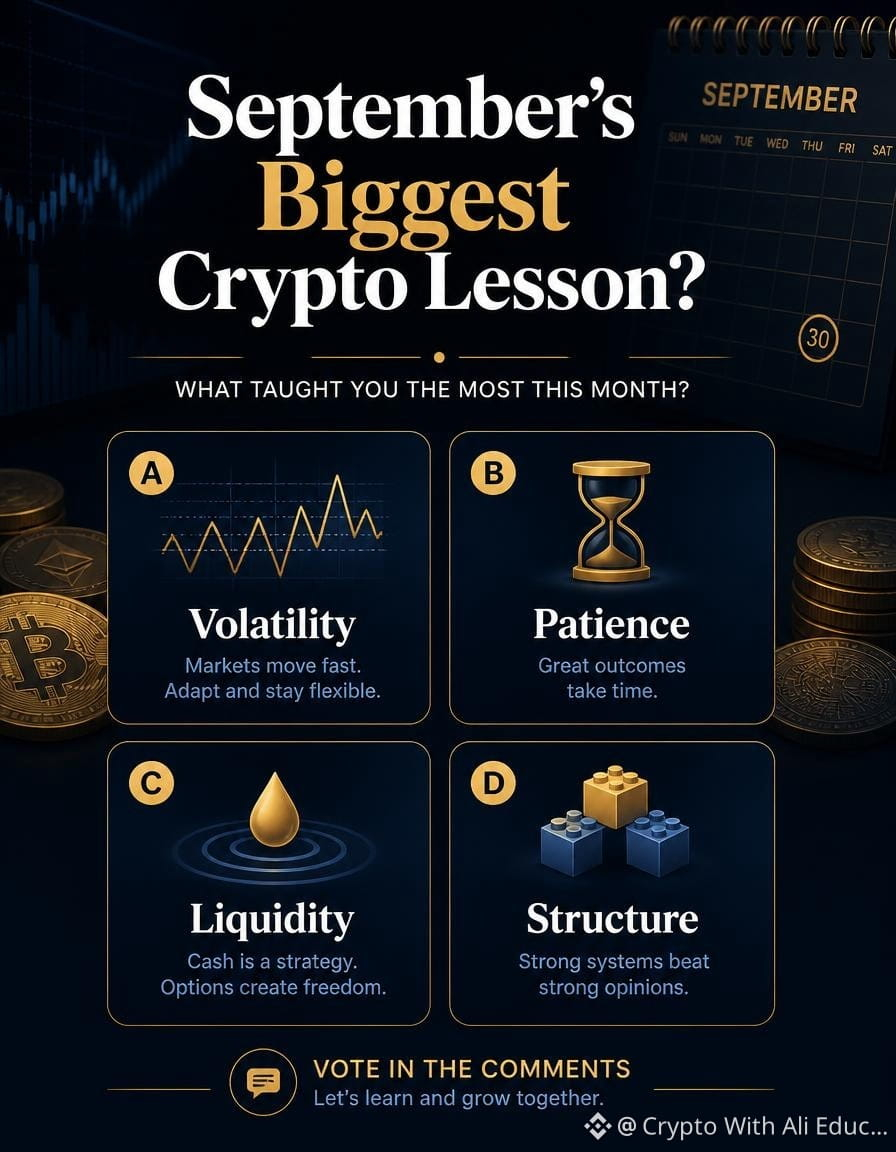
📊 September's Biggest Crypto Lesson?
As September comes to an end, which lesson stands out most to you?
🔹 Volatility — Crypto can move quickly and unpredictably.
🔹 Patience — Not every market move requires a reaction.
🔹 Liquidity — Understanding where participation and orders are concentrated adds context.
🔹 Structure — Price action becomes easier to understand when you study the bigger picture.
👇 Vote and share your reason in the comments.
What did September teach you about the crypto market?
Educational content only — not financial advice.
#cryptoeducation #bitcoin #Marketstructure #liquidity #CryptoPsychology
📊 September's Biggest Crypto Lesson?
As September comes to an end, which lesson stands out most to you?
🔹 Volatility — Crypto can move quickly and unpredictably.
🔹 Patience — Not every market move requires a reaction.
🔹 Liquidity — Understanding where participation and orders are concentrated adds context.
🔹 Structure — Price action becomes easier to understand when you study the bigger picture.
👇 Vote and share your reason in the comments.
What did September teach you about the crypto market?
Educational content only — not financial advice.
#cryptoeducation #bitcoin #Marketstructure #liquidity #CryptoPsychology
As September comes to an end, which lesson stands out most to you?
🔹 Volatility — Crypto can move quickly and unpredictably.
🔹 Patience — Not every market move requires a reaction.
🔹 Liquidity — Understanding where participation and orders are concentrated adds context.
🔹 Structure — Price action becomes easier to understand when you study the bigger picture.
👇 Vote and share your reason in the comments.
What did September teach you about the crypto market?
Educational content only — not financial advice.
#cryptoeducation #bitcoin #Marketstructure #liquidity #CryptoPsychology
58
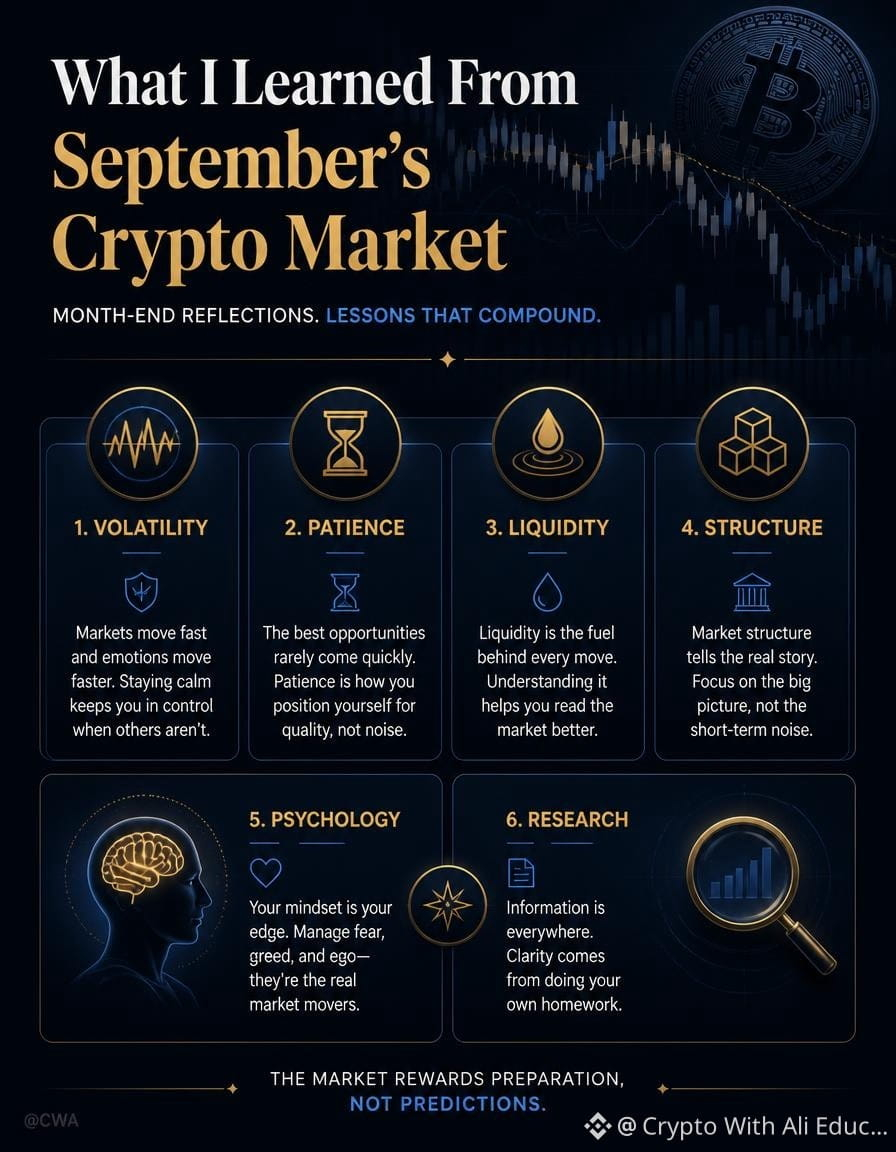
📚 What I Learned From September's Crypto Market
September wasn't just about price movements. It was a reminder that understanding the market matters more than reacting to every move.
Here are some lessons worth carrying forward:
1️⃣ Volatility is part of crypto
Fast moves can create both opportunity and noise. Understanding the move matters more than reacting to it.
2️⃣ Patience is a skill
Not every candle requires a decision. Sometimes observing is more useful than acting.
3️⃣ Liquidity provides context
Large areas of orders and liquidity can influence how price behaves, but liquidity alone doesn't tell us what happens next.
4️⃣ Structure matters
Higher highs, lower lows, ranges, support and resistance can help put short-term price action into perspective.
5️⃣ Indicators need context
RSI, MACD and volume can provide useful information, but no single indicator explains the entire market.
6️⃣ Psychology matters
FOMO, fear and overconfidence can make market noise feel more important than it actually is.
7️⃣ Headlines aren't the whole story
A headline can attract attention, but understanding adoption, liquidity, participation and structure gives deeper context.
The biggest lesson?
👉 Don't just watch what the market is doing. Learn why it may be doing it.
💬 What was your biggest crypto lesson from September?
Share your lesson below. 👇
Educational content only — not financial advice.
More market updates coming daily — follow along
#cryptoeducation #BTC #liquidity #BinanceSquare #CryptoWithAli
📚 What I Learned From September's Crypto Market
September wasn't just about price movements. It was a reminder that understanding the market matters more than reacting to every move.
Here are some lessons worth carrying forward:
1️⃣ Volatility is part of crypto
Fast moves can create both opportunity and noise. Understanding the move matters more than reacting to it.
2️⃣ Patience is a skill
Not every candle requires a decision. Sometimes observing is more useful than acting.
3️⃣ Liquidity provides context
Large areas of orders and liquidity can influence how price behaves, but liquidity alone doesn't tell us what happens next.
4️⃣ Structure matters
Higher highs, lower lows, ranges, support and resistance can help put short-term price action into perspective.
5️⃣ Indicators need context
RSI, MACD and volume can provide useful information, but no single indicator explains the entire market.
6️⃣ Psychology matters
FOMO, fear and overconfidence can make market noise feel more important than it actually is.
7️⃣ Headlines aren't the whole story
A headline can attract attention, but understanding adoption, liquidity, participation and structure gives deeper context.
The biggest lesson?
👉 Don't just watch what the market is doing. Learn why it may be doing it.
💬 What was your biggest crypto lesson from September?
Share your lesson below. 👇
Educational content only — not financial advice.
More market updates coming daily — follow along
#cryptoeducation #BTC #liquidity #BinanceSquare #CryptoWithAli
September wasn't just about price movements. It was a reminder that understanding the market matters more than reacting to every move.
Here are some lessons worth carrying forward:
1️⃣ Volatility is part of crypto
Fast moves can create both opportunity and noise. Understanding the move matters more than reacting to it.
2️⃣ Patience is a skill
Not every candle requires a decision. Sometimes observing is more useful than acting.
3️⃣ Liquidity provides context
Large areas of orders and liquidity can influence how price behaves, but liquidity alone doesn't tell us what happens next.
4️⃣ Structure matters
Higher highs, lower lows, ranges, support and resistance can help put short-term price action into perspective.
5️⃣ Indicators need context
RSI, MACD and volume can provide useful information, but no single indicator explains the entire market.
6️⃣ Psychology matters
FOMO, fear and overconfidence can make market noise feel more important than it actually is.
7️⃣ Headlines aren't the whole story
A headline can attract attention, but understanding adoption, liquidity, participation and structure gives deeper context.
The biggest lesson?
👉 Don't just watch what the market is doing. Learn why it may be doing it.
💬 What was your biggest crypto lesson from September?
Share your lesson below. 👇
Educational content only — not financial advice.
More market updates coming daily — follow along
#cryptoeducation #BTC #liquidity #BinanceSquare #CryptoWithAli
76
📚 3 Crypto Lessons From September
September provided several useful lessons for studying crypto markets:
📊 Structure before noise
🧠 Context over emotion
🎯 Process over prediction
The goal is to organize market analysis around broader context rather than claim certainty about future moves.
📚 Educational content only — not financial advice.
#tradingeducation
#learncrypto
#Marketstructure
#BTC
#BinanceSquare
📚 3 Crypto Lessons From September
September provided several useful lessons for studying crypto markets:
📊 Structure before noise
🧠 Context over emotion
🎯 Process over prediction
The goal is to organize market analysis around broader context rather than claim certainty about future moves.
📚 Educational content only — not financial advice.
#tradingeducation
#learncrypto
#Marketstructure
#BTC
#BinanceSquare
September provided several useful lessons for studying crypto markets:
📊 Structure before noise
🧠 Context over emotion
🎯 Process over prediction
The goal is to organize market analysis around broader context rather than claim certainty about future moves.
📚 Educational content only — not financial advice.
#tradingeducation
#learncrypto
#Marketstructure
#BTC
#BinanceSquare
92
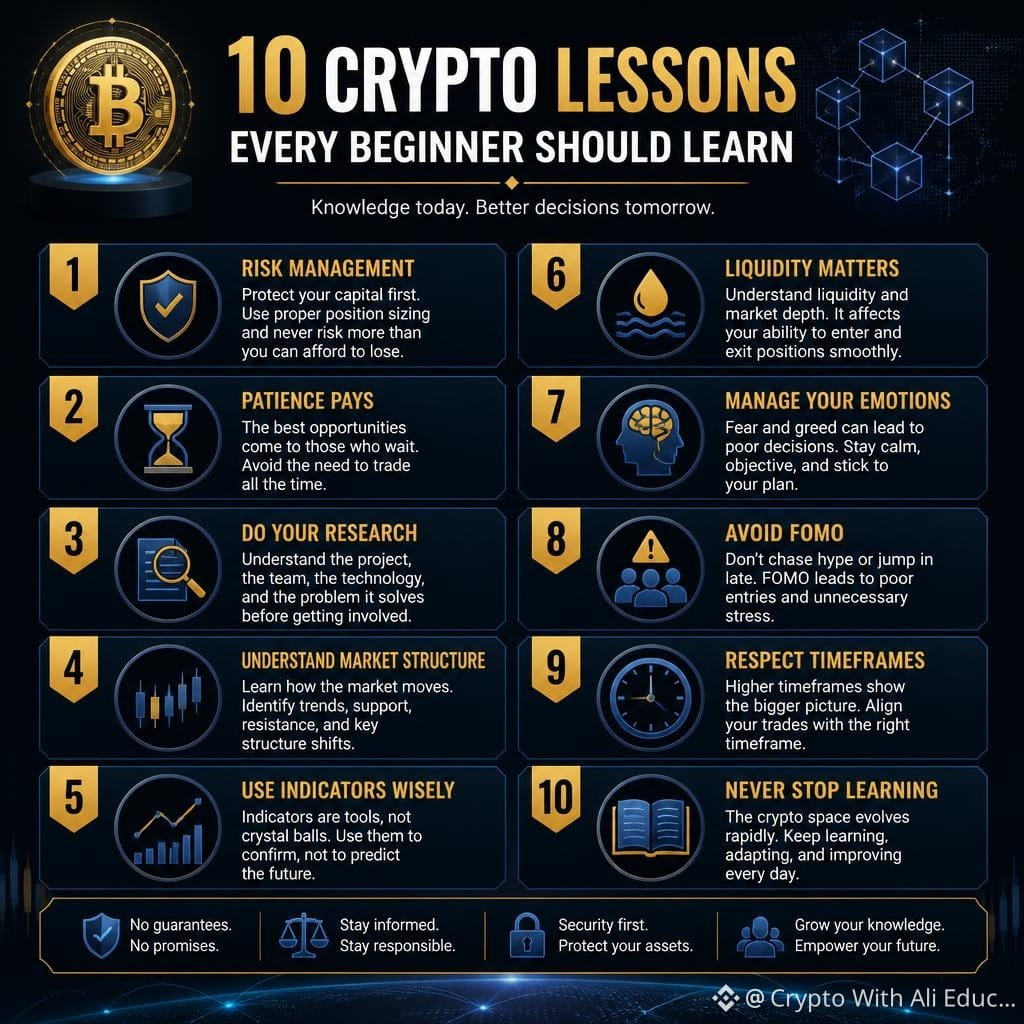
🚨 10 Crypto Lessons Every Beginner Should Learn Before Chasing the Market
Crypto can move fast, but learning should come first.
Before chasing the next coin, candle, or trend, remember these 10 lessons:
1️⃣ Risk comes first — Protecting capital matters more than being right every time.
2️⃣ Patience matters — Not every market move needs a reaction.
3️⃣ Research before action — Understand what you're looking at before forming an opinion.
4️⃣ Learn market structure — Higher highs, lower lows, ranges and breakouts provide useful context.
5️⃣ Don't rely on one indicator — RSI, MACD and volume are tools, not complete strategies.
6️⃣ Understand liquidity — Price can move through areas where many orders are concentrated.
7️⃣ Control emotions — FOMO and fear can turn a plan into an impulsive decision.
8️⃣ Avoid chasing green candles — A strong move doesn't automatically mean it will continue.
9️⃣ Think in timeframes — A short-term move can look very different from the bigger market structure.
🔟 Keep learning — Crypto changes constantly, so education is an ongoing process.
The biggest beginner mistake isn't missing one opportunity.
It's making decisions without understanding the market.
💬 Which lesson would you add to this list?
📌 Save this post and share it with someone learning crypto.
Educational content only — not financial advice.
If this helped you, follow for more 👍
#cryptoeducation #bitcoin #CryptoForBeginners #BinanceSquare #CryptoWithAli
🚨 10 Crypto Lessons Every Beginner Should Learn Before Chasing the Market
Crypto can move fast, but learning should come first.
Before chasing the next coin, candle, or trend, remember these 10 lessons:
1️⃣ Risk comes first — Protecting capital matters more than being right every time.
2️⃣ Patience matters — Not every market move needs a reaction.
3️⃣ Research before action — Understand what you're looking at before forming an opinion.
4️⃣ Learn market structure — Higher highs, lower lows, ranges and breakouts provide useful context.
5️⃣ Don't rely on one indicator — RSI, MACD and volume are tools, not complete strategies.
6️⃣ Understand liquidity — Price can move through areas where many orders are concentrated.
7️⃣ Control emotions — FOMO and fear can turn a plan into an impulsive decision.
8️⃣ Avoid chasing green candles — A strong move doesn't automatically mean it will continue.
9️⃣ Think in timeframes — A short-term move can look very different from the bigger market structure.
🔟 Keep learning — Crypto changes constantly, so education is an ongoing process.
The biggest beginner mistake isn't missing one opportunity.
It's making decisions without understanding the market.
💬 Which lesson would you add to this list?
📌 Save this post and share it with someone learning crypto.
Educational content only — not financial advice.
If this helped you, follow for more 👍
#cryptoeducation #bitcoin #CryptoForBeginners #BinanceSquare #CryptoWithAli
Crypto can move fast, but learning should come first.
Before chasing the next coin, candle, or trend, remember these 10 lessons:
1️⃣ Risk comes first — Protecting capital matters more than being right every time.
2️⃣ Patience matters — Not every market move needs a reaction.
3️⃣ Research before action — Understand what you're looking at before forming an opinion.
4️⃣ Learn market structure — Higher highs, lower lows, ranges and breakouts provide useful context.
5️⃣ Don't rely on one indicator — RSI, MACD and volume are tools, not complete strategies.
6️⃣ Understand liquidity — Price can move through areas where many orders are concentrated.
7️⃣ Control emotions — FOMO and fear can turn a plan into an impulsive decision.
8️⃣ Avoid chasing green candles — A strong move doesn't automatically mean it will continue.
9️⃣ Think in timeframes — A short-term move can look very different from the bigger market structure.
🔟 Keep learning — Crypto changes constantly, so education is an ongoing process.
The biggest beginner mistake isn't missing one opportunity.
It's making decisions without understanding the market.
💬 Which lesson would you add to this list?
📌 Save this post and share it with someone learning crypto.
Educational content only — not financial advice.
If this helped you, follow for more 👍
#cryptoeducation #bitcoin #CryptoForBeginners #BinanceSquare #CryptoWithAli
77
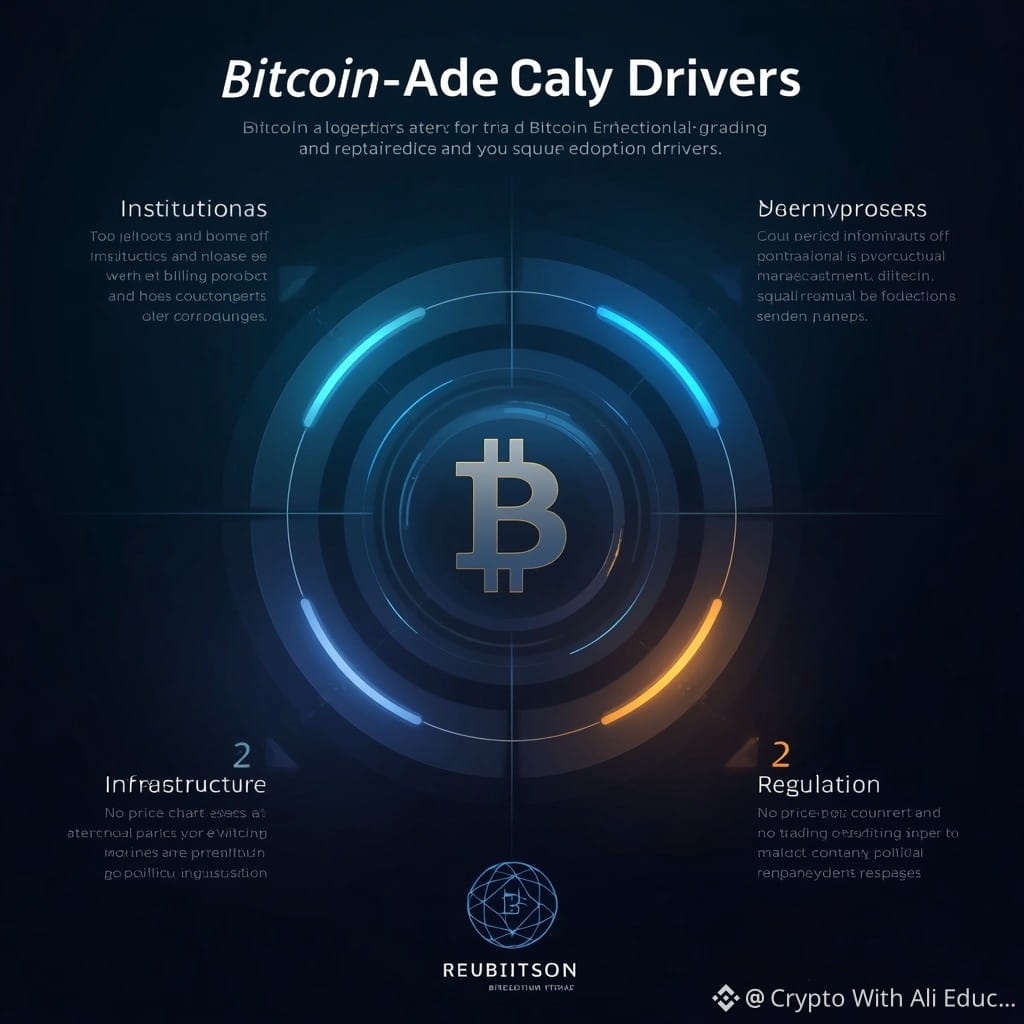
📊 Bitcoin Adoption Poll
BTC Adoption Driver →
🔘 Institutions
🔘 Users
🔘 Infrastructure
🔘 Regulation
Which factor do you think plays the biggest role in long-term Bitcoin adoption?
💬 Vote and explain your choice in the comments.
Adoption is more than headlines or price—it involves people, infrastructure, institutions and the regulatory environment.
#bitcoin #Bitcoinadoption #CryptoWithAli #BinanceSquare #cryptoeducation
📊 Bitcoin Adoption Poll
BTC Adoption Driver →
🔘 Institutions
🔘 Users
🔘 Infrastructure
🔘 Regulation
Which factor do you think plays the biggest role in long-term Bitcoin adoption?
💬 Vote and explain your choice in the comments.
Adoption is more than headlines or price—it involves people, infrastructure, institutions and the regulatory environment.
#bitcoin #Bitcoinadoption #CryptoWithAli #BinanceSquare #cryptoeducation
BTC Adoption Driver →
🔘 Institutions
🔘 Users
🔘 Infrastructure
🔘 Regulation
Which factor do you think plays the biggest role in long-term Bitcoin adoption?
💬 Vote and explain your choice in the comments.
Adoption is more than headlines or price—it involves people, infrastructure, institutions and the regulatory environment.
#bitcoin #Bitcoinadoption #CryptoWithAli #BinanceSquare #cryptoeducation
64
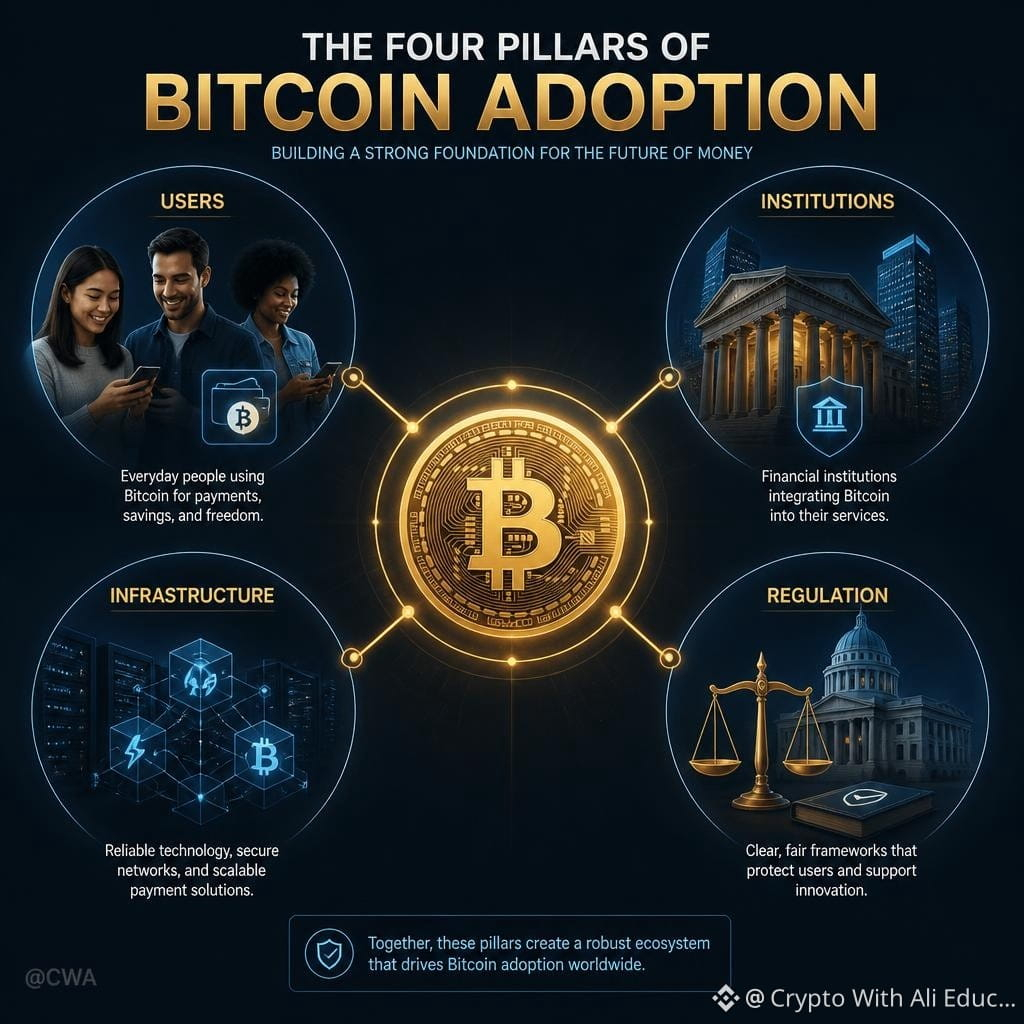
Bitcoin Adoption: What Actually Matters Beyond the Headlines?
Bitcoin adoption is often discussed through headlines:
“More institutions are entering.”
“More users are adopting Bitcoin.”
“Regulation is changing.”
But adoption is bigger than any single headline.
🔹 1. Users
At the most basic level, adoption means people actually use Bitcoin.
That can include holding it, sending it, receiving it, or using Bitcoin-based payment infrastructure where available.
More users can create broader network activity—but user growth alone doesn't tell the whole story.
🔹 2. Institutions
Institutional participation can connect Bitcoin with traditional financial infrastructure.
But “institutional interest” is not the same as widespread everyday adoption.
It's important to distinguish between investment exposure, financial products & actual use of the network.
🔹 3. Infrastructure
Adoption needs infrastructure.
Wallets, exchanges, payment systems, custody solutions, developer tools & reliable network access all affect how easily people can interact with Bitcoin.
A technology can have strong interest, but adoption becomes harder if the surrounding infrastructure is difficult to use.
🔹 4. Regulation
Regulation can influence how businesses & financial institutions interact with crypto.
Clear rules may provide a framework for participation, while different jurisdictions can create different conditions for adoption. Recent international work continues to focus on regulatory implementation, risk management & cross-border cooperation.
🧠 The Bigger Picture
Bitcoin adoption isn't just about price.
A better framework is:
Users + Institutions + Infrastructure + Regulation
Each represents a different part of the adoption story.
And one important distinction remains:
Interest is not the same as usage.
💬 Which factor do you think matters most for Bitcoin adoption: Institutions, Users, Infrastructure, or Regulation?
Educational content only — not financial advice.
#BTC
Bitcoin Adoption: What Actually Matters Beyond the Headlines?
Bitcoin adoption is often discussed through headlines:
“More institutions are entering.”
“More users are adopting Bitcoin.”
“Regulation is changing.”
But adoption is bigger than any single headline.
🔹 1. Users
At the most basic level, adoption means people actually use Bitcoin.
That can include holding it, sending it, receiving it, or using Bitcoin-based payment infrastructure where available.
More users can create broader network activity—but user growth alone doesn't tell the whole story.
🔹 2. Institutions
Institutional participation can connect Bitcoin with traditional financial infrastructure.
But “institutional interest” is not the same as widespread everyday adoption.
It's important to distinguish between investment exposure, financial products & actual use of the network.
🔹 3. Infrastructure
Adoption needs infrastructure.
Wallets, exchanges, payment systems, custody solutions, developer tools & reliable network access all affect how easily people can interact with Bitcoin.
A technology can have strong interest, but adoption becomes harder if the surrounding infrastructure is difficult to use.
🔹 4. Regulation
Regulation can influence how businesses & financial institutions interact with crypto.
Clear rules may provide a framework for participation, while different jurisdictions can create different conditions for adoption. Recent international work continues to focus on regulatory implementation, risk management & cross-border cooperation.
🧠 The Bigger Picture
Bitcoin adoption isn't just about price.
A better framework is:
Users + Institutions + Infrastructure + Regulation
Each represents a different part of the adoption story.
And one important distinction remains:
Interest is not the same as usage.
💬 Which factor do you think matters most for Bitcoin adoption: Institutions, Users, Infrastructure, or Regulation?
Educational content only — not financial advice.
#BTC
Bitcoin adoption is often discussed through headlines:
“More institutions are entering.”
“More users are adopting Bitcoin.”
“Regulation is changing.”
But adoption is bigger than any single headline.
🔹 1. Users
At the most basic level, adoption means people actually use Bitcoin.
That can include holding it, sending it, receiving it, or using Bitcoin-based payment infrastructure where available.
More users can create broader network activity—but user growth alone doesn't tell the whole story.
🔹 2. Institutions
Institutional participation can connect Bitcoin with traditional financial infrastructure.
But “institutional interest” is not the same as widespread everyday adoption.
It's important to distinguish between investment exposure, financial products & actual use of the network.
🔹 3. Infrastructure
Adoption needs infrastructure.
Wallets, exchanges, payment systems, custody solutions, developer tools & reliable network access all affect how easily people can interact with Bitcoin.
A technology can have strong interest, but adoption becomes harder if the surrounding infrastructure is difficult to use.
🔹 4. Regulation
Regulation can influence how businesses & financial institutions interact with crypto.
Clear rules may provide a framework for participation, while different jurisdictions can create different conditions for adoption. Recent international work continues to focus on regulatory implementation, risk management & cross-border cooperation.
🧠 The Bigger Picture
Bitcoin adoption isn't just about price.
A better framework is:
Users + Institutions + Infrastructure + Regulation
Each represents a different part of the adoption story.
And one important distinction remains:
Interest is not the same as usage.
💬 Which factor do you think matters most for Bitcoin adoption: Institutions, Users, Infrastructure, or Regulation?
Educational content only — not financial advice.
#BTC
109
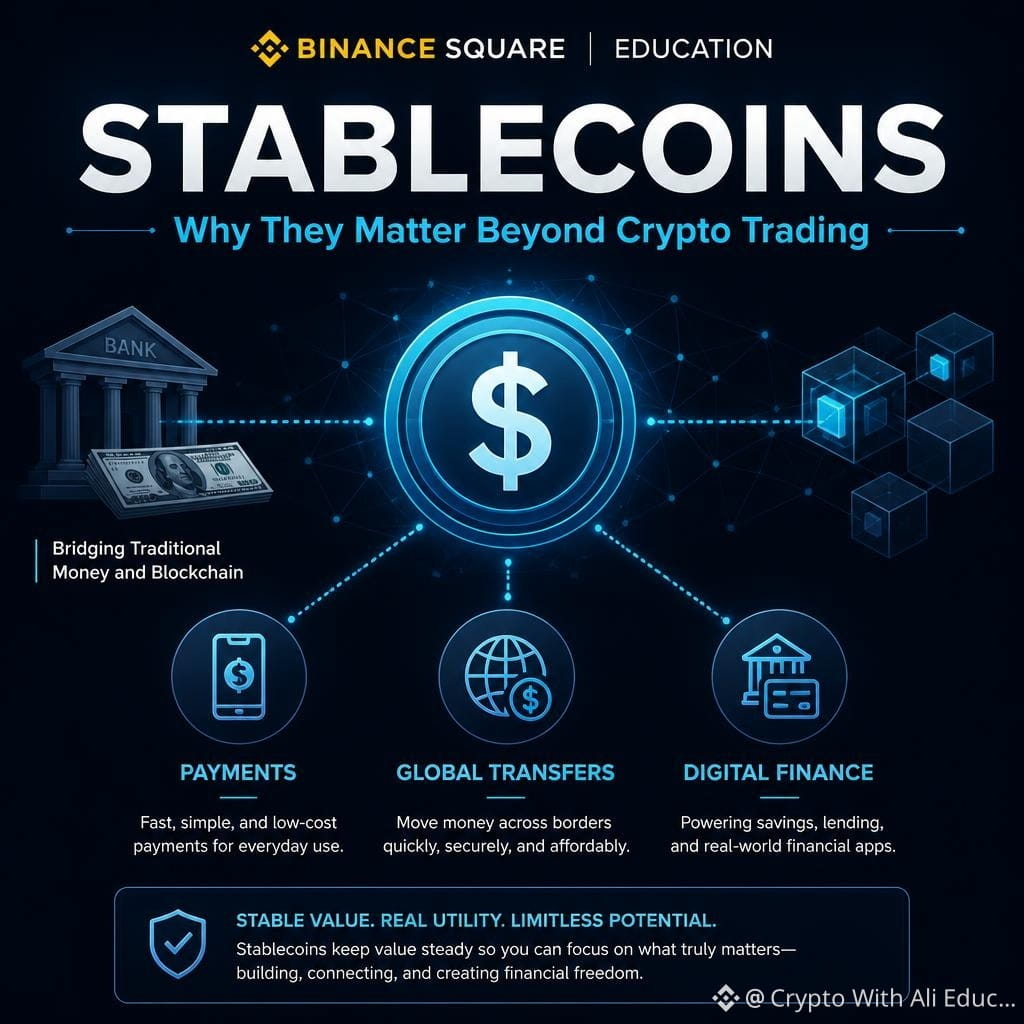
Stablecoins: Why They Matter Beyond Crypto Trading
Stablecoins are often introduced as “crypto dollars,” but their role can go beyond trading.
A stablecoin is a digital asset designed to maintain a relatively stable value, commonly by referencing a fiat currency such as the U.S. dollar.
Why does that matter?
💵 Payments: Stablecoins can support digital transfers without requiring every transaction to use a volatile crypto asset.
🌍 Global transfers: They can provide another way to move digital value across borders, depending on local rules, access, and infrastructure.
🔄 Crypto infrastructure: Stablecoins can act as a bridge between traditional money and blockchain-based applications.
📱 Digital finance: They can be used within wallets, exchanges, and decentralized applications where supported.
But “stable” does not mean “risk-free.” Different stablecoins use different reserve, collateral, and stabilization mechanisms, and users should understand how each one works.
The bigger idea is simple:
Stablecoins are not only about trading. They are part of the infrastructure connecting traditional money with digital assets.
What do you think is the most important use case for stablecoins:
payments, transfers, or crypto markets?
Educational content only. Not financial advice.
Follow for mindset, market mood & clean insights
#Stablecoins #CryptoEducation #Blockchain #Web3 #DigitalFinance
Stablecoins: Why They Matter Beyond Crypto Trading
Stablecoins are often introduced as “crypto dollars,” but their role can go beyond trading.
A stablecoin is a digital asset designed to maintain a relatively stable value, commonly by referencing a fiat currency such as the U.S. dollar.
Why does that matter?
💵 Payments: Stablecoins can support digital transfers without requiring every transaction to use a volatile crypto asset.
🌍 Global transfers: They can provide another way to move digital value across borders, depending on local rules, access, and infrastructure.
🔄 Crypto infrastructure: Stablecoins can act as a bridge between traditional money and blockchain-based applications.
📱 Digital finance: They can be used within wallets, exchanges, and decentralized applications where supported.
But “stable” does not mean “risk-free.” Different stablecoins use different reserve, collateral, and stabilization mechanisms, and users should understand how each one works.
The bigger idea is simple:
Stablecoins are not only about trading. They are part of the infrastructure connecting traditional money with digital assets.
What do you think is the most important use case for stablecoins:
payments, transfers, or crypto markets?
Educational content only. Not financial advice.
Follow for mindset, market mood & clean insights
#Stablecoins #CryptoEducation #Blockchain #Web3 #DigitalFinance
Stablecoins are often introduced as “crypto dollars,” but their role can go beyond trading.
A stablecoin is a digital asset designed to maintain a relatively stable value, commonly by referencing a fiat currency such as the U.S. dollar.
Why does that matter?
💵 Payments: Stablecoins can support digital transfers without requiring every transaction to use a volatile crypto asset.
🌍 Global transfers: They can provide another way to move digital value across borders, depending on local rules, access, and infrastructure.
🔄 Crypto infrastructure: Stablecoins can act as a bridge between traditional money and blockchain-based applications.
📱 Digital finance: They can be used within wallets, exchanges, and decentralized applications where supported.
But “stable” does not mean “risk-free.” Different stablecoins use different reserve, collateral, and stabilization mechanisms, and users should understand how each one works.
The bigger idea is simple:
Stablecoins are not only about trading. They are part of the infrastructure connecting traditional money with digital assets.
What do you think is the most important use case for stablecoins:
payments, transfers, or crypto markets?
Educational content only. Not financial advice.
Follow for mindset, market mood & clean insights
#Stablecoins #CryptoEducation #Blockchain #Web3 #DigitalFinance
72
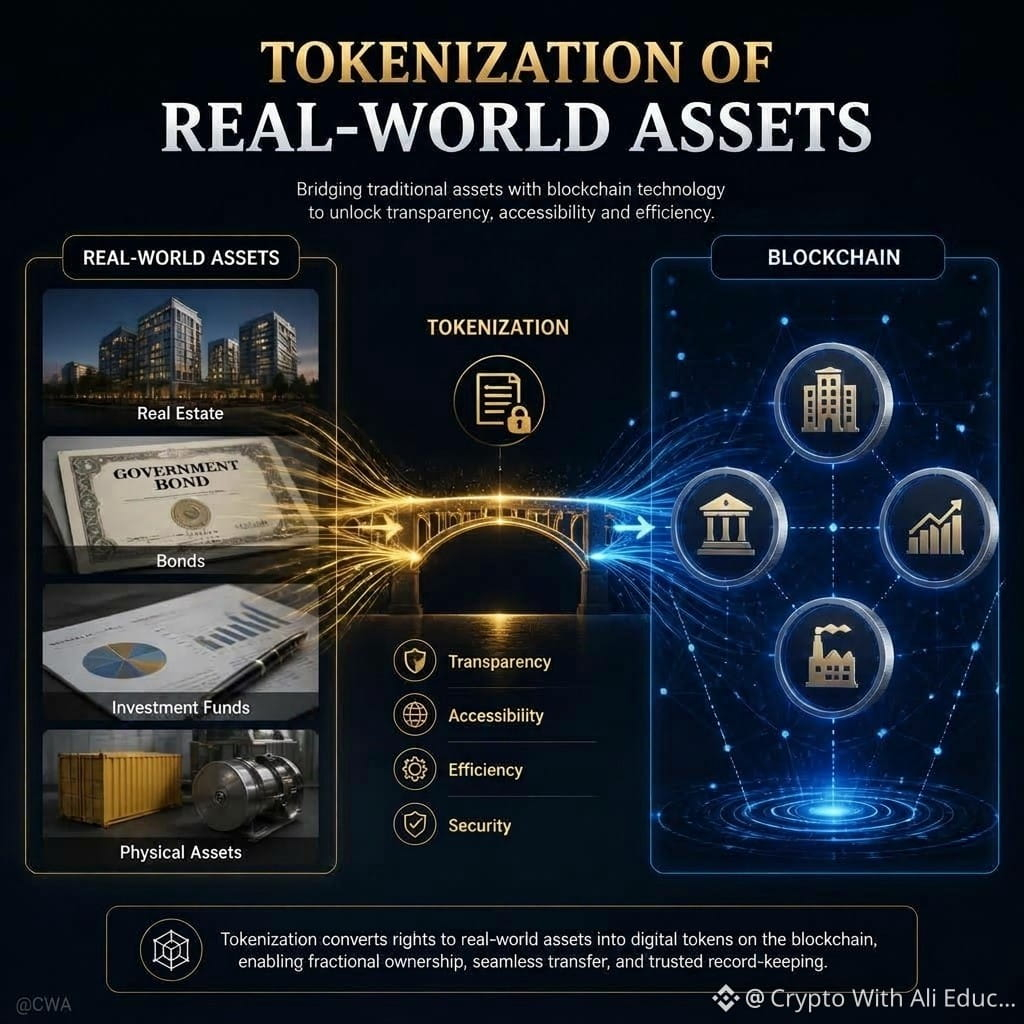
Tokenization Explained: Why Real-World Assets Are Becoming a Crypto Narrative
Crypto isn't only about digital-native assets.
One of the bigger ideas in blockchain is tokenization — representing ownership or rights connected to real-world assets using blockchain-based tokens.
🔹 What Can Be Tokenized?
In theory, many types of assets or financial interests can be represented digitally, including:
🏠 Real estate
💵 Bonds
📊 Funds
🏢 Private assets
💰 Other financial or physical assets
The goal isn't simply to put an asset “on a blockchain.”
The bigger idea is to create a digital representation that can potentially make certain processes more efficient.
🔹 Why Does Tokenization Matter?
Traditional assets can involve:
• Multiple intermediaries
• Manual record keeping
• Limited trading hours
• Complex settlement processes
• High barriers to access
Blockchain-based systems may offer programmable ownership records, faster settlement and greater transparency in some use cases.
But tokenization does not automatically solve every problem.
🔹 The Important Question
If an asset is tokenized, someone still needs to establish:
Who owns the underlying asset?
What rights does the token represent?
How is ownership verified?
What happens if the underlying asset changes?
This is where legal frameworks, trusted institutions, infrastructure and blockchain technology all become important.
🧠 The Bigger Picture
Tokenization could connect traditional assets with digital infrastructure.
But the real value will depend on how the system is designed, regulated and used—not simply on putting an asset on-chain.
💬 Which area do you think has the biggest tokenization opportunity:
Real Estate, Bonds, Funds, or Other Assets?
Educational content only — not financial advice.
Sharing what I learn in crypto every day — follow along
#Tokenization #RWA #realworldassets #blockchain #BinanceSquare
Tokenization Explained: Why Real-World Assets Are Becoming a Crypto Narrative
Crypto isn't only about digital-native assets.
One of the bigger ideas in blockchain is tokenization — representing ownership or rights connected to real-world assets using blockchain-based tokens.
🔹 What Can Be Tokenized?
In theory, many types of assets or financial interests can be represented digitally, including:
🏠 Real estate
💵 Bonds
📊 Funds
🏢 Private assets
💰 Other financial or physical assets
The goal isn't simply to put an asset “on a blockchain.”
The bigger idea is to create a digital representation that can potentially make certain processes more efficient.
🔹 Why Does Tokenization Matter?
Traditional assets can involve:
• Multiple intermediaries
• Manual record keeping
• Limited trading hours
• Complex settlement processes
• High barriers to access
Blockchain-based systems may offer programmable ownership records, faster settlement and greater transparency in some use cases.
But tokenization does not automatically solve every problem.
🔹 The Important Question
If an asset is tokenized, someone still needs to establish:
Who owns the underlying asset?
What rights does the token represent?
How is ownership verified?
What happens if the underlying asset changes?
This is where legal frameworks, trusted institutions, infrastructure and blockchain technology all become important.
🧠 The Bigger Picture
Tokenization could connect traditional assets with digital infrastructure.
But the real value will depend on how the system is designed, regulated and used—not simply on putting an asset on-chain.
💬 Which area do you think has the biggest tokenization opportunity:
Real Estate, Bonds, Funds, or Other Assets?
Educational content only — not financial advice.
Sharing what I learn in crypto every day — follow along
#Tokenization #RWA #realworldassets #blockchain #BinanceSquare
Crypto isn't only about digital-native assets.
One of the bigger ideas in blockchain is tokenization — representing ownership or rights connected to real-world assets using blockchain-based tokens.
🔹 What Can Be Tokenized?
In theory, many types of assets or financial interests can be represented digitally, including:
🏠 Real estate
💵 Bonds
📊 Funds
🏢 Private assets
💰 Other financial or physical assets
The goal isn't simply to put an asset “on a blockchain.”
The bigger idea is to create a digital representation that can potentially make certain processes more efficient.
🔹 Why Does Tokenization Matter?
Traditional assets can involve:
• Multiple intermediaries
• Manual record keeping
• Limited trading hours
• Complex settlement processes
• High barriers to access
Blockchain-based systems may offer programmable ownership records, faster settlement and greater transparency in some use cases.
But tokenization does not automatically solve every problem.
🔹 The Important Question
If an asset is tokenized, someone still needs to establish:
Who owns the underlying asset?
What rights does the token represent?
How is ownership verified?
What happens if the underlying asset changes?
This is where legal frameworks, trusted institutions, infrastructure and blockchain technology all become important.
🧠 The Bigger Picture
Tokenization could connect traditional assets with digital infrastructure.
But the real value will depend on how the system is designed, regulated and used—not simply on putting an asset on-chain.
💬 Which area do you think has the biggest tokenization opportunity:
Real Estate, Bonds, Funds, or Other Assets?
Educational content only — not financial advice.
Sharing what I learn in crypto every day — follow along
#Tokenization #RWA #realworldassets #blockchain #BinanceSquare
60
📋 My 5-Point Crypto Checklist
1️⃣ Structure
2️⃣ Volume
3️⃣ Liquidity
4️⃣ Sentiment
5️⃣ Timeframe
🧠 Stay consistent. Study the context, not predictions.
📚 Educational content only — not financial advice.
#BTC #MarketAnalysis #learncrypto #cryptoeducation #BinanceSquare
📋 My 5-Point Crypto Checklist
1️⃣ Structure
2️⃣ Volume
3️⃣ Liquidity
4️⃣ Sentiment
5️⃣ Timeframe
🧠 Stay consistent. Study the context, not predictions.
📚 Educational content only — not financial advice.
#BTC #MarketAnalysis #learncrypto #cryptoeducation #BinanceSquare
1️⃣ Structure
2️⃣ Volume
3️⃣ Liquidity
4️⃣ Sentiment
5️⃣ Timeframe
🧠 Stay consistent. Study the context, not predictions.
📚 Educational content only — not financial advice.
#BTC #MarketAnalysis #learncrypto #cryptoeducation #BinanceSquare
97
📊 Quick Crypto Information Check
What Creates More Noise?
🔘 Social Media
🔘 Headlines
🔘 Short-Term Price
Crypto moves quickly, but not every update deserves the same attention.
💬 Which one distracts you the most—and why?
#bitcoin #cryptoeducation #Marketstructure #CryptoMarket #BinanceSquare
📊 Quick Crypto Information Check
What Creates More Noise?
🔘 Social Media
🔘 Headlines
🔘 Short-Term Price
Crypto moves quickly, but not every update deserves the same attention.
💬 Which one distracts you the most—and why?
#bitcoin #cryptoeducation #Marketstructure #CryptoMarket #BinanceSquare
What Creates More Noise?
🔘 Social Media
🔘 Headlines
🔘 Short-Term Price
Crypto moves quickly, but not every update deserves the same attention.
💬 Which one distracts you the most—and why?
#bitcoin #cryptoeducation #Marketstructure #CryptoMarket #BinanceSquare
66
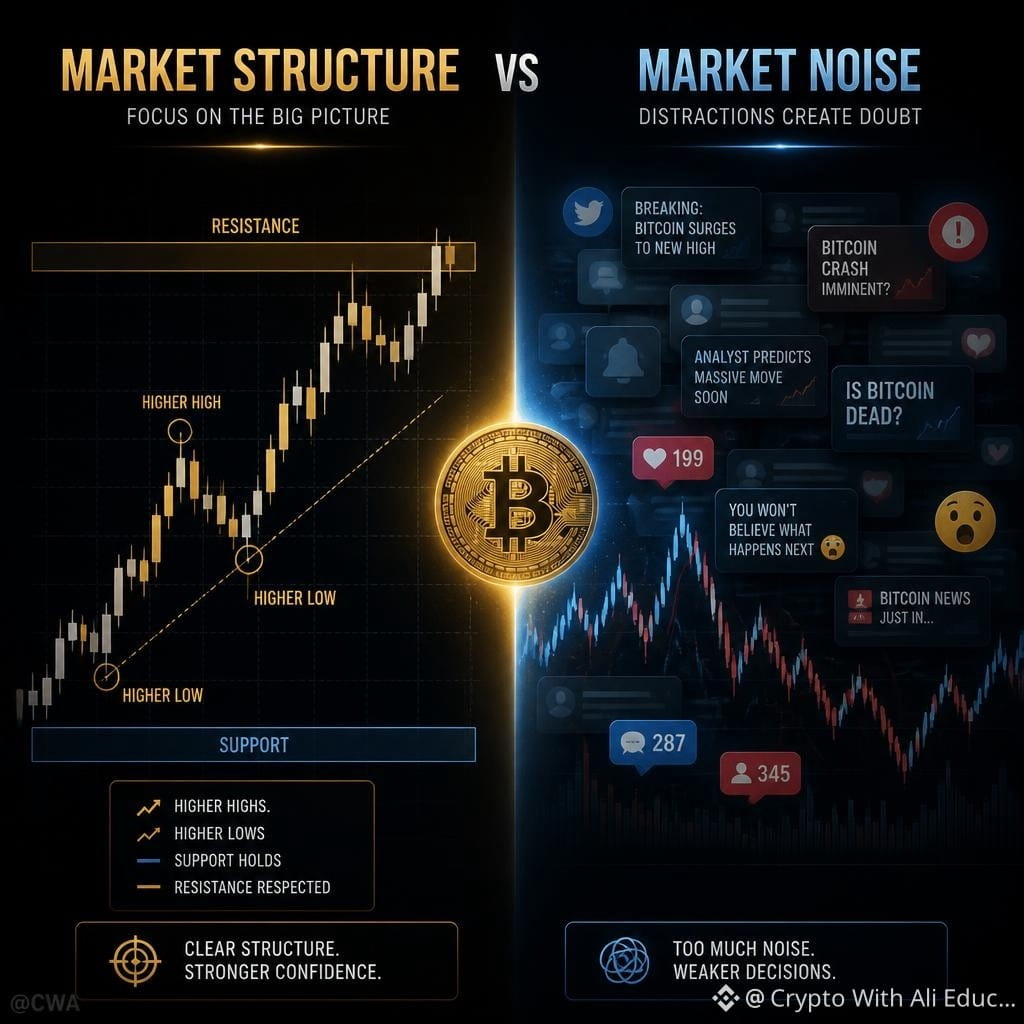
Market Structure vs Market Noise: How to Separate the Two
Crypto markets produce information constantly.
Price moves. Headlines appear. Social media reacts
But not everything deserves your attention.
🔹 What Is Market Structure?
Market structure focuses on how price is actually behaving.
Look for:
• Higher highs and higher lows
• Lower highs and lower lows
• Breaks of important levels
• Consolidation and ranges
• Reactions around support and resistance
These observations can help you understand the market without reacting to every short-term move.
🔹 What Is Market Noise?
Noise is information or movement that can distract you from the bigger picture.
Examples include:
• Sudden social-media hype
• Emotional headlines
• Very short-term price fluctuations
• Repeated opinions without new information
• Focusing on every small candle
Noise isn't necessarily false.
It simply may not be important enough to change the bigger structure.
🔹 A Simple Filter
Before reacting to any crypto update, ask:
1. Did market structure change?
2. Did an important level break?
3. Is there meaningful volume or participation?
4. Does the move matter on my timeframe?
5. Is this new information—or just a reaction to a reaction?
This simple process can help reduce information overload.
🧠 The Key Lesson
You don't need to react to everything the crypto market says.
Learn to separate what the market is doing from what everyone is saying about it.
That difference can make chart analysis much clearer.
💬 What creates more noise for you: Social Media, Headlines, or Short-Term Price?
Educational content only — not financial advice.
More market updates coming daily — follow along
#CryptoMarket #tradingeducation #Marketpsychology #cryptotrading #CryptoWithAli
Market Structure vs Market Noise: How to Separate the Two
Crypto markets produce information constantly.
Price moves. Headlines appear. Social media reacts
But not everything deserves your attention.
🔹 What Is Market Structure?
Market structure focuses on how price is actually behaving.
Look for:
• Higher highs and higher lows
• Lower highs and lower lows
• Breaks of important levels
• Consolidation and ranges
• Reactions around support and resistance
These observations can help you understand the market without reacting to every short-term move.
🔹 What Is Market Noise?
Noise is information or movement that can distract you from the bigger picture.
Examples include:
• Sudden social-media hype
• Emotional headlines
• Very short-term price fluctuations
• Repeated opinions without new information
• Focusing on every small candle
Noise isn't necessarily false.
It simply may not be important enough to change the bigger structure.
🔹 A Simple Filter
Before reacting to any crypto update, ask:
1. Did market structure change?
2. Did an important level break?
3. Is there meaningful volume or participation?
4. Does the move matter on my timeframe?
5. Is this new information—or just a reaction to a reaction?
This simple process can help reduce information overload.
🧠 The Key Lesson
You don't need to react to everything the crypto market says.
Learn to separate what the market is doing from what everyone is saying about it.
That difference can make chart analysis much clearer.
💬 What creates more noise for you: Social Media, Headlines, or Short-Term Price?
Educational content only — not financial advice.
More market updates coming daily — follow along
#CryptoMarket #tradingeducation #Marketpsychology #cryptotrading #CryptoWithAli
Crypto markets produce information constantly.
Price moves. Headlines appear. Social media reacts
But not everything deserves your attention.
🔹 What Is Market Structure?
Market structure focuses on how price is actually behaving.
Look for:
• Higher highs and higher lows
• Lower highs and lower lows
• Breaks of important levels
• Consolidation and ranges
• Reactions around support and resistance
These observations can help you understand the market without reacting to every short-term move.
🔹 What Is Market Noise?
Noise is information or movement that can distract you from the bigger picture.
Examples include:
• Sudden social-media hype
• Emotional headlines
• Very short-term price fluctuations
• Repeated opinions without new information
• Focusing on every small candle
Noise isn't necessarily false.
It simply may not be important enough to change the bigger structure.
🔹 A Simple Filter
Before reacting to any crypto update, ask:
1. Did market structure change?
2. Did an important level break?
3. Is there meaningful volume or participation?
4. Does the move matter on my timeframe?
5. Is this new information—or just a reaction to a reaction?
This simple process can help reduce information overload.
🧠 The Key Lesson
You don't need to react to everything the crypto market says.
Learn to separate what the market is doing from what everyone is saying about it.
That difference can make chart analysis much clearer.
💬 What creates more noise for you: Social Media, Headlines, or Short-Term Price?
Educational content only — not financial advice.
More market updates coming daily — follow along
#CryptoMarket #tradingeducation #Marketpsychology #cryptotrading #CryptoWithAli
72
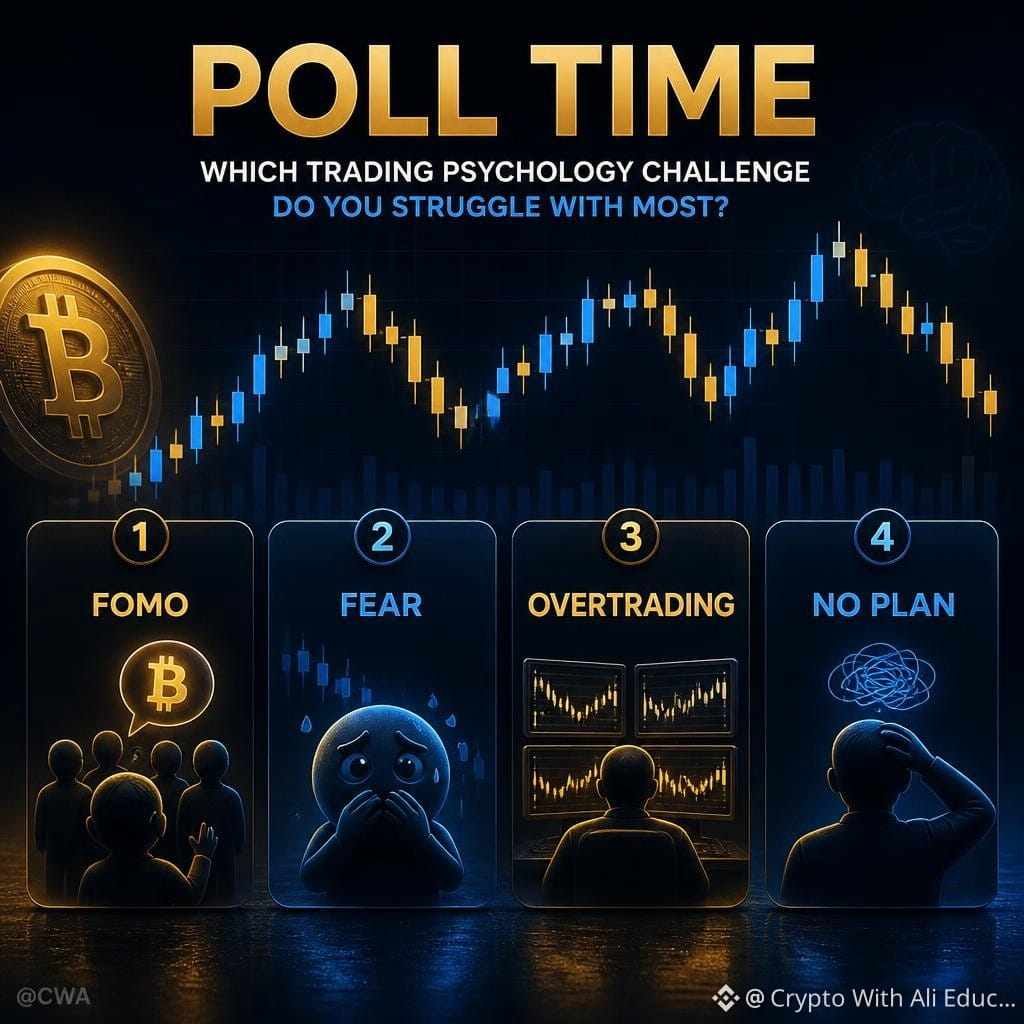
📊 Quick Trading Psychology Poll
Biggest Trading Problem?
🔘 FOMO
🔘 Fear
🔘 Overtrading
🔘 No Plan
Which one do you think causes the most problems for traders?
💬 Tell us why in the comments.
Understanding your own decision-making process is an important part of learning.
If this helped you, follow for more 👍
#BTC #TradingPsychology #FOMO #cryptoeducation #CryptoWithAli
📊 Quick Trading Psychology Poll
Biggest Trading Problem?
🔘 FOMO
🔘 Fear
🔘 Overtrading
🔘 No Plan
Which one do you think causes the most problems for traders?
💬 Tell us why in the comments.
Understanding your own decision-making process is an important part of learning.
If this helped you, follow for more 👍
#BTC #TradingPsychology #FOMO #cryptoeducation #CryptoWithAli
Biggest Trading Problem?
🔘 FOMO
🔘 Fear
🔘 Overtrading
🔘 No Plan
Which one do you think causes the most problems for traders?
💬 Tell us why in the comments.
Understanding your own decision-making process is an important part of learning.
If this helped you, follow for more 👍
#BTC #TradingPsychology #FOMO #cryptoeducation #CryptoWithAli
57
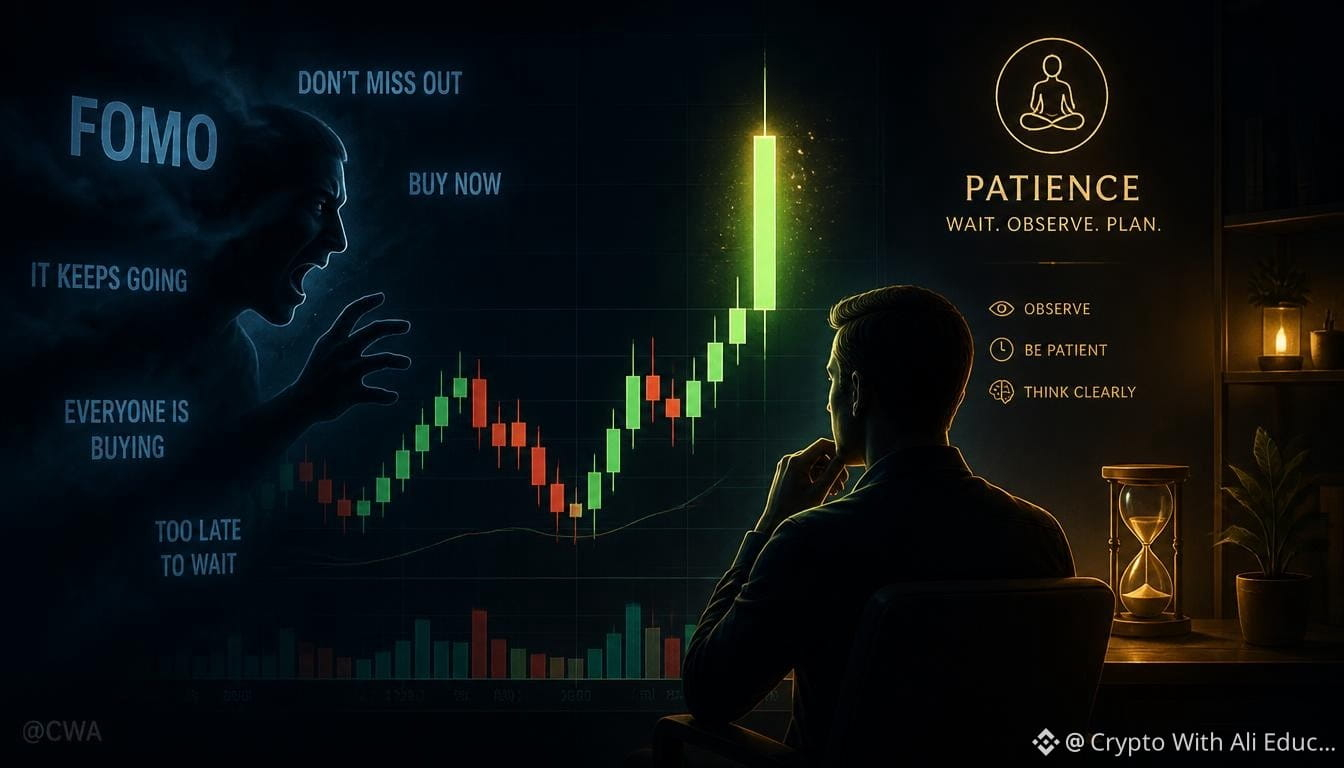
Why Traders Chase Green Candles — And Why Patience Matters
A candle turns green.
Price starts moving quickly.
Other traders begin talking about it.
And suddenly, the thought appears:
“If I don't enter now, I'll miss it.”
That's FOMO — Fear of Missing Out.
🔹 Why Do Traders Chase?
When price moves strongly, emotions can become stronger than the original plan.
Traders may:
• Enter after a large move
• Ignore their planned setup
• Buy simply because others are buying
• Make decisions based on social-media hype
• Treat one green candle as proof of a trend
But one candle doesn't tell the whole story.
🔹 What Can Patience Change?
Instead of reacting immediately, step back and ask:
What is the market structure?
Where are the important levels?
Is volume supporting the move?
What timeframe am I actually studying?
Has the move already happened?
These questions help separate observation from emotion.
🔹 Green Doesn't Always Mean “Go”
A strong green candle can show buying pressure.
But without context, it doesn't tell you whether the move will continue.
The same applies to red candles.
Good chart reading is not about reacting to every candle.
It's about understanding the context behind the movement.
🧠 The Key Lesson
Patience doesn't mean ignoring the market.
It means giving yourself enough time to understand what the market is showing before making a decision.
💬 What's the biggest problem for traders: FOMO, Fear, Overtrading, or No Plan?
Educational content only — not financial advice.
Follow for daily crypto insights 📊
#BTC #FOMO #TradingPsychology #CryptoPsychology #BinanceSquare
Why Traders Chase Green Candles — And Why Patience Matters
A candle turns green.
Price starts moving quickly.
Other traders begin talking about it.
And suddenly, the thought appears:
“If I don't enter now, I'll miss it.”
That's FOMO — Fear of Missing Out.
🔹 Why Do Traders Chase?
When price moves strongly, emotions can become stronger than the original plan.
Traders may:
• Enter after a large move
• Ignore their planned setup
• Buy simply because others are buying
• Make decisions based on social-media hype
• Treat one green candle as proof of a trend
But one candle doesn't tell the whole story.
🔹 What Can Patience Change?
Instead of reacting immediately, step back and ask:
What is the market structure?
Where are the important levels?
Is volume supporting the move?
What timeframe am I actually studying?
Has the move already happened?
These questions help separate observation from emotion.
🔹 Green Doesn't Always Mean “Go”
A strong green candle can show buying pressure.
But without context, it doesn't tell you whether the move will continue.
The same applies to red candles.
Good chart reading is not about reacting to every candle.
It's about understanding the context behind the movement.
🧠 The Key Lesson
Patience doesn't mean ignoring the market.
It means giving yourself enough time to understand what the market is showing before making a decision.
💬 What's the biggest problem for traders: FOMO, Fear, Overtrading, or No Plan?
Educational content only — not financial advice.
Follow for daily crypto insights 📊
#BTC #FOMO #TradingPsychology #CryptoPsychology #BinanceSquare
A candle turns green.
Price starts moving quickly.
Other traders begin talking about it.
And suddenly, the thought appears:
“If I don't enter now, I'll miss it.”
That's FOMO — Fear of Missing Out.
🔹 Why Do Traders Chase?
When price moves strongly, emotions can become stronger than the original plan.
Traders may:
• Enter after a large move
• Ignore their planned setup
• Buy simply because others are buying
• Make decisions based on social-media hype
• Treat one green candle as proof of a trend
But one candle doesn't tell the whole story.
🔹 What Can Patience Change?
Instead of reacting immediately, step back and ask:
What is the market structure?
Where are the important levels?
Is volume supporting the move?
What timeframe am I actually studying?
Has the move already happened?
These questions help separate observation from emotion.
🔹 Green Doesn't Always Mean “Go”
A strong green candle can show buying pressure.
But without context, it doesn't tell you whether the move will continue.
The same applies to red candles.
Good chart reading is not about reacting to every candle.
It's about understanding the context behind the movement.
🧠 The Key Lesson
Patience doesn't mean ignoring the market.
It means giving yourself enough time to understand what the market is showing before making a decision.
💬 What's the biggest problem for traders: FOMO, Fear, Overtrading, or No Plan?
Educational content only — not financial advice.
Follow for daily crypto insights 📊
#BTC #FOMO #TradingPsychology #CryptoPsychology #BinanceSquare
81
🤖🌐 AI can bring intelligence and automation. Web3 can bring verification, digital ownership and new forms of coordination.
But the bigger question is: Who controls the infrastructure and rules of the next digital economy?
Explore the full idea in the article.
#Aİ #Web3 #blockchain #AIAgents #FutureOfTechnology
🤖🌐 AI can bring intelligence and automation. Web3 can bring verification, digital ownership and new forms of coordination.
But the bigger question is: Who controls the infrastructure and rules of the next digital economy?
Explore the full idea in the article.
#Aİ #Web3 #blockchain #AIAgents #FutureOfTechnology
But the bigger question is: Who controls the infrastructure and rules of the next digital economy?
Explore the full idea in the article.
#Aİ #Web3 #blockchain #AIAgents #FutureOfTechnology
3
351
The future of AI + Web3 isn't only about what the technology can do.
It is also about who controls the infrastructure, data, identity,
ownership and rules behind it.
AI can provide intelligence.
Blockchain can provide verification.
Humans still provide governance and accountability.
Read the full article and share your view.
#AI #Web3 #AIAgents
The future of AI + Web3 isn't only about what the technology can do.
It is also about who controls the infrastructure, data, identity,
ownership and rules behind it.
AI can provide intelligence.
Blockchain can provide verification.
Humans still provide governance and accountability.
Read the full article and share your view.
#AI #Web3 #AIAgents
It is also about who controls the infrastructure, data, identity,
ownership and rules behind it.
AI can provide intelligence.
Blockchain can provide verification.
Humans still provide governance and accountability.
Read the full article and share your view.
#AI #Web3 #AIAgents

46
🤖 AI is becoming more autonomous.
🌐 Web3 is building new models for ownership, verification and digital coordination.
But when AI agents, blockchain infrastructure and digital ownership come together, one question becomes increasingly important:
Who will control the next digital economy?
New article coming today. 👀
#Aİ #Web3 #blockchain
🤖 AI is becoming more autonomous.
🌐 Web3 is building new models for ownership, verification and digital coordination.
But when AI agents, blockchain infrastructure and digital ownership come together, one question becomes increasingly important:
Who will control the next digital economy?
New article coming today. 👀
#Aİ #Web3 #blockchain
🌐 Web3 is building new models for ownership, verification and digital coordination.
But when AI agents, blockchain infrastructure and digital ownership come together, one question becomes increasingly important:
Who will control the next digital economy?
New article coming today. 👀
#Aİ #Web3 #blockchain

63
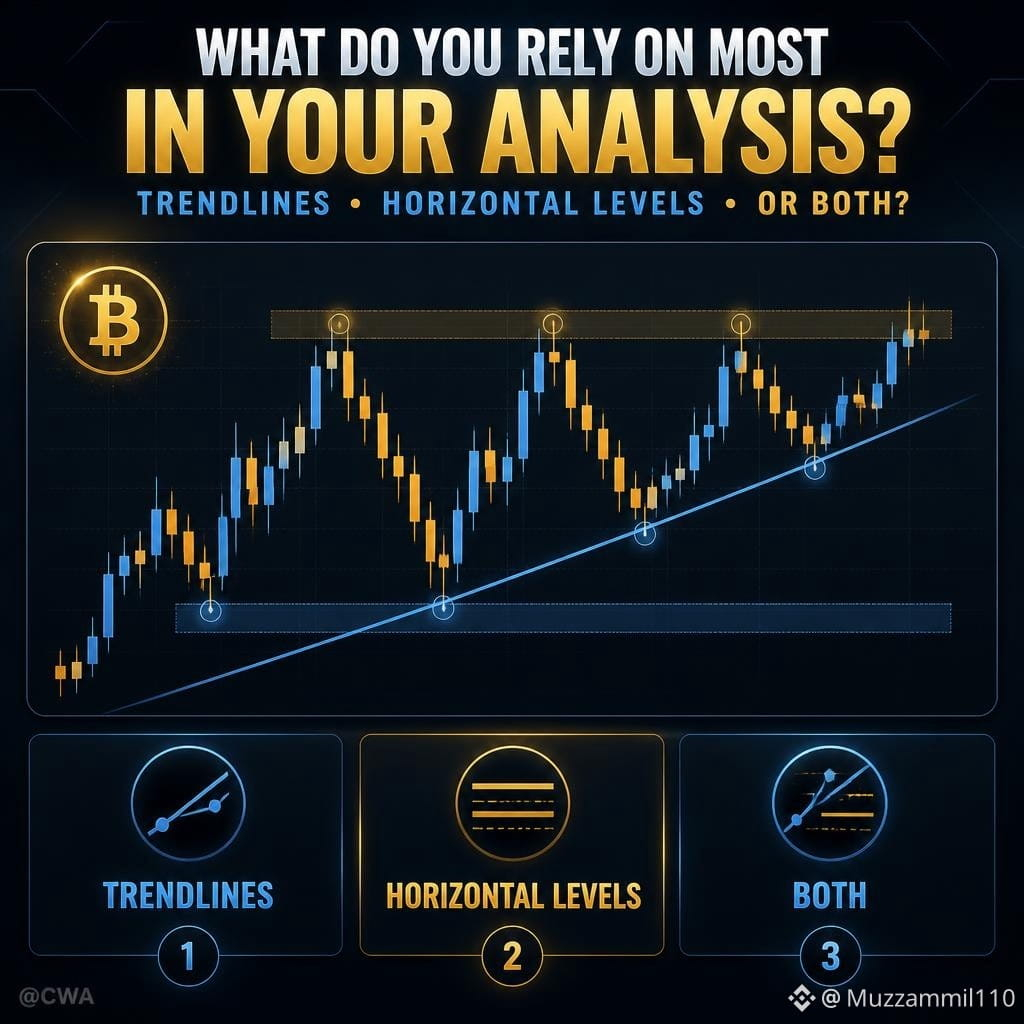
📊 Quick Technical Analysis Poll
Your preference →
🔘 Trendlines
🔘 Horizontal Levels
🔘 Both
Which one do you find easier to use when studying a crypto chart?
💬 Tell us why in the comments.
Different tools can provide different perspectives—context matters.
Crypto is a journey — follow to learn step by step
#BTC #TechnicalAnalysis #Trendlines #cryptoeducation #BinanceSquare
📊 Quick Technical Analysis Poll
Your preference →
🔘 Trendlines
🔘 Horizontal Levels
🔘 Both
Which one do you find easier to use when studying a crypto chart?
💬 Tell us why in the comments.
Different tools can provide different perspectives—context matters.
Crypto is a journey — follow to learn step by step
#BTC #TechnicalAnalysis #Trendlines #cryptoeducation #BinanceSquare
Your preference →
🔘 Trendlines
🔘 Horizontal Levels
🔘 Both
Which one do you find easier to use when studying a crypto chart?
💬 Tell us why in the comments.
Different tools can provide different perspectives—context matters.
Crypto is a journey — follow to learn step by step
#BTC #TechnicalAnalysis #Trendlines #cryptoeducation #BinanceSquare
74
Trendlines vs Horizontal Levels: Which One Should Beginners Trust More?
When beginners learn technical analysis, two tools often appear immediately:
📈 Trendlines
📏 Horizontal Support & Resistance
But which one deserves more trust?
🔹 Trendlines
Trendlines connect important swing highs or swing lows to help visualize the direction of price.
They can be useful for identifying:
• Uptrends
• Downtrends
• Changing momentum
• Dynamic areas of interest
The limitation?
Different traders may draw trendlines slightly differently.
🔹 Horizontal Levels
Horizontal levels mark areas where price has previously reacted.
They can help identify:
• Support
• Resistance
• Previous reaction zones
• Important price areas
Their major advantage is that they are easier to compare across different charts and timeframes.
So Which Is Better?
For beginners, horizontal levels can often provide a clearer starting point because they are less subjective.
But that doesn't make trendlines useless.
A stronger analysis can combine both.
For example:
Horizontal level + trendline + volume + market structure
can provide more context than relying on one tool alone.
The Key Lesson
Don't ask:
“Which tool is always correct?”
Instead ask:
“What does the price structure show, and does the tool support that observation?”
Technical analysis works better as a framework for understanding market behavior—not as a guarantee of what happens next.
💬 Which do you prefer: Trendlines, Horizontal Levels, or Both?
Educational content only — not financial advice.
#Bitcoin #BTC #Trendlines #SupportAndResistance #TechnicalAnalysis #CryptoEducation #PriceAction #MarketStructure #TradingEducation #CryptoTrading #CryptoWithAli #BinanceSquare
🕧 Post 2 — 12:30 AM PKT
📊 Quick Technical Analysis Poll
Your preference →
🔘 Trendlines
🔘 Horizontal Levels
🔘 Both
Which one do you find easier to use when studying a crypto chart?
💬 Tell us why in the comments.
Trendlines vs Horizontal Levels: Which One Should Beginners Trust More?
When beginners learn technical analysis, two tools often appear immediately:
📈 Trendlines
📏 Horizontal Support & Resistance
But which one deserves more trust?
🔹 Trendlines
Trendlines connect important swing highs or swing lows to help visualize the direction of price.
They can be useful for identifying:
• Uptrends
• Downtrends
• Changing momentum
• Dynamic areas of interest
The limitation?
Different traders may draw trendlines slightly differently.
🔹 Horizontal Levels
Horizontal levels mark areas where price has previously reacted.
They can help identify:
• Support
• Resistance
• Previous reaction zones
• Important price areas
Their major advantage is that they are easier to compare across different charts and timeframes.
So Which Is Better?
For beginners, horizontal levels can often provide a clearer starting point because they are less subjective.
But that doesn't make trendlines useless.
A stronger analysis can combine both.
For example:
Horizontal level + trendline + volume + market structure
can provide more context than relying on one tool alone.
The Key Lesson
Don't ask:
“Which tool is always correct?”
Instead ask:
“What does the price structure show, and does the tool support that observation?”
Technical analysis works better as a framework for understanding market behavior—not as a guarantee of what happens next.
💬 Which do you prefer: Trendlines, Horizontal Levels, or Both?
Educational content only — not financial advice.
#Bitcoin #BTC #Trendlines #SupportAndResistance #TechnicalAnalysis #CryptoEducation #PriceAction #MarketStructure #TradingEducation #CryptoTrading #CryptoWithAli #BinanceSquare
🕧 Post 2 — 12:30 AM PKT
📊 Quick Technical Analysis Poll
Your preference →
🔘 Trendlines
🔘 Horizontal Levels
🔘 Both
Which one do you find easier to use when studying a crypto chart?
💬 Tell us why in the comments.
When beginners learn technical analysis, two tools often appear immediately:
📈 Trendlines
📏 Horizontal Support & Resistance
But which one deserves more trust?
🔹 Trendlines
Trendlines connect important swing highs or swing lows to help visualize the direction of price.
They can be useful for identifying:
• Uptrends
• Downtrends
• Changing momentum
• Dynamic areas of interest
The limitation?
Different traders may draw trendlines slightly differently.
🔹 Horizontal Levels
Horizontal levels mark areas where price has previously reacted.
They can help identify:
• Support
• Resistance
• Previous reaction zones
• Important price areas
Their major advantage is that they are easier to compare across different charts and timeframes.
So Which Is Better?
For beginners, horizontal levels can often provide a clearer starting point because they are less subjective.
But that doesn't make trendlines useless.
A stronger analysis can combine both.
For example:
Horizontal level + trendline + volume + market structure
can provide more context than relying on one tool alone.
The Key Lesson
Don't ask:
“Which tool is always correct?”
Instead ask:
“What does the price structure show, and does the tool support that observation?”
Technical analysis works better as a framework for understanding market behavior—not as a guarantee of what happens next.
💬 Which do you prefer: Trendlines, Horizontal Levels, or Both?
Educational content only — not financial advice.
#Bitcoin #BTC #Trendlines #SupportAndResistance #TechnicalAnalysis #CryptoEducation #PriceAction #MarketStructure #TradingEducation #CryptoTrading #CryptoWithAli #BinanceSquare
🕧 Post 2 — 12:30 AM PKT
📊 Quick Technical Analysis Poll
Your preference →
🔘 Trendlines
🔘 Horizontal Levels
🔘 Both
Which one do you find easier to use when studying a crypto chart?
💬 Tell us why in the comments.
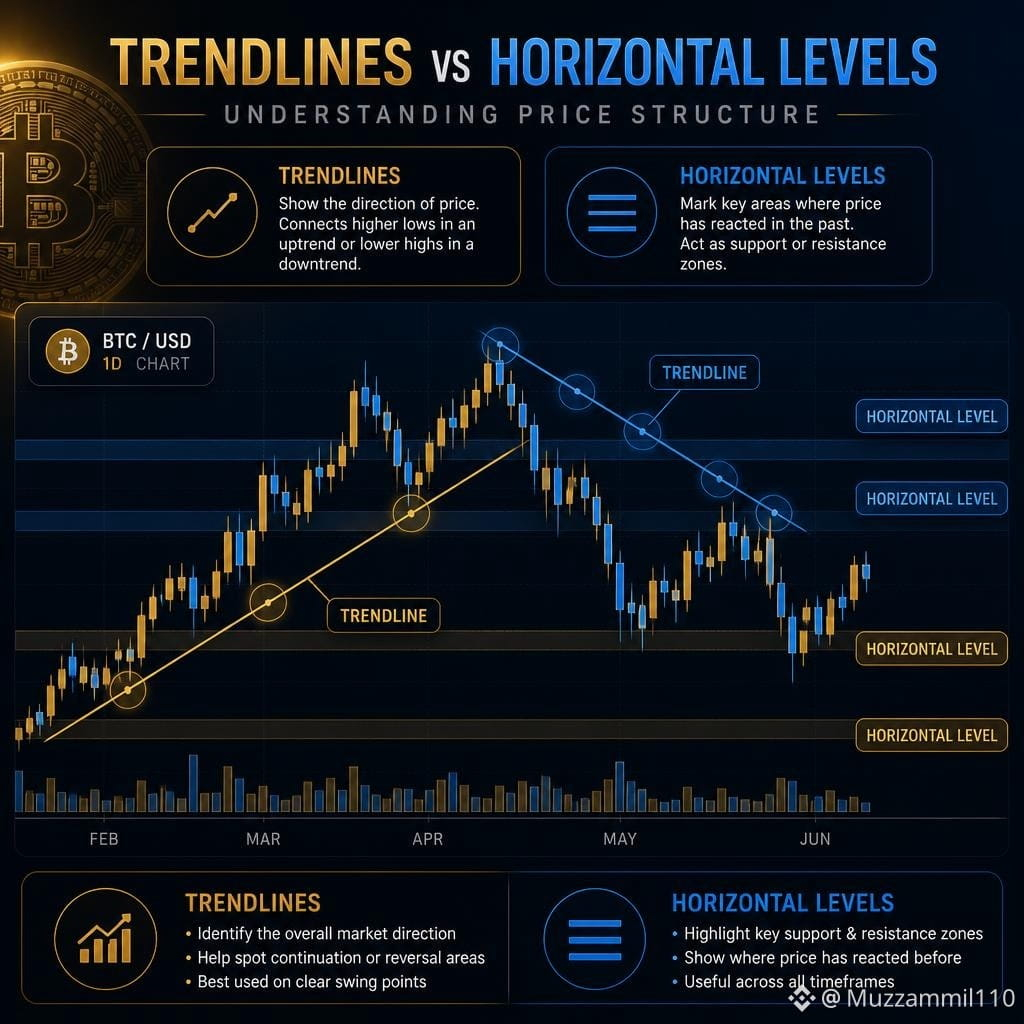
78
Log in to explore more content
Join global crypto users on Binance Square
⚡️ Get latest and useful information about crypto.
💬 Trusted by the world’s largest crypto exchange.
👍 Discover real insights from verified creators.
အီးမေးလ် / ဖုန်းနံပါတ်
ရေပန်းစားနေသော ခေါင်းစဉ်များ
TrumpRejectsAIRulesForVoluntaryAudits
1,477 views
123 Discussing
Super Intelligence" & The AI Policy Shift: Self-Policing or a Risky Gamble?
Nurul Hasnat Samir
·နှစ်သက်မှု 0 ခု
·314 views
BitgetHotWalletBreachTiedToThirdPartySecurityFlaw
660 views
96 Discussing
OpenAIUnveilsAlwaysOnAgentDots
1,808 views
143 Discussing