
Prime Crypto Lab
93 投稿

Prime Crypto Lab
報告
ユーザーをブロック
Crypto Analyst 📊 | Market Research 🔍 | Educational Content 📚 | Long-Term Growth 📈 | DYOR | Not Financial Advice.
2 フォロー
0 フォロワー
0 いいね
投稿
翻訳参照
🚨Tokenized Stocks Get a New SEC Framework — But Is the Breakout Confirmed?
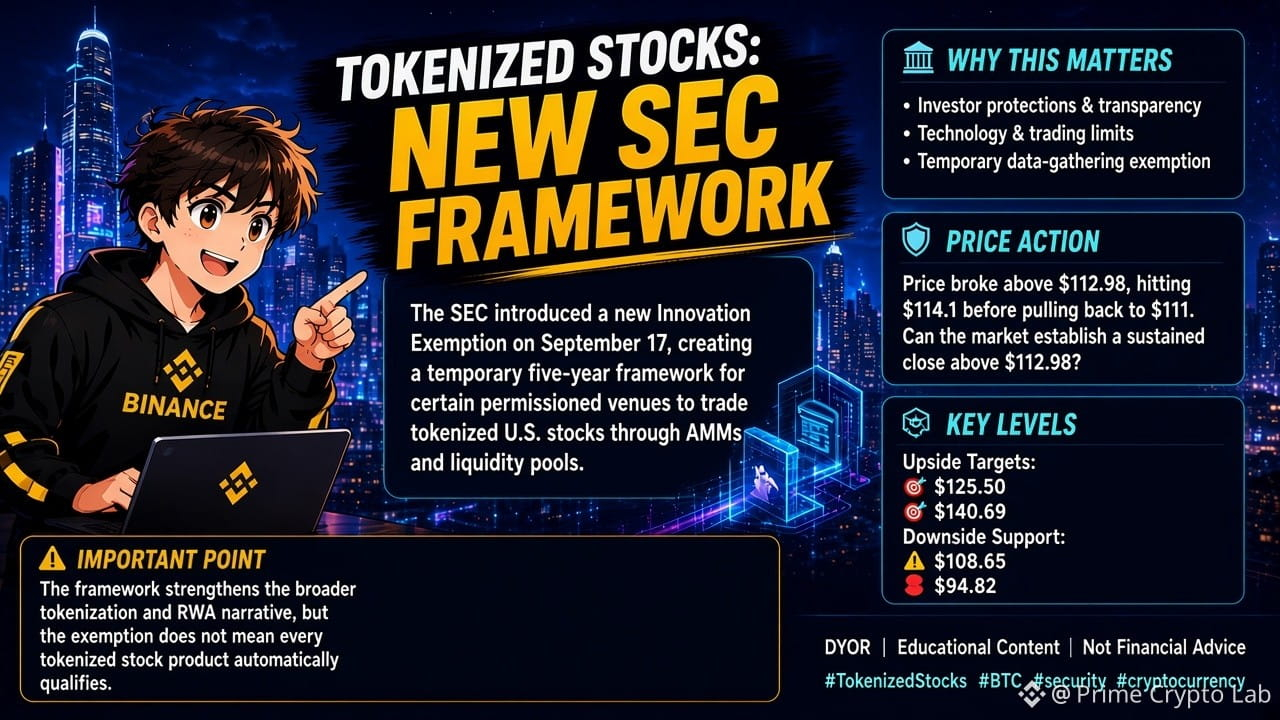
$BTC — Solana-related market activity has gained attention after the SEC introduced its new Innovation Exemption on September 17, creating a temporary five-year framework for certain permissioned venues to trade tokenized U.S. stocks through automated market makers and liquidity pools.
🏦 Why This Matters
The framework includes conditions around permissioned access, investor protections, transparency, technology safeguards, trading limits, and recordkeeping. The SEC also stated that the exemption is temporary and intended to help gather data for future rulemaking.
This strengthens the broader tokenization and RWA narrative, but the exemption does not mean every tokenized stock product automatically qualifies.
📊 PRICE ACTION NEEDS CONFIRMATION
The sharp move on September 18 pushed price above the $112.98 area, with the daily high reaching roughly $114.1–$114.3. However, price subsequently pulled back toward the $111 area.
The key technical question remains:
Can the market establish a sustained close above $112.98?
If that level is reclaimed and held, traders may continue watching:
🎯 $125.50
🎯 $140.69
If the breakout fails, downside levels to monitor include:
⚠️ $108.65
🔻 $94.82
🧠 THE BIGGER PICTURE
The SEC development gives the tokenization sector another regulatory catalyst, while price action still needs to validate the technical breakout.
For $ETH , the broader tokenization trend is also worth watching as blockchain-based representations of traditional assets receive increasing regulatory attention.
The important distinction is between a short-term price spike and a confirmed higher-timeframe breakout.
$LINK can also remain on the watchlist as tokenization and on-chain financial infrastructure continue developing.
📌 Market commentary only. Not financial advice.
#crypto #TokenizedStocks #RWA #SEC #MarketAnalysis
🚨Tokenized Stocks Get a New SEC Framework — But Is the Breakout Confirmed?
$BTC — Solana-related market activity has gained attention after the SEC introduced its new Innovation Exemption on September 17, creating a temporary five-year framework for certain permissioned venues to trade tokenized U.S. stocks through automated market makers and liquidity pools.
🏦 Why This Matters
The framework includes conditions around permissioned access, investor protections, transparency, technology safeguards, trading limits, and recordkeeping. The SEC also stated that the exemption is temporary and intended to help gather data for future rulemaking.
This strengthens the broader tokenization and RWA narrative, but the exemption does not mean every tokenized stock product automatically qualifies.
📊 PRICE ACTION NEEDS CONFIRMATION
The sharp move on September 18 pushed price above the $112.98 area, with the daily high reaching roughly $114.1–$114.3. However, price subsequently pulled back toward the $111 area.
The key technical question remains:
Can the market establish a sustained close above $112.98?
If that level is reclaimed and held, traders may continue watching:
🎯 $125.50
🎯 $140.69
If the breakout fails, downside levels to monitor include:
⚠️ $108.65
🔻 $94.82
🧠 THE BIGGER PICTURE
The SEC development gives the tokenization sector another regulatory catalyst, while price action still needs to validate the technical breakout.
For $ETH , the broader tokenization trend is also worth watching as blockchain-based representations of traditional assets receive increasing regulatory attention.
The important distinction is between a short-term price spike and a confirmed higher-timeframe breakout.
$LINK can also remain on the watchlist as tokenization and on-chain financial infrastructure continue developing.
📌 Market commentary only. Not financial advice.
#crypto #TokenizedStocks #RWA #SEC #MarketAnalysis
$BTC — Solana-related market activity has gained attention after the SEC introduced its new Innovation Exemption on September 17, creating a temporary five-year framework for certain permissioned venues to trade tokenized U.S. stocks through automated market makers and liquidity pools.
🏦 Why This Matters
The framework includes conditions around permissioned access, investor protections, transparency, technology safeguards, trading limits, and recordkeeping. The SEC also stated that the exemption is temporary and intended to help gather data for future rulemaking.
This strengthens the broader tokenization and RWA narrative, but the exemption does not mean every tokenized stock product automatically qualifies.
📊 PRICE ACTION NEEDS CONFIRMATION
The sharp move on September 18 pushed price above the $112.98 area, with the daily high reaching roughly $114.1–$114.3. However, price subsequently pulled back toward the $111 area.
The key technical question remains:
Can the market establish a sustained close above $112.98?
If that level is reclaimed and held, traders may continue watching:
🎯 $125.50
🎯 $140.69
If the breakout fails, downside levels to monitor include:
⚠️ $108.65
🔻 $94.82
🧠 THE BIGGER PICTURE
The SEC development gives the tokenization sector another regulatory catalyst, while price action still needs to validate the technical breakout.
For $ETH , the broader tokenization trend is also worth watching as blockchain-based representations of traditional assets receive increasing regulatory attention.
The important distinction is between a short-term price spike and a confirmed higher-timeframe breakout.
$LINK can also remain on the watchlist as tokenization and on-chain financial infrastructure continue developing.
📌 Market commentary only. Not financial advice.
#crypto #TokenizedStocks #RWA #SEC #MarketAnalysis
91
🔎 ブロックチェーン エクスプローラーとは?
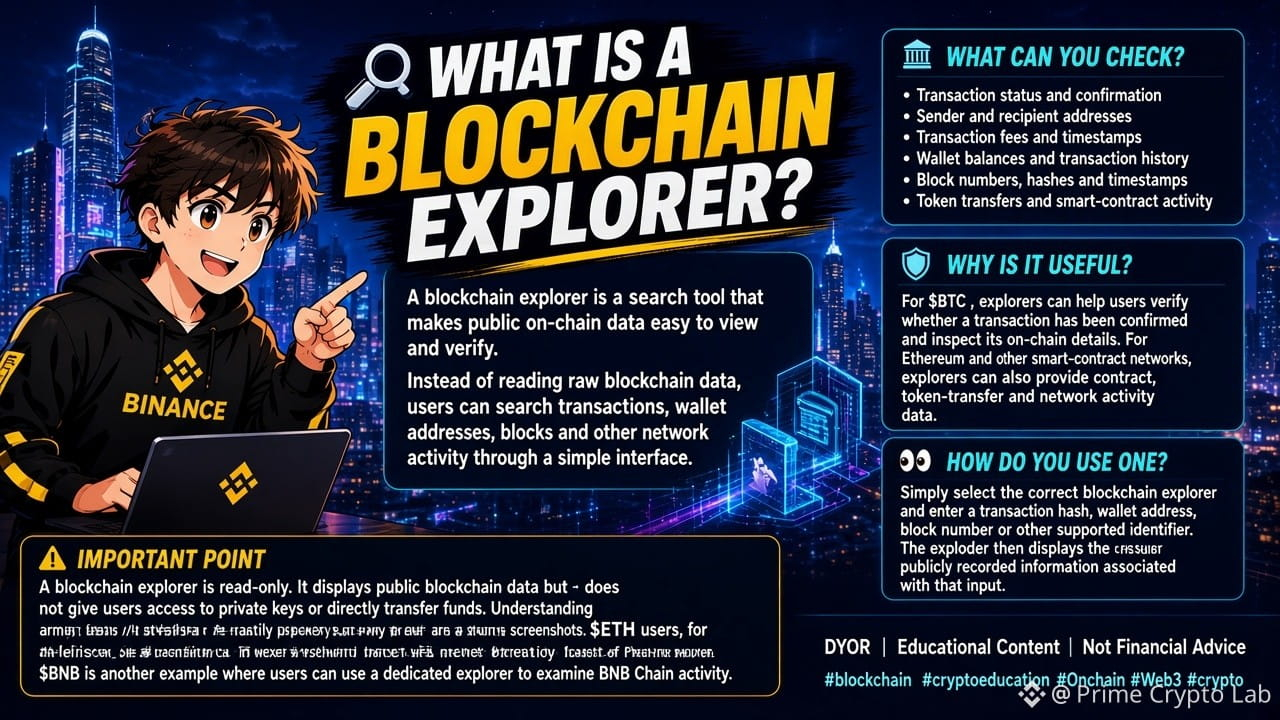
ブロックチェーン エクスプローラーは、公に記録されたオンチェーン データを見やすく、検証しやすくする検索ツールです。生のブロックチェーン データを読み解く代わりに、ユーザーはシンプルな画面から取引、ウォレット アドレス、ブロック、その他のネットワーク活動を検索できます。
🧾何を確認できますか?
ブロックチェーン エクスプローラーでは、次のような情報を表示できます:
• 取引のステータスと承認(コンファメーション)
• 送信者および受信者のアドレス
• 取引手数料とタイムスタンプ
• ウォレット残高と取引履歴
• ブロック番号、ハッシュ、タイムスタンプ
• トークン転送およびスマートコントラクトの活動
🛡️なぜ役に立つのですか?
$BTC の場合、エクスプローラーを使うことで、取引が承認済みかどうかをユーザーが確認し、オンチェーン上の詳細を確認できます。
イーサリアムやその他のスマートコントラクト ネットワークでは、エクスプローラーがコントラクト、トークン転送、ネットワーク活動に関するデータも提供します。
👀 どうやって使いますか?
対応しているブロックチェーン エクスプローラーを選び、取引ハッシュ、ウォレット アドレス、ブロック番号、またはその他のサポートされている識別子を入力するだけです。するとエクスプローラーは、その入力に関連付けられた公開記録情報を表示します。
⚠️重要なポイント
ブロックチェーン エクスプローラーは読み取り専用です。公開されているブロックチェーン データを表示しますが、ユーザーに秘密鍵へのアクセスを提供したり、資金を直接送金したりすることはできません。
エクスプローラーを理解すると、主張やスクリーンショットに頼るよりも、活動を検証しやすくなります。たとえば、$ETH ユーザーはイーサリアムのエクスプローラー上で取引やスマートコントラクトのやり取りを直接確認できます。
$BNB は別の例で、ユーザーが専用のエクスプローラーを使ってBNB Chainの活動を調べることができます。
DYOR | 教育コンテンツ | 金融アドバイスではありません
#blockchain #cryptoeducation #Onchain #Web3 #crypto
🔎 ブロックチェーン エクスプローラーとは?
ブロックチェーン エクスプローラーは、公に記録されたオンチェーン データを見やすく、検証しやすくする検索ツールです。生のブロックチェーン データを読み解く代わりに、ユーザーはシンプルな画面から取引、ウォレット アドレス、ブロック、その他のネットワーク活動を検索できます。
🧾何を確認できますか?
ブロックチェーン エクスプローラーでは、次のような情報を表示できます:
• 取引のステータスと承認(コンファメーション)
• 送信者および受信者のアドレス
• 取引手数料とタイムスタンプ
• ウォレット残高と取引履歴
• ブロック番号、ハッシュ、タイムスタンプ
• トークン転送およびスマートコントラクトの活動
🛡️なぜ役に立つのですか?
$BTC の場合、エクスプローラーを使うことで、取引が承認済みかどうかをユーザーが確認し、オンチェーン上の詳細を確認できます。
イーサリアムやその他のスマートコントラクト ネットワークでは、エクスプローラーがコントラクト、トークン転送、ネットワーク活動に関するデータも提供します。
👀 どうやって使いますか?
対応しているブロックチェーン エクスプローラーを選び、取引ハッシュ、ウォレット アドレス、ブロック番号、またはその他のサポートされている識別子を入力するだけです。するとエクスプローラーは、その入力に関連付けられた公開記録情報を表示します。
⚠️重要なポイント
ブロックチェーン エクスプローラーは読み取り専用です。公開されているブロックチェーン データを表示しますが、ユーザーに秘密鍵へのアクセスを提供したり、資金を直接送金したりすることはできません。
エクスプローラーを理解すると、主張やスクリーンショットに頼るよりも、活動を検証しやすくなります。たとえば、$ETH ユーザーはイーサリアムのエクスプローラー上で取引やスマートコントラクトのやり取りを直接確認できます。
$BNB は別の例で、ユーザーが専用のエクスプローラーを使ってBNB Chainの活動を調べることができます。
DYOR | 教育コンテンツ | 金融アドバイスではありません
#blockchain #cryptoeducation #Onchain #Web3 #crypto
ブロックチェーン エクスプローラーは、公に記録されたオンチェーン データを見やすく、検証しやすくする検索ツールです。生のブロックチェーン データを読み解く代わりに、ユーザーはシンプルな画面から取引、ウォレット アドレス、ブロック、その他のネットワーク活動を検索できます。
🧾何を確認できますか?
ブロックチェーン エクスプローラーでは、次のような情報を表示できます:
• 取引のステータスと承認(コンファメーション)
• 送信者および受信者のアドレス
• 取引手数料とタイムスタンプ
• ウォレット残高と取引履歴
• ブロック番号、ハッシュ、タイムスタンプ
• トークン転送およびスマートコントラクトの活動
🛡️なぜ役に立つのですか?
$BTC の場合、エクスプローラーを使うことで、取引が承認済みかどうかをユーザーが確認し、オンチェーン上の詳細を確認できます。
イーサリアムやその他のスマートコントラクト ネットワークでは、エクスプローラーがコントラクト、トークン転送、ネットワーク活動に関するデータも提供します。
👀 どうやって使いますか?
対応しているブロックチェーン エクスプローラーを選び、取引ハッシュ、ウォレット アドレス、ブロック番号、またはその他のサポートされている識別子を入力するだけです。するとエクスプローラーは、その入力に関連付けられた公開記録情報を表示します。
⚠️重要なポイント
ブロックチェーン エクスプローラーは読み取り専用です。公開されているブロックチェーン データを表示しますが、ユーザーに秘密鍵へのアクセスを提供したり、資金を直接送金したりすることはできません。
エクスプローラーを理解すると、主張やスクリーンショットに頼るよりも、活動を検証しやすくなります。たとえば、$ETH ユーザーはイーサリアムのエクスプローラー上で取引やスマートコントラクトのやり取りを直接確認できます。
$BNB は別の例で、ユーザーが専用のエクスプローラーを使ってBNB Chainの活動を調べることができます。
DYOR | 教育コンテンツ | 金融アドバイスではありません
#blockchain #cryptoeducation #Onchain #Web3 #crypto
69
翻訳参照
🏦Hong Kong Pushes Toward 24/7 Institutional Tokenized Settlement
🇭🇰 Project EnsembleTX Enters Its Next Phase
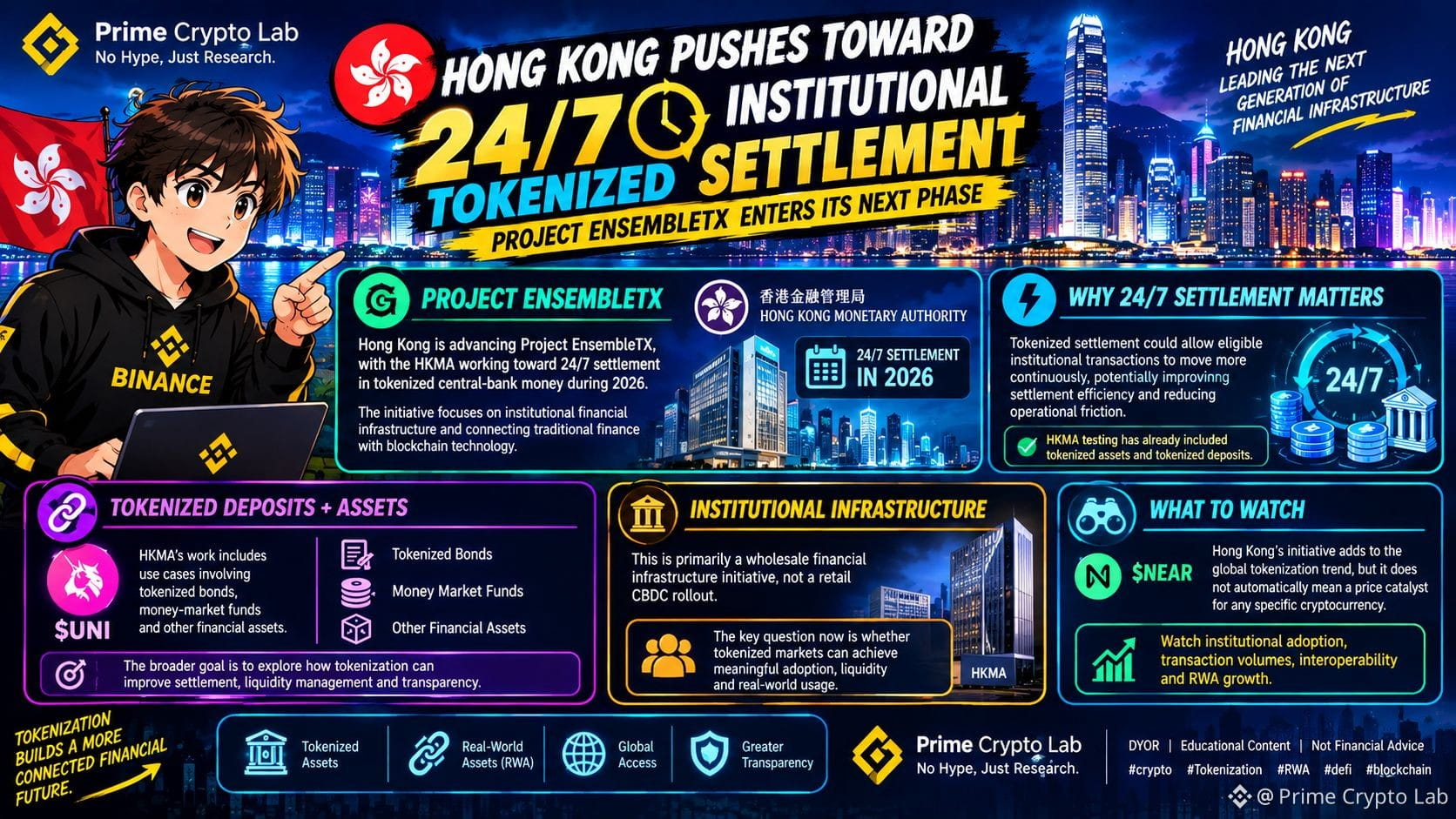
$G — Hong Kong is advancing Project EnsembleTX, with the HKMA working toward 24/7 settlement in tokenized central-bank money during 2026. The initiative focuses on institutional financial infrastructure and connecting traditional finance with blockchain technology.
⚡ Why 24/7 Settlement Matters
Tokenized settlement could allow eligible institutional transactions to move more continuously, potentially improving settlement efficiency and reducing operational friction. HKMA testing has already included tokenized assets and tokenized deposits.
🔗 Tokenized Deposits + Assets
$UNI — HKMA's work includes use cases involving tokenized bonds, money-market funds and other financial assets. The broader goal is to explore how tokenization can improve settlement, liquidity management and transparency.
🏦 Institutional Infrastructure
This is primarily a wholesale financial infrastructure initiative, not a retail CBDC rollout. The key question now is whether tokenized markets can achieve meaningful adoption, liquidity and real-world usage.
👀 What to Watch
$NEAR — Hong Kong's initiative adds to the global tokenization trend, but it does not automatically mean a price catalyst for any specific cryptocurrency. Watch institutional adoption, transaction volumes, interoperability and RWA growth.
Prime Crypto Lab — No Hype, Just Research.
DYOR | Educational Content | Not Financial Advice
#crypto #Tokenization #RWA #defi #blockchain
🏦Hong Kong Pushes Toward 24/7 Institutional Tokenized Settlement
🇭🇰 Project EnsembleTX Enters Its Next Phase
$G — Hong Kong is advancing Project EnsembleTX, with the HKMA working toward 24/7 settlement in tokenized central-bank money during 2026. The initiative focuses on institutional financial infrastructure and connecting traditional finance with blockchain technology.
⚡ Why 24/7 Settlement Matters
Tokenized settlement could allow eligible institutional transactions to move more continuously, potentially improving settlement efficiency and reducing operational friction. HKMA testing has already included tokenized assets and tokenized deposits.
🔗 Tokenized Deposits + Assets
$UNI — HKMA's work includes use cases involving tokenized bonds, money-market funds and other financial assets. The broader goal is to explore how tokenization can improve settlement, liquidity management and transparency.
🏦 Institutional Infrastructure
This is primarily a wholesale financial infrastructure initiative, not a retail CBDC rollout. The key question now is whether tokenized markets can achieve meaningful adoption, liquidity and real-world usage.
👀 What to Watch
$NEAR — Hong Kong's initiative adds to the global tokenization trend, but it does not automatically mean a price catalyst for any specific cryptocurrency. Watch institutional adoption, transaction volumes, interoperability and RWA growth.
Prime Crypto Lab — No Hype, Just Research.
DYOR | Educational Content | Not Financial Advice
#crypto #Tokenization #RWA #defi #blockchain
🇭🇰 Project EnsembleTX Enters Its Next Phase
$G — Hong Kong is advancing Project EnsembleTX, with the HKMA working toward 24/7 settlement in tokenized central-bank money during 2026. The initiative focuses on institutional financial infrastructure and connecting traditional finance with blockchain technology.
⚡ Why 24/7 Settlement Matters
Tokenized settlement could allow eligible institutional transactions to move more continuously, potentially improving settlement efficiency and reducing operational friction. HKMA testing has already included tokenized assets and tokenized deposits.
🔗 Tokenized Deposits + Assets
$UNI — HKMA's work includes use cases involving tokenized bonds, money-market funds and other financial assets. The broader goal is to explore how tokenization can improve settlement, liquidity management and transparency.
🏦 Institutional Infrastructure
This is primarily a wholesale financial infrastructure initiative, not a retail CBDC rollout. The key question now is whether tokenized markets can achieve meaningful adoption, liquidity and real-world usage.
👀 What to Watch
$NEAR — Hong Kong's initiative adds to the global tokenization trend, but it does not automatically mean a price catalyst for any specific cryptocurrency. Watch institutional adoption, transaction volumes, interoperability and RWA growth.
Prime Crypto Lab — No Hype, Just Research.
DYOR | Educational Content | Not Financial Advice
#crypto #Tokenization #RWA #defi #blockchain
247
翻訳参照
🔗 What Are Layer-1 & Layer-2 Networks?
🧱 What Is a Layer-1 Network?
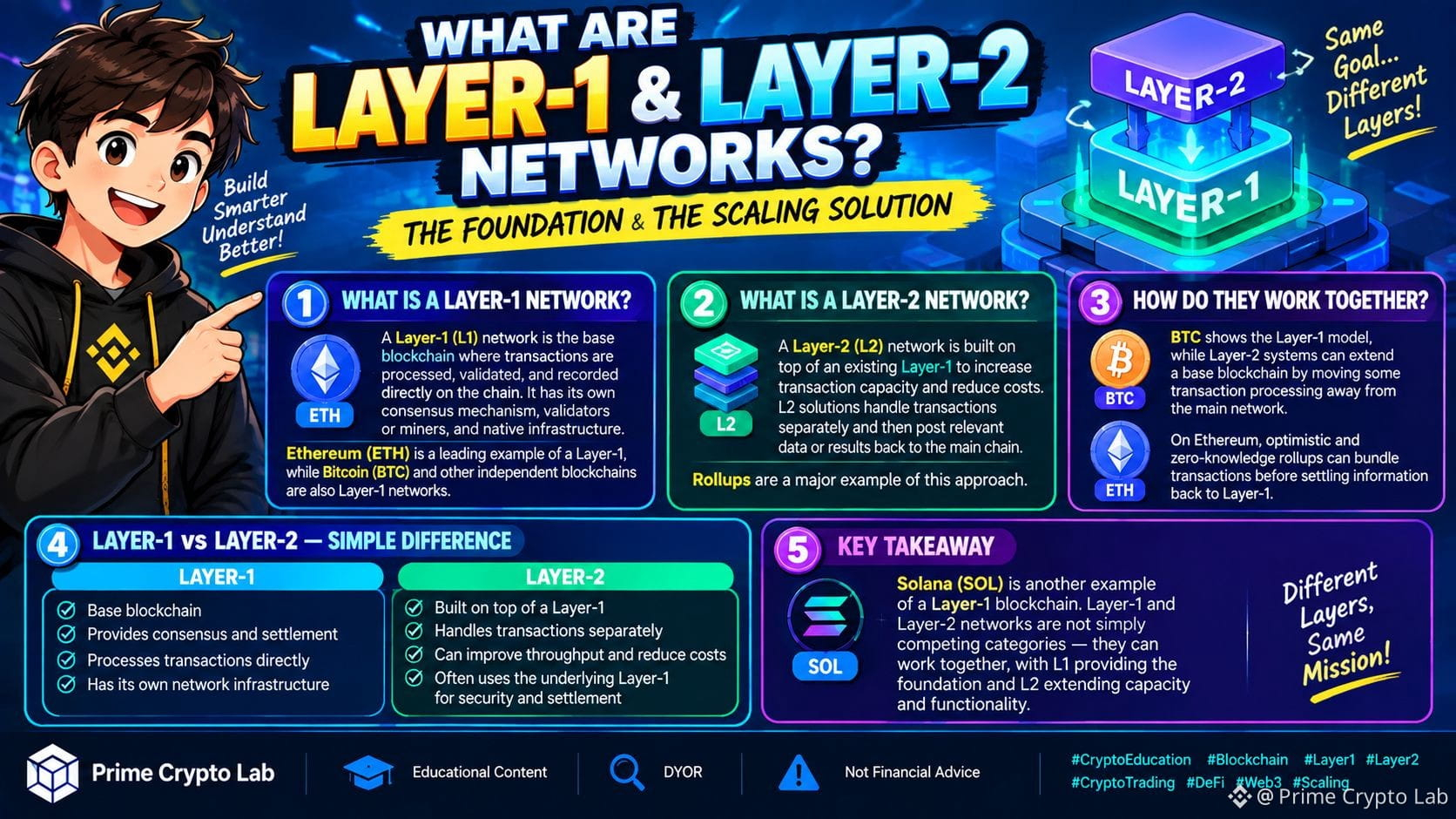
Ethereum $ETH is an example of a Layer-1 (L1) blockchain — the base network where transactions are processed, validated, and recorded directly on the blockchain. Layer-1 networks have their own consensus mechanisms, validators or miners, and native infrastructure. Bitcoin and other independent blockchains are also examples of Layer-1 networks.
⚡What Is a Layer-2 Network?
Layer-2 (L2) networks are built on top of an existing Layer-1 to help increase transaction capacity and reduce costs. Instead of processing every transaction directly on the main chain, many L2 solutions handle transactions separately and then post relevant data or results back to the underlying Layer-1. Rollups are a major example of this approach.
🔄 How Do Layer-1 & Layer-2 Work Together?
Bitcoin $BTC demonstrates the Layer-1 concept, while Layer-2 systems can extend a base blockchain by moving some transaction processing away from the main network. On Ethereum, optimistic and zero-knowledge rollups can bundle transactions together before settling information back to Layer-1. This can help reduce congestion and distribute transaction costs across many users.
📊 Layer-1 vs Layer-2 — Simple Difference
Layer-1:
• Base blockchain
• Provides consensus and settlement
• Processes transactions directly
• Has its own network infrastructure
Layer-2:
• Built on top of a Layer-1
• Handles transactions separately
• Can improve throughput and reduce costs
• Often uses the underlying Layer-1 for security and settlement
🎯 Key Takeaway
Solana $SOL is another example of a Layer-1 blockchain. The important point is that Layer-1 and Layer-2 networks are not simply competing categories — they can work together, with L1 providing the foundational blockchain and L2 solutions extending capacity and functionality. The exact security model and trade-offs depend on the specific L2 design.
Prime Crypto Lab — No Hype, Just Research.
🔗 What Are Layer-1 & Layer-2 Networks?
🧱 What Is a Layer-1 Network?
Ethereum $ETH is an example of a Layer-1 (L1) blockchain — the base network where transactions are processed, validated, and recorded directly on the blockchain. Layer-1 networks have their own consensus mechanisms, validators or miners, and native infrastructure. Bitcoin and other independent blockchains are also examples of Layer-1 networks.
⚡What Is a Layer-2 Network?
Layer-2 (L2) networks are built on top of an existing Layer-1 to help increase transaction capacity and reduce costs. Instead of processing every transaction directly on the main chain, many L2 solutions handle transactions separately and then post relevant data or results back to the underlying Layer-1. Rollups are a major example of this approach.
🔄 How Do Layer-1 & Layer-2 Work Together?
Bitcoin $BTC demonstrates the Layer-1 concept, while Layer-2 systems can extend a base blockchain by moving some transaction processing away from the main network. On Ethereum, optimistic and zero-knowledge rollups can bundle transactions together before settling information back to Layer-1. This can help reduce congestion and distribute transaction costs across many users.
📊 Layer-1 vs Layer-2 — Simple Difference
Layer-1:
• Base blockchain
• Provides consensus and settlement
• Processes transactions directly
• Has its own network infrastructure
Layer-2:
• Built on top of a Layer-1
• Handles transactions separately
• Can improve throughput and reduce costs
• Often uses the underlying Layer-1 for security and settlement
🎯 Key Takeaway
Solana $SOL is another example of a Layer-1 blockchain. The important point is that Layer-1 and Layer-2 networks are not simply competing categories — they can work together, with L1 providing the foundational blockchain and L2 solutions extending capacity and functionality. The exact security model and trade-offs depend on the specific L2 design.
Prime Crypto Lab — No Hype, Just Research.
🧱 What Is a Layer-1 Network?
Ethereum $ETH is an example of a Layer-1 (L1) blockchain — the base network where transactions are processed, validated, and recorded directly on the blockchain. Layer-1 networks have their own consensus mechanisms, validators or miners, and native infrastructure. Bitcoin and other independent blockchains are also examples of Layer-1 networks.
⚡What Is a Layer-2 Network?
Layer-2 (L2) networks are built on top of an existing Layer-1 to help increase transaction capacity and reduce costs. Instead of processing every transaction directly on the main chain, many L2 solutions handle transactions separately and then post relevant data or results back to the underlying Layer-1. Rollups are a major example of this approach.
🔄 How Do Layer-1 & Layer-2 Work Together?
Bitcoin $BTC demonstrates the Layer-1 concept, while Layer-2 systems can extend a base blockchain by moving some transaction processing away from the main network. On Ethereum, optimistic and zero-knowledge rollups can bundle transactions together before settling information back to Layer-1. This can help reduce congestion and distribute transaction costs across many users.
📊 Layer-1 vs Layer-2 — Simple Difference
Layer-1:
• Base blockchain
• Provides consensus and settlement
• Processes transactions directly
• Has its own network infrastructure
Layer-2:
• Built on top of a Layer-1
• Handles transactions separately
• Can improve throughput and reduce costs
• Often uses the underlying Layer-1 for security and settlement
🎯 Key Takeaway
Solana $SOL is another example of a Layer-1 blockchain. The important point is that Layer-1 and Layer-2 networks are not simply competing categories — they can work together, with L1 providing the foundational blockchain and L2 solutions extending capacity and functionality. The exact security model and trade-offs depend on the specific L2 design.
Prime Crypto Lab — No Hype, Just Research.
91
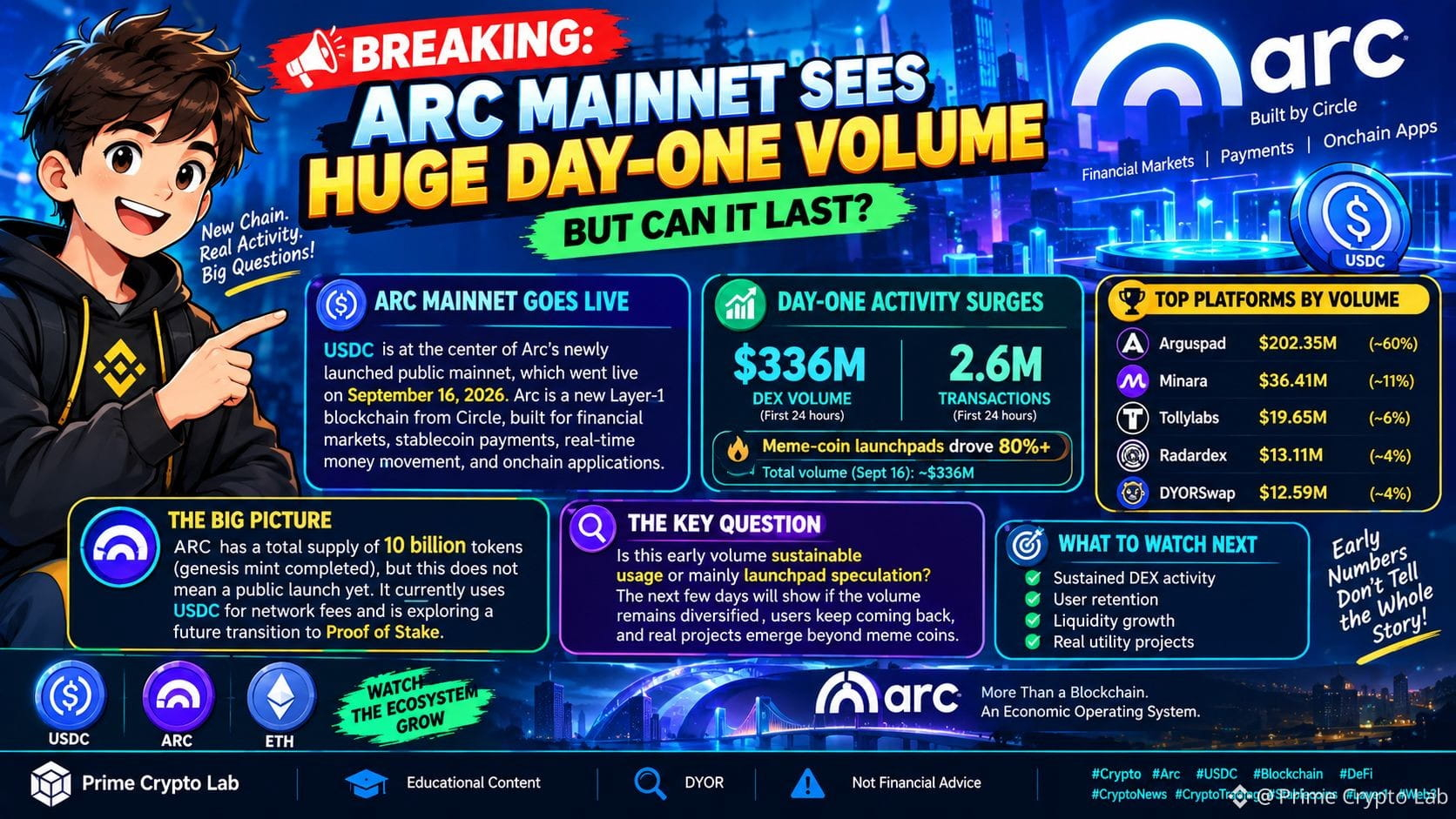
🚨Arcメインネットが初日から大規模な出来高— しかし継続できるのか?
🌐Arcメインネットが稼働開始
$USDC は、2026年9月16日に稼働を開始したArcの新たに立ち上がったパブリック・メインネットの中心にあります。Arcは、金融市場、ステーブルコイン決済、リアルタイムの資金移動、オンチェーン・アプリケーション向けに設計されたCircle発の新しいレイヤー1ブロックチェーンです。Circleによれば、Arcは100社以上の機関投資家およびエコシステムのビルダーが参加して開始され、ネットワークのガス手数料にはUSDCが使用されます。
📊 初日の活動が急増
複数の媒体が報じたDuneデータによると、Arcは初日の取引出来高として約3億3,626万ドルを記録し、その活動の80%以上をミームコインのローンチパッドが占めていました。Arguspadは約2億235万ドルで、続いてMinaraが3,641万ドル、Tollylabsが1,965万ドルでした。報告された取引活動も大きく、9月16日には合計7.76百万件の取引に達しています。
⚠️ 出来高の集中が最大の論点
ARCはArcの長期ロードマップの一部です。Circleは、10 billionトークンの初期供給に対するジェネシス・ミントを完了したと述べていますが、トークンを一般公開してローンチすることへのコミットメントを意味するものではない点を明確にしています。Arcは現在$USDC をネットワーク手数料に使用しており、将来的にProof of Stakeへの移行を検討しています。
いま大きな問いとなるのは、Arcのローンチ当日の活動が持続可能な利用を示しているのか、それとも主に初期のローンチパッド投機によるものなのか、ということです。出来高が分散したまま維持されるか、利用者が初期のローンチ熱狂の後も再度戻ってくるか、そしてミームコインのローンチパッド以外のアプリケーションが実質的な活動を集め始めるかを注視すべきです。
🎯 次に注目すべきこと
今後数日から数週間は、Arcのエコシステムのより明確な輪郭を示す可能性があります。単発の異例に高い出来高よりも、継続的なDEX活動、ユーザー維持率、流動性の成長、そして実際の有用性を持つアプリケーションの登場のほうが、より有益な指標になるでしょう。
$ETH や他の確立されたエコシステムも、初期のブロックチェーン活動は、ローンチ当日の数字だけで判断せず、時間をかけて評価すべき理由を示しています。
Prime Crypto Lab — 誇大宣伝なし、調査だけ。
🚨Arcメインネットが初日から大規模な出来高— しかし継続できるのか?
🌐Arcメインネットが稼働開始
$USDC は、2026年9月16日に稼働を開始したArcの新たに立ち上がったパブリック・メインネットの中心にあります。Arcは、金融市場、ステーブルコイン決済、リアルタイムの資金移動、オンチェーン・アプリケーション向けに設計されたCircle発の新しいレイヤー1ブロックチェーンです。Circleによれば、Arcは100社以上の機関投資家およびエコシステムのビルダーが参加して開始され、ネットワークのガス手数料にはUSDCが使用されます。
📊 初日の活動が急増
複数の媒体が報じたDuneデータによると、Arcは初日の取引出来高として約3億3,626万ドルを記録し、その活動の80%以上をミームコインのローンチパッドが占めていました。Arguspadは約2億235万ドルで、続いてMinaraが3,641万ドル、Tollylabsが1,965万ドルでした。報告された取引活動も大きく、9月16日には合計7.76百万件の取引に達しています。
⚠️ 出来高の集中が最大の論点
ARCはArcの長期ロードマップの一部です。Circleは、10 billionトークンの初期供給に対するジェネシス・ミントを完了したと述べていますが、トークンを一般公開してローンチすることへのコミットメントを意味するものではない点を明確にしています。Arcは現在$USDC をネットワーク手数料に使用しており、将来的にProof of Stakeへの移行を検討しています。
いま大きな問いとなるのは、Arcのローンチ当日の活動が持続可能な利用を示しているのか、それとも主に初期のローンチパッド投機によるものなのか、ということです。出来高が分散したまま維持されるか、利用者が初期のローンチ熱狂の後も再度戻ってくるか、そしてミームコインのローンチパッド以外のアプリケーションが実質的な活動を集め始めるかを注視すべきです。
🎯 次に注目すべきこと
今後数日から数週間は、Arcのエコシステムのより明確な輪郭を示す可能性があります。単発の異例に高い出来高よりも、継続的なDEX活動、ユーザー維持率、流動性の成長、そして実際の有用性を持つアプリケーションの登場のほうが、より有益な指標になるでしょう。
$ETH や他の確立されたエコシステムも、初期のブロックチェーン活動は、ローンチ当日の数字だけで判断せず、時間をかけて評価すべき理由を示しています。
Prime Crypto Lab — 誇大宣伝なし、調査だけ。
🌐Arcメインネットが稼働開始
$USDC は、2026年9月16日に稼働を開始したArcの新たに立ち上がったパブリック・メインネットの中心にあります。Arcは、金融市場、ステーブルコイン決済、リアルタイムの資金移動、オンチェーン・アプリケーション向けに設計されたCircle発の新しいレイヤー1ブロックチェーンです。Circleによれば、Arcは100社以上の機関投資家およびエコシステムのビルダーが参加して開始され、ネットワークのガス手数料にはUSDCが使用されます。
📊 初日の活動が急増
複数の媒体が報じたDuneデータによると、Arcは初日の取引出来高として約3億3,626万ドルを記録し、その活動の80%以上をミームコインのローンチパッドが占めていました。Arguspadは約2億235万ドルで、続いてMinaraが3,641万ドル、Tollylabsが1,965万ドルでした。報告された取引活動も大きく、9月16日には合計7.76百万件の取引に達しています。
⚠️ 出来高の集中が最大の論点
ARCはArcの長期ロードマップの一部です。Circleは、10 billionトークンの初期供給に対するジェネシス・ミントを完了したと述べていますが、トークンを一般公開してローンチすることへのコミットメントを意味するものではない点を明確にしています。Arcは現在$USDC をネットワーク手数料に使用しており、将来的にProof of Stakeへの移行を検討しています。
いま大きな問いとなるのは、Arcのローンチ当日の活動が持続可能な利用を示しているのか、それとも主に初期のローンチパッド投機によるものなのか、ということです。出来高が分散したまま維持されるか、利用者が初期のローンチ熱狂の後も再度戻ってくるか、そしてミームコインのローンチパッド以外のアプリケーションが実質的な活動を集め始めるかを注視すべきです。
🎯 次に注目すべきこと
今後数日から数週間は、Arcのエコシステムのより明確な輪郭を示す可能性があります。単発の異例に高い出来高よりも、継続的なDEX活動、ユーザー維持率、流動性の成長、そして実際の有用性を持つアプリケーションの登場のほうが、より有益な指標になるでしょう。
$ETH や他の確立されたエコシステムも、初期のブロックチェーン活動は、ローンチ当日の数字だけで判断せず、時間をかけて評価すべき理由を示しています。
Prime Crypto Lab — 誇大宣伝なし、調査だけ。
145
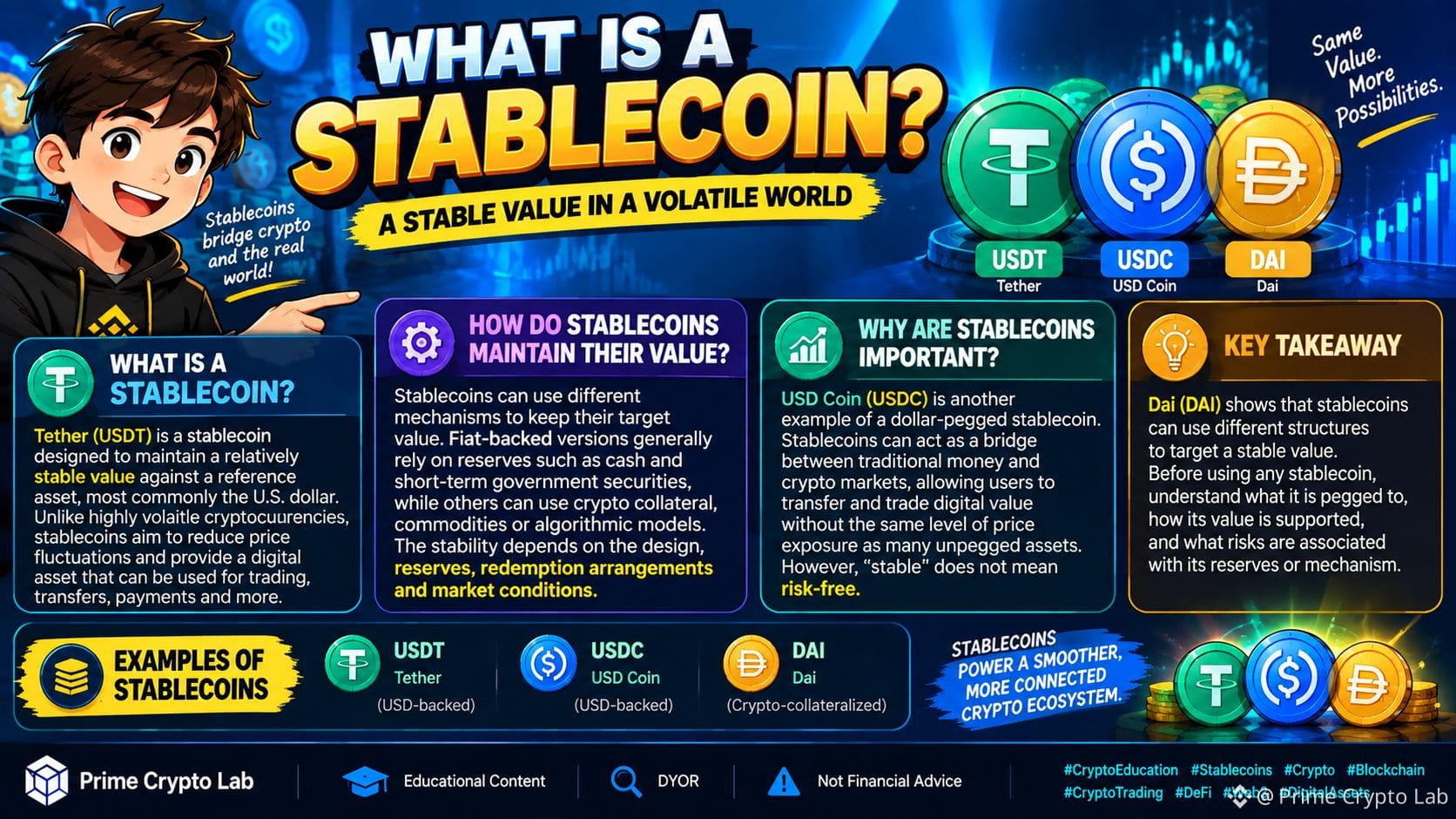
🪙 ステーブルコインとは?
💵 ステーブルコインを理解する
Tether $USDT は、参照する資産(多くの場合は米ドル)に対して比較的安定した価値を保つよう設計されたステーブルコインです。値動きが非常に大きい暗号資産とは異なり、ステーブルコインは価格の変動を抑え、取引、送金、支払い、そしてブロックチェーンネットワークをまたいだ価値の移動に役立つデジタル資産を提供することを目指します。
🔗 ステーブルコインはどのように価値を維持しているのか?
ステーブルコインは、目標とする価値を維持するためにさまざまな仕組みを採用できます。法定通貨(フィアット)担保型は、一般的に現金や短期の政府証券などの準備金に依存しますが、他のモデルでは暗号資産の担保、商品、あるいはアルゴリズムによる仕組みを用いることがあります。つまり、特定のステーブルコインの安定性は、その設計、準備金、償還(レデンプション)の取り決め、市場状況などに左右されます。
📊 なぜステーブルコインは重要なのか?
$USDC Coin(USDC)は、ドルに連動したステーブルコインの別の例です。ステーブルコインは、従来の資金(伝統的なお金)と暗号資産市場の“橋渡し”として機能し、ユーザーが、多くの未連動型暗号資産のような同レベルの価格エクスポージャーを負うことなく、デジタル価値を送金・売買できるようにします。とはいえ、「安定」とは無リスクを意味しません。ステーブルコインは、価格のズレやその他のリスクを経験する可能性があります。
🎯 まとめ
DAI(DAI)は、ステーブルコインが安定した価値を目指すために、異なる構造を使えることを示しています。どのステーブルコインを使う前にも、それが何に連動(ペッグ)しているのか、価値がどのように支えられているのか、そして準備金や仕組みにどんなリスクがあるのかを理解しましょう。
Prime Crypto Lab — 誇大広告なし、ただ研究する。
DYOR | 教育コンテンツ | 金融アドバイスではありません
#cryptoeducation #Stablecoins #crypto #blockchain
🪙 ステーブルコインとは?
💵 ステーブルコインを理解する
Tether $USDT は、参照する資産(多くの場合は米ドル)に対して比較的安定した価値を保つよう設計されたステーブルコインです。値動きが非常に大きい暗号資産とは異なり、ステーブルコインは価格の変動を抑え、取引、送金、支払い、そしてブロックチェーンネットワークをまたいだ価値の移動に役立つデジタル資産を提供することを目指します。
🔗 ステーブルコインはどのように価値を維持しているのか?
ステーブルコインは、目標とする価値を維持するためにさまざまな仕組みを採用できます。法定通貨(フィアット)担保型は、一般的に現金や短期の政府証券などの準備金に依存しますが、他のモデルでは暗号資産の担保、商品、あるいはアルゴリズムによる仕組みを用いることがあります。つまり、特定のステーブルコインの安定性は、その設計、準備金、償還(レデンプション)の取り決め、市場状況などに左右されます。
📊 なぜステーブルコインは重要なのか?
$USDC Coin(USDC)は、ドルに連動したステーブルコインの別の例です。ステーブルコインは、従来の資金(伝統的なお金)と暗号資産市場の“橋渡し”として機能し、ユーザーが、多くの未連動型暗号資産のような同レベルの価格エクスポージャーを負うことなく、デジタル価値を送金・売買できるようにします。とはいえ、「安定」とは無リスクを意味しません。ステーブルコインは、価格のズレやその他のリスクを経験する可能性があります。
🎯 まとめ
DAI(DAI)は、ステーブルコインが安定した価値を目指すために、異なる構造を使えることを示しています。どのステーブルコインを使う前にも、それが何に連動(ペッグ)しているのか、価値がどのように支えられているのか、そして準備金や仕組みにどんなリスクがあるのかを理解しましょう。
Prime Crypto Lab — 誇大広告なし、ただ研究する。
DYOR | 教育コンテンツ | 金融アドバイスではありません
#cryptoeducation #Stablecoins #crypto #blockchain
💵 ステーブルコインを理解する
Tether $USDT は、参照する資産(多くの場合は米ドル)に対して比較的安定した価値を保つよう設計されたステーブルコインです。値動きが非常に大きい暗号資産とは異なり、ステーブルコインは価格の変動を抑え、取引、送金、支払い、そしてブロックチェーンネットワークをまたいだ価値の移動に役立つデジタル資産を提供することを目指します。
🔗 ステーブルコインはどのように価値を維持しているのか?
ステーブルコインは、目標とする価値を維持するためにさまざまな仕組みを採用できます。法定通貨(フィアット)担保型は、一般的に現金や短期の政府証券などの準備金に依存しますが、他のモデルでは暗号資産の担保、商品、あるいはアルゴリズムによる仕組みを用いることがあります。つまり、特定のステーブルコインの安定性は、その設計、準備金、償還(レデンプション)の取り決め、市場状況などに左右されます。
📊 なぜステーブルコインは重要なのか?
$USDC Coin(USDC)は、ドルに連動したステーブルコインの別の例です。ステーブルコインは、従来の資金(伝統的なお金)と暗号資産市場の“橋渡し”として機能し、ユーザーが、多くの未連動型暗号資産のような同レベルの価格エクスポージャーを負うことなく、デジタル価値を送金・売買できるようにします。とはいえ、「安定」とは無リスクを意味しません。ステーブルコインは、価格のズレやその他のリスクを経験する可能性があります。
🎯 まとめ
DAI(DAI)は、ステーブルコインが安定した価値を目指すために、異なる構造を使えることを示しています。どのステーブルコインを使う前にも、それが何に連動(ペッグ)しているのか、価値がどのように支えられているのか、そして準備金や仕組みにどんなリスクがあるのかを理解しましょう。
Prime Crypto Lab — 誇大広告なし、ただ研究する。
DYOR | 教育コンテンツ | 金融アドバイスではありません
#cryptoeducation #Stablecoins #crypto #blockchain
52
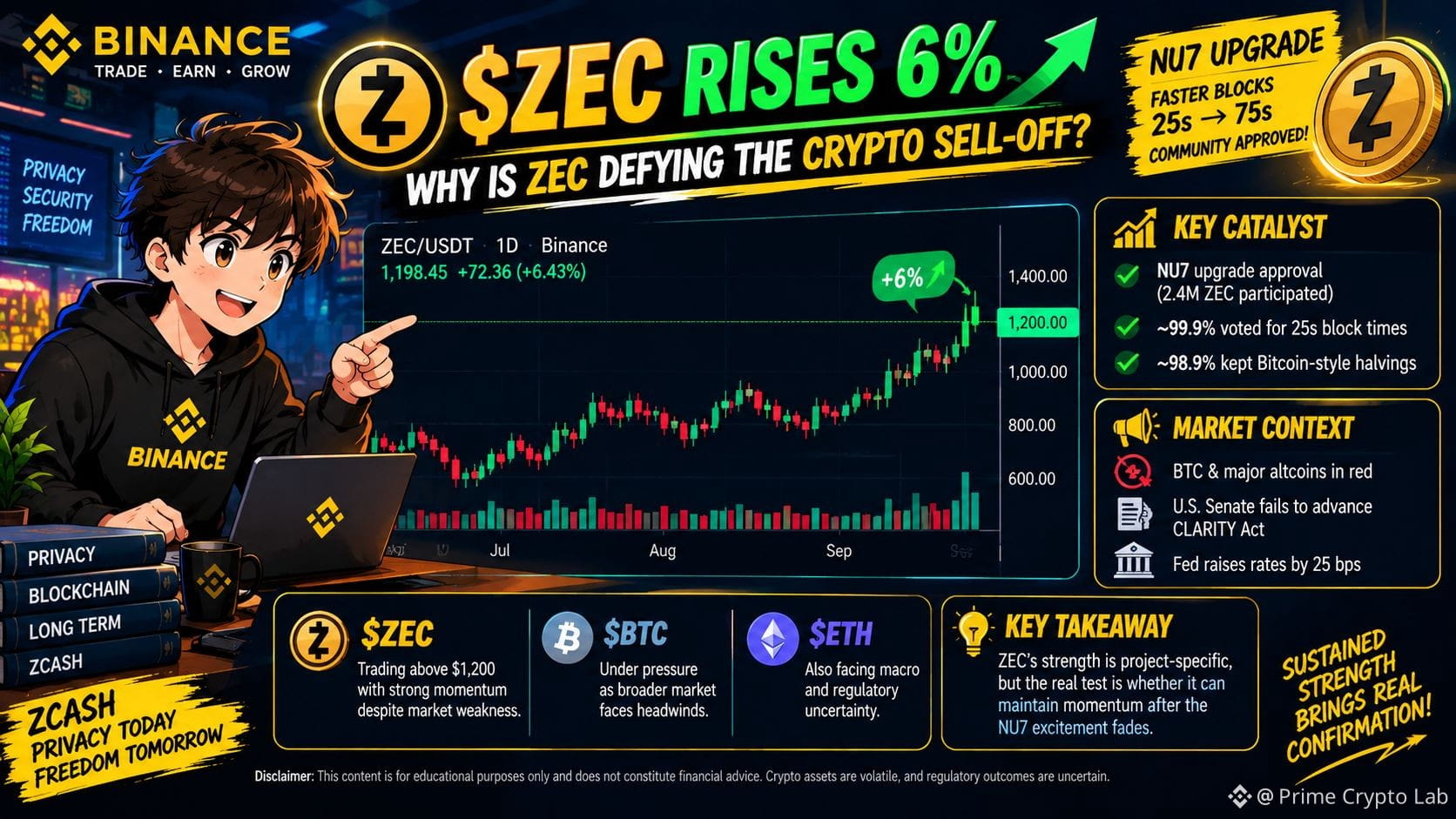
⚡$ZEC 暗号市場が売りに傾く中で上昇—NU7はそのきっかけか?
暗号資産市場の多くは売り圧力に直面する一方で、Zcashは逆方向に動き、9月16日におよそ6〜7%上昇し、$1,180〜$1,200あたりで取引されました。
🚀 NU7の投票がプロジェクト固有の触媒を生む
今回の動きは、Zcash保有者が次期NU7アップグレードに向けた重要な変更を強く支持したことに伴います。約240万ZECが投票に参加し、そのうち約99.9%が、ブロックの目標間隔を75秒から25秒へ短縮することに賛成しました。
🪙 ビットコイン型のハーウィングは維持
参加したZECのほぼ98.9%も、発行モデルをより滑らかなものへ切り替えるのではなく、既存のハーウィング構造を維持することを支持しました。これにより、ネットワークの現在の「希少性」ナラティブが保たれます。
📉 なぜZECが目立つのか?
より広い市場では、規制面やマクロ面の圧力が続いています。米上院はCLARITY法案の前進に失敗し、さらに連邦準備制度(FRB)は9月16日に政策金利を25ベーシスポイント引き上げました。その流れの中で、Zcashの相対的な強さは追加の注目を集めています。
For $BTC , 重要な対比は明確です。同期間にビットコインは下押しを受けていた一方で、ZECは引き続き上回るパフォーマンスを維持しました。
👀 トレーダーが注目すべきポイント
NU7の投票は意義のある触媒ですが、投票によってアップグレードが自動的に有効化されるわけではありません。Zcashの公式ドキュメントでは、NU7のアクティベーション高はまだ設定されていないとされています。
より大きな疑問は、最初のNU7の熱狂が薄れた後でも、$ZEC が相対的な強さを維持できるかどうかです。
緑のローソク足は注目を集めます。持続的な強さには確認が必要です。
免責事項:本コンテンツは教育目的のみであり、金融アドバイスではありません。必ずご自身で調査を行い、リスクを慎重に管理してください。
#zcash #zec #crypto #NU7 #CryptoMarket
{spot}(ZECUSDT)
⚡$ZEC 暗号市場が売りに傾く中で上昇—NU7はそのきっかけか?
暗号資産市場の多くは売り圧力に直面する一方で、Zcashは逆方向に動き、9月16日におよそ6〜7%上昇し、$1,180〜$1,200あたりで取引されました。
🚀 NU7の投票がプロジェクト固有の触媒を生む
今回の動きは、Zcash保有者が次期NU7アップグレードに向けた重要な変更を強く支持したことに伴います。約240万ZECが投票に参加し、そのうち約99.9%が、ブロックの目標間隔を75秒から25秒へ短縮することに賛成しました。
🪙 ビットコイン型のハーウィングは維持
参加したZECのほぼ98.9%も、発行モデルをより滑らかなものへ切り替えるのではなく、既存のハーウィング構造を維持することを支持しました。これにより、ネットワークの現在の「希少性」ナラティブが保たれます。
📉 なぜZECが目立つのか?
より広い市場では、規制面やマクロ面の圧力が続いています。米上院はCLARITY法案の前進に失敗し、さらに連邦準備制度(FRB)は9月16日に政策金利を25ベーシスポイント引き上げました。その流れの中で、Zcashの相対的な強さは追加の注目を集めています。
For $BTC , 重要な対比は明確です。同期間にビットコインは下押しを受けていた一方で、ZECは引き続き上回るパフォーマンスを維持しました。
👀 トレーダーが注目すべきポイント
NU7の投票は意義のある触媒ですが、投票によってアップグレードが自動的に有効化されるわけではありません。Zcashの公式ドキュメントでは、NU7のアクティベーション高はまだ設定されていないとされています。
より大きな疑問は、最初のNU7の熱狂が薄れた後でも、$ZEC が相対的な強さを維持できるかどうかです。
緑のローソク足は注目を集めます。持続的な強さには確認が必要です。
免責事項:本コンテンツは教育目的のみであり、金融アドバイスではありません。必ずご自身で調査を行い、リスクを慎重に管理してください。
#zcash #zec #crypto #NU7 #CryptoMarket
暗号資産市場の多くは売り圧力に直面する一方で、Zcashは逆方向に動き、9月16日におよそ6〜7%上昇し、$1,180〜$1,200あたりで取引されました。
🚀 NU7の投票がプロジェクト固有の触媒を生む
今回の動きは、Zcash保有者が次期NU7アップグレードに向けた重要な変更を強く支持したことに伴います。約240万ZECが投票に参加し、そのうち約99.9%が、ブロックの目標間隔を75秒から25秒へ短縮することに賛成しました。
🪙 ビットコイン型のハーウィングは維持
参加したZECのほぼ98.9%も、発行モデルをより滑らかなものへ切り替えるのではなく、既存のハーウィング構造を維持することを支持しました。これにより、ネットワークの現在の「希少性」ナラティブが保たれます。
📉 なぜZECが目立つのか?
より広い市場では、規制面やマクロ面の圧力が続いています。米上院はCLARITY法案の前進に失敗し、さらに連邦準備制度(FRB)は9月16日に政策金利を25ベーシスポイント引き上げました。その流れの中で、Zcashの相対的な強さは追加の注目を集めています。
For $BTC , 重要な対比は明確です。同期間にビットコインは下押しを受けていた一方で、ZECは引き続き上回るパフォーマンスを維持しました。
👀 トレーダーが注目すべきポイント
NU7の投票は意義のある触媒ですが、投票によってアップグレードが自動的に有効化されるわけではありません。Zcashの公式ドキュメントでは、NU7のアクティベーション高はまだ設定されていないとされています。
より大きな疑問は、最初のNU7の熱狂が薄れた後でも、$ZEC が相対的な強さを維持できるかどうかです。
緑のローソク足は注目を集めます。持続的な強さには確認が必要です。
免責事項:本コンテンツは教育目的のみであり、金融アドバイスではありません。必ずご自身で調査を行い、リスクを慎重に管理してください。
#zcash #zec #crypto #NU7 #CryptoMarket
288
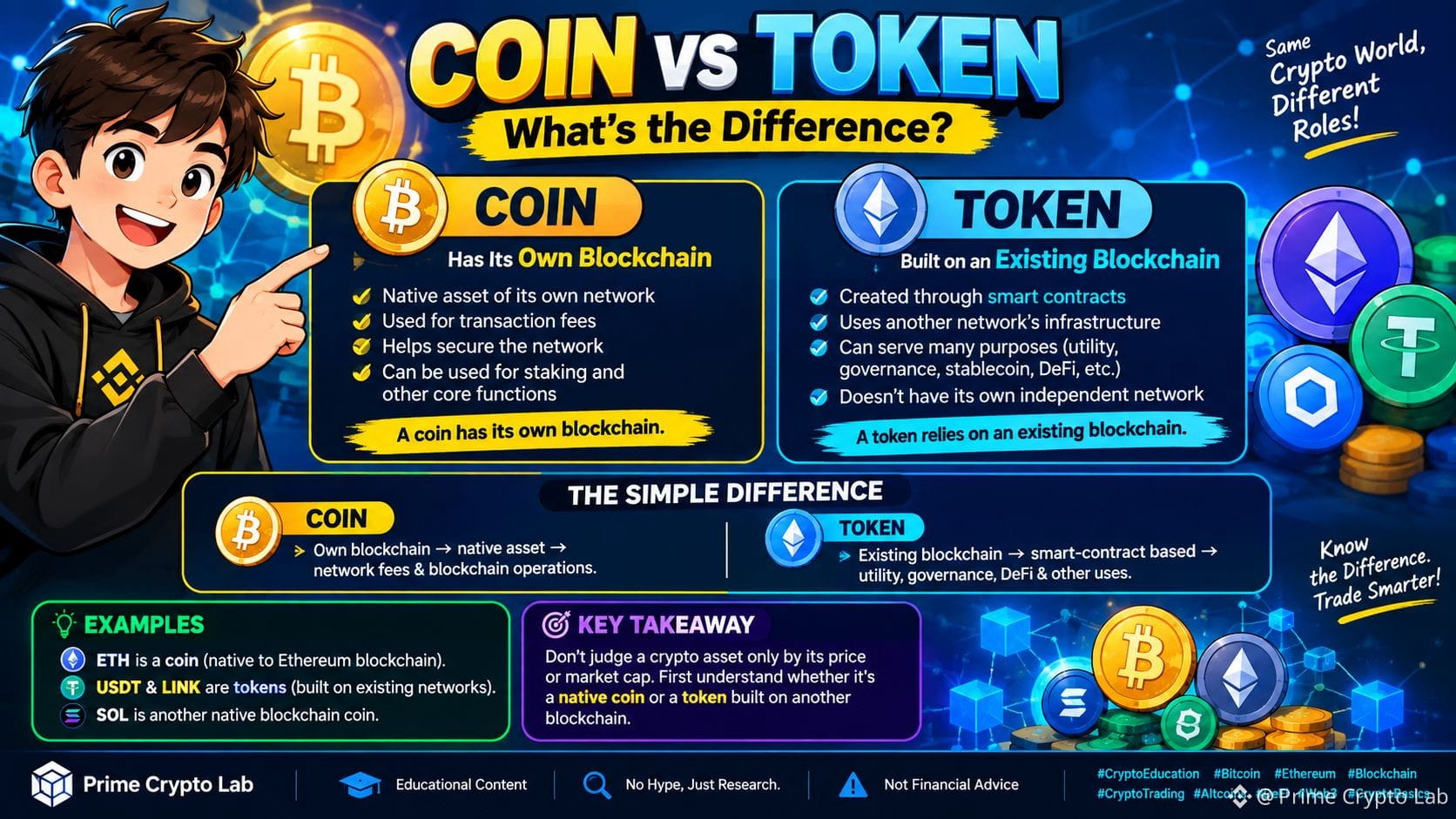
🪙コイン vs トークン — 違いは何?
Bitcoin $BTC は、それ自体のブロックチェーンのネイティブ資産であるためコインです。コインは一般的にネットワークの基盤レイヤーで動作し、取引手数料、ネットワークのセキュリティ、ステーキング、またはその他の中核となるブロックチェーン機能に使用できます。覚えやすい方法はこれです:コインは独自のブロックチェーンを持っています。
🔗 トークンとは?
トークンは、独立したネットワークを持つのではなく、既存のブロックチェーンの上に作られます。トークンはスマートコントラクトによって発行されることが多く、ユーティリティ、ガバナンス、ステーブルコイン、DeFiアプリ、デジタル資産など、さまざまな用途に使われます。ホストとなるブロックチェーンに依存するため、そのネットワークのインフラやセキュリティを利用します。
⚡コイン vs トークン — そのシンプルな違い
コイン:独自のブロックチェーン → ネイティブ資産 → ネットワーク手数料&ブロックチェーン処理
トークン:既存のブロックチェーン → スマートコントラクト基盤 → ユーティリティ、ガバナンス、DeFi&その他の用途
たとえば、Ethereum $ETH はイーサリアムのブロックチェーンにネイティブなためコインですが、USDTやLINKのような資産は既存ネットワーク上でトークンとして動作できます。この違いを理解すると、暗号資産プロジェクトが実際にどのように構成されているかをより正しく理解できます。
🎯 重要ポイント
暗号資産は価格や時価総額だけで判断しないでください。まず、それがネイティブコインなのか、別のブロックチェーン上に作られたトークンなのかを理解しましょう。Solana $SOL も、ネイティブなブロックチェーンのコインの別の例です。一方で、トークンはソラナのエコシステム内、または他の既存ネットワーク上で作成できます。
Prime Crypto Lab — 誇大宣伝なし、調査だけ。
DYOR | 教育コンテンツ | 投資助言ではありません
#cryptoeducation #crypto #bitcoin #blockchain #cryptotrading
🪙コイン vs トークン — 違いは何?
Bitcoin $BTC は、それ自体のブロックチェーンのネイティブ資産であるためコインです。コインは一般的にネットワークの基盤レイヤーで動作し、取引手数料、ネットワークのセキュリティ、ステーキング、またはその他の中核となるブロックチェーン機能に使用できます。覚えやすい方法はこれです:コインは独自のブロックチェーンを持っています。
🔗 トークンとは?
トークンは、独立したネットワークを持つのではなく、既存のブロックチェーンの上に作られます。トークンはスマートコントラクトによって発行されることが多く、ユーティリティ、ガバナンス、ステーブルコイン、DeFiアプリ、デジタル資産など、さまざまな用途に使われます。ホストとなるブロックチェーンに依存するため、そのネットワークのインフラやセキュリティを利用します。
⚡コイン vs トークン — そのシンプルな違い
コイン:独自のブロックチェーン → ネイティブ資産 → ネットワーク手数料&ブロックチェーン処理
トークン:既存のブロックチェーン → スマートコントラクト基盤 → ユーティリティ、ガバナンス、DeFi&その他の用途
たとえば、Ethereum $ETH はイーサリアムのブロックチェーンにネイティブなためコインですが、USDTやLINKのような資産は既存ネットワーク上でトークンとして動作できます。この違いを理解すると、暗号資産プロジェクトが実際にどのように構成されているかをより正しく理解できます。
🎯 重要ポイント
暗号資産は価格や時価総額だけで判断しないでください。まず、それがネイティブコインなのか、別のブロックチェーン上に作られたトークンなのかを理解しましょう。Solana $SOL も、ネイティブなブロックチェーンのコインの別の例です。一方で、トークンはソラナのエコシステム内、または他の既存ネットワーク上で作成できます。
Prime Crypto Lab — 誇大宣伝なし、調査だけ。
DYOR | 教育コンテンツ | 投資助言ではありません
#cryptoeducation #crypto #bitcoin #blockchain #cryptotrading
Bitcoin $BTC は、それ自体のブロックチェーンのネイティブ資産であるためコインです。コインは一般的にネットワークの基盤レイヤーで動作し、取引手数料、ネットワークのセキュリティ、ステーキング、またはその他の中核となるブロックチェーン機能に使用できます。覚えやすい方法はこれです:コインは独自のブロックチェーンを持っています。
🔗 トークンとは?
トークンは、独立したネットワークを持つのではなく、既存のブロックチェーンの上に作られます。トークンはスマートコントラクトによって発行されることが多く、ユーティリティ、ガバナンス、ステーブルコイン、DeFiアプリ、デジタル資産など、さまざまな用途に使われます。ホストとなるブロックチェーンに依存するため、そのネットワークのインフラやセキュリティを利用します。
⚡コイン vs トークン — そのシンプルな違い
コイン:独自のブロックチェーン → ネイティブ資産 → ネットワーク手数料&ブロックチェーン処理
トークン:既存のブロックチェーン → スマートコントラクト基盤 → ユーティリティ、ガバナンス、DeFi&その他の用途
たとえば、Ethereum $ETH はイーサリアムのブロックチェーンにネイティブなためコインですが、USDTやLINKのような資産は既存ネットワーク上でトークンとして動作できます。この違いを理解すると、暗号資産プロジェクトが実際にどのように構成されているかをより正しく理解できます。
🎯 重要ポイント
暗号資産は価格や時価総額だけで判断しないでください。まず、それがネイティブコインなのか、別のブロックチェーン上に作られたトークンなのかを理解しましょう。Solana $SOL も、ネイティブなブロックチェーンのコインの別の例です。一方で、トークンはソラナのエコシステム内、または他の既存ネットワーク上で作成できます。
Prime Crypto Lab — 誇大宣伝なし、調査だけ。
DYOR | 教育コンテンツ | 投資助言ではありません
#cryptoeducation #crypto #bitcoin #blockchain #cryptotrading
91
翻訳参照
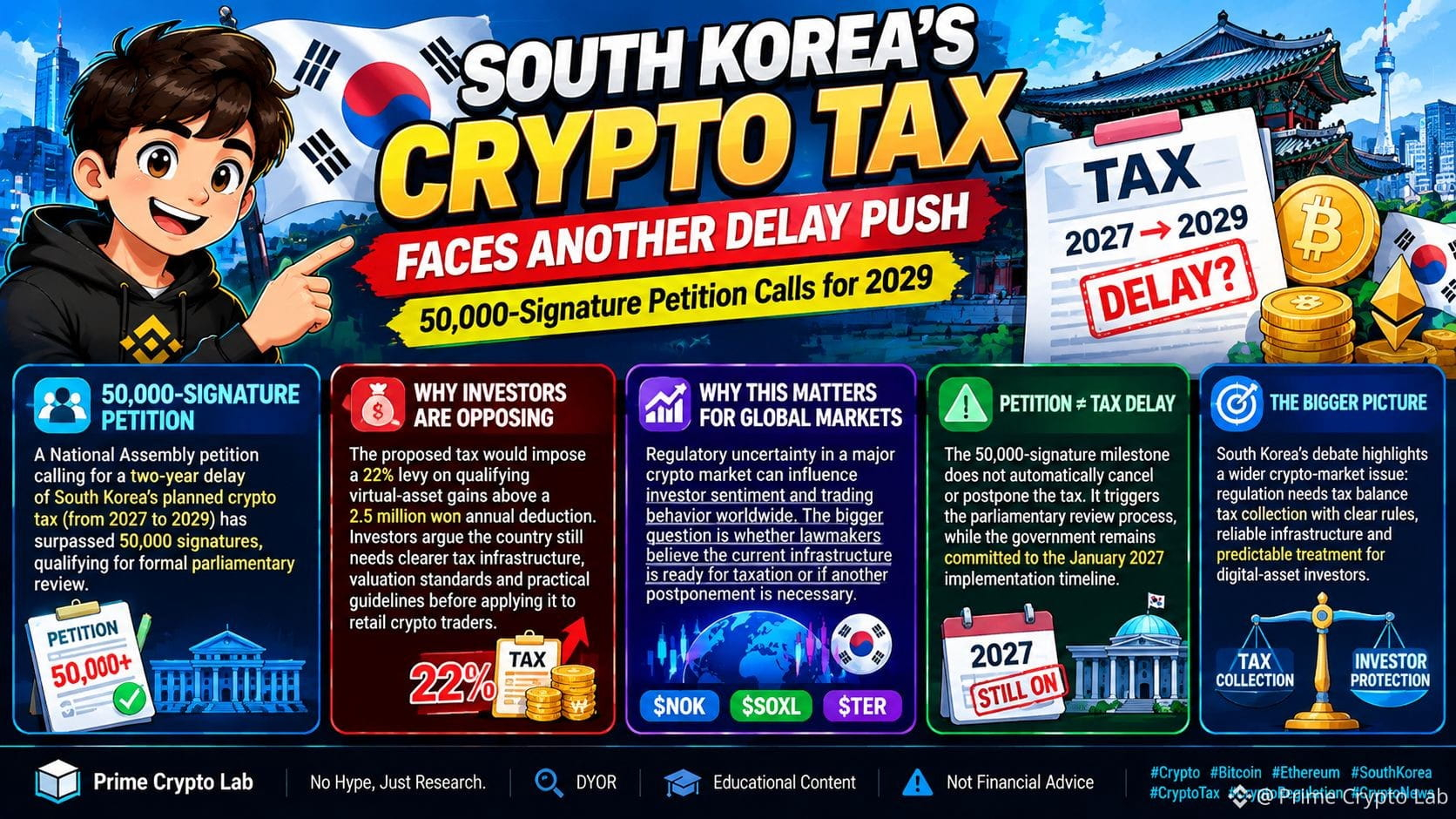
⚖️ South Korea’s Crypto Tax Faces Another Delay Push
🇰🇷 50,000-Signature Petition
$NOK — South Korea’s planned cryptocurrency tax is facing renewed pressure from retail investors after a National Assembly petition calling for a two-year delay, from 2027 to 2029, surpassed 50,000 signatures. Reaching that threshold qualifies the petition for formal review by the relevant parliamentary committee.
💰Why Investors Are Opposing the Tax
The proposed system would impose a 22% tax on qualifying virtual-asset gains above a 2.5 million won annual deduction. Supporters of the delay argue that the country still needs clearer tax infrastructure, valuation standards and practical guidelines before applying the system to retail crypto investors.
📊 Why This Matters for Crypto Markets
$SOXL — Although the petition is focused on South Korea, regulatory uncertainty in a major crypto market can influence investor sentiment and trading behavior. The bigger issue is whether lawmakers believe the current infrastructure is ready for taxation or whether another postponement is necessary. Some lawmakers have also proposed separate delays extending into 2029 or even 2030.
⚠️ Petition ≠ Tax Delay
The 50,000-signature milestone does not automatically cancel or postpone the tax. It triggers the parliamentary review process, while the government currently remains committed to the January 2027 implementation timeline. Traders should therefore watch the National Assembly, tax authorities and any new legislative proposals before assuming a policy change is confirmed.
🌍 Bigger Picture
$TER — South Korea's debate highlights a wider crypto-market issue: regulation needs to balance tax collection with clear rules, reliable infrastructure and predictable treatment for digital-asset investors.
Prime Crypto Lab — No Hype, Just Research.
DYOR | Educational Content | Not Financial Advice
#crypto #bitcoin #Ethereum✅ #SouthKorean #cryptotax
⚖️ South Korea’s Crypto Tax Faces Another Delay Push
🇰🇷 50,000-Signature Petition
$NOK — South Korea’s planned cryptocurrency tax is facing renewed pressure from retail investors after a National Assembly petition calling for a two-year delay, from 2027 to 2029, surpassed 50,000 signatures. Reaching that threshold qualifies the petition for formal review by the relevant parliamentary committee.
💰Why Investors Are Opposing the Tax
The proposed system would impose a 22% tax on qualifying virtual-asset gains above a 2.5 million won annual deduction. Supporters of the delay argue that the country still needs clearer tax infrastructure, valuation standards and practical guidelines before applying the system to retail crypto investors.
📊 Why This Matters for Crypto Markets
$SOXL — Although the petition is focused on South Korea, regulatory uncertainty in a major crypto market can influence investor sentiment and trading behavior. The bigger issue is whether lawmakers believe the current infrastructure is ready for taxation or whether another postponement is necessary. Some lawmakers have also proposed separate delays extending into 2029 or even 2030.
⚠️ Petition ≠ Tax Delay
The 50,000-signature milestone does not automatically cancel or postpone the tax. It triggers the parliamentary review process, while the government currently remains committed to the January 2027 implementation timeline. Traders should therefore watch the National Assembly, tax authorities and any new legislative proposals before assuming a policy change is confirmed.
🌍 Bigger Picture
$TER — South Korea's debate highlights a wider crypto-market issue: regulation needs to balance tax collection with clear rules, reliable infrastructure and predictable treatment for digital-asset investors.
Prime Crypto Lab — No Hype, Just Research.
DYOR | Educational Content | Not Financial Advice
#crypto #bitcoin #Ethereum✅ #SouthKorean #cryptotax
🇰🇷 50,000-Signature Petition
$NOK — South Korea’s planned cryptocurrency tax is facing renewed pressure from retail investors after a National Assembly petition calling for a two-year delay, from 2027 to 2029, surpassed 50,000 signatures. Reaching that threshold qualifies the petition for formal review by the relevant parliamentary committee.
💰Why Investors Are Opposing the Tax
The proposed system would impose a 22% tax on qualifying virtual-asset gains above a 2.5 million won annual deduction. Supporters of the delay argue that the country still needs clearer tax infrastructure, valuation standards and practical guidelines before applying the system to retail crypto investors.
📊 Why This Matters for Crypto Markets
$SOXL — Although the petition is focused on South Korea, regulatory uncertainty in a major crypto market can influence investor sentiment and trading behavior. The bigger issue is whether lawmakers believe the current infrastructure is ready for taxation or whether another postponement is necessary. Some lawmakers have also proposed separate delays extending into 2029 or even 2030.
⚠️ Petition ≠ Tax Delay
The 50,000-signature milestone does not automatically cancel or postpone the tax. It triggers the parliamentary review process, while the government currently remains committed to the January 2027 implementation timeline. Traders should therefore watch the National Assembly, tax authorities and any new legislative proposals before assuming a policy change is confirmed.
🌍 Bigger Picture
$TER — South Korea's debate highlights a wider crypto-market issue: regulation needs to balance tax collection with clear rules, reliable infrastructure and predictable treatment for digital-asset investors.
Prime Crypto Lab — No Hype, Just Research.
DYOR | Educational Content | Not Financial Advice
#crypto #bitcoin #Ethereum✅ #SouthKorean #cryptotax
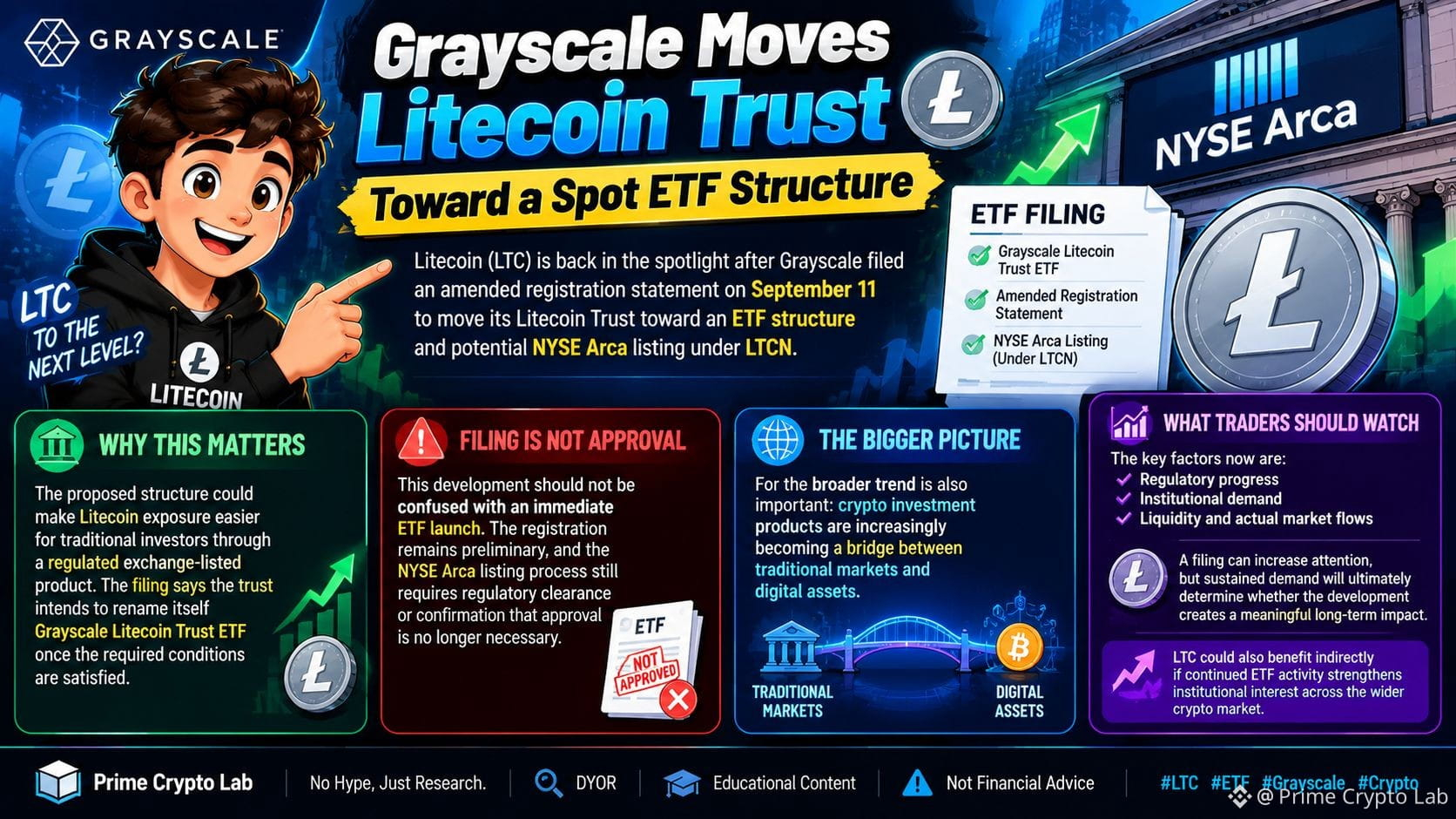
61
🚨グレースケール、ライトコイン・トラストをスポットETFの構造へと前進
$LTC は、9月11日にグレースケールが修正登録届出書を提出したことで、再び注目を集めている。Litecoin TrustをETF構造へ移行し、LTCNのもとでのNYSEアーカ(NYSE Arca)上場の可能性を目指すものだ。🏦 なぜ重要か
提案された構造によって、規制された取引所に上場する商品を通じて、伝統的な投資家がライトコインへのエクスポージャーを得やすくなる可能性がある。届出では、必要な条件が満たされた後、トラストは「グレースケール・ライトコイン・トラストETF」に改称する意向が示されている。
⚠️ 届出は承認ではない
この動きは、即時のETF立ち上げと混同すべきではない。登録は依然として予備的な段階であり、NYSEアーカでの上場手続きには、規制当局のクリアランス、または承認が不要であることの確認がさらに必要となる。
For $ETH 、この幅広いトレンドも重要だ。暗号資産の投資商品は、伝統的な市場とデジタル・アセットの間をつなぐ「架け橋」として、ますます機能しつつある。
📊 トレーダーが注目すべきポイント
今の焦点は、規制の進展、機関投資家の需要、流動性、そして実際の市場フローだ。届出によって注目は集まる可能性があるが、長期的な影響が意味のあるものになるかどうかは、最終的に持続的な需要が左右する。
$SOL は、広範な暗号市場での機関投資家の関心が高まる形で、ETF関連の活動が継続することで間接的に恩恵を受ける可能性もある。
免責事項:本コンテンツは情報提供のみを目的としており、金融助言を構成するものではない。暗号資産は変動が大きく、規制面での結果は不確実である。
#Litecoin #CryptoETF #Grayscale #crypto #DigitalAssets"
🚨グレースケール、ライトコイン・トラストをスポットETFの構造へと前進
$LTC は、9月11日にグレースケールが修正登録届出書を提出したことで、再び注目を集めている。Litecoin TrustをETF構造へ移行し、LTCNのもとでのNYSEアーカ(NYSE Arca)上場の可能性を目指すものだ。🏦 なぜ重要か
提案された構造によって、規制された取引所に上場する商品を通じて、伝統的な投資家がライトコインへのエクスポージャーを得やすくなる可能性がある。届出では、必要な条件が満たされた後、トラストは「グレースケール・ライトコイン・トラストETF」に改称する意向が示されている。
⚠️ 届出は承認ではない
この動きは、即時のETF立ち上げと混同すべきではない。登録は依然として予備的な段階であり、NYSEアーカでの上場手続きには、規制当局のクリアランス、または承認が不要であることの確認がさらに必要となる。
For $ETH 、この幅広いトレンドも重要だ。暗号資産の投資商品は、伝統的な市場とデジタル・アセットの間をつなぐ「架け橋」として、ますます機能しつつある。
📊 トレーダーが注目すべきポイント
今の焦点は、規制の進展、機関投資家の需要、流動性、そして実際の市場フローだ。届出によって注目は集まる可能性があるが、長期的な影響が意味のあるものになるかどうかは、最終的に持続的な需要が左右する。
$SOL は、広範な暗号市場での機関投資家の関心が高まる形で、ETF関連の活動が継続することで間接的に恩恵を受ける可能性もある。
免責事項:本コンテンツは情報提供のみを目的としており、金融助言を構成するものではない。暗号資産は変動が大きく、規制面での結果は不確実である。
#Litecoin #CryptoETF #Grayscale #crypto #DigitalAssets"
$LTC は、9月11日にグレースケールが修正登録届出書を提出したことで、再び注目を集めている。Litecoin TrustをETF構造へ移行し、LTCNのもとでのNYSEアーカ(NYSE Arca)上場の可能性を目指すものだ。🏦 なぜ重要か
提案された構造によって、規制された取引所に上場する商品を通じて、伝統的な投資家がライトコインへのエクスポージャーを得やすくなる可能性がある。届出では、必要な条件が満たされた後、トラストは「グレースケール・ライトコイン・トラストETF」に改称する意向が示されている。
⚠️ 届出は承認ではない
この動きは、即時のETF立ち上げと混同すべきではない。登録は依然として予備的な段階であり、NYSEアーカでの上場手続きには、規制当局のクリアランス、または承認が不要であることの確認がさらに必要となる。
For $ETH 、この幅広いトレンドも重要だ。暗号資産の投資商品は、伝統的な市場とデジタル・アセットの間をつなぐ「架け橋」として、ますます機能しつつある。
📊 トレーダーが注目すべきポイント
今の焦点は、規制の進展、機関投資家の需要、流動性、そして実際の市場フローだ。届出によって注目は集まる可能性があるが、長期的な影響が意味のあるものになるかどうかは、最終的に持続的な需要が左右する。
$SOL は、広範な暗号市場での機関投資家の関心が高まる形で、ETF関連の活動が継続することで間接的に恩恵を受ける可能性もある。
免責事項:本コンテンツは情報提供のみを目的としており、金融助言を構成するものではない。暗号資産は変動が大きく、規制面での結果は不確実である。
#Litecoin #CryptoETF #Grayscale #crypto #DigitalAssets"
89
翻訳参照
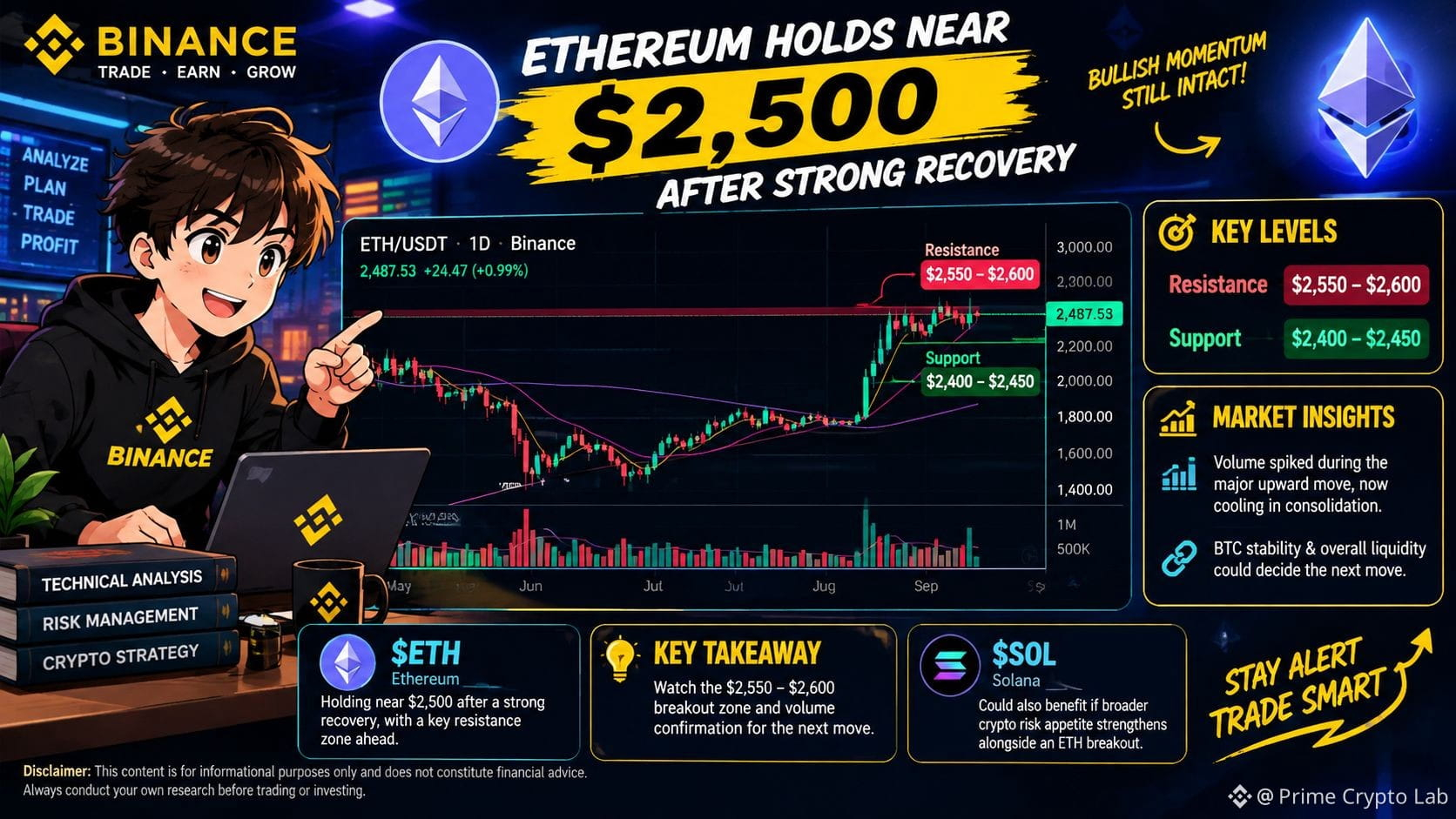
🚀 Ethereum Holds Near $2,500 After Strong Recovery
$ETH is consolidating around the $2,480–$2,500 area after a strong recovery from the lower $1,500 zone. The daily chart shows bullish momentum remains intact, but price is now approaching an important resistance region.
📈 Key Resistance & Support
ETH is facing immediate resistance around $2,550–$2,600. A strong daily breakout above this zone with rising volume could open the way for further upside. On the downside, $2,400–$2,450 is the first support area, while the broader trend remains constructive above the recent breakout zone.
🔎 Market Momentum
Recent volume increased sharply during the major upward move, while volume has started cooling during the current consolidation. $BTC stability and overall market liquidity could play an important role in determining whether Ethereum breaks higher or enters another pullback.
⚡ Key Takeaway
Ethereum is holding near a major psychological level. Traders should watch the $2,550–$2,600 breakout zone and volume confirmation before expecting the next major move.
$SOL could also benefit if broader crypto risk appetite strengthens alongside an $ETH breakout.
Disclaimer: This content is for informational purposes only and does not constitute financial advice. Always conduct your own research before trading or investing.
#Ethereum #crypto #bitcoin #solana #TechnicalAnalysis
{spot}(ETHUSDT)
🚀 Ethereum Holds Near $2,500 After Strong Recovery
$ETH is consolidating around the $2,480–$2,500 area after a strong recovery from the lower $1,500 zone. The daily chart shows bullish momentum remains intact, but price is now approaching an important resistance region.
📈 Key Resistance & Support
ETH is facing immediate resistance around $2,550–$2,600. A strong daily breakout above this zone with rising volume could open the way for further upside. On the downside, $2,400–$2,450 is the first support area, while the broader trend remains constructive above the recent breakout zone.
🔎 Market Momentum
Recent volume increased sharply during the major upward move, while volume has started cooling during the current consolidation. $BTC stability and overall market liquidity could play an important role in determining whether Ethereum breaks higher or enters another pullback.
⚡ Key Takeaway
Ethereum is holding near a major psychological level. Traders should watch the $2,550–$2,600 breakout zone and volume confirmation before expecting the next major move.
$SOL could also benefit if broader crypto risk appetite strengthens alongside an $ETH breakout.
Disclaimer: This content is for informational purposes only and does not constitute financial advice. Always conduct your own research before trading or investing.
#Ethereum #crypto #bitcoin #solana #TechnicalAnalysis
$ETH is consolidating around the $2,480–$2,500 area after a strong recovery from the lower $1,500 zone. The daily chart shows bullish momentum remains intact, but price is now approaching an important resistance region.
📈 Key Resistance & Support
ETH is facing immediate resistance around $2,550–$2,600. A strong daily breakout above this zone with rising volume could open the way for further upside. On the downside, $2,400–$2,450 is the first support area, while the broader trend remains constructive above the recent breakout zone.
🔎 Market Momentum
Recent volume increased sharply during the major upward move, while volume has started cooling during the current consolidation. $BTC stability and overall market liquidity could play an important role in determining whether Ethereum breaks higher or enters another pullback.
⚡ Key Takeaway
Ethereum is holding near a major psychological level. Traders should watch the $2,550–$2,600 breakout zone and volume confirmation before expecting the next major move.
$SOL could also benefit if broader crypto risk appetite strengthens alongside an $ETH breakout.
Disclaimer: This content is for informational purposes only and does not constitute financial advice. Always conduct your own research before trading or investing.
#Ethereum #crypto #bitcoin #solana #TechnicalAnalysis
73
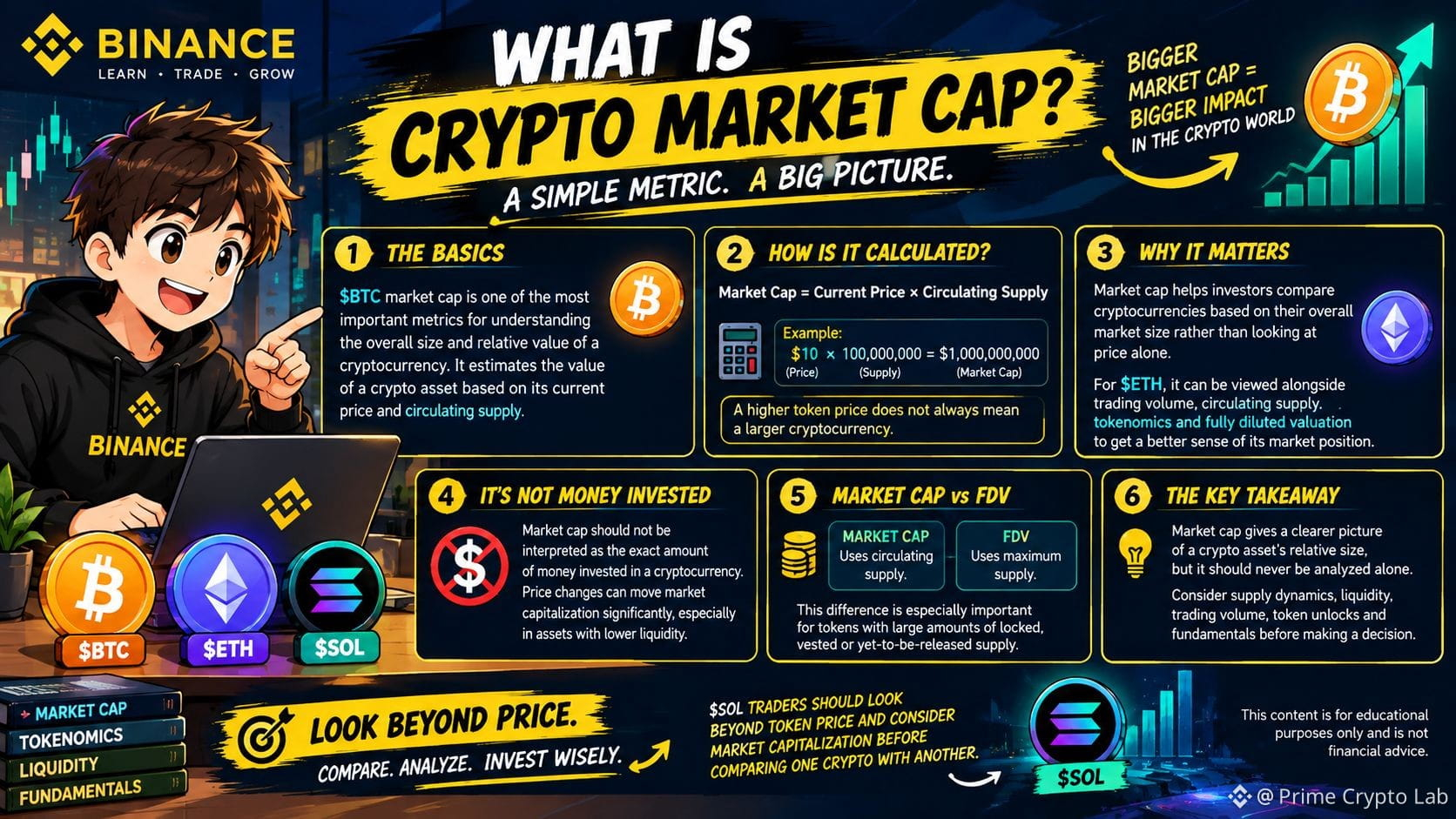
💰クリプトの時価総額とは?
$BTC 時価総額は、仮想通貨の全体規模や相対的な価値を理解するうえで最も重要な指標の一つです。現在の価格と流通量にもとづいて、仮想通貨の資産価値を推定します。
🧮 時価総額はどのように計算されますか?
基本の計算式は次のとおりです:
時価総額 = 現在の価格 × 流通供給量
たとえば、ある仮想通貨が$10で取引されており、流通しているコインが1億枚ある場合、その時価総額は10億ドルになります。だからこそ、トークンの価格が高いからといって、必ずしもその仮想通貨が大きいとは限りません。
📈 なぜ時価総額が重要なのか
時価総額は、価格だけを見るのではなく、市場全体の規模にもとづいて仮想通貨を比較するのに役立ちます。価格が$1のコインでも、流通供給量が大幅に多ければ、価格が$100のコインよりずっと大きい時価総額になることがあります。
$ETH の場合も、時価総額は、取引量、流通供給量、トークノミクス、さらに希薄化後評価(FDV)とあわせて見ることで、市場での位置づけをより正確に理解できます。
⚠️ 時価総額は「投じたお金」ではない
時価総額は、仮想通貨に投資した正確な金額として解釈すべきではありません。価格の変動によって時価総額は大きく動きます。特に流動性の低い資産ではその傾向が強くなります。
🔥 時価総額(Market Cap)とFDVの違い
時価総額は流通供給量を使います。一方でFDV(希薄化後評価)は一般的に最大供給量を使います。この違いは、ロックされている、付与(ベスティング)されている、またはまだリリースされていない供給が多いトークンで特に重要です。
🎯 まとめ
時価総額は、仮想通貨資産の相対的な規模をより分かりやすく示しますが、単独で分析してはいけません。供給のダイナミクス、流動性、取引量、トークンのアンロック、そしてファンダメンタルズは、プロジェクトを評価する際にすべて重要です。
$SOL traders(トレーダー)や投資家は、トークン価格のみに目を向けず、別の仮想通貨と比較する前に時価総額も考慮すべきです。
免責事項:このコンテンツは教育目的のみであり、金融助言ではありません。
#crypto #marketcap #bitcoin #Ethereum✅ #solana
💰クリプトの時価総額とは?
$BTC 時価総額は、仮想通貨の全体規模や相対的な価値を理解するうえで最も重要な指標の一つです。現在の価格と流通量にもとづいて、仮想通貨の資産価値を推定します。
🧮 時価総額はどのように計算されますか?
基本の計算式は次のとおりです:
時価総額 = 現在の価格 × 流通供給量
たとえば、ある仮想通貨が$10で取引されており、流通しているコインが1億枚ある場合、その時価総額は10億ドルになります。だからこそ、トークンの価格が高いからといって、必ずしもその仮想通貨が大きいとは限りません。
📈 なぜ時価総額が重要なのか
時価総額は、価格だけを見るのではなく、市場全体の規模にもとづいて仮想通貨を比較するのに役立ちます。価格が$1のコインでも、流通供給量が大幅に多ければ、価格が$100のコインよりずっと大きい時価総額になることがあります。
$ETH の場合も、時価総額は、取引量、流通供給量、トークノミクス、さらに希薄化後評価(FDV)とあわせて見ることで、市場での位置づけをより正確に理解できます。
⚠️ 時価総額は「投じたお金」ではない
時価総額は、仮想通貨に投資した正確な金額として解釈すべきではありません。価格の変動によって時価総額は大きく動きます。特に流動性の低い資産ではその傾向が強くなります。
🔥 時価総額(Market Cap)とFDVの違い
時価総額は流通供給量を使います。一方でFDV(希薄化後評価)は一般的に最大供給量を使います。この違いは、ロックされている、付与(ベスティング)されている、またはまだリリースされていない供給が多いトークンで特に重要です。
🎯 まとめ
時価総額は、仮想通貨資産の相対的な規模をより分かりやすく示しますが、単独で分析してはいけません。供給のダイナミクス、流動性、取引量、トークンのアンロック、そしてファンダメンタルズは、プロジェクトを評価する際にすべて重要です。
$SOL traders(トレーダー)や投資家は、トークン価格のみに目を向けず、別の仮想通貨と比較する前に時価総額も考慮すべきです。
免責事項:このコンテンツは教育目的のみであり、金融助言ではありません。
#crypto #marketcap #bitcoin #Ethereum✅ #solana
$BTC 時価総額は、仮想通貨の全体規模や相対的な価値を理解するうえで最も重要な指標の一つです。現在の価格と流通量にもとづいて、仮想通貨の資産価値を推定します。
🧮 時価総額はどのように計算されますか?
基本の計算式は次のとおりです:
時価総額 = 現在の価格 × 流通供給量
たとえば、ある仮想通貨が$10で取引されており、流通しているコインが1億枚ある場合、その時価総額は10億ドルになります。だからこそ、トークンの価格が高いからといって、必ずしもその仮想通貨が大きいとは限りません。
📈 なぜ時価総額が重要なのか
時価総額は、価格だけを見るのではなく、市場全体の規模にもとづいて仮想通貨を比較するのに役立ちます。価格が$1のコインでも、流通供給量が大幅に多ければ、価格が$100のコインよりずっと大きい時価総額になることがあります。
$ETH の場合も、時価総額は、取引量、流通供給量、トークノミクス、さらに希薄化後評価(FDV)とあわせて見ることで、市場での位置づけをより正確に理解できます。
⚠️ 時価総額は「投じたお金」ではない
時価総額は、仮想通貨に投資した正確な金額として解釈すべきではありません。価格の変動によって時価総額は大きく動きます。特に流動性の低い資産ではその傾向が強くなります。
🔥 時価総額(Market Cap)とFDVの違い
時価総額は流通供給量を使います。一方でFDV(希薄化後評価)は一般的に最大供給量を使います。この違いは、ロックされている、付与(ベスティング)されている、またはまだリリースされていない供給が多いトークンで特に重要です。
🎯 まとめ
時価総額は、仮想通貨資産の相対的な規模をより分かりやすく示しますが、単独で分析してはいけません。供給のダイナミクス、流動性、取引量、トークンのアンロック、そしてファンダメンタルズは、プロジェクトを評価する際にすべて重要です。
$SOL traders(トレーダー)や投資家は、トークン価格のみに目を向けず、別の仮想通貨と比較する前に時価総額も考慮すべきです。
免責事項:このコンテンツは教育目的のみであり、金融助言ではありません。
#crypto #marketcap #bitcoin #Ethereum✅ #solana
57
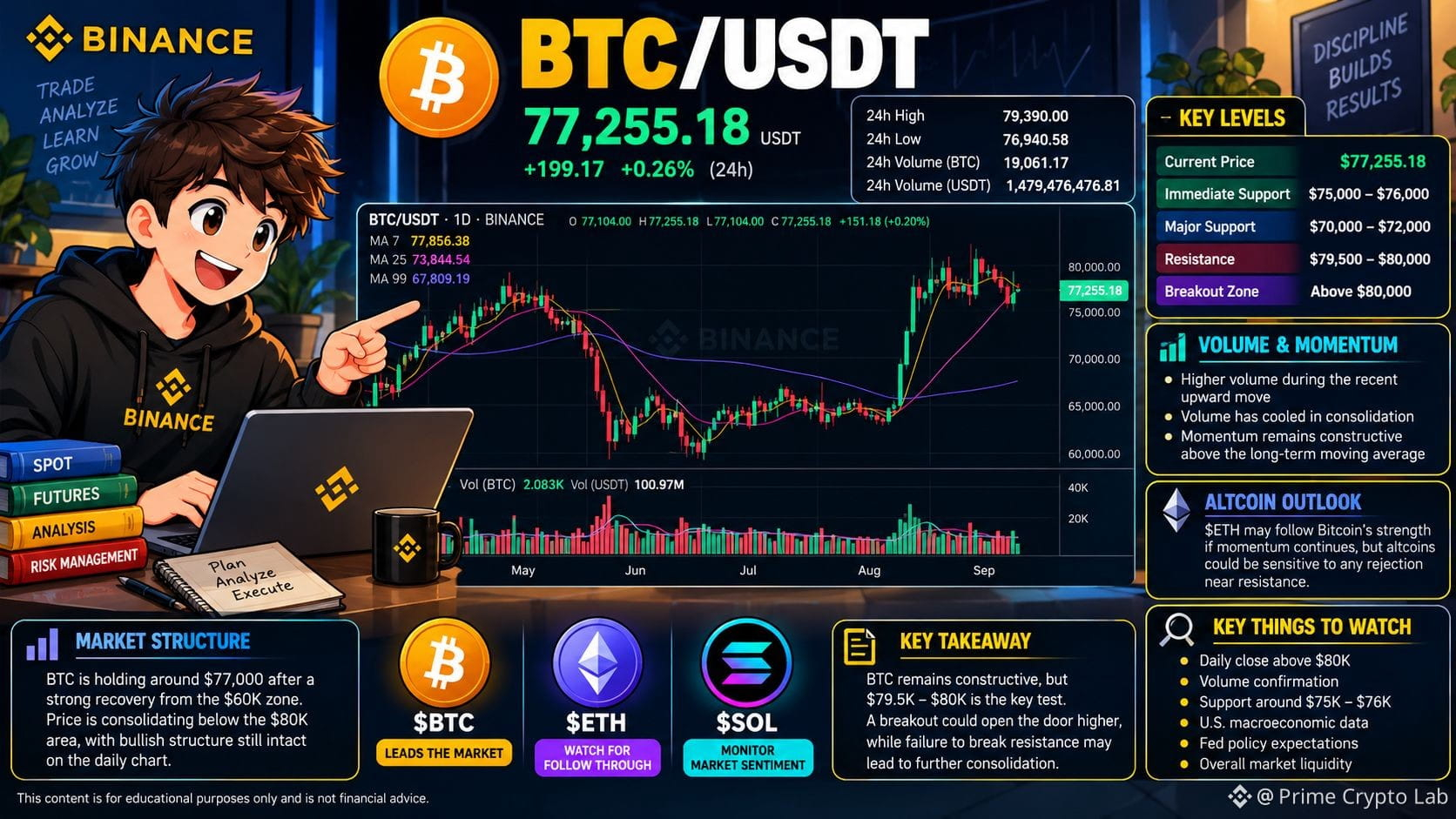
📊 ビットコインは約77K付近—強気派が回復を守る
$BTC は、$60Kゾーンからの力強い回復の後、現在は$77,000〜$77,500付近で推移している。日足チャートでは強気モメンタムが維持されているものの、価格は直近の$80Kエリアの下で重要なレンジ(統合)局面に入ろうとしている。
📈 現在のテクニカル構造
チャートは大きな回復の後、高値付近での横ばい推移を示している。
主な水準:
直近のサポート:$75,000〜$76,000
主要サポート:$70,000〜$72,000
レジスタンス:$79,500〜$80,000
ブレイクアウトゾーン:$80,000超
より強い出来高を伴った$80K超の日足終値は、さらなる強気の継続を示唆する可能性がある。このゾーンからの跳ね返り(拒否)が起きれば、$BTC は下側のサポート水準へ押し戻されるかもしれない。
📊 出来高(ボリューム)&モメンタム
直近の出来高は大幅な上昇局面で顕著に増加し、大きな参加が確認された。だが現在の統合局面では出来高が落ち着いており、トレーダーが次のブレイクアウトまたはブレイクダウンを待っていることを示している。
中長期の移動平均は現在価格より十分に下にあり、より広い日足の構造は総じて建設的だ。
🔎 アルトコイン市場の見通し
もし$ETH fがビットコインの強さに追随し、現在の勢いを維持するなら、より広い暗号資産市場のセンチメントが改善し得る。ただしアルトコインは、レジスタンス付近でのBTCの鋭い拒否に対して敏感なままかもしれない。
🚀 注目すべきポイント(トレーダー)
• BTCの日足が$80K超で終値
• ブレイクアウト時の出来高確認
• $75K〜$76K付近のサポート
• 米国のマクロ経済指標
• FRB(連邦準備制度)政策の見通し
• 暗号資産全体の流動性
$SOL
🎯 まとめ(要点)
ビットコインは強い回復後もテクニカル的に建設的である一方で、$79.5K〜$80Kのレジスタンスゾーンが重要な試練となる。高出来高でのブレイクアウトが起これば、さらに上を目指す局面への扉が開く可能性がある。逆にレジスタンスを抜けられない場合は、さらなるレンジ(統合)が続くかもしれない。
⚠️ 本コンテンツは教育目的のみであり、金融アドバイスではない。
#bitcoin #CryptoMarketAlert #TechnicalAnalysis_Tickeron #crypto
{future}(BTCUSDT)
📊 ビットコインは約77K付近—強気派が回復を守る
$BTC は、$60Kゾーンからの力強い回復の後、現在は$77,000〜$77,500付近で推移している。日足チャートでは強気モメンタムが維持されているものの、価格は直近の$80Kエリアの下で重要なレンジ(統合)局面に入ろうとしている。
📈 現在のテクニカル構造
チャートは大きな回復の後、高値付近での横ばい推移を示している。
主な水準:
直近のサポート:$75,000〜$76,000
主要サポート:$70,000〜$72,000
レジスタンス:$79,500〜$80,000
ブレイクアウトゾーン:$80,000超
より強い出来高を伴った$80K超の日足終値は、さらなる強気の継続を示唆する可能性がある。このゾーンからの跳ね返り(拒否)が起きれば、$BTC は下側のサポート水準へ押し戻されるかもしれない。
📊 出来高(ボリューム)&モメンタム
直近の出来高は大幅な上昇局面で顕著に増加し、大きな参加が確認された。だが現在の統合局面では出来高が落ち着いており、トレーダーが次のブレイクアウトまたはブレイクダウンを待っていることを示している。
中長期の移動平均は現在価格より十分に下にあり、より広い日足の構造は総じて建設的だ。
🔎 アルトコイン市場の見通し
もし$ETH fがビットコインの強さに追随し、現在の勢いを維持するなら、より広い暗号資産市場のセンチメントが改善し得る。ただしアルトコインは、レジスタンス付近でのBTCの鋭い拒否に対して敏感なままかもしれない。
🚀 注目すべきポイント(トレーダー)
• BTCの日足が$80K超で終値
• ブレイクアウト時の出来高確認
• $75K〜$76K付近のサポート
• 米国のマクロ経済指標
• FRB(連邦準備制度)政策の見通し
• 暗号資産全体の流動性
$SOL
🎯 まとめ(要点)
ビットコインは強い回復後もテクニカル的に建設的である一方で、$79.5K〜$80Kのレジスタンスゾーンが重要な試練となる。高出来高でのブレイクアウトが起これば、さらに上を目指す局面への扉が開く可能性がある。逆にレジスタンスを抜けられない場合は、さらなるレンジ(統合)が続くかもしれない。
⚠️ 本コンテンツは教育目的のみであり、金融アドバイスではない。
#bitcoin #CryptoMarketAlert #TechnicalAnalysis_Tickeron #crypto
$BTC は、$60Kゾーンからの力強い回復の後、現在は$77,000〜$77,500付近で推移している。日足チャートでは強気モメンタムが維持されているものの、価格は直近の$80Kエリアの下で重要なレンジ(統合)局面に入ろうとしている。
📈 現在のテクニカル構造
チャートは大きな回復の後、高値付近での横ばい推移を示している。
主な水準:
直近のサポート:$75,000〜$76,000
主要サポート:$70,000〜$72,000
レジスタンス:$79,500〜$80,000
ブレイクアウトゾーン:$80,000超
より強い出来高を伴った$80K超の日足終値は、さらなる強気の継続を示唆する可能性がある。このゾーンからの跳ね返り(拒否)が起きれば、$BTC は下側のサポート水準へ押し戻されるかもしれない。
📊 出来高(ボリューム)&モメンタム
直近の出来高は大幅な上昇局面で顕著に増加し、大きな参加が確認された。だが現在の統合局面では出来高が落ち着いており、トレーダーが次のブレイクアウトまたはブレイクダウンを待っていることを示している。
中長期の移動平均は現在価格より十分に下にあり、より広い日足の構造は総じて建設的だ。
🔎 アルトコイン市場の見通し
もし$ETH fがビットコインの強さに追随し、現在の勢いを維持するなら、より広い暗号資産市場のセンチメントが改善し得る。ただしアルトコインは、レジスタンス付近でのBTCの鋭い拒否に対して敏感なままかもしれない。
🚀 注目すべきポイント(トレーダー)
• BTCの日足が$80K超で終値
• ブレイクアウト時の出来高確認
• $75K〜$76K付近のサポート
• 米国のマクロ経済指標
• FRB(連邦準備制度)政策の見通し
• 暗号資産全体の流動性
$SOL
🎯 まとめ(要点)
ビットコインは強い回復後もテクニカル的に建設的である一方で、$79.5K〜$80Kのレジスタンスゾーンが重要な試練となる。高出来高でのブレイクアウトが起これば、さらに上を目指す局面への扉が開く可能性がある。逆にレジスタンスを抜けられない場合は、さらなるレンジ(統合)が続くかもしれない。
⚠️ 本コンテンツは教育目的のみであり、金融アドバイスではない。
#bitcoin #CryptoMarketAlert #TechnicalAnalysis_Tickeron #crypto
51
🍎 Apple株が3.56%急騰—iPhoneデュオ発表後、AAPLは330ドルを突破できるか?
$BTC 市場は、9月のプロダクトイベント後に勢いを増しているアップルの最新動きに注目している。
アップル株は$326.57で取引を終え、3.56%上昇。会社が「iPhone 18 Pro」ラインナップと、初の折りたたみスマートフォン「iPhone Duo」を発表したことを受けて反発した。
📱 なぜ投資家が注目しているのか
iPhone Duoは$1,999から、iPhone 18 Proは$1,199から提供される。アップルはAI機能にも力を入れており、新しいA20 Proチップ、改良されたカメラ、そしてより深い端末内インテリジェンスを打ち出している。
今回の株価反応の強さは、投資家がアップルのエコシステムの強固さ、プレミアム端末戦略、新製品サイクルによる成長の可能性に焦点を当てていることを示唆している。
📈 テクニカル・セットアップ
現在の価格: $326.57
直近のレジスタンス: $330
主要レジスタンス: 約$344.57
重要なサポート: 約$316
出来高が伴う形で$330を上回る持続的な上昇があれば、以前の高値付近である約$344.57へ向かう道が開ける可能性がある。レジスタンス突破に失敗すれば、別のレンジ(調整理)局面につながるかもしれない。
🔥 暗号資産との関連
メガキャップ技術における強い勢いは、より広範なリスク志向に影響し得る。一方で、AIや消費者テクノロジーへの投資家の関心が継続することは、暗号資産トレーダーにとって重要なマクロテーマとして残っている。
For $RAYSOL 、トレーダーはビットコインや主要テック株と並行して、より広いリスク選好や流動性の状況を引き続き注視すべきだ。
🎯 要点
イベント後のアップルの反発は投資家の強い関心を示しているが、次の重要な試金石は$330だ。納得感のある出来高を伴うブレイクアウトなら、強気の見通しがより補強される可能性がある。一方で跳ね返されれば、AAPLはレンジ相場にとどまるかもしれない。
$MARSCOIN
⚠️このコンテンツは教育目的のみであり、投資助言ではない。
#Apple #AAPL #iPhone18 #TechStocks #Binance
{stock_us}(AAPL.US)
🍎 Apple株が3.56%急騰—iPhoneデュオ発表後、AAPLは330ドルを突破できるか?
$BTC 市場は、9月のプロダクトイベント後に勢いを増しているアップルの最新動きに注目している。
アップル株は$326.57で取引を終え、3.56%上昇。会社が「iPhone 18 Pro」ラインナップと、初の折りたたみスマートフォン「iPhone Duo」を発表したことを受けて反発した。
📱 なぜ投資家が注目しているのか
iPhone Duoは$1,999から、iPhone 18 Proは$1,199から提供される。アップルはAI機能にも力を入れており、新しいA20 Proチップ、改良されたカメラ、そしてより深い端末内インテリジェンスを打ち出している。
今回の株価反応の強さは、投資家がアップルのエコシステムの強固さ、プレミアム端末戦略、新製品サイクルによる成長の可能性に焦点を当てていることを示唆している。
📈 テクニカル・セットアップ
現在の価格: $326.57
直近のレジスタンス: $330
主要レジスタンス: 約$344.57
重要なサポート: 約$316
出来高が伴う形で$330を上回る持続的な上昇があれば、以前の高値付近である約$344.57へ向かう道が開ける可能性がある。レジスタンス突破に失敗すれば、別のレンジ(調整理)局面につながるかもしれない。
🔥 暗号資産との関連
メガキャップ技術における強い勢いは、より広範なリスク志向に影響し得る。一方で、AIや消費者テクノロジーへの投資家の関心が継続することは、暗号資産トレーダーにとって重要なマクロテーマとして残っている。
For $RAYSOL 、トレーダーはビットコインや主要テック株と並行して、より広いリスク選好や流動性の状況を引き続き注視すべきだ。
🎯 要点
イベント後のアップルの反発は投資家の強い関心を示しているが、次の重要な試金石は$330だ。納得感のある出来高を伴うブレイクアウトなら、強気の見通しがより補強される可能性がある。一方で跳ね返されれば、AAPLはレンジ相場にとどまるかもしれない。
$MARSCOIN
⚠️このコンテンツは教育目的のみであり、投資助言ではない。
#Apple #AAPL #iPhone18 #TechStocks #Binance
$BTC 市場は、9月のプロダクトイベント後に勢いを増しているアップルの最新動きに注目している。
アップル株は$326.57で取引を終え、3.56%上昇。会社が「iPhone 18 Pro」ラインナップと、初の折りたたみスマートフォン「iPhone Duo」を発表したことを受けて反発した。
📱 なぜ投資家が注目しているのか
iPhone Duoは$1,999から、iPhone 18 Proは$1,199から提供される。アップルはAI機能にも力を入れており、新しいA20 Proチップ、改良されたカメラ、そしてより深い端末内インテリジェンスを打ち出している。
今回の株価反応の強さは、投資家がアップルのエコシステムの強固さ、プレミアム端末戦略、新製品サイクルによる成長の可能性に焦点を当てていることを示唆している。
📈 テクニカル・セットアップ
現在の価格: $326.57
直近のレジスタンス: $330
主要レジスタンス: 約$344.57
重要なサポート: 約$316
出来高が伴う形で$330を上回る持続的な上昇があれば、以前の高値付近である約$344.57へ向かう道が開ける可能性がある。レジスタンス突破に失敗すれば、別のレンジ(調整理)局面につながるかもしれない。
🔥 暗号資産との関連
メガキャップ技術における強い勢いは、より広範なリスク志向に影響し得る。一方で、AIや消費者テクノロジーへの投資家の関心が継続することは、暗号資産トレーダーにとって重要なマクロテーマとして残っている。
For $RAYSOL 、トレーダーはビットコインや主要テック株と並行して、より広いリスク選好や流動性の状況を引き続き注視すべきだ。
🎯 要点
イベント後のアップルの反発は投資家の強い関心を示しているが、次の重要な試金石は$330だ。納得感のある出来高を伴うブレイクアウトなら、強気の見通しがより補強される可能性がある。一方で跳ね返されれば、AAPLはレンジ相場にとどまるかもしれない。
$MARSCOIN
⚠️このコンテンツは教育目的のみであり、投資助言ではない。
#Apple #AAPL #iPhone18 #TechStocks #Binance

196
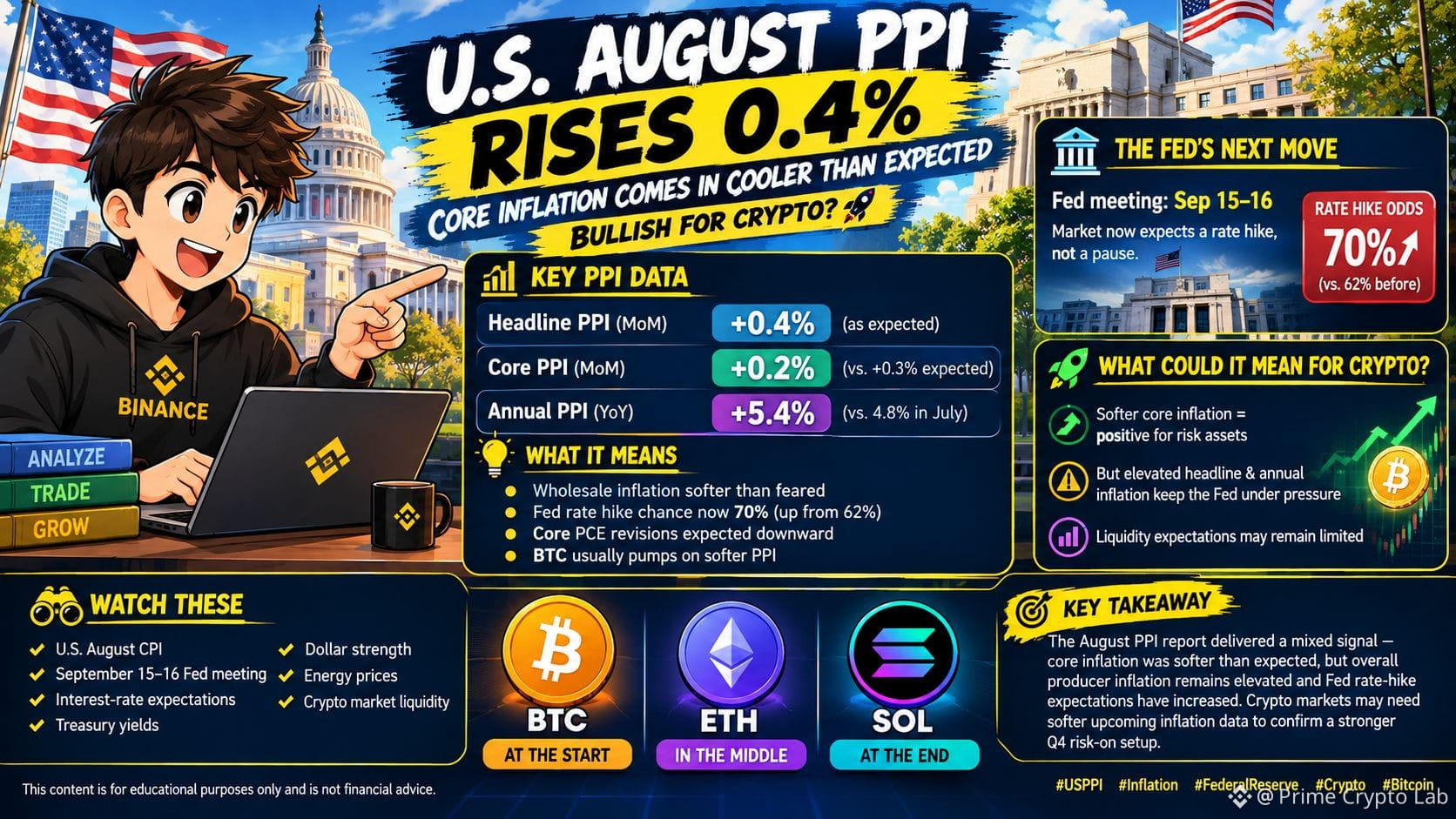
🚨 米国 8月のPPIが0.4%上昇 — コアインフレは予想より落ち着く
$BTC トレーダーは、市場がFRBの次の政策判断を見直す中で、最新の米国の生産者物価(PPI)データに注目している。
📊 主要PPIデータ
• ヘッドラインPPI:+0.4% 前月比
• 予想:+0.4%
• コアPPI:+0.2% 前月比
• コア予想:+0.3%
• 年間PPI:+5.4%(7月は+4.8%)
ヘッドライン指標は予想と一致した一方、コアPPIは予想よりやや弱めだった。とはいえ、年間の生産者物価インフレは大きく加速しており、基礎的な価格圧力が依然として高いことを示している。
🏦 これをFRBはどう見る?
弱めのコアの結果はリスク資産にとって一定の安心材料になり得るが、今回のレポートは純粋なハト派とは言えない。
エネルギーコストの上昇、サービス部門のインフレ、そして生産者価格の強さが、インフレが粘り強く続く可能性への懸念を強めた。レポート発表後、9月15〜16日の会合での25ベーシスポイント利上げ見込みに対する市場の織り込みは、データ前の約62%から約70%へ上昇した。
📈 これは仮想通貨にとってどういう意味?
$ETH にとって、予想を下回るコアPPIは前向きなシグナルだ。基礎的なインフレが低下すれば、いずれ金融政策をより緩めやすくなる可能性があるからだ。
しかし、ヘッドラインおよび年間インフレの高止まりによりFRBは引き続き圧力を受けており、短期的な流動性に関する期待が抑えられるかもしれない。
🔎 トレーダーが注目すべきポイント
• 米国 8月のCPI
• 9月15〜16日のFRB会合
• 金利見通し
• 国債利回り
• ドルの強さ
• エネルギー価格
• 仮想通貨市場の流動性
📌 重要ポイント:8月のPPIレポートは「混合シグナル」だった。コアインフレは予想より弱かったが、全体としての生産者物価インフレは高止まりしており、FRBの利上げ見通しは上昇した。仮想通貨市場は、Q4のリスクオン環境をより強く裏付けるために、今後のインフレ指標がより軟化する必要があるかもしれない。
⚠️ 本コンテンツは教育目的のみであり、金融アドバイスではありません。
🚨 米国 8月のPPIが0.4%上昇 — コアインフレは予想より落ち着く
$BTC トレーダーは、市場がFRBの次の政策判断を見直す中で、最新の米国の生産者物価(PPI)データに注目している。
📊 主要PPIデータ
• ヘッドラインPPI:+0.4% 前月比
• 予想:+0.4%
• コアPPI:+0.2% 前月比
• コア予想:+0.3%
• 年間PPI:+5.4%(7月は+4.8%)
ヘッドライン指標は予想と一致した一方、コアPPIは予想よりやや弱めだった。とはいえ、年間の生産者物価インフレは大きく加速しており、基礎的な価格圧力が依然として高いことを示している。
🏦 これをFRBはどう見る?
弱めのコアの結果はリスク資産にとって一定の安心材料になり得るが、今回のレポートは純粋なハト派とは言えない。
エネルギーコストの上昇、サービス部門のインフレ、そして生産者価格の強さが、インフレが粘り強く続く可能性への懸念を強めた。レポート発表後、9月15〜16日の会合での25ベーシスポイント利上げ見込みに対する市場の織り込みは、データ前の約62%から約70%へ上昇した。
📈 これは仮想通貨にとってどういう意味?
$ETH にとって、予想を下回るコアPPIは前向きなシグナルだ。基礎的なインフレが低下すれば、いずれ金融政策をより緩めやすくなる可能性があるからだ。
しかし、ヘッドラインおよび年間インフレの高止まりによりFRBは引き続き圧力を受けており、短期的な流動性に関する期待が抑えられるかもしれない。
🔎 トレーダーが注目すべきポイント
• 米国 8月のCPI
• 9月15〜16日のFRB会合
• 金利見通し
• 国債利回り
• ドルの強さ
• エネルギー価格
• 仮想通貨市場の流動性
📌 重要ポイント:8月のPPIレポートは「混合シグナル」だった。コアインフレは予想より弱かったが、全体としての生産者物価インフレは高止まりしており、FRBの利上げ見通しは上昇した。仮想通貨市場は、Q4のリスクオン環境をより強く裏付けるために、今後のインフレ指標がより軟化する必要があるかもしれない。
⚠️ 本コンテンツは教育目的のみであり、金融アドバイスではありません。
$BTC トレーダーは、市場がFRBの次の政策判断を見直す中で、最新の米国の生産者物価(PPI)データに注目している。
📊 主要PPIデータ
• ヘッドラインPPI:+0.4% 前月比
• 予想:+0.4%
• コアPPI:+0.2% 前月比
• コア予想:+0.3%
• 年間PPI:+5.4%(7月は+4.8%)
ヘッドライン指標は予想と一致した一方、コアPPIは予想よりやや弱めだった。とはいえ、年間の生産者物価インフレは大きく加速しており、基礎的な価格圧力が依然として高いことを示している。
🏦 これをFRBはどう見る?
弱めのコアの結果はリスク資産にとって一定の安心材料になり得るが、今回のレポートは純粋なハト派とは言えない。
エネルギーコストの上昇、サービス部門のインフレ、そして生産者価格の強さが、インフレが粘り強く続く可能性への懸念を強めた。レポート発表後、9月15〜16日の会合での25ベーシスポイント利上げ見込みに対する市場の織り込みは、データ前の約62%から約70%へ上昇した。
📈 これは仮想通貨にとってどういう意味?
$ETH にとって、予想を下回るコアPPIは前向きなシグナルだ。基礎的なインフレが低下すれば、いずれ金融政策をより緩めやすくなる可能性があるからだ。
しかし、ヘッドラインおよび年間インフレの高止まりによりFRBは引き続き圧力を受けており、短期的な流動性に関する期待が抑えられるかもしれない。
🔎 トレーダーが注目すべきポイント
• 米国 8月のCPI
• 9月15〜16日のFRB会合
• 金利見通し
• 国債利回り
• ドルの強さ
• エネルギー価格
• 仮想通貨市場の流動性
📌 重要ポイント:8月のPPIレポートは「混合シグナル」だった。コアインフレは予想より弱かったが、全体としての生産者物価インフレは高止まりしており、FRBの利上げ見通しは上昇した。仮想通貨市場は、Q4のリスクオン環境をより強く裏付けるために、今後のインフレ指標がより軟化する必要があるかもしれない。
⚠️ 本コンテンツは教育目的のみであり、金融アドバイスではありません。
85
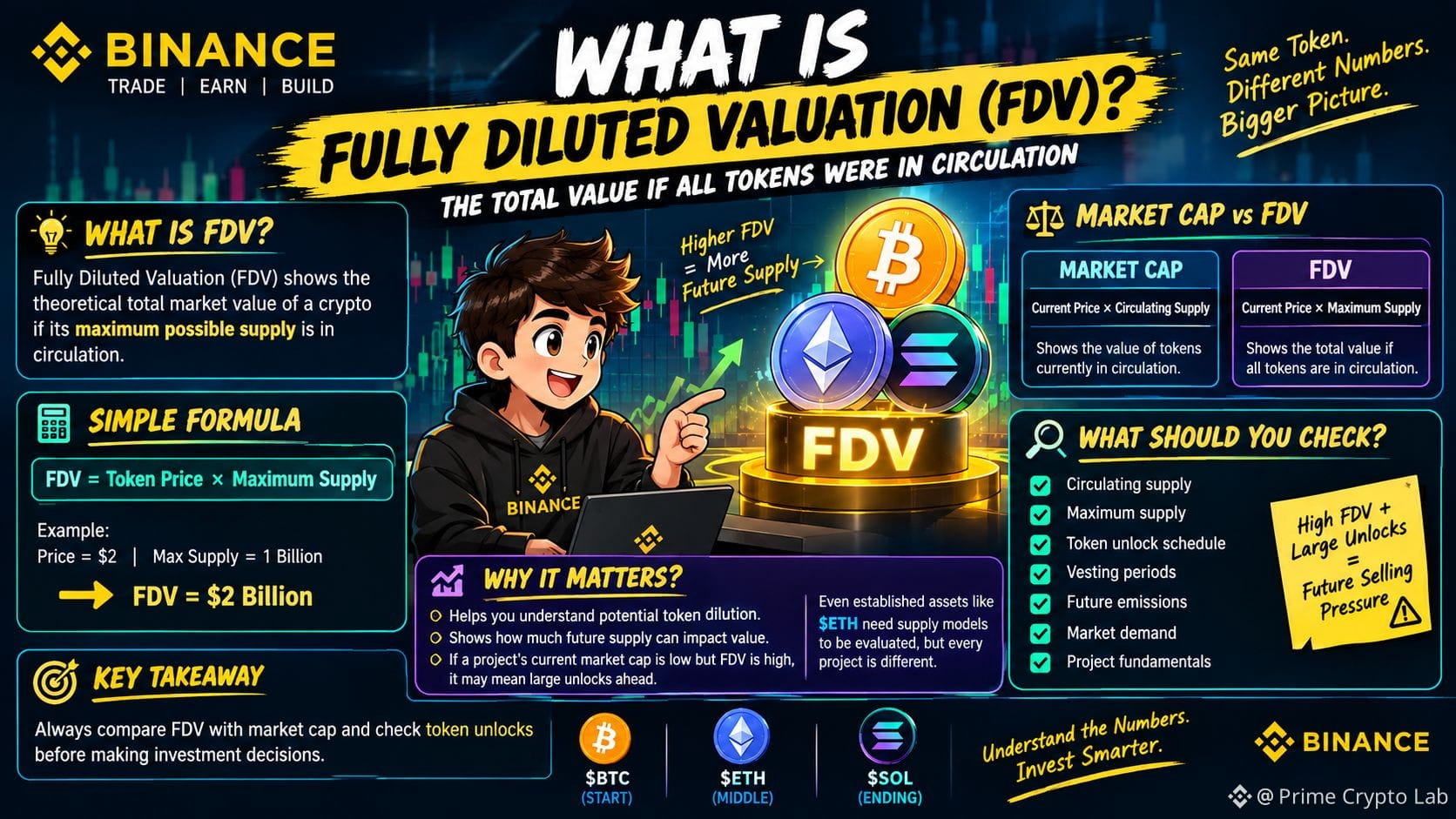
📊 完全希薄化評価(FDV)とは?
$BTC の投資家は、トークンの評価指標を理解する必要があります。完全希薄化評価(FDV)は、暗号資産の潜在的な評価を見極めるための重要な指標です。
🧮 FDVとは?
FDVは、最大可能供給量がすべて完全に流通していると仮定した場合の、暗号資産の理論上の総時価総額を表します。
式:
FDV = トークン価格 × 最大供給量
例えば、あるトークンの価格が $2 で、最大供給量が 10億トークンの場合:
➡️ FDV = $2 × 1B
➡️ FDV = $2 Billion
💡 なぜFDVが重要なのか?
FDVは、投資家が将来のトークン希薄化の可能性を理解するのに役立ちます。
プロジェクトの現在の時価総額が比較的低い一方でFDVが大きい場合、将来的にトークンのアンロック、ベスティング、またはエミッション(発行)を通じて、多くの供給が流通に入ってくる可能性が示唆されることがあります。
$ETH のような確立された資産を評価する際にも、基となる供給モデルを理解することが重要です。なぜなら、すべての暗号資産が異なる供給構造を持ち得るためです。
🔍 時価総額 vs. FDV
時価総額 = 現在の価格 × 流通供給量
FDV = 現在の価格 × 最大供給量
したがって、時価総額が低いからといって、必ずしもトークンが割安だとは限りません。追加でどれほどの供給が市場に入ってくる可能性があるかも考慮しましょう。
⚠️ チェックすべきことは?
• 流通供給量
• 最大供給量
• トークンのアンロックスケジュール
• ベスティング期間
• 将来のエミッション
• 市場需要
• プロジェクトの基礎(ファンダメンタルズ)
トークンは現在の価格や時価総額だけを見ると魅力的に見えるかもしれませんが、高いFDVに加えて今後予定されている大きなアンロックがある場合、追加の売り圧力が生まれる可能性があります。
$SOL
📌 重要なポイント:投資判断を行う前に、必ずFDVを時価総額と比較し、今後のトークンアンロック予定を確認してください。
⚠️ 本コンテンツは教育目的のみであり、金融アドバイスではありません。
📊 完全希薄化評価(FDV)とは?
$BTC の投資家は、トークンの評価指標を理解する必要があります。完全希薄化評価(FDV)は、暗号資産の潜在的な評価を見極めるための重要な指標です。
🧮 FDVとは?
FDVは、最大可能供給量がすべて完全に流通していると仮定した場合の、暗号資産の理論上の総時価総額を表します。
式:
FDV = トークン価格 × 最大供給量
例えば、あるトークンの価格が $2 で、最大供給量が 10億トークンの場合:
➡️ FDV = $2 × 1B
➡️ FDV = $2 Billion
💡 なぜFDVが重要なのか?
FDVは、投資家が将来のトークン希薄化の可能性を理解するのに役立ちます。
プロジェクトの現在の時価総額が比較的低い一方でFDVが大きい場合、将来的にトークンのアンロック、ベスティング、またはエミッション(発行)を通じて、多くの供給が流通に入ってくる可能性が示唆されることがあります。
$ETH のような確立された資産を評価する際にも、基となる供給モデルを理解することが重要です。なぜなら、すべての暗号資産が異なる供給構造を持ち得るためです。
🔍 時価総額 vs. FDV
時価総額 = 現在の価格 × 流通供給量
FDV = 現在の価格 × 最大供給量
したがって、時価総額が低いからといって、必ずしもトークンが割安だとは限りません。追加でどれほどの供給が市場に入ってくる可能性があるかも考慮しましょう。
⚠️ チェックすべきことは?
• 流通供給量
• 最大供給量
• トークンのアンロックスケジュール
• ベスティング期間
• 将来のエミッション
• 市場需要
• プロジェクトの基礎(ファンダメンタルズ)
トークンは現在の価格や時価総額だけを見ると魅力的に見えるかもしれませんが、高いFDVに加えて今後予定されている大きなアンロックがある場合、追加の売り圧力が生まれる可能性があります。
$SOL
📌 重要なポイント:投資判断を行う前に、必ずFDVを時価総額と比較し、今後のトークンアンロック予定を確認してください。
⚠️ 本コンテンツは教育目的のみであり、金融アドバイスではありません。
$BTC の投資家は、トークンの評価指標を理解する必要があります。完全希薄化評価(FDV)は、暗号資産の潜在的な評価を見極めるための重要な指標です。
🧮 FDVとは?
FDVは、最大可能供給量がすべて完全に流通していると仮定した場合の、暗号資産の理論上の総時価総額を表します。
式:
FDV = トークン価格 × 最大供給量
例えば、あるトークンの価格が $2 で、最大供給量が 10億トークンの場合:
➡️ FDV = $2 × 1B
➡️ FDV = $2 Billion
💡 なぜFDVが重要なのか?
FDVは、投資家が将来のトークン希薄化の可能性を理解するのに役立ちます。
プロジェクトの現在の時価総額が比較的低い一方でFDVが大きい場合、将来的にトークンのアンロック、ベスティング、またはエミッション(発行)を通じて、多くの供給が流通に入ってくる可能性が示唆されることがあります。
$ETH のような確立された資産を評価する際にも、基となる供給モデルを理解することが重要です。なぜなら、すべての暗号資産が異なる供給構造を持ち得るためです。
🔍 時価総額 vs. FDV
時価総額 = 現在の価格 × 流通供給量
FDV = 現在の価格 × 最大供給量
したがって、時価総額が低いからといって、必ずしもトークンが割安だとは限りません。追加でどれほどの供給が市場に入ってくる可能性があるかも考慮しましょう。
⚠️ チェックすべきことは?
• 流通供給量
• 最大供給量
• トークンのアンロックスケジュール
• ベスティング期間
• 将来のエミッション
• 市場需要
• プロジェクトの基礎(ファンダメンタルズ)
トークンは現在の価格や時価総額だけを見ると魅力的に見えるかもしれませんが、高いFDVに加えて今後予定されている大きなアンロックがある場合、追加の売り圧力が生まれる可能性があります。
$SOL
📌 重要なポイント:投資判断を行う前に、必ずFDVを時価総額と比較し、今後のトークンアンロック予定を確認してください。
⚠️ 本コンテンツは教育目的のみであり、金融アドバイスではありません。
68
翻訳参照
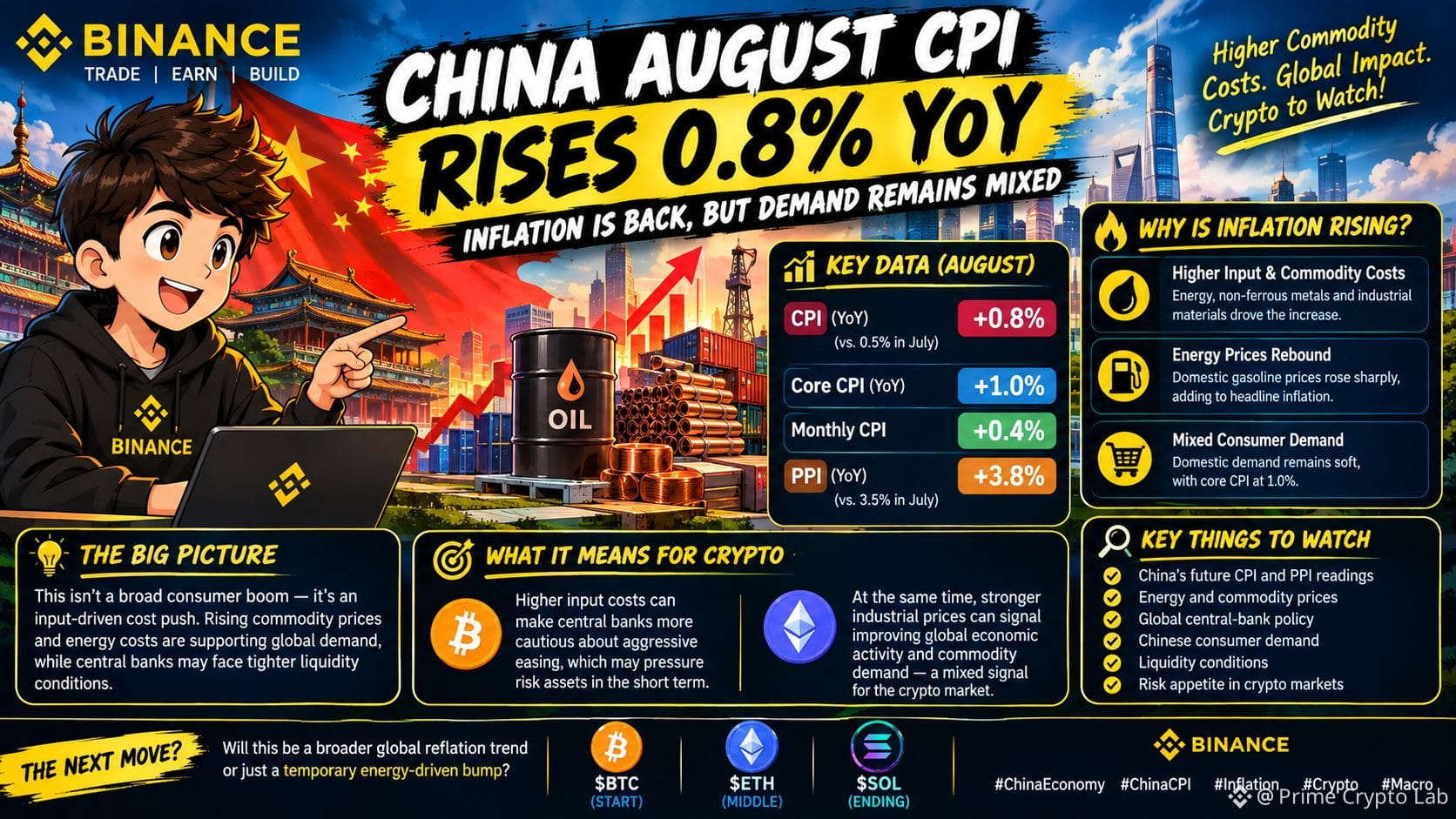
🟨 China August CPI Rises 0.8% — Inflation Is Back, But Demand Remains Mixed
$BTC traders should keep an eye on China’s latest inflation data as August CPI accelerated to 0.8% year-on-year, up from 0.5% in July.
The increase marks a noticeable improvement in headline inflation, but the underlying picture is more complicated.
📊 Key Data
• CPI: +0.8% YoY vs +0.5% in July
• Core CPI: +1.0% YoY
• Monthly CPI: +0.4%
• PPI: +3.8% YoY vs +3.5% in July
China’s official data shows that international commodity-price movements played an important role in the August acceleration. Domestic gasoline prices also rebounded sharply, while some technology-related consumer prices increased amid strong computing demand.
🔥 Why Is Inflation Rising?
The latest move appears to be driven more by higher input and commodity costs than by a broad consumer-demand boom.
Producer prices accelerated particularly strongly in industries linked to non-ferrous metals, energy and industrial materials. Reuters also reported that higher energy costs connected to the ongoing Middle East conflict were an important factor behind the increase.
At the same time, domestic demand remains relatively soft. That makes the inflation picture different from a classic demand-driven overheating cycle.
🌐 What Does This Mean for Crypto?
For $ETH , the important question is whether rising global input costs remain temporary or develop into broader inflationary pressure.
If commodity inflation continues, markets could become more cautious about aggressive monetary easing. That can create short-term pressure on risk assets, including crypto.
However, stronger industrial prices can also signal improving global economic activity and demand for commodities.
📌 What Traders Should Watch
• China’s future CPI and PPI readings
• Energy and commodity prices
• Global central-bank policy
• Chinese consumer demand
• Liquidity conditions
• Risk appetite across crypto markets
🟨 China August CPI Rises 0.8% — Inflation Is Back, But Demand Remains Mixed
$BTC traders should keep an eye on China’s latest inflation data as August CPI accelerated to 0.8% year-on-year, up from 0.5% in July.
The increase marks a noticeable improvement in headline inflation, but the underlying picture is more complicated.
📊 Key Data
• CPI: +0.8% YoY vs +0.5% in July
• Core CPI: +1.0% YoY
• Monthly CPI: +0.4%
• PPI: +3.8% YoY vs +3.5% in July
China’s official data shows that international commodity-price movements played an important role in the August acceleration. Domestic gasoline prices also rebounded sharply, while some technology-related consumer prices increased amid strong computing demand.
🔥 Why Is Inflation Rising?
The latest move appears to be driven more by higher input and commodity costs than by a broad consumer-demand boom.
Producer prices accelerated particularly strongly in industries linked to non-ferrous metals, energy and industrial materials. Reuters also reported that higher energy costs connected to the ongoing Middle East conflict were an important factor behind the increase.
At the same time, domestic demand remains relatively soft. That makes the inflation picture different from a classic demand-driven overheating cycle.
🌐 What Does This Mean for Crypto?
For $ETH , the important question is whether rising global input costs remain temporary or develop into broader inflationary pressure.
If commodity inflation continues, markets could become more cautious about aggressive monetary easing. That can create short-term pressure on risk assets, including crypto.
However, stronger industrial prices can also signal improving global economic activity and demand for commodities.
📌 What Traders Should Watch
• China’s future CPI and PPI readings
• Energy and commodity prices
• Global central-bank policy
• Chinese consumer demand
• Liquidity conditions
• Risk appetite across crypto markets
$BTC traders should keep an eye on China’s latest inflation data as August CPI accelerated to 0.8% year-on-year, up from 0.5% in July.
The increase marks a noticeable improvement in headline inflation, but the underlying picture is more complicated.
📊 Key Data
• CPI: +0.8% YoY vs +0.5% in July
• Core CPI: +1.0% YoY
• Monthly CPI: +0.4%
• PPI: +3.8% YoY vs +3.5% in July
China’s official data shows that international commodity-price movements played an important role in the August acceleration. Domestic gasoline prices also rebounded sharply, while some technology-related consumer prices increased amid strong computing demand.
🔥 Why Is Inflation Rising?
The latest move appears to be driven more by higher input and commodity costs than by a broad consumer-demand boom.
Producer prices accelerated particularly strongly in industries linked to non-ferrous metals, energy and industrial materials. Reuters also reported that higher energy costs connected to the ongoing Middle East conflict were an important factor behind the increase.
At the same time, domestic demand remains relatively soft. That makes the inflation picture different from a classic demand-driven overheating cycle.
🌐 What Does This Mean for Crypto?
For $ETH , the important question is whether rising global input costs remain temporary or develop into broader inflationary pressure.
If commodity inflation continues, markets could become more cautious about aggressive monetary easing. That can create short-term pressure on risk assets, including crypto.
However, stronger industrial prices can also signal improving global economic activity and demand for commodities.
📌 What Traders Should Watch
• China’s future CPI and PPI readings
• Energy and commodity prices
• Global central-bank policy
• Chinese consumer demand
• Liquidity conditions
• Risk appetite across crypto markets
59
🟠 銅が$6.80を上抜け—市場は何を示唆しているのか?
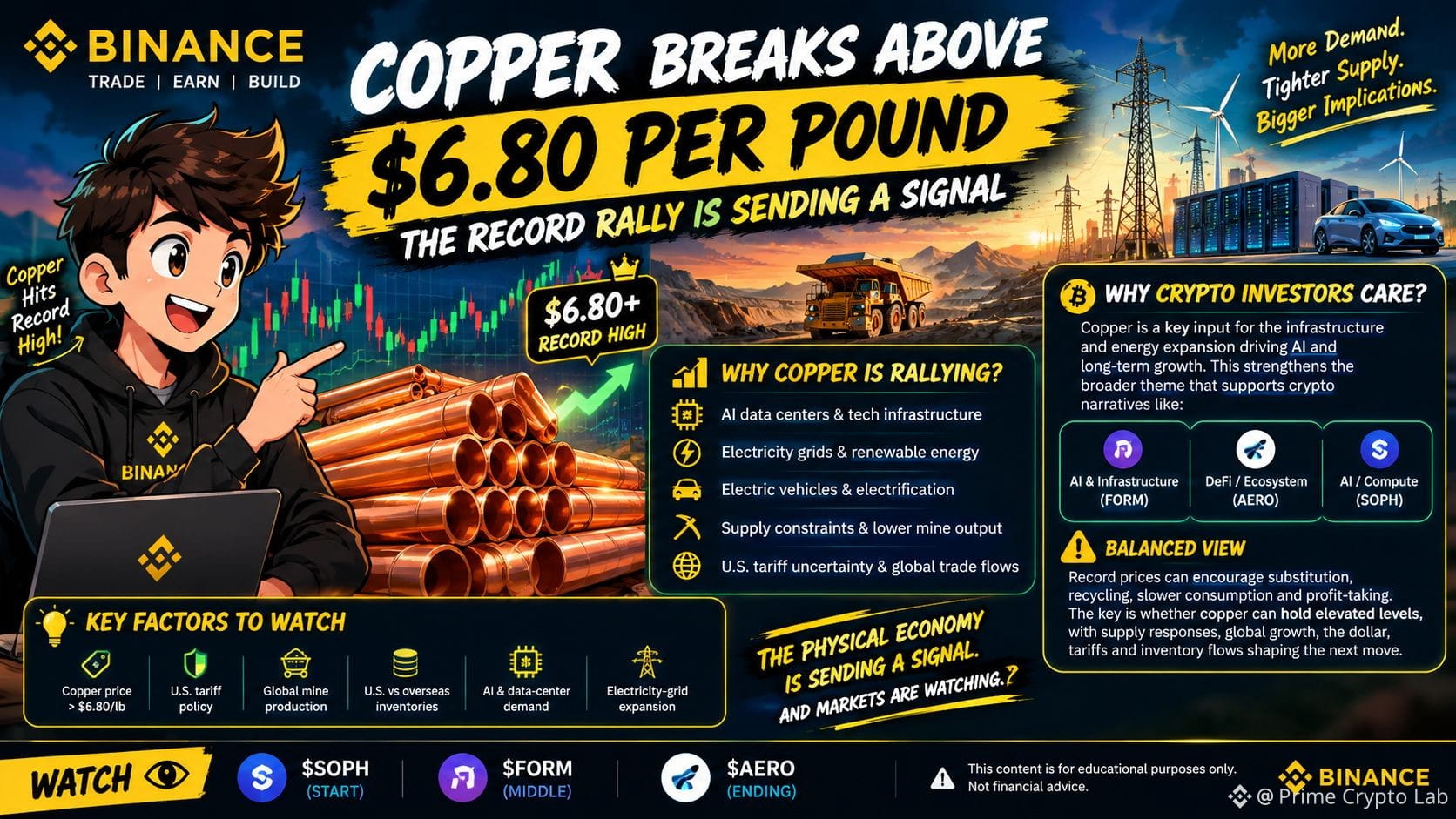
$SOPH 投資家は、銅が1ポンド当たり$6.80を上回ってブレイクし、過去最高の領域に到達したという最新の動きに注目すべきです。これは、世界の実体経済全体で高まる圧力を浮き彫りにしています。
銅は、AIデータセンター、電力グリッド、電気自動車、再生可能エネルギー関連のインフラ、そして幅広い「電化」推進にとって重要な投入資材です。同時に、鉱山の生産が弱いことや、米国外での在庫がタイトであることにより、供給は課題に直面しています。
主要なカタリストは、米国の関税をめぐる不確実性です。将来の関税への思惑が、トレーダーが銅を米国向けに動かす後押しとなり、米国市場と海外市場の間で大幅な在庫の不均衡が生まれました。ロイターによれば、大口の米国輸入もまた、他地域で利用可能な供給を押し下げるのに役立ったとのことです。
暗号資産(クリプト)投資家にとって重要なのは、銅がAIインフラとエネルギー拡大というストーリーに密接につながっている点です。データセンターや電化を支える同じ物理インフラが、重要資材への需要を押し上げています。
つまり、$FORM この銅の動きは、AIおよびインフラのテーマとともに、より広いウォッチリストに入れておく価値があります。ただし、過去最高の銅価格が自動的に価格が一直線に上昇し続けることを意味するわけではありません。高値は、リサイクルの促進、代替の増加、消費の鈍化、そして利確(利益確定)を招く可能性があります。
今の重要なシグナルは、新記録を「付ける」ことだけでなく、銅が高水準を維持できるかどうかです。
銅が引き続き強含み、供給が逼迫したままであれば、それは世界の市場におけるインフラコスト上昇という物語を補強するかもしれません。
📌 注目すべき主な要因:
• 銅価格が$6.80/ポンドを上回るか
• 米国の関税政策
• 世界の鉱山生産
• 米国と海外の在庫
• AI & データセンター需要
• 電力グリッドの拡大
実体経済はサインを発しています—そして市場はそれを見ています。
🟠 銅が$6.80を上抜け—市場は何を示唆しているのか?
$SOPH 投資家は、銅が1ポンド当たり$6.80を上回ってブレイクし、過去最高の領域に到達したという最新の動きに注目すべきです。これは、世界の実体経済全体で高まる圧力を浮き彫りにしています。
銅は、AIデータセンター、電力グリッド、電気自動車、再生可能エネルギー関連のインフラ、そして幅広い「電化」推進にとって重要な投入資材です。同時に、鉱山の生産が弱いことや、米国外での在庫がタイトであることにより、供給は課題に直面しています。
主要なカタリストは、米国の関税をめぐる不確実性です。将来の関税への思惑が、トレーダーが銅を米国向けに動かす後押しとなり、米国市場と海外市場の間で大幅な在庫の不均衡が生まれました。ロイターによれば、大口の米国輸入もまた、他地域で利用可能な供給を押し下げるのに役立ったとのことです。
暗号資産(クリプト)投資家にとって重要なのは、銅がAIインフラとエネルギー拡大というストーリーに密接につながっている点です。データセンターや電化を支える同じ物理インフラが、重要資材への需要を押し上げています。
つまり、$FORM この銅の動きは、AIおよびインフラのテーマとともに、より広いウォッチリストに入れておく価値があります。ただし、過去最高の銅価格が自動的に価格が一直線に上昇し続けることを意味するわけではありません。高値は、リサイクルの促進、代替の増加、消費の鈍化、そして利確(利益確定)を招く可能性があります。
今の重要なシグナルは、新記録を「付ける」ことだけでなく、銅が高水準を維持できるかどうかです。
銅が引き続き強含み、供給が逼迫したままであれば、それは世界の市場におけるインフラコスト上昇という物語を補強するかもしれません。
📌 注目すべき主な要因:
• 銅価格が$6.80/ポンドを上回るか
• 米国の関税政策
• 世界の鉱山生産
• 米国と海外の在庫
• AI & データセンター需要
• 電力グリッドの拡大
実体経済はサインを発しています—そして市場はそれを見ています。
$SOPH 投資家は、銅が1ポンド当たり$6.80を上回ってブレイクし、過去最高の領域に到達したという最新の動きに注目すべきです。これは、世界の実体経済全体で高まる圧力を浮き彫りにしています。
銅は、AIデータセンター、電力グリッド、電気自動車、再生可能エネルギー関連のインフラ、そして幅広い「電化」推進にとって重要な投入資材です。同時に、鉱山の生産が弱いことや、米国外での在庫がタイトであることにより、供給は課題に直面しています。
主要なカタリストは、米国の関税をめぐる不確実性です。将来の関税への思惑が、トレーダーが銅を米国向けに動かす後押しとなり、米国市場と海外市場の間で大幅な在庫の不均衡が生まれました。ロイターによれば、大口の米国輸入もまた、他地域で利用可能な供給を押し下げるのに役立ったとのことです。
暗号資産(クリプト)投資家にとって重要なのは、銅がAIインフラとエネルギー拡大というストーリーに密接につながっている点です。データセンターや電化を支える同じ物理インフラが、重要資材への需要を押し上げています。
つまり、$FORM この銅の動きは、AIおよびインフラのテーマとともに、より広いウォッチリストに入れておく価値があります。ただし、過去最高の銅価格が自動的に価格が一直線に上昇し続けることを意味するわけではありません。高値は、リサイクルの促進、代替の増加、消費の鈍化、そして利確(利益確定)を招く可能性があります。
今の重要なシグナルは、新記録を「付ける」ことだけでなく、銅が高水準を維持できるかどうかです。
銅が引き続き強含み、供給が逼迫したままであれば、それは世界の市場におけるインフラコスト上昇という物語を補強するかもしれません。
📌 注目すべき主な要因:
• 銅価格が$6.80/ポンドを上回るか
• 米国の関税政策
• 世界の鉱山生産
• 米国と海外の在庫
• AI & データセンター需要
• 電力グリッドの拡大
実体経済はサインを発しています—そして市場はそれを見ています。
297
🚀最大供給とは?—すべてのクリプトトレーダーが知るべき重要なトークノミクス指標
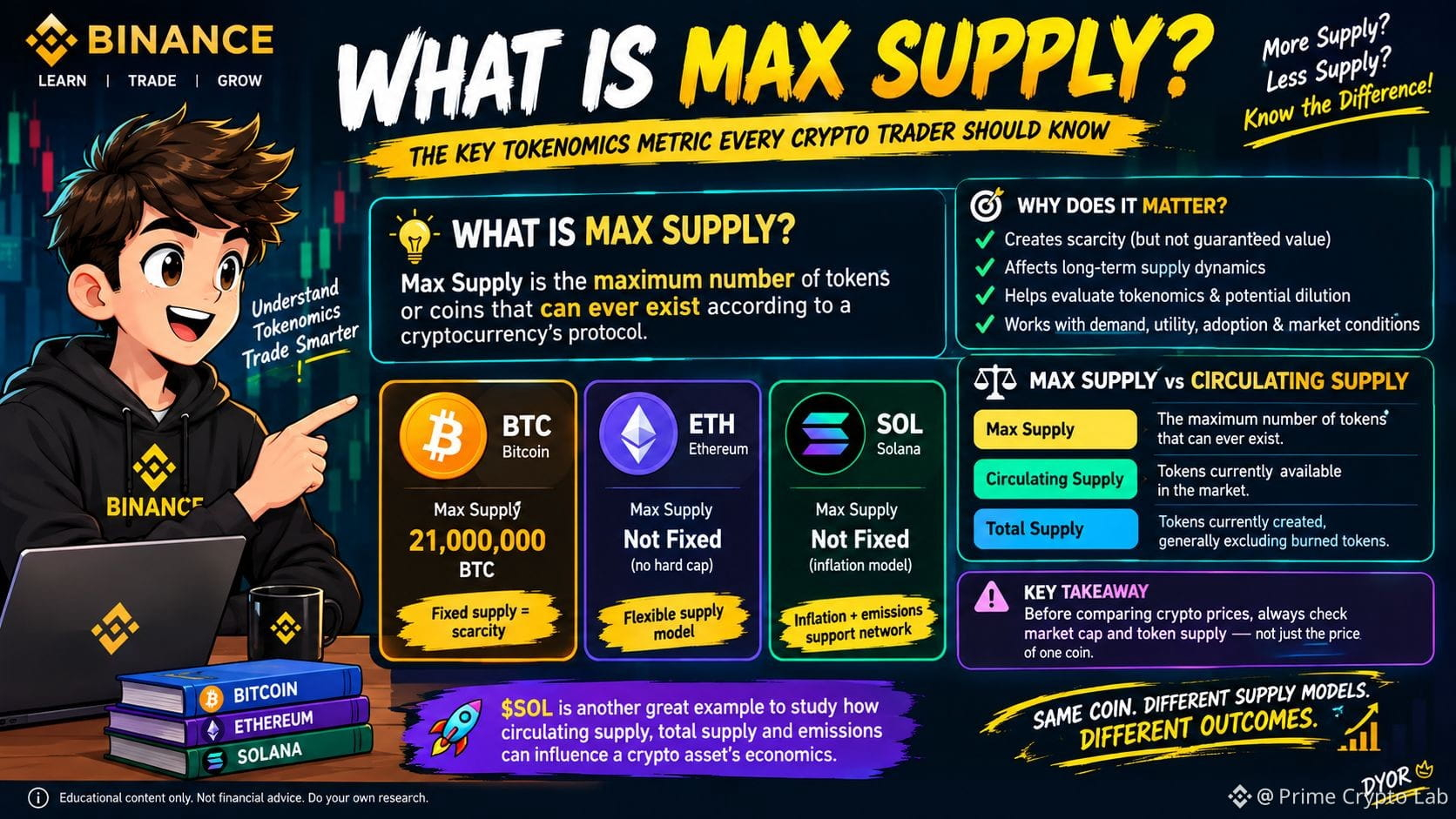
$BTC は最大供給量が1,800万コインであり、固定供給型の暗号通貨として最もわかりやすい例の一つです。
📊 最大供給とはどういう意味?
最大供給(Max Supply)とは、暗号資産のプロトコルに基づいて、将来存在し得るトークンまたはコインの最大数のことです。
市場に新たなトークンが流入することで変動する流通供給(circulating supply)とは異なり、最大供給は究極の供給上限を表します。
🔍 なぜ重要?
上限がある最大供給は希少性を生む可能性がありますが、希少性だけで価格上昇が保証されるわけではありません。需要、普及(採用)、ユーティリティ、トークンの配分、そして市場環境も同じくらい重要です。
たとえば、$ETH はビットコインのような固定最大供給モデルではありません。だからこそ、投資家はトークンの供給だけで判断せず、各プロジェクトのトークノミクスを理解すべきだということがわかります。
⚠️ 最大供給(Max Supply)と流通供給(Circulating Supply)の違い
最大供給 → 将来存在し得るトークンの最大数
流通供給 → 現在市場で利用可能なトークン
総供給(Total Supply)→ 現在作られているトークン(一般的にバーンされたトークンは除く)
これらの数値を理解することで、トレーダーはトークンの希少性、潜在的な希薄化、そして長期的な供給ダイナミクスを評価しやすくなります。
💡要点:暗号資産の価格を比較する前に、必ず時価総額とトークン供給を確認しましょう。1つのコインの価格だけを見ないことです。
👀 $SOL は、流通供給・総供給・トークンの発行(エミッション)が暗号資産の経済性にどのように影響し得るかを学ぶ際の、もう一つの役立つ例です。
教育目的のみ。金融助言ではありません。必ずご自身で調査してください。
#cryptooinsigts #TradingTales #Binance #BinanceSquareTalks
🚀最大供給とは?—すべてのクリプトトレーダーが知るべき重要なトークノミクス指標
$BTC は最大供給量が1,800万コインであり、固定供給型の暗号通貨として最もわかりやすい例の一つです。
📊 最大供給とはどういう意味?
最大供給(Max Supply)とは、暗号資産のプロトコルに基づいて、将来存在し得るトークンまたはコインの最大数のことです。
市場に新たなトークンが流入することで変動する流通供給(circulating supply)とは異なり、最大供給は究極の供給上限を表します。
🔍 なぜ重要?
上限がある最大供給は希少性を生む可能性がありますが、希少性だけで価格上昇が保証されるわけではありません。需要、普及(採用)、ユーティリティ、トークンの配分、そして市場環境も同じくらい重要です。
たとえば、$ETH はビットコインのような固定最大供給モデルではありません。だからこそ、投資家はトークンの供給だけで判断せず、各プロジェクトのトークノミクスを理解すべきだということがわかります。
⚠️ 最大供給(Max Supply)と流通供給(Circulating Supply)の違い
最大供給 → 将来存在し得るトークンの最大数
流通供給 → 現在市場で利用可能なトークン
総供給(Total Supply)→ 現在作られているトークン(一般的にバーンされたトークンは除く)
これらの数値を理解することで、トレーダーはトークンの希少性、潜在的な希薄化、そして長期的な供給ダイナミクスを評価しやすくなります。
💡要点:暗号資産の価格を比較する前に、必ず時価総額とトークン供給を確認しましょう。1つのコインの価格だけを見ないことです。
👀 $SOL は、流通供給・総供給・トークンの発行(エミッション)が暗号資産の経済性にどのように影響し得るかを学ぶ際の、もう一つの役立つ例です。
教育目的のみ。金融助言ではありません。必ずご自身で調査してください。
#cryptooinsigts #TradingTales #Binance #BinanceSquareTalks
$BTC は最大供給量が1,800万コインであり、固定供給型の暗号通貨として最もわかりやすい例の一つです。
📊 最大供給とはどういう意味?
最大供給(Max Supply)とは、暗号資産のプロトコルに基づいて、将来存在し得るトークンまたはコインの最大数のことです。
市場に新たなトークンが流入することで変動する流通供給(circulating supply)とは異なり、最大供給は究極の供給上限を表します。
🔍 なぜ重要?
上限がある最大供給は希少性を生む可能性がありますが、希少性だけで価格上昇が保証されるわけではありません。需要、普及(採用)、ユーティリティ、トークンの配分、そして市場環境も同じくらい重要です。
たとえば、$ETH はビットコインのような固定最大供給モデルではありません。だからこそ、投資家はトークンの供給だけで判断せず、各プロジェクトのトークノミクスを理解すべきだということがわかります。
⚠️ 最大供給(Max Supply)と流通供給(Circulating Supply)の違い
最大供給 → 将来存在し得るトークンの最大数
流通供給 → 現在市場で利用可能なトークン
総供給(Total Supply)→ 現在作られているトークン(一般的にバーンされたトークンは除く)
これらの数値を理解することで、トレーダーはトークンの希少性、潜在的な希薄化、そして長期的な供給ダイナミクスを評価しやすくなります。
💡要点:暗号資産の価格を比較する前に、必ず時価総額とトークン供給を確認しましょう。1つのコインの価格だけを見ないことです。
👀 $SOL は、流通供給・総供給・トークンの発行(エミッション)が暗号資産の経済性にどのように影響し得るかを学ぶ際の、もう一つの役立つ例です。
教育目的のみ。金融助言ではありません。必ずご自身で調査してください。
#cryptooinsigts #TradingTales #Binance #BinanceSquareTalks
80
🚀ビットコインキャッシュが勢いを取り戻す—ブレイクアウトのリテストに注目
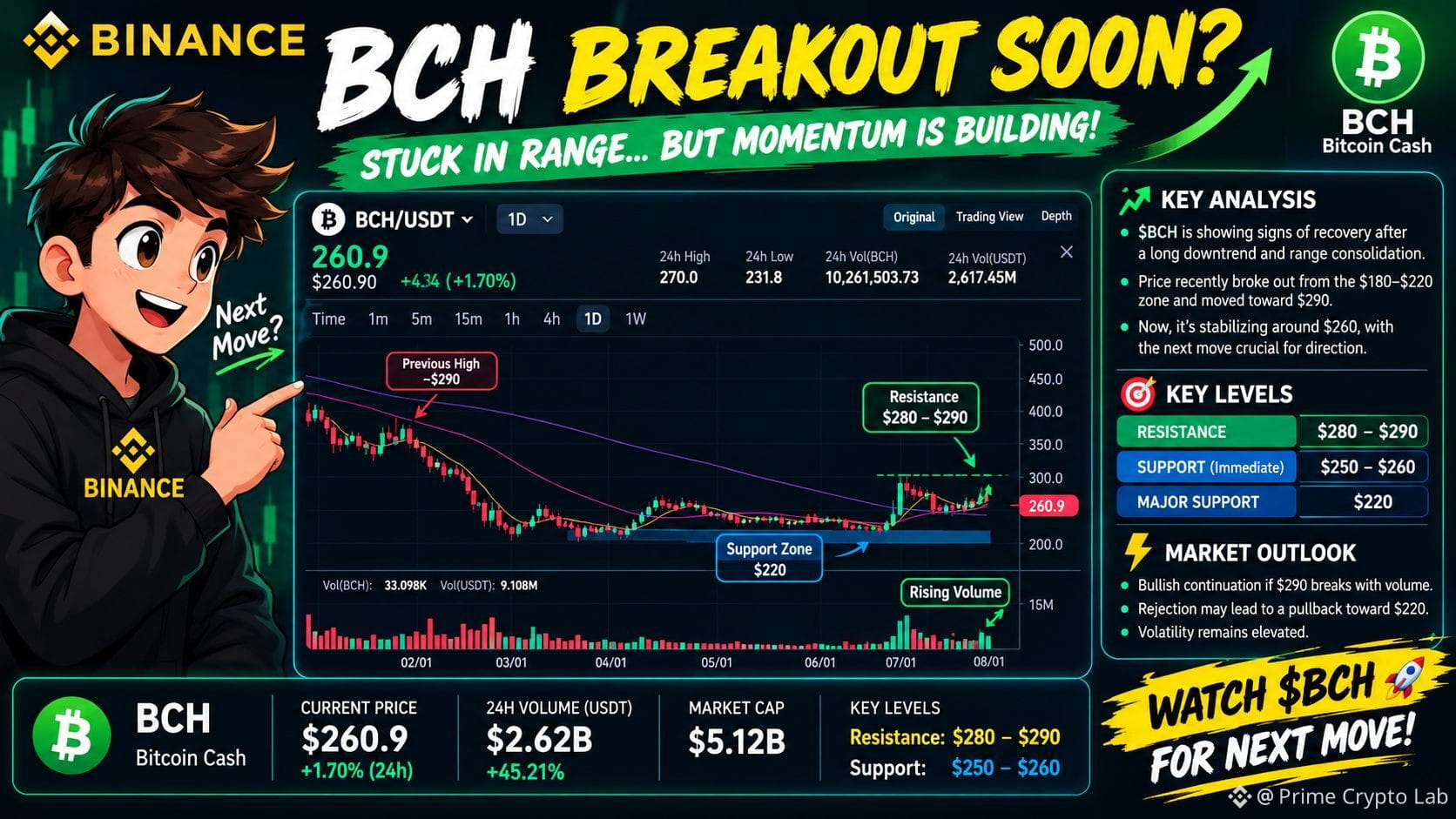
$BCH は、長期の下落から回復した後、これまでの取引レンジをブレイクして勢いが再び戻ってきている兆候を示しています。
📊 1Dチャートでは、$180付近からの大きな反転が確認され、その後は$200〜$220周辺で長めの値固めが続きました。続いて、出来高を伴う鋭い上昇が起こり、価格は$290ゾーンへ向かった後いったん押し戻されました。
現在、$BCH は$260付近で安定しており、次の反応はトレーダーにとって重要です。
🔑注目すべき主要レベル
レジスタンス:〜$280〜$290
直近のサポート:〜$250〜$260
主要サポート:〜$220
ブレイクアウトの確認:強い出来高を伴った〜$290超えの持続的な値動き
構造は依然として興味深いものの、直近で高値から拒否されたことを踏まえ、買い手が現在のサポート領域を防衛できるかを確認する必要があります。
⚠️ 直近高値を上抜ければ強気の継続が強まる可能性があります。一方で、$250〜$260の領域を失うと、より下のサポートへの別のリテストにつながる恐れがあります。
👀 $BCH は、ボラティリティと出来高が次の動きを形作り続けるため、ウォッチリストに残っています。
投資助言ではありません。取引前にご自身で調査してください。
#TradingTales #BCH #Binance #Sqaure #BinanceSquareTalks
{spot}(BCHUSDT)
🚀ビットコインキャッシュが勢いを取り戻す—ブレイクアウトのリテストに注目
$BCH は、長期の下落から回復した後、これまでの取引レンジをブレイクして勢いが再び戻ってきている兆候を示しています。
📊 1Dチャートでは、$180付近からの大きな反転が確認され、その後は$200〜$220周辺で長めの値固めが続きました。続いて、出来高を伴う鋭い上昇が起こり、価格は$290ゾーンへ向かった後いったん押し戻されました。
現在、$BCH は$260付近で安定しており、次の反応はトレーダーにとって重要です。
🔑注目すべき主要レベル
レジスタンス:〜$280〜$290
直近のサポート:〜$250〜$260
主要サポート:〜$220
ブレイクアウトの確認:強い出来高を伴った〜$290超えの持続的な値動き
構造は依然として興味深いものの、直近で高値から拒否されたことを踏まえ、買い手が現在のサポート領域を防衛できるかを確認する必要があります。
⚠️ 直近高値を上抜ければ強気の継続が強まる可能性があります。一方で、$250〜$260の領域を失うと、より下のサポートへの別のリテストにつながる恐れがあります。
👀 $BCH は、ボラティリティと出来高が次の動きを形作り続けるため、ウォッチリストに残っています。
投資助言ではありません。取引前にご自身で調査してください。
#TradingTales #BCH #Binance #Sqaure #BinanceSquareTalks
$BCH は、長期の下落から回復した後、これまでの取引レンジをブレイクして勢いが再び戻ってきている兆候を示しています。
📊 1Dチャートでは、$180付近からの大きな反転が確認され、その後は$200〜$220周辺で長めの値固めが続きました。続いて、出来高を伴う鋭い上昇が起こり、価格は$290ゾーンへ向かった後いったん押し戻されました。
現在、$BCH は$260付近で安定しており、次の反応はトレーダーにとって重要です。
🔑注目すべき主要レベル
レジスタンス:〜$280〜$290
直近のサポート:〜$250〜$260
主要サポート:〜$220
ブレイクアウトの確認:強い出来高を伴った〜$290超えの持続的な値動き
構造は依然として興味深いものの、直近で高値から拒否されたことを踏まえ、買い手が現在のサポート領域を防衛できるかを確認する必要があります。
⚠️ 直近高値を上抜ければ強気の継続が強まる可能性があります。一方で、$250〜$260の領域を失うと、より下のサポートへの別のリテストにつながる恐れがあります。
👀 $BCH は、ボラティリティと出来高が次の動きを形作り続けるため、ウォッチリストに残っています。
投資助言ではありません。取引前にご自身で調査してください。
#TradingTales #BCH #Binance #Sqaure #BinanceSquareTalks
62
ログインして、さらにコンテンツを読む
厳選トピックで世界の暗号資産トレーダーの仲間入り
⚡️ 暗号資産に関する最新かつ有益な情報が見つかります。
💬 世界最大の暗号資産取引所から信頼されています。
👍 認証を受けたクリエイターから、有益なインサイトを得られます。
メール / 電話番号
トレンドトピック
SaylorHintsStrategyBitcoinBuy
閲覧回数 2.2M
11,117人が討論中
まだSaylorのあらゆるヒントを自動の買いシグナルとして扱っているなら、今すぐやめてください。
高額なミスは、企業の長期的なトレジャリー戦略を、自分のリスク許容度と混同することです。戦略は過酷な下落局面でも耐えられますが、FOMOで買う人はたった1本の見苦しいローソク足のあとにパニック売りしがちです。$BTC
Saylorの最新シグナルが既視感を覚えるのは、Strategyがこれまで弱さを利用してビットコインのポジションを築いてきたからです。つまり、ボラティリティを蓄積(アキュムレーション)に変えてきた。ですが今は市場が違います。スポット需要、マクロの流動性、そして競合する企業トレジャリーの思惑が、ひとりの声高な買い手が物語を独占するのではなく、価格に影響します。
Fear & Greedが75の今、群衆はすでに強欲に傾いています。だからこそ、過去のビットコインの急騰局面との比較は居心地が悪いものになります。強い確信は上昇材料になりますが、混み合った確信は、誰も話したくない「出口の流動性」を生み出してしまうこともあるのです。$USDTに資金がローテーションしているのを見たり、$ONDO を注視しているトレーダーたちも同じ疑問を抱えています。これは蓄積なのか、それともただのナラティブ(物語)追いなのか?
Saylorのやり方は、依然として最も賢いビットコインのトレジャリー戦略なのか。それとも投資家は、ひとりの買い手がこの市場をどれほど動かせるのかを過大評価しているのでしょうか? #SaylorHintsStrategyBitcoinBuy #BitcoinHolds #BitcoinUp23
minamium
·いいね:2件
·閲覧回数 98
BOJRaisesRatesTo31YearHigh
閲覧回数 166,206
2,532人が討論中
BuffettStepsDownAsBerkshireChairman
閲覧回数 80,895
1,303人が討論中