

Zoya Research
147 Publications

Zoya Research
Signaler
Bloquer l’utilisateur
31 Suivis
25 Abonnés
130 J’aime
Publications
Tous
Citations
Binance Pick est une façon intéressante d’explorer les marchés prédictifs et de partager vos analyses du marché. 🔥 Chaque prédiction est une occasion d’apprendre, d’analyser les tendances et d’améliorer votre prise de décision. Continuez vos recherches, restez régulier et faites en sorte que chaque choix compte ! 🚀
#BinancePick
Binance Pick est une façon intéressante d’explorer les marchés prédictifs et de partager vos analyses du marché. 🔥 Chaque prédiction est une occasion d’apprendre, d’analyser les tendances et d’améliorer votre prise de décision. Continuez vos recherches, restez régulier et faites en sorte que chaque choix compte ! 🚀
#BinancePick
#BinancePick
79
Je revenais sans cesse à une seule question en observant Dusk et NPEX :
Un marché régulé peut-il être auditable sans transformer l’activité financière de chaque investisseur en données publiques ?
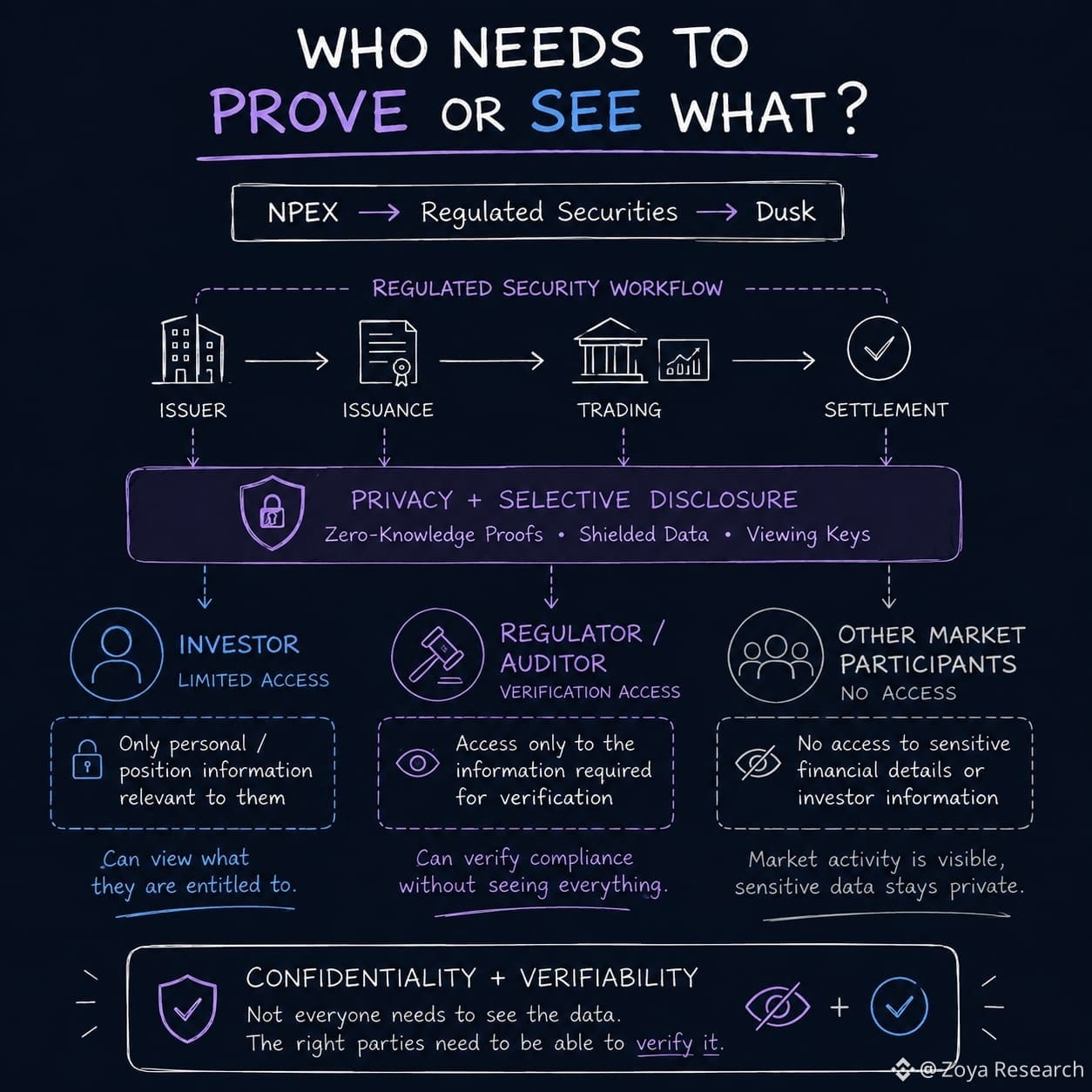
NPEX rend cette question plus concrète qu’elle ne le serait autrement. Le travail de Dusk avec la bourse néerlandaise réglementée donne à cette interrogation un contexte réel : les valeurs mobilières réglementées, les investisseurs et l’infrastructure de marché doivent fonctionner dans le cadre de règles qui exigent à la fois une supervision et de la confidentialité.
Cela crée un problème spécifique.
Un régulateur peut avoir besoin de vérifier qu’un investisseur est éligible ou qu’une transaction respecte les conditions requises. Mais cela ne signifie pas automatiquement que tous les autres acteurs du marché doivent voir les informations financières sous-jacentes.
C’est là que l’architecture de Dusk devient intéressante.
Son modèle de transactions Phoenix maintient les soldes et les transferts à l’abri, tandis que des preuves à connaissance zéro peuvent établir la validité des transactions sans exposer les détails sous-jacents. Lorsque des preuves supplémentaires sont nécessaires, des clés de consultation peuvent fournir un accès sélectif.
Ainsi, la confidentialité n’est pas seulement une question de dissimulation des données.
Elle transforme la question de « l’information est-elle publique ? » en « qui doit prouver ou voir quoi ? »
Mais le véritable test, c’est ce qui se passe lorsqu’une valeur mobilière réellement réglementée passe par ce flux de travail : qui peut voir quoi, qui peut prouver quoi, et dans quelle mesure faut-il encore une coordination manuelle en coulisses ?
C’est la partie que je ne pense pas qu’il faille tenir pour acquise.
Si ces autorisations peuvent réellement être appliquées onchain entre les investisseurs, les émetteurs, les plateformes et les superviseurs, alors la confidentialité devient-elle plus qu’une simple fonctionnalité de conformité — devient-elle une composante même de l’infrastructure du marché ?
@Dusk_Foundation $DUSK #dusk
Je revenais sans cesse à une seule question en observant Dusk et NPEX :
Un marché régulé peut-il être auditable sans transformer l’activité financière de chaque investisseur en données publiques ?
NPEX rend cette question plus concrète qu’elle ne le serait autrement. Le travail de Dusk avec la bourse néerlandaise réglementée donne à cette interrogation un contexte réel : les valeurs mobilières réglementées, les investisseurs et l’infrastructure de marché doivent fonctionner dans le cadre de règles qui exigent à la fois une supervision et de la confidentialité.
Cela crée un problème spécifique.
Un régulateur peut avoir besoin de vérifier qu’un investisseur est éligible ou qu’une transaction respecte les conditions requises. Mais cela ne signifie pas automatiquement que tous les autres acteurs du marché doivent voir les informations financières sous-jacentes.
C’est là que l’architecture de Dusk devient intéressante.
Son modèle de transactions Phoenix maintient les soldes et les transferts à l’abri, tandis que des preuves à connaissance zéro peuvent établir la validité des transactions sans exposer les détails sous-jacents. Lorsque des preuves supplémentaires sont nécessaires, des clés de consultation peuvent fournir un accès sélectif.
Ainsi, la confidentialité n’est pas seulement une question de dissimulation des données.
Elle transforme la question de « l’information est-elle publique ? » en « qui doit prouver ou voir quoi ? »
Mais le véritable test, c’est ce qui se passe lorsqu’une valeur mobilière réellement réglementée passe par ce flux de travail : qui peut voir quoi, qui peut prouver quoi, et dans quelle mesure faut-il encore une coordination manuelle en coulisses ?
C’est la partie que je ne pense pas qu’il faille tenir pour acquise.
Si ces autorisations peuvent réellement être appliquées onchain entre les investisseurs, les émetteurs, les plateformes et les superviseurs, alors la confidentialité devient-elle plus qu’une simple fonctionnalité de conformité — devient-elle une composante même de l’infrastructure du marché ?
@Dusk $DUSK #dusk
Un marché régulé peut-il être auditable sans transformer l’activité financière de chaque investisseur en données publiques ?
NPEX rend cette question plus concrète qu’elle ne le serait autrement. Le travail de Dusk avec la bourse néerlandaise réglementée donne à cette interrogation un contexte réel : les valeurs mobilières réglementées, les investisseurs et l’infrastructure de marché doivent fonctionner dans le cadre de règles qui exigent à la fois une supervision et de la confidentialité.
Cela crée un problème spécifique.
Un régulateur peut avoir besoin de vérifier qu’un investisseur est éligible ou qu’une transaction respecte les conditions requises. Mais cela ne signifie pas automatiquement que tous les autres acteurs du marché doivent voir les informations financières sous-jacentes.
C’est là que l’architecture de Dusk devient intéressante.
Son modèle de transactions Phoenix maintient les soldes et les transferts à l’abri, tandis que des preuves à connaissance zéro peuvent établir la validité des transactions sans exposer les détails sous-jacents. Lorsque des preuves supplémentaires sont nécessaires, des clés de consultation peuvent fournir un accès sélectif.
Ainsi, la confidentialité n’est pas seulement une question de dissimulation des données.
Elle transforme la question de « l’information est-elle publique ? » en « qui doit prouver ou voir quoi ? »
Mais le véritable test, c’est ce qui se passe lorsqu’une valeur mobilière réellement réglementée passe par ce flux de travail : qui peut voir quoi, qui peut prouver quoi, et dans quelle mesure faut-il encore une coordination manuelle en coulisses ?
C’est la partie que je ne pense pas qu’il faille tenir pour acquise.
Si ces autorisations peuvent réellement être appliquées onchain entre les investisseurs, les émetteurs, les plateformes et les superviseurs, alors la confidentialité devient-elle plus qu’une simple fonctionnalité de conformité — devient-elle une composante même de l’infrastructure du marché ?
@Dusk $DUSK #dusk
83
Je suis retourné aujourd’hui dans le modèle de confidentialité de Dusk, parce qu’une seule question n’arrêtait pas de me tracasser : si les marchés régulés ont encore besoin de visibilité, qu’est-ce que la confidentialité protège exactement ?
Plus j’y réfléchissais, moins je pense que la réponse soit simplement « masquer la transaction ».
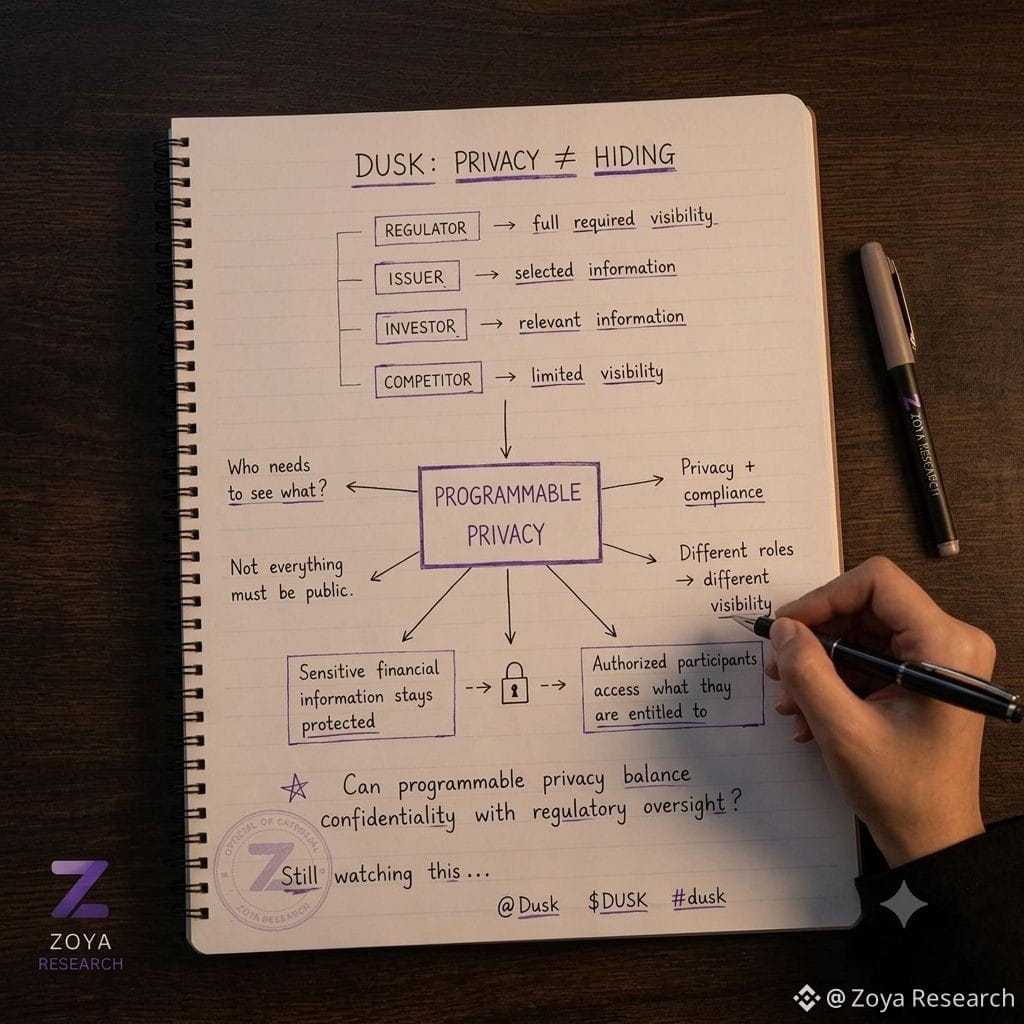
Une institution financière peut avoir besoin de prouver qu’un événement s’est produit, tandis qu’un concurrent n’a aucune raison de voir la position sous-jacente, le solde ou d’autres informations sensibles.
Cela crée un problème différent.
Ce n’est pas vraiment de la confidentialité contre de la transparence. Il s’agit plutôt de savoir si différents participants peuvent avoir des niveaux d’accès différents au même processus financier.
C’est là que l’idée de confidentialité programmable de Dusk a attiré mon attention.
Les informations sensibles peuvent rester protégées tandis que des parties autorisées peuvent tout de même recevoir ce dont elles ont besoin pour l’analyse. Pour la finance réglementée, cette distinction paraît plus utile que de simplement appeler quelque chose une « blockchain privée ».
La partie difficile consiste à déterminer comment ces autorisations doivent fonctionner entre les régulateurs, les émetteurs, les investisseurs et les autres participants, sans transformer chaque transaction en un enregistrement entièrement public.
C’est le point que je continue d’observer.
Si différents participants ont besoin de niveaux de visibilité différents, la confidentialité programmable peut-elle devenir une manière pratique d’équilibrer la confidentialité et la supervision réglementaire ?
@Dusk_Foundation $DUSK #dusk
Je suis retourné aujourd’hui dans le modèle de confidentialité de Dusk, parce qu’une seule question n’arrêtait pas de me tracasser : si les marchés régulés ont encore besoin de visibilité, qu’est-ce que la confidentialité protège exactement ?
Plus j’y réfléchissais, moins je pense que la réponse soit simplement « masquer la transaction ».
Une institution financière peut avoir besoin de prouver qu’un événement s’est produit, tandis qu’un concurrent n’a aucune raison de voir la position sous-jacente, le solde ou d’autres informations sensibles.
Cela crée un problème différent.
Ce n’est pas vraiment de la confidentialité contre de la transparence. Il s’agit plutôt de savoir si différents participants peuvent avoir des niveaux d’accès différents au même processus financier.
C’est là que l’idée de confidentialité programmable de Dusk a attiré mon attention.
Les informations sensibles peuvent rester protégées tandis que des parties autorisées peuvent tout de même recevoir ce dont elles ont besoin pour l’analyse. Pour la finance réglementée, cette distinction paraît plus utile que de simplement appeler quelque chose une « blockchain privée ».
La partie difficile consiste à déterminer comment ces autorisations doivent fonctionner entre les régulateurs, les émetteurs, les investisseurs et les autres participants, sans transformer chaque transaction en un enregistrement entièrement public.
C’est le point que je continue d’observer.
Si différents participants ont besoin de niveaux de visibilité différents, la confidentialité programmable peut-elle devenir une manière pratique d’équilibrer la confidentialité et la supervision réglementaire ?
@Dusk $DUSK #dusk
Plus j’y réfléchissais, moins je pense que la réponse soit simplement « masquer la transaction ».
Une institution financière peut avoir besoin de prouver qu’un événement s’est produit, tandis qu’un concurrent n’a aucune raison de voir la position sous-jacente, le solde ou d’autres informations sensibles.
Cela crée un problème différent.
Ce n’est pas vraiment de la confidentialité contre de la transparence. Il s’agit plutôt de savoir si différents participants peuvent avoir des niveaux d’accès différents au même processus financier.
C’est là que l’idée de confidentialité programmable de Dusk a attiré mon attention.
Les informations sensibles peuvent rester protégées tandis que des parties autorisées peuvent tout de même recevoir ce dont elles ont besoin pour l’analyse. Pour la finance réglementée, cette distinction paraît plus utile que de simplement appeler quelque chose une « blockchain privée ».
La partie difficile consiste à déterminer comment ces autorisations doivent fonctionner entre les régulateurs, les émetteurs, les investisseurs et les autres participants, sans transformer chaque transaction en un enregistrement entièrement public.
C’est le point que je continue d’observer.
Si différents participants ont besoin de niveaux de visibilité différents, la confidentialité programmable peut-elle devenir une manière pratique d’équilibrer la confidentialité et la supervision réglementaire ?
@Dusk $DUSK #dusk
1
75
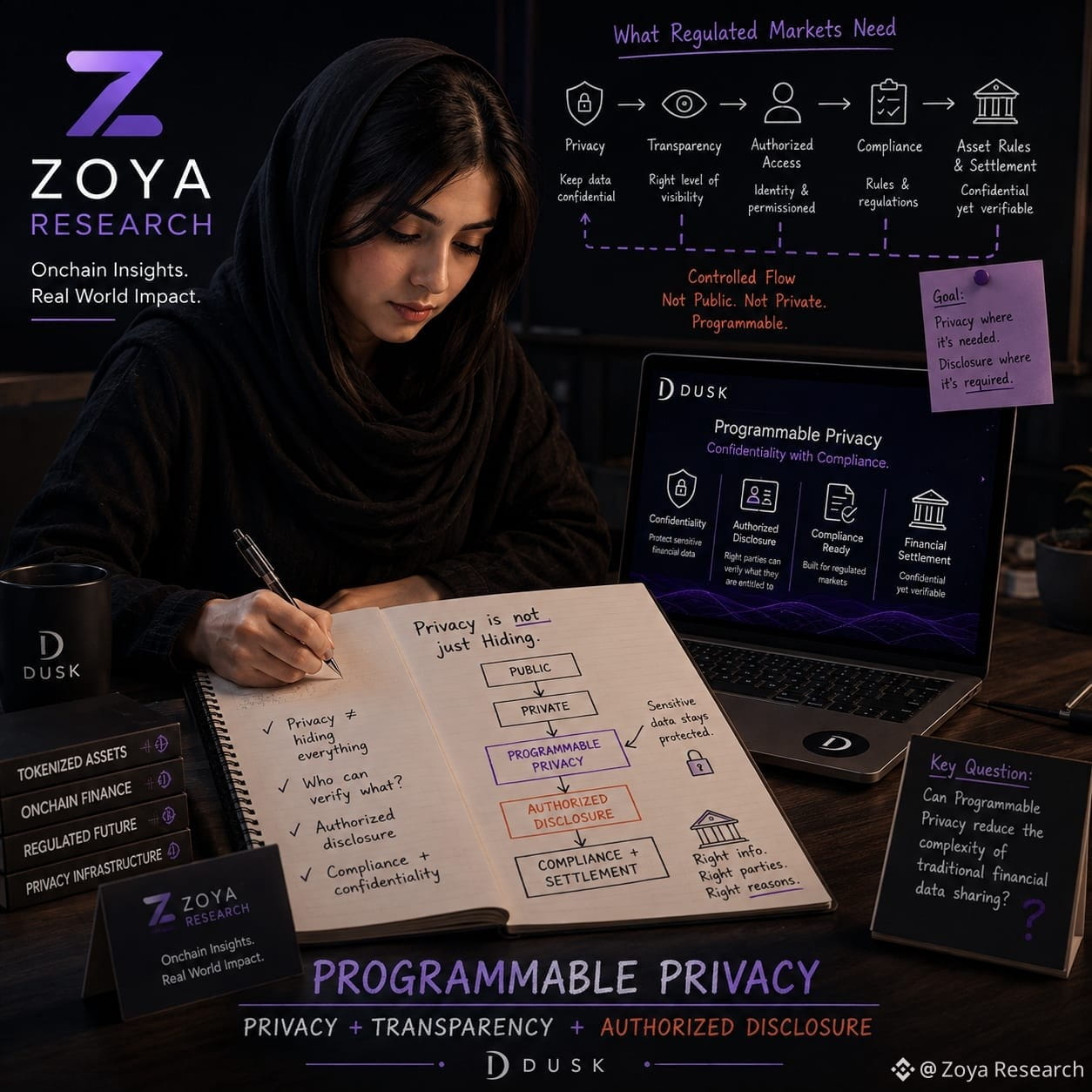
Je pensais autrefois que, sur les marchés financiers, la confidentialité signifiait surtout cacher des informations sensibles au regard du public.
Plus j’observe Dusk, plus je pense que cette définition est trop étroite.
Ce qui a retenu mon attention, c’est l’idée de confidentialité programmable : conserver les informations sensibles de façon confidentielle là où c’est nécessaire, tout en permettant de divulguer la bonne information lorsque la bonne partie autorisée doit la consulter.
Cette distinction compte dans les marchés réglementés.
Une application financière n’a pas nécessairement besoin que chaque élément de données soit visible par tout le monde. Elle doit permettre aux bonnes parties de vérifier ce à quoi elles ont le droit de vérifier, tandis que les informations sous-jacentes sensibles restent protégées.
Ainsi, la confidentialité ressemble moins à un interrupteur entre « public » et « privé » et davantage à quelque chose qui peut être intégré au fonctionnement même des applications financières.
C’est ce qui rend la démarche XSC de Dusk particulièrement intéressante à mes yeux : elle soulève la question de savoir comment la confidentialité peut coexister avec des règles d’actifs orientées conformité et le règlement.
Mais je me demande encore jusqu’où la confidentialité programmable peut aller dans de véritables workflows institutionnels.
Si les marchés réglementés ont besoin, en même temps, de confidentialité, de transparence et de divulgation autorisée, la confidentialité programmable peut-elle réellement réduire la complexité du partage traditionnel des données financières ?
@Dusk_Foundation $DUSK #dusk
Je pensais autrefois que, sur les marchés financiers, la confidentialité signifiait surtout cacher des informations sensibles au regard du public.
Plus j’observe Dusk, plus je pense que cette définition est trop étroite.
Ce qui a retenu mon attention, c’est l’idée de confidentialité programmable : conserver les informations sensibles de façon confidentielle là où c’est nécessaire, tout en permettant de divulguer la bonne information lorsque la bonne partie autorisée doit la consulter.
Cette distinction compte dans les marchés réglementés.
Une application financière n’a pas nécessairement besoin que chaque élément de données soit visible par tout le monde. Elle doit permettre aux bonnes parties de vérifier ce à quoi elles ont le droit de vérifier, tandis que les informations sous-jacentes sensibles restent protégées.
Ainsi, la confidentialité ressemble moins à un interrupteur entre « public » et « privé » et davantage à quelque chose qui peut être intégré au fonctionnement même des applications financières.
C’est ce qui rend la démarche XSC de Dusk particulièrement intéressante à mes yeux : elle soulève la question de savoir comment la confidentialité peut coexister avec des règles d’actifs orientées conformité et le règlement.
Mais je me demande encore jusqu’où la confidentialité programmable peut aller dans de véritables workflows institutionnels.
Si les marchés réglementés ont besoin, en même temps, de confidentialité, de transparence et de divulgation autorisée, la confidentialité programmable peut-elle réellement réduire la complexité du partage traditionnel des données financières ?
@Dusk $DUSK #dusk
Plus j’observe Dusk, plus je pense que cette définition est trop étroite.
Ce qui a retenu mon attention, c’est l’idée de confidentialité programmable : conserver les informations sensibles de façon confidentielle là où c’est nécessaire, tout en permettant de divulguer la bonne information lorsque la bonne partie autorisée doit la consulter.
Cette distinction compte dans les marchés réglementés.
Une application financière n’a pas nécessairement besoin que chaque élément de données soit visible par tout le monde. Elle doit permettre aux bonnes parties de vérifier ce à quoi elles ont le droit de vérifier, tandis que les informations sous-jacentes sensibles restent protégées.
Ainsi, la confidentialité ressemble moins à un interrupteur entre « public » et « privé » et davantage à quelque chose qui peut être intégré au fonctionnement même des applications financières.
C’est ce qui rend la démarche XSC de Dusk particulièrement intéressante à mes yeux : elle soulève la question de savoir comment la confidentialité peut coexister avec des règles d’actifs orientées conformité et le règlement.
Mais je me demande encore jusqu’où la confidentialité programmable peut aller dans de véritables workflows institutionnels.
Si les marchés réglementés ont besoin, en même temps, de confidentialité, de transparence et de divulgation autorisée, la confidentialité programmable peut-elle réellement réduire la complexité du partage traditionnel des données financières ?
@Dusk $DUSK #dusk
1
88
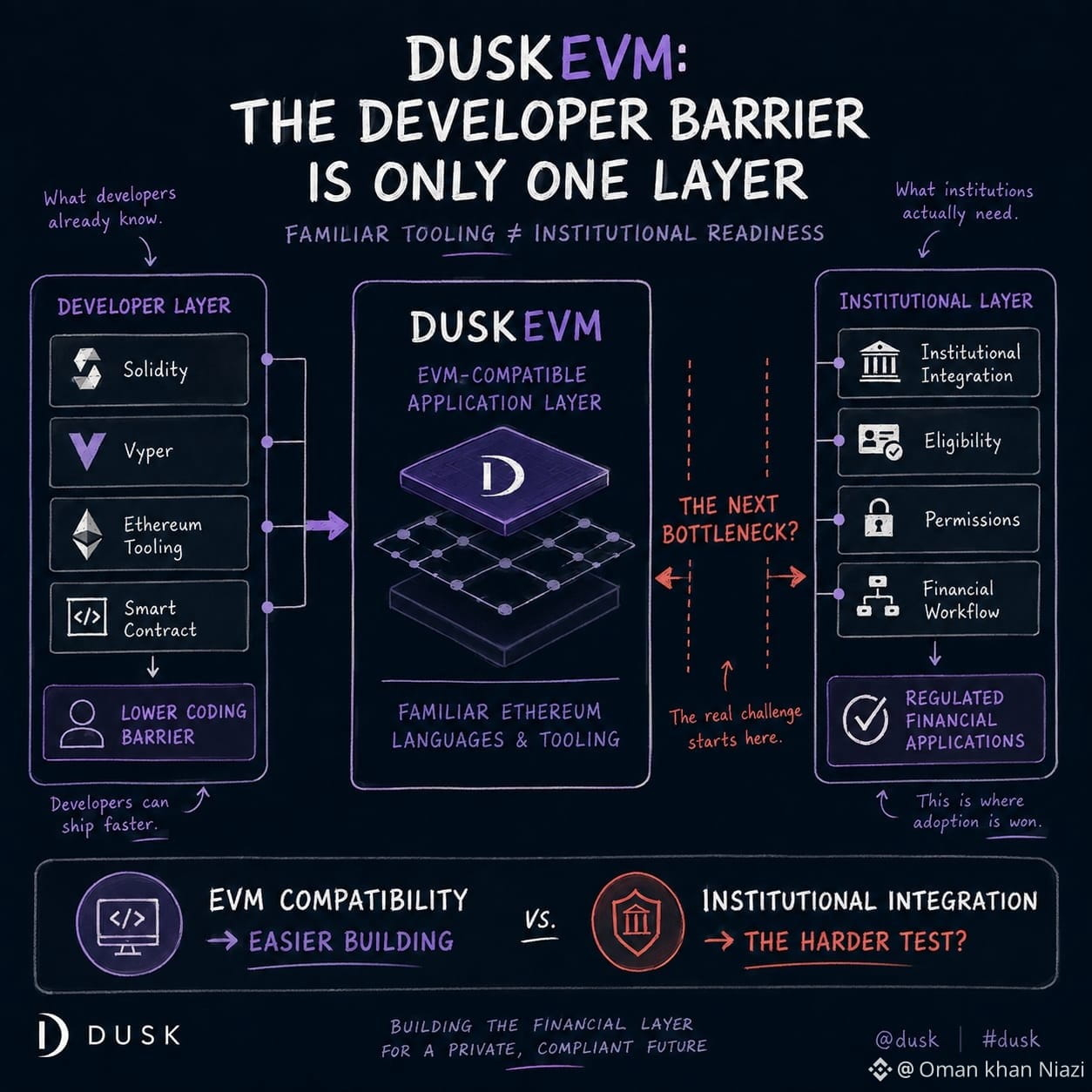
Je pensais que la compatibilité EVM résolvait principalement le problème de l’onboarding des développeurs.
Si DuskEVM prend en charge des langages et des outils Ethereum familiers, y compris Solidity et Vyper, les développeurs peuvent commencer à construire sans devoir d’abord apprendre un tout nouvel environnement de smart-contract.
C’est important.
Mais plus j’examine Dusk dans le contexte des applications financières, plus je pense que cela ne résout qu’une couche du problème.
Un développeur peut déployer une application avec des outils familiers. Cela ne répond pas automatiquement à la question de savoir qui est autorisé à interagir avec elle, quelles informations doivent rester confidentielles, comment l’éligibilité est contrôlée, ni comment l’application s’inscrit dans le flux de travail financier global.
Cette nuance a retenu mon attention.
La compatibilité EVM peut réduire la barrière à la programmation.
Elle ne réduit peut-être pas la complexité institutionnelle autour de l’application.
Et pour les marchés financiers réglementés, cette deuxième partie pourrait être le problème le plus difficile.
Je continue d’observer comment ces deux couches s’articulent.
Si DuskEVM permet de construire de façon familière, le vrai goulot d’étranglement se déplace-t-il simplement de l’adoption par les développeurs vers l’intégration institutionnelle ?
@Dusk_Foundation $DUSK #dusk
Je pensais que la compatibilité EVM résolvait principalement le problème de l’onboarding des développeurs.
Si DuskEVM prend en charge des langages et des outils Ethereum familiers, y compris Solidity et Vyper, les développeurs peuvent commencer à construire sans devoir d’abord apprendre un tout nouvel environnement de smart-contract.
C’est important.
Mais plus j’examine Dusk dans le contexte des applications financières, plus je pense que cela ne résout qu’une couche du problème.
Un développeur peut déployer une application avec des outils familiers. Cela ne répond pas automatiquement à la question de savoir qui est autorisé à interagir avec elle, quelles informations doivent rester confidentielles, comment l’éligibilité est contrôlée, ni comment l’application s’inscrit dans le flux de travail financier global.
Cette nuance a retenu mon attention.
La compatibilité EVM peut réduire la barrière à la programmation.
Elle ne réduit peut-être pas la complexité institutionnelle autour de l’application.
Et pour les marchés financiers réglementés, cette deuxième partie pourrait être le problème le plus difficile.
Je continue d’observer comment ces deux couches s’articulent.
Si DuskEVM permet de construire de façon familière, le vrai goulot d’étranglement se déplace-t-il simplement de l’adoption par les développeurs vers l’intégration institutionnelle ?
@Dusk $DUSK #dusk
Si DuskEVM prend en charge des langages et des outils Ethereum familiers, y compris Solidity et Vyper, les développeurs peuvent commencer à construire sans devoir d’abord apprendre un tout nouvel environnement de smart-contract.
C’est important.
Mais plus j’examine Dusk dans le contexte des applications financières, plus je pense que cela ne résout qu’une couche du problème.
Un développeur peut déployer une application avec des outils familiers. Cela ne répond pas automatiquement à la question de savoir qui est autorisé à interagir avec elle, quelles informations doivent rester confidentielles, comment l’éligibilité est contrôlée, ni comment l’application s’inscrit dans le flux de travail financier global.
Cette nuance a retenu mon attention.
La compatibilité EVM peut réduire la barrière à la programmation.
Elle ne réduit peut-être pas la complexité institutionnelle autour de l’application.
Et pour les marchés financiers réglementés, cette deuxième partie pourrait être le problème le plus difficile.
Je continue d’observer comment ces deux couches s’articulent.
Si DuskEVM permet de construire de façon familière, le vrai goulot d’étranglement se déplace-t-il simplement de l’adoption par les développeurs vers l’intégration institutionnelle ?
@Dusk $DUSK #dusk
4
3
91
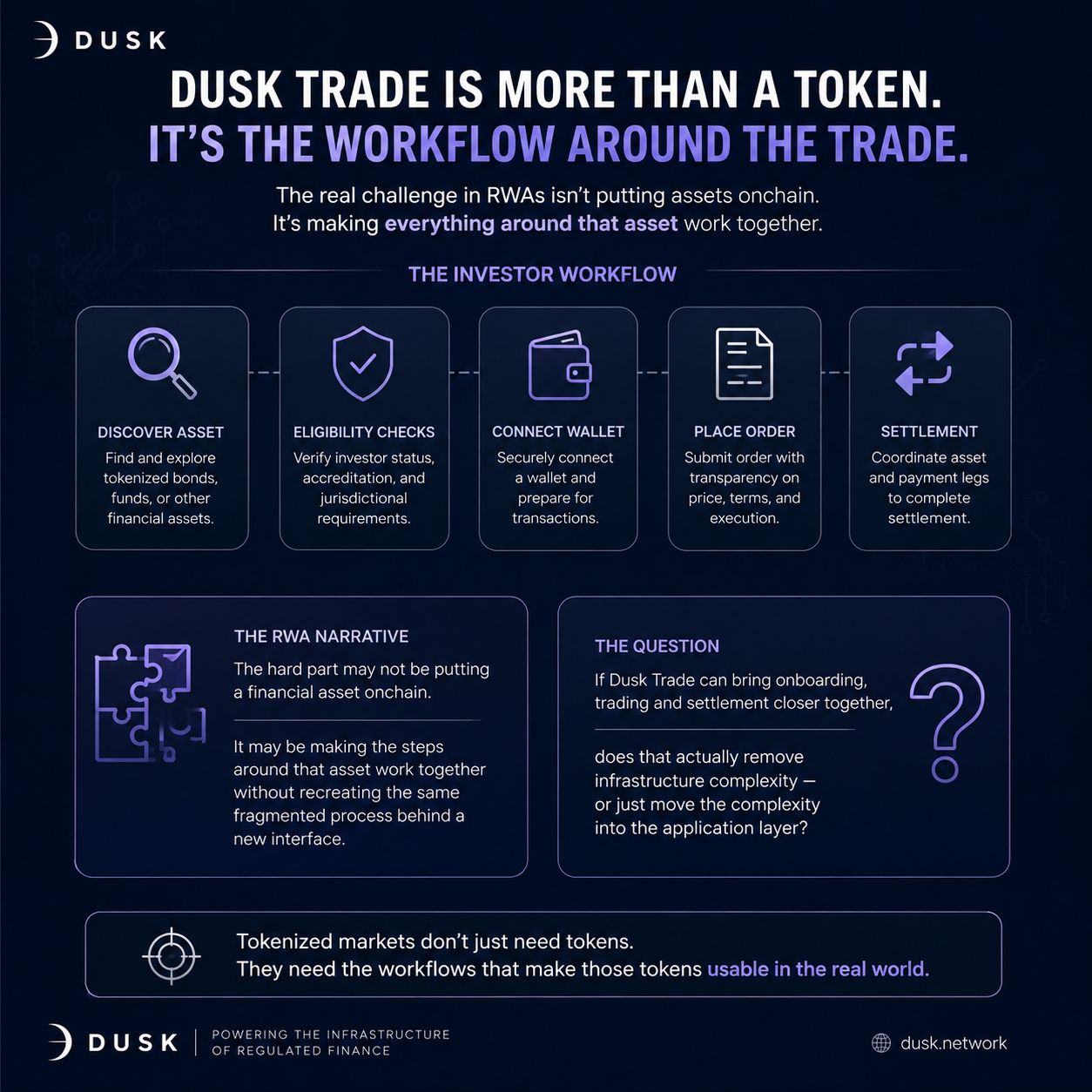
Je suis revenu aujourd’hui chez Dusk Trade parce qu’appeler ça un « néobroker » n’explique pas vraiment ce qui a retenu mon attention.
Le point intéressant ne se limite pas à la possibilité d’acheter ou de vendre une obligation tokenisée, un fonds, ou un autre actif financier.
C’est ce qui doit se passer autour de cette opération.
Un investisseur peut avoir besoin de découvrir l’actif, d’effectuer des vérifications d’éligibilité, de connecter un portefeuille, de passer un ordre, puis de faire en sorte que les volets actifs et paiements soient coordonnés via le règlement.
Ce qui m’a marqué, c’est la façon dont Dusk Trade aborde ces flux de travail plutôt que de considérer le token comme le produit à lui seul.
Cela m’a fait reconsidérer le récit habituel sur les RWA.
La difficulté n’est peut-être pas de mettre un actif financier onchain.
Elle pourrait plutôt consister à faire en sorte que les étapes autour de cet actif fonctionnent ensemble, sans recréer le même processus fragmenté derrière une nouvelle interface.
C’est précisément là que je reste incertain.
Si Dusk Trade peut rapprocher l’onboarding, le trading et le règlement, est-ce que cela supprime vraiment la complexité de l’infrastructure — ou bien ne fait que la déplacer dans la couche applicative ?
Je pense que c’est la partie qui mérite d’être surveillée à mesure que les marchés tokenisés deviennent plus praticables.
@Dusk_Foundation $DUSK #dusk
Je suis revenu aujourd’hui chez Dusk Trade parce qu’appeler ça un « néobroker » n’explique pas vraiment ce qui a retenu mon attention.
Le point intéressant ne se limite pas à la possibilité d’acheter ou de vendre une obligation tokenisée, un fonds, ou un autre actif financier.
C’est ce qui doit se passer autour de cette opération.
Un investisseur peut avoir besoin de découvrir l’actif, d’effectuer des vérifications d’éligibilité, de connecter un portefeuille, de passer un ordre, puis de faire en sorte que les volets actifs et paiements soient coordonnés via le règlement.
Ce qui m’a marqué, c’est la façon dont Dusk Trade aborde ces flux de travail plutôt que de considérer le token comme le produit à lui seul.
Cela m’a fait reconsidérer le récit habituel sur les RWA.
La difficulté n’est peut-être pas de mettre un actif financier onchain.
Elle pourrait plutôt consister à faire en sorte que les étapes autour de cet actif fonctionnent ensemble, sans recréer le même processus fragmenté derrière une nouvelle interface.
C’est précisément là que je reste incertain.
Si Dusk Trade peut rapprocher l’onboarding, le trading et le règlement, est-ce que cela supprime vraiment la complexité de l’infrastructure — ou bien ne fait que la déplacer dans la couche applicative ?
Je pense que c’est la partie qui mérite d’être surveillée à mesure que les marchés tokenisés deviennent plus praticables.
@Dusk $DUSK #dusk
Le point intéressant ne se limite pas à la possibilité d’acheter ou de vendre une obligation tokenisée, un fonds, ou un autre actif financier.
C’est ce qui doit se passer autour de cette opération.
Un investisseur peut avoir besoin de découvrir l’actif, d’effectuer des vérifications d’éligibilité, de connecter un portefeuille, de passer un ordre, puis de faire en sorte que les volets actifs et paiements soient coordonnés via le règlement.
Ce qui m’a marqué, c’est la façon dont Dusk Trade aborde ces flux de travail plutôt que de considérer le token comme le produit à lui seul.
Cela m’a fait reconsidérer le récit habituel sur les RWA.
La difficulté n’est peut-être pas de mettre un actif financier onchain.
Elle pourrait plutôt consister à faire en sorte que les étapes autour de cet actif fonctionnent ensemble, sans recréer le même processus fragmenté derrière une nouvelle interface.
C’est précisément là que je reste incertain.
Si Dusk Trade peut rapprocher l’onboarding, le trading et le règlement, est-ce que cela supprime vraiment la complexité de l’infrastructure — ou bien ne fait que la déplacer dans la couche applicative ?
Je pense que c’est la partie qui mérite d’être surveillée à mesure que les marchés tokenisés deviennent plus praticables.
@Dusk $DUSK #dusk
4
81
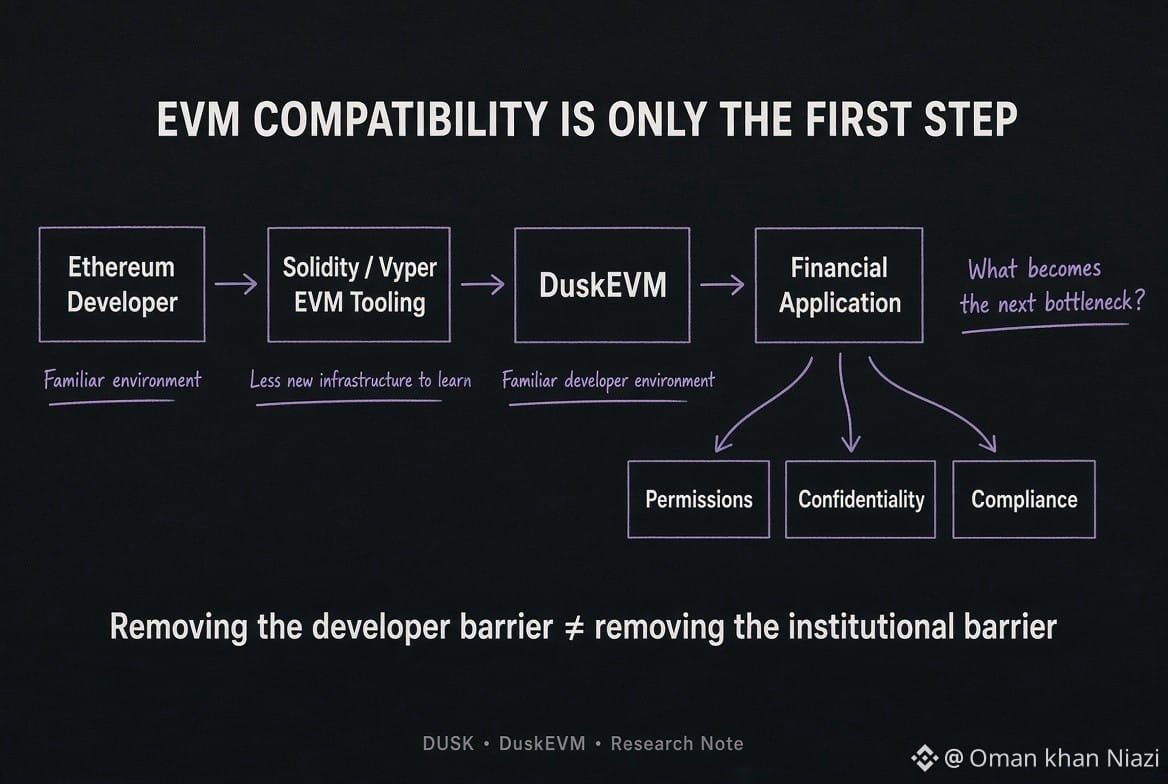
Je suis retourné sur DuskEVM aujourd’hui parce que je voulais comprendre ce que modifie réellement la compatibilité EVM au-delà du titre.
Un détail m’a frappé : DuskEVM est conçu pour fonctionner avec des langages et des outils de développement Ethereum familiers, y compris Solidity et Vyper.
Cela compte, car les développeurs n’ont pas nécessairement besoin d’apprendre un tout nouvel environnement de contrats intelligents pour commencer à construire sur Dusk.
Mais ensuite, j’ai commencé à me demander ce qui se passe après cette première étape.
Si le déploiement d’une application devient plus simple, les questions plus difficiles pour les applications financières ne disparaissent pas.
Qui est autorisé à interagir avec elle ?
Quelles informations doivent rester confidentielles ?
Comment les exigences de conformité sont-elles appliquées ?
Et comment l’application se connecte-t-elle au reste du flux de travail financier ?
Je ne pense donc pas que la compatibilité EVM soit, à elle seule, la partie la plus intéressante.
La partie la plus intéressante, c’est de savoir si l’infrastructure de développement familière peut réellement conduire à des applications qui fonctionnent dans de vraies contraintes institutionnelles.
Si DuskEVM réduit la barrière pour les développeurs, quel devient le prochain goulot d’étranglement pour amener des applications financières à un usage réel ?
@Dusk_Foundation $DUSK #dusk
Je suis retourné sur DuskEVM aujourd’hui parce que je voulais comprendre ce que modifie réellement la compatibilité EVM au-delà du titre.
Un détail m’a frappé : DuskEVM est conçu pour fonctionner avec des langages et des outils de développement Ethereum familiers, y compris Solidity et Vyper.
Cela compte, car les développeurs n’ont pas nécessairement besoin d’apprendre un tout nouvel environnement de contrats intelligents pour commencer à construire sur Dusk.
Mais ensuite, j’ai commencé à me demander ce qui se passe après cette première étape.
Si le déploiement d’une application devient plus simple, les questions plus difficiles pour les applications financières ne disparaissent pas.
Qui est autorisé à interagir avec elle ?
Quelles informations doivent rester confidentielles ?
Comment les exigences de conformité sont-elles appliquées ?
Et comment l’application se connecte-t-elle au reste du flux de travail financier ?
Je ne pense donc pas que la compatibilité EVM soit, à elle seule, la partie la plus intéressante.
La partie la plus intéressante, c’est de savoir si l’infrastructure de développement familière peut réellement conduire à des applications qui fonctionnent dans de vraies contraintes institutionnelles.
Si DuskEVM réduit la barrière pour les développeurs, quel devient le prochain goulot d’étranglement pour amener des applications financières à un usage réel ?
@Dusk $DUSK #dusk
Un détail m’a frappé : DuskEVM est conçu pour fonctionner avec des langages et des outils de développement Ethereum familiers, y compris Solidity et Vyper.
Cela compte, car les développeurs n’ont pas nécessairement besoin d’apprendre un tout nouvel environnement de contrats intelligents pour commencer à construire sur Dusk.
Mais ensuite, j’ai commencé à me demander ce qui se passe après cette première étape.
Si le déploiement d’une application devient plus simple, les questions plus difficiles pour les applications financières ne disparaissent pas.
Qui est autorisé à interagir avec elle ?
Quelles informations doivent rester confidentielles ?
Comment les exigences de conformité sont-elles appliquées ?
Et comment l’application se connecte-t-elle au reste du flux de travail financier ?
Je ne pense donc pas que la compatibilité EVM soit, à elle seule, la partie la plus intéressante.
La partie la plus intéressante, c’est de savoir si l’infrastructure de développement familière peut réellement conduire à des applications qui fonctionnent dans de vraies contraintes institutionnelles.
Si DuskEVM réduit la barrière pour les développeurs, quel devient le prochain goulot d’étranglement pour amener des applications financières à un usage réel ?
@Dusk $DUSK #dusk
7
71
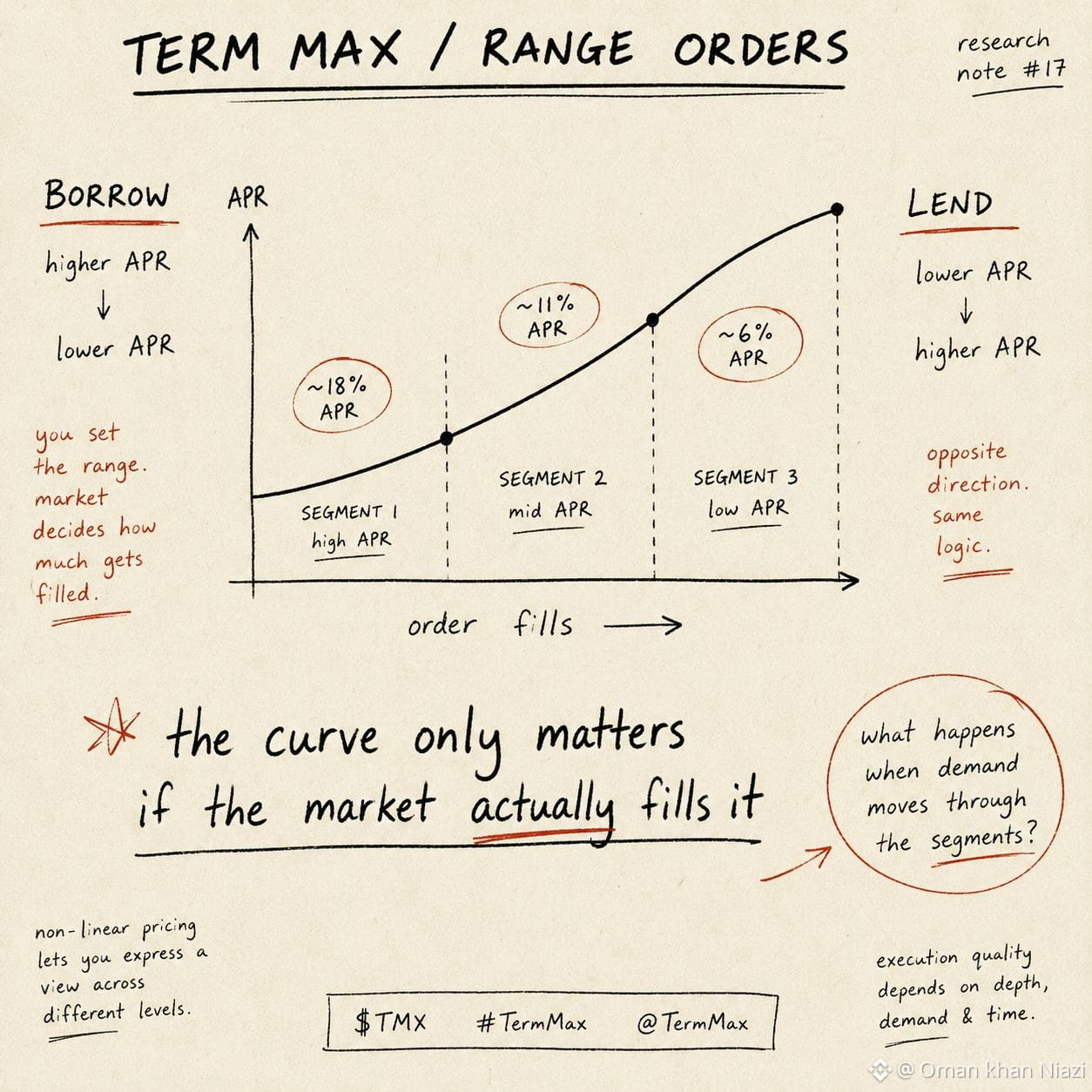
J’ai remarqué que la partie intéressante de @TermMax ne tient pas seulement au fait que les taux sont fixes. C’est plutôt que le taux peut être structuré en fonction de la quantité réelle d’un ordre qui est exécutée.
Les ordres à fourchette TermMax utilisent des courbes de tarification comportant différents segments. Dans un ordre d’emprunt à fourchette, les portions initiales peuvent porter des APR plus élevés, et les portions suivantes des APR plus faibles, à mesure que l’ordre est exécuté. Pour le prêt, la courbe fonctionne dans la direction inverse : les taux augmentent au fil des portions définies.
Cela m’a amené à regarder l’ordre lui-même différemment.
Un ordre à fourchette ne se contente pas de dire : « voici mon taux ». Il définit comment le taux peut réagir lorsque différentes quantités de liquidités sont prélevées.
Mais cela crée aussi une tension intéressante : la courbe ne compte que si le marché la remplit réellement. La documentation de TermMax souligne également les risques liés au capital inutilisé et à des courbes de tarification mal configurées pour les concepteurs d’ordres à fourchette.
Ce que je veux donc observer, c’est le comportement de ces courbes lorsque la demande réelle évolue avec différents volumes d’ordres.
La structure de la courbe parvient-elle à découvrir des taux utiles dans la pratique, ou son efficacité dépend-elle trop fortement de la capacité à bien définir le profil de demande ?
#TermMax @termmax
J’ai remarqué que la partie intéressante de @TermMax ne tient pas seulement au fait que les taux sont fixes. C’est plutôt que le taux peut être structuré en fonction de la quantité réelle d’un ordre qui est exécutée.
Les ordres à fourchette TermMax utilisent des courbes de tarification comportant différents segments. Dans un ordre d’emprunt à fourchette, les portions initiales peuvent porter des APR plus élevés, et les portions suivantes des APR plus faibles, à mesure que l’ordre est exécuté. Pour le prêt, la courbe fonctionne dans la direction inverse : les taux augmentent au fil des portions définies.
Cela m’a amené à regarder l’ordre lui-même différemment.
Un ordre à fourchette ne se contente pas de dire : « voici mon taux ». Il définit comment le taux peut réagir lorsque différentes quantités de liquidités sont prélevées.
Mais cela crée aussi une tension intéressante : la courbe ne compte que si le marché la remplit réellement. La documentation de TermMax souligne également les risques liés au capital inutilisé et à des courbes de tarification mal configurées pour les concepteurs d’ordres à fourchette.
Ce que je veux donc observer, c’est le comportement de ces courbes lorsque la demande réelle évolue avec différents volumes d’ordres.
La structure de la courbe parvient-elle à découvrir des taux utiles dans la pratique, ou son efficacité dépend-elle trop fortement de la capacité à bien définir le profil de demande ?
#TermMax @TermMax
Les ordres à fourchette TermMax utilisent des courbes de tarification comportant différents segments. Dans un ordre d’emprunt à fourchette, les portions initiales peuvent porter des APR plus élevés, et les portions suivantes des APR plus faibles, à mesure que l’ordre est exécuté. Pour le prêt, la courbe fonctionne dans la direction inverse : les taux augmentent au fil des portions définies.
Cela m’a amené à regarder l’ordre lui-même différemment.
Un ordre à fourchette ne se contente pas de dire : « voici mon taux ». Il définit comment le taux peut réagir lorsque différentes quantités de liquidités sont prélevées.
Mais cela crée aussi une tension intéressante : la courbe ne compte que si le marché la remplit réellement. La documentation de TermMax souligne également les risques liés au capital inutilisé et à des courbes de tarification mal configurées pour les concepteurs d’ordres à fourchette.
Ce que je veux donc observer, c’est le comportement de ces courbes lorsque la demande réelle évolue avec différents volumes d’ordres.
La structure de la courbe parvient-elle à découvrir des taux utiles dans la pratique, ou son efficacité dépend-elle trop fortement de la capacité à bien définir le profil de demande ?
#TermMax @TermMax
1
6
80
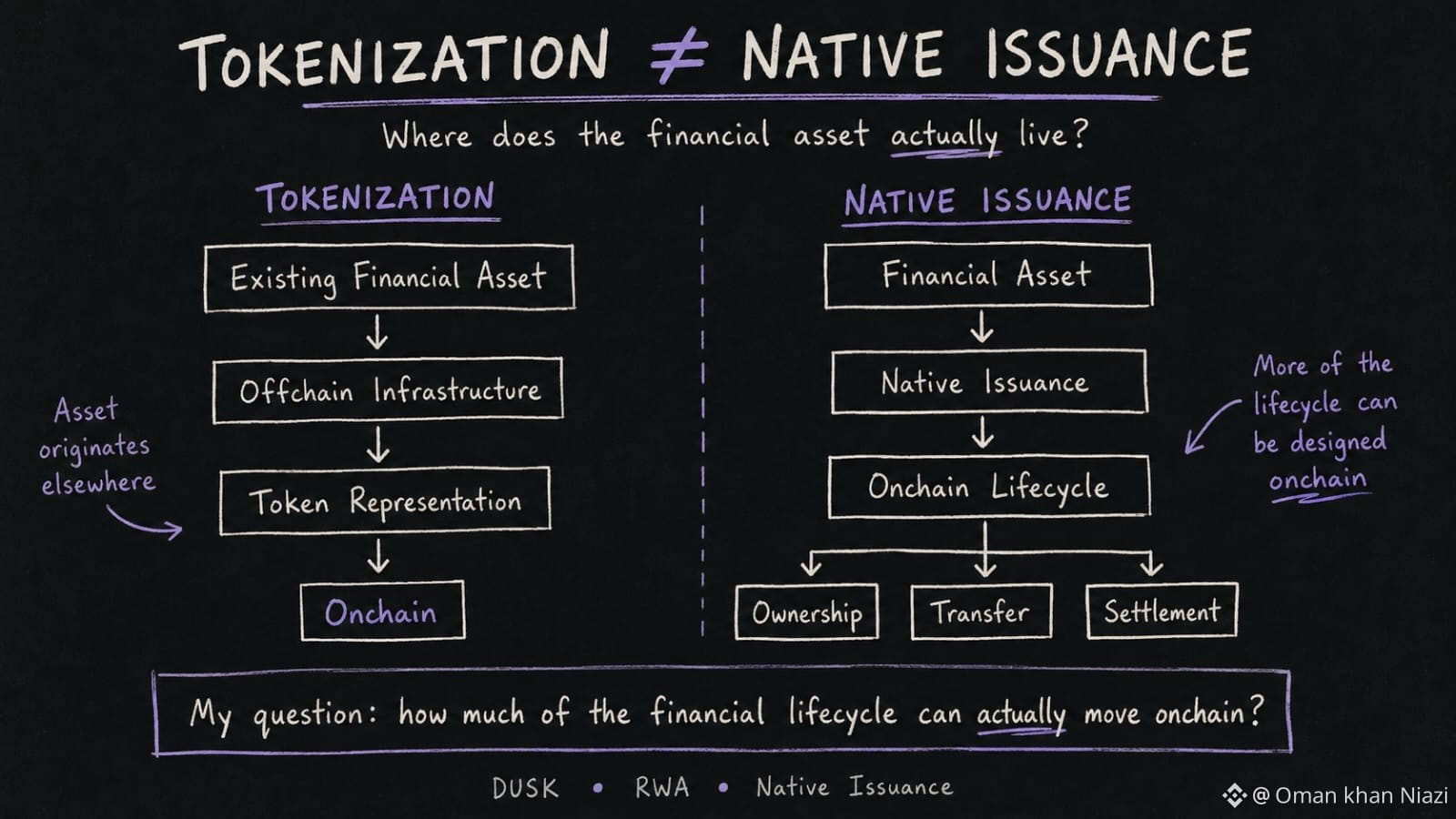
Je pense encore que la plupart des discussions sur la RWA traitent la tokenisation comme si c’était la ligne d’arrivée.
Mettez un actif existant onchain, donnez-lui une représentation numérique, et on a soudain l’impression que l’actif financier lui-même a été déplacé onchain.
Mais plus j’examine l’approche de Dusk en matière d’émission native, plus je pense qu’il existe une distinction importante.
La tokenisation peut représenter un actif qui existe déjà ailleurs. L’émission native part d’un point de départ différent : l’infrastructure peut être conçue pour prendre en charge davantage du cycle de vie de l’actif onchain, en fonction de la configuration juridique et produit.
Cette différence a retenu mon attention.
Car si l’émission a lieu dans un système, la propriété est suivie quelque part d’autre, et les transferts ou le règlement dépendent encore de registres distincts : placer un token onchain ne supprime pas nécessairement le problème d’infrastructure sous-jacent.
Pour moi, la partie intéressante de l’émission native n’est donc pas simplement de créer un autre token.
C’est la possibilité de réduire l’écart entre l’actif numérique et l’infrastructure financière qui en est responsable.
Je reste toutefois prudent quant à la mesure dans laquelle cela peut réellement aller dans les marchés réglementés. La propriété juridique, les intermédiaires autorisés et les responsabilités opérationnelles ne disparaissent pas simplement parce qu’un actif est représenté onchain.
Le vrai test, pour moi, n’est donc pas le nombre de RWA qu’on peut tokeniser.
Si l’émission native peut transférer davantage du cycle de vie d’un actif sur le registre, quelle partie de l’infrastructure financière traditionnelle devient la plus difficile à remplacer ?
@Dusk_Foundation $DUSK #dusk
Je pense encore que la plupart des discussions sur la RWA traitent la tokenisation comme si c’était la ligne d’arrivée.
Mettez un actif existant onchain, donnez-lui une représentation numérique, et on a soudain l’impression que l’actif financier lui-même a été déplacé onchain.
Mais plus j’examine l’approche de Dusk en matière d’émission native, plus je pense qu’il existe une distinction importante.
La tokenisation peut représenter un actif qui existe déjà ailleurs. L’émission native part d’un point de départ différent : l’infrastructure peut être conçue pour prendre en charge davantage du cycle de vie de l’actif onchain, en fonction de la configuration juridique et produit.
Cette différence a retenu mon attention.
Car si l’émission a lieu dans un système, la propriété est suivie quelque part d’autre, et les transferts ou le règlement dépendent encore de registres distincts : placer un token onchain ne supprime pas nécessairement le problème d’infrastructure sous-jacent.
Pour moi, la partie intéressante de l’émission native n’est donc pas simplement de créer un autre token.
C’est la possibilité de réduire l’écart entre l’actif numérique et l’infrastructure financière qui en est responsable.
Je reste toutefois prudent quant à la mesure dans laquelle cela peut réellement aller dans les marchés réglementés. La propriété juridique, les intermédiaires autorisés et les responsabilités opérationnelles ne disparaissent pas simplement parce qu’un actif est représenté onchain.
Le vrai test, pour moi, n’est donc pas le nombre de RWA qu’on peut tokeniser.
Si l’émission native peut transférer davantage du cycle de vie d’un actif sur le registre, quelle partie de l’infrastructure financière traditionnelle devient la plus difficile à remplacer ?
@Dusk $DUSK #dusk
Mettez un actif existant onchain, donnez-lui une représentation numérique, et on a soudain l’impression que l’actif financier lui-même a été déplacé onchain.
Mais plus j’examine l’approche de Dusk en matière d’émission native, plus je pense qu’il existe une distinction importante.
La tokenisation peut représenter un actif qui existe déjà ailleurs. L’émission native part d’un point de départ différent : l’infrastructure peut être conçue pour prendre en charge davantage du cycle de vie de l’actif onchain, en fonction de la configuration juridique et produit.
Cette différence a retenu mon attention.
Car si l’émission a lieu dans un système, la propriété est suivie quelque part d’autre, et les transferts ou le règlement dépendent encore de registres distincts : placer un token onchain ne supprime pas nécessairement le problème d’infrastructure sous-jacent.
Pour moi, la partie intéressante de l’émission native n’est donc pas simplement de créer un autre token.
C’est la possibilité de réduire l’écart entre l’actif numérique et l’infrastructure financière qui en est responsable.
Je reste toutefois prudent quant à la mesure dans laquelle cela peut réellement aller dans les marchés réglementés. La propriété juridique, les intermédiaires autorisés et les responsabilités opérationnelles ne disparaissent pas simplement parce qu’un actif est représenté onchain.
Le vrai test, pour moi, n’est donc pas le nombre de RWA qu’on peut tokeniser.
Si l’émission native peut transférer davantage du cycle de vie d’un actif sur le registre, quelle partie de l’infrastructure financière traditionnelle devient la plus difficile à remplacer ?
@Dusk $DUSK #dusk
5
7
65
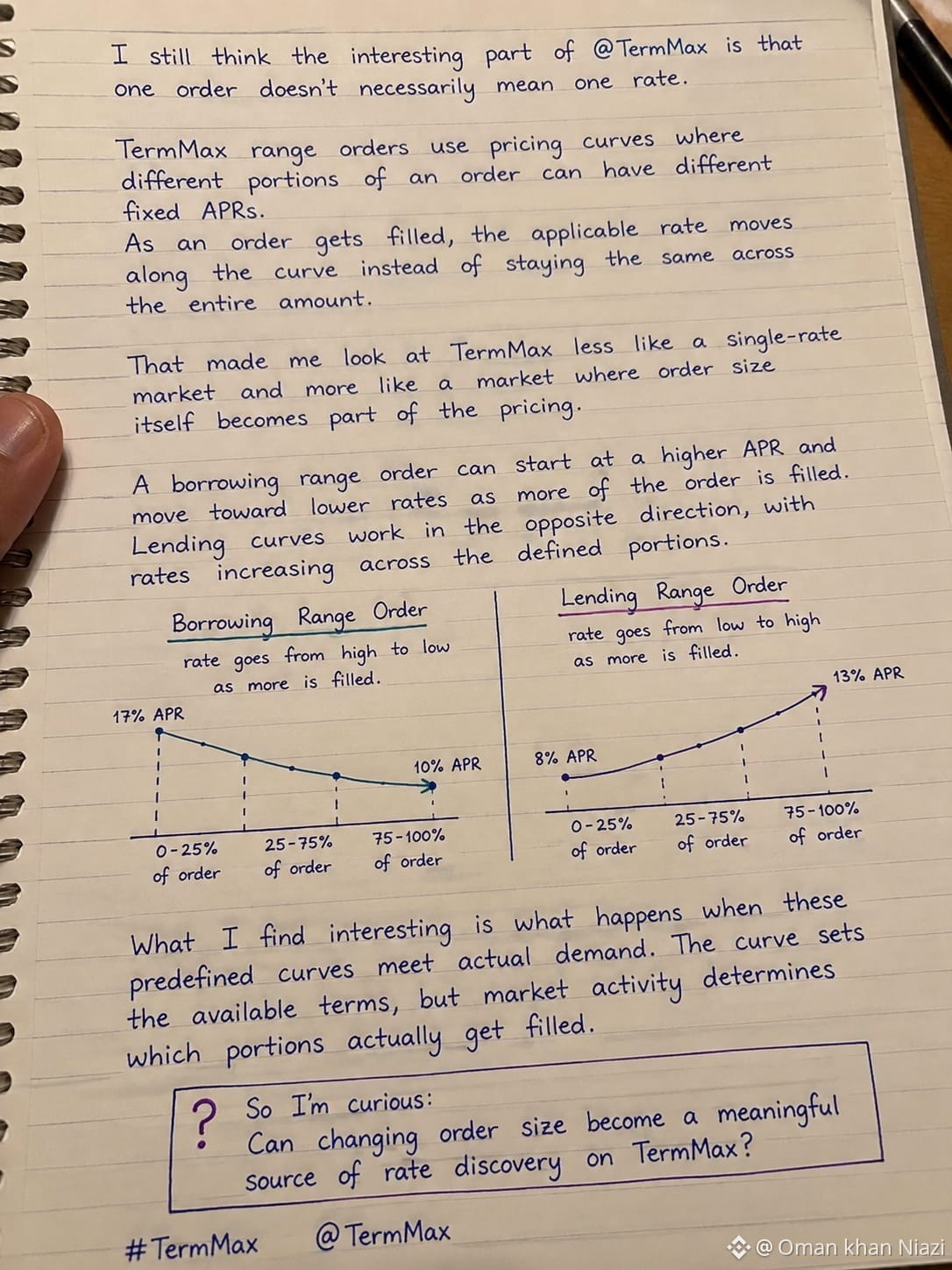
Je pense encore que la partie intéressante de @termmax , c’est qu’une seule commande ne signifie pas nécessairement un seul taux.
Les ordres sur plages TermMax utilisent des courbes de tarification où différentes portions d’un ordre peuvent comporter des APR fixes différentes. À mesure qu’un ordre est exécuté, le taux applicable se déplace le long de la courbe au lieu de rester identique sur la totalité du montant.
Cela m’a amené à voir TermMax moins comme un marché à taux unique et davantage comme un marché où la taille de l’ordre elle-même devient une composante de la tarification.
Un ordre sur plage d’emprunt peut démarrer à un APR plus élevé et évoluer vers des taux plus bas à mesure qu’une plus grande partie de l’ordre est exécutée. Les courbes de prêt fonctionnent dans la direction inverse : les taux augmentent sur les portions définies.
Ce qui m’intéresse, c’est ce qui se passe lorsque ces courbes prédéfinies rencontrent la demande réelle. La courbe fixe les conditions disponibles, mais l’activité du marché détermine quelles portions sont réellement exécutées.
Donc je me demande :
Le fait de modifier la taille de l’ordre peut-il devenir une source significative de découverte des taux sur TermMax ?
#TermMax @termmax
Je pense encore que la partie intéressante de @TermMax , c’est qu’une seule commande ne signifie pas nécessairement un seul taux.
Les ordres sur plages TermMax utilisent des courbes de tarification où différentes portions d’un ordre peuvent comporter des APR fixes différentes. À mesure qu’un ordre est exécuté, le taux applicable se déplace le long de la courbe au lieu de rester identique sur la totalité du montant.
Cela m’a amené à voir TermMax moins comme un marché à taux unique et davantage comme un marché où la taille de l’ordre elle-même devient une composante de la tarification.
Un ordre sur plage d’emprunt peut démarrer à un APR plus élevé et évoluer vers des taux plus bas à mesure qu’une plus grande partie de l’ordre est exécutée. Les courbes de prêt fonctionnent dans la direction inverse : les taux augmentent sur les portions définies.
Ce qui m’intéresse, c’est ce qui se passe lorsque ces courbes prédéfinies rencontrent la demande réelle. La courbe fixe les conditions disponibles, mais l’activité du marché détermine quelles portions sont réellement exécutées.
Donc je me demande :
Le fait de modifier la taille de l’ordre peut-il devenir une source significative de découverte des taux sur TermMax ?
#TermMax @TermMax
Les ordres sur plages TermMax utilisent des courbes de tarification où différentes portions d’un ordre peuvent comporter des APR fixes différentes. À mesure qu’un ordre est exécuté, le taux applicable se déplace le long de la courbe au lieu de rester identique sur la totalité du montant.
Cela m’a amené à voir TermMax moins comme un marché à taux unique et davantage comme un marché où la taille de l’ordre elle-même devient une composante de la tarification.
Un ordre sur plage d’emprunt peut démarrer à un APR plus élevé et évoluer vers des taux plus bas à mesure qu’une plus grande partie de l’ordre est exécutée. Les courbes de prêt fonctionnent dans la direction inverse : les taux augmentent sur les portions définies.
Ce qui m’intéresse, c’est ce qui se passe lorsque ces courbes prédéfinies rencontrent la demande réelle. La courbe fixe les conditions disponibles, mais l’activité du marché détermine quelles portions sont réellement exécutées.
Donc je me demande :
Le fait de modifier la taille de l’ordre peut-il devenir une source significative de découverte des taux sur TermMax ?
#TermMax @TermMax
5
7
95
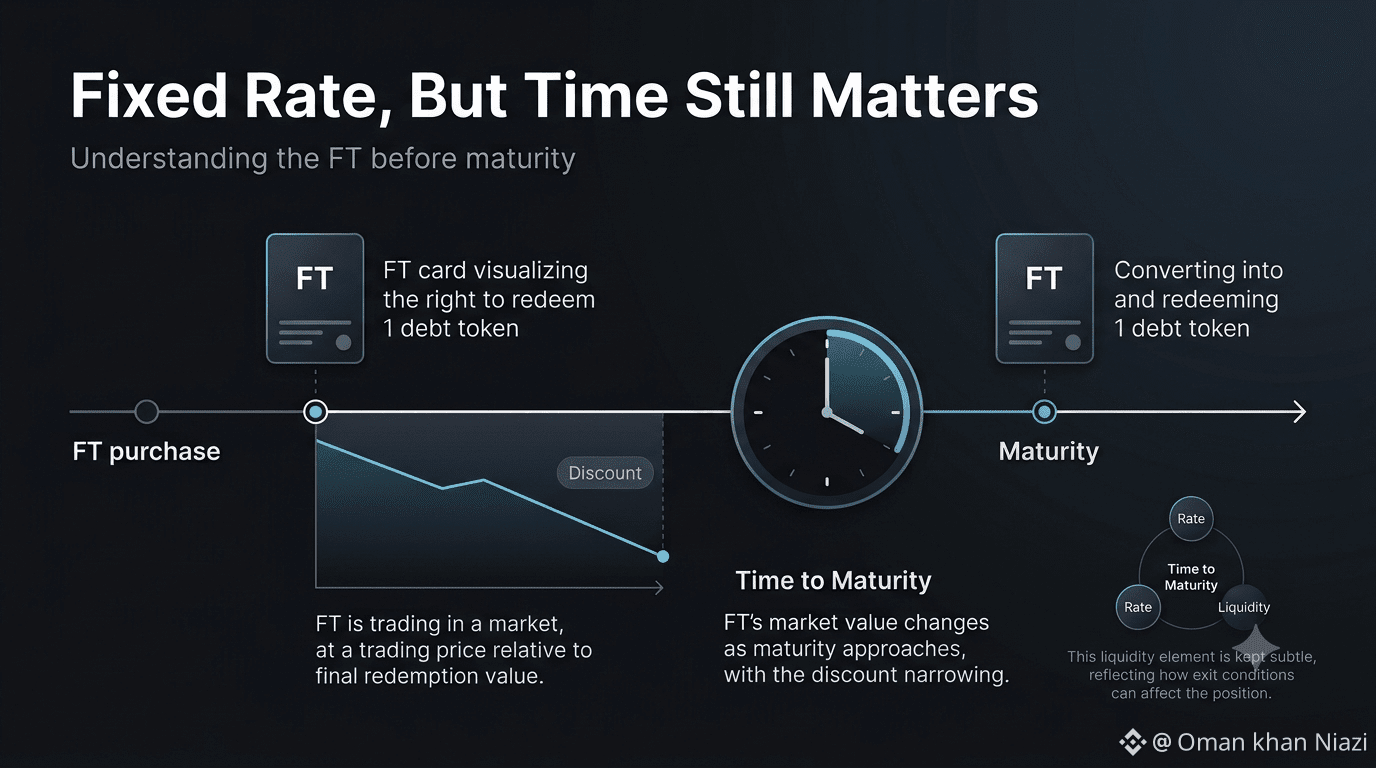
Je pense encore que le terme « taux fixe » peut donner à une position un aspect plus statique qu’elle ne l’est en réalité.
Sur TermMax, un FT représente le droit de racheter 1 jeton de dette à l’échéance. Avant l’échéance, les FT peuvent s’échanger avec une décote, tandis que le détenteur peut aussi les conserver jusqu’à l’échéance pour le rachat.
Cela m’a amené à considérer les positions à taux fixe différemment.
Le taux peut être défini, mais le prix de marché du FT porte toujours la notion de temps. À mesure que l’échéance approche, l’écart entre le prix auquel le FT s’échange et ce qu’il représente à l’échéance devient une partie différente de la décision.
Ce qui m’intrigue, c’est la façon dont cette relation évolue lorsque la liquidité change et que les traders veulent sortir à différents moments avant l’échéance.
La valeur d’une position à taux fixe devient-elle davantage liée au taux, ou au temps restant jusqu’à l’échéance ?
#TermMax @termmax
Je pense encore que le terme « taux fixe » peut donner à une position un aspect plus statique qu’elle ne l’est en réalité.
Sur TermMax, un FT représente le droit de racheter 1 jeton de dette à l’échéance. Avant l’échéance, les FT peuvent s’échanger avec une décote, tandis que le détenteur peut aussi les conserver jusqu’à l’échéance pour le rachat.
Cela m’a amené à considérer les positions à taux fixe différemment.
Le taux peut être défini, mais le prix de marché du FT porte toujours la notion de temps. À mesure que l’échéance approche, l’écart entre le prix auquel le FT s’échange et ce qu’il représente à l’échéance devient une partie différente de la décision.
Ce qui m’intrigue, c’est la façon dont cette relation évolue lorsque la liquidité change et que les traders veulent sortir à différents moments avant l’échéance.
La valeur d’une position à taux fixe devient-elle davantage liée au taux, ou au temps restant jusqu’à l’échéance ?
#TermMax @TermMax
Sur TermMax, un FT représente le droit de racheter 1 jeton de dette à l’échéance. Avant l’échéance, les FT peuvent s’échanger avec une décote, tandis que le détenteur peut aussi les conserver jusqu’à l’échéance pour le rachat.
Cela m’a amené à considérer les positions à taux fixe différemment.
Le taux peut être défini, mais le prix de marché du FT porte toujours la notion de temps. À mesure que l’échéance approche, l’écart entre le prix auquel le FT s’échange et ce qu’il représente à l’échéance devient une partie différente de la décision.
Ce qui m’intrigue, c’est la façon dont cette relation évolue lorsque la liquidité change et que les traders veulent sortir à différents moments avant l’échéance.
La valeur d’une position à taux fixe devient-elle davantage liée au taux, ou au temps restant jusqu’à l’échéance ?
#TermMax @TermMax
8
75
Je pense encore que la question la plus intéressante autour de DuskEVM n’est pas de savoir si les développeurs peuvent utiliser des outils EVM familiers.
C’est plutôt ce qui se passe lorsque le développement EVM familier rencontre les exigences de confidentialité de la finance réglementée.
DuskEVM est conçu comme la couche d’application compatible EVM au sein de la pile Dusk, tandis que Hedger est le module de confidentialité pour les flux de travail EVM. Ce qui a attiré mon attention, c’est que Hedger utilise le chiffrement homomorphe et les preuves à divulgation nulle (zero-knowledge proofs) pour prendre en charge des parcours de transactions confidentielles.
Cela crée une tension intéressante.
Dans les environnements de blockchain publique habituels, la transparence facilite la vérification. Mais les institutions financières disposent souvent d’informations qui ne peuvent pas simplement être exposées à tout le monde.
Le défi devient alors plus précis : les transactions peuvent-elles rester confidentielles tout en permettant, lorsque c’est nécessaire, la vérification ou la divulgation des bonnes informations ?
Mon constat est que c’est un problème bien plus difficile que de simplement « ajouter de la confidentialité » à un environnement EVM.
Je suis curieux de voir comment cette architecture se comporte lorsque de vraies applications financières commencent à l’utiliser.
Si les institutions ont besoin d’une divulgation sélective, qui doit finalement contrôler ce qui devient visible : l’application, le régulateur ou le protocole ?
@Dusk_Foundation $DUSK #dusk
Je pense encore que la question la plus intéressante autour de DuskEVM n’est pas de savoir si les développeurs peuvent utiliser des outils EVM familiers.
C’est plutôt ce qui se passe lorsque le développement EVM familier rencontre les exigences de confidentialité de la finance réglementée.
DuskEVM est conçu comme la couche d’application compatible EVM au sein de la pile Dusk, tandis que Hedger est le module de confidentialité pour les flux de travail EVM. Ce qui a attiré mon attention, c’est que Hedger utilise le chiffrement homomorphe et les preuves à divulgation nulle (zero-knowledge proofs) pour prendre en charge des parcours de transactions confidentielles.
Cela crée une tension intéressante.
Dans les environnements de blockchain publique habituels, la transparence facilite la vérification. Mais les institutions financières disposent souvent d’informations qui ne peuvent pas simplement être exposées à tout le monde.
Le défi devient alors plus précis : les transactions peuvent-elles rester confidentielles tout en permettant, lorsque c’est nécessaire, la vérification ou la divulgation des bonnes informations ?
Mon constat est que c’est un problème bien plus difficile que de simplement « ajouter de la confidentialité » à un environnement EVM.
Je suis curieux de voir comment cette architecture se comporte lorsque de vraies applications financières commencent à l’utiliser.
Si les institutions ont besoin d’une divulgation sélective, qui doit finalement contrôler ce qui devient visible : l’application, le régulateur ou le protocole ?
@Dusk $DUSK #dusk
C’est plutôt ce qui se passe lorsque le développement EVM familier rencontre les exigences de confidentialité de la finance réglementée.
DuskEVM est conçu comme la couche d’application compatible EVM au sein de la pile Dusk, tandis que Hedger est le module de confidentialité pour les flux de travail EVM. Ce qui a attiré mon attention, c’est que Hedger utilise le chiffrement homomorphe et les preuves à divulgation nulle (zero-knowledge proofs) pour prendre en charge des parcours de transactions confidentielles.
Cela crée une tension intéressante.
Dans les environnements de blockchain publique habituels, la transparence facilite la vérification. Mais les institutions financières disposent souvent d’informations qui ne peuvent pas simplement être exposées à tout le monde.
Le défi devient alors plus précis : les transactions peuvent-elles rester confidentielles tout en permettant, lorsque c’est nécessaire, la vérification ou la divulgation des bonnes informations ?
Mon constat est que c’est un problème bien plus difficile que de simplement « ajouter de la confidentialité » à un environnement EVM.
Je suis curieux de voir comment cette architecture se comporte lorsque de vraies applications financières commencent à l’utiliser.
Si les institutions ont besoin d’une divulgation sélective, qui doit finalement contrôler ce qui devient visible : l’application, le régulateur ou le protocole ?
@Dusk $DUSK #dusk
Application
0%
Regulator
0%
Protocol
38%
Shared control
62%
8 Votes • Vote fermé
9
91
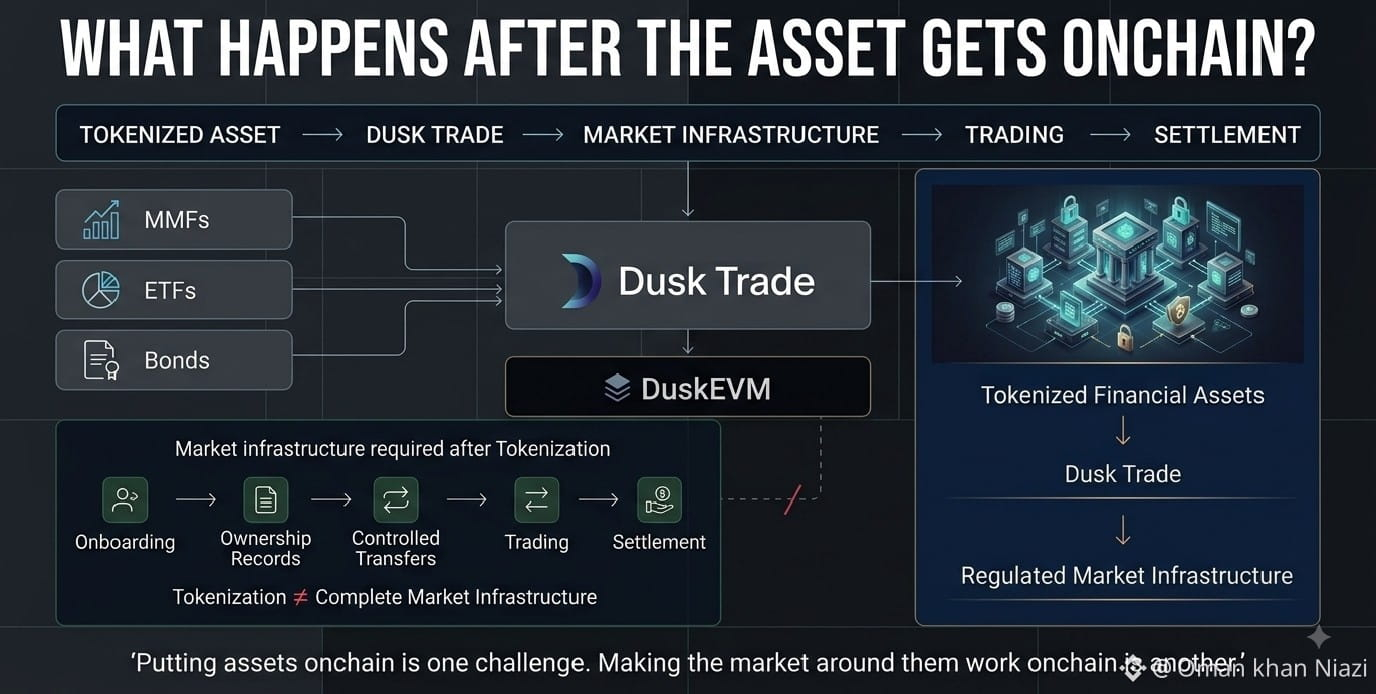
Je reviens sans cesse à une question lorsque je regarde des actifs financiers tokenisés :
Que se passe-t-il après que l’actif est passé onchain ?
Au début, je pensais que la tokenisation était la partie difficile. Mais plus j’examine @Dusk, plus je pense que le plus grand défi consiste à construire un marché autour de ces actifs.
C’est ce qui a attiré mon attention à propos de Dusk Trade.
L’application est en cours de construction comme couche applicative pour les actifs financiers tokenisés sur DuskEVM, avec des instruments comme les OPCVM (MMF), les ETF et les obligations conçus pour fonctionner au sein d’une structure de marché réglementée.
Et cette distinction compte.
Une obligation tokenisée peut exister onchain, mais les investisseurs ont encore besoin d’un onboarding, d’enregistrements de propriété, de transferts contrôlés, de négociation et de règlement. Si ces processus restent fragmentés entre différents systèmes, placer l’actif onchain ne résout qu’une partie du problème.
Pour moi, le véritable test n’est pas simplement le nombre d’actifs qui peuvent être tokenisés. C’est de savoir si l’infrastructure autour d’eux devient suffisamment utilisable pour que ces actifs puissent réellement fonctionner dans un marché réglementé.
C’est la partie de Dusk Trade que j’observe de plus près.
Si l’actif est onchain, mais que la majeure partie du marché qui l’entoure continue de fonctionner offchain, la tokenisation a-t-elle vraiment changé le marché financier lui-même ?
@Dusk_Foundation $DUSK #dusk
Je reviens sans cesse à une question lorsque je regarde des actifs financiers tokenisés :
Que se passe-t-il après que l’actif est passé onchain ?
Au début, je pensais que la tokenisation était la partie difficile. Mais plus j’examine @Dusk, plus je pense que le plus grand défi consiste à construire un marché autour de ces actifs.
C’est ce qui a attiré mon attention à propos de Dusk Trade.
L’application est en cours de construction comme couche applicative pour les actifs financiers tokenisés sur DuskEVM, avec des instruments comme les OPCVM (MMF), les ETF et les obligations conçus pour fonctionner au sein d’une structure de marché réglementée.
Et cette distinction compte.
Une obligation tokenisée peut exister onchain, mais les investisseurs ont encore besoin d’un onboarding, d’enregistrements de propriété, de transferts contrôlés, de négociation et de règlement. Si ces processus restent fragmentés entre différents systèmes, placer l’actif onchain ne résout qu’une partie du problème.
Pour moi, le véritable test n’est pas simplement le nombre d’actifs qui peuvent être tokenisés. C’est de savoir si l’infrastructure autour d’eux devient suffisamment utilisable pour que ces actifs puissent réellement fonctionner dans un marché réglementé.
C’est la partie de Dusk Trade que j’observe de plus près.
Si l’actif est onchain, mais que la majeure partie du marché qui l’entoure continue de fonctionner offchain, la tokenisation a-t-elle vraiment changé le marché financier lui-même ?
@Dusk $DUSK #dusk
Que se passe-t-il après que l’actif est passé onchain ?
Au début, je pensais que la tokenisation était la partie difficile. Mais plus j’examine @Dusk, plus je pense que le plus grand défi consiste à construire un marché autour de ces actifs.
C’est ce qui a attiré mon attention à propos de Dusk Trade.
L’application est en cours de construction comme couche applicative pour les actifs financiers tokenisés sur DuskEVM, avec des instruments comme les OPCVM (MMF), les ETF et les obligations conçus pour fonctionner au sein d’une structure de marché réglementée.
Et cette distinction compte.
Une obligation tokenisée peut exister onchain, mais les investisseurs ont encore besoin d’un onboarding, d’enregistrements de propriété, de transferts contrôlés, de négociation et de règlement. Si ces processus restent fragmentés entre différents systèmes, placer l’actif onchain ne résout qu’une partie du problème.
Pour moi, le véritable test n’est pas simplement le nombre d’actifs qui peuvent être tokenisés. C’est de savoir si l’infrastructure autour d’eux devient suffisamment utilisable pour que ces actifs puissent réellement fonctionner dans un marché réglementé.
C’est la partie de Dusk Trade que j’observe de plus près.
Si l’actif est onchain, mais que la majeure partie du marché qui l’entoure continue de fonctionner offchain, la tokenisation a-t-elle vraiment changé le marché financier lui-même ?
@Dusk $DUSK #dusk
6
55
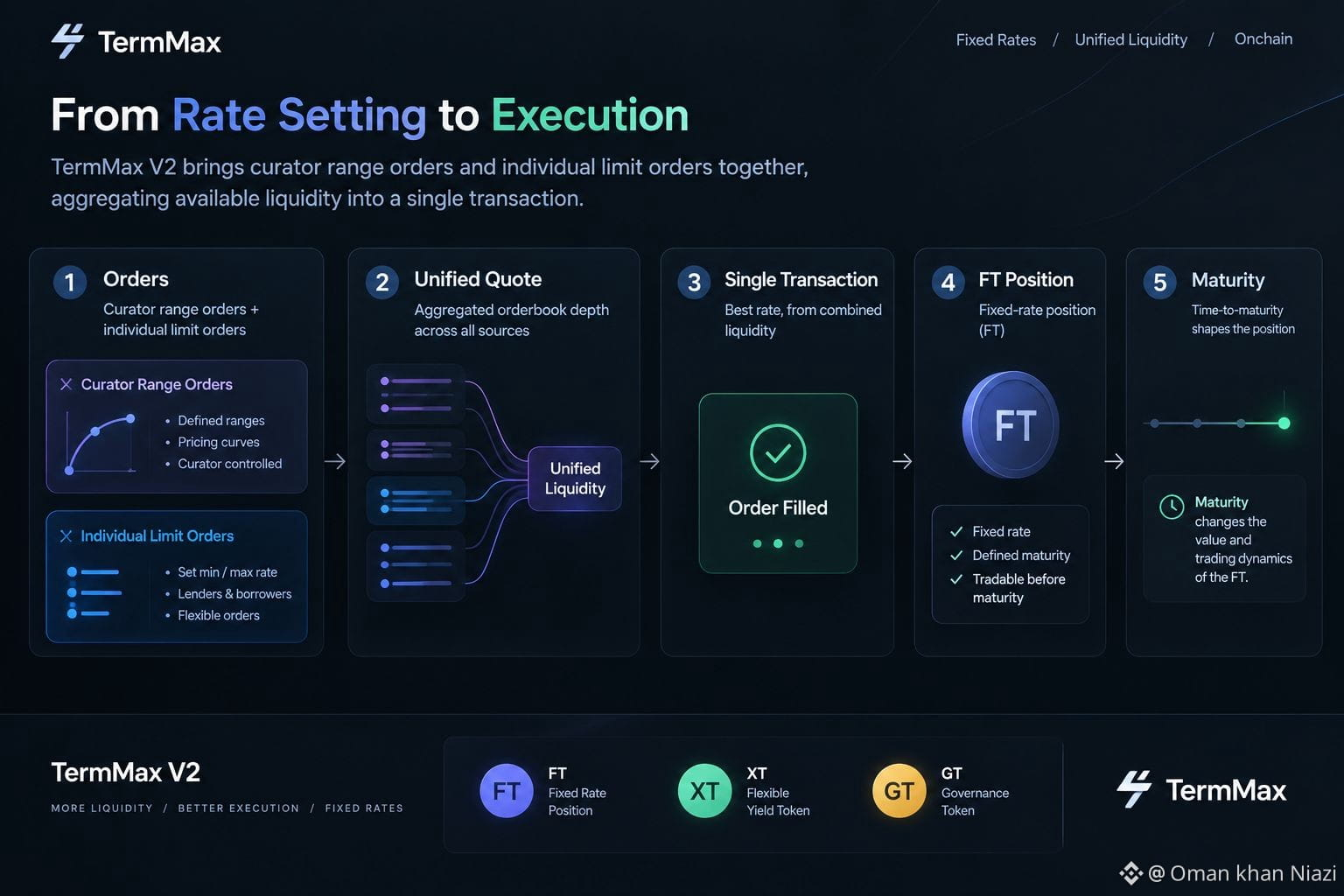
Je pense encore que la partie la plus difficile des marchés à taux fixe n’est pas de fixer un taux. C’est ce qui se passe lorsque ce taux rencontre le flux réel des ordres.
TermMax V2 permet aux conservateurs de définir la tarification via des courbes d’ordres par plage, tandis que les ordres peuvent être agrégés dans le même marché. FT représente la position à taux fixe, et elle peut être négociée avant l’échéance plutôt que d’être seulement détenue jusqu’au terme.
Cela m’a amené à envisager les marchés à taux fixe différemment.
Le taux n’est qu’une partie de la position. L’échéance compte aussi : un FT a une échéance définie, et sa valeur évolue à mesure que le temps restant avant l’échéance change.
Ce que je veux voir, c’est comment ces mécanismes se comportent lorsque différentes courbes, échéances, liquidités et le flux réel des ordres commencent à interagir dans des marchés en conditions réelles.
Envie de voir cela en pratique.
#TermMax @termmax
Je pense encore que la partie la plus difficile des marchés à taux fixe n’est pas de fixer un taux. C’est ce qui se passe lorsque ce taux rencontre le flux réel des ordres.
TermMax V2 permet aux conservateurs de définir la tarification via des courbes d’ordres par plage, tandis que les ordres peuvent être agrégés dans le même marché. FT représente la position à taux fixe, et elle peut être négociée avant l’échéance plutôt que d’être seulement détenue jusqu’au terme.
Cela m’a amené à envisager les marchés à taux fixe différemment.
Le taux n’est qu’une partie de la position. L’échéance compte aussi : un FT a une échéance définie, et sa valeur évolue à mesure que le temps restant avant l’échéance change.
Ce que je veux voir, c’est comment ces mécanismes se comportent lorsque différentes courbes, échéances, liquidités et le flux réel des ordres commencent à interagir dans des marchés en conditions réelles.
Envie de voir cela en pratique.
#TermMax @TermMax
TermMax V2 permet aux conservateurs de définir la tarification via des courbes d’ordres par plage, tandis que les ordres peuvent être agrégés dans le même marché. FT représente la position à taux fixe, et elle peut être négociée avant l’échéance plutôt que d’être seulement détenue jusqu’au terme.
Cela m’a amené à envisager les marchés à taux fixe différemment.
Le taux n’est qu’une partie de la position. L’échéance compte aussi : un FT a une échéance définie, et sa valeur évolue à mesure que le temps restant avant l’échéance change.
Ce que je veux voir, c’est comment ces mécanismes se comportent lorsque différentes courbes, échéances, liquidités et le flux réel des ordres commencent à interagir dans des marchés en conditions réelles.
Envie de voir cela en pratique.
#TermMax @TermMax
6
65
Je pense encore que la plupart des discussions sur les RWA mettent trop l’accent sur le moment où un actif devient un token.
Plus j’observe Dusk, plus je me dis que le problème le plus difficile commence après la tokenisation.
Un actif doit encore être émis, transféré, géré et finalement réglé. Si ces étapes continuent de dépendre de systèmes distincts, le fait de placer l’actif sur la blockchain ne signifie pas nécessairement que le processus financier lui-même a également basculé sur la blockchain.
C’est ce qui m’a attiré dans l’approche native d’émission de Dusk : elle est conçue pour prendre en charge davantage de l’ensemble du cycle de vie de l’actif directement sur le registre, plutôt que de considérer la tokenisation comme l’arrivée finale.
Dusk Trade rend cela encore plus intéressant. Il intègre des instruments tels que les MMF, les ETF et les obligations dans une structure de marché réglementé construite autour d’actifs financiers tokenisés.
Mon constat : le vrai défi pour l’adoption des RWA n’est peut-être même pas la tokenisation. Il s’agirait plutôt de relier l’émission, la détention, la négociation et le règlement sans perdre les règles dont dépendent déjà les marchés financiers.
Si l’actif est onchain, mais que la majeure partie de son cycle de vie se déroule encore ailleurs, quelle part du marché financier a réellement migré onchain ?
@Dusk_Foundation $DUSK #dusk
Je pense encore que la plupart des discussions sur les RWA mettent trop l’accent sur le moment où un actif devient un token.
Plus j’observe Dusk, plus je me dis que le problème le plus difficile commence après la tokenisation.
Un actif doit encore être émis, transféré, géré et finalement réglé. Si ces étapes continuent de dépendre de systèmes distincts, le fait de placer l’actif sur la blockchain ne signifie pas nécessairement que le processus financier lui-même a également basculé sur la blockchain.
C’est ce qui m’a attiré dans l’approche native d’émission de Dusk : elle est conçue pour prendre en charge davantage de l’ensemble du cycle de vie de l’actif directement sur le registre, plutôt que de considérer la tokenisation comme l’arrivée finale.
Dusk Trade rend cela encore plus intéressant. Il intègre des instruments tels que les MMF, les ETF et les obligations dans une structure de marché réglementé construite autour d’actifs financiers tokenisés.
Mon constat : le vrai défi pour l’adoption des RWA n’est peut-être même pas la tokenisation. Il s’agirait plutôt de relier l’émission, la détention, la négociation et le règlement sans perdre les règles dont dépendent déjà les marchés financiers.
Si l’actif est onchain, mais que la majeure partie de son cycle de vie se déroule encore ailleurs, quelle part du marché financier a réellement migré onchain ?
@Dusk $DUSK #dusk
Plus j’observe Dusk, plus je me dis que le problème le plus difficile commence après la tokenisation.
Un actif doit encore être émis, transféré, géré et finalement réglé. Si ces étapes continuent de dépendre de systèmes distincts, le fait de placer l’actif sur la blockchain ne signifie pas nécessairement que le processus financier lui-même a également basculé sur la blockchain.
C’est ce qui m’a attiré dans l’approche native d’émission de Dusk : elle est conçue pour prendre en charge davantage de l’ensemble du cycle de vie de l’actif directement sur le registre, plutôt que de considérer la tokenisation comme l’arrivée finale.
Dusk Trade rend cela encore plus intéressant. Il intègre des instruments tels que les MMF, les ETF et les obligations dans une structure de marché réglementé construite autour d’actifs financiers tokenisés.
Mon constat : le vrai défi pour l’adoption des RWA n’est peut-être même pas la tokenisation. Il s’agirait plutôt de relier l’émission, la détention, la négociation et le règlement sans perdre les règles dont dépendent déjà les marchés financiers.
Si l’actif est onchain, mais que la majeure partie de son cycle de vie se déroule encore ailleurs, quelle part du marché financier a réellement migré onchain ?
@Dusk $DUSK #dusk
Issuance
0%
Trading
0%
settlement
0%
Full lifecycle
100%
1 Votes • Vote fermé
1
5
78
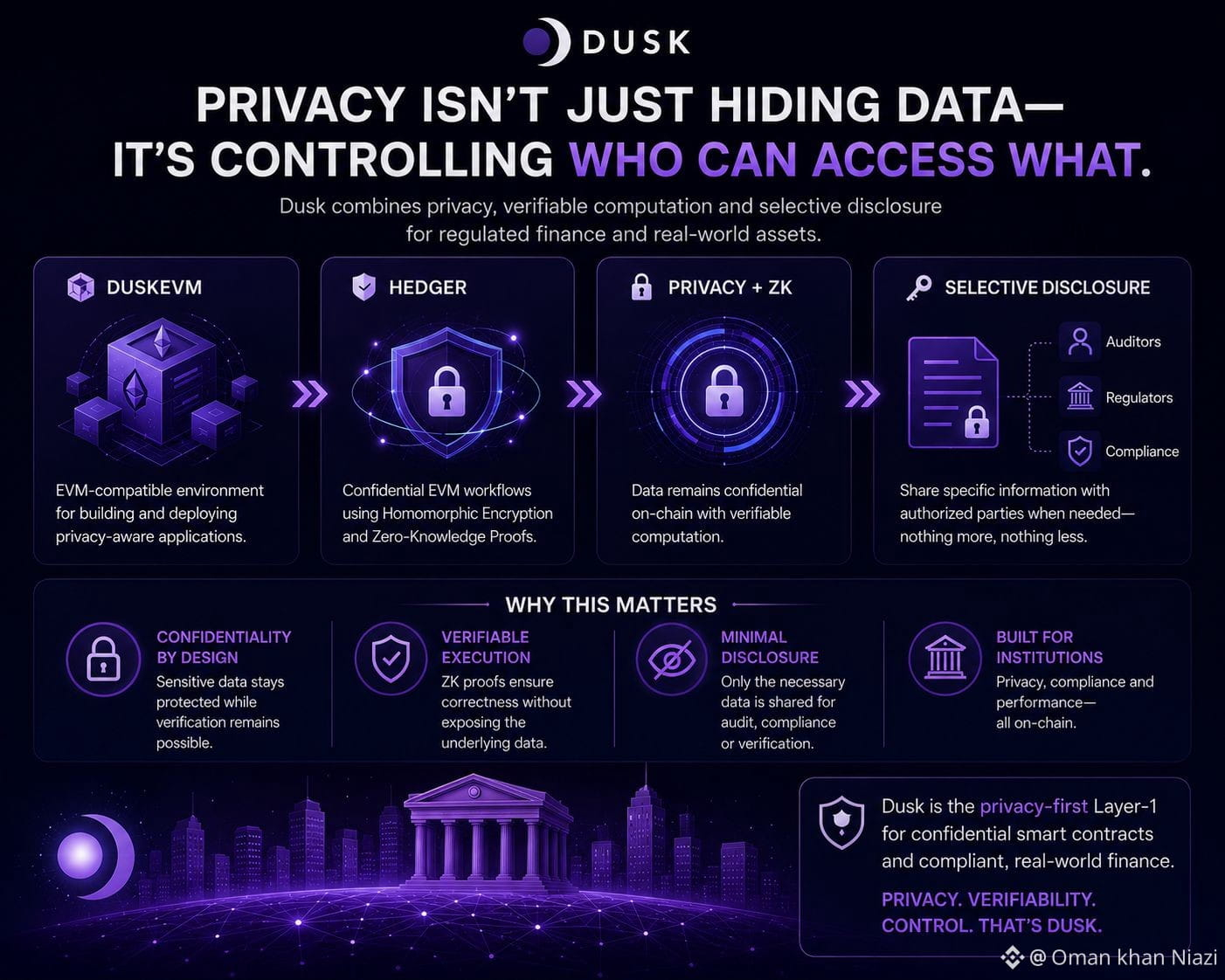
Je pense toujours que les gens sous-estiment à quel point la confidentialité devient difficile dès que de vraies institutions financières entrent en jeu.
Ce qui a retenu mon attention avec Dusk, c’est que la pile ne se résume pas à masquer des transactions. DuskEVM offre une voie compatible EVM pour les applications, tandis que Hedger est conçu pour des flux EVM confidentiels utilisant le chiffrement homomorphe et des preuves à connaissance nulle, avec divulgation sélective lorsque les parties autorisées ont besoin d’informations précises.
Puis vient la partie la plus difficile : qui peut voir quoi ?
Une application financière peut avoir besoin de confidentialité vis-à-vis du public, tandis qu’un régulateur ou un auditeur autorisé peut encore avoir besoin d’informations spécifiques pour la vérification ou la conformité.
Mon observation : la confidentialité est relativement facile à décrire. Décider qui a le droit de voir quoi, et selon quelles conditions, c’est là que naît la véritable tension institutionnelle.
Si les institutions ont besoin de divulgation sélective, qui devrait finalement contrôler ce qui devient visible : l’application, le régulateur ou le protocole ?
@Dusk_Foundation $DUSK #dusk
Je pense toujours que les gens sous-estiment à quel point la confidentialité devient difficile dès que de vraies institutions financières entrent en jeu.
Ce qui a retenu mon attention avec Dusk, c’est que la pile ne se résume pas à masquer des transactions. DuskEVM offre une voie compatible EVM pour les applications, tandis que Hedger est conçu pour des flux EVM confidentiels utilisant le chiffrement homomorphe et des preuves à connaissance nulle, avec divulgation sélective lorsque les parties autorisées ont besoin d’informations précises.
Puis vient la partie la plus difficile : qui peut voir quoi ?
Une application financière peut avoir besoin de confidentialité vis-à-vis du public, tandis qu’un régulateur ou un auditeur autorisé peut encore avoir besoin d’informations spécifiques pour la vérification ou la conformité.
Mon observation : la confidentialité est relativement facile à décrire. Décider qui a le droit de voir quoi, et selon quelles conditions, c’est là que naît la véritable tension institutionnelle.
Si les institutions ont besoin de divulgation sélective, qui devrait finalement contrôler ce qui devient visible : l’application, le régulateur ou le protocole ?
@Dusk $DUSK #dusk
Ce qui a retenu mon attention avec Dusk, c’est que la pile ne se résume pas à masquer des transactions. DuskEVM offre une voie compatible EVM pour les applications, tandis que Hedger est conçu pour des flux EVM confidentiels utilisant le chiffrement homomorphe et des preuves à connaissance nulle, avec divulgation sélective lorsque les parties autorisées ont besoin d’informations précises.
Puis vient la partie la plus difficile : qui peut voir quoi ?
Une application financière peut avoir besoin de confidentialité vis-à-vis du public, tandis qu’un régulateur ou un auditeur autorisé peut encore avoir besoin d’informations spécifiques pour la vérification ou la conformité.
Mon observation : la confidentialité est relativement facile à décrire. Décider qui a le droit de voir quoi, et selon quelles conditions, c’est là que naît la véritable tension institutionnelle.
Si les institutions ont besoin de divulgation sélective, qui devrait finalement contrôler ce qui devient visible : l’application, le régulateur ou le protocole ?
@Dusk $DUSK #dusk
4
2
73
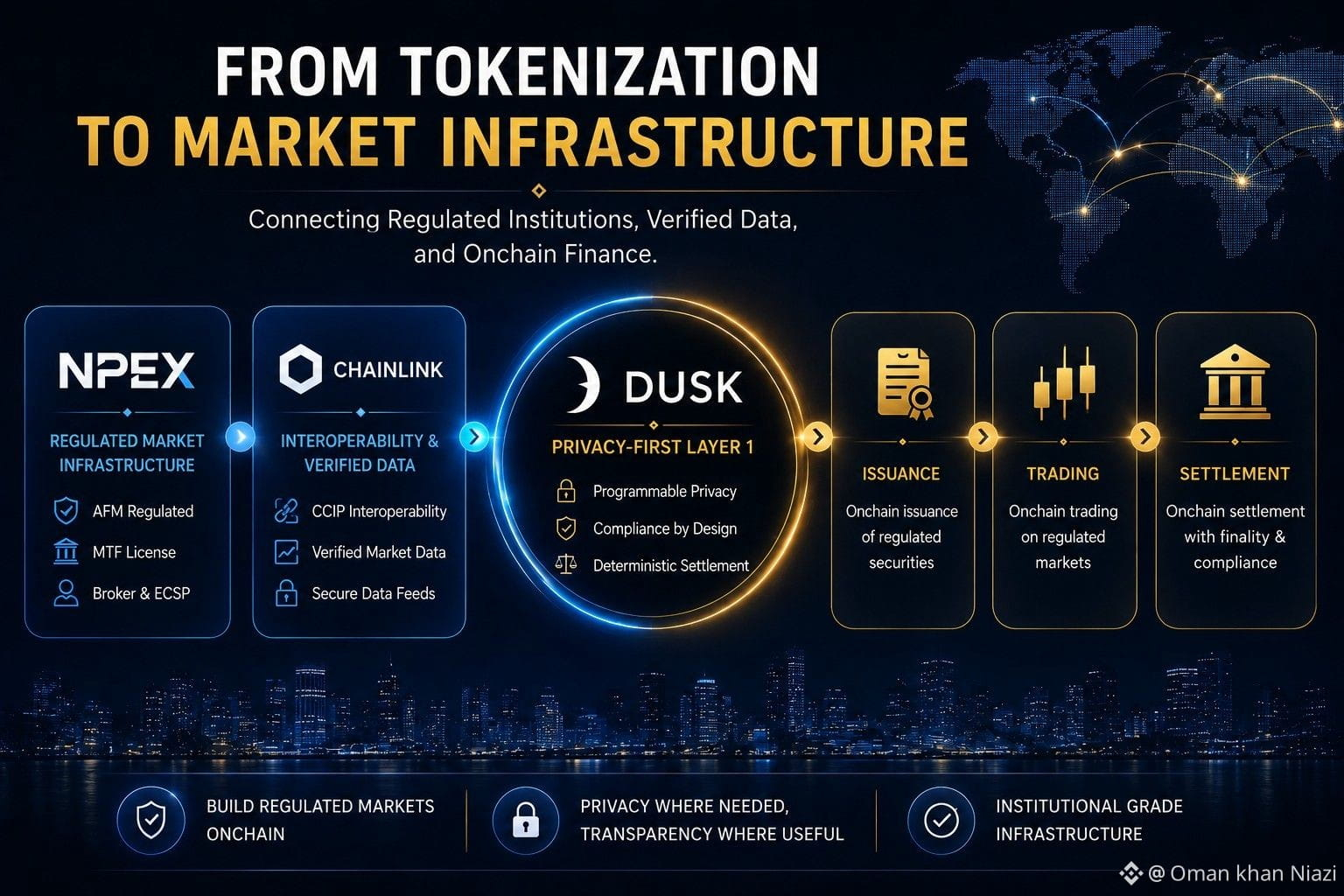
#dusk $DUSK @Dusk_Foundation Je pense encore que la partie la plus difficile de la mise en place de la finance sur la blockchain n’est pas la blockchain elle-même.
Ce qui m’a particulièrement intéressé par Dusk, c’est l’infrastructure qui l’entoure : NPEX apporte sa position sur un marché réglementé, tandis que Chainlink fournit l’interopérabilité et des rails de données de marché vérifiées. Ce qui m’intéresse, c’est la façon dont ces éléments pourraient relier l’émission, la négociation et le règlement, sans les séparer des règles sous lesquelles fonctionnent déjà les marchés financiers.
Mon constat : c’est là que la « tokenisation » commence à devenir une véritable infrastructure de marché.
Si la technologie fonctionne, quel devient le véritable goulot d’étranglement pour l’adoption : la réglementation, l’interopérabilité ou la confiance institutionnelle ?
#dusk $DUSK @Dusk Je pense encore que la partie la plus difficile de la mise en place de la finance sur la blockchain n’est pas la blockchain elle-même.
Ce qui m’a particulièrement intéressé par Dusk, c’est l’infrastructure qui l’entoure : NPEX apporte sa position sur un marché réglementé, tandis que Chainlink fournit l’interopérabilité et des rails de données de marché vérifiées. Ce qui m’intéresse, c’est la façon dont ces éléments pourraient relier l’émission, la négociation et le règlement, sans les séparer des règles sous lesquelles fonctionnent déjà les marchés financiers.
Mon constat : c’est là que la « tokenisation » commence à devenir une véritable infrastructure de marché.
Si la technologie fonctionne, quel devient le véritable goulot d’étranglement pour l’adoption : la réglementation, l’interopérabilité ou la confiance institutionnelle ?
Ce qui m’a particulièrement intéressé par Dusk, c’est l’infrastructure qui l’entoure : NPEX apporte sa position sur un marché réglementé, tandis que Chainlink fournit l’interopérabilité et des rails de données de marché vérifiées. Ce qui m’intéresse, c’est la façon dont ces éléments pourraient relier l’émission, la négociation et le règlement, sans les séparer des règles sous lesquelles fonctionnent déjà les marchés financiers.
Mon constat : c’est là que la « tokenisation » commence à devenir une véritable infrastructure de marché.
Si la technologie fonctionne, quel devient le véritable goulot d’étranglement pour l’adoption : la réglementation, l’interopérabilité ou la confiance institutionnelle ?
2
2
96
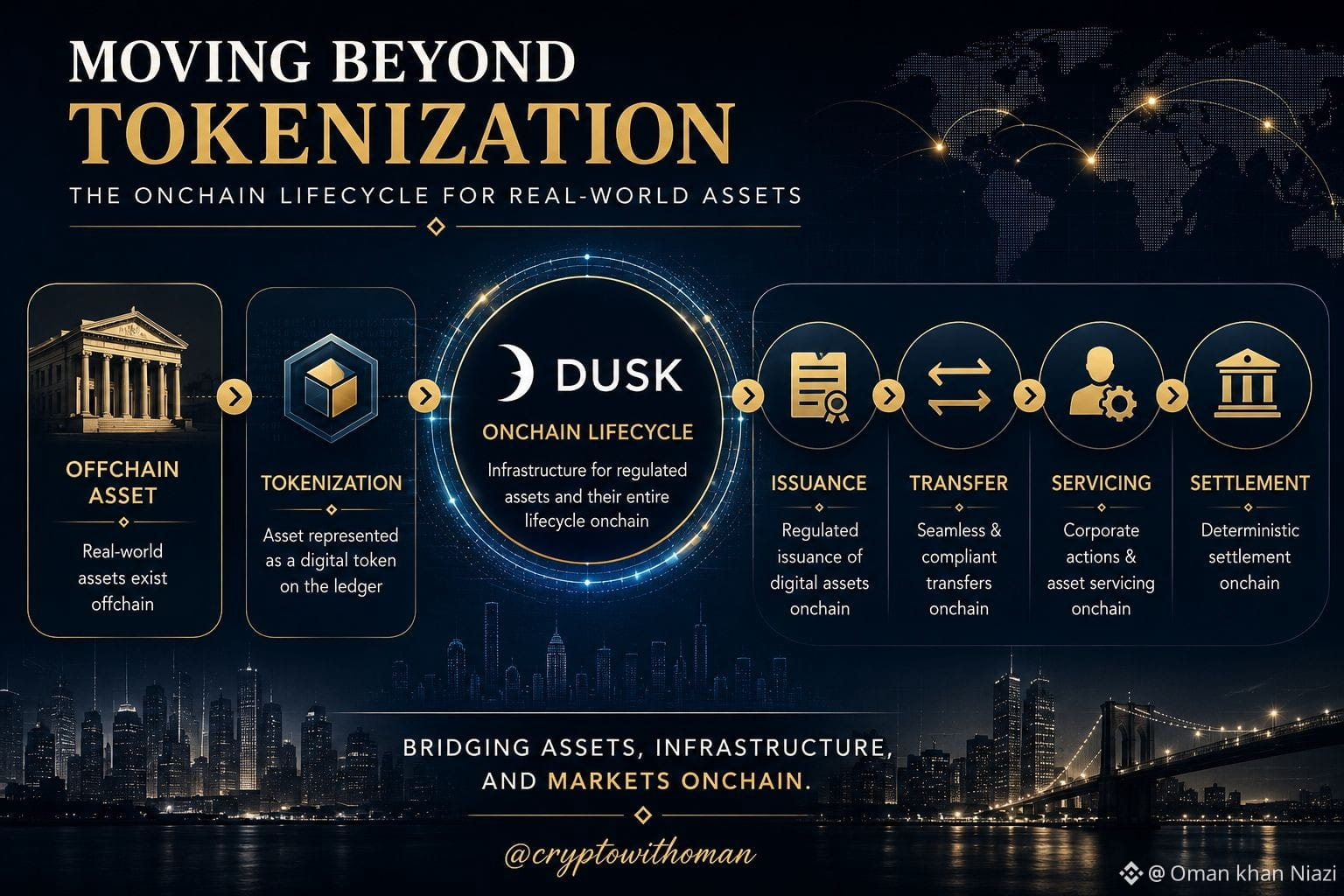
Je pense encore que la plupart des discussions sur les actifs du monde réel (RWA) s’arrêtent trop tôt.
La tokenisation peut mettre une représentation d’un actif onchain, mais le cycle de vie sous-jacent peut dépendre des systèmes offchain. L’approche native d’émission de Dusk va plus loin : l’émission, les transferts, la gestion et le règlement sont conçus autour du registre onchain.
Mon constat : la vraie avancée n’est pas de mettre des actifs onchain — c’est de réduire l’écart entre l’actif et l’infrastructure qui le gère.
Mais ce modèle peut-il fonctionner à l’échelle et avec la complexité réglementaire des marchés financiers réels ?
@Dusk_Foundation $DUSK #dusk
Je pense encore que la plupart des discussions sur les actifs du monde réel (RWA) s’arrêtent trop tôt.
La tokenisation peut mettre une représentation d’un actif onchain, mais le cycle de vie sous-jacent peut dépendre des systèmes offchain. L’approche native d’émission de Dusk va plus loin : l’émission, les transferts, la gestion et le règlement sont conçus autour du registre onchain.
Mon constat : la vraie avancée n’est pas de mettre des actifs onchain — c’est de réduire l’écart entre l’actif et l’infrastructure qui le gère.
Mais ce modèle peut-il fonctionner à l’échelle et avec la complexité réglementaire des marchés financiers réels ?
@Dusk $DUSK #dusk
La tokenisation peut mettre une représentation d’un actif onchain, mais le cycle de vie sous-jacent peut dépendre des systèmes offchain. L’approche native d’émission de Dusk va plus loin : l’émission, les transferts, la gestion et le règlement sont conçus autour du registre onchain.
Mon constat : la vraie avancée n’est pas de mettre des actifs onchain — c’est de réduire l’écart entre l’actif et l’infrastructure qui le gère.
Mais ce modèle peut-il fonctionner à l’échelle et avec la complexité réglementaire des marchés financiers réels ?
@Dusk $DUSK #dusk
3
2
82
Je pense encore que les gens passent à côté de la partie la plus intéressante de Dusk.
DuskEVM apporte un développement EVM familier, tandis que Hedger ajoute des flux de transactions confidentiels grâce au chiffrement homomorphe et aux preuves à divulgation nulle de connaissance. Ce qui a attiré mon attention, c’est que la confidentialité ne signifie pas renoncer à une exécution vérifiable ou à une divulgation sélective lorsque des vérifications autorisées sont nécessaires.
Mon observation : cela ressemble beaucoup plus à ce dont la finance réglementée a réellement besoin en chaîne.
Mais Dusk peut-il prouver que cette architecture fonctionne à l’échelle réelle des institutions ?
@Dusk_Foundation $DUSK #dusk
Je pense encore que les gens passent à côté de la partie la plus intéressante de Dusk.
DuskEVM apporte un développement EVM familier, tandis que Hedger ajoute des flux de transactions confidentiels grâce au chiffrement homomorphe et aux preuves à divulgation nulle de connaissance. Ce qui a attiré mon attention, c’est que la confidentialité ne signifie pas renoncer à une exécution vérifiable ou à une divulgation sélective lorsque des vérifications autorisées sont nécessaires.
Mon observation : cela ressemble beaucoup plus à ce dont la finance réglementée a réellement besoin en chaîne.
Mais Dusk peut-il prouver que cette architecture fonctionne à l’échelle réelle des institutions ?
@Dusk $DUSK #dusk
DuskEVM apporte un développement EVM familier, tandis que Hedger ajoute des flux de transactions confidentiels grâce au chiffrement homomorphe et aux preuves à divulgation nulle de connaissance. Ce qui a attiré mon attention, c’est que la confidentialité ne signifie pas renoncer à une exécution vérifiable ou à une divulgation sélective lorsque des vérifications autorisées sont nécessaires.
Mon observation : cela ressemble beaucoup plus à ce dont la finance réglementée a réellement besoin en chaîne.
Mais Dusk peut-il prouver que cette architecture fonctionne à l’échelle réelle des institutions ?
@Dusk $DUSK #dusk
1
69
Connectez-vous pour découvrir plus de contenu
Rejoignez la communauté mondiale des adeptes de cryptomonnaies sur Binance Square
⚡️ Suviez les dernières informations importantes sur les cryptomonnaies.
💬 Jugé digne de confiance par la plus grande plateforme d’échange de cryptomonnaies au monde.
👍 Découvrez les connaissances que partagent les créateurs vérifiés.
Adresse e-mail/Nº de téléphone
Sujets d’actualité
BinancePick
3.1M vues
153,244 mentions
Rejoignez la #SaisonDesRésultats : prévoyez les résultats sur Binance Pick et partagez votre avis sur Binance Square !
Binance Square Official
·413 mentions J’aime
·343.4k vues
EarningsSeason
5.3M vues
26,056 mentions
AnthropicTTMRevenueGrewAbout1200%
35,426 vues
442 mentions