

Mr Bullrun G
78 Posts

Mr Bullrun G
Report
Block User
Open Trade
Occasional Trader
6.2 Years
561 Following
84 Followers
37 Liked
Posts
Portfolio
All
Quotes
Videos
·
--

Article
On-Chain IPOs: How Equity Issuance and Trading Are Moving to Blockchain RailsThe financial industry is entering a new era as Blockchain technology comes in and transforms how assets are issued, traded, and accessed through financial channels.
In the past, the IPO process often had to go through many intermediaries, such as banks, stock exchanges, and payment settlement systems. But Blockchain has introduced a new approach through an On-chain (On-chain Infrastructure) architecture that may help make payment settlements faster, increase transparency, and make access to financial assets more efficient.
On-Chain IPOs: How Equity Issuance and Trading Are Moving to Blockchain Rails
The financial industry is entering a new era as Blockchain technology comes in and transforms how assets are issued, traded, and accessed through financial channels.
In the past, the IPO process often had to go through many intermediaries, such as banks, stock exchanges, and payment settlement systems. But Blockchain has introduced a new approach through an On-chain (On-chain Infrastructure) architecture that may help make payment settlements faster, increase transparency, and make access to financial assets more efficient.
In the past, the IPO process often had to go through many intermediaries, such as banks, stock exchanges, and payment settlement systems. But Blockchain has introduced a new approach through an On-chain (On-chain Infrastructure) architecture that may help make payment settlements faster, increase transparency, and make access to financial assets more efficient.
41
·
--

Article
On-Chain IPOs: How Equity Issuance and Trading Are Moving to Blockchain RailsThe financial industry is entering a new phase as Blockchain technology continues to transform how assets are issued, traded, and accessed.
Traditionally, IPOs involve multiple intermediaries, including banks, exchanges, and settlement systems. However, Blockchain introduces a new approach through on-chain infrastructure, which can enable faster settlement, greater transparency, and more efficient access to financial assets.
CZ shared that future IPOs could gradually move onto Blockchain Rails through three key stages:
1️⃣ Tokenized Assets & Greater Access
The first step is the growth of Tokenized Assets, where traditional financial assets such as stocks can be represented as digital tokens on Blockchain networks. This can create new ways for investors to access and interact with financial markets.
2️⃣ On-chain Trading, Settlement & Collateral
Beyond asset ownership, Blockchain can support more parts of the financial ecosystem, including trading, settlement, and the use of assets as collateral. This creates a more connected and transparent financial infrastructure.
3️⃣ Pre-IPO & Private Market Access
The next evolution could be broader access to Pre-IPO opportunities and Private Markets. Blockchain may help reduce the gap between private companies and public markets by creating new ways for investors to participate in early-stage opportunities.
With the development of products such as Binance Pre-IPO Spot, the connection between Private Markets and Public Markets continues to evolve.
Blockchain is no longer only focused on digital assets — it is becoming an important technology that could help build the future infrastructure of global finance.
#Binance #TokenizedAssets #Blockchain #Crypto #FutureOfFinance
On-Chain IPOs: How Equity Issuance and Trading Are Moving to Blockchain Rails
The financial industry is entering a new phase as Blockchain technology continues to transform how assets are issued, traded, and accessed.
Traditionally, IPOs involve multiple intermediaries, including banks, exchanges, and settlement systems. However, Blockchain introduces a new approach through on-chain infrastructure, which can enable faster settlement, greater transparency, and more efficient access to financial assets.
CZ shared that future IPOs could gradually move onto Blockchain Rails through three key stages:
1️⃣ Tokenized Assets & Greater Access
The first step is the growth of Tokenized Assets, where traditional financial assets such as stocks can be represented as digital tokens on Blockchain networks. This can create new ways for investors to access and interact with financial markets.
2️⃣ On-chain Trading, Settlement & Collateral
Beyond asset ownership, Blockchain can support more parts of the financial ecosystem, including trading, settlement, and the use of assets as collateral. This creates a more connected and transparent financial infrastructure.
3️⃣ Pre-IPO & Private Market Access
The next evolution could be broader access to Pre-IPO opportunities and Private Markets. Blockchain may help reduce the gap between private companies and public markets by creating new ways for investors to participate in early-stage opportunities.
With the development of products such as Binance Pre-IPO Spot, the connection between Private Markets and Public Markets continues to evolve.
Blockchain is no longer only focused on digital assets — it is becoming an important technology that could help build the future infrastructure of global finance.
#Binance #TokenizedAssets #Blockchain #Crypto #FutureOfFinance
Traditionally, IPOs involve multiple intermediaries, including banks, exchanges, and settlement systems. However, Blockchain introduces a new approach through on-chain infrastructure, which can enable faster settlement, greater transparency, and more efficient access to financial assets.
CZ shared that future IPOs could gradually move onto Blockchain Rails through three key stages:
1️⃣ Tokenized Assets & Greater Access
The first step is the growth of Tokenized Assets, where traditional financial assets such as stocks can be represented as digital tokens on Blockchain networks. This can create new ways for investors to access and interact with financial markets.
2️⃣ On-chain Trading, Settlement & Collateral
Beyond asset ownership, Blockchain can support more parts of the financial ecosystem, including trading, settlement, and the use of assets as collateral. This creates a more connected and transparent financial infrastructure.
3️⃣ Pre-IPO & Private Market Access
The next evolution could be broader access to Pre-IPO opportunities and Private Markets. Blockchain may help reduce the gap between private companies and public markets by creating new ways for investors to participate in early-stage opportunities.
With the development of products such as Binance Pre-IPO Spot, the connection between Private Markets and Public Markets continues to evolve.
Blockchain is no longer only focused on digital assets — it is becoming an important technology that could help build the future infrastructure of global finance.
#Binance #TokenizedAssets #Blockchain #Crypto #FutureOfFinance
43
·
--

Article
How to Check If Your Data Was Leaked — and What to Do NextIn the digital world every day, data breaches can happen to anyone. Personal information such as email, passwords, phone numbers, and account details may be exposed without you knowing, and may be used for phishing, scams, or unauthorized access to accounts.
How to Check If Your Data Was Leaked — and What to Do Next
In the digital world every day, data breaches can happen to anyone. Personal information such as email, passwords, phone numbers, and account details may be exposed without you knowing, and may be used for phishing, scams, or unauthorized access to accounts.
81
·
--

Article
How to Check If Your Data Was Leaked — and What to Do NextIn today’s digital world, Data Breaches can happen to anyone. Personal information such as email addresses, passwords, phone numbers, and account details may be exposed without your knowledge and could be used for phishing, scams, or unauthorized access.
Taking a few simple security steps can help reduce risks and better protect your accounts and digital assets.
🔍 How to Check If Your Data Was Leaked
✅ Check whether your email has appeared in known data breaches.
✅ Review your account activity for unfamiliar logins or suspicious changes.
✅ Monitor your financial and crypto transactions regularly.
🛡️ What to Do If Your Data Was Leaked
🔑 Change your passwords
Use strong, unique passwords and avoid reusing the same password across multiple accounts.
🔐 Enable 2FA and Passkeys
Adding an extra layer of security helps protect your accounts even if your password is compromised.
🚨 Stay alert against phishing
Scammers may use leaked information to create convincing fake messages. Never share your Password, OTP, or Seed Phrase.
🔒 Binance Security Tips
For Binance users, remember to:
✅ Enable Anti-Phishing Code
✅ Enable 2FA / Passkey
✅ Check Security Activity regularly
✅ Remove unknown devices from your account
Data security starts with small actions. Take a few minutes today to review your security settings and protect your digital assets. 🔐
#Binance #BinanceSecurity #CryptoSecurity #DataBreach #Web3Security
How to Check If Your Data Was Leaked — and What to Do Next
In today’s digital world, Data Breaches can happen to anyone. Personal information such as email addresses, passwords, phone numbers, and account details may be exposed without your knowledge and could be used for phishing, scams, or unauthorized access.
Taking a few simple security steps can help reduce risks and better protect your accounts and digital assets.
🔍 How to Check If Your Data Was Leaked
✅ Check whether your email has appeared in known data breaches.
✅ Review your account activity for unfamiliar logins or suspicious changes.
✅ Monitor your financial and crypto transactions regularly.
🛡️ What to Do If Your Data Was Leaked
🔑 Change your passwords
Use strong, unique passwords and avoid reusing the same password across multiple accounts.
🔐 Enable 2FA and Passkeys
Adding an extra layer of security helps protect your accounts even if your password is compromised.
🚨 Stay alert against phishing
Scammers may use leaked information to create convincing fake messages. Never share your Password, OTP, or Seed Phrase.
🔒 Binance Security Tips
For Binance users, remember to:
✅ Enable Anti-Phishing Code
✅ Enable 2FA / Passkey
✅ Check Security Activity regularly
✅ Remove unknown devices from your account
Data security starts with small actions. Take a few minutes today to review your security settings and protect your digital assets. 🔐
#Binance #BinanceSecurity #CryptoSecurity #DataBreach #Web3Security
Taking a few simple security steps can help reduce risks and better protect your accounts and digital assets.
🔍 How to Check If Your Data Was Leaked
✅ Check whether your email has appeared in known data breaches.
✅ Review your account activity for unfamiliar logins or suspicious changes.
✅ Monitor your financial and crypto transactions regularly.
🛡️ What to Do If Your Data Was Leaked
🔑 Change your passwords
Use strong, unique passwords and avoid reusing the same password across multiple accounts.
🔐 Enable 2FA and Passkeys
Adding an extra layer of security helps protect your accounts even if your password is compromised.
🚨 Stay alert against phishing
Scammers may use leaked information to create convincing fake messages. Never share your Password, OTP, or Seed Phrase.
🔒 Binance Security Tips
For Binance users, remember to:
✅ Enable Anti-Phishing Code
✅ Enable 2FA / Passkey
✅ Check Security Activity regularly
✅ Remove unknown devices from your account
Data security starts with small actions. Take a few minutes today to review your security settings and protect your digital assets. 🔐
#Binance #BinanceSecurity #CryptoSecurity #DataBreach #Web3Security
73
·
--

Article
STOP Before You Deposit: 5 Red Flags That Could Put Your Crypto at Risk🚨 Stop before depositing money: 5 warning signs that could put your Crypto at risk
Not every Crypto or financial platform has the same standard.
Before you deposit money, try asking yourself first:
“If something goes wrong tomorrow, how much of my assets will be protected?”
STOP Before You Deposit: 5 Red Flags That Could Put Your Crypto at Risk
🚨 Stop before depositing money: 5 warning signs that could put your Crypto at risk
Not every Crypto or financial platform has the same standard.
Before you deposit money, try asking yourself first:
“If something goes wrong tomorrow, how much of my assets will be protected?”
Not every Crypto or financial platform has the same standard.
Before you deposit money, try asking yourself first:
“If something goes wrong tomorrow, how much of my assets will be protected?”
175
·
--
Article
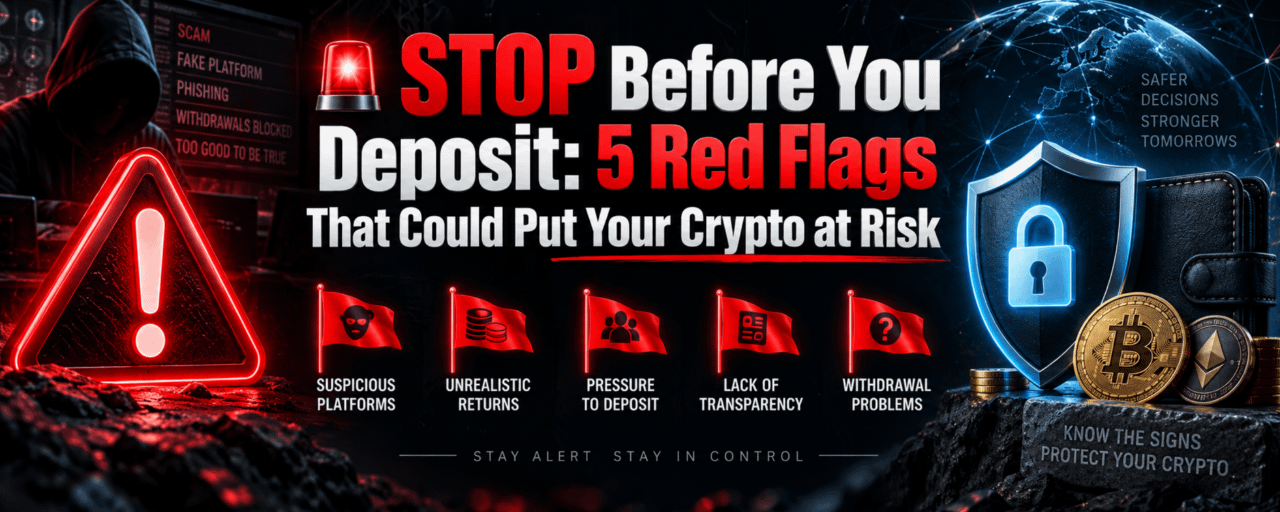
STOP Before You Deposit: 5 Red Flags That Could Put Your Crypto at Risk🚨 STOP Before You Deposit: 5 Red Flags That Could Put Your Crypto at Risk
Not every crypto or financial platform is built the same.
Before you deposit your money, ask yourself one question:
“If something goes wrong tomorrow, how protected am I?”
Here are 5 major red flags you should never ignore. 👇
🚩 1. Unclear Licensing or Regulatory Status
If you cannot clearly understand who operates the platform, where it operates, or what regulatory framework applies — investigate before depositing.
🚩 2. Customer Funds Are Mixed With Company Funds
Your assets should not simply become part of a company’s operating money. Clear asset segregation is an important protection to look for.
🚩 3. No Proof of Reserves
A platform asking you to trust it without providing meaningful transparency about customer assets should raise questions.
Binance provides Proof of Reserves (PoR) with Merkle Tree-based verification so users can independently check whether their assets are included.
🚩 4. No Emergency Protection Fund
Ask what happens if a major security incident occurs.
Binance maintains SAFU (Secure Asset Fund for Users) as an emergency protection fund designed to provide an additional layer of protection for users.
🚩 5. Weak Account Security
A password alone is no longer enough.
Look for security tools such as:
🔐 Passkeys
🔐 Two-Factor Authentication (2FA)
🔐 Anti-Phishing Codes
🔐 Withdrawal Address Allowlisting
⚠️ The Biggest Mistake?
Choosing a platform because it looks convenient — without checking what is protecting your money behind the scenes.
Before asking:
“What can I earn?”
Ask first:
“How is my money protected?”
In crypto, security shouldn't be an afterthought.
It should be part of your decision from Day 1.
#Binance #CryptoSecurity #SAFU #ProofOfReserves #StaySAFU
STOP Before You Deposit: 5 Red Flags That Could Put Your Crypto at Risk
🚨 STOP Before You Deposit: 5 Red Flags That Could Put Your Crypto at Risk
Not every crypto or financial platform is built the same.
Before you deposit your money, ask yourself one question:
“If something goes wrong tomorrow, how protected am I?”
Here are 5 major red flags you should never ignore. 👇
🚩 1. Unclear Licensing or Regulatory Status
If you cannot clearly understand who operates the platform, where it operates, or what regulatory framework applies — investigate before depositing.
🚩 2. Customer Funds Are Mixed With Company Funds
Your assets should not simply become part of a company’s operating money. Clear asset segregation is an important protection to look for.
🚩 3. No Proof of Reserves
A platform asking you to trust it without providing meaningful transparency about customer assets should raise questions.
Binance provides Proof of Reserves (PoR) with Merkle Tree-based verification so users can independently check whether their assets are included.
🚩 4. No Emergency Protection Fund
Ask what happens if a major security incident occurs.
Binance maintains SAFU (Secure Asset Fund for Users) as an emergency protection fund designed to provide an additional layer of protection for users.
🚩 5. Weak Account Security
A password alone is no longer enough.
Look for security tools such as:
🔐 Passkeys
🔐 Two-Factor Authentication (2FA)
🔐 Anti-Phishing Codes
🔐 Withdrawal Address Allowlisting
⚠️ The Biggest Mistake?
Choosing a platform because it looks convenient — without checking what is protecting your money behind the scenes.
Before asking:
“What can I earn?”
Ask first:
“How is my money protected?”
In crypto, security shouldn't be an afterthought.
It should be part of your decision from Day 1.
#Binance #CryptoSecurity #SAFU #ProofOfReserves #StaySAFU
Not every crypto or financial platform is built the same.
Before you deposit your money, ask yourself one question:
“If something goes wrong tomorrow, how protected am I?”
Here are 5 major red flags you should never ignore. 👇
🚩 1. Unclear Licensing or Regulatory Status
If you cannot clearly understand who operates the platform, where it operates, or what regulatory framework applies — investigate before depositing.
🚩 2. Customer Funds Are Mixed With Company Funds
Your assets should not simply become part of a company’s operating money. Clear asset segregation is an important protection to look for.
🚩 3. No Proof of Reserves
A platform asking you to trust it without providing meaningful transparency about customer assets should raise questions.
Binance provides Proof of Reserves (PoR) with Merkle Tree-based verification so users can independently check whether their assets are included.
🚩 4. No Emergency Protection Fund
Ask what happens if a major security incident occurs.
Binance maintains SAFU (Secure Asset Fund for Users) as an emergency protection fund designed to provide an additional layer of protection for users.
🚩 5. Weak Account Security
A password alone is no longer enough.
Look for security tools such as:
🔐 Passkeys
🔐 Two-Factor Authentication (2FA)
🔐 Anti-Phishing Codes
🔐 Withdrawal Address Allowlisting
⚠️ The Biggest Mistake?
Choosing a platform because it looks convenient — without checking what is protecting your money behind the scenes.
Before asking:
“What can I earn?”
Ask first:
“How is my money protected?”
In crypto, security shouldn't be an afterthought.
It should be part of your decision from Day 1.
#Binance #CryptoSecurity #SAFU #ProofOfReserves #StaySAFU
91
·
--

Article
I Thought Revolut Was Enough… Until I Discovered BinanceThe way people manage their finances is changing. For many users, having just a single digital banking app may no longer be enough — they are looking for a platform that offers much more flexibility, broader access, and helps explore the future of finance.
I Thought Revolut Was Enough… Until I Discovered Binance
The way people manage their finances is changing. For many users, having just a single digital banking app may no longer be enough — they are looking for a platform that offers much more flexibility, broader access, and helps explore the future of finance.
1
108
·
--

Article
I Thought Revolut Was Enough… Until I Discovered BinanceThe way people manage their finances is changing. For many users, having a digital finance app is no longer enough — they are looking for a platform that provides more flexibility, more access, and a better way to explore the future of finance.
One user who previously used Revolut for digital financial services thought it was enough for daily financial needs. However, as the user became more interested in digital assets and Web3, they started looking for a platform that could provide a more complete experience.
That journey led them to Binance.
🌍 From Managing Money to Exploring Digital Assets
One of the biggest changes after moving to Binance was the ability to manage digital assets more conveniently within one ecosystem.
Previously, users might need different platforms to:
✅ Track market prices
✅ Buy and sell digital assets
✅ Follow market trends
✅ Learn more about blockchain and Web3
With Binance, users can access multiple tools and services in one place — creating a smoother and more connected experience.
For example, instead of switching between different apps to check market information, manage assets, and learn about crypto, users can explore these experiences within the Binance ecosystem.
🔎 What Makes Binance Different?
Binance is more than just a crypto exchange. It is a digital asset ecosystem designed to help users access different opportunities in the evolving world of blockchain.
✅ All-in-One Experience
From trading and market insights to educational resources, Binance brings different parts of the digital asset journey together in one platform.
✅ Access to a Global Ecosystem
With users around the world, Binance connects people to a broader digital asset ecosystem and various Web3 opportunities.
✅ Built for the Future of Finance
As the connection between traditional finance and blockchain continues to grow, Binance continues developing tools that help users participate in this new financial landscape.
💡 The Takeaway: Why Did This User Choose Binance?
The decision was not simply about switching platforms — it was about finding a more complete way to interact with digital finance.
For this user, Binance provided a more connected experience by combining convenience, digital assets, education, and Web3 opportunities in one ecosystem.
As financial technology continues to evolve, users are looking beyond traditional financial apps and exploring platforms that can support their journey into the future of finance.
#Binance #Crypto #Web3 #DigitalAssets #CryptoEducation
I Thought Revolut Was Enough… Until I Discovered Binance
The way people manage their finances is changing. For many users, having a digital finance app is no longer enough — they are looking for a platform that provides more flexibility, more access, and a better way to explore the future of finance.
One user who previously used Revolut for digital financial services thought it was enough for daily financial needs. However, as the user became more interested in digital assets and Web3, they started looking for a platform that could provide a more complete experience.
That journey led them to Binance.
🌍 From Managing Money to Exploring Digital Assets
One of the biggest changes after moving to Binance was the ability to manage digital assets more conveniently within one ecosystem.
Previously, users might need different platforms to:
✅ Track market prices
✅ Buy and sell digital assets
✅ Follow market trends
✅ Learn more about blockchain and Web3
With Binance, users can access multiple tools and services in one place — creating a smoother and more connected experience.
For example, instead of switching between different apps to check market information, manage assets, and learn about crypto, users can explore these experiences within the Binance ecosystem.
🔎 What Makes Binance Different?
Binance is more than just a crypto exchange. It is a digital asset ecosystem designed to help users access different opportunities in the evolving world of blockchain.
✅ All-in-One Experience
From trading and market insights to educational resources, Binance brings different parts of the digital asset journey together in one platform.
✅ Access to a Global Ecosystem
With users around the world, Binance connects people to a broader digital asset ecosystem and various Web3 opportunities.
✅ Built for the Future of Finance
As the connection between traditional finance and blockchain continues to grow, Binance continues developing tools that help users participate in this new financial landscape.
💡 The Takeaway: Why Did This User Choose Binance?
The decision was not simply about switching platforms — it was about finding a more complete way to interact with digital finance.
For this user, Binance provided a more connected experience by combining convenience, digital assets, education, and Web3 opportunities in one ecosystem.
As financial technology continues to evolve, users are looking beyond traditional financial apps and exploring platforms that can support their journey into the future of finance.
#Binance #Crypto #Web3 #DigitalAssets #CryptoEducation
One user who previously used Revolut for digital financial services thought it was enough for daily financial needs. However, as the user became more interested in digital assets and Web3, they started looking for a platform that could provide a more complete experience.
That journey led them to Binance.
🌍 From Managing Money to Exploring Digital Assets
One of the biggest changes after moving to Binance was the ability to manage digital assets more conveniently within one ecosystem.
Previously, users might need different platforms to:
✅ Track market prices
✅ Buy and sell digital assets
✅ Follow market trends
✅ Learn more about blockchain and Web3
With Binance, users can access multiple tools and services in one place — creating a smoother and more connected experience.
For example, instead of switching between different apps to check market information, manage assets, and learn about crypto, users can explore these experiences within the Binance ecosystem.
🔎 What Makes Binance Different?
Binance is more than just a crypto exchange. It is a digital asset ecosystem designed to help users access different opportunities in the evolving world of blockchain.
✅ All-in-One Experience
From trading and market insights to educational resources, Binance brings different parts of the digital asset journey together in one platform.
✅ Access to a Global Ecosystem
With users around the world, Binance connects people to a broader digital asset ecosystem and various Web3 opportunities.
✅ Built for the Future of Finance
As the connection between traditional finance and blockchain continues to grow, Binance continues developing tools that help users participate in this new financial landscape.
💡 The Takeaway: Why Did This User Choose Binance?
The decision was not simply about switching platforms — it was about finding a more complete way to interact with digital finance.
For this user, Binance provided a more connected experience by combining convenience, digital assets, education, and Web3 opportunities in one ecosystem.
As financial technology continues to evolve, users are looking beyond traditional financial apps and exploring platforms that can support their journey into the future of finance.
#Binance #Crypto #Web3 #DigitalAssets #CryptoEducation
85
·
--
Article
DeFi 3.0: When Real-World Assets Become Programmable on Blockchain🚀 DeFi 3.0: When real-world assets become programmable on the Blockchain
In the past few years, DeFi (Decentralized Finance) has changed the way people access financial services.
🔹 DeFi 1.0 started with basic services such as trading and lending/borrowing via the Blockchain.
DeFi 3.0: When Real-World Assets Become Programmable on Blockchain
🚀 DeFi 3.0: When real-world assets become programmable on the Blockchain
In the past few years, DeFi (Decentralized Finance) has changed the way people access financial services.
🔹 DeFi 1.0 started with basic services such as trading and lending/borrowing via the Blockchain.
In the past few years, DeFi (Decentralized Finance) has changed the way people access financial services.
🔹 DeFi 1.0 started with basic services such as trading and lending/borrowing via the Blockchain.
1
90
·
--
Article
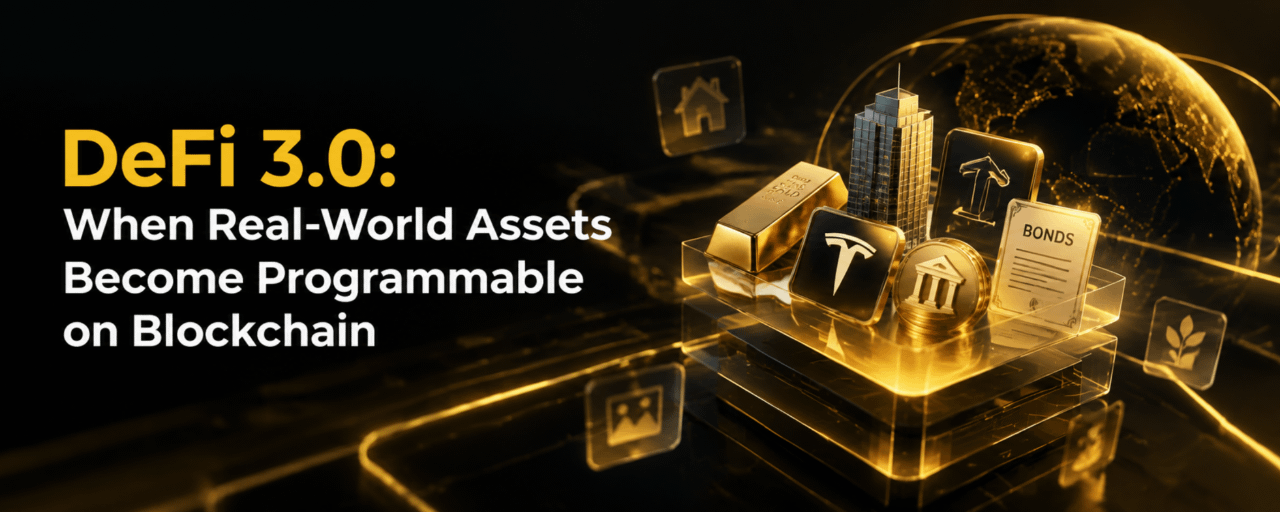
DeFi 3.0: When Real-World Assets Become Programmable on Blockchain🚀 DeFi 3.0: When Real-World Assets Become Programmable on Blockchain
Over the past few years, DeFi (Decentralized Finance) has transformed the way people access financial services.
🔹 DeFi 1.0 introduced core financial activities such as trading and lending on blockchain.
🔹 DeFi 2.0 expanded the ecosystem by connecting different protocols and enabling greater composability.
Now, the industry is moving toward a new phase — DeFi 3.0.
DeFi 3.0 focuses on bringing Real-World Assets (RWAs), such as stocks, bonds, and other financial assets, onto blockchain. By making these assets programmable, blockchain technology can enable new ways for assets to interact, operate, and create value.
This evolution could help build a financial system that is:
✅ More transparent
✅ More accessible
✅ More connected between traditional finance and blockchain
In the future, blockchain may become more than just a place for digital assets. It could become a new infrastructure where different types of assets can operate more efficiently and seamlessly.
Binance believes this represents a major shift in the financial landscape, introducing concepts such as the Programmable Asset Era and exploring new measurements like Programmable Asset Ratio (PAR) and Capital Activation Rate (CAR) to understand how programmable assets grow and contribute to the ecosystem.
🌐 The future of finance may move from simply holding assets to creating assets that can actively work on-chain.
#DeFi #Blockchain #RWA #Web3 #BinanceSquare
DeFi 3.0: When Real-World Assets Become Programmable on Blockchain
🚀 DeFi 3.0: When Real-World Assets Become Programmable on Blockchain
Over the past few years, DeFi (Decentralized Finance) has transformed the way people access financial services.
🔹 DeFi 1.0 introduced core financial activities such as trading and lending on blockchain.
🔹 DeFi 2.0 expanded the ecosystem by connecting different protocols and enabling greater composability.
Now, the industry is moving toward a new phase — DeFi 3.0.
DeFi 3.0 focuses on bringing Real-World Assets (RWAs), such as stocks, bonds, and other financial assets, onto blockchain. By making these assets programmable, blockchain technology can enable new ways for assets to interact, operate, and create value.
This evolution could help build a financial system that is:
✅ More transparent
✅ More accessible
✅ More connected between traditional finance and blockchain
In the future, blockchain may become more than just a place for digital assets. It could become a new infrastructure where different types of assets can operate more efficiently and seamlessly.
Binance believes this represents a major shift in the financial landscape, introducing concepts such as the Programmable Asset Era and exploring new measurements like Programmable Asset Ratio (PAR) and Capital Activation Rate (CAR) to understand how programmable assets grow and contribute to the ecosystem.
🌐 The future of finance may move from simply holding assets to creating assets that can actively work on-chain.
#DeFi #Blockchain #RWA #Web3 #BinanceSquare
Over the past few years, DeFi (Decentralized Finance) has transformed the way people access financial services.
🔹 DeFi 1.0 introduced core financial activities such as trading and lending on blockchain.
🔹 DeFi 2.0 expanded the ecosystem by connecting different protocols and enabling greater composability.
Now, the industry is moving toward a new phase — DeFi 3.0.
DeFi 3.0 focuses on bringing Real-World Assets (RWAs), such as stocks, bonds, and other financial assets, onto blockchain. By making these assets programmable, blockchain technology can enable new ways for assets to interact, operate, and create value.
This evolution could help build a financial system that is:
✅ More transparent
✅ More accessible
✅ More connected between traditional finance and blockchain
In the future, blockchain may become more than just a place for digital assets. It could become a new infrastructure where different types of assets can operate more efficiently and seamlessly.
Binance believes this represents a major shift in the financial landscape, introducing concepts such as the Programmable Asset Era and exploring new measurements like Programmable Asset Ratio (PAR) and Capital Activation Rate (CAR) to understand how programmable assets grow and contribute to the ecosystem.
🌐 The future of finance may move from simply holding assets to creating assets that can actively work on-chain.
#DeFi #Blockchain #RWA #Web3 #BinanceSquare
167
·
--
Article
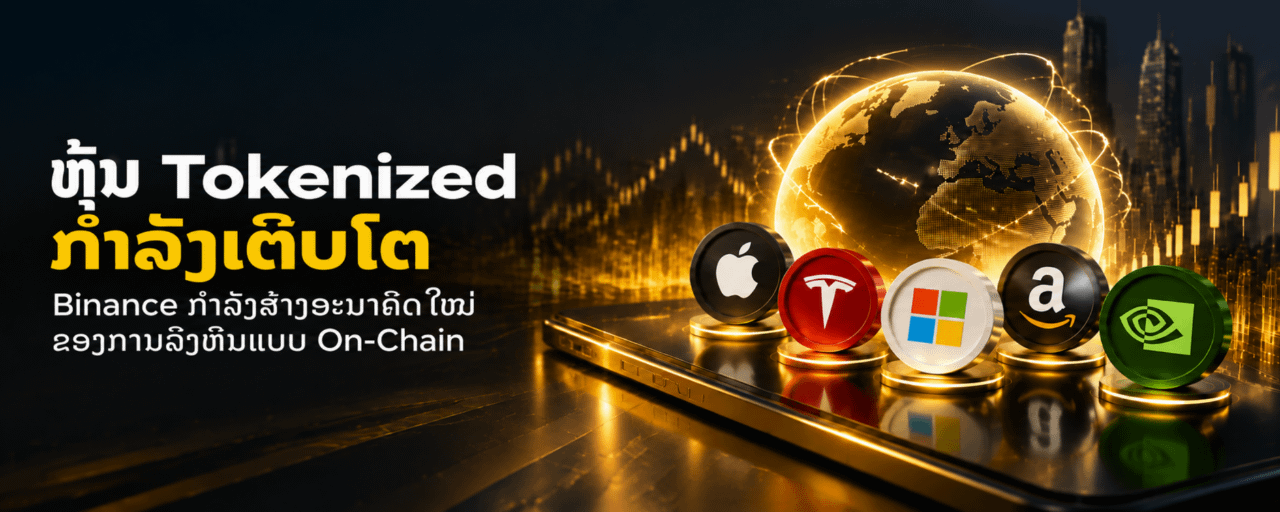
Tokenized Equities Are Growing: How Binance Is Building the Future of On-Chain InvestingHow to invest capital in transformation.
For many decades, traditional stocks have been traded through centralized financial systems. But with the growth of Blockchain technology, new possibilities are emerging: Tokenized Equities — bringing real-world assets onto the Blockchain.
Tokenized Equities Are Growing: How Binance Is Building the Future of On-Chain Investing
How to invest capital in transformation.
For many decades, traditional stocks have been traded through centralized financial systems. But with the growth of Blockchain technology, new possibilities are emerging: Tokenized Equities — bringing real-world assets onto the Blockchain.
For many decades, traditional stocks have been traded through centralized financial systems. But with the growth of Blockchain technology, new possibilities are emerging: Tokenized Equities — bringing real-world assets onto the Blockchain.
77
·
--
Article
Tokenized Equities Are Growing: How Binance Is Building the Future of On-Chain InvestingThe way people invest is changing.
For decades, traditional stocks have been traded through centralized financial systems. But with the rise of blockchain technology, a new possibility is emerging: Tokenized Equities — bringing real-world assets onto the blockchain.
Tokenized Equities are no longer just an experiment. They are becoming an important part of the future investment landscape, connecting traditional markets with the speed, transparency, and accessibility of blockchain technology.
🌐 What Are Tokenized Equities?
Tokenized Equities represent ownership of traditional assets, such as stocks, through blockchain-based tokens.
This approach creates new possibilities:
✅ Greater accessibility for global users
✅ Faster settlement through blockchain technology
✅ More transparent ownership records
✅ Integration with the broader digital asset ecosystem
📈 Why Does This Matter?
The growth of Tokenized Equities shows that the connection between traditional finance and crypto is becoming stronger.
Instead of viewing stocks and digital assets as separate worlds, blockchain is helping bring them closer together — creating new ways for users to access and interact with financial markets.
🏗️ Binance’s Growing On-Chain Investment Ecosystem
Binance has been building in this space for years.
Today, Binance’s Tokenized Equities ecosystem has achieved:
📊 $21.6B+ cumulative on-chain trading volume
👥 Nearly 450,000 holders
🔗 43 million on-chain transactions
💰 More than $10M+ deployed across DeFi
These numbers reflect growing interest in bringing traditional investment products into the blockchain ecosystem.
The ecosystem also demonstrates strong market activity, with approximately $8.7M average AUM per active asset, highlighting the scale and engagement behind Binance’s Tokenized Equities ecosystem.
🔮 The Future of Investing Is Becoming More Connected
Tokenized Equities are more than just a new product category.
They represent a broader shift where traditional finance and blockchain technology continue to come together — creating a more connected, accessible, and innovative financial future.
As markets continue to evolve, the question may no longer be whether traditional assets will move on-chain.
The question may be how quickly this transformation will happen.
This content is for educational and informational purposes only and does not constitute financial advice.
#Binance #TokenizedEquities #Blockchain #CryptoWeb3 #BinanceSquare
Tokenized Equities Are Growing: How Binance Is Building the Future of On-Chain Investing
The way people invest is changing.
For decades, traditional stocks have been traded through centralized financial systems. But with the rise of blockchain technology, a new possibility is emerging: Tokenized Equities — bringing real-world assets onto the blockchain.
Tokenized Equities are no longer just an experiment. They are becoming an important part of the future investment landscape, connecting traditional markets with the speed, transparency, and accessibility of blockchain technology.
🌐 What Are Tokenized Equities?
Tokenized Equities represent ownership of traditional assets, such as stocks, through blockchain-based tokens.
This approach creates new possibilities:
✅ Greater accessibility for global users
✅ Faster settlement through blockchain technology
✅ More transparent ownership records
✅ Integration with the broader digital asset ecosystem
📈 Why Does This Matter?
The growth of Tokenized Equities shows that the connection between traditional finance and crypto is becoming stronger.
Instead of viewing stocks and digital assets as separate worlds, blockchain is helping bring them closer together — creating new ways for users to access and interact with financial markets.
🏗️ Binance’s Growing On-Chain Investment Ecosystem
Binance has been building in this space for years.
Today, Binance’s Tokenized Equities ecosystem has achieved:
📊 $21.6B+ cumulative on-chain trading volume
👥 Nearly 450,000 holders
🔗 43 million on-chain transactions
💰 More than $10M+ deployed across DeFi
These numbers reflect growing interest in bringing traditional investment products into the blockchain ecosystem.
The ecosystem also demonstrates strong market activity, with approximately $8.7M average AUM per active asset, highlighting the scale and engagement behind Binance’s Tokenized Equities ecosystem.
🔮 The Future of Investing Is Becoming More Connected
Tokenized Equities are more than just a new product category.
They represent a broader shift where traditional finance and blockchain technology continue to come together — creating a more connected, accessible, and innovative financial future.
As markets continue to evolve, the question may no longer be whether traditional assets will move on-chain.
The question may be how quickly this transformation will happen.
This content is for educational and informational purposes only and does not constitute financial advice.
#Binance #TokenizedEquities #Blockchain #CryptoWeb3 #BinanceSquare
For decades, traditional stocks have been traded through centralized financial systems. But with the rise of blockchain technology, a new possibility is emerging: Tokenized Equities — bringing real-world assets onto the blockchain.
Tokenized Equities are no longer just an experiment. They are becoming an important part of the future investment landscape, connecting traditional markets with the speed, transparency, and accessibility of blockchain technology.
🌐 What Are Tokenized Equities?
Tokenized Equities represent ownership of traditional assets, such as stocks, through blockchain-based tokens.
This approach creates new possibilities:
✅ Greater accessibility for global users
✅ Faster settlement through blockchain technology
✅ More transparent ownership records
✅ Integration with the broader digital asset ecosystem
📈 Why Does This Matter?
The growth of Tokenized Equities shows that the connection between traditional finance and crypto is becoming stronger.
Instead of viewing stocks and digital assets as separate worlds, blockchain is helping bring them closer together — creating new ways for users to access and interact with financial markets.
🏗️ Binance’s Growing On-Chain Investment Ecosystem
Binance has been building in this space for years.
Today, Binance’s Tokenized Equities ecosystem has achieved:
📊 $21.6B+ cumulative on-chain trading volume
👥 Nearly 450,000 holders
🔗 43 million on-chain transactions
💰 More than $10M+ deployed across DeFi
These numbers reflect growing interest in bringing traditional investment products into the blockchain ecosystem.
The ecosystem also demonstrates strong market activity, with approximately $8.7M average AUM per active asset, highlighting the scale and engagement behind Binance’s Tokenized Equities ecosystem.
🔮 The Future of Investing Is Becoming More Connected
Tokenized Equities are more than just a new product category.
They represent a broader shift where traditional finance and blockchain technology continue to come together — creating a more connected, accessible, and innovative financial future.
As markets continue to evolve, the question may no longer be whether traditional assets will move on-chain.
The question may be how quickly this transformation will happen.
This content is for educational and informational purposes only and does not constitute financial advice.
#Binance #TokenizedEquities #Blockchain #CryptoWeb3 #BinanceSquare
72
·
--

Article
90,000+ Requests in One Day: Binance Agent OS Is Proving AI Is Already HereAI is moving from hype to real-world use.
Instead of just answering questions, AI Agents can now access information, interact with various services, and help users carry out tasks in real time.
90,000+ Requests in One Day: Binance Agent OS Is Proving AI Is Already Here
AI is moving from hype to real-world use.
Instead of just answering questions, AI Agents can now access information, interact with various services, and help users carry out tasks in real time.
Instead of just answering questions, AI Agents can now access information, interact with various services, and help users carry out tasks in real time.
67
·
--

Article
90,000+ Requests in One Day: Binance Agent OS Is Proving AI Is Already HereAI is moving beyond hype.
Instead of simply answering questions, AI agents are starting to access information, interact with services, and help users get things done in real time.
And the early numbers from Binance Agent OS are already getting attention. 🤖⚡
In its first weeks live, Binance Agent OS processed more than 90,000 agent requests in a single day.
Here’s what happened 👇
📊 90,000+ Requests — But How Well Did It Perform?
The early usage data shows:
✅ 97% of requests were completed successfully
⚡ 95% were served within 60 milliseconds
🔄 Nearly half of active users generated 20+ requests per day
That level of repeat usage is especially interesting.
It suggests users are not simply trying AI once out of curiosity — they are beginning to use agents repeatedly as part of their everyday experience.
🔍 What Are People Using AI Agents For?
The most-used capabilities focus on information crypto users often need quickly:
📈 Real-time market data
💼 Portfolio and position information
👤 Account information
💹 Price movements
In a market that runs 24/7, speed matters.
Instead of navigating through multiple pages or searching for different pieces of information, an AI agent could make the experience much simpler:
Ask → Receive relevant information → Take the next step.
🧠 AI Could Change How We Interact With Crypto Platforms
Think about how we use financial platforms today.
Users normally need to:
Search for an asset → Open market data → Check portfolio → Review positions → Compare prices.
AI agents could potentially reduce some of that friction by allowing users to interact with the platform through more natural requests.
The interface of the future may not always be another menu or dashboard.
It could simply be a conversation.
But User Control Still Matters
As AI becomes more capable of acting on behalf of users, one thing becomes even more important:
Transparency and control.
Users should be able to understand:
🔎 What the agent is doing
🔐 What information it can access
⚙️ What actions it is allowed to perform
👤 When the user remains in control
The future of AI agents is not just about making them more powerful.
It is also about making them useful, transparent, and trustworthy.
🌐 From AI Intelligence to AI Utility
For years, the AI conversation has focused on one question:
“Which AI is the smartest?”
But the next phase may be defined by a different question:
“Which AI can actually help users get things done?”
That is where AI agents become interesting.
Binance Agent OS offers an early look at AI moving from answers → actions and from experimentation → real-world usage.
More than 90,000 requests in one day may only be the beginning.
The next chapter of AI may not be defined by intelligence alone.
It may be defined by useful action. 🤖🌐
This content is for educational and informational purposes only and does not constitute financial advice.
#Binance #BinanceAgentOS #Aİ #AIAgents #Web3
90,000+ Requests in One Day: Binance Agent OS Is Proving AI Is Already Here
AI is moving beyond hype.
Instead of simply answering questions, AI agents are starting to access information, interact with services, and help users get things done in real time.
And the early numbers from Binance Agent OS are already getting attention. 🤖⚡
In its first weeks live, Binance Agent OS processed more than 90,000 agent requests in a single day.
Here’s what happened 👇
📊 90,000+ Requests — But How Well Did It Perform?
The early usage data shows:
✅ 97% of requests were completed successfully
⚡ 95% were served within 60 milliseconds
🔄 Nearly half of active users generated 20+ requests per day
That level of repeat usage is especially interesting.
It suggests users are not simply trying AI once out of curiosity — they are beginning to use agents repeatedly as part of their everyday experience.
🔍 What Are People Using AI Agents For?
The most-used capabilities focus on information crypto users often need quickly:
📈 Real-time market data
💼 Portfolio and position information
👤 Account information
💹 Price movements
In a market that runs 24/7, speed matters.
Instead of navigating through multiple pages or searching for different pieces of information, an AI agent could make the experience much simpler:
Ask → Receive relevant information → Take the next step.
🧠 AI Could Change How We Interact With Crypto Platforms
Think about how we use financial platforms today.
Users normally need to:
Search for an asset → Open market data → Check portfolio → Review positions → Compare prices.
AI agents could potentially reduce some of that friction by allowing users to interact with the platform through more natural requests.
The interface of the future may not always be another menu or dashboard.
It could simply be a conversation.
But User Control Still Matters
As AI becomes more capable of acting on behalf of users, one thing becomes even more important:
Transparency and control.
Users should be able to understand:
🔎 What the agent is doing
🔐 What information it can access
⚙️ What actions it is allowed to perform
👤 When the user remains in control
The future of AI agents is not just about making them more powerful.
It is also about making them useful, transparent, and trustworthy.
🌐 From AI Intelligence to AI Utility
For years, the AI conversation has focused on one question:
“Which AI is the smartest?”
But the next phase may be defined by a different question:
“Which AI can actually help users get things done?”
That is where AI agents become interesting.
Binance Agent OS offers an early look at AI moving from answers → actions and from experimentation → real-world usage.
More than 90,000 requests in one day may only be the beginning.
The next chapter of AI may not be defined by intelligence alone.
It may be defined by useful action. 🤖🌐
This content is for educational and informational purposes only and does not constitute financial advice.
#Binance #BinanceAgentOS #Aİ #AIAgents #Web3
Instead of simply answering questions, AI agents are starting to access information, interact with services, and help users get things done in real time.
And the early numbers from Binance Agent OS are already getting attention. 🤖⚡
In its first weeks live, Binance Agent OS processed more than 90,000 agent requests in a single day.
Here’s what happened 👇
📊 90,000+ Requests — But How Well Did It Perform?
The early usage data shows:
✅ 97% of requests were completed successfully
⚡ 95% were served within 60 milliseconds
🔄 Nearly half of active users generated 20+ requests per day
That level of repeat usage is especially interesting.
It suggests users are not simply trying AI once out of curiosity — they are beginning to use agents repeatedly as part of their everyday experience.
🔍 What Are People Using AI Agents For?
The most-used capabilities focus on information crypto users often need quickly:
📈 Real-time market data
💼 Portfolio and position information
👤 Account information
💹 Price movements
In a market that runs 24/7, speed matters.
Instead of navigating through multiple pages or searching for different pieces of information, an AI agent could make the experience much simpler:
Ask → Receive relevant information → Take the next step.
🧠 AI Could Change How We Interact With Crypto Platforms
Think about how we use financial platforms today.
Users normally need to:
Search for an asset → Open market data → Check portfolio → Review positions → Compare prices.
AI agents could potentially reduce some of that friction by allowing users to interact with the platform through more natural requests.
The interface of the future may not always be another menu or dashboard.
It could simply be a conversation.
But User Control Still Matters
As AI becomes more capable of acting on behalf of users, one thing becomes even more important:
Transparency and control.
Users should be able to understand:
🔎 What the agent is doing
🔐 What information it can access
⚙️ What actions it is allowed to perform
👤 When the user remains in control
The future of AI agents is not just about making them more powerful.
It is also about making them useful, transparent, and trustworthy.
🌐 From AI Intelligence to AI Utility
For years, the AI conversation has focused on one question:
“Which AI is the smartest?”
But the next phase may be defined by a different question:
“Which AI can actually help users get things done?”
That is where AI agents become interesting.
Binance Agent OS offers an early look at AI moving from answers → actions and from experimentation → real-world usage.
More than 90,000 requests in one day may only be the beginning.
The next chapter of AI may not be defined by intelligence alone.
It may be defined by useful action. 🤖🌐
This content is for educational and informational purposes only and does not constitute financial advice.
#Binance #BinanceAgentOS #Aİ #AIAgents #Web3
113
·
--
Article
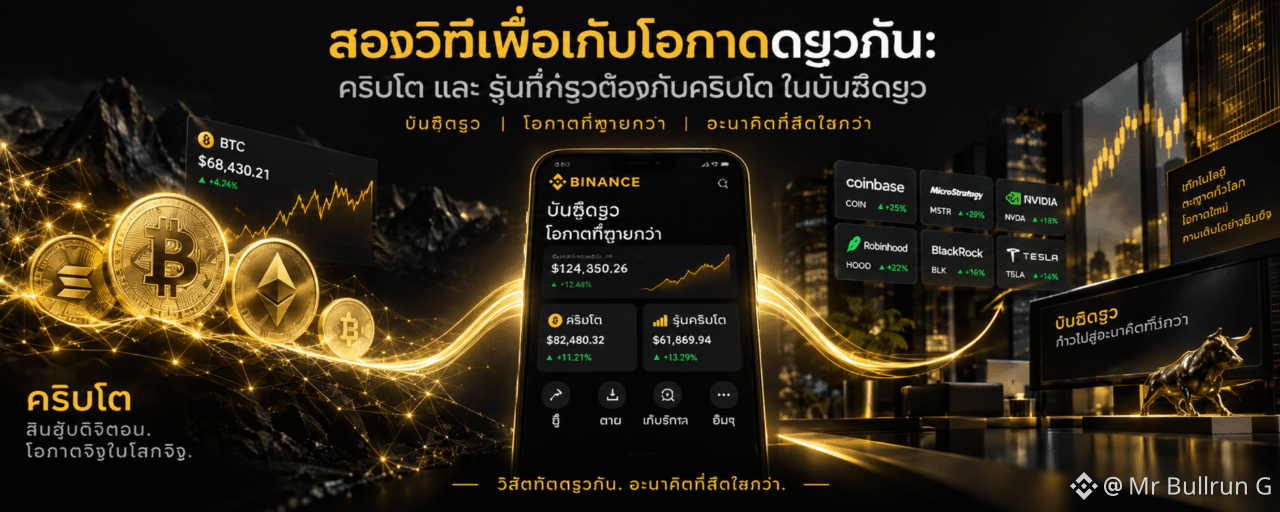
Two Ways to Play One View: Crypto and Crypto-Equities on One AccountThe Crypto market is not driven by a single asset type. As the Crypto industry continues to grow, investors are looking for other ways besides directly holding cryptocurrency to access opportunities from a broader Crypto ecosystem.
Two Ways to Play One View: Crypto and Crypto-Equities on One Account
The Crypto market is not driven by a single asset type. As the Crypto industry continues to grow, investors are looking for other ways besides directly holding cryptocurrency to access opportunities from a broader Crypto ecosystem.
111
·
--
Article
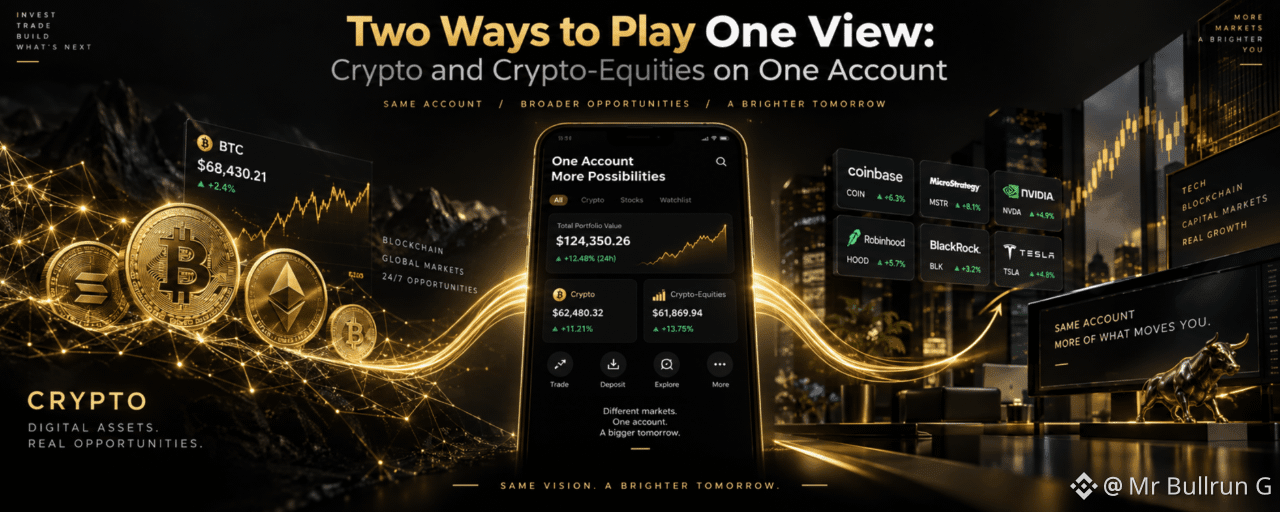
Two Ways to Play One View: Crypto and Crypto-Equities on One AccountThe crypto market is not driven by a single asset. As the industry continues to grow, investors are looking beyond cryptocurrencies themselves and exploring different ways to gain exposure to the broader crypto ecosystem.
When Bitcoin moved from below $60K to above $80K within 10 days, the rally was not limited to BTC alone. Crypto-related stocks also saw strong momentum, including:
MSTR +29%MARA +40%COIN +25%
This highlights how Crypto-Equities can provide a different way to participate in the growth of the crypto industry.
🔍 What Are Crypto-Equities?
Crypto-Equities are stocks of companies connected to the crypto ecosystem, such as:
Crypto exchangesBitcoin mining companiesCompanies holding digital assets on their balance sheetsBlockchain infrastructure providers
Unlike holding cryptocurrencies directly, Crypto-Equities combine exposure to crypto trends with traditional stock market factors, including company performance and business growth.
🔄 Crypto vs Crypto-Equities: Different Tools, Different Exposure
Crypto assets and Crypto-Equities may benefit from the same market trend, but they do not always move in the same way.
For example:
Bitcoin mainly reflects the value and adoption of the cryptocurrency network.Crypto-Equities are influenced by both crypto market conditions and the company’s own business performance.
This means each instrument has different risk characteristics, volatility, and potential opportunities.
🌐 One Account, Multiple Ways to Access the Market
With Binance’s expanding financial ecosystem, users can explore different market instruments from one account, including:
Crypto · Crypto-Equities · bStocks · Perpetual Futures · More investment tools
Instead of looking at markets separately, investors can build a broader perspective and consider different strategies based on their goals and risk preferences.
💡 The Future of Investing Is Becoming More Connected
The line between crypto and traditional finance continues to become less separated.
Having access to multiple asset classes allows investors to better understand market opportunities and create a more diversified multi-instrument portfolio approach.
As financial markets continue to evolve, the ability to view Crypto and TradFi together may become an important part of the next generation of investing.
This content is for educational purposes only and does not constitute financial advice.
#Binance #Crypto #CryptoEquities #Bitcoin #TradFi
Two Ways to Play One View: Crypto and Crypto-Equities on One Account
The crypto market is not driven by a single asset. As the industry continues to grow, investors are looking beyond cryptocurrencies themselves and exploring different ways to gain exposure to the broader crypto ecosystem.
When Bitcoin moved from below $60K to above $80K within 10 days, the rally was not limited to BTC alone. Crypto-related stocks also saw strong momentum, including:
MSTR +29%MARA +40%COIN +25%
This highlights how Crypto-Equities can provide a different way to participate in the growth of the crypto industry.
🔍 What Are Crypto-Equities?
Crypto-Equities are stocks of companies connected to the crypto ecosystem, such as:
Crypto exchangesBitcoin mining companiesCompanies holding digital assets on their balance sheetsBlockchain infrastructure providers
Unlike holding cryptocurrencies directly, Crypto-Equities combine exposure to crypto trends with traditional stock market factors, including company performance and business growth.
🔄 Crypto vs Crypto-Equities: Different Tools, Different Exposure
Crypto assets and Crypto-Equities may benefit from the same market trend, but they do not always move in the same way.
For example:
Bitcoin mainly reflects the value and adoption of the cryptocurrency network.Crypto-Equities are influenced by both crypto market conditions and the company’s own business performance.
This means each instrument has different risk characteristics, volatility, and potential opportunities.
🌐 One Account, Multiple Ways to Access the Market
With Binance’s expanding financial ecosystem, users can explore different market instruments from one account, including:
Crypto · Crypto-Equities · bStocks · Perpetual Futures · More investment tools
Instead of looking at markets separately, investors can build a broader perspective and consider different strategies based on their goals and risk preferences.
💡 The Future of Investing Is Becoming More Connected
The line between crypto and traditional finance continues to become less separated.
Having access to multiple asset classes allows investors to better understand market opportunities and create a more diversified multi-instrument portfolio approach.
As financial markets continue to evolve, the ability to view Crypto and TradFi together may become an important part of the next generation of investing.
This content is for educational purposes only and does not constitute financial advice.
#Binance #Crypto #CryptoEquities #Bitcoin #TradFi
When Bitcoin moved from below $60K to above $80K within 10 days, the rally was not limited to BTC alone. Crypto-related stocks also saw strong momentum, including:
MSTR +29%MARA +40%COIN +25%
This highlights how Crypto-Equities can provide a different way to participate in the growth of the crypto industry.
🔍 What Are Crypto-Equities?
Crypto-Equities are stocks of companies connected to the crypto ecosystem, such as:
Crypto exchangesBitcoin mining companiesCompanies holding digital assets on their balance sheetsBlockchain infrastructure providers
Unlike holding cryptocurrencies directly, Crypto-Equities combine exposure to crypto trends with traditional stock market factors, including company performance and business growth.
🔄 Crypto vs Crypto-Equities: Different Tools, Different Exposure
Crypto assets and Crypto-Equities may benefit from the same market trend, but they do not always move in the same way.
For example:
Bitcoin mainly reflects the value and adoption of the cryptocurrency network.Crypto-Equities are influenced by both crypto market conditions and the company’s own business performance.
This means each instrument has different risk characteristics, volatility, and potential opportunities.
🌐 One Account, Multiple Ways to Access the Market
With Binance’s expanding financial ecosystem, users can explore different market instruments from one account, including:
Crypto · Crypto-Equities · bStocks · Perpetual Futures · More investment tools
Instead of looking at markets separately, investors can build a broader perspective and consider different strategies based on their goals and risk preferences.
💡 The Future of Investing Is Becoming More Connected
The line between crypto and traditional finance continues to become less separated.
Having access to multiple asset classes allows investors to better understand market opportunities and create a more diversified multi-instrument portfolio approach.
As financial markets continue to evolve, the ability to view Crypto and TradFi together may become an important part of the next generation of investing.
This content is for educational purposes only and does not constitute financial advice.
#Binance #Crypto #CryptoEquities #Bitcoin #TradFi
188
·
--
Article
The Complete Loop: How Stock Options Complete Binance’s Crypto-and-TradFi Stack📈 The Complete Loop: How Stock Options Complete Binance’s Crypto-and-TradFi Stack
Financial markets are becoming more connected. Investors are no longer looking at crypto and traditional finance as two completely separate worlds. Instead, many are looking for flexible tools that can help them manage opportunities and risks across different markets.
This is where Stock Options can play an important role.
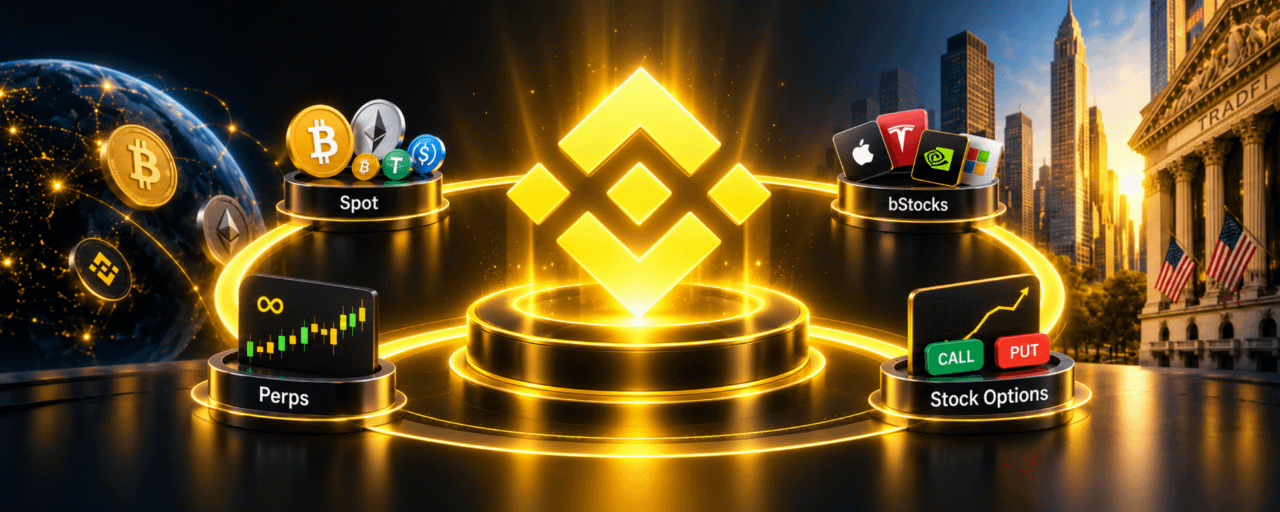
With Spot, bStocks, Perpetual Futures, and Stock Options, Binance is building a broader multi-asset ecosystem where different financial tools can work together under one platform.
🔍 What Are Stock Options?
Stock Options are contracts that give traders the right to buy or sell an underlying asset at a predetermined price within a specific period.
Unlike simply buying an asset through Spot, options can provide non-linear payoff structures, meaning the potential return or loss does not always move one-for-one with the underlying asset.
This flexibility allows options to be used for different purposes, including:
Hedging downside riskCreating defined-risk strategiesAdjusting portfolio exposureDesigning different risk-reward profiles
🛡️ Why Stock Options Matter for Crypto Investors
Imagine you have a long-term position that you still believe in, but you are concerned about a possible short-term market correction.
One option is to reduce or sell part of your position.
Another approach is to use options as a risk-management tool, potentially helping protect against downside movements without immediately unwinding your core exposure.
This is where options can complement existing tools such as Spot and Perpetual Futures.
🔄 From a Crypto Portfolio to a Multi-Asset Strategy
Different financial instruments can serve different purposes within the same investment strategy.
For example:
Spot — Long-term asset exposure
Perpetual Futures — Flexible short-term market exposure
bStocks — Exposure connected to traditional equity markets
Stock Options — Hedging and more customized risk-reward strategies
Instead of managing every market separately, investors can potentially build a more connected Crypto + TradFi portfolio strategy.
💡 What Should Traders Understand Before Using Options?
Stock Options offer greater flexibility, but they are also more complex than simply buying assets on Spot.
Before trading options, it is important to understand concepts such as:
Strike Price · Expiry · Premium · Volatility · Risk Exposure
Options can be powerful tools, but effective risk management remains essential.
🚀 Crypto and TradFi Are Becoming More Connected
The future of investing may not simply be about choosing between Crypto or Traditional Finance.
It may be about having access to the right financial instrument for different market conditions.
By bringing together Spot, bStocks, Perpetual Futures, and Stock Options, Binance is expanding the possibilities for users to manage different types of market exposure within a broader financial ecosystem.
The result is a more complete toolkit for navigating an increasingly connected Crypto + TradFi world.
This content is for educational purposes only and does not constitute financial advice.
#Binance #StockOptions #CryptoTrading #TradFi #RiskManagement
The Complete Loop: How Stock Options Complete Binance’s Crypto-and-TradFi Stack
📈 The Complete Loop: How Stock Options Complete Binance’s Crypto-and-TradFi Stack
Financial markets are becoming more connected. Investors are no longer looking at crypto and traditional finance as two completely separate worlds. Instead, many are looking for flexible tools that can help them manage opportunities and risks across different markets.
This is where Stock Options can play an important role.
With Spot, bStocks, Perpetual Futures, and Stock Options, Binance is building a broader multi-asset ecosystem where different financial tools can work together under one platform.
🔍 What Are Stock Options?
Stock Options are contracts that give traders the right to buy or sell an underlying asset at a predetermined price within a specific period.
Unlike simply buying an asset through Spot, options can provide non-linear payoff structures, meaning the potential return or loss does not always move one-for-one with the underlying asset.
This flexibility allows options to be used for different purposes, including:
Hedging downside riskCreating defined-risk strategiesAdjusting portfolio exposureDesigning different risk-reward profiles
🛡️ Why Stock Options Matter for Crypto Investors
Imagine you have a long-term position that you still believe in, but you are concerned about a possible short-term market correction.
One option is to reduce or sell part of your position.
Another approach is to use options as a risk-management tool, potentially helping protect against downside movements without immediately unwinding your core exposure.
This is where options can complement existing tools such as Spot and Perpetual Futures.
🔄 From a Crypto Portfolio to a Multi-Asset Strategy
Different financial instruments can serve different purposes within the same investment strategy.
For example:
Spot — Long-term asset exposure
Perpetual Futures — Flexible short-term market exposure
bStocks — Exposure connected to traditional equity markets
Stock Options — Hedging and more customized risk-reward strategies
Instead of managing every market separately, investors can potentially build a more connected Crypto + TradFi portfolio strategy.
💡 What Should Traders Understand Before Using Options?
Stock Options offer greater flexibility, but they are also more complex than simply buying assets on Spot.
Before trading options, it is important to understand concepts such as:
Strike Price · Expiry · Premium · Volatility · Risk Exposure
Options can be powerful tools, but effective risk management remains essential.
🚀 Crypto and TradFi Are Becoming More Connected
The future of investing may not simply be about choosing between Crypto or Traditional Finance.
It may be about having access to the right financial instrument for different market conditions.
By bringing together Spot, bStocks, Perpetual Futures, and Stock Options, Binance is expanding the possibilities for users to manage different types of market exposure within a broader financial ecosystem.
The result is a more complete toolkit for navigating an increasingly connected Crypto + TradFi world.
This content is for educational purposes only and does not constitute financial advice.
#Binance #StockOptions #CryptoTrading #TradFi #RiskManagement
Financial markets are becoming more connected. Investors are no longer looking at crypto and traditional finance as two completely separate worlds. Instead, many are looking for flexible tools that can help them manage opportunities and risks across different markets.
This is where Stock Options can play an important role.
With Spot, bStocks, Perpetual Futures, and Stock Options, Binance is building a broader multi-asset ecosystem where different financial tools can work together under one platform.
🔍 What Are Stock Options?
Stock Options are contracts that give traders the right to buy or sell an underlying asset at a predetermined price within a specific period.
Unlike simply buying an asset through Spot, options can provide non-linear payoff structures, meaning the potential return or loss does not always move one-for-one with the underlying asset.
This flexibility allows options to be used for different purposes, including:
Hedging downside riskCreating defined-risk strategiesAdjusting portfolio exposureDesigning different risk-reward profiles
🛡️ Why Stock Options Matter for Crypto Investors
Imagine you have a long-term position that you still believe in, but you are concerned about a possible short-term market correction.
One option is to reduce or sell part of your position.
Another approach is to use options as a risk-management tool, potentially helping protect against downside movements without immediately unwinding your core exposure.
This is where options can complement existing tools such as Spot and Perpetual Futures.
🔄 From a Crypto Portfolio to a Multi-Asset Strategy
Different financial instruments can serve different purposes within the same investment strategy.
For example:
Spot — Long-term asset exposure
Perpetual Futures — Flexible short-term market exposure
bStocks — Exposure connected to traditional equity markets
Stock Options — Hedging and more customized risk-reward strategies
Instead of managing every market separately, investors can potentially build a more connected Crypto + TradFi portfolio strategy.
💡 What Should Traders Understand Before Using Options?
Stock Options offer greater flexibility, but they are also more complex than simply buying assets on Spot.
Before trading options, it is important to understand concepts such as:
Strike Price · Expiry · Premium · Volatility · Risk Exposure
Options can be powerful tools, but effective risk management remains essential.
🚀 Crypto and TradFi Are Becoming More Connected
The future of investing may not simply be about choosing between Crypto or Traditional Finance.
It may be about having access to the right financial instrument for different market conditions.
By bringing together Spot, bStocks, Perpetual Futures, and Stock Options, Binance is expanding the possibilities for users to manage different types of market exposure within a broader financial ecosystem.
The result is a more complete toolkit for navigating an increasingly connected Crypto + TradFi world.
This content is for educational purposes only and does not constitute financial advice.
#Binance #StockOptions #CryptoTrading #TradFi #RiskManagement
110
·
--
Bullish
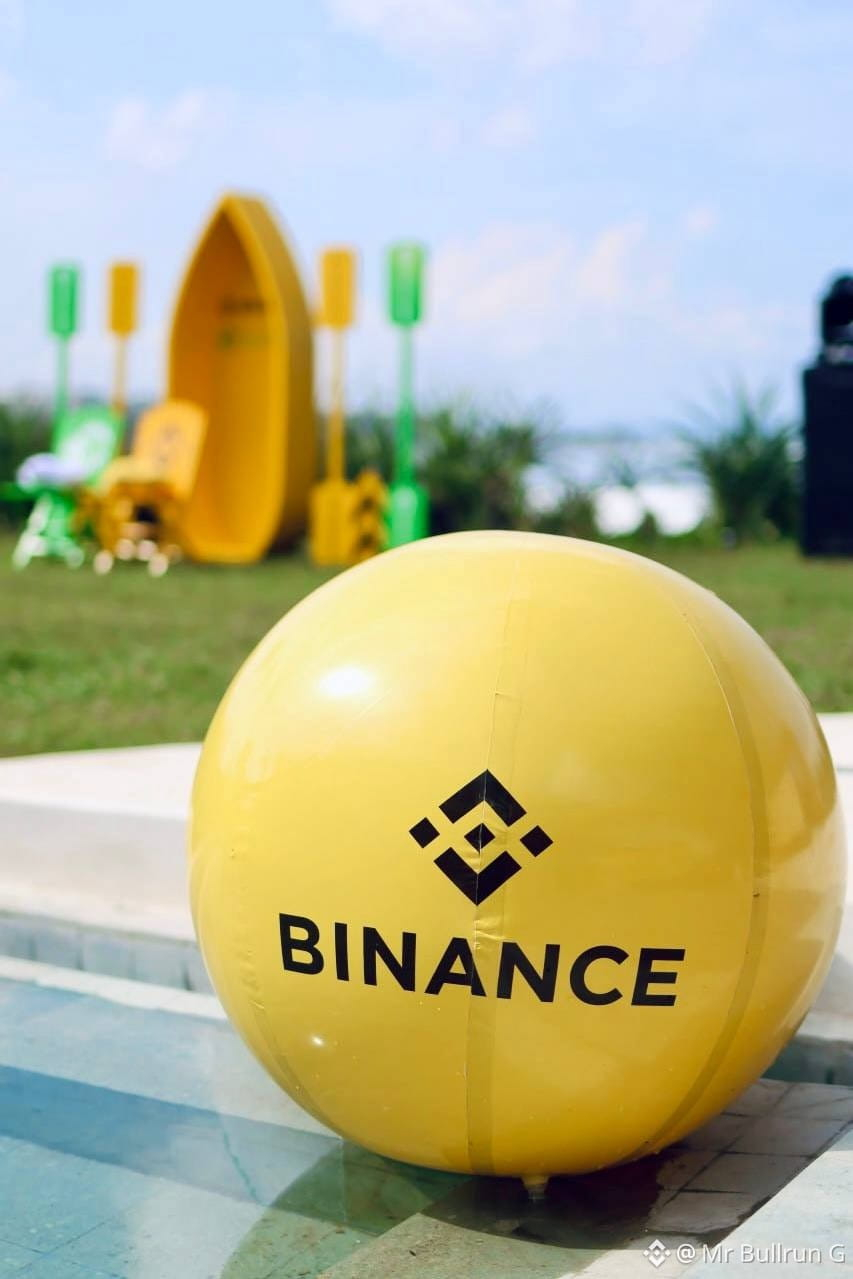
A sense of peace, security, and confidence
wherever we go, whenever we need it. 🌍✨
That’s why our community loves Binance. 💛
{spot}(BNBUSDT)
A sense of peace, security, and confidence
wherever we go, whenever we need it. 🌍✨
That’s why our community loves Binance. 💛
wherever we go, whenever we need it. 🌍✨
That’s why our community loves Binance. 💛
63
·
--
Article
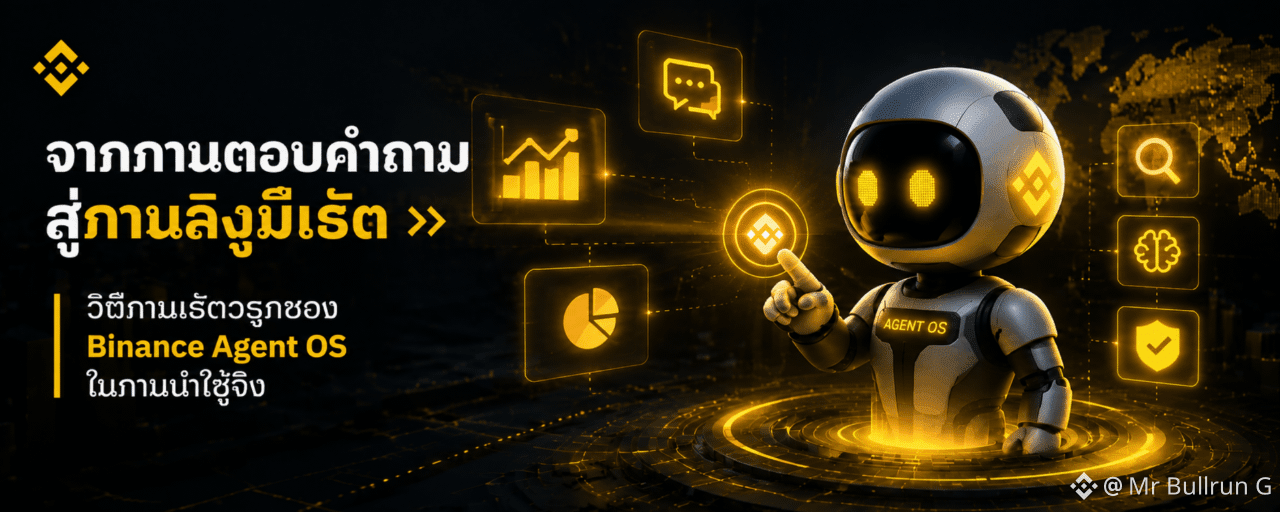
From Answering to Acting: How Binance Agent OS Works in PracticeArtificial Intelligence (AI) is evolving from systems that only answer questions into intelligent AI Agents that can understand, analyze, and carry out various tasks.
Binance Agent OS is the next step in this development — moving from a traditional AI Assistant that only provides information to AI Agents that can connect to financial data, apps, and various tools within a controlled and verifiable environment.
From Answering to Acting: How Binance Agent OS Works in Practice
Artificial Intelligence (AI) is evolving from systems that only answer questions into intelligent AI Agents that can understand, analyze, and carry out various tasks.
Binance Agent OS is the next step in this development — moving from a traditional AI Assistant that only provides information to AI Agents that can connect to financial data, apps, and various tools within a controlled and verifiable environment.
Binance Agent OS is the next step in this development — moving from a traditional AI Assistant that only provides information to AI Agents that can connect to financial data, apps, and various tools within a controlled and verifiable environment.
106
·
--
Article
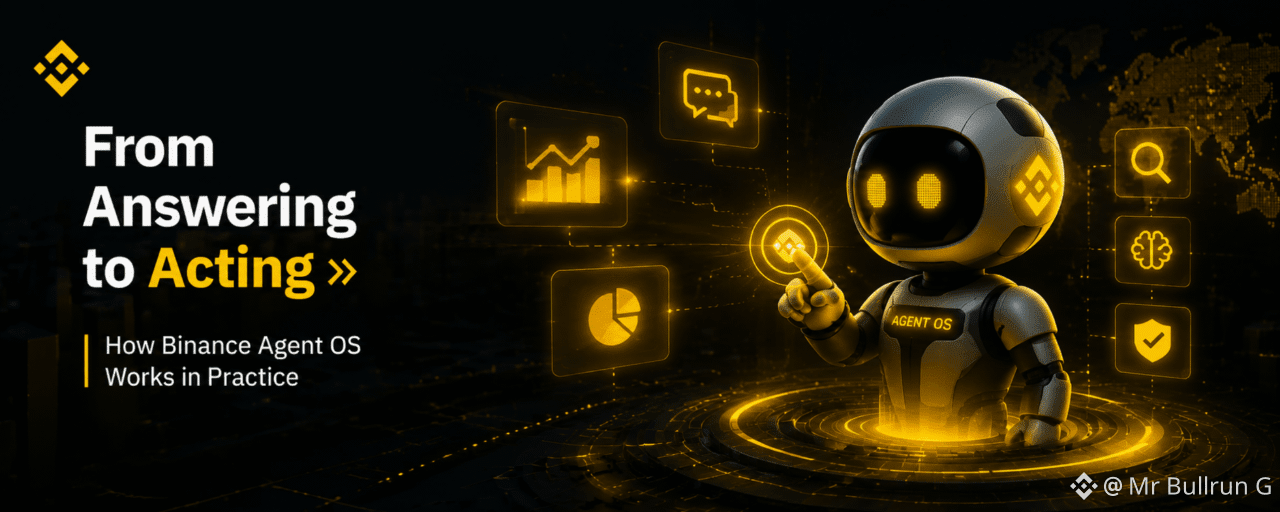
From Answering to Acting: How Binance Agent OS Works in PracticeArtificial intelligence is evolving from simple question-answering systems into intelligent agents that can understand, analyze, and execute tasks.
Binance Agent OS represents the next step in this evolution — moving beyond traditional AI assistants that only provide information toward AI agents that can interact with financial data, applications, and tools within a controlled and auditable environment.
As AI continues becoming more integrated with financial services, the future is shifting from AI that provides answers to AI that can help users complete real-world tasks.
🚀 How Binance Agent OS Works in Practice
A real-world demonstration of Binance Agent OS shows how AI Agents can access Binance market data and interact with trading-related functions through MCP (Model Context Protocol).
By connecting AI tools such as Claude, Cursor, and ChatGPT with Binance infrastructure, AI agents can retrieve market information, analyze data, and execute specific actions under predefined security boundaries.
This creates a new interaction model where AI is not only a source of insights, but also an intelligent execution layer for digital finance.
💡 Real-World Examples of AI Agent Applications
With Binance Agent OS, AI Agents could support various financial workflows, such as:
📊 Market Research & Analysis
AI Agents can analyze market data, track price movements, and summarize market trends to help users understand changing market conditions more efficiently.
Example:
Analyze BTC or ETH market trendsSummarize key market movementsIdentify relevant market information
📈 Portfolio Insights & Asset Management
AI Agents can help users review their portfolio information and provide data-driven insights based on market conditions.
Example:
Monitor portfolio performanceAnalyze asset allocationProvide personalized market summaries
⚙️ Automated Trading Workflows
Through controlled tool access, AI Agents can assist with specific trading-related tasks while operating within defined permissions and security frameworks.
Example:
Retrieve real-time market dataCheck trading conditionsAssist with predefined trading strategies
🔍 Developer & Financial Application Integration
Developers can use AI Agent systems to build new financial applications by connecting AI capabilities with market data and financial tools.
Example:
Create AI-powered trading assistantsBuild automated research toolsDevelop next-generation financial applications
🔐 From Concept to Real Financial Infrastructure
Binance Agent OS is not just a theoretical vision for the future of AI finance.
It demonstrates:
✅ Real AI workflows
✅ Real data interactions
✅ Real tool execution
✅ Controlled security frameworks
As AI continues transforming financial services, agent-based systems could become a key foundation for the next generation of digital finance — connecting AI intelligence, automation, and real-world financial applications.
The future of finance may not only be about accessing information faster, but also about enabling intelligent systems to help users make better decisions and complete tasks more efficiently.
#BinanceAgentOS #Aİ #ArtificialIntelligence #FutureOfFinance #CryptoInnovation
{spot}(BNBUSDT)
From Answering to Acting: How Binance Agent OS Works in Practice
Artificial intelligence is evolving from simple question-answering systems into intelligent agents that can understand, analyze, and execute tasks.
Binance Agent OS represents the next step in this evolution — moving beyond traditional AI assistants that only provide information toward AI agents that can interact with financial data, applications, and tools within a controlled and auditable environment.
As AI continues becoming more integrated with financial services, the future is shifting from AI that provides answers to AI that can help users complete real-world tasks.
🚀 How Binance Agent OS Works in Practice
A real-world demonstration of Binance Agent OS shows how AI Agents can access Binance market data and interact with trading-related functions through MCP (Model Context Protocol).
By connecting AI tools such as Claude, Cursor, and ChatGPT with Binance infrastructure, AI agents can retrieve market information, analyze data, and execute specific actions under predefined security boundaries.
This creates a new interaction model where AI is not only a source of insights, but also an intelligent execution layer for digital finance.
💡 Real-World Examples of AI Agent Applications
With Binance Agent OS, AI Agents could support various financial workflows, such as:
📊 Market Research & Analysis
AI Agents can analyze market data, track price movements, and summarize market trends to help users understand changing market conditions more efficiently.
Example:
Analyze BTC or ETH market trendsSummarize key market movementsIdentify relevant market information
📈 Portfolio Insights & Asset Management
AI Agents can help users review their portfolio information and provide data-driven insights based on market conditions.
Example:
Monitor portfolio performanceAnalyze asset allocationProvide personalized market summaries
⚙️ Automated Trading Workflows
Through controlled tool access, AI Agents can assist with specific trading-related tasks while operating within defined permissions and security frameworks.
Example:
Retrieve real-time market dataCheck trading conditionsAssist with predefined trading strategies
🔍 Developer & Financial Application Integration
Developers can use AI Agent systems to build new financial applications by connecting AI capabilities with market data and financial tools.
Example:
Create AI-powered trading assistantsBuild automated research toolsDevelop next-generation financial applications
🔐 From Concept to Real Financial Infrastructure
Binance Agent OS is not just a theoretical vision for the future of AI finance.
It demonstrates:
✅ Real AI workflows
✅ Real data interactions
✅ Real tool execution
✅ Controlled security frameworks
As AI continues transforming financial services, agent-based systems could become a key foundation for the next generation of digital finance — connecting AI intelligence, automation, and real-world financial applications.
The future of finance may not only be about accessing information faster, but also about enabling intelligent systems to help users make better decisions and complete tasks more efficiently.
#BinanceAgentOS #Aİ #ArtificialIntelligence #FutureOfFinance #CryptoInnovation
Binance Agent OS represents the next step in this evolution — moving beyond traditional AI assistants that only provide information toward AI agents that can interact with financial data, applications, and tools within a controlled and auditable environment.
As AI continues becoming more integrated with financial services, the future is shifting from AI that provides answers to AI that can help users complete real-world tasks.
🚀 How Binance Agent OS Works in Practice
A real-world demonstration of Binance Agent OS shows how AI Agents can access Binance market data and interact with trading-related functions through MCP (Model Context Protocol).
By connecting AI tools such as Claude, Cursor, and ChatGPT with Binance infrastructure, AI agents can retrieve market information, analyze data, and execute specific actions under predefined security boundaries.
This creates a new interaction model where AI is not only a source of insights, but also an intelligent execution layer for digital finance.
💡 Real-World Examples of AI Agent Applications
With Binance Agent OS, AI Agents could support various financial workflows, such as:
📊 Market Research & Analysis
AI Agents can analyze market data, track price movements, and summarize market trends to help users understand changing market conditions more efficiently.
Example:
Analyze BTC or ETH market trendsSummarize key market movementsIdentify relevant market information
📈 Portfolio Insights & Asset Management
AI Agents can help users review their portfolio information and provide data-driven insights based on market conditions.
Example:
Monitor portfolio performanceAnalyze asset allocationProvide personalized market summaries
⚙️ Automated Trading Workflows
Through controlled tool access, AI Agents can assist with specific trading-related tasks while operating within defined permissions and security frameworks.
Example:
Retrieve real-time market dataCheck trading conditionsAssist with predefined trading strategies
🔍 Developer & Financial Application Integration
Developers can use AI Agent systems to build new financial applications by connecting AI capabilities with market data and financial tools.
Example:
Create AI-powered trading assistantsBuild automated research toolsDevelop next-generation financial applications
🔐 From Concept to Real Financial Infrastructure
Binance Agent OS is not just a theoretical vision for the future of AI finance.
It demonstrates:
✅ Real AI workflows
✅ Real data interactions
✅ Real tool execution
✅ Controlled security frameworks
As AI continues transforming financial services, agent-based systems could become a key foundation for the next generation of digital finance — connecting AI intelligence, automation, and real-world financial applications.
The future of finance may not only be about accessing information faster, but also about enabling intelligent systems to help users make better decisions and complete tasks more efficiently.
#BinanceAgentOS #Aİ #ArtificialIntelligence #FutureOfFinance #CryptoInnovation
97
Log in to explore more content
Join global crypto users on Binance Square
⚡️ Get latest and useful information about crypto.
💬 Trusted by the world’s largest crypto exchange.
👍 Discover real insights from verified creators.
Email / Phone number
Trending Topics
BitcoinRejectedAt$87K
5,634 views
34 Discussing
$BTC Update 🚨 🐼 Skip THIS Warning at Your Own Risk ⚠️
BTC is knocking on 87K like it already owns the place 😂Bulls are awake… but BTC usually likes to shake a few people out before the real move.
Overall, BTC is breaking out and the higher-timeframe picture is still bullish. The 4H and daily structure are strong, price is holding above the major averages, and momentum is still supporting the move.
83K was honestly a beautiful buy location. That was the area where risk/reward made sense. Anyone who bought there is already sitting enjoying profit
Now come to main
BTC is sitting right under the previous high around 87K. So I would not be surprised if we first see a little downside liquidity grab, flush some late longs, and then BTC decides whether it wants the real breakout.
For today’s scalp, This is my Plan 👇
BTC SHORT scalp Entry: 86,550–86,900
TP1: 85,650
TP2: 84,850
TP3: 84,050
SL: 87,800
I only like this if we get a proper rejection near the highs. No blind shorting.
For the bigger picture, I’m still bullish as long as the 82.5K–83K area keeps holding. If BTC gets a clean breakout and starts accepting above 87.4K, then this whole short idea is invalid and the next bullish leg becomes much more interesting.
SO BASICALLY OCTOBER HISTORICAL IS BULLISH MONTH FOR BITCOIN.
ALWAYS DYOR
Panda Traders
·29 Likes
·12.6k views
FedOctoberRateHikeOddsFallTo17%
7,955 views
176 Discussing
NvidiaHitsRecordHighUp2.4%
967 views
110 Discussing