

Elise_Crypto
1.2k Posts

Elise_Crypto
Report
Block User
Tu guía en el mundo cripto. 💡 Aprende las claves del mercado y crece con nosotros. ¡Bienvenidos! 📈

BNB Holder
Occasional Trader
1.2 Years
2.0K+ Following
1.2K+ Followers
1.4K+ Liked
Posts
All
Quotes
Videos
Live
PINNED
·
--
Article
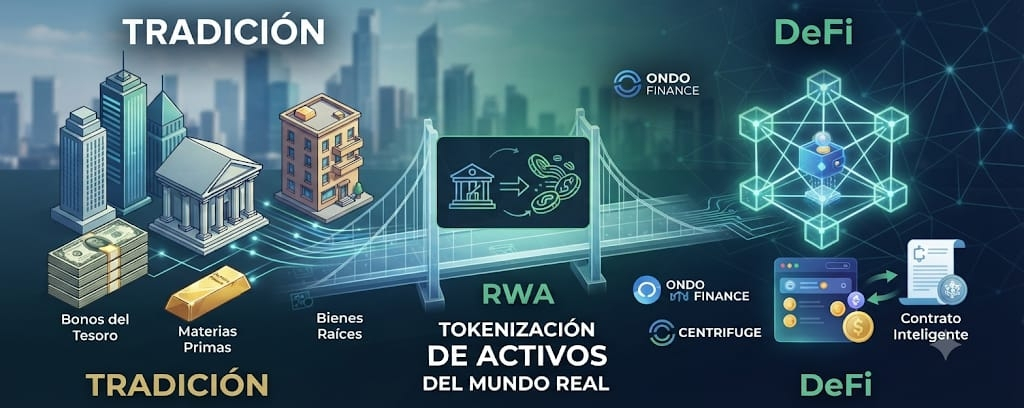
Tokenization of Real World Assets (RWAs): The Bridge Between Tradition and DeFiIn recent years, the Decentralized Finance (DeFi) ecosystem has evolved beyond pure speculation, seeking to connect directly with the traditional economy. This is where RWAs (Real World Assets) come to the forefront—one of the strongest and most important trends in today’s blockchain infrastructure.
What exactly are RWAs?
RWAs are the digital representation (tokenization) of physical or financial assets from the real world within a blockchain. This means that traditional items such as Treasury bonds, real estate, accounts receivable, or commodities are converted into digital tokens. Thanks to this, any user can access financial instruments that were previously reserved exclusively for traditional banking or institutional investors, all through smart contracts.
Tokenization of Real World Assets (RWAs): The Bridge Between Tradition and DeFi
In recent years, the Decentralized Finance (DeFi) ecosystem has evolved beyond pure speculation, seeking to connect directly with the traditional economy. This is where RWAs (Real World Assets) come to the forefront—one of the strongest and most important trends in today’s blockchain infrastructure.
What exactly are RWAs?
RWAs are the digital representation (tokenization) of physical or financial assets from the real world within a blockchain. This means that traditional items such as Treasury bonds, real estate, accounts receivable, or commodities are converted into digital tokens. Thanks to this, any user can access financial instruments that were previously reserved exclusively for traditional banking or institutional investors, all through smart contracts.
What exactly are RWAs?
RWAs are the digital representation (tokenization) of physical or financial assets from the real world within a blockchain. This means that traditional items such as Treasury bonds, real estate, accounts receivable, or commodities are converted into digital tokens. Thanks to this, any user can access financial instruments that were previously reserved exclusively for traditional banking or institutional investors, all through smart contracts.
1
1
9
277
PINNED
·
--
Article
What is SUI and why is it on the radar?
Hello Ykvic! Thanks for your input about $ONDO . Regarding your question about $SUI , it’s one of the cryptocurrencies that is generating the most interest in the Layer 1 (Layer-1) sector right now.
Here’s a technical and fundamental breakdown to understand its potential:
🔍 What is SUI?
Sui is a Layer 1 blockchain and a high-performance smart contract platform, designed from the ground up to enable rapid global adoption through parallel transaction execution.
What is SUI and why is it on the radar?
Hello Ykvic! Thanks for your input about $ONDO . Regarding your question about $SUI , it’s one of the cryptocurrencies that is generating the most interest in the Layer 1 (Layer-1) sector right now.
Here’s a technical and fundamental breakdown to understand its potential:
🔍 What is SUI?
Sui is a Layer 1 blockchain and a high-performance smart contract platform, designed from the ground up to enable rapid global adoption through parallel transaction execution.
Hello Ykvic! Thanks for your input about $ONDO . Regarding your question about $SUI , it’s one of the cryptocurrencies that is generating the most interest in the Layer 1 (Layer-1) sector right now.
Here’s a technical and fundamental breakdown to understand its potential:
🔍 What is SUI?
Sui is a Layer 1 blockchain and a high-performance smart contract platform, designed from the ground up to enable rapid global adoption through parallel transaction execution.
1
9
1.2k
·
--
Article
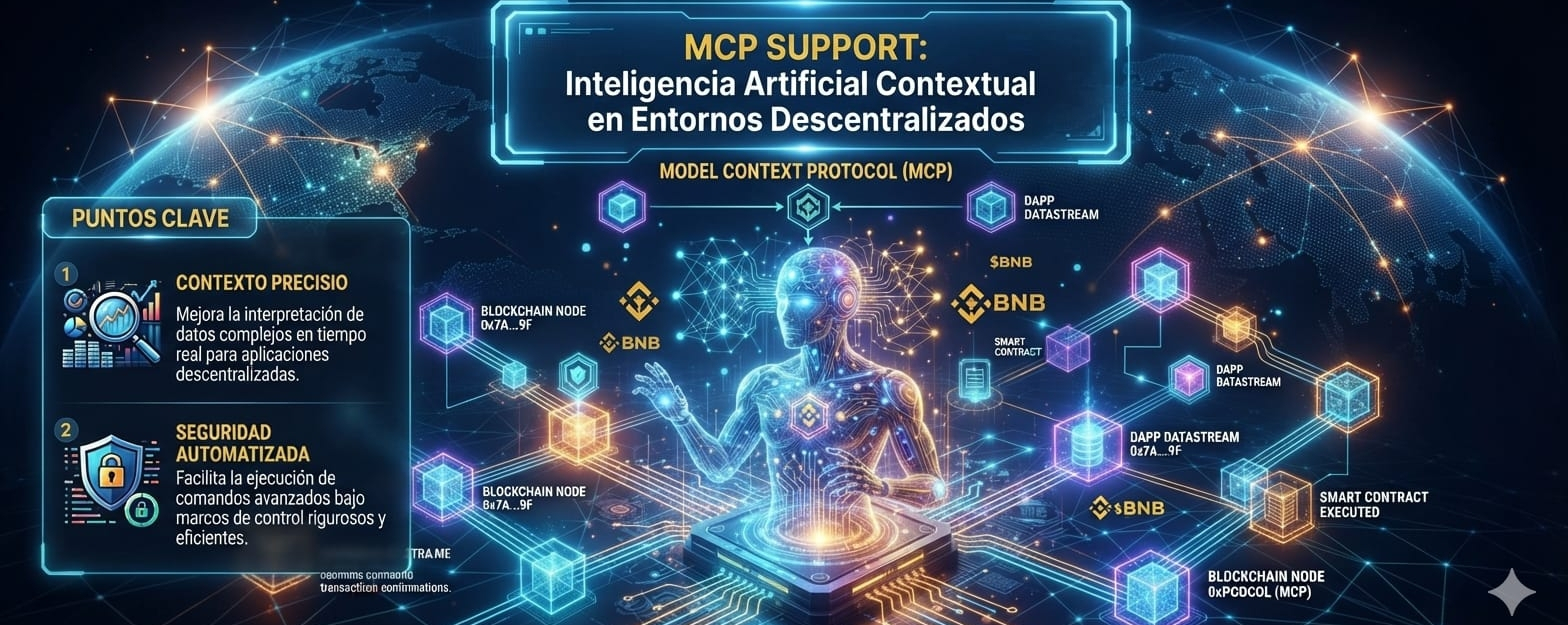
MCP Support: Contextual Artificial Intelligence in Decentralized EnvironmentsMCP (Model Context Protocol) support represents a critical advance in standardizing contextual artificial intelligence within distributed environments. It enables AI models and agents to accurately understand blockchain context to optimize decision-making.
Key Points
• Precise Context: Improves the real-time interpretation of complex data for decentralized applications.
• Automated Security: Facilitates the execution of advanced commands within rigorous and efficient control frameworks.
MCP Support: Contextual Artificial Intelligence in Decentralized Environments
MCP (Model Context Protocol) support represents a critical advance in standardizing contextual artificial intelligence within distributed environments. It enables AI models and agents to accurately understand blockchain context to optimize decision-making.
Key Points
• Precise Context: Improves the real-time interpretation of complex data for decentralized applications.
• Automated Security: Facilitates the execution of advanced commands within rigorous and efficient control frameworks.
Key Points
• Precise Context: Improves the real-time interpretation of complex data for decentralized applications.
• Automated Security: Facilitates the execution of advanced commands within rigorous and efficient control frameworks.
3
153
·
--
Article
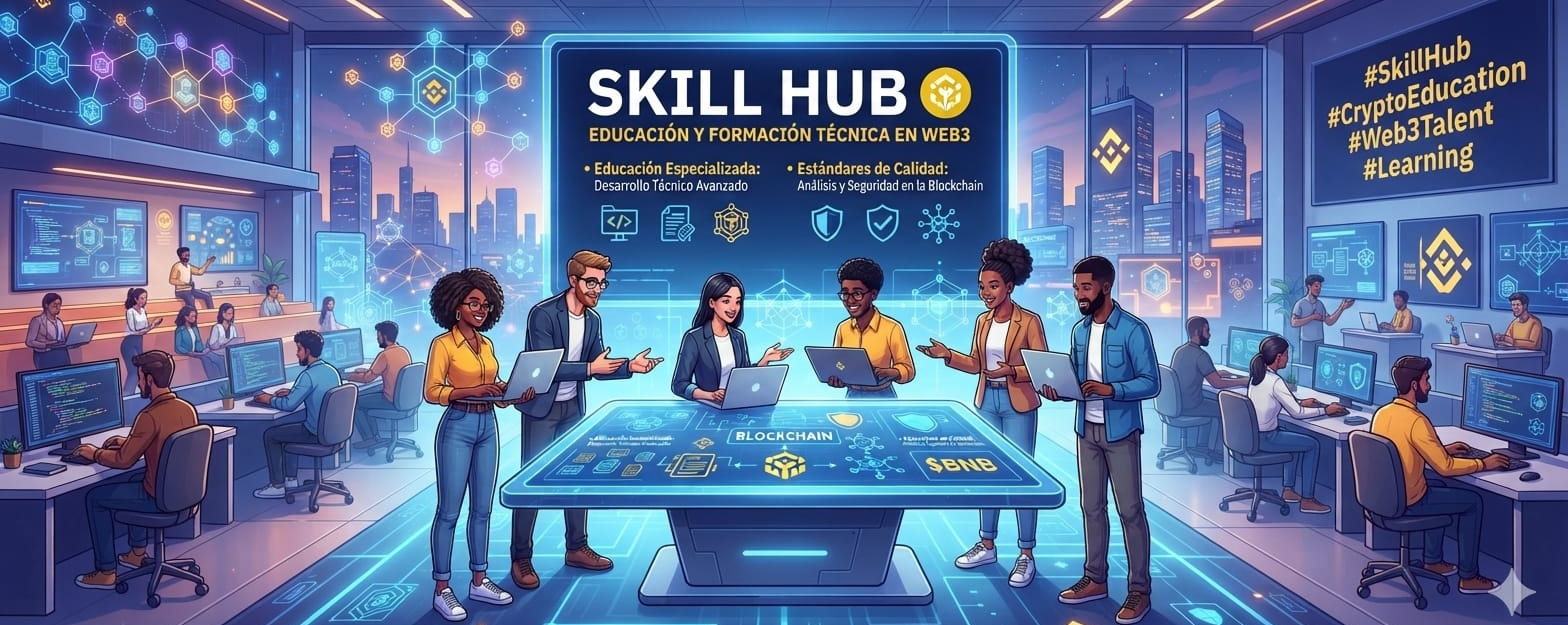
Skill Hub: Web3 Education and Technical Training 🎓Skill Hub is a key space focused on developing technical talent, specialized education, and skills certification within the blockchain ecosystem. It ensures that the ecosystem’s widespread adoption is accompanied by rigorous, professional expertise.
Key Points:
💻 Specialized Education: Promotes the development of advanced technical skills for creators and developers.
🛡️ Quality Standards: Promotes best practices in analysis and security across the decentralized industry.
Skill Hub: Web3 Education and Technical Training 🎓
Skill Hub is a key space focused on developing technical talent, specialized education, and skills certification within the blockchain ecosystem. It ensures that the ecosystem’s widespread adoption is accompanied by rigorous, professional expertise.
Key Points:
💻 Specialized Education: Promotes the development of advanced technical skills for creators and developers.
🛡️ Quality Standards: Promotes best practices in analysis and security across the decentralized industry.
Key Points:
💻 Specialized Education: Promotes the development of advanced technical skills for creators and developers.
🛡️ Quality Standards: Promotes best practices in analysis and security across the decentralized industry.
1
2
337
·
--
Article
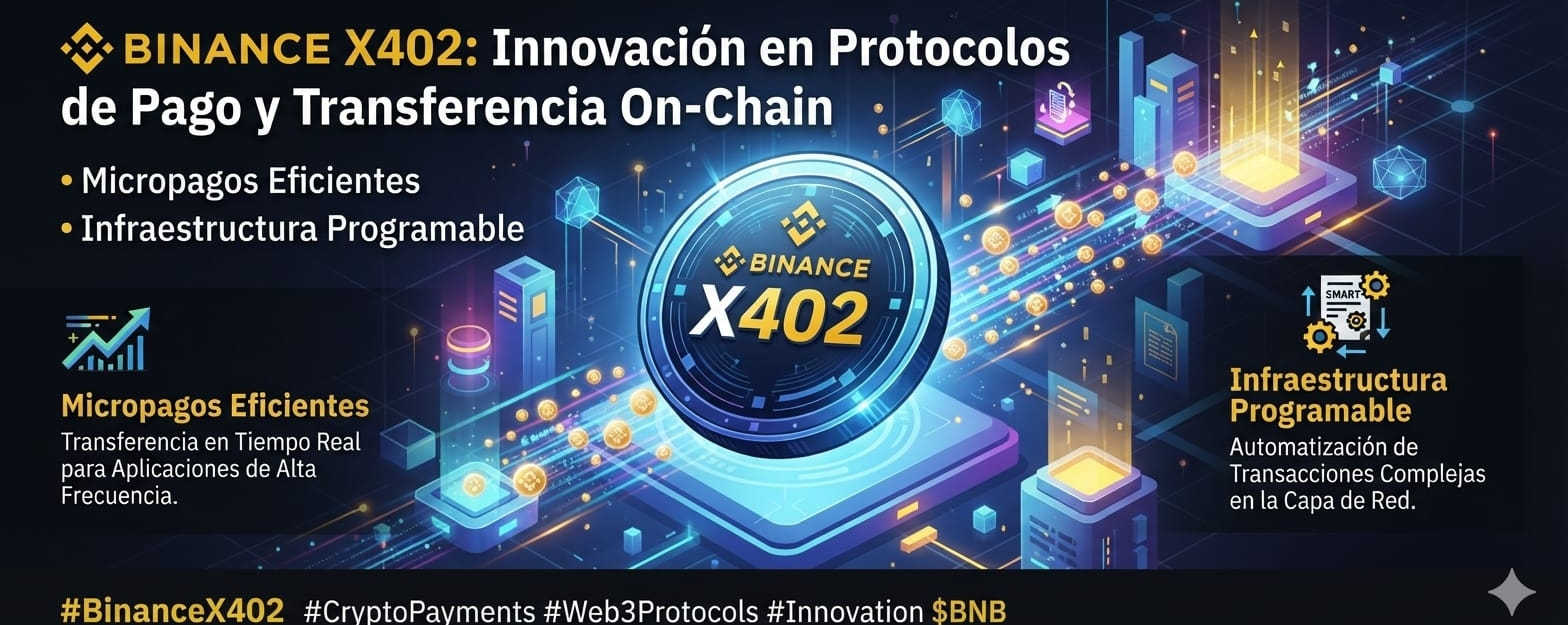
Binance x402: Innovation in Payment and On-Chain Transfer ProtocolsThe Binance x402 standard represents a significant evolution in optimizing micropayments and programmable value transfer at the infrastructure level. It enables native business models of the decentralized web with greater efficiency and less friction.
Key Takeaways
• Efficient Micropayments: Optimizes the transfer of value in real time for high-frequency applications.
• Programmable Infrastructure: Enables complex transactions to be automated directly at the network layer.
Binance x402: Innovation in Payment and On-Chain Transfer Protocols
The Binance x402 standard represents a significant evolution in optimizing micropayments and programmable value transfer at the infrastructure level. It enables native business models of the decentralized web with greater efficiency and less friction.
Key Takeaways
• Efficient Micropayments: Optimizes the transfer of value in real time for high-frequency applications.
• Programmable Infrastructure: Enables complex transactions to be automated directly at the network layer.
Key Takeaways
• Efficient Micropayments: Optimizes the transfer of value in real time for high-frequency applications.
• Programmable Infrastructure: Enables complex transactions to be automated directly at the network layer.
2
6
435
·
--
Article
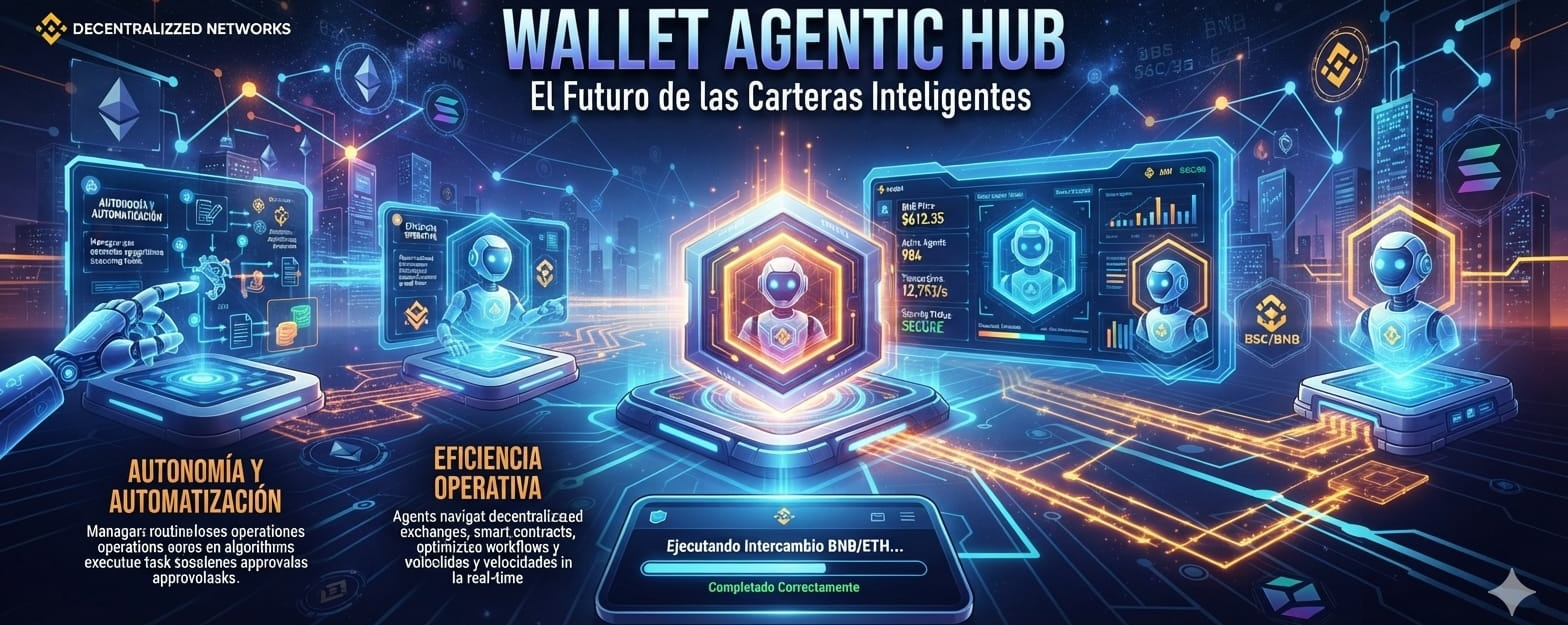
Wallet Agentic Hub: The Future of Intelligent WalletsThe Wallet Agentic Hub represents the evolution toward intelligent and autonomous digital wallets within the Web3 ecosystem. This approach introduces AI agents capable of proactively interacting with the blockchain, optimizing complex workflows and executing advanced transactions.
Key Points
• Autonomy and Automation: Enables agents to manage routine operations under strict security parameters and user sovereignty.
• Operational Efficiency: Enables smooth interaction with smart contracts and decentralized protocols without unnecessary friction.
Wallet Agentic Hub: The Future of Intelligent Wallets
The Wallet Agentic Hub represents the evolution toward intelligent and autonomous digital wallets within the Web3 ecosystem. This approach introduces AI agents capable of proactively interacting with the blockchain, optimizing complex workflows and executing advanced transactions.
Key Points
• Autonomy and Automation: Enables agents to manage routine operations under strict security parameters and user sovereignty.
• Operational Efficiency: Enables smooth interaction with smart contracts and decentralized protocols without unnecessary friction.
Key Points
• Autonomy and Automation: Enables agents to manage routine operations under strict security parameters and user sovereignty.
• Operational Efficiency: Enables smooth interaction with smart contracts and decentralized protocols without unnecessary friction.
9
6
625
·
--
Article
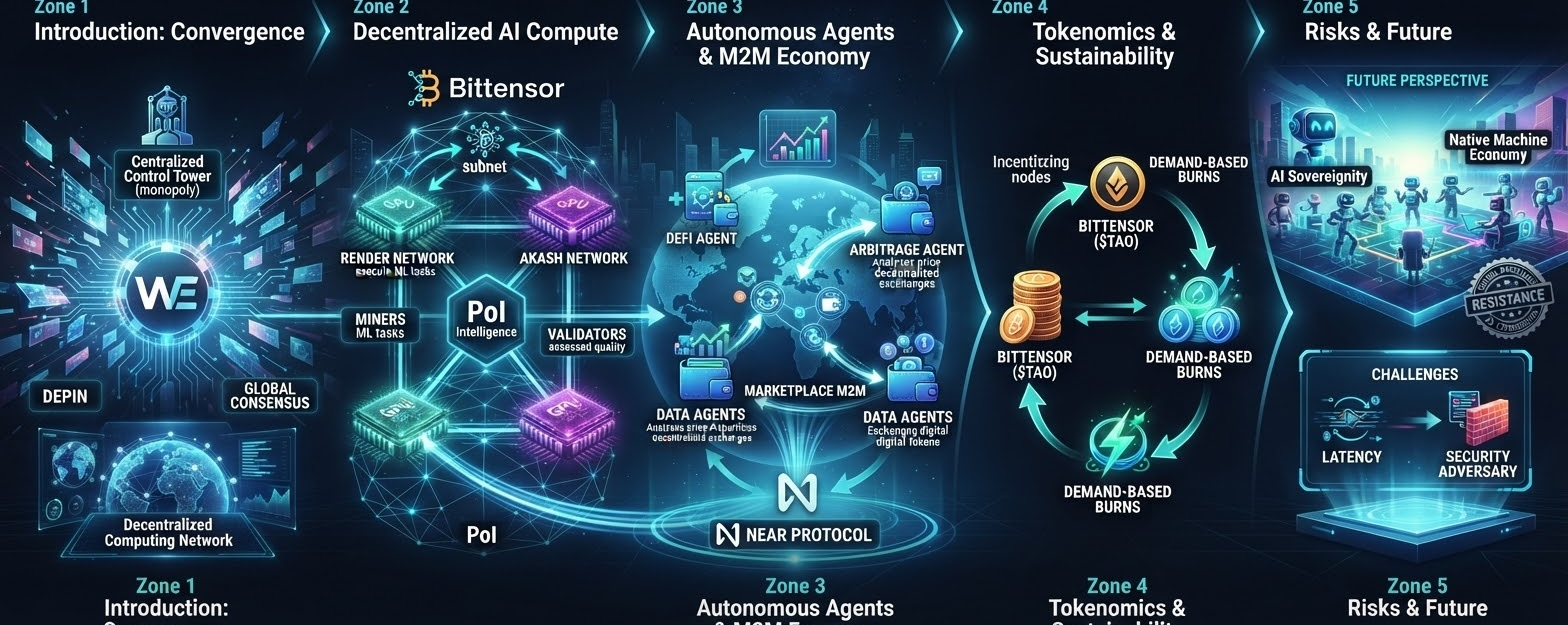
Decentralized AI Infrastructure and Autonomous Agents$TAO (Bittensor)
$FET (Artificial Superintelligence Alliance)
$RNDR / $RENDER (Render Network)
$AKT (Akash Network)
$NEAR (NEAR Protocol)
1. Introduction: The Convergence Between Artificial Intelligence and Web3
The dizzying rise of Artificial Intelligence (AI) has exposed a critical bottleneck in global technological infrastructure: the extreme centralization of access to computing power—both in hardware and GPUs—and the monopoly of closed-source code models by a handful of technology corporations. This asymmetry limits innovation, increases operating costs, and creates severe risks of censorship and data privacy.
Decentralized AI Infrastructure and Autonomous Agents
$TAO (Bittensor)
$FET (Artificial Superintelligence Alliance)
$RNDR / $RENDER (Render Network)
$AKT (Akash Network)
$NEAR (NEAR Protocol)
1. Introduction: The Convergence Between Artificial Intelligence and Web3
The dizzying rise of Artificial Intelligence (AI) has exposed a critical bottleneck in global technological infrastructure: the extreme centralization of access to computing power—both in hardware and GPUs—and the monopoly of closed-source code models by a handful of technology corporations. This asymmetry limits innovation, increases operating costs, and creates severe risks of censorship and data privacy.
$FET (Artificial Superintelligence Alliance)
$RNDR / $RENDER (Render Network)
$AKT (Akash Network)
$NEAR (NEAR Protocol)
1. Introduction: The Convergence Between Artificial Intelligence and Web3
The dizzying rise of Artificial Intelligence (AI) has exposed a critical bottleneck in global technological infrastructure: the extreme centralization of access to computing power—both in hardware and GPUs—and the monopoly of closed-source code models by a handful of technology corporations. This asymmetry limits innovation, increases operating costs, and creates severe risks of censorship and data privacy.
4
1.2k
·
--
Article
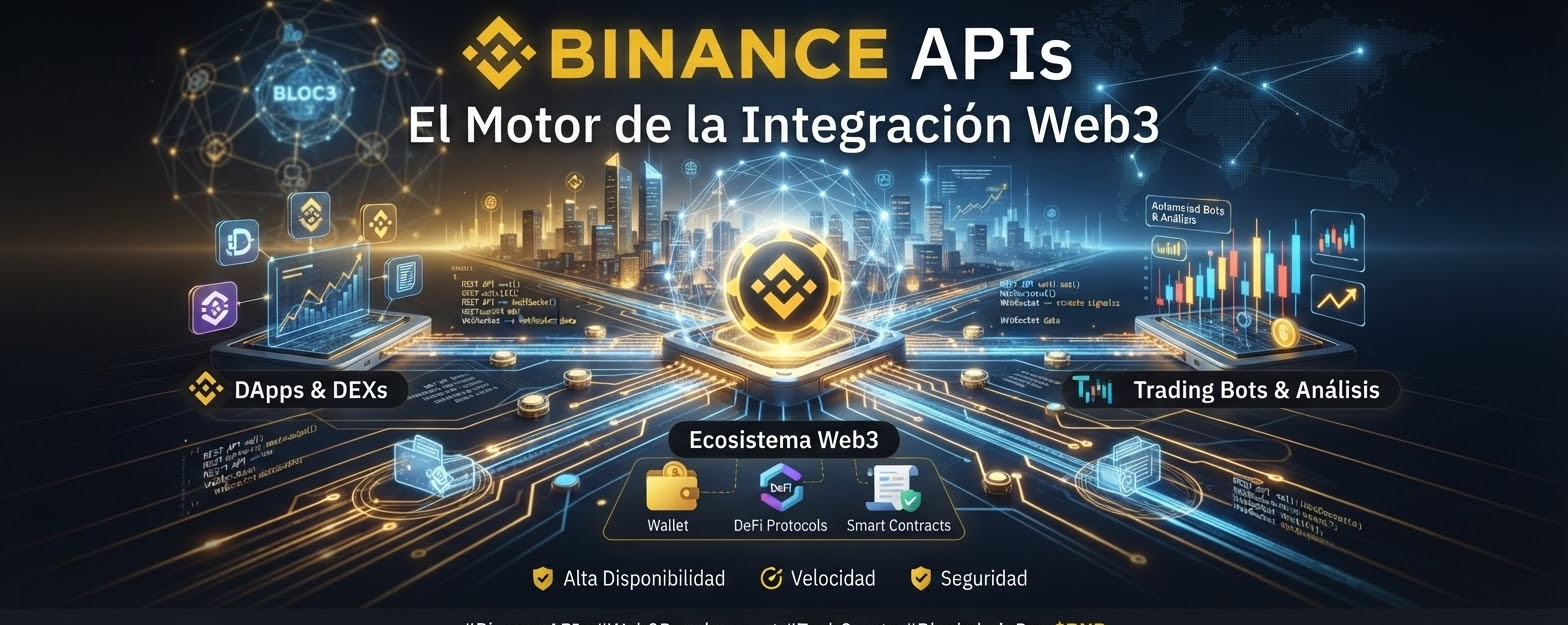
Binance APIs: The Engine of Web3 IntegrationBinance APIs represent the core infrastructure for connecting decentralized applications, analytics platforms, and trading tools with one of the most robust ecosystems in the market. Their design focuses on ensuring high availability, fast response times, and advanced security for developers and institutional analysts.
Key Aspects
• Scalable Connectivity: They enable real-time integration of market data and efficient execution of automated operations.
Binance APIs: The Engine of Web3 Integration
Binance APIs represent the core infrastructure for connecting decentralized applications, analytics platforms, and trading tools with one of the most robust ecosystems in the market. Their design focuses on ensuring high availability, fast response times, and advanced security for developers and institutional analysts.
Key Aspects
• Scalable Connectivity: They enable real-time integration of market data and efficient execution of automated operations.
Key Aspects
• Scalable Connectivity: They enable real-time integration of market data and efficient execution of automated operations.
1
1
2
377
·
--
Article
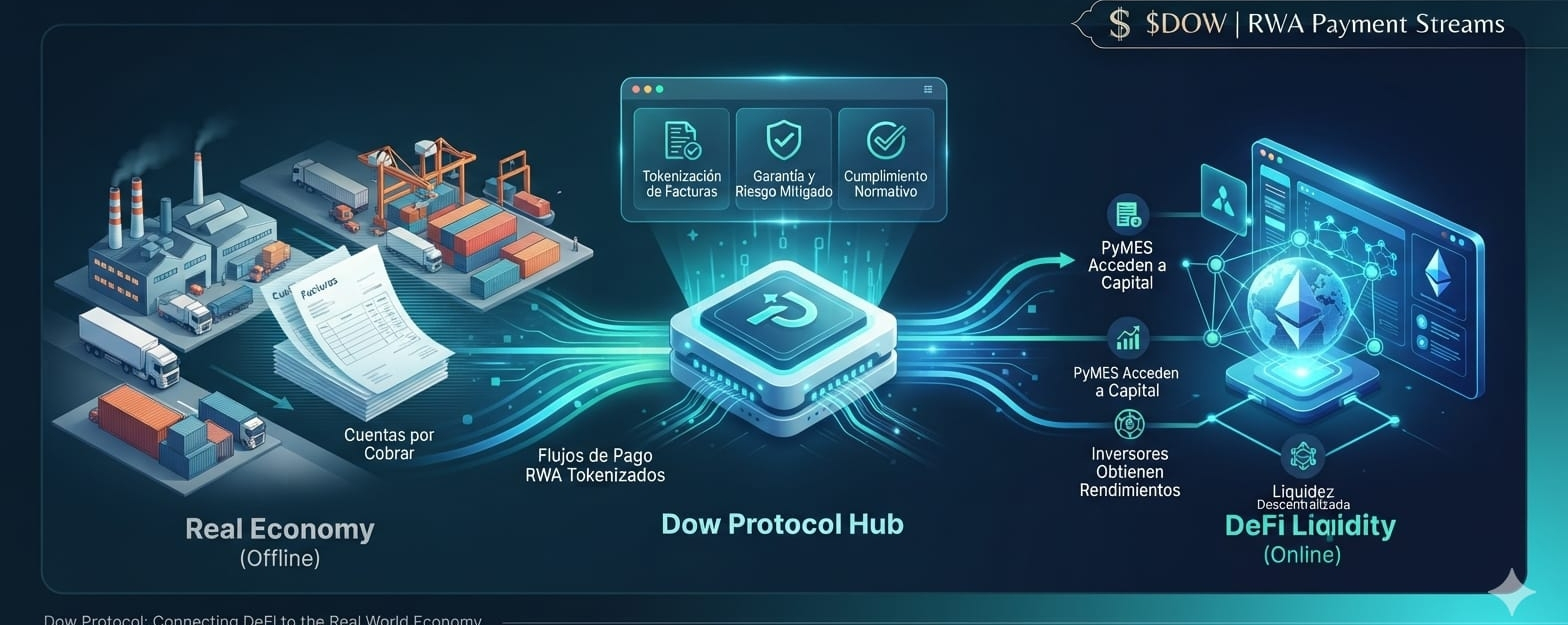
Dow Protocol and the Tokenization of RWA Payment Flows1. Introduction: The Evolution of Real-World Assets (RWAs) in DeFi
Contextualization of the RWA market beyond tokenized treasury bonds.
The need to connect decentralized liquidity with the real economy, trade, and short-term working capital.
N
2. Architecture and Value Proposition of Dow Protocol
On-Chain Payment Flows Structuring: How the protocol converts accounts receivable, invoices, and future commercial flows into tradable digital assets.
Dow Protocol and the Tokenization of RWA Payment Flows
1. Introduction: The Evolution of Real-World Assets (RWAs) in DeFi
Contextualization of the RWA market beyond tokenized treasury bonds.
The need to connect decentralized liquidity with the real economy, trade, and short-term working capital.
N
2. Architecture and Value Proposition of Dow Protocol
On-Chain Payment Flows Structuring: How the protocol converts accounts receivable, invoices, and future commercial flows into tradable digital assets.
Contextualization of the RWA market beyond tokenized treasury bonds.
The need to connect decentralized liquidity with the real economy, trade, and short-term working capital.
N
2. Architecture and Value Proposition of Dow Protocol
On-Chain Payment Flows Structuring: How the protocol converts accounts receivable, invoices, and future commercial flows into tradable digital assets.
4
579
·
--
Article
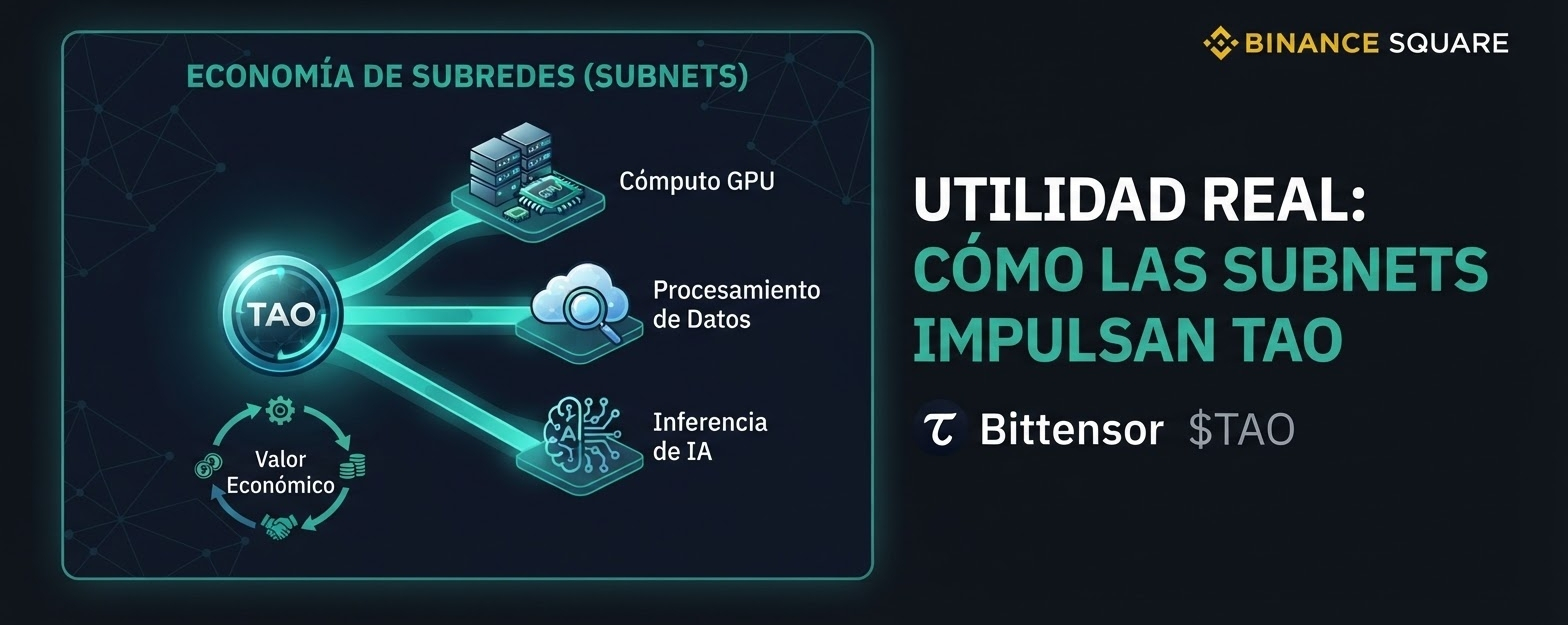
🌐 Beyond speculation: How do Subnets drive TAO’s real economy?🔹The big challenge of crypto-AI has been proving real utility beyond the initial hype. The decentralized architecture of subnets in Bittensor makes a key difference:
🔹Specialized microeconomies: Dedicated networks for specific tasks such as AI inference, data processing, and GPU compute power.
🔹Value generation: Mature ecosystems that create real demand for useful services for developers and businesses.
🔹Economic flywheel: A design where practical use and incentives are directly connected to the network’s health. DYOR.
🌐 Beyond speculation: How do Subnets drive TAO’s real economy?
🔹The big challenge of crypto-AI has been proving real utility beyond the initial hype. The decentralized architecture of subnets in Bittensor makes a key difference:
🔹Specialized microeconomies: Dedicated networks for specific tasks such as AI inference, data processing, and GPU compute power.
🔹Value generation: Mature ecosystems that create real demand for useful services for developers and businesses.
🔹Economic flywheel: A design where practical use and incentives are directly connected to the network’s health. DYOR.
🔹Specialized microeconomies: Dedicated networks for specific tasks such as AI inference, data processing, and GPU compute power.
🔹Value generation: Mature ecosystems that create real demand for useful services for developers and businesses.
🔹Economic flywheel: A design where practical use and incentives are directly connected to the network’s health. DYOR.
5
2
296
·
--
Article
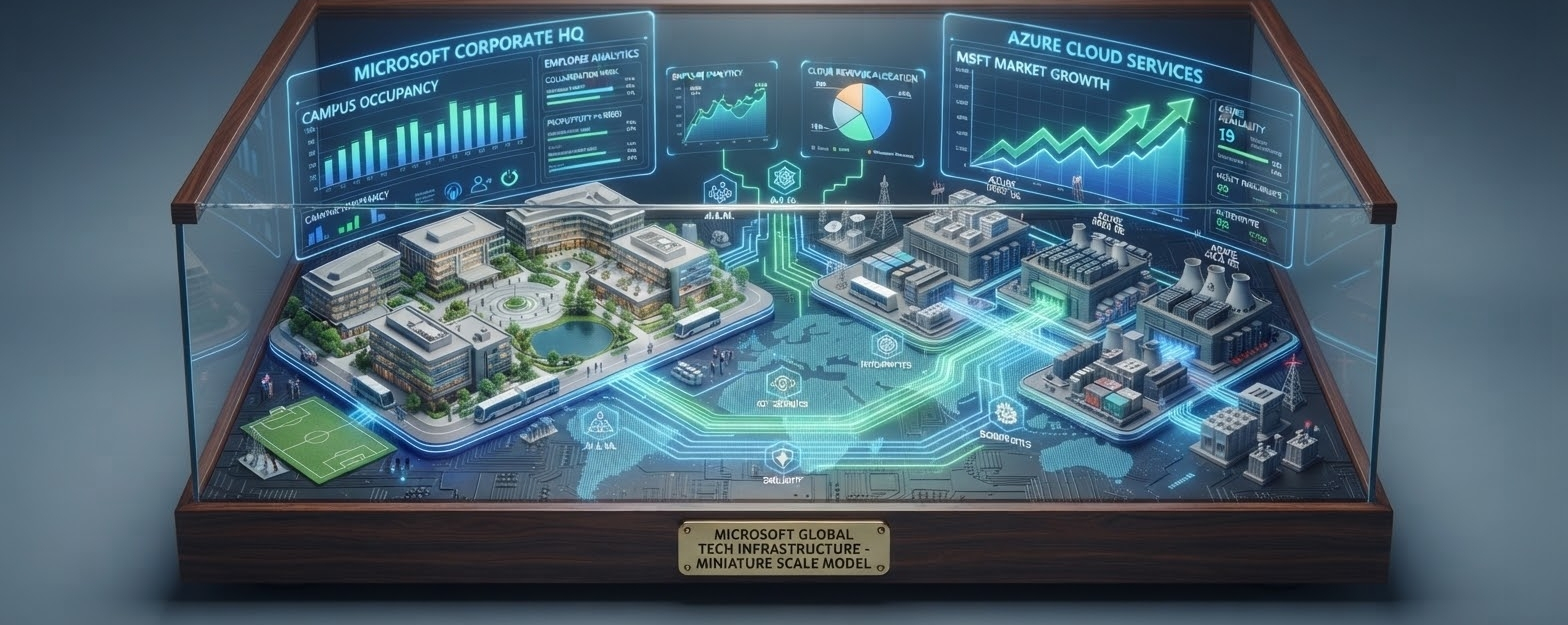
MSFT on BStocks: Connecting the digital ecosystem with Microsoft’s strengthThe convergence between traditional stock markets and digital infrastructure continues to offer new diversification options. Through tools like BStocks, content creators and technology enthusiasts can access the representation of global corporate pillars such as Microsoft (MSFTx).
What does MSFT represent in this ecosystem?
Leadership in software and business computing: Enables you to closely monitor the performance of one of the most stable and diversified companies in the global technology sector.
MSFT on BStocks: Connecting the digital ecosystem with Microsoft’s strength
The convergence between traditional stock markets and digital infrastructure continues to offer new diversification options. Through tools like BStocks, content creators and technology enthusiasts can access the representation of global corporate pillars such as Microsoft (MSFTx).
What does MSFT represent in this ecosystem?
Leadership in software and business computing: Enables you to closely monitor the performance of one of the most stable and diversified companies in the global technology sector.
What does MSFT represent in this ecosystem?
Leadership in software and business computing: Enables you to closely monitor the performance of one of the most stable and diversified companies in the global technology sector.
1
6
155
·
--
Article
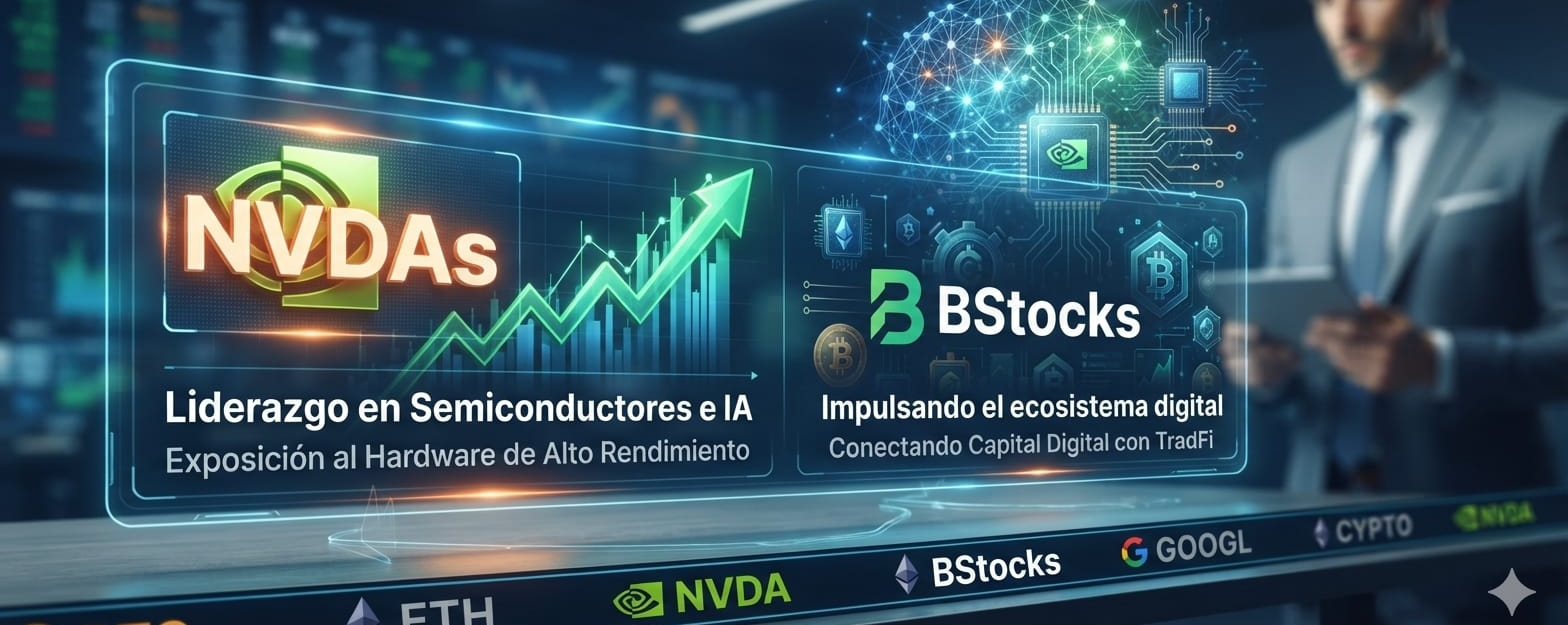
NVDA on BStocks: Capturing the momentum of artificial intelligence and semiconductorsThe rapid development of artificial intelligence and high-performance computing has completely transformed the global technological landscape. Through tools like BStocks, users have the opportunity to interact indirectly with key companies in this sector, such as NVIDIA (NVDAs), diversifying their strategy without leaving the digital environment.
What does NVDA represent in this ecosystem?
Leadership in semiconductors and AI: Allows you to closely monitor the performance of a fundamental company for the development of AI infrastructure worldwide.
NVDA on BStocks: Capturing the momentum of artificial intelligence and semiconductors
The rapid development of artificial intelligence and high-performance computing has completely transformed the global technological landscape. Through tools like BStocks, users have the opportunity to interact indirectly with key companies in this sector, such as NVIDIA (NVDAs), diversifying their strategy without leaving the digital environment.
What does NVDA represent in this ecosystem?
Leadership in semiconductors and AI: Allows you to closely monitor the performance of a fundamental company for the development of AI infrastructure worldwide.
What does NVDA represent in this ecosystem?
Leadership in semiconductors and AI: Allows you to closely monitor the performance of a fundamental company for the development of AI infrastructure worldwide.
1
1
4
152
·
--
Article
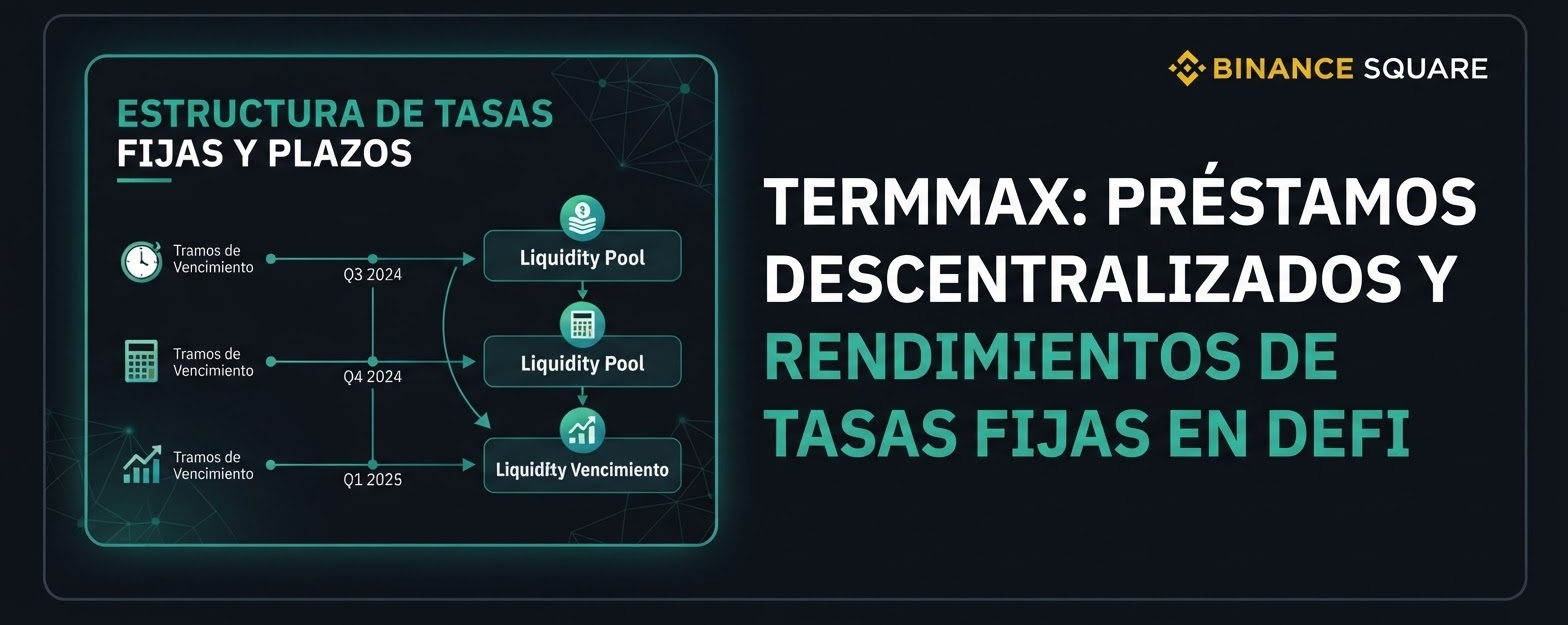
TermMax: Decentralized Loans and Fixed-Rate Yields in DeFi1. Introduction: The Problem of Volatility in DeFi Interest Rates
The lending & borrowing market has been one of the fundamental pillars of the Decentralized Finance (DeFi) ecosystem. However, the vast majority of traditional protocols operate under variable (floating) interest rate models. This means that the cost of a loan or the yield on a deposit constantly fluctuates depending on market supply and demand, making medium- and long-term financial planning difficult for both individual users and treasury managers and institutional investors.
TermMax: Decentralized Loans and Fixed-Rate Yields in DeFi
1. Introduction: The Problem of Volatility in DeFi Interest Rates
The lending & borrowing market has been one of the fundamental pillars of the Decentralized Finance (DeFi) ecosystem. However, the vast majority of traditional protocols operate under variable (floating) interest rate models. This means that the cost of a loan or the yield on a deposit constantly fluctuates depending on market supply and demand, making medium- and long-term financial planning difficult for both individual users and treasury managers and institutional investors.
The lending & borrowing market has been one of the fundamental pillars of the Decentralized Finance (DeFi) ecosystem. However, the vast majority of traditional protocols operate under variable (floating) interest rate models. This means that the cost of a loan or the yield on a deposit constantly fluctuates depending on market supply and demand, making medium- and long-term financial planning difficult for both individual users and treasury managers and institutional investors.
2
1
3
335
·
--
Article
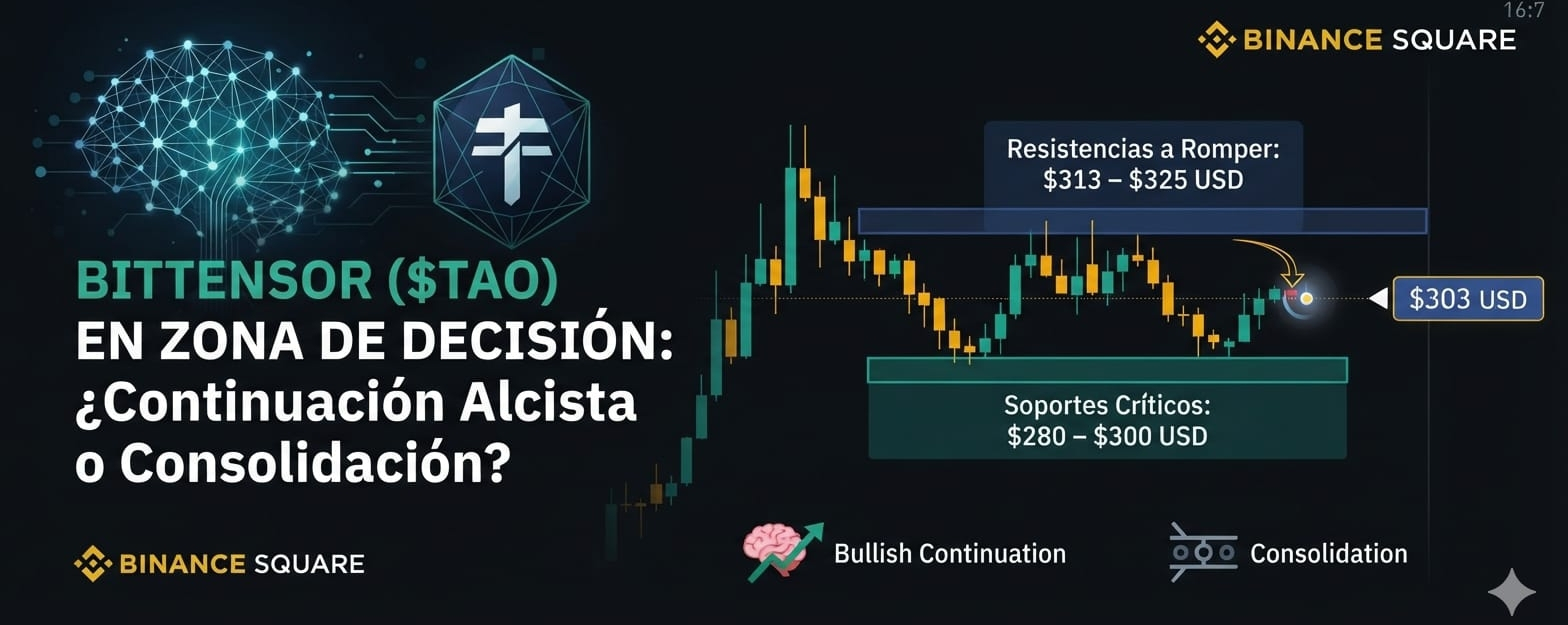
🧠 Bittensor ($TAO) in a decision zone: Bullish continuation or consolidation ahead?The decentralized artificial intelligence sector continues to show strong activity. Trading around $303 USD after a move backed by institutional volume, the asset is testing some very interesting technical reaction zones.
📊 Key levels I’m keeping a close eye on:
Critical supports: The $280–$300 USD zone works as the immediate floor to defend in order to keep the bullish structure healthy.
Resistances to break: Surpassing with volume the $313–$325 USD barrier is key to seeking continuity toward new targets.
🧠 Bittensor ($TAO) in a decision zone: Bullish continuation or consolidation ahead?
The decentralized artificial intelligence sector continues to show strong activity. Trading around $303 USD after a move backed by institutional volume, the asset is testing some very interesting technical reaction zones.
📊 Key levels I’m keeping a close eye on:
Critical supports: The $280–$300 USD zone works as the immediate floor to defend in order to keep the bullish structure healthy.
Resistances to break: Surpassing with volume the $313–$325 USD barrier is key to seeking continuity toward new targets.
📊 Key levels I’m keeping a close eye on:
Critical supports: The $280–$300 USD zone works as the immediate floor to defend in order to keep the bullish structure healthy.
Resistances to break: Surpassing with volume the $313–$325 USD barrier is key to seeking continuity toward new targets.
4
670
·
--
Position secured and ready for the campaign! 🚀💼
I just completed my strategic conversion to add balance in RLUSD and secure my spot in the XRP rewards fund that Binance has active.
Operation details: Conversion of BNB to RLUSD to enable participation.
Strategy: Quality over quantity, leveraging flexible products and automatic subscription to keep performance and weekly payments active.
Tokenization and institutional stablecoins with regulated backing are key pillars for portfolio stability in this cycle.
Are you already participating in the RLUSD campaign? I’m reading your comments! 👇
#RLUSD #BİNANCE #CryptoEducation #Web3 #xrp #GestiónDeRiesgo $RLUSD
$XRP $BNB
Position secured and ready for the campaign! 🚀💼
I just completed my strategic conversion to add balance in RLUSD and secure my spot in the XRP rewards fund that Binance has active.
Operation details: Conversion of BNB to RLUSD to enable participation.
Strategy: Quality over quantity, leveraging flexible products and automatic subscription to keep performance and weekly payments active.
Tokenization and institutional stablecoins with regulated backing are key pillars for portfolio stability in this cycle.
Are you already participating in the RLUSD campaign? I’m reading your comments! 👇
#RLUSD #BİNANCE #CryptoEducation #Web3 #xrp #GestiónDeRiesgo $RLUSD
$XRP $BNB
I just completed my strategic conversion to add balance in RLUSD and secure my spot in the XRP rewards fund that Binance has active.
Operation details: Conversion of BNB to RLUSD to enable participation.
Strategy: Quality over quantity, leveraging flexible products and automatic subscription to keep performance and weekly payments active.
Tokenization and institutional stablecoins with regulated backing are key pillars for portfolio stability in this cycle.
Are you already participating in the RLUSD campaign? I’m reading your comments! 👇
#RLUSD #BİNANCE #CryptoEducation #Web3 #xrp #GestiónDeRiesgo $RLUSD
$XRP $BNB
4
165
·
--
Article
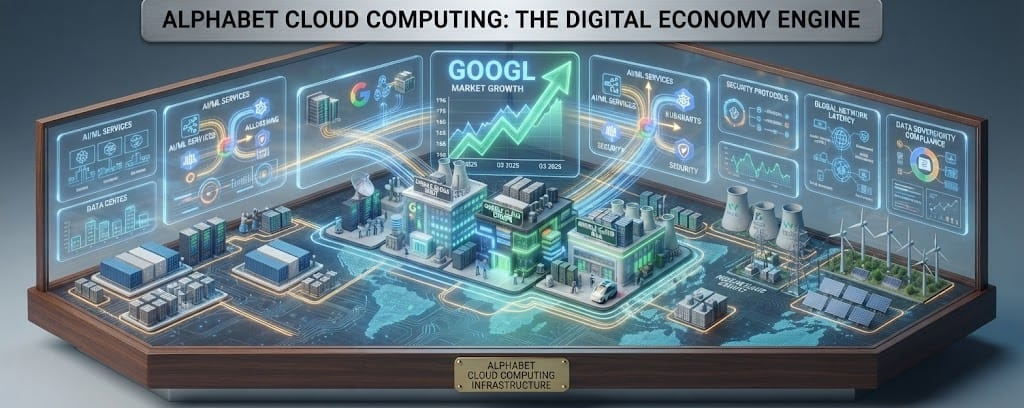
GOOGL in BStocks: Exposure to the data, cloud, and artificial intelligence giantThe expansion of tokenized markets and digital investment tools continues to transform the way we interact with global technology giants. Through BStocks, users can add indirect exposure to top-tier digital infrastructure companies such as Alphabet (GOOGLx).
What does GOOGL represent in this ecosystem?
Network domain and cloud services: Lets you closely monitor the financial performance of an undisputed leader in search engines, digital advertising, and cloud computing services.
GOOGL in BStocks: Exposure to the data, cloud, and artificial intelligence giant
The expansion of tokenized markets and digital investment tools continues to transform the way we interact with global technology giants. Through BStocks, users can add indirect exposure to top-tier digital infrastructure companies such as Alphabet (GOOGLx).
What does GOOGL represent in this ecosystem?
Network domain and cloud services: Lets you closely monitor the financial performance of an undisputed leader in search engines, digital advertising, and cloud computing services.
What does GOOGL represent in this ecosystem?
Network domain and cloud services: Lets you closely monitor the financial performance of an undisputed leader in search engines, digital advertising, and cloud computing services.
8
713
·
--
Article
📉
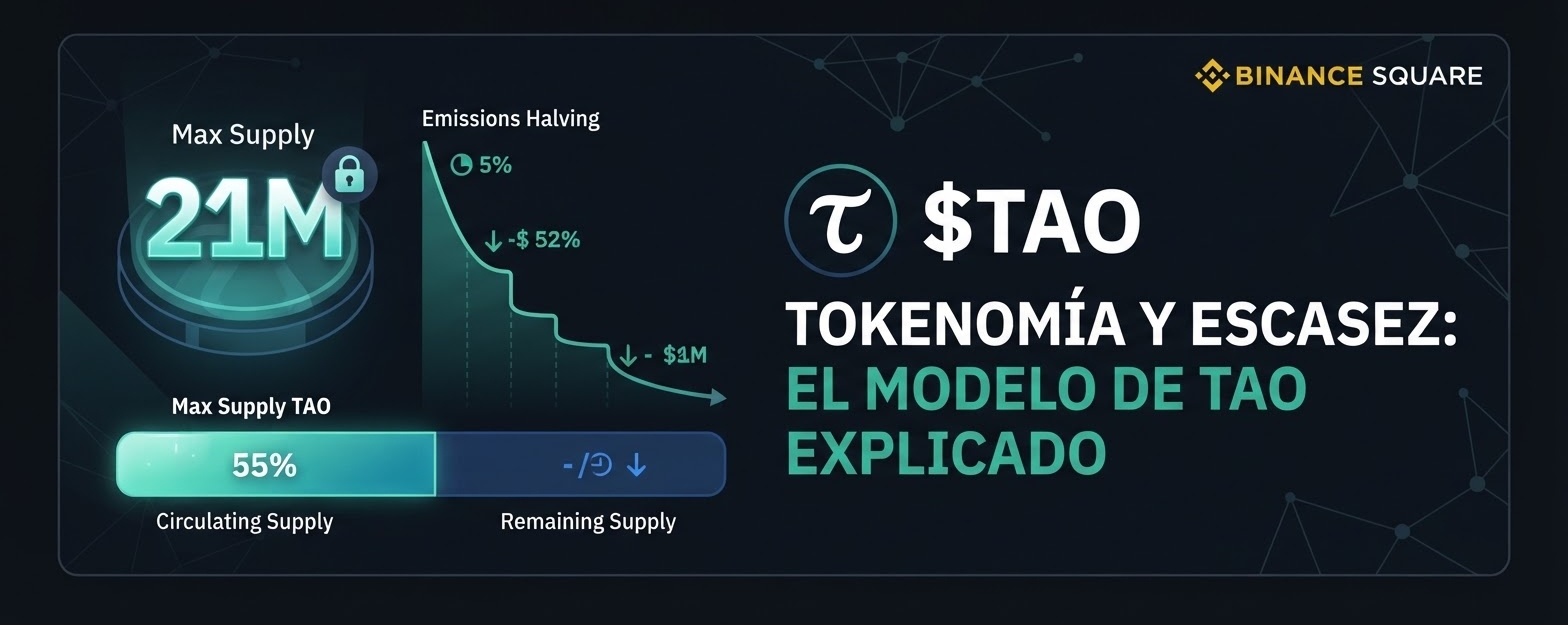
Scarcity and Halving: Why TAO’s Tokenomics Imitates Bitcoin’s Model?When we analyze long-term infrastructure projects, tokenomics is our fundamental roadmap. In the case of Bittensor (TAO), its monetary design replicates Bitcoin’s absolute scarcity to incentivize structural value:
🪙 Strict max supply: Unchangeable limit of 21,000,000 tokens in total. There will never be another TAO.
🔄 Current circulation:
About 11.5 million TAO are already in circulation (approximately 55% of the total issued).
⏳ Scheduled issuance: Periodic reduction in the entry of new tokens into the market (halving), rewarding a long-term vision.
📉 Scarcity and Halving: Why TAO’s Tokenomics Imitates Bitcoin’s Model?
When we analyze long-term infrastructure projects, tokenomics is our fundamental roadmap. In the case of Bittensor (TAO), its monetary design replicates Bitcoin’s absolute scarcity to incentivize structural value:
🪙 Strict max supply: Unchangeable limit of 21,000,000 tokens in total. There will never be another TAO.
🔄 Current circulation:
About 11.5 million TAO are already in circulation (approximately 55% of the total issued).
⏳ Scheduled issuance: Periodic reduction in the entry of new tokens into the market (halving), rewarding a long-term vision.
🪙 Strict max supply: Unchangeable limit of 21,000,000 tokens in total. There will never be another TAO.
🔄 Current circulation:
About 11.5 million TAO are already in circulation (approximately 55% of the total issued).
⏳ Scheduled issuance: Periodic reduction in the entry of new tokens into the market (halving), rewarding a long-term vision.
2
328
·
--
Article
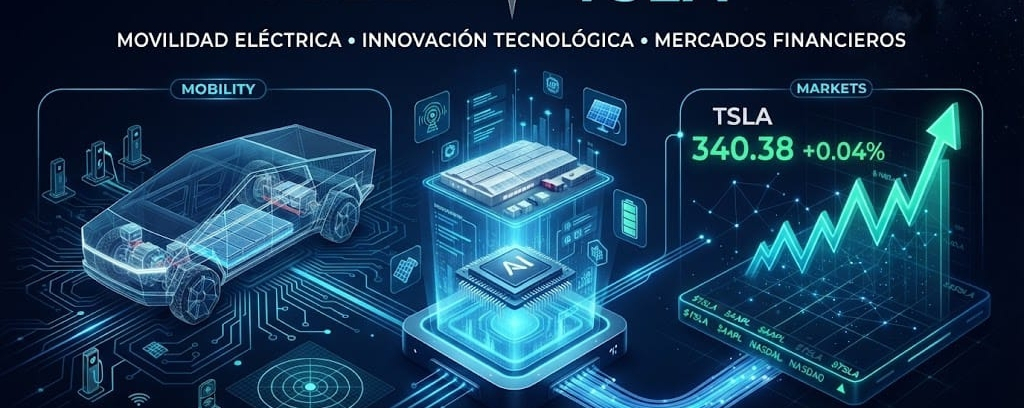
TSLA on BStocks: Exposure to innovation and traditional markets from the crypto ecosystemIntegrating traditional market assets into digital platforms creates new opportunities to diversify portfolios without leaving blockchain infrastructure. Among the options available on BStocks, Tesla (TSLAs) stands out as representing one of the most dynamic sectors of the global economy: electric mobility, artificial intelligence, and sustainable energy.
What does TSLA represent in this ecosystem?
Exposure to technological innovation: It allows you to keep track of the pulse of a leading company in the transformation of global transportation and the development of autonomous systems.
TSLA on BStocks: Exposure to innovation and traditional markets from the crypto ecosystem
Integrating traditional market assets into digital platforms creates new opportunities to diversify portfolios without leaving blockchain infrastructure. Among the options available on BStocks, Tesla (TSLAs) stands out as representing one of the most dynamic sectors of the global economy: electric mobility, artificial intelligence, and sustainable energy.
What does TSLA represent in this ecosystem?
Exposure to technological innovation: It allows you to keep track of the pulse of a leading company in the transformation of global transportation and the development of autonomous systems.
What does TSLA represent in this ecosystem?
Exposure to technological innovation: It allows you to keep track of the pulse of a leading company in the transformation of global transportation and the development of autonomous systems.
1
3
154
·
--
Article
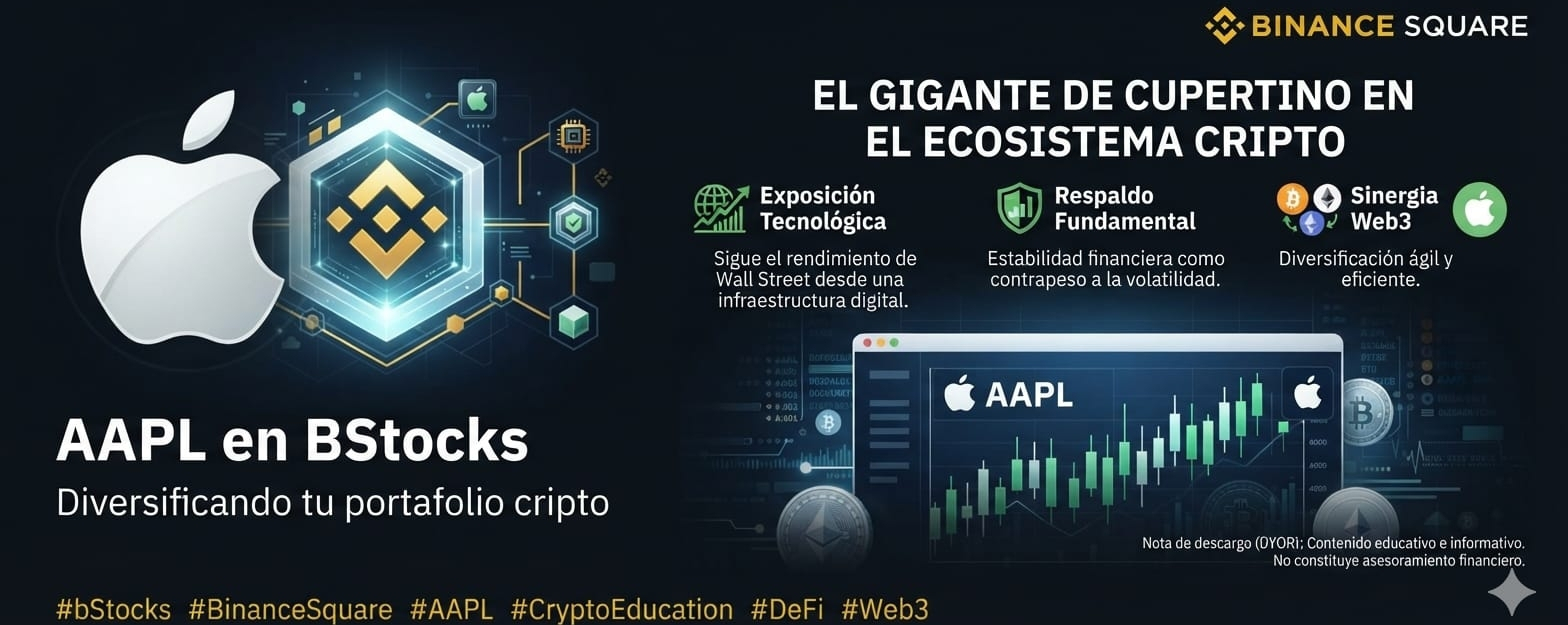
AAPL on BStocks: Diversifying your crypto portfolio with the Cupertino giantThe convergence between traditional markets and blockchain technology continues to evolve at a tremendous pace. For content creators and enthusiasts looking to maintain a balanced strategy of accumulation and diversification without leaving the ecosystem, innovative tools like BStocks make it possible to interact with high-market-capitalization assets such as Apple (AAPLx).
What does AAPL represent in this ecosystem?
Global technology exhibition: Allows you to closely track the stock performance of one of the most solid and liquid companies on Wall Street through a digital infrastructure.
AAPL on BStocks: Diversifying your crypto portfolio with the Cupertino giant
The convergence between traditional markets and blockchain technology continues to evolve at a tremendous pace. For content creators and enthusiasts looking to maintain a balanced strategy of accumulation and diversification without leaving the ecosystem, innovative tools like BStocks make it possible to interact with high-market-capitalization assets such as Apple (AAPLx).
What does AAPL represent in this ecosystem?
Global technology exhibition: Allows you to closely track the stock performance of one of the most solid and liquid companies on Wall Street through a digital infrastructure.
What does AAPL represent in this ecosystem?
Global technology exhibition: Allows you to closely track the stock performance of one of the most solid and liquid companies on Wall Street through a digital infrastructure.
2
354
·
--
Article
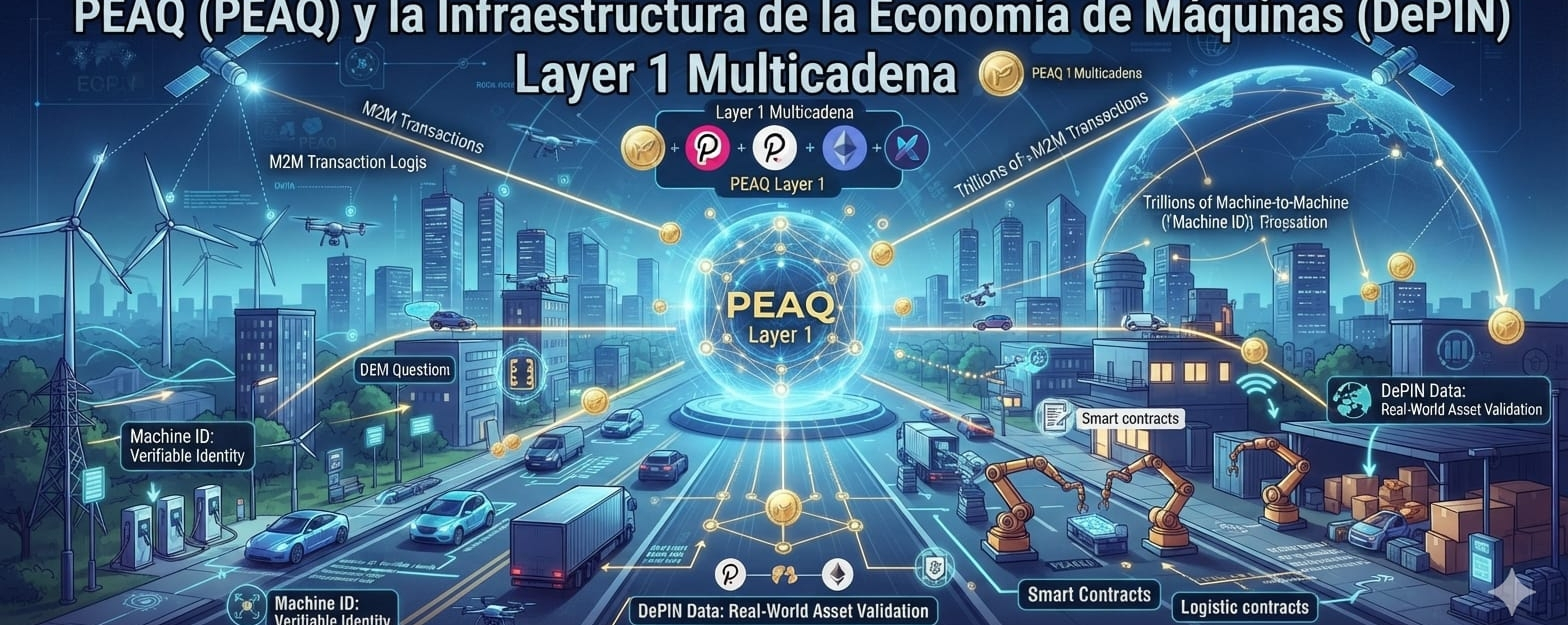
Peaq (PEAQ) and the Infrastructure of the Machine Economy (DePIN): The bridge to the physical worldDePIN networks are transforming real-world services through cryptographic incentives, and Peaq leads this revolution as the definitive Layer-1 for the Machine Economy.
What is Peaq and why does it make a difference?
Designed specifically for the Internet of Things (IoT) and autonomous devices, Peaq offers native modular tools that optimize development:
peaqIDs: Verifiable cryptographic identities for vehicles, drones, and sensors.
Peaq (PEAQ) and the Infrastructure of the Machine Economy (DePIN): The bridge to the physical world
DePIN networks are transforming real-world services through cryptographic incentives, and Peaq leads this revolution as the definitive Layer-1 for the Machine Economy.
What is Peaq and why does it make a difference?
Designed specifically for the Internet of Things (IoT) and autonomous devices, Peaq offers native modular tools that optimize development:
peaqIDs: Verifiable cryptographic identities for vehicles, drones, and sensors.
What is Peaq and why does it make a difference?
Designed specifically for the Internet of Things (IoT) and autonomous devices, Peaq offers native modular tools that optimize development:
peaqIDs: Verifiable cryptographic identities for vehicles, drones, and sensors.
4
206
Log in to explore more content
Join global crypto users on Binance Square
⚡️ Get latest and useful information about crypto.
💬 Trusted by the world’s largest crypto exchange.
👍 Discover real insights from verified creators.
Email / Phone number
Trending Topics
BinanceLaunchesBinanceIntelligence
78,164 views
934 Discussing
🚨 BINANCE JUST PUT AI DIRECTLY INSIDE THE EXCHANGE — AND THIS COULD CHANGE HOW RETAIL TRADES.
Binance has officially launched Binance Intelligence, a new AI layer built into the Binance ecosystem. It combines three products:
Binance AI for everyday users,
Binance AI Pro for automated trading workflows,
and Agent OS for developers building financial agents.
The part traders should care about?
Binance AI can surface market briefs, smart alerts, PnL recaps and personalized information, while AI Pro is designed to turn a plain-English trading idea into a visual strategy workflow.
That means the next phase of exchange competition may not be:
lowest fees vs deepest liquidity.
It could be:
who gives traders the best AI execution layer.
If Binance Intelligence actually drives heavier user activity, automated strategies and higher trading frequency, watch $BNB first.
AI adoption ↑
→ Binance engagement ↑
→ trading activity ↑
→ ecosystem narrative strengthens.
The catalyst I’d watch now:
global rollout + AI Pro launch + measurable user adoption.
Because once AI stops just telling you what the market is doing…
…and starts helping build the trade itself?
That’s when this gets much bigger than another chatbot. 👀
#binancelaunchesbinanceintelligence #EvernorthXRPTreasuryCompletesSPACMerger #ADAGains10%Above$0.27 #ETHUp70%InQ3ButLiquidityFalls #EthStakingExitQueueHits2026High
KimHotbae
·24 Likes
·32.6k views
StriveBuys2000BTCFor$169M
1,161 views
35 Discussing
EvernorthXRPTreasuryCompletesSPACMerger
59,662 views
657 Discussing