

#techstrategy
techstrategy
954 views
14 Discussing
Hot
Latest

$AAPL 'S CHIP STRATEGY SHIFT SIGNALS A MAJOR AI LEAP - MARKET REACTION IMMINENT 🔥
Apple is skipping its high-end M5 chip to fast-track the M7 series by 2027, a structural break from its usual product cadence. This pivot toward edge AI mirrors a liquidity sweep in price action – the market suddenly absorbs anticipation ahead of schedule. Volume in AAPL options has picked up, and the daily RSI is testing oversold levels before this news broke.
Think of it as a break of structure in the company's roadmap. Are you positioned for the repricing of the AI narrative?
Not financial advice. Always manage your risk.
#AAPL #AI #TechStrategy #ChipInnovation
🔥
$AAPL 'S CHIP STRATEGY SHIFT SIGNALS A MAJOR AI LEAP - MARKET REACTION IMMINENT 🔥
Apple is skipping its high-end M5 chip to fast-track the M7 series by 2027, a structural break from its usual product cadence. This pivot toward edge AI mirrors a liquidity sweep in price action – the market suddenly absorbs anticipation ahead of schedule. Volume in AAPL options has picked up, and the daily RSI is testing oversold levels before this news broke.
Think of it as a break of structure in the company's roadmap. Are you positioned for the repricing of the AI narrative?
Not financial advice. Always manage your risk.
#AAPL #AI #TechStrategy #ChipInnovation
🔥
Apple is skipping its high-end M5 chip to fast-track the M7 series by 2027, a structural break from its usual product cadence. This pivot toward edge AI mirrors a liquidity sweep in price action – the market suddenly absorbs anticipation ahead of schedule. Volume in AAPL options has picked up, and the daily RSI is testing oversold levels before this news broke.
Think of it as a break of structure in the company's roadmap. Are you positioned for the repricing of the AI narrative?
Not financial advice. Always manage your risk.
#AAPL #AI #TechStrategy #ChipInnovation
🔥
AAPLonAlpha
AAPLUS-0.73%
14

·
--
$BEAN STRATEGY SHIFT – FROM GUI TO MCP INTEGRATION 🔥
The new generation BeanPod phone is pivoting away from GUI automation towards MCP service integration. This removes a major compliance risk and opens the door for deeper partnerships with super apps like Alibaba and Tencent. The stockpile has jumped from 30,000 to hundreds of thousands of units — a clear signal the company is moving from experimental to commercial scale.
Will this MCP-first approach attract more developers to the ecosystem?
Not financial advice. Always manage your risk.
#BEAN #TechStrategy #MCP #MobileEcosystem
🔥
$BEAN STRATEGY SHIFT – FROM GUI TO MCP INTEGRATION 🔥
The new generation BeanPod phone is pivoting away from GUI automation towards MCP service integration. This removes a major compliance risk and opens the door for deeper partnerships with super apps like Alibaba and Tencent. The stockpile has jumped from 30,000 to hundreds of thousands of units — a clear signal the company is moving from experimental to commercial scale.
Will this MCP-first approach attract more developers to the ecosystem?
Not financial advice. Always manage your risk.
#BEAN #TechStrategy #MCP #MobileEcosystem
🔥
The new generation BeanPod phone is pivoting away from GUI automation towards MCP service integration. This removes a major compliance risk and opens the door for deeper partnerships with super apps like Alibaba and Tencent. The stockpile has jumped from 30,000 to hundreds of thousands of units — a clear signal the company is moving from experimental to commercial scale.
Will this MCP-first approach attract more developers to the ecosystem?
Not financial advice. Always manage your risk.
#BEAN #TechStrategy #MCP #MobileEcosystem
🔥
56

·
--
🚨 $AI V4.1 FLASH OPEN‑SOURCE BREAKTHROUGH FOR ULTRA‑LARGE DEPLOYERS 🦈
📊 DeepSeek’s V4.1 Flash stays under a pure MIT License, removing any revenue‑based gatekeeping. Enterprises boasting 2,000‑plus GPUs can now tap a direct line for bespoke technical cooperation, a move that signals institutional‑grade confidence in ultra‑scale inference. ⚡ The ecosystem already leans on SGLang and TensorRT‑LLM for adaptation, but this proactive outreach deepens the liquidity pool of open‑source talent and hardware resources. 📌 Expect a ripple of rapid deployment across top‑tier exchanges as smart money scrambles to embed the model at scale.
💬 How will you leverage this open‑source power in your next AI stack? 👇
⚠️ Not financial advice. Always manage your risk. 🛡️
🏷️ #AI #OpenSource #Deployments #TechStrategy
🦈 🚀
🚨 $AI V4.1 FLASH OPEN‑SOURCE BREAKTHROUGH FOR ULTRA‑LARGE DEPLOYERS 🦈
📊 DeepSeek’s V4.1 Flash stays under a pure MIT License, removing any revenue‑based gatekeeping. Enterprises boasting 2,000‑plus GPUs can now tap a direct line for bespoke technical cooperation, a move that signals institutional‑grade confidence in ultra‑scale inference. ⚡ The ecosystem already leans on SGLang and TensorRT‑LLM for adaptation, but this proactive outreach deepens the liquidity pool of open‑source talent and hardware resources. 📌 Expect a ripple of rapid deployment across top‑tier exchanges as smart money scrambles to embed the model at scale.
💬 How will you leverage this open‑source power in your next AI stack? 👇
⚠️ Not financial advice. Always manage your risk. 🛡️
🏷️ #AI #OpenSource #Deployments #TechStrategy
🦈 🚀
📊 DeepSeek’s V4.1 Flash stays under a pure MIT License, removing any revenue‑based gatekeeping. Enterprises boasting 2,000‑plus GPUs can now tap a direct line for bespoke technical cooperation, a move that signals institutional‑grade confidence in ultra‑scale inference. ⚡ The ecosystem already leans on SGLang and TensorRT‑LLM for adaptation, but this proactive outreach deepens the liquidity pool of open‑source talent and hardware resources. 📌 Expect a ripple of rapid deployment across top‑tier exchanges as smart money scrambles to embed the model at scale.
💬 How will you leverage this open‑source power in your next AI stack? 👇
⚠️ Not financial advice. Always manage your risk. 🛡️
🏷️ #AI #OpenSource #Deployments #TechStrategy
🦈 🚀
17
💥 $AAPL DROPS THE CHINA AI BOMBSHELL — IN-HOUSE LLM WITH $BABA , FIRST FOREIGN APPROVAL 🎯
Apple just flipped the playbook in Beijing — betting on its own core LLM instead of renting third-party models, with Alibaba's engineering as the foundation. 📊 That's not a feature update; that's a structural shift in how foreign tech operates inside China's gated AI ecosystem.
The result is a first: no foreign company has ever held a public generative AI license there, and Apple China just secured that key. 💡 The market is already voting with its wallet — iPhone shipments grew 24.4% YoY in Q2 while the total market shrank 4.3%, pushing Apple's share from 13.9% to 18.1%.
Apple now trails only Huawei (22.6%), and the gap is closing fast. 🤔 Once Apple Intelligence lands in Chinese iPhones via iOS updates, does that finally erode Huawei's premium dominance — or is the AI edge already priced into Apple's momentum? 👇
⚠️ Not financial advice. Always manage your risk. 🛡️
🏷️ #AAPL #AI #ChinaMarket #Apple #TechStrategy
🎯 🦈
💥 $AAPL DROPS THE CHINA AI BOMBSHELL — IN-HOUSE LLM WITH $BABA , FIRST FOREIGN APPROVAL 🎯
Apple just flipped the playbook in Beijing — betting on its own core LLM instead of renting third-party models, with Alibaba's engineering as the foundation. 📊 That's not a feature update; that's a structural shift in how foreign tech operates inside China's gated AI ecosystem.
The result is a first: no foreign company has ever held a public generative AI license there, and Apple China just secured that key. 💡 The market is already voting with its wallet — iPhone shipments grew 24.4% YoY in Q2 while the total market shrank 4.3%, pushing Apple's share from 13.9% to 18.1%.
Apple now trails only Huawei (22.6%), and the gap is closing fast. 🤔 Once Apple Intelligence lands in Chinese iPhones via iOS updates, does that finally erode Huawei's premium dominance — or is the AI edge already priced into Apple's momentum? 👇
⚠️ Not financial advice. Always manage your risk. 🛡️
🏷️ #AAPL #AI #ChinaMarket #Apple #TechStrategy
🎯 🦈
Apple just flipped the playbook in Beijing — betting on its own core LLM instead of renting third-party models, with Alibaba's engineering as the foundation. 📊 That's not a feature update; that's a structural shift in how foreign tech operates inside China's gated AI ecosystem.
The result is a first: no foreign company has ever held a public generative AI license there, and Apple China just secured that key. 💡 The market is already voting with its wallet — iPhone shipments grew 24.4% YoY in Q2 while the total market shrank 4.3%, pushing Apple's share from 13.9% to 18.1%.
Apple now trails only Huawei (22.6%), and the gap is closing fast. 🤔 Once Apple Intelligence lands in Chinese iPhones via iOS updates, does that finally erode Huawei's premium dominance — or is the AI edge already priced into Apple's momentum? 👇
⚠️ Not financial advice. Always manage your risk. 🛡️
🏷️ #AAPL #AI #ChinaMarket #Apple #TechStrategy
🎯 🦈
64

·
--
30D trade $BNB 7.9 USDT
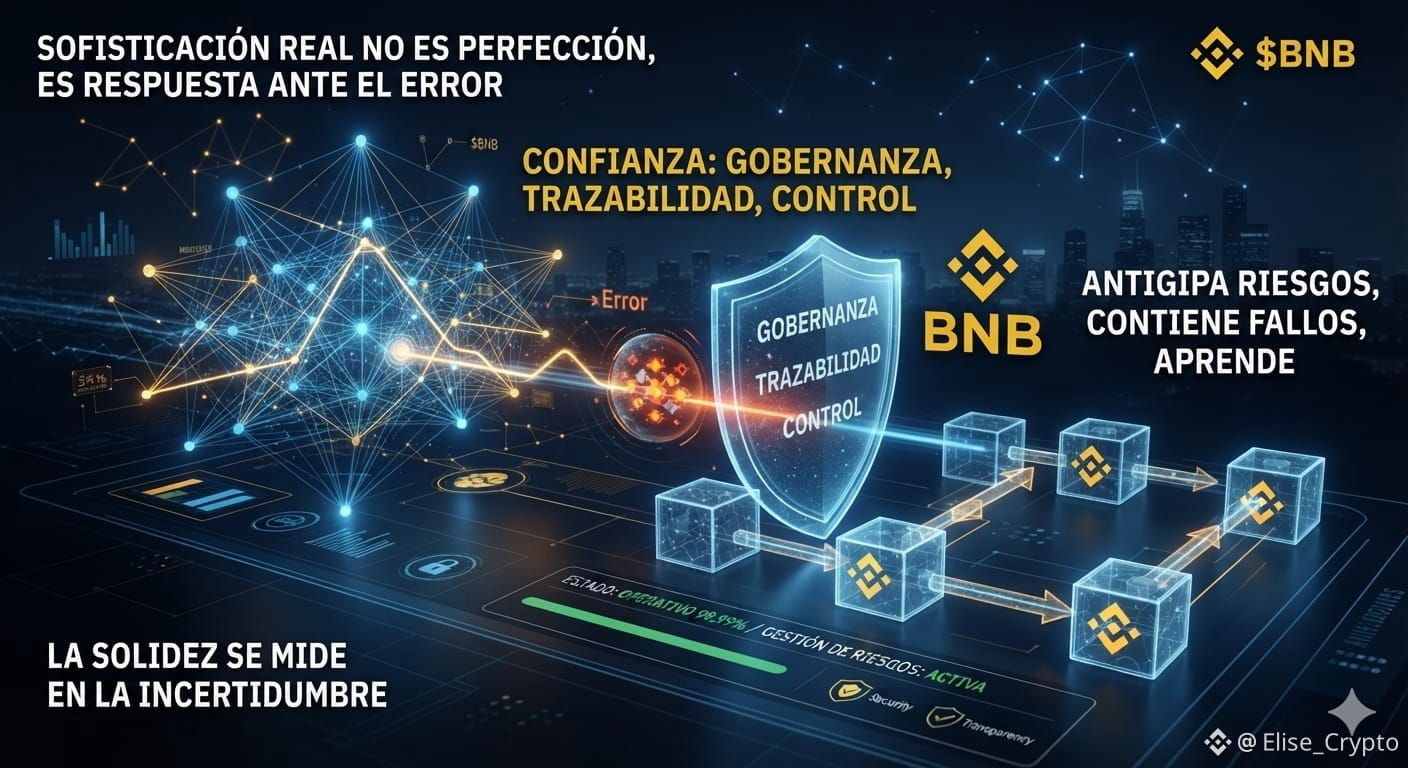
The real sophistication in artificial intelligence is not in seeming perfect, but in knowing how to respond when an error appears.
The systems that truly generate trust are not the ones that promise they won’t fail, but the ones designed with governance, traceability, and control to anticipate risks, contain failures, and learn from every scenario.
That’s where the difference lies between innovation that only sounds good and innovation that truly delivers value. Because in the end, the strength of a technology isn’t measured by how impressive it sounds in theory, but by how it behaves amid uncertainty.
In an environment where transparency and risk management matter more and more, that kind of architecture stops being a mere technical detail and becomes a real competitive advantage.
💛 $BNB
#BNB #InteligenciaArtificia l#AIAgents #Transparencia #TechStrategy #RiskManagement #BlockchainTechnology #Innovación
The real sophistication in artificial intelligence is not in seeming perfect, but in knowing how to respond when an error appears.
The systems that truly generate trust are not the ones that promise they won’t fail, but the ones designed with governance, traceability, and control to anticipate risks, contain failures, and learn from every scenario.
That’s where the difference lies between innovation that only sounds good and innovation that truly delivers value. Because in the end, the strength of a technology isn’t measured by how impressive it sounds in theory, but by how it behaves amid uncertainty.
In an environment where transparency and risk management matter more and more, that kind of architecture stops being a mere technical detail and becomes a real competitive advantage.
💛 $BNB
#BNB #InteligenciaArtificia l#AIAgents #Transparencia #TechStrategy #RiskManagement #BlockchainTechnology #Innovación
The systems that truly generate trust are not the ones that promise they won’t fail, but the ones designed with governance, traceability, and control to anticipate risks, contain failures, and learn from every scenario.
That’s where the difference lies between innovation that only sounds good and innovation that truly delivers value. Because in the end, the strength of a technology isn’t measured by how impressive it sounds in theory, but by how it behaves amid uncertainty.
In an environment where transparency and risk management matter more and more, that kind of architecture stops being a mere technical detail and becomes a real competitive advantage.
💛 $BNB
#BNB #InteligenciaArtificia l#AIAgents #Transparencia #TechStrategy #RiskManagement #BlockchainTechnology #Innovación
2
216
Log in to explore more content
Join global crypto users on Binance Square
⚡️ Get latest and useful information about crypto.
💬 Trusted by the world’s largest crypto exchange.
👍 Discover real insights from verified creators.
Email / Phone number
Trending Topics
1
#IMFApproves$139MDisbursementToElSalvador
0 views
1 Discussing
2
#AnthropicTargetsIPOAsSoonAsMidNovember
330 views
21 Discussing
3
#EtherGains70.9%InQ3
190,056 views
1,258 Discussing
4
#TreasuryLetsStatesFileStablecoinCertificationsEarly
12,956 views
97 Discussing
5
#US10YearYieldNears5.3%
165,909 views
1,209 Discussing
6
#DollarIndexHitsHighestSinceMay2025
51,755 views
671 Discussing
7
#USWeeklyJoblessClaimsFallTo197000
40,309 views
538 Discussing
8
#BitcoinETFsTake$6.34BillionInQ3
10,778 views
77 Discussing
9
#KoreaProposesTokenizingStocksAndBonds
78,153 views
851 Discussing
10
#MetaMaskExitsLidoValidatorsAfterSecurityIncident
178,845 views
1,582 Discussing