
#gasfees
gasfees
208,481 views
398 Discussing
Hot
Latest

·
--
Why Can the Same Crypto Transaction Cost More at Different Times?
Imagine paying different delivery charges for the same package simply because the roads are busier.
Blockchain transaction fees can work in a similar way.
On Ethereum, transaction costs can change depending on:
🔹 Network congestion
🔹 Demand for block space
🔹 Transaction complexity
🔹 Priority fees
A higher transaction fee does not necessarily mean the cryptocurrency itself has become more valuable.
Understanding the technology behind the cost can help users make more informed decisions.
Did you know that network demand could affect transaction fees?
$ETH
#Ethereum #CryptoFacts #BlockchainEducation #DigitalFinance #gasfees $ETH
{future}(ETHUSDT)
Why Can the Same Crypto Transaction Cost More at Different Times?
Imagine paying different delivery charges for the same package simply because the roads are busier.
Blockchain transaction fees can work in a similar way.
On Ethereum, transaction costs can change depending on:
🔹 Network congestion
🔹 Demand for block space
🔹 Transaction complexity
🔹 Priority fees
A higher transaction fee does not necessarily mean the cryptocurrency itself has become more valuable.
Understanding the technology behind the cost can help users make more informed decisions.
Did you know that network demand could affect transaction fees?
$ETH
#Ethereum #CryptoFacts #BlockchainEducation #DigitalFinance #gasfees $ETH
71

·
--
𝐄𝐯𝐞𝐫 𝐰𝐨𝐧𝐝𝐞𝐫𝐞𝐝 𝐰𝐡𝐲 𝐬𝐞𝐧𝐝𝐢𝐧𝐠 𝐜𝐫𝐲𝐩𝐭𝐨 𝐨𝐧 𝐄𝐭𝐡𝐞𝐫𝐞𝐮𝐦 𝐜𝐚𝐧 𝐜𝐨𝐬𝐭 𝐦𝐨𝐫𝐞 𝐨𝐧 𝐬𝐨𝐦𝐞 𝐝𝐚𝐲𝐬 𝐭𝐡𝐚𝐧 𝐨𝐭𝐡𝐞𝐫𝐬? 𝐄𝐧𝐭𝐞𝐫 𝐆𝐚𝐬 𝐅𝐞𝐞𝐬 ⛽⚡
𝐷𝑟𝑎𝑤𝑖𝑛𝑔 𝑓𝑟𝑜𝑚 𝑓𝑜𝑢𝑛𝑑𝑎𝑡𝑖𝑜𝑛𝑎𝑙 𝑙𝑒𝑠𝑠𝑜𝑛𝑠 𝑜𝑛 #BinanceAcademy, ℎ𝑒𝑟𝑒 𝑖𝑠 𝑦𝑜𝑢𝑟 𝑞𝑢𝑖𝑐𝑘 𝐺𝑎𝑠 𝐹𝑒𝑒𝑠 𝑏𝑟𝑒𝑎𝑘𝑑𝑜𝑤𝑛:
1️⃣ 𝐆𝐚𝐬 𝐌𝐞𝐚𝐬𝐮𝐫𝐞𝐬 𝐓𝐡𝐞 𝐖𝐨𝐫𝐤:
• Gas measures how much computation an action needs, a regular ETH transfer needs a gas limit of at least 21,000, complex smart contract calls often need more, and prices are quoted in gwei, a tiny fraction of ETH.
2️⃣ 𝐔𝐬𝐞𝐝 × 𝐏𝐫𝐢𝐜𝐞, 𝐂𝐚𝐩𝐩𝐞𝐝 𝐁𝐲 𝐀 𝐋𝐢𝐦𝐢𝐭:
• Your fee is roughly gas used × gas price, the limit caps what you'll spend, unused gas is refunded, but if it runs out the transaction can fail and still charge for the work done.
3️⃣ 𝐁𝐚𝐬𝐞 𝐅𝐞𝐞 𝐏𝐥𝐮𝐬 𝐓𝐢𝐩:
• Since Ethereum's 2021 London upgrade, the price splits into a base fee that gets burned and an optional tip for validators, and the base fee adjusts to congestion.
⚠️ 𝐑𝐢𝐬𝐤 𝐍𝐨𝐭𝐞:
Fees can climb fast when the network is busy, and a price set too low may leave a transaction stuck, so check the estimate before you confirm.
Once gas clicked for me, on-chain fees stopped feeling random and became something I plan around 💛
📖 Learn more on Binance Academy: https://www.binance.com/en/academy/glossary/gas
Crypto involves risk, this is not financial advice, always DYOR 💡
#GasFees #Ethereum #CryptoBasics
Follow me for more 💛
4
96

فيتاليك يريد رفع رسوم فتح الحساب ونشر العقود فقطفيتاليك بوترين يقترح رفع رسوم الغاز على خطوتين فقط في إيثريوم: فتح حساب جديد ونشر عقد ذكي ⚖️
$ETH
أولاً، رسوم الغاز هي المبلغ الذي تدفعه لتنفيذ أي خطوة على الشبكة. والاقتراح لا يمس رسوم كل عملية، بل هاتين الخطوتين تحديداً.
ثانياً، السبب المعلن هو مساعدة إيثريوم على التوسع، لأن فتح الحسابات ونشر العقود يستهلك مساحة على الشبكة.
ثالثاً، لا يوجد رقم محدد لمقدار الزيادة ولا موعد للتنفيذ، والاقتراح يبقى نقاشاً غير مؤكد.
إذا كنت ترسل أموالاً أو تبدّل عملات فقط، فقد لا يتغير شيء عندك. وإذا كنت تفتح حسابات أو تنشر عقوداً، فمن المحتمل أن ترتفع كلفتك في تلك الخطوة وحدها.
الفرق باختصار: رسوم فتح الحساب ليست رسوم كل معاملة.
من سيتأثر أكثر: حاملو $ETH على المدى الطويل، أم المتداولون النشطون، أم القادمون الجدد؟ 👇
#ETH #GasFees
المحتوى للمعلومات فقط وليس نصيحة مالية.
اضغط $ETH للتداول
$ETH
غيرك سبقك وتابع. ادخل بروفايلي وخلك مع اللي يقرأ قبل ما ينتشر الخبر.
فيتاليك يريد رفع رسوم فتح الحساب ونشر العقود فقط
فيتاليك بوترين يقترح رفع رسوم الغاز على خطوتين فقط في إيثريوم: فتح حساب جديد ونشر عقد ذكي ⚖️
$ETH
أولاً، رسوم الغاز هي المبلغ الذي تدفعه لتنفيذ أي خطوة على الشبكة. والاقتراح لا يمس رسوم كل عملية، بل هاتين الخطوتين تحديداً.
ثانياً، السبب المعلن هو مساعدة إيثريوم على التوسع، لأن فتح الحسابات ونشر العقود يستهلك مساحة على الشبكة.
ثالثاً، لا يوجد رقم محدد لمقدار الزيادة ولا موعد للتنفيذ، والاقتراح يبقى نقاشاً غير مؤكد.
إذا كنت ترسل أموالاً أو تبدّل عملات فقط، فقد لا يتغير شيء عندك. وإذا كنت تفتح حسابات أو تنشر عقوداً، فمن المحتمل أن ترتفع كلفتك في تلك الخطوة وحدها.
الفرق باختصار: رسوم فتح الحساب ليست رسوم كل معاملة.
من سيتأثر أكثر: حاملو $ETH على المدى الطويل، أم المتداولون النشطون، أم القادمون الجدد؟ 👇
#ETH #GasFees
المحتوى للمعلومات فقط وليس نصيحة مالية.
اضغط $ETH للتداول
$ETH
غيرك سبقك وتابع. ادخل بروفايلي وخلك مع اللي يقرأ قبل ما ينتشر الخبر.
$ETH
أولاً، رسوم الغاز هي المبلغ الذي تدفعه لتنفيذ أي خطوة على الشبكة. والاقتراح لا يمس رسوم كل عملية، بل هاتين الخطوتين تحديداً.
ثانياً، السبب المعلن هو مساعدة إيثريوم على التوسع، لأن فتح الحسابات ونشر العقود يستهلك مساحة على الشبكة.
ثالثاً، لا يوجد رقم محدد لمقدار الزيادة ولا موعد للتنفيذ، والاقتراح يبقى نقاشاً غير مؤكد.
إذا كنت ترسل أموالاً أو تبدّل عملات فقط، فقد لا يتغير شيء عندك. وإذا كنت تفتح حسابات أو تنشر عقوداً، فمن المحتمل أن ترتفع كلفتك في تلك الخطوة وحدها.
الفرق باختصار: رسوم فتح الحساب ليست رسوم كل معاملة.
من سيتأثر أكثر: حاملو $ETH على المدى الطويل، أم المتداولون النشطون، أم القادمون الجدد؟ 👇
#ETH #GasFees
المحتوى للمعلومات فقط وليس نصيحة مالية.
اضغط $ETH للتداول
$ETH
غيرك سبقك وتابع. ادخل بروفايلي وخلك مع اللي يقرأ قبل ما ينتشر الخبر.
26

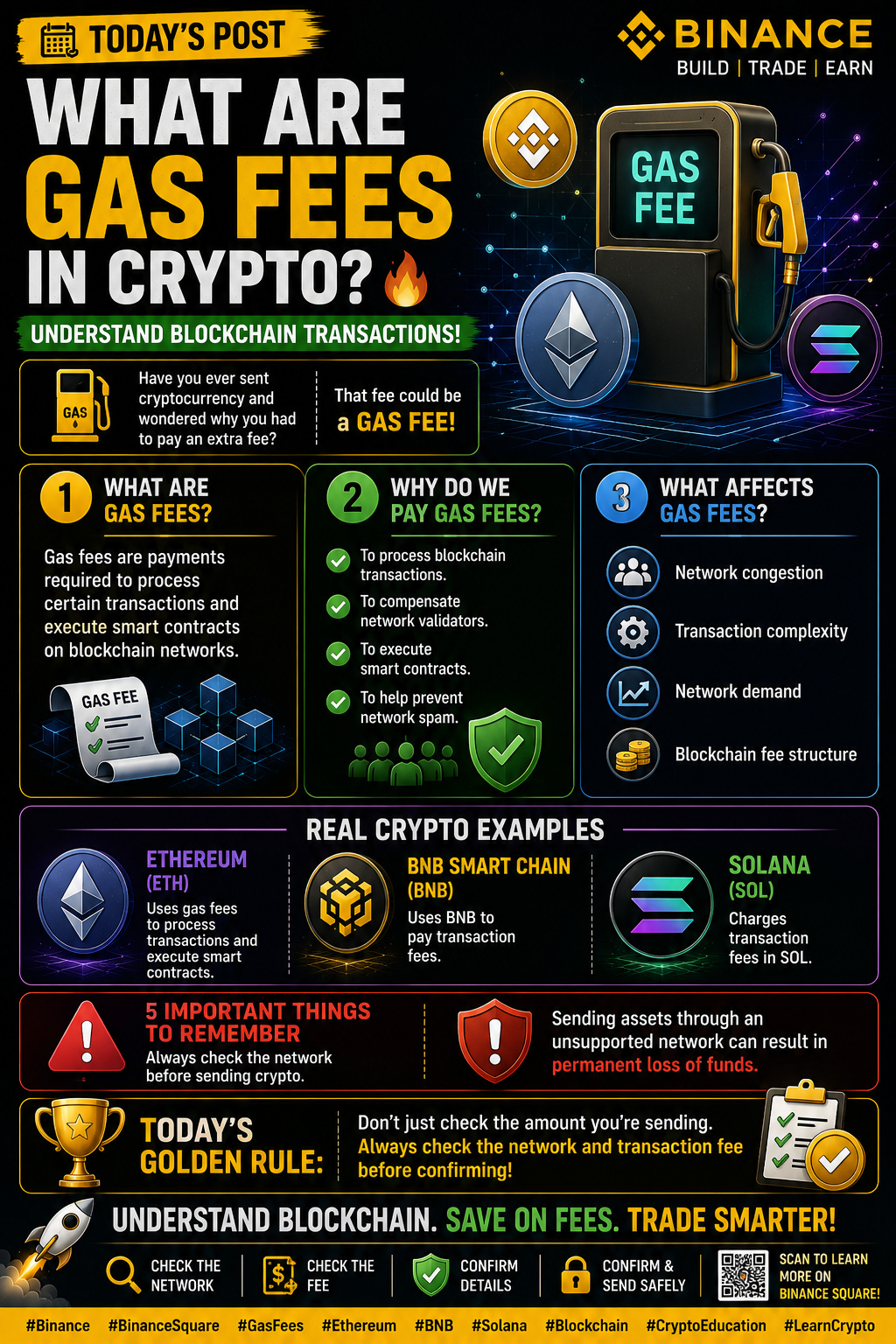
⛽ WHAT ARE GAS FEES IN CRYPTO? UNDERSTAND BLOCKCHAIN TRANSACTIONS!
Have you ever sent cryptocurrency and wondered why you had to pay an extra fee?
That fee could be a GAS FEE!
Let's understand how it works. 👇
🔥 1. WHAT ARE GAS FEES?
Gas fees are payments required to process certain transactions and execute smart contracts on blockchain networks.
⚙️ 2. WHY DO WE PAY GAS FEES?
🔹 To process blockchain transactions.
🔹 To compensate network validators.
🔹 To execute smart contracts.
🔹 To help prevent network spam.
📊 3. WHAT AFFECTS GAS FEES?
- Network congestion
- Transaction complexity
- Network demand
- Blockchain fee structure
💡 4. REAL CRYPTO EXAMPLES
🔹 Ethereum ($ETH ): Uses gas fees to process transactions and execute smart contracts.
🔹 BNB Smart Chain ($BNB ): Uses BNB to pay transaction fees.
🔹 Solana ($SOL ): Charges transaction fees in SOL.
⚠️ 5. IMPORTANT THINGS TO REMEMBER
Always check the network before sending crypto.
Sending assets through an unsupported network can result in permanent loss of funds.
🏆 TODAY'S GOLDEN RULE:
Don't just check the amount you're sending. Always check the network and transaction fee before confirming!
🚀 Understand Blockchain. Save on Fees. Trade Smarter!
#gasfees #Ethereum✅ #BNB #solana #blockchain
135

·
--
Article
Ever wondered what you are really paying for when a wallet shows a "gas fee"?Gas is the cost of asking a blockchain's validators to do work for you. Every action uses computation: a simple transfer is light, while a swap, a mint, or an interaction with a complex smart contract uses much more. That is why the same wallet can show very different fees for different actions on the same day.
On chains like BNB Smart Chain, the fee is paid in $BNB . On Ethereum, it is paid in $ETH . So even if you only want to move a stablecoin or a meme token, you still need a small balance of the chain's native coin, or the transaction will not go through.
A few practical habits:
- Keep a little native coin in every wallet you use, just for fees.
- A failed transaction can still cost gas, because the network did the work before it reverted.
- If a fee looks far higher than usual for a simple action, stop and check what you are actually signing.
- Be careful with "gas refund" or "free gas" offers from strangers; that is a common scam hook.
Understanding gas will not make you rich, but it will save you from confusing failed transactions and wasted fees.
What is the most confusing fee you have ever seen in your wallet?
Not financial advice. DYOR.
#GasFees #CryptoBasics #Web3 #BNBChain
Ever wondered what you are really paying for when a wallet shows a "gas fee"?
Gas is the cost of asking a blockchain's validators to do work for you. Every action uses computation: a simple transfer is light, while a swap, a mint, or an interaction with a complex smart contract uses much more. That is why the same wallet can show very different fees for different actions on the same day.
On chains like BNB Smart Chain, the fee is paid in $BNB . On Ethereum, it is paid in $ETH . So even if you only want to move a stablecoin or a meme token, you still need a small balance of the chain's native coin, or the transaction will not go through.
A few practical habits:
- Keep a little native coin in every wallet you use, just for fees.
- A failed transaction can still cost gas, because the network did the work before it reverted.
- If a fee looks far higher than usual for a simple action, stop and check what you are actually signing.
- Be careful with "gas refund" or "free gas" offers from strangers; that is a common scam hook.
Understanding gas will not make you rich, but it will save you from confusing failed transactions and wasted fees.
What is the most confusing fee you have ever seen in your wallet?
Not financial advice. DYOR.
#GasFees #CryptoBasics #Web3 #BNBChain
106

·
--
Article
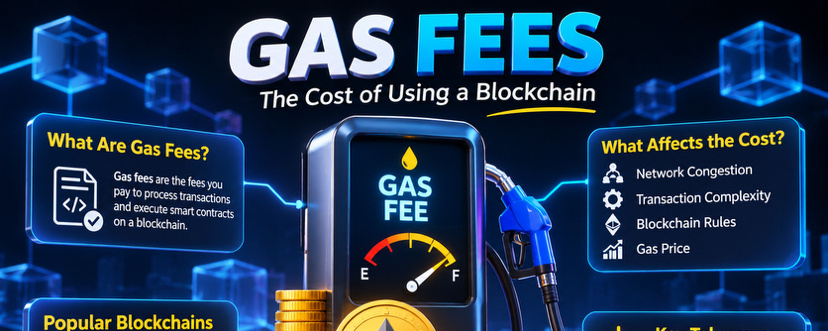
WHY DO YOU HAVE TO PAY A FEE TO USE SOME BLOCKCHAINS? ⛽Ever tried sending crypto or using a smart contract and noticed a transaction fee?
That fee is often called a gas fee.
Let’s simplify it.
What is gas?
On networks such as Ethereum, gas measures the computational work required to execute transactions and smart-contract operations.
The more complex an operation, the more gas it may require.
Why do gas fees exist?
Transaction fees help compensate for network resources and, depending on the blockchain, contribute to security and spam prevention.
They also help manage demand when network capacity is limited.
What affects the cost?
🔹 Network congestion
🔹 Computational complexity
🔹 The network’s fee mechanism
🔹 The current price of the fee-paying asset
A simple transfer and a complex smart-contract interaction may have very different costs.
Is every blockchain fee the same?
No.
Different networks use different fee systems, and some require different assets to pay transaction fees.
For example, Ethereum mainnet fees are generally paid in ETH, while BNB Smart Chain uses BNB for gas.
What should beginners remember?
Always check which network you are using, whether the recipient supports it and what fee will be charged.
Sending an asset on the wrong network can lead to loss or difficult recovery.
Takeaway: Transaction fees are part of how blockchain networks operate. Understanding them helps you use crypto more responsibly.
#gasfees #Ethereum #BNBChain #blockchain #cryptoeducation
WHY DO YOU HAVE TO PAY A FEE TO USE SOME BLOCKCHAINS? ⛽
Ever tried sending crypto or using a smart contract and noticed a transaction fee?
That fee is often called a gas fee.
Let’s simplify it.
What is gas?
On networks such as Ethereum, gas measures the computational work required to execute transactions and smart-contract operations.
The more complex an operation, the more gas it may require.
Why do gas fees exist?
Transaction fees help compensate for network resources and, depending on the blockchain, contribute to security and spam prevention.
They also help manage demand when network capacity is limited.
What affects the cost?
🔹 Network congestion
🔹 Computational complexity
🔹 The network’s fee mechanism
🔹 The current price of the fee-paying asset
A simple transfer and a complex smart-contract interaction may have very different costs.
Is every blockchain fee the same?
No.
Different networks use different fee systems, and some require different assets to pay transaction fees.
For example, Ethereum mainnet fees are generally paid in ETH, while BNB Smart Chain uses BNB for gas.
What should beginners remember?
Always check which network you are using, whether the recipient supports it and what fee will be charged.
Sending an asset on the wrong network can lead to loss or difficult recovery.
Takeaway: Transaction fees are part of how blockchain networks operate. Understanding them helps you use crypto more responsibly.
#gasfees #Ethereum #BNBChain #blockchain #cryptoeducation
1
117

·
--
Visa 扎心了:宅家经济看着香,但便利费和冲动剁手反而让你更穷,这简直就是链上交易的翻版。天天闷头交易,结果 Gas 费和滑点把利润全吃干抹净,不如出门赚点“链下”钱。
$ETH $SOL #Crypto #GasFees
Visa 扎心了:宅家经济看着香,但便利费和冲动剁手反而让你更穷,这简直就是链上交易的翻版。天天闷头交易,结果 Gas 费和滑点把利润全吃干抹净,不如出门赚点“链下”钱。
$ETH $SOL #Crypto #GasFees
$ETH $SOL #Crypto #GasFees

16
Gas fees are transaction costs paid to process operations on certain blockchain networks.
Fees can vary depending on network activity.
#Ethereum #gasfees #HongKongEnablesRoundTheClockTokenizedSettlement #ETHFalls16.1%InOctober #IndiaRBIAndFIUReviewOverseasCryptoCards
Gas fees are transaction costs paid to process operations on certain blockchain networks.
Fees can vary depending on network activity.
#Ethereum #gasfees #HongKongEnablesRoundTheClockTokenizedSettlement #ETHFalls16.1%InOctober #IndiaRBIAndFIUReviewOverseasCryptoCards
Fees can vary depending on network activity.
#Ethereum #gasfees #HongKongEnablesRoundTheClockTokenizedSettlement #ETHFalls16.1%InOctober #IndiaRBIAndFIUReviewOverseasCryptoCards
605

·
--
Verified
Ethereum Transforms Slash Gas Fees to Pennies in Historic 2026 Upgrade
Ethereum has achieved a breakthrough milestone, reducing average transaction fees from $50 to mere cents: developers attribute this to the Dencun upgrade and widespread Layer 2 adoption.
Network congestion dropped significantly as activity migrated to rollup-based scaling solutions, with mainnet now serving primarily as a settlement layer. Users on Arbitrum, Optimism, and Base now pay under $0.10 per transaction.
Analysts note this shift strengthens Ethereum's position as the foundation for institutional DeFi and real-world asset tokenization, while keeping everyday transactions affordable for retail users.
Is this the awakening Ethereum holders have awaited? Share your perspective below. 👇
#Ethereum #GasFees #CryptoLayer2
69

·
--
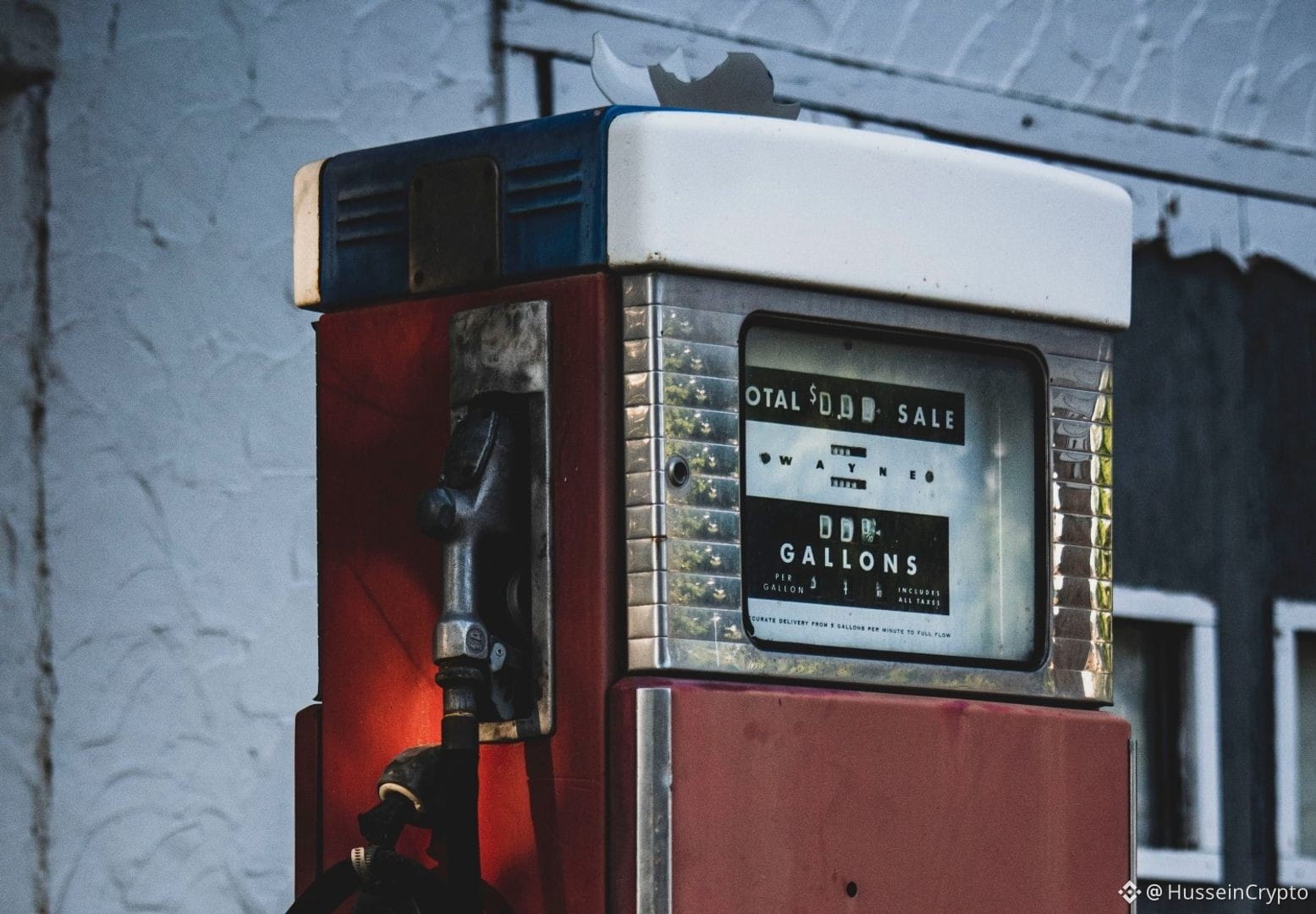
Ethereum’s next upgrade breaks the old '21,000 gas' baseline wallets have relied on. Sending ETH to a brand-new address will cost more than sending to an existing one, and software built around a flat fee will get the sum wrong. Expect wallets and dapps to adapt to more dynamic gas behavior. $ETH #Ethereum #GasFees #CryptoNews
Ethereum’s next upgrade breaks the old '21,000 gas' baseline wallets have relied on. Sending ETH to a brand-new address will cost more than sending to an existing one, and software built around a flat fee will get the sum wrong. Expect wallets and dapps to adapt to more dynamic gas behavior. $ETH #Ethereum #GasFees #CryptoNews
26

·
--
Why Gas Fees on Blockchain Networks Rise and FallGas fees are the cost users pay to have their transactions included in a blockchain block. They compensate the network for the computational resources required to validate and store the data. Most networks set a base fee per unit of work, often called gas, and add a tip to encourage quick inclusion. When many participants are competing for limited block space, the price of each unit rises; when activity subsides, the price falls.
Transaction complexity matters: a simple transfer uses less gas than a smart‑contract interaction, so larger scripts can increase the total fee. Network congestion is a primary driver. During periods of high trading volume on $ETH, for example, demand for block space spikes and fees climb. Conversely, during quieter intervals the same network may see lower costs. On $BTC, the fee market is influenced by block size and transaction weight, while networks such as $SOL may experience different fee patterns due to their consensus design.
Block size limits and the algorithm that adjusts difficulty also influence fee dynamics. Some chains employ a market‑based mechanism where users bid for priority, while others rely on a fixed schedule that changes based on usage. Practical steps for managing fees include checking real‑time estimators, batching multiple operations into a single transaction, and timing submissions when the network is less busy.
Warning signs to watch for include sudden fee jumps, long pending periods, and estimates that exceed typical ranges, which may indicate an upcoming congestion event. Balanced view: while fees reflect the cost of securing the network, they can also create barriers for small participants. Understanding the underlying supply‑and‑demand forces helps users plan interactions more predictably.
In practice, traders often monitor congestion dashboards and may delay transactions until after peak periods. Developers sometimes implement adaptive fee logic that selects an appropriate gas price based on current network conditions.
#GasFees #Blockchain #CryptoEducation
This article was produced with AI assistance; it is not financial advice. Always do your own research (DYOR).
Why Gas Fees on Blockchain Networks Rise and Fall
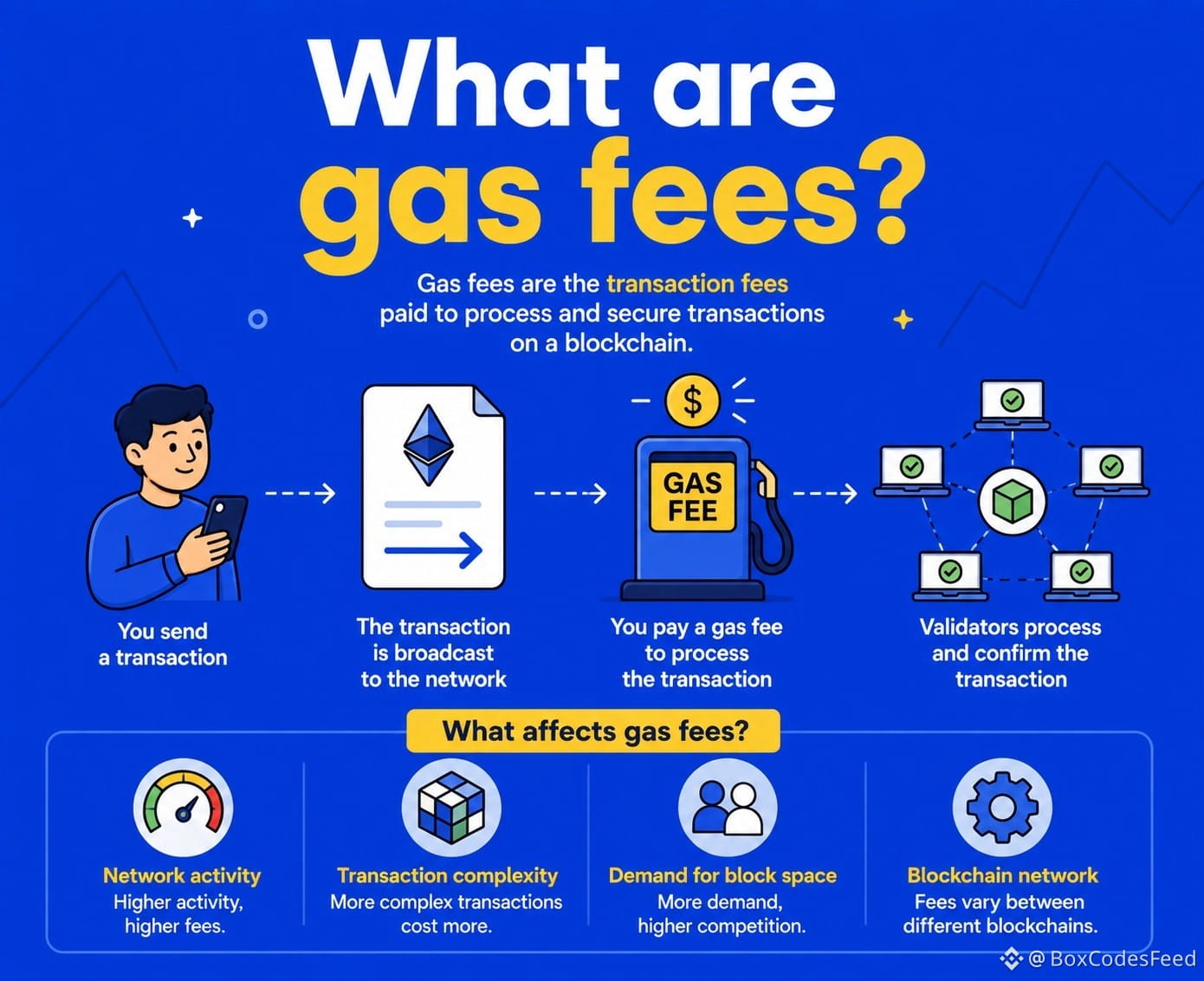
Gas fees are the cost users pay to have their transactions included in a blockchain block. They compensate the network for the computational resources required to validate and store the data. Most networks set a base fee per unit of work, often called gas, and add a tip to encourage quick inclusion. When many participants are competing for limited block space, the price of each unit rises; when activity subsides, the price falls.
Transaction complexity matters: a simple transfer uses less gas than a smart‑contract interaction, so larger scripts can increase the total fee. Network congestion is a primary driver. During periods of high trading volume on $ETH , for example, demand for block space spikes and fees climb. Conversely, during quieter intervals the same network may see lower costs. On $BTC , the fee market is influenced by block size and transaction weight, while networks such as $SOL may experience different fee patterns due to their consensus design.
Block size limits and the algorithm that adjusts difficulty also influence fee dynamics. Some chains employ a market‑based mechanism where users bid for priority, while others rely on a fixed schedule that changes based on usage. Practical steps for managing fees include checking real‑time estimators, batching multiple operations into a single transaction, and timing submissions when the network is less busy.
Warning signs to watch for include sudden fee jumps, long pending periods, and estimates that exceed typical ranges, which may indicate an upcoming congestion event. Balanced view: while fees reflect the cost of securing the network, they can also create barriers for small participants. Understanding the underlying supply‑and‑demand forces helps users plan interactions more predictably.
In practice, traders often monitor congestion dashboards and may delay transactions until after peak periods. Developers sometimes implement adaptive fee logic that selects an appropriate gas price based on current network conditions.
#GasFees #Blockchain #CryptoEducation
This article was produced with AI assistance; it is not financial advice. Always do your own research (DYOR).
94


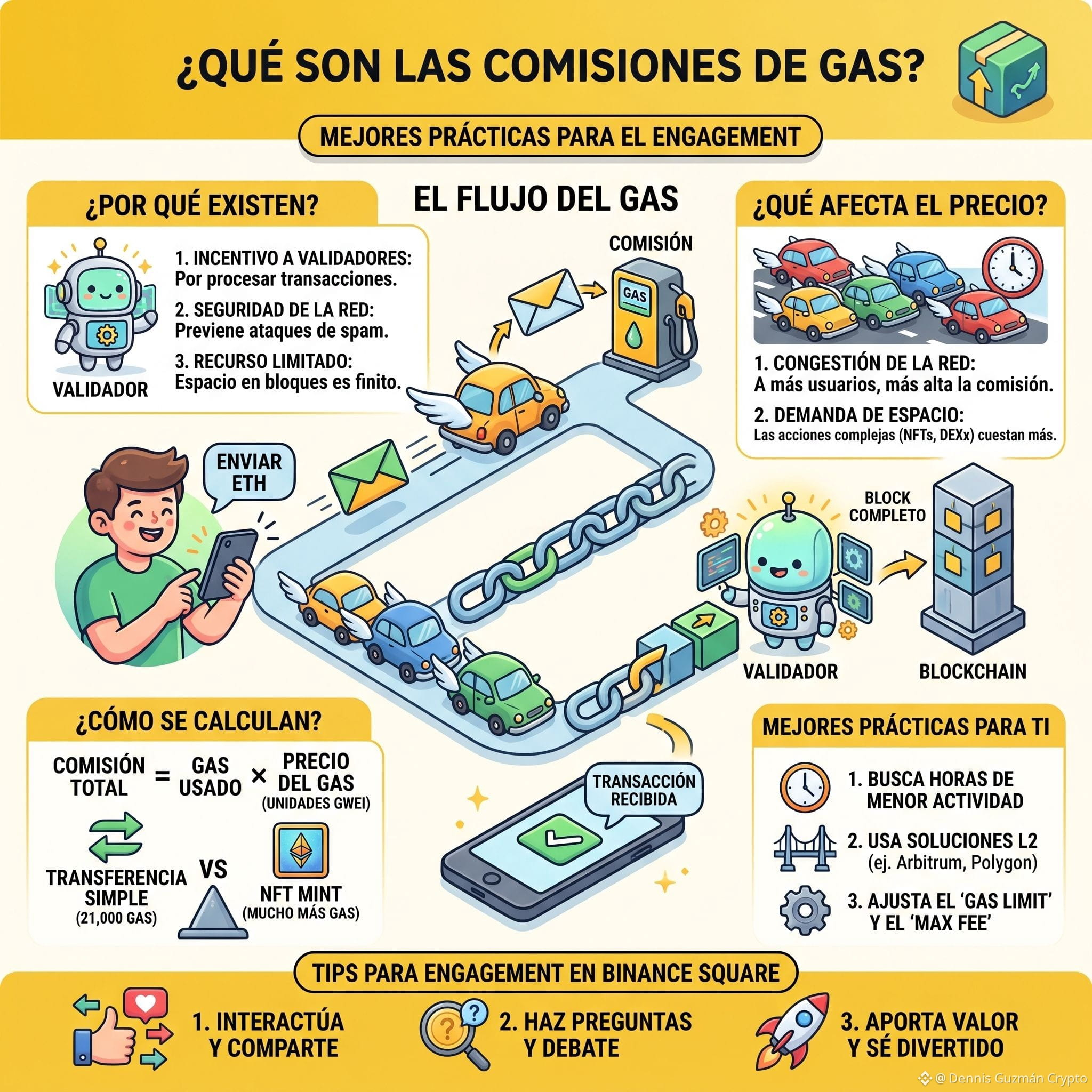
Las comisiones de gas son el costo que los usuarios pagan para realizar determinadas operaciones dentro de una blockchain.
En Ethereum, por ejemplo, estas comisiones ayudan a compensar los recursos necesarios para procesar transacciones y ejecutar contratos inteligentes.
El costo puede variar según la demanda de la red.
Cuando muchas personas quieren utilizar Ethereum al mismo tiempo, las comisiones pueden aumentar.
Por eso, el “gas” es un concepto importante para entender el funcionamiento de $ETH y las aplicaciones construidas sobre su red.
#Ethereum #gasfees
1
91

·
--
¿Cansado de que las comisiones se coman tus ganancias cripto? 📉 Te enseño a reducirlas al mínimo con estos 4 trucos clave.
El "Gas Fee" es simplemente el peaje que pagas a los validadores por procesar tu transacción en la blockchain. Si hay mucha congestión en la red, el precio sube.
Para dejar de regalar tu dinero en comisiones, aplica estas estrategias:
Opera en horas de bajo tráfico: Transaccionar durante los fines de semana o en la madrugada puede ahorrarte hasta un 50% en comisiones.
Utiliza Capas 2 (Layer 2) y redes eficientes: En lugar de la red principal de Ethereum, migra tus fondos a redes como Arbitrum, Optimism, Base, BNB Chain o Solana. Son ultra rápidas y cuestan centavos.
Revisa un Gas Tracker: Consulta herramientas en vivo (como Etherscan Gas Tracker) antes de operar para saber si estás pagando en un pico de precio o en un momento de descuento.
Agrupa tus transacciones: Evita los micro-movimientos. Hacer una sola transacción grande es mucho más barato que hacer diez pequeñas, ya que optimizas el coste fijo por envío.
No dejes que la impaciencia consuma tu portafolio. ¡Aprende a mover tu dinero de forma inteligente! 🧠
💬 Debatamos en los comentarios: ¿Cuál ha sido la comisión más absurda o dolorosa que te han cobrado en tu historia cripto? ¡Te leo! 👇
🚀 ¿Te aportó valor? Dale me gusta, comparte este post y sígueme para más guías de optimización y análisis de mercado. ¡Hagamos crecer ese portafolio juntos. #GasFees #Layer2 #CryptoTips #Blockchain #EducacionFinanciera

346
·
--
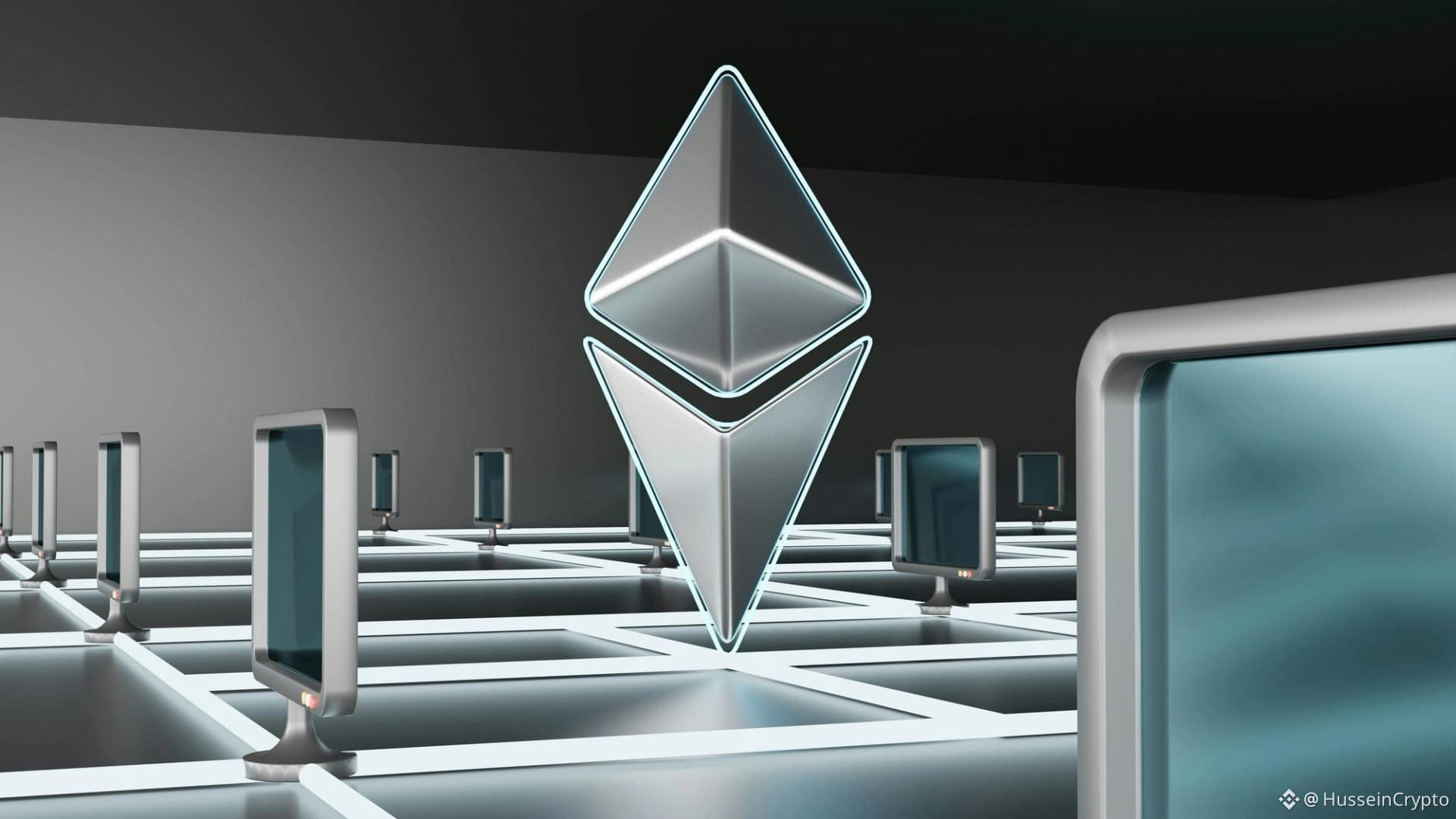
Ethereum moves toward paying gas without needing to hold ETH. The Frame Transactions feature, locked into the Hegóta upgrade last month, is progressing quickly, says Vitalik Buterin. A potential game-changer for onboarding and DeFi access. $ETH #Ethereum #GasFees
Ethereum moves toward paying gas without needing to hold ETH. The Frame Transactions feature, locked into the Hegóta upgrade last month, is progressing quickly, says Vitalik Buterin. A potential game-changer for onboarding and DeFi access. $ETH #Ethereum #GasFees
38

Crypto 101: What's a gas fee?
Ok, gas fee. Sounds like a car thing, but nah- think of it as a toll for using the blockchain. Every time you send crypto or touch an app on-chain, someone's computer has to actually process that transaction. The fee is what pays them for the work.
And here's the thing - it's not the exchange charging you, it goes straight to the network. That's why fees spike when things get busy. More people trying to squeeze through, higher toll to skip the line. Same transaction, cents one day, dollars the next. Annoying but that's just how it works.
$ETH $BNB $USDC
#Cryptollegiate
#CryptoForBeginners
#CryptoBasics
#GasFees
{spot}(BNBUSDT)
{spot}(ETHUSDT)
{spot}(USDCUSDT)
Crypto 101: What's a gas fee?
Ok, gas fee. Sounds like a car thing, but nah- think of it as a toll for using the blockchain. Every time you send crypto or touch an app on-chain, someone's computer has to actually process that transaction. The fee is what pays them for the work.
And here's the thing - it's not the exchange charging you, it goes straight to the network. That's why fees spike when things get busy. More people trying to squeeze through, higher toll to skip the line. Same transaction, cents one day, dollars the next. Annoying but that's just how it works.
$ETH $BNB $USDC
#Cryptollegiate
#CryptoForBeginners
#CryptoBasics
#GasFees
82

⚡ Gas Fees Explained: The cost of keeping blockchains running
On August 1, 2026, Gas fees are payments made to network validators for processing transactions. They spike when demand for blockspace is high — which is why fees on busy networks can dwarf the transaction itself.
Ethereum $ETH, with $7.95B in daily volume, is the reference case: its fee market prices congestion directly into every transaction.
📌 Key Takeaway:
Gas fees are supply and demand for security. Understanding when networks are congested — and why fees vary — is essential for anyone using blockchains regularly.
#GasFees #CryptoEducation
#BinanceAlphaAlert
⚡ Gas Fees Explained: The cost of keeping blockchains running
On August 1, 2026, Gas fees are payments made to network validators for processing transactions. They spike when demand for blockspace is high — which is why fees on busy networks can dwarf the transaction itself.
Ethereum $ETH , with $7.95B in daily volume, is the reference case: its fee market prices congestion directly into every transaction.
📌 Key Takeaway:
Gas fees are supply and demand for security. Understanding when networks are congested — and why fees vary — is essential for anyone using blockchains regularly.
#GasFees #CryptoEducation
#BinanceAlphaAlert
25

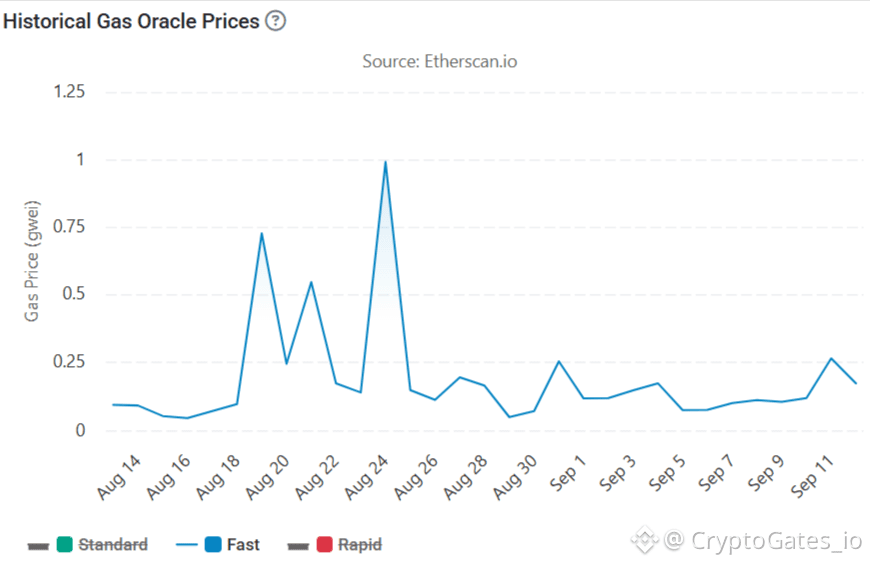
$ETH : Ethereum gas fees have dropped to multi-week lows, standard transactions currently at 0.053 gwei
Lower gas often lines up with reduced on-chain demand, fewer swaps and contract calls happening compared to a few weeks ago when fees briefly touched near 1 gwei.
For active traders, this is also a low-cost window for executing on-chain strategy adjustments.
Execution cost is part of the equation, not just entry price.
#Ethereum #GasFees #OnChainMetrics
75

·
--
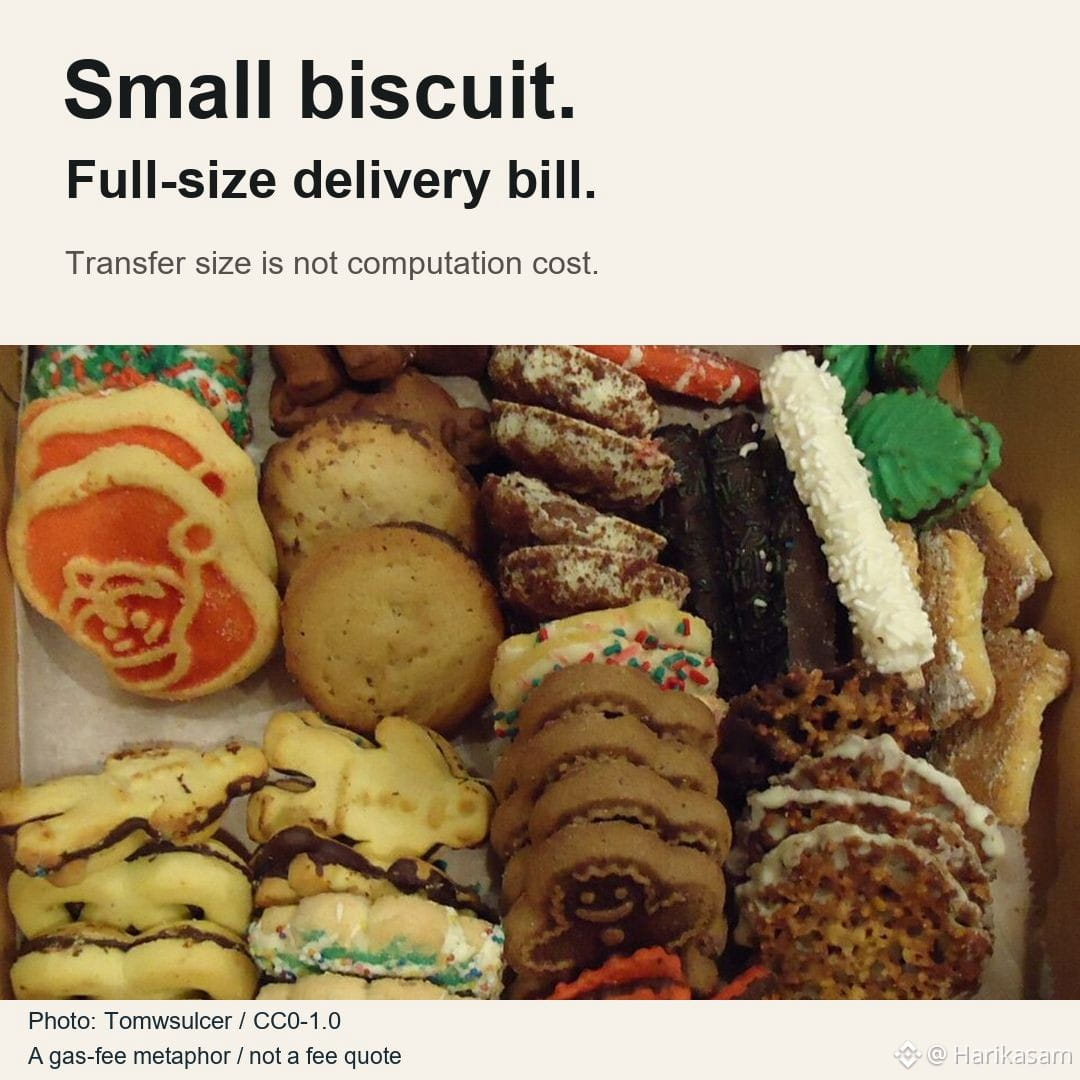
A tiny onchain transfer can come with a surprisingly independent delivery bill. The biscuit is small; the van remains a van.
Ethereum's execution fee depends on the gas used and the price per gas, rather than simply the amount sent. More complex operations can require more computation.
Check the estimated total before signing, especially for small transfers. Sending less doesn't automatically make the computation cheaper.
https://ethereum.org/developers/docs/gas/
$ETH
#Ethereum #GasFees
34

·
--
Article
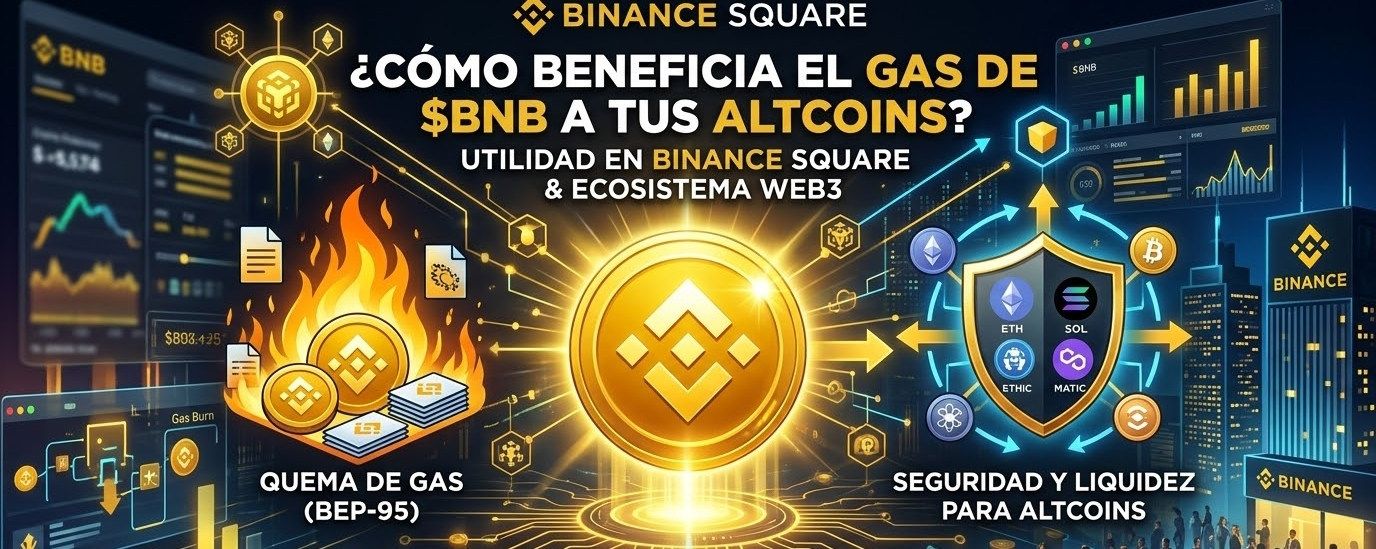
¿El Gas en BNB Chain es un gasto o un motor económico para tus Altcoins? 🌐Cuando realizas una transferencia o interactúas con un protocolo DeFi en BNB Smart Chain (BSC), pagas una pequeña tarifa en $BNB denominada Gas. A simple vista parece un costo operativo, pero en la economía tokenómica, el Gas es el combustible que respalda el valor de cientos de otras monedas.
Aquí te explico cómo las comisiones de red benefician a todo el ecosistema Web3:
1. El Mecanismo BEP-95: Deflación en tiempo real 🔥
Desde la implementación del BEP-95, cada vez que alguien paga Gas en la red, una porción fija de esa comisión se quema en tiempo real y desaparece para siempre.
Efecto positivo: Al reducir la oferta circulante de $BNB en cada bloque, se fortalece la moneda base sobre la cual cotizan miles de altcoins y tokens dentro de la red.
2. Recompensas para Validadores y Stakers 🛡️
Las comisiones no quemadas se distribuyen entre los validadores que procesan las transacciones y los usuarios que delegan sus $BNB (Staking).
Beneficio: Esto mantiene la red 100% segura y rápida para interactuar con tokens de proyectos DeFi, Gaming y NFTs sin sufrir caídas o ataques.
3. Sostenibilidad para la Liquidez de Altcoins 💧
Al mantener comisiones de Gas de apenas centavos de dólar a diferencia de otras redes, las aplicaciones descentralizadas (DApps) atraen mayor volumen.
Impacto en tus otras criptos: Un costo de transacción ultra bajo permite que la gente comercie tokens de menor capitalización (meme coins, utilitarios o proyectos Web3) sin que el costo de la red consuma sus ganancias.
4. Expansión a Redes Layer-2 (opBNB y Greenfield) ⚡
El modelo de Gas de $BNB impulsa el desarrollo de soluciones de capa 2 como opBNB, reduciendo aún más las comisiones a fracciones de centavo. Esto facilita el uso masivo de microtransacciones en videojuegos y redes sociales cripto.
💡 En conclusión: Pagar una fracción de Gas en $BNB no es una pérdida, es la inyección de valor que mantiene segura la red, quemando suministro continuamente y dando liquidez eficiente a todo tu portafolio.
💬 ¿En qué red sueles pagar más comisiones y qué opinas de los costos en BSC y opBNB? ¡Déjamelo saber en los comentarios!
👇 Si este análisis técnico te sirvió para entender mejor la economía de la red, apoya la publicación con un Me Gusta, Sígueme para más contenido educativo, ¡y considera dejar una pequeña Propinita para continuar analizando el mercado! 💛
#BNB #GasFees #CryptoEducation #BinanceSquare
{spot}(BNBUSDT)
{alpha}(560x44440f83419de123d7d411187adb9962db017d03)
¿El Gas en BNB Chain es un gasto o un motor económico para tus Altcoins? 🌐
Cuando realizas una transferencia o interactúas con un protocolo DeFi en BNB Smart Chain (BSC), pagas una pequeña tarifa en $BNB denominada Gas. A simple vista parece un costo operativo, pero en la economía tokenómica, el Gas es el combustible que respalda el valor de cientos de otras monedas.
Aquí te explico cómo las comisiones de red benefician a todo el ecosistema Web3:
1. El Mecanismo BEP-95: Deflación en tiempo real 🔥
Desde la implementación del BEP-95, cada vez que alguien paga Gas en la red, una porción fija de esa comisión se quema en tiempo real y desaparece para siempre.
Efecto positivo: Al reducir la oferta circulante de $BNB en cada bloque, se fortalece la moneda base sobre la cual cotizan miles de altcoins y tokens dentro de la red.
2. Recompensas para Validadores y Stakers 🛡️
Las comisiones no quemadas se distribuyen entre los validadores que procesan las transacciones y los usuarios que delegan sus $BNB (Staking).
Beneficio: Esto mantiene la red 100% segura y rápida para interactuar con tokens de proyectos DeFi, Gaming y NFTs sin sufrir caídas o ataques.
3. Sostenibilidad para la Liquidez de Altcoins 💧
Al mantener comisiones de Gas de apenas centavos de dólar a diferencia de otras redes, las aplicaciones descentralizadas (DApps) atraen mayor volumen.
Impacto en tus otras criptos: Un costo de transacción ultra bajo permite que la gente comercie tokens de menor capitalización (meme coins, utilitarios o proyectos Web3) sin que el costo de la red consuma sus ganancias.
4. Expansión a Redes Layer-2 (opBNB y Greenfield) ⚡
El modelo de Gas de $BNB impulsa el desarrollo de soluciones de capa 2 como opBNB, reduciendo aún más las comisiones a fracciones de centavo. Esto facilita el uso masivo de microtransacciones en videojuegos y redes sociales cripto.
💡 En conclusión: Pagar una fracción de Gas en $BNB no es una pérdida, es la inyección de valor que mantiene segura la red, quemando suministro continuamente y dando liquidez eficiente a todo tu portafolio.
💬 ¿En qué red sueles pagar más comisiones y qué opinas de los costos en BSC y opBNB? ¡Déjamelo saber en los comentarios!
👇 Si este análisis técnico te sirvió para entender mejor la economía de la red, apoya la publicación con un Me Gusta, Sígueme para más contenido educativo, ¡y considera dejar una pequeña Propinita para continuar analizando el mercado! 💛
#BNB #GasFees #CryptoEducation #BinanceSquare
1
323
Log in to explore more content
Join global crypto users on Binance Square
⚡️ Get latest and useful information about crypto.
💬 Trusted by the world’s largest crypto exchange.
👍 Discover real insights from verified creators.
Email / Phone number
Trending Topics
1
#NVDASoarsOnJensenReturn
2,963 views
82 Discussing
2
#Bitcoin'sReboundFadesBelow$60K
13,333 views
160 Discussing
3
#NVIDIAReinstatesJensenHuangasCEO
280,274 views
1,822 Discussing
4
#WillMarketsStageAThanksgivingReliefRally?
351,038 views
2,528 Discussing
5
#WillOctCorePCEShiftFedHikeExpectations?
127,807 views
1,260 Discussing
6
#EvolveAtBinanceBlockchainWeek
249,869 views
1,575 Discussing
7
#SouthKoreaBeginsCryptoProviderShareholderReviews
6,868 views
139 Discussing
8
#USAddsMegaspeedToEntityList
13,565 views
218 Discussing
9
#GrayscaleLaunches2xLeveragedZcashETF
7,233 views
137 Discussing
10
#StrategyValueFallsBelowItsBitcoinHoldings
6,278 views
138 Discussing