

#defi
defi
57M views
299,800 Discussing
Hot
Latest

·
--
📢 Major crypto market maker GSR is committing $100 million (primarily as a credit facility) to launch a new on-chain business called Hare.
Hare will build and manage on-chain credit vaults in partnership with Turtle. The main goal is to bridge institutional capital with decentralized finance (DeFi) infrastructure.
At launch, there will be two investment vaults built on the architecture of the popular lending protocol Aave:
- A pool for deploying leading dollar stablecoins to generate yield.
- A joint product with Paxos Labs that will, for the first time, allow holders of tokenized gold (PAXG and PAXGy) to earn passive interest yield on their assets.
According to Hare CEO Connor Milner, the $100 million from GSR acts as anchor liquidity. This ensures the vaults operate smoothly from day one and signals to external allocators that GSR is risking its own capital in the same pools.
The launch of Hare highlights the surging demand for on-chain credit and tokenized real-world assets (RWA). The smart contract industry for wealth management is expanding rapidly; as of July, roughly $8.6 billion was already locked in such vaults.
In a broader context, this move demonstrates how traditional institutional market makers are transitioning from simple crypto speculation to building complex credit products directly on the blockchain, replacing classic bank risk-management departments with software code.
#CRYPTO #RWA #BLOCKCHAIN #DEFI $PAXG $AAVE $TURTLE
{future}(TURTLEUSDT)
{future}(AAVEUSDT)
{future}(PAXGUSDT)
📢 Major crypto market maker GSR is committing $100 million (primarily as a credit facility) to launch a new on-chain business called Hare.
Hare will build and manage on-chain credit vaults in partnership with Turtle. The main goal is to bridge institutional capital with decentralized finance (DeFi) infrastructure.
At launch, there will be two investment vaults built on the architecture of the popular lending protocol Aave:
- A pool for deploying leading dollar stablecoins to generate yield.
- A joint product with Paxos Labs that will, for the first time, allow holders of tokenized gold (PAXG and PAXGy) to earn passive interest yield on their assets.
According to Hare CEO Connor Milner, the $100 million from GSR acts as anchor liquidity. This ensures the vaults operate smoothly from day one and signals to external allocators that GSR is risking its own capital in the same pools.
The launch of Hare highlights the surging demand for on-chain credit and tokenized real-world assets (RWA). The smart contract industry for wealth management is expanding rapidly; as of July, roughly $8.6 billion was already locked in such vaults.
In a broader context, this move demonstrates how traditional institutional market makers are transitioning from simple crypto speculation to building complex credit products directly on the blockchain, replacing classic bank risk-management departments with software code.
#CRYPTO #RWA #BLOCKCHAIN #DEFI $PAXG $AAVE $TURTLE
Hare will build and manage on-chain credit vaults in partnership with Turtle. The main goal is to bridge institutional capital with decentralized finance (DeFi) infrastructure.
At launch, there will be two investment vaults built on the architecture of the popular lending protocol Aave:
- A pool for deploying leading dollar stablecoins to generate yield.
- A joint product with Paxos Labs that will, for the first time, allow holders of tokenized gold (PAXG and PAXGy) to earn passive interest yield on their assets.
According to Hare CEO Connor Milner, the $100 million from GSR acts as anchor liquidity. This ensures the vaults operate smoothly from day one and signals to external allocators that GSR is risking its own capital in the same pools.
The launch of Hare highlights the surging demand for on-chain credit and tokenized real-world assets (RWA). The smart contract industry for wealth management is expanding rapidly; as of July, roughly $8.6 billion was already locked in such vaults.
In a broader context, this move demonstrates how traditional institutional market makers are transitioning from simple crypto speculation to building complex credit products directly on the blockchain, replacing classic bank risk-management departments with software code.
#CRYPTO #RWA #BLOCKCHAIN #DEFI $PAXG $AAVE $TURTLE
329

·
--
Bullish
🏛️📜 #defi Regulatory Breakthrough: Launch of Specialized Policy Center to Defend On-Chain Infrastructure! ⚖️🛡️
A crucial milestone is unfolding for the future of decentralized finance in the United States! The launch of a dedicated Policy Center in Washington, D.C., led by prominent crypto attorney Jake Chervinsky, marks a massive institutional push to shape the next chapter of DeFi regulation.
Funded by a major $28 Million commitment (1 Million tokens) from the ecosystem foundation, this initiative focuses on bridging the gap between blockchain innovation and global regulatory frameworks:
⚡ Smart Contract Protection: Developing clear, legal pathways for automated protocols, ensuring developers are not penalized for non-custodial software.
📊 Perpetual Derivatives Legal Framework: Designing transparent standards for on-chain "perps" and perpetual futures to bring them within compliant boundaries.
🌐 Next-Gen Exchange Infrastructure: Pushing the vision that traditional venues must adopt public blockchain rails within the next decade to remain globally competitive.
A strategic defense mechanism to ensure global financial innovation thrives under solid legal compliance! 🚀🔥
#crypto Regulation #Perpetuals #Web3 #TradFi #CryptoNews
$HYPE
{spot}(HYPEUSDT)
🏛️📜 #defi Regulatory Breakthrough: Launch of Specialized Policy Center to Defend On-Chain Infrastructure! ⚖️🛡️
A crucial milestone is unfolding for the future of decentralized finance in the United States! The launch of a dedicated Policy Center in Washington, D.C., led by prominent crypto attorney Jake Chervinsky, marks a massive institutional push to shape the next chapter of DeFi regulation.
Funded by a major $28 Million commitment (1 Million tokens) from the ecosystem foundation, this initiative focuses on bridging the gap between blockchain innovation and global regulatory frameworks:
⚡ Smart Contract Protection: Developing clear, legal pathways for automated protocols, ensuring developers are not penalized for non-custodial software.
📊 Perpetual Derivatives Legal Framework: Designing transparent standards for on-chain "perps" and perpetual futures to bring them within compliant boundaries.
🌐 Next-Gen Exchange Infrastructure: Pushing the vision that traditional venues must adopt public blockchain rails within the next decade to remain globally competitive.
A strategic defense mechanism to ensure global financial innovation thrives under solid legal compliance! 🚀🔥
#crypto Regulation #Perpetuals #Web3 #TradFi #CryptoNews
$HYPE
A crucial milestone is unfolding for the future of decentralized finance in the United States! The launch of a dedicated Policy Center in Washington, D.C., led by prominent crypto attorney Jake Chervinsky, marks a massive institutional push to shape the next chapter of DeFi regulation.
Funded by a major $28 Million commitment (1 Million tokens) from the ecosystem foundation, this initiative focuses on bridging the gap between blockchain innovation and global regulatory frameworks:
⚡ Smart Contract Protection: Developing clear, legal pathways for automated protocols, ensuring developers are not penalized for non-custodial software.
📊 Perpetual Derivatives Legal Framework: Designing transparent standards for on-chain "perps" and perpetual futures to bring them within compliant boundaries.
🌐 Next-Gen Exchange Infrastructure: Pushing the vision that traditional venues must adopt public blockchain rails within the next decade to remain globally competitive.
A strategic defense mechanism to ensure global financial innovation thrives under solid legal compliance! 🚀🔥
#crypto Regulation #Perpetuals #Web3 #TradFi #CryptoNews
$HYPE


Good luck 🍀
From OnionSam
155

Solana's DEX giant Orca is teaming up with Loopscale to form 'Formation,' shifting focus toward heavy-duty sectors like AI, energy, robotics, and defense. This is a massive evolution for DeFi, bridging crypto liquidity with real-world infrastructure and high-tech hardware. Instead of just swapping tokens, Solana protocols are now positioning themselves to fund the physical future. It’s a bold strategic pivot that could redefine how decentralized finance impacts traditional industries moving forward. $SOL #Solana #DeFi #AI
Solana's DEX giant Orca is teaming up with Loopscale to form 'Formation,' shifting focus toward heavy-duty sectors like AI, energy, robotics, and defense. This is a massive evolution for DeFi, bridging crypto liquidity with real-world infrastructure and high-tech hardware. Instead of just swapping tokens, Solana protocols are now positioning themselves to fund the physical future. It’s a bold strategic pivot that could redefine how decentralized finance impacts traditional industries moving forward. $SOL #Solana #DeFi #AI
96

·
--
🚨 US REGULATORS EYE $DEFI AND $AI AS FUTURE INSTITUTIONAL FINANCIAL INFRASTRUCTURE! 💡
The paradigm is shifting as regulators acknowledge on-chain transparency over legacy opaque routing. 🏦 Verifiable order flow and open-source infrastructure are proving to be structural assets for market fairness rather than regulatory threats.
Meanwhile, AI integration is democratizing institutional-grade execution capabilities, allowing participants to build macro-driven strategies previously reserved for top fund managers. 📊 Establishing strict verification sandboxes will be the catalyst for safe capital deployment. 💬 Will verifiable on-chain architecture completely replace legacy settlement rails this decade? 👇
⚠️ Not financial advice. Always manage your risk. 🛡️
🏷️ #DEFI #AI #Institutional #Crypto #MarketStructure
🎯 🦈
🚨 US REGULATORS EYE $DEFI AND $AI AS FUTURE INSTITUTIONAL FINANCIAL INFRASTRUCTURE! 💡
The paradigm is shifting as regulators acknowledge on-chain transparency over legacy opaque routing. 🏦 Verifiable order flow and open-source infrastructure are proving to be structural assets for market fairness rather than regulatory threats.
Meanwhile, AI integration is democratizing institutional-grade execution capabilities, allowing participants to build macro-driven strategies previously reserved for top fund managers. 📊 Establishing strict verification sandboxes will be the catalyst for safe capital deployment. 💬 Will verifiable on-chain architecture completely replace legacy settlement rails this decade? 👇
⚠️ Not financial advice. Always manage your risk. 🛡️
🏷️ #DEFI #AI #Institutional #Crypto #MarketStructure
🎯 🦈
The paradigm is shifting as regulators acknowledge on-chain transparency over legacy opaque routing. 🏦 Verifiable order flow and open-source infrastructure are proving to be structural assets for market fairness rather than regulatory threats.
Meanwhile, AI integration is democratizing institutional-grade execution capabilities, allowing participants to build macro-driven strategies previously reserved for top fund managers. 📊 Establishing strict verification sandboxes will be the catalyst for safe capital deployment. 💬 Will verifiable on-chain architecture completely replace legacy settlement rails this decade? 👇
⚠️ Not financial advice. Always manage your risk. 🛡️
🏷️ #DEFI #AI #Institutional #Crypto #MarketStructure
🎯 🦈
22

·
--
Liquidity Fragmentation Is Crypto's Silent Tax
Every new L1 and L2 that launches adds capability — but also splits liquidity into smaller and smaller pools. Today, meaningful liquidity for the same asset often exists across $ETH mainnet, multiple rollups, $BNB Chain, and $SOL simultaneously. That fragmentation has a real cost.
Shallower pools mean wider spreads. Wider spreads mean worse execution. Worse execution is a hidden tax on every trade, every time.
Intent-based protocols and cross-chain aggregators are emerging as the infrastructure response. Instead of routing a swap through a single DEX on a single chain, intent solvers compete to fill your order using whatever liquidity path is cheapest — across chains, across venues, atomically. The user sees one price. The complexity happens underneath.
This is an underappreciated narrative. The protocols solving fragmentation don't need to win token wars — they become the plumbing everyone else relies on. Plumbing is durable.
Watch for: aggregator volume market share vs DEX direct volume, solver competition metrics, cross-chain bridge throughput, and intent protocol fee capture. When aggregator volume exceeds native DEX volume on a chain, fragmentation is losing.
The money follows efficiency. Fragmentation is a problem. Solutions to fragmentation are investments.
$ETH $BNB $SOL
#DeFi #Liquidity #CrossChain #CryptoInfrastructure #Web3
Liquidity Fragmentation Is Crypto's Silent Tax
Every new L1 and L2 that launches adds capability — but also splits liquidity into smaller and smaller pools. Today, meaningful liquidity for the same asset often exists across $ETH mainnet, multiple rollups, $BNB Chain, and $SOL simultaneously. That fragmentation has a real cost.
Shallower pools mean wider spreads. Wider spreads mean worse execution. Worse execution is a hidden tax on every trade, every time.
Intent-based protocols and cross-chain aggregators are emerging as the infrastructure response. Instead of routing a swap through a single DEX on a single chain, intent solvers compete to fill your order using whatever liquidity path is cheapest — across chains, across venues, atomically. The user sees one price. The complexity happens underneath.
This is an underappreciated narrative. The protocols solving fragmentation don't need to win token wars — they become the plumbing everyone else relies on. Plumbing is durable.
Watch for: aggregator volume market share vs DEX direct volume, solver competition metrics, cross-chain bridge throughput, and intent protocol fee capture. When aggregator volume exceeds native DEX volume on a chain, fragmentation is losing.
The money follows efficiency. Fragmentation is a problem. Solutions to fragmentation are investments.
$ETH $BNB $SOL
#DeFi #Liquidity #CrossChain #CryptoInfrastructure #Web3
Every new L1 and L2 that launches adds capability — but also splits liquidity into smaller and smaller pools. Today, meaningful liquidity for the same asset often exists across $ETH mainnet, multiple rollups, $BNB Chain, and $SOL simultaneously. That fragmentation has a real cost.
Shallower pools mean wider spreads. Wider spreads mean worse execution. Worse execution is a hidden tax on every trade, every time.
Intent-based protocols and cross-chain aggregators are emerging as the infrastructure response. Instead of routing a swap through a single DEX on a single chain, intent solvers compete to fill your order using whatever liquidity path is cheapest — across chains, across venues, atomically. The user sees one price. The complexity happens underneath.
This is an underappreciated narrative. The protocols solving fragmentation don't need to win token wars — they become the plumbing everyone else relies on. Plumbing is durable.
Watch for: aggregator volume market share vs DEX direct volume, solver competition metrics, cross-chain bridge throughput, and intent protocol fee capture. When aggregator volume exceeds native DEX volume on a chain, fragmentation is losing.
The money follows efficiency. Fragmentation is a problem. Solutions to fragmentation are investments.
$ETH $BNB $SOL
#DeFi #Liquidity #CrossChain #CryptoInfrastructure #Web3
57

·
--

Article
💵 bullish stup MET coin 🚀$MET — A Coin I’m Watching for the Bigger Picture
Meteora is more interesting to me than a simple short-term pump because it has an actual role within Solana DeFi.
The protocol focuses on liquidity infrastructure and combines different systems for decentralized trading, liquidity provision and token launches.
At around $0.34, MET is still far below its previous all-time high near $0.90.
If Meteora continues growing and Solana DeFi attracts more capital, I believe the market could eventually start pricing MET much higher.
My bullish roadmap would be:
$0.50 → $0.60 → $0.80 → $0.90 → $1
I’m not saying these levels will definitely be reached.
I’m saying the combination of a relatively small current market cap, meaningful trading volume, Solana DeFi exposure and a previous ~$0.90 ATH makes $MET an interesting coin to watch.
Sometimes the best opportunities are the projects people haven't started talking about everywhere yet.
$MET — keeping this one on my radar.
#MET #Meteora #Solana #DeFi
💵 bullish stup MET coin 🚀
$MET — A Coin I’m Watching for the Bigger Picture
Meteora is more interesting to me than a simple short-term pump because it has an actual role within Solana DeFi.
The protocol focuses on liquidity infrastructure and combines different systems for decentralized trading, liquidity provision and token launches.
At around $0.34, MET is still far below its previous all-time high near $0.90.
If Meteora continues growing and Solana DeFi attracts more capital, I believe the market could eventually start pricing MET much higher.
My bullish roadmap would be:
$0.50 → $0.60 → $0.80 → $0.90 → $1
I’m not saying these levels will definitely be reached.
I’m saying the combination of a relatively small current market cap, meaningful trading volume, Solana DeFi exposure and a previous ~$0.90 ATH makes $MET an interesting coin to watch.
Sometimes the best opportunities are the projects people haven't started talking about everywhere yet.
$MET — keeping this one on my radar.
#MET #Meteora #Solana #DeFi
Meteora is more interesting to me than a simple short-term pump because it has an actual role within Solana DeFi.
The protocol focuses on liquidity infrastructure and combines different systems for decentralized trading, liquidity provision and token launches.
At around $0.34, MET is still far below its previous all-time high near $0.90.
If Meteora continues growing and Solana DeFi attracts more capital, I believe the market could eventually start pricing MET much higher.
My bullish roadmap would be:
$0.50 → $0.60 → $0.80 → $0.90 → $1
I’m not saying these levels will definitely be reached.
I’m saying the combination of a relatively small current market cap, meaningful trading volume, Solana DeFi exposure and a previous ~$0.90 ATH makes $MET an interesting coin to watch.
Sometimes the best opportunities are the projects people haven't started talking about everywhere yet.
$MET — keeping this one on my radar.
#MET #Meteora #Solana #DeFi
16

·
--
$SOL Forget the surface-level noise on the timeline; the real edge right now is tracking the structural plumbing underneath the Solana ecosystem. While retail gets distracted by daily price swings around the 116.67 spot reference, on-chain metrics are telling a much deeper story about institutional adoption and capital efficiency.
Take a look at Solana DeFi. Total Value Locked has been climbing steadily, up 14 to 15 percent over the last 30 days and holding strong past the 6.5 billion dollar mark. That kind of sticky liquidity translates directly to network activity, with decentralized exchanges regularly pulling in billions in weekly volume and occasionally even outpacing Ethereum on 24-hour prints. What is fascinating is that this volume is increasingly tied to actual utility rather than just speculative memecoin churn.
Capital efficiency is also hitting a turning point through liquid staking and restaking narratives. Even with a high baseline staking ratio of 68 percent, only a fraction of that is currently liquid-staked, leaving massive room for expansion. Protocols like Jito, Marinade, and BlazeStake are locking in competitive yields while newer restaking layers like Solayer and advanced tip-routing mechanisms are transforming staked assets into cash-flowing machinery.
Supply-side dynamics are holding up surprisingly well against headwinds too. Even with scheduled token unlocks from bankruptcy estates hitting the market, whale flows show net accumulation over the past 24 hours, signaling that smart money is absorbing the supply without flinching. With inflation steadily tapering down toward its final 1.5 percent target, the long-term tokenomics are maturing right before our eyes.
What is your take on this? Are you leaning into liquid staking yields right now, or staying pure spot?
#DeFi #TVL
$SOL Forget the surface-level noise on the timeline; the real edge right now is tracking the structural plumbing underneath the Solana ecosystem. While retail gets distracted by daily price swings around the 116.67 spot reference, on-chain metrics are telling a much deeper story about institutional adoption and capital efficiency.
Take a look at Solana DeFi. Total Value Locked has been climbing steadily, up 14 to 15 percent over the last 30 days and holding strong past the 6.5 billion dollar mark. That kind of sticky liquidity translates directly to network activity, with decentralized exchanges regularly pulling in billions in weekly volume and occasionally even outpacing Ethereum on 24-hour prints. What is fascinating is that this volume is increasingly tied to actual utility rather than just speculative memecoin churn.
Capital efficiency is also hitting a turning point through liquid staking and restaking narratives. Even with a high baseline staking ratio of 68 percent, only a fraction of that is currently liquid-staked, leaving massive room for expansion. Protocols like Jito, Marinade, and BlazeStake are locking in competitive yields while newer restaking layers like Solayer and advanced tip-routing mechanisms are transforming staked assets into cash-flowing machinery.
Supply-side dynamics are holding up surprisingly well against headwinds too. Even with scheduled token unlocks from bankruptcy estates hitting the market, whale flows show net accumulation over the past 24 hours, signaling that smart money is absorbing the supply without flinching. With inflation steadily tapering down toward its final 1.5 percent target, the long-term tokenomics are maturing right before our eyes.
What is your take on this? Are you leaning into liquid staking yields right now, or staying pure spot?
#DeFi #TVL
Take a look at Solana DeFi. Total Value Locked has been climbing steadily, up 14 to 15 percent over the last 30 days and holding strong past the 6.5 billion dollar mark. That kind of sticky liquidity translates directly to network activity, with decentralized exchanges regularly pulling in billions in weekly volume and occasionally even outpacing Ethereum on 24-hour prints. What is fascinating is that this volume is increasingly tied to actual utility rather than just speculative memecoin churn.
Capital efficiency is also hitting a turning point through liquid staking and restaking narratives. Even with a high baseline staking ratio of 68 percent, only a fraction of that is currently liquid-staked, leaving massive room for expansion. Protocols like Jito, Marinade, and BlazeStake are locking in competitive yields while newer restaking layers like Solayer and advanced tip-routing mechanisms are transforming staked assets into cash-flowing machinery.
Supply-side dynamics are holding up surprisingly well against headwinds too. Even with scheduled token unlocks from bankruptcy estates hitting the market, whale flows show net accumulation over the past 24 hours, signaling that smart money is absorbing the supply without flinching. With inflation steadily tapering down toward its final 1.5 percent target, the long-term tokenomics are maturing right before our eyes.
What is your take on this? Are you leaning into liquid staking yields right now, or staying pure spot?
#DeFi #TVL

14

A single whale liquidation can wipe out millions in market liquidity before your stop-loss even triggers. Most retail traders track support levels on a chart, but they completely ignore the massive on-chain leverage clusters that actually trigger cascading flash crashes.
Look at Machi’s massive position right now. He is holding 39,025 $ETH across lending markets, valued at nearly $99.8M, with a liquidation price sitting right at $2,501.38. When positions this large get forced into automated liquidation, protocols dump spot assets to cover the debt, dragging down market pairs like $BTC and collateral like $USDT across major order books.
If the market takes one more sharp dip and breaches that price floor, the forced selling could trigger a domino effect across decentralized money markets. Understanding where the biggest liquidation levels sit is often more critical than any technical indicator during high-volatility regimes.
Where do you think the price heads if that level gets tagged?
#Ethereum #DeFi #CryptoTrading
A single whale liquidation can wipe out millions in market liquidity before your stop-loss even triggers. Most retail traders track support levels on a chart, but they completely ignore the massive on-chain leverage clusters that actually trigger cascading flash crashes.
Look at Machi’s massive position right now. He is holding 39,025 $ETH across lending markets, valued at nearly $99.8M, with a liquidation price sitting right at $2,501.38. When positions this large get forced into automated liquidation, protocols dump spot assets to cover the debt, dragging down market pairs like $BTC and collateral like $USDT across major order books.
If the market takes one more sharp dip and breaches that price floor, the forced selling could trigger a domino effect across decentralized money markets. Understanding where the biggest liquidation levels sit is often more critical than any technical indicator during high-volatility regimes.
Where do you think the price heads if that level gets tagged?
#Ethereum #DeFi #CryptoTrading
Look at Machi’s massive position right now. He is holding 39,025 $ETH across lending markets, valued at nearly $99.8M, with a liquidation price sitting right at $2,501.38. When positions this large get forced into automated liquidation, protocols dump spot assets to cover the debt, dragging down market pairs like $BTC and collateral like $USDT across major order books.
If the market takes one more sharp dip and breaches that price floor, the forced selling could trigger a domino effect across decentralized money markets. Understanding where the biggest liquidation levels sit is often more critical than any technical indicator during high-volatility regimes.
Where do you think the price heads if that level gets tagged?
#Ethereum #DeFi #CryptoTrading

15
·
--
Concentrated Liquidity Is Rewriting the Economics of Market Making
Traditional AMMs spread liquidity uniformly across an infinite price range. The result: 90%+ of capital sat idle at prices no one traded at. Concentrated liquidity changed that — LPs now deploy capital within defined price bands, acting like professional market makers instead of passive depositors.
The capital efficiency gains are dramatic. A position concentrated in a tight $ETH range earns the same fees as a wide-range position with 10–20x less capital deployed. For LPs who actively manage their ranges, yield-per-dollar improves substantially.
But there is a catch: impermanent loss becomes sharper. When price exits your range, you hold entirely one asset and earn zero fees until rebalancing. This is why active range management and rebalancing automation — via protocols that auto-compound and reset ranges — have become critical infrastructure.
$SOL and $BNB ecosystems have adopted similar concentrated AMM models. The trend is clear: passive liquidity provision is being replaced by an active, data-driven approach where understanding tick math and fee tier selection matters.
For DeFi to compete with centralized order books, capital efficiency is non-negotiable. Concentrated liquidity is how it gets there — one rebalance at a time.
#DeFi #LiquidityProvision #AMM #CryptoTrading #Web3
Concentrated Liquidity Is Rewriting the Economics of Market Making
Traditional AMMs spread liquidity uniformly across an infinite price range. The result: 90%+ of capital sat idle at prices no one traded at. Concentrated liquidity changed that — LPs now deploy capital within defined price bands, acting like professional market makers instead of passive depositors.
The capital efficiency gains are dramatic. A position concentrated in a tight $ETH range earns the same fees as a wide-range position with 10–20x less capital deployed. For LPs who actively manage their ranges, yield-per-dollar improves substantially.
But there is a catch: impermanent loss becomes sharper. When price exits your range, you hold entirely one asset and earn zero fees until rebalancing. This is why active range management and rebalancing automation — via protocols that auto-compound and reset ranges — have become critical infrastructure.
$SOL and $BNB ecosystems have adopted similar concentrated AMM models. The trend is clear: passive liquidity provision is being replaced by an active, data-driven approach where understanding tick math and fee tier selection matters.
For DeFi to compete with centralized order books, capital efficiency is non-negotiable. Concentrated liquidity is how it gets there — one rebalance at a time.
#DeFi #LiquidityProvision #AMM #CryptoTrading #Web3
Traditional AMMs spread liquidity uniformly across an infinite price range. The result: 90%+ of capital sat idle at prices no one traded at. Concentrated liquidity changed that — LPs now deploy capital within defined price bands, acting like professional market makers instead of passive depositors.
The capital efficiency gains are dramatic. A position concentrated in a tight $ETH range earns the same fees as a wide-range position with 10–20x less capital deployed. For LPs who actively manage their ranges, yield-per-dollar improves substantially.
But there is a catch: impermanent loss becomes sharper. When price exits your range, you hold entirely one asset and earn zero fees until rebalancing. This is why active range management and rebalancing automation — via protocols that auto-compound and reset ranges — have become critical infrastructure.
$SOL and $BNB ecosystems have adopted similar concentrated AMM models. The trend is clear: passive liquidity provision is being replaced by an active, data-driven approach where understanding tick math and fee tier selection matters.
For DeFi to compete with centralized order books, capital efficiency is non-negotiable. Concentrated liquidity is how it gets there — one rebalance at a time.
#DeFi #LiquidityProvision #AMM #CryptoTrading #Web3
13

·
--
LANDMARK $55M DEFI EXPLOIT CONVICTION SETS PRECEDENT FOR ON-CHAIN SECURITY IN $ETH 🚨
A New York jury needed just two hours to convict the actor behind the $55M Uranium Finance attack, officially shattering the defense that exploiting open smart contract parameters isn't theft. 🔍 Prosecutors exposed extensive laundering attempts through privacy protocols alongside millions allocated into physical rare assets before federal seizure.
This ruling establishes a definitive legal boundary between legitimate liquidity routing and malicious exploit vectors. 🛡️ As enforcement catches up to protocol architecture, institutional capital gains clearer risk parameters for long-term on-chain deployment. 💬 Will stricter legal accountability for contract exploits accelerate institutional liquidity, or does it compromise core DeFi principles? 👇
⚠️ Not financial advice. Always manage your risk. 🛡️
🏷️ #ETH #DeFi #CryptoSecurity #Regulations #SmartContracts
🛡️ ⚖️
LANDMARK $55M DEFI EXPLOIT CONVICTION SETS PRECEDENT FOR ON-CHAIN SECURITY IN $ETH 🚨
A New York jury needed just two hours to convict the actor behind the $55M Uranium Finance attack, officially shattering the defense that exploiting open smart contract parameters isn't theft. 🔍 Prosecutors exposed extensive laundering attempts through privacy protocols alongside millions allocated into physical rare assets before federal seizure.
This ruling establishes a definitive legal boundary between legitimate liquidity routing and malicious exploit vectors. 🛡️ As enforcement catches up to protocol architecture, institutional capital gains clearer risk parameters for long-term on-chain deployment. 💬 Will stricter legal accountability for contract exploits accelerate institutional liquidity, or does it compromise core DeFi principles? 👇
⚠️ Not financial advice. Always manage your risk. 🛡️
🏷️ #ETH #DeFi #CryptoSecurity #Regulations #SmartContracts
🛡️ ⚖️
A New York jury needed just two hours to convict the actor behind the $55M Uranium Finance attack, officially shattering the defense that exploiting open smart contract parameters isn't theft. 🔍 Prosecutors exposed extensive laundering attempts through privacy protocols alongside millions allocated into physical rare assets before federal seizure.
This ruling establishes a definitive legal boundary between legitimate liquidity routing and malicious exploit vectors. 🛡️ As enforcement catches up to protocol architecture, institutional capital gains clearer risk parameters for long-term on-chain deployment. 💬 Will stricter legal accountability for contract exploits accelerate institutional liquidity, or does it compromise core DeFi principles? 👇
⚠️ Not financial advice. Always manage your risk. 🛡️
🏷️ #ETH #DeFi #CryptoSecurity #Regulations #SmartContracts
🛡️ ⚖️
16

⚡ SOLANA ECOSYSTEM BEYOND MEMECOINS
$ORCA
Orca is currently showing unusually strong momentum on Binance, making the key question whether volume can sustain the move rather than simply spike and fade.
{spot}(ORCAUSDT)
$RAY
Raydium remains deeply connected to Solana’s decentralized trading activity. Stronger Solana DEX volume can quickly make RAY relevant.
{spot}(RAYUSDT)
$DRIFT
Drift represents the growing Solana derivatives and trading infrastructure sector. Rising on-chain trading activity could make DRIFT one to watch.
{future}(DRIFTUSDT)
#ORCA #RAY #DRIFT #Solana #DeFi
⚡ SOLANA ECOSYSTEM BEYOND MEMECOINS
$ORCA
Orca is currently showing unusually strong momentum on Binance, making the key question whether volume can sustain the move rather than simply spike and fade.
$RAY
Raydium remains deeply connected to Solana’s decentralized trading activity. Stronger Solana DEX volume can quickly make RAY relevant.
$DRIFT
Drift represents the growing Solana derivatives and trading infrastructure sector. Rising on-chain trading activity could make DRIFT one to watch.
#ORCA #RAY #DRIFT #Solana #DeFi
$ORCA
Orca is currently showing unusually strong momentum on Binance, making the key question whether volume can sustain the move rather than simply spike and fade.
$RAY
Raydium remains deeply connected to Solana’s decentralized trading activity. Stronger Solana DEX volume can quickly make RAY relevant.
$DRIFT
Drift represents the growing Solana derivatives and trading infrastructure sector. Rising on-chain trading activity could make DRIFT one to watch.
#ORCA #RAY #DRIFT #Solana #DeFi

1

Ledger just turned your Bitcoin into a credit card — without selling a single coin. 💳
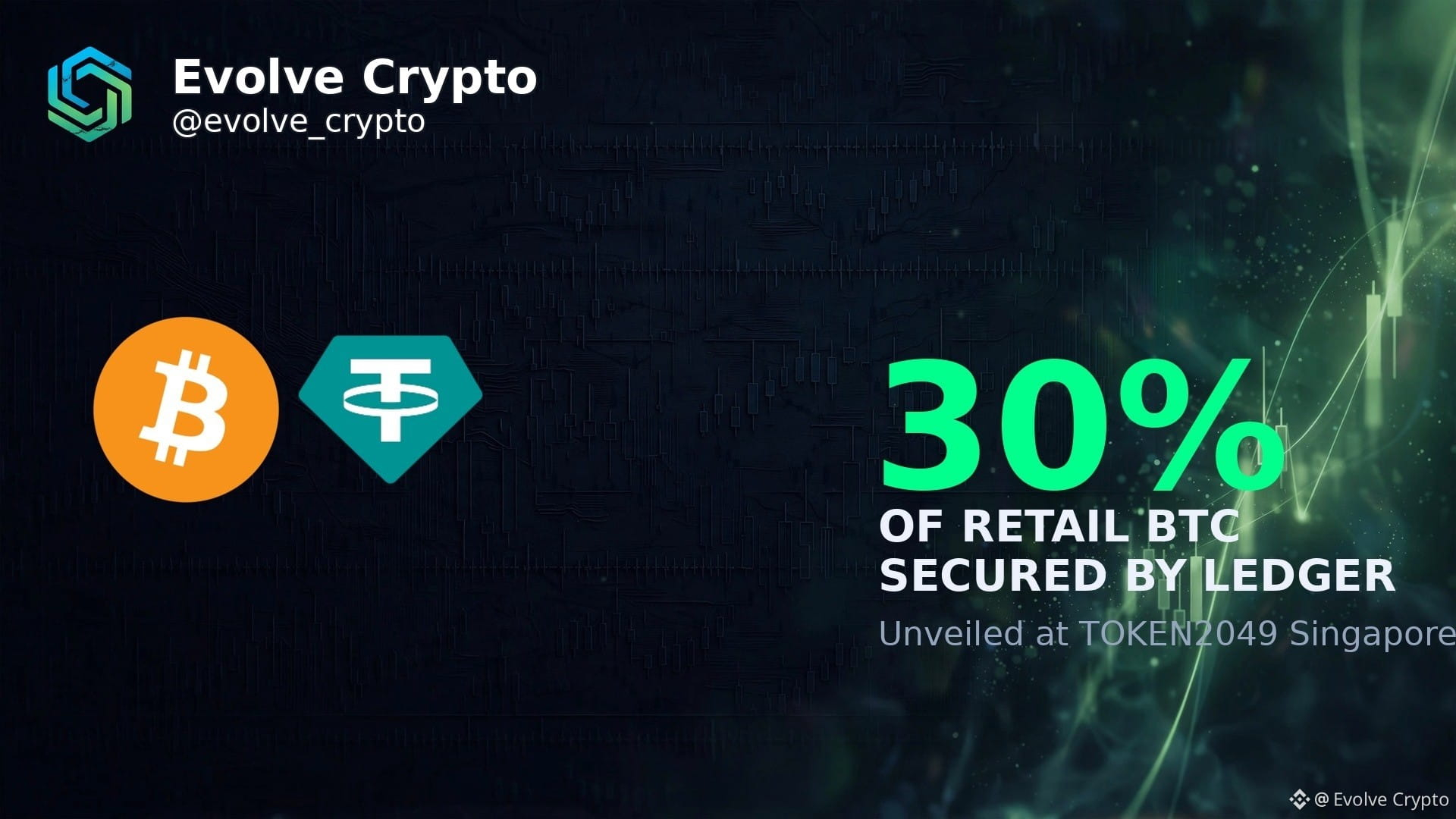
Unveiled at TOKEN2049 Singapore, Crypto Loan lets eligible users pledge wrapped BTC (cbBTC or wBTC) and borrow USDC or USDT. Fully self-custodial — every key action gets approved on your hardware device.
My take: Ledger says it secures nearly 30% of all retail-held Bitcoin. That is an enormous pile of idle BTC suddenly unlockable as spendable cash, powered by Morpho via Yield.xyz — the same stack behind Coinbase's Bitcoin-backed loans.
The catch: a sharp price drop can still liquidate the collateral.
Would you borrow against your BTC instead of selling?
$BTC $USDT
#Bitcoin #Ledger #DeFi
DYOR
Ledger just turned your Bitcoin into a credit card — without selling a single coin. 💳
Unveiled at TOKEN2049 Singapore, Crypto Loan lets eligible users pledge wrapped BTC (cbBTC or wBTC) and borrow USDC or USDT. Fully self-custodial — every key action gets approved on your hardware device.
My take: Ledger says it secures nearly 30% of all retail-held Bitcoin. That is an enormous pile of idle BTC suddenly unlockable as spendable cash, powered by Morpho via Yield.xyz — the same stack behind Coinbase's Bitcoin-backed loans.
The catch: a sharp price drop can still liquidate the collateral.
Would you borrow against your BTC instead of selling?
$BTC $USDT
#Bitcoin #Ledger #DeFi
DYOR
Unveiled at TOKEN2049 Singapore, Crypto Loan lets eligible users pledge wrapped BTC (cbBTC or wBTC) and borrow USDC or USDT. Fully self-custodial — every key action gets approved on your hardware device.
My take: Ledger says it secures nearly 30% of all retail-held Bitcoin. That is an enormous pile of idle BTC suddenly unlockable as spendable cash, powered by Morpho via Yield.xyz — the same stack behind Coinbase's Bitcoin-backed loans.
The catch: a sharp price drop can still liquidate the collateral.
Would you borrow against your BTC instead of selling?
$BTC $USDT
#Bitcoin #Ledger #DeFi
DYOR
27

·
--
$UNI is one of the heaviest decliners in the top 25 and sits on CoinGecko's trending list for the wrong reason.
📌 What happened
Uniswap's token trades near $8.22, down about 6.9% in 24 hours, per CoinGecko. The 24-hour range runs from about $8.07 to $8.93.
🔍 Why it matters
• UNI is falling about five times as much as bitcoin over the same period.
• Volume near $702 million is high relative to its $5.1 billion market cap, so this is active selling, not a quiet drift.
• Several other DeFi tokens are lower too, including AAVE, CAKE and AERO.
👀 What to watch
• Whether the $8.07 low holds.
• Counterpoint: sharp drops on heavy volume sometimes mark exhaustion, and trending attention can bring in dip buyers.
💬 Is UNI's drop about Uniswap itself, or just DeFi moving with the market?
#Uniswap #DeFi
$UNI is one of the heaviest decliners in the top 25 and sits on CoinGecko's trending list for the wrong reason.
📌 What happened
Uniswap's token trades near $8.22, down about 6.9% in 24 hours, per CoinGecko. The 24-hour range runs from about $8.07 to $8.93.
🔍 Why it matters
• UNI is falling about five times as much as bitcoin over the same period.
• Volume near $702 million is high relative to its $5.1 billion market cap, so this is active selling, not a quiet drift.
• Several other DeFi tokens are lower too, including AAVE, CAKE and AERO.
👀 What to watch
• Whether the $8.07 low holds.
• Counterpoint: sharp drops on heavy volume sometimes mark exhaustion, and trending attention can bring in dip buyers.
💬 Is UNI's drop about Uniswap itself, or just DeFi moving with the market?
#Uniswap #DeFi
📌 What happened
Uniswap's token trades near $8.22, down about 6.9% in 24 hours, per CoinGecko. The 24-hour range runs from about $8.07 to $8.93.
🔍 Why it matters
• UNI is falling about five times as much as bitcoin over the same period.
• Volume near $702 million is high relative to its $5.1 billion market cap, so this is active selling, not a quiet drift.
• Several other DeFi tokens are lower too, including AAVE, CAKE and AERO.
👀 What to watch
• Whether the $8.07 low holds.
• Counterpoint: sharp drops on heavy volume sometimes mark exhaustion, and trending attention can bring in dip buyers.
💬 Is UNI's drop about Uniswap itself, or just DeFi moving with the market?
#Uniswap #DeFi
66
·
--
Flash loans have a $1.2 billion entry in DeFi's history books.
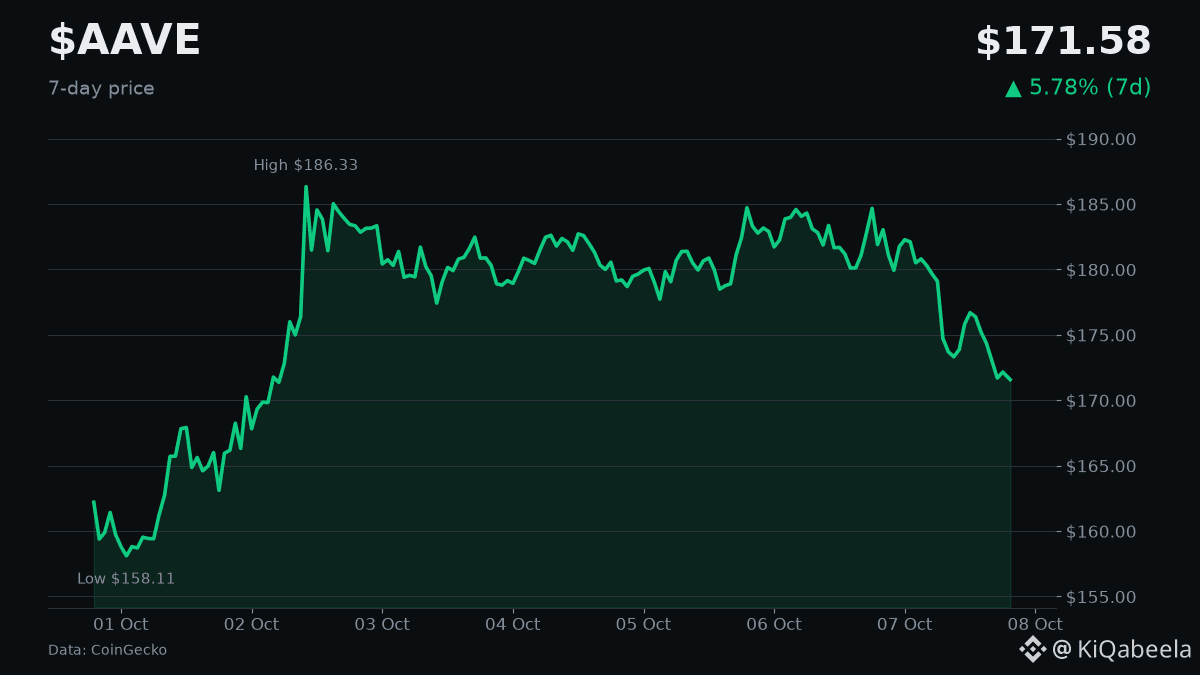
Per Decrypt, a study counted 72 flash loan attacks between 2020 and 2024 that drained $1.211 billion, out of $6.568 billion in total DeFi attack losses. A flash loan lets anyone borrow large sums with no collateral as long as it is repaid in the same transaction, a tool offered by lenders like $AAVE.
In my view, the loan is rarely the bug; it is the amplifier. Weak price oracles and logic errors are what get exploited, and flash loans just let attackers hit them with a lot of capital at once.
💬 Should DeFi protocols limit flash loans, or fix the oracles they exploit?
#DeFi #Security
Flash loans have a $1.2 billion entry in DeFi's history books.
Per Decrypt, a study counted 72 flash loan attacks between 2020 and 2024 that drained $1.211 billion, out of $6.568 billion in total DeFi attack losses. A flash loan lets anyone borrow large sums with no collateral as long as it is repaid in the same transaction, a tool offered by lenders like $AAVE .
In my view, the loan is rarely the bug; it is the amplifier. Weak price oracles and logic errors are what get exploited, and flash loans just let attackers hit them with a lot of capital at once.
💬 Should DeFi protocols limit flash loans, or fix the oracles they exploit?
#DeFi #Security
Per Decrypt, a study counted 72 flash loan attacks between 2020 and 2024 that drained $1.211 billion, out of $6.568 billion in total DeFi attack losses. A flash loan lets anyone borrow large sums with no collateral as long as it is repaid in the same transaction, a tool offered by lenders like $AAVE .
In my view, the loan is rarely the bug; it is the amplifier. Weak price oracles and logic errors are what get exploited, and flash loans just let attackers hit them with a lot of capital at once.
💬 Should DeFi protocols limit flash loans, or fix the oracles they exploit?
#DeFi #Security
18
·
--
Not every DeFi protocol is about borrowing. Anvil, which just drew a token buy led by Founders Fund, works more like a guarantee.
🧠 In plain words
Per CoinDesk, Founders Fund led a $5 million purchase of Anvil's ANVL governance tokens from the treasury, joined by Pantera Capital, Bullish and others. Unlike lenders such as $AAVE, Anvil does not issue interest-bearing loans; it reserves collateral to back a financial promise, an onchain letter of credit. It is like a rental deposit held in escrow: the money sits there to prove you can pay, not to be spent.
✅ What it means for you
• Businesses can use its SDK without writing blockchain code, with Flexa and Consensus among early partners.
• It is small, with about $14 million in total value locked, versus roughly $56 billion across DeFi lending.
• Tokens came from the treasury, so the deal did not create new supply.
Takeaway: collateral is finding uses beyond loans, and big-name VCs are paying attention.
#DeFi #Aave
Not every DeFi protocol is about borrowing. Anvil, which just drew a token buy led by Founders Fund, works more like a guarantee.
🧠 In plain words
Per CoinDesk, Founders Fund led a $5 million purchase of Anvil's ANVL governance tokens from the treasury, joined by Pantera Capital, Bullish and others. Unlike lenders such as $AAVE , Anvil does not issue interest-bearing loans; it reserves collateral to back a financial promise, an onchain letter of credit. It is like a rental deposit held in escrow: the money sits there to prove you can pay, not to be spent.
✅ What it means for you
• Businesses can use its SDK without writing blockchain code, with Flexa and Consensus among early partners.
• It is small, with about $14 million in total value locked, versus roughly $56 billion across DeFi lending.
• Tokens came from the treasury, so the deal did not create new supply.
Takeaway: collateral is finding uses beyond loans, and big-name VCs are paying attention.
#DeFi #Aave
🧠 In plain words
Per CoinDesk, Founders Fund led a $5 million purchase of Anvil's ANVL governance tokens from the treasury, joined by Pantera Capital, Bullish and others. Unlike lenders such as $AAVE , Anvil does not issue interest-bearing loans; it reserves collateral to back a financial promise, an onchain letter of credit. It is like a rental deposit held in escrow: the money sits there to prove you can pay, not to be spent.
✅ What it means for you
• Businesses can use its SDK without writing blockchain code, with Flexa and Consensus among early partners.
• It is small, with about $14 million in total value locked, versus roughly $56 billion across DeFi lending.
• Tokens came from the treasury, so the deal did not create new supply.
Takeaway: collateral is finding uses beyond loans, and big-name VCs are paying attention.
#DeFi #Aave
14
Jito is stepping up its Solana game with major roadmap updates for JTX. A dedicated mobile app is dropping this fall, followed by equities and perpetual futures integration this winter. This expansion transforms Jito from a mere spot player into a comprehensive ecosystem powerhouse. As perps and mobile access drive higher engagement, the network utility is set to soar. Keep an eye on how these new revenue streams impact decentralized trading on Solana moving forward. $JTO #Solana #DeFi #CryptoNews
Jito is stepping up its Solana game with major roadmap updates for JTX. A dedicated mobile app is dropping this fall, followed by equities and perpetual futures integration this winter. This expansion transforms Jito from a mere spot player into a comprehensive ecosystem powerhouse. As perps and mobile access drive higher engagement, the network utility is set to soar. Keep an eye on how these new revenue streams impact decentralized trading on Solana moving forward. $JTO #Solana #DeFi #CryptoNews
161
·
--
Protocol sustainability is the most under-examined metric in crypto — and it separates durable ecosystems from narrative floats.
Most investors focus on price action, TVL headlines, and token hype cycles. But the real signal is simpler: does this protocol generate real revenue from real activity, or does its token value depend entirely on future promises?
Real revenue means fees paid by users — swap fees on DEXes, borrowing interest on lending protocols, transaction fees on settlement layers, and liquidation penalties. It flows regardless of token price. When you strip out inflationary token emissions, what remains is the honest baseline of economic activity.
The gap between nominal yield and real yield exposes the truth. A protocol offering 30% APY through emissions is simply redistributing future token supply — it is marketing, not business. A protocol offering 8% APY funded entirely by borrowing demand and trading volume is compounding actual economic value.
This distinction matters for cycle survival. Emission-funded protocols collapse when sentiment shifts because their yields evaporate with their token price. Revenue-funded protocols retain their user base because the economics hold independently of narrative.
The sustainable protocols share a common pattern: fee revenue grows when the network grows, supply compression happens automatically (not by decree), and users have a real economic reason to stay beyond the APY.
$ETH EIP-1559 burn, $BNB Auto-Burn, and $SOL fee-to-validator mechanics are all different answers to the same question — who captures value when the network succeeds?
Follow the fees. They do not lie.
#DeFi #CryptoInvesting #OnChainAnalysis #BinanceSquare #Crypto
Protocol sustainability is the most under-examined metric in crypto — and it separates durable ecosystems from narrative floats.
Most investors focus on price action, TVL headlines, and token hype cycles. But the real signal is simpler: does this protocol generate real revenue from real activity, or does its token value depend entirely on future promises?
Real revenue means fees paid by users — swap fees on DEXes, borrowing interest on lending protocols, transaction fees on settlement layers, and liquidation penalties. It flows regardless of token price. When you strip out inflationary token emissions, what remains is the honest baseline of economic activity.
The gap between nominal yield and real yield exposes the truth. A protocol offering 30% APY through emissions is simply redistributing future token supply — it is marketing, not business. A protocol offering 8% APY funded entirely by borrowing demand and trading volume is compounding actual economic value.
This distinction matters for cycle survival. Emission-funded protocols collapse when sentiment shifts because their yields evaporate with their token price. Revenue-funded protocols retain their user base because the economics hold independently of narrative.
The sustainable protocols share a common pattern: fee revenue grows when the network grows, supply compression happens automatically (not by decree), and users have a real economic reason to stay beyond the APY.
$ETH EIP-1559 burn, $BNB Auto-Burn, and $SOL fee-to-validator mechanics are all different answers to the same question — who captures value when the network succeeds?
Follow the fees. They do not lie.
#DeFi #CryptoInvesting #OnChainAnalysis #BinanceSquare #Crypto
Most investors focus on price action, TVL headlines, and token hype cycles. But the real signal is simpler: does this protocol generate real revenue from real activity, or does its token value depend entirely on future promises?
Real revenue means fees paid by users — swap fees on DEXes, borrowing interest on lending protocols, transaction fees on settlement layers, and liquidation penalties. It flows regardless of token price. When you strip out inflationary token emissions, what remains is the honest baseline of economic activity.
The gap between nominal yield and real yield exposes the truth. A protocol offering 30% APY through emissions is simply redistributing future token supply — it is marketing, not business. A protocol offering 8% APY funded entirely by borrowing demand and trading volume is compounding actual economic value.
This distinction matters for cycle survival. Emission-funded protocols collapse when sentiment shifts because their yields evaporate with their token price. Revenue-funded protocols retain their user base because the economics hold independently of narrative.
The sustainable protocols share a common pattern: fee revenue grows when the network grows, supply compression happens automatically (not by decree), and users have a real economic reason to stay beyond the APY.
$ETH EIP-1559 burn, $BNB Auto-Burn, and $SOL fee-to-validator mechanics are all different answers to the same question — who captures value when the network succeeds?
Follow the fees. They do not lie.
#DeFi #CryptoInvesting #OnChainAnalysis #BinanceSquare #Crypto
23
Hyperliquid's CEO just told Wall Street its wealth model is broken. 📢
"Some assets are only tradable by a few people for many orders of magnitude of its growth, and then ultimately tradable by the public only after all of the growth has been realized by a select few people with privilege," said Jeff Yan, co-founder and CEO of Hyperliquid, at Token2049 Singapore.
He called that model unsustainable — and the numbers back the confidence: $72 million in revenue over the past 30 days, making Hyperliquid the third-largest revenue-generating protocol in DeFi, per DefiLlama.
Is onchain trading really the fairer path, or is this just the new elite talking? 👇
$HYPE
#HYPE #DeFi #CryptoNews
Hyperliquid's CEO just told Wall Street its wealth model is broken. 📢
"Some assets are only tradable by a few people for many orders of magnitude of its growth, and then ultimately tradable by the public only after all of the growth has been realized by a select few people with privilege," said Jeff Yan, co-founder and CEO of Hyperliquid, at Token2049 Singapore.
He called that model unsustainable — and the numbers back the confidence: $72 million in revenue over the past 30 days, making Hyperliquid the third-largest revenue-generating protocol in DeFi, per DefiLlama.
Is onchain trading really the fairer path, or is this just the new elite talking? 👇
$HYPE
#HYPE #DeFi #CryptoNews
"Some assets are only tradable by a few people for many orders of magnitude of its growth, and then ultimately tradable by the public only after all of the growth has been realized by a select few people with privilege," said Jeff Yan, co-founder and CEO of Hyperliquid, at Token2049 Singapore.
He called that model unsustainable — and the numbers back the confidence: $72 million in revenue over the past 30 days, making Hyperliquid the third-largest revenue-generating protocol in DeFi, per DefiLlama.
Is onchain trading really the fairer path, or is this just the new elite talking? 👇
$HYPE
#HYPE #DeFi #CryptoNews
114

·
--
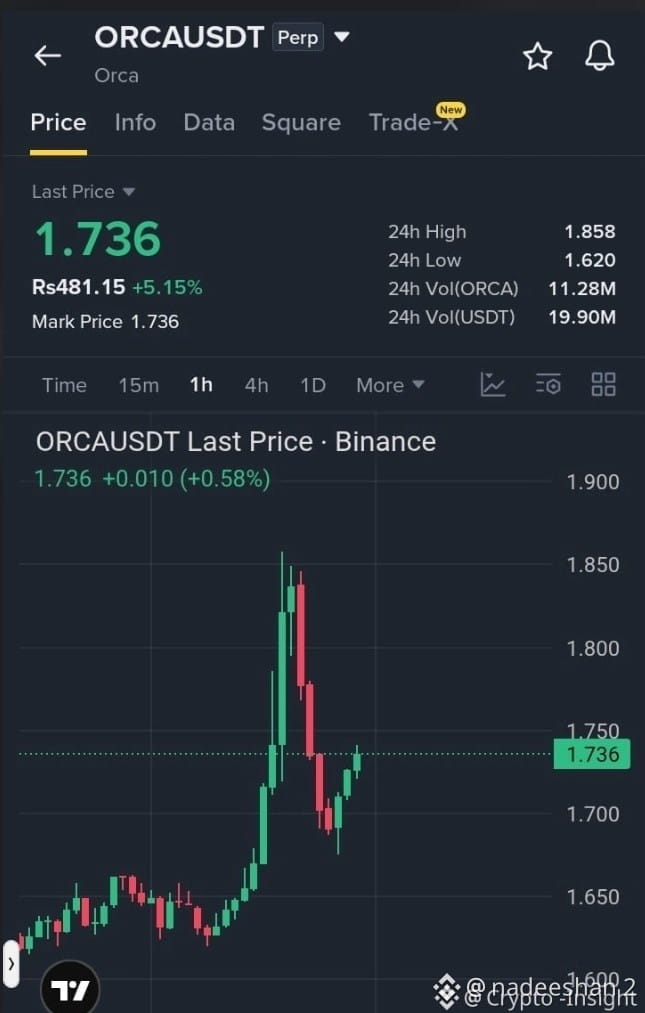
🚨 ORCA UPDATE 🐋
Orca’s governance vote on “Resourcing Orca for Its Next Phase” is now live.
🔹 10% of protocol fees → programmatic ORCA purchases / xORCA rewards
🔹 10% → open-market ORCA buybacks
🔹 80% → development, operations & growth
⏰ Voting ends October 10, 2026 at 19:42 UTC
ORCA has also seen strong recent momentum, with the token gaining sharply over the past week.
This is an important moment for the Orca ecosystem. 👀
$ORCA
#Solana #defi #Crypto_Jobs🎯 #BinanceSquareFamily #BinanceLaunchesBinanceIntelligence
🚨 ORCA UPDATE 🐋
Orca’s governance vote on “Resourcing Orca for Its Next Phase” is now live.
🔹 10% of protocol fees → programmatic ORCA purchases / xORCA rewards
🔹 10% → open-market ORCA buybacks
🔹 80% → development, operations & growth
⏰ Voting ends October 10, 2026 at 19:42 UTC
ORCA has also seen strong recent momentum, with the token gaining sharply over the past week.
This is an important moment for the Orca ecosystem. 👀
$ORCA
#Solana #defi #Crypto_Jobs🎯 #BinanceSquareFamily #BinanceLaunchesBinanceIntelligence
Orca’s governance vote on “Resourcing Orca for Its Next Phase” is now live.
🔹 10% of protocol fees → programmatic ORCA purchases / xORCA rewards
🔹 10% → open-market ORCA buybacks
🔹 80% → development, operations & growth
⏰ Voting ends October 10, 2026 at 19:42 UTC
ORCA has also seen strong recent momentum, with the token gaining sharply over the past week.
This is an important moment for the Orca ecosystem. 👀
$ORCA
#Solana #defi #Crypto_Jobs🎯 #BinanceSquareFamily #BinanceLaunchesBinanceIntelligence
251
·
--
Uniswap slipped almost 10% in a day, nudging its price to $8.20 – a reminder that even top‑10 DeFi tokens can wobble.
🧠 In plain words
Think of $UNI like a popular coffee shop that usually sees steady crowds. Yesterday the foot traffic dropped, so the shop’s daily sales fell, even though the menu and location stayed the same. The price dip reflects a short‑term pause, not a permanent closure.
✅ What it means for you
• A 9% slide may create a cheaper entry point if you’ve been watching the token.
• Volume remains strong at over $680 million, indicating active trading despite the dip.
• The Fear & Greed index sits at 71 (Greed), suggesting market sentiment is still upbeat overall.
Stay patient, watch the trend, and decide if the current price aligns with your own risk comfort.
#CryptoNews #DeFi #Uniswap
Uniswap slipped almost 10% in a day, nudging its price to $8.20 – a reminder that even top‑10 DeFi tokens can wobble.
🧠 In plain words
Think of $UNI like a popular coffee shop that usually sees steady crowds. Yesterday the foot traffic dropped, so the shop’s daily sales fell, even though the menu and location stayed the same. The price dip reflects a short‑term pause, not a permanent closure.
✅ What it means for you
• A 9% slide may create a cheaper entry point if you’ve been watching the token.
• Volume remains strong at over $680 million, indicating active trading despite the dip.
• The Fear & Greed index sits at 71 (Greed), suggesting market sentiment is still upbeat overall.
Stay patient, watch the trend, and decide if the current price aligns with your own risk comfort.
#CryptoNews #DeFi #Uniswap
🧠 In plain words
Think of $UNI like a popular coffee shop that usually sees steady crowds. Yesterday the foot traffic dropped, so the shop’s daily sales fell, even though the menu and location stayed the same. The price dip reflects a short‑term pause, not a permanent closure.
✅ What it means for you
• A 9% slide may create a cheaper entry point if you’ve been watching the token.
• Volume remains strong at over $680 million, indicating active trading despite the dip.
• The Fear & Greed index sits at 71 (Greed), suggesting market sentiment is still upbeat overall.
Stay patient, watch the trend, and decide if the current price aligns with your own risk comfort.
#CryptoNews #DeFi #Uniswap
32
Log in to explore more content
Join global crypto users on Binance Square
⚡️ Get latest and useful information about crypto.
💬 Trusted by the world’s largest crypto exchange.
👍 Discover real insights from verified creators.
Email / Phone number
Trending Topics
1
#FedMinutesFocusOnOctoberPause
182,686 views
1,342 Discussing
2
#BinanceLaunchesBinanceIntelligence
1.1M views
6,544 Discussing
3
#EvernorthDelaysNasdaqDebutToOct12
15,439 views
310 Discussing
4
#RobinhoodAdds$25MInBitcoinToBalanceSheet
3,550 views
74 Discussing
5
#SP500AndNasdaqHitRecordHighs
22,179 views
481 Discussing
6
#USMortgageRatesRiseTo7.49%
27,260 views
391 Discussing
7
#BTCFallsBelow$84K
131,376 views
236 Discussing
8
#DubaiVARAIssuesReserveAssetAuditCircular
47,955 views
961 Discussing
9
#SECApproves3XBitcoinETF
45,285 views
779 Discussing
10
#WinklevossFilesSpotZcashETFApplication
53,110 views
882 Discussing