
#crypto
crypto
376.1M views
1.9M Discussing
Hot
Latest

Verified
🚨 $XRP IS GETTING SERIOUS INSTITUTIONAL ATTENTION. 👀🔥
During a Bitwise presentation for roughly 400 wealth managers,
XRP reportedly generated the most questions from the audience.
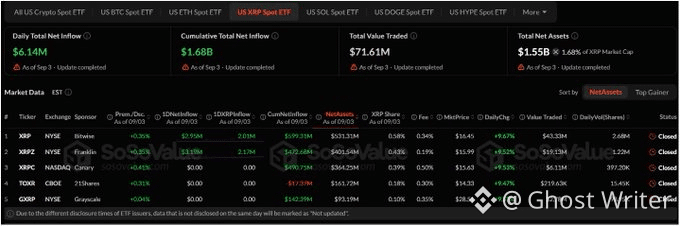
And the ETF numbers are getting harder to ignore:
💰 ~$170M in inflows across 11 straight sessions
💰 ~$1.68B cumulative inflows since launch
🏦 Goldman Sachs: $87.4M disclosed XRP exposure
🏦 Jane Street: $16.6M
🏦 Millennium Management: $16.2M
This isn’t just retail hype anymore.
Institutional interest in XRP appears to be accelerating. 🚀
The big question now:
🔥 What happens to XRP when institutional demand really starts scaling?
#XRP #Ripple #etf #crypto
During a Bitwise presentation for roughly 400 wealth managers,
XRP reportedly generated the most questions from the audience.
And the ETF numbers are getting harder to ignore:
💰 ~$170M in inflows across 11 straight sessions
💰 ~$1.68B cumulative inflows since launch
🏦 Goldman Sachs: $87.4M disclosed XRP exposure
🏦 Jane Street: $16.6M
🏦 Millennium Management: $16.2M
This isn’t just retail hype anymore.
Institutional interest in XRP appears to be accelerating. 🚀
The big question now:
🔥 What happens to XRP when institutional demand really starts scaling?
#XRP #Ripple #etf #crypto

$BTC
BTC JUST WOKE UP — BUT DON’T CHASE THE PUMP YET
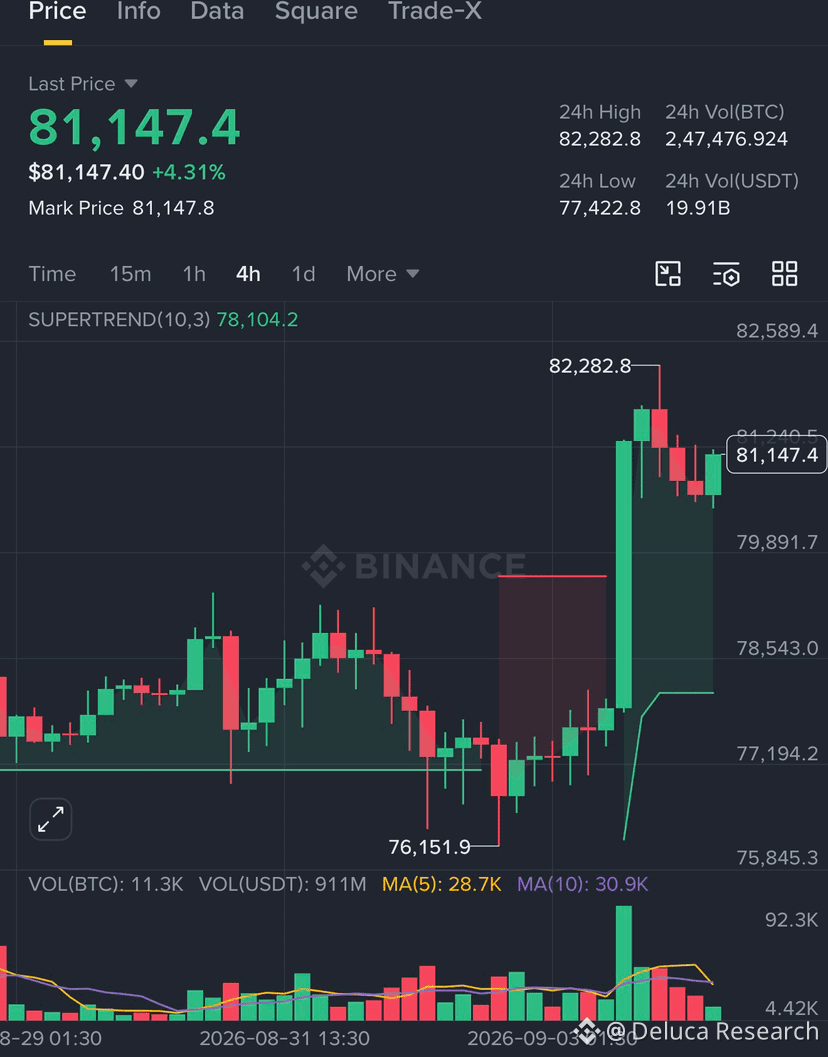
$BTC just ripped from the $76.1K area to above $82K, and the volume spike says this move got attention.
Now comes the part most traders get wrong.
Bitcoin is sitting around $81.1K after hitting $82.28K.
Here are the levels I’m watching:
🔴 $82.3K → immediate resistance
🟢 $80K–$80.4K → first area bulls need to defend
🟢 $78.1K → 4H Supertrend support
⚠️ $76.1K → major recent swing low
The interesting part?
BTC is no longer fighting for survival around $77K. Now bulls have to prove they can hold the breakout.
A clean break above $82.3K could attract more momentum.
But if BTC gets rejected and loses the $80K area, I’d want to see where buyers step back in before assuming the trend is over.
Don’t chase the candle. Watch what happens AFTER the breakout.
What are you watching next?
$83K 🚀 or $80K retest 👀?
$BTC $ETH $BNB
#Bitcoin #BTC #Crypto #Binance
BTC JUST WOKE UP — BUT DON’T CHASE THE PUMP YET
$BTC just ripped from the $76.1K area to above $82K, and the volume spike says this move got attention.
Now comes the part most traders get wrong.
Bitcoin is sitting around $81.1K after hitting $82.28K.
Here are the levels I’m watching:
🔴 $82.3K → immediate resistance
🟢 $80K–$80.4K → first area bulls need to defend
🟢 $78.1K → 4H Supertrend support
⚠️ $76.1K → major recent swing low
The interesting part?
BTC is no longer fighting for survival around $77K. Now bulls have to prove they can hold the breakout.
A clean break above $82.3K could attract more momentum.
But if BTC gets rejected and loses the $80K area, I’d want to see where buyers step back in before assuming the trend is over.
Don’t chase the candle. Watch what happens AFTER the breakout.
What are you watching next?
$83K 🚀 or $80K retest 👀?
$BTC $ETH $BNB
#Bitcoin #BTC #Crypto #Binance

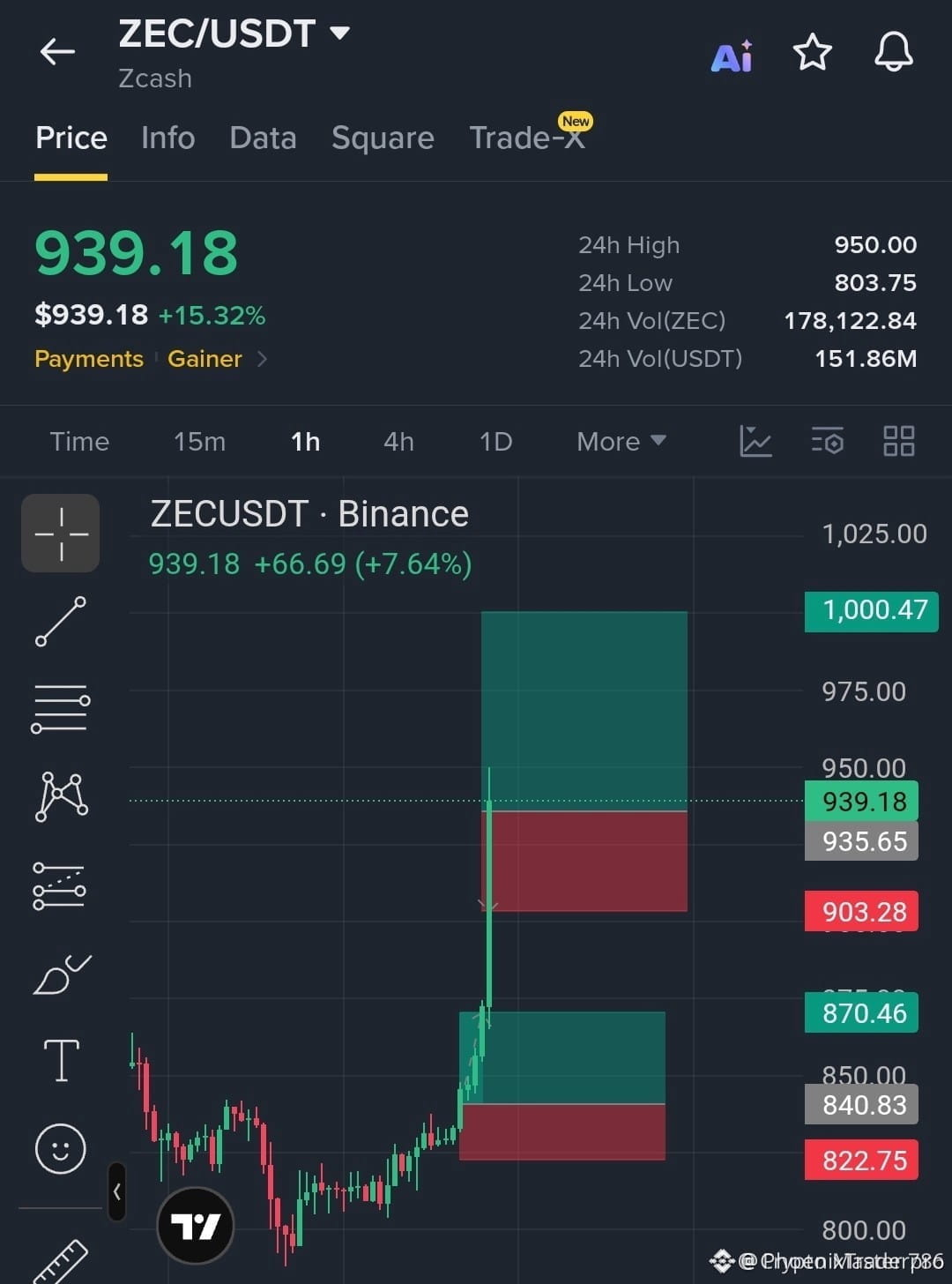
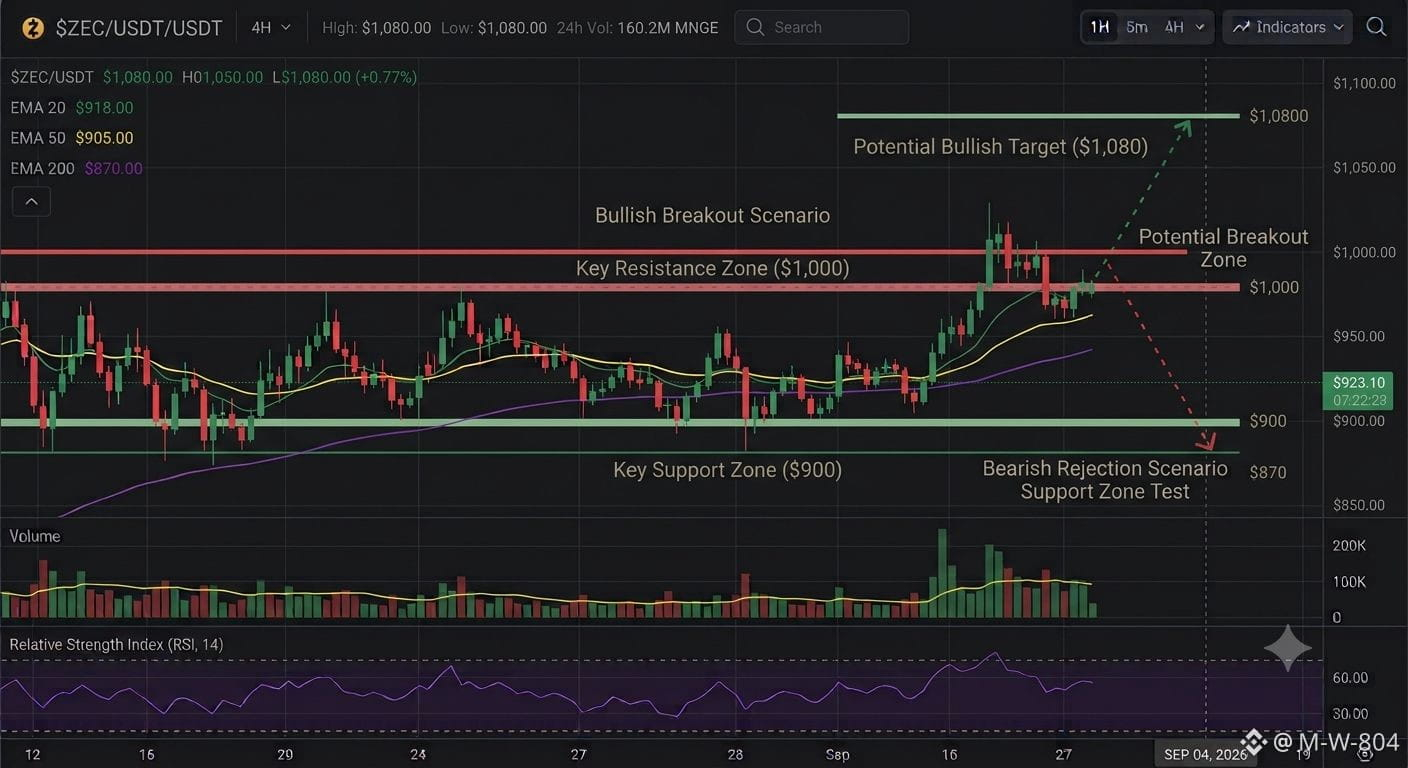
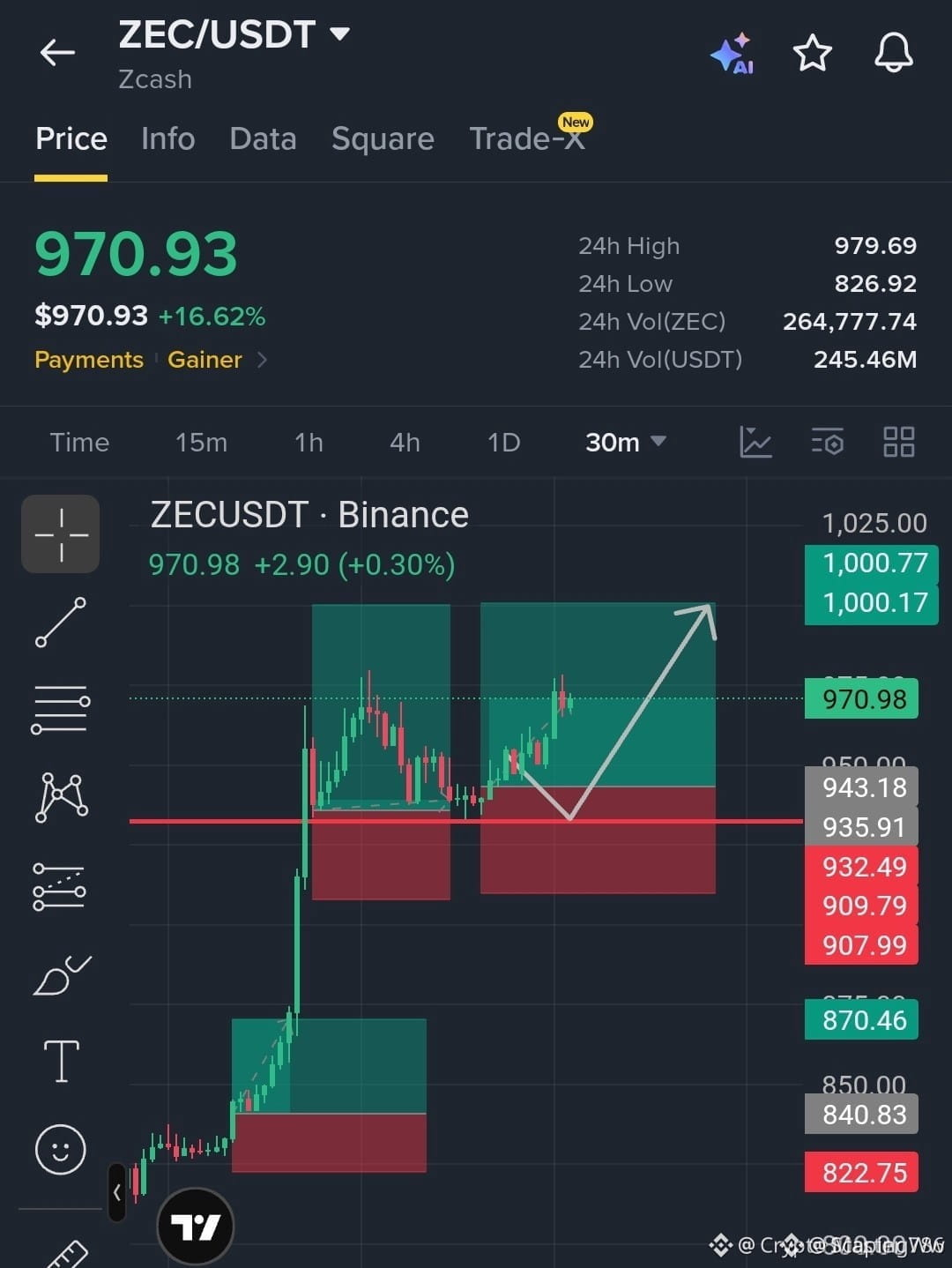
🚨 $ZEC SHATTERS KEY RESISTANCE AS BULLS EYE EXPLOSIVE EXPANSION HIGHER! 💥
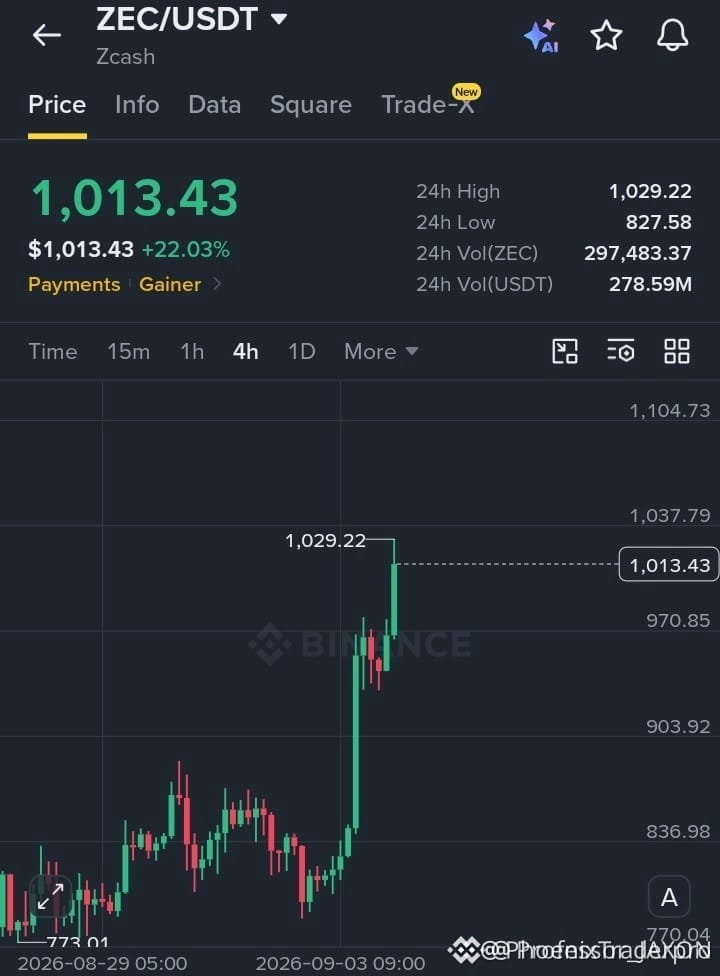
Entry: 1000 - 1015 ⚡
Target: 1030, 1060, 1100 🚀
Stop Loss: 970 ⚠️
📌 Sellers just got completely caught flat-footed after $ZEC reclaimed the 970 structural zone with aggressive momentum. Order flow shows heavy absorption near 1000, signaling smart money is actively defending this new floor rather than taking quick profits. 📊
⚡ As long as price holds above the flip level, volume expansion points to a clean continuation toward upper liquidity pools at 1060 and 1100. The market structure remains undeniably clean while buyers keep pushing the pace. 💡
💬 Are you riding this momentum toward 1100 or waiting for a dip back into entry? 👇
⚠️ Not financial advice. Always manage your risk. 🛡️
🏷️ #ZEC #LongSetup #Breakout #Crypto
🔥 💎
Entry: 1000 - 1015 ⚡
Target: 1030, 1060, 1100 🚀
Stop Loss: 970 ⚠️
📌 Sellers just got completely caught flat-footed after $ZEC reclaimed the 970 structural zone with aggressive momentum. Order flow shows heavy absorption near 1000, signaling smart money is actively defending this new floor rather than taking quick profits. 📊
⚡ As long as price holds above the flip level, volume expansion points to a clean continuation toward upper liquidity pools at 1060 and 1100. The market structure remains undeniably clean while buyers keep pushing the pace. 💡
💬 Are you riding this momentum toward 1100 or waiting for a dip back into entry? 👇
⚠️ Not financial advice. Always manage your risk. 🛡️
🏷️ #ZEC #LongSetup #Breakout #Crypto
🔥 💎
Alpha News:
DASH MOMENTUM IS HEATING UP
DashCon excitement and NanoGPT’s protected payment integration are strengthening confidence in DASH utility. Large-wallet flows surged, with hourly net inflows reaching +$1.46M. But caution matters: RSI hit 89, signaling overbought conditions, while the latest hour saw -$985K in outflows. A short consolidation phase could follow the speculative rally.
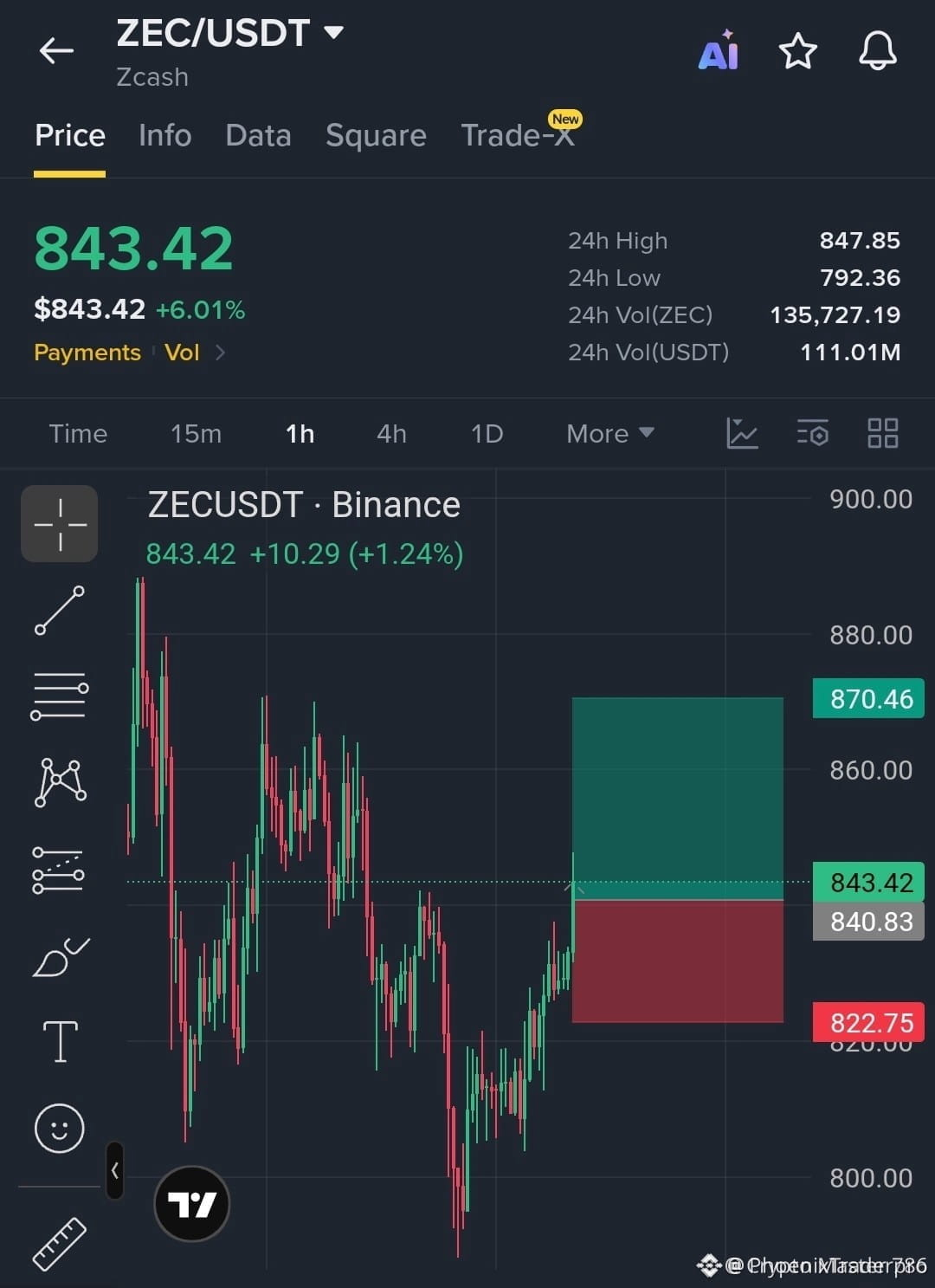
ZEC & DASH are breaking through resistance.
$ZEC
$DASH
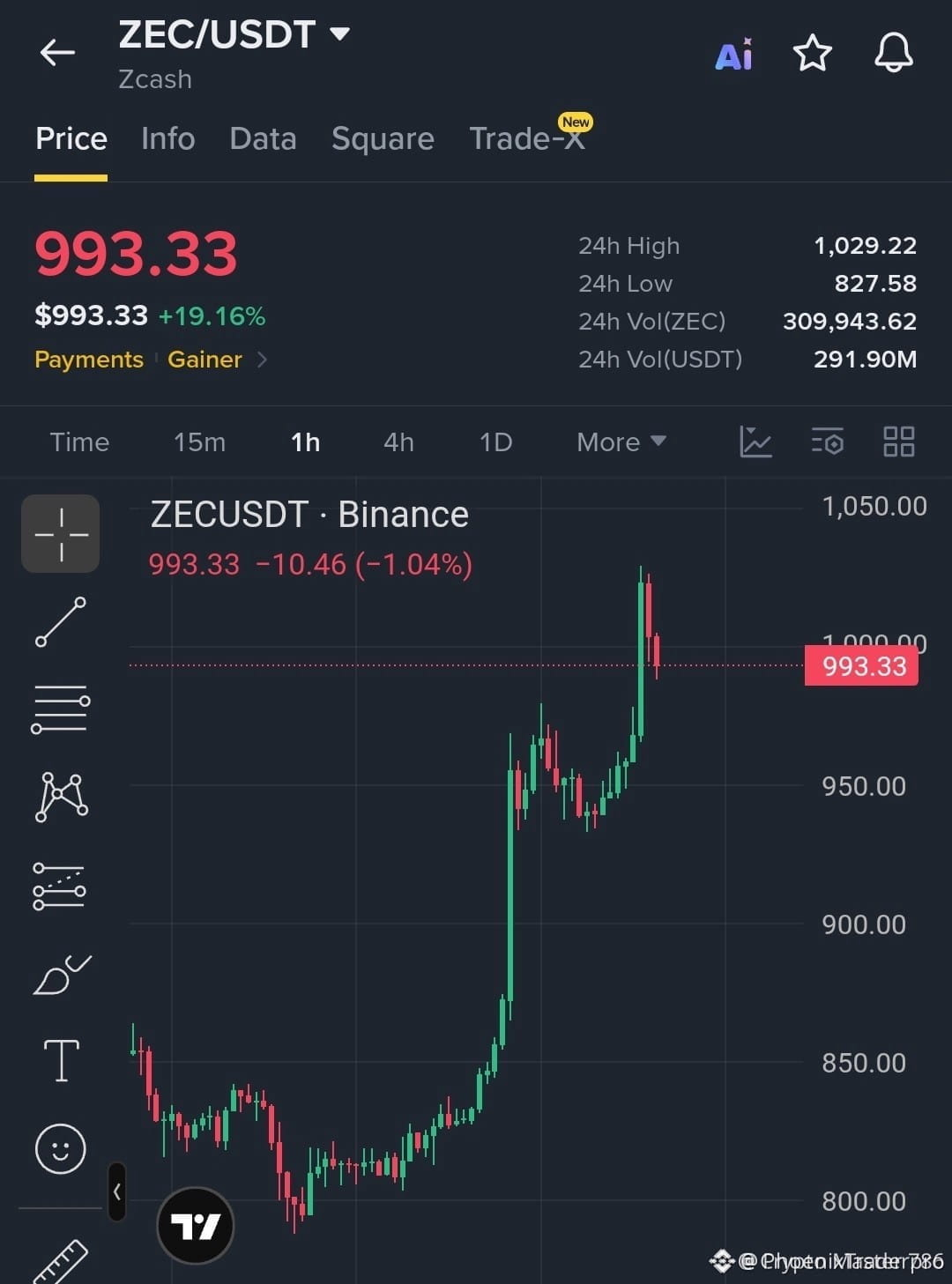
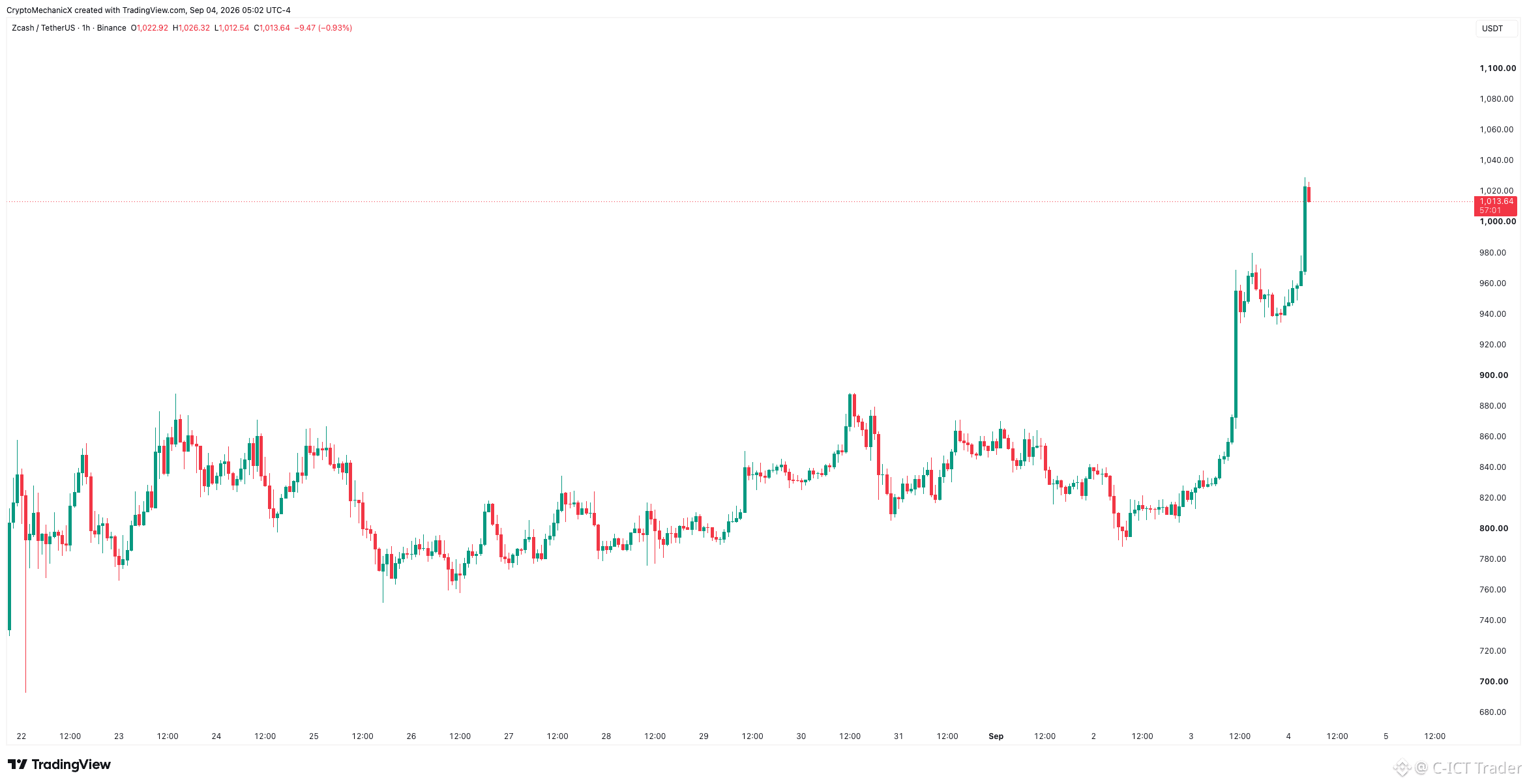
💥 $ZEC SHATTERS THE $1,000 LEVEL AS MOMENTUM TRADERS TAKE CONTROL! ⚡
The long-awaited expansion on $ZEC finally materialized, tearing through the key $1,000 milestone as buy-side momentum peaked. 🌊 A natural wave of profit-taking has now kicked off a healthy cool-down, allowing the order book to reset after that explosive vertical impulse.
📊 Smart capital is closely monitoring key support levels on this pullback, scanning for seller exhaustion before the market decides its next move. 💡 Patience in these consolidation phases separates disciplined execution from emotional chasing. 💬 Are you waiting to bid the pullback structure, or resting on your profits? 👇
⚠️ Not financial advice. Always manage your risk. 🛡️
🏷️ #ZEC #Crypto #Momentum #Pullback
🔥 💎
The long-awaited expansion on $ZEC finally materialized, tearing through the key $1,000 milestone as buy-side momentum peaked. 🌊 A natural wave of profit-taking has now kicked off a healthy cool-down, allowing the order book to reset after that explosive vertical impulse.
📊 Smart capital is closely monitoring key support levels on this pullback, scanning for seller exhaustion before the market decides its next move. 💡 Patience in these consolidation phases separates disciplined execution from emotional chasing. 💬 Are you waiting to bid the pullback structure, or resting on your profits? 👇
⚠️ Not financial advice. Always manage your risk. 🛡️
🏷️ #ZEC #Crypto #Momentum #Pullback
🔥 💎

INSTITUTIONAL LIQUIDITY BUILDS AS $LIT PRESSES LOCAL RESISTANCE FOR BREAKOUT EXPANSION 🚀 📈
Entry 1: 4.43 - 4.46 ⚡
Entry 2: 4.34 - 4.37 🟢
Entry 3: 4.25 - 4.28 🔥
Target 1: 4.62 🎯
Target 2: 4.90 🚀
Target 3: 5.55 - 5.57 💥
Stop Loss: 3.50 ⚠️
📌 $LIT is compressing directly beneath the 4.457 supply zone, signaling heavy institutional absorption prior to expansion. 🔍 Maintaining structural integrity above 4.25 on the H1 timeframe keeps market structure cleanly bullish, allowing smart money to absorb overhead ask liquidity.
💡 A decisive push past 4.46 followed by a structural retest confirms the order flow flip, unlocking momentum toward higher efficiency targets. 💬 Are you entering the breakout directly or waiting to bid the retest at support? 👇
⚠️ Not financial advice. Always manage your risk. 🛡️
🏷️ #LIT #Altcoins #Breakout #Crypto
🦈 ⚡
Entry 1: 4.43 - 4.46 ⚡
Entry 2: 4.34 - 4.37 🟢
Entry 3: 4.25 - 4.28 🔥
Target 1: 4.62 🎯
Target 2: 4.90 🚀
Target 3: 5.55 - 5.57 💥
Stop Loss: 3.50 ⚠️
📌 $LIT is compressing directly beneath the 4.457 supply zone, signaling heavy institutional absorption prior to expansion. 🔍 Maintaining structural integrity above 4.25 on the H1 timeframe keeps market structure cleanly bullish, allowing smart money to absorb overhead ask liquidity.
💡 A decisive push past 4.46 followed by a structural retest confirms the order flow flip, unlocking momentum toward higher efficiency targets. 💬 Are you entering the breakout directly or waiting to bid the retest at support? 👇
⚠️ Not financial advice. Always manage your risk. 🛡️
🏷️ #LIT #Altcoins #Breakout #Crypto
🦈 ⚡
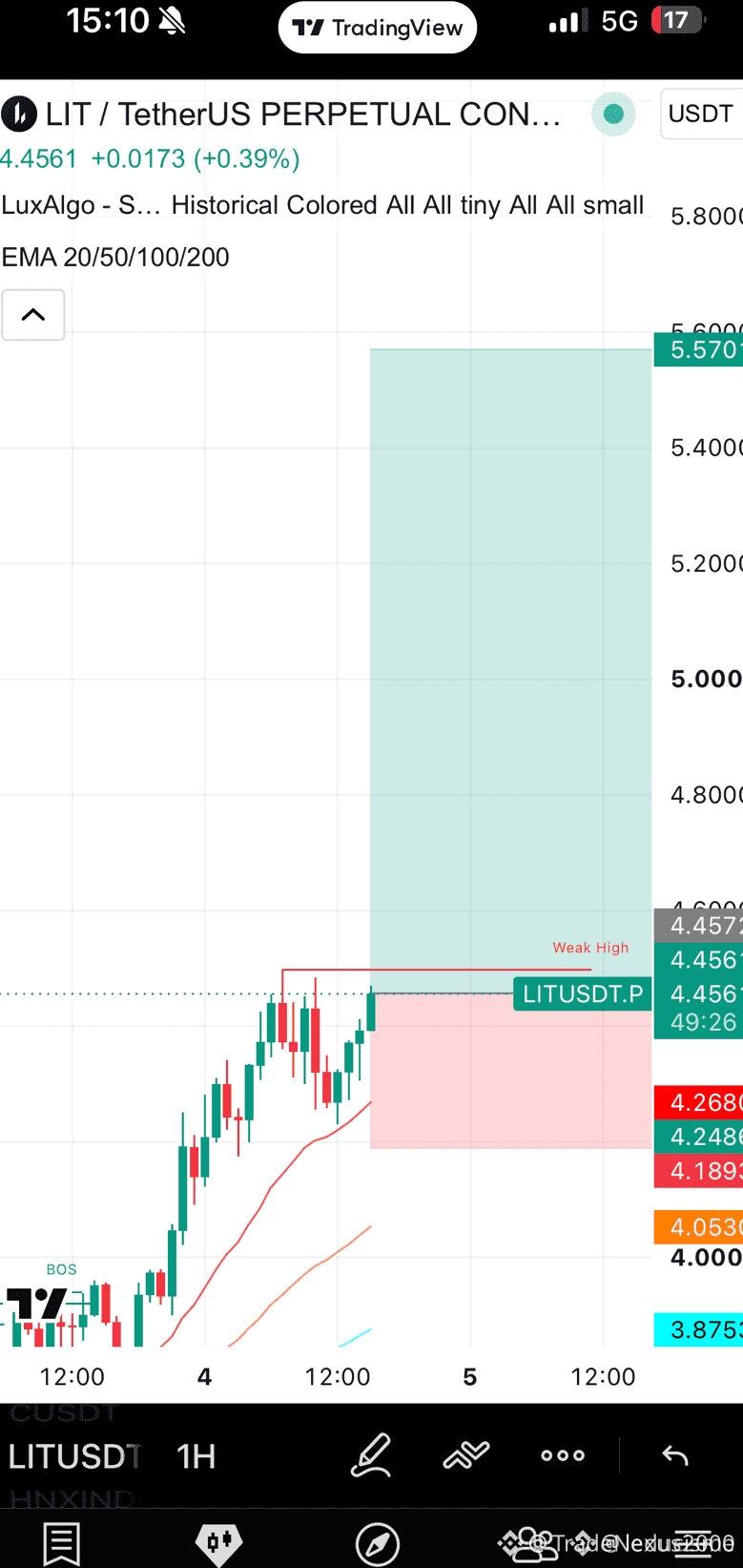
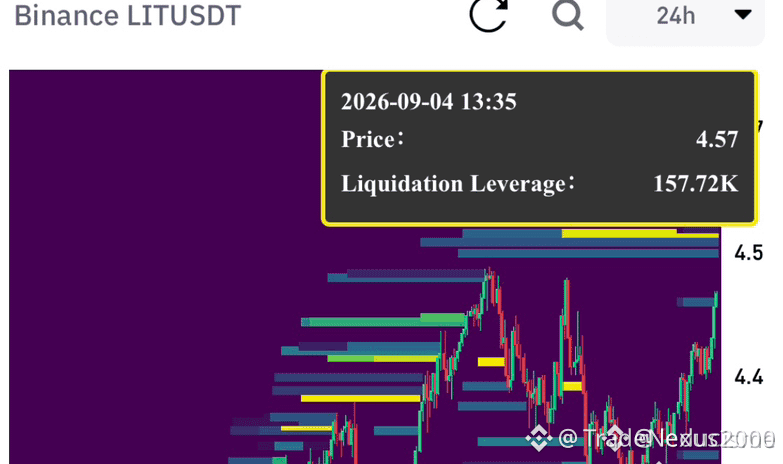
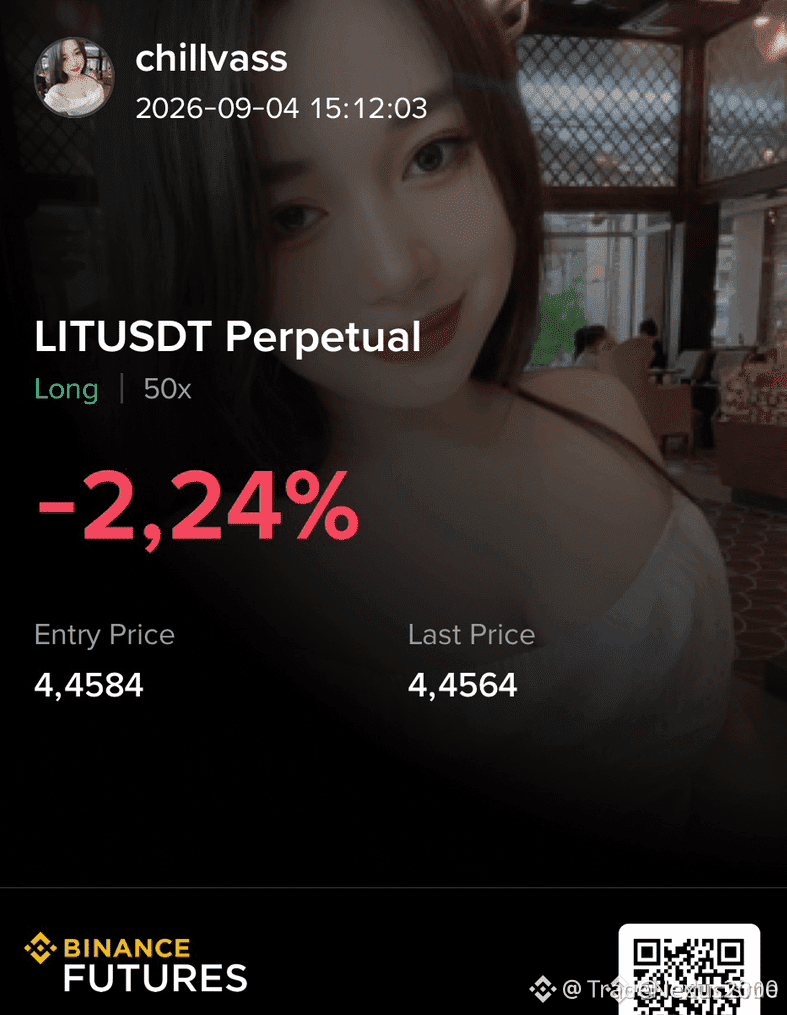

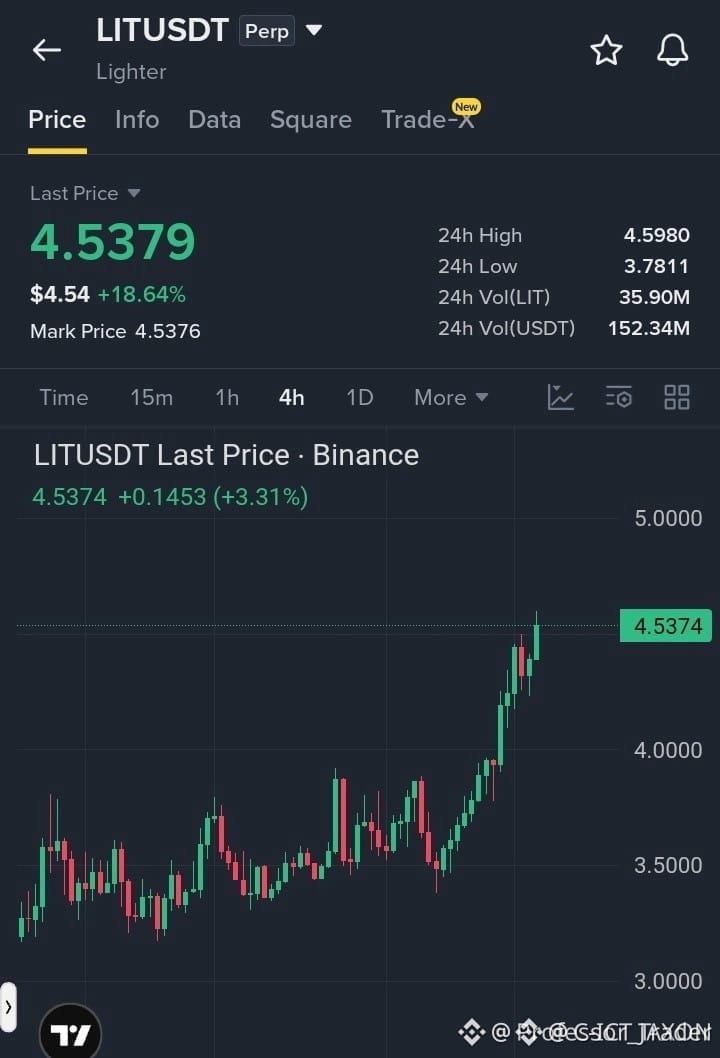
🚨 $LIT BREAKS MACRO RANGE WITH INSTANT RECLAIM OF KEY EXPANSION LEVELS! 💥
Entry: $4.45 - $4.55 ⚡
Target: $4.60 / $4.80 / $5.00 🚀
Stop Loss: $4.25 ⚠️
Smart money aggressively swept the $3.50 to $4.00 consolidation range, triggering an explosive structural expansion into higher time-frame liquidity. 📊 The persistent defense of $4.50 confirms that buyers are actively converting previous supply into a pristine demand zone. 📌
As long as order flow respects the $4.45 structural pivot, continuation toward the $5.00 liquidity pool remains high probability. ⚡ Institutional momentum favors upside acceleration into overhead inefficiencies. 💬 Are you bidding this retest or waiting for a final sweep before $5.00? 👇
⚠️ Not financial advice. Always manage your risk. 🛡️
🏷️ #LIT #LongSetup #Breakout #Crypto
🔥 ⚡
Entry: $4.45 - $4.55 ⚡
Target: $4.60 / $4.80 / $5.00 🚀
Stop Loss: $4.25 ⚠️
Smart money aggressively swept the $3.50 to $4.00 consolidation range, triggering an explosive structural expansion into higher time-frame liquidity. 📊 The persistent defense of $4.50 confirms that buyers are actively converting previous supply into a pristine demand zone. 📌
As long as order flow respects the $4.45 structural pivot, continuation toward the $5.00 liquidity pool remains high probability. ⚡ Institutional momentum favors upside acceleration into overhead inefficiencies. 💬 Are you bidding this retest or waiting for a final sweep before $5.00? 👇
⚠️ Not financial advice. Always manage your risk. 🛡️
🏷️ #LIT #LongSetup #Breakout #Crypto
🔥 ⚡

🚀 $TWT LONG 🚀
Entry: 0.61904 – 0.62276
SL: 0.60521
TP1: 0.63435
TP2: 0.64331
TP3: 0.65452
📈 Technical Outlook:
$TWT is showing strong bullish momentum after confirming strength near a key technical zone. The setup is supported by EMA trend is bullish, RSI supports bullish momentum, volume is expanding. As long as price holds above the entry area, buyers may continue pushing toward the listed targets.
#TWT #Crypto #BinanceSquare #Trading
Entry: 0.61904 – 0.62276
SL: 0.60521
TP1: 0.63435
TP2: 0.64331
TP3: 0.65452
📈 Technical Outlook:
$TWT is showing strong bullish momentum after confirming strength near a key technical zone. The setup is supported by EMA trend is bullish, RSI supports bullish momentum, volume is expanding. As long as price holds above the entry area, buyers may continue pushing toward the listed targets.
#TWT #Crypto #BinanceSquare #Trading

Crypto_Town_JS:
Appreciate your consistency. Quality always stands out. 💪

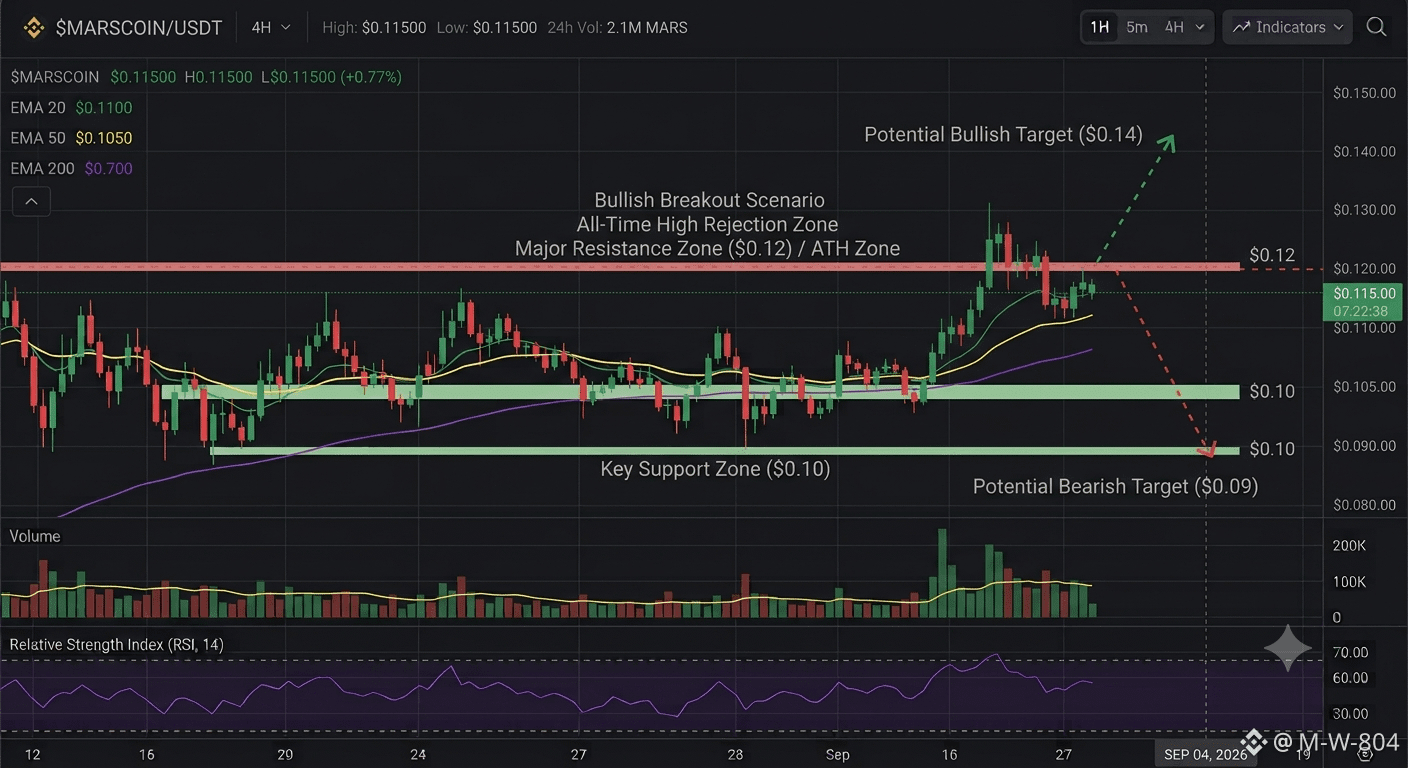
🚨 $MARSCOIN SECURES SEED LABEL LISTING AS INSTITUTIONAL LIQUIDITY PREPARES FOR INITIAL PRICE DISCOVERY! ⚡
🔍 Official confirmation reveals $MARSCOIN is hitting a top-tier exchange with an assigned seed label tag. Early structural phases for newly listed assets typically present extreme order flow expansion as smart money builds initial positioning around unpriced liquidity pools. 📊
⚡ Seed label designations highlight heightened volatility parameters, making disciplined capital preservation paramount during the initial expansion phase. 💡 Institutional market makers will be watching for clear market structure breaks and fair value gaps to establish long-term value areas. 💬 How are you planning to navigate the initial volatility once trading goes live? 👇
⚠️ Not financial advice. Always manage your risk. 🛡️
🏷️ #MARSCOIN #Altcoins #Crypto #NewListing
🎯 🦈
🔍 Official confirmation reveals $MARSCOIN is hitting a top-tier exchange with an assigned seed label tag. Early structural phases for newly listed assets typically present extreme order flow expansion as smart money builds initial positioning around unpriced liquidity pools. 📊
⚡ Seed label designations highlight heightened volatility parameters, making disciplined capital preservation paramount during the initial expansion phase. 💡 Institutional market makers will be watching for clear market structure breaks and fair value gaps to establish long-term value areas. 💬 How are you planning to navigate the initial volatility once trading goes live? 👇
⚠️ Not financial advice. Always manage your risk. 🛡️
🏷️ #MARSCOIN #Altcoins #Crypto #NewListing
🎯 🦈

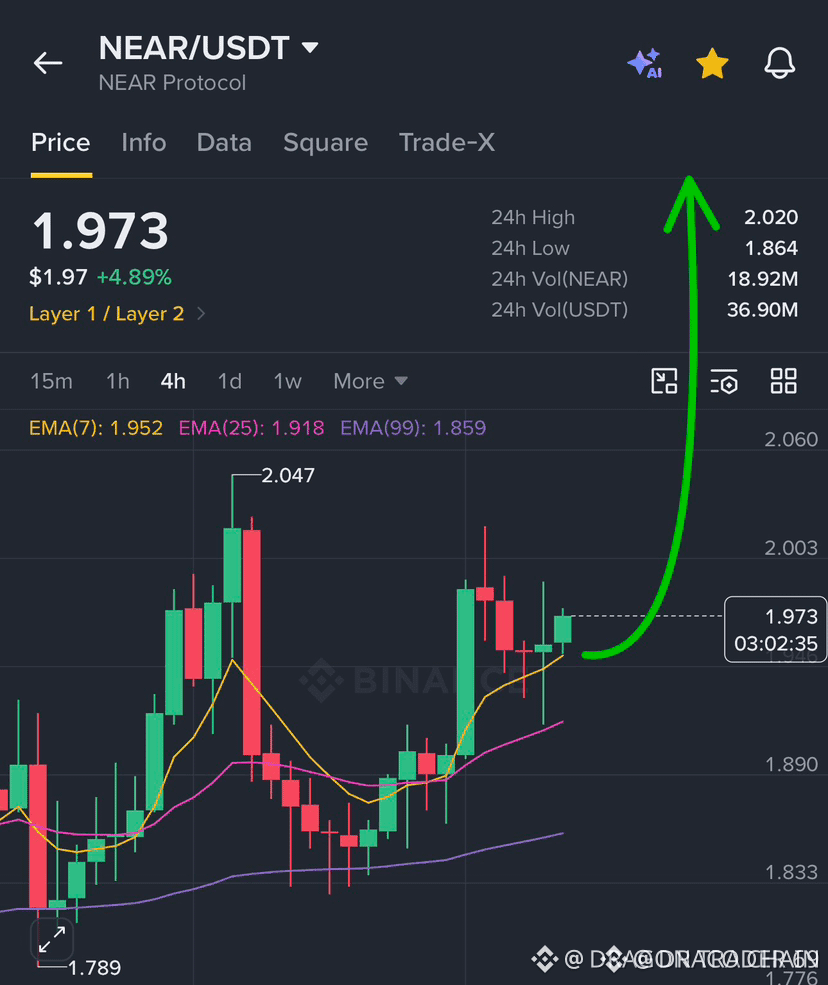
🚨 $NEAR PRINTS A TEXTBOOK 4H CUP AND HANDLE STRUCTURE BEFORE BREAKOUT! 📈
$NEAR is signaling classic structural accumulation on the 4-hour chart, shaping a textbook cup and handle pattern right at critical resistance. 🦈 Smart money has systematically swept sell-side liquidity while keeping low-timeframe pullbacks remarkably shallow.
🔍 Volume behavior supports the bullish narrative, displaying classic contraction during handle formation before momentum begins to reignite. 💡 A clean reclaim above this handle rim could trigger aggressive order flow expansion as breakout algorithms activate.
💬 Are you positioning early inside the handle, or waiting for structural confirmation above resistance? 👇
⚠️ Not financial advice. Always manage your risk. 🛡️
🏷️ #NEAR #Altcoins #CupAndHandle #Crypto
⚡ 🎯
$NEAR is signaling classic structural accumulation on the 4-hour chart, shaping a textbook cup and handle pattern right at critical resistance. 🦈 Smart money has systematically swept sell-side liquidity while keeping low-timeframe pullbacks remarkably shallow.
🔍 Volume behavior supports the bullish narrative, displaying classic contraction during handle formation before momentum begins to reignite. 💡 A clean reclaim above this handle rim could trigger aggressive order flow expansion as breakout algorithms activate.
💬 Are you positioning early inside the handle, or waiting for structural confirmation above resistance? 👇
⚠️ Not financial advice. Always manage your risk. 🛡️
🏷️ #NEAR #Altcoins #CupAndHandle #Crypto
⚡ 🎯

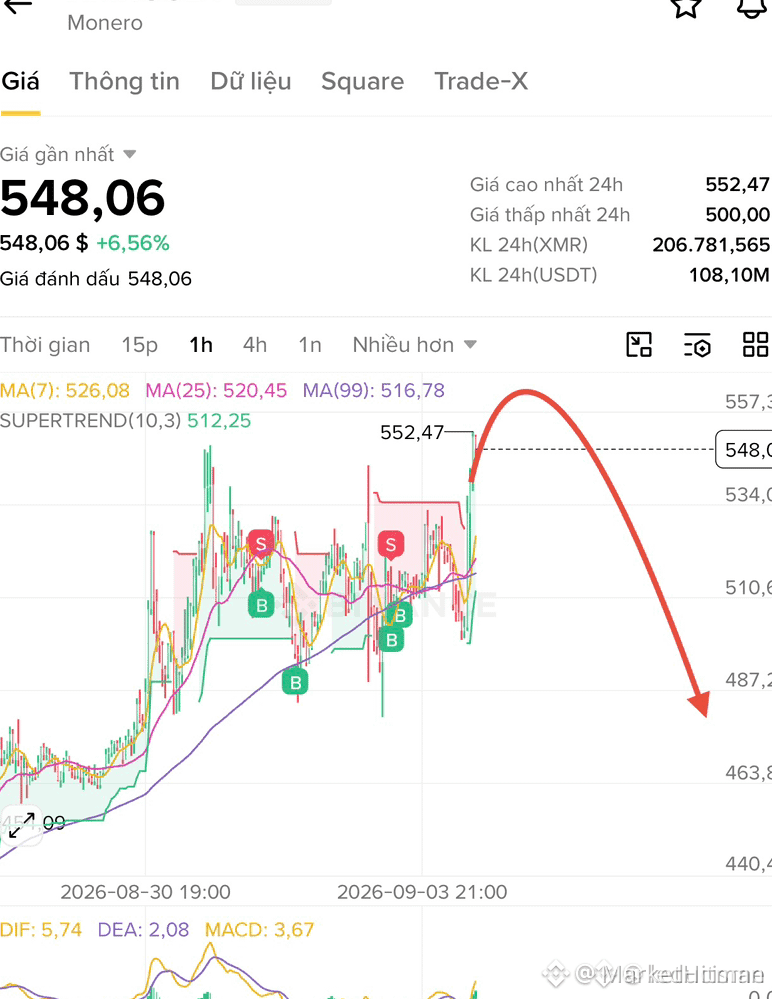
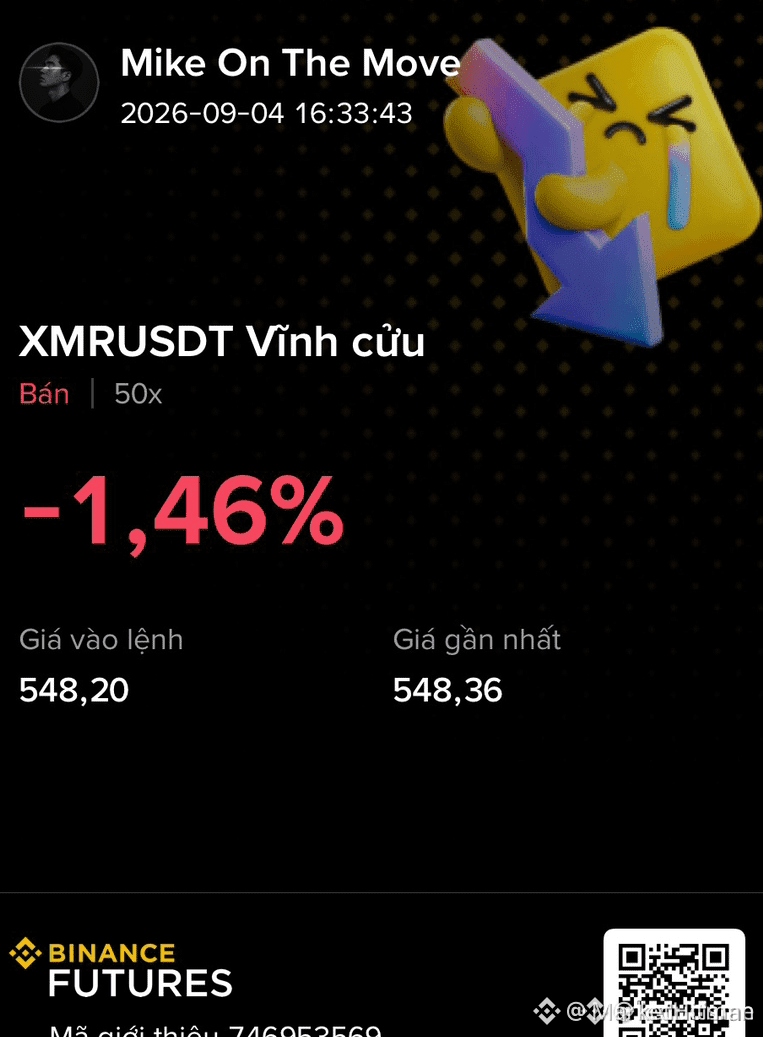
🚨 $XMR SHOWS STEEP STRUCTURAL BREAKDOWN AS SELLERS OVERWHELM KEY SUPPLY 🔴
Entry: 541.53 - 552.47 🔴
Target: 536 - 497 🔻
Stop Loss: 595 🛑
Price action on $XMR has rejected key overhead premium levels, printing a sharp lower-high distribution pattern. 🔍 Aggressive sell-side volume is displacing late long positions as institutional order flow flips decisively bearish.
This rapid structural expansion opens a direct path toward downside liquidity pools, filling market inefficiencies left during the prior expansion. 📊 Risk parameters remain defined against the local distribution high, presenting a high R:R framework.
💬 Will sell-side momentum accelerate directly into the lower targets, or do you expect a temporary relief bounce near support? 👇
⚠️ Not financial advice. Always manage your risk. 🛡️
🏷️ #XMR #ShortSetup #Bearish #Crypto
🐻 📉
Entry: 541.53 - 552.47 🔴
Target: 536 - 497 🔻
Stop Loss: 595 🛑
Price action on $XMR has rejected key overhead premium levels, printing a sharp lower-high distribution pattern. 🔍 Aggressive sell-side volume is displacing late long positions as institutional order flow flips decisively bearish.
This rapid structural expansion opens a direct path toward downside liquidity pools, filling market inefficiencies left during the prior expansion. 📊 Risk parameters remain defined against the local distribution high, presenting a high R:R framework.
💬 Will sell-side momentum accelerate directly into the lower targets, or do you expect a temporary relief bounce near support? 👇
⚠️ Not financial advice. Always manage your risk. 🛡️
🏷️ #XMR #ShortSetup #Bearish #Crypto
🐻 📉
Crypto_Town_JS:
I really like your market perspective. Thanks for sharing! 💯
🦈 $ZEC RE-PRICING NARRATIVE GAINS TRACTION AS THE QUANTUM-RESISTANT PRIVATE BITCOIN ⚡
Smart money is quietly evaluating the structural shift surrounding $ZEC as long-term institutional focus pivots toward post-quantum cryptography and zero-knowledge privacy. 🔒 As legacy network architecture faces eventual quantum vulnerability, capital allocators are recognizing Zcash as a sovereign, high-utility privacy layer.
📊 Macro liquidity sweeps suggest quiet order flow absorption at structural levels, establishing a foundational base for a potential multi-stage rally toward four-digit valuations. 💡 When institutional focus shifts toward cryptographic permanence, early structural positioning yields asymmetric expansion.
🤔 Are you anticipating a major structural re-rating for quantum-resistant privacy assets this cycle? 👇
⚠️ Not financial advice. Always manage your risk. 🛡️
🏷️ #ZEC #PrivacyCoins #Crypto #MarketStructure
🎯 🦈
Smart money is quietly evaluating the structural shift surrounding $ZEC as long-term institutional focus pivots toward post-quantum cryptography and zero-knowledge privacy. 🔒 As legacy network architecture faces eventual quantum vulnerability, capital allocators are recognizing Zcash as a sovereign, high-utility privacy layer.
📊 Macro liquidity sweeps suggest quiet order flow absorption at structural levels, establishing a foundational base for a potential multi-stage rally toward four-digit valuations. 💡 When institutional focus shifts toward cryptographic permanence, early structural positioning yields asymmetric expansion.
🤔 Are you anticipating a major structural re-rating for quantum-resistant privacy assets this cycle? 👇
⚠️ Not financial advice. Always manage your risk. 🛡️
🏷️ #ZEC #PrivacyCoins #Crypto #MarketStructure
🎯 🦈

THE $LUNC REVIVAL BLUEPRINT — STAGE 09
THE ADOPTION BREAKTHROUGH
Building is only half the mission and People have to use what is built.
A strong ecosystem isn't measured only by how many projects exist, but by how many people actually interact with them.
More users brings about more transactions and more merchants while more integrations brings more real-world use.
That's when the revival starts moving beyond the crypto community🔥
Utility creates the reason, Adoption creates the activity, Activity creates the momentum And the goal isn't to manufacture attention, but It's to make #Terra_Classic useful enough that attention follows naturally. 🔥
The next level for LUNC isn't simply gaining more holders, but
It's gaining more participants.
#LUNC #USTC #TerraClassic #crypto
THE ADOPTION BREAKTHROUGH
Building is only half the mission and People have to use what is built.
A strong ecosystem isn't measured only by how many projects exist, but by how many people actually interact with them.
More users brings about more transactions and more merchants while more integrations brings more real-world use.
That's when the revival starts moving beyond the crypto community🔥
Utility creates the reason, Adoption creates the activity, Activity creates the momentum And the goal isn't to manufacture attention, but It's to make #Terra_Classic useful enough that attention follows naturally. 🔥
The next level for LUNC isn't simply gaining more holders, but
It's gaining more participants.
#LUNC #USTC #TerraClassic #crypto


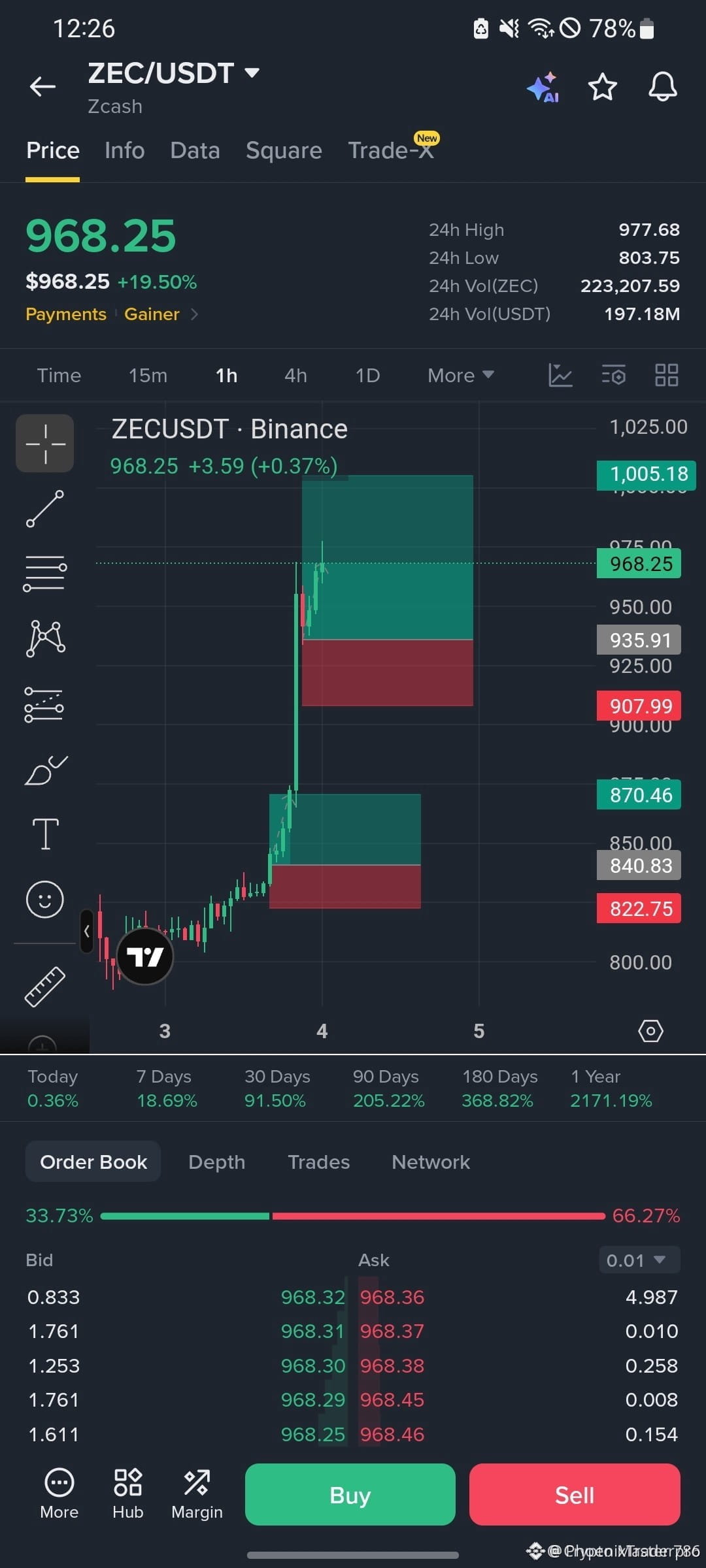
$ZEC DESTROYS $970 RESISTANCE AS THE CHARGE TOWARD $1,000 CONTINUES! 🚀 💥
Target: 1,000 🚀
The bids on $ZEC are relentless right now as buyers slice straight through $970 without missing a beat. Momentum is compounding with total clarity, driving order flow cleanly into the upper liquidity zone. 📊
Every minor pullback is getting instantly absorbed by aggressive market takers locking in positioning for the final expansion. ⚡ We are standing right on the doorstep of the iconic $1,000 mark as shorts get squeezed out of the order book. 💡
💬 Are you riding this ZEC rally to $1,000 or taking partial profits into the resistance zone? 👇
⚠️ Not financial advice. Always manage your risk. 🛡️
🏷️ #ZEC #LongSetup #Momentum #Crypto
🔥 💎
Target: 1,000 🚀
The bids on $ZEC are relentless right now as buyers slice straight through $970 without missing a beat. Momentum is compounding with total clarity, driving order flow cleanly into the upper liquidity zone. 📊
Every minor pullback is getting instantly absorbed by aggressive market takers locking in positioning for the final expansion. ⚡ We are standing right on the doorstep of the iconic $1,000 mark as shorts get squeezed out of the order book. 💡
💬 Are you riding this ZEC rally to $1,000 or taking partial profits into the resistance zone? 👇
⚠️ Not financial advice. Always manage your risk. 🛡️
🏷️ #ZEC #LongSetup #Momentum #Crypto
🔥 💎
⚡ HISTORIC MOMENT AS $ZEC SLICES THROUGH $1,000 TO UNLOCK UNCHARTED PRICE DISCOVERY! 🚀
$ZEC just breached the four-digit mark for the first time in history, shattering overhead resistance and shifting privacy sector momentum into overdrive. 🌊 Smart money capital rotation is visibly stepping up as buyers push into this historic ATH expansion.
📊 Price discovery in privacy assets historically brings explosive velocity, but the raw volume backing this breakout suggests real institutional positioning rather than a simple short squeeze. 💡 When a legacy sector re-awakens with this magnitude, order books clear out fast above major psychological numbers.
🤔 Are you bidding this momentum directly into price discovery, or waiting for a retest of the $1,000 level? 👇
⚠️ Not financial advice. Always manage your risk. 🛡️
🏷️ #ZEC #PrivacyCoins #Breakout #Crypto
🔥 💎
$ZEC just breached the four-digit mark for the first time in history, shattering overhead resistance and shifting privacy sector momentum into overdrive. 🌊 Smart money capital rotation is visibly stepping up as buyers push into this historic ATH expansion.
📊 Price discovery in privacy assets historically brings explosive velocity, but the raw volume backing this breakout suggests real institutional positioning rather than a simple short squeeze. 💡 When a legacy sector re-awakens with this magnitude, order books clear out fast above major psychological numbers.
🤔 Are you bidding this momentum directly into price discovery, or waiting for a retest of the $1,000 level? 👇
⚠️ Not financial advice. Always manage your risk. 🛡️
🏷️ #ZEC #PrivacyCoins #Breakout #Crypto
🔥 💎



🚨 $BR INSTITUTIONAL SELLERS TRIGGER HEAVY DISTRIBUTION WITH 2.3X VOLUME EXPANSION! 📉
Entry: 0.2959 - 0.2964 ⚡
Target: 0.2947 - 0.2931 🚀
Stop Loss: 0.2979 ⚠️
An aggressive supply injection has hit $BR , dragging price down 4.14% on the 15-minute timeframe alongside a rapid 2.3x volume expansion. 📊 Order flow indicates smart money distribution, with heavy market orders liquidating bids into structural demand.
📌 Structural alignment below 0.2455 keeps the primary downside framework intact, while a push above 0.3517 would weaken seller control. 🔍 Current price action offers a tactical entry opportunity in the premium mitigation block before targeting lower inefficiency targets.
🤔 Are you positioning with this smart money volume expansion or waiting for confirmation below key support? 👇
⚠️ Not financial advice. Always manage your risk. 🛡️
🏷️ #BR #ShortSetup #MarketStructure #Crypto
📉 🐻
Entry: 0.2959 - 0.2964 ⚡
Target: 0.2947 - 0.2931 🚀
Stop Loss: 0.2979 ⚠️
An aggressive supply injection has hit $BR , dragging price down 4.14% on the 15-minute timeframe alongside a rapid 2.3x volume expansion. 📊 Order flow indicates smart money distribution, with heavy market orders liquidating bids into structural demand.
📌 Structural alignment below 0.2455 keeps the primary downside framework intact, while a push above 0.3517 would weaken seller control. 🔍 Current price action offers a tactical entry opportunity in the premium mitigation block before targeting lower inefficiency targets.
🤔 Are you positioning with this smart money volume expansion or waiting for confirmation below key support? 👇
⚠️ Not financial advice. Always manage your risk. 🛡️
🏷️ #BR #ShortSetup #MarketStructure #Crypto
📉 🐻

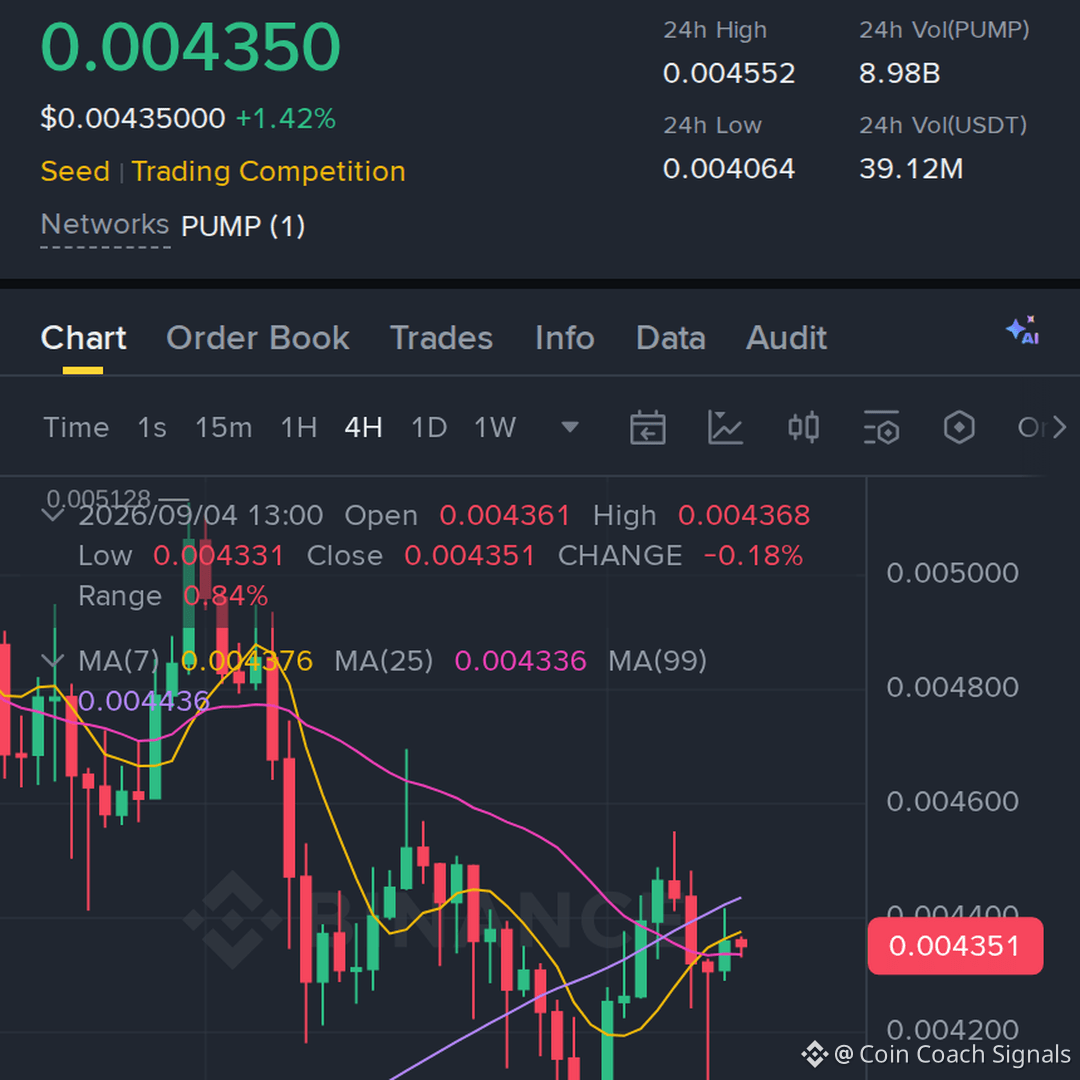
not gonna lie, $PUMP is struggling to hold the recovery, with this one around 27x
Entry: 0.004342–0.004391 • Stop Loss: 0.004588
TP1: 0.004148 | TP2: 0.003952 | TP3: 0.003755
#PUMP #Crypto #Write2Earn #binance
Entry: 0.004342–0.004391 • Stop Loss: 0.004588
TP1: 0.004148 | TP2: 0.003952 | TP3: 0.003755
#PUMP #Crypto #Write2Earn #binance
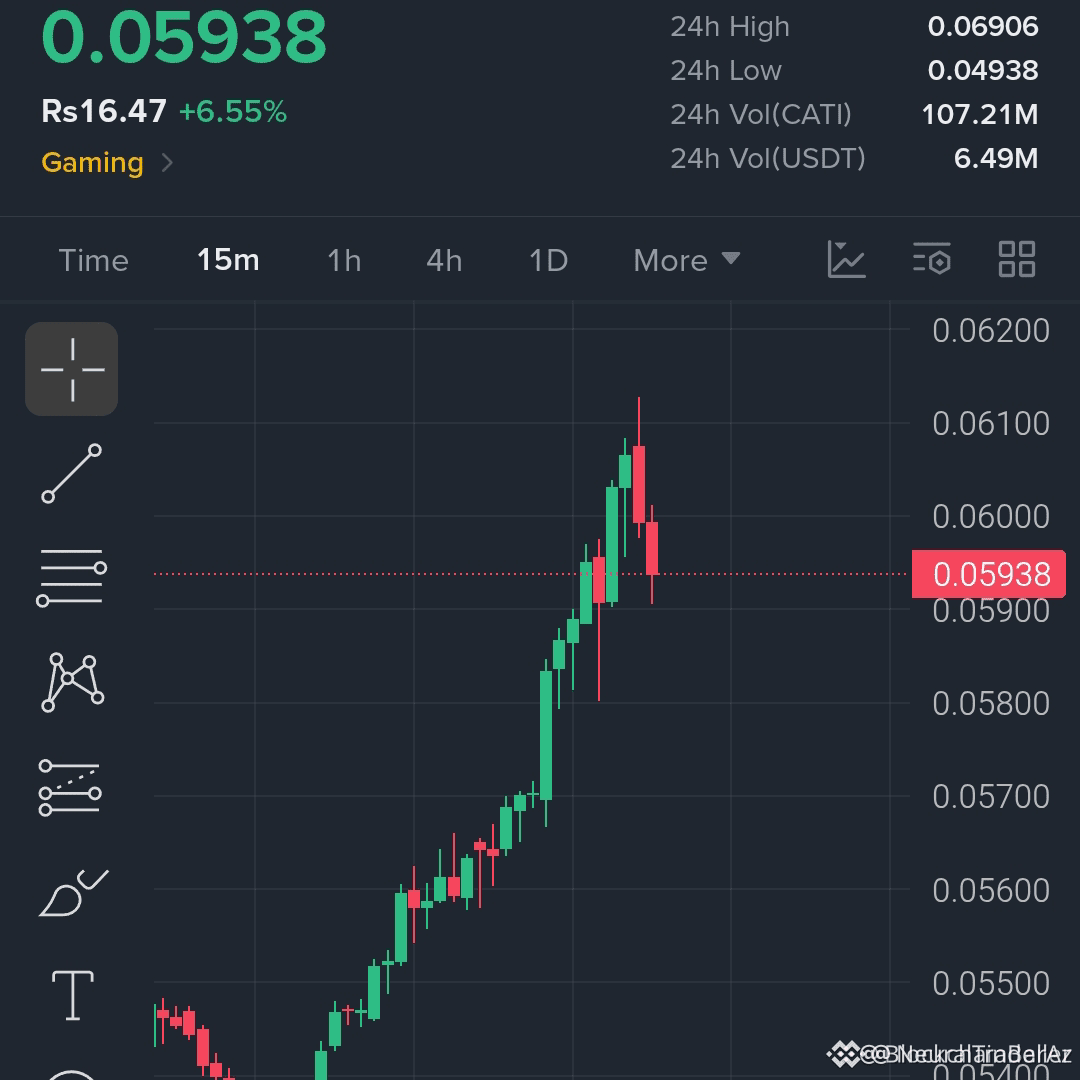
🚨 $CATI SHOWS HEAVY OVERHEAD REJECTION AS INSTITUTIONAL DISTRIBUTION SETS IN! 📉
Entry: 0.0593 - 0.0598 ⚡
Target: 0.0585 / 0.0575 / 0.0565 🎯
Stop Loss: 0.0612 ⚠️
Sellers are actively defending the premium supply zone between 0.0593 and 0.0598, capturing upside liquidity before shifting order flow downward. 📊 Structural invalidation sits firmly at 0.0612, keeping the risk-defined bias aligned toward downside expansion.
As buying pressure fades at local highs, lower target levels down to 0.0565 offer a clean inefficiency fill across the lower range. 🔍 💬 Are you taking the short from supply, or waiting for lower support to sweep? 👇
⚠️ Not financial advice. Always manage your risk. 🛡️
🏷️ #CATI #ShortSetup #MarketStructure #Crypto
🎯 🐻
Entry: 0.0593 - 0.0598 ⚡
Target: 0.0585 / 0.0575 / 0.0565 🎯
Stop Loss: 0.0612 ⚠️
Sellers are actively defending the premium supply zone between 0.0593 and 0.0598, capturing upside liquidity before shifting order flow downward. 📊 Structural invalidation sits firmly at 0.0612, keeping the risk-defined bias aligned toward downside expansion.
As buying pressure fades at local highs, lower target levels down to 0.0565 offer a clean inefficiency fill across the lower range. 🔍 💬 Are you taking the short from supply, or waiting for lower support to sweep? 👇
⚠️ Not financial advice. Always manage your risk. 🛡️
🏷️ #CATI #ShortSetup #MarketStructure #Crypto
🎯 🐻

🚀 Dogwifhat (WIF) Price Prediction: 2026–2050
🐶 WIF has become one of the most talked-about meme coins in the crypto market. But how high could it go in the coming years?
📊 WIF Price Outlook: 🔹 September 2026: Short-term market potential
🔹 2030: Long-term growth scenario
🔹 2040: Possible future valuation
🔹 2050: Maximum long-term potential
🔥 Could WIF make another explosive rally, or will volatility keep dominating its price?
💡 Follow the market, watch key support & resistance levels, and always manage risk before trading.
#WIF #crypto #Price-Prediction
$WIF
🐶 WIF has become one of the most talked-about meme coins in the crypto market. But how high could it go in the coming years?
📊 WIF Price Outlook: 🔹 September 2026: Short-term market potential
🔹 2030: Long-term growth scenario
🔹 2040: Possible future valuation
🔹 2050: Maximum long-term potential
🔥 Could WIF make another explosive rally, or will volatility keep dominating its price?
💡 Follow the market, watch key support & resistance levels, and always manage risk before trading.
#WIF #crypto #Price-Prediction
$WIF
Log in to explore more content