

#tradfi
tradfi
2.1M views
18,920 Discussing
Hot
Latest

·
--
Your Binance Funding Account is changing 👀
Starting September 29, Binance will begin gradually moving crypto assets from Funding Accounts to Spot Accounts.
So what happens to the Funding Account?
It will eventually become the Stocks Account, designed specifically for settlement of stock and stock options trading.
The transition is expected to run through January 2027, with specific migration dates announced separately.
What you need to know:
• Crypto in Funding → Spot
• Funding Account → Stocks Account
• Stocks Account will support stock & stock options settlement
• Supported settlement assets include USD, USDC, USDT, USD1, U, and BNB
• Your total asset value and fund safety are not affected by the migration.
So if you use Binance for both crypto and stocks, this is an update worth knowing before September 29.
Have you already checked your Binance account structure? 👀
#crypto #stocks #StockOptions #TradFi #BinanceSquare
Educational content only. Not financial advice. Product availability and eligibility vary by region.
Your Binance Funding Account is changing 👀
Starting September 29, Binance will begin gradually moving crypto assets from Funding Accounts to Spot Accounts.
So what happens to the Funding Account?
It will eventually become the Stocks Account, designed specifically for settlement of stock and stock options trading.
The transition is expected to run through January 2027, with specific migration dates announced separately.
What you need to know:
• Crypto in Funding → Spot
• Funding Account → Stocks Account
• Stocks Account will support stock & stock options settlement
• Supported settlement assets include USD, USDC, USDT, USD1, U, and BNB
• Your total asset value and fund safety are not affected by the migration.
So if you use Binance for both crypto and stocks, this is an update worth knowing before September 29.
Have you already checked your Binance account structure? 👀
#crypto #stocks #StockOptions #TradFi #BinanceSquare
Educational content only. Not financial advice. Product availability and eligibility vary by region.
Starting September 29, Binance will begin gradually moving crypto assets from Funding Accounts to Spot Accounts.
So what happens to the Funding Account?
It will eventually become the Stocks Account, designed specifically for settlement of stock and stock options trading.
The transition is expected to run through January 2027, with specific migration dates announced separately.
What you need to know:
• Crypto in Funding → Spot
• Funding Account → Stocks Account
• Stocks Account will support stock & stock options settlement
• Supported settlement assets include USD, USDC, USDT, USD1, U, and BNB
• Your total asset value and fund safety are not affected by the migration.
So if you use Binance for both crypto and stocks, this is an update worth knowing before September 29.
Have you already checked your Binance account structure? 👀
#crypto #stocks #StockOptions #TradFi #BinanceSquare
Educational content only. Not financial advice. Product availability and eligibility vary by region.
2
69
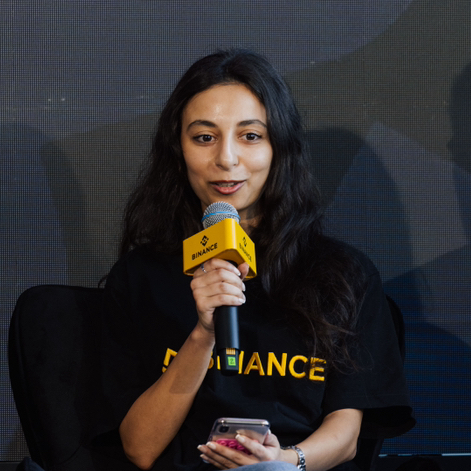
THE NEXT LEVEL OF FINANCE: TRIFI
For years, finance was divided into separate worlds.
TradFi had the banks, brokers, stocks, bonds, ETFs and commodities.
CeFi brought centralized crypto platforms, exchanges and financial services into the digital world.
DeFi took another step, using blockchain and smart contracts to create financial applications without traditional intermediaries.
Now, these worlds are increasingly moving closer together.
Welcome to TriFi.
TRADFI 🏦
Traditional Finance — banks, brokers, exchanges, stocks, bonds, commodities and other established financial instruments.
CEFI ⚡
Centralized Finance — crypto platforms where a company operates the infrastructure and provides services such as trading, custody and other financial products.
DEFI 🔗
Decentralized Finance — blockchain-based applications where users interact with smart contracts and on-chain protocols.
So what is the TriFi idea?
Instead of thinking about crypto, traditional markets and decentralized finance as completely separate systems, TriFi looks at how they can coexist within one broader financial ecosystem.
On Binance, this convergence can be seen through different layers of the ecosystem: crypto markets, TradFi products such as perpetual contracts, tokenized assets, and access to DeFi through Binance Wallet.
But there is one important lesson: Same ecosystem ≠ same product.
Buying a stock, trading a perpetual contract linked to that stock, holding a tokenized security, or interacting with a DeFi protocol can involve completely different ownership rights, structures, risks and mechanics. That is why understanding the product matters more than simply recognizing the asset.
Bitcoin. Gold. Stocks. ETFs. Tokenized assets. DeFi protocols.
Different markets. Different infrastructure. Different rules.
But increasingly, they can exist within the same financial journey.
#TriFi #TradFi #cefi #defi
THE NEXT LEVEL OF FINANCE: TRIFI
For years, finance was divided into separate worlds.
TradFi had the banks, brokers, stocks, bonds, ETFs and commodities.
CeFi brought centralized crypto platforms, exchanges and financial services into the digital world.
DeFi took another step, using blockchain and smart contracts to create financial applications without traditional intermediaries.
Now, these worlds are increasingly moving closer together.
Welcome to TriFi.
TRADFI 🏦
Traditional Finance — banks, brokers, exchanges, stocks, bonds, commodities and other established financial instruments.
CEFI ⚡
Centralized Finance — crypto platforms where a company operates the infrastructure and provides services such as trading, custody and other financial products.
DEFI 🔗
Decentralized Finance — blockchain-based applications where users interact with smart contracts and on-chain protocols.
So what is the TriFi idea?
Instead of thinking about crypto, traditional markets and decentralized finance as completely separate systems, TriFi looks at how they can coexist within one broader financial ecosystem.
On Binance, this convergence can be seen through different layers of the ecosystem: crypto markets, TradFi products such as perpetual contracts, tokenized assets, and access to DeFi through Binance Wallet.
But there is one important lesson: Same ecosystem ≠ same product.
Buying a stock, trading a perpetual contract linked to that stock, holding a tokenized security, or interacting with a DeFi protocol can involve completely different ownership rights, structures, risks and mechanics. That is why understanding the product matters more than simply recognizing the asset.
Bitcoin. Gold. Stocks. ETFs. Tokenized assets. DeFi protocols.
Different markets. Different infrastructure. Different rules.
But increasingly, they can exist within the same financial journey.
#TriFi #TradFi #cefi #defi
For years, finance was divided into separate worlds.
TradFi had the banks, brokers, stocks, bonds, ETFs and commodities.
CeFi brought centralized crypto platforms, exchanges and financial services into the digital world.
DeFi took another step, using blockchain and smart contracts to create financial applications without traditional intermediaries.
Now, these worlds are increasingly moving closer together.
Welcome to TriFi.
TRADFI 🏦
Traditional Finance — banks, brokers, exchanges, stocks, bonds, commodities and other established financial instruments.
CEFI ⚡
Centralized Finance — crypto platforms where a company operates the infrastructure and provides services such as trading, custody and other financial products.
DEFI 🔗
Decentralized Finance — blockchain-based applications where users interact with smart contracts and on-chain protocols.
So what is the TriFi idea?
Instead of thinking about crypto, traditional markets and decentralized finance as completely separate systems, TriFi looks at how they can coexist within one broader financial ecosystem.
On Binance, this convergence can be seen through different layers of the ecosystem: crypto markets, TradFi products such as perpetual contracts, tokenized assets, and access to DeFi through Binance Wallet.
But there is one important lesson: Same ecosystem ≠ same product.
Buying a stock, trading a perpetual contract linked to that stock, holding a tokenized security, or interacting with a DeFi protocol can involve completely different ownership rights, structures, risks and mechanics. That is why understanding the product matters more than simply recognizing the asset.
Bitcoin. Gold. Stocks. ETFs. Tokenized assets. DeFi protocols.
Different markets. Different infrastructure. Different rules.
But increasingly, they can exist within the same financial journey.
#TriFi #TradFi #cefi #defi
15

🚀🚀🚀 TradFi Focus 🚀🚀🚀
A practical TradFi setup starts with a market catalyst, confirmation after the open and a fixed invalidation level. Never let leverage replace a clear trading plan.
$TSLA $NVDA $MSTR
#TradFi #RWA #StockMarket #TokenizedStocks #BinanceFutures
🚀🚀🚀 TradFi Focus 🚀🚀🚀
A practical TradFi setup starts with a market catalyst, confirmation after the open and a fixed invalidation level. Never let leverage replace a clear trading plan.
$TSLA $NVDA $MSTR
#TradFi #RWA #StockMarket #TokenizedStocks #BinanceFutures
A practical TradFi setup starts with a market catalyst, confirmation after the open and a fixed invalidation level. Never let leverage replace a clear trading plan.
$TSLA $NVDA $MSTR
#TradFi #RWA #StockMarket #TokenizedStocks #BinanceFutures
37
·
--
What happens when a crypto platform starts becoming much more than a crypto platform? 👀
Binance started with digital assets.
Today, its ecosystem is expanding into traditional-market products too — including direct U.S.-listed stocks and ETFs for eligible users in supported jurisdictions.
So what’s changing?
It’s not just about adding another product.
It’s about bringing different financial experiences closer together.
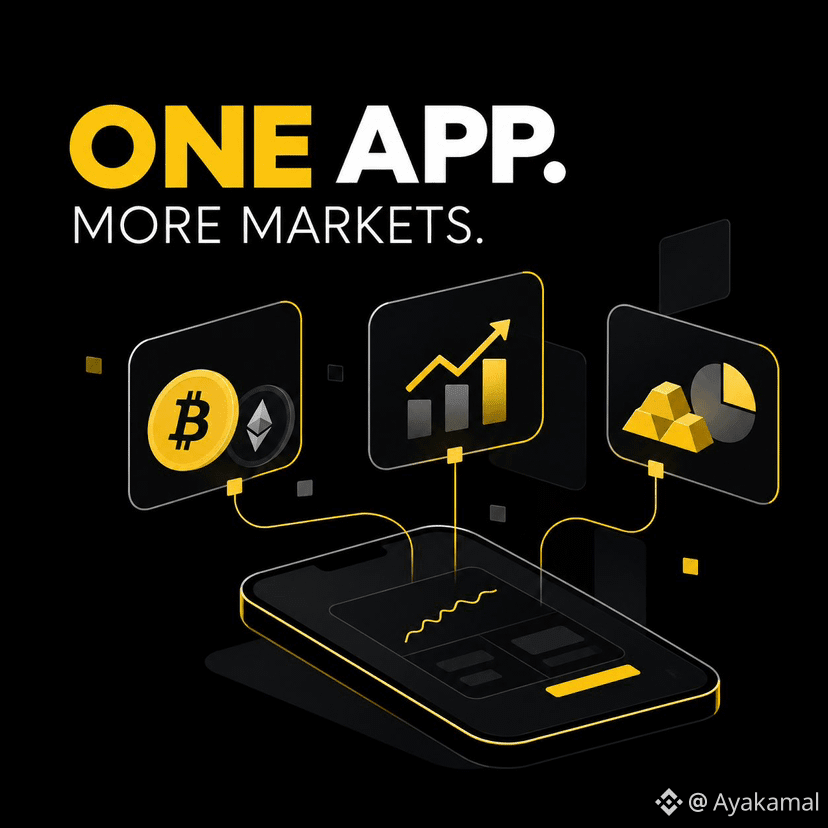
One Binance account can now connect eligible users to crypto, stocks, ETFs, tokenized securities, and TradFi perpetuals — depending on what’s available in their region.
That’s the idea behind Binance’s Financial Super App vision: a broader, multi-asset financial ecosystem rather than a platform focused on one asset class.
But there’s an important detail:
One account ≠ everything is available to everyone.
Product availability, features, and eligibility vary by jurisdiction and regulatory requirements.
So before using any product, always check what is actually available in your region.
What matters more to you in a financial app:
More products — or a more connected experience? 👀
Educational content only. Not financial advice.
Product availability varies by region and eligibility. DYOR.
#SuperFinancialApp #TradFi #stocks #ETH
What happens when a crypto platform starts becoming much more than a crypto platform? 👀
Binance started with digital assets.
Today, its ecosystem is expanding into traditional-market products too — including direct U.S.-listed stocks and ETFs for eligible users in supported jurisdictions.
So what’s changing?
It’s not just about adding another product.
It’s about bringing different financial experiences closer together.
One Binance account can now connect eligible users to crypto, stocks, ETFs, tokenized securities, and TradFi perpetuals — depending on what’s available in their region.
That’s the idea behind Binance’s Financial Super App vision: a broader, multi-asset financial ecosystem rather than a platform focused on one asset class.
But there’s an important detail:
One account ≠ everything is available to everyone.
Product availability, features, and eligibility vary by jurisdiction and regulatory requirements.
So before using any product, always check what is actually available in your region.
What matters more to you in a financial app:
More products — or a more connected experience? 👀
Educational content only. Not financial advice.
Product availability varies by region and eligibility. DYOR.
#SuperFinancialApp #TradFi #stocks #ETH
Binance started with digital assets.
Today, its ecosystem is expanding into traditional-market products too — including direct U.S.-listed stocks and ETFs for eligible users in supported jurisdictions.
So what’s changing?
It’s not just about adding another product.
It’s about bringing different financial experiences closer together.
One Binance account can now connect eligible users to crypto, stocks, ETFs, tokenized securities, and TradFi perpetuals — depending on what’s available in their region.
That’s the idea behind Binance’s Financial Super App vision: a broader, multi-asset financial ecosystem rather than a platform focused on one asset class.
But there’s an important detail:
One account ≠ everything is available to everyone.
Product availability, features, and eligibility vary by jurisdiction and regulatory requirements.
So before using any product, always check what is actually available in your region.
What matters more to you in a financial app:
More products — or a more connected experience? 👀
Educational content only. Not financial advice.
Product availability varies by region and eligibility. DYOR.
#SuperFinancialApp #TradFi #stocks #ETH
2
79

·
--
INSTITUTIONAL HEAVYWEIGHTS UNITE TO BRIDGE ON-CHAIN STOCKS WITH TRADFI INFRASTRUCTURE FOR $RWA 🏦 ⚡
TradFi heavyweights are laying the structural architecture to connect official corporate registries directly to the blockchain. 🔍 This move signals a major evolution in smart money rails, enabling token holders to claim authentic shareholder voting rights and dividends.
With key players convening at the New York Stock Exchange this October to finalize tokenization standards, institutional settlement infrastructure is quietly positioning for capital migration. 📊
💬 Will direct equity tokenization trigger the next wave of institutional liquidity into the RWA sector? 👇
⚠️ Not financial advice. Always manage your risk. 🛡️
🏷️ #RWA #Tokenization #TradFi #Institutional
🏦 👁️
INSTITUTIONAL HEAVYWEIGHTS UNITE TO BRIDGE ON-CHAIN STOCKS WITH TRADFI INFRASTRUCTURE FOR $RWA 🏦 ⚡
TradFi heavyweights are laying the structural architecture to connect official corporate registries directly to the blockchain. 🔍 This move signals a major evolution in smart money rails, enabling token holders to claim authentic shareholder voting rights and dividends.
With key players convening at the New York Stock Exchange this October to finalize tokenization standards, institutional settlement infrastructure is quietly positioning for capital migration. 📊
💬 Will direct equity tokenization trigger the next wave of institutional liquidity into the RWA sector? 👇
⚠️ Not financial advice. Always manage your risk. 🛡️
🏷️ #RWA #Tokenization #TradFi #Institutional
🏦 👁️
TradFi heavyweights are laying the structural architecture to connect official corporate registries directly to the blockchain. 🔍 This move signals a major evolution in smart money rails, enabling token holders to claim authentic shareholder voting rights and dividends.
With key players convening at the New York Stock Exchange this October to finalize tokenization standards, institutional settlement infrastructure is quietly positioning for capital migration. 📊
💬 Will direct equity tokenization trigger the next wave of institutional liquidity into the RWA sector? 👇
⚠️ Not financial advice. Always manage your risk. 🛡️
🏷️ #RWA #Tokenization #TradFi #Institutional
🏦 👁️
18
🚀🚀🚀 TradFi Focus 🚀🚀🚀
TradFi perpetuals can move sharply around earnings, market opens and macro news. Use modest leverage, predefined exits and enough margin for sudden volatility.
$TSLA $NVDA $MSTR
#TradFi #RWA #StockMarket #TokenizedStocks #BinanceFutures
🚀🚀🚀 TradFi Focus 🚀🚀🚀
TradFi perpetuals can move sharply around earnings, market opens and macro news. Use modest leverage, predefined exits and enough margin for sudden volatility.
$TSLA $NVDA $MSTR
#TradFi #RWA #StockMarket #TokenizedStocks #BinanceFutures
TradFi perpetuals can move sharply around earnings, market opens and macro news. Use modest leverage, predefined exits and enough margin for sudden volatility.
$TSLA $NVDA $MSTR
#TradFi #RWA #StockMarket #TokenizedStocks #BinanceFutures
1
·
--
🚨 INSTITUTIONAL LIQUIDITY SHIFTS AS TOP-TIER PLATFORMS INTEGRATE TRADFI BEYOND $BTC ! 💥
Institutional order flow is no longer confined to isolated crypto order books. Top-tier platforms are orchestrating a massive structural shift, unifying digital assets with traditional forex, gold, and equity derivatives into a single execution layer. 🏦
This multi-asset convergence signals smart money preparing for seamless cross-market capital rotation. 📊 As automated AI execution and tokenized real-world assets merge under one roof, market efficiency increases and structural liquidity footprints across traditional and digital venues become deeply interconnected. 🔍
Smart money builds infrastructure ahead of retail demand, positioning for total financial integration. 💡 Will unified multi-asset access accelerate the next major liquidity expansion for $BTC , or will capital split across asset classes? 👇
⚠️ Not financial advice. Always manage your risk. 🛡️
🏷️ #BTC #TradFi #RWA #Macro #Crypto
🎯 🦈
🚨 INSTITUTIONAL LIQUIDITY SHIFTS AS TOP-TIER PLATFORMS INTEGRATE TRADFI BEYOND $BTC ! 💥
Institutional order flow is no longer confined to isolated crypto order books. Top-tier platforms are orchestrating a massive structural shift, unifying digital assets with traditional forex, gold, and equity derivatives into a single execution layer. 🏦
This multi-asset convergence signals smart money preparing for seamless cross-market capital rotation. 📊 As automated AI execution and tokenized real-world assets merge under one roof, market efficiency increases and structural liquidity footprints across traditional and digital venues become deeply interconnected. 🔍
Smart money builds infrastructure ahead of retail demand, positioning for total financial integration. 💡 Will unified multi-asset access accelerate the next major liquidity expansion for $BTC , or will capital split across asset classes? 👇
⚠️ Not financial advice. Always manage your risk. 🛡️
🏷️ #BTC #TradFi #RWA #Macro #Crypto
🎯 🦈
Institutional order flow is no longer confined to isolated crypto order books. Top-tier platforms are orchestrating a massive structural shift, unifying digital assets with traditional forex, gold, and equity derivatives into a single execution layer. 🏦
This multi-asset convergence signals smart money preparing for seamless cross-market capital rotation. 📊 As automated AI execution and tokenized real-world assets merge under one roof, market efficiency increases and structural liquidity footprints across traditional and digital venues become deeply interconnected. 🔍
Smart money builds infrastructure ahead of retail demand, positioning for total financial integration. 💡 Will unified multi-asset access accelerate the next major liquidity expansion for $BTC , or will capital split across asset classes? 👇
⚠️ Not financial advice. Always manage your risk. 🛡️
🏷️ #BTC #TradFi #RWA #Macro #Crypto
🎯 🦈
10

·
--
Verified
Article
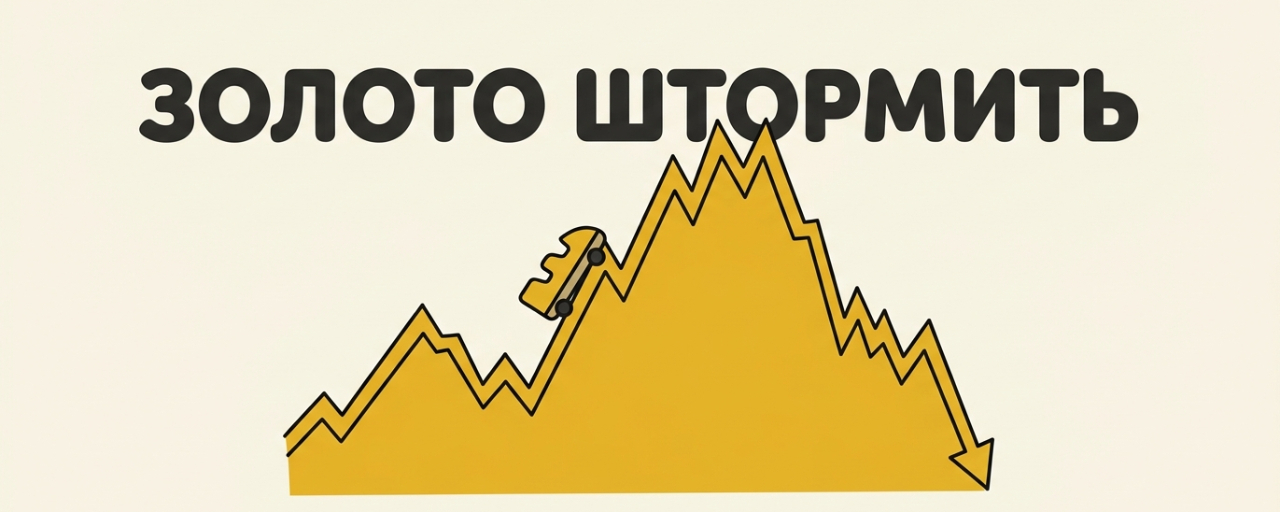
Gold is stormy: what it means and what TradFi has to do with it | Market reviewGold ( $XAU ) in 2026 is behaving like American roller coasters 🎢. In January, it touched a historical record—over $5,400 per ounce (January 28). Then a slide began: by July, the price fell to about ~$4,070—that was the year’s low. Right now, gold has bounced back to about ~$4,280, but in September it’s under pressure again. Compared to the record, it’s roughly minus 20%.
Gold is stormy: what it means and what TradFi has to do with it | Market review
Gold ( $XAU ) in 2026 is behaving like American roller coasters 🎢. In January, it touched a historical record—over $5,400 per ounce (January 28). Then a slide began: by July, the price fell to about ~$4,070—that was the year’s low. Right now, gold has bounced back to about ~$4,280, but in September it’s under pressure again. Compared to the record, it’s roughly minus 20%.
1
733
🚀🚀🚀 TradFi Focus 🚀🚀🚀
Spot shares represent ownership, while TradFi perpetuals provide leveraged price exposure without ownership. Funding and liquidation make their risk profile very different.
$TSLA $NVDA $MSTR
#TradFi #RWA #StockMarket #TokenizedStocks #BinanceFutures
🚀🚀🚀 TradFi Focus 🚀🚀🚀
Spot shares represent ownership, while TradFi perpetuals provide leveraged price exposure without ownership. Funding and liquidation make their risk profile very different.
$TSLA $NVDA $MSTR
#TradFi #RWA #StockMarket #TokenizedStocks #BinanceFutures
Spot shares represent ownership, while TradFi perpetuals provide leveraged price exposure without ownership. Funding and liquidation make their risk profile very different.
$TSLA $NVDA $MSTR
#TradFi #RWA #StockMarket #TokenizedStocks #BinanceFutures
175

·
--
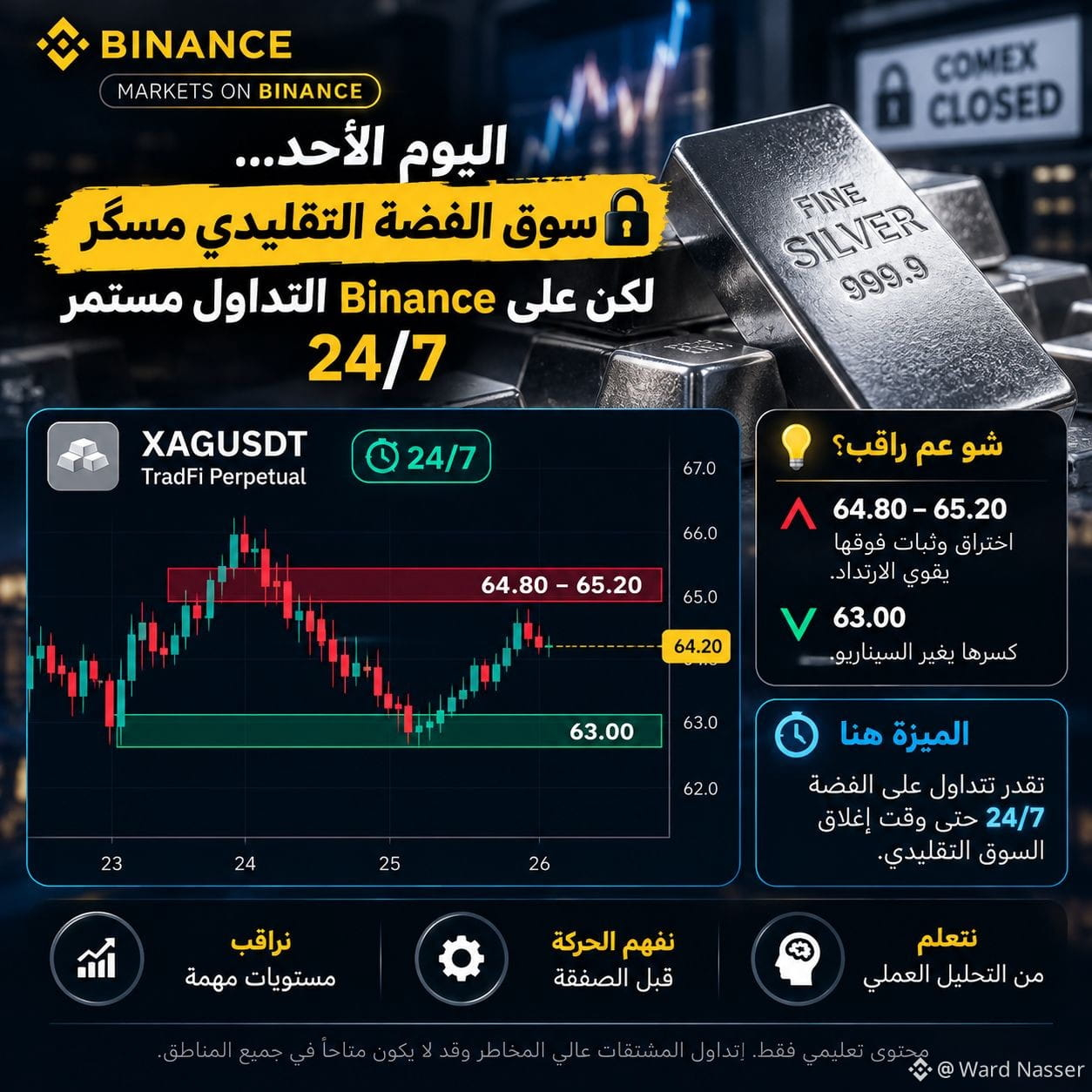
🥈 Today Sunday… the traditional silver market is closed, but on Binance trading is still ongoing. 👀
Now watch XAGUSDT TradFi Perpetual after silver bounces back from the $63 zone.
🎯 Two areas on my radar:
🔼 $64.80–65.20 — a breakout and hold that strengthens the bounce.
🔽 $63 — breaking it changes the scenario.
And here’s the advantage of TradFi Perps: you can trade the movement of traditional assets 24/7, even on the weekend.
🧠 I’m sharing a product explanation and how I think about the trade—not the trade you have to take.
⚠️ Educational content only. High-risk derivatives trading.
#Binance #Silver #TradFi
🥈 Today Sunday… the traditional silver market is closed, but on Binance trading is still ongoing. 👀
Now watch XAGUSDT TradFi Perpetual after silver bounces back from the $63 zone.
🎯 Two areas on my radar:
🔼 $64.80–65.20 — a breakout and hold that strengthens the bounce.
🔽 $63 — breaking it changes the scenario.
And here’s the advantage of TradFi Perps: you can trade the movement of traditional assets 24/7, even on the weekend.
🧠 I’m sharing a product explanation and how I think about the trade—not the trade you have to take.
⚠️ Educational content only. High-risk derivatives trading.
#Binance #Silver #TradFi
Now watch XAGUSDT TradFi Perpetual after silver bounces back from the $63 zone.
🎯 Two areas on my radar:
🔼 $64.80–65.20 — a breakout and hold that strengthens the bounce.
🔽 $63 — breaking it changes the scenario.
And here’s the advantage of TradFi Perps: you can trade the movement of traditional assets 24/7, even on the weekend.
🧠 I’m sharing a product explanation and how I think about the trade—not the trade you have to take.
⚠️ Educational content only. High-risk derivatives trading.
#Binance #Silver #TradFi
2
141

·
--
Bullish
I want to share a real-life use case of bStocks, when the market faced a classic ambiguous situation. The crypto sector entered a deep local correction, while on traditional exchanges shares of leading semiconductor giants were showing steady growth amid strong financial reports.
Instead of fully exiting to fiat via P2P or simply watching my balance drop, I directed part of my available deposit into tokenized shares of this sector. The trade took half a minute right through the Binance terminal using standard stablecoins.
As a result, this case fully paid off: profit from the growth of TradFi assets partially offset the crypto drawdown, keeping the overall portfolio in a stable state. As soon as the crypto market correction ran its course, I moved the assets back into stablecoins and calmly picked up the right coins at low prices.
Have you ever used stock assets to hedge a crypto deposit?
#TradFi #BStocks #BinanceSquare
I want to share a real-life use case of bStocks, when the market faced a classic ambiguous situation. The crypto sector entered a deep local correction, while on traditional exchanges shares of leading semiconductor giants were showing steady growth amid strong financial reports.
Instead of fully exiting to fiat via P2P or simply watching my balance drop, I directed part of my available deposit into tokenized shares of this sector. The trade took half a minute right through the Binance terminal using standard stablecoins.
As a result, this case fully paid off: profit from the growth of TradFi assets partially offset the crypto drawdown, keeping the overall portfolio in a stable state. As soon as the crypto market correction ran its course, I moved the assets back into stablecoins and calmly picked up the right coins at low prices.
Have you ever used stock assets to hedge a crypto deposit?
#TradFi #BStocks #BinanceSquare
Instead of fully exiting to fiat via P2P or simply watching my balance drop, I directed part of my available deposit into tokenized shares of this sector. The trade took half a minute right through the Binance terminal using standard stablecoins.
As a result, this case fully paid off: profit from the growth of TradFi assets partially offset the crypto drawdown, keeping the overall portfolio in a stable state. As soon as the crypto market correction ran its course, I moved the assets back into stablecoins and calmly picked up the right coins at low prices.
Have you ever used stock assets to hedge a crypto deposit?
#TradFi #BStocks #BinanceSquare
1
94

·
--
📊 bStocks or regular stocks: what's the difference?
At first glance, bStocks and regular stocks may look similar, but they are different instruments.
🔹 Regular stocks
You buy a security through the traditional stock market infrastructure. Trading takes place during the established hours of the relevant exchange.
🔹 bStocks
These are tokenized securities linked to underlying US stocks. They run through crypto infrastructure, and trading may be available 24/7.
📌 An important nuance
bStock does not mean direct ownership of the underlying stock itself. The tokenized asset represents an interest in the underlying security, so its structure differs from that of a regular stock.
⚠️ You should also consider the risks: the price may change, access to the product depends on jurisdiction, and the terms may be updated.
💡 Therefore, choosing between a traditional stock and a tokenized asset depends on the market access format you need.
#bStocks #TradFi #Investing
📊 bStocks or regular stocks: what's the difference?
At first glance, bStocks and regular stocks may look similar, but they are different instruments.
🔹 Regular stocks
You buy a security through the traditional stock market infrastructure. Trading takes place during the established hours of the relevant exchange.
🔹 bStocks
These are tokenized securities linked to underlying US stocks. They run through crypto infrastructure, and trading may be available 24/7.
📌 An important nuance
bStock does not mean direct ownership of the underlying stock itself. The tokenized asset represents an interest in the underlying security, so its structure differs from that of a regular stock.
⚠️ You should also consider the risks: the price may change, access to the product depends on jurisdiction, and the terms may be updated.
💡 Therefore, choosing between a traditional stock and a tokenized asset depends on the market access format you need.
#bStocks #TradFi #Investing
At first glance, bStocks and regular stocks may look similar, but they are different instruments.
🔹 Regular stocks
You buy a security through the traditional stock market infrastructure. Trading takes place during the established hours of the relevant exchange.
🔹 bStocks
These are tokenized securities linked to underlying US stocks. They run through crypto infrastructure, and trading may be available 24/7.
📌 An important nuance
bStock does not mean direct ownership of the underlying stock itself. The tokenized asset represents an interest in the underlying security, so its structure differs from that of a regular stock.
⚠️ You should also consider the risks: the price may change, access to the product depends on jurisdiction, and the terms may be updated.
💡 Therefore, choosing between a traditional stock and a tokenized asset depends on the market access format you need.
#bStocks #TradFi #Investing
1
102

·
--
#TradFi - practical case💼
Let’s imagine an investor who wants to diversify a portfolio and not limit it to just cryptocurrencies. Part of the funds can be directed to traditional assets, such as stocks or bonds, while the other part can be kept in digital assets. This approach does not eliminate risk, but it allows capital to be allocated across assets with different behavior📊📈 The key is to define the investment horizon in advance and the acceptable risk level.
#TradFi - practical case💼
Let’s imagine an investor who wants to diversify a portfolio and not limit it to just cryptocurrencies. Part of the funds can be directed to traditional assets, such as stocks or bonds, while the other part can be kept in digital assets. This approach does not eliminate risk, but it allows capital to be allocated across assets with different behavior📊📈 The key is to define the investment horizon in advance and the acceptable risk level.
Let’s imagine an investor who wants to diversify a portfolio and not limit it to just cryptocurrencies. Part of the funds can be directed to traditional assets, such as stocks or bonds, while the other part can be kept in digital assets. This approach does not eliminate risk, but it allows capital to be allocated across assets with different behavior📊📈 The key is to define the investment horizon in advance and the acceptable risk level.
1
113

·
--
Buy a piece of Apple or Tesla with crypto? It’s real!
Previously, to buy shares of global companies (this is called #TradFi , or traditional finance), you had to go through a complex broker registration process and wait for the market to open.
Now there are #bStocks — digital copies of shares directly in crypto.
What’s the difference:
⏰ Time: Regular exchanges operate only during business hours, while #bStocks are available 24/7.
💸 Amount: A share of a large company can cost $200 or $500. #bStocks let you buy a fraction of that share for as little as $10.
🏃♂️ Speed: The purchase happens instantly.
‼️What to keep in mind (risks):
This is still a new instrument, so the rules for it are only being created in different countries. Also, the crypto market can change quickly, so you should buy wisely.
And do you have #bStocks ?
Buy a piece of Apple or Tesla with crypto? It’s real!
Previously, to buy shares of global companies (this is called #TradFi , or traditional finance), you had to go through a complex broker registration process and wait for the market to open.
Now there are #bStocks — digital copies of shares directly in crypto.
What’s the difference:
⏰ Time: Regular exchanges operate only during business hours, while #bStocks are available 24/7.
💸 Amount: A share of a large company can cost $200 or $500. #bStocks let you buy a fraction of that share for as little as $10.
🏃♂️ Speed: The purchase happens instantly.
‼️What to keep in mind (risks):
This is still a new instrument, so the rules for it are only being created in different countries. Also, the crypto market can change quickly, so you should buy wisely.
And do you have #bStocks ?
Previously, to buy shares of global companies (this is called #TradFi , or traditional finance), you had to go through a complex broker registration process and wait for the market to open.
Now there are #bStocks — digital copies of shares directly in crypto.
What’s the difference:
⏰ Time: Regular exchanges operate only during business hours, while #bStocks are available 24/7.
💸 Amount: A share of a large company can cost $200 or $500. #bStocks let you buy a fraction of that share for as little as $10.
🏃♂️ Speed: The purchase happens instantly.
‼️What to keep in mind (risks):
This is still a new instrument, so the rules for it are only being created in different countries. Also, the crypto market can change quickly, so you should buy wisely.
And do you have #bStocks ?
92

·
--
Bullish
About a month ago, I noticed $SPCXB and decided to add it to my portfolio.
Back then, what interested me wasn’t just buying an asset, but watching the tokenized stocks direction itself—and how traditional financial instruments are gradually being integrated into the blockchain ecosystem.
Now it’s interesting to come back to this position after a month and see how the situation has changed.
$SPCXB is a good example of how quickly the bStocks and RWA space is developing. Traditional assets are getting new infrastructure, and the crypto market is gradually becoming an intersection with TradFi.
For me, this is one of the reasons to follow not only BTC and altcoins, but also the tokenization of real-world assets.
It will be interesting to see what this sector looks like a year from now. If tokenized stocks continue to gain popularity, I think we’ll see a lot more assets like this.
Keeping an eye on $SPCXB 👀
#Binance #BStocks #spcxb #TradFi #Blockchain
About a month ago, I noticed $SPCXB and decided to add it to my portfolio.
Back then, what interested me wasn’t just buying an asset, but watching the tokenized stocks direction itself—and how traditional financial instruments are gradually being integrated into the blockchain ecosystem.
Now it’s interesting to come back to this position after a month and see how the situation has changed.
$SPCXB is a good example of how quickly the bStocks and RWA space is developing. Traditional assets are getting new infrastructure, and the crypto market is gradually becoming an intersection with TradFi.
For me, this is one of the reasons to follow not only BTC and altcoins, but also the tokenization of real-world assets.
It will be interesting to see what this sector looks like a year from now. If tokenized stocks continue to gain popularity, I think we’ll see a lot more assets like this.
Keeping an eye on $SPCXB 👀
#Binance #BStocks #spcxb #TradFi #Blockchain
Back then, what interested me wasn’t just buying an asset, but watching the tokenized stocks direction itself—and how traditional financial instruments are gradually being integrated into the blockchain ecosystem.
Now it’s interesting to come back to this position after a month and see how the situation has changed.
$SPCXB is a good example of how quickly the bStocks and RWA space is developing. Traditional assets are getting new infrastructure, and the crypto market is gradually becoming an intersection with TradFi.
For me, this is one of the reasons to follow not only BTC and altcoins, but also the tokenization of real-world assets.
It will be interesting to see what this sector looks like a year from now. If tokenized stocks continue to gain popularity, I think we’ll see a lot more assets like this.
Keeping an eye on $SPCXB 👀
#Binance #BStocks #spcxb #TradFi #Blockchain
1
91

·
--
How to Protect Capital During a Crypto Market Storm: TradFi + Crypto
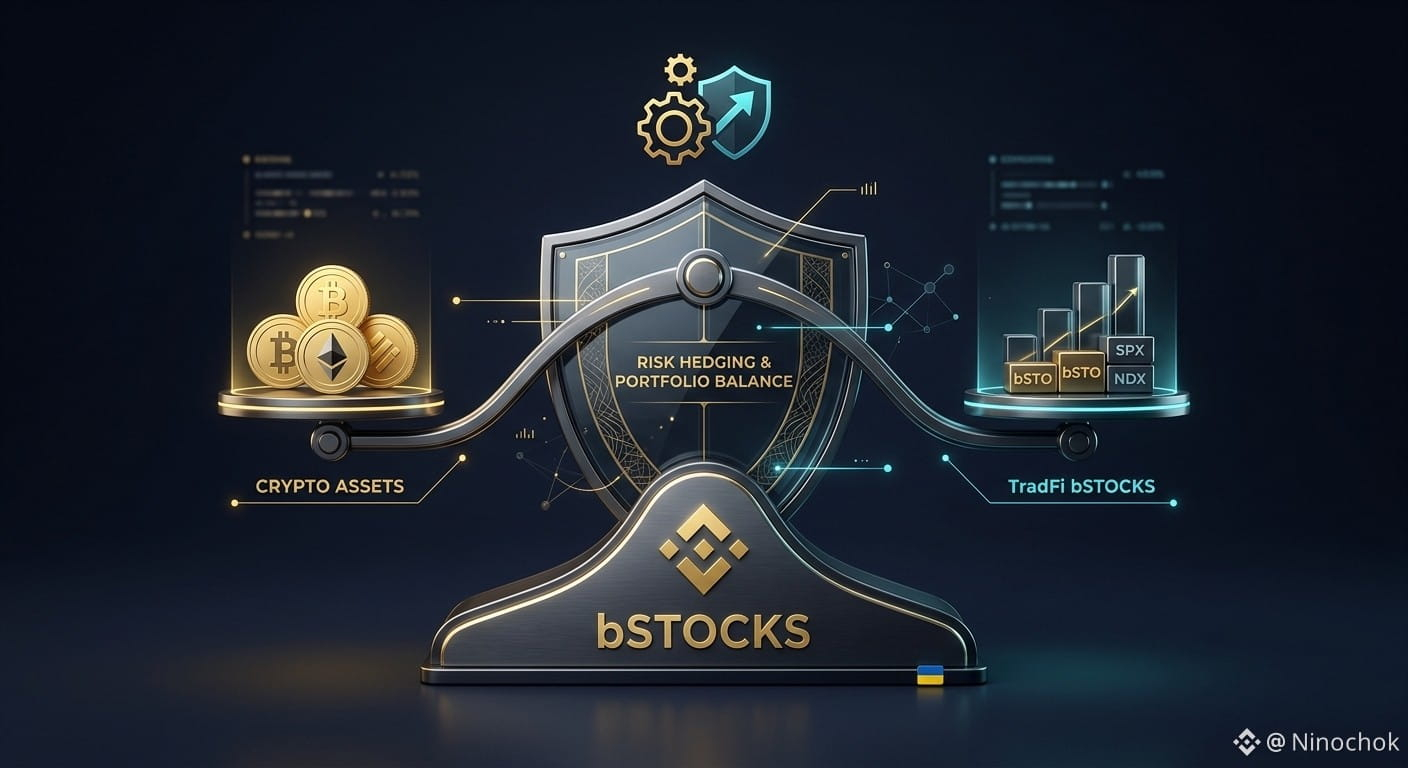
When volatility goes through the roof, stablecoins are no longer the only safe haven. The development of bStocks (tokenized stocks) has introduced a flexible tool for risk management.
Why you should add bStocks to your strategy:
🔹 Lower volatility: Stock market shares are less impulsive than altcoins, which helps stabilize your portfolio.
🔹 Instant rebalancing: Switching between crypto and tokenized stocks takes seconds without withdrawing funds to the bank.
🔹 Full synergy: Combine base crypto, passive income in Binance Earn, and TradFi shares in one app.
The investor’s main rule is not only to earn, but also to preserve capital in any market phase.
And how do you hedge your risks: do you move into stables or diversify into TradFi assets? 👇
#BinanceSquare #TradFi #bStocks
How to Protect Capital During a Crypto Market Storm: TradFi + Crypto
When volatility goes through the roof, stablecoins are no longer the only safe haven. The development of bStocks (tokenized stocks) has introduced a flexible tool for risk management.
Why you should add bStocks to your strategy:
🔹 Lower volatility: Stock market shares are less impulsive than altcoins, which helps stabilize your portfolio.
🔹 Instant rebalancing: Switching between crypto and tokenized stocks takes seconds without withdrawing funds to the bank.
🔹 Full synergy: Combine base crypto, passive income in Binance Earn, and TradFi shares in one app.
The investor’s main rule is not only to earn, but also to preserve capital in any market phase.
And how do you hedge your risks: do you move into stables or diversify into TradFi assets? 👇
#BinanceSquare #TradFi #bStocks
When volatility goes through the roof, stablecoins are no longer the only safe haven. The development of bStocks (tokenized stocks) has introduced a flexible tool for risk management.
Why you should add bStocks to your strategy:
🔹 Lower volatility: Stock market shares are less impulsive than altcoins, which helps stabilize your portfolio.
🔹 Instant rebalancing: Switching between crypto and tokenized stocks takes seconds without withdrawing funds to the bank.
🔹 Full synergy: Combine base crypto, passive income in Binance Earn, and TradFi shares in one app.
The investor’s main rule is not only to earn, but also to preserve capital in any market phase.
And how do you hedge your risks: do you move into stables or diversify into TradFi assets? 👇
#BinanceSquare #TradFi #bStocks
1
73

·
--
📊 Traditional finance hasn’t disappeared
When people talk about the crypto market, it sometimes gives the impression that TradFi and digital assets exist in two completely different worlds.
But I see it a bit differently.
Stocks, bonds, cash instruments, and other traditional assets continue to play an important role in the financial system.
And digital technologies are gradually creating new ways to interact with financial products.
That’s why I’m interested in the TradFi direction on Binance.
Not as an attempt to replace one financial world with another.
But as an opportunity to see how traditional finance is adapting to the digital era.
🌐 For me, the future doesn’t look like a choice of “TradFi or crypto.”
It’s more interesting to watch where these two worlds start to intersect.
#TradFi @BinanceCIS
📊 Traditional finance hasn’t disappeared
When people talk about the crypto market, it sometimes gives the impression that TradFi and digital assets exist in two completely different worlds.
But I see it a bit differently.
Stocks, bonds, cash instruments, and other traditional assets continue to play an important role in the financial system.
And digital technologies are gradually creating new ways to interact with financial products.
That’s why I’m interested in the TradFi direction on Binance.
Not as an attempt to replace one financial world with another.
But as an opportunity to see how traditional finance is adapting to the digital era.
🌐 For me, the future doesn’t look like a choice of “TradFi or crypto.”
It’s more interesting to watch where these two worlds start to intersect.
#TradFi @BinanceCIS
When people talk about the crypto market, it sometimes gives the impression that TradFi and digital assets exist in two completely different worlds.
But I see it a bit differently.
Stocks, bonds, cash instruments, and other traditional assets continue to play an important role in the financial system.
And digital technologies are gradually creating new ways to interact with financial products.
That’s why I’m interested in the TradFi direction on Binance.
Not as an attempt to replace one financial world with another.
But as an opportunity to see how traditional finance is adapting to the digital era.
🌐 For me, the future doesn’t look like a choice of “TradFi or crypto.”
It’s more interesting to watch where these two worlds start to intersect.
#TradFi @BinanceCIS
1
89

Tesla on Binance in three ways: which one to choose? 🤔
Want to invest in stocks? On Binance, there are several ways to do that, and they differ significantly.
1️⃣ US stocks
You buy a real share through a broker. No commission, fractions from $5, and you’re entitled to dividends. Trading is tied to market hours. Suitable for long-term investments.
2️⃣ bStocks (e.g., TSLAB)
A token certificate backed 1:1 by a stock. Trading is 24/7; you can withdraw the token to a BNB Chain wallet or use it as collateral. But you own the certificate token, not the shareholder equity.
3️⃣ TradFi perpetuals
A futures contract on the stock price. You can profit from both rising prices (long) and falling prices (short), and use leverage. However, there’s a risk of liquidation and funding. This is a trading instrument, not something to hold for years.
In short:
- Invest for the long term → stocks or bStocks
- 24/7 flexibility and DeFi → bStocks
- Short-term trading or hedging → TradFi
Check which options are available in your account.
#BStocks #TradFi
Tesla on Binance in three ways: which one to choose? 🤔
Want to invest in stocks? On Binance, there are several ways to do that, and they differ significantly.
1️⃣ US stocks
You buy a real share through a broker. No commission, fractions from $5, and you’re entitled to dividends. Trading is tied to market hours. Suitable for long-term investments.
2️⃣ bStocks (e.g., TSLAB)
A token certificate backed 1:1 by a stock. Trading is 24/7; you can withdraw the token to a BNB Chain wallet or use it as collateral. But you own the certificate token, not the shareholder equity.
3️⃣ TradFi perpetuals
A futures contract on the stock price. You can profit from both rising prices (long) and falling prices (short), and use leverage. However, there’s a risk of liquidation and funding. This is a trading instrument, not something to hold for years.
In short:
- Invest for the long term → stocks or bStocks
- 24/7 flexibility and DeFi → bStocks
- Short-term trading or hedging → TradFi
Check which options are available in your account.
#BStocks #TradFi
Want to invest in stocks? On Binance, there are several ways to do that, and they differ significantly.
1️⃣ US stocks
You buy a real share through a broker. No commission, fractions from $5, and you’re entitled to dividends. Trading is tied to market hours. Suitable for long-term investments.
2️⃣ bStocks (e.g., TSLAB)
A token certificate backed 1:1 by a stock. Trading is 24/7; you can withdraw the token to a BNB Chain wallet or use it as collateral. But you own the certificate token, not the shareholder equity.
3️⃣ TradFi perpetuals
A futures contract on the stock price. You can profit from both rising prices (long) and falling prices (short), and use leverage. However, there’s a risk of liquidation and funding. This is a trading instrument, not something to hold for years.
In short:
- Invest for the long term → stocks or bStocks
- 24/7 flexibility and DeFi → bStocks
- Short-term trading or hedging → TradFi
Check which options are available in your account.
#BStocks #TradFi
80

·
--
Bullish
TradFi / risks
Investing is often talked about only in terms of profit.
But it seems to me that risks should be discussed just as much.
For example, if an asset can rise by 20%, that doesn’t mean it can’t also fall by 20%.
The same applies to TradFi and products related to traditional markets.
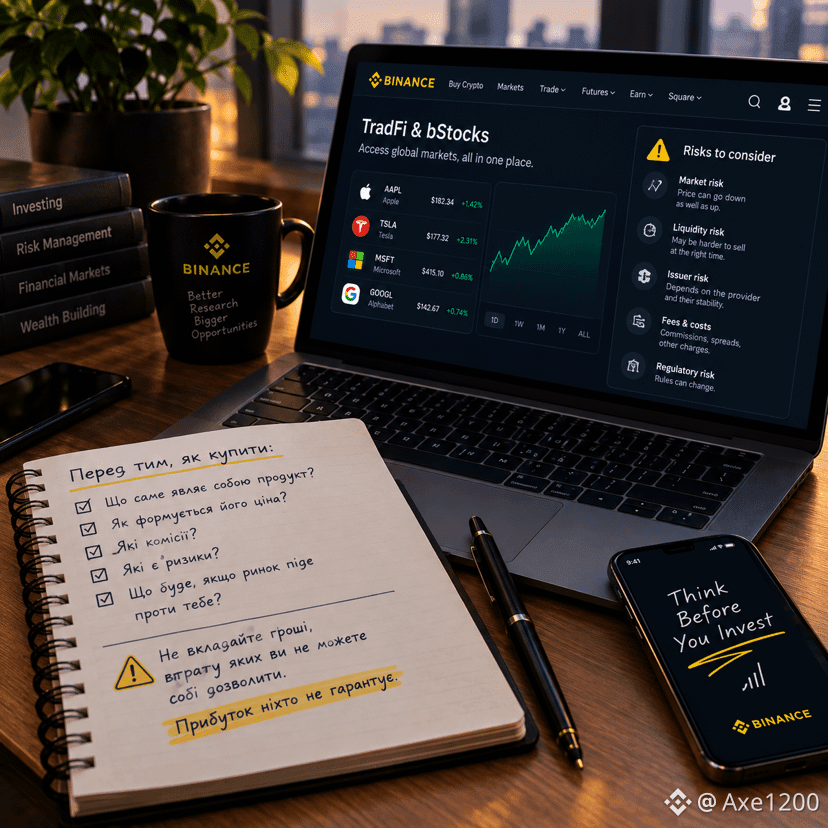
Before buying anything, I would check at least:
🔹 what exactly the product is;
🔹 how its price is formed;
🔹 what fees there are;
🔹 what the risks are;
🔹 what will happen if the market moves against you.
It’s especially important not to invest money that you can’t afford to lose.
No one guarantees profit.#TradFi
TradFi / risks
Investing is often talked about only in terms of profit.
But it seems to me that risks should be discussed just as much.
For example, if an asset can rise by 20%, that doesn’t mean it can’t also fall by 20%.
The same applies to TradFi and products related to traditional markets.
Before buying anything, I would check at least:
🔹 what exactly the product is;
🔹 how its price is formed;
🔹 what fees there are;
🔹 what the risks are;
🔹 what will happen if the market moves against you.
It’s especially important not to invest money that you can’t afford to lose.
No one guarantees profit.#TradFi
Investing is often talked about only in terms of profit.
But it seems to me that risks should be discussed just as much.
For example, if an asset can rise by 20%, that doesn’t mean it can’t also fall by 20%.
The same applies to TradFi and products related to traditional markets.
Before buying anything, I would check at least:
🔹 what exactly the product is;
🔹 how its price is formed;
🔹 what fees there are;
🔹 what the risks are;
🔹 what will happen if the market moves against you.
It’s especially important not to invest money that you can’t afford to lose.
No one guarantees profit.#TradFi
1
214

·
--
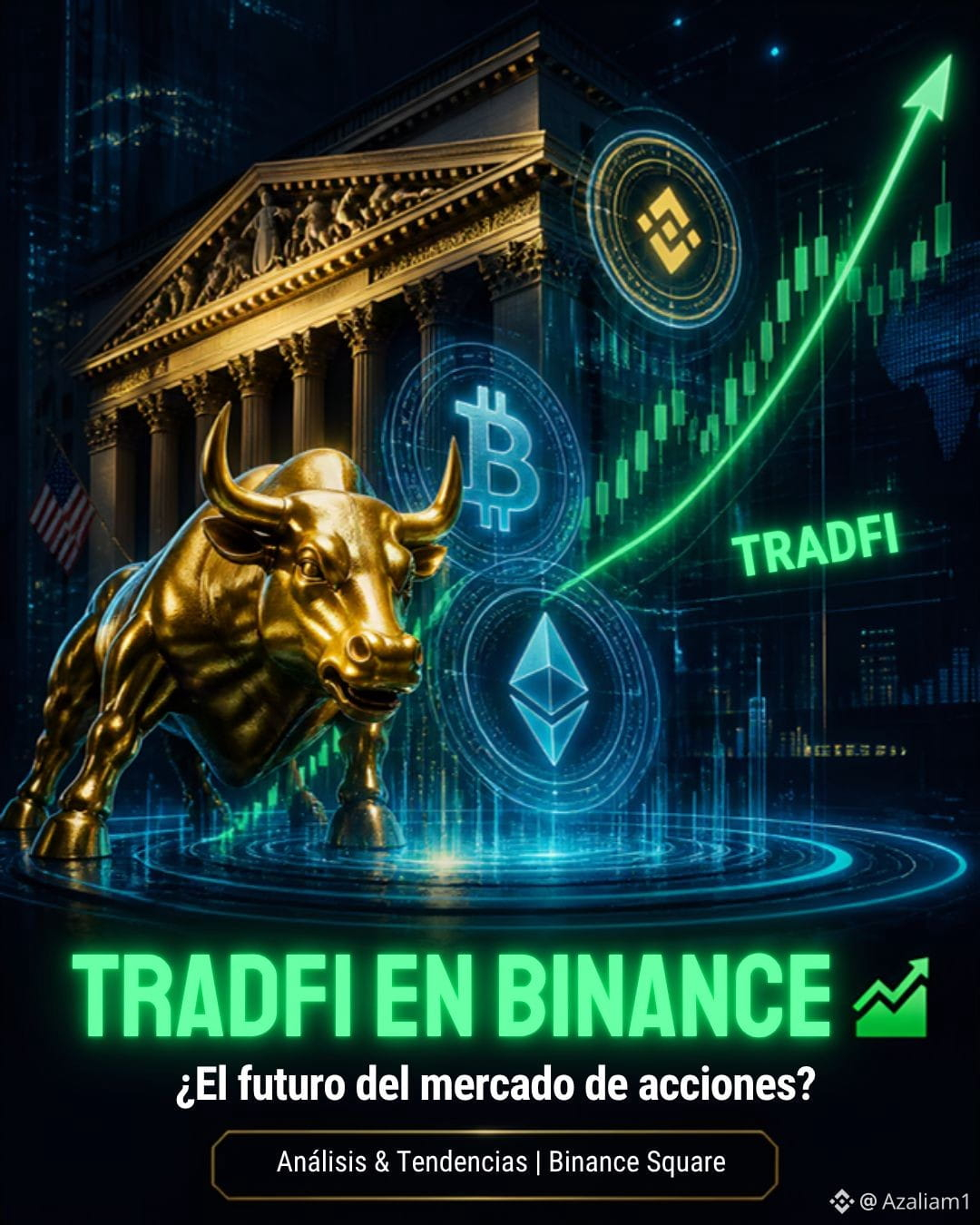
TRADFI & Stocks in Crypto: Is the real liquidity revolution here? 🚀🏛️
The convergence between traditional finance (TradFi) and the digital asset market continues to gain massive ground. The ability to gain exposure to stocks or indices from the traditional market using crypto/stablecoins directly from the ecosystem ushers in a new era for investors.
🔹 Structure and Impact: Tokenization and 24/7 access to liquidity remove the operational barriers of traditional stock markets, enabling portfolio diversification without leaving the chain.
🔹 10-second Takeaway: Tokenized TradFi isn’t a fad: it represents the direct bridge for institutional liquidity to flow into the crypto space—and vice versa—optimizing capital management.
💡 Technical Decision: ACCUMULATE / HOLD (Maintain strategic exposure to RWA/TradFi sector projects ahead of institutional adoption).
❓ Question for the community:
Do you prefer to trade traditional stocks in a tokenized way with crypto, or do you prefer to keep your investments 100% in the traditional stock market?
👇 Leave your choice in the comments:
A) Tokenized with Crypto (More flexibility and 24/7 access).
B) Traditional Market (Traditional brokers).
#tradfi $AAPLB
{spot}(AAPLBUSDT)
TRADFI & Stocks in Crypto: Is the real liquidity revolution here? 🚀🏛️
The convergence between traditional finance (TradFi) and the digital asset market continues to gain massive ground. The ability to gain exposure to stocks or indices from the traditional market using crypto/stablecoins directly from the ecosystem ushers in a new era for investors.
🔹 Structure and Impact: Tokenization and 24/7 access to liquidity remove the operational barriers of traditional stock markets, enabling portfolio diversification without leaving the chain.
🔹 10-second Takeaway: Tokenized TradFi isn’t a fad: it represents the direct bridge for institutional liquidity to flow into the crypto space—and vice versa—optimizing capital management.
💡 Technical Decision: ACCUMULATE / HOLD (Maintain strategic exposure to RWA/TradFi sector projects ahead of institutional adoption).
❓ Question for the community:
Do you prefer to trade traditional stocks in a tokenized way with crypto, or do you prefer to keep your investments 100% in the traditional stock market?
👇 Leave your choice in the comments:
A) Tokenized with Crypto (More flexibility and 24/7 access).
B) Traditional Market (Traditional brokers).
#tradfi $AAPLB
The convergence between traditional finance (TradFi) and the digital asset market continues to gain massive ground. The ability to gain exposure to stocks or indices from the traditional market using crypto/stablecoins directly from the ecosystem ushers in a new era for investors.
🔹 Structure and Impact: Tokenization and 24/7 access to liquidity remove the operational barriers of traditional stock markets, enabling portfolio diversification without leaving the chain.
🔹 10-second Takeaway: Tokenized TradFi isn’t a fad: it represents the direct bridge for institutional liquidity to flow into the crypto space—and vice versa—optimizing capital management.
💡 Technical Decision: ACCUMULATE / HOLD (Maintain strategic exposure to RWA/TradFi sector projects ahead of institutional adoption).
❓ Question for the community:
Do you prefer to trade traditional stocks in a tokenized way with crypto, or do you prefer to keep your investments 100% in the traditional stock market?
👇 Leave your choice in the comments:
A) Tokenized with Crypto (More flexibility and 24/7 access).
B) Traditional Market (Traditional brokers).
#tradfi $AAPLB
1
67
Log in to explore more content
Join global crypto users on Binance Square
⚡️ Get latest and useful information about crypto.
💬 Trusted by the world’s largest crypto exchange.
👍 Discover real insights from verified creators.
Email / Phone number
Trending Topics
1
#BitgetHackerMoves$83MStolenXRP
4,079 views
48 Discussing
2
#SOLSpotETFWeeklyInflow$188M
2,089 views
45 Discussing
3
#DogecoinETFsPostBiggestWeekSinceLaunch
256 views
38 Discussing
4
#StrategyStriveAdd2305BitcoinThisWeek
44,122 views
1,097 Discussing
5
#TrumpRejectsIranHormuzReopening
44,708 views
883 Discussing
6
#CircleTetherFreezeBitgetHackerWallet
57,493 views
899 Discussing
7
#SECSaysTokenBuybacksNotAutoSecurities
29,963 views
528 Discussing
8
#ChinaUSAgreeOn$30BTariffCut
2,170 views
33 Discussing
9
#CoinMarketCapCompletesCoinglassAcquisition
45,301 views
657 Discussing
10
#CircleMints500MUSDCOnSolana
234,111 views
3,274 Discussing