
#bitcoinhalving
bitcoinhalving
6.8M views
2,485 Discussing
Hot
Latest

WHAT IS BITCOIN HALVING?
Bitcoin halving is an event that reduces the amount of new Bitcoin issued as mining rewards.
It happens approximately every four years, based on Bitcoin's block production.
Halving is an important part of Bitcoin's monetary design.
However, it does not guarantee that Bitcoin's price will increase.
#BitcoinHalving #BTC #CryptoEducation
62

·
--
Bearish
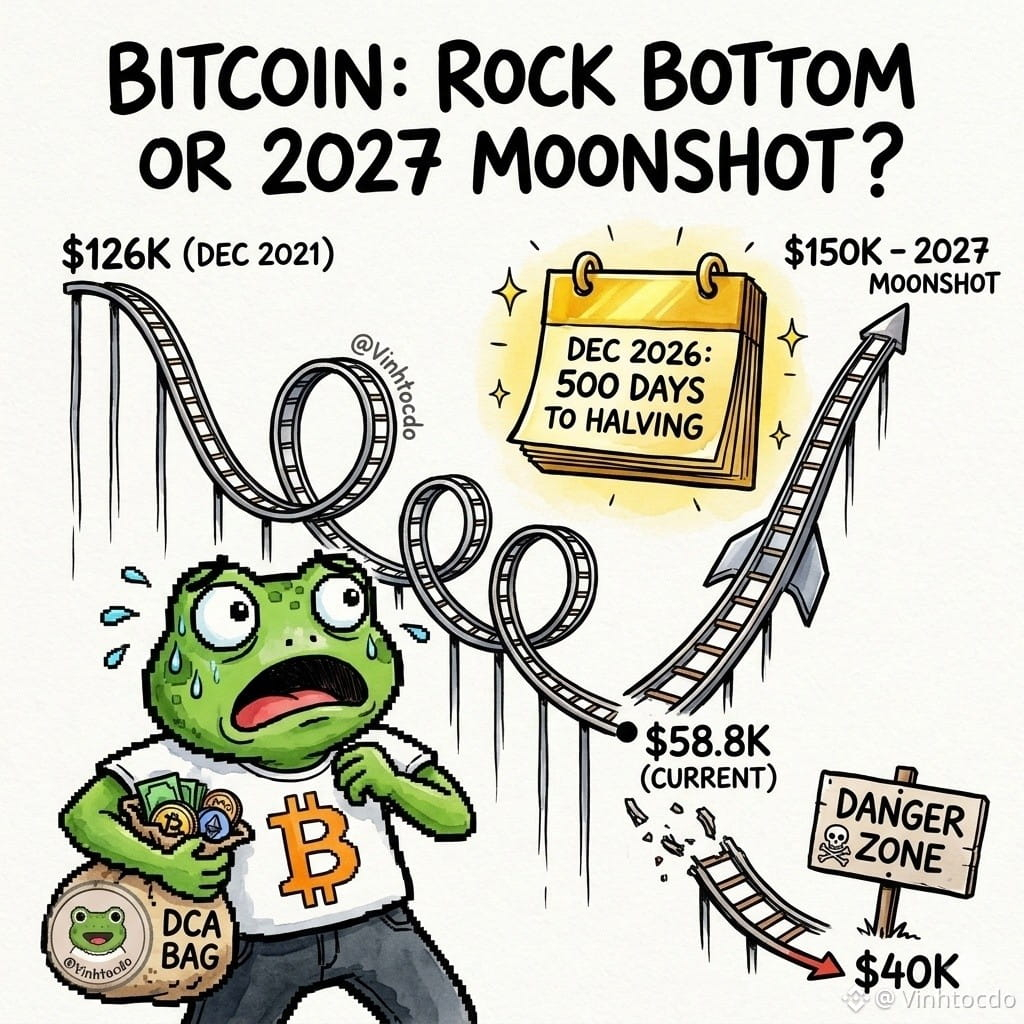
BITCOIN CHẠM ĐÁY TÂM LÝ HAY CƠ HỘI ĐỔI ĐỜI 2027?
Anh em cầm #Bitcoin đang khóc thét khi Q4/2026 bay màu 29,3%, tệ thứ hai lịch sử chỉ sau năm 2018! Từ đỉnh 126k USD, giá chia đôi về 58.800 USD khiến hội bắt đáy lạnh toát sống lưng.
Cụ thể thế nào? Tỷ lệ quyền chọn bán/mua tăng vọt mức cao nhất từ tháng 6/2022. Theo mô hình 500 ngày trước Halving (tháng 4/2028), thời điểm vàng để gom hàng chính là đầu tháng 12/2026!
Trader phải làm gì? Đừng hoảng loạn bán tháo! Có thể chia vốn DCA nhẹ nhàng đón sóng 120k-150k USD vào năm 2027, hoặc thủ sẵn tiền mặt phòng trường hợp giá test lại vùng 40k USD.
Đây không phải lời khuyên tài chính.
Click giao dịch bên dưới để ủng hộ tôi: $BTC
{future}(BTCUSDT)
$ETH
{future}(ETHUSDT)
$EVAA
{future}(EVAAUSDT)
#CryptoMarket #BitcoinHalving #TradingStrategy #CryptoNews #VINHTOCDO
BITCOIN CHẠM ĐÁY TÂM LÝ HAY CƠ HỘI ĐỔI ĐỜI 2027?
Anh em cầm #Bitcoin đang khóc thét khi Q4/2026 bay màu 29,3%, tệ thứ hai lịch sử chỉ sau năm 2018! Từ đỉnh 126k USD, giá chia đôi về 58.800 USD khiến hội bắt đáy lạnh toát sống lưng.
Cụ thể thế nào? Tỷ lệ quyền chọn bán/mua tăng vọt mức cao nhất từ tháng 6/2022. Theo mô hình 500 ngày trước Halving (tháng 4/2028), thời điểm vàng để gom hàng chính là đầu tháng 12/2026!
Trader phải làm gì? Đừng hoảng loạn bán tháo! Có thể chia vốn DCA nhẹ nhàng đón sóng 120k-150k USD vào năm 2027, hoặc thủ sẵn tiền mặt phòng trường hợp giá test lại vùng 40k USD.
Đây không phải lời khuyên tài chính.
Click giao dịch bên dưới để ủng hộ tôi: $BTC
$ETH
$EVAA
#CryptoMarket #BitcoinHalving #TradingStrategy #CryptoNews #VINHTOCDO
4
824

₿ Bitcoin Halving کیا ہے؟ اور یہ کیوں اہم ہے؟
کیا آپ جانتے ہیں کہ بٹ کوائن کی نئی سپلائی وقت کے ساتھ کم ہوتی رہتی ہے؟
اسی نظام کو Bitcoin Halving کہا جاتا ہے۔
آسان الفاظ میں سمجھیں:
بٹ کوائن نیٹ ورک پر تقریباً ہر 210,000 بلاکس کے بعد Halving ہوتی ہے۔
اس عمل میں نئے بلاکس بنانے والے مائنرز کو ملنے والا Bitcoin انعام آدھا ہو جاتا ہے۔
اس سے نئے بٹ کوائن مارکیٹ میں آنے کی رفتار کم ہو جاتی ہے۔
یہ عمل بٹ کوائن کے پہلے سے موجود کوائنز کو آدھا نہیں کرتا۔
اس کا مقصد بٹ کوائن کی نئی سپلائی کو ایک طے شدہ نظام کے تحت کم کرنا ہے۔
کیا Halving سے Bitcoin کی قیمت لازمی بڑھتی ہے؟
نہیں! قیمت میں اضافے کی کوئی ضمانت نہیں۔ مارکیٹ کی قیمت پر طلب، رسد، عالمی حالات اور سرمایہ کاروں کے رویے سمیت کئی عوامل اثر انداز ہوتے ہیں۔
صرف Halving کی بنیاد پر سرمایہ کاری کا فیصلہ کرنا مناسب نہیں۔
آپ سے ایک سوال! آپ کے خیال میں Bitcoin Halving کا سب سے اہم فائدہ کیا ہے؟
#Bitcoin #BitcoinHalving #Binance #CryptoEducation #UrduCrypto
79

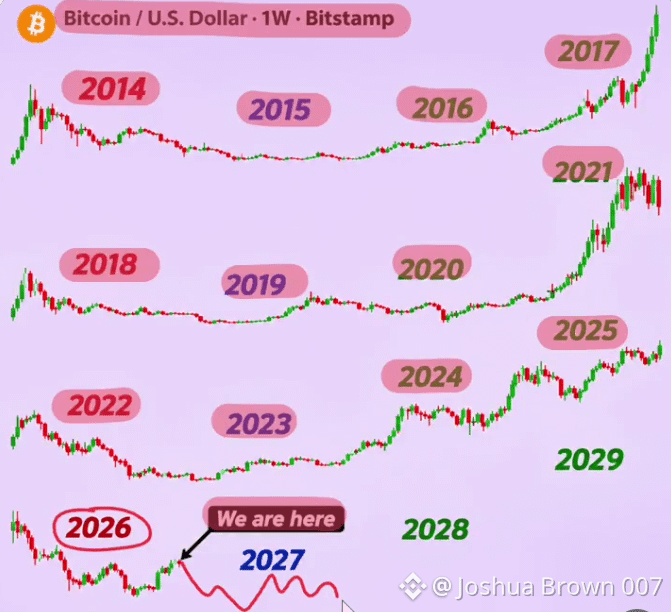
Is Bitcoin preparing for another four-year cycle, or are we assuming history will repeat itself?
I have been looking at Bitcoin’s historical cycle structure, and one pattern deserves serious attention.
2014–2017: Bear Market → Recovery → Bull Run → Cycle Peak
2018–2021: Bear Market → Recovery → Bull Run → Cycle Peak
2022–2025: Bear Market → Recovery → Bull Run → Cycle Peak
Now look at the possible next sequence:
2026: Bear Market?
2027: Recovery and Accumulation?
2028: New Bull Phase?
2029: Potential Cycle Peak?
There are three interesting historical observations:
Previous bear-market years overlapped with US midterm election years.
Recovery phases followed those election years.
The last three major cycle peaks occurred approximately 526, 548 and 534 days after Bitcoin halvings.
But this cycle is behaving differently.
Bitcoin's decline from approximately $126K to $58.6K represents around 53%, considerably less than the 77–85% drawdowns seen in earlier cycles.
The correction also happened faster, reaching that low roughly 268 days after the peak.
So, is $58,600 the actual cycle bottom, or are we still waiting for another capitulation?
I don't want to blindly assume that the four-year cycle will repeat. Institutional participation, ETF flows, liquidity conditions, monetary policy and global macroeconomic developments have changed the market.
My approach is to watch both scenarios rather than build a position around one prediction.
If the historical structure survives, 2027 could become an important accumulation window ahead of the expected April 2028 halving.
History doesn't promise the future, but ignoring historical patterns is equally dangerous.
Save this analysis. Let's revisit it in 2027 and see which scenario played out.
#Bitcoin #CryptoMarket #BitcoinHalving #CryptoAnalysis
114

·
--
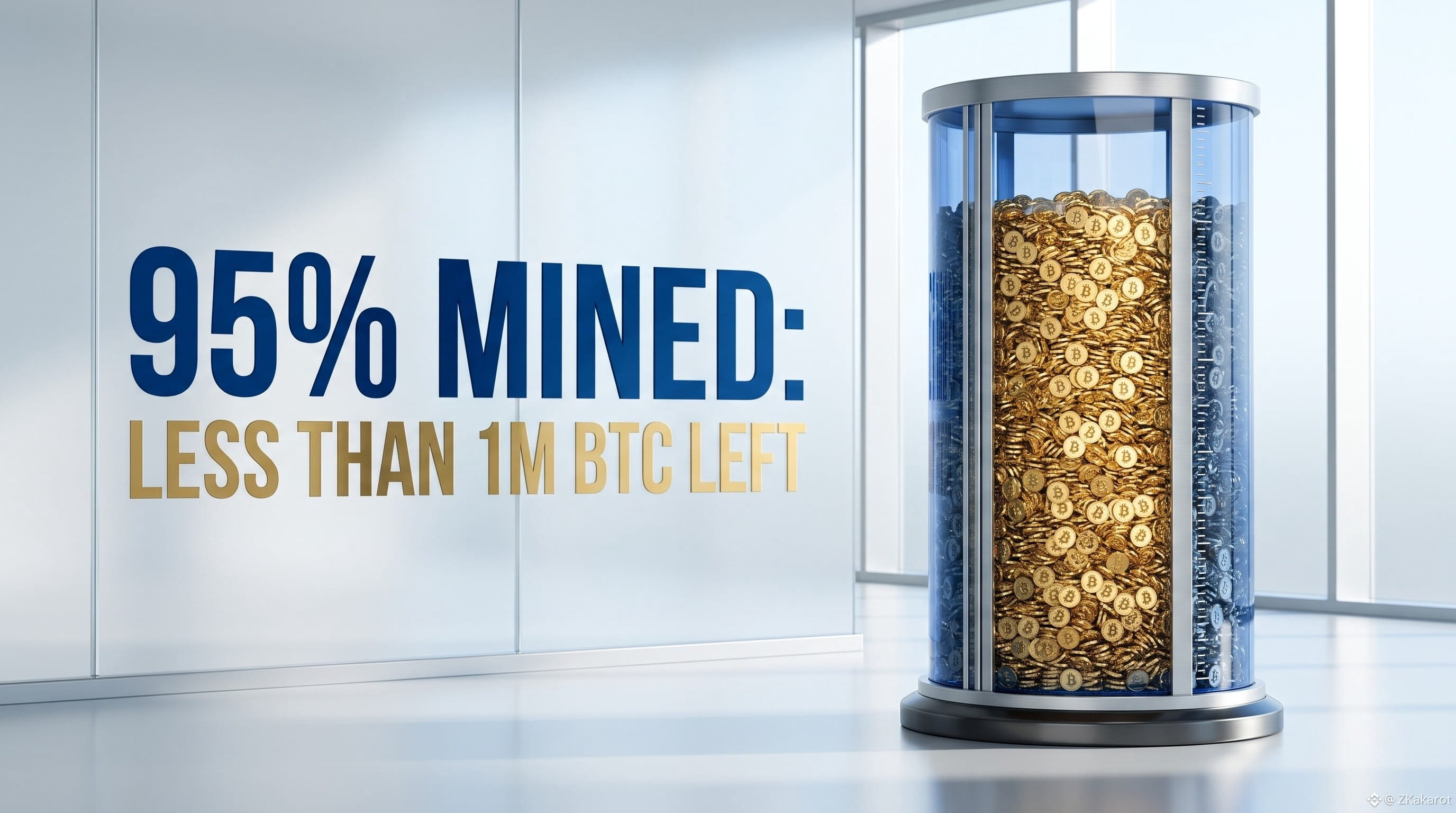
OVER 95% OF ALL BITCOIN IS ALREADY MINED
Most investors still treat Bitcoin as if an endless supply of new coins is entering the market. In reality, Bitcoin’s primary issuance phase is nearly complete.
20.1 Million Coins in Circulation: Out of the strict 21 million hard cap, more than 95% of all Bitcoin has already been mined and distributed.
Only 450 $BTC Created Daily: At the current 3.125 BTC block reward, the entire global mining network produces just 450 new Bitcoins per day.
Less Than 900,000 BTC Left: The remaining supply will be released slowly over the next century until the year 2140, shrinking further at every four-year halving.
While spot ETFs, corporate treasuries, and sovereign funds compete for allocation, new daily supply continues to tighten permanently.
Do you think we will see a major supply shock before the next Bitcoin halving? Share your view in the comments and follow for daily data-backed crypto insights.
#BitcoinHalving #Tokenomics #CryptoResearch #DigitalGold #BinanceSquare
69

·
--
Article
Bitcoin Halving History: What Past Cycles Tell Us About 2028 🚀 $BTCEvery four years, Bitcoin goes through an important event called the Halving. During this event, the reward given to Bitcoin miners is cut in half, reducing the supply of new coins entering the market.
Historically, this supply shock has triggered major bull runs within 12 to 18 months after each halving:
2012 Halving: Bitcoin was around $12 on halving day and climbed to $1,163within a year (a 95x surge).2016 Halving: Starting near $650, Bitcoin rallied to $19,783 by late 2017 (a 30x surge).2020 Halving: From roughly $8,600, Bitcoin reached $68,789 in 2021 (an 8xsurge).2024 Halving: Priced near $63,800 at the halving, Bitcoin pushed to $126,198 in late 2025 (a 2x surge).What is your target for Bitcoin (BTC) after the 2028 Halving?Option 1: $150,000 – $180,000 (Conservative)Option 2: $180,000 – $250,000 (Base Case)Option 3: $250,000+ (Super Bullish 🚀) #BTC #BinanceSquare #BitcoinHalving #cripto
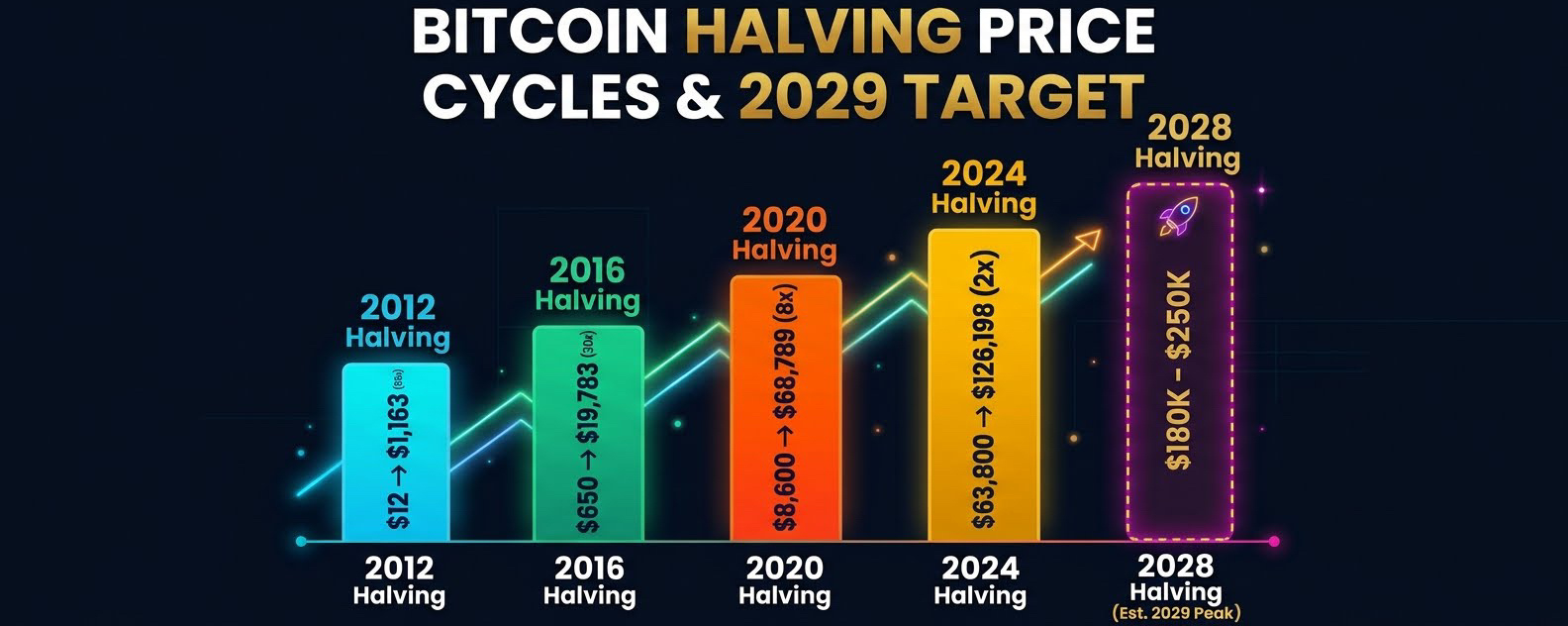
Bitcoin Halving History: What Past Cycles Tell Us About 2028 🚀 $BTC
Every four years, Bitcoin goes through an important event called the Halving. During this event, the reward given to Bitcoin miners is cut in half, reducing the supply of new coins entering the market.
Historically, this supply shock has triggered major bull runs within 12 to 18 months after each halving:
2012 Halving: Bitcoin was around $12 on halving day and climbed to $1,163within a year (a 95x surge).2016 Halving: Starting near $650, Bitcoin rallied to $19,783 by late 2017 (a 30x surge).2020 Halving: From roughly $8,600, Bitcoin reached $68,789 in 2021 (an 8xsurge).2024 Halving: Priced near $63,800 at the halving, Bitcoin pushed to $126,198 in late 2025 (a 2x surge).What is your target for Bitcoin (BTC) after the 2028 Halving?Option 1: $150,000 – $180,000 (Conservative)Option 2: $180,000 – $250,000 (Base Case)Option 3: $250,000+ (Super Bullish 🚀) #BTC #BinanceSquare #BitcoinHalving #cripto
137

Bitcoin Halving aur Uska Market Par Asar 📉📈
Bitcoin Halving ek bohot bada event hai jo har chaar saal mein hota hai, aur yeh market ke liye bohot important hai.
Post Text (English):
⏳ The Bitcoin Halving Countdown is ON! Are You Ready? 🚀🔥
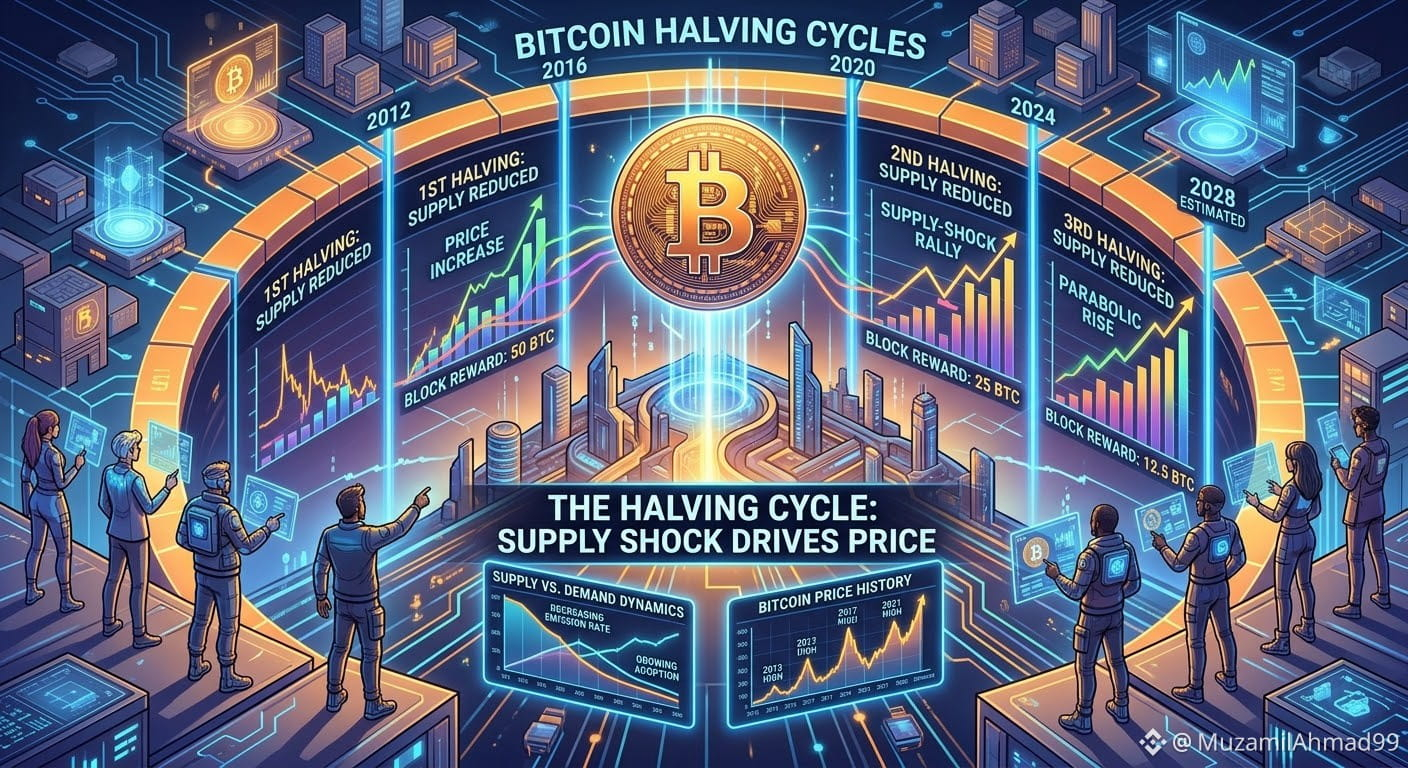
For those new to crypto, the Bitcoin Halving happens roughly every 4 years. It cuts the new supply of BTC entering the market by 50%. Historically, this supply shock has led to massive bull runs! 📈💰
Here’s why it matters:
1️⃣ Supply vs. Demand: Less new supply with constant or growing demand usually equals higher prices.
2️⃣ Long-Term Bullish: While short-term volatility is normal, it reinforces Bitcoin's scarcity (only 21 million will ever exist!).
3️⃣ Market Cycle Shift: It often marks the beginning of the next major market phase.
Poll: What’s your Bitcoin strategy for this Halving? 🤔👇
1️⃣ Accumulating heavily now 🛒💎
2️⃣ Holding what I have 💎🙌
3️⃣ Wait for a post-Halving dip 📉⏳
Drop your vote in the comments and let's discuss! Make sure to Follow for more key crypto events and insights! 📈🔍
#BitcoinHalving #BTC C #CryptoCycle cles #BullishMomentum #Write2Earn
94
·
--
₿ The Halving Effect: A Powerful Moment in Crypto! 🚀
Bitcoin halving is a major event that cuts the mining reward in half, reducing the rate at which new BTC enters circulation. 💎 This built-in scarcity mechanism can influence market sentiment, supply, and long-term price expectations—but it doesn’t guarantee a price surge. 📈 Understand the cycle, look beyond the hype, and make informed crypto decisions on Binance!
#Binance #BitcoinHalving #BTC #CryptoMarket #Blockchain #CryptoEducation #DYOR

114

·
--

Article
Bitcoin Halving Explained Simply: A Beginner's GuideIf you're learning about Bitcoin, you've probably come across the term Bitcoin Halving. It's one of the most important features of Bitcoin, but what does it actually mean?
Does it mean Bitcoin loses half its value? Or that people suddenly lose half of the Bitcoin they own?
Neither. Let's understand how it works.
1. What Is Bitcoin Halving?
Bitcoin Halving is an event that reduces the block subsidy miners receive for adding new blocks to the Bitcoin blockchain.
It happens after every 210,000 blocks, which is approximately every four years.
When miners successfully add a block, they receive newly created bitcoins and applicable transaction fees. During a halving, the newly created bitcoin reward is cut in half.
This gradually slows the rate at which new bitcoins enter circulation.
2. Why Does Bitcoin Have Halving?
Bitcoin was designed with a maximum supply of 21 million coins.
Unlike traditional currencies, Bitcoin follows a programmed supply schedule. Its halving mechanism gradually reduces the number of new bitcoins created over time.
This is one reason Bitcoin is often described as a scarce digital asset.
However, limited supply doesn't automatically mean higher value. Market demand and other factors still influence its price.
3. How Has the Bitcoin Mining Reward Changed?
Let's look at how the block subsidy has changed since Bitcoin launched.
| Year | Block subsidy |
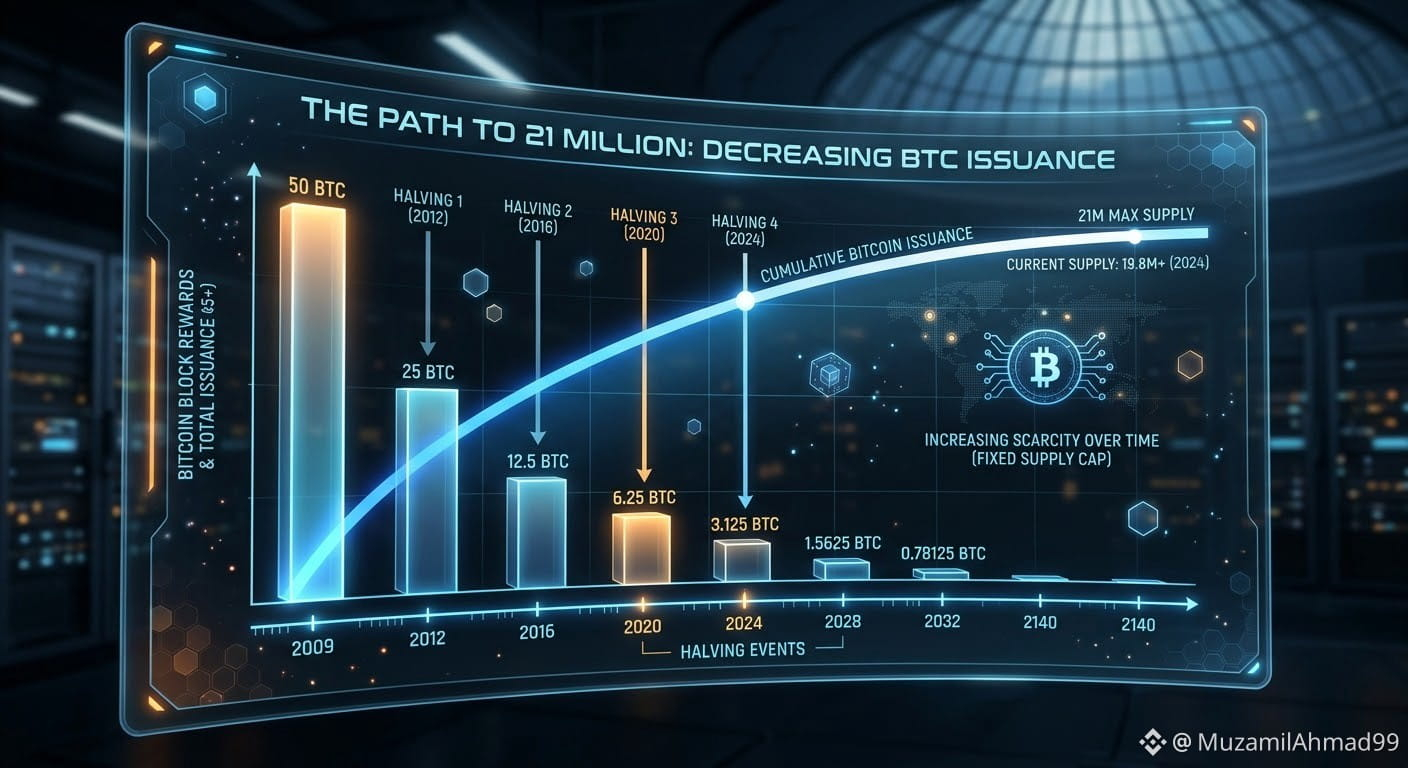
| 2009 | 50 BTC || 2012 | 25 BTC || 2016 | 12.5 BTC || 2020 | 6.25 BTC || 2024 | 3.125 BTC |
The most recent halving occurred in April 2024, reducing the block subsidy from 6.25 BTC to 3.125 BTC.
The next halving is expected around 2028, when the subsidy will decrease to 1.5625 BTC per block.
4. Does Bitcoin Halving Increase Its Price?
This is one of the most common questions beginners ask.
Some people believe Bitcoin's price will automatically increase after a halving because fewer new coins enter circulation.
But that's not guaranteed.
Bitcoin's market price is influenced by several factors, including:
- Supply and demand.
- Investor sentiment.
- Global economic conditions.
- Government regulations.
- Institutional interest.
- Market liquidity.
Halving changes Bitcoin's supply schedule, but it doesn't guarantee higher prices or profits.
A cryptocurrency can still lose value even when its new supply decreases.
5. What Happens to Bitcoin Miners?
Bitcoin miners use specialized computers to help verify transactions and secure the network.
In return, they receive block subsidies and transaction fees.
When a halving occurs, the newly created bitcoin reward is reduced by 50%. This can affect mining profitability, depending on Bitcoin's market price, electricity costs, mining equipment expenses, and transaction fees.
It's one reason miners pay close attention to halving events.
6. Does Halving Affect the Bitcoin You Already Own?
No.
If you own 0.01 BTC, a halving doesn't suddenly reduce your balance to 0.005 BTC.
Your existing Bitcoin holdings remain unchanged. Halving only affects the rate at which new bitcoins are created, not the amount already held in wallets or exchange accounts.
7. What Should Beginners Learn From Bitcoin Halving?
You don't need to trade Bitcoin or make an investment decision just because a halving is approaching.
Instead, remember these three important points:
1. Bitcoin has a maximum supply of 21 million coins.
2. Its block subsidy is cut in half approximately every four years.
3. Reduced new supply does not guarantee an increase in market price.
Understanding how Bitcoin works is a much better starting point than following price predictions.
Final Thoughts
Bitcoin Halving is an interesting part of how Bitcoin was designed. It gradually reduces the number of new bitcoins entering circulation and changes the rewards miners receive.
For beginners, understanding this mechanism is a useful step toward learning about Bitcoin's technology and economics.
I'm still learning about cryptocurrency, and I believe understanding the fundamentals is more important than rushing into trading.
Your Turn
- Did you know Bitcoin has a maximum supply of 21 million coins?
- Do you think Bitcoin's halving mechanism makes it different from other cryptocurrencies?
- What would you like to learn next about Bitcoin?
This article is for educational purposes only and is not financial advice.
#Bitcoin #BitcoinHalving #CryptoEducation #CryptoBeginners #BinanceSquare
Bitcoin Halving Explained Simply: A Beginner's Guide
If you're learning about Bitcoin, you've probably come across the term Bitcoin Halving. It's one of the most important features of Bitcoin, but what does it actually mean?
Does it mean Bitcoin loses half its value? Or that people suddenly lose half of the Bitcoin they own?
Neither. Let's understand how it works.
1. What Is Bitcoin Halving?
Bitcoin Halving is an event that reduces the block subsidy miners receive for adding new blocks to the Bitcoin blockchain.
It happens after every 210,000 blocks, which is approximately every four years.
When miners successfully add a block, they receive newly created bitcoins and applicable transaction fees. During a halving, the newly created bitcoin reward is cut in half.
This gradually slows the rate at which new bitcoins enter circulation.
2. Why Does Bitcoin Have Halving?
Bitcoin was designed with a maximum supply of 21 million coins.
Unlike traditional currencies, Bitcoin follows a programmed supply schedule. Its halving mechanism gradually reduces the number of new bitcoins created over time.
This is one reason Bitcoin is often described as a scarce digital asset.
However, limited supply doesn't automatically mean higher value. Market demand and other factors still influence its price.
3. How Has the Bitcoin Mining Reward Changed?
Let's look at how the block subsidy has changed since Bitcoin launched.
| Year | Block subsidy |
| 2009 | 50 BTC || 2012 | 25 BTC || 2016 | 12.5 BTC || 2020 | 6.25 BTC || 2024 | 3.125 BTC |
The most recent halving occurred in April 2024, reducing the block subsidy from 6.25 BTC to 3.125 BTC.
The next halving is expected around 2028, when the subsidy will decrease to 1.5625 BTC per block.
4. Does Bitcoin Halving Increase Its Price?
This is one of the most common questions beginners ask.
Some people believe Bitcoin's price will automatically increase after a halving because fewer new coins enter circulation.
But that's not guaranteed.
Bitcoin's market price is influenced by several factors, including:
- Supply and demand.
- Investor sentiment.
- Global economic conditions.
- Government regulations.
- Institutional interest.
- Market liquidity.
Halving changes Bitcoin's supply schedule, but it doesn't guarantee higher prices or profits.
A cryptocurrency can still lose value even when its new supply decreases.
5. What Happens to Bitcoin Miners?
Bitcoin miners use specialized computers to help verify transactions and secure the network.
In return, they receive block subsidies and transaction fees.
When a halving occurs, the newly created bitcoin reward is reduced by 50%. This can affect mining profitability, depending on Bitcoin's market price, electricity costs, mining equipment expenses, and transaction fees.
It's one reason miners pay close attention to halving events.
6. Does Halving Affect the Bitcoin You Already Own?
No.
If you own 0.01 BTC, a halving doesn't suddenly reduce your balance to 0.005 BTC.
Your existing Bitcoin holdings remain unchanged. Halving only affects the rate at which new bitcoins are created, not the amount already held in wallets or exchange accounts.
7. What Should Beginners Learn From Bitcoin Halving?
You don't need to trade Bitcoin or make an investment decision just because a halving is approaching.
Instead, remember these three important points:
1. Bitcoin has a maximum supply of 21 million coins.
2. Its block subsidy is cut in half approximately every four years.
3. Reduced new supply does not guarantee an increase in market price.
Understanding how Bitcoin works is a much better starting point than following price predictions.
Final Thoughts
Bitcoin Halving is an interesting part of how Bitcoin was designed. It gradually reduces the number of new bitcoins entering circulation and changes the rewards miners receive.
For beginners, understanding this mechanism is a useful step toward learning about Bitcoin's technology and economics.
I'm still learning about cryptocurrency, and I believe understanding the fundamentals is more important than rushing into trading.
Your Turn
- Did you know Bitcoin has a maximum supply of 21 million coins?
- Do you think Bitcoin's halving mechanism makes it different from other cryptocurrencies?
- What would you like to learn next about Bitcoin?
This article is for educational purposes only and is not financial advice.
#Bitcoin #BitcoinHalving #CryptoEducation #CryptoBeginners #BinanceSquare
84

What Is Bitcoin Halving in Simple Words
Every 4 years, Bitcoin reward becomes half.
Supply decreases, demand increases.
That's why BTC price goes up after halving.
Save this If u are new.
#BitcoinHalving #cryptoeducation
What Is Bitcoin Halving in Simple Words
Every 4 years, Bitcoin reward becomes half.
Supply decreases, demand increases.
That's why BTC price goes up after halving.
Save this If u are new.
#BitcoinHalving #cryptoeducation
Every 4 years, Bitcoin reward becomes half.
Supply decreases, demand increases.
That's why BTC price goes up after halving.
Save this If u are new.
#BitcoinHalving #cryptoeducation
2
100

·
--
Fun fact: Bitcoin's whole supply schedule was written into the code before anyone owned a single coin 🧮
▪️ Max supply: 21,000,000 BTC
▪️ First block reward in 2009: 50 BTC
▪️ Every 210,000 blocks (about 4 years) the reward gets cut in half
▪️ Since the April 2024 halving: 3.125 BTC per block
▪️ The last tiny fraction should be mined around the year 2140
So miners get to fight over smaller and smaller slices for more than a century. After that, transaction fees are their only paycheck ⛏️
Which halving was your first one? 👇
$BTC #bitcoin #BitcoinHalving #crypto #Binance
12

·
--
The halving reduces the rate of new Bitcoin issuance.
ETF demand can add another force to the supply equation.
Both matter, but neither guarantees higher prices.
#Bitcoin #BitcoinHalving #BitcoinETF #CryptoAnalysis
The halving reduces the rate of new Bitcoin issuance.
ETF demand can add another force to the supply equation.
Both matter, but neither guarantees higher prices.
#Bitcoin #BitcoinHalving #BitcoinETF #CryptoAnalysis
ETF demand can add another force to the supply equation.
Both matter, but neither guarantees higher prices.
#Bitcoin #BitcoinHalving #BitcoinETF #CryptoAnalysis
1
115

·
--
🚨 $BTC BITCOIN HISTORY: HALVING PUMPS,
MASSIVE CRASHES & THE NEXT POSSIBLE LOW! ₿📉
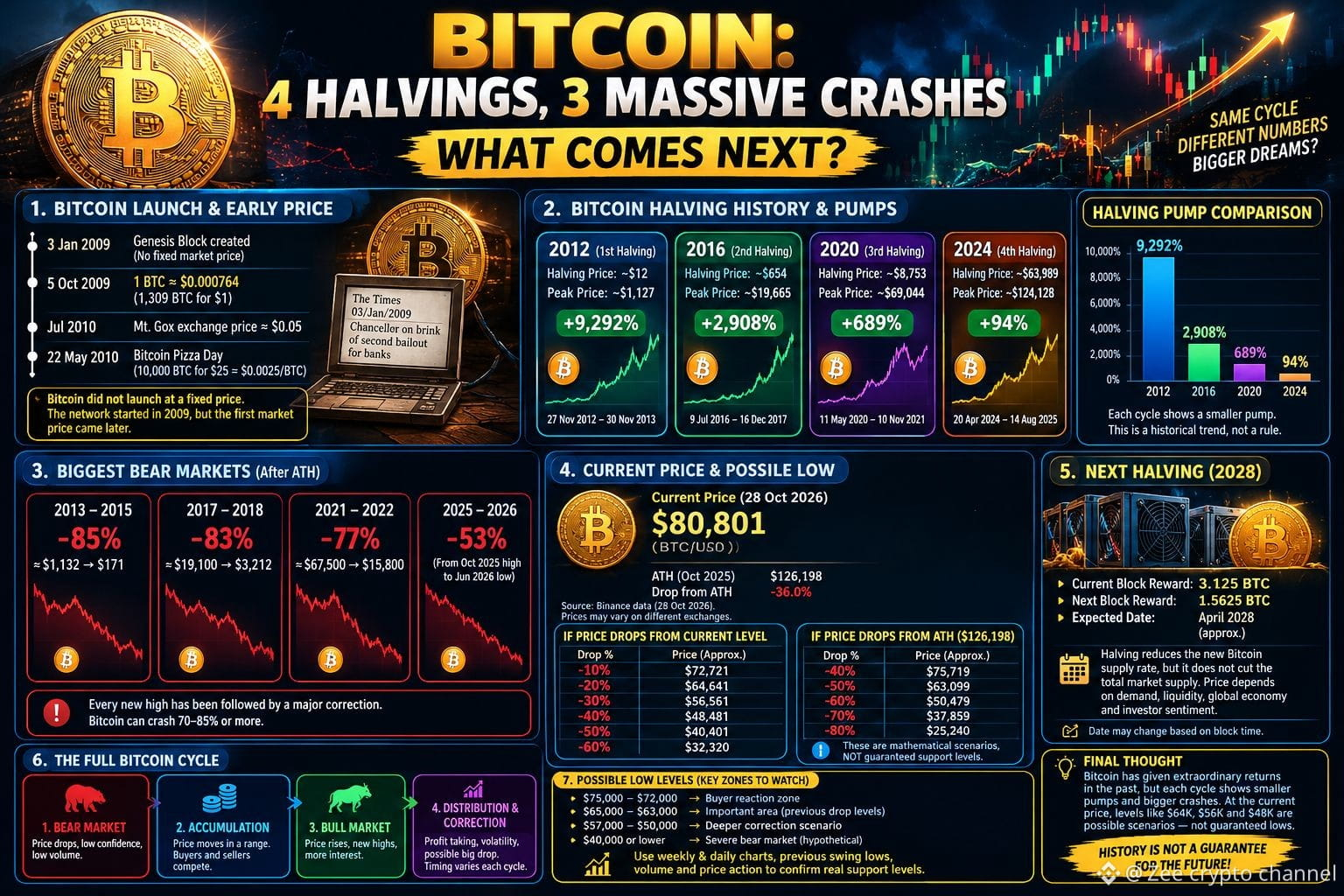
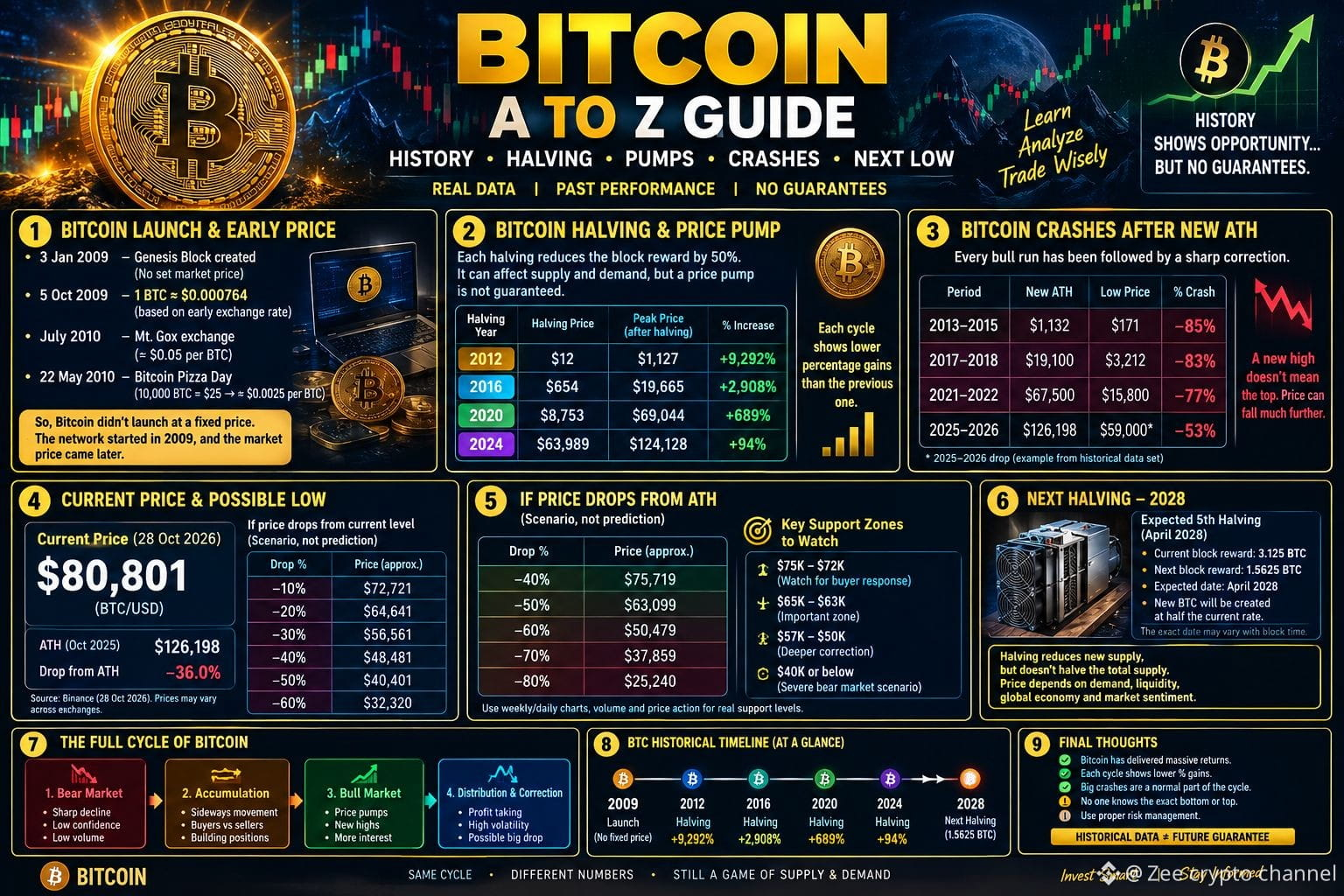
Bitcoin launched in January 2009, but it had no established market price at launch. Its first recorded price quote in October 2009 valued 1 BTC at approximately $0.000764!
$BTC
{future}(BTCUSDT)
🔥 BITCOIN HALVING HISTORY
🔹 2012: ~$12 → ~$1,127 | Approx. +9,292%
🔹 2016: ~$654 → ~$19,665 | Approx. +2,908%
🔹 2020: ~$8,753 → ~$69,044 | Approx. +689%
🔹 2024: ~$63,989 → ~$124,128 | Approx. +94%
📉 HISTORY'S BIGGEST BEAR MARKETS
• 2013–2015: Approximately −85%
• 2017–2018: Approximately −83%
• 2021–2022: Approximately −77%
📊 WHERE COULD BTC GO NEXT?
Using an indicative BTC price of $80,801:
• −20%: ~$64,641
• −30%: ~$56,561
• −40%: ~$48,481
• −50%: ~$40,401
These are mathematical scenarios, NOT guaranteed price targets or confirmed support levels.
⛏️ The next Bitcoin halving is expected around 2028, reducing the block reward from 3.125 BTC to 1.5625 BTC.
⚠️ IMPORTANT: Historical performance does not guarantee future returns. Halving does not automatically cause a rally, and Bitcoin can fall much further than expected.
💬 YOUR OPINION MATTERS!
Do you think BTC will recover and reach a new ATH, or could it drop toward $60K, $50K, or even lower?
Share your analysis in the comments! 👇
#Bitcoin #BTC #BitcoinHalving #CryptoAnalysis #CryptoMarket
🚨 $BTC BITCOIN HISTORY: HALVING PUMPS,
MASSIVE CRASHES & THE NEXT POSSIBLE LOW! ₿📉
Bitcoin launched in January 2009, but it had no established market price at launch. Its first recorded price quote in October 2009 valued 1 BTC at approximately $0.000764!
$BTC
🔥 BITCOIN HALVING HISTORY
🔹 2012: ~$12 → ~$1,127 | Approx. +9,292%
🔹 2016: ~$654 → ~$19,665 | Approx. +2,908%
🔹 2020: ~$8,753 → ~$69,044 | Approx. +689%
🔹 2024: ~$63,989 → ~$124,128 | Approx. +94%
📉 HISTORY'S BIGGEST BEAR MARKETS
• 2013–2015: Approximately −85%
• 2017–2018: Approximately −83%
• 2021–2022: Approximately −77%
📊 WHERE COULD BTC GO NEXT?
Using an indicative BTC price of $80,801:
• −20%: ~$64,641
• −30%: ~$56,561
• −40%: ~$48,481
• −50%: ~$40,401
These are mathematical scenarios, NOT guaranteed price targets or confirmed support levels.
⛏️ The next Bitcoin halving is expected around 2028, reducing the block reward from 3.125 BTC to 1.5625 BTC.
⚠️ IMPORTANT: Historical performance does not guarantee future returns. Halving does not automatically cause a rally, and Bitcoin can fall much further than expected.
💬 YOUR OPINION MATTERS!
Do you think BTC will recover and reach a new ATH, or could it drop toward $60K, $50K, or even lower?
Share your analysis in the comments! 👇
#Bitcoin #BTC #BitcoinHalving #CryptoAnalysis #CryptoMarket
3
55

·
--
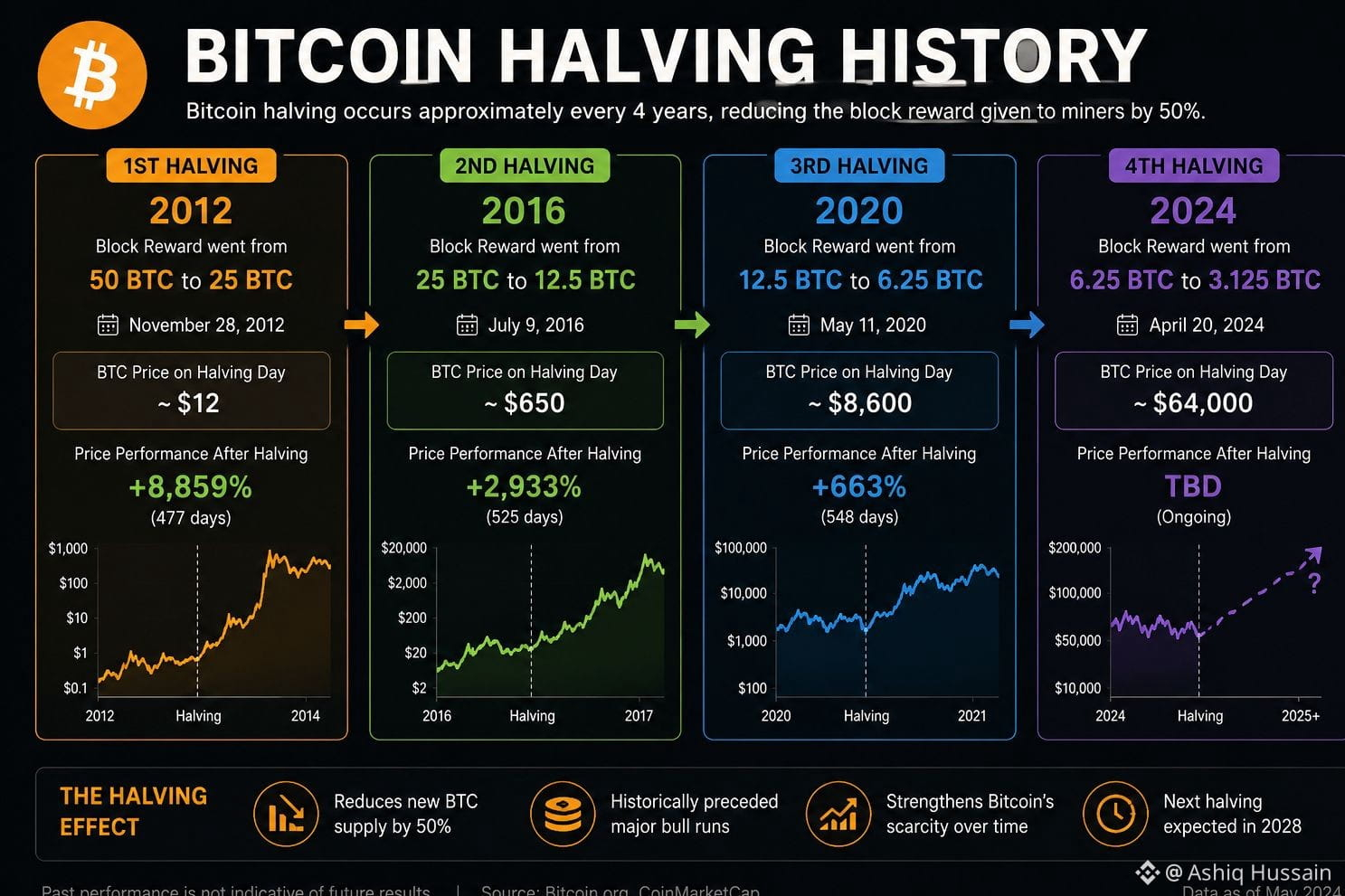
$BTC 🚨 BITCOIN HALVING HISTORY 🚨
Every 4 years, Bitcoin changes the game.
The halving cuts mining rewards by 50%, reducing new BTC supply and increasing scarcity. 📉⚡
📌 2012 → 50 BTC ➜ 25 BTC
📌 2016 → 25 BTC ➜ 12.5 BTC
📌 2020 → 12.5 BTC ➜ 6.25 BTC
📌 2024 → 6.25 BTC ➜ 3.125 BTC
History shows one thing clearly:
After every halving, Bitcoin entered massive bullish cycles. 📈🔥
From a few dollars to all-time highs, Bitcoin continues proving why scarcity matters.
Now the market watches closely to see what happens after the 2024 halving. 👀
Will history repeat again? 🚀$BTC
{spot}(BTCUSDT)
#Bitcoin #BTC #Halving #Crypto #BullRun #BitcoinHalving #CryptoMarket #Blockchain #BTC2026
$BTC 🚨 BITCOIN HALVING HISTORY 🚨
Every 4 years, Bitcoin changes the game.
The halving cuts mining rewards by 50%, reducing new BTC supply and increasing scarcity. 📉⚡
📌 2012 → 50 BTC ➜ 25 BTC
📌 2016 → 25 BTC ➜ 12.5 BTC
📌 2020 → 12.5 BTC ➜ 6.25 BTC
📌 2024 → 6.25 BTC ➜ 3.125 BTC
History shows one thing clearly:
After every halving, Bitcoin entered massive bullish cycles. 📈🔥
From a few dollars to all-time highs, Bitcoin continues proving why scarcity matters.
Now the market watches closely to see what happens after the 2024 halving. 👀
Will history repeat again? 🚀$BTC
#Bitcoin #BTC #Halving #Crypto #BullRun #BitcoinHalving #CryptoMarket #Blockchain #BTC2026
180


The Halving Shadow: We are deep into the post-Halving cycle phase. Historically, this mid-cycle lull tests the patience of average investors before supply shock economics slowly push prices to new heights. Patience is key. #BitcoinHalving #CryptoMarket
The Halving Shadow: We are deep into the post-Halving cycle phase. Historically, this mid-cycle lull tests the patience of average investors before supply shock economics slowly push prices to new heights. Patience is key. #BitcoinHalving #CryptoMarket
73

·
--
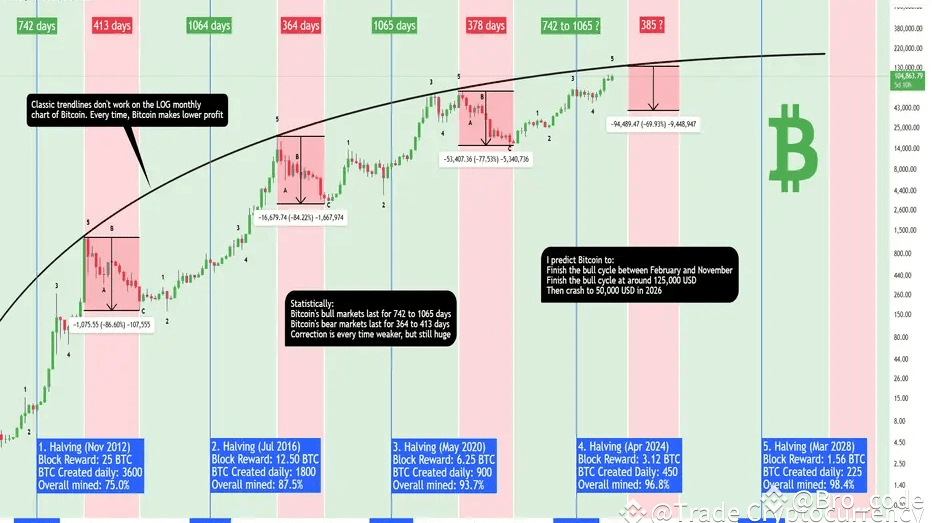
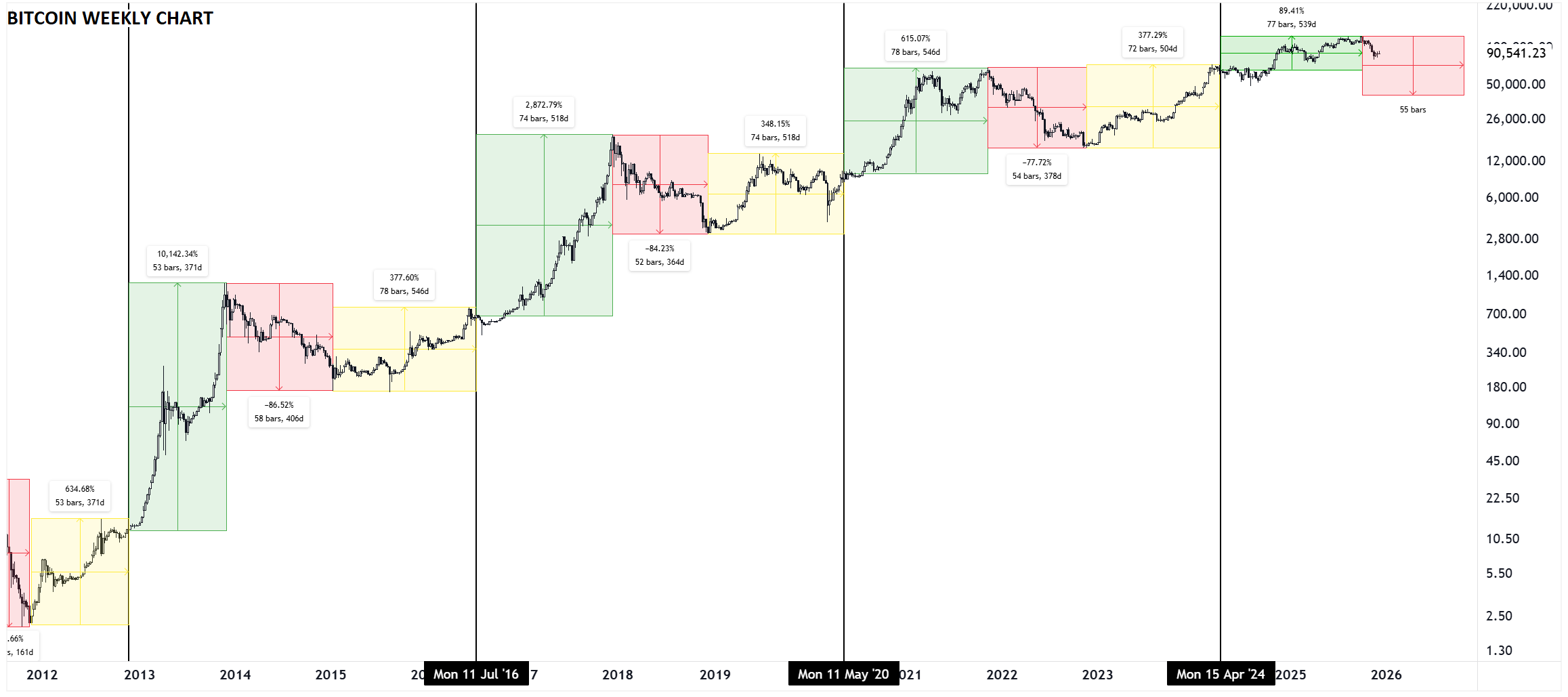
🧵 J’aimerais vous dire une vérité sur le cycle des halvings de Bitcoin.
Depuis plusieurs années, on observe un schéma qui revient souvent :
👉 Halving
👉 Réduction de l’émission de nouveaux BTC
👉 Accumulation progressive
👉 Hausse de l’attention autour de Bitcoin
👉 Puis une phase d’euphorie… avant un nouveau cycle.
Mais attention. ⚠️
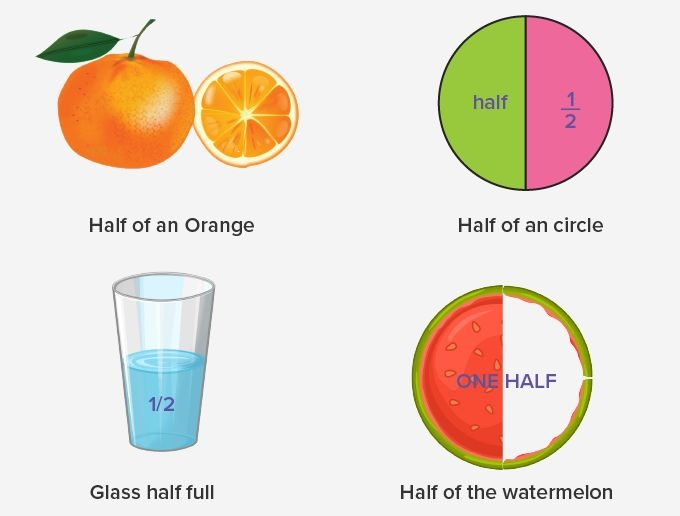
Le halving n’est pas une machine automatique à faire monter le prix du Bitcoin.
Le halving réduit de moitié la récompense reçue par les mineurs pour chaque bloc. Cela signifie que de nouveaux BTC entrent moins rapidement sur le marché.
Mais pour que le prix augmente réellement, il faut aussi que la demande soit suffisamment forte.
C’est là que beaucoup se trompent.
Ils regardent uniquement le calendrier :
« Halving → hausse → nouveau sommet. »
Alors que le marché est beaucoup plus complexe.
📊 Chaque cycle évolue dans un contexte différent :
• liquidité mondiale
• taux d’intérêt
• adoption institutionnelle
• réglementation
• ETF et produits financiers
• sentiment des investisseurs
• activité du réseau
• demande réelle
Et surtout…
L’histoire ne se répète pas toujours exactement. Elle peut simplement rimer.
Les précédents halvings peuvent nous donner des repères, mais ils ne peuvent pas nous garantir ce qui arrivera ensuite.
C’est justement pour cela que j’aime étudier les cycles plutôt que de simplement les suivre.
🔎 Cette semaine, je vais vous partager ce que j’ai compris du cycle des halvings de Bitcoin, les différentes phases du marché et surtout les erreurs à éviter lorsqu’on compare le cycle actuel aux précédents.
Parce qu’en crypto, comprendre le cycle est intéressant.
Mais comprendre ce qui influence réellement le marché est encore plus important. ₿
#crypto #HalvingUpdate #Web3 #blockchain #BitcoinHalving
125

·
--
Bearish
🕒 Crypto Rover's 500-Day Rule Says Next $BTC Accumulation
Window Opens November 2026 — On-Chain Data Is Aligned
Analyst Crypto Rover has dusted off the "500-Day Rule" — a model that's tracked Bitcoin's last 3 halving cycles since 2013 — and it's pointing to a clear signal for patient players.
📅 The timeline:
💥Buy window opens: ~November 30, 2026 (500 days before next halving)
💥Next halving: ~April 13, 2028 (block 1,050,000, reward: 3.125 → 1.5625 BTC)
💥Sell trigger: ~Late August 2029 (500 days post-halving)
Simple rule: accumulate 500 days out, distribute 500 days after. It's worked every cycle so far.
🧠 But here's where it gets interesting — on-chain data is already whispering the same story:
📊 Long-term holders are stacking hard
💥LTH supply just hit 14.96M BTC (ATH) — 75% of circulating supply now in diamond hands
💥LTH net position has notched a second all-time high in this bear market — a signal that historically precedes or coincides with cycle bottoms
📉 Selling pressure is evaporating
💥Per K33 Research, only 218K BTC has been reactivated in 2026 vs. 1.18M BTC by this point in 2024 — a massive 81% drop
💥The Sell-side Risk Ratio is at levels not seen since the 2022-2023 bear market, meaning virtually no one is selling at a loss or profit
🛡️ BTC holding $61-63K support
{future}(BTCUSDT)
BTC has closed above $63K for 3 consecutive weeks, forming a bullish RSI divergence — a pattern reminiscent of the late 2022 bottom
So what's the play?
We're ~5 months out from Crypto Rover's official November 30 entry window. But with LTHs accumulating at record pace and on-chain selling pressure near historic lows, the foundation is being laid right now.
The model says buy in November. The chain says smart money isn't waiting.
Are you accumulating here or waiting for a lower entry? 👇
$BTC #BitcoinHalving #500DayRule #CryptoMarket #accumulate #BinanceSquare
🕒 Crypto Rover's 500-Day Rule Says Next $BTC Accumulation
Window Opens November 2026 — On-Chain Data Is Aligned
Analyst Crypto Rover has dusted off the "500-Day Rule" — a model that's tracked Bitcoin's last 3 halving cycles since 2013 — and it's pointing to a clear signal for patient players.
📅 The timeline:
💥Buy window opens: ~November 30, 2026 (500 days before next halving)
💥Next halving: ~April 13, 2028 (block 1,050,000, reward: 3.125 → 1.5625 BTC)
💥Sell trigger: ~Late August 2029 (500 days post-halving)
Simple rule: accumulate 500 days out, distribute 500 days after. It's worked every cycle so far.
🧠 But here's where it gets interesting — on-chain data is already whispering the same story:
📊 Long-term holders are stacking hard
💥LTH supply just hit 14.96M BTC (ATH) — 75% of circulating supply now in diamond hands
💥LTH net position has notched a second all-time high in this bear market — a signal that historically precedes or coincides with cycle bottoms
📉 Selling pressure is evaporating
💥Per K33 Research, only 218K BTC has been reactivated in 2026 vs. 1.18M BTC by this point in 2024 — a massive 81% drop
💥The Sell-side Risk Ratio is at levels not seen since the 2022-2023 bear market, meaning virtually no one is selling at a loss or profit
🛡️ BTC holding $61-63K support
BTC has closed above $63K for 3 consecutive weeks, forming a bullish RSI divergence — a pattern reminiscent of the late 2022 bottom
So what's the play?
We're ~5 months out from Crypto Rover's official November 30 entry window. But with LTHs accumulating at record pace and on-chain selling pressure near historic lows, the foundation is being laid right now.
The model says buy in November. The chain says smart money isn't waiting.
Are you accumulating here or waiting for a lower entry? 👇
$BTC #BitcoinHalving #500DayRule #CryptoMarket #accumulate #BinanceSquare
114

Article
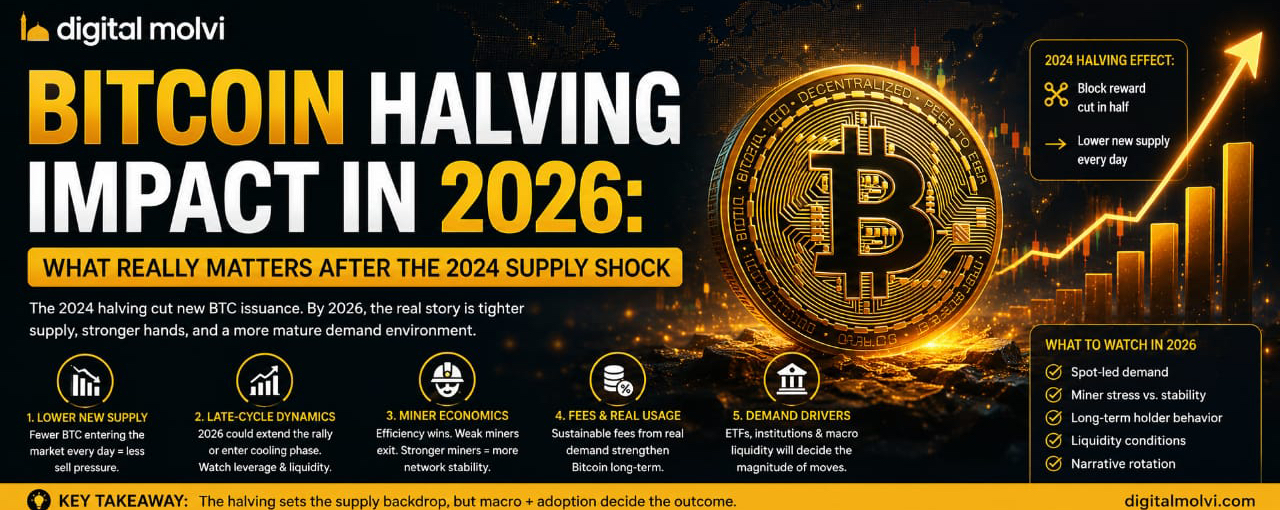
Bitcoin Halving Impact in 2026Bitcoin’s most important “built-in event” is the halving—when the block subsidy paid to miners is cut in half. The last halving happened in April 2024, reducing new BTC issuance. By 2026, the market is no longer reacting to the headline itself; it’s living with the after-effects: tighter supply flow, shifting miner economics, and a more mature demand environment (ETFs, institutions, macro liquidity).
Here’s how the halving’s impact can show up in 2026—and what investors should actually watch.
1) The Halving’s Core Effect in 2026: Lower “New Supply” Every Day
The halving doesn’t reduce Bitcoin’s total supply overnight—it reduces the rate at which new BTC enters the market.
By 2026, that reduced issuance has been in place for roughly two years, which matters because:
Sell pressure from miners tends to be structurally lower than it would have been without the halving.
Any sustained demand (spot buying, ETF inflows, corporate accumulation, retail cycles) has less fresh supply to absorb.
The market becomes more sensitive to demand spikes because the “baseline” new supply is smaller.
In simple terms: in 2026, Bitcoin is still benefiting from the 2024 halving because the supply tap remains tighter every single day.
2) Price Cycles: 2026 Is Often About “Late-Cycle” Behavior
Historically, Bitcoin’s strongest moves often occur in the 12–18 months after a halving, but 2026 can be a period where:
Momentum either extends (if liquidity and demand stay strong), or
The market transitions into cooling/mean reversion (if leverage gets excessive and macro conditions tighten).
So in 2026, the halving impact is less about “halving hype” and more about whether the market is:
still in a post-halving expansion, or
entering a post-euphoria digestion phase.
What to watch in 2026:
Funding rates and leverage (overheating risk)
Long-term holder behavior (are they distributing?)
Spot vs. derivatives dominance (healthier rallies are spot-led)
3) Miner Economics in 2026: Efficiency Wins, Weak Hands Exit
After the 2024 halving, miners earn fewer BTC per block, so they must survive on:
higher BTC price,
lower operating costs,
better hardware efficiency,
and transaction fees.
By 2026, the mining industry typically looks “cleaner”:
inefficient miners may have already capitulated,
stronger miners consolidate market share,
and the network tends to stabilize around more efficient operators.
Why this matters for price:
Miner capitulation phases can create temporary sell pressure.
Once weaker miners are flushed out, forced selling can reduce—supporting a more stable uptrend.
4) Transaction Fees & Real Usage: A Bigger Deal Than People Think
In the long run, Bitcoin security relies more on fees as block rewards shrink. By 2026, the market pays closer attention to:
Are fees rising due to real demand (settlement, L2 activity, inscriptions/other usage)?
Or are fees spiking only during speculative bursts?
A healthy 2026 environment is one where:
fees are meaningful but not purely chaotic,
and Bitcoin’s role as a settlement layer continues to strengthen.
5) The “Demand Side” in 2026: ETFs, Institutions, and Macro Liquidity
The halving is only half the story. In 2026, the bigger driver can be who is buying and why:
If institutional access keeps improving, demand can become more consistent.
If global liquidity expands (rate cuts, easing conditions), risk assets—including BTC—often benefit.
If regulation tightens or liquidity contracts, the halving’s supply reduction may not be enough to prevent drawdowns.
In other words: the halving sets the supply backdrop, but macro + adoption decide the magnitude.
Practical Takeaways for 2026
If you’re thinking about “halving impact” in 2026, focus on these signals:
Spot-led demand (stronger than leverage-led pumps)
Miner stress vs. miner stability (capitulation risk fades over time)
Long-term holder behavior (accumulation vs. distribution)
Liquidity conditions (macro is the amplifier)
Narrative rotation (BTC dominance vs. alt-season phases)
Conclusion
By 2026, the Bitcoin halving isn’t a one-day catalyst—it’s a structural supply change that continues shaping the market. The real question is whether demand, liquidity, and adoption are strong enough to turn that reduced issuance into sustained upside—or whether late-cycle dynamics and macro headwinds dominate.
#digitalmolvi #BinanceSquare #BitcoinHalving #article #BTC
{spot}(BTCUSDT)
$ETH
{spot}(ETHUSDT)
$BNB
{spot}(BNBUSDT)
Bitcoin Halving Impact in 2026
Bitcoin’s most important “built-in event” is the halving—when the block subsidy paid to miners is cut in half. The last halving happened in April 2024, reducing new BTC issuance. By 2026, the market is no longer reacting to the headline itself; it’s living with the after-effects: tighter supply flow, shifting miner economics, and a more mature demand environment (ETFs, institutions, macro liquidity).
Here’s how the halving’s impact can show up in 2026—and what investors should actually watch.
1) The Halving’s Core Effect in 2026: Lower “New Supply” Every Day
The halving doesn’t reduce Bitcoin’s total supply overnight—it reduces the rate at which new BTC enters the market.
By 2026, that reduced issuance has been in place for roughly two years, which matters because:
Sell pressure from miners tends to be structurally lower than it would have been without the halving.
Any sustained demand (spot buying, ETF inflows, corporate accumulation, retail cycles) has less fresh supply to absorb.
The market becomes more sensitive to demand spikes because the “baseline” new supply is smaller.
In simple terms: in 2026, Bitcoin is still benefiting from the 2024 halving because the supply tap remains tighter every single day.
2) Price Cycles: 2026 Is Often About “Late-Cycle” Behavior
Historically, Bitcoin’s strongest moves often occur in the 12–18 months after a halving, but 2026 can be a period where:
Momentum either extends (if liquidity and demand stay strong), or
The market transitions into cooling/mean reversion (if leverage gets excessive and macro conditions tighten).
So in 2026, the halving impact is less about “halving hype” and more about whether the market is:
still in a post-halving expansion, or
entering a post-euphoria digestion phase.
What to watch in 2026:
Funding rates and leverage (overheating risk)
Long-term holder behavior (are they distributing?)
Spot vs. derivatives dominance (healthier rallies are spot-led)
3) Miner Economics in 2026: Efficiency Wins, Weak Hands Exit
After the 2024 halving, miners earn fewer BTC per block, so they must survive on:
higher BTC price,
lower operating costs,
better hardware efficiency,
and transaction fees.
By 2026, the mining industry typically looks “cleaner”:
inefficient miners may have already capitulated,
stronger miners consolidate market share,
and the network tends to stabilize around more efficient operators.
Why this matters for price:
Miner capitulation phases can create temporary sell pressure.
Once weaker miners are flushed out, forced selling can reduce—supporting a more stable uptrend.
4) Transaction Fees & Real Usage: A Bigger Deal Than People Think
In the long run, Bitcoin security relies more on fees as block rewards shrink. By 2026, the market pays closer attention to:
Are fees rising due to real demand (settlement, L2 activity, inscriptions/other usage)?
Or are fees spiking only during speculative bursts?
A healthy 2026 environment is one where:
fees are meaningful but not purely chaotic,
and Bitcoin’s role as a settlement layer continues to strengthen.
5) The “Demand Side” in 2026: ETFs, Institutions, and Macro Liquidity
The halving is only half the story. In 2026, the bigger driver can be who is buying and why:
If institutional access keeps improving, demand can become more consistent.
If global liquidity expands (rate cuts, easing conditions), risk assets—including BTC—often benefit.
If regulation tightens or liquidity contracts, the halving’s supply reduction may not be enough to prevent drawdowns.
In other words: the halving sets the supply backdrop, but macro + adoption decide the magnitude.
Practical Takeaways for 2026
If you’re thinking about “halving impact” in 2026, focus on these signals:
Spot-led demand (stronger than leverage-led pumps)
Miner stress vs. miner stability (capitulation risk fades over time)
Long-term holder behavior (accumulation vs. distribution)
Liquidity conditions (macro is the amplifier)
Narrative rotation (BTC dominance vs. alt-season phases)
Conclusion
By 2026, the Bitcoin halving isn’t a one-day catalyst—it’s a structural supply change that continues shaping the market. The real question is whether demand, liquidity, and adoption are strong enough to turn that reduced issuance into sustained upside—or whether late-cycle dynamics and macro headwinds dominate.
#digitalmolvi #BinanceSquare #BitcoinHalving #article #BTC
$ETH
$BNB
178

·
--
EXPLOSION
Fidelity just OBLITERATED claims that Bitcoin's halvings make it less secure. The asset manager is arguing that Bitcoin's fixed supply schedule doesn't undermine network security, despite shrinking block rewards after each halving #BitcoinHalving #BlockchainSecurity #CryptocurrencyNews
The proof is in the pudding as Fidelity continues to bet big on Bitcoin's security, even as others are calling for its demise. With over $800 billion in AUM, they know a thing or two about risk management.
The stakes are high: if Bitcoin's supply schedule doesn't impact network security, it could pave the way for more institutional investors to pour into the market, further cementing its dominance #CryptocurrencyInvesting.
Don't get left behind - the flood has started. What's your next move?
42

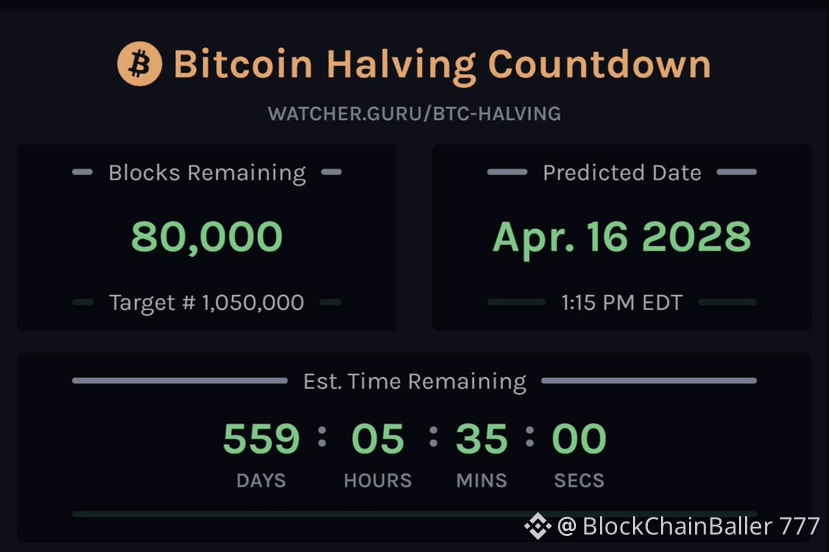
🚨 JUST IN: 80,000 BLOCKS UNTIL THE NEXT BITCOIN HALVING! ₿🔥
The Bitcoin halving countdown is getting closer! ⏳🚀
📉 Less new BTC supply
💎 Scarcity narrative getting stronger
🐂 Long-term BTC holders are watching closely
🔥 Could this become another major catalyst for the next Bitcoin cycle?
The big question 👇
Will BTC break new ATHs before or after the next halving? 🤔📈
Comment your 2028 BTC target! 👇
$150K? $200K? $300K+? 🚀
#HotTrends #BTC #BitcoinHalving #Crypto #Binance
{future}(BTCUSDT)
{future}(ETHUSDT)
{future}(SOLUSDT)
🚨 JUST IN: 80,000 BLOCKS UNTIL THE NEXT BITCOIN HALVING! ₿🔥
The Bitcoin halving countdown is getting closer! ⏳🚀
📉 Less new BTC supply
💎 Scarcity narrative getting stronger
🐂 Long-term BTC holders are watching closely
🔥 Could this become another major catalyst for the next Bitcoin cycle?
The big question 👇
Will BTC break new ATHs before or after the next halving? 🤔📈
Comment your 2028 BTC target! 👇
$150K? $200K? $300K+? 🚀
#HotTrends #BTC #BitcoinHalving #Crypto #Binance
1
176
Log in to explore more content
Join global crypto users on Binance Square
⚡️ Get latest and useful information about crypto.
💬 Trusted by the world’s largest crypto exchange.
👍 Discover real insights from verified creators.
Email / Phone number
Trending Topics
1
#CanMarketsReboundAfterThanksgiving?
216,220 views
2,067 Discussing
2
#EvolveAtBinanceBlockchainWeek
863,167 views
10,726 Discussing
3
#CouldSpaceX’sOrbitalDataCentersBoostAIChipDemand?
106,069 views
1,238 Discussing
4
#SouthKoreaProposesMandatoryDigitalAssetTransactionDisclosure
5,805 views
117 Discussing
5
#StellarAdds$80.4MTokenizedFundsInOneDay
371 views
5 Discussing
6
#ZcashDevelopersUrgeZECMoveToIronwood
38,141 views
187 Discussing
7
#TradFiForBeginners
1.2M views
6,280 Discussing
8
#KoreaFSCSeeksPowerToSuspendCryptoListings
24,080 views
361 Discussing
9
#SouthKoreaPlansToRequireTetherCircleLocalReserves
22,673 views
253 Discussing
10
#UKFCAReportedlyPlansDeFiAuthorizationRules
16,663 views
151 Discussing