

#multichain
multichain
74,761 views
670 Discussing
Hot
Latest

·
--
Cross-Chain Growth: Why the Future Is Multi-Chain, Not Winner-Takes-All
One of the most persistent myths in crypto is that one chain will eventually dominate everything. But the data tells a different story — and smart capital is adapting.
Today, $ETH remains the settlement layer for institutional DeFi and high-value NFTs, while $SOL captures high-frequency retail activity with its speed and low fees. Alternative Layer 1s are carving out enterprise and subnet use cases, while BSC continues to dominate in CEX-adjacent DeFi with deep liquidity.
What we are seeing is specialization, not competition. Each Layer 1 is evolving into a distinct financial environment with unique user profiles and capital flows. Cross-chain bridges and interoperability protocols are the real infrastructure play here — connecting these ecosystems rather than replacing them.
For traders, the implication is clear: portfolio diversification across chains is no longer just about price exposure. It is about accessing different yield environments, different liquidity profiles, and different risk-adjusted opportunities.
Watch bridge volume, cross-chain TVL migration, and subnet adoption as leading indicators. When capital moves fluidly between chains, the entire ecosystem grows — and the rising tide lifts $BTC as the reserve collateral anchoring it all.
Multi-chain is not a compromise. It is the architecture.
#Crypto #MultiChain #DeFi #Layer1 #CrossChain
Cross-Chain Growth: Why the Future Is Multi-Chain, Not Winner-Takes-All
One of the most persistent myths in crypto is that one chain will eventually dominate everything. But the data tells a different story — and smart capital is adapting.
Today, $ETH remains the settlement layer for institutional DeFi and high-value NFTs, while $SOL captures high-frequency retail activity with its speed and low fees. Alternative Layer 1s are carving out enterprise and subnet use cases, while BSC continues to dominate in CEX-adjacent DeFi with deep liquidity.
What we are seeing is specialization, not competition. Each Layer 1 is evolving into a distinct financial environment with unique user profiles and capital flows. Cross-chain bridges and interoperability protocols are the real infrastructure play here — connecting these ecosystems rather than replacing them.
For traders, the implication is clear: portfolio diversification across chains is no longer just about price exposure. It is about accessing different yield environments, different liquidity profiles, and different risk-adjusted opportunities.
Watch bridge volume, cross-chain TVL migration, and subnet adoption as leading indicators. When capital moves fluidly between chains, the entire ecosystem grows — and the rising tide lifts $BTC as the reserve collateral anchoring it all.
Multi-chain is not a compromise. It is the architecture.
#Crypto #MultiChain #DeFi #Layer1 #CrossChain
One of the most persistent myths in crypto is that one chain will eventually dominate everything. But the data tells a different story — and smart capital is adapting.
Today, $ETH remains the settlement layer for institutional DeFi and high-value NFTs, while $SOL captures high-frequency retail activity with its speed and low fees. Alternative Layer 1s are carving out enterprise and subnet use cases, while BSC continues to dominate in CEX-adjacent DeFi with deep liquidity.
What we are seeing is specialization, not competition. Each Layer 1 is evolving into a distinct financial environment with unique user profiles and capital flows. Cross-chain bridges and interoperability protocols are the real infrastructure play here — connecting these ecosystems rather than replacing them.
For traders, the implication is clear: portfolio diversification across chains is no longer just about price exposure. It is about accessing different yield environments, different liquidity profiles, and different risk-adjusted opportunities.
Watch bridge volume, cross-chain TVL migration, and subnet adoption as leading indicators. When capital moves fluidly between chains, the entire ecosystem grows — and the rising tide lifts $BTC as the reserve collateral anchoring it all.
Multi-chain is not a compromise. It is the architecture.
#Crypto #MultiChain #DeFi #Layer1 #CrossChain
1
184

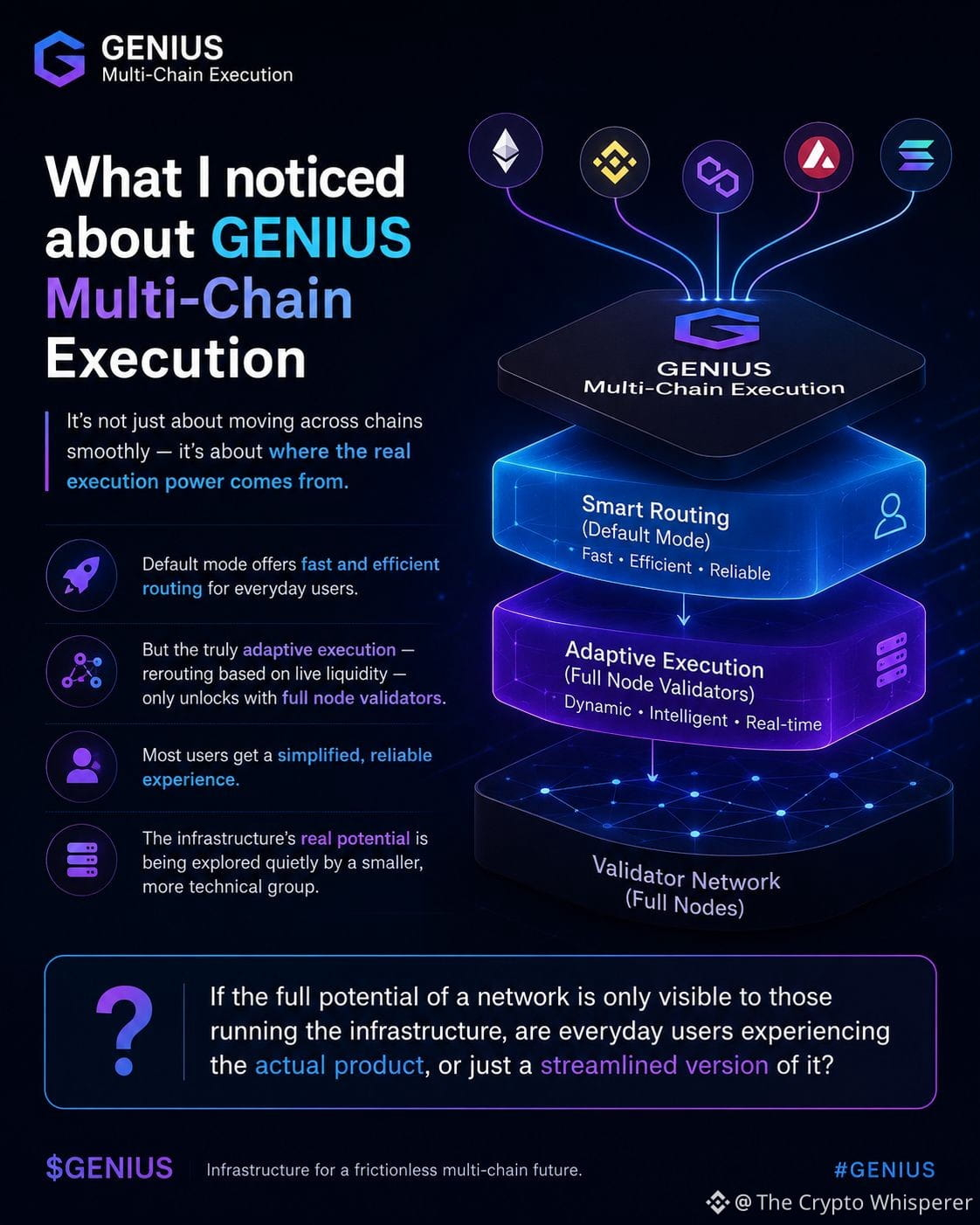
While looking deeper into GENIUS Multi-Chain Execution, what stood out to me wasn't just the idea of smooth cross-chain transactions, but how the execution process is actually structured behind the scenes.
$GENIUS is positioning itself as infrastructure for a multi-chain future, with the token playing a key role in the ecosystem. From a user perspective, the routing experience is efficient and works well, but after exploring the architecture more closely, it seems that most users are only seeing part of what the system can really do.
The advanced execution layer — where routes can adapt dynamically based on real-time liquidity conditions — appears to be most effective when validators are operating full node setups. This creates an interesting distinction between the standard experience available to regular users and the deeper capabilities being utilized by more technical participants.
To me, that's one of the most interesting aspects of the project. The platform already delivers a smooth and reliable experience, but some of its most powerful features are being explored behind the scenes by node operators and infrastructure participants.
It makes me wonder: if the full potential of a network is only visible to those running the infrastructure, are everyday users experiencing the actual product, or just a streamlined version of it?
@GeniusOfficial #GENIUS #Crypto #Blockchain #MultiChain
While looking deeper into GENIUS Multi-Chain Execution, what stood out to me wasn't just the idea of smooth cross-chain transactions, but how the execution process is actually structured behind the scenes.
$GENIUS is positioning itself as infrastructure for a multi-chain future, with the token playing a key role in the ecosystem. From a user perspective, the routing experience is efficient and works well, but after exploring the architecture more closely, it seems that most users are only seeing part of what the system can really do.
The advanced execution layer — where routes can adapt dynamically based on real-time liquidity conditions — appears to be most effective when validators are operating full node setups. This creates an interesting distinction between the standard experience available to regular users and the deeper capabilities being utilized by more technical participants.
To me, that's one of the most interesting aspects of the project. The platform already delivers a smooth and reliable experience, but some of its most powerful features are being explored behind the scenes by node operators and infrastructure participants.
It makes me wonder: if the full potential of a network is only visible to those running the infrastructure, are everyday users experiencing the actual product, or just a streamlined version of it?
@GeniusOfficial #GENIUS #Crypto #Blockchain #MultiChain
$GENIUS is positioning itself as infrastructure for a multi-chain future, with the token playing a key role in the ecosystem. From a user perspective, the routing experience is efficient and works well, but after exploring the architecture more closely, it seems that most users are only seeing part of what the system can really do.
The advanced execution layer — where routes can adapt dynamically based on real-time liquidity conditions — appears to be most effective when validators are operating full node setups. This creates an interesting distinction between the standard experience available to regular users and the deeper capabilities being utilized by more technical participants.
To me, that's one of the most interesting aspects of the project. The platform already delivers a smooth and reliable experience, but some of its most powerful features are being explored behind the scenes by node operators and infrastructure participants.
It makes me wonder: if the full potential of a network is only visible to those running the infrastructure, are everyday users experiencing the actual product, or just a streamlined version of it?
@GeniusOfficial #GENIUS #Crypto #Blockchain #MultiChain
1
94

·
--
Bullish
#bedrock $BR What really convinces me about @Bedrock is the multichain vision. They are already trading on Ethereum, BNB Chain, Arbitrum, Optimism, Aptos, and more networks. The ability to move uniBTC and brBTC across chains via Chainlink CCIP is a huge advantage for any DeFi user. $BR is in the right place. #Bedrock #Multichain #DeFi
#bedrock $BR What really convinces me about @Bedrock is the multichain vision. They are already trading on Ethereum, BNB Chain, Arbitrum, Optimism, Aptos, and more networks. The ability to move uniBTC and brBTC across chains via Chainlink CCIP is a huge advantage for any DeFi user. $BR is in the right place. #Bedrock #Multichain #DeFi
153

·
--
Article
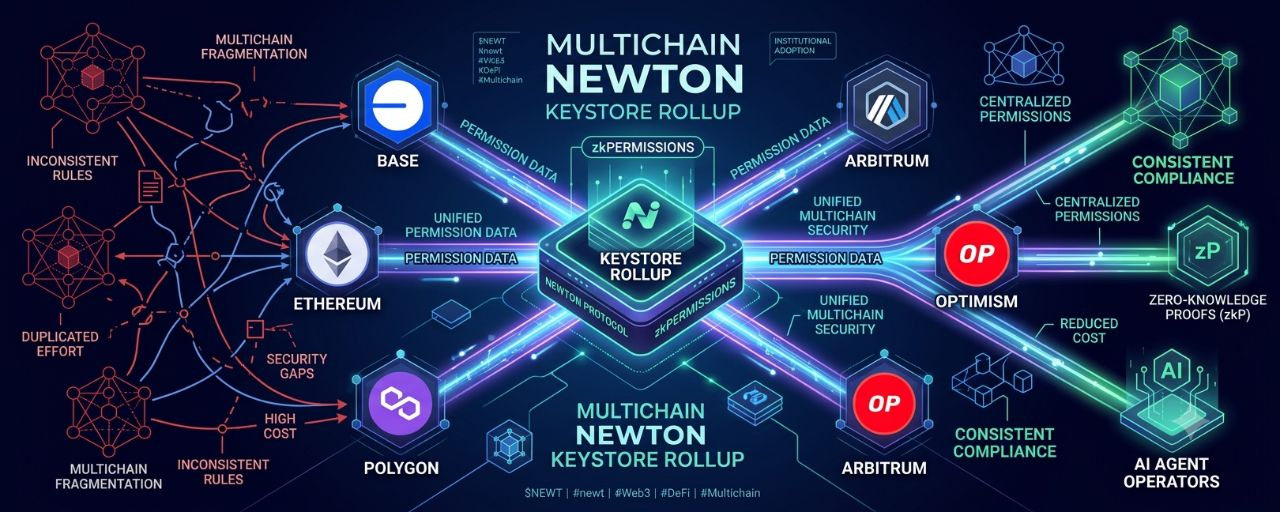
The Newton feature that could solve the biggest multichain problem — and almost nobody is talking aboutAfter writing a lot about the Mainnet Beta, the VaultKit, and compliance-as-code of @NewtonProtocol , I decided to go after what comes next. And I found a piece that, in my opinion, is as important as all of that put together: the Multichain Newton Keystore Rollup.
The problem no one talks about out loud
Today, if you want a security rule to work across multiple blockchains — Base, Ethereum, some new L2 that showed up last month — you practically have to recreate that rule on each network. Each chain has its own permission system, its own limitations, its own execution cost. In practice, that means the protection you configured in one place doesn’t necessarily protect you in another.
The Newton feature that could solve the biggest multichain problem — and almost nobody is talking about
After writing a lot about the Mainnet Beta, the VaultKit, and compliance-as-code of @NewtonProtocol , I decided to go after what comes next. And I found a piece that, in my opinion, is as important as all of that put together: the Multichain Newton Keystore Rollup.
The problem no one talks about out loud
Today, if you want a security rule to work across multiple blockchains — Base, Ethereum, some new L2 that showed up last month — you practically have to recreate that rule on each network. Each chain has its own permission system, its own limitations, its own execution cost. In practice, that means the protection you configured in one place doesn’t necessarily protect you in another.
The problem no one talks about out loud
Today, if you want a security rule to work across multiple blockchains — Base, Ethereum, some new L2 that showed up last month — you practically have to recreate that rule on each network. Each chain has its own permission system, its own limitations, its own execution cost. In practice, that means the protection you configured in one place doesn’t necessarily protect you in another.
2
132


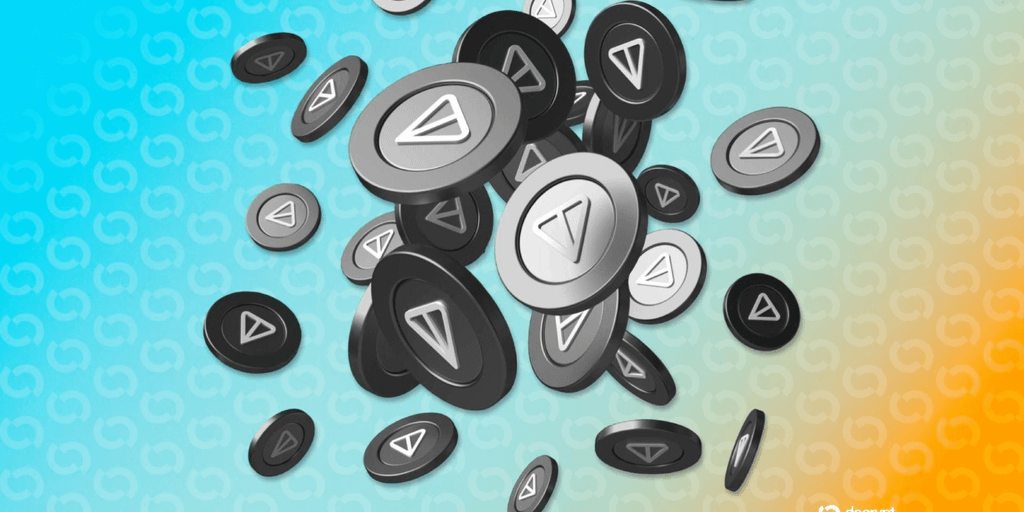
Are we finally moving towards a world where one wallet actually rules them all? I have been watching Tonkeeper closely, and this rebranding to just Keeper is a massive move. They are expanding way beyond the TON ecosystem by adding support for $BTC, $ETH, and Tron. It is wild to see how quickly they are transforming from a network-specific wallet into a multi-chain powerhouse.
Honestly, managing ten different wallets for different chains is a massive pain, so seeing Keeper step up to support seven blockchains is a huge relief. They are also planning more financial products soon, which makes me think they want to compete with the biggest players in the self-custody space. Definitely keeping an eye on this one.
#Keeper #MultiChain #SelfCustody #Write2Earn
Are we finally moving towards a world where one wallet actually rules them all? I have been watching Tonkeeper closely, and this rebranding to just Keeper is a massive move. They are expanding way beyond the TON ecosystem by adding support for $BTC , $ETH , and Tron. It is wild to see how quickly they are transforming from a network-specific wallet into a multi-chain powerhouse.
Honestly, managing ten different wallets for different chains is a massive pain, so seeing Keeper step up to support seven blockchains is a huge relief. They are also planning more financial products soon, which makes me think they want to compete with the biggest players in the self-custody space. Definitely keeping an eye on this one.
#Keeper #MultiChain #SelfCustody #Write2Earn
Honestly, managing ten different wallets for different chains is a massive pain, so seeing Keeper step up to support seven blockchains is a huge relief. They are also planning more financial products soon, which makes me think they want to compete with the biggest players in the self-custody space. Definitely keeping an eye on this one.
#Keeper #MultiChain #SelfCustody #Write2Earn
132
·
--
The Multi-Chain Future Is Already Here
For years, crypto was framed as a winner-takes-all battle: one chain to rule them all. That narrative is dying.
Today $ETH anchors DeFi and institutional settlement. $SOL dominates high-frequency consumer apps — payments, gaming, memecoins. $BNB powers the most active DEX ecosystem by user count.
None of these are losing. They are specializing.
The real insight: blockchains are becoming like databases. No company uses only one database — they pick relational, graph, or time-series depending on the use case. The same logic is playing out in crypto.
Interoperability is the critical layer being built right now. Cross-chain messaging protocols, intent-based solvers, and unified liquidity bridges are stitching together what looks like fragmentation into a coherent multi-chain economy.
The investment implication? Stop betting on one chain winning. Start identifying which chains hold structural moats in their own domain — and which infrastructure layers connect them all.
Diversification is not indecision. In a multi-chain world, it is the only rational thesis.
#MultiChain #Interoperability #CryptoInvesting #BlockchainInfrastructure #Web3
The Multi-Chain Future Is Already Here
For years, crypto was framed as a winner-takes-all battle: one chain to rule them all. That narrative is dying.
Today $ETH anchors DeFi and institutional settlement. $SOL dominates high-frequency consumer apps — payments, gaming, memecoins. $BNB powers the most active DEX ecosystem by user count.
None of these are losing. They are specializing.
The real insight: blockchains are becoming like databases. No company uses only one database — they pick relational, graph, or time-series depending on the use case. The same logic is playing out in crypto.
Interoperability is the critical layer being built right now. Cross-chain messaging protocols, intent-based solvers, and unified liquidity bridges are stitching together what looks like fragmentation into a coherent multi-chain economy.
The investment implication? Stop betting on one chain winning. Start identifying which chains hold structural moats in their own domain — and which infrastructure layers connect them all.
Diversification is not indecision. In a multi-chain world, it is the only rational thesis.
#MultiChain #Interoperability #CryptoInvesting #BlockchainInfrastructure #Web3
For years, crypto was framed as a winner-takes-all battle: one chain to rule them all. That narrative is dying.
Today $ETH anchors DeFi and institutional settlement. $SOL dominates high-frequency consumer apps — payments, gaming, memecoins. $BNB powers the most active DEX ecosystem by user count.
None of these are losing. They are specializing.
The real insight: blockchains are becoming like databases. No company uses only one database — they pick relational, graph, or time-series depending on the use case. The same logic is playing out in crypto.
Interoperability is the critical layer being built right now. Cross-chain messaging protocols, intent-based solvers, and unified liquidity bridges are stitching together what looks like fragmentation into a coherent multi-chain economy.
The investment implication? Stop betting on one chain winning. Start identifying which chains hold structural moats in their own domain — and which infrastructure layers connect them all.
Diversification is not indecision. In a multi-chain world, it is the only rational thesis.
#MultiChain #Interoperability #CryptoInvesting #BlockchainInfrastructure #Web3
85

·
--
#bedrock $BR
@Bedrock just keeps expanding now on Aptos too.
uniBTC and brBTC are now live on Aptos via Interport (secured by Chainlink CCIP), letting users bridge and drop straight into Hyperion liquidity pools to earn yield.
Think about what this actually means: one BTC asset, yield-bearing, usable on Ethereum, BNB Chain, AND Aptos. That's BTCFi 2.0 in action not just a buzzword.
The multi-chain approach is what separates serious protocols from seasonal hype projects.
$BR #BedrockCoin #BTCFi #MultiChain
Which chain are you using @Bedrock on? Drop it below 👇.
#bedrock $BR
@Bedrock just keeps expanding now on Aptos too.
uniBTC and brBTC are now live on Aptos via Interport (secured by Chainlink CCIP), letting users bridge and drop straight into Hyperion liquidity pools to earn yield.
Think about what this actually means: one BTC asset, yield-bearing, usable on Ethereum, BNB Chain, AND Aptos. That's BTCFi 2.0 in action not just a buzzword.
The multi-chain approach is what separates serious protocols from seasonal hype projects.
$BR #BedrockCoin #BTCFi #MultiChain
Which chain are you using @Bedrock on? Drop it below 👇.
@Bedrock just keeps expanding now on Aptos too.
uniBTC and brBTC are now live on Aptos via Interport (secured by Chainlink CCIP), letting users bridge and drop straight into Hyperion liquidity pools to earn yield.
Think about what this actually means: one BTC asset, yield-bearing, usable on Ethereum, BNB Chain, AND Aptos. That's BTCFi 2.0 in action not just a buzzword.
The multi-chain approach is what separates serious protocols from seasonal hype projects.
$BR #BedrockCoin #BTCFi #MultiChain
Which chain are you using @Bedrock on? Drop it below 👇.
142

·
--
STABLECOIN SETTLEMENT PLATFORM ZERODELTA RAISES $6.8M - BULLISH FOR $USDC 🔥
Glacis Labs has closed a $6.8M seed round led by Lightspeed Faction, with participation from Franklin Templeton and Coinbase Ventures. The capital is earmarked for expanding ZeroDelta, a multi-chain settlement platform that has already processed over $1B in stablecoin volume.
This is a structural development for the stablecoin ecosystem. Efficient netting and settlement reduce friction for institutional flows, which could tighten spreads across top-tier exchanges. ZeroDelta's growth signals that the market is maturing beyond simple spot trading. Are you watching the impact of multi-chain settlement on liquidity depth?
Not financial advice. Always manage your risk.
#USDC #Infrastructure #MultiChain #Stablecoins #CryptoFunding
🔥
STABLECOIN SETTLEMENT PLATFORM ZERODELTA RAISES $6.8M - BULLISH FOR $USDC 🔥
Glacis Labs has closed a $6.8M seed round led by Lightspeed Faction, with participation from Franklin Templeton and Coinbase Ventures. The capital is earmarked for expanding ZeroDelta, a multi-chain settlement platform that has already processed over $1B in stablecoin volume.
This is a structural development for the stablecoin ecosystem. Efficient netting and settlement reduce friction for institutional flows, which could tighten spreads across top-tier exchanges. ZeroDelta's growth signals that the market is maturing beyond simple spot trading. Are you watching the impact of multi-chain settlement on liquidity depth?
Not financial advice. Always manage your risk.
#USDC #Infrastructure #MultiChain #Stablecoins #CryptoFunding
🔥
Glacis Labs has closed a $6.8M seed round led by Lightspeed Faction, with participation from Franklin Templeton and Coinbase Ventures. The capital is earmarked for expanding ZeroDelta, a multi-chain settlement platform that has already processed over $1B in stablecoin volume.
This is a structural development for the stablecoin ecosystem. Efficient netting and settlement reduce friction for institutional flows, which could tighten spreads across top-tier exchanges. ZeroDelta's growth signals that the market is maturing beyond simple spot trading. Are you watching the impact of multi-chain settlement on liquidity depth?
Not financial advice. Always manage your risk.
#USDC #Infrastructure #MultiChain #Stablecoins #CryptoFunding
🔥
31

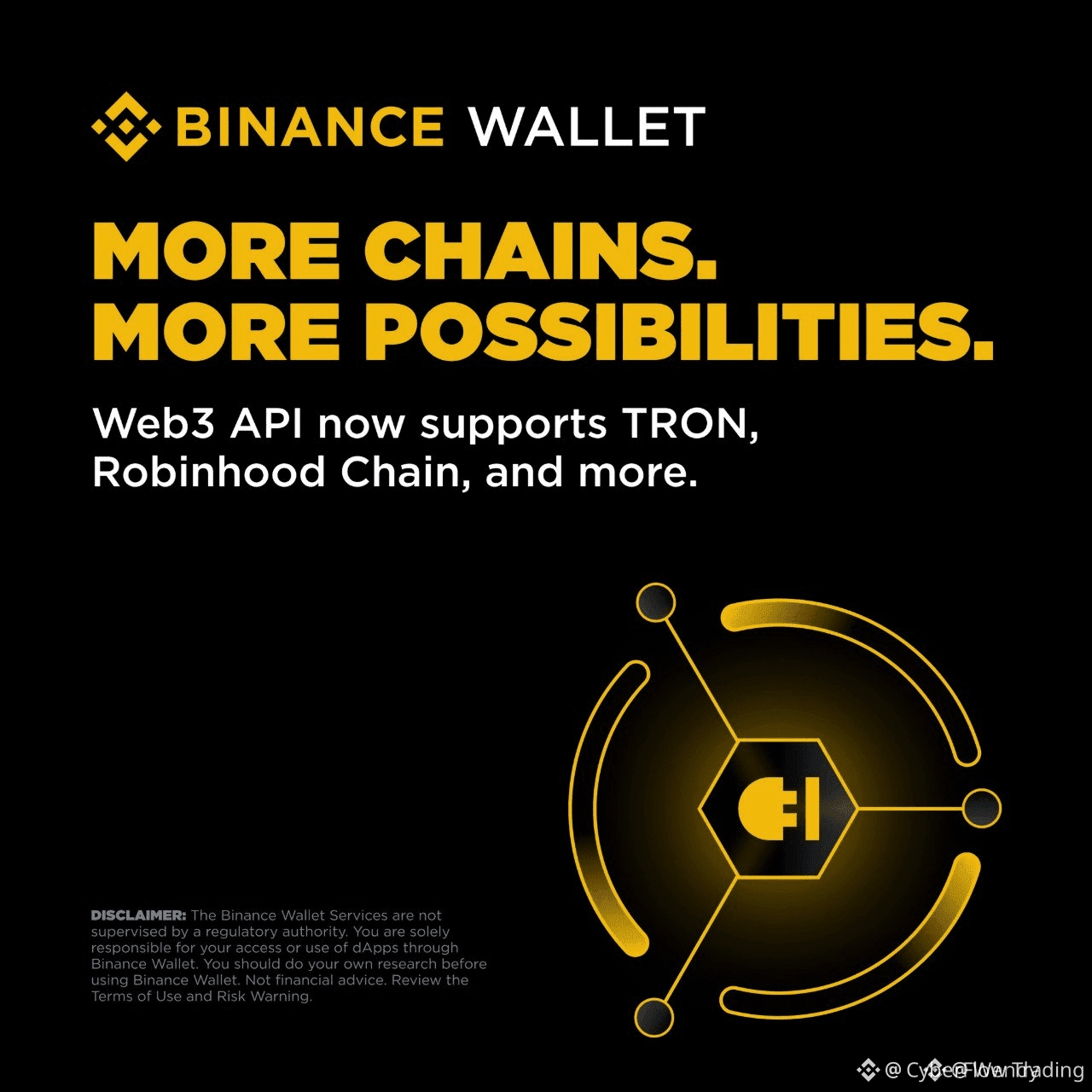
BINANCE WEB3 API NOW POWERS 18 CHAINS – MULTI-CHAIN NARRATIVE EXPLODING! 🚀
🛠️ The dev toolkit just got a massive upgrade. Eight new blockchains integrated into a single API means builders can deploy cross-chain dApps without the usual integration headache. 🦈 Smart money is watching infrastructure like this closely – smoother development cycles attract real user growth.
📊 TRON, Avalanche, Metis, and five other chains now join the unified flow. This isn't just a feature drop; it's a signal that multi-chain interoperability is no longer a beta experiment. When toolsets expand, capital follows. 💬 Which of these newly supported chains are you most bullish on for the next wave of dApp activity? 👇
⚠️ Not financial advice. Always manage your risk. 🛡️
🏷️ #Web3 #MultiChain #CryptoInfrastructure #BNB #AVAX
🔥 💎
BINANCE WEB3 API NOW POWERS 18 CHAINS – MULTI-CHAIN NARRATIVE EXPLODING! 🚀
🛠️ The dev toolkit just got a massive upgrade. Eight new blockchains integrated into a single API means builders can deploy cross-chain dApps without the usual integration headache. 🦈 Smart money is watching infrastructure like this closely – smoother development cycles attract real user growth.
📊 TRON, Avalanche, Metis, and five other chains now join the unified flow. This isn't just a feature drop; it's a signal that multi-chain interoperability is no longer a beta experiment. When toolsets expand, capital follows. 💬 Which of these newly supported chains are you most bullish on for the next wave of dApp activity? 👇
⚠️ Not financial advice. Always manage your risk. 🛡️
🏷️ #Web3 #MultiChain #CryptoInfrastructure #BNB #AVAX
🔥 💎
🛠️ The dev toolkit just got a massive upgrade. Eight new blockchains integrated into a single API means builders can deploy cross-chain dApps without the usual integration headache. 🦈 Smart money is watching infrastructure like this closely – smoother development cycles attract real user growth.
📊 TRON, Avalanche, Metis, and five other chains now join the unified flow. This isn't just a feature drop; it's a signal that multi-chain interoperability is no longer a beta experiment. When toolsets expand, capital follows. 💬 Which of these newly supported chains are you most bullish on for the next wave of dApp activity? 👇
⚠️ Not financial advice. Always manage your risk. 🛡️
🏷️ #Web3 #MultiChain #CryptoInfrastructure #BNB #AVAX
🔥 💎
188

·
--
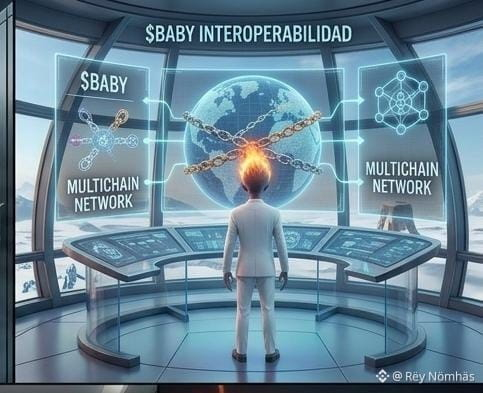
🔄 Frictionless interoperability: Connecting BTC with the multichain
Bitcoin is no longer an island. The infrastructure of @babylonlabs_io acts as a secure bridge between the main BTC network and multichain ecosystems (Proof-of-Stake). The utility of $BABY connects native liquidity with infinite opportunities in Web3. 🌐
#baby #Interoperability #Web3 #MultiChain
🔄 Frictionless interoperability: Connecting BTC with the multichain
Bitcoin is no longer an island. The infrastructure of @BabylonLabs_io acts as a secure bridge between the main BTC network and multichain ecosystems (Proof-of-Stake). The utility of $BABY connects native liquidity with infinite opportunities in Web3. 🌐
#baby #Interoperability #Web3 #MultiChain
Bitcoin is no longer an island. The infrastructure of @BabylonLabs_io acts as a secure bridge between the main BTC network and multichain ecosystems (Proof-of-Stake). The utility of $BABY connects native liquidity with infinite opportunities in Web3. 🌐
#baby #Interoperability #Web3 #MultiChain
1
321

·
--
The Future Is Multi-Chain 🌉
No single blockchain can solve every challenge. Different networks bring different strengths, and cross-chain solutions are making it easier for users to move assets and data across ecosystems. The future may be more connected than competitive. #MultiChain #Web3 #ShareMyTradFi
The Future Is Multi-Chain 🌉
No single blockchain can solve every challenge. Different networks bring different strengths, and cross-chain solutions are making it easier for users to move assets and data across ecosystems. The future may be more connected than competitive. #MultiChain #Web3 #ShareMyTradFi
No single blockchain can solve every challenge. Different networks bring different strengths, and cross-chain solutions are making it easier for users to move assets and data across ecosystems. The future may be more connected than competitive. #MultiChain #Web3 #ShareMyTradFi
1
166

🌐 Multi-Chain Ecosystem: Bitcoin, Ethereum, Solana, and BNB Each Find Their Role
On July 12, 2026, the crypto ecosystem spans Bitcoin $BTC at $63,928, Ethereum $ETH at $1,804, Solana $SOL at $76.66, and BNB at $573.34 — each serving different use cases.
Bitcoin remains digital gold and the dominant store of value. Ethereum leads in DeFi and tokenization. Solana excels at high-throughput consumer apps. BNB powers the Binance ecosystem.
The combined market cap of $2.28T across 17513 coins shows an ecosystem diversified by function, not just speculation.
📌 Key Takeaway:
The multi-chain ecosystem is mature — each blockchain has found its niche, creating a diversified and resilient crypto landscape.
#MultiChain #Bitcoin #Ethereum #Solana
#BinanceAlphaAlert
🌐 Multi-Chain Ecosystem: Bitcoin, Ethereum, Solana, and BNB Each Find Their Role
On July 12, 2026, the crypto ecosystem spans Bitcoin $BTC at $63,928, Ethereum $ETH at $1,804, Solana $SOL at $76.66, and BNB at $573.34 — each serving different use cases.
Bitcoin remains digital gold and the dominant store of value. Ethereum leads in DeFi and tokenization. Solana excels at high-throughput consumer apps. BNB powers the Binance ecosystem.
The combined market cap of $2.28T across 17513 coins shows an ecosystem diversified by function, not just speculation.
📌 Key Takeaway:
The multi-chain ecosystem is mature — each blockchain has found its niche, creating a diversified and resilient crypto landscape.
#MultiChain #Bitcoin #Ethereum #Solana
#BinanceAlphaAlert
On July 12, 2026, the crypto ecosystem spans Bitcoin $BTC at $63,928, Ethereum $ETH at $1,804, Solana $SOL at $76.66, and BNB at $573.34 — each serving different use cases.
Bitcoin remains digital gold and the dominant store of value. Ethereum leads in DeFi and tokenization. Solana excels at high-throughput consumer apps. BNB powers the Binance ecosystem.
The combined market cap of $2.28T across 17513 coins shows an ecosystem diversified by function, not just speculation.
📌 Key Takeaway:
The multi-chain ecosystem is mature — each blockchain has found its niche, creating a diversified and resilient crypto landscape.
#MultiChain #Bitcoin #Ethereum #Solana
#BinanceAlphaAlert
45

·
--
#termmax @termmax I thing TermMax is live across 8 chains: Ethereum, Arbitrum, BNB Chain, Berachain, BSquared, X Layer, Pharos, and Hyperliquid L1, plus Base showing up in more recent deployments.
Ethereum holds 94.5% of total TVL. That's the part worth sitting with. Being deployed on 8 chains sounds impressive until you realize almost all the actual capital is concentrated on one of them.
Not necessarily a red flag, early stage protocols usually see this kind of concentration before liquidity spreads out. But if you're evaluating this for a multichain thesis, the reality right now is closer to "Ethereum protocol with experimental outposts elsewhere" than "true multichain player."
Will update this if the distribution shifts meaningfully over the next few campaign cycles.
#TermMax #Multichain #DEFİ
#termmax @TermMax I thing TermMax is live across 8 chains: Ethereum, Arbitrum, BNB Chain, Berachain, BSquared, X Layer, Pharos, and Hyperliquid L1, plus Base showing up in more recent deployments.
Ethereum holds 94.5% of total TVL. That's the part worth sitting with. Being deployed on 8 chains sounds impressive until you realize almost all the actual capital is concentrated on one of them.
Not necessarily a red flag, early stage protocols usually see this kind of concentration before liquidity spreads out. But if you're evaluating this for a multichain thesis, the reality right now is closer to "Ethereum protocol with experimental outposts elsewhere" than "true multichain player."
Will update this if the distribution shifts meaningfully over the next few campaign cycles.
#TermMax #Multichain #DEFİ
Ethereum holds 94.5% of total TVL. That's the part worth sitting with. Being deployed on 8 chains sounds impressive until you realize almost all the actual capital is concentrated on one of them.
Not necessarily a red flag, early stage protocols usually see this kind of concentration before liquidity spreads out. But if you're evaluating this for a multichain thesis, the reality right now is closer to "Ethereum protocol with experimental outposts elsewhere" than "true multichain player."
Will update this if the distribution shifts meaningfully over the next few campaign cycles.
#TermMax #Multichain #DEFİ
2
12
282
◎ Cross-Chain Interoperability: Connecting Isolated Networks: How bridges and protocols unite separate blockchains
On July 29, 2026, with 17,868 coins across multiple blockchains, interoperability is essential. Cross-chain bridges allow assets and data to move between networks like Bitcoin, Ethereum, and Solana. These protocols enable users to access DeFi, NFTs, and applications across ecosystems without selling holdings.
The European RL1 cooperative network and Tether's Nairobi deal both highlight how cross-chain functionality is becoming a design requirement for new blockchain projects. As the market reaches $2.27T, seamless interoperability could unlock significant additional value.
📌 Key Takeaway:
Cross-chain interoperability is the final frontier for blockchain usability — connecting siloed networks unlocks the full potential of the multi-chain ecosystem.
#CrossChain #Interoperability #MultiChain
#BinanceAlphaAlert
◎ Cross-Chain Interoperability: Connecting Isolated Networks: How bridges and protocols unite separate blockchains
On July 29, 2026, with 17,868 coins across multiple blockchains, interoperability is essential. Cross-chain bridges allow assets and data to move between networks like Bitcoin, Ethereum, and Solana. These protocols enable users to access DeFi, NFTs, and applications across ecosystems without selling holdings.
The European RL1 cooperative network and Tether's Nairobi deal both highlight how cross-chain functionality is becoming a design requirement for new blockchain projects. As the market reaches $2.27T, seamless interoperability could unlock significant additional value.
📌 Key Takeaway:
Cross-chain interoperability is the final frontier for blockchain usability — connecting siloed networks unlocks the full potential of the multi-chain ecosystem.
#CrossChain #Interoperability #MultiChain
#BinanceAlphaAlert
On July 29, 2026, with 17,868 coins across multiple blockchains, interoperability is essential. Cross-chain bridges allow assets and data to move between networks like Bitcoin, Ethereum, and Solana. These protocols enable users to access DeFi, NFTs, and applications across ecosystems without selling holdings.
The European RL1 cooperative network and Tether's Nairobi deal both highlight how cross-chain functionality is becoming a design requirement for new blockchain projects. As the market reaches $2.27T, seamless interoperability could unlock significant additional value.
📌 Key Takeaway:
Cross-chain interoperability is the final frontier for blockchain usability — connecting siloed networks unlocks the full potential of the multi-chain ecosystem.
#CrossChain #Interoperability #MultiChain
#BinanceAlphaAlert
53

·
--
Bullish
Why limit your capital to a single network? The DeFi bottleneck is real. ⏳
While other protocols lock themselves into one blockchain, @Bedrock connects over 12 major networks. Managing uniBTC in a multi-chain way is the logical evolution. Supporting $BR is choosing true interoperability. ⚡
#Bedrock #MultiChain #DeFi
Why limit your capital to a single network? The DeFi bottleneck is real. ⏳
While other protocols lock themselves into one blockchain, @Bedrock connects over 12 major networks. Managing uniBTC in a multi-chain way is the logical evolution. Supporting $BR is choosing true interoperability. ⚡
#Bedrock #MultiChain #DeFi
While other protocols lock themselves into one blockchain, @Bedrock connects over 12 major networks. Managing uniBTC in a multi-chain way is the logical evolution. Supporting $BR is choosing true interoperability. ⚡
#Bedrock #MultiChain #DeFi

3
1
113

·
--
Bedrock 2.0 = fewer chains, more possibilities.
@Bedrock now connects multiple networks and $BR makes your liquid staking travel frictionlessly. I use it for arbitrage between L2s. Smooth.
#Bedrock #MultiChain #L2
Bedrock 2.0 = fewer chains, more possibilities.
@Bedrock now connects multiple networks and $BR makes your liquid staking travel frictionlessly. I use it for arbitrage between L2s. Smooth.
#Bedrock #MultiChain #L2
@Bedrock now connects multiple networks and $BR makes your liquid staking travel frictionlessly. I use it for arbitrage between L2s. Smooth.
#Bedrock #MultiChain #L2
1
179

·
--
Am so happy seeing that this post on July has come to manifestation, champs 🥳🔥🔥....
AND ITS ABOUT TERRA CLASSIC × HYPERLANE 🌉🔥
#LUNC has stepped nowinto the multichain era.
Hyperlane opens new possibilities for:
Wider reach 🚀
Deeper liquidity 💧
More users & builders 👥
Cross-chain expansion 🌐
It's Ethereum, BNB Chain, Solana And beyond.
More connections leading to More liquidity and More opportunities.
The bridge has being built, champs. 🌉
Follow for more info.
#LUNC #TerraClassic #HyperlaneAirDrop #defi #Multichain
$LUNC
{spot}(LUNCUSDT)
Am so happy seeing that this post on July has come to manifestation, champs 🥳🔥🔥....
AND ITS ABOUT TERRA CLASSIC × HYPERLANE 🌉🔥
#LUNC has stepped nowinto the multichain era.
Hyperlane opens new possibilities for:
Wider reach 🚀
Deeper liquidity 💧
More users & builders 👥
Cross-chain expansion 🌐
It's Ethereum, BNB Chain, Solana And beyond.
More connections leading to More liquidity and More opportunities.
The bridge has being built, champs. 🌉
Follow for more info.
#LUNC #TerraClassic #HyperlaneAirDrop #defi #Multichain
$LUNC
AND ITS ABOUT TERRA CLASSIC × HYPERLANE 🌉🔥
#LUNC has stepped nowinto the multichain era.
Hyperlane opens new possibilities for:
Wider reach 🚀
Deeper liquidity 💧
More users & builders 👥
Cross-chain expansion 🌐
It's Ethereum, BNB Chain, Solana And beyond.
More connections leading to More liquidity and More opportunities.
The bridge has being built, champs. 🌉
Follow for more info.
#LUNC #TerraClassic #HyperlaneAirDrop #defi #Multichain
$LUNC

4
508

·
--
PYTH is up 13.56% in 7 days and still sitting below its 99-day SMA. That gap is a coiled spring 🎯
Here's what the chart tells us: price at $0.04741, consolidating above the 25 SMA at $0.0474. The daily MACD just flipped positive — a momentum shift that often precedes a bigger move. Multi-chain oracle narrative is building quietly while everyone's distracted by memes.
Why this trade:
- Up 13.56% in 7 days — leading the infrastructure sector
- Whale inflows of ~$1.44M showing accumulation at these levels
- Pyth ecosystem expanding across chains — real utility driving demand
- Still below the 99-day SMA at $0.0430 — mean reversion upside is real
Trade plan:
📍 Entry: $0.045–$0.048 (consolidation zone — buy the dip in the range)
🛑 Stop: $0.040 (below the 25 SMA — structure broken)
🎯 TP1: $0.055 (first target, 1.3 R:R)
🎯 TP2: $0.065 (major resistance)
🎯 TP3: $0.053 (quick profit zone)
Confidence: 76% | Strategy: Buy
🔮 Oracle plays are heating up. PYTH or LINK?
A) PYTH — multi-chain edge
B) LINK — OG reliability
C) Neither, watching from sidelines
#PYTH #Oracle #BinanceSquare #MultiChain
⚠️ Not financial advice. Do your own research. Trading involves risk.
PYTH is up 13.56% in 7 days and still sitting below its 99-day SMA. That gap is a coiled spring 🎯
Here's what the chart tells us: price at $0.04741, consolidating above the 25 SMA at $0.0474. The daily MACD just flipped positive — a momentum shift that often precedes a bigger move. Multi-chain oracle narrative is building quietly while everyone's distracted by memes.
Why this trade:
- Up 13.56% in 7 days — leading the infrastructure sector
- Whale inflows of ~$1.44M showing accumulation at these levels
- Pyth ecosystem expanding across chains — real utility driving demand
- Still below the 99-day SMA at $0.0430 — mean reversion upside is real
Trade plan:
📍 Entry: $0.045–$0.048 (consolidation zone — buy the dip in the range)
🛑 Stop: $0.040 (below the 25 SMA — structure broken)
🎯 TP1: $0.055 (first target, 1.3 R:R)
🎯 TP2: $0.065 (major resistance)
🎯 TP3: $0.053 (quick profit zone)
Confidence: 76% | Strategy: Buy
🔮 Oracle plays are heating up. PYTH or LINK?
A) PYTH — multi-chain edge
B) LINK — OG reliability
C) Neither, watching from sidelines
#PYTH #Oracle #BinanceSquare #MultiChain
⚠️ Not financial advice. Do your own research. Trading involves risk.
Here's what the chart tells us: price at $0.04741, consolidating above the 25 SMA at $0.0474. The daily MACD just flipped positive — a momentum shift that often precedes a bigger move. Multi-chain oracle narrative is building quietly while everyone's distracted by memes.
Why this trade:
- Up 13.56% in 7 days — leading the infrastructure sector
- Whale inflows of ~$1.44M showing accumulation at these levels
- Pyth ecosystem expanding across chains — real utility driving demand
- Still below the 99-day SMA at $0.0430 — mean reversion upside is real
Trade plan:
📍 Entry: $0.045–$0.048 (consolidation zone — buy the dip in the range)
🛑 Stop: $0.040 (below the 25 SMA — structure broken)
🎯 TP1: $0.055 (first target, 1.3 R:R)
🎯 TP2: $0.065 (major resistance)
🎯 TP3: $0.053 (quick profit zone)
Confidence: 76% | Strategy: Buy
🔮 Oracle plays are heating up. PYTH or LINK?
A) PYTH — multi-chain edge
B) LINK — OG reliability
C) Neither, watching from sidelines
#PYTH #Oracle #BinanceSquare #MultiChain
⚠️ Not financial advice. Do your own research. Trading involves risk.
44

·
--
$BICO 4 received a long upper shadow. The high was 0.07652, then it got pushed back to 0.07158. In the past five days it went from 0.017 up to 0.076—more than quadruple. I’ve only seen two possible endings for a move like this—either it keeps squeezing higher, or it distributes at high levels.
Market signals: The price has held above the 4-hour EMA for hours in a row, and with each pullback the local lows are getting higher. It opened at 0.05880 and closed at 0.07158—up 21.73% in 24 hours. The longs are controlling the market and haven’t really exited. But the upper wicks aren’t just decorations. That spike at 0.07652 stabbed down and then shrank back, suggesting someone placed sell orders above. The mark price 0.07162 is almost the same as the current price, with no clear premium or discount—at least the market still seems relatively rational.
Market sentiment: 24-hour trading volume is 356.9M. For a token like BICO with this kind of size, it’s not small. But you should be cautious when sentiment is getting hot. The funding rate is only 0.01%, which is unusually low. Normally, a move like this would push the funding rate to 0.05%+ by now. At this level, it indicates leverage participation isn’t high—retail is still watching and not going crazy. If it’s not crazy, that’s good; if it were crazy, I’d be the one to run.
Whale moves: You can guess a lot from volume. The strongest surge came from the last few 4-hour candles: 1.57M lots, 1.70M lots, 2.40M lots—all with solid bullish bodies and no long upper wicks. The whales are truly backing it with real buying power. But the last three 4-hour volumes have been shrinking: 1.35M, 0.63M, 0.59M—decreasing step by step. Whales aren’t stupid; once they take it to a certain position, they start trimming in batches. Around 0.076 there are clearly profit-taking orders being filled, but there’s no dumping—this looks like an orderly withdrawal, not panicked selling.
Volume-price structure: Support sits at 0.0493, 0.0496, and 0.0505—three prior-low clusters. Resistance is at 0.0765, 0.0747, and 0.0657. The current price is in the upper-middle area. It’s less than 7% away from the overhead resistance at 0.0765. A divergence is already showing: price made a new high, but trading volume is more than half below the peak. This structure usually leads either to sideways consolidation for digestion, or to a pullback toward around 0.063 to rebuild energy. A direct breakout above 0.076 doesn’t look very likely without a new catalyst.
Candlestick details: The last several 4-hour candles are interesting. It opened at 0.05629, dumped to a low of 0.04933, then bounced back to 0.05813—forming a long lower wick. That’s a classic “washout” candle: it shakes out uncommitted holders, then continues the attack. Immediately after that, from 0.05884 to 0.06321, and then from 0.06848 to 0.07158, the real bodies gradually expanded, but the upper wicks also got longer. Long and short are trading back and forth around 0.07, where the disagreement is very large. BICONOMY focuses on multi-chain abstraction and on-chain infrastructure. This rally isn’t just pure sentiment speculation; fundamentals provide support. But even with great fundamentals, you still have to consider the position.
Nini’s plan: Slightly bullish, but don’t chase. The current price is 0.07158—no rush to enter. Wait for a pullback to the 0.063–0.060 area, and only build in batches after volume contracts to below 400k lots. Set the stop loss at 0.055. If it breaks, exit—don’t hold through it. For the upside target, first look at 0.0765; if it breaks, then target 0.085. Trading isn’t gambling on direction—it’s waiting for the right position.
#BICO #MultiChain #Web3Infrastructure
$BICO 4 received a long upper shadow. The high was 0.07652, then it got pushed back to 0.07158. In the past five days it went from 0.017 up to 0.076—more than quadruple. I’ve only seen two possible endings for a move like this—either it keeps squeezing higher, or it distributes at high levels.
Market signals: The price has held above the 4-hour EMA for hours in a row, and with each pullback the local lows are getting higher. It opened at 0.05880 and closed at 0.07158—up 21.73% in 24 hours. The longs are controlling the market and haven’t really exited. But the upper wicks aren’t just decorations. That spike at 0.07652 stabbed down and then shrank back, suggesting someone placed sell orders above. The mark price 0.07162 is almost the same as the current price, with no clear premium or discount—at least the market still seems relatively rational.
Market sentiment: 24-hour trading volume is 356.9M. For a token like BICO with this kind of size, it’s not small. But you should be cautious when sentiment is getting hot. The funding rate is only 0.01%, which is unusually low. Normally, a move like this would push the funding rate to 0.05%+ by now. At this level, it indicates leverage participation isn’t high—retail is still watching and not going crazy. If it’s not crazy, that’s good; if it were crazy, I’d be the one to run.
Whale moves: You can guess a lot from volume. The strongest surge came from the last few 4-hour candles: 1.57M lots, 1.70M lots, 2.40M lots—all with solid bullish bodies and no long upper wicks. The whales are truly backing it with real buying power. But the last three 4-hour volumes have been shrinking: 1.35M, 0.63M, 0.59M—decreasing step by step. Whales aren’t stupid; once they take it to a certain position, they start trimming in batches. Around 0.076 there are clearly profit-taking orders being filled, but there’s no dumping—this looks like an orderly withdrawal, not panicked selling.
Volume-price structure: Support sits at 0.0493, 0.0496, and 0.0505—three prior-low clusters. Resistance is at 0.0765, 0.0747, and 0.0657. The current price is in the upper-middle area. It’s less than 7% away from the overhead resistance at 0.0765. A divergence is already showing: price made a new high, but trading volume is more than half below the peak. This structure usually leads either to sideways consolidation for digestion, or to a pullback toward around 0.063 to rebuild energy. A direct breakout above 0.076 doesn’t look very likely without a new catalyst.
Candlestick details: The last several 4-hour candles are interesting. It opened at 0.05629, dumped to a low of 0.04933, then bounced back to 0.05813—forming a long lower wick. That’s a classic “washout” candle: it shakes out uncommitted holders, then continues the attack. Immediately after that, from 0.05884 to 0.06321, and then from 0.06848 to 0.07158, the real bodies gradually expanded, but the upper wicks also got longer. Long and short are trading back and forth around 0.07, where the disagreement is very large. BICONOMY focuses on multi-chain abstraction and on-chain infrastructure. This rally isn’t just pure sentiment speculation; fundamentals provide support. But even with great fundamentals, you still have to consider the position.
Nini’s plan: Slightly bullish, but don’t chase. The current price is 0.07158—no rush to enter. Wait for a pullback to the 0.063–0.060 area, and only build in batches after volume contracts to below 400k lots. Set the stop loss at 0.055. If it breaks, exit—don’t hold through it. For the upside target, first look at 0.0765; if it breaks, then target 0.085. Trading isn’t gambling on direction—it’s waiting for the right position.
#BICO #MultiChain #Web3Infrastructure
Market signals: The price has held above the 4-hour EMA for hours in a row, and with each pullback the local lows are getting higher. It opened at 0.05880 and closed at 0.07158—up 21.73% in 24 hours. The longs are controlling the market and haven’t really exited. But the upper wicks aren’t just decorations. That spike at 0.07652 stabbed down and then shrank back, suggesting someone placed sell orders above. The mark price 0.07162 is almost the same as the current price, with no clear premium or discount—at least the market still seems relatively rational.
Market sentiment: 24-hour trading volume is 356.9M. For a token like BICO with this kind of size, it’s not small. But you should be cautious when sentiment is getting hot. The funding rate is only 0.01%, which is unusually low. Normally, a move like this would push the funding rate to 0.05%+ by now. At this level, it indicates leverage participation isn’t high—retail is still watching and not going crazy. If it’s not crazy, that’s good; if it were crazy, I’d be the one to run.
Whale moves: You can guess a lot from volume. The strongest surge came from the last few 4-hour candles: 1.57M lots, 1.70M lots, 2.40M lots—all with solid bullish bodies and no long upper wicks. The whales are truly backing it with real buying power. But the last three 4-hour volumes have been shrinking: 1.35M, 0.63M, 0.59M—decreasing step by step. Whales aren’t stupid; once they take it to a certain position, they start trimming in batches. Around 0.076 there are clearly profit-taking orders being filled, but there’s no dumping—this looks like an orderly withdrawal, not panicked selling.
Volume-price structure: Support sits at 0.0493, 0.0496, and 0.0505—three prior-low clusters. Resistance is at 0.0765, 0.0747, and 0.0657. The current price is in the upper-middle area. It’s less than 7% away from the overhead resistance at 0.0765. A divergence is already showing: price made a new high, but trading volume is more than half below the peak. This structure usually leads either to sideways consolidation for digestion, or to a pullback toward around 0.063 to rebuild energy. A direct breakout above 0.076 doesn’t look very likely without a new catalyst.
Candlestick details: The last several 4-hour candles are interesting. It opened at 0.05629, dumped to a low of 0.04933, then bounced back to 0.05813—forming a long lower wick. That’s a classic “washout” candle: it shakes out uncommitted holders, then continues the attack. Immediately after that, from 0.05884 to 0.06321, and then from 0.06848 to 0.07158, the real bodies gradually expanded, but the upper wicks also got longer. Long and short are trading back and forth around 0.07, where the disagreement is very large. BICONOMY focuses on multi-chain abstraction and on-chain infrastructure. This rally isn’t just pure sentiment speculation; fundamentals provide support. But even with great fundamentals, you still have to consider the position.
Nini’s plan: Slightly bullish, but don’t chase. The current price is 0.07158—no rush to enter. Wait for a pullback to the 0.063–0.060 area, and only build in batches after volume contracts to below 400k lots. Set the stop loss at 0.055. If it breaks, exit—don’t hold through it. For the upside target, first look at 0.0765; if it breaks, then target 0.085. Trading isn’t gambling on direction—it’s waiting for the right position.
#BICO #MultiChain #Web3Infrastructure
235

·
--
Verified
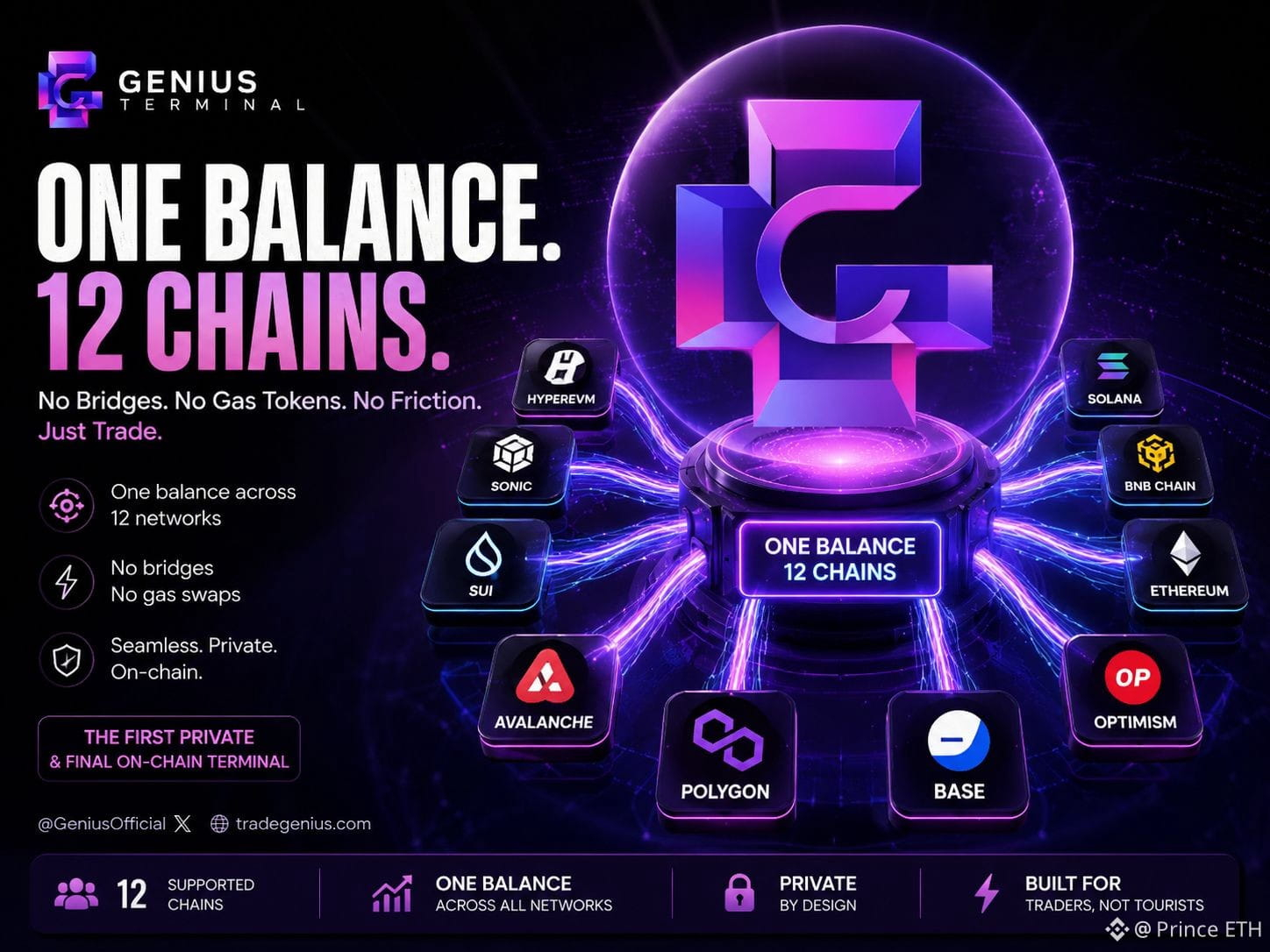
the first thing that made me stop was not the chain count. it was the single balance claim. trading across 12 networks without touching a bridge or swapping a gas token is the kind of design decision that either works cleanly or hides a lot of complexity somewhere else.
genius terminal expanded from 9 to 12 supported chains in 2026, adding sui, sonic, and hyperevm to a list that already included solana, bnb, ethereum, arbitrum, optimism, base, polygon, and avalanche. the stated mechanism is simple. one balance covers all twelve chains, and the user never needs to route funds manually between them.
the asymmetry is in where friction moves, not whether it disappears. crossing between two chains today means handling separate gas tokens, a bridge transaction, slippage on each end. under this model, the routing layer absorbs that process. but what it does under thin liquidity or latency spikes is not visible to the trader.
if the abstraction holds consistently, user behavior changes in ways that compound. traders stop allocating attention to chain selection and concentrate entirely on asset movement across all twelve chains at once. when that attention reaches hyperevm or sonic through a unified interface, the volume pattern differs from organic onboarding, and that matters for how liquidity forms.
the broader question is about where the filter sits for retail participants. for most of this cycle, choosing a chain carried real cost. bridge fees, gas token requirements, and wallet fragmentation shaped who moved capital and where. removing that layer may increase participation, but it also shifts what users can actually observe about the mechanics beneath their positions.
it is not clear yet whether a unified balance across 12 chains is a convenience layer or a structural choice that quietly changes what the user can and cannot see about where their exposure sits. that distinction becomes more relevant the larger the chain list grows.
@GeniusOfficial $GENIUS #genius #Multichain #DeFi
$CLO $ALLO
the first thing that made me stop was not the chain count. it was the single balance claim. trading across 12 networks without touching a bridge or swapping a gas token is the kind of design decision that either works cleanly or hides a lot of complexity somewhere else.
genius terminal expanded from 9 to 12 supported chains in 2026, adding sui, sonic, and hyperevm to a list that already included solana, bnb, ethereum, arbitrum, optimism, base, polygon, and avalanche. the stated mechanism is simple. one balance covers all twelve chains, and the user never needs to route funds manually between them.
the asymmetry is in where friction moves, not whether it disappears. crossing between two chains today means handling separate gas tokens, a bridge transaction, slippage on each end. under this model, the routing layer absorbs that process. but what it does under thin liquidity or latency spikes is not visible to the trader.
if the abstraction holds consistently, user behavior changes in ways that compound. traders stop allocating attention to chain selection and concentrate entirely on asset movement across all twelve chains at once. when that attention reaches hyperevm or sonic through a unified interface, the volume pattern differs from organic onboarding, and that matters for how liquidity forms.
the broader question is about where the filter sits for retail participants. for most of this cycle, choosing a chain carried real cost. bridge fees, gas token requirements, and wallet fragmentation shaped who moved capital and where. removing that layer may increase participation, but it also shifts what users can actually observe about the mechanics beneath their positions.
it is not clear yet whether a unified balance across 12 chains is a convenience layer or a structural choice that quietly changes what the user can and cannot see about where their exposure sits. that distinction becomes more relevant the larger the chain list grows.
@GeniusOfficial $GENIUS #genius #Multichain #DeFi
$CLO $ALLO
genius terminal expanded from 9 to 12 supported chains in 2026, adding sui, sonic, and hyperevm to a list that already included solana, bnb, ethereum, arbitrum, optimism, base, polygon, and avalanche. the stated mechanism is simple. one balance covers all twelve chains, and the user never needs to route funds manually between them.
the asymmetry is in where friction moves, not whether it disappears. crossing between two chains today means handling separate gas tokens, a bridge transaction, slippage on each end. under this model, the routing layer absorbs that process. but what it does under thin liquidity or latency spikes is not visible to the trader.
if the abstraction holds consistently, user behavior changes in ways that compound. traders stop allocating attention to chain selection and concentrate entirely on asset movement across all twelve chains at once. when that attention reaches hyperevm or sonic through a unified interface, the volume pattern differs from organic onboarding, and that matters for how liquidity forms.
the broader question is about where the filter sits for retail participants. for most of this cycle, choosing a chain carried real cost. bridge fees, gas token requirements, and wallet fragmentation shaped who moved capital and where. removing that layer may increase participation, but it also shifts what users can actually observe about the mechanics beneath their positions.
it is not clear yet whether a unified balance across 12 chains is a convenience layer or a structural choice that quietly changes what the user can and cannot see about where their exposure sits. that distinction becomes more relevant the larger the chain list grows.
@GeniusOfficial $GENIUS #genius #Multichain #DeFi
$CLO $ALLO
17
10
522
Log in to explore more content
Join global crypto users on Binance Square
⚡️ Get latest and useful information about crypto.
💬 Trusted by the world’s largest crypto exchange.
👍 Discover real insights from verified creators.
Email / Phone number
Trending Topics
1
#BinancePick
2.6M views
139,462 Discussing
2
#EarningsSeason
5M views
24,102 Discussing
3
#StrategyMSTRSurpassesNasdaqInMarketCap
21 views
11 Discussing
4
#CanadaProposesStablecoinRedemptionWithin3BusinessDays
0 views
0 Discussing
5
#ElectrumWalletBugLetRogueServersStealFunds
5,368 views
183 Discussing
6
#ArgentineCourtDismissesLIBRACaseAgainstMilei
13,726 views
258 Discussing
7
#SKHynixReportedlyPlansSpecialDividendFromKioxiaStakeSale
2,657 views
41 Discussing
8
#KeystoneWebsiteBreachExposesBuyersShippingAddresses
1,479 views
35 Discussing
9
#USQ3GDPAndSeptemberPCEDueNextWeek
88,254 views
1,066 Discussing
10
#SouthKoreaDelaysCryptoIncomeTax
161,149 views
1,116 Discussing