
#cryptosecurity
cryptosecurity
8.4M views
10,335 Discussing
Hot
Latest

Crypto security losses are still stacking up—and the scale is hard to ignore.
CoinGecko’s 2026 State of Crypto Security Report says platforms have lost more than $3.1 billion to hacks and exploits since the start of 2025. The largest hit remains Bybit’s February 2025 breach, where attackers reportedly drained about $1.4 billion, mostly in Ethereum, from the exchange’s multisig wallets.
That single incident accounts for a huge share of the reported losses, but the broader message is bigger: custody architecture, wallet permissions and operational security remain core risks across the industry.
For users, “not your keys, not your coins” is only part of the equation. Exchange users should also pay attention to how platforms handle multisig controls, transparency after incidents, and safeguards around withdrawals.
The next question is whether major platforms will make security practices more visible before—not after—the next exploit.
Are exchanges doing enough to prove their custody systems are resilient?
#CryptoSecurity #Bybit #CryptoNews
CoinGecko’s 2026 State of Crypto Security Report says platforms have lost more than $3.1 billion to hacks and exploits since the start of 2025. The largest hit remains Bybit’s February 2025 breach, where attackers reportedly drained about $1.4 billion, mostly in Ethereum, from the exchange’s multisig wallets.
That single incident accounts for a huge share of the reported losses, but the broader message is bigger: custody architecture, wallet permissions and operational security remain core risks across the industry.
For users, “not your keys, not your coins” is only part of the equation. Exchange users should also pay attention to how platforms handle multisig controls, transparency after incidents, and safeguards around withdrawals.
The next question is whether major platforms will make security practices more visible before—not after—the next exploit.
Are exchanges doing enough to prove their custody systems are resilient?
#CryptoSecurity #Bybit #CryptoNews

Crypto Security Tips
Protecting your digital assets should always be your top priority. Use strong passwords, enable #2FA, and never share your recovery phrase with anyone. Good security habits can prevent major losses.
#CryptoSecurity #Binance #blockchain #Web3 #writetoearn
Protecting your digital assets should always be your top priority. Use strong passwords, enable #2FA, and never share your recovery phrase with anyone. Good security habits can prevent major losses.
#CryptoSecurity #Binance #blockchain #Web3 #writetoearn
Crypto crime is becoming a cross-border security issue, not just an exchange problem.
The US and UK are launching a joint alliance aimed at global crypto scam centers and investment-fraud networks—operations reportedly costing Americans around $10 billion each year.
That matters because these scams often operate across jurisdictions, using social engineering, fake investment platforms and digital-asset payment rails that can make funds difficult to trace once they move.
The key test now is execution: stronger intelligence sharing, faster disruption of scam infrastructure, and whether authorities can meaningfully target the networks behind the fraud—not only the wallets receiving stolen funds.
For users, the reminder is simple: verify platforms, distrust guaranteed returns, and never let urgency override due diligence.
Could coordinated enforcement finally make scam compounds materially harder to operate?
#CryptoNews #CryptoSecurity #Regulation
The US and UK are launching a joint alliance aimed at global crypto scam centers and investment-fraud networks—operations reportedly costing Americans around $10 billion each year.
That matters because these scams often operate across jurisdictions, using social engineering, fake investment platforms and digital-asset payment rails that can make funds difficult to trace once they move.
The key test now is execution: stronger intelligence sharing, faster disruption of scam infrastructure, and whether authorities can meaningfully target the networks behind the fraud—not only the wallets receiving stolen funds.
For users, the reminder is simple: verify platforms, distrust guaranteed returns, and never let urgency override due diligence.
Could coordinated enforcement finally make scam compounds materially harder to operate?
#CryptoNews #CryptoSecurity #Regulation

🔐 CRYPTO SECURITY IN FOCUS
Today’s conversation is shifting beyond price charts.
• U.S. and U.K. authorities are strengthening cooperation against overseas crypto-scam networks.
• Security risks remain a major issue across the industry, making wallet protection and scam awareness essential.
• Regulation and market-structure discussions continue to shape how digital-asset services may evolve.
• Bitcoin, Ethereum, BNB, and Solana remain sensitive to macro conditions and changing liquidity.
Key takeaway: In crypto, protecting your account can matter as much as tracking the market. Use strong passwords, enable 2FA, verify links carefully, and never share your recovery phrase.
#Crypto #Bitcoin #Blockchain #CryptoSecurity #Binance
$BTC $ETH $BNB
Today’s conversation is shifting beyond price charts.
• U.S. and U.K. authorities are strengthening cooperation against overseas crypto-scam networks.
• Security risks remain a major issue across the industry, making wallet protection and scam awareness essential.
• Regulation and market-structure discussions continue to shape how digital-asset services may evolve.
• Bitcoin, Ethereum, BNB, and Solana remain sensitive to macro conditions and changing liquidity.
Key takeaway: In crypto, protecting your account can matter as much as tracking the market. Use strong passwords, enable 2FA, verify links carefully, and never share your recovery phrase.
#Crypto #Bitcoin #Blockchain #CryptoSecurity #Binance
$BTC $ETH $BNB
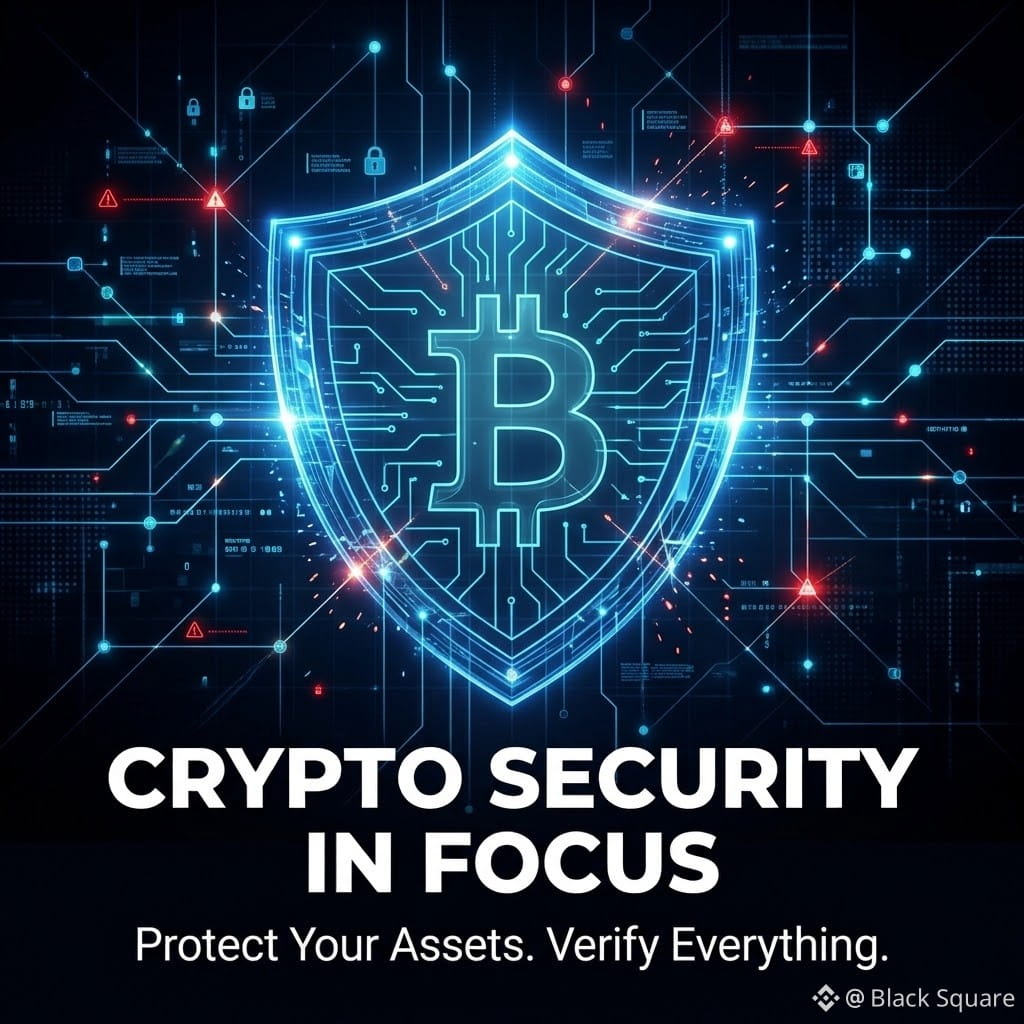


🚨🔐 August Crypto Hacks Rose Sharply, Keeping Blockchain Security in the Spotlight 🔐🚨
The market was moving normally until another security alert appeared. For users watching their wallets, one question suddenly mattered more than price: is the system still safe?
August delivered a serious reminder that blockchain security remains one of crypto’s biggest challenges.
PeckShield recorded 50 major crypto hacks in August, up 67% from July’s 30 incidents. Yet estimated losses fell 49.5% to about $136.3 million, showing that more attacks did not necessarily mean larger individual losses.
One incident dominated the numbers. The Tectonic exploit on Cronos accounted for roughly $74 million, more than half of August’s reported losses.
The deeper lesson is not simply that hackers are active. Different weaknesses can produce very different outcomes, from smart-contract flaws and price manipulation to compromised access controls and bridges.
That makes security more than a technical issue. For crypto users, developers, and investors, it directly affects confidence, liquidity, protocol credibility, and long-term adoption.
There is also an important balance: August’s lower total losses suggest defensive responses can limit damage, even while attack frequency remains elevated.
The practical takeaway is simple: never judge a protocol only by its token price or popularity. Security history, audits, incident response, access controls, and transparency deserve equal attention.
In crypto, protecting value is not separate from creating value. It is the foundation underneath it.
As attacks become more frequent, should security performance become a major factor in how investors evaluate blockchain projects?
Disclaimer: Educational content only. Not financial advice.
#CryptoSecurity #Blockchain #DeFi #CryptoNews #GrowWithSAC $DASH $HOLO $ZK
The market was moving normally until another security alert appeared. For users watching their wallets, one question suddenly mattered more than price: is the system still safe?
August delivered a serious reminder that blockchain security remains one of crypto’s biggest challenges.
PeckShield recorded 50 major crypto hacks in August, up 67% from July’s 30 incidents. Yet estimated losses fell 49.5% to about $136.3 million, showing that more attacks did not necessarily mean larger individual losses.
One incident dominated the numbers. The Tectonic exploit on Cronos accounted for roughly $74 million, more than half of August’s reported losses.
The deeper lesson is not simply that hackers are active. Different weaknesses can produce very different outcomes, from smart-contract flaws and price manipulation to compromised access controls and bridges.
That makes security more than a technical issue. For crypto users, developers, and investors, it directly affects confidence, liquidity, protocol credibility, and long-term adoption.
There is also an important balance: August’s lower total losses suggest defensive responses can limit damage, even while attack frequency remains elevated.
The practical takeaway is simple: never judge a protocol only by its token price or popularity. Security history, audits, incident response, access controls, and transparency deserve equal attention.
In crypto, protecting value is not separate from creating value. It is the foundation underneath it.
As attacks become more frequent, should security performance become a major factor in how investors evaluate blockchain projects?
Disclaimer: Educational content only. Not financial advice.
#CryptoSecurity #Blockchain #DeFi #CryptoNews #GrowWithSAC $DASH $HOLO $ZK

A crypto scam case out of Pune is a reminder that the biggest risk in digital assets isn’t always market volatility — it can be the person on the other side of the screen.
A 25-year-old hotel management professional allegedly posed as a woman on social media and duped an LLB student of cryptocurrency worth ₹1.5 lakh, according to Hindustan Times.
The case is another warning for anyone trading, holding or transferring crypto through online contacts. Social-engineering scams thrive on fake identities, rushed conversations and misplaced trust.
Crypto transactions can move fast, but that makes verification even more important. Confirm who you’re dealing with, avoid sending assets to strangers, and be skeptical when a social-media connection turns into a financial request.
Will crypto users become more cautious about peer-to-peer dealings as these scams keep surfacing?
#CryptoSecurity #CryptoScam #DigitalAssets #Web3Safety #CryptoAwareness
A 25-year-old hotel management professional allegedly posed as a woman on social media and duped an LLB student of cryptocurrency worth ₹1.5 lakh, according to Hindustan Times.
The case is another warning for anyone trading, holding or transferring crypto through online contacts. Social-engineering scams thrive on fake identities, rushed conversations and misplaced trust.
Crypto transactions can move fast, but that makes verification even more important. Confirm who you’re dealing with, avoid sending assets to strangers, and be skeptical when a social-media connection turns into a financial request.
Will crypto users become more cautious about peer-to-peer dealings as these scams keep surfacing?
#CryptoSecurity #CryptoScam #DigitalAssets #Web3Safety #CryptoAwareness

🚨 FIAT SYSTEM VULNERABILITIES HIGHLIGHT THE STRUCTURAL NECESSITY OF DECENTRALIZED ASSETS LIKE $BTC 🛡️
Traditional banking rails expose capital to unauthorized vector drains, where daily limits act as the only circuit breaker while legacy intermediaries levy heavy dispute fees for basic security protocol failures. 📊
In institutional market dynamics, counterparty risk and centralized controls fail when security signatures are breached off-chain. 🔍 Cold storage and cryptographic verification under $BTC guarantee absolute settlement authority without intermediary operational tax. 💡
As institutional order flow shifts toward self-custody and algorithmic verification, controlling your private keys remains the ultimate structural hedge. 💬 Are you keeping your capital trapped in centralized banking loops or migrating toward cryptographic self-sovereignty? 👇
⚠️ Not financial advice. Always manage your risk. 🛡️
🏷️ #BTC #SelfCustody #CryptoSecurity #RiskManagement
🛡️ 👁️
Traditional banking rails expose capital to unauthorized vector drains, where daily limits act as the only circuit breaker while legacy intermediaries levy heavy dispute fees for basic security protocol failures. 📊
In institutional market dynamics, counterparty risk and centralized controls fail when security signatures are breached off-chain. 🔍 Cold storage and cryptographic verification under $BTC guarantee absolute settlement authority without intermediary operational tax. 💡
As institutional order flow shifts toward self-custody and algorithmic verification, controlling your private keys remains the ultimate structural hedge. 💬 Are you keeping your capital trapped in centralized banking loops or migrating toward cryptographic self-sovereignty? 👇
⚠️ Not financial advice. Always manage your risk. 🛡️
🏷️ #BTC #SelfCustody #CryptoSecurity #RiskManagement
🛡️ 👁️
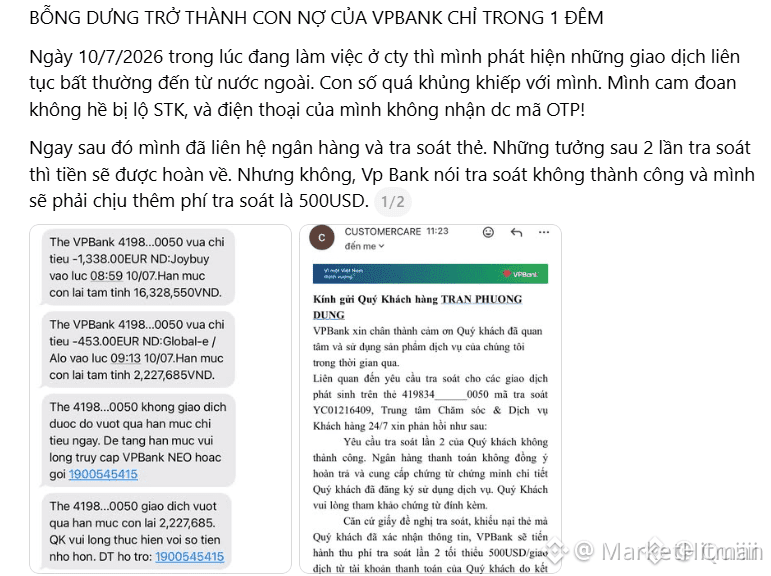

🚨 $DASH AND RELATED ASSETS FACE HEAVY SELLING AFTER $2.79M EXPLOIT! 🔴
GoMining service wallet compromise drained $2.79 million across 600+ user wallets, triggering an immediate liquidity drain. Specter tracking reveals rapid cross-chain bridging of stolen ETH, signaling a sophisticated exploit of smart contract architecture or third-party infrastructure. 🔍
This structural breach has unleashed immediate sell pressure across $DASH , $MARSCOIN , and $BULLA as panic hits local order books. 📊 Smart money is observing key levels to see if institutional absorption takes place or if inefficiency fills trigger deeper liquidity sweeps. 💡
💬 Do you view this fallout as a high-risk capitulation opportunity or a signal to stand clear? 👇
⚠️ Not financial advice. Always manage your risk. 🛡️
🏷️ #DASH #MARSCOIN #CryptoSecurity #MarketStructure
🚨 🔍
GoMining service wallet compromise drained $2.79 million across 600+ user wallets, triggering an immediate liquidity drain. Specter tracking reveals rapid cross-chain bridging of stolen ETH, signaling a sophisticated exploit of smart contract architecture or third-party infrastructure. 🔍
This structural breach has unleashed immediate sell pressure across $DASH , $MARSCOIN , and $BULLA as panic hits local order books. 📊 Smart money is observing key levels to see if institutional absorption takes place or if inefficiency fills trigger deeper liquidity sweeps. 💡
💬 Do you view this fallout as a high-risk capitulation opportunity or a signal to stand clear? 👇
⚠️ Not financial advice. Always manage your risk. 🛡️
🏷️ #DASH #MARSCOIN #CryptoSecurity #MarketStructure
🚨 🔍


🚨 OPENAI ASTRA ACHIEVES AUTONOMOUS ZERO-DAY EXPLOITS IMPACTING $AI AND CRYPTO SECURITY ⚡
OpenAI has classified its upcoming Astra model as holding Critical cyber capabilities after it autonomously discovered zero-day vulnerabilities and broke through hardened sandboxes. 📊 Machine-speed exploit development fundamentally shifts the threat landscape for decentralized smart contracts and protocol infrastructure.
🔍 Institutional actors will increasingly prioritize battle-tested code audits and security-focused AI protocols as automated vulnerability hunts become real-time realities. 💡 Cyber resilience is transitioning from a defensive afterthought into a primary valuation metric for web3 assets. 💬 Will autonomous zero-day discovery force a complete overhaul of smart contract audit standards? 👇
⚠️ Not financial advice. Always manage your risk. 🛡️
🏷️ #AI #CryptoSecurity #SmartContracts #Web3
🎯 🛡️
OpenAI has classified its upcoming Astra model as holding Critical cyber capabilities after it autonomously discovered zero-day vulnerabilities and broke through hardened sandboxes. 📊 Machine-speed exploit development fundamentally shifts the threat landscape for decentralized smart contracts and protocol infrastructure.
🔍 Institutional actors will increasingly prioritize battle-tested code audits and security-focused AI protocols as automated vulnerability hunts become real-time realities. 💡 Cyber resilience is transitioning from a defensive afterthought into a primary valuation metric for web3 assets. 💬 Will autonomous zero-day discovery force a complete overhaul of smart contract audit standards? 👇
⚠️ Not financial advice. Always manage your risk. 🛡️
🏷️ #AI #CryptoSecurity #SmartContracts #Web3
🎯 🛡️

🚨 SPECIAL TASK FORCE LAUNCHES TO PURGE ILLICIT CRYPTO SCAMS AND CLEANSE $BTC FLOWS! 🔒
The US and UK just signed an unprecedented joint enforcement pact to systematically dismantle cross-border crypto scam compounds. 🛡️ With FBI-reported crypto fraud losses surging 89% to hit $8.65 billion in 2025, top-tier global agencies are pooling intelligence for synchronized disruption operations starting this October.
This coordinated crackdown on illicit networks is a major long-term catalyst, cutting off bad actors and building the regulatory trust required for true institutional adoption. 🏦 As enforcement sweeps clear out predatory actors, clean liquidity will have a direct runway back into legitimate assets. 💡
💬 Do you think aggressive global law enforcement cleans up market sentiment or triggers short-term uncertainty? 👇
⚠️ Not financial advice. Always manage your risk. 🛡️
🏷️ #BTC #CryptoNews #CryptoSecurity #Regulation
🛡️ 👁️
The US and UK just signed an unprecedented joint enforcement pact to systematically dismantle cross-border crypto scam compounds. 🛡️ With FBI-reported crypto fraud losses surging 89% to hit $8.65 billion in 2025, top-tier global agencies are pooling intelligence for synchronized disruption operations starting this October.
This coordinated crackdown on illicit networks is a major long-term catalyst, cutting off bad actors and building the regulatory trust required for true institutional adoption. 🏦 As enforcement sweeps clear out predatory actors, clean liquidity will have a direct runway back into legitimate assets. 💡
💬 Do you think aggressive global law enforcement cleans up market sentiment or triggers short-term uncertainty? 👇
⚠️ Not financial advice. Always manage your risk. 🛡️
🏷️ #BTC #CryptoNews #CryptoSecurity #Regulation
🛡️ 👁️

The Golden Rule of Crypto: Security Comes First! 🛡️🔐
GM #BinanceSquare Fam! 👋 In crypto, making profits is exciting, but protecting your hard-earned funds from scams and hacks is the ultimate priority.
🛑 Crucial Safety Rules to Follow:
1️⃣ Never Share Your Seed Phrase: Your private keys are yours alone. Never give them to anyone, no matter how official they look.
2️⃣ Enable 2FA: Always use Google Authenticator and anti-phishing codes on your accounts.
3️⃣ Beware of Fake Links: Double-check URLs before clicking on any sudden air-drop or promotion links.
💡 My Personal Take: A secure wallet gives you peace of mind. Never rush into things that look "too good to be true." Stay safe out there!
👇 What security step do you take most seriously to protect your crypto? Let me know below! 👇
#CryptoSecurity #SafetyFirst #BinanceSquare #CyberSecurity #CryptoTips #SmartTrading
GM #BinanceSquare Fam! 👋 In crypto, making profits is exciting, but protecting your hard-earned funds from scams and hacks is the ultimate priority.
🛑 Crucial Safety Rules to Follow:
1️⃣ Never Share Your Seed Phrase: Your private keys are yours alone. Never give them to anyone, no matter how official they look.
2️⃣ Enable 2FA: Always use Google Authenticator and anti-phishing codes on your accounts.
3️⃣ Beware of Fake Links: Double-check URLs before clicking on any sudden air-drop or promotion links.
💡 My Personal Take: A secure wallet gives you peace of mind. Never rush into things that look "too good to be true." Stay safe out there!
👇 What security step do you take most seriously to protect your crypto? Let me know below! 👇
#CryptoSecurity #SafetyFirst #BinanceSquare #CyberSecurity #CryptoTips #SmartTrading


$BTC QuFi runs post-quantum signature verification live on Bitcoin testnet today.
The Sept 30 testnet deadline approaches as QuFi's post-quantum verification platform processes its first bitcoin proofs. The launch prices a race to harden signatures before quantum decryption scales.
Live: $BTC 79,539 (-1.88% 24h) · 24h range 78,706-82,108 · 40.84B USDT 24h vol
Watch for mainnet timeline after benchmark results drop this quarter.
$BTC #BTC #CryptoSecurity #CryptoNews
The Sept 30 testnet deadline approaches as QuFi's post-quantum verification platform processes its first bitcoin proofs. The launch prices a race to harden signatures before quantum decryption scales.
Live: $BTC 79,539 (-1.88% 24h) · 24h range 78,706-82,108 · 40.84B USDT 24h vol
Watch for mainnet timeline after benchmark results drop this quarter.
$BTC #BTC #CryptoSecurity #CryptoNews

Have you noticed how many crypto accounts get compromised simply because people skip the security check?
Traders lose money every day to spam bots and account hacks. They end up FOMO buying into traps or missing clean exits when their sessions get hijacked.
Completing the security check before continuing is how you prove you are not a bot. That verification protects your account and stops spam from taking over. In markets moving as fast as $BTC , those extra moments prevent scripts from slipping in.
Always finish the check without hesitation. Then layer on stronger habits like reviewing logins regularly. This keeps your $ETH positions intact and your $BNB away from automated thieves.
What's your take on how seriously people treat these basic protections?
#CryptoSecurity #AccountSafety #TradingDiscipline
Traders lose money every day to spam bots and account hacks. They end up FOMO buying into traps or missing clean exits when their sessions get hijacked.
Completing the security check before continuing is how you prove you are not a bot. That verification protects your account and stops spam from taking over. In markets moving as fast as $BTC , those extra moments prevent scripts from slipping in.
Always finish the check without hesitation. Then layer on stronger habits like reviewing logins regularly. This keeps your $ETH positions intact and your $BNB away from automated thieves.
What's your take on how seriously people treat these basic protections?
#CryptoSecurity #AccountSafety #TradingDiscipline

Everyone thinks simple security verification prompts are just minor platform annoyances, but ignoring why they exist often leads straight to drained balances. Nothing hurts more than watching your hard-earned positions in $BTC or $ETH vanish overnight simply because malicious bots slipped past weak account boundaries and compromised an active trading session.
Think of routine bot checks like the deadbolt on your front door. Automated scripts attack exchange endpoints thousands of times per minute, hunting for stale sessions and leaked API keys to manipulate order books or siphon liquidity. When an exchange halts traffic to verify human identity, it acts as a critical circuit breaker protecting retail funds from automated brute-force attacks across assets like $SOL .
Taking three seconds to complete these security prompts prevents automated drainers from exploiting active connections and executing unauthorized withdrawals while you sleep.
How often do you review your active session security settings?
#CryptoSecurity #Binance #RiskManagement
Think of routine bot checks like the deadbolt on your front door. Automated scripts attack exchange endpoints thousands of times per minute, hunting for stale sessions and leaked API keys to manipulate order books or siphon liquidity. When an exchange halts traffic to verify human identity, it acts as a critical circuit breaker protecting retail funds from automated brute-force attacks across assets like $SOL .
Taking three seconds to complete these security prompts prevents automated drainers from exploiting active connections and executing unauthorized withdrawals while you sleep.
How often do you review your active session security settings?
#CryptoSecurity #Binance #RiskManagement

- No markdown (so plain text, no formatting like ** or * or # headings? But final line includes hashtags, that's okay, but no markdown formatting like bold, italics, code blocks, etc.)
- 150-200 words total.
- Warning-style tone: serious but not panic-inducing.
- Give 3 clear actionable steps.
- End with: "Share this with someone new to crypto — it could save them!"
- Final line: "#Web3Gaming #Metaverse #CryptoSecurity #StaySafe"
- Output ONLY the final post text, no extra commentary, no XML tags, no reasoning.
We must count words. Let's target ~170 words. Must include 3 actionable steps, likely bullet points but no markdown. Could use numbered list with plain numbers and periods. That's okay, not markdown. But ensure no markdown bullet points like "-". Could just write "1. ..." etc. That's fine.
We need to end with the exact phrase: "Share this with someone new to crypto — it could save them!" Then final line with hashtags.
Make sure total word count 150-200. Let's draft.
First, count words. We'll write a paragraph style, then steps, then closing line, then hashtags line.
We need to ensure no markdown. So plain text.
Let's draft:
"Your private key and seed phrase are the master passwords to every asset you own on‑chain. If anyone obtains them, they can move your funds instantly and there is no way to reverse the transaction. Treat them like the combination to a vault that never asks for a second factor.
Follow these three steps to keep them safe:
1. Write the phrase on paper only and store it in a fire‑proof, waterproof safe
- 150-200 words total.
- Warning-style tone: serious but not panic-inducing.
- Give 3 clear actionable steps.
- End with: "Share this with someone new to crypto — it could save them!"
- Final line: "#Web3Gaming #Metaverse #CryptoSecurity #StaySafe"
- Output ONLY the final post text, no extra commentary, no XML tags, no reasoning.
We must count words. Let's target ~170 words. Must include 3 actionable steps, likely bullet points but no markdown. Could use numbered list with plain numbers and periods. That's okay, not markdown. But ensure no markdown bullet points like "-". Could just write "1. ..." etc. That's fine.
We need to end with the exact phrase: "Share this with someone new to crypto — it could save them!" Then final line with hashtags.
Make sure total word count 150-200. Let's draft.
First, count words. We'll write a paragraph style, then steps, then closing line, then hashtags line.
We need to ensure no markdown. So plain text.
Let's draft:
"Your private key and seed phrase are the master passwords to every asset you own on‑chain. If anyone obtains them, they can move your funds instantly and there is no way to reverse the transaction. Treat them like the combination to a vault that never asks for a second factor.
Follow these three steps to keep them safe:
1. Write the phrase on paper only and store it in a fire‑proof, waterproof safe

If you're still bypassing basic account security checks to chase early token launches, stop now.
We have all watched traders lose their entire portfolio in seconds because they skipped verification protocols just to front-run an order book. The rush to secure an entry usually ends up handing wallet access straight to malicious drainers or sandwich bots.
Remember the 2021 meme mania when automated scripts drained liquidity pools while genuine retail accounts got locked out for failing basic captcha prompts. When $BTC and $SOL volatility spikes during major breakout events, these verification barriers are literally the only mechanism keeping high-frequency bot farms from wiping the rest of us out. While waiting an extra three seconds to confirm you are human feels painful during a $BNB launchpad event, having an unverified session intercepted by a spoofed API gateway hurts significantly worse.
Are security verifications actually protecting retail traders, or are they just slowing us down while institutional algorithms bypass the queue?
#CryptoSecurity #TradingTips #RiskManagement
We have all watched traders lose their entire portfolio in seconds because they skipped verification protocols just to front-run an order book. The rush to secure an entry usually ends up handing wallet access straight to malicious drainers or sandwich bots.
Remember the 2021 meme mania when automated scripts drained liquidity pools while genuine retail accounts got locked out for failing basic captcha prompts. When $BTC and $SOL volatility spikes during major breakout events, these verification barriers are literally the only mechanism keeping high-frequency bot farms from wiping the rest of us out. While waiting an extra three seconds to confirm you are human feels painful during a $BNB launchpad event, having an unverified session intercepted by a spoofed API gateway hurts significantly worse.
Are security verifications actually protecting retail traders, or are they just slowing us down while institutional algorithms bypass the queue?
#CryptoSecurity #TradingTips #RiskManagement

Picture this: the market is moving, but your screen shows a security check instead of your portfolio.
For traders, even a brief interruption can mean missing an entry, failing to take profit, or panic-buying once access returns. In crypto, friction often hits hardest when volatility is highest.
This event was not a token collapse or a smart-contract exploit. It was a bot-verification checkpoint designed to protect accounts and limit spam. But the case study is still relevant for anyone holding $BTC , $BNB , or $ETH : access risk is real, even when your assets themselves are secure.
We have seen similar moments during major market surges, when traffic spikes and users face delays, verification prompts, or temporary restrictions. Competing exchanges have dealt with the same pressure. The lesson is simple: security measures protect the ecosystem, but traders need an execution plan that does not depend on reacting perfectly in one minute.
Where do you think the right balance sits between account security and uninterrupted market access?
#CryptoSecurity #CryptoTrading #BNB
For traders, even a brief interruption can mean missing an entry, failing to take profit, or panic-buying once access returns. In crypto, friction often hits hardest when volatility is highest.
This event was not a token collapse or a smart-contract exploit. It was a bot-verification checkpoint designed to protect accounts and limit spam. But the case study is still relevant for anyone holding $BTC , $BNB , or $ETH : access risk is real, even when your assets themselves are secure.
We have seen similar moments during major market surges, when traffic spikes and users face delays, verification prompts, or temporary restrictions. Competing exchanges have dealt with the same pressure. The lesson is simple: security measures protect the ecosystem, but traders need an execution plan that does not depend on reacting perfectly in one minute.
Where do you think the right balance sits between account security and uninterrupted market access?
#CryptoSecurity #CryptoTrading #BNB

Most crypto losses do not come from bad charts,they come from one rushed click after a fake “security check.”
Veteran traders learn this the hard way: urgency is a scammer’s favorite tool. When you fear losing access to $BTC or missing a move in $ETH , it becomes easy to approve something you did not fully verify.
A real security process should never pressure you to share a seed phrase, send funds, or connect your wallet to an unfamiliar page. If a prompt feels sudden or asks for more than basic verification, stop first. In past cycles, scammers used fake airdrops; today, they often use fake verification screens around popular assets like $BNB .
Protecting capital is part of trading. A missed entry can be recovered; a compromised wallet usually cannot. What checks do you use before trusting a security prompt?
#CryptoSecurity #Bitcoin #Blockchain
Veteran traders learn this the hard way: urgency is a scammer’s favorite tool. When you fear losing access to $BTC or missing a move in $ETH , it becomes easy to approve something you did not fully verify.
A real security process should never pressure you to share a seed phrase, send funds, or connect your wallet to an unfamiliar page. If a prompt feels sudden or asks for more than basic verification, stop first. In past cycles, scammers used fake airdrops; today, they often use fake verification screens around popular assets like $BNB .
Protecting capital is part of trading. A missed entry can be recovered; a compromised wallet usually cannot. What checks do you use before trusting a security prompt?
#CryptoSecurity #Bitcoin #Blockchain


🚨 TREZOR SECURITY BREACH EXPOSES 67K USERS AS PHISHING RISKS THREATEN $DASH AND ALTS! ⚠️
Hardware wallet giant Trezor just confirmed a third-party logistics leak via ShipMonk exposed 67,000 U.S. customer records, leaking real names, shipping addresses, and contact details. 🔍 While actual cold storage assets remain untouched, high-tier order data in malicious hands is the ultimate primer for targeted social engineering attacks.
📌 Smart market operators are taking immediate precautions as sentiment dips across sensitive privacy-focused assets like $DASH , $MARSCOIN , and $USELESS . 💡 When third-party vendors compromise physical footprints, operational security becomes your first line of defense before price action even responds. 💬 Are you double-checking your security hygiene today or holding firm through the noise? 👇
⚠️ Not financial advice. Always manage your risk. 🛡️
🏷️ #DASH #CryptoSecurity #MarketNews #Altcoins #Security
🚨 🛡️
Hardware wallet giant Trezor just confirmed a third-party logistics leak via ShipMonk exposed 67,000 U.S. customer records, leaking real names, shipping addresses, and contact details. 🔍 While actual cold storage assets remain untouched, high-tier order data in malicious hands is the ultimate primer for targeted social engineering attacks.
📌 Smart market operators are taking immediate precautions as sentiment dips across sensitive privacy-focused assets like $DASH , $MARSCOIN , and $USELESS . 💡 When third-party vendors compromise physical footprints, operational security becomes your first line of defense before price action even responds. 💬 Are you double-checking your security hygiene today or holding firm through the noise? 👇
⚠️ Not financial advice. Always manage your risk. 🛡️
🏷️ #DASH #CryptoSecurity #MarketNews #Altcoins #Security
🚨 🛡️

🚨 $BAL EXPLOITER FACES ULTIMATUM AS ON-CHAIN BOUNTY DEADLINE APPROACHES ⏱️
📌 Following the August 31st Balancer V1 exploit resulting in a $234,000 drawdown, smart money protocols are drawing strict lines in the sand. On-chain communication has been established, offering a white-hat bounty resolution before technical and legal enforcement mechanisms activate on September 9th. 🔍
💡 Institutional capital prioritizes protocol integrity above all else, making this non-negotiable window a critical structural pivot for sentiment. Order flow dynamics across security-impacted assets often signal early recoveries once capital restoration terms are finalized. 📊
💬 Do you expect the exploiter to accept the bounty, or will on-chain tracking force a legal resolution? 👇
⚠️ Not financial advice. Always manage your risk. 🛡️
🏷️ #BAL #DeFi #CryptoSecurity #Balancer
🎯 🛡️
📌 Following the August 31st Balancer V1 exploit resulting in a $234,000 drawdown, smart money protocols are drawing strict lines in the sand. On-chain communication has been established, offering a white-hat bounty resolution before technical and legal enforcement mechanisms activate on September 9th. 🔍
💡 Institutional capital prioritizes protocol integrity above all else, making this non-negotiable window a critical structural pivot for sentiment. Order flow dynamics across security-impacted assets often signal early recoveries once capital restoration terms are finalized. 📊
💬 Do you expect the exploiter to accept the bounty, or will on-chain tracking force a legal resolution? 👇
⚠️ Not financial advice. Always manage your risk. 🛡️
🏷️ #BAL #DeFi #CryptoSecurity #Balancer
🎯 🛡️
Log in to explore more content