

meligamble
12.5k Posts

meligamble
Report
Block User
Main call : t@me/meligamble
DM : @meliodas368
🔠 Content at chanel is for informational purposes only, not investment advice or solicitations 💰 | DYOR
315 Following
215 Followers
740 Liked
Posts
All
Quotes
Videos
·
--
Picture this: Bitcoin is grinding higher and approaching that $87.4K level most traders have been watching.
A lot of people piled into short positions expecting a rejection, and now they're staring at the possibility of getting squeezed out of their trades. It's that familiar feeling of watching your thesis fall apart in real time while the market keeps moving against you.
If $BTC does push toward $87.4K, the shorts that built up around current levels could start covering in a hurry. That kind of forced buying often accelerates the move, catching even more people off guard. We've seen this play out before where a key level acts as a magnet for liquidations rather than a reversal point.
The risk here isn't just missing the bounce. It's getting trapped on the wrong side when $ETH and $SOL start following the same momentum. Liquidity dries up fast in these squeezes, and what looks like a simple test of resistance turns into a cascade.
Most traders focus on the obvious support and resistance, but they miss how clustered the short interest is right below that $87.4K mark. That's the part that can turn a modest rally into something more painful for anyone leaning short.
Where do you think this goes from here if that level gets tested?
#Bitcoin #ShortSqueeze #CryptoTrading
Picture this: Bitcoin is grinding higher and approaching that $87.4K level most traders have been watching.
A lot of people piled into short positions expecting a rejection, and now they're staring at the possibility of getting squeezed out of their trades. It's that familiar feeling of watching your thesis fall apart in real time while the market keeps moving against you.
If $BTC does push toward $87.4K, the shorts that built up around current levels could start covering in a hurry. That kind of forced buying often accelerates the move, catching even more people off guard. We've seen this play out before where a key level acts as a magnet for liquidations rather than a reversal point.
The risk here isn't just missing the bounce. It's getting trapped on the wrong side when $ETH and $SOL start following the same momentum. Liquidity dries up fast in these squeezes, and what looks like a simple test of resistance turns into a cascade.
Most traders focus on the obvious support and resistance, but they miss how clustered the short interest is right below that $87.4K mark. That's the part that can turn a modest rally into something more painful for anyone leaning short.
Where do you think this goes from here if that level gets tested?
#Bitcoin #ShortSqueeze #CryptoTrading
A lot of people piled into short positions expecting a rejection, and now they're staring at the possibility of getting squeezed out of their trades. It's that familiar feeling of watching your thesis fall apart in real time while the market keeps moving against you.
If $BTC does push toward $87.4K, the shorts that built up around current levels could start covering in a hurry. That kind of forced buying often accelerates the move, catching even more people off guard. We've seen this play out before where a key level acts as a magnet for liquidations rather than a reversal point.
The risk here isn't just missing the bounce. It's getting trapped on the wrong side when $ETH and $SOL start following the same momentum. Liquidity dries up fast in these squeezes, and what looks like a simple test of resistance turns into a cascade.
Most traders focus on the obvious support and resistance, but they miss how clustered the short interest is right below that $87.4K mark. That's the part that can turn a modest rally into something more painful for anyone leaning short.
Where do you think this goes from here if that level gets tested?
#Bitcoin #ShortSqueeze #CryptoTrading
·
--
If you're still overleveraging around this $5K gap, stop now.
This is the kind of setup that has cost traders their entire stacks through unexpected liquidations. You think you have an edge then the gap hunts you from the other side.
That's roughly a $5K gap where a lot of leveraged traders could get caught on either side. Bulls see a fill coming for $BTC and pile in while bears wait for a breakdown that might hit $ETH next. I am arguing it is a classic squeeze zone that takes out both camps first.
Similar gaps have played out this way with $BNB showing the same choppy action lately. High leverage just is not worth it until the direction is clearer.
Where do you think this goes from here?
#Bitcoin #CryptoTrading #Leverage
If you're still overleveraging around this $5K gap, stop now.
This is the kind of setup that has cost traders their entire stacks through unexpected liquidations. You think you have an edge then the gap hunts you from the other side.
That's roughly a $5K gap where a lot of leveraged traders could get caught on either side. Bulls see a fill coming for $BTC and pile in while bears wait for a breakdown that might hit $ETH next. I am arguing it is a classic squeeze zone that takes out both camps first.
Similar gaps have played out this way with $BNB showing the same choppy action lately. High leverage just is not worth it until the direction is clearer.
Where do you think this goes from here?
#Bitcoin #CryptoTrading #Leverage
This is the kind of setup that has cost traders their entire stacks through unexpected liquidations. You think you have an edge then the gap hunts you from the other side.
That's roughly a $5K gap where a lot of leveraged traders could get caught on either side. Bulls see a fill coming for $BTC and pile in while bears wait for a breakdown that might hit $ETH next. I am arguing it is a classic squeeze zone that takes out both camps first.
Similar gaps have played out this way with $BNB showing the same choppy action lately. High leverage just is not worth it until the direction is clearer.
Where do you think this goes from here?
#Bitcoin #CryptoTrading #Leverage

·
--
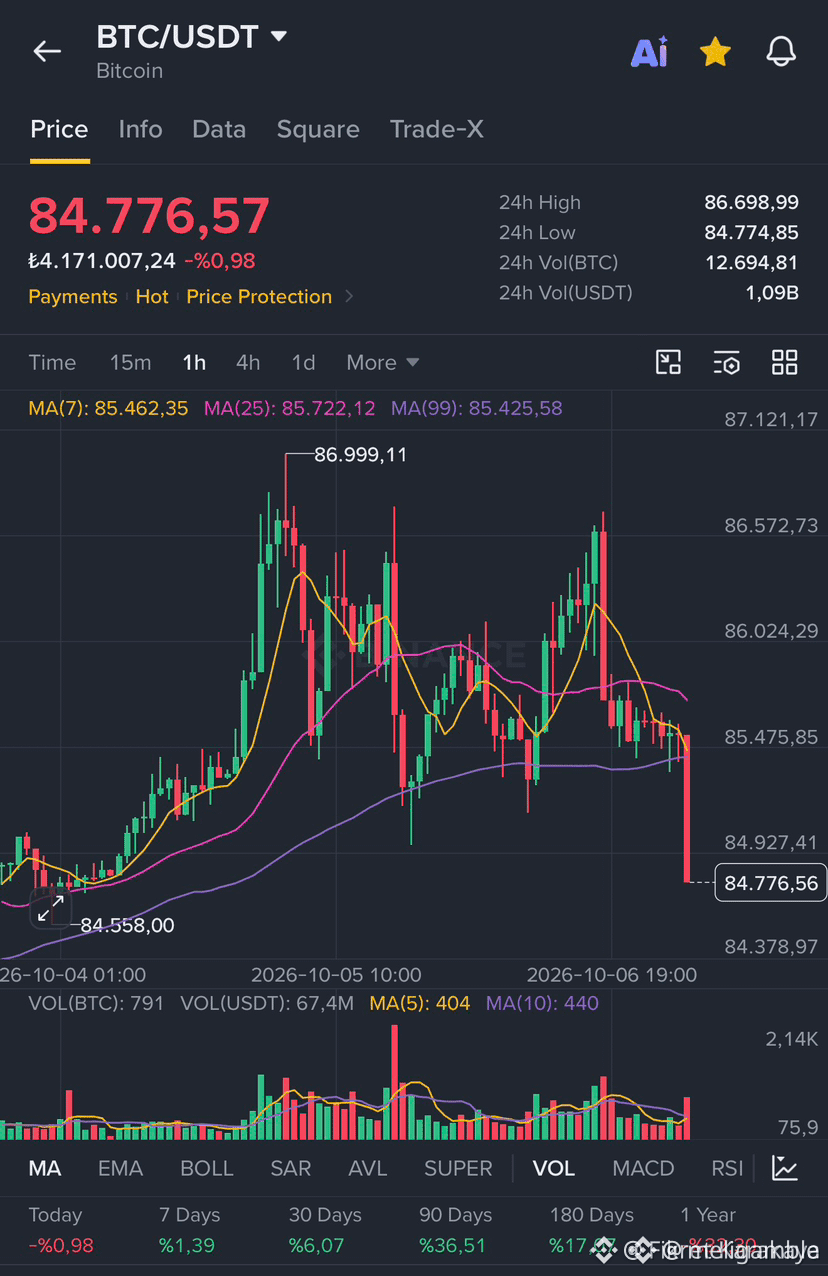
everyone thinks $BTC is just chilling in a range right now but actually it's sitting between two pretty dangerous liquidation zones.
ngl ser that's how a lot of us get wrecked ignoring the leverage traps and ending up liquidated on a sudden move. the pain of watching your position vanish is too real.
$BTC is currently between $87.4K above and $82.6K below a $5K gap where leveraged traders on both sides could get caught.
if it heads toward 87.4K shorts might start getting squeezed. lose 82.6K and longs could trigger a cascade down.
this exact setup is a classic case that often drags $ETH and $BNB along for the ride when liquidity gets hunted.
anyone else watching these levels?
#Bitcoin #CryptoTrading #Liquidations
everyone thinks $BTC is just chilling in a range right now but actually it's sitting between two pretty dangerous liquidation zones.
ngl ser that's how a lot of us get wrecked ignoring the leverage traps and ending up liquidated on a sudden move. the pain of watching your position vanish is too real.
$BTC is currently between $87.4K above and $82.6K below a $5K gap where leveraged traders on both sides could get caught.
if it heads toward 87.4K shorts might start getting squeezed. lose 82.6K and longs could trigger a cascade down.
this exact setup is a classic case that often drags $ETH and $BNB along for the ride when liquidity gets hunted.
anyone else watching these levels?
#Bitcoin #CryptoTrading #Liquidations
ngl ser that's how a lot of us get wrecked ignoring the leverage traps and ending up liquidated on a sudden move. the pain of watching your position vanish is too real.
$BTC is currently between $87.4K above and $82.6K below a $5K gap where leveraged traders on both sides could get caught.
if it heads toward 87.4K shorts might start getting squeezed. lose 82.6K and longs could trigger a cascade down.
this exact setup is a classic case that often drags $ETH and $BNB along for the ride when liquidity gets hunted.
anyone else watching these levels?
#Bitcoin #CryptoTrading #Liquidations
·
--
Why is nobody talking about how obvious the liquidation trap on $BTC is becoming right now?
Most traders keep getting chopped to pieces by chasing mid-range momentum, only to watch their stop losses get hunted before the real move even starts.
Look at what is unfolding on the charts. Bitcoin is currently trapped inside a tight $5K gap between two massive liquidity pools sitting at $87.4K above and $82.6K below. The market does not need to trend right now; it just needs to punish overleveraged positions on both sides.
A push toward $87.4K will immediately squeeze late shorts who got too comfortable betting on downside continuation. Conversely, losing $82.6K triggers a cascade of forced long closures that could quickly drag the rest of the market down, including $ETH and major altcoins. Trading heavily inside this corridor is a classic recipe for donating capital to market makers.
Which liquidation cluster do you think gets swept first?
#Bitcoin #CryptoTrading #BinanceSquare
Why is nobody talking about how obvious the liquidation trap on $BTC is becoming right now?
Most traders keep getting chopped to pieces by chasing mid-range momentum, only to watch their stop losses get hunted before the real move even starts.
Look at what is unfolding on the charts. Bitcoin is currently trapped inside a tight $5K gap between two massive liquidity pools sitting at $87.4K above and $82.6K below. The market does not need to trend right now; it just needs to punish overleveraged positions on both sides.
A push toward $87.4K will immediately squeeze late shorts who got too comfortable betting on downside continuation. Conversely, losing $82.6K triggers a cascade of forced long closures that could quickly drag the rest of the market down, including $ETH and major altcoins. Trading heavily inside this corridor is a classic recipe for donating capital to market makers.
Which liquidation cluster do you think gets swept first?
#Bitcoin #CryptoTrading #BinanceSquare
Most traders keep getting chopped to pieces by chasing mid-range momentum, only to watch their stop losses get hunted before the real move even starts.
Look at what is unfolding on the charts. Bitcoin is currently trapped inside a tight $5K gap between two massive liquidity pools sitting at $87.4K above and $82.6K below. The market does not need to trend right now; it just needs to punish overleveraged positions on both sides.
A push toward $87.4K will immediately squeeze late shorts who got too comfortable betting on downside continuation. Conversely, losing $82.6K triggers a cascade of forced long closures that could quickly drag the rest of the market down, including $ETH and major altcoins. Trading heavily inside this corridor is a classic recipe for donating capital to market makers.
Which liquidation cluster do you think gets swept first?
#Bitcoin #CryptoTrading #BinanceSquare

1
·
--
Most retail traders destroy their accounts not because their thesis was wrong, but because they married their bias long after the market proved them wrong.
Watching an open position bleed into the red triggers an almost paralyzing sense of hope. You convince yourself a relief bounce is right around the corner, even as your margin gets drained dollar by dollar.
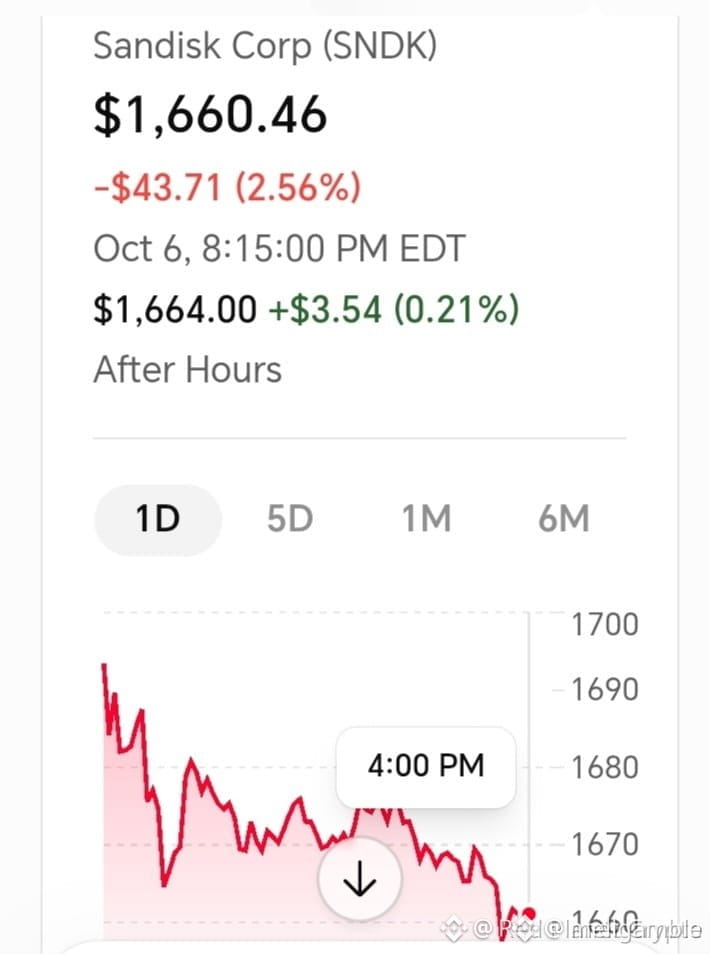
I have seen this movie play out across every cycle since the early days of $BTC. Just this past weekend, a textbook trap unfolded where clinging to a long on $SNDK from Friday through Monday close resulted in a brutal 100,000 USDT loss. The market does not care about what you paid or what you hoped would happen.
The turning point comes when you kill your ego and simply trade the structure in front of you. Cutting the stubborn long and flipping into an opening short completely reversed the outcome, capturing over +139,415 USDT in unrealized profit as momentum shifted downward. Surviving this market is never about loyalty to a single direction. It is about how quickly you can accept being wrong and align with reality.
How long do you usually let a losing position run before you admit your bias was wrong?
#CryptoTrading #RiskManagement #FuturesTrading
Most retail traders destroy their accounts not because their thesis was wrong, but because they married their bias long after the market proved them wrong.
Watching an open position bleed into the red triggers an almost paralyzing sense of hope. You convince yourself a relief bounce is right around the corner, even as your margin gets drained dollar by dollar.
I have seen this movie play out across every cycle since the early days of $BTC . Just this past weekend, a textbook trap unfolded where clinging to a long on $SNDK from Friday through Monday close resulted in a brutal 100,000 USDT loss. The market does not care about what you paid or what you hoped would happen.
The turning point comes when you kill your ego and simply trade the structure in front of you. Cutting the stubborn long and flipping into an opening short completely reversed the outcome, capturing over +139,415 USDT in unrealized profit as momentum shifted downward. Surviving this market is never about loyalty to a single direction. It is about how quickly you can accept being wrong and align with reality.
How long do you usually let a losing position run before you admit your bias was wrong?
#CryptoTrading #RiskManagement #FuturesTrading
Watching an open position bleed into the red triggers an almost paralyzing sense of hope. You convince yourself a relief bounce is right around the corner, even as your margin gets drained dollar by dollar.
I have seen this movie play out across every cycle since the early days of $BTC . Just this past weekend, a textbook trap unfolded where clinging to a long on $SNDK from Friday through Monday close resulted in a brutal 100,000 USDT loss. The market does not care about what you paid or what you hoped would happen.
The turning point comes when you kill your ego and simply trade the structure in front of you. Cutting the stubborn long and flipping into an opening short completely reversed the outcome, capturing over +139,415 USDT in unrealized profit as momentum shifted downward. Surviving this market is never about loyalty to a single direction. It is about how quickly you can accept being wrong and align with reality.
How long do you usually let a losing position run before you admit your bias was wrong?
#CryptoTrading #RiskManagement #FuturesTrading
3
·
--
Picture this: a single corporate treasury quietly stacks so much coin that its quarterly paper profit looks like the GDP of a small country.
Most retail investors spend their cycles trying to time local bottoms, panic-selling on every 5% dip, and wondering why their portfolios keep bleeding out while institutional players seem completely unfazed by short-term volatility.
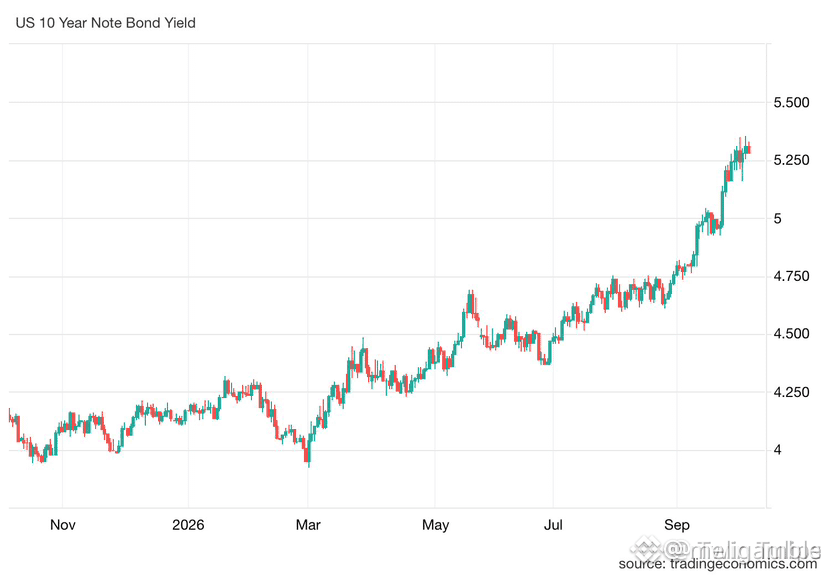
Strategy just posted a massive $21 billion gain for Q3, bringing its total treasury to an astonishing 848,000 $BTC. While the broader market was hesitating, they added another 334 Bitcoin to their reserves and even executed a $176 million repurchase of $STRC. It feels reminiscent of early 2021 when corporate balance sheets first started experimenting with crypto reserves, except the sheer scale today makes those initial moves look like practice runs.
When you compare this relentless accumulation strategy to typical corporate hedging with cash or short-term bonds, the contrast in conviction is wild. Instead of reacting to daily noise, they are treating $MSTR and core digital assets as the ultimate long-term balance sheet anchor.
Do you think other corporate treasuries will be forced to follow this playbook, or is this level of concentration too risky for traditional boards?
#Bitcoin #CryptoTreasury #MacroEconomics
Picture this: a single corporate treasury quietly stacks so much coin that its quarterly paper profit looks like the GDP of a small country.
Most retail investors spend their cycles trying to time local bottoms, panic-selling on every 5% dip, and wondering why their portfolios keep bleeding out while institutional players seem completely unfazed by short-term volatility.
Strategy just posted a massive $21 billion gain for Q3, bringing its total treasury to an astonishing 848,000 $BTC . While the broader market was hesitating, they added another 334 Bitcoin to their reserves and even executed a $176 million repurchase of $STRC . It feels reminiscent of early 2021 when corporate balance sheets first started experimenting with crypto reserves, except the sheer scale today makes those initial moves look like practice runs.
When you compare this relentless accumulation strategy to typical corporate hedging with cash or short-term bonds, the contrast in conviction is wild. Instead of reacting to daily noise, they are treating $MSTR and core digital assets as the ultimate long-term balance sheet anchor.
Do you think other corporate treasuries will be forced to follow this playbook, or is this level of concentration too risky for traditional boards?
#Bitcoin #CryptoTreasury #MacroEconomics
Most retail investors spend their cycles trying to time local bottoms, panic-selling on every 5% dip, and wondering why their portfolios keep bleeding out while institutional players seem completely unfazed by short-term volatility.
Strategy just posted a massive $21 billion gain for Q3, bringing its total treasury to an astonishing 848,000 $BTC . While the broader market was hesitating, they added another 334 Bitcoin to their reserves and even executed a $176 million repurchase of $STRC . It feels reminiscent of early 2021 when corporate balance sheets first started experimenting with crypto reserves, except the sheer scale today makes those initial moves look like practice runs.
When you compare this relentless accumulation strategy to typical corporate hedging with cash or short-term bonds, the contrast in conviction is wild. Instead of reacting to daily noise, they are treating $MSTR and core digital assets as the ultimate long-term balance sheet anchor.
Do you think other corporate treasuries will be forced to follow this playbook, or is this level of concentration too risky for traditional boards?
#Bitcoin #CryptoTreasury #MacroEconomics
·
--
Why is nobody talking about the fact that retail is panic selling while institutions just quietly scooped up billions in Bitcoin?
Most traders watched $BTC drop from $87,400 to around $83K and immediately panicked, taking heavy losses or getting caught in the 330M dollars worth of liquidated bets. Staring at charts all night when macro pressure like 100 dollar oil hits will almost always trigger emotional mistakes.
The reality is that institutional funds deployed 2.4B dollars into $BTC during that exact dip. They do not sit around hoping for a reversal; they rely on automated rules and algorithmic execution to accumulate assets and deploy spare $USDT into yield strategies around the clock.
If you want to trade these swings effectively, stop reacting manually to sudden volatility. Define your accumulation levels beforehand, automate your dollar-cost averaging, and let systematically scheduled orders manage your idle capital without second-guessing every red candle.
Are you managing these market dips with a structured system, or are you still trading off pure emotion?
#Bitcoin #CryptoTrading #Binance
Why is nobody talking about the fact that retail is panic selling while institutions just quietly scooped up billions in Bitcoin?
Most traders watched $BTC drop from $87,400 to around $83K and immediately panicked, taking heavy losses or getting caught in the 330M dollars worth of liquidated bets. Staring at charts all night when macro pressure like 100 dollar oil hits will almost always trigger emotional mistakes.
The reality is that institutional funds deployed 2.4B dollars into $BTC during that exact dip. They do not sit around hoping for a reversal; they rely on automated rules and algorithmic execution to accumulate assets and deploy spare $USDT into yield strategies around the clock.
If you want to trade these swings effectively, stop reacting manually to sudden volatility. Define your accumulation levels beforehand, automate your dollar-cost averaging, and let systematically scheduled orders manage your idle capital without second-guessing every red candle.
Are you managing these market dips with a structured system, or are you still trading off pure emotion?
#Bitcoin #CryptoTrading #Binance
Most traders watched $BTC drop from $87,400 to around $83K and immediately panicked, taking heavy losses or getting caught in the 330M dollars worth of liquidated bets. Staring at charts all night when macro pressure like 100 dollar oil hits will almost always trigger emotional mistakes.
The reality is that institutional funds deployed 2.4B dollars into $BTC during that exact dip. They do not sit around hoping for a reversal; they rely on automated rules and algorithmic execution to accumulate assets and deploy spare $USDT into yield strategies around the clock.
If you want to trade these swings effectively, stop reacting manually to sudden volatility. Define your accumulation levels beforehand, automate your dollar-cost averaging, and let systematically scheduled orders manage your idle capital without second-guessing every red candle.
Are you managing these market dips with a structured system, or are you still trading off pure emotion?
#Bitcoin #CryptoTrading #Binance
·
--
If you're still relying on gut instinct instead of AI for your trades, stop now.
Traders keep missing entries and getting wrecked by FOMO because processing all this data by hand is a losing game. You buy the top, sell the bottom, rinse and repeat.
Binance just launched Binance Intelligence, an AI product stack with three parts. Free Binance AI for every user, Binance AI Pro that turns plain English into executable strategies, and Binance Agent OS for developers creating AI applications. We've watched this play out with other product drops where tokens like $NMR surged 43 percent, $BR jumped over 50 percent, and $ZRO ticked up 3 percent right after the news. It feels a lot like previous AI hype waves that sent prices flying before anyone even tested the tools.
This could actually help with those exit timing issues if it delivers on converting chat to real strategies, unlike some past promises that fizzled.
Where do you think this goes from here compared to last cycle's AI launches?
#BinanceIntelligence #AITrading #Crypto
If you're still relying on gut instinct instead of AI for your trades, stop now.
Traders keep missing entries and getting wrecked by FOMO because processing all this data by hand is a losing game. You buy the top, sell the bottom, rinse and repeat.
Binance just launched Binance Intelligence, an AI product stack with three parts. Free Binance AI for every user, Binance AI Pro that turns plain English into executable strategies, and Binance Agent OS for developers creating AI applications. We've watched this play out with other product drops where tokens like $NMR surged 43 percent, $BR jumped over 50 percent, and $ZRO ticked up 3 percent right after the news. It feels a lot like previous AI hype waves that sent prices flying before anyone even tested the tools.
This could actually help with those exit timing issues if it delivers on converting chat to real strategies, unlike some past promises that fizzled.
Where do you think this goes from here compared to last cycle's AI launches?
#BinanceIntelligence #AITrading #Crypto
Traders keep missing entries and getting wrecked by FOMO because processing all this data by hand is a losing game. You buy the top, sell the bottom, rinse and repeat.
Binance just launched Binance Intelligence, an AI product stack with three parts. Free Binance AI for every user, Binance AI Pro that turns plain English into executable strategies, and Binance Agent OS for developers creating AI applications. We've watched this play out with other product drops where tokens like $NMR surged 43 percent, $BR jumped over 50 percent, and $ZRO ticked up 3 percent right after the news. It feels a lot like previous AI hype waves that sent prices flying before anyone even tested the tools.
This could actually help with those exit timing issues if it delivers on converting chat to real strategies, unlike some past promises that fizzled.
Where do you think this goes from here compared to last cycle's AI launches?
#BinanceIntelligence #AITrading #Crypto

·
--
Everyone thinks leverage is a shortcut to fast gains, but actually it is just paying for a fast-lane ticket to zero if you ignore risk.
Watching your account drop deep into the red hurts, especially when you see that sudden liquidation alert wipe out your entire position in seconds while the market barely blinks.
Trading high-volatility pairs like $PUMPBTC on leverage is like driving a sports car in thick fog without brakes. Just look at recent liquidations where traders saw a quick -10.21% move completely wipe out $1,745.29 USDT on a single perp position.
When you chase momentum on assets alongside broader swings in $BTC and $ETH, the order book does not care about your entry price. Blaming the exchange for automated triggers will not bring back lost margin, but keeping your position size small and setting hard stop-losses will keep you in the game.
What is your golden rule for managing leverage when trading high-risk tokens?
#CryptoTrading #RiskManagement #FuturesTrading
Everyone thinks leverage is a shortcut to fast gains, but actually it is just paying for a fast-lane ticket to zero if you ignore risk.
Watching your account drop deep into the red hurts, especially when you see that sudden liquidation alert wipe out your entire position in seconds while the market barely blinks.
Trading high-volatility pairs like $PUMPBTC on leverage is like driving a sports car in thick fog without brakes. Just look at recent liquidations where traders saw a quick -10.21% move completely wipe out $1,745.29 USDT on a single perp position.
When you chase momentum on assets alongside broader swings in $BTC and $ETH , the order book does not care about your entry price. Blaming the exchange for automated triggers will not bring back lost margin, but keeping your position size small and setting hard stop-losses will keep you in the game.
What is your golden rule for managing leverage when trading high-risk tokens?
#CryptoTrading #RiskManagement #FuturesTrading
Watching your account drop deep into the red hurts, especially when you see that sudden liquidation alert wipe out your entire position in seconds while the market barely blinks.
Trading high-volatility pairs like $PUMPBTC on leverage is like driving a sports car in thick fog without brakes. Just look at recent liquidations where traders saw a quick -10.21% move completely wipe out $1,745.29 USDT on a single perp position.
When you chase momentum on assets alongside broader swings in $BTC and $ETH , the order book does not care about your entry price. Blaming the exchange for automated triggers will not bring back lost margin, but keeping your position size small and setting hard stop-losses will keep you in the game.
What is your golden rule for managing leverage when trading high-risk tokens?
#CryptoTrading #RiskManagement #FuturesTrading

·
--
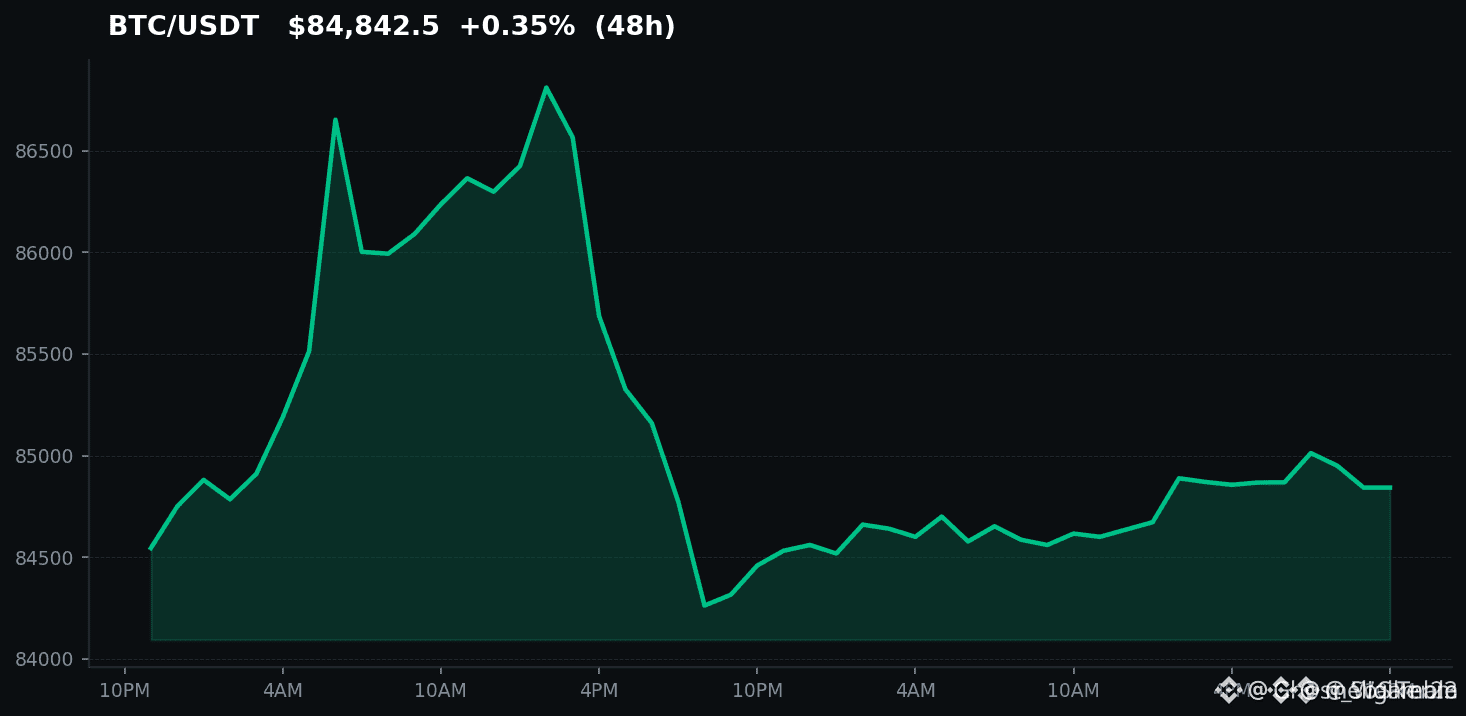
Have you noticed Bitcoin getting rejected at the same resistance while the Fear and Greed Index sits at 67 in greed?
Traders keep jumping in on every bounce only to get stuck holding bags when the sellers step in. That's how you lose money chasing FOMO instead of waiting for real setups.
The crowd thinks every rejection is just a pause before the next leg up. I disagree. High volume rejections like this one signal that $BTC is still fighting strong overhead supply. Parking funds in $USDT until we see a clean break or a proper retest is the smarter play. Meanwhile $SUI and other alts can run but they usually dump harder if Bitcoin fails here.
Watch the next few daily closes. If it can't reclaim that level with conviction we might be looking at a deeper correction rather than the 2026 targets everyone is hyping.
Where do you think this goes from here?
#BitcoinRejectedAt #BitcoinTargets2026OpenAt
Have you noticed Bitcoin getting rejected at the same resistance while the Fear and Greed Index sits at 67 in greed?
Traders keep jumping in on every bounce only to get stuck holding bags when the sellers step in. That's how you lose money chasing FOMO instead of waiting for real setups.
The crowd thinks every rejection is just a pause before the next leg up. I disagree. High volume rejections like this one signal that $BTC is still fighting strong overhead supply. Parking funds in $USDT until we see a clean break or a proper retest is the smarter play. Meanwhile $SUI and other alts can run but they usually dump harder if Bitcoin fails here.
Watch the next few daily closes. If it can't reclaim that level with conviction we might be looking at a deeper correction rather than the 2026 targets everyone is hyping.
Where do you think this goes from here?
#BitcoinRejectedAt #BitcoinTargets2026OpenAt
Traders keep jumping in on every bounce only to get stuck holding bags when the sellers step in. That's how you lose money chasing FOMO instead of waiting for real setups.
The crowd thinks every rejection is just a pause before the next leg up. I disagree. High volume rejections like this one signal that $BTC is still fighting strong overhead supply. Parking funds in $USDT until we see a clean break or a proper retest is the smarter play. Meanwhile $SUI and other alts can run but they usually dump harder if Bitcoin fails here.
Watch the next few daily closes. If it can't reclaim that level with conviction we might be looking at a deeper correction rather than the 2026 targets everyone is hyping.
Where do you think this goes from here?
#BitcoinRejectedAt #BitcoinTargets2026OpenAt
·
--
Most green candles during a downtrend are actually liquidity traps designed to catch impatient buyers.
We all know the pain of FOMOing into what looks like a bottom, only to end up holding the bag when the broader trend reasserts itself.
Looking at the charts today, $PONS is bouncing nicely around $0.419 after tapping a low of $0.3639. Buyers stepped in with decent daily momentum, which is tempting if you are tracking altcoins trying to find short-term momentum alongside $BTC.
However, zooming out tells a much riskier story. The daily Supertrend is sitting way up at $0.6376 and remains firmly bearish. Until that key level breaks, moves like this on $PONS are relief attempts inside a macro downtrend rather than a confirmed reversal. Jumping in before structural confirmation usually carries massive downside risk.
Are you bidding this relief rally, or waiting for a clean trend breakout?
#CryptoTrading #Altcoins #TechnicalAnalysis
Most green candles during a downtrend are actually liquidity traps designed to catch impatient buyers.
We all know the pain of FOMOing into what looks like a bottom, only to end up holding the bag when the broader trend reasserts itself.
Looking at the charts today, $PONS is bouncing nicely around $0.419 after tapping a low of $0.3639. Buyers stepped in with decent daily momentum, which is tempting if you are tracking altcoins trying to find short-term momentum alongside $BTC .
However, zooming out tells a much riskier story. The daily Supertrend is sitting way up at $0.6376 and remains firmly bearish. Until that key level breaks, moves like this on $PONS are relief attempts inside a macro downtrend rather than a confirmed reversal. Jumping in before structural confirmation usually carries massive downside risk.
Are you bidding this relief rally, or waiting for a clean trend breakout?
#CryptoTrading #Altcoins #TechnicalAnalysis
We all know the pain of FOMOing into what looks like a bottom, only to end up holding the bag when the broader trend reasserts itself.
Looking at the charts today, $PONS is bouncing nicely around $0.419 after tapping a low of $0.3639. Buyers stepped in with decent daily momentum, which is tempting if you are tracking altcoins trying to find short-term momentum alongside $BTC .
However, zooming out tells a much riskier story. The daily Supertrend is sitting way up at $0.6376 and remains firmly bearish. Until that key level breaks, moves like this on $PONS are relief attempts inside a macro downtrend rather than a confirmed reversal. Jumping in before structural confirmation usually carries massive downside risk.
Are you bidding this relief rally, or waiting for a clean trend breakout?
#CryptoTrading #Altcoins #TechnicalAnalysis

2
·
--
Picture this: a chart that spent months bleeding liquidity suddenly prints a clean green candle, and your timeline instantly turns bullish.
Most traders get trapped right here, mistaking relief rallies for trend reversals and buying into overhead resistance simply because they cannot stand watching from the sidelines.
When a token like $PONS starts showing signs of life after a brutal grind down, the psychology is predictable. Early holders are desperate for break-even exits, while late shorters are looking for higher liquidity pools to reload. That creates heavy supply zones just above current prices, turning these initial bounces into prime distribution traps rather than sustained accumulation phases.
We saw a similar pattern play out across $FET and $PENDLE before their actual market structures formed solid bases. Momentum alone does not clear structural sell walls, and until price reclaims critical support with genuine buy volume, the downside risk remains wide open.
Are you treating this move as an actual bottom or just exit liquidity for patient sellers?
#CryptoTrading #Altcoins #TechnicalAnalysis
Picture this: a chart that spent months bleeding liquidity suddenly prints a clean green candle, and your timeline instantly turns bullish.
Most traders get trapped right here, mistaking relief rallies for trend reversals and buying into overhead resistance simply because they cannot stand watching from the sidelines.
When a token like $PONS starts showing signs of life after a brutal grind down, the psychology is predictable. Early holders are desperate for break-even exits, while late shorters are looking for higher liquidity pools to reload. That creates heavy supply zones just above current prices, turning these initial bounces into prime distribution traps rather than sustained accumulation phases.
We saw a similar pattern play out across $FET and $PENDLE before their actual market structures formed solid bases. Momentum alone does not clear structural sell walls, and until price reclaims critical support with genuine buy volume, the downside risk remains wide open.
Are you treating this move as an actual bottom or just exit liquidity for patient sellers?
#CryptoTrading #Altcoins #TechnicalAnalysis
Most traders get trapped right here, mistaking relief rallies for trend reversals and buying into overhead resistance simply because they cannot stand watching from the sidelines.
When a token like $PONS starts showing signs of life after a brutal grind down, the psychology is predictable. Early holders are desperate for break-even exits, while late shorters are looking for higher liquidity pools to reload. That creates heavy supply zones just above current prices, turning these initial bounces into prime distribution traps rather than sustained accumulation phases.
We saw a similar pattern play out across $FET and $PENDLE before their actual market structures formed solid bases. Momentum alone does not clear structural sell walls, and until price reclaims critical support with genuine buy volume, the downside risk remains wide open.
Are you treating this move as an actual bottom or just exit liquidity for patient sellers?
#CryptoTrading #Altcoins #TechnicalAnalysis

8
·
--
If you are mistaking every green bounce for a confirmed trend reversal, you are walking straight into a trap.
Most traders end up giving all their profits back by chasing relief rallies too early, only to get trapped right before another heavy leg down. It is painful to watch a coin pump 15% off the lows, feel the sudden rush of FOMO, and end up buying right into stiff overhead resistance.
Looking at the charts right now, $PONS is showing some fresh signs of life after grinding all the way down to $0.3639. The bounce back to $0.419 looks solid on the lower timeframes, and buyers clearly showed up to defend the local range around $0.38 to $0.40. Some traders are already calling for a complete bottom reversal and loading up heavily.
However, jumping in aggressively here feels premature. The broader daily Supertrend is still sitting firmly bearish around $0.6376, meaning this move is strictly a recovery attempt until proven otherwise. We have heavy resistance waiting between $0.475 and $0.50, followed by a major supply block at $0.61 to $0.64. While the price action resembles early bottoming phases seen on assets like $BTC or $SOL, betting on a full trend flip before clearing resistance is simply bad risk-reward.
Are you treating this move as a legit reversal or just another exit pump for trapped buyers?
#CryptoTrading #Altcoins #TechnicalAnalysis
If you are mistaking every green bounce for a confirmed trend reversal, you are walking straight into a trap.
Most traders end up giving all their profits back by chasing relief rallies too early, only to get trapped right before another heavy leg down. It is painful to watch a coin pump 15% off the lows, feel the sudden rush of FOMO, and end up buying right into stiff overhead resistance.
Looking at the charts right now, $PONS is showing some fresh signs of life after grinding all the way down to $0.3639. The bounce back to $0.419 looks solid on the lower timeframes, and buyers clearly showed up to defend the local range around $0.38 to $0.40. Some traders are already calling for a complete bottom reversal and loading up heavily.
However, jumping in aggressively here feels premature. The broader daily Supertrend is still sitting firmly bearish around $0.6376, meaning this move is strictly a recovery attempt until proven otherwise. We have heavy resistance waiting between $0.475 and $0.50, followed by a major supply block at $0.61 to $0.64. While the price action resembles early bottoming phases seen on assets like $BTC or $SOL , betting on a full trend flip before clearing resistance is simply bad risk-reward.
Are you treating this move as a legit reversal or just another exit pump for trapped buyers?
#CryptoTrading #Altcoins #TechnicalAnalysis
Most traders end up giving all their profits back by chasing relief rallies too early, only to get trapped right before another heavy leg down. It is painful to watch a coin pump 15% off the lows, feel the sudden rush of FOMO, and end up buying right into stiff overhead resistance.
Looking at the charts right now, $PONS is showing some fresh signs of life after grinding all the way down to $0.3639. The bounce back to $0.419 looks solid on the lower timeframes, and buyers clearly showed up to defend the local range around $0.38 to $0.40. Some traders are already calling for a complete bottom reversal and loading up heavily.
However, jumping in aggressively here feels premature. The broader daily Supertrend is still sitting firmly bearish around $0.6376, meaning this move is strictly a recovery attempt until proven otherwise. We have heavy resistance waiting between $0.475 and $0.50, followed by a major supply block at $0.61 to $0.64. While the price action resembles early bottoming phases seen on assets like $BTC or $SOL , betting on a full trend flip before clearing resistance is simply bad risk-reward.
Are you treating this move as a legit reversal or just another exit pump for trapped buyers?
#CryptoTrading #Altcoins #TechnicalAnalysis

8
·
--
everyone thinks $PONS is in full reversal mode just because of one green candle, but actually we are walking straight into a classic bull trap setup.
most traders lose their bags by fomo bidding relief pumps right under heavy overhead supply, only to get dumped on when momentum stalls.
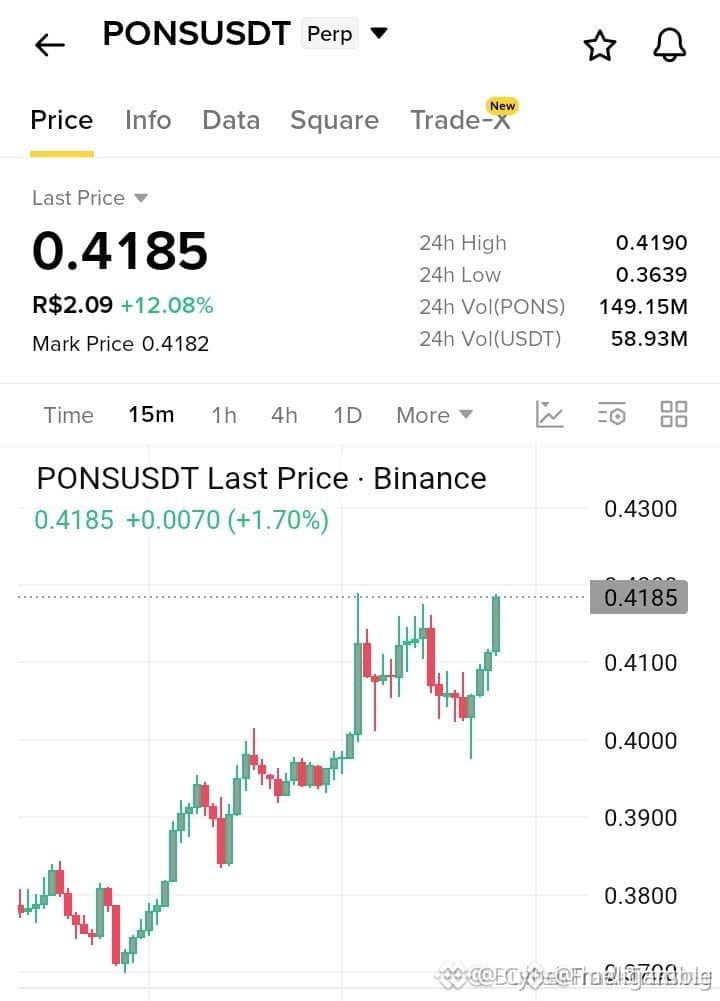
ngl the bounce from the $0.3639 low up to $0.419 looks decent on the lower timeframes. but let us be real ser, the daily supertrend is still sitting heavy at $0.6376 and we have not even tested the first major resistance zone around $0.475 to $0.50 yet. while $BTC chops around, jumping in here without watching structure is pure gambling.
if we lose the local support between $0.38 and $0.40, that $0.3639 base is going to get tested again very fast. a real macro shift only happens if buyers can push through the $0.61 to $0.64 wall, so until then, this is strictly a relief bounce rather than a confirmed trend flip.
are you playing this relief move or waiting for a clean break above resistance?
#CryptoTrading #Altcoins #TechnicalAnalysis
everyone thinks $PONS is in full reversal mode just because of one green candle, but actually we are walking straight into a classic bull trap setup.
most traders lose their bags by fomo bidding relief pumps right under heavy overhead supply, only to get dumped on when momentum stalls.
ngl the bounce from the $0.3639 low up to $0.419 looks decent on the lower timeframes. but let us be real ser, the daily supertrend is still sitting heavy at $0.6376 and we have not even tested the first major resistance zone around $0.475 to $0.50 yet. while $BTC chops around, jumping in here without watching structure is pure gambling.
if we lose the local support between $0.38 and $0.40, that $0.3639 base is going to get tested again very fast. a real macro shift only happens if buyers can push through the $0.61 to $0.64 wall, so until then, this is strictly a relief bounce rather than a confirmed trend flip.
are you playing this relief move or waiting for a clean break above resistance?
#CryptoTrading #Altcoins #TechnicalAnalysis
most traders lose their bags by fomo bidding relief pumps right under heavy overhead supply, only to get dumped on when momentum stalls.
ngl the bounce from the $0.3639 low up to $0.419 looks decent on the lower timeframes. but let us be real ser, the daily supertrend is still sitting heavy at $0.6376 and we have not even tested the first major resistance zone around $0.475 to $0.50 yet. while $BTC chops around, jumping in here without watching structure is pure gambling.
if we lose the local support between $0.38 and $0.40, that $0.3639 base is going to get tested again very fast. a real macro shift only happens if buyers can push through the $0.61 to $0.64 wall, so until then, this is strictly a relief bounce rather than a confirmed trend flip.
are you playing this relief move or waiting for a clean break above resistance?
#CryptoTrading #Altcoins #TechnicalAnalysis
·
--
Have you noticed how quickly traders mistake a routine relief bounce for a confirmed macro trend reversal?
Most market participants rush into the first green candle after a brutal drawdown, only to end up trapped when higher-timeframe resistance rejects the move.
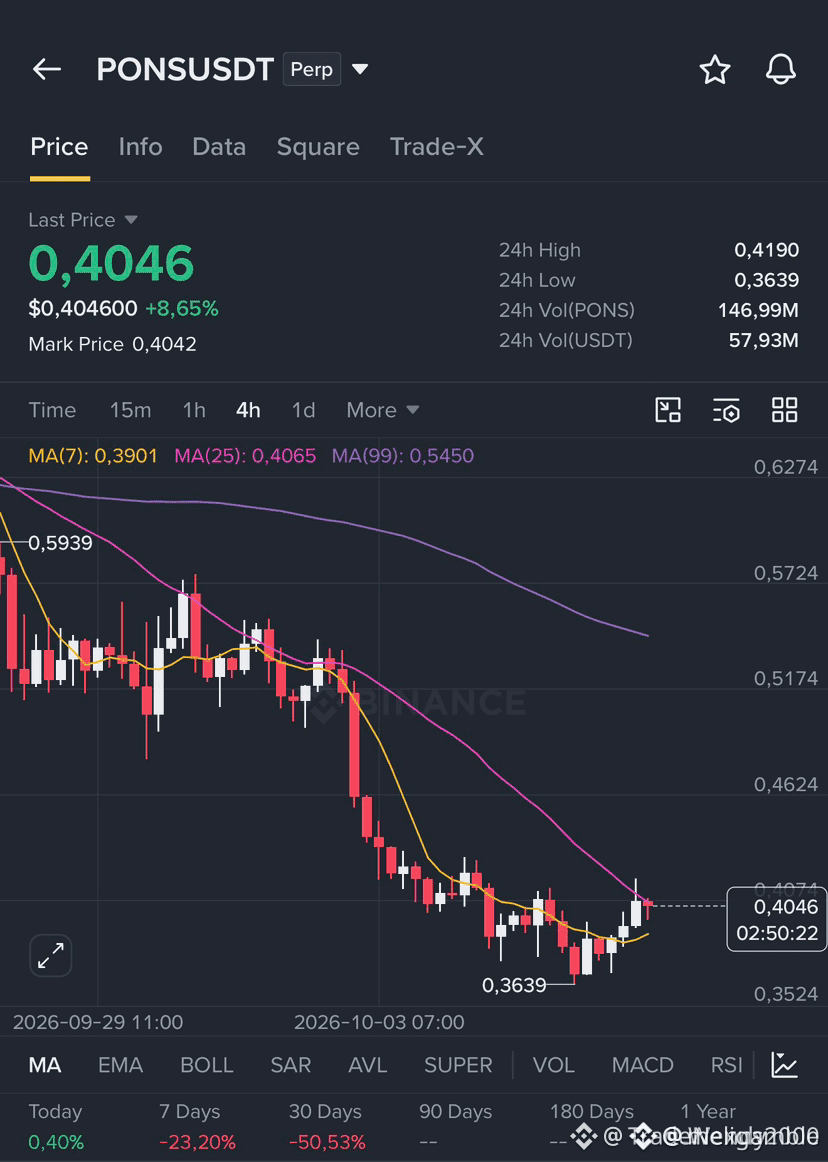
Take $PONS right now as a textbook case study. The token has pushed back to around $0.419 after bouncing off its $0.3639 low, giving buyers some short-term momentum. However, looking at the broader market structure alongside $BTC, this is still an early recovery attempt rather than a structural pivot. The daily Supertrend sits well above at $0.6376, keeping the wider structure technically bearish until proven otherwise.
Immediate support sits between $0.38 and $0.40, with the $0.3639 low serving as the critical floor for buyers. On the upside, sellers are likely waiting across the $0.475 to $0.50 zone, followed by major resistance between $0.61 and $0.64. Entering aggressively before seeing how price handles these overhead zones usually ends poorly.
Are you treating this move as a trap or an actual bottom formation?
#CryptoTrading #Binance #TechnicalAnalysis
Have you noticed how quickly traders mistake a routine relief bounce for a confirmed macro trend reversal?
Most market participants rush into the first green candle after a brutal drawdown, only to end up trapped when higher-timeframe resistance rejects the move.
Take $PONS right now as a textbook case study. The token has pushed back to around $0.419 after bouncing off its $0.3639 low, giving buyers some short-term momentum. However, looking at the broader market structure alongside $BTC , this is still an early recovery attempt rather than a structural pivot. The daily Supertrend sits well above at $0.6376, keeping the wider structure technically bearish until proven otherwise.
Immediate support sits between $0.38 and $0.40, with the $0.3639 low serving as the critical floor for buyers. On the upside, sellers are likely waiting across the $0.475 to $0.50 zone, followed by major resistance between $0.61 and $0.64. Entering aggressively before seeing how price handles these overhead zones usually ends poorly.
Are you treating this move as a trap or an actual bottom formation?
#CryptoTrading #Binance #TechnicalAnalysis
Most market participants rush into the first green candle after a brutal drawdown, only to end up trapped when higher-timeframe resistance rejects the move.
Take $PONS right now as a textbook case study. The token has pushed back to around $0.419 after bouncing off its $0.3639 low, giving buyers some short-term momentum. However, looking at the broader market structure alongside $BTC , this is still an early recovery attempt rather than a structural pivot. The daily Supertrend sits well above at $0.6376, keeping the wider structure technically bearish until proven otherwise.
Immediate support sits between $0.38 and $0.40, with the $0.3639 low serving as the critical floor for buyers. On the upside, sellers are likely waiting across the $0.475 to $0.50 zone, followed by major resistance between $0.61 and $0.64. Entering aggressively before seeing how price handles these overhead zones usually ends poorly.
Are you treating this move as a trap or an actual bottom formation?
#CryptoTrading #Binance #TechnicalAnalysis
5
·
--
Picture this: an autonomous bot executes thousands of API calls, pulls dataset snippets, and pays your wallet directly without a single human approving the invoice.
Most crypto investors are stuck hunting volatile memecoins, constantly worrying about bad fills or getting rugged on illiquid pairs, while completely overlooking where genuine machine-to-machine liquidity is quietly moving.
Traditional payment rails simply cannot handle sub-dollar transactions. When Visa or Mastercard hits you with a 30-cent flat swipe fee, charging 5 cents for an autonomous micro-service is dead on arrival. Recent data reveals that AI agents settled $73 million across 176 million transactions over the past year, with the vast majority of payments ranging between just 1 and 10 cents. Over 76% of these transfers were below the baseline fee structure of legacy credit card rails.
Instead of fighting fee friction, machines are turning directly to $BTC layered protocols and fast $USDT micropayment channels. While past cycles treated machine transactions as a theoretical novelty, we are now seeing high-frequency micro-settlements outperform centralized rails on unit economics alone. The infrastructure powering these agent wallets could end up capturing more steady volume than retail trading bots ever did.
Where do you think autonomous agent payments go from here once multi-agent coordination takes off?
#AIAgents #CryptoPayments #Web3
Picture this: an autonomous bot executes thousands of API calls, pulls dataset snippets, and pays your wallet directly without a single human approving the invoice.
Most crypto investors are stuck hunting volatile memecoins, constantly worrying about bad fills or getting rugged on illiquid pairs, while completely overlooking where genuine machine-to-machine liquidity is quietly moving.
Traditional payment rails simply cannot handle sub-dollar transactions. When Visa or Mastercard hits you with a 30-cent flat swipe fee, charging 5 cents for an autonomous micro-service is dead on arrival. Recent data reveals that AI agents settled $73 million across 176 million transactions over the past year, with the vast majority of payments ranging between just 1 and 10 cents. Over 76% of these transfers were below the baseline fee structure of legacy credit card rails.
Instead of fighting fee friction, machines are turning directly to $BTC layered protocols and fast $USDT micropayment channels. While past cycles treated machine transactions as a theoretical novelty, we are now seeing high-frequency micro-settlements outperform centralized rails on unit economics alone. The infrastructure powering these agent wallets could end up capturing more steady volume than retail trading bots ever did.
Where do you think autonomous agent payments go from here once multi-agent coordination takes off?
#AIAgents #CryptoPayments #Web3
Most crypto investors are stuck hunting volatile memecoins, constantly worrying about bad fills or getting rugged on illiquid pairs, while completely overlooking where genuine machine-to-machine liquidity is quietly moving.
Traditional payment rails simply cannot handle sub-dollar transactions. When Visa or Mastercard hits you with a 30-cent flat swipe fee, charging 5 cents for an autonomous micro-service is dead on arrival. Recent data reveals that AI agents settled $73 million across 176 million transactions over the past year, with the vast majority of payments ranging between just 1 and 10 cents. Over 76% of these transfers were below the baseline fee structure of legacy credit card rails.
Instead of fighting fee friction, machines are turning directly to $BTC layered protocols and fast $USDT micropayment channels. While past cycles treated machine transactions as a theoretical novelty, we are now seeing high-frequency micro-settlements outperform centralized rails on unit economics alone. The infrastructure powering these agent wallets could end up capturing more steady volume than retail trading bots ever did.
Where do you think autonomous agent payments go from here once multi-agent coordination takes off?
#AIAgents #CryptoPayments #Web3

3
·
--
The traders topping the 7-day profit charts are still sitting on ancient $SOXL longs showing -6,881 USDT in unrealized losses despite the pair only moving 0.72%.
That sinking feeling hits every leveraged trader at some point. You opened the position months ago, watched it bleed, and now closing it feels worse than hoping the next semiconductor bounce with $BTC finally bails you out.
These numbers reveal a massive position size that turns a tiny dip into thousands of dollars in pain. I watched the same setup play out in 2022 when tech and crypto crashed together. Holders who refused to cut $SOXL-style longs waited for the AI story to save them while everything else kept falling. The greed of recouping losses mixed with fear of missing a rebound kept accounts underwater far longer than they should have been. Same pattern we saw with $ETH bags through previous winters. These old positions might finally be getting some breathing room, but surviving multiple cycles taught me that oversized leverage rarely ends well no matter how strong the thesis feels.
Where do you see these kinds of long-held leveraged positions heading from here?
#CryptoTrading #PerpetualFutures #MarketCycles
The traders topping the 7-day profit charts are still sitting on ancient $SOXL longs showing -6,881 USDT in unrealized losses despite the pair only moving 0.72%.
That sinking feeling hits every leveraged trader at some point. You opened the position months ago, watched it bleed, and now closing it feels worse than hoping the next semiconductor bounce with $BTC finally bails you out.
These numbers reveal a massive position size that turns a tiny dip into thousands of dollars in pain. I watched the same setup play out in 2022 when tech and crypto crashed together. Holders who refused to cut $SOXL -style longs waited for the AI story to save them while everything else kept falling. The greed of recouping losses mixed with fear of missing a rebound kept accounts underwater far longer than they should have been. Same pattern we saw with $ETH bags through previous winters. These old positions might finally be getting some breathing room, but surviving multiple cycles taught me that oversized leverage rarely ends well no matter how strong the thesis feels.
Where do you see these kinds of long-held leveraged positions heading from here?
#CryptoTrading #PerpetualFutures #MarketCycles
That sinking feeling hits every leveraged trader at some point. You opened the position months ago, watched it bleed, and now closing it feels worse than hoping the next semiconductor bounce with $BTC finally bails you out.
These numbers reveal a massive position size that turns a tiny dip into thousands of dollars in pain. I watched the same setup play out in 2022 when tech and crypto crashed together. Holders who refused to cut $SOXL -style longs waited for the AI story to save them while everything else kept falling. The greed of recouping losses mixed with fear of missing a rebound kept accounts underwater far longer than they should have been. Same pattern we saw with $ETH bags through previous winters. These old positions might finally be getting some breathing room, but surviving multiple cycles taught me that oversized leverage rarely ends well no matter how strong the thesis feels.
Where do you see these kinds of long-held leveraged positions heading from here?
#CryptoTrading #PerpetualFutures #MarketCycles

4
·
--
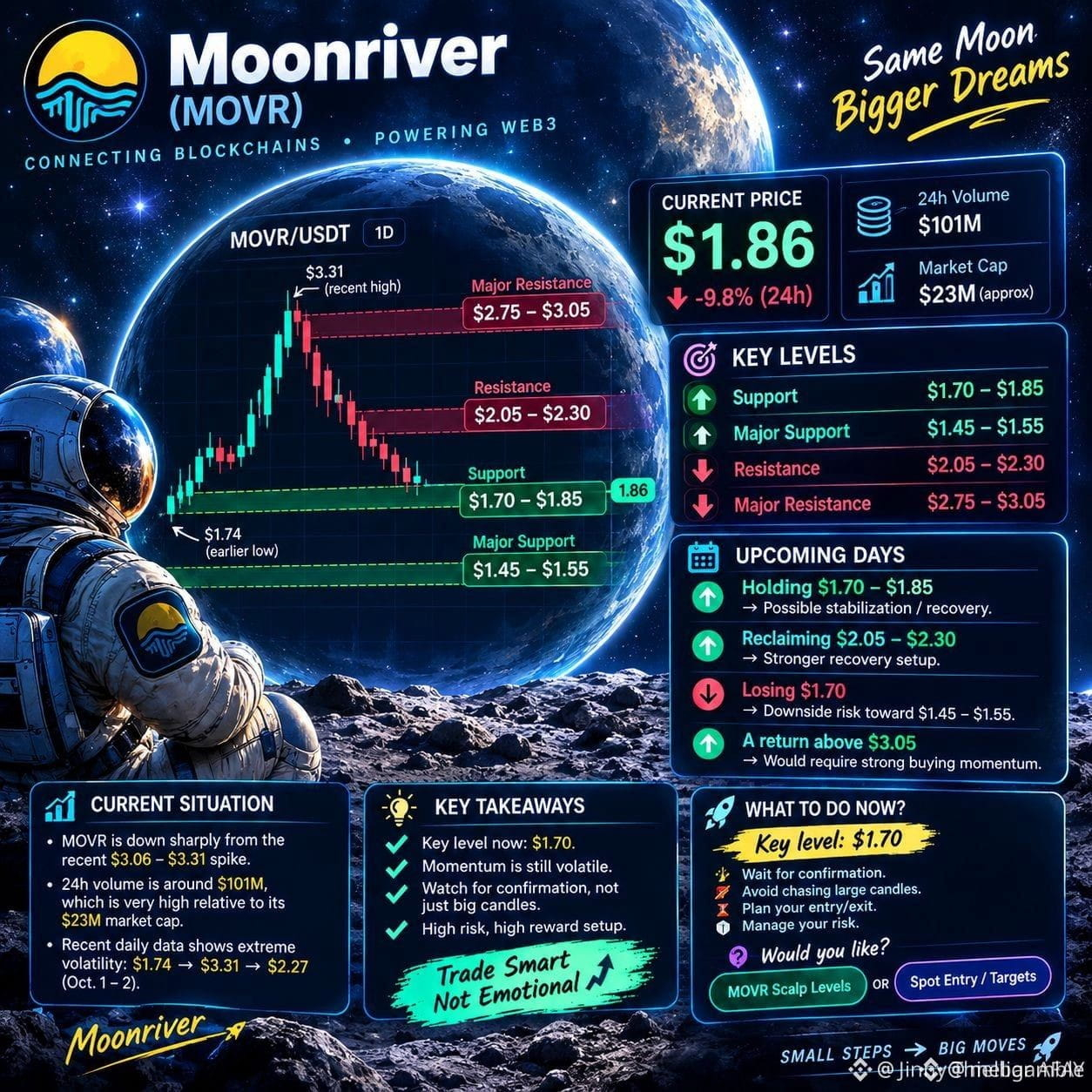
Here's what happened when $MOVR followed our earlier analysis to the letter, dropping first then rallying before settling into this extended sideways range.
You know the frustration of watching a coin like this chop around while liquidity builds on both sides, never quite sure if the next move is the one that wrecks your position or if you'll miss the real exit entirely.
The calls on $MOVR lined up on both the fall and the subsequent rise. Now the price is just accumulating, stacking liquidity in a way that reminds me of $KSM's last big range before it broke.
These periods drag on longer than they should, sucking in more traders. I expect a bit more sideways action to gather even extra liquidity, then one final upward wave that grabs the remaining stops, followed by a sharper decline this time. It's the pattern $DOT showed in similar consolidations, where that last pump flushed everyone before the real drop hit.
Where do you see this $MOVR setup heading after the range plays out?
#Moonriver #TechnicalAnalysis #PolkadotEcosystem
Here's what happened when $MOVR followed our earlier analysis to the letter, dropping first then rallying before settling into this extended sideways range.
You know the frustration of watching a coin like this chop around while liquidity builds on both sides, never quite sure if the next move is the one that wrecks your position or if you'll miss the real exit entirely.
The calls on $MOVR lined up on both the fall and the subsequent rise. Now the price is just accumulating, stacking liquidity in a way that reminds me of $KSM 's last big range before it broke.
These periods drag on longer than they should, sucking in more traders. I expect a bit more sideways action to gather even extra liquidity, then one final upward wave that grabs the remaining stops, followed by a sharper decline this time. It's the pattern $DOT showed in similar consolidations, where that last pump flushed everyone before the real drop hit.
Where do you see this $MOVR setup heading after the range plays out?
#Moonriver #TechnicalAnalysis #PolkadotEcosystem
You know the frustration of watching a coin like this chop around while liquidity builds on both sides, never quite sure if the next move is the one that wrecks your position or if you'll miss the real exit entirely.
The calls on $MOVR lined up on both the fall and the subsequent rise. Now the price is just accumulating, stacking liquidity in a way that reminds me of $KSM 's last big range before it broke.
These periods drag on longer than they should, sucking in more traders. I expect a bit more sideways action to gather even extra liquidity, then one final upward wave that grabs the remaining stops, followed by a sharper decline this time. It's the pattern $DOT showed in similar consolidations, where that last pump flushed everyone before the real drop hit.
Where do you see this $MOVR setup heading after the range plays out?
#Moonriver #TechnicalAnalysis #PolkadotEcosystem
31
·
--
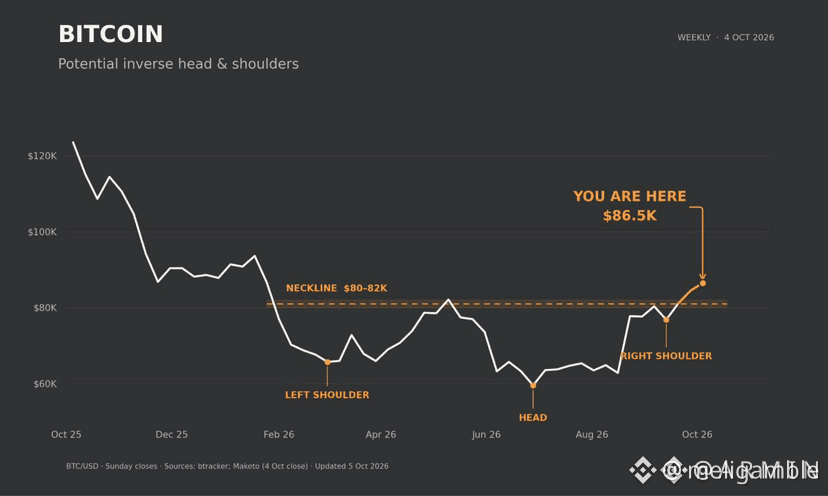
Everyone thinks trading success comes down to catching the fastest pump, but actually most traders fail simply because they drown in market noise.
We have all bought $BTC at the top or panic-sold during a dip like the recent 0.37% wobble just because social hype replaced actual research. That hesitation and blind guessing is where hard-earned capital quietly slips away.
Think of manual research today like navigating a dense fog with a tiny flashlight. While you spend hours scrolling through endless feeds trying to figure out why $BNB is down 0.91% or where $ETH volume is shifting, modern tools are already processing clean signals.
Binance Intelligence brings AI into the workflow to turn raw chaos into actionable market context. The real edge in crypto is no longer about who stares at charts the longest, but who understands the underlying data first.
How much of your daily decision-making is still based on gut feeling versus clear data?
#BinanceIntelligence #CryptoTrading #CryptoAI
Everyone thinks trading success comes down to catching the fastest pump, but actually most traders fail simply because they drown in market noise.
We have all bought $BTC at the top or panic-sold during a dip like the recent 0.37% wobble just because social hype replaced actual research. That hesitation and blind guessing is where hard-earned capital quietly slips away.
Think of manual research today like navigating a dense fog with a tiny flashlight. While you spend hours scrolling through endless feeds trying to figure out why $BNB is down 0.91% or where $ETH volume is shifting, modern tools are already processing clean signals.
Binance Intelligence brings AI into the workflow to turn raw chaos into actionable market context. The real edge in crypto is no longer about who stares at charts the longest, but who understands the underlying data first.
How much of your daily decision-making is still based on gut feeling versus clear data?
#BinanceIntelligence #CryptoTrading #CryptoAI
We have all bought $BTC at the top or panic-sold during a dip like the recent 0.37% wobble just because social hype replaced actual research. That hesitation and blind guessing is where hard-earned capital quietly slips away.
Think of manual research today like navigating a dense fog with a tiny flashlight. While you spend hours scrolling through endless feeds trying to figure out why $BNB is down 0.91% or where $ETH volume is shifting, modern tools are already processing clean signals.
Binance Intelligence brings AI into the workflow to turn raw chaos into actionable market context. The real edge in crypto is no longer about who stares at charts the longest, but who understands the underlying data first.
How much of your daily decision-making is still based on gut feeling versus clear data?
#BinanceIntelligence #CryptoTrading #CryptoAI
30
·
--
Have you noticed how most retail traders panic sell the moment a red candle appears, while top-tier accounts quietly print five-figure gains?
Most people blow up their portfolios trying to scalp every 15-minute fluctuation, missing out on massive swings because they lack the discipline to let winning positions breathe.
Looking at the top performers over the past 30 days, real profitability comes from patience rather than frantic overtrading. Taking a swing long on $WLD while absorbing short-term noise like a -3.25% dip is exactly how you ride a setup toward an unrealized PNL north of +12,000 USDT. The real playbook is identifying high-conviction momentum in leaders like $BTC and related AI plays like $FET, scaling in at key levels, and giving the trade room to hit major targets.
If you want consistent returns, treat red days as accumulation zones instead of reasons to dump your bag.
How long do you typically hold a swing trade before taking profits?
#CryptoTrading #Worldcoin #FuturesTrading
Have you noticed how most retail traders panic sell the moment a red candle appears, while top-tier accounts quietly print five-figure gains?
Most people blow up their portfolios trying to scalp every 15-minute fluctuation, missing out on massive swings because they lack the discipline to let winning positions breathe.
Looking at the top performers over the past 30 days, real profitability comes from patience rather than frantic overtrading. Taking a swing long on $WLD while absorbing short-term noise like a -3.25% dip is exactly how you ride a setup toward an unrealized PNL north of +12,000 USDT. The real playbook is identifying high-conviction momentum in leaders like $BTC and related AI plays like $FET , scaling in at key levels, and giving the trade room to hit major targets.
If you want consistent returns, treat red days as accumulation zones instead of reasons to dump your bag.
How long do you typically hold a swing trade before taking profits?
#CryptoTrading #Worldcoin #FuturesTrading
Most people blow up their portfolios trying to scalp every 15-minute fluctuation, missing out on massive swings because they lack the discipline to let winning positions breathe.
Looking at the top performers over the past 30 days, real profitability comes from patience rather than frantic overtrading. Taking a swing long on $WLD while absorbing short-term noise like a -3.25% dip is exactly how you ride a setup toward an unrealized PNL north of +12,000 USDT. The real playbook is identifying high-conviction momentum in leaders like $BTC and related AI plays like $FET , scaling in at key levels, and giving the trade room to hit major targets.
If you want consistent returns, treat red days as accumulation zones instead of reasons to dump your bag.
How long do you typically hold a swing trade before taking profits?
#CryptoTrading #Worldcoin #FuturesTrading

57
Log in to explore more content
Join global crypto users on Binance Square
⚡️ Get latest and useful information about crypto.
💬 Trusted by the world’s largest crypto exchange.
👍 Discover real insights from verified creators.
Email / Phone number
Trending Topics
BinanceLaunchesBinanceIntelligence
738,389 views
4,610 Discussing
#binancelaunchesbinanceintelligence 🚨 WHAT IF THE NEXT BIG EXCHANGE BATTLE ISN’T ABOUT FEES? 👀
Binance just made a bigger move than adding another AI chatbot.
With Binance Intelligence, AI is moving deeper into the exchange — from understanding market data to building trading workflows. 🤖⚡
The real question is:
Who has the best liquidity?
Or who has the smartest AI layer?
If users can research, test ideas and manage trading workflows without switching between different tools, the exchange itself could become a financial assistant.
That could be a much bigger shift than it looks today.
If Binance Intelligence drives more users, more strategies and more trading activity, $BNB could become one of the tokens to watch. 👀
Is Binance building the future of AI-powered finance?
$BNB
#binancelaunchesbinanceintelligence #BinanceAI #CryptoAI #AITrading
Suleman Khan Haqqani
·25 Likes
·27k views
RussiaRegistersFirstCryptoExchanges
0 views
0 Discussing
BTCFallsBelow$84K
31,009 views
110 Discussing