

#defi
defi
57.1M views
299,899 Discussing
Hot
Latest

·
--
📢 Major crypto market maker GSR is committing $100 million (primarily as a credit facility) to launch a new on-chain business called Hare.
Hare will build and manage on-chain credit vaults in partnership with Turtle. The main goal is to bridge institutional capital with decentralized finance (DeFi) infrastructure.
At launch, there will be two investment vaults built on the architecture of the popular lending protocol Aave:
- A pool for deploying leading dollar stablecoins to generate yield.
- A joint product with Paxos Labs that will, for the first time, allow holders of tokenized gold (PAXG and PAXGy) to earn passive interest yield on their assets.
According to Hare CEO Connor Milner, the $100 million from GSR acts as anchor liquidity. This ensures the vaults operate smoothly from day one and signals to external allocators that GSR is risking its own capital in the same pools.
The launch of Hare highlights the surging demand for on-chain credit and tokenized real-world assets (RWA). The smart contract industry for wealth management is expanding rapidly; as of July, roughly $8.6 billion was already locked in such vaults.
In a broader context, this move demonstrates how traditional institutional market makers are transitioning from simple crypto speculation to building complex credit products directly on the blockchain, replacing classic bank risk-management departments with software code.
#CRYPTO #RWA #BLOCKCHAIN #DEFI $PAXG $AAVE $TURTLE
{future}(TURTLEUSDT)
{future}(AAVEUSDT)
{future}(PAXGUSDT)
📢 Major crypto market maker GSR is committing $100 million (primarily as a credit facility) to launch a new on-chain business called Hare.
Hare will build and manage on-chain credit vaults in partnership with Turtle. The main goal is to bridge institutional capital with decentralized finance (DeFi) infrastructure.
At launch, there will be two investment vaults built on the architecture of the popular lending protocol Aave:
- A pool for deploying leading dollar stablecoins to generate yield.
- A joint product with Paxos Labs that will, for the first time, allow holders of tokenized gold (PAXG and PAXGy) to earn passive interest yield on their assets.
According to Hare CEO Connor Milner, the $100 million from GSR acts as anchor liquidity. This ensures the vaults operate smoothly from day one and signals to external allocators that GSR is risking its own capital in the same pools.
The launch of Hare highlights the surging demand for on-chain credit and tokenized real-world assets (RWA). The smart contract industry for wealth management is expanding rapidly; as of July, roughly $8.6 billion was already locked in such vaults.
In a broader context, this move demonstrates how traditional institutional market makers are transitioning from simple crypto speculation to building complex credit products directly on the blockchain, replacing classic bank risk-management departments with software code.
#CRYPTO #RWA #BLOCKCHAIN #DEFI $PAXG $AAVE $TURTLE
Hare will build and manage on-chain credit vaults in partnership with Turtle. The main goal is to bridge institutional capital with decentralized finance (DeFi) infrastructure.
At launch, there will be two investment vaults built on the architecture of the popular lending protocol Aave:
- A pool for deploying leading dollar stablecoins to generate yield.
- A joint product with Paxos Labs that will, for the first time, allow holders of tokenized gold (PAXG and PAXGy) to earn passive interest yield on their assets.
According to Hare CEO Connor Milner, the $100 million from GSR acts as anchor liquidity. This ensures the vaults operate smoothly from day one and signals to external allocators that GSR is risking its own capital in the same pools.
The launch of Hare highlights the surging demand for on-chain credit and tokenized real-world assets (RWA). The smart contract industry for wealth management is expanding rapidly; as of July, roughly $8.6 billion was already locked in such vaults.
In a broader context, this move demonstrates how traditional institutional market makers are transitioning from simple crypto speculation to building complex credit products directly on the blockchain, replacing classic bank risk-management departments with software code.
#CRYPTO #RWA #BLOCKCHAIN #DEFI $PAXG $AAVE $TURTLE
734

·
--
Verified
🚨 ENA JUST FINISHED A MAJOR TOKENOMICS RESET
Ethena’s biggest recent ENA change is now official: remaining original investor unlocks were accelerated and completed on October 5, ending the recurring investor unlock schedule. Team tokens remain under their original vesting schedules.
At the same time, Ethena’s fee-switch implementation is moving toward ENA buybacks, with governance-approved parameters designed to direct a growing share of protocol revenue toward buybacks as USDe reaches different supply milestones.
But there’s an important distinction:
The unlock schedule ending does not mean ENA supply suddenly disappears, and the buybacks depend on the stated revenue/USDe milestones.
So the real ENA story right now is a major change in token supply dynamics + a new value-accrual mechanism for the token.
$ENA
{future}(ENAUSDT)
.
.
#ethena #DeFi #Write2Earn
Not financial advice. DYOR.
🚨 ENA JUST FINISHED A MAJOR TOKENOMICS RESET
Ethena’s biggest recent ENA change is now official: remaining original investor unlocks were accelerated and completed on October 5, ending the recurring investor unlock schedule. Team tokens remain under their original vesting schedules.
At the same time, Ethena’s fee-switch implementation is moving toward ENA buybacks, with governance-approved parameters designed to direct a growing share of protocol revenue toward buybacks as USDe reaches different supply milestones.
But there’s an important distinction:
The unlock schedule ending does not mean ENA supply suddenly disappears, and the buybacks depend on the stated revenue/USDe milestones.
So the real ENA story right now is a major change in token supply dynamics + a new value-accrual mechanism for the token.
$ENA
.
.
#ethena #DeFi #Write2Earn
Not financial advice. DYOR.
Ethena’s biggest recent ENA change is now official: remaining original investor unlocks were accelerated and completed on October 5, ending the recurring investor unlock schedule. Team tokens remain under their original vesting schedules.
At the same time, Ethena’s fee-switch implementation is moving toward ENA buybacks, with governance-approved parameters designed to direct a growing share of protocol revenue toward buybacks as USDe reaches different supply milestones.
But there’s an important distinction:
The unlock schedule ending does not mean ENA supply suddenly disappears, and the buybacks depend on the stated revenue/USDe milestones.
So the real ENA story right now is a major change in token supply dynamics + a new value-accrual mechanism for the token.
$ENA
.
.
#ethena #DeFi #Write2Earn
Not financial advice. DYOR.

344

"I only used public functions" just failed in front of a jury.
On Oct 7, prosecutors in the Southern District of New York announced that Jonathan Spalletta, a 36-year-old cybersecurity consultant from Maryland, was convicted on every count over the 2021 Uranium Finance hack.
Quick recap of the case:
- In April 2021, Uranium Finance, an AMM on BNB Chain, was hit twice. 26 liquidity pools were drained, roughly $53-55M, and the protocol had to shut down.
- Prosecutors say the funds were moved through Tornado Cash.
- Authorities seized about $31M in crypto from his home, plus more than $3M in rare Pokemon and Magic: The Gathering cards.
- After a six-day trial before Judge Jed Rakoff, the jury convicted him of computer fraud and money laundering. The laundering count alone carries up to 20 years. Sentencing is set for Feb 16, 2027.
The most important detail is the defense. His lawyers argued he didn't forge credentials or plant malicious code, he simply called smart contract functions anyone could call. The jury didn't buy it.
That matters far beyond one case. "Code is law" has been the quiet excuse behind a lot of DeFi exploits. This verdict says US courts look at intent and outcome, not just whether the contract technically allowed the transaction.
The fair counterpoint: some builders worry this blurs the line between exploiting a bug and aggressive but legal trading, and that whitehats could face the same risk.
Where do you draw the line: is draining a buggy contract theft, or the protocol's fault?
Like and follow for more crypto crime and court stories explained simply.
#DeFi #CryptoCrime
"I only used public functions" just failed in front of a jury.
On Oct 7, prosecutors in the Southern District of New York announced that Jonathan Spalletta, a 36-year-old cybersecurity consultant from Maryland, was convicted on every count over the 2021 Uranium Finance hack.
Quick recap of the case:
- In April 2021, Uranium Finance, an AMM on BNB Chain, was hit twice. 26 liquidity pools were drained, roughly $53-55M, and the protocol had to shut down.
- Prosecutors say the funds were moved through Tornado Cash.
- Authorities seized about $31M in crypto from his home, plus more than $3M in rare Pokemon and Magic: The Gathering cards.
- After a six-day trial before Judge Jed Rakoff, the jury convicted him of computer fraud and money laundering. The laundering count alone carries up to 20 years. Sentencing is set for Feb 16, 2027.
The most important detail is the defense. His lawyers argued he didn't forge credentials or plant malicious code, he simply called smart contract functions anyone could call. The jury didn't buy it.
That matters far beyond one case. "Code is law" has been the quiet excuse behind a lot of DeFi exploits. This verdict says US courts look at intent and outcome, not just whether the contract technically allowed the transaction.
The fair counterpoint: some builders worry this blurs the line between exploiting a bug and aggressive but legal trading, and that whitehats could face the same risk.
Where do you draw the line: is draining a buggy contract theft, or the protocol's fault?
Like and follow for more crypto crime and court stories explained simply.
#DeFi #CryptoCrime
On Oct 7, prosecutors in the Southern District of New York announced that Jonathan Spalletta, a 36-year-old cybersecurity consultant from Maryland, was convicted on every count over the 2021 Uranium Finance hack.
Quick recap of the case:
- In April 2021, Uranium Finance, an AMM on BNB Chain, was hit twice. 26 liquidity pools were drained, roughly $53-55M, and the protocol had to shut down.
- Prosecutors say the funds were moved through Tornado Cash.
- Authorities seized about $31M in crypto from his home, plus more than $3M in rare Pokemon and Magic: The Gathering cards.
- After a six-day trial before Judge Jed Rakoff, the jury convicted him of computer fraud and money laundering. The laundering count alone carries up to 20 years. Sentencing is set for Feb 16, 2027.
The most important detail is the defense. His lawyers argued he didn't forge credentials or plant malicious code, he simply called smart contract functions anyone could call. The jury didn't buy it.
That matters far beyond one case. "Code is law" has been the quiet excuse behind a lot of DeFi exploits. This verdict says US courts look at intent and outcome, not just whether the contract technically allowed the transaction.
The fair counterpoint: some builders worry this blurs the line between exploiting a bug and aggressive but legal trading, and that whitehats could face the same risk.
Where do you draw the line: is draining a buggy contract theft, or the protocol's fault?
Like and follow for more crypto crime and court stories explained simply.
#DeFi #CryptoCrime

1
235

·
--
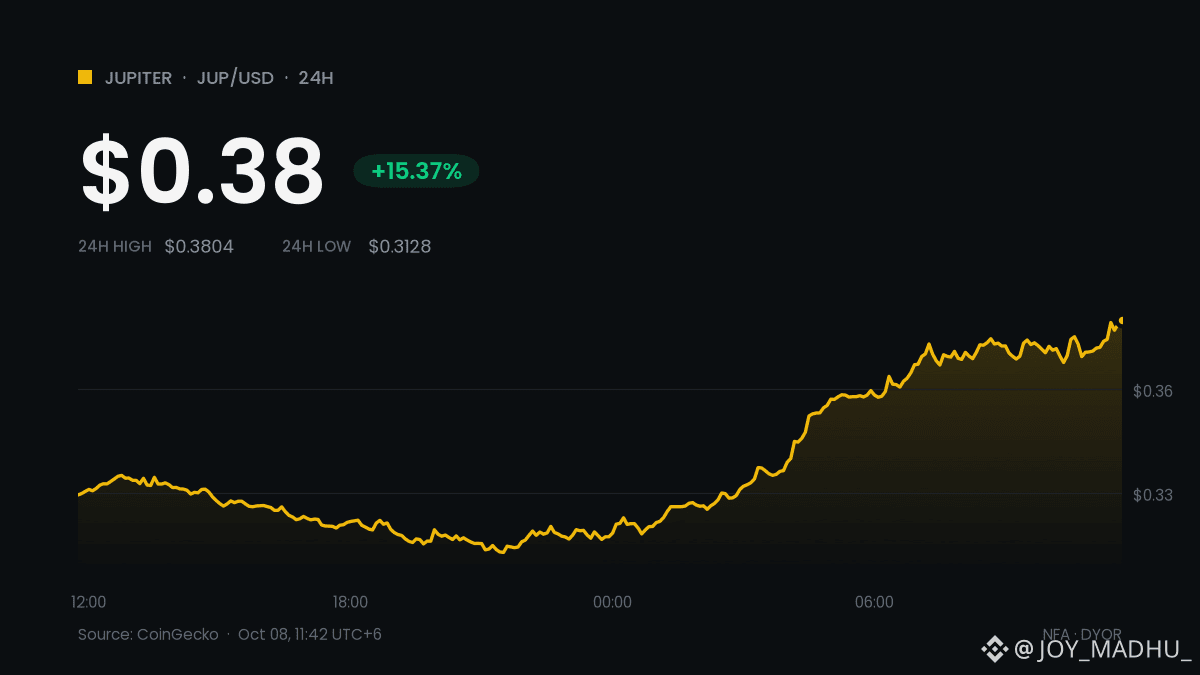
$JUP 𝗮𝗱𝗱𝗲𝗱 𝟭𝟱% 𝗼𝘃𝗲𝗿𝗻𝗶𝗴𝗵𝘁, 𝗮𝗻𝗱 𝗦𝗼𝗹𝗮𝗻𝗮 𝗗𝗲𝗙𝗶 𝗰𝗮𝗺𝗲 𝗮𝗹𝗼𝗻𝗴.
Jupiter Lend just set a record $2.6B in deposits, per Blockworks Data, with loans now past $1B.
It's not moving alone. $RAY is up about 13% on the day and Meteora's MET about 42%.
No single headline explains the jump, but JUP is now up roughly 49% over 30 days.
Real rotation into Solana DeFi, or a crowded trade?
NFA.
#Jupiter #Solana #DeFi
$JUP 𝗮𝗱𝗱𝗲𝗱 𝟭𝟱% 𝗼𝘃𝗲𝗿𝗻𝗶𝗴𝗵𝘁, 𝗮𝗻𝗱 𝗦𝗼𝗹𝗮𝗻𝗮 𝗗𝗲𝗙𝗶 𝗰𝗮𝗺𝗲 𝗮𝗹𝗼𝗻𝗴.
Jupiter Lend just set a record $2.6B in deposits, per Blockworks Data, with loans now past $1B.
It's not moving alone. $RAY is up about 13% on the day and Meteora's MET about 42%.
No single headline explains the jump, but JUP is now up roughly 49% over 30 days.
Real rotation into Solana DeFi, or a crowded trade?
NFA.
#Jupiter #Solana #DeFi
Jupiter Lend just set a record $2.6B in deposits, per Blockworks Data, with loans now past $1B.
It's not moving alone. $RAY is up about 13% on the day and Meteora's MET about 42%.
No single headline explains the jump, but JUP is now up roughly 49% over 30 days.
Real rotation into Solana DeFi, or a crowded trade?
NFA.
#Jupiter #Solana #DeFi
157

·
--
🚨 XRP is now backing vault protection on Flare via Firelight, adding a risk-mitigation layer to DeFi products. This move ties XRP to real-world utility in safeguarding deposits against technical and economic failures. As XRP expands beyond payments into DeFi infrastructure, it may attract more conservative capital seeking yield with built-in protection. Could this utility-driven shift redefine how investors view XRP’s long-term value? #DeFi
$XRP #TradingSignal #CryptoAnalysis
🚨 XRP is now backing vault protection on Flare via Firelight, adding a risk-mitigation layer to DeFi products. This move ties XRP to real-world utility in safeguarding deposits against technical and economic failures. As XRP expands beyond payments into DeFi infrastructure, it may attract more conservative capital seeking yield with built-in protection. Could this utility-driven shift redefine how investors view XRP’s long-term value? #DeFi
$XRP #TradingSignal #CryptoAnalysis
$XRP #TradingSignal #CryptoAnalysis

10

·
--
Real Yield vs. Inflationary Yield — The DeFi Distinction That Changes Everything
Not all APY is created equal. One of the most important frameworks any DeFi participant can internalize is the difference between real yield and inflationary yield.
Inflationary yield is protocol-printed tokens distributed as rewards. It looks attractive in % terms, but every payout dilutes existing holders. You earn 40% APY while the token depreciates 60% — net negative. This dynamic powered the 2021 yield farming craze, and it is why most of those protocols no longer exist.
Real yield is different. It is revenue generated by actual protocol activity — trading fees, liquidation proceeds, lending spreads — redistributed to token stakers or liquidity providers. No new tokens minted. No dilution. Just cash flows from genuine utility.
Why it matters now: As crypto matures, capital is increasingly discriminating. Protocols that generate real revenue from actual users are building sustainable moats. The shift is visible on-chain: staking pools tied to protocol revenue are retaining liquidity longer than emission-based farms.
$ETH staking yield is partially real yield. $BNB burn and revenue mechanics point the same direction. $SOL validator fees — the real yield layer is forming across every major ecosystem.
Chase the yield, sure. But first ask: where is it actually coming from?
#DeFi #RealYield #CryptoInvesting #BinanceSquare #Web3
Real Yield vs. Inflationary Yield — The DeFi Distinction That Changes Everything
Not all APY is created equal. One of the most important frameworks any DeFi participant can internalize is the difference between real yield and inflationary yield.
Inflationary yield is protocol-printed tokens distributed as rewards. It looks attractive in % terms, but every payout dilutes existing holders. You earn 40% APY while the token depreciates 60% — net negative. This dynamic powered the 2021 yield farming craze, and it is why most of those protocols no longer exist.
Real yield is different. It is revenue generated by actual protocol activity — trading fees, liquidation proceeds, lending spreads — redistributed to token stakers or liquidity providers. No new tokens minted. No dilution. Just cash flows from genuine utility.
Why it matters now: As crypto matures, capital is increasingly discriminating. Protocols that generate real revenue from actual users are building sustainable moats. The shift is visible on-chain: staking pools tied to protocol revenue are retaining liquidity longer than emission-based farms.
$ETH staking yield is partially real yield. $BNB burn and revenue mechanics point the same direction. $SOL validator fees — the real yield layer is forming across every major ecosystem.
Chase the yield, sure. But first ask: where is it actually coming from?
#DeFi #RealYield #CryptoInvesting #BinanceSquare #Web3
Not all APY is created equal. One of the most important frameworks any DeFi participant can internalize is the difference between real yield and inflationary yield.
Inflationary yield is protocol-printed tokens distributed as rewards. It looks attractive in % terms, but every payout dilutes existing holders. You earn 40% APY while the token depreciates 60% — net negative. This dynamic powered the 2021 yield farming craze, and it is why most of those protocols no longer exist.
Real yield is different. It is revenue generated by actual protocol activity — trading fees, liquidation proceeds, lending spreads — redistributed to token stakers or liquidity providers. No new tokens minted. No dilution. Just cash flows from genuine utility.
Why it matters now: As crypto matures, capital is increasingly discriminating. Protocols that generate real revenue from actual users are building sustainable moats. The shift is visible on-chain: staking pools tied to protocol revenue are retaining liquidity longer than emission-based farms.
$ETH staking yield is partially real yield. $BNB burn and revenue mechanics point the same direction. $SOL validator fees — the real yield layer is forming across every major ecosystem.
Chase the yield, sure. But first ask: where is it actually coming from?
#DeFi #RealYield #CryptoInvesting #BinanceSquare #Web3
7
·
--
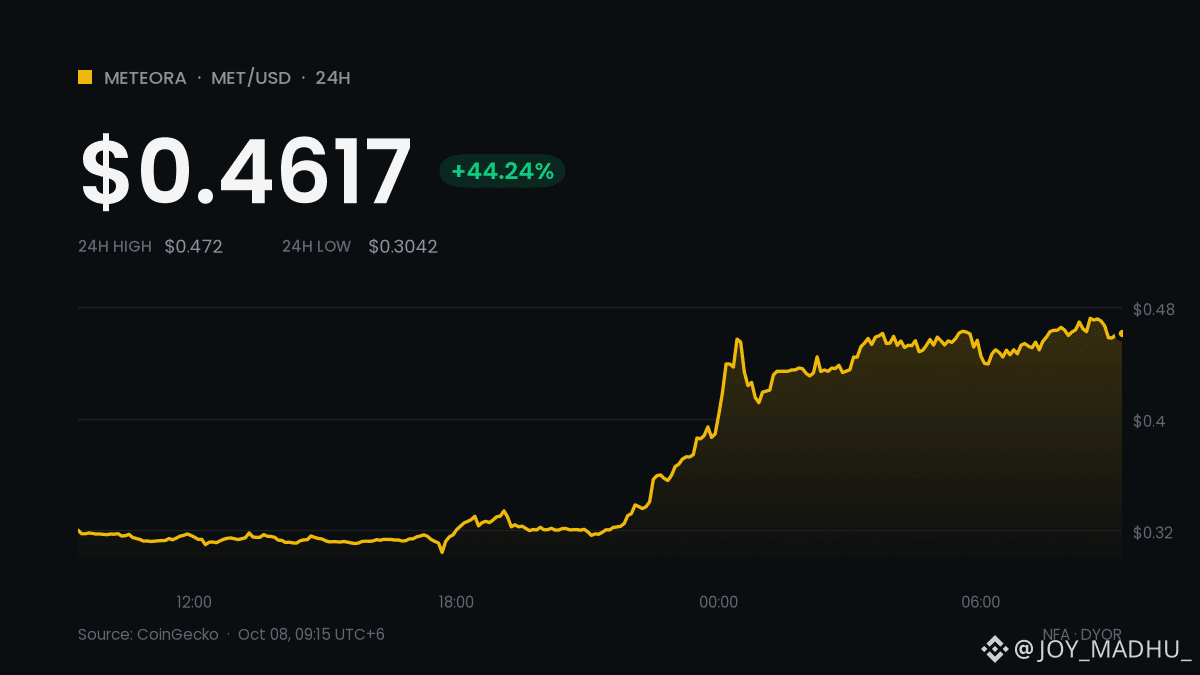
$MET 𝗷𝘂𝘀𝘁 𝗿𝗶𝗽𝗽𝗲𝗱 𝟰𝟰% 𝗶𝗻 𝟮𝟰 𝗵𝗼𝘂𝗿𝘀.
Meteora unveiled DLMM Pro at Solana Summit on Oct 6, a launch engine that lets token teams shape their own opening liquidity.
A US court also dismissed the class action against Meteora last week, clearing a legal overhang.
Price now sits near $0.46. DLMM Pro is still waitlist-only, so the real test is whether launches actually follow.
Can Meteora take share in the Solana launchpad race?
NFA.
#Meteora #Solana #DeFi
$MET 𝗷𝘂𝘀𝘁 𝗿𝗶𝗽𝗽𝗲𝗱 𝟰𝟰% 𝗶𝗻 𝟮𝟰 𝗵𝗼𝘂𝗿𝘀.
Meteora unveiled DLMM Pro at Solana Summit on Oct 6, a launch engine that lets token teams shape their own opening liquidity.
A US court also dismissed the class action against Meteora last week, clearing a legal overhang.
Price now sits near $0.46. DLMM Pro is still waitlist-only, so the real test is whether launches actually follow.
Can Meteora take share in the Solana launchpad race?
NFA.
#Meteora #Solana #DeFi
Meteora unveiled DLMM Pro at Solana Summit on Oct 6, a launch engine that lets token teams shape their own opening liquidity.
A US court also dismissed the class action against Meteora last week, clearing a legal overhang.
Price now sits near $0.46. DLMM Pro is still waitlist-only, so the real test is whether launches actually follow.
Can Meteora take share in the Solana launchpad race?
NFA.
#Meteora #Solana #DeFi
202


·
--
Bullish
🚨 $CRV
{future}(CRVUSDT)
Breaking Out or Setting Up a Bull Trap? $CRV Chart Analysis 🚀📉
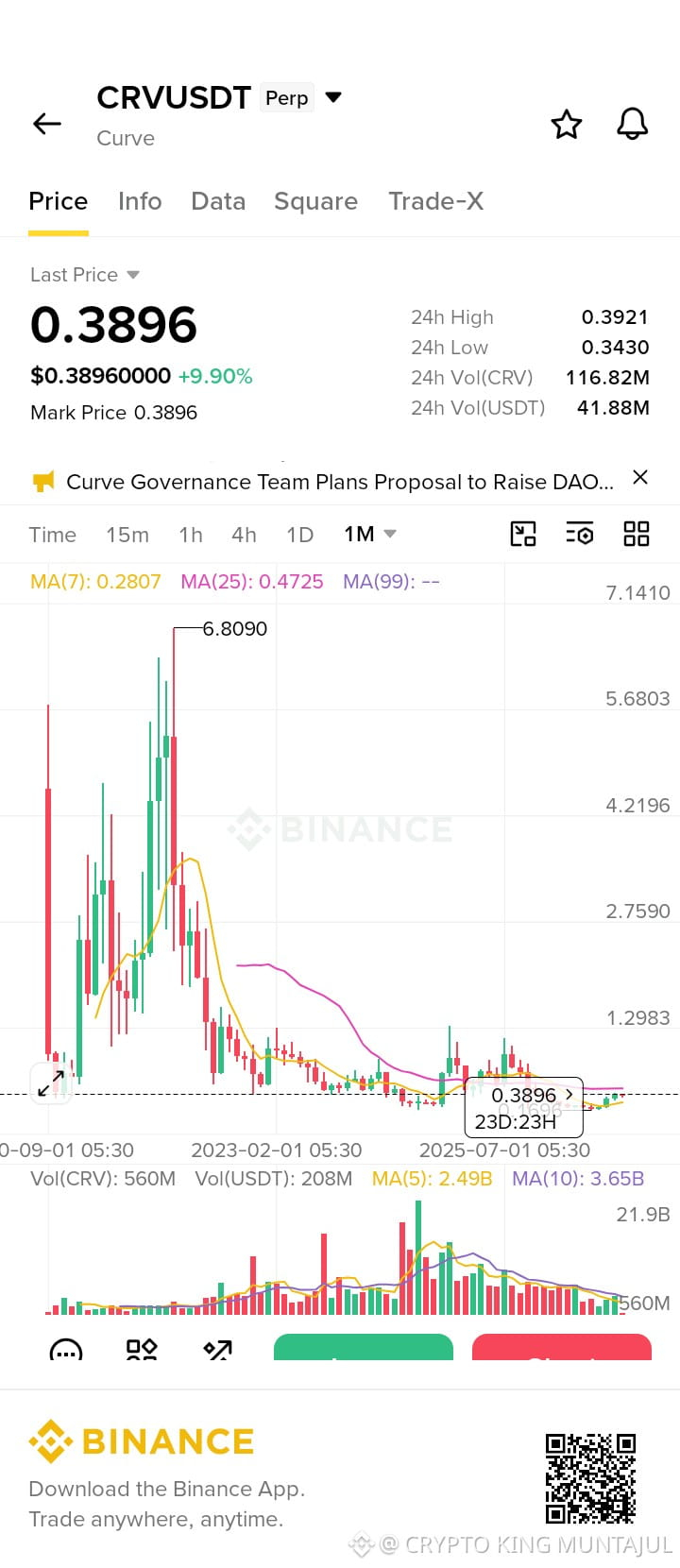
$CRV (Curve DAO Token) is waking up! Trading around $0.3896 with a solid +9.90% gain in 24h, the monthly chart shows crv consolidating near macro bottom levels after its historic high of $6.809.
📊 Key Technical Levels to Watch:
🎯 Resistance: $0.4725 (25 MA) & $0.50 macro psychological level.
🛡️ Support: $0.3430 (24h Low) / $0.2807 (7 MA).
📈 Volume: 24h volume is picking up (116.82M CRV / $41.88M USDT), signaling fresh interest.
💡 The Playbook:
Bullish Scenario: A clean monthly close above $0.4725 could unlock a long-term trend reversal back toward $1.00+.
Bearish Risk: Rejection at resistance could keep crv bound in its accumulation channel between $0.30 - $0.40.
Are you holding crv for the long term or trading the local breakout? 👇 Share your targets below!
#crv #CurveDAO #CryptoAnalysis #BinanceSquare #TechnicalAnalysis #defi
🚨 $CRV
Breaking Out or Setting Up a Bull Trap? $CRV Chart Analysis 🚀📉
$CRV (Curve DAO Token) is waking up! Trading around $0.3896 with a solid +9.90% gain in 24h, the monthly chart shows crv consolidating near macro bottom levels after its historic high of $6.809.
📊 Key Technical Levels to Watch:
🎯 Resistance: $0.4725 (25 MA) & $0.50 macro psychological level.
🛡️ Support: $0.3430 (24h Low) / $0.2807 (7 MA).
📈 Volume: 24h volume is picking up (116.82M CRV / $41.88M USDT), signaling fresh interest.
💡 The Playbook:
Bullish Scenario: A clean monthly close above $0.4725 could unlock a long-term trend reversal back toward $1.00+.
Bearish Risk: Rejection at resistance could keep crv bound in its accumulation channel between $0.30 - $0.40.
Are you holding crv for the long term or trading the local breakout? 👇 Share your targets below!
#crv #CurveDAO #CryptoAnalysis #BinanceSquare #TechnicalAnalysis #defi
Breaking Out or Setting Up a Bull Trap? $CRV Chart Analysis 🚀📉
$CRV (Curve DAO Token) is waking up! Trading around $0.3896 with a solid +9.90% gain in 24h, the monthly chart shows crv consolidating near macro bottom levels after its historic high of $6.809.
📊 Key Technical Levels to Watch:
🎯 Resistance: $0.4725 (25 MA) & $0.50 macro psychological level.
🛡️ Support: $0.3430 (24h Low) / $0.2807 (7 MA).
📈 Volume: 24h volume is picking up (116.82M CRV / $41.88M USDT), signaling fresh interest.
💡 The Playbook:
Bullish Scenario: A clean monthly close above $0.4725 could unlock a long-term trend reversal back toward $1.00+.
Bearish Risk: Rejection at resistance could keep crv bound in its accumulation channel between $0.30 - $0.40.
Are you holding crv for the long term or trading the local breakout? 👇 Share your targets below!
#crv #CurveDAO #CryptoAnalysis #BinanceSquare #TechnicalAnalysis #defi
1
114
·
--
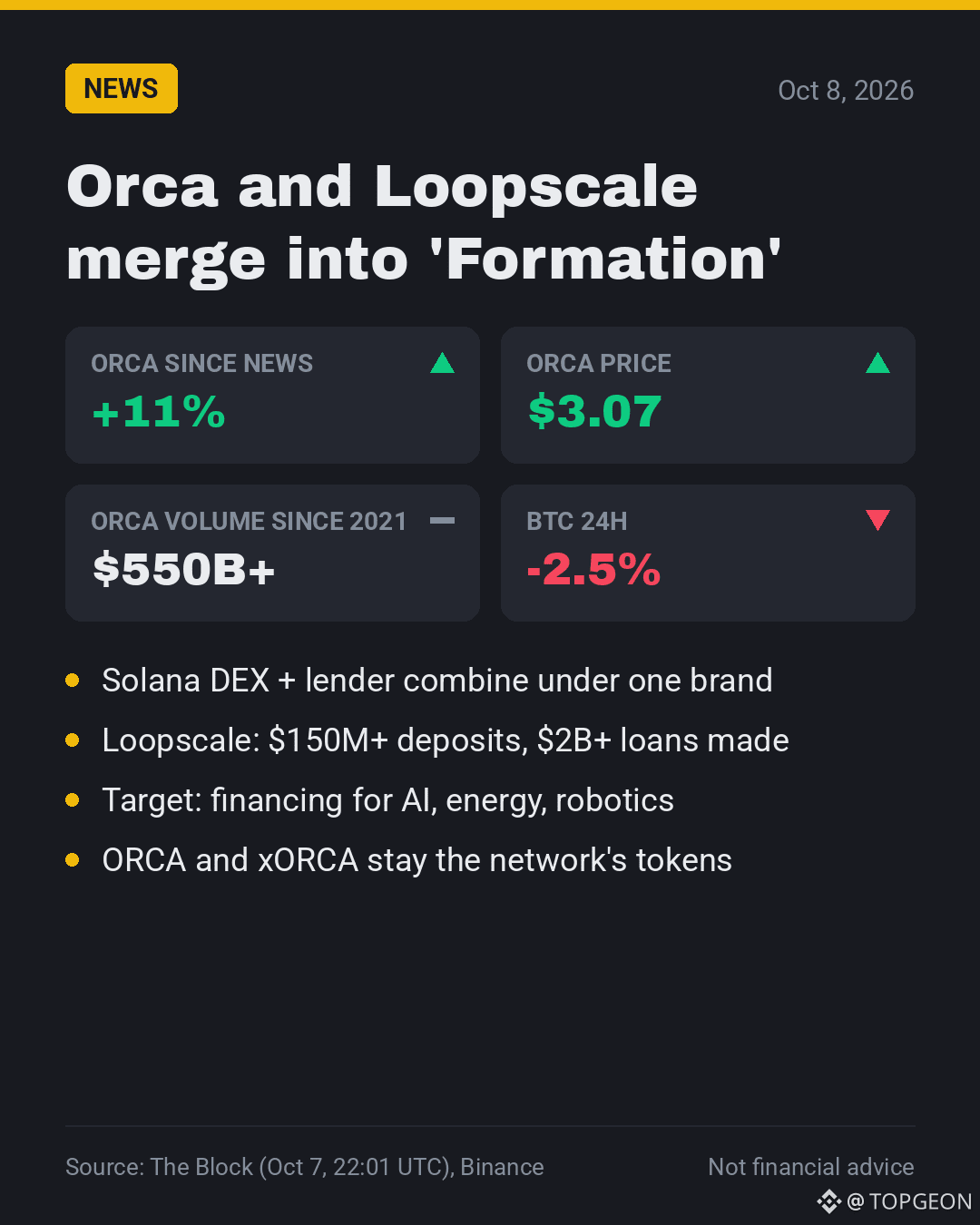
🐋 3 things to know: $ORCA merges with Loopscale overnight
1️⃣ New name: Formation (Solana DEX + lending in one)
2️⃣ Orca: $550B+ traded since 2021; Loopscale: $2B+ in loans
3️⃣ Plan: on-chain funding for AI, energy and robotics firms
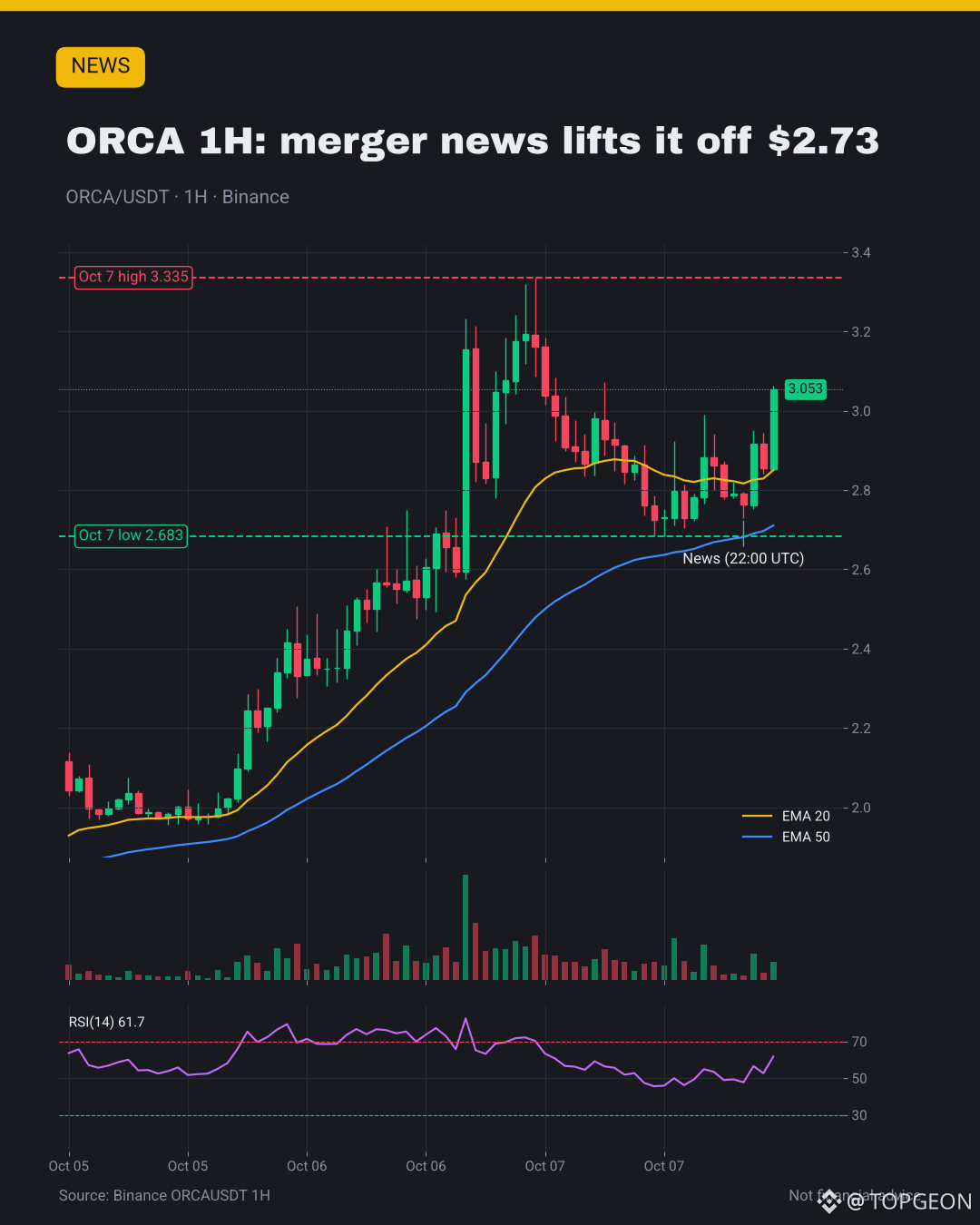
📈 ORCA $2.76 → $3.07 since the news (+11%)
📉 Same night: $BTC -2.5% to $83.4K, ETH -4.5% to $2,577
🎯 My take: ORCA holding $2.85 (1H 20 EMA) keeps the bounce; under $2.68 it fades
💬 Do DeFi mergers like this add real value? 👇
#Solana #DeFi #ORCA
🐋 3 things to know: $ORCA merges with Loopscale overnight
1️⃣ New name: Formation (Solana DEX + lending in one)
2️⃣ Orca: $550B+ traded since 2021; Loopscale: $2B+ in loans
3️⃣ Plan: on-chain funding for AI, energy and robotics firms
📈 ORCA $2.76 → $3.07 since the news (+11%)
📉 Same night: $BTC -2.5% to $83.4K, ETH -4.5% to $2,577
🎯 My take: ORCA holding $2.85 (1H 20 EMA) keeps the bounce; under $2.68 it fades
💬 Do DeFi mergers like this add real value? 👇
#Solana #DeFi #ORCA
1️⃣ New name: Formation (Solana DEX + lending in one)
2️⃣ Orca: $550B+ traded since 2021; Loopscale: $2B+ in loans
3️⃣ Plan: on-chain funding for AI, energy and robotics firms
📈 ORCA $2.76 → $3.07 since the news (+11%)
📉 Same night: $BTC -2.5% to $83.4K, ETH -4.5% to $2,577
🎯 My take: ORCA holding $2.85 (1H 20 EMA) keeps the bounce; under $2.68 it fades
💬 Do DeFi mergers like this add real value? 👇
#Solana #DeFi #ORCA
152

·
--
⚖️ DEFI LIQUIDITY AT A CROSSROADS AS INSTITUTIONAL REGULATORY SHIFTS TARGET $RE ! ⚡
Policy proposals surrounding domestic DeFi integration are signaling a structural regime shift. If regulatory clarity establishes a unified framework rather than selective enforcement, institutional capital will re-price liquidity efficiency across decentralized order books. 🌊
Strategic positioning is already shifting as markets price in potential compliance friction against broader expansion vectors for assets like $RED and $MAGMA . 🔍 Smart money builds positions before regulatory certainty is fully realized, not after. ⚡
💬 Will a unified framework accelerate institutional DeFi inflow or choke off regional innovation? 👇
⚠️ Not financial advice. Always manage your risk. 🛡️
🏷️ #RE #DeFi #Crypto #MarketStructure #Liquidity
⚖️ 🎯
⚖️ DEFI LIQUIDITY AT A CROSSROADS AS INSTITUTIONAL REGULATORY SHIFTS TARGET $RE ! ⚡
Policy proposals surrounding domestic DeFi integration are signaling a structural regime shift. If regulatory clarity establishes a unified framework rather than selective enforcement, institutional capital will re-price liquidity efficiency across decentralized order books. 🌊
Strategic positioning is already shifting as markets price in potential compliance friction against broader expansion vectors for assets like $RED and $MAGMA . 🔍 Smart money builds positions before regulatory certainty is fully realized, not after. ⚡
💬 Will a unified framework accelerate institutional DeFi inflow or choke off regional innovation? 👇
⚠️ Not financial advice. Always manage your risk. 🛡️
🏷️ #RE #DeFi #Crypto #MarketStructure #Liquidity
⚖️ 🎯
Policy proposals surrounding domestic DeFi integration are signaling a structural regime shift. If regulatory clarity establishes a unified framework rather than selective enforcement, institutional capital will re-price liquidity efficiency across decentralized order books. 🌊
Strategic positioning is already shifting as markets price in potential compliance friction against broader expansion vectors for assets like $RED and $MAGMA . 🔍 Smart money builds positions before regulatory certainty is fully realized, not after. ⚡
💬 Will a unified framework accelerate institutional DeFi inflow or choke off regional innovation? 👇
⚠️ Not financial advice. Always manage your risk. 🛡️
🏷️ #RE #DeFi #Crypto #MarketStructure #Liquidity
⚖️ 🎯


132

Solana's DEX giant Orca is teaming up with Loopscale to form 'Formation,' shifting focus toward heavy-duty sectors like AI, energy, robotics, and defense. This is a massive evolution for DeFi, bridging crypto liquidity with real-world infrastructure and high-tech hardware. Instead of just swapping tokens, Solana protocols are now positioning themselves to fund the physical future. It’s a bold strategic pivot that could redefine how decentralized finance impacts traditional industries moving forward. $SOL #Solana #DeFi #AI
Solana's DEX giant Orca is teaming up with Loopscale to form 'Formation,' shifting focus toward heavy-duty sectors like AI, energy, robotics, and defense. This is a massive evolution for DeFi, bridging crypto liquidity with real-world infrastructure and high-tech hardware. Instead of just swapping tokens, Solana protocols are now positioning themselves to fund the physical future. It’s a bold strategic pivot that could redefine how decentralized finance impacts traditional industries moving forward. $SOL #Solana #DeFi #AI
223

·
--
🚨 US REGULATORS EYE $DEFI AND $AI AS FUTURE INSTITUTIONAL FINANCIAL INFRASTRUCTURE! 💡
The paradigm is shifting as regulators acknowledge on-chain transparency over legacy opaque routing. 🏦 Verifiable order flow and open-source infrastructure are proving to be structural assets for market fairness rather than regulatory threats.
Meanwhile, AI integration is democratizing institutional-grade execution capabilities, allowing participants to build macro-driven strategies previously reserved for top fund managers. 📊 Establishing strict verification sandboxes will be the catalyst for safe capital deployment. 💬 Will verifiable on-chain architecture completely replace legacy settlement rails this decade? 👇
⚠️ Not financial advice. Always manage your risk. 🛡️
🏷️ #DEFI #AI #Institutional #Crypto #MarketStructure
🎯 🦈
🚨 US REGULATORS EYE $DEFI AND $AI AS FUTURE INSTITUTIONAL FINANCIAL INFRASTRUCTURE! 💡
The paradigm is shifting as regulators acknowledge on-chain transparency over legacy opaque routing. 🏦 Verifiable order flow and open-source infrastructure are proving to be structural assets for market fairness rather than regulatory threats.
Meanwhile, AI integration is democratizing institutional-grade execution capabilities, allowing participants to build macro-driven strategies previously reserved for top fund managers. 📊 Establishing strict verification sandboxes will be the catalyst for safe capital deployment. 💬 Will verifiable on-chain architecture completely replace legacy settlement rails this decade? 👇
⚠️ Not financial advice. Always manage your risk. 🛡️
🏷️ #DEFI #AI #Institutional #Crypto #MarketStructure
🎯 🦈
The paradigm is shifting as regulators acknowledge on-chain transparency over legacy opaque routing. 🏦 Verifiable order flow and open-source infrastructure are proving to be structural assets for market fairness rather than regulatory threats.
Meanwhile, AI integration is democratizing institutional-grade execution capabilities, allowing participants to build macro-driven strategies previously reserved for top fund managers. 📊 Establishing strict verification sandboxes will be the catalyst for safe capital deployment. 💬 Will verifiable on-chain architecture completely replace legacy settlement rails this decade? 👇
⚠️ Not financial advice. Always manage your risk. 🛡️
🏷️ #DEFI #AI #Institutional #Crypto #MarketStructure
🎯 🦈
42
·
--
Liquidity Fragmentation Is Crypto's Silent Tax
Every new L1 and L2 that launches adds capability — but also splits liquidity into smaller and smaller pools. Today, meaningful liquidity for the same asset often exists across $ETH mainnet, multiple rollups, $BNB Chain, and $SOL simultaneously. That fragmentation has a real cost.
Shallower pools mean wider spreads. Wider spreads mean worse execution. Worse execution is a hidden tax on every trade, every time.
Intent-based protocols and cross-chain aggregators are emerging as the infrastructure response. Instead of routing a swap through a single DEX on a single chain, intent solvers compete to fill your order using whatever liquidity path is cheapest — across chains, across venues, atomically. The user sees one price. The complexity happens underneath.
This is an underappreciated narrative. The protocols solving fragmentation don't need to win token wars — they become the plumbing everyone else relies on. Plumbing is durable.
Watch for: aggregator volume market share vs DEX direct volume, solver competition metrics, cross-chain bridge throughput, and intent protocol fee capture. When aggregator volume exceeds native DEX volume on a chain, fragmentation is losing.
The money follows efficiency. Fragmentation is a problem. Solutions to fragmentation are investments.
$ETH $BNB $SOL
#DeFi #Liquidity #CrossChain #CryptoInfrastructure #Web3
Liquidity Fragmentation Is Crypto's Silent Tax
Every new L1 and L2 that launches adds capability — but also splits liquidity into smaller and smaller pools. Today, meaningful liquidity for the same asset often exists across $ETH mainnet, multiple rollups, $BNB Chain, and $SOL simultaneously. That fragmentation has a real cost.
Shallower pools mean wider spreads. Wider spreads mean worse execution. Worse execution is a hidden tax on every trade, every time.
Intent-based protocols and cross-chain aggregators are emerging as the infrastructure response. Instead of routing a swap through a single DEX on a single chain, intent solvers compete to fill your order using whatever liquidity path is cheapest — across chains, across venues, atomically. The user sees one price. The complexity happens underneath.
This is an underappreciated narrative. The protocols solving fragmentation don't need to win token wars — they become the plumbing everyone else relies on. Plumbing is durable.
Watch for: aggregator volume market share vs DEX direct volume, solver competition metrics, cross-chain bridge throughput, and intent protocol fee capture. When aggregator volume exceeds native DEX volume on a chain, fragmentation is losing.
The money follows efficiency. Fragmentation is a problem. Solutions to fragmentation are investments.
$ETH $BNB $SOL
#DeFi #Liquidity #CrossChain #CryptoInfrastructure #Web3
Every new L1 and L2 that launches adds capability — but also splits liquidity into smaller and smaller pools. Today, meaningful liquidity for the same asset often exists across $ETH mainnet, multiple rollups, $BNB Chain, and $SOL simultaneously. That fragmentation has a real cost.
Shallower pools mean wider spreads. Wider spreads mean worse execution. Worse execution is a hidden tax on every trade, every time.
Intent-based protocols and cross-chain aggregators are emerging as the infrastructure response. Instead of routing a swap through a single DEX on a single chain, intent solvers compete to fill your order using whatever liquidity path is cheapest — across chains, across venues, atomically. The user sees one price. The complexity happens underneath.
This is an underappreciated narrative. The protocols solving fragmentation don't need to win token wars — they become the plumbing everyone else relies on. Plumbing is durable.
Watch for: aggregator volume market share vs DEX direct volume, solver competition metrics, cross-chain bridge throughput, and intent protocol fee capture. When aggregator volume exceeds native DEX volume on a chain, fragmentation is losing.
The money follows efficiency. Fragmentation is a problem. Solutions to fragmentation are investments.
$ETH $BNB $SOL
#DeFi #Liquidity #CrossChain #CryptoInfrastructure #Web3
61

·
--
Bullish
🏛️📜 #defi Regulatory Breakthrough: Launch of Specialized Policy Center to Defend On-Chain Infrastructure! ⚖️🛡️
A crucial milestone is unfolding for the future of decentralized finance in the United States! The launch of a dedicated Policy Center in Washington, D.C., led by prominent crypto attorney Jake Chervinsky, marks a massive institutional push to shape the next chapter of DeFi regulation.
Funded by a major $28 Million commitment (1 Million tokens) from the ecosystem foundation, this initiative focuses on bridging the gap between blockchain innovation and global regulatory frameworks:
⚡ Smart Contract Protection: Developing clear, legal pathways for automated protocols, ensuring developers are not penalized for non-custodial software.
📊 Perpetual Derivatives Legal Framework: Designing transparent standards for on-chain "perps" and perpetual futures to bring them within compliant boundaries.
🌐 Next-Gen Exchange Infrastructure: Pushing the vision that traditional venues must adopt public blockchain rails within the next decade to remain globally competitive.
A strategic defense mechanism to ensure global financial innovation thrives under solid legal compliance! 🚀🔥
#crypto Regulation #Perpetuals #Web3 #TradFi #CryptoNews
$HYPE
{spot}(HYPEUSDT)
🏛️📜 #defi Regulatory Breakthrough: Launch of Specialized Policy Center to Defend On-Chain Infrastructure! ⚖️🛡️
A crucial milestone is unfolding for the future of decentralized finance in the United States! The launch of a dedicated Policy Center in Washington, D.C., led by prominent crypto attorney Jake Chervinsky, marks a massive institutional push to shape the next chapter of DeFi regulation.
Funded by a major $28 Million commitment (1 Million tokens) from the ecosystem foundation, this initiative focuses on bridging the gap between blockchain innovation and global regulatory frameworks:
⚡ Smart Contract Protection: Developing clear, legal pathways for automated protocols, ensuring developers are not penalized for non-custodial software.
📊 Perpetual Derivatives Legal Framework: Designing transparent standards for on-chain "perps" and perpetual futures to bring them within compliant boundaries.
🌐 Next-Gen Exchange Infrastructure: Pushing the vision that traditional venues must adopt public blockchain rails within the next decade to remain globally competitive.
A strategic defense mechanism to ensure global financial innovation thrives under solid legal compliance! 🚀🔥
#crypto Regulation #Perpetuals #Web3 #TradFi #CryptoNews
$HYPE
A crucial milestone is unfolding for the future of decentralized finance in the United States! The launch of a dedicated Policy Center in Washington, D.C., led by prominent crypto attorney Jake Chervinsky, marks a massive institutional push to shape the next chapter of DeFi regulation.
Funded by a major $28 Million commitment (1 Million tokens) from the ecosystem foundation, this initiative focuses on bridging the gap between blockchain innovation and global regulatory frameworks:
⚡ Smart Contract Protection: Developing clear, legal pathways for automated protocols, ensuring developers are not penalized for non-custodial software.
📊 Perpetual Derivatives Legal Framework: Designing transparent standards for on-chain "perps" and perpetual futures to bring them within compliant boundaries.
🌐 Next-Gen Exchange Infrastructure: Pushing the vision that traditional venues must adopt public blockchain rails within the next decade to remain globally competitive.
A strategic defense mechanism to ensure global financial innovation thrives under solid legal compliance! 🚀🔥
#crypto Regulation #Perpetuals #Web3 #TradFi #CryptoNews
$HYPE


Good luck 🍀
From OnionSam
164

·
--

Article
💵 bullish stup MET coin 🚀$MET — A Coin I’m Watching for the Bigger Picture
Meteora is more interesting to me than a simple short-term pump because it has an actual role within Solana DeFi.
The protocol focuses on liquidity infrastructure and combines different systems for decentralized trading, liquidity provision and token launches.
At around $0.34, MET is still far below its previous all-time high near $0.90.
If Meteora continues growing and Solana DeFi attracts more capital, I believe the market could eventually start pricing MET much higher.
My bullish roadmap would be:
$0.50 → $0.60 → $0.80 → $0.90 → $1
I’m not saying these levels will definitely be reached.
I’m saying the combination of a relatively small current market cap, meaningful trading volume, Solana DeFi exposure and a previous ~$0.90 ATH makes $MET an interesting coin to watch.
Sometimes the best opportunities are the projects people haven't started talking about everywhere yet.
$MET — keeping this one on my radar.
#MET #Meteora #Solana #DeFi
💵 bullish stup MET coin 🚀
$MET — A Coin I’m Watching for the Bigger Picture
Meteora is more interesting to me than a simple short-term pump because it has an actual role within Solana DeFi.
The protocol focuses on liquidity infrastructure and combines different systems for decentralized trading, liquidity provision and token launches.
At around $0.34, MET is still far below its previous all-time high near $0.90.
If Meteora continues growing and Solana DeFi attracts more capital, I believe the market could eventually start pricing MET much higher.
My bullish roadmap would be:
$0.50 → $0.60 → $0.80 → $0.90 → $1
I’m not saying these levels will definitely be reached.
I’m saying the combination of a relatively small current market cap, meaningful trading volume, Solana DeFi exposure and a previous ~$0.90 ATH makes $MET an interesting coin to watch.
Sometimes the best opportunities are the projects people haven't started talking about everywhere yet.
$MET — keeping this one on my radar.
#MET #Meteora #Solana #DeFi
Meteora is more interesting to me than a simple short-term pump because it has an actual role within Solana DeFi.
The protocol focuses on liquidity infrastructure and combines different systems for decentralized trading, liquidity provision and token launches.
At around $0.34, MET is still far below its previous all-time high near $0.90.
If Meteora continues growing and Solana DeFi attracts more capital, I believe the market could eventually start pricing MET much higher.
My bullish roadmap would be:
$0.50 → $0.60 → $0.80 → $0.90 → $1
I’m not saying these levels will definitely be reached.
I’m saying the combination of a relatively small current market cap, meaningful trading volume, Solana DeFi exposure and a previous ~$0.90 ATH makes $MET an interesting coin to watch.
Sometimes the best opportunities are the projects people haven't started talking about everywhere yet.
$MET — keeping this one on my radar.
#MET #Meteora #Solana #DeFi
19

·
--
$SOL Forget the surface-level noise on the timeline; the real edge right now is tracking the structural plumbing underneath the Solana ecosystem. While retail gets distracted by daily price swings around the 116.67 spot reference, on-chain metrics are telling a much deeper story about institutional adoption and capital efficiency.
Take a look at Solana DeFi. Total Value Locked has been climbing steadily, up 14 to 15 percent over the last 30 days and holding strong past the 6.5 billion dollar mark. That kind of sticky liquidity translates directly to network activity, with decentralized exchanges regularly pulling in billions in weekly volume and occasionally even outpacing Ethereum on 24-hour prints. What is fascinating is that this volume is increasingly tied to actual utility rather than just speculative memecoin churn.
Capital efficiency is also hitting a turning point through liquid staking and restaking narratives. Even with a high baseline staking ratio of 68 percent, only a fraction of that is currently liquid-staked, leaving massive room for expansion. Protocols like Jito, Marinade, and BlazeStake are locking in competitive yields while newer restaking layers like Solayer and advanced tip-routing mechanisms are transforming staked assets into cash-flowing machinery.
Supply-side dynamics are holding up surprisingly well against headwinds too. Even with scheduled token unlocks from bankruptcy estates hitting the market, whale flows show net accumulation over the past 24 hours, signaling that smart money is absorbing the supply without flinching. With inflation steadily tapering down toward its final 1.5 percent target, the long-term tokenomics are maturing right before our eyes.
What is your take on this? Are you leaning into liquid staking yields right now, or staying pure spot?
#DeFi #TVL
$SOL Forget the surface-level noise on the timeline; the real edge right now is tracking the structural plumbing underneath the Solana ecosystem. While retail gets distracted by daily price swings around the 116.67 spot reference, on-chain metrics are telling a much deeper story about institutional adoption and capital efficiency.
Take a look at Solana DeFi. Total Value Locked has been climbing steadily, up 14 to 15 percent over the last 30 days and holding strong past the 6.5 billion dollar mark. That kind of sticky liquidity translates directly to network activity, with decentralized exchanges regularly pulling in billions in weekly volume and occasionally even outpacing Ethereum on 24-hour prints. What is fascinating is that this volume is increasingly tied to actual utility rather than just speculative memecoin churn.
Capital efficiency is also hitting a turning point through liquid staking and restaking narratives. Even with a high baseline staking ratio of 68 percent, only a fraction of that is currently liquid-staked, leaving massive room for expansion. Protocols like Jito, Marinade, and BlazeStake are locking in competitive yields while newer restaking layers like Solayer and advanced tip-routing mechanisms are transforming staked assets into cash-flowing machinery.
Supply-side dynamics are holding up surprisingly well against headwinds too. Even with scheduled token unlocks from bankruptcy estates hitting the market, whale flows show net accumulation over the past 24 hours, signaling that smart money is absorbing the supply without flinching. With inflation steadily tapering down toward its final 1.5 percent target, the long-term tokenomics are maturing right before our eyes.
What is your take on this? Are you leaning into liquid staking yields right now, or staying pure spot?
#DeFi #TVL
Take a look at Solana DeFi. Total Value Locked has been climbing steadily, up 14 to 15 percent over the last 30 days and holding strong past the 6.5 billion dollar mark. That kind of sticky liquidity translates directly to network activity, with decentralized exchanges regularly pulling in billions in weekly volume and occasionally even outpacing Ethereum on 24-hour prints. What is fascinating is that this volume is increasingly tied to actual utility rather than just speculative memecoin churn.
Capital efficiency is also hitting a turning point through liquid staking and restaking narratives. Even with a high baseline staking ratio of 68 percent, only a fraction of that is currently liquid-staked, leaving massive room for expansion. Protocols like Jito, Marinade, and BlazeStake are locking in competitive yields while newer restaking layers like Solayer and advanced tip-routing mechanisms are transforming staked assets into cash-flowing machinery.
Supply-side dynamics are holding up surprisingly well against headwinds too. Even with scheduled token unlocks from bankruptcy estates hitting the market, whale flows show net accumulation over the past 24 hours, signaling that smart money is absorbing the supply without flinching. With inflation steadily tapering down toward its final 1.5 percent target, the long-term tokenomics are maturing right before our eyes.
What is your take on this? Are you leaning into liquid staking yields right now, or staying pure spot?
#DeFi #TVL

1
14

A single whale liquidation can wipe out millions in market liquidity before your stop-loss even triggers. Most retail traders track support levels on a chart, but they completely ignore the massive on-chain leverage clusters that actually trigger cascading flash crashes.
Look at Machi’s massive position right now. He is holding 39,025 $ETH across lending markets, valued at nearly $99.8M, with a liquidation price sitting right at $2,501.38. When positions this large get forced into automated liquidation, protocols dump spot assets to cover the debt, dragging down market pairs like $BTC and collateral like $USDT across major order books.
If the market takes one more sharp dip and breaches that price floor, the forced selling could trigger a domino effect across decentralized money markets. Understanding where the biggest liquidation levels sit is often more critical than any technical indicator during high-volatility regimes.
Where do you think the price heads if that level gets tagged?
#Ethereum #DeFi #CryptoTrading
A single whale liquidation can wipe out millions in market liquidity before your stop-loss even triggers. Most retail traders track support levels on a chart, but they completely ignore the massive on-chain leverage clusters that actually trigger cascading flash crashes.
Look at Machi’s massive position right now. He is holding 39,025 $ETH across lending markets, valued at nearly $99.8M, with a liquidation price sitting right at $2,501.38. When positions this large get forced into automated liquidation, protocols dump spot assets to cover the debt, dragging down market pairs like $BTC and collateral like $USDT across major order books.
If the market takes one more sharp dip and breaches that price floor, the forced selling could trigger a domino effect across decentralized money markets. Understanding where the biggest liquidation levels sit is often more critical than any technical indicator during high-volatility regimes.
Where do you think the price heads if that level gets tagged?
#Ethereum #DeFi #CryptoTrading
Look at Machi’s massive position right now. He is holding 39,025 $ETH across lending markets, valued at nearly $99.8M, with a liquidation price sitting right at $2,501.38. When positions this large get forced into automated liquidation, protocols dump spot assets to cover the debt, dragging down market pairs like $BTC and collateral like $USDT across major order books.
If the market takes one more sharp dip and breaches that price floor, the forced selling could trigger a domino effect across decentralized money markets. Understanding where the biggest liquidation levels sit is often more critical than any technical indicator during high-volatility regimes.
Where do you think the price heads if that level gets tagged?
#Ethereum #DeFi #CryptoTrading

15
·
--
Concentrated Liquidity Is Rewriting the Economics of Market Making
Traditional AMMs spread liquidity uniformly across an infinite price range. The result: 90%+ of capital sat idle at prices no one traded at. Concentrated liquidity changed that — LPs now deploy capital within defined price bands, acting like professional market makers instead of passive depositors.
The capital efficiency gains are dramatic. A position concentrated in a tight $ETH range earns the same fees as a wide-range position with 10–20x less capital deployed. For LPs who actively manage their ranges, yield-per-dollar improves substantially.
But there is a catch: impermanent loss becomes sharper. When price exits your range, you hold entirely one asset and earn zero fees until rebalancing. This is why active range management and rebalancing automation — via protocols that auto-compound and reset ranges — have become critical infrastructure.
$SOL and $BNB ecosystems have adopted similar concentrated AMM models. The trend is clear: passive liquidity provision is being replaced by an active, data-driven approach where understanding tick math and fee tier selection matters.
For DeFi to compete with centralized order books, capital efficiency is non-negotiable. Concentrated liquidity is how it gets there — one rebalance at a time.
#DeFi #LiquidityProvision #AMM #CryptoTrading #Web3
Concentrated Liquidity Is Rewriting the Economics of Market Making
Traditional AMMs spread liquidity uniformly across an infinite price range. The result: 90%+ of capital sat idle at prices no one traded at. Concentrated liquidity changed that — LPs now deploy capital within defined price bands, acting like professional market makers instead of passive depositors.
The capital efficiency gains are dramatic. A position concentrated in a tight $ETH range earns the same fees as a wide-range position with 10–20x less capital deployed. For LPs who actively manage their ranges, yield-per-dollar improves substantially.
But there is a catch: impermanent loss becomes sharper. When price exits your range, you hold entirely one asset and earn zero fees until rebalancing. This is why active range management and rebalancing automation — via protocols that auto-compound and reset ranges — have become critical infrastructure.
$SOL and $BNB ecosystems have adopted similar concentrated AMM models. The trend is clear: passive liquidity provision is being replaced by an active, data-driven approach where understanding tick math and fee tier selection matters.
For DeFi to compete with centralized order books, capital efficiency is non-negotiable. Concentrated liquidity is how it gets there — one rebalance at a time.
#DeFi #LiquidityProvision #AMM #CryptoTrading #Web3
Traditional AMMs spread liquidity uniformly across an infinite price range. The result: 90%+ of capital sat idle at prices no one traded at. Concentrated liquidity changed that — LPs now deploy capital within defined price bands, acting like professional market makers instead of passive depositors.
The capital efficiency gains are dramatic. A position concentrated in a tight $ETH range earns the same fees as a wide-range position with 10–20x less capital deployed. For LPs who actively manage their ranges, yield-per-dollar improves substantially.
But there is a catch: impermanent loss becomes sharper. When price exits your range, you hold entirely one asset and earn zero fees until rebalancing. This is why active range management and rebalancing automation — via protocols that auto-compound and reset ranges — have become critical infrastructure.
$SOL and $BNB ecosystems have adopted similar concentrated AMM models. The trend is clear: passive liquidity provision is being replaced by an active, data-driven approach where understanding tick math and fee tier selection matters.
For DeFi to compete with centralized order books, capital efficiency is non-negotiable. Concentrated liquidity is how it gets there — one rebalance at a time.
#DeFi #LiquidityProvision #AMM #CryptoTrading #Web3
14

·
--
LANDMARK $55M DEFI EXPLOIT CONVICTION SETS PRECEDENT FOR ON-CHAIN SECURITY IN $ETH 🚨
A New York jury needed just two hours to convict the actor behind the $55M Uranium Finance attack, officially shattering the defense that exploiting open smart contract parameters isn't theft. 🔍 Prosecutors exposed extensive laundering attempts through privacy protocols alongside millions allocated into physical rare assets before federal seizure.
This ruling establishes a definitive legal boundary between legitimate liquidity routing and malicious exploit vectors. 🛡️ As enforcement catches up to protocol architecture, institutional capital gains clearer risk parameters for long-term on-chain deployment. 💬 Will stricter legal accountability for contract exploits accelerate institutional liquidity, or does it compromise core DeFi principles? 👇
⚠️ Not financial advice. Always manage your risk. 🛡️
🏷️ #ETH #DeFi #CryptoSecurity #Regulations #SmartContracts
🛡️ ⚖️
LANDMARK $55M DEFI EXPLOIT CONVICTION SETS PRECEDENT FOR ON-CHAIN SECURITY IN $ETH 🚨
A New York jury needed just two hours to convict the actor behind the $55M Uranium Finance attack, officially shattering the defense that exploiting open smart contract parameters isn't theft. 🔍 Prosecutors exposed extensive laundering attempts through privacy protocols alongside millions allocated into physical rare assets before federal seizure.
This ruling establishes a definitive legal boundary between legitimate liquidity routing and malicious exploit vectors. 🛡️ As enforcement catches up to protocol architecture, institutional capital gains clearer risk parameters for long-term on-chain deployment. 💬 Will stricter legal accountability for contract exploits accelerate institutional liquidity, or does it compromise core DeFi principles? 👇
⚠️ Not financial advice. Always manage your risk. 🛡️
🏷️ #ETH #DeFi #CryptoSecurity #Regulations #SmartContracts
🛡️ ⚖️
A New York jury needed just two hours to convict the actor behind the $55M Uranium Finance attack, officially shattering the defense that exploiting open smart contract parameters isn't theft. 🔍 Prosecutors exposed extensive laundering attempts through privacy protocols alongside millions allocated into physical rare assets before federal seizure.
This ruling establishes a definitive legal boundary between legitimate liquidity routing and malicious exploit vectors. 🛡️ As enforcement catches up to protocol architecture, institutional capital gains clearer risk parameters for long-term on-chain deployment. 💬 Will stricter legal accountability for contract exploits accelerate institutional liquidity, or does it compromise core DeFi principles? 👇
⚠️ Not financial advice. Always manage your risk. 🛡️
🏷️ #ETH #DeFi #CryptoSecurity #Regulations #SmartContracts
🛡️ ⚖️
16

⚡ SOLANA ECOSYSTEM BEYOND MEMECOINS
$ORCA
Orca is currently showing unusually strong momentum on Binance, making the key question whether volume can sustain the move rather than simply spike and fade.
{spot}(ORCAUSDT)
$RAY
Raydium remains deeply connected to Solana’s decentralized trading activity. Stronger Solana DEX volume can quickly make RAY relevant.
{spot}(RAYUSDT)
$DRIFT
Drift represents the growing Solana derivatives and trading infrastructure sector. Rising on-chain trading activity could make DRIFT one to watch.
{future}(DRIFTUSDT)
#ORCA #RAY #DRIFT #Solana #DeFi
⚡ SOLANA ECOSYSTEM BEYOND MEMECOINS
$ORCA
Orca is currently showing unusually strong momentum on Binance, making the key question whether volume can sustain the move rather than simply spike and fade.
$RAY
Raydium remains deeply connected to Solana’s decentralized trading activity. Stronger Solana DEX volume can quickly make RAY relevant.
$DRIFT
Drift represents the growing Solana derivatives and trading infrastructure sector. Rising on-chain trading activity could make DRIFT one to watch.
#ORCA #RAY #DRIFT #Solana #DeFi
$ORCA
Orca is currently showing unusually strong momentum on Binance, making the key question whether volume can sustain the move rather than simply spike and fade.
$RAY
Raydium remains deeply connected to Solana’s decentralized trading activity. Stronger Solana DEX volume can quickly make RAY relevant.
$DRIFT
Drift represents the growing Solana derivatives and trading infrastructure sector. Rising on-chain trading activity could make DRIFT one to watch.
#ORCA #RAY #DRIFT #Solana #DeFi

2
Log in to explore more content
Join global crypto users on Binance Square
⚡️ Get latest and useful information about crypto.
💬 Trusted by the world’s largest crypto exchange.
👍 Discover real insights from verified creators.
Email / Phone number
Trending Topics
1
#FedMinutesFocusOnOctoberPause
340,453 views
2,081 Discussing
2
#XRPSpotETFsHold$1.7BWeeklyInflowsSlow
62 views
15 Discussing
3
#FrenchHillUrgesCLARITYActPassageInLameDuck
816 views
66 Discussing
4
#EthereumSpotETFRecords$161MNetOutflows
30 views
11 Discussing
5
#IMFGrantsWaiverForElSalvadorBitcoinBreach
7,805 views
216 Discussing
6
#BinanceLaunchesBinanceIntelligence
1.3M views
7,063 Discussing
7
#EvernorthDelaysNasdaqDebutToOct12
50,284 views
510 Discussing
8
#RobinhoodAdds$25MInBitcoinToBalanceSheet
17,271 views
103 Discussing
9
#SP500AndNasdaqHitRecordHighs
54,647 views
670 Discussing
10
#USMortgageRatesRiseTo7.49%
41,586 views
534 Discussing