
#oil
oil
5M views
14,036 Discussing
Hot
Latest

·
--
🚨 I hold Bitcoin. So why am I watching oil?
Because Russia’s war in Ukraine, the U.S.–Iran war and disruptions in the Strait of Hormuz can reach our portfolios through energy prices, inflation and interest rates.
Hormuz is the connection worth watching: restrictions on this crucial route can disrupt oil and LNG shipments, adding pressure to energy costs far beyond the Middle East.
Macron’s infrastructure warnings and NATO’s latest defence talks add to the picture. But every headline needs context before it becomes a trading decision.
My concern is simple: prolonged energy disruption could keep inflation stubborn and make rate cuts harder.
That matters for stocks. It matters for crypto. And even more when leverage is involved.
BTC’s limited supply doesn’t stop someone from being forced to sell it.
I’m building my portfolio from a salary. Every contribution takes work. That’s why I care about what happens beyond the chart.
I’m watching oil, Treasury yields and actual shipping through Hormuz. A lasting reopening or real de-escalation would change the picture too.
👇 If energy stays expensive, would you keep accumulating BTC, hold more cash or add energy stocks—and why?
@GastonCanda
#bitcoin #oil #Geopolitics
$BTC $BZ
{future}(BTCUSDT)
{future}(BZUSDT)
🚨 I hold Bitcoin. So why am I watching oil?
Because Russia’s war in Ukraine, the U.S.–Iran war and disruptions in the Strait of Hormuz can reach our portfolios through energy prices, inflation and interest rates.
Hormuz is the connection worth watching: restrictions on this crucial route can disrupt oil and LNG shipments, adding pressure to energy costs far beyond the Middle East.
Macron’s infrastructure warnings and NATO’s latest defence talks add to the picture. But every headline needs context before it becomes a trading decision.
My concern is simple: prolonged energy disruption could keep inflation stubborn and make rate cuts harder.
That matters for stocks. It matters for crypto. And even more when leverage is involved.
BTC’s limited supply doesn’t stop someone from being forced to sell it.
I’m building my portfolio from a salary. Every contribution takes work. That’s why I care about what happens beyond the chart.
I’m watching oil, Treasury yields and actual shipping through Hormuz. A lasting reopening or real de-escalation would change the picture too.
👇 If energy stays expensive, would you keep accumulating BTC, hold more cash or add energy stocks—and why?
@GastonCanda
#bitcoin #oil #Geopolitics
$BTC $BZ
Because Russia’s war in Ukraine, the U.S.–Iran war and disruptions in the Strait of Hormuz can reach our portfolios through energy prices, inflation and interest rates.
Hormuz is the connection worth watching: restrictions on this crucial route can disrupt oil and LNG shipments, adding pressure to energy costs far beyond the Middle East.
Macron’s infrastructure warnings and NATO’s latest defence talks add to the picture. But every headline needs context before it becomes a trading decision.
My concern is simple: prolonged energy disruption could keep inflation stubborn and make rate cuts harder.
That matters for stocks. It matters for crypto. And even more when leverage is involved.
BTC’s limited supply doesn’t stop someone from being forced to sell it.
I’m building my portfolio from a salary. Every contribution takes work. That’s why I care about what happens beyond the chart.
I’m watching oil, Treasury yields and actual shipping through Hormuz. A lasting reopening or real de-escalation would change the picture too.
👇 If energy stays expensive, would you keep accumulating BTC, hold more cash or add energy stocks—and why?
@GastonCanda
#bitcoin #oil #Geopolitics
$BTC $BZ

3
3.2k



Oil Falls Below $103 as Supply Concerns Ease
Brent crude fell 1.7% to $102.08 a barrel as rising Gulf oil exports helped ease concerns over supply disruptions. Saudi Arabia’s crude exports have also recovered, adding pressure on oil prices. Lower oil prices could ease some inflation pressure across global markets.
#oil #BrentCrude #GlobalMarkets #energy
Oil Falls Below $103 as Supply Concerns Ease
Brent crude fell 1.7% to $102.08 a barrel as rising Gulf oil exports helped ease concerns over supply disruptions. Saudi Arabia’s crude exports have also recovered, adding pressure on oil prices. Lower oil prices could ease some inflation pressure across global markets.
#oil #BrentCrude #GlobalMarkets #energy
Brent crude fell 1.7% to $102.08 a barrel as rising Gulf oil exports helped ease concerns over supply disruptions. Saudi Arabia’s crude exports have also recovered, adding pressure on oil prices. Lower oil prices could ease some inflation pressure across global markets.
#oil #BrentCrude #GlobalMarkets #energy
190

·
--
🚨 RECORD DIESEL SURGE PAST $6.50 IGNITES MACRO INFLATION AND ENERGIZES $OIL 📈
Institutional order flow is pricing in serious supply side friction as US retail diesel breaks past $6.50 per gallon. 📊 With prices expanding by over 87 cents this month alone, transportation logistics and global energy supply chains are absorbing severe cost acceleration, far surpassing 2022 high-water marks.
🔍 From a structural market perspective, this rapid expansion signals broader capital reallocation into hard commodities and risk-hedging assets. ⚡ As macro liquidity tightens under persistent energy inflation, institutionally positioned capital will likely seek yield defensive rotates. 💬 How is your portfolio positioned to navigate this unfolding macro liquidity squeeze? 👇
⚠️ Not financial advice. Always manage your risk. 🛡️
🏷️ #OIL #Macro #Inflation #Energy #Markets
⚡ 📊
🚨 RECORD DIESEL SURGE PAST $6.50 IGNITES MACRO INFLATION AND ENERGIZES $OIL 📈
Institutional order flow is pricing in serious supply side friction as US retail diesel breaks past $6.50 per gallon. 📊 With prices expanding by over 87 cents this month alone, transportation logistics and global energy supply chains are absorbing severe cost acceleration, far surpassing 2022 high-water marks.
🔍 From a structural market perspective, this rapid expansion signals broader capital reallocation into hard commodities and risk-hedging assets. ⚡ As macro liquidity tightens under persistent energy inflation, institutionally positioned capital will likely seek yield defensive rotates. 💬 How is your portfolio positioned to navigate this unfolding macro liquidity squeeze? 👇
⚠️ Not financial advice. Always manage your risk. 🛡️
🏷️ #OIL #Macro #Inflation #Energy #Markets
⚡ 📊
Institutional order flow is pricing in serious supply side friction as US retail diesel breaks past $6.50 per gallon. 📊 With prices expanding by over 87 cents this month alone, transportation logistics and global energy supply chains are absorbing severe cost acceleration, far surpassing 2022 high-water marks.
🔍 From a structural market perspective, this rapid expansion signals broader capital reallocation into hard commodities and risk-hedging assets. ⚡ As macro liquidity tightens under persistent energy inflation, institutionally positioned capital will likely seek yield defensive rotates. 💬 How is your portfolio positioned to navigate this unfolding macro liquidity squeeze? 👇
⚠️ Not financial advice. Always manage your risk. 🛡️
🏷️ #OIL #Macro #Inflation #Energy #Markets
⚡ 📊
8

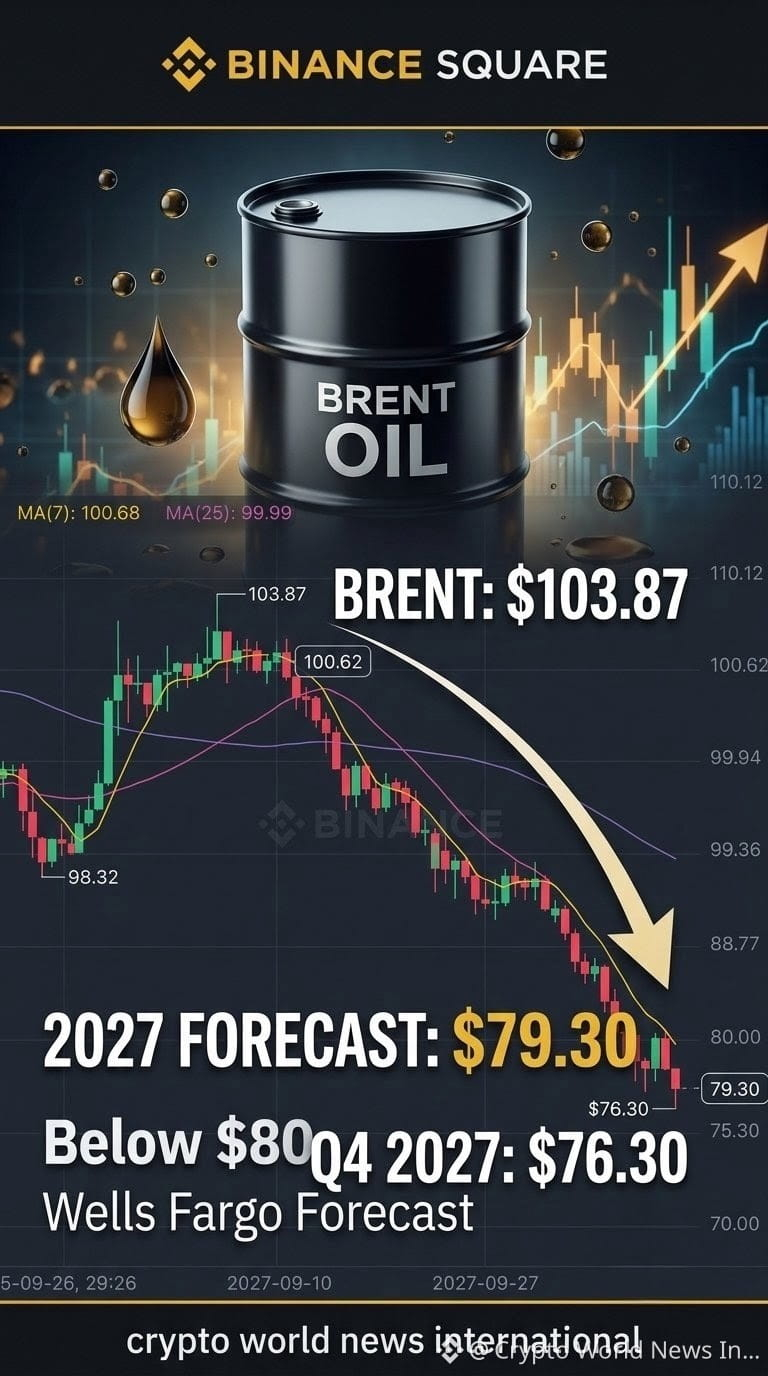
🛢️ OIL COULD FALL BELOW $80 IN 2027
Brent crude settled at $103.87 on Friday, but Wells Fargo expects prices to ease significantly next year as supply pressures fade and demand weakens.
🔑 Key Points:
• Brent Friday close: $103.87
• Wells Fargo 2027 average: $79.30
• Q2 2027 forecast: $79.00
• Q3 2027 forecast: $77.70
• Q4 2027 forecast: $76.30
• Oil inventories remain below pre-conflict levels
📉 Market Insight:
Wells Fargo expects Brent to move below $80 from Q2 2027, but warns that low inventories and ongoing supply disruptions could keep oil prices vulnerable to sudden spikes.
#Oil #BrentCrude #Energy #commodities #BinanceSquare $BZ
{future}(BZUSDT)
🛢️ OIL COULD FALL BELOW $80 IN 2027
Brent crude settled at $103.87 on Friday, but Wells Fargo expects prices to ease significantly next year as supply pressures fade and demand weakens.
🔑 Key Points:
• Brent Friday close: $103.87
• Wells Fargo 2027 average: $79.30
• Q2 2027 forecast: $79.00
• Q3 2027 forecast: $77.70
• Q4 2027 forecast: $76.30
• Oil inventories remain below pre-conflict levels
📉 Market Insight:
Wells Fargo expects Brent to move below $80 from Q2 2027, but warns that low inventories and ongoing supply disruptions could keep oil prices vulnerable to sudden spikes.
#Oil #BrentCrude #Energy #commodities #BinanceSquare $BZ
Brent crude settled at $103.87 on Friday, but Wells Fargo expects prices to ease significantly next year as supply pressures fade and demand weakens.
🔑 Key Points:
• Brent Friday close: $103.87
• Wells Fargo 2027 average: $79.30
• Q2 2027 forecast: $79.00
• Q3 2027 forecast: $77.70
• Q4 2027 forecast: $76.30
• Oil inventories remain below pre-conflict levels
📉 Market Insight:
Wells Fargo expects Brent to move below $80 from Q2 2027, but warns that low inventories and ongoing supply disruptions could keep oil prices vulnerable to sudden spikes.
#Oil #BrentCrude #Energy #commodities #BinanceSquare $BZ
258

·
--
Bullish
Partly True
🚨 #OIL IS BACK ABOVE $100
A lot of people are watching $BTC , but don’t ignore what’s happening with oil. 👀
Reports citing #JPMorgan warn that if the Strait of Hormuz remains disrupted, global usable oil inventories could face serious pressure.
And the charts are already speaking:
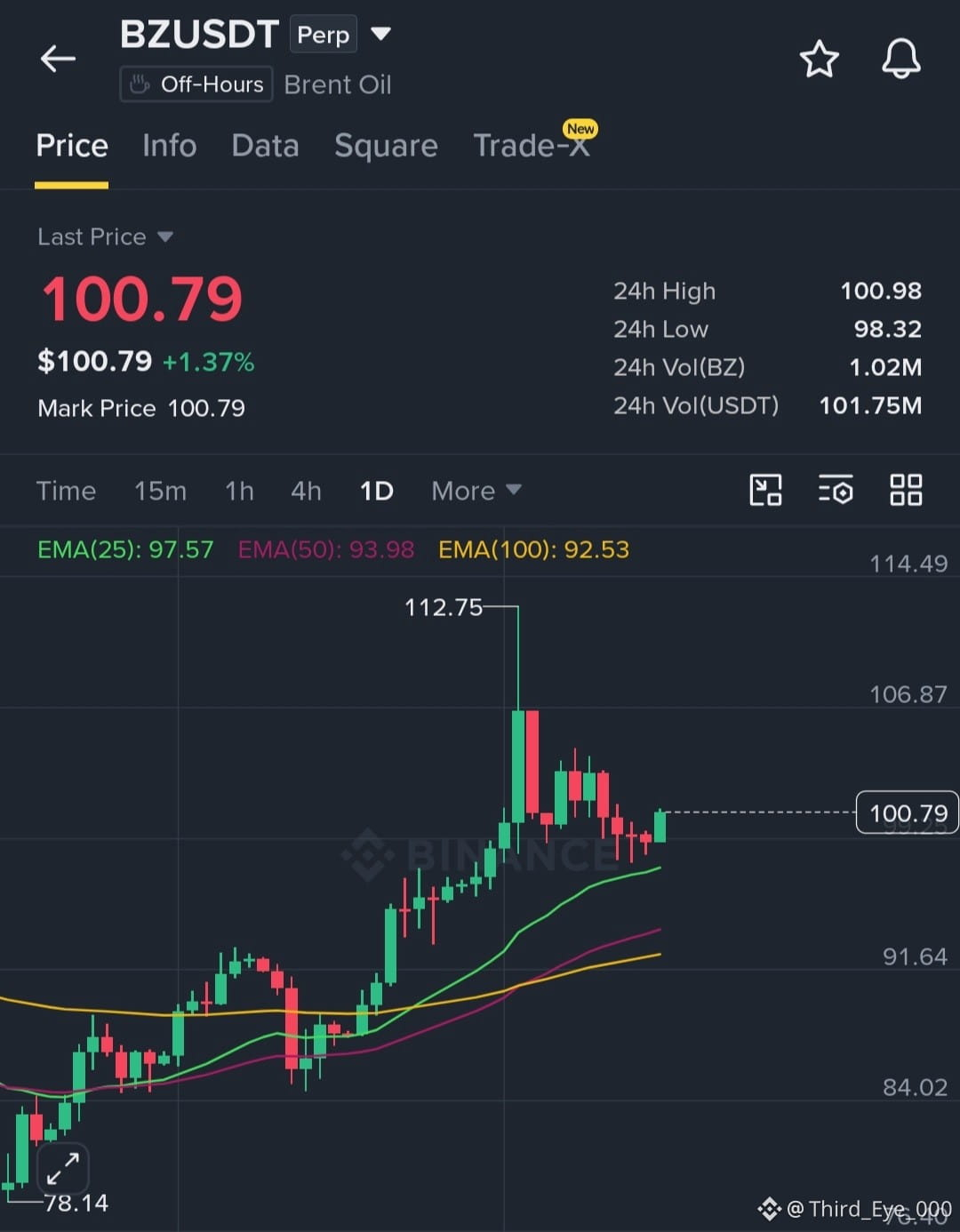
🛢️ Brent ($BZ ): $100.79
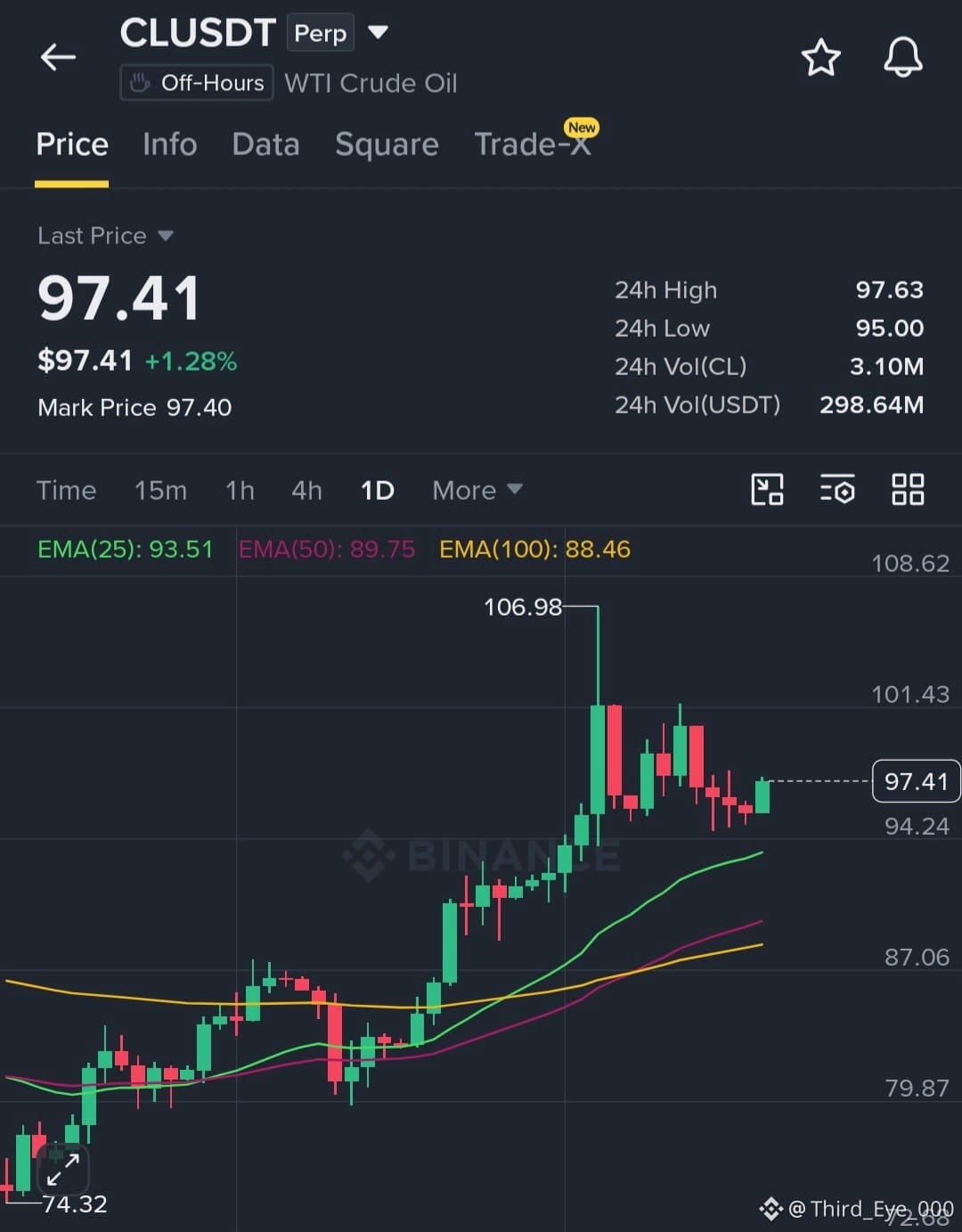
🛢️ WTI ($CL ): $97.41
Both are holding above their 25/50/100-day EMAs, with RSI around 60.
If the supply shock continues, this could become much bigger than just an oil price move.
Higher oil → higher energy costs → inflation pressure → markets feel the heat.
#oil is becoming a macro story again. 👀
{future}(BTCUSDT)
{future}(BZUSDT)
{future}(CLUSDT)
🚨 #OIL IS BACK ABOVE $100
A lot of people are watching $BTC , but don’t ignore what’s happening with oil. 👀
Reports citing #JPMorgan warn that if the Strait of Hormuz remains disrupted, global usable oil inventories could face serious pressure.
And the charts are already speaking:
🛢️ Brent ($BZ ): $100.79
🛢️ WTI ($CL ): $97.41
Both are holding above their 25/50/100-day EMAs, with RSI around 60.
If the supply shock continues, this could become much bigger than just an oil price move.
Higher oil → higher energy costs → inflation pressure → markets feel the heat.
#oil is becoming a macro story again. 👀
A lot of people are watching $BTC , but don’t ignore what’s happening with oil. 👀
Reports citing #JPMorgan warn that if the Strait of Hormuz remains disrupted, global usable oil inventories could face serious pressure.
And the charts are already speaking:
🛢️ Brent ($BZ ): $100.79
🛢️ WTI ($CL ): $97.41
Both are holding above their 25/50/100-day EMAs, with RSI around 60.
If the supply shock continues, this could become much bigger than just an oil price move.
Higher oil → higher energy costs → inflation pressure → markets feel the heat.
#oil is becoming a macro story again. 👀
617

Article
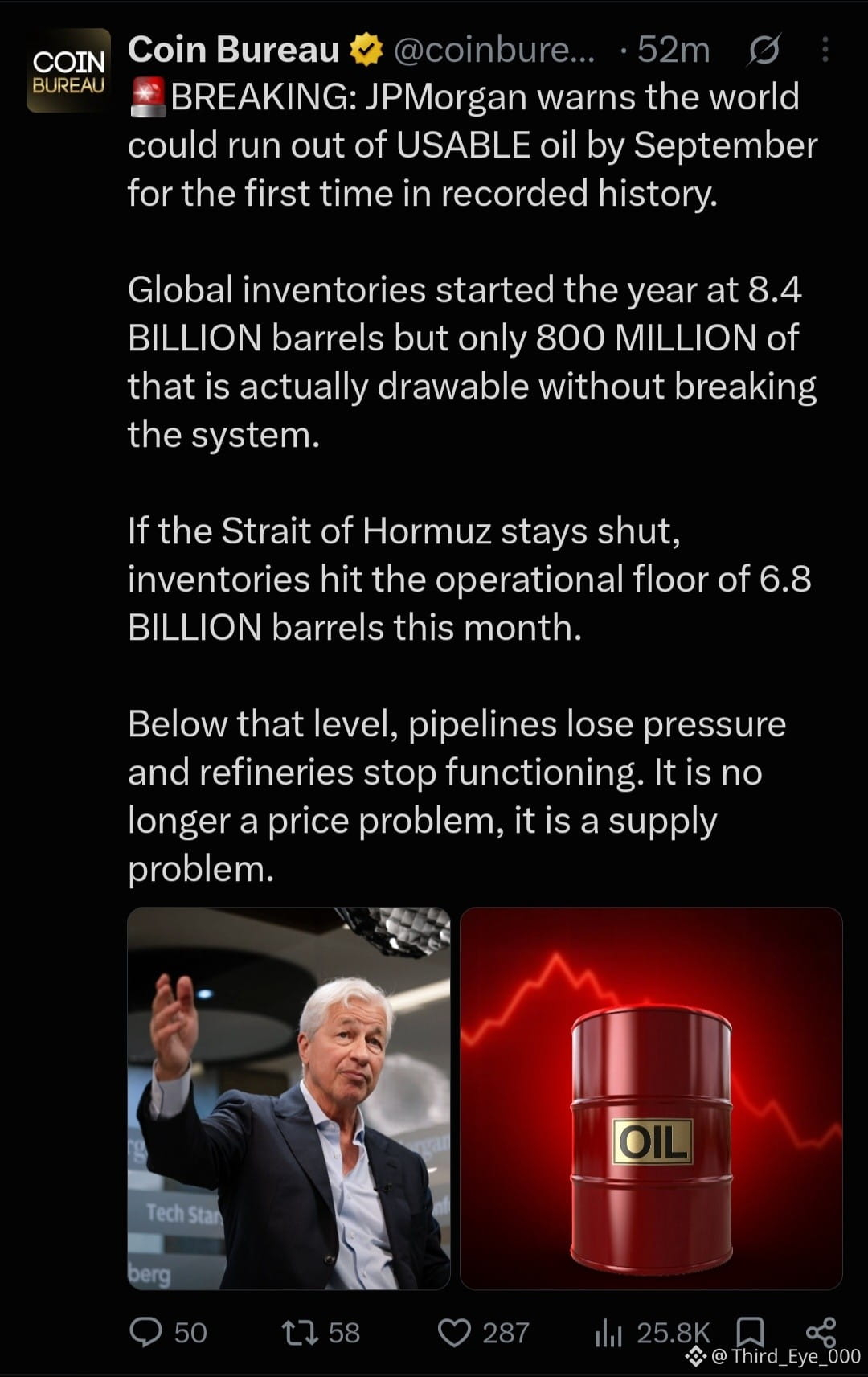
How the current oil situation will affect the cryptocurrency marketWorld oil inventories are projected to hit their operational floor of 6.8 billion barrels this month if the Strait of Hormuz stays shut, per JPMorgan.
Below this level, pipelines can't maintain pressure and refineries start failing, regardless of what price oil is trading at.
This would mark the first time in recorded history the world has had to worry about physical oil availability, not just price.
Reductions in oil production or supply significantly impact the global economy, as oil remains a primary energy source and raw material for many industries. The main channels through which this process affects the global economic situation are outlined below: Rising inflation: A decrease in oil supply leads to higher fuel prices (gasoline, diesel). Since logistics costs are embedded in the price of almost every product, this drives up the cost of food, household appliances, and other services. Interest rate hikes: To combat inflation caused by high energy costs, central banks (such as the US Federal Reserve or the ECB) are forced to raise interest rates. This makes borrowing more expensive for businesses and consumers, thereby slowing the overall pace of economic development. Slowing economic growth (stagflation): High energy costs compel businesses to cut production or reduce spending on development. If prices rise while production falls, a risk of stagflation emerges. Capital reallocation: Oil-importing nations (most European countries, China, India) suffer significant losses due to the outflow of currency abroad. Conversely, oil-exporting nations (OPEC+ countries, particularly Saudi Arabia) reap windfall profits.
Will the reduction in oil supplies affect the cryptocurrency market?
Reductions in oil supplies and the resulting price spikes exert direct pressure on the cryptocurrency market, typically triggering short-term declines or stagnation. However, in the long run, this impact could transform into a growth driver for Bitcoin and other digital assets. The link between the oil crisis (specifically the recent rise in Brent crude prices above $100 due to escalating tensions around the Strait of Hormuz) and the crypto market plays out through three main channels:
A contraction in fuel supply instantly drives up global inflation, fundamentally altering the behavior of financial regulators.
When inflation driven by high energy costs becomes chronic, an opposing mechanism comes into play: The printing press: To cushion the economic blow and finance budget deficits, governments are forced to issue additional fiat currency. The search for a "safe haven": The depreciation of national currencies drives major players to seek deflationary assets. Capital begins flowing into Bitcoin—alongside gold—because its supply is mathematically capped. This leads to a medium-term recovery and strong rallies.
Operating Costs: Mining and the Energy Crisis Reductions in oil supplies trigger a chain reaction across the energy market: the costs of coal and gas rise, directly increasing the production cost of mining Proof-of-Work cryptocurrencies (such as Bitcoin). Miners facing high electricity costs are forced to sell their coin holdings to cover ongoing expenses, creating additional selling pressure on exchanges.$CL
{future}(CLUSDT)
How the current oil situation will affect the cryptocurrency market
World oil inventories are projected to hit their operational floor of 6.8 billion barrels this month if the Strait of Hormuz stays shut, per JPMorgan.
Below this level, pipelines can't maintain pressure and refineries start failing, regardless of what price oil is trading at.
This would mark the first time in recorded history the world has had to worry about physical oil availability, not just price.
Reductions in oil production or supply significantly impact the global economy, as oil remains a primary energy source and raw material for many industries. The main channels through which this process affects the global economic situation are outlined below: Rising inflation: A decrease in oil supply leads to higher fuel prices (gasoline, diesel). Since logistics costs are embedded in the price of almost every product, this drives up the cost of food, household appliances, and other services. Interest rate hikes: To combat inflation caused by high energy costs, central banks (such as the US Federal Reserve or the ECB) are forced to raise interest rates. This makes borrowing more expensive for businesses and consumers, thereby slowing the overall pace of economic development. Slowing economic growth (stagflation): High energy costs compel businesses to cut production or reduce spending on development. If prices rise while production falls, a risk of stagflation emerges. Capital reallocation: Oil-importing nations (most European countries, China, India) suffer significant losses due to the outflow of currency abroad. Conversely, oil-exporting nations (OPEC+ countries, particularly Saudi Arabia) reap windfall profits.
Will the reduction in oil supplies affect the cryptocurrency market?
Reductions in oil supplies and the resulting price spikes exert direct pressure on the cryptocurrency market, typically triggering short-term declines or stagnation. However, in the long run, this impact could transform into a growth driver for Bitcoin and other digital assets. The link between the oil crisis (specifically the recent rise in Brent crude prices above $100 due to escalating tensions around the Strait of Hormuz) and the crypto market plays out through three main channels:
A contraction in fuel supply instantly drives up global inflation, fundamentally altering the behavior of financial regulators.
When inflation driven by high energy costs becomes chronic, an opposing mechanism comes into play: The printing press: To cushion the economic blow and finance budget deficits, governments are forced to issue additional fiat currency. The search for a "safe haven": The depreciation of national currencies drives major players to seek deflationary assets. Capital begins flowing into Bitcoin—alongside gold—because its supply is mathematically capped. This leads to a medium-term recovery and strong rallies.
Operating Costs: Mining and the Energy Crisis Reductions in oil supplies trigger a chain reaction across the energy market: the costs of coal and gas rise, directly increasing the production cost of mining Proof-of-Work cryptocurrencies (such as Bitcoin). Miners facing high electricity costs are forced to sell their coin holdings to cover ongoing expenses, creating additional selling pressure on exchanges.$CL
Below this level, pipelines can't maintain pressure and refineries start failing, regardless of what price oil is trading at.
This would mark the first time in recorded history the world has had to worry about physical oil availability, not just price.
Reductions in oil production or supply significantly impact the global economy, as oil remains a primary energy source and raw material for many industries. The main channels through which this process affects the global economic situation are outlined below: Rising inflation: A decrease in oil supply leads to higher fuel prices (gasoline, diesel). Since logistics costs are embedded in the price of almost every product, this drives up the cost of food, household appliances, and other services. Interest rate hikes: To combat inflation caused by high energy costs, central banks (such as the US Federal Reserve or the ECB) are forced to raise interest rates. This makes borrowing more expensive for businesses and consumers, thereby slowing the overall pace of economic development. Slowing economic growth (stagflation): High energy costs compel businesses to cut production or reduce spending on development. If prices rise while production falls, a risk of stagflation emerges. Capital reallocation: Oil-importing nations (most European countries, China, India) suffer significant losses due to the outflow of currency abroad. Conversely, oil-exporting nations (OPEC+ countries, particularly Saudi Arabia) reap windfall profits.
Will the reduction in oil supplies affect the cryptocurrency market?
Reductions in oil supplies and the resulting price spikes exert direct pressure on the cryptocurrency market, typically triggering short-term declines or stagnation. However, in the long run, this impact could transform into a growth driver for Bitcoin and other digital assets. The link between the oil crisis (specifically the recent rise in Brent crude prices above $100 due to escalating tensions around the Strait of Hormuz) and the crypto market plays out through three main channels:
A contraction in fuel supply instantly drives up global inflation, fundamentally altering the behavior of financial regulators.
When inflation driven by high energy costs becomes chronic, an opposing mechanism comes into play: The printing press: To cushion the economic blow and finance budget deficits, governments are forced to issue additional fiat currency. The search for a "safe haven": The depreciation of national currencies drives major players to seek deflationary assets. Capital begins flowing into Bitcoin—alongside gold—because its supply is mathematically capped. This leads to a medium-term recovery and strong rallies.
Operating Costs: Mining and the Energy Crisis Reductions in oil supplies trigger a chain reaction across the energy market: the costs of coal and gas rise, directly increasing the production cost of mining Proof-of-Work cryptocurrencies (such as Bitcoin). Miners facing high electricity costs are forced to sell their coin holdings to cover ongoing expenses, creating additional selling pressure on exchanges.$CL
1
117

🚨 $OIL MACRO LIQUIDITY SHIFT: HORMUZ BLOCKADE STIFLES IRAN EXPORTS AS 1B BARRELS FLOW 🌊
Institutional eyes are locked on the Strait of Hormuz as naval forces secure transit for over one billion crude oil barrels while enforcing a total blockade on Iranian supply. 🌊 This unprecedented constriction of geopolitical order flow creates severe asymmetry across global macro energy corridors.
📊 Smart money is pricing in structural supply tightness as physical volume is diverted away from blocked sanction channels. 💡 As institutional liquidity recalibrates around these energy supply constraints, expect volatility to cascade directly into broader risk assets.
💬 How will you position your portfolio as macro supply shocks restructure global market liquidity? 👇
⚠️ Not financial advice. Always manage your risk. 🛡️
🏷️ #OIL #Macro #Commodities #Liquidity #Trading
🎯 🦈
🚨 $OIL MACRO LIQUIDITY SHIFT: HORMUZ BLOCKADE STIFLES IRAN EXPORTS AS 1B BARRELS FLOW 🌊
Institutional eyes are locked on the Strait of Hormuz as naval forces secure transit for over one billion crude oil barrels while enforcing a total blockade on Iranian supply. 🌊 This unprecedented constriction of geopolitical order flow creates severe asymmetry across global macro energy corridors.
📊 Smart money is pricing in structural supply tightness as physical volume is diverted away from blocked sanction channels. 💡 As institutional liquidity recalibrates around these energy supply constraints, expect volatility to cascade directly into broader risk assets.
💬 How will you position your portfolio as macro supply shocks restructure global market liquidity? 👇
⚠️ Not financial advice. Always manage your risk. 🛡️
🏷️ #OIL #Macro #Commodities #Liquidity #Trading
🎯 🦈
Institutional eyes are locked on the Strait of Hormuz as naval forces secure transit for over one billion crude oil barrels while enforcing a total blockade on Iranian supply. 🌊 This unprecedented constriction of geopolitical order flow creates severe asymmetry across global macro energy corridors.
📊 Smart money is pricing in structural supply tightness as physical volume is diverted away from blocked sanction channels. 💡 As institutional liquidity recalibrates around these energy supply constraints, expect volatility to cascade directly into broader risk assets.
💬 How will you position your portfolio as macro supply shocks restructure global market liquidity? 👇
⚠️ Not financial advice. Always manage your risk. 🛡️
🏷️ #OIL #Macro #Commodities #Liquidity #Trading
🎯 🦈
5


·
--
Bullish
The Bear 07:
good news captain
1
4
285

·
--
Verified
Article
A New Sanctions Law Just Landed on an Already-Tight Oil Market✍️ A New Sanctions Law Just Landed on an Already-Tight Oil Market
Oil markets have already been dealing with elevated geopolitical risk from the Middle East. Now another major policy development has entered the picture.
What's happening:
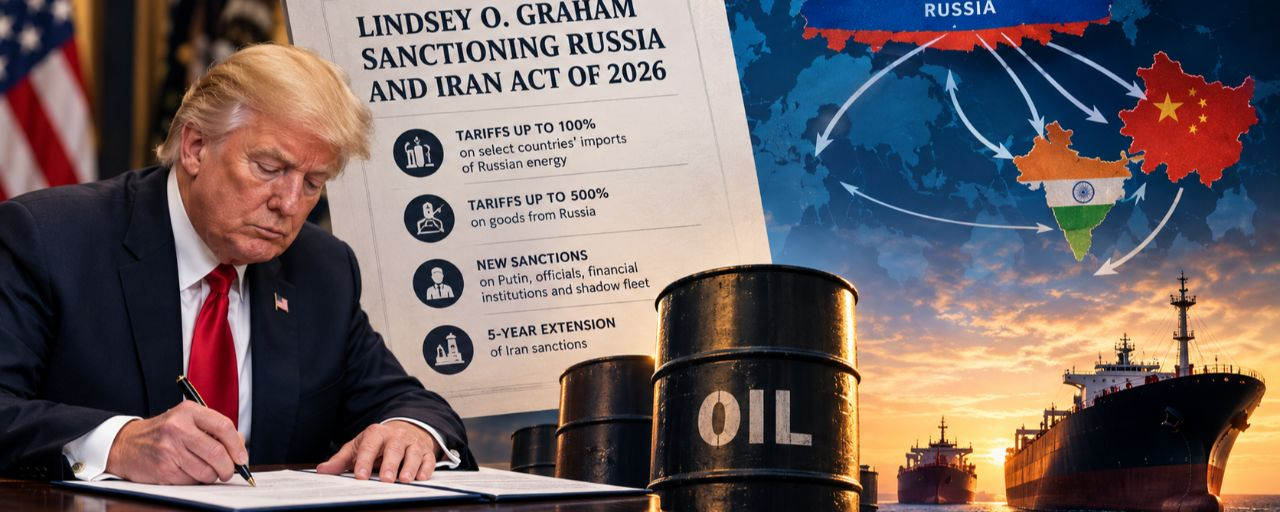
President Donald Trump signed the Lindsey O. Graham Sanctioning Russia and Iran Act of 2026 into law on September 18 after it passed Congress with bipartisan support.
The legislation gives the U.S. additional tools to increase economic pressure on Russia while extending existing sanctions on Iran.
The law authorizes tariffs of up to 100% on imports from countries that rank among the five largest buyers of Russian crude oil or natural gas.
It also authorizes tariffs of up to 500% on goods imported directly from Russia and introduces additional sanctions targeting senior Russian officials, major financial institutions and vessels associated with moving Russian oil around existing restrictions.
The legislation also extends certain U.S. sanctions involving Iran's energy and weapons sectors for another five years.
Importantly, the law includes waiver authority, meaning the maximum measures won't necessarily be applied uniformly in every case.
Why it matters:
China and India are among the countries with significant exposure because of their purchases of Russian energy.
If the new tariff authority is used aggressively, it could redirect crude flows, increase transportation and trade costs, and complicate the global inflation outlook.
But there's another side to the story.
Waivers and ongoing diplomatic negotiations could substantially affect how the legislation is implemented. That means markets aren't just pricing the law itself — they're also watching how aggressively the new authority is actually used.
For oil, that's the key distinction.
A major sanctions law can change expectations quickly, but changing physical energy flows takes time.
Does this trigger a meaningful reshuffling of global oil trade, or will waivers and diplomacy limit the real-world impact?
#oil #markets #Geopolitics #energy #Macro
$TRUMP $CL $AKE
{future}(AKEUSDT)
{future}(CLUSDT)
{future}(TRUMPUSDT)
A New Sanctions Law Just Landed on an Already-Tight Oil Market
✍️ A New Sanctions Law Just Landed on an Already-Tight Oil Market
Oil markets have already been dealing with elevated geopolitical risk from the Middle East. Now another major policy development has entered the picture.
What's happening:
President Donald Trump signed the Lindsey O. Graham Sanctioning Russia and Iran Act of 2026 into law on September 18 after it passed Congress with bipartisan support.
The legislation gives the U.S. additional tools to increase economic pressure on Russia while extending existing sanctions on Iran.
The law authorizes tariffs of up to 100% on imports from countries that rank among the five largest buyers of Russian crude oil or natural gas.
It also authorizes tariffs of up to 500% on goods imported directly from Russia and introduces additional sanctions targeting senior Russian officials, major financial institutions and vessels associated with moving Russian oil around existing restrictions.
The legislation also extends certain U.S. sanctions involving Iran's energy and weapons sectors for another five years.
Importantly, the law includes waiver authority, meaning the maximum measures won't necessarily be applied uniformly in every case.
Why it matters:
China and India are among the countries with significant exposure because of their purchases of Russian energy.
If the new tariff authority is used aggressively, it could redirect crude flows, increase transportation and trade costs, and complicate the global inflation outlook.
But there's another side to the story.
Waivers and ongoing diplomatic negotiations could substantially affect how the legislation is implemented. That means markets aren't just pricing the law itself — they're also watching how aggressively the new authority is actually used.
For oil, that's the key distinction.
A major sanctions law can change expectations quickly, but changing physical energy flows takes time.
Does this trigger a meaningful reshuffling of global oil trade, or will waivers and diplomacy limit the real-world impact?
#oil #markets #Geopolitics #energy #Macro
$TRUMP $CL $AKE
Oil markets have already been dealing with elevated geopolitical risk from the Middle East. Now another major policy development has entered the picture.
What's happening:
President Donald Trump signed the Lindsey O. Graham Sanctioning Russia and Iran Act of 2026 into law on September 18 after it passed Congress with bipartisan support.
The legislation gives the U.S. additional tools to increase economic pressure on Russia while extending existing sanctions on Iran.
The law authorizes tariffs of up to 100% on imports from countries that rank among the five largest buyers of Russian crude oil or natural gas.
It also authorizes tariffs of up to 500% on goods imported directly from Russia and introduces additional sanctions targeting senior Russian officials, major financial institutions and vessels associated with moving Russian oil around existing restrictions.
The legislation also extends certain U.S. sanctions involving Iran's energy and weapons sectors for another five years.
Importantly, the law includes waiver authority, meaning the maximum measures won't necessarily be applied uniformly in every case.
Why it matters:
China and India are among the countries with significant exposure because of their purchases of Russian energy.
If the new tariff authority is used aggressively, it could redirect crude flows, increase transportation and trade costs, and complicate the global inflation outlook.
But there's another side to the story.
Waivers and ongoing diplomatic negotiations could substantially affect how the legislation is implemented. That means markets aren't just pricing the law itself — they're also watching how aggressively the new authority is actually used.
For oil, that's the key distinction.
A major sanctions law can change expectations quickly, but changing physical energy flows takes time.
Does this trigger a meaningful reshuffling of global oil trade, or will waivers and diplomacy limit the real-world impact?
#oil #markets #Geopolitics #energy #Macro
$TRUMP $CL $AKE
476

·
--
Europe is already talking about the second-order effects of the Strait of Hormuz shock.
$AKE
EU finance ministers are set to discuss a bloc-wide tax on windfall profits at energy companies that benefited from the sharp rise in oil and gas prices after the closure of the Strait of Hormuz, with more talks due next month. That matters because once policymakers start reacting to an energy spike, the market begins pricing not just supply risk — but also inflation, margins, and policy pressure.
For traders, the channels are clear: crude, European equities, EUR/USD, gold, and broader risk sentiment. Higher energy costs can keep inflation sticky, which can complicate rate-cut expectations and put pressure on growth-sensitive assets. Crypto usually trades like a high-beta risk asset in that environment, so BTC and altcoins could stay reactive to moves in yields and the dollar.
$ONE
While macro risk is building, , and are still showing strong momentum on Binance Futures — a reminder that speculative appetite is alive even as the macro backdrop gets heavier.
$G
The key question now is whether this turns into a short-lived energy shock, or the start of a more persistent inflation problem for global markets.
#Oil #Inflation #Markets
Europe is already talking about the second-order effects of the Strait of Hormuz shock.
$AKE
EU finance ministers are set to discuss a bloc-wide tax on windfall profits at energy companies that benefited from the sharp rise in oil and gas prices after the closure of the Strait of Hormuz, with more talks due next month. That matters because once policymakers start reacting to an energy spike, the market begins pricing not just supply risk — but also inflation, margins, and policy pressure.
For traders, the channels are clear: crude, European equities, EUR/USD, gold, and broader risk sentiment. Higher energy costs can keep inflation sticky, which can complicate rate-cut expectations and put pressure on growth-sensitive assets. Crypto usually trades like a high-beta risk asset in that environment, so BTC and altcoins could stay reactive to moves in yields and the dollar.
$ONE
While macro risk is building, , and are still showing strong momentum on Binance Futures — a reminder that speculative appetite is alive even as the macro backdrop gets heavier.
$G
The key question now is whether this turns into a short-lived energy shock, or the start of a more persistent inflation problem for global markets.
#Oil #Inflation #Markets
$AKE
EU finance ministers are set to discuss a bloc-wide tax on windfall profits at energy companies that benefited from the sharp rise in oil and gas prices after the closure of the Strait of Hormuz, with more talks due next month. That matters because once policymakers start reacting to an energy spike, the market begins pricing not just supply risk — but also inflation, margins, and policy pressure.
For traders, the channels are clear: crude, European equities, EUR/USD, gold, and broader risk sentiment. Higher energy costs can keep inflation sticky, which can complicate rate-cut expectations and put pressure on growth-sensitive assets. Crypto usually trades like a high-beta risk asset in that environment, so BTC and altcoins could stay reactive to moves in yields and the dollar.
$ONE
While macro risk is building, , and are still showing strong momentum on Binance Futures — a reminder that speculative appetite is alive even as the macro backdrop gets heavier.
$G
The key question now is whether this turns into a short-lived energy shock, or the start of a more persistent inflation problem for global markets.
#Oil #Inflation #Markets
262

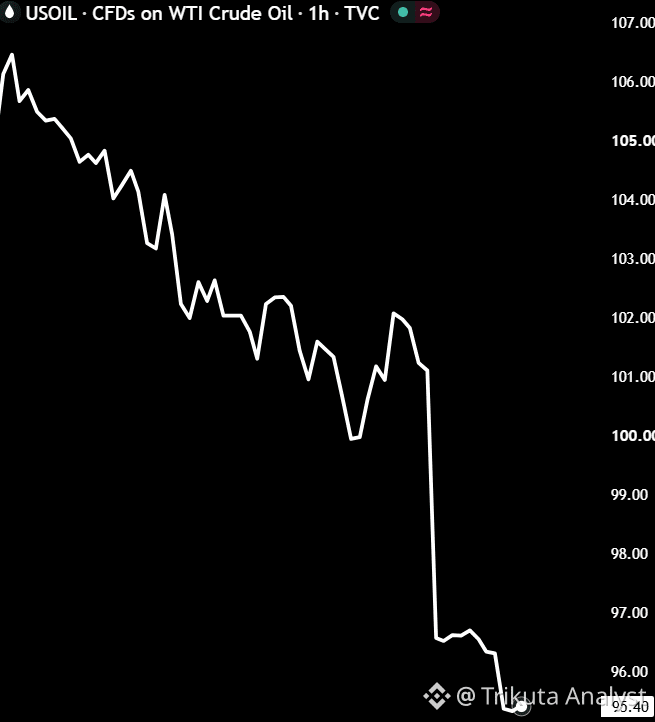
#Oil #Market #Binance #GlobalMarket Oil prices ease as Middle East supply concerns moderate.WTI crude has moved lower in recent sessions, reflecting shifting expectations around regional disruptions.Global markets remain focused on geopolitical developments and energy supply dynamics.Stay ahead with real-time market data and tools on Binance.
#Oil #Market #Binance #GlobalMarket Oil prices ease as Middle East supply concerns moderate.WTI crude has moved lower in recent sessions, reflecting shifting expectations around regional disruptions.Global markets remain focused on geopolitical developments and energy supply dynamics.Stay ahead with real-time market data and tools on Binance.
1
2
261

·
--
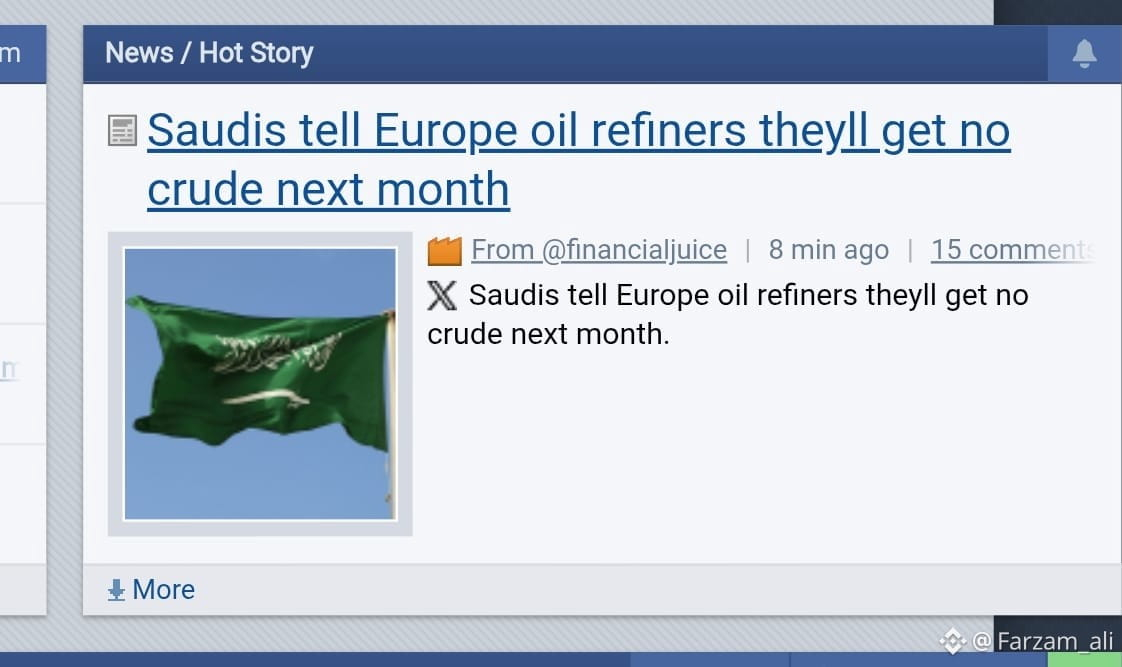
Saudi Arabia May Send Zero Crude to Europe Next Month
Saudi Aramco has reportedly told some European oil refiners that they may receive no crude oil in October under their term contracts.
The reason is linked to the recent drone attack and disruption affecting the East-West oil pipeline and Red Sea route.
This is not just a normal supply cut. If European buyers really get zero supply, they will have to look for crude from other sources such as North Sea, West Africa, the US and Kazakhstan.
🛢️ What Could Happen to Oil?
This could be bullish for oil prices in the short term.
If European refiners have to buy more crude from alternative suppliers, competition for available oil could increase. That may put more upward pressure on Brent and WTI.
📈 What About Stocks?
Energy stocks could benefit if oil prices stay high.
Companies like oil producers and energy businesses may see stronger profits.
But higher oil prices can hurt:
✈️ Airlines
🚢 Shipping
🏭 Chemicals
🚗 Auto companies
Higher fuel and energy costs can also increase inflation pressure.
₿ What About $BTC & Crypto?
The impact on crypto would likely be indirect.
If higher oil prices increase inflation fears and create a risk-off mood, BTC and ETH could face some short-term pressure.
But if the dollar weakens and investors look for alternative assets, crypto could also find support.
🥇 What About $XAU
Gold could remain supported because geopolitical tension and inflation concerns often increase demand for safe-haven assets.
🔥 Bottom Line
If the Saudi supply disruption continues, Europe may need to pay more for alternative crude, keeping the global oil market tight.
Oil: Short-term bullish bias 🛢️
$XAU : Supported 🥇
Stocks: Energy positive, fuel-sensitive sectors under pressure 📊
Crypto: Cautious / mixed ₿
#btc #gold #crypto #stock #oil
Saudi Arabia May Send Zero Crude to Europe Next Month
Saudi Aramco has reportedly told some European oil refiners that they may receive no crude oil in October under their term contracts.
The reason is linked to the recent drone attack and disruption affecting the East-West oil pipeline and Red Sea route.
This is not just a normal supply cut. If European buyers really get zero supply, they will have to look for crude from other sources such as North Sea, West Africa, the US and Kazakhstan.
🛢️ What Could Happen to Oil?
This could be bullish for oil prices in the short term.
If European refiners have to buy more crude from alternative suppliers, competition for available oil could increase. That may put more upward pressure on Brent and WTI.
📈 What About Stocks?
Energy stocks could benefit if oil prices stay high.
Companies like oil producers and energy businesses may see stronger profits.
But higher oil prices can hurt:
✈️ Airlines
🚢 Shipping
🏭 Chemicals
🚗 Auto companies
Higher fuel and energy costs can also increase inflation pressure.
₿ What About $BTC & Crypto?
The impact on crypto would likely be indirect.
If higher oil prices increase inflation fears and create a risk-off mood, BTC and ETH could face some short-term pressure.
But if the dollar weakens and investors look for alternative assets, crypto could also find support.
🥇 What About $XAU
Gold could remain supported because geopolitical tension and inflation concerns often increase demand for safe-haven assets.
🔥 Bottom Line
If the Saudi supply disruption continues, Europe may need to pay more for alternative crude, keeping the global oil market tight.
Oil: Short-term bullish bias 🛢️
$XAU : Supported 🥇
Stocks: Energy positive, fuel-sensitive sectors under pressure 📊
Crypto: Cautious / mixed ₿
#btc #gold #crypto #stock #oil
Saudi Aramco has reportedly told some European oil refiners that they may receive no crude oil in October under their term contracts.
The reason is linked to the recent drone attack and disruption affecting the East-West oil pipeline and Red Sea route.
This is not just a normal supply cut. If European buyers really get zero supply, they will have to look for crude from other sources such as North Sea, West Africa, the US and Kazakhstan.
🛢️ What Could Happen to Oil?
This could be bullish for oil prices in the short term.
If European refiners have to buy more crude from alternative suppliers, competition for available oil could increase. That may put more upward pressure on Brent and WTI.
📈 What About Stocks?
Energy stocks could benefit if oil prices stay high.
Companies like oil producers and energy businesses may see stronger profits.
But higher oil prices can hurt:
✈️ Airlines
🚢 Shipping
🏭 Chemicals
🚗 Auto companies
Higher fuel and energy costs can also increase inflation pressure.
₿ What About $BTC & Crypto?
The impact on crypto would likely be indirect.
If higher oil prices increase inflation fears and create a risk-off mood, BTC and ETH could face some short-term pressure.
But if the dollar weakens and investors look for alternative assets, crypto could also find support.
🥇 What About $XAU
Gold could remain supported because geopolitical tension and inflation concerns often increase demand for safe-haven assets.
🔥 Bottom Line
If the Saudi supply disruption continues, Europe may need to pay more for alternative crude, keeping the global oil market tight.
Oil: Short-term bullish bias 🛢️
$XAU : Supported 🥇
Stocks: Energy positive, fuel-sensitive sectors under pressure 📊
Crypto: Cautious / mixed ₿
#btc #gold #crypto #stock #oil
1
335

·
--
SAUDI ARABIA CUTS $OIL SUPPLY TO EUROPE NEXT MONTH DRIVING MASSIVE MACRO VOLATILITY 🚨 💥
Saudi Arabia just delivered a severe supply shock, notifying European refiners that crude deliveries are completely cut for next month. 📊 A move this aggressive instantly rewrites energy market expectations and sends shockwaves straight into global macro liquidity.
When energy costs spike, inflation expectations reignite fast, putting immediate pressure on central banks and shaking up order flow across risk markets. 🔍 Smart capital is already shifting allocations as macro volatility builds ahead of the Q4 open.
💬 How do you see this energy supply squeeze impacting broader market risk appetite over the coming weeks? 👇
⚠️ Not financial advice. Always manage your risk. 🛡️
🏷️ #OIL #Macro #Energy #Crypto #Trading
⚡ 💎
SAUDI ARABIA CUTS $OIL SUPPLY TO EUROPE NEXT MONTH DRIVING MASSIVE MACRO VOLATILITY 🚨 💥
Saudi Arabia just delivered a severe supply shock, notifying European refiners that crude deliveries are completely cut for next month. 📊 A move this aggressive instantly rewrites energy market expectations and sends shockwaves straight into global macro liquidity.
When energy costs spike, inflation expectations reignite fast, putting immediate pressure on central banks and shaking up order flow across risk markets. 🔍 Smart capital is already shifting allocations as macro volatility builds ahead of the Q4 open.
💬 How do you see this energy supply squeeze impacting broader market risk appetite over the coming weeks? 👇
⚠️ Not financial advice. Always manage your risk. 🛡️
🏷️ #OIL #Macro #Energy #Crypto #Trading
⚡ 💎
Saudi Arabia just delivered a severe supply shock, notifying European refiners that crude deliveries are completely cut for next month. 📊 A move this aggressive instantly rewrites energy market expectations and sends shockwaves straight into global macro liquidity.
When energy costs spike, inflation expectations reignite fast, putting immediate pressure on central banks and shaking up order flow across risk markets. 🔍 Smart capital is already shifting allocations as macro volatility builds ahead of the Q4 open.
💬 How do you see this energy supply squeeze impacting broader market risk appetite over the coming weeks? 👇
⚠️ Not financial advice. Always manage your risk. 🛡️
🏷️ #OIL #Macro #Energy #Crypto #Trading
⚡ 💎
12

·
--
🚨 SAUDI ARABIA HALTS EUROPEAN CRUDE SUPPLY TRIGGERING A MACRO LIQUIDITY SHOCK FOR $OIL ⚡
Institutional order flow is preparing for a systemic shift as Saudi Arabia restricts crude allocations to European refiners next month. 📌 This supply pinch creates an immediate inefficiency across global energy benchmarks, forcing institutional capital to rebalance inflation hedges and risk assets rapidly. 📊
Smart money typically uses these supply-driven macro catalysts to sweep liquidity across correlated markets before establishing fresh directional bias. 🌊 Watch how global macro yields and liquidity pools react to this structural tightening as order books absorb the initial shockwave. 🔍
💬 How will you position your macro portfolio as energy supply constraints bleed into broader risk assets? 👇
⚠️ Not financial advice. Always manage your risk. 🛡️
🏷️ #OIL #MacroEconomy #Energy #SmartMoney #MarketStructure
🎯 🦈
🚨 SAUDI ARABIA HALTS EUROPEAN CRUDE SUPPLY TRIGGERING A MACRO LIQUIDITY SHOCK FOR $OIL ⚡
Institutional order flow is preparing for a systemic shift as Saudi Arabia restricts crude allocations to European refiners next month. 📌 This supply pinch creates an immediate inefficiency across global energy benchmarks, forcing institutional capital to rebalance inflation hedges and risk assets rapidly. 📊
Smart money typically uses these supply-driven macro catalysts to sweep liquidity across correlated markets before establishing fresh directional bias. 🌊 Watch how global macro yields and liquidity pools react to this structural tightening as order books absorb the initial shockwave. 🔍
💬 How will you position your macro portfolio as energy supply constraints bleed into broader risk assets? 👇
⚠️ Not financial advice. Always manage your risk. 🛡️
🏷️ #OIL #MacroEconomy #Energy #SmartMoney #MarketStructure
🎯 🦈
Institutional order flow is preparing for a systemic shift as Saudi Arabia restricts crude allocations to European refiners next month. 📌 This supply pinch creates an immediate inefficiency across global energy benchmarks, forcing institutional capital to rebalance inflation hedges and risk assets rapidly. 📊
Smart money typically uses these supply-driven macro catalysts to sweep liquidity across correlated markets before establishing fresh directional bias. 🌊 Watch how global macro yields and liquidity pools react to this structural tightening as order books absorb the initial shockwave. 🔍
💬 How will you position your macro portfolio as energy supply constraints bleed into broader risk assets? 👇
⚠️ Not financial advice. Always manage your risk. 🛡️
🏷️ #OIL #MacroEconomy #Energy #SmartMoney #MarketStructure
🎯 🦈
13

·
--
Article
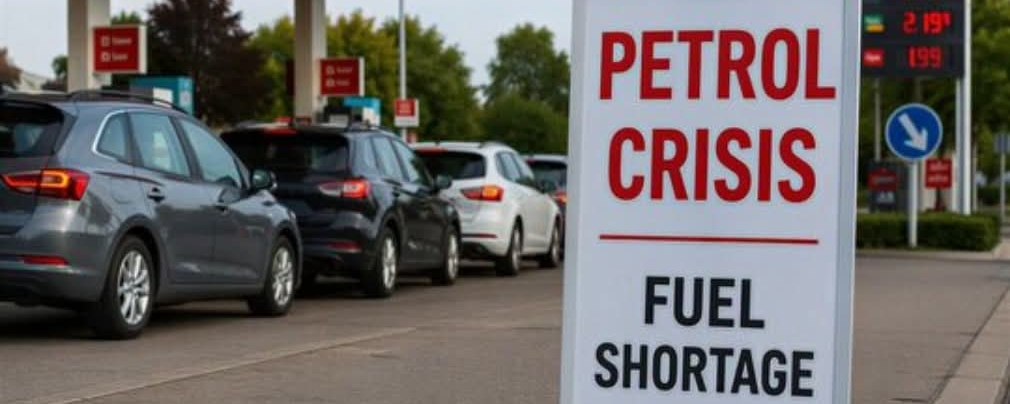
Escalating Oil Crisis Due to the U.S.-Iran War and Its Impact on Markets 🔥🔥🚨 A surge of warning signals is flashing all at once. A chain of military developments is unfolding simultaneously in the energy and security sectors around the world: 1. France is facing a severe fuel shortage; reports indicate that one out of every nine power plants is missing at least one type of fuel, while diesel prices have hit record highs. 2. Europe is entering the winter season under intense pressure in the energy sector, as disruptions to supplies coming from the Middle East have driven a sharp rise in natural gas prices, with storage levels remaining below last year’s rates. 3. The Moscow region was hit by a large-scale attack with drones, causing damage to a major oil refinery in Russia. 4. Trump returned from “Camp David” one day earlier than scheduled, without providing any official explanation. 5. U.S. embassies issued new security warnings across the Middle East. 6. North Korea launched two ballistic missiles off its eastern coast. 7. Cuba suffered another collapse in its national power grid amid a severe fuel shortage and deteriorating infrastructure. 8. Guidance from the British government urged families to keep emergency supplies, including food, water, medicine, and backup power sources. 9. Reports say Iran issued “Code 100,” its highest level of military readiness. 10. Iran warned that any new U.S. strike would trigger an immediate and “unlimited” response targeting U.S. bases and interests throughout the region. 11. Saudi Arabia cut oil shipments to Europe after attacks halted operations on the vital “East-West” pipeline.
Each of the above developments adds another layer of risk threatening global oil production, refineries, supply routes, and fuel availability. While Europe is already facing a fuel shortage and mounting pressure in the energy sector, attacks and military escalation threaten critical oil infrastructure and supply pathways. Any prolonged disruption to oil flows from the Middle East could drive crude and diesel prices sharply higher—worsening inflation, increasing pressure on households and businesses, and raising the likelihood of keeping interest rates higher for a longer period.
Escalating Oil Crisis Due to the U.S.-Iran War and Its Impact on Markets 🔥🔥
🚨 A surge of warning signals is flashing all at once. A chain of military developments is unfolding simultaneously in the energy and security sectors around the world: 1. France is facing a severe fuel shortage; reports indicate that one out of every nine power plants is missing at least one type of fuel, while diesel prices have hit record highs. 2. Europe is entering the winter season under intense pressure in the energy sector, as disruptions to supplies coming from the Middle East have driven a sharp rise in natural gas prices, with storage levels remaining below last year’s rates. 3. The Moscow region was hit by a large-scale attack with drones, causing damage to a major oil refinery in Russia. 4. Trump returned from “Camp David” one day earlier than scheduled, without providing any official explanation. 5. U.S. embassies issued new security warnings across the Middle East. 6. North Korea launched two ballistic missiles off its eastern coast. 7. Cuba suffered another collapse in its national power grid amid a severe fuel shortage and deteriorating infrastructure. 8. Guidance from the British government urged families to keep emergency supplies, including food, water, medicine, and backup power sources. 9. Reports say Iran issued “Code 100,” its highest level of military readiness. 10. Iran warned that any new U.S. strike would trigger an immediate and “unlimited” response targeting U.S. bases and interests throughout the region. 11. Saudi Arabia cut oil shipments to Europe after attacks halted operations on the vital “East-West” pipeline.
Each of the above developments adds another layer of risk threatening global oil production, refineries, supply routes, and fuel availability. While Europe is already facing a fuel shortage and mounting pressure in the energy sector, attacks and military escalation threaten critical oil infrastructure and supply pathways. Any prolonged disruption to oil flows from the Middle East could drive crude and diesel prices sharply higher—worsening inflation, increasing pressure on households and businesses, and raising the likelihood of keeping interest rates higher for a longer period.
Each of the above developments adds another layer of risk threatening global oil production, refineries, supply routes, and fuel availability. While Europe is already facing a fuel shortage and mounting pressure in the energy sector, attacks and military escalation threaten critical oil infrastructure and supply pathways. Any prolonged disruption to oil flows from the Middle East could drive crude and diesel prices sharply higher—worsening inflation, increasing pressure on households and businesses, and raising the likelihood of keeping interest rates higher for a longer period.
1
114

·
--
Global Oil Market Overview
Oil prices are experiencing a slight retreat today after a multi-day rally, though major benchmarks continue to trade above the key $100 per barrel threshold:
Key Headlines & Market Drivers
* Current Benchmark Prices:
* Brent Crude: Trading around $104.24 per barrel, down about 1% today as short-term supply anxiety eases slightly.
* WTI Crude: Holding around $100.94 per barrel.
* Middle East Shipping & Supply Disruption: Prices remain elevated due to lingering supply risks, including reduced shipping transits through the Strait of Hormuz and ongoing pipeline maintenance issues in the Middle East.
* U.S. Inventories Impact: An unexpected rise in U.S. crude inventories reported earlier this week has provided temporary price relief, pulling crude off recent multi-month highs.
* Fed Rate Decisions: Energy markets are also digesting the Federal Reserve's latest monetary policy decisions and interest rate path, which continue to influence global demand expectations.
#OilPrice #oil #Oil Brent CrudeOil Macro Inflation Crypto Bitcoin TradingBooms #OilMarket
Global Oil Market Overview
Oil prices are experiencing a slight retreat today after a multi-day rally, though major benchmarks continue to trade above the key $100 per barrel threshold:
Key Headlines & Market Drivers
* Current Benchmark Prices:
* Brent Crude: Trading around $104.24 per barrel, down about 1% today as short-term supply anxiety eases slightly.
* WTI Crude: Holding around $100.94 per barrel.
* Middle East Shipping & Supply Disruption: Prices remain elevated due to lingering supply risks, including reduced shipping transits through the Strait of Hormuz and ongoing pipeline maintenance issues in the Middle East.
* U.S. Inventories Impact: An unexpected rise in U.S. crude inventories reported earlier this week has provided temporary price relief, pulling crude off recent multi-month highs.
* Fed Rate Decisions: Energy markets are also digesting the Federal Reserve's latest monetary policy decisions and interest rate path, which continue to influence global demand expectations.
#OilPrice #oil #Oil Brent CrudeOil Macro Inflation Crypto Bitcoin TradingBooms #OilMarket
Oil prices are experiencing a slight retreat today after a multi-day rally, though major benchmarks continue to trade above the key $100 per barrel threshold:
Key Headlines & Market Drivers
* Current Benchmark Prices:
* Brent Crude: Trading around $104.24 per barrel, down about 1% today as short-term supply anxiety eases slightly.
* WTI Crude: Holding around $100.94 per barrel.
* Middle East Shipping & Supply Disruption: Prices remain elevated due to lingering supply risks, including reduced shipping transits through the Strait of Hormuz and ongoing pipeline maintenance issues in the Middle East.
* U.S. Inventories Impact: An unexpected rise in U.S. crude inventories reported earlier this week has provided temporary price relief, pulling crude off recent multi-month highs.
* Fed Rate Decisions: Energy markets are also digesting the Federal Reserve's latest monetary policy decisions and interest rate path, which continue to influence global demand expectations.
#OilPrice #oil #Oil Brent CrudeOil Macro Inflation Crypto Bitcoin TradingBooms #OilMarket
145

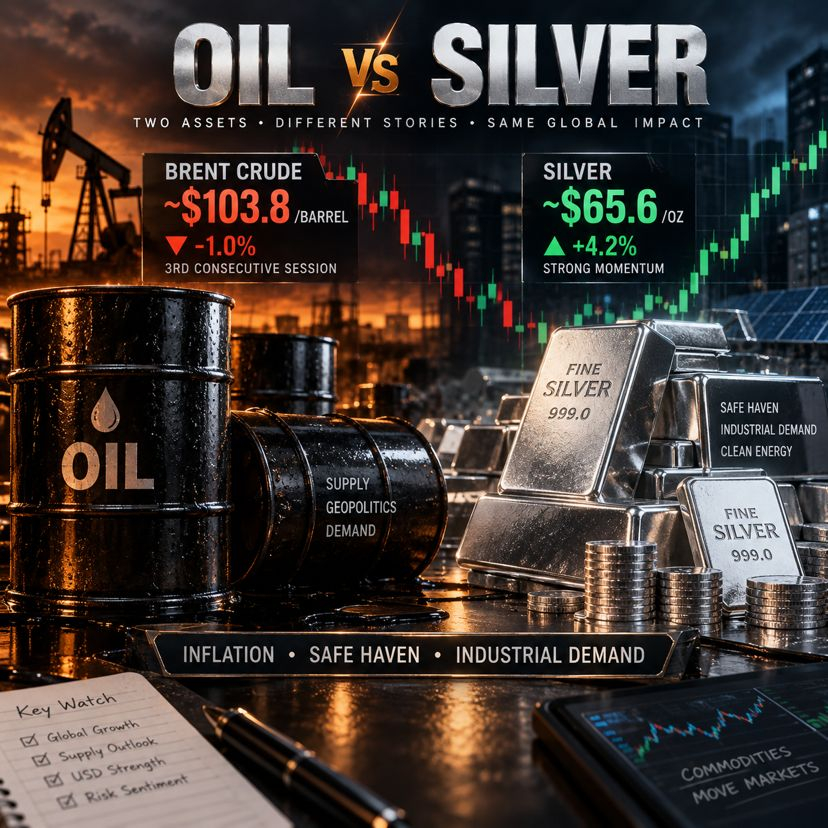
🔥 OIL vs SILVER: Two commodities, two very different signals.
Brent crude is around $103.8 and has fallen for a third straight session as supply-route concerns ease.
Silver, meanwhile, jumped around 4.2% to near $65.6, showing strong momentum in precious metals.
The key story is the divergence: softer oil can reduce near-term inflation pressure, while stronger silver reflects demand for metals and renewed momentum.
For traders, watch oil’s $100 zone and whether silver can hold above $65.
Which move deserves more attention today — Oil’s correction or Silver’s breakout?
#Silver #oil #commodities #Trading
🔥 OIL vs SILVER: Two commodities, two very different signals.
Brent crude is around $103.8 and has fallen for a third straight session as supply-route concerns ease.
Silver, meanwhile, jumped around 4.2% to near $65.6, showing strong momentum in precious metals.
The key story is the divergence: softer oil can reduce near-term inflation pressure, while stronger silver reflects demand for metals and renewed momentum.
For traders, watch oil’s $100 zone and whether silver can hold above $65.
Which move deserves more attention today — Oil’s correction or Silver’s breakout?
#Silver #oil #commodities #Trading
Brent crude is around $103.8 and has fallen for a third straight session as supply-route concerns ease.
Silver, meanwhile, jumped around 4.2% to near $65.6, showing strong momentum in precious metals.
The key story is the divergence: softer oil can reduce near-term inflation pressure, while stronger silver reflects demand for metals and renewed momentum.
For traders, watch oil’s $100 zone and whether silver can hold above $65.
Which move deserves more attention today — Oil’s correction or Silver’s breakout?
#Silver #oil #commodities #Trading
2
286

🚨 Day 203 of Iran Conflict: Fuel Shortages Ripple Into Five Countries 🧠
📊 | $BTC | $ETH | $BNB |
- Please follow, like, and comment to discuss market developments together. 📈
- Now entering day 203 of the Iran war, five countries have already seen fuel rationing or fuel stations with empty tanks.
- As of September 19, due to disruptions in the Strait of Hormuz, global crude oil prices have been nearing $110 this month, the highest since spring.
- After Iran was struck by US-Israeli airstrikes on February 28, it imposed a blockade on the Strait of Hormuz, causing shipping disruptions.
- Brent crude has remained strong this month, driving volatility in the energy sector. 🔥
- Fuel shortages may prompt the affected countries to accelerate energy substitution, and could increase demand for alternative-energy ETFs.
- Tight crude supplies are expected to continue supporting oil prices; in the short term, this may lead to larger swings in crypto energy-related tokens.
- Whale activity remains neutral at the moment, with no large-scale buying or selling; in the short run, the market may stay range-bound.
- If the Strait of Hormuz closes further, crude oil prices could break above $120, potentially triggering gains in safe-haven assets such as Bitcoin.
- How do you think the energy crisis will affect capital flows in the crypto market?
- Welcome to follow us and share your thoughts as we gain insight into future trends.
- #Crypto #Oil #Energy #Whales #Trading
🚨 Day 203 of Iran Conflict: Fuel Shortages Ripple Into Five Countries 🧠
📊 | $BTC | $ETH | $BNB |
- Please follow, like, and comment to discuss market developments together. 📈
- Now entering day 203 of the Iran war, five countries have already seen fuel rationing or fuel stations with empty tanks.
- As of September 19, due to disruptions in the Strait of Hormuz, global crude oil prices have been nearing $110 this month, the highest since spring.
- After Iran was struck by US-Israeli airstrikes on February 28, it imposed a blockade on the Strait of Hormuz, causing shipping disruptions.
- Brent crude has remained strong this month, driving volatility in the energy sector. 🔥
- Fuel shortages may prompt the affected countries to accelerate energy substitution, and could increase demand for alternative-energy ETFs.
- Tight crude supplies are expected to continue supporting oil prices; in the short term, this may lead to larger swings in crypto energy-related tokens.
- Whale activity remains neutral at the moment, with no large-scale buying or selling; in the short run, the market may stay range-bound.
- If the Strait of Hormuz closes further, crude oil prices could break above $120, potentially triggering gains in safe-haven assets such as Bitcoin.
- How do you think the energy crisis will affect capital flows in the crypto market?
- Welcome to follow us and share your thoughts as we gain insight into future trends.
- #Crypto #Oil #Energy #Whales #Trading
📊 | $BTC | $ETH | $BNB |
- Please follow, like, and comment to discuss market developments together. 📈
- Now entering day 203 of the Iran war, five countries have already seen fuel rationing or fuel stations with empty tanks.
- As of September 19, due to disruptions in the Strait of Hormuz, global crude oil prices have been nearing $110 this month, the highest since spring.
- After Iran was struck by US-Israeli airstrikes on February 28, it imposed a blockade on the Strait of Hormuz, causing shipping disruptions.
- Brent crude has remained strong this month, driving volatility in the energy sector. 🔥
- Fuel shortages may prompt the affected countries to accelerate energy substitution, and could increase demand for alternative-energy ETFs.
- Tight crude supplies are expected to continue supporting oil prices; in the short term, this may lead to larger swings in crypto energy-related tokens.
- Whale activity remains neutral at the moment, with no large-scale buying or selling; in the short run, the market may stay range-bound.
- If the Strait of Hormuz closes further, crude oil prices could break above $120, potentially triggering gains in safe-haven assets such as Bitcoin.
- How do you think the energy crisis will affect capital flows in the crypto market?
- Welcome to follow us and share your thoughts as we gain insight into future trends.
- #Crypto #Oil #Energy #Whales #Trading
303
Log in to explore more content
Join global crypto users on Binance Square
⚡️ Get latest and useful information about crypto.
💬 Trusted by the world’s largest crypto exchange.
👍 Discover real insights from verified creators.
Email / Phone number
Trending Topics
1
#CircleLaunchesInstitutionalBTCBackedBorrowing
364 views
130 Discussing
2
#BitcoinHits$85K
3,183 views
153 Discussing
3
#ZetaChainVotesToMigrateZETAToSolana
109 views
92 Discussing
4
#ECBStartsBlockchainEuroSettlement
5,308 views
383 Discussing
5
#SouthAfricaProposesCryptoExchangeControls
15,798 views
567 Discussing
6
#SolanaCutsTargetSlotTimeTo250ms
18,447 views
485 Discussing
7
#EthereumSurpasses$2700
16,793 views
201 Discussing
8
#CanaryFilesSecondAmendmentForStakedSEIETF
38,742 views
830 Discussing
9
#SaylorHintsStrategyBitcoinBuy
2.4M views
13,788 Discussing
10
#BOJRaisesRatesTo31YearHigh
356,948 views
4,040 Discussing