

Satoshi Pupil
418 Posts

Satoshi Pupil
Report
Block User
#binance
Frequent Trader
4 Years
22 Following
52 Followers
456 Liked
Posts
All
Quotes
Videos
Verified
See translation
ПриватБанк відсудив у росії понад $327 млн за активи в Криму
Після 11 років арбітражу суд зобов’язав росію компенсувати банку активи, незаконно експропрійовані після окупації Криму.
Сума включає $327 млн компенсації, відсотки та судові витрати, причому відсотки продовжуватимуть нараховуватися до повної виплати.
ПриватБанк відсудив у росії понад $327 млн за активи в Криму
Після 11 років арбітражу суд зобов’язав росію компенсувати банку активи, незаконно експропрійовані після окупації Криму.
Сума включає $327 млн компенсації, відсотки та судові витрати, причому відсотки продовжуватимуть нараховуватися до повної виплати.
Після 11 років арбітражу суд зобов’язав росію компенсувати банку активи, незаконно експропрійовані після окупації Криму.
Сума включає $327 млн компенсації, відсотки та судові витрати, причому відсотки продовжуватимуть нараховуватися до повної виплати.
2
462
17 years ago, you could buy 1,309 BTC for $1. On October 5, 2009, the first service for exchanging Bitcoin for dollars appeared. At that time, 1 BTC cost only about $0.00076. If you had spent just $1 on Bitcoin back then, those 1,309 BTC would be worth approximately $112.6 million today.
$BTC
{spot}(BTCUSDT)
17 years ago, you could buy 1,309 BTC for $1. On October 5, 2009, the first service for exchanging Bitcoin for dollars appeared. At that time, 1 BTC cost only about $0.00076. If you had spent just $1 on Bitcoin back then, those 1,309 BTC would be worth approximately $112.6 million today.
$BTC
$BTC
1
101

Jere Cremona uDFh
·
--
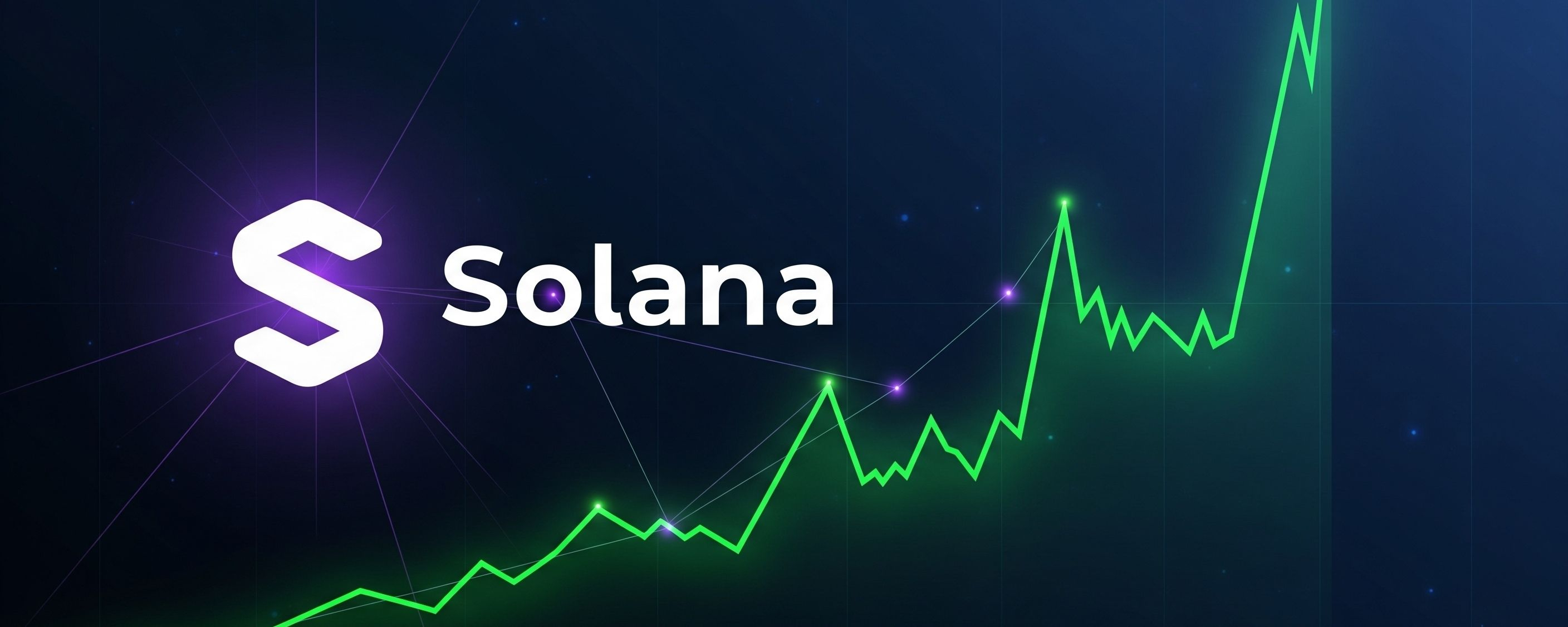
Solana is expanding its influence in on-chain finance.
Solana is expanding its influence in on-chain finance.
Solana (SOL) is increasingly competing with Ethereum in decentralized finance. DEX trading activity on the network already surpasses that of Ethereum and several popular Layer 2s, pointing to Solana’s growing role in the on-chain economy.
Another important area of development is the use of blockchain beyond the traditional crypto market. More than 90 banks and credit unions in North Dakota can now make stablecoin transfers through Solana-based infrastructure. This creates additional use cases for the network in financial transactions.
Solana (SOL) is increasingly competing with Ethereum in decentralized finance. DEX trading activity on the network already surpasses that of Ethereum and several popular Layer 2s, pointing to Solana’s growing role in the on-chain economy.
Another important area of development is the use of blockchain beyond the traditional crypto market. More than 90 banks and credit unions in North Dakota can now make stablecoin transfers through Solana-based infrastructure. This creates additional use cases for the network in financial transactions.
1
3
Major Patent Agreement Between Qualcomm and Huawei Covering 5G and AI.
US chipmaker Qualcomm and Chinese tech giant Huawei have announced the signing of a comprehensive, multi-year cross-patent licensing agreement covering 5G, artificial intelligence, computing, and networking technologies.
Under the terms of the agreement, both companies will gain access to each other's patent portfolios, and Qualcomm will also incorporate certain patents registered by Huawei in the US into its own holdings.
This landmark agreement—the financial details of which were not disclosed—strengthens patent-focused cooperation between the two giants while further boosting Huawei's global intellectual property revenues.
Major Patent Agreement Between Qualcomm and Huawei Covering 5G and AI.
US chipmaker Qualcomm and Chinese tech giant Huawei have announced the signing of a comprehensive, multi-year cross-patent licensing agreement covering 5G, artificial intelligence, computing, and networking technologies.
Under the terms of the agreement, both companies will gain access to each other's patent portfolios, and Qualcomm will also incorporate certain patents registered by Huawei in the US into its own holdings.
This landmark agreement—the financial details of which were not disclosed—strengthens patent-focused cooperation between the two giants while further boosting Huawei's global intellectual property revenues.
US chipmaker Qualcomm and Chinese tech giant Huawei have announced the signing of a comprehensive, multi-year cross-patent licensing agreement covering 5G, artificial intelligence, computing, and networking technologies.
Under the terms of the agreement, both companies will gain access to each other's patent portfolios, and Qualcomm will also incorporate certain patents registered by Huawei in the US into its own holdings.
This landmark agreement—the financial details of which were not disclosed—strengthens patent-focused cooperation between the two giants while further boosting Huawei's global intellectual property revenues.
1
56
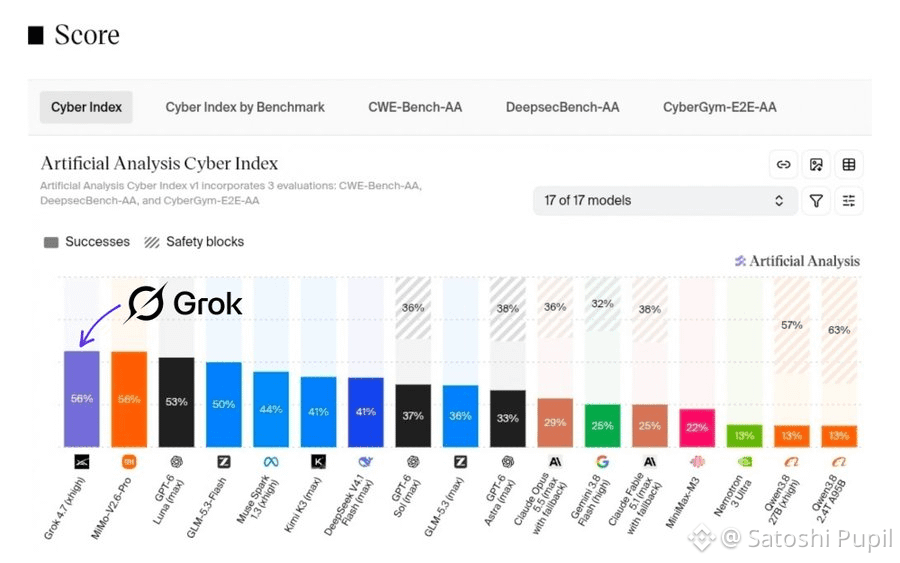
Grok 4.7 xHigh ranked #1 on Artificial Analysis’ Cyber Index
Grok 4.7 is now very powerful with serious cybersecurity capabilities
It outperformed Claude Opus 5.5, Fable 5.1, ChatGPT 6 Astra and other frontier models
The Cyber Index combines three evaluations:
• CWE-Bench-AA
• DeepsecBench-AA
• CyberGym-E2E-AA
Grok 4.7 is now sitting right at the frontier of cybersecurity reasoning
Grok 4.7 xHigh ranked #1 on Artificial Analysis’ Cyber Index
Grok 4.7 is now very powerful with serious cybersecurity capabilities
It outperformed Claude Opus 5.5, Fable 5.1, ChatGPT 6 Astra and other frontier models
The Cyber Index combines three evaluations:
• CWE-Bench-AA
• DeepsecBench-AA
• CyberGym-E2E-AA
Grok 4.7 is now sitting right at the frontier of cybersecurity reasoning
Grok 4.7 is now very powerful with serious cybersecurity capabilities
It outperformed Claude Opus 5.5, Fable 5.1, ChatGPT 6 Astra and other frontier models
The Cyber Index combines three evaluations:
• CWE-Bench-AA
• DeepsecBench-AA
• CyberGym-E2E-AA
Grok 4.7 is now sitting right at the frontier of cybersecurity reasoning
1
1
Article
Bloomberg Terminal adds live data from Hyperliquid’s perpetual marketsHyperliquid perpetual contracts are now available via the Bloomberg Terminal, bringing data from the decentralized exchange into a widely used professional market data workflow. The contracts became available in the terminal just a few hours ago.
The availability of market data can make it easier for professional users to search, monitor, and compare Hyperliquid with other trading venues, potentially contributing to increased analyst attention and institutional crypto research.
Institutional investors typically require controls for key management, execution, and custody beyond access to pricing data, as noted in discussions of institutional custody and execution infrastructure. Similarly, clearing and regulatory registration differ from the visibility provided by a market data platform.
Hyperliquid operates on its own Layer 1 blockchain and supports over 100 assets via HyperCore. However, based on available data, Bloomberg access does not confirm real-time data, a direct connection to the exchange, institutional participation, or regulatory approval.
Hyperliquid Perpetuals Rely on Hourly Funding
Hyperliquid documentation describes perpetuals as derivatives with no expiration date. Funding payments occur hourly and are designed to help keep contract prices anchored to the spot market, so there is no scheduled settlement date forcing positions to close.
The documented margin structure uses USDC collateral for linear contracts denominated in USDT. Documentation identifies PURR-USD and HYPE-USD as exceptions denominated in USDC. This market structure helps clarify what terminal users can monitor, but on its own says nothing about who gets access to the data or whether that access converts into trading.
Hyperliquid Demand and Bloomberg Terminal Listing
In the report, Bloomberg inclusion is presented as a potential sign of growing interest from traditional finance in decentralized platforms. A more useful test is whether this leads to tangible changes: sustained institutional attention, further Bloomberg coverage, strategic partnerships, or increased exchange activity.
Polymarket pricing is at 71.5% for Hyperliquid, up from 68% over the previous 24 hours. This is a predicted market probability, not a verified forecast, and it is not proof that Bloomberg access caused the price repricing.
Bloomberg Terminal adds live data from Hyperliquid’s perpetual markets
Hyperliquid perpetual contracts are now available via the Bloomberg Terminal, bringing data from the decentralized exchange into a widely used professional market data workflow. The contracts became available in the terminal just a few hours ago.
The availability of market data can make it easier for professional users to search, monitor, and compare Hyperliquid with other trading venues, potentially contributing to increased analyst attention and institutional crypto research.
Institutional investors typically require controls for key management, execution, and custody beyond access to pricing data, as noted in discussions of institutional custody and execution infrastructure. Similarly, clearing and regulatory registration differ from the visibility provided by a market data platform.
Hyperliquid operates on its own Layer 1 blockchain and supports over 100 assets via HyperCore. However, based on available data, Bloomberg access does not confirm real-time data, a direct connection to the exchange, institutional participation, or regulatory approval.
Hyperliquid Perpetuals Rely on Hourly Funding
Hyperliquid documentation describes perpetuals as derivatives with no expiration date. Funding payments occur hourly and are designed to help keep contract prices anchored to the spot market, so there is no scheduled settlement date forcing positions to close.
The documented margin structure uses USDC collateral for linear contracts denominated in USDT. Documentation identifies PURR-USD and HYPE-USD as exceptions denominated in USDC. This market structure helps clarify what terminal users can monitor, but on its own says nothing about who gets access to the data or whether that access converts into trading.
Hyperliquid Demand and Bloomberg Terminal Listing
In the report, Bloomberg inclusion is presented as a potential sign of growing interest from traditional finance in decentralized platforms. A more useful test is whether this leads to tangible changes: sustained institutional attention, further Bloomberg coverage, strategic partnerships, or increased exchange activity.
Polymarket pricing is at 71.5% for Hyperliquid, up from 68% over the previous 24 hours. This is a predicted market probability, not a verified forecast, and it is not proof that Bloomberg access caused the price repricing.
The availability of market data can make it easier for professional users to search, monitor, and compare Hyperliquid with other trading venues, potentially contributing to increased analyst attention and institutional crypto research.
Institutional investors typically require controls for key management, execution, and custody beyond access to pricing data, as noted in discussions of institutional custody and execution infrastructure. Similarly, clearing and regulatory registration differ from the visibility provided by a market data platform.
Hyperliquid operates on its own Layer 1 blockchain and supports over 100 assets via HyperCore. However, based on available data, Bloomberg access does not confirm real-time data, a direct connection to the exchange, institutional participation, or regulatory approval.
Hyperliquid Perpetuals Rely on Hourly Funding
Hyperliquid documentation describes perpetuals as derivatives with no expiration date. Funding payments occur hourly and are designed to help keep contract prices anchored to the spot market, so there is no scheduled settlement date forcing positions to close.
The documented margin structure uses USDC collateral for linear contracts denominated in USDT. Documentation identifies PURR-USD and HYPE-USD as exceptions denominated in USDC. This market structure helps clarify what terminal users can monitor, but on its own says nothing about who gets access to the data or whether that access converts into trading.
Hyperliquid Demand and Bloomberg Terminal Listing
In the report, Bloomberg inclusion is presented as a potential sign of growing interest from traditional finance in decentralized platforms. A more useful test is whether this leads to tangible changes: sustained institutional attention, further Bloomberg coverage, strategic partnerships, or increased exchange activity.
Polymarket pricing is at 71.5% for Hyperliquid, up from 68% over the previous 24 hours. This is a predicted market probability, not a verified forecast, and it is not proof that Bloomberg access caused the price repricing.
1
32
ZachXBT said he infiltrated a Chinese organized crime network that laundered over $1 billion across multiple Lazarus Group-linked crypto exploits.
Posing as a client, the sleuth said he gathered intelligence that helped freeze funds tied to the $1.5 billion Bybit hack and attribute illicit activity onchain.
ZachXBT said he infiltrated a Chinese organized crime network that laundered over $1 billion across multiple Lazarus Group-linked crypto exploits.
Posing as a client, the sleuth said he gathered intelligence that helped freeze funds tied to the $1 .5 billion Bybit hack and attribute illicit activity onchain.
Posing as a client, the sleuth said he gathered intelligence that helped freeze funds tied to the $1 .5 billion Bybit hack and attribute illicit activity onchain.
2
429
Luxembourg's sovereign wealth fund put 1% into Bitcoin. A year ago.
About $9,000,000. Out of roughly $900,000,000.
Through regulated Bitcoin ETFs. Not direct holdings.
First Eurozone state fund to do it. Announced by Finance Minister Gilles Roth in the 2026 budget.
The fund's own explanation: "A 1% allocation strikes the right balance, while sending a clear message about Bitcoin's long-term potential."
Its director admitted some will call it "too conservative."
Here's the real structure.
Luxembourg's new policy lets the fund hold up to 15% in alternatives. Private equity, real estate, crypto.
Bitcoin got 1%. Real estate got 4%. Private equity got 10%.
Roth called Bitcoin "digital gold" at Bitcoin Amsterdam in November.
Some context for the scale.
The country manages €7.6 trillion in funds overall. This position is a rounding error against it.
Norway's much larger fund raised its indirect Bitcoin exposure by 192% in the same period.
So no, 190 countries didn't "take notes" overnight.
A small fund made a small, symbolic, ETF-based bet.
The message mattered more than the money.
{spot}(BTCUSDT)
Luxembourg's sovereign wealth fund put 1% into Bitcoin. A year ago.
About $9,000,000. Out of roughly $900,000,000.
Through regulated Bitcoin ETFs. Not direct holdings.
First Eurozone state fund to do it. Announced by Finance Minister Gilles Roth in the 2026 budget.
The fund's own explanation: "A 1% allocation strikes the right balance, while sending a clear message about Bitcoin's long-term potential."
Its director admitted some will call it "too conservative."
Here's the real structure.
Luxembourg's new policy lets the fund hold up to 15% in alternatives. Private equity, real estate, crypto.
Bitcoin got 1%. Real estate got 4%. Private equity got 10%.
Roth called Bitcoin "digital gold" at Bitcoin Amsterdam in November.
Some context for the scale.
The country manages €7.6 trillion in funds overall. This position is a rounding error against it.
Norway's much larger fund raised its indirect Bitcoin exposure by 192% in the same period.
So no, 190 countries didn't "take notes" overnight.
A small fund made a small, symbolic, ETF-based bet.
The message mattered more than the money.
About $9,000,000. Out of roughly $900,000,000.
Through regulated Bitcoin ETFs. Not direct holdings.
First Eurozone state fund to do it. Announced by Finance Minister Gilles Roth in the 2026 budget.
The fund's own explanation: "A 1% allocation strikes the right balance, while sending a clear message about Bitcoin's long-term potential."
Its director admitted some will call it "too conservative."
Here's the real structure.
Luxembourg's new policy lets the fund hold up to 15% in alternatives. Private equity, real estate, crypto.
Bitcoin got 1%. Real estate got 4%. Private equity got 10%.
Roth called Bitcoin "digital gold" at Bitcoin Amsterdam in November.
Some context for the scale.
The country manages €7.6 trillion in funds overall. This position is a rounding error against it.
Norway's much larger fund raised its indirect Bitcoin exposure by 192% in the same period.
So no, 190 countries didn't "take notes" overnight.
A small fund made a small, symbolic, ETF-based bet.
The message mattered more than the money.

1
4
Crypto regulation at the SEC is now in Republican hands.
The US SEC is down to just two commissioners after Hester Peirce officially left the agency on Oct. 2.
Her exit follows the earlier departures of Democratic commissioners Jaime Lizárraga and Caroline Crenshaw.
That leaves the 5-seat SEC with only Chair Paul Atkins and Commissioner Mark Uyeda, both Republicans.
Atkins was nominated by Trump, while Uyeda was named acting SEC chair by Trump before Atkins was confirmed.
This marks a major shift from the Gary Gensler era, when the SEC was widely seen as hostile to crypto.
A smaller Atkins-Uyeda SEC could move faster on tokenization, custody, ETFs, and clearer crypto rules.
Crypto regulation at the SEC is now in Republican hands.
The US SEC is down to just two commissioners after Hester Peirce officially left the agency on Oct. 2.
Her exit follows the earlier departures of Democratic commissioners Jaime Lizárraga and Caroline Crenshaw.
That leaves the 5-seat SEC with only Chair Paul Atkins and Commissioner Mark Uyeda, both Republicans.
Atkins was nominated by Trump, while Uyeda was named acting SEC chair by Trump before Atkins was confirmed.
This marks a major shift from the Gary Gensler era, when the SEC was widely seen as hostile to crypto.
A smaller Atkins-Uyeda SEC could move faster on tokenization, custody, ETFs, and clearer crypto rules.
The US SEC is down to just two commissioners after Hester Peirce officially left the agency on Oct. 2.
Her exit follows the earlier departures of Democratic commissioners Jaime Lizárraga and Caroline Crenshaw.
That leaves the 5-seat SEC with only Chair Paul Atkins and Commissioner Mark Uyeda, both Republicans.
Atkins was nominated by Trump, while Uyeda was named acting SEC chair by Trump before Atkins was confirmed.
This marks a major shift from the Gary Gensler era, when the SEC was widely seen as hostile to crypto.
A smaller Atkins-Uyeda SEC could move faster on tokenization, custody, ETFs, and clearer crypto rules.
1
26
U.S. Treasury withdraws proposed crypto surveillance rules targeting unhosted wallets and crypto mixers.
U.S. Treasury withdraws proposed crypto surveillance rules targeting unhosted wallets and crypto mixers.
1
37
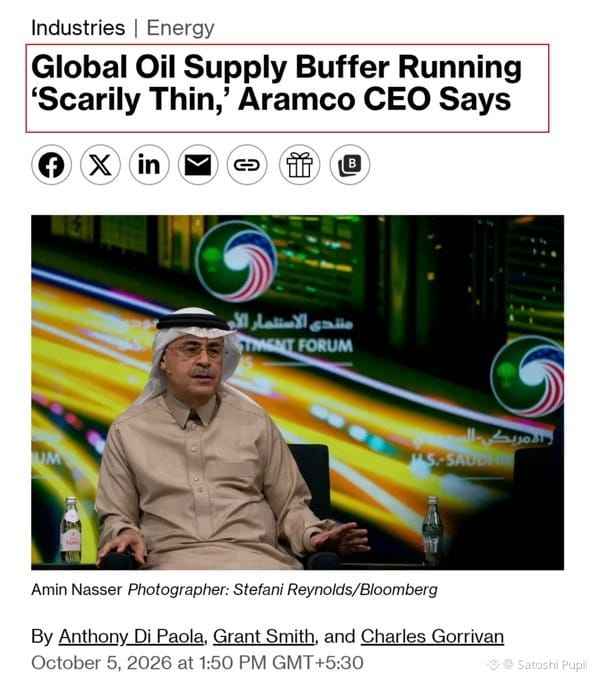
Saudi Aramco's CEO just warned the world's emergency oil reserves are almost gone.
He says nearly 3 billion barrels of supply have been lost since the Strait of Hormuz crisis began, and the roughly 6 billion barrels still in storage are "not practically available," stuck in the wrong location, wrong grade, or tied up by owners.
The world uses over 100 million barrels of oil every single day, meaning what's left in reserve covers less than 2 months of global demand.
Even if the Strait reopens today, Aramco says rebuilding reserves to safe levels could take up to 2 years.
Saudi Aramco's CEO just warned the world's emergency oil reserves are almost gone.
He says nearly 3 billion barrels of supply have been lost since the Strait of Hormuz crisis began, and the roughly 6 billion barrels still in storage are "not practically available," stuck in the wrong location, wrong grade, or tied up by owners.
The world uses over 100 million barrels of oil every single day, meaning what's left in reserve covers less than 2 months of global demand.
Even if the Strait reopens today, Aramco says rebuilding reserves to safe levels could take up to 2 years.
He says nearly 3 billion barrels of supply have been lost since the Strait of Hormuz crisis began, and the roughly 6 billion barrels still in storage are "not practically available," stuck in the wrong location, wrong grade, or tied up by owners.
The world uses over 100 million barrels of oil every single day, meaning what's left in reserve covers less than 2 months of global demand.
Even if the Strait reopens today, Aramco says rebuilding reserves to safe levels could take up to 2 years.
47
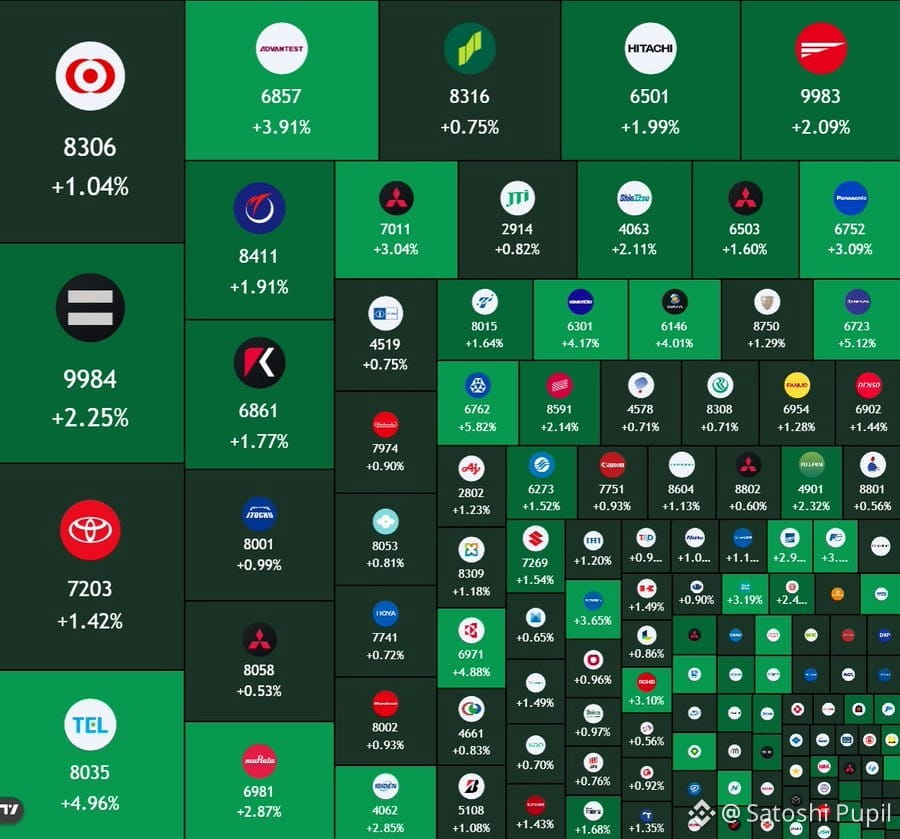
Over ¥29,400,000,000,000 ($187.5B) has been added to Japanese stocks as the NIKKEI surges +2.5%
Over ¥29,400,000,000,000 ($187.5B) has been added to Japanese stocks as the NIKKEI surges +2.5%
54
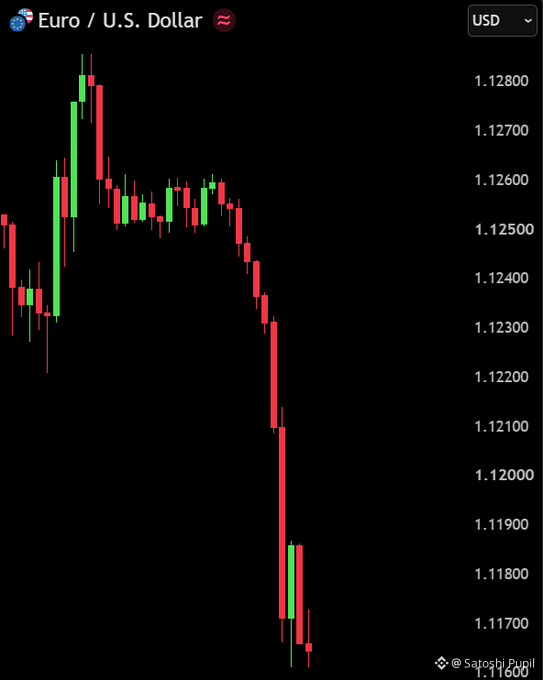
Euro crashes to a 17-month low against the dollar.
Euro is on track for its fifth straight weekly decline as political and fiscal risks rise across the region
Euro crashes to a 17-month low against the dollar.
Euro is on track for its fifth straight weekly decline as political and fiscal risks rise across the region
Euro is on track for its fifth straight weekly decline as political and fiscal risks rise across the region
58
Crypto companies are actively hiring again. According to CryptoJobsList, the number of job openings in the crypto industry more than tripled in the third quarter—rising from 382 to 1,241. At the same time, the pool of candidates has shrunk. Crypto companies now find themselves competing with one another for top talent.
Crypto companies are actively hiring again. According to CryptoJobsList, the number of job openings in the crypto industry more than tripled in the third quarter—rising from 382 to 1,241. At the same time, the pool of candidates has shrunk. Crypto companies now find themselves competing with one another for top talent.
2
119
THE WORLD’S TOP 10 GOLD PRODUCERS
🇨🇳 China
🇷🇺 Russia
🇦🇺 Australia
🇨🇦 Canada
🇵🇪 Peru
🇬🇭 Ghana
🇺🇸 United States
🇺🇿 Uzbekistan
🇲🇽 Mexico
🇮🇩 Indonesia
$XAU
THE WORLD’S TOP 10 GOLD PRODUCERS
🇨🇳 China
🇷🇺 Russia
🇦🇺 Australia
🇨🇦 Canada
🇵🇪 Peru
🇬🇭 Ghana
🇺🇸 United States
🇺🇿 Uzbekistan
🇲🇽 Mexico
🇮🇩 Indonesia
$XAU
🇨🇳 China
🇷🇺 Russia
🇦🇺 Australia
🇨🇦 Canada
🇵🇪 Peru
🇬🇭 Ghana
🇺🇸 United States
🇺🇿 Uzbekistan
🇲🇽 Mexico
🇮🇩 Indonesia
$XAU
215
Solana processed a record 14.2 billion non-vote transactions in Q3
The total jumped 45% from Q2, marking the network’s highest quarterly non-vote transaction count yet.
{spot}(SOLUSDT)
Solana processed a record 14.2 billion non-vote transactions in Q3
The total jumped 45% from Q2, marking the network’s highest quarterly non-vote transaction count yet.
The total jumped 45% from Q2, marking the network’s highest quarterly non-vote transaction count yet.
1
5
Article
Community banks sue US regulator over crypto firm chartersWASHINGTON, Oct 2 (Reuters) - A trade organization representing community banks sued a US bank regulator Friday, claiming that its decision to grant limited bank charters to cryptocurrency firms exceeds its regulatory authority.
The Independent Community Bankers of America, which represents banks that typically have less than $10 billion in assets, filed the suit in the US District Court for the District of Columbia.
The group said the Office of the Comptroller of the Currency must revoke a recent rule and related guidance smoothing the way for crypto firms to apply for national trust bank charters. The group argued the move grants legitimacy to crypto firms without sufficient safeguards.
"American consumers reasonably expect a federally chartered bank to carry federal protections. Digital assets held at a crypto firm operating under a national trust charter do not carry those important safeguards. ICBA is asking the court to return the OCC to its statutory limits. Any non-fiduciary firm seeking the benefits of a federal bank charter should meet the same standards as community banks," said ICBA President and CEO Rebecca Romero Rainey in a statement.
An OCC spokesperson declined to comment.
Under President Donald Trump, the regulator has granted several such charters to firms primarily engaging in crypto activities and other fintechs. The national trust bank charters allow companies to manage and hold assets on behalf of customers and settle payments faster. The license does not, however, allow the companies to take cash deposits or make loans.
But ICBA argued in its lawsuit that granting such charters exceeds the regulator's authority and Congress' intent, while arguing traditional banks must adhere to stricter regulatory requirements and oversight under their charters.
Community banks sue US regulator over crypto firm charters
WASHINGTON, Oct 2 (Reuters) - A trade organization representing community banks sued a US bank regulator Friday, claiming that its decision to grant limited bank charters to cryptocurrency firms exceeds its regulatory authority.
The Independent Community Bankers of America, which represents banks that typically have less than $10 billion in assets, filed the suit in the US District Court for the District of Columbia.
The group said the Office of the Comptroller of the Currency must revoke a recent rule and related guidance smoothing the way for crypto firms to apply for national trust bank charters. The group argued the move grants legitimacy to crypto firms without sufficient safeguards.
"American consumers reasonably expect a federally chartered bank to carry federal protections. Digital assets held at a crypto firm operating under a national trust charter do not carry those important safeguards. ICBA is asking the court to return the OCC to its statutory limits. Any non-fiduciary firm seeking the benefits of a federal bank charter should meet the same standards as community banks," said ICBA President and CEO Rebecca Romero Rainey in a statement.
An OCC spokesperson declined to comment.
Under President Donald Trump, the regulator has granted several such charters to firms primarily engaging in crypto activities and other fintechs. The national trust bank charters allow companies to manage and hold assets on behalf of customers and settle payments faster. The license does not, however, allow the companies to take cash deposits or make loans.
But ICBA argued in its lawsuit that granting such charters exceeds the regulator's authority and Congress' intent, while arguing traditional banks must adhere to stricter regulatory requirements and oversight under their charters.
The Independent Community Bankers of America, which represents banks that typically have less than $10 billion in assets, filed the suit in the US District Court for the District of Columbia.
The group said the Office of the Comptroller of the Currency must revoke a recent rule and related guidance smoothing the way for crypto firms to apply for national trust bank charters. The group argued the move grants legitimacy to crypto firms without sufficient safeguards.
"American consumers reasonably expect a federally chartered bank to carry federal protections. Digital assets held at a crypto firm operating under a national trust charter do not carry those important safeguards. ICBA is asking the court to return the OCC to its statutory limits. Any non-fiduciary firm seeking the benefits of a federal bank charter should meet the same standards as community banks," said ICBA President and CEO Rebecca Romero Rainey in a statement.
An OCC spokesperson declined to comment.
Under President Donald Trump, the regulator has granted several such charters to firms primarily engaging in crypto activities and other fintechs. The national trust bank charters allow companies to manage and hold assets on behalf of customers and settle payments faster. The license does not, however, allow the companies to take cash deposits or make loans.
But ICBA argued in its lawsuit that granting such charters exceeds the regulator's authority and Congress' intent, while arguing traditional banks must adhere to stricter regulatory requirements and oversight under their charters.
1
72
Stablecoin giant #Circle is PUSHING BACK on Europe's crypto rules.
The $74B USDC issuer says ONLY 3 of the world's 25 biggest stablecoins are regulated under MiCA, keeping the largest ones outside Europe's regulatory reach.
It wants the EU to replace the requirement that issuers hold 30% to 60% of reserves in bank deposits with a more flexible liquidity rule, siding with the European Central Bank.
Circle also wants to scrap limits that it says would force large issuers to spread reserves across dozens of banks.
The EU is expected to overhaul MiCA in 2027
Stablecoin giant #Circle is PUSHING BACK on Europe's crypto rules.
The $74B USDC issuer says ONLY 3 of the world's 25 biggest stablecoins are regulated under MiCA, keeping the largest ones outside Europe's regulatory reach.
It wants the EU to replace the requirement that issuers hold 30% to 60% of reserves in bank deposits with a more flexible liquidity rule, siding with the European Central Bank.
Circle also wants to scrap limits that it says would force large issuers to spread reserves across dozens of banks.
The EU is expected to overhaul MiCA in 2027
The $74B USDC issuer says ONLY 3 of the world's 25 biggest stablecoins are regulated under MiCA, keeping the largest ones outside Europe's regulatory reach.
It wants the EU to replace the requirement that issuers hold 30% to 60% of reserves in bank deposits with a more flexible liquidity rule, siding with the European Central Bank.
Circle also wants to scrap limits that it says would force large issuers to spread reserves across dozens of banks.
The EU is expected to overhaul MiCA in 2027
2
96
South Korea sets rules to bring its $5T+ stock market onchain
The new rules allow stocks, bonds, and funds to be issued and circulated onchain from February 2027, with Korea Securities Depository infrastructure being built on Avalanche.
South Korea sets rules to bring its $5T+ stock market onchain
The new rules allow stocks, bonds, and funds to be issued and circulated onchain from February 2027, with Korea Securities Depository infrastructure being built on Avalanche.
The new rules allow stocks, bonds, and funds to be issued and circulated onchain from February 2027, with Korea Securities Depository infrastructure being built on Avalanche.
2
80
Log in to explore more content
Join global crypto users on Binance Square
⚡️ Get latest and useful information about crypto.
💬 Trusted by the world’s largest crypto exchange.
👍 Discover real insights from verified creators.
Email / Phone number
Trending Topics
BinanceLaunchesBinanceIntelligence
751,364 views
4,672 Discussing
#binancelaunchesbinanceintelligence 🚨 WHAT IF THE NEXT BIG EXCHANGE BATTLE ISN’T ABOUT FEES? 👀
Binance just made a bigger move than adding another AI chatbot.
With Binance Intelligence, AI is moving deeper into the exchange — from understanding market data to building trading workflows. 🤖⚡
The real question is:
Who has the best liquidity?
Or who has the smartest AI layer?
If users can research, test ideas and manage trading workflows without switching between different tools, the exchange itself could become a financial assistant.
That could be a much bigger shift than it looks today.
If Binance Intelligence drives more users, more strategies and more trading activity, $BNB could become one of the tokens to watch. 👀
Is Binance building the future of AI-powered finance?
$BNB
#binancelaunchesbinanceintelligence #BinanceAI #CryptoAI #AITrading
Suleman Khan Haqqani
·28 Likes
·28.6k views
BTCFallsBelow$84K
33,981 views
115 Discussing
DubaiVARAIssuesReserveAssetAuditCircular
9,690 views
386 Discussing