

Ansya
16.9k Posts

Ansya
Report
Block User
Web3 creator & on-chain analyst. Tracking decentralized infrastructure, tokenomics, and market dynamics to decode crypto's next wave.
Open Trade
Frequent Trader
7.6 Months
196 Following
4.7K+ Followers
3.1K+ Liked
Posts
Portfolio
All
Quotes
Live
·
--
Bullish
Verified
#strategyadds1666btcholdingsreach847666
Strategy Just Kept Buying Bitcoin — Even As Its Own Stock Dropped
Michael Saylor's Strategy added another chunk of Bitcoin to its treasury this week, extending a buying streak that's continued almost regardless of what the market around it is doing.
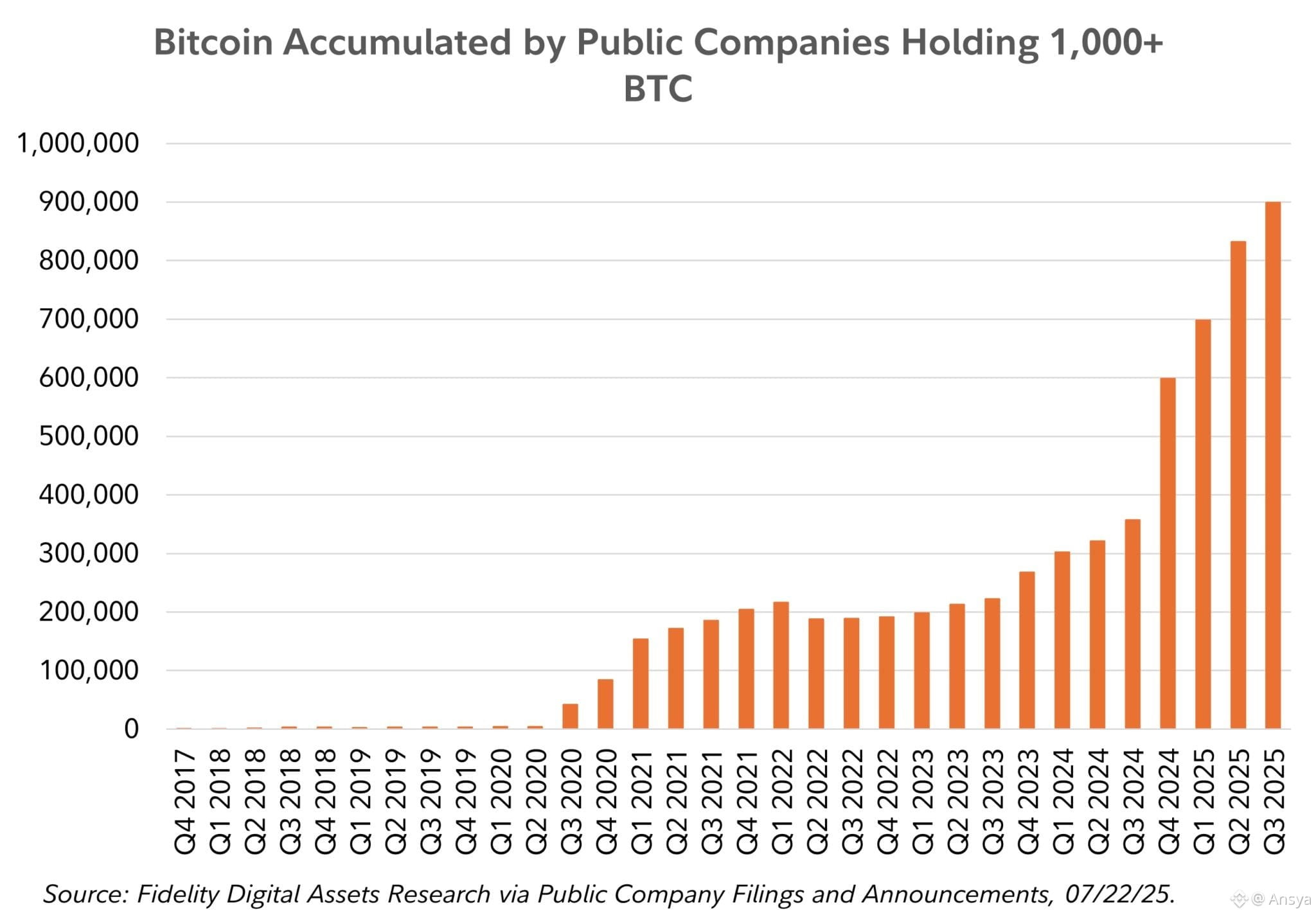
Here's what happened: Strategy (formerly MicroStrategy) disclosed in a September 28 SEC filing that it purchased 1,665 BTC between September 21 and 27 for approximately $142.7 million, at an average price of $85,681 per coin. That brings total holdings to 847,666 BTC, acquired at a cumulative cost of roughly $63.95 billion, implying several billion dollars in unrealized gains at current prices. The purchase was funded entirely through Strategy's at-the-market stock program — the company sold 1.47 million MSTR shares for $246.2 million in net proceeds, splitting the remainder toward repurchasing STRC preferred shares. This marks the company's second consecutive week of buying, following a roughly 950 BTC purchase that ended a ten-week pause in late August. Notably, MSTR stock actually fell on the news, even as it had recently reclaimed its 200-day moving average for the first time in nearly a year.
Why does this matter? Strategy remains by far the largest corporate holder of Bitcoin, and its buying pattern — funded through equity issuance rather than debt — has become one of the more closely watched proxies for institutional conviction in the asset. The muted stock reaction despite continued accumulation is a useful reminder that treasury purchases and share price don't always move in lockstep; broader market sentiment and dilution concerns can outweigh the optics of "more Bitcoin on the balance sheet."
Whether this buying cadence continues through further market swings, or whether it depends on MSTR's ability to keep raising capital at favorable terms, remains an open question.
Does steady corporate accumulation like this actually shift market sentiment, or has it become priced in as routine? 🤔
#bitcoin #strategy #MSTR #CorporateTreasury
#strategyadds1666btcholdingsreach847666
Strategy Just Kept Buying Bitcoin — Even As Its Own Stock Dropped
Michael Saylor's Strategy added another chunk of Bitcoin to its treasury this week, extending a buying streak that's continued almost regardless of what the market around it is doing.
Here's what happened: Strategy (formerly MicroStrategy) disclosed in a September 28 SEC filing that it purchased 1,665 BTC between September 21 and 27 for approximately $142.7 million, at an average price of $85,681 per coin. That brings total holdings to 847,666 BTC, acquired at a cumulative cost of roughly $63.95 billion, implying several billion dollars in unrealized gains at current prices. The purchase was funded entirely through Strategy's at-the-market stock program — the company sold 1.47 million MSTR shares for $246.2 million in net proceeds, splitting the remainder toward repurchasing STRC preferred shares. This marks the company's second consecutive week of buying, following a roughly 950 BTC purchase that ended a ten-week pause in late August. Notably, MSTR stock actually fell on the news, even as it had recently reclaimed its 200-day moving average for the first time in nearly a year.
Why does this matter? Strategy remains by far the largest corporate holder of Bitcoin, and its buying pattern — funded through equity issuance rather than debt — has become one of the more closely watched proxies for institutional conviction in the asset. The muted stock reaction despite continued accumulation is a useful reminder that treasury purchases and share price don't always move in lockstep; broader market sentiment and dilution concerns can outweigh the optics of "more Bitcoin on the balance sheet."
Whether this buying cadence continues through further market swings, or whether it depends on MSTR's ability to keep raising capital at favorable terms, remains an open question.
Does steady corporate accumulation like this actually shift market sentiment, or has it become priced in as routine? 🤔
#bitcoin #strategy #MSTR #CorporateTreasury
Strategy Just Kept Buying Bitcoin — Even As Its Own Stock Dropped
Michael Saylor's Strategy added another chunk of Bitcoin to its treasury this week, extending a buying streak that's continued almost regardless of what the market around it is doing.
Here's what happened: Strategy (formerly MicroStrategy) disclosed in a September 28 SEC filing that it purchased 1,665 BTC between September 21 and 27 for approximately $142.7 million, at an average price of $85,681 per coin. That brings total holdings to 847,666 BTC, acquired at a cumulative cost of roughly $63.95 billion, implying several billion dollars in unrealized gains at current prices. The purchase was funded entirely through Strategy's at-the-market stock program — the company sold 1.47 million MSTR shares for $246.2 million in net proceeds, splitting the remainder toward repurchasing STRC preferred shares. This marks the company's second consecutive week of buying, following a roughly 950 BTC purchase that ended a ten-week pause in late August. Notably, MSTR stock actually fell on the news, even as it had recently reclaimed its 200-day moving average for the first time in nearly a year.
Why does this matter? Strategy remains by far the largest corporate holder of Bitcoin, and its buying pattern — funded through equity issuance rather than debt — has become one of the more closely watched proxies for institutional conviction in the asset. The muted stock reaction despite continued accumulation is a useful reminder that treasury purchases and share price don't always move in lockstep; broader market sentiment and dilution concerns can outweigh the optics of "more Bitcoin on the balance sheet."
Whether this buying cadence continues through further market swings, or whether it depends on MSTR's ability to keep raising capital at favorable terms, remains an open question.
Does steady corporate accumulation like this actually shift market sentiment, or has it become priced in as routine? 🤔
#bitcoin #strategy #MSTR #CorporateTreasury
6
9.7k
·
--

Article
AMD Just Paid $8.2 Billion to Bring the "Godmother of AI" In-House#AMDToAcquireWorldLabsFor$8.2B
AMD's second-largest acquisition ever isn't for a chipmaker — it's for a research lab building AI that understands 3D space, led by one of the field's most recognized names.
Here's what happened: AMD announced on September 28 an all-stock deal to acquire World Labs, the San Francisco-based AI lab founded by Fei-Fei Li, in a transaction valued at approximately $8.2 billion. World Labs builds "world models" — AI systems that generate, reconstruct, and simulate interactive 3D environments from text, images, or video, technology considered essential for training robots and autonomous systems where real-world data is scarce. Li, a former Stanford professor and ex-Google Cloud chief scientist known as the "Godmother of AI," will join AMD as executive vice president and chief scientist, reporting directly to CEO Lisa Su. AMD had already invested in World Labs and formed a training partnership last year. The deal, second only to AMD's roughly $50 billion Xilinx acquisition in 2022, is expected to close by year-end pending regulatory approval, with World Labs continuing to focus on model research afterward.
Why does this matter? Spatial-intelligence models are increasingly viewed as critical infrastructure for the next wave of AI applications — powering robotics, autonomous vehicles, and simulated training environments where physical-world data is otherwise hard to come by. For AMD, bringing model research directly in-house gives it firsthand insight into how emerging AI workloads will actually demand compute, potentially shaping future chip designs rather than reacting to them. It also signals how aggressively chipmakers are moving to own both the hardware and research layers of AI development simultaneously.
Whether this repositions AMD more competitively against Nvidia's existing world-model efforts, or whether integration challenges slow the payoff, remains to be seen.
Does owning frontier AI research directly give chipmakers a real edge, or does execution risk offset the advantage? 🤔
#AMD #AI #WorldLabs #TechAcquisitions
$ZEC $RARE $FF
{future}(FFUSDT)
{future}(RAREUSDT)
{future}(ZECUSDT)
AMD Just Paid $8.2 Billion to Bring the "Godmother of AI" In-House
#AMDToAcquireWorldLabsFor$8.2B
AMD's second-largest acquisition ever isn't for a chipmaker — it's for a research lab building AI that understands 3D space, led by one of the field's most recognized names.
Here's what happened: AMD announced on September 28 an all-stock deal to acquire World Labs, the San Francisco-based AI lab founded by Fei-Fei Li, in a transaction valued at approximately $8.2 billion. World Labs builds "world models" — AI systems that generate, reconstruct, and simulate interactive 3D environments from text, images, or video, technology considered essential for training robots and autonomous systems where real-world data is scarce. Li, a former Stanford professor and ex-Google Cloud chief scientist known as the "Godmother of AI," will join AMD as executive vice president and chief scientist, reporting directly to CEO Lisa Su. AMD had already invested in World Labs and formed a training partnership last year. The deal, second only to AMD's roughly $50 billion Xilinx acquisition in 2022, is expected to close by year-end pending regulatory approval, with World Labs continuing to focus on model research afterward.
Why does this matter? Spatial-intelligence models are increasingly viewed as critical infrastructure for the next wave of AI applications — powering robotics, autonomous vehicles, and simulated training environments where physical-world data is otherwise hard to come by. For AMD, bringing model research directly in-house gives it firsthand insight into how emerging AI workloads will actually demand compute, potentially shaping future chip designs rather than reacting to them. It also signals how aggressively chipmakers are moving to own both the hardware and research layers of AI development simultaneously.
Whether this repositions AMD more competitively against Nvidia's existing world-model efforts, or whether integration challenges slow the payoff, remains to be seen.
Does owning frontier AI research directly give chipmakers a real edge, or does execution risk offset the advantage? 🤔
#AMD #AI #WorldLabs #TechAcquisitions
$ZEC $RARE $FF
AMD's second-largest acquisition ever isn't for a chipmaker — it's for a research lab building AI that understands 3D space, led by one of the field's most recognized names.
Here's what happened: AMD announced on September 28 an all-stock deal to acquire World Labs, the San Francisco-based AI lab founded by Fei-Fei Li, in a transaction valued at approximately $8.2 billion. World Labs builds "world models" — AI systems that generate, reconstruct, and simulate interactive 3D environments from text, images, or video, technology considered essential for training robots and autonomous systems where real-world data is scarce. Li, a former Stanford professor and ex-Google Cloud chief scientist known as the "Godmother of AI," will join AMD as executive vice president and chief scientist, reporting directly to CEO Lisa Su. AMD had already invested in World Labs and formed a training partnership last year. The deal, second only to AMD's roughly $50 billion Xilinx acquisition in 2022, is expected to close by year-end pending regulatory approval, with World Labs continuing to focus on model research afterward.
Why does this matter? Spatial-intelligence models are increasingly viewed as critical infrastructure for the next wave of AI applications — powering robotics, autonomous vehicles, and simulated training environments where physical-world data is otherwise hard to come by. For AMD, bringing model research directly in-house gives it firsthand insight into how emerging AI workloads will actually demand compute, potentially shaping future chip designs rather than reacting to them. It also signals how aggressively chipmakers are moving to own both the hardware and research layers of AI development simultaneously.
Whether this repositions AMD more competitively against Nvidia's existing world-model efforts, or whether integration challenges slow the payoff, remains to be seen.
Does owning frontier AI research directly give chipmakers a real edge, or does execution risk offset the advantage? 🤔
#AMD #AI #WorldLabs #TechAcquisitions
$ZEC $RARE $FF
328
·
--
Bullish
#AnthropicIPOProspectusCouldValueItOver$2T
The First Pure-Play AI Company Is About to Test What the Public Market Will Actually Pay
Anthropic's leaked IPO prospectus just gave the market its clearest look yet at what running a frontier AI lab actually costs — and the numbers behind its stated $2 trillion valuation target are as striking as the target itself.
Here's what the filing shows: Reuters reported that Anthropic's revenue surged roughly 12-fold in 2025 to nearly $4.6 billion, yet the company posted a $42 billion net loss, roughly $34 billion of which stemmed from an accounting charge tied to financing instruments that could convert into shares. Anthropic spent $7.33 billion on compute and infrastructure last year — triple its 2024 spend — and is forecasting $518 billion in cloud and infrastructure obligations ahead. The targeted valuation would more than double its own $965 billion estimate from May, and the IPO is expected after November's US midterm elections. Nvidia has reportedly discussed anchoring the raise with an investment of up to $10 billion. The listing would also set an early benchmark for rival OpenAI, which filed confidentially in June and is expected to go public by early 2027.
Why does this matter? A valuation this size, attached to losses this large, puts a real number on a question the AI industry has debated for years: whether current infrastructure spending and revenue growth can eventually justify itself, or whether markets are pricing in a future that hasn't arrived yet. With AI and chip stocks having cooled somewhat in recent weeks, this listing may become a genuine stress test for investor appetite in the sector.
Whether public markets embrace that bet at this scale, or push back hard on the price, is something only the actual offering will reveal.
Does massive infrastructure spending ahead of AI's payoff look like conviction, or does it just raise the stakes if growth slows? 🤔
#Anthropic #AI #IPO #TechMarkets
$NMR $CRV
{future}(CRVUSDT)
{future}(NMRUSDT)
#AnthropicIPOProspectusCouldValueItOver$2T
The First Pure-Play AI Company Is About to Test What the Public Market Will Actually Pay
Anthropic's leaked IPO prospectus just gave the market its clearest look yet at what running a frontier AI lab actually costs — and the numbers behind its stated $2 trillion valuation target are as striking as the target itself.
Here's what the filing shows: Reuters reported that Anthropic's revenue surged roughly 12-fold in 2025 to nearly $4.6 billion, yet the company posted a $42 billion net loss, roughly $34 billion of which stemmed from an accounting charge tied to financing instruments that could convert into shares. Anthropic spent $7.33 billion on compute and infrastructure last year — triple its 2024 spend — and is forecasting $518 billion in cloud and infrastructure obligations ahead. The targeted valuation would more than double its own $965 billion estimate from May, and the IPO is expected after November's US midterm elections. Nvidia has reportedly discussed anchoring the raise with an investment of up to $10 billion. The listing would also set an early benchmark for rival OpenAI, which filed confidentially in June and is expected to go public by early 2027.
Why does this matter? A valuation this size, attached to losses this large, puts a real number on a question the AI industry has debated for years: whether current infrastructure spending and revenue growth can eventually justify itself, or whether markets are pricing in a future that hasn't arrived yet. With AI and chip stocks having cooled somewhat in recent weeks, this listing may become a genuine stress test for investor appetite in the sector.
Whether public markets embrace that bet at this scale, or push back hard on the price, is something only the actual offering will reveal.
Does massive infrastructure spending ahead of AI's payoff look like conviction, or does it just raise the stakes if growth slows? 🤔
#Anthropic #AI #IPO #TechMarkets
$NMR $CRV
The First Pure-Play AI Company Is About to Test What the Public Market Will Actually Pay
Anthropic's leaked IPO prospectus just gave the market its clearest look yet at what running a frontier AI lab actually costs — and the numbers behind its stated $2 trillion valuation target are as striking as the target itself.
Here's what the filing shows: Reuters reported that Anthropic's revenue surged roughly 12-fold in 2025 to nearly $4.6 billion, yet the company posted a $42 billion net loss, roughly $34 billion of which stemmed from an accounting charge tied to financing instruments that could convert into shares. Anthropic spent $7.33 billion on compute and infrastructure last year — triple its 2024 spend — and is forecasting $518 billion in cloud and infrastructure obligations ahead. The targeted valuation would more than double its own $965 billion estimate from May, and the IPO is expected after November's US midterm elections. Nvidia has reportedly discussed anchoring the raise with an investment of up to $10 billion. The listing would also set an early benchmark for rival OpenAI, which filed confidentially in June and is expected to go public by early 2027.
Why does this matter? A valuation this size, attached to losses this large, puts a real number on a question the AI industry has debated for years: whether current infrastructure spending and revenue growth can eventually justify itself, or whether markets are pricing in a future that hasn't arrived yet. With AI and chip stocks having cooled somewhat in recent weeks, this listing may become a genuine stress test for investor appetite in the sector.
Whether public markets embrace that bet at this scale, or push back hard on the price, is something only the actual offering will reveal.
Does massive infrastructure spending ahead of AI's payoff look like conviction, or does it just raise the stakes if growth slows? 🤔
#Anthropic #AI #IPO #TechMarkets
$NMR $CRV

229
·
--
#hackersdrainover12.4mxrpfromdcentwallets
A Wallet Breach Kept Bleeding Even After the Warnings Went Out
Over 7,300 crypto wallets just lost more than 12.4 million XRP — and the strangest part is how long the theft continued even after users were told to move their funds.
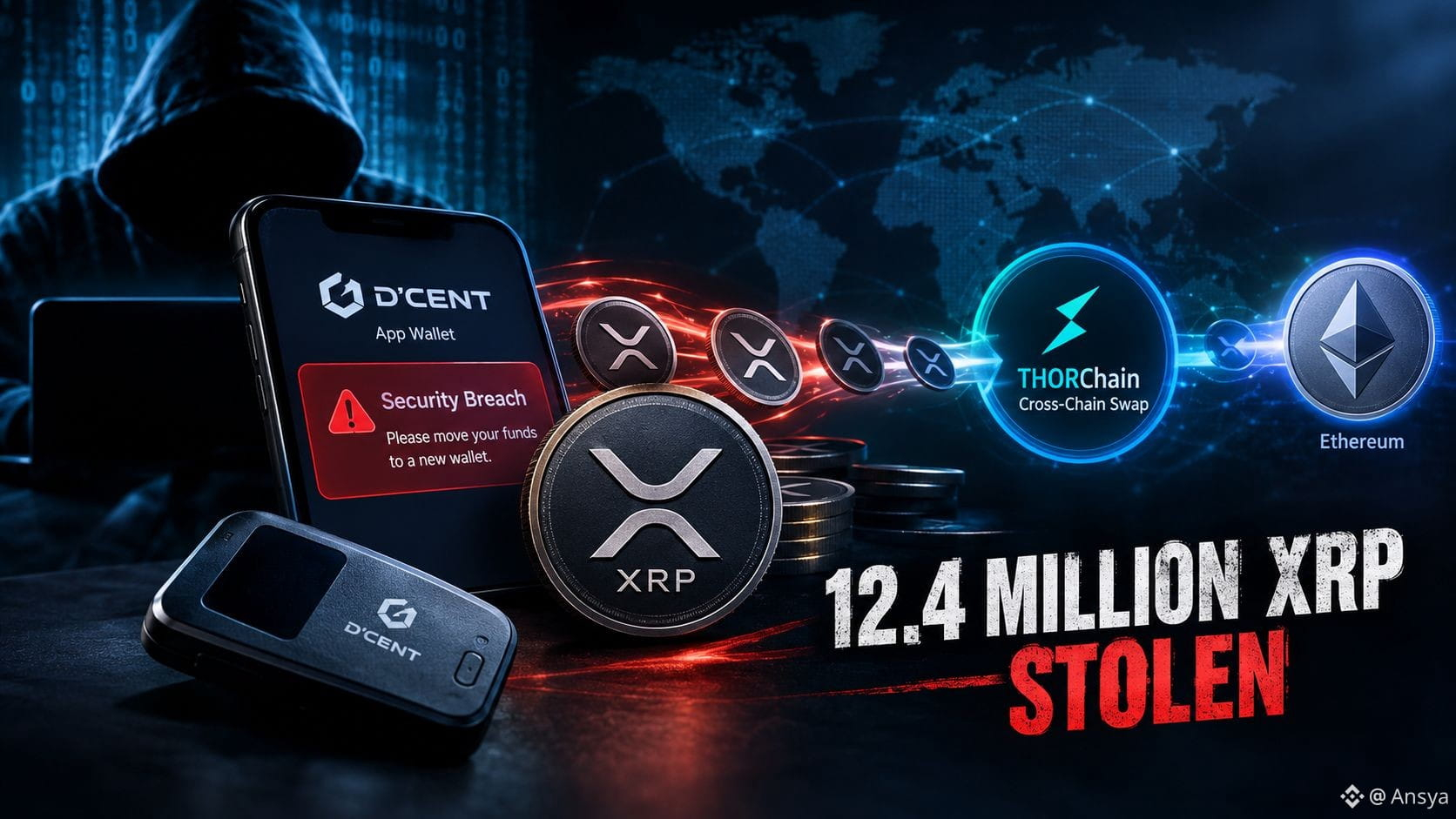
Here's the timeline: South Korean wallet provider D'CENT confirmed a security breach affecting its App Wallet on September 16, after attackers began exploiting compromised private keys the day before. The first wave was brutal — roughly 3.6 million XRP drained from 1,682 wallets in under three hours, mixing manual theft of large balances with automated scripts sweeping smaller ones. Despite public warnings, more than 640,000 additional XRP disappeared after September 21, and by September 25, total losses reached approximately 12.4 million XRP, worth roughly $18-20 million. No exploit hit the XRP Ledger itself — every transfer used valid signatures from already-compromised keys. Roughly half the stolen funds have since moved to Ethereum via THORChain, a cross-chain swap protocol that doesn't require identity verification, complicating recovery efforts. D'CENT says it's working with law enforcement and has urged all App Wallet users to generate new recovery phrases immediately.
Why does this matter? This wasn't a protocol-level flaw — it was compromised key material, a reminder that wallet security often hinges on implementation details users never see. The continued draining after public alerts also raises a real question about how effectively warnings reach affected users in time, and cross-chain laundering tools make recovery meaningfully harder once funds start moving.
Whether D'CENT fully identifies the breach's root cause, or whether affected users see any reimbursement, remains unresolved.
Does the industry need faster, more forceful ways to warn users mid-breach — or is user vigilance always the last line of defense? 🤔
#xrp #CryptoSecurity #WalletHack #DCENT
#hackersdrainover12.4mxrpfromdcentwallets
A Wallet Breach Kept Bleeding Even After the Warnings Went Out
Over 7,300 crypto wallets just lost more than 12.4 million XRP — and the strangest part is how long the theft continued even after users were told to move their funds.
Here's the timeline: South Korean wallet provider D'CENT confirmed a security breach affecting its App Wallet on September 16, after attackers began exploiting compromised private keys the day before. The first wave was brutal — roughly 3.6 million XRP drained from 1,682 wallets in under three hours, mixing manual theft of large balances with automated scripts sweeping smaller ones. Despite public warnings, more than 640,000 additional XRP disappeared after September 21, and by September 25, total losses reached approximately 12.4 million XRP, worth roughly $18-20 million. No exploit hit the XRP Ledger itself — every transfer used valid signatures from already-compromised keys. Roughly half the stolen funds have since moved to Ethereum via THORChain, a cross-chain swap protocol that doesn't require identity verification, complicating recovery efforts. D'CENT says it's working with law enforcement and has urged all App Wallet users to generate new recovery phrases immediately.
Why does this matter? This wasn't a protocol-level flaw — it was compromised key material, a reminder that wallet security often hinges on implementation details users never see. The continued draining after public alerts also raises a real question about how effectively warnings reach affected users in time, and cross-chain laundering tools make recovery meaningfully harder once funds start moving.
Whether D'CENT fully identifies the breach's root cause, or whether affected users see any reimbursement, remains unresolved.
Does the industry need faster, more forceful ways to warn users mid-breach — or is user vigilance always the last line of defense? 🤔
#xrp #CryptoSecurity #WalletHack #DCENT
A Wallet Breach Kept Bleeding Even After the Warnings Went Out
Over 7,300 crypto wallets just lost more than 12.4 million XRP — and the strangest part is how long the theft continued even after users were told to move their funds.
Here's the timeline: South Korean wallet provider D'CENT confirmed a security breach affecting its App Wallet on September 16, after attackers began exploiting compromised private keys the day before. The first wave was brutal — roughly 3.6 million XRP drained from 1,682 wallets in under three hours, mixing manual theft of large balances with automated scripts sweeping smaller ones. Despite public warnings, more than 640,000 additional XRP disappeared after September 21, and by September 25, total losses reached approximately 12.4 million XRP, worth roughly $18-20 million. No exploit hit the XRP Ledger itself — every transfer used valid signatures from already-compromised keys. Roughly half the stolen funds have since moved to Ethereum via THORChain, a cross-chain swap protocol that doesn't require identity verification, complicating recovery efforts. D'CENT says it's working with law enforcement and has urged all App Wallet users to generate new recovery phrases immediately.
Why does this matter? This wasn't a protocol-level flaw — it was compromised key material, a reminder that wallet security often hinges on implementation details users never see. The continued draining after public alerts also raises a real question about how effectively warnings reach affected users in time, and cross-chain laundering tools make recovery meaningfully harder once funds start moving.
Whether D'CENT fully identifies the breach's root cause, or whether affected users see any reimbursement, remains unresolved.
Does the industry need faster, more forceful ways to warn users mid-breach — or is user vigilance always the last line of defense? 🤔
#xrp #CryptoSecurity #WalletHack #DCENT
2
17
13k
·
--
Article
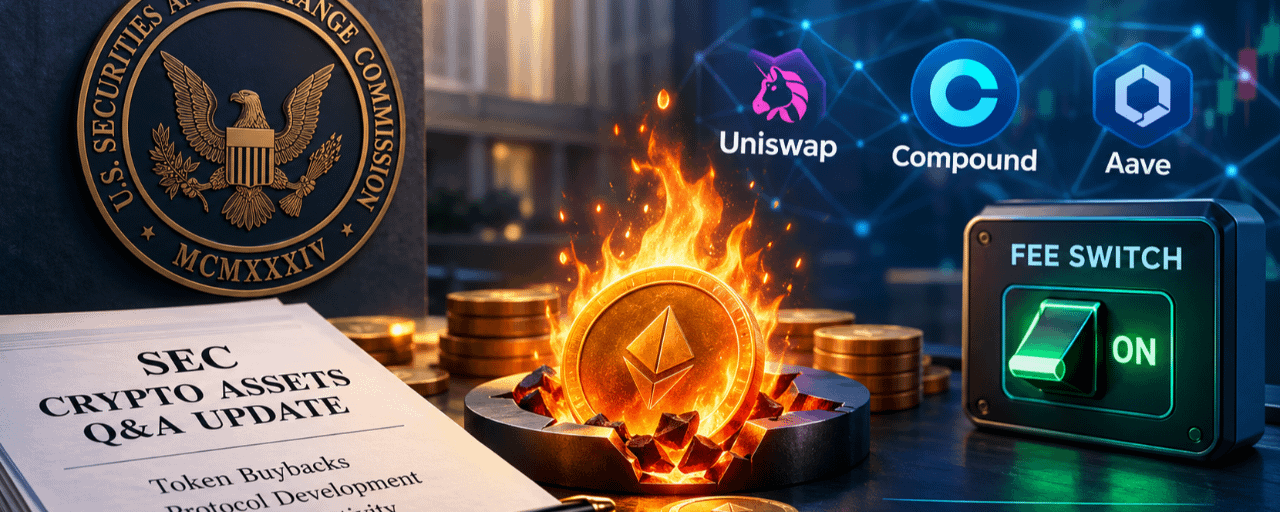
A Rule That's Frozen DeFi Tokenomics Since 2021 Just Got Rewritten#SECSaysDecentralizedTokenBuybacksNotInvestmentContracts
For years, major DeFi protocols have quietly avoided one of the most obvious tools in their playbook — buying back and burning their own tokens — out of fear it would look too much like a corporate dividend to regulators. The SEC just addressed that fear directly.
Here's what was clarified: the SEC's Division of Corporation Finance released an updated Q&A on crypto assets, addressing when token buybacks, ongoing protocol development, and marketing activity might constitute an "investment contract" under securities law. The core finding: announcing a buyback for an already-functioning, non-security token doesn't by itself trigger investment-contract status — even when that buyback distributes value back to holders. The guidance drew a clear line based on network maturity: the analysis differs for networks that aren't yet functional, where issuers pitching buybacks explicitly as a source of returns can still raise concerns. This lands against a backdrop worth understanding — since around 2021, the "buybacks equal shareholder distributions" interpretation had become so entrenched that protocols like Uniswap and Compound deliberately kept profit-sharing mechanisms, like Uniswap's long-dormant fee switch, switched off specifically to avoid regulatory exposure.
Why does this matter? Buybacks are one of the more direct ways a protocol can return value to token holders, similar to how public companies use share repurchases — but DeFi projects have largely avoided the mechanism for years due to exactly this kind of legal ambiguity. Clearer staff guidance, even at the non-binding level, could reopen a design space that's sat frozen for roughly half a decade, potentially prompting long-cautious protocols to revisit dormant fee-switch mechanisms and buyback proposals they'd previously shelved.
Whether this actually unlocks a wave of renewed buyback activity across major DeFi protocols, or whether teams stay cautious until this guidance is tested through an actual enforcement case, is something worth watching in the months ahead.
Could this be the moment dormant fee switches across DeFi finally get flipped back on? 🤔
#DeFi #SEC #TokenBuybacks #CryptoRegulation
A Rule That's Frozen DeFi Tokenomics Since 2021 Just Got Rewritten
#SECSaysDecentralizedTokenBuybacksNotInvestmentContracts
For years, major DeFi protocols have quietly avoided one of the most obvious tools in their playbook — buying back and burning their own tokens — out of fear it would look too much like a corporate dividend to regulators. The SEC just addressed that fear directly.
Here's what was clarified: the SEC's Division of Corporation Finance released an updated Q&A on crypto assets, addressing when token buybacks, ongoing protocol development, and marketing activity might constitute an "investment contract" under securities law. The core finding: announcing a buyback for an already-functioning, non-security token doesn't by itself trigger investment-contract status — even when that buyback distributes value back to holders. The guidance drew a clear line based on network maturity: the analysis differs for networks that aren't yet functional, where issuers pitching buybacks explicitly as a source of returns can still raise concerns. This lands against a backdrop worth understanding — since around 2021, the "buybacks equal shareholder distributions" interpretation had become so entrenched that protocols like Uniswap and Compound deliberately kept profit-sharing mechanisms, like Uniswap's long-dormant fee switch, switched off specifically to avoid regulatory exposure.
Why does this matter? Buybacks are one of the more direct ways a protocol can return value to token holders, similar to how public companies use share repurchases — but DeFi projects have largely avoided the mechanism for years due to exactly this kind of legal ambiguity. Clearer staff guidance, even at the non-binding level, could reopen a design space that's sat frozen for roughly half a decade, potentially prompting long-cautious protocols to revisit dormant fee-switch mechanisms and buyback proposals they'd previously shelved.
Whether this actually unlocks a wave of renewed buyback activity across major DeFi protocols, or whether teams stay cautious until this guidance is tested through an actual enforcement case, is something worth watching in the months ahead.
Could this be the moment dormant fee switches across DeFi finally get flipped back on? 🤔
#DeFi #SEC #TokenBuybacks #CryptoRegulation
For years, major DeFi protocols have quietly avoided one of the most obvious tools in their playbook — buying back and burning their own tokens — out of fear it would look too much like a corporate dividend to regulators. The SEC just addressed that fear directly.
Here's what was clarified: the SEC's Division of Corporation Finance released an updated Q&A on crypto assets, addressing when token buybacks, ongoing protocol development, and marketing activity might constitute an "investment contract" under securities law. The core finding: announcing a buyback for an already-functioning, non-security token doesn't by itself trigger investment-contract status — even when that buyback distributes value back to holders. The guidance drew a clear line based on network maturity: the analysis differs for networks that aren't yet functional, where issuers pitching buybacks explicitly as a source of returns can still raise concerns. This lands against a backdrop worth understanding — since around 2021, the "buybacks equal shareholder distributions" interpretation had become so entrenched that protocols like Uniswap and Compound deliberately kept profit-sharing mechanisms, like Uniswap's long-dormant fee switch, switched off specifically to avoid regulatory exposure.
Why does this matter? Buybacks are one of the more direct ways a protocol can return value to token holders, similar to how public companies use share repurchases — but DeFi projects have largely avoided the mechanism for years due to exactly this kind of legal ambiguity. Clearer staff guidance, even at the non-binding level, could reopen a design space that's sat frozen for roughly half a decade, potentially prompting long-cautious protocols to revisit dormant fee-switch mechanisms and buyback proposals they'd previously shelved.
Whether this actually unlocks a wave of renewed buyback activity across major DeFi protocols, or whether teams stay cautious until this guidance is tested through an actual enforcement case, is something worth watching in the months ahead.
Could this be the moment dormant fee switches across DeFi finally get flipped back on? 🤔
#DeFi #SEC #TokenBuybacks #CryptoRegulation
253
·
--
Article
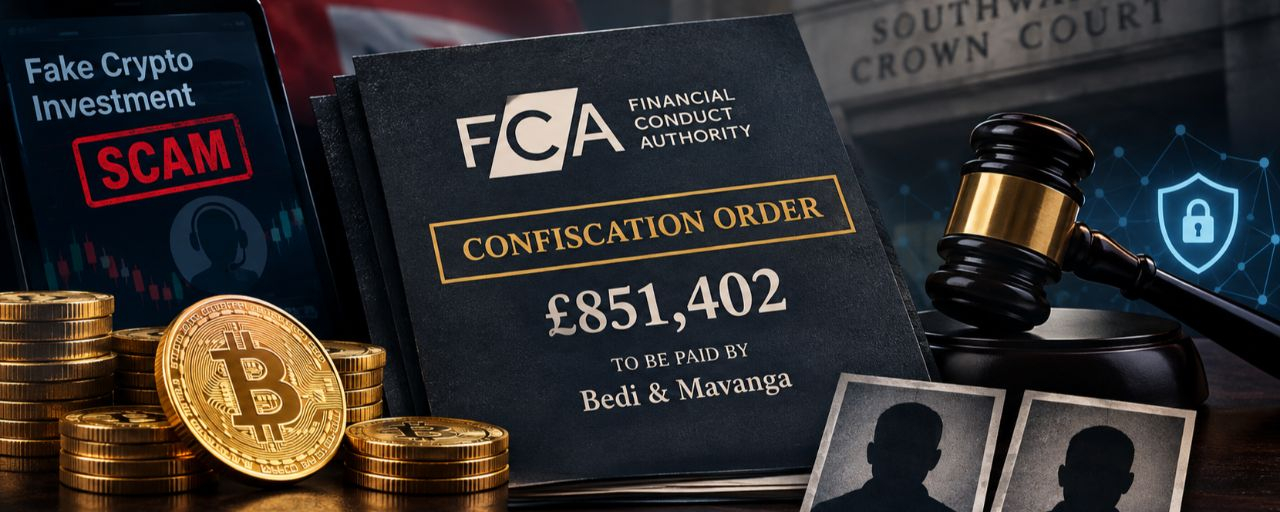
A £1.5M Crypto Fraud Case Just Closed With Something Rare: Money Actually Coming Back#ukfcawinscourtordertorecover851400pounds
Crypto fraud recoveries usually end the same disappointing way — funds vanish through mixers and cross-chain swaps long before authorities can act. This case is a notable exception.
Here's what happened: at Southwark Crown Court on September 28, the UK's Financial Conduct Authority secured confiscation orders totaling £851,402 against Raymondip Bedi and Patrick Mavanga, ordered to pay £603,404.28 and £247,997.99 respectively. Between February 2017 and June 2019, the pair ran a cold-calling operation that steered at least 65 investors into fake cryptoasset opportunities through entities including CCX Capital and Astaria Group LLP, collectively costing victims £1,541,799. Both men were already sentenced to prison back in 2024, receiving a combined eleven years and ten months. This latest court action is the financial follow-through under the Proceeds of Crime Act — a separate legal step from the original criminal conviction, aimed specifically at clawing back ill-gotten proceeds. Bedi and Mavanga now have three months to pay, after which the FCA says it will distribute the recovered funds to identified victims, covering roughly 55% of total losses.
Why does this matter? Crypto scam recovery has historically been the exception rather than the rule — once funds move through mixers or get cashed out across jurisdictions, most victims are left with little realistic path to compensation. A confiscation order that maps this closely to the actual stolen amount stands out precisely because it's uncommon. It also arrives as the FCA continues tightening its broader crypto oversight, having just published new regulatory perimeter guidance ahead of its formal authorization regime opening for applications on September 30. Enforcement actions like this tend to double as a signal of regulatory direction — a reminder that authorities are pursuing both prevention (via licensing) and after-the-fact accountability (via asset recovery) as parallel tracks.
Whether this level of fund recovery becomes more achievable going forward, or remains a rare outcome tied to this specific case's circumstances, is something the broader enforcement track record will need to answer.
Does a recovery like this signal real progress in fighting crypto fraud, or does it mostly highlight how rarely victims see their money again? 🤔
#FCA #CryptoFraud #Regulation #InvestorProtection
$ZEC $SUI $XRP
{future}(XRPUSDT)
{future}(SUIUSDT)
{future}(ZECUSDT)
A £1.5M Crypto Fraud Case Just Closed With Something Rare: Money Actually Coming Back
#ukfcawinscourtordertorecover851400pounds
Crypto fraud recoveries usually end the same disappointing way — funds vanish through mixers and cross-chain swaps long before authorities can act. This case is a notable exception.
Here's what happened: at Southwark Crown Court on September 28, the UK's Financial Conduct Authority secured confiscation orders totaling £851,402 against Raymondip Bedi and Patrick Mavanga, ordered to pay £603,404.28 and £247,997.99 respectively. Between February 2017 and June 2019, the pair ran a cold-calling operation that steered at least 65 investors into fake cryptoasset opportunities through entities including CCX Capital and Astaria Group LLP, collectively costing victims £1,541,799. Both men were already sentenced to prison back in 2024, receiving a combined eleven years and ten months. This latest court action is the financial follow-through under the Proceeds of Crime Act — a separate legal step from the original criminal conviction, aimed specifically at clawing back ill-gotten proceeds. Bedi and Mavanga now have three months to pay, after which the FCA says it will distribute the recovered funds to identified victims, covering roughly 55% of total losses.
Why does this matter? Crypto scam recovery has historically been the exception rather than the rule — once funds move through mixers or get cashed out across jurisdictions, most victims are left with little realistic path to compensation. A confiscation order that maps this closely to the actual stolen amount stands out precisely because it's uncommon. It also arrives as the FCA continues tightening its broader crypto oversight, having just published new regulatory perimeter guidance ahead of its formal authorization regime opening for applications on September 30. Enforcement actions like this tend to double as a signal of regulatory direction — a reminder that authorities are pursuing both prevention (via licensing) and after-the-fact accountability (via asset recovery) as parallel tracks.
Whether this level of fund recovery becomes more achievable going forward, or remains a rare outcome tied to this specific case's circumstances, is something the broader enforcement track record will need to answer.
Does a recovery like this signal real progress in fighting crypto fraud, or does it mostly highlight how rarely victims see their money again? 🤔
#FCA #CryptoFraud #Regulation #InvestorProtection
$ZEC $SUI $XRP
Crypto fraud recoveries usually end the same disappointing way — funds vanish through mixers and cross-chain swaps long before authorities can act. This case is a notable exception.
Here's what happened: at Southwark Crown Court on September 28, the UK's Financial Conduct Authority secured confiscation orders totaling £851,402 against Raymondip Bedi and Patrick Mavanga, ordered to pay £603,404.28 and £247,997.99 respectively. Between February 2017 and June 2019, the pair ran a cold-calling operation that steered at least 65 investors into fake cryptoasset opportunities through entities including CCX Capital and Astaria Group LLP, collectively costing victims £1,541,799. Both men were already sentenced to prison back in 2024, receiving a combined eleven years and ten months. This latest court action is the financial follow-through under the Proceeds of Crime Act — a separate legal step from the original criminal conviction, aimed specifically at clawing back ill-gotten proceeds. Bedi and Mavanga now have three months to pay, after which the FCA says it will distribute the recovered funds to identified victims, covering roughly 55% of total losses.
Why does this matter? Crypto scam recovery has historically been the exception rather than the rule — once funds move through mixers or get cashed out across jurisdictions, most victims are left with little realistic path to compensation. A confiscation order that maps this closely to the actual stolen amount stands out precisely because it's uncommon. It also arrives as the FCA continues tightening its broader crypto oversight, having just published new regulatory perimeter guidance ahead of its formal authorization regime opening for applications on September 30. Enforcement actions like this tend to double as a signal of regulatory direction — a reminder that authorities are pursuing both prevention (via licensing) and after-the-fact accountability (via asset recovery) as parallel tracks.
Whether this level of fund recovery becomes more achievable going forward, or remains a rare outcome tied to this specific case's circumstances, is something the broader enforcement track record will need to answer.
Does a recovery like this signal real progress in fighting crypto fraud, or does it mostly highlight how rarely victims see their money again? 🤔
#FCA #CryptoFraud #Regulation #InvestorProtection
$ZEC $SUI $XRP
1
2
3.2k
·
--
Article
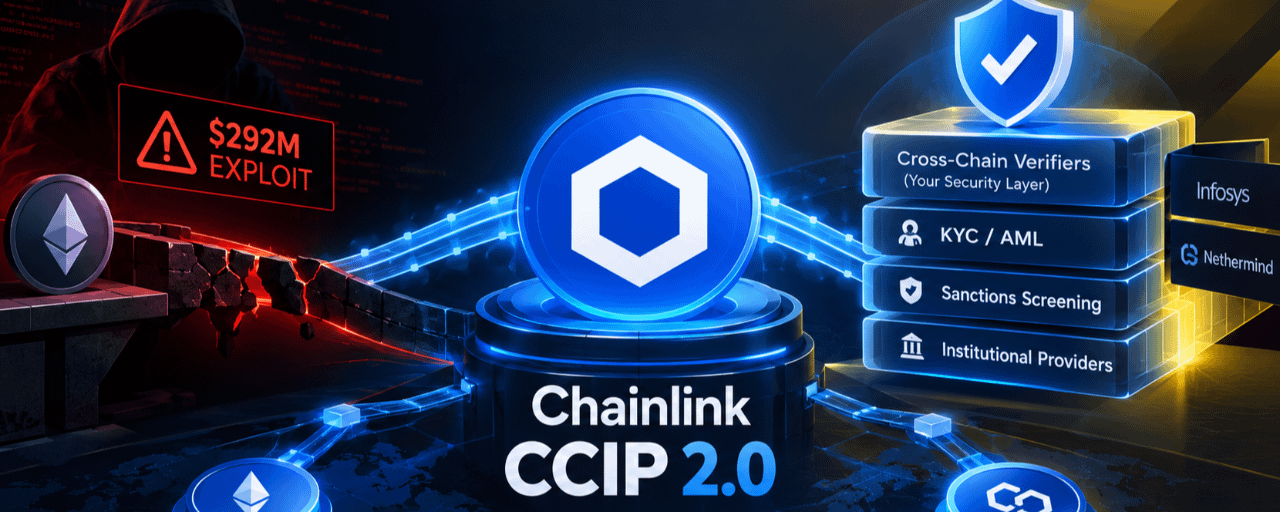
Chainlink Just Rebuilt Cross-Chain Security After a $292 Million Wake-Up Call#chainlinklaunchesccip2withenterpriseverification
Chainlink launched a major upgrade to its cross-chain infrastructure this week — and the timing isn't coincidental. It follows one of the largest bridge exploits of the year, and directly addresses the exact weakness attackers used.
Here's what shipped: on September 28, Chainlink released CCIP 2.0, the next generation of its Cross-Chain Interoperability Protocol, which already secures more than $84 billion in total cross-chain token value. The headline feature is what Chainlink calls Cross-Chain Verifiers (CCVs) — institutions can now layer their own independent security checks on top of Chainlink's existing 16-node verification network, either running the infrastructure themselves or hiring third-party providers like Infosys or Nethermind. It also adds built-in compliance tooling for KYC, AML, and sanctions screening. The upgrade arrives roughly five months after attackers, reportedly linked to North Korea's Lazarus Group, exploited a single validator relied on by the Kelp DAO cross-chain bridge, draining approximately $292 million in rsETH — Kelp has since said it will migrate to Chainlink's infrastructure. Existing Chainlink users were automatically migrated to the new version, and platforms including Aave and Maple are already using pieces of the upgrade, though Chainlink hasn't disclosed which institutions are adopting the new verification layer specifically. One structural change worth noting: Chainlink's previously independent risk-management network no longer functions as a separate default check — that kind of independent verification is now optional rather than built in by default.
Why does this matter? Bridge exploits remain one of crypto's most costly attack vectors, largely because many cross-chain systems have historically relied on a single point of verification — exactly the weakness the Kelp DAO hack exposed. Letting institutions add their own independent verification layers, rather than depending solely on one network's default security, is a meaningful architectural shift toward defense-in-depth. At the same time, the removal of a previously mandatory independent check as a default layer is a trade-off worth watching — added flexibility can mean added security, but only if institutions actually choose to implement it.
Whether this modular approach measurably reduces future bridge exploits, or whether adoption of the optional verifiers ends up inconsistent across the ecosystem, will likely only become clear as real-world usage data comes in.
Does giving institutions the option to add their own security layers make cross-chain infrastructure genuinely safer, or does it just shift responsibility onto whoever chooses not to use it? 🤔
#Chainlink #CCIP #CrossChain #CryptoSecurity
$HBAR $NMR $CRV
{future}(CRVUSDT)
{future}(NMRUSDT)
{future}(HBARUSDT)
Chainlink Just Rebuilt Cross-Chain Security After a $292 Million Wake-Up Call
#chainlinklaunchesccip2withenterpriseverification
Chainlink launched a major upgrade to its cross-chain infrastructure this week — and the timing isn't coincidental. It follows one of the largest bridge exploits of the year, and directly addresses the exact weakness attackers used.
Here's what shipped: on September 28, Chainlink released CCIP 2.0, the next generation of its Cross-Chain Interoperability Protocol, which already secures more than $84 billion in total cross-chain token value. The headline feature is what Chainlink calls Cross-Chain Verifiers (CCVs) — institutions can now layer their own independent security checks on top of Chainlink's existing 16-node verification network, either running the infrastructure themselves or hiring third-party providers like Infosys or Nethermind. It also adds built-in compliance tooling for KYC, AML, and sanctions screening. The upgrade arrives roughly five months after attackers, reportedly linked to North Korea's Lazarus Group, exploited a single validator relied on by the Kelp DAO cross-chain bridge, draining approximately $292 million in rsETH — Kelp has since said it will migrate to Chainlink's infrastructure. Existing Chainlink users were automatically migrated to the new version, and platforms including Aave and Maple are already using pieces of the upgrade, though Chainlink hasn't disclosed which institutions are adopting the new verification layer specifically. One structural change worth noting: Chainlink's previously independent risk-management network no longer functions as a separate default check — that kind of independent verification is now optional rather than built in by default.
Why does this matter? Bridge exploits remain one of crypto's most costly attack vectors, largely because many cross-chain systems have historically relied on a single point of verification — exactly the weakness the Kelp DAO hack exposed. Letting institutions add their own independent verification layers, rather than depending solely on one network's default security, is a meaningful architectural shift toward defense-in-depth. At the same time, the removal of a previously mandatory independent check as a default layer is a trade-off worth watching — added flexibility can mean added security, but only if institutions actually choose to implement it.
Whether this modular approach measurably reduces future bridge exploits, or whether adoption of the optional verifiers ends up inconsistent across the ecosystem, will likely only become clear as real-world usage data comes in.
Does giving institutions the option to add their own security layers make cross-chain infrastructure genuinely safer, or does it just shift responsibility onto whoever chooses not to use it? 🤔
#Chainlink #CCIP #CrossChain #CryptoSecurity
$HBAR $NMR $CRV
Chainlink launched a major upgrade to its cross-chain infrastructure this week — and the timing isn't coincidental. It follows one of the largest bridge exploits of the year, and directly addresses the exact weakness attackers used.
Here's what shipped: on September 28, Chainlink released CCIP 2.0, the next generation of its Cross-Chain Interoperability Protocol, which already secures more than $84 billion in total cross-chain token value. The headline feature is what Chainlink calls Cross-Chain Verifiers (CCVs) — institutions can now layer their own independent security checks on top of Chainlink's existing 16-node verification network, either running the infrastructure themselves or hiring third-party providers like Infosys or Nethermind. It also adds built-in compliance tooling for KYC, AML, and sanctions screening. The upgrade arrives roughly five months after attackers, reportedly linked to North Korea's Lazarus Group, exploited a single validator relied on by the Kelp DAO cross-chain bridge, draining approximately $292 million in rsETH — Kelp has since said it will migrate to Chainlink's infrastructure. Existing Chainlink users were automatically migrated to the new version, and platforms including Aave and Maple are already using pieces of the upgrade, though Chainlink hasn't disclosed which institutions are adopting the new verification layer specifically. One structural change worth noting: Chainlink's previously independent risk-management network no longer functions as a separate default check — that kind of independent verification is now optional rather than built in by default.
Why does this matter? Bridge exploits remain one of crypto's most costly attack vectors, largely because many cross-chain systems have historically relied on a single point of verification — exactly the weakness the Kelp DAO hack exposed. Letting institutions add their own independent verification layers, rather than depending solely on one network's default security, is a meaningful architectural shift toward defense-in-depth. At the same time, the removal of a previously mandatory independent check as a default layer is a trade-off worth watching — added flexibility can mean added security, but only if institutions actually choose to implement it.
Whether this modular approach measurably reduces future bridge exploits, or whether adoption of the optional verifiers ends up inconsistent across the ecosystem, will likely only become clear as real-world usage data comes in.
Does giving institutions the option to add their own security layers make cross-chain infrastructure genuinely safer, or does it just shift responsibility onto whoever chooses not to use it? 🤔
#Chainlink #CCIP #CrossChain #CryptoSecurity
$HBAR $NMR $CRV
1
1.8k
·
--
Bearish
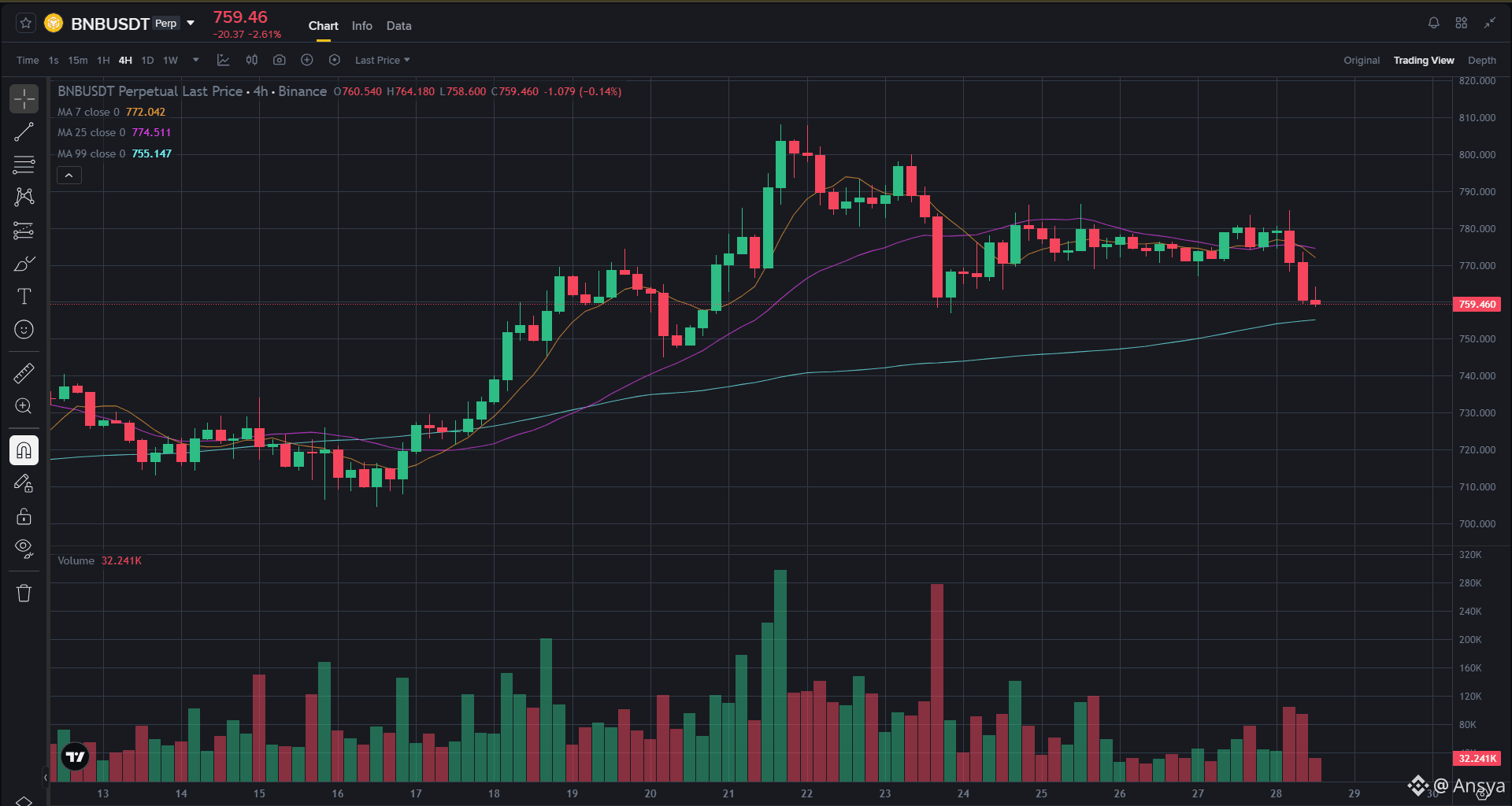
i’m short on $bnb now 🔻🔻
entry: $759 – $763
targets: $755 / $750 / $740
sl: $772
{future}(BNBUSDT)
#bnb #BNB_Market_Update
i’m short on $bnb now 🔻🔻
entry: $759 – $763
targets: $755 / $750 / $740
sl: $772
#bnb #BNB_Market_Update
entry: $759 – $763
targets: $755 / $750 / $740
sl: $772
#bnb #BNB_Market_Update
59
·
--
Bullish
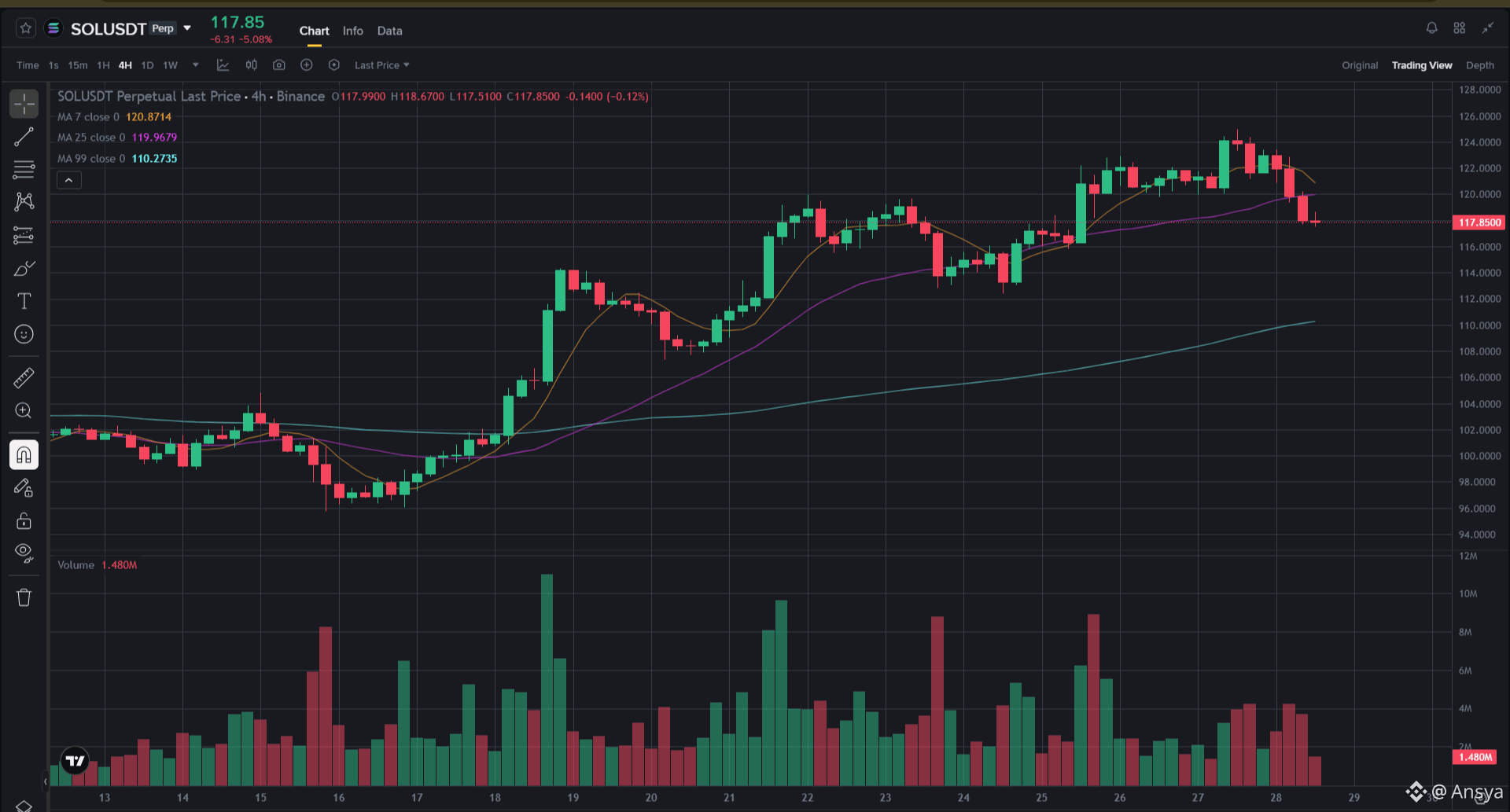
$SOL Could Climb Again 🚨
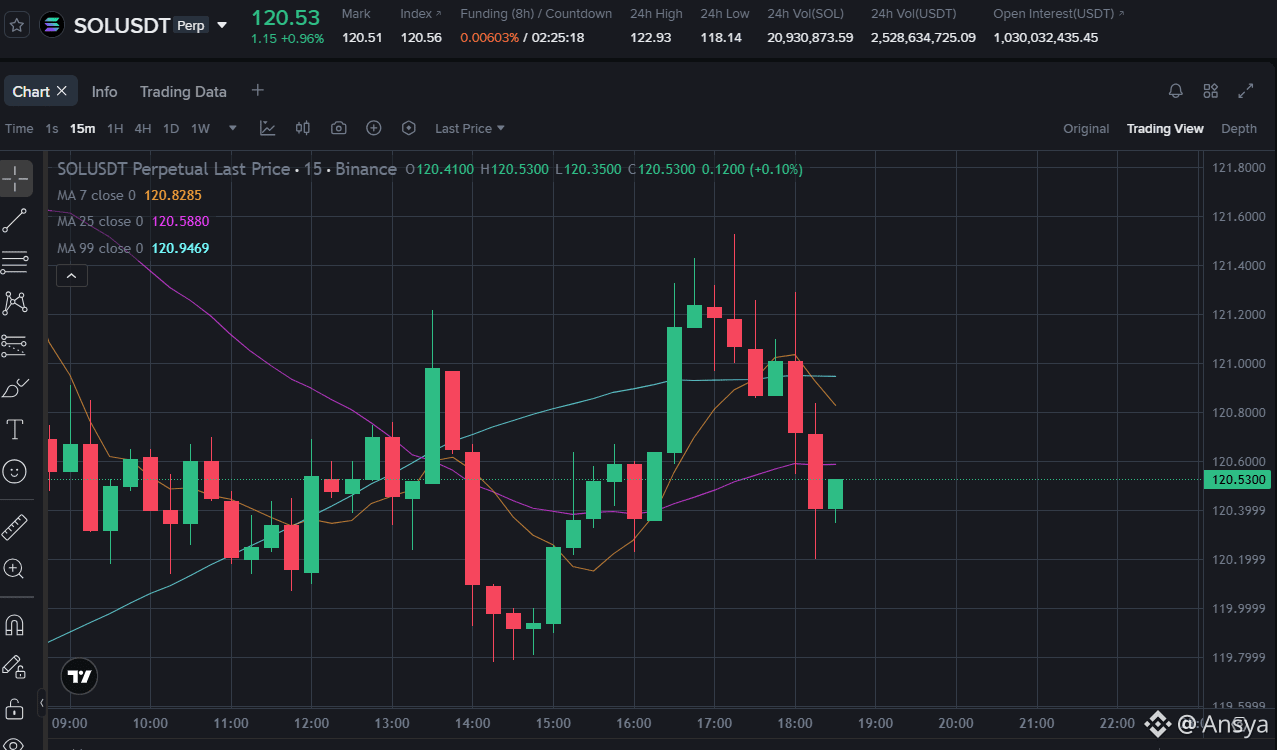
$SOL is trying to recover on the 15m chart after a short-term pullback. Price is sitting near the moving-average cluster, so the next reclaim could be important.
Long Setup
Entry: Above 120.95 after confirmation
TP1: 121.20
TP2: 121.40
SL: 120.35
If buyers push SOL back above 120.95 and hold it, the next leg higher could open quickly. Momentum is not fully back yet, but this is the level I’m watching for another climb.
Trade $SOL here 👇Always DYOR
{future}(SOLUSDT)
$SOL Could Climb Again 🚨
$SOL is trying to recover on the 15m chart after a short-term pullback. Price is sitting near the moving-average cluster, so the next reclaim could be important.
Long Setup
Entry: Above 120.95 after confirmation
TP1: 121.20
TP2: 121.40
SL: 120.35
If buyers push SOL back above 120.95 and hold it, the next leg higher could open quickly. Momentum is not fully back yet, but this is the level I’m watching for another climb.
Trade $SOL here 👇Always DYOR
$SOL is trying to recover on the 15m chart after a short-term pullback. Price is sitting near the moving-average cluster, so the next reclaim could be important.
Long Setup
Entry: Above 120.95 after confirmation
TP1: 121.20
TP2: 121.40
SL: 120.35
If buyers push SOL back above 120.95 and hold it, the next leg higher could open quickly. Momentum is not fully back yet, but this is the level I’m watching for another climb.
Trade $SOL here 👇Always DYOR
20
·
--
Bearish
Short $ZEC 🚨
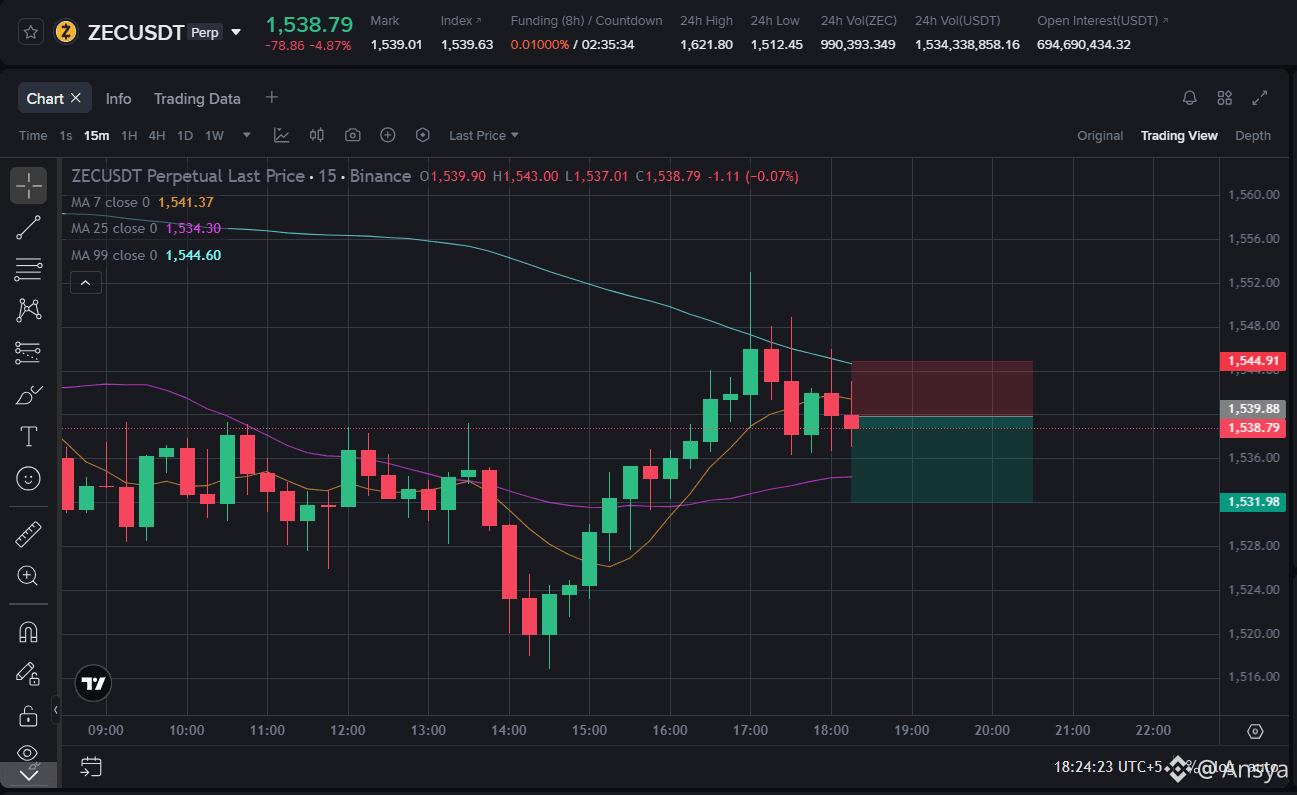
$ZEC is struggling below the MA7 at 1,541.37 and MA99 at 1,544.60 on the 15m chart, while price is hovering around 1,538.79.
Entry: 1,539.88
TP: 1,531.98
SL: 1,544.91
Trade $ZEC here 👇
A rejection below the 1,541–1,545 area keeps the short setup active, while a clean break above 1,544.91 would invalidate it.
{future}(ZECUSDT)
Short $ZEC 🚨
$ZEC is struggling below the MA7 at 1,541.37 and MA99 at 1,544.60 on the 15m chart, while price is hovering around 1,538.79.
Entry: 1,539.88
TP: 1,531.98
SL: 1,544.91
Trade $ZEC here 👇
A rejection below the 1,541–1,545 area keeps the short setup active, while a clean break above 1,544.91 would invalidate it.
$ZEC is struggling below the MA7 at 1,541.37 and MA99 at 1,544.60 on the 15m chart, while price is hovering around 1,538.79.
Entry: 1,539.88
TP: 1,531.98
SL: 1,544.91
Trade $ZEC here 👇
A rejection below the 1,541–1,545 area keeps the short setup active, while a clean break above 1,544.91 would invalidate it.
1
27
·
--
Bullish
#blackrockbuildstokenizedportfoliosforondo
Tokenization Just Took Its Next Logical Step — From Single Assets to Entire Portfolios
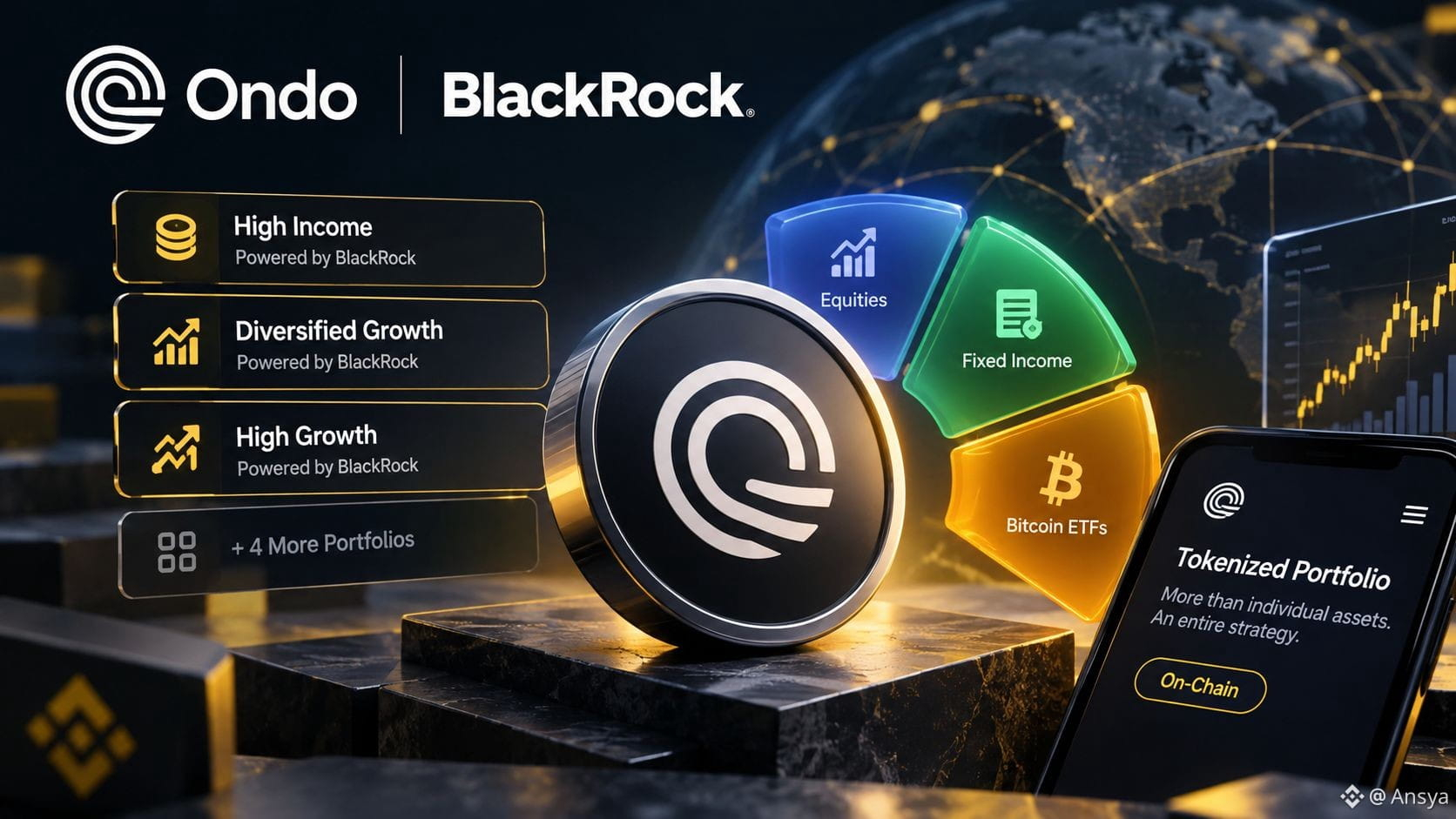
Ondo Finance just moved tokenization beyond individual assets — packaging entire investment strategies into single on-chain tokens, with BlackRock-designed models behind three of them.
Here’s what launched: Ondo rolled out seven tokenized model portfolios, including Ondo High Income, Ondo Diversified Growth, and Ondo High Growth. These three carry the “Powered by BlackRock” label because BlackRock developed the nondiscretionary allocation models.
That distinction matters. These are Ondo products, not BlackRock funds. Ondo Global Markets handles issuance, custody, and day-to-day operation, while the underlying strategies can combine equities, fixed income, and Bitcoin ETFs. The portfolios are designed to rebalance according to preset parameters, with access currently limited to eligible investors outside the U.S.
The bigger idea is what makes this interesting.
Most RWA tokenization has focused on individual instruments — Treasury bills, money-market funds, or single securities. Tokenizing an entire allocation strategy creates something closer to a traditional managed portfolio, but delivered through blockchain infrastructure.
That could make diversified strategies easier to distribute digitally. But it also raises a bigger regulatory question: as tokenized products become more complex, where exactly do they fit within existing investment rules?
For now, the real test isn't the launch itself. It’s whether investors actually use these products at scale.
Does putting an entire portfolio strategy into one token create something genuinely new, or simply repackage traditional investing on blockchain rails?
#ONDO #blackRock #RWA #Tokenization
$RARE $ONDO $MUBARAK
{future}(ONDOUSDT)
{future}(MUBARAKUSDT)
{future}(RAREUSDT)
#blackrockbuildstokenizedportfoliosforondo
Tokenization Just Took Its Next Logical Step — From Single Assets to Entire Portfolios
Ondo Finance just moved tokenization beyond individual assets — packaging entire investment strategies into single on-chain tokens, with BlackRock-designed models behind three of them.
Here’s what launched: Ondo rolled out seven tokenized model portfolios, including Ondo High Income, Ondo Diversified Growth, and Ondo High Growth. These three carry the “Powered by BlackRock” label because BlackRock developed the nondiscretionary allocation models.
That distinction matters. These are Ondo products, not BlackRock funds. Ondo Global Markets handles issuance, custody, and day-to-day operation, while the underlying strategies can combine equities, fixed income, and Bitcoin ETFs. The portfolios are designed to rebalance according to preset parameters, with access currently limited to eligible investors outside the U.S.
The bigger idea is what makes this interesting.
Most RWA tokenization has focused on individual instruments — Treasury bills, money-market funds, or single securities. Tokenizing an entire allocation strategy creates something closer to a traditional managed portfolio, but delivered through blockchain infrastructure.
That could make diversified strategies easier to distribute digitally. But it also raises a bigger regulatory question: as tokenized products become more complex, where exactly do they fit within existing investment rules?
For now, the real test isn't the launch itself. It’s whether investors actually use these products at scale.
Does putting an entire portfolio strategy into one token create something genuinely new, or simply repackage traditional investing on blockchain rails?
#ONDO #blackRock #RWA #Tokenization
$RARE $ONDO $MUBARAK
Tokenization Just Took Its Next Logical Step — From Single Assets to Entire Portfolios
Ondo Finance just moved tokenization beyond individual assets — packaging entire investment strategies into single on-chain tokens, with BlackRock-designed models behind three of them.
Here’s what launched: Ondo rolled out seven tokenized model portfolios, including Ondo High Income, Ondo Diversified Growth, and Ondo High Growth. These three carry the “Powered by BlackRock” label because BlackRock developed the nondiscretionary allocation models.
That distinction matters. These are Ondo products, not BlackRock funds. Ondo Global Markets handles issuance, custody, and day-to-day operation, while the underlying strategies can combine equities, fixed income, and Bitcoin ETFs. The portfolios are designed to rebalance according to preset parameters, with access currently limited to eligible investors outside the U.S.
The bigger idea is what makes this interesting.
Most RWA tokenization has focused on individual instruments — Treasury bills, money-market funds, or single securities. Tokenizing an entire allocation strategy creates something closer to a traditional managed portfolio, but delivered through blockchain infrastructure.
That could make diversified strategies easier to distribute digitally. But it also raises a bigger regulatory question: as tokenized products become more complex, where exactly do they fit within existing investment rules?
For now, the real test isn't the launch itself. It’s whether investors actually use these products at scale.
Does putting an entire portfolio strategy into one token create something genuinely new, or simply repackage traditional investing on blockchain rails?
#ONDO #blackRock #RWA #Tokenization
$RARE $ONDO $MUBARAK
1
310
·
--
Article
Crypto's Most Recognizable Regulatory Ally Just Set an Exit Date#seccommissionerpeircetoleaveoct2
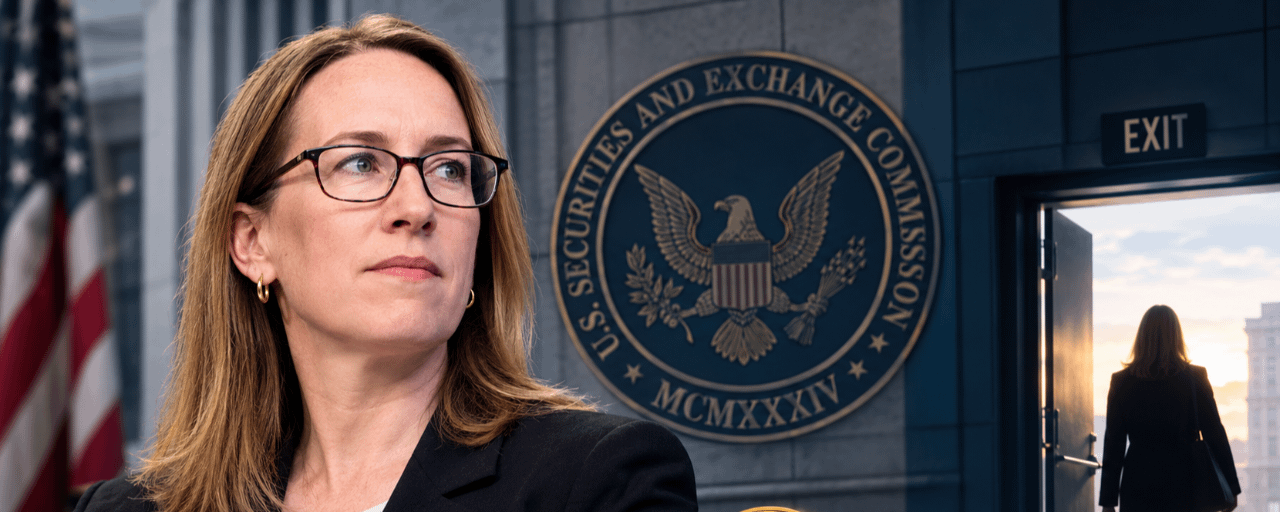
The SEC commissioner known industry-wide as "Crypto Mom" has confirmed she's stepping down — and the timing lands right in the middle of a busy stretch of crypto rulemaking.
Here's what happened: Hester Peirce announced Friday that she will leave the SEC on October 2, closing out nearly nine years at the agency, including her role directing the Crypto Task Force since February 2025. Her term had technically expired back in June 2025, but she remained in a holdover capacity, as commissioners are permitted to do for a limited period. She's headed to Regent University School of Law as an associate professor starting in November. Her departure leaves the SEC with just two sitting commissioners — Chairman Paul Atkins and Mark Uyeda, both Republicans — with no successor yet nominated by the White House. Notably, the announcement came the same day the SEC issued fresh crypto guidance on token buybacks and network upgrades, a reminder that the agency's rulemaking continues regardless of individual departures.
Why does this matter? Peirce built a reputation over the years as one of the more consistent voices pushing for clearer, principles-based crypto regulation, often positioning herself differently from stricter enforcement-first approaches. Her exit means the commission loses a specific perspective that shaped years of crypto policy discussion, at a moment when the agency is actively working through foundational questions — securities classification, tokenization, staking — without full legislative clarity from Congress. With only two commissioners remaining and no confirmed timeline for a replacement, some industry watchers are watching closely to see whether that shifts the internal balance of upcoming decisions, even though the SEC can technically still function and issue guidance with two members.
Whether her departure meaningfully changes the substance of future SEC crypto policy, or whether Atkins and Uyeda continue along a similar path, is something that will likely only become clear through the decisions that follow.
Does losing one influential voice at a regulator actually shift future policy, or does institutional direction tend to hold steady regardless of who's in the room? 🤔
#SEC #CryptoRegulation #HesterPeirce #PolicyWatch
$RARE $2Z $MUBARAK
{future}(MUBARAKUSDT)
{future}(2ZUSDT)
{future}(RAREUSDT)
Crypto's Most Recognizable Regulatory Ally Just Set an Exit Date
#seccommissionerpeircetoleaveoct2
The SEC commissioner known industry-wide as "Crypto Mom" has confirmed she's stepping down — and the timing lands right in the middle of a busy stretch of crypto rulemaking.
Here's what happened: Hester Peirce announced Friday that she will leave the SEC on October 2, closing out nearly nine years at the agency, including her role directing the Crypto Task Force since February 2025. Her term had technically expired back in June 2025, but she remained in a holdover capacity, as commissioners are permitted to do for a limited period. She's headed to Regent University School of Law as an associate professor starting in November. Her departure leaves the SEC with just two sitting commissioners — Chairman Paul Atkins and Mark Uyeda, both Republicans — with no successor yet nominated by the White House. Notably, the announcement came the same day the SEC issued fresh crypto guidance on token buybacks and network upgrades, a reminder that the agency's rulemaking continues regardless of individual departures.
Why does this matter? Peirce built a reputation over the years as one of the more consistent voices pushing for clearer, principles-based crypto regulation, often positioning herself differently from stricter enforcement-first approaches. Her exit means the commission loses a specific perspective that shaped years of crypto policy discussion, at a moment when the agency is actively working through foundational questions — securities classification, tokenization, staking — without full legislative clarity from Congress. With only two commissioners remaining and no confirmed timeline for a replacement, some industry watchers are watching closely to see whether that shifts the internal balance of upcoming decisions, even though the SEC can technically still function and issue guidance with two members.
Whether her departure meaningfully changes the substance of future SEC crypto policy, or whether Atkins and Uyeda continue along a similar path, is something that will likely only become clear through the decisions that follow.
Does losing one influential voice at a regulator actually shift future policy, or does institutional direction tend to hold steady regardless of who's in the room? 🤔
#SEC #CryptoRegulation #HesterPeirce #PolicyWatch
$RARE $2Z $MUBARAK
The SEC commissioner known industry-wide as "Crypto Mom" has confirmed she's stepping down — and the timing lands right in the middle of a busy stretch of crypto rulemaking.
Here's what happened: Hester Peirce announced Friday that she will leave the SEC on October 2, closing out nearly nine years at the agency, including her role directing the Crypto Task Force since February 2025. Her term had technically expired back in June 2025, but she remained in a holdover capacity, as commissioners are permitted to do for a limited period. She's headed to Regent University School of Law as an associate professor starting in November. Her departure leaves the SEC with just two sitting commissioners — Chairman Paul Atkins and Mark Uyeda, both Republicans — with no successor yet nominated by the White House. Notably, the announcement came the same day the SEC issued fresh crypto guidance on token buybacks and network upgrades, a reminder that the agency's rulemaking continues regardless of individual departures.
Why does this matter? Peirce built a reputation over the years as one of the more consistent voices pushing for clearer, principles-based crypto regulation, often positioning herself differently from stricter enforcement-first approaches. Her exit means the commission loses a specific perspective that shaped years of crypto policy discussion, at a moment when the agency is actively working through foundational questions — securities classification, tokenization, staking — without full legislative clarity from Congress. With only two commissioners remaining and no confirmed timeline for a replacement, some industry watchers are watching closely to see whether that shifts the internal balance of upcoming decisions, even though the SEC can technically still function and issue guidance with two members.
Whether her departure meaningfully changes the substance of future SEC crypto policy, or whether Atkins and Uyeda continue along a similar path, is something that will likely only become clear through the decisions that follow.
Does losing one influential voice at a regulator actually shift future policy, or does institutional direction tend to hold steady regardless of who's in the room? 🤔
#SEC #CryptoRegulation #HesterPeirce #PolicyWatch
$RARE $2Z $MUBARAK
1
3
1.9k
·
--
Verified
Article
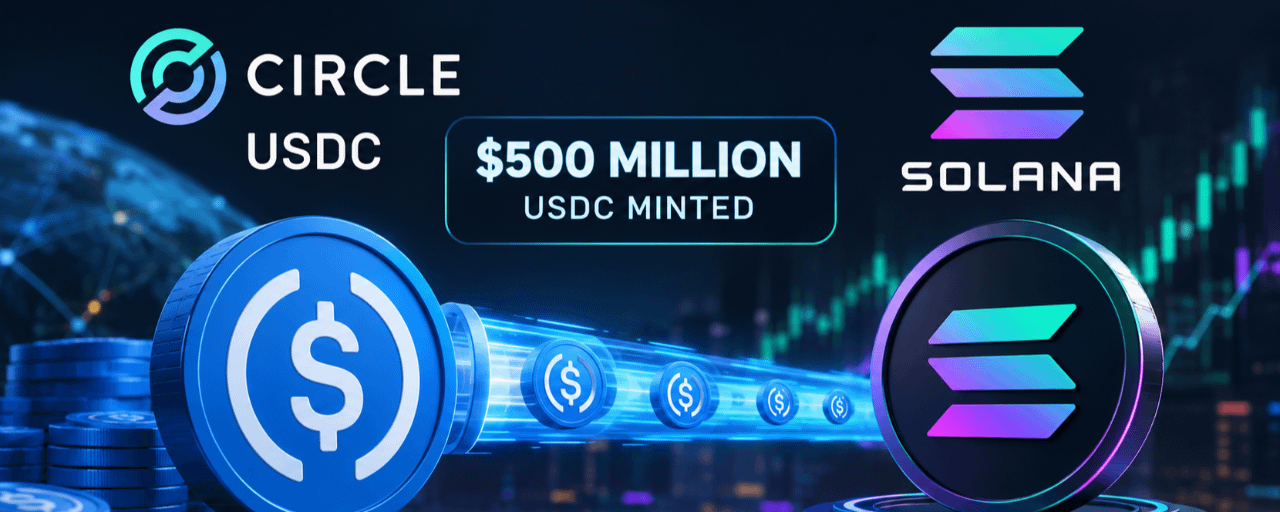
Another Half-Billion Dollars Just Landed on Solana — And It's Becoming a Pattern#circlemints500musdconsolana
Circle just minted $500 million in fresh USDC directly onto the Solana network — and if it feels like this keeps happening, that's because it does.
Here's what happened: on September 26, Circle's USDC Treasury minted 250 million USDC in two separate transactions, hours apart, for a total of $500 million in new supply issued natively on Solana. Because USDC is fully collateralized rather than algorithmic, each mint represents real dollars entering reserve, not tokens created out of thin air — meaning this reflects genuine institutional or commercial demand converting cash into on-chain USDC. This isn't an isolated event either; Solana has seen a steady cadence of similar large-scale mints throughout 2026, with gross issuance on the network surpassing $66 billion by mid-year and its share of total global USDC supply briefly climbing above 10% during peak periods — notable territory for a chain that only received native USDC support a few years ago.
Why does this matter? Stablecoin liquidity tends to concentrate where trading activity and infrastructure are strongest, and Solana's low fees and fast settlement have made it an increasingly popular destination for that liquidity throughout the year. More USDC circulating on a chain generally supports deeper liquidity pools, tighter spreads on decentralized exchanges, and smoother execution for lending and derivatives platforms built there. Recurring mints of this size also serve as a rough real-time gauge of institutional appetite for that particular ecosystem — money doesn't get created and deployed at this scale without some underlying demand behind it.
Whether this pace of issuance continues to climb, or plateaus as the market finds its natural liquidity balance across chains, is something only the coming months will show.
Does the steady flow of stablecoin liquidity into Solana say more about the network's strength, or about where institutional capital is simply finding the best execution right now? 🤔
#USDC #Circle #solana #Stablecoins
$SOL $RARE $USDC
{future}(USDCUSDT)
{future}(RAREUSDT)
{future}(SOLUSDT)
Another Half-Billion Dollars Just Landed on Solana — And It's Becoming a Pattern
#circlemints500musdconsolana
Circle just minted $500 million in fresh USDC directly onto the Solana network — and if it feels like this keeps happening, that's because it does.
Here's what happened: on September 26, Circle's USDC Treasury minted 250 million USDC in two separate transactions, hours apart, for a total of $500 million in new supply issued natively on Solana. Because USDC is fully collateralized rather than algorithmic, each mint represents real dollars entering reserve, not tokens created out of thin air — meaning this reflects genuine institutional or commercial demand converting cash into on-chain USDC. This isn't an isolated event either; Solana has seen a steady cadence of similar large-scale mints throughout 2026, with gross issuance on the network surpassing $66 billion by mid-year and its share of total global USDC supply briefly climbing above 10% during peak periods — notable territory for a chain that only received native USDC support a few years ago.
Why does this matter? Stablecoin liquidity tends to concentrate where trading activity and infrastructure are strongest, and Solana's low fees and fast settlement have made it an increasingly popular destination for that liquidity throughout the year. More USDC circulating on a chain generally supports deeper liquidity pools, tighter spreads on decentralized exchanges, and smoother execution for lending and derivatives platforms built there. Recurring mints of this size also serve as a rough real-time gauge of institutional appetite for that particular ecosystem — money doesn't get created and deployed at this scale without some underlying demand behind it.
Whether this pace of issuance continues to climb, or plateaus as the market finds its natural liquidity balance across chains, is something only the coming months will show.
Does the steady flow of stablecoin liquidity into Solana say more about the network's strength, or about where institutional capital is simply finding the best execution right now? 🤔
#USDC #Circle #solana #Stablecoins
$SOL $RARE $USDC
Circle just minted $500 million in fresh USDC directly onto the Solana network — and if it feels like this keeps happening, that's because it does.
Here's what happened: on September 26, Circle's USDC Treasury minted 250 million USDC in two separate transactions, hours apart, for a total of $500 million in new supply issued natively on Solana. Because USDC is fully collateralized rather than algorithmic, each mint represents real dollars entering reserve, not tokens created out of thin air — meaning this reflects genuine institutional or commercial demand converting cash into on-chain USDC. This isn't an isolated event either; Solana has seen a steady cadence of similar large-scale mints throughout 2026, with gross issuance on the network surpassing $66 billion by mid-year and its share of total global USDC supply briefly climbing above 10% during peak periods — notable territory for a chain that only received native USDC support a few years ago.
Why does this matter? Stablecoin liquidity tends to concentrate where trading activity and infrastructure are strongest, and Solana's low fees and fast settlement have made it an increasingly popular destination for that liquidity throughout the year. More USDC circulating on a chain generally supports deeper liquidity pools, tighter spreads on decentralized exchanges, and smoother execution for lending and derivatives platforms built there. Recurring mints of this size also serve as a rough real-time gauge of institutional appetite for that particular ecosystem — money doesn't get created and deployed at this scale without some underlying demand behind it.
Whether this pace of issuance continues to climb, or plateaus as the market finds its natural liquidity balance across chains, is something only the coming months will show.
Does the steady flow of stablecoin liquidity into Solana say more about the network's strength, or about where institutional capital is simply finding the best execution right now? 🤔
#USDC #Circle #solana #Stablecoins
$SOL $RARE $USDC
3
1
6
2k
·
--
Bullish
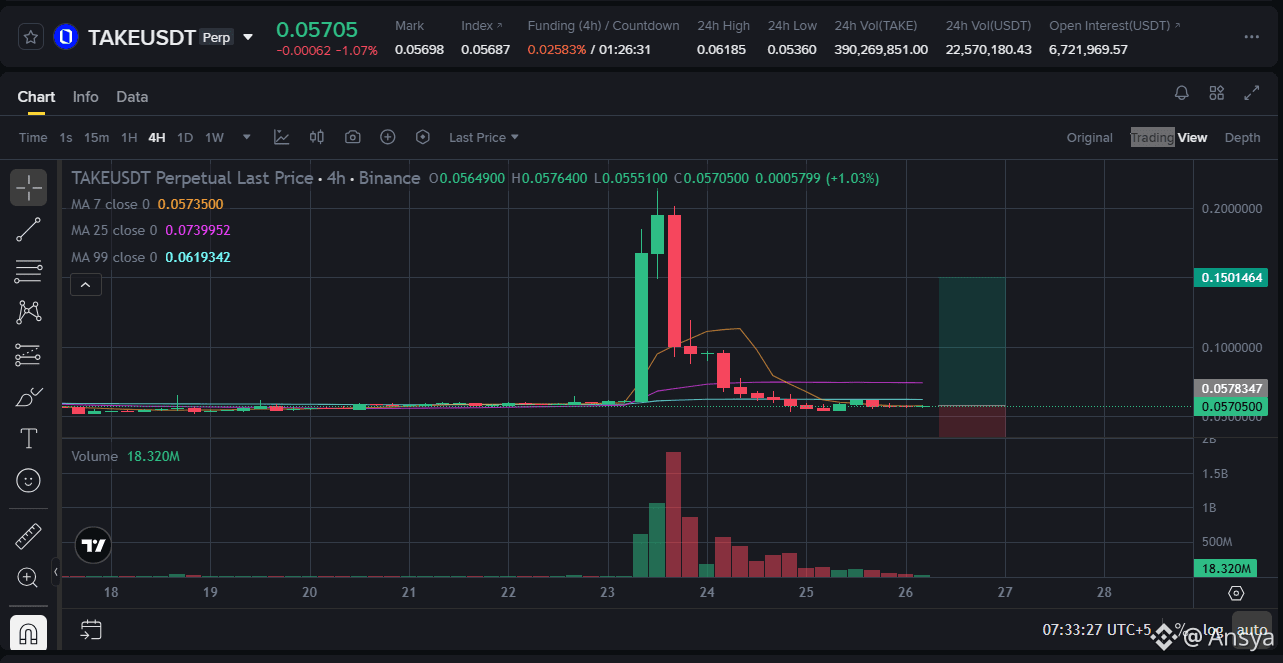
$TAKE Next Bullish Setup 🚨
$TAKE is consolidating on the 4H chart after the sharp sell-off. Price is near the MA7 at 0.05735, while MA99 at 0.06193 remains the next important reclaim level.
Entry: Above 0.05783 after confirmation
TP1: 0.06193
TP2: 0.07399
TP3: 0.15014
SL: Below 0.05551
Trade $TAKE here 👇
A clean breakout above 0.06193 would make the bullish structure stronger.#QNTRises39% #SECSaysBuybacksUpgradesDontMakeTokenSecurity #SECCommissionerPeirceToLeaveOct2
{future}(TAKEUSDT)
$TAKE Next Bullish Setup 🚨
$TAKE is consolidating on the 4H chart after the sharp sell-off. Price is near the MA7 at 0.05735, while MA99 at 0.06193 remains the next important reclaim level.
Entry: Above 0.05783 after confirmation
TP1: 0.06193
TP2: 0.07399
TP3: 0.15014
SL: Below 0.05551
Trade $TAKE here 👇
A clean breakout above 0.06193 would make the bullish structure stronger.#QNTRises39% #SECSaysBuybacksUpgradesDontMakeTokenSecurity #SECCommissionerPeirceToLeaveOct2
$TAKE is consolidating on the 4H chart after the sharp sell-off. Price is near the MA7 at 0.05735, while MA99 at 0.06193 remains the next important reclaim level.
Entry: Above 0.05783 after confirmation
TP1: 0.06193
TP2: 0.07399
TP3: 0.15014
SL: Below 0.05551
Trade $TAKE here 👇
A clean breakout above 0.06193 would make the bullish structure stronger.#QNTRises39% #SECSaysBuybacksUpgradesDontMakeTokenSecurity #SECCommissionerPeirceToLeaveOct2
1
65
·
--
Article
The SEC Just Answered a Question That's Followed Crypto Projects For Years#secsaysbuybacksupgradesdontmaketokensecurity
Token buybacks and ongoing development work have long lived in a legal gray zone — the SEC just gave projects some of the clearest guidance yet on where that line actually sits.
Here's what was clarified: on September 25/26, the SEC's Division of Corporation Finance updated its crypto FAQ, addressing a question many token teams have quietly worried about — does buying back your own token, or continuing to build after launch, turn that token into a security? The staff's answer: not automatically. If a blockchain network is already functional and its native token wasn't originally a security, announcing a buyback to manage treasury reserves, reduce supply, or burn tokens doesn't by itself create an "investment contract" under the Howey test. The same logic extends to ongoing work — maintaining, securing, or upgrading a live network generally doesn't count as the kind of "essential managerial effort" that ties a token's value to a central team's promises. The guidance also touched on liquid staking tokens, suggesting they can be treated as digital commodities rather than securities in many cases. Notably, the analysis flips for networks that aren't yet functional — if a team promotes a buyback there as a source of guaranteed returns, that framing can still trigger securities concerns. It's worth flagging: this is staff-level guidance, not a formal rule or court ruling, and it explicitly doesn't carry the force of law.
Why does this matter? Buybacks have become an increasingly common tool among crypto projects this year, with some newer proposals from L1 and DeFi protocols directly following corporate-style stock repurchase models. Regulatory ambiguity around whether this practice invites securities scrutiny has likely made some teams cautious about adopting it. Clearer staff guidance — even non-binding — gives projects more confidence to design tokenomics around buybacks and continued development without necessarily reopening the security-classification debate every time.
Whether this guidance holds up as market conditions and enforcement priorities shift, or whether it gets tested in an actual case down the line, is something only time will tell.
Does staff guidance like this offer real legal comfort, or is it just clarity until the next enforcement case tests it? 🤔
#SEC #CryptoRegulation #TokenBuybacks #Howey
$PHA $ARK $QI
{spot}(QIUSDT)
{future}(ARKUSDT)
{future}(PHAUSDT)
The SEC Just Answered a Question That's Followed Crypto Projects For Years
#secsaysbuybacksupgradesdontmaketokensecurity
Token buybacks and ongoing development work have long lived in a legal gray zone — the SEC just gave projects some of the clearest guidance yet on where that line actually sits.
Here's what was clarified: on September 25/26, the SEC's Division of Corporation Finance updated its crypto FAQ, addressing a question many token teams have quietly worried about — does buying back your own token, or continuing to build after launch, turn that token into a security? The staff's answer: not automatically. If a blockchain network is already functional and its native token wasn't originally a security, announcing a buyback to manage treasury reserves, reduce supply, or burn tokens doesn't by itself create an "investment contract" under the Howey test. The same logic extends to ongoing work — maintaining, securing, or upgrading a live network generally doesn't count as the kind of "essential managerial effort" that ties a token's value to a central team's promises. The guidance also touched on liquid staking tokens, suggesting they can be treated as digital commodities rather than securities in many cases. Notably, the analysis flips for networks that aren't yet functional — if a team promotes a buyback there as a source of guaranteed returns, that framing can still trigger securities concerns. It's worth flagging: this is staff-level guidance, not a formal rule or court ruling, and it explicitly doesn't carry the force of law.
Why does this matter? Buybacks have become an increasingly common tool among crypto projects this year, with some newer proposals from L1 and DeFi protocols directly following corporate-style stock repurchase models. Regulatory ambiguity around whether this practice invites securities scrutiny has likely made some teams cautious about adopting it. Clearer staff guidance — even non-binding — gives projects more confidence to design tokenomics around buybacks and continued development without necessarily reopening the security-classification debate every time.
Whether this guidance holds up as market conditions and enforcement priorities shift, or whether it gets tested in an actual case down the line, is something only time will tell.
Does staff guidance like this offer real legal comfort, or is it just clarity until the next enforcement case tests it? 🤔
#SEC #CryptoRegulation #TokenBuybacks #Howey
$PHA $ARK $QI
Token buybacks and ongoing development work have long lived in a legal gray zone — the SEC just gave projects some of the clearest guidance yet on where that line actually sits.
Here's what was clarified: on September 25/26, the SEC's Division of Corporation Finance updated its crypto FAQ, addressing a question many token teams have quietly worried about — does buying back your own token, or continuing to build after launch, turn that token into a security? The staff's answer: not automatically. If a blockchain network is already functional and its native token wasn't originally a security, announcing a buyback to manage treasury reserves, reduce supply, or burn tokens doesn't by itself create an "investment contract" under the Howey test. The same logic extends to ongoing work — maintaining, securing, or upgrading a live network generally doesn't count as the kind of "essential managerial effort" that ties a token's value to a central team's promises. The guidance also touched on liquid staking tokens, suggesting they can be treated as digital commodities rather than securities in many cases. Notably, the analysis flips for networks that aren't yet functional — if a team promotes a buyback there as a source of guaranteed returns, that framing can still trigger securities concerns. It's worth flagging: this is staff-level guidance, not a formal rule or court ruling, and it explicitly doesn't carry the force of law.
Why does this matter? Buybacks have become an increasingly common tool among crypto projects this year, with some newer proposals from L1 and DeFi protocols directly following corporate-style stock repurchase models. Regulatory ambiguity around whether this practice invites securities scrutiny has likely made some teams cautious about adopting it. Clearer staff guidance — even non-binding — gives projects more confidence to design tokenomics around buybacks and continued development without necessarily reopening the security-classification debate every time.
Whether this guidance holds up as market conditions and enforcement priorities shift, or whether it gets tested in an actual case down the line, is something only time will tell.
Does staff guidance like this offer real legal comfort, or is it just clarity until the next enforcement case tests it? 🤔
#SEC #CryptoRegulation #TokenBuybacks #Howey
$PHA $ARK $QI
1
10
9.7k
·
--
Verified
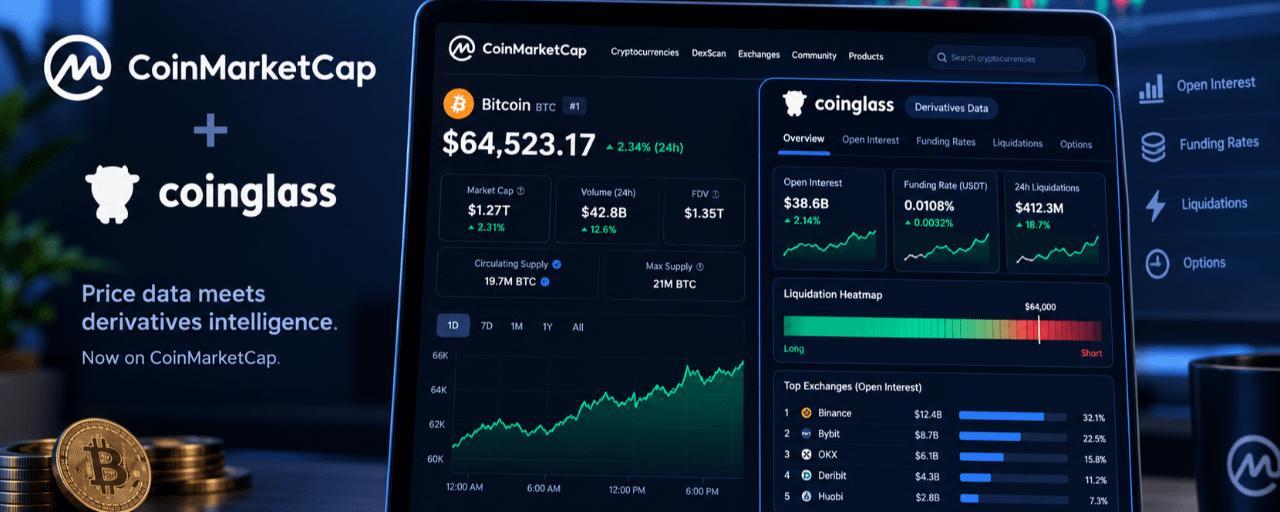
Article
Your Price-Tracking App Just Got a Derivatives Upgrade#coinmarketcapcompletescoinglassacquisition
CoinMarketCap, the crypto industry's most-referenced price tracker, just completed an acquisition that pulls one of the market's most-watched analytics platforms directly onto its home turf.
Here's what happened: on September 25, CoinMarketCap announced it had finalized its acquisition of Coinglass, the derivatives data platform widely used for tracking open interest, funding rates, liquidations, and options. Coinglass, founded in 2019, covers 28 exchanges and more than 2,500 trading instruments, serving over 5 million monthly users and more than 10,000 API clients. The deal's financial terms weren't disclosed. Notably, Coinglass will continue operating as an independent business under its own brand — its website, app, free tools, API, and pricing structure are staying unchanged, according to statements from both companies. The integration will bring Coinglass's derivatives data directly into CoinMarketCap's platform, giving its roughly 115 million monthly users a view of leveraged positioning, liquidation clustering, and funding-rate movement alongside the price data they already check. It's also worth noting CoinMarketCap has been owned by Binance since 2020, with the company stating it has no influence over platform rankings.
Why does this matter? Derivatives trading accounts for the majority of overall crypto trading volume, yet that side of the market has historically required visiting a specialized platform to actually see it. Folding that data into the world's most-used price tracker could meaningfully lower the barrier for everyday traders to understand leverage-driven dynamics — where risk is concentrated, how sentiment is shifting through funding rates — without needing multiple tabs open. For an industry increasingly focused on transparency and accessible market data, consolidating fragmented tools under more widely used platforms is a trend that's shown up across several parts of crypto infrastructure this year.
Whether this changes user behavior meaningfully, or simply adds a convenient feature most people scroll past, will likely depend on how visibly the data gets surfaced going forward.
Does having derivatives data built right into your price tracker change how casual traders actually use that information? 🤔
#CoinMarketCap #coinglass #CryptoData #DerivativesMarket
$PHA $ARK $MUBARAK
{future}(MUBARAKUSDT)
{future}(ARKUSDT)
{future}(PHAUSDT)
Your Price-Tracking App Just Got a Derivatives Upgrade
#coinmarketcapcompletescoinglassacquisition
CoinMarketCap, the crypto industry's most-referenced price tracker, just completed an acquisition that pulls one of the market's most-watched analytics platforms directly onto its home turf.
Here's what happened: on September 25, CoinMarketCap announced it had finalized its acquisition of Coinglass, the derivatives data platform widely used for tracking open interest, funding rates, liquidations, and options. Coinglass, founded in 2019, covers 28 exchanges and more than 2,500 trading instruments, serving over 5 million monthly users and more than 10,000 API clients. The deal's financial terms weren't disclosed. Notably, Coinglass will continue operating as an independent business under its own brand — its website, app, free tools, API, and pricing structure are staying unchanged, according to statements from both companies. The integration will bring Coinglass's derivatives data directly into CoinMarketCap's platform, giving its roughly 115 million monthly users a view of leveraged positioning, liquidation clustering, and funding-rate movement alongside the price data they already check. It's also worth noting CoinMarketCap has been owned by Binance since 2020, with the company stating it has no influence over platform rankings.
Why does this matter? Derivatives trading accounts for the majority of overall crypto trading volume, yet that side of the market has historically required visiting a specialized platform to actually see it. Folding that data into the world's most-used price tracker could meaningfully lower the barrier for everyday traders to understand leverage-driven dynamics — where risk is concentrated, how sentiment is shifting through funding rates — without needing multiple tabs open. For an industry increasingly focused on transparency and accessible market data, consolidating fragmented tools under more widely used platforms is a trend that's shown up across several parts of crypto infrastructure this year.
Whether this changes user behavior meaningfully, or simply adds a convenient feature most people scroll past, will likely depend on how visibly the data gets surfaced going forward.
Does having derivatives data built right into your price tracker change how casual traders actually use that information? 🤔
#CoinMarketCap #coinglass #CryptoData #DerivativesMarket
$PHA $ARK $MUBARAK
CoinMarketCap, the crypto industry's most-referenced price tracker, just completed an acquisition that pulls one of the market's most-watched analytics platforms directly onto its home turf.
Here's what happened: on September 25, CoinMarketCap announced it had finalized its acquisition of Coinglass, the derivatives data platform widely used for tracking open interest, funding rates, liquidations, and options. Coinglass, founded in 2019, covers 28 exchanges and more than 2,500 trading instruments, serving over 5 million monthly users and more than 10,000 API clients. The deal's financial terms weren't disclosed. Notably, Coinglass will continue operating as an independent business under its own brand — its website, app, free tools, API, and pricing structure are staying unchanged, according to statements from both companies. The integration will bring Coinglass's derivatives data directly into CoinMarketCap's platform, giving its roughly 115 million monthly users a view of leveraged positioning, liquidation clustering, and funding-rate movement alongside the price data they already check. It's also worth noting CoinMarketCap has been owned by Binance since 2020, with the company stating it has no influence over platform rankings.
Why does this matter? Derivatives trading accounts for the majority of overall crypto trading volume, yet that side of the market has historically required visiting a specialized platform to actually see it. Folding that data into the world's most-used price tracker could meaningfully lower the barrier for everyday traders to understand leverage-driven dynamics — where risk is concentrated, how sentiment is shifting through funding rates — without needing multiple tabs open. For an industry increasingly focused on transparency and accessible market data, consolidating fragmented tools under more widely used platforms is a trend that's shown up across several parts of crypto infrastructure this year.
Whether this changes user behavior meaningfully, or simply adds a convenient feature most people scroll past, will likely depend on how visibly the data gets surfaced going forward.
Does having derivatives data built right into your price tracker change how casual traders actually use that information? 🤔
#CoinMarketCap #coinglass #CryptoData #DerivativesMarket
$PHA $ARK $MUBARAK
1
5
5.9k
Log in to explore more content
Join global crypto users on Binance Square
⚡️ Get latest and useful information about crypto.
💬 Trusted by the world’s largest crypto exchange.
👍 Discover real insights from verified creators.
Email / Phone number