
✍️ A New Sanctions Law Just Landed on an Already-Tight Oil Market
Oil markets have already been dealing with elevated geopolitical risk from the Middle East. Now another major policy development has entered the picture.
What's happening:
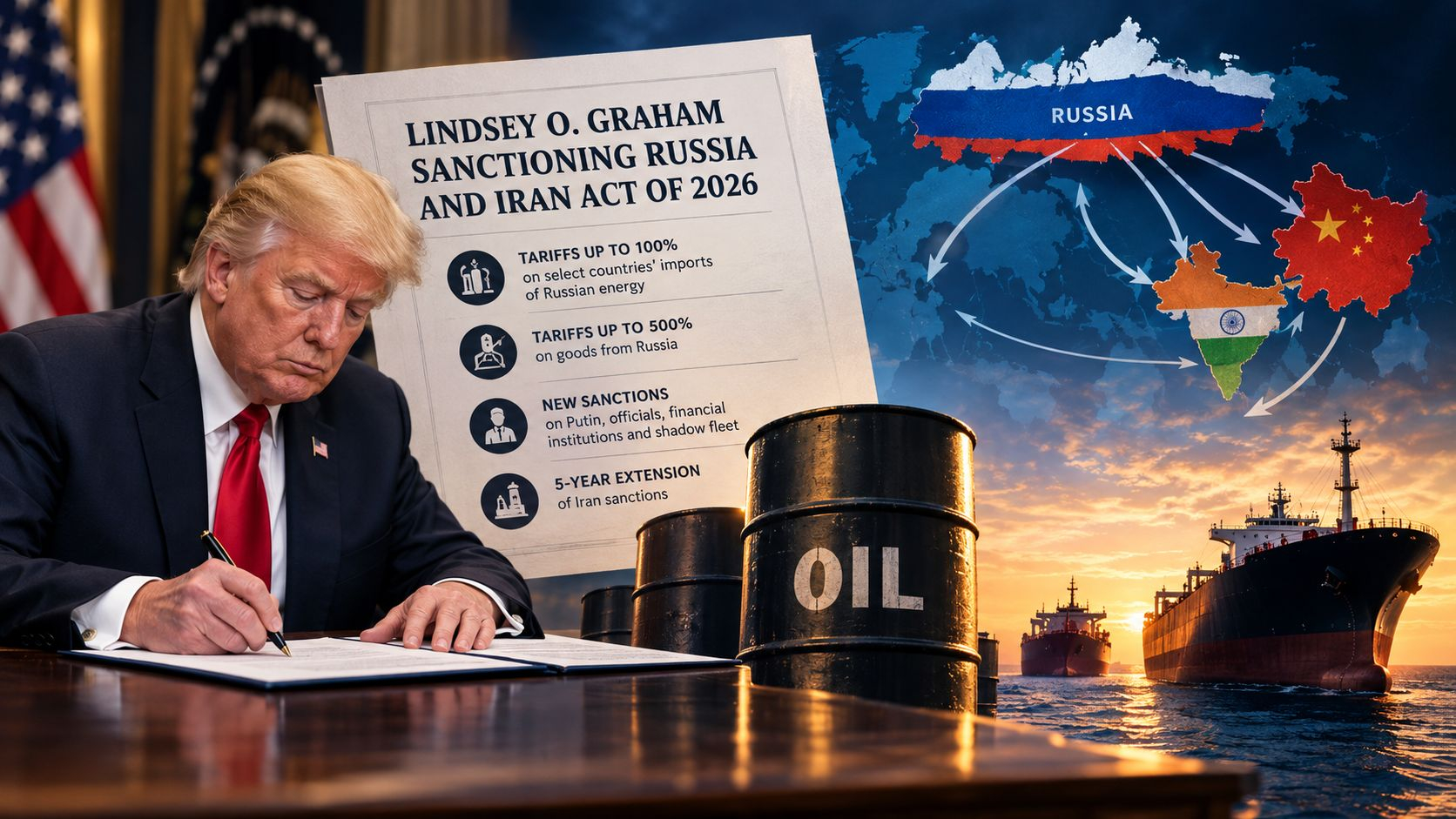
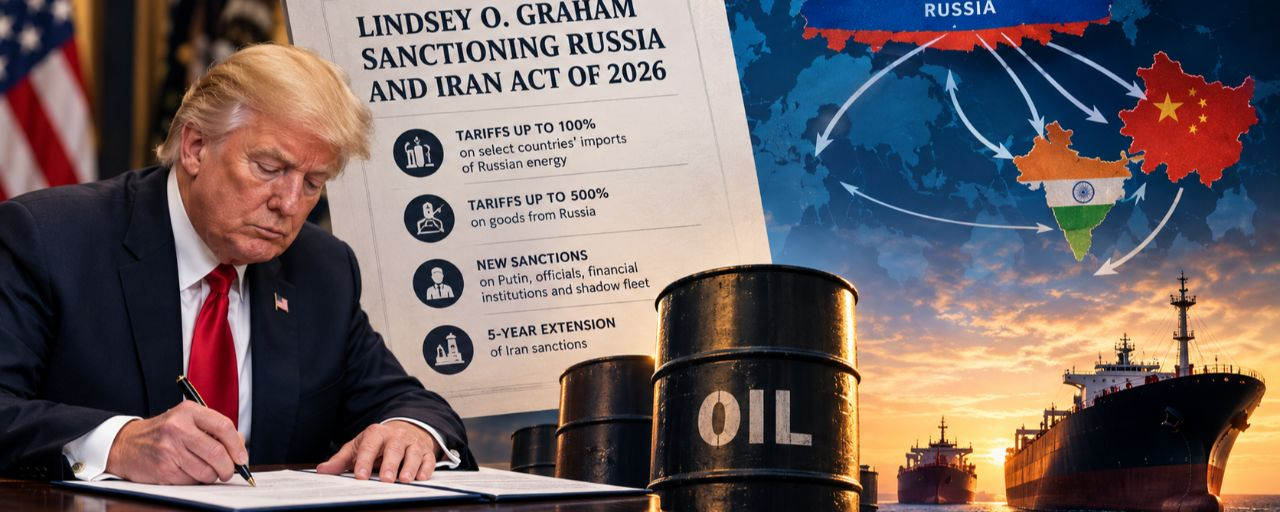
President Donald Trump signed the Lindsey O. Graham Sanctioning Russia and Iran Act of 2026 into law on September 18 after it passed Congress with bipartisan support.
The legislation gives the U.S. additional tools to increase economic pressure on Russia while extending existing sanctions on Iran.
The law authorizes tariffs of up to 100% on imports from countries that rank among the five largest buyers of Russian crude oil or natural gas.
It also authorizes tariffs of up to 500% on goods imported directly from Russia and introduces additional sanctions targeting senior Russian officials, major financial institutions and vessels associated with moving Russian oil around existing restrictions.
The legislation also extends certain U.S. sanctions involving Iran's energy and weapons sectors for another five years.
Importantly, the law includes waiver authority, meaning the maximum measures won't necessarily be applied uniformly in every case.
Why it matters:
China and India are among the countries with significant exposure because of their purchases of Russian energy.
If the new tariff authority is used aggressively, it could redirect crude flows, increase transportation and trade costs, and complicate the global inflation outlook.
But there's another side to the story.
Waivers and ongoing diplomatic negotiations could substantially affect how the legislation is implemented. That means markets aren't just pricing the law itself — they're also watching how aggressively the new authority is actually used.
For oil, that's the key distinction.
A major sanctions law can change expectations quickly, but changing physical energy flows takes time.
Does this trigger a meaningful reshuffling of global oil trade, or will waivers and diplomacy limit the real-world impact?
#oil #markets #Geopolitics #energy #Macro