

#btcfi
btcfi
857,298 views
4,014 Discussing
Hot
Latest

·
--
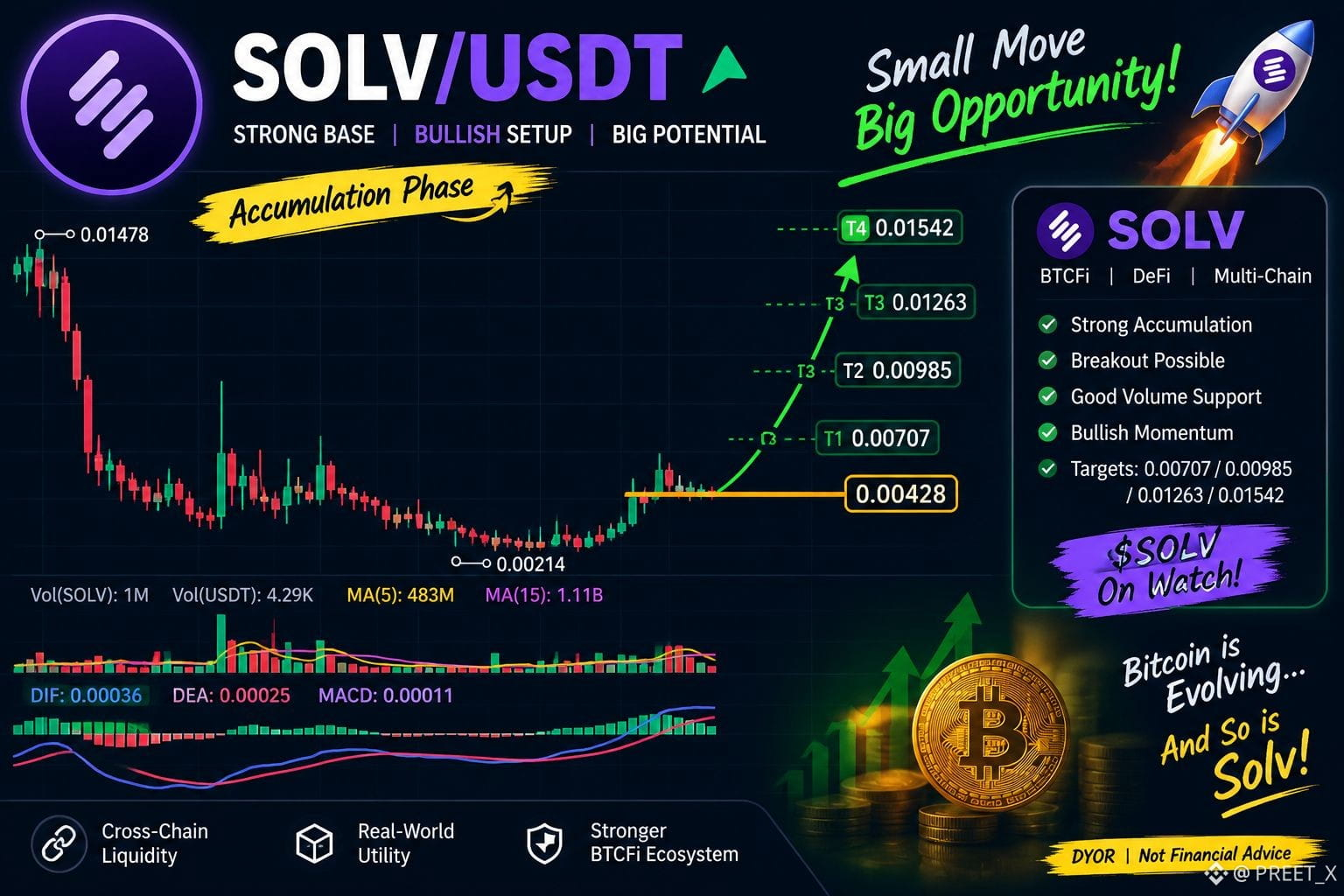
🚀 $SOLV Protocol – A Very Interesting Project!
$SOLV
{spot}(SOLVUSDT)
is building the future of BTCFi, making Bitcoin more productive through DeFi.
🔥 SolvBTC ecosystem
🔗 Cross-chain Bitcoin liquidity
💎 Bitcoin utility beyond HODLing
🌐 Bridging BTC with DeFi opportunities
Bitcoin is evolving from a store of value into productive capital.
$SOLV deserves attention! 👀
#solv #BTCFi #Bitcoin #defi
🚀 $SOLV Protocol – A Very Interesting Project!
$SOLV
is building the future of BTCFi, making Bitcoin more productive through DeFi.
🔥 SolvBTC ecosystem
🔗 Cross-chain Bitcoin liquidity
💎 Bitcoin utility beyond HODLing
🌐 Bridging BTC with DeFi opportunities
Bitcoin is evolving from a store of value into productive capital.
$SOLV deserves attention! 👀
#solv #BTCFi #Bitcoin #defi
$SOLV
is building the future of BTCFi, making Bitcoin more productive through DeFi.
🔥 SolvBTC ecosystem
🔗 Cross-chain Bitcoin liquidity
💎 Bitcoin utility beyond HODLing
🌐 Bridging BTC with DeFi opportunities
Bitcoin is evolving from a store of value into productive capital.
$SOLV deserves attention! 👀
#solv #BTCFi #Bitcoin #defi
223

·
--
A recent trend is becoming clearer: you don’t have to sell your Bitcoin to put your BTC to work. But the path splits into two completely different tracks.
One is CeFi collateralized lending: you lock up BTC and borrow stablecoins. There are discounted fees in the short term, but in essence it’s a custody model—with terms, liquidation rules, and constraints on the counterparty. Put simply: using BTC to borrow money still comes with a cost.
The other is an on-chain DeFi-BTCFi route: you stake BTC, and the coin rights remain within a self-custody system. Not only do you not pay fees, you can also continuously earn interest-bearing rewards. There’s no borrowing/liquidation pressure, with the goal of turning idle BTC into productive assets that can safely generate yield.
One is lock your coins to borrow money and pay fees; the other is stake and hold to earn returns. “BTC doesn’t need to be sold” is becoming a consensus. The next question naturally is: where should you go if you want your BTC to earn yield?#BTC #CORE #BTCFi $BTC $CORE
A recent trend is becoming clearer: you don’t have to sell your Bitcoin to put your BTC to work. But the path splits into two completely different tracks.
One is CeFi collateralized lending: you lock up BTC and borrow stablecoins. There are discounted fees in the short term, but in essence it’s a custody model—with terms, liquidation rules, and constraints on the counterparty. Put simply: using BTC to borrow money still comes with a cost.
The other is an on-chain DeFi-BTCFi route: you stake BTC, and the coin rights remain within a self-custody system. Not only do you not pay fees, you can also continuously earn interest-bearing rewards. There’s no borrowing/liquidation pressure, with the goal of turning idle BTC into productive assets that can safely generate yield.
One is lock your coins to borrow money and pay fees; the other is stake and hold to earn returns. “BTC doesn’t need to be sold” is becoming a consensus. The next question naturally is: where should you go if you want your BTC to earn yield?#BTC #CORE #BTCFi $BTC $CORE
One is CeFi collateralized lending: you lock up BTC and borrow stablecoins. There are discounted fees in the short term, but in essence it’s a custody model—with terms, liquidation rules, and constraints on the counterparty. Put simply: using BTC to borrow money still comes with a cost.
The other is an on-chain DeFi-BTCFi route: you stake BTC, and the coin rights remain within a self-custody system. Not only do you not pay fees, you can also continuously earn interest-bearing rewards. There’s no borrowing/liquidation pressure, with the goal of turning idle BTC into productive assets that can safely generate yield.
One is lock your coins to borrow money and pay fees; the other is stake and hold to earn returns. “BTC doesn’t need to be sold” is becoming a consensus. The next question naturally is: where should you go if you want your BTC to earn yield?#BTC #CORE #BTCFi $BTC $CORE
190

·
--
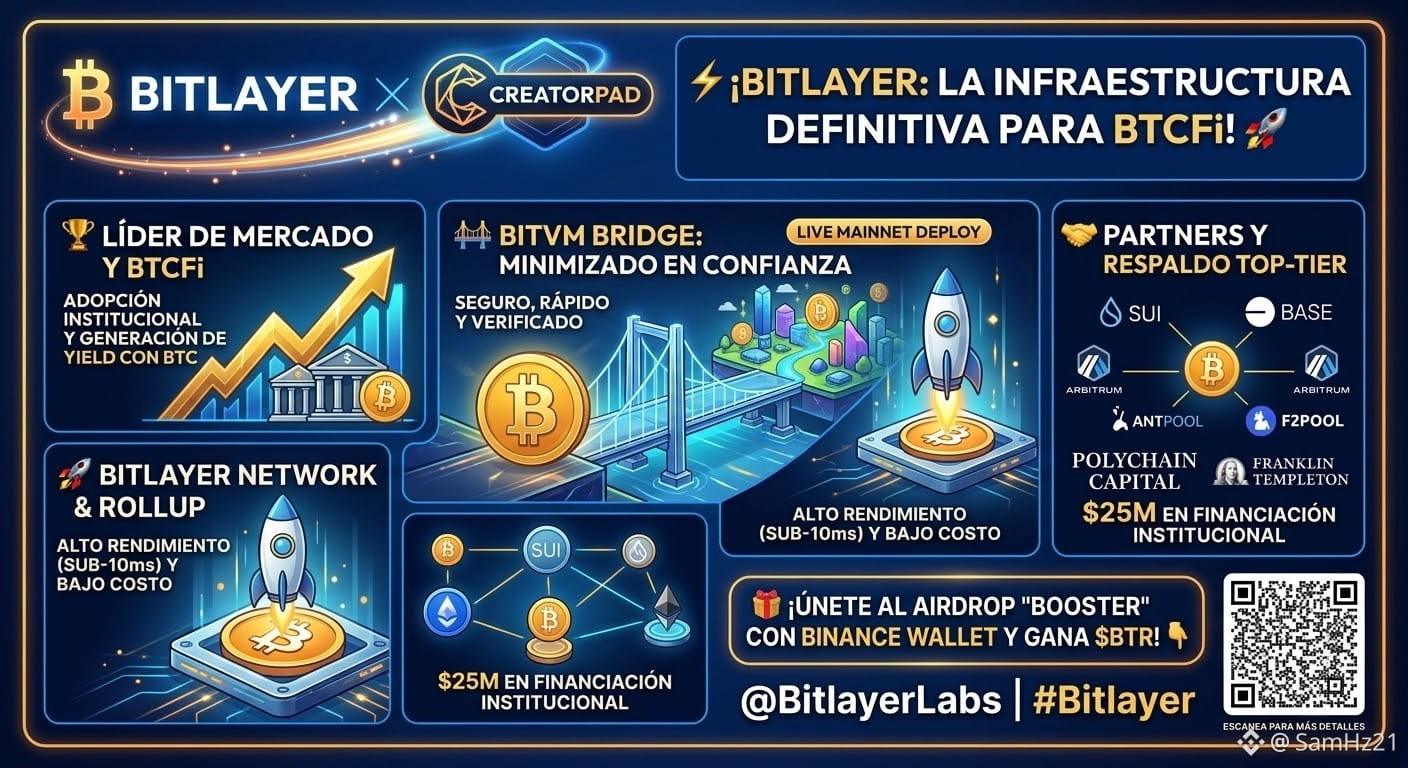
🚀 THE BTCFi REVOLUTION ALREADY HAS A NAME: BITLAYER! ⚡🔥
The potential of BTCFi is enormous. With mass adoption by financial institutions and public companies, along with the holders’ need to generate yield with their Bitcoin, @BitlayerLabs is here to build the definitive infrastructure for the sector.
💡 Why does Bitlayer lead the Layer 2 market in Bitcoin?
1️⃣ BitVM Bridge (Industry Leader):
A next-generation bridge solution, with minimized trust through challenge-based verification. It was one of the first BitVM-based projects to successfully deploy on Mainnet. It also enables converting BTC to YBTC (1:1), enabling a smooth, yield-bearing flow into DeFi.
2️⃣ Bitlayer Network & High-Performance Chain:
A Bitcoin Rollup powered by BitVM technology and a real-time EVM engine with latency under 10ms. All transactions are verified directly on the Bitcoin main network for immutable finality.
3️⃣ Growth and Strategic Partnerships:
It has formed key partnerships with major Layer 1s (such as Sui, Base, Arbitrum, and Cardano) and with the largest miners in the world (Antpool, F2Pool, and SpiderPool).
4️⃣ Top-Tier Institutional Support:
They have raised $25 million in an investment round led by venture capital giants such as Polychain Capital, Franklin Templeton, Framework Ventures, and ABCDE.
🎁 AIRDROP & BTR TOKENS OPPORTUNITY!
Currently, Bitlayer is running, in collaboration with Binance Wallet, the "Booster" campaign (Phase 2). Participate today for the chance to win tokens $BTR before the next Pre-TGE event.
The future of yield and programmability on Bitcoin is already here! 🌐
#Bitlayer @BitlayerLabs #BTCFi #DeFi #Binance #Crypto
$BTR
{future}(BTRUSDT)
🚀 THE BTCFi REVOLUTION ALREADY HAS A NAME: BITLAYER! ⚡🔥
The potential of BTCFi is enormous. With mass adoption by financial institutions and public companies, along with the holders’ need to generate yield with their Bitcoin, @BitlayerLabs is here to build the definitive infrastructure for the sector.
💡 Why does Bitlayer lead the Layer 2 market in Bitcoin?
1️⃣ BitVM Bridge (Industry Leader):
A next-generation bridge solution, with minimized trust through challenge-based verification. It was one of the first BitVM-based projects to successfully deploy on Mainnet. It also enables converting BTC to YBTC (1:1), enabling a smooth, yield-bearing flow into DeFi.
2️⃣ Bitlayer Network & High-Performance Chain:
A Bitcoin Rollup powered by BitVM technology and a real-time EVM engine with latency under 10ms. All transactions are verified directly on the Bitcoin main network for immutable finality.
3️⃣ Growth and Strategic Partnerships:
It has formed key partnerships with major Layer 1s (such as Sui, Base, Arbitrum, and Cardano) and with the largest miners in the world (Antpool, F2Pool, and SpiderPool).
4️⃣ Top-Tier Institutional Support:
They have raised $25 million in an investment round led by venture capital giants such as Polychain Capital, Franklin Templeton, Framework Ventures, and ABCDE.
🎁 AIRDROP & BTR TOKENS OPPORTUNITY!
Currently, Bitlayer is running, in collaboration with Binance Wallet, the "Booster" campaign (Phase 2). Participate today for the chance to win tokens $BTR before the next Pre-TGE event.
The future of yield and programmability on Bitcoin is already here! 🌐
#Bitlayer @BitlayerLabs #BTCFi #DeFi #Binance #Crypto
$BTR
The potential of BTCFi is enormous. With mass adoption by financial institutions and public companies, along with the holders’ need to generate yield with their Bitcoin, @BitlayerLabs is here to build the definitive infrastructure for the sector.
💡 Why does Bitlayer lead the Layer 2 market in Bitcoin?
1️⃣ BitVM Bridge (Industry Leader):
A next-generation bridge solution, with minimized trust through challenge-based verification. It was one of the first BitVM-based projects to successfully deploy on Mainnet. It also enables converting BTC to YBTC (1:1), enabling a smooth, yield-bearing flow into DeFi.
2️⃣ Bitlayer Network & High-Performance Chain:
A Bitcoin Rollup powered by BitVM technology and a real-time EVM engine with latency under 10ms. All transactions are verified directly on the Bitcoin main network for immutable finality.
3️⃣ Growth and Strategic Partnerships:
It has formed key partnerships with major Layer 1s (such as Sui, Base, Arbitrum, and Cardano) and with the largest miners in the world (Antpool, F2Pool, and SpiderPool).
4️⃣ Top-Tier Institutional Support:
They have raised $25 million in an investment round led by venture capital giants such as Polychain Capital, Franklin Templeton, Framework Ventures, and ABCDE.
🎁 AIRDROP & BTR TOKENS OPPORTUNITY!
Currently, Bitlayer is running, in collaboration with Binance Wallet, the "Booster" campaign (Phase 2). Participate today for the chance to win tokens $BTR before the next Pre-TGE event.
The future of yield and programmability on Bitcoin is already here! 🌐
#Bitlayer @BitlayerLabs #BTCFi #DeFi #Binance #Crypto
$BTR
88

·
--
Bullish
Verified
$BB is the native token of BounceBit, a BTC-focused ecosystem exploring ways to bring Bitcoin liquidity into staking, restaking, and on-chain finance.
The key themes to watch are platform adoption, BTCFi activity, token utility, and overall market conditions. Strong narratives can create attention—but crypto assets remain highly volatile.
#BB #BounceBit #BTCFi #Bitcoin #crypto
{future}(BBUSDT)
$BB is the native token of BounceBit, a BTC-focused ecosystem exploring ways to bring Bitcoin liquidity into staking, restaking, and on-chain finance.
The key themes to watch are platform adoption, BTCFi activity, token utility, and overall market conditions. Strong narratives can create attention—but crypto assets remain highly volatile.
#BB #BounceBit #BTCFi #Bitcoin #crypto
The key themes to watch are platform adoption, BTCFi activity, token utility, and overall market conditions. Strong narratives can create attention—but crypto assets remain highly volatile.
#BB #BounceBit #BTCFi #Bitcoin #crypto
2
607

·
--
Bitcoin L2 Has Added TrustBitcoin’s base chain can keep working exactly as designed while a Bitcoin-linked sidechain, bridge, wrapper or DeFi protocol fails somewhere else.
That distinction matters because Bitcoin Layer 2 is not one architecture. Payment channels, sidechains, Bitcoin-secured execution layers and wrapped BTC systems do not inherit the same guarantees. Each can add a different combination of federation control, custody, smart contracts, bridge logic, peg management and withdrawal rules.
The first question before using BTCfi should therefore be simple: where does the BTC go?
Trace the full path from native BTC to the asset you finally hold. If BTC is deposited with a custodian, locked in a peg, represented by another token and then supplied to a lending market, the yield depends on every layer continuing to work. A hardware wallet protects your key, but it cannot repair an undercollateralized wrapper, a compromised bridge or a failed protocol.
Also identify the exit path before entering. Ask how the position becomes native BTC again, how long withdrawal can take, who can pause the system and what happens if liquidity disappears. Separate long-term holdings from experimental BTCfi activity so one approval or browser compromise does not expose everything.
TokenToolHub’s guide explains the major Bitcoin Layer 2 and BTCfi models, their yield sources and the risks beginners should map before moving funds.
https://tokentoolhub.com/bitcoin-layer-2-and-btcfi-in-2026-yield-bridges-wallet-risks-and-what-beginners-should-know/
#bitcoin #BTCFi #CryptoSecurity #blockchain #Web3
Bitcoin L2 Has Added Trust
Bitcoin’s base chain can keep working exactly as designed while a Bitcoin-linked sidechain, bridge, wrapper or DeFi protocol fails somewhere else.
That distinction matters because Bitcoin Layer 2 is not one architecture. Payment channels, sidechains, Bitcoin-secured execution layers and wrapped BTC systems do not inherit the same guarantees. Each can add a different combination of federation control, custody, smart contracts, bridge logic, peg management and withdrawal rules.
The first question before using BTCfi should therefore be simple: where does the BTC go?
Trace the full path from native BTC to the asset you finally hold. If BTC is deposited with a custodian, locked in a peg, represented by another token and then supplied to a lending market, the yield depends on every layer continuing to work. A hardware wallet protects your key, but it cannot repair an undercollateralized wrapper, a compromised bridge or a failed protocol.
Also identify the exit path before entering. Ask how the position becomes native BTC again, how long withdrawal can take, who can pause the system and what happens if liquidity disappears. Separate long-term holdings from experimental BTCfi activity so one approval or browser compromise does not expose everything.
TokenToolHub’s guide explains the major Bitcoin Layer 2 and BTCfi models, their yield sources and the risks beginners should map before moving funds.
https://tokentoolhub.com/bitcoin-layer-2-and-btcfi-in-2026-yield-bridges-wallet-risks-and-what-beginners-should-know/
#bitcoin #BTCFi #CryptoSecurity #blockchain #Web3
That distinction matters because Bitcoin Layer 2 is not one architecture. Payment channels, sidechains, Bitcoin-secured execution layers and wrapped BTC systems do not inherit the same guarantees. Each can add a different combination of federation control, custody, smart contracts, bridge logic, peg management and withdrawal rules.
The first question before using BTCfi should therefore be simple: where does the BTC go?
Trace the full path from native BTC to the asset you finally hold. If BTC is deposited with a custodian, locked in a peg, represented by another token and then supplied to a lending market, the yield depends on every layer continuing to work. A hardware wallet protects your key, but it cannot repair an undercollateralized wrapper, a compromised bridge or a failed protocol.
Also identify the exit path before entering. Ask how the position becomes native BTC again, how long withdrawal can take, who can pause the system and what happens if liquidity disappears. Separate long-term holdings from experimental BTCfi activity so one approval or browser compromise does not expose everything.
TokenToolHub’s guide explains the major Bitcoin Layer 2 and BTCfi models, their yield sources and the risks beginners should map before moving funds.
https://tokentoolhub.com/bitcoin-layer-2-and-btcfi-in-2026-yield-bridges-wallet-risks-and-what-beginners-should-know/
#bitcoin #BTCFi #CryptoSecurity #blockchain #Web3
55

·
--
Bullish
Why is the community so bullish on $BR ? 🧵👇
Most protocols just talk about high APYs, but @Bedrock is actually building an Intelligent Yield Engine for #BTCFi .
🧠 What they’re doing for the community:
1️⃣ Unlocking Idle Bitcoin: Turning passive BTC & ETH into active yield generators via uniBTC and brBTC—without locking your liquidity.
2️⃣ True DAO Power: The community controls the protocol. By locking $BR for veBR, you decide where the incentives go.
3️⃣ Fairness First: Their seasonal voting resets mean retail investors don't get permanently outvoted by mega-whales.
Real infrastructure. Sustainable yields. Community-driven growth.
Why is the community so bullish on $BR ? 🧵👇
Most protocols just talk about high APYs, but @Bedrock is actually building an Intelligent Yield Engine for #BTCFi .
🧠 What they’re doing for the community:
1️⃣ Unlocking Idle Bitcoin: Turning passive BTC & ETH into active yield generators via uniBTC and brBTC—without locking your liquidity.
2️⃣ True DAO Power: The community controls the protocol. By locking $BR for veBR, you decide where the incentives go.
3️⃣ Fairness First: Their seasonal voting resets mean retail investors don't get permanently outvoted by mega-whales.
Real infrastructure. Sustainable yields. Community-driven growth.
Most protocols just talk about high APYs, but @Bedrock is actually building an Intelligent Yield Engine for #BTCFi .
🧠 What they’re doing for the community:
1️⃣ Unlocking Idle Bitcoin: Turning passive BTC & ETH into active yield generators via uniBTC and brBTC—without locking your liquidity.
2️⃣ True DAO Power: The community controls the protocol. By locking $BR for veBR, you decide where the incentives go.
3️⃣ Fairness First: Their seasonal voting resets mean retail investors don't get permanently outvoted by mega-whales.
Real infrastructure. Sustainable yields. Community-driven growth.

242


·
--
Verified
A BTCFi dark horse that has been severely underestimated: $ZEST — A complete breakdown of the value re-evaluation logic
Everyone is looking for the next 100x narrative, but most people only focus on interacting with new chains, while ignoring the ultra-low circulating market-cap asset already listed on Binance—$ZEST.
Many think it’s just a lending protocol. Today, let’s completely unpack the underlying logic.
1. Chips & the order book: a highly elastic asset after sufficient washout
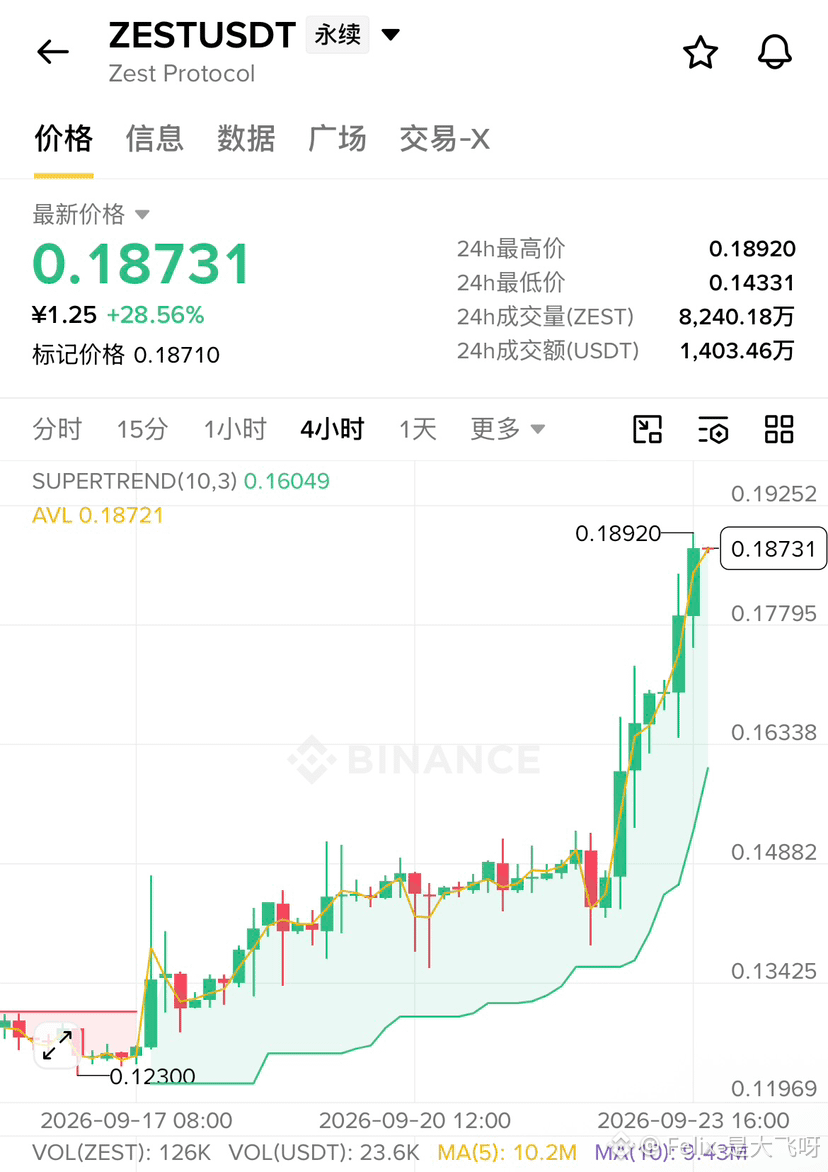
• Was launched on Binance Alpha, rising from about $0.144 to $0.349 on the very first day, up more than 140%
• Then it tracked the market’s deep pullback, completing a full turnover
• Trading entry points are ready on both spot (Binance Alpha) and Binance Futures contracts, with ample liquidity
• Currently it’s in an extremely small circulating market-cap range, with highly attractive odds
2. Core fundamentals: only those who understand Stacks will understand it
Many people don’t know that the team behind $ZEST has an extremely strong pedigree:
• Former core builder of Stacks’ underlying infrastructure, deeply involved in sBTC and the Nakamoto upgrade
• History has proven that Stacks has produced industry precedents worth tens of billions in valuations
• The team raised $3.5M led by the legendary Silicon Valley investor Tim Draper (Draper Associates), and also received early backing from YZi Labs (formerly Binance Labs)
This is absolutely not an “air team” stitched together from code. It’s a legitimate force backed by top-tier USD funds + endorsement from a leading exchange.
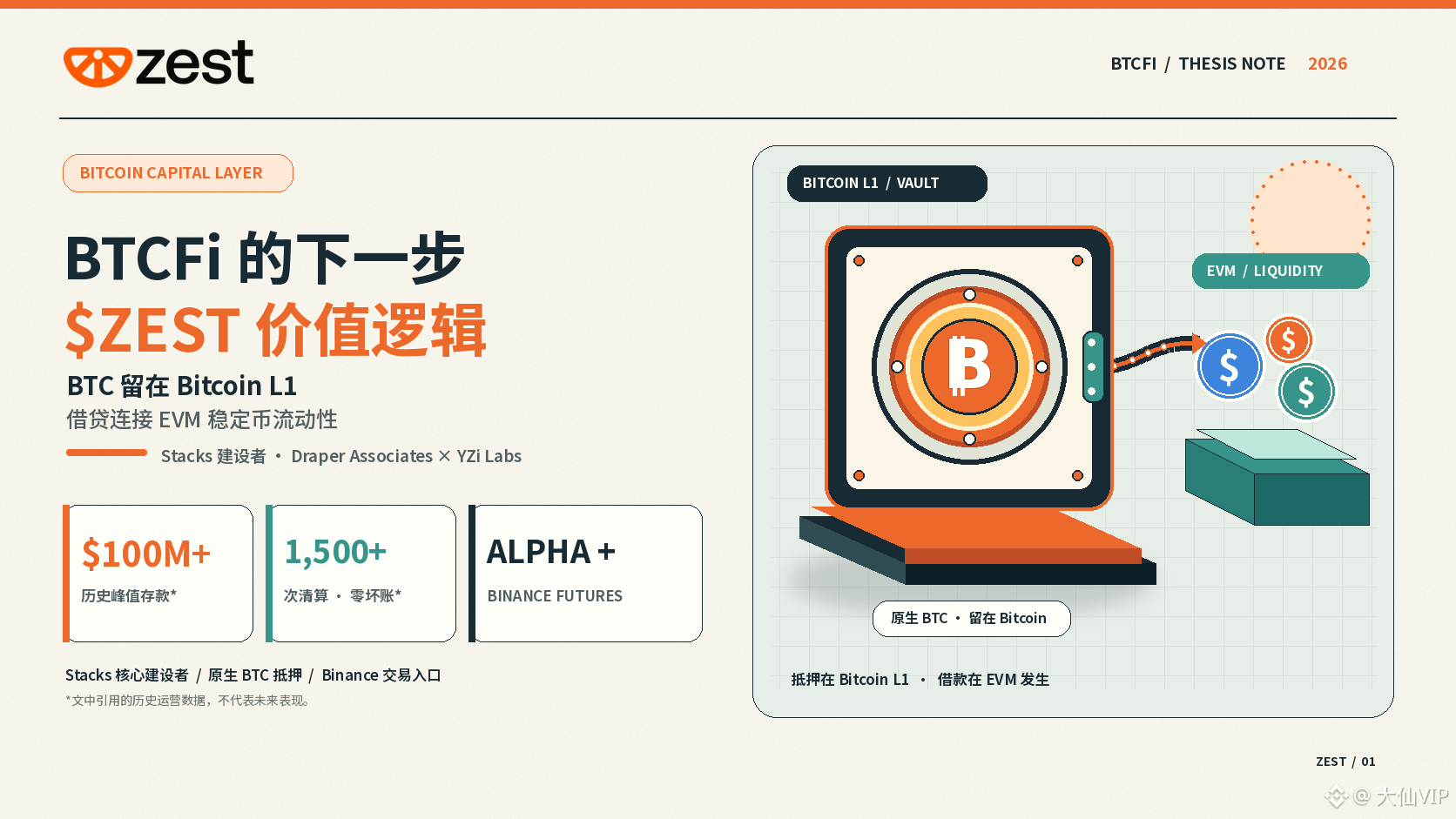
3. The breakthrough: no fake cross-chain—build the “Bitcoin capital layer”
Why can’t traditional BTC L2s gain traction? Because large capital doesn’t dare to wrap native BTC by cross-chaining.
Zest’s solution is completely different:
👉 BTC asset retention: BTC is directly locked in a native self-custody treasury on Bitcoin L1
👉 Cross-chain liquidity lending: borrow stablecoins directly on the EVM chain
👉 Secure closed loop: no cross-chain bridge needed, no wrapped tokens needed—BTC assets never leave the Bitcoin network
At the same time, it has already been battle-tested and proven in practice:
• Historical peak deposits of $100M+
• Completed 1,500+ liquidations while maintaining “zero bad debt”
• Continuously generates protocol “blood” income by relying on real lending spread
Low circulating market cap + top-tier institutional backing + real capital-generation data + a newly deployed Bitcoin treasury application catalyst.
While the market is still tangled up in various cross-chain bridge risks, $ZEST has already turned the logic of “capital flowing around native Bitcoin” into reality.
#Bitcoin #BTCFi #Crypto
A BTCFi dark horse that has been severely underestimated: $ZEST — A complete breakdown of the value re-evaluation logic
Everyone is looking for the next 100x narrative, but most people only focus on interacting with new chains, while ignoring the ultra-low circulating market-cap asset already listed on Binance—$ZEST .
Many think it’s just a lending protocol. Today, let’s completely unpack the underlying logic.
1. Chips & the order book: a highly elastic asset after sufficient washout
• Was launched on Binance Alpha, rising from about $0.144 to $0.349 on the very first day, up more than 140%
• Then it tracked the market’s deep pullback, completing a full turnover
• Trading entry points are ready on both spot (Binance Alpha) and Binance Futures contracts, with ample liquidity
• Currently it’s in an extremely small circulating market-cap range, with highly attractive odds
2. Core fundamentals: only those who understand Stacks will understand it
Many people don’t know that the team behind $ZEST has an extremely strong pedigree:
• Former core builder of Stacks’ underlying infrastructure, deeply involved in sBTC and the Nakamoto upgrade
• History has proven that Stacks has produced industry precedents worth tens of billions in valuations
• The team raised $3.5M led by the legendary Silicon Valley investor Tim Draper (Draper Associates), and also received early backing from YZi Labs (formerly Binance Labs)
This is absolutely not an “air team” stitched together from code. It’s a legitimate force backed by top-tier USD funds + endorsement from a leading exchange.
3. The breakthrough: no fake cross-chain—build the “Bitcoin capital layer”
Why can’t traditional BTC L2s gain traction? Because large capital doesn’t dare to wrap native BTC by cross-chaining.
Zest’s solution is completely different:
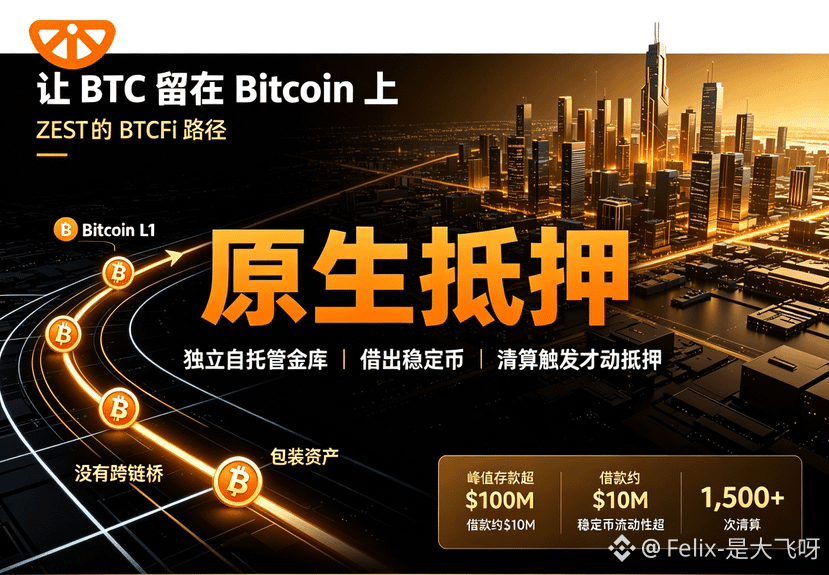
👉 BTC asset retention: BTC is directly locked in a native self-custody treasury on Bitcoin L1
👉 Cross-chain liquidity lending: borrow stablecoins directly on the EVM chain
👉 Secure closed loop: no cross-chain bridge needed, no wrapped tokens needed—BTC assets never leave the Bitcoin network
At the same time, it has already been battle-tested and proven in practice:
• Historical peak deposits of $100M+
• Completed 1,500+ liquidations while maintaining “zero bad debt”
• Continuously generates protocol “blood” income by relying on real lending spread
Low circulating market cap + top-tier institutional backing + real capital-generation data + a newly deployed Bitcoin treasury application catalyst.
While the market is still tangled up in various cross-chain bridge risks, $ZEST has already turned the logic of “capital flowing around native Bitcoin” into reality.
#Bitcoin #BTCFi #Crypto
Everyone is looking for the next 100x narrative, but most people only focus on interacting with new chains, while ignoring the ultra-low circulating market-cap asset already listed on Binance—$ZEST .
Many think it’s just a lending protocol. Today, let’s completely unpack the underlying logic.
1. Chips & the order book: a highly elastic asset after sufficient washout
• Was launched on Binance Alpha, rising from about $0.144 to $0.349 on the very first day, up more than 140%
• Then it tracked the market’s deep pullback, completing a full turnover
• Trading entry points are ready on both spot (Binance Alpha) and Binance Futures contracts, with ample liquidity
• Currently it’s in an extremely small circulating market-cap range, with highly attractive odds
2. Core fundamentals: only those who understand Stacks will understand it
Many people don’t know that the team behind $ZEST has an extremely strong pedigree:
• Former core builder of Stacks’ underlying infrastructure, deeply involved in sBTC and the Nakamoto upgrade
• History has proven that Stacks has produced industry precedents worth tens of billions in valuations
• The team raised $3.5M led by the legendary Silicon Valley investor Tim Draper (Draper Associates), and also received early backing from YZi Labs (formerly Binance Labs)
This is absolutely not an “air team” stitched together from code. It’s a legitimate force backed by top-tier USD funds + endorsement from a leading exchange.
3. The breakthrough: no fake cross-chain—build the “Bitcoin capital layer”
Why can’t traditional BTC L2s gain traction? Because large capital doesn’t dare to wrap native BTC by cross-chaining.
Zest’s solution is completely different:
👉 BTC asset retention: BTC is directly locked in a native self-custody treasury on Bitcoin L1
👉 Cross-chain liquidity lending: borrow stablecoins directly on the EVM chain
👉 Secure closed loop: no cross-chain bridge needed, no wrapped tokens needed—BTC assets never leave the Bitcoin network
At the same time, it has already been battle-tested and proven in practice:
• Historical peak deposits of $100M+
• Completed 1,500+ liquidations while maintaining “zero bad debt”
• Continuously generates protocol “blood” income by relying on real lending spread
Low circulating market cap + top-tier institutional backing + real capital-generation data + a newly deployed Bitcoin treasury application catalyst.
While the market is still tangled up in various cross-chain bridge risks, $ZEST has already turned the logic of “capital flowing around native Bitcoin” into reality.
#Bitcoin #BTCFi #Crypto

Zest Protocol
·
--
Bitcoin Collateral Vaults demo is now on mainnet.
Deposit native BTC into a self-custodial vault on Bitcoin L1. Borrow Ethereum USDC against it. The capital layer for Bitcoin.
Open a demo vault on: https://btc-collateral-vaults.zestprotocol.com/
Deposit native BTC into a self-custodial vault on Bitcoin L1. Borrow Ethereum USDC against it. The capital layer for Bitcoin.
Open a demo vault on: https://btc-collateral-vaults.zestprotocol.com/
1
2
3.5k

·
--
Bullish
Verified
If BTCFi really needs to break out, I think “keeping BTC on Bitcoin” would be a very important direction.
Right now, many projects are still talking about Bitcoin L2, cross-chain, and migrating BTC assets, but what @Square-Creator-0b7165c10 is trying to solve is a different problem:
BTC doesn’t need to leave Bitcoin in order to participate in DeFi.
Why is it worth taking another look at $ZEST recently?
1. Native BTC collateral—the core logic is different
Zest’s Bitcoin Collateral Vaults let users deposit BTC into independent, self-custodied vaults on Bitcoin L1, and then borrow stablecoins in an EVM environment.
The key point is: BTC itself doesn’t need to be wrapped, and it doesn’t need to be bridged to another chain first.
As long as no liquidation is triggered, the collateralized BTC continues to remain on Bitcoin.
This is truly a completely different approach from the traditional path of “move BTC out first, then participate in DeFi.”
2. It doesn’t start storytelling from the whitepaper
This is actually what I care about most.
In the past, Zest has already operated real lending markets. According to data disclosed by the project, peak deposits exceeded $100M, borrowings were about $10M, and stablecoin liquidity was over $9M.
It also completed 1,500+ liquidations, with the project disclosing zero bad debt.
In other words, Zest has already proven the user base, the capital, and the demand for borrowing—now it’s extending that experience further into Bitcoin L1.
3. The background and trading entry points are also fairly complete
The Zest team has participated in building the Stacks ecosystem, including work related to sBTC and Nakamoto.
For fundraising, Draper Associates led a $3.5M seed round, with YZi Labs also participating.
At present $ZEST already has trading entry points via Binance Alpha spot and Binance Futures, and market attention as well as liquidity access have been established.
So what I’d really like to observe now isn’t just how much it pumps in the short term, but the question of:
Can Zest gradually transform from “a BTC lending project” into a true Bitcoin Capital Layer in the real sense?
If this path works, BTCFi’s upside imagination might be far more than just lending.
#Bitcoin #BTCFi #Crypto $ZEST
{alpha}(560x5506599c722389a60580b5213ea1da60d64754a1)
If BTCFi really needs to break out, I think “keeping BTC on Bitcoin” would be a very important direction.
Right now, many projects are still talking about Bitcoin L2, cross-chain, and migrating BTC assets, but what @Zest Protocol is trying to solve is a different problem:
BTC doesn’t need to leave Bitcoin in order to participate in DeFi.
Why is it worth taking another look at $ZEST recently?
1. Native BTC collateral—the core logic is different
Zest’s Bitcoin Collateral Vaults let users deposit BTC into independent, self-custodied vaults on Bitcoin L1, and then borrow stablecoins in an EVM environment.
The key point is: BTC itself doesn’t need to be wrapped, and it doesn’t need to be bridged to another chain first.
As long as no liquidation is triggered, the collateralized BTC continues to remain on Bitcoin.
This is truly a completely different approach from the traditional path of “move BTC out first, then participate in DeFi.”
2. It doesn’t start storytelling from the whitepaper
This is actually what I care about most.
In the past, Zest has already operated real lending markets. According to data disclosed by the project, peak deposits exceeded $100M, borrowings were about $10M, and stablecoin liquidity was over $9M.
It also completed 1,500+ liquidations, with the project disclosing zero bad debt.
In other words, Zest has already proven the user base, the capital, and the demand for borrowing—now it’s extending that experience further into Bitcoin L1.
3. The background and trading entry points are also fairly complete
The Zest team has participated in building the Stacks ecosystem, including work related to sBTC and Nakamoto.
For fundraising, Draper Associates led a $3.5M seed round, with YZi Labs also participating.
At present $ZEST already has trading entry points via Binance Alpha spot and Binance Futures, and market attention as well as liquidity access have been established.
So what I’d really like to observe now isn’t just how much it pumps in the short term, but the question of:
Can Zest gradually transform from “a BTC lending project” into a true Bitcoin Capital Layer in the real sense?
If this path works, BTCFi’s upside imagination might be far more than just lending.
#Bitcoin #BTCFi #Crypto $ZEST
Right now, many projects are still talking about Bitcoin L2, cross-chain, and migrating BTC assets, but what @Zest Protocol is trying to solve is a different problem:
BTC doesn’t need to leave Bitcoin in order to participate in DeFi.
Why is it worth taking another look at $ZEST recently?
1. Native BTC collateral—the core logic is different
Zest’s Bitcoin Collateral Vaults let users deposit BTC into independent, self-custodied vaults on Bitcoin L1, and then borrow stablecoins in an EVM environment.
The key point is: BTC itself doesn’t need to be wrapped, and it doesn’t need to be bridged to another chain first.
As long as no liquidation is triggered, the collateralized BTC continues to remain on Bitcoin.
This is truly a completely different approach from the traditional path of “move BTC out first, then participate in DeFi.”
2. It doesn’t start storytelling from the whitepaper
This is actually what I care about most.
In the past, Zest has already operated real lending markets. According to data disclosed by the project, peak deposits exceeded $100M, borrowings were about $10M, and stablecoin liquidity was over $9M.
It also completed 1,500+ liquidations, with the project disclosing zero bad debt.
In other words, Zest has already proven the user base, the capital, and the demand for borrowing—now it’s extending that experience further into Bitcoin L1.
3. The background and trading entry points are also fairly complete
The Zest team has participated in building the Stacks ecosystem, including work related to sBTC and Nakamoto.
For fundraising, Draper Associates led a $3.5M seed round, with YZi Labs also participating.
At present $ZEST already has trading entry points via Binance Alpha spot and Binance Futures, and market attention as well as liquidity access have been established.
So what I’d really like to observe now isn’t just how much it pumps in the short term, but the question of:
Can Zest gradually transform from “a BTC lending project” into a true Bitcoin Capital Layer in the real sense?
If this path works, BTCFi’s upside imagination might be far more than just lending.
#Bitcoin #BTCFi #Crypto $ZEST
Zest Protocol
·
--
Bitcoin Collateral Vaults demo is now on mainnet.
Deposit native BTC into a self-custodial vault on Bitcoin L1. Borrow Ethereum USDC against it. The capital layer for Bitcoin.
Open a demo vault on: https://btc-collateral-vaults.zestprotocol.com/
Deposit native BTC into a self-custodial vault on Bitcoin L1. Borrow Ethereum USDC against it. The capital layer for Bitcoin.
Open a demo vault on: https://btc-collateral-vaults.zestprotocol.com/
3
6
948

·
--
🚨 Circle now lets institutions borrow USDC against Bitcoin holdings—no BTC sale needed.
This unlocks liquidity while preserving exposure, potentially reducing sell pressure on BTC.
Smart money may use this to hedge or leverage positions quietly.
Watch for shifts in on-chain lending flows and BTC spot demand.
Could this change how institutions manage crypto collateral?
#BTCFi
$USDC #TradingSignal #CryptoAnalysis
🚨 Circle now lets institutions borrow USDC against Bitcoin holdings—no BTC sale needed.
This unlocks liquidity while preserving exposure, potentially reducing sell pressure on BTC.
Smart money may use this to hedge or leverage positions quietly.
Watch for shifts in on-chain lending flows and BTC spot demand.
Could this change how institutions manage crypto collateral?
#BTCFi
$USDC #TradingSignal #CryptoAnalysis
This unlocks liquidity while preserving exposure, potentially reducing sell pressure on BTC.
Smart money may use this to hedge or leverage positions quietly.
Watch for shifts in on-chain lending flows and BTC spot demand.
Could this change how institutions manage crypto collateral?
#BTCFi
$USDC #TradingSignal #CryptoAnalysis

60
·
--
🚨 Circle launches USDC-backed lending for institutions using BTC as collateral.
This bridges traditional treasury needs with crypto assets, potentially increasing on-chain liquidity and stablecoin demand.
Institutions may leverage BTC without selling, reducing sell pressure while accessing dollar liquidity.
Watch for shifts in how large holders manage BTC exposure via lending vs. spot sales.
Could this signal growing institutional comfort with using BTC as collateral in DeFi-adjacent models?
#BTCFi
$USDC #TradingSignal #CryptoAnalysis
🚨 Circle launches USDC-backed lending for institutions using BTC as collateral.
This bridges traditional treasury needs with crypto assets, potentially increasing on-chain liquidity and stablecoin demand.
Institutions may leverage BTC without selling, reducing sell pressure while accessing dollar liquidity.
Watch for shifts in how large holders manage BTC exposure via lending vs. spot sales.
Could this signal growing institutional comfort with using BTC as collateral in DeFi-adjacent models?
#BTCFi
$USDC #TradingSignal #CryptoAnalysis
This bridges traditional treasury needs with crypto assets, potentially increasing on-chain liquidity and stablecoin demand.
Institutions may leverage BTC without selling, reducing sell pressure while accessing dollar liquidity.
Watch for shifts in how large holders manage BTC exposure via lending vs. spot sales.
Could this signal growing institutional comfort with using BTC as collateral in DeFi-adjacent models?
#BTCFi
$USDC #TradingSignal #CryptoAnalysis

16

I came across $SOLV on the information feed—a BTCFi project with relatively low discussion momentum. Its current price is around 0.00453 USDT, market cap about 24.8 million USDT, and 24-hour trading volume roughly 17.84 million USDT. The volume-to-market cap ratio is close to 72%. This suggests short-term capital isn’t cold, but community narratives and open discussion haven’t caught up yet. Solv Protocol focuses on Bitcoin staking and restaking. Whether it can move out of the downturn will depend on on-chain growth of BTC assets, partnership resources, and real locked-in volume—not just daily turnover. Small-cap tokens can be highly volatile, and when interest is low, liquidity may change suddenly. Put the data into your watchlist first—don’t chase a rally just because volume is spiking.#BTCFi #SolvProtocol
I came across $SOLV on the information feed—a BTCFi project with relatively low discussion momentum. Its current price is around 0.00453 USDT, market cap about 24.8 million USDT, and 24-hour trading volume roughly 17.84 million USDT. The volume-to-market cap ratio is close to 72%. This suggests short-term capital isn’t cold, but community narratives and open discussion haven’t caught up yet. Solv Protocol focuses on Bitcoin staking and restaking. Whether it can move out of the downturn will depend on on-chain growth of BTC assets, partnership resources, and real locked-in volume—not just daily turnover. Small-cap tokens can be highly volatile, and when interest is low, liquidity may change suddenly. Put the data into your watchlist first—don’t chase a rally just because volume is spiking.#BTCFi #SolvProtocol
71

·
--
The project is quiet, but that doesn’t mean there’s no signal. The latest quote for $SOLV is about 0.00453 USDT, with a 24-hour trading volume of about 17.84 million USDT, a market cap of about 24.8 million USDT, and turnover activity that isn’t low among projects of similar size.
Solv Protocol focuses on Bitcoin staking and BTCFi liquidity infrastructure. The future highlights still lie in whether real BTC assets get integrated, whether partnership scenarios expand, and whether on-chain data can continue to improve. Current discussion is relatively lukewarm—so it may actually be a good fit to first add to your watchlist: monitor whether trading volume continues, whether the staking amount grows, and whether the price can gradually stop falling under high turnover.
When there’s no hype, watch the data more and chase the news less.
#SolvProtocol #BTCFi
The project is quiet, but that doesn’t mean there’s no signal. The latest quote for $SOLV is about 0.00453 USDT, with a 24-hour trading volume of about 17.84 million USDT, a market cap of about 24.8 million USDT, and turnover activity that isn’t low among projects of similar size.
Solv Protocol focuses on Bitcoin staking and BTCFi liquidity infrastructure. The future highlights still lie in whether real BTC assets get integrated, whether partnership scenarios expand, and whether on-chain data can continue to improve. Current discussion is relatively lukewarm—so it may actually be a good fit to first add to your watchlist: monitor whether trading volume continues, whether the staking amount grows, and whether the price can gradually stop falling under high turnover.
When there’s no hype, watch the data more and chase the news less.
#SolvProtocol #BTCFi
Solv Protocol focuses on Bitcoin staking and BTCFi liquidity infrastructure. The future highlights still lie in whether real BTC assets get integrated, whether partnership scenarios expand, and whether on-chain data can continue to improve. Current discussion is relatively lukewarm—so it may actually be a good fit to first add to your watchlist: monitor whether trading volume continues, whether the staking amount grows, and whether the price can gradually stop falling under high turnover.
When there’s no hype, watch the data more and chase the news less.
#SolvProtocol #BTCFi
124

#LorenzoProtocol ❔
The digital realm continuously seeks ways to bridge traditional Bitcoin capital with high-yield DeFi strategies, and Lorenzo Protocol presents a compelling solution through its native asset, BANK. Acting as the primary architectural gateway for Bitcoin liquid staking and structured yield products, BANK transforms dormant BTC liquidity into productive financial instruments across modern cross-chain ecosystems.
At its core, the economic structure relies on a utility-focused tokenomics model where staking BANK yields veBANK, granting holders governance voting rights and boosted reward allocations. Deployed natively on EVM networks like BNB Smart Chain, it delivers seamless cross-chain interoperability and modular upgradeability, allowing the system to adapt smoothly without disruption. Relying on Proof-of-Stake mechanics rather than physical mining or halving cycles, security and emissions are sustained through validator networks and dynamic staking rewards.
Long-term analysts view Lorenzo Protocol as a pivotal player in the emerging BTCfi landscape, backed by a growing community dedicated to cross-chain yield optimization.
{spot}(BANKUSDT)
$BANK $USDC $USDT #DeFi #BTCfi #CoinVahini
#LorenzoProtocol ❔
The digital realm continuously seeks ways to bridge traditional Bitcoin capital with high-yield DeFi strategies, and Lorenzo Protocol presents a compelling solution through its native asset, BANK. Acting as the primary architectural gateway for Bitcoin liquid staking and structured yield products, BANK transforms dormant BTC liquidity into productive financial instruments across modern cross-chain ecosystems.
At its core, the economic structure relies on a utility-focused tokenomics model where staking BANK yields veBANK, granting holders governance voting rights and boosted reward allocations. Deployed natively on EVM networks like BNB Smart Chain, it delivers seamless cross-chain interoperability and modular upgradeability, allowing the system to adapt smoothly without disruption. Relying on Proof-of-Stake mechanics rather than physical mining or halving cycles, security and emissions are sustained through validator networks and dynamic staking rewards.
Long-term analysts view Lorenzo Protocol as a pivotal player in the emerging BTCfi landscape, backed by a growing community dedicated to cross-chain yield optimization.
$BANK $USDC $USDT #DeFi #BTCfi #CoinVahini
The digital realm continuously seeks ways to bridge traditional Bitcoin capital with high-yield DeFi strategies, and Lorenzo Protocol presents a compelling solution through its native asset, BANK. Acting as the primary architectural gateway for Bitcoin liquid staking and structured yield products, BANK transforms dormant BTC liquidity into productive financial instruments across modern cross-chain ecosystems.
At its core, the economic structure relies on a utility-focused tokenomics model where staking BANK yields veBANK, granting holders governance voting rights and boosted reward allocations. Deployed natively on EVM networks like BNB Smart Chain, it delivers seamless cross-chain interoperability and modular upgradeability, allowing the system to adapt smoothly without disruption. Relying on Proof-of-Stake mechanics rather than physical mining or halving cycles, security and emissions are sustained through validator networks and dynamic staking rewards.
Long-term analysts view Lorenzo Protocol as a pivotal player in the emerging BTCfi landscape, backed by a growing community dedicated to cross-chain yield optimization.
$BANK $USDC $USDT #DeFi #BTCfi #CoinVahini
1
378
Article
Everything About $BANK Token In the evolving financial realm where traditional banking models encounter decentralized liquid staking, Lorenzo Protocol stands out with its native asset, BANK. Functioning as the primary architecture for Bitcoin yield products and structured financial instruments, it acts as a foundational gateway designed to unlock capital efficiency across cross-chain asset management.
At the core of its economic blueprint lies a utility-driven tokenomics framework centered around governance and yield enhancement. By staking BANK to lock in veBANK, holders secure active voting rights over protocol parameter adjustments, yield allocations, and vault strategies. This structure aligns long-term capital retention with economic incentives, encouraging participants to preserve system balance while benefiting from secondary protocol rewards.
The real-world utility of the token operates across liquid staking derivatives and yield-bearing products, facilitating seamless liquidity movement for Bitcoin ecosystem participants. Operating natively on performant EVM networks like BNB Smart Chain, Lorenzo Protocol delivers friction-free cross-chain asset portability. Its upgradeability is anchored in modular smart contract frameworks, enabling continuous adaptation to emerging DeFi primitives without disturbing core operational mechanics.
As a Proof-of-Stake derivative and asset management layer, the protocol replaces heavy physical hardware mining and fixed code-enforced halving events with continuous yield strategies and dynamic staking rewards. Infrastructure security relies on decentralized validator networks and automated smart contracts, replacing mechanical block-subsidy reductions with controlled emission schedules and community-driven treasury distributions.
Long-term market analysts view Lorenzo Protocol with structured interest, evaluating its capacity to capture institutional-grade Bitcoin yield volume against a competitive landscape of yield-farming protocols. Supported by an expanding community of DeFi strategists and yield enthusiasts, BANK represents not merely a speculative governance unit, but an evolving financial instrument redefining how digital wealth compounds across modern blockchain ecosystems.
{spot}(BANKUSDT)
$BANK #LorenzoProtocol #DeFi #BTCfi #CoinVahini
Everything About $BANK Token
In the evolving financial realm where traditional banking models encounter decentralized liquid staking, Lorenzo Protocol stands out with its native asset, BANK. Functioning as the primary architecture for Bitcoin yield products and structured financial instruments, it acts as a foundational gateway designed to unlock capital efficiency across cross-chain asset management.
At the core of its economic blueprint lies a utility-driven tokenomics framework centered around governance and yield enhancement. By staking BANK to lock in veBANK, holders secure active voting rights over protocol parameter adjustments, yield allocations, and vault strategies. This structure aligns long-term capital retention with economic incentives, encouraging participants to preserve system balance while benefiting from secondary protocol rewards.
The real-world utility of the token operates across liquid staking derivatives and yield-bearing products, facilitating seamless liquidity movement for Bitcoin ecosystem participants. Operating natively on performant EVM networks like BNB Smart Chain, Lorenzo Protocol delivers friction-free cross-chain asset portability. Its upgradeability is anchored in modular smart contract frameworks, enabling continuous adaptation to emerging DeFi primitives without disturbing core operational mechanics.
As a Proof-of-Stake derivative and asset management layer, the protocol replaces heavy physical hardware mining and fixed code-enforced halving events with continuous yield strategies and dynamic staking rewards. Infrastructure security relies on decentralized validator networks and automated smart contracts, replacing mechanical block-subsidy reductions with controlled emission schedules and community-driven treasury distributions.
Long-term market analysts view Lorenzo Protocol with structured interest, evaluating its capacity to capture institutional-grade Bitcoin yield volume against a competitive landscape of yield-farming protocols. Supported by an expanding community of DeFi strategists and yield enthusiasts, BANK represents not merely a speculative governance unit, but an evolving financial instrument redefining how digital wealth compounds across modern blockchain ecosystems.
$BANK #LorenzoProtocol #DeFi #BTCfi #CoinVahini
At the core of its economic blueprint lies a utility-driven tokenomics framework centered around governance and yield enhancement. By staking BANK to lock in veBANK, holders secure active voting rights over protocol parameter adjustments, yield allocations, and vault strategies. This structure aligns long-term capital retention with economic incentives, encouraging participants to preserve system balance while benefiting from secondary protocol rewards.
The real-world utility of the token operates across liquid staking derivatives and yield-bearing products, facilitating seamless liquidity movement for Bitcoin ecosystem participants. Operating natively on performant EVM networks like BNB Smart Chain, Lorenzo Protocol delivers friction-free cross-chain asset portability. Its upgradeability is anchored in modular smart contract frameworks, enabling continuous adaptation to emerging DeFi primitives without disturbing core operational mechanics.
As a Proof-of-Stake derivative and asset management layer, the protocol replaces heavy physical hardware mining and fixed code-enforced halving events with continuous yield strategies and dynamic staking rewards. Infrastructure security relies on decentralized validator networks and automated smart contracts, replacing mechanical block-subsidy reductions with controlled emission schedules and community-driven treasury distributions.
Long-term market analysts view Lorenzo Protocol with structured interest, evaluating its capacity to capture institutional-grade Bitcoin yield volume against a competitive landscape of yield-farming protocols. Supported by an expanding community of DeFi strategists and yield enthusiasts, BANK represents not merely a speculative governance unit, but an evolving financial instrument redefining how digital wealth compounds across modern blockchain ecosystems.
$BANK #LorenzoProtocol #DeFi #BTCfi #CoinVahini
282

·
--
Article
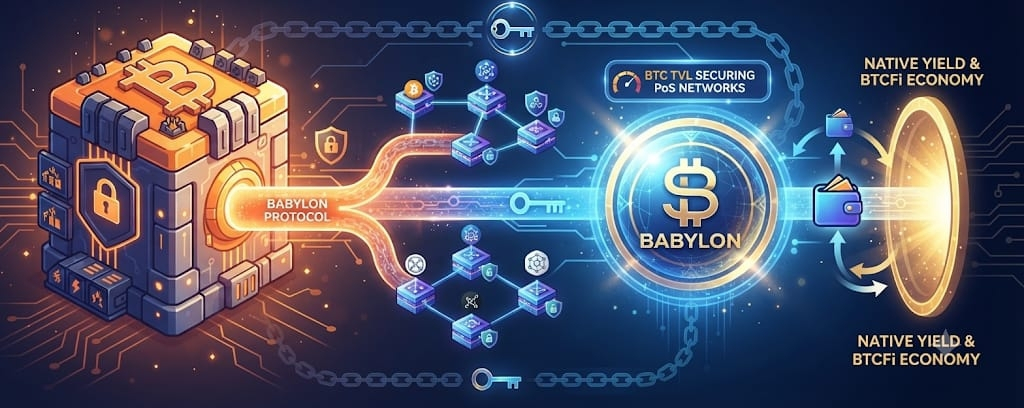
Custody-Free Bitcoin Staking: How Babylon ($BBN) Connects Security to PoS Networks 🔒Hello DeFi & RWA community! 🚀
Today we’ll dive into one of the most important advances in Web3 infrastructure: how to bring Bitcoin’s economic security to Proof-of-Stake chains without putting your funds at risk. Let’s break it down step by step.
🧩 1. The Security Problem in PoS Networks and Bitcoin’s Role
Unlike Bitcoin, where security is backed by billions of dollars in physical mining power (PoW), Proof-of-Stake (PoS) chains depend on users locking their native token (staking) to prevent 51% attacks.
Custody-Free Bitcoin Staking: How Babylon ($BBN) Connects Security to PoS Networks 🔒
Hello DeFi & RWA community! 🚀
Today we’ll dive into one of the most important advances in Web3 infrastructure: how to bring Bitcoin’s economic security to Proof-of-Stake chains without putting your funds at risk. Let’s break it down step by step.
🧩 1. The Security Problem in PoS Networks and Bitcoin’s Role
Unlike Bitcoin, where security is backed by billions of dollars in physical mining power (PoW), Proof-of-Stake (PoS) chains depend on users locking their native token (staking) to prevent 51% attacks.
Today we’ll dive into one of the most important advances in Web3 infrastructure: how to bring Bitcoin’s economic security to Proof-of-Stake chains without putting your funds at risk. Let’s break it down step by step.
🧩 1. The Security Problem in PoS Networks and Bitcoin’s Role
Unlike Bitcoin, where security is backed by billions of dollars in physical mining power (PoW), Proof-of-Stake (PoS) chains depend on users locking their native token (staking) to prevent 51% attacks.
5
170

·
--
$STX — Bitcoin DeFi Could Get Interesting 🔥
$STX is one of the projects worth watching as attention rotates toward Bitcoin-based DeFi.
Recent market activity has highlighted STX as a higher-beta way to express the BTCFi narrative.
💡 Why it’s interesting: • Bitcoin ecosystem exposure
• Smart-contract functionality
• Growing BTCFi narrative
• Potential benefit if Bitcoin DeFi gains momentum
But higher beta also means higher volatility.
The narrative is promising — confirmation still matters.
Could Bitcoin DeFi become the next major crypto narrative? 👇
#STX #Stacks #BTCFi #Bitcoin
{spot}(STXUSDT)
{spot}(BTCUSDT)
$STX — Bitcoin DeFi Could Get Interesting 🔥
$STX is one of the projects worth watching as attention rotates toward Bitcoin-based DeFi.
Recent market activity has highlighted STX as a higher-beta way to express the BTCFi narrative.
💡 Why it’s interesting: • Bitcoin ecosystem exposure
• Smart-contract functionality
• Growing BTCFi narrative
• Potential benefit if Bitcoin DeFi gains momentum
But higher beta also means higher volatility.
The narrative is promising — confirmation still matters.
Could Bitcoin DeFi become the next major crypto narrative? 👇
#STX #Stacks #BTCFi #Bitcoin
$STX is one of the projects worth watching as attention rotates toward Bitcoin-based DeFi.
Recent market activity has highlighted STX as a higher-beta way to express the BTCFi narrative.
💡 Why it’s interesting: • Bitcoin ecosystem exposure
• Smart-contract functionality
• Growing BTCFi narrative
• Potential benefit if Bitcoin DeFi gains momentum
But higher beta also means higher volatility.
The narrative is promising — confirmation still matters.
Could Bitcoin DeFi become the next major crypto narrative? 👇
#STX #Stacks #BTCFi #Bitcoin

170

·
--
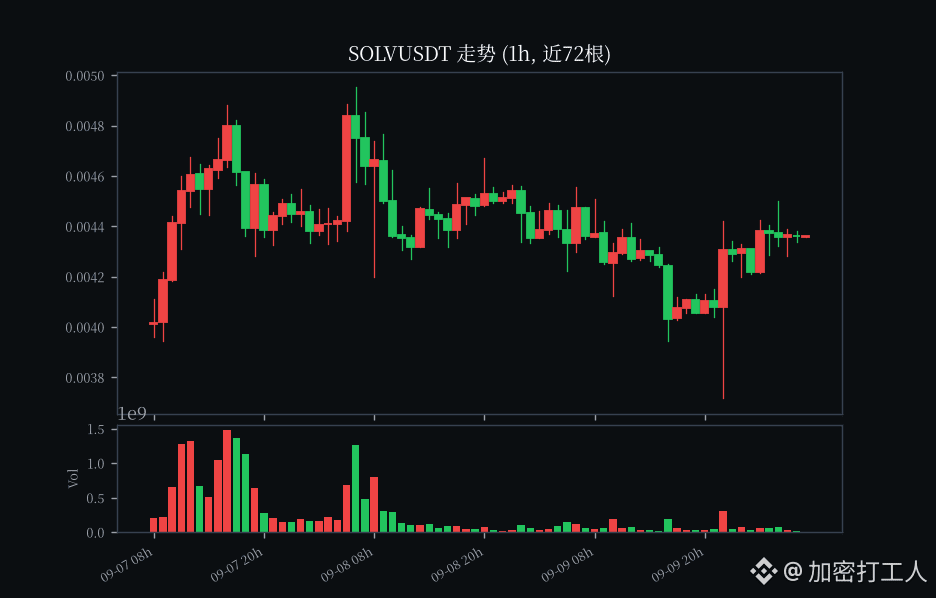
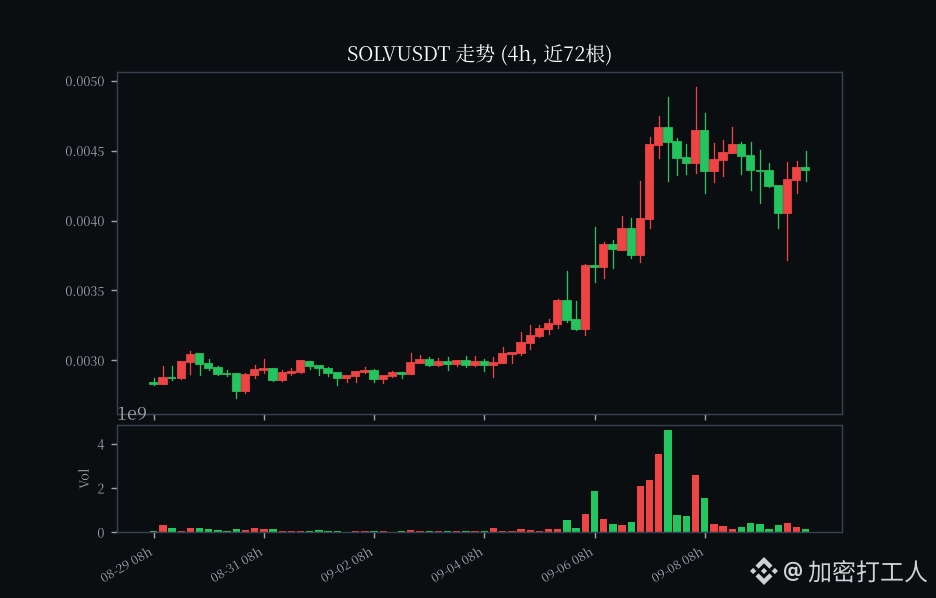
$SOLV 现价0.00436
SOLV is one of the BTCFi leaders on Binance Alpha, focusing on SolvBTC yield-bearing Bitcoin products. It turns idle BTC into a yield-generating, cross-chain liquid asset. In terms of narrative, it leverages the Babylon staking track plus Bitcoin finance.
Live market: Down 2.68% over the past 24h. Current price is 0.00436. Intraday range: 0.00381–0.0045. 24h trading volume is about 1.92 million USDT. Overall, it’s weak and consolidating.
Opportunities: Once the BTCFi sector rotates higher as BTC strengthens, small-cap Alphas like SOLV often show greater upside elasticity. Users holding Binance Alpha points can also stack an additional layer of expected “points farming” momentum.
Risk warning: Small market cap, thinner liquidity, and large daily volatility. Alpha token unlocks and sentiment shifts happen quickly—don’t get carried away with position sizing; implement strict stop-losses.
$SOLV $BTC #币安Alpha #BTCFi #山寨币
$SOLV 现价0.00436
SOLV is one of the BTCFi leaders on Binance Alpha, focusing on SolvBTC yield-bearing Bitcoin products. It turns idle BTC into a yield-generating, cross-chain liquid asset. In terms of narrative, it leverages the Babylon staking track plus Bitcoin finance.
Live market: Down 2.68% over the past 24h. Current price is 0.00436. Intraday range: 0.00381–0.0045. 24h trading volume is about 1.92 million USDT. Overall, it’s weak and consolidating.
Opportunities: Once the BTCFi sector rotates higher as BTC strengthens, small-cap Alphas like SOLV often show greater upside elasticity. Users holding Binance Alpha points can also stack an additional layer of expected “points farming” momentum.
Risk warning: Small market cap, thinner liquidity, and large daily volatility. Alpha token unlocks and sentiment shifts happen quickly—don’t get carried away with position sizing; implement strict stop-losses.
$SOLV $BTC #币安Alpha #BTCFi #山寨币
SOLV is one of the BTCFi leaders on Binance Alpha, focusing on SolvBTC yield-bearing Bitcoin products. It turns idle BTC into a yield-generating, cross-chain liquid asset. In terms of narrative, it leverages the Babylon staking track plus Bitcoin finance.
Live market: Down 2.68% over the past 24h. Current price is 0.00436. Intraday range: 0.00381–0.0045. 24h trading volume is about 1.92 million USDT. Overall, it’s weak and consolidating.
Opportunities: Once the BTCFi sector rotates higher as BTC strengthens, small-cap Alphas like SOLV often show greater upside elasticity. Users holding Binance Alpha points can also stack an additional layer of expected “points farming” momentum.
Risk warning: Small market cap, thinner liquidity, and large daily volatility. Alpha token unlocks and sentiment shifts happen quickly—don’t get carried away with position sizing; implement strict stop-losses.
$SOLV $BTC #币安Alpha #BTCFi #山寨币
1
368

·
--
One thing I find interesting about $CKB is that its story goes beyond being another Layer-1.
Nervos Network is building around a different idea: making blockchain state programmable while maintaining a strong connection with Bitcoin.
A few pieces stand out:
🔹 Cell Model — CKB’s unique approach to storing and managing on-chain state
🔹 PoW security — using a Bitcoin-inspired consensus model
🔹 CKB-VM — flexible smart-contract execution
🔹 RGB++ — connecting Bitcoin assets with CKB’s programmable environment
🔹 BTCFi — opening another potential use case for Bitcoin liquidity
For me, the bigger question isn't simply whether $CKB can move higher.
It’s whether CKB can turn its Bitcoin infrastructure and developer ecosystem into meaningful real-world usage.
That’s the thesis I’d be watching.
DYOR. Not financial advice.
#CKB #nervos #bitcoin #BTCFi #Web3
One thing I find interesting about $CKB is that its story goes beyond being another Layer-1.
Nervos Network is building around a different idea: making blockchain state programmable while maintaining a strong connection with Bitcoin.
A few pieces stand out:
🔹 Cell Model — CKB’s unique approach to storing and managing on-chain state
🔹 PoW security — using a Bitcoin-inspired consensus model
🔹 CKB-VM — flexible smart-contract execution
🔹 RGB++ — connecting Bitcoin assets with CKB’s programmable environment
🔹 BTCFi — opening another potential use case for Bitcoin liquidity
For me, the bigger question isn't simply whether $CKB can move higher.
It’s whether CKB can turn its Bitcoin infrastructure and developer ecosystem into meaningful real-world usage.
That’s the thesis I’d be watching.
DYOR. Not financial advice.
#CKB #nervos #bitcoin #BTCFi #Web3
Nervos Network is building around a different idea: making blockchain state programmable while maintaining a strong connection with Bitcoin.
A few pieces stand out:
🔹 Cell Model — CKB’s unique approach to storing and managing on-chain state
🔹 PoW security — using a Bitcoin-inspired consensus model
🔹 CKB-VM — flexible smart-contract execution
🔹 RGB++ — connecting Bitcoin assets with CKB’s programmable environment
🔹 BTCFi — opening another potential use case for Bitcoin liquidity
For me, the bigger question isn't simply whether $CKB can move higher.
It’s whether CKB can turn its Bitcoin infrastructure and developer ecosystem into meaningful real-world usage.
That’s the thesis I’d be watching.
DYOR. Not financial advice.
#CKB #nervos #bitcoin #BTCFi #Web3
206

·
--
Bullish
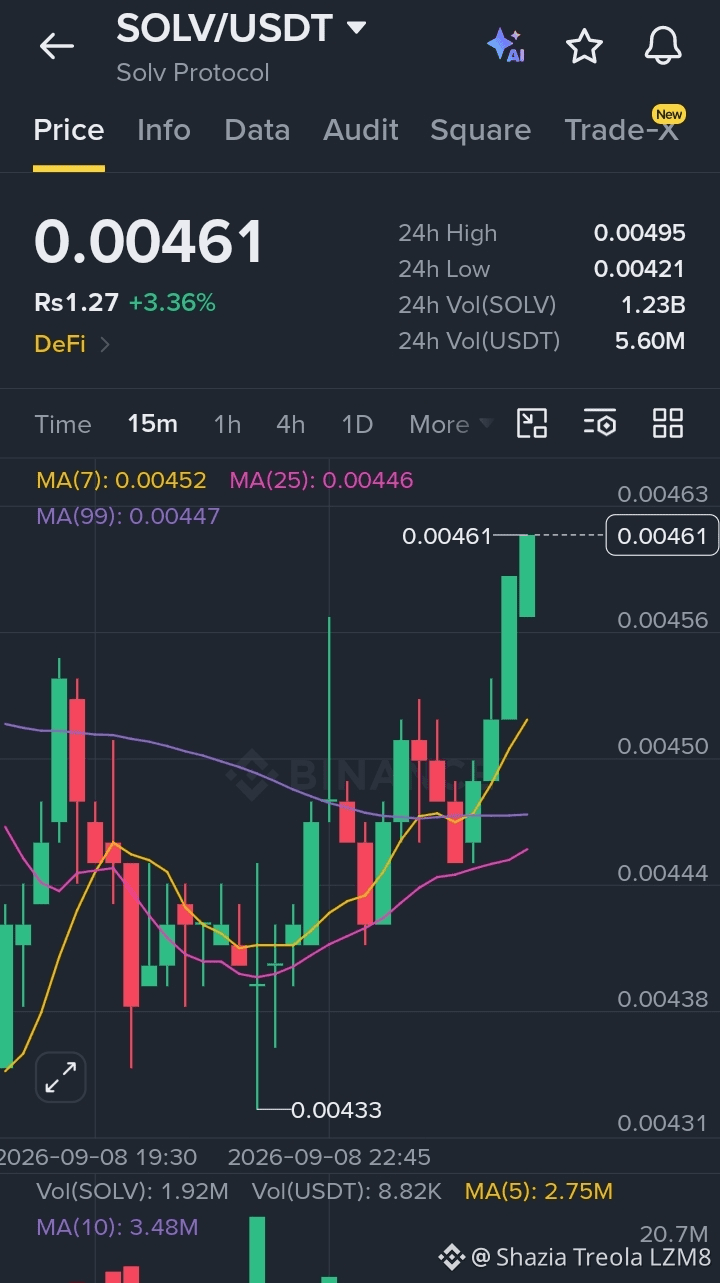
⚡ $SOLV breaking out on strong volume – Is BTCFI heating up?
Solv Protocol ($SOLV ) has caught heavy trader attention, rallying sharply and breaking out above major Bollinger Band resistance on high volume. As a key player in the Bitcoin-finance (But fine) space turning BTC into yield-bearing collateral, institutional interest is shifting fast.
Trading Setup: Price is testing crucial supply clusters. Watch for a clean continuation or a minor pullback to re-enter demand zones.
Risk Management: Always map out your stop-loss near major moving averages.
What’s your target for $SOLV this week?
{spot}(SOLVUSDT)
#SaudiHaltsSouthernEnergySitesAfterAttacks #BTCFi #altcoins #TradingSignals
⚡ $SOLV breaking out on strong volume – Is BTCFI heating up?
Solv Protocol ($SOLV ) has caught heavy trader attention, rallying sharply and breaking out above major Bollinger Band resistance on high volume. As a key player in the Bitcoin-finance (But fine) space turning BTC into yield-bearing collateral, institutional interest is shifting fast.
Trading Setup: Price is testing crucial supply clusters. Watch for a clean continuation or a minor pullback to re-enter demand zones.
Risk Management: Always map out your stop-loss near major moving averages.
What’s your target for $SOLV this week?
#SaudiHaltsSouthernEnergySitesAfterAttacks #BTCFi #altcoins #TradingSignals
Solv Protocol ($SOLV ) has caught heavy trader attention, rallying sharply and breaking out above major Bollinger Band resistance on high volume. As a key player in the Bitcoin-finance (But fine) space turning BTC into yield-bearing collateral, institutional interest is shifting fast.
Trading Setup: Price is testing crucial supply clusters. Watch for a clean continuation or a minor pullback to re-enter demand zones.
Risk Management: Always map out your stop-loss near major moving averages.
What’s your target for $SOLV this week?
#SaudiHaltsSouthernEnergySitesAfterAttacks #BTCFi #altcoins #TradingSignals
139
Log in to explore more content
Join global crypto users on Binance Square
⚡️ Get latest and useful information about crypto.
💬 Trusted by the world’s largest crypto exchange.
👍 Discover real insights from verified creators.
Email / Phone number
Trending Topics
1
#BitcoinRejectedAt$87K
412 views
20 Discussing
2
#FedOctoberRateHikeOddsFallTo17%
4,470 views
117 Discussing
3
#NvidiaHitsRecordHighUp2.4%
500 views
76 Discussing
4
#CanaryFilesAmendedS1ForPEPEETF
215 views
61 Discussing
5
#USRussiaUkraineTalksReportedlyIncludeLukoilOilDeal
4,353 views
152 Discussing
6
#BitcoinParesGainsAfterRallyTo$86.5K
33,320 views
129 Discussing
7
#CerebrasSinksNearly20%OnReportNvidiaToPowerOpenAI
68,056 views
733 Discussing
8
#SECProposesCryptoCustodyRules
91,477 views
905 Discussing
9
#SECApproves3xLongCryptoCommodityETPs
61,548 views
637 Discussing
10
#MASKHitsRecordMarketCapAbove$35M
3,962 views
33 Discussing