Binance Square
Felix-是大飞呀
5.1k Posts

Felix-是大飞呀

Square Verified+
币圈十年老韭菜|X.FEIFEI888X|喜欢研究一起投研|币安认证创作者|创作分析不做投资建议|盈亏自负!
Open Trade
Frequent Trader
8.6 Years
814 Following
55.0K+ Followers
47.8K+ Liked
Posts
Portfolio
PINNED
·
--
Bullish
Verified
If someone asks me now, what is Dusk? I wouldn’t just answer simply, “It’s a privacy blockchain.” That kind of understanding might underestimate what it’s really trying to do. Recently, I took another look at the ecosystem of @Dusk_Foundation , and I found that the thing worth paying attention to is actually the combination of information control capabilities and financial infrastructure. Traditional finance has never been completely transparent. Banks know their customers’ information, funds know their own positions, exchanges know trading data, and regulators can obtain the necessary information in certain situations. In other words, real-world finance has always been doing one thing: Let information flow between different participants according to rules, rather than making all data fully public to everyone. And Dusk wants to re-create a similar logic on-chain. Dusk L1 provides the underlying network, DuskEVM enables more EVM developers to enter the ecosystem, and XSC further targets regulated assets and financial use cases. That’s how the story of Dusk begins to change. It’s not only about whether transactions should be hidden—it’s also about thinking through how, after financial assets are put on-chain in the future, privacy, transparency, identity, compliance, and asset circulation should ultimately be balanced. This is actually a very big market. Because if, in the future, on-chain assets are only crypto-native assets, then this problem might not be as important. But if, in the future, stocks, bonds, funds, and real-estate equity all move onto the blockchain, then this problem can’t be avoided. So I think what’s truly worth watching about Dusk is whether its ecosystem can continue extending into real-world financial scenarios. Once developers and RWA projects start truly using these infrastructures, the value logic of $DUSK will become entirely different.#dusk $DUSK {spot}(DUSKUSDT) If institutions enter the chain, can Dusk’s model run successfully?
If someone asks me now, what is Dusk?

I wouldn’t just answer simply, “It’s a privacy blockchain.”

That kind of understanding might underestimate what it’s really trying to do.

Recently, I took another look at the ecosystem of @Dusk , and I found that the thing worth paying attention to is actually the combination of information control capabilities and financial infrastructure.

Traditional finance has never been completely transparent.

Banks know their customers’ information, funds know their own positions, exchanges know trading data, and regulators can obtain the necessary information in certain situations.

In other words, real-world finance has always been doing one thing:

Let information flow between different participants according to rules, rather than making all data fully public to everyone.

And Dusk wants to re-create a similar logic on-chain.

Dusk L1 provides the underlying network, DuskEVM enables more EVM developers to enter the ecosystem, and XSC further targets regulated assets and financial use cases.

That’s how the story of Dusk begins to change.

It’s not only about whether transactions should be hidden—it’s also about thinking through how, after financial assets are put on-chain in the future, privacy, transparency, identity, compliance, and asset circulation should ultimately be balanced.

This is actually a very big market.

Because if, in the future, on-chain assets are only crypto-native assets, then this problem might not be as important.

But if, in the future, stocks, bonds, funds, and real-estate equity all move onto the blockchain, then this problem can’t be avoided.

So I think what’s truly worth watching about Dusk is whether its ecosystem can continue extending into real-world financial scenarios.

Once developers and RWA projects start truly using these infrastructures, the value logic of $DUSK will become entirely different.#dusk $DUSK
If institutions enter the chain, can Dusk’s model run successfully?
A. 隐私合规是刚需
B. 金融机构会逐步采用
C. 生态发展决定最终结果
D. 还需要更多真实应用
17 hr(s) left
PINNED
Verified
If you go to a bank to transfer some money, will the whole world know about it? Of course not. But when you get into blockchain, very often it’s exactly the opposite. Transaction records, wallet balances, and the flow of funds—many kinds of information can be viewed directly. Transparency is undoubtedly an important characteristic of blockchain. But when I recently reread the whitepaper of @Dusk_Foundation , I started thinking about a question instead: Does finance really need to disclose all information? What interests me about Dusk’s design is that it does not put all transactions into the same single model. Moonlight uses an account model, while Phoenix is based on UTXO and enables private transactions through zero-knowledge proofs. Having both models on the same chain strikes me as pretty interesting. Because in real-world finance, transactions are not actually one-size-fits-all. Some information needs to be public; some only needs to be proven; and some data doesn’t need everyone to know. The XSC after Dusk and its selective disclosure design also follow this line of thinking. So when I look at Dusk now, I don’t just understand it as a “privacy chain.” More importantly, I care about whether it can turn the ability to decide how much information to disclose, to whom, and when into a truly deployable financial infrastructure. If this path can work out, $DUSK ’s imagination may not be limited to privacy transactions. #dusk $DUSK {spot}(DUSKUSDT) Do you think a Dusk-like “verifiable, selectively disclosable” model will become an important foundational infrastructure for on-chain finance in the future?
If you go to a bank to transfer some money, will the whole world know about it? Of course not.

But when you get into blockchain, very often it’s exactly the opposite.

Transaction records, wallet balances, and the flow of funds—many kinds of information can be viewed directly.

Transparency is undoubtedly an important characteristic of blockchain. But when I recently reread the whitepaper of @Dusk , I started thinking about a question instead:

Does finance really need to disclose all information?

What interests me about Dusk’s design is that it does not put all transactions into the same single model.

Moonlight uses an account model, while Phoenix is based on UTXO and enables private transactions through zero-knowledge proofs.

Having both models on the same chain strikes me as pretty interesting.

Because in real-world finance, transactions are not actually one-size-fits-all.

Some information needs to be public; some only needs to be proven; and some data doesn’t need everyone to know.

The XSC after Dusk and its selective disclosure design also follow this line of thinking.

So when I look at Dusk now, I don’t just understand it as a “privacy chain.”

More importantly, I care about whether it can turn the ability to decide how much information to disclose, to whom, and when into a truly deployable financial infrastructure.

If this path can work out, $DUSK ’s imagination may not be limited to privacy transactions.
#dusk $DUSK
Do you think a Dusk-like “verifiable, selectively disclosable” model will become an important foundational infrastructure for on-chain finance in the future?
A.会,隐私和合规可以同时解决
11%
B. 有潜力,但还需要更多真实应用
78%
C. 更看好传统透明公链
0%
D. 现在还不好判断
11%
9 votes • Voting closed
Good Brother, hurry and get out of this situation $HYPE has multiple long orders currently held at a position size of $5,009,495.14, with current profit/loss of -$14,490.58 {future}(HYPEUSDT)
Good Brother, hurry and get out of this situation
$HYPE has multiple long orders currently held at a position size of $5,009,495.14, with current profit/loss of -$14,490.58
Everyone’s showing off their Qixi Festival gifts, but mine is a bit different 😂
Verified
After researching Dusk for a while, I realized that I’m increasingly unwilling to summarize it with just the words “privacy chain.” Because if you only look at privacy, it’s easy to overlook the actual scenarios it wants to enter—financial asset issuance, trading, and settlement. In Dusk’s technical architecture, DuskDS handles the underlying consensus, data availability, and deterministic settlement; DuskVM is responsible for native smart contract execution, and it also makes Dusk compatible with the Solidity ecosystem through DuskEVM, so EVM developers can enter Dusk as well. Next up are assets and financial applications. Phoenix protects transaction privacy with zero-knowledge proofs, Moonlight provides a public account model, and XSC further designs compliance and permission mechanisms specifically for confidential securities. When you string these things together, I think the logic of @Dusk_Foundation is actually very clear: It’s not just about building a “more private public chain” for its own sake; it’s about establishing a full set of on-chain infrastructure suitable for operating regulated financial assets. Especially when it comes to deterministic settlement, I think that’s extremely important. Because for securities, funds, and other RWA, the trade happening is only the first step. Whether settlement can ultimately be completed accurately and reliably is what truly enables entry into the financial market. So in the future, I’ll pay more attention to Dusk’s real network usage, not just short-term pricing.#dusk $DUSK {spot}(DUSKUSDT) What do you think is the most worth watching about Dusk’s next phase?
After researching Dusk for a while, I realized that I’m increasingly unwilling to summarize it with just the words “privacy chain.”

Because if you only look at privacy, it’s easy to overlook the actual scenarios it wants to enter—financial asset issuance, trading, and settlement.

In Dusk’s technical architecture, DuskDS handles the underlying consensus, data availability, and deterministic settlement; DuskVM is responsible for native smart contract execution, and it also makes Dusk compatible with the Solidity ecosystem through DuskEVM, so EVM developers can enter Dusk as well.

Next up are assets and financial applications.

Phoenix protects transaction privacy with zero-knowledge proofs, Moonlight provides a public account model, and XSC further designs compliance and permission mechanisms specifically for confidential securities.

When you string these things together, I think the logic of @Dusk is actually very clear:

It’s not just about building a “more private public chain” for its own sake; it’s about establishing a full set of on-chain infrastructure suitable for operating regulated financial assets.

Especially when it comes to deterministic settlement, I think that’s extremely important.

Because for securities, funds, and other RWA, the trade happening is only the first step. Whether settlement can ultimately be completed accurately and reliably is what truly enables entry into the financial market.

So in the future, I’ll pay more attention to Dusk’s real network usage, not just short-term pricing.#dusk $DUSK
What do you think is the most worth watching about Dusk’s next phase?
A. RWA金融资产落地
0%
B. DuskEVM生态增长
50%
C. 隐私与合规应用
50%
D. 网络真实交易需求
0%
6 votes • Voting closed
Verified
Sometimes, the reason a project is most easily underestimated isn’t that it isn’t done well enough—it’s that everyone labels it too early. I feel that @Dusk_Foundation has a little bit of that going on right now. When many people mention Dusk, their first reaction is still: A privacy chain. But if you really look through its architecture from the ground up, you’ll find that this label can no longer hold it anymore. Phoenix does address the problem of privacy asset transfers. But Dusk doesn’t stop there. Moonlight provides a public account model, and the Transfer Contract can connect different transaction models. Zedger/XSC then starts shifting its focus toward compliant assets, tokenized (securitized) assets, and more specific financial scenarios. And now, with DuskDS + DuskEVM, the whole direction is becoming more and more like building a foundational environment that can support financial applications. This makes me think of a question. If, in the future, the assets on-chain are no longer just native crypto assets like BTC and ETH, but instead large amounts of stocks, bonds, funds, and even institutional assets, will the core problem a chain truly needs to solve still be only “how fast transactions are”? Maybe not. It also needs to solve privacy. It needs to solve identity. It needs to solve compliance. And it even needs to solve information permissions among different participants. At this point, Dusk’s design actually starts to get interesting. It isn’t trying to hide all data, and it isn’t trying to make all data public. Instead, it’s attempting to give different scenarios different levels of transparency. Right now, I actually feel that the term “privacy chain” is a bit of an underestimation of $DUSK . What’s really worth watching is whether it can slowly evolve from a privacy infrastructure into a foundational network that provides services for real financial assets.#dusk $DUSK {spot}(DUSKUSDT) Do you think Dusk will be able to break free from the “privacy chain” label in the end?
Sometimes, the reason a project is most easily underestimated isn’t that it isn’t done well enough—it’s that everyone labels it too early.

I feel that @Dusk has a little bit of that going on right now.

When many people mention Dusk, their first reaction is still:

A privacy chain.

But if you really look through its architecture from the ground up, you’ll find that this label can no longer hold it anymore.

Phoenix does address the problem of privacy asset transfers.

But Dusk doesn’t stop there.

Moonlight provides a public account model, and the Transfer Contract can connect different transaction models. Zedger/XSC then starts shifting its focus toward compliant assets, tokenized (securitized) assets, and more specific financial scenarios.

And now, with DuskDS + DuskEVM, the whole direction is becoming more and more like building a foundational environment that can support financial applications.

This makes me think of a question.

If, in the future, the assets on-chain are no longer just native crypto assets like BTC and ETH, but instead large amounts of stocks, bonds, funds, and even institutional assets, will the core problem a chain truly needs to solve still be only “how fast transactions are”?

Maybe not.

It also needs to solve privacy.

It needs to solve identity.

It needs to solve compliance.

And it even needs to solve information permissions among different participants.

At this point, Dusk’s design actually starts to get interesting.

It isn’t trying to hide all data, and it isn’t trying to make all data public.

Instead, it’s attempting to give different scenarios different levels of transparency.

Right now, I actually feel that the term “privacy chain” is a bit of an underestimation of $DUSK .

What’s really worth watching is whether it can slowly evolve from a privacy infrastructure into a foundational network that provides services for real financial assets.#dusk $DUSK
Do you think Dusk will be able to break free from the “privacy chain” label in the end?
A. 能,Dusk 会成为链上金融基础设施
72%
B. 有机会,RWA 会成为核心突破口
17%
C. 还不好说,需要看生态落地
6%
D. 我仍然更看好隐私赛道
5%
18 votes • Voting closed
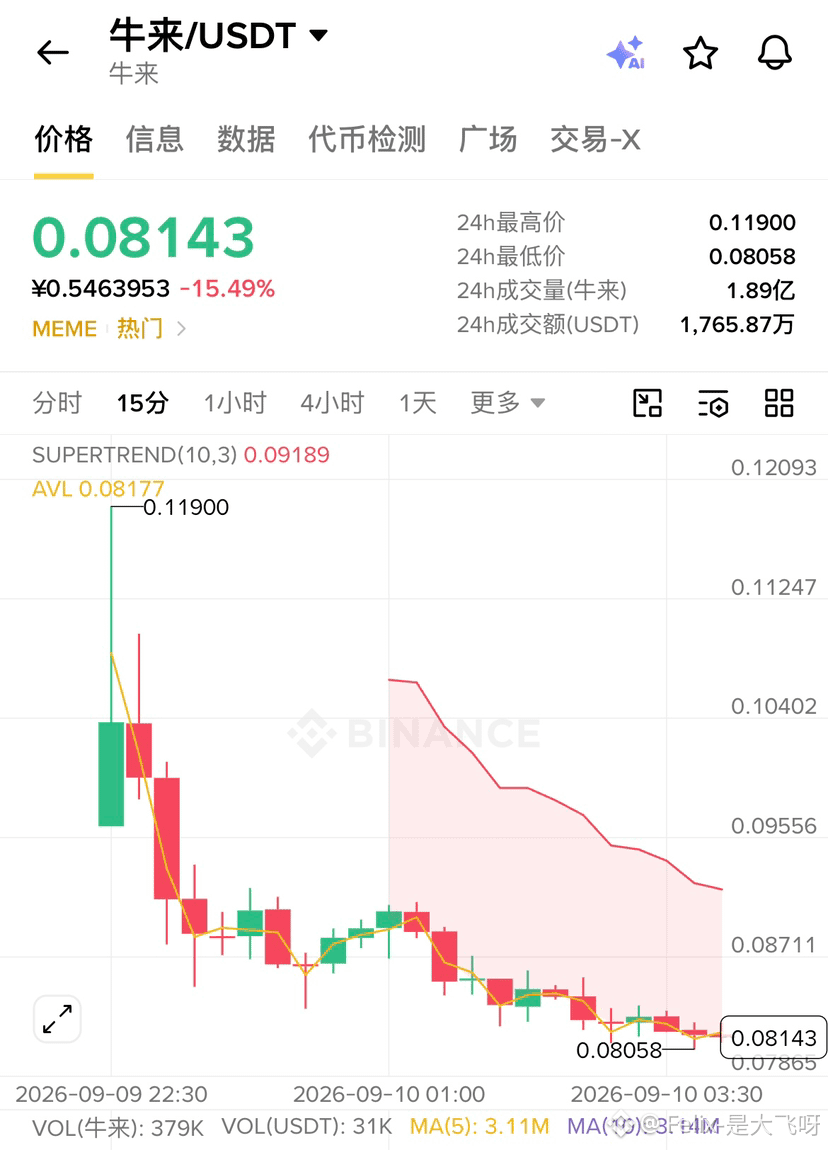
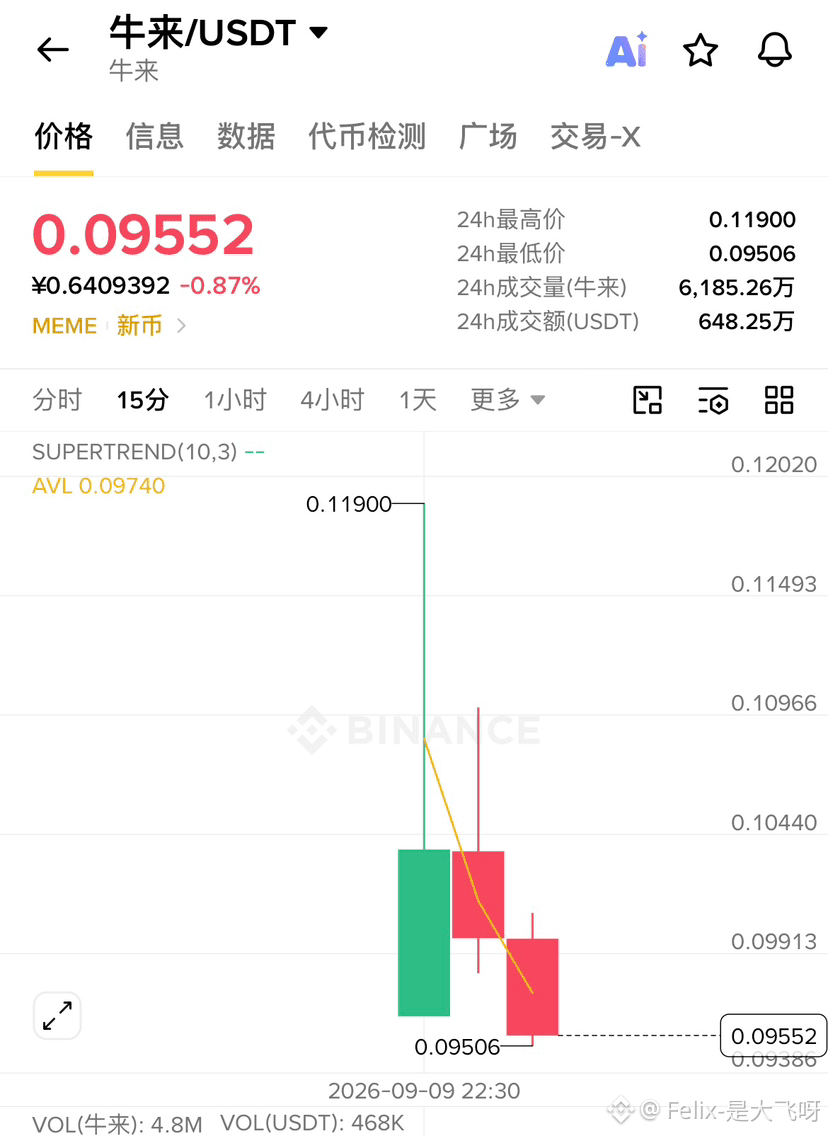
Today we won’t talk about those projects that have already been over-discussed by everyone—let’s take a different direction. $niulai . It chooses the movie “Niu Lai” as its IP, and then combines meme culture with the Web3 community. I think the biggest highlight of this direction is that it tries to bring real-world content assets into an on-chain community. Whether it can really make it, we’ll have to wait and see. #niulai #牛来
Today we won’t talk about those projects that have already been over-discussed by everyone—let’s take a different direction.
$niulai .
It chooses the movie “Niu Lai” as its IP, and then combines meme culture with the Web3 community.
I think the biggest highlight of this direction is that it tries to bring real-world content assets into an on-chain community.
Whether it can really make it, we’ll have to wait and see. #niulai #牛来
If Wall Street really moved tens of trillions of dollars’ worth of assets onto the blockchain, there’s one question that might be even more worth debating than “whether to put them on-chain”: Do they truly want to make all transactions public? I think the answer is actually quite clear. Institutions can accept the fast settlement that blockchain brings, and they can also accept the verifiability that comes with on-chain records. But for a fund to expose all its holdings, trading strategies, and fund flows to a public network—probably no institution would genuinely be willing to do that. So I’ve always believed that what institutions truly lack isn’t just a faster public chain, but a set of financial infrastructure that can handle both transparency and privacy at the same time. That’s also what’s interesting about @Dusk_Foundation . It’s not simply saying, “Don’t publish all data.” Instead, it tries to give different types of information different visibility scopes. Phoenix handles private transactions, Citadel is responsible for identity and selective disclosure, and then Zedger processes rules and states related to security assets. In fact, this approach is very similar to traditional finance. Banks won’t publish your account balance to the whole world, but when regulators need to review, they still must be able to complete verification. Funds won’t disclose all of their trading strategies, but investor eligibility and compliance requirements can’t be bypassed either. So what Dusk is really trying to solve may never have been: “How do we help finance evade regulation?” Instead, it’s: How can finance remain verifiable, regulatable, and settlement-ready—while still protecting commercial privacy? If RWA truly enters the institutional era in the future, this question will likely become increasingly important.#dusk $DUSK {spot}(DUSKUSDT) When tens of trillions in assets move on-chain, will institutions really be willing to go “transparent and naked”?
If Wall Street really moved tens of trillions of dollars’ worth of assets onto the blockchain, there’s one question that might be even more worth debating than “whether to put them on-chain”:

Do they truly want to make all transactions public?

I think the answer is actually quite clear.

Institutions can accept the fast settlement that blockchain brings, and they can also accept the verifiability that comes with on-chain records.

But for a fund to expose all its holdings, trading strategies, and fund flows to a public network—probably no institution would genuinely be willing to do that.

So I’ve always believed that what institutions truly lack isn’t just a faster public chain, but a set of financial infrastructure that can handle both transparency and privacy at the same time.

That’s also what’s interesting about @Dusk .

It’s not simply saying, “Don’t publish all data.” Instead, it tries to give different types of information different visibility scopes.

Phoenix handles private transactions, Citadel is responsible for identity and selective disclosure, and then Zedger processes rules and states related to security assets.

In fact, this approach is very similar to traditional finance.

Banks won’t publish your account balance to the whole world, but when regulators need to review, they still must be able to complete verification.

Funds won’t disclose all of their trading strategies, but investor eligibility and compliance requirements can’t be bypassed either.

So what Dusk is really trying to solve may never have been:

“How do we help finance evade regulation?”

Instead, it’s:

How can finance remain verifiable, regulatable, and settlement-ready—while still protecting commercial privacy?

If RWA truly enters the institutional era in the future, this question will likely become increasingly important.#dusk $DUSK
When tens of trillions in assets move on-chain, will institutions really be willing to go “transparent and naked”?
A. 透明是公链的底线,机构应该适应规则
13%
B. 隐私和合规可以共存,Dusk 的方向是对的
50%
C. 谨慎乐观,技术听起来不错,但落地还早
25%
D. 我有不同看法,欢迎评论区补充
12%
16 votes • Voting closed
August 16 at 19:30, see you there
Anna-汤圆
·
--
🌏【Theme】Confluence of Double Waves: Rewriting On-Chain Financial Rules with AI + Web3 OI Agent

📅 【Time】August 16, 2026 19:30 (UTC+8)

🌕【Intro】
As the sea surges and the times iterate, as the ancients said, the Yangtze River’s later waves drive on the earlier—new winds replace old chapters. When the intelligent wave of artificial intelligence meets the transformative tide of Web3 decentralization, these two era-defining currents surge together, reshaping the landscape of on-chain finance.

Looking back at the industry’s past, traditional on-chain trading has always been inseparable from the fatigue of manual order-watching, the interference of subjective emotions, and the pain point that massive data can be hard to interpret. Countless practitioners get trapped in information gaps and decision delays.

Now, with the rapid rise of AI Agent technology, Web3 ecosystems gain an entirely new solution: intelligent decision-making, data interpretation, and automated execution—bringing on-chain finance into a new era of intelligence. Where there is opportunity, there is also change; beneath the wave of trends, only truly implementable infrastructure can survive through market cycles.

Tonight, we gather here for an in-depth discussion on AI + Web3. The live stream will be ablaze with star power. We’re honored to invite multiple industry OGs, seasoned experts, top creators from the Squares, and research-and-investment VIPs to share their insights—stay tuned!

🎤 Special Host
🎙Guest Gold Host 👉🏻 Li Qian Grace
@梨浅Grace
🎙Co-Host 👉🏻 Xu Hao Media
@旭好传媒
🎙Co-Host 👉🏻
OI Agent@oiagent_

👥【Featured Heavyweight Guests】(Speakers)
🔹 Web3 Peter Zhang @Web3Peter张|Web3 OG
Senior Product Manager at OI Agent
🔹 Xing Rui @星睿 |Senior industry blockchain expert
🔹 Hua Tuo @HTWhale |Senior Web3 expert, Liangshan Community
🔹 ANNA Tangyuan @Anna-汤圆 |Senior Web3 Binance Square “Gold” Badge Streamer
🔹 NiKi Grape @Niki葡萄 |Senior Web3 investor
🔹 YZZ Zhu Zhu @竹竹YZZ |Senior blockchain research & investment observer

📌【Binance Square Live Stream Link】
https://app.binance.com/uni-qr/cspa/44484277780290?l=zh-CN&r=BLA7SFFI&source=host_share&uc=web_square_share_link&us=copylink

📌【Loopspace Live Stream Link】
https://loopspace.xyz/s/yHS7Q9xB9E
Can’t draw enough—there’s just no end 🤔
Verified
If one day, huge amounts of stocks, bonds, funds, and other real-world assets are all moved onto the blockchain, what do you think institutions are most worried about? Not TPS. Not necessarily the fees, either. I think the real thing that makes institutions hesitate might be a question that seems to fit the spirit of blockchain the most: It’s too transparent. In recent years, the industry has been emphasizing on-chain transparency. How much someone moved, where assets are held, and what the transactions and balances are can all be publicly verified. For ordinary users, that’s a form of trust. But for financial institutions, things may be completely different. An institution would not want its competitors to know its holdings changes at any time. It also would not want its trading strategies, fund flows, and customer information permanently exposed on a public ledger. That’s also why I recently found Hedger so interesting while re-investigating @Dusk_Foundation . Dusk didn’t simply choose between “transparency” and “privacy.” Instead, it tried to split them apart: verification can be public, but the data doesn’t necessarily need to be. Hedger uses zero-knowledge proofs and homomorphic encryption so applications can complete verifiable execution while protecting sensitive information. When it needs to be public, it’s public. When it needs protection, it’s protected. This actually changed my understanding of privacy chains. Real advanced privacy isn’t about making everything disappear. It’s about giving information its own boundaries. Dusk’s documentation also clearly designs around regulated-market processes such as eligibility, disclosure, transfer restrictions, and settlement. So now I’m increasingly convinced that what Dusk is truly trying to solve isn’t “how to make blockchains more private.” It’s a more practical question: Once financial markets are truly on-chain, should we let everyone see everything, or should different people see only what they’re supposed to see? If in the future RWA competition shifts from “who can move assets on-chain” to “who can make institutions feel comfortable keeping those assets on-chain,” then privacy may just be the first step. What’s truly important may be: Who has the information, who can verify it, and who has the right to view it. And that may be exactly what makes Dusk worth long-term attention.#dusk $DUSK {spot}(DUSKUSDT) What do you think is the most “ludicrous” thing about Dusk?
If one day, huge amounts of stocks, bonds, funds, and other real-world assets are all moved onto the blockchain, what do you think institutions are most worried about?

Not TPS.

Not necessarily the fees, either.

I think the real thing that makes institutions hesitate might be a question that seems to fit the spirit of blockchain the most:

It’s too transparent.

In recent years, the industry has been emphasizing on-chain transparency. How much someone moved, where assets are held, and what the transactions and balances are can all be publicly verified.

For ordinary users, that’s a form of trust.

But for financial institutions, things may be completely different.

An institution would not want its competitors to know its holdings changes at any time. It also would not want its trading strategies, fund flows, and customer information permanently exposed on a public ledger.

That’s also why I recently found Hedger so interesting while re-investigating @Dusk .

Dusk didn’t simply choose between “transparency” and “privacy.” Instead, it tried to split them apart: verification can be public, but the data doesn’t necessarily need to be.

Hedger uses zero-knowledge proofs and homomorphic encryption so applications can complete verifiable execution while protecting sensitive information. When it needs to be public, it’s public. When it needs protection, it’s protected.

This actually changed my understanding of privacy chains.

Real advanced privacy isn’t about making everything disappear.

It’s about giving information its own boundaries.

Dusk’s documentation also clearly designs around regulated-market processes such as eligibility, disclosure, transfer restrictions, and settlement.

So now I’m increasingly convinced that what Dusk is truly trying to solve isn’t “how to make blockchains more private.”

It’s a more practical question:

Once financial markets are truly on-chain, should we let everyone see everything, or should different people see only what they’re supposed to see?

If in the future RWA competition shifts from “who can move assets on-chain” to “who can make institutions feel comfortable keeping those assets on-chain,” then privacy may just be the first step.

What’s truly important may be:

Who has the information, who can verify it, and who has the right to view it.

And that may be exactly what makes Dusk worth long-term attention.#dusk $DUSK
What do you think is the most “ludicrous” thing about Dusk?
A .数据藏起来还能证明是真的
44%
B .交易不公开还能完成验证
25%
C. 监管要查还能选择性披露
19%
D .我只想知道 $DUSK 什么时候起飞
12%
16 votes • Voting closed
Maximum unrealized loss of 40,000, almost back
Verified
While the entire crypto market is still chasing the next round of hype, what truly determines how far a project can go is often not a fleeting price move, but whether it has the ability to bring blockchain into the real world. That’s also why I’ve recently started paying attention to @Dusk_Foundation again. In the past, many projects talked about privacy, compliance, and RWA—but in the end, it all stayed at the concept level. But what DUSK wants to solve is a deeper, foundational problem: as traditional financial assets gradually move onto the blockchain, will institutions truly dare to use them? How will user privacy be protected? And how will regulatory requirements be met? If these questions don’t have answers, then so-called mass adoption is hard to make happen. DUSK’s approach is to consider privacy and compliance within the same set of underlying infrastructure. It isn’t simply about moving real-world assets onto the chain; it aims to create an on-chain environment that better connects identity, data, transactions, and assets for institutional use. More interestingly, starting yesterday, Binance Square has launched new creator missions around DUSK. The total rewards for the event reach 480,000 DUSK, with additional rewards from live streams. So when I look at DUSK now, I actually don’t want to focus only on short-term price fluctuations. What’s really worth watching is whether, as more and more RWA, compliant assets, and institutional capital move onto the blockchain, DUSK can become the infrastructure that genuinely carries these needs. If this direction ultimately works, what DUSK is talking about won’t be just a token story—it could become a long-term narrative of traditional finance moving onto the blockchain. #dusk $DUSK {spot}(BABYUSDT) If, in the future, more and more traditional financial assets truly make it onto the chain, which core infrastructure do you think DUSK is most likely to become?
While the entire crypto market is still chasing the next round of hype, what truly determines how far a project can go is often not a fleeting price move, but whether it has the ability to bring blockchain into the real world.

That’s also why I’ve recently started paying attention to @Dusk again.

In the past, many projects talked about privacy, compliance, and RWA—but in the end, it all stayed at the concept level. But what DUSK wants to solve is a deeper, foundational problem: as traditional financial assets gradually move onto the blockchain, will institutions truly dare to use them? How will user privacy be protected? And how will regulatory requirements be met? If these questions don’t have answers, then so-called mass adoption is hard to make happen.

DUSK’s approach is to consider privacy and compliance within the same set of underlying infrastructure. It isn’t simply about moving real-world assets onto the chain; it aims to create an on-chain environment that better connects identity, data, transactions, and assets for institutional use.

More interestingly, starting yesterday, Binance Square has launched new creator missions around DUSK. The total rewards for the event reach 480,000 DUSK, with additional rewards from live streams.

So when I look at DUSK now, I actually don’t want to focus only on short-term price fluctuations. What’s really worth watching is whether, as more and more RWA, compliant assets, and institutional capital move onto the blockchain, DUSK can become the infrastructure that genuinely carries these needs.

If this direction ultimately works, what DUSK is talking about won’t be just a token story—it could become a long-term narrative of traditional finance moving onto the blockchain. #dusk $DUSK
If, in the future, more and more traditional financial assets truly make it onto the chain, which core infrastructure do you think DUSK is most likely to become?
A. RWA与资产代币化
55%
B. 隐私与合规金融
0%
C. 机构级链上结算
0%
D. 三者融合,成为传统金融上链的基础设施
45%
11 votes • Voting closed
Verified
A new Dusk event is here. Last time I got a reward of 2,000 USD. Honestly, of course I’m happy to receive the reward, but the real reason I’m willing to keep researching @Dusk_Foundation this time isn’t the 2,000 USD—it’s because after I went through its whitepaper again, I realized that what this project wants to do could be much bigger than simply building a “privacy blockchain.” Dusk set its direction very early on around three keywords: Privacy, Compliance, and RWA. Sounds simple, but if you truly move traditional finance onto the chain, none of these three can be missing. A fully transparent blockchain isn’t suitable for many institutions, because holdings, counterparties, and fund flows can’t all be exposed; but if you hide everything, it’s also hard to meet regulation and auditing. Dusk’s approach is precisely to solve these two contradictions together. Using zero-knowledge proofs, the Phoenix privacy transaction model, and selective disclosure, it keeps data private while allowing authorized parties to verify identity or transaction information when needed. Official materials also clearly state that Moonlight handles public transactions, while Phoenix supports private transactions—two modes can coexist. Even more noteworthy is the current multi-layer architecture. DuskDS is responsible for consensus, data availability, and settlement, DuskEVM provides compatibility with Solidity and the existing EVM ecosystem, and DuskVM continues to carry native privacy and ZK capabilities. In other words, it isn’t trying to lock itself into a closed ecosystem just for privacy; it wants developers to be able to enter using familiar tools, while still preserving the underlying capabilities for financial use cases. So when I look at $DUSK now, I’m no longer focused on “how much reward you can get from this event,” but on a bigger question: If in the future securities, funds, bonds, and other real-world assets move onto the chain at scale, who can provide an infrastructure that simultaneously satisfies privacy, compliance, programmability, and deterministic settlement? If this direction really takes off, Dusk’s story may just be getting started. #dusk $DUSK {spot}(DUSKUSDT) What do you think is the most outrageous—and most imaginative—application Dusk could have?
A new Dusk event is here. Last time I got a reward of 2,000 USD.

Honestly, of course I’m happy to receive the reward, but the real reason I’m willing to keep researching @Dusk this time isn’t the 2,000 USD—it’s because after I went through its whitepaper again, I realized that what this project wants to do could be much bigger than simply building a “privacy blockchain.”

Dusk set its direction very early on around three keywords: Privacy, Compliance, and RWA. Sounds simple, but if you truly move traditional finance onto the chain, none of these three can be missing. A fully transparent blockchain isn’t suitable for many institutions, because holdings, counterparties, and fund flows can’t all be exposed; but if you hide everything, it’s also hard to meet regulation and auditing.

Dusk’s approach is precisely to solve these two contradictions together. Using zero-knowledge proofs, the Phoenix privacy transaction model, and selective disclosure, it keeps data private while allowing authorized parties to verify identity or transaction information when needed. Official materials also clearly state that Moonlight handles public transactions, while Phoenix supports private transactions—two modes can coexist.

Even more noteworthy is the current multi-layer architecture. DuskDS is responsible for consensus, data availability, and settlement, DuskEVM provides compatibility with Solidity and the existing EVM ecosystem, and DuskVM continues to carry native privacy and ZK capabilities. In other words, it isn’t trying to lock itself into a closed ecosystem just for privacy; it wants developers to be able to enter using familiar tools, while still preserving the underlying capabilities for financial use cases.

So when I look at $DUSK now, I’m no longer focused on “how much reward you can get from this event,” but on a bigger question:

If in the future securities, funds, bonds, and other real-world assets move onto the chain at scale, who can provide an infrastructure that simultaneously satisfies privacy, compliance, programmability, and deterministic settlement?

If this direction really takes off, Dusk’s story may just be getting started. #dusk $DUSK
What do you think is the most outrageous—and most imaginative—application Dusk could have?
A. 隐私身份:我是谁,你知道,但别知道太多
31%
B. RWA金融:现实资产偷偷上链,监管照样能查
15%
C. 隐私交易:链上转账也能“神秘消失”
15%
D. 全都要:隐私 + 合规 + RWA 一锅端
39%
13 votes • Voting closed
Have you noticed something? In the world of mortals, for one lifetime, people fight desperately— all just for a place where they can finally sleep in peace. In the end, though, they’ve never truly slept well. When we were children, our parents left us behind to go work; when we grew up, we left our parents behind to go work; later still, we left our children behind to go work; and in the end, the children will leave us behind to go work too. One generation after another, as if they’re being pushed forward by something. Left-behind children, rural migrants working in the city, elderly people living alone— it’s only three stages of one person’s life, three times turning back. So what’s my way to break the deadlock? I’d say it’s this: against every expectation of my elders, I enter web3 alone— a path that no one around me has ever taken. If I succeed, the whole family will be happy; if I fail, I’ll be alone in loneliness. Luckily, on the road of trading, I’m slowly starting to climb. Even more fortunately, the trading track lets me control my own time— and my mind is finally truly free. May the next three years of Bitcoin’s big cycle— I live into the kind of freedom I want: financial freedom, traveling the world.$BTC Only then, looking back on the choices I make today, perhaps I’ll truly be worthy of the line: Everything is worth it.{spot}(BTCUSDT)
Have you noticed something?

In the world of mortals, for one lifetime, people fight desperately—
all just for a place where they can finally sleep in peace.
In the end, though, they’ve never truly slept well.

When we were children, our parents left us behind to go work;
when we grew up, we left our parents behind to go work;
later still, we left our children behind to go work;
and in the end, the children will leave us behind to go work too.

One generation after another, as if they’re being pushed forward by something.
Left-behind children, rural migrants working in the city, elderly people living alone—
it’s only three stages of one person’s life, three times turning back.

So what’s my way to break the deadlock?
I’d say it’s this:
against every expectation of my elders,
I enter web3 alone—
a path that no one around me has ever taken.
If I succeed, the whole family will be happy;
if I fail, I’ll be alone in loneliness.

Luckily, on the road of trading, I’m slowly starting to climb.
Even more fortunately, the trading track lets me control my own time—
and my mind is finally truly free.

May the next three years of Bitcoin’s big cycle—
I live into the kind of freedom I want:
financial freedom, traveling the world.$BTC

Only then, looking back on the choices I make today,
perhaps I’ll truly be worthy of the line:
Everything is worth it.
It's not that I don't support domestic brands, but Honor's price is a bit outrageous 😅
Log in to explore more content
Join global crypto users on Binance Square
⚡️ Get latest and useful information about crypto.
💬 Trusted by the world’s largest crypto exchange.
👍 Discover real insights from verified creators.
Email / Phone number
Sitemap
Cookie Preferences
Platform T&Cs