
#wallet
wallet
1.4M views
2,219 Discussing
Hot
Latest

·
--
🚨 $WALLET HITS ATH NEAR $76M AS ON-CHAIN DISCOVERY TRACES DEPLOYER TO INSIDER WALLETS! 🦈
On-chain order flow shows massive accumulation driving $WALLET to a historic $76M market cap evaluation following wallet-linking reports. 📊 Trading volume surged past $1.9M in 24 hours as liquidity pools expanded during this 33% move.
Despite pulling back toward $63M cap, smart money tracking reveals structural volatility around high-conviction order blocks. 🔍 Traders must carefully evaluate market depth and risk parameters before jumping into late momentum pushes. 💬 Are you tracking the on-chain footprint here or waiting for lower demand absorption? 👇
⚠️ Not financial advice. Always manage your risk. 🛡️
🏷️ #WALLET #MemeCoin #Crypto #OnChain
🦈 👁️
🚨 $WALLET HITS ATH NEAR $76M AS ON-CHAIN DISCOVERY TRACES DEPLOYER TO INSIDER WALLETS! 🦈
On-chain order flow shows massive accumulation driving $WALLET to a historic $76M market cap evaluation following wallet-linking reports. 📊 Trading volume surged past $1.9M in 24 hours as liquidity pools expanded during this 33% move.
Despite pulling back toward $63M cap, smart money tracking reveals structural volatility around high-conviction order blocks. 🔍 Traders must carefully evaluate market depth and risk parameters before jumping into late momentum pushes. 💬 Are you tracking the on-chain footprint here or waiting for lower demand absorption? 👇
⚠️ Not financial advice. Always manage your risk. 🛡️
🏷️ #WALLET #MemeCoin #Crypto #OnChain
🦈 👁️
On-chain order flow shows massive accumulation driving $WALLET to a historic $76M market cap evaluation following wallet-linking reports. 📊 Trading volume surged past $1.9M in 24 hours as liquidity pools expanded during this 33% move.
Despite pulling back toward $63M cap, smart money tracking reveals structural volatility around high-conviction order blocks. 🔍 Traders must carefully evaluate market depth and risk parameters before jumping into late momentum pushes. 💬 Are you tracking the on-chain footprint here or waiting for lower demand absorption? 👇
⚠️ Not financial advice. Always manage your risk. 🛡️
🏷️ #WALLET #MemeCoin #Crypto #OnChain
🦈 👁️
7
🚨 $WALLET SURGES 33% TO NEW ATH AS ROBINHOOD CEO TRAIL IGNITES MOMENTUM! 💥
Smart money tracked the deployer footprint back to Robinhood chief Vlad Tenev demo funds, sending $WALLET flying to a record $76M market cap peak before pulling back to $63M. 🦈
With $1.9M rolling through order books over 24 hours, the 33% expansion shows real narrative momentum, but meme-driven volatility cuts both ways when liquidity cools off. 📊
📌 Traders holding key support levels here are watching whether this insider connection thesis sparks a secondary leg upward or degrades into profit-taking. 💬 Are you bidding this Robinhood narrative dip, or waiting for fresh volume expansion? 👇
⚠️ Not financial advice. Always manage your risk. 🛡️
🏷️ #WALLET #MemeCoin #Robinhood #Crypto #Altcoins
🔥 ⚡
🚨 $WALLET SURGES 33% TO NEW ATH AS ROBINHOOD CEO TRAIL IGNITES MOMENTUM! 💥
Smart money tracked the deployer footprint back to Robinhood chief Vlad Tenev demo funds, sending $WALLET flying to a record $76M market cap peak before pulling back to $63M. 🦈
With $1.9M rolling through order books over 24 hours, the 33% expansion shows real narrative momentum, but meme-driven volatility cuts both ways when liquidity cools off. 📊
📌 Traders holding key support levels here are watching whether this insider connection thesis sparks a secondary leg upward or degrades into profit-taking. 💬 Are you bidding this Robinhood narrative dip, or waiting for fresh volume expansion? 👇
⚠️ Not financial advice. Always manage your risk. 🛡️
🏷️ #WALLET #MemeCoin #Robinhood #Crypto #Altcoins
🔥 ⚡
Smart money tracked the deployer footprint back to Robinhood chief Vlad Tenev demo funds, sending $WALLET flying to a record $76M market cap peak before pulling back to $63M. 🦈
With $1.9M rolling through order books over 24 hours, the 33% expansion shows real narrative momentum, but meme-driven volatility cuts both ways when liquidity cools off. 📊
📌 Traders holding key support levels here are watching whether this insider connection thesis sparks a secondary leg upward or degrades into profit-taking. 💬 Are you bidding this Robinhood narrative dip, or waiting for fresh volume expansion? 👇
⚠️ Not financial advice. Always manage your risk. 🛡️
🏷️ #WALLET #MemeCoin #Robinhood #Crypto #Altcoins
🔥 ⚡
13

·
--
Article
WALLET Hits a New High, Up 33%, Leading the Meme; REZ$WALLET’s price action today: the main players’ intention is already laid out. The pullback you’re waiting for isn’t coming.
Market evidence: REZ moves in sync and rises along—it's not acting alone.
There’s only one logic: Meme’s new narrative WALLET sets a new all-time high, driving spillover of capital. REZ reacts to make up for gains—main focus is on short-term opportunities where on-chain heat and volume-energy resonance align.
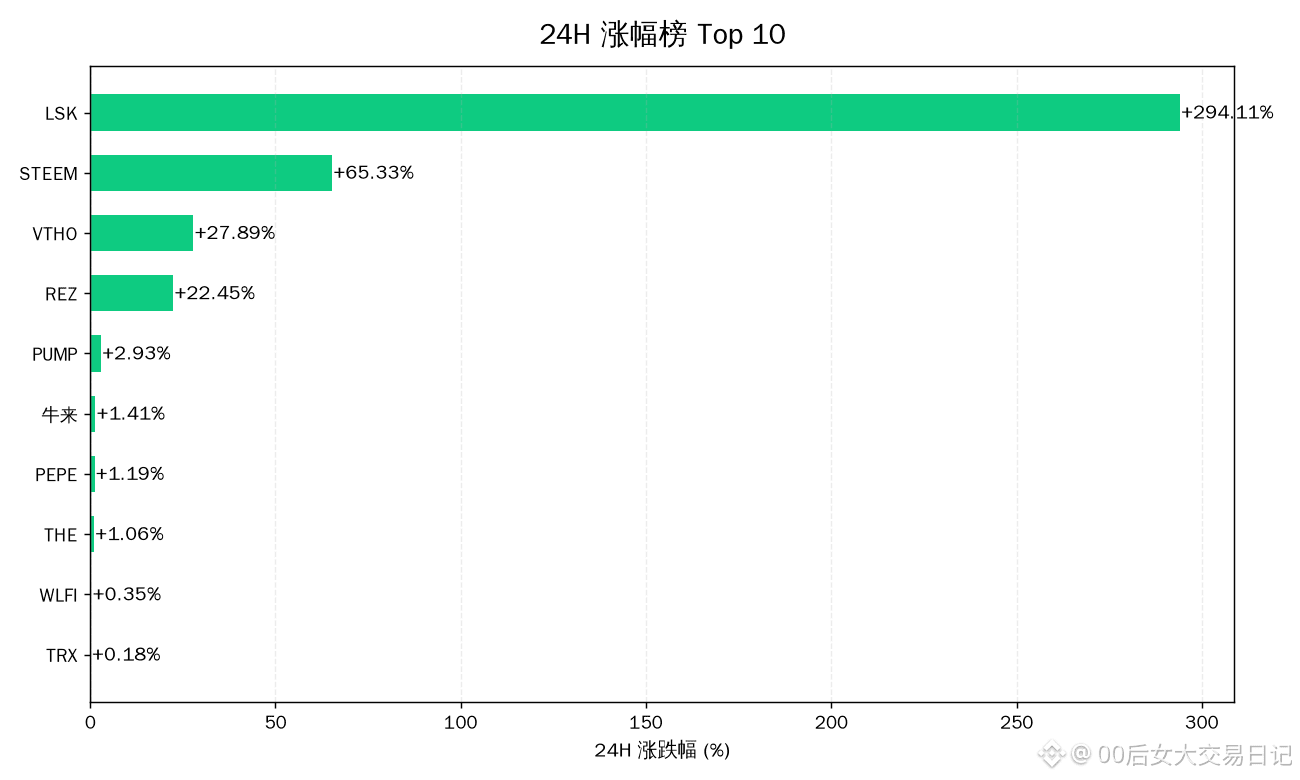
Top performers on the gainers list: LSK +295.3%, STEEM +64.8%, VTHO +27.6%, REZ +21.9%—where the money is going, you can see it.
Don’t ask if it’s the top—start by looking at volume. As long as volume hasn’t pulled back, the trend isn’t over. Get on this wave to take profits—don’t wait until it’s already finished rising before chasing.
#WALLET
WALLET Hits a New High, Up 33%, Leading the Meme; REZ
$WALLET’s price action today: the main players’ intention is already laid out. The pullback you’re waiting for isn’t coming.
Market evidence: REZ moves in sync and rises along—it's not acting alone.
There’s only one logic: Meme’s new narrative WALLET sets a new all-time high, driving spillover of capital. REZ reacts to make up for gains—main focus is on short-term opportunities where on-chain heat and volume-energy resonance align.
Top performers on the gainers list: LSK +295.3%, STEEM +64.8%, VTHO +27.6%, REZ +21.9%—where the money is going, you can see it.
Don’t ask if it’s the top—start by looking at volume. As long as volume hasn’t pulled back, the trend isn’t over. Get on this wave to take profits—don’t wait until it’s already finished rising before chasing.
#WALLET
Market evidence: REZ moves in sync and rises along—it's not acting alone.
There’s only one logic: Meme’s new narrative WALLET sets a new all-time high, driving spillover of capital. REZ reacts to make up for gains—main focus is on short-term opportunities where on-chain heat and volume-energy resonance align.
Top performers on the gainers list: LSK +295.3%, STEEM +64.8%, VTHO +27.6%, REZ +21.9%—where the money is going, you can see it.
Don’t ask if it’s the top—start by looking at volume. As long as volume hasn’t pulled back, the trend isn’t over. Get on this wave to take profits—don’t wait until it’s already finished rising before chasing.
#WALLET
197

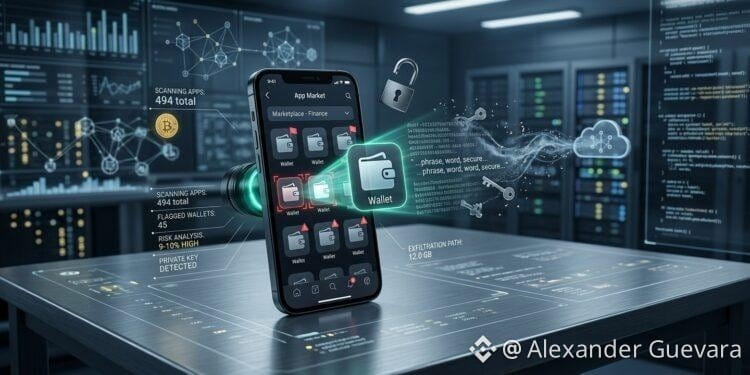
🚨 45 cryptocurrency wallets on iOS have serious security flaws.
An analysis revealed that almost 10% of the apps evaluated on the App Store send private keys to external servers or use predictable formulas.
#Wallet #billetera #FallAlert #ciberseguridad #Seguridad $BTC
🚨 45 cryptocurrency wallets on iOS have serious security flaws.
An analysis revealed that almost 10% of the apps evaluated on the App Store send private keys to external servers or use predictable formulas.
#Wallet #billetera #FallAlert #ciberseguridad #Seguridad $BTC
An analysis revealed that almost 10% of the apps evaluated on the App Store send private keys to external servers or use predictable formulas.
#Wallet #billetera #FallAlert #ciberseguridad #Seguridad $BTC
22

·
--
$WALLET's market cap has just surpassed $50 million, with a 48.7% gain over the past 24 hours, continuing to make its presence felt on the Robinhood Chain.
The chain-launch clues disclosed by Foresight News are interesting: researchers found that wallets related to the WALLET deployment appear to have a funding link to Robinhood co-founder Vlad Tenev’s wallet; even more intriguing, some addresses were active weeks before the Robinhood Chain was officially released, and a cluster of wallets was even pointed to Robinhood product manager.
But “clout-chasing narratives” ≠ fundamentals. The surge logic behind meme coins has always had only one line: sentiment + expectations. They’re extremely volatile, and when the narrative tide turns, it’s often the latecomers who get buried first.
$WALLET’s near-term hype is worth watching, but be cautious about chasing the price—position management is always more important than directional judgment.
#WALLET #RobinhoodChain
$WALLET's market cap has just surpassed $50 million, with a 48.7% gain over the past 24 hours, continuing to make its presence felt on the Robinhood Chain.
The chain-launch clues disclosed by Foresight News are interesting: researchers found that wallets related to the WALLET deployment appear to have a funding link to Robinhood co-founder Vlad Tenev’s wallet; even more intriguing, some addresses were active weeks before the Robinhood Chain was officially released, and a cluster of wallets was even pointed to Robinhood product manager.
But “clout-chasing narratives” ≠ fundamentals. The surge logic behind meme coins has always had only one line: sentiment + expectations. They’re extremely volatile, and when the narrative tide turns, it’s often the latecomers who get buried first.
$WALLET’s near-term hype is worth watching, but be cautious about chasing the price—position management is always more important than directional judgment.
#WALLET #RobinhoodChain
The chain-launch clues disclosed by Foresight News are interesting: researchers found that wallets related to the WALLET deployment appear to have a funding link to Robinhood co-founder Vlad Tenev’s wallet; even more intriguing, some addresses were active weeks before the Robinhood Chain was officially released, and a cluster of wallets was even pointed to Robinhood product manager.
But “clout-chasing narratives” ≠ fundamentals. The surge logic behind meme coins has always had only one line: sentiment + expectations. They’re extremely volatile, and when the narrative tide turns, it’s often the latecomers who get buried first.
$WALLET’s near-term hype is worth watching, but be cautious about chasing the price—position management is always more important than directional judgment.
#WALLET #RobinhoodChain
1

·
--
Wallet Security Beyond the Seed Phrase: What Your On-Chain Activity RevealsMost crypto users learn one security rule very early: protect your seed phrase.
That advice is correct, but incomplete.
A recovery phrase can be generated securely, stored offline and never exposed while the wallet it controls still develops a dangerous on-chain security posture.
The reason is straightforward.
Wallet security changes as the wallet is used.
Approvals are granted. Signatures are created. Smart contracts are called. New counterparties appear. Assets move between protocols and networks. Transaction behavior develops over time.
This means protecting the cryptographic secret and monitoring what the wallet authorizes are two different security responsibilities.
Five Layers of Wallet Security
A useful framework separates wallet risk into five layers:
1. Key generation
2. Key storage
3. Permissions
4. Counterparty exposure
5. Transaction behavior
These layers overlap, but they answer different questions.
Key Generation
The first question is whether the recovery phrase or private key was generated using sufficiently unpredictable cryptographic randomness.
If the original secret was generated poorly, storing it securely afterward cannot repair the weakness.
There is also an important limitation here.
Public blockchain scanners generally cannot determine the quality of the original entropy simply by examining an ordinary public wallet address.
A clean blockchain history therefore does not prove that the underlying recovery phrase was generated securely.
Key Storage
The next question is whether the secret remained confidential after generation.
Phishing, malware, screenshots, cloud backups, fake wallet applications and unsafe seed imports can compromise a correctly generated recovery phrase.
Strong generation and strong storage are therefore separate requirements.
Permissions Can Create Risk Without Stealing Your Key
This is where wallet security moves beyond seed phrase protection.
A private key can remain completely confidential while another address still gains authority over particular assets.
ERC-20 allowances are one example.
When reviewing an allowance, context matters. You need to know the owner, token, spender and network involved.
NFTs can introduce operator permissions.
Permit-based systems can create spending authority through signatures.
Smart accounts and other authorization systems can introduce additional forms of delegated authority.
This means wallet security requires understanding what the wallet has authorized, not merely whether the private key has been exposed.
Wallet Connection vs On-Chain Approval
These concepts are frequently confused.
Connecting a wallet to a dApp does not automatically mean the application has permission to spend every asset in the wallet.
A connection enables communication with the wallet and allows the application to request actions.
The important security event is the transaction or signature that creates authority.
The reverse is equally important.
Disconnecting a wallet from a website does not automatically revoke an ERC-20 allowance already stored on-chain.
Closing the website changes the connection state.
It does not rewrite blockchain state.
Permit Signatures
Traditional approval transactions are not the only authorization mechanism.
Permit systems can use signed messages to establish token-spending authority.
A security review that searches only for ordinary approve transactions may therefore miss relevant permission pathways.
Users should understand what a signature authorizes rather than assuming that no on-chain approval transaction means no permission exists.
NFT Operator Permissions
NFT security has similar considerations.
ERC-721 and ERC-1155 standards can support operator authority over assets.
This means reviewing only fungible-token allowances may provide an incomplete picture of a wallet's permission state.
Counterparty Exposure
A wallet develops relationships as it operates.
It interacts with exchanges, routers, bridges, smart contracts, protocols and other wallets.
These relationships can provide useful investigative evidence.
Which address originally funded the wallet?
Does another address repeatedly provide gas?
Which contracts appear immediately before unusual asset movement?
Has the wallet begun interacting with counterparties it never used before?
These observations do not automatically prove malicious activity, but they can identify relationships worth investigating.
Risk Labels Need Context
Address labels are useful, but they should not be treated as automatic verdicts.
An unlabeled address is not necessarily safe.
New malicious addresses can exist before enough evidence is available for classification.
Likewise, interaction with a risky address does not automatically prove that a wallet owner is malicious.
Transaction direction, timing, method and economic context matter.
A good investigation uses labels as evidence rather than allowing the label to replace analysis.
Funding Paths
Funding relationships can expose connections that a balance screen will never show.
The address that initially funds a wallet, repeatedly supplies gas or appears before suspicious transaction sequences can provide valuable context.
Multiple wallets sharing the same funding source may also deserve investigation depending on the circumstances.
Again, the relationship is evidence, not automatic attribution.
Transaction Behavior
Wallet behavior changes over time.
Sudden asset sweeps, unusual transaction cadence, repeated failed calls, unfamiliar approvals, unexpected contract interactions and significant deviations from historical activity can all justify closer examination.
Behavioral analysis is particularly useful when there is enough history to establish what normal activity previously looked like.
Transaction Decoding
When a transaction looks unfamiliar, decoding it can help determine what actually happened.
Depending on available data, a decoded transaction can reveal the contract called, method executed, parameters, transfers, approvals, events and other execution information.
This matters because a website's button text does not determine what happens on-chain.
The transaction you authorize does.
Understanding the transaction itself is therefore more reliable than trusting the description presented by an interface.
Off-Chain Scams Can Create On-Chain Authority
Many attacks begin outside the blockchain.
A fake support message creates urgency.
A social-media account sends a link.
A phishing website imitates a legitimate service.
The user is persuaded to sign something.
The social engineering occurs off-chain, but the resulting transaction or permission creates the on-chain exposure.
Separating these stages helps explain both how the victim was persuaded and what actually happened to the assets.
EVM and Solana Are Not Identical
Wallet analysis also needs to respect differences between blockchain architectures.
EVM networks use concepts such as ERC-20 allowances, NFT operator permissions and contract calls.
Solana has its own account, program, delegate and token-authority structures.
The security objective is similar, but the mechanics differ.
Solana activity should therefore be interpreted according to Solana's architecture rather than mechanically applying EVM terminology.
What a Wallet Risk Scanner Cannot Prove
This is one of the most important limitations to understand.
A clean wallet-risk scan does not prove that your recovery phrase or private key is safe.
A scanner analyzes supported public evidence.
It generally cannot determine whether someone secretly copied a recovery phrase offline.
It cannot necessarily establish whether the original key was generated with sufficient randomness.
And it cannot guarantee that an unknown address is harmless.
The absence of a detected on-chain warning should therefore be interpreted according to the coverage and evidence available.
Risk Scores Are Decision-Support Signals
A wallet risk score can help summarize multiple signals, but the number should not replace the underlying evidence.
Two wallets with similar scores may have completely different reasons for receiving them.
One may have suspicious permissions.
Another may have counterparty exposure.
Another may exhibit abnormal transaction behavior.
The evidence behind the score is therefore more important than treating the number as an absolute verdict.
A Better Wallet Security Process
Wallet security should be repetitive.
Protect the cryptographic secret.
Review permissions.
Understand unfamiliar transactions.
Investigate counterparties when necessary.
Examine funding relationships.
Monitor changes in transaction behavior.
Treat risk labels as evidence rather than proof.
Consider the limits of the available data.
And document uncertainty instead of turning incomplete information into certainty.
The key distinction is this:
Protecting a recovery phrase secures the root secret.
Monitoring on-chain activity helps secure what happens after that secret starts interacting with blockchain applications.
Both matter.
We published the complete TokenToolHub research covering wallet permissions, permit signatures, NFT operator authority, counterparty exposure, funding paths, transaction decoding, EVM and Solana workflows, wallet risk scores, confidence and coverage.
Read the full research:
https://tokentoolhub.com/wallet-security-beyond-seed-phrase/
Wallet security should not be treated as something completed the day a seed phrase is generated.
It is an evolving security posture that changes with every authorization, interaction and transaction.
#blockchain #crypto #Wallet #bitcoin #Xrp🔥🔥
Wallet Security Beyond the Seed Phrase: What Your On-Chain Activity Reveals
Most crypto users learn one security rule very early: protect your seed phrase.
That advice is correct, but incomplete.
A recovery phrase can be generated securely, stored offline and never exposed while the wallet it controls still develops a dangerous on-chain security posture.
The reason is straightforward.
Wallet security changes as the wallet is used.
Approvals are granted. Signatures are created. Smart contracts are called. New counterparties appear. Assets move between protocols and networks. Transaction behavior develops over time.
This means protecting the cryptographic secret and monitoring what the wallet authorizes are two different security responsibilities.
Five Layers of Wallet Security
A useful framework separates wallet risk into five layers:
1. Key generation
2. Key storage
3. Permissions
4. Counterparty exposure
5. Transaction behavior
These layers overlap, but they answer different questions.
Key Generation
The first question is whether the recovery phrase or private key was generated using sufficiently unpredictable cryptographic randomness.
If the original secret was generated poorly, storing it securely afterward cannot repair the weakness.
There is also an important limitation here.
Public blockchain scanners generally cannot determine the quality of the original entropy simply by examining an ordinary public wallet address.
A clean blockchain history therefore does not prove that the underlying recovery phrase was generated securely.
Key Storage
The next question is whether the secret remained confidential after generation.
Phishing, malware, screenshots, cloud backups, fake wallet applications and unsafe seed imports can compromise a correctly generated recovery phrase.
Strong generation and strong storage are therefore separate requirements.
Permissions Can Create Risk Without Stealing Your Key
This is where wallet security moves beyond seed phrase protection.
A private key can remain completely confidential while another address still gains authority over particular assets.
ERC-20 allowances are one example.
When reviewing an allowance, context matters. You need to know the owner, token, spender and network involved.
NFTs can introduce operator permissions.
Permit-based systems can create spending authority through signatures.
Smart accounts and other authorization systems can introduce additional forms of delegated authority.
This means wallet security requires understanding what the wallet has authorized, not merely whether the private key has been exposed.
Wallet Connection vs On-Chain Approval
These concepts are frequently confused.
Connecting a wallet to a dApp does not automatically mean the application has permission to spend every asset in the wallet.
A connection enables communication with the wallet and allows the application to request actions.
The important security event is the transaction or signature that creates authority.
The reverse is equally important.
Disconnecting a wallet from a website does not automatically revoke an ERC-20 allowance already stored on-chain.
Closing the website changes the connection state.
It does not rewrite blockchain state.
Permit Signatures
Traditional approval transactions are not the only authorization mechanism.
Permit systems can use signed messages to establish token-spending authority.
A security review that searches only for ordinary approve transactions may therefore miss relevant permission pathways.
Users should understand what a signature authorizes rather than assuming that no on-chain approval transaction means no permission exists.
NFT Operator Permissions
NFT security has similar considerations.
ERC-721 and ERC-1155 standards can support operator authority over assets.
This means reviewing only fungible-token allowances may provide an incomplete picture of a wallet's permission state.
Counterparty Exposure
A wallet develops relationships as it operates.
It interacts with exchanges, routers, bridges, smart contracts, protocols and other wallets.
These relationships can provide useful investigative evidence.
Which address originally funded the wallet?
Does another address repeatedly provide gas?
Which contracts appear immediately before unusual asset movement?
Has the wallet begun interacting with counterparties it never used before?
These observations do not automatically prove malicious activity, but they can identify relationships worth investigating.
Risk Labels Need Context
Address labels are useful, but they should not be treated as automatic verdicts.
An unlabeled address is not necessarily safe.
New malicious addresses can exist before enough evidence is available for classification.
Likewise, interaction with a risky address does not automatically prove that a wallet owner is malicious.
Transaction direction, timing, method and economic context matter.
A good investigation uses labels as evidence rather than allowing the label to replace analysis.
Funding Paths
Funding relationships can expose connections that a balance screen will never show.
The address that initially funds a wallet, repeatedly supplies gas or appears before suspicious transaction sequences can provide valuable context.
Multiple wallets sharing the same funding source may also deserve investigation depending on the circumstances.
Again, the relationship is evidence, not automatic attribution.
Transaction Behavior
Wallet behavior changes over time.
Sudden asset sweeps, unusual transaction cadence, repeated failed calls, unfamiliar approvals, unexpected contract interactions and significant deviations from historical activity can all justify closer examination.
Behavioral analysis is particularly useful when there is enough history to establish what normal activity previously looked like.
Transaction Decoding
When a transaction looks unfamiliar, decoding it can help determine what actually happened.
Depending on available data, a decoded transaction can reveal the contract called, method executed, parameters, transfers, approvals, events and other execution information.
This matters because a website's button text does not determine what happens on-chain.
The transaction you authorize does.
Understanding the transaction itself is therefore more reliable than trusting the description presented by an interface.
Off-Chain Scams Can Create On-Chain Authority
Many attacks begin outside the blockchain.
A fake support message creates urgency.
A social-media account sends a link.
A phishing website imitates a legitimate service.
The user is persuaded to sign something.
The social engineering occurs off-chain, but the resulting transaction or permission creates the on-chain exposure.
Separating these stages helps explain both how the victim was persuaded and what actually happened to the assets.
EVM and Solana Are Not Identical
Wallet analysis also needs to respect differences between blockchain architectures.
EVM networks use concepts such as ERC-20 allowances, NFT operator permissions and contract calls.
Solana has its own account, program, delegate and token-authority structures.
The security objective is similar, but the mechanics differ.
Solana activity should therefore be interpreted according to Solana's architecture rather than mechanically applying EVM terminology.
What a Wallet Risk Scanner Cannot Prove
This is one of the most important limitations to understand.
A clean wallet-risk scan does not prove that your recovery phrase or private key is safe.
A scanner analyzes supported public evidence.
It generally cannot determine whether someone secretly copied a recovery phrase offline.
It cannot necessarily establish whether the original key was generated with sufficient randomness.
And it cannot guarantee that an unknown address is harmless.
The absence of a detected on-chain warning should therefore be interpreted according to the coverage and evidence available.
Risk Scores Are Decision-Support Signals
A wallet risk score can help summarize multiple signals, but the number should not replace the underlying evidence.
Two wallets with similar scores may have completely different reasons for receiving them.
One may have suspicious permissions.
Another may have counterparty exposure.
Another may exhibit abnormal transaction behavior.
The evidence behind the score is therefore more important than treating the number as an absolute verdict.
A Better Wallet Security Process
Wallet security should be repetitive.
Protect the cryptographic secret.
Review permissions.
Understand unfamiliar transactions.
Investigate counterparties when necessary.
Examine funding relationships.
Monitor changes in transaction behavior.
Treat risk labels as evidence rather than proof.
Consider the limits of the available data.
And document uncertainty instead of turning incomplete information into certainty.
The key distinction is this:
Protecting a recovery phrase secures the root secret.
Monitoring on-chain activity helps secure what happens after that secret starts interacting with blockchain applications.
Both matter.
We published the complete TokenToolHub research covering wallet permissions, permit signatures, NFT operator authority, counterparty exposure, funding paths, transaction decoding, EVM and Solana workflows, wallet risk scores, confidence and coverage.
Read the full research:
https://tokentoolhub.com/wallet-security-beyond-seed-phrase/
Wallet security should not be treated as something completed the day a seed phrase is generated.
It is an evolving security posture that changes with every authorization, interaction and transaction.
#blockchain #crypto #Wallet #bitcoin #Xrp🔥🔥
That advice is correct, but incomplete.
A recovery phrase can be generated securely, stored offline and never exposed while the wallet it controls still develops a dangerous on-chain security posture.
The reason is straightforward.
Wallet security changes as the wallet is used.
Approvals are granted. Signatures are created. Smart contracts are called. New counterparties appear. Assets move between protocols and networks. Transaction behavior develops over time.
This means protecting the cryptographic secret and monitoring what the wallet authorizes are two different security responsibilities.
Five Layers of Wallet Security
A useful framework separates wallet risk into five layers:
1. Key generation
2. Key storage
3. Permissions
4. Counterparty exposure
5. Transaction behavior
These layers overlap, but they answer different questions.
Key Generation
The first question is whether the recovery phrase or private key was generated using sufficiently unpredictable cryptographic randomness.
If the original secret was generated poorly, storing it securely afterward cannot repair the weakness.
There is also an important limitation here.
Public blockchain scanners generally cannot determine the quality of the original entropy simply by examining an ordinary public wallet address.
A clean blockchain history therefore does not prove that the underlying recovery phrase was generated securely.
Key Storage
The next question is whether the secret remained confidential after generation.
Phishing, malware, screenshots, cloud backups, fake wallet applications and unsafe seed imports can compromise a correctly generated recovery phrase.
Strong generation and strong storage are therefore separate requirements.
Permissions Can Create Risk Without Stealing Your Key
This is where wallet security moves beyond seed phrase protection.
A private key can remain completely confidential while another address still gains authority over particular assets.
ERC-20 allowances are one example.
When reviewing an allowance, context matters. You need to know the owner, token, spender and network involved.
NFTs can introduce operator permissions.
Permit-based systems can create spending authority through signatures.
Smart accounts and other authorization systems can introduce additional forms of delegated authority.
This means wallet security requires understanding what the wallet has authorized, not merely whether the private key has been exposed.
Wallet Connection vs On-Chain Approval
These concepts are frequently confused.
Connecting a wallet to a dApp does not automatically mean the application has permission to spend every asset in the wallet.
A connection enables communication with the wallet and allows the application to request actions.
The important security event is the transaction or signature that creates authority.
The reverse is equally important.
Disconnecting a wallet from a website does not automatically revoke an ERC-20 allowance already stored on-chain.
Closing the website changes the connection state.
It does not rewrite blockchain state.
Permit Signatures
Traditional approval transactions are not the only authorization mechanism.
Permit systems can use signed messages to establish token-spending authority.
A security review that searches only for ordinary approve transactions may therefore miss relevant permission pathways.
Users should understand what a signature authorizes rather than assuming that no on-chain approval transaction means no permission exists.
NFT Operator Permissions
NFT security has similar considerations.
ERC-721 and ERC-1155 standards can support operator authority over assets.
This means reviewing only fungible-token allowances may provide an incomplete picture of a wallet's permission state.
Counterparty Exposure
A wallet develops relationships as it operates.
It interacts with exchanges, routers, bridges, smart contracts, protocols and other wallets.
These relationships can provide useful investigative evidence.
Which address originally funded the wallet?
Does another address repeatedly provide gas?
Which contracts appear immediately before unusual asset movement?
Has the wallet begun interacting with counterparties it never used before?
These observations do not automatically prove malicious activity, but they can identify relationships worth investigating.
Risk Labels Need Context
Address labels are useful, but they should not be treated as automatic verdicts.
An unlabeled address is not necessarily safe.
New malicious addresses can exist before enough evidence is available for classification.
Likewise, interaction with a risky address does not automatically prove that a wallet owner is malicious.
Transaction direction, timing, method and economic context matter.
A good investigation uses labels as evidence rather than allowing the label to replace analysis.
Funding Paths
Funding relationships can expose connections that a balance screen will never show.
The address that initially funds a wallet, repeatedly supplies gas or appears before suspicious transaction sequences can provide valuable context.
Multiple wallets sharing the same funding source may also deserve investigation depending on the circumstances.
Again, the relationship is evidence, not automatic attribution.
Transaction Behavior
Wallet behavior changes over time.
Sudden asset sweeps, unusual transaction cadence, repeated failed calls, unfamiliar approvals, unexpected contract interactions and significant deviations from historical activity can all justify closer examination.
Behavioral analysis is particularly useful when there is enough history to establish what normal activity previously looked like.
Transaction Decoding
When a transaction looks unfamiliar, decoding it can help determine what actually happened.
Depending on available data, a decoded transaction can reveal the contract called, method executed, parameters, transfers, approvals, events and other execution information.
This matters because a website's button text does not determine what happens on-chain.
The transaction you authorize does.
Understanding the transaction itself is therefore more reliable than trusting the description presented by an interface.
Off-Chain Scams Can Create On-Chain Authority
Many attacks begin outside the blockchain.
A fake support message creates urgency.
A social-media account sends a link.
A phishing website imitates a legitimate service.
The user is persuaded to sign something.
The social engineering occurs off-chain, but the resulting transaction or permission creates the on-chain exposure.
Separating these stages helps explain both how the victim was persuaded and what actually happened to the assets.
EVM and Solana Are Not Identical
Wallet analysis also needs to respect differences between blockchain architectures.
EVM networks use concepts such as ERC-20 allowances, NFT operator permissions and contract calls.
Solana has its own account, program, delegate and token-authority structures.
The security objective is similar, but the mechanics differ.
Solana activity should therefore be interpreted according to Solana's architecture rather than mechanically applying EVM terminology.
What a Wallet Risk Scanner Cannot Prove
This is one of the most important limitations to understand.
A clean wallet-risk scan does not prove that your recovery phrase or private key is safe.
A scanner analyzes supported public evidence.
It generally cannot determine whether someone secretly copied a recovery phrase offline.
It cannot necessarily establish whether the original key was generated with sufficient randomness.
And it cannot guarantee that an unknown address is harmless.
The absence of a detected on-chain warning should therefore be interpreted according to the coverage and evidence available.
Risk Scores Are Decision-Support Signals
A wallet risk score can help summarize multiple signals, but the number should not replace the underlying evidence.
Two wallets with similar scores may have completely different reasons for receiving them.
One may have suspicious permissions.
Another may have counterparty exposure.
Another may exhibit abnormal transaction behavior.
The evidence behind the score is therefore more important than treating the number as an absolute verdict.
A Better Wallet Security Process
Wallet security should be repetitive.
Protect the cryptographic secret.
Review permissions.
Understand unfamiliar transactions.
Investigate counterparties when necessary.
Examine funding relationships.
Monitor changes in transaction behavior.
Treat risk labels as evidence rather than proof.
Consider the limits of the available data.
And document uncertainty instead of turning incomplete information into certainty.
The key distinction is this:
Protecting a recovery phrase secures the root secret.
Monitoring on-chain activity helps secure what happens after that secret starts interacting with blockchain applications.
Both matter.
We published the complete TokenToolHub research covering wallet permissions, permit signatures, NFT operator authority, counterparty exposure, funding paths, transaction decoding, EVM and Solana workflows, wallet risk scores, confidence and coverage.
Read the full research:
https://tokentoolhub.com/wallet-security-beyond-seed-phrase/
Wallet security should not be treated as something completed the day a seed phrase is generated.
It is an evolving security posture that changes with every authorization, interaction and transaction.
#blockchain #crypto #Wallet #bitcoin #Xrp🔥🔥
75

🔥 Mysterious Moves: An Old Bitcoin Wallet Burns $1 Million
Reports revealed that an inactive Bitcoin wallet from 12 years ago transferred $1 million through a digital asset custody entity, then recovered most of the funds. Weeks later, the remaining coins were burned, raising questions about the motivations behind this unusual move in the world of cryptocurrencies.
━━━━━━━━━━━━━━
📊 Impact: 📈 High
🏷️ BITCOIN
#Bitcoin #CryptoNews #Blockchain #DigitalAssets #Wallet
📰 Source: cointelegraph.com
🔥 Mysterious Moves: An Old Bitcoin Wallet Burns $1 Million
Reports revealed that an inactive Bitcoin wallet from 12 years ago transferred $1 million through a digital asset custody entity, then recovered most of the funds. Weeks later, the remaining coins were burned, raising questions about the motivations behind this unusual move in the world of cryptocurrencies.
━━━━━━━━━━━━━━
📊 Impact: 📈 High
🏷️ BITCOIN
#Bitcoin #CryptoNews #Blockchain #DigitalAssets #Wallet
📰 Source: cointelegraph.com
Reports revealed that an inactive Bitcoin wallet from 12 years ago transferred $1 million through a digital asset custody entity, then recovered most of the funds. Weeks later, the remaining coins were burned, raising questions about the motivations behind this unusual move in the world of cryptocurrencies.
━━━━━━━━━━━━━━
📊 Impact: 📈 High
🏷️ BITCOIN
#Bitcoin #CryptoNews #Blockchain #DigitalAssets #Wallet
📰 Source: cointelegraph.com
58


·
--
Verified
🔥 JUST IN:
Gram Wallet has launched for select users on Telegram, with a wider rollout expected to reach a massive user base in the coming weeks.
This is where crypto adoption could get interesting. The biggest challenge has never been just building wallets—it’s getting them in front of everyday users.
If crypto features become seamlessly integrated into platforms people already use daily, onboarding could become much easier.
The technology is ready. Now the real question is: will users actually use it? 👀
#Crypto #Wallet #Web3 #blockchain
🔥 JUST IN:
Gram Wallet has launched for select users on Telegram, with a wider rollout expected to reach a massive user base in the coming weeks.
This is where crypto adoption could get interesting. The biggest challenge has never been just building wallets—it’s getting them in front of everyday users.
If crypto features become seamlessly integrated into platforms people already use daily, onboarding could become much easier.
The technology is ready. Now the real question is: will users actually use it? 👀
#Crypto #Wallet #Web3 #blockchain
Gram Wallet has launched for select users on Telegram, with a wider rollout expected to reach a massive user base in the coming weeks.
This is where crypto adoption could get interesting. The biggest challenge has never been just building wallets—it’s getting them in front of everyday users.
If crypto features become seamlessly integrated into platforms people already use daily, onboarding could become much easier.
The technology is ready. Now the real question is: will users actually use it? 👀
#Crypto #Wallet #Web3 #blockchain


1
606
·
--
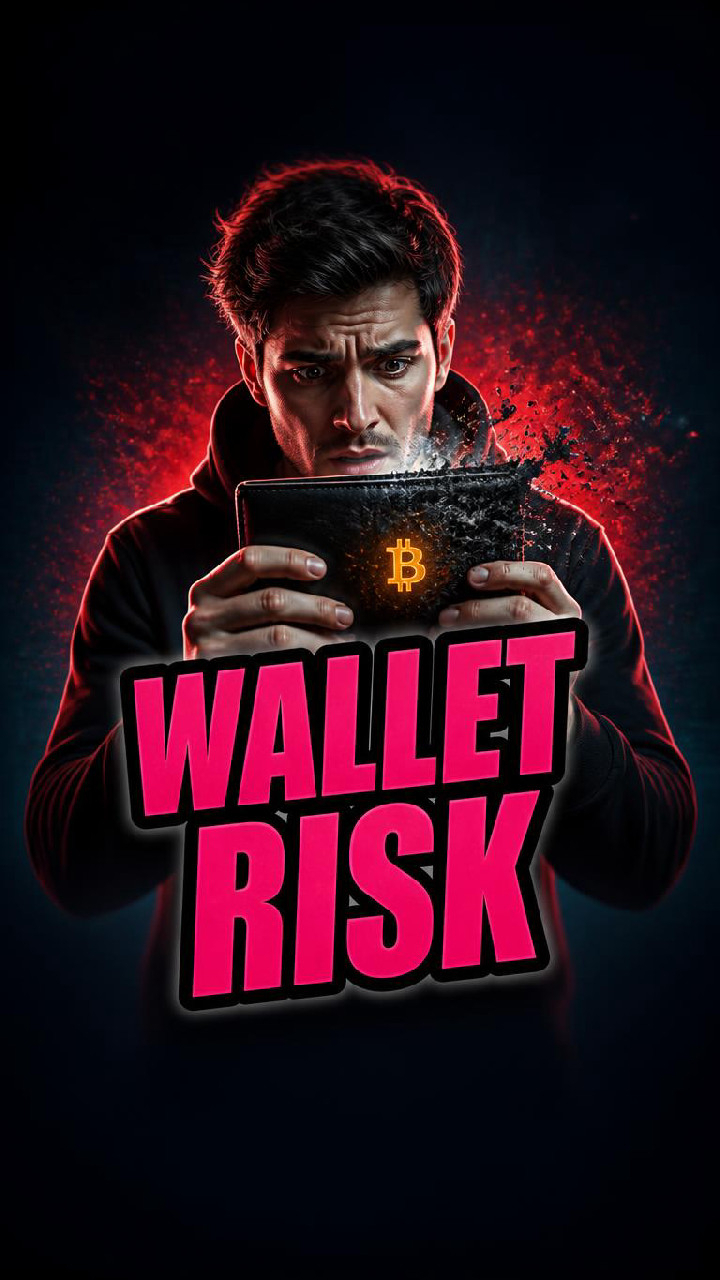
$BRICS The Truth About Your Crypto Wallet: Why You're Vulnerable #crypto #BRICSTORMToTheMoon #Wallet
$BRICS The Truth About Your Crypto Wallet: Why You're Vulnerable #crypto #BRICSTORMToTheMoon #Wallet
1
2
171

·
--
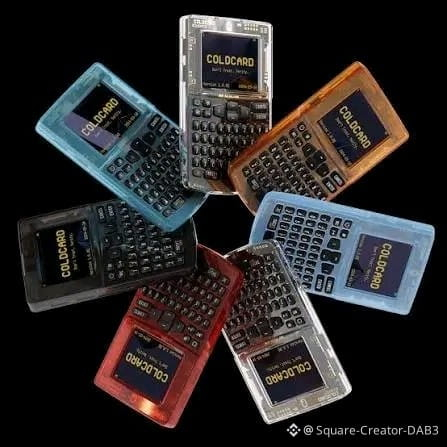
🚨 Update: Coldcard has released an emergency firmware update following an exploit that led to the theft of Bitcoin $BTC valued at $130 million. Coldcard now requires users to add their own randomness element through 65 button presses, or 50 dice rolls, or 128 coin flips when creating new "seeds". Users who created "seeds" between 2021 and July 2026 must create a new "seed" and move their Bitcoin funds immediately. Coinkite says that law enforcement authorities are currently investigating these thefts.
{spot}(BTCUSDT)
#Coldcard #bitcoin #CoinKite #Wallet
🚨 Update: Coldcard has released an emergency firmware update following an exploit that led to the theft of Bitcoin $BTC valued at $130 million. Coldcard now requires users to add their own randomness element through 65 button presses, or 50 dice rolls, or 128 coin flips when creating new "seeds". Users who created "seeds" between 2021 and July 2026 must create a new "seed" and move their Bitcoin funds immediately. Coinkite says that law enforcement authorities are currently investigating these thefts.
#Coldcard #bitcoin #CoinKite #Wallet
#Coldcard #bitcoin #CoinKite #Wallet
1
111
Article
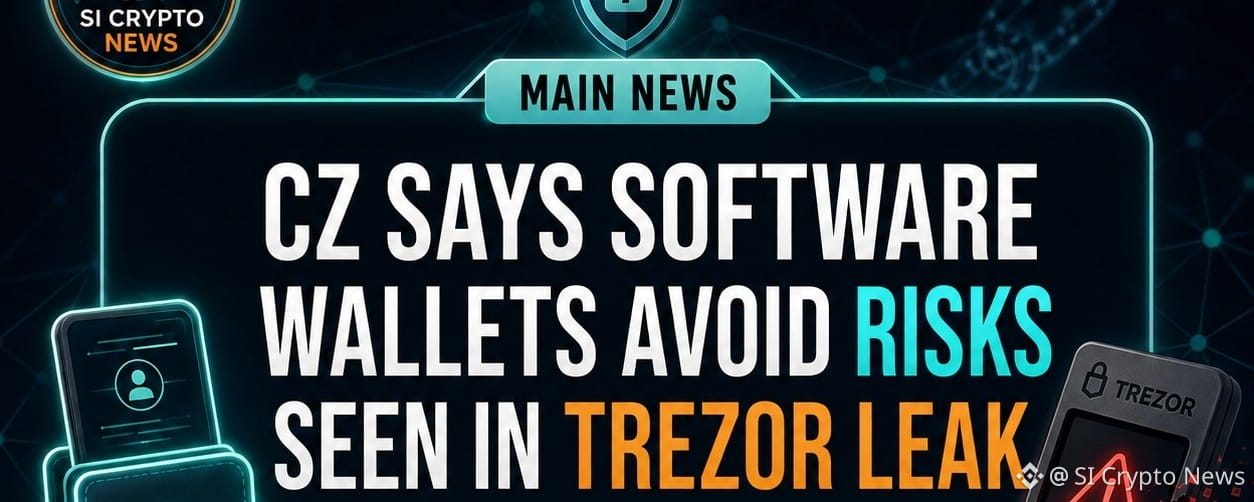
🚨 Trezor data leak: Why did CZ say Software Wallets are better?In the world of crypto, Hardware Wallets are generally considered more secure, but the recent Trezor data breach revealed a different side of that assumption.
On August 13, Trezor said that its shipping partner ShipMonk’s system had seen unauthorized access, affecting the personal information of about 13,700 users. That information included names, phone numbers, and home addresses.
🚨 Trezor data leak: Why did CZ say Software Wallets are better?
In the world of crypto, Hardware Wallets are generally considered more secure, but the recent Trezor data breach revealed a different side of that assumption.
On August 13, Trezor said that its shipping partner ShipMonk’s system had seen unauthorized access, affecting the personal information of about 13,700 users. That information included names, phone numbers, and home addresses.
On August 13, Trezor said that its shipping partner ShipMonk’s system had seen unauthorized access, affecting the personal information of about 13,700 users. That information included names, phone numbers, and home addresses.
73

·
--
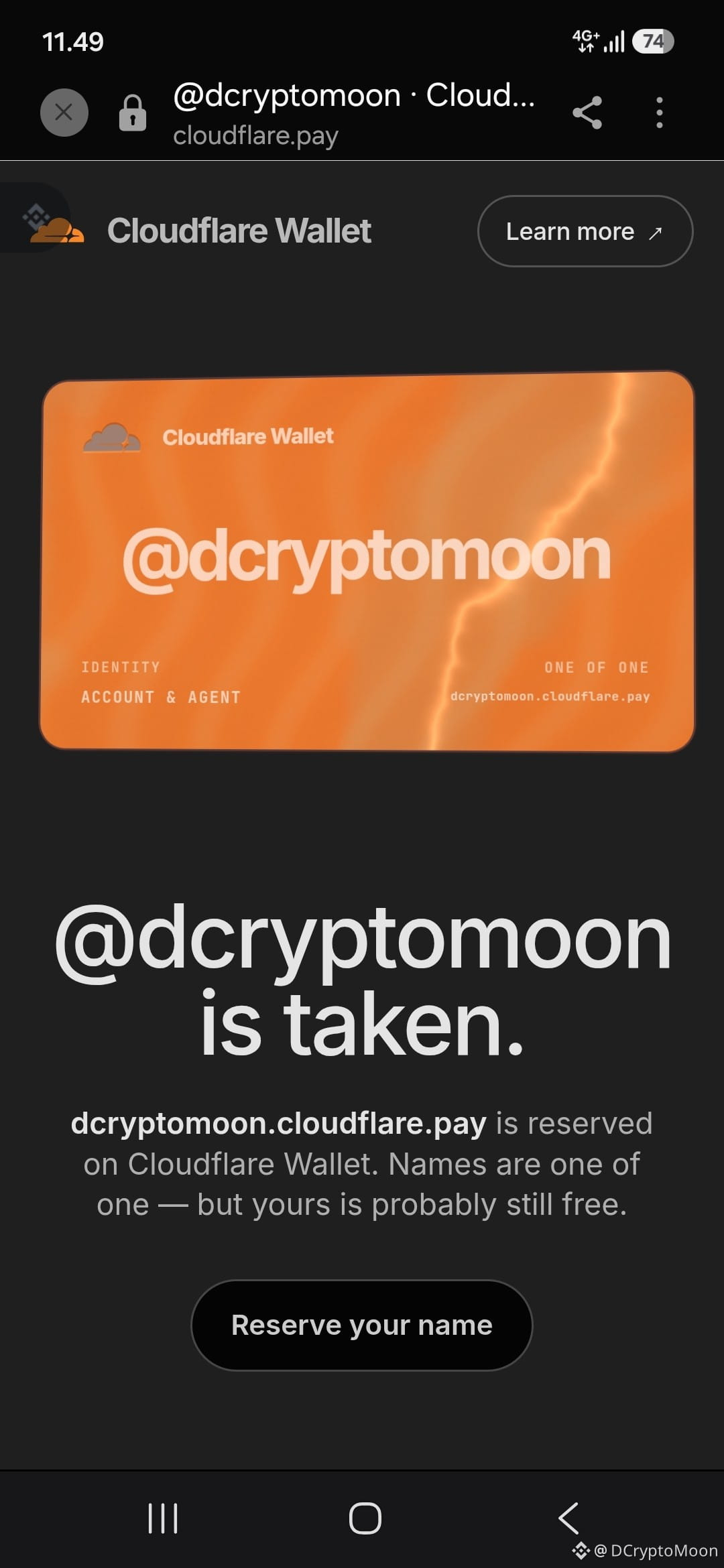
Announcing Cloudflare Wallets: the programmable wallet for the agentic Internet.
I just reserved my Cloudflare Wallet tag: dcryptomoon.cloudflare.pay.
Reserve yours now at cloudflare.pay
#Airdrop #Wallet #Web3Revolution
Announcing Cloudflare Wallets: the programmable wallet for the agentic Internet.
I just reserved my Cloudflare Wallet tag: dcryptomoon.cloudflare.pay.
Reserve yours now at cloudflare.pay
#Airdrop #Wallet #Web3Revolution
I just reserved my Cloudflare Wallet tag: dcryptomoon.cloudflare.pay.
Reserve yours now at cloudflare.pay
#Airdrop #Wallet #Web3Revolution
87
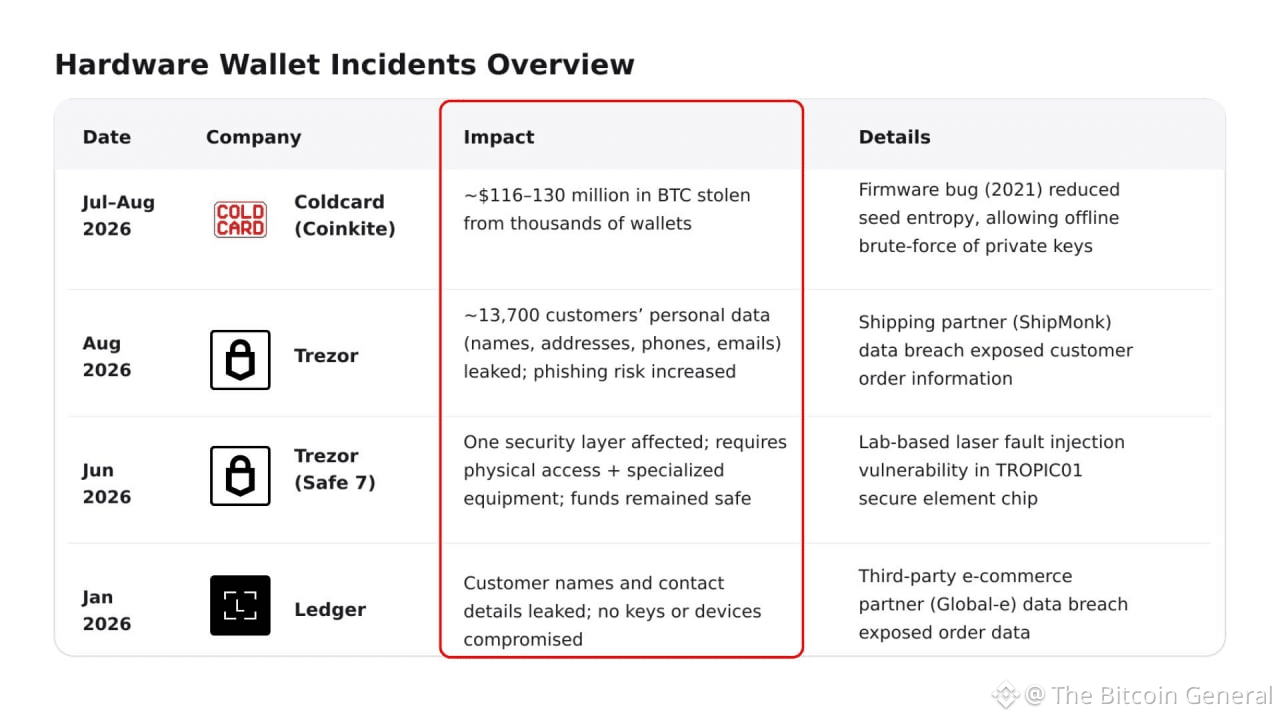
Over $150M has reportedly been stolen from hardware wallets through hacks and bugs — even cold storage isn’t bulletproof. 💀
#Wallet #CryptoSecurity
Over $150M has reportedly been stolen from hardware wallets through hacks and bugs — even cold storage isn’t bulletproof. 💀
#Wallet #CryptoSecurity
#Wallet #CryptoSecurity
77

·
--
$BTC - Elite Bitcoin wallets surge to six‑month peak as whales keep buying
bounces back as elite wallets reach six‑month high.
90 wallets holding over 10,000 BTC each, highest since last summer.
Mid‑size whales added more on‑chain after Coldcard fallout and Clarity Act delays.
BTC trades at 64,123 USDT (down 1.3%); ETH at 1,881 USDT (down 2.0%).
The renewed accumulation suggests stronger hands are re‑asserting control, so a modest dip could be a buying chance.
$BTC
#Bitcoin #BTC #CryptoWallet #Wallet
Via CoinDesk
$BTC - Elite Bitcoin wallets surge to six‑month peak as whales keep buying
bounces back as elite wallets reach six‑month high.
90 wallets holding over 10,000 BTC each, highest since last summer.
Mid‑size whales added more on‑chain after Coldcard fallout and Clarity Act delays.
BTC trades at 64,123 USDT (down 1.3%); ETH at 1,881 USDT (down 2.0%).
The renewed accumulation suggests stronger hands are re‑asserting control, so a modest dip could be a buying chance.
$BTC
#Bitcoin #BTC #CryptoWallet #Wallet
Via CoinDesk
bounces back as elite wallets reach six‑month high.
90 wallets holding over 10,000 BTC each, highest since last summer.
Mid‑size whales added more on‑chain after Coldcard fallout and Clarity Act delays.
BTC trades at 64,123 USDT (down 1.3%); ETH at 1,881 USDT (down 2.0%).
The renewed accumulation suggests stronger hands are re‑asserting control, so a modest dip could be a buying chance.
$BTC
#Bitcoin #BTC #CryptoWallet #Wallet
Via CoinDesk
53


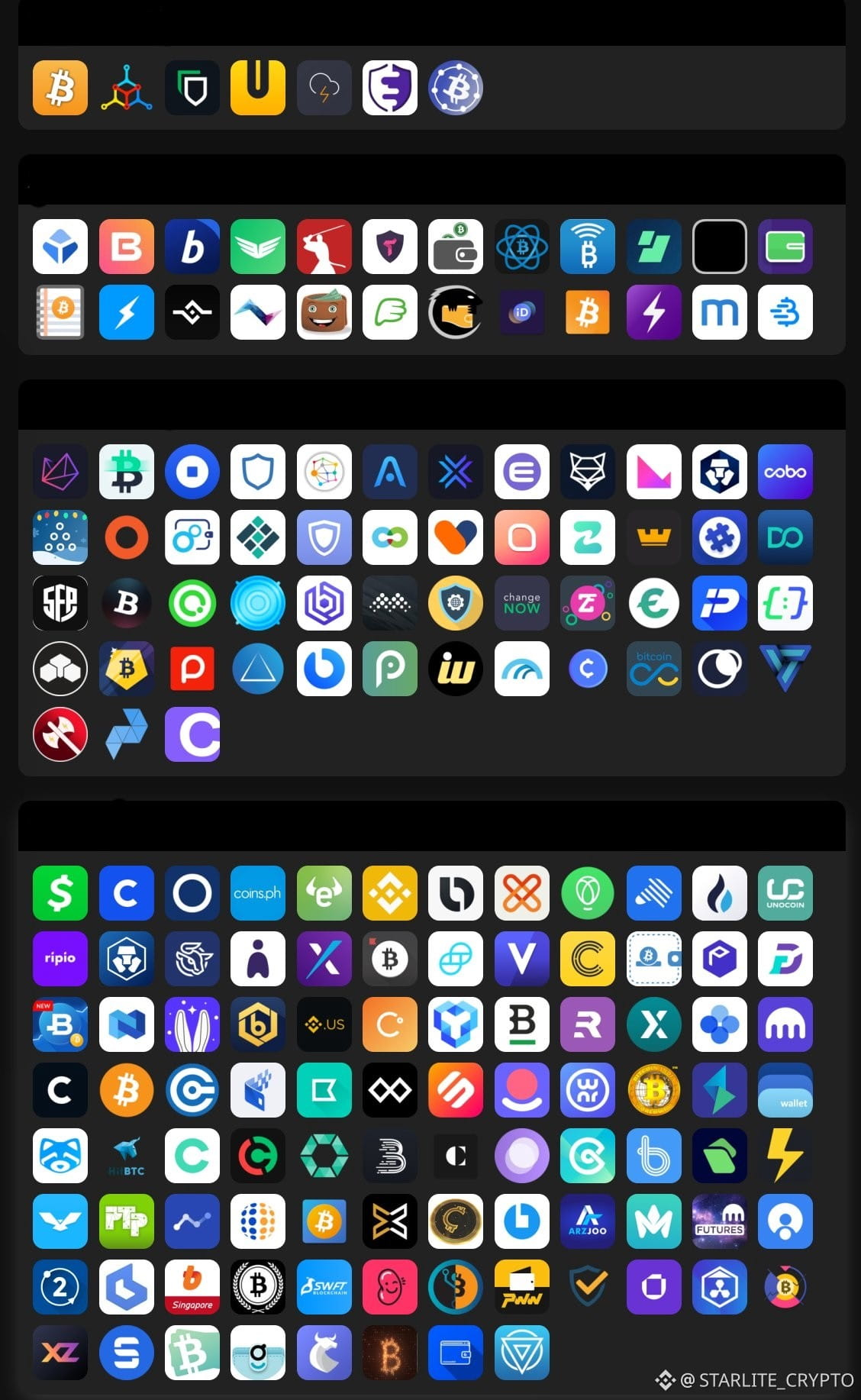
Every crypto wallet regardless of the functionality & wallet developers. You're to understand that the derivatives pattern of this wallets varies for each order in essence that migration of seed to a different wallet is applicable to lost of coin, token & memecoin. $Starlite #Starlite_crypto #wallet
Every crypto wallet regardless of the functionality & wallet developers. You're to understand that the derivatives pattern of this wallets varies for each order in essence that migration of seed to a different wallet is applicable to lost of coin, token & memecoin. $Starlite #Starlite_crypto #wallet
1
51

Article
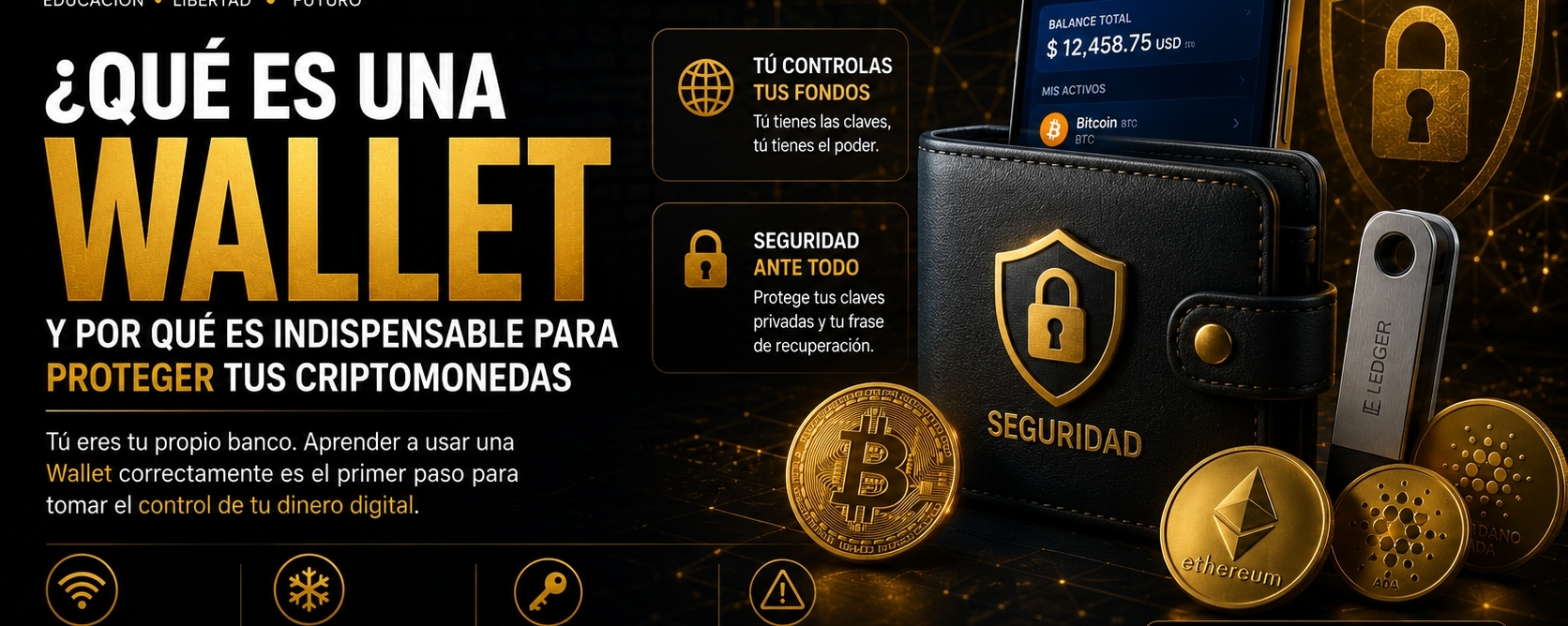
What a Wallet is and why it’s essential for protecting your cryptocurrenciesIntroduction
Now that you’ve learned what Bitcoin is and how Blockchain technology works, the next step is to understand where your digital assets are stored and protected.
Many people believe that cryptocurrencies are stored inside Binance or any other exchange platform. However, the reality is different.
Understanding what a Wallet is can help you better protect your digital assets.
What is a Wallet?
A Wallet, or digital wallet, is a tool that allows you to manage your cryptocurrencies and other digital assets.
What a Wallet is and why it’s essential for protecting your cryptocurrencies
Introduction
Now that you’ve learned what Bitcoin is and how Blockchain technology works, the next step is to understand where your digital assets are stored and protected.
Many people believe that cryptocurrencies are stored inside Binance or any other exchange platform. However, the reality is different.
Understanding what a Wallet is can help you better protect your digital assets.
What is a Wallet?
A Wallet, or digital wallet, is a tool that allows you to manage your cryptocurrencies and other digital assets.
Now that you’ve learned what Bitcoin is and how Blockchain technology works, the next step is to understand where your digital assets are stored and protected.
Many people believe that cryptocurrencies are stored inside Binance or any other exchange platform. However, the reality is different.
Understanding what a Wallet is can help you better protect your digital assets.
What is a Wallet?
A Wallet, or digital wallet, is a tool that allows you to manage your cryptocurrencies and other digital assets.
1
148

⚖️ Crypto Security Basics: Protecting Your Digital Assets in 2026
On July 10, 2026, news of an Injective npm backdoor attempt highlights the importance of crypto security. Protecting your assets requires a multi-layered approach.
Use hardware wallets for long-term storage, enable two-factor authentication on all exchange accounts, and never share your private keys with anyone.
Avoid connecting hardware wallets to unknown dApps, verify smart contract addresses, and keep software updated across all devices.
📌 Key Takeaway:
Crypto security is a personal responsibility — hardware wallets, 2FA, and cautious dApp interaction are essential practices for all users.
#CryptoSecurity #Wallet
#BinanceAlphaAlert
⚖️ Crypto Security Basics: Protecting Your Digital Assets in 2026
On July 10, 2026, news of an Injective npm backdoor attempt highlights the importance of crypto security. Protecting your assets requires a multi-layered approach.
Use hardware wallets for long-term storage, enable two-factor authentication on all exchange accounts, and never share your private keys with anyone.
Avoid connecting hardware wallets to unknown dApps, verify smart contract addresses, and keep software updated across all devices.
📌 Key Takeaway:
Crypto security is a personal responsibility — hardware wallets, 2FA, and cautious dApp interaction are essential practices for all users.
#CryptoSecurity #Wallet
#BinanceAlphaAlert
On July 10, 2026, news of an Injective npm backdoor attempt highlights the importance of crypto security. Protecting your assets requires a multi-layered approach.
Use hardware wallets for long-term storage, enable two-factor authentication on all exchange accounts, and never share your private keys with anyone.
Avoid connecting hardware wallets to unknown dApps, verify smart contract addresses, and keep software updated across all devices.
📌 Key Takeaway:
Crypto security is a personal responsibility — hardware wallets, 2FA, and cautious dApp interaction are essential practices for all users.
#CryptoSecurity #Wallet
#BinanceAlphaAlert
1
91

·
--
🚀 Crypto in 1 minute | Monday
💡 What is a crypto wallet?
A wallet is the tool that lets you securely store and manage your cryptocurrencies.
There are two main types:
🔹 Hot Wallet: connected to the Internet, ideal for using cryptocurrencies frequently.
🔹 Cold Wallet: stays disconnected from the Internet, offering an extra level of security for storing funds long-term.
Choosing the right wallet depends on how you use your cryptocurrencies and the level of security you’re looking for.
💬 Do you use your own wallet, or do you prefer to keep your cryptocurrencies on an exchange? I’d love to hear your thoughts in the comments!
$BTC #Wallet #Crypto #BinanceSquare #CriptoEn1Minuto
🚀 Crypto in 1 minute | Monday
💡 What is a crypto wallet?
A wallet is the tool that lets you securely store and manage your cryptocurrencies.
There are two main types:
🔹 Hot Wallet: connected to the Internet, ideal for using cryptocurrencies frequently.
🔹 Cold Wallet: stays disconnected from the Internet, offering an extra level of security for storing funds long-term.
Choosing the right wallet depends on how you use your cryptocurrencies and the level of security you’re looking for.
💬 Do you use your own wallet, or do you prefer to keep your cryptocurrencies on an exchange? I’d love to hear your thoughts in the comments!
$BTC #Wallet #Crypto #BinanceSquare #CriptoEn1Minuto
💡 What is a crypto wallet?
A wallet is the tool that lets you securely store and manage your cryptocurrencies.
There are two main types:
🔹 Hot Wallet: connected to the Internet, ideal for using cryptocurrencies frequently.
🔹 Cold Wallet: stays disconnected from the Internet, offering an extra level of security for storing funds long-term.
Choosing the right wallet depends on how you use your cryptocurrencies and the level of security you’re looking for.
💬 Do you use your own wallet, or do you prefer to keep your cryptocurrencies on an exchange? I’d love to hear your thoughts in the comments!
$BTC #Wallet #Crypto #BinanceSquare #CriptoEn1Minuto
129

Girls' afternoon exchanging data on wallet usage; we used it to pay at a local shop. The transaction went smoothly, and the merchant didn't realize we used @CRYPTO_BOSS_2025 —it was transparent for them, just a regular payment. But for us, it meant a cashback to use on our next purchase. #cashback #Wallet #Proyectos
Girls' afternoon exchanging data on wallet usage; we used it to pay at a local shop. The transaction went smoothly, and the merchant didn't realize we used @FINANCЕ —it was transparent for them, just a regular payment. But for us, it meant a cashback to use on our next purchase. #cashback #Wallet #Proyectos

1
254
Log in to explore more content
Join global crypto users on Binance Square
⚡️ Get latest and useful information about crypto.
💬 Trusted by the world’s largest crypto exchange.
👍 Discover real insights from verified creators.
Email / Phone number
Trending Topics
1
#FedRateWatch
523,154 views
2,572 Discussing
2
#BitcoinSlidesTo$76000
17,744 views
110 Discussing
3
#BitcoinReboundsTo$79K
60,542 views
398 Discussing
4
#StrategyMarketCapPassesFord
33,062 views
600 Discussing
5
#ClarityActOddsHalveOnPolymarket
46,313 views
497 Discussing
6
#US30YTreasuryYieldTops5.40%
28,786 views
339 Discussing
7
#BessentEndorsesFinalClarityActDraft
51,701 views
714 Discussing
8
#ZamaOpens16ConfidentialMorphoVaults
17,372 views
339 Discussing
9
#USDCOnChainVolumeTops$100Trillion
2,705 views
48 Discussing
10
#BitcoinSpotETFsNetInflow$160M
4,237 views
102 Discussing