

#mica
mica
2.2M views
3,357 Discussing
Hot
Latest

·
--
MiCA Review Expands the MapESMA’s 30 September recommendations for the MiCA review show how quickly crypto supervision is moving beyond the original exchange and custody perimeter.
The publication addresses marketing by influencers and third parties, cost transparency, staking, lending, borrowing, non-compliant stablecoins, token classification and access to DeFi protocols. It also asks for clearer criteria to decide when an activity is genuinely decentralised.
The legal status matters. These are recommendations submitted through the European Commission’s review process, not final rules. Still, they show the questions regulators are asking and the product facts that teams need to document now.
Start with function, not branding.
A platform can call itself non-custodial, a protocol interface or a software gateway. The practical review still asks:
1. Who controls the interface and can change what users see?
2. Who routes transactions, orders, fees or rewards?
3. Who controls admin keys, upgrades, allowlists or emergency actions?
4. Does the business hold assets, transmit value, arrange trades or market products to users?
5. Which users and jurisdictions does the service actively target?
That functional map is more useful than memorising a list of regulator names. It reveals where custody, exchange, transfer, issuance, promotion, stablecoin, market integrity and consumer protection obligations may begin.
It also improves security analysis. A service that claims decentralisation while one team controls the frontend, fees, privileged contracts and emergency powers has a different risk profile from software that users can access through several independent interfaces without one party controlling execution.
TokenToolHub’s worldwide regulatory guide compares the recurring control pillars across regions and explains how to map a product before applying jurisdiction-specific rules.
https://tokentoolhub.com/cryptocurrency-regulatory-approaches-worldwide/
#crypto #blockchain #Web3 #MiCA #defi
MiCA Review Expands the Map
ESMA’s 30 September recommendations for the MiCA review show how quickly crypto supervision is moving beyond the original exchange and custody perimeter.
The publication addresses marketing by influencers and third parties, cost transparency, staking, lending, borrowing, non-compliant stablecoins, token classification and access to DeFi protocols. It also asks for clearer criteria to decide when an activity is genuinely decentralised.
The legal status matters. These are recommendations submitted through the European Commission’s review process, not final rules. Still, they show the questions regulators are asking and the product facts that teams need to document now.
Start with function, not branding.
A platform can call itself non-custodial, a protocol interface or a software gateway. The practical review still asks:
1. Who controls the interface and can change what users see?
2. Who routes transactions, orders, fees or rewards?
3. Who controls admin keys, upgrades, allowlists or emergency actions?
4. Does the business hold assets, transmit value, arrange trades or market products to users?
5. Which users and jurisdictions does the service actively target?
That functional map is more useful than memorising a list of regulator names. It reveals where custody, exchange, transfer, issuance, promotion, stablecoin, market integrity and consumer protection obligations may begin.
It also improves security analysis. A service that claims decentralisation while one team controls the frontend, fees, privileged contracts and emergency powers has a different risk profile from software that users can access through several independent interfaces without one party controlling execution.
TokenToolHub’s worldwide regulatory guide compares the recurring control pillars across regions and explains how to map a product before applying jurisdiction-specific rules.
https://tokentoolhub.com/cryptocurrency-regulatory-approaches-worldwide/
#crypto #blockchain #Web3 #MiCA #defi
The publication addresses marketing by influencers and third parties, cost transparency, staking, lending, borrowing, non-compliant stablecoins, token classification and access to DeFi protocols. It also asks for clearer criteria to decide when an activity is genuinely decentralised.
The legal status matters. These are recommendations submitted through the European Commission’s review process, not final rules. Still, they show the questions regulators are asking and the product facts that teams need to document now.
Start with function, not branding.
A platform can call itself non-custodial, a protocol interface or a software gateway. The practical review still asks:
1. Who controls the interface and can change what users see?
2. Who routes transactions, orders, fees or rewards?
3. Who controls admin keys, upgrades, allowlists or emergency actions?
4. Does the business hold assets, transmit value, arrange trades or market products to users?
5. Which users and jurisdictions does the service actively target?
That functional map is more useful than memorising a list of regulator names. It reveals where custody, exchange, transfer, issuance, promotion, stablecoin, market integrity and consumer protection obligations may begin.
It also improves security analysis. A service that claims decentralisation while one team controls the frontend, fees, privileged contracts and emergency powers has a different risk profile from software that users can access through several independent interfaces without one party controlling execution.
TokenToolHub’s worldwide regulatory guide compares the recurring control pillars across regions and explains how to map a product before applying jurisdiction-specific rules.
https://tokentoolhub.com/cryptocurrency-regulatory-approaches-worldwide/
#crypto #blockchain #Web3 #MiCA #defi
53

·
--
🚨 $BNB FACES EUROPEAN MICA SCRUTINY OVER REVERSE SOLICITATION EXEMPTION COMPLIANCE ⚠️
European securities regulator ESMA is reviewing whether top-tier exchange practices under MiCA reverse solicitation rules meet compliance standards. ⚖️ Financial Times reports indicate heightened institutional focus on potential enforcement risks, introducing macro friction across European market structures. 🔍
While short-term order flow absorbs regulatory uncertainty, smart money monitors how key liquidity zones hold during news-driven volatility. 📊 Managing exposure around policy shifts remains critical for capital preservation. 💬 How are you hedging your position as regulatory oversight tightens across European jurisdictions? 👇
⚠️ Not financial advice. Always manage your risk. 🛡️
🏷️ #BNB #MiCA #CryptoRegulation #MarketStructure
⚖️ 🔍
🚨 $BNB FACES EUROPEAN MICA SCRUTINY OVER REVERSE SOLICITATION EXEMPTION COMPLIANCE ⚠️
European securities regulator ESMA is reviewing whether top-tier exchange practices under MiCA reverse solicitation rules meet compliance standards. ⚖️ Financial Times reports indicate heightened institutional focus on potential enforcement risks, introducing macro friction across European market structures. 🔍
While short-term order flow absorbs regulatory uncertainty, smart money monitors how key liquidity zones hold during news-driven volatility. 📊 Managing exposure around policy shifts remains critical for capital preservation. 💬 How are you hedging your position as regulatory oversight tightens across European jurisdictions? 👇
⚠️ Not financial advice. Always manage your risk. 🛡️
🏷️ #BNB #MiCA #CryptoRegulation #MarketStructure
⚖️ 🔍
European securities regulator ESMA is reviewing whether top-tier exchange practices under MiCA reverse solicitation rules meet compliance standards. ⚖️ Financial Times reports indicate heightened institutional focus on potential enforcement risks, introducing macro friction across European market structures. 🔍
While short-term order flow absorbs regulatory uncertainty, smart money monitors how key liquidity zones hold during news-driven volatility. 📊 Managing exposure around policy shifts remains critical for capital preservation. 💬 How are you hedging your position as regulatory oversight tightens across European jurisdictions? 👇
⚠️ Not financial advice. Always manage your risk. 🛡️
🏷️ #BNB #MiCA #CryptoRegulation #MarketStructure
⚖️ 🔍
12

·
--
$BTC $BNB $ETH BREAKING! 🚨
EU is questioning Binance over MiCA license! 🇪🇺
Reports say Binance is using "reverse solicitation" loophole to serve EU users after license rejection.
But Binance says: "We are actively working toward becoming MiCA-authorised"
Is this FUD or real risk for $BNB?
My Take: This is temporary FUD. Binance has faced bigger issues before. $BNB still holding $770 strongly 💪
What do you think? Will $BNB dump or pump?
#Binance #BNB
{spot}(BTCUSDT)
#BTC #MiCA #CryptoNews
$BTC $BNB $ETH BREAKING! 🚨
EU is questioning Binance over MiCA license! 🇪🇺
Reports say Binance is using "reverse solicitation" loophole to serve EU users after license rejection.
But Binance says: "We are actively working toward becoming MiCA-authorised"
Is this FUD or real risk for $BNB?
My Take: This is temporary FUD. Binance has faced bigger issues before. $BNB still holding $770 strongly 💪
What do you think? Will $BNB dump or pump?
#Binance #BNB
#BTC #MiCA #CryptoNews
EU is questioning Binance over MiCA license! 🇪🇺
Reports say Binance is using "reverse solicitation" loophole to serve EU users after license rejection.
But Binance says: "We are actively working toward becoming MiCA-authorised"
Is this FUD or real risk for $BNB?
My Take: This is temporary FUD. Binance has faced bigger issues before. $BNB still holding $770 strongly 💪
What do you think? Will $BNB dump or pump?
#Binance #BNB
#BTC #MiCA #CryptoNews
1
82

🔔 Alert: Europe is seeking to tighten the crypto market even more!
The European Securities and Markets Authority (ESMA) has just proposed expanding the scope of the MiCA regulation. Instead of only regulating centralized exchanges, they want to bring even the most “free” areas under scrutiny.
*Proposal details:*
🔹 New targets: DeFi gateways, staking services, and cryptocurrency lending.
🔹 Tighter controls: Strengthen restrictions on services related to stablecoins that have not been licensed.
*Why it matters?*
- DeFi places a premium on decentralization, but being brought under a regulatory framework will create major barriers for projects operating in the EU.
- Strict oversight of stablecoins could change capital flows and market liquidity in this region.
What do you think about DeFi being regulated? Will this make the market safer—or kill innovation?
👉 Where’s the Alpha? It’s here — Follow the Channel https://app.binance.com/uni-qr/cpro/Square-Creator-4a0f2008149d?l=en&r=BOZMO8A1
#MiCA #DeFi #Crypto #Yield #CryptoMarket $TRX
🔔 Alert: Europe is seeking to tighten the crypto market even more!
The European Securities and Markets Authority (ESMA) has just proposed expanding the scope of the MiCA regulation. Instead of only regulating centralized exchanges, they want to bring even the most “free” areas under scrutiny.
*Proposal details:*
🔹 New targets: DeFi gateways, staking services, and cryptocurrency lending.
🔹 Tighter controls: Strengthen restrictions on services related to stablecoins that have not been licensed.
*Why it matters?*
- DeFi places a premium on decentralization, but being brought under a regulatory framework will create major barriers for projects operating in the EU.
- Strict oversight of stablecoins could change capital flows and market liquidity in this region.
What do you think about DeFi being regulated? Will this make the market safer—or kill innovation?
👉 Where’s the Alpha? It’s here — Follow the Channel https://app.binance.com/uni-qr/cpro/Square-Creator-4a0f2008149d?l=en&r=BOZMO8A1
#MiCA #DeFi #Crypto #Yield #CryptoMarket $TRX
The European Securities and Markets Authority (ESMA) has just proposed expanding the scope of the MiCA regulation. Instead of only regulating centralized exchanges, they want to bring even the most “free” areas under scrutiny.
*Proposal details:*
🔹 New targets: DeFi gateways, staking services, and cryptocurrency lending.
🔹 Tighter controls: Strengthen restrictions on services related to stablecoins that have not been licensed.
*Why it matters?*
- DeFi places a premium on decentralization, but being brought under a regulatory framework will create major barriers for projects operating in the EU.
- Strict oversight of stablecoins could change capital flows and market liquidity in this region.
What do you think about DeFi being regulated? Will this make the market safer—or kill innovation?
👉 Where’s the Alpha? It’s here — Follow the Channel https://app.binance.com/uni-qr/cpro/Square-Creator-4a0f2008149d?l=en&r=BOZMO8A1
#MiCA #DeFi #Crypto #Yield #CryptoMarket $TRX
55

·
--
🇪🇺 Europe continues tightening Crypto regulation: Will DeFi soon be no longer "free"?
ESMA (the European Securities and Markets Authority) has just proposed expanding the scope of the MiCA regulation. This time, the goal is not only to cover CEX exchanges, but to also include decentralized segments.
📌 Key points in the proposal:
🔹 Expand the regulated subjects: Focus on DeFi gateways, staking platforms, and lending.
🔹 Tighten stablecoin rules: Apply more restrictions to stablecoin types that do not yet have a license.
⚠️ Potential impact:
Placing DeFi within a legal framework could create significant operational barriers for projects in the EU, going against the pure spirit of decentralization. At the same time, stricter stablecoin control will directly affect liquidity and capital flows in the region.
What do you think: Is regulating DeFi a necessary step to protect investors, or will it stifle Web3 innovation?
👉 Keep the wheel steady — Follow the Channel https://app.binance.com/uni-qr/cpro/Square-Creator-4a0f2008149d?l=en&r=BOZMO8A1
#MiCA #DeFi #Crypto #Yield #CryptoMarket $TRX
🇪🇺 Europe continues tightening Crypto regulation: Will DeFi soon be no longer "free"?
ESMA (the European Securities and Markets Authority) has just proposed expanding the scope of the MiCA regulation. This time, the goal is not only to cover CEX exchanges, but to also include decentralized segments.
📌 Key points in the proposal:
🔹 Expand the regulated subjects: Focus on DeFi gateways, staking platforms, and lending.
🔹 Tighten stablecoin rules: Apply more restrictions to stablecoin types that do not yet have a license.
⚠️ Potential impact:
Placing DeFi within a legal framework could create significant operational barriers for projects in the EU, going against the pure spirit of decentralization. At the same time, stricter stablecoin control will directly affect liquidity and capital flows in the region.
What do you think: Is regulating DeFi a necessary step to protect investors, or will it stifle Web3 innovation?
👉 Keep the wheel steady — Follow the Channel https://app.binance.com/uni-qr/cpro/Square-Creator-4a0f2008149d?l=en&r=BOZMO8A1
#MiCA #DeFi #Crypto #Yield #CryptoMarket $TRX
ESMA (the European Securities and Markets Authority) has just proposed expanding the scope of the MiCA regulation. This time, the goal is not only to cover CEX exchanges, but to also include decentralized segments.
📌 Key points in the proposal:
🔹 Expand the regulated subjects: Focus on DeFi gateways, staking platforms, and lending.
🔹 Tighten stablecoin rules: Apply more restrictions to stablecoin types that do not yet have a license.
⚠️ Potential impact:
Placing DeFi within a legal framework could create significant operational barriers for projects in the EU, going against the pure spirit of decentralization. At the same time, stricter stablecoin control will directly affect liquidity and capital flows in the region.
What do you think: Is regulating DeFi a necessary step to protect investors, or will it stifle Web3 innovation?
👉 Keep the wheel steady — Follow the Channel https://app.binance.com/uni-qr/cpro/Square-Creator-4a0f2008149d?l=en&r=BOZMO8A1
#MiCA #DeFi #Crypto #Yield #CryptoMarket $TRX
44

·
--
Bullish
The EU regulator is looking into Binance, but this is not a case of “already punished” or “immediately exiting the EU.”
The latest report says European regulators are trying to understand how Binance continues to serve some EU clients by using the “reverse solicitation” exception, after it has not yet obtained MiCA authorization.
This exception only applies when customers fully and actively seek services from abroad on their own. If regulators do not accept Binance’s explanation, fines or other enforcement actions could follow.
Binance responded that the company complies with the applicable rules in its operating regions and is actively working to obtain MiCA authorization. For now, what can be confirmed is that “a regulatory inquiry is underway,” so it cannot be described as already fined or fully banned.
The market has not shown panic: around 15:04, $BNB placed an order of about $770, and over the past 24 hours it is still up by roughly 1.7%.
Next, watch three things:
• BNB breaks through and holds above 777.7: it suggests there is not yet clear sell pressure from the news.
• A drop below 756.3 and no rebound that can get back above: only then should you pay attention to the regulatory risk being amplified by price.
• Whether there is an official EU enforcement document, a fine, or a new Binance announcement: this matters more than market rumors.
A regulatory inquiry is not a minor matter, but “being investigated” and “already finalized” are two completely different stages.
Do you think the market is underestimating this regulatory risk, or that the impact is limited to European business?
#bnb #Binance #MiCA
$BNB
{future}(BNBUSDT)
The EU regulator is looking into Binance, but this is not a case of “already punished” or “immediately exiting the EU.”
The latest report says European regulators are trying to understand how Binance continues to serve some EU clients by using the “reverse solicitation” exception, after it has not yet obtained MiCA authorization.
This exception only applies when customers fully and actively seek services from abroad on their own. If regulators do not accept Binance’s explanation, fines or other enforcement actions could follow.
Binance responded that the company complies with the applicable rules in its operating regions and is actively working to obtain MiCA authorization. For now, what can be confirmed is that “a regulatory inquiry is underway,” so it cannot be described as already fined or fully banned.
The market has not shown panic: around 15:04, $BNB placed an order of about $770, and over the past 24 hours it is still up by roughly 1.7%.
Next, watch three things:
• BNB breaks through and holds above 777.7: it suggests there is not yet clear sell pressure from the news.
• A drop below 756.3 and no rebound that can get back above: only then should you pay attention to the regulatory risk being amplified by price.
• Whether there is an official EU enforcement document, a fine, or a new Binance announcement: this matters more than market rumors.
A regulatory inquiry is not a minor matter, but “being investigated” and “already finalized” are two completely different stages.
Do you think the market is underestimating this regulatory risk, or that the impact is limited to European business?
#bnb #Binance #MiCA
$BNB
The latest report says European regulators are trying to understand how Binance continues to serve some EU clients by using the “reverse solicitation” exception, after it has not yet obtained MiCA authorization.
This exception only applies when customers fully and actively seek services from abroad on their own. If regulators do not accept Binance’s explanation, fines or other enforcement actions could follow.
Binance responded that the company complies with the applicable rules in its operating regions and is actively working to obtain MiCA authorization. For now, what can be confirmed is that “a regulatory inquiry is underway,” so it cannot be described as already fined or fully banned.
The market has not shown panic: around 15:04, $BNB placed an order of about $770, and over the past 24 hours it is still up by roughly 1.7%.
Next, watch three things:
• BNB breaks through and holds above 777.7: it suggests there is not yet clear sell pressure from the news.
• A drop below 756.3 and no rebound that can get back above: only then should you pay attention to the regulatory risk being amplified by price.
• Whether there is an official EU enforcement document, a fine, or a new Binance announcement: this matters more than market rumors.
A regulatory inquiry is not a minor matter, but “being investigated” and “already finalized” are two completely different stages.
Do you think the market is underestimating this regulatory risk, or that the impact is limited to European business?
#bnb #Binance #MiCA
$BNB

1
129

EUROPE WANTS TO TOUGHEN CRYPTOCURRENCY SUPERVISION
The European authority ESMA called for changes to the MiCA regulatory framework.
Among its proposals are higher transparency requirements, specific rules for staking, lending, and borrowing, and stricter controls over the promotion of cryptoassets by influencers and third parties.
ESMA also suggested moving toward an integrated European market for tokenized assets and on-chain settlement.
Europe wants crypto innovation to move forward within a more clearly defined regulatory framework.
#MiCA #CryptoRegulation #defi #Europe
EUROPE WANTS TO TOUGHEN CRYPTOCURRENCY SUPERVISION
The European authority ESMA called for changes to the MiCA regulatory framework.
Among its proposals are higher transparency requirements, specific rules for staking, lending, and borrowing, and stricter controls over the promotion of cryptoassets by influencers and third parties.
ESMA also suggested moving toward an integrated European market for tokenized assets and on-chain settlement.
Europe wants crypto innovation to move forward within a more clearly defined regulatory framework.
#MiCA #CryptoRegulation #defi #Europe
The European authority ESMA called for changes to the MiCA regulatory framework.
Among its proposals are higher transparency requirements, specific rules for staking, lending, and borrowing, and stricter controls over the promotion of cryptoassets by influencers and third parties.
ESMA also suggested moving toward an integrated European market for tokenized assets and on-chain settlement.
Europe wants crypto innovation to move forward within a more clearly defined regulatory framework.
#MiCA #CryptoRegulation #defi #Europe

105

·
--
#ESMA #MiCA
The EU’s crypto regulation shifts from legislation to enforcement, and this time it’s focused on 2027.
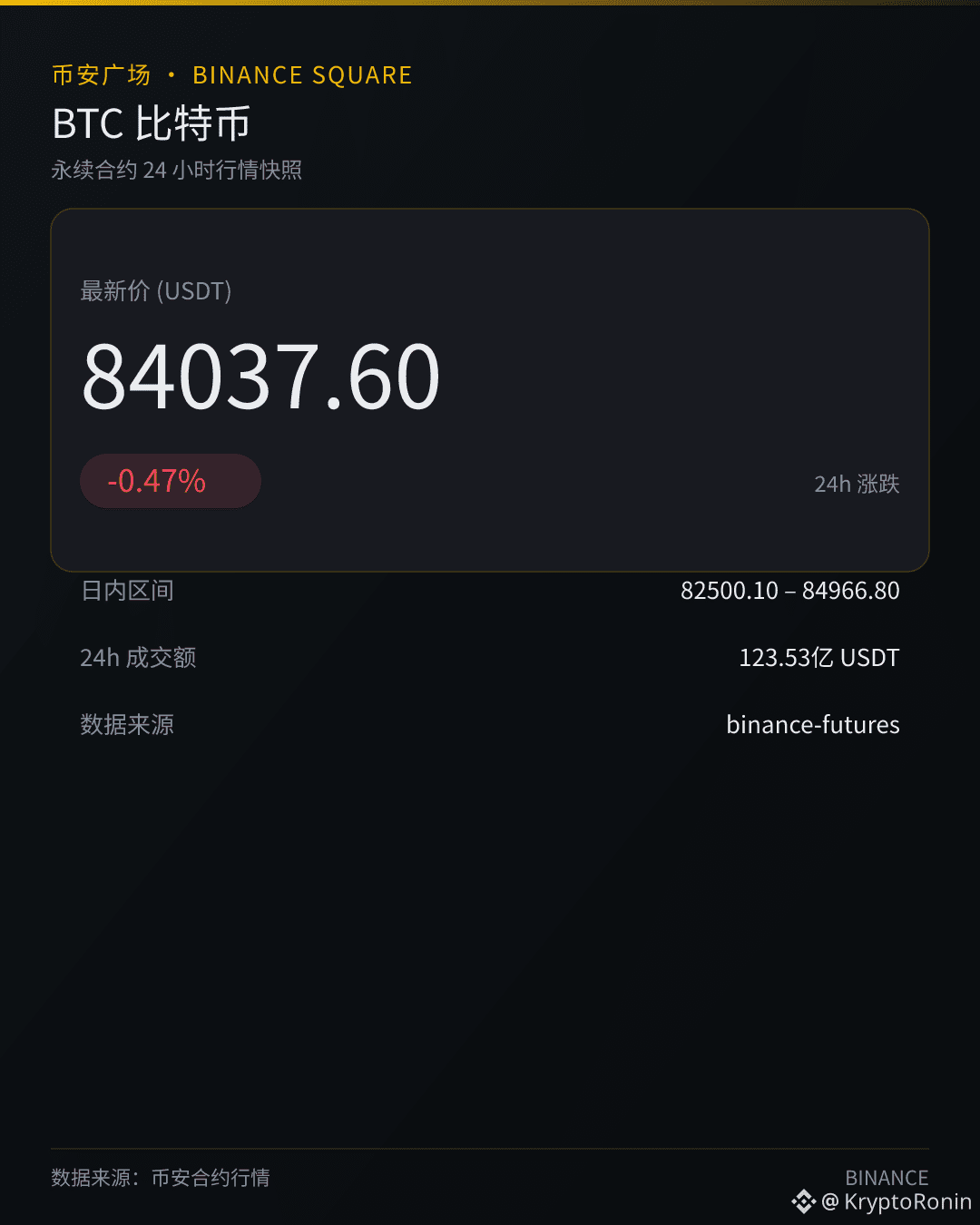
ESMA lists operational resilience, outsourcing, and sufficient EU-based operations as top priorities for crypto regulation in 2027, and also expects its MIDAS crypto market monitoring system to be fully operational in Phase 1 in 2027. After the news, $BTC moved from 82917.1 to 84037.6; since the announcement, it has risen 1.38%. In the past hour, trading value was 1.93 times the 24-hour average; the buy-sell ratio for active trading was 1.345; and open positions increased by 0.94% over the past hour.
Largely bullish. The tightening of the regulatory framework is a prerequisite for compliant capital to enter. The fact that the order book’s active buy demand and open positions are strengthening in sync does not contradict this direction. If the price falls back near 82500.1 and the active buy-sell ratio drops to below 1, this view would no longer hold.
#ESMA #MiCA
The EU’s crypto regulation shifts from legislation to enforcement, and this time it’s focused on 2027.
ESMA lists operational resilience, outsourcing, and sufficient EU-based operations as top priorities for crypto regulation in 2027, and also expects its MIDAS crypto market monitoring system to be fully operational in Phase 1 in 2027. After the news, $BTC moved from 82917.1 to 84037.6; since the announcement, it has risen 1.38%. In the past hour, trading value was 1.93 times the 24-hour average; the buy-sell ratio for active trading was 1.345; and open positions increased by 0.94% over the past hour.
Largely bullish. The tightening of the regulatory framework is a prerequisite for compliant capital to enter. The fact that the order book’s active buy demand and open positions are strengthening in sync does not contradict this direction. If the price falls back near 82500.1 and the active buy-sell ratio drops to below 1, this view would no longer hold.
The EU’s crypto regulation shifts from legislation to enforcement, and this time it’s focused on 2027.
ESMA lists operational resilience, outsourcing, and sufficient EU-based operations as top priorities for crypto regulation in 2027, and also expects its MIDAS crypto market monitoring system to be fully operational in Phase 1 in 2027. After the news, $BTC moved from 82917.1 to 84037.6; since the announcement, it has risen 1.38%. In the past hour, trading value was 1.93 times the 24-hour average; the buy-sell ratio for active trading was 1.345; and open positions increased by 0.94% over the past hour.
Largely bullish. The tightening of the regulatory framework is a prerequisite for compliant capital to enter. The fact that the order book’s active buy demand and open positions are strengthening in sync does not contradict this direction. If the price falls back near 82500.1 and the active buy-sell ratio drops to below 1, this view would no longer hold.
148

·
--
#MiCA #ESMA #加密监管 Have you passed just by obtaining a MiCA license? Today, in the ESMA’s 2027 work programme, there’s another perspective: regulators are shifting their focus to whether licensed institutions can continuously demonstrate that they have genuine operational capabilities.
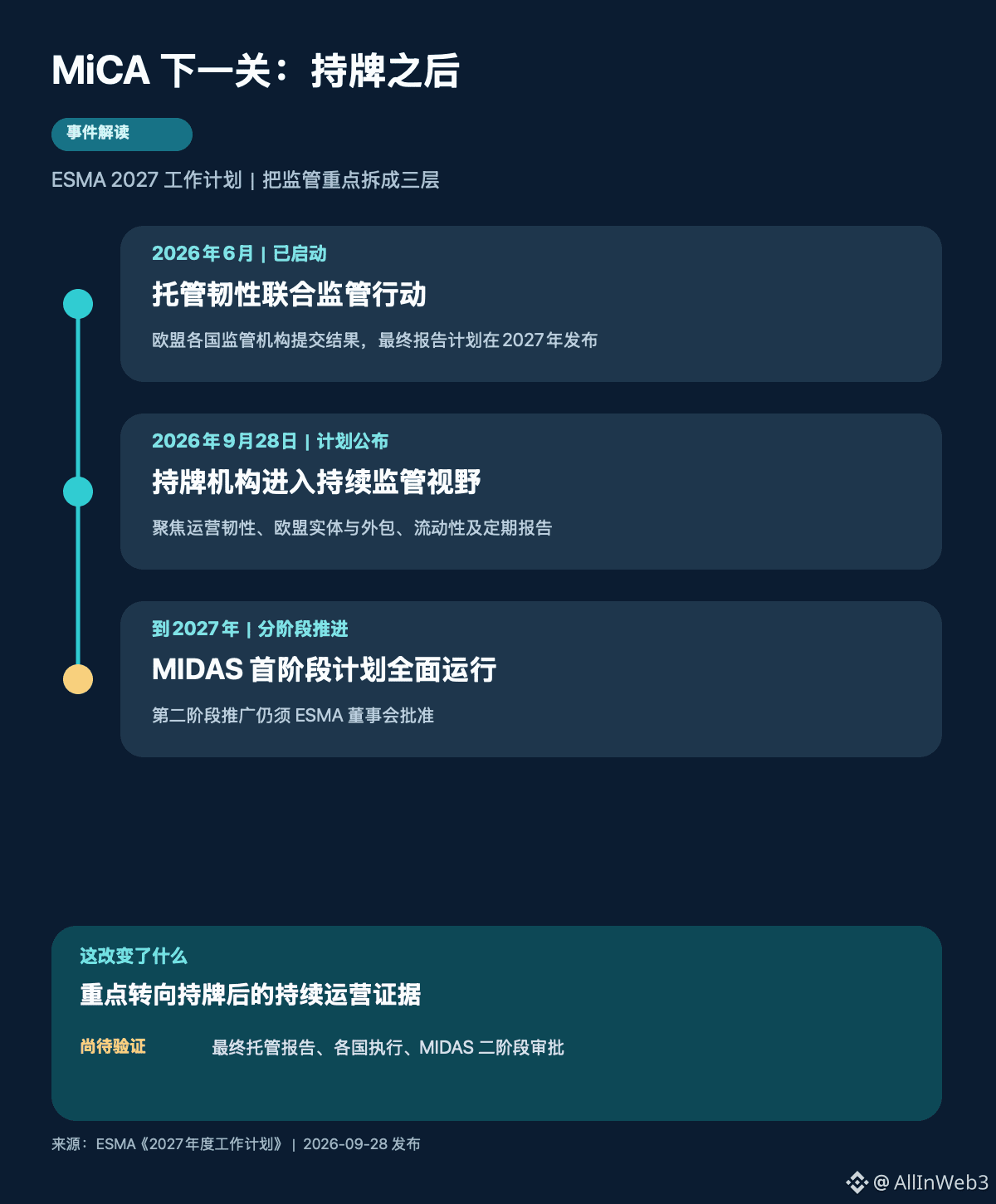
This isn’t news about the EU issuing yet another new prohibition today. The document is the work programme for the year ahead—so you can’t write the proposed supervisory actions as if they’ve already been punishment for specific parties. It’s worth looking at because it breaks abstract compliance requirements into several items that can be checked: the digital operational resilience of crypto-asset service providers (CASPs), whether there are sufficient business entities and personnel within the EU, outsourcing risks, liquidity in the EU crypto market, and cross-border solicitation of clients and asset classification. ESMA also intends to push for greater consistency in the reporting format of CASP periodic reports received by regulators in different member states.
The timeline matters too. In June 2026, a joint supervisory action targeting operational resilience of crypto-custody services was already launched; ESMA plans to publish in 2027 a consolidated final report of findings across countries. What was published today is the 2027 execution list—its report conclusions have not been issued yet. The plan also states that the first phase of MIDAS, ESMA’s monitoring system for the MiCA crypto market, is expected to be fully operational by 2027; the rollout of the second phase still depends on approval by the ESMA Management Board. Calling it “comprehensive monitoring already live today” would be premature.
I believe the real variable here is “verifiability after licensing.” If member states gradually use more aligned reporting formats, custody outages, outsourcing of critical functions, and liquidity arrangements can be compared against a single yardstick more easily. Institutions that obtain authorization but cannot continuously explain operational risks may face greater pressure later. However, this is an inference based on the work programme—not a conclusion from an investigation into any specific trading platform, and it doesn’t mean any particular token will immediately benefit or be harmed.
Next, watch three things: which gaps the 2027 final report on custody resilience specifically points out; how member states implement consistent reporting formats; and whether the second phase of MIDAS can be approved. In your view, what evidence will licensed institutions find hardest to provide in the future—responses to custody failures, outsourcing controls, or local liquidity within the EU?
Source: ESMA “2027 Annual Work Programme”, 2026-09-28.
#MiCA #ESMA #加密监管 Have you passed just by obtaining a MiCA license? Today, in the ESMA’s 2027 work programme, there’s another perspective: regulators are shifting their focus to whether licensed institutions can continuously demonstrate that they have genuine operational capabilities.
This isn’t news about the EU issuing yet another new prohibition today. The document is the work programme for the year ahead—so you can’t write the proposed supervisory actions as if they’ve already been punishment for specific parties. It’s worth looking at because it breaks abstract compliance requirements into several items that can be checked: the digital operational resilience of crypto-asset service providers (CASPs), whether there are sufficient business entities and personnel within the EU, outsourcing risks, liquidity in the EU crypto market, and cross-border solicitation of clients and asset classification. ESMA also intends to push for greater consistency in the reporting format of CASP periodic reports received by regulators in different member states.
The timeline matters too. In June 2026, a joint supervisory action targeting operational resilience of crypto-custody services was already launched; ESMA plans to publish in 2027 a consolidated final report of findings across countries. What was published today is the 2027 execution list—its report conclusions have not been issued yet. The plan also states that the first phase of MIDAS, ESMA’s monitoring system for the MiCA crypto market, is expected to be fully operational by 2027; the rollout of the second phase still depends on approval by the ESMA Management Board. Calling it “comprehensive monitoring already live today” would be premature.
I believe the real variable here is “verifiability after licensing.” If member states gradually use more aligned reporting formats, custody outages, outsourcing of critical functions, and liquidity arrangements can be compared against a single yardstick more easily. Institutions that obtain authorization but cannot continuously explain operational risks may face greater pressure later. However, this is an inference based on the work programme—not a conclusion from an investigation into any specific trading platform, and it doesn’t mean any particular token will immediately benefit or be harmed.
Next, watch three things: which gaps the 2027 final report on custody resilience specifically points out; how member states implement consistent reporting formats; and whether the second phase of MIDAS can be approved. In your view, what evidence will licensed institutions find hardest to provide in the future—responses to custody failures, outsourcing controls, or local liquidity within the EU?
Source: ESMA “2027 Annual Work Programme”, 2026-09-28.
This isn’t news about the EU issuing yet another new prohibition today. The document is the work programme for the year ahead—so you can’t write the proposed supervisory actions as if they’ve already been punishment for specific parties. It’s worth looking at because it breaks abstract compliance requirements into several items that can be checked: the digital operational resilience of crypto-asset service providers (CASPs), whether there are sufficient business entities and personnel within the EU, outsourcing risks, liquidity in the EU crypto market, and cross-border solicitation of clients and asset classification. ESMA also intends to push for greater consistency in the reporting format of CASP periodic reports received by regulators in different member states.
The timeline matters too. In June 2026, a joint supervisory action targeting operational resilience of crypto-custody services was already launched; ESMA plans to publish in 2027 a consolidated final report of findings across countries. What was published today is the 2027 execution list—its report conclusions have not been issued yet. The plan also states that the first phase of MIDAS, ESMA’s monitoring system for the MiCA crypto market, is expected to be fully operational by 2027; the rollout of the second phase still depends on approval by the ESMA Management Board. Calling it “comprehensive monitoring already live today” would be premature.
I believe the real variable here is “verifiability after licensing.” If member states gradually use more aligned reporting formats, custody outages, outsourcing of critical functions, and liquidity arrangements can be compared against a single yardstick more easily. Institutions that obtain authorization but cannot continuously explain operational risks may face greater pressure later. However, this is an inference based on the work programme—not a conclusion from an investigation into any specific trading platform, and it doesn’t mean any particular token will immediately benefit or be harmed.
Next, watch three things: which gaps the 2027 final report on custody resilience specifically points out; how member states implement consistent reporting formats; and whether the second phase of MIDAS can be approved. In your view, what evidence will licensed institutions find hardest to provide in the future—responses to custody failures, outsourcing controls, or local liquidity within the EU?
Source: ESMA “2027 Annual Work Programme”, 2026-09-28.
18

·
--
The EU’s MiCA regulatory focus has shifted from rulemaking to supervision! ESMA will focus on CASP resilience, outsourcing and reverse solicitation, and push for harmonized reporting across national regulators. The crypto regulatory storm is coming—get ready! #MiCA #CryptoRegulation $BTC $ETH
EU's MiCA focus shifts from rulemaking to supervision! ESMA will zero in on CASP resilience, outsourcing & reverse solicitation while pushing for harmonized reporting across national regulators. Get ready for the crypto regulatory storm! #MiCA #CryptoRegulation $BTC $ETH
The EU’s MiCA regulatory focus has shifted from rulemaking to supervision! ESMA will focus on CASP resilience, outsourcing and reverse solicitation, and push for harmonized reporting across national regulators. The crypto regulatory storm is coming—get ready! #MiCA #CryptoRegulation $BTC $ETH
EU's MiCA focus shifts from rulemaking to supervision! ESMA will zero in on CASP resilience, outsourcing & reverse solicitation while pushing for harmonized reporting across national regulators. Get ready for the crypto regulatory storm! #MiCA #CryptoRegulation $BTC $ETH
EU's MiCA focus shifts from rulemaking to supervision! ESMA will zero in on CASP resilience, outsourcing & reverse solicitation while pushing for harmonized reporting across national regulators. Get ready for the crypto regulatory storm! #MiCA #CryptoRegulation $BTC $ETH
189

MiCA shifts focus from rulemaking to supervision, ESMA Chairman said
- ESMA will focus on the resilience of crypto-asset service providers (CASPs), outsourcing activities, and reverse solicitation.
- The agency also pursues harmonized reporting among national regulators.
- Additional details have not been provided in the RSS source.
#MiCA #ESMA #CryptoRegulation #BinanceSquare
$btc $eth
#vlikevn Titanbot
Source: CoinTelegraph
MiCA shifts focus from rulemaking to supervision, ESMA Chairman said
- ESMA will focus on the resilience of crypto-asset service providers (CASPs), outsourcing activities, and reverse solicitation.
- The agency also pursues harmonized reporting among national regulators.
- Additional details have not been provided in the RSS source.
#MiCA #ESMA #CryptoRegulation #BinanceSquare
$btc $eth
#vlikevn Titanbot
Source: CoinTelegraph
- ESMA will focus on the resilience of crypto-asset service providers (CASPs), outsourcing activities, and reverse solicitation.
- The agency also pursues harmonized reporting among national regulators.
- Additional details have not been provided in the RSS source.
#MiCA #ESMA #CryptoRegulation #BinanceSquare
$btc $eth
#vlikevn Titanbot
Source: CoinTelegraph
376

·
--
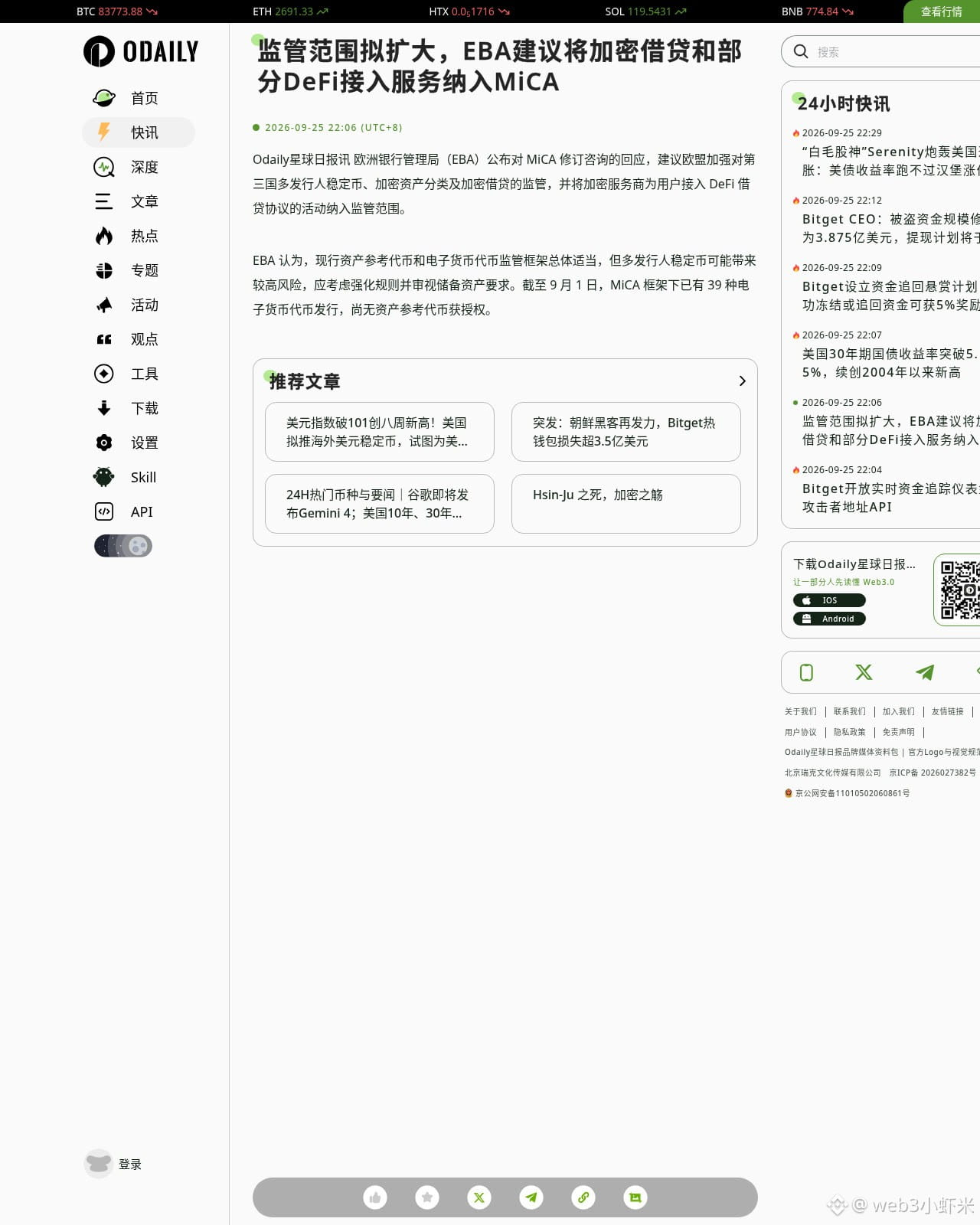
Read on Odaily: The European Banking Authority (EBA) has replied to the MiCA amendments consultation—suggesting that the regulatory scope be expanded further. More third-country issuers, stablecoins, crypto-asset classification, crypto lending, and even crypto service providers helping users access DeFi lending protocols all want to be included in the scope.
The EBA believes the current framework for Asset-Referenced Tokens (ART) and Electronic Money Tokens (EMT) is broadly workable, but that multi-issuer stablecoins carry higher risks. It recommends considering stricter rules and reviewing the requirements for reserve assets. As of September 1, there are 39 types of EMT issued under MiCA, while no ART has yet been authorized.
Once lending and DeFi access are added to the regulatory list, the compliance boundary in Europe is pushed forward another notch.#加密监管 #MiCA #DeFi
Read on Odaily: The European Banking Authority (EBA) has replied to the MiCA amendments consultation—suggesting that the regulatory scope be expanded further. More third-country issuers, stablecoins, crypto-asset classification, crypto lending, and even crypto service providers helping users access DeFi lending protocols all want to be included in the scope.
The EBA believes the current framework for Asset-Referenced Tokens (ART) and Electronic Money Tokens (EMT) is broadly workable, but that multi-issuer stablecoins carry higher risks. It recommends considering stricter rules and reviewing the requirements for reserve assets. As of September 1, there are 39 types of EMT issued under MiCA, while no ART has yet been authorized.
Once lending and DeFi access are added to the regulatory list, the compliance boundary in Europe is pushed forward another notch.#加密监管 #MiCA #DeFi
The EBA believes the current framework for Asset-Referenced Tokens (ART) and Electronic Money Tokens (EMT) is broadly workable, but that multi-issuer stablecoins carry higher risks. It recommends considering stricter rules and reviewing the requirements for reserve assets. As of September 1, there are 39 types of EMT issued under MiCA, while no ART has yet been authorized.
Once lending and DeFi access are added to the regulatory list, the compliance boundary in Europe is pushed forward another notch.#加密监管 #MiCA #DeFi
16

EU regulators eyeing DeFi lending
The EBA is calling for new crypto lending rules and tighter controls for entities accessing DeFi protocols as part of the EU MiCA review.
#MiCA #EBALending
EU regulators eyeing DeFi lending
The EBA is calling for new crypto lending rules and tighter controls for entities accessing DeFi protocols as part of the EU MiCA review.
#MiCA #EBALending
The EBA is calling for new crypto lending rules and tighter controls for entities accessing DeFi protocols as part of the EU MiCA review.
#MiCA #EBALending
20
·
--
#EBA #MiCA
The European Banking Authority (EBA) suggests incorporating crypto lending into MiCA, and also regulating the service providers that help customers access DeFi lending protocols.
For platforms running lending businesses in the EU, this also brings the on-chain portion under the licensing scope: suitability testing, leverage limits, and additional disclosures are all included in the proposed list. The suggestion is part of MiCA review guidance and has not yet become legislation.
The real point to watch is whether the European Commission decides to conduct a cost-benefit analysis—if it does, DeFi front-end integration providers will feel the pressure first.
$SOL $ONDO $TST
#EBA #MiCA
The European Banking Authority (EBA) suggests incorporating crypto lending into MiCA, and also regulating the service providers that help customers access DeFi lending protocols.
For platforms running lending businesses in the EU, this also brings the on-chain portion under the licensing scope: suitability testing, leverage limits, and additional disclosures are all included in the proposed list. The suggestion is part of MiCA review guidance and has not yet become legislation.
The real point to watch is whether the European Commission decides to conduct a cost-benefit analysis—if it does, DeFi front-end integration providers will feel the pressure first.
$SOL $ONDO $TST
The European Banking Authority (EBA) suggests incorporating crypto lending into MiCA, and also regulating the service providers that help customers access DeFi lending protocols.
For platforms running lending businesses in the EU, this also brings the on-chain portion under the licensing scope: suitability testing, leverage limits, and additional disclosures are all included in the proposed list. The suggestion is part of MiCA review guidance and has not yet become legislation.
The real point to watch is whether the European Commission decides to conduct a cost-benefit analysis—if it does, DeFi front-end integration providers will feel the pressure first.
$SOL $ONDO $TST
10


·
--
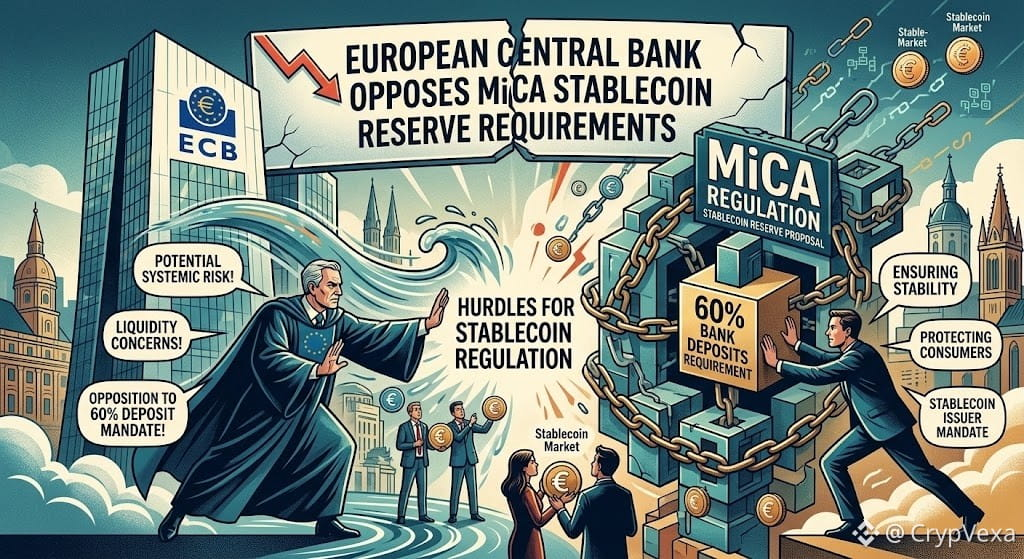
📉 ECB Challenges MiCA Stablecoin Reserve Rule
🏦 The European Central Bank (ECB) and EU national central banks have called for changes to a MiCA requirement that major stablecoin issuers keep 60% of reserves in bank deposits.
⚠️ The central banks argue the rule could create risks for the banking system, particularly if stablecoin reserves move in and out of bank deposits quickly.
🔄 They have proposed using short-maturity assets that can be converted into cash within 1–5 working days instead.
🌐 The debate highlights the challenge of balancing stablecoin liquidity, financial stability, and crypto-market innovation in the EU.
👀 Could changes to MiCA’s reserve rules reshape how stablecoins operate in Europe?
#MiCA #Stablecoins #ECB #CryptoRegulation
📉 ECB Challenges MiCA Stablecoin Reserve Rule
🏦 The European Central Bank (ECB) and EU national central banks have called for changes to a MiCA requirement that major stablecoin issuers keep 60% of reserves in bank deposits.
⚠️ The central banks argue the rule could create risks for the banking system, particularly if stablecoin reserves move in and out of bank deposits quickly.
🔄 They have proposed using short-maturity assets that can be converted into cash within 1–5 working days instead.
🌐 The debate highlights the challenge of balancing stablecoin liquidity, financial stability, and crypto-market innovation in the EU.
👀 Could changes to MiCA’s reserve rules reshape how stablecoins operate in Europe?
#MiCA #Stablecoins #ECB #CryptoRegulation
🏦 The European Central Bank (ECB) and EU national central banks have called for changes to a MiCA requirement that major stablecoin issuers keep 60% of reserves in bank deposits.
⚠️ The central banks argue the rule could create risks for the banking system, particularly if stablecoin reserves move in and out of bank deposits quickly.
🔄 They have proposed using short-maturity assets that can be converted into cash within 1–5 working days instead.
🌐 The debate highlights the challenge of balancing stablecoin liquidity, financial stability, and crypto-market innovation in the EU.
👀 Could changes to MiCA’s reserve rules reshape how stablecoins operate in Europe?
#MiCA #Stablecoins #ECB #CryptoRegulation
1
74

·
--
$USDT reported 0.9999U, with a discount of about 1 bp for $USDC .
What the market is focusing on now is whether European regulatory interpretations may change.
If the requirements in MiCA regarding stablecoin reserves and bank custody are loosened, the compliance constraints Tether faces in the EU market could also be reduced.
【Bullish rationale】
If regulation further shifts toward reserve liquidity and on-chain settlement efficiency, the reserves and settlement model for USDT will have greater room to perform.
Currently, USDT is only discounted versus USDC by about 1 bp; the key is whether the subsequent regulatory moves genuinely get implemented.
In the stablecoin battle, the final winners are still liquidity, compliance, and settlement use cases.#USDT #USDC #稳定币 #MiCA
$USDT reported 0.9999U, with a discount of about 1 bp for $USDC .
What the market is focusing on now is whether European regulatory interpretations may change.
If the requirements in MiCA regarding stablecoin reserves and bank custody are loosened, the compliance constraints Tether faces in the EU market could also be reduced.
【Bullish rationale】
If regulation further shifts toward reserve liquidity and on-chain settlement efficiency, the reserves and settlement model for USDT will have greater room to perform.
Currently, USDT is only discounted versus USDC by about 1 bp; the key is whether the subsequent regulatory moves genuinely get implemented.
In the stablecoin battle, the final winners are still liquidity, compliance, and settlement use cases.#USDT #USDC #稳定币 #MiCA
What the market is focusing on now is whether European regulatory interpretations may change.
If the requirements in MiCA regarding stablecoin reserves and bank custody are loosened, the compliance constraints Tether faces in the EU market could also be reduced.
【Bullish rationale】
If regulation further shifts toward reserve liquidity and on-chain settlement efficiency, the reserves and settlement model for USDT will have greater room to perform.
Currently, USDT is only discounted versus USDC by about 1 bp; the key is whether the subsequent regulatory moves genuinely get implemented.
In the stablecoin battle, the final winners are still liquidity, compliance, and settlement use cases.#USDT #USDC #稳定币 #MiCA
138


·
--
Verified
#ECBStartsBlockchainEuroSettlement
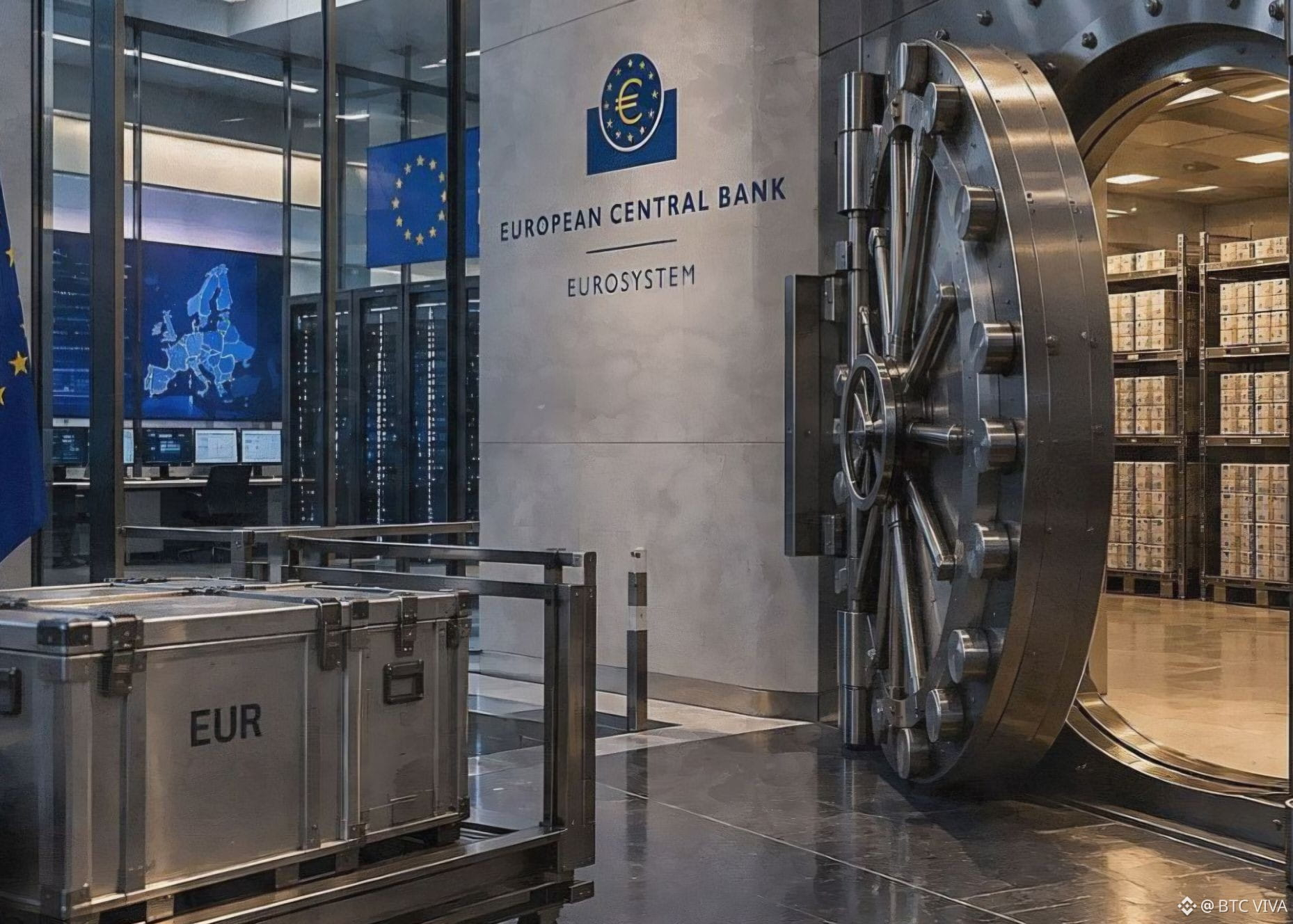
🔥 ECB pushes for changes to MiCA rules
The ECB wants to amend MiCA to allow large stablecoin issuers to hold fewer reserves in banks.
📊 EU central banks believe the current rule could transmit stress from stablecoins to the banking sector.
A revision could affect euro-backed stablecoins, such as Circle’s EURC.
#MiCA
$BNB
{spot}(BNBUSDT)
#ECBStartsBlockchainEuroSettlement
🔥 ECB pushes for changes to MiCA rules
The ECB wants to amend MiCA to allow large stablecoin issuers to hold fewer reserves in banks.
📊 EU central banks believe the current rule could transmit stress from stablecoins to the banking sector.
A revision could affect euro-backed stablecoins, such as Circle’s EURC.
#MiCA
$BNB
🔥 ECB pushes for changes to MiCA rules
The ECB wants to amend MiCA to allow large stablecoin issuers to hold fewer reserves in banks.
📊 EU central banks believe the current rule could transmit stress from stablecoins to the banking sector.
A revision could affect euro-backed stablecoins, such as Circle’s EURC.
#MiCA
$BNB
1
11
2.1k

·
--
Bullish
🔸 "not as a means of saving" #MiCA
that's the ECB and the EU central banks on stablecoins, in their answer to the MiCA review
MiCA already bans interest on them. now they want the workaround shut too: lending and staking that work like interest, plus some loyalty perks
my $USDC sits in Binance Simple Earn Flexible. exactly that kind of yield
not a law yet, so nothing moves on my side
where do you park stables if this passes? i'll post it here when Brussels decides, follow for that one
🔸 "not as a means of saving" #MiCA
that's the ECB and the EU central banks on stablecoins, in their answer to the MiCA review
MiCA already bans interest on them. now they want the workaround shut too: lending and staking that work like interest, plus some loyalty perks
my $USDC sits in Binance Simple Earn Flexible. exactly that kind of yield
not a law yet, so nothing moves on my side
where do you park stables if this passes? i'll post it here when Brussels decides, follow for that one
that's the ECB and the EU central banks on stablecoins, in their answer to the MiCA review
MiCA already bans interest on them. now they want the workaround shut too: lending and staking that work like interest, plus some loyalty perks
my $USDC sits in Binance Simple Earn Flexible. exactly that kind of yield
not a law yet, so nothing moves on my side
where do you park stables if this passes? i'll post it here when Brussels decides, follow for that one

7
138

·
--
The ECB and European central banks oppose a MiCA rule that would require 60% of stablecoin reserves to be held in bank deposits, for fear of transferring crypto volatility to banks. On the other side, the head of the CFTC urges markets to prepare for massive tokenization and 24/7 trading. Two philosophies clash: Europe protects, America builds. Meanwhile, BTC remains firm at 86 460 $ (+0,84% over 24h) and ETH at 2 758 $ (+0,57%). Can Europe really slow down stablecoins while the United States accelerates? #MiCA #Stablecoins
The ECB and European central banks oppose a MiCA rule that would require 60% of stablecoin reserves to be held in bank deposits, for fear of transferring crypto volatility to banks. On the other side, the head of the CFTC urges markets to prepare for massive tokenization and 24/7 trading. Two philosophies clash: Europe protects, America builds. Meanwhile, BTC remains firm at 86 460 $ (+0,84% over 24h) and ETH at 2 758 $ (+0,57%). Can Europe really slow down stablecoins while the United States accelerates? #MiCA #Stablecoins
95
Log in to explore more content
Join global crypto users on Binance Square
⚡️ Get latest and useful information about crypto.
💬 Trusted by the world’s largest crypto exchange.
👍 Discover real insights from verified creators.
Email / Phone number
Trending Topics
1
#US10YearYieldNears5.3%
4,382 views
151 Discussing
2
#USWeeklyJoblessClaimsFallTo197000
0 views
8 Discussing
3
#BitcoinETFsTake$6.34BillionInQ3
306 views
24 Discussing
4
#KoreaProposesTokenizingStocksAndBonds
25,550 views
386 Discussing
5
#MetaMaskExitsLidoValidatorsAfterSecurityIncident
95,487 views
1,104 Discussing
6
#MicronBeatsEarningsLiftsGuidance
54,247 views
848 Discussing
7
#CFTCSubmitsTwoEventContractRulesToWhiteHouse
37,952 views
684 Discussing
8
#BitcoinClears$85200
41,322 views
370 Discussing
9
#AltcoinSeasonIndexHoldsAbove60For5Days
193,579 views
2,307 Discussing
10
#USADPAdds90000JobsInSeptember
92,237 views
1,306 Discussing