

#buidl
buidl
264,845 views
693 Discussing
Hot
Latest

·
--
📊 BlackRock USD Institutional Digital Liquidity Fund ($BUIDL) 24h Market Snapshot
Current price: 1.00 USD, 24h change: 0.00%.
High: 1.00, low: 1.00.
Trading volume: 0.00 USD.
Ranked 50th by market cap, with a market cap of $2.218 billion.
#BUIDL
This is not investment advice.
📊 BlackRock USD Institutional Digital Liquidity Fund ($BUIDL) 24h Market Snapshot
Current price: 1.00 USD, 24h change: 0.00%.
High: 1.00, low: 1.00.
Trading volume: 0.00 USD.
Ranked 50th by market cap, with a market cap of $2.218 billion.
#BUIDL
This is not investment advice.
Current price: 1.00 USD, 24h change: 0.00%.
High: 1.00, low: 1.00.
Trading volume: 0.00 USD.
Ranked 50th by market cap, with a market cap of $2.218 billion.
#BUIDL
This is not investment advice.
28

·
--
🚨 BLACKROCK EXPANDS TOKENIZATION PRODUCTS BUT CIRCLE STAYS AHEAD AS $BUIDL HITS $2.93B! 🏦
BlackRock continues deploying capital into real-world asset tokenization, launching two additional funds this month. However, despite expanding their product suite to push $BUIDL combined metrics to $2.93B, Circle’s USYC maintains market dominance near $3.0B. 📊
$BUIDL carries the vast majority of BlackRock’s institutional footprint, proving that liquidity depth outweighs sheer product quantity in the RWA landscape. 🏦 Smart money positioning reveals high institutional demand for yield-bearing treasury rails, yet market share consolidation remains tight at the top. 🔍
🤔 Do you expect BlackRock’s ecosystem expansion to flip Circle's lead before year end? 👇
⚠️ Not financial advice. Always manage your risk. 🛡️
🏷️ #BUIDL #Tokenization #RWA #Crypto
🎯 🦈
🚨 BLACKROCK EXPANDS TOKENIZATION PRODUCTS BUT CIRCLE STAYS AHEAD AS $BUIDL HITS $2.93B! 🏦
BlackRock continues deploying capital into real-world asset tokenization, launching two additional funds this month. However, despite expanding their product suite to push $BUIDL combined metrics to $2.93B, Circle’s USYC maintains market dominance near $3.0B. 📊
$BUIDL carries the vast majority of BlackRock’s institutional footprint, proving that liquidity depth outweighs sheer product quantity in the RWA landscape. 🏦 Smart money positioning reveals high institutional demand for yield-bearing treasury rails, yet market share consolidation remains tight at the top. 🔍
🤔 Do you expect BlackRock’s ecosystem expansion to flip Circle's lead before year end? 👇
⚠️ Not financial advice. Always manage your risk. 🛡️
🏷️ #BUIDL #Tokenization #RWA #Crypto
🎯 🦈
BlackRock continues deploying capital into real-world asset tokenization, launching two additional funds this month. However, despite expanding their product suite to push $BUIDL combined metrics to $2.93B, Circle’s USYC maintains market dominance near $3.0B. 📊
$BUIDL carries the vast majority of BlackRock’s institutional footprint, proving that liquidity depth outweighs sheer product quantity in the RWA landscape. 🏦 Smart money positioning reveals high institutional demand for yield-bearing treasury rails, yet market share consolidation remains tight at the top. 🔍
🤔 Do you expect BlackRock’s ecosystem expansion to flip Circle's lead before year end? 👇
⚠️ Not financial advice. Always manage your risk. 🛡️
🏷️ #BUIDL #Tokenization #RWA #Crypto
🎯 🦈
102

#BlackRockBUIDLTops
What a weird thing, you know? 🤔 While the market is flashing red, BlackRock’s BUIDL fund on Avalanche is exploding again: +105% over the week, surpassing the $900 million AUM cap!
Do you see it the same way as I do? This U.S. Treasury tokenization fund is gradually becoming a new safe haven under fire—for whales, of course. And there are only more than a hundred portfolios accumulating: that’s really the rich people’s game.
So what should traders do now? Accumulate USDT for protection, buckle up, stay calm while whales move to safety—and avoid the FOMO that makes the ship sink! 💸
⚠️ This is not financial advice.
FOLLOW ME 😉
#BlackRock #BUIDL #RWA
$BTC
{future}(BTCUSDT)
$ETH
{future}(ETHUSDT)
$XAU
{future}(XAUUSDT)
#BlackRockBUIDLTops
What a weird thing, you know? 🤔 While the market is flashing red, BlackRock’s BUIDL fund on Avalanche is exploding again: +105% over the week, surpassing the $900 million AUM cap!
Do you see it the same way as I do? This U.S. Treasury tokenization fund is gradually becoming a new safe haven under fire—for whales, of course. And there are only more than a hundred portfolios accumulating: that’s really the rich people’s game.
So what should traders do now? Accumulate USDT for protection, buckle up, stay calm while whales move to safety—and avoid the FOMO that makes the ship sink! 💸
⚠️ This is not financial advice.
FOLLOW ME 😉
#BlackRock #BUIDL #RWA
$BTC
$ETH
$XAU
What a weird thing, you know? 🤔 While the market is flashing red, BlackRock’s BUIDL fund on Avalanche is exploding again: +105% over the week, surpassing the $900 million AUM cap!
Do you see it the same way as I do? This U.S. Treasury tokenization fund is gradually becoming a new safe haven under fire—for whales, of course. And there are only more than a hundred portfolios accumulating: that’s really the rich people’s game.
So what should traders do now? Accumulate USDT for protection, buckle up, stay calm while whales move to safety—and avoid the FOMO that makes the ship sink! 💸
⚠️ This is not financial advice.
FOLLOW ME 😉
#BlackRock #BUIDL #RWA
$BTC
$ETH
$XAU
1
140

$BUIDL AUM HITS $29.3B ALL-TIME HIGH AS INSTITUTIONS FLOCK TO TOKENIZED TREASURIES 💎
BlackRock's BUIDL fund now manages over $29.3 billion on-chain, with Avalanche showing the sharpest momentum — AUM doubled to $9 billion in a single week. Ethereum remains the largest deployment chain at $10 billion, while Solana holds $5.5 billion.
The fund yields 3%-5% annually and is increasingly used as collateral in DeFi, signaling a structural shift where tokenized Treasuries become core on-chain infrastructure. Are you watching any specific RWA protocols that could benefit from this liquidity inflow?
Not financial advice. Always manage your risk.
#BUIDL #RWA #Tokenization #Institutional #Crypto
💎
$BUIDL AUM HITS $29.3B ALL-TIME HIGH AS INSTITUTIONS FLOCK TO TOKENIZED TREASURIES 💎
BlackRock's BUIDL fund now manages over $29.3 billion on-chain, with Avalanche showing the sharpest momentum — AUM doubled to $9 billion in a single week. Ethereum remains the largest deployment chain at $10 billion, while Solana holds $5.5 billion.
The fund yields 3%-5% annually and is increasingly used as collateral in DeFi, signaling a structural shift where tokenized Treasuries become core on-chain infrastructure. Are you watching any specific RWA protocols that could benefit from this liquidity inflow?
Not financial advice. Always manage your risk.
#BUIDL #RWA #Tokenization #Institutional #Crypto
💎
BlackRock's BUIDL fund now manages over $29.3 billion on-chain, with Avalanche showing the sharpest momentum — AUM doubled to $9 billion in a single week. Ethereum remains the largest deployment chain at $10 billion, while Solana holds $5.5 billion.
The fund yields 3%-5% annually and is increasingly used as collateral in DeFi, signaling a structural shift where tokenized Treasuries become core on-chain infrastructure. Are you watching any specific RWA protocols that could benefit from this liquidity inflow?
Not financial advice. Always manage your risk.
#BUIDL #RWA #Tokenization #Institutional #Crypto
💎
82

$BUIDL JUST HIT $29.3 BILLION – INSTITUTIONS ARE ALL IN 🔥
The largest tokenized US Treasury fund just crossed a new ATH, and the growth is accelerating. Ethereum holds over $10B, but Avalanche doubled its AUM to $9B in a single week. That speed tells me liquidity is rotating into real-world asset rails faster than most traders realize.
This isn't just a headline – it's a signal that DeFi infrastructure is being adopted at scale by traditional capital. The yield is 3-5%, but the real move is in how protocols are using $BUIDL as collateral.
Are you watching the RWA narrative shift, or still sleeping on it?
Not financial advice. Always manage your risk.
#BUIDL #RWA #Tokenization #DeFi #Institutional
🔥
$BUIDL JUST HIT $29.3 BILLION – INSTITUTIONS ARE ALL IN 🔥
The largest tokenized US Treasury fund just crossed a new ATH, and the growth is accelerating. Ethereum holds over $10B, but Avalanche doubled its AUM to $9B in a single week. That speed tells me liquidity is rotating into real-world asset rails faster than most traders realize.
This isn't just a headline – it's a signal that DeFi infrastructure is being adopted at scale by traditional capital. The yield is 3-5%, but the real move is in how protocols are using $BUIDL as collateral.
Are you watching the RWA narrative shift, or still sleeping on it?
Not financial advice. Always manage your risk.
#BUIDL #RWA #Tokenization #DeFi #Institutional
🔥
The largest tokenized US Treasury fund just crossed a new ATH, and the growth is accelerating. Ethereum holds over $10B, but Avalanche doubled its AUM to $9B in a single week. That speed tells me liquidity is rotating into real-world asset rails faster than most traders realize.
This isn't just a headline – it's a signal that DeFi infrastructure is being adopted at scale by traditional capital. The yield is 3-5%, but the real move is in how protocols are using $BUIDL as collateral.
Are you watching the RWA narrative shift, or still sleeping on it?
Not financial advice. Always manage your risk.
#BUIDL #RWA #Tokenization #DeFi #Institutional
🔥
1
80

#buidl 🚨 A major milestone for tokenized finance has arrived.
BlackRock’s $BUIDL is now live on Uniswap, bringing tokenized U.S. Treasuries directly on-chain and marking another significant step in the convergence of traditional finance and decentralized finance.
Why this matters:
✅ A stronger bridge between TradFi and DeFi
✅ Continued growth in institutional participation
✅ Another bullish signal for the tokenized Real-World Asset (RWA) sector
The tokenization of traditional assets is no longer just a concept—it’s becoming a reality.
As some of the world’s largest financial institutions expand their on-chain presence, the narrative around RWAs continues to gain momentum.
📊 Market Outlook:
If institutional adoption continues at its current pace, RWA-related projects could emerge as one of the strongest-performing sectors in the next phase of the crypto market.
👀 The question is no longer whether tokenized assets are coming…
It’s how large this market can become once traditional finance fully embraces blockchain infrastructure.
Do you believe RWAs will be the next major crypto narrative?$RIF $COTI #blackrock
#buidl 🚨 A major milestone for tokenized finance has arrived.
BlackRock’s $BUIDL is now live on Uniswap, bringing tokenized U.S. Treasuries directly on-chain and marking another significant step in the convergence of traditional finance and decentralized finance.
Why this matters:
✅ A stronger bridge between TradFi and DeFi
✅ Continued growth in institutional participation
✅ Another bullish signal for the tokenized Real-World Asset (RWA) sector
The tokenization of traditional assets is no longer just a concept—it’s becoming a reality.
As some of the world’s largest financial institutions expand their on-chain presence, the narrative around RWAs continues to gain momentum.
📊 Market Outlook:
If institutional adoption continues at its current pace, RWA-related projects could emerge as one of the strongest-performing sectors in the next phase of the crypto market.
👀 The question is no longer whether tokenized assets are coming…
It’s how large this market can become once traditional finance fully embraces blockchain infrastructure.
Do you believe RWAs will be the next major crypto narrative?$RIF $COTI #blackrock
BlackRock’s $BUIDL is now live on Uniswap, bringing tokenized U.S. Treasuries directly on-chain and marking another significant step in the convergence of traditional finance and decentralized finance.
Why this matters:
✅ A stronger bridge between TradFi and DeFi
✅ Continued growth in institutional participation
✅ Another bullish signal for the tokenized Real-World Asset (RWA) sector
The tokenization of traditional assets is no longer just a concept—it’s becoming a reality.
As some of the world’s largest financial institutions expand their on-chain presence, the narrative around RWAs continues to gain momentum.
📊 Market Outlook:
If institutional adoption continues at its current pace, RWA-related projects could emerge as one of the strongest-performing sectors in the next phase of the crypto market.
👀 The question is no longer whether tokenized assets are coming…
It’s how large this market can become once traditional finance fully embraces blockchain infrastructure.
Do you believe RWAs will be the next major crypto narrative?$RIF $COTI #blackrock
1
182

·
--
🚨 Securitize expands BUIDL collateral to BlackRock’s primary broker dealers 🧠
📊 | $BTC | $ETH | $BNB |
- Please follow, like, and comment with your thoughts—share your perspective 📈
- Securitize announced it will expand BUIDL collateral to BlackRock’s primary broker-dealer network.
- This move will improve BUIDL’s liquidity and availability in institutional trading.
- BlackRock’s primary broker-dealers will support more institutional clients using BUIDL as trading collateral.
- This is expected to further strengthen Securitize’s leading position in digital asset custody. 🔥
- This expansion may increase trading volume for BUIDL on institutional trading platforms.
- It may also attract more primary broker-dealers to the digital asset custody ecosystem.
- Whale investors are expected to remain neutral or slightly bullish.
- In the short term, the market may stay range-bound, with relatively stable volatility.
- How do you think the expansion to BUIDL’s primary broker-dealers will affect its price trend?
- Please keep following and share your thoughts in the comments
#Crypto #DeFi #BUIDL #PrimeBrokers #Whales
🚨 Securitize expands BUIDL collateral to BlackRock’s primary broker dealers 🧠
📊 | $BTC | $ETH | $BNB |
- Please follow, like, and comment with your thoughts—share your perspective 📈
- Securitize announced it will expand BUIDL collateral to BlackRock’s primary broker-dealer network.
- This move will improve BUIDL’s liquidity and availability in institutional trading.
- BlackRock’s primary broker-dealers will support more institutional clients using BUIDL as trading collateral.
- This is expected to further strengthen Securitize’s leading position in digital asset custody. 🔥
- This expansion may increase trading volume for BUIDL on institutional trading platforms.
- It may also attract more primary broker-dealers to the digital asset custody ecosystem.
- Whale investors are expected to remain neutral or slightly bullish.
- In the short term, the market may stay range-bound, with relatively stable volatility.
- How do you think the expansion to BUIDL’s primary broker-dealers will affect its price trend?
- Please keep following and share your thoughts in the comments
#Crypto #DeFi #BUIDL #PrimeBrokers #Whales
📊 | $BTC | $ETH | $BNB |
- Please follow, like, and comment with your thoughts—share your perspective 📈
- Securitize announced it will expand BUIDL collateral to BlackRock’s primary broker-dealer network.
- This move will improve BUIDL’s liquidity and availability in institutional trading.
- BlackRock’s primary broker-dealers will support more institutional clients using BUIDL as trading collateral.
- This is expected to further strengthen Securitize’s leading position in digital asset custody. 🔥
- This expansion may increase trading volume for BUIDL on institutional trading platforms.
- It may also attract more primary broker-dealers to the digital asset custody ecosystem.
- Whale investors are expected to remain neutral or slightly bullish.
- In the short term, the market may stay range-bound, with relatively stable volatility.
- How do you think the expansion to BUIDL’s primary broker-dealers will affect its price trend?
- Please keep following and share your thoughts in the comments
#Crypto #DeFi #BUIDL #PrimeBrokers #Whales
105

·
--
GitHub Code Activity: Where Developers Are Building
A freshly painted house with colorful lights catches the eye of passersby, but it’s the reinforced concrete foundation that keeps the walls from cracking during a storm. In the technology market, while speculators debate the price of the 15-minute candle, the best software engineers keep shipping code for projects with a solid future.
The official Santiment report published on October 14, 2026, mapped the projects with the highest pure development activity on GitHub over the past 30 days:
EigenLayer (EIGEN) won the silver medal (2nd place overall), accelerating the expansion of restaking infrastructure and decentralized validation.
Internet Computer (ICP) climbed to 4th place in the global development rankings, driven by new smart contract modules for on-chain artificial intelligence.
Hedera (HBAR) maintained its place in the global Top 10, with steady progress in corporate settlement and governance.
As the poet said, those who work quietly reap the rewards when harvest time comes. Click the 3 cashtags below to inspect the charts now and identify the projects with the strongest technical momentum before the market turns.
$EIGEN $ICP $HBAR
#Buidl #GitHub #DevActivity
GitHub Code Activity: Where Developers Are Building
A freshly painted house with colorful lights catches the eye of passersby, but it’s the reinforced concrete foundation that keeps the walls from cracking during a storm. In the technology market, while speculators debate the price of the 15-minute candle, the best software engineers keep shipping code for projects with a solid future.
The official Santiment report published on October 14, 2026, mapped the projects with the highest pure development activity on GitHub over the past 30 days:
EigenLayer (EIGEN) won the silver medal (2nd place overall), accelerating the expansion of restaking infrastructure and decentralized validation.
Internet Computer (ICP) climbed to 4th place in the global development rankings, driven by new smart contract modules for on-chain artificial intelligence.
Hedera (HBAR) maintained its place in the global Top 10, with steady progress in corporate settlement and governance.
As the poet said, those who work quietly reap the rewards when harvest time comes. Click the 3 cashtags below to inspect the charts now and identify the projects with the strongest technical momentum before the market turns.
$EIGEN $ICP $HBAR
#Buidl #GitHub #DevActivity
A freshly painted house with colorful lights catches the eye of passersby, but it’s the reinforced concrete foundation that keeps the walls from cracking during a storm. In the technology market, while speculators debate the price of the 15-minute candle, the best software engineers keep shipping code for projects with a solid future.
The official Santiment report published on October 14, 2026, mapped the projects with the highest pure development activity on GitHub over the past 30 days:
EigenLayer (EIGEN) won the silver medal (2nd place overall), accelerating the expansion of restaking infrastructure and decentralized validation.
Internet Computer (ICP) climbed to 4th place in the global development rankings, driven by new smart contract modules for on-chain artificial intelligence.
Hedera (HBAR) maintained its place in the global Top 10, with steady progress in corporate settlement and governance.
As the poet said, those who work quietly reap the rewards when harvest time comes. Click the 3 cashtags below to inspect the charts now and identify the projects with the strongest technical momentum before the market turns.
$EIGEN $ICP $HBAR
#Buidl #GitHub #DevActivity
162


Article
The boom of $30 billion RWA is here, but the real challenges are just beginning!Tokenized Real World Assets (RWA) are expanding into bonds, government securities, and other traditional assets being brought on-chain.
Now, the real question lies in the actual use cases.
Tokenized RWA market cap has surpassed $30 billion!
The market cap for tokenized Real World Assets (RWA) has crossed the $30 billion mark, experiencing rapid growth since 2025. Initially, this category was mainly linked to stablecoins, but it has now expanded into government bonds, private credit, commodities, stocks, funds, and other yield-bearing assets.
Source: rwa.xyz
Traditional assets aren't just moving on-chain; more importantly, they can now be part of real activities. Capital can be put to work, collateral can become more useful, and yields can be tied to credit and trading!
The boom of $30 billion RWA is here, but the real challenges are just beginning!
Tokenized Real World Assets (RWA) are expanding into bonds, government securities, and other traditional assets being brought on-chain.
Now, the real question lies in the actual use cases.
Tokenized RWA market cap has surpassed $30 billion!
The market cap for tokenized Real World Assets (RWA) has crossed the $30 billion mark, experiencing rapid growth since 2025. Initially, this category was mainly linked to stablecoins, but it has now expanded into government bonds, private credit, commodities, stocks, funds, and other yield-bearing assets.
Source: rwa.xyz
Traditional assets aren't just moving on-chain; more importantly, they can now be part of real activities. Capital can be put to work, collateral can become more useful, and yields can be tied to credit and trading!
Now, the real question lies in the actual use cases.
Tokenized RWA market cap has surpassed $30 billion!
The market cap for tokenized Real World Assets (RWA) has crossed the $30 billion mark, experiencing rapid growth since 2025. Initially, this category was mainly linked to stablecoins, but it has now expanded into government bonds, private credit, commodities, stocks, funds, and other yield-bearing assets.
Source: rwa.xyz
Traditional assets aren't just moving on-chain; more importantly, they can now be part of real activities. Capital can be put to work, collateral can become more useful, and yields can be tied to credit and trading!
5
2.1k


·
--
Tonight, I'm not asking for sympathy—I'm asking for a chance to be seen.
I'm a young Nigerian who believes blockchain can change lives. Every day I invest my time learning, building, and growing in the crypto space. There have been setbacks, but I haven't stopped.
If this post reaches you, help me with a simple action:
❤️ Like 🔁 Repost 💬 Share one piece of advice that changed your crypto journey.
Maybe this post reaches someone who believes in supporting people with determination, not just popularity.
Whether I receive support or not, I'll keep learning, keep building, and keep showing up.
Thank you to everyone who takes a second to engage. It means more than you know.
#BinanceSquareTalks #Binance ance #Crypto #Blockchain #BUIDL #Nigeria #Africa
Tonight, I'm not asking for sympathy—I'm asking for a chance to be seen.
I'm a young Nigerian who believes blockchain can change lives. Every day I invest my time learning, building, and growing in the crypto space. There have been setbacks, but I haven't stopped.
If this post reaches you, help me with a simple action:
❤️ Like 🔁 Repost 💬 Share one piece of advice that changed your crypto journey.
Maybe this post reaches someone who believes in supporting people with determination, not just popularity.
Whether I receive support or not, I'll keep learning, keep building, and keep showing up.
Thank you to everyone who takes a second to engage. It means more than you know.
#BinanceSquareTalks #Binance ance #Crypto #Blockchain #BUIDL #Nigeria #Africa
I'm a young Nigerian who believes blockchain can change lives. Every day I invest my time learning, building, and growing in the crypto space. There have been setbacks, but I haven't stopped.
If this post reaches you, help me with a simple action:
❤️ Like 🔁 Repost 💬 Share one piece of advice that changed your crypto journey.
Maybe this post reaches someone who believes in supporting people with determination, not just popularity.
Whether I receive support or not, I'll keep learning, keep building, and keep showing up.
Thank you to everyone who takes a second to engage. It means more than you know.
#BinanceSquareTalks #Binance ance #Crypto #Blockchain #BUIDL #Nigeria #Africa
30

·
--
The crypto world moves fast, but the strength of $Jager and the Binance Force is unstoppable.
Together, we are building a resilient, decentralized future for the global community.
Binance Force isn't just a group; it is a movement driven by trust, vision, and innovation.
Every holder and supporter plays a crucial role in expanding this powerful ecosystem.
Keep believing, stay focused, and continue to BUIDL through every market cycle.
The future belongs to the bold—let’s take $JAGER to the next level! 🚀 #Binance #Crypto #BUIDL
The crypto world moves fast, but the strength of $Jager and the Binance Force is unstoppable.
Together, we are building a resilient, decentralized future for the global community.
Binance Force isn't just a group; it is a movement driven by trust, vision, and innovation.
Every holder and supporter plays a crucial role in expanding this powerful ecosystem.
Keep believing, stay focused, and continue to BUIDL through every market cycle.
The future belongs to the bold—let’s take $JAGER to the next level! 🚀 #Binance #Crypto #BUIDL
Together, we are building a resilient, decentralized future for the global community.
Binance Force isn't just a group; it is a movement driven by trust, vision, and innovation.
Every holder and supporter plays a crucial role in expanding this powerful ecosystem.
Keep believing, stay focused, and continue to BUIDL through every market cycle.
The future belongs to the bold—let’s take $JAGER to the next level! 🚀 #Binance #Crypto #BUIDL
9
1k
·
--
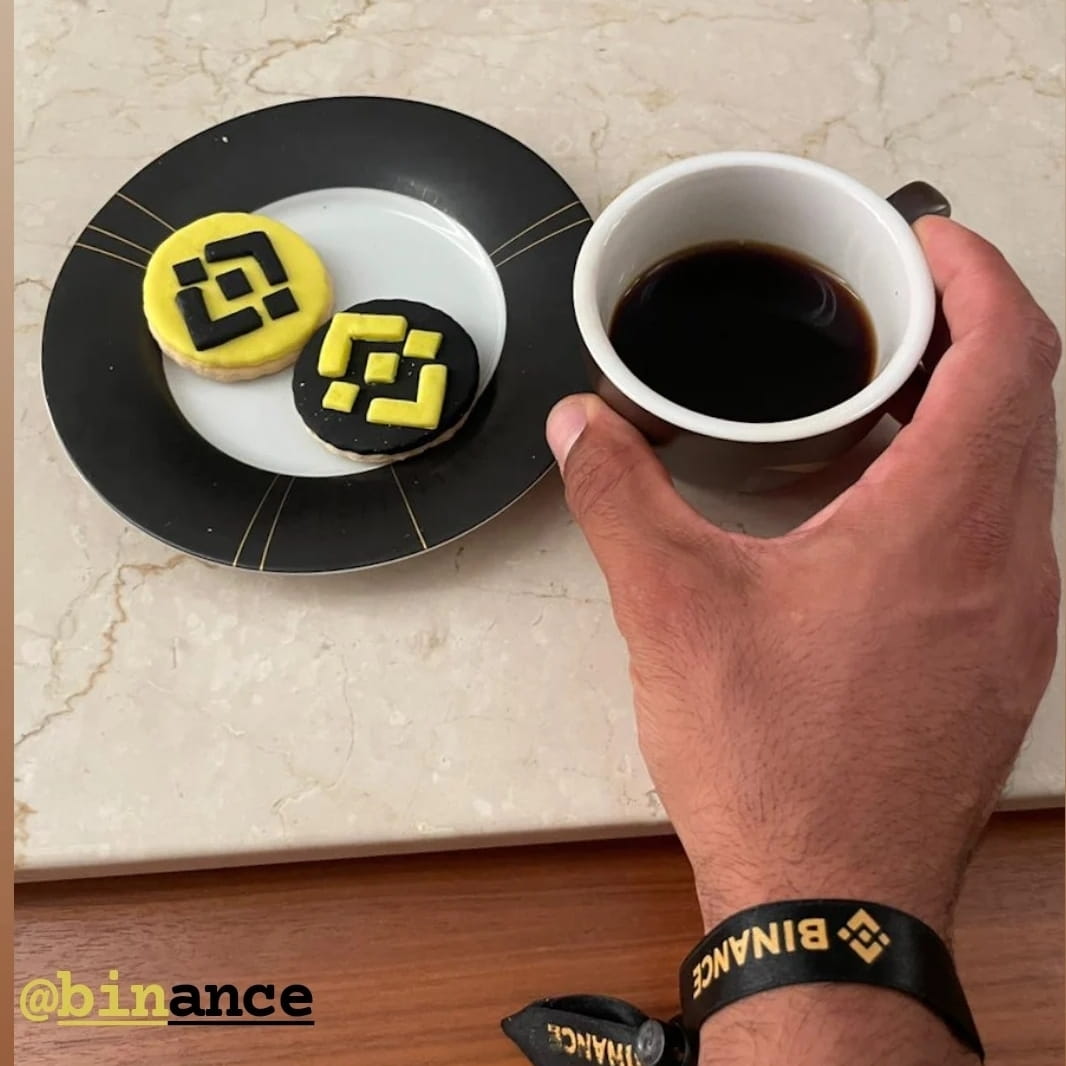
9 years of innovation 🖤💛 9 years of building 🖤💛
Countless milestones, with many more to come. 🚀
Thank you for every moment, every opportunity, and every lesson along the journey.
#BUIDL #HODL
#BinanceTurns9
9 years of innovation 🖤💛 9 years of building 🖤💛
Countless milestones, with many more to come. 🚀
Thank you for every moment, every opportunity, and every lesson along the journey.
#BUIDL #HODL
#BinanceTurns9
Countless milestones, with many more to come. 🚀
Thank you for every moment, every opportunity, and every lesson along the journey.
#BUIDL #HODL
#BinanceTurns9
2
110

🚀 I'm officially back on Binance Square!
I want to post content that is actually useful for the community. Before I get started, tell me what you'd like to see the most.
🗳️ Vote in the poll and leave your suggestions in the comments.
Let's grow and BUIDL together! 💛
#BinanceSquareTalks #Binance #BUIDL #crypto
🚀 I'm officially back on Binance Square!
I want to post content that is actually useful for the community. Before I get started, tell me what you'd like to see the most.
🗳️ Vote in the poll and leave your suggestions in the comments.
Let's grow and BUIDL together! 💛
#BinanceSquareTalks #Binance #BUIDL #crypto
I want to post content that is actually useful for the community. Before I get started, tell me what you'd like to see the most.
🗳️ Vote in the poll and leave your suggestions in the comments.
Let's grow and BUIDL together! 💛
#BinanceSquareTalks #Binance #BUIDL #crypto
📰 Binance News
100%
📚 Crypto Guides
0%
📈 Market Analysis
0%
💡 Trading Tips
0%
1 votes • Voting closed
148

·
--
🍂 Q4 Outlook: We are officially in the final stretch of the year! Market structure is looking resilient across major coins. How is your portfolio positioned for the upcoming weeks? Drop your game plan below! 📊🤝 #Crypto #TradingCommunity #BUIDL
🍂 Q4 Outlook: We are officially in the final stretch of the year! Market structure is looking resilient across major coins. How is your portfolio positioned for the upcoming weeks? Drop your game plan below! 📊🤝 #Crypto #TradingCommunity #BUIDL
1
83

·
--
🟢 LONG SIGNAL · $SUI (SUIUSDT)
ENTRY: 1.040 · SL: 1.030 · TP: 1.050 · R/R: 1:1.0 · RISK: HIGH 🔴
25/09/2026 🗓️ 09:15 UTC 🌐
Sellers look exhausted down here.
📅 MACRO WATCH: REVISED UOM CONSUMER SENTIMENT (USD) IN 4H 44M
📅 MACRO WATCH: REVISED UOM INFLATION EXPECTATIONS (USD) IN 4H 44M
#SUI #BuidL
🟢 LONG SIGNAL · $SUI (SUIUSDT)
ENTRY: 1.040 · SL: 1.030 · TP: 1.050 · R/R: 1:1.0 · RISK: HIGH 🔴
25/09/2026 🗓️ 09:15 UTC 🌐
Sellers look exhausted down here.
📅 MACRO WATCH: REVISED UOM CONSUMER SENTIMENT (USD) IN 4H 44M
📅 MACRO WATCH: REVISED UOM INFLATION EXPECTATIONS (USD) IN 4H 44M
#SUI #BuidL
ENTRY: 1.040 · SL: 1.030 · TP: 1.050 · R/R: 1:1.0 · RISK: HIGH 🔴
25/09/2026 🗓️ 09:15 UTC 🌐
Sellers look exhausted down here.
📅 MACRO WATCH: REVISED UOM CONSUMER SENTIMENT (USD) IN 4H 44M
📅 MACRO WATCH: REVISED UOM INFLATION EXPECTATIONS (USD) IN 4H 44M
#SUI #BuidL
157

·
--
Article
Today I don’t want ordinary yellow flowers… I want a bouquet of BNBToday I don’t want ordinary yellow flowers… I want a bouquet of $BNB 💛🌻
In Latin America and on social media today, yellow flowers are given as a symbol of love, loyalty, and the start of a new season. But let’s be honest:
🥀 The flowers last 5 days in a vase.
🟡 A well-positioned portfolio accompanies you through every market cycle.
If someone really wants to see you grow, don’t let them gift you something that will wither: gift you assets with strong fundamentals, invite you to stake, or help you build financial freedom.
Today I don’t want ordinary yellow flowers… I want a bouquet of BNB
Today I don’t want ordinary yellow flowers… I want a bouquet of $BNB 💛🌻
In Latin America and on social media today, yellow flowers are given as a symbol of love, loyalty, and the start of a new season. But let’s be honest:
🥀 The flowers last 5 days in a vase.
🟡 A well-positioned portfolio accompanies you through every market cycle.
If someone really wants to see you grow, don’t let them gift you something that will wither: gift you assets with strong fundamentals, invite you to stake, or help you build financial freedom.
In Latin America and on social media today, yellow flowers are given as a symbol of love, loyalty, and the start of a new season. But let’s be honest:
🥀 The flowers last 5 days in a vase.
🟡 A well-positioned portfolio accompanies you through every market cycle.
If someone really wants to see you grow, don’t let them gift you something that will wither: gift you assets with strong fundamentals, invite you to stake, or help you build financial freedom.
1
131

·
--
Article
MY DIGITAL HAS LOGO NOWIt's not in my portfolio. It's in my digital.
A lot of people still think crypto is only about charts and quick profit. For me, it's about freedom, technology, and the future.
$BNB is not just an investment I carry. It's part of who I am, what I believe in, and what I'm building every day.
When you truly understand the future, you don't just invest in it. You carry it with you.
#Binance #BNB #Crypto #BinanceSquare #BUIDL
MY DIGITAL HAS LOGO NOW
It's not in my portfolio. It's in my digital.
A lot of people still think crypto is only about charts and quick profit. For me, it's about freedom, technology, and the future.
$BNB is not just an investment I carry. It's part of who I am, what I believe in, and what I'm building every day.
When you truly understand the future, you don't just invest in it. You carry it with you.
#Binance #BNB #Crypto #BinanceSquare #BUIDL
A lot of people still think crypto is only about charts and quick profit. For me, it's about freedom, technology, and the future.
$BNB is not just an investment I carry. It's part of who I am, what I believe in, and what I'm building every day.
When you truly understand the future, you don't just invest in it. You carry it with you.
#Binance #BNB #Crypto #BinanceSquare #BUIDL
2
5
1.9k

20,000 Followers. One Community. One Journey. 💛
20K isn't just a number. It's 20,000 people who chose to read, engage, and grow with me on Binance Square.
Every view, every comment, every discussion has made this journey meaningful. Your support continues to inspire me to create better insights and share more value with the community.
As a small thank-you, I'm celebrating this milestone with a Red Packet. 🧧 I hope it brings a little extra joy to your day.
This is only the beginning. Let's keep learning, building, and growing together.
Next stop: 25K! 🚀
⭕ Follow
⭕ Like
⭕ Repost
⭕Comment
⭕ Claim Reward
Thank you for being part of this journey. 💛
#20kFollowers #CryptoCommunity #Binance #redpacket #BUIDL $BNB
20,000 Followers. One Community. One Journey. 💛
20K isn't just a number. It's 20,000 people who chose to read, engage, and grow with me on Binance Square.
Every view, every comment, every discussion has made this journey meaningful. Your support continues to inspire me to create better insights and share more value with the community.
As a small thank-you, I'm celebrating this milestone with a Red Packet. 🧧 I hope it brings a little extra joy to your day.
This is only the beginning. Let's keep learning, building, and growing together.
Next stop: 25K! 🚀
⭕ Follow
⭕ Like
⭕ Repost
⭕Comment
⭕ Claim Reward
Thank you for being part of this journey. 💛
#20kFollowers #CryptoCommunity #Binance #redpacket #BUIDL $BNB
20K isn't just a number. It's 20,000 people who chose to read, engage, and grow with me on Binance Square.
Every view, every comment, every discussion has made this journey meaningful. Your support continues to inspire me to create better insights and share more value with the community.
As a small thank-you, I'm celebrating this milestone with a Red Packet. 🧧 I hope it brings a little extra joy to your day.
This is only the beginning. Let's keep learning, building, and growing together.
Next stop: 25K! 🚀
⭕ Follow
⭕ Like
⭕ Repost
⭕Comment
⭕ Claim Reward
Thank you for being part of this journey. 💛
#20kFollowers #CryptoCommunity #Binance #redpacket #BUIDL $BNB
2.1k
36
164
2.1k

·
--
Bullish
Hemi: Bitcoin for Builders
Arbitrum shows what builders can achieve when scalability meets liquidity, billions in TVL, thousands of apps, and an ecosystem that redefined #defi on Ethereum.
Now it’s Bitcoin’s turn.
#HEMI enables builders to access Bitcoin’s $2 trillion base capital and deploy it into a programmable environment, built for DeFi.
Via hVM and Proof-of-Proof consensus, Hemi enables developers to create lending markets, yield apps, and stablecoin protocols, all using native BTC, not wrapped substitutes.
Build on Bitcoin with Hemi.
$HEMI #BTCFi #BUIDL
Hemi: Bitcoin for Builders
Arbitrum shows what builders can achieve when scalability meets liquidity, billions in TVL, thousands of apps, and an ecosystem that redefined #defi on Ethereum.
Now it’s Bitcoin’s turn.
#HEMI enables builders to access Bitcoin’s $2 trillion base capital and deploy it into a programmable environment, built for DeFi.
Via hVM and Proof-of-Proof consensus, Hemi enables developers to create lending markets, yield apps, and stablecoin protocols, all using native BTC, not wrapped substitutes.
Build on Bitcoin with Hemi.
$HEMI #BTCFi #BUIDL
Arbitrum shows what builders can achieve when scalability meets liquidity, billions in TVL, thousands of apps, and an ecosystem that redefined #defi on Ethereum.
Now it’s Bitcoin’s turn.
#HEMI enables builders to access Bitcoin’s $2 trillion base capital and deploy it into a programmable environment, built for DeFi.
Via hVM and Proof-of-Proof consensus, Hemi enables developers to create lending markets, yield apps, and stablecoin protocols, all using native BTC, not wrapped substitutes.
Build on Bitcoin with Hemi.
$HEMI #BTCFi #BUIDL
24
17
115
16.3k
Log in to explore more content
Join global crypto users on Binance Square
⚡️ Get latest and useful information about crypto.
💬 Trusted by the world’s largest crypto exchange.
👍 Discover real insights from verified creators.
Email / Phone number
Trending Topics
1
#GrayscaleAndRepublicLaunchThreeCryptoFunds
10,183 views
233 Discussing
2
#ElSalvadorBitcoinHoldingsSurpass7800BTC
15,535 views
341 Discussing
3
#BitcoinSurpasses$82K
28,490 views
103 Discussing
4
#FranceNationalAssemblyPassesCryptoToStablecoinTaxAmendment
117 views
72 Discussing
5
#DeepSeekReleasesUpdatedAIModel
45,760 views
639 Discussing
6
#CelestiaRises16%To2026High
309,757 views
1,898 Discussing
7
#NasdaqDowWeeklyGapWidestSinceJuly2002
160,565 views
1,412 Discussing
8
#Nasdaq100Falls5.5%InWorstWeekIn18Months
75,810 views
997 Discussing
9
#StrategySharesFall9%OnFriday
106,011 views
924 Discussing
10
#USPPIRises6.3%YearOverYear
151,637 views
1,087 Discussing