
#slippage
slippage
9,726 නැරඹීම්
78 සාකච්ඡා කරමින්
උණුසුම්
නවතම

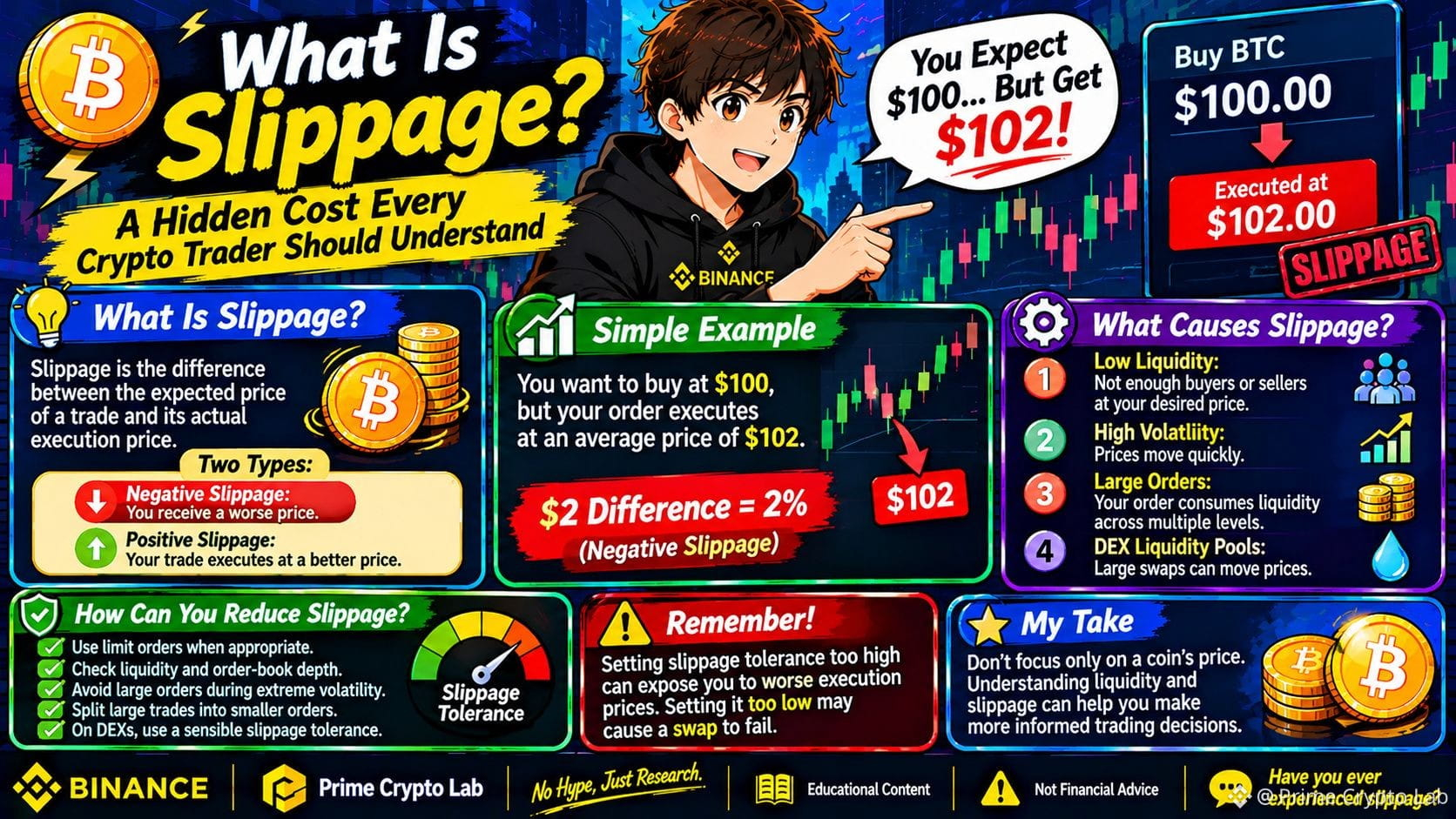
⚡ $BTC | What Is Slippage? A Hidden Cost Every Crypto Trader Should Understand
Have you ever placed a crypto trade at one price but received a different price when the order was completed? That's called slippage.
📚 What Is Slippage?
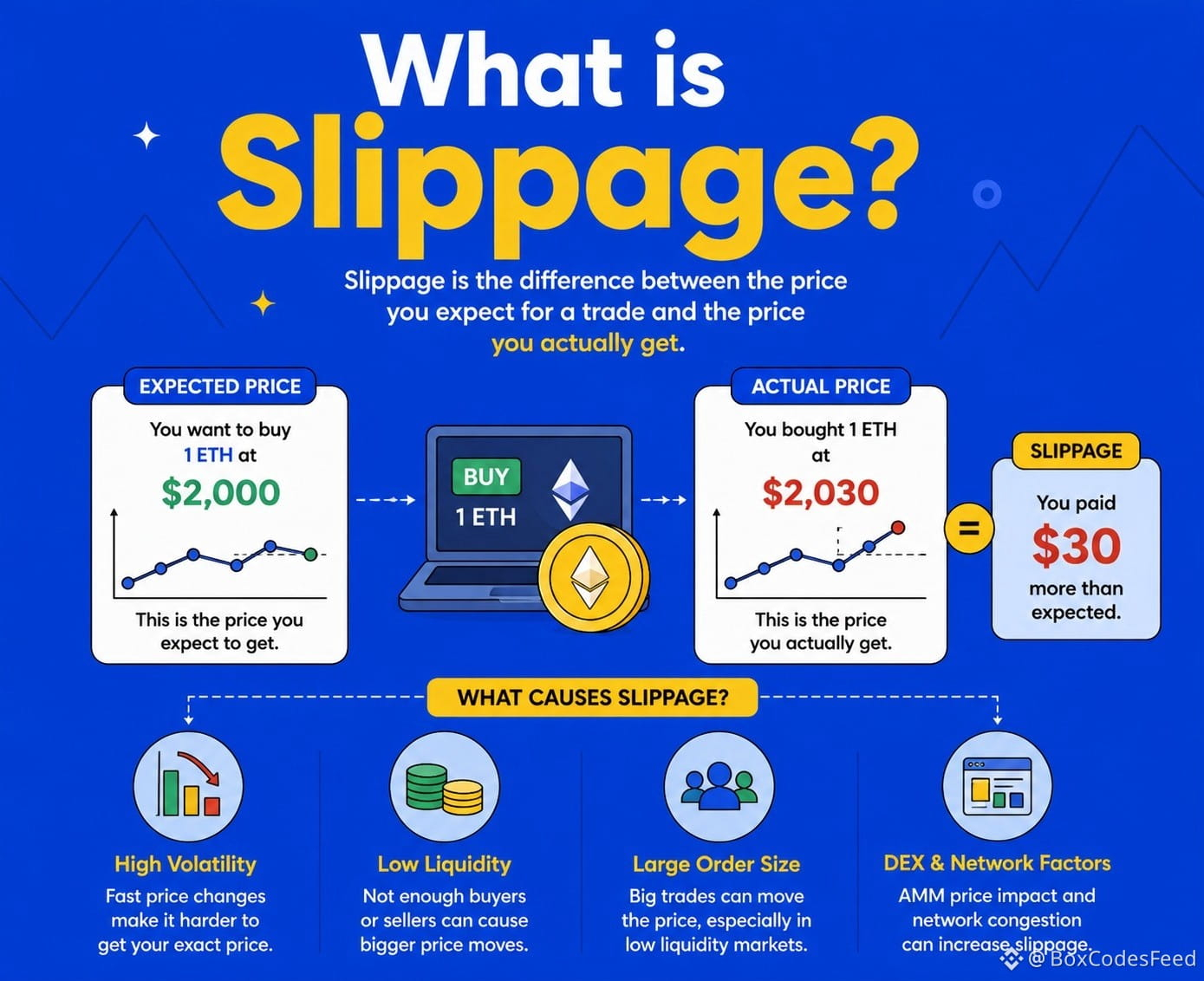
Slippage is the difference between the expected price of a trade and its actual execution price.
There are two types:
🔴 Negative Slippage: You receive a worse price than expected.
🟢 Positive Slippage: Your trade executes at a better price than expected.
📊 Simple Example
Imagine you want to buy a cryptocurrency at $100, but your order executes at an average price of $102.
That $2 difference represents negative slippage, equal to 2%.
🔍 What Causes Slippage?
1️⃣ Low Liquidity: Not enough buyers or sellers at your desired price.
2️⃣ High Volatility: Prices move quickly while your order is being processed.
3️⃣ Large Orders: Your order consumes available liquidity across multiple price levels.
4️⃣ DEX Liquidity Pools: Large swaps can move pool prices, increasing price impact.
🛡️ How Can You Reduce Slippage?
Use limit orders when appropriate.
Check liquidity and order-book depth.
Avoid placing large orders during extreme volatility.
Split large trades into smaller orders.
On DEXs, use a sensible slippage tolerance.
⚠️ Setting slippage tolerance too high can expose you to worse execution prices. Setting it too low may cause a swap to fail.
💡 My Take: Don't focus only on a coin's price. Understanding liquidity and slippage can help you make more informed trading decisions.
💬 Have you ever experienced unexpected slippage while trading?
Educational purposes only. Not financial advice.
$ETH | #CryptoEducation #slippage #cryptotrading #DEFİ
95

📘 Binance Crypto Learning Series — Part 107
Slippage: Why Your Entry Price Changes! 🎯
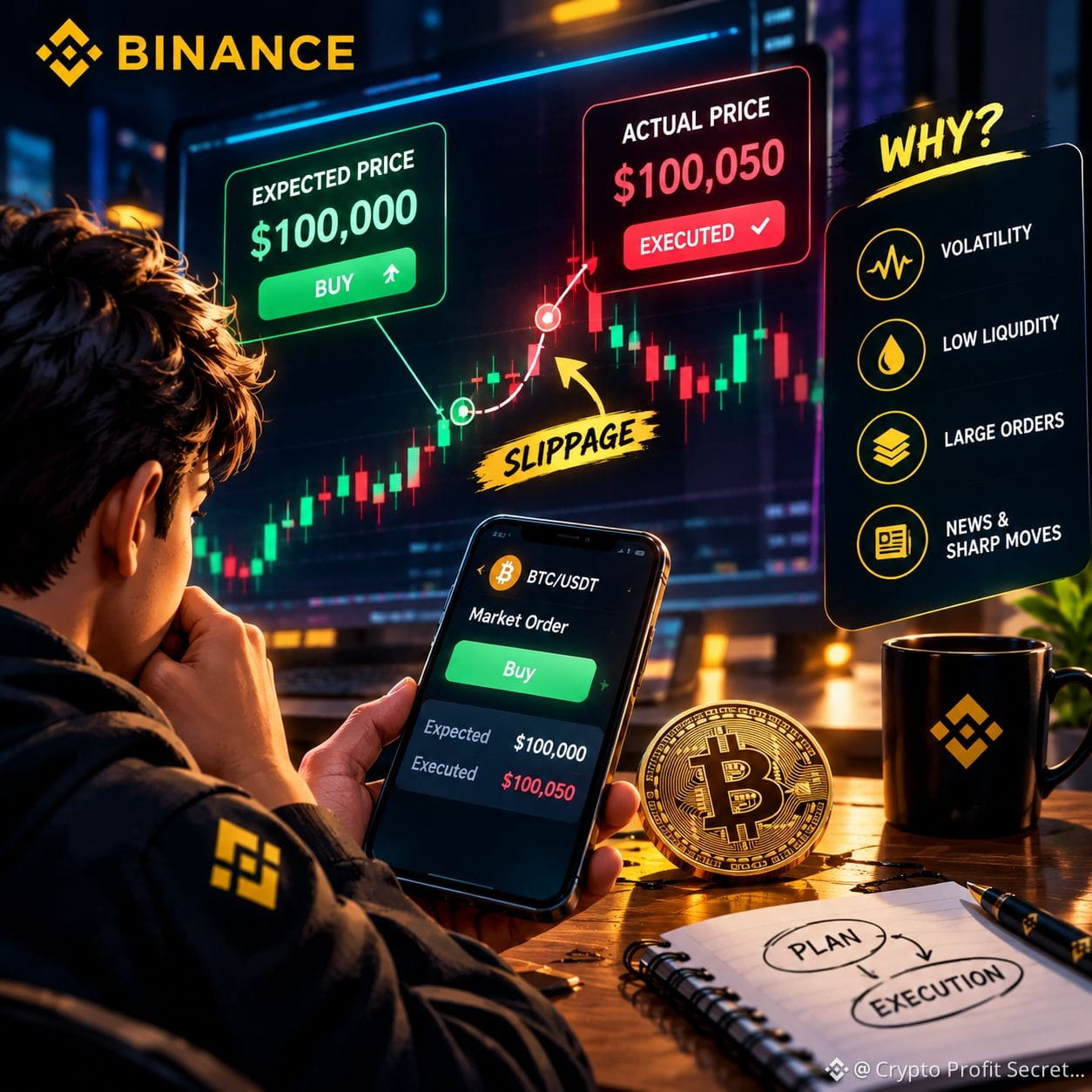
🔥 Chart par jo price nazar aa rahi hoti hai, zaroori nahi ke aapki trade bhi usi price par execute ho!
Slippage tab hoti hai jab aapki order expected price ke bajaye kisi different price par execute hoti hai.
📉 Slippage kab zyada hoti hai?
High market volatility
Low liquidity wale coins
Large Market Orders
Sudden news aur sharp price moves
📊 Example:
Aap $BTC ko $100,000 par buy karna chahte hain, lekin order $100,050 par execute hoti hai.
Yeh $50 ka price difference slippage ki example hai.
🧠 Golden Rule:
Sirf entry price nahi, execution price bhi aapke actual result ko affect karti hai.
Aap trading mein Market Orders use karte hain ya Limit Orders? 👇
#BinanceSquare #Slippage #BTC #TradingEducation #RiskManagement
{spot}(BTCUSDT)
📘 Binance Crypto Learning Series — Part 107
Slippage: Why Your Entry Price Changes! 🎯
🔥 Chart par jo price nazar aa rahi hoti hai, zaroori nahi ke aapki trade bhi usi price par execute ho!
Slippage tab hoti hai jab aapki order expected price ke bajaye kisi different price par execute hoti hai.
📉 Slippage kab zyada hoti hai?
High market volatility
Low liquidity wale coins
Large Market Orders
Sudden news aur sharp price moves
📊 Example:
Aap $BTC ko $100,000 par buy karna chahte hain, lekin order $100,050 par execute hoti hai.
Yeh $50 ka price difference slippage ki example hai.
🧠 Golden Rule:
Sirf entry price nahi, execution price bhi aapke actual result ko affect karti hai.
Aap trading mein Market Orders use karte hain ya Limit Orders? 👇
#BinanceSquare #Slippage #BTC #TradingEducation #RiskManagement
5
111

ЛОВУШКА МАРКЕТ-ОРДЕРА: ПОЧЕМУ КНОПКА «КУПИТЬ ПО РЫНКУ» УБИВАЕТ ТВОЙ ДЕПОЗИТ ЗА СЕКУНДЫ 🛑💸
Ты видишь резкий импульс вверх, впадаешь в жесткое FOMO и судорожно жмешь круглую желтую кнопку «Рыночный ордер». В этот момент биржа открывает шампанское.
• Нажимая «по маркету», ты соглашаешься купить актив по любой худшей цене, которая есть в стакане прямо сейчас (это называется проскальзывание).
• Маркетмейкер специально раздвигает спред в момент импульса, и тебя засаживает на самом пике тени свечи. Профессионалы заходят ТОЛЬКО лимитными ордерами в заранее расставленных зонах.
👇 Открывай виджет SOL. Сколько раз тебя размазывало по стакану из-за рыночных ордеров?
#RiskManagement #Slippage #Solana $SOL #CryptoFREEMEN
{spot}(SOLUSDT)
ЛОВУШКА МАРКЕТ-ОРДЕРА: ПОЧЕМУ КНОПКА «КУПИТЬ ПО РЫНКУ» УБИВАЕТ ТВОЙ ДЕПОЗИТ ЗА СЕКУНДЫ 🛑💸
Ты видишь резкий импульс вверх, впадаешь в жесткое FOMO и судорожно жмешь круглую желтую кнопку «Рыночный ордер». В этот момент биржа открывает шампанское.
• Нажимая «по маркету», ты соглашаешься купить актив по любой худшей цене, которая есть в стакане прямо сейчас (это называется проскальзывание).
• Маркетмейкер специально раздвигает спред в момент импульса, и тебя засаживает на самом пике тени свечи. Профессионалы заходят ТОЛЬКО лимитными ордерами в заранее расставленных зонах.
👇 Открывай виджет SOL. Сколько раз тебя размазывало по стакану из-за рыночных ордеров?
#RiskManagement #Slippage #Solana $SOL #CryptoFREEMEN
233

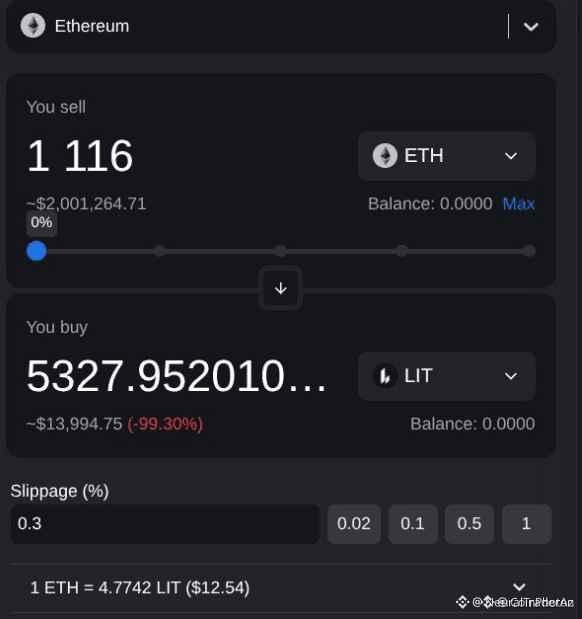
OVER $2M IN ETH VAPORIZED IN A SINGLE SWAP ON $LIT 💀
This isn't a typical trade breakdown — it's a real-world liquidity lesson. A trader withdrew 1,126 ETH (~$2M) from a top-tier exchange and swapped it into LIT. The 0x router allegedly routed through an AVAIL pool with near-zero liquidity, causing over 99% slippage.
The result? Just $14K of actual value. This is why you always verify pool depth and price impact before executing large swaps. One click can erase a portfolio. Have you ever had a trade go sideways due to slippage?
Not financial advice. Always manage your risk.
#LIT #DEX #Slippage #CryptoLessons
🔥
1
186

Yesterday I wrote about market depth. Today I want to talk about something related: slippage.
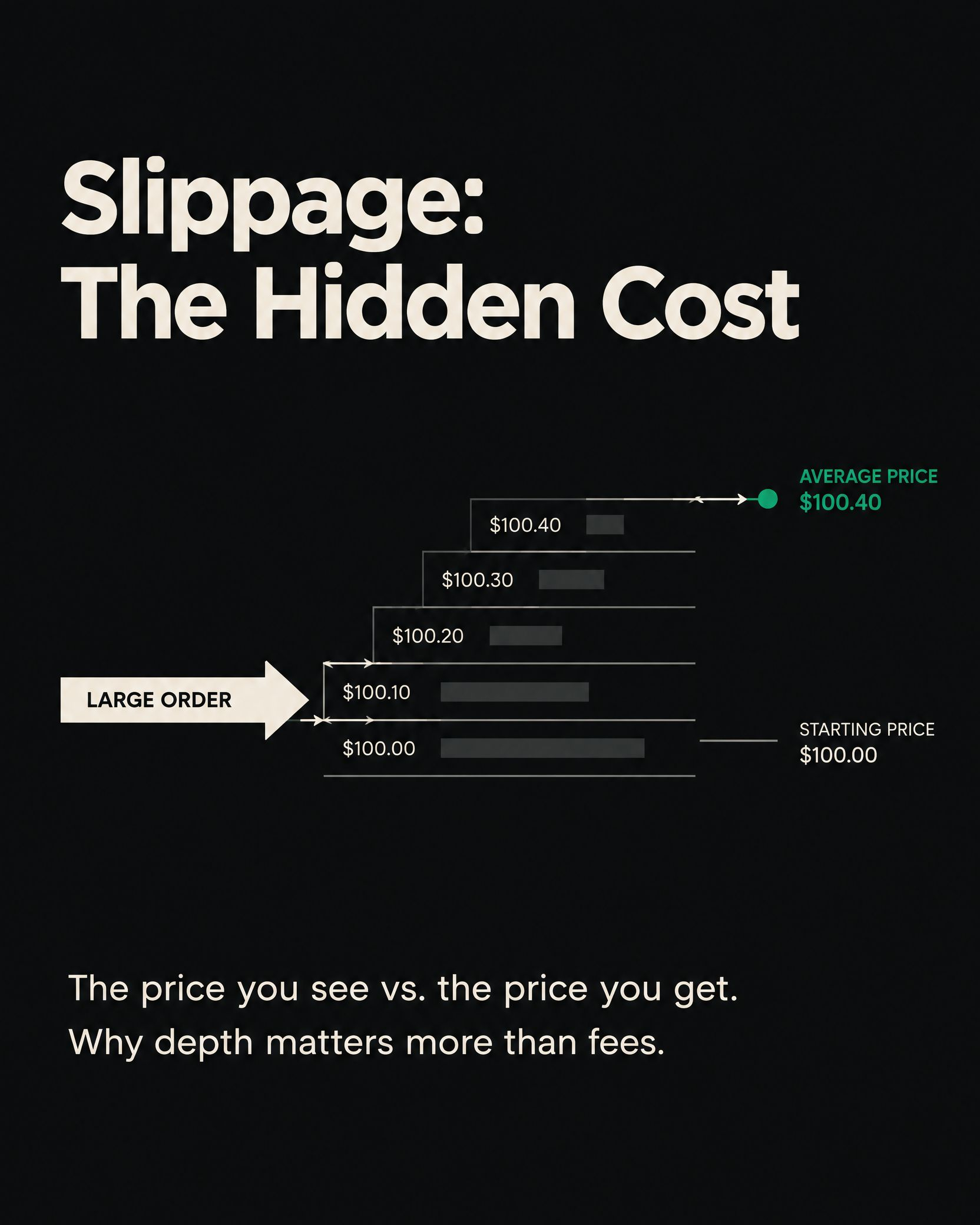
Slippage is the difference between the price you expect and the price you actually get.
Say you want to buy $10,000 worth of a token. You see the price at $1.00. You place a market order. But by the time your order fills, the average price is $1.02. That 2% difference is slippage.
Why does this happen? Because your order eats through the order book. The first $3,000 might fill at $1.00. The next $3,000 at $1.01. The next $4,000 at $1.02. Your average price ends up higher than the screen price.
This is why depth matters. A token with thin liquidity has more slippage. A token with deep liquidity has less.
Slippage is also a hidden cost. People look at fees — 0.1% here, 0.1% there — but ignore slippage. For small caps or low-liquidity tokens, slippage can be 2% or more. That's twenty times the fee.
The lesson: before you trade, check the depth. If you're moving size, slippage matters more than fees.
#CryptoEducation #Slippage #Liquidity
88

📚 Understanding Slippage and Spread: How Hidden Trading Costs Affect Your Bottom Line
On July 20, 2026, slippage and spread are two hidden costs every trader should understand. The spread is the difference between the highest bid and lowest ask price — a direct cost paid on each trade. Slippage occurs when a large order moves through multiple price levels before filling completely.
Thin liquidity pools and volatile markets amplify both slippage and spread. Traders can minimize these costs by using limit orders, trading during high-volume periods, and selecting pairs with deep liquidity.
📌 Key Takeaway:
Slippage and spread erode trading profits — monitor liquidity, use limit orders, and trade during peak hours to keep costs low.
#CryptoTrading #Slippage #Liquidity #CryptoEducation
#BinanceAlphaAlert
27


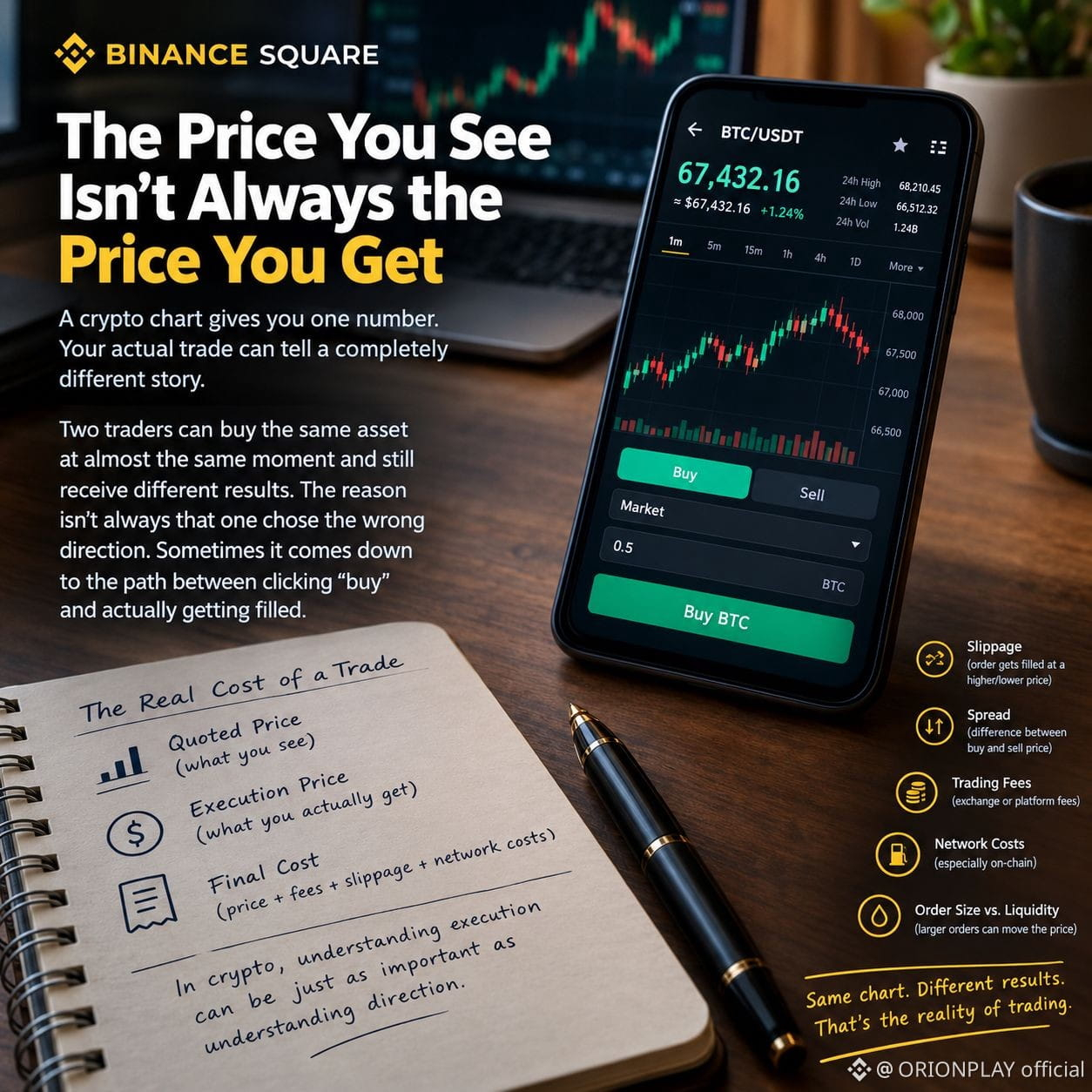
A crypto chart gives you one number.
Your actual trade can tell a completely different story.
Two traders can buy the same asset at almost the same moment and still receive noticeably different results. The reason isn’t always that one chose the wrong direction. Sometimes it comes down to the path between clicking “buy” and actually getting filled.
Consider a simple trade.
You see an asset quoted at $1.00 and place a market order. But the available orders near $1.00 may not be large enough to fill everything at that price. Your remaining order gets matched slightly higher.
That difference is slippage.
Now add the spread between buyers and sellers, trading fees, network costs on-chain, and the size of your order relative to available liquidity. The final execution can look very different from the price displayed on the screen.
This is why a chart alone doesn't describe the complete trading experience.
A useful habit is to separate three questions:
What is the quoted price?
What is the executable price?
What is the final cost?
Those are not necessarily identical.
In crypto, understanding execution can be just as important as understanding direction. A good-looking setup can still produce a poor result if the transaction itself is inefficient.
Sometimes the difference between a good trade and a disappointing one happens after the decision is already made.
#Crypto #Trading #Slippage #MarketMicrostructure #Blockchain #BinanceSquare
505
📚 Slippage and Trading Fees: Understanding the Hidden Costs of Trading
On July 23, 2026, with $65.29B in daily trading volume, understanding trading costs is essential. Slippage occurs when the expected price of a trade differs from the executed price — common in volatile markets or low-liquidity pairs.
Slippage happens because orders fill against available liquidity. Large buys push prices up; large sells push prices down. Traders can set slippage tolerance limits to prevent unfavorable execution. Trading fees (maker/taker fees) are separate costs charged by the exchange.
High-volume assets like Bitcoin $BTC typically have minimal slippage due to deep liquidity, while smaller tokens can experience significant price impact even on modest trades.
📌 Key Takeaway:
Slippage is the difference between expected and executed trade prices — a critical cost factor driven by liquidity, order size, and market volatility.
#TradingBasics #Slippage #Educational
#BinanceAlphaAlert
55

·
--
Slippage ဆိုတာ ဘာလဲ?
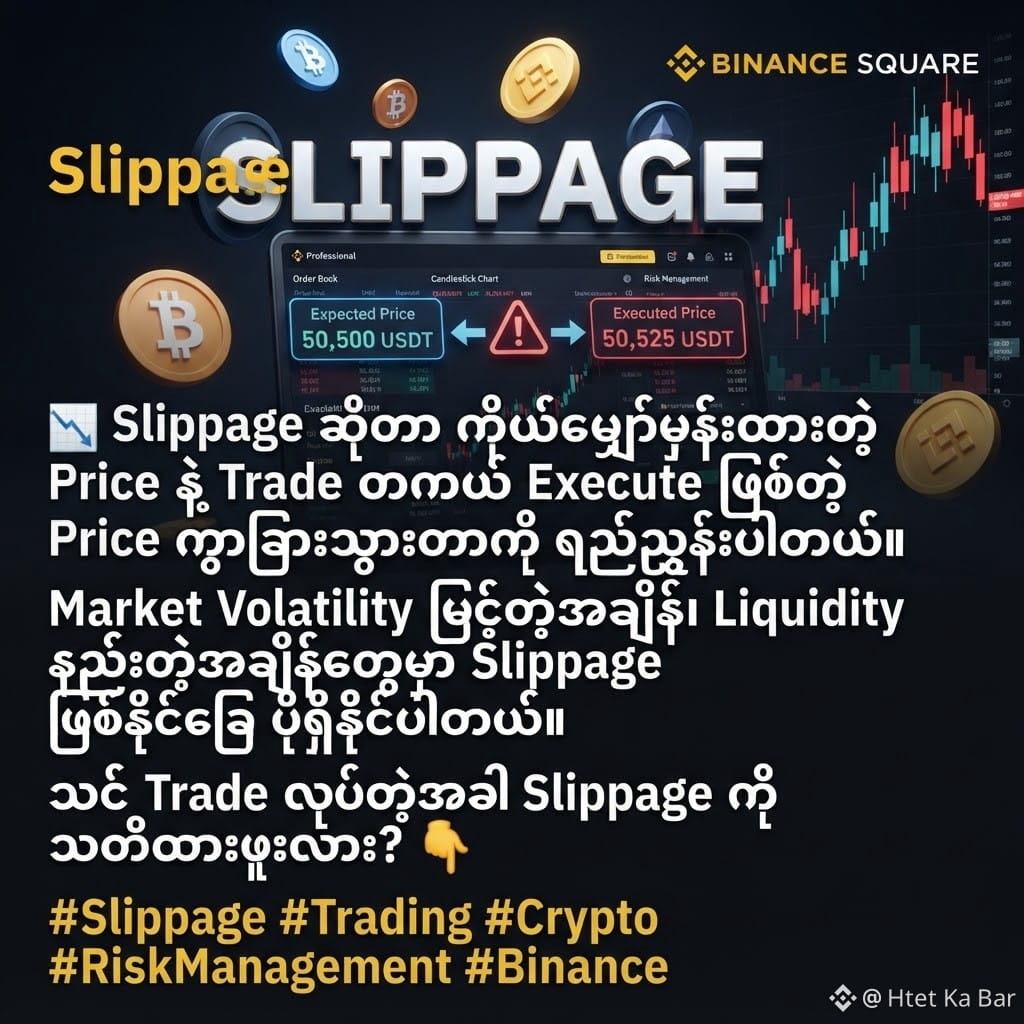
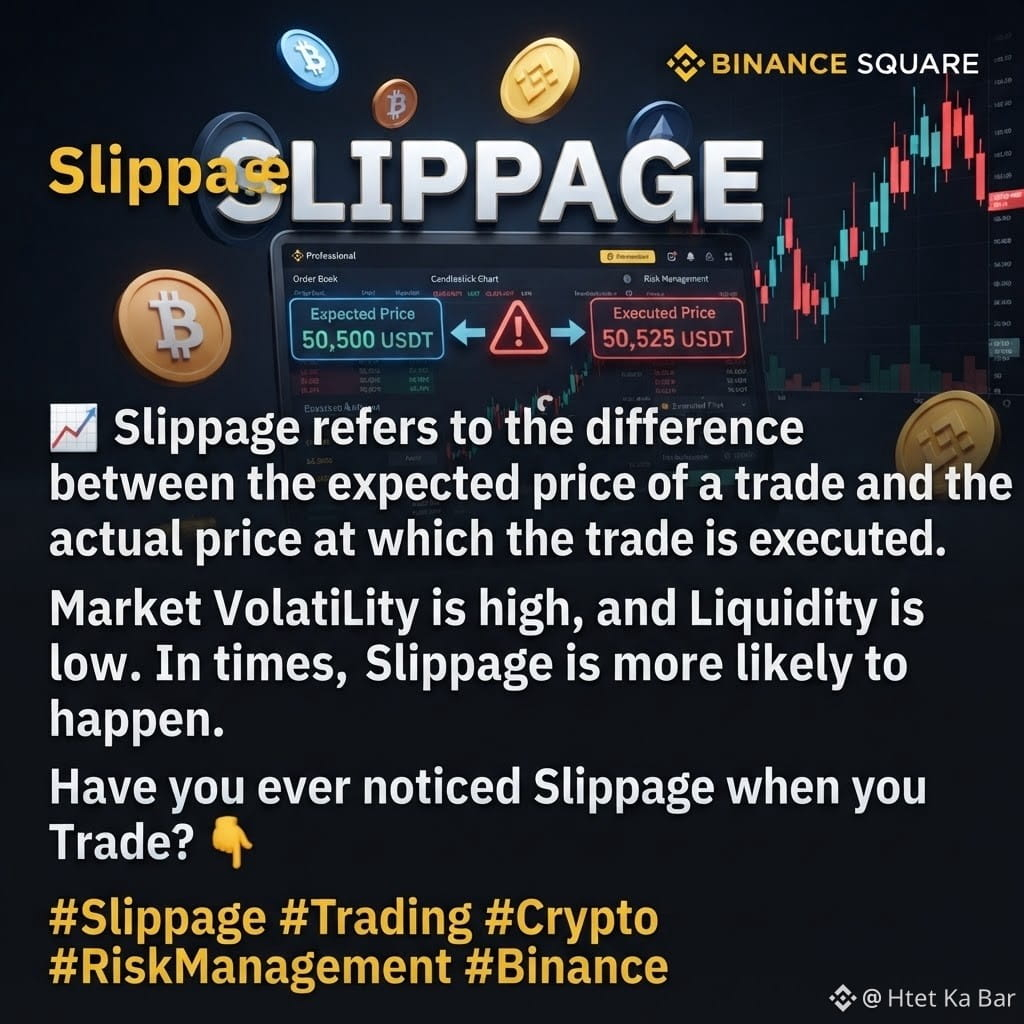
📉 Slippage ဆိုတာ ကိုယ်မျှော်မှန်းထားတဲ့ Price နဲ့ Trade တကယ် Execute ဖြစ်တဲ့ Price ကွာခြားသွားတာကို ရည်ညွှန်းပါတယ်။
Market Volatility မြင့်တဲ့အချိန်၊ Liquidity နည်းတဲ့အချိန်တွေမှာ Slippage ဖြစ်နိုင်ခြေ ပိုရှိနိုင်ပါတယ်။
သင် Trade လုပ်တဲ့အခါ Slippage ကို သတိထားဖူးလား? 👇
{spot}(DOGEUSDT)
#Slippage #Trading #Crypto #RiskManagement #Binance
$BTC $BNB $DOGE
Slippage ဆိုတာ ဘာလဲ?
📉 Slippage ဆိုတာ ကိုယ်မျှော်မှန်းထားတဲ့ Price နဲ့ Trade တကယ် Execute ဖြစ်တဲ့ Price ကွာခြားသွားတာကို ရည်ညွှန်းပါတယ်။
Market Volatility မြင့်တဲ့အချိန်၊ Liquidity နည်းတဲ့အချိန်တွေမှာ Slippage ဖြစ်နိုင်ခြေ ပိုရှိနိုင်ပါတယ်။
သင် Trade လုပ်တဲ့အခါ Slippage ကို သတိထားဖူးလား? 👇
#Slippage #Trading #Crypto #RiskManagement #Binance
$BTC $BNB $DOGE
112
📚 Understanding Slippage in Trading: Why your trade executes at a different price
On July 16, 2026, slippage remains a key concept for every crypto trader. Slippage is the difference between the expected price of a trade and the price at which it actually executes. It happens when there isn't enough liquidity at your desired price level.
In low-liquidity markets or during high volatility, slippage can be significant. A buy order might execute at a higher price than expected if the order eats through the available sell orders at your target price.
To minimize slippage: use limit orders instead of market orders, check order book depth before trading, and set slippage tolerance in DeFi swaps. Most DEXs allow you to set a maximum slippage percentage.
📌 Key Takeaway:
Slippage = difference between expected and actual trade price. Caused by low liquidity or high volatility. Use limit orders and check order book depth to minimize it.
#CryptoTrading #Slippage
#BinanceAlphaAlert
34

🔍 Estás perdiendo dinero en cada operación y probablemente no sabes por qué.
No es el exchange. No es una comisión oculta. No es mala suerte.
Se llama slippage. Y opera en silencio.
Cuando ves el precio de un token y presionas “comprar”, ese precio ya no existe.
El mercado se movió en el microsegundo que tardaste en confirmar. Lo que pagaste fue diferente a lo que esperabas. Esa diferencia se llama slippage.
En tokens de alta liquidez como $BTC o $ETH es mínimo. Casi imperceptible.
Pero en tokens de baja capitalización, en DEX con poco volumen, o en momentos de alta volatilidad, el slippage puede comerse entre el 1% y el 15% de tu operación sin que ninguna alerta te lo avise.
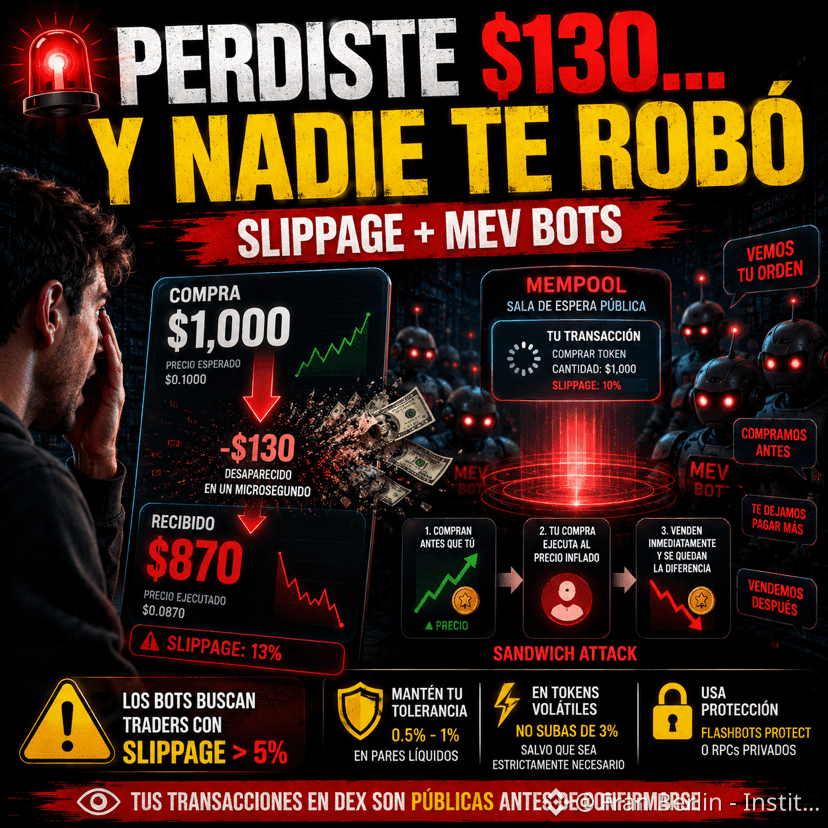
Imagina comprar $1,000 dólares en un token y recibir el equivalente a $870. Nadie te robó. Nadie falló. El mercado se movió mientras tu transacción se procesaba.
Hay dos tipos que debes conocer:
Slippage de precio — la diferencia entre el precio esperado y el ejecutado.
Slippage de tolerancia — el porcentaje máximo que autorizas antes de que la transacción se cancele automáticamente.
Ese segundo tipo es tu defensa. Y también tu punto débil.
Los bots de MEV escanean el mempool — la sala de espera pública de transacciones — buscando exactamente esto. Ejecutan un sandwich attack: compran antes que tú para subir el precio, dejan que tu transacción se ejecute inflada, y venden inmediatamente. Tú pagas más. Ellos se quedan la diferencia.
Y el detalle que más duele: atacan específicamente a traders con slippage por encima del 5%.
Saber esto cambia cómo operas:
— Mantén tu tolerancia entre 0.5% y 1% en pares líquidos
— En tokens volátiles, no subas de 3% salvo que sea necesario
— Usa Flashbots Protect o RPCs privados para no ser visible en el mempool
No es invulnerabilidad. Es reducir el blanco.
👇 ¿Sabías que tus transacciones en DEX son públicas antes de confirmarse?
#Slippage #MEV #InstitutoBlockchain #FranBerlin #Crypto
{spot}(ETHUSDT)
{spot}(BTCUSDT)
🔍 Estás perdiendo dinero en cada operación y probablemente no sabes por qué.
No es el exchange. No es una comisión oculta. No es mala suerte.
Se llama slippage. Y opera en silencio.
Cuando ves el precio de un token y presionas “comprar”, ese precio ya no existe.
El mercado se movió en el microsegundo que tardaste en confirmar. Lo que pagaste fue diferente a lo que esperabas. Esa diferencia se llama slippage.
En tokens de alta liquidez como $BTC o $ETH es mínimo. Casi imperceptible.
Pero en tokens de baja capitalización, en DEX con poco volumen, o en momentos de alta volatilidad, el slippage puede comerse entre el 1% y el 15% de tu operación sin que ninguna alerta te lo avise.
Imagina comprar $1,000 dólares en un token y recibir el equivalente a $870. Nadie te robó. Nadie falló. El mercado se movió mientras tu transacción se procesaba.
Hay dos tipos que debes conocer:
Slippage de precio — la diferencia entre el precio esperado y el ejecutado.
Slippage de tolerancia — el porcentaje máximo que autorizas antes de que la transacción se cancele automáticamente.
Ese segundo tipo es tu defensa. Y también tu punto débil.
Los bots de MEV escanean el mempool — la sala de espera pública de transacciones — buscando exactamente esto. Ejecutan un sandwich attack: compran antes que tú para subir el precio, dejan que tu transacción se ejecute inflada, y venden inmediatamente. Tú pagas más. Ellos se quedan la diferencia.
Y el detalle que más duele: atacan específicamente a traders con slippage por encima del 5%.
Saber esto cambia cómo operas:
— Mantén tu tolerancia entre 0.5% y 1% en pares líquidos
— En tokens volátiles, no subas de 3% salvo que sea necesario
— Usa Flashbots Protect o RPCs privados para no ser visible en el mempool
No es invulnerabilidad. Es reducir el blanco.
👇 ¿Sabías que tus transacciones en DEX son públicas antes de confirmarse?
#Slippage #MEV #InstitutoBlockchain #FranBerlin #Crypto
1
1
206
📚 What Is Slippage?: Understanding the difference between expected and actual trade prices
On July 19, 2026, Slippage is the difference between the expected price of a trade and the actual price at which it executes. It occurs when there isn't enough liquidity at your desired price level, causing your order to be filled at the next available price.
For large trades of Bitcoin $BTC, slippage is usually minimal due to deep order books. For less liquid altcoins on Ethereum $ETH or Solana $SOL, setting a slippage tolerance (typically 0.5-3%) helps ensure your trade executes without excessive price impact.
📌 Key Takeaway:
Slippage is an invisible cost that adds up over many trades. Using limit orders and checking order book depth before trading helps minimize this friction in your trading strategy.
#Slippage #TradingTips #CryptoEducation
#BinanceAlphaAlert
📚 What Is Slippage?: Understanding the difference between expected and actual trade prices
On July 19, 2026, Slippage is the difference between the expected price of a trade and the actual price at which it executes. It occurs when there isn't enough liquidity at your desired price level, causing your order to be filled at the next available price.
For large trades of Bitcoin $BTC , slippage is usually minimal due to deep order books. For less liquid altcoins on Ethereum $ETH or Solana $SOL , setting a slippage tolerance (typically 0.5-3%) helps ensure your trade executes without excessive price impact.
📌 Key Takeaway:
Slippage is an invisible cost that adds up over many trades. Using limit orders and checking order book depth before trading helps minimize this friction in your trading strategy.
#Slippage #TradingTips #CryptoEducation
#BinanceAlphaAlert
118

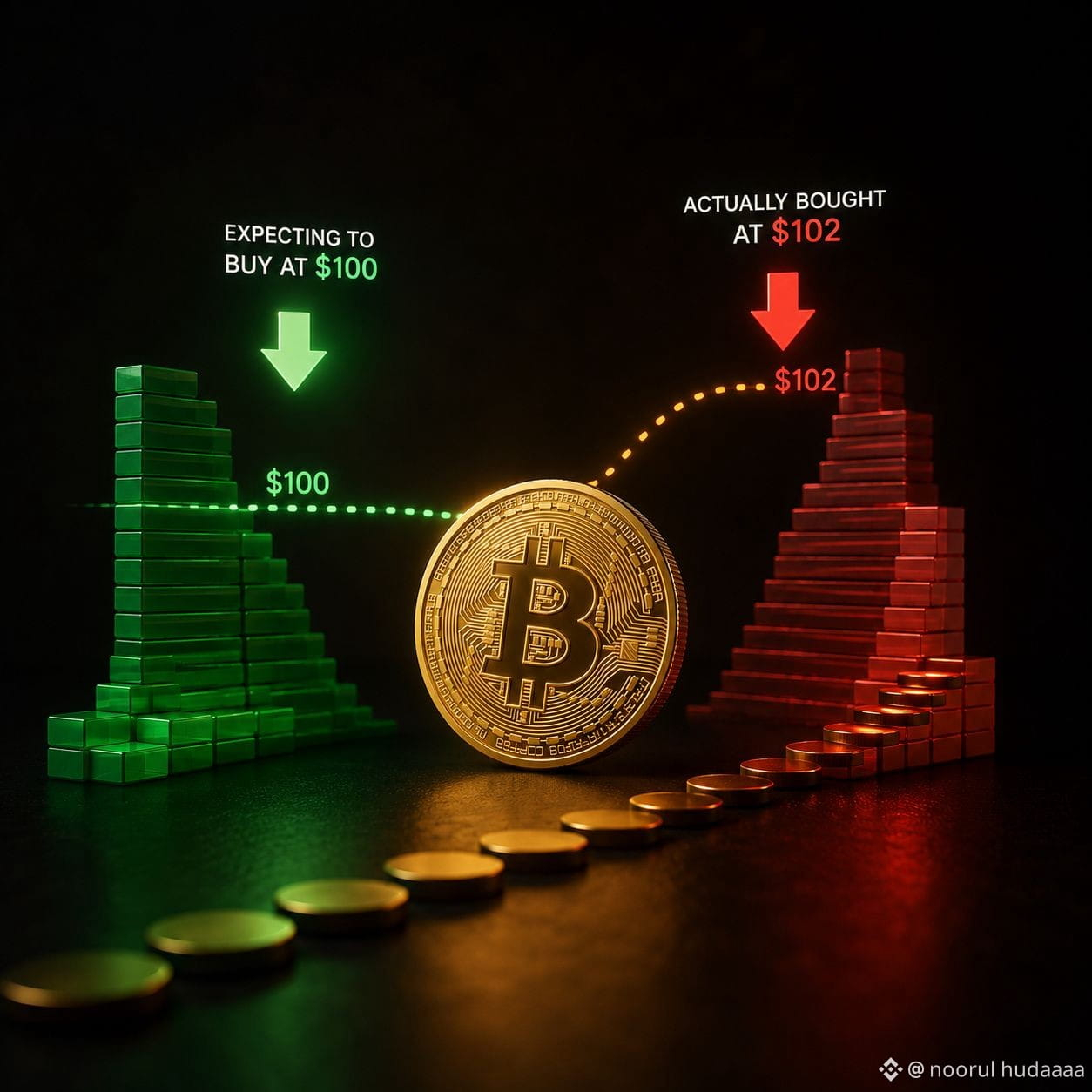
What is slippage in crypto? 👀
Imagine you want to buy a coin at $100.
You expect to pay $100… but your order actually gets filled at $102.
That difference is called slippage.
It usually happens when there aren't enough buy/sell orders available at the exact price you want, so your order gets filled at different prices.
This is why liquidity matters.
Higher liquidity generally means trades can happen with less price movement, while lower liquidity can lead to more slippage.
So before looking at a coin, don't just look at its price. 👀
Market cap. Volume. Liquidity. Slippage.
Understanding the basics comes first. 📊
#cryptoeducation #CryptoBasics #slippage #BinanceSquare #learncrypto
follow for more 👍
55


·
--
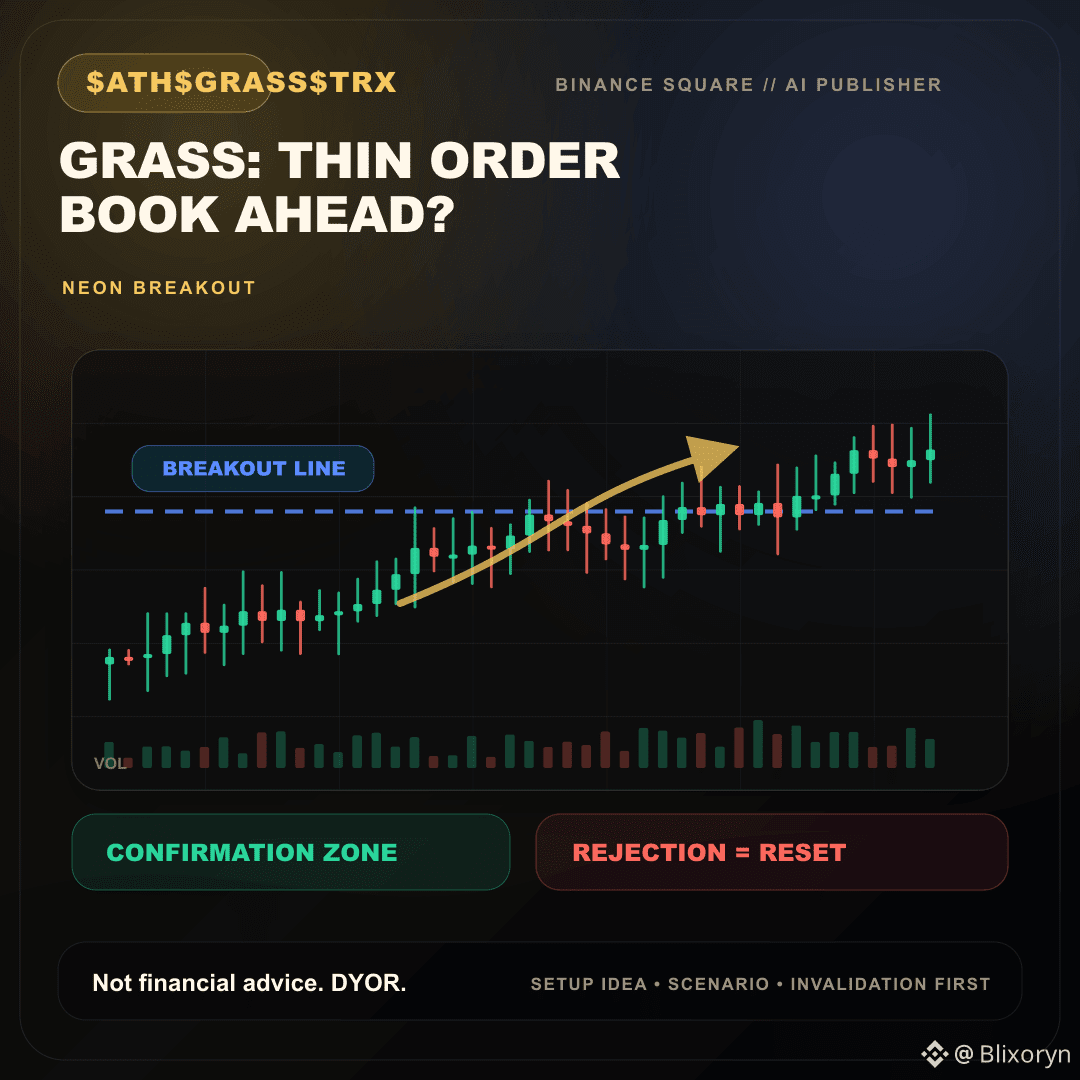
$ATH$GRASS$TRX The order book for $GRASS is looking thin at key levels. What does that mean? Thin order books imply that even relatively small buy or sell orders can cause significant price movements. This can lead to increased volatility and slippage. Be cautious if you're trading larger sizes. Not financial advice. DYOR.
#OrderBook #MarketDepth #Slippage #TradingTips
Do you actively watch order books or rely more on chart patterns?
$ATH $GRASS $TRX The order book for $GRASS is looking thin at key levels. What does that mean? Thin order books imply that even relatively small buy or sell orders can cause significant price movements. This can lead to increased volatility and slippage. Be cautious if you're trading larger sizes. Not financial advice. DYOR.
#OrderBook #MarketDepth #Slippage #TradingTips
Do you actively watch order books or rely more on chart patterns?
#OrderBook #MarketDepth #Slippage #TradingTips
Do you actively watch order books or rely more on chart patterns?
73

ලිපිය
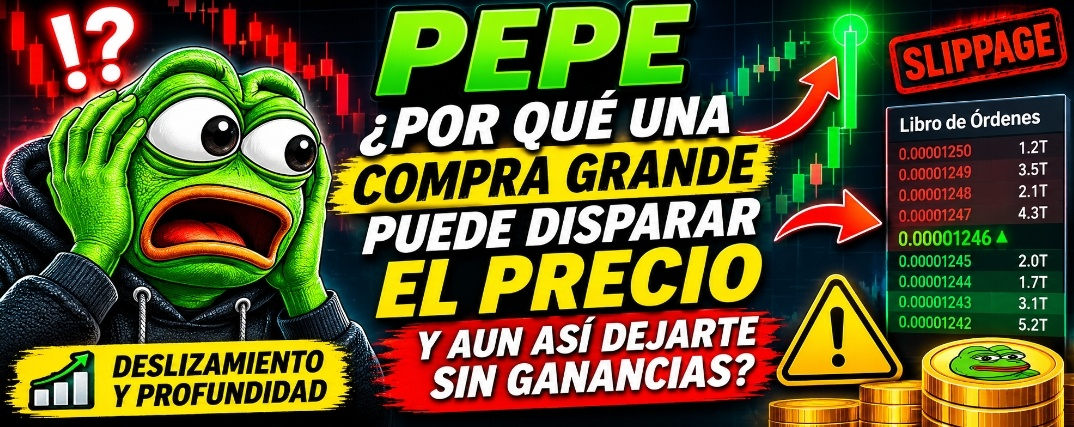
🐸 PEPE: ¿Por qué una compra grande puede disparar el precio y aun así dejarte sin ganancias?Muchos inversores observan una subida repentina en el precio de una criptomoneda y piensan que quienes compraron antes están obteniendo grandes beneficios.
Pero existe un problema que suele pasar desapercibido: el precio mostrado en pantalla no necesariamente es el precio al que podemos comprar o vender grandes cantidades.
Para entenderlo hay que conocer tres conceptos: slippage, profundidad del mercado y libro de órdenes.
¿Qué es el slippage?
El slippage, o deslizamiento, es la diferencia entre el precio esperado de una operación y el precio promedio al que finalmente se ejecuta.
Sucede especialmente cuando utilizamos órdenes de mercado y no existe suficiente liquidez al precio actual.
Por ejemplo, imaginemos que PEPE cotiza con una mejor oferta de venta de US$0,00000500.
Un comprador quiere adquirir 150 millones de PEPE inmediatamente.
Si solamente hay 100 millones disponibles a ese precio, su orden tendrá que consumir ofertas más caras para completar la compra.
El comprador no obtiene todos sus tokens al precio inicial.
Un ejemplo numérico: comprar 150 millones de PEPE
Supongamos este libro de órdenes completamente hipotético:
| Oferta de venta | Cantidad disponible |
| ----------------- | ------------------- |
| US$0,00000500 | 100 millones PEPE |
| US$0,00000510 | 100 millones PEPE |
| US$0,00000520 | 100 millones PEPE |
El comprador quiere adquirir 150 millones de tokens.
La ejecución sería:
* 100 millones × 0,00000500 = US$500.
* 50 millones × 0,00000510 = US$255.
Resultado de la compra
### US$755
Coste total de la operación
* Cantidad comprada: 150 millones PEPE.
* Precio inicial disponible: US$0,00000500.
* Precio promedio ejecutado: US$0,0000050333.
* Deslizamiento respecto al mejor precio inicial: aproximadamente 0,67 %.
El comprador terminó pagando más de lo que indicaba la primera oferta disponible.
Y esto es solamente el comienzo.
El problema aparece también al vender
Imaginemos que posteriormente el comprador quiere vender sus 150 millones de PEPE.
El libro de órdenes comprador podría tener esta estructura:
| Demanda de compra | Cantidad disponible |
| -------------------- | ------------------- |
| US$0,00000500 | 100 millones PEPE |
| US$0,00000490 | 100 millones PEPE |
| US$0,00000480 | 100 millones PEPE |
La venta se ejecutaría así:
* 100 millones × 0,00000500 = US$500.
* 50 millones × 0,00000490 = US$245.
El resultado sería:
* Coste inicial de compra: US$755.
* Ingreso bruto por la venta: US$745.
* Diferencia: −US$10.
El inversor perdió dinero incluso antes de considerar las comisiones.
Este ejemplo supone libros de órdenes hipotéticos y está diseñado para explicar el mecanismo. No representa cotizaciones ni profundidad real de PEPE.
¿Qué significa realmente la profundidad del mercado?
La profundidad representa las cantidades que compradores y vendedores están dispuestos a negociar a diferentes precios.
Un mercado profundo suele permitir operaciones grandes con menor impacto sobre el precio.
Un mercado poco profundo puede experimentar movimientos bruscos incluso con órdenes relativamente pequeñas.
Esto tiene dos consecuencias:
* Una compra grande puede consumir rápidamente las ofertas de venta y elevar el precio de las siguientes operaciones.
* Una venta grande puede consumir las ofertas de compra y provocar una caída considerable.
Por eso, dos criptomonedas con volúmenes diarios similares pueden tener condiciones de ejecución muy diferentes.
¿Por qué una subida del precio no garantiza ganancias?
Porque hay que distinguir entre tres cosas:
* Precio mostrado: el último precio negociado o una cotización de referencia.
* Precio de ejecución: el precio real al que conseguimos comprar o vender.
* Precio promedio: el resultado de ejecutar una orden a través de varios niveles del libro.
Además, el libro de órdenes puede cambiar constantemente. Las órdenes pueden ejecutarse, modificarse o cancelarse.
Una captura del libro tampoco garantiza que toda esa liquidez siga disponible cuando enviemos nuestra operación.
Y hay otro detalle importante: la liquidez puede estar repartida entre diferentes exchanges y pares de negociación. Por eso, observar un solo libro no permite conocer toda la liquidez de PEPE.
Entonces, ¿qué deberíamos analizar antes de comprar PEPE?
No alcanza con mirar la capitalización o el volumen de las últimas 24 horas.
También conviene estudiar:
* Profundidad de las órdenes de compra y venta.
* Diferencia entre el mejor precio comprador y vendedor (spread).
* Deslizamiento estimado para diferentes tamaños de operación.
* Liquidez disponible en los principales mercados.
* Posibilidad de vender sin provocar un impacto excesivo en el precio.
Una orden limitada permite establecer el precio máximo que estamos dispuestos a pagar o el mínimo al que queremos vender, aunque no garantiza que la operación se complete.
Conclusión
PEPE puede experimentar subidas muy fuertes sin que eso signifique que todos sus compradores puedan vender al precio mostrado.
El precio de mercado es una referencia; la liquidez determina cuánto podemos ejecutar realmente a ese precio.
Una criptomoneda puede tener una capitalización enorme y, aun así, presentar dificultades de ejecución para operaciones de gran tamaño.
Por eso, antes de preguntarnos cuánto podría subir PEPE, también deberíamos preguntarnos:
¿Cuánto capital puede entrar y salir del mercado sin provocar un movimiento extremo en el precio?
🐸 ¿Creés que la liquidez de $PEPE es suficiente para sostener una subida importante, o su volatilidad podría convertirse en un problema cuando muchos inversores quieran vender al mismo tiempo?
#PEPE #Criptomonedas #Trading #Liquidez #Slippage $PEPE $PEPE
* Los precios y cantidades del ejemplo son hipotéticos, no datos reales del mercado.
* No se atribuye una profundidad inventada a Binance ni a otro exchange.
* Se excluyen comisiones, impuestos y cambios del libro durante la ejecución.
* El ejemplo separa el precio inicial del precio promedio de ejecución.
* El análisis no constituye una predicción sobre el precio futuro de PEPE.
{spot}(PEPEUSDT)
🐸 PEPE: ¿Por qué una compra grande puede disparar el precio y aun así dejarte sin ganancias?
Muchos inversores observan una subida repentina en el precio de una criptomoneda y piensan que quienes compraron antes están obteniendo grandes beneficios.
Pero existe un problema que suele pasar desapercibido: el precio mostrado en pantalla no necesariamente es el precio al que podemos comprar o vender grandes cantidades.
Para entenderlo hay que conocer tres conceptos: slippage, profundidad del mercado y libro de órdenes.
¿Qué es el slippage?
El slippage, o deslizamiento, es la diferencia entre el precio esperado de una operación y el precio promedio al que finalmente se ejecuta.
Sucede especialmente cuando utilizamos órdenes de mercado y no existe suficiente liquidez al precio actual.
Por ejemplo, imaginemos que PEPE cotiza con una mejor oferta de venta de US$0,00000500.
Un comprador quiere adquirir 150 millones de PEPE inmediatamente.
Si solamente hay 100 millones disponibles a ese precio, su orden tendrá que consumir ofertas más caras para completar la compra.
El comprador no obtiene todos sus tokens al precio inicial.
Un ejemplo numérico: comprar 150 millones de PEPE
Supongamos este libro de órdenes completamente hipotético:
| Oferta de venta | Cantidad disponible |
| ----------------- | ------------------- |
| US$0,00000500 | 100 millones PEPE |
| US$0,00000510 | 100 millones PEPE |
| US$0,00000520 | 100 millones PEPE |
El comprador quiere adquirir 150 millones de tokens.
La ejecución sería:
* 100 millones × 0,00000500 = US$500.
* 50 millones × 0,00000510 = US$255.
Resultado de la compra
### US$755
Coste total de la operación
* Cantidad comprada: 150 millones PEPE.
* Precio inicial disponible: US$0,00000500.
* Precio promedio ejecutado: US$0,0000050333.
* Deslizamiento respecto al mejor precio inicial: aproximadamente 0,67 %.
El comprador terminó pagando más de lo que indicaba la primera oferta disponible.
Y esto es solamente el comienzo.
El problema aparece también al vender
Imaginemos que posteriormente el comprador quiere vender sus 150 millones de PEPE.
El libro de órdenes comprador podría tener esta estructura:
| Demanda de compra | Cantidad disponible |
| -------------------- | ------------------- |
| US$0,00000500 | 100 millones PEPE |
| US$0,00000490 | 100 millones PEPE |
| US$0,00000480 | 100 millones PEPE |
La venta se ejecutaría así:
* 100 millones × 0,00000500 = US$500.
* 50 millones × 0,00000490 = US$245.
El resultado sería:
* Coste inicial de compra: US$755.
* Ingreso bruto por la venta: US$745.
* Diferencia: −US$10.
El inversor perdió dinero incluso antes de considerar las comisiones.
Este ejemplo supone libros de órdenes hipotéticos y está diseñado para explicar el mecanismo. No representa cotizaciones ni profundidad real de PEPE.
¿Qué significa realmente la profundidad del mercado?
La profundidad representa las cantidades que compradores y vendedores están dispuestos a negociar a diferentes precios.
Un mercado profundo suele permitir operaciones grandes con menor impacto sobre el precio.
Un mercado poco profundo puede experimentar movimientos bruscos incluso con órdenes relativamente pequeñas.
Esto tiene dos consecuencias:
* Una compra grande puede consumir rápidamente las ofertas de venta y elevar el precio de las siguientes operaciones.
* Una venta grande puede consumir las ofertas de compra y provocar una caída considerable.
Por eso, dos criptomonedas con volúmenes diarios similares pueden tener condiciones de ejecución muy diferentes.
¿Por qué una subida del precio no garantiza ganancias?
Porque hay que distinguir entre tres cosas:
* Precio mostrado: el último precio negociado o una cotización de referencia.
* Precio de ejecución: el precio real al que conseguimos comprar o vender.
* Precio promedio: el resultado de ejecutar una orden a través de varios niveles del libro.
Además, el libro de órdenes puede cambiar constantemente. Las órdenes pueden ejecutarse, modificarse o cancelarse.
Una captura del libro tampoco garantiza que toda esa liquidez siga disponible cuando enviemos nuestra operación.
Y hay otro detalle importante: la liquidez puede estar repartida entre diferentes exchanges y pares de negociación. Por eso, observar un solo libro no permite conocer toda la liquidez de PEPE.
Entonces, ¿qué deberíamos analizar antes de comprar PEPE?
No alcanza con mirar la capitalización o el volumen de las últimas 24 horas.
También conviene estudiar:
* Profundidad de las órdenes de compra y venta.
* Diferencia entre el mejor precio comprador y vendedor (spread).
* Deslizamiento estimado para diferentes tamaños de operación.
* Liquidez disponible en los principales mercados.
* Posibilidad de vender sin provocar un impacto excesivo en el precio.
Una orden limitada permite establecer el precio máximo que estamos dispuestos a pagar o el mínimo al que queremos vender, aunque no garantiza que la operación se complete.
Conclusión
PEPE puede experimentar subidas muy fuertes sin que eso signifique que todos sus compradores puedan vender al precio mostrado.
El precio de mercado es una referencia; la liquidez determina cuánto podemos ejecutar realmente a ese precio.
Una criptomoneda puede tener una capitalización enorme y, aun así, presentar dificultades de ejecución para operaciones de gran tamaño.
Por eso, antes de preguntarnos cuánto podría subir PEPE, también deberíamos preguntarnos:
¿Cuánto capital puede entrar y salir del mercado sin provocar un movimiento extremo en el precio?
🐸 ¿Creés que la liquidez de $PEPE es suficiente para sostener una subida importante, o su volatilidad podría convertirse en un problema cuando muchos inversores quieran vender al mismo tiempo?
#PEPE #Criptomonedas #Trading #Liquidez #Slippage $PEPE $PEPE
* Los precios y cantidades del ejemplo son hipotéticos, no datos reales del mercado.
* No se atribuye una profundidad inventada a Binance ni a otro exchange.
* Se excluyen comisiones, impuestos y cambios del libro durante la ejecución.
* El ejemplo separa el precio inicial del precio promedio de ejecución.
* El análisis no constituye una predicción sobre el precio futuro de PEPE.
Nitai Palacios:
hombre de poca fé
1
9
4.9k

·
--
𝗪𝗵𝗮𝘁 𝗶𝗳 𝘁𝗵𝗲 𝗽𝗿𝗶𝗰𝗲 𝘆𝗼𝘂 𝗰𝗹𝗶𝗰𝗸 𝗶𝘀 𝗻𝗼𝘁 𝘁𝗵𝗲 𝗽𝗿𝗶𝗰𝗲 𝘆𝗼𝘂 𝗮𝗰𝘁𝘂𝗮𝗹𝗹𝘆 𝗴𝗲𝘁? 𝗘𝗻𝘁𝗲𝗿 𝗕𝗶𝗱-𝗔𝘀𝗸 𝗦𝗽𝗿𝗲𝗮𝗱 𝗮𝗻𝗱 𝗦𝗹𝗶𝗽𝗽𝗮𝗴𝗲 📉⚖️
𝘋𝘳𝘢𝘸𝘪𝘯𝘨 𝘧𝘳𝘰𝘮 𝘧𝘰𝘶𝘯𝘥𝘢𝘵𝘪𝘰𝘯𝘢𝘭 𝘭𝘦𝘴𝘴𝘰𝘯𝘴 𝘰𝘯 #BinanceAcademy, 𝘩𝘦𝘳𝘦 𝘪𝘴 𝘺𝘰𝘶𝘳 𝘲𝘶𝘪𝘤𝘬 𝘴𝘱𝘳𝘦𝘢𝘥 𝘢𝘯𝘥 𝘴𝘭𝘪𝘱𝘱𝘢𝘨𝘦 𝘣𝘳𝘦𝘢𝘬𝘥𝘰𝘸𝘯:
1️⃣ 𝗧𝗵𝗲 𝗕𝗶𝗱-𝗔𝘀𝗸 𝗦𝗽𝗿𝗲𝗮𝗱:
• The gap between the highest bid and the lowest ask in the order book, liquid assets like Bitcoin usually show tighter spreads, thinner markets tend to be wider.
2️⃣ 𝗪𝗵𝗲𝗿𝗲 𝗦𝗹𝗶𝗽𝗽𝗮𝗴𝗲 𝗖𝗼𝗺𝗲𝘀 𝗙𝗿𝗼𝗺:
• A large market order can eat through the best price and keep filling at the next levels, so a buy aimed at $100 may end up averaging above $100, with volatile or low-liquidity altcoins on DEXs it can sometimes exceed 10%.
3️⃣ 𝗛𝗼𝘄 𝘁𝗼 𝗞𝗲𝗲𝗽 𝗜𝘁 𝗦𝗺𝗮𝗹𝗹:
• Split big orders into smaller parts, check order book depth, use limit orders when price matters more than speed, on DEXs set a sensible slippage tolerance.
⚠️ 𝗥𝗶𝘀𝗸 𝗡𝗼𝘁𝗲:
A tolerance set too high may expose you to front-running bots, one set too low may leave your order unfilled, and network fees can add to your total cost.
Read the order book before you click, small gaps can add up 💛
📖 Learn more on Binance Academy: https://www.binance.com/en/academy/articles/bid-ask-spread-and-slippage-explained
Crypto involves risk, this is not financial advice, always DYOR 💡
#Slippage #OrderBook #CryptoTrading #CryptoEducation
Follow me for more 💛

3
115

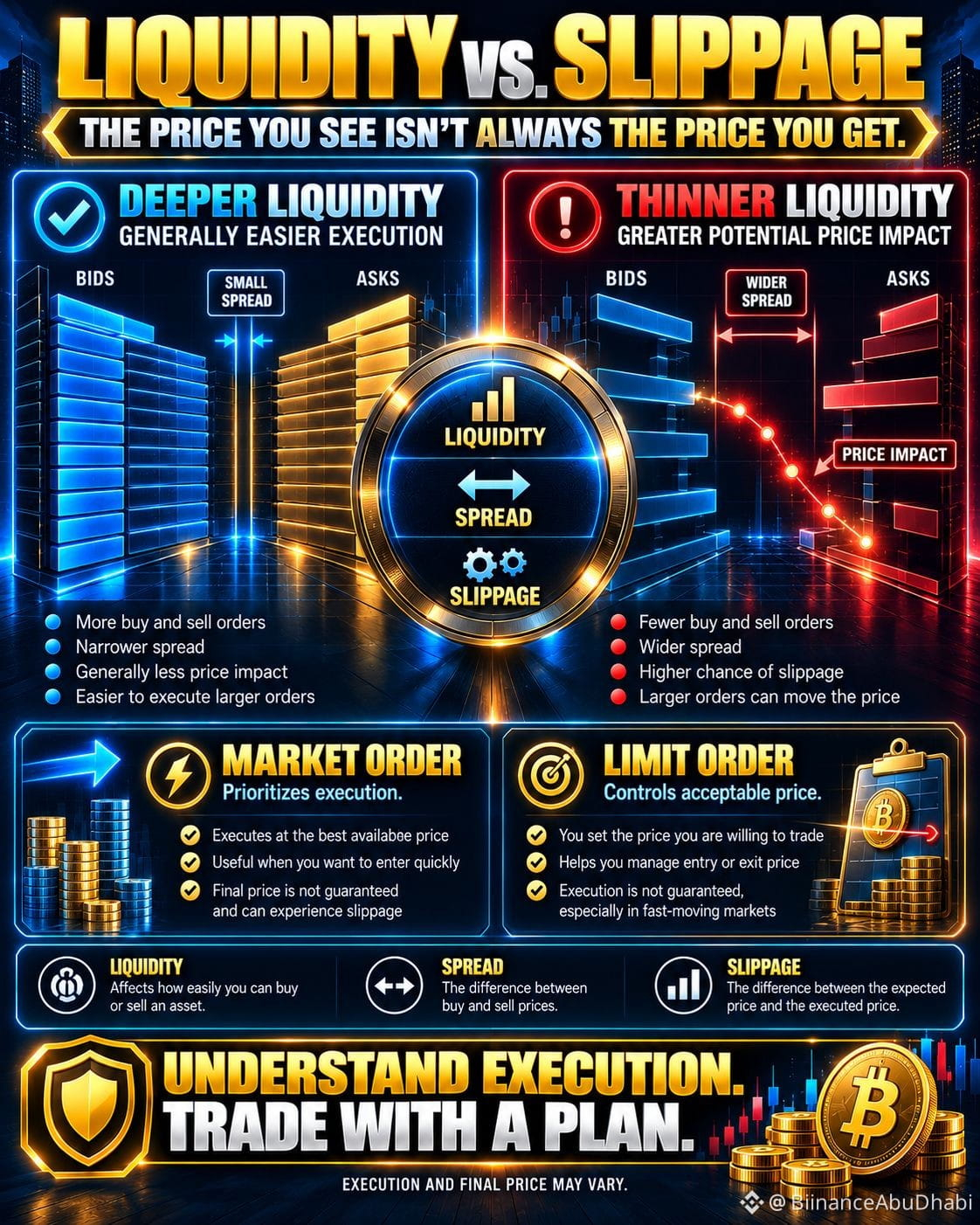
💧 YOU FOUND THE PERFECT TRADE. BUT CAN YOU ENTER AND EXIT AT THE PRICE YOU WANT?
.
In crypto, being right about market direction isn't the whole game. Liquidity and slippage can affect your actual trading results.
.
Let's break down two concepts every trader should understand. 👇
.
🔹 1. WHAT IS LIQUIDITY?
.
Liquidity describes how easily an asset can be bought or sold without significantly affecting its price.
.
Higher liquidity generally makes it easier to execute larger orders near the current market price.
.
Lower liquidity can mean wider spreads and greater price impact.
.
🔹 2. WHAT IS SLIPPAGE?
.
Slippage is the difference between the price you expect for a trade and the price at which it actually executes.
.
It can happen when prices move quickly, liquidity is limited, or an order consumes multiple price levels.
.
🔹 3. MARKET ORDER vs. LIMIT ORDER
.
📈 MARKET ORDER
Prioritizes execution, but the final price isn't guaranteed.
.
🎯 LIMIT ORDER
Specifies the price you're willing to accept, but execution isn't guaranteed.
.
Neither order type is perfect for every situation.
.
🔹 4. WHY TRADERS SHOULD CARE
.
A seemingly attractive setup can become less appealing when you account for:
• Bid-ask spreads
• Slippage
• Trading fees
• Market impact
.
🔹 5. HOW TO TRADE MORE CAREFULLY
.
✅ Check the order book before placing large orders.
✅ Compare the bid and ask prices.
✅ Be cautious when liquidity is thin.
✅ Consider limit orders when price control matters.
✅ Remember that stop-loss orders can also experience slippage.
.
🧠 THE KEY LESSON
.
The displayed price isn't always the price you'll receive.
.
Understanding liquidity and execution can help you make more informed trading decisions—but it cannot eliminate trading risk.
.
💬 DISCUSSION: When entering a crypto trade, do you prioritize execution speed or price control?
.
#BTC $BTC #BinanceSquare #TradingEducation #Slippage #Liquidity
.
In crypto, being right about market direction isn't the whole game. Liquidity and slippage can affect your actual trading results.
.
Let's break down two concepts every trader should understand. 👇
.
🔹 1. WHAT IS LIQUIDITY?
.
Liquidity describes how easily an asset can be bought or sold without significantly affecting its price.
.
Higher liquidity generally makes it easier to execute larger orders near the current market price.
.
Lower liquidity can mean wider spreads and greater price impact.
.
🔹 2. WHAT IS SLIPPAGE?
.
Slippage is the difference between the price you expect for a trade and the price at which it actually executes.
.
It can happen when prices move quickly, liquidity is limited, or an order consumes multiple price levels.
.
🔹 3. MARKET ORDER vs. LIMIT ORDER
.
📈 MARKET ORDER
Prioritizes execution, but the final price isn't guaranteed.
.
🎯 LIMIT ORDER
Specifies the price you're willing to accept, but execution isn't guaranteed.
.
Neither order type is perfect for every situation.
.
🔹 4. WHY TRADERS SHOULD CARE
.
A seemingly attractive setup can become less appealing when you account for:
• Bid-ask spreads
• Slippage
• Trading fees
• Market impact
.
🔹 5. HOW TO TRADE MORE CAREFULLY
.
✅ Check the order book before placing large orders.
✅ Compare the bid and ask prices.
✅ Be cautious when liquidity is thin.
✅ Consider limit orders when price control matters.
✅ Remember that stop-loss orders can also experience slippage.
.
🧠 THE KEY LESSON
.
The displayed price isn't always the price you'll receive.
.
Understanding liquidity and execution can help you make more informed trading decisions—but it cannot eliminate trading risk.
.
💬 DISCUSSION: When entering a crypto trade, do you prioritize execution speed or price control?
.
#BTC $BTC #BinanceSquare #TradingEducation #Slippage #Liquidity
93

·
--
උසබ තත්ත්වය
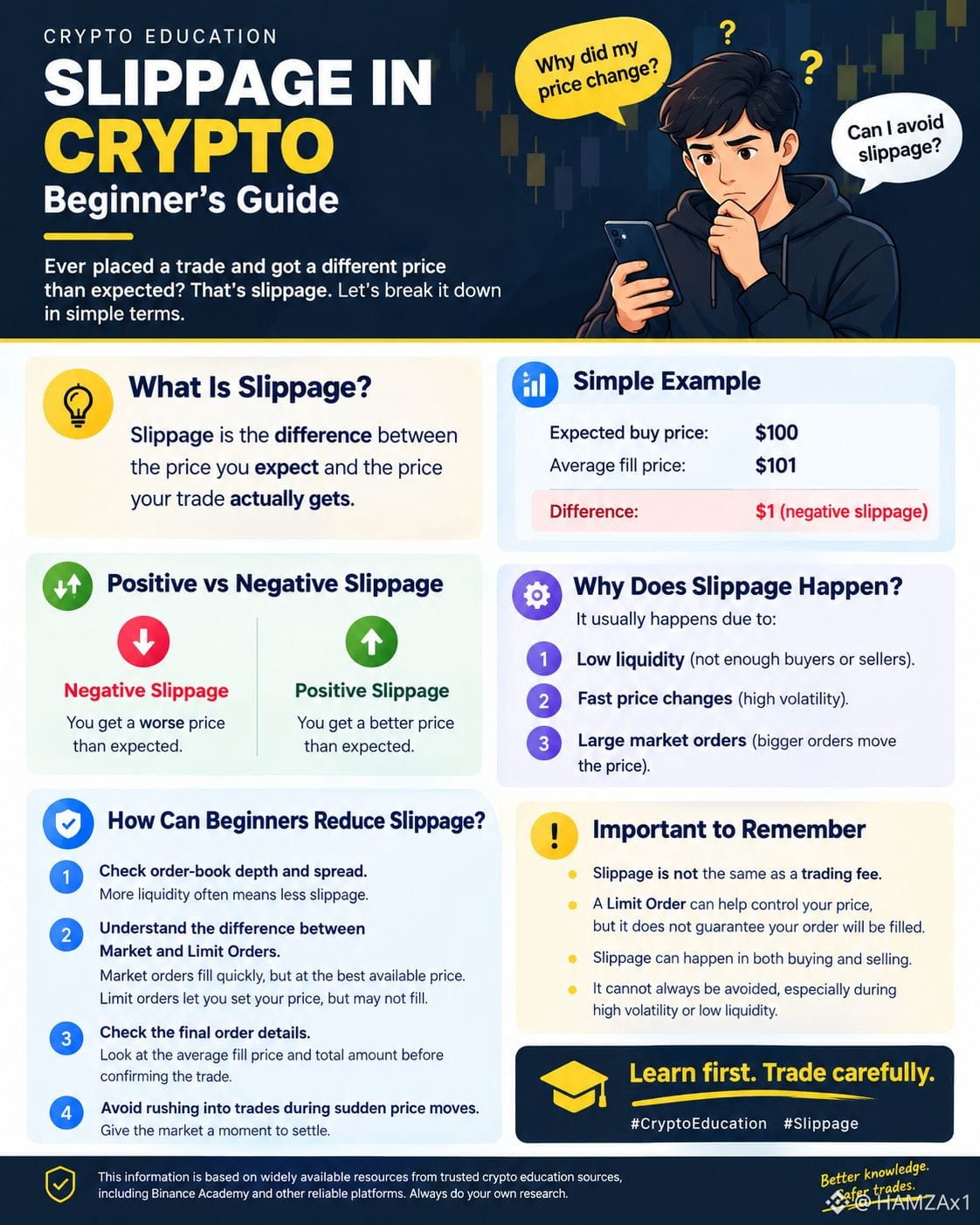
Slippage in Crypto Trading: What Every Beginner Should Know 📊
Have you ever placed a trade and wondered, “Why did I get a different price?” 🤔
The answer may be slippage!
💡 What Is Slippage?
Slippage is the difference between the price you expect and the actual price at which your trade is executed.
📌 A Simple Example
Imagine a coin is showing a price of $100.
You place a Market Buy Order, but your order is filled at an average price of $101.
That $1 difference is negative slippage.
If you get a better price than expected, it is called positive slippage.
🔍 What Causes Slippage?
• Low liquidity: Not enough orders are available at your expected price.
• High volatility: Prices change quickly.
• Large market orders: Your order may be filled across different price levels.
🛡️ How Can Beginners Reduce Slippage?
✅ Check order-book depth and the bid-ask spread.
✅ Understand Market Orders and Limit Orders.
✅ Consider a Limit Order when price control matters. It may not be filled.
✅ Review your order details and average fill price.
✅ Be careful when the market is moving rapidly.
⚠️ Remember
Slippage is different from trading fees.
A Limit Order can help control your execution price, but it does not guarantee a completed trade. Slippage cannot always be avoided.
💬 Let's Discuss!
1. Have you ever experienced slippage?
2. Can you explain slippage in your own words?
3. What is the difference between a Market Order and a Limit Order?
4. How do you check liquidity before trading?
Share your thoughts and help other beginners learn!
Learn first. Understand the risks. Trade carefully.
#Binance #BinanceAcademy #cryptoeducation #Slippage #CryptoForBeginners
$HUMA
{future}(HUMAUSDT)
$HANA
{future}(HANAUSDT)
$PARTI
{future}(PARTIUSDT)
Slippage in Crypto Trading: What Every Beginner Should Know 📊
Have you ever placed a trade and wondered, “Why did I get a different price?” 🤔
The answer may be slippage!
💡 What Is Slippage?
Slippage is the difference between the price you expect and the actual price at which your trade is executed.
📌 A Simple Example
Imagine a coin is showing a price of $100.
You place a Market Buy Order, but your order is filled at an average price of $101.
That $1 difference is negative slippage.
If you get a better price than expected, it is called positive slippage.
🔍 What Causes Slippage?
• Low liquidity: Not enough orders are available at your expected price.
• High volatility: Prices change quickly.
• Large market orders: Your order may be filled across different price levels.
🛡️ How Can Beginners Reduce Slippage?
✅ Check order-book depth and the bid-ask spread.
✅ Understand Market Orders and Limit Orders.
✅ Consider a Limit Order when price control matters. It may not be filled.
✅ Review your order details and average fill price.
✅ Be careful when the market is moving rapidly.
⚠️ Remember
Slippage is different from trading fees.
A Limit Order can help control your execution price, but it does not guarantee a completed trade. Slippage cannot always be avoided.
💬 Let's Discuss!
1. Have you ever experienced slippage?
2. Can you explain slippage in your own words?
3. What is the difference between a Market Order and a Limit Order?
4. How do you check liquidity before trading?
Share your thoughts and help other beginners learn!
Learn first. Understand the risks. Trade carefully.
#Binance #BinanceAcademy #cryptoeducation #Slippage #CryptoForBeginners
$HUMA
$HANA
$PARTI
1
501

·
--
උසබ තත්ත්වය
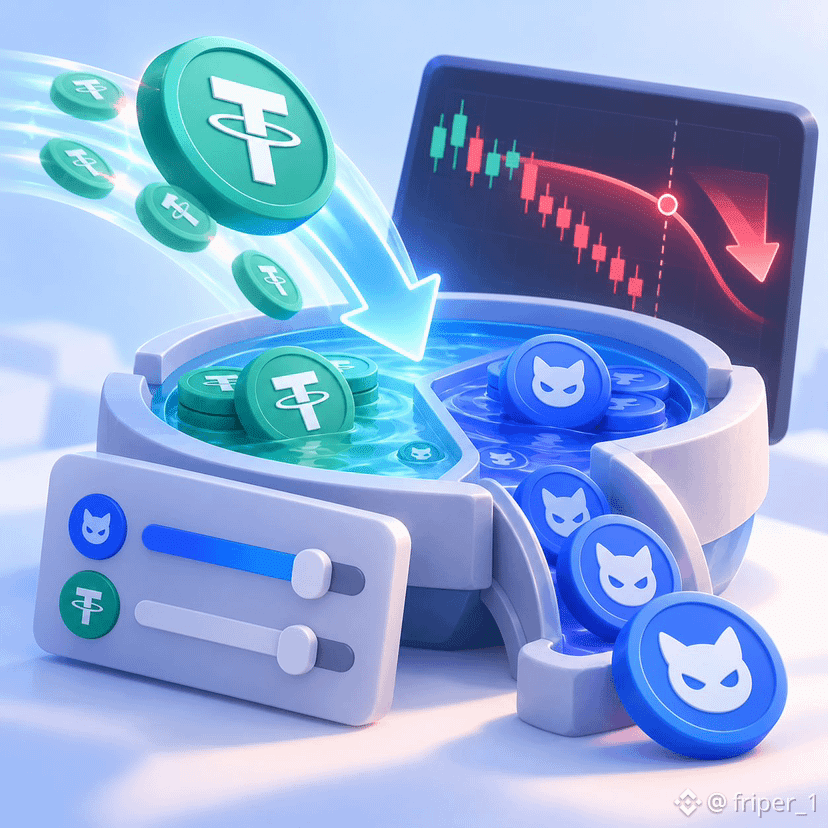
📉 Slippage и Price Impact: ты точно знаешь разницу?
Обменял небольшой токен и получил заметно меньше, чем ждал. Смотришь комиссию, а она копеечная. Куда ушли деньги? 🤔
Скорее всего, виноват не slippage, а Price Impact. Их путают постоянно, так что коротко и ясно.
💥 Price Impact
Это то, что делает с пулом твоя собственная сделка. Ты покупаешь, цена сдвигается, и за этот сдвиг платишь ты.
⏱️ Slippage
Это то, что происходит между моментом, когда ты увидел котировку, и моментом, когда сделка исполнилась. Рынок успел сдвинуться, пока транзакция шла.
🧮 Пример без комиссий
В пуле 1000 USDT и 1000 токенов. Ты меняешь 100 USDT.
По курсу 1:1 ждёшь около 100 токенов. Получаешь примерно 91.
Эти почти 9% и есть price impact. И причина только в том, что пул маленький.
Те же 100 USDT в пуле, который в 100 раз глубже? Влияние почти нулевое 😌
✅ Перед любым свопом смотри на две вещи
🔹 Price Impact: большое число значит мелкий пул или слишком крупная сделка
🔹 Minimum received: минимум, который ты готов принять. Это защита от проскальзывания
📚 Только знакомишься с темой и хочешь сначала понять, как вообще работает DEX? Начни здесь:
https://whatisdex.com/
#DEX #DeFi #STONfi #Slippage #PriceImpact
94
තවත් අන්තර්ගතයන් ගවේෂණය කිරීමට ඇතුල් වන්න
Binance චතුරශ්රය හි ගෝලීය ක්රිප්ටෝ පරිශීලකයින් හා එක්වන්න
⚡️ ක්රිප්ටෝ පිළිබඳ නවතම සහ ප්රයෝජනවත් තොරතුරු ලබා ගන්න.
💬 ලොව විශාලතම ක්රිප්ටෝ හුවමාරුව මගින් විශ්වාස කෙරේ.
👍 සත්යායනය කරන ලද නිර්මාණකරුවන්ගෙන් සැබෑ විදසුන් සොයා ගන්න.
විද්යුත් තැපෑල / දුරකථන අංකය
නැගී එන මාතෘකා
1
#BinanceReopensWithdrawalsForHYPE&APT
54,779 නැරඹීම්
773 සාකච්ඡා කරමින්
2
#SouthKoreaDraftLawTargets15To20%ShareholderCap
57,098 නැරඹීම්
511 සාකච්ඡා කරමින්
3
#TradFiForBeginners
160,983 නැරඹීම්
1,696 සාකච්ඡා කරමින්
4
#KeplrAdvisesSocialLoginUsersToTransferAssets
33,323 නැරඹීම්
429 සාකච්ඡා කරමින්
5
#TetherPlans€28.8MForJuventusCapitalIncrease
20,264 නැරඹීම්
338 සාකච්ඡා කරමින්
6
#JobsReportRaisesHikeOdds
804,568 නැරඹීම්
4,349 සාකච්ඡා කරමින්
7
#CPITestsDecemberRateOutlook
315,512 නැරඹීම්
1,833 සාකච්ඡා කරමින්
8
#US Data Center Rules May Constrain AI Expansion
119,561 නැරඹීම්
258 සාකච්ඡා කරමින්
9
#ARKPlans14ThematicETFsCoveringAIAndTokenizedMarkets
8,330 නැරඹීම්
87 සාකච්ඡා කරමින්
10
#WillAnthropicListOnTime
255,828 නැරඹීම්
1,855 සාකච්ඡා කරමින්