

missCryptopkTrader-pk
628 Публикации
missCryptopkTrader-pk
Отправить жалобу
Заблокировать пользователя
Crypto PK 🇵🇰 | BTC • ETH • Gold • Breaking News • Charts • Free Signals 🚀 | Follow for Daily Profit 💵
Открытая сделка
Трейдер с регулярными сделками
1.8 г
149 подписок(и/а)
65 подписчиков(а)
591 понравилось
Посты
Портфель
Все
Цитирования
Видео
PINNED
Частичная правда
#EarningsSeason
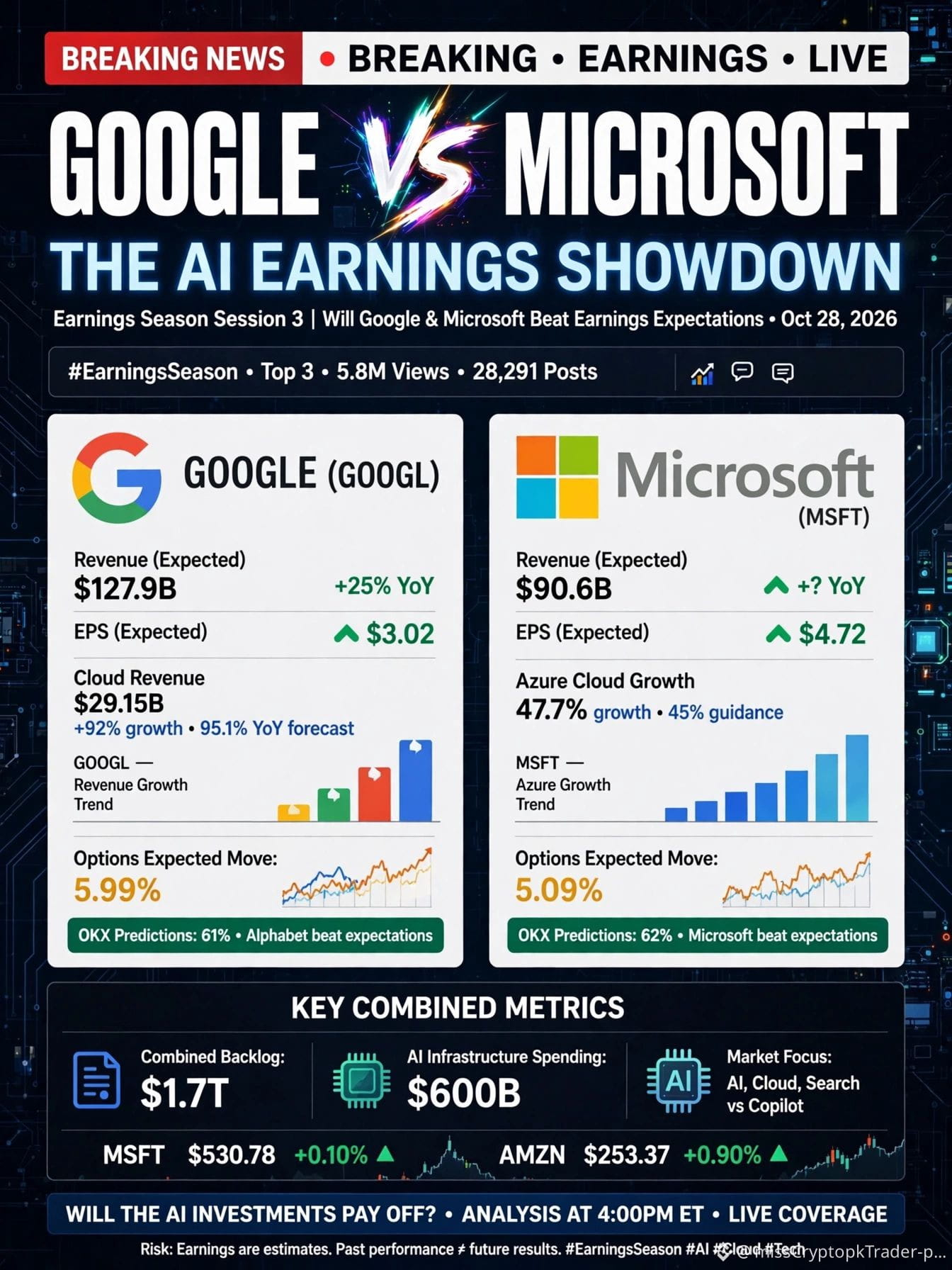
🔥 🔥 EARNINGS SEASON SESSION 3: GOOGLE VS MICROSOFT - THE AI SHOWDOWN! 🔥
#Earnings season Top 3.5.8M Views • 28,291 Posts
MSFT $530.78 +0.10% | AMZN $253.37 +0.90% | GOOGL +1.78%
Two tech giants, billions invested in AI, one big question: Who will turn spending into real growth?
🟢 GOOGLE (GOOGL)
Expected Revenue: $127.9B (+25% YoY) | EPS: $3.02
Cloud Revenue: $29.15B (+92% growth, 95.1% forecast)
Options Expected Move: 5.99%
OKX Prediction: 61% chance to beat expectations
🔵 MICROSOFT (MSFT)
Expected Revenue: $90.6B | EPS: $4.72
Azure Cloud Growth: 47.7% (45% guidance)
Options Expected Move: 5.09%
OKX Prediction: 62% chance to beat expectations
Combined Backlog: $1.7T | AI Infra Spending: $600B
Will the AI investments finally pay off? Earnings tonight after the close!
#EarningsSeason #BinancePick #CanMicrosoftDeliverOnAI #CanGoogleDefindItsCore $GOOGL $MSFT
2
6
4.1k
#HyperliquidPermanentlyBurns49.87MillionHYPE
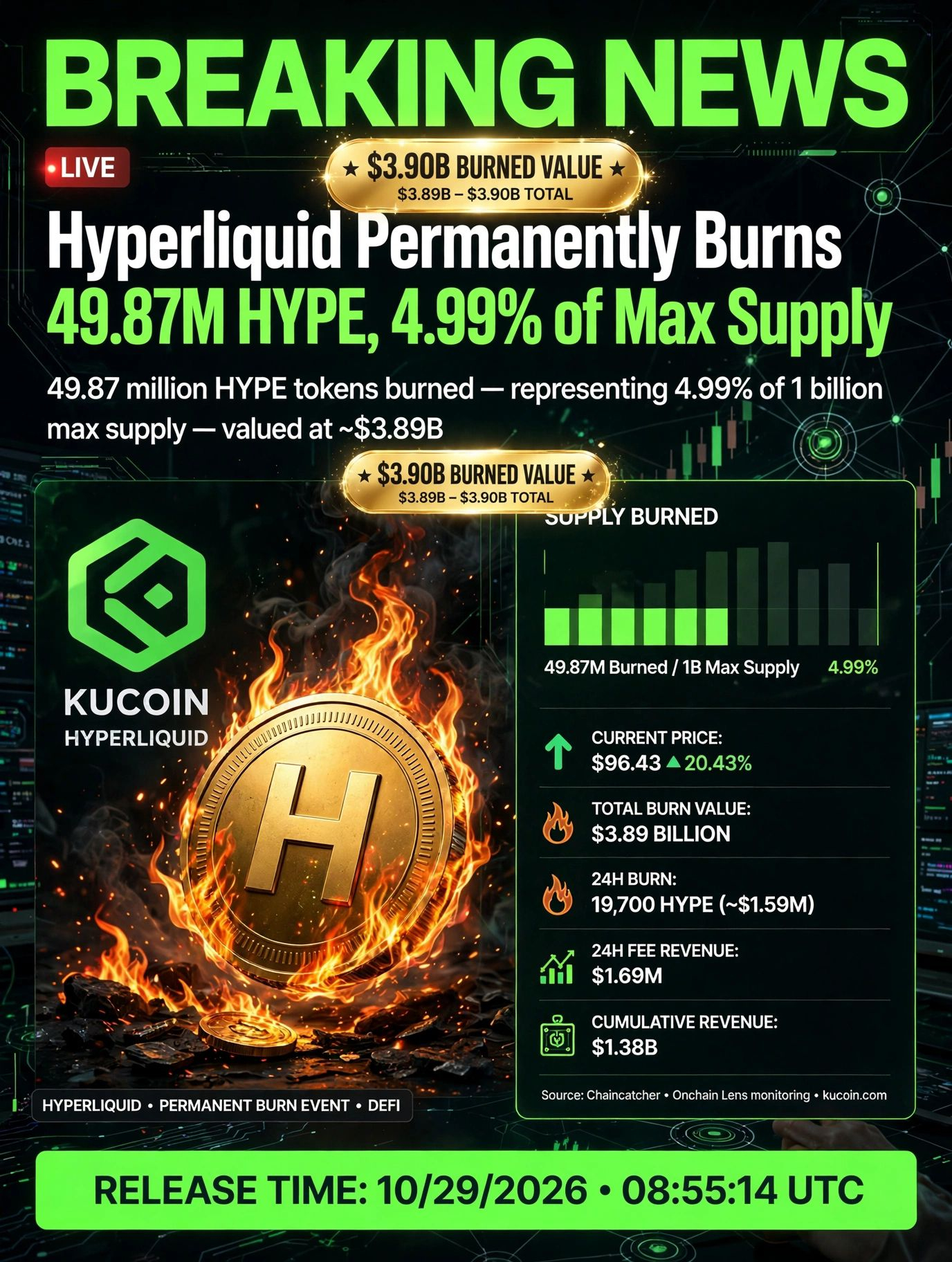
🔥🚨Hyperliquid's $HYPE Token Burns Near 5% of Max Supply, Worth $3.89B-$3.90B
Per Wu Blockchain / Onchain Lens:
Hyperliquid has cumulatively bought back and burned approx 49.87M HYPE tokens — equivalent to 4.99% of its 1 BILLION max supply — valued at roughly $3.89B - $3.90B.
📊 Breakdown:
• 49.87M HYPE = 4.99% of 1B max
• Total burn value: ~$3.90B
• Via AF buybacks 48.32M + HyperCore 1.18M + HyperEVM gas 368.44K
• 1 DRIP = 1 HYPE BURNT - burn rate calibrating
Deflationary powerhouse — permanent removal from supply.
#HYPE #TokenBurn #DeFi #WuBlockchain
1
221
#USMidtermElections
🗽 Rising Living Costs Weigh on New Yorkers as Midterms Approach 🇺🇸
As the U.S. midterm elections approach, rising living costs are weighing heavily on New Yorkers — shaping daily spending decisions and what they hope to see from elected officials.
📌 KEY DETAILS:
🔹 Election Date: November 3, 2026 — will decide control of U.S. Congress (House + Senate)
🔹 At Stake: All 435 House seats + key Senate, congressional & state races
🔹 Key Issue: Cost of living — groceries, housing, and daily essentials forcing families to rethink budgets
🔹 Political Context: Midterms seen as critical test for Trump administration’s legislative agenda
💬 Will cost-of-living concerns define how New York votes?
#USMidtermElections #NewYork #USEconomy #Midterms2026 $BTC
.

1
26
BoEOpensConsultationOnTokenizedCollateralForClearing 🚨
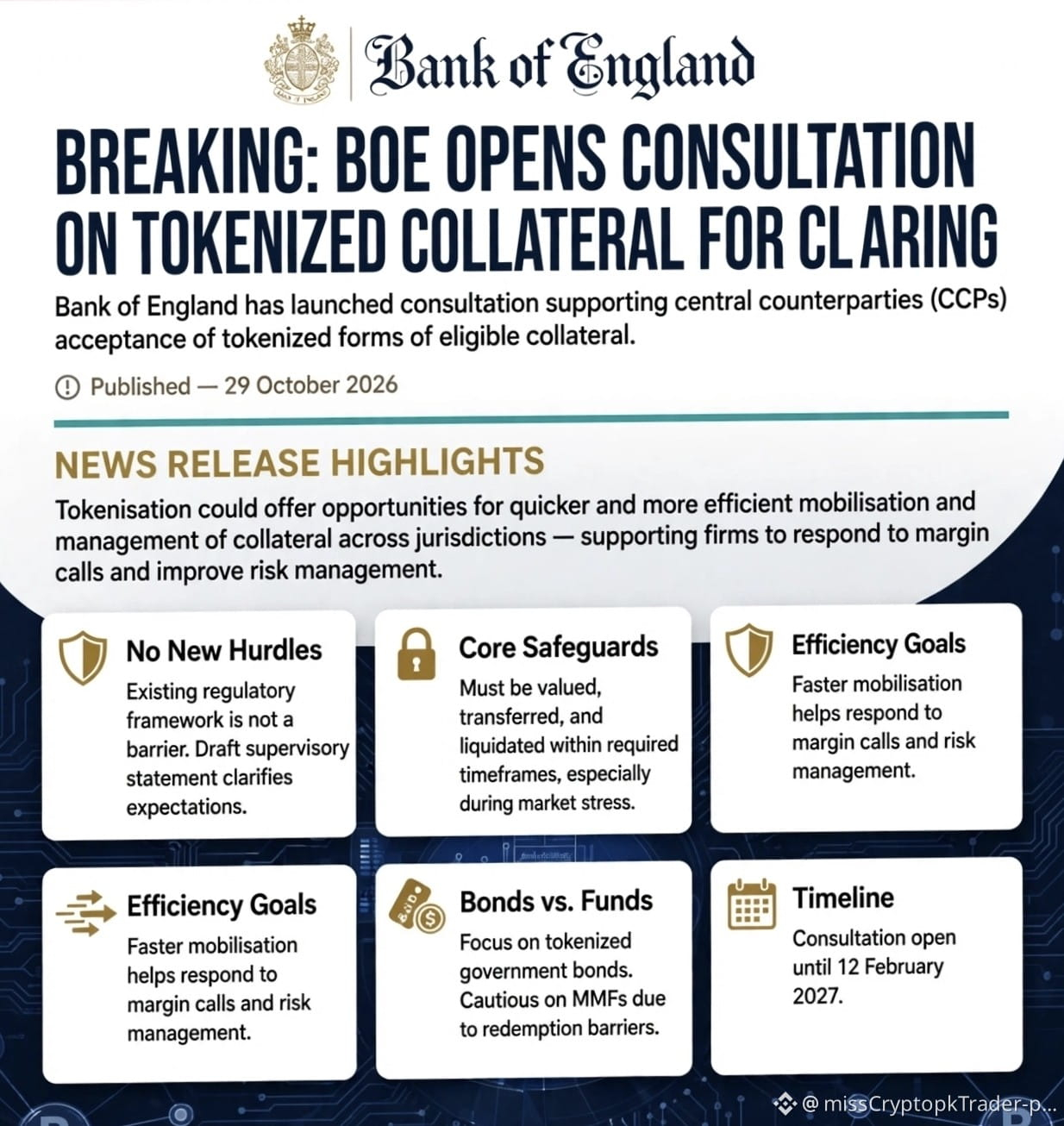
🇬🇧 Bank of England launches consultation on tokenised collateral for central clearing
🏦 The Bank of England is seeking feedback on draft supervisory expectations for central counterparties (CCPs) that want to accept tokenised versions of collateral already eligible under the proposed CCP Rulebook.
🔥 Key highlights:
🔹 The consultation does not create a separate new collateral regime; it clarifies how CCPs should demonstrate that tokenised collateral meets existing eligibility and risk-management standards.
🔹 The scope is broader than only government bonds — it can cover eligible collateral that CCPs already accept, as well as eligible types not currently accepted.
🔹 CCPs would need to show that tokenised collateral can be reliably valued, transferred, and liquidated, including during stressed market conditions.
🔹 Potential benefits include more efficient collateral management and faster support for margin requirements, subject to robust operational and financial-stability safeguards.
🔹 The consultation closes on 12 February 2027.
📈 This is a meaningful regulatory step toward integrating tokenisation into traditional market infrastructure — but it is focused on the safe use of tokenised forms of eligible assets, rather than opening clearing to any crypto asset.
💬 Could clearer CCP standards help accelerate institutional use of tokenisation in wholesale markets?
#BoE #Tokenization #Collateral #CentralClearing #BankOfEngland
2
#FedWatch
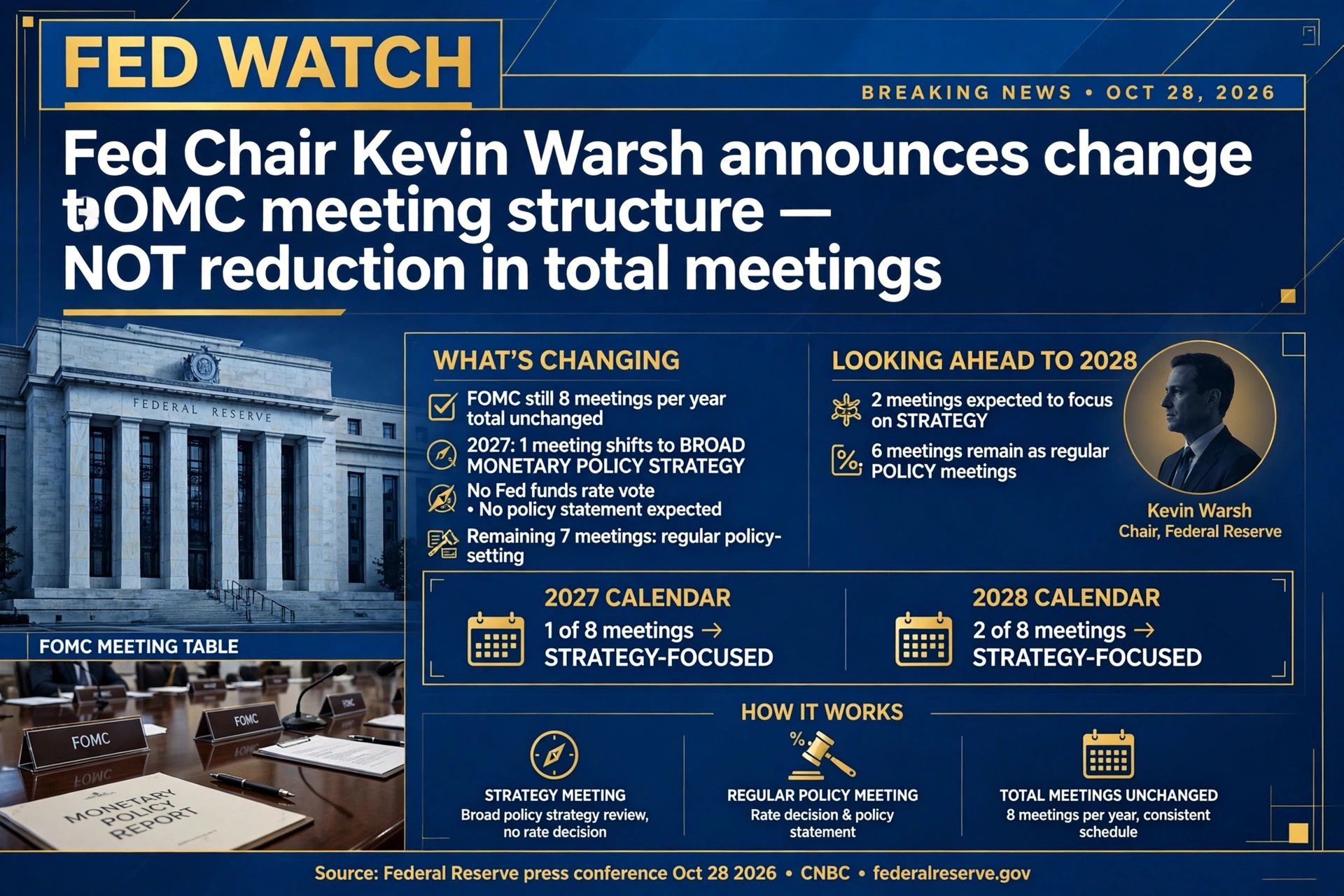
🚨 Fed Chair Kevin Warsh announced a change to the FOMC’s meeting structure—not a reduction in the total number of meetings.
The FOMC will still hold eight meetings per year. However, in 2027, one meeting will focus exclusively on the broad monetary-policy strategy, with no federal-funds-rate vote and no policy statement expected. The remaining seven meetings will continue as regular policy-setting meetings.
Warsh also indicated that two meetings in 2028 are expected to be strategy-focused, leaving six regular policy-setting meetings that year.
#FOMC #KevinWarsh #FederalReserve $BTC $ETH $BNB
1
14
#StanDruckenmillerBecomesInvestorInTradeXYZ
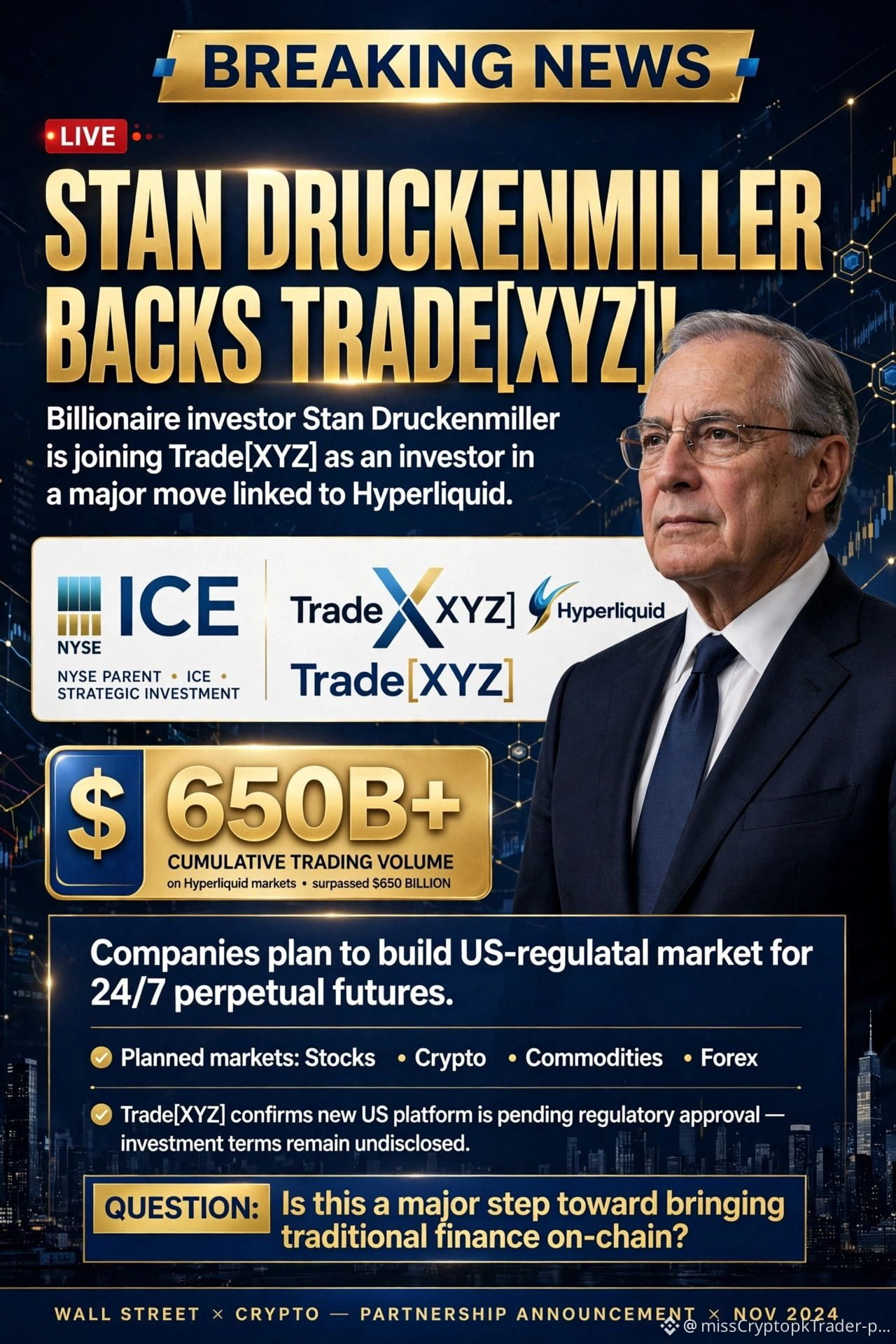
🚨 Stan Druckenmiller Backs Trade[XYZ] as NYSE Owner ICE Enters the Hyperliquid Ecosystem!
🔥 $HYPE grabs attention as ICE plans a regulated 24/7 futures market with Trade[XYZ], subject to regulatory approval. Trade[XYZ] reports over $650B in cumulative trading volume.
👀 Can this bring more institutional attention to Hyperliquid?
#Hyperliquid #HYPE #CryptoNews #TradeXYZ
$HYPE
231
$BTC #WestpacToCapCryptoPaymentsAtAUD10KPerMonth
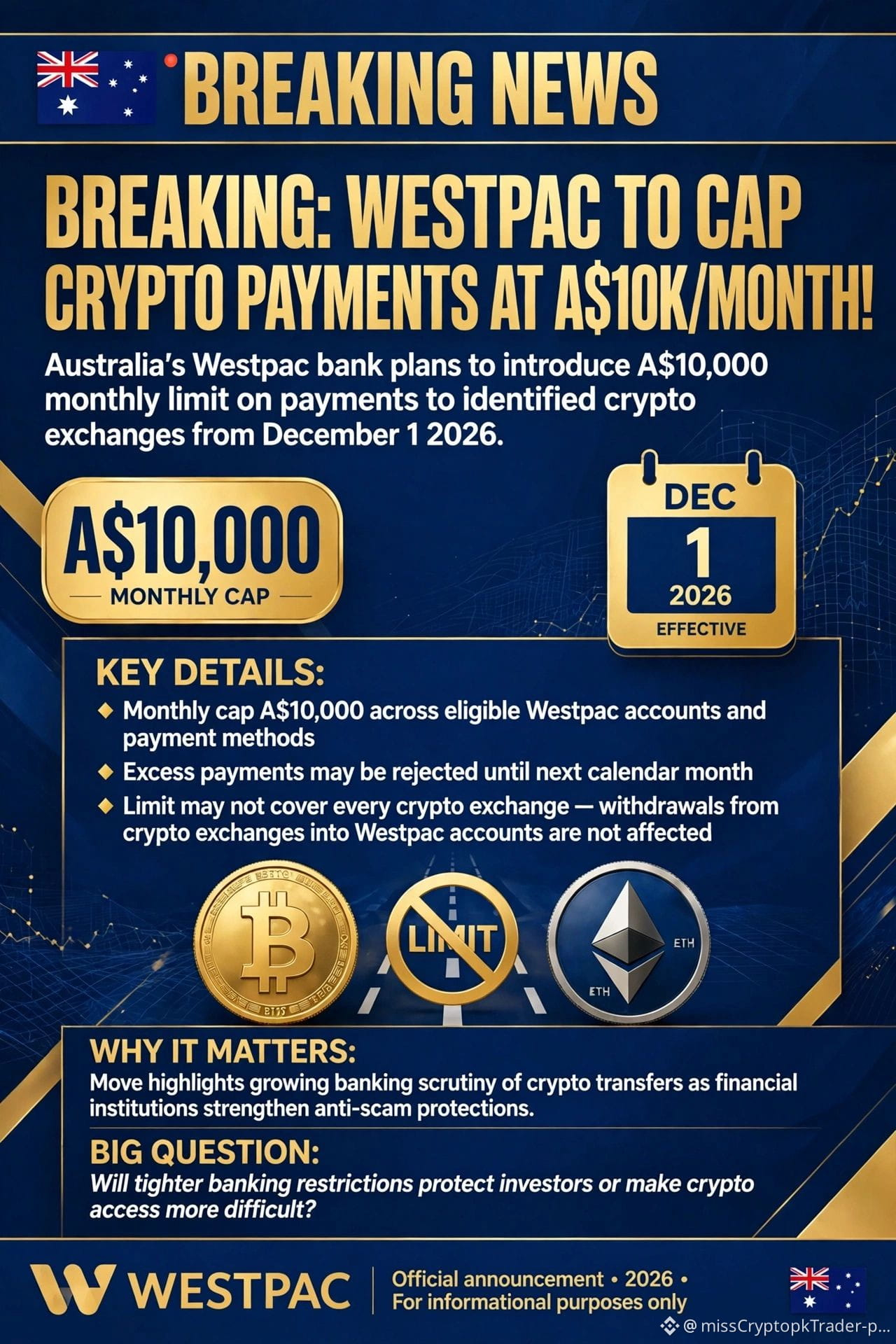
WESTPAC TO CAP CRYPTO PAYMENTS AT A$10K/MONTH! 🇦🇺*l
Australia’s Westpac bank plans to introduce a A$10,000 monthly limit on payments to identified crypto exchanges from December 1, 2026. 💰
📌 KEY DETAILS:
🔹 Monthly cap: A$10,000 across eligible Westpac accounts and payment methods.
🔹 Excess payments may be rejected until the next calendar month.
🔹 The limit may not cover every crypto exchange.
🔹 Withdrawals from crypto exchanges into Westpac accounts are not affected by this change.
⚠️ WHY IT MATTERS: The move highlights growing banking scrutiny of crypto transfers as financial institutions strengthen anti-scam protections.
📊 BIG QUESTION: Will tighter banking restrictions protect investors—or make crypto access more difficult?
💬 What’s your opinion? Comment below!
#WestpacToCapCryptoPaymentsAtAUD10KPerMonth #CryptoNews #Bitcoin #BTC
64
#RussiaPlansStandardizedTestForCryptoInvestors
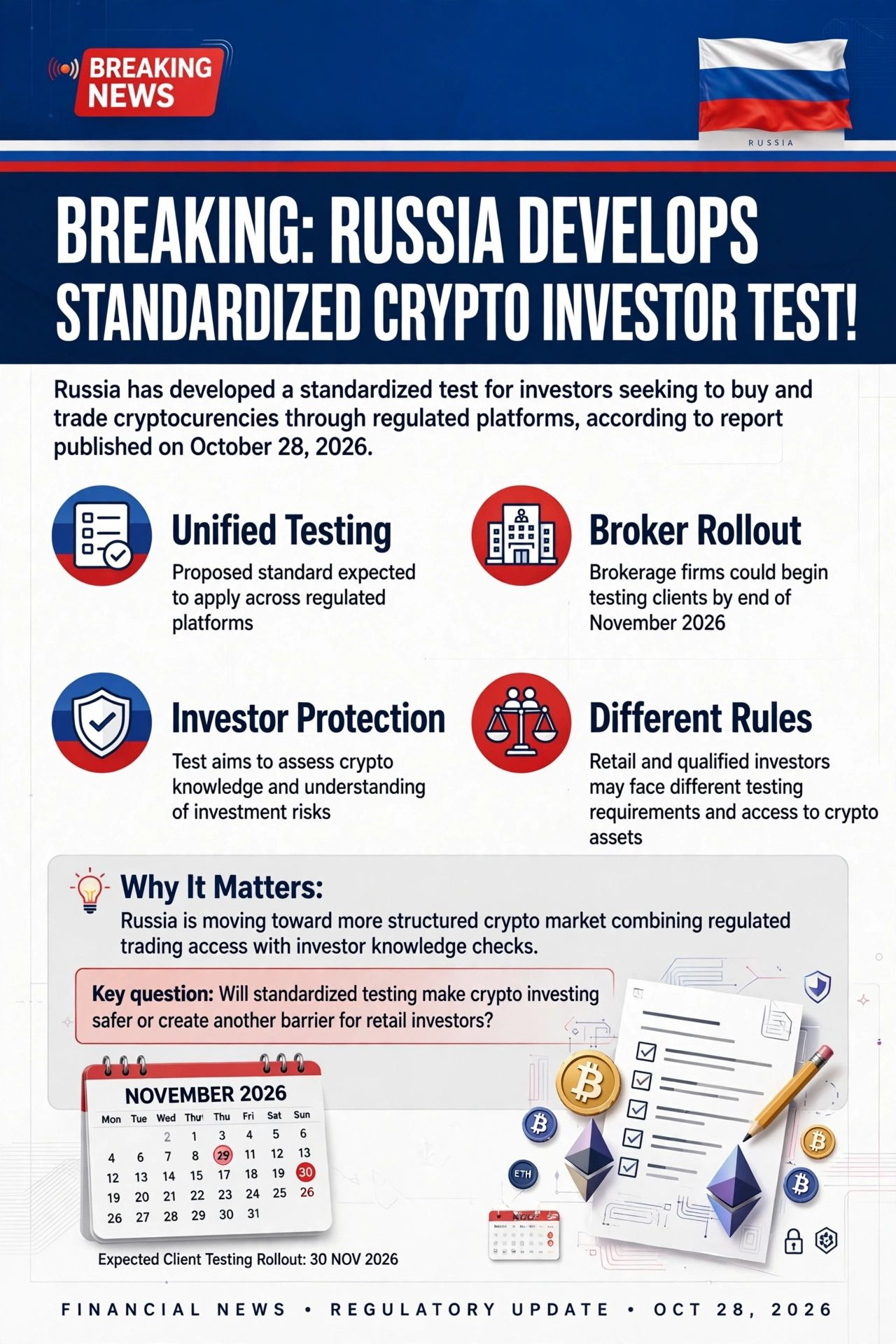
🚨 🚨 RUSSIA DEVELOPS STANDARDIZED CRYPTO INVESTOR TEST! 🇷🇺**
Russia has developed a standardized test for investors seeking to buy and trade crypto currencies through regulated platforms, according to a report published on October 28, 2026. 🇷🇺📊
🔹 Unified Testing:The proposed standard is expected to apply across regulated platforms.
🔹 Broker Rollout: Brokerage firms could begin testing clients by the end of November 2026.
🔹 Investor Protection: The test aims to assess crypto knowledge and understanding of investment risks.
🔹 Different Rules: Retail and qualified investors may face different testing requirements and access to crypto assets.
📌 Why It Matters: Russia is moving toward a more structured crypto market, combining regulated trading access with investor knowledge checks.
The key question: Will standardized testing make crypto investing safer—or create another barrier for retail investors?
💬 What’s your take? Comment below!
#RussiaPlansStandardizedTestForCryptoInvestors #CryptoNews #Bitcoin #CryptoRegulation
2
33
#StrategyShareholdersApproveDailyDividends
Strategy shareholders approve daily dividends — BIG WIN for shareholders!
PLUS BREAKING:
Pakistan Tightens Crypto Regulations to Combat Terror Financing.
Pakistan has approved new anti-money laundering measures, bringing the Pakistan Virtual Assets Regulatory Authority (PVARA) into its legal framework to strengthen crypto oversight and prevent terrorist financing.
Details in first comment.
#cryptocurrency #pakistan #cryptoregulation #Strategy
$MSTRB
$BTC
$ETH

1
31
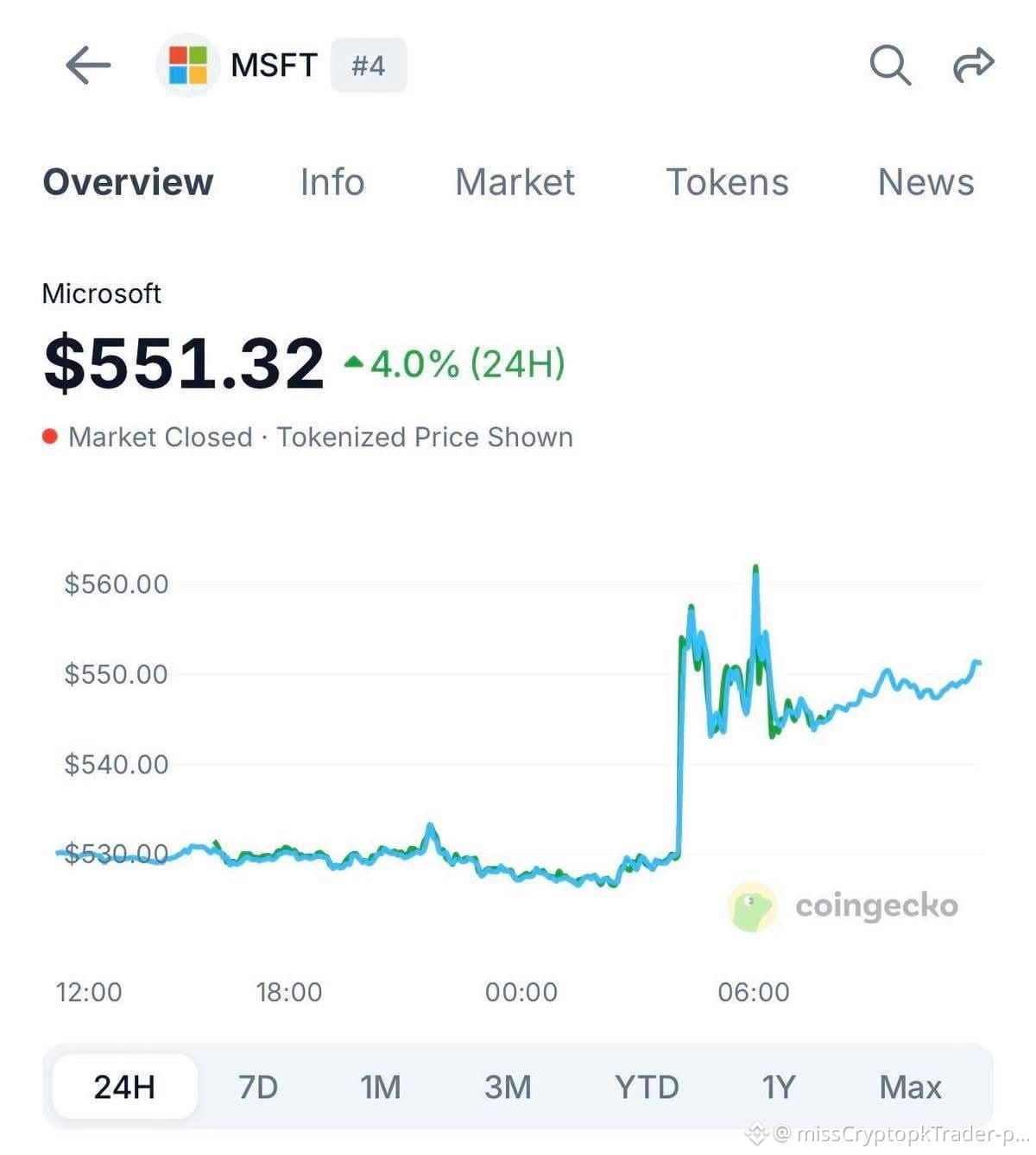
$MSFT is up 4% after fiscal Q1 earnings report 🚀
$551.32 ▲4.0% (24H)
The rally was driven by strong Azure and AI revenue growth, alongside upbeat Q2 guidance that eased concerns over AI spending.
#MSFT #Microsoft #Azure #AI #Earnings
{future}(MSFTUSDT)
$MSFT is up 4% after fiscal Q1 earnings report 🚀
$551.32 ▲4.0% (24H)
The rally was driven by strong Azure and AI revenue growth, alongside upbeat Q2 guidance that eased concerns over AI spending.
#MSFT #Microsoft #Azure #AI #Earnings
$551.32 ▲4.0% (24H)
The rally was driven by strong Azure and AI revenue growth, alongside upbeat Q2 guidance that eased concerns over AI spending.
#MSFT #Microsoft #Azure #AI #Earnings
47
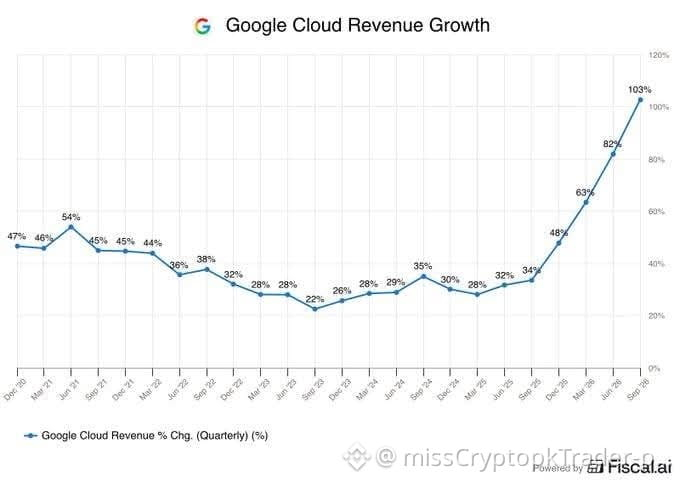
🚨 GOOGL STOCK: GOOGLE CLOUD IS GROWING AT AN INCREDIBLE PACE!!
📈 Google Cloud Revenue Growth: 103% YoY — $120B annualized run rate!
From 22% in 2023 to 103% now — the chart is PARABOLIC.
Yet GOOGL sold off after earnings... The market focused on Search, ignoring the AI goldmine:
✅ Oracle $ORCL, Anthropic, OpenAI now using Google TPUs
✅ Multiple ways to benefit from AI spending boom
✅ + Crypto custody security system preview 👀
It's market overlooking GOOGL AI growth potential?
$GOOGL $GOOG.US $ORCL #GoogleCloud #AI #GoogleToPreviewCryptoCustodySecuritySystem
🚨 GOOGL STOCK: GOOGLE CLOUD IS GROWING AT AN INCREDIBLE PACE!!
📈 Google Cloud Revenue Growth: 103% YoY — $120B annualized run rate!
From 22% in 2023 to 103% now — the chart is PARABOLIC.
Yet GOOGL sold off after earnings... The market focused on Search, ignoring the AI goldmine:
✅ Oracle $ORCL , Anthropic, OpenAI now using Google TPUs
✅ Multiple ways to benefit from AI spending boom
✅ + Crypto custody security system preview 👀
It's market overlooking GOOGL AI growth potential?
$GOOGL $GOOG.US $ORCL #GoogleCloud #AI #GoogleToPreviewCryptoCustodySecuritySystem
2
496
#MicrosoftSharesRise6%AfterHours
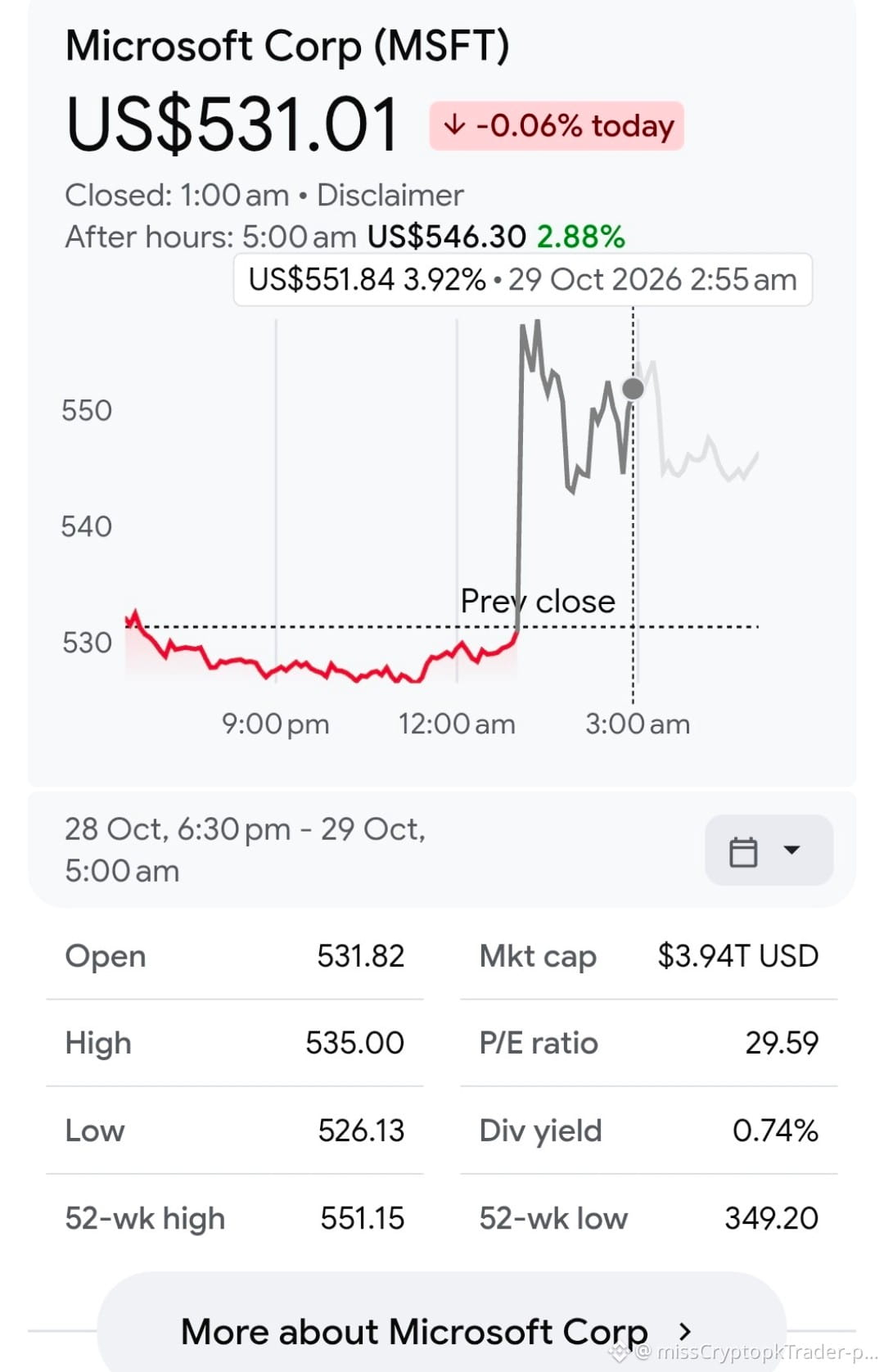
🚨 Microsoft $MSFT jumps 6% after hours!
Q1 2027: Revenue $92.28B +19% YoY (beat $90.6B) | EPS $4.89 (beat $4.73) | Net $36.6B +32%
🔥 Azure $33.17B +48% YoY (beat 44-45%) — AI demand exploding
💰 Capex $45.2B ( $5B BELOW fears) + FCF $18.6B ( $10B ABOVE est)
Regular close $531.01 -0.06% → AH $546.30 → $550 high!
#MicrosoftSharesRise6%AfterHours #MSFT $MSFT #Azure #Earnings
{future}(MSFTUSDT)
#MicrosoftSharesRise6%AfterHours
🚨 Microsoft $MSFT jumps 6% after hours!
Q1 2027: Revenue $92.28B +19% YoY (beat $90.6B) | EPS $4.89 (beat $4.73) | Net $36.6B +32%
🔥 Azure $33.17B +48% YoY (beat 44-45%) — AI demand exploding
💰 Capex $45.2B ( $5B BELOW fears) + FCF $18.6B ( $10B ABOVE est)
Regular close $531.01 -0.06% → AH $546.30 → $550 high!
#MicrosoftSharesRise6%AfterHours #MSFT $MSFT #Azure #Earnings
1
61
{future}(SUIUSDT)
{future}(XAUUSDT)
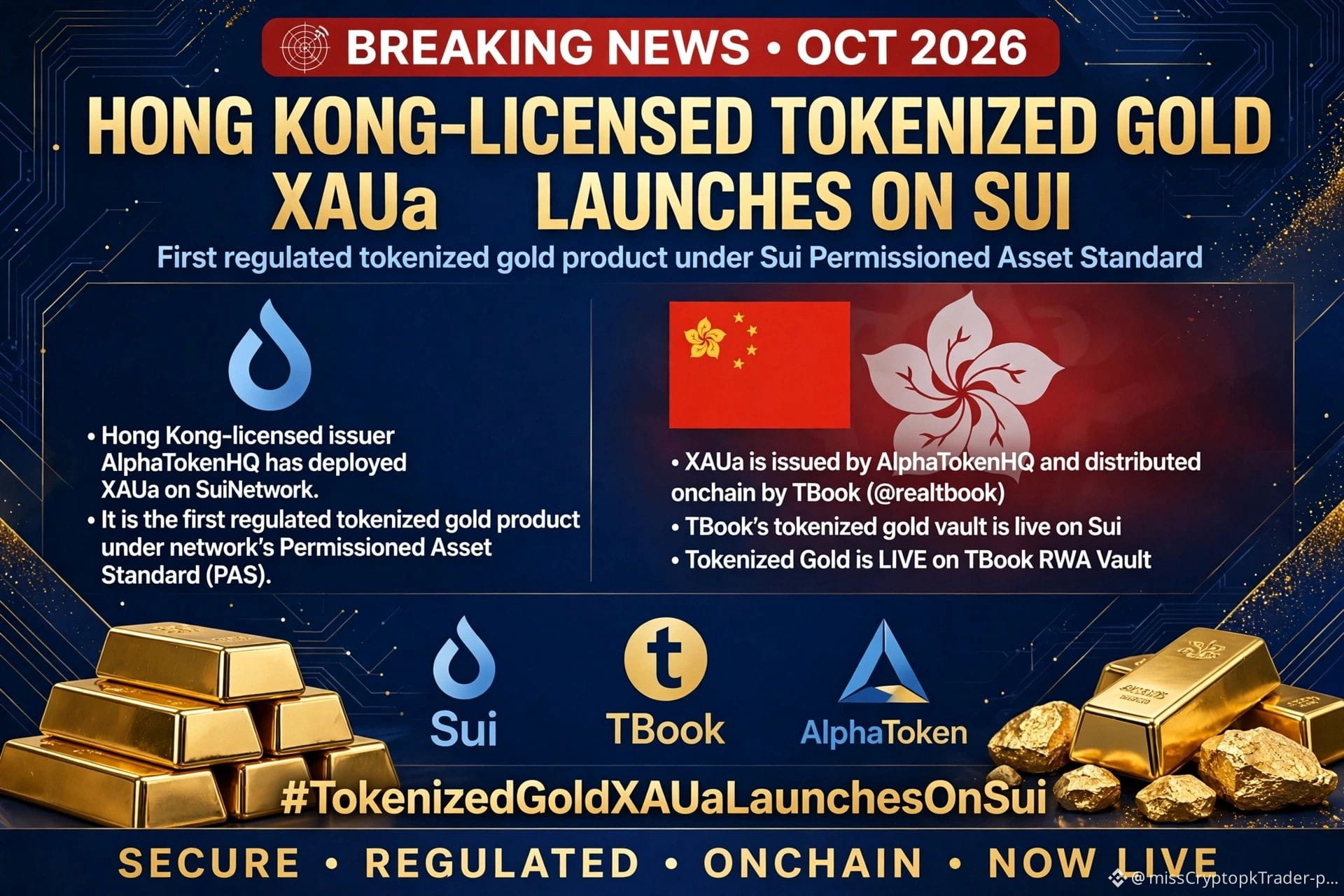
#TokenizedGoldXAUaLaunchesOnSui
🚨 BREAKING: Hong Kong-licensed Tokenized Gold XAUa Launches on Sui! 🚀
Hong Kong-licensed issuer @AlphaTokenHQ has deployed XAUa on @SuiNetwork — FIRST regulated tokenized gold under Sui's Permissioned Asset Standard (PAS)!
✅ Issued by AlphaTokenHQ
✅ Distributed onchain by @realtbook
✅ TBook RWA Vault is LIVE on Sui
✅ Regulated, secure, onchain gold
RWA meets real regulation! Is tokenized gold the next $TRILLION market? 👇
#TokenizedGoldXAUaLaunchesOnSui #SUI🔥 $SUI $XAU #RWA #Gold
172
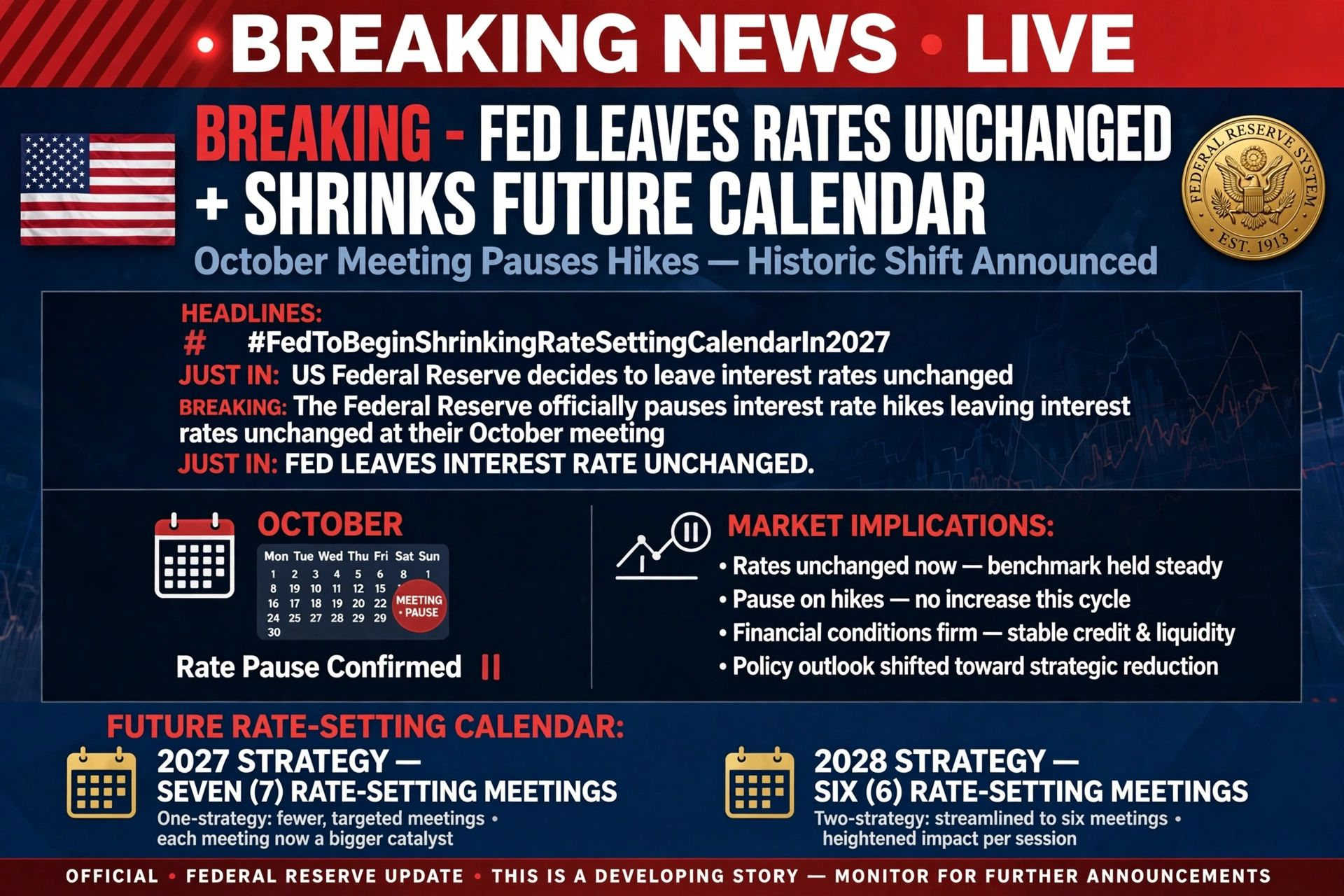
#FedToBeginShrinkingRateSettingCalendarIn2027
🚨 🇺🇸 BREAKING: Fed Leaves Rates UNCHANGED + Shrinks Future Calendar!
JUST IN: US Federal Reserve decides to leave interest rates unchanged.
💥 BREAKING: The Federal Reserve officially pauses interest rate hikes, leaving interest rates unchanged at their October meeting.
⚡️ JUST IN: FED LEAVES INTEREST RATE UNCHANGED.
📅 FUTURE CALENDAR SHIFT:
• 2027 : SEVEN (7) Rate-Setting + 1 Strategy
• 2028 : SIX (6) Rate-Setting + 2 Strategy
Total sessions still 8 — but each remaining meeting now = BIGGER market catalyst for $SPX $BTC !
Policy steady for now. Next move = HIGHER impact!
#Fed #FOMC #InterestRates #Bitcoin
2
224
#RippleExpects900MAnnualizedProductRevenueRunRate
🚨 HUGE: 🇺🇸 Ripple and Coinbase partner to expand access to Ripple's $RLUSD stablecoin.
Another BIG WIN for Ripple! 🚀
$RLUSD is Ripple's regulated 1:1 USD stablecoin — now getting massive distribution via Coinbase.
More access = More liquidity = More institutional adoption
The Ripple ecosystem just keeps winning.
$XRP #Ripple #Coinbase #RLUSD #RippleExpects900MAnnualizedProductRevenueRunRate
{spot}(RLUSDUSDT)
{spot}(XRPUSDT)
#RippleExpects900MAnnualizedProductRevenueRunRate
🚨 HUGE: 🇺🇸 Ripple and Coinbase partner to expand access to Ripple's $RLUSD stablecoin.
Another BIG WIN for Ripple! 🚀
$RLUSD is Ripple's regulated 1:1 USD stablecoin — now getting massive distribution via Coinbase.
More access = More liquidity = More institutional adoption
The Ripple ecosystem just keeps winning.
$XRP #Ripple #Coinbase #RLUSD #RippleExpects900MAnnualizedProductRevenueRunRate

1
176
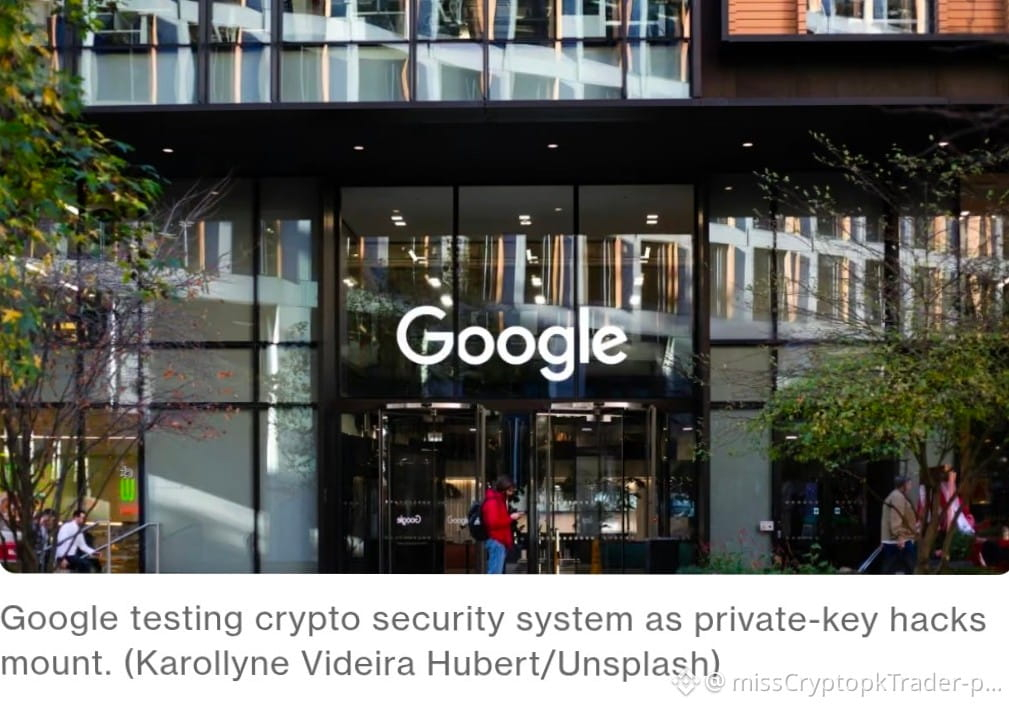
#GoogleToPreviewCryptoCustodySecuritySystem
🚨 BREAKING: Google to preview crypto custody security system as AI threats grow! 🔐
Google Multi-Party Compute (MPC) in private preview — major banks testing, Alphabet already securing its assets on Ethereum & Solana!
✅ Distributes private-key fragments across environments
✅ Institutional rules before signing
✅ Post-quantum ready (future)
✅ Commercial launch early 2027
Google protecting billions in digital assets! Are banks finally ready for crypto? 👇
#GoogleToPreviewCryptoCustodySecuritySystem #Google #Bitcoin $BTC $GOOGL $GOOGLB
2
316
Проверено
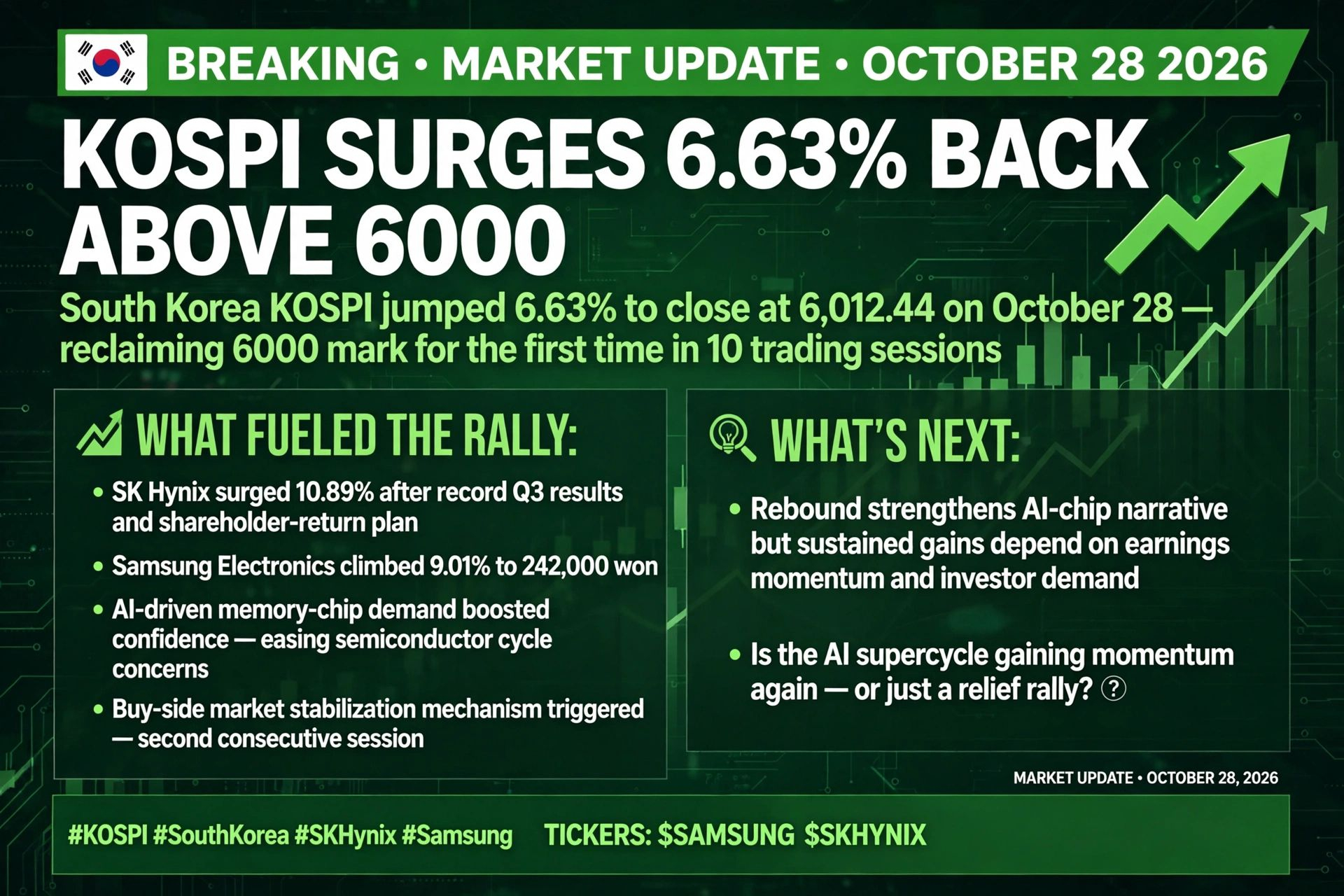
#KOSPISurges6.63%BackAbove6000
🚨South Korea’s KOSPI jumped **6.63% to close at 6,012.44 on October 28**, reclaiming the 6,000 mark for the first time in 10 trading sessions. 🔥
🚀 What fueled the rally?
🔹 SK Hynix ($SKHYNIX ) surged 10.89% after reporting record Q3 results and announcing a major shareholder-return plan.
🔹 Samsung Electronics ($SAMSUNG ) climbed 9.01% to ₩242,000.
🔹 AI-driven memory-chip demand boosted investor confidence, easing concerns about the semiconductor cycle.
🔹 A buy-side market stabilization mechanism was triggered for the second consecutive session.
⚠️ What’s next?
The rebound strengthens the AI-chip narrative, but sustained gains will depend on earnings momentum and continued investor demand.
🤖 Is the AI supercycle gaining momentum again, or is this just a relief rally?
💬 Share your thoughts below!
#KOSPI #SouthKorea #SKHynix #Samsung
1
576
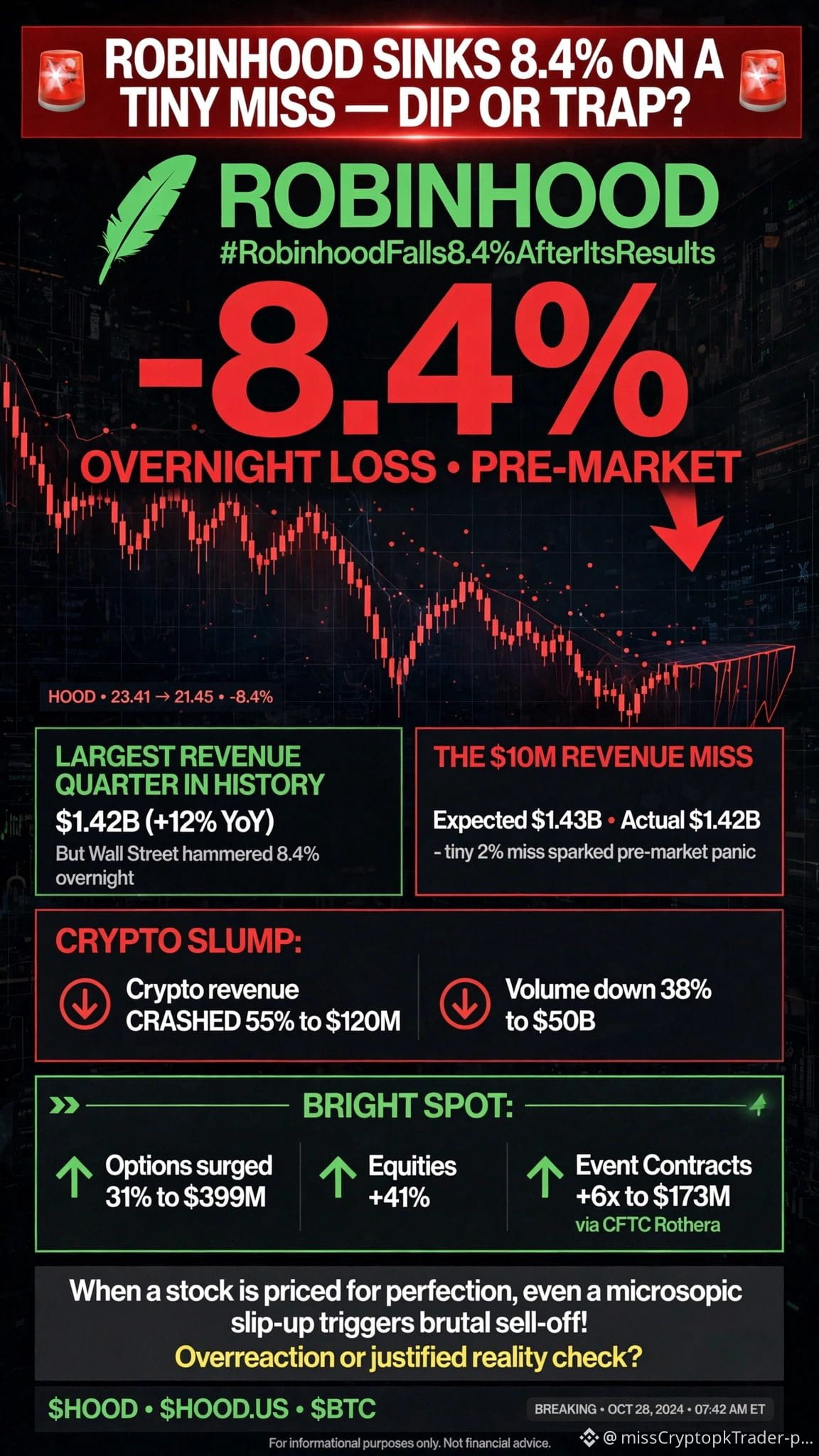
#RobinhoodFalls8.4%AfterItsResults
🚨 LATEST: 📊 Robinhood's Q3 crypto revenue rose 20% from Q2 to $120M but is still down 55% from a year earlier, with Robinhood Chain adding $26M in its first quarter on mainnet.
Is crypto winter thawing? 🤔
$120M crypto rev = +20% QoQ (from $100M in Q2) = SIGN OF RECOVERY!
But -55% YoY (from $267M last year) = Still deep winter!
The NEW HOPE: Robinhood Chain on mainnet generated $26M in its FIRST quarter — a new revenue stream that could offset crypto volatility!
Robinhood's total revenue still hit record $1.42B (+12% YoY) but MARKET dumped HOOD -8.4% on a tiny $10M miss!
Recovery started or trapped?
$HOOD $HOOD.US $BTC #EarningsSeason #RobinhoodFalls8.4%AfterItsResults
BTC-0,82%
HOODUS+0,10%
2
104
#DatavaultAICantWithdrawBitcoinFromBiconomy
🚨 DATAVAULT AI ($DVLT) CRASHES 49.55% — BITCOIN WITHDRAWAL DISPUTE! ⚠️
Datavault AI shares plunged to $0.067 on October 27 after the company disclosed that it had been unable to withdraw Bitcoin from Biconomy since June. Nearly 244 million shares traded.
🔎 WHAT HAPPENED?
🔹 Scilex transferred 1,309.04 BTC to Datavault’s Biconomy account under a $150M investment deal.
🔹 Datavault later exchanged 491.431 BTC for approximately $40.5M in cash.
🔹 A requested Bitcoin withdrawal in June 2026 remained incomplete as of the company’s October 26 filing.
📉 FINANCIAL IMPACT
Datavault expects to restate four reporting periods, with reported assets reduced by:
• $92.2M as of December 2025
• $49M as of June 2026
The company also warned that its financial statements should no longer be relied upon until corrected.
⚠️ THE BIG LESSON: Holding crypto balances on an exchange does not guarantee immediate access to those funds.
₿ Does this case highlight the risks of exchange custody and corporate Bitcoin treasuries?
💬 Share your thoughts below!
$BTC #Bitcoin #CryptoNews #BitcoinTreasury

7
Войдите, чтобы посмотреть больше материала
Присоединяйтесь к пользователям криптовалют по всему миру на Binance Square
⚡️ Получайте новейшую и полезную информацию о криптоактивах.
💬 Нам доверяет крупнейшая в мире криптобиржа.
👍 Получите достоверные аналитические данные от верифицированных создателей контента.
Эл. почта/номер телефона
В тренде
FedWatch
Просмотров: 16.3M
39,125 обсуждают
🚨 BREAKING: THE US ECONOMY JUST BEAT ON EVERYTHING. THAT IS THE WORST NEWS FOR YOUR PORTFOLIO.
GDP Q3: 3.4% vs 3.2% expected. Previous: 2.2%
Jobless claims: 194K vs 199K expected. Previous: 194K
PCE inflation: 3.6%, as expected. Previous: 3.4%
Strong growth. Almost no layoffs. Inflation going UP, not down. The Fed has zero reason to stop, and a December hike is priced near 80%.
In this market, good news for the economy is bad news for stocks and crypto. PCE in line is not a relief, it is 0.2 points higher than last month.
Rate cut hopes are dead. Stay alert.
12 years in these markets. This is what I do.
Follow me and turn notifications on.
#FedWatch
#EarningsSeason
#Nasdaq100FuturesFall0.9%
$BTC
$SOL
$SUI
MARKET STRUCTURE GUIDE
·Лайков: 5
·Просмотров: 1.6k
EarningsSeason
Просмотров: 6.4M
31,844 обсуждают
USMidtermElections
Просмотров: 22,495
495 обсуждают