
#coinbase
coinbase
2.5M views
8,654 Discussing
Hot
Latest

·
--
Ark bought more Coinbase while everyone else sold.
Thursday's rout: Nasdaq closed down 5.5%, and Strategy and Coinbase shares each fell about 10% (The Block).
Ark Invest added to its Coinbase position into the plunge.
Nearly $1.1B in leveraged crypto was liquidated in 24h, ~$880M of it in four hours (CoinGlass).
Take: crypto equities are trading as high-beta tech right now, and $BTC is following the same tape. Wintermute flags $73,000 and $68,000 as the next levels if $76K gives way.
Who is right here: Ark buying the dip, or the market still de-risking? Does $BTC retest $73K before it reclaims $80K?
Not financial advice.
#Bitcoin #Coinbase #CryptoNews

🇺🇸 TODAY: Coinbase launches regulated global options and perps on Coinbase Prime for institutions in the US and other eligible regions.
US and global traders will share a single liquidity pool.
#Crypto #Coinbase
🇺🇸 TODAY: Coinbase launches regulated global options and perps on Coinbase Prime for institutions in the US and other eligible regions.
US and global traders will share a single liquidity pool.
#Crypto #Coinbase
US and global traders will share a single liquidity pool.
#Crypto #Coinbase
18

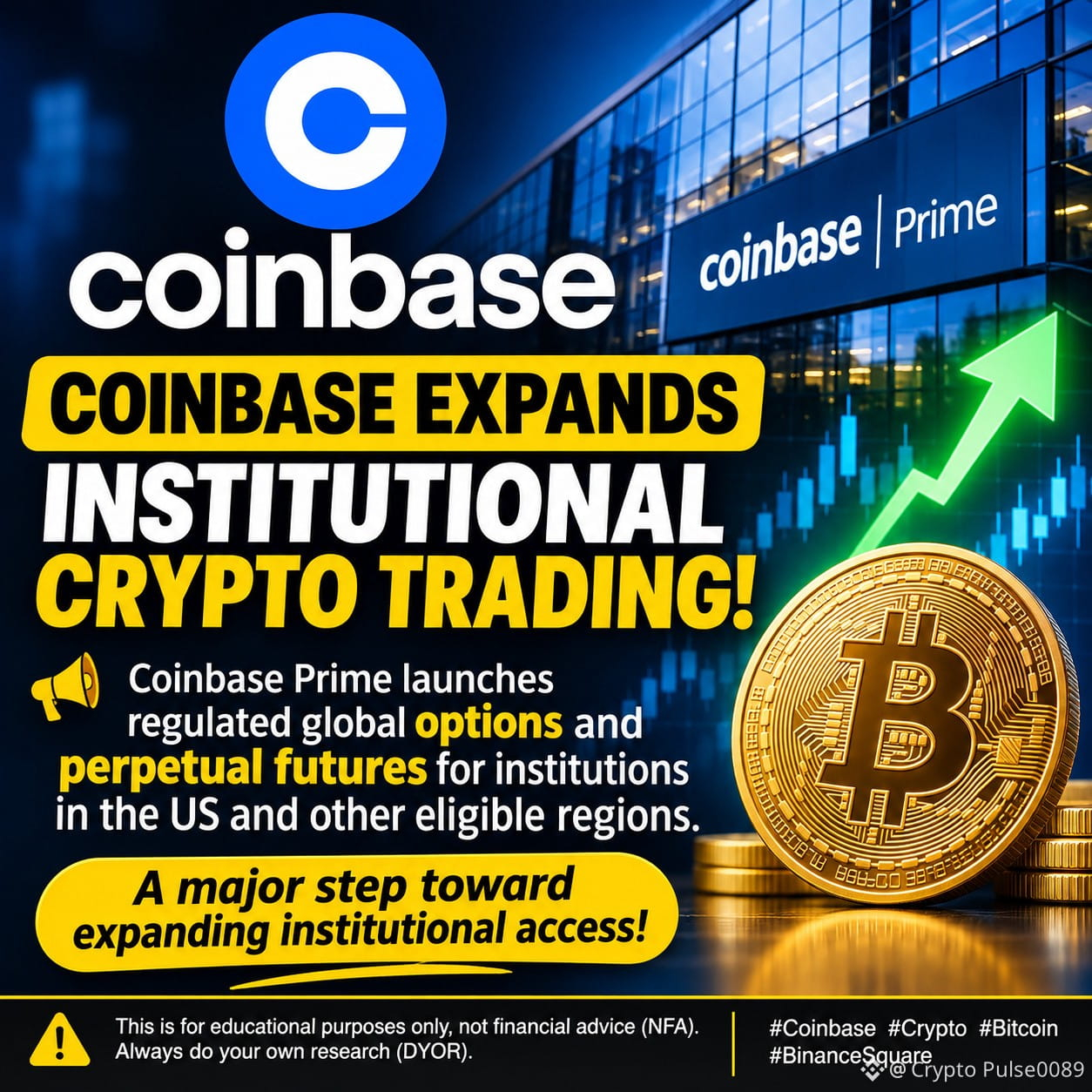
🚀 COINBASE EXPANDS INSTITUTIONAL CRYPTO TRADING!
Coinbase Prime launches regulated global options and perpetual futures for institutions in the US and other eligible regions. A major step toward expanding institutional crypto access.
#Coinbase #Crypto #Bitcoin #BinanceSquareTalks #TRUMPFalls18.1%In24HoursToRecordLow
This is for educational purposes only, not financial advice (NFA). Always do your own research (DYOR).
$BTC $XAUT $PEPE
{spot}(BTCUSDT)
{spot}(XAUTUSDT)
{spot}(PEPEUSDT)
🚀 COINBASE EXPANDS INSTITUTIONAL CRYPTO TRADING!
Coinbase Prime launches regulated global options and perpetual futures for institutions in the US and other eligible regions. A major step toward expanding institutional crypto access.
#Coinbase #Crypto #Bitcoin #BinanceSquareTalks #TRUMPFalls18.1%In24HoursToRecordLow
This is for educational purposes only, not financial advice (NFA). Always do your own research (DYOR).
$BTC $XAUT $PEPE
63

·
--
US institutions can now reach global crypto options and perps without going offshore.
• Coinbase Prime now offers regulated global options and perps to institutions in the US and other eligible regions
• US and global traders share one Deribit-sourced liquidity pool covering 20+ assets, including BTC, ETH and SOL
• BTC, ETH and USDC count as collateral, but margin stays separate by settlement currency
Why it matters: Global derivatives liquidity now reaches US institutions through a US-regulated broker.
Source: The Crypto Times
Not financial advice.
💬 Will onshore access to global perps pull more US funds into crypto derivatives?
$BTC $ETH #Coinbase #Derivatives #Crypto
65


·
--
Coinbase just opened the door US institutions have been waiting for.
Coinbase Prime now gives eligible US institutions regulated access to global crypto options and perpetual contracts, sourced from Deribit liquidity and offered through Coinbase Financial Markets, a CFTC-registered futures commission merchant.
That matters because, until now, US institutions wanting Deribit-level derivatives depth had to go offshore, juggle multiple counterparties, and fragment collateral. Now $BTC, $ETH and USDC can be posted as collateral on one Prime platform, across 20+ assets including SOL, XRP, AVAX and HYPE, inside a compliant US framework.
This is market structure, not hype. Deribit carries over $30B in Bitcoin options open interest, and plugging that depth into the largest US exchange gives institutions a regulated route to hedge, generate yield, and position through volatility, right as post-election markets reprice risk.
The honest risk: this is institutions-only, eligibility and jurisdiction-gated, not retail access. Derivatives amplify losses as fast as gains, and deeper derivatives access can also mean sharper liquidations when volatility spikes. Access does not equal safety.
Still, the direction is clear: US crypto derivatives are going regulated and onshore, and the institutions arriving now are building positions, not watching from the sidelines.
📌 Sharing personal opinions only, not financial advice or a recommendation to buy/sell. Crypto is highly risky; DYOR and you are solely responsible. No coin promotion.
#Coinbase #Deribit #Crypto #Binance
Coinbase just opened the door US institutions have been waiting for.
Coinbase Prime now gives eligible US institutions regulated access to global crypto options and perpetual contracts, sourced from Deribit liquidity and offered through Coinbase Financial Markets, a CFTC-registered futures commission merchant.
That matters because, until now, US institutions wanting Deribit-level derivatives depth had to go offshore, juggle multiple counterparties, and fragment collateral. Now $BTC , $ETH and USDC can be posted as collateral on one Prime platform, across 20+ assets including SOL, XRP, AVAX and HYPE, inside a compliant US framework.
This is market structure, not hype. Deribit carries over $30B in Bitcoin options open interest, and plugging that depth into the largest US exchange gives institutions a regulated route to hedge, generate yield, and position through volatility, right as post-election markets reprice risk.
The honest risk: this is institutions-only, eligibility and jurisdiction-gated, not retail access. Derivatives amplify losses as fast as gains, and deeper derivatives access can also mean sharper liquidations when volatility spikes. Access does not equal safety.
Still, the direction is clear: US crypto derivatives are going regulated and onshore, and the institutions arriving now are building positions, not watching from the sidelines.
📌 Sharing personal opinions only, not financial advice or a recommendation to buy/sell. Crypto is highly risky; DYOR and you are solely responsible. No coin promotion.
#Coinbase #Deribit #Crypto #Binance
3
1.3k

·
--
🚨 Coinbase claims 99% of crypto offline — Is your portfolio safe?
🚨 Coinbase says 99% of user crypto is offline—Is your portfolio truly safe?
The exchange claims the majority of assets sit in cold storage, insulated from hacks and exchange‑side breaches. If true, it could reshape risk assessments for retail traders.
📊 Market & Token Impact
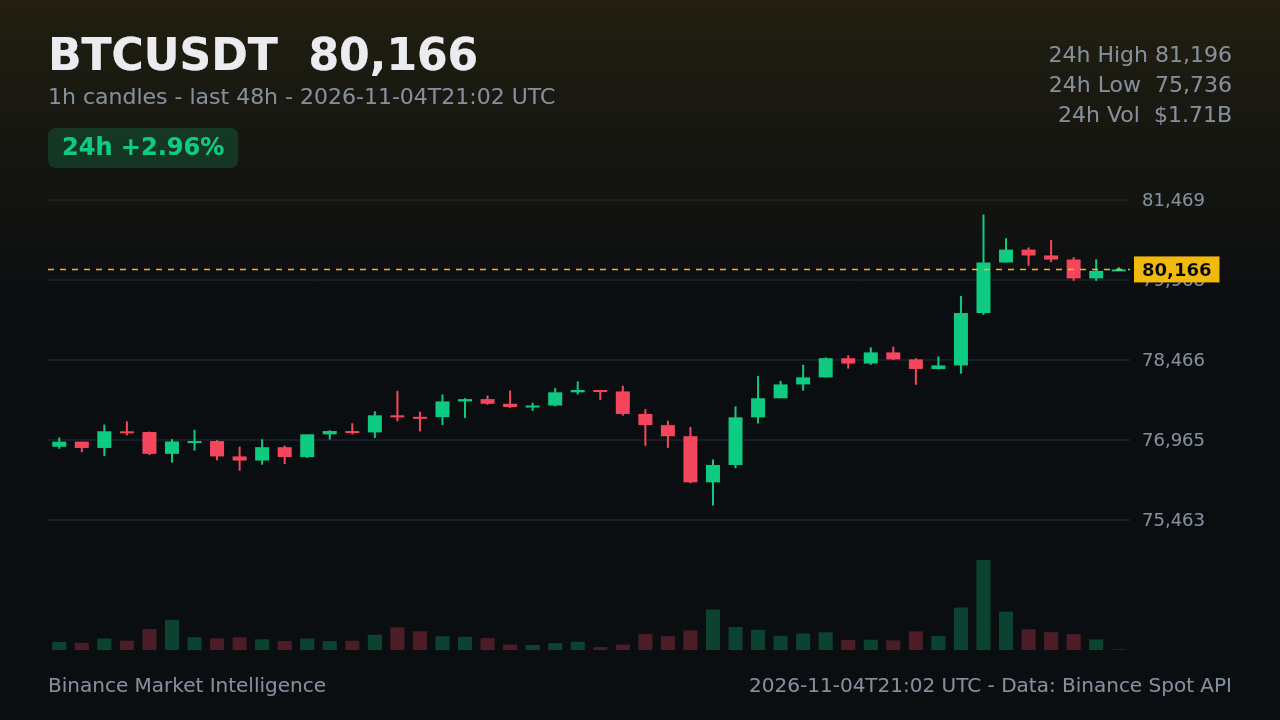
• $BTC hovered around $80,166, a modest 0.4% dip after the news, testing the $80,200 support.
• $ETH stayed firm at $2,422, holding above the $2,400 trend line.
• $BNB slipped 0.3% to $716.9, eyeing $710 as next support.
• Volume stayed steady, indicating no panic sell‑off yet.
⚡️ Bullish long‑term or short‑term noise? Share your thoughts below 👇
$BTC $ETH $BNB #Crypto #Security #Coinbase
9

·
--
🎯 Morgan Stanley’s cut hit the mark
📰 Morgan Stanley downgraded Coinbase and slashed its price target, while also lowering its revenue forecasts. The average analyst price target for COIN has fallen 48% so far this year.
💬 The coin price fell 5%, and trading volume shrank along with it. Exchanges make their money from volatility. When trading revenue slows, the valuation story starts to unravel. This time, the institutions simply spelled it out—leaving no room for doubt.
🏷️ #Coinbase #机构评级 #交易所 #USStocksCrypto
2

·
--
That move by Coinbase probably jolted quite a few people waiting to buy the dip awake. $COIN fell 10.15% in a day, with OKX futures trading at 136.68—just a step above the 24-hour low of 133.60.
With exchange stocks falling this hard, sentiment in crypto probably won’t be much better. 133.60 is right below us: if it doesn’t hold, we’re looking at a new low; if it does, that’s only a chance to catch our breath.
I’d rather sit tight for now. After a drop this sharp, both chasing a bounce and selling into the fall can easily go wrong. But if it can climb back above the 152.30 area, I’ll change my mind right away—that would show the bulls still have enough strength to step back in.
What do you think—will tonight’s move in U.S. stocks spill over into crypto?
#美股 #Coinbase
2

·
--
Ark Invest buys COIN as shares plunge 9.69% — does the institution see a bottom, or is it just routine rebalancing?
The facts: Ark bought 17,806 COIN shares worth $2.44 million through ARKK on Thursday (Nov. 5), the same day COIN closed at $136.82. That same day, Ark sold Bullish ($2.27 million) and Bitmine ($2.28 million), while adding to its positions in Nvidia, AMD, and SpaceX. Source: Ark trade disclosures, reported by The Block on Nov. 5 and TradersUnion on Nov. 6. Context: BTC is still around $75,500 as of midday today, near its post-drop low from Thursday.
View A: this is conviction buying — Cathie Wood is adding to her position in the largest U.S. crypto exchange just as the Nasdaq posts its worst day since April 2025, and COIN has just reported a solid Q3.
View B: this is routine active ETF management — Ark adjusts its positions almost every day, $2.44 million is a small amount, and selling Bullish/Bitmine on the same day suggests this is rotation, not a one-way bet.
I lean toward B until there’s follow-through — one day of buying doesn’t prove a thesis. I’d change my view if Ark adds more COIN in the next session or buys up other crypto stocks too.
Reply in the comments: A or B — and your strongest reason.
This is my analysis, not financial advice — always DYOR.
#DebatDuaSisi #Coinbase #ArkInvest
55

·
--
Coinbase Q3: stablecoins, subscriptions, and prediction markets diversify the business
Confirmed fact: Coinbase published its third-quarter results on October 29, 2026. The company reported total revenue of USD 1.2 billion, virtually flat compared with the previous quarter, while total crypto market volume fell 10% quarter over quarter. Transaction revenue was USD 590 million, and subscriptions and services contributed USD 570 million, or 49% of net revenue.
The key takeaway is diversification. Coinbase said it gained market share for the fourth consecutive quarter, reaching 10.7% on its proprietary spot and derivatives metric. Prediction markets exceeded USD 200 million in annualized revenue, with quarterly growth of 82% and an increase of more than 60% in daily traders. The presentation clarifies that the market share figure uses third-party data and an adjustable group of competitors.
For stablecoins, the average amount of USDC held in Coinbase products reached a record USD 22 billion, close to 30% of the average USDC market capitalization for the quarter. Coinbase One recorded its fifth consecutive all-time high in subscribers, and the average daily loan balance grew 74% year over year. These are figures reported by the company, not an independent audit.
Market snapshot, not a signal: at 20:53 UTC, BTC was trading near 76,352.09 USDT (-4.64% in 24 h), ETH at 2,253.47 (-6.62%), and BNB at 693.67 (-3.03%). This is context, not a reaction attributable to the report. Risks: dependence on prices and volumes, regulation of prediction markets and stablecoins, concentration in USDC, and the costs of integrating new business lines.
$BTC $ETH $BNB
Educational content. Not financial advice.
#Coinbase #USDC #MercadosCripto #MercadosDePrediccion #FinancialEducation

1
63

·
--
📰 Morgan Stanley Downgrades Coinbase, Cuts Price Target to $120
The bank shifted its rating from Equal-weight. Coinbase reported $1.2 billion in third-quarter net revenue, compared with $1.8 billion a year earlier.
Source : Econotimes
Time : 2026-11-02 18:43:49
Credit : celia rowan
#coinbase #earnings #morgan_stanley #stock_ratings
Share your opinion in the comment section below
19

·
--
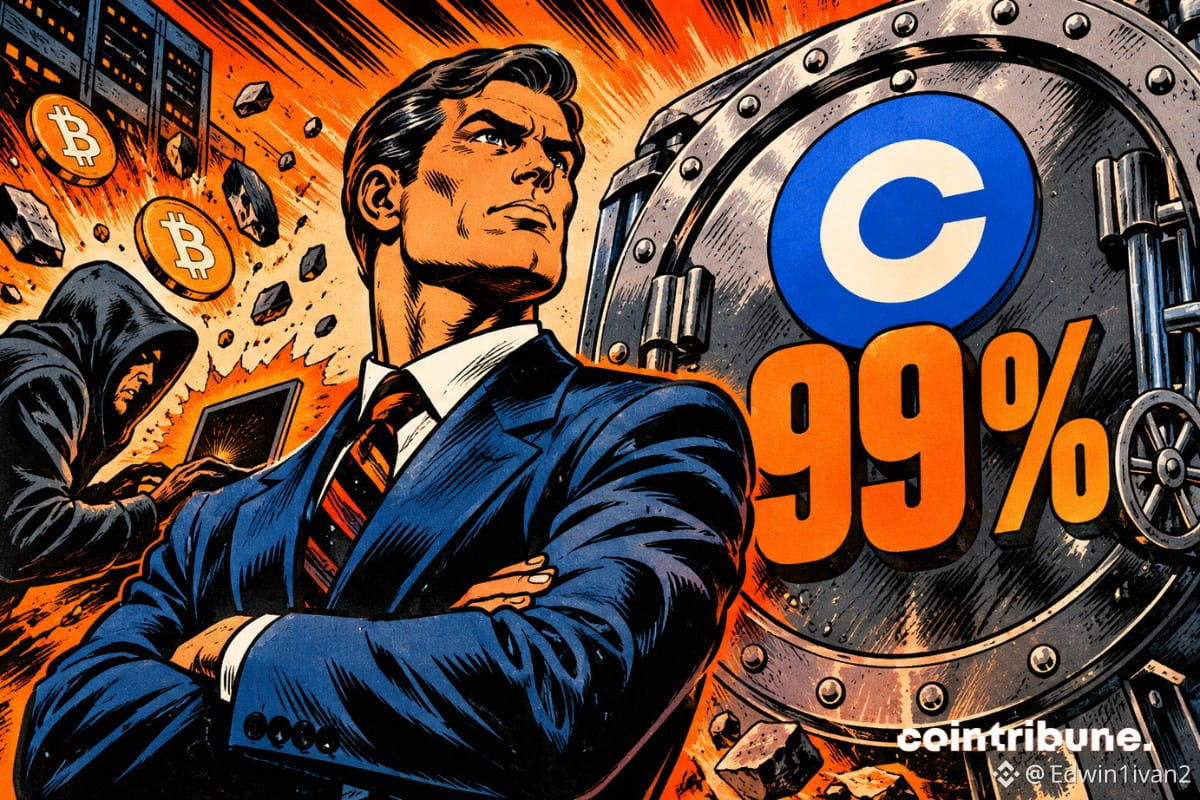
Coinbase: 99% of its customers’ assets in cold storage after Binance hack
Coinbase announced on November 4 that more than 99% of its customers’ assets are held offline, five days after the $6.34 billion hack at Binance. The figure is self-reported, and the fraction that remains online is still considerable.
Coinbase says more than 99% of its customers’ assets are held in cold storage, while hot wallets hold only the liquidity needed for withdrawals.
The platform reported $377 billion in assets as of September 30, which leaves about $3.8 billion outside cold storage.
The percentage has not been verified by a third party, and SOC audits cover controls, not the distribution of assets.
What Coinbase actually revealed
The timing is notable: the drop in Coinbase and Circle shares had already shown the market’s sensitivity to any doubts about custody.
Five days after withdrawals reopened at Binance, where $4 billion had flowed out, Coinbase published the figure. The data appeared on X, alongside a blog post describing its custody practices and stating that asset security is a daily task, not a one-time achievement.
Hot wallets, which are connected to the internet, hold the liquidity needed for withdrawals, while excess funds are moved to offline storage. The institutional custody product operates entirely in cold storage, with assets segregated.
Deposits are backed one-to-one, remain the customer’s property, and are never lent without authorization. Its infrastructure was unaffected by the incident.
The 1% no one is counting
Coinbase reported $377 billion in assets as of September 30. Applying the announced figure puts about $373 billion offline and leaves $3.8 billion in systems connected to the internet.
$COIN.US
{stock_us}(COIN.US)
$APLE.US
{stock_us}(APLE.US)
$HAL.US
{stock_us}(HAL.US)
#coinbase
Coinbase: 99% of its customers’ assets in cold storage after Binance hack
Coinbase announced on November 4 that more than 99% of its customers’ assets are held offline, five days after the $6.34 billion hack at Binance. The figure is self-reported, and the fraction that remains online is still considerable.
Coinbase says more than 99% of its customers’ assets are held in cold storage, while hot wallets hold only the liquidity needed for withdrawals.
The platform reported $377 billion in assets as of September 30, which leaves about $3.8 billion outside cold storage.
The percentage has not been verified by a third party, and SOC audits cover controls, not the distribution of assets.
What Coinbase actually revealed
The timing is notable: the drop in Coinbase and Circle shares had already shown the market’s sensitivity to any doubts about custody.
Five days after withdrawals reopened at Binance, where $4 billion had flowed out, Coinbase published the figure. The data appeared on X, alongside a blog post describing its custody practices and stating that asset security is a daily task, not a one-time achievement.
Hot wallets, which are connected to the internet, hold the liquidity needed for withdrawals, while excess funds are moved to offline storage. The institutional custody product operates entirely in cold storage, with assets segregated.
Deposits are backed one-to-one, remain the customer’s property, and are never lent without authorization. Its infrastructure was unaffected by the incident.
The 1% no one is counting
Coinbase reported $377 billion in assets as of September 30. Applying the announced figure puts about $373 billion offline and leaves $3.8 billion in systems connected to the internet.
$COIN.US
$APLE.US
$HAL.US
#coinbase
COINUS+1.04%
1
220

·
--
The compliance wall institutions fear most just got a little shorter, thanks to Coinbase.
U.S. clients can now access Deribit options and perpetuals through Prime—tapping into the same global liquidity pool without setting up an offshore entity.
Retail access hasn’t launched yet. And margin can’t be pooled with spot.
#Coinbase #衍生品 $BTC
U.S. clients can now access Deribit options and perpetuals through Prime—tapping into the same global liquidity pool without setting up an offshore entity.
Retail access hasn’t launched yet. And margin can’t be pooled with spot.
#Coinbase #衍生品 $BTC
156
·
--
A regulatory win quietly landed for staking.
New Jersey dropped its lawsuit against Coinbase over staking and lifted the cease-and-desist (Coin Edition, Nov 3).
One state backing off won't settle the national debate, but it removes a headache for staking products tied to $ETH, $SOL and others. In a tape this red, a bit of regulatory relief is rare.
Do you think other states follow New Jersey's lead, or does the fight over staking continue? Tell me your take.
#Staking #Coinbase #CryptoRegulation
A regulatory win quietly landed for staking.
New Jersey dropped its lawsuit against Coinbase over staking and lifted the cease-and-desist (Coin Edition, Nov 3).
One state backing off won't settle the national debate, but it removes a headache for staking products tied to $ETH , $SOL and others. In a tape this red, a bit of regulatory relief is rare.
Do you think other states follow New Jersey's lead, or does the fight over staking continue? Tell me your take.
#Staking #Coinbase #CryptoRegulation
9
·
--
U.S. institutions finally have an official route to global crypto options liquidity — without leaving the U.S. regulatory umbrella.
The facts: Coinbase Prime announced on Nov. 4 that eligible U.S. institutions can now access Deribit options and perpetuals — across more than 20 assets, including BTC, ETH, SOL, XRP, AVAX, and HYPE — through Coinbase Financial Markets, a CFTC-registered futures commission merchant and NFA member (reported by The Defiant, Crypto-Economy, and Coinfomania on Nov. 4). Accepted collateral: BTC, ETH, and USDC, with additional assets to follow. One important note: Deribit itself does not serve the U.S. directly — this is an indirect route through a regulated U.S. entity, following Coinbase International’s migration to Deribit on Oct. 1.
My take: this is infrastructure news, not news about tomorrow’s prices. What’s changing is that institutions can now hedge and manage their global derivatives books from a single Prime platform, with consolidated reporting. But don’t overlook two limitations: first, this is only for eligible institutions — U.S. retail traders still can’t access it. Second, shared liquidity doesn’t mean a single margin pool (as The Defiant noted) — so don’t interpret this as one giant margin pool. Meanwhile, BTC is still moving sideways around $80,500.
What I’m watching next: whether U.S. institutional options volume actually shifts to this route, whether the list of eligible collateral expands, and when — or whether — U.S. retail traders follow.
What do you think: are regulated routes like this more important for institutional adoption than ETFs, or do ETFs remain the main gateway?
This is my analysis, not financial advice — always DYOR.
#Coinbase #Deribit $BTC $ETH
82

·
--
U.S. institutions no longer have to route through offshore channels. Coinbase just officially announced that eligible institutions in the U.S. and other regions can now trade global options and perpetual futures directly on Coinbase Prime, with liquidity from Deribit and a shared order book with global traders.
There are over 20 underlying assets, including BTC, ETH, SOL, and XRP; BTC, ETH, and USDC can be used as collateral. The broker is CFTC-registered Coinbase Financial Markets. Brian Armstrong described this as connecting to global liquidity.
More likely, the access channel opens first, with market depth shifting over later. Shared liquidity doesn’t mean shared margin: positions are segregated by settlement currency, and still can’t be cross-margined with spot or U.S. domestic derivatives. Retail traders can’t access it. If trading on Prime is still thin in two weeks, or large funds remain in offshore accounts, treat this as an access window—not as proof that market depth has already migrated. Snapshot at around 10:19 Beijing time: Binance BTC at about $80700, up around 5.1% over 24 hours.
$BTC
#BTC #Coinbase #crypto
138

The regulatory winds are shifting again: New Jersey regulators are proposing to lift the 2023 staking ban on Coinbase, along with its $5 million fine. Coinbase says New Jersey users will be able to resume staking new funds. On top of the news, ARK’s three ETFs bought a combined 24,790 shares of Coinbase stock following its quarterly earnings report, and COIN rose about 8% in a day to around $149. Note the wording: this is a “proposed reversal.” At the time, Coinbase’s own eligibility page still listed New Jersey as restricted, and no date had been set for the official reopening. The easing of the three-year ban is itself a signal—the U.S. states’ stance on staking is shifting from blocking it to bringing it under their wing. #Coinbase #USRegulation
The regulatory winds are shifting again: New Jersey regulators are proposing to lift the 2023 staking ban on Coinbase, along with its $5 million fine. Coinbase says New Jersey users will be able to resume staking new funds. On top of the news, ARK’s three ETFs bought a combined 24,790 shares of Coinbase stock following its quarterly earnings report, and COIN rose about 8% in a day to around $149. Note the wording: this is a “proposed reversal.” At the time, Coinbase’s own eligibility page still listed New Jersey as restricted, and no date had been set for the official reopening. The easing of the three-year ban is itself a signal—the U.S. states’ stance on staking is shifting from blocking it to bringing it under their wing. #Coinbase #USRegulation

1.3k

·
--
Coinbase announces: Prime has opened global crypto options and perpetual contracts to institutional clients in the US and other compliant jurisdictions, with access to Deribit liquidity. US and global traders share a single order book. It covers 20+ assets, including BTC, ETH, SOL, XRP, AVAX, and HYPE, with BTC/ETH/USDC available as collateral. In the US, brokerage services are provided by CFTC-registered Coinbase Financial Markets, so institutions no longer need to route through an offshore entity to access global liquidity. $BTC $ETH #Coinbase #Derivatives
Coinbase announces: Prime has opened global crypto options and perpetual contracts to institutional clients in the US and other compliant jurisdictions, with access to Deribit liquidity. US and global traders share a single order book. It covers 20+ assets, including BTC, ETH, SOL, XRP, AVAX, and HYPE, with BTC/ETH/USDC available as collateral. In the US, brokerage services are provided by CFTC-registered Coinbase Financial Markets, so institutions no longer need to route through an offshore entity to access global liquidity. $BTC $ETH #Coinbase #Derivatives

72

·
--
Coinbase stores 99% of its cryptocurrency offline, keeping it safe!
Coinbase says that 99% of customers’ cryptocurrency is kept in offline cold storage, out of hackers’ reach. They also use multiple approval processes and anti-phishing measures, which gives me even more confidence in the platform’s security! 🔒 #Coinbase #CryptoSecurity
Coinbase says that 99% of customers’ cryptocurrency is kept in offline cold storage, out of hackers’ reach. They also use multiple approval processes and anti-phishing measures, which gives me even more confidence in the platform’s security! 🔒 #Coinbase #CryptoSecurity
96

·
--
Coinbase says it keeps over 99% of its assets in cold wallets. So why can’t it lock up the remaining less than 1% too?
On the evening of November 4, Beijing time, Coinbase posted that over 99% of its funds are currently held in offline cold storage. It emphasized that reserves are backed 1:1, keys are split, and there is no single point of failure. A few hours later, Coinbase Chief Security Officer Jeff Lunglhofer added that cold wallets are protected by MPC (multi-party computation), so no individual or system can transfer funds unilaterally.
What does this figure mean? Think of an exchange as a bank:
1. A cold wallet is a vault. Its private keys never touch the internet. Moving funds requires multiple approvals and a process, so it’s slow—but hackers can’t reach it through the network.
2. A hot wallet is a teller’s window. It’s connected to the internet and can sign transactions at any time. It’s what lets your withdrawal arrive in minutes. It’s fast, but precisely because it’s online, it’s the easiest target.
3. That’s why it’s impossible to keep 100% in cold wallets: no one would be able to withdraw. The real questions are how much is kept at the teller’s window, how often the vault is restocked, and how much losses can be limited to if the window is breached.
Here’s the uncomfortable truth: “99% in cold wallets” is a figure they published themselves. It sounds reassuring, but you can’t verify it based on a single post. What you can actually check are things like proof of reserves and audits—evidence that can be independently reviewed.
You can use the same “hot-and-cold separation” approach yourself:
· Keep coins you’re holding long-term separate from the ones you use day to day;
· Keep only what you need in your everyday wallet;
· Store your recovery phrase offline—don’t photograph it, take a screenshot, or upload it to cloud storage.
Are your coins in the “vault” or at the “teller’s window” right now? What’s the rough split? Share in the comments.
#冷钱包 #钱包安全 #Coinbase #CryptoEducation

3
Log in to explore more content
Join global crypto users on Binance Square
⚡️ Get latest and useful information about crypto.
💬 Trusted by the world’s largest crypto exchange.
👍 Discover real insights from verified creators.
Email / Phone number
Trending Topics
1
#CanUSStocksReboundAfterNonfarmPayrolls?
4,632 views
143 Discussing
2
#BinanceReopensWithdrawalsForMoreAssets
1.1M views
6,183 Discussing
3
#$2TWipedOutHedgeFundsFaceLiquidation
5,017 views
47 Discussing
4
#AnthropicIPOValuationDoubts
29,851 views
590 Discussing
5
#USMidtermsCouldShakeUpUS-IranTies
4,788 views
101 Discussing
6
#HyperliquidStrategiesHolds38.52MillionHYPE
218 views
20 Discussing
7
#NigeriaCentralBankSetsCapitalMinimumForStablecoinIssuers
48 views
4 Discussing
8
#Nasdaq100FuturesRise1.4%
2,422 views
71 Discussing
9
#RussiaInvestigativeCommitteeProposesAddingCryptoToAMLSystem
460 views
10 Discussing
10
#SouthKoreaDelaysCryptoTaxationUntil2029
6,539 views
146 Discussing