
AVI SETI
928 ပို့စ်များ

AVI SETI
တိုင်ကြားမည်
သုံးစွဲသူကို ဘလော့မည်
Synthosphere | Binance Square Creator
Delivering daily crypto content, analysis & real-time market insights.
5.4 Months
1 ဖော်လိုလုပ်ထားသည်
94 ဖော်လိုလုပ်သူများ
149 လိုက်ခ်လုပ်ထားသည်
ပို့စ်များ
အားလုံး
ဗီဒီယိုများ
ပုံသေထားသည်
·
--
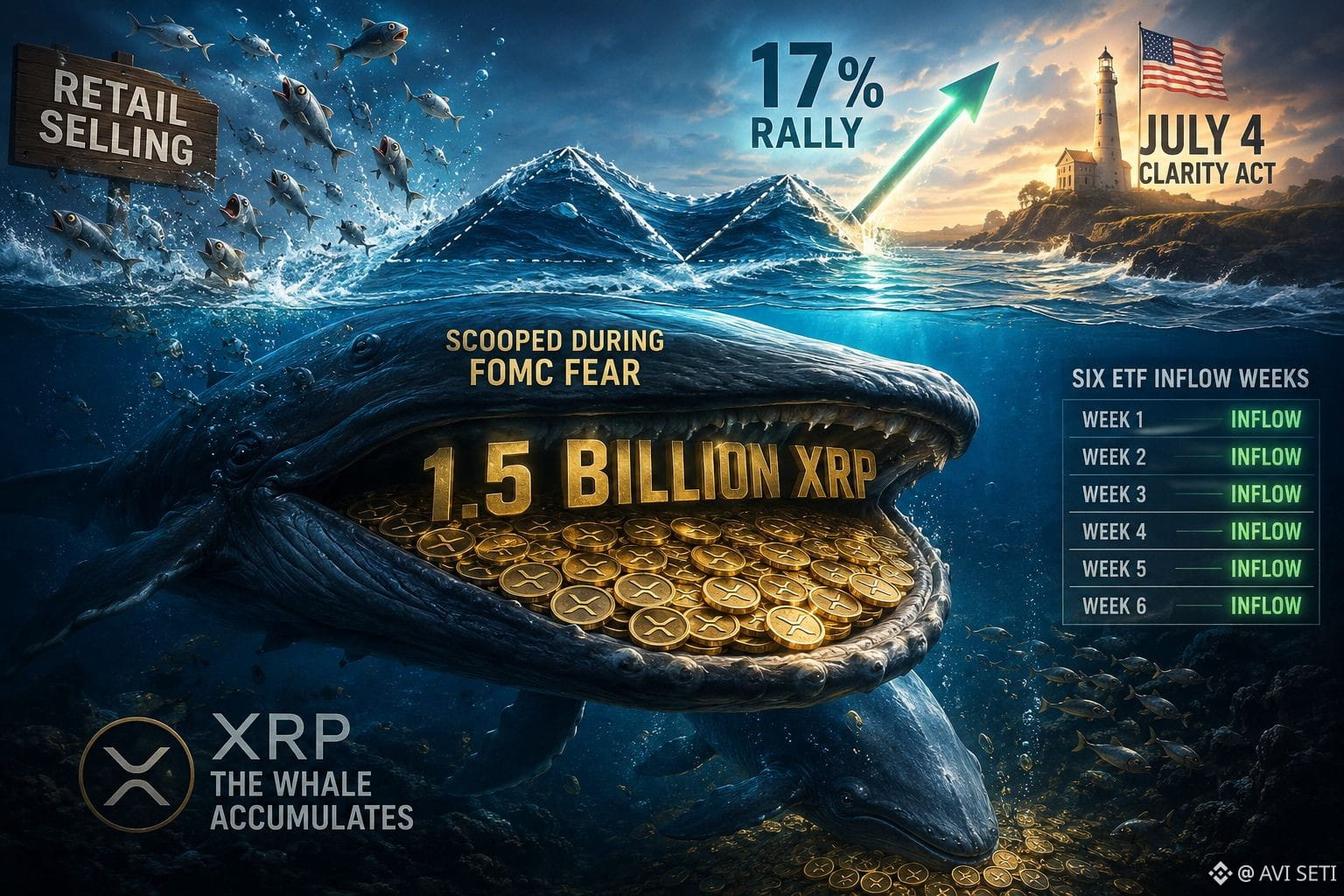
XRP के व्हेलों ने अभी 1.5 BILLION टोकन झपट लिए हैं।
FOMC के डर के दौरान। मार्केट के दबाव के दौरान।
चुपचाप। सोच-समझकर। जमकर।
XRP प्राइस प्रेडिक्शन: ट्रायंगल सेटअप संभावित 17% रैली का संकेत देता है क्योंकि व्हेलों ने 1.5B कॉइन्स खरीदे।
1.5 बिलियन XRP। मौजूदा दामों पर — यह व्हेल एक्यूम्युलेशन में $1.65-$1.77 BILLION है।
इसे मैं संदर्भ में रखता हूँ।
इस हफ्ते — जब रिटेल इन्वेस्टर्स FOMC के hawkish सिग्नल से घबराए हुए थे — व्हेल 1.5 बिलियन XRP खरीद रही थीं।
यह संयोग नहीं है। व्हेल कैटलिस्ट से पहले जमा करती हैं। बाद में नहीं।
वे जिन कैटलिस्ट्स के पहले जमा कर रहे हैं:
🕊️ US-ईरान पीस डील: TOMORROW — risk-on रिटर्न
⚖️ CLARITY Act 4 जुलाई: 16 दिन — स्थायी कमोडिटी स्टेटस
📊 XRP ट्रायंगल सेटअप: 17% रैली सिग्नल तकनीकी रूप से कन्फर्म
🏦 XRP ETF के लगातार छह हफ्तों तक इनफ्लो: कुल $1.44 बिलियन
🏦 तीन US बैंकों का टोकनाइज़्ड नेटवर्क: क्रॉस-चेन रेल्स की जरूरत
1.5 बिलियन टोकन। व्हेल खरीद में $1.65 बिलियन।
सिग्नल बिलकुल भी सूक्ष्म नहीं है।
📊 XRP आज:
— कीमत: ~$1.18-$1.23 — रिकवर हो रही
— 1.5B व्हेल एक्यूम्युलेशन: इस हफ्ते ✅
— ट्रायंगल सेटअप: 17% रैली टेक्निकल सिग्नल ✅
— छह हफ्ते ETF इनफ्लो: $1.44B ✅
— 4 जुलाई: 16 दिन ✅
— कल ही पीस डील: risk-on कैटलिस्ट ✅
रिटेल के घबराने के बीच 1.5 बिलियन टोकन स्कूप किए गए।
स्मार्ट मनी अपनी हरकतों से बोलती है।
#XRP #Ripple #WhaleAccumulation #BinanceSquare #FedHawkishDotPlotFlattensYieldCurve
XRP के व्हेलों ने अभी 1.5 BILLION टोकन झपट लिए हैं।
FOMC के डर के दौरान। मार्केट के दबाव के दौरान।
चुपचाप। सोच-समझकर। जमकर।
XRP प्राइस प्रेडिक्शन: ट्रायंगल सेटअप संभावित 17% रैली का संकेत देता है क्योंकि व्हेलों ने 1.5B कॉइन्स खरीदे।
1.5 बिलियन XRP। मौजूदा दामों पर — यह व्हेल एक्यूम्युलेशन में $1.65-$1.77 BILLION है।
इसे मैं संदर्भ में रखता हूँ।
इस हफ्ते — जब रिटेल इन्वेस्टर्स FOMC के hawkish सिग्नल से घबराए हुए थे — व्हेल 1.5 बिलियन XRP खरीद रही थीं।
यह संयोग नहीं है। व्हेल कैटलिस्ट से पहले जमा करती हैं। बाद में नहीं।
वे जिन कैटलिस्ट्स के पहले जमा कर रहे हैं:
🕊️ US-ईरान पीस डील: TOMORROW — risk-on रिटर्न
⚖️ CLARITY Act 4 जुलाई: 16 दिन — स्थायी कमोडिटी स्टेटस
📊 XRP ट्रायंगल सेटअप: 17% रैली सिग्नल तकनीकी रूप से कन्फर्म
🏦 XRP ETF के लगातार छह हफ्तों तक इनफ्लो: कुल $1.44 बिलियन
🏦 तीन US बैंकों का टोकनाइज़्ड नेटवर्क: क्रॉस-चेन रेल्स की जरूरत
1.5 बिलियन टोकन। व्हेल खरीद में $1.65 बिलियन।
सिग्नल बिलकुल भी सूक्ष्म नहीं है।
📊 XRP आज:
— कीमत: ~$1.18-$1.23 — रिकवर हो रही
— 1.5B व्हेल एक्यूम्युलेशन: इस हफ्ते ✅
— ट्रायंगल सेटअप: 17% रैली टेक्निकल सिग्नल ✅
— छह हफ्ते ETF इनफ्लो: $1.44B ✅
— 4 जुलाई: 16 दिन ✅
— कल ही पीस डील: risk-on कैटलिस्ट ✅
रिटेल के घबराने के बीच 1.5 बिलियन टोकन स्कूप किए गए।
स्मार्ट मनी अपनी हरकतों से बोलती है।
#XRP #Ripple #WhaleAccumulation #BinanceSquare #FedHawkishDotPlotFlattensYieldCurve
FOMC के डर के दौरान। मार्केट के दबाव के दौरान।
चुपचाप। सोच-समझकर। जमकर।
XRP प्राइस प्रेडिक्शन: ट्रायंगल सेटअप संभावित 17% रैली का संकेत देता है क्योंकि व्हेलों ने 1.5B कॉइन्स खरीदे।
1.5 बिलियन XRP। मौजूदा दामों पर — यह व्हेल एक्यूम्युलेशन में $1.65-$1.77 BILLION है।
इसे मैं संदर्भ में रखता हूँ।
इस हफ्ते — जब रिटेल इन्वेस्टर्स FOMC के hawkish सिग्नल से घबराए हुए थे — व्हेल 1.5 बिलियन XRP खरीद रही थीं।
यह संयोग नहीं है। व्हेल कैटलिस्ट से पहले जमा करती हैं। बाद में नहीं।
वे जिन कैटलिस्ट्स के पहले जमा कर रहे हैं:
🕊️ US-ईरान पीस डील: TOMORROW — risk-on रिटर्न
⚖️ CLARITY Act 4 जुलाई: 16 दिन — स्थायी कमोडिटी स्टेटस
📊 XRP ट्रायंगल सेटअप: 17% रैली सिग्नल तकनीकी रूप से कन्फर्म
🏦 XRP ETF के लगातार छह हफ्तों तक इनफ्लो: कुल $1.44 बिलियन
🏦 तीन US बैंकों का टोकनाइज़्ड नेटवर्क: क्रॉस-चेन रेल्स की जरूरत
1.5 बिलियन टोकन। व्हेल खरीद में $1.65 बिलियन।
सिग्नल बिलकुल भी सूक्ष्म नहीं है।
📊 XRP आज:
— कीमत: ~$1.18-$1.23 — रिकवर हो रही
— 1.5B व्हेल एक्यूम्युलेशन: इस हफ्ते ✅
— ट्रायंगल सेटअप: 17% रैली टेक्निकल सिग्नल ✅
— छह हफ्ते ETF इनफ्लो: $1.44B ✅
— 4 जुलाई: 16 दिन ✅
— कल ही पीस डील: risk-on कैटलिस्ट ✅
रिटेल के घबराने के बीच 1.5 बिलियन टोकन स्कूप किए गए।
स्मार्ट मनी अपनी हरकतों से बोलती है।
#XRP #Ripple #WhaleAccumulation #BinanceSquare #FedHawkishDotPlotFlattensYieldCurve
3
27
15.8k
ပုံသေထားသည်
·
--
စိစစ်အတည်ပြုထားသည်
Witaj w czerwcu 2026.
To może być $XRP najważniejszy miesiąc w roku.
Oto trzy powody.
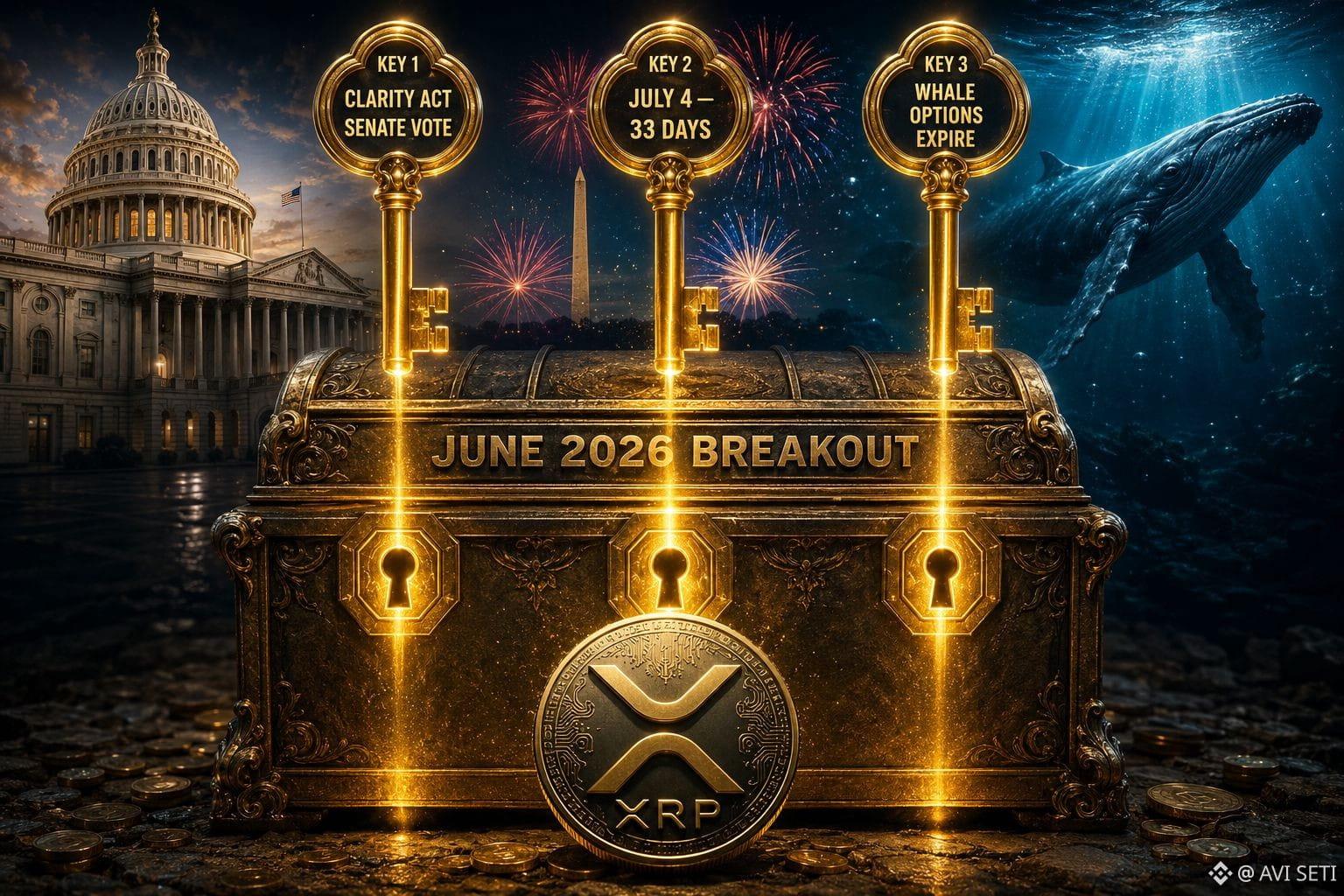
Powód 1: Ustawa CLARITY — pełne głosowanie w Senacie
Projekt przeszedł głosowanie w komisji 15-9 w maju. Czerwiec to termin głosowania na sali pełnego Senatu. Jeśli przejdzie — XRP otrzyma stały status federalnego towaru giełdowego. Instytucje dostaną zielone światło.
Powód 2: Do 4 lipca zostało 33 dni
Biały Dom wyznaczył 4 lipca jako termin ceremonii podpisania ustawy CLARITY. Każdy dzień w czerwcu przybliża moment, w którym status prawny XRP na stałe zostanie zakodowany w amerykańskim prawie.
Powód 3: Czerwcowe wezwanie wieloryba wygasa
Pamiętasz wieloryba, który zebrał 224 000 dolarów, obstawiając, że XRP pozostanie na poziomie stałym przez czerwiec? Ich opcje wygasają w tym miesiącu. Jeśli XRP w czerwcu przebije $1.45 — poniosą straty. Będą bronić przedziału. A gdy ich obrona się skończy — ruch zacznie się.
A ponadto fundamenty się nie zmieniły:
🏦 Rozliczenia XRPL w JPMorgan: potwierdzone ✅
🏦 RLUSD: $1B+ ✅
🏦 Samsung Upbit: koreański retail rośnie ✅
📊 XRP dziś:
— Cena: ~$1.30-$1.33 — otwarcie 1 czerwca
— Wsparcie: $1.28-$1.30
— Pełne głosowanie w Senacie w czerwcu: nadchodzi ✅
— 4 lipca: 33 dni ✅
— Opcje wieloryba: wygasają w tym miesiącu ✅
— Wybicie powyżej $1.45 → $1.60
Trzy powody. Jeden miesiąc. Czerwiec to miesiąc XRP.
#XRP #Ripple #JuneIsXRP #BinanceSquare #AaveSecuresUKFCARegistration
Witaj w czerwcu 2026.
To może być $XRP najważniejszy miesiąc w roku.
Oto trzy powody.
Powód 1: Ustawa CLARITY — pełne głosowanie w Senacie
Projekt przeszedł głosowanie w komisji 15-9 w maju. Czerwiec to termin głosowania na sali pełnego Senatu. Jeśli przejdzie — XRP otrzyma stały status federalnego towaru giełdowego. Instytucje dostaną zielone światło.
Powód 2: Do 4 lipca zostało 33 dni
Biały Dom wyznaczył 4 lipca jako termin ceremonii podpisania ustawy CLARITY. Każdy dzień w czerwcu przybliża moment, w którym status prawny XRP na stałe zostanie zakodowany w amerykańskim prawie.
Powód 3: Czerwcowe wezwanie wieloryba wygasa
Pamiętasz wieloryba, który zebrał 224 000 dolarów, obstawiając, że XRP pozostanie na poziomie stałym przez czerwiec? Ich opcje wygasają w tym miesiącu. Jeśli XRP w czerwcu przebije $1.45 — poniosą straty. Będą bronić przedziału. A gdy ich obrona się skończy — ruch zacznie się.
A ponadto fundamenty się nie zmieniły:
🏦 Rozliczenia XRPL w JPMorgan: potwierdzone ✅
🏦 RLUSD: $1B+ ✅
🏦 Samsung Upbit: koreański retail rośnie ✅
📊 XRP dziś:
— Cena: ~$1.30-$1.33 — otwarcie 1 czerwca
— Wsparcie: $1.28-$1.30
— Pełne głosowanie w Senacie w czerwcu: nadchodzi ✅
— 4 lipca: 33 dni ✅
— Opcje wieloryba: wygasają w tym miesiącu ✅
— Wybicie powyżej $1.45 → $1.60
Trzy powody. Jeden miesiąc. Czerwiec to miesiąc XRP.
#XRP #Ripple #JuneIsXRP #BinanceSquare #AaveSecuresUKFCARegistration
To może być $XRP najważniejszy miesiąc w roku.
Oto trzy powody.
Powód 1: Ustawa CLARITY — pełne głosowanie w Senacie
Projekt przeszedł głosowanie w komisji 15-9 w maju. Czerwiec to termin głosowania na sali pełnego Senatu. Jeśli przejdzie — XRP otrzyma stały status federalnego towaru giełdowego. Instytucje dostaną zielone światło.
Powód 2: Do 4 lipca zostało 33 dni
Biały Dom wyznaczył 4 lipca jako termin ceremonii podpisania ustawy CLARITY. Każdy dzień w czerwcu przybliża moment, w którym status prawny XRP na stałe zostanie zakodowany w amerykańskim prawie.
Powód 3: Czerwcowe wezwanie wieloryba wygasa
Pamiętasz wieloryba, który zebrał 224 000 dolarów, obstawiając, że XRP pozostanie na poziomie stałym przez czerwiec? Ich opcje wygasają w tym miesiącu. Jeśli XRP w czerwcu przebije $1.45 — poniosą straty. Będą bronić przedziału. A gdy ich obrona się skończy — ruch zacznie się.
A ponadto fundamenty się nie zmieniły:
🏦 Rozliczenia XRPL w JPMorgan: potwierdzone ✅
🏦 RLUSD: $1B+ ✅
🏦 Samsung Upbit: koreański retail rośnie ✅
📊 XRP dziś:
— Cena: ~$1.30-$1.33 — otwarcie 1 czerwca
— Wsparcie: $1.28-$1.30
— Pełne głosowanie w Senacie w czerwcu: nadchodzi ✅
— 4 lipca: 33 dni ✅
— Opcje wieloryba: wygasają w tym miesiącu ✅
— Wybicie powyżej $1.45 → $1.60
Trzy powody. Jeden miesiąc. Czerwiec to miesiąc XRP.
#XRP #Ripple #JuneIsXRP #BinanceSquare #AaveSecuresUKFCARegistration
4
12
13.9k
·
--
Article
Голосование, которое может заморозить или дать свободу крипте: что происходит накануне спора по CLARITY ActХук:
Биткойн безмятежно стоит на месте на уровне $77,500. Эфириум тихо опережает. XRP привлёк $644 млн в ETF-вливах на протяжении девяти подряд дней и даже не сдвинулся. Это не скука — это весь крипторынок затаил дыхание. Завтра Сенат голосует по только что обновлённой, 630-страничной версии Закона CLARITY, и в зависимости от исхода 15 сентября 2026 года могут запомнить как день, когда регулирование криптовалют в США наконец повзрослело, или как день, когда его снова отодвинули на следующее десятилетие.
Голосование, которое может заморозить или дать свободу крипте: что происходит накануне спора по CLARITY Act
Хук:
Биткойн безмятежно стоит на месте на уровне $77,500. Эфириум тихо опережает. XRP привлёк $644 млн в ETF-вливах на протяжении девяти подряд дней и даже не сдвинулся. Это не скука — это весь крипторынок затаил дыхание. Завтра Сенат голосует по только что обновлённой, 630-страничной версии Закона CLARITY, и в зависимости от исхода 15 сентября 2026 года могут запомнить как день, когда регулирование криптовалют в США наконец повзрослело, или как день, когда его снова отодвинули на следующее десятилетие.
Биткойн безмятежно стоит на месте на уровне $77,500. Эфириум тихо опережает. XRP привлёк $644 млн в ETF-вливах на протяжении девяти подряд дней и даже не сдвинулся. Это не скука — это весь крипторынок затаил дыхание. Завтра Сенат голосует по только что обновлённой, 630-страничной версии Закона CLARITY, и в зависимости от исхода 15 сентября 2026 года могут запомнить как день, когда регулирование криптовалют в США наконец повзрослело, или как день, когда его снова отодвинули на следующее десятилетие.
1
120
·
--
ဘာသာပြန်ဆိုချက် ကြည့်မည်
Ethereum is trading around $2,510–$2,539, up roughly 2.8% over the past 24 hours and notably outperforming Bitcoin as the market braces for tomorrow's CLARITY Act vote. ETH's resilience this week stands out against a backdrop of broader market caution, with the token now up an extraordinary 87,249% since its 2015 debut at $2.83, according to Forbes' latest market data.
Ethereum's outperformance comes as institutional flows continue shifting between BTC and ETH products depending on the news cycle, with traders using Ethereum as a relative-strength play whenever Bitcoin-specific catalysts like ETF outflows or regulatory headlines dominate sentiment. The token's steady climb through a week of regulatory uncertainty suggests institutional confidence in Ethereum's fundamentals remains intact even as headline risk swirls around the broader market.
#Ethereum #ETH #CryptoMarket #ETHPrice #CryptoNews
Ethereum is trading around $2,510–$2,539, up roughly 2.8% over the past 24 hours and notably outperforming Bitcoin as the market braces for tomorrow's CLARITY Act vote. ETH's resilience this week stands out against a backdrop of broader market caution, with the token now up an extraordinary 87,249% since its 2015 debut at $2.83, according to Forbes' latest market data.
Ethereum's outperformance comes as institutional flows continue shifting between BTC and ETH products depending on the news cycle, with traders using Ethereum as a relative-strength play whenever Bitcoin-specific catalysts like ETF outflows or regulatory headlines dominate sentiment. The token's steady climb through a week of regulatory uncertainty suggests institutional confidence in Ethereum's fundamentals remains intact even as headline risk swirls around the broader market.
#Ethereum #ETH #CryptoMarket #ETHPrice #CryptoNews
Ethereum's outperformance comes as institutional flows continue shifting between BTC and ETH products depending on the news cycle, with traders using Ethereum as a relative-strength play whenever Bitcoin-specific catalysts like ETF outflows or regulatory headlines dominate sentiment. The token's steady climb through a week of regulatory uncertainty suggests institutional confidence in Ethereum's fundamentals remains intact even as headline risk swirls around the broader market.
#Ethereum #ETH #CryptoMarket #ETHPrice #CryptoNews

51
·
--
Bitcoin dar har $77,500–$77,700 alet, til morgen's afgørende Senat-stemme om en revideret, 630-siders version af CLARITY Act. Senatets republikanere offentliggjorde denne uge med over 100 ændringer, der specifikt retter sig mod “decentralized-in-name-only” krypto-protokoller. Markedet forbliver i et snævert, lavvolatilitets-tilbageholdelsesmønster, hvor forudsigelsesmarkederne viser, at handlende er sikre på, at BTC holder sig over $68,000–$70,000 i løbet af dagen, hvilket afspejler mere konsolidering end overbevisning.
Mellemstore indehavere har angiveligt solgt i styrke, selvom mega-hvaler fortsætter stille med at akkumulere, ifølge kommentarer fra XS.com's chef for forretningsudvikling. Det skaber vedvarende modstand i form af “overhead”, selvom der er stabil institutionel efterspørgsel nedenunder. Da Bitcoin stadig er omkring 39% under sin all-time high fra oktober 2025 på $128,198, tegner morgenens Senat-stemme til at blive markedets næste reelle retningsbestemmende katalysator.
#Bitcoin #BTC #CLARITYAct #CryptoNews #EURequiresWalletMakersReportFlawsIn24Hours
Bitcoin dar har $77,500–$77,700 alet, til morgen's afgørende Senat-stemme om en revideret, 630-siders version af CLARITY Act. Senatets republikanere offentliggjorde denne uge med over 100 ændringer, der specifikt retter sig mod “decentralized-in-name-only” krypto-protokoller. Markedet forbliver i et snævert, lavvolatilitets-tilbageholdelsesmønster, hvor forudsigelsesmarkederne viser, at handlende er sikre på, at BTC holder sig over $68,000–$70,000 i løbet af dagen, hvilket afspejler mere konsolidering end overbevisning.
Mellemstore indehavere har angiveligt solgt i styrke, selvom mega-hvaler fortsætter stille med at akkumulere, ifølge kommentarer fra XS.com's chef for forretningsudvikling. Det skaber vedvarende modstand i form af “overhead”, selvom der er stabil institutionel efterspørgsel nedenunder. Da Bitcoin stadig er omkring 39% under sin all-time high fra oktober 2025 på $128,198, tegner morgenens Senat-stemme til at blive markedets næste reelle retningsbestemmende katalysator.
#Bitcoin #BTC #CLARITYAct #CryptoNews #EURequiresWalletMakersReportFlawsIn24Hours
Mellemstore indehavere har angiveligt solgt i styrke, selvom mega-hvaler fortsætter stille med at akkumulere, ifølge kommentarer fra XS.com's chef for forretningsudvikling. Det skaber vedvarende modstand i form af “overhead”, selvom der er stabil institutionel efterspørgsel nedenunder. Da Bitcoin stadig er omkring 39% under sin all-time high fra oktober 2025 på $128,198, tegner morgenens Senat-stemme til at blive markedets næste reelle retningsbestemmende katalysator.
#Bitcoin #BTC #CLARITYAct #CryptoNews #EURequiresWalletMakersReportFlawsIn24Hours

67
·
--
ဘာသာပြန်ဆိုချက် ကြည့်မည်
Render is trading around $1.38, with a market capitalization of roughly $715 million and 24-hour volume near $25 million. The token has recently shown signs of technical recovery after months of selling pressure, with market analysis noting a break from a falling-wedge pattern.
That puts RENDER back on the radar as the crypto market continues to develop a strong connection between AI, decentralized computing and digital infrastructure.
#RENDER #RenderNetwork #AI #DePIN #CryptoNews
Render is trading around $1.38, with a market capitalization of roughly $715 million and 24-hour volume near $25 million. The token has recently shown signs of technical recovery after months of selling pressure, with market analysis noting a break from a falling-wedge pattern.
That puts RENDER back on the radar as the crypto market continues to develop a strong connection between AI, decentralized computing and digital infrastructure.
#RENDER #RenderNetwork #AI #DePIN #CryptoNews
That puts RENDER back on the radar as the crypto market continues to develop a strong connection between AI, decentralized computing and digital infrastructure.
#RENDER #RenderNetwork #AI #DePIN #CryptoNews

124
·
--
ဘာသာပြန်ဆိုချက် ကြည့်မည်
Avalanche is trading around $7.40, with approximately $153 million in 24-hour volume and a market capitalization near $3.27 billion. AVAX has been under pressure recently, but the underlying network continues to attract attention around real-world applications and institutional blockchain infrastructure.
A key short-term issue is rising borrowing costs in Avalanche-based DeFi markets, which could pressure leveraged yield strategies using assets such as USDe.
#AVAX #Avalanche #DeFi #Blockchain #CryptoNews
Avalanche is trading around $7.40, with approximately $153 million in 24-hour volume and a market capitalization near $3.27 billion. AVAX has been under pressure recently, but the underlying network continues to attract attention around real-world applications and institutional blockchain infrastructure.
A key short-term issue is rising borrowing costs in Avalanche-based DeFi markets, which could pressure leveraged yield strategies using assets such as USDe.
#AVAX #Avalanche #DeFi #Blockchain #CryptoNews
A key short-term issue is rising borrowing costs in Avalanche-based DeFi markets, which could pressure leveraged yield strategies using assets such as USDe.
#AVAX #Avalanche #DeFi #Blockchain #CryptoNews

46
·
--
ဘာသာပြန်ဆိုချက် ကြည့်မည်
Polkadot is trading around $1.01, with roughly $107 million in 24-hour volume, while the token remains about 8.8% higher over seven days despite today's pullback. One notable development is that a Polkadot ETF reportedly attracted $663,057, ending a three-month period without ETF inflows. DOT has also been consolidating around the $1 area following its recent recovery, keeping the token on traders' watchlists.
#DOT #Polkadot #PolkadotETF #Web3 #CryptoMarket
Polkadot is trading around $1 .01, with roughly $107 million in 24-hour volume, while the token remains about 8.8% higher over seven days despite today's pullback. One notable development is that a Polkadot ETF reportedly attracted $663,057, ending a three-month period without ETF inflows. DOT has also been consolidating around the $1 area following its recent recovery, keeping the token on traders' watchlists.
#DOT #Polkadot #PolkadotETF #Web3 #CryptoMarket
#DOT #Polkadot #PolkadotETF #Web3 #CryptoMarket

140
·
--
Article
ဘာသာပြန်ဆိုချက် ကြည့်မည်
Crypto September 13, 2026: Ethereum ETFs Attract Capital as Bitcoin Faces a Fourth Day of OutflowsThe crypto market is entering the September 16 Federal Reserve decision with a surprisingly important shift taking place underneath the surface.
Bitcoin is losing ETF money while Ethereum is attracting it.
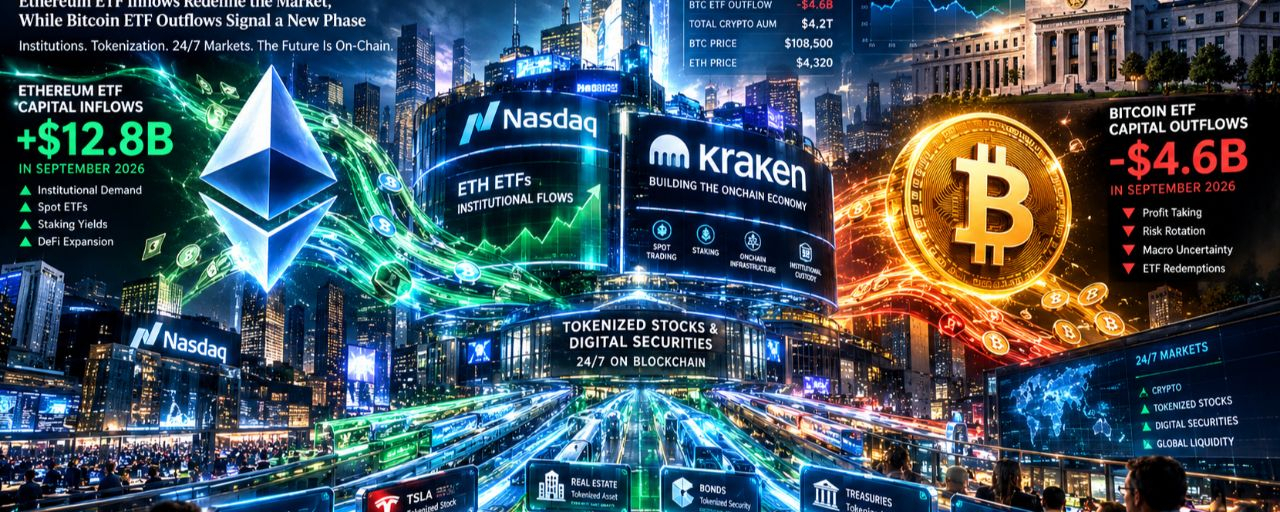
On Friday, September 11, U.S. spot Ethereum ETFs recorded approximately $216 million in net inflows, while spot Bitcoin ETFs recorded a $13.29 million net outflow, marking Bitcoin's fourth consecutive day of ETF redemptions. XRP ETFs recorded zero net flow on the same session.
That divergence matters.
Bitcoin remains the dominant institutional crypto asset, but investors are increasingly looking beyond BTC toward Ethereum, tokenization infrastructure and specialized blockchain applications.
At the same time, the macro environment is becoming more difficult.
1. Inflation Is Changing the Fed Story
The Federal Reserve's September 16 meeting has become the biggest short-term catalyst for crypto.
U.S. consumer prices increased 0.4% in August, taking annual inflation to 3.4%. Core CPI also increased 0.3% during the month and remained at 2.4% year over year. The hotter inflation numbers, combined with strong producer-price data and oil prices above $100, have increased expectations that the Federal Reserve could raise interest rates.
That is not an ideal environment for speculative assets.
Higher interest rates increase the opportunity cost of holding assets that do not generate traditional income, while tighter financial conditions can reduce liquidity flowing into risk markets.
Bitcoin has consequently been volatile.
Recent market data put BTC in roughly the $76,000–$82,000 range, with CryptoQuant analysts highlighting $81,700 as an important level for confirming a stronger bullish structure.
The next Fed decision could therefore determine whether the market attempts another breakout or enters a deeper consolidation phase.
2. Ethereum Is Showing Institutional Strength
Against that backdrop, Ethereum's ETF performance is particularly interesting.
The $216 million of net inflows on September 11 arrived while Bitcoin ETFs were recording their fourth consecutive day of outflows.
Ethereum's institutional story has been strengthening because ETH increasingly represents more than simply another cryptocurrency.
It is becoming a proxy for the growth of tokenized assets, stablecoins, decentralized finance and blockchain-based financial infrastructure.
Reuters recently noted that Ether had already completed a 37% rally over 10 days, reaching approximately $2,564 before entering consolidation.
That strength suggests institutions are not abandoning crypto altogether.
Instead, some capital may be rotating between different digital-asset narratives.
3. Bitcoin ETF Outflows Do Not Mean Institutional Adoption Is Over
It would be wrong to interpret several days of Bitcoin ETF outflows as the end of institutional demand.
Bitcoin ETFs had a very strong August, and September has simply introduced a different environment.
The important question is whether investors are temporarily reducing exposure because of the Fed and inflation—or permanently changing their allocation preferences.
The answer is not yet clear.
Bitcoin remains the largest and most liquid digital asset, and its institutional infrastructure is far more developed than most altcoins.
But the recent ETF data shows that investors now have more choices.
Ethereum ETFs, Solana products and other crypto investment vehicles can absorb capital that previously had fewer destinations.
This is one reason the next stage of the market could become much more fragmented.
4. Tokenization Is Becoming a Major Institutional Theme
The broader institutional story extends beyond ETFs.
Nasdaq's recent $100 million investment in Payward, the parent company of Kraken, is one of the clearest examples.
The partnership is designed around tokenized equities, 24/7 markets and infrastructure connecting regulated financial markets with blockchain-based trading. Nasdaq has said its proposed equity-token system is targeting launch in the second quarter of 2027.
That is important because tokenization could eventually change how traditional securities are issued, traded and settled.
Instead of financial institutions treating blockchain as an alternative investment playground, they are increasingly treating it as potential market infrastructure.
That is a much bigger shift.
5. Altcoins Are Splitting Into Specialized Narratives
The altcoin market is increasingly divided into individual themes.
PENDLE is positioned around DeFi yield markets and has expanded onto Robinhood Chain. Additional yield markets are scheduled to become available through Robinhood Crypto later this month.
Stacks is targeting Bitcoin-native DeFi, with its Bitcoin Staking upgrade receiving 99% governance support and STX benefiting from renewed BTCFi interest.
Polkadot is showing renewed activity after recovering above $1, while its ETF recently attracted $663,057 after a three-month dry spell.
Avalanche continues to build blockchain infrastructure despite AVAX trading near $7.40 and facing pressure from higher borrowing costs in its DeFi ecosystem.
And Render is once again attracting attention as the AI and decentralized-computing narrative returns to the crypto market. RENDER is around $1.38 and has recently shown signs of technical recovery.
These projects are not competing for exactly the same capital.
Each represents a different thesis.
Outlook: September Could Decide the Next Market Direction
The coming week could be one of the most important periods of September.
The Federal Reserve decision on September 16 will determine how markets interpret the latest inflation data.
If policymakers become more hawkish, Bitcoin and high-beta altcoins could remain under pressure.
If markets interpret the Fed decision as less aggressive than feared, the recent Ethereum ETF inflows could become an important signal that institutional capital is ready to rotate back into crypto.
The other major trend is tokenization.
Nasdaq's partnership with Kraken demonstrates that traditional financial institutions are not waiting for crypto markets to mature on their own.
They are actively building the infrastructure themselves.
That could eventually matter more than any individual coin's weekly price chart.
Closing Thought
September 13 presents a crypto market at an interesting crossroads.
Bitcoin is still the industry's largest institutional asset, but Ethereum is currently attracting more ETF capital, while specialized networks such as Stacks, Pendle, Polkadot, Avalanche and Render are developing their own narratives.
Meanwhile, Nasdaq and Kraken are working toward a future in which tokenized equities could trade across blockchain-based infrastructure.
The next phase of crypto may therefore be less about one coin dominating the market.
It could be about different blockchains becoming financial infrastructure for different parts of the global economy.
The Fed may determine the direction of prices this week.
But tokenization, DeFi, Bitcoin-native finance and decentralized computing may determine where the industry goes next.
Financial disclaimer: This article is for informational and educational purposes only and is not financial, investment, trading or legal advice. Cryptocurrency markets are highly volatile, and prices can change rapidly. Always conduct your own research and consider your own risk tolerance before making investment decisions.
#SECReceivesGrayscaleLitecoinTrustETFFiling #ClarityActFacesProceduralVoteSept15 #US10YearTreasuryYieldNears5% #CryptoLiquidations$674MIn24H #RevolutConfirmsFakeGovEmailDataBreach
Crypto September 13, 2026: Ethereum ETFs Attract Capital as Bitcoin Faces a Fourth Day of Outflows
The crypto market is entering the September 16 Federal Reserve decision with a surprisingly important shift taking place underneath the surface.
Bitcoin is losing ETF money while Ethereum is attracting it.
On Friday, September 11, U.S. spot Ethereum ETFs recorded approximately $216 million in net inflows, while spot Bitcoin ETFs recorded a $13.29 million net outflow, marking Bitcoin's fourth consecutive day of ETF redemptions. XRP ETFs recorded zero net flow on the same session.
That divergence matters.
Bitcoin remains the dominant institutional crypto asset, but investors are increasingly looking beyond BTC toward Ethereum, tokenization infrastructure and specialized blockchain applications.
At the same time, the macro environment is becoming more difficult.
1. Inflation Is Changing the Fed Story
The Federal Reserve's September 16 meeting has become the biggest short-term catalyst for crypto.
U.S. consumer prices increased 0.4% in August, taking annual inflation to 3.4%. Core CPI also increased 0.3% during the month and remained at 2.4% year over year. The hotter inflation numbers, combined with strong producer-price data and oil prices above $100, have increased expectations that the Federal Reserve could raise interest rates.
That is not an ideal environment for speculative assets.
Higher interest rates increase the opportunity cost of holding assets that do not generate traditional income, while tighter financial conditions can reduce liquidity flowing into risk markets.
Bitcoin has consequently been volatile.
Recent market data put BTC in roughly the $76,000–$82,000 range, with CryptoQuant analysts highlighting $81,700 as an important level for confirming a stronger bullish structure.
The next Fed decision could therefore determine whether the market attempts another breakout or enters a deeper consolidation phase.
2. Ethereum Is Showing Institutional Strength
Against that backdrop, Ethereum's ETF performance is particularly interesting.
The $216 million of net inflows on September 11 arrived while Bitcoin ETFs were recording their fourth consecutive day of outflows.
Ethereum's institutional story has been strengthening because ETH increasingly represents more than simply another cryptocurrency.
It is becoming a proxy for the growth of tokenized assets, stablecoins, decentralized finance and blockchain-based financial infrastructure.
Reuters recently noted that Ether had already completed a 37% rally over 10 days, reaching approximately $2,564 before entering consolidation.
That strength suggests institutions are not abandoning crypto altogether.
Instead, some capital may be rotating between different digital-asset narratives.
3. Bitcoin ETF Outflows Do Not Mean Institutional Adoption Is Over
It would be wrong to interpret several days of Bitcoin ETF outflows as the end of institutional demand.
Bitcoin ETFs had a very strong August, and September has simply introduced a different environment.
The important question is whether investors are temporarily reducing exposure because of the Fed and inflation—or permanently changing their allocation preferences.
The answer is not yet clear.
Bitcoin remains the largest and most liquid digital asset, and its institutional infrastructure is far more developed than most altcoins.
But the recent ETF data shows that investors now have more choices.
Ethereum ETFs, Solana products and other crypto investment vehicles can absorb capital that previously had fewer destinations.
This is one reason the next stage of the market could become much more fragmented.
4. Tokenization Is Becoming a Major Institutional Theme
The broader institutional story extends beyond ETFs.
Nasdaq's recent $100 million investment in Payward, the parent company of Kraken, is one of the clearest examples.
The partnership is designed around tokenized equities, 24/7 markets and infrastructure connecting regulated financial markets with blockchain-based trading. Nasdaq has said its proposed equity-token system is targeting launch in the second quarter of 2027.
That is important because tokenization could eventually change how traditional securities are issued, traded and settled.
Instead of financial institutions treating blockchain as an alternative investment playground, they are increasingly treating it as potential market infrastructure.
That is a much bigger shift.
5. Altcoins Are Splitting Into Specialized Narratives
The altcoin market is increasingly divided into individual themes.
PENDLE is positioned around DeFi yield markets and has expanded onto Robinhood Chain. Additional yield markets are scheduled to become available through Robinhood Crypto later this month.
Stacks is targeting Bitcoin-native DeFi, with its Bitcoin Staking upgrade receiving 99% governance support and STX benefiting from renewed BTCFi interest.
Polkadot is showing renewed activity after recovering above $1, while its ETF recently attracted $663,057 after a three-month dry spell.
Avalanche continues to build blockchain infrastructure despite AVAX trading near $7.40 and facing pressure from higher borrowing costs in its DeFi ecosystem.
And Render is once again attracting attention as the AI and decentralized-computing narrative returns to the crypto market. RENDER is around $1.38 and has recently shown signs of technical recovery.
These projects are not competing for exactly the same capital.
Each represents a different thesis.
Outlook: September Could Decide the Next Market Direction
The coming week could be one of the most important periods of September.
The Federal Reserve decision on September 16 will determine how markets interpret the latest inflation data.
If policymakers become more hawkish, Bitcoin and high-beta altcoins could remain under pressure.
If markets interpret the Fed decision as less aggressive than feared, the recent Ethereum ETF inflows could become an important signal that institutional capital is ready to rotate back into crypto.
The other major trend is tokenization.
Nasdaq's partnership with Kraken demonstrates that traditional financial institutions are not waiting for crypto markets to mature on their own.
They are actively building the infrastructure themselves.
That could eventually matter more than any individual coin's weekly price chart.
Closing Thought
September 13 presents a crypto market at an interesting crossroads.
Bitcoin is still the industry's largest institutional asset, but Ethereum is currently attracting more ETF capital, while specialized networks such as Stacks, Pendle, Polkadot, Avalanche and Render are developing their own narratives.
Meanwhile, Nasdaq and Kraken are working toward a future in which tokenized equities could trade across blockchain-based infrastructure.
The next phase of crypto may therefore be less about one coin dominating the market.
It could be about different blockchains becoming financial infrastructure for different parts of the global economy.
The Fed may determine the direction of prices this week.
But tokenization, DeFi, Bitcoin-native finance and decentralized computing may determine where the industry goes next.
Financial disclaimer: This article is for informational and educational purposes only and is not financial, investment, trading or legal advice. Cryptocurrency markets are highly volatile, and prices can change rapidly. Always conduct your own research and consider your own risk tolerance before making investment decisions.
#SECReceivesGrayscaleLitecoinTrustETFFiling #ClarityActFacesProceduralVoteSept15 #US10YearTreasuryYieldNears5% #CryptoLiquidations$674MIn24H #RevolutConfirmsFakeGovEmailDataBreach
Bitcoin is losing ETF money while Ethereum is attracting it.
On Friday, September 11, U.S. spot Ethereum ETFs recorded approximately $216 million in net inflows, while spot Bitcoin ETFs recorded a $13.29 million net outflow, marking Bitcoin's fourth consecutive day of ETF redemptions. XRP ETFs recorded zero net flow on the same session.
That divergence matters.
Bitcoin remains the dominant institutional crypto asset, but investors are increasingly looking beyond BTC toward Ethereum, tokenization infrastructure and specialized blockchain applications.
At the same time, the macro environment is becoming more difficult.
1. Inflation Is Changing the Fed Story
The Federal Reserve's September 16 meeting has become the biggest short-term catalyst for crypto.
U.S. consumer prices increased 0.4% in August, taking annual inflation to 3.4%. Core CPI also increased 0.3% during the month and remained at 2.4% year over year. The hotter inflation numbers, combined with strong producer-price data and oil prices above $100, have increased expectations that the Federal Reserve could raise interest rates.
That is not an ideal environment for speculative assets.
Higher interest rates increase the opportunity cost of holding assets that do not generate traditional income, while tighter financial conditions can reduce liquidity flowing into risk markets.
Bitcoin has consequently been volatile.
Recent market data put BTC in roughly the $76,000–$82,000 range, with CryptoQuant analysts highlighting $81,700 as an important level for confirming a stronger bullish structure.
The next Fed decision could therefore determine whether the market attempts another breakout or enters a deeper consolidation phase.
2. Ethereum Is Showing Institutional Strength
Against that backdrop, Ethereum's ETF performance is particularly interesting.
The $216 million of net inflows on September 11 arrived while Bitcoin ETFs were recording their fourth consecutive day of outflows.
Ethereum's institutional story has been strengthening because ETH increasingly represents more than simply another cryptocurrency.
It is becoming a proxy for the growth of tokenized assets, stablecoins, decentralized finance and blockchain-based financial infrastructure.
Reuters recently noted that Ether had already completed a 37% rally over 10 days, reaching approximately $2,564 before entering consolidation.
That strength suggests institutions are not abandoning crypto altogether.
Instead, some capital may be rotating between different digital-asset narratives.
3. Bitcoin ETF Outflows Do Not Mean Institutional Adoption Is Over
It would be wrong to interpret several days of Bitcoin ETF outflows as the end of institutional demand.
Bitcoin ETFs had a very strong August, and September has simply introduced a different environment.
The important question is whether investors are temporarily reducing exposure because of the Fed and inflation—or permanently changing their allocation preferences.
The answer is not yet clear.
Bitcoin remains the largest and most liquid digital asset, and its institutional infrastructure is far more developed than most altcoins.
But the recent ETF data shows that investors now have more choices.
Ethereum ETFs, Solana products and other crypto investment vehicles can absorb capital that previously had fewer destinations.
This is one reason the next stage of the market could become much more fragmented.
4. Tokenization Is Becoming a Major Institutional Theme
The broader institutional story extends beyond ETFs.
Nasdaq's recent $100 million investment in Payward, the parent company of Kraken, is one of the clearest examples.
The partnership is designed around tokenized equities, 24/7 markets and infrastructure connecting regulated financial markets with blockchain-based trading. Nasdaq has said its proposed equity-token system is targeting launch in the second quarter of 2027.
That is important because tokenization could eventually change how traditional securities are issued, traded and settled.
Instead of financial institutions treating blockchain as an alternative investment playground, they are increasingly treating it as potential market infrastructure.
That is a much bigger shift.
5. Altcoins Are Splitting Into Specialized Narratives
The altcoin market is increasingly divided into individual themes.
PENDLE is positioned around DeFi yield markets and has expanded onto Robinhood Chain. Additional yield markets are scheduled to become available through Robinhood Crypto later this month.
Stacks is targeting Bitcoin-native DeFi, with its Bitcoin Staking upgrade receiving 99% governance support and STX benefiting from renewed BTCFi interest.
Polkadot is showing renewed activity after recovering above $1, while its ETF recently attracted $663,057 after a three-month dry spell.
Avalanche continues to build blockchain infrastructure despite AVAX trading near $7.40 and facing pressure from higher borrowing costs in its DeFi ecosystem.
And Render is once again attracting attention as the AI and decentralized-computing narrative returns to the crypto market. RENDER is around $1.38 and has recently shown signs of technical recovery.
These projects are not competing for exactly the same capital.
Each represents a different thesis.
Outlook: September Could Decide the Next Market Direction
The coming week could be one of the most important periods of September.
The Federal Reserve decision on September 16 will determine how markets interpret the latest inflation data.
If policymakers become more hawkish, Bitcoin and high-beta altcoins could remain under pressure.
If markets interpret the Fed decision as less aggressive than feared, the recent Ethereum ETF inflows could become an important signal that institutional capital is ready to rotate back into crypto.
The other major trend is tokenization.
Nasdaq's partnership with Kraken demonstrates that traditional financial institutions are not waiting for crypto markets to mature on their own.
They are actively building the infrastructure themselves.
That could eventually matter more than any individual coin's weekly price chart.
Closing Thought
September 13 presents a crypto market at an interesting crossroads.
Bitcoin is still the industry's largest institutional asset, but Ethereum is currently attracting more ETF capital, while specialized networks such as Stacks, Pendle, Polkadot, Avalanche and Render are developing their own narratives.
Meanwhile, Nasdaq and Kraken are working toward a future in which tokenized equities could trade across blockchain-based infrastructure.
The next phase of crypto may therefore be less about one coin dominating the market.
It could be about different blockchains becoming financial infrastructure for different parts of the global economy.
The Fed may determine the direction of prices this week.
But tokenization, DeFi, Bitcoin-native finance and decentralized computing may determine where the industry goes next.
Financial disclaimer: This article is for informational and educational purposes only and is not financial, investment, trading or legal advice. Cryptocurrency markets are highly volatile, and prices can change rapidly. Always conduct your own research and consider your own risk tolerance before making investment decisions.
#SECReceivesGrayscaleLitecoinTrustETFFiling #ClarityActFacesProceduralVoteSept15 #US10YearTreasuryYieldNears5% #CryptoLiquidations$674MIn24H #RevolutConfirmsFakeGovEmailDataBreach
119
·
--
ဘာသာပြန်ဆိုချက် ကြည့်မည်
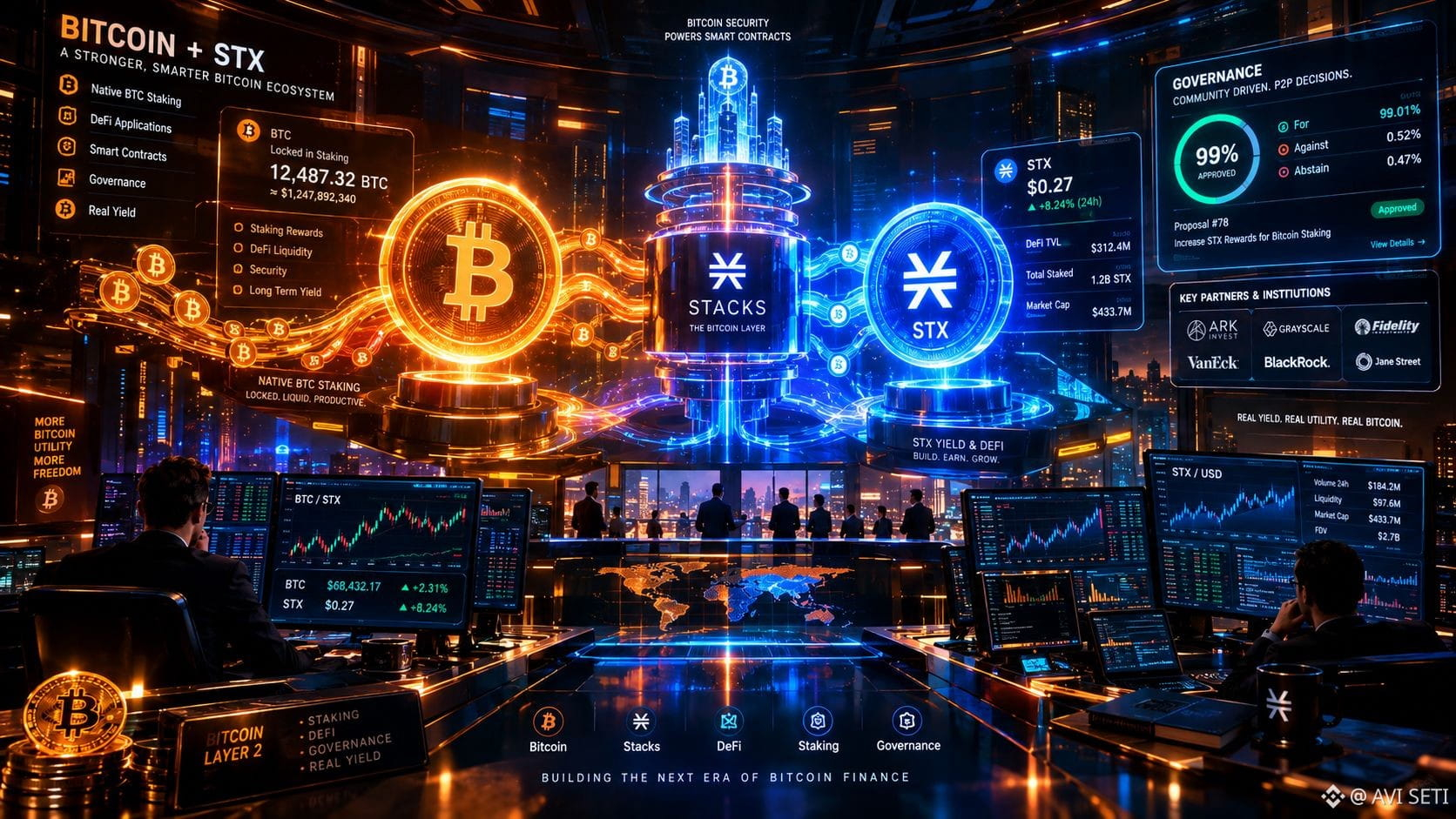
Stacks is trading around $0.27, with recent market data showing approximately $15.4 million in 24-hour volume. STX has been gaining attention as Bitcoin staking and Bitcoin-native DeFi move into a new phase, with Stacks' Bitcoin Staking upgrade receiving 99% support in its governance vote.
Recent trading data also showed STX jumping more than 5% as Bitcoin rebounded and traders rotated into the BTCFi narrative.
#STX #Stacks #BitcoinDeFi #BTCFi #CryptoNews
Stacks is trading around $0.27, with recent market data showing approximately $15.4 million in 24-hour volume. STX has been gaining attention as Bitcoin staking and Bitcoin-native DeFi move into a new phase, with Stacks' Bitcoin Staking upgrade receiving 99% support in its governance vote.
Recent trading data also showed STX jumping more than 5% as Bitcoin rebounded and traders rotated into the BTCFi narrative.
#STX #Stacks #BitcoinDeFi #BTCFi #CryptoNews
Recent trading data also showed STX jumping more than 5% as Bitcoin rebounded and traders rotated into the BTCFi narrative.
#STX #Stacks #BitcoinDeFi #BTCFi #CryptoNews
145
·
--
ဘာသာပြန်ဆိုချက် ကြည့်မည်
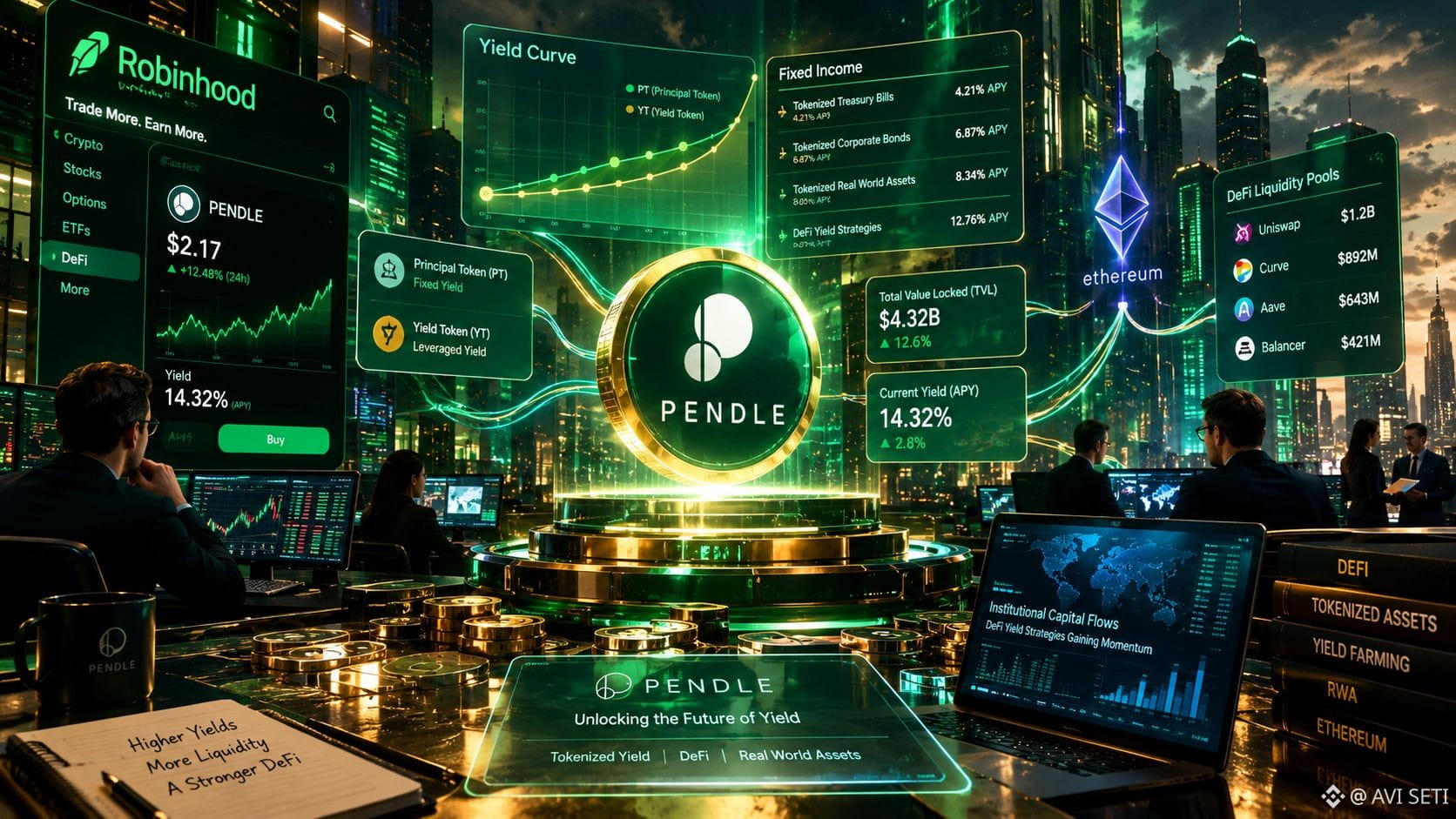
Pendle is trading around $2.17, with 24-hour trading volume around $55.7 million. The DeFi yield-trading protocol has expanded onto Robinhood Chain, where its first yield market launched earlier this month, giving users access to fixed and variable yield positions through Pendle infrastructure. More attention is coming later this month as additional Pendle-powered yield markets are scheduled to go live on Robinhood Crypto on September 24.
#PENDLE #Pendle #DeFi #Robinhood #CryptoNews
Pendle is trading around $2.17, with 24-hour trading volume around $55.7 million. The DeFi yield-trading protocol has expanded onto Robinhood Chain, where its first yield market launched earlier this month, giving users access to fixed and variable yield positions through Pendle infrastructure. More attention is coming later this month as additional Pendle-powered yield markets are scheduled to go live on Robinhood Crypto on September 24.
#PENDLE #Pendle #DeFi #Robinhood #CryptoNews
#PENDLE #Pendle #DeFi #Robinhood #CryptoNews
103
·
--
ဘာသာပြန်ဆိုချက် ကြည့်မည်
Zcash continues defying the broader market's CPI-day jitters, posting an 11%+ weekly gain even as most other large-cap assets, including XRP, Solana, and Cardano, are down 4–9% over the same period. The privacy coin recently topped $1,200 following its Grayscale ETF conversion in late August, and while it has cooled from its September 7 peak near $1,249, it remains one of the only major crypto sectors trading above its October 2025 highs.
Zcash's resilience through today's inflation-driven volatility stands out sharply against Bitcoin ETFs' worst outflow day since July and broad Fear & Greed cooling from 69 to 56 in a single session — suggesting the privacy coin narrative still has independent momentum separate from macro sentiment. With roughly 29% of ZEC's total supply held in shielded, privacy-protected addresses, the asset's fundamental adoption story continues to run alongside its speculative price action.
#Zcash #ZEC #PrivacyCoins #CryptoResilience #Altcoins
Zcash continues defying the broader market's CPI-day jitters, posting an 11%+ weekly gain even as most other large-cap assets, including XRP, Solana, and Cardano, are down 4–9% over the same period. The privacy coin recently topped $1,200 following its Grayscale ETF conversion in late August, and while it has cooled from its September 7 peak near $1,249, it remains one of the only major crypto sectors trading above its October 2025 highs.
Zcash's resilience through today's inflation-driven volatility stands out sharply against Bitcoin ETFs' worst outflow day since July and broad Fear & Greed cooling from 69 to 56 in a single session — suggesting the privacy coin narrative still has independent momentum separate from macro sentiment. With roughly 29% of ZEC's total supply held in shielded, privacy-protected addresses, the asset's fundamental adoption story continues to run alongside its speculative price action.
#Zcash #ZEC #PrivacyCoins #CryptoResilience #Altcoins
Zcash's resilience through today's inflation-driven volatility stands out sharply against Bitcoin ETFs' worst outflow day since July and broad Fear & Greed cooling from 69 to 56 in a single session — suggesting the privacy coin narrative still has independent momentum separate from macro sentiment. With roughly 29% of ZEC's total supply held in shielded, privacy-protected addresses, the asset's fundamental adoption story continues to run alongside its speculative price action.
#Zcash #ZEC #PrivacyCoins #CryptoResilience #Altcoins

64
·
--
ဘာသာပြန်ဆိုချက် ကြည့်မည်
Jack Dorsey's Block Inc. filed with the U.S. Office of the Comptroller of the Currency on September 8 to charter a new entity called Builders Bank & Trust — an uninsured, non-deposit-taking national trust bank designed specifically to custody Bitcoin and stablecoins under direct federal oversight. Bitcoin showed only a mild reaction to the news, easing from session highs near $78,900 to around $78,000, since a charter application signals intent rather than approval, and the OCC has already processed similar filings from Circle, Ripple, BitGo, and Paxos.
Block's own Bitcoin treasury has grown steadily throughout 2026, reaching 9,117 BTC as of June 30 (worth roughly $533.9 million), making it the 14th-largest corporate Bitcoin holder according to BitcoinTreasuries.net. The filing represents a notable structural shift for Dorsey's company, moving beyond its existing FDIC-insured Square Financial Services bank toward a dedicated framework built specifically around crypto custody and fiduciary services.
#Bitcoin #JackDorsey #Block #CryptoRegulation #OCC
Jack Dorsey's Block Inc. filed with the U.S. Office of the Comptroller of the Currency on September 8 to charter a new entity called Builders Bank & Trust — an uninsured, non-deposit-taking national trust bank designed specifically to custody Bitcoin and stablecoins under direct federal oversight. Bitcoin showed only a mild reaction to the news, easing from session highs near $78,900 to around $78,000, since a charter application signals intent rather than approval, and the OCC has already processed similar filings from Circle, Ripple, BitGo, and Paxos.
Block's own Bitcoin treasury has grown steadily throughout 2026, reaching 9,117 BTC as of June 30 (worth roughly $533.9 million), making it the 14th-largest corporate Bitcoin holder according to BitcoinTreasuries.net. The filing represents a notable structural shift for Dorsey's company, moving beyond its existing FDIC-insured Square Financial Services bank toward a dedicated framework built specifically around crypto custody and fiduciary services.
#Bitcoin #JackDorsey #Block #CryptoRegulation #OCC
Block's own Bitcoin treasury has grown steadily throughout 2026, reaching 9,117 BTC as of June 30 (worth roughly $533.9 million), making it the 14th-largest corporate Bitcoin holder according to BitcoinTreasuries.net. The filing represents a notable structural shift for Dorsey's company, moving beyond its existing FDIC-insured Square Financial Services bank toward a dedicated framework built specifically around crypto custody and fiduciary services.
#Bitcoin #JackDorsey #Block #CryptoRegulation #OCC
34
·
--
စိစစ်အတည်ပြုထားသည်
Dogecoin ҳozirda $0.084 atrofida savdo qilmoqda, haftada 5.8% ga pasaygan, biroq e’tibor aynan 14-sentabrga qaratilgan: SpaceX DOGE-1 sun’iy yo‘ldoshini uchirishga rejalashtirilgan — kriptovalyuta bilan to‘liq moliyalashtirilgan ilk kosmik missiya. Elon Muskning meme-coin’ga uzoq vaqtdan beri bo‘lgan qiziqishi bilan bog‘liq bu missiya, tarixan DOGE Musk bilan bog‘liq e’lonlardan oldin ko‘tarilib, voqea o‘zi sodir bo‘lgach esa soviy boshlashi kuzatiladigan eski, tekshirib bo‘lingan andozaga amal qiladi.
Sun’iy yo‘ldosh haqidagi sarlavhadan tashqari, Dogecoin asosan fundamental katalizatorlardan ko‘ra kayfiyat va momentum asosida savdo qilmoqda; bu uni allaqachon CPI-ga bog‘liq makro noaniqlik bilan to‘lib-toshgan bir haftaga kirib kelayotgan eng o‘zgaruvchan yirik-cap tokenlardan biriga aylantiradi. Triderlar DOGE-1 uchirilishi oldin bo‘lgan Musk bilan bog‘liq kripto lahzalardagi singari tadbirdan oldingi ko‘tarilishni keltirib chiqaradimi, yo‘qmi, bu safar esa foiz stavkalari atrofidagi kengroq ehtiyotkorlik reaksiyani so‘ndiradimi — shuni sinchkovlik bilan kuzatmoqda.
#Dogecoin #DOGE #SpaceX #DOGE1 #CryptoNews
Dogecoin ҳozirda $0.084 atrofida savdo qilmoqda, haftada 5.8% ga pasaygan, biroq e’tibor aynan 14-sentabrga qaratilgan: SpaceX DOGE-1 sun’iy yo‘ldoshini uchirishga rejalashtirilgan — kriptovalyuta bilan to‘liq moliyalashtirilgan ilk kosmik missiya. Elon Muskning meme-coin’ga uzoq vaqtdan beri bo‘lgan qiziqishi bilan bog‘liq bu missiya, tarixan DOGE Musk bilan bog‘liq e’lonlardan oldin ko‘tarilib, voqea o‘zi sodir bo‘lgach esa soviy boshlashi kuzatiladigan eski, tekshirib bo‘lingan andozaga amal qiladi.
Sun’iy yo‘ldosh haqidagi sarlavhadan tashqari, Dogecoin asosan fundamental katalizatorlardan ko‘ra kayfiyat va momentum asosida savdo qilmoqda; bu uni allaqachon CPI-ga bog‘liq makro noaniqlik bilan to‘lib-toshgan bir haftaga kirib kelayotgan eng o‘zgaruvchan yirik-cap tokenlardan biriga aylantiradi. Triderlar DOGE-1 uchirilishi oldin bo‘lgan Musk bilan bog‘liq kripto lahzalardagi singari tadbirdan oldingi ko‘tarilishni keltirib chiqaradimi, yo‘qmi, bu safar esa foiz stavkalari atrofidagi kengroq ehtiyotkorlik reaksiyani so‘ndiradimi — shuni sinchkovlik bilan kuzatmoqda.
#Dogecoin #DOGE #SpaceX #DOGE1 #CryptoNews
Sun’iy yo‘ldosh haqidagi sarlavhadan tashqari, Dogecoin asosan fundamental katalizatorlardan ko‘ra kayfiyat va momentum asosida savdo qilmoqda; bu uni allaqachon CPI-ga bog‘liq makro noaniqlik bilan to‘lib-toshgan bir haftaga kirib kelayotgan eng o‘zgaruvchan yirik-cap tokenlardan biriga aylantiradi. Triderlar DOGE-1 uchirilishi oldin bo‘lgan Musk bilan bog‘liq kripto lahzalardagi singari tadbirdan oldingi ko‘tarilishni keltirib chiqaradimi, yo‘qmi, bu safar esa foiz stavkalari atrofidagi kengroq ehtiyotkorlik reaksiyani so‘ndiradimi — shuni sinchkovlik bilan kuzatmoqda.
#Dogecoin #DOGE #SpaceX #DOGE1 #CryptoNews

1.2k
·
--

Article
ဘာသာပြန်ဆိုချက် ကြည့်မည်
CPI Day Rattled Crypto — Here's Why Bitcoin Didn't Break, and What Actually Moved InsteadHook:
Today was supposed to be crypto's reckoning. The August CPI report landed hotter than hoped, Bitcoin ETFs had just posted their worst outflow day since July, and the Fear & Greed Index had crashed from 69 to 56 in 24 hours. Instead, Bitcoin dipped, steadied, and clawed back above $77,000 within hours — while the real story of the day quietly played out elsewhere: in a bank charter filing from Jack Dorsey, a satellite about to launch for Elon Musk's favorite meme coin, and a privacy token that simply refused to care about any of it.
Macro Factors: Inflation Comes In Hot, Market Shrugs (Mostly)
The U.S. Bureau of Labor Statistics reported this morning that the Consumer Price Index rose 0.4% in August, up from July's more modest 0.1% increase, while the annual inflation rate held steady at 3.4% — a print that was hotter month-over-month than many hoped but still in line with consensus forecasts. Bitcoin dipped toward $76,000 in the immediate aftermath, extending a rough stretch that included Thursday's hot Producer Price Index reading and continuing rate-sensitivity that's dominated crypto price action for much of 2026. Notably, no broader sell-off followed. Bitcoin recovered back above $77,000 within hours, and Ethereum along with several large-cap altcoins actually traded higher during the session, suggesting the market had already priced in much of today's uncertainty ahead of time. That said, the week leading into today was genuinely rough: spot Bitcoin ETFs shed roughly $283 million on September 10 alone — their worst single-day outflow since July — with Ethereum and Solana products also bleeding money, while XRP ETFs were the lone major product line to see net inflows, a detail some traders are reading as opportunistic contrarian buying.
Institutional Moves: Dorsey's Bank Bid and Nasdaq's Tokenization Bet
Two separate institutional stories this week reveal just how deep crypto infrastructure-building has become, even during choppy price action. On September 8, Jack Dorsey's Block Inc. filed with the Office of the Comptroller of the Currency to charter Builders Bank & Trust, a proposed uninsured, non-deposit-taking national trust bank designed to custody Bitcoin and stablecoins under direct federal banking oversight. The filing joins a growing queue of similar applications from Circle, Ripple, BitGo, Paxos, and Revolut, reflecting a broader race among crypto-native and crypto-adjacent firms to secure federally regulated custody frameworks rather than operating through patchwork state-level licenses. Block's own treasury tells a parallel story of steady conviction: the company's Bitcoin holdings have grown from 8,883 BTC at the end of 2025 to 9,117 BTC as of June 30, 2026, making it the 14th-largest corporate Bitcoin holder tracked by BitcoinTreasuries.net. Separately, Nasdaq Ventures announced a $100 million investment into Kraken's parent company, Payward, on September 11, specifically to build a joint tokenized equity framework targeting a second-quarter 2027 launch — another sign that traditional exchange infrastructure providers are racing to build real-world-asset rails before their competitors do.
On-Chain and Whale Behavior: One Asset Refuses to Follow the Script
While most of the market cooled alongside today's CPI-driven sentiment shift, Zcash has been the standout exception all week, posting an 11%-plus weekly gain even as XRP, Solana, and Cardano each fell 4–9% over the same period. ZEC's resilience traces back to its recent Grayscale ETF conversion in late August, which pushed the privacy coin above $1,200 for the first time since 2016 before cooling to current levels near $1,128–$1,200. The fact that Zcash is holding firm during a week when Bitcoin ETFs suffered their worst single-day outflow in over a month suggests its rally has developed genuine independent momentum, separate from the broader market's rate-sensitivity — a rare decoupling in a market where most assets still trade heavily correlated to Bitcoin's macro moves. On the meme coin side, Dogecoin's on-chain and social attention is building ahead of September 14's scheduled SpaceX launch of the DOGE-1 satellite, the first space mission ever funded entirely in cryptocurrency, even as DOGE itself trades down 5.8% for the week at around $0.084 — a reminder that attention and price don't always move together in the meme coin corner of the market.
Regulation: The OCC Queue Keeps Growing
Today's macro drama shouldn't obscure the fact that regulatory infrastructure-building is quietly accelerating in the background. Block's Builders Bank & Trust filing adds to an increasingly crowded queue at the OCC, which has processed comparable national trust bank charter applications from Circle, Ripple, BitGo, Paxos, and Revolut over roughly the same timeframe. None of these filings guarantee approval, and Bitcoin's muted reaction to Block's announcement — a shallow dip from $78,900 to $78,000 — reflects how normalized these filings have become; traders now treat them as evidence of structural intent rather than a near-term price catalyst. The real regulatory event still on the calendar is the Senate's action (or inaction) on the CLARITY Act, the broader market-structure bill that continues to loom over every asset with unresolved securities-versus-commodity status, XRP chief among them.
Outlook: Divergence Is the Story, Not Direction
If today proved anything, it's that the crypto market in September 2026 isn't moving as one unified asset class anymore. Bitcoin wobbled and recovered on inflation data. Ethereum and select altcoins traded higher through the same session. Zcash kept climbing regardless of what the Fed-sensitive majors did. And Dogecoin is trading on a completely separate axis tied to a rocket launch rather than any monetary policy signal at all. For traders and content creators alike, that divergence is arguably the most important story of the week — the days of "crypto moves together" appear to be giving way to a market where narrative, infrastructure, and macro sensitivity are increasingly separating individual assets from the herd.
Closing Thought:
CPI day was built up as a potential flashpoint, and in the end it was more of a stress test than a breaking point. What it revealed wasn't fragility — it was fragmentation. Bitcoin still reacts to the Fed. Zcash doesn't. Dogecoin reacts to rockets. That fragmentation may be exactly what a maturing asset class is supposed to look like.
Disclaimer: This article is for informational purposes only and does not constitute financial, investment, or legal advice. Cryptocurrency markets are highly volatile and carry significant risk of loss. Always conduct your own research and consult a licensed financial advisor before making investment decisions.
#CPIWatch #EtherRalliesAsBearishBetsLiquidate #EthereumHits$2600FirstTimeInSevenMonths #BNBTops730USDT #OpenAILaunchesAgentsAPIPublicBeta
An antique brass scale holds a glowing Bitcoin against a stack of Federal Reserve documents — soft desk-lamp light cutting through the darkness, red and green market numbers flickering like quiet judgment on the polished metal. Crypto and monetary policy, locked in the same balance.
CPI Day Rattled Crypto — Here's Why Bitcoin Didn't Break, and What Actually Moved Instead
Hook:
Today was supposed to be crypto's reckoning. The August CPI report landed hotter than hoped, Bitcoin ETFs had just posted their worst outflow day since July, and the Fear & Greed Index had crashed from 69 to 56 in 24 hours. Instead, Bitcoin dipped, steadied, and clawed back above $77,000 within hours — while the real story of the day quietly played out elsewhere: in a bank charter filing from Jack Dorsey, a satellite about to launch for Elon Musk's favorite meme coin, and a privacy token that simply refused to care about any of it.
Macro Factors: Inflation Comes In Hot, Market Shrugs (Mostly)
The U.S. Bureau of Labor Statistics reported this morning that the Consumer Price Index rose 0.4% in August, up from July's more modest 0.1% increase, while the annual inflation rate held steady at 3.4% — a print that was hotter month-over-month than many hoped but still in line with consensus forecasts. Bitcoin dipped toward $76,000 in the immediate aftermath, extending a rough stretch that included Thursday's hot Producer Price Index reading and continuing rate-sensitivity that's dominated crypto price action for much of 2026. Notably, no broader sell-off followed. Bitcoin recovered back above $77,000 within hours, and Ethereum along with several large-cap altcoins actually traded higher during the session, suggesting the market had already priced in much of today's uncertainty ahead of time. That said, the week leading into today was genuinely rough: spot Bitcoin ETFs shed roughly $283 million on September 10 alone — their worst single-day outflow since July — with Ethereum and Solana products also bleeding money, while XRP ETFs were the lone major product line to see net inflows, a detail some traders are reading as opportunistic contrarian buying.
Institutional Moves: Dorsey's Bank Bid and Nasdaq's Tokenization Bet
Two separate institutional stories this week reveal just how deep crypto infrastructure-building has become, even during choppy price action. On September 8, Jack Dorsey's Block Inc. filed with the Office of the Comptroller of the Currency to charter Builders Bank & Trust, a proposed uninsured, non-deposit-taking national trust bank designed to custody Bitcoin and stablecoins under direct federal banking oversight. The filing joins a growing queue of similar applications from Circle, Ripple, BitGo, Paxos, and Revolut, reflecting a broader race among crypto-native and crypto-adjacent firms to secure federally regulated custody frameworks rather than operating through patchwork state-level licenses. Block's own treasury tells a parallel story of steady conviction: the company's Bitcoin holdings have grown from 8,883 BTC at the end of 2025 to 9,117 BTC as of June 30, 2026, making it the 14th-largest corporate Bitcoin holder tracked by BitcoinTreasuries.net. Separately, Nasdaq Ventures announced a $100 million investment into Kraken's parent company, Payward, on September 11, specifically to build a joint tokenized equity framework targeting a second-quarter 2027 launch — another sign that traditional exchange infrastructure providers are racing to build real-world-asset rails before their competitors do.
On-Chain and Whale Behavior: One Asset Refuses to Follow the Script
While most of the market cooled alongside today's CPI-driven sentiment shift, Zcash has been the standout exception all week, posting an 11%-plus weekly gain even as XRP, Solana, and Cardano each fell 4–9% over the same period. ZEC's resilience traces back to its recent Grayscale ETF conversion in late August, which pushed the privacy coin above $1,200 for the first time since 2016 before cooling to current levels near $1,128–$1,200. The fact that Zcash is holding firm during a week when Bitcoin ETFs suffered their worst single-day outflow in over a month suggests its rally has developed genuine independent momentum, separate from the broader market's rate-sensitivity — a rare decoupling in a market where most assets still trade heavily correlated to Bitcoin's macro moves. On the meme coin side, Dogecoin's on-chain and social attention is building ahead of September 14's scheduled SpaceX launch of the DOGE-1 satellite, the first space mission ever funded entirely in cryptocurrency, even as DOGE itself trades down 5.8% for the week at around $0.084 — a reminder that attention and price don't always move together in the meme coin corner of the market.
Regulation: The OCC Queue Keeps Growing
Today's macro drama shouldn't obscure the fact that regulatory infrastructure-building is quietly accelerating in the background. Block's Builders Bank & Trust filing adds to an increasingly crowded queue at the OCC, which has processed comparable national trust bank charter applications from Circle, Ripple, BitGo, Paxos, and Revolut over roughly the same timeframe. None of these filings guarantee approval, and Bitcoin's muted reaction to Block's announcement — a shallow dip from $78,900 to $78,000 — reflects how normalized these filings have become; traders now treat them as evidence of structural intent rather than a near-term price catalyst. The real regulatory event still on the calendar is the Senate's action (or inaction) on the CLARITY Act, the broader market-structure bill that continues to loom over every asset with unresolved securities-versus-commodity status, XRP chief among them.
Outlook: Divergence Is the Story, Not Direction
If today proved anything, it's that the crypto market in September 2026 isn't moving as one unified asset class anymore. Bitcoin wobbled and recovered on inflation data. Ethereum and select altcoins traded higher through the same session. Zcash kept climbing regardless of what the Fed-sensitive majors did. And Dogecoin is trading on a completely separate axis tied to a rocket launch rather than any monetary policy signal at all. For traders and content creators alike, that divergence is arguably the most important story of the week — the days of "crypto moves together" appear to be giving way to a market where narrative, infrastructure, and macro sensitivity are increasingly separating individual assets from the herd.
Closing Thought:
CPI day was built up as a potential flashpoint, and in the end it was more of a stress test than a breaking point. What it revealed wasn't fragility — it was fragmentation. Bitcoin still reacts to the Fed. Zcash doesn't. Dogecoin reacts to rockets. That fragmentation may be exactly what a maturing asset class is supposed to look like.
Disclaimer: This article is for informational purposes only and does not constitute financial, investment, or legal advice. Cryptocurrency markets are highly volatile and carry significant risk of loss. Always conduct your own research and consult a licensed financial advisor before making investment decisions.
#CPIWatch #EtherRalliesAsBearishBetsLiquidate #EthereumHits$2600FirstTimeInSevenMonths #BNBTops730USDT #OpenAILaunchesAgentsAPIPublicBeta
An antique brass scale holds a glowing Bitcoin against a stack of Federal Reserve documents — soft desk-lamp light cutting through the darkness, red and green market numbers flickering like quiet judgment on the polished metal. Crypto and monetary policy, locked in the same balance.
Today was supposed to be crypto's reckoning. The August CPI report landed hotter than hoped, Bitcoin ETFs had just posted their worst outflow day since July, and the Fear & Greed Index had crashed from 69 to 56 in 24 hours. Instead, Bitcoin dipped, steadied, and clawed back above $77,000 within hours — while the real story of the day quietly played out elsewhere: in a bank charter filing from Jack Dorsey, a satellite about to launch for Elon Musk's favorite meme coin, and a privacy token that simply refused to care about any of it.
Macro Factors: Inflation Comes In Hot, Market Shrugs (Mostly)
The U.S. Bureau of Labor Statistics reported this morning that the Consumer Price Index rose 0.4% in August, up from July's more modest 0.1% increase, while the annual inflation rate held steady at 3.4% — a print that was hotter month-over-month than many hoped but still in line with consensus forecasts. Bitcoin dipped toward $76,000 in the immediate aftermath, extending a rough stretch that included Thursday's hot Producer Price Index reading and continuing rate-sensitivity that's dominated crypto price action for much of 2026. Notably, no broader sell-off followed. Bitcoin recovered back above $77,000 within hours, and Ethereum along with several large-cap altcoins actually traded higher during the session, suggesting the market had already priced in much of today's uncertainty ahead of time. That said, the week leading into today was genuinely rough: spot Bitcoin ETFs shed roughly $283 million on September 10 alone — their worst single-day outflow since July — with Ethereum and Solana products also bleeding money, while XRP ETFs were the lone major product line to see net inflows, a detail some traders are reading as opportunistic contrarian buying.
Institutional Moves: Dorsey's Bank Bid and Nasdaq's Tokenization Bet
Two separate institutional stories this week reveal just how deep crypto infrastructure-building has become, even during choppy price action. On September 8, Jack Dorsey's Block Inc. filed with the Office of the Comptroller of the Currency to charter Builders Bank & Trust, a proposed uninsured, non-deposit-taking national trust bank designed to custody Bitcoin and stablecoins under direct federal banking oversight. The filing joins a growing queue of similar applications from Circle, Ripple, BitGo, Paxos, and Revolut, reflecting a broader race among crypto-native and crypto-adjacent firms to secure federally regulated custody frameworks rather than operating through patchwork state-level licenses. Block's own treasury tells a parallel story of steady conviction: the company's Bitcoin holdings have grown from 8,883 BTC at the end of 2025 to 9,117 BTC as of June 30, 2026, making it the 14th-largest corporate Bitcoin holder tracked by BitcoinTreasuries.net. Separately, Nasdaq Ventures announced a $100 million investment into Kraken's parent company, Payward, on September 11, specifically to build a joint tokenized equity framework targeting a second-quarter 2027 launch — another sign that traditional exchange infrastructure providers are racing to build real-world-asset rails before their competitors do.
On-Chain and Whale Behavior: One Asset Refuses to Follow the Script
While most of the market cooled alongside today's CPI-driven sentiment shift, Zcash has been the standout exception all week, posting an 11%-plus weekly gain even as XRP, Solana, and Cardano each fell 4–9% over the same period. ZEC's resilience traces back to its recent Grayscale ETF conversion in late August, which pushed the privacy coin above $1,200 for the first time since 2016 before cooling to current levels near $1,128–$1,200. The fact that Zcash is holding firm during a week when Bitcoin ETFs suffered their worst single-day outflow in over a month suggests its rally has developed genuine independent momentum, separate from the broader market's rate-sensitivity — a rare decoupling in a market where most assets still trade heavily correlated to Bitcoin's macro moves. On the meme coin side, Dogecoin's on-chain and social attention is building ahead of September 14's scheduled SpaceX launch of the DOGE-1 satellite, the first space mission ever funded entirely in cryptocurrency, even as DOGE itself trades down 5.8% for the week at around $0.084 — a reminder that attention and price don't always move together in the meme coin corner of the market.
Regulation: The OCC Queue Keeps Growing
Today's macro drama shouldn't obscure the fact that regulatory infrastructure-building is quietly accelerating in the background. Block's Builders Bank & Trust filing adds to an increasingly crowded queue at the OCC, which has processed comparable national trust bank charter applications from Circle, Ripple, BitGo, Paxos, and Revolut over roughly the same timeframe. None of these filings guarantee approval, and Bitcoin's muted reaction to Block's announcement — a shallow dip from $78,900 to $78,000 — reflects how normalized these filings have become; traders now treat them as evidence of structural intent rather than a near-term price catalyst. The real regulatory event still on the calendar is the Senate's action (or inaction) on the CLARITY Act, the broader market-structure bill that continues to loom over every asset with unresolved securities-versus-commodity status, XRP chief among them.
Outlook: Divergence Is the Story, Not Direction
If today proved anything, it's that the crypto market in September 2026 isn't moving as one unified asset class anymore. Bitcoin wobbled and recovered on inflation data. Ethereum and select altcoins traded higher through the same session. Zcash kept climbing regardless of what the Fed-sensitive majors did. And Dogecoin is trading on a completely separate axis tied to a rocket launch rather than any monetary policy signal at all. For traders and content creators alike, that divergence is arguably the most important story of the week — the days of "crypto moves together" appear to be giving way to a market where narrative, infrastructure, and macro sensitivity are increasingly separating individual assets from the herd.
Closing Thought:
CPI day was built up as a potential flashpoint, and in the end it was more of a stress test than a breaking point. What it revealed wasn't fragility — it was fragmentation. Bitcoin still reacts to the Fed. Zcash doesn't. Dogecoin reacts to rockets. That fragmentation may be exactly what a maturing asset class is supposed to look like.
Disclaimer: This article is for informational purposes only and does not constitute financial, investment, or legal advice. Cryptocurrency markets are highly volatile and carry significant risk of loss. Always conduct your own research and consult a licensed financial advisor before making investment decisions.
#CPIWatch #EtherRalliesAsBearishBetsLiquidate #EthereumHits$2600FirstTimeInSevenMonths #BNBTops730USDT #OpenAILaunchesAgentsAPIPublicBeta
An antique brass scale holds a glowing Bitcoin against a stack of Federal Reserve documents — soft desk-lamp light cutting through the darkness, red and green market numbers flickering like quiet judgment on the polished metal. Crypto and monetary policy, locked in the same balance.
1
110
·
--
ဘာသာပြန်ဆိုချက် ကြည့်မည်
Ethereum climbed to around $2,469, up 2.3% over the past 24 hours, notably outperforming Bitcoin as the market digested today's CPI print. BitMine Immersion Technologies, the largest public Ether treasury company, kept buying even during Bitcoin's recent dip below $80,000 following a hot jobs report, reinforcing its position as one of the market's most consistent institutional accumulators. Ripple also expanded its enterprise treasury platform this week, launching new "treasury-native AI" agents within its GSmart platform on September 10 that identify financial risks and recommend corporate actions — though every recommendation still requires human approval before execution.
The broader institutional infrastructure buildout continues alongside this: Nasdaq Ventures invested $100 million into Kraken parent company Payward on September 11 to jointly build a tokenized equity framework targeted for a Q2 2027 launch.
#Ethereum #ETH #BitMine #InstitutionalCrypto #CryptoNews
Ethereum climbed to around $2,469, up 2.3% over the past 24 hours, notably outperforming Bitcoin as the market digested today's CPI print. BitMine Immersion Technologies, the largest public Ether treasury company, kept buying even during Bitcoin's recent dip below $80,000 following a hot jobs report, reinforcing its position as one of the market's most consistent institutional accumulators. Ripple also expanded its enterprise treasury platform this week, launching new "treasury-native AI" agents within its GSmart platform on September 10 that identify financial risks and recommend corporate actions — though every recommendation still requires human approval before execution.
The broader institutional infrastructure buildout continues alongside this: Nasdaq Ventures invested $100 million into Kraken parent company Payward on September 11 to jointly build a tokenized equity framework targeted for a Q2 2027 launch.
#Ethereum #ETH #BitMine #InstitutionalCrypto #CryptoNews
The broader institutional infrastructure buildout continues alongside this: Nasdaq Ventures invested $100 million into Kraken parent company Payward on September 11 to jointly build a tokenized equity framework targeted for a Q2 2027 launch.
#Ethereum #ETH #BitMine #InstitutionalCrypto #CryptoNews

64
·
--
ဘာသာပြန်ဆိုချက် ကြည့်မည်
Bitcoin dipped toward $76,000 today after the August CPI report showed inflation rising 0.4% month-over-month (versus July's 0.1%) while holding at 3.4% year-over-year — a reading that came in slightly hotter than markets hoped but still in line with economist forecasts. No broader crypto sell-off followed; instead, BTC recovered back above $77,000 within hours, with Ethereum and several large-cap altcoins holding firm during the session.
The move caps a rough week for Bitcoin ETFs, which shed roughly $283 million on September 10 alone — their worst single-day outflow since July — while total spot Bitcoin ETF assets still sit above $103 billion after August delivered $3.52 billion in net inflows, the best month of 2026. Bitcoin remains about 39% below its October 2025 all-time high of $128,198, with the Fear & Greed Index cooling sharply to 56 from 69 just a day earlier.
#Bitcoin #BTC #CPI #CryptoMarket #Inflation
Bitcoin dipped toward $76,000 today after the August CPI report showed inflation rising 0.4% month-over-month (versus July's 0.1%) while holding at 3.4% year-over-year — a reading that came in slightly hotter than markets hoped but still in line with economist forecasts. No broader crypto sell-off followed; instead, BTC recovered back above $77,000 within hours, with Ethereum and several large-cap altcoins holding firm during the session.
The move caps a rough week for Bitcoin ETFs, which shed roughly $283 million on September 10 alone — their worst single-day outflow since July — while total spot Bitcoin ETF assets still sit above $103 billion after August delivered $3.52 billion in net inflows, the best month of 2026. Bitcoin remains about 39% below its October 2025 all-time high of $128,198, with the Fear & Greed Index cooling sharply to 56 from 69 just a day earlier.
#Bitcoin #BTC #CPI #CryptoMarket #Inflation
The move caps a rough week for Bitcoin ETFs, which shed roughly $283 million on September 10 alone — their worst single-day outflow since July — while total spot Bitcoin ETF assets still sit above $103 billion after August delivered $3.52 billion in net inflows, the best month of 2026. Bitcoin remains about 39% below its October 2025 all-time high of $128,198, with the Fear & Greed Index cooling sharply to 56 from 69 just a day earlier.
#Bitcoin #BTC #CPI #CryptoMarket #Inflation

59
·
--
ဘာသာပြန်ဆိုချက် ကြည့်မည်
Dogecoin has also been hit by the latest risk-off move, sliding nearly 5% as rising Treasury yields and geopolitical tensions pressured speculative crypto assets. DOGE was around the $0.08–$0.09 zone, with recent market data showing the meme coin struggling to maintain its earlier September momentum.
The move highlights how higher-beta assets such as DOGE can react more sharply when traders reduce risk ahead of major U.S. inflation and Federal Reserve events.
#DOGE #Dogecoin #Memecoin #CryptoMarket #CryptoNews
Dogecoin has also been hit by the latest risk-off move, sliding nearly 5% as rising Treasury yields and geopolitical tensions pressured speculative crypto assets. DOGE was around the $0.08–$0.09 zone, with recent market data showing the meme coin struggling to maintain its earlier September momentum.
The move highlights how higher-beta assets such as DOGE can react more sharply when traders reduce risk ahead of major U.S. inflation and Federal Reserve events.
#DOGE #Dogecoin #Memecoin #CryptoMarket #CryptoNews
The move highlights how higher-beta assets such as DOGE can react more sharply when traders reduce risk ahead of major U.S. inflation and Federal Reserve events.
#DOGE #Dogecoin #Memecoin #CryptoMarket #CryptoNews

78
·
--
ဘာသာပြန်ဆိုချက် ကြည့်မည်
Cardano has been under pressure as the broader crypto market entered a risk-off phase, with ADA falling roughly 4.5% over 24 hours on September 10.
The decline was linked primarily to macro conditions rather than a major negative Cardano-specific event, with higher oil prices, rising yields and rate concerns weighing on altcoins. ADA had closed around $0.212, after trading above $0.22 earlier in the week.
#ADA #Cardano #Blockchain #Altcoins #CryptoMarket
Cardano has been under pressure as the broader crypto market entered a risk-off phase, with ADA falling roughly 4.5% over 24 hours on September 10.
The decline was linked primarily to macro conditions rather than a major negative Cardano-specific event, with higher oil prices, rising yields and rate concerns weighing on altcoins. ADA had closed around $0.212, after trading above $0.22 earlier in the week.
#ADA #Cardano #Blockchain #Altcoins #CryptoMarket
The decline was linked primarily to macro conditions rather than a major negative Cardano-specific event, with higher oil prices, rising yields and rate concerns weighing on altcoins. ADA had closed around $0.212, after trading above $0.22 earlier in the week.
#ADA #Cardano #Blockchain #Altcoins #CryptoMarket

56
·
--
ဘာသာပြန်ဆိုချက် ကြည့်မည်
Aave is trading around $122–$123, after falling from above $130 during the recent market pullback. Despite the short-term weakness, the fundamental story remains notable: Aave V4 deposits are approaching $1 billion, with reported growth of approximately 131% over the past 30 days.
The expansion has been supported by new markets including EtherFi Cash on Optimism and an Ethena market, highlighting continued demand for decentralized lending infrastructure.
#AAVE #Aave #DeFi #Ethereum #CryptoNews
Aave is trading around $122–$123, after falling from above $130 during the recent market pullback. Despite the short-term weakness, the fundamental story remains notable: Aave V4 deposits are approaching $1 billion, with reported growth of approximately 131% over the past 30 days.
The expansion has been supported by new markets including EtherFi Cash on Optimism and an Ethena market, highlighting continued demand for decentralized lending infrastructure.
#AAVE #Aave #DeFi #Ethereum #CryptoNews
The expansion has been supported by new markets including EtherFi Cash on Optimism and an Ethena market, highlighting continued demand for decentralized lending infrastructure.
#AAVE #Aave #DeFi #Ethereum #CryptoNews

68
Log in to explore more content
Join global crypto users on Binance Square
⚡️ Get latest and useful information about crypto.
💬 Trusted by the world’s largest crypto exchange.
👍 Discover real insights from verified creators.
အီးမေးလ် / ဖုန်းနံပါတ်
ရေပန်းစားနေသော ခေါင်းစဉ်များ
AnthropicCEOCallsForAISlowdown
125,311 views
2,138 Discussing
#anthropicceocallsforaislowdown
Rivals Unite: Altman, Musk and Others Back the Slowdown CallWithin hours of Amodei’s essay, OpenAI CEO Sam Altman publicly agreed that the industry needs to “pace the frontier,” noting it had already been a major internal discussion at OpenAI. Elon Musk of xAI simply posted “Dario is right.” Reports also noted support from other leading figures including Demis Hassabis. This rare public alignment among fierce competitors underscores how seriously the top labs now view the accelerating risks. The industry appears to be shifting from pure speed toward coordinated caution.
$BR
$BTW
$REZ
Crypto Futrures Afridi
·နှစ်သက်မှု 3 ခု
·2k views
RevolutDataLeakReportedlyPostedAttackersThreatenDailyReleases
867 views
33 Discussing
BrazilCentralBankRaisesVASPCapitalRequirements
4,544 views
226 Discussing